Chinese Breakfast: Baozi, Youtiao, Jianbing, Congee and the Regional Morning Map
The best map of China I ever owned was the row of breakfast counters outside my metro exit in Shenzhen. A steamer of pork buns sat next to a vat of soy milk, a Hubei couple tossed hot dry noodles in sesame paste a few doors down, and the Guangdong place on the corner had congee going before it was light. Nearly everyone in that city came from somewhere else, and at 07:30 you could tell where by what they were carrying to work in a plastic bag.
That’s the thing to understand about breakfast in China. It isn’t one meal. It’s thirty regional meals that happen to share a time slot, and most of them are eaten out, standing up or on a stool, in about ten minutes, for less than the price of a coffee.
This guide is the morning map: what the north eats (wheat, soy milk and a lot of hot oil), what Shanghai means by its four heavenly kings, why Guangzhou sits down for two hours while Wuhan eats walking, and which cities start the day with a bowl of noodles. It also covers how to order and pay, what things cost in 2026, the hotel buffet question, three sample mornings and a short list of things to skip.
If you want the answer in ten seconds, this is what I’d order in each city, and roughly what it costs at an ordinary neighbourhood counter (tourist streets charge more, sometimes a lot more).
| City | What to order | Typical price | Best time |
|---|---|---|---|
| Beijing | Douzhi with jiaoquan, or baozi with soy milk | ¥8–15 | 06:00–09:00 |
| Tianjin | Jianbing guozi, then guobacai | ¥7–16 a set | Before 09:00 |
| Shanghai | Da bing, youtiao, ci fan tuan, salty soy milk | ¥5–20 | 07:00–09:00 |
| Guangzhou | Congee and cheung fun | ¥10–25 | 07:00–10:00 |
| Wuhan | Reganmian and doupi | ¥5–15 | 06:00–09:00 |
| Chongqing | Xiaomian, two liang | ¥8–15 | 07:00–09:30 |
| Guilin | Mifen, by weight | ¥4–7 for two liang | 06:30–09:00 |
| Lanzhou | Beef noodles | ¥8, ¥15–20 with beef and egg | 06:30–10:00 |
In This Article
- How breakfast works in China
- Counters, carts and canteens
- Paying by phone
- Words that help
- The northern table: wheat, soy and hot oil
- Youtiao and soy milk: sweet or salty
- Baozi, mantou and the steamer stack
- Jianbing guozi, by Tianjin’s rules
- Tianjin’s guobacai
- Beijing’s douzhi and jiaoquan
- Chaogan, griddle breads and savoury tofu pudding
- Shanghai’s four heavenly kings
- Da bing and youtiao
- Ci fan tuan and salty soy milk
- Where to find the four kings
- Sheng jian and wontons
- The south eats rice
- Cantonese congee and cheung fun
- Morning tea, in a paragraph
- Chaoshan’s white congee
- Shenzhen, the sampler
- Noodles before nine
- Wuhan: guozao
- Chongqing: xiaomian
- Guilin: mifen by weight
- Lanzhou: beef noodles at dawn
- Changsha and Kunming
- Soup towns: Henan, Xi’an and Kaifeng
- Hotel breakfast or the street?
- A morning in three cities
- Beijing
- Shanghai
- Guangzhou
- Skip this
How breakfast works in China
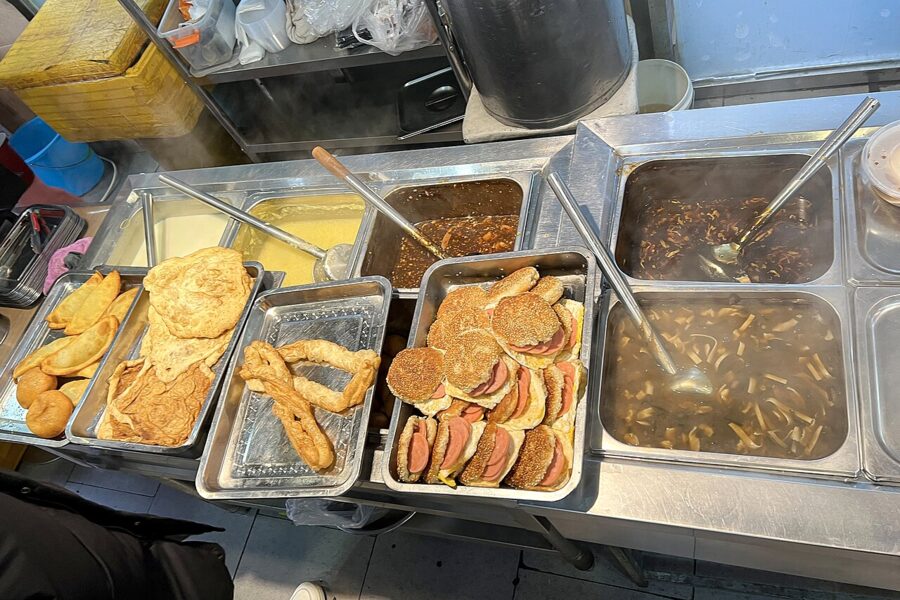
Breakfast is the one meal where China’s street food and its everyday eating are the same thing. In the cities it’s mostly a bought meal. People pick it up between the front door and the office: from a cart by the bus stop, a counter with a steamer stack, a canteen-style shop with a menu board, or a 24-hour chain. Some of it gets eaten at a folding table, a lot of it gets eaten walking.
The working window is roughly 06:00 to 09:00. Popular shops open earlier, at 05:30 or even 05:00, and the best things sell out by about 09:00, which is why every local tip about breakfast in China ends with “go early”. After 10:00 most breakfast counters switch to lunch or simply shut, and you’ll be stuck with whatever’s left in the steamer.
Counters, carts and canteens
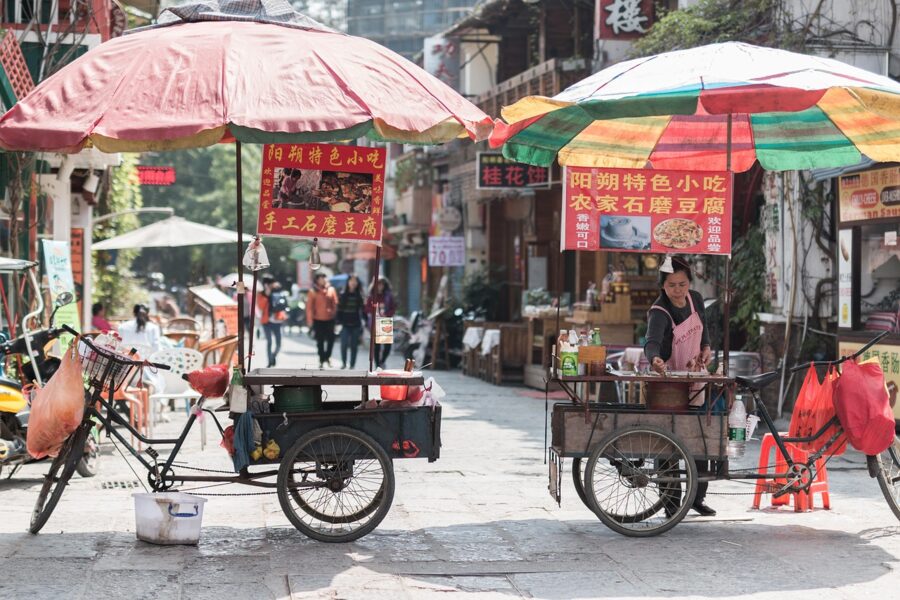
There are three kinds of place. The cart (a tricycle with a griddle or a steamer) does one thing: jianbing, egg pancakes, buns. The small shop does a short menu of six to twenty items, usually written on the wall with prices. And the bigger canteen-style places, often old state brands, do everything, from soy milk and fried dough to porridge, savoury tofu pudding and stuffed buns.
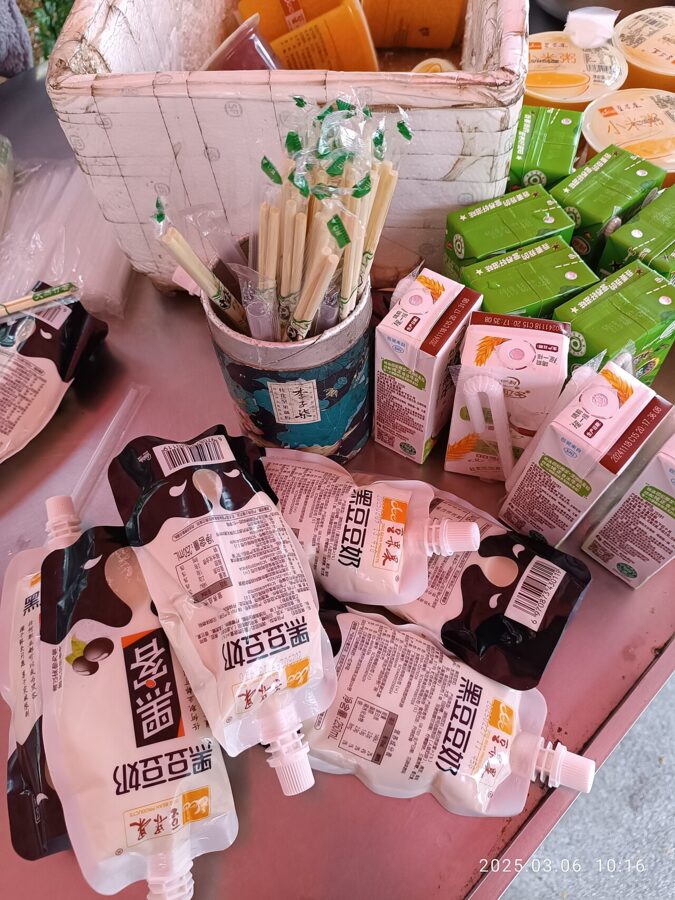
The rhythm is the same everywhere. You order at the counter, pay first, and collect your food from the person who cooks it, sometimes with a paper ticket in between. Nobody brings you anything, and nobody minds if you take your soy milk and leave.
Even the fast-food chains bend to this. KFC in China sells youtiao and congee in the morning, and plenty of office workers buy them there because it’s next to the station. It’s not why you came, but it’s a useful fallback at 06:30 in a business district.
Paying by phone
Almost every breakfast counter takes Alipay and WeChat Pay by scanning a QR code taped to the counter, and both apps now accept foreign Visa and Mastercard cards once you’ve linked one. Set this up before you fly: the stall at 06:30 is not the place to discover your bank has blocked the payment. Some carts are effectively phone-only.
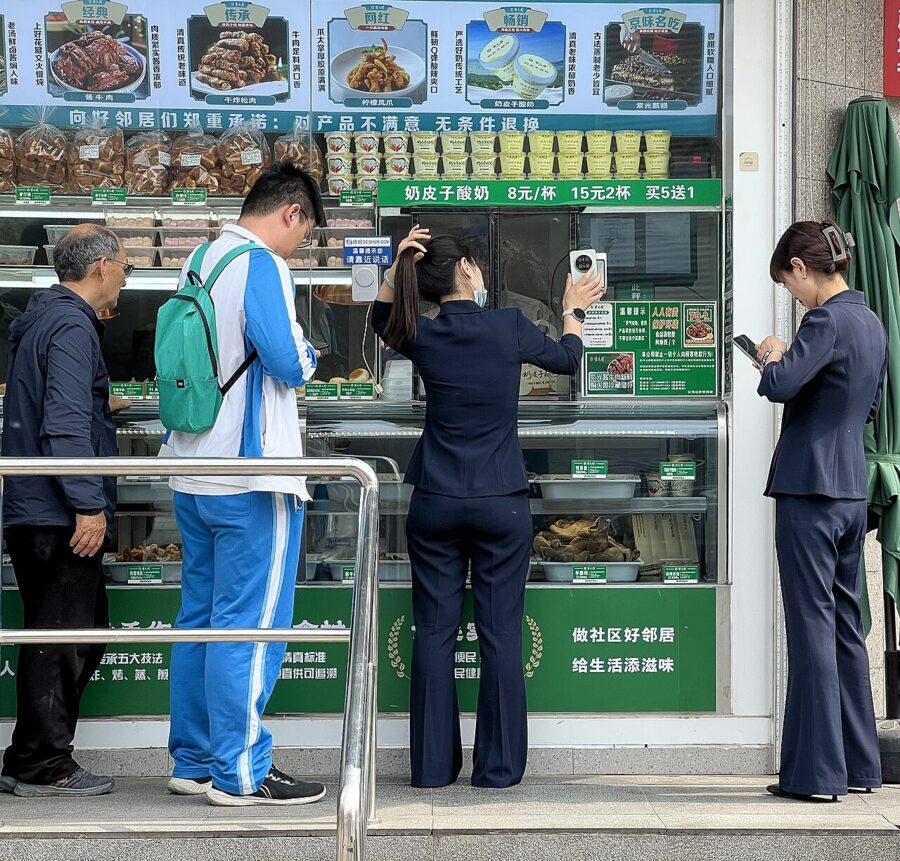
Cash is legal tender and nobody can refuse it, but a seller with a ¥100 note and a queue of twenty people may not have change for a ¥3 bun. If you carry cash, carry small notes and coins. A ¥10 note covers most single-person street breakfasts outside the big tourist zones.
Words that help
You can get through most breakfasts by pointing, but a few words make it faster. Zaocan (早餐) or zaodian (早点) is breakfast. Tian de (甜的) is sweet and xian de (咸的) is salty, which matters for soy milk and tofu pudding. Dabao (打包) means to take away, and zai zher chi (在这儿吃) means to eat here.
Noodles and rice noodles are often sold by weight in liang (两), 50 grams. One liang is a snack, two is a normal breakfast, three is lunch. Jia dan (加蛋) adds an egg, and bu yao la (不要辣) asks for no chilli, though in Chongqing and Changsha people will look at you with gentle pity.
The northern table: wheat, soy and hot oil
North of the Huai River, breakfast is built on wheat. Fried dough, steamed buns, griddle breads and pancakes make up the solid part, and soy milk, millet porridge or a starchy soup makes up the liquid. It’s cheap, filling and very good in a Beijing January at minus eight.
Beijing is the obvious place to try it, and the shops below fit easily round a sightseeing day. Tianjin, about half an hour from Beijing South on the fastest intercity trains, does the northern breakfast with more local pride than anywhere else in the country.
Youtiao and soy milk: sweet or salty
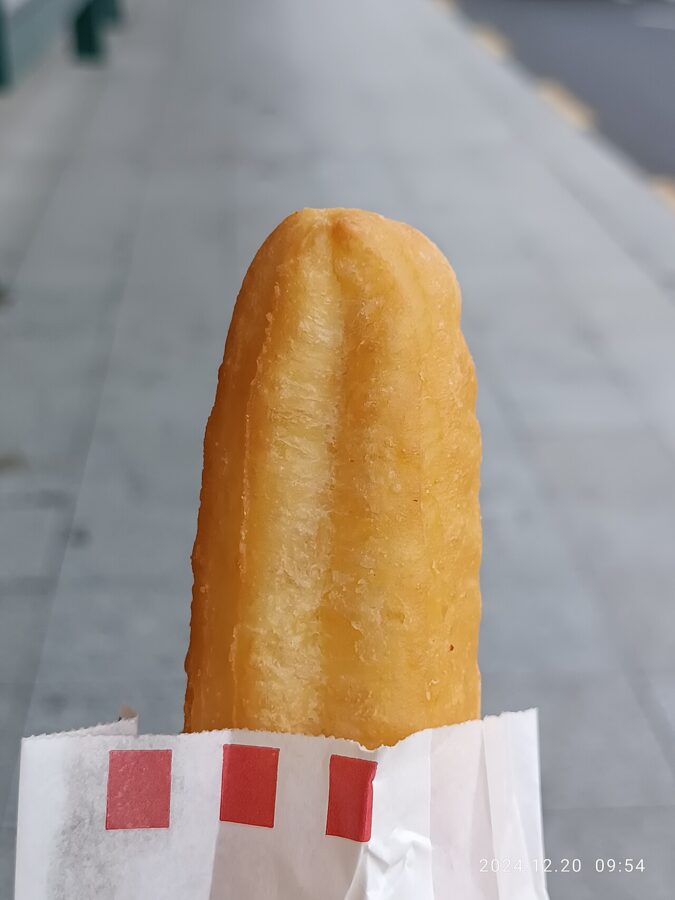
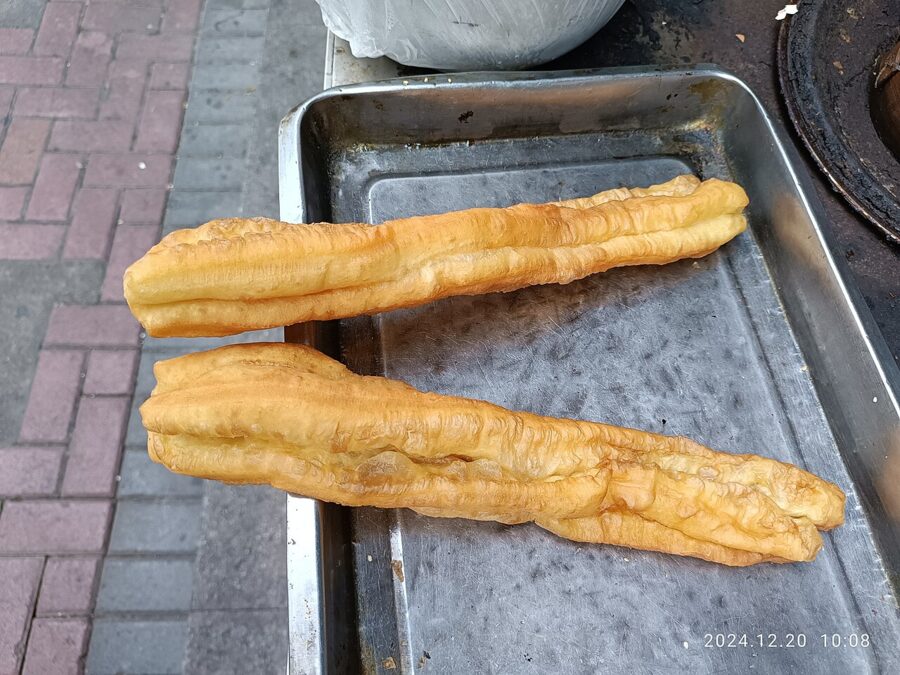
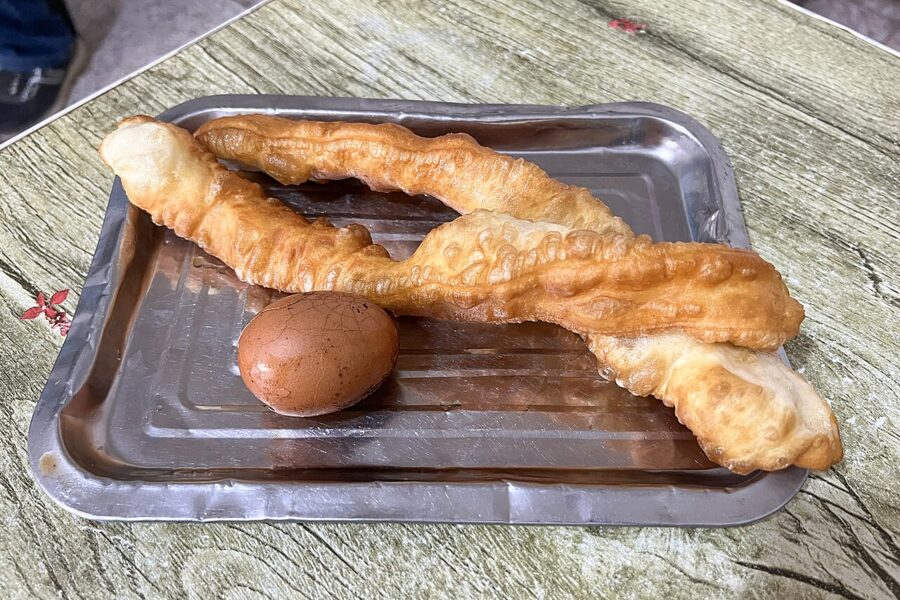
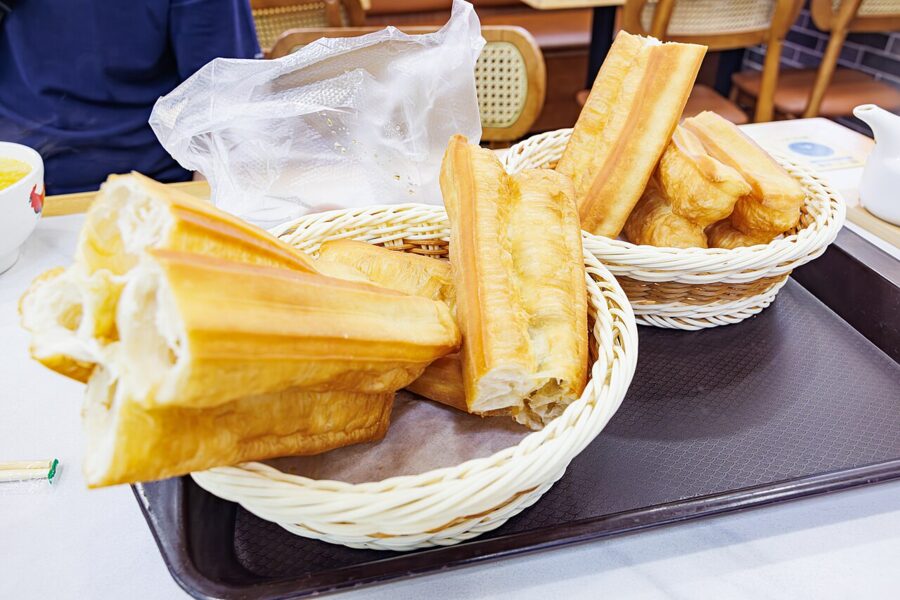
Youtiao (油条) are pairs of dough strips pressed together and dropped into hot oil, where they puff up into a long, hollow, golden stick. Every Chinese child hears the same story about them: that the twin strips are Qin Hui, the Song dynasty minister who had the general Yue Fei killed, and his wife, being fried for it. Whether you believe that or not, they’re best eaten within a few minutes of leaving the oil, when the outside crackles and the inside is still soft.
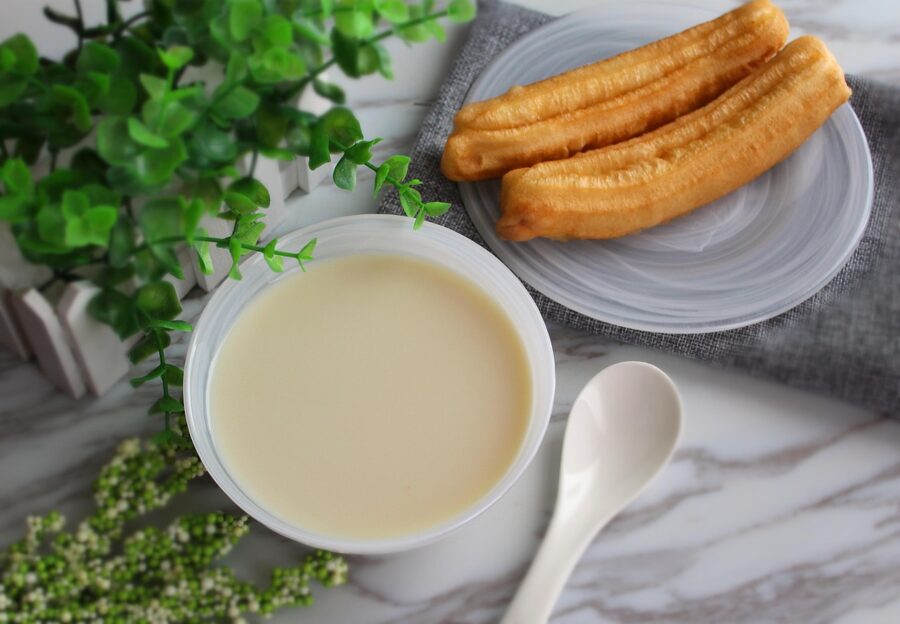
Doujiang (豆浆), soy milk, is ground and cooked fresh at most good shops, and it comes hot or cold. The question you’ll be asked is sweet or salty. In Beijing and most of the north, the default is sweet, with sugar stirred in, and you drink it from the bowl.
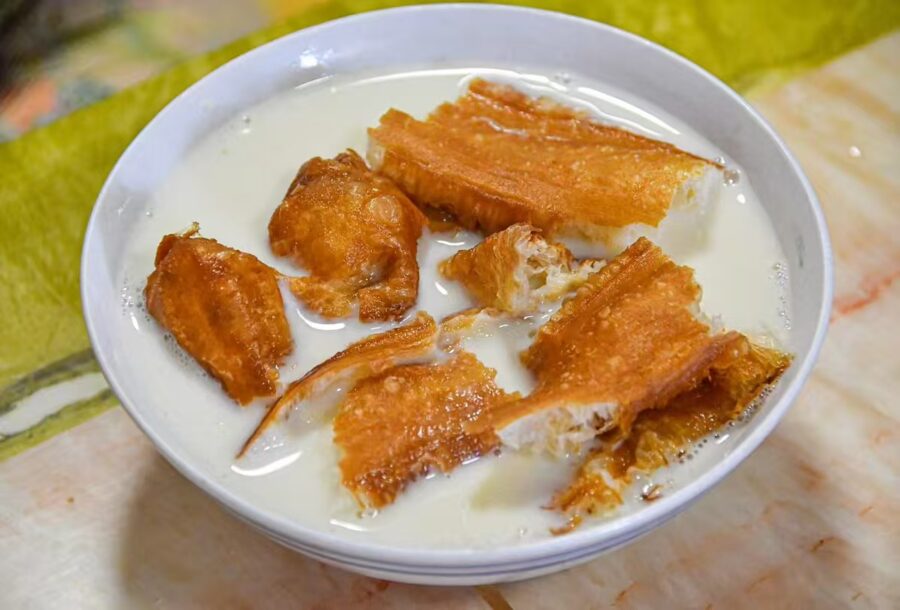
Salty soy milk, xian doujiang (咸豆浆), is the Shanghai and Jiangnan version, and it’s a different dish. The hot soy milk is poured over vinegar or soy sauce, dried shrimp, seaweed, pickled mustard and chopped youtiao, which makes it curdle into soft clouds, and then it gets chilli oil and spring onion on top. It’s more of a soup than a drink. I’d try it once even if the idea sounds odd.
Baozi, mantou and the steamer stack
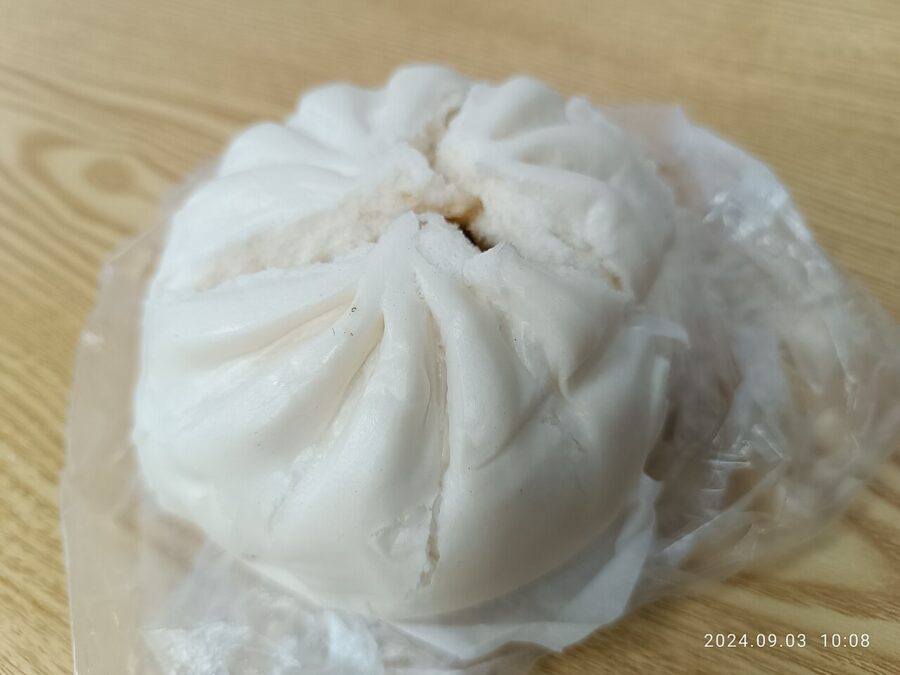
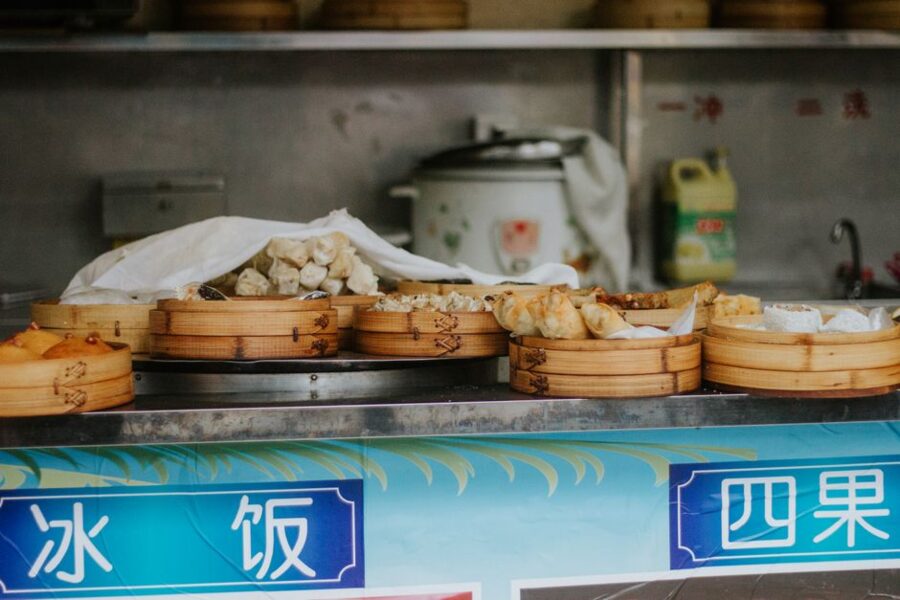
The other northern staple is steamed wheat dough. Baozi (包子) are filled buns, pork and spring onion, cabbage and glass noodle, egg and chive, and they’re sold singly or in baskets for a few yuan each. Mantou (馒头) are the plain version, eaten like bread with pickles or porridge. I’ve covered the difference, and the whole family of filled doughs, in my guide to Chinese dumplings, so I won’t repeat it here.
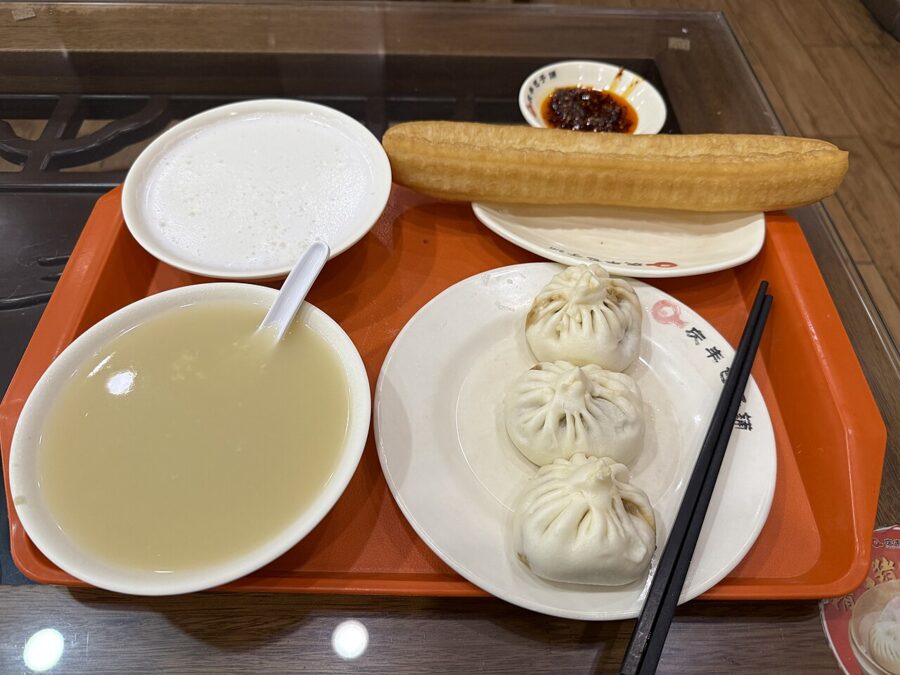
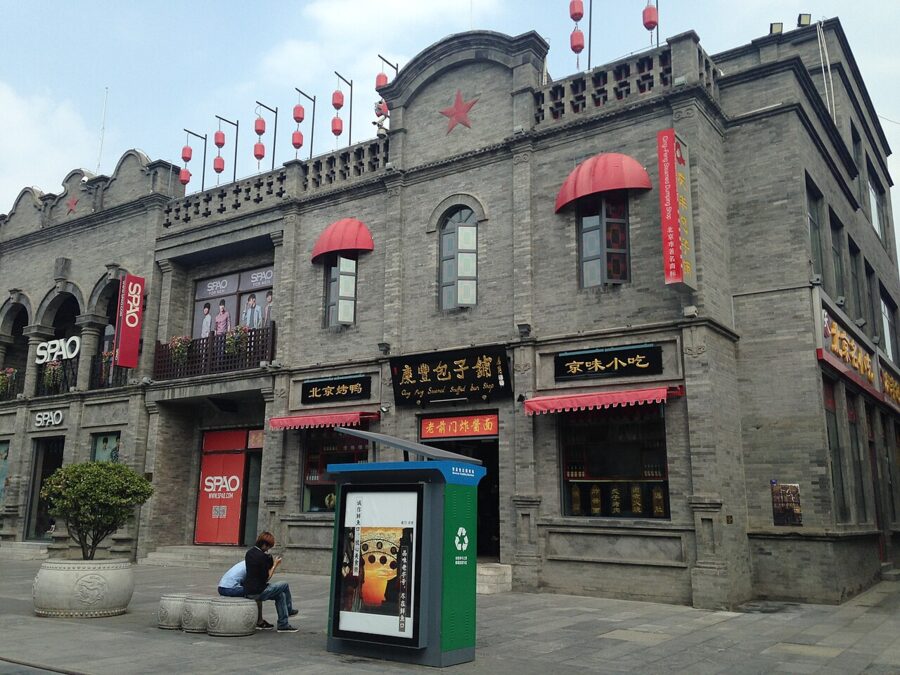
In Beijing, Qingfeng Baozi Pu (庆丰包子铺) is the name everyone knows, a chain of plain, cheap, fluorescent-lit shops that serve buns with soy milk, millet porridge and youtiao from early morning. It isn’t the best bun in the city, but it’s consistent and easy to order in. A small neighbourhood bun shop with a queue of pensioners will usually beat it.
Jianbing guozi, by Tianjin’s rules
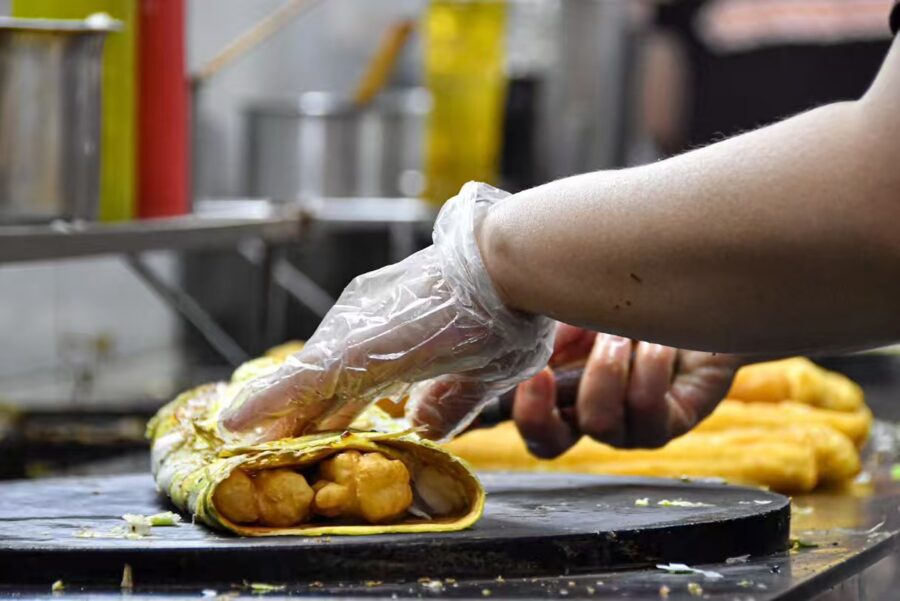
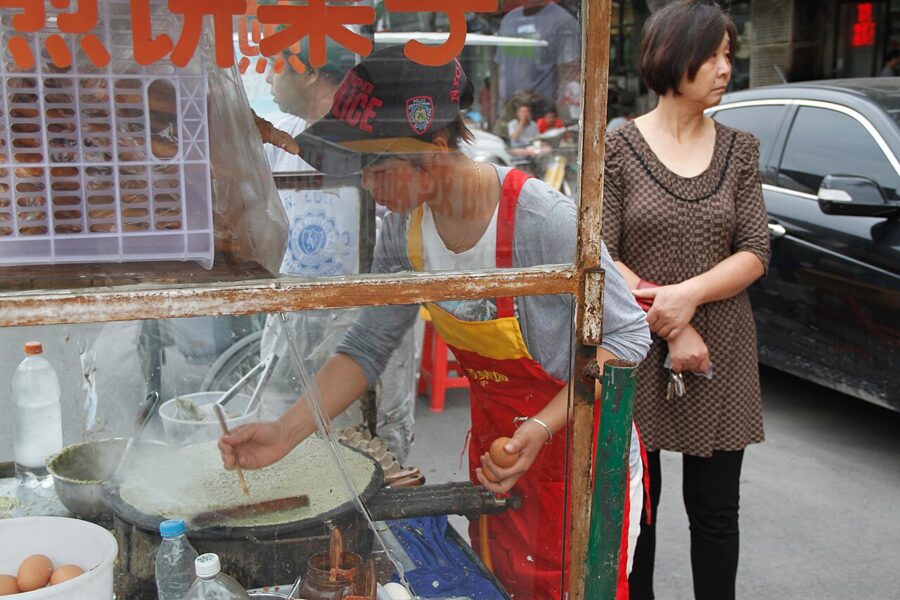
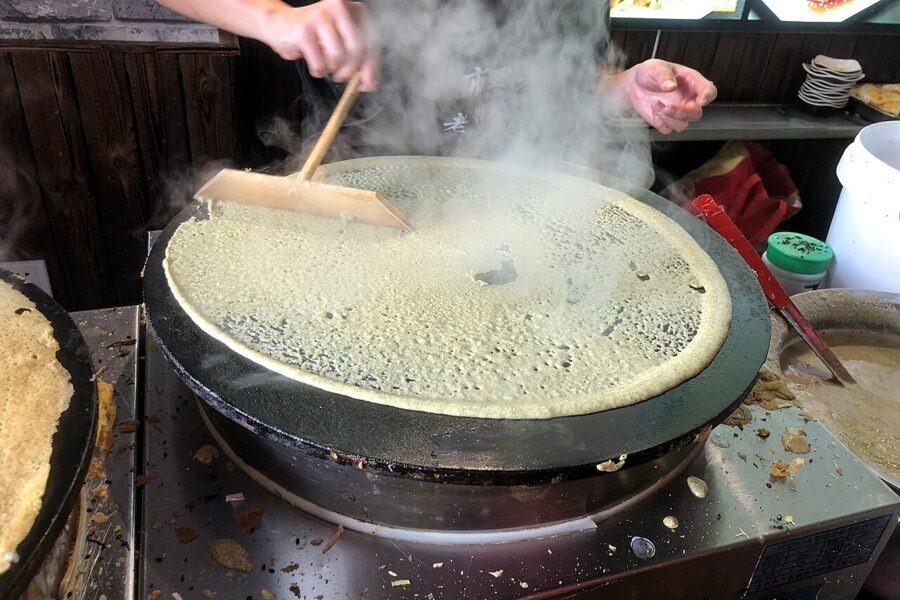
Jianbing guozi (煎饼馃子) is the northern street breakfast most foreigners meet first, and it’s the one Tianjin defends hardest. The batter is mung bean flour, spread thin on a round iron griddle, with one or two eggs broken over it and smeared out. It’s brushed with sweet bean sauce, fermented tofu and chilli, sprinkled with spring onion, and folded around either a stick of youtiao (guozi) or a flat, crisp fried sheet (guobier, 馃篦儿).
That’s it. A Tianjin cook will tell you that ham sausage, lettuce and wheat flour have no business in it, and if you ask for them in Tianjin you’ll get a look. Beijing’s version usually uses a crisp cracker and adds coriander; elsewhere in China anything goes, including bacon, chicken strips and tuna.
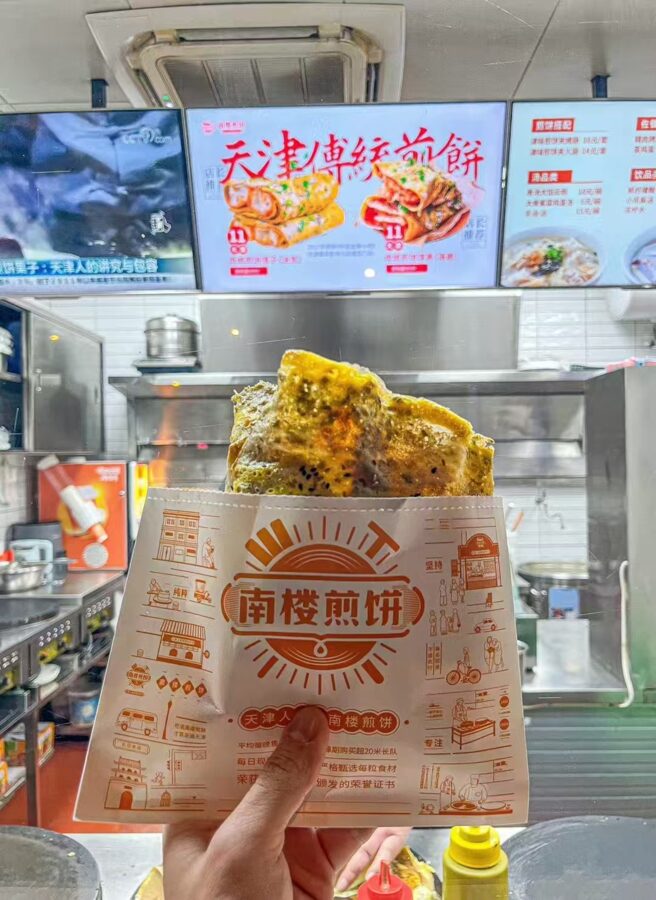
A plain set in Tianjin costs about ¥7–16 depending on the shop, the number of eggs and whether you take the crisp sheet, which costs a little more than a youtiao. Nanlou Jianbing in Hexi District is the famous one, and was busy enough over the October 2026 holiday that the queue ran down the street. Any cart with a queue of locals will do you nearly as well.
Tianjin’s guobacai
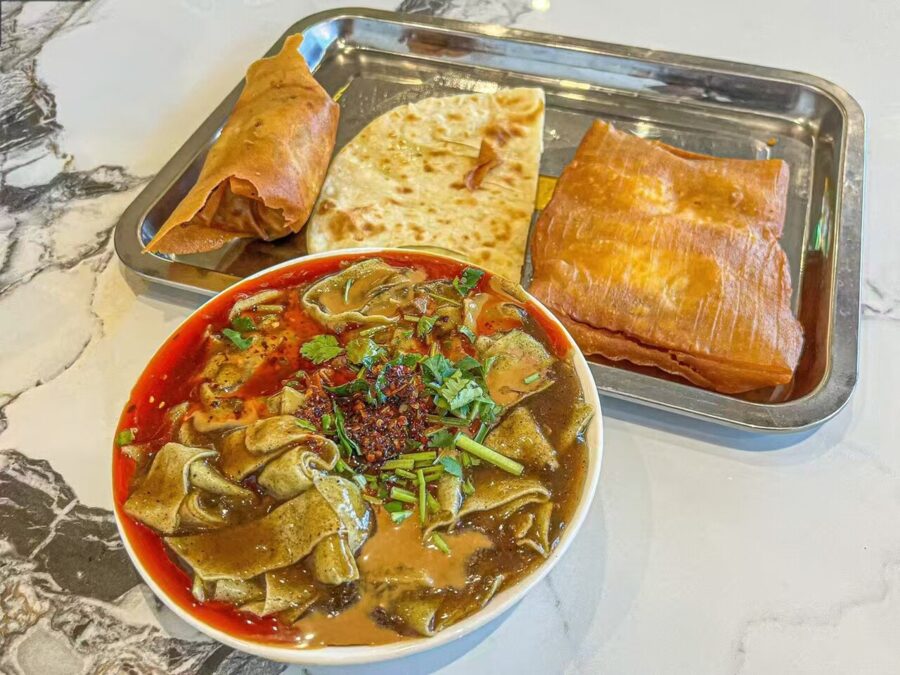
Tianjin’s other breakfast is stranger, and I think better. Guobacai (锅巴菜), which locals say as gabacai (嘎巴菜), is a bowl of thin mung bean crepe cut into strips like willow leaves, drowned in a thick, glossy gravy (lu, 卤) and topped with sesame paste, fermented tofu sauce, chilli oil and coriander. It’s soft, salty, a bit gelatinous, and somewhere between a noodle dish and a thick soup.
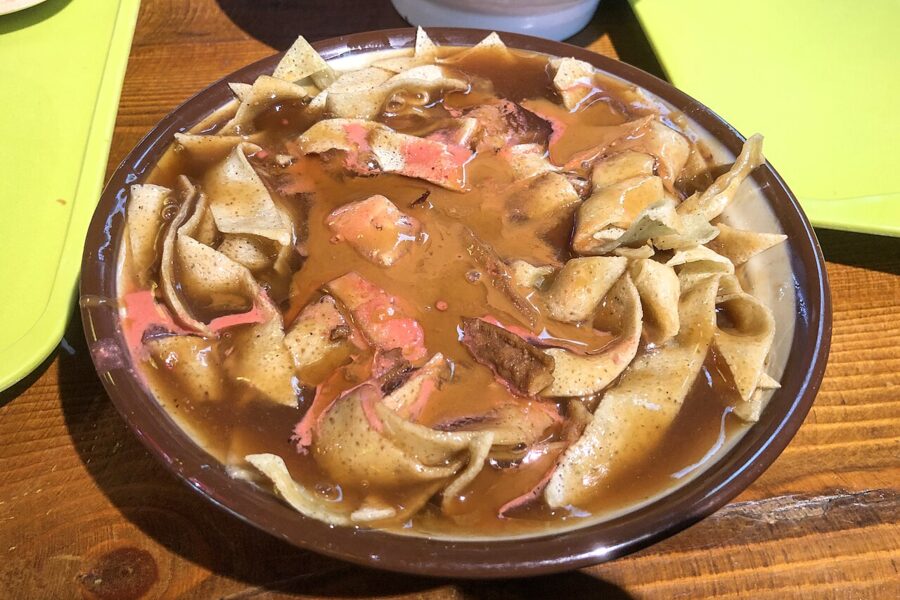
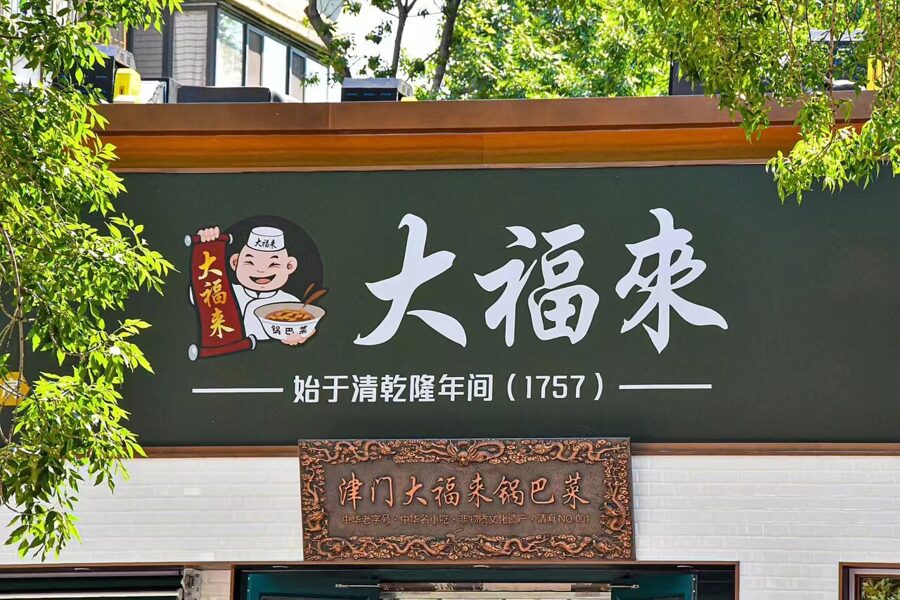
The name you’ll see most is Dafulai (大福来), whose signboard claims the shop began in the Qianlong reign, in 1757, with the usual story about the emperor stopping by. It has several branches, including one on Dahutong commercial street next to the Erduoyan fried cake shop. Budget about ¥15 a head, and go early: locals say the gravy goes thin later in the day.
Beijing’s douzhi and jiaoquan
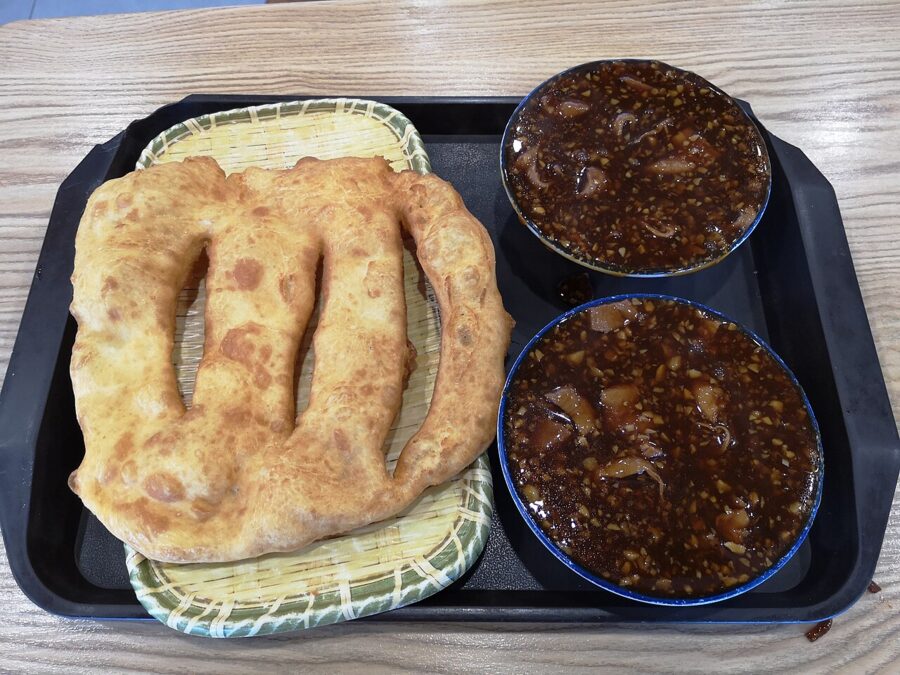
Then there’s douzhi (豆汁), and it needs a fair warning. It’s the fermented, grey-green liquid left over from making mung bean starch, served hot, and it tastes sour, a bit like old dishwater with a faint sweetness behind it. Most people who aren’t from Beijing hate it on the first mouthful, and a fair number of Beijingers hate it too.
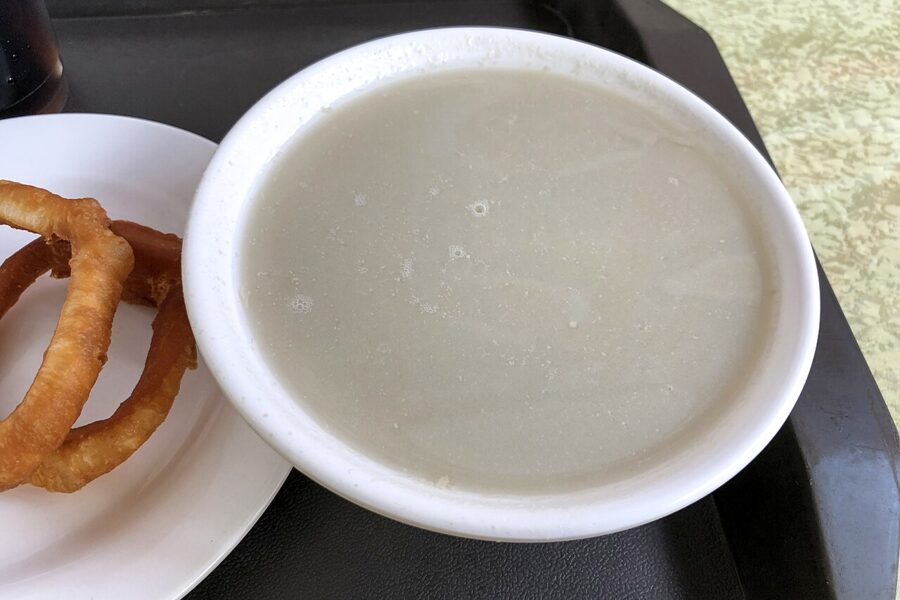
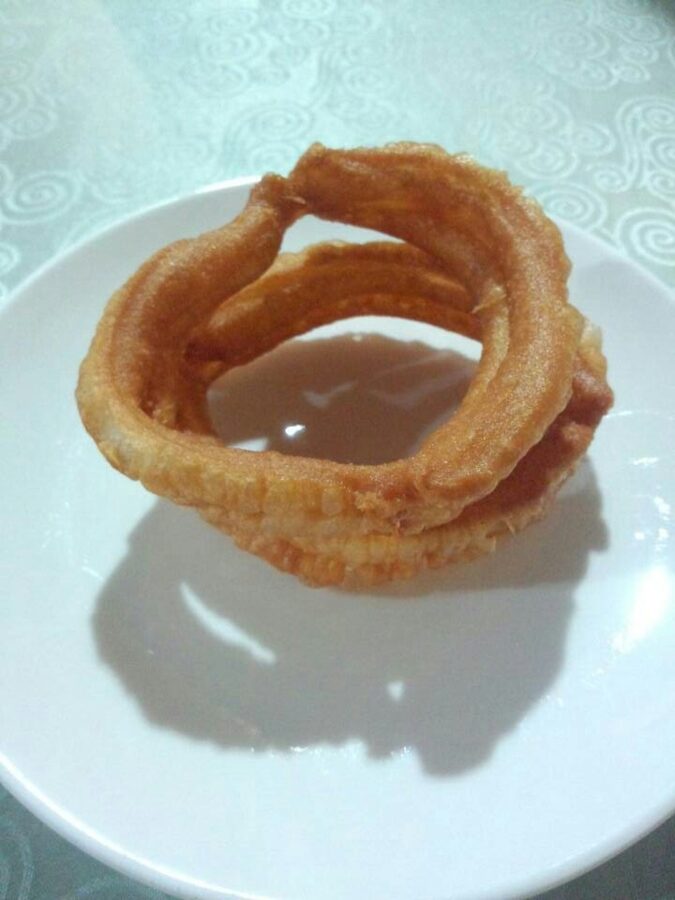
The way to drink it is with its partners. Jiaoquan (焦圈) are small, crisp, deep-fried rings that shatter when you bite them, and the pickles are shredded and dressed with chilli oil. Sip, bite, pinch, repeat, and by the fourth round the sourness starts to make sense. Or it doesn’t, and you’ve lost the price of a coffee.
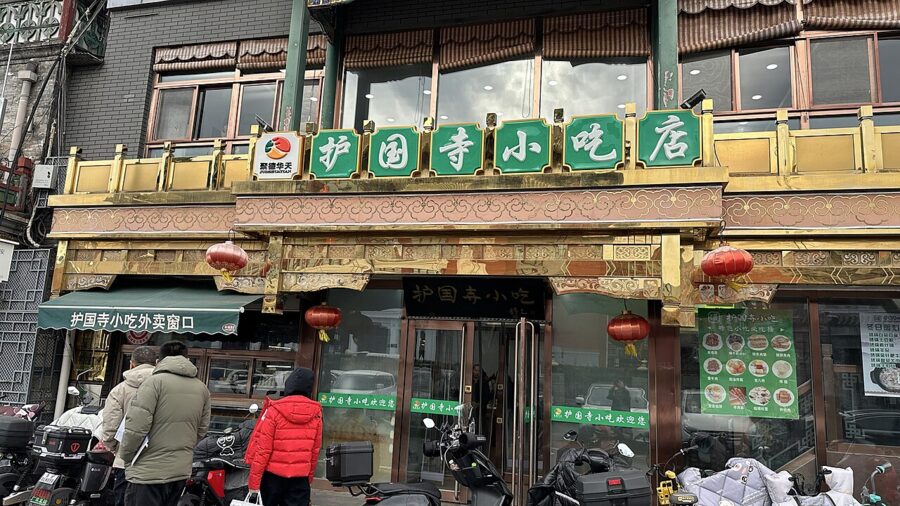
Huguosi Snacks (护国寺小吃), the old snack brand on Huguosi Street in Xicheng, is the classic place, and a douzhi with jiaoquan and pickles costs about ¥8 there in 2026. Yin San Douzhi (尹三豆汁) near the Temple of Heaven is the other name people queue for. On tourist streets like Qianmen and Nanluoguxiang, the same set can cost several times as much, and it won’t taste any better.
Chaogan, griddle breads and savoury tofu pudding
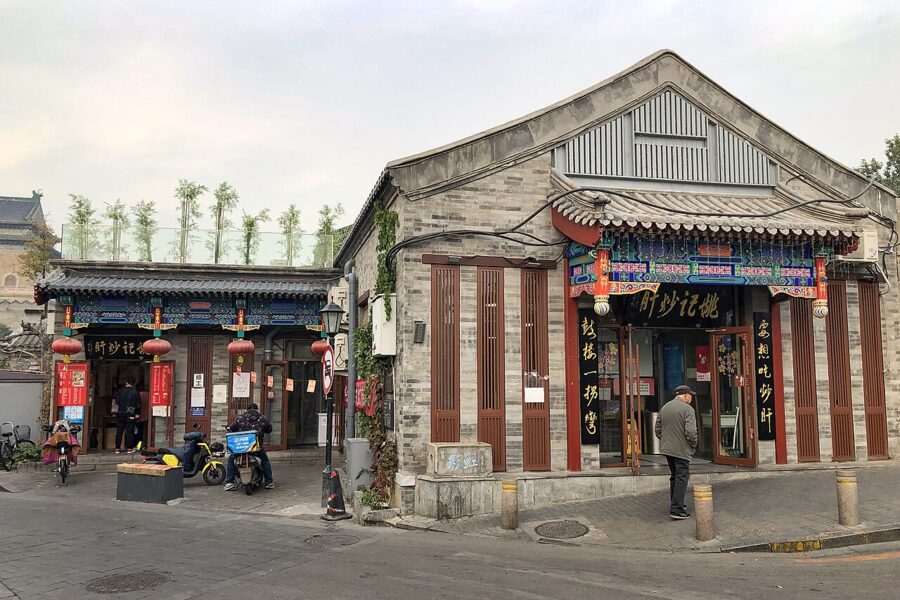
Chaogan (炒肝) is the other old Beijing breakfast with a reputation. Despite the name (stir-fried liver), it’s a thick, dark, garlicky gravy with pig liver and intestine, eaten with small pork buns. The saying goes that if you want chaogan, you turn the corner at the Drum Tower, and Yaoji Chaogan (姚记炒肝) at Gulou, still busy in 2026, is the corner people mean.
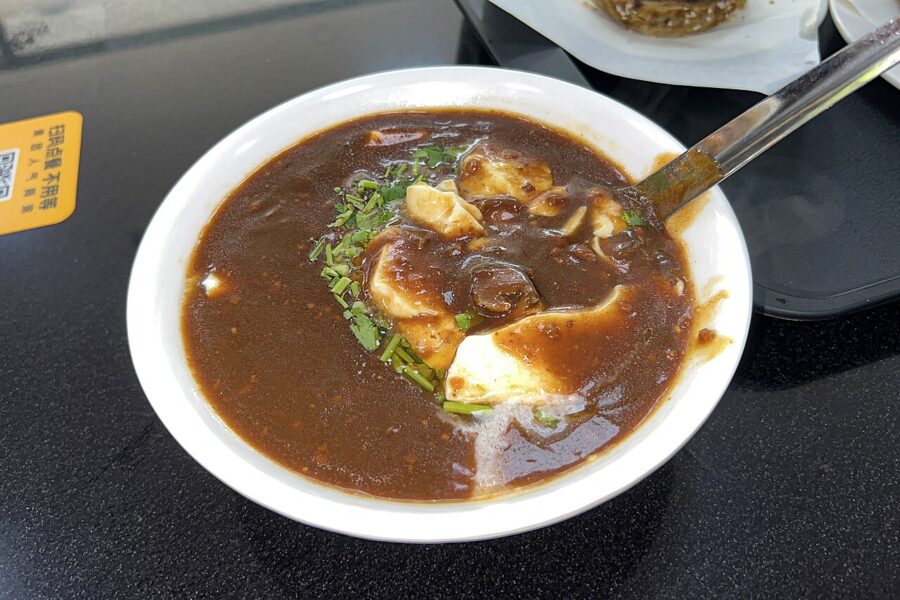
Doufunao (豆腐脑), soft tofu pudding, splits the country the same way soy milk does. Northern bowls come with a salty gravy, often with wood ear and day lily buds, and you eat them with a youtiao. Southern bowls, usually called douhua (豆花), come sweet with syrup, ginger or peanuts. People argue about this online with a passion they usually save for football.
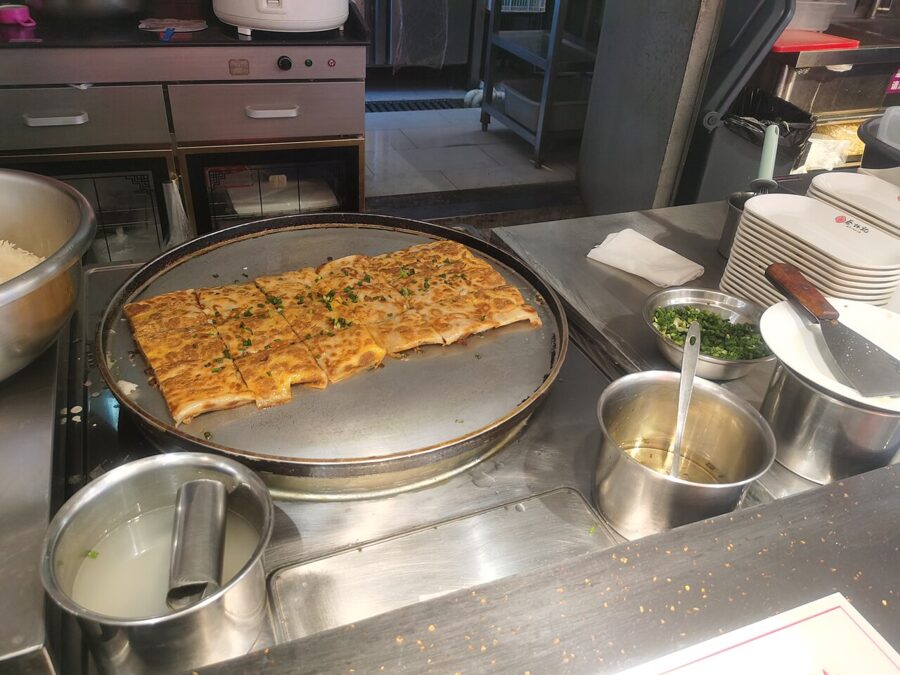
Then the griddle breads. Laobing (烙饼), layered flatbread cooked on a flat pan, is sold at northern counters by weight and cut to order with a cleaver, and it’s eaten with eggs, pickles or a bowl of porridge. Youbing (油饼) is its deep-fried cousin, and shaobing (烧饼) is the sesame-topped baked one.
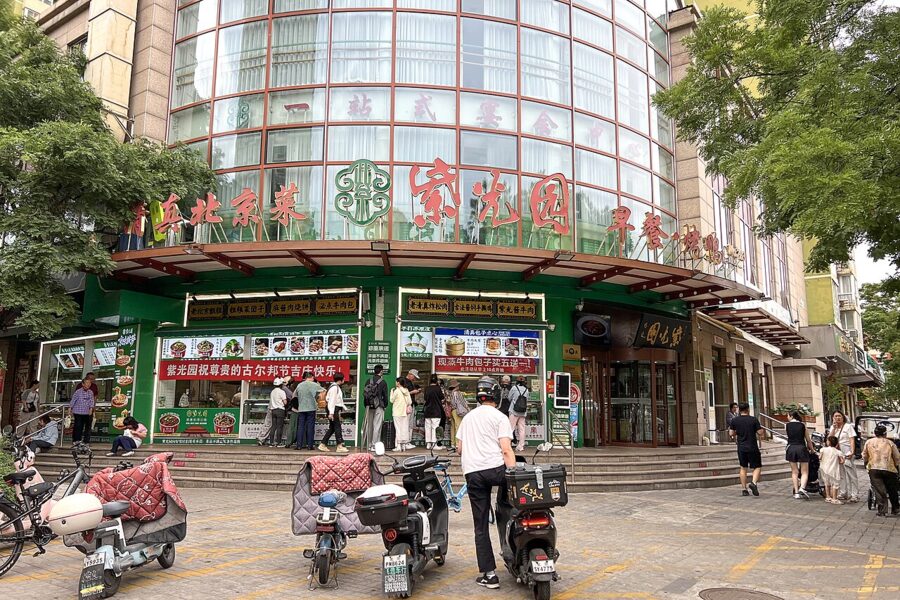
Zi Guang Yuan (紫光园), a halal Beijing brand with a lot of branches, is where I’d go to try several of these at once. Its main shop at the corner of Niujie and Nanheng West Street does breakfast from 06:00 to 10:00, with doufunao, hot and sour soup, millet porridge and more, and it’s about 800 m from exit D2 of Niujie station on Line 19. Arrive before 09:00, when some things start to run out.
Shanghai’s four heavenly kings
Shanghai has a name for its classic breakfast: the si da jingang (四大金刚), the “four heavenly kings”, after the four guardian figures at the gate of a Buddhist temple. They’re da bing (大饼), youtiao, ci fan (粢饭) and soy milk, and for decades they were what a Shanghai worker ate on the way to the factory.
The four have been fading for years as old lanes were cleared and small shops priced out, which is why Shanghai papers now run stories every time someone brings them back. In 2026 you’ll still find them at neighbourhood shops and at chains built around the idea.
Da bing and youtiao
Da bing is a flat, chewy sesame bread baked on the inside wall of a barrel oven, in a sweet version and a salty one with spring onion. It’s not the dry northern shaobing. The classic combination was one or two da bing folded around a youtiao, which is as much bread as a person can eat before 08:00.
Ci fan tuan and salty soy milk
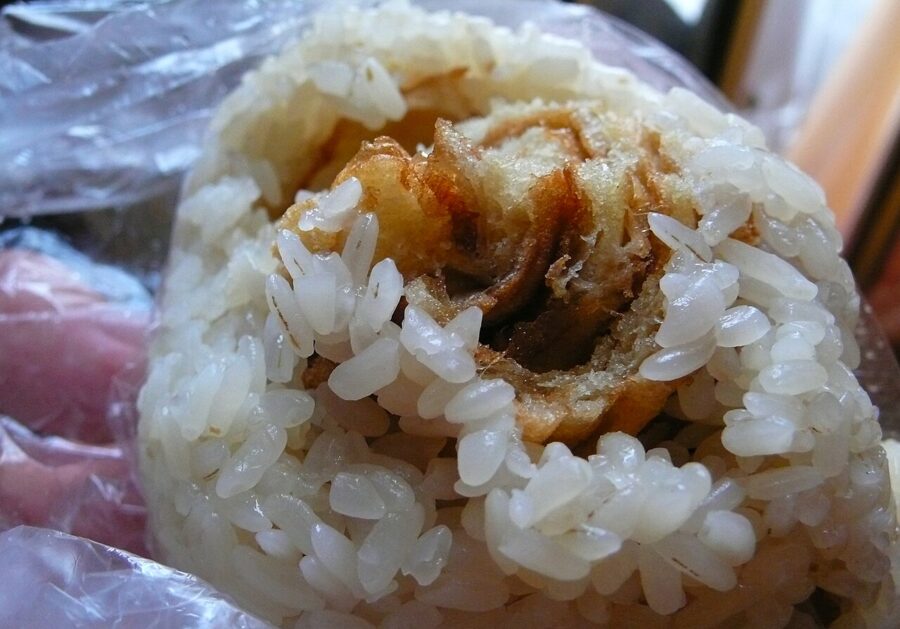
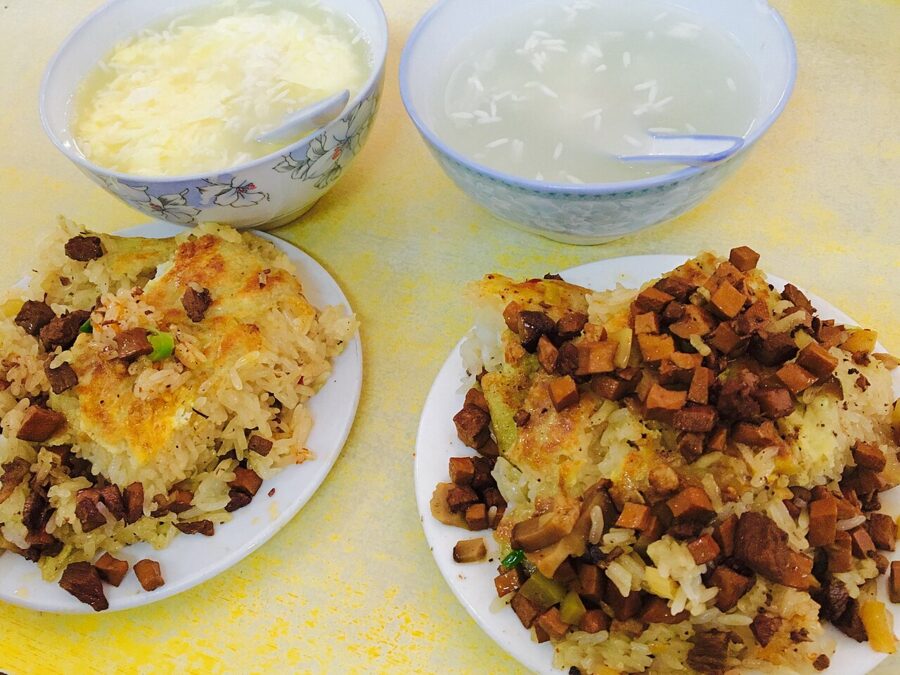
Ci fan tuan (粢饭团) is the one I’d make a special trip for. Steamed glutinous rice is spread on a cloth, filled with a broken stick of youtiao, pork floss and pickled mustard (or sugar, for the sweet version), and squeezed into a fat roll with the cloth. It’s ¥5–10 at most places, and the youtiao inside stays crunchy for about five minutes, so eat it straight away.
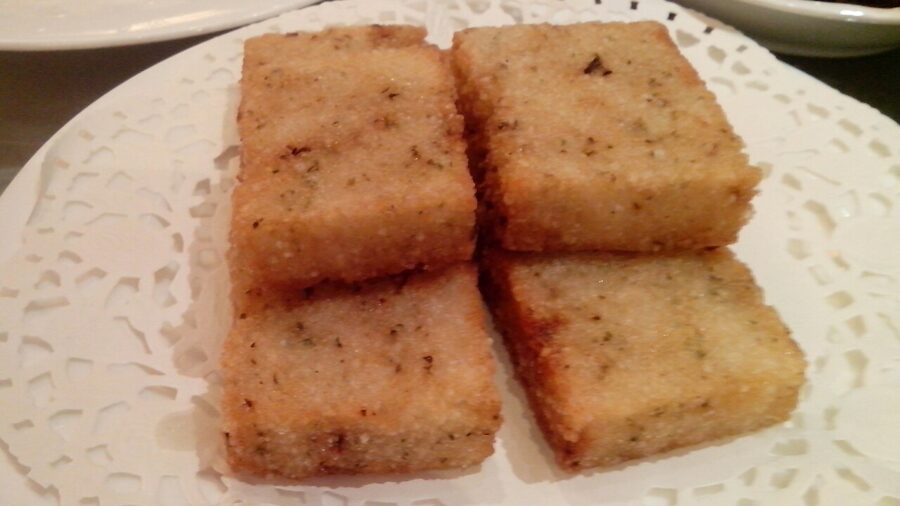
Ci fan also comes as cifangao (粢饭糕), a rectangle of the same rice pressed flat and deep-fried until it’s crisp outside and soft inside. And the soy milk, in Shanghai, is the salty, curdled version with chilli oil I described above. With a youtiao torn into it, it’s a full breakfast for small change.
Where to find the four kings
Xiaotaoyuan (小桃园), a Shanghai chain built around the four kings, is the easy option: branches on Fuxing Middle Road, Jiangning Road, Zhonghua Road and elsewhere, with a big bowl of salty soy milk and an average spend of about ¥15–20. Neighbourhood shops near wet markets are cheaper and often better, so if you pass one with a queue at 07:30, join it.
The city’s most famous breakfast pancake is a lesson in why I don’t name stalls lightly. A Da’s scallion pancakes (阿大葱油饼) drew queues of two hours a decade ago, reopened on Shimen No.2 Road in April 2025, and closed again on 31 March 2026 when the building went in for renovation. The family says it will reopen somewhere else; until it does, ignore the old directions online.
Sheng jian and wontons
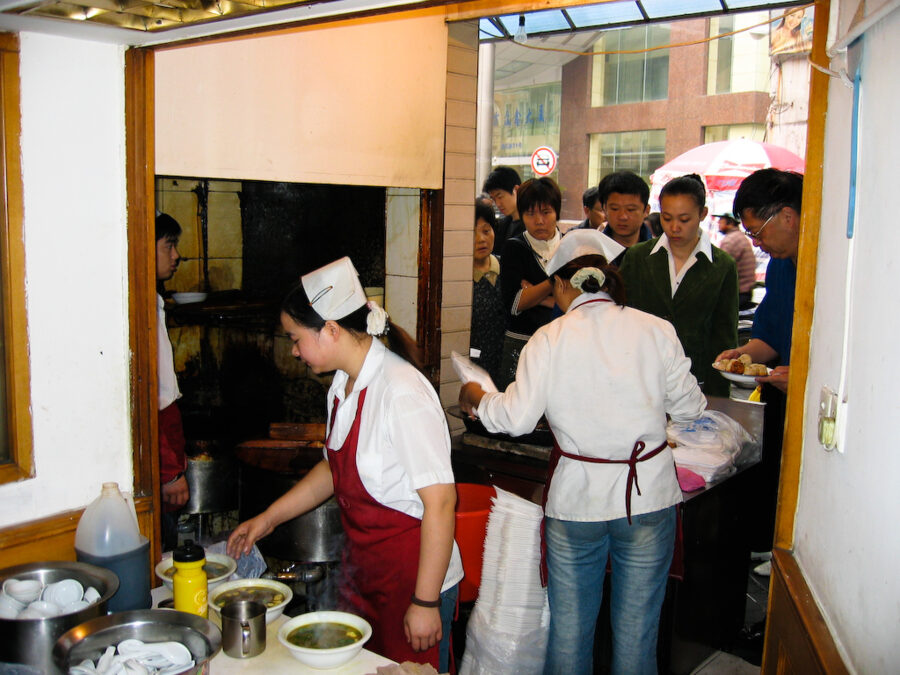
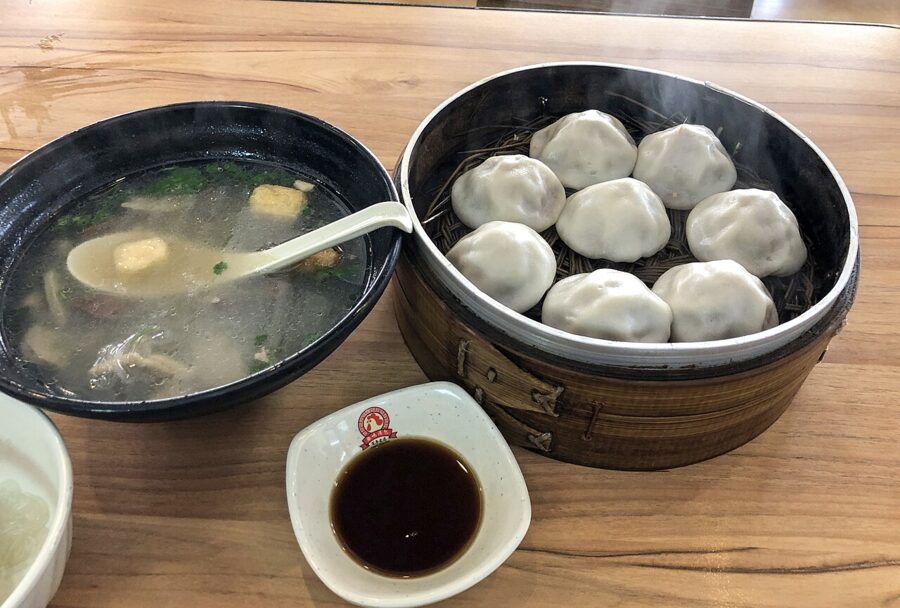
The other Shanghai breakfast is sheng jian (生煎), pork buns pan-fried until their bases are crisp, sold four to a portion, usually with a bowl of small wontons in clear broth. Da Hu Chun (大壶春) at 136 Sichuan Middle Road, about 5–8 minutes’ walk from exit 3 of Nanjing East Road station (Lines 2 and 10), opens from about 07:00. The buns, and the soup dumplings people confuse them with, have their own chapter in my xiaolongbao guide.
At home, a lot of older Shanghainese still eat paofan (泡饭), last night’s rice in hot water with pickles, fermented tofu and a salted egg. You won’t find it in shops much, and it’s not a reason to visit, but it explains why the salty side of a Shanghai breakfast is so strong.
The south eats rice
Cross into Guangdong and the morning grain changes from wheat to rice. Breakfast becomes congee, steamed rice rolls and rice noodles, and the pace changes too: in Guangzhou, breakfast can be a two-hour sit-down with tea, and nobody thinks that’s strange.
Cantonese congee and cheung fun
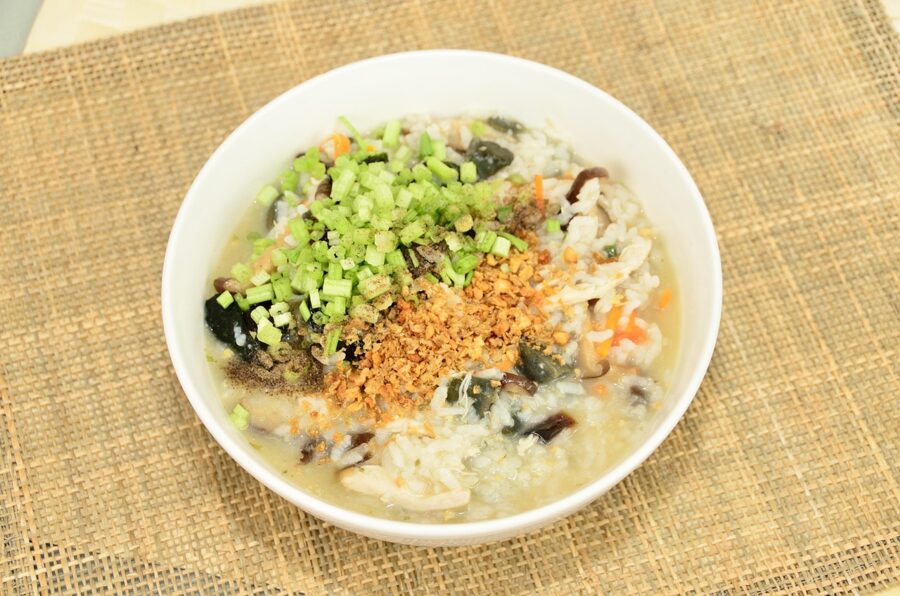
Cantonese congee (粥, jook) is rice cooked until the grains break down into a smooth base, then finished with fresh ingredients at the last minute. The breakfast standard is century egg and lean pork (皮蛋瘦肉粥), with a youtiao on the side for dipping. I’ve gone through the varieties, from scholar’s congee with pork and liver to the sampan congee of Liwan, in my Cantonese food guide.
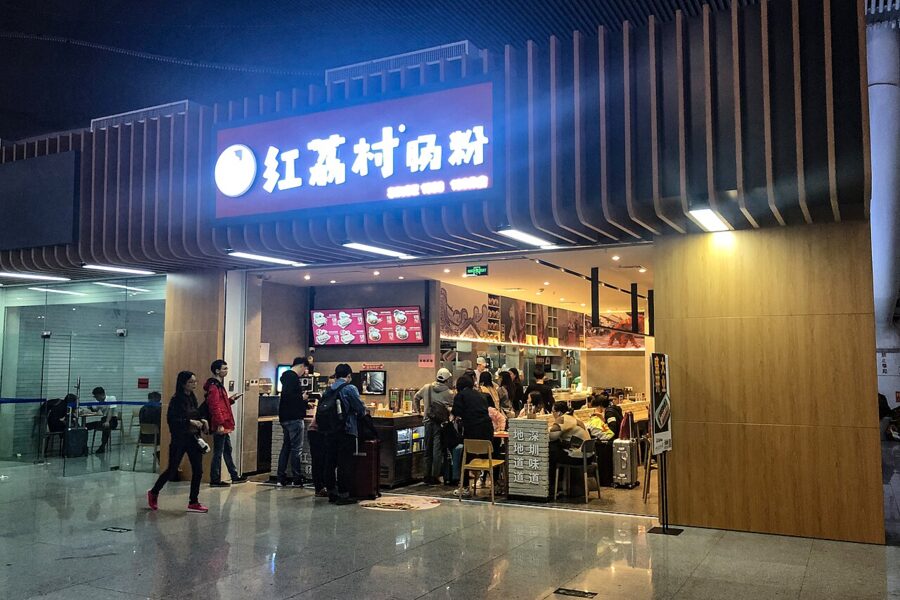
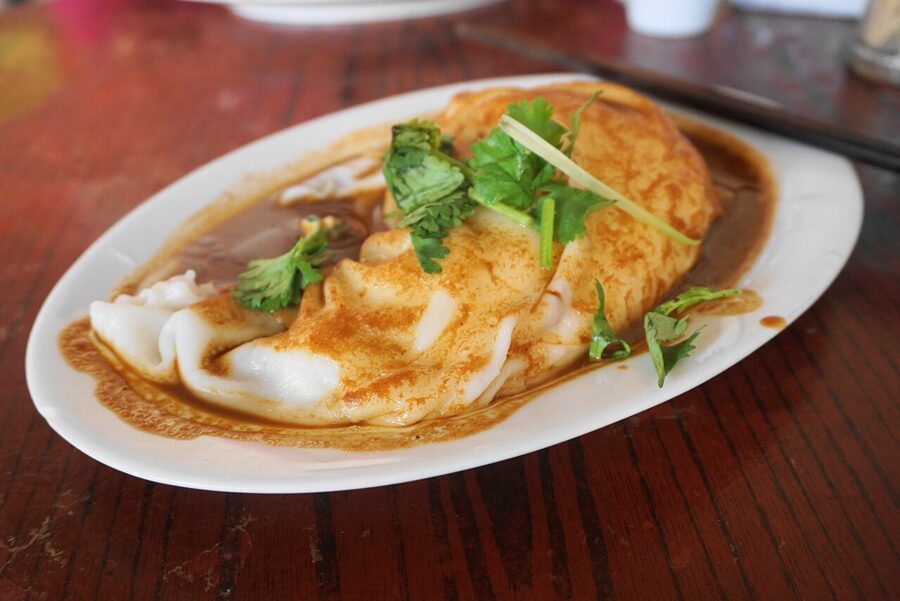
Cheung fun (肠粉) is the other half. A thin rice batter is steamed on a tray, rolled round egg, beef, barbecued pork or prawns, cut and dressed with a sweet soy sauce. Yinji (银记肠粉店), founded in 1958, is the chain Guangzhou people point you to first, with branches across the city including one on Shangjiu Road in Liwan; expect to spend ¥10–25 a person.
Morning tea, in a paragraph
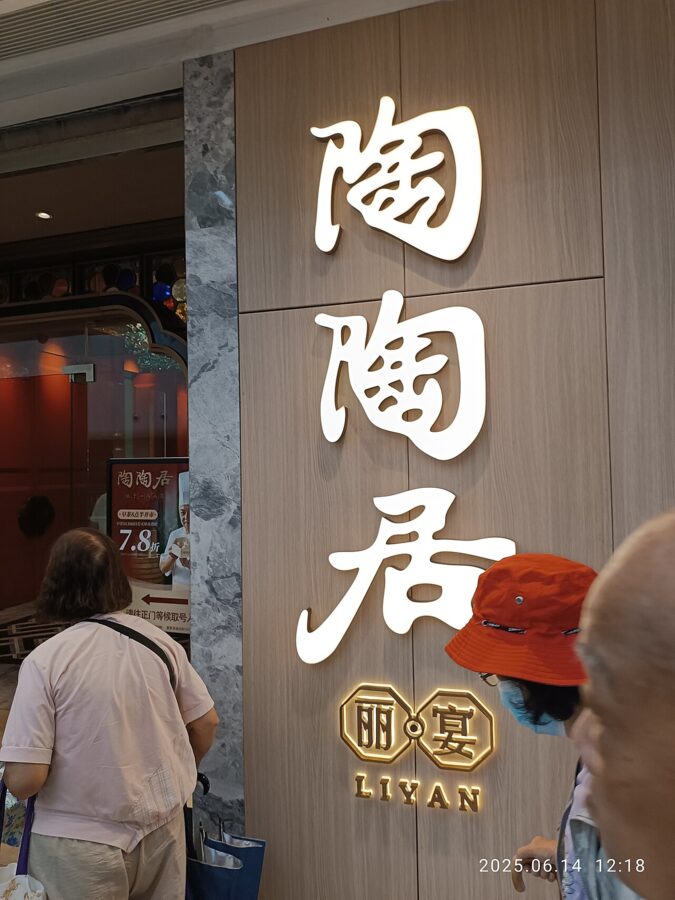
Morning tea, yum cha (饮茶), is Guangzhou’s slow breakfast: a pot of tea and dim sum, traditionally “one pot, two pieces” (一盅两件), at a teahouse that fills from about 07:00 with retirees reading the paper. The city took it seriously enough to pass a law about it, with the Guangzhou Morning Tea Heritage Protection Regulations in force since 1 May 2026. Taotaoju (陶陶居) on Dishifu Road is the famous old house, and the pot on the table is often pu-erh. The classic dishes, from har gow to char siu bao, are the same ones in my dim sum guide.
Hong Kong, under an hour from Guangzhou by high-speed train, does the same tea-house breakfast and adds its own: the milk tea, macaroni soup and pineapple bun of the cha chaan teng. It’s a separate world, and a separate guide.
Chaoshan’s white congee
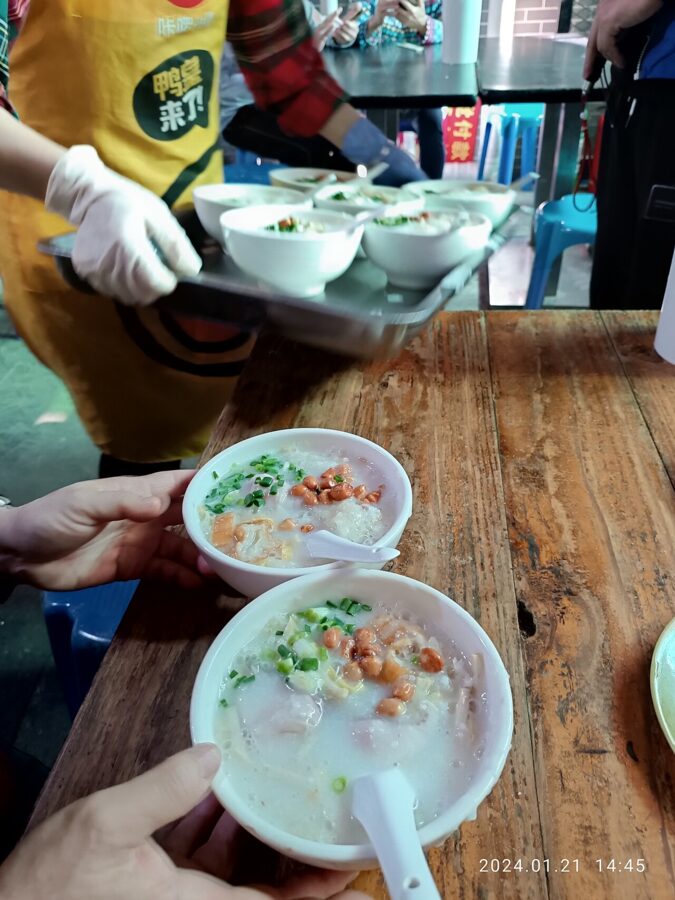
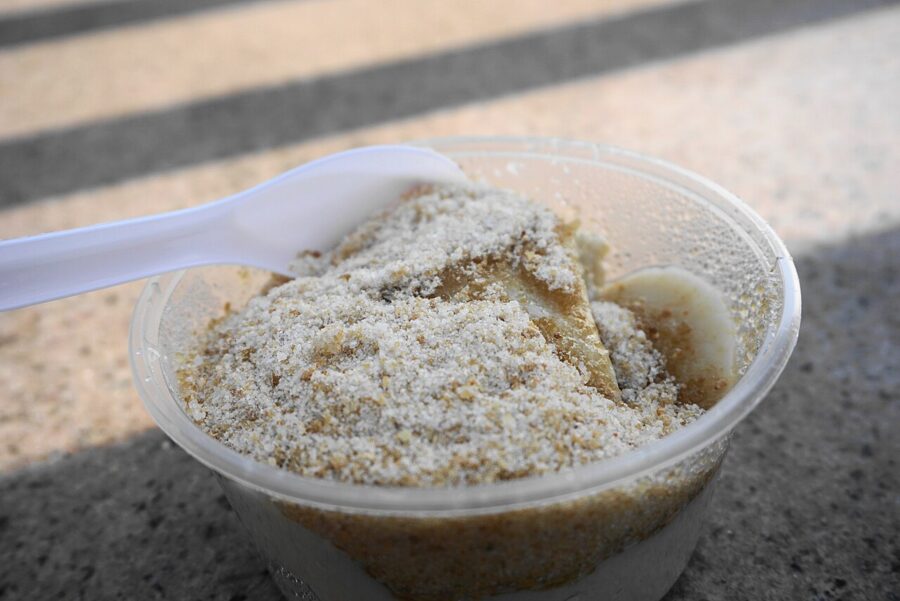
East along the coast, in the Chaoshan cities of Shantou and Chaozhou, breakfast is baimi (白糜), plain rice congee cooked thinner than the Cantonese kind, with the grains still visible. The point is the side dishes, a spread of salty things called zaxian (杂咸): preserved radish, olive-leaf mustard greens, salted egg, pickled vegetables, a little fish or braised peanut. The rice is a vehicle; the pickles are the meal.
The other Chaoshan breakfast is a bowl of kway teow soup, which is where the region’s famous beef turns up first thing, and Chaozhou has its own rice rolls and kway chap, a dark rice-sheet soup with braised pork.
Shenzhen, the sampler
And Shenzhen, where this started, is the one city in the south that doesn’t eat one thing. A new city of people from everywhere, it has Hubei noodle counters next to Chaoshan congee next to northern bun shops, often at the same metro exit. If you’re only in Guangdong for a few days and want to try the regional breakfasts, Shenzhen’s residential districts will give you a surprising number of them in one walk.
Noodles before nine
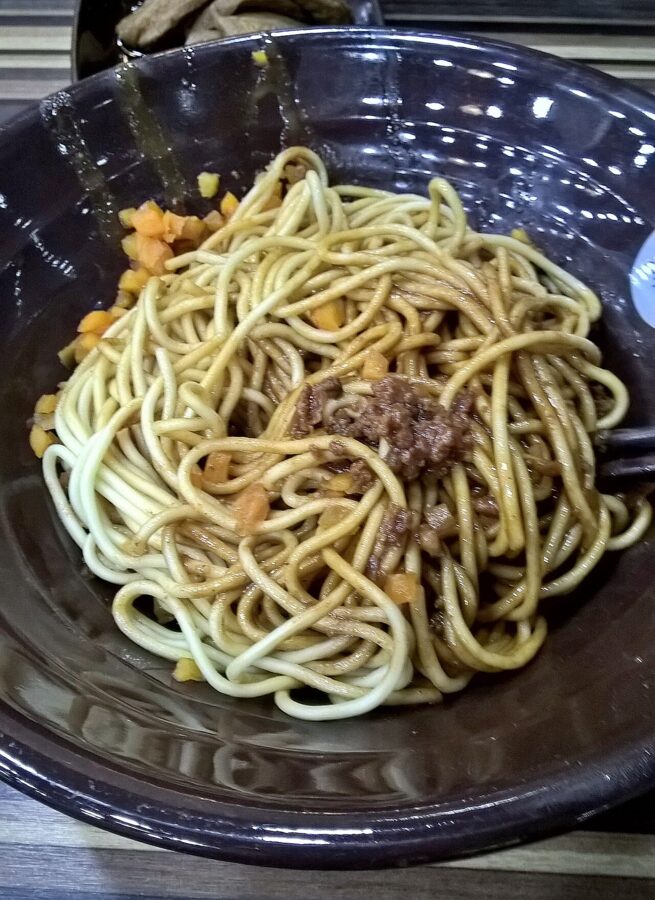
For a big band of central and western China, breakfast is a bowl of noodles. It’s quick, it’s hot, and in cities like Wuhan, Chongqing and Lanzhou, it’s the default. I’ve covered the breakfast noodles in full in my Chinese noodles guide, so this is the short version, city by city.
Wuhan: guozao
Wuhan has its own verb for eating breakfast out, guozao (过早), and the noodle that goes with it is reganmian (热干面), hot dry noodles: alkaline noodles tossed with sesame paste, soy, pickled long beans, diced radish and spring onion. They’re thick, sticky and very filling, and people eat them walking, stirring as they go. Many community shops still charge ¥5–6 a bowl in 2026; well-known brands such as Cai Linji (蔡林记) cost a few yuan more.
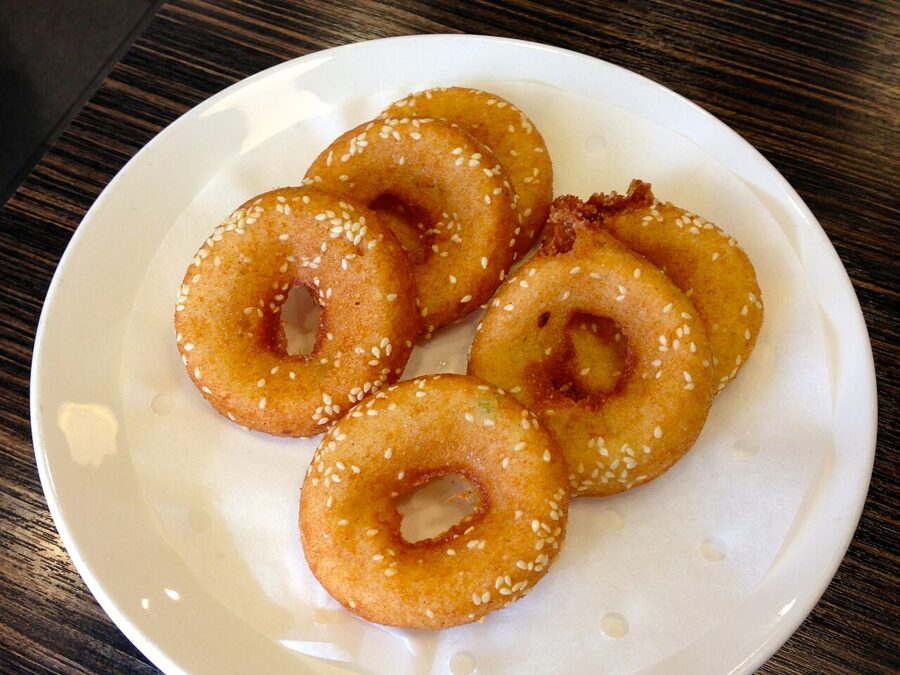
Wuhan’s other breakfasts are doupi (豆皮), mianwo (面窝), a fried ring of rice-and-soy batter that’s crisp at the edge and soft in the middle, and danjiu (蛋酒), sweet rice wine with egg stirred through it. A bowl of noodles and a cup of danjiu is the standard order.
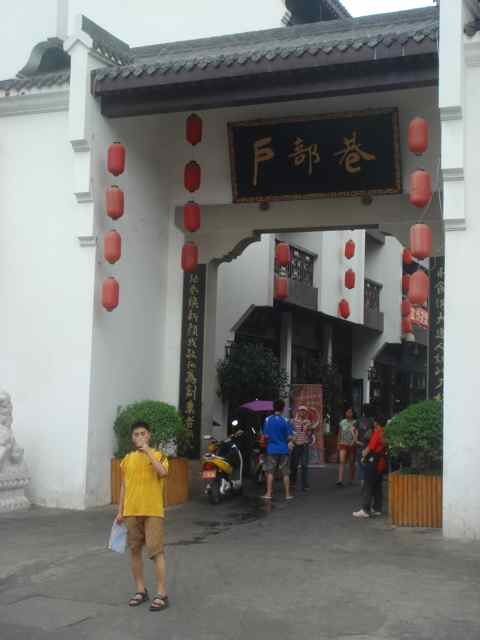
Hubu Xiang (户部巷) in Wuchang is the famous breakfast street, and it’s worth a look if you’re nearby. But it’s a tourist snack street now, with higher prices and food made for photos, so don’t make it your only Wuhan breakfast.
Chongqing: xiaomian
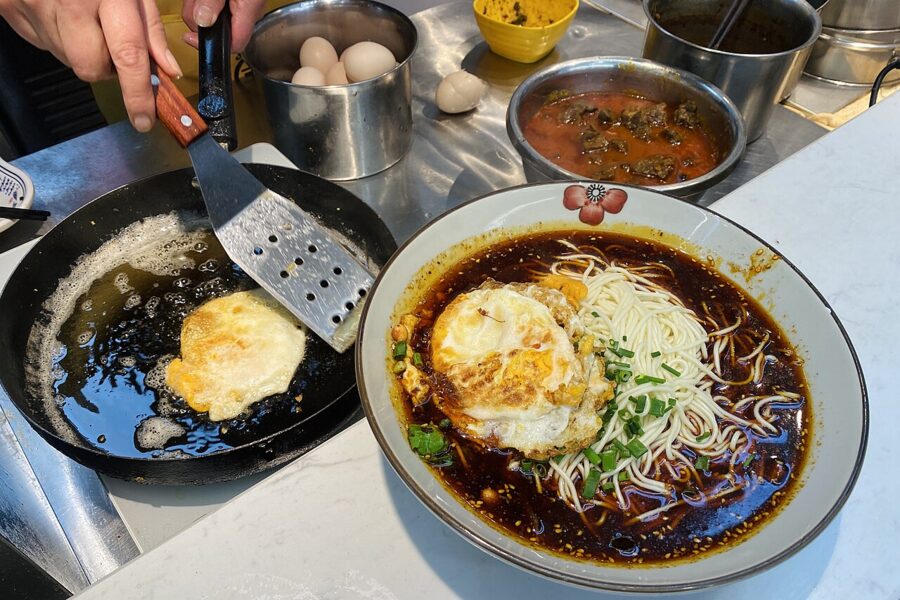
Chongqing’s breakfast is xiaomian (小面), “small noodles”: wheat noodles in a broth built from chilli oil, Sichuan pepper, garlic water, preserved vegetable, peanuts and pork fat, with greens on top. The plain red version has no meat; wanza (豌杂), with mashed yellow peas and minced pork, is the classic upgrade. Two liang costs about ¥8–15 in the city centre in 2026.
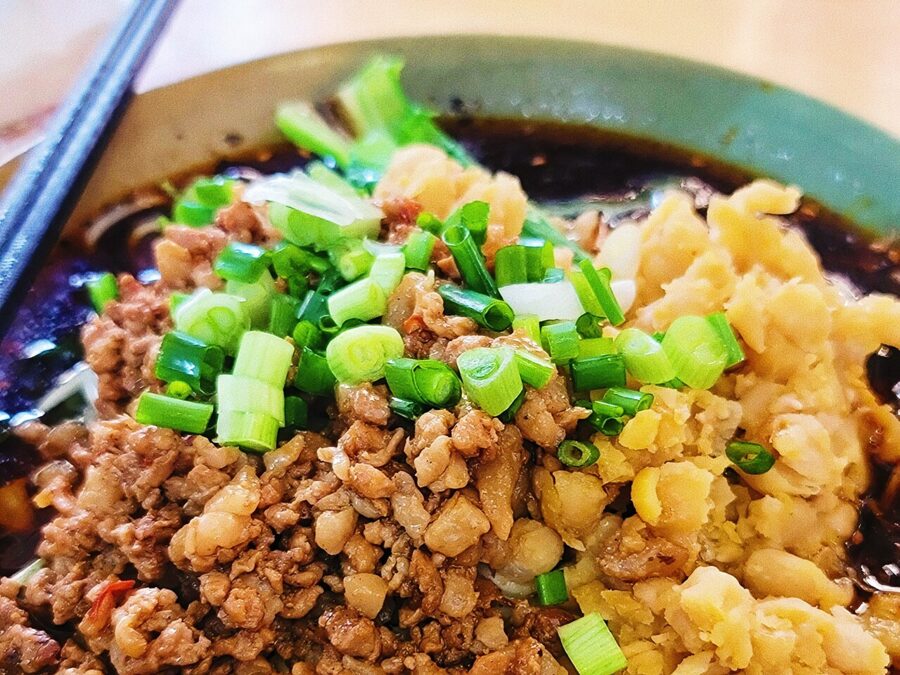
Huashi Wanza Mian (花市豌杂面) on Minsheng Road (民生路), near Jiefangbei in Yuzhong, is the place people queue for, especially after 08:00. Any shop with low stools on the pavement and a crowd of office workers will do you nearly as well.
Guilin: mifen by weight
In Guilin, breakfast is Guilin rice noodles, mifen (米粉), usually lucai fen (卤菜粉): blanched rice noodles with a ladle of braised sauce, slices of braised meat, fried soybeans and peanuts, and a counter of pickles and chilli you help yourself to. It’s sold by weight, and the board is priced in liang. Two liang at a local shop is about ¥4–7.
Watch for shops that also have a “per bowl” board at ¥15 or more. In Yangshuo there have been rows over shops charging visitors nearly double for the same two liang, so look for the board priced by weight and order from that.
Lanzhou: beef noodles at dawn
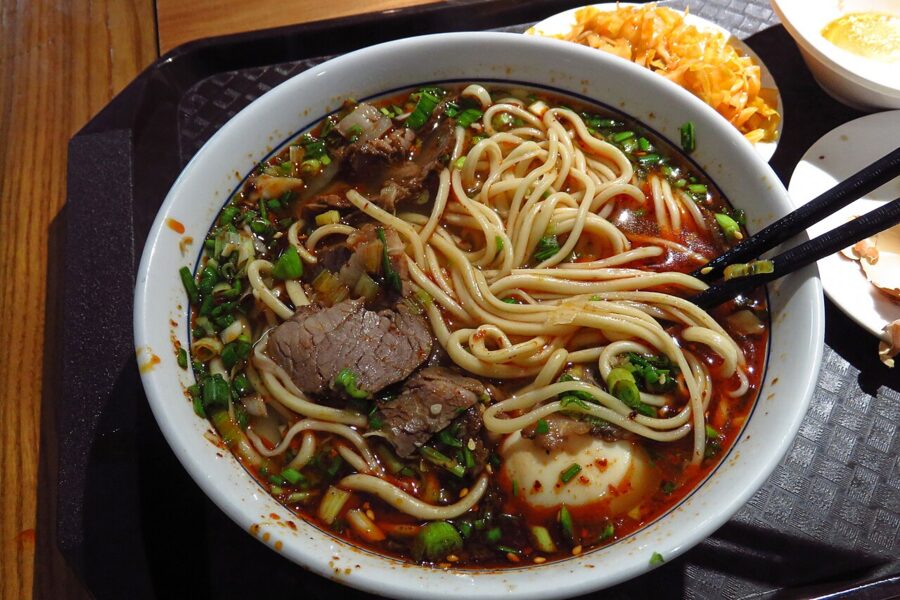
Lanzhou eats its beef noodles (牛肉面) for breakfast, and the city keeps the price down hard: a basic bowl is ¥8 at nearly every local shop in 2026, and a full set with extra beef and an egg runs to about ¥15–20. Shops open around 06:30. You choose the width, from hair-thin maoxi (毛细) to broad dakuan (大宽), and the cook pulls it while you watch.
Outside Gansu, the “Lanzhou lamian” shops in every Chinese city are a different trade, usually run by families from Qinghai, and they charge more. In Lanzhou it’s a quick breakfast; elsewhere it’s lunch.
Changsha and Kunming
Two more noodle cities in a sentence each. Changsha starts the day with rice noodles in a bone broth with a choice of toppings, mazi (码子), from shredded pork to chilli-fried pork. Kunming eats mixian (米线), round rice noodles cooked in a small pot or served with tofu pudding.
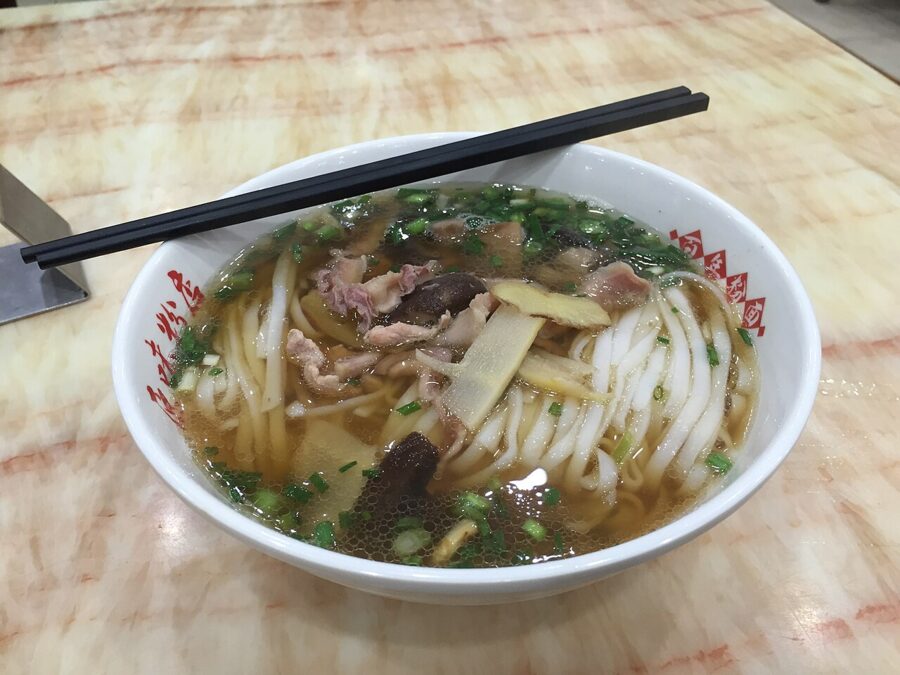
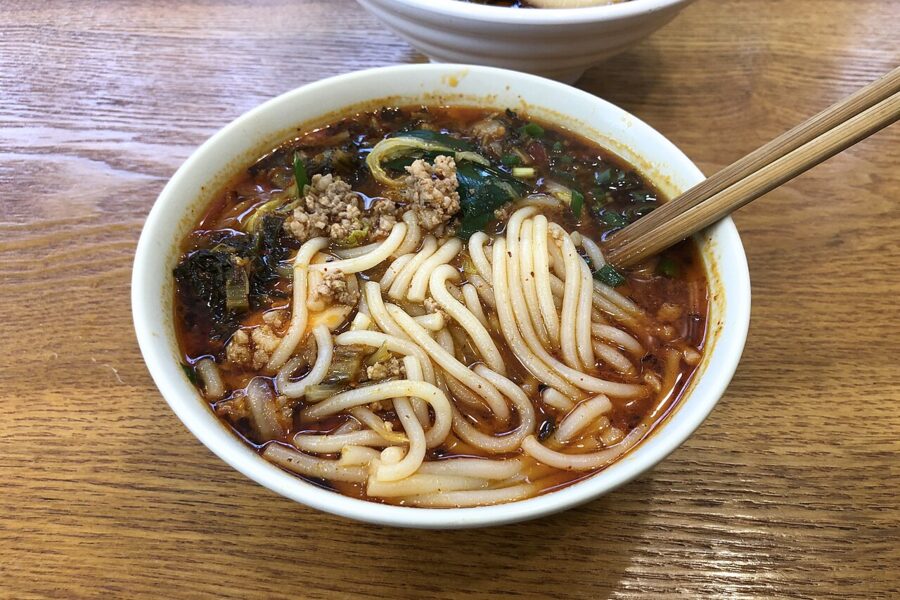
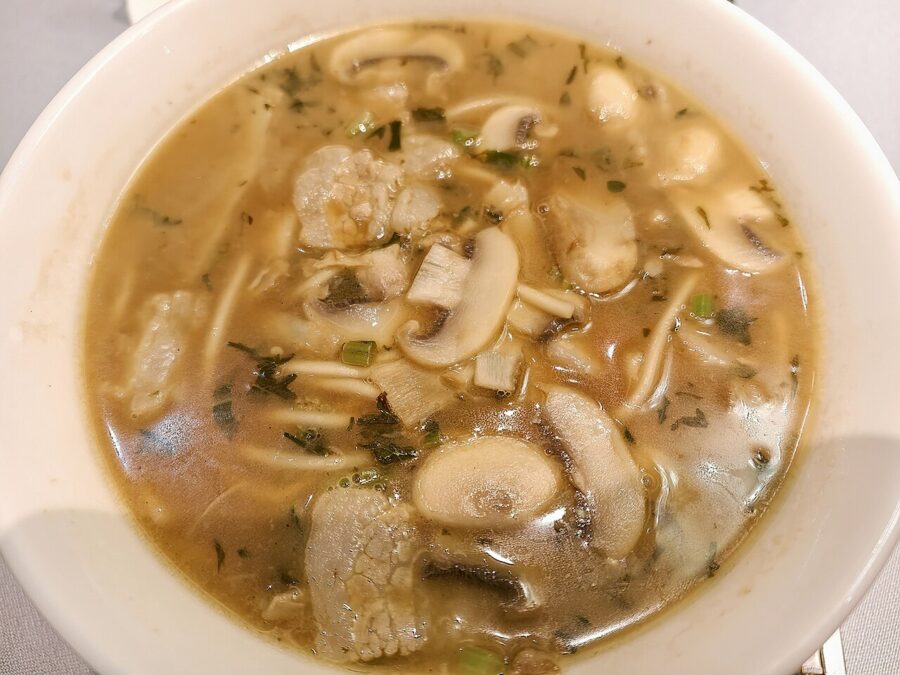
Along the lower Yangtze it’s a quieter noodle morning: Nanjing’s duck blood vermicelli soup, Hangzhou‘s pian’er chuan with pickled greens and bamboo shoots, Suzhou‘s noodle shops that pride themselves on the first broth of the day. All three are worth an early start if you’re in town.
Soup towns: Henan, Xi’an and Kaifeng
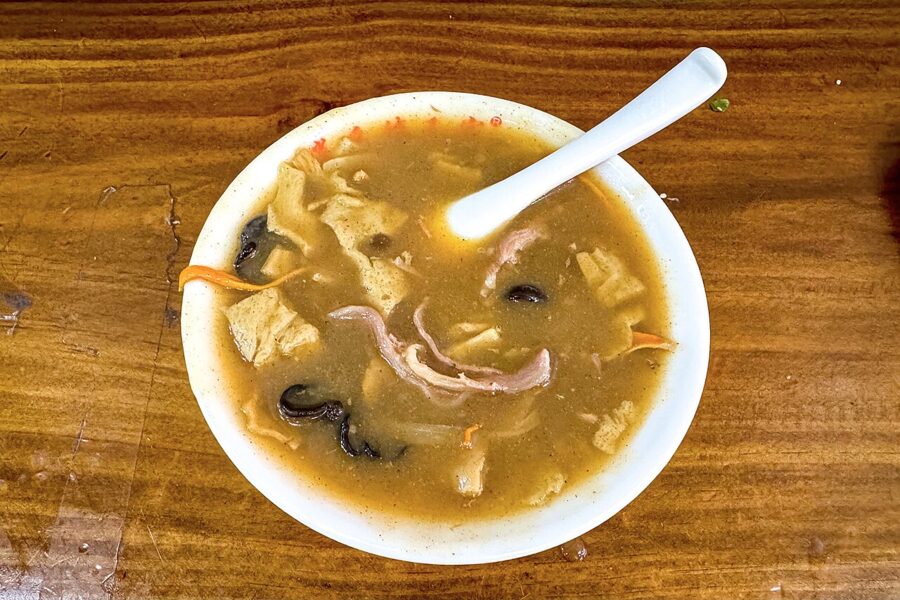
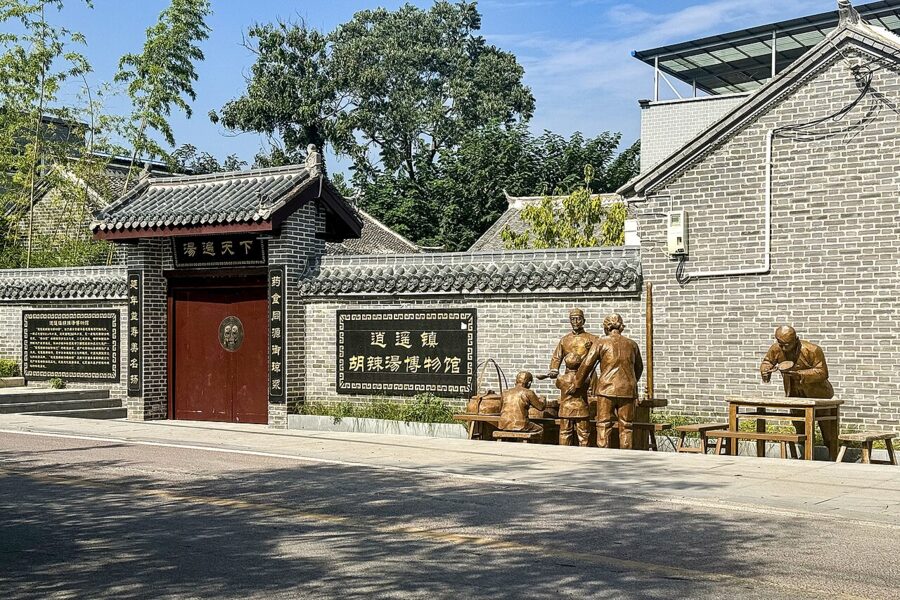
Henan’s breakfast is a soup. Hulatang (胡辣汤) is a thick, peppery broth with wheat gluten, vermicelli, wood ear, day lily, peanuts and sometimes beef, and its home is Xiaoyao Town (逍遥镇) in Xihua County, which has a hulatang museum to prove it. It’s eaten with fried dough, pan-fried buns (shuijianbao, 水煎包) or a slice of flatbread.
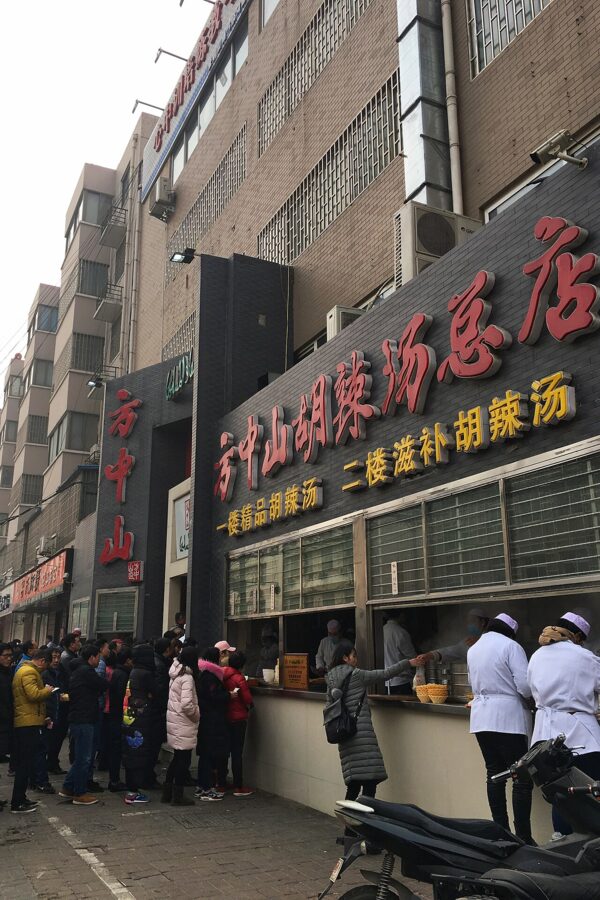
In Zhengzhou, Fang Zhongshan Hulatang (方中山胡辣汤) is the name, a local chain with its flagship at the corner of Shunhe Road and Zijingshan Road and queues on most mornings. Order a bowl with a couple of pan-fried buns, and on a cold day you won’t need lunch.
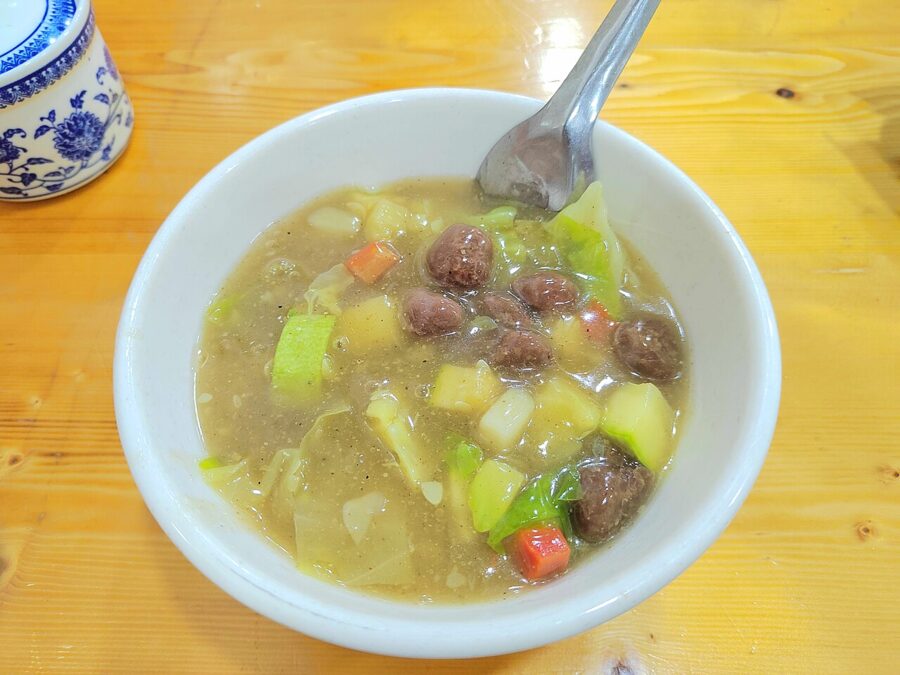
Xi’an has its own hulatang, the rouwan (肉丸) version with beef meatballs and vegetables in a thick, lightly peppery broth, eaten with flatbread torn into it. It’s the breakfast of the Muslim Quarter, and it’s an easy and cheap one if you’re out early before the tour groups arrive.
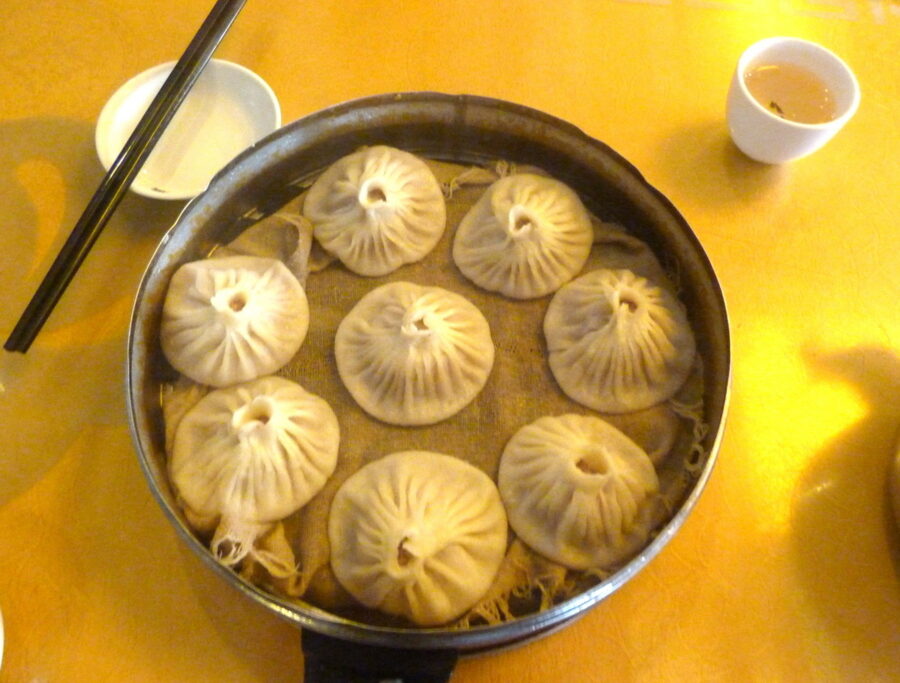
And in Kaifeng, Henan’s old capital, breakfast is guantang baozi (灌汤包子), soup-filled buns thin enough to see the filling through, a close cousin of Shanghai’s xiaolongbao and eaten the same careful way.
Hotel breakfast or the street?
Most Chinese hotels include breakfast, or sell rooms with and without it, and the booking terms are worth learning. On Chinese booking pages and on Trip.com, han zao (含早) means breakfast is included, dan zao (单早) means breakfast for one, shuang zao (双早) means breakfast for two, and wu zao (无早) means none. A double room with dan zao means one of you pays at the door.
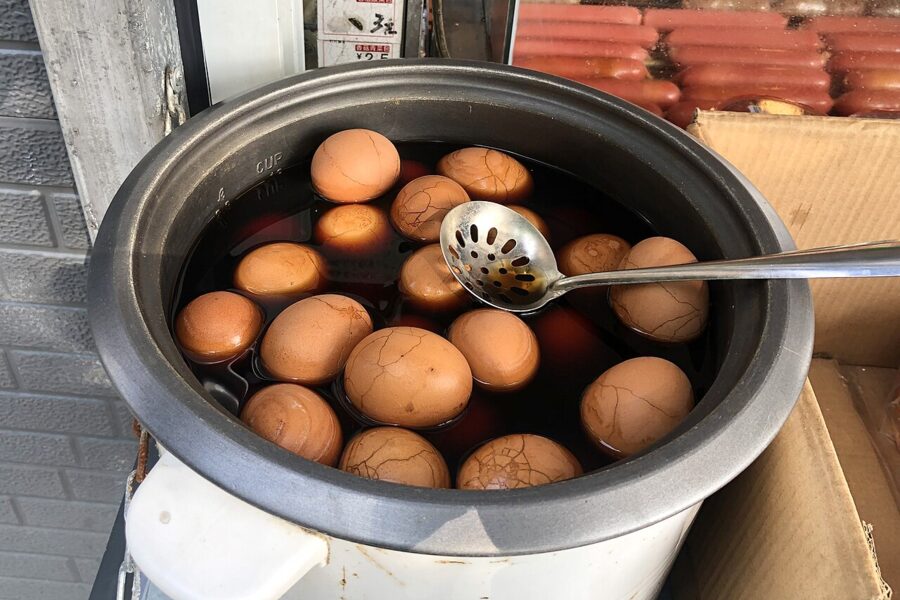
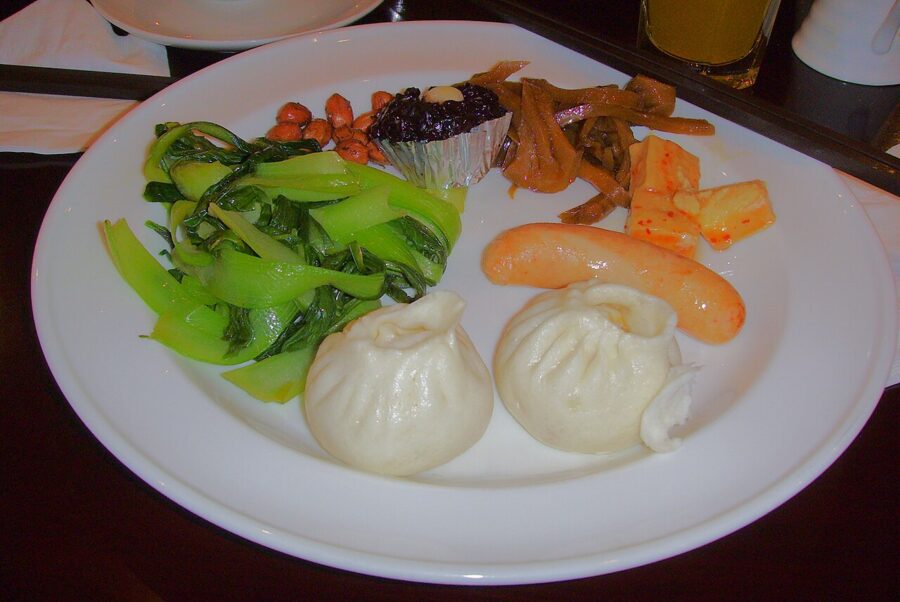
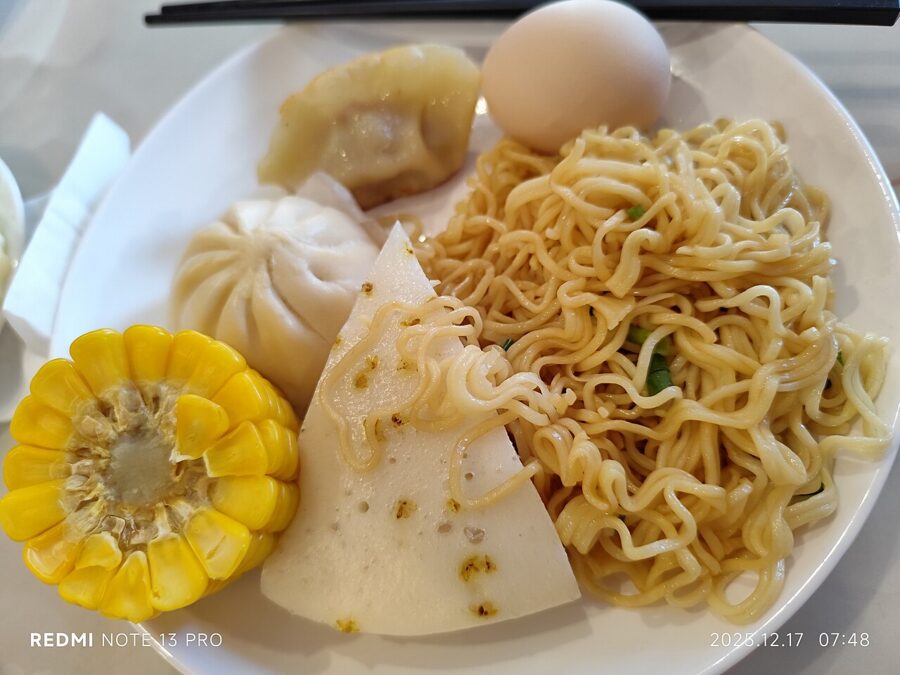
The buffet itself is a hybrid: a Chinese half with congee, pickles, mantou, fried noodles, steamed dumplings and tea eggs, and a Western half with toast, eggs and something called coffee. The congee is usually decent. The rest has been sitting since 07:00, and the youtiao, which should be eaten within minutes of frying, is the worst version you’ll eat in China.
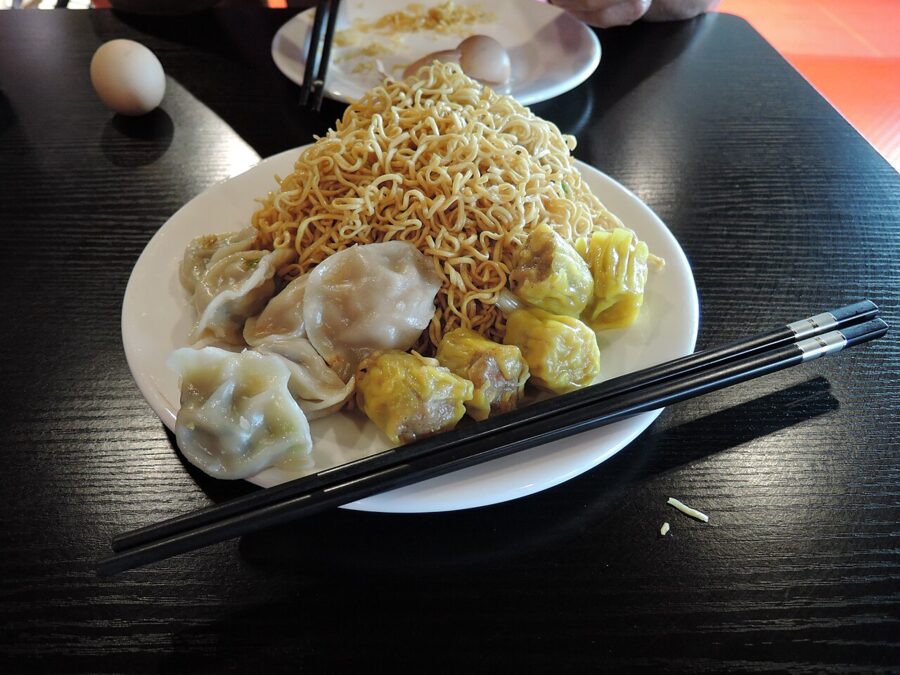
My rule: use the hotel breakfast on your first morning, when you’re jet-lagged and don’t know the streets, or if you have a dietary restriction you can’t explain in Chinese. After that, walk out of the door and find the nearest counter with a queue. You’ll eat better, faster and for a fraction of what the buffet would cost if it weren’t included.
The exception is Spring Festival. Many family-run breakfast stalls shut for a week or more around Chinese New Year while their owners go home, and in some neighbourhoods the hotel is the only breakfast for days. Over the May Day holiday and Golden Week (1–7 October), the problem is the opposite: the famous shops get queues that run down the street.
A morning in three cities
Beijing
Start at Zi Guang Yuan in Niujie at about 07:00, with a bowl of doufunao in gravy and a millet porridge. Walk round the Niujie neighbourhood, then ride Line 19 north to Ping’anli, a short walk from Huguosi Street, for a douzhi and jiaoquan at Huguosi Snacks (go on, try it), and buy a bag of rings for later. That’s two breakfasts for well under ¥50.
Shanghai
Take the four kings at a Xiaotaoyuan or any lane shop near a wet market: a ci fan tuan to eat at once, a bowl of salty soy milk, half a da bing if they have it. Then walk to Sichuan Middle Road for four sheng jian and a bowl of wontons at Da Hu Chun. You’ll be full until mid-afternoon.
Guangzhou
Begin with cheung fun at a Yinji branch, the beef or the egg version, then walk into the old Xiguan streets of Liwan for a bowl of century egg and pork congee with a youtiao. If you still have room and an hour, sit down for morning tea at Taotaoju on Dishifu Road and order one pot, two dishes, the way the regulars do.
Skip this
- Breakfast on the famous tourist food streets (Hubu Xiang in Wuhan, Nanluoguxiang and Qianmen in Beijing, the busiest lanes of Xi’an’s Muslim Quarter) as your only breakfast. Look, then eat one street over.
- The hotel buffet youtiao. It’s the soggiest version in the country.
- Jianbing with ham sausage and lettuce in Tianjin. You’ll get it if you insist, and you’ll get a look with it.
- Luxury jianbing. In July 2026 a Tianjin restaurant made the news for a jianbing guozi with a whole sea cucumber at ¥1,380. It isn’t breakfast, it’s a press release.
- Arriving at 10:00. Most counters are closing, the best things are gone, and the steamer is full of what nobody wanted.
- Rice-noodle shops in Guilin and Yangshuo with only a per-bowl price for visitors. Find the board priced by the liang.
Unlike the Japanese breakfast, which mostly happens at home or at an inn, the Chinese one happens on the street, and it rewards being greedy and early.
Set the alarm for 06:30. Link a card to Alipay before you leave home. Carry a few ¥10 notes. And on your first morning anywhere new, walk until you find the counter with the longest queue of people in work clothes, and order whatever the person in front of you does.
You Might Also Enjoy
 Staying in a Ryokan: What Happens, What It Costs and How to Choose One
 Sapporo Food Guide: Miso Ramen, Soup Curry, and Susukino After Dark
 Beijing Food Guide: Douzhi, Luzhu, Copper Pots, Niujie and What to Eat Beyond the Duck
 Kamikochi: The Car-Free Valley in the Japan Alps, From Taisho-ike to Tokusawa