Xi’an Food Guide: The Muslim Quarter, Roujiamo, Yangrou Paomo and the Noodles of Shaanxi
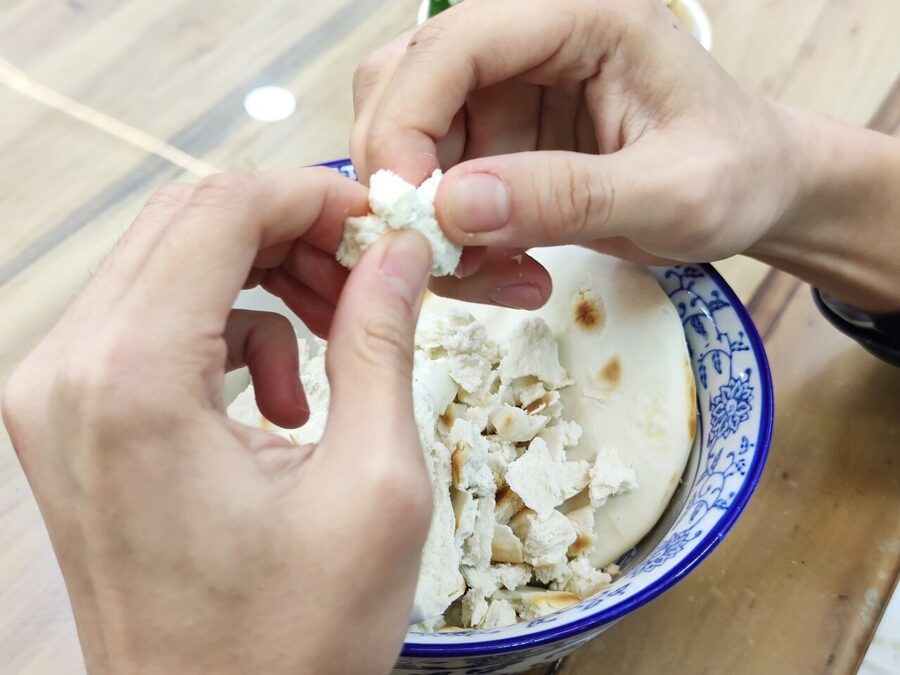
The bread comes first, and it comes raw. At a paomo table in Xi’an you’re handed one or two hard, pale discs, a bowl and a numbered ticket, and then everyone leaves you alone for twenty minutes while you tear the bread into pieces the size of soybeans. Around you, old men in white caps do it without looking, talking the whole time, their bowls filling with crumbs as neat as gravel. Yours looks like a bird has been at it.
That is Xi’an food in one scene. It’s wheat, it’s lamb and beef, it’s slow, and it expects something of you. The city sits on the Guanzhong plain, some of the best wheat land in China, and its old centre holds the country’s best-known Hui Muslim neighbourhood, where halal cooks have been baking bread, braising beef and boiling mutton bones for centuries.
Rice is an afterthought here. People in Xi’an call their city the capital of mo (馍), bread, and they aren’t joking.
This guide covers the whole table: why Xi’an eats like this, the Muslim Quarter street by street (and which parts are for tourists), the two kinds of roujiamo, how to order and eat yangrou paomo without embarrassing yourself, the soups, dumplings, sweets and drinks, a day of eating from 6:00 breakfast to midnight skewers, and the old restaurants outside the Quarter that most visitors never find. Prices are what I’d expect you to pay in 2026, in yuan.
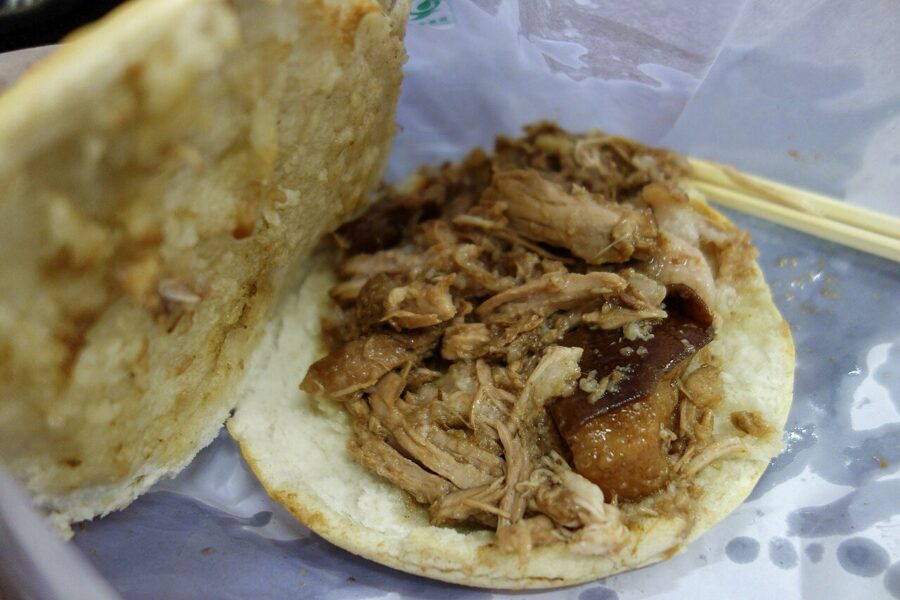
If you only have a day, here’s the short list. Everything on it is cheap, and most of it you can eat standing up.
| Dish | What it is | Where to eat it | Rough price |
|---|---|---|---|
| Yangrou paomo (羊肉泡馍) | Bread you tear yourself, boiled in mutton broth | Xiyangshi lane, or the old halls near the Bell Tower | ¥30–45 |
| La zhi rou jia mo (腊汁肉夹馍) | Han-style braised pork in a crisp flatbread | Outside the Muslim Quarter | ¥12–20 |
| La niurou jia mo (腊牛肉夹馍) | Hui-style cured beef in bread | Inside the Quarter and at Sajinqiao | ¥13–20 |
| Guantang baozi (灌汤包子) | Big, soupy beef or lamb dumplings | Beiyuanmen and Xiyangshi | ¥16–30 a steamer |
| Meatball hulatang (肉丸糊辣汤) | Thick, peppery beef-ball soup for breakfast | Sajinqiao, before noon | ¥8–15 |
| Zenggao (甑糕) | Sticky rice and dates steamed overnight | Sajinqiao and Xiyangshi, early | ¥8–12 |
| Huang gui shizi bing (黄桂柿子饼) | Fried persimmon cakes with osmanthus | Stalls in the Quarter, best October to December | about ¥3 each |
In This Article
- Why Xi’an eats wheat and lamb
- The Muslim Quarter, street by street
- Beiyuanmen: the front door
- Xiyangshi and Beiguangji Jie
- Dapiyuan: where the locals queue
- The Great Mosque, briefly
- Sajinqiao: the local version
- Yangrou paomo, and how to break the bread
- The bread
- How to order
- How to eat it
- Where to eat paomo
- Xiaochao paomo and hulutou
- Roujiamo, two ways
- The Han version: la zhi rou
- The Hui version: cured beef and mutton
- Tongguan: the flaky one
- Soups, dumplings and the rest of the Hui table
- Guantang baozi
- Meatball hulatang
- Xiao su rou and the steamed dishes
- Sour soup dumplings
- Majiang niangpi, liangpi and noodles
- Skewers, tofu and the grill
- Something sweet
- Zenggao
- Jing gao
- Persimmon cakes
- Other sweets
- What to drink
- A Xi’an day of eating
- 6:00–9:00: breakfast
- 12:00: lunch
- 15:00: something sweet, then walk
- 18:00 onwards: dinner and skewers
- Where locals eat, beyond the Quarter
- The old names
- Yongxingfang
- Other places outside the wall
- Practicalities
- Getting there
- Paying
- Ramadan and holidays
- Halal manners
- Skip this
Why Xi’an eats wheat and lamb
Start with the land. Xi’an sits in the middle of the Guanzhong plain, the flat, fertile valley of the Wei River that Shaanxi people still call babai li Qinchuan (八百里秦川), the eight hundred li of Qin. It grows wheat, and wheat is what the province eats: noodles as wide as a belt, flatbreads the size of a pot lid, steamed buns, fried twists and the hard bread that goes into paomo.
Shaanxi even jokes about it. Two of the “eight oddities of Guanzhong”, a folk list every local can recite, are about wheat.
Then the people. Inside the wall, just north-west of the Drum Tower, is the Hui neighbourhood that locals call the Huifang (回坊) or simply fangshang (坊上), “on the fang”. Tourists call it the Muslim Quarter, and the signs call it Huimin Jie (回民街), Muslim Street. The Hui are Chinese-speaking Muslims, and the older residents describe their home with an old phrase, qi si shisan fang (七寺十三坊): seven mosques and thirteen neighbourhoods built around them.
The Silk Road story gets told a lot here, usually too neatly. What’s safe to say is this: Tang-dynasty Chang’an, on roughly the same ground as Xi’an, was the eastern end of the caravan routes, and its Western Market drew Persian, Arab and Central Asian traders. Muslims kept arriving over the following centuries as merchants, soldiers and officials, married into local families and became the Hui. The neighbourhood you walk through today took its shape in the Ming and Qing dynasties, around mosques that still hold Friday prayers.
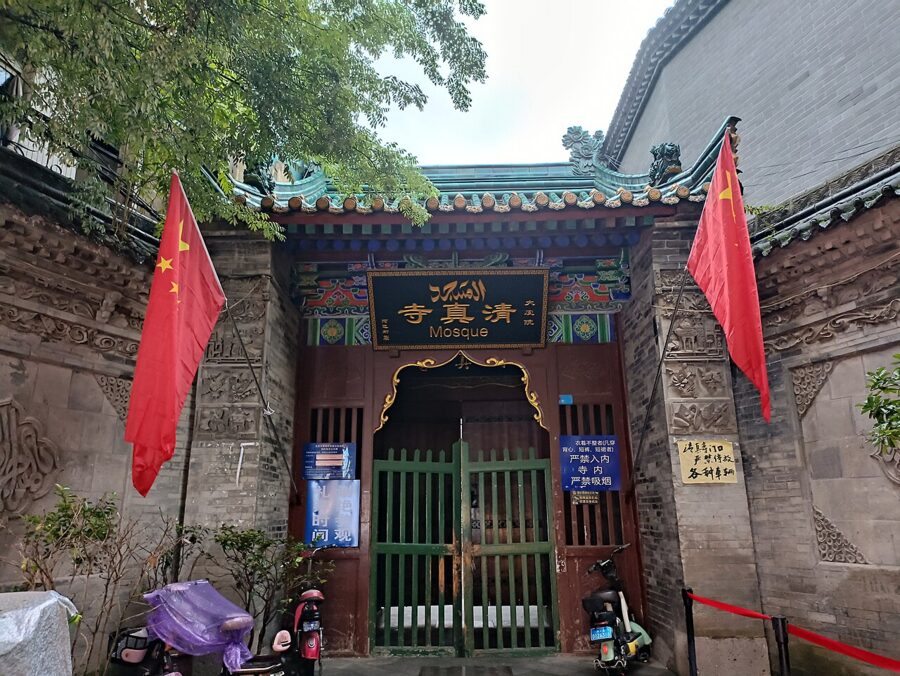
What this means on the plate is a city with two kitchens. Han Xi’an eats pork, and its most famous sandwich is pork. Hui Xi’an doesn’t touch pork, so its butchers and cooks have spent generations getting very good at beef and mutton: cured beef, mutton broth, lamb skewers, beef-filled soup dumplings, beef-ball soup. Most famous Xi’an dishes exist in both versions, and you’ll eat better if you know which kitchen you’re in.
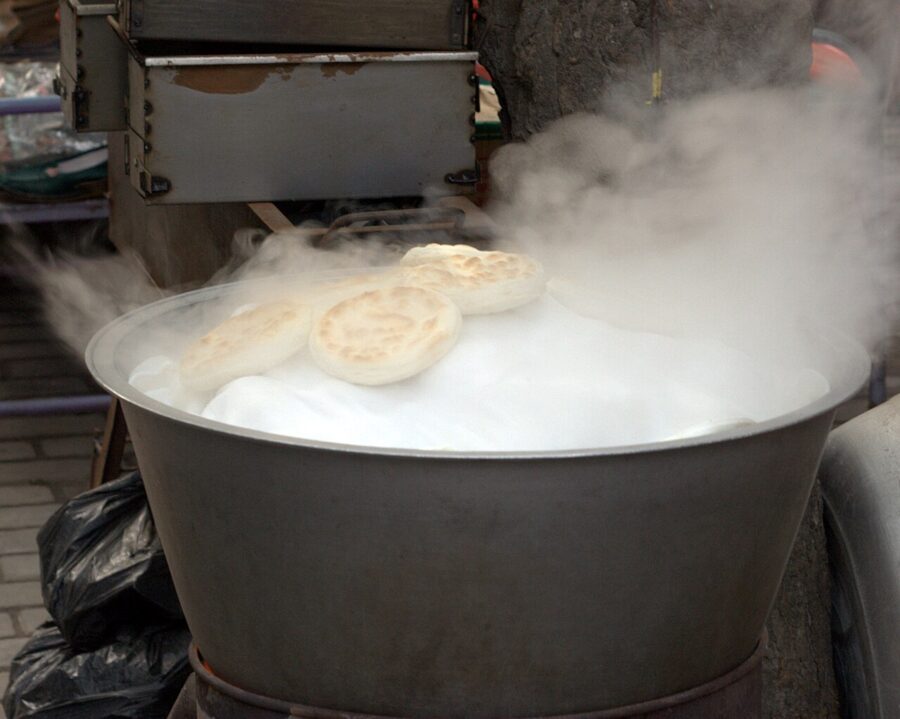
The other thing to know is that Xi’an likes its food sour and hot. Chilli here means youpo lazi (油泼辣子), dried chilli flakes splashed with smoking oil until they crackle, fragrant rather than numbing; it’s a different heat from the peppercorn kick of my Sichuan food guide. Vinegar goes into almost everything, and a jar of pickled sweet garlic sits on most paomo tables. Northern cooking as a whole is wheat, vinegar and garlic, and if you want the wider picture, my guide to food you must try in China sets Xi’an among its neighbours.
The Muslim Quarter, street by street
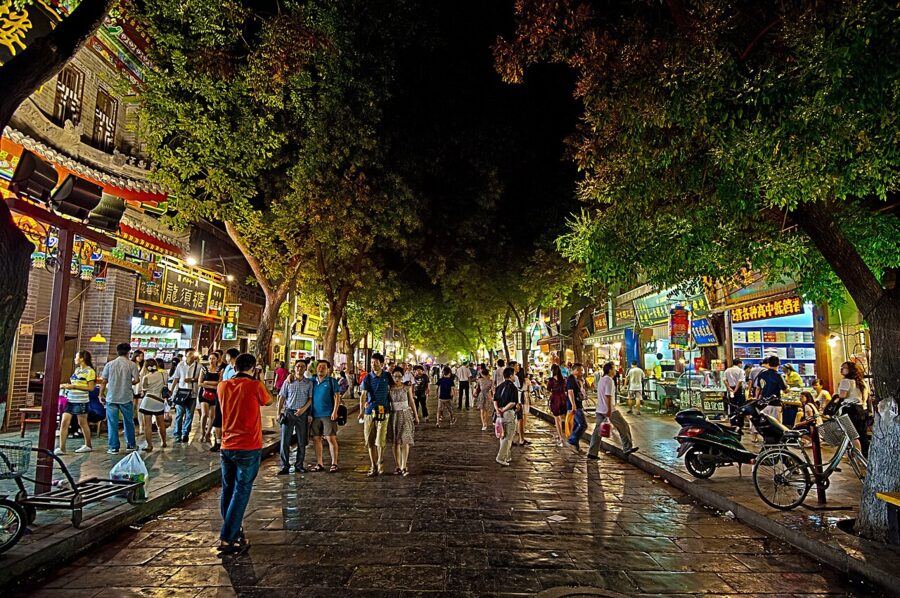
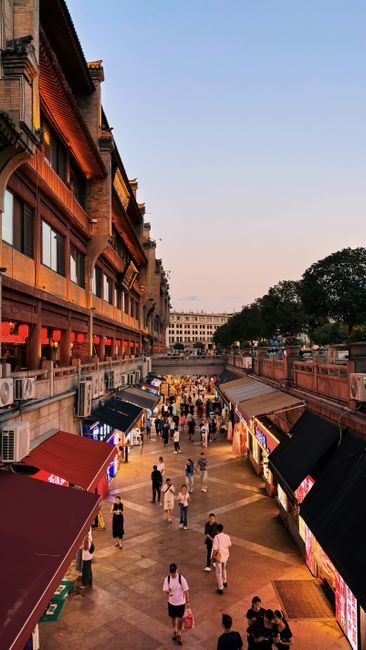
The Muslim Quarter isn’t one street. It’s a grid of lanes covering a few blocks north and west of the Drum Tower: Beiyuanmen (北院门), Xiyangshi (西羊市), Dapiyuan (大皮院), Beiguangji Jie (北广济街), Huajue Xiang (化觉巷) and, further west, Sajinqiao (洒金桥). It’s free, open all day, and roughly as busy at 22:00 as at noon. The trick is knowing which parts are for photos and which are for dinner.
Beiyuanmen: the front door
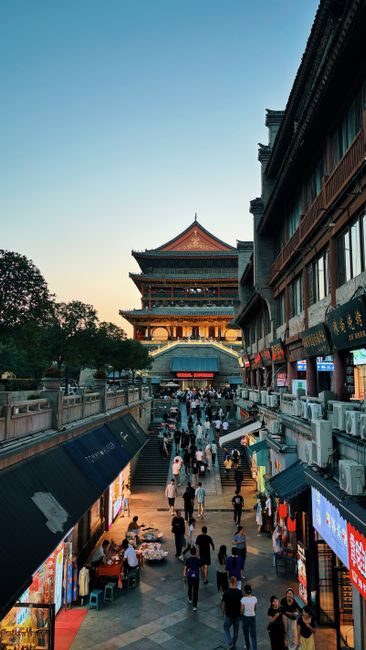
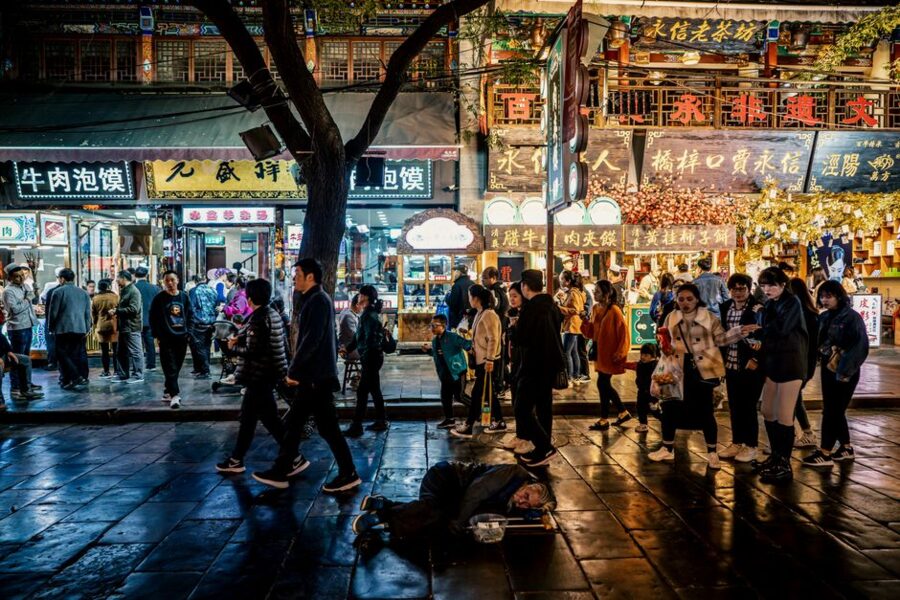
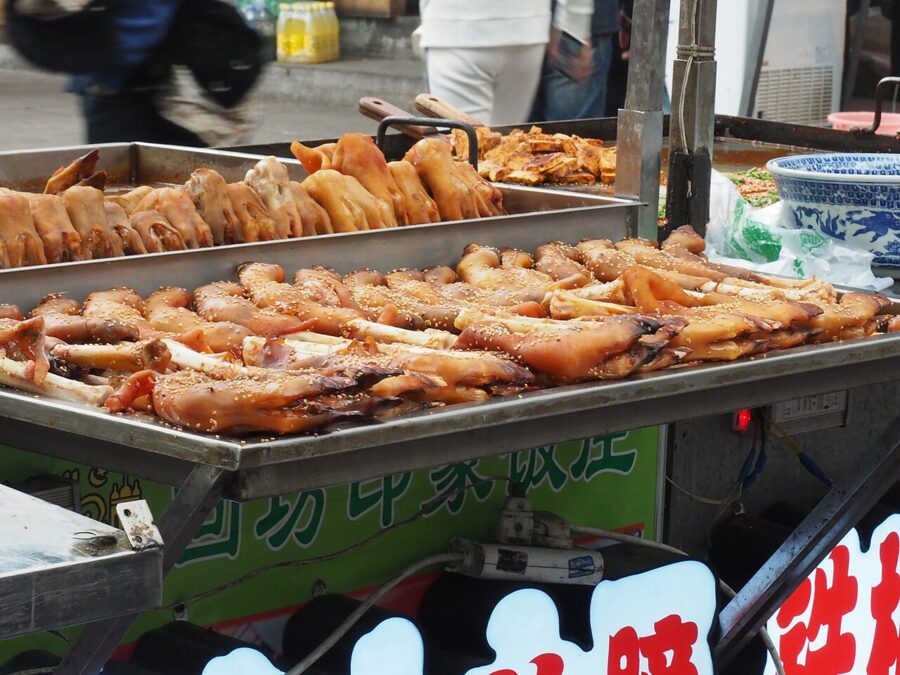
Beiyuanmen is the wide, paved street that runs north from the Drum Tower, and it’s the one in every photo. The name means North Courtyard Gate, after the Qing-dynasty offices of the Shaanxi governor that once stood here. It’s lined with snack counters, juice stalls, souvenir shops and restaurants with picture menus, and on a holiday weekend it moves at the speed of the slowest selfie.
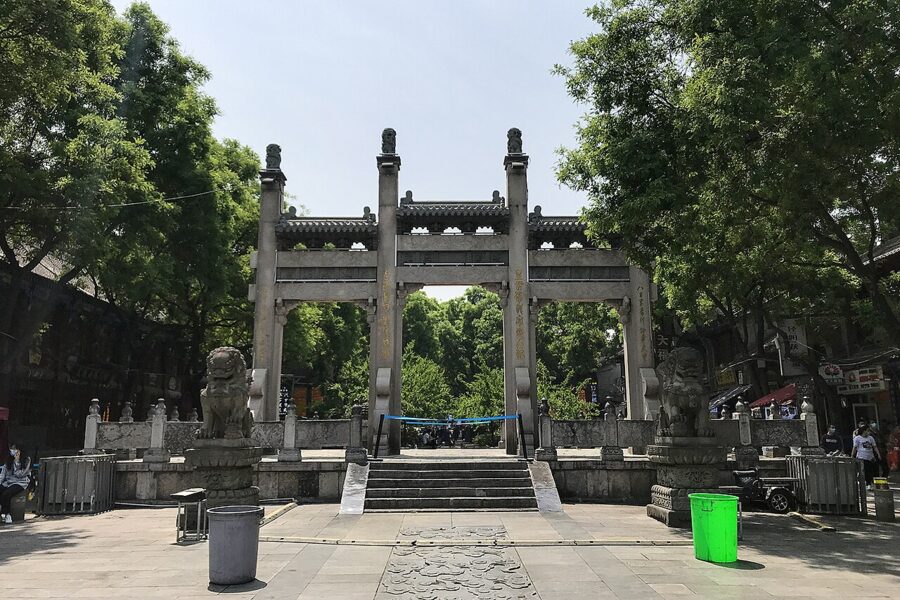
It’s also where prices are highest. A roujiamo on the main drag runs about ¥12–18 and a bowl of paomo ¥35–60; turn a corner into the side lanes and the same things cost noticeably less, and the meat portion often goes up. Walk Beiyuanmen once, buy something sweet, take your photo of the Drum Tower, then leave it. Don’t plan a sit-down meal there.
Xiyangshi and Beiguangji Jie
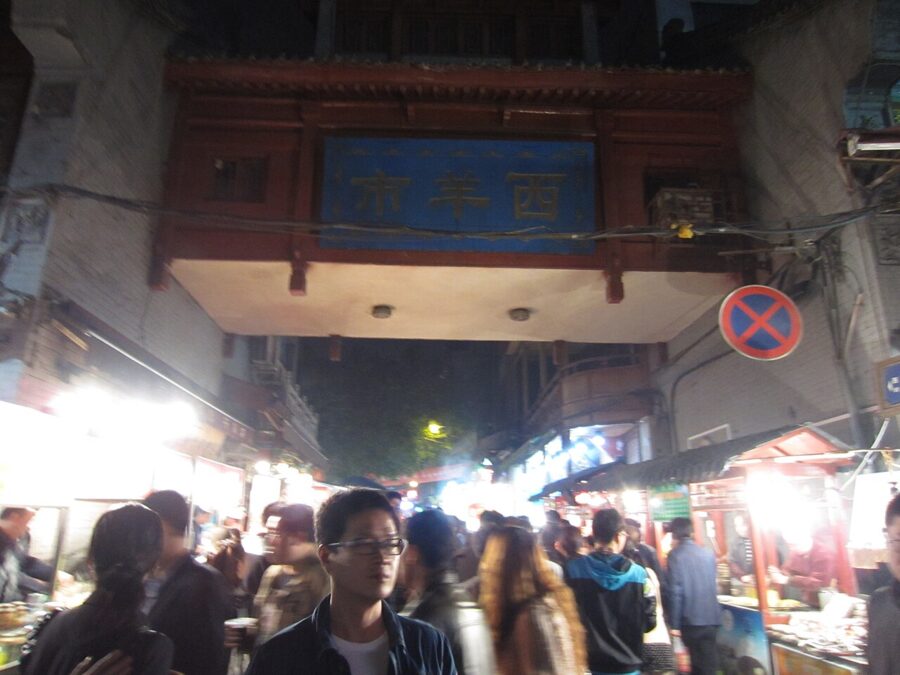
Xiyangshi (西羊市, the Western Sheep Market) is a narrower, darker lane that branches west off Beiyuanmen, and this is where I’d start eating. It’s still busy and still touristy in places, but the paomo halls, the cured-beef counters and the zenggao stall at the corner with Beiguangji Jie are serious. You’ll find Lao Mi Jia Dayu Paomo here (more below), and lamb skewers on charcoal at most hours.
Beiguangji Jie (北广济街) runs north-south and crosses Xiyangshi at a junction locals call Majia Shizi (麻家什字). It has its own mosque, more snack stalls, and two of the city’s best-known cured-meat shops, Liu Jixiao and Lao Tong Jia. It also has some of the Quarter’s newer chain-style stalls, so look for the shops with locals buying by the jin.
Dapiyuan: where the locals queue
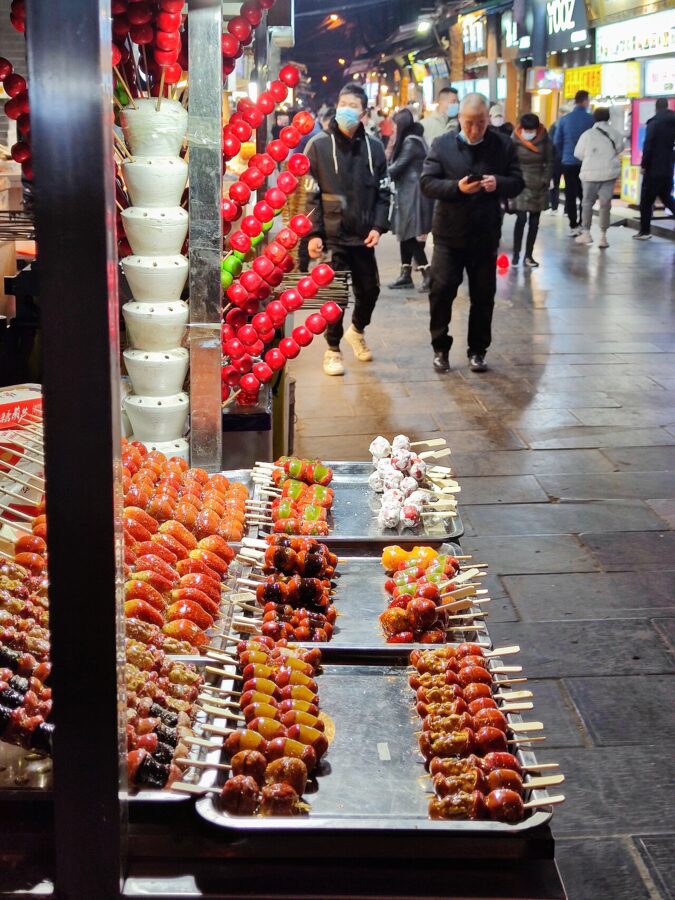
Dapiyuan (大皮院), parallel to Xiyangshi a block further north, is the street I’d send you to for a proper meal. In under 400 metres it packs close to forty long-running halal shops, among them Ding Jia Xiao Su Rou (定家小酥肉) at number 223, Sheng Zhi Wang Majiang Niangpi (盛志望麻酱酿皮) next door at 225, and Musa Shaguo (穆萨砂锅), a clay-pot restaurant that has been there for over thirty years.
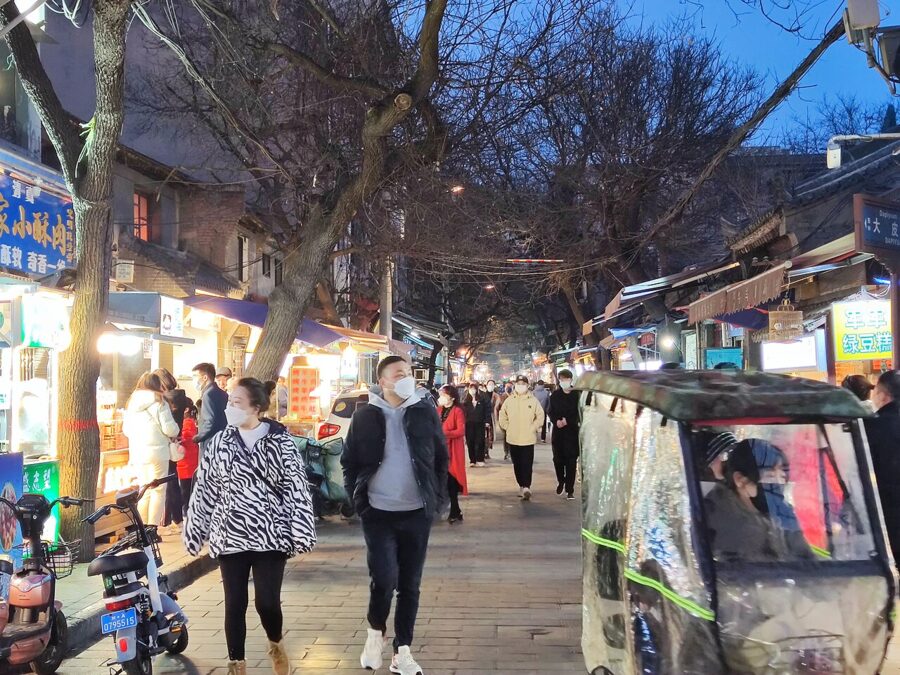
Dapiyuan is also where the Quarter feels most like a neighbourhood. You’ll see butchers’ counters, kids coming home from school, and the old men who run the place sitting outside the mosque. Be a guest: don’t film people without asking, and don’t wander in with a pork roujiamo bought outside, which is as rude here as it sounds.
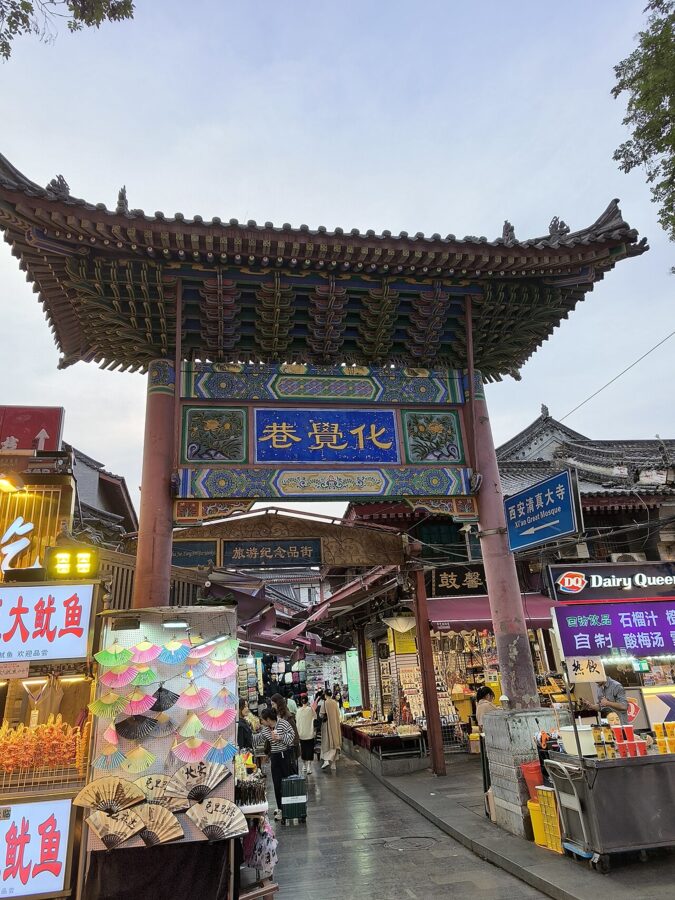
The Great Mosque, briefly
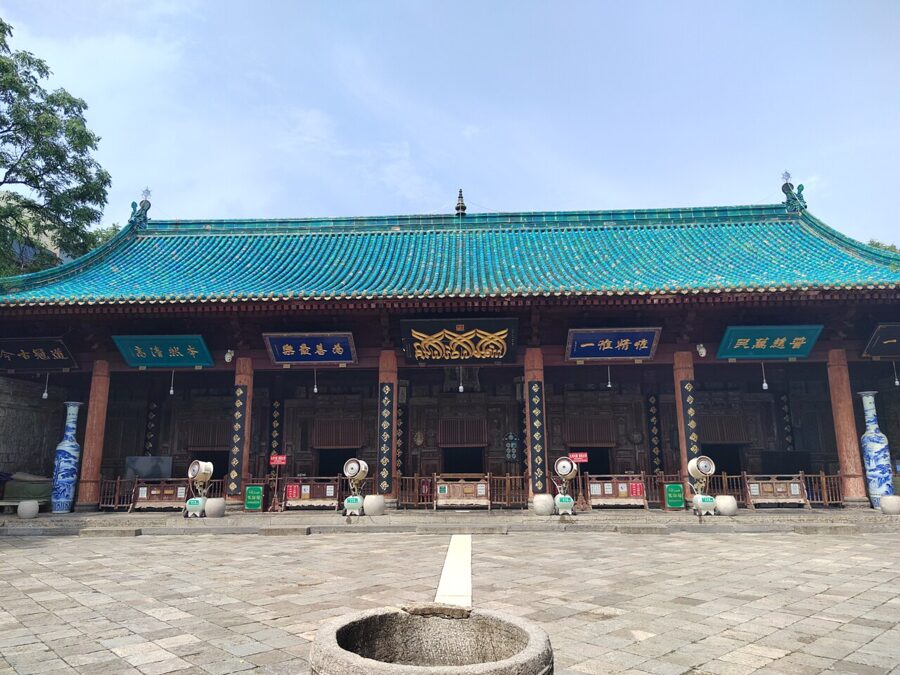
The Great Mosque of Huajue Lane (化觉巷清真大寺) is worth an hour even on a food trip. It’s at Huajue Xiang 30, about ten minutes’ walk from Bell Tower station. Tickets are ¥25, and it opens from 8:00 to 18:40 between September and April, and 8:00 to 20:00 from May to August, with last entry at 19:00.
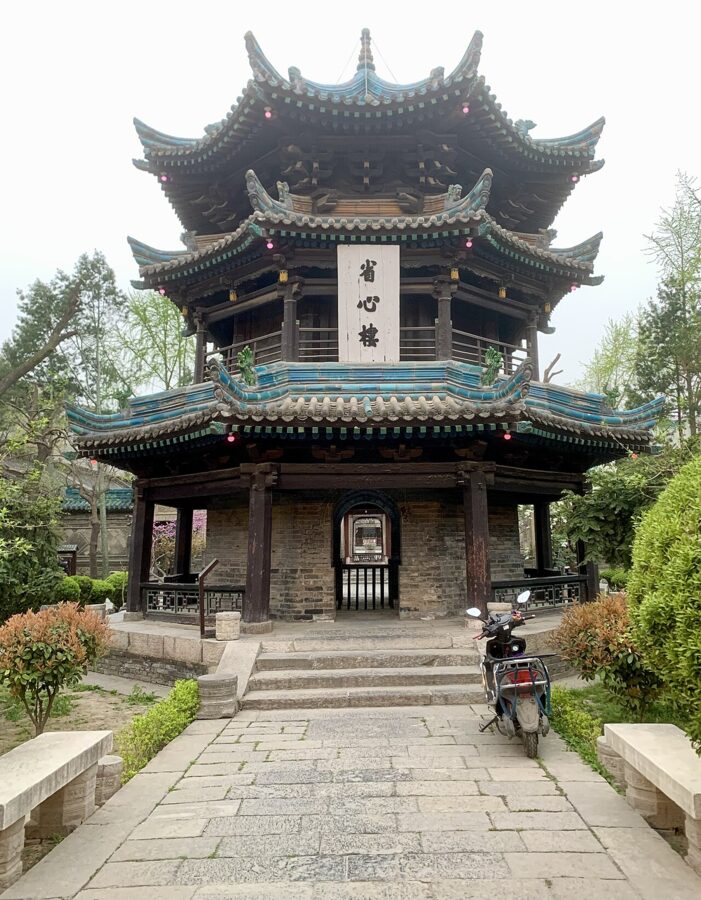
Dress as you would for any mosque: shoulders and knees covered, and a scarf in your bag if you want to look further in. Non-Muslims stay out of the prayer hall, and you should keep your voice down near it at prayer times. Friday around midday is the busiest moment of the week.
Sajinqiao: the local version
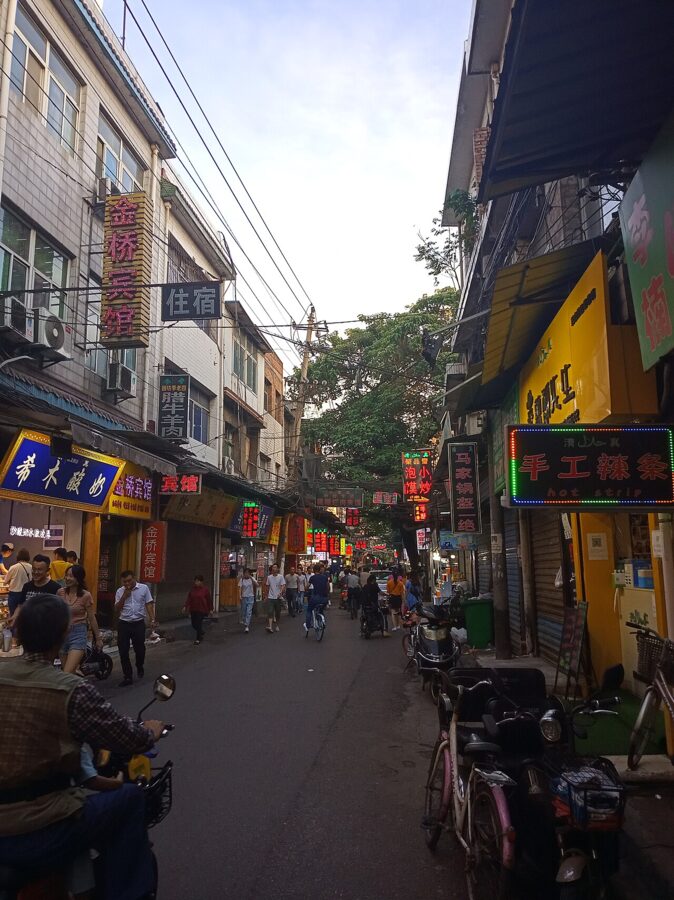
If you ask someone from Xi’an where they actually eat halal food, a good number will say Sajinqiao (洒金桥). It’s the long street on the western edge of the Hui neighbourhood, still inside the city wall, with its own station on Metro Line 1. It has no grand gateway and almost no souvenirs. It has roujiamo counters, hulatang shops with plastic stools on the pavement, zenggao carts at dawn and some of the cheapest paomo in the city.
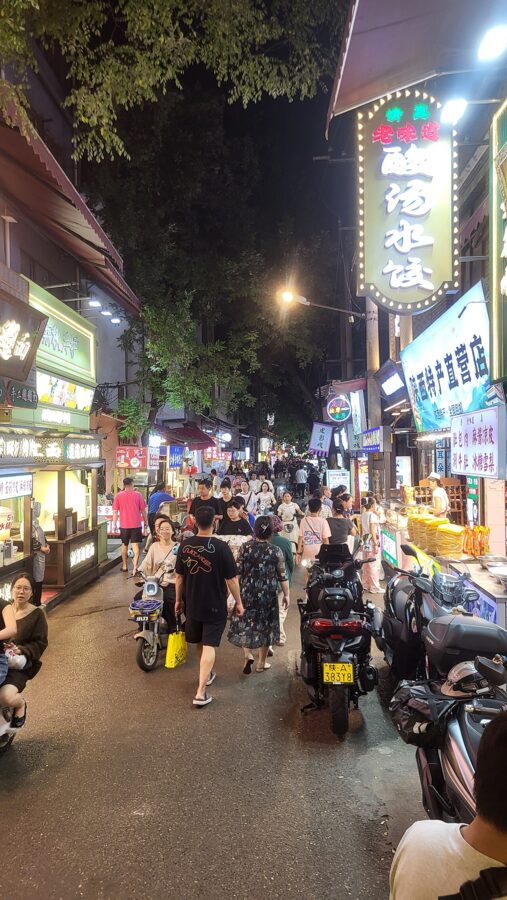
Sajinqiao is at its best early. The breakfast shops open before 6:00 and the famous zenggao cart is often sold out by 9:30, so it’s the obvious first stop of a Xi’an day (see the day plan below). Come back in the evening for skewers and dumplings, when the street fills with families.
Yangrou paomo, and how to break the bread
Yangrou paomo (羊肉泡馍) is mutton soup with bread, and it’s the dish Xi’an is proudest of. Its making is on China’s national intangible heritage list, credited to the old Lao Sun Jia and Tongshengxiang restaurants. It’s also the dish visitors get most wrong, because it isn’t really soup with bread on the side. It’s bread you prepare, which the kitchen then boils in broth until it soaks it all up.
The bread
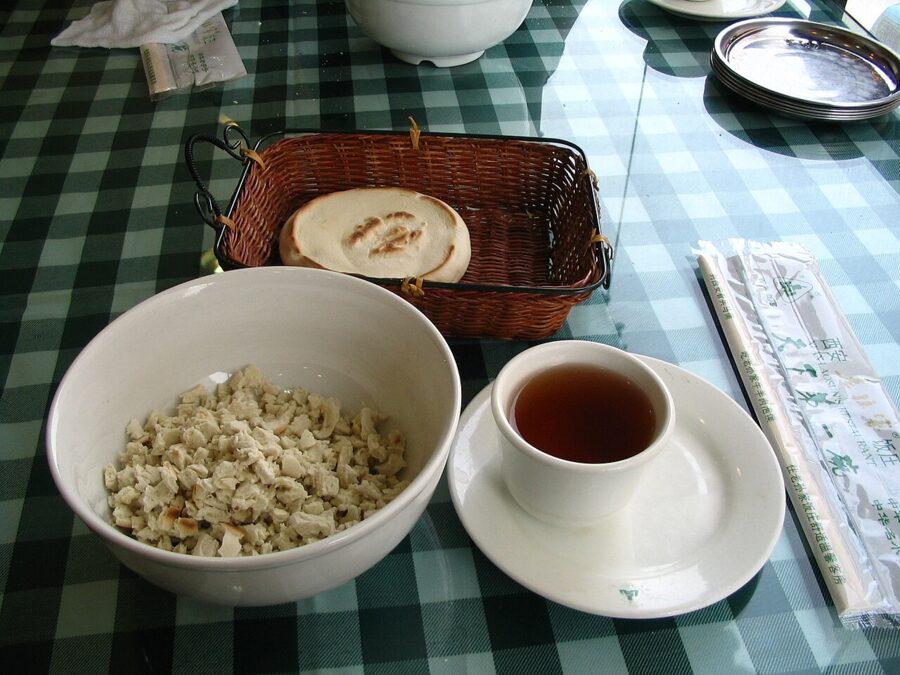
The bread is tuotuo mo (饦饦馍), and it’s made with about nine parts unleavened dough to one part leavened, then baked until it’s only eighty or ninety per cent cooked. That’s why it feels like a hard biscuit: it’s meant to survive being boiled without falling apart. A good one has a firm, slightly glossy crust and a dense centre, and it smells of toasted wheat.
You tear it with your fingers, not a knife. The aim is pieces about the size of a soybean, and the old rule is the smaller the better, because small pieces take in the broth evenly and stay chewy. Wash your hands first; it’s expected. Some places will tear it for you, or put it through a machine, but most locals think that’s lazy and the bread suffers.
How to order
Most paomo shops offer two grades: putong (普通), standard, and youzhi (优质), “superior”, which gets you more and better meat. The superior bowl is worth the few extra yuan on your first visit. Beef paomo (牛肉泡馍) is on most menus too and is a little cheaper and lighter.
Then there’s the question of how much soup. The old Xi’an way has four styles:
- Gan pao (干泡), also called gan ba: almost no liquid, the bread cooked until the bowl is thick enough to stand a chopstick in.
- Kou tang (口汤), “a mouthful of soup”: cooked so that when you finish, one sip of broth is left in the bottom. This is the connoisseur’s order.
- Shui wei cheng (水围城), “water surrounding the city”: a wide pool of broth around an island of bread and meat. Easy, comforting, good on a cold day.
- Dan zou (单走), “going separately”: bread and broth served apart, so you dunk the bread yourself and drink the soup at the end.
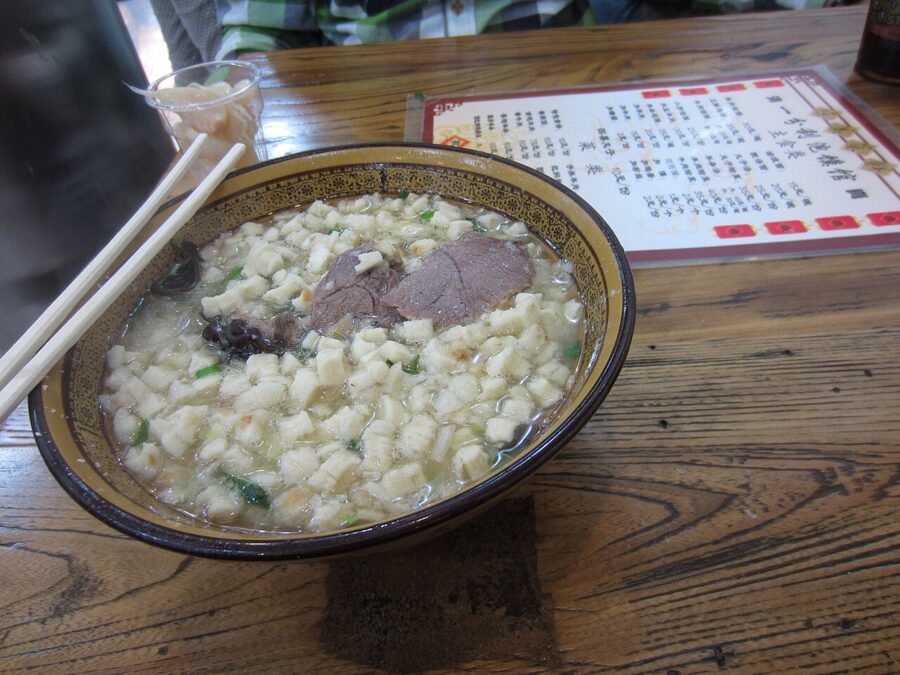
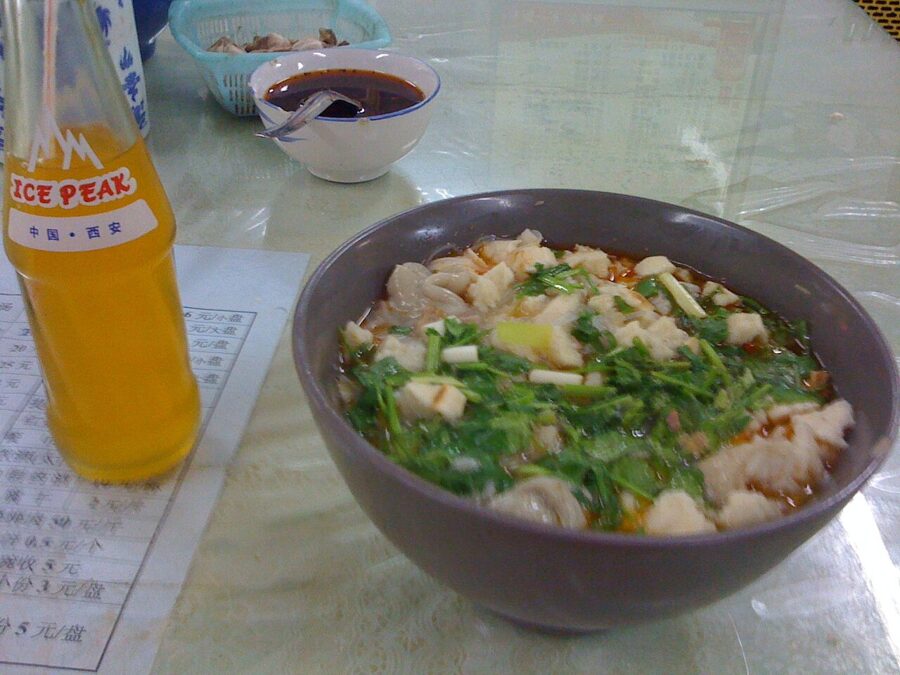
If you can’t remember any of that, just tear your bread small and let the cook decide; they’ll judge the soup by your crumbs. You hand the bowl to the kitchen with your number, and it comes back to you steaming, topped with mutton slices, glass noodles and a scatter of coriander and spring onion.
How to eat it
There’s etiquette here too. Locals eat paomo from the rim inwards, a little at a time, rather than stirring the bowl, because stirring cools it and mixes everything into porridge. Between mouthfuls you bite a clove of tang suan (糖蒜), sweet pickled garlic, and add chilli sauce to taste. It’s heavy food, and a bowl made with two discs of bread will flatten most people for an afternoon.
Where to eat paomo
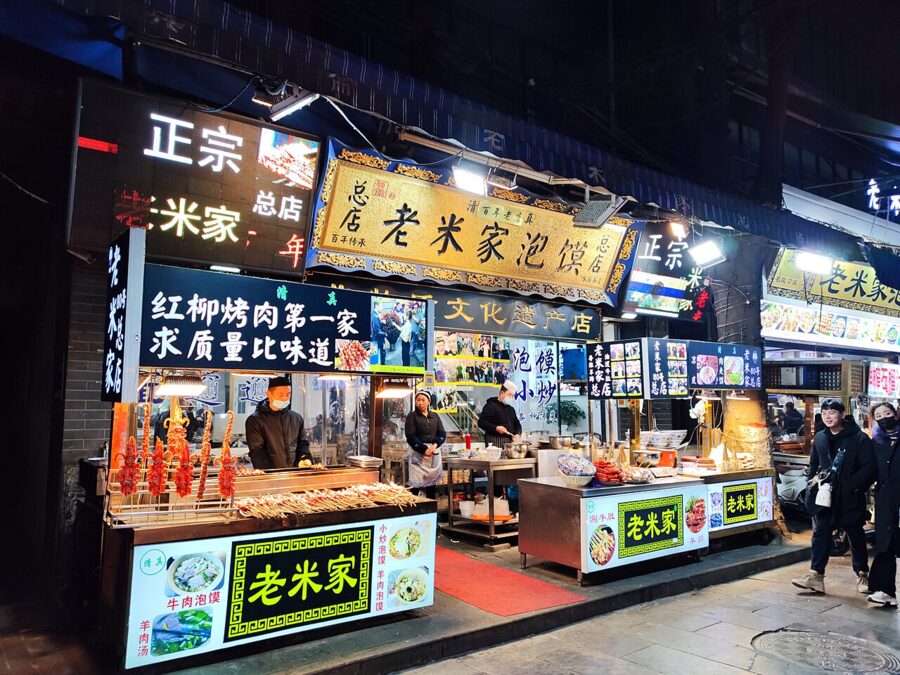
For the classic bowl in the Quarter, Lao Mi Jia Dayu Paomo (老米家大雨泡馍) on Xiyangshi is the name most locals give. It’s a plain, crowded room with queues out of the door at lunch; expect to pay around ¥30–45 for a superior bowl. Check the full name on the sign before you sit down, because copies are everywhere and some are a different business entirely.
Outside the Quarter, two old restaurants hold the heritage listing. Tongshengxiang (同盛祥) has been serving paomo since 1920, and its main hall is the four-storey, old-style building at West Street 5 on the north side of Bell and Drum Tower Square, about 140 metres from exit 1 of Bell Tower station.
Lao Sun Jia (老孙家), founded in 1898, has its flagship just outside the east gate at Dongguan Zhengjie 78. Both are bigger and more formal, and their paomo is reliable rather than thrilling. They’re good for a first bowl in comfort.
Xiaochao paomo and hulutou
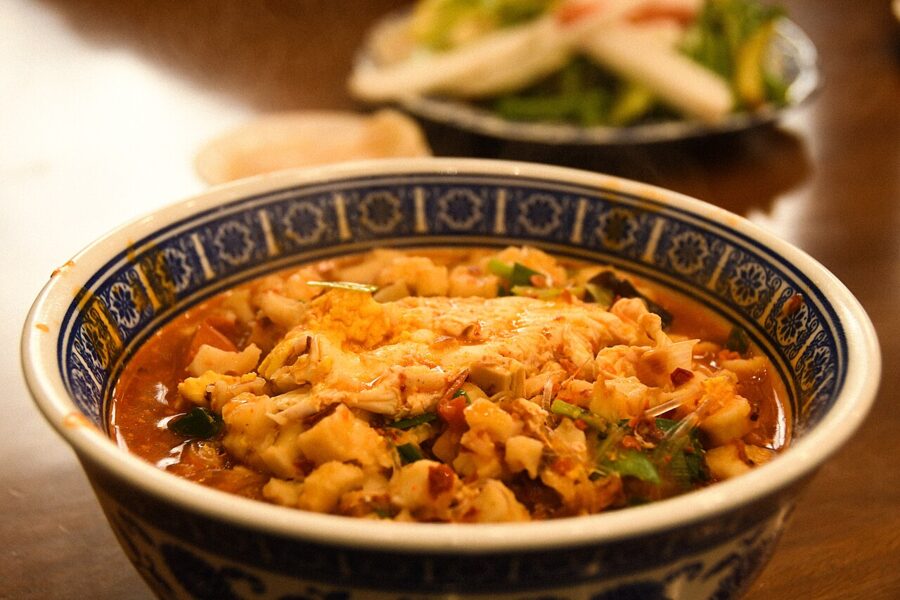
Xiaochao paomo (小炒泡馍) is the same broken bread stir-fried in a wok with beef, tomato, vinegar and chilli until most of the liquid is gone. It’s sour, hot and much saltier than the original. The shop everyone recommends is Ma Hong Xiaochao Paomo (马洪小炒泡馍) on Hongbu Jie (红埠街) in the Quarter, open roughly 9:00–21:00, where a standard beef xiaochao is about ¥25.
And there’s hulutou paomo (葫芦头泡馍), the Han version, made with cleaned pork intestine in a rich bone broth. The name means “gourd head”, after the shape of the cut. The restaurant credited with making it famous is Chunfasheng (春发生), which started in 1920 as a street seller around Nanyuanmen (南院门) and still has its old shop there, south of the Bell Tower. The name comes from a line of Du Fu, “good rain knows its season, and comes in spring”, which is a fine thing to call a tripe restaurant.
Roujiamo, two ways
Roujiamo (肉夹馍) is the Xi’an food the rest of the world has heard of, usually as the “Chinese hamburger”. In Shaanxi it’s more of a sandwich with rules. The name literally means “meat held in bread”, and locals like to point out that the grammar is backwards on purpose, because the bread holds the meat and not the other way around. The full background is in my guide to Chinese street food; this is the Xi’an version in detail.
The Han version: la zhi rou
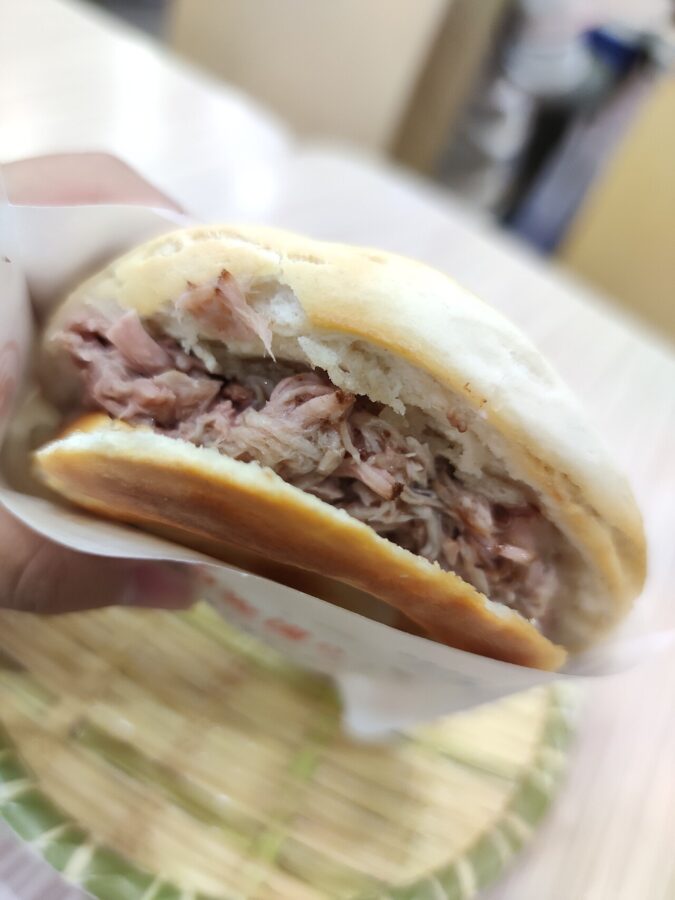
In Han Xi’an the filling is la zhi rou (腊汁肉), pork belly simmered for hours in a master stock that’s kept going for years. The pot sits under a thick layer of fat, which stops the stock spoiling and keeps the meat hot. When you order, the cook pulls out a piece, chops it on the board with a cleaver, adds a spoonful of stock, and packs it into the bread.
The bread is baiji mo (白吉馍), a disc of firm, lightly leavened dough baked on a griddle. A good one has what bakers call “an iron ring, a tiger’s back and a chrysanthemum heart” (铁圈虎背菊花心): a crisp rim, a speckled golden top and rings of soft layers inside. Order feishou (肥瘦), fat and lean, unless you really don’t like fat; the all-lean chunshou (纯瘦) costs more and tastes of less.
Where to go: Fan Ji (樊记腊汁肉夹馍) on Zhubashi, which traces itself to 1925, is the old-school name. Qinyu Roujiamo (秦豫肉夹馍) at Dongmutoushi 19 has been at it for nearly forty years, opens 7:00–14:00 and usually sells out before closing. Ziwu Road Zhang Ji (子午路张记肉夹馍), a younger chain founded in 2010, is the one most locals mention now; its branch at Cuihua Road 227, close to the Shaanxi History Museum, sells a roujiamo for ¥12. Add a plate of liangpi and a Bingfeng and you have the Sanqin taocan (三秦套餐), the “Shaanxi set”, which is as close as Xi’an gets to a standard lunch.
The Hui version: cured beef and mutton
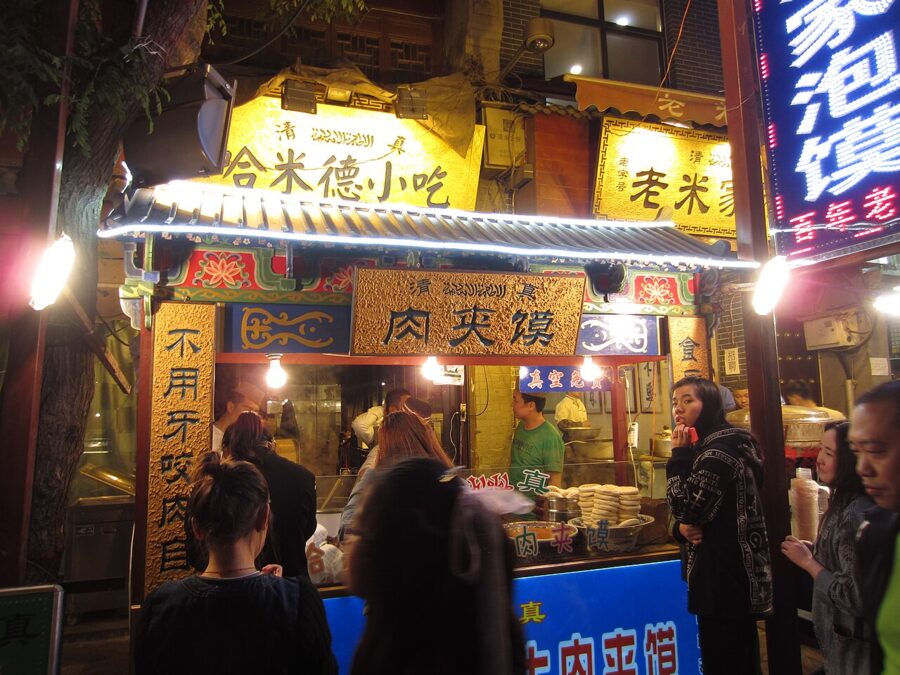
In the Muslim Quarter the roujiamo is la niurou jia mo (腊牛肉夹馍) or la yangrou jia mo (腊羊肉夹馍), and the meat is different in kind, not just in species. La niurou is beef salted with spices for days and then simmered in an old stock; it slices into firm, deep red pieces with a fine grain, salty and dense. It’s served at room temperature, chopped into a hot bun, and some shops add a little chopped green pepper.
Two shops on Beiguangji Jie sell the most famous cured meat in the city. Lao Tong Jia (老童家腊牛羊肉), at number 162 near Qiaozikou, has the best story. In 1900, the Empress Dowager Cixi, fleeing Beijing, stopped her carriage outside when she smelled its mutton, and the shop still carries the name she gave it, Nianzhipo (辇止坡), “where the carriage stopped”.
Liu Jixiao (刘纪孝腊牛羊肉), at number 127, is a much younger business with a much longer queue. Before Spring Festival the line can start at dawn, and Xi’an has a rhyme about holding a train ticket in one hand and a bag of Liu Jixiao in the other.
Both sell vacuum-packed cured beef by weight to take home, at roughly ¥80 a jin (500 grams). On Sajinqiao, Yang Tianyu (杨天玉) puts the same kind of beef into a freshly baked bun for about ¥13, and it’s one of the best things you can eat in the city for that money.
Tongguan: the flaky one
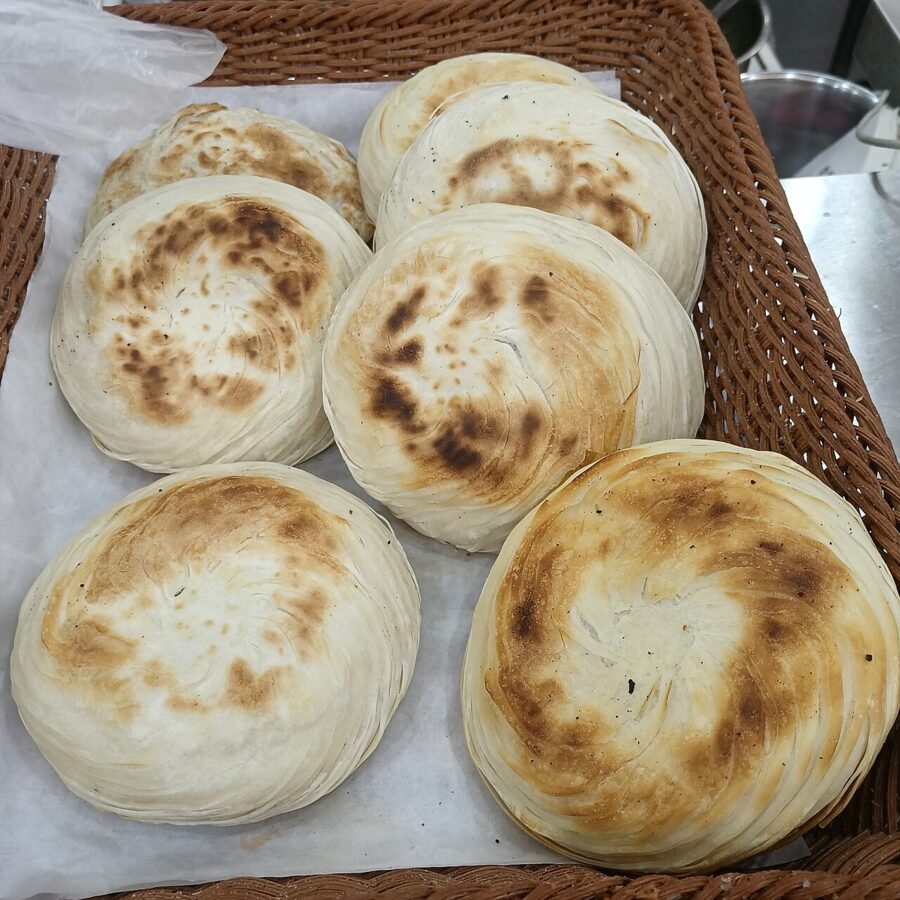
There’s a third roujiamo, from Tongguan in eastern Shaanxi, where the bread is a coiled, layered, oily bun that shatters like pastry. The rule there is “hot bread, cold meat”: the bun comes out of the oven and the pork goes in cool. You’ll find Tongguan-style shops all over Xi’an, and it’s worth one comparison bite.
Soups, dumplings and the rest of the Hui table
Past paomo and roujiamo, the Quarter’s menu runs long, and most of it is cheap enough that the best plan is to share. These are the dishes I’d hunt down, roughly in order.
Guantang baozi
Guantang baozi (灌汤包子) are Xi’an’s soup dumplings: big, thin-skinned buns filled with minced beef or lamb and a rich stock made with beef bone, which turns to soup as they steam. They’re bigger and softer than the xiaolongbao of Shanghai, and halal, so there’s no pork aspic. Lift one carefully, bite a small hole, drink the soup, then dip it in vinegar and chilli oil.
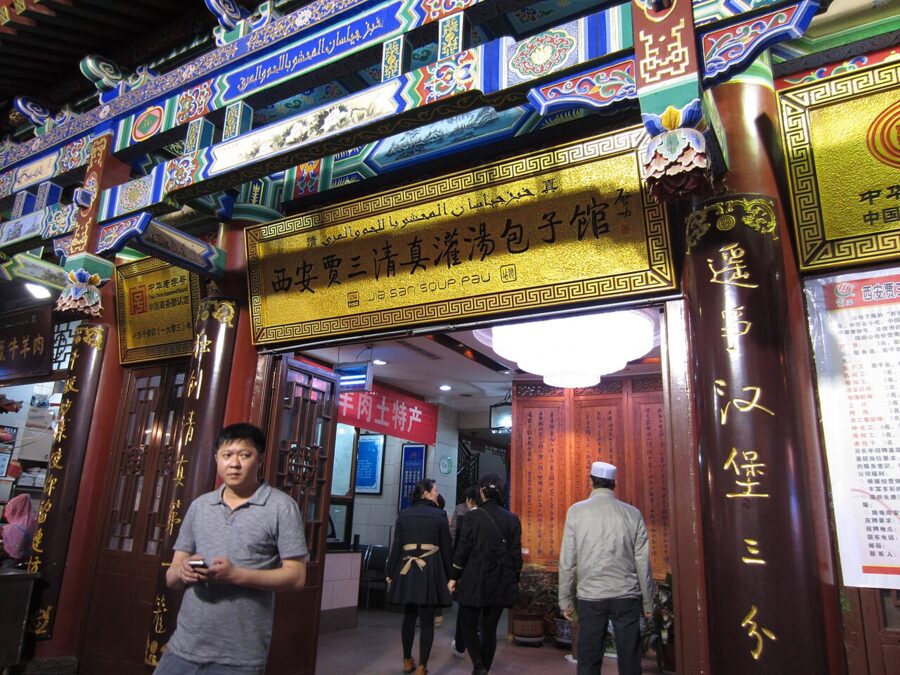
The name everyone gives you is Jia San (贾三灌汤包子馆), whose main shop is at Beiyuanmen 93, beside the Drum Tower, open roughly 8:00 to 22:00. Its recipe was added to the national intangible heritage list in 2021. A steamer of beef dumplings costs about ¥16–17.
The main shop is also a tour-group stop, and plenty of Xi’an people will tell you it isn’t what it was; I’d still go once, then try the smaller dumpling shops on Dapiyuan and compare. Their other dishes, like the sweet eight-treasure rice porridge, are worth ordering alongside.
For the bigger family of dumplings, steamed and boiled, my Chinese dumplings guide has the full map.
Meatball hulatang
Xi’an’s hulatang is not the Henan pepper soup of the same name. Locals often write it hulatang with a different character, 糊辣汤, “thick spicy soup”, and it’s a beef-bone broth thickened with starch and loaded with hand-made beef meatballs, potato, cabbage, cauliflower and carrot. It’s mildly peppery rather than fiery until you add a spoon of chilli oil, and it’s eaten with flatbread torn into the bowl.
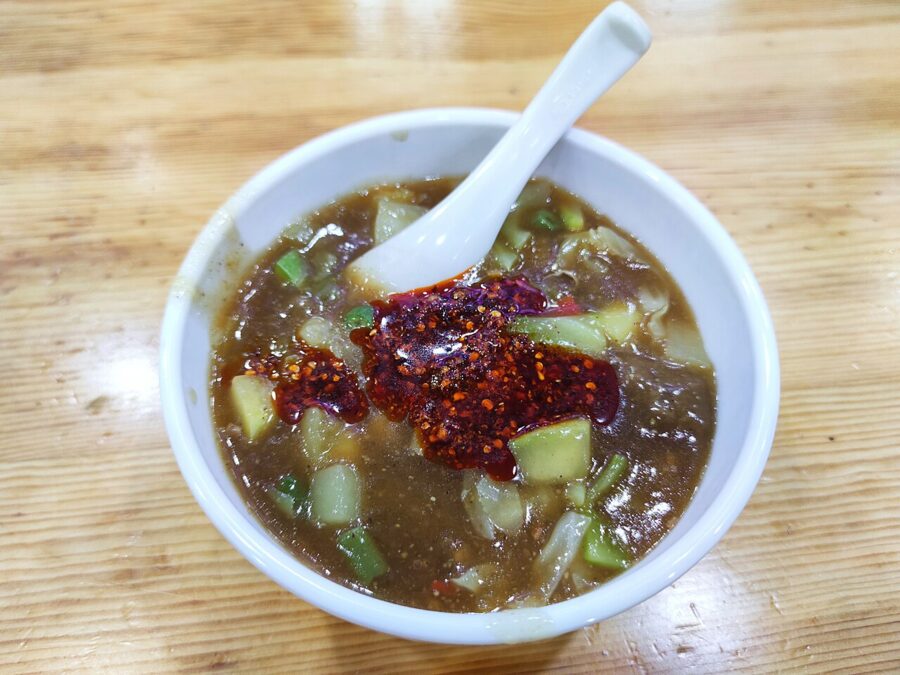
This is breakfast, and the shops on Sajinqiao are the place for it: Li Weiyi (李唯一肉丸糊辣汤) near number 192 and Lao Li Jia Mingming (老李家明明肉丸糊辣汤) are the two names locals argue over. Most hulatang counters close by noon. The Henan version and the rest of China’s morning soups are in my Chinese breakfast guide.
Xiao su rou and the steamed dishes
Ding Jia Xiao Su Rou (定家小酥肉) on Dapiyuan makes one dish, and it isn’t what you expect. Elsewhere in China, xiao su rou is crisp fried pork. Here it’s beef, battered and fried, then steamed in a spiced broth until it’s soft and almost melting, served with a spoon of chilli oil. It’s heavy and salty on its own, so locals eat it with rice, and you should expect to pay about ¥25–30; it’s open roughly 10:00–20:30.
The same idea runs through other Hui dishes in the Quarter: fen zheng rou (粉蒸肉), beef or lamb steamed in spiced rice meal until it falls apart, and the clay-pot stews at places like Musa Shaguo on Dapiyuan, where the big house pot costs about ¥91 and is meant for a table of friends.
Sour soup dumplings
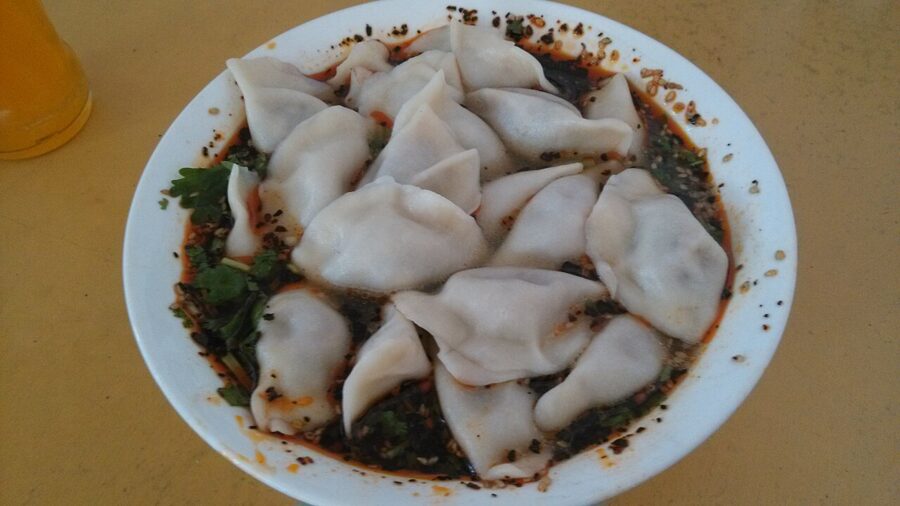
Suantang shuijiao (酸汤水饺) are boiled dumplings in a sour, oily, spicy broth, and the Hui version is filled with beef and served by the liang (50 grams). Ma Er (马二优质酸汤水饺) at Sajinqiao 131 is the famous shop and has become a tourist stop; plenty of Xi’an people now say they prefer the Wang family’s Jiaozi Wang (饺子王) at the east end of Dapiyuan. Try one, and if you have room, the other.
Majiang niangpi, liangpi and noodles
Sheng Zhi Wang (盛志望麻酱酿皮) at Dapiyuan 225 does one thing: steamed wheat sheets cut into thick ribbons and dressed with a heavy, nutty sesame paste, chilli oil and a little vinegar. It’s thicker and richer than the vinegar-and-garlic liangpi of the rest of the city, and people from Wuwei in Gansu will tell you it’s really their style. Either way, it’s an excellent cold plate.
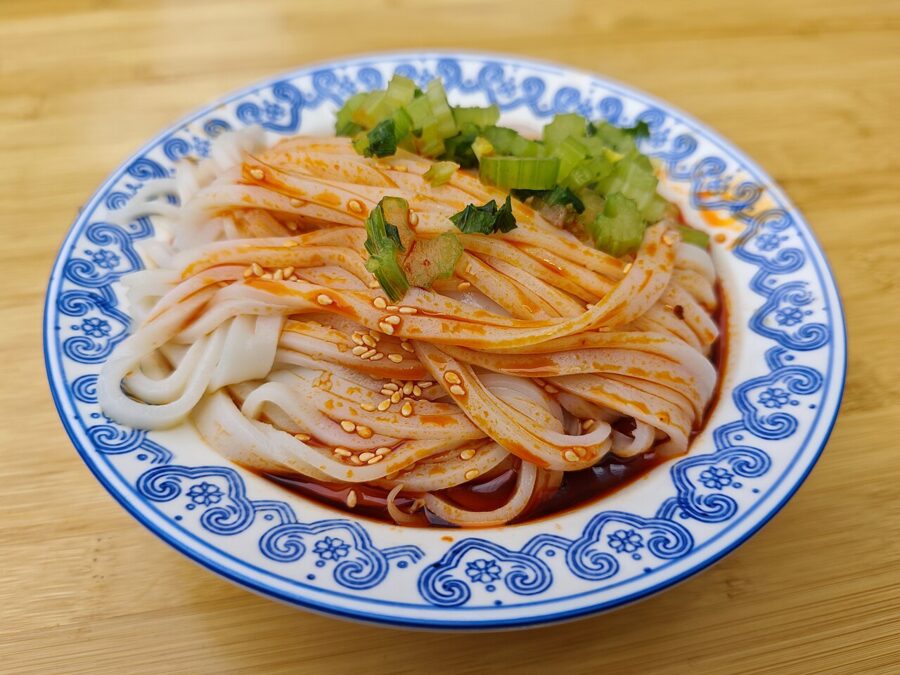
Liangpi (凉皮) is the city’s cold noodle, and biang biang mian (biangbiang面), the belt-wide noodles with the most complicated character in Chinese, is its hot one. Both, along with youpo mian and Qishan saozi noodles, get a full chapter in my Chinese noodles guide, so I won’t repeat it here.
Skewers, tofu and the grill
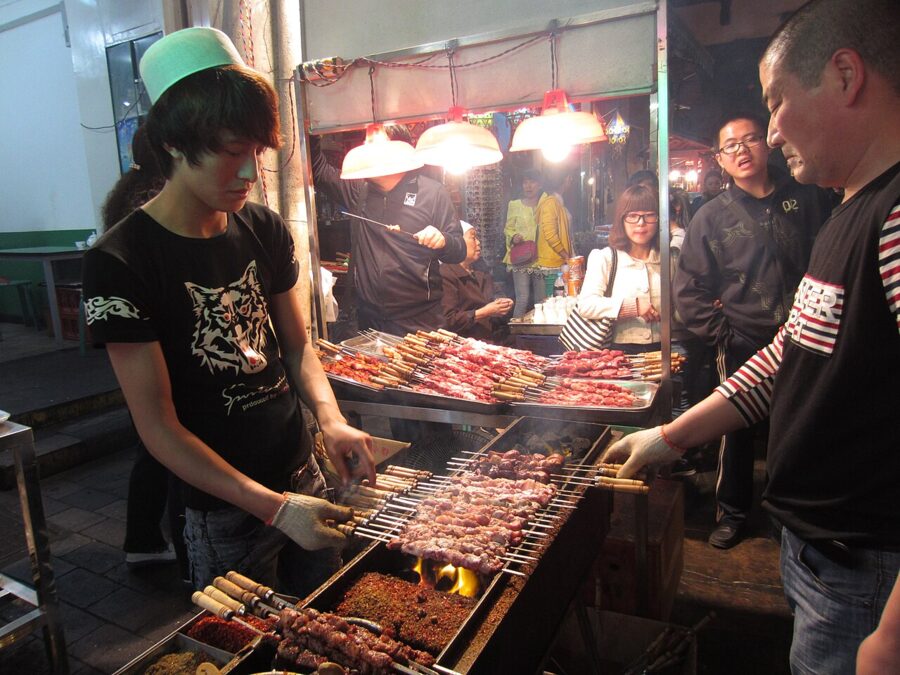
Lamb skewers (烤羊肉串) are everywhere in the Quarter, and the good ones are small, cut with a bit of fat and cooked over charcoal with cumin, chilli and salt. You’ll also see big chunks on tamarisk branches (红柳烤肉), which look dramatic and are worth one stick for the experience. Grilled spiced tofu in a paper cup is the vegetarian standby.
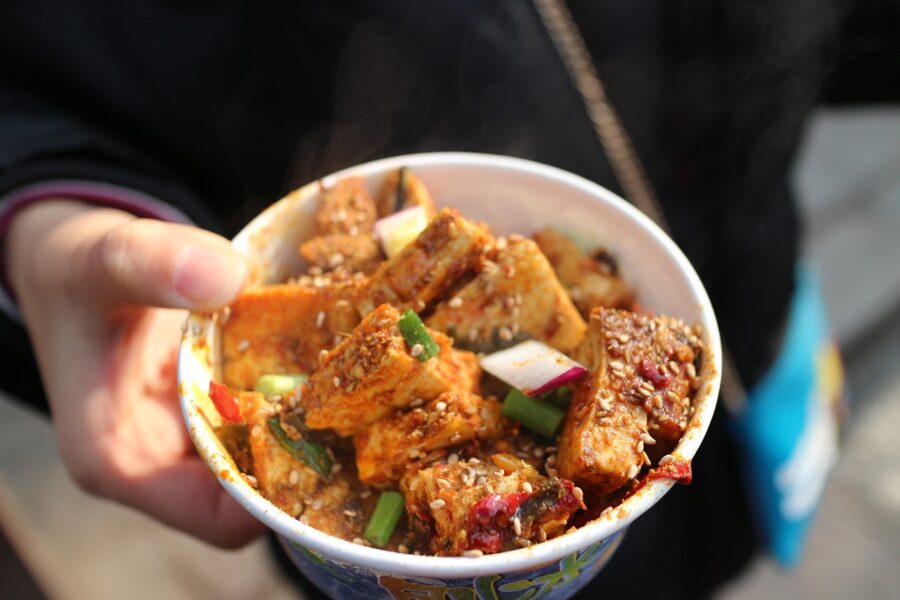
Other things to look for: fentang yangxue (粉汤羊血), lamb’s blood tofu with glass noodles in a peppery broth; shuipen yangrou (水盆羊肉), clear mutton soup with thin slices of meat, eaten in the morning with a crescent-shaped flatbread called yueya bing (月牙饼); and shuijian bao, pan-fried buns with crisp bottoms, for breakfast.
Something sweet
Xi’an has a sweet tooth that surprises people. Glutinous rice, red dates, honey, osmanthus and persimmon turn up again and again, and the Quarter’s sweet stalls are where most visitors spend the last of their appetite.
Zenggao
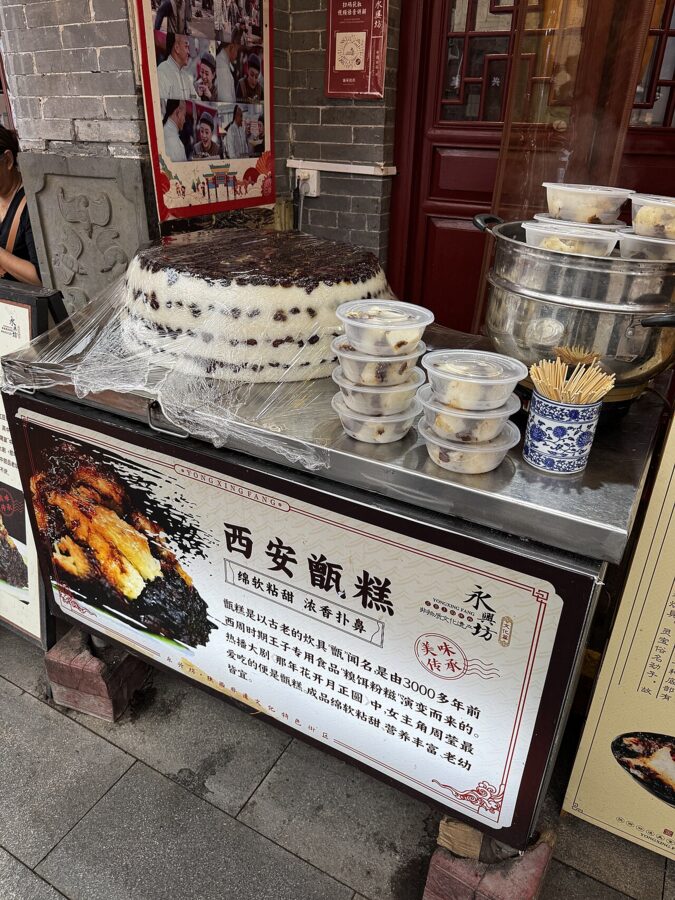
Zenggao (甑糕) is glutinous rice, red dates and kidney beans layered in a huge iron steamer called a zeng and steamed for hours, overnight in the old shops, until the dates melt and stain the rice dark red. It’s sold by the scoop, sticky and only lightly sweet, and it’s a breakfast food. The famous stall is Pangzi Zenggao (胖子甑糕) on Sajinqiao, a tricycle with one pot that sets up around 5:30–6:30, sells a small portion for about ¥8 and is often gone by 9:30. Dongnanya Zenggao (东南亚甑糕), at the corner of Xiyangshi and Beiguangji Jie, is the easier option later in the day.
Jing gao
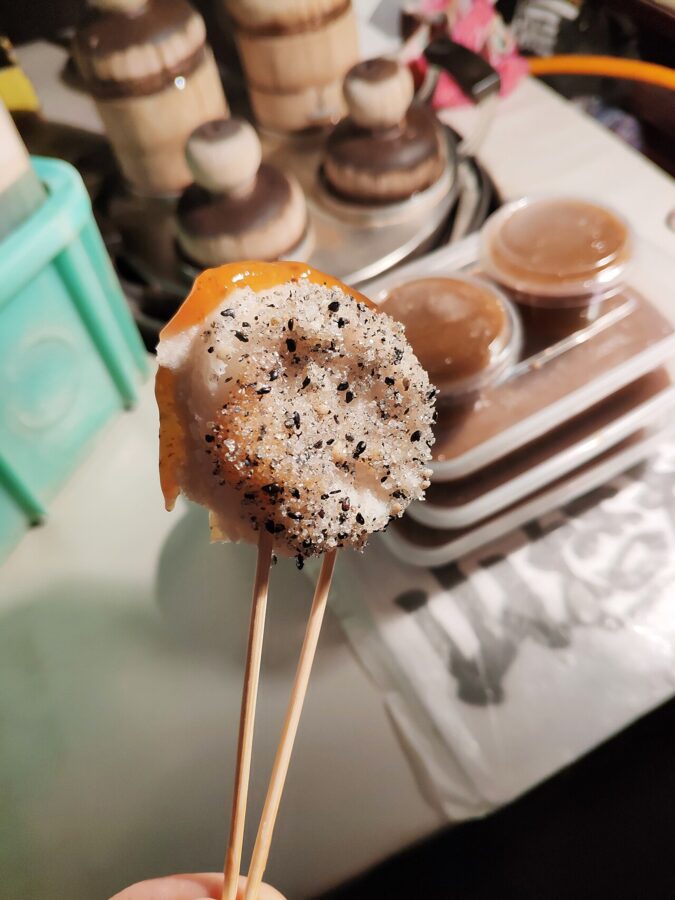
Jing gao (镜糕), “mirror cakes”, are small discs of glutinous rice flour steamed in tiny wooden moulds, so they’re round and flat like an old bronze mirror. The vendor pokes a bamboo stick into one, then rolls it in white sugar, crushed nuts, sesame and rose jam. They’re a Hui snack, often sold from carts, and the classic flavour is rose. Newer stalls do strawberry and cartoon designs; stick with rose.
Persimmon cakes
Huang gui shizi bing (黄桂柿子饼) are the most Xi’an of the sweets. The dough is made with the flesh of huojing persimmons (火晶柿子), a small, bright orange variety grown at Lintong near the Terracotta Army, and it’s filled with walnuts, sugar and huang gui (黄桂), osmanthus preserved in sugar. Then it’s fried in a shallow pan until the outside is crisp and the inside is molten. The city even has a standard for them, and it says the persimmons must be huojing.
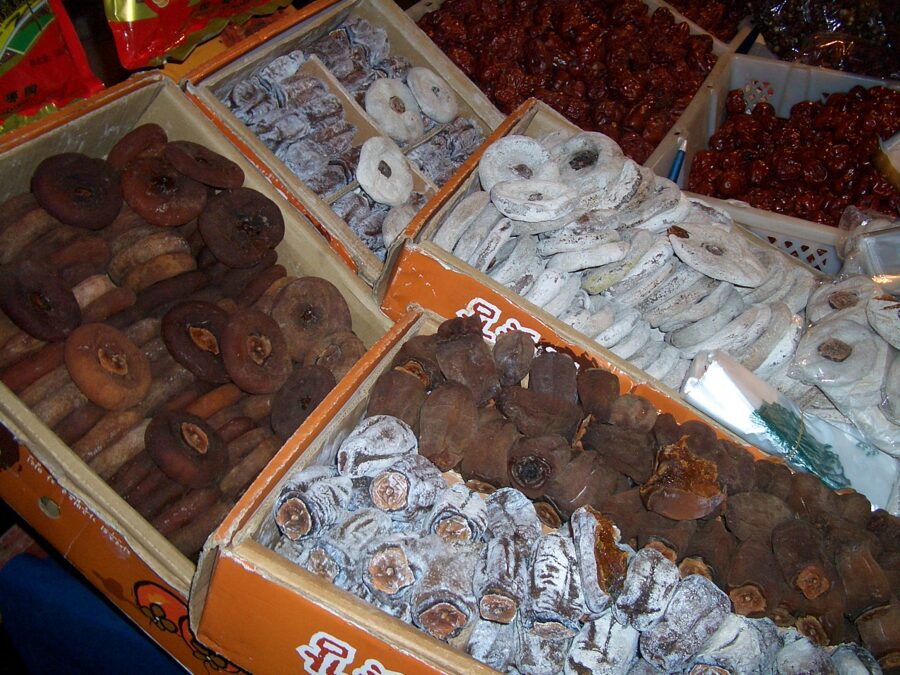
They’re best from about October to December, when the persimmons are ripe, and about ¥3 each. Eat them hot and fresh from the pan; one that has been sitting is greasy and heavy. And be careful with the first bite, because the filling is hotter than it looks.
Other sweets
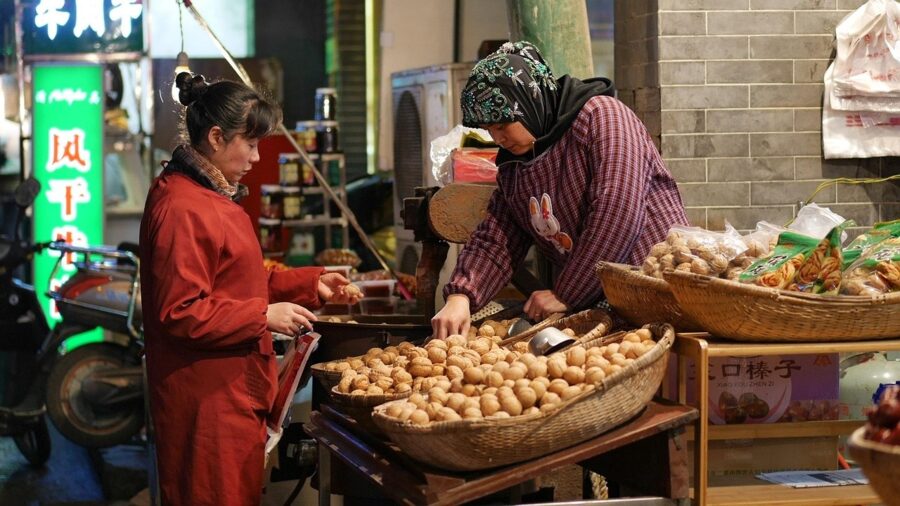
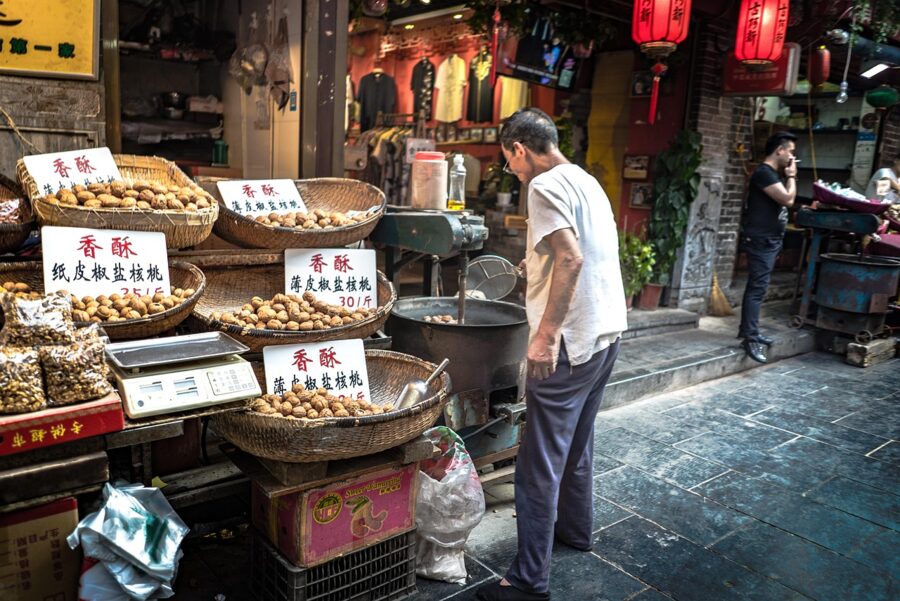
Look for gui hua gao (桂花糕), sticky osmanthus cake cut into strips; honeyed cold rice dumplings (蜂蜜凉粽子) in summer; and niunai jidan laozao (牛奶鸡蛋醪糟), hot milk stirred with egg and fermented rice, at the dessert shops on Dapiyuan. The nut sellers roast walnuts and chestnuts in revolving drums in the colder months.
What to drink
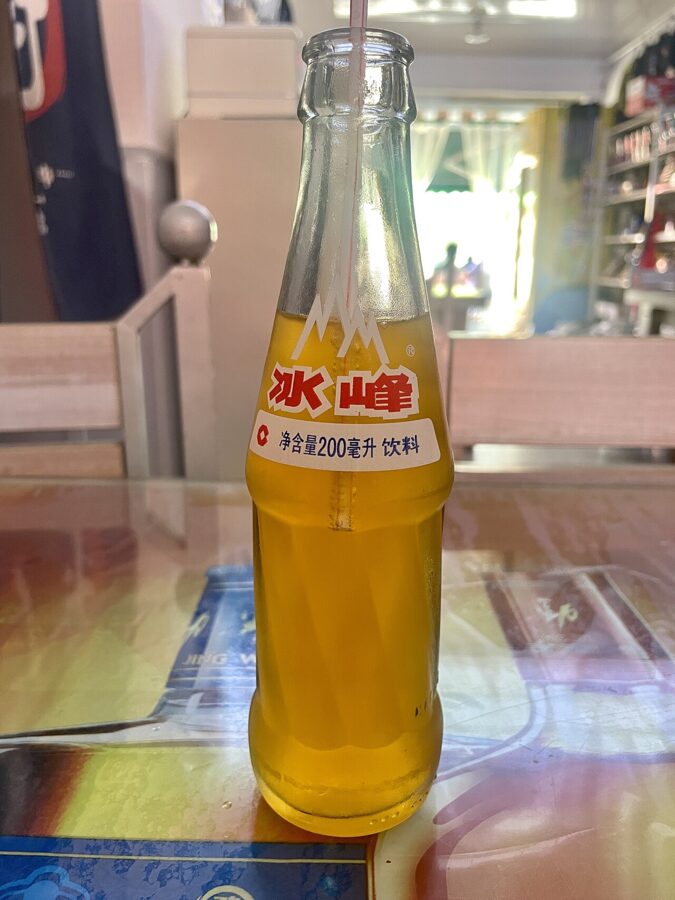
The drink that goes with Xi’an food is Bingfeng (冰峰), Xi’an’s own orange soda, drunk with everything from paomo to skewers. It’s sweet and fizzy and hard to find elsewhere. Order it at any noodle shop and you’ll be doing what the rest of the room does.
Huang gui chou jiu (黄桂稠酒) is the old drink of the city: a cloudy, sweet rice wine flavoured with osmanthus, with very little alcohol, about 1% in the commercial bottles. It’s drunk warm in winter and chilled in summer, and the best-known maker is Xi’an Fanzhuang (西安饭庄), the restaurant on East Street that opened in 1929 and still bottles its own. The writer Guo Moruo is said to have called it “not quite wine, but better than wine”, and it’s a good line for a drink that tastes like a dessert.
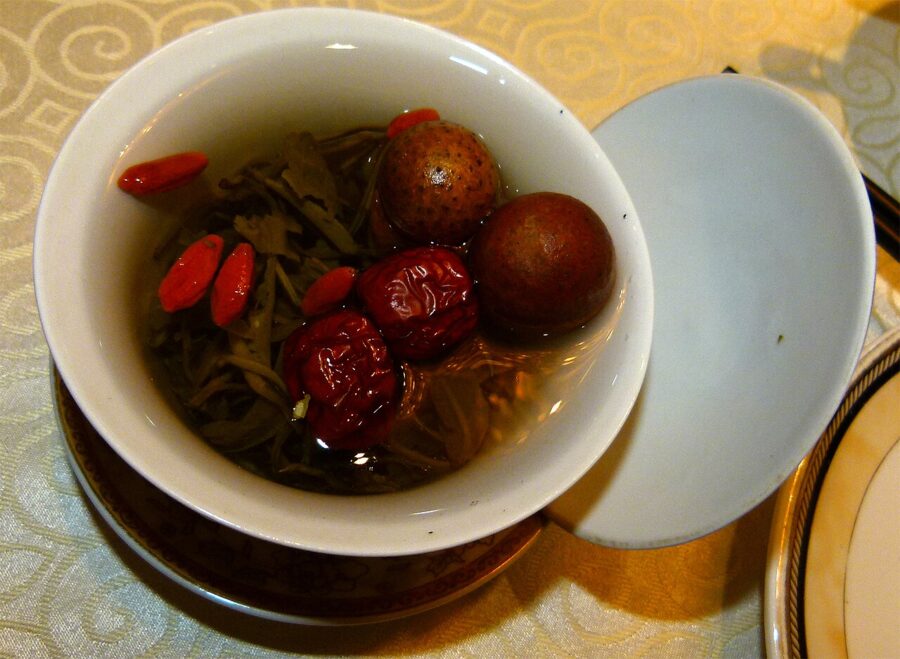
In the Quarter you’ll see suanmeitang (酸梅汤), sour plum drink, sold from big glass jars, and some halal restaurants serve sanpaotai (三炮台), the Hui lidded-bowl tea with rock sugar, dried dates, longan and goji in the cup. If you want more on tea, my Chinese tea guide covers it.
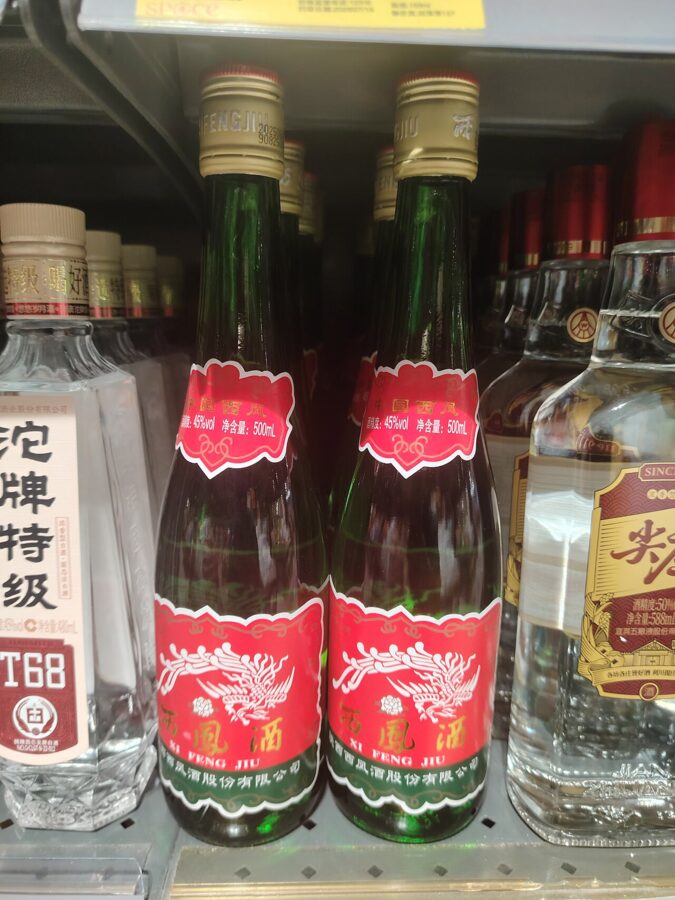
Remember that the Muslim Quarter is dry. Most halal restaurants serve no alcohol at all, so if you want a beer with your skewers, eat outside the Quarter. Shaanxi’s serious drink is Xifeng (西凤酒), a baijiu from Fengxiang near Baoji, west of Xi’an, and the Han restaurants near the Bell Tower will sell you a bottle.
A Xi’an day of eating
The way to eat Xi’an is to spread it out. The portions are huge, the bread is filling, and if you try to fit paomo, roujiamo and dumplings into one lunch you’ll be asleep by 15:00. Here’s how I’d plan a day.
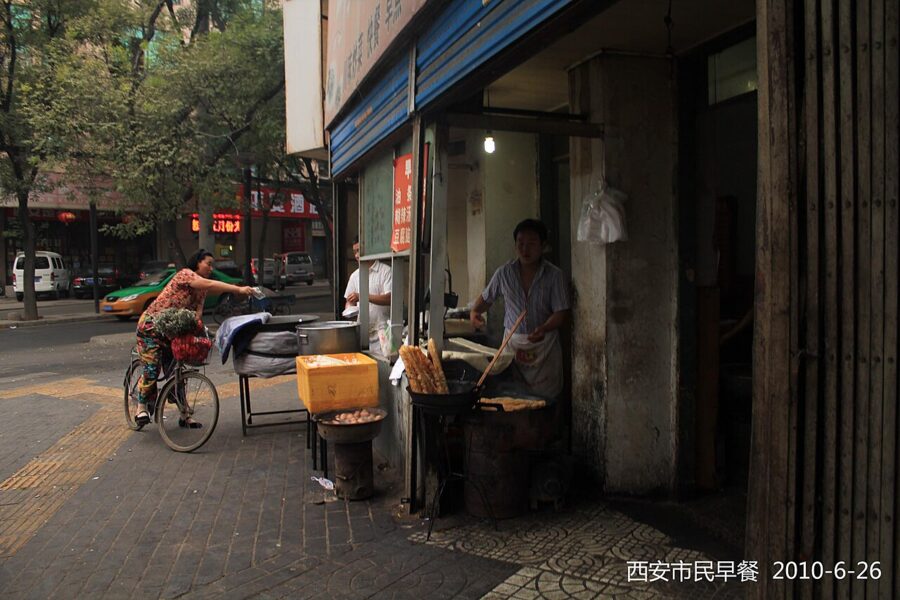
6:00–9:00: breakfast
Take Metro Line 1 to Sajinqiao and get out at exit B, which puts you on the food street in two minutes. Start with a bowl of meatball hulatang with flatbread, then queue for zenggao from the tricycle before it sells out. If you’re more hungry than that, add a cured beef roujiamo from Yang Tianyu. The street fills up with locals from around 7:00.
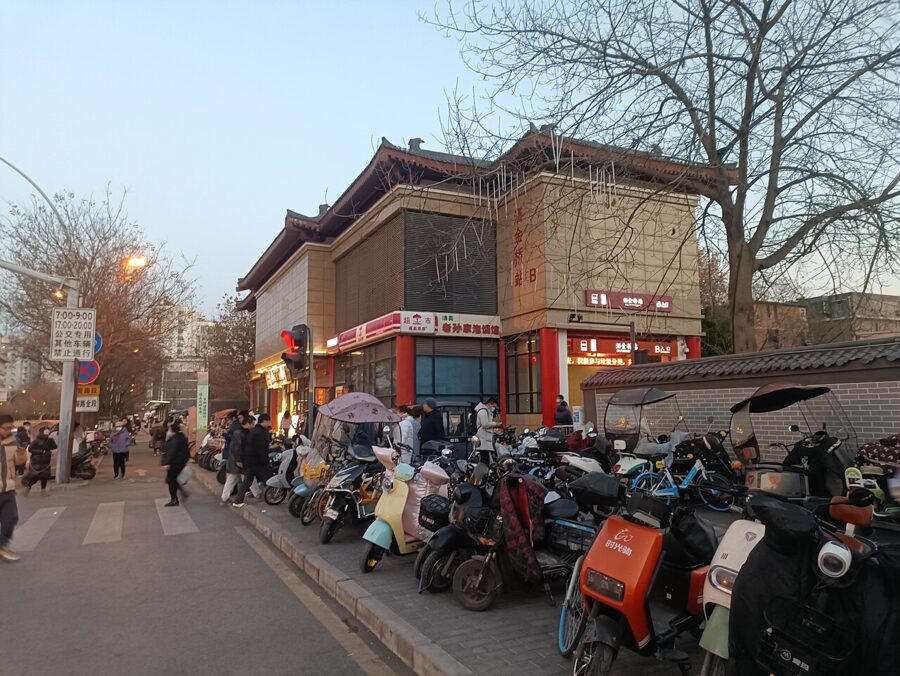
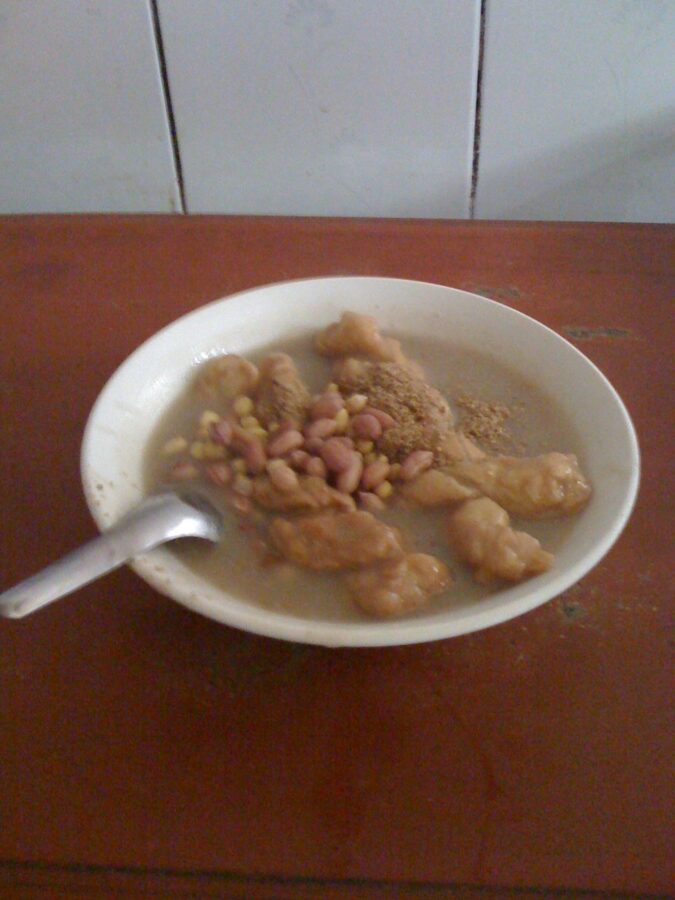
Alternatively, try the morning market at Xiaonanmen (小南门), by the south wall, where from about 6:00 to 7:00 stalls sell youcha mahua (油茶麻花), a thick, savoury flour “tea” poured over crisp fried dough twists, alongside lamb’s blood soup and other old-fashioned breakfasts.
12:00: lunch
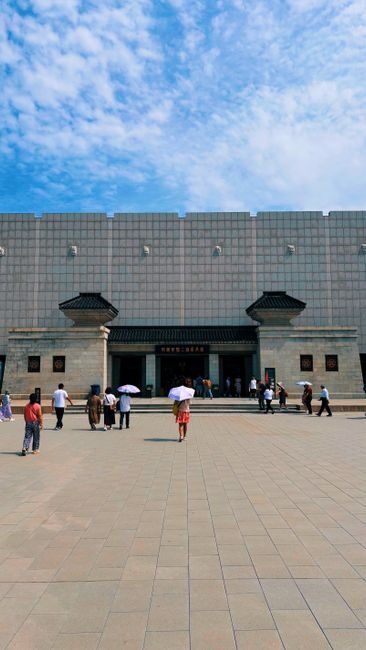
Lunch is for paomo or roujiamo. Either go back into the Quarter for Lao Mi Jia Dayu on Xiyangshi, or, if you’re visiting the Shaanxi History Museum, eat at Ziwu Road Zhang Ji on Cuihua Road nearby. If it’s summer, have a plate of liangpi and a Bingfeng instead and save your appetite.
15:00: something sweet, then walk
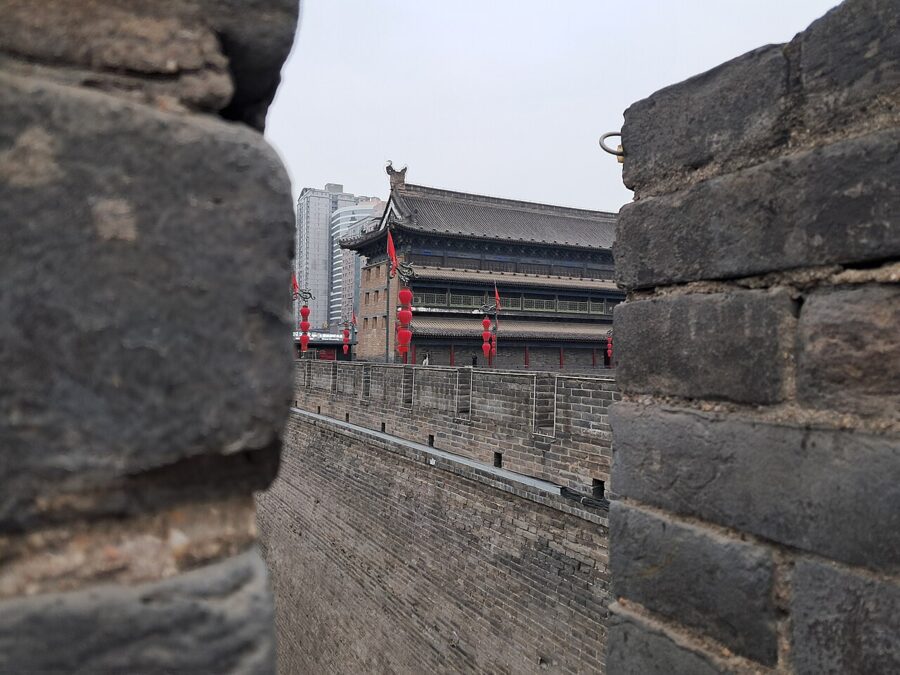
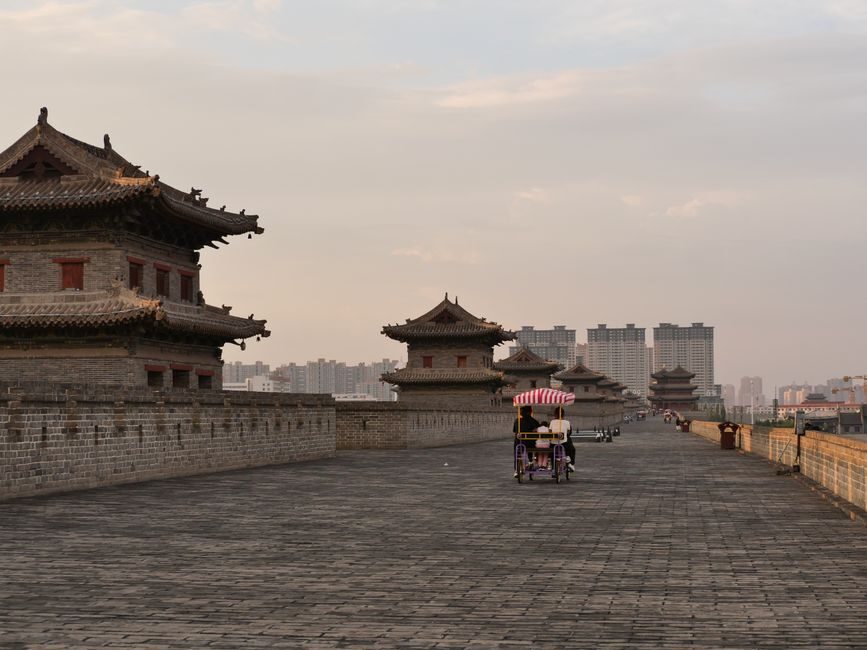
Mid-afternoon is for a persimmon cake, a jing gao and a cup of suanmeitang in the Quarter, then a long walk to make room. The city wall is the obvious place: it’s nearly 14 kilometres around, you can rent a bike on top, and it gives you an hour of exercise and a view over the rooftops of the Quarter.
18:00 onwards: dinner and skewers
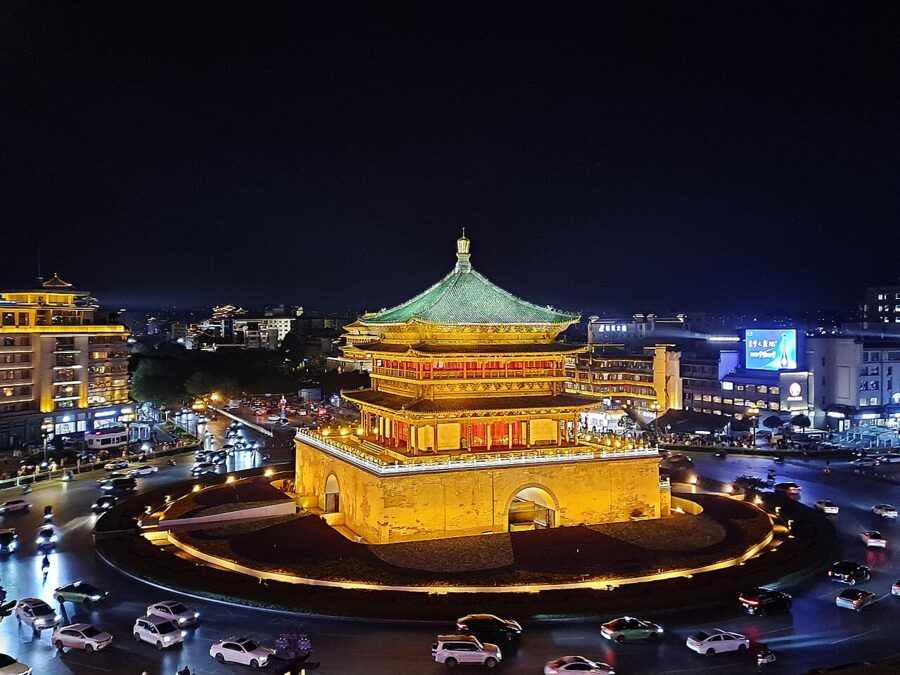
Dinner is the time for a clay pot on Dapiyuan, the dumplings, or Ding Jia’s steamed beef with rice, followed by skewers. The Quarter’s grills are at their best after dark. If you want something without halal rules, go out to Chunfasheng for hulutou, or to one of the big old restaurants near the Bell Tower.
Where locals eat, beyond the Quarter
The Muslim Quarter is half of Xi’an’s food, but it’s only half. Han Xi’an eats pork, drinks with dinner, and has a string of old restaurants that have been feeding the city since before 1949, most of them now run by the city’s catering groups.
The old names
| Restaurant | Since | What to order | Where |
|---|---|---|---|
| Lao Sun Jia (老孙家) | 1898 | Mutton and beef paomo | Dongguan Zhengjie 78, outside the east gate |
| Tongshengxiang (同盛祥) | 1920 | Beef and mutton paomo | West Street 5, Bell and Drum Tower Square |
| Chunfasheng (春发生) | 1920 | Hulutou paomo | Nanyuanmen, south of the Bell Tower |
| Fan Ji (樊记) | 1925 | La zhi rou jia mo | Zhubashi |
| Xi’an Fanzhuang (西安饭庄) | 1929 | Hulu ji, huang gui chou jiu | East Street |
| Defachang (德发长) | 1936 | Dumpling banquet | West Street 3, Bell and Drum Tower Square |
Xi’an Fanzhuang is the place for hulu ji (葫芦鸡), “gourd chicken”, a whole bird boiled, steamed and then deep-fried until the skin is glassy, said to date back to the Tang court. It comes whole, and a waiter pulls it apart at the table. Defachang, which opened in 1936 selling Beijing-style dumplings, is now known for its dumpling banquet, a long procession of dumplings in different shapes and fillings; it opens 11:00–21:30, and it’s a good place to sit with a view of the Bell Tower.
Yongxingfang
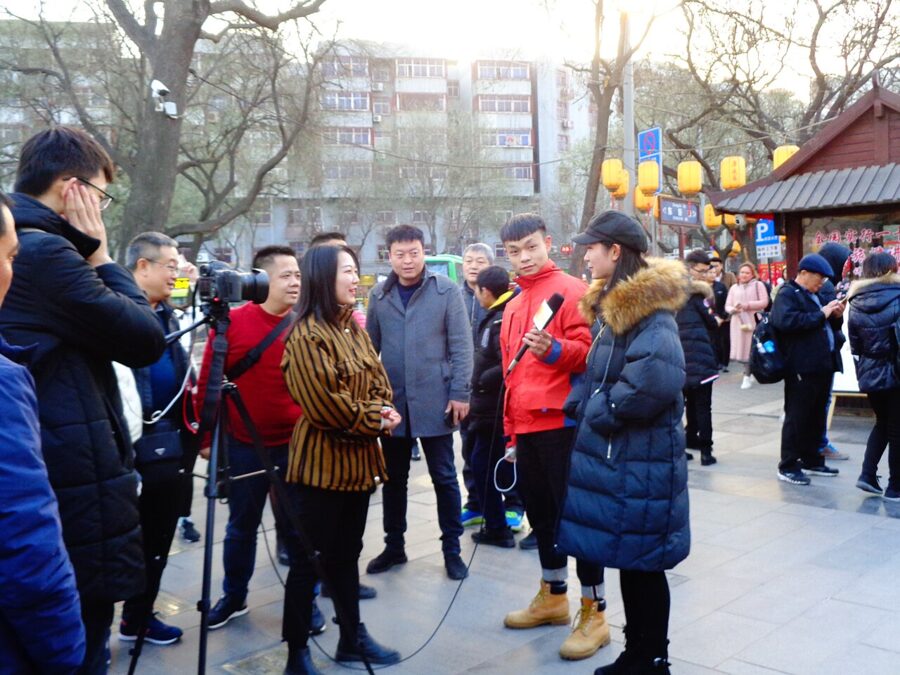
Yongxingfang (永兴坊), on Dongle Xiang near the north-east part of the wall, is a newer food street built around Shaanxi’s heritage snacks, with stalls for dishes from across the province. It’s clean, organised and free to enter, and it’s a reasonable place to try snacks from the rest of Shaanxi in one go. It’s also where you’ll see the “bowl-throwing wine”, where you drink a bowl of rice wine and smash it on a pile of broken pottery. It costs a few yuan a bowl and it’s a bit of a show, mostly for the camera.
Other places outside the wall
Most Xi’an people eat in their own neighbourhoods, and every residential block has a noodle shop, a roujiamo counter and a paomo hall. If you’re staying near the Big Wild Goose Pagoda or in the south of the city, ask your hotel where they eat breakfast and go there. You’ll pay less and wait less than in the old city.
And the food travels. Shaanxi noodle shops are everywhere in China now, and I ate a lot of biang biang noodles and roujiamo during my time in Shenzhen. In Beijing, the Hui neighbourhood around Niujie has its own halal snack tradition, and comparing the two is a good excuse for a trip.
Practicalities
Getting there
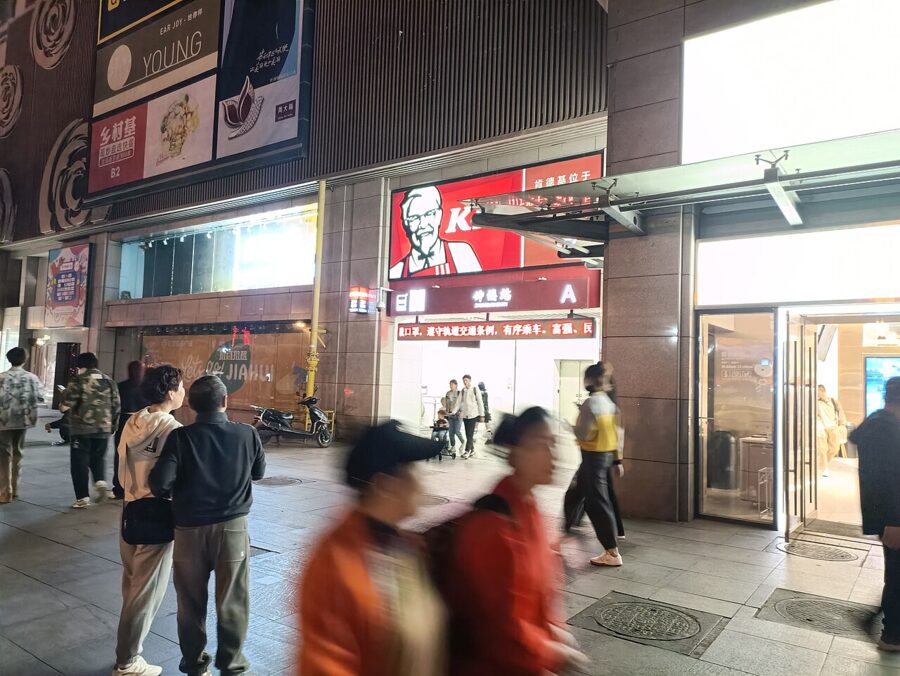
The Muslim Quarter is in the north-west part of the old city. The two useful stations are Bell Tower (钟楼), on Lines 2 and 6, where you walk past the Drum Tower to Beiyuanmen in about five minutes, and Sajinqiao (洒金桥), on Line 1, where exit B puts you on the food street. Beidajie (北大街), on Lines 1 and 2, sits between them. Xi’an North, the high-speed station, is on Line 2, so you can go straight from the train to the Bell Tower.
Paying
Almost everywhere takes Alipay and WeChat Pay, and both now accept foreign cards. Some small stalls are mobile-only, and a few old shops prefer cash, so carry some small notes as well. Many shops sell by weight, by the jin (500 g) or liang (50 g), so be clear about how much you want.
Ramadan and holidays
Hours can change during Ramadan: some family shops open later or keep shorter hours, and some close for a day or two around Eid al-Fitr. In 2027, Ramadan is expected to run from early February to early March, which also overlaps with Spring Festival crowds, so check the shop’s hours on Amap before you set out. The May Day holiday and Golden Week (1–7 October) are the busiest times in the Quarter, and the main streets can be shoulder to shoulder.
Halal manners
The shops marked 清真 (qingzhen) are halal. Don’t bring pork or alcohol into them, and don’t ask for it. Dress modestly near the mosques, ask before photographing people, and don’t treat the Quarter as a theme park: people live here.
Skip this
- Sit-down meals on Beiyuanmen. The prices are high and the food is made for people passing through. Eat a snack, take your photo, then turn into Xiyangshi or Dapiyuan.
- Pre-cooked food sitting on trays. Persimmon cakes, skewers and dumplings are only worth it fresh. If the stall isn’t cooking, walk on.
- Machine-cut paomo bread. Tear it yourself; it’s half the point.
- Trying to eat everything in one go. Paomo, roujiamo and dumplings in one lunch will finish you. Spread them out over the day.
Go hungry, go early, and tear your bread small. If the cook looks at your bowl and nods, you’ve done it right.
You Might Also Enjoy
 Penang Hawker Food: The Street Canon of Malaysia’s Food Capital
 Pingyao Ancient City: The Walls, the Shanxi Banks, the Painted Temples and How to Spend Two Days
 Dali: The Old Town, the Three Pagodas, Cangshan by Cable Car, Erhai by Bike and the Tea Horse Town of Shaxi
 Japan Izakaya Guide: How to Order, What to Drink