
Penang Hawker Food: The Street Canon of Malaysia’s Food Capital
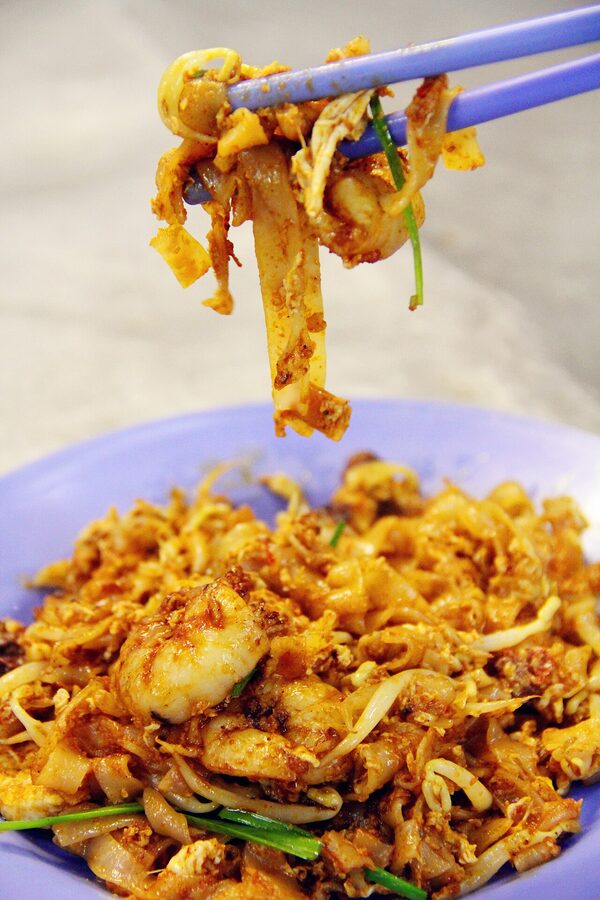
The stall is on Lorong Selamat, it’s 11:30am on a Saturday, and the woman at the wok hasn’t looked up in twenty minutes. She’s wearing a red bandana and her cigarette is balanced on the lip of a saucer. In front of her: a blackened cast-iron wok set over a gas flame so aggressive it could roast marshmallows at a metre, a tray of cockles, a tray of prawns the length of my index finger, Chinese sausage on a wooden chopping board, and a bowl of duck egg yolks beaten pale yellow. She slaps a ladle of lard into the wok. Noodles follow. Then everything else, in a specific order she’s done so many thousand times it’s no longer thought. Forty seconds. She plates it. RM15. The man behind me takes his plate without a word and walks away, there’s nowhere to sit and he doesn’t want a seat, he wants the noodles. That’s Penang.
I came to George Town first on a long weekend out of Shenzhen in 2019, a budget flight via KL, four nights at a cheap guesthouse on Muntri Street, no plan beyond eating. I’ve gone back three times since. Penang is the only place in Southeast Asia where I’ve deliberately planned a trip around breakfast, lunch and dinner and counted them as separate activities. Not because I’m a food snob, I’m really not, but because the city has stacked up three or four culinary traditions on the same small island in a way that produces a hawker scene genuinely unlike anything else in Asia. Singapore’s is cleaner and more efficient. Bangkok’s is busier. KL’s is bigger. None of them are Penang.
This is what I wish someone had handed me before my first trip: where the belts are, what to order at each, how the stall system works, who to pay for drinks vs food, and the honest verdict on the places everyone tells you to go. I’ve linked related guides for the broader region, the Chinese regional food map covers the Hokkien and Teochew traditions that did half the heavy lifting in making this cuisine what it is, and the Singapore layover guide is the useful parallel if you want to compare the two canonical hawker cities in the same trip.
In This Article
- Why Penang food tastes different
- The hawker geography, where to actually eat
- Chulia Street (night, Tuesday to Sunday, 6pm-midnight)
- Gurney Drive Hawker Centre (evenings only, 5pm-midnight)
- Lorong Selamat, New Lane, Kimberley and the side streets
- Pasar Air Itam (morning)
- The canon, what to order and where
- Char kway teow, the one everyone’s here for
- Assam laksa, the sour, fishy, not-coconut-milk laksa
- Hokkien mee, soup, not fried
- Nasi kandar, the South Indian Muslim dish Penang perfected
- Cendol, the afternoon lifesaver
- Roti canai, the Malaysian national breakfast
- Oh chien, the loose-egg oyster omelette
- Lor bak, popiah, and the noodle supporting cast
- Durian, if you’re there May to August
- How the stall system actually works
- When to eat, when to skip
- Getting around, paying for things, and where to stay
- Peranakan food, not hawker, but worth a detour
- The last word
Why Penang food tastes different
The short version: Penang was a British free port from 1786, which meant the colonial authorities didn’t tax goods coming in and didn’t bother much about who was doing the cooking. Four distinct migrant streams arrived and stayed. Hokkien Chinese from Fujian province set up wok-based street stalls and over two centuries developed the Peranakan (Straits-Chinese) cuisine, a fusion of south Chinese technique with Malay ingredients like coconut milk, tamarind, and galangal. Teochew and Hainanese cooks, from other parts of south China, specialised in noodle soups and chicken rice. Malays brought the coconut, the rice, and the sambal. And Tamil Muslim workers from south India brought nasi kandar and roti canai, which are the two unmissable dishes that would not exist at this quality anywhere else in the world.
Here’s the bit that makes Penang hawker food particularly great: almost every stall specialises in one dish. Not two, not five, one. The woman on Lorong Selamat cooks char kway teow. That’s it. She’s been cooking it on that wok for something like thirty years. The stall three streets over that does curry mee also does only curry mee. Assam laksa stalls do assam laksa. There’s a guy on Kimberley Street whose entire working life has been about duck koay chap. This specialist system, plus the island’s small size, which means competition is fierce and bad stalls don’t survive, is why the food is as good as it is. No one is trying to run a whole menu. They’re trying to make one thing better than anyone else.
The hawker geography, where to actually eat
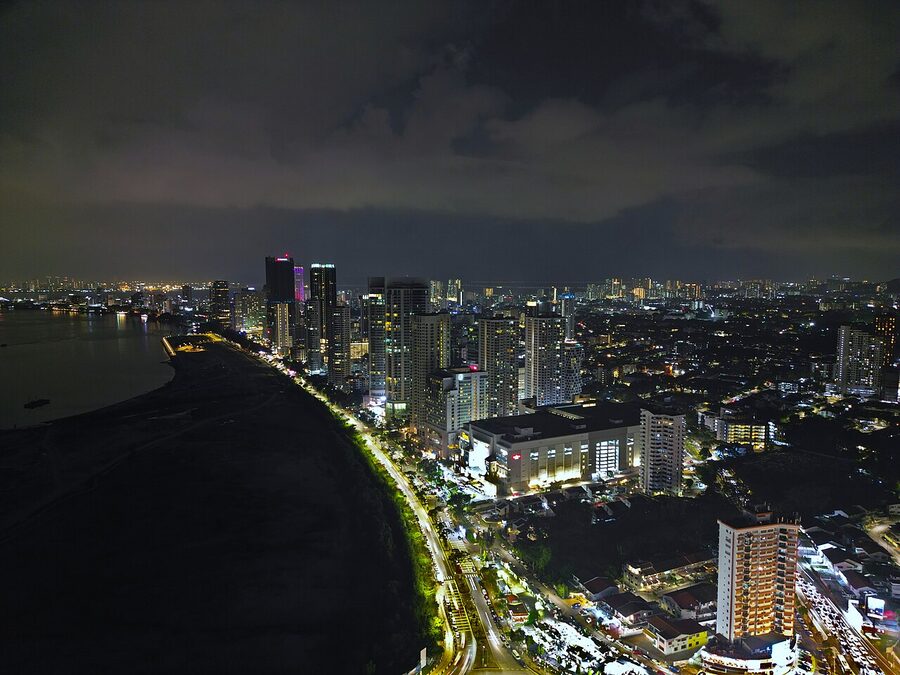
Most of the food you care about is inside George Town, which is a small, walkable grid on the northeast tip of Penang Island. A few heavy hitters are outside the grid, Pasar Air Itam for assam laksa is a half-hour Grab ride uphill, Gurney Drive is a 15-minute walk or 5-minute taxi north of town. Otherwise, you can walk it all. Here’s what you need to know about each belt.
Chulia Street (night, Tuesday to Sunday, 6pm-midnight)
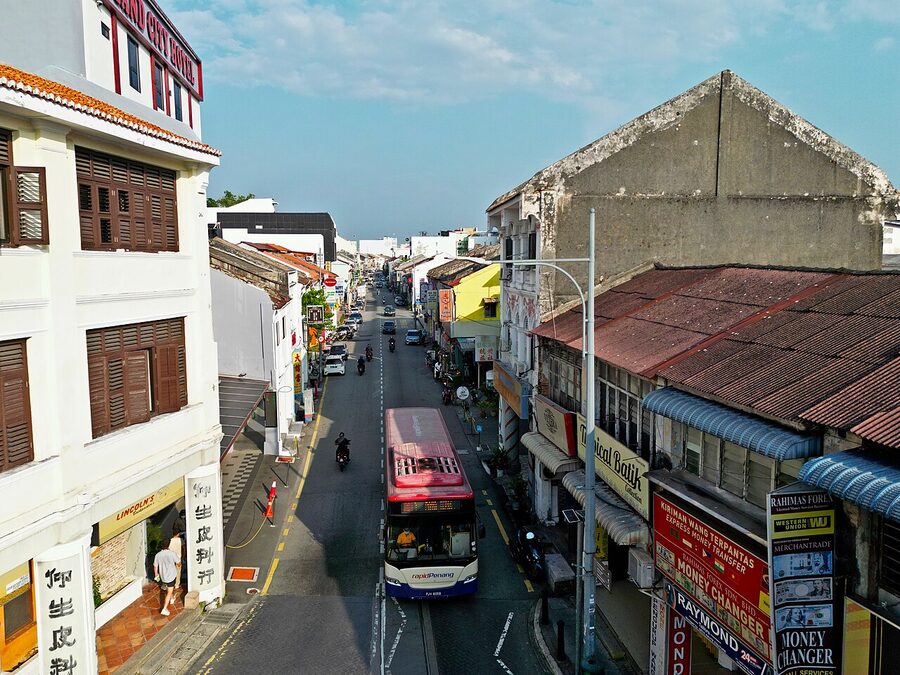
Chulia Street is the unofficial night hawker capital of old George Town. The stalls set up on the street itself, from around 6pm, and the crowd is roughly half locals and half backpackers stumbling out of the nearby guesthouses. You’ll find char kway teow, wan tan mee, Penang Hokkien mee (broth version, more on this below), apom pancakes from Lebuh Chulia Apom, fresh popiah, satay, and a reliable chendol. Expect to stand or share a plastic table. Closed Mondays, which is the night half the old-town belt rests, plan accordingly. Average bowl of noodles: RM7-10.
Gurney Drive Hawker Centre (evenings only, 5pm-midnight)
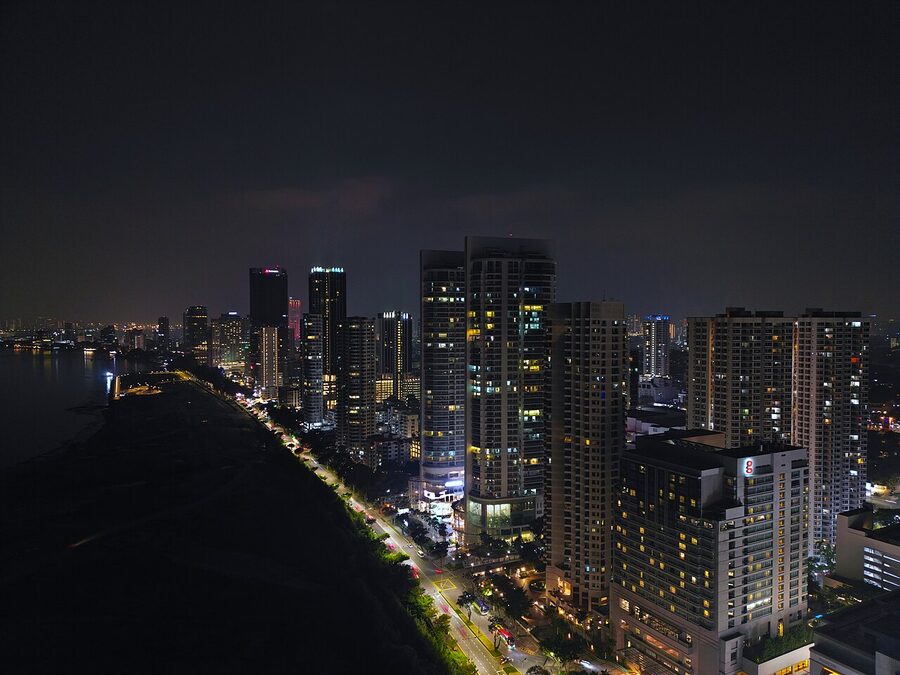
Gurney Drive is where most first-time visitors end up and it’s fine, even good. The food court sits on the Persiaran Gurney seafront, is open only in the evenings (around 5pm until midnight), and has the full canonical hawker spread in one place: assam laksa, char kway teow, Hokkien mee, oyster omelette, satay, rojak, ais kacang. I prefer the smaller belts elsewhere for character, but if you have one night in Penang or you’re travelling with picky eaters or kids, come here. Get there by 6pm for a seat; by 8pm on a Saturday the place is packed. Grab from the old town runs around RM10.
Lorong Selamat, New Lane, Kimberley and the side streets
Lorong Selamat in Pulau Tikus is where a lot of locals actually eat, the neighbourhood market opens at 5am for breakfast trade, and the famous Lorong Selamat char kway teow stall at number 108 (closed Tuesdays) starts around 11am and sells out by 6pm. New Lane (properly Lorong Baru) off Macalister Road turns into a hawker street from 4pm until 11pm, closed Wednesdays, good oh chien, char kway teow, and satay. Kimberley Street is famous for duck koay chap at Restoran Kimberly, Friday-Wednesday 6pm-11pm, closed Thursdays. Kheng Pin Cafe at 80 Jalan Penang does lor bak from 7am to 3pm, closed Mondays, Uncle Lau has been frying those five-spice pork rolls for something like forty years.
Pasar Air Itam (morning)
Air Itam is the hill village about 7km west of George Town, famous for two things: Kek Lok Si Temple, and one specific assam laksa stall next to the wet market on Jalan Pasar. This is the assam laksa the food-writer crowd will send you on a pilgrimage for. Opens around 10:30am, closed Wednesdays, RM5-7 a bowl. Combine with Kek Lok Si on the same half-day and you’ve got a lunch trip worth doing. Grab from George Town is about RM15.
The canon, what to order and where
These are the dishes that make Penang worth a plane ticket. I’ve ranked them roughly by how specifically Penang-excellent they are, the first few are the ones you cannot get to this quality anywhere else.
Char kway teow, the one everyone’s here for
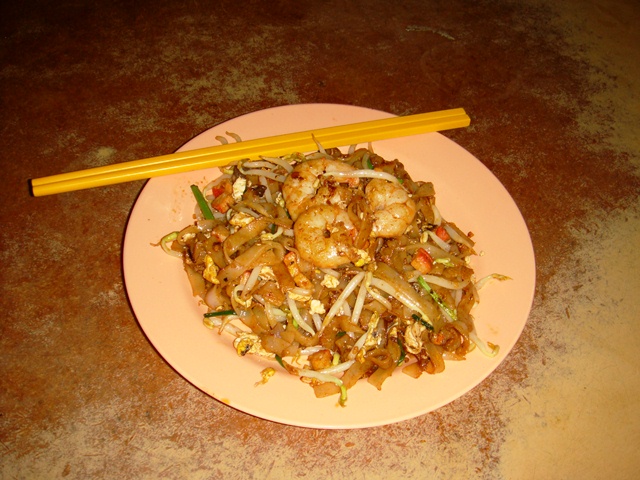
Char kway teow translates as “stir-fried flat noodles,” which undersells it by about seventy percent. The Penang version is a Hokkien street-stall tradition: flat rice noodles seared at brutal heat in a scorching wok with lard, garlic, chilli paste, dark soy, light soy, prawns, Chinese sausage (lap cheong), cockles, egg, and bean sprouts. The genius is the cockles, briny little blood clams that most Western palates take a beat to process and then can’t get enough of. Elsewhere in Malaysia and Singapore the dish exists in a slower, gentler form. Penang cooks it over flames hot enough to make your phone display glitch, which gives it the unmistakable smoke-edge flavour the Cantonese call wok hei.
Where to eat it: three options. Sister Ah Leng at 108 Lorong Selamat (the stall with the red bandana) is the famous one, closed Tuesdays, RM12-15 with duck egg added, she uses duck rather than chicken egg, which gives a richer finish. Kafe Ping Hooi on Lebuh Carnarvon does the more traditional breakfast version, 6:30am to 2pm, RM8-10. Sister Yao’s Char Koay Kak on Lorong Macalister, 7am to 1pm, technically char koay kak rather than kway teow (rice cake cubes, not noodles), but from the same tradition and arguably more interesting. Order all three across a trip, decide for yourself.
Assam laksa, the sour, fishy, not-coconut-milk laksa
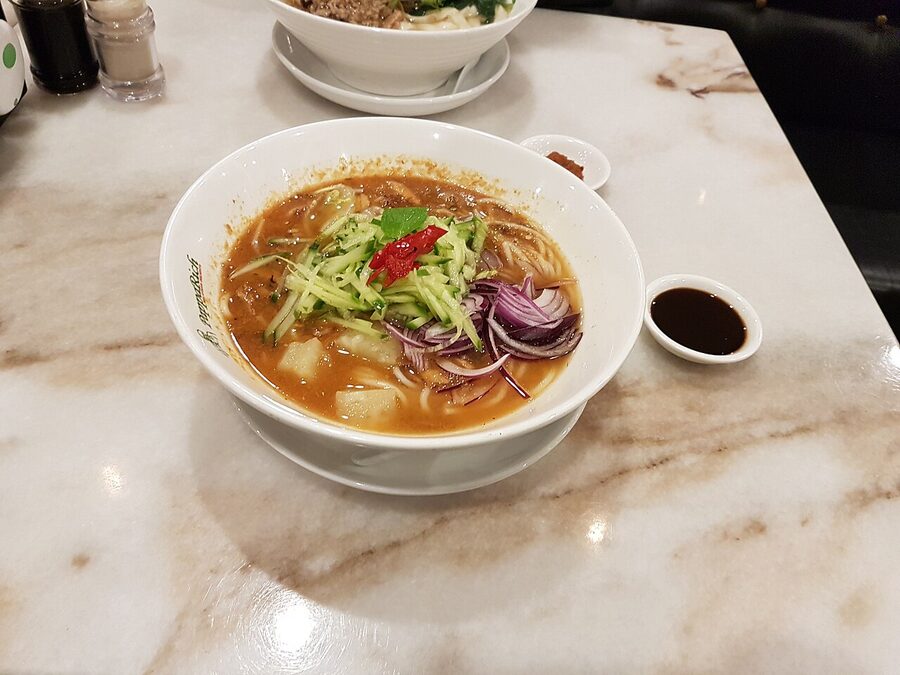
If char kway teow is the dish everyone expects, assam laksa is the one that decides whether Penang food actually clicks for you. It’s a noodle soup, and that is nearly the only thing it has in common with the coconut-milk curry laksa that travels to London food courts. Penang assam laksa uses no coconut milk. The broth is pounded, poached mackerel and tamarind paste, which gives it a sour-fishy-funky profile that can be genuinely alarming on first sip. A spoonful of hae ko, fermented shrimp paste, is stirred in at the end; more can be added on the side. Pineapple, shredded cucumber, mint, red onion and torch ginger flower (bunga kantan) go on top. It is aggressively not bland.
CNN Travel ranked it number seven in the world’s best foods a few years back, which I suspect does more harm than good to the first-timer, you arrive expecting a religious experience and may instead spend three mouthfuls figuring out what you’re tasting. Keep eating. By the bottom of the bowl you’ll get it. The stall to prioritise: Air Itam Asam Laksa on Jalan Pasar next to the Air Itam market, Thursdays to Tuesdays 10:30am to 7pm, RM5 a bowl. There’s also a very good version at Penang Road Famous Cendol’s sister stall on Lebuh Keng Kwee (which you’re probably visiting anyway for the cendol). The Gurney Drive version is fine if that’s your only shot.
Hokkien mee, soup, not fried
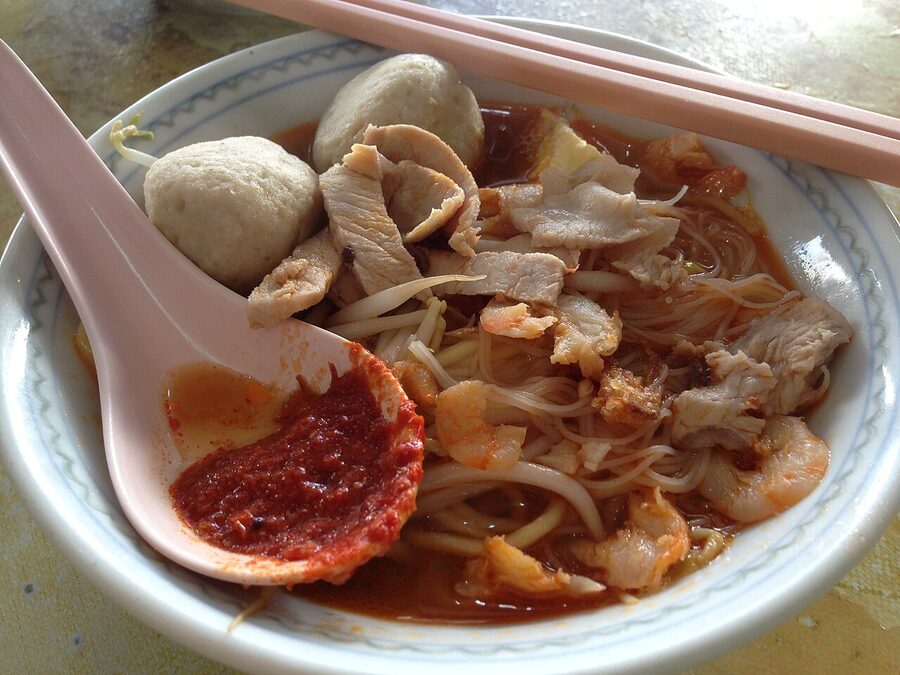
Word of warning: if you order Hokkien mee in Kuala Lumpur or Singapore you will get a plate of thick dark-soy-braised wheat noodles, almost black, and nothing like what you’re about to get in Penang. The Penang version, sometimes called prawn mee, or hae mee, to avoid confusion, is a broth-based dish. The stock is prawn heads and shells simmered with pork bones for most of a day, which gives it the distinct orange-red colour and a deep crustacean sweetness that punches through anything else on the plate. Egg noodles, prawn halves, pork slices, hard-boiled egg, kangkung (water spinach), fried shallots, and a side dollop of sambal for the brave.
Bridge Street Prawn Noodle (正宗橋頭福建蝦麵) at 533 Lebuh Pantai is a legendary breakfast spot, Tuesday-Sunday 7am until they sell out around 2:30pm, get there by 9am or don’t bother. 888 Hokkien Mee on Lebuh Presgrave is the evening alternative, Friday to Sunday plus Tuesday, 5pm-8pm. RM8-12 a bowl. Say yes to the sambal. Say yes to the pork lard, too, it’s the difference between a good bowl and a great one.
Nasi kandar, the South Indian Muslim dish Penang perfected
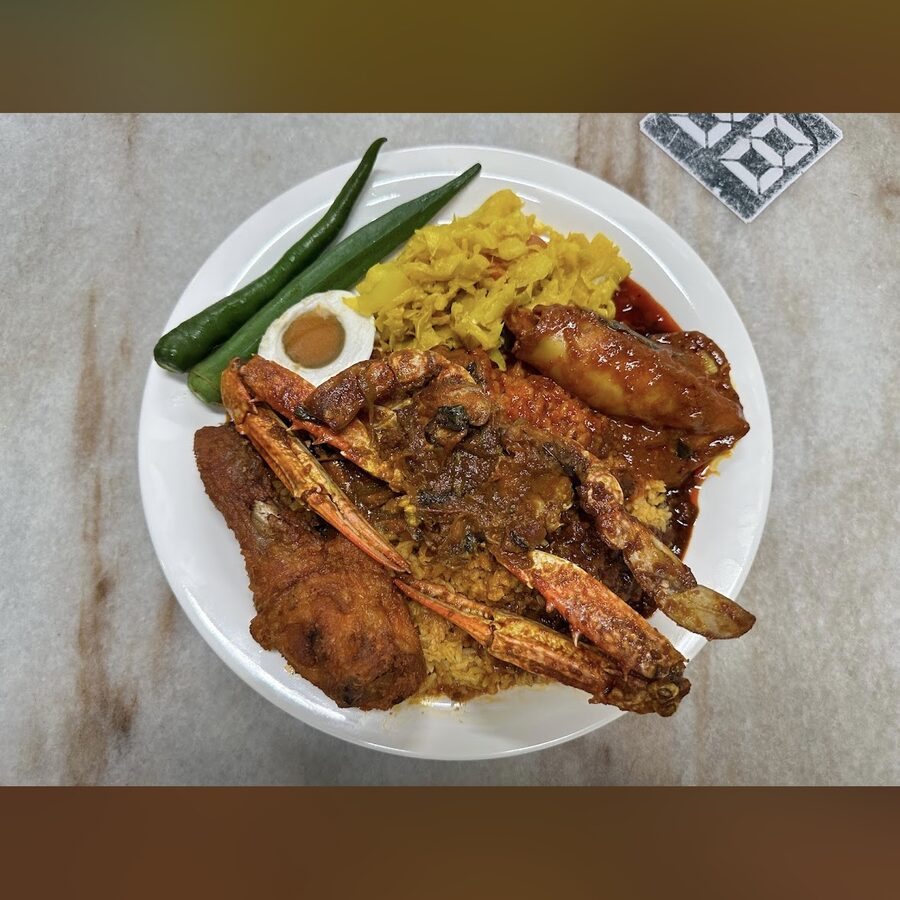
Nasi kandar arrived with Tamil Muslim migrants from south India in the 19th century, the name means “carrying-pole rice,” after the wooden shoulder poles hawkers once used to transport the food pots between customers. The format is simple and devastatingly good: a scoop of white rice, topped with any combination of curries you choose, ladled messily so everything runs together. The mixing is the point. A good nasi kandar stall will have eight or ten curries lined up on a counter, plus fried chicken, fried fish, okra, dal, and the braised beef called daging masak hitam. You point at what you want. The cook does the rest.
Three stalls get named on every list. Line Clear (Lebuh Penang, open 24 hours) is the famously gruff one, queue moves fast, no seats, eat off the pavement or take away, ridiculously good 3am fried chicken nasi kandar after a night out. Hameediyah at 164-166 Lebuh Campbell is the oldest in Penang, established 1907, and has the most composed room of the three, air-conditioned, sit-down, English menus, which lands it squarely in the tourist comfort zone but the food is still excellent. Kapitan (two locations, Lebuh Chulia and Lebuh Bishop) is the modern chain. All three will do you right; if you want the real thing, Line Clear is the one. Pay RM10-18 depending on what you pile on.
Cendol, the afternoon lifesaver
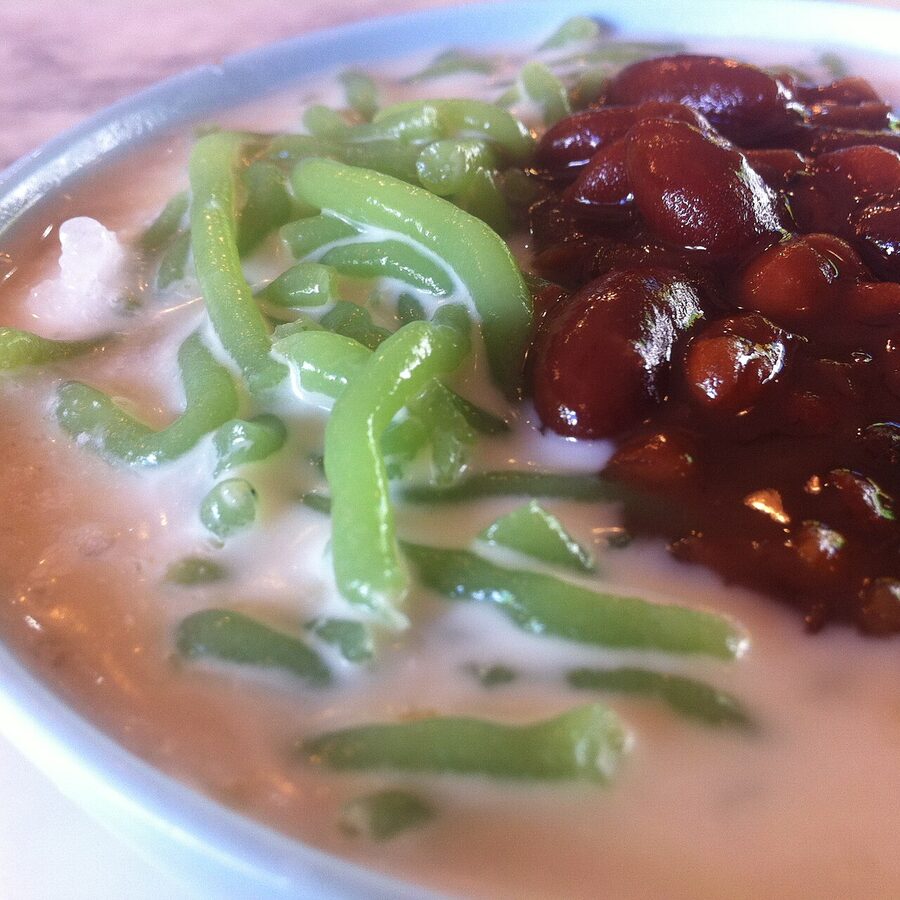
Cendol is the dessert that doubles as air conditioning. Shaved ice, coconut milk, a ladle of gula melaka (palm sugar syrup, strong caramel notes), red beans, and the signature green worms, which are rice-flour noodles, coloured with pandan leaf, not any less appetising thing you’re thinking of. There’s a good version at most hawker centres. There is also a famous version. Penang Road Famous Teochew Chendul at 27-29 Lebuh Keng Kwee, off Penang Road, has been run by the Tan family for nearly five decades, there’s always a queue, it moves fast, RM3-4 a bowl. Open 10:30am to 7pm Mon-Fri, 10am to 7:30pm on weekends. Directly opposite is Penang Road Famous Cendol, run by the Loh family, same dish, same price, slightly different flavour balance. The queues are competitive. If one’s too long, take the other, the difference is genuinely marginal and the fun is in the rivalry.
Roti canai, the Malaysian national breakfast
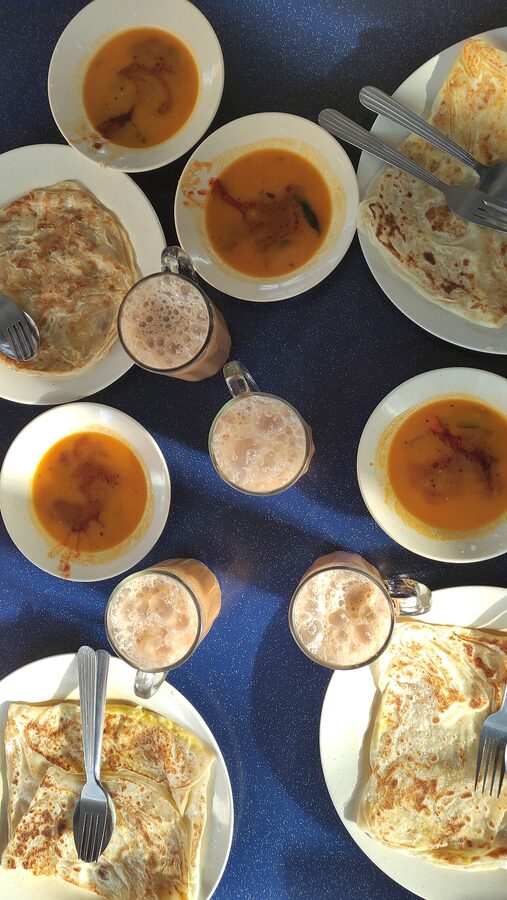
Roti canai is not Penang-specific, you get it across the country, but the Penang version is as good as it gets and it’s how most locals actually start the day. An Indian-Muslim flatbread (roti) that’s been stretched, slapped, flipped, and panfried until flaky outside and chewy inside, served with a side of dhal and one or two thin curries for dipping. RM2-3 for plain, RM4-6 if you add egg (roti telur) or cheese. Pair with teh tarik, the foamy “pulled” milk tea that is the other national drink, and you’ve spent RM7 on breakfast and you’re good until 2pm. Most Indian-Muslim coffee shops (mamak stalls) do it. Gemas Road Roti Canai on Jalan Gemas is the most-recommended spot, Tuesday to Sunday 7am to 12:30pm, but honestly the queue can be a drag and the mamak stall near wherever you’re staying in the old town will serve you one nearly as good with no wait.
Oh chien, the loose-egg oyster omelette
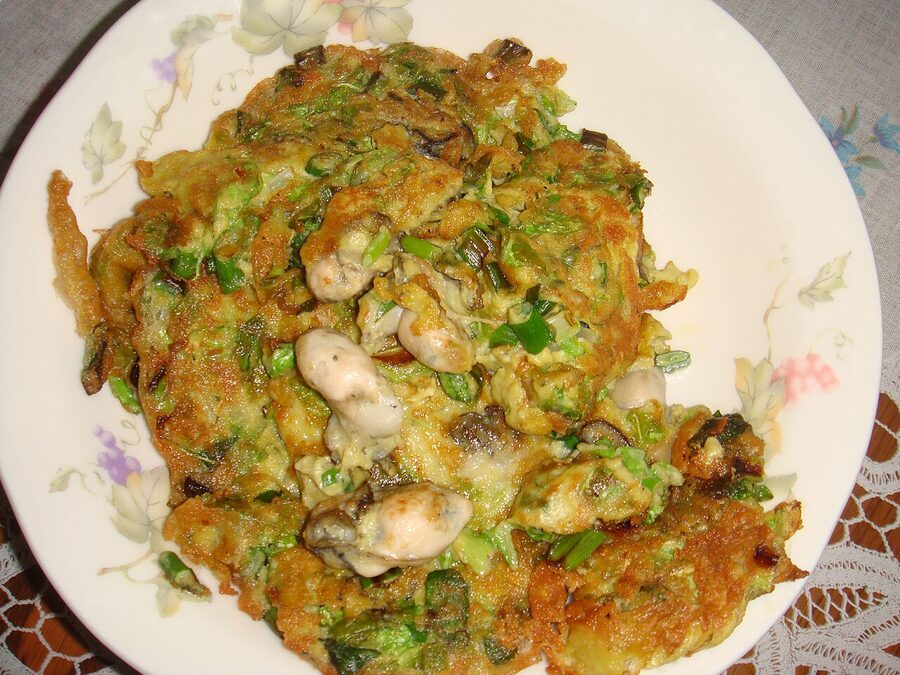
Oh chien is the Hokkien oyster omelette, eggs whisked with sweet potato or tapioca starch to give a custardy, wetter texture, then fried around a scattering of small oysters with garlic, coriander, and chilli sauce on the side. It’s divisive. The Taiwanese version (firmer, sweeter) has fans who think the Penang one is sloppy. The Penang version is the one you want if you care about the oysters themselves, they’re more present in the looser egg base. Good ones at New Lane Hawker Centre (Thursday-Tuesday 4pm-11pm, RM10-15) and at most Chulia Street night stalls.
Lor bak, popiah, and the noodle supporting cast
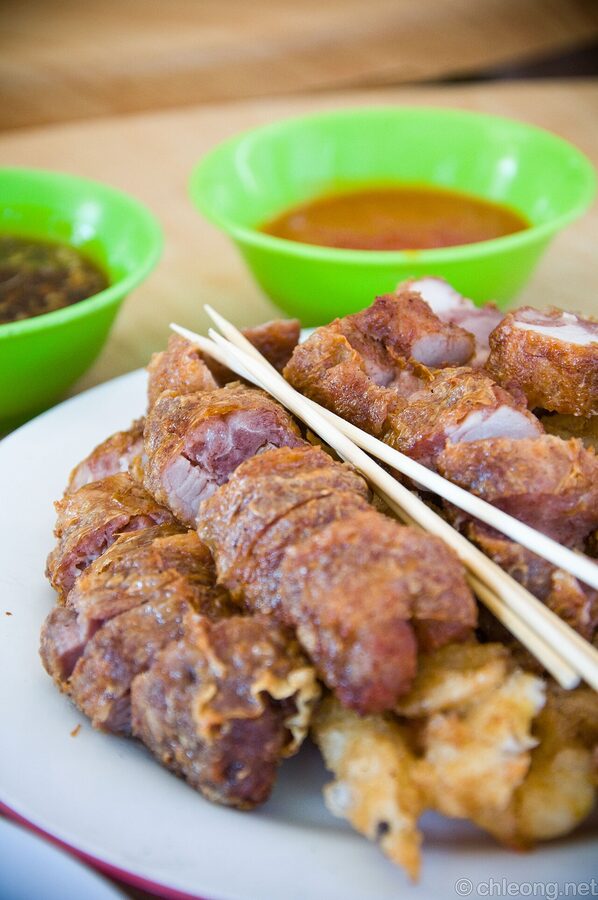
Lor bak is five-spice braised pork rolled in beancurd skin and deep-fried to a crisp amber, served on a platter with fried tofu, hard-boiled egg, fish cake, crab meat rolls, and a trio of sauces, sweet chilli, chilli paste, and the signature lor gravy (a dark, starchy soy-based sauce thickened with egg). Kheng Pin Cafe at 80 Jalan Penang, 7am to 3pm, closed Mondays. RM15-20 for a mixed platter big enough to share. Popiah often shows up at the same stalls, paper-thin flour crepes rolled around finely shredded jicama, bean sprouts, egg, peanuts, and dabs of sweet soy. Seafood Popiah at Medan Selera Padang Brown Stall 17 does good ones, 5:30pm to 11:30pm daily, RM4-6 a roll.
Three more noodle dishes worth the shortlist. Koay teow th’ng is plain noodle soup, flat rice noodles, a clean chicken-and-pork broth simmered with dried sole fish for umami, a few slices of chicken or fishcake, chopped spring onion. Pitt Street Koay Teow Th’ng at Lebuh Carnarvon, Tuesday-Saturday 8am to 1:30pm. Breakfast food, clean, restorative, perfect after assam laksa night. Wan tan mee is the Penang twist on Cantonese wonton noodles, often dry-tossed in a soy-and-lard sauce rather than served in broth, wontons and broth alongside. Curry mee is the other laksa, this one’s the coconut-curry version, creamy and yellow-orange, with yellow noodles, shrimp, chicken, cockles, tofu puffs, and cooked blood jelly (optional for the squeamish). Tua Pui Curry Mee at 23 Lebuh Kimberley is the institution, 9am-5:30pm, closed Wednesdays. RM6-10.
Durian, if you’re there May to August
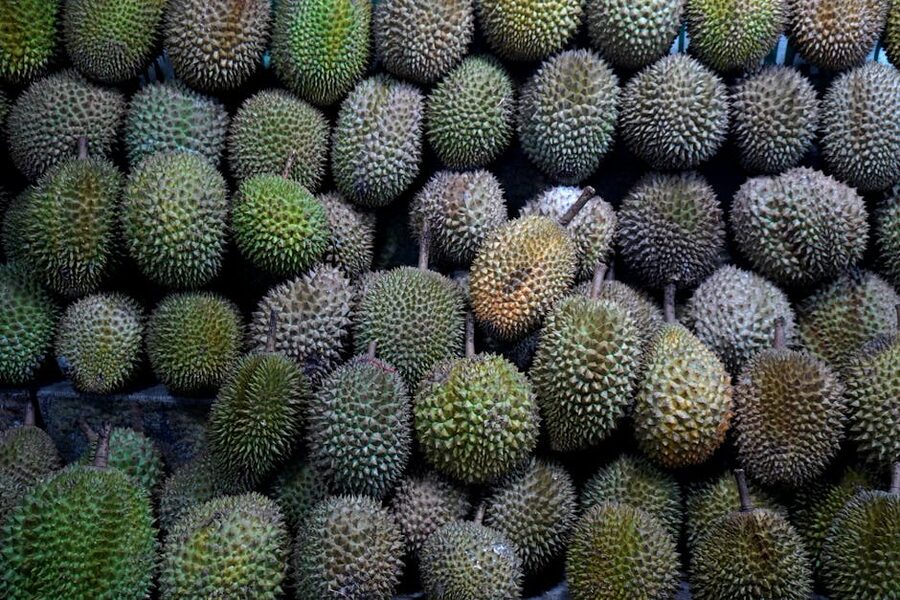
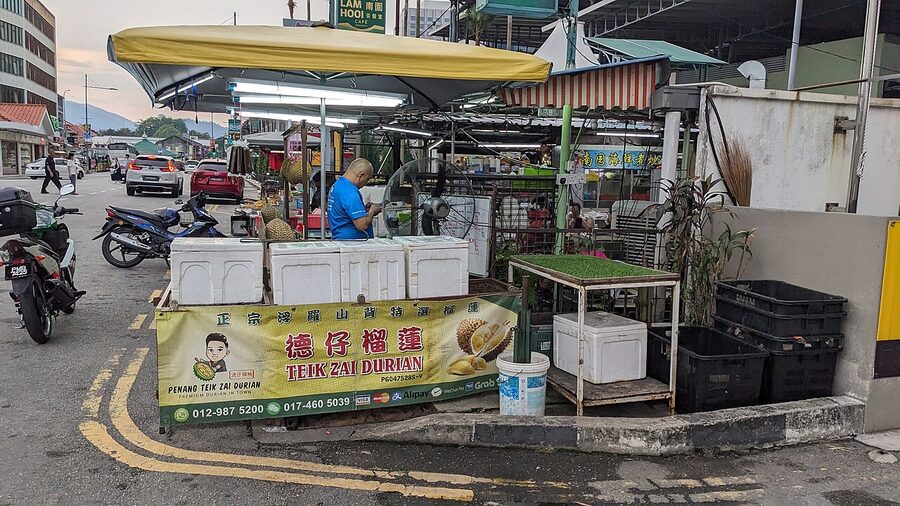
A lot of people will tell you about durian. Most of them haven’t had good durian. Penang grows the country’s best, Musang King, D24, Red Prawn, XO, Green Skin, up in the Balik Pulau hills on the west side of the island. Season runs roughly May to August depending on the year’s rainfall. Ah Teik Durian Stall on Lorong Susu is where you go in town, daily 10am to 10:30pm, an entire durian will cost you RM30-80 depending on variety, or RM15-25 for a taster plate. You eat it on the pavement with a bottle of water because it’s too hot to do otherwise. The smell will follow you for the rest of the day. This is fine.
How the stall system actually works
A few rules that nobody explains and that will trip you up on day one. First: at a hawker centre, every stall is its own independent business. You don’t order your whole table’s food at once. Find a seat, then walk over to the stalls individually, order from whichever ones you want, and the food comes to you when it’s ready. Tell them your table number or just point at where you’re sitting. Pay when the food arrives, not at the end. Cash works everywhere; some stalls now take e-wallet (Touch ‘n Go, GrabPay) but don’t count on it.
Second: drinks come from a separate drinks stall, usually at the entrance, run by whoever owns the hawker complex as a whole. This is a different bill. Order your drinks first, the drinks guy will come over and take the order if you sit down, and the food stall won’t serve you a drink alongside the food. Teh tarik (pulled milk tea) runs around RM2.50, teh ais (iced tea) RM2-3, sugar cane juice RM3-4, fresh coconut water (air kelapa) RM5-7, Tiger beer RM10-14 if the complex is licensed, which most aren’t.
Third: don’t fight the seat system. If the hawker centre is packed, put a tissue packet on a chair to “chope” (reserve) a seat before you go get food. This is the same system you’ll recognise from Singapore’s hawker centres, same cultural DNA, because a lot of the early Singaporean hawkers came from Penang. Ignore the chope packet on someone else’s chair unless you want a fight. Tables are shared; it’s totally normal to sit down next to strangers mid-meal, they’ll shuffle their plates over without comment. Fourth: the person clearing your table is nearly always a separate staff member from both the stall cooks and the drinks guy. Don’t try to hand them money. They’ll clear the plate, wipe the table, move on.
When to eat, when to skip
Meal timing in Penang is more rigid than you’d expect. Breakfast stalls open very early, Bridge Street Prawn Noodle starts at 7am, the morning roti canai places by 6:30am, and the good stuff sells out by 10am. Lunch stalls run from about 11am to 2pm, then close. Evening hawker belts don’t start until 5pm and don’t peak until 7pm. If you turn up to Lorong Selamat at 4pm looking for char kway teow, you’ll find the woman in the red bandana has sold her last plate two hours ago and gone home.
Check the closing days. It’s a coordinated system, different stalls rest on different days, but individual stalls are rigid. Tuesdays: Lorong Selamat char kway teow closed. Wednesdays: Air Itam Asam Laksa, Tua Pui Curry Mee, New Lane Hawker Centre closed. Thursdays: Mr Por’s duck koay chap closed, Padang Brown Popiah closed. Mondays: Chulia Street, Kheng Pin Cafe, and half the breakfast stalls closed. Don’t plan your trip with a single must-try stall on a Tuesday.
Avoid: the Gurney Plaza food court (inside the mall), which is not the same as the Gurney Drive Hawker Centre outside on the seafront, people get this wrong. Avoid any stall inside a hotel. Avoid anywhere calling itself a “food street” inside a shopping mall. Avoid the tourist-trap stalls near Armenian Street murals that charge RM20 for char kway teow, you’re paying the rent, not the food. Red Garden Food Paradise on Lebuh Leith is central and has live karaoke, but the food is conspicuously worse than any smaller complex ten minutes away. Skip.
Getting around, paying for things, and where to stay
George Town is flat and small; any two points in the old town are a 20-minute walk apart. For farther hawker stops, Gurney Drive (RM7-10 by Grab), Pulau Tikus (RM10-12), Air Itam (RM15-20), Balik Pulau if you’re going for durian at source (RM25-35 one way), use Grab. It’s the universal Southeast Asian ride-hail app, downloads in five minutes, pays via card, works exactly like you’d expect. Don’t bother with metered taxis; Grab is cheaper and drivers always know where the famous stalls are. Bring cash for the stalls themselves, small denominations (RM5, RM10, RM20). ATMs are at every 7-Eleven and Maybank branch.
Where to stay: the old town (inside the UNESCO heritage zone, roughly bounded by Lebuh Acheh, Lebuh Melayu, and Lorong Love) puts you walking distance from most of the food. Muntri Street, Lorong Love, Chulia Street, and Lebuh Campbell all have good guesthouses and boutique hotels at RM150-350 a night. Avoid staying near Gurney Drive or on the beach strip at Batu Ferringhi, you’ll spend your life in taxis. Campbell House is the midrange old-town favourite. Macalister Mansion is the splurge. Dou Houz Georgetown and Muntri Mews are solid budget picks. Book via Booking.com or Agoda, Agoda often has better prices for Malaysia specifically.
Peranakan food, not hawker, but worth a detour
Peranakan (or Nyonya, or Baba-Nyonya) cuisine is the culinary tradition of the Straits-Chinese, descendants of Chinese traders who married local Malay women starting in the 15th century and developed a distinct hybrid culture. It’s properly restaurant food, not hawker food, and it’s the one thing you’ll want to eat in Penang that doesn’t come off a street-corner wok. Kapitan chicken curry (coconut milk, candlenut, lemongrass, blue ginger), otak-otak (spiced fish mousse grilled in banana leaf), asam prawns (sweet-sour tamarind prawns), kerabu bee hoon (herbed rice noodle salad), cincalok (fermented shrimp condiment that smells feral and tastes wonderful), and the rempah spice pastes that take hours to pound and are the backbone of the whole cuisine.
For one Peranakan meal, book Auntie Gaik Lean’s on Bishop Street (it’s won a Michelin Bib Gourmand), or Kebaya at Seven Terraces if you want to go formal. Both will run RM80-150 a person with drinks. A full Peranakan spread is a different experience from hawker eating, slower, richer, more deliberate, absolutely worth one evening. The cultural link also goes further afield than most travellers realise: some of the same migration-and-fusion logic shaped the south Chinese regional cooking traditions, and the Hokkien diaspora that later spread to the Pearl River Delta and Hong Kong. Penang is the Southeast Asian cousin of that same story.
The last word
Penang works because the density is so high. You can eat char kway teow for lunch, assam laksa for afternoon tea, Hokkien mee for dinner, and cendol at midnight, and you can do that for four days running, and you won’t repeat a stall and won’t have a bad plate. The number of countries in the world where this is true is maybe three. The city’s tiny and the food’s so specifically good that once you’ve been there, the other famous hawker cities, KL, Singapore, Saigon, all feel like they’ve got one or two hands tied behind their back.
Bring cash. Bring an empty stomach. Ignore the mall food courts. Say yes to the duck egg upgrade on the char kway teow. The queue for the cendol moves faster than it looks. And that’s Penang.
.jpg)


.jpg)

