
Japan Izakaya Guide: How to Order, What to Drink
My first izakaya was a mistake. I’d flown into Tokyo from Shenzhen on a long weekend in late 2018, dropped my bag at a capsule in Nishi-Shinjuku, and wandered out looking for dinner at that jet-lagged hour when you can’t tell if it’s 5pm or 9pm. I pushed through a half-height blue curtain because the lantern outside said “居酒屋” and I recognised the kanji. The staff shouted something in unison, a woman pointed me to the far end of an L-shaped counter, and before I’d even figured out where to put my jacket a small dish of cold pickled mackerel landed in front of me with a beer I hadn’t ordered. I thought I was being scammed. I was about four cultural misunderstandings away from the truth, which is this: the mackerel was the otoshi, the beer was because I’d said “hai” to the server, and the blue curtain means the place is open. Welcome to the izakaya.
I’ve been back to Japan maybe a dozen times since, sometimes for a week, once for a month, and the izakaya is the single thing I miss most when I leave. Not the shrines. Not the bullet trains. The izakaya. What follows is what I wish someone had told me that first night in Shinjuku, how the place works, what to drink, what to eat, how not to embarrass yourself, and where to find the versions that don’t have English menus (the good ones).
In This Article
- So what actually is an izakaya?
- The otoshi and why you’re being charged for a plate you didn’t order
- Pushing the curtain: how you actually enter
- The drinks: where to start and what to try next
- Nihonshu (sake)
- Shochu, the grown-up drink
- Highballs, the 2010s invention that took over
- Umeshu and chuhai
- The food canon, in the rough order you’ll eat it
- The openers
- Yakitori
- Sashimi and fried things
- Hotpot for the cold months
- The closer
- The three types of izakaya you’ll encounter
- Chain izakaya
- Neighbourhood izakaya
- Yokochō alleys
- Rhythm, etiquette, and the bill
- The two-hour rule
- The bill
- Closing time and the last-train panic
- A few things that took me a while to figure out
- Where to go on a first trip
So what actually is an izakaya?
The literal translation from 居酒屋 is “stay-sake-shop”, somewhere you stay and drink. Most English guides call it a Japanese pub, but that’s lazy and wrong. A pub is a drinking room where you can also eat; an izakaya is an eating room where you can also drink. The food keeps coming. The drinks keep coming. You order in rounds, not as a meal.
It’s also not a restaurant. You don’t book a table for two at 7:30 the way you would in Paris or Hong Kong. You walk in, the staff points you at whatever seat is free, you share small plates with your group, and you stay for as long as you want, or as long as they let you, which is sometimes two hours and sometimes all night, depending on the night of the week and how many people are waiting. A solo diner is rare but fine; a date is rarer and mostly not the point; a party of four to eight colleagues after work is the natural unit.
You’re paying for a specific combination that doesn’t quite exist anywhere else: cheap, hot, salty food designed for drinking, in a room designed for shouting across a table, with a staff who will bring a second beer before you’ve finished the first if you so much as glance at the bottle. Nothing in Shekou or Lan Kwai Fong or Clarke Quay ever quite replicated the feeling. If you like Sea World’s expat bar strip you’ll understand the atmosphere but not the food; an izakaya is denser, hotter, and more purposeful.
The otoshi and why you’re being charged for a plate you didn’t order
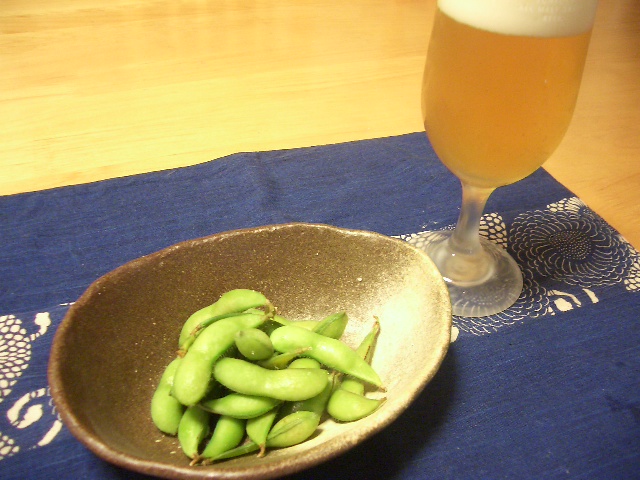
This is the thing most first-timers trip on. You sit down, you haven’t ordered anything, and a small dish of food appears. Often it’s something odd, simmered daikon, pickled squid, seasoned mountain vegetables, tofu with mustard. That’s the otoshi (お通し), sometimes called tsukidashi (突き出し). It’s mandatory. It’s not free. It’s a seat charge disguised as a snack, usually ¥300-500 per person, and it appears on the bill at the end as otōshidai (お通し代) or sekiryō (席料).
You can’t refuse it. Well, you can try. Foreigners occasionally do and it goes badly, because the otoshi isn’t a con, it’s the baseline economy of the place, the equivalent of a cover charge plus tip in a country that doesn’t have tips. The good news: at a well-run izakaya the otoshi is actually excellent. I’ve had otoshi that were better than anything else on the menu, a shallow bowl of cold ankimo (monkfish liver) in Yoyogi-Uehara, or a tiny serving of hassun (seasonal small bites) in Kyoto that tasted like someone’s grandmother had made it that afternoon. At a chain it’s usually a disappointment: edamame, maybe plain cabbage with sesame oil, half a boiled egg. Fine, but not why you came.
If you’re really on a budget, many of the big chain izakayas like Torikizoku don’t charge an otoshi at all. You’ll spot the absence because nothing arrives before you order. That’s the trade-off for the chain experience.
Pushing the curtain: how you actually enter
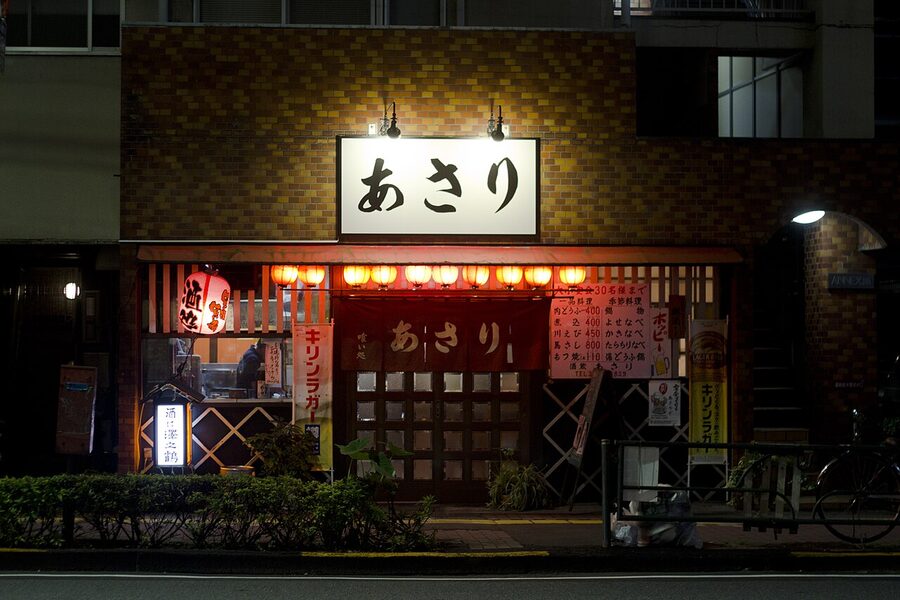
The front of an izakaya is designed to be slightly intimidating on purpose. A half-length split curtain (noren, 暖簾) hangs across the door, if it’s out, the place is open; if it’s been taken in, they’re closed or closing. You duck under it. Usually there’s a wooden sliding door behind. You open it. Someone shouts “irasshaimase!” at a volume that feels confrontational the first time and comforting by the fifth. The whole team joins in, kitchen, bar, floor. You haven’t done anything yet and you’re already being welcomed at 95 decibels.
Next comes the seating decision, which the host will make for you. Hold up fingers for your group size (two = two fingers, the peace sign works). They’ll either point at the counter (カウンター), a table, a booth, or, in a nicer place, lead you to a zashiki room where you take your shoes off and sit on the tatami. At some zashiki rooms there’s a horigotatsu, a sunken well under the low table so you can dangle your legs instead of sitting cross-legged. This is a small mercy if you’re over 30 and your knees have opinions.
The counter is the best seat in a small izakaya. You watch the cook work, you can point at things on other people’s plates and say “ano onaji o kudasai” (that same thing, please), and the cook will usually talk to you if you’re patient. At a big chain the counter just faces a wall. You want the counter at a neighbourhood place, the booth at a chain.
The drinks: where to start and what to try next
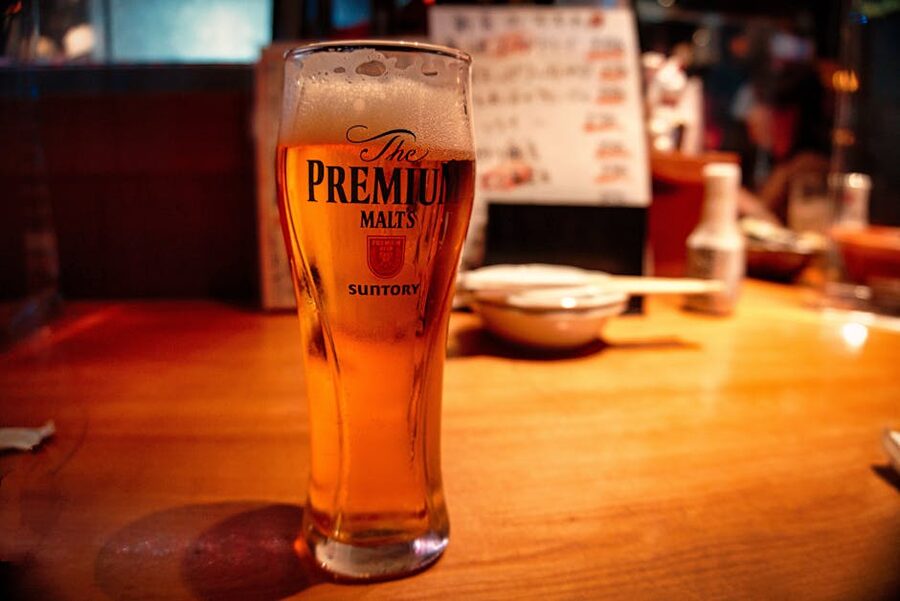
The opening move is almost always a beer. It’s so standard it has its own phrase: “toriaezu biru” (とりあえずビール), “for now, beer”, which you say when the server comes over and you haven’t read the menu yet. This gives you a drink in hand in roughly 90 seconds and buys you the time to work out what you actually want.
A few things about the beer. The Japanese pilsners are all very similar, Asahi Super Dry, Kirin Ichiban, Sapporo Black Label, Suntory Premium Malt’s. Any of them is fine. Draft (nama, 生) is usually better than bottled (bin, 瓶) at a good izakaya, and cheaper at happy hour. A “jockey” is a tall chilled mug, a “chu-jokki” is a smaller one, and if you order bottled you’ll get a 633ml long-neck that two people share. This is not the place to ask for an IPA. Some craft-beer izakayas exist, I’ve had good pints at Popeye in Ryogoku, but they’re a different category. At a normal izakaya, if you want a beer, pick the draft and move on.
Nihonshu (sake)
The right word here is nihonshu (日本酒), not sake, in Japanese “sake” just means alcohol generally. What westerners call sake is one specific rice wine, and the izakaya is the single best place on earth to explore it without committing to a ¥12,000 tasting room.
The labels to learn are these. Junmai (純米) means rice, water, yeast and koji, no distilled alcohol added. Ginjo (吟醸) means the rice is polished more aggressively, which makes it lighter and more floral. Daiginjo (大吟醸) means even more polishing, which makes it more delicate and more expensive. Honjozo (本醸造) has a small amount of added distilled alcohol and tends to be drier. The rule of thumb: if you’ve never had it, start with a junmai ginjo from Niigata (clean, dry, reliable), an Akita (slightly richer), or something from Kyoto/Fushimi (softer, more floral).
Hot or cold depends on the season and the quality. Cheap sake gets served warm (atsukan, 熱燗) because the heat masks rough edges; a good ginjo is almost always served cold (reishu, 冷酒) because the fridge-cold temperature is what brings out the fruit. In winter a warm sake on a freezing night in Kyoto is the whole point of being there. In August anyone pouring you hot sake is doing you wrong.
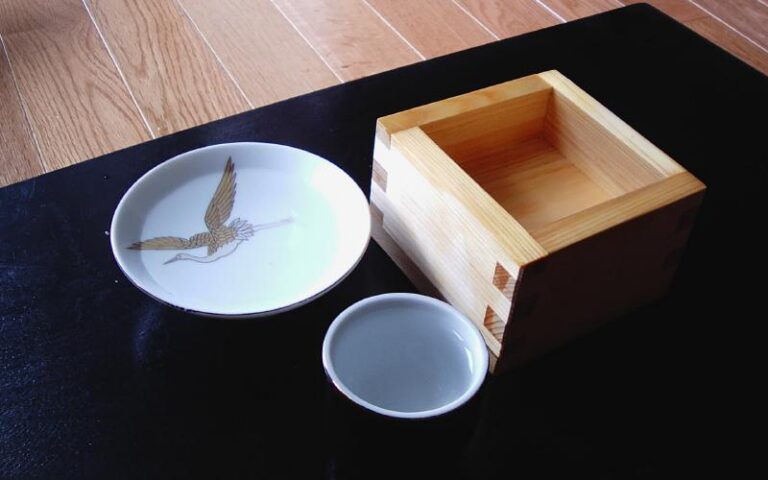
If the board has a tasting flight (利き酒セット, kikizake setto), usually three ochoko cups lined up on a wooden tray, order it. It’s how you figure out what you like without blowing ¥3,000 on a full bottle of something you can’t finish.
Shochu, the grown-up drink
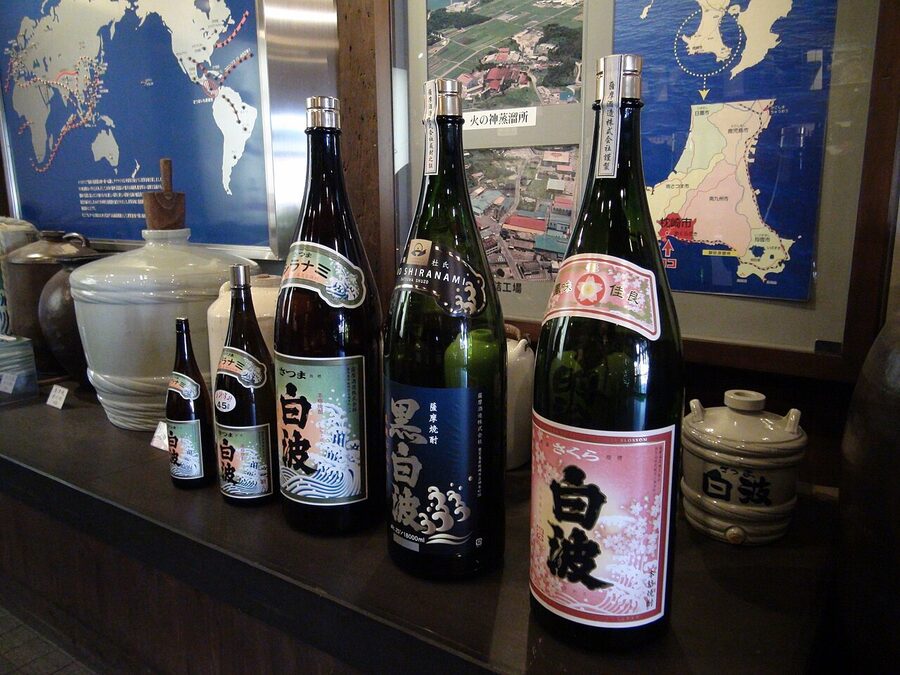
Shochu (焼酎) is the distilled spirit that Japanese people over 45 drink and foreigners almost never touch. It’s roughly 25% alcohol, made from a base grain, the main ones are mugi (barley), imo (sweet potato) and kome (rice). It’s almost never served neat. The two standard preparations are mizuwari (水割り), shochu cut with cold water and ice, and oyuwari (お湯割り), shochu cut with hot water, the winter drink of southern Japan.
Imo shochu tastes distinctly of earth and sweet potato. People either love it or spit it out. Mugi shochu is softer, more whisky-like, and a safer first try. If you sit down at an old-school Kyushu bar in Akasaka or Gotanda and see 40 shochu bottles on a shelf labelled in hand-written kanji, order a mugi mizuwari and nobody will mock you.
Highballs, the 2010s invention that took over
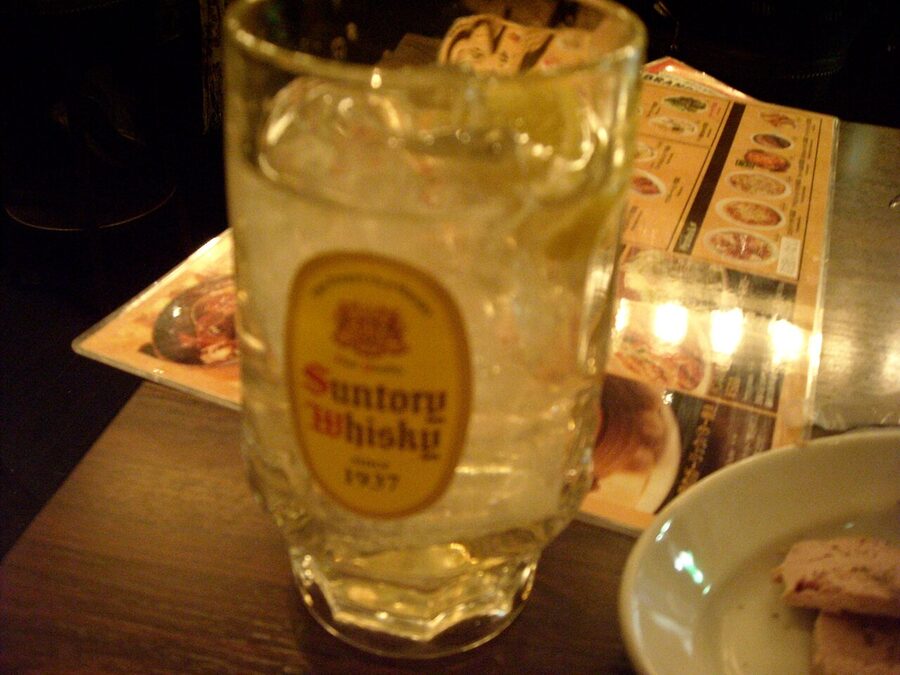
The whisky highball (ハイボール) is technically older than that, but the modern izakaya highball, whisky, soda, lots of ice, served in a mug for ¥400-600, is a Suntory marketing invention from around 2008 that stuck. Kaku-highball (角ハイボール) specifically means Suntory Kakubin whisky + soda, and the yellow Kaku sign above a Tokyo alley door is a reliable indicator that the place takes its highballs seriously. At chain izakayas you’ll see Jim Beam highballs instead for a few yen less.
Order a highball with yakitori and you’ve basically optimised your life. The soda cuts the grease, the cold cuts the heat, the ¥450 price means you can have three without thinking about it. I usually start on beer, swap to highballs around round three, and finish on a cold sake if I’m still upright.
Umeshu and chuhai
Umeshu (梅酒) is plum liqueur, Japanese plums soaked in shochu and sugar. It’s sweet, about 10-15% alcohol, and comes as “rokku” (on the rocks), “sōda-wari” (with soda), or mixed into cocktails. It’s the drink you order for a non-drinker friend or as a palate-reset between beers. Not shameful, but also not what you’re there for.
Chuhai (チューハイ) is canned shochu + soda + flavour, lemon, grapefruit, peach, Hokkaido melon, whatever the convenience store has this week. At a proper izakaya the chuhai is made fresh with actual shochu and fresh citrus. At a chain it’s from a tap. At a yokocho stall it’s whatever’s in the can. The fresh version is genuinely great with grilled food; the canned version is fine but you could have that at home.
The food canon, in the rough order you’ll eat it
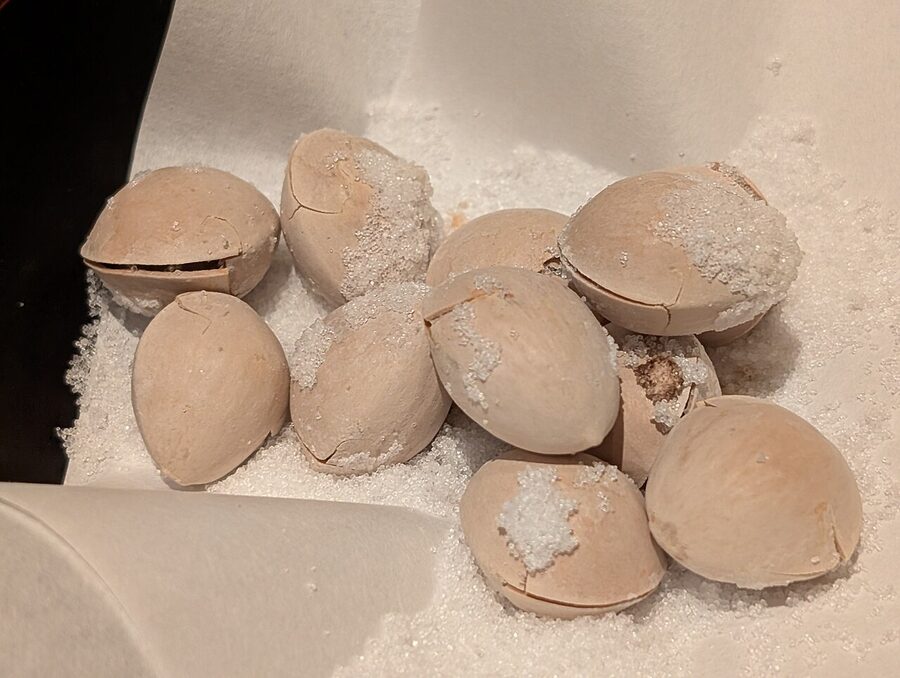
There’s a natural order at the izakaya. Opening plates arrive first, grilled stuff second, raw and fried in the middle, hotpot or something heavy later, and rice or noodles at the end to soak up everything else. You don’t have to follow it. But it’s how the kitchen is pacing, and if you order everything at once the timing will be wrong.
The openers
Edamame is the default. Salted, boiled, eaten by squeezing the bean out with your fingers, ¥400 and you don’t even think about it. Kyabetsu (キャベツ) is raw cabbage cut into wedges, served with salt, miso, or sesame oil, and it’s better than it sounds; the salty-sweet crunch is the palate warm-up. Umeboshi is pickled plum, sour enough to make your eyes water, perfect with sake. Hijiki is simmered seaweed in a small bowl. Tamago-yaki is a rolled omelette with dashi in it, order it if you see a sweet-savoury version on the board.
Opening plates are usually ¥300-600 each. You order two or three, pick at them, and move on.
Yakitori
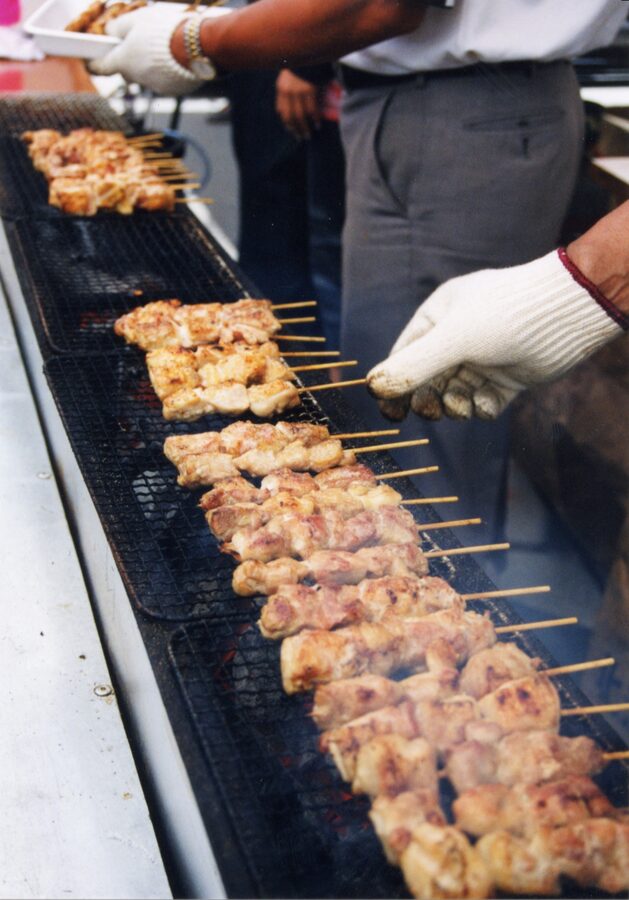
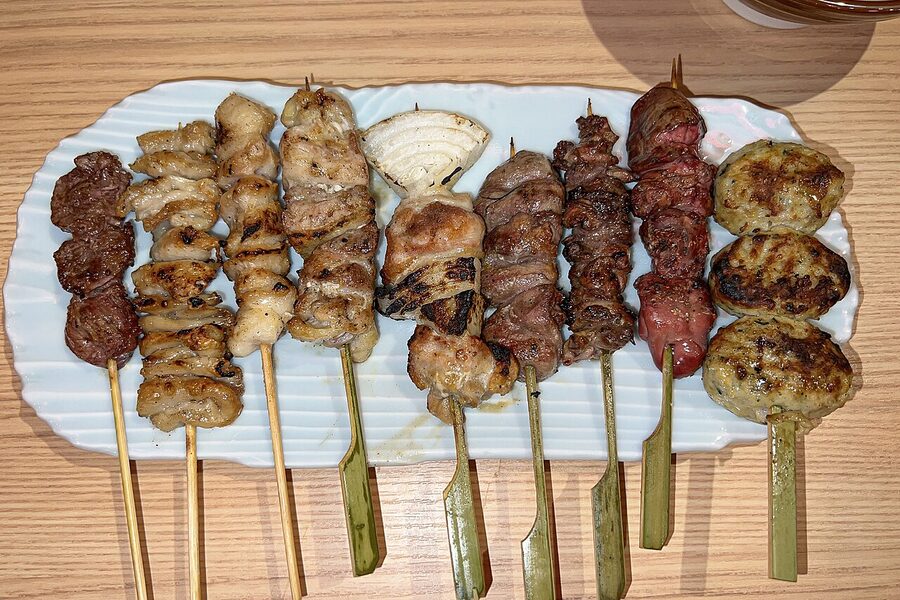
Yakitori (焼き鳥) is grilled chicken on bamboo skewers. At a specialist shop every part of the bird has its own name and its own skewer. You’ll want to learn these:
- Momo (もも), thigh, juicy, the default order
- Negima (ねぎま), thigh alternating with scallion, also the default order
- Tsukune (つくね), minced chicken meatballs, often served with a raw egg yolk dip
- Kawa (皮), skin, grilled until it’s crisp, outrageously good
- Nankotsu (軟骨), knee cartilage, crunchy, odd at first, addictive by skewer three
- Bonjiri (ぼんじり), tail, the small flavourful muscle that deserves its own evening
- Reba (レバー), chicken liver, served slightly rare
- Sasami (ささみ), breast, cleaner, often served with plum paste or wasabi
The standard question from the cook is “tare or shio?”, sauce (tare, タレ) or just salt (shio, 塩). Tare is a sweetish soy-based glaze, brushed repeatedly over the same vat for years. Shio is better when the ingredient is good; tare is better when it isn’t. For tsukune always get tare. For kawa always get shio. For everything else it’s personal taste.
Sashimi and fried things
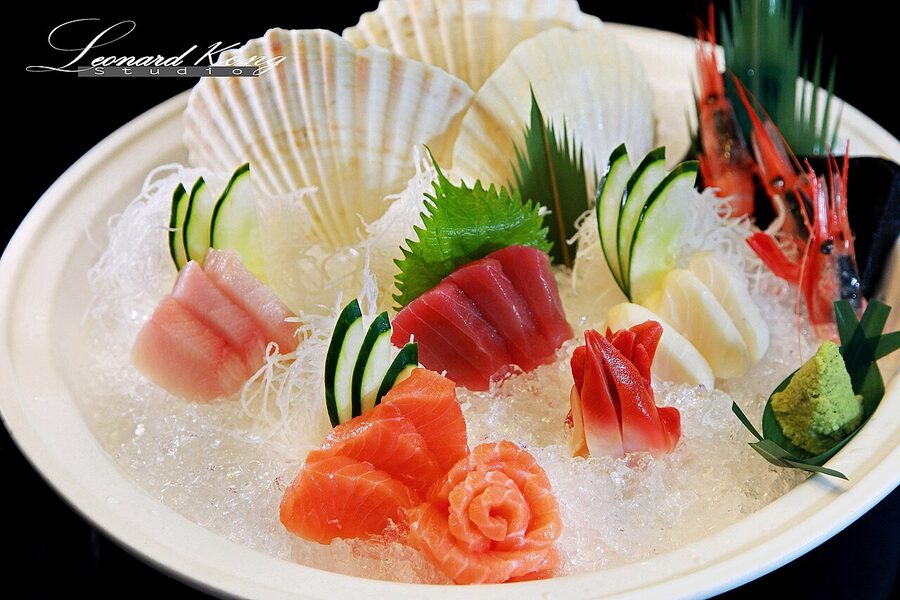
Sashimi moriawase (刺身盛り合わせ), the assorted sashimi platter, is the middle-of-meal order at any izakaya with a real fish supply. Coastal izakaya in Kanazawa, Fukuoka, or Hakodate will offer the same thing you’d pay triple for at a sushi-ya. A platter for two is usually ¥1,800-2,500 and contains tuna, salmon, yellowtail, white fish of the day, and sometimes horse mackerel (aji) or bonito (katsuo) in season.
Karaage (唐揚げ), Japanese fried chicken, marinated in soy, garlic and ginger, is the reliable middle-ground order at every izakaya. A plate of six pieces runs ¥600-800 and disappears within three minutes. Agedashi-dofu (揚げ出し豆腐) is fried tofu in a shallow pool of warm dashi with bonito flakes and grated daikon on top. It looks unassuming and it will change how you think about tofu.
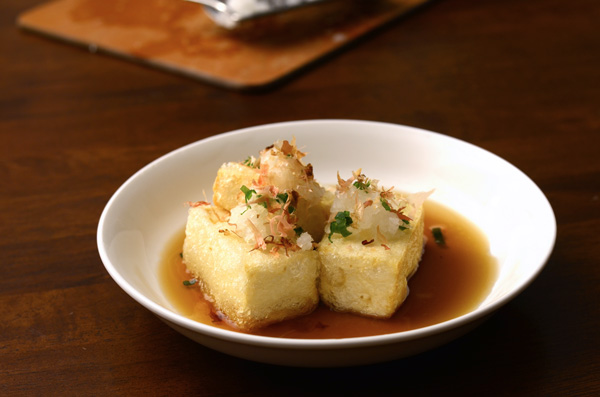
Shishamo (ししゃも) is small grilled smelt eaten whole, head and all, usually with a squeeze of lemon, the spotted-roe ones are the females and they’re the ones to order. Atsuage (厚揚げ) is thick fried tofu, chopped and grilled, topped with ginger and soy. These all run ¥500-700.
Hotpot for the cold months
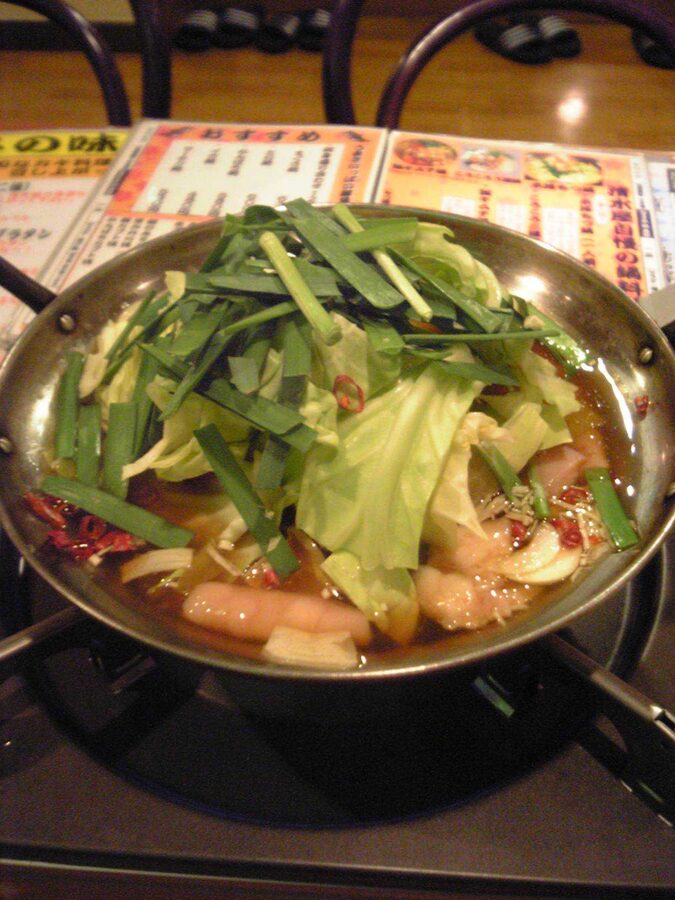
From October through March, nabe (鍋) shows up on menus everywhere. It’s a hotpot, a clay or cast-iron pot at the table with a portable burner, broth, vegetables, meat, tofu, and sometimes rice or udon added at the end to soak up the broth. At a Fukuoka-style izakaya, order motsunabe, beef offal simmered with cabbage and garlic chives in a soy-miso base. It’s ¥1,500-2,000 for two, and the rice or noodle course at the end turns it into a ¥2,500 dinner.
If motsunabe sounds intense (and it is, offal is offal), chankonabe is the same format with chicken and vegetables, famously the fighting-fit diet of sumo wrestlers. For cross-cultural comparison, a good motsunabe beats a middling Sichuan hotpot for pure winter-night comfort, but if you want the full spice-and-smoke experience Chinese regional food is a different animal altogether.
The closer
After round four or five of drinks and a table covered in small plates, the right move is something carb-heavy to soak it all up. Ochazuke (お茶漬け), rice with green tea or dashi poured over it, topped with salmon, pickled plum, or nori, is the quiet end-of-night dish. Onigiri (rice balls) work too. A few places do a late-night ramen-on-the-house thing, though more commonly you’ll settle up, walk back out under the noren, and hit a ramen-ya on the way to the station.
The three types of izakaya you’ll encounter
Chain izakaya
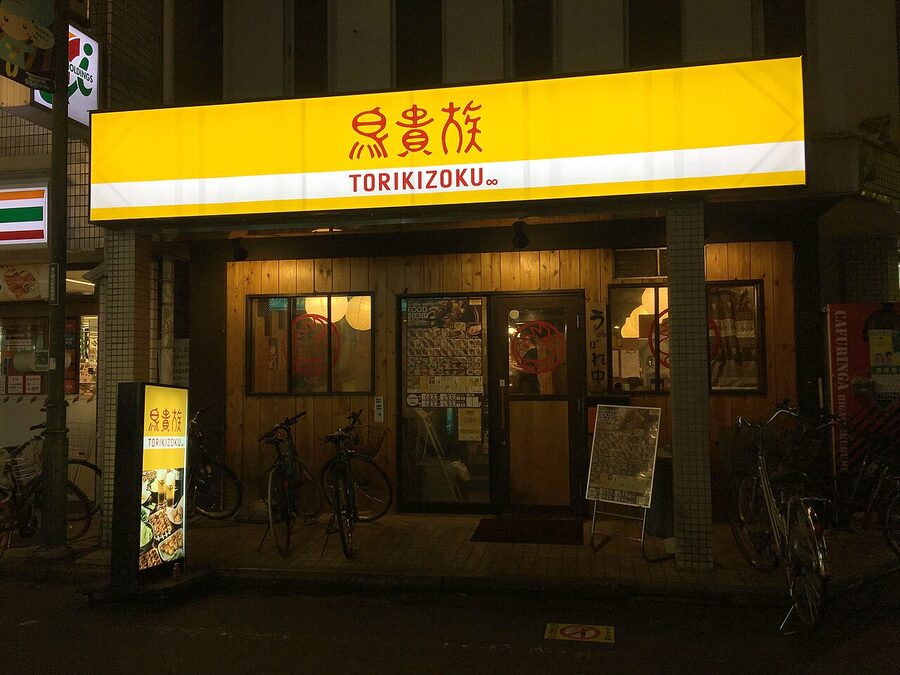
The big chains are Torikizoku (yakitori), Watami (everything), Isomaru Suisan (seafood-theme with grills at the table), and Warawara (slightly more modern). These are the ones with picture menus, English on request, tablet ordering, and prices within ¥50 of each other everywhere in the country. Torikizoku is the famous one, at ¥370 per skewer flat rate (it used to be ¥298, bumped in 2023), you can order 20 skewers, three beers, and get out for ¥5,000 for two.
Don’t sneer at the chains. They’re how most Japanese people actually drink on a Tuesday night, the food is decent, and the atmosphere, 40 salarymen shouting over each other, is the real thing. For your first izakaya, a chain is the right call. You’ll figure out the rhythm, the otoshi, the pace, without having to negotiate in Japanese for your order.
Neighbourhood izakaya
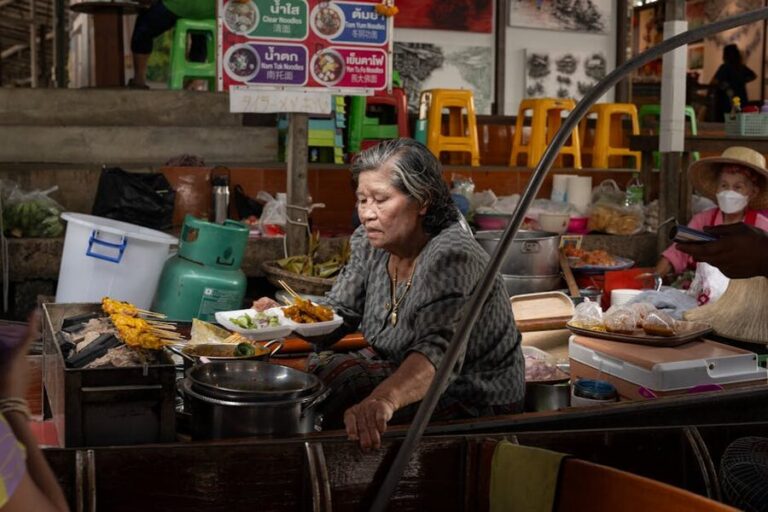
This is the one you actually came for. A 5-10 seat counter, no English menu, sometimes no written menu at all, just a chalkboard of today’s fish from Tsukiji. A grandmother cooks, her husband runs the bar, their son pours the shochu. You walk in, they look at you for a second too long, and then the grandmother waves you to a stool and asks what you drink. Nobody in the place has eaten anywhere else in the neighbourhood for 20 years.
These are intimidating. They’re also the best food you’ll eat in Japan for under ¥5,000. The trick is to not hide in your phone, to smile and point, and to say “osusume wa?” (what do you recommend?) when the menu isn’t helpful. The grandmother will order for you. It’ll be fine.
Places to look: Kanda’s backstreets under the railway tracks, Yoyogi’s west side off Koshu Kaido, Asakusa east of the big shopping arcades, the alleys south of Gotanda station, Nakano’s north exit. Nothing in Shibuya’s Center Gai qualifies, if it has English signage out front it’s a chain or a tourist trap. Walk five minutes from the station in any direction and you’ll find the real version.
Yokochō alleys
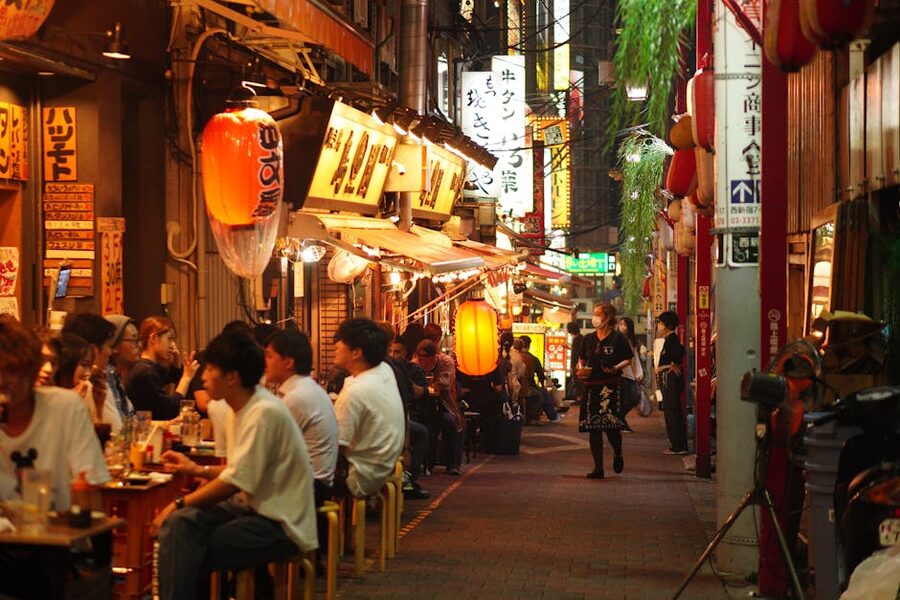
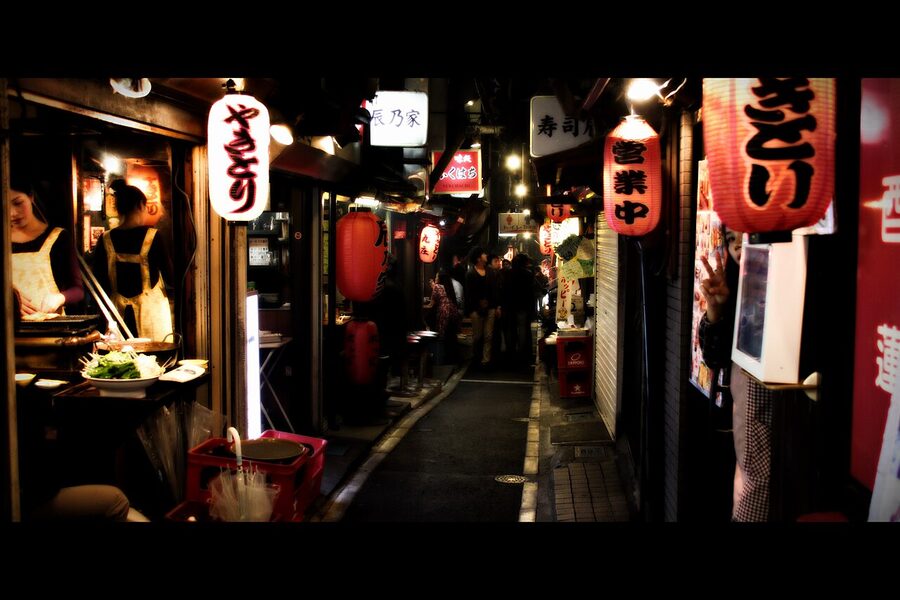
A yokochō (横丁) is a drinking alley, a dense cluster of tiny izakaya and bars in a narrow lane, usually tucked between a major station and a rail viaduct. The three famous ones are:
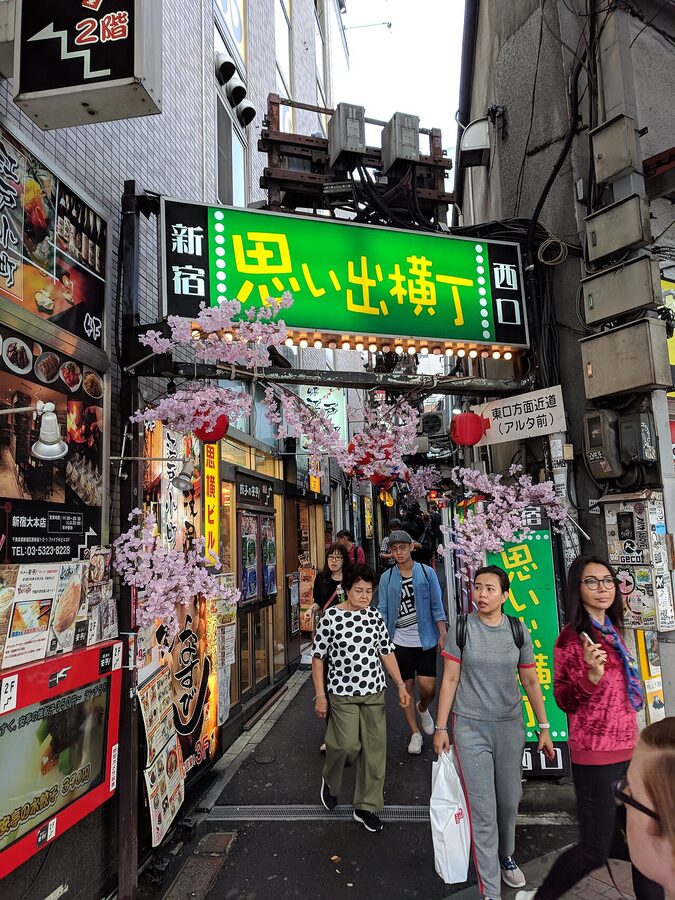
- Omoide Yokocho, Shinjuku West exit, two minutes from the JR gate. About 60 stalls in a single L-shaped alley, heavy on yakitori. Atmospheric but touristy in the last five years, go for the feel, not the best food.
- Golden Gai, also Shinjuku (east side of Kabukicho, near Hanazono Shrine). Not really izakaya so much as tiny themed bars, 6 seats each, ¥500-1,000 cover per bar. A different thing.
- Ameyoko, Ueno. More of a daytime market with a set of drinking shacks at the Okachimachi end that open from late afternoon. Cheaper than Shinjuku, rougher edge, better for daytime beer-and-seafood.
Shimbashi’s Gaadoshita (under the tracks) and Ebisu Yokocho are the local-friendly versions of the same idea, less famous, less gaijin per square metre, same concept. If I had to pick one yokocho for a first-timer I’d go Shimbashi over Omoide every time; the food is better and nobody’s filming Instagram reels in front of you.
Rhythm, etiquette, and the bill
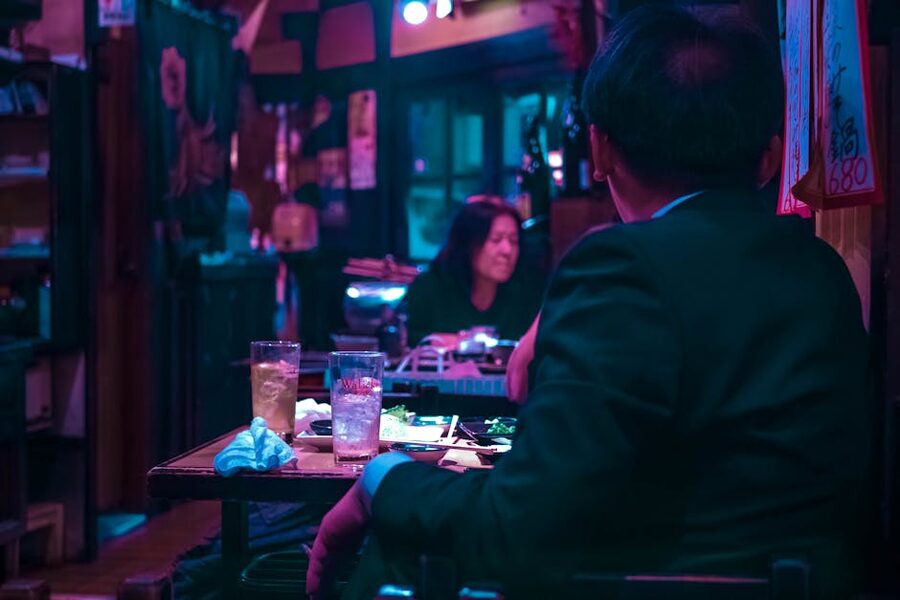
The ordering rhythm at an izakaya is one round at a time. You don’t order the whole meal at the start the way you might at a Chinese banquet. You order three or four small things, drink, eat, order three or four more, drink, eat, keep going. The server will come by every 15-20 minutes and ask if you want anything else. The right answer is usually yes.
A few things will get you in trouble:
Pouring your own drink. You don’t. When the bottle comes, someone else at the table pours for you, and you pour for them. If your glass is empty, pick up the bottle and offer to pour for someone else, they’ll then pour for you. If you’re drinking alone this doesn’t apply.
Not saying kanpai. Before the first sip, everyone at the table clinks glasses and says “kanpai!” (乾杯, cheers). If you’re with seniors, your glass should be slightly lower than theirs when the rims meet. Sip after kanpai, not before.
Chopsticks upright in rice. This mimics a funeral offering. Put them on the rest, or across the bowl, never stuck in vertically.
Tipping. Do not. It’s genuinely offensive and the staff will chase you down the street to return the money. The service charge is baked into the otoshi. Saying “gochisousama deshita” (thank you for the meal) as you leave is the whole tip.
The two-hour rule
Most izakayas will let you sit as long as you want on a quiet night. On busy nights, Friday, payday (25th of the month in Japan), bonus season (mid-July and mid-December), they’ll apply a two-hour limit from when you arrive, usually announced softly as “o-jikan” (your time is up) about 15 minutes before. Last orders are a half-hour before. Nomihoudai (飲み放題, all-you-can-drink) packages almost always have a 90-minute or 120-minute limit, and service genuinely slows down in the last 20 minutes because the bar knows you’re trying to squeeze in one more, plan your rounds accordingly.
The bill
At the end, you flag the server with “okaikei kudasai” (お会計ください, the bill please) or make an X with your index fingers. They’ll bring a printed bill. You take it to the register near the door and pay there, not at the table. Cash is universal; cards are accepted at chain izakayas and many mid-range places but not at tiny neighbourhood spots. A typical dinner for two, with four rounds of drinks and six dishes, runs:
- Chain izakaya: ¥5,000-7,000 total (¥2,500-3,500 per person)
- Neighbourhood izakaya: ¥7,000-10,000 total (¥3,500-5,000 per person)
- Nicer sashimi-heavy izakaya: ¥12,000-15,000 total (¥6,000-7,500 per person)
- Very nice place in Ginza or Nishi-Azabu: assume ¥10,000+ per head and don’t ask for a menu
Nomihoudai packages bring these numbers down dramatically if you drink a lot, ¥1,500-2,500 per person for two hours of unlimited drinks, food ordered separately. If you’re with a group of five and everyone’s drinking, the nomihoudai math usually wins.
Closing time and the last-train panic
Chain izakayas run until 11pm or midnight. Neighbourhood places close when the last customer leaves, which can be 10pm or 2am. Yokocho alleys keep going later, Omoide until 1 or 2am, Golden Gai often till 4.
The bigger issue is the trains. Tokyo’s subway and JR lines stop running around 00:30-01:00. Missing the last train means a ¥8,000-15,000 taxi back to the hotel, or a night in a capsule, or, the salaryman classic, sleeping in a 24-hour manga cafe (manga kissa, 漫画喫茶, about ¥2,500 for eight hours of a recliner booth with free drinks). Plan your last round with the train in mind. Google Maps’ transit feature is honest about last-train times; trust it, not your optimism.
A few things that took me a while to figure out
Smoking is often still permitted. Japan passed an indoor smoking ban in 2020 but the enforcement in small bars is loose, and plenty of izakayas, especially older ones in Shinjuku, Shimbashi and anywhere that qualified for the small-business exemption, still have “smoking OK” signs on the door. If you hate smoke, look for a newer place, a chain (almost all non-smoking now), or a restaurant with a koshitsu (個室, private room) you can book ahead.
Solo diners are fine, especially at the counter. The stigma is smaller than it used to be. You may get a pair of curious looks; you will not be refused service. Arriving at 5:30pm solo at a counter seat is one of the better ways to eat in Tokyo for under ¥3,500. If you want company, the Shinjuku bar-hopping guided tours on Klook or GetYourGuide will do three to four izakayas in an evening for ¥8,000-12,000 per person including all drinks and a guide who speaks English, not a bad way to learn the ropes on night one, before you strike out alone.
The server calling “irasshaimase” isn’t only for you. They’ll shout it every time anyone walks in, even regulars, even the delivery driver. Don’t feel you need to acknowledge it. Just nod at the host and hold up your fingers for your party size.
English menus are a mixed signal. A neighbourhood izakaya with an English menu is usually a tourist-adjacent spot with worse food than the one next door without one. A chain with an English menu is fine. If you want the good-to-great neighbourhood place, the absence of English is the filter you’re looking for.
Where to go on a first trip
If I were briefing a friend on their first izakaya night in Tokyo, it’d be this:
Start at 5:30pm at a Torikizoku, doesn’t matter which branch, any of the ~600 nationwide works. Eat six skewers, drink two draft beers, spend about ¥1,800. Walk it off. Between 7 and 8pm, go to Shimbashi Gaadoshita, three minutes from Shimbashi JR station, under the railway tracks. Pick any shop with four or five salarymen at the counter and no English sign. Order a sashimi moriawase, a grilled fish, a bowl of something warm, and switch to highballs. Around 9:30pm, walk 10 minutes north to Ginza, find a bar that serves Japanese whisky by the glass, and close out the evening there. You’ll be in bed by midnight, ¥8,000 lighter, and you’ll have eaten better than at any restaurant you could have booked.
For a second night, go to Ebisu, quieter, more food-led, fewer drunk salarymen. Third night, Kanazawa or Fukuoka if you’re travelling, for the coastal sashimi izakayas where the fish was swimming that morning. A Singapore-style layover-style trip doesn’t really allow it, though, for that compressed version, see the one-day Singapore itinerary, which is the southeast-Asian equivalent energy of a Tokyo izakaya night on a smaller scale.
The last thing to know: the izakaya is not a destination. It’s what you do between things. You went to a shrine in the afternoon, you’ll go to a museum tomorrow, but tonight you drop into a place with a blue curtain and a yellow lantern and you order toriaezu biru and see what the otoshi is. Do that three nights running and you’ll understand why it’s the thing I miss most.

.jpg)


.jpg)
.jpg)

