
Hiroshima and Miyajima Food Guide: Layered Okonomiyaki, Oysters, and Anago-meshi
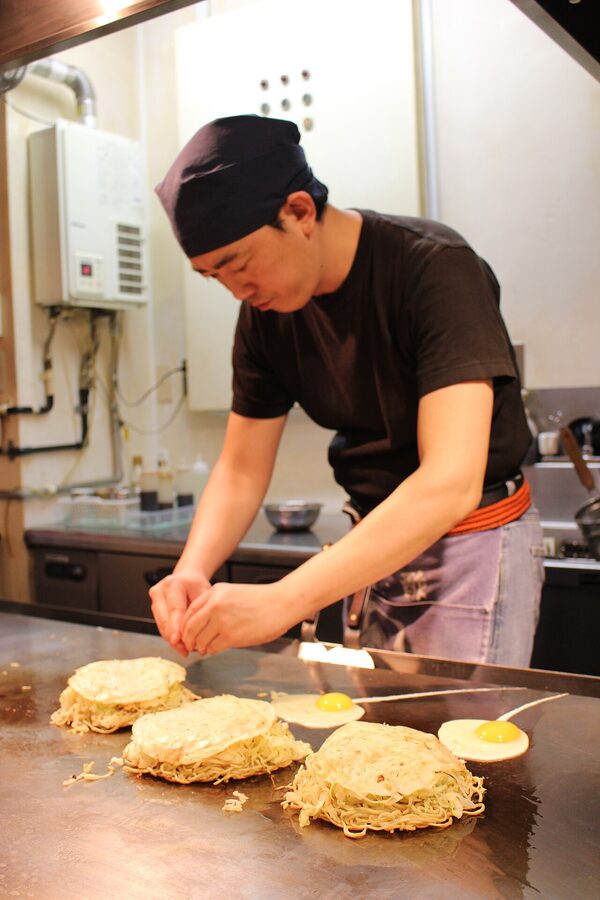
I was at the counter at Okonomimura, third floor, watching the cook layer cabbage onto a pancake without one wasted movement. She’d done this about a million times. Thin crepe down, then a handful of bonito shavings, then cabbage piled so high it looked wrong, then pork belly, then bean sprouts, then tenkasu, then a slick of batter to glue the lot together. She flipped it with a spatula bigger than her forearm. On the other half of the teppan, she was already frying soba. The noodles hit the cabbage stack, the egg hit the noodles, the whole thing got flipped one last time, and a painted stripe of Otafuku sauce went on before I’d even worked out whether I’d ordered the pork-soba version or the pork-udon one.
Eleven minutes, start to plate. She ate half a cigarette in the gap and didn’t look up.
Hiroshima and Miyajima are a pair. You can do them as a day trip from Osaka if you’re on a clock, but two nights is the right amount of time. Two lunches and two dinners at least, because the food doesn’t overlap the way you’d expect. Hiroshima city is flour, cabbage, and late-night counter seats. Miyajima is oysters, eel over rice, sweet bean cakes shaped like maple leaves, and deer that will absolutely take your ice cream cone if you hold it at waist height. This is the guide I’d have wanted on the shinkansen down.
In This Article
- Getting there and why the geography matters for the food
- Hiroshima-style okonomiyaki: the layered one
- Okonomimura: 26 stalls stacked on four floors
- Other spots I’d go back to
- The oysters (kaki): Hiroshima’s thing, really
- How to eat them
- Where I’d actually go
- Anago-meshi: the grilled eel rice of Miyajima
- Tsukemen, Hiroshima style: dipping noodles, spicy
- Cold noodles vs hot noodles, briefly
- Momiji manju: the maple-leaf cake of Miyajima
- Yamadaya, Fujiiya, Iwamuradō
- Miyajima street food, the deer situation, and honest notes on Omotesando
- Itsukushima Shrine and the floating torii
- Peace Park, lunch, and practical city eating
- Hiroshima Station food floor (ekiben, okonomiyaki, standing sushi)
- The Saijo sake district, 30 minutes east
- Craft beer and drinking
- The Hondori and arcade food scene
- An opinionated itinerary
- A few warnings and one recommendation I rarely make
- Last thing
Getting there and why the geography matters for the food
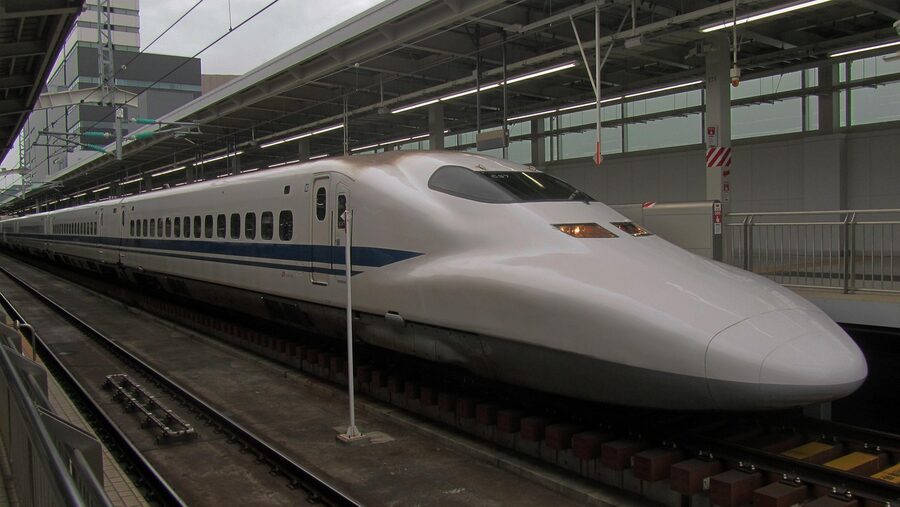
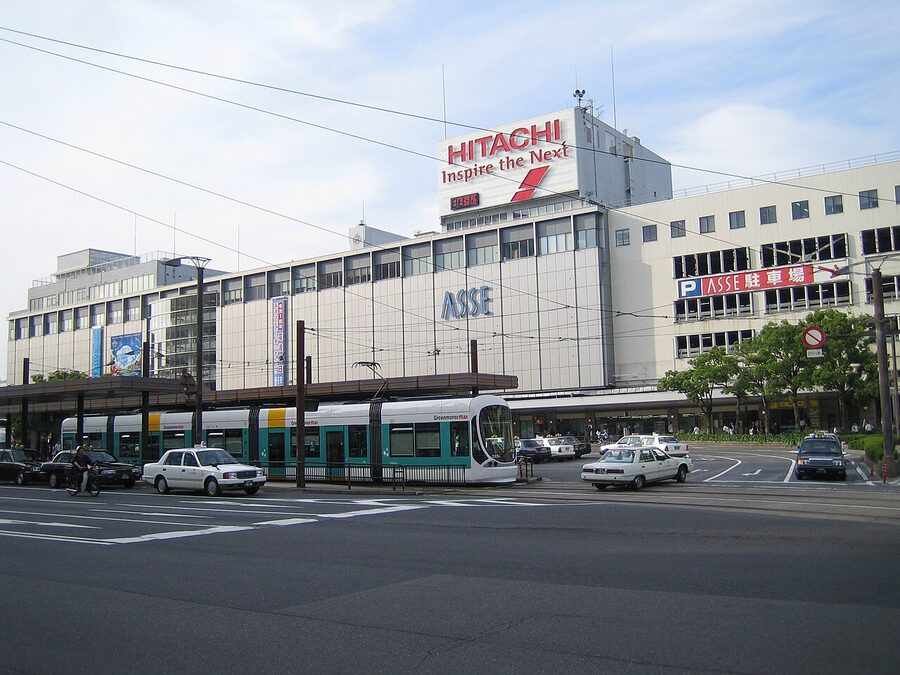
Shinkansen runs into Hiroshima from Tokyo in about 3 hours 55 minutes on a Nozomi, from Shin-Osaka in 1 hour 30, from Hakata (Fukuoka) in 1 hour 10. The station is on the east side of town. To get to the food zone around the Peace Park and Hondori shopping arcade, you take a streetcar. The Hiroden is a network of old green-and-cream trams that’s more useful than the subway (there isn’t a real subway here) and cheaper than taxis. Route 2 and route 6 from Hiroshima Station run straight down to Kamiyacho and Hatchobori, which is the food heart of the city. Flat fare of ¥240 inside the city. You pay when you get off.
Miyajima is separate. From Hiroshima Station, you take the JR Sanyo Line to Miyajimaguchi (27 minutes, ¥420), then the JR ferry across (10 minutes, included on the JR Pass, ¥200 each way otherwise). There’s a cheaper non-JR ferry that leaves from the same pier and costs the same, but the JR one swings out and curves closer to the floating torii gate on the way in, which is worth the nothing-extra.
The geography matters for the food. The Seto Inland Sea is shallow, warm, fed by six rivers running south off the Chūgoku mountains, and absolutely full of oysters. Hiroshima Prefecture produces around 60 percent of Japan’s oyster harvest and has done for 450 years, which is why you see oyster-fry advertised on okonomiyaki shop signs, oyster hot pot in izakaya menus, and grilled oysters on sticks at Miyajima street stalls. The rivers also run citrus orchards dry on the hillsides of Onomichi and the islands of the Setouchi, which is why Hiroshima lemons show up in nearly every souvenir shop. Onomichi is worth a stop if you’re travelling east out of Hiroshima, but I’m keeping this guide tight on Hiroshima city and Miyajima. Everything below is within reach of an overnight base in the city.
Hiroshima-style okonomiyaki: the layered one
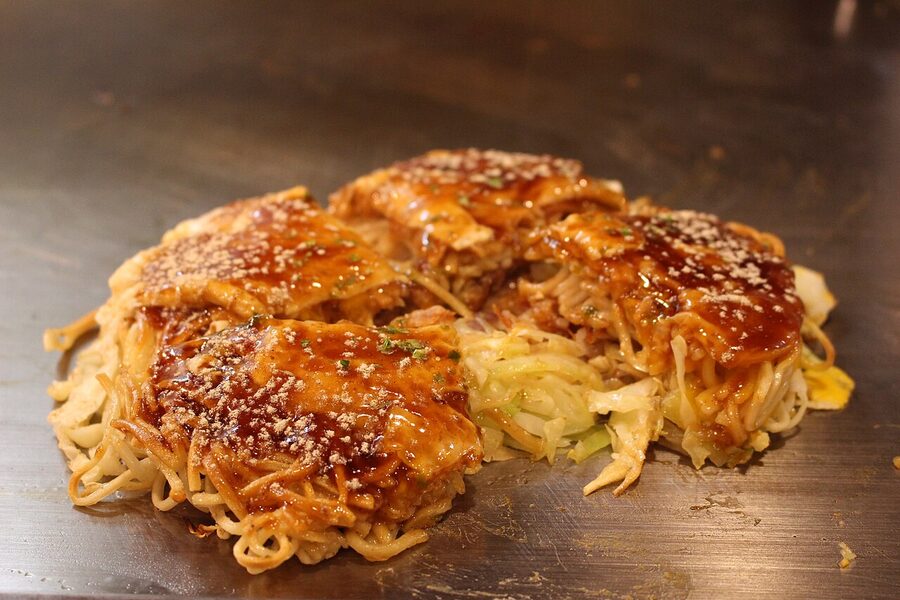
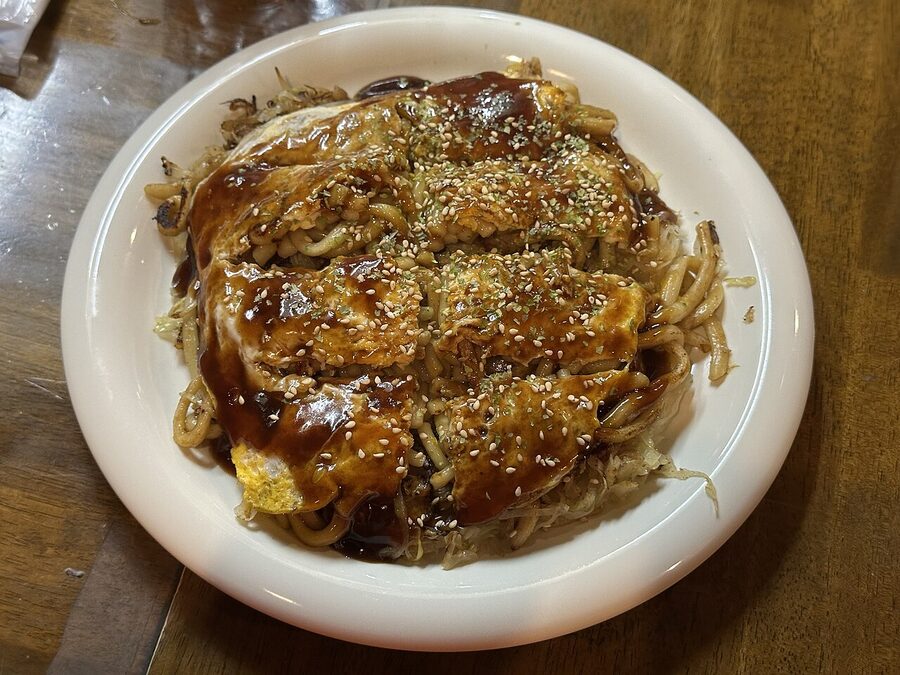
Here’s the core distinction, and it matters because every Hiroshima local will ask you about it. Osaka okonomiyaki is mixed. Hiroshima okonomiyaki is layered. In Osaka they take cabbage, flour, egg, and toppings, dump them in a bowl, stir, pour, flip once, done. In Hiroshima they build. A thin crepe goes down on the teppan first. Then a big pile of cabbage gets packed on top, along with bean sprouts and whatever mix-ins you’ve picked. Then pork belly slices. Then some batter drizzled to hold things together. Then the whole tower gets flipped. Separately, soba or udon noodles get fried on another patch of the griddle. The noodles become the base layer for the flipped cabbage stack. An egg cracks on the teppan next to everything, gets scrambled flat, and becomes the top layer when the whole thing is flipped one last time. Finish with Otafuku sauce (Hiroshima’s local brand, invented here), a dusting of aonori seaweed, and a heap of bonito flakes that curl in the heat.
You get a lot more cabbage than an Osaka version. Three to four times more, depending on the cook. The noodles make it heavier. This is a post-war dish. During 1945 to 1955, people in Hiroshima got by on flour rations from the US occupation, a lineage of pre-war flour snacks called issen-yōshoku, and whatever vegetables they could find. Cabbage was cheap. Flour was cheap. A cook named Iune Mitsuo started layering instead of mixing, added noodles to bulk the meal out, and kept going. The layered version stuck. The post-war working-class lineage is why Hiroshima okonomiyaki is still a proper cheap meal: ¥850 to ¥1,200 for a standard with noodles, under ¥1,800 even with oysters on top.
The rivalry with Osaka comes up constantly and goes both ways. In Osaka they’ll tell you Hiroshima’s version isn’t “real” okonomiyaki because the ingredients aren’t blended; it’s just a lot of stuff stacked on a pancake. In Hiroshima they’ll tell you Osaka’s version is stodgy and under-vegetabled. Both are right and both are wrong. Eat them both. If you’re writing your own Osaka food circuit, slot a Hiroshima side-trip in and settle the question for yourself.
Okonomimura: 26 stalls stacked on four floors
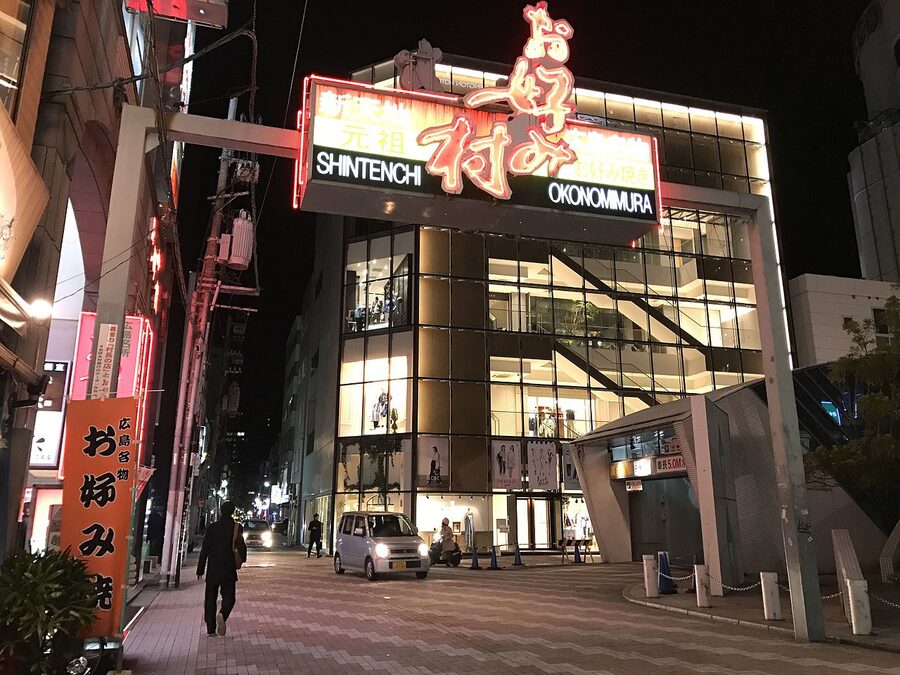
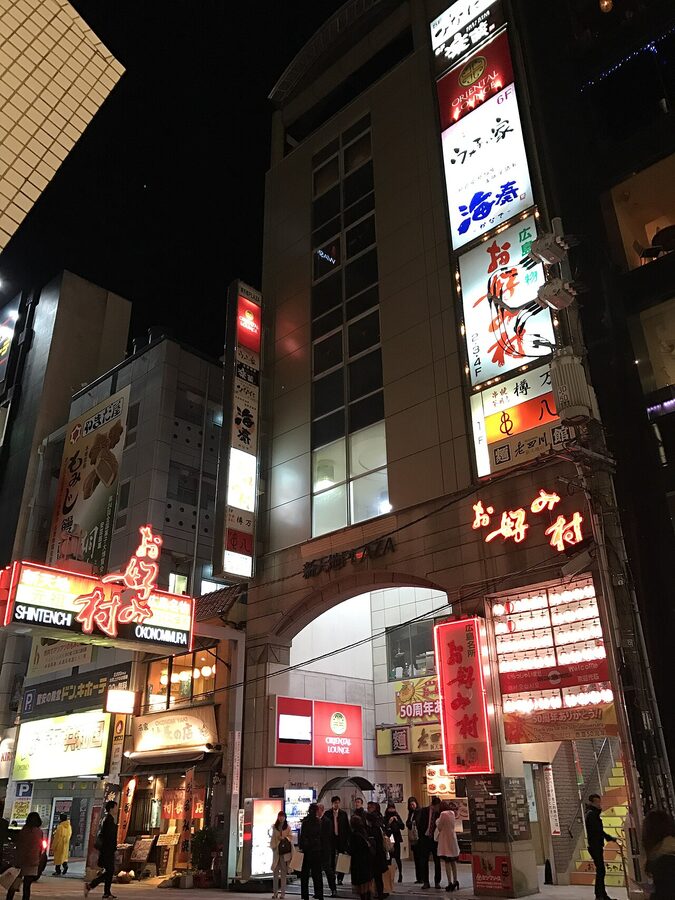
Okonomimura is the tourist option and the locals option at the same time, which is rare. It’s a narrow four-storey building (okonomiyaki on floors 2, 3, and 4) just off Chuo-dori, two minutes walk from Hatchobori streetcar stop. Twenty-six individual okonomiyaki stalls, each with 6 to 12 counter seats, each with its own grill, cook, and slight variation on the formula. You go in, walk up the stairs, look through the doorway of each stall, pick one where the cook looks good to you and a seat is free, and sit down. Most menus have English on the back. Most cooks have some English because they do this day in and day out with tourists. You pay when you finish, cash only at most stalls.
There’s no “best” stall at Okonomimura and anyone who tells you which one to pick is over-reaching. They’re all within a range of very good to excellent. Go for the one where the cabbage pile on the teppan looks biggest, because bigger pile equals better cook. If you want a name I’ll give you Chi-chan (second floor, near the stairs) which had the most interesting version I tried, with raw egg yolk on top like carbonara.
Other spots I’d go back to
Nagata-ya, right across the pedestrian bridge from Peace Memorial Park, is the easy pick if you’ve just done the museum and want to eat a big lunch without walking far. They’re famous, they have a queue, the queue moves fast, and the okonomiyaki is excellent and on the pricier end (¥1,200 to ¥1,700 with add-ons). Address: Otemachi 1-7-19. Open 11am to 8:30pm daily.
Micchan Sohonten is a strong claim to “the” Hiroshima okonomiyaki origin shop; the founder was Iune Mitsuo himself. The Hatchobori branch is the original. It’s small, there’s a wait, and the version is more traditional than what you get at Okonomimura (less showmanship, cleaner flavours). ¥950 for the standard.
Hiroshima Akayakien Ekinishi Honten is the surprise. It’s just behind the west side of Hiroshima Station, it’s open from 5:30pm to 9pm six nights a week (closed Sundays), it’s tiny, and the seats facing the grill are the best okonomiyaki theatre in the city. I grabbed a seat here on my first night because I couldn’t be bothered with the streetcar. Basic okonomiyaki: ¥930. Miyajima oyster add-on: ¥1,078. Beer: ¥550. It’s not cheap for what it is, but you’re watching one man cook three pancakes, four orders of yakisoba, and a grilled fish at the same time, and it’s better entertainment than most of Hiroshima after dark.
Lopez is the one people mention when they want to prove Hiroshima isn’t a one-note town. A Brazilian man called Lopez Ruben started making okonomiyaki in Hiroshima in the 1990s with chorizo, a squeeze of lime, and a dusting of chili. It’s closer to the station than most places and still running. If you’re here more than a night and you want to see where the format can go, go. About ¥1,300.
The oysters (kaki): Hiroshima’s thing, really
Say “Hiroshima food” in Japan and half the answer will be okonomiyaki and the other half will be oysters. Prefecture-level production is around 60 percent of Japan’s entire oyster supply, and the method you see from the ferry is unusual: floating rafts called ikada, seeded wires hung vertically off them, oysters grow along the wires for 18 to 24 months (most Japanese oysters get harvested at 12), which gives them that fist-sized density. Peak season is November to March. I’ve had Hiroshima oysters in London and in Tokyo and I’m going to be straight: the Tokyo versions were fine, the London ones were fine, the ones I had grilled on a stick at a Miyajima street stall on a cold Tuesday in February were not fine, they were the best oysters I’ve eaten anywhere and I’ve tried to eat oysters everywhere.
How to eat them
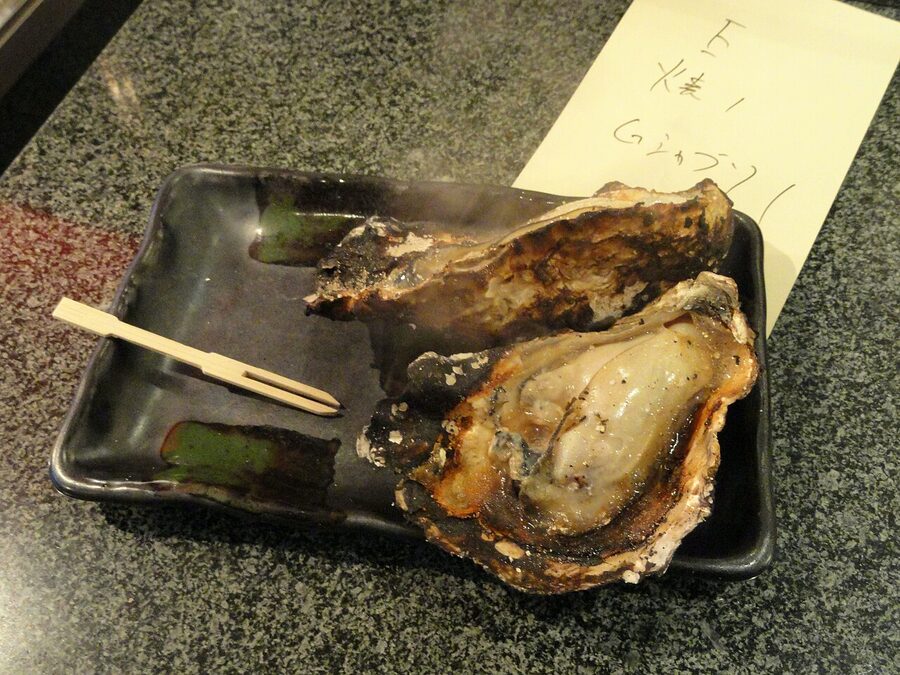
- Yakigaki (grilled in the shell). A splash of ponzu or a pat of butter. This is the version you want first. The charred shell adds smoke. ¥400 to ¥600 each at street stalls on Miyajima, ¥700 to ¥1,200 at sit-down places.
- Kaki-fry (deep-fried). Coated in panko, served with tartar sauce and a wedge of lemon. The plump inside explodes when you bite. Gateway oyster if you’re nervous about raw. ¥1,200 to ¥1,800 for a set of five or six.
- Raw, on ice. Less common in Japan than in France but you’ll see it on izakaya menus in Hiroshima. Usually served with grated daikon and ponzu. ¥700 to ¥1,200 for a pair.
- Kaki-meshi (oyster rice). Oysters simmered with soy and mirin, served over rice that’s been cooked in oyster broth. Hearty, autumn-winter territory. ¥1,400 to ¥2,000.
- Kaki no dote-nabe. Hot pot with a miso-lined earthenware bowl, the miso slowly melting into the broth as you eat. The traditional order if you’re at a Hiroshima oyster specialist.
- Oyster-topped okonomiyaki. Three or four big oysters tucked into the cabbage layer before the pancake gets flipped. You can get this at Okonomimura and at Nagata-ya. Add-on runs ¥400 to ¥600.
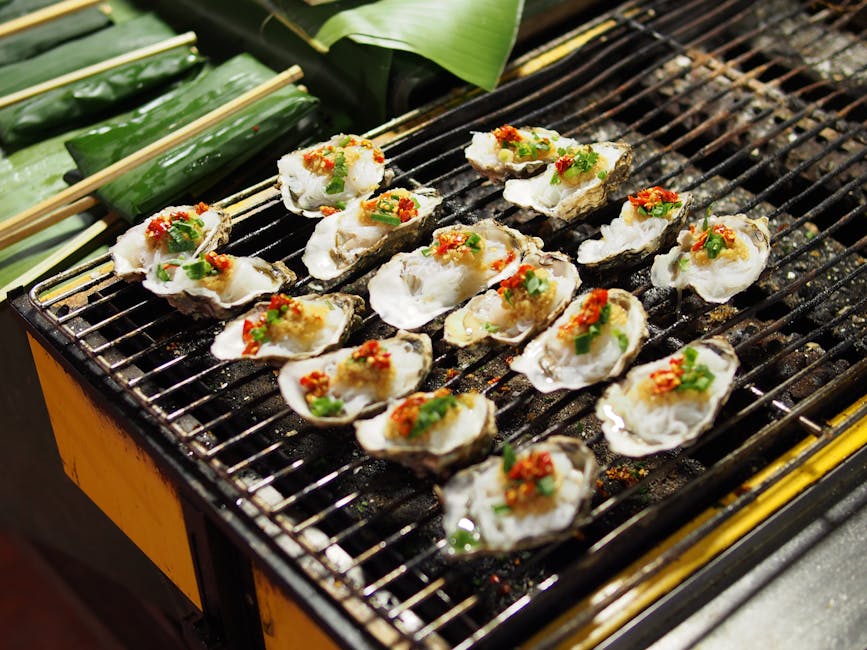
Where I’d actually go
Kakiya on Miyajima, on the main shopping street (Omotesando), is the one I’d pick first. They do a generous oyster set (¥2,200) with six or seven preparations on one tray: grilled, fried, smoked, pickled, a small bowl of kaki-meshi, and a cup of oyster miso soup. If you want to understand what makes Hiroshima oysters different in one sitting, that’s the set to order.
Yakigaki No Hayashi is two doors from Kakiya, a bit pricier, and the version with raw oysters on the set costs around ¥3,000. If you eat oysters often you’ll want this one. If you don’t, go to Kakiya.
Ekohiiki in central Hiroshima is the counterpart on the city side, one block from Nagata-ya near the Peace Park. Deep-fried oyster set runs ¥1,500. Good if you don’t want to make the Miyajima trip and still want a proper oyster meal. Open lunch and dinner, closed Mondays.
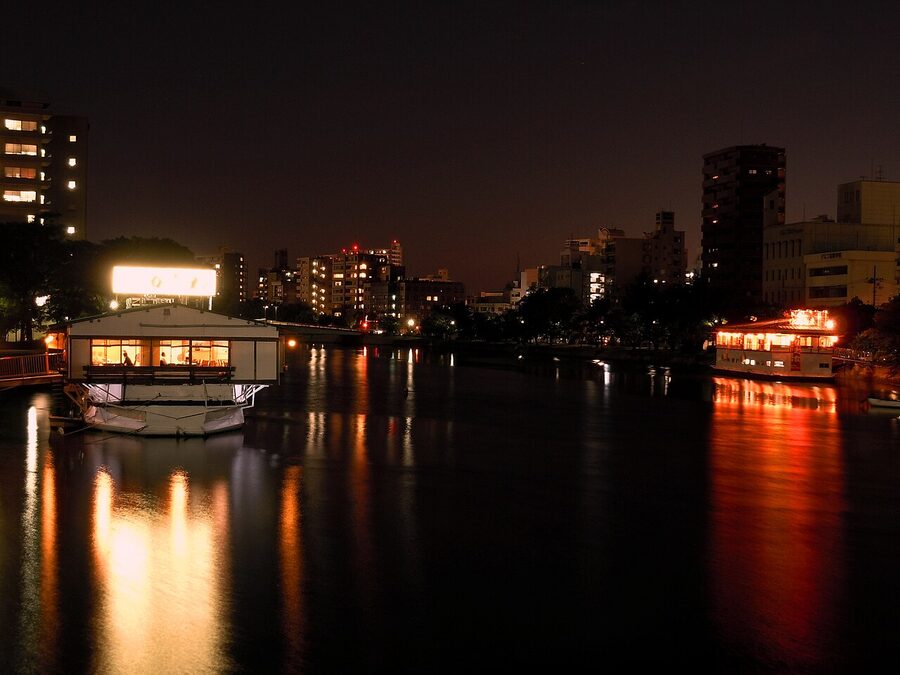
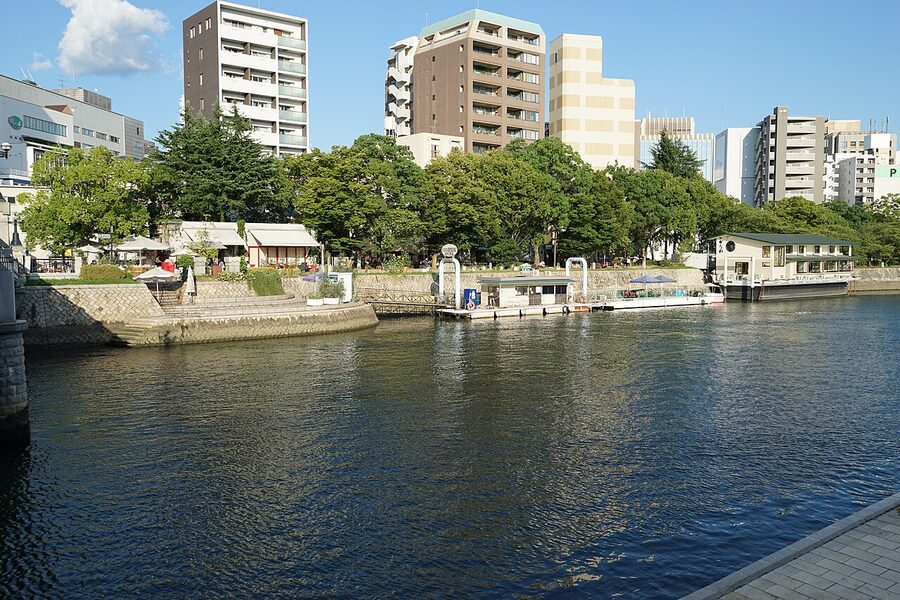
Kanawa is a floating oyster restaurant moored on the Motoyasu River just south of the Peace Park. It’s expensive (¥8,000 to ¥15,000 for a full set) and it’s a splurge version. Lovely for a view, not necessary if you’re on a budget. Skip if you’re only doing two meals in town.
If you’re the kind of eater who wants to compare oysters across the country, Hiroshima stacks up against Miyagi’s Matsushima and Shikoku’s Seto Inland beds. My take, and it’s the first-person one, is that Hiroshima’s are the biggest and richest, Matsushima’s have a crisper mineral edge, and the best I’ve had overall were here on Miyajima. The local variety is part of a wider conversation about how Japan does fish and shellfish differently from the west, and it’s worth thinking about in that frame. It’s also the one time I’ll recommend eating raw seafood outside an izakaya, because the restaurants here know what they’re doing.
Anago-meshi: the grilled eel rice of Miyajima
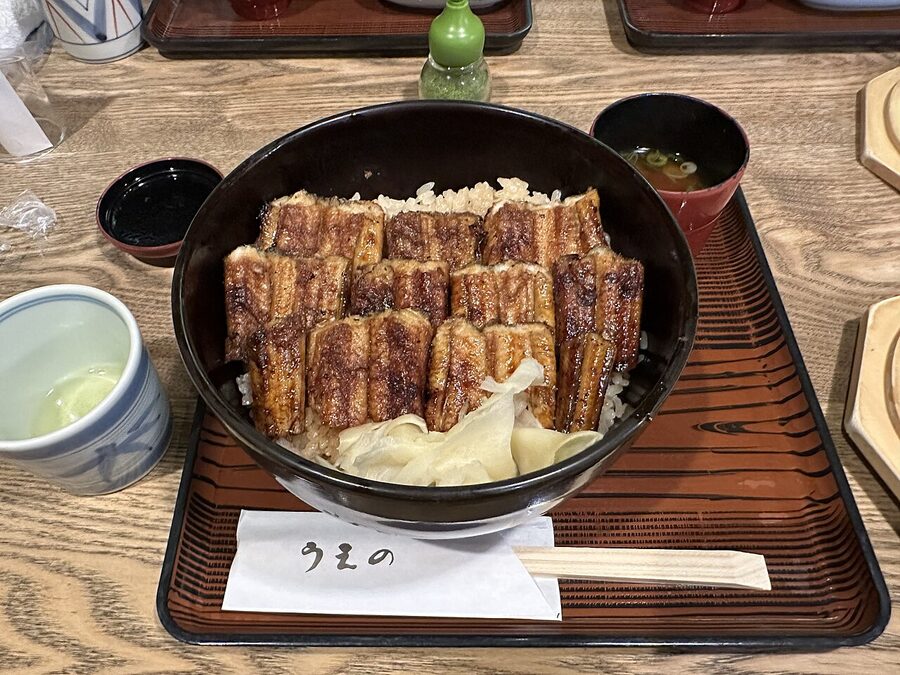
Anago is saltwater conger eel, not to be confused with the freshwater unagi you get in most Tokyo eel shops. The texture is softer, the meat is leaner, the glaze is not as sticky-sweet. Miyajima waters are full of anago because anago eats the small fish that gather around the oyster farms, so Miyajima’s anago-meshi bento has been a regional specialty since about 1901, when a shop called Ueno at Miyajimaguchi Station started selling it to ferry passengers. You can still buy an Ueno bento at the station kiosk today (¥1,944), and people time their ferry to arrive in a window when Ueno hasn’t sold out yet.
On the island itself, Fujitaya is the serious option. It’s about a ten-minute walk from the ferry pier, up toward the shrine, in a small building that looks like a house. They have a single Michelin star. They only take walk-ins (no reservations), they only steam anago in the amount ordered, and the wait can stretch to two or three hours on weekends. Anago-meshi set: around ¥3,400. It’s the best anago-meshi in Japan and it knows it.
Ueno Anago-meshi (the same family as the station bento) runs a sit-down restaurant by Miyajimaguchi on the mainland side, just outside the ferry terminal. Bowl (not the bento): ¥2,200. Less of a queue than Fujitaya, technically on the mainland so not great for Miyajima itineraries, but the original recipe from 1901.
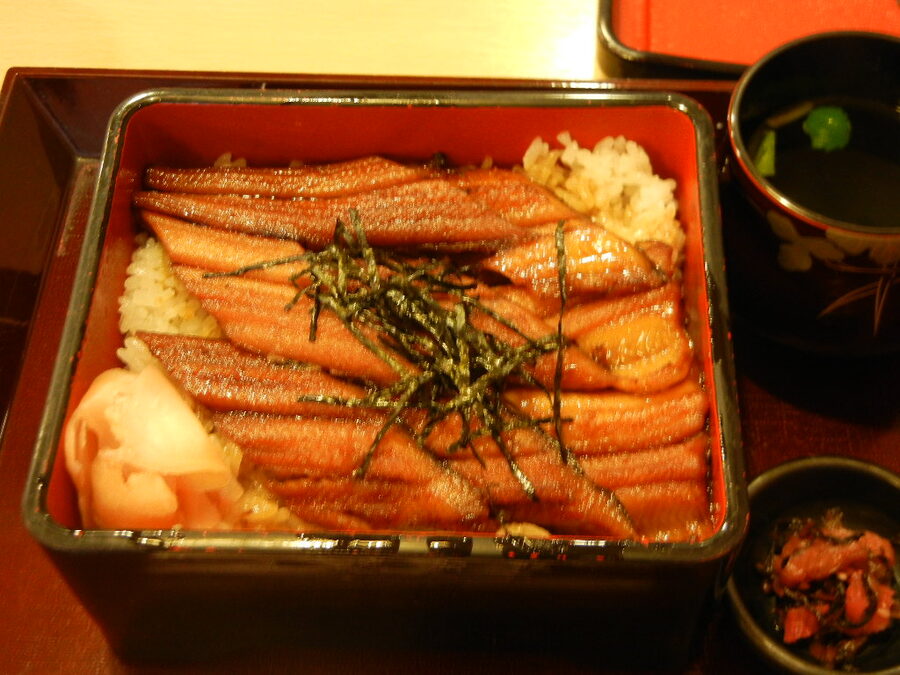
Tsuki Akari in central Hiroshima, across the river from Peace Park, is the backup if you don’t make it to Miyajima but still want to try anago-meshi. ¥1,800 for the standard bowl. Good, not extraordinary.
Anago-meshi is also sold as an ekiben (station bento) inside Hiroshima Station, on the basement food floor. Look for the bright red Ueno packaging. It’s the single best train-meal option in the area and lasts four hours out of the heat, which is useful if you’re Shinkansen-ing east to Kyoto.
Tsukemen, Hiroshima style: dipping noodles, spicy
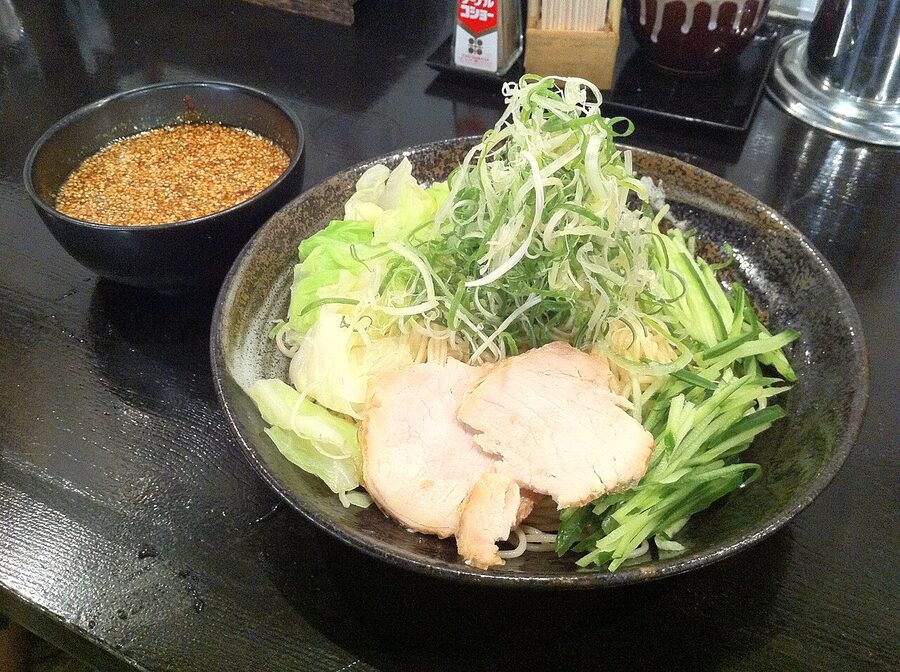
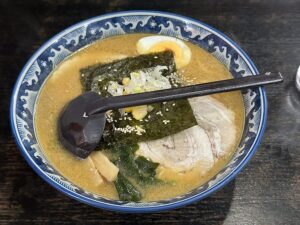
Tsukemen is dipping noodles. The noodles come in one bowl, the dipping broth comes in another, and you grab a clump of noodles with your chopsticks and dunk. The Hiroshima version is distinct because the broth is cold, dark red, loaded with chili and sesame, and aggressively spicy. The broth is heavy on raw garlic and chili oil and it stings in your sinuses before it reaches your throat. It’s a cult item in the city.
Bakudanya is the name. Originals are on Kōjin-machi, near Hatchobori, and there’s a bigger branch a block off Hondori. They rate spice on a 0 to 20 scale. Level 1 is what most Japanese locals order. Level 5 is what I’d push a confident spicy-eater toward. Level 10 is genuinely painful. Level 20 is for show. The standard bowl with chashu, chopped green onion, and boiled egg runs ¥980. A side of rice is ¥150 and you’ll want it because you’ll need something to soak up the leftover broth at the end of the meal. Open 11am to midnight most days.
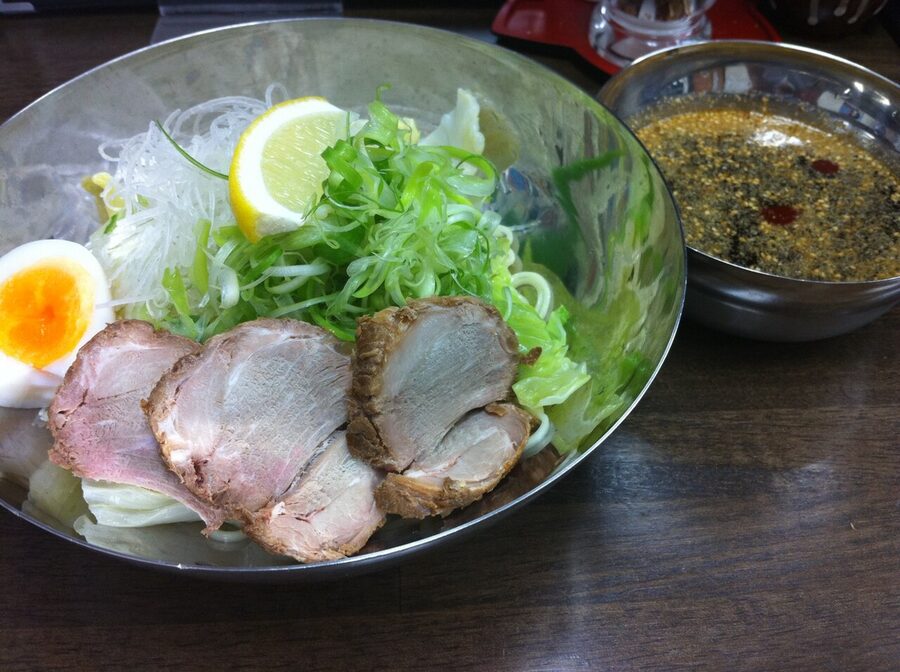
Two other places worth knowing: Kunimatsu for shiru-nashi tantanmen, a brothless dan-dan noodle that’s more Hiroshima than Sichuan these days. Hot instead of cold, and the sesame-sichuan numbing hits hard. ¥830 for a standard. And Mita Seimenjo near the Orizuru Tower for a gentler, thicker pork-and-seafood tsukemen (¥1,080) if Bakudanya’s chili wall scares you off. Hiroshima’s noodle scene isn’t Hakata’s, but it has more character than you’d think, and it makes an interesting contrast to Fukuoka’s tonkotsu-ramen identity, which is just across the shinkansen an hour and a bit south.
Cold noodles vs hot noodles, briefly
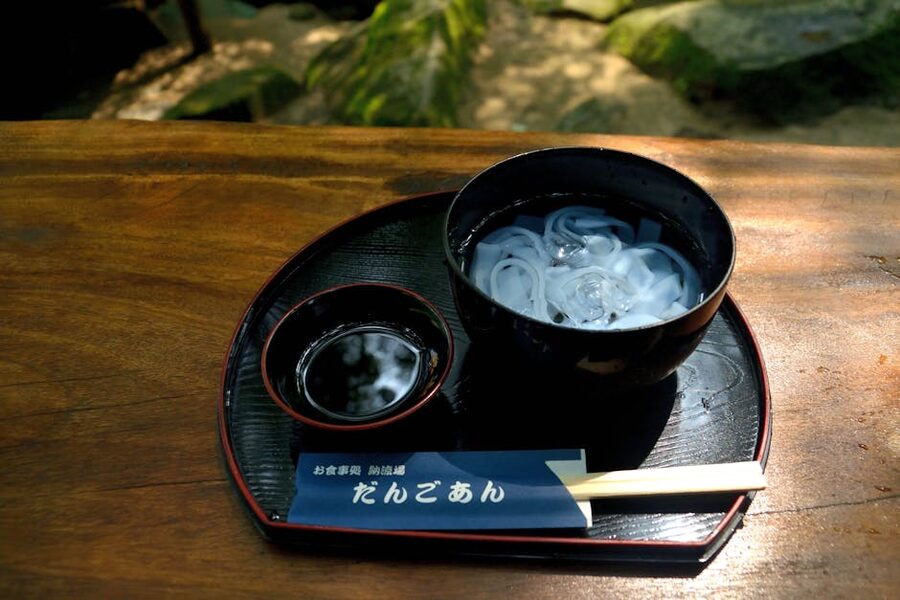
Worth noting because this confuses people: tsukemen is not soba (which is cold too but uses buckwheat noodles and a soy-based broth) and it’s not hiyashi-chūka (cold ramen in a sweet-sour dressing). Tsukemen has wheat ramen noodles, chilled, with a separate dipping broth. Hiroshima’s take is one of the spiciest versions of it in Japan.
Momiji manju: the maple-leaf cake of Miyajima
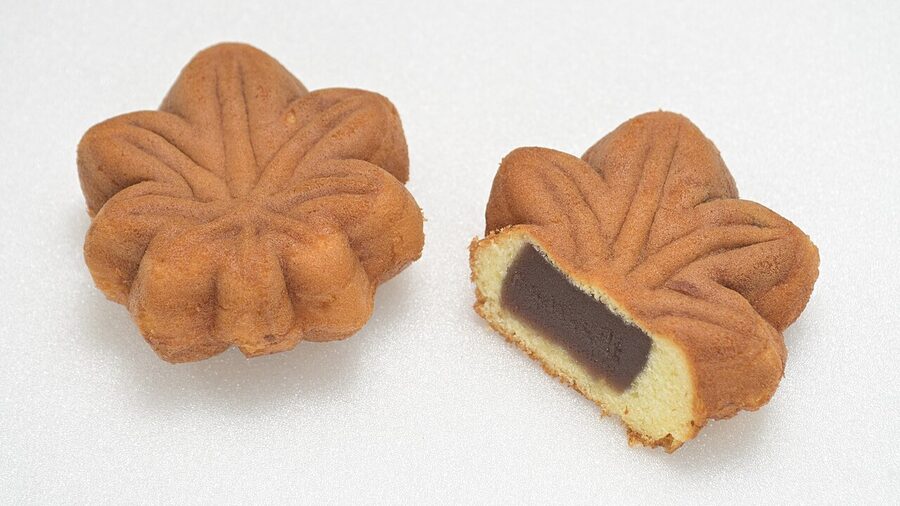
Momiji manju is a small castella-style cake shaped like a Japanese maple leaf, filled with red bean paste in the traditional version and with custard, chocolate, matcha, cheese, or sweet potato in the modern ones. Invented in 1906 by a pastry chef named Takatsu Tsunesuke on Miyajima, originally to serve at the Iwaso ryokan. The shape reflects the maple trees that cover Miyajima’s Momijidani valley (literally “maple valley”), which is still the best autumn-leaves hike on the island. One manju is ¥100 to ¥150. A box of ten as omiyage is about ¥1,200.
You eat them two ways. Fresh at the source on Miyajima (warm, soft, still-steaming) beats the shrink-wrapped boxed version by a wide margin. And for the really good experience, order age-momiji: the same manju deep-fried in batter and served on a stick. Crunchy shell, warm pillowy cake, hot bean paste. ¥200 each from Momijido on Omotesando, which is also where you can watch the original of these get made.
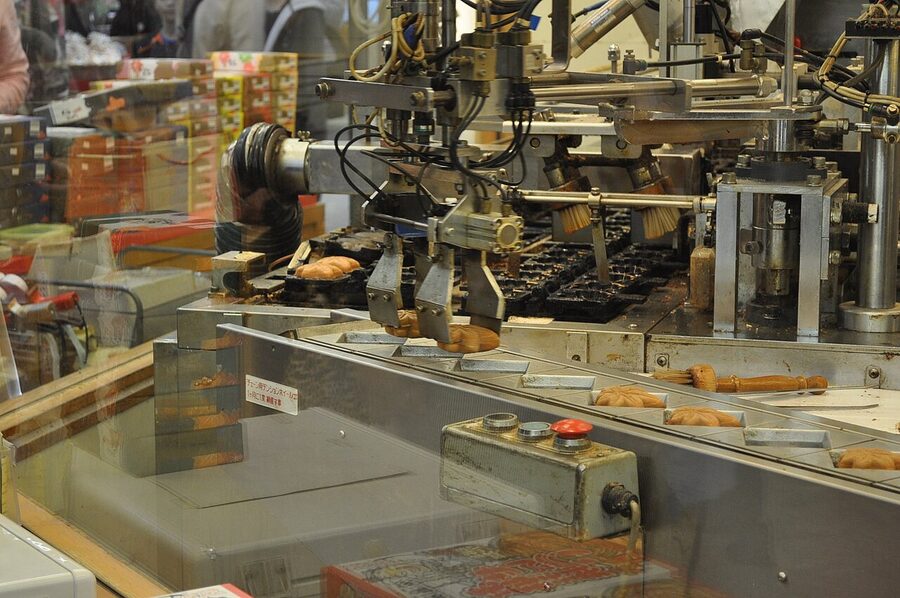
If you’re picky about red bean paste, go with koshian (smooth) rather than tsubuan (chunky) your first time. If you want to understand why momiji manju became the omiyage for Hiroshima Prefecture, walk down Omotesando mid-afternoon and count how many stalls are making them by hand in front of you. The number is somewhere north of twenty, all within a hundred metres of each other.
Yamadaya, Fujiiya, Iwamuradō
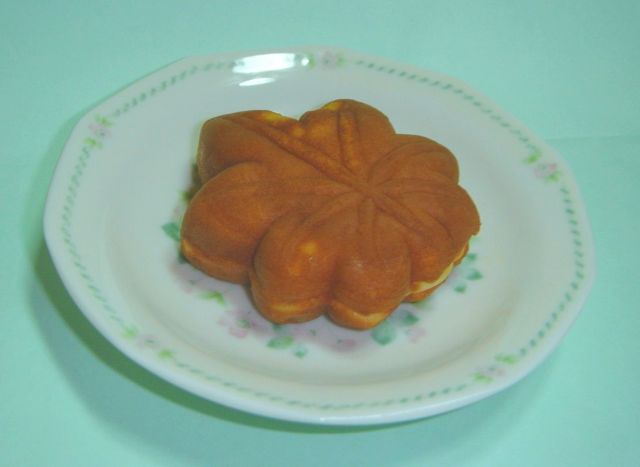
Yamadaya has the strongest range of flavours (apple, cheese, and a lemon version that deserves its own write-up). Fujiiya makes the cleanest classic red bean version, which is the one to buy as a gift. Iwamuradō runs the Momijidō chain and does the best age-momiji. Go to all three. They’re within a three-minute walk of each other. Total damage: about ¥800.
Miyajima street food, the deer situation, and honest notes on Omotesando
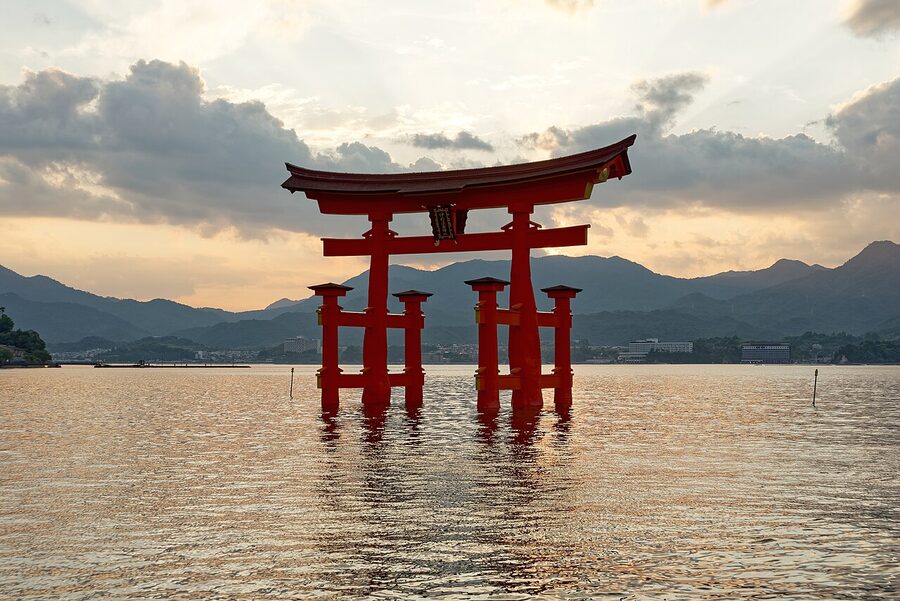
Omotesando is the main shopping street that runs from the Miyajima ferry terminal inland toward Itsukushima Shrine. About 400 metres long, lined on both sides with stalls. Itsukushima Shrine itself was founded in 593 CE, with the current floating torii gate form dating to 1875. It’s the reason the island has tourists, and it’s why the shopping street exists. Here’s what you eat on it, in order:
- Yakigaki on a stick. Grilled oyster with a ponzu splash. ¥500 to ¥650 per oyster. There are at least five stalls doing this within fifty metres of the ferry.
- Age-momiji on a stick from Momijido. ¥200 a stick.
- Matcha soft-serve ice cream from any of four or five dedicated matcha stalls. ¥400 to ¥500. Watch your cone near the deer.
- Anago croquettes (anago korokke) from Tachibana-ya. ¥250. A cheap way to taste anago without committing to a bowl of anago-meshi.
- Fried conger-eel buns from a couple of stalls further up the street. Savoury take on a manju, hot and crispy. ¥400.
- Hiroshima lemon sorbet. ¥400. Sharp, palate-cleansing, good after an oyster.
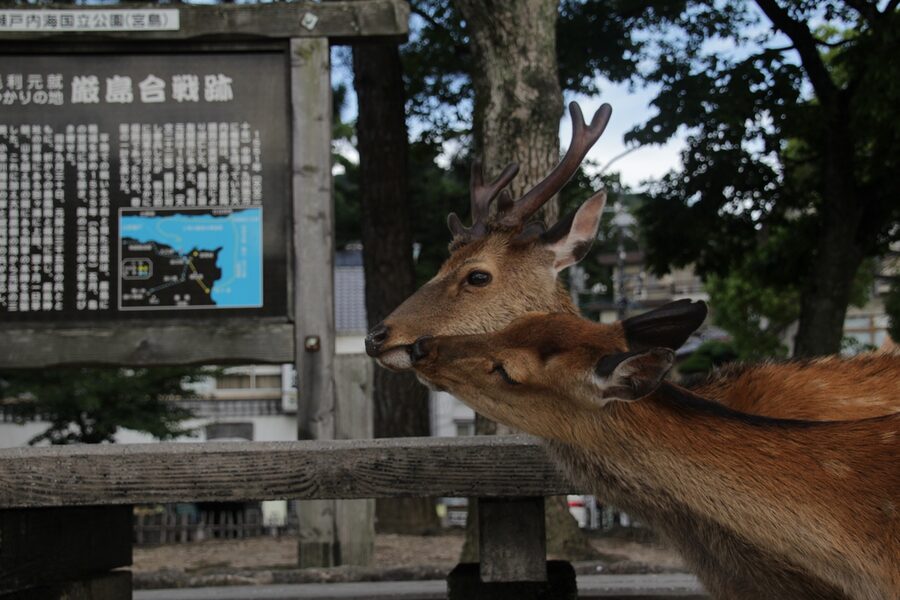
The deer. Right. They’re small sika deer, they’re semi-wild, they’re on every tourism brochure, and they will take your food without remorse. Unlike the Nara deer, you are not supposed to feed them. There are signs. The island has moved away from the “feed the deer crackers” model of Nara and toward “please don’t touch the deer” over the past decade, and I think that’s the right call. They’re also not as friendly as the Nara ones. They’ll approach you, they’ll sniff at plastic bags, and if you’re carrying food in a way that looks accessible they’ll try for it. A woman in front of me on Omotesando lost a whole age-momiji stick. The deer trotted off into an alley with the stick still in its mouth. She laughed. I laughed. The deer did not care.
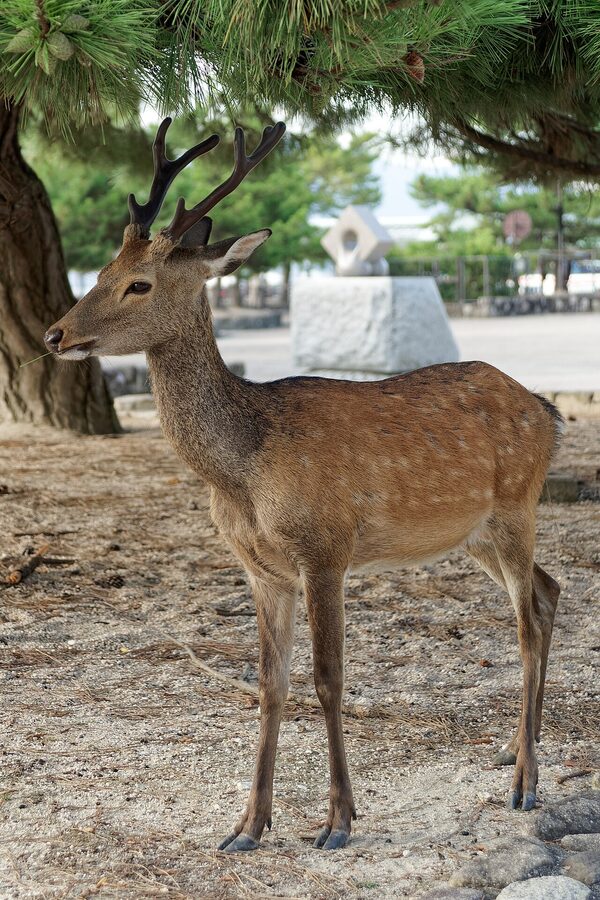
My honest take on Omotesando as a whole: it gets hammered between 11am and 3pm on weekends. Go at 9:30am (the shrine opens at 6:30, the shops open around 9) or after 4pm when the day-trippers have gone. A lot of the souvenir shops sell the same three items (packaged momiji manju, lemon curd, and wooden shakushi rice paddles, which is a Miyajima specialty). Buy the fresh momiji manju on the island, buy the boxed version at Hiroshima Station on your way out, and don’t feel pressured to sit down for lunch on the street. Walk it twice, eat on sticks, and get to Fujitaya early instead.
Itsukushima Shrine and the floating torii
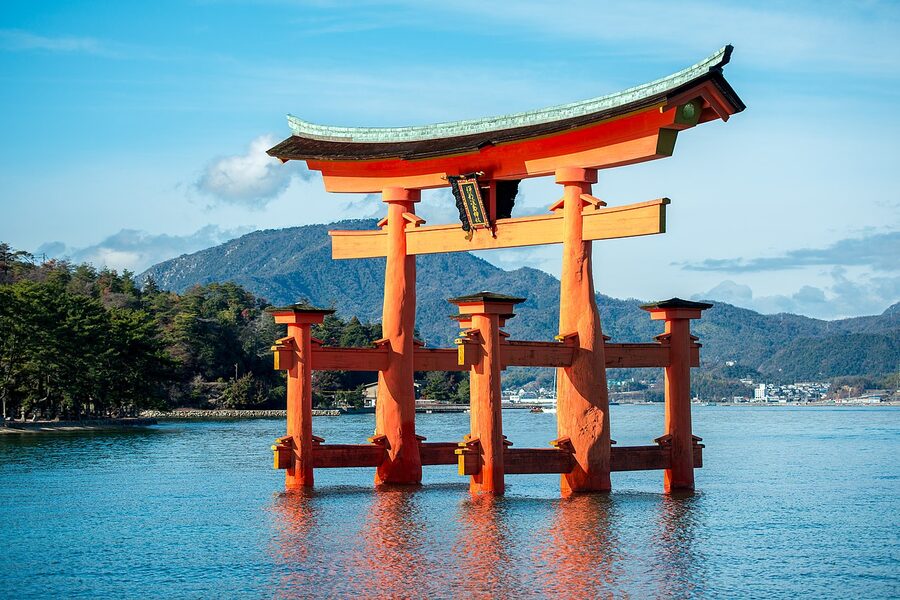
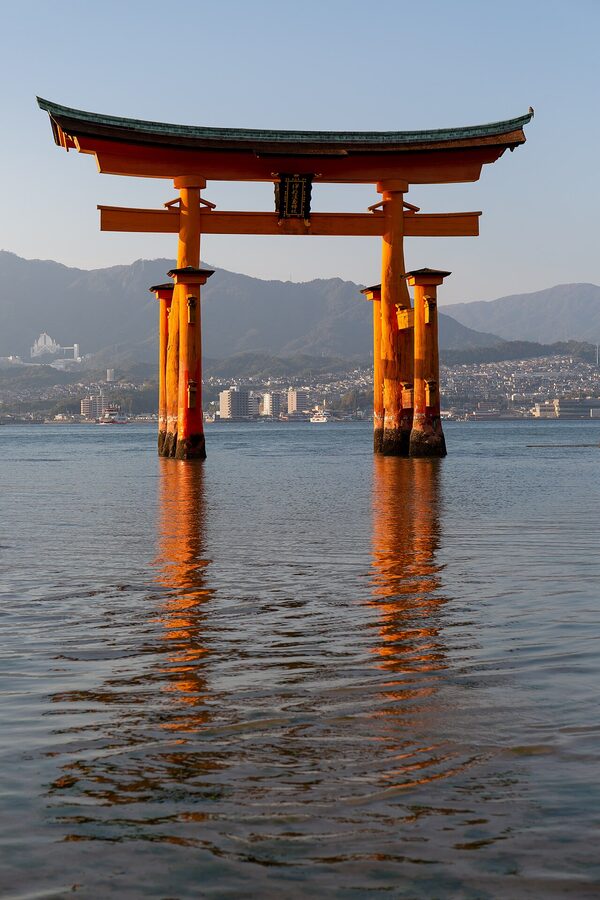
Shrine admission is ¥300. Tide schedules are posted at the ferry terminal and on the ferry itself. The “good” photo of the gate is at high tide with evening light, around 4:30 to 5pm in autumn and winter, later in summer. The gate was undergoing restoration for a couple of years, finished in 2022, so if you saw it in scaffolding on a previous visit, you’re fine now.
Peace Park, lunch, and practical city eating
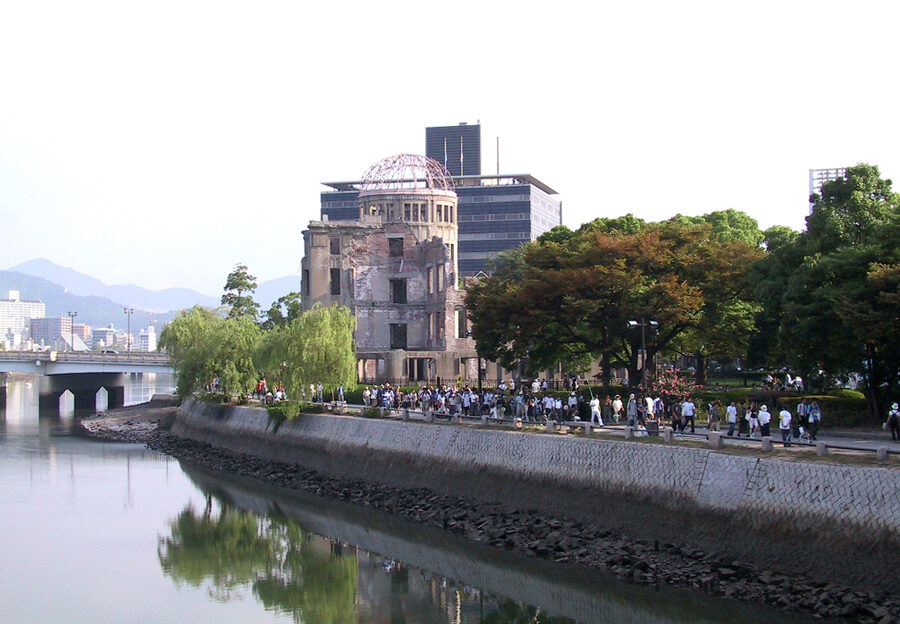
The Peace Memorial Museum is the reason most people come to Hiroshima, and most people do it in the morning before lunch. It’s emotionally heavy. It’s well worth it. It takes about 90 minutes to 2 hours, opens at 8:30am, and the queue outside starts building around 10:15. Go at 8:30 or after 3pm.
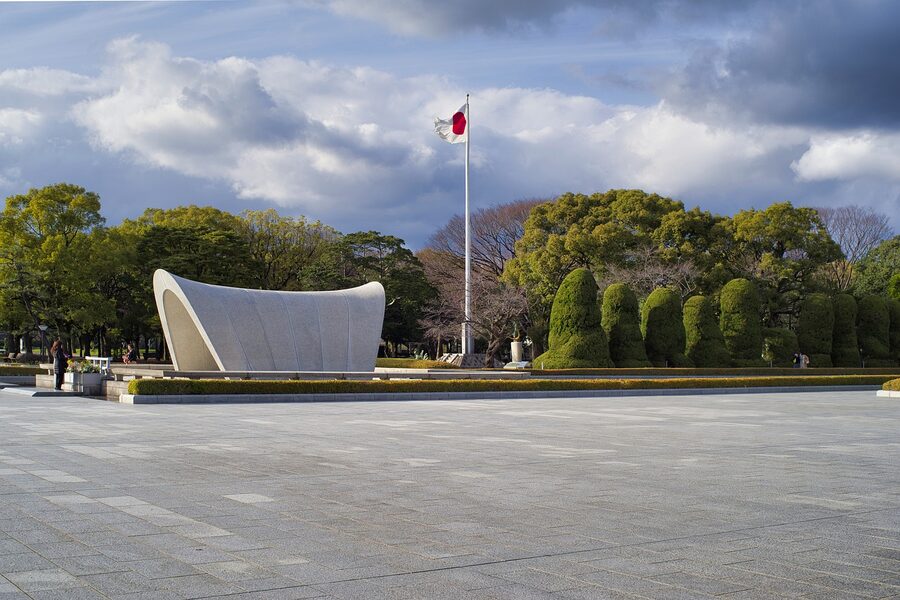
When you come out of the museum the question is always: where do I eat lunch? The cafe inside the park gift shop is fine, not special, and you’ll queue. Better options within five minutes:
- Okkundou Mazeman, two blocks south of the museum across the river. Brothless spicy ramen with a dipping sauce you mix yourself. ¥870 standard, ¥1,100 with potato salad. The counter is ten seats. Turnover is fast.
- Nagata-ya (the okonomiyaki place), straight across the bridge east. ¥1,000 to ¥1,500.
- Ekohiiki (oysters), next door to Nagata-ya. ¥1,500 for the fried oyster set.
- Park Hills Cafe (right on the park’s northeast corner) for okonomiyaki that gets you through the morning’s queue. ¥950 standard. It’s fine, not special, but it’s the closest sit-down option that isn’t the gift shop.
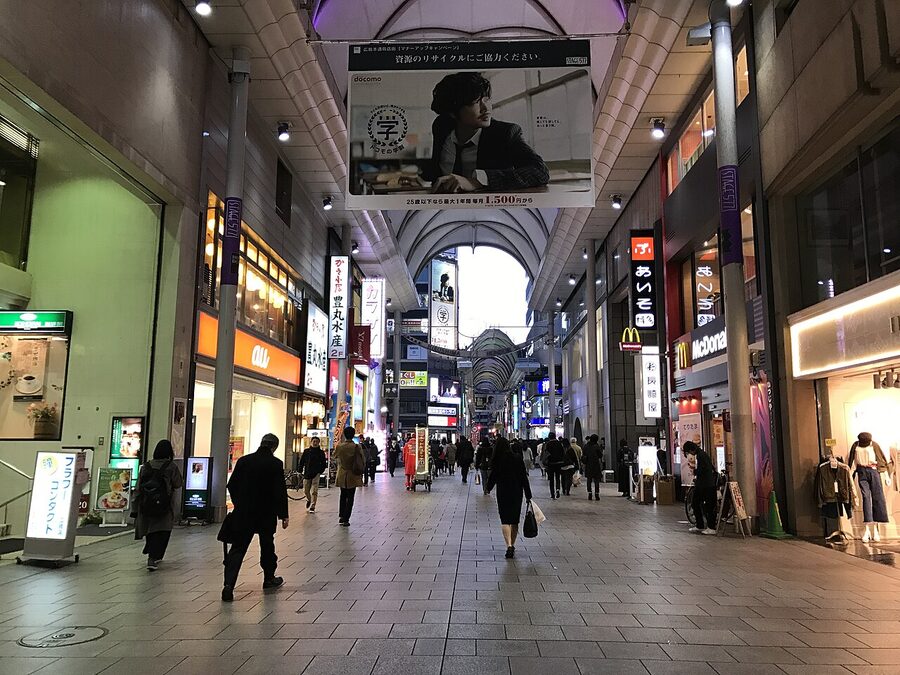
The Hondori shopping arcade is five minutes east of the park and is the city’s covered high street. Fifteen blocks of shops and at least thirty restaurants. Good for a food court lunch if it’s raining. Parco and Sogo department stores on Hondori both have basement food floors with prepared bento, sushi, and Hiroshima-branded sweets at ¥500 to ¥1,200.
Hiroshima Station food floor (ekiben, okonomiyaki, standing sushi)
The basement food floor at Hiroshima Station is one of the better station food floors in Japan. Three things to know:
- There’s a full okonomiyaki stand where you can eat a fresh one in ten minutes before a train. Standing room only, ¥900 to ¥1,200.
- Multiple ekiben shops sell the Ueno anago-meshi bento and a Hiroshima oyster rice bento that’s decent, not amazing, at ¥1,500.
- There’s a standing sushi bar upstairs on the shinkansen gate level that’s cash-only and gives you eight pieces of nigiri for ¥1,500 in about twelve minutes. Useful if you’ve got a tight connection.
The Saijo sake district, 30 minutes east
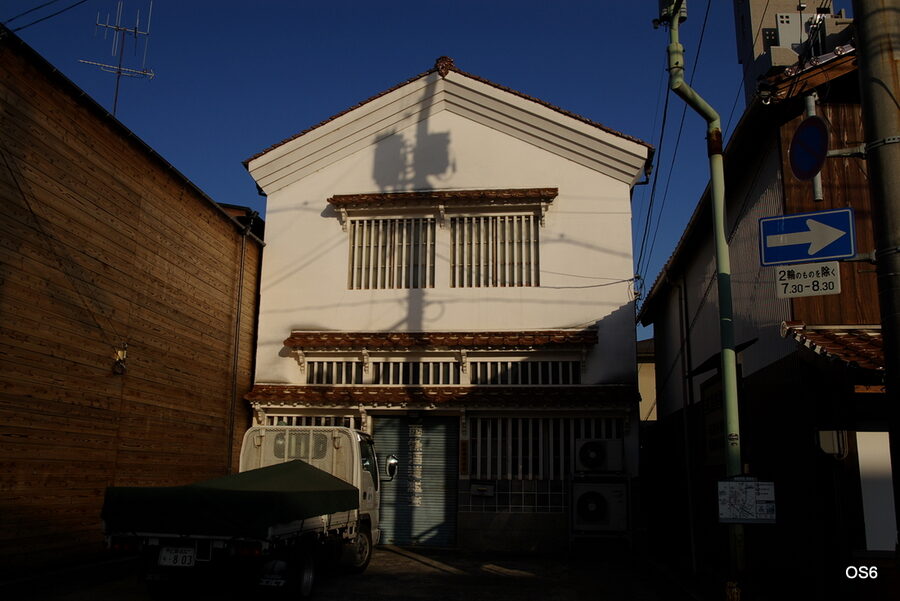
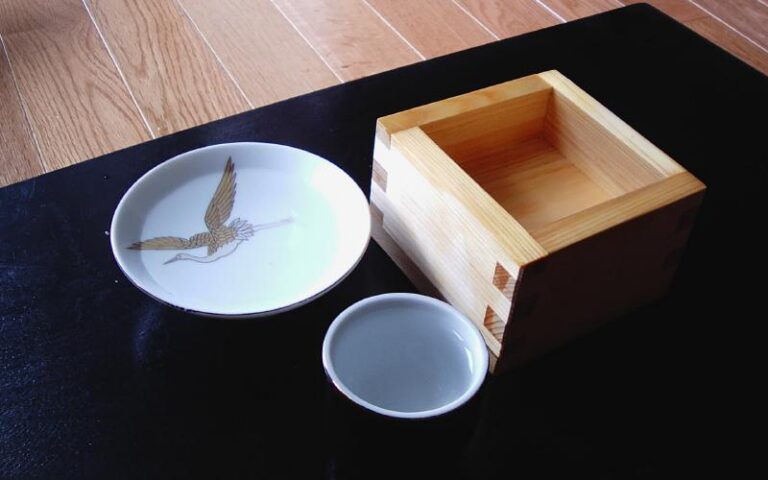
If you have a half-day, Saijo is the call. Hiroshima Prefecture is one of Japan’s three great sake regions (the others being Nada in Hyogo and Fushimi in Kyoto), and Saijo is where the regional industry is concentrated: at last count, eight breweries within a ten-minute walk of Saijo Station. Kamotsuru, Kamoizumi, Fukubijin, Kamoki, Hakubotan, Kamokin, Sanyotsuru, Saijotsuru. The cluster is called “Sakagura-dōri” (sake-brewery street) and it’s walkable without a map.
Saijo is 30 to 40 minutes east of Hiroshima on the JR Sanyo Line (¥420 each way). Trains run every 10 to 15 minutes. Most breweries do free tastings of 3 to 5 sakes and charge ¥300 to ¥500 for the more serious flights. Kamotsuru is the famous one (it’s what Obama tasted during his 2016 Hiroshima visit), Kamoizumi is the one most locals will recommend for the depth of its junmai range, and Fukubijin has the nicest courtyard for sitting with a flight in the sun.
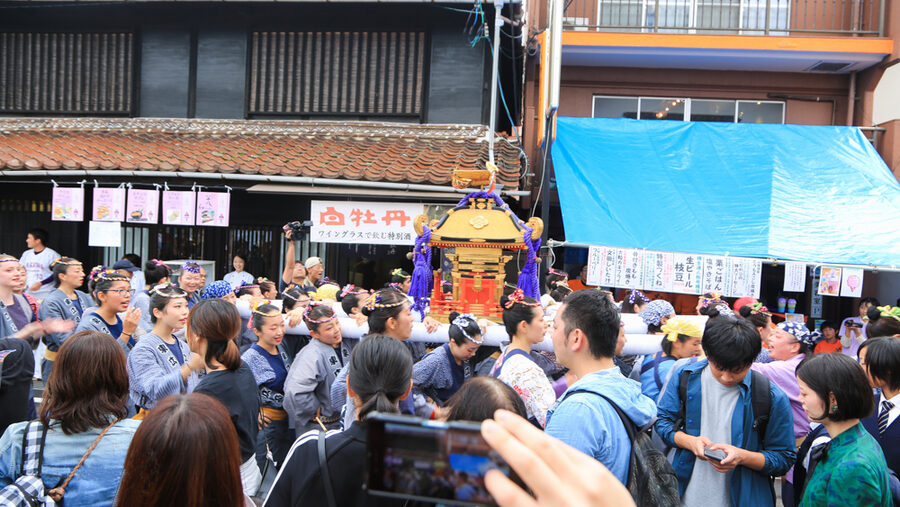
Hiroshima sake tends to be softer and slightly sweeter than Niigata or Nada because the water here is softer (lower mineral content), which is the same reason the local cuisine works so well with the drinking. If you want to go deeper, I’ve written a longer piece on how to drink sake in Japan including grades, etiquette, and what to order in bars. Saijo is one of the best day trips for someone who wants to see a working sake town that isn’t Fushimi.
Craft beer and drinking
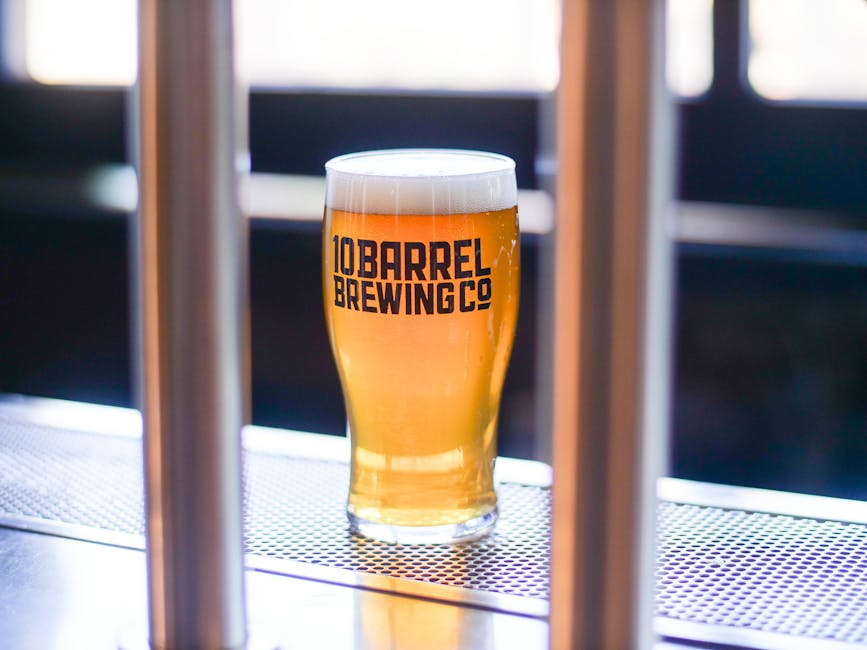
Hiroshima isn’t a craft-beer destination the way Tokyo or Osaka are. But there are two places worth knowing:
- Hiroshima Neighborly Brewing runs a taproom near Hondori with five or six taps of its own beer (¥900 for a half-pint). They lean into oyster-friendly pale ales and a hoppy lager. If you pair one with a plate of kaki-fry, you’ve landed.
- Ishioka Beer (technically on the hills east of the city, also shows up in a couple of downtown bars) does a surprisingly good Hiroshima-lemon saison. It’s the kind of thing Japanese craft does well: fresh, citrus-forward, not too sweet, about 5 percent.
For a broader tour of what Japanese brewers are doing right now, cross-link to the Japanese craft beer guide. In Hiroshima specifically, the move is: one pint at a craft place, then move to an izakaya. The izakaya scene is where the city gets loud. Nagarekawa, the main nightlife block, is five blocks east of Hondori and is dense with tiny bars. Most have a ¥500 to ¥1,000 cover charge. Worth knowing before you sit down.
The Hondori and arcade food scene
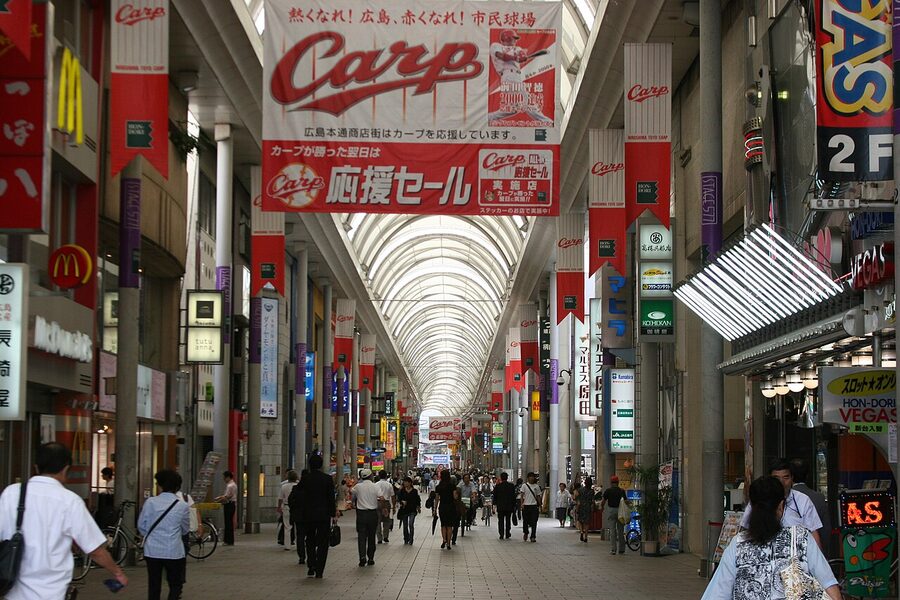
Hondori is the covered shopping arcade running east from the Peace Park. Between Hondori and Nagarekawa (the next block east) is roughly the restaurant and bar core of the city. Useful spots:
- Wadato Hiroshima Ekimae near Hondori, a one-person ramen shop that does a light pork broth version and a lemon ramen. ¥930 standard, ¥200 for gyoza. Closed erratically; check before you walk.
- Mita Seimenjo in the Aloha Building near the Orizuru Tower, for the thicker, less-spicy tsukemen I mentioned earlier.
- Kikuya on the Hondori side of Ebisucho for tonkatsu with a cult-following miso soup. ¥1,000 for a jumbo chicken katsu set. Cash only.
- Yamane Okonomiyaki if Okonomimura feels too tourist. It’s a single counter with six seats, one cook, an older woman who’s been doing this for 40-plus years. ¥950 for standard. Cash only. Closed Tuesdays.
If you’re staying more than a night, the Nagarekawa bar tour at night is the city’s other personality. Loud, smoky (yes, a lot of indoor smoking in Hiroshima bars still), cheap. It’s closer in feel to Osaka’s working-class drinking scene than to Tokyo’s polished one, and I mean that as praise. The izakaya format in Hiroshima mostly hews to the same rules as everywhere else; if you’re new to the format, the izakaya guide walks through how to order and what to avoid.
An opinionated itinerary
If I had 48 hours in Hiroshima-Miyajima and had to do it well:
Day 1. Arrive Hiroshima Station by shinkansen before 11am. Drop bags at hotel near Peace Park. Walk to Peace Memorial Museum, do the museum (90 min). Cross the bridge to Nagata-ya or Okkundou Mazemen for lunch. Afternoon: walk the park properly, Atomic Bomb Dome, Peace Memorial Hall. Head to Orizuru Tower (¥2,200 entry) for a sunset view. Dinner at Okonomimura: pick a stall on floor 3, eat okonomiyaki with oyster add-on. Bakudanya for tsukemen afterward if you’ve got room. Nightcap at a Nagarekawa bar.
Day 2. Ferry to Miyajima by 9am. Arrive, walk to Itsukushima Shrine before the tour buses arrive (9:30am). Back to Omotesando: stall hopping, oyster on a stick, age-momiji, matcha ice cream. Lunch at Kakiya (oyster set) or queue at Fujitaya (anago-meshi) if you’ve got time. Afternoon: hike up Mt. Misen (2 hours return via the ropeway and foot; 3 hours fully on foot). Back down, shrine again at sunset with the torii at high tide if the schedule works out. Evening ferry back to Hiroshima. Late dinner: Ekohiiki or Akayakien Ekinishi Honten near the station.
If you’ve got a third day, do Saijo in the morning (three breweries, a bowl of bishu-nabe hot pot at lunch) and leave for Osaka in the afternoon.
A few warnings and one recommendation I rarely make
Things not to bother with:
- The Hiroshima Castle. It’s a concrete 1958 reconstruction; the moat is fine for a walk, the inside is not special. Skip unless you’re killing a rainy hour.
- The Peace Memorial Museum gift shop cafe. Fine but average food; eat across the bridge.
- Most things called “Hiroshima Okonomiyaki” outside Okonomimura and the three named places above. The city is full of tourist-trap okonomiyaki bars that charge ¥1,800 for what costs ¥950 at a real place.
- The Miyajima ropeway up Mt. Misen if you’re physically capable of the hike. It costs ¥2,000 return and skips the best part of the island.
Things worth booking in advance:
- A ryokan on Miyajima if you want to see the shrine after the last ferry (5:30pm-ish). You can only do this by staying the night; most day-trippers leave at 5pm. Morning and evening on Miyajima, with no tourists, are the best it gets.
- Fujitaya for anago-meshi: they don’t take reservations, but they run out. Get there at 11 for lunch or 5:30 for dinner.
- Shinkansen seats on Friday afternoon eastbound: these book out.
The recommendation I rarely make: eat one oyster raw, if you’ve never done it before. Hiroshima in season (November to March) is the right place. The way to do it is at Kakiya or Yakigaki No Hayashi on Miyajima, ask for one raw with ponzu, and swallow it in a single go. If you don’t like it, fine. Now you know. If you like it, the world of oyster bars just opened up to you. For the general how-hard-is-this-to-eat conversation, I wrote a ranked guide to Japan’s harder-to-eat foods and raw oysters are on it, but near the bottom of the list. They’re easier than most people expect.
Last thing
Hiroshima gets treated as a stop on the Osaka-Kyoto-Tokyo circuit and a lot of visitors give it one night. I’ve been three times and each time it got better because I stopped trying to do everything. Two nights, four main meals, one sake-town morning. Walk Miyajima before the day-boats land and walk the Peace Park before the queue forms. Eat okonomiyaki twice at two different places so you can tell someone the difference. Get an age-momiji on a stick and eat it while it’s still hot enough to burn your mouth. That’s the trip.
And yes, if a deer takes your ice cream, let it. You’ll laugh about it longer than you’ll remember the ice cream.


.jpg)


.jpg)


