
Eating Fish in Japan: A Guide to Sashimi, Sushi, and the Market Breakfast
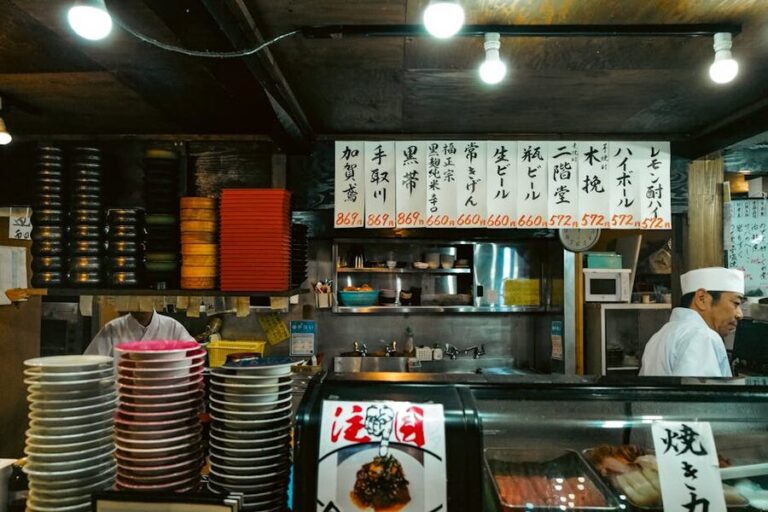
I thought I understood fish before I came to Japan. The first proper sashimi counter I sat at, a small place inside the Hakodate morning market, 6:15 in the morning, steam rising off a cup of barley tea, made it clear I didn’t. Not in a corrective way. In a “here’s what you’ve been missing” way. The tuna tasted like something that had been alive the day before, because it had. The hirame was sliced so thin the daikon underneath showed through. And I was eating it all for roughly ¥2,800, at breakfast, two minutes from my hotel.
This guide is what I wish I’d had before that morning. It won’t teach you to be a sushi purist, I’m not one. It will tell you where the good fish is, what the names mean, how the prices stack up, and which of the expensive places are actually worth it. A fair amount of it is opinion, earned from the cheap and the very expensive ends of the counter.
If you’re planning a bigger food trip, the izakaya guide and the Tokyo food neighbourhoods piece cover adjacent ground. Fish shows up in both, but they’re not fish-first the way this one is.
In This Article
- Sashimi and sushi aren’t the same thing
- The sushi vocabulary, short version
- Learn the cuts before you order
- Toyosu Market, and why it’s worth the 5am alarm
- The Toyosu breakfast sushi spots
- Hakodate, and why the best sushi breakfast isn’t in Tokyo
- The other fish towns worth the detour
- Izakaya sashimi, and why it’s the best-value fish meal in Japan
- The omakase question: when the ¥25,000 dinner is worth it
- Conveyor belt sushi: the good, the bad, and the actually-fine
- Standing sushi bars: the sweet spot nobody mentions
- Donburi: more fish per yen than sushi will ever be
- The etiquette nobody tells you
- Seasonality (shun) and why the menu keeps changing
- Where not to eat sushi
- Fugu, and the Meiji-era legal story
- Breakfast sushi, ranked
- A few other things worth eating while you’re at the fish
- A practical plan for a Tokyo-plus-Hakodate fish week
- If you do only one thing
Sashimi and sushi aren’t the same thing
Start here because a lot of people use the words interchangeably and it costs them later.
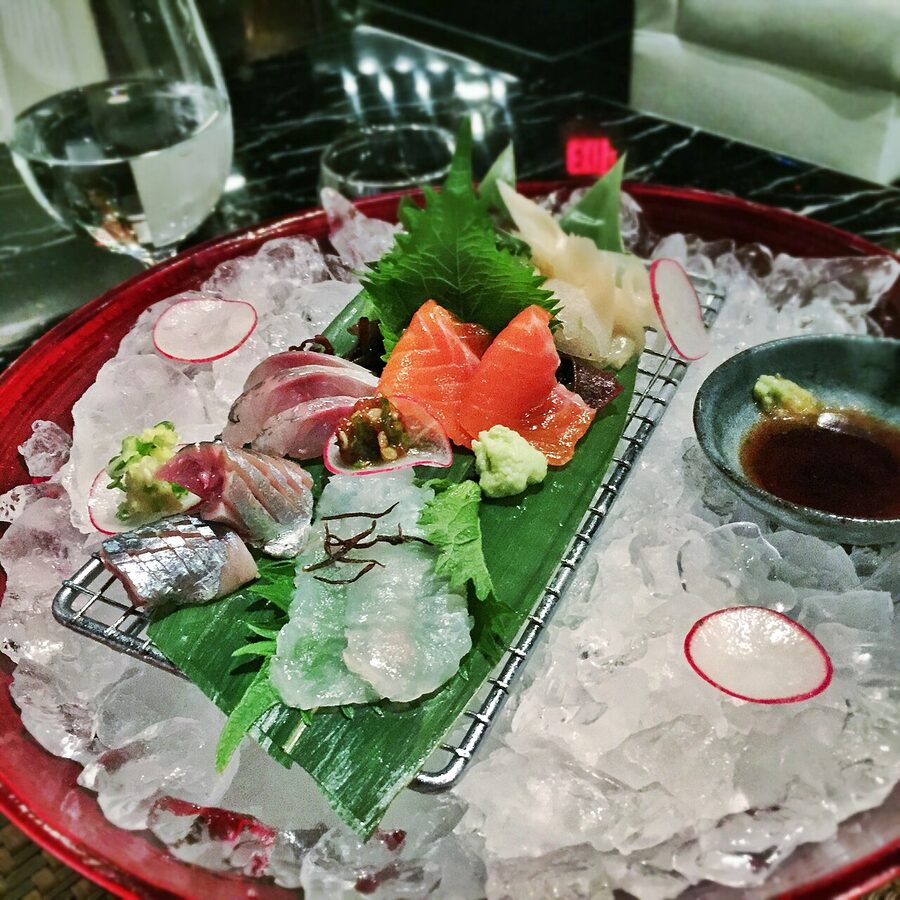
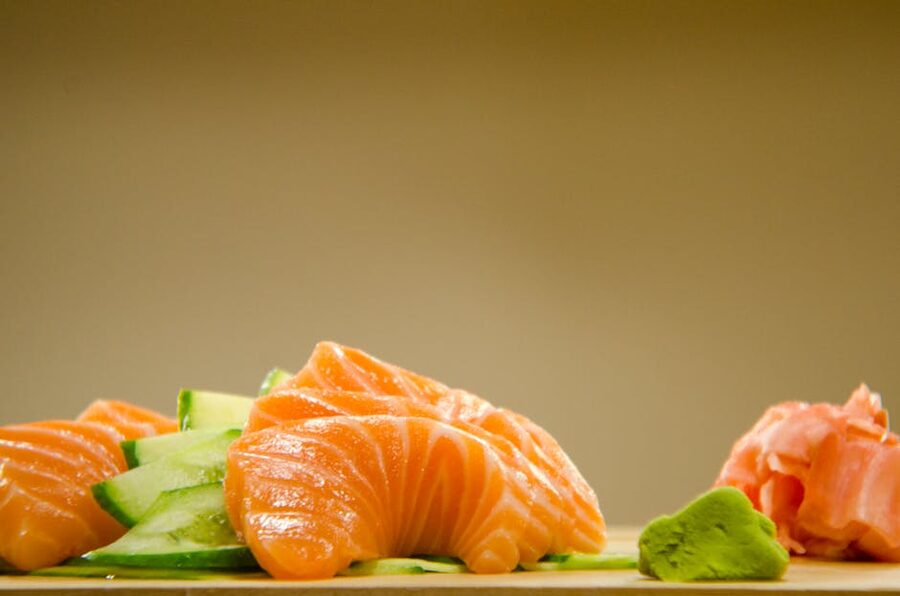
Sashimi is just the fish. Sliced, arranged, served with a little daikon and shiso and the wasabi next to the soy sauce. No rice. It’s the older dish and it’s the one that a good chef uses to show you the fish itself, texture, cut angle, temperature, aging. If the fish is bad, sashimi is where you find out first.
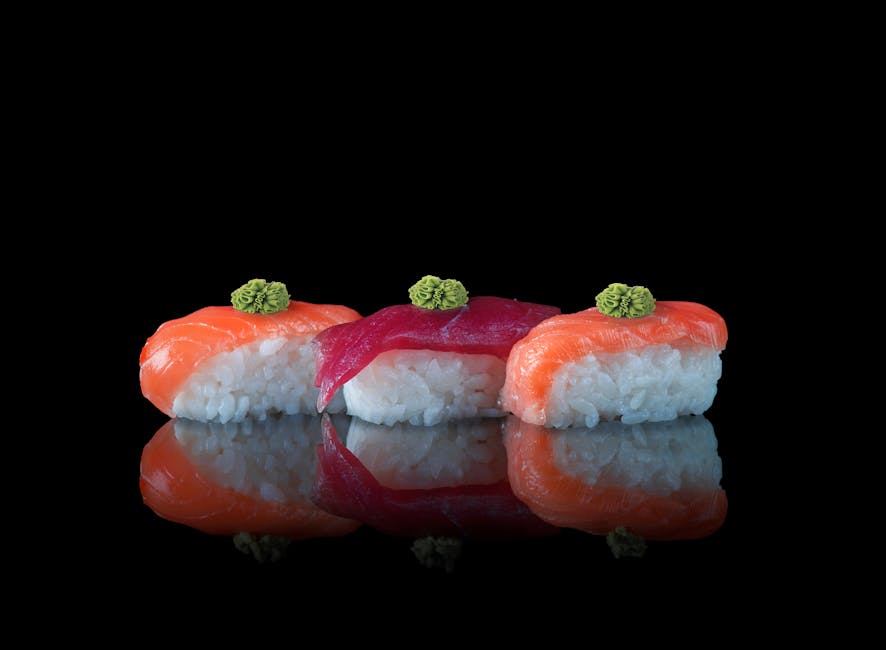
Sushi is fish (or something else, see below) on vinegared rice. The rice, shari, matters as much as the fish. At a good counter, the rice is still warm when it arrives, seasoned with red vinegar in the old Edomae style or lighter rice vinegar in more modern places. Too cold and it tastes like a vending machine; too warm and the fish cooks a little on top. Getting both right is the craft.
The current form of sushi, the nigiri you picture when you think of sushi, was invented in Edo (old Tokyo) in the early 1800s. A guy named Hanaya Yohei is generally credited. It was fast food. Street food. You ate it standing up from a cart. The pieces were bigger then, roughly two bites; the modern one-bite size came later. I find this history genuinely useful when a ¥20,000 counter is making the case for reverence, the dish started as a commuter’s lunch.
The sushi vocabulary, short version
You don’t need to memorise this. But knowing it makes the menu make sense.
- Nigiri, fish on rice. The default. Two pieces per order at most counters.
- Maki, rolled sushi in seaweed. Thin (hosomaki) or thick (futomaki).
- Temaki, hand roll, cone-shaped, meant to be eaten fast before the seaweed goes soft.
- Oshizushi, pressed sushi, an Osaka thing. The fish and rice get squared off in a wooden box. Saba (mackerel) oshizushi, sold at Kuromon market, is the move.
- Inari, rice in a sweet tofu pouch. No fish. Cheap and good and underrated.
- Chirashi“scattered” sushi, a bowl of rice with various cuts of sashimi on top. Not to be confused with:
- Donburi / kaisen-don, a rice bowl with raw fish on top, but not seasoned sushi rice. More fish per yen. More on this below.
- Omakase“I leave it up to you”. The chef chooses. Ranges from ¥4,000 (lunch at a good neighbourhood place) to ¥50,000 (top-tier Ginza).
- Kaiten, conveyor belt sushi. The plates go around on a track. You grab what you want. Prices by plate colour.
There’s a Japanese term for “the word the chef uses at the counter”, tsukeba kotoba, but you don’t need that either. The English name works at nearly every counter that sees tourists.
Learn the cuts before you order
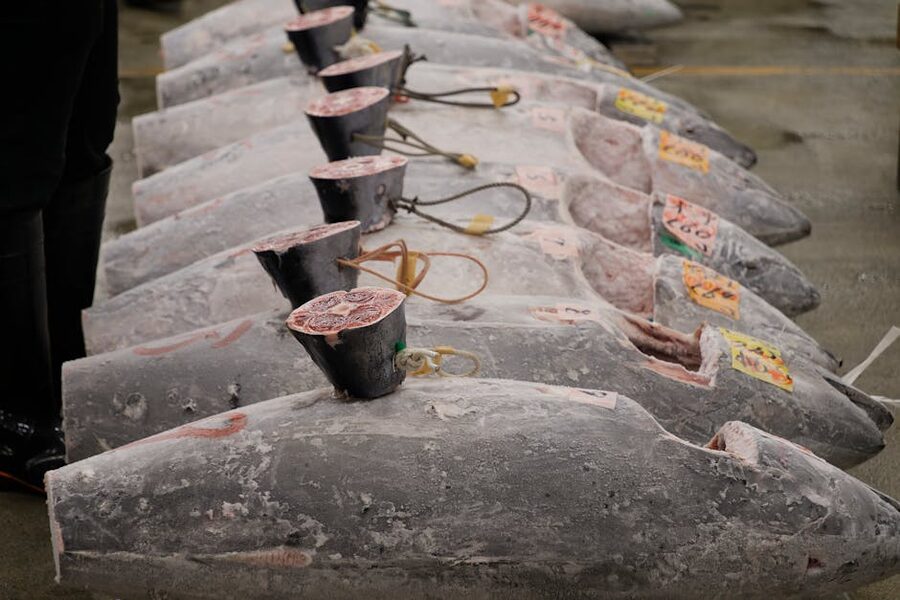
This is the list that changed my ordering most. A tuna is not just “tuna”. One fish has three main cuts at sushi prices: akami (lean, deeper red, often the cheapest), chutoro (medium fatty, pink-marbled, roughly twice the price), and otoro (the belly, almost white with fat, often three to four times the akami price). At a good counter, otoro melts on the tongue. At a bad counter, it’s just fatty and cold. If you’re going to spend money on one cut, make it chutoro, it’s the sweet spot.
Beyond tuna:
- Saba, mackerel. Usually cured with salt and vinegar, which gives it a shiny silver skin. Strong flavour. One of the best-value cuts.
- Iwashi, sardine. Almost silvery-blue, short-lived freshness, intensely oily. If a counter has it, eat it.
- Aji, horse mackerel. Garnished with spring onion and grated ginger. Subtle and clean.
- Hirame, flounder or fluke, white-fleshed, mild, usually the first piece a chef gives you to set a baseline.
- Tai, sea bream, the ceremonial fish, a little firmer than hirame, sweet. Traditionally considered the original sashimi, records of tai sashimi go back centuries.
- Buri / Hamachi, yellowtail. Buri is the mature winter one, hamachi the year-round farmed younger version. Buri in January is one of the great seasonal foods.
- Katsuo, bonito/skipjack tuna. Often served tataki-style (seared edges, raw middle) with ginger and garlic.
- Ankō, monkfish. The liver (ankimo) is the prize. Winter only.
- Fugu, blowfish. Sliced thin enough to see through. A whole tradition around it, I’ll come back to this.
- Uni, sea urchin roe. Creamy, briny, polarising. Hokkaido uni in summer is the best you can eat.
- Ikura, salmon roe. Bright orange, pops when you bite it.
- Akagai, ark shell. Red, clam-like, slightly crunchy. Somewhere between fish and squid in texture.
- Mirugai, giant clam. Savoury, mildly sweet, chewy in the right way.
- Hotategai, scallop. Sweet raw, even better lightly seared on the edge.
A few of these, fugu, ankimo, shirako, cross into the territory of Japan’s hardest-to-eat foods, where they get more attention. I’ll keep it short here.
Toyosu Market, and why it’s worth the 5am alarm
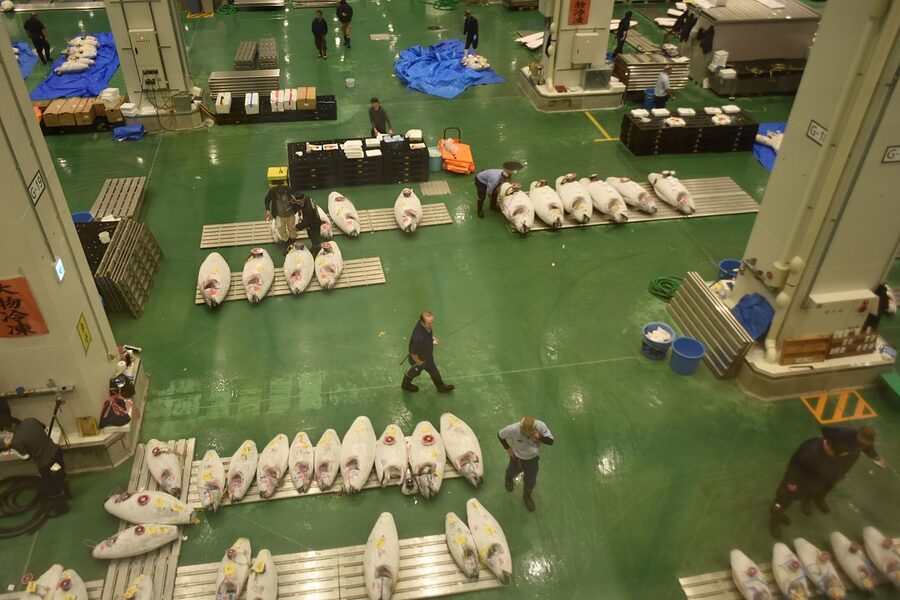
Toyosu opened in October 2018, replacing the old inner market at Tsukiji. The wholesale operation, including the famous tuna auction, moved across the bay to Koto-ku. The outer market at Tsukiji stayed, and is still worth a visit for food stalls and open-air eating.
The access: Shijō-mae Station on the Yurikamome line. From central Tokyo, you catch the Yurikamome at Shimbashi. If you want to see the tuna auction, the first train gets you there too late, the auction itself happens from about 5:45am to 6:25am daily except Sundays and most Wednesdays. Taxi is the only option. Ask for Shijō-mae Station; they aren’t allowed to stop in front of the market gates.
There are two ways to watch the auction. The upper gallery, behind glass, is free and no reservation is needed, but you’re looking down at a line of hats. The lower observation deck gives you almost the real experience: you can hear the bidders, smell the cold, and you’re close enough that it matters. Access is by lottery, applied for online about a week during the first week of each month for the following month. Only 100 people per morning. Bring ID.
My honest take: the auction itself is interesting for about 15 minutes. The real reason to come early is breakfast.
The Toyosu breakfast sushi spots
Each of Toyosu’s three buildings has restaurants. Most open around 6:30am or 7am and close by lunch, or earlier if they run out of fish. Cash is helpful; not every place takes cards. Reservations at the most famous spots are limited or non-existent, you queue.
The names worth queueing for:
- Sushi Dai, the one everyone writes about. Moved from Tsukiji. The omakase runs around ¥5,000-6,000 and queues of 2-3 hours are normal. Worth it the first time, not the fifth.
- Daiwa Sushi, Sushi Dai’s next-door rival, shorter line, same grade of fish. If the Sushi Dai queue is ugly, eat here instead.
- Ryu Sushi (龍寿司), third floor of the Management Facilities Building. Omakase ¥5,500, accepts cards, opens 6:30am. My favourite of the Toyosu counters, less of a scene, same quality, you eat better because you’re not in a queue adrenaline state.
- Oedo Sushi, in the Fisheries Intermediate Wholesale Building. Kaisen-don from about ¥2,500. A good cheaper option if you don’t want a full omakase.
A mid-range omakase at Toyosu runs ¥5,000-6,000. Simpler seafood bowls start around ¥2,000. The “market price” options at the fancy places can climb to whatever. One small warning: the third floor of the Fisheries Building is the busiest. Arrive before 10am. After that it’s a scrum of tour groups.
Hakodate, and why the best sushi breakfast isn’t in Tokyo
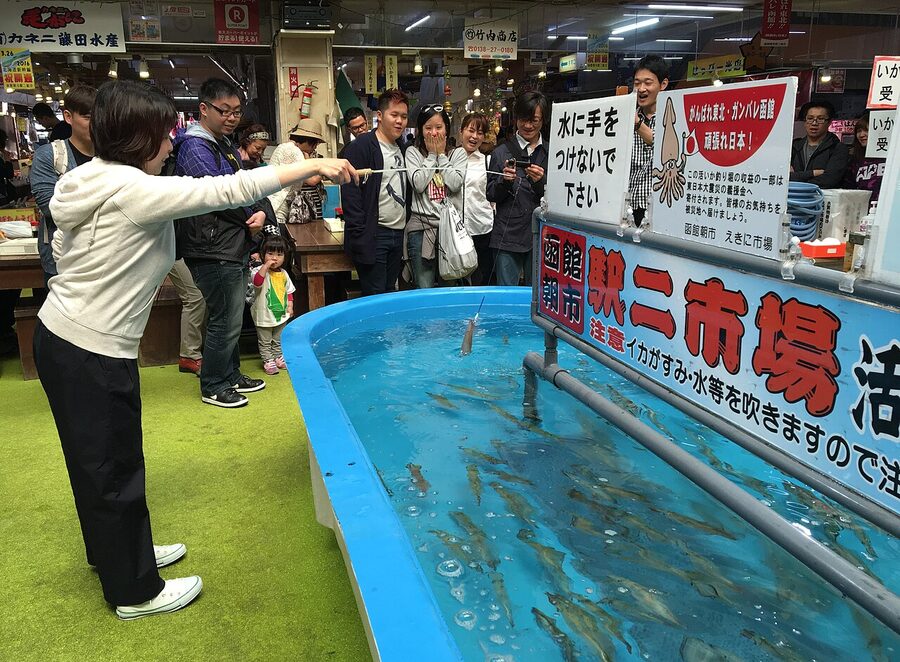
Hakodate’s morning market (Asaichi) sits a two-minute walk from Hakodate Station. Open from 5am to noon in summer and 6am to noon in winter. Hundreds of stalls, fish, crab, uni, fruit, and maybe fifteen or twenty small sit-down counters that serve donburi.
The signature dish here is uni-ikura-don: a lacquer bowl of rice, creamy yellow uni on one half, glistening orange ikura on the other, sliced salmon sometimes in between. Prices run ¥2,000 at the cheap end to ¥3,500 for the best places. Kaisen-don, mixed seafood, is ¥1,800 to ¥2,800. Add fresh squid sashimi (ika-somen, thin noodle-like strands of raw squid) for another ¥800 or so. Get the squid. The season is summer and it is unbelievable.
Access: Hakodate Station is the end of the Hokkaido Shinkansen at Shin-Hakodate-Hokuto, then 20 minutes by local train. If you’re staying in Hakodate itself, you walk.
I’ve eaten breakfast sushi at Toyosu three or four times. Hakodate is better. Quieter, friendlier, cheaper, and the fish tastes more local because it is more local.
The other fish towns worth the detour
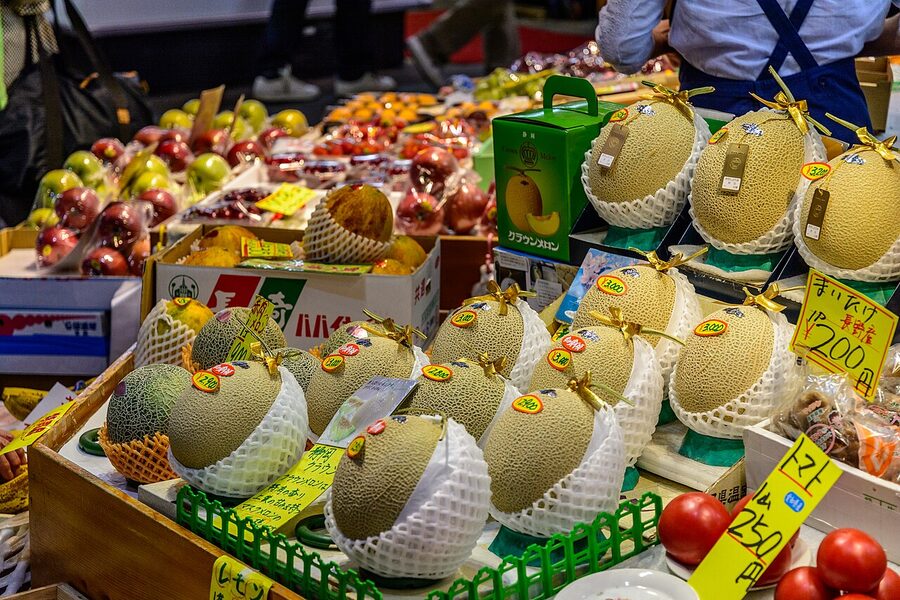
Kanazawa: Omicho Ichiba. A 300-year-old covered market, about 10 minutes’ walk from Kanazawa Station. The winter season (November to March) is what you want, matsuba crab, sweet amaebi (raw sweet shrimp), and local buri at its peak fat. Kaisen-don around ¥2,500-3,500, higher for crab-focused ones. I’d avoid the stalls right at the main entrance that have big English menus; walk five more minutes into the back lanes and the prices drop and the quality goes up.
Shimonoseki: Karato Ichiba. A fish town on the southern tip of Honshu, famous for fugu. The Karato market is the main tourist fish market, with a weekend sushi free-for-all called “Iki-iki Bakangai” that runs 10am to 3pm, you buy sushi by the piece from competing stalls and eat it on the seawall looking across at Kyushu. Fugu dinners at licensed restaurants here run ¥8,000-20,000 depending on the preparation.
Kushiro (Hokkaido). The eastern Hokkaido port known for smoked salmon (toba), snow crab, and kegani (horsehair crab). Washo Ichiba is the central market; the move is ordering a build-your-own “Katte-don”, you buy a bowl of rice for ¥500, then walk between stalls picking your toppings. Usually lands around ¥2,000 total and is the most personal seafood bowl I’ve had in Japan.
Tsuruga (Fukui). Small port on the Sea of Japan side. Matsuba crab (yes, the same kind as Kanazawa) and Echizen crab in November through March. Less tourism than anywhere else on this list, which is the point.
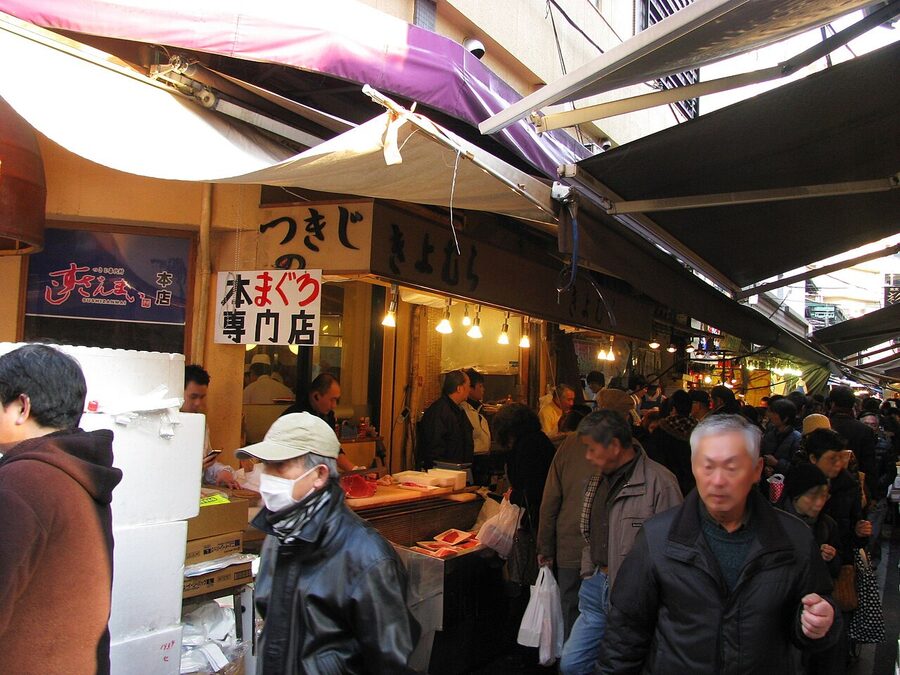
The Tsukiji outer market. The wholesale operation moved to Toyosu, but Tsukiji didn’t die. The outer market, roughly twenty blocks of shops and stalls between Tsukiji-shijo Station and Higashi-Ginza, is open, busy, and in many ways more fun than Toyosu. Grilled tuna skewers for ¥500, fresh uni bowls for ¥2,500, and the kind of informal food-walking that Toyosu doesn’t really allow. Sushizanmai’s main branch is here, open 24 hours, and while it’s a chain, the quality is remarkably consistent. If you’ve only got one morning, and you don’t care about the auction, Tsukiji outer still wins for me.
Izakaya sashimi, and why it’s the best-value fish meal in Japan
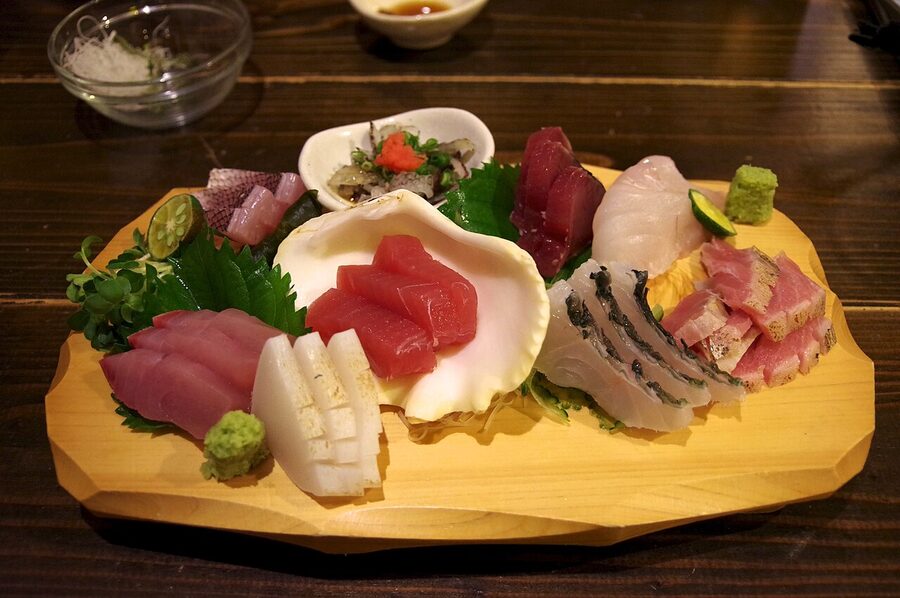
The best fish bargain in Japan isn’t at a sushi counter. It’s at a good neighbourhood izakaya, in the form of the sashimi-moriawase, the assorted sashimi platter.
For ¥1,500-3,000 (¥1,800 is the common number), you get a wooden boat or ceramic plate with five to eight kinds of raw fish, often tuna, yellowtail, sea bream, squid, salmon, a local specialty or two. It’s the same fish you’d pay three times as much for at a sushi counter, just without the rice and without the theatre. The cuts are generous. At the right izakaya, they’re sliced to order.
Two caveats: avoid izakaya chains with pictures of sashimi on the plastic menu outside (Watami, Yayoiken’s fish, not terrible but nothing special). And skip the sashimi-moriawase at tourist-area pubs in Shibuya or Dotonbori, where it’s usually thin-cut and frozen.
The move is finding a counter-type izakaya with a blackboard menu, ideally in a residential neighbourhood rather than a station-front drag. The izakaya guide goes into more depth on how to spot the good ones. For a fish-focused izakaya night, the Sea of Japan coast towns are unbeatable, Kanazawa and Tsuruga and Tottori all have blackboard-menu counter izakaya where a ¥4,000 evening includes a sashimi-moriawase, a grilled fish, rice, miso soup, and two sake.
The omakase question: when the ¥25,000 dinner is worth it
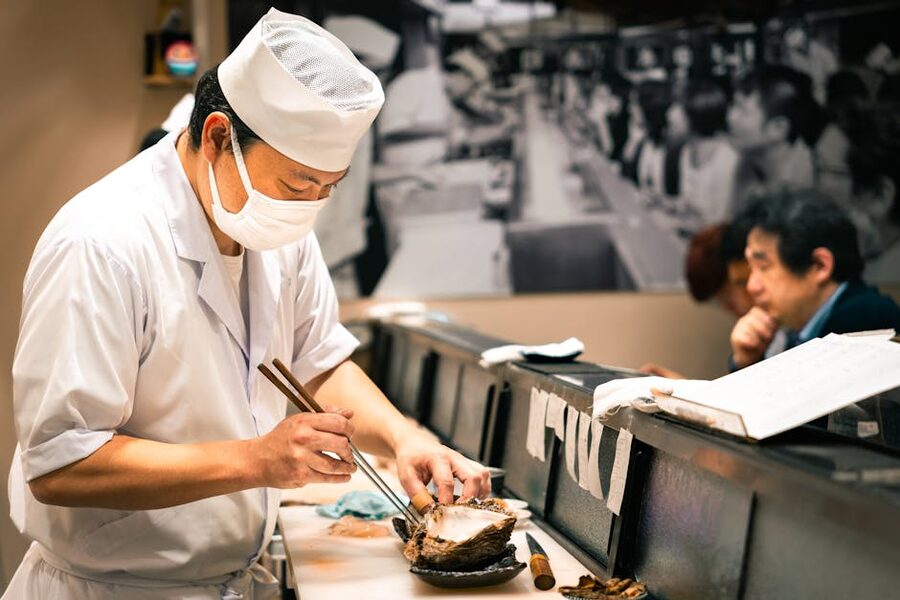
Tokyo has some of the most expensive sushi in the world. Sushi Saito has been written about so many times it’s almost a cliché, and getting in is more or less impossible without a Japanese credit card and a local introduction. Sushi Yoshitake (three Michelin stars for years), Sushi Iwa in Ginza, Sushiya Ginza, Kuramoto (more modern, dishes alongside sushi), these sit in the ¥20,000-50,000 dinner range. Tempo varies: some are ten-seat counters doing two seatings a night, some are slightly bigger.
Is it worth it? Two answers.
If you’ve never eaten at a top-tier omakase, yes, once. The way a great chef handles the rice temperature, the sequence of the pieces (lean before fatty, then fatty with different tunas, then shellfish, then the traditional tamagoyaki-and-tekka-maki finisher), the specific daily fish they’ve picked, it’s genuinely a different category of meal. Not just better sushi. A different kind of dinner.
If you’ve done it once, the economics of return visits get harder. I’d rather eat three excellent ¥8,000 neighbourhood omakase dinners than one ¥25,000 one. Places like Sushi Dai at Toyosu, or Sushiya Ichiba in Shinjuku, or small sushi-ya in non-central Tokyo wards (Meguro, Nakano, Kichijoji) deliver 80% of the experience at 30% of the price.
One practical thing: at the top-tier places, don’t photograph until the chef nods or gestures. At a ¥30,000 counter, the first obvious phone-out photo marks you as a tourist in a way that’s hard to recover from. Ask first. Most chefs are fine with it but want to choose the moment.
Conveyor belt sushi: the good, the bad, and the actually-fine
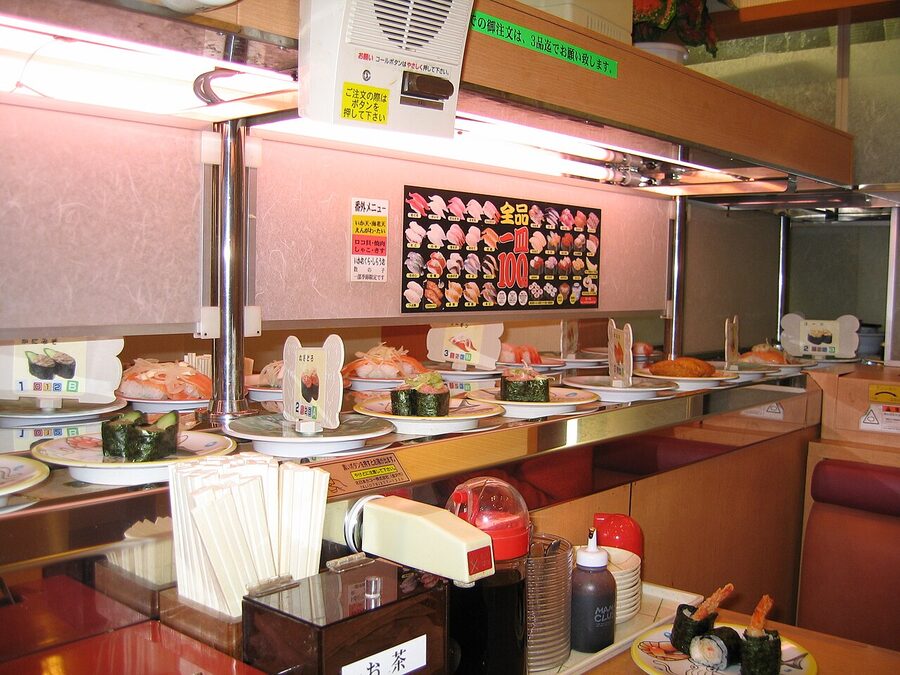
Kaiten sushi gets a worse reputation than it deserves. The major chains, Kura Sushi, Sushiro, Hamazushi, Genki Sushi, have ¥100-per-plate entry prices, touchscreen ordering, and a surprisingly decent tuna nigiri if you catch it fresh off the kitchen line rather than circled around for forty minutes.
The rules I’d apply:
- Order off the tablet, not off the belt. Plates on the belt have been there varying amounts of time. Touchscreen orders come out fresh in two minutes.
- Eat at a branch in a residential area, not a tourist district. Shibuya Kura is fine; Asakusa Kura is mobbed with people who don’t know what to order. Shinjuku Sushiro late-afternoon has short waits and better service.
- Go at odd hours, 2pm or 5:30pm, not lunch rush or 7pm.
- Genki Sushi in Shibuya (at the south end of the station, basement floor) has a specific gimmick, your plates arrive on a little train, which is worth experiencing once.
- Kura’s eel nigiri and toro bowl are their strongest plays. Sushiro’s akami and salmon-mentaiko are solid.
Expect to eat well for ¥1,500-2,500 per person at a kaiten chain. Not a peak sushi experience. But at a third of the price of a neighbourhood sushi-ya, not bad.
Standing sushi bars: the sweet spot nobody mentions
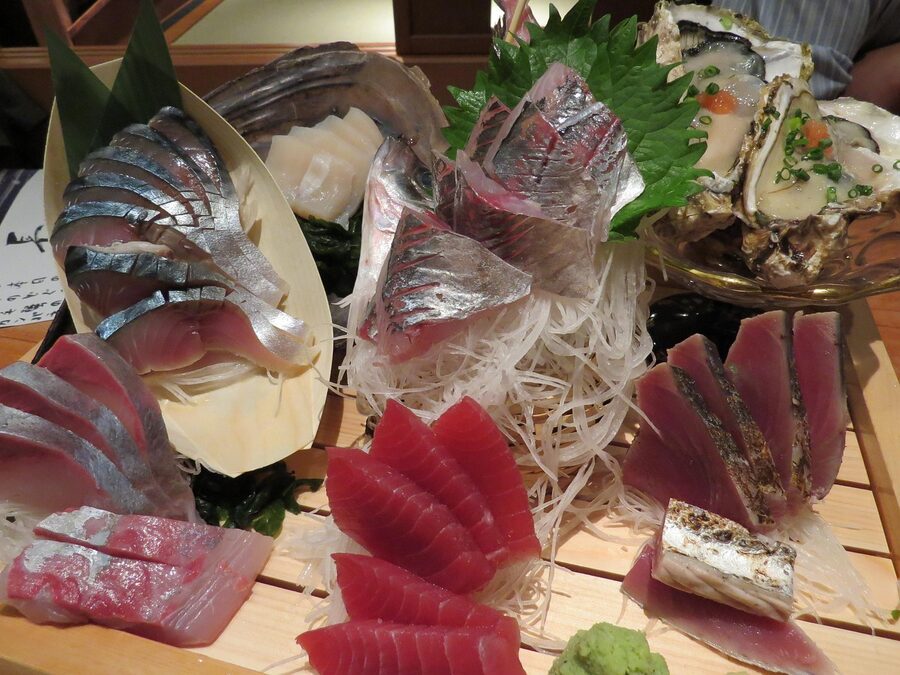
The standing sushi bar (tachi-gui sushi) is an underused category. You stand at a counter, order from a small list of five to ten pieces plus specials, and eat in 15 minutes for ¥1,000-2,000 total. The quality is often a clear step above kaiten, because a real chef is making it, and the price is a clear step below a sit-down sushi-ya.
Names worth seeking out:
- Standing Sushi Bar Mansaku, several branches in Tokyo (Nakameguro, Ebisu). 8 pieces for ¥1,500 is standard. Lean, busy, locals-heavy.
- Midori Sushi (several branches), Shibuya Mark City and Umegaoka are the usual ones. Not standing exactly, but quick turnaround and good value. Expect to queue 45 minutes at Mark City. Umegaoka is the local secret.
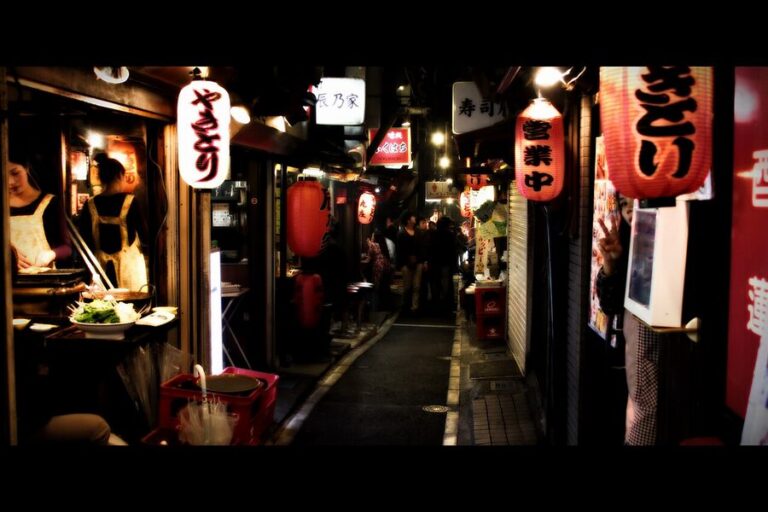
- Akiya, small standing spots in Shinjuku Omoide Yokocho and neighbourhoods like Yotsuya. Closer to ¥2,000 for 8 pieces and a drink.
The standing format also enforces pacing. You don’t linger, you don’t order one more drink, you eat and you go. On a sushi-focused trip that’s useful, you can hit two or three tachi-gui across an evening rather than committing to one big dinner.
Donburi: more fish per yen than sushi will ever be
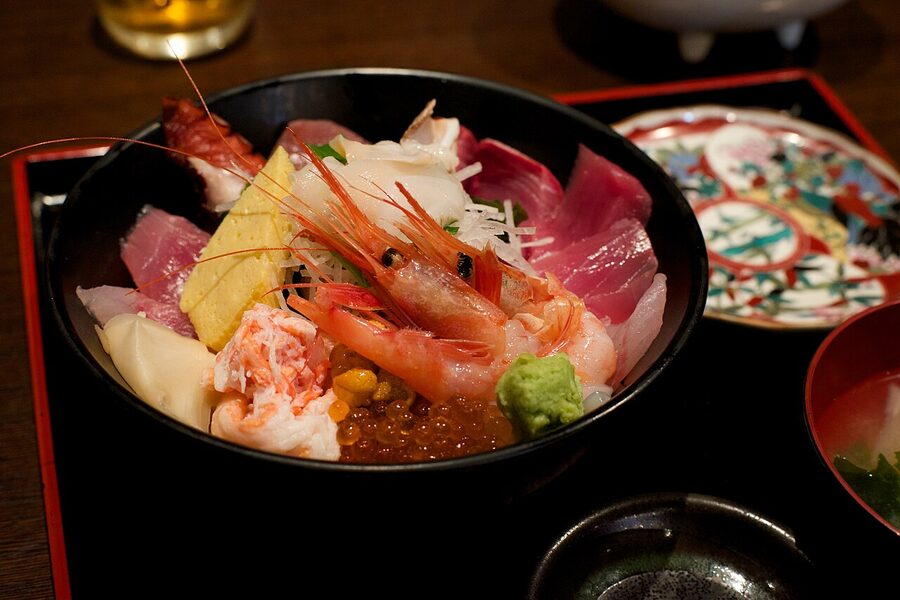
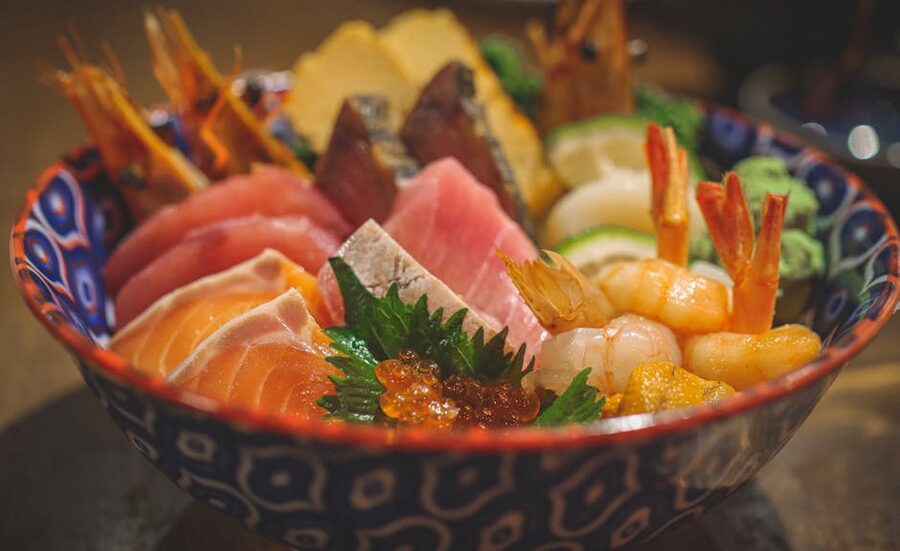
If sushi is a precision instrument, donburi is a shovel. The rice isn’t seasoned the same way. The fish isn’t cut with the same attention. But you get three to four times the volume of raw fish for the same yen, and if you’re eating at a market-adjacent counter where the fish itself is excellent, it’s often a better deal.
The major styles:
- Kaisen-don, mixed seafood bowl. The market standard. Varies wildly by region.
- Tekka-don, tuna-only. Slices of maguro over rice, seaweed strips on top, wasabi on the side. Often ¥1,500-2,500.
- Uni-don, sea urchin bowl. Single-ingredient. Expensive (¥3,000-5,000 for a real one in Hokkaido, higher in Tokyo).
- Ikura-don, salmon roe over rice. Bright orange. Often paired with uni as uni-ikura-don.
- Negitoro-don, minced fatty tuna with spring onion. Usually ¥1,500ish. The best cheap donburi on the menu.
- Chirashi, literally “scattered”, a fancier version of kaisen-don with the fish arranged rather than piled. The sushi-ya version.
Regional variations matter. In Otaru (Hokkaido), the Sankaku Market does an ikura-don that is ruinous in the best way. In Numazu (Shizuoka), the local specialty is a bowl heavy on whitebait (shirasu) that’s unusually sweet. In Kochi, on Shikoku, the bowls lean heavily toward katsuo tataki. Different fish, different region, different bowl.
The etiquette nobody tells you
You can eat nigiri with your fingers. It’s traditional, expected, and frequently easier than chopsticks. Pick the piece up sideways, turn it upside down to dip the fish (not the rice) lightly in soy sauce, and put it in your mouth fish-side down. Your chopsticks are fine for sashimi.
Don’t drown the fish in soy sauce. A good sushi chef already lightly brushes the fish with soy (at omakase counters), and even at cheaper places, half a centimetre of soy in the little dish is plenty. Don’t mix wasabi into the soy until it turns green, that’s a very tourist move at a proper counter. Put wasabi on the fish directly if the chef hasn’t already.
The pink ginger (gari) is a palate cleanser between pieces. It’s not a topping. One small pile at a time.
Green tea at the end is called agari. Drink it hot. At some places it’s served in huge cups with powdered matcha, which will strip the fish taste from your mouth in a useful way.
Pacing: at omakase, you eat each piece within roughly 20-30 seconds of the chef placing it in front of you. Don’t save pieces. Don’t photograph before you ask. Don’t apply wasabi to something the chef has already dressed, that’s an insult in some counters.
Tipping is not done. Pay what’s on the check.
Seasonality (shun) and why the menu keeps changing
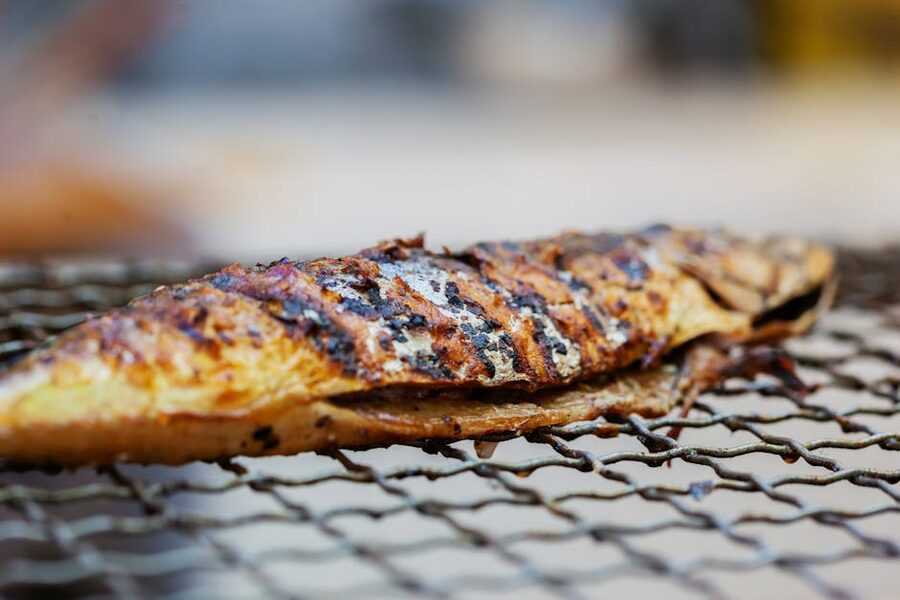
Japanese fish is so seasonal that a good counter will refuse to serve you something that’s not at its peak. You’ll see certain fish only in certain months:
- Winter (December-February): fatty tuna (otoro), buri (mature yellowtail), ankō (monkfish and ankimo liver), fugu, hotate (scallops), matsuba and zuwai crab. This is the richest sushi season and prices are highest.
- Spring (March-May): sawara (Spanish mackerel), tai (sea bream), hotaru-ika (firefly squid, a Toyama speciality), honmaguro’s first run.
- Summer (June-August): hamo (pike conger, a Kyoto summer classic), aji (horse mackerel), katsuo (first run), uni (Hokkaido), unagi (grilled eel, a summer tradition despite being cooked). Hakodate squid peaks in July-August.
- Autumn (September-November): sanma (Pacific saury, the iconic autumn grilled fish), salmon’s autumn run, ikura, sawara again, and the return of buri toward year-end.
If you’re in Kyoto in July or August, hamo is the fish, the Kyoto food piece goes into it. If you’re in Toyama in April, hotaru-ika is the thing. Chasing the calendar is a legitimate reason to plan a trip.
Where not to eat sushi
A few hard rules from hard-won experience.
Don’t eat sushi in the train-station food courts of major stations. Tokyo Station has great ramen and curry but its sushi is generally mediocre. The same applies to the expensive-looking counters on the upper floors of department stores, they’re reheating old fish by late afternoon.
Don’t eat sushi at restaurants that advertise in English on the street in Shinjuku, Shibuya, or Dotonbori. The English is a signal: the place is optimising for tourists who don’t know better, which means they charge more for lower fish.
Don’t eat sushi near the main temple areas (Asakusa’s Senso-ji area, Kyoto’s Kiyomizu-dera) without a specific recommendation. These districts have some of the worst sushi in the country, served at tourist prices.
In Osaka, skip sushi chains in the Dotonbori main drag. Walk two blocks west into the Kuromon Market area, the sushi stalls there are much better and often cheaper. The Osaka street food piece goes deeper on the Kuromon scene.
One micro-rule: the closer a sushi place is to a major station exit, the worse it tends to be. Walk five minutes. Fish quality often doubles.
Fugu, and the Meiji-era legal story
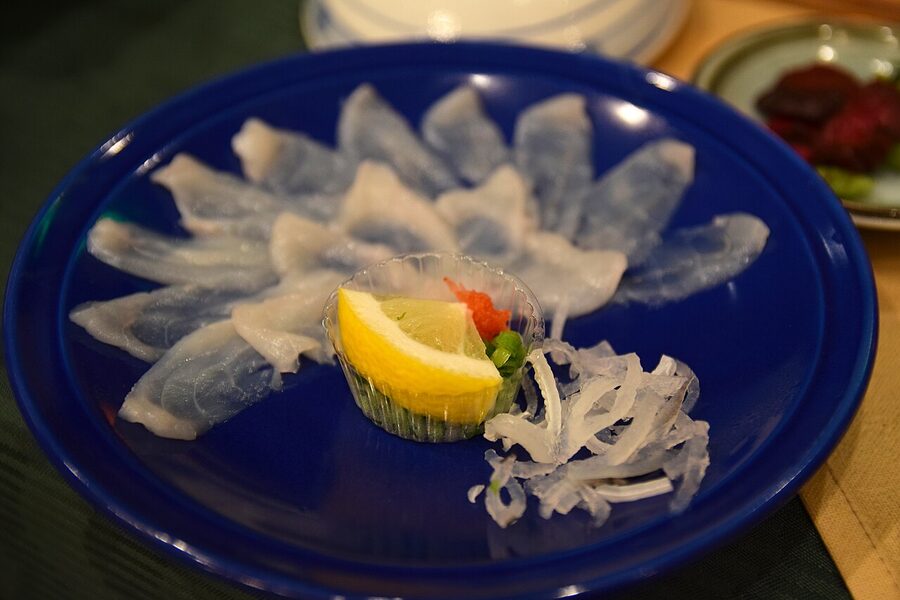
Fugu, blowfish, is the one Japanese fish with a real cultural reputation for danger. Parts of the fish contain tetrodotoxin, a nerve poison. Chefs handling it have been licensed by prefectural exam since the late 1800s, and the preparation process is strictly regulated. Get it right and it’s perfectly safe. Get it wrong and it isn’t, though fatalities are almost always hobbyist preparations, not licensed restaurants.
A piece of history: fugu was banned in Japan for about 200 years during the Edo period, on safety grounds. The ban was lifted in 1888, after Prime Minister Itō Hirobumi, reportedly moved by a particularly good dish of it in Shimonoseki, formally allowed it in his home Yamaguchi Prefecture. Other prefectures followed. The licensing system came later.
Shimonoseki is still the fugu capital. Karato Ichiba market in the city has sushi stalls selling fugu nigiri for ¥200-400 a piece, the single cheapest way to try it. A proper fugu dinner at a licensed restaurant (fugu-sashi arranged as a chrysanthemum flower, fugu nabe hot pot, karaage-style fried fugu) runs ¥8,000-20,000 depending on the place. Worth doing once. The flavour itself is mild, fugu is about texture, not taste. A good plate of fugu-sashi is sliced so thin that the pattern of the plate beneath shows through.
If you’re anywhere near Kyushu or western Honshu in winter, fugu is the seasonal move. Tokyo has fugu too, but it’s much more expensive.
Breakfast sushi, ranked
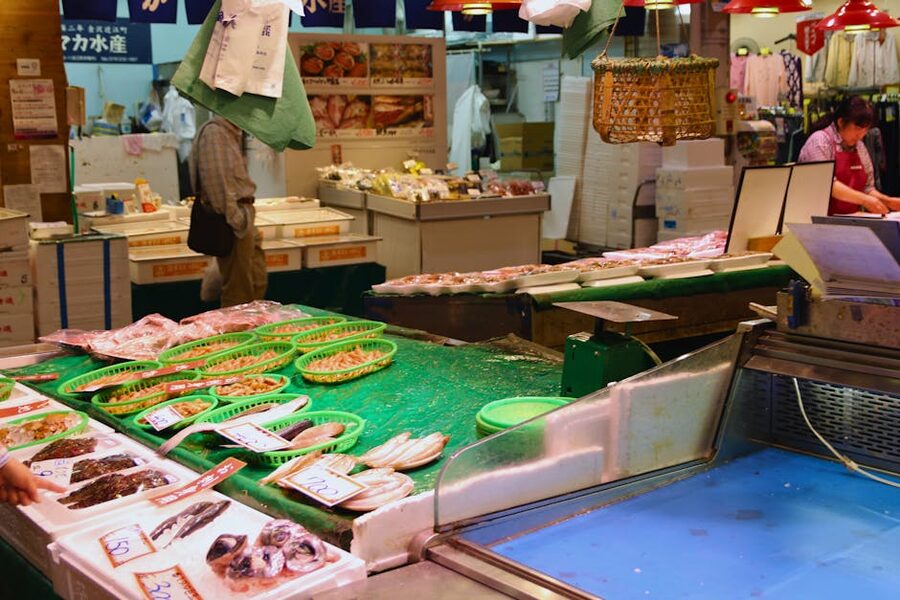
Of all the fish meals I’ve had in Japan, the market breakfast is the best per-yen value, and the one I’d recommend to anyone with a single morning. A working ranking:
- Hakodate Asaichi. Uni-ikura-don at a small counter at 6:30am, around ¥2,800. Squid sashimi that was in the tank ten minutes earlier. Nothing has ever beaten it.
- Toyosu Ryu Sushi. Accepts cards, opens 6:30am, omakase ¥5,500. The third-floor location is calmer than the main drag. The best Tokyo option.
- Kanazawa Omicho. Winter is the season. Sushi counters tucked behind the main stalls. Amaebi (sweet shrimp) that tastes like butter.
- Tsukiji Outer Market. Not technically the market anymore, but the feel is there. Grilled-tuna skewers, sushi standing-room stalls, uni bowls. Cheaper than Toyosu.
- Kushiro Washo Ichiba. Build-your-own Katte-don. ¥500 bowl of rice, then you pick toppings. About ¥2,000 total. The most interactive.
On a hotel breakfast buffet: they almost always include a small sushi or sashimi selection. It’s usually fine. But if you’re in a fish town, skip it and walk to the market.
A few other things worth eating while you’re at the fish
Japanese cuisine doesn’t stop at raw fish. A proper fish-focused trip will also want:
- Grilled fish breakfast (yaki-zakana teishoku), grilled saba or sawara, miso soup, pickles, rice, tamagoyaki. A ¥700-1,200 traditional Japanese breakfast. Many hotels offer it as an alternative to the buffet.
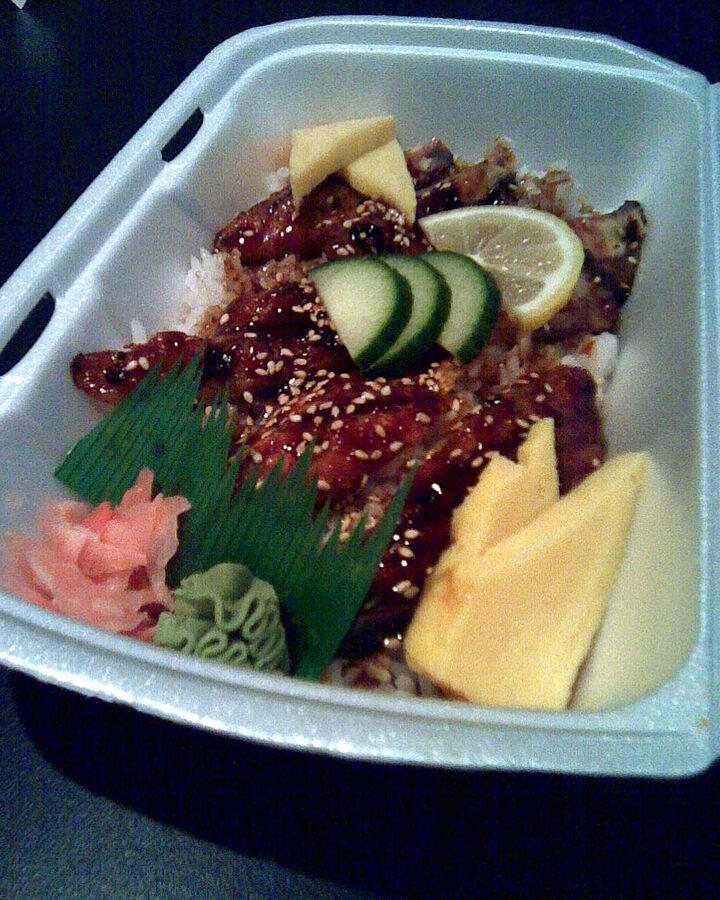
- Unagi, freshwater eel, grilled over charcoal with sweet soy glaze. The summer classic. Unadon (eel-don) runs ¥3,000-5,000 at a specialist.
- Tempura, shrimp and small white fish dipped in batter and fried. At a tempura-ya, the cook serves you piece by piece at a counter, like a sushi-ya.
- Kaiseki, the multi-course traditional dinner. Sashimi is almost always a course.
If you’re doing a full Japan food tour, the Takayama food and drink guide covers mountain-town fare (Hida beef, sake breweries), and the Fukuoka ramen guide picks up the Kyushu end of the trip, where goma-saba (sesame mackerel) is a late-night izakaya staple worth a detour.
A practical plan for a Tokyo-plus-Hakodate fish week
If I were planning a trip specifically around fish, and I’ve done this twice, the shape would be:
Day 1 (Tokyo): Tsukiji outer market for breakfast (grilled tuna skewers, uni bowl, cheap). Wander. Maybe a Kuromon-area wander. That evening: a tachi-gui standing bar and an izakaya sashimi-moriawase.
Day 2 (Tokyo): Toyosu early (5:30am taxi), Sushi Dai or Ryu Sushi breakfast. Mid-day rest. That evening: a neighbourhood sushi-ya in Meguro or Nakano. ¥8,000-12,000 omakase.
Day 3: Shinkansen to Hakodate (via Shin-Hakodate-Hokuto, roughly 4.5 hours). Check in. Walk around Motomachi. Dinner at a fish-focused izakaya in Hakodate’s Matsukaze-cho area, there are seven or eight counter-izakaya here.
Day 4 (Hakodate): Asaichi breakfast. Uni-ikura-don. Squid. Later in the day, the fish factory on the waterfront, or up Mt. Hakodate for the night view. Another izakaya evening.
Day 5: Train to Kanazawa via Tokyo, or if time allows, fly or train to the Sea of Japan side for Omicho’s winter crab.
It’s not cheap. A fish-intensive week in Japan lands around ¥80,000-150,000 for food alone. But in exchange you eat better than you ever have.
If you do only one thing
Eat breakfast at a morning fish market. Not Toyosu’s viewing gallery. Not a hotel buffet. A real market, Hakodate, Kanazawa, Karato, Kushiro, the Tsukiji outer, with a sushi or donburi counter inside it. Go at 7am. Pay ¥2,500-3,500. Sit on a plastic stool. Drink the hot barley tea. Eat slowly.
That’s the trip.


.jpg)

.jpg)
.jpg)
.jpg)
.jpg)
.jpg)