
Thai Desserts and Sweets: A Guide from Mango Sticky Rice to Khanom Krok
A friend of mine who genuinely doesn’t eat sweets came back from a Bangkok holiday talking about one single mango sticky rice she’d had at a cart near Lumpini Park. She could describe the colour of the coconut cream, the specific ripeness of the mango, the number of sesame seeds on top. I had never heard her talk about any food like that. The next year she went back for another ten days and most of the photos were of dessert.
Thai desserts (the general category is khanom, or khong waan for “sweet things”) are the part of Thai food that Westerners are most under-prepared for. You’ve probably had one mango sticky rice in your life. Maybe a coconut ice cream at a beach bar. There are roughly a hundred other sweets you’d love if you knew they existed. This guide is an attempt at fifteen or so of them, the places to try them, and one piece of food history that everyone who eats in Thailand should know.
In This Article
- The Portuguese woman who changed Thai sweets in 1685
- Mango sticky rice, in proper form
- Khanom krok, the coconut pudding cakes on every corner
- Luk chup, the miniature hand-moulded fruits
- Tub tim krob, the cool-down dessert
- Roti sai mai, the Ayutthaya cotton candy roti
- Khanom buang, the crispy taco-shaped ones
- Khanom chan, the nine-layer pandan
- Bua loi, the floating lotus
- Kluay buat chi, the nun’s bananas
- Miang kham, the savoury-sweet leaf wrap
- Coconut ice cream in a coconut shell
- Lod chong, sarim, and the iced-coconut family
- Where to buy, by neighbourhood
- Seasonality notes
- What to skip
- A short list to order first
The Portuguese woman who changed Thai sweets in 1685
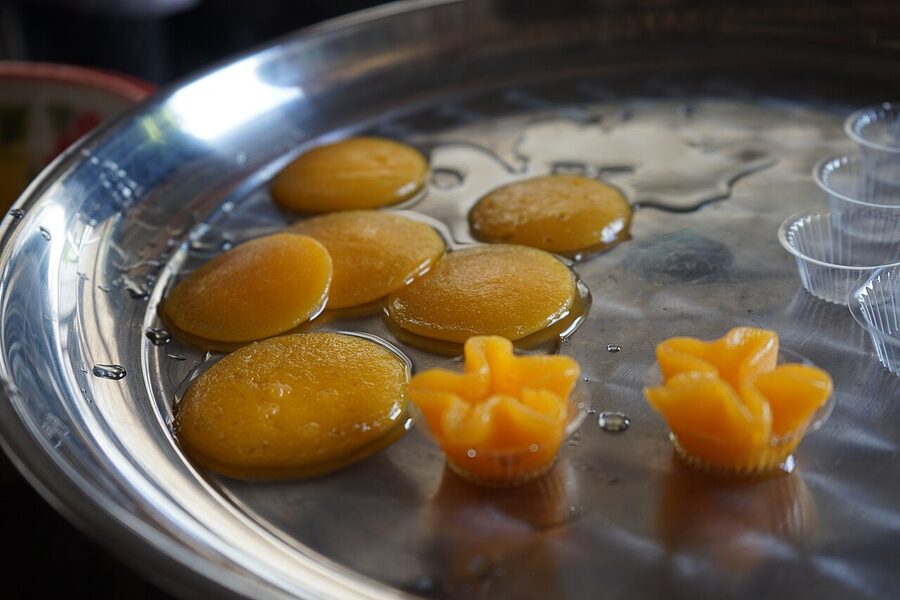
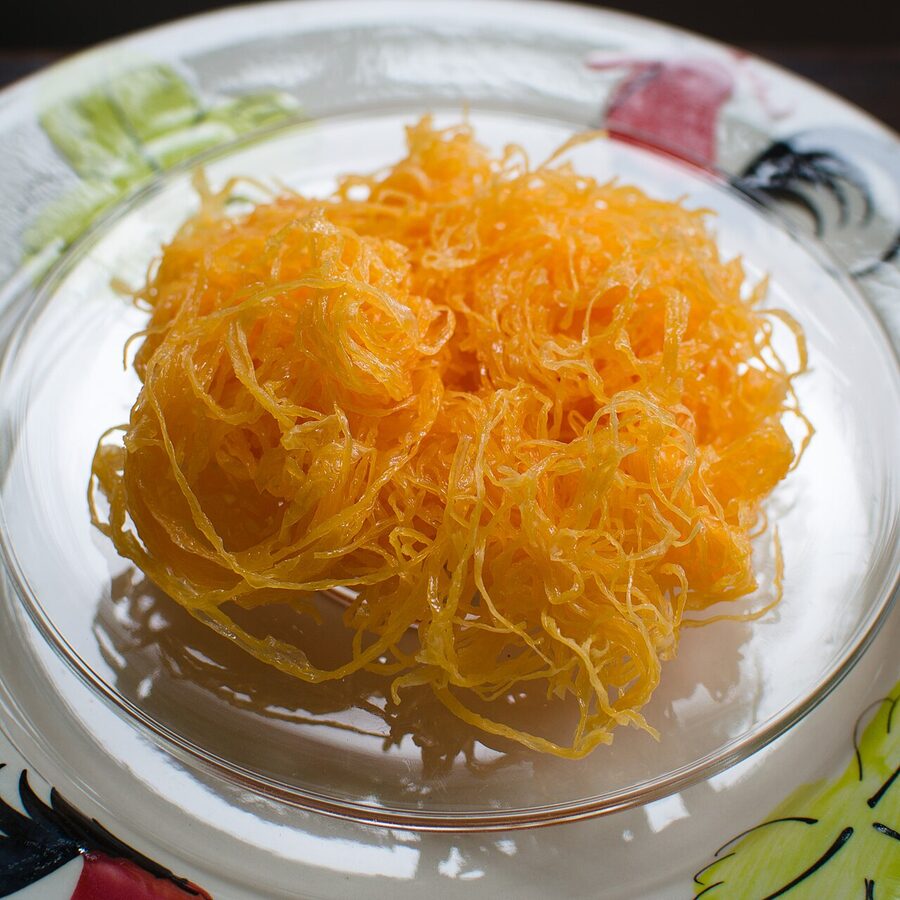
If you’ve been to a Thai wedding, you’ve seen three small golden sweets arranged on a tiered plate: gold cups of egg yolk (thong yip), golden drops (thong yod), and glossy golden threads (foi thong). They are the country’s auspicious sweets, served at weddings, ordinations, major birthdays, and royal ceremonies. They are also Portuguese.
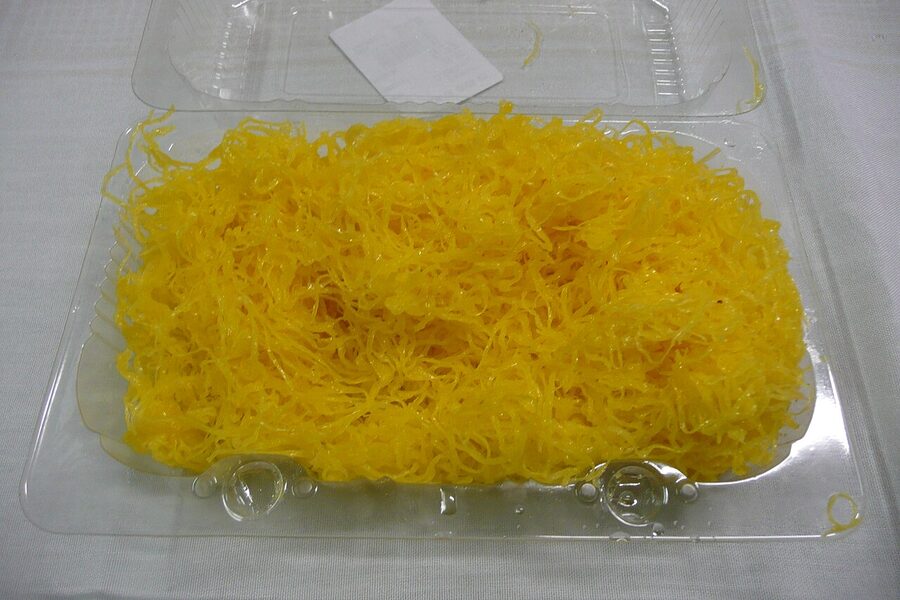
The woman who brought them to Thailand was Maria Guyomar de Pinha, also known as Marie Guimar or by her Thai name Thao Thong Kip Ma. She was born in Ayutthaya in 1664 to a Portuguese-Japanese-Bengali family, married the Greek adventurer Constantine Phaulkon (King Narai’s chief minister and one of the oddest historical figures in any court in Asia), and worked in the Ayutthaya royal kitchens. She adapted the convent recipes of fios de ovos, trouxas de ovos, and ovos moles into Thai ingredients and flavour preferences. They became foi thong, thong yip, and thong yod respectively. Three hundred and forty years later they are still on the table at every wedding in the country.
Where to eat them without waiting for a wedding: Kanom Thai Sri Prathum near Siam Paragon makes a decent boxed set for 180 baht. Any proper wedding caterer sells them in tiered plastic trays. Or Tor Kor Market (near Chatuchak) has two Thai-sweet counters with freshly made versions.
Mango sticky rice, in proper form
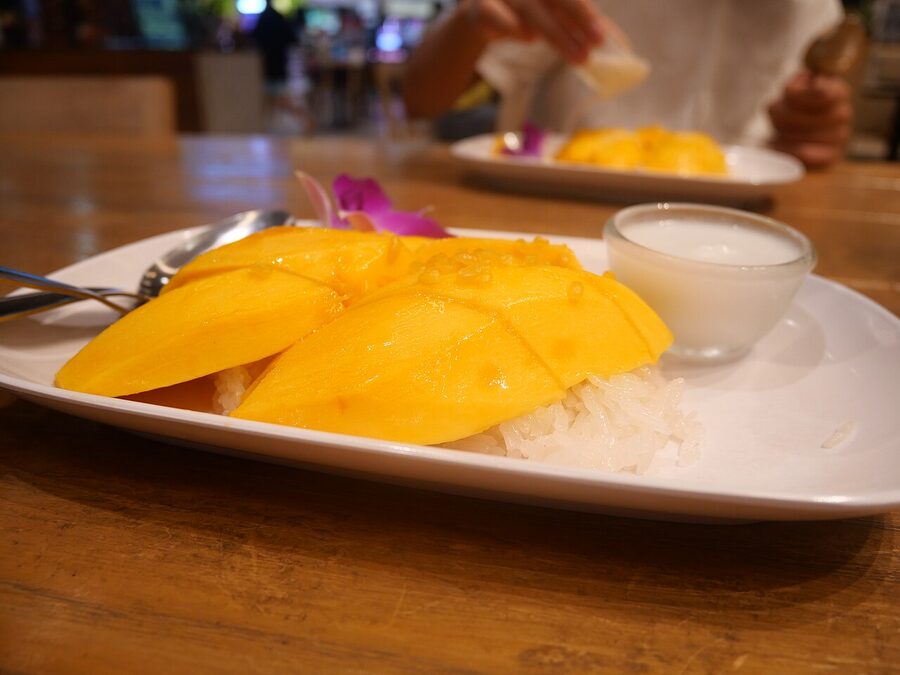
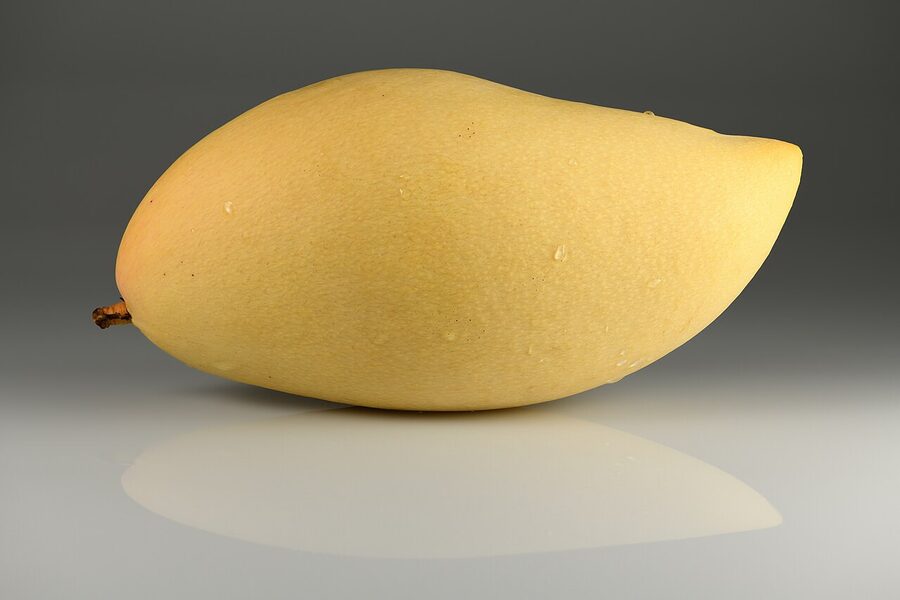
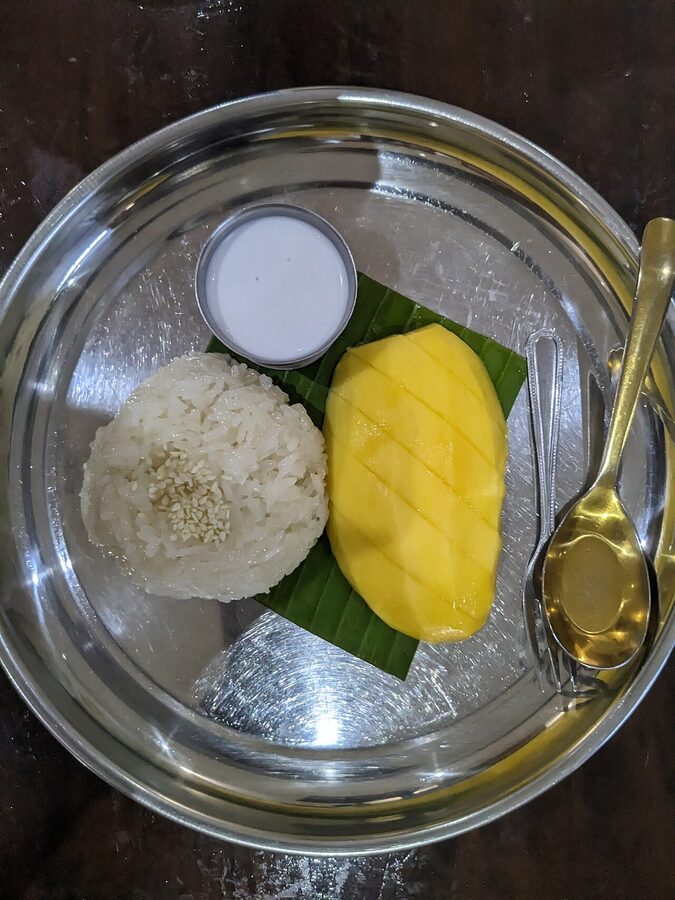
Mango sticky rice is the single most exported Thai dessert, and like most exports it has suffered. A good one requires three specific components, all seasonal, none of them interchangeable: Nam Dok Mai mango (the yellow-gold variety with the soft flesh and honey aroma, peak March through June), glutinous rice cooked with coconut cream and palm sugar, and a salted coconut sauce poured over both. A sprinkle of toasted sesame seeds or fried yellow mung beans on top. That’s it.
The named Bangkok stalls worth the walk:
- Kor Panich, in Banglamphu (Phra Athit area) since 1932, is the oldest specialist and still the most consistent. The coconut sauce is faintly briny. 150 baht for the classic plate.
- Mae Varee, Thonglor BTS, has the queue and the Instagram reputation. 180 baht. Worth it once.
- K. Panich near Pratunam is cheaper and less famous but uses the same mango supplier.
- Any weekend stall at Or Tor Kor Market for 80-100 baht. These are near-restaurant quality without the queue.
Durian sticky rice is the same dish with the fruit swapped. Fewer tourists order it. The people who do rarely go back to mango. Peak season is May to August.
Khanom krok, the coconut pudding cakes on every corner
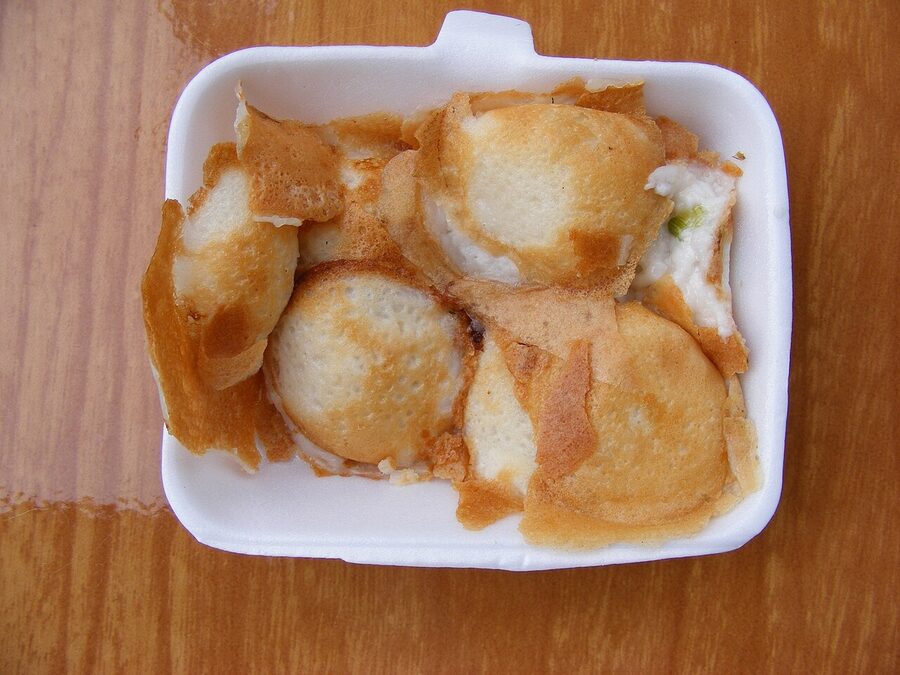
Khanom krok is the one you’ll see most often at markets and soi stalls. A hemispherical cast-iron pan with two dozen small dimples. Coconut rice-flour batter is ladled in, a second salty-sweet coconut cream layer is poured on top halfway through cooking, and the little cakes are scooped out in pairs (one “lid” pressed gently onto another “base” so the sweet and salty layers meet face-to-face). A twenty baht bag gets you twelve.
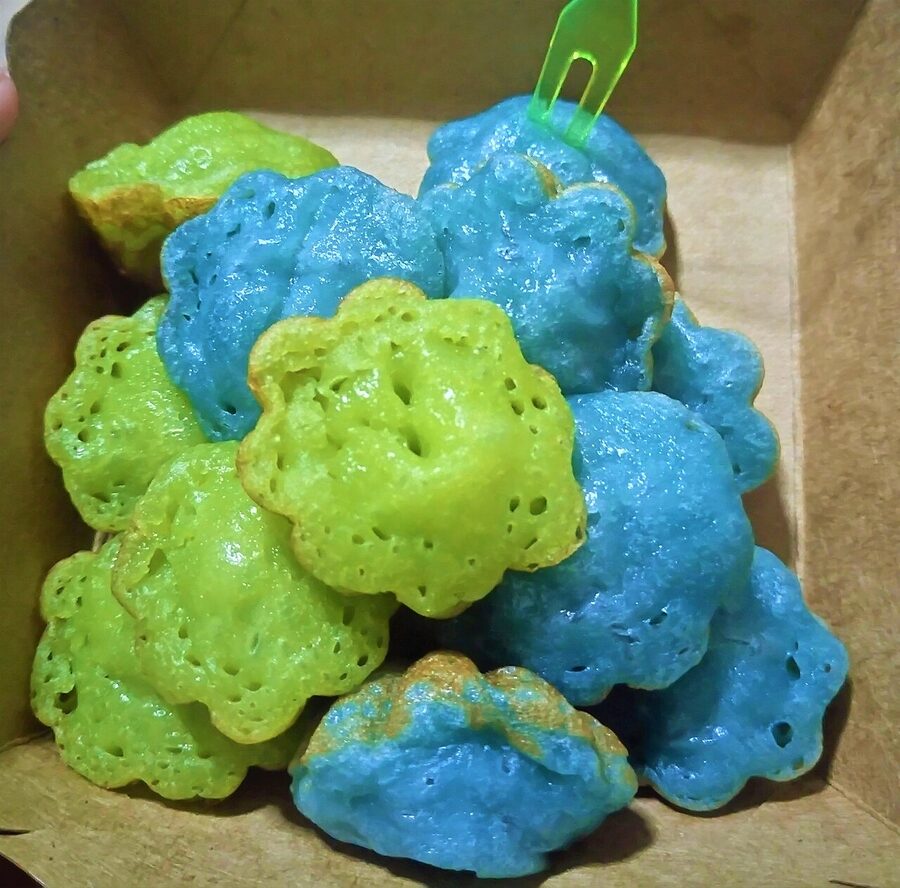
The modern trend is a pandan version and a butterfly-pea-flower version, both natural colourings that give the cakes a green or faint blue hue. Both are worth trying. The Sunday Walking Streets in both Bangkok’s Chinatown and Chiang Mai (cross-reference the Chiang Mai guide for the Sunday Walking Street food belt) each have one excellent stall.
Luk chup, the miniature hand-moulded fruits
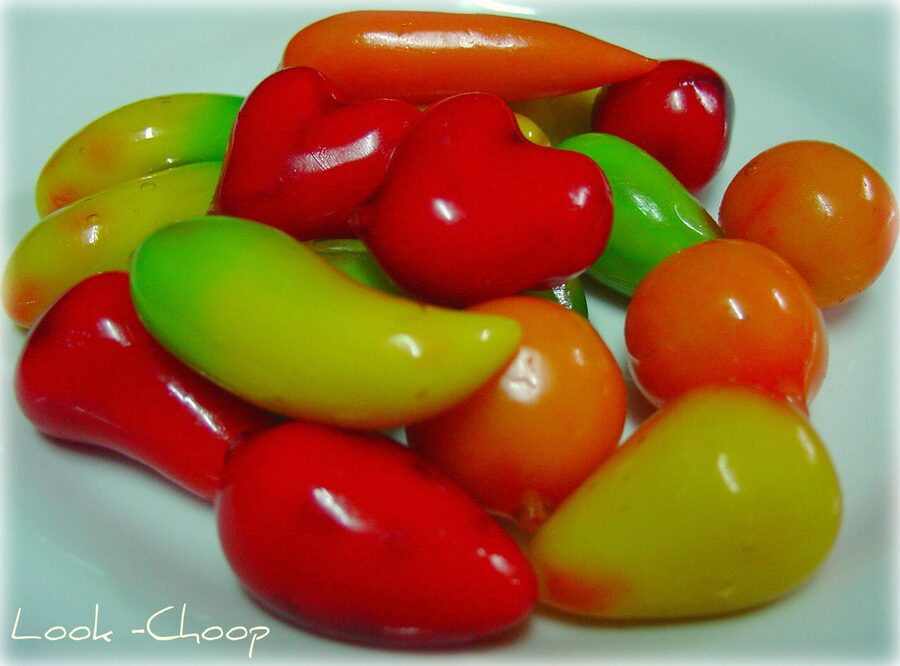
Luk chup are a royal-court tradition. Tiny mung-bean paste sculptures shaped and painted to look like miniature fruits, vegetables, or occasionally animals. Peaches, chillies, aubergines, watermelon, strawberries, persimmons. Each one the size of a one-baht coin. Sweetened mung bean paste inside, a thin agar-agar jelly shell on the outside, natural food colouring painted on with a fine brush. A box of thirty takes a skilled maker about four hours.
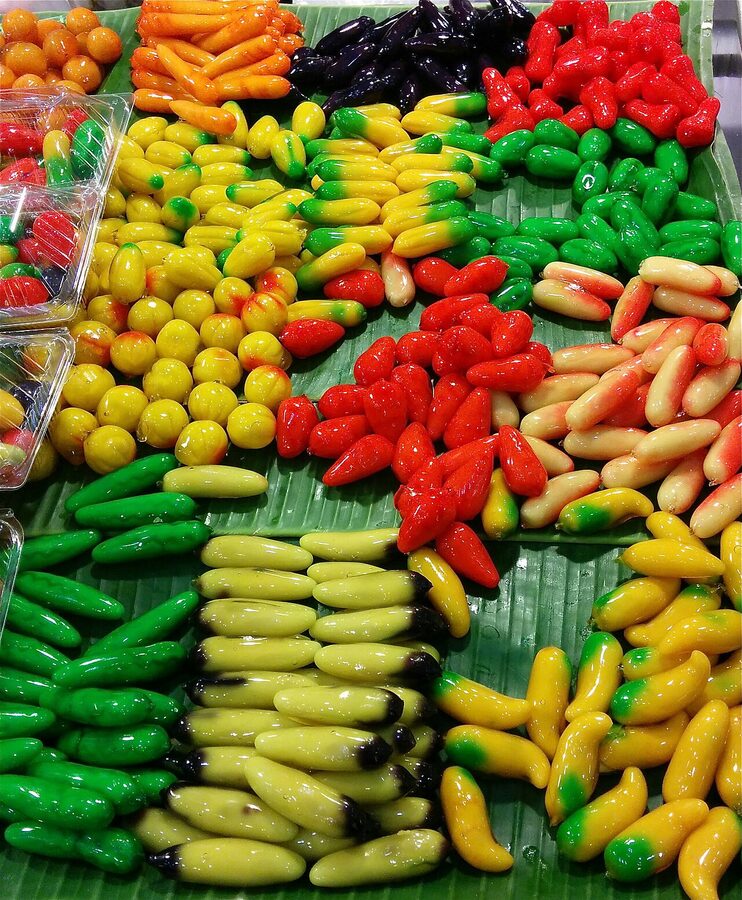
They are traditionally made by hand, in small batches, by specialists. The tradition started in royal Ayutthaya kitchens and migrated out through the former court staff over the 19th and 20th centuries. Buy them from any properly equipped Thai-sweet shop or at the upmarket dessert stalls inside Siam Paragon’s basement Gourmet Market (150-250 baht for a small mixed box).
Tub tim krob, the cool-down dessert
Thailand’s hot-day dessert. Translates roughly as “crispy rubies”. Water chestnuts cut into tiny cubes, dusted in red tapioca flour, blanched so the flour sets into a thin crunchy red shell, served over crushed ice with jasmine-scented coconut milk and sometimes strands of jackfruit. The first bite is the defining part, you get a cold shock, then the tapioca-flour crunch, then the surprise of the soft sweet water chestnut inside.
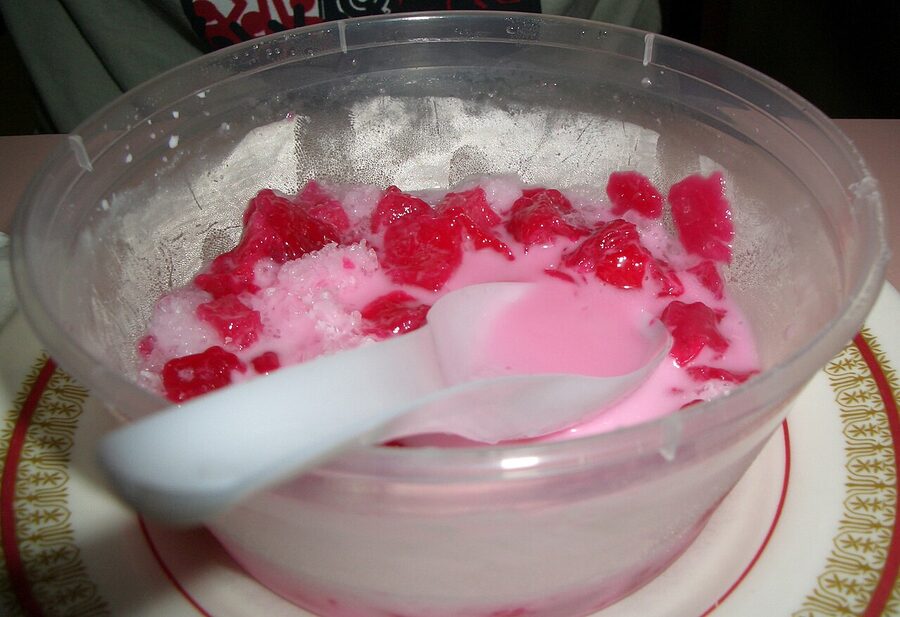
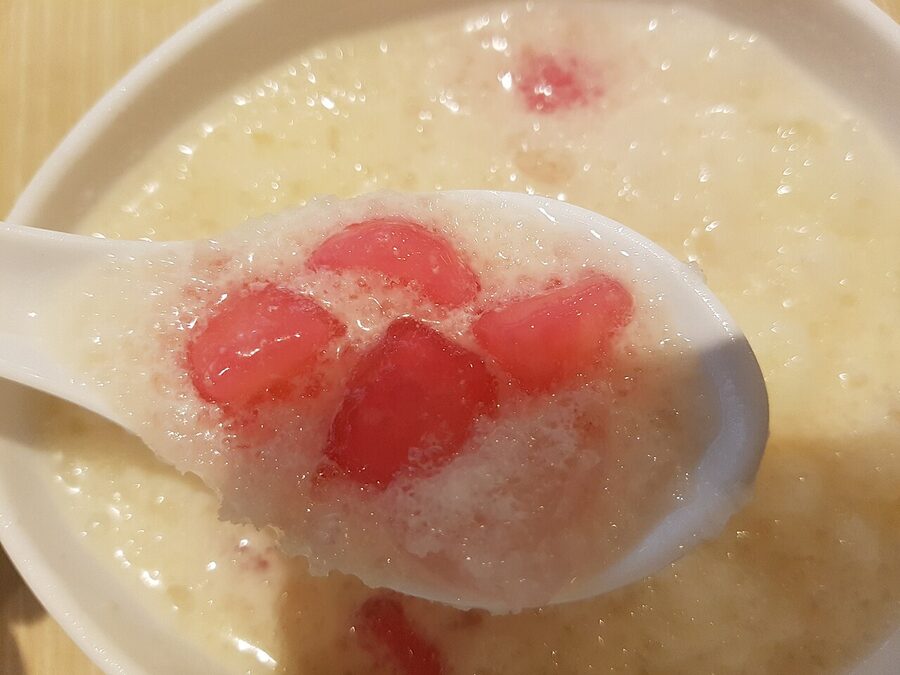
Named places: Nai Mong Khao Tom Kui (Banglamphu, 24-hour dessert stall), Boat Noodle Thonglor‘s dessert menu, Lod Chong Sarim Ruam Mit at MBK’s food court. Any lunch stall will serve you a bowl for 40 baht.
Roti sai mai, the Ayutthaya cotton candy roti
Ayutthaya’s dessert. A thin pancake-style crepe (the roti, adapted from Indian-Muslim flat bread traditions via the same trade routes that brought curry) wrapped around strands of spun sugar (sai mai, “silk threads”). You pick up the pre-made roti, pile a small tangle of coloured cotton-candy-like floss in the middle, roll it, and eat. Five baht per roll at Ayutthaya roadside stalls.
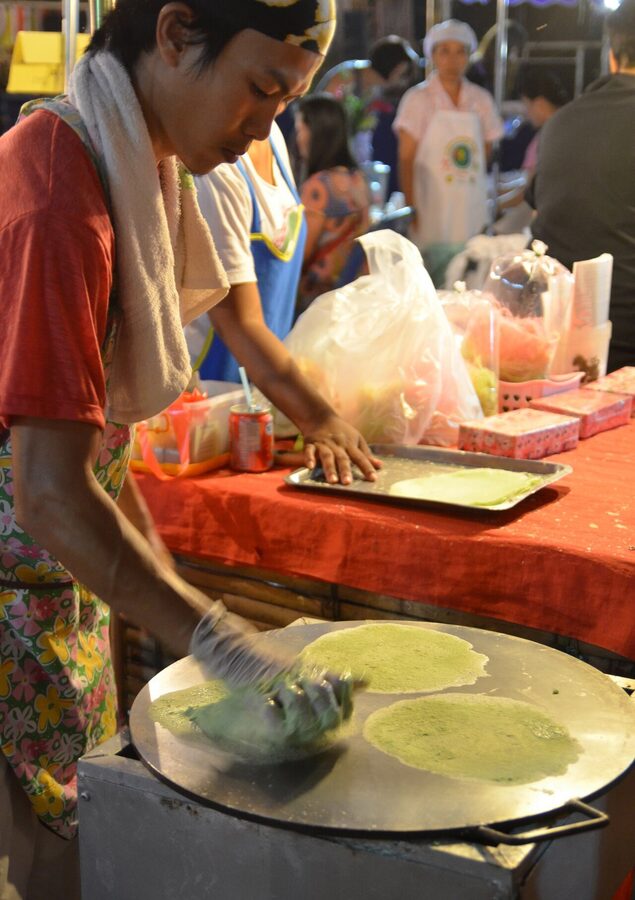
A day trip to Ayutthaya (90 minutes by train from Bangkok’s Hua Lamphong) is worth doing partly for the 14th-century temple ruins and partly for roti sai mai straight off the cart. Every cart has multiple colours and claims a family recipe going back several generations. Most of the claims are probably true.
Khanom buang, the crispy taco-shaped ones
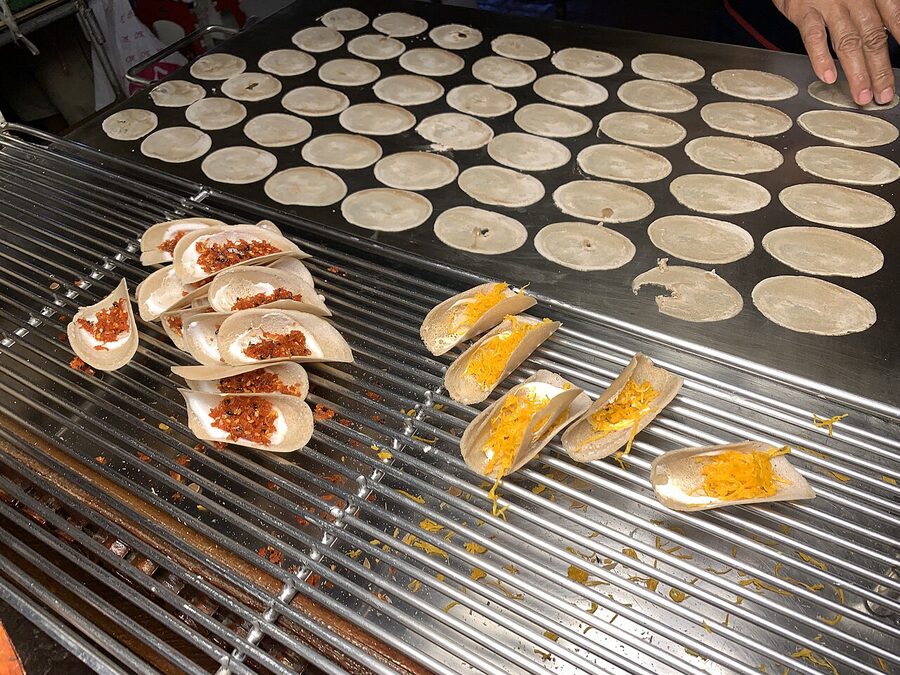
Thin crispy crepes folded in half like miniature tacos, filled with a meringue-like sweet egg foam and either sweet shredded coconut, golden-yolk foi thong threads, or (in the savoury version) salted shrimp floss with chopped chives. Old Thai cookbooks describe khanom buang as the dessert the common people made during temple fairs in the 17th century. A single crepe is about the size of a bottle cap.
Khanom chan, the nine-layer pandan
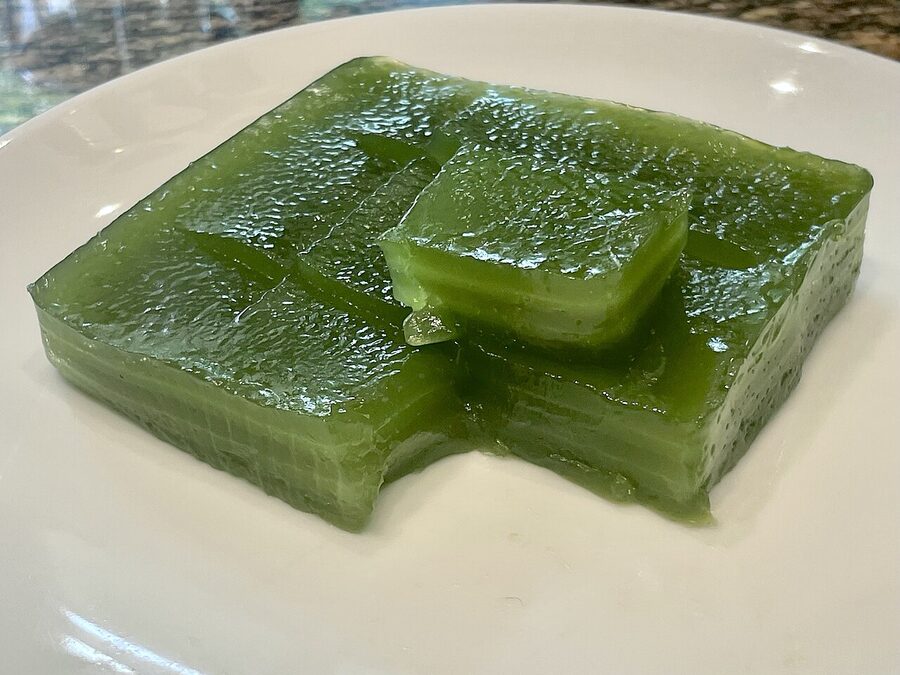
Pandan jelly layered in a tin one spoonful at a time, steamed between each layer, then cooled and cut into rectangular bite-size pieces. Traditionally nine layers (the number kao in Thai is a homophone for “to progress”, a lucky association). The colour comes from natural pandan leaf extract, slightly grassy-sweet, not identical to anything in the Western flavour library. Vegetable-starch-based, chewy, about 30 calories per piece.
Bua loi, the floating lotus
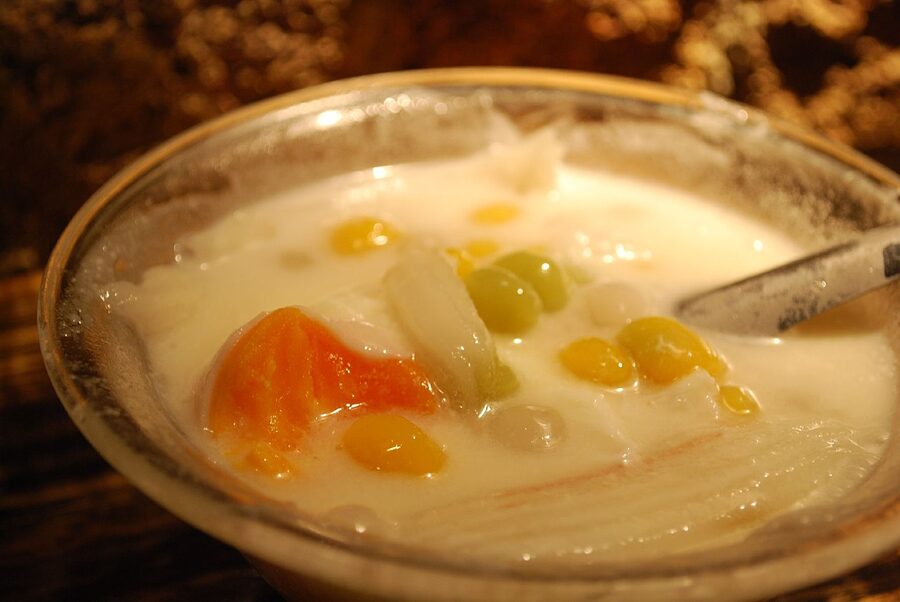
Sweet glutinous-rice dumplings in warm coconut milk with a generous pinch of salt. The dumplings are small, the size of large peas. Colours are natural: white (plain), green (pandan), orange (pumpkin), purple (taro), sometimes three at a time. Often served with a poached egg dropped in at the last second, which sounds strange and turns out to be excellent. Bua loi literally means “floating lotuses” for the way the dumplings bob on the surface.
Kluay buat chi, the nun’s bananas
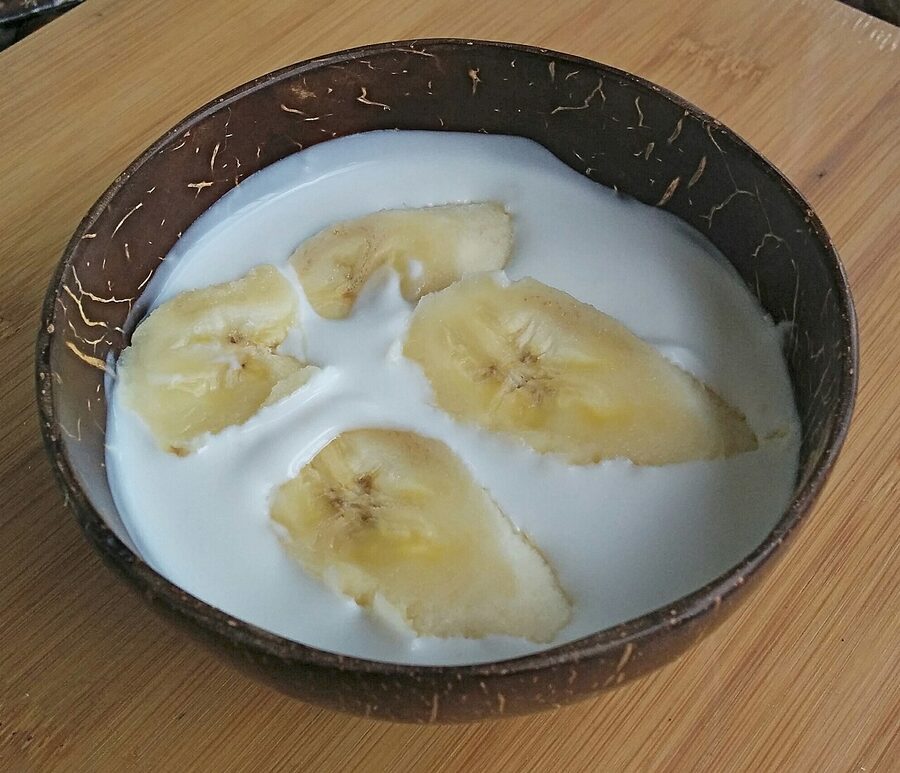
Translates to “bananas ordained as nuns”, a reference to how the bananas look wrapped in their white coconut-milk robes. Small sweet bananas poached in coconut milk, sugar, and salt. The traditional version uses kluay namwa, the small round-ended cooking banana. A few slices, warm coconut broth, done. Very common at Thai home dinners.
Miang kham, the savoury-sweet leaf wrap
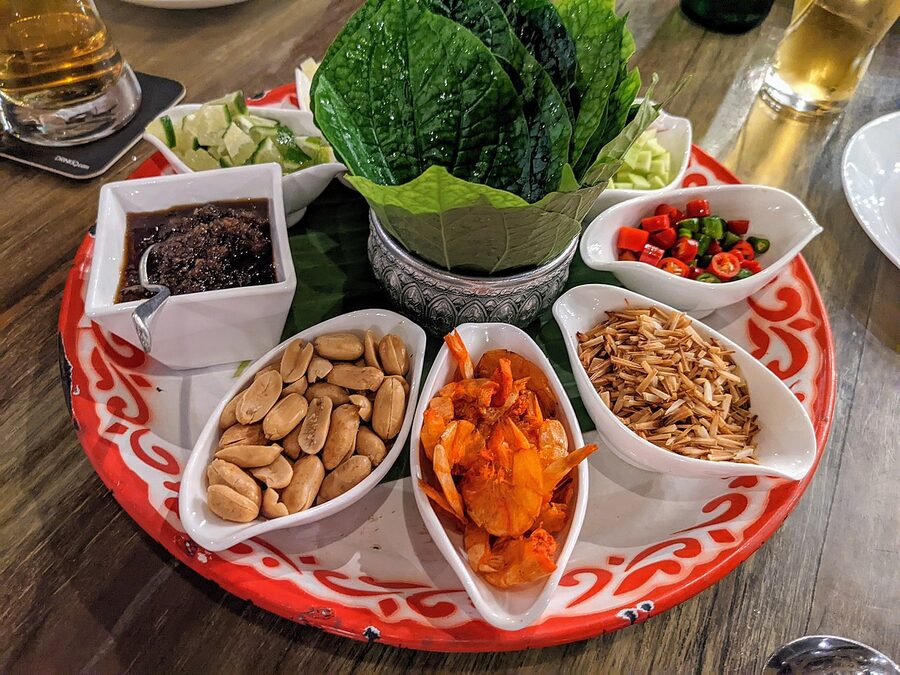
Not strictly a dessert, but a sweet-savoury snack in the same palate-reset tradition. A small wild-pepper leaf (chaphlu) spread open like a cup, filled at the table with diced coconut, ginger, shallot, lime (with peel), dried shrimp, peanut, and topped with a drop of thick palm-sugar-and-fish-sauce syrup. Folded into a bundle and eaten in one bite. Every element is in there: sweet, salty, sour, hot, crunchy, aromatic.
Coconut ice cream in a coconut shell
A roadside cart. A halved young coconut (for the bowl). Two scoops of coconut ice cream inside. You choose three toppings from a row of boxes: sticky rice, sweet corn, crushed peanuts, sweet kidney beans, chopped palm sugar jelly, young coconut flesh, chocolate sprinkles for the children. 50 baht. This is how you get through a Bangkok 34-degree afternoon.
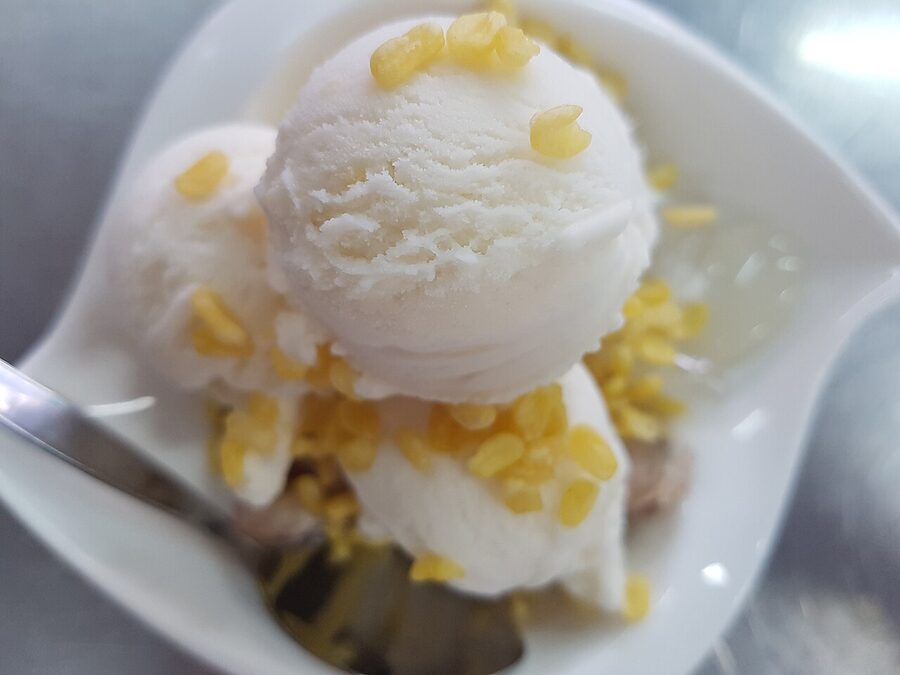
A newer street variant is i-tim khati haw, where the same ice cream is scooped into a halved soft hot-dog-bun-style bread with sweet toppings. This sounds bad and is good. Found at night markets citywide.
Lod chong, sarim, and the iced-coconut family
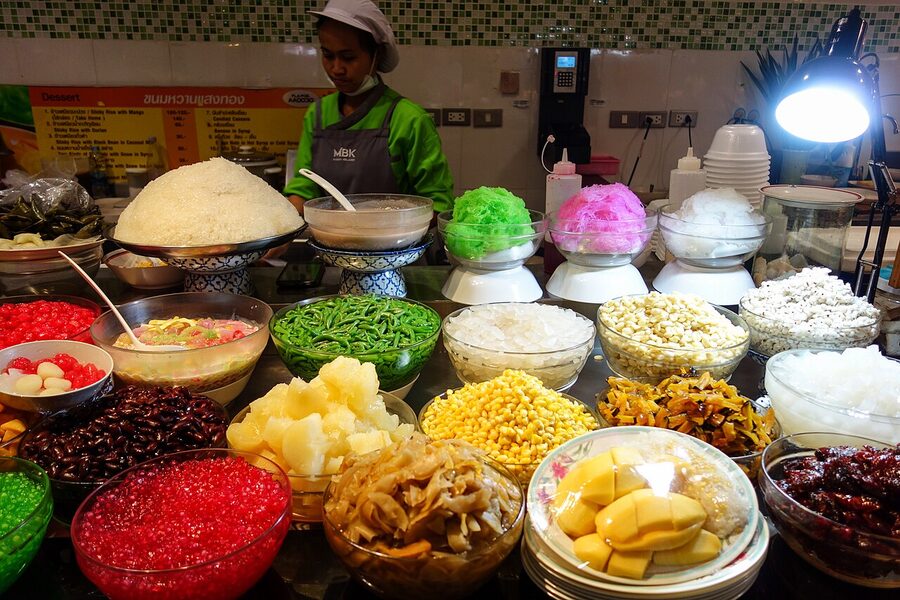
Cold desserts poured into a tall glass of crushed ice and coconut milk with palm sugar. The most common are lod chong (short green rice-flour noodles flavoured with pandan, the Thai version of Malaysian cendol), sarim (multi-coloured mung-bean starch noodles), and ruam mit (a mix-together bowl with small red rubies, young coconut, lychee, jackfruit, and palm seeds).
Where to buy, by neighbourhood
Or Tor Kor Market (MRT Kamphaeng Phet, Exit 3). Upmarket produce market next to Chatuchak Weekend Market. Two Thai-sweet counters with a full traditional range (foi thong, luk chup, khanom buang, the pandan family). Best weekend mornings, 8am to noon.
Chatuchak Weekend Market (Mo Chit or Kamphaeng Phet). The dessert section is near the back of the fresh-food zone, not the tourist stalls. Saturday-Sunday only, 10am to 6pm. Go at opening, eat your way to the dessert zone, leave by 2pm.
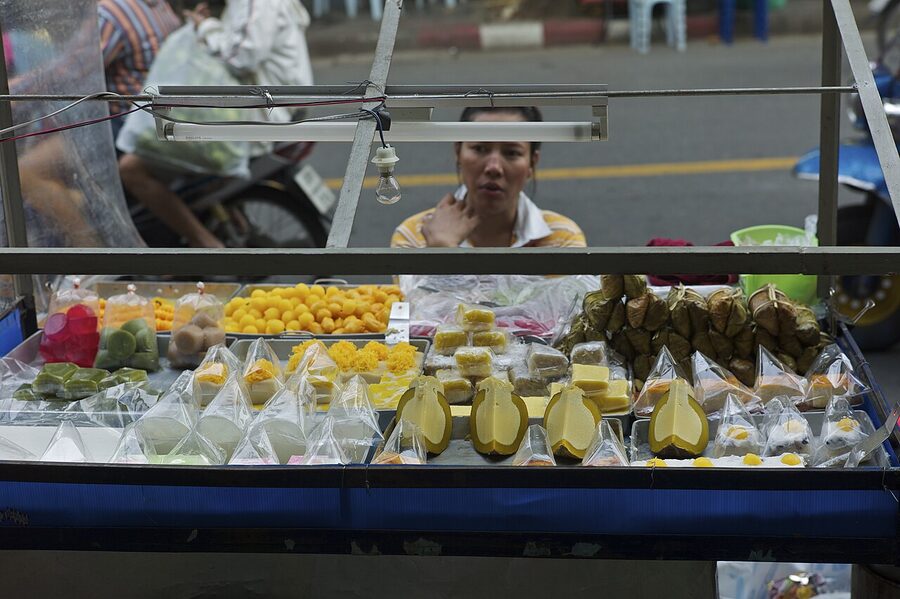
Banglamphu (Phra Athit Road). Old quarter of Bangkok with a concentration of traditional Thai sweet shops. Kor Panich (since 1932), Nai Mong Khao Tom Kui, and a dozen family-run stalls on the side streets. Morning and late evening are best. Avoid Khao San Road proper for sweets. Cross-link to the Bangkok street food guide for the surrounding street-food context.
Yaowarat (Chinatown) after dark. Khanom krok stalls, coconut ice cream carts, roti sai mai occasional visitors, Thai-Chinese hybrid sweets. Tuesday-Sunday from 7pm.
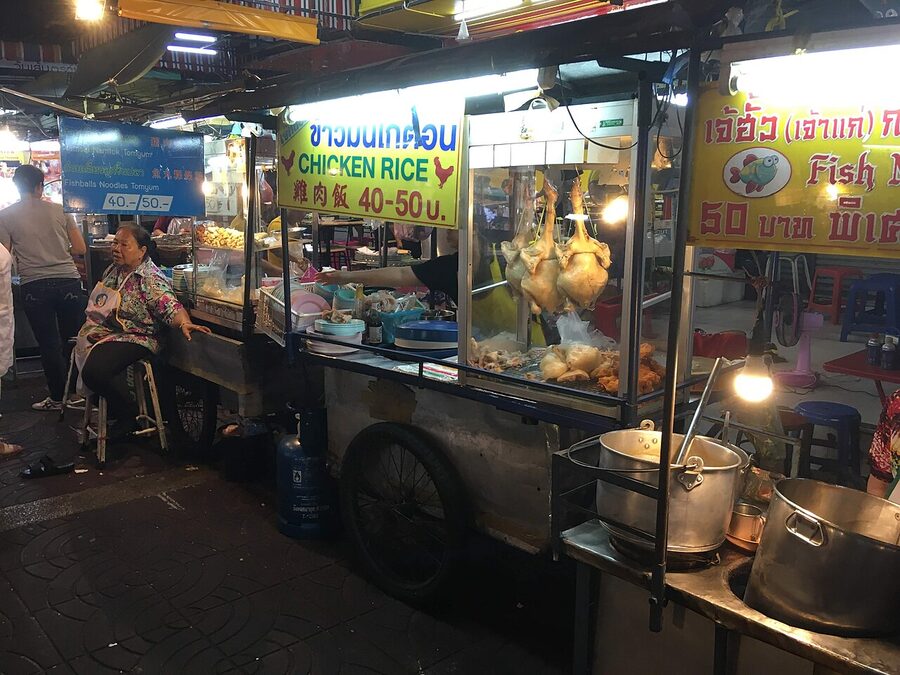
Chiang Mai Sunday Walking Street (Ratchadamnoen Road, 4pm onwards). Bua loi, khanom krok, mango sticky rice, roti sai mai, lod chong, all on a one-kilometre stretch. More detail in my Chiang Mai food guide.
Seasonality notes
Mango sticky rice peaks March to June. Outside those months, the mango is still available but it’s imported or cold-stored and drops noticeably in quality. Durian sticky rice peaks May to August. Luk chup, khanom buang, and the golden trinity are year-round. Coconut ice cream peaks in hot season (April-May) simply because demand does. Tub tim krob is hot-day food, year-round. Any dessert with real mango or rambutan strand is tied to those respective fruit seasons. For the wider tropical-fruit calendar across the region, see my tropical fruits guide.
What to skip
Hotel buffet Thai-dessert corners. Almost always neon-dyed, often stocked from mass-produced catering suppliers. Skip them. The 7-Eleven mango sticky rice in a plastic cup is actually not bad in a pinch, but it’s still a 7-Eleven mango sticky rice. Mall food-court dessert stalls are hit-and-miss; test one piece before buying a box. Tourist-zone lod chong at floating-market operations charges 180 baht for what should be 60.

A short list to order first
If you have five desserts in Thailand to try, in rough order: mango sticky rice at Kor Panich, tub tim krob at any neighbourhood ice dessert stall, khanom krok on the street, coconut ice cream in a coconut shell at a cart, and a boxed mix of luk chup from Or Tor Kor. That’s the core. Everything in this guide sits somewhere around those five.
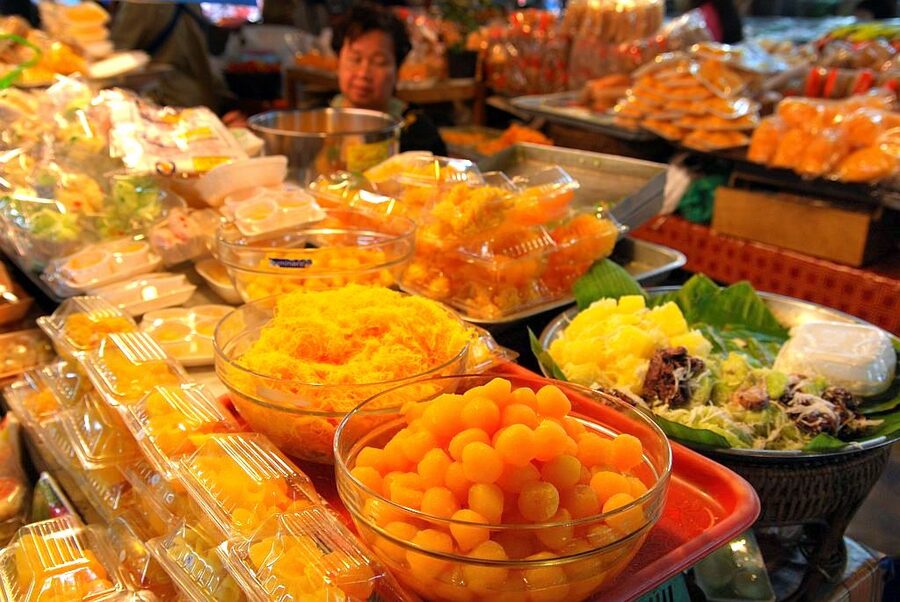
And order a second mango sticky rice. You’ll want it.




.jpg)


_-_khanom_bueang_boran.jpg)


.jpg)


