15 Foods That Feel Japanese But Were Invented Somewhere Else
Which of Japan’s most “Japanese” foods were actually invented somewhere else? The answer, once you go back far enough, turns out to be almost all of them. Tempura came from Portuguese Jesuits in the 1500s. Curry rice arrived through Meiji-era British military kitchens. Ramen is Chinese. And nikujaga, the homeliest of home-cooking dishes, was ordered into existence in 1895 by a Japanese admiral who was homesick for a British beef stew he’d eaten on a training cruise.
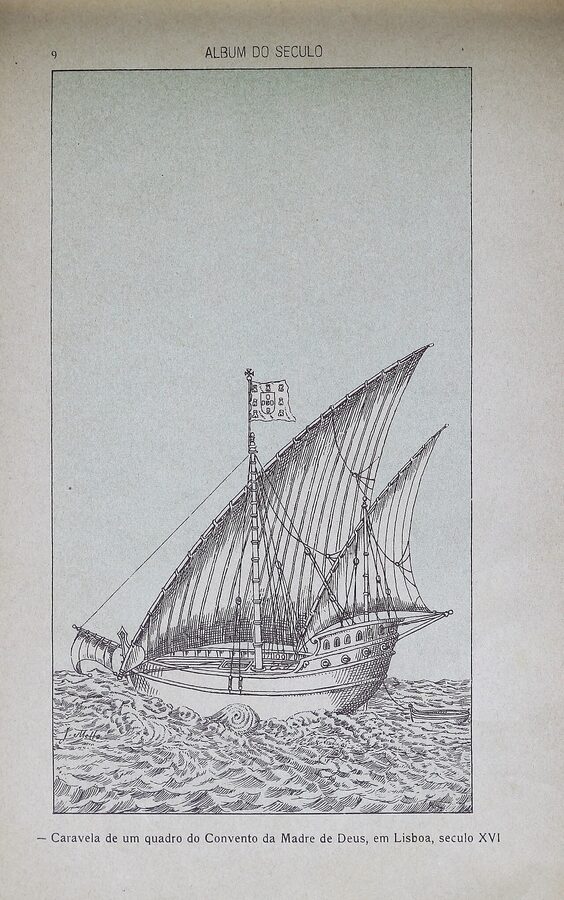
I started thinking about this after a dinner in Tokyo where I kept pointing at things and being told, “that one’s not Japanese.” Not in a “this is imported” sense, but in a “this was invented by a Portuguese priest” sense. Over several weeks I pulled the threads one by one. Almost every supposedly classic Japanese dish has a specific origin moment, a foreign template, and a single cook or ship or restaurant where the Japanisation happened.
Here are fifteen of them. Each entry has the origin country, the rough date Wikipedia will back up, the specific person or place where the Japanese version came into being, and where you can go eat the Japanese version today. I’ve tried to flag contested claims where the historical record isn’t tidy, because on a surprising number of these dishes the historians still argue.
A warning up front. The further back you go, the blurrier the dates get. Tempura has a romantic origin story involving Portuguese missionaries on fasting days, and it is mostly true, but some of it is folk etymology the academics are still knocking around. Where the history is contested, I’ll say so.
In This Article
- Tempura: The Portuguese Fast of 1543
- Castella: Sponge Cake From Castile
- Konpeito: Sugar Pellets in Nobunaga’s Hand
- Pan: Why the Japanese Word for Bread Is Portuguese
- Curry Rice: How the Royal Navy Imported Indian Curry Through Britain
- Nikujaga: A Naval Cook’s Homesick Stew
- Tonkatsu: From Viennese Schnitzel to Rengatei in 1899
- Hambagu: Hamburg to Yokohama via America
- Korokke: France, 1887, and a Potato Substitute
- Omurice: The Taimeiken vs Hokkyokusei Argument
- Naporitan: Invented for General MacArthur
- Anpan: A Samurai’s Second Career, 1874
- Curry Pan: The Fried Curry Donut of 1927
- Ramen: Chinese, Despite Everything
- Gyoza: What the Soldiers Brought Back From Manchuria
- What This Means in Practice
Tempura: The Portuguese Fast of 1543
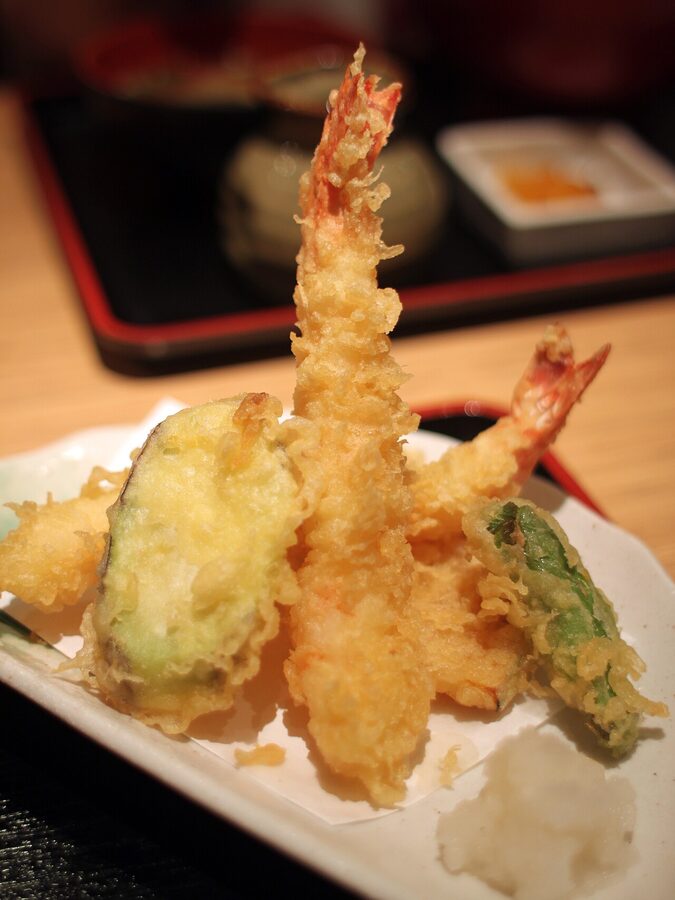
Tempura (天ぷら, tenpura) is battered, deep-fried seafood and vegetables. It is also the most famous case of Japanese food that isn’t Japanese. In August 1543, three Portuguese traders washed up on the island of Tanegashima after a typhoon blew their Chinese junk off course. Six years later the Jesuits arrived. Francis Xavier landed at Kagoshima in 1549, and Portuguese missionaries spread north from there over the next half-century.
The missionaries had a problem. Ember Days were Catholic fasting periods, four times a year, three days each, when you couldn’t eat meat. The Portuguese dish for those days was peixinhos da horta, “little fishes from the garden”, which is green beans dipped in flour-and-egg batter and fried. The Latin phrase for Ember Days was quatuor anni tempora, “the four seasons of the year”. Japanese cooks picked up the fasting-day dish, heard the Portuguese priests using tempora, and the word tempura was born.
By the early 1600s the dish had escaped the church and spread through Tokyo Bay. Edo-period tempura shops simplified the batter to just flour, eggs, and water, and fried it for passers-by from stalls near the Sumida River. That’s still basically what you’re eating when you sit at a counter in Asakusa tonight. A Ginza lunch set runs about ¥1,000 to ¥2,500. A high-end omakase at somewhere like Mikawa Zezankyo or Kondo in Ginza will put you between ¥15,000 and ¥25,000 for a counter course. For what it’s worth, Kondo’s sweet potato tempura is worth the trip on its own.
Castella: Sponge Cake From Castile
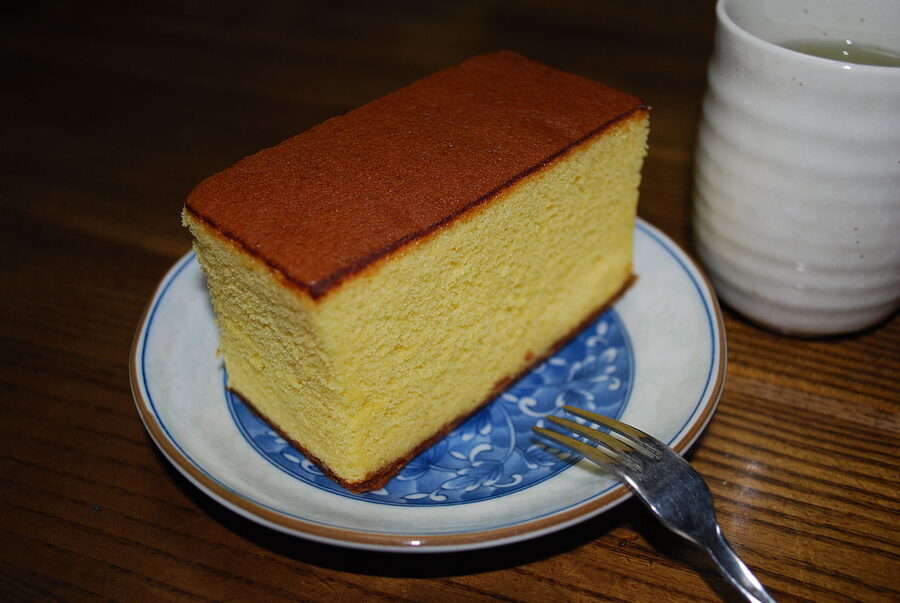
Castella (カステラ, kasutera) is a lightly sweetened sponge cake, usually sold in a tall narrow box cut into rectangular slabs. The name comes from the Portuguese bolo de Castela, “cake from Castile”, and the Portuguese merchants who brought the recipe to Nagasaki did so during the Nanban trade period of the sixteenth century. Nagasaki was the one Japanese port open to foreigners after the 1630s, so the cake stayed there and became a local speciality.
The dates on the old houses still doing it are oddly exact. Castella Honke Fukusaya opened in Nagasaki in 1624 and is still selling the same cake. Shooken opened in 1681. Bunmeido, the one you see in Tokyo Station, is a late-comer at 1900. Somewhere along the way Japanese bakers added mizuame (starch syrup) for moisture and zarame (coarse crystal sugar) for texture, which is what makes castella denser and wetter than the European sponge it descended from. Despite being Portuguese, castella is now officially classed as wagashi, a traditional Japanese sweet, which is a small historical gag in its own right.
A boxed castella from Fukusaya or Bunmeido is ¥800 to ¥2,500 depending on the size. It’s one of the better souvenirs you can carry out of Japan because it keeps for two or three weeks and doesn’t taste any worse for the trip.
Konpeito: Sugar Pellets in Nobunaga’s Hand
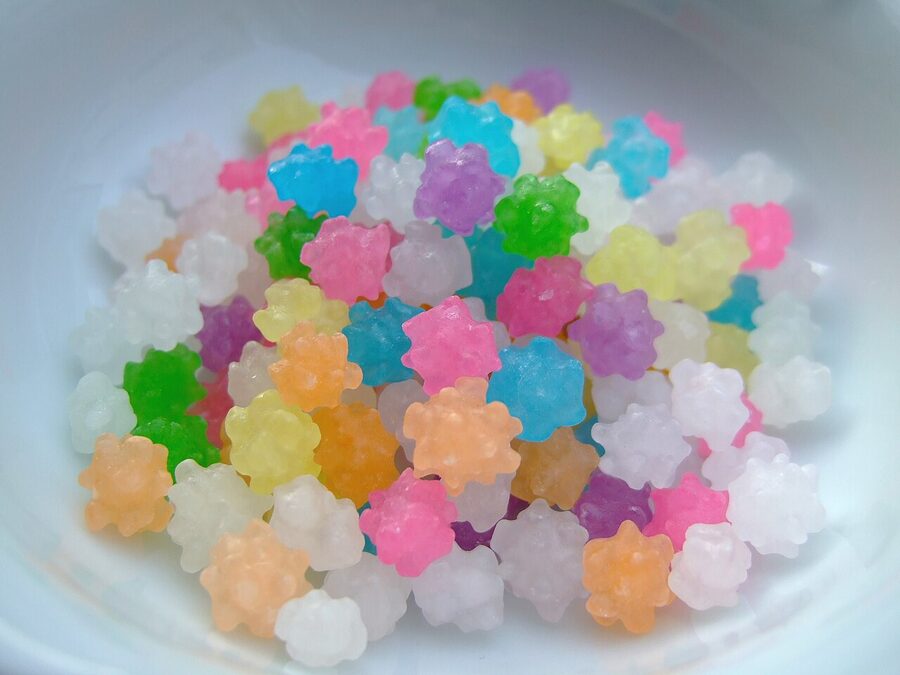
Konpeito (金平糖) is the little knobbly sugar candy shaped like a star, five to ten millimetres across. It exists because in 1569 the Jesuit missionary Luís Fróis handed a glass flask of the things to Oda Nobunaga as a diplomatic gift, hoping to secure missionary permits. The word comes from the Portuguese confeito, meaning sugar comfit. At the time, Japan didn’t have the technology to refine sugar at scale, so a glass bottle of rare sweet pellets was a proper imperial gift.
The making of konpeito is slow almost to the point of comedy. Artisans take a grain of coarse sugar and roll it in a heated, rotating, gong-shaped copper pan while slowly trickling sugar syrup onto it. Over seven to thirteen days the crystals accrete into those odd little spikes. If you do it fast, it goes wrong.
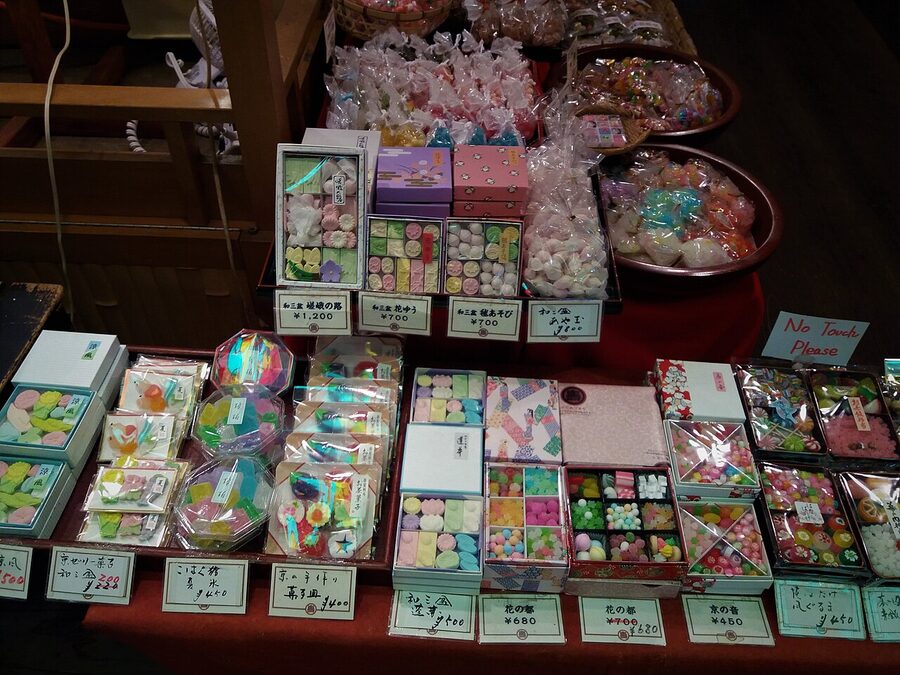
Because they last almost forever and don’t melt in your pocket, konpeito is still the official sweet handed out at Japanese imperial weddings, a tradition going on 130 years now. The Japan Ground Self-Defense Force also packs them in emergency rations, on the theory that a soldier with a hard biscuit and no water will at least get some saliva flowing. If you’re the Studio Ghibli type, konpeito is what the soot sprites get in Spirited Away. A small box in Kyoto’s Nishiki Market or from Ryokujuan Shimizu runs ¥300 to ¥800.
Pan: Why the Japanese Word for Bread Is Portuguese
Pan (パン) is the Japanese word for bread. It is also a Portuguese word, pão, pronounced very nearly the same way. It came into Japanese alongside tempura, castella, and konpeito in the sixteenth century, meaning the thing Japan calls bread is named after the thing the Portuguese sailors were eating on the boats that washed up at Tanegashima. Before 1543, leavened wheat bread wasn’t really a Japanese food category. Rice was the carb, and wheat existed mainly as noodles and dumplings.
Bread didn’t catch on as a staple until the Meiji period (1868 onward), when the new government was deliberately copying Western food alongside Western science. What makes the Portuguese origin story so durable is that when Japan finally did go for bread in a big way, the word it kept was the one the Portuguese sailors had used three hundred years earlier. You hear it constantly on menus now: shokupan (square sandwich bread), melonpan (the sugary dome), anpan (which we’ll get to), kare-pan (which we’ll also get to), menchi-katsu-pan, yakisoba-pan. The prefix or suffix -pan is Portuguese every time.
The next three dishes on this list are all pan dishes, and all of them are a century newer than the word itself.
Curry Rice: How the Royal Navy Imported Indian Curry Through Britain
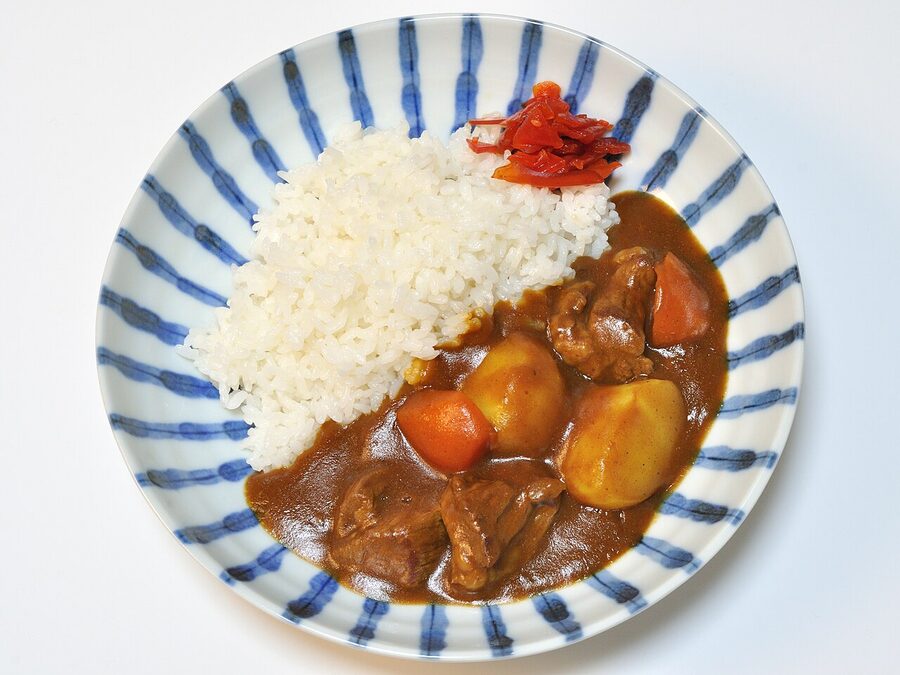
Japanese curry rice (カレーライス, karē raisu) is a dish that crossed three continents before it landed on a plate in Tokyo. It’s Indian curry, adapted by the British Navy for shipboard cooking (thickened with flour, blander, sweeter), adopted in turn by the Imperial Japanese Army and Navy after the Meiji Restoration opened Japan to foreign trade in 1868.
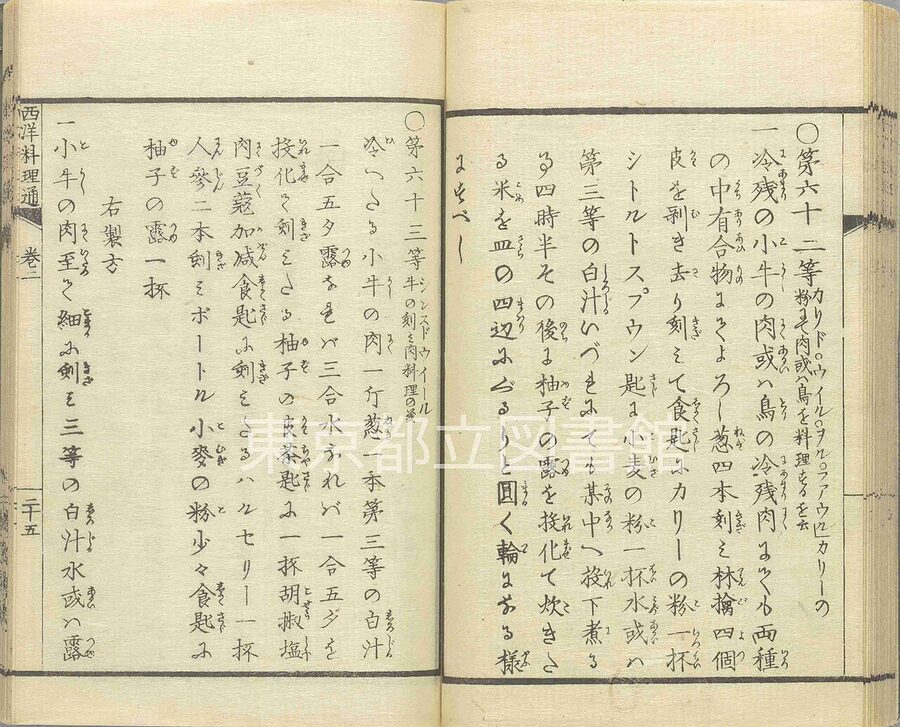
The paper trail is better than you’d expect. The first printed Japanese curry recipe appears in Kanagaki Robun’s 1872 cookbook Seiyo Ryoritsu. By 1873 curry was on the menu of the Imperial Japanese Army Military Academy. William S. Clark, the American agricultural professor who ran Sapporo Agricultural College, is credited with popularising rice-with-curry there in 1877 (he thought Japanese students ate too much rice and offered curry to go with a smaller portion). The navy’s official Kaigun kappōjitsu cookbook of 1888 documented a standardised recipe, though Japanese curry didn’t really become a navy staple until the 1920s Showa era, as Wikipedia politely corrects the popular story.
What did stick was Friday Curry. The Japan Maritime Self-Defense Force still serves curry every Friday, a tradition each ship keeps with its own recipe, a minor inter-ship competitive sport. Visit the Mikasa, Admiral Tōgō’s preserved battleship at Yokosuka, and you can buy a facsimile Navy Curry retort pack at the gift shop.
Where to eat it today. CoCo Ichibanya, the unlovely but reliable chain, runs ¥650 to ¥1,500 for a plate and lets you spec the rice weight, spice level, and toppings like a Subway sandwich. Nakamuraya in Shinjuku, the other important curry address, has a more authentically Indian recipe that goes back to 1927, developed with the help of the Indian independence activist Rash Behari Bose, who’d fled to Japan and married into the Nakamuraya family. A plate there is ¥1,700 to ¥2,800. You can find a good Japanese curry map in the Tokyo food neighborhoods guide.
Nikujaga: A Naval Cook’s Homesick Stew
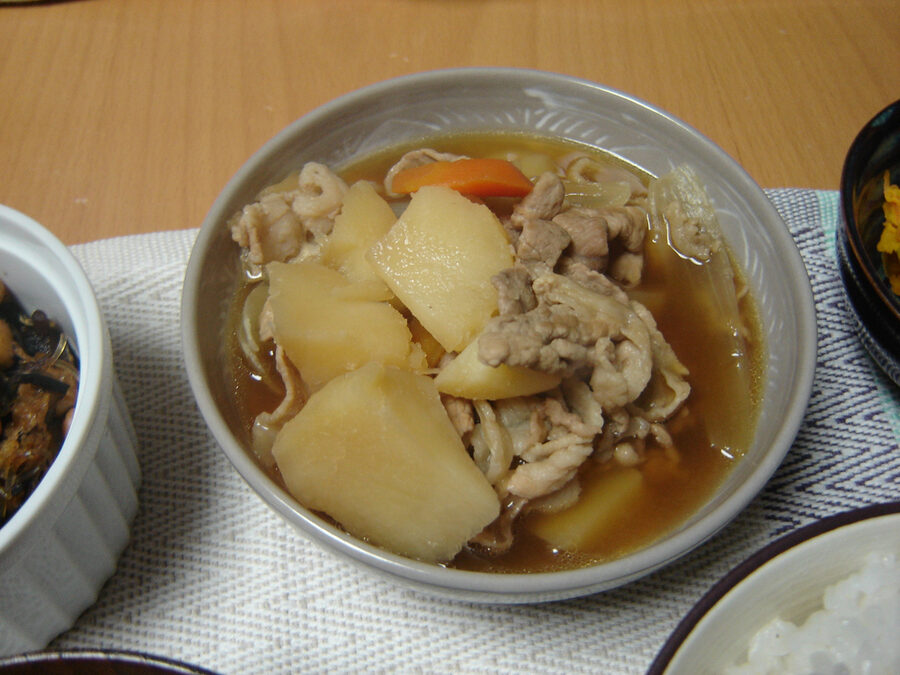
Nikujaga (肉じゃが) is the ultimate Japanese home-cooking dish. Beef or pork (sometimes), potatoes, onions, carrots, simmered slowly in soy sauce, sake, sugar, and mirin until everything has taken on the same brown colour and the potatoes are soft enough to fall apart. It is what Japanese people mean when they talk about ofukuro-no-aji, “the taste of mum’s cooking”. Grandmothers make it. Homestyle chain restaurants make a version. The homeliest of homely dishes.
It was invented by the Japanese Navy in 1895 because a homesick admiral wanted a British beef stew.
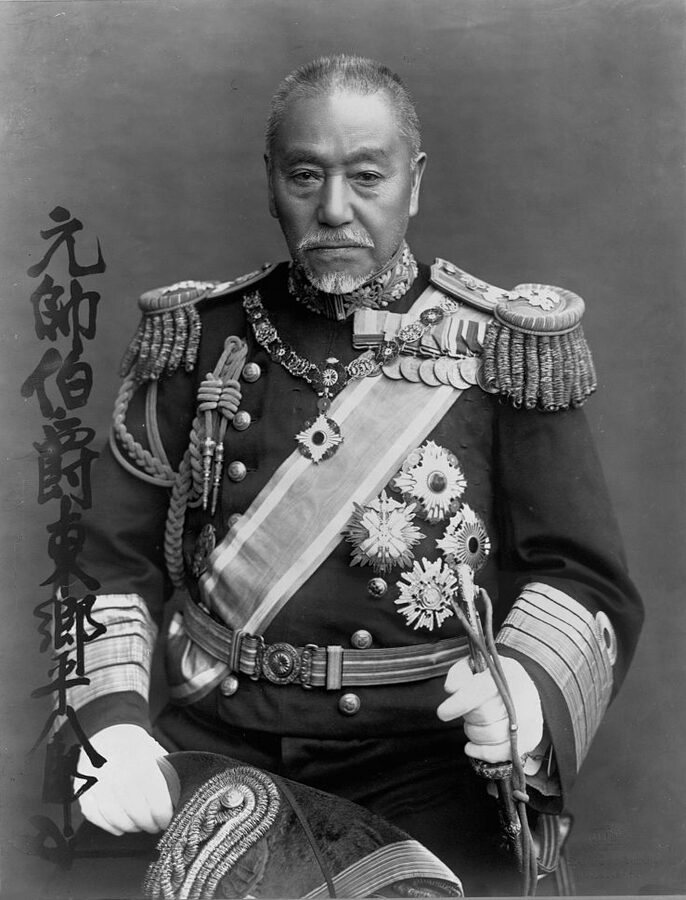
Admiral Tōgō Heihachirō spent seven years, 1871 to 1878, training with the Royal Navy in Portsmouth and studying at Cambridge. He came back obsessed, among other things, with British boiled beef. In 1895 he ordered his naval cooks to make it. The cooks had no red wine, no demi-glace, none of the classic European aromatics. So they improvised with what the navy galley did have: soy sauce, sake, sugar, onions, potatoes. The result was not remotely a British stew, but it was the stew a Japanese cook could make, and it was good enough that it started appearing in officers’ messes up and down the fleet.
Both Maizuru (Kyoto prefecture) and Kure (Hiroshima prefecture) claim to be the birthplace. Maizuru’s case is that Tōgō was stationed there. Kure countered with their own 1898 claim based on Tōgō’s earlier 1890-91 posting. Neither has a sealed proof. Both cities run a “nikujaga festival” in their tourist marketing. Pick one.
You won’t find nikujaga at a high-end restaurant. It’s not that kind of dish. But every decent izakaya has a version, usually for ¥600 to ¥900, and it’s what to order on a cold night when you want something warming before the grilled stuff arrives.
Tonkatsu: From Viennese Schnitzel to Rengatei in 1899
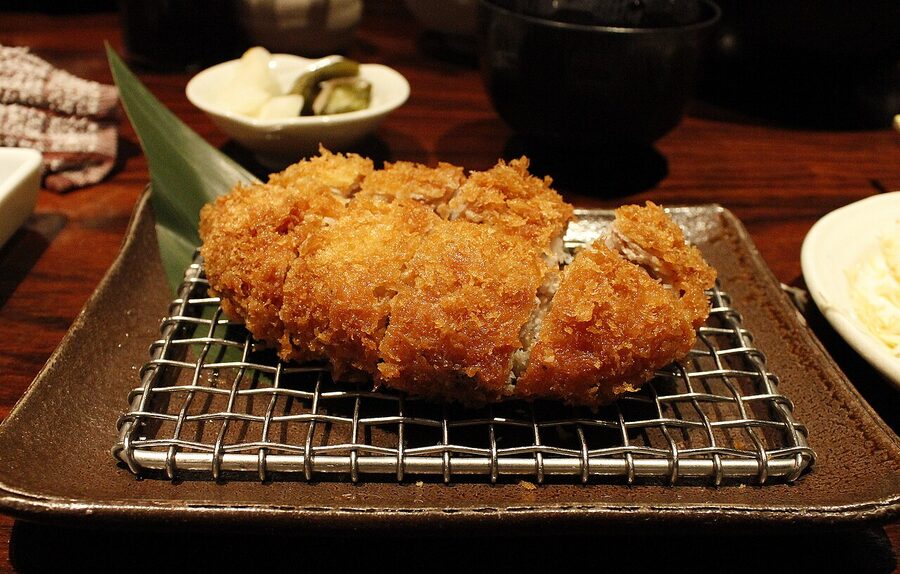
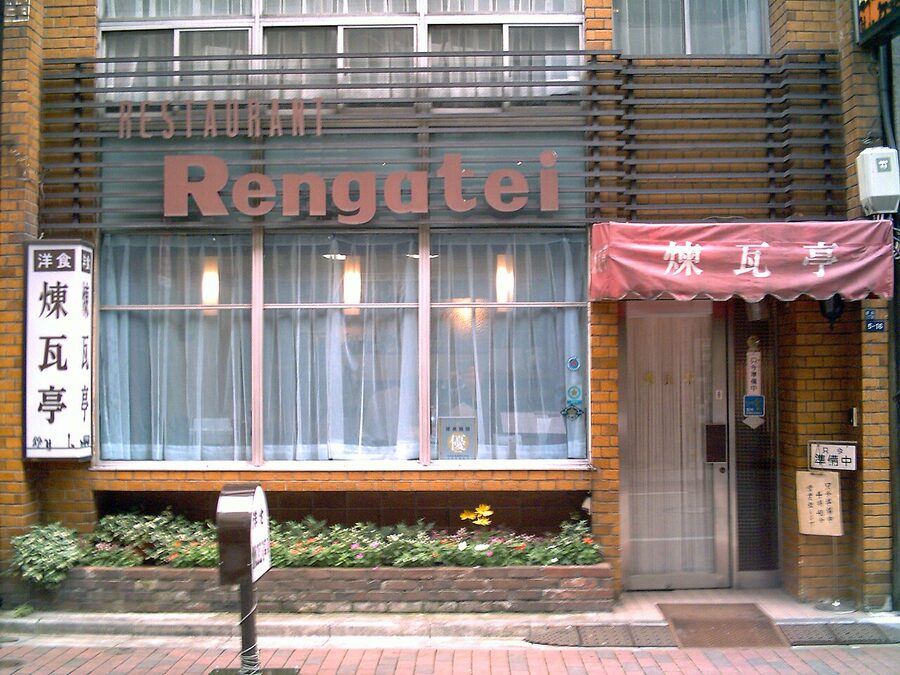
Tonkatsu (豚カツ) is a thick pork cutlet, breaded with panko, deep-fried, served sliced with a pile of shredded raw cabbage, rice, and a brown sauce that tastes like HP sauce’s quieter Japanese cousin. The template is the Wiener Schnitzel of Austria-Germany via French côtelette de veau, which is veal, breaded in fine European crumb, shallow-fried in butter.
The invention happened in 1899 at Rengatei in Ginza, Tokyo. Rengatei was a yōshoku restaurant, Japanese-style Western food, part of a wave of Meiji-era Tokyo establishments specialising in adaptations of European cuisine for Japanese customers. The dish was first called pork katsuretsu (ポークカツレツ), katsuretsu being a rough transliteration of “cutlet”. The innovations were substituting pork for veal, using panko (coarser, craggier Japanese breadcrumbs) rather than fine European crumb, and deep-frying it rather than pan-frying in butter. Over the Taishō period (1912 to 1926), tonkatsu got counted as one of the three great yōshoku dishes alongside curry rice and korokke.
Where to eat it. Butagumi in Nishi-Azabu is my favourite in Tokyo. They run a menu of a dozen different heritage pork breeds, priced ¥2,000 to ¥3,500 per set. Tonki in Meguro is the old-school favourite, unchanged since 1939, always queued out the door, ¥1,900 for the rosu set. Maisen in Aoyama is the reliable mid-range, ¥1,700 to ¥2,800, and has shops inside Shinjuku and Haneda for the airport bolt. Rengatei itself is still open, same building, serving its original-recipe pork katsuretsu.
Hambagu: Hamburg to Yokohama via America
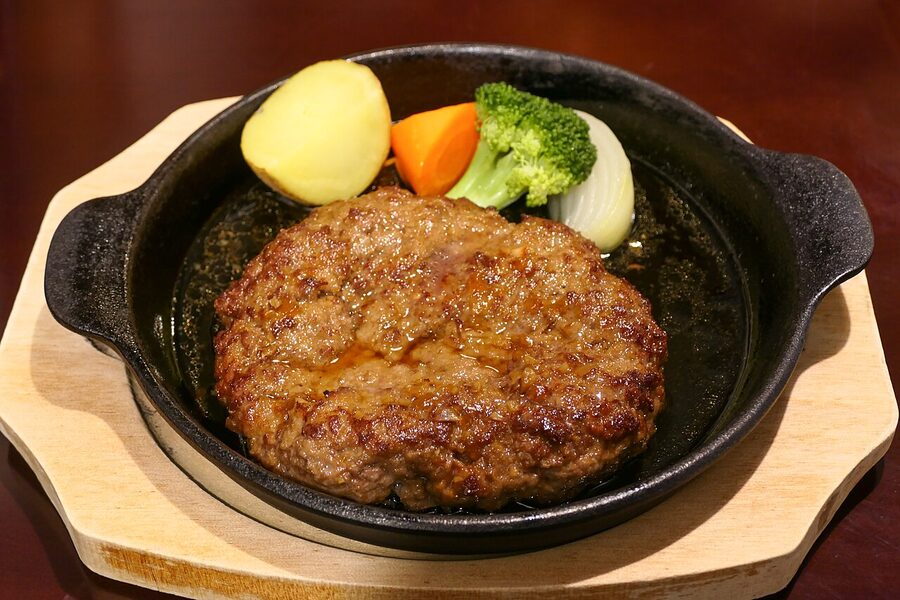
Hambagu (ハンバーグ, short for hanbāgu sutēki, Hamburg steak) is a ground-meat patty, served without a bun, usually with a brown demi-glace-adjacent sauce, rice, and a small salad. It is not a hamburger. You eat it with a knife and fork.
The name traces to Hamburg, Germany, via nineteenth-century emigrants to America. By 1873 Delmonico’s in New York was selling “Hamburg steak” for eleven cents, and through the rest of the century it was a popular mid-market American restaurant dish: chopped beef, lightly salted, sometimes smoked, served with onions. The Japanese version arrived via Yokohama in the Meiji period, when the port was the main conduit for Western food into Japan. It was filed into the yōshoku category alongside tonkatsu and curry and korokke.
The big divergence from the Western version is that hambagu in Japan is almost always a blended patty, pork and beef together (a nod to the fact that beef alone was pricey and pork was plentiful). The 1960s was when hambagu really took off as a mainstream restaurant dish, precisely because it was a way to serve meat affordably to the expanding Japanese middle class. Today it’s the default dish at family restaurants like Bikkuri Donkey, Tsubame Grill, and Denny’s (yes, Denny’s Japan is a real thing and the menu is completely different). ¥1,200 to ¥2,500 at a mid-range place; ¥3,000 to ¥4,500 at a proper hambagu specialist like Hambagu Ken or Beef Kitchen. The gift-shop classic version is still served at Rengatei, the same Ginza yoshoku institution that invented tonkatsu.
Korokke: France, 1887, and a Potato Substitute
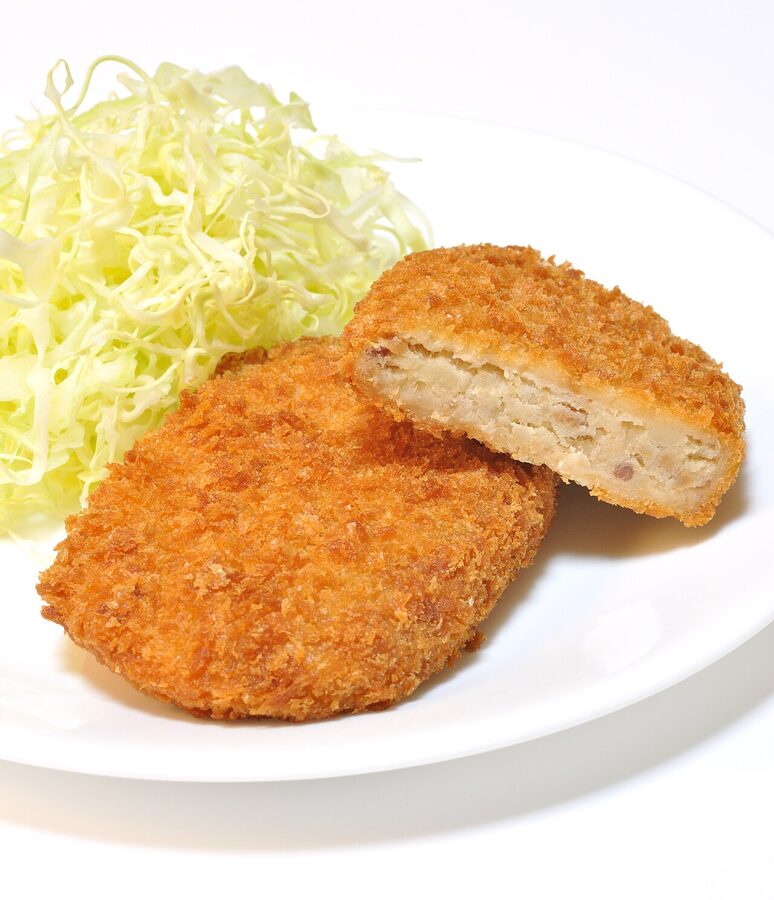
Korokke (コロッケ) is a breaded, deep-fried patty of mashed potato mixed with minced meat, onion, and sometimes crab or pumpkin or curry. The name comes from the French croquette. Wikipedia dates the Japanese arrival to 1887, and the headline adaptation is straightforward: the classic French croquette is bound with béchamel, and in 1880s Japan, dairy processing wasn’t widespread, so Japanese cooks swapped out the milk-flour-butter sauce for mashed potato. It was cheaper, it was easier, it kept better, and it tasted fine.
In Meiji cookbooks you’ll find it spelled kuroketto, an early phonetic try before the spelling settled. By the Taishō period korokke had joined curry and tonkatsu in the yoshoku triumvirate.
Where it lives today is interesting. Korokke is butcher-shop counter food. Most neighbourhood butchers in Japan will sell you a freshly-fried potato-and-minced-beef korokke for ¥100 to ¥200 as a takeaway snack, to eat standing, out of greaseproof paper. The Niku-no-Suzuki in Tsukiji outer market does one of the best in Tokyo for ¥220. Supermarkets sell pre-packed ones at a similar price, and every konbini (7-Eleven, Lawson, FamilyMart) has a hot korokke on the counter next to the fried chicken. There’s also korokke-pan, a split bread roll stuffed with a korokke, which is a legitimate Japanese school lunch tradition.
Omurice: The Taimeiken vs Hokkyokusei Argument
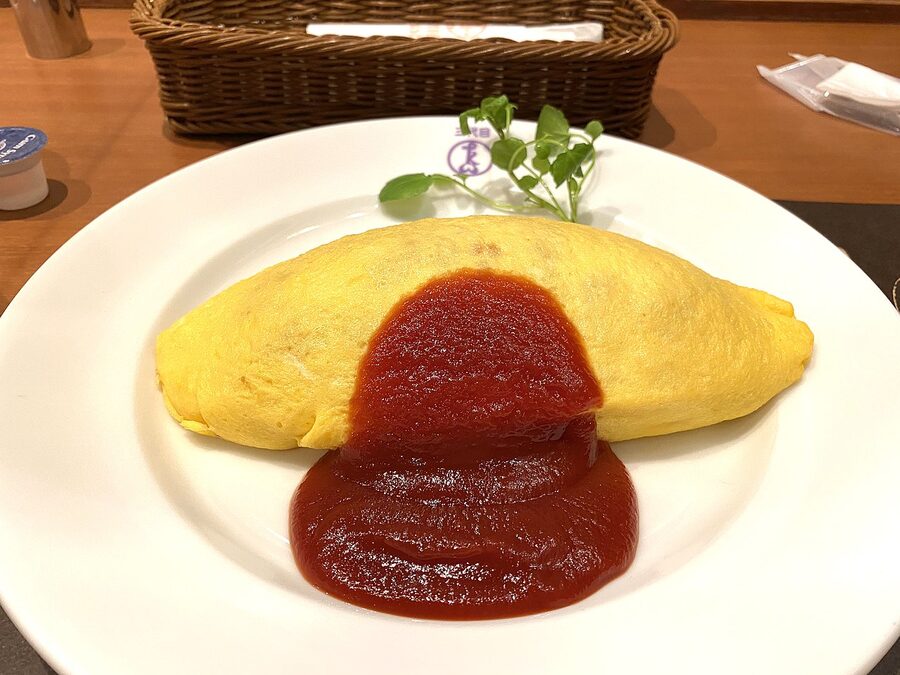
Omurice (オムライス, from “omelette rice”) is a Japanese child’s dream dinner. Ketchup fried rice is wrapped in a thin folded omelette, the top of which is usually cut open and allowed to flop open over the rice, and then a word or a cartoon face is drawn on top in more ketchup. It sounds absurd. It is delicious.
The origin is disputed and the dispute is genuinely unresolved. The Tokyo claim is that omurice was invented around 1900 at Rengatei in Ginza (the same restaurant that did tonkatsu), inspired by chakin-zushi, which wraps sushi rice in a thin omelette. The Osaka claim is that Hokkyokusei in Shinsaibashi invented it in 1925 when a cook, trying to give a regular customer with a stomach ulcer something bland, took the customer’s usual omelette-and-rice order and folded the egg over the rice. Both restaurants are still open. Both claim to be the place. Pick your city.
The 1985 Japanese film Tampopo, a comedy about a ramen-shop owner, features a variant in which a hobo cooks omurice over a campfire, folding the egg so it slides out over the rice still half-raw and melting. That technique, the “tableside-split” omurice, was developed for the film with Taimeiken in Nihonbashi and became the restaurant’s signature dish. You can still order it there. Viral TikTok-era versions at Kichi Kichi in Kyoto take the gimmick to the next level: chef Motokichi Kitamura drops the entire omelette onto the rice, slits it down the centre, and the two halves flop open like wings. Expect to queue.
Omurice at a retro kissaten is ¥900 to ¥1,400. Taimeiken or Hokkyokusei will be ¥1,500 to ¥2,200. Kichi Kichi in Kyoto is ¥3,500 and you need to book months ahead. Other than Kichi Kichi, none of this is expensive food.
Naporitan: Invented for General MacArthur
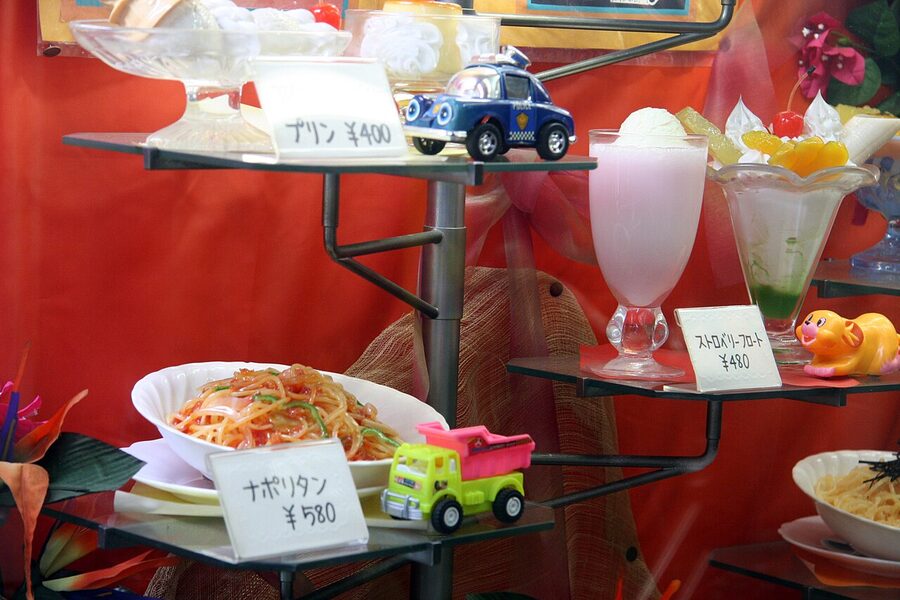
Naporitan (ナポリタン) is spaghetti cooked soft, tossed with ketchup, onions, green peppers, mushrooms, sausage, and bacon. It is a scandal to Italian-Americans. It has precisely zero connection with Naples, the city whose name it borrows.
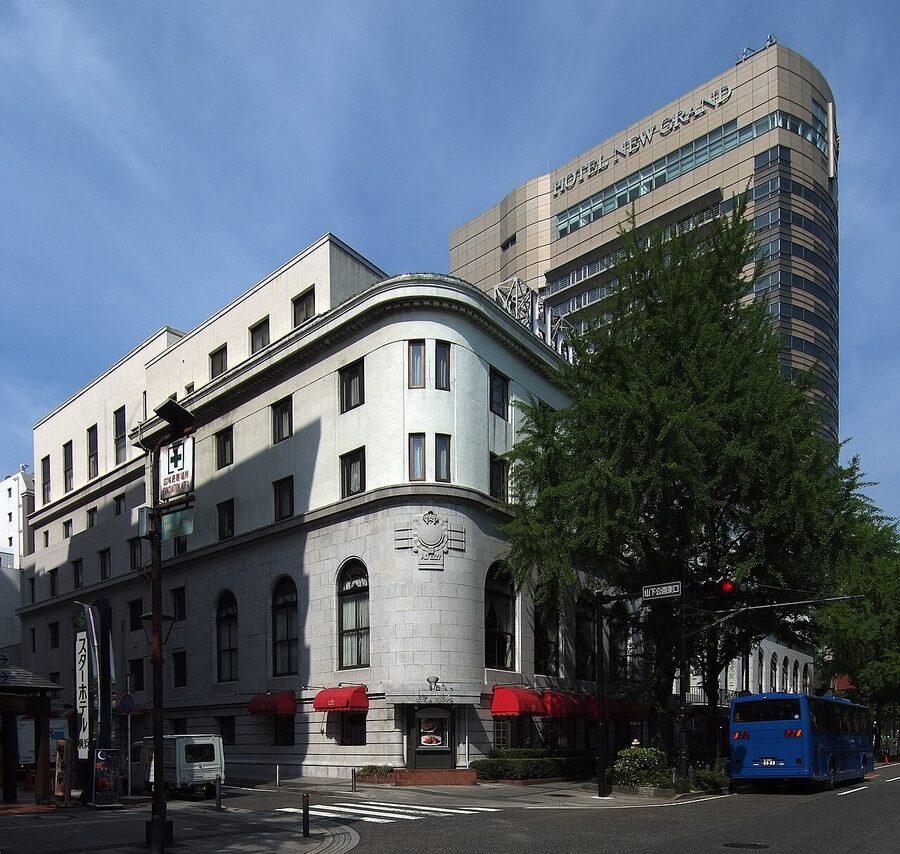
It was invented at the Hotel New Grand in Yokohama by the chef Shigetada Irie in the late 1940s, for one specific customer: General Douglas MacArthur, who lived at the hotel with his wife Jean during the Allied occupation of Japan. Irie had to work with what the occupation rations delivered: spaghetti, tomato ketchup, tinned sausage, tinned mushrooms, bacon, a few peppers and onions. No fresh tomatoes. No olive oil. No parmesan. The result was nothing like Italian pasta, but MacArthur liked it, and Irie named it Naporitan after Naples, which was the closest “Italian-sounding” word he had.
The dish escaped the hotel and became a staple of post-war Japanese family restaurants and kissaten (retro coffee-and-snack cafes). You still order it at kissaten today, usually served on a heated cast-iron plate, with a soft-yolk egg cracked on top for the last thirty seconds of cooking. The Hotel New Grand still serves its original version. A kissaten naporitan is ¥800 to ¥1,400. The hotel version, done with proper care, is ¥2,400.
Anpan: A Samurai’s Second Career, 1874
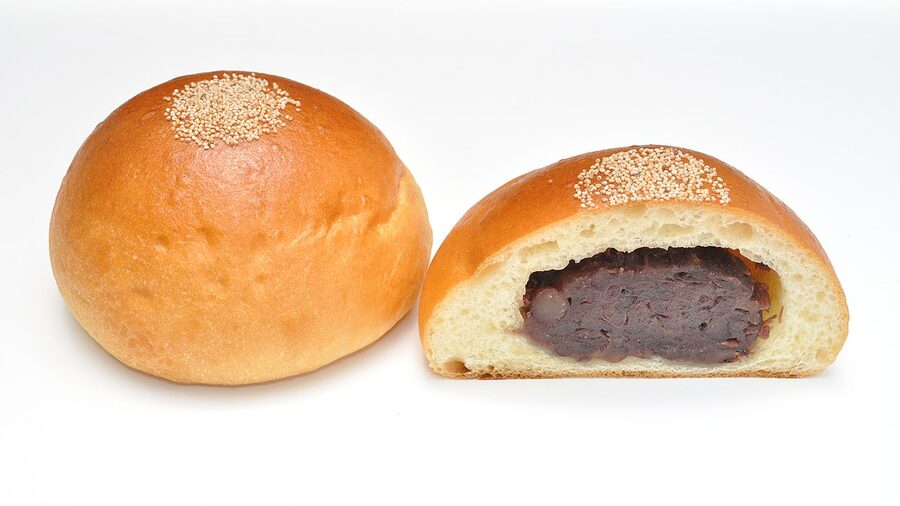
Anpan (あんパン) is a small soft bread roll filled with sweet red bean paste (anko). It is the quintessential Japanese pastry, and it was invented in Ginza in 1874 by a man named Yasubei Kimura.
Kimura was a former samurai. The 1868 Meiji Restoration had abolished the samurai class, and thousands of men who’d been trained for nothing but swordsmanship and calligraphy suddenly needed jobs. Some of them became policemen. Some became bureaucrats. Yasubei Kimura opened a bakery.
His innovation, which landed in 1875, was to stop trying to use European yeast (which Japanese bakers of the period had been buying at great expense and with mixed results) and instead leaven the dough with sakadane, the fermented rice starter used for making sake. The result was a soft, slightly sweet, slightly boozy bread that took a red-bean filling perfectly, in the style of a Japanese manjū steamed bun.
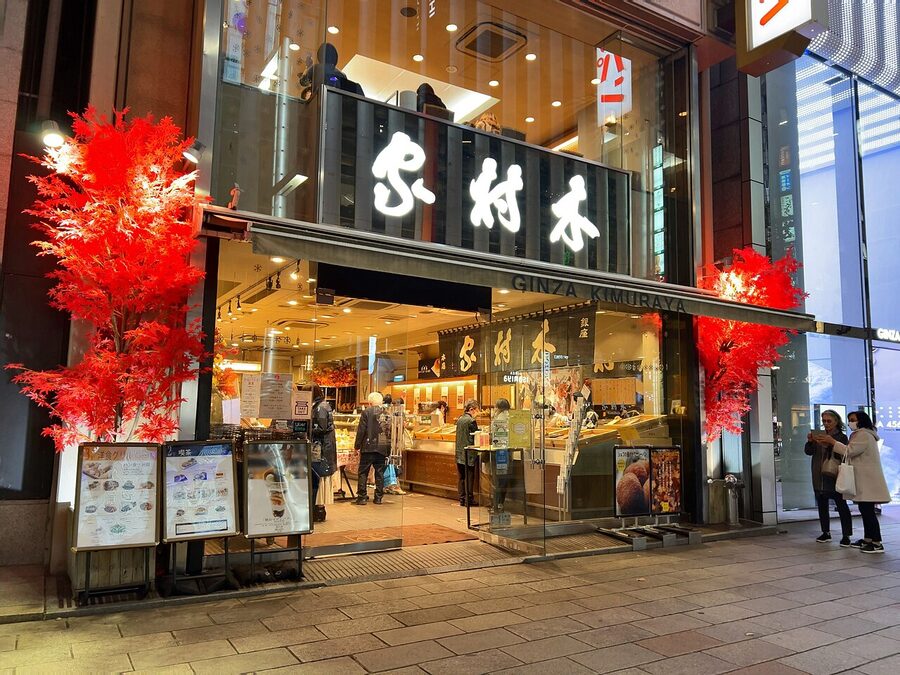
On 4 April 1875, Kimura’s son Eisaburo presented the new bread to Emperor Meiji and Empress Shōken on a cherry-blossom viewing excursion. A variant with a salt-pickled cherry blossom pressed into the top (the style you still see at Kimuraya in Ginza now) was created for the occasion. The emperor liked it. Imperial endorsement followed. Kimuraya Sohonten is still in the same spot in Ginza, still selling anpan for ¥200 to ¥350 each. The Ginza flagship stocks a dozen variations now, but the poppy-seed topped original and the salt-cherry one are both still on the shelf.
Curry Pan: The Fried Curry Donut of 1927
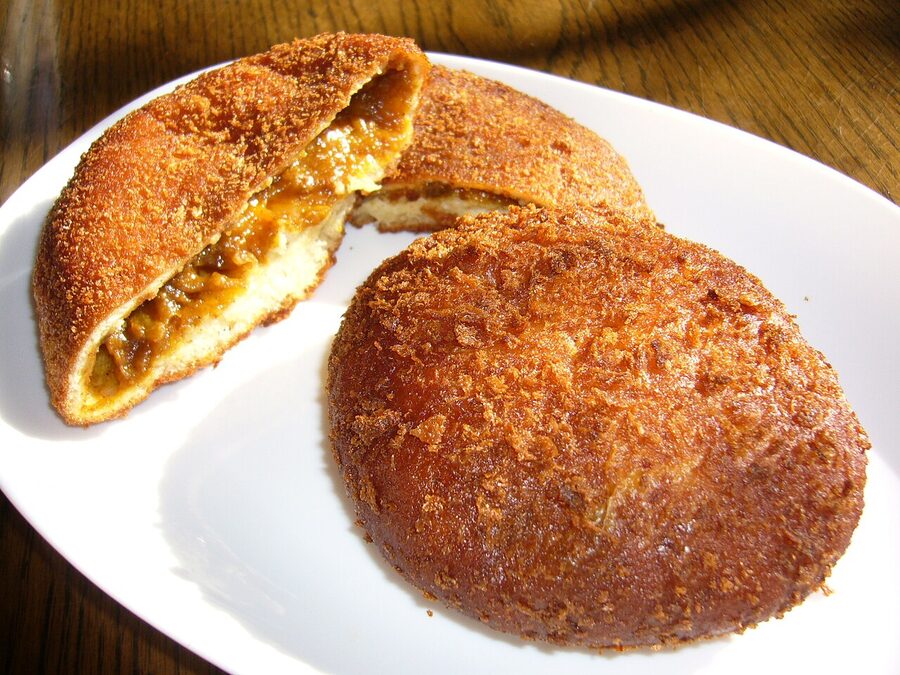
Curry pan (カレーパン) is a double-layered Japanese invention. You take the Meiji-era Japanese curry (British Navy via India, already two cultures deep), put it inside a bread dough (the Portuguese pão, already a foreign loan-word), bread the outside in panko, and deep-fry the whole thing like a donut. The result is a crisp, orange-brown sphere of curry bread that bursts when you bite it.
Wikipedia dates the invention to 1927, “often said” to have been by a man named Nakata Toyoharu, though the article concedes the exact origin is unknown. Two Tokyo bakeries have competing claims: Meikaido in Morishita (Koto ward), and Cattlea Bakery, also in Koto ward. Both opened around the same time, both claim to have invented curry pan, and neither has documented evidence that settles the question. The original Meikaido variant was “Western food bread” (yōshoku pan) at launch, the “curry” name sticking only later.
The genius of the fried version is that it’s the ultimate portable meal. Soft bread insulates hot curry, the panko crust keeps the outside from going soggy, and the whole thing survives half a day in a briefcase. You find it in every konbini (¥150 to ¥250), every bakery chain (¥200 to ¥350 for a freshly-fried one), every Shinkansen station kiosk. The Cattlea original is ¥280. It is legitimately one of the better late-night-train foods on the planet.
Ramen: Chinese, Despite Everything
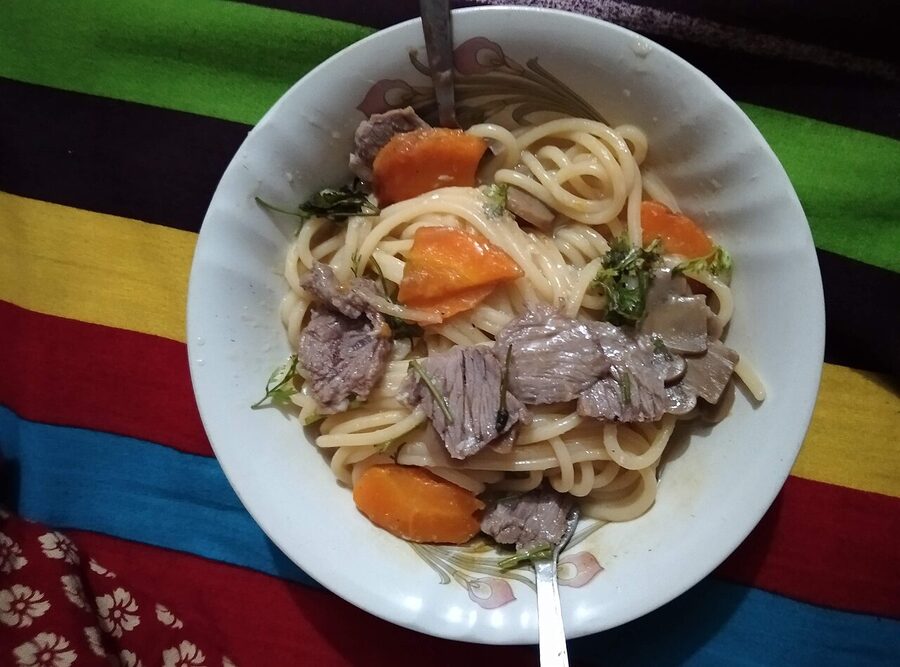
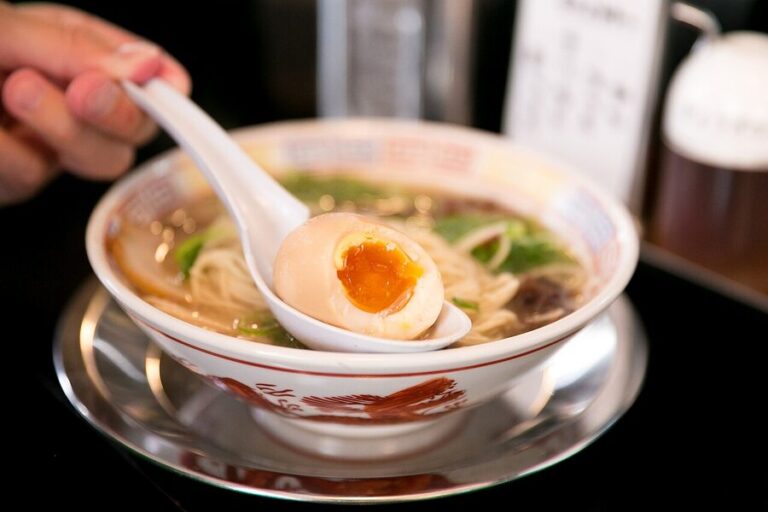
Ramen (ラーメン) is, contrary to ninety percent of ramen shop signage, not Japanese in origin. The word comes from the Mandarin lāmiàn (拉麵), “pulled noodles”, though scholars point out that Japanese ramen has no direct culinary relationship with Chinese hand-pulled noodles. The dish arrived from southern Chinese (mostly Cantonese) immigrants working in the open ports of Yokohama, Kobe, and Nagasaki in the late 1800s. By 1884 the noodle soups served in these Chinatowns were popular enough that Japanese customers were calling them Nankin soba, “Nanjing noodles”.
The first dedicated ramen shop in Japan was Rairaiken, which opened in Asakusa, Tokyo, in 1910. The owner, Kan’ichi Ozaki, employed twelve Cantonese cooks, and he marketed the dish as shina soba, “Chinese noodles”, which is what Japanese people called ramen right up until the end of World War II. Rairaiken’s broth was a chicken-and-seafood shoyu base that became the template for Tokyo-style ramen for decades.
The explosion came after 1945, when two things happened at once. First, millions of Japanese soldiers and colonists returned from Manchukuo (the Japanese puppet state in north-east China), bringing home a taste for Chinese wheat-based cuisine. Second, the US occupation flooded Japan with American wheat flour surplus. Black-market ramen stalls fed the country on cheap, filling bowls. The word ramen itself, according to Wikipedia, was first recorded in 1947, probably an awkward reimport of the Mandarin by the returning soldiers.
Regional styles are deep and endless. Hakata has tonkotsu (see the Fukuoka ramen guide for the full story). Sapporo does miso. Kitakata does shoyu on thick flat noodles. Yokohama Iekei does pork-and-chicken double broth. A standard bowl at a neighbourhood shop is ¥900 to ¥1,400. An extended-menu destination shop like Ichiran or Ippudo will charge ¥1,200 to ¥1,800. The new-wave innovators in Tokyo and Osaka run ¥1,500 to ¥2,500.
Gyoza: What the Soldiers Brought Back From Manchuria
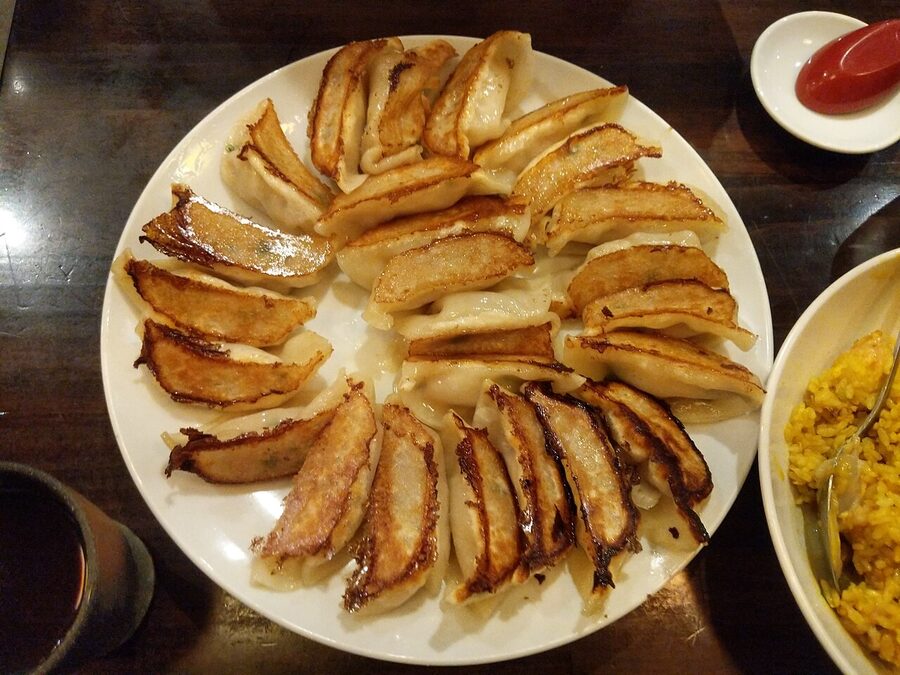
Gyoza (餃子, gyōza) is the other great arrival from Manchukuo. The Chinese original is jiǎozi, dated to the Eastern Han dynasty (25-220 AD), traditionally attributed to the physician Zhang Zhongjing. Chinese jiaozi are typically boiled or steamed, with thicker wheat wrappers, and (in the north, at least) served with black vinegar.
Japanese soldiers returning from Japan’s wartime occupation of north-east China after 1945 brought the recipe home, and a version of the dish took off fast. The Japanese divergence from the Chinese original is distinct. Wrappers are thinner (machine-made rather than hand-rolled), fillings lean heavily on garlic (which is less prominent in northern Chinese jiaozi), and the default preparation is yaki-gyōza: pan-fried on the flat side until a golden crust forms, then a splash of water and a lid until the tops steam through. The crispy-bottom-steamed-top split is the signature Japanese style. Chinese jiaozi are often boiled; gyoza almost never are. If you want the full regional Chinese picture, the Chinese dumplings guide goes into it.
Two Japanese cities fight for the gyoza crown. Utsunomiya in Tochigi prefecture claims to be the “gyoza capital of Japan”, with 200 gyoza restaurants and a 1.5-metre tall gyoza statue outside the JR Utsunomiya station. The Utsunomiya Gyoza Association was formed in 1990 to push the case. Hamamatsu in Shizuoka counters with its own tradition of double-stacked wide-flat gyoza served in a circle around a pile of raw bean sprouts, and the two cities swap the “highest gyoza consumption per household” title between them most years.
Gyoza is almost never a main dish in Japan; it’s a side order with ramen or a beer snack at an izakaya. Six to eight pieces run ¥400 to ¥700 at a chain like Osho or a ramen shop. Specialists like Harajuku Gyoza Lou charge ¥320 for six and sell about six thousand plates a day.
What This Means in Practice
The pattern here isn’t really about foreign influence. Japan has been a trading culture for a long time, and the fact that a dish arrived from Portugal or Britain or China doesn’t tell you anything particularly surprising. What’s striking is how specific and how well-documented the arrivals are. Tempura has a century, a nationality, and a liturgical calendar. Nikujaga has a date, an admiral, and a cookhouse. Naporitan has a hotel, a chef, a general, and a wartime shortage.
Most of these dishes you can trace to a single restaurant that’s still open. Kimuraya in Ginza, 1874. Rengatei also in Ginza, 1899. Fukusaya in Nagasaki, 1624. Rairaiken, gone, but its direct descendants still serve the same style in Asakusa. The continuity is real, and it’s one of the reasons eating in Japan rewards a little historical preparation. You order a bowl of ramen and you’re drinking a broth whose recipe line goes back 140 years to a Cantonese cook in an Asakusa street stall. You bite into an anpan and you are, in a minor way, eating something an empress liked in 1875. That’s worth knowing.
Go to Kimuraya. Go to Rengatei. Eat the curry at Nakamuraya. The history will improve your lunch.
You Might Also Enjoy
 Thai Desserts and Sweets: A Guide from Mango Sticky Rice to Khanom Krok
 What to Eat and Drink in Takayama: Hida Beef, Sake Breweries, and Morning Markets
 Eating Fish in Japan: A Guide to Sashimi, Sushi, and the Market Breakfast
 Eating at Tokyo’s Michelin-Starred Restaurants: How to Get In, What to Order, and Which Stars Are Worth the Wait