
Hong Kong Dim Sum: A Proper Guide to the Tea-House Breakfast
There’s a specific Sunday morning, every few months back when I lived in Shekou, Shenzhen, when I’d get up at 7am, walk through Futian Checkpoint before the queue became a crime against humanity, ride the East Rail south, and arrive in Central or Sheung Wan in time for a teahouse to open its doors at 9. By 9:15 I’d have a pot of pu’er, a paper order card, and the first bamboo steamer of har gow in front of me. The rest of the meal would take two hours, three if we were doing it properly. We’d leave with bellies distended, the bill about HK$180 a head, and the rest of the day taking the shape it takes when you’ve eaten your largest meal by 11am.
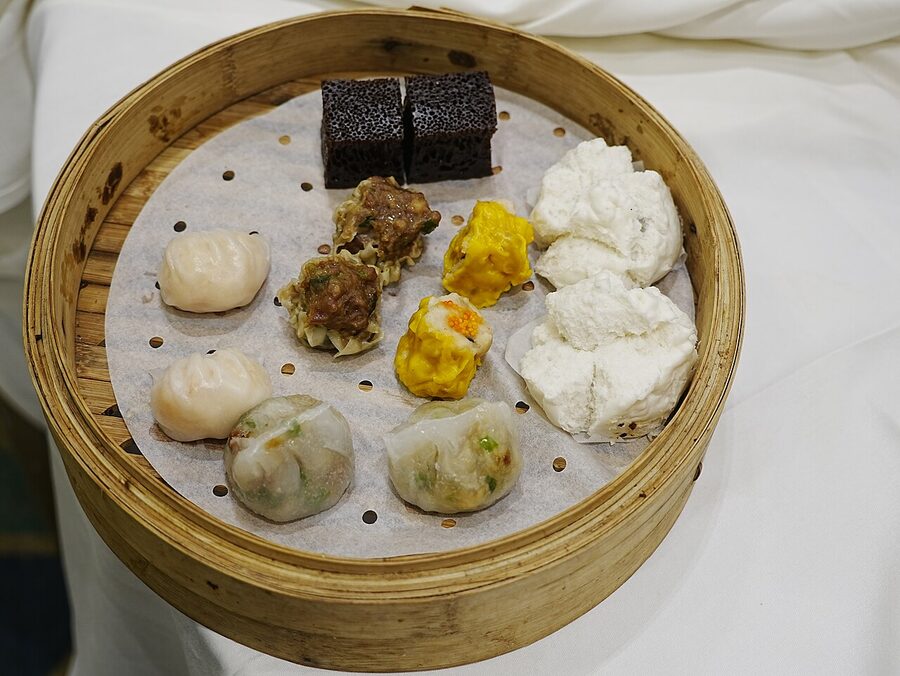
Dim sum is the meal Hong Kong defines itself by. Ask a local what the city’s signature eat is and they’ll say yum cha, every time. It’s the Saturday family meal, the business lunch, the school-friend reunion, and the hangover cure, all rolled into one. And it takes a morning. Not half an hour, not forty minutes. A morning. That’s the point.
This is a guide based on going back often enough that I’ve worked out my opinions. I’ll cover the ritual (there are rules), the canon (ten dishes you actually need to know), the teahouses I’ve eaten at, and how to get through it all without either overpaying or missing the point. If you’re coming in from mainland China, my regional guide to Chinese cuisine puts Cantonese dim sum in context, dim sum is Cantonese, and Cantonese travels worse than almost any other Chinese food, which is a lot of why Hong Kong matters.
In This Article
- What dim sum actually is, quickly
- The ritual, what to do when you sit down
- The canon, what to actually order
- Har gow, the benchmark
- Siu mai, the workhorse
- Char siu bao, the pillow
- Cheung fun, the slippery one
- Lo mai gai, the sticky rice bomb
- Turnip cake, the pan-fried savoury one
- Phoenix claws, the one you’ll probably hesitate on
- Egg tart, the end
- The tea, and why it matters more than you think
- The teahouses, the ones I’ve been to
- Luk Yu Tea House (Central), the old-Hong-Kong one worth the detour
- Lin Heung Tea House (Sheung Wan), it closed, and it matters
- Tim Ho Wan, the cheap-Michelin outlier
- Maxim’s Palace (City Hall, Central), the harbour-view trolley classic
- Yum Cha Central, the modern cheeky version
- DimDimSum and the non-Michelin cheap-and-good end
- Where to go, by neighbourhood
- Timing and why Sunday morning is chaos
- Prices and how the stamp card works
- Etiquette and paying at the counter
- What I still do every time I go
What dim sum actually is, quickly
點心, dim sum in Cantonese, dian xin in Mandarin, translates roughly as “touch the heart.” The meal it came from is yum cha飲茶, literally “drinking tea”, traders down the Silk Road stopped at tea houses for a bite with their cup. Over time the bite became the point, and the Cantonese, who treat food as both art and competitive sport, turned the snack category into one of the most technically difficult cuisines in the world.
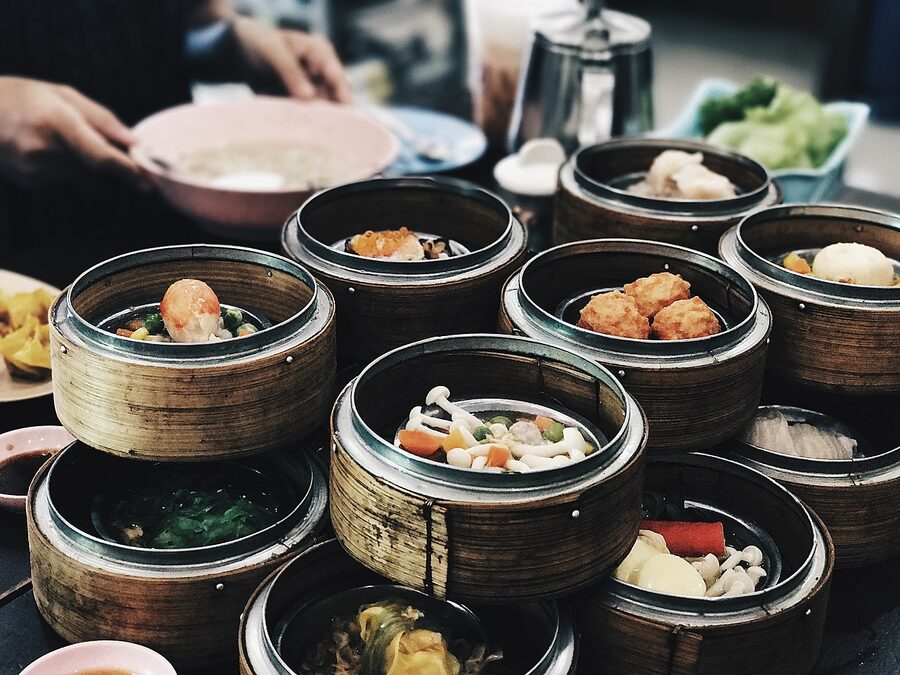
The shape is: bamboo steamers from trolleys or à la carte, three to five pieces per plate, lots of different things across a slow meal. The traditional format is the trolley, carts of fresh baskets wheeled between tables, waitress calls out what she’s got, you wave her over and point. The modern format, now most places, is a paper order card ticked with a pencil. Trolley places are dying out; visit one before they’re gone.
The ritual, what to do when you sit down
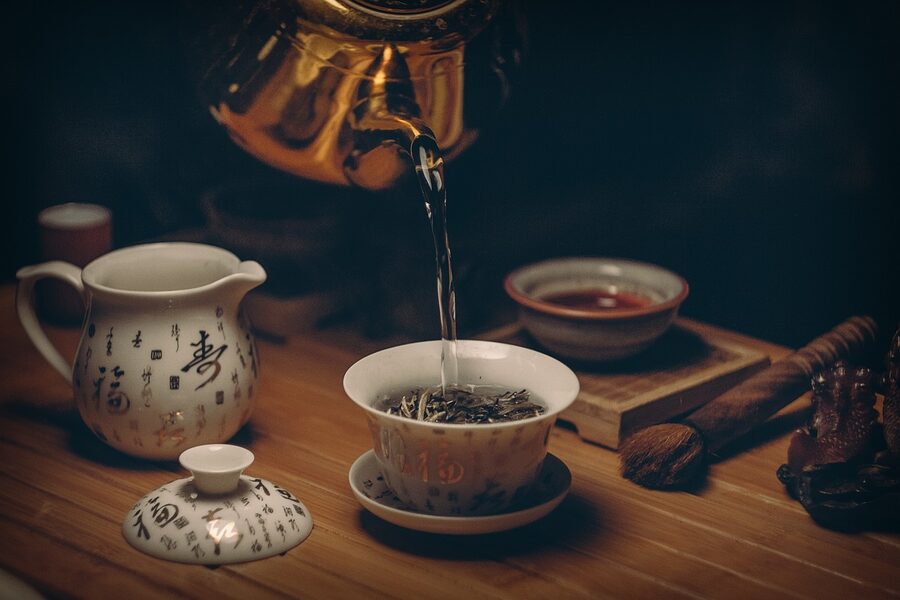
You walk in. Weekend queue after 9am; at trolley places on Sundays, budget 45 minutes. Once seated, the waiter asks what tea you want, first, before the food menu. Pick one (I’ll get to which in a minute). Tea shows up in a small brown teapot with four tiny cups, plus a bowl of boiling water containing your tableware, that’s not free soup, it’s for rinsing bowls and chopsticks. Dip, swirl, pour out into the slop bucket. Ceremonial more than necessary; do it anyway.
Once the tea’s steeped, there’s specific etiquette. You pour for everyone else first, then yourself. If the person next to you is pouring for you, you do the finger-tap: two taps on the table with your index and middle finger, near your cup. The story is that a disguised Qing emperor once poured tea for a commoner, and the commoner, unable to bow without blowing his cover, tapped his fingers instead. Possibly apocryphal. Entirely Hong Kong. Do it.
A second thing, useful at busy trolley places: the chope. You’ll see a pack of tissues or a business card on an empty seat, that seat is taken. The universal Cantonese “I’ve gone to order, hold my place.” Don’t move it, don’t sit down. If you need to chope a seat, do the same. A 7-Eleven tissue packet on the chair is enforceable as a contract.
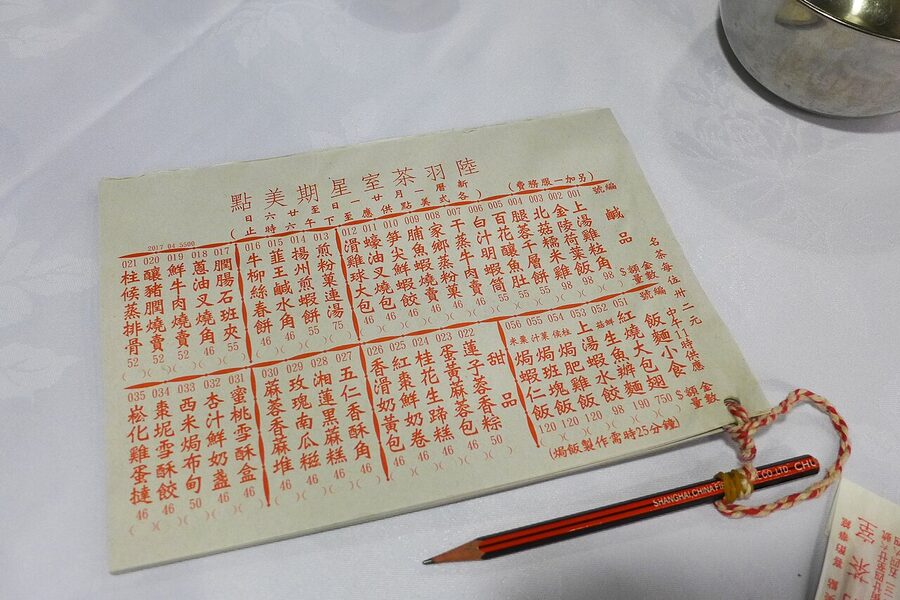
Ordering at a paper-card place: tick what you want on the menu. Don’t order everything at once, three or four baskets to start, more as you go, because the steamers arrive hot and you want to eat them hot. At trolley places, you wait for the carts. The waitress (usually a woman in her sixties who is not to be trifled with) lifts the lid on each basket and names what’s inside in Cantonese. Point at what you want. She stamps a box on your paper card, small, medium, or large, which tells the till what to charge: roughly HK$25 for small, HK$35 for medium, HK$45 for large, plus tea service at HK$15-20 a head. Do not lose the card.
The canon, what to actually order
About ten dishes are essential. You could eat these for the rest of your life and never get tired of them. Rough order of what to get first:
Har gow, the benchmark
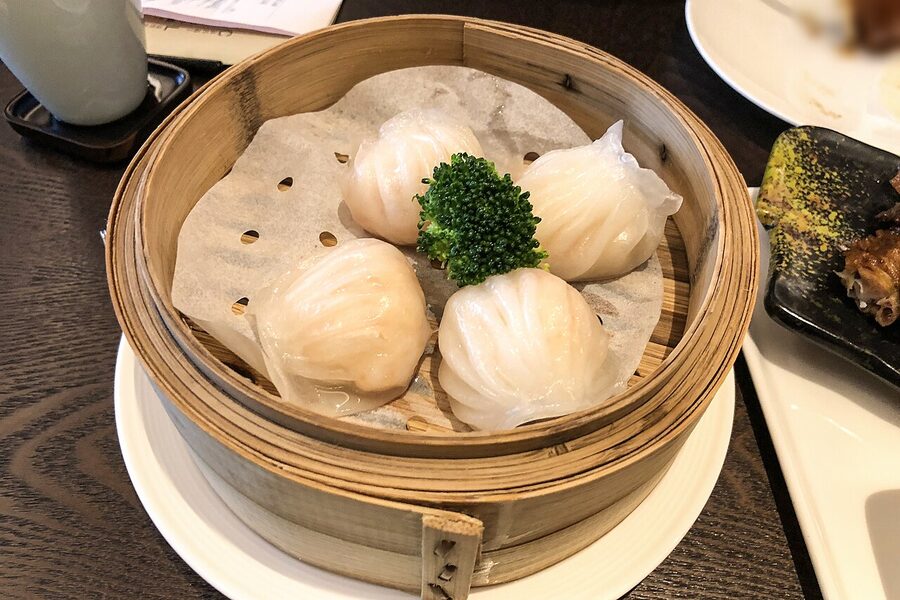
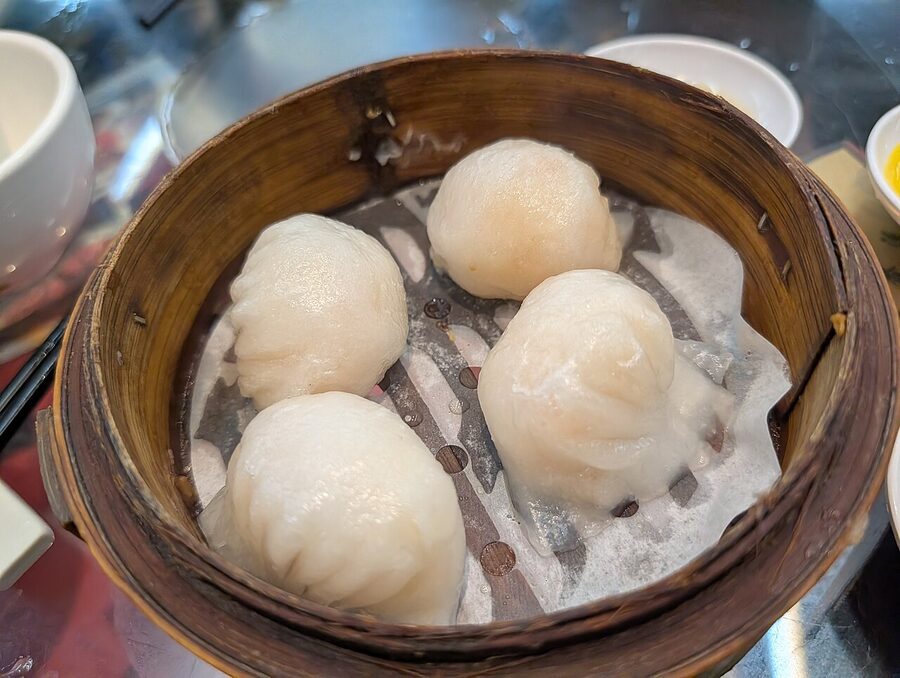
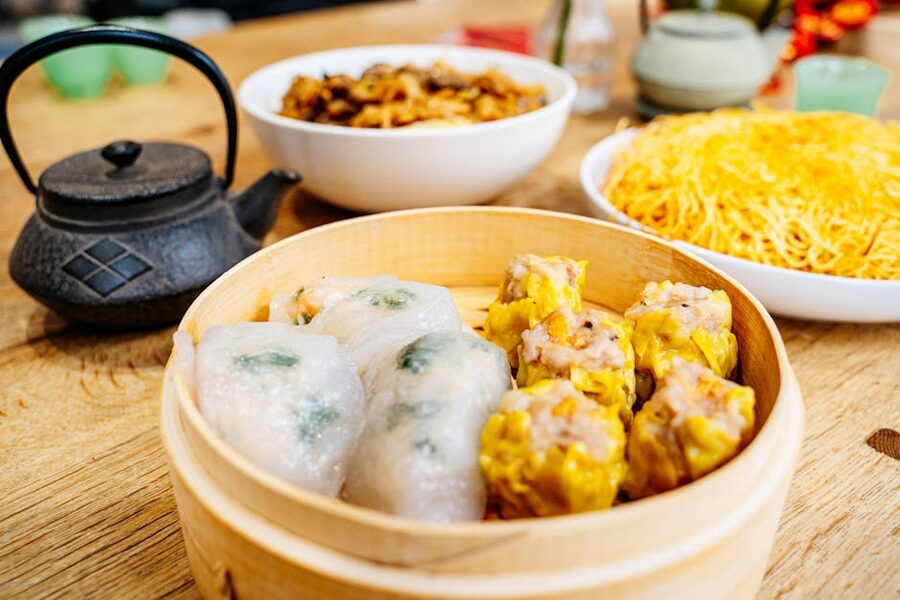
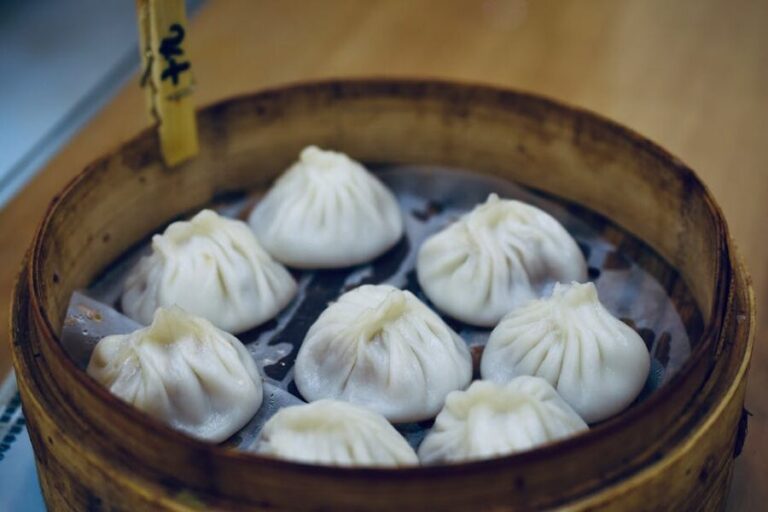
Har gow (蝦餃, steamed shrimp dumpling) is the test of the kitchen. Translucent wheat-starch wrapper, pleated, one whole prawn inside plus sometimes a little diced pork for crunch. A good one doesn’t fall apart when you lift it; a great one is pleated seven to thirteen times and the prawn is still snapping-fresh. A bad kitchen gives itself away immediately, the wrapper is gummy, dry, or tears on the chopstick. Order these first, always. They tell you whether to stay or move on.
Siu mai, the workhorse
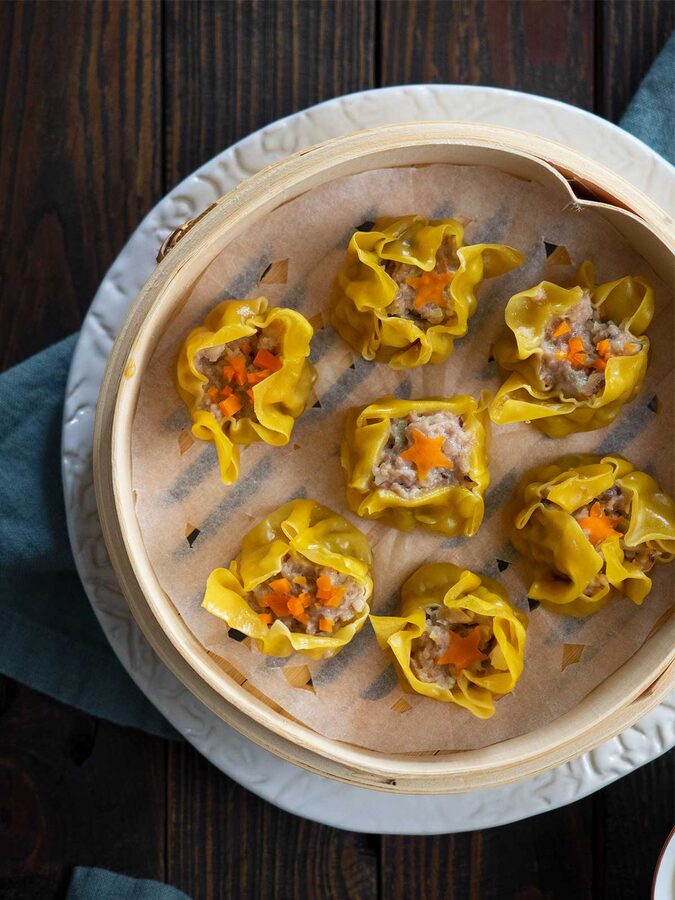
Siu mai (燒賣, open-topped pork and prawn dumpling) is the workhorse. Yellow wheat wrapper open at the top, minced pork and prawn inside, a dab of crab roe or fish eggs. Almost impossible to cook badly, cheap places get away with decent siu mai even when their har gow is suspicious. Three to a basket, two bites each. You’ll order these at every dim sum meal from now on.
Char siu bao, the pillow
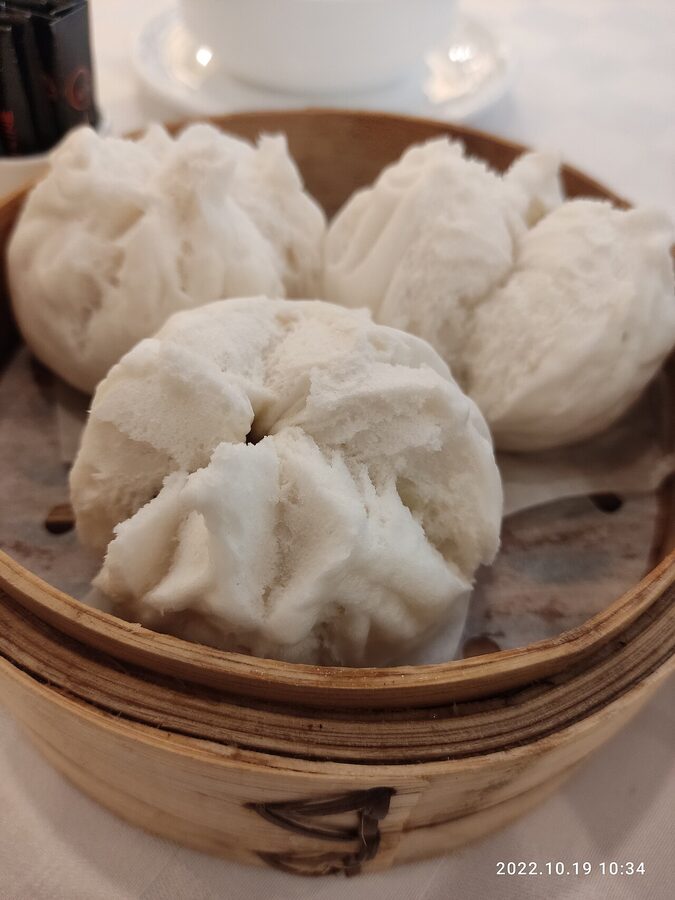
Char siu bao (叉燒包, barbecue pork bun) is the third of the holy trinity. Fluffy white steamed dough split at the top, stuffed with sticky-sweet red-glazed barbecue pork. Bun slightly sweet, pork salty-sweet, glaze thick. There’s a baked version too, glossy golden-brown bun, similar filling, often sold separately. If you see both, get both. I slightly prefer the baked; the steamed is the original.
Tim Ho Wan turned its baked char siu bao into a global phenomenon, there was a stretch where every food blogger in the world photographed them. I’ll cover the chain below; the short version is the bun is genuinely excellent, and it’s also the only thing most critics seem to remember from the restaurant.
Cheung fun, the slippery one
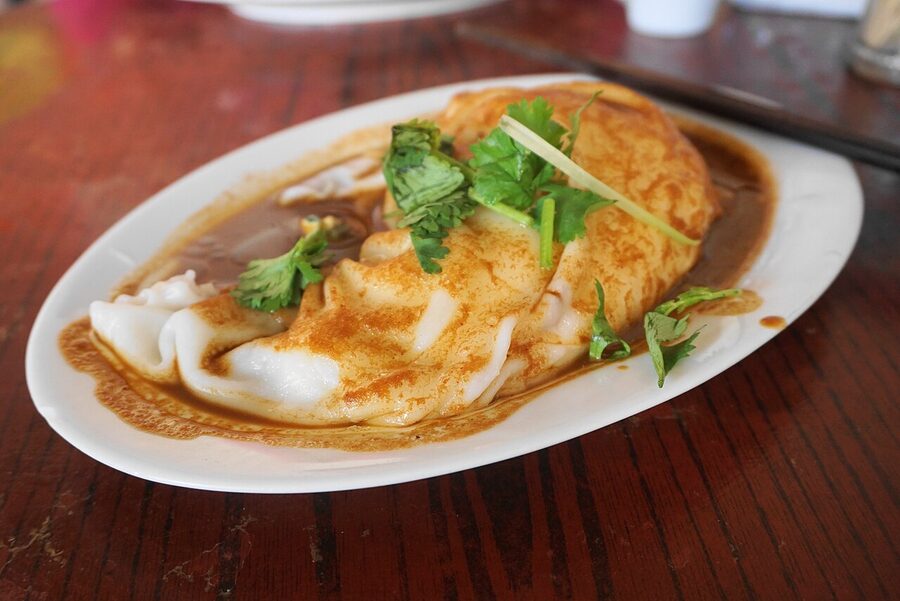
Cheung fun (腸粉, rice noodle rolls) is a slippery sheet of steamed rice flour rolled around prawn, beef, or char siu, dressed with sweet soy. Comes on a small oval plate, cut into three or four chunks. Texture-first food: smooth, cool, soft, and the sweet soy is the whole dish. Order prawn cheung fun first visit. Beef is heavier, char siu sweeter; all good.
Lo mai gai, the sticky rice bomb
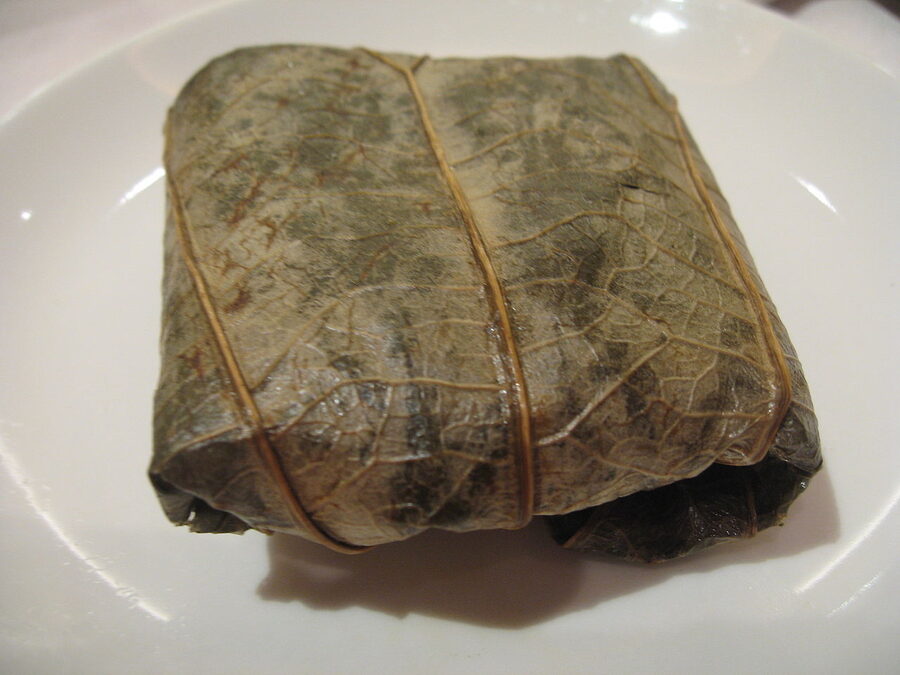
Lo mai gai (糯米雞, sticky rice in lotus leaf) is the heaviest thing on the menu. A tied parcel of lotus leaf arrives; you untie it and unfold the leaves to reveal glutinous rice with chicken, Chinese sausage, dried mushrooms, and usually a salted duck yolk. The lotus leaf gives the rice a specific herbal fragrance that’s half the appeal. Order one between two or three people, or you’ll be full too early.
Turnip cake, the pan-fried savoury one
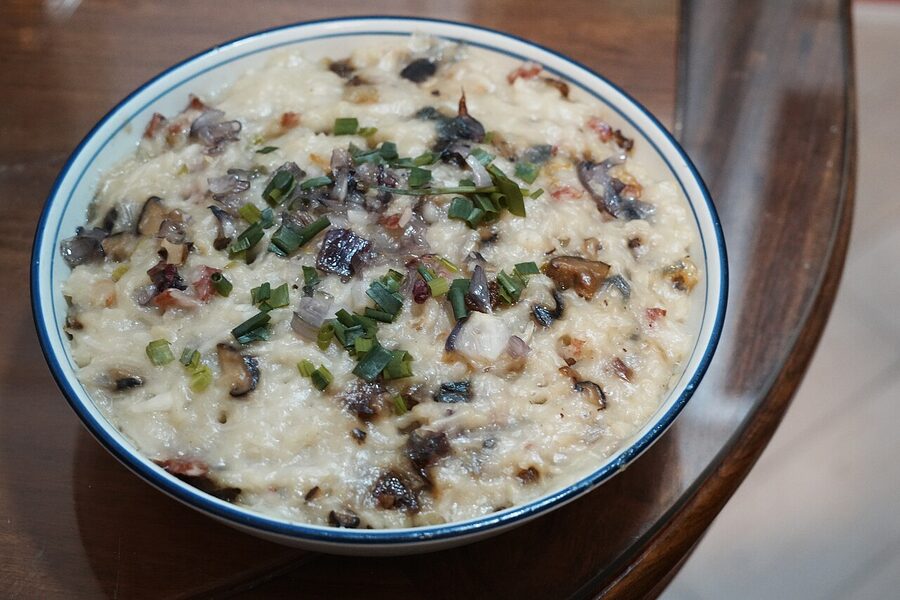
Turnip cake (蘿蔔糕, law baak go) is mistranslated, it’s daikon, not turnip. Shredded daikon mixed with rice flour and tiny dice of lap cheong sausage, dried shrimp, and sometimes preserved meats, steamed into a block, then sliced and pan-fried to order for a crispy brown crust. Served in squares with chilli oil or XO sauce. Savoury, slightly sweet, oddly addictive. Skip it at steam-only places, the crust is the point.
Phoenix claws, the one you’ll probably hesitate on
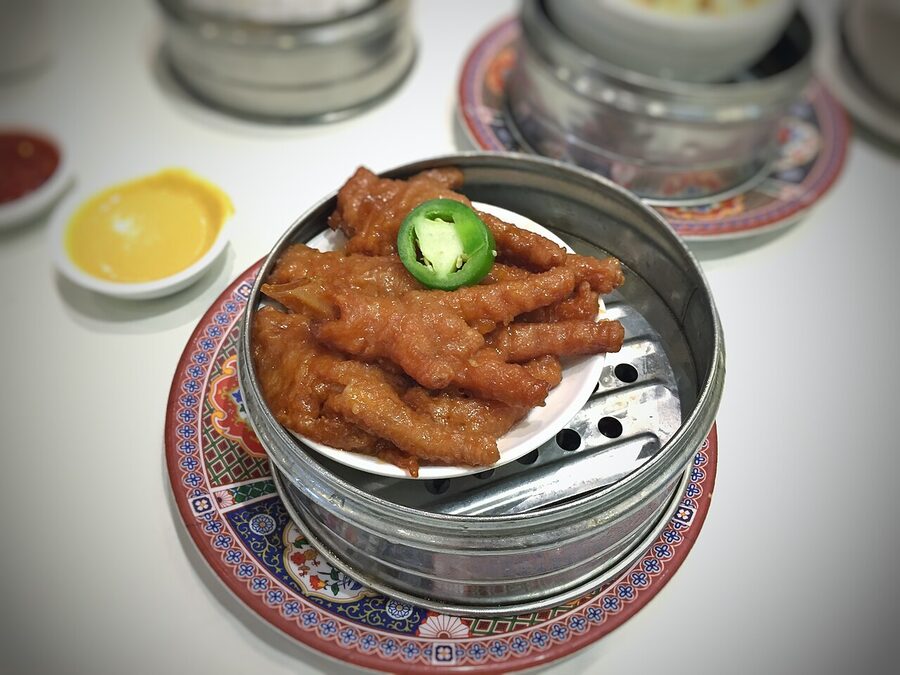
A word on this one. Phoenix claws (鳳爪, fung zau) are chicken feet. The Cantonese method is elaborate, deep-fried, then braised in fermented black beans, soy, garlic, and chilli, then steamed until the skin is gelatinous and falls off the bone. The flavour is excellent: salty-sweet, faintly funky. The texture is gelatinous and bony, and you spit the bones back onto the plate. About half the people I’ve taken to dim sum bounce off it; the other half love it. Try them once before you form an opinion. If you don’t like them, fine; if you do, a whole branch of the menu just opened up.
Egg tart, the end
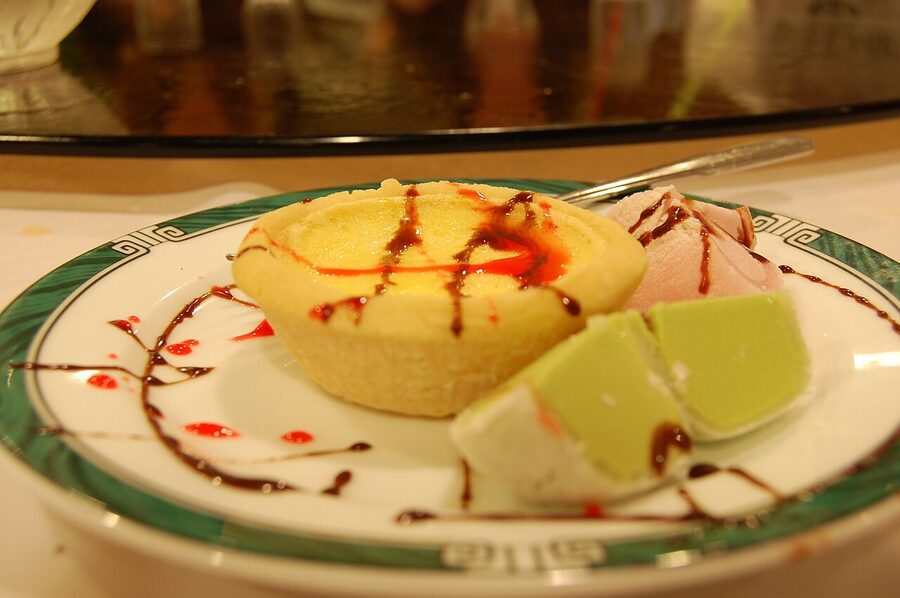
Egg tarts (蛋撻, dan tat) are the usual close. Small pastry cases with a smooth yellow egg custard, the top just set, not browned like a Portuguese pastel de nata, which is a cousin but different. Eaten warm. Two styles in Hong Kong: shortcrust (biscuit-like base, traditional) and puff pastry (flaky, Macau-hybrid, tourist-preferred). Either is fine. Two each, no more, or you won’t finish.
That’s the canon. There’s plenty more, steamed pork spare ribs with black bean sauce, deep-fried taro puffs, sesame balls with lotus paste, and whatever seasonal specials the kitchen’s running, but master those eight and you’ll know what you’re doing anywhere in the city.
The tea, and why it matters more than you think
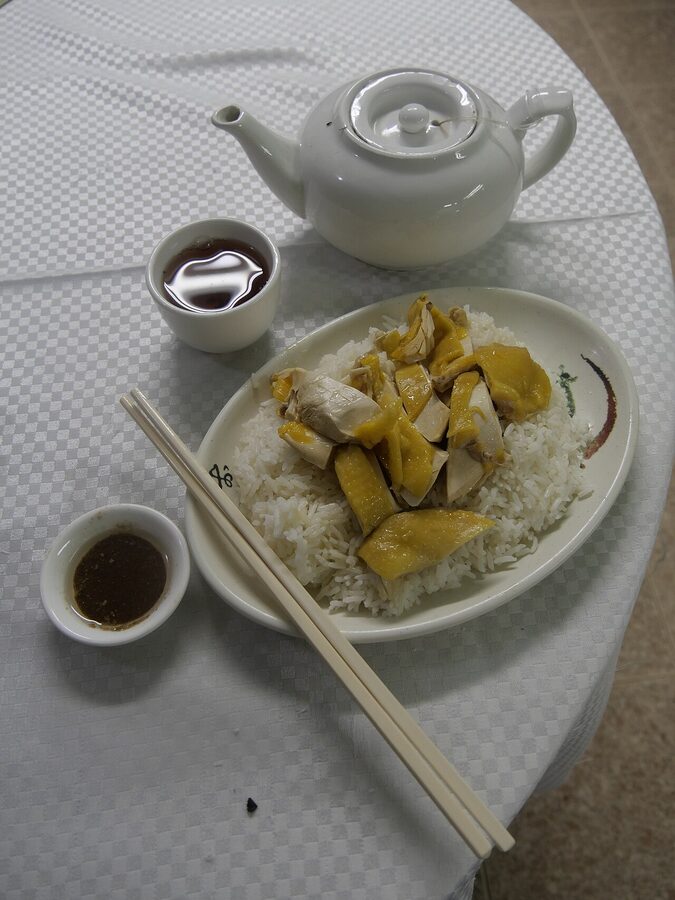
You’ll be asked which tea you want before food. Dim sum is greasy-heavy by design and the tea is what balances it. Four standard options:
Pu’er (普洱, bou lei), dark, earthy, almost coffee-like fermented tea from Yunnan. The default for serious dim sum drinkers because it cuts through grease better than anything else. Order this if you’re having phoenix claws, spare ribs, or anything substantial. Slightly intimidating on a first taste, notes of earth, wood, and mushroom.
Jasmine (香片, heung pin), green tea scented with jasmine. Light, floral, the most approachable for someone new. I order jasmine for the first pot, switch to pu’er for the second once the oilier dishes arrive.
Tie Guan Yin (鐵觀音, Iron Buddha), medium-oxidised oolong from Fujian. Middle ground between jasmine and pu’er, slightly roasted sweetness, orchid-like aroma. The right compromise if the table can’t decide.
Chrysanthemum (菊花, guk fa), dried chrysanthemum flowers, often blended with pu’er (the blend is called guk po). Sweet, floral, considered cooling in Chinese medicine, ideal for hot summer mornings. Not great with greasy dishes alone; blend with pu’er.
Practical notes: the pot gets topped up for free all morning. When it runs low, leave the lid half-off or resting on the handle, that’s the signal. Don’t shout or wave. Someone will be by in thirty seconds. Tea service is HK$15-20 per person flat, regardless of refills.
The teahouses, the ones I’ve been to
Asking a local for the best dim sum in Hong Kong is, as a friend once put it, like asking a Venetian for the best cicchetti bar. Everyone has their grandma’s answer, their neighbourhood answer, and the answer they give tourists. I’ll go through the ones I’ve been to and tell you what they’re like. Each has a different use.
Luk Yu Tea House (Central), the old-Hong-Kong one worth the detour
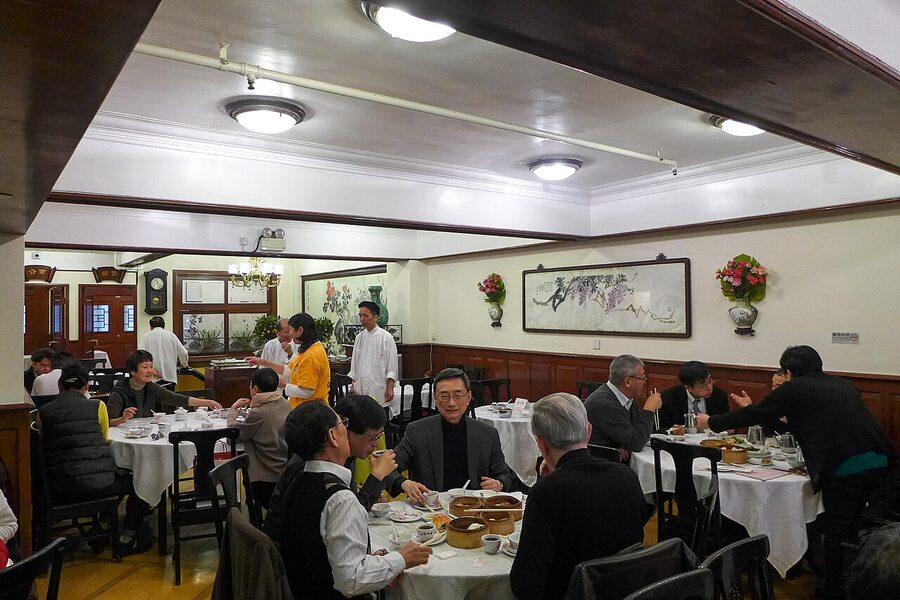
24-26 Stanley Street, Central. MTR Central, Exit D2, three minutes uphill. Opens around 7:00, dim sum runs through to mid-afternoon. Built in 1933 and essentially unchanged since: dark wood panelling, brass ceiling fans, calligraphy on the walls. Where old Hong Kong businessmen came for decades, the kind who arrive alone with a newspaper, nod to the waiter, and get a specific teapot without asking.
The food is good but not the point. The point is the room. On weekday mornings (9-11am is ideal) it’s half-full and you can sit upstairs under the fans and watch old men do the newspaper routine. On Sundays it’s rammed and the queue moves slowly. Har gow decent, siu mai solid, char siu bao fine. Nowhere else in Hong Kong still looks like this. Budget HK$250 a head. Don’t expect English menus; waiters will help if you ask politely.
Lin Heung Tea House (Sheung Wan), it closed, and it matters
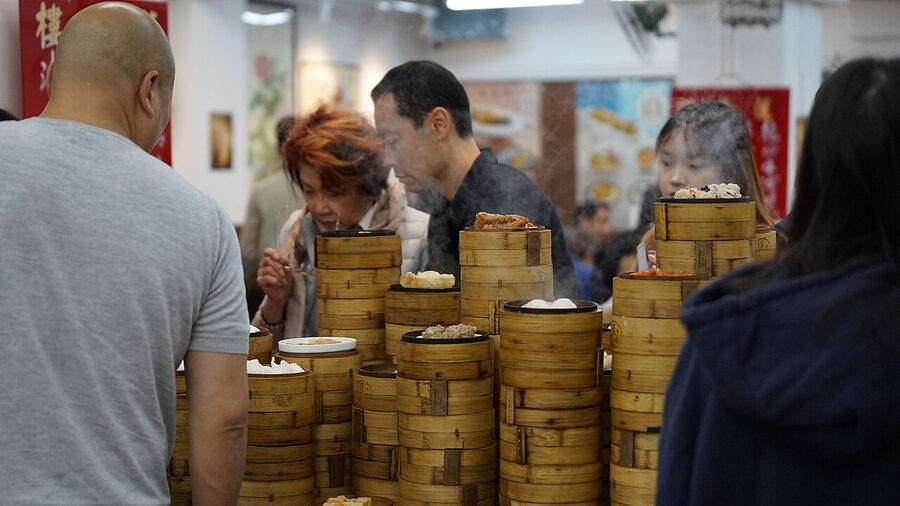
160-164 Wellington Street, on the Sheung Wan-Central border. The original Lin Heung Tea House was one of the last true trolley places in Hong Kong, carts pushed between tables, baskets open as the waitress called out, the sticky chaos of a packed Sunday teahouse. It closed during the pandemic and a good deal of mourning ensued. Then it reopened under different management as Lin Heung Lau in the same space, trolleys still going. Not exactly the same, but close enough that the ritual survives.
Get there early, by 9am weekends or queue, and be prepared to share a table with strangers. The senior aunties running the carts have been doing it for forty years and will tell you to hurry up in Cantonese if you’re dithering. The food is sometimes hit-and-miss, a siu mai basket that’s been on a cart for twenty minutes isn’t the same as one fresh. That’s the tradeoff for the spectacle. Budget HK$150 a head. Go for the experience, don’t get precious.
Tim Ho Wan, the cheap-Michelin outlier
Multiple locations, Sham Shui Po, Central (IFC), Tsim Sha Tsui (Hong Kong Station), North Point. The one everyone has heard of: Michelin star at the original Mong Kok location around 2010, briefly the cheapest Michelin-starred restaurant on the planet. The Mong Kok original closed; the chain has grown to several Hong Kong locations. Still good. The baked char siu bao (HK$30 for three) is the reason most people go and it lives up to the hype, pastry has a light crackle, pork is sticky and caramelised, ratio exact. Har gow, siu mai, cheung fun all solid.
A good meal in a brightly-lit room, service in 20 minutes, budget HK$150-200 a head. What you don’t get is atmosphere; it’s a commercial restaurant that happens to do excellent dim sum. Fine. Sham Shui Po branch for local crowd, IFC for convenience. Avoid weekend lunch entirely; the queues are nonsense.
Maxim’s Palace (City Hall, Central), the harbour-view trolley classic
2/F, Low Block, City Hall, Edinburgh Place, Central. MTR Central, Exit A or J. Massive windows facing Victoria Harbour, full trolley service that feels like a 1970s time capsule. Sunday morning is the designated local family venue, multigenerational dining, kids running under tables, carts coming past every few minutes. A long, loud, wildly enjoyable meal. The harbour view while eating har gow is hard to beat. Budget HK$200 a head. This is where I’d send someone who wants one capital-D Dim Sum Experience.
Yum Cha Central, the modern cheeky version
2/F, Nan Fung Place, 173 Des Voeux Road Central (Central MTR, Exit C), plus branches in TST and Causeway Bay. The Instagram-friendly chain, famous for their pineapple-shaped char siu bao (genuinely excellent, and the pineapple look comes from a golden sugar crust, not actual fruit), face-shaped custard buns, and other novelty items. Underneath the gimmicks the fundamentals are good: the har gow is textbook, the siu mai respectable, the egg tart solid. The modern version of dim sum and it knows it. Go here if you’re bringing someone new to the cuisine, the theatre makes it memorable, but don’t stop here. Go to Luk Yu or Maxim’s Palace too.
DimDimSum and the non-Michelin cheap-and-good end
DimDimSum has several locations (Wan Chai, Jordan, Mong Kok, Sha Tin). The Jordan branch is on Man Ying Street and stays open till 1am, the de facto late-night option. Good, cheap, unpretentious. Another to know: Dim Sum Square (88 Jervois Street, Sheung Wan), no-frills, HK$100 a head gets you full. Not destination meals; the dim sum you eat on a Tuesday because you’re in the neighbourhood. Every district has two or three of these.
Where to go, by neighbourhood
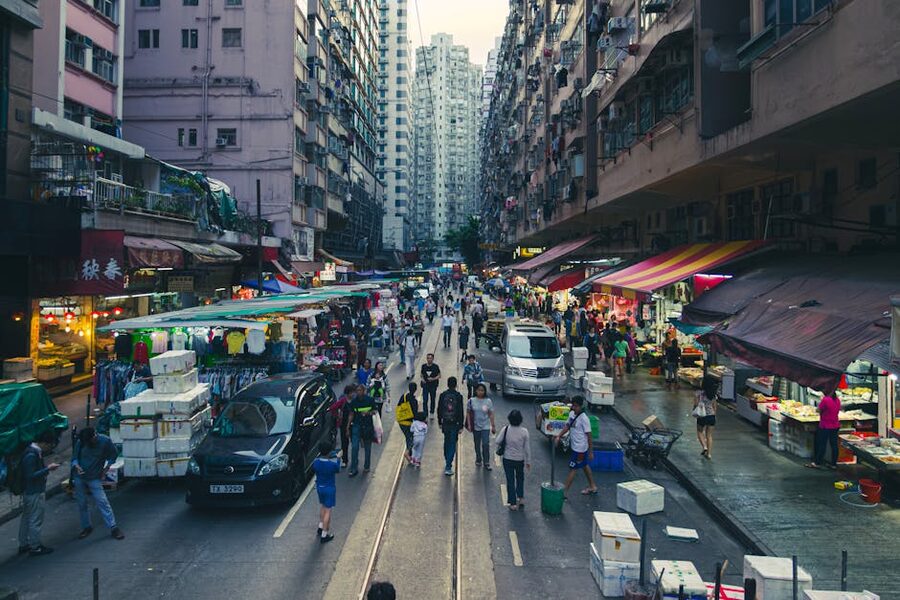
Hong Kong is tiny but the neighbourhoods have distinct personalities. If you’re eating two or three dim sum meals, pick neighbourhoods that match your mood.
Central is the tourist-friendly option. Luk Yu, Maxim’s Palace (City Hall), Yum Cha Central, Tim Ho Wan IFC, all walking distance of Central MTR, all with English-speaking staff, HK$150-300 a head. If you’re staying on Hong Kong Island and don’t want to figure out the trains, this is your answer.
Sheung Wan is where Central shades into the old city. Ten-minute walk from Central MTR but a different feel, older buildings, shops selling dried seafood and Chinese medicines, fewer tourists. Lin Heung Lau on Wellington, Dim Sum Square on Jervois, family-run places along Queen’s Road West. Prices drop 20%. The vibe is genuine.
Sham Shui Po is the Kowloon working-class district, the cheap-and-authentic capital for almost everything, dim sum included. Tim Ho Wan’s Sham Shui Po branch is cheaper than Central and more local. A dozen smaller places around Apliu Street where HK$80-100 a head gets you full. Catch: limited English, some places close by 2pm.
Mong Kok is dense, neon-lit Kowloon, the part Wong Kar-wai shot most of his early films in. Dim sum here is a late-morning affair, 10-11am start. Brunch rather than breakfast. Get off at Mong Kok MTR, walk a few blocks, pick a teahouse by the look of it.
Tsim Sha Tsui is tourist waterfront Kowloon, fine for hotel dim sum but not where locals go. Skip unless you’re already in TST. And if you’re coming down from Shenzhen like I used to, my Shenzhen guide has the border-crossing logistics; the East Rail South is still the fastest way into the New Territories for early yum cha.
Timing and why Sunday morning is chaos
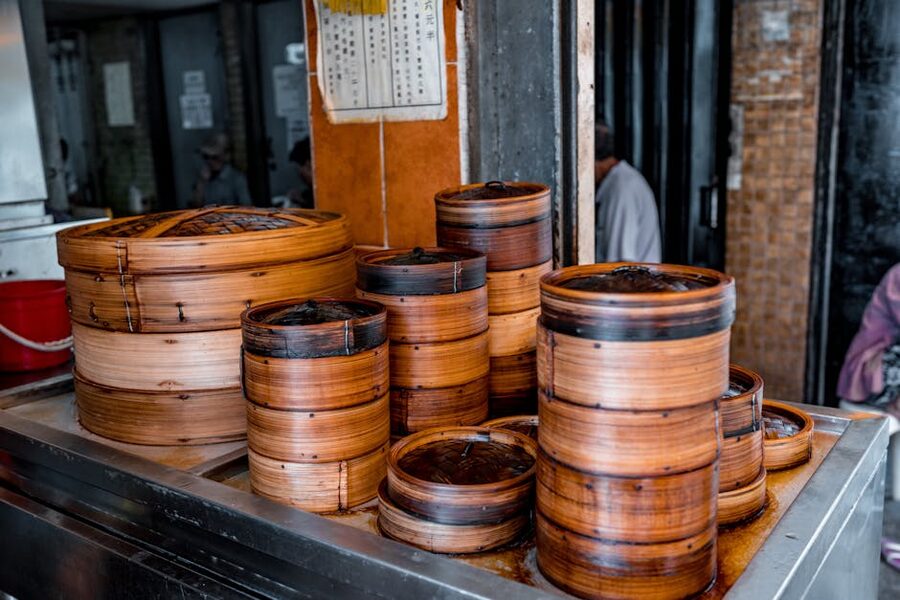
Dim sum is classically a morning-to-early-afternoon meal, with places starting anywhere from 6am (traditional) to 10am (modern chains) and wrapping by 3pm. Some places do an evening service, it’s fine, it’s not the real thing. For the traditional experience, mornings only.
Best times to arrive: weekday 7-9am for empty quiet rooms with old men and their newspapers; weekday 11am-2pm for the office-worker lunch crunch (15-minute waits at quick-turnaround places). Saturday 10am-2pm is family time, busy but manageable. Reservations help at higher-end places.
Sunday 11am-2pm is absolute chaos. Multigenerational family meal is a Hong Kong cultural institution and every teahouse in the city runs at capacity. At Maxim’s Palace or Lin Heung Lau on a Sunday, expect 45 minutes of queueing, loud music from the kids’ tables, and the atmosphere that makes dim sum worth doing. Embrace it. This is the reason to come; don’t avoid it.
Counter-intuitively, the 6:30-8am slot on a weekend is the contrarian’s best hour. Grandparents are in, the place is calm, the food is fresh out of the first-round kitchen, and you’ll be finished and walking Victoria Harbour by 10am while the 9:30 crowd is still queueing. A 7am Saturday dim sum is a fundamentally different meal from a 12:30pm one.
Prices and how the stamp card works
Most dim sum restaurants price by stamp band on the order card. Each dish falls into a category, small, medium, large, special, and the waiter stamps the category onto your card as they bring each basket. The bill is the sum of the stamps plus tea service.
Rough current prices at a mid-range teahouse:
- Small (小點): HK$25-30. Simple items, plain char siu bao, turnip cake, basic rice rolls.
- Medium (中點): HK$35-40. Standard items, har gow, siu mai, pork spare ribs.
- Large (大點): HK$45-55. More substantial, lo mai gai, seafood rolls, specials.
- Special (特點): HK$60-90. Lobster or abalone dumplings, seasonal specials, premium items.
- Tea service: HK$15-25 per person. Flat rate for unlimited refills.
Two people with four or five baskets plus tea: HK$250-350 total. Three or four people with eight to ten baskets: HK$600-800, or around HK$200 a head, genuinely cheap for a Hong Kong restaurant meal. High-end places (Lung King Heen at the Four Seasons, Tin Lung Heen at the Ritz-Carlton) are a different category at HK$600-900 a head. Sham Shui Po will come in under HK$100 a head.
Many mid-range teahouses have 10-20% off dim sum during weekday mornings (before 11am or noon), applied automatically at the till. One of the specific reasons to go early on weekdays, not just quieter, cheaper.
Etiquette and paying at the counter
A few specific things that aren’t obvious to non-Cantonese diners:
Sharing is the default. Everything goes in the middle, everyone reaches in with their own chopsticks, each person has a small plate for what they’re eating now. Lazy Susan: spin gently, never snatch while someone’s reaching. Take one or two pieces per round, this is a marathon.
Pace. Order three or four baskets, eat them, chat for ten minutes, order three more. Don’t let the full spread arrive at once, the last baskets will be cold. At trolley places this is automatic; at paper-card places, stagger your ticking.
Don’t finish the tea. Keep a sip or two in the pot; leave the lid ajar when you want more. The pot gets refilled for free.
Use the spittoon. The small metal bucket on the floor or at the side of the table is for bones, shells, shrimp tails, chicken-foot bones, and tea-cup rinse water. Use it. Don’t pile bones on the side of your plate.
Paying is often at the counter, not the table. Take your stamped card to the till on the way out, they tot it up, you pay, leave. Octopus, Apple Pay, and WeChat Pay are increasingly accepted but card is still refused at some old places; bring HK$500 cash as insurance. Tipping: not expected, 10% service charge is usually on the bill.
One last thing: if you want the most generous version of the culture, try to sit at a shared table. Big round tables are the default in traditional places; if you’re a party of two you’ll often end up with strangers. This is fine and normal. Nod hello. Don’t try to make conversation in English; just eat. The shared meal is its own welcome.
What I still do every time I go
Cross the border before 8. Sheung Wan or Central by 9. Order pu’er and a basket of har gow first, warm-up and kitchen test. Then siu mai, char siu bao (steamed and baked if they have both), prawn cheung fun, one lo mai gai to share, a basket of turnip cake. By the fourth basket, the pot’s been refilled twice. If they have phoenix claws and I like the place, I order them. Finish with two egg tarts and a lap of the streets nearby, Man Mo Temple if I’m in Sheung Wan, the Mid-Levels escalators if I’m in Central. Total elapsed time about two and a half hours. Total spend HK$250-350.
The only real advice: don’t rush it. The worst dim sum meals I’ve had were the ones where I was trying to fit the meal into a pre-existing schedule instead of letting the meal shape the day. Pick the restaurant, block out the morning, let the baskets arrive at their own pace. A day that starts with dim sum is a different kind of day from one that starts with coffee and a croissant. Lean into it.


.jpg)


.jpg)


.jpg)


