
Sapporo Food Guide: Miso Ramen, Soup Curry, and Susukino After Dark
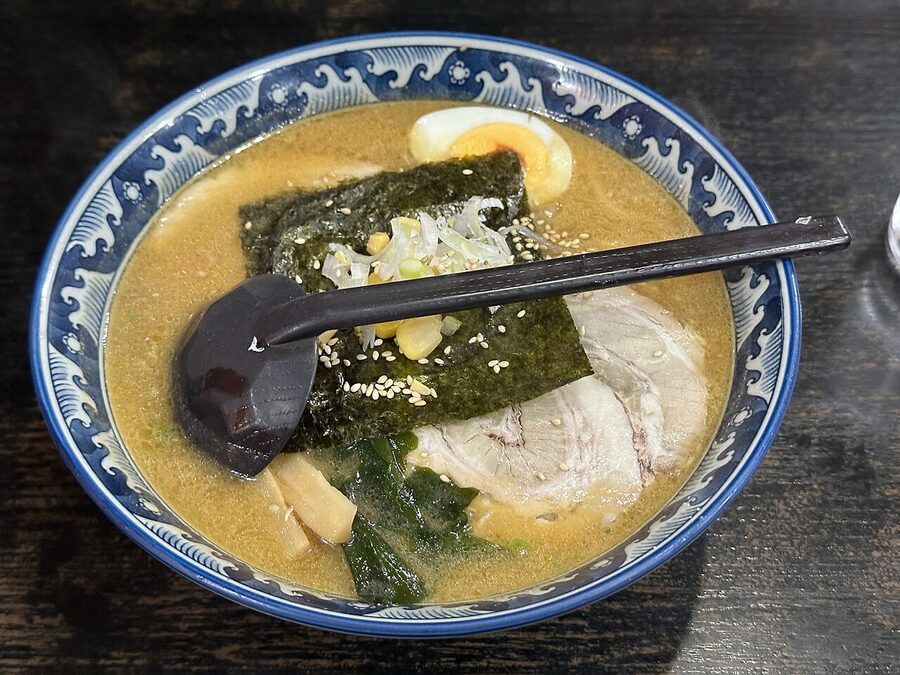
I went to Sapporo for two days and stayed a week. Not because of the snow festival, though I caught the tail end of it. Because of a single bowl of miso ramen eaten standing at a counter on a side street in Susukino at eleven at night, when the temperature outside was minus eight and the lard on top of the broth hadn’t quite melted yet, and everything that happened around it.
That’s the thing about Sapporo. You come for one food and end up rearranging the trip around three others. The miso ramen is the headline, then someone tells you about soup curry and you eat it and it’s not what you thought. Then there’s a lamb grill on a dome-shaped plate, a market selling sea urchin by the gram, a dessert shop that’s been making the same cheesecake since 1998. By day four you’ve stopped planning and started following the queue.
This is a guide to eating in Sapporo written by someone who got distracted by the food and stayed too long. Prices in yen, subway lines and station exits, queue behaviour, the occasional “don’t bother”. Hokkaido produces more than half of Japan’s dairy, most of its potatoes, most of its onions, and a disproportionate share of the country’s best seafood. Sapporo is where all that lands. Two million people, grid streets, Sapporo Beer in the fridge. You’re going to eat very well.
In This Article
- A Short Note on Why the Food Here Is Like This
- Miso Ramen: The One Bowl to Understand First
- Ramen Alley (Ganso Sapporo Ramen Yokocho)
- The Shops Locals Actually Queue For
- Soup Curry, Sapporo’s Other Famous Dish
- Jingisukan: Grilled Lamb on a Dome
- Daruma, The Susukino Original
- Sapporo Beer Garden
- Matsuo Jingisukan
- Hokkaido Seafood: The Real Reason People Keep Coming Back
- Nijo Market
- Tsukko Meshi, The Overflowing Ikura Bowl
- Hokkaido Scallops and Sushi
- Butadon, Zangi, and the Less-Famous Hokkaido Staples
- Dairy, Dessert, and the Hokkaido Milk Problem
- Sapporo Beer and the Brewery That Started It All
- Susukino After Dark
- Odori Park and Daytime Food
- Tanukikoji and the Old Covered Arcade
- Seasons: What to Eat and When
- Day Trip: Jozankei Onsen
- A Few “Skip This” Notes
- A Rough Three-Day Plan
- Getting Around and Paying
A Short Note on Why the Food Here Is Like This
Sapporo is younger than most Japanese cities. The Meiji government established it as Hokkaido’s administrative centre in 1868, laying the streets on a grid inspired by ancient Kyoto, with a long central park (Odori) splitting the city north and south. The Hokkaido Development Commission brought in American advisors, William S. Clark of Massachusetts Agricultural College arrived in 1876 to help found what’s now Hokkaido University, and with them came dairy, wheat, and an industrial approach to farming the rest of Japan didn’t have. Sapporo Breweries was founded the same year. So you get an unusual cocktail: a Japanese city designed from scratch, a Western agricultural outlook, cold winters that keep seafood firm and demand hearty food, and a local instinct for doing things differently from Tokyo.
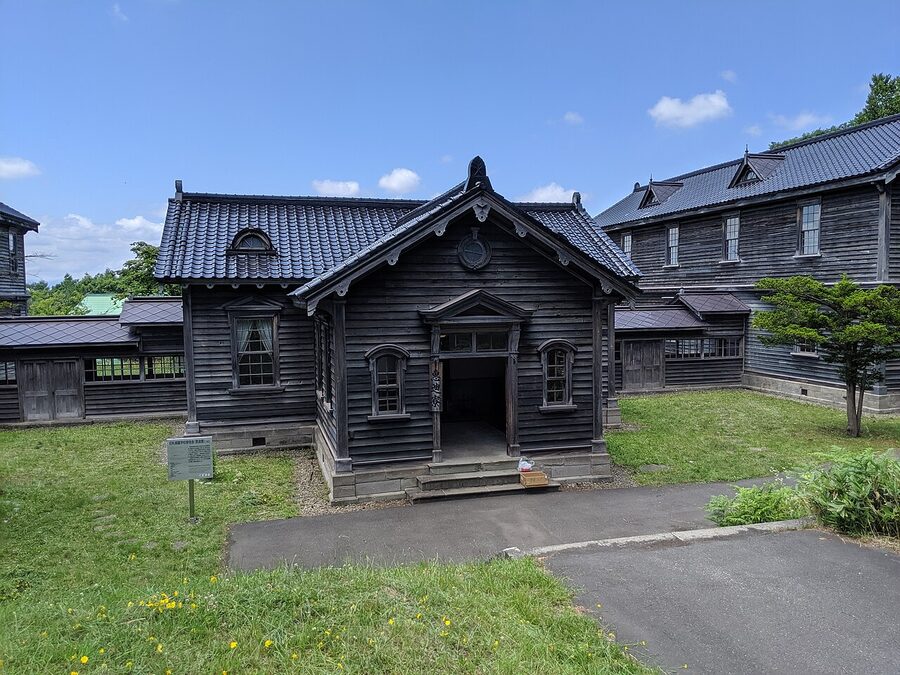
That’s a lot of history for a food guide. I mention it because it explains why Sapporo butter-miso ramen exists (the butter is there because this was a dairy city before it was anything else), why the beer museum is in a 1890s brewery, and why nobody blinks when you order lamb, jingisukan is ordinary dinner here in a way it isn’t anywhere else in the country. Food.
Miso Ramen: The One Bowl to Understand First
If you know anything about Sapporo food before you arrive, it’s probably miso ramen. The story is that a cook called Morito Omiya, at Aji no Sanpei near Sapporo Station, was experimenting with a miso-based pork broth in the mid 1950s. It took off. By the 1970s miso ramen was being eaten across Japan, but Sapporo is still the city that does it best. Aji no Sanpei is still running, at 4-chōme, Minami 7-jō-nishi, near Tanukikoji, if you can get in during the short opening hours, it’s the original.
What makes Sapporo miso different: the noodles are yellow, thick, and curly, they hold the heavy broth without going soft. The broth is miso-based but fortified with pork bone, ginger, and a spoon of garlic oil the cook drops in at the pass. Corn and butter are the topping moves you get here and don’t see down south. Corn sounds wrong until you taste it. It isn’t wrong.
I’d say Sapporo miso is the heavier, fattier cousin of the lighter Hakata tonkotsu style, where Hakata is cloudy pork-bone served scalding with thin noodles, Sapporo is miso depth and a lard cap that insulates against the weather outside. Both are great. They’re built for different climates.
Ramen Alley (Ganso Sapporo Ramen Yokocho)
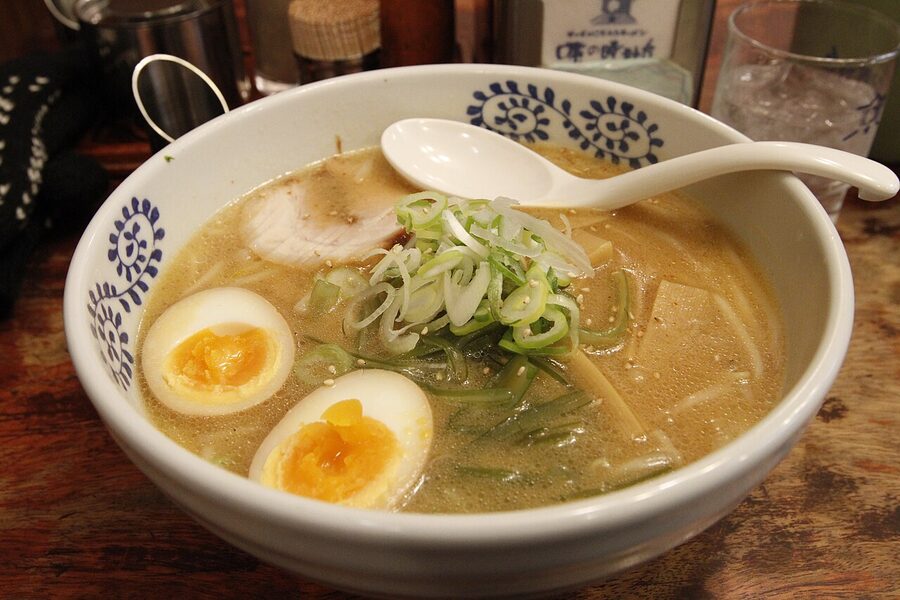
The headline ramen spot in Sapporo is Ganso Sapporo Ramen Yokocho, Ramen Alley, a narrow lane in Susukino with about 17 shops shoulder to shoulder. Minami 5-jō-nishi 3-chōme, Chūō ward, two minutes from Susukino station on the Namboku line (exit 3). Most shops here are fine. Some are great. Teshikaga Ramen, which uses miso and noodles from eastern Hokkaido, is the one I’d send you to, the broth is darker and the chashu gets a quick blast on the grill before it goes on top. ¥900-1,200 for a standard bowl. A sister alley, Shin-Ramen Yokocho, sits two blocks over if the first is heaving.
The Shops Locals Actually Queue For
Outside the alley, three names come up when you ask a local. Menya Saimi, near Misono station (Toho line, one stop from Fukuzumi), is the shop with the biggest queue and the most polished bowl, miso broth thick enough to coat a spoon. 40-60 minutes at lunch. Worth it. Sumire, with its original branch in Nakanoshima, was the shop that sold the rest of Japan on Sapporo miso in the 1990s, broth deliberately scorching, topped with a ladle of lard to trap heat, eaten fast. Ramen Shingen, Minami 14-jō-nishi, is where locals who can’t face the Saimi queue go, less cult, just as good.
One practical note: Sapporo ramen shops have a ¥900-1,300 base bowl with toppings at ¥100-200 extra. Add corn. Add butter. Add the ajitama (soft-boiled egg). Don’t order the “special” with everything on it, toppings drown the broth. A plain miso with corn, butter, and egg is the better ¥1,200.
Soup Curry, Sapporo’s Other Famous Dish
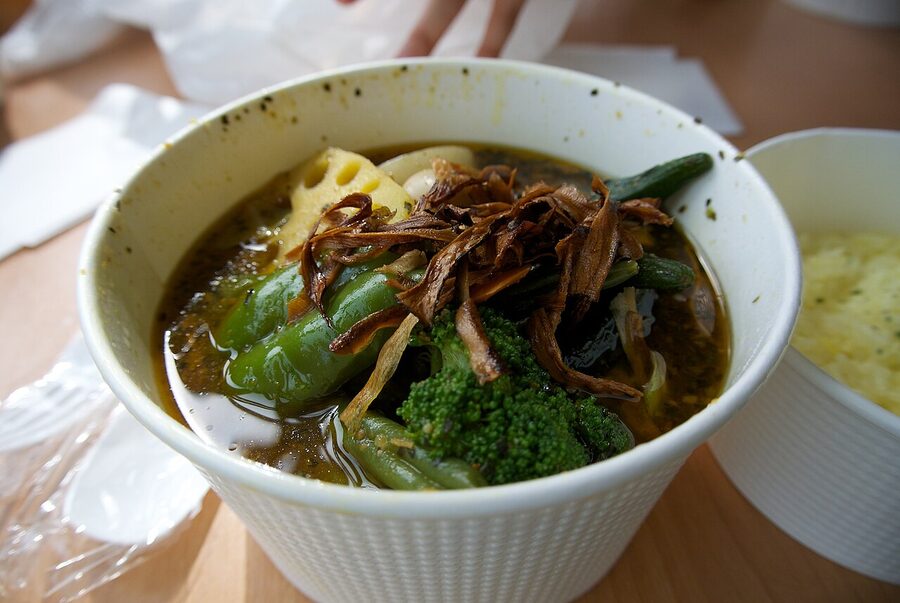
Soup curry is the dish most people miss on a first trip, and I think it’s the more interesting of Sapporo’s two famous plates. It’s a post-war invention, a shop called Ajanta in the 1970s is the story you’ll hear most often, though a couple of other shops claim it. South Asian-style thin curry broth, served over rice, with vegetables cooked whole rather than diced and stewed. Not Japanese curry (that’s a thick brown gravy from the Meiji era). Not Thai curry. A Sapporo thing, and good.
The four places everyone argues about are Garaku, Picante, Suage, and Rojiura Curry Samurai. I’d send you to any of them. Here’s how I rank them:
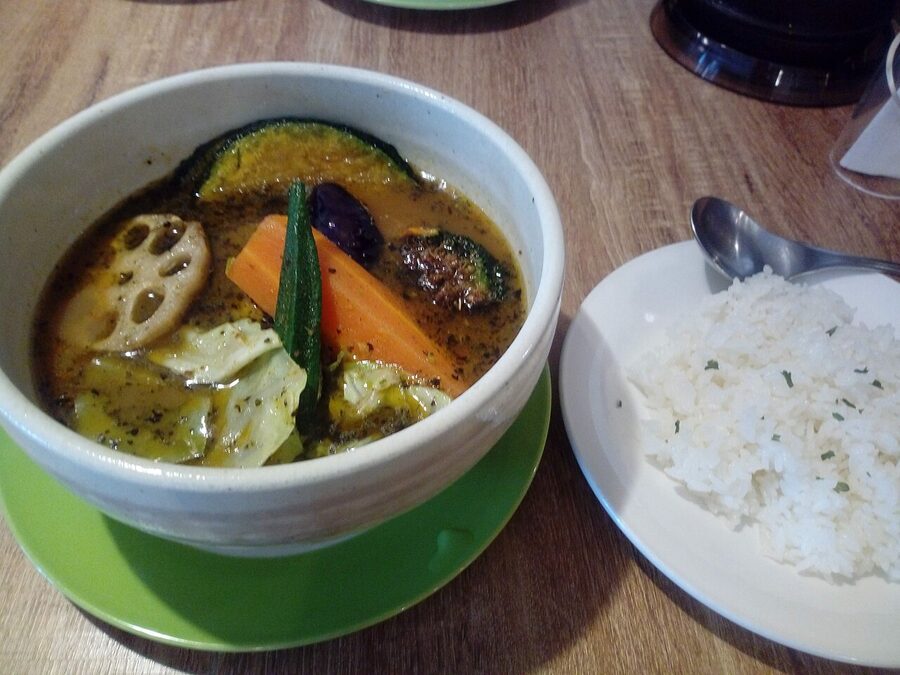
Garaku (Minami 3-jō-nishi 2-chōme, Susukino) has the longest queue for a reason. Darkest, most spice-forward broth in the city. They’ll ask you to pick a broth base (I get the “Garaku original”), a spice level (1-40, don’t go above 10 on a first visit), and a rice portion. Chicken bowl around ¥1,500. Queue an hour at dinner, or go at 2:30pm.
Picante is a chain, but the original branch near Hokkaido University (short walk from Kita 12-jō on the Namboku line) has the best version. Lighter broth than Garaku’s, the “herbal medicine” option is better than it sounds. Vegetarians well handled here.
Suage+ (multiple branches, the Susukino one is easiest) goes hard on the vegetable loadout, huge roasted chunks, more coconut in the broth. Best if you don’t love heat.
Soup Curry King and Rojiura Curry Samurai round out the Big Five. King has the largest portions and the widest spice range. Samurai is the most classic, if you only try one, go here.
A single bowl of soup curry runs ¥1,200-1,800. More filling than you’d think. Most shops ask if you want a smaller rice portion (sukunime, 少なめ) for ¥50 off, and that’s usually the right call.
Jingisukan: Grilled Lamb on a Dome
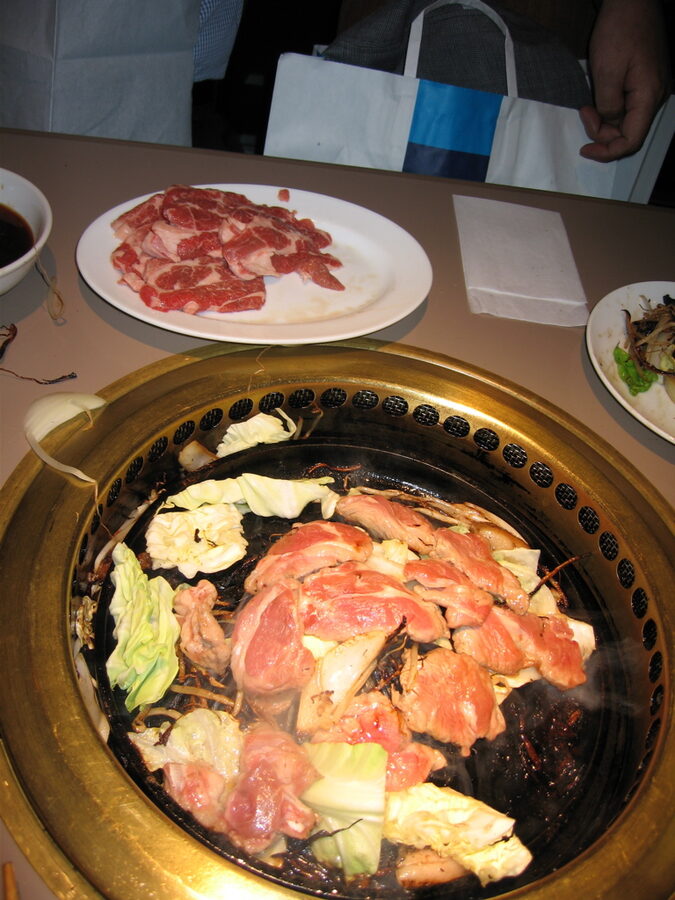
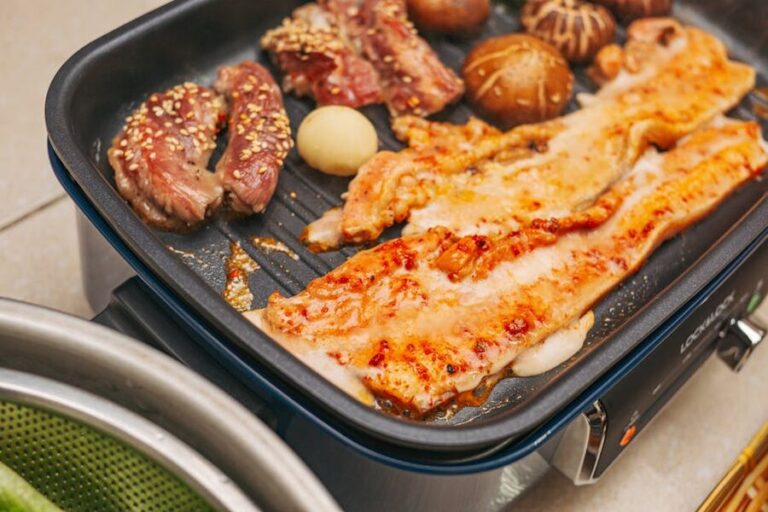
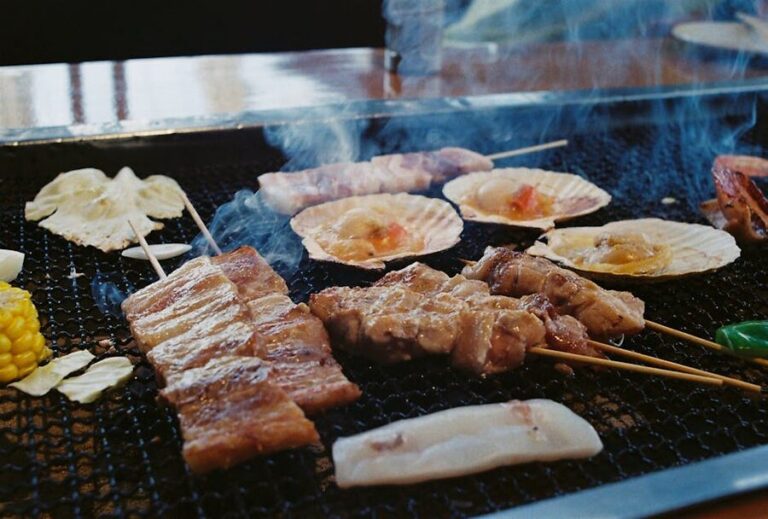
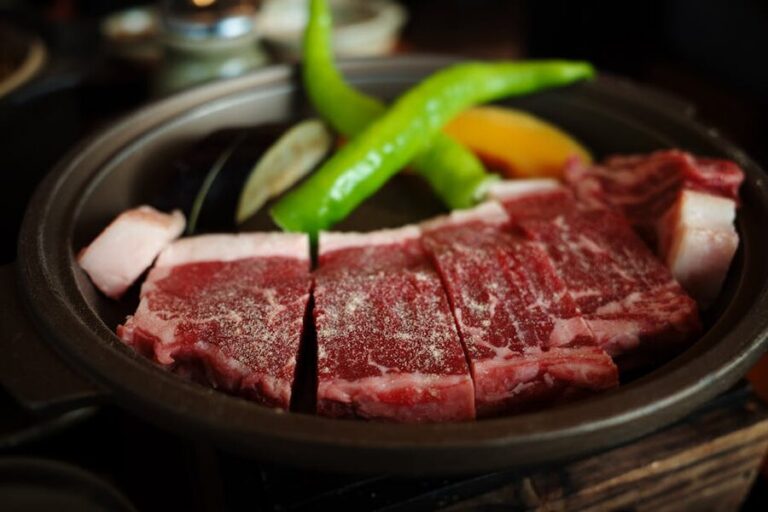
Jingisukan, Genghis Khan, is grilled lamb, cooked at the table on a cast-iron plate shaped like a domed helmet. Shared, with beer. Smoky, a bit messy, the kind of meal that lands in your clothes. The name was coined in the 1930s by Tokuzō Komai, a Sapporo-born man who’d been inspired by grilled mutton dishes from northeastern China; first written record 1931, first dedicated restaurant opened in Tokyo 1936. It became a Sapporo institution during and after the Second World War, when lamb was one of the few meats Hokkaido had in quantity. Never left.
The question isn’t whether to eat jingisukan in Sapporo. It’s where. The two schools are: the big theatrical beer-hall-and-vat version at Sapporo Beer Garden, or the small smoky neighbourhood shop version at Daruma.
Daruma, The Susukino Original
Daruma is the one if you only do this once. The original (Daruma 4.4) sits on the corner of Minami 5-jō-nishi 4-chōme in Susukino, two minutes from the station (Namboku line, exit 4). Queue starts 30 minutes before the 5pm opening. Tin shack inside and out, twelve counter seats, a dome on each, a small staff moving fast. No menu to read. Order lamb (¥900), maybe a side (¥500 kimchi, ¥300 rice), and a beer (¥550 large Sapporo). Meat comes raw, you grill it over the dome, you dip in tare (garlic-soy, chilli flakes, grated apple). Per person: ¥2,500-3,500 depending on how much you drink. Two other Daruma branches in Susukino for when the original queue is absurd. Almost as good.
Sapporo Beer Garden
If you want the brewery atmosphere, the red-brick industrial building, and all-you-can-drink, Sapporo Beer Garden is worth a trip. Higashi-ku, ten minutes by taxi from Sapporo Station or 15 minutes on foot from Higashi Kuyakusho-mae (Toho line, exit 4). Kessel Hall is the one you want, the old copper-kettle fermentation room with 20-metre ceilings. 100-minute all-you-can-eat lamb plus all-you-can-drink Sapporo is around ¥4,500. Bring stretchy trousers.
Matsuo Jingisukan
Matsuo is a chain, originally out of Takikawa, now with a good-sized Sapporo branch near the station. The lamb here is pre-marinated rather than grilled-then-dipped, a sweeter, apple-based tare. Beginner-friendly. A two-person set is around ¥5,500.
Hokkaido Seafood: The Real Reason People Keep Coming Back
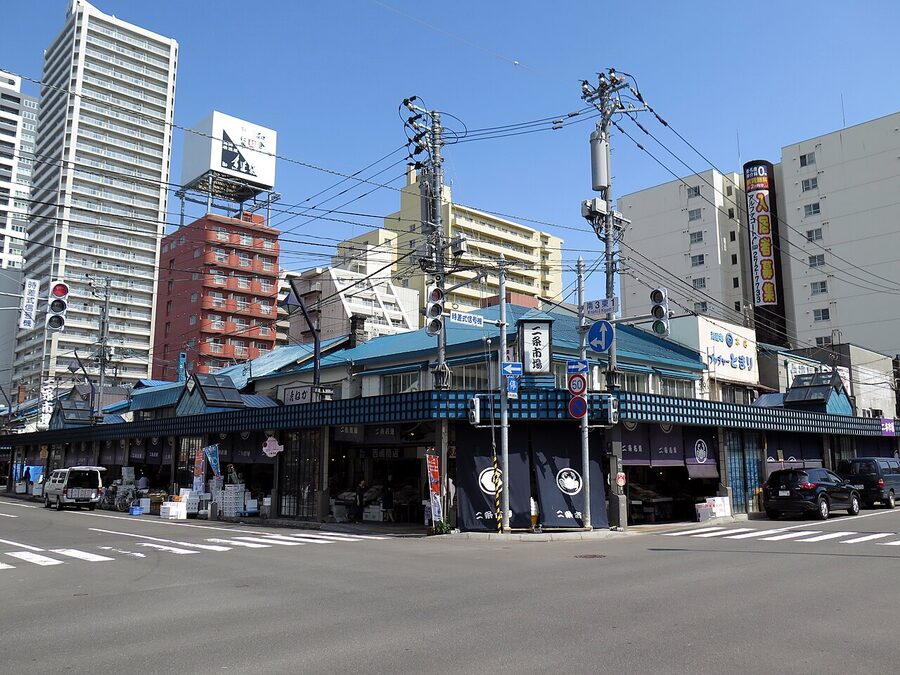
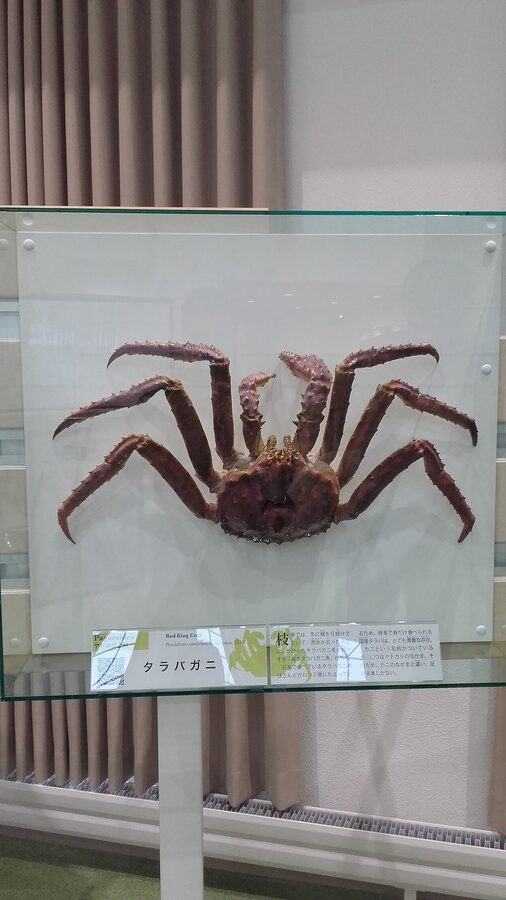
Hokkaido’s cold water is the reason. Rishiri and Rebun islands in the north sit in plankton-rich currents, which is why their uni is the one every high-end sushi bar in Tokyo wants, it’s also the gateway to the harder end of the Japanese seafood spectrum, where ika somen and shiokara wait for you on the izakaya menu once you’re comfortable with raw uni. Crabs come from three groups: taraba (red king), zuwai (snow), and kegani (hair, which serious Hokkaido crab-eaters will tell you is the most flavourful). Salmon runs from September. Scallops from Funka Bay and the Okhotsk coast are bigger and sweeter than anything from the Seto Inland Sea. If you care about Japanese fish, plan an extra day for this.
Nijo Market
Nijo Market is your first stop. Half-covered market at Minami 3-jō-higashi 1-chōme, five minutes east of Odori station (exit 34 or 36). Not big, about forty stalls, and caters to visitors more than most Japanese markets. That’s fine. Quality is high and the breakfast-at-a-market experience is the point. Most people come for a kaisendon (seafood rice bowl) at one of the small restaurants tucked between stalls.
Donburi Chaya is the kaisendon spot to know. A tiny eight-seat restaurant at the far end of the market, with a plastic display outside showing every bowl. ¥2,900 for a standard mix (salmon, ikura, tuna, scallop), ¥5,000 for the premium with uni. Rice seasoned with sushi vinegar. Fish cut thick. Open from 7am; go early or queue. I like the kani-ikura-uni trio bowl. If full, Daiichi Kaisenmaru a few stalls over is almost as good with less of a line.
Tsukko Meshi, The Overflowing Ikura Bowl
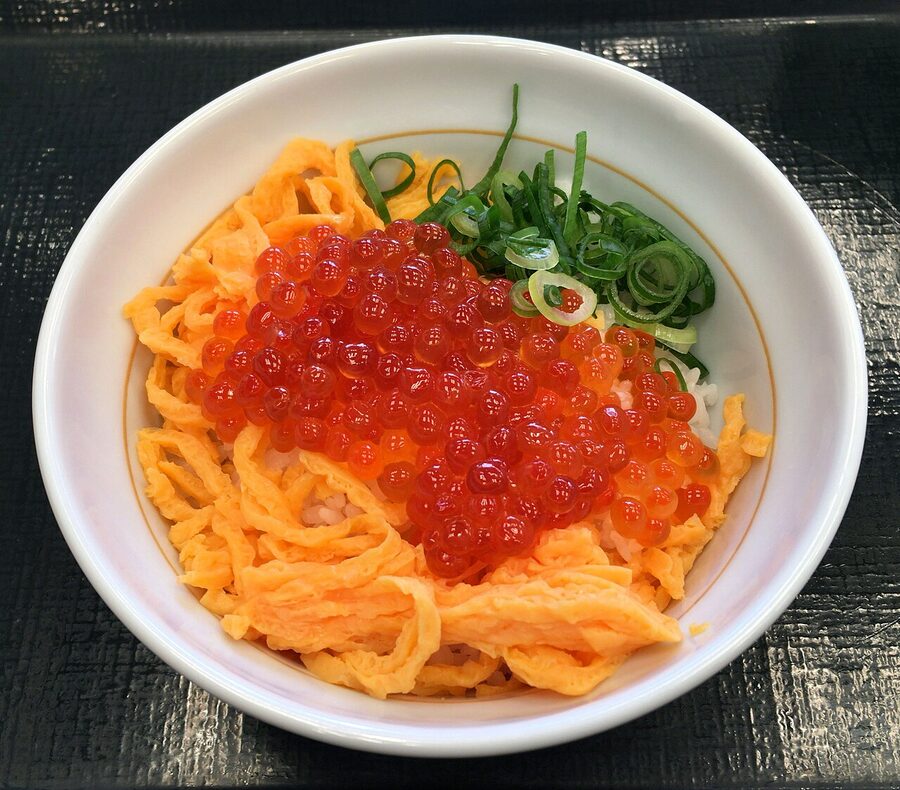
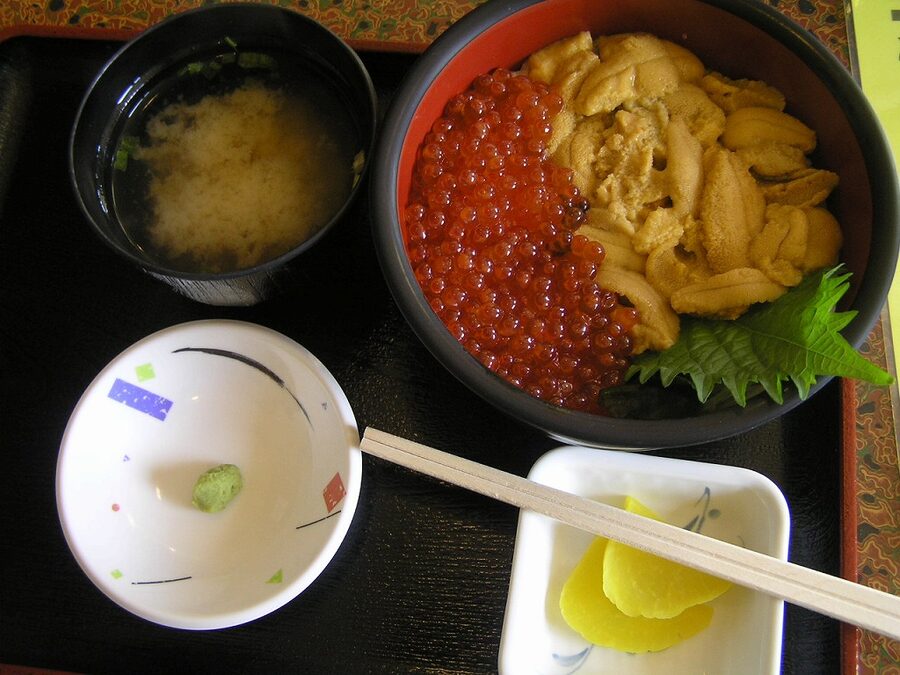
If you’re going for one bowl of seafood in Sapporo, make it tsukko meshi, the “overflowing ikura” bowl. The server ladles marinated salmon roe onto rice until the bowl physically can’t hold another grain. It’s theatrical, yes. When the ikura is good (it almost always is), the flavour justifies the spectacle. Irifune, inside Nijo Market, does a serious version for ¥3,800. Yumekiko in the JR Tower underground runs the same thing slightly cheaper and is less tourist-heavy.
Hokkaido Scallops and Sushi
For sushi proper, Sushi Toriton is a kaiten shop with branches across the city. The Kita-8 branch near Sapporo Station is the one, every kind of Hokkaido fish, ¥150 to ¥650 per plate, full meal ¥2,000-3,500. The fish is noticeably higher quality than Tokyo kaiten. Go before 11am opening or wait two hours. If Toriton’s line is impossible, Hanamaru (multiple locations, one at Odori) is only slightly behind.
For a sit-down crab feast, Kani Honke at Kita 3-jō-nishi 2-chōme (three minutes from Sapporo Station south exit) is the classic. Lunch from ¥7,600; dinner can run ¥15,000. You sit in a private tatami room and course after course of crab arrives over two hours. Worth it once if you’re a crab person. If you’re not, skip.
Butadon, Zangi, and the Less-Famous Hokkaido Staples
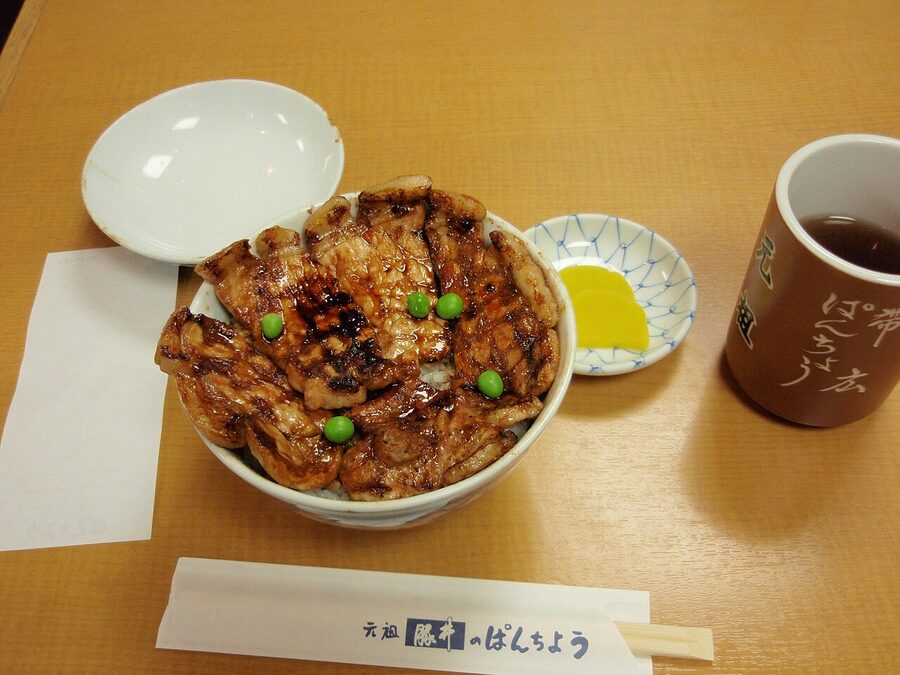
Butadon is a thing. Came from Obihiro in the Tokachi region and is a Hokkaido staple the way gyudon (beef) and oyakodon (chicken) are national staples. Pork belly or loin, sliced paper-thin, grilled fast, glazed with a caramelising tare, piled on rice. ¥900-1,300 at a decent shop and one of the better cheap lunches in the city. Pancho is the Obihiro original (no Sapporo branch); in Sapporo, Butadon Hirata (Odori) and Butadon Tonton (near the station) are both reliable.
Zangi is Hokkaido’s version of karaage, deep-fried chicken, marinated more assertively than the rest-of-Japan version and usually served at izakaya as a snack. The marinade involves soy, garlic, ginger, sake, sometimes egg; the batter is seasoned rather than plain. Easy to order at any decent Japanese izakaya. A plate of five or six pieces is ¥600-900.
Dairy, Dessert, and the Hokkaido Milk Problem
Hokkaido produces more than half of Japan’s dairy, and it shows. Milk here is higher-fat, more aromatic, a little sweeter than mainland milk. Soft serve is everywhere and most of it is good. Cheesecake is a genuine specialty. A handful of confectionery houses have made Hokkaido’s sweet-souvenir business into a national obsession.
Four names to know: LeTAO, Snaffles, Rokkatei, Kitakaro. All four Hokkaido originals. Most people will tell you LeTAO is the single best if you’re trying one, and they’re probably right, the Double Fromage cheesecake (baked cheesecake with a layer of rare cheesecake on top, chilled, dusted with cheese) is extremely good and runs ¥1,944 per cake at the airport. Keeps three days refrigerated. A slice at the café in Stellar Place (Sapporo Station) is ¥650.
Snaffles makes “catch cakes”, puffy cheesecake-filled rounds that travel better than you’d think. Rokkatei‘s marusei butter biscuits (butter cream and raisin between two shortbreads) have a cult following. Kitakaro does a sakusaku pie that you eat within 90 minutes of buying or the pastry goes soft.
For soft serve, Kinotoya Bake near the station does a Hokkaido-milk cone for ¥350, and their baked cheese tart (the real headline product) is ¥200 and one of the better cheap dessert options in Japan. Eat the tarts warm. They sell each batch in about 15 minutes. Snap one when you see them going into the display case.
For serious dessert, Initial (Minami 3-jō-nishi 5-chōme, a block from Susukino) does parfaits at ¥2,000 that are the best I’ve had in Japan. Layers of compote, sorbet, seasonal fruit, chantilly, cake at the base. Eat slowly. Sapporo has a thing called “shime parfait”, the idea that after a long dinner you go for a parfait the way other cities go for a final beer. Initial invented the concept. Open past midnight most nights.
Sapporo Beer and the Brewery That Started It All
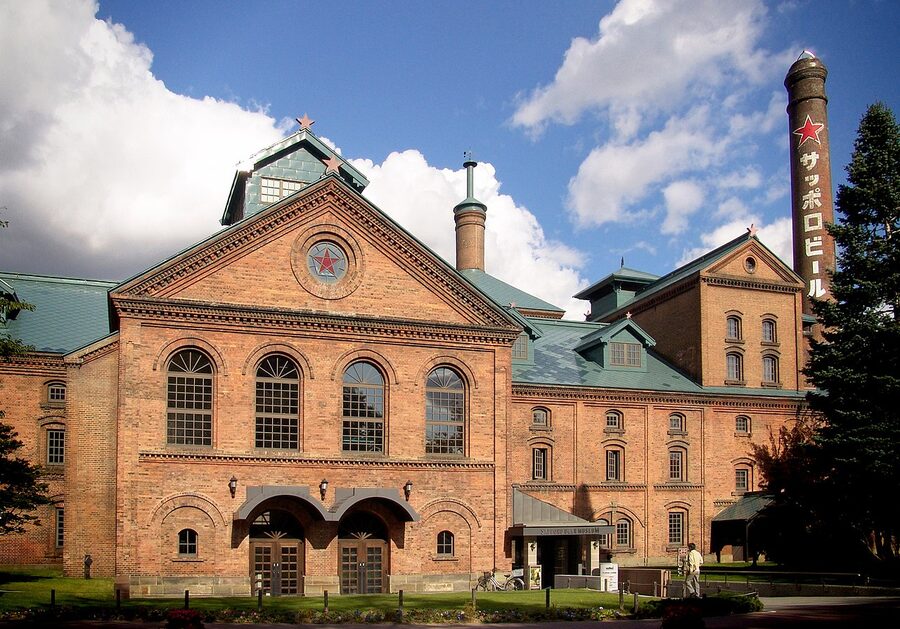
Sapporo Breweries was founded in 1876 by Seibei Nakagawa, a German-trained brewer who became the first brewmaster at the Kaitakushi Brewery. First lager shipped that September. Oldest beer brand still running in Japan. For the full story, the Beer Museum is worth an hour. It’s in the Sapporo Garden Park complex in Higashi-ku, the same grounds as Sapporo Beer Garden, 15 minutes’ walk from Higashi Kuyakusho-mae station (Toho line).
Practical: entry free, self-guided tour 30 minutes, paid tasting ¥600 for three beers (Kaitakushi Beer, Sapporo Classic, Black Label). The gift shop sells Sapporo Classic, the Hokkaido-only version you can’t get anywhere else. Bring some home. For craft, Tap Room Beer Kotan (Minami 2-jō-nishi 3-chōme, Susukino) is the best small taproom in the city, Hokkaido brewer with a rotating list and decent bar food; a glass runs ¥700-900. Moon and Sun Brewing has a bar in Miredo near Odori; reservations wise. For whisky, The Nikka Bar in Susukino does a three-whisky tasting for ¥1,500, most of their blends come from Yoichi, the distillery about an hour’s train west of Sapporo.
Susukino After Dark
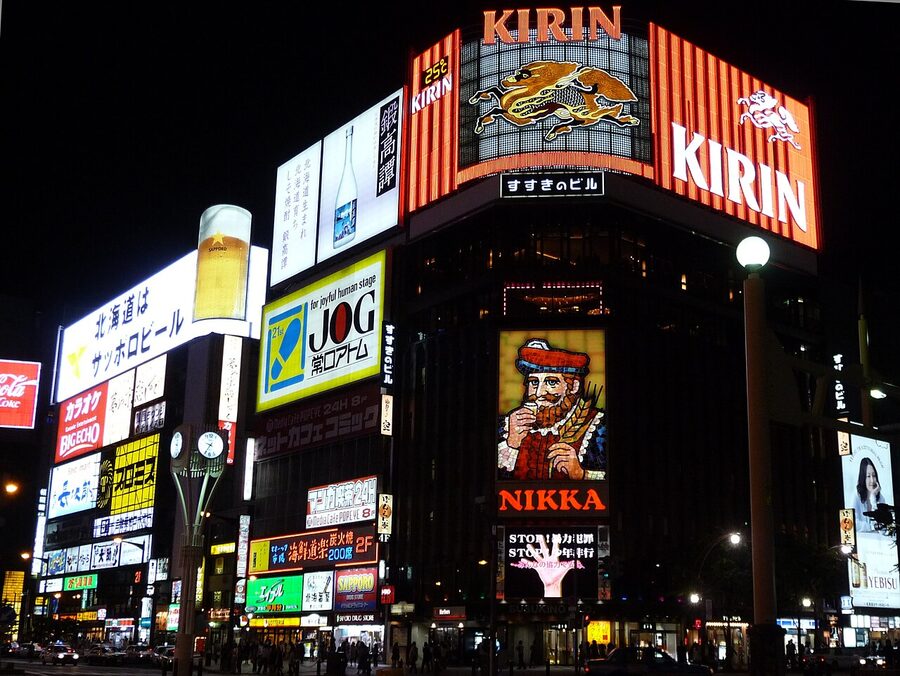
Susukino is where most of the food in this guide happens at night. 12-block grid immediately south of Odori Park, built around Susukino station on the Namboku line. The name means “reed fields” and the area used to be exactly that; the entertainment district was planted here by the Meiji government in the 1870s partly to keep it away from the civic centre further north. It worked out, in a sense.
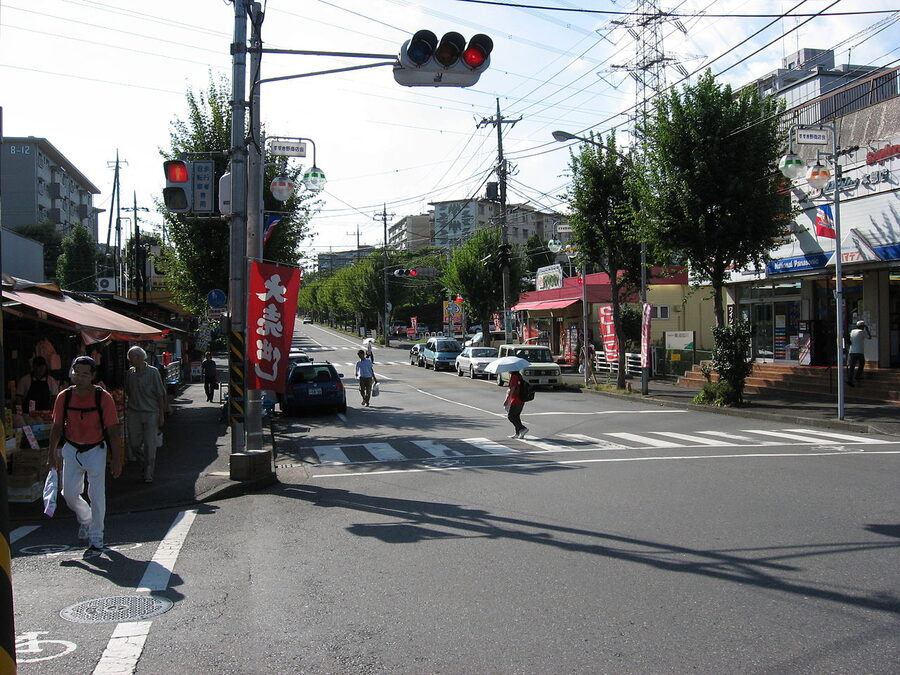
A practical night in Susukino, for a first visit: izakaya around 7pm (Aiyo TanukiKouji 4-chome on the Tanukikoji arcade is a good first-timer option, big menu, fair prices, crab and scallops local). Ramen shop 9 or 10pm; Ramen Alley is two blocks south. Finish with a shime parfait at Initial around 11, or a whisky at Nikka Bar if you’re still standing. You can do the whole circuit on foot; the subway isn’t necessary inside Susukino. After midnight, taxis are the way, plentiful, cheap (¥700-1,000 for most rides inside the central grid).
Two warnings. First, a lot of the ground-floor “neon” in Susukino is hostess and host clubs, not dangerous but not what you want if you’re looking for a normal bar. The easy rule: if the sign is entirely in Japanese and there’s a man in a suit standing outside, it’s a club. Izakaya have a menu posted at the entrance. Second, the Mon-Wed crowd is very different from Thu-Sat. Weekends are chaotic; Tuesday has a slower energy and everything that matters is open.
Odori Park and Daytime Food
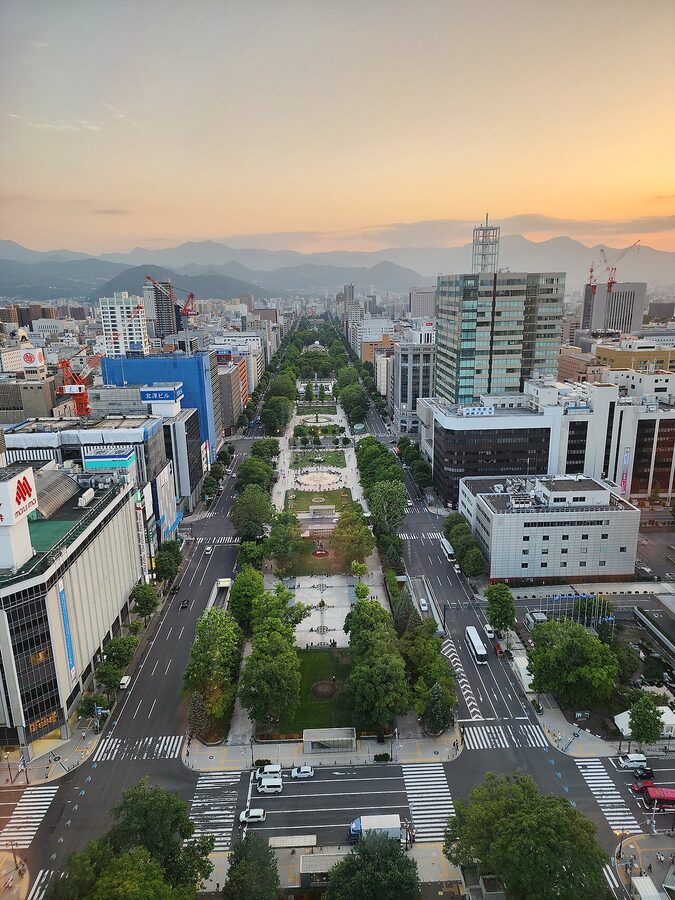
Odori Park is a 13-block-long strip of grass and fountains that divides the city north from south. In summer it’s where the beer gardens pop up (four breweries, Sapporo, Asahi, Kirin, Suntory, each get a section, from late July through mid-August). In winter, it’s the Snow Festival site. The rest of the year, it’s just a pleasant place to walk between meals.
Food near Odori during the day: Kinotoya Bake (cheese tarts, soft serve) at Stellar Place inside Sapporo Station, eight minutes north. SATURDAYS Chocolate Factory and Café (bean-to-bar chocolate made in Sapporo, excellent mocha) at Minami 1-jō-nishi. Baristart Coffee at Minami 1-jō-nishi 4-chōme, pick your beans and the type of Hokkaido milk (the menu lists the dairy farm for each). Cute gimmick that makes a noticeably better latte. ¥550-700. Skip the western chains.
Tanukikoji and the Old Covered Arcade
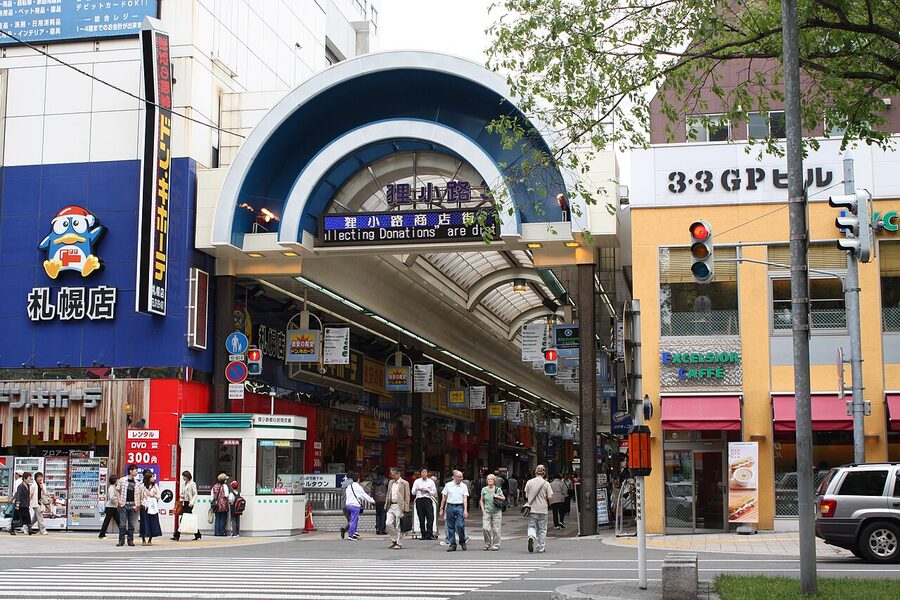
Tanukikoji is a 900-metre covered shopping arcade running east-west just south of Odori Park, crossing seven blocks. Here in some form since the 1870s. The covered roof means you can shop, eat, and drink without a coat, which matters when it’s minus ten outside. Drugstores, souvenir shops, a dozen restaurants, cheap ramen spots, access to Susukino at the east end. If you’re confused about where to start, walk the length of Tanukikoji once, then pick a side street.
Food on the arcade: Sapporo Sushi Maruten is 24-hour kaiten, not destination sushi, but surprisingly good for 2am. Tanukikoji Ichiba Shokudo at the west end is a cheap set-meal place locals use for lunch. Milk Mura“milk village”, is a basement bar on the 4-chōme block serving Hokkaido-milk soft serve with a small glass of liqueur; running since 1982.
Seasons: What to Eat and When
Hokkaido produce is the most seasonal in Japan. What you eat in February is not what you eat in August, and Sapporo chefs are explicit about it. Here’s the calendar:
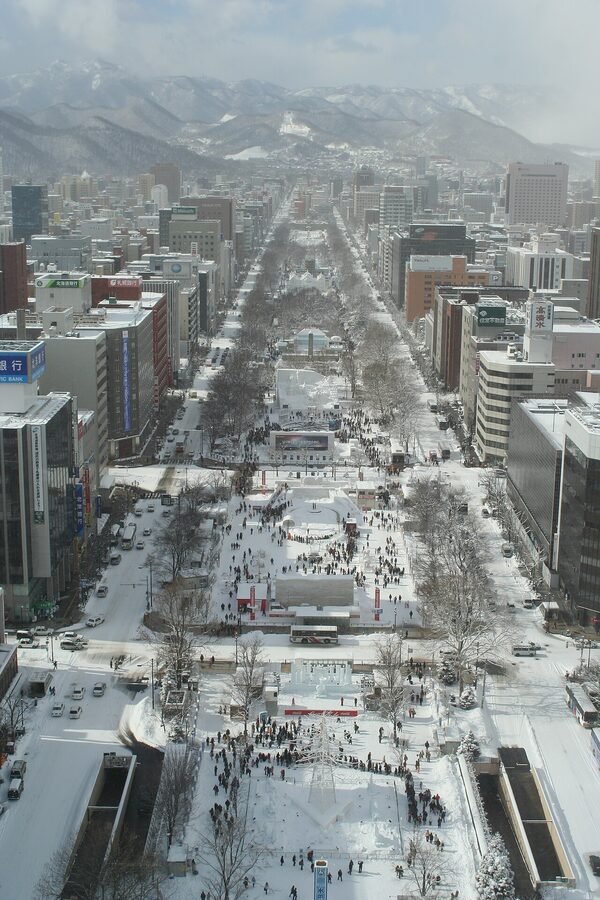
Dec-Feb, ramen season. Also hot-pot: look for ishikari nabe (salmon and vegetables in a miso broth), a Hokkaido classic. The Snow Festival (first week of February, 2026 run Feb 4-11) is worth the trip; hotels sell out, book four months ahead. Oysters are at peak.
Mar-May, shift season. Herring (nishin) runs in April. Sakura doesn’t hit Sapporo until early May. May is also the start of asparagus season, Hokkaido green asparagus tempura will surprise you.
Jun-Aug, seafood peak. Rishiri and Rebun uni at its best. Odori beer gardens run. Hokkaido is the only part of Japan without oppressive summer humidity, which is why half the country flies here in August.
Sep-Nov, the best month-for-month window, in my view. New rice out of the Hokkaido paddies. Salmon run begins. Crab back into the markets. Kaisendon at Nijo in October is noticeably better than it was in August.
Day Trip: Jozankei Onsen
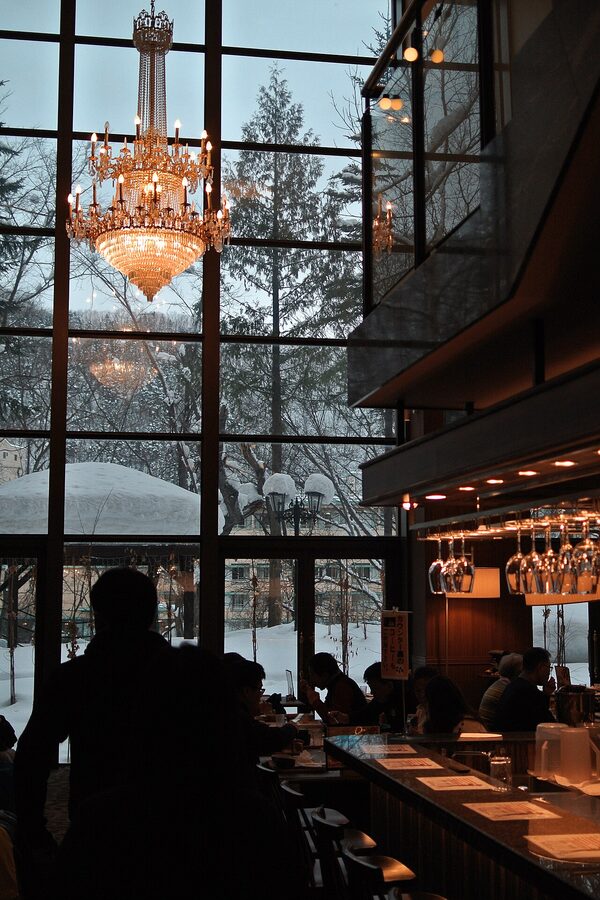
If you have a spare night, spend it at Jozankei, the onsen town 45 minutes south by the Kappa Liner bus from Sapporo Station (¥790 one way). The bath infrastructure is the draw for some; for me it’s the ryokan kaiseki dinner, which is the best place to try Hokkaido-produce cooking in a single sitting. A typical course includes halibut sashimi, grilled Hokkaido beef, crab, uni, Hokkaido-buckwheat soba, and a Hokkaido-milk dessert. Jozankei View Hotel and Nukumorinoyado Furukawa are both solid mid-range picks.
You can do Jozankei as a day trip without the overnight, but the whole point is the bath-dinner-bath rhythm, which only really works with an overnight stay.
A Few “Skip This” Notes
Not everything here is essential. A few takes:
Sapporo TV Tower, skip the paid observation deck unless the weather is unusually clear. Same logic for the Sapporo Clock Tower: a pretty 1878 building, worth a ten-minute photo stop, but skip the museum inside.
Hokkaido Shrine, worth a half-hour if you’re already at Maruyama Park, not a special trip.
The food court at New Chitose Airport gets written up a lot. It’s fine. If you have two hours pre-flight and want more Hokkaido soft serve, sure; but a last LeTAO slice at Stellar Place is a better send-off.
If you have two or three days, stay in the orbit of Sapporo Station, Odori, Susukino, and Nijo Market. Add Jozankei as an overnight. That’s the city’s food gravity well. Everything else is a distraction.
A Rough Three-Day Plan
Day 1. Kaisendon breakfast at Donburi Chaya in Nijo Market (7:30am, beat the queue). Walk through Tanukikoji to Susukino. Lunch: miso ramen at Teshikaga in Ramen Alley. Afternoon: Sapporo Beer Museum and tasting. Dinner: jingisukan at Daruma 4.4 (line up at 4:30pm). Nightcap: shime parfait at Initial.
Day 2. Late start. Baristart Coffee for a Hokkaido-milk latte and a Kinotoya cheese tart. Lunch: soup curry at Garaku (arrive 11:30am). Afternoon: Odori Park walk and Tanukikoji shopping. Dinner: sushi at Toriton (line at 4:30pm for 5pm opening). Nightcap: one whisky at The Nikka Bar.
Day 3. Bus to Jozankei, soak, lunch at Jozan Genzo. Back to Sapporo for a small izakaya (Aiyo TanukiKouji 4-chome). Last-meal option before flying: a second bowl of miso ramen at the shop you liked best.
Getting Around and Paying
Sapporo’s subway has three lines, Namboku (green, north-south), Tozai (orange, east-west), and Toho (blue), all intersecting at Odori. Single ride ¥210-380. One-day pass ¥830 weekdays, ¥520 weekends; the weekend pass is excellent value. Kitaca, Suica, Pasmo, and the other IC cards all work interchangeably.
Most restaurants in this guide take cash or credit. Izakaya and small ramen shops are often cash-only. Nijo Market stalls: cash only. ATMs that reliably take foreign cards are in 7-Eleven (look for the Seven Bank logo) and post offices.
Queue behaviour: Sapporo queues are orderly. At popular shops there’s a clipboard near the door, write your name and party size, wait outside or in a nearby café until called. At Ramen Alley and the summer beer gardens, it’s a straight line; just stand in it.
Tipping is neither done nor expected. You’ll sometimes see “otōshi” (お通し), a small appetiser, ¥300-500, charged automatically at izakaya. Seat charge, not optional. Pay it. If you want the full picture of how Japanese seat-charge culture works across cities, the izakaya guide covers it; it plays out differently from the more fluid hawker style of Dotonbori and Kuromon, which I wrote up in the Osaka street food guide. Sapporo lands closer to the Tokyo model.
If you’re placing Sapporo on the ramen map, it’s the northern pole. Down south you’ve got the thin-broth tonkotsu world of Hakata, and the Tokyo neighbourhoods where shoyu and tsukemen quietly dominate. Sapporo’s miso sits at the opposite end. Richer broth, heavier noodles, harder winters, larger beers. Go.
Eat the ramen standing up at a counter. Order a second bowl if the first is good. Take the overnight at Jozankei if you can. The city keeps its best food within a half-hour subway radius of Odori Park, and you can walk most of it before the snow gets ugly. By day three you’ll have your own list of places I didn’t mention. That’s what was supposed to happen.


.jpg)


.jpg)