Must-Try Food in China: The Regional Map Nobody Gives You
China is a continent-sized country with at least eight officially recognised regional cuisines, each with its own climate, ingredients, knife skills, and opinions about the correct level of mouth-numbing chilli. This guide is a regional map, what each tradition does, what the signature dishes look like, and where in the country to eat them at their best.
I’ll skip the potted history and get to the practical part. The Chinese call their culinary geography the “Eight Great Traditions” (八大菜系, bā dà cài xì), and while every restaurant industry survey in the last forty years has added or subtracted from the list, eight is the accepted standard. They are: Cantonese (Guangdong), Sichuanese (Sichuan and Chongqing), Hunanese (Hunan), Shandong (or “Lu”), Jiangsu (“Su”), Zhejiang (“Zhe”), Fujian (“Min”), and Anhui (“Hui”). Then there are the parallel traditions that don’t fit the eight, Northern Chinese (which encompasses Beijing), Dongbei from the far northeast, Uyghur food from the west, and the hot-pot-specific city cuisine of Chongqing. For a traveller, the four that matter most are Cantonese, Sichuanese, Hunanese, and Northern/Beijing. Start there. Everything else is bonus.
If you only remember one rule, remember this: regional food tastes dramatically better in the region it comes from. Peking duck in Shenzhen is fine. Peking duck in Beijing, at a restaurant that roasts it in a wood-fired oven using specifically Imperial duck breed, is something else. Build your trip around this and you’ll eat better than any structured itinerary will let you. For the city-level ground rules, my Shenzhen pillar guide covers where in Guangdong province to start, and the current article covers what to actually order.
In This Article
- Cantonese, the subtle one everyone underestimates
- Sichuan, the one that has destroyed more expats than the air quality
- Hunan, spicier than Sichuan and nobody talks about it
- Shanghainese and the Jiangnan region, the gentle ones
- Peking duck, and what “Northern Chinese” actually means
- The less-famous four, Shandong, Fujian, Anhui, Zhejiang
- Street food and what to order when you haven’t sat down
- What I wish I’d known on my first trip
- Where to start
Cantonese, the subtle one everyone underestimates
Cantonese food is what Westerners mean when they say “Chinese food,” mainly because Guangdong is the province most Chinese immigrants to the West came from, and Cantonese dishes are what populated the takeaway-menu canon. It’s also, perversely, the cuisine that travels worst, because its entire philosophy depends on fresh ingredients and precise cooking times. A properly steamed Cantonese fish, soy, scallion, ginger, a drizzle of hot oil, thirteen minutes exactly, loses half its magic by the time it’s been sat on a warming tray. The in-China version is frequently a revelation.
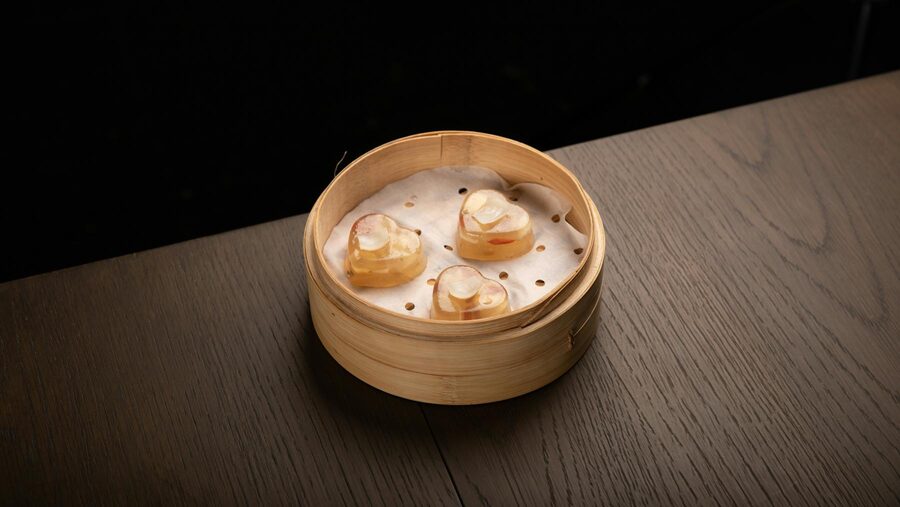
The tentpole experience is dim sum, small plates of dumplings, buns, and cakes eaten over a slow morning or early lunch, with jasmine tea on the side. It’s not a quick meal; plan for two hours minimum, the trolleys are slow and you’re not supposed to rush. Order: har gow (crystal prawn dumplings, the translucent skin wrapping a single pink prawn is the test of the kitchen), siu mai (open-topped pork dumplings, lightly fatty, with a dab of crab roe on top), char siu bao (barbecue pork buns, fluffy and slightly sweet), lo mai gai (sticky rice parcelled in a lotus leaf), and turnip cake (savoury, pan-fried, surprisingly addictive). If your waiter brings a menu, ignore it and point at the trolleys. That’s the tradition.
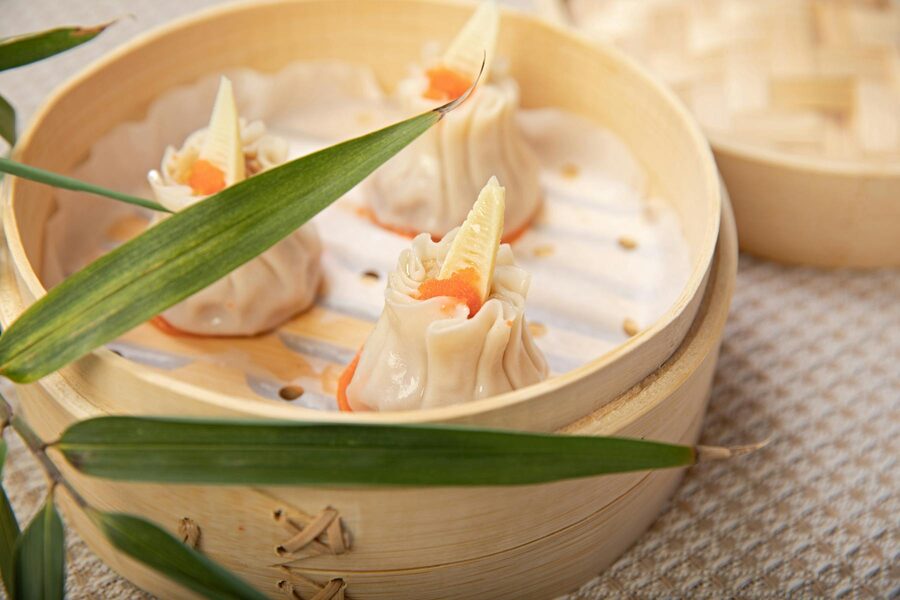
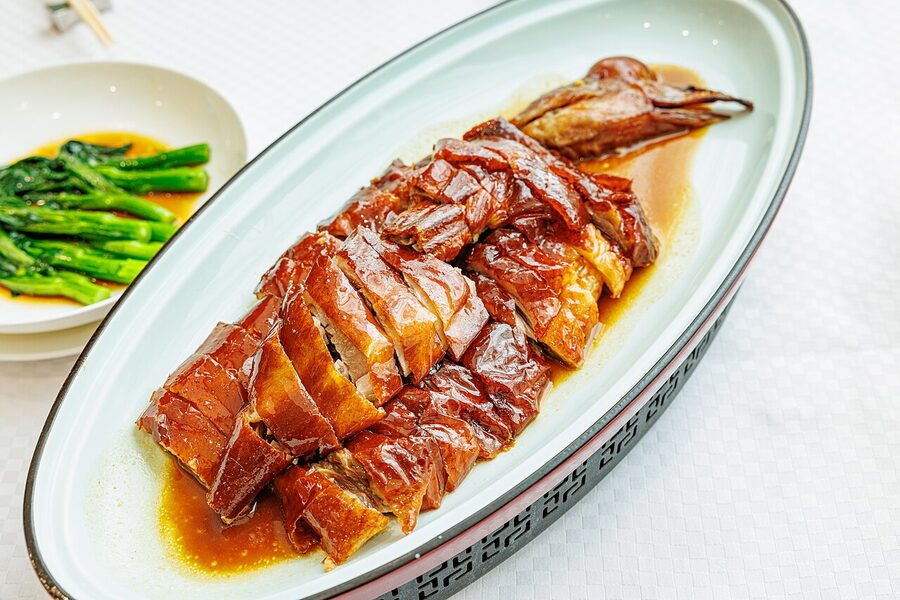
Beyond dim sum, the big Cantonese dishes are roast meats (siu mei, sold by the counter with rice, roast pork belly, soy-sauce chicken, char siu, roast duck, and the star of the tradition, siu ngap, roast goose), steamed whole fish, clay pot rice, and poon choi, a layered “big bowl” dish traditional to New Territories Hong Kong village weddings. The best places to eat Cantonese are Guangzhou and Hong Kong (including the New Territories, which is where the roast goose tradition is strongest), and Shenzhen is a perfectly good fallback, the city has some of the best dim sum halls on the mainland, if you know where to look.
Two Cantonese things that people rarely mention but should: Chaozhou (Teochew) beef hotpot, a sub-tradition from the eastern Guangdong coastal region, served at specialist restaurants in Shenzhen’s Luohu district and Hong Kong’s Jordan neighbourhood, where the thinly sliced raw beef is dipped into a clear bone broth for exactly five seconds and then eaten. The broth itself is the best argument the cuisine makes. And second: congee, the rice porridge that’s the morning default in Guangdong, usually plain, with sides of fried dough sticks, pickles, and thousand-year egg. Hotel breakfast buffets in south China serve a flabby version. The real one is better, and cheaper, at any roadside stall in Guangzhou.
Sichuan, the one that has destroyed more expats than the air quality
Sichuanese cooking runs on two things most Westerners don’t have strong mental models for: dried chillies, which provide a deep roasted heat rather than the raw vinegar kick of something like a bird’s eye, and Sichuan peppercorns (花椒, huā jiāo), which produce a numbing, almost electric sensation on the tongue called má. The combination, má là, is the flavour signature of the cuisine and it’s genuinely different from anything in European cooking. You cannot really understand it until you have it, and even then the first few encounters are bewildering. I’ve watched friends cry at their first proper mapo tofu.
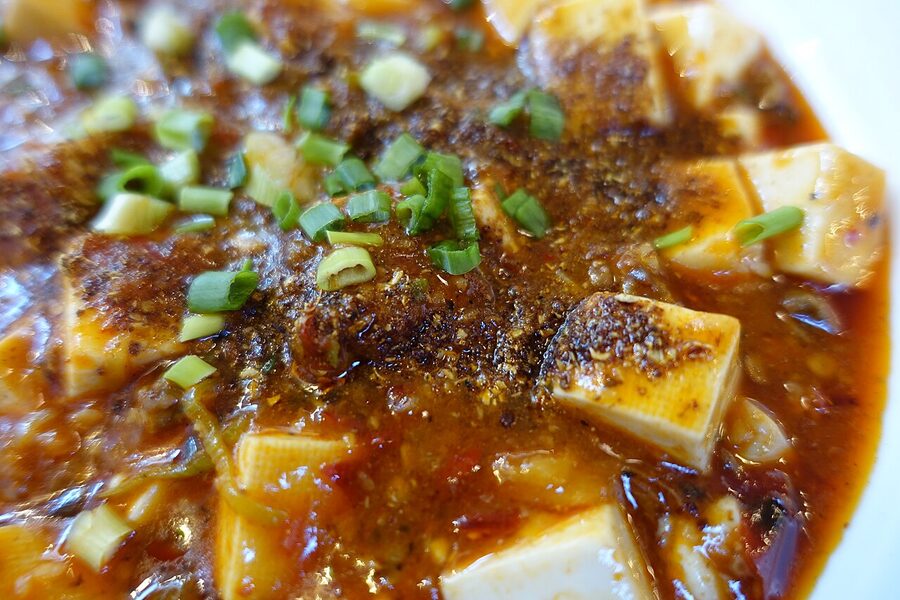
The canon: mapo tofu (pork-and-tofu braise, peppercorn-heavy, perhaps the cuisine’s single best dish), kung pao chicken (peanuts, dried chilli, diced chicken, the version outside China is a pale echo of the real thing, which carries a serious má-là kick), twice-cooked pork (boiled first, then stir-fried with leek and fermented bean paste, technically Sichuan but Hunan claims a version too), fish-fragrant eggplant (yu xiang qie zi, no fish involved, just the sauce reminiscent of how fish is cooked), and dan dan noodles, which are street-food noodles with sesame paste, chilli, and minced pork. And of course the institution:
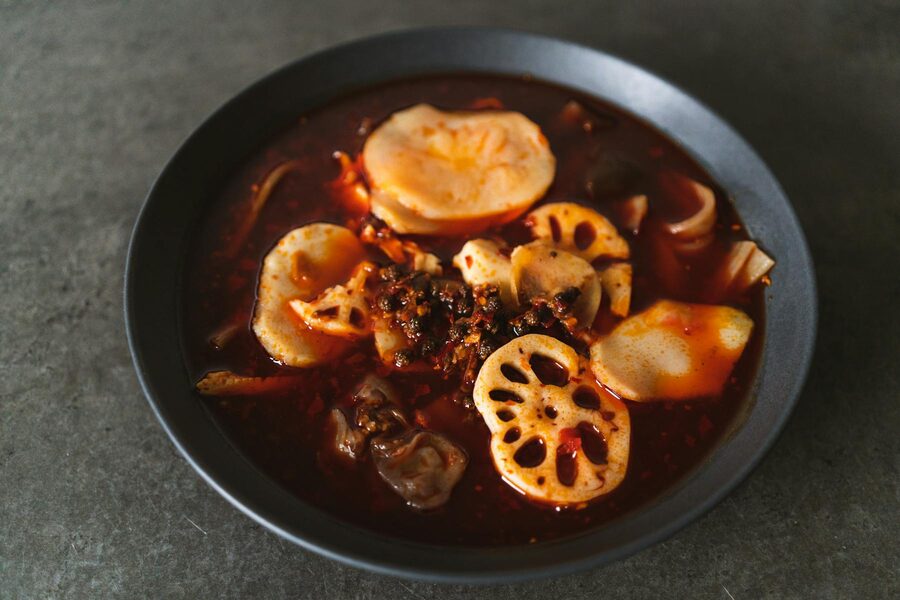
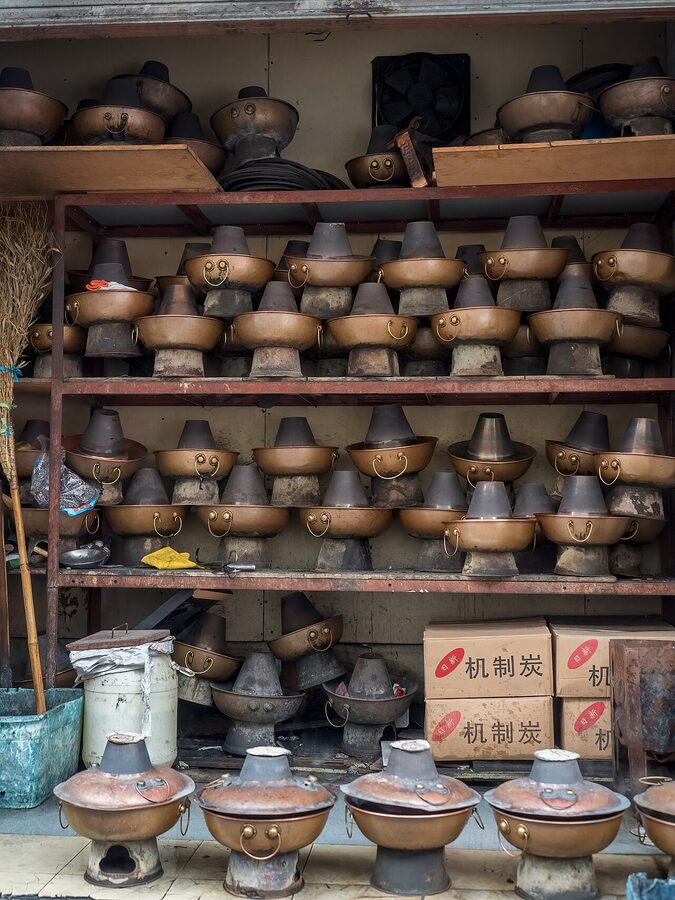
Sichuan hotpot is a whole category by itself. The experience is a deep metal pot of two-or-four-segment broth set over a gas burner at your table. The spicy (má-là) half is the point; the clear-broth half is for beginners or for palate-cleansing. You order raw meat sliced paper-thin, vegetables, tofu skins, noodles, assorted organ meats, and lower them in one at a time. Paired with a dipping sauce of sesame oil, garlic, and coriander. A proper Sichuan hotpot takes three hours, ends with the broth reduced to a concentrated paste, and is the best communal meal in Asia. Chongqing (technically a separate cuisine from Sichuan proper) and Chengdu are the twin capitals; both have streets lined with specialist hotpot restaurants. The chain Haidilao is the national-export version, reliable, entertaining, with free manicures for waiting customers, but a bit tame. For the real thing go local.
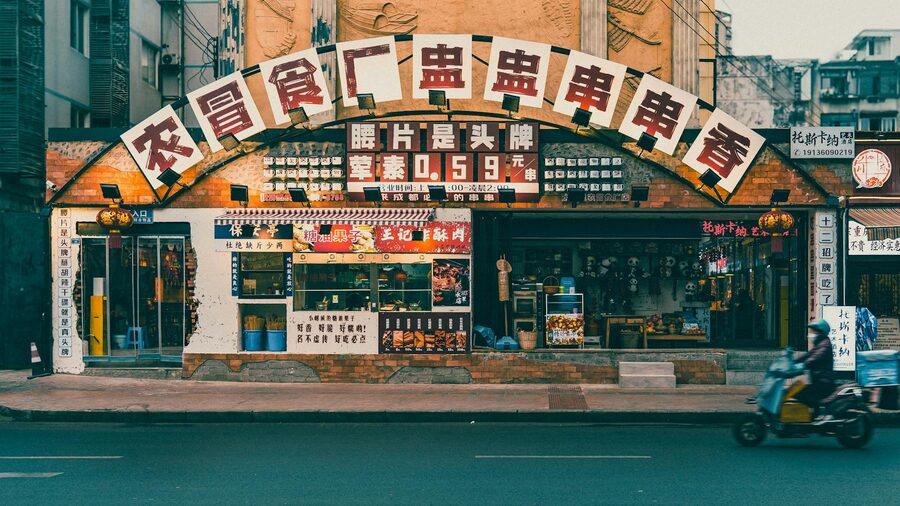
A practical tip: Sichuan food goes heavy on oil. Waiters expect you to leave most of the chilli oil in the dish; don’t try to finish the sauce unless you want a stomach to match. Ask for “shao yi dian là” (a little less spicy) on your first visit; they’ll probably bring what you would have considered medium. By day three you’ll be asking for tè là (extra spicy) and meaning it.
Hunan, spicier than Sichuan and nobody talks about it
Hunan cuisine has a different relationship with chilli than Sichuan. Where Sichuan uses dried chillies and peppercorns together for depth and numbness, Hunan prefers fresh chillies, pickled, smoked, or used raw, for a cleaner, sharper heat. It’s often measurably hotter than Sichuan food on a purely capsaicin basis, though lacking the má component. Mao Zedong, a Hunanese native, famously said “no chilli, no revolution,” and regional pride in spiciness remains a live sport.
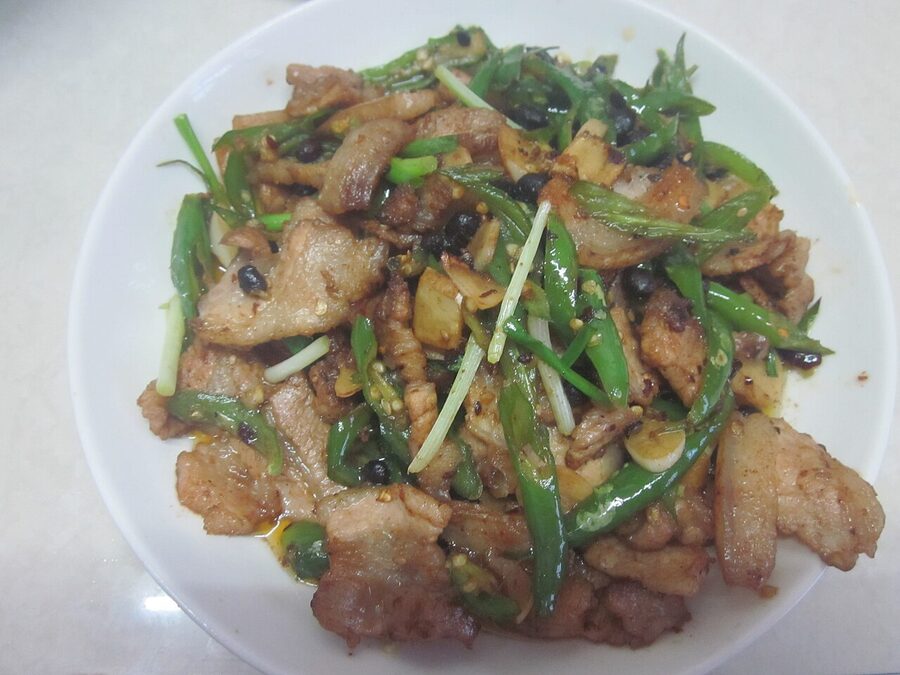
What to order: Chairman Mao’s red braised pork (Mao’s household favourite, rich pork belly braised in soy, sugar, and Shaoxing, not especially spicy, despite the cuisine’s reputation), steamed fish head with chopped chillies (duo jiao yu tou, a spectacular restaurant dish that arrives buried under a mountain of red and yellow pickled chilli), smoked pork with leek (the smoking tradition in Hunan is central and produces a specific fragrance you’ll recognise), and the unpretentious everyday rice noodles (mi fen) sold at countertops everywhere in Changsha, a slurpable breakfast staple. If you’re in Changsha (the provincial capital), head to Wenheyou, a vast themed food market designed to look like a 1980s Chinese city block; it’s touristy but the food is good and the atmosphere is worth the visit.
Shanghainese and the Jiangnan region, the gentle ones
“Shanghainese cuisine” as a tourist category doesn’t quite exist in the way you’d expect, the city itself is relatively young (boomed from the 1840s onwards) and most of what it eats comes from the older surrounding Jiangnan region, which takes in Jiangsu and Zhejiang provinces. This is the Chinese cuisine closest to European palates on a first encounter: sweeter, softer, more focused on gentle braises and river fish, less aggressive with the seasoning. Hong Kong-Shanghai residents joke that after a week in Chengdu they come home for Jiangnan food like Europeans come home for bread after three weeks of travel.
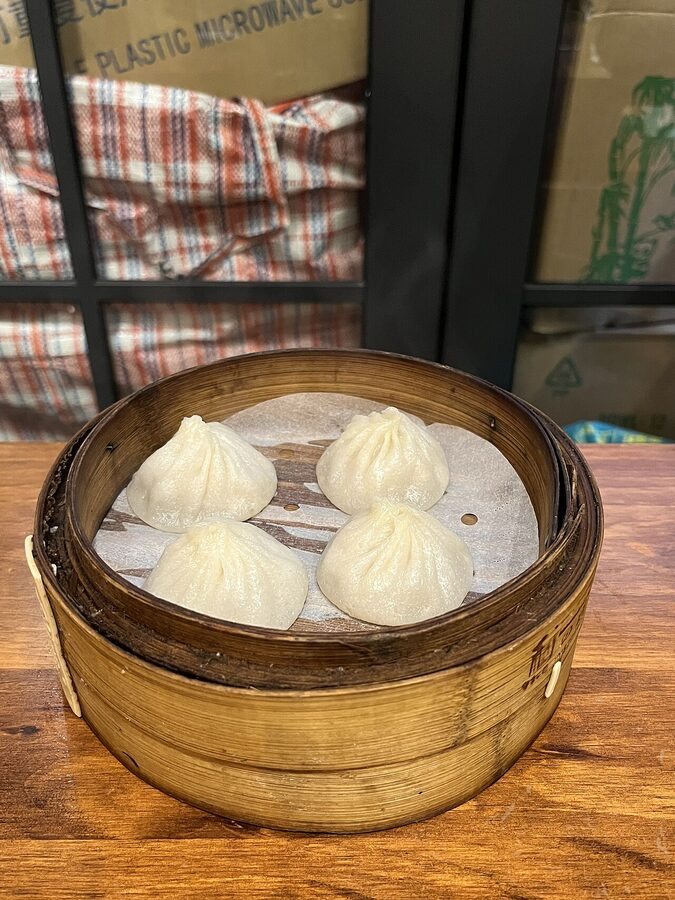
The must-try dish is xiao long bao (小笼包), the Shanghai soup dumpling. A thin-skinned steamed dumpling, pleated at the top, containing a pork meatball and, this is the magic, a spoonful of savoury broth that sets into a jelly during prep and melts back into liquid on steaming. You pick it up carefully with chopsticks, bite a small hole, sip the soup, then eat the dumpling. Nanxiang Mantou Dian in Shanghai’s old town is the historic original; Din Tai Fung (Taiwanese) is the internationally famous version, and it’s genuinely excellent. A dozen places in Shanghai do it better and cheaper than Din Tai Fung; half of them have no English menu.
Other Jiangnan classics: lion’s head meatballs (large pork meatballs braised in soy), drunken chicken (cold chicken marinated in Shaoxing wine, served as an appetiser), sweet and sour Mandarin fish (the real deal, not the takeaway version, a whole deboned fish, sculpted to resemble a squirrel, deep-fried, then glazed with a sweet-and-sour sauce that sets into a shell), West Lake vinegar fish (from Hangzhou, a grass carp briefly poached and dressed in a sweet-vinegar-ginger sauce), and red-braised pork (hong shao rou, soy-glazed cubes of pork belly, arguably the national dish). The cooking is patient and the seasoning is restrained. A good Jiangnan meal will have half a dozen dishes all in slightly different shades of brown and gold, and every one will taste exactly of itself.
Peking duck, and what “Northern Chinese” actually means
Northern Chinese cuisine, sometimes called Beijing cuisine, though it’s broader than that, is rooted in wheat rather than rice. Dumplings, pancakes, noodles, flatbreads, and hearty meat-and-cabbage stews dominate. This is the cuisine most shaped by China’s historical capital geography: the old Mongol, Manchu, and Shanxi influences all meet here, along with an Imperial tradition that survives in a handful of old restaurants. If you’re in Beijing for more than two days, dedicate one full meal to each of three dishes: Peking duck, zhajiangmian, and lamb-scallion dumplings.
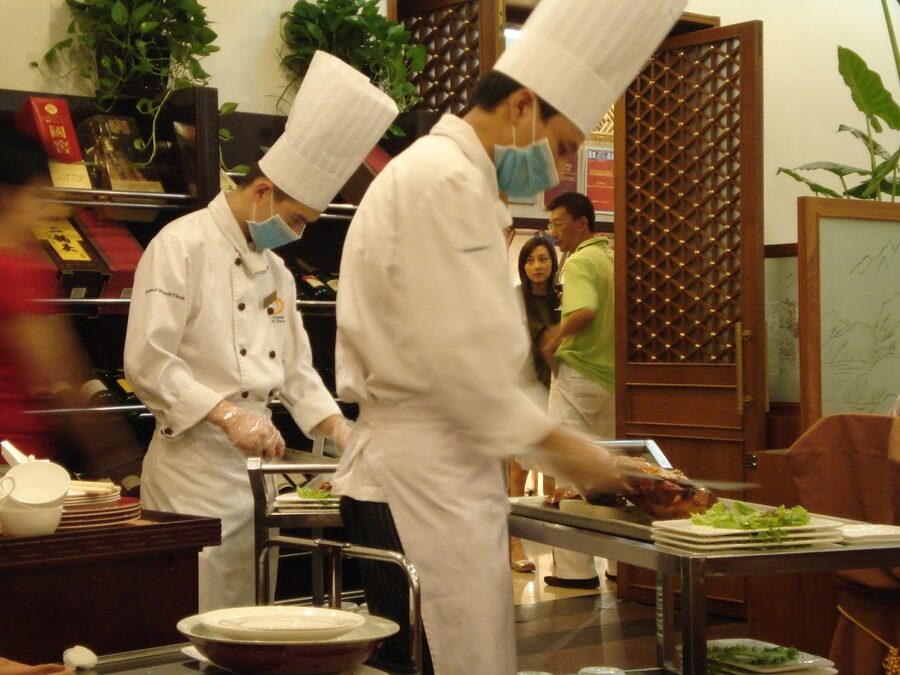
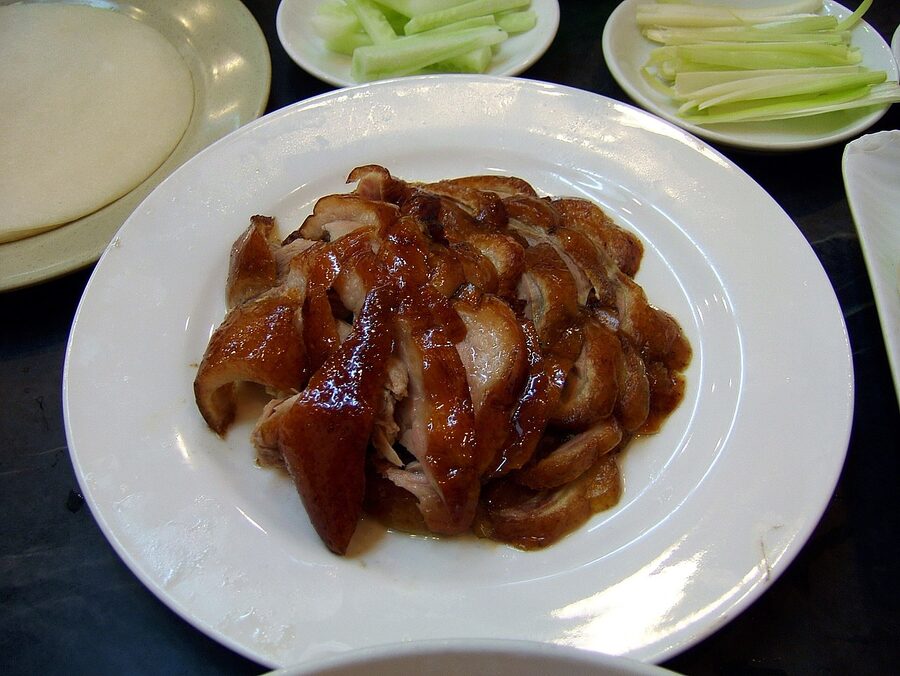
Peking duck is not a dish you order. It’s a ritual. The duck is pumped with air to separate the skin from the flesh, marinated, hung for a day, then roasted in a specialised oven, some over fruitwood fires, some over hanging in a Dali-style closed oven with a charcoal base. It arrives at your table whole, is carved in front of you (a trained carver will produce exactly 108 slices), and is eaten wrapped in thin wheat pancakes with scallion, cucumber, and a hoisin-based sauce. Quanjude is the historic brand name; Da Dong is the modern critical favourite; Si Ji Min Fu is my personal choice, slightly less famous, same standard, cheaper. Book ahead. All of them.
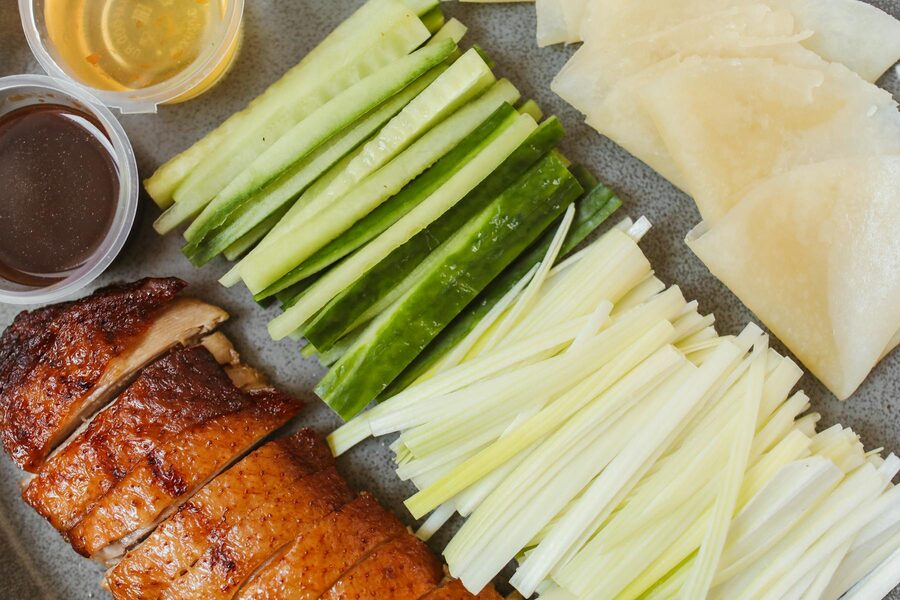
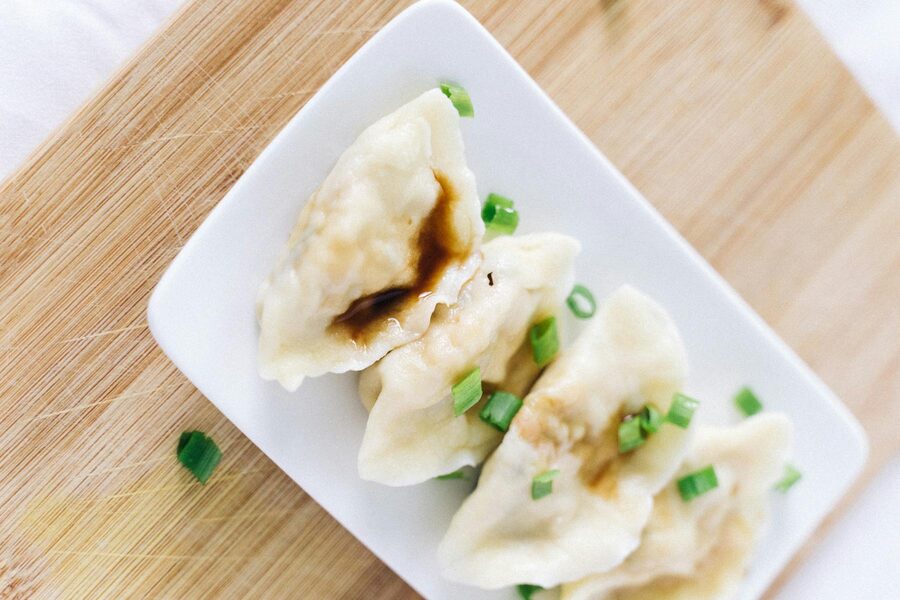
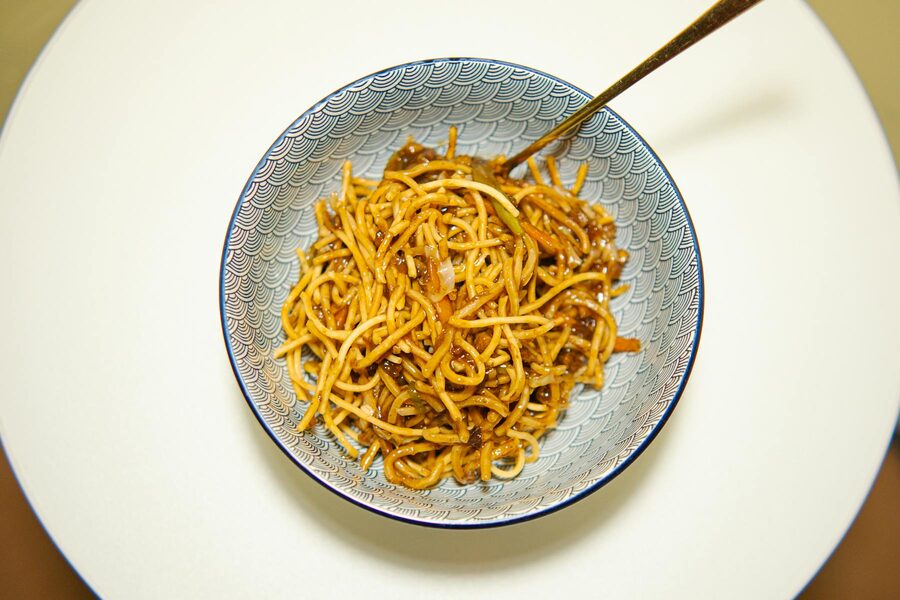
Beyond the duck, Beijing’s food identity runs on jiaozi (boiled or pan-fried dumplings, lamb-and-scallion is the Beijing specific, though you’ll eat pork-and-chive everywhere), zhajiangmian (hand-pulled noodles with a salty fermented soybean paste, cucumber, and radish, a deeply north-Chinese lunch), hui guo rou Beijing-style (different from Sichuan’s twice-cooked pork), and Beijing yoghurt sold in stoneware jars. Try all four; skip the tourist Peking duck buffets at chain restaurants, which have nothing to do with the real thing.
The less-famous four, Shandong, Fujian, Anhui, Zhejiang
Most foreign visitors will never make it to Shandong, Fujian, or Anhui, and Zhejiang only in the form of a day trip to Hangzhou. But these four cuisines are each worth knowing about, and their signature dishes do pop up in better restaurants in the bigger cities, so here are the flagship dishes to look for.
Shandong (Lu) cuisine is the oldest of the eight traditions and the foundation of most Imperial court cooking. It runs on freshwater seafood, wheat, and restrained seasoning, the cooking tradition a lot of Beijing’s best places actually sit inside. Dishes to know: sweet and sour carp (the originator of the sweet-sour technique that ended up in every Western Chinese takeaway), braised sea cucumber with scallion (banquet dish), jiangyou rou (soy-braised pork). If you ever get to Qingdao or Jinan, eat Lu seriously.
Fujian (Min) cuisine is the most seafood-centric of the eight and runs on umami: fermented rice wines, aged shrimp paste, specialised stocks. Its signature dish has one of the best names in food, fo tiao qiang (佛跳墙), “Buddha Jumps Over the Wall,” an elaborate banquet soup of shark fin, abalone, ginseng, and assorted land and sea meats slow-cooked in a sealed clay pot for days. It’s expensive and genuinely incredible; also not vegetarian-friendly for obvious reasons. Also try oyster omelette (the lineage ancestor of the Taiwanese street version), hongzao ji (chicken in red-yeast rice wine), and Fujian’s famously silky egg-drop noodles.
Anhui (Hui) cuisine specialises in wild herbs, bamboo shoots, and freshwater fish, with a heavy reliance on the local Huangshan mountain larder. Signature: stinky mandarin fish (chou gui yu, a fermented freshwater fish that smells aggressive and tastes silky-sweet once cooked, more accessible than it sounds), and huangshan roast pigeon. You’ll almost never see Anhui specifically on a menu outside its home province; if you end up in the Yellow Mountain region, eat at any family restaurant down the hill after your hike.
Zhejiang (Zhe) cuisine is the neighbour of Jiangsu and shares a lot of its vocabulary, sweet braises, river fish, seasonal vegetables, but with more emphasis on cured meats and sauce-based finishes. Hangzhou is the regional capital and the food here is genuinely some of the best in the country. Try dongpo rou (the eponymous braised pork belly, named for the poet Su Dongpo who reportedly invented it), longjing xia ren (river prawns stir-fried with Longjing green tea leaves), and West Lake vinegar fish. Hangzhou deserves its own trip.
Street food and what to order when you haven’t sat down
Much of what makes eating in China great happens outside restaurants. Street food is inconsistent, occasionally dodgy, occasionally transcendent, and essential to the experience. Every region has its own snacks; a few universals worth seeking out.
Jianbing (煎饼), a savoury crepe cooked on a flat griddle, filled with egg, scallion, crispy wonton, chilli, and hoisin or sweet bean sauce. It’s the best ¥8–12 breakfast in China and there’s a cart on every street corner. The Tianjin original is the purist version; the Shandong variation adds more crunchy bits; I’ll argue the Shenzhen street-cart version has the best balance in the country. Eat it while it’s hot.
Baozi (包子), steamed buns with various fillings; pork is standard, vegetarian options are plentiful. Eaten as breakfast with a hot soy milk or as a mid-afternoon snack. The 包子 plain pork is ¥3–5; the fancier kinds with mushroom or dried shrimp run ¥6–8.
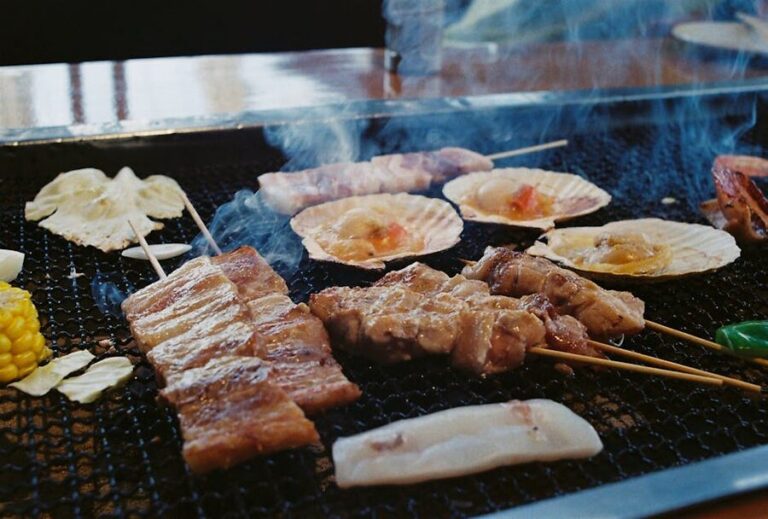
Chuan’r (串儿), skewers. Usually lamb, seasoned with cumin, chilli flakes, and salt, grilled over coals. Uyghur in origin (from Xinjiang), now ubiquitous at street markets across the north. ¥2–5 per skewer. Best eaten with a cold beer at a plastic-stool-outside bar on a warm evening.
Rou jia mo (肉夹馍), the “Chinese hamburger” from Shaanxi province, a griddled flatbread stuffed with braised pork. ¥8–15 depending on region. Originally from Xi’an but now everywhere, look for the ones labelled Xi’an te se (西安特色, “Xi’an specialty”) rather than the chain versions.
Tanghulu (糖葫芦), skewered hawthorn berries in a hard sugar glaze. A winter street-food specific to northern China. ¥5–10 per skewer, and a genuinely delightful snack on a cold Beijing day.
What I wish I’d known on my first trip
Chinese meals are shared, not individual. You don’t order a main for yourself, you order roughly 1.5 dishes per person at the table and everyone picks at everything with their chopsticks or serving spoons. A table of four orders six dishes plus a vegetable plus rice. Ordering one dish per person will leave you with too much food, the wrong balance, and the waiter thinking you’re a novice. Which is fine, but it helps to know.
Rice comes last. In Cantonese tradition, rice arrives at the end of the meal to fill in whatever hunger remains. In other traditions it comes with the mains. Either way, never pour soy sauce over your rice, it’s considered slightly uncouth, a bit like salting your steak at a French restaurant. If the table has chilli oil, that goes on the rice instead.
Tea is free, water is not. Every restaurant serves you tea as a default beverage. Bottled water is usually extra. If you want hot water (常见的), it’s also free, the Chinese drink of cold boiled water is seen as medicinal.
The best restaurants are often the loudest ones. A Chinese restaurant full of shouting, table-slamming, cigarette-ash-flicking locals is almost certainly better than the quiet one next door. The quiet ones are either empty for a reason or catering exclusively to intimidated foreigners. Embrace the chaos.
Order local. Don’t order Sichuanese food in Guangzhou. Don’t order Cantonese in Beijing. In the era of nationwide chains, every cuisine is on every menu in every city, but the quality gap is larger than it looks. Order what the region does best and you will always, always eat better.
Where to start
Regional dishes travel best at their home address. Peking duck in Beijing. Mapo tofu in Chengdu. Xiao long bao in Shanghai. Dim sum in Guangzhou or Hong Kong. Hotpot in Chongqing. If you get to any of these cities, make the signature dish a priority.
For a single base that gives you access to multiple traditions, Shenzhen is a good pick, every province in the country has migrated some of its cooks to the city over the past forty years. For a weekend food trip with a scenery bonus, head out to Yangshuo and eat beer fish on the River Li. For a detour into a regional cuisine that isn’t on the Eight Great Traditions list, Lijiang in Yunnan gets you into Naxi cooking, fresh herbs, mushroom hotpots, and Yunnan cheese grilled with honey.
Sichuan is where a lot of this comes alive, and Chengdu is its capital — HappyToVisit breaks down Chengdu’s 15 top tours, several of them food-led, and UNESCO lists the city as a Creative City of Gastronomy.