
Shenzhen: The Mainland China City Almost No One Writes About (Properly)
My first taxi ride in Shenzhen, the driver asked where I was from. “Britain.” He nodded at the skyline climbing past the window, one seventy-storey tower, then another, then a clump of three still under construction, and said, “Bigger than London?” It’s a fair question. The part of Shenzhen I was looking at, the Futian CBD, is almost entirely younger than I am, and it already dwarfs anything the UK has built in the same forty years. That moment in a dirty Volkswagen Santana taxi, with the meter ticking in a language I didn’t yet read, is as good a summary of this city as any I can offer. It’s not a small place trying to look big. It’s a big place that keeps forgetting to introduce itself.
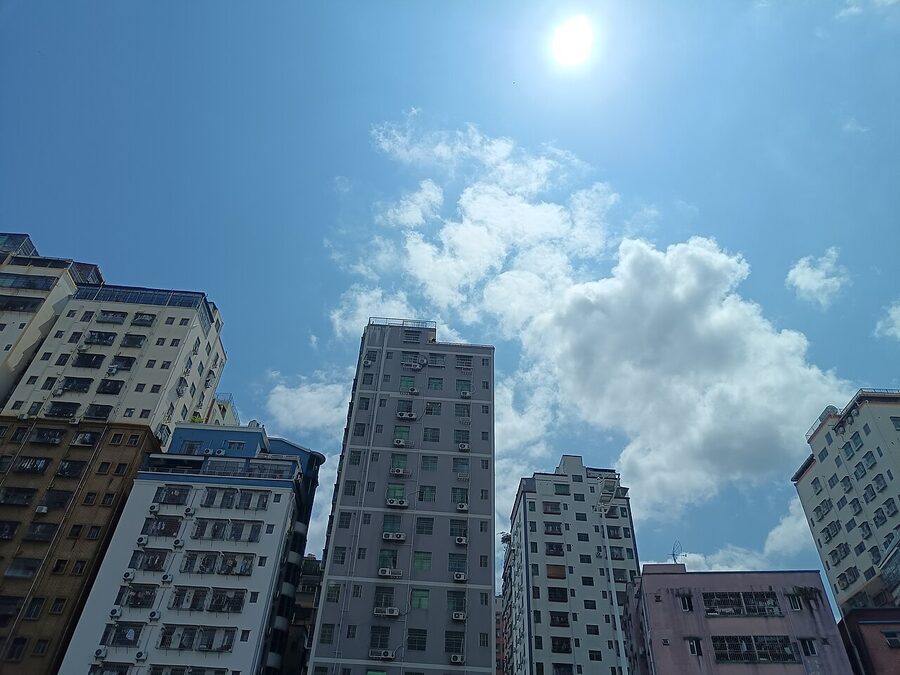
I lived in Shenzhen on and off through 2018 and 2019 and made it the base for trips across southern China. If you’re planning three days in the city, this guide is what I’d hand you before you went: the districts that matter, the food to find, and the day trips that work from here.
The quick version: land at Bao’an airport or cross in from Hong Kong at Futian or Shenzhen Bay. Stay in Shekou for the walkable expat pocket near Sea World, or in Futian if you want to be in the middle of the CBD. Eat Cantonese dim sum, something Sichuanese, and as much street food as you can handle. Walk Huaqiangbei, see one theme park only if you have a day to lose, and do at least one evening at a rooftop bar in OCT. The rest of this guide goes into the detail.
In This Article
- Why Shenzhen surprises everyone
- Orientating yourself, the districts that matter
- Getting in, and getting around once you’re there
- Futian and the money skyline
- Huaqiangbei, the electronics bazaar of a generation
- Shekou, the expat pocket and where to base
- OCT Loft and Dafen, where Shenzhen got creative
- Splendid China and Window of the World, the theme parks question
- Hopping across to Hong Kong
- Where to eat, in one pass
- A two-to-three day route that actually works
- Using Shenzhen as a base for the rest of south China
- Practicalities, money, connectivity, and what to expect
- One last thing
Why Shenzhen surprises everyone
The easy cliché is that Shenzhen used to be a fishing village and now it’s a tech capital. The reality is messier and more interesting. When Deng Xiaoping designated the area a Special Economic Zone in 1980, there were already towns here, Nantou had been a county seat for over a thousand years, and the market at Dongmen had been running since the Ming. What the SEZ did was staple a deliberately experimental legal framework onto that pre-existing geography and then invite the rest of China in. By the time I arrived in the late 2010s, the city was seventeen million people living on a strip of land about the size of greater Tokyo, and it had the youngest average age of any major Chinese municipality.
That age profile matters. Walk any district after dark and you’ll notice the absence of the grandparents who define street life in older Chinese cities. Shenzhen is the sort of place your ambitious Hunanese cousin moves to, not the place anyone was born. The consequences ripple through everything: the food is regional-all-sorts rather than locally Cantonese, the nightlife is earlier-ending and more focused on start-up founders than drinkers, and the architecture has had no time to acquire nostalgia. It’s a city that reads like a first draft of a better city, which is, if you squint, the whole Chinese project in microcosm.
It’s also, weirdly, the best Chinese city I’ve ever been in for a foreign visitor. The metro signs are bilingual to a level Beijing still isn’t; the Cantonese-speaking core makes Hong Kong feel adjacent in a way Guangzhou never quite does; and because half the adult population is newly arrived from somewhere else, nobody expects you to already know the drill. You can bumble around making rookie mistakes and the locals are doing exactly the same thing. Shanghai or Beijing you feel conspicuous; Shenzhen you feel anonymous in a helpful way.
Orientating yourself, the districts that matter
Shenzhen is long and narrow, running east–west along the Hong Kong border. Most visitors only ever need four districts, and even that’s generous: Futian in the middle (CBD, Ping An tower, the main border crossing to HK), Nanshan to the west (tech companies, Shenzhen Bay, Sea World), Luohu to the east (old town Dongmen, the Window of the World theme parks are actually in Nanshan but it’s easier to group them), and Longgang out further east (Dafen painting village, not much else the visitor needs). If you treat Futian and Nanshan as the two halves of the city that matter, and the metro as the stitch between them, you’ll rarely go wrong.
The thing to stop mentally dividing is where the “old” city ends and the “new” begins. There isn’t one. Forty-year-old factory districts sit inside ten-year-old retail plazas; a Ming-era temple shares a block with a showroom selling electric scooters. Two of my favourite walks in Shenzhen are through the historic Chiwan Tianhou Temple grounds in Shekou (fifteenth century, dedicated to the sea goddess Mazu, entirely peaceful on a Tuesday morning) and along the elevated pedestrian deck above the Shennan Boulevard that connects Huaqiangbei to Civic Centre, five minutes apart on foot in calendar terms, five hundred years apart in mood.
Getting in, and getting around once you’re there
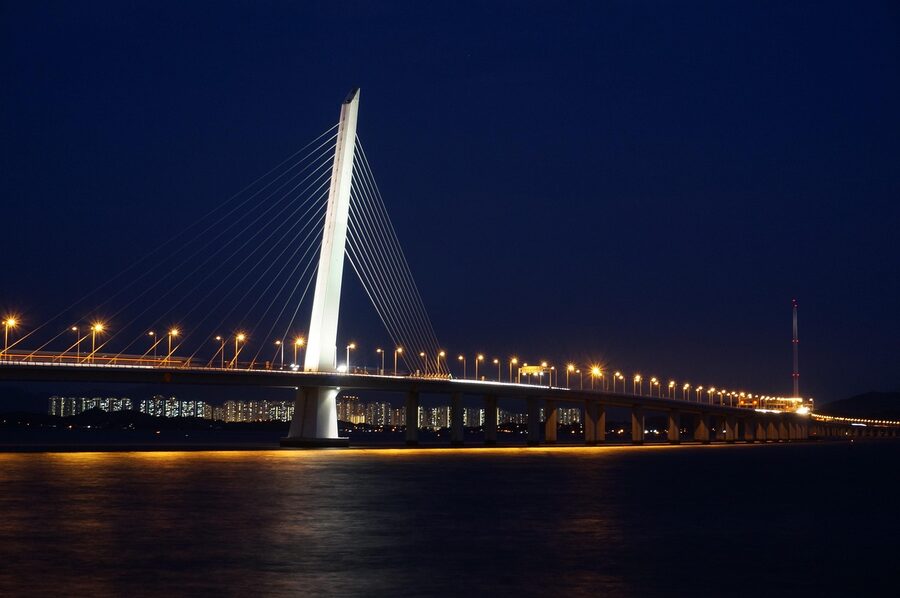
For most visitors, Shenzhen has three natural arrival points. The first is Bao’an International Airport (SZX), which is bigger than it looks on a map and has a metro line straight to Futian; journey time to central hotels is around 40 minutes, expect about ¥8 on the metro or ¥110–140 in a taxi. The second is from Hong Kong, the simplest route is the MTR East Rail Line to Lo Wu or Lok Ma Chau and walk across the border, but from 2018 onwards the high-speed rail link at West Kowloon to Futian has been the better option if you’re in a hurry: it’s about 14 minutes and £15 in 2025 money, and it drops you in the middle of the CBD rather than at the city’s east edge. Third, increasingly, is the high-speed rail network from anywhere else on the mainland, Shenzhen North is the big station for Guangzhou, Wuhan, Xi’an, and beyond.
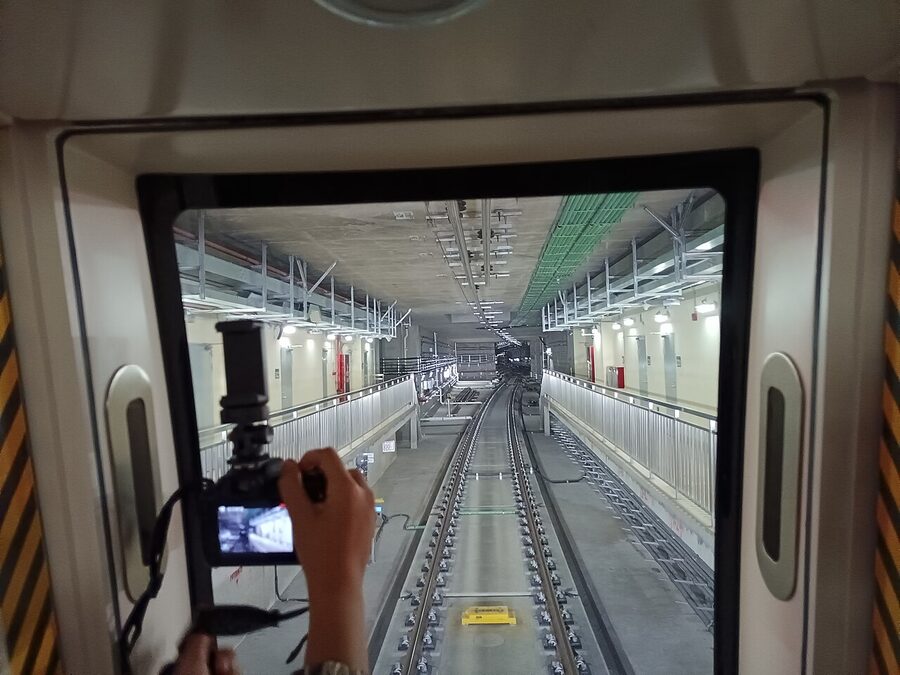
Once you’re in, the metro will do almost everything you need. Seventeen lines as of my last trip, all signed in English, fare between ¥3 and ¥8 depending on distance. You can tap through with Alipay or WeChat Pay (you’ll need to register a Mainland mobile number or link an international card via the travel wallet feature, allow an hour of fiddling on arrival). Taxis are cheap by international standards but the drivers almost never speak English; open your destination on a Chinese map app (Amap/Gaode works best), zoom in, and show them the screen. Didi, the Chinese Uber, works for international cards in 2025, and it’s my default after dark.
One practical note about the VPN question, because people always ask. Google, WhatsApp, Instagram, most Western news sites and every major messaging app except WeChat are blocked on the mainland. You need a VPN installed before you arrive, after you land, the download pages for all the good ones are also blocked. Hotels usually have workable VPNs on their Wi-Fi for business travellers, but don’t count on it.
Futian and the money skyline
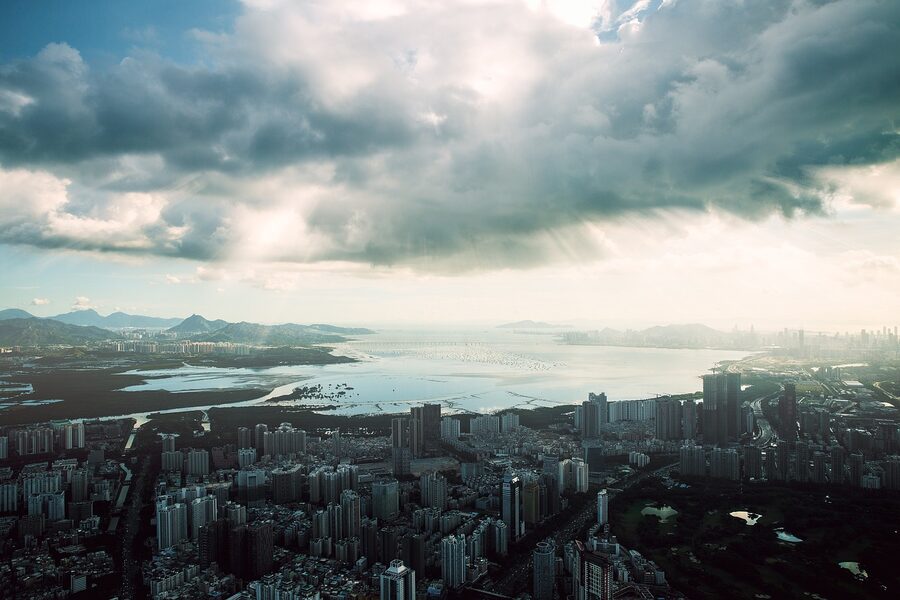
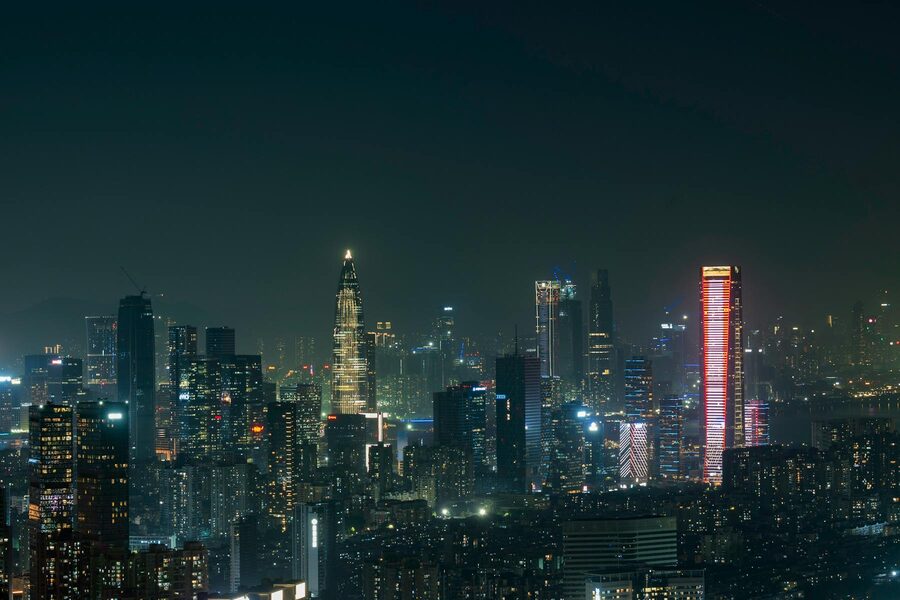
Futian is the part of Shenzhen you see in aerial photos. It’s where the money is and where the municipality’s self-image lives. The centrepiece is the Ping An Finance Centre, 599 metres tall, a tapered glass sliver that dominates the skyline from basically everywhere in the city. You can go up it; the Free Sky observation deck on the 116th floor costs around ¥180 and opens at 10am. The view is best an hour before sunset on a clear day, not at the golden-hour peak, slightly earlier, so you get both the green of the mountains behind and the neon coming up across the plain. On a smoggy day it’s not worth the ticket. Check the air quality index before you go.
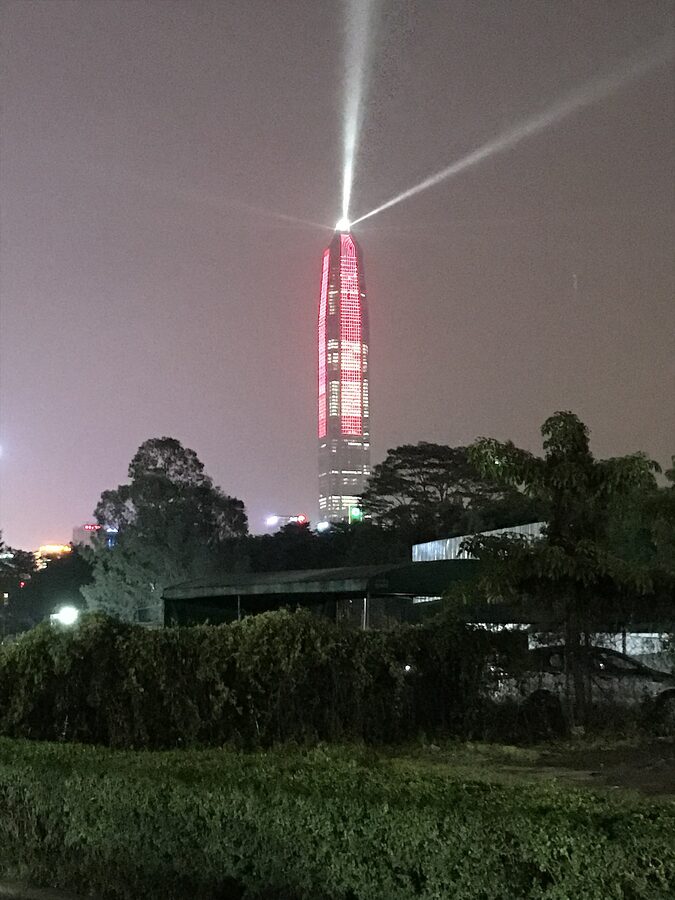
Around the base of Ping An, Futian’s centre is a walking-friendly grid of pedestrianised boulevards and sunken plazas. Civic Center and the adjacent Lianhuashan Park form the city’s green lung; on weekends this is where Shenzheners jog and fly kites with the glass towers behind them. The tiled rooftop on the Civic Center itself looks like a stretched-out seagull from the air, that’s deliberate; the architect wanted a bird-in-flight motif for a municipality less than twenty years old at the time of construction. Hike up Lianhuashan at dawn for the classic skyline photo. It’s also where the statue of Deng Xiaoping stands, pointing (usefully) at the city he willed into being.
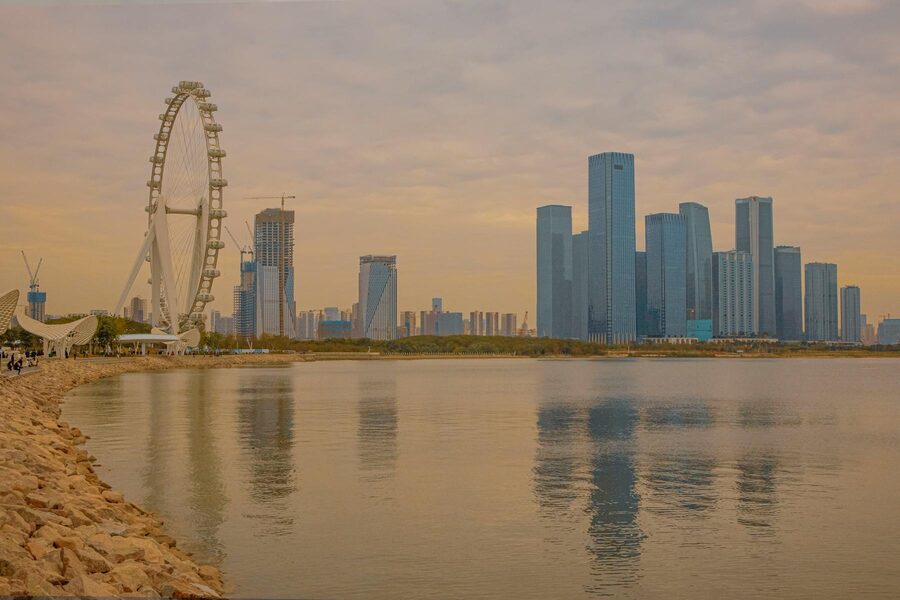
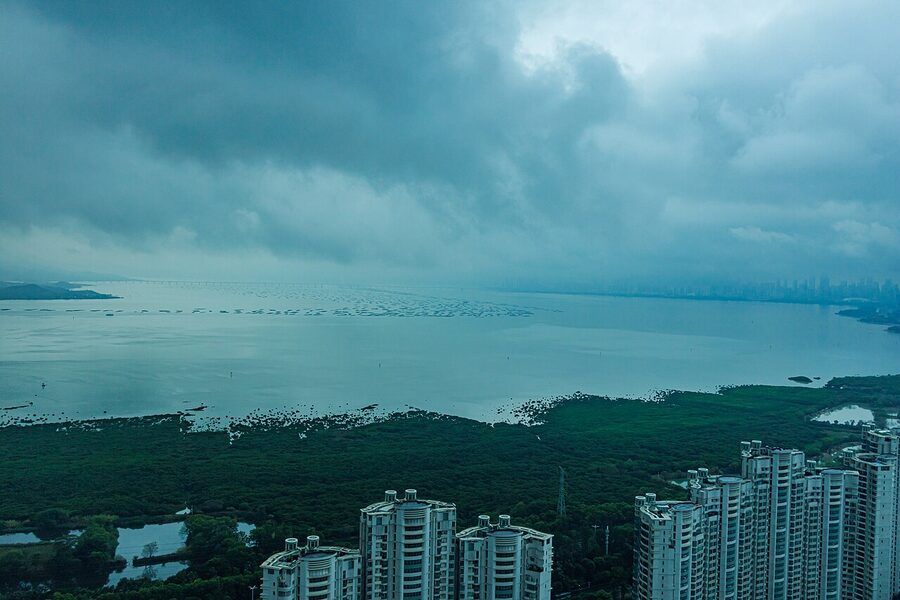
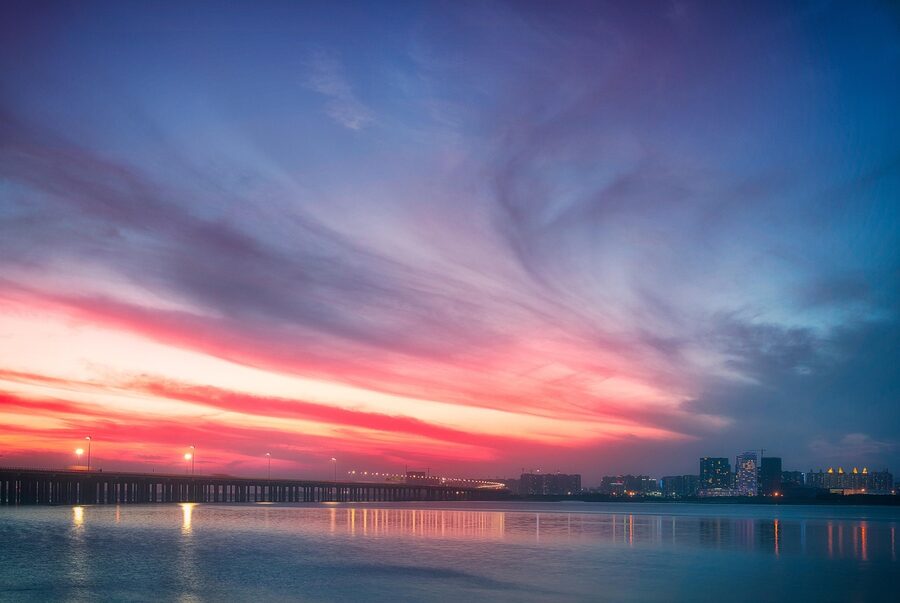
South of the CBD, Shenzhen Bay is where the city meets the water and, on the far shore, Hong Kong. The Bay Park promenade is four kilometres of manicured waterfront and it’s one of the best evening walks in any Chinese city I’ve spent time in, especially at dusk, with the HK New Territories silhouetted across the bay and the Shenzhen skyline lit up behind you. There’s a ferris wheel (Happy Harbor, already mentioned), a scatter of restaurants, and on a clear night the air is actually clean. Metro: Shenzhen Bay Park, Line 9 or 11.
Huaqiangbei, the electronics bazaar of a generation
If you have any interest in how the modern world is actually made, you should spend at least half a day in Huaqiangbei. This is the world’s largest electronics market, a cluster of megabuildings stuffed with tens of thousands of stalls selling everything from counterfeit iPhones to individual LEDs by the reel to surplus industrial sensors. The reputation is half folklore at this point, “you can build any electronic product from scratch in an afternoon, if you know the right people”, but the scale is real. Stand at the junction of Huaqiangbei and Zhenzhong Road and you’re at the middle of a supply chain that feeds half the hardware start-ups in the West.
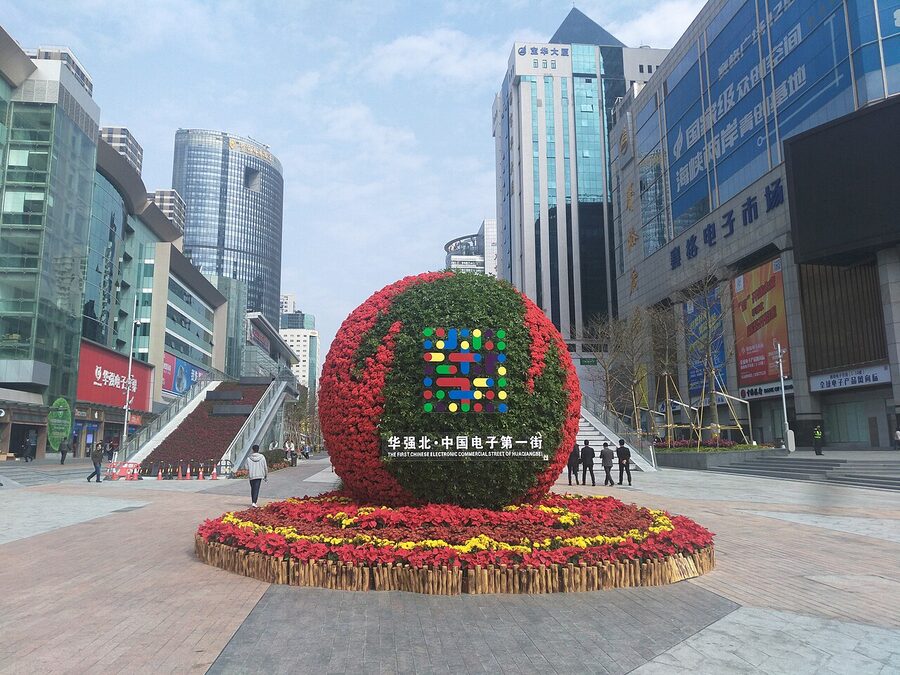
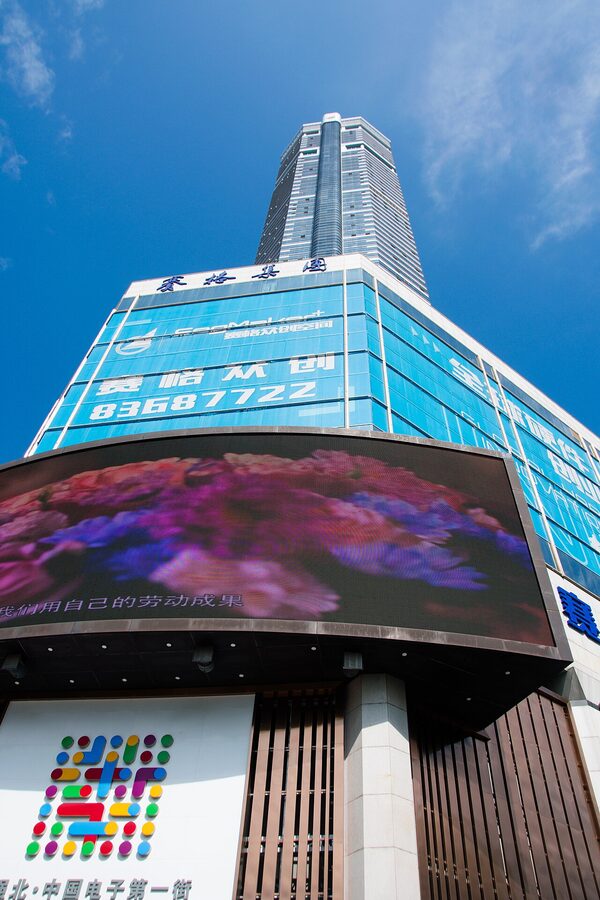
The best way to visit is with zero shopping intention. Take the metro to Huaqiang North (Line 7), emerge into the pedestrianised Huaqiangbei Road, and just drift. The stall owners won’t hassle you the way they would in a tourist market because most of their customers are other stall owners and Shenzhen-based manufacturing engineers. You can walk into a six-storey building that’s nothing but stalls selling smartphone replacement parts, wander into one whose specialism is industrial-strength drone components, and end up in a café on the eighth floor that’s actively writing firmware for somebody’s wireless doorbell. The SEG Electronics Market (the big old one that used to sway) and the more modern Huaqiang Electronic World opposite are both worth a circuit. Come around 2pm, when everyone’s back from lunch and the lighting is at its most sci-fi.
Directly north of the market, the SEG Plaza rooftop used to have a (legal-ish) observation deck that was one of Shenzhen’s best-kept open secrets; after the 2021 swaying incident it was closed, and the last time I checked it was still shut. Ask locally; it may have reopened.
Shekou, the expat pocket and where to base
If you only have two or three days and you want a base that makes everything else easy, stay in Shekou in the far west of Nanshan. This is the part of Shenzhen that’s been open to foreigners the longest, the original SEZ pilot zone of 1979 was carved out here, and for that reason the neighbourhood has a slightly different rhythm. More bars, more Western food (for when you genuinely can’t face another dumpling), more of that strange ambient feeling of a global port town that happened to end up inside China.
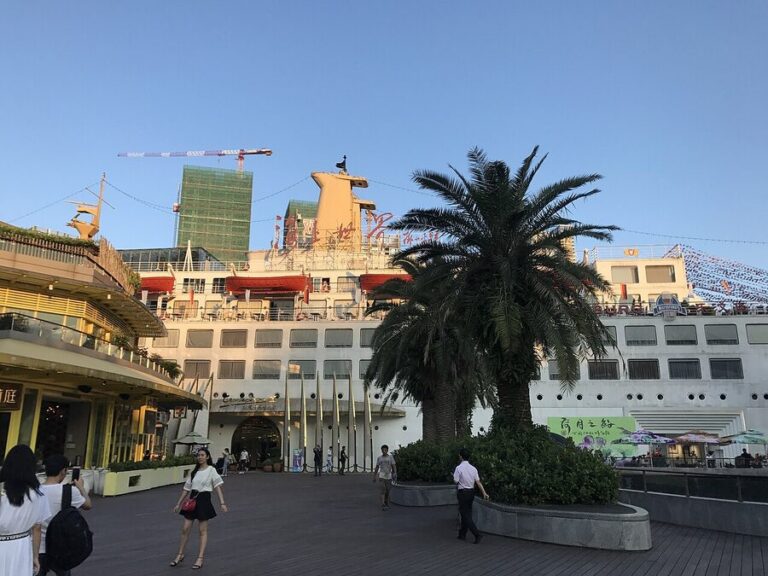
The centre of Shekou is Sea World, which is not a theme park despite the name, it’s a plaza built around the retired French ocean liner Anceville (rebranded Minghua here), now permanently moored and converted into a hotel and restaurant complex. Around the plaza is the densest cluster of international bars and restaurants in Shenzhen. I’ve written a full guide to Sea World separately; the short version is that if you want beer and a Western-ish meal after three days of hotpot, this is where you go. The plaza fountain does synchronised light shows every evening on the hour, from around 7pm onwards. They’re better than they have any right to be.
The neighbourhood between Sea World and the sea itself, the grid around Taizi Road, is where I’d stay. Mid-range international hotels there run ¥500–900 a night in 2025, and you can walk to the Shekou Cruise Terminal in about ten minutes if you want to take a morning ferry to Hong Kong, Zhuhai, or Macau. The ferry to HK’s SkyPier (which connects directly onwards to HK International Airport without clearing HK immigration) is a genuinely elegant way to leave the mainland.
OCT Loft and Dafen, where Shenzhen got creative
The city has a reputation for being all factories and no soul, which is half-deserved. The antidote is the OCT area in Nanshan. OCT Loft is a former industrial zone that was reinvented in the mid-2000s as a creative district: design studios, independent bookshops, microbreweries, the kind of ground-floor coffee roasters where the barista is wearing a hanfu and quoting Bauhaus. It’s not original, every Chinese city has copied the Beijing 798 model now, but OCT Loft is the southern version and it’s worth an afternoon.
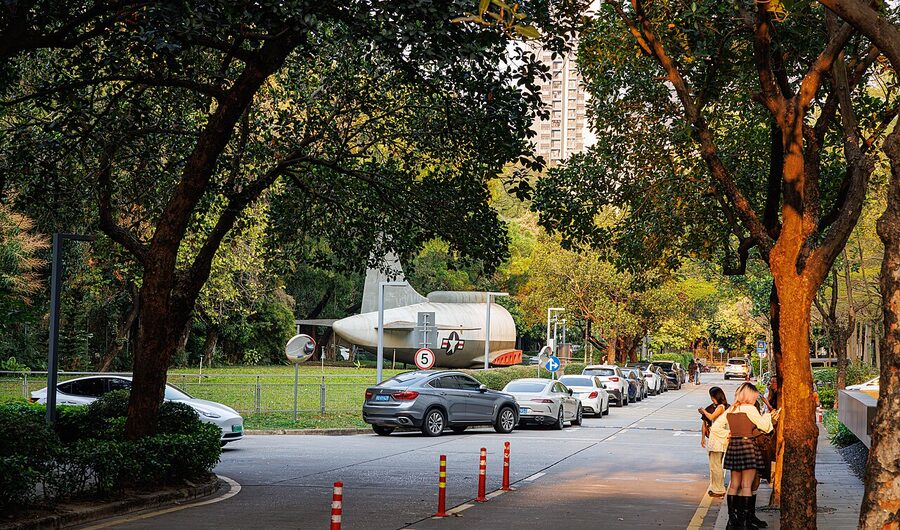
Metro: OCT station on Line 1 (the original east-west line), or Qiaocheng East on Line 2. From the station it’s a ten-minute walk and the district isn’t signed well in English, look for the orange-painted industrial chimney as a landmark. The OCT Contemporary Art Terminal, the district’s anchor gallery, is free to enter and usually has something provocative on.
For something weirder and more specific to Shenzhen, head east to Dafen Oil Painting Village. Dafen is a single village inside the Longgang district that, for about thirty years, has been the world’s primary source of hand-painted reproduction art. At one point the village supplied an estimated sixty percent of global oil painting volume, stacks of Van Goghs, Monets, and commissioned portraits heading out to hotels and gift shops in Dubai, Las Vegas, and Singapore. The industry has shrunk since digital printing arrived, but the village still hums: hundreds of painters in street-level studios, working on easels in the open, splashing out Klimts and seascapes by the dozen.
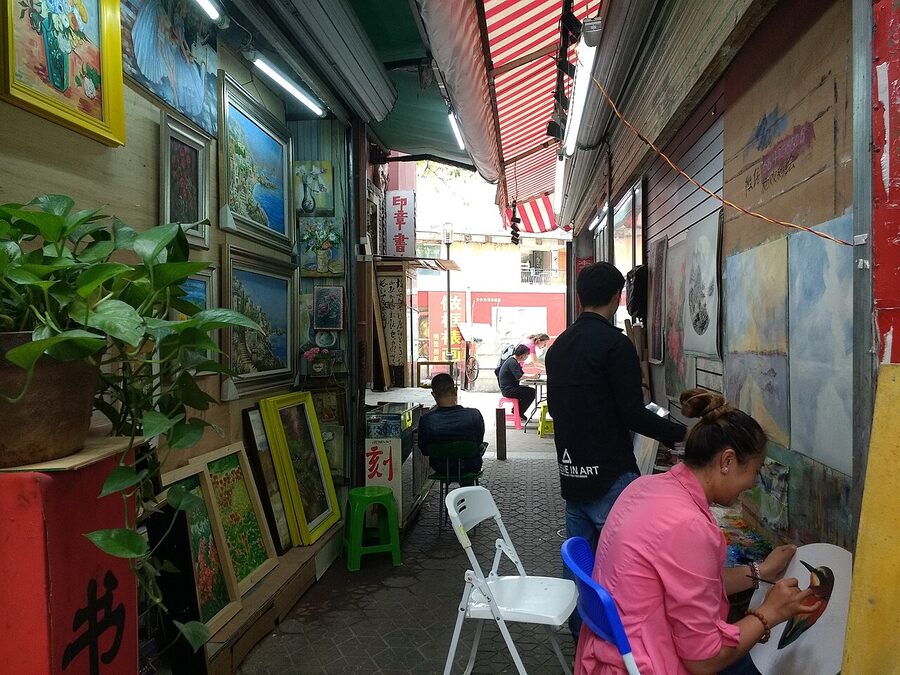
Metro: Dafen station on Line 3. Go on a weekday afternoon if you want the streets quiet. You can commission a custom portrait from a photograph for around ¥400–1,200 depending on size, and most painters can have it finished and shipped in under a week.
Splendid China and Window of the World, the theme parks question
Shenzhen has two major theme parks and neither is Disney. Splendid China is a miniature-park replica of the country’s major historical sites; Window of the World does the same for global landmarks, with everything from a half-size Eiffel Tower to a concrete Grand Canyon. They sit next to each other in the OCT area and were built in the 1990s, when this sort of thing was genuinely novel and slightly surreal. Today they read as period pieces. The question is whether you want to spend a day on a period piece.
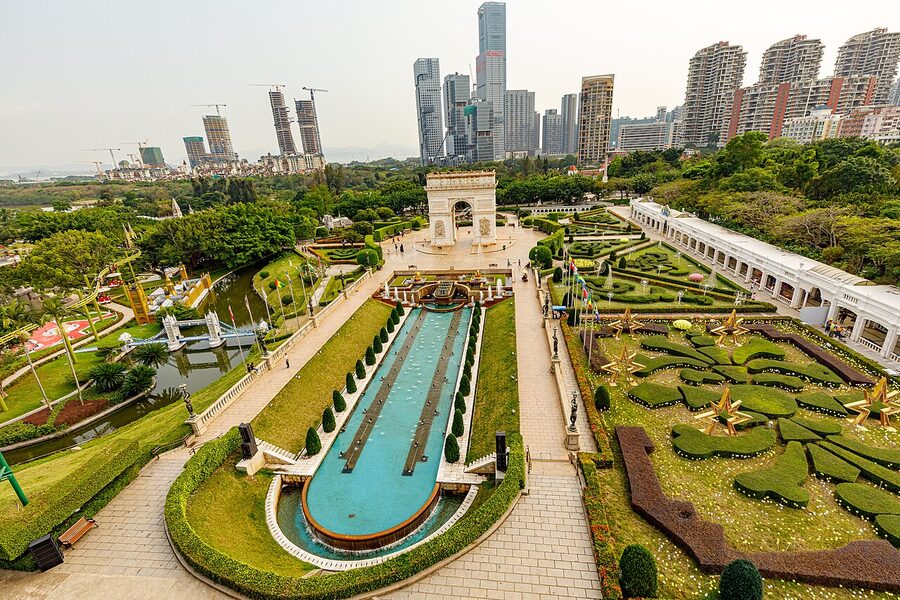
My honest advice, having done both, is that one of them is enough and Window of the World is the more interesting. Splendid China’s miniatures are beautifully made but very same-y after an hour; Window of the World has the benefit of cognitive whiplash, you walk from a half-Taj Mahal to a compressed Venice to a stunted Statue of Liberty in fifteen minutes, and the absurdity starts to feel almost profound. Go on a weekday, bring water, expect queues at the dumpling stalls. Entry is around ¥220; the Chinese-operator tour agencies often bundle both parks at a small discount.
If you’ve only got one day in Shenzhen and a theme park is tempting, I’d honestly skip both and spend the day in Huaqiangbei and OCT Loft instead. The real city is more interesting than the miniatures.
Hopping across to Hong Kong
One of Shenzhen’s underrated features is that Hong Kong is a day trip, not an expedition. There are seven crossings; for most visitors the two that matter are Lo Wu (direct metro connection to HK’s MTR East Rail Line, busiest, can be a queue marathon at peak hours) and Futian Checkpoint / Lok Ma Chau (slightly quieter, same MTR line, drop-off is a bit further out). If you want to be on Hong Kong Island before lunch, leave your Shenzhen hotel by 8:30, cross at Futian, and you’ll be having dim sum in Sheung Wan by 10:45. Coming back, try to cross before 9pm, the queues after HK office workers finish are notorious.
Passport-wise, most Western nationals need an ordinary visa for the mainland but don’t need one for Hong Kong (up to 90 or 180 days depending on your passport). If you’re planning to make multiple border crossings during your trip, check that your Chinese visa is a multiple-entry. This has tripped up more first-timers than I can count, the single-entry tourist visa is more common than people realise, and it doesn’t let you pop back in after a HK weekend.
Where to eat, in one pass
Shenzhen is a food city and I could write an entire guide on it alone, I’ve done a short version over at my regional Chinese food guide, which covers the national picture. Locally, four threads dominate: Cantonese (because this is Guangdong province), Chaozhou (from the nearby Teochew region, which accounts for a lot of the older business families), Sichuanese and Hunanese (the two cuisines that the young migrant workforce brought with them from inland), and a surprisingly dense Japanese and Korean scene (Shenzhen has a large expat population from both).
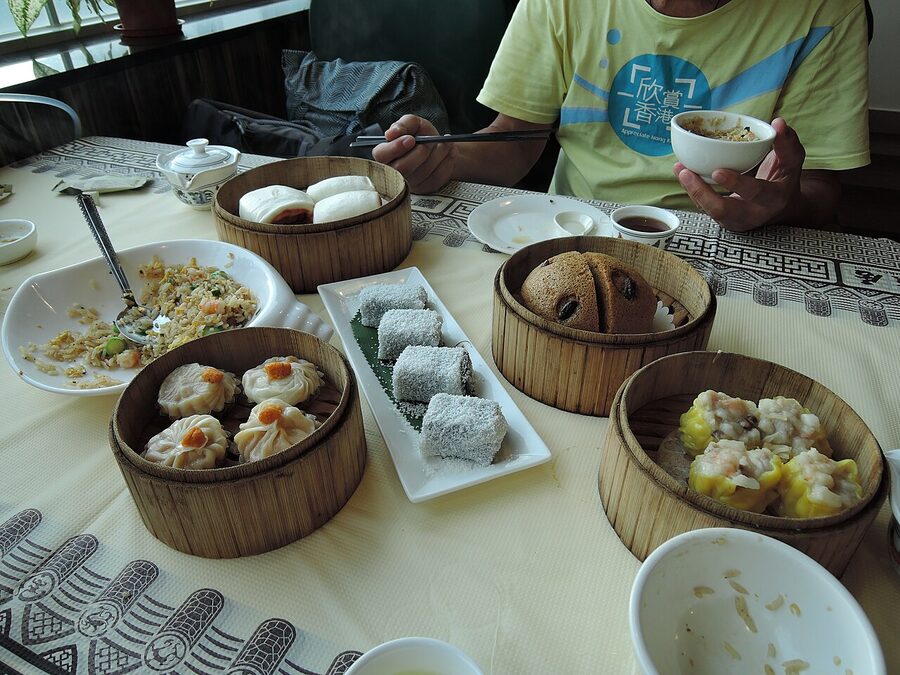
For dim sum, go to one of the old-school teahouses in Luohu (Luohu Dongmen is the old town district, try Tao Tao Ju if it’s still running; Fei Cui Hai Xian Jiu Lou for a slightly fancier sit-down). For Sichuanese, the branches of Haidilao are everywhere and deservedly famous, a hotpot chain that turned customer service into a discipline, with free manicures and noodle-pulling theatre. For hole-in-the-wall street food, walk the alleys behind Dongmen or the food courts around Coco Park in Futian after 9pm. For a splurge, the basement of Mixc Mall in Luohu has several two-Michelin-star Cantonese restaurants.
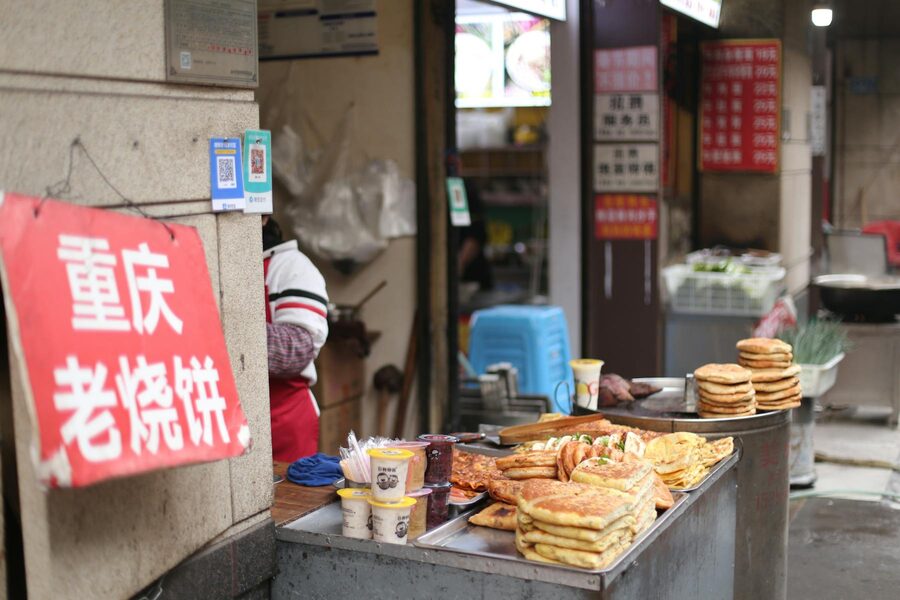
Two specific things to try that people miss: Chaozhou beef hotpot (paper-thin slices of local beef, dipped for exactly five seconds in a clear broth, there are specialist restaurants in Luohu that are some of the best meals I’ve had anywhere in China), and poon choi, a Cantonese “big bowl” dish of layered meats and vegetables that’s traditional at weddings and occasionally served in Shekou for Chinese New Year. Neither features on any “top ten Shenzhen foods” listicle, and both are better than the things that do.
A two-to-three day route that actually works
If you’ve got three days and want the core of the city without the gimmicks, this is the route I’d send a friend on.
Day 1, Futian core. Start with dim sum at a Luohu old-town teahouse (get there by 10am). Walk the old Dongmen market streets afterwards. Metro to Civic Center, walk Lianhuashan Park to the Deng Xiaoping statue for the classic skyline shot. Lunch around Coco Park. Afternoon at the Ping An Free Sky observation deck; aim to be there by 4pm to catch light-to-dusk transition. Evening: dinner in Futian (a Sichuan restaurant won’t go wrong), then rooftop drink somewhere in the CBD.
Day 2, Nanshan and Shekou. Morning in OCT Loft (aim for 10:30am; too early and the coffee shops aren’t open). Lunch in OCT. Afternoon at Huaqiangbei, metro back east to Huaqiang North, give yourself two hours of pure drift through the electronics buildings, don’t buy anything you can’t fit in carry-on. Evening: metro to Shekou, walk down to Sea World plaza for the fountain show at 7 or 8pm, dinner at one of the plaza restaurants, drinks at whichever bar has the best happy hour.
Day 3 (optional), Hong Kong crossover. If you’ve got an extra day and the appropriate visa, cross early at Futian or Shenzhen Bay. Spend the day in HK (Central, Sheung Wan, ferry to Kowloon, Victoria Peak cable car at sunset). Return via the same crossing before 9pm. If you don’t want to leave the mainland, spend Day 3 on a day trip to Dafen in the morning and then Shenzhen Bay Park in the afternoon.
Using Shenzhen as a base for the rest of south China
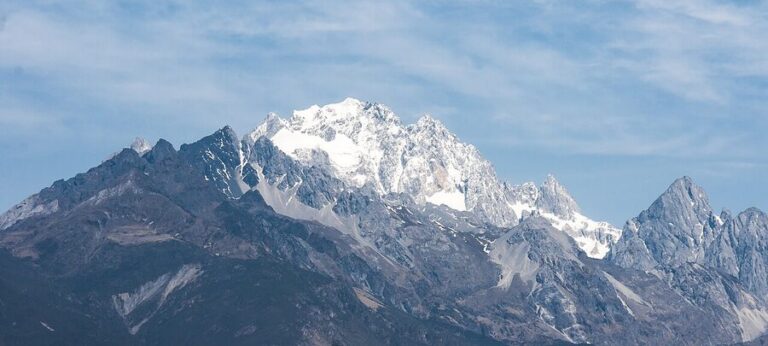
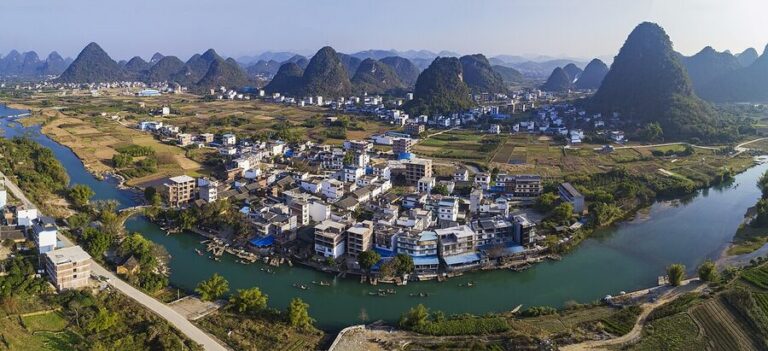
Once you’ve got the city itself in your bones, Shenzhen North station puts half of China within a half-day train ride. For a long weekend, my two favourites are Yangshuo, the karst peaks and river country that Chinese five-yuan notes get printed of, and Lijiang, the Unesco old town up in Yunnan at 2,400m, with Jade Dragon Snow Mountain an hour north. Both are reachable in a morning from Shenzhen North; both are categorically different countries to the glass-and-neon city you just left.
For even shorter escapes, the ferry from Shekou Cruise Terminal to Macau takes an hour and lands you in the Portuguese-cobblestoned chaos of one of Asia’s weirder ex-colonies. An afternoon in Macau, dinner of pastel de nata and African chicken, last ferry back. It’s one of the only multi-country day trips in Asia that actually works on a weekday.
Practicalities, money, connectivity, and what to expect
Money. Card machines exist but you’ll feel like a dinosaur using them. Everything runs on WeChat Pay and Alipay. Both now have international “tourist wallet” modes that accept foreign Visa/Mastercard, download before you arrive, verify with passport on the day you land. Cash is legal and usable, but small vendors may be visibly annoyed when you try to pay with ¥100 notes and expect change. ATMs: ICBC and Bank of China machines take international cards reliably; third-party ATMs are hit-or-miss.
Connectivity. A China Mobile or China Unicom prepaid SIM is ¥50–80 for a week of 4G, buyable at the airport with your passport. eSIMs from international providers (Airalo, Holafly) also work and are the simpler option for short trips. Remember: no Google, no WhatsApp, no Instagram, no Facebook, no Western news sites without a VPN. Install the VPN before you land.
Language. Cantonese is the local mother tongue but Mandarin is everybody’s working language and what you’ll hear most. Young staff in cafés and hotels usually have enough English to get by. Taxi drivers generally don’t; see the app-screen trick above. Translation apps work well if you download the offline Chinese language pack before your trip (anything to reduce live VPN dependence).
Weather and when to go. Subtropical, humid, warm year-round. Worst months: July–September, when it’s 34°C, 90% humidity, and typhoons routinely cancel the HK ferries. Best: October–December, dry, 20–26°C, haze-free most days. January–February is cooler (10–18°C) and a bit drizzly; March–June is warm and increasingly humid. Golden Week (first week of October) and Chinese New Year (late January / early February) see the city either empty out completely or flood with domestic tourists, check dates and decide which you prefer.
One last thing
Shenzhen keeps changing. Walk any street in Futian on a Tuesday afternoon and you’ll see buildings going up and buildings coming down inside the same block, a city still in the middle of inventing itself, which is a large part of what makes it worth the visa. And if you only have a few hours, an evening at Sea World with a cold beer and the fountain show running on the hour is a pretty good introduction.

.jpg)

.jpg)
.jpg)
.jpg)
