
The Regional Ramen Map of Japan: From Sapporo Miso to Hakata Tonkotsu and Everything Between
A bowl of ramen in Sapporo looks like a completely different dish from a bowl in Fukuoka. That’s because it is. The soup is a different colour, the noodles a different shape, the pork cut differently, the toppings from different gardens. Even the word on the menu sometimes changes. In Takayama they still call it chūka soba. In Wakayama people order a side of pressed mackerel sushi with it. In Tokushima they crack a raw egg on top and eat it with rice. You can travel Japan for two weeks, eat one bowl a day, and never eat the same thing twice.
I started paying attention to regional ramen the second time I went to Japan, after I realised my first trip had basically consisted of eating Hakata tonkotsu at an Ippudo clone in Shibuya and thinking I’d done my homework. I had not. What follows is a field guide. Not a ranking. A map drawn in soup, city by city, with the specific shops I’d send a friend to, the yen prices I last paid, and the honest note on which styles I’d detour for and which I’d skip if time was short.
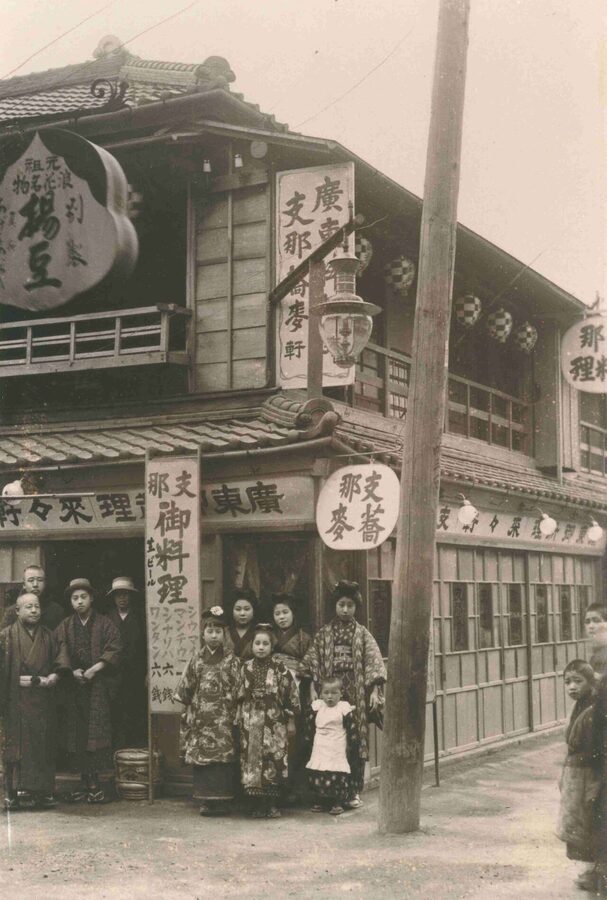
One bit of housekeeping before the map. Ramen is Chinese in origin, which almost nobody fronts. The short version: noodle soups were first brought to port cities like Yokohama and Kobe by Chinese immigrants from Guangdong in the late 1800s, eaten mostly by the Chinese community and by Japanese students who’d been to Qing China. The first specialist Japanese shop is usually said to be Rairaiken in Asakusa, opened 1910 by Kan’ichi Ozaki, who hired twelve Cantonese cooks from Yokohama’s Chinatown and adjusted the bowl for Japanese palates. The dish was called Nankin soba, then shina soba, then chūka soba, and only in 1947 did “ramen” appear in print as a general name for it. The nationwide explosion came after World War II, when millions of repatriated Japanese colonists returned from Manchuria hungry for noodles and American flour imports poured in to patch the rice shortage. Then, in 1958, Momofuku Ando invented instant ramen at his backyard shed in Osaka, and the dish became a global export. If you’re interested in the Chinese side, I’ve written about where to start in my regional must-try food in China guide. Ramen is a Japanese adaptation, but the ancestry deserves the nod.
In This Article
- The four broth families, and why they matter
- Hokkaido: Sapporo, Asahikawa, Hakodate
- Tōhoku and Fukushima: Kitakata, Yonezawa
- Tokyo and Yokohama: shoyu, iekei, tsukemen
- The Kanto grey zone: Hachioji, Sano
- Kyoto, Osaka, and the back-fat belt
- Nagoya, Gifu, and chūka soba country
- The Chūgoku coast: Onomichi, Hiroshima, Yamaguchi
- Shikoku: Tokushima
- Wakayama: the one with a side of pressed mackerel
- Kyushu: Hakata, Kumamoto, Kagoshima
- Is Okinawa soba even ramen?
- How to order, slurp, and kaedama
- The museums worth the train ride
- The other history drop: how Momofuku Ando changed everything
- My real-world ramen tour, in ten days
- Which styles I’d actually seek out, and which I’d skip
- The Japan-wide tour in one museum
- A final bowl, and where to head next
The four broth families, and why they matter
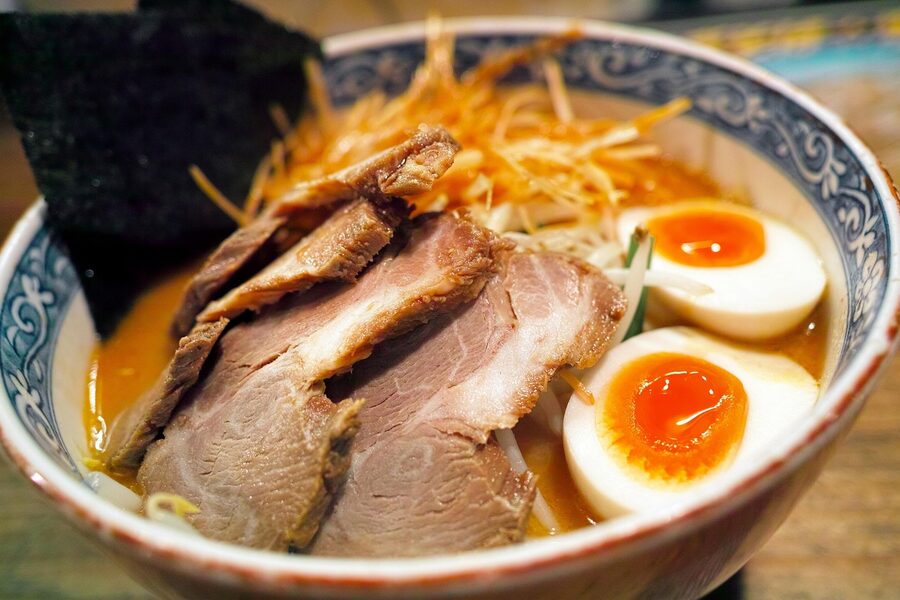
Ramen is broth plus noodle plus topping. Almost every regional style is a specific answer to those three variables. The broth usually falls into one of four camps: shoyu (soy-sauce base, usually light and clear), shio (salt base, even lighter), miso (fermented soybean paste, thick and rich), and tonkotsu (pork-bone, simmered for hours until it turns white and cloudy). A few regions run hybrids, a few run niboshi (small dried fish) as the backbone, and a handful do genuinely their own thing. Keep those four families in your head as you read on. They’re the scaffolding.
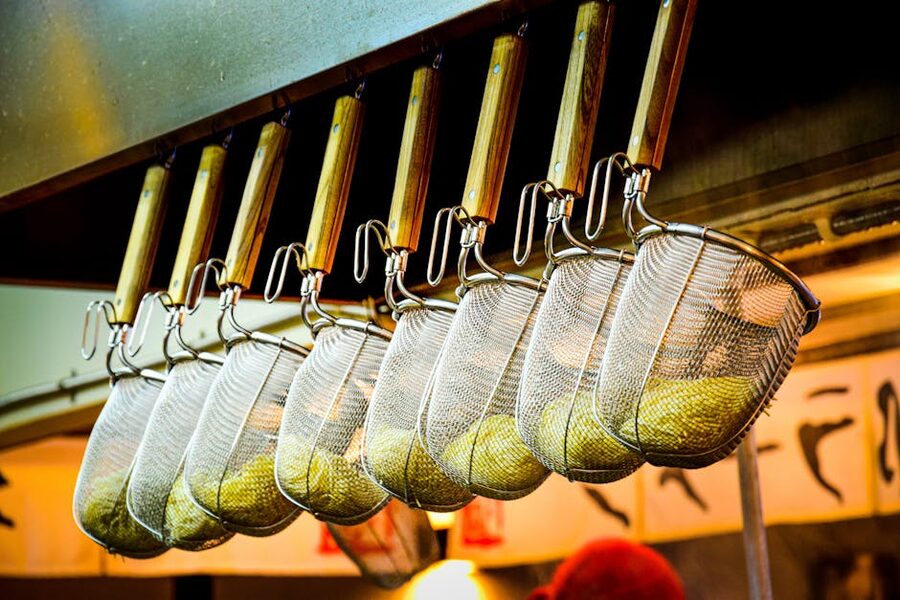
Noodle shape matters almost as much. Thick curly yellow noodles for Sapporo. Paper-flat wavy ribbons for Kitakata. Thin straight strands for Hakata, which are cooked in under a minute and meant to be eaten fast before they go soft. A good shop gets its noodles from a local maker who matches the noodle to the broth. Tonkotsu broth clings to thin noodles; miso broth wants something that stands up to the richness; back-fat layers need noodles that won’t drown in the oil.
Hokkaido: Sapporo, Asahikawa, Hakodate
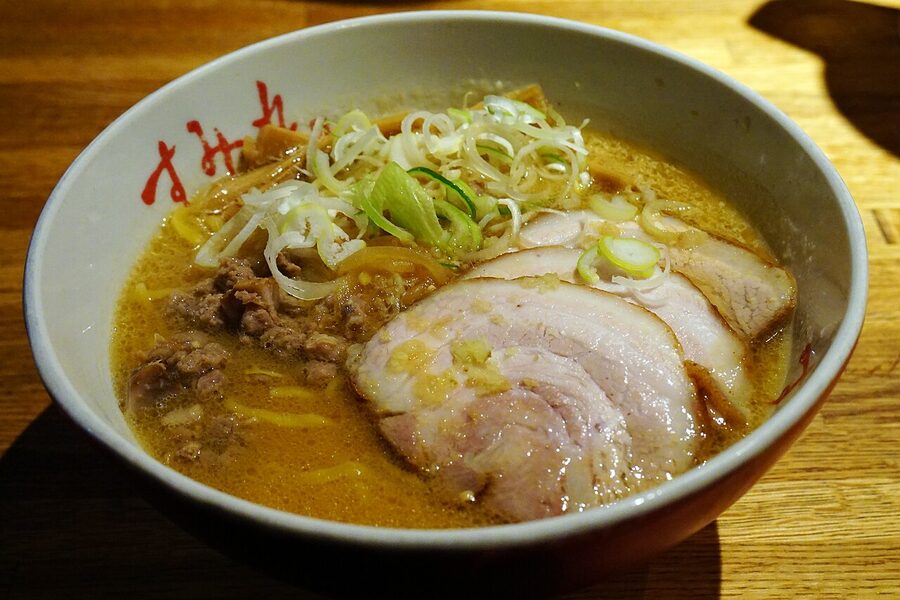
Sapporo is where most regional-ramen stories start. Before the 1950s, ramen in Japan was still mostly a Chinese-immigrant dish served with a thin shoyu broth. Then, in 1954, a shop called Aji no Sanpei in Sapporo’s Tanuki-koji arcade started putting miso paste into a rich pork-and-chicken broth and tossing the noodles through a wok of fried vegetables first. By 1961 the menu had crystallised into what we now call Sapporo miso ramen, and the instant-noodle giants had mass-marketed the flavour across Japan. It was the first time a regional style travelled.
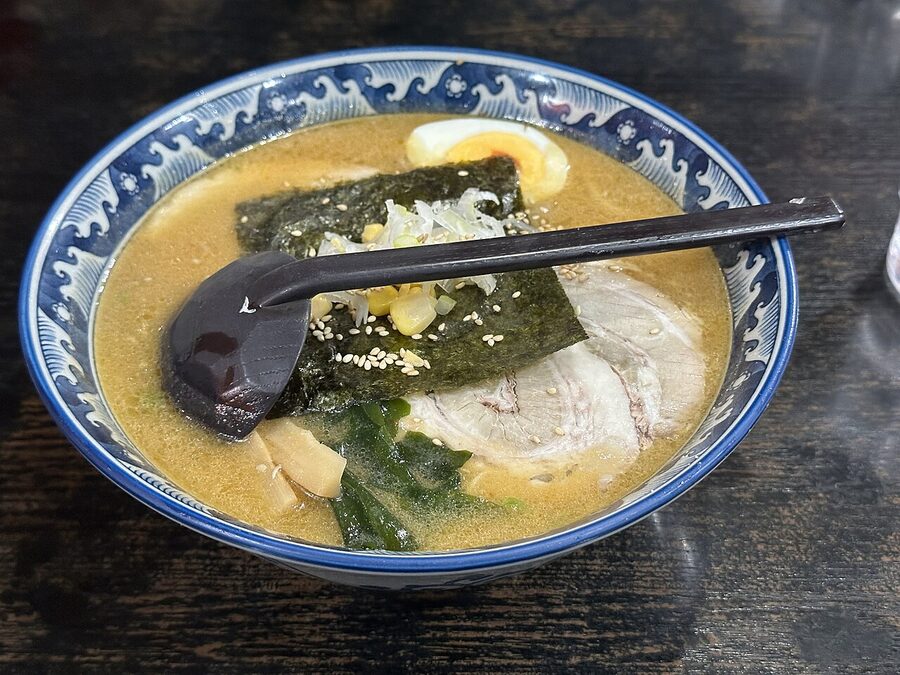
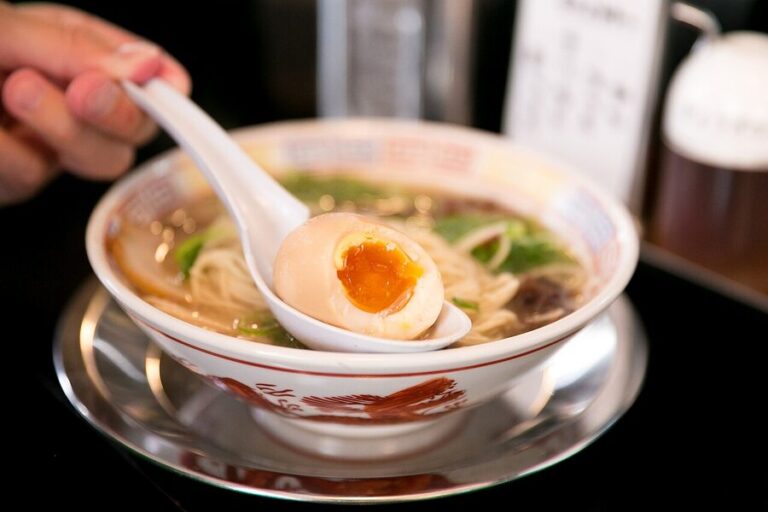
The bowl: thick yellow curly noodles, an opaque broth heavy with miso and pork-bone, a glossy oil cap to trap heat in a minus-ten winter, and the telltale toppings of sweet corn, a pat of butter, moyashi (bean sprouts), menma (fermented bamboo), and a slice of chashu. Head for Menya Saimi (Susukino area, nearest Nakajima-kōen Station, Namboku Line, exit 3) if you want to see what the new generation is doing, or Sumire if you want the classic oily-cap bowl. Expect to pay ¥900 to ¥1,300 for a standard miso. I’ve covered the wider food scene in my Sapporo food guide, including where soup curry and jingisukan fit into the picture.
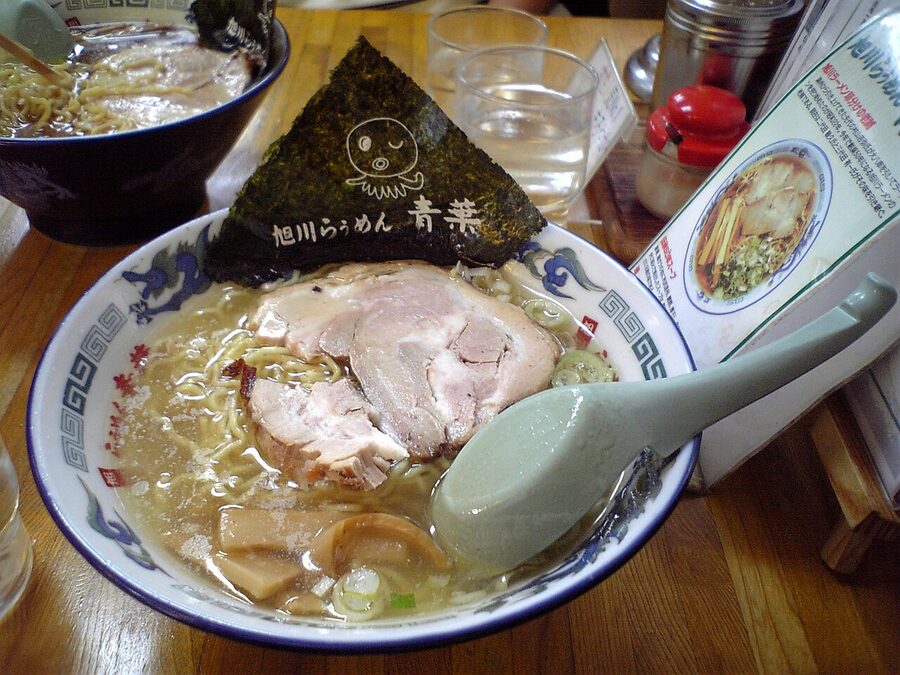
Asahikawa calls its base a “double broth”: half pork and chicken, half seafood. The noodles are thinner than Sapporo’s, and the lard cap is there for the same cold-weather reason. Locals order it with a side of ice water to drink between slurps, which sounds obvious but isn’t what I’d learned to do in Tokyo. Ramen Aoba is the classic, Baikohken is the newer reference. Around ¥900 to ¥1,100. The town also has a dedicated Ramen Mura (ramen village) at the east edge with eight shops under one roof if you only have one lunch.

Hakodate, down at Hokkaido’s south tip, makes the clearest, lightest bowl of any regional style. The broth is a chicken-and-pork salt stock with straight thin noodles and a few simple toppings: chashu, green onion, menma, sometimes a boiled quail egg. Ajisai (Hakodate-ekimae branch, three minutes from JR Hakodate Station) is the name you’ll see everywhere, and it deserves the reputation. ¥800 to ¥1,100. The oddity is that Hakodate was one of Japan’s first open ports in 1859, which is part of why its ramen lineage traces back to the same Chinese cooks who came through Yokohama. A clean bowl with a complicated ancestry.
Tōhoku and Fukushima: Kitakata, Yonezawa
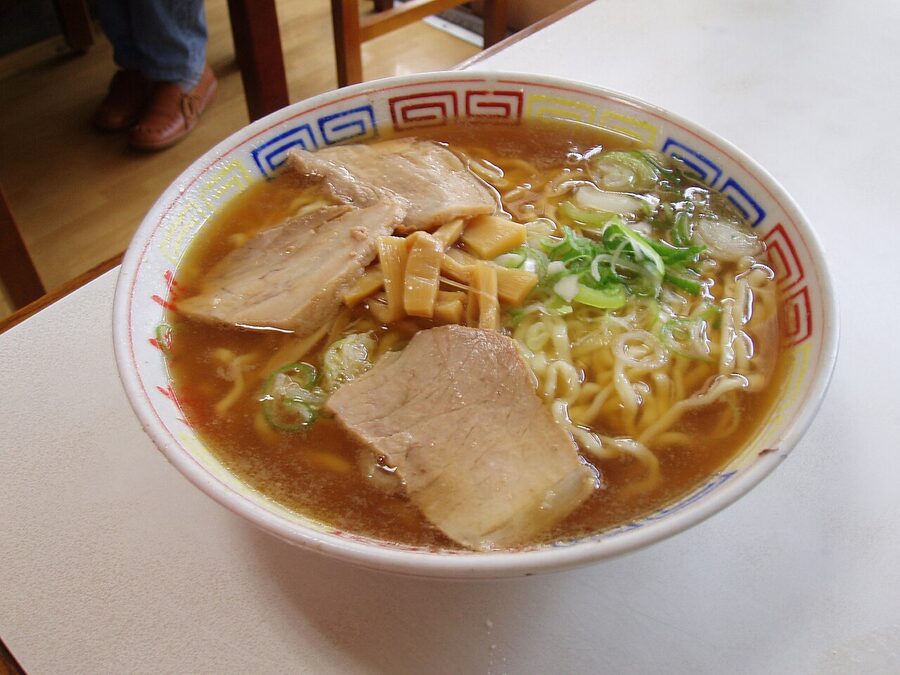
Kitakata is a small town of 45,000 people in Fukushima Prefecture with over 120 ramen shops. The ratio is roughly one shop per 370 residents. The bowl is flat wavy noodles, thicker and wider than anywhere else in the country, in a clean shoyu-pork broth with a couple of slices of chashu, menma, and green onion. The ritual you want to know about is asa-ra, the Kitakata tradition of eating ramen for breakfast. Shops open at 7am. The go-to names are Bannai Shokudo (opens 7am, near JR Kitakata Station) and Makoto Shokudo. Bowls run ¥700 to ¥900, which is cheap by any modern standard. If you’re driving the Tōhoku loop, Kitakata is a one-morning detour that pays back.
Yonezawa, an hour and a half south in Yamagata Prefecture, is a less-known name but belongs in the same conversation. Yamagata Prefecture has the highest per-capita ramen consumption in Japan, and Yonezawa’s local bowl is thin curly noodles in a clear shoyu broth, often with a generous topping of green onions. It’s subtle, not a wow-bowl, but it rewards attention.
Tokyo and Yokohama: shoyu, iekei, tsukemen
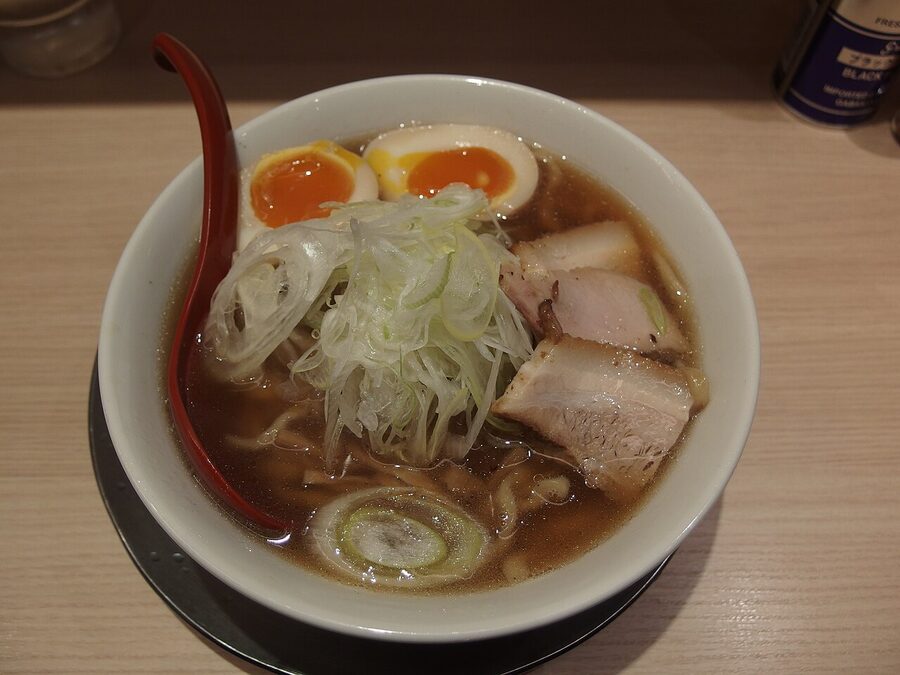
Tokyo is both the original home of the specialist ramen shop (Rairaiken, 1910) and the place where the 2000s specialist ramen revival went national. Start with classic Tokyo shoyu if you want the baseline: clear chicken broth, dark soy tare, wavy medium noodles, the four canonical toppings (chashu, menma, nori, scallion). Good places to eat it: the aforementioned Shichisai at Tokyo Ramen Street in the First Avenue basement at Tokyo Station (easy if you have a rail pass and a spare hour), or Keisuke Tokyo in Marunouchi. Around ¥900 to ¥1,200.
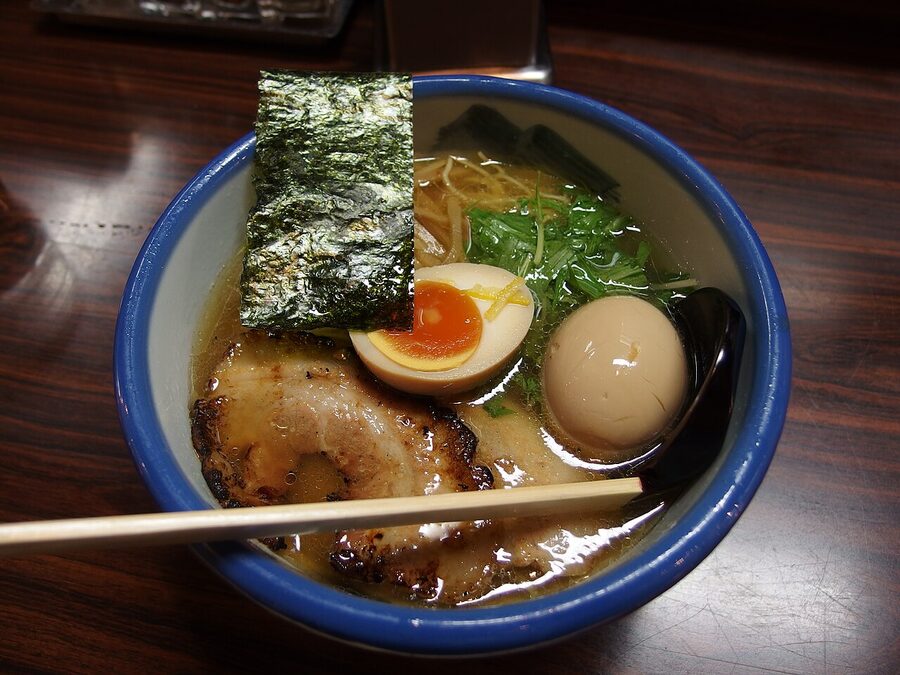
Afuri is the modern Tokyo benchmark for what specialist ramen looks like now: a chicken-base shio broth built over two days with a hit of yuzu peel that hits you like a bell ringing. The bowl is lighter than almost anything else in this article. Afuri Ebisu is the original shop, and worth the pilgrimage. ¥1,100 to ¥1,500. Not cheap by ramen standards, but you’re paying for the thirty-ingredient shio tare.
Tokyo also does the niboshi (dried sardine) school, and the one I’d recommend is Haruki-ya out in Ogikubo, on the Chuo Line about fifteen minutes west of Shinjuku. The broth is shoyu over a base of smoked small fish, and the umami hit is unlike anything else. Expect to queue. ¥900 to ¥1,100. If Ogikubo feels too far, Ramen Nagi (Shinjuku, Golden Gai) also does a niboshi bowl that’ll do the job. More on the wider Tokyo food scene in my Tokyo food neighbourhoods piece.
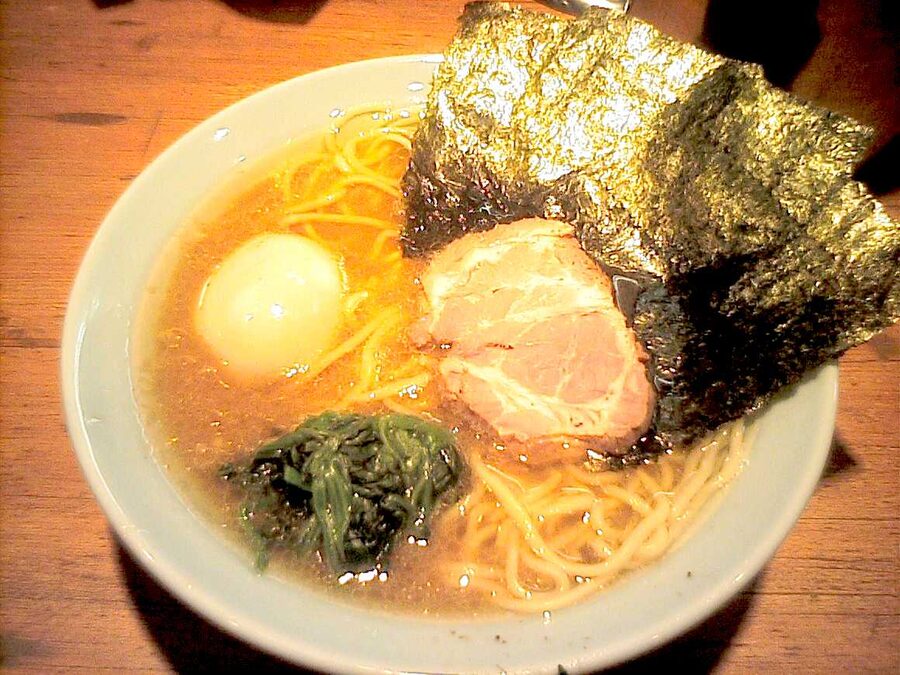
Iekei (pronounced ee-eh-kay, meaning “house style”) is a very specific thing: a pork-bone broth crossed with shoyu tare, thick straight noodles, and a topping set that always includes nori, spinach, and a boiled egg. The founding shop is Yoshimuraya, a 25-minute train ride south of central Tokyo at Yokohama Station. You can also find respected iekei chains like Machida Shoten and Ikkakuya all over greater Tokyo. The move to learn: order rice on the side, eat half the bowl normally, then tip the rest of the broth onto the rice and finish it zousui-style. ¥900 to ¥1,100. Ideal hangover food.
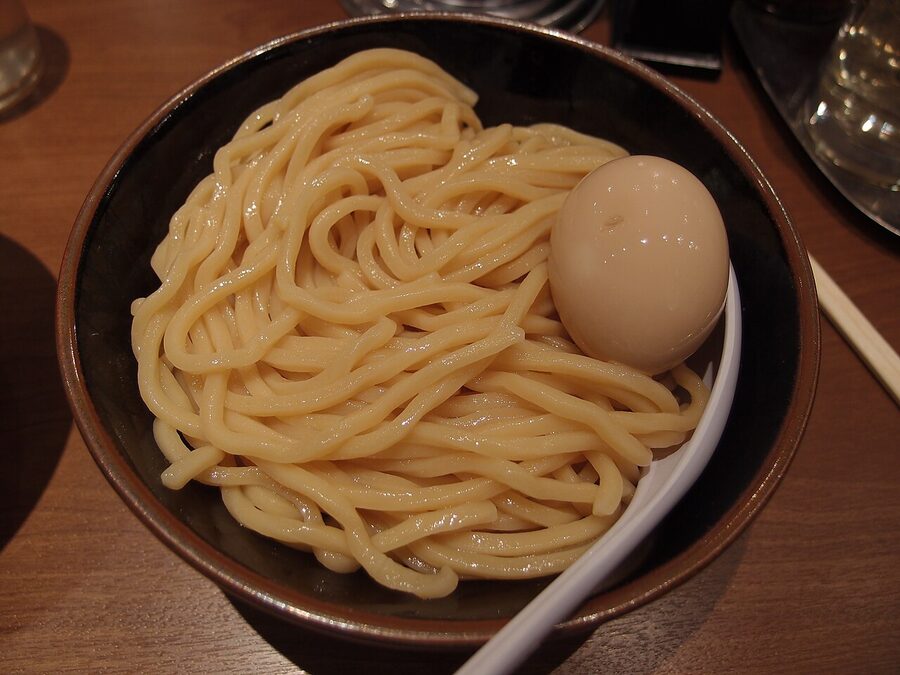
Tsukemen is the genre-break in all this. The noodles come chilled, the broth comes hot and much more concentrated than a standard ramen (it has to coat the noodle as you dip it), and you work through them in parallel. It was popularised in the 1970s by Taishōken in Higashi-Ikebukuro, but the shop that took it global is Rokurinsha, inside First Avenue Tokyo at Tokyo Station. You will queue. You will also order a bowl of hot broth to pour over the remaining noodles and drink at the end (it’s called waritame and the staff will give you extra on request). Fuunji in Yoyogi is the other Tokyo tsukemen you should know. Around ¥1,000 to ¥1,400.
The Kanto grey zone: Hachioji, Sano
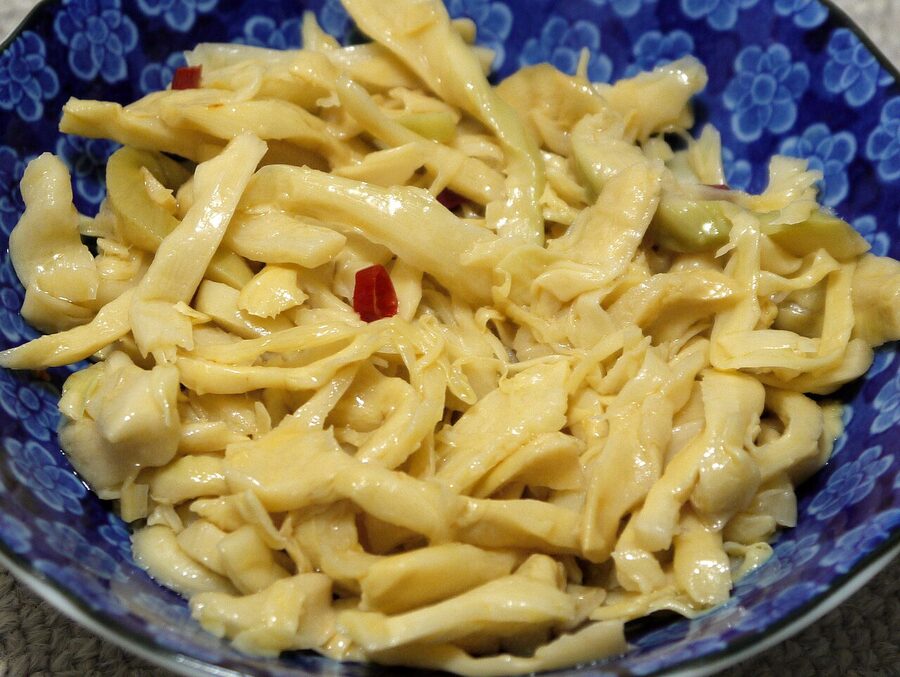
West Tokyo has a cluster of styles that never quite crossed into the national conversation but are worth knowing if you’re out that way. Hachioji ramen uses diced raw onion as a topping (not green onion, raw white onion), which sounds wrong but works. Sano ramen, up in Tochigi, is famous for noodles hand-cut with a bamboo pole pressed against the dough. Both are shoyu-based. Neither is worth a day trip from central Tokyo, but if you’re heading out that way on another errand, it’s worth stopping. Bowls in both are ¥700 to ¥900.
Kyoto, Osaka, and the back-fat belt
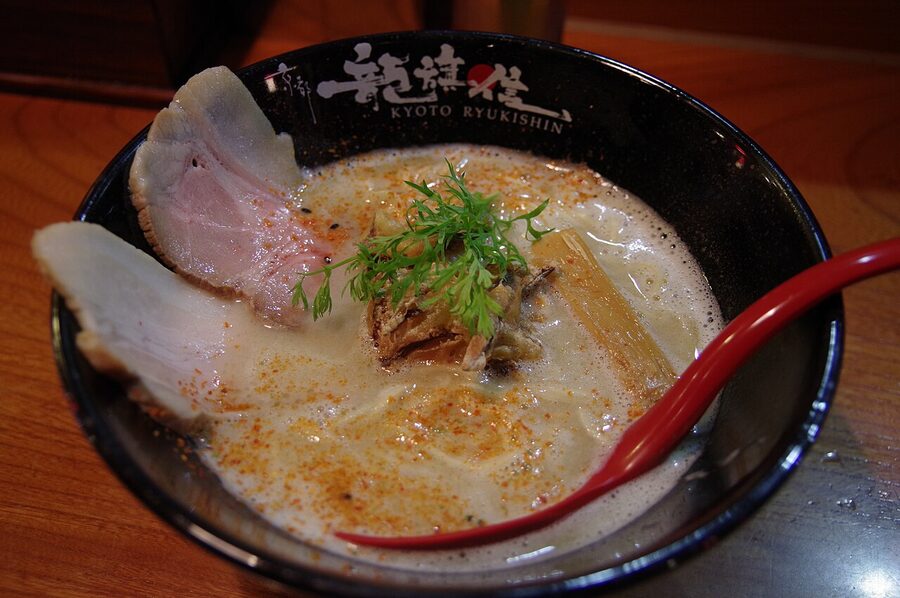
If your idea of Kyoto food is tofu and refined kaiseki, its ramen will surprise you. The local style is seabura (back-fat) shoyu: a thick soy-rich broth with a thick layer of rendered pork-back-fat on top, and noodles that stand up to it. You’ll want to go to Ichijoji, a neighbourhood northeast of the centre that’s a ten-minute ride on the Eizan Line from Demachiyanagi and is the centre of Kyoto’s student ramen scene. Specific shops: Hongake Kin-chan for the classic seabura bowl, Ramen Masutani for a slightly lighter take. ¥850 to ¥1,200. For everything else food-related in the city, my what to eat in Kyoto piece goes deeper.
Osaka is, weirdly, the city with the least distinct ramen identity in Japan. Its food scene revolves around takoyaki, okonomiyaki, kushikatsu, kaiten-zushi, and the whole street-food parade I cover in the Osaka street food guide. But Osaka does do a clean chūka shoyu bowl, and it does have Jinrui Mina Menrui near Umeda, which is one of the most creative ramen shops in Kansai and regularly pops up in “best of Japan” lists. There’s also a minor tsukemen scene around Shinsaibashi. Around ¥900 to ¥1,400.
Nagoya, Gifu, and chūka soba country
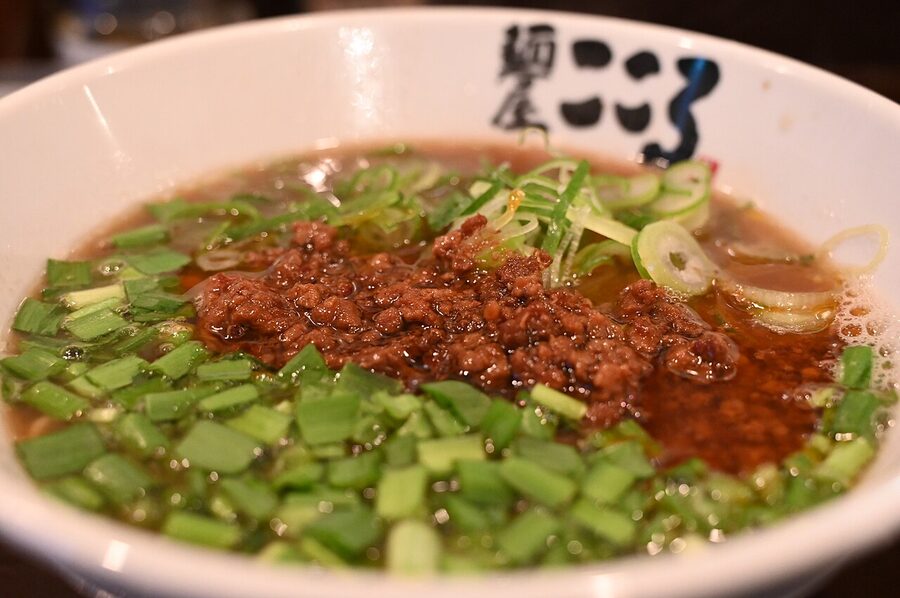
Nagoya’s signature ramen is Taiwan ramen, which is named for a country that has never heard of it. A Taiwanese chef called Kuo Ming-yu invented it at his Nagoya restaurant Misen in 1971 and the dish became a Nagoya institution while remaining unknown in Taipei. It’s a spicy minced-pork-and-chive topping over a clear shoyu broth, garlic-heavy, and the heat builds slowly rather than hitting you up front. Misen is still the reference, with branches around Nagoya and one near Nagoya Station. Bowls from ¥900. Worth a detour if you’re changing trains.
Takayama in Gifu still uses the old name chūka soba rather than “ramen”, which tells you something about how far out of the national mainstream it kept itself. The bowl is chicken-shoyu, very thin noodles, a clean bonito undertone, almost a palate cleanser. If you’re doing a Takayama morning-market visit, slot this into lunch. My what to eat and drink in Takayama guide has the fuller setting, including which sake breweries to pair it with.
The Chūgoku coast: Onomichi, Hiroshima, Yamaguchi
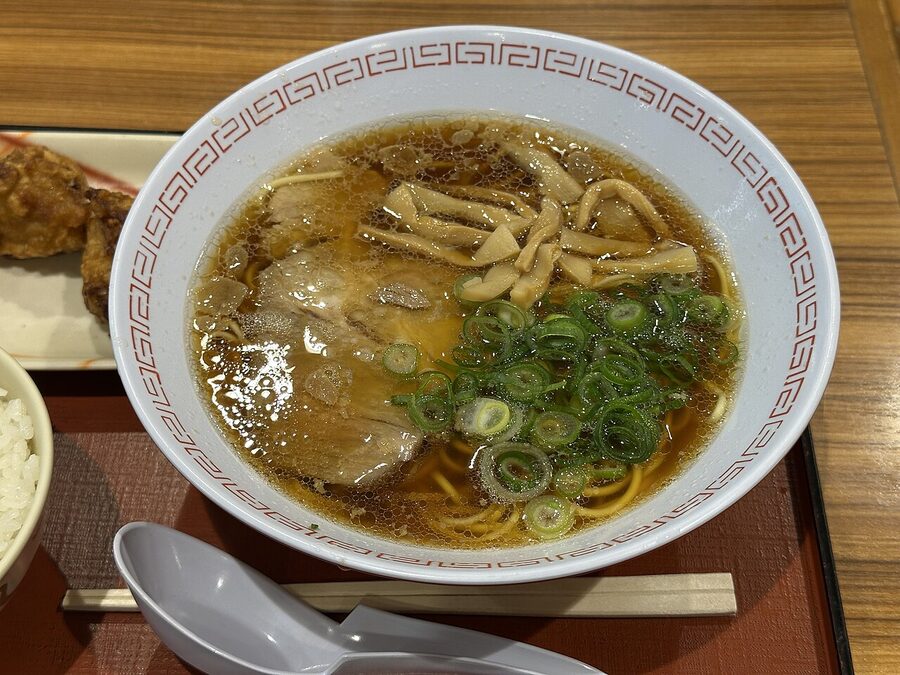
Onomichi, a small port town on the Inland Sea opposite Shikoku, makes one of the country’s more distinctive regional bowls. The broth is iriko (small-fish) with a chicken back-up, topped with a thick layer of pork-back-fat. The noodles are medium-straight. The flavour is a proper balance of sea-stock umami and pork richness. Shukaen is the name you’ll see on posters. Bowls ¥800 to ¥1,000. The town itself is also a lovely half-day stop on the Shimanami Kaido cycle route, and I cover the wider food picture in my Hiroshima and Miyajima food guide.
Shikoku: Tokushima
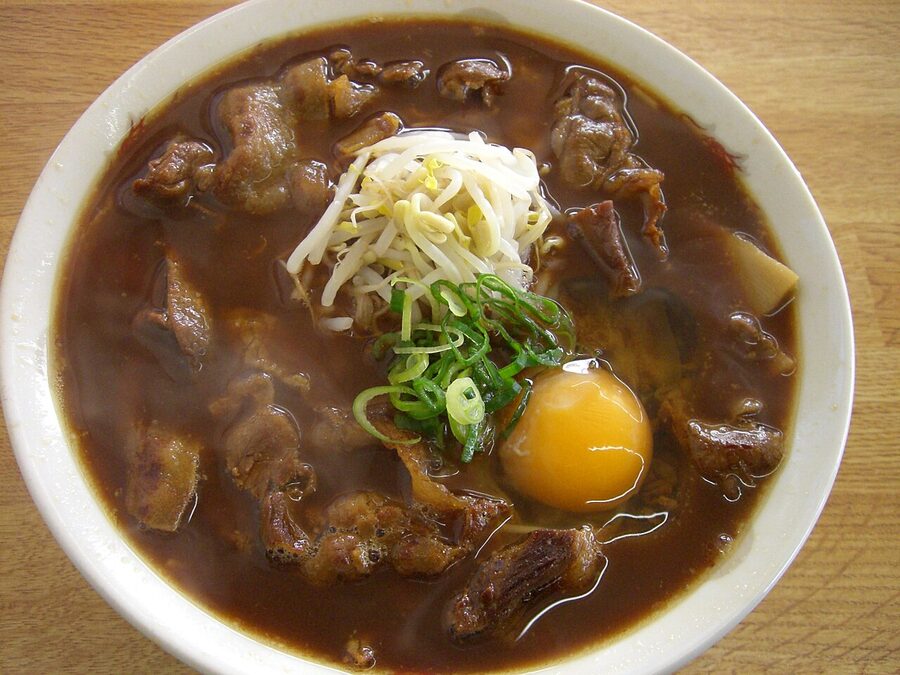
Tokushima ramen is the one that visually surprises people most. The broth is a dark, almost brown pork-and-shoyu affair, with thin curly noodles and the classic topping of butabara, sweet-soy-simmered pork belly slices rather than the standard chashu. Then you crack a raw egg on top, let it cook slightly in the heat of the broth, and eat it with a bowl of plain rice on the side. It’s ramen-as-breakfast-dish, and the pairing makes sense once you try it. Inotani, near JR Tokushima Station, is the benchmark. ¥700 to ¥900. Shikoku is the least-visited of the four main islands and Tokushima gets fewer tourists than it deserves.
Wakayama: the one with a side of pressed mackerel
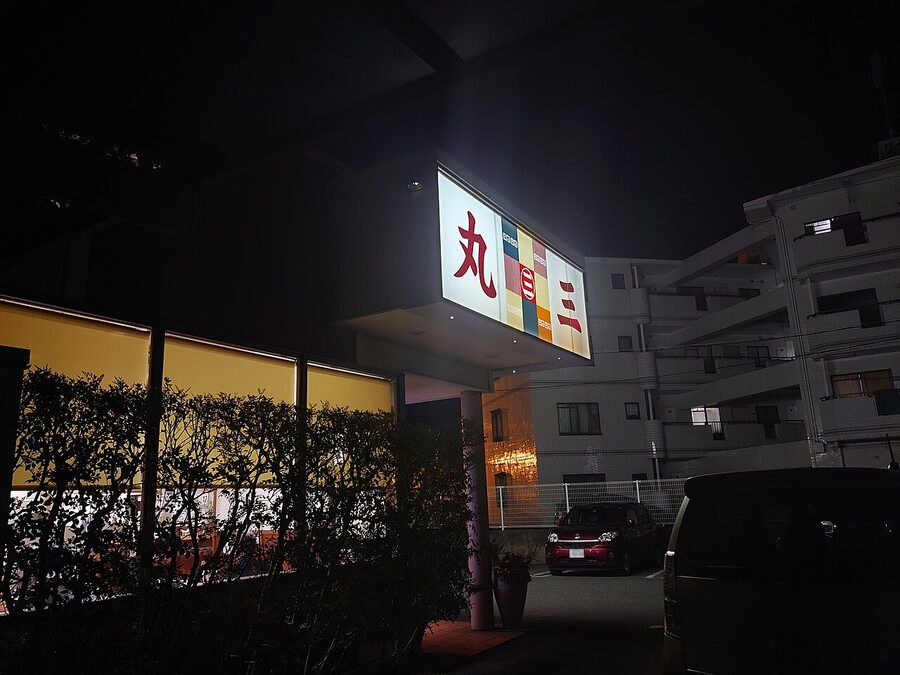
Wakayama, south of Osaka, makes a tonkotsu-shoyu hybrid bowl with medium-thin noodles, and it has a specific side-order tradition: sabazushi, mackerel pressed sushi, eaten alongside the ramen. The sushi arrives first and you eat a piece or two while the broth cools to slurping temperature. The shop Ide Shoten is the name that travelled nationally. ¥800 to ¥1,000 for the ramen, another ¥300 to ¥500 for a few pieces of sabazushi. The pairing works, and it’s one of those regional quirks I’d travel for.
Kyushu: Hakata, Kumamoto, Kagoshima
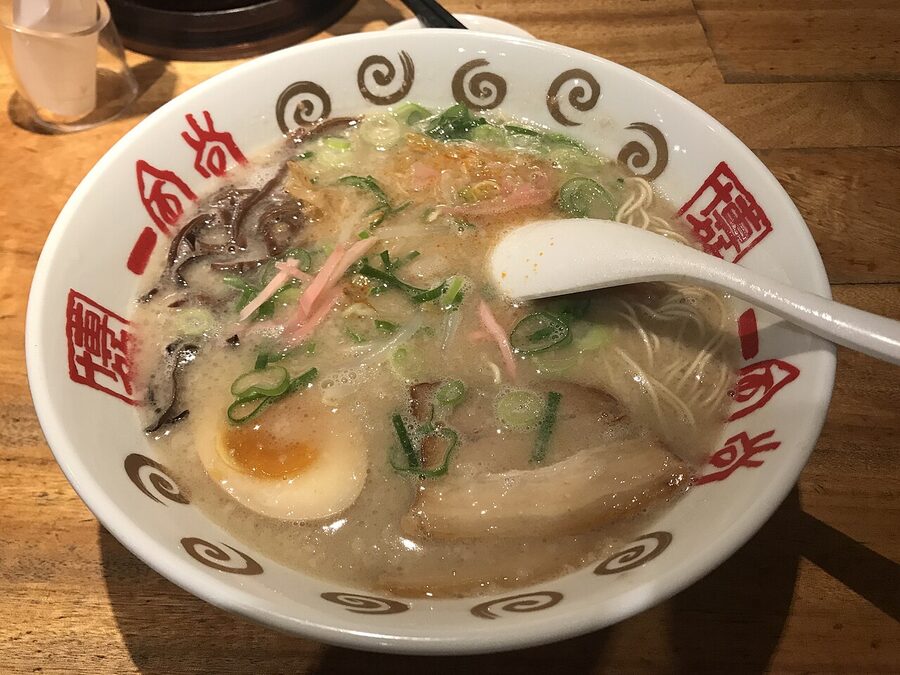
Hakata tonkotsu is the Kyushu bowl that went global. It was developed in the yatai (food-stall) culture of 1940s and 50s Fukuoka, where stall owners needed a broth they could cook continuously and a noodle that cooked in under a minute (so customers could eat and leave during Fukuoka’s short post-war lunch hours). The broth is pork bones boiled hard for eighteen to twenty hours until it emulsifies into a creamy white liquid. The noodles are very thin and straight. The toppings are minimal: chashu, beni shoga (red pickled ginger), a sprinkle of sesame, scallion. The order ritual to know: you can ask for noodle firmness when you order (kata, barikata, harigane, in increasing order of hard), and you can order kaedama (extra noodles in the remaining broth) for ¥150 to ¥200.
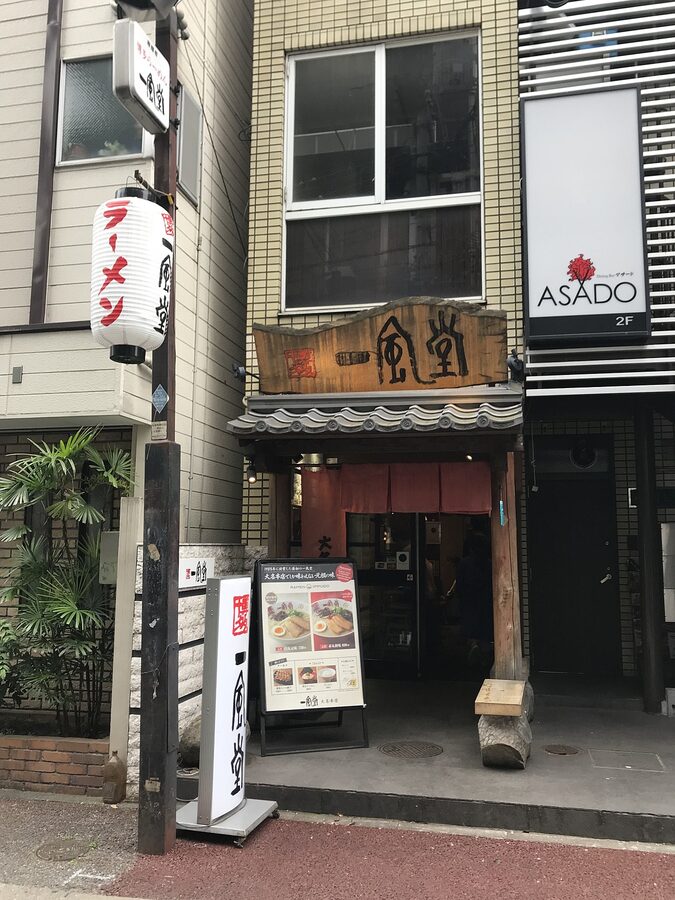
Named Hakata shops: Ippudo (the 1985 original on Daimyo 1-chome, Tenjin Station, Kuko Line, exit 2, five minutes), Ichiran (which does the one-seat dining-booth thing and is the most tourist-famous, but genuinely makes a great bowl), and Shin-Shin on Tenjin for a more local feel. ¥750 to ¥1,100. My Fukuoka ramen guide has the deeper dive, including the yatai scene at night and why the riverside stalls on Nakasu are worth the price premium.
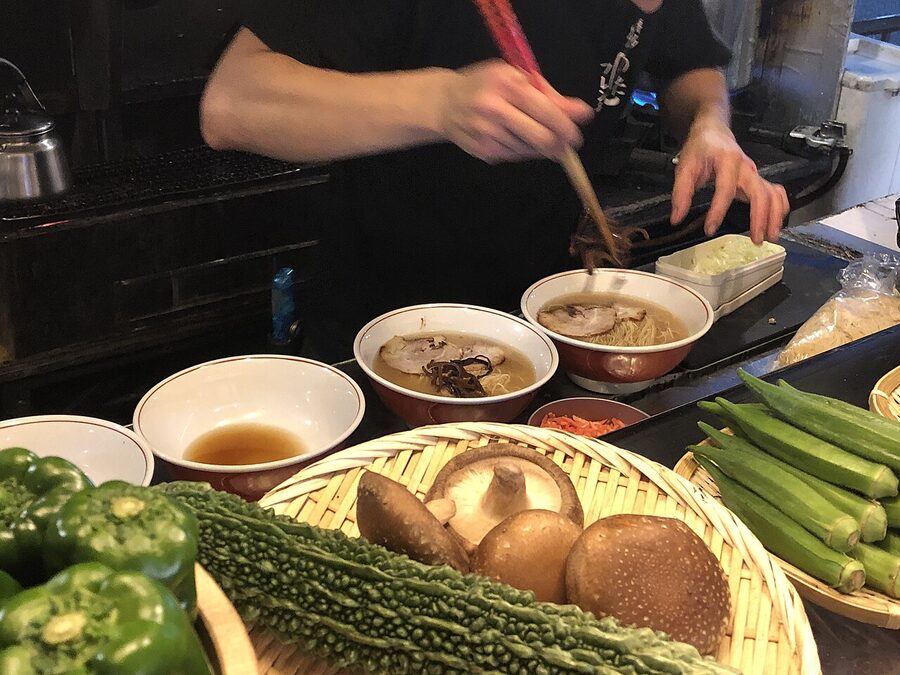
South of Fukuoka the style mutates. Kumamoto ramen is still tonkotsu but thicker, cooked less aggressively, with a signature float of mayu, black garlic oil that gives the whole bowl a dark glassy cap and a smoky roasted-garlic flavour. Noodles are thicker than Hakata’s. Kohryu (Kumamoto Castle area, ten minutes walk from the streetcar stop) is the reference. ¥900 to ¥1,100. It’s a very specific flavour: if you like burnt-garlic anything, you’ll love it; if you don’t, you won’t.
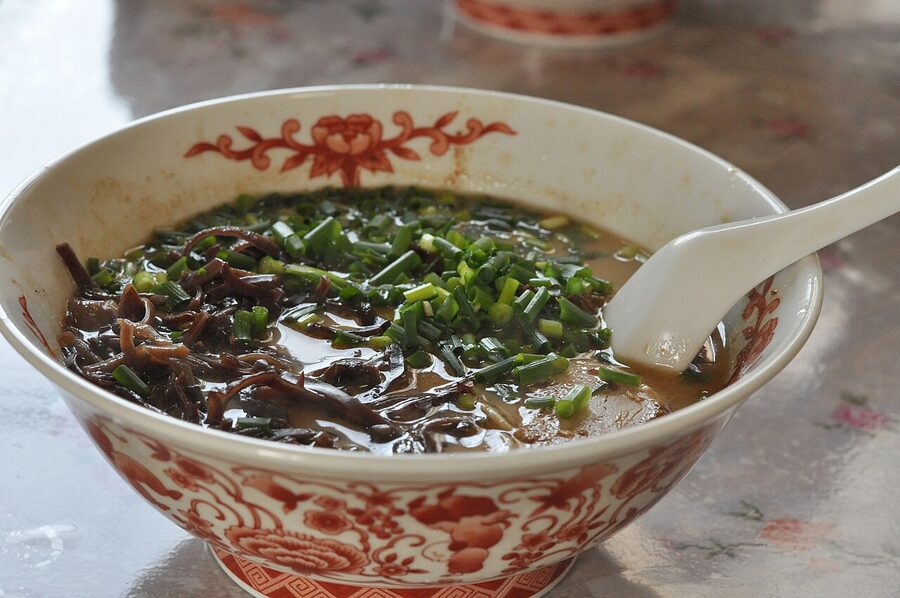
Kagoshima, further south still, makes a milder tonkotsu with chicken bones in the blend and a slightly sweeter finish. The toppings often include a slice of daikon. It’s the least famous of the Kyushu styles but worth a stop if you’re doing the bullet train all the way to the Kirishima volcanoes.
Is Okinawa soba even ramen?
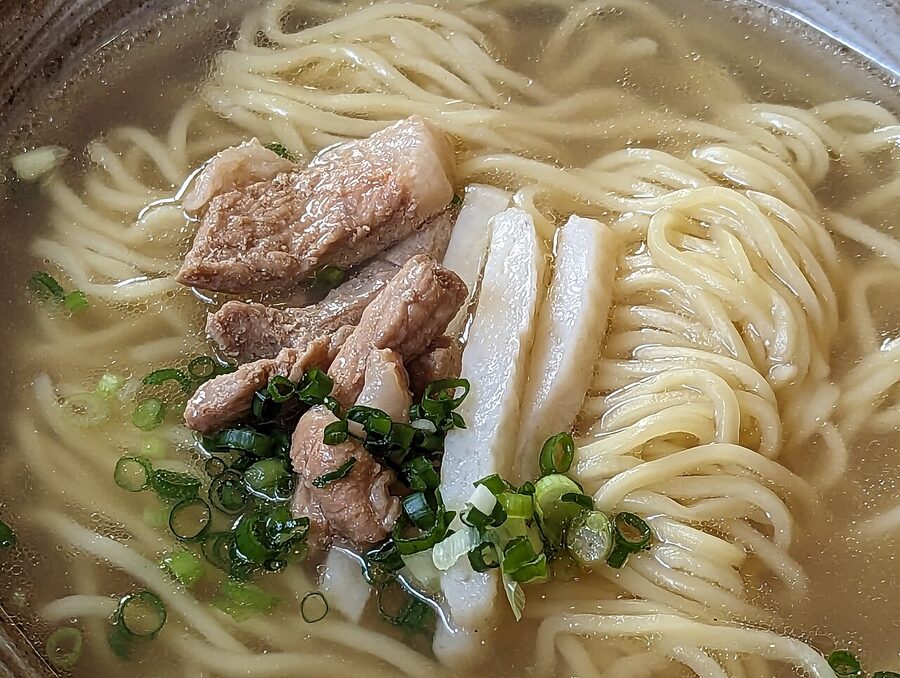
Okinawa soba is its own thing, and strictly it doesn’t belong on a Japanese ramen map. Japan’s Fair Trade Commission ruled in the 1970s that traditional Okinawan soba (which uses wheat noodles like ramen but doesn’t use kansui in the same way, and uses a bonito-pork broth) could only be called “soba” if it qualified as a regional specialty, which Okinawa eventually won in 1976. The noodles are thicker than ramen noodles, almost udon-like, and the topping is usually soki, stewed pork spareribs that fall off the bone. If you’re in Naha, Shuri Soba near Shuri Castle is the classic. ¥700 to ¥1,000. I cover the Okinawan food scene more broadly in my Okinawa food guide.
How to order, slurp, and kaedama
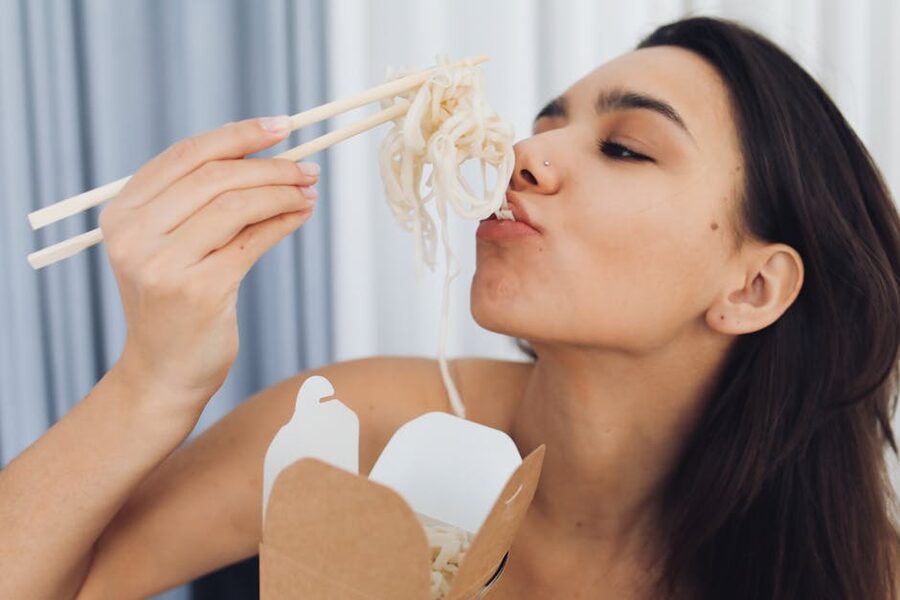
A few mechanics you’ll want in your head:
Ordering noodle firmness. Standard in Kyushu tonkotsu shops, increasingly in other regions. Options in rising order of hardness: yawa (soft), futsu (normal), kata (firm), barikata (very firm), harigane (wire-hard, 15 seconds in the pot), konaotoshi (barely cooked, 10 seconds). For your first bowl, just say futsu. Go firmer once you know the shop.
Kaedama. Mostly a Hakata thing. When you’ve eaten about two-thirds of the noodles but still have broth left, call out kaedama and the kitchen brings a second helping of fresh noodles into your remaining broth. Usually ¥150 to ¥200. Only works on thin straight-noodle bowls (tonkotsu, niboshi), not on thick wavy noodles, because those would go soggy before you ordered them.
Finishing the broth. You don’t have to. But if you do, especially in a place that’s proud of its broth, it’s a compliment. A quiet gochisousama on the way out counts for something.
Slurp. Yes, genuinely. The airflow across the noodles as you slurp does two things: cools them enough to eat, and aerates the broth so the aromatics reach your nose. Both matter.
Silence. In counter-only shops in Tokyo and Kyoto especially, phones go face-down and chatter goes to a minimum. People are eating their lunch; respect the signal.
The museums worth the train ride
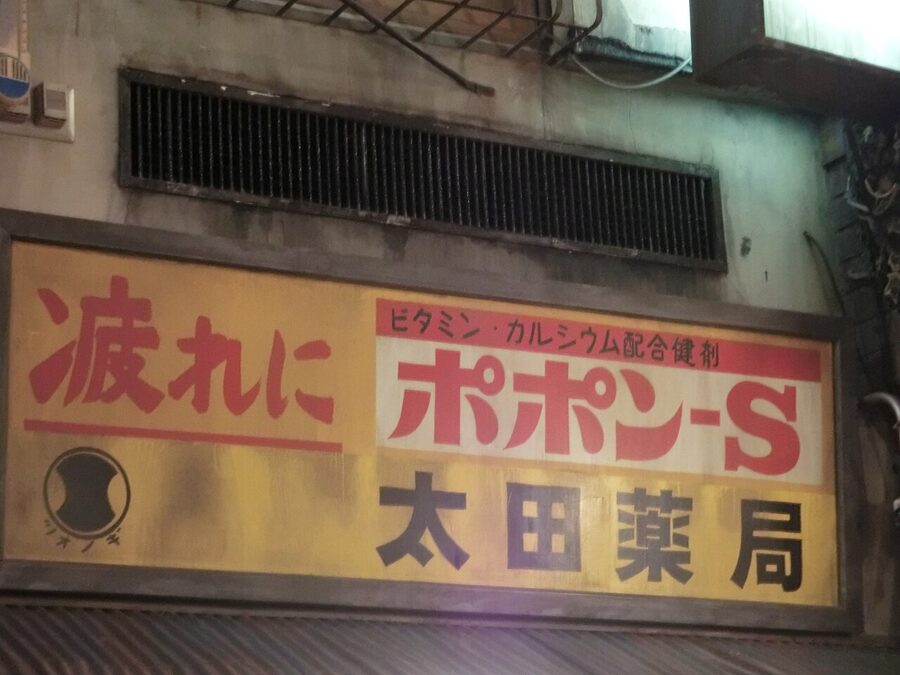
If you want to eat six regional ramen styles in one afternoon without the three-thousand-kilometre round trip, the Shin-Yokohama Ramen Museum is the answer. It’s nineteen minutes on the Shinkansen from Tokyo Station to Shin-Yokohama, then a five-minute walk. Entry is ¥450 for adults. The basement is kitted out as a reconstructed 1958 Tokyo streetscape (the year instant ramen was invented) with eight regional ramen shops in rotation. The shops change every few months. You can order mini-bowls (about half a standard size) from each, so three or four in one visit is very doable. A revived version of Rairaiken, run by the great-great-grandson of the original founder, sits inside as well, which makes this the closest you can get to tasting Japan’s first proper ramen.
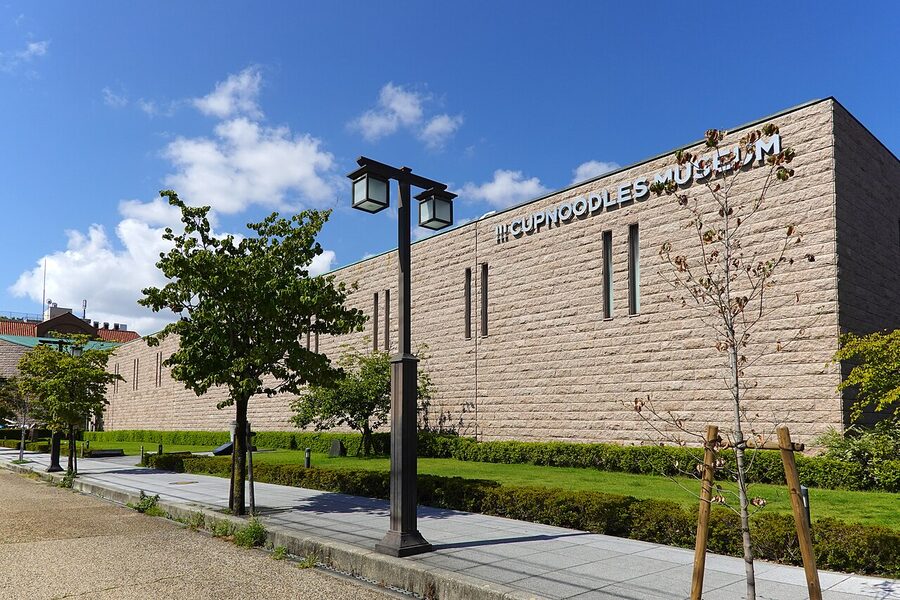
Also on the museum list: the Cup Noodles Museum has two branches, Ikeda (Osaka) and Yokohama, and both are built around the Momofuku Ando invention story. Ikeda is where he actually built instant ramen; Yokohama is the bigger, more interactive one. If you’ve dragged kids through a Tokyo trip, the Yokohama museum is a good one to promise them. Free entry, ¥500 to make your own cup noodle.
The other history drop: how Momofuku Ando changed everything
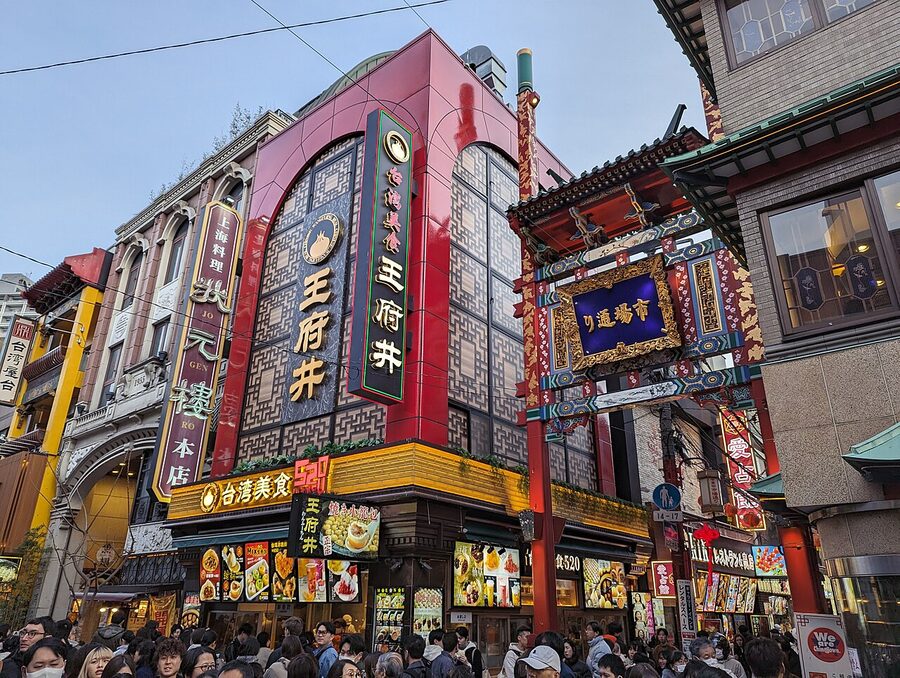
The regional-ramen map as we know it today is mostly a post-1945 phenomenon. Before World War II, ramen was still Chinese-adjacent street food served mostly in port cities. After the war, three things changed everything at once. First, millions of Japanese colonists returned from China, many of them familiar with northern Chinese noodle dishes, and many of them set up food stalls selling what they now called ramen. Second, the US occupation authority flooded Japan with cheap wheat flour to address the rice shortage, which meant noodles got cheap fast. Third, in 1958, a man called Momofuku Ando, frustrated with the long queues at ramen stalls and wanting something shelf-stable, invented instant ramen at his backyard shed in Ikeda, Osaka. His company, Nissin, launched Chikin Ramen that year, and Cup Noodles followed in 1971. The word “ramen” itself, as a general Japanese noun for the dish, only shows up in print from 1947 onward.
The modern specialist scene, the one that gave us Afuri’s yuzu shio and Fuunji’s tsukemen, came later again. The 1985 opening of Ippudo in Fukuoka’s Daimyo area is usually credited as the start; by 2000 the specialist wave had rolled through Tokyo. Today there are around 35,000 ramen shops in Japan, and roughly 10% of them serve a clearly identifiable regional style. The rest are hybrids, experiments, or family restaurants.
My real-world ramen tour, in ten days
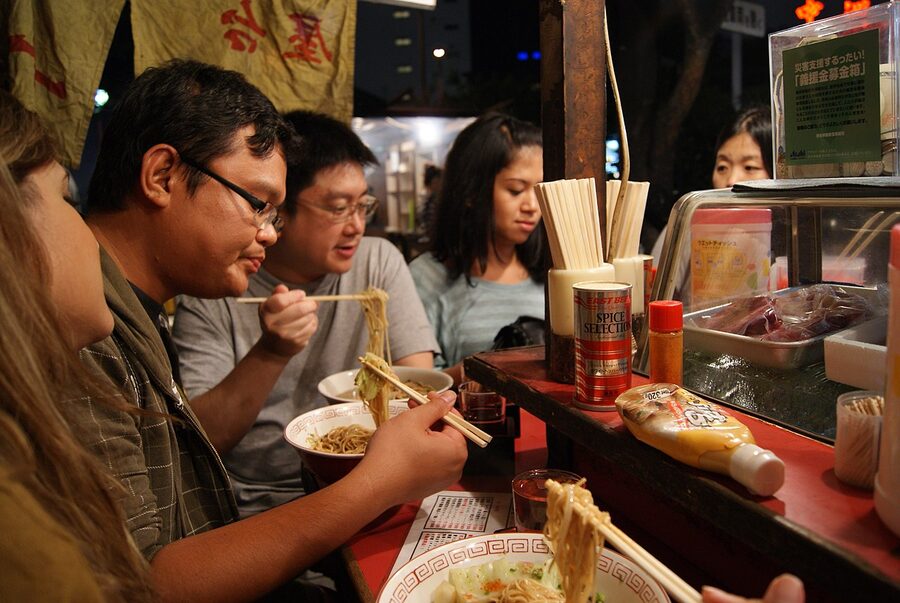
If I had to plan a ten-day trip that hit the main regional bowls, here’s roughly what I’d do:
Day 1-2: Fly into Tokyo. Eat Afuri yuzu shio in Ebisu on the first night. Morning two, Rokurinsha tsukemen inside Tokyo Station, then evening iekei at a Yoshimuraya-lineage shop in Yokohama. Three distinct regional flavours, all within reach of a Yamanote Line ticket.
Day 3: Bullet train up to Kitakata (change at Koriyama, roughly 2.5 hours total). Arrive by 10am, have Kitakata ramen for lunch at Bannai Shokudo, then back to Tokyo by early evening. Long day, worth it.
Day 4-5: Shinkansen to Kyoto. Eat Kyoto seabura shoyu in Ichijoji on your first night. Use the second day for temples and kaiseki, then finish with another bowl in a different Ichijoji shop on night two.
Day 6: Train to Nagoya. Taiwan ramen at Misen for lunch. Back on the Shinkansen to Osaka for the evening, eat whatever street food wins your attention.
Day 7: Train to Onomichi via Fukuyama, Shukaen for iriko ramen. Overnight in Onomichi, cycle a section of the Shimanami Kaido if you have energy.
Day 8-10: Continue to Hakata (Fukuoka). Eat tonkotsu three ways across two days: Ichiran for the booth experience, Ippudo Daimyo for the original shop, and a riverside yatai on Nakasu for the street version. Day ten, fly home via Fukuoka Airport.
You can do shorter, you can do longer. The ten-day plan does skip Sapporo, Hakodate, and Tokushima, which are each worth their own trip. If you have two weeks, add three nights in Hokkaido at the end.
Which styles I’d actually seek out, and which I’d skip
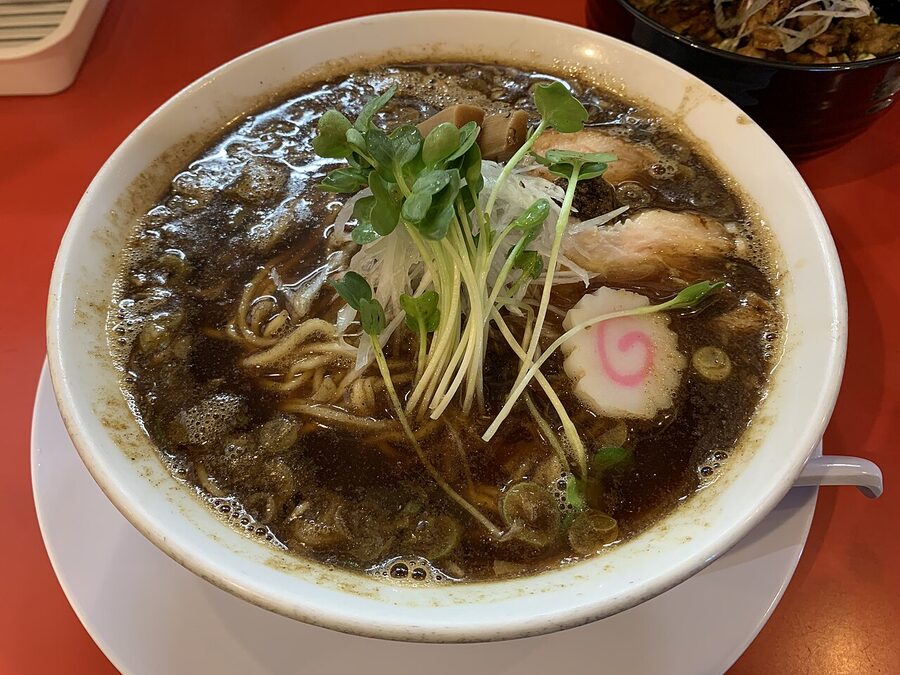
Honest opinion time. If I had to pick five regional styles to travel for, in order: Hakata tonkotsu (the ur-text), Sapporo miso (the one that made the category), Afuri yuzu shio (the modern benchmark), Kitakata flat-noodle shoyu (the one you’ll remember for the noodles alone), and Onomichi iriko (the one almost nobody outside Japan has heard of).
Styles I’d skip if time is short: Kagoshima tonkotsu (good but very similar to Hakata), Osaka ramen (not bad but Osaka does almost every other food better), Wakayama (the ramen is fine, the sabazushi side is the real reason to go), generic Tokyo shoyu at a chain (it’s everywhere, it’s fine, but no chain bowl beats a specialist). Iekei is also divisive: I love it, some people find it one-note. Try it once, decide.
And one genuine warning. Tsukemen is not a good starter ramen. The concentrated broth is a shock if you’ve only eaten standard ramen before, and you’ll spend half the meal wondering if you’re supposed to drink it. Have three or four bowls of regular ramen first, then try tsukemen.
The Japan-wide tour in one museum
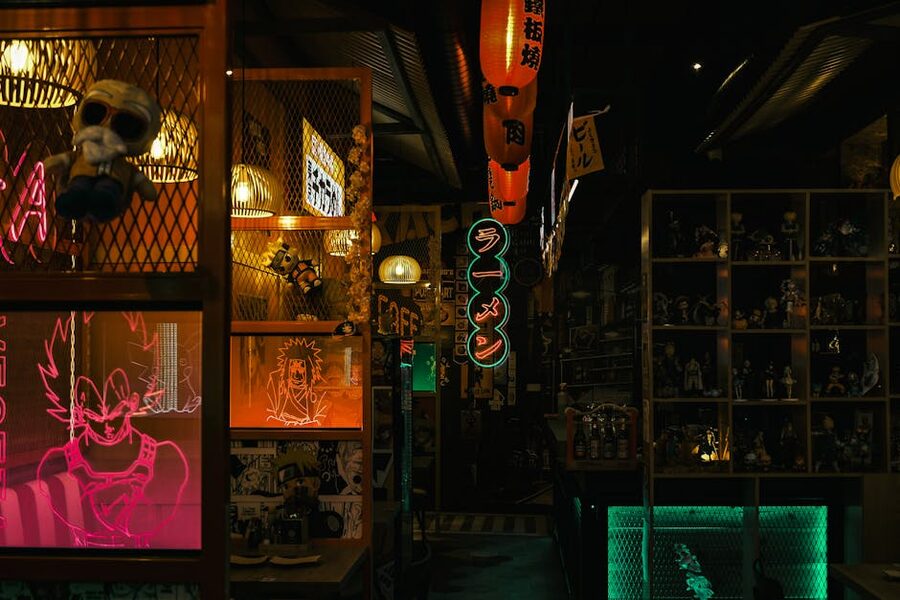
If you only have a weekend in Japan and want to hit the most regional styles in the least distance, I’ll say it again: Shin-Yokohama Ramen Museum. Nineteen minutes from Tokyo Station, ¥450 entry, and a rotating lineup that covers Sapporo, Hakata, Kitakata, Onomichi, and whichever other region the museum is featuring that month. You can eat a mini-bowl from three or four shops in two hours. Is it the same as going to the source? No. But it’s the fastest way to see what the regional map actually tastes like before you commit to a longer trip. I’ve been three times.
A final bowl, and where to head next
The reason ramen is such a good lens for Japanese travel is that it refuses to be simple. Every region argues its bowl is the right one, every generation of cooks adds a twist, and every shop you walk into is a small argument about broth and fat and noodle thickness. You can eat a bowl in Hokkaido and a bowl in Kyushu and disagree about whether they’re the same dish at all.
If this guide sparked a specific region, the deeper pieces are where to go next: Fukuoka for the yatai deep-dive, Sapporo for miso and soup curry together, Tokyo for the neighbourhood-by-neighbourhood scene, or Kyoto for the unexpected back-fat bowl. If you’re after the wider Japan food picture, the izakaya guide and the harder-foods ranked guide cover what to drink with the bowl and what to try next. And if you want to see where the Chinese ancestry connects back, my must-try food in China runs through the noodle soups that fed into ramen in the first place.
Bring cash for the small shops. Bring patience for the queues. Slurp.


.jpg)
.jpg)

.jpg)

.jpg)


