
Osaka Street Food: Dotonbori, Kuromon, and the Kuidaore Tradition
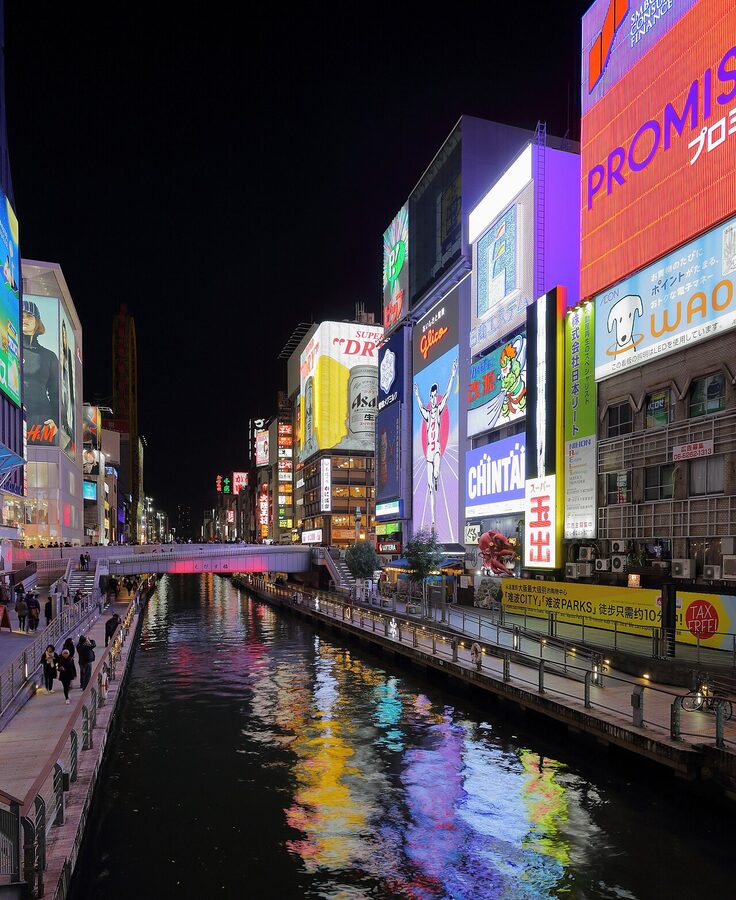
The smell hits you a block before the stall does. Sweet-smoky Worcestershire and something charred on a hot iron, cut with the vinegary tang of pickled ginger, drifting over from a takoyaki cart that’s been folded out against a shuttered Don Quijote wall. The Glico neon reflects in two inches of canal water behind it. A guy with a chef’s towel round his forehead is stabbing at batter in a cast-iron mould, the way you’d jab at piano keys, and a queue of about fourteen people is in no hurry at all. That’s Dotonbori at 10pm on a Friday. That’s where the rest of Japan comes to eat.
Osaka’s nickname is kuidaore, eat yourself broke. It’s a city that defines itself by what’s on the grill. Not “famous for food” in the way every decent city is famous for food, but a place where the reason you came is the reason you came. Kyoto is for temples. Tokyo is for everything. Osaka is for eating, loudly, in a place that doesn’t want you to sit down, with people who’ll yell at the cook because he’s taking too long.
I first went in 2019 on a weekend out of Shenzhen, LCC flight down from Hong Kong, hostel in Namba, three days. I’ve been back four times since. This guide is a map to where you should actually eat: which neighbourhood, which hour, which specific stall, and what to point at when you get there. It’s long. Skip to the section you need. The geography section tells you where the food is. The dishes section tells you what to order.
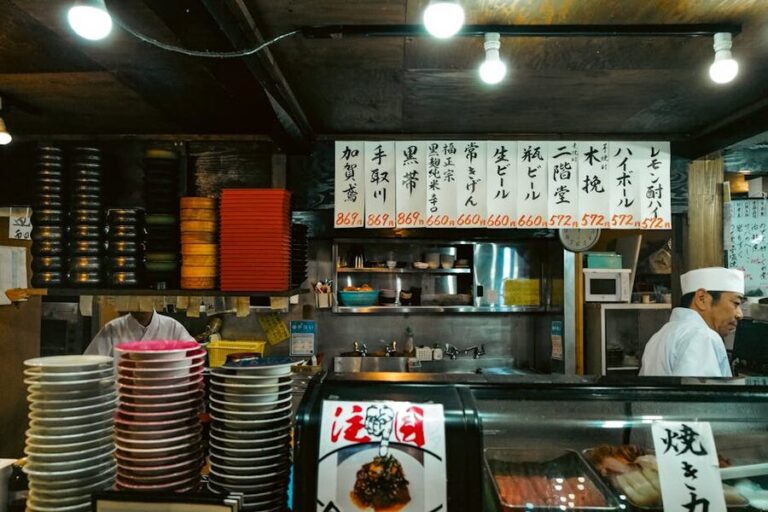
A quick orientation before the food. “Street food” in Osaka doesn’t mean the same thing as in Bangkok or Taipei. There are very few actual outdoor carts, and Japan’s street-vendor scene was mostly legislated out after WWII. What Osaka has instead is a density of cheap, hyper-specific one-dish shops, the yatai style of street food done indoors, behind a three-seat counter, with a teppan or a fryer and a single old guy cooking. You eat standing up or at a low counter, you pay cash, you leave. That’s the Osaka street-food experience. Don’t look for carts. Look for doorways with no signage and a queue.
In This Article
- Dotonbori, the neon strip, and who actually eats there
- Takoyaki at Wanaka and Juhachiban
- Okonomiyaki at Mizuno, Chibo, and the quiet choice
- Kani Doraku and the crab thing
- Kinryu Ramen and the late-night stand
- Kuromon Ichiba, Osaka’s kitchen, for real
- What to actually eat at Kuromon
- Shinsekai and Tsutenkaku, the retro post-war quarter
- Kushikatsu Daruma and the no-double-dipping rule
- Jan-Jan Yokocho, the side alley
- Ura-Namba, the hip-local counterpart
- Tenjinbashi-suji, Japan’s longest arcade
- The dishes: what to point at
- Etiquette at the counter
- A two-day eating plan
- What to skip
- The wider Osaka food thing
Dotonbori, the neon strip, and who actually eats there
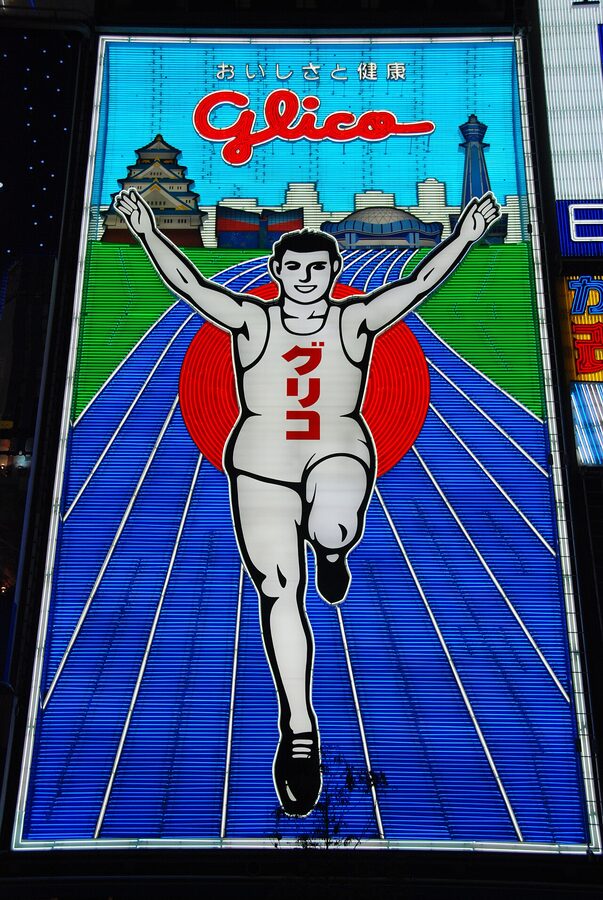
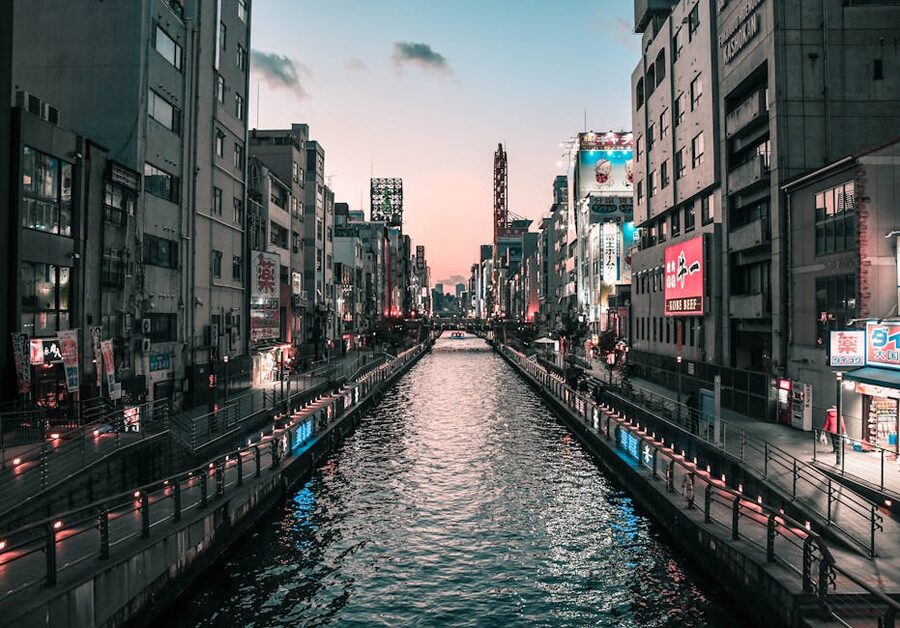
Dotonbori is a 500-metre neon strip either side of the canal of the same name, wedged between Namba station and Shinsaibashi shopping arcade. Midosuji Line, Yotsubashi Line, or Sennichimae Line to Namba, Exit 14 drops you a three-minute walk from Ebisubashi bridge, which is the spot you want for the Glico sign. You’ll know you’re there when the giant mechanical crab starts moving its legs at you from the wall of Kani Doraku.
Dotonbori is the canonical Osaka food district and it’s mostly tourists after 7pm. Locals still go, it’s not a dead zone, but they go for specific places, not for the strip as a whole. The shopkeepers here are used to people photographing their food. Prices are 15-20% higher than the same dishes in a back alley two blocks away. That’s the trade-off for the neon, the crab, the Glico guy, and the Blade Runner atmosphere.
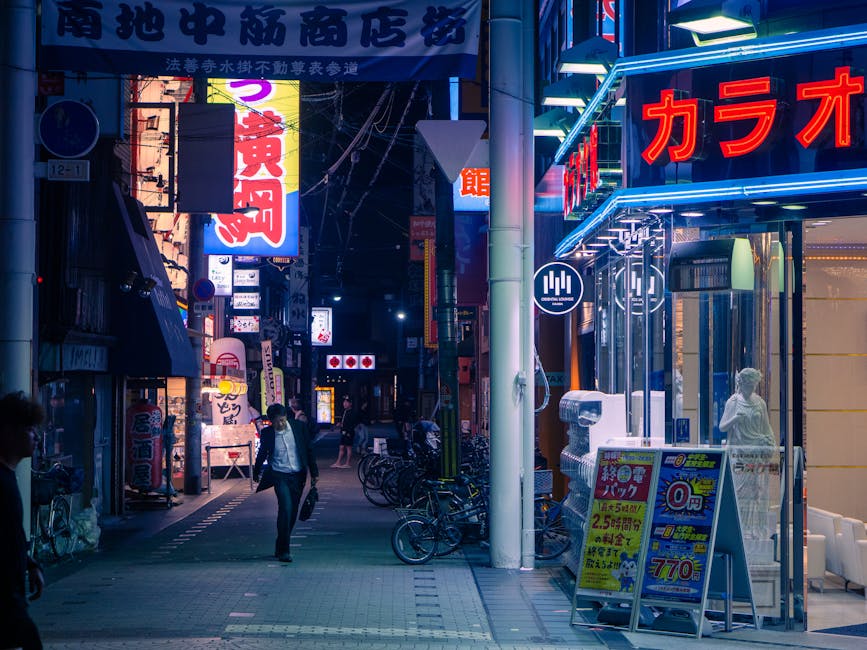
Go after 9pm. The strip comes alive around then, stays interesting till midnight, and the queues are actually shorter at 10pm than at 7pm because the tour groups have gone home. Lunch-hour Dotonbori is the worst version, bright daylight on the neon, no crowd energy, and every tourist from Universal Studios is doing the rounds. Save it for after dark.
Takoyaki at Wanaka and Juhachiban
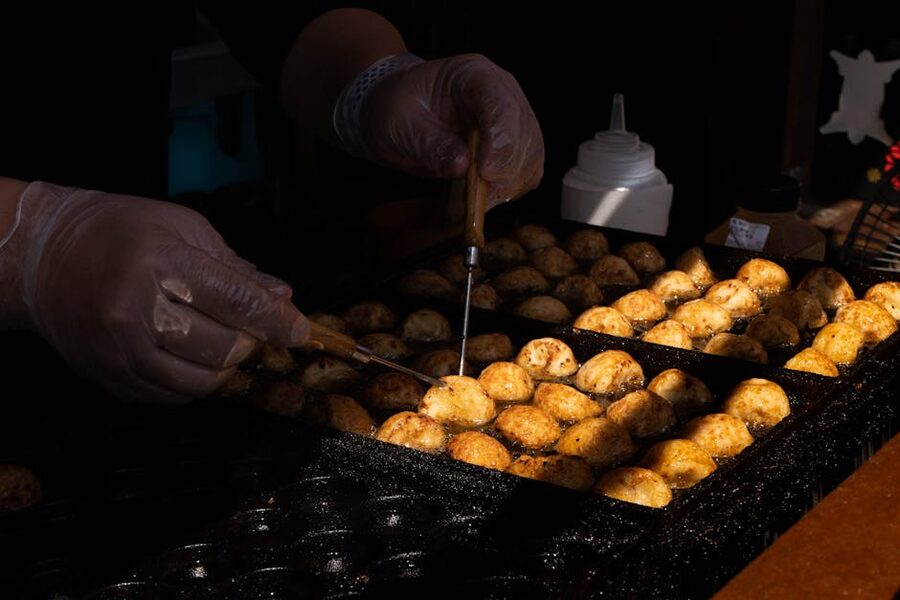
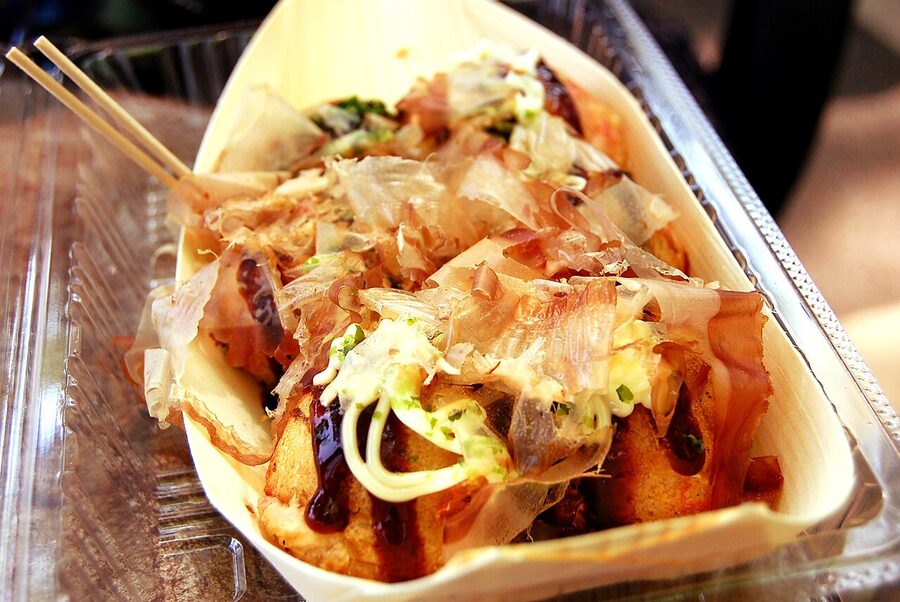
Takoyaki is Osaka’s signature street food, batter balls about the size of a golf ball, each with a chunk of octopus inside, cooked in a dimpled iron mould, finished with mayo, brown sauce, dried bonito flakes, and seaweed powder. The ideal takoyaki is crisp-shelled and molten inside. Eat one too early and you burn the roof of your mouth. Eat one too late and the shell goes floppy. The window is about 90 seconds.
On Dotonbori itself, Takoyaki Doraku Wanaka is the reliable queue stop, eight balls for ¥650 standard sauce-and-bonito, open 10:30am to 9pm. It’s next door to Kani Doraku, you can’t miss it. Wanaka is good, not great, but it’s consistent and the queue moves fast. The takoyaki is softer than I like, more gooey than crisp, but that’s their house style.
Across the strip, Takoyaki Juhachiban (十八番) sits under the giant octopus sculpture at 1-7-21 Dotonbori. Open 11am to 9pm. They add a bit of milk and soy sauce to the batter, which gives the shell more colour and a fuller flavour. ¥600 for eight. This is the one I go back to.
Off Dotonbori, and this is where the locals go, walk five minutes south to Creo-ru at 1-6-4 Dotonbori (yes, still technically Dotonbori, just at the edge), which uses seven kinds of flour and does a soft-boiled egg takoyaki variant that’s worth the detour. Or go to Abeno Takoyaki Yamachan near Tennoji if you want the Osakan’s own pick, that one’s a twenty-minute train ride but it’s what cab drivers actually eat.
Okonomiyaki at Mizuno, Chibo, and the quiet choice
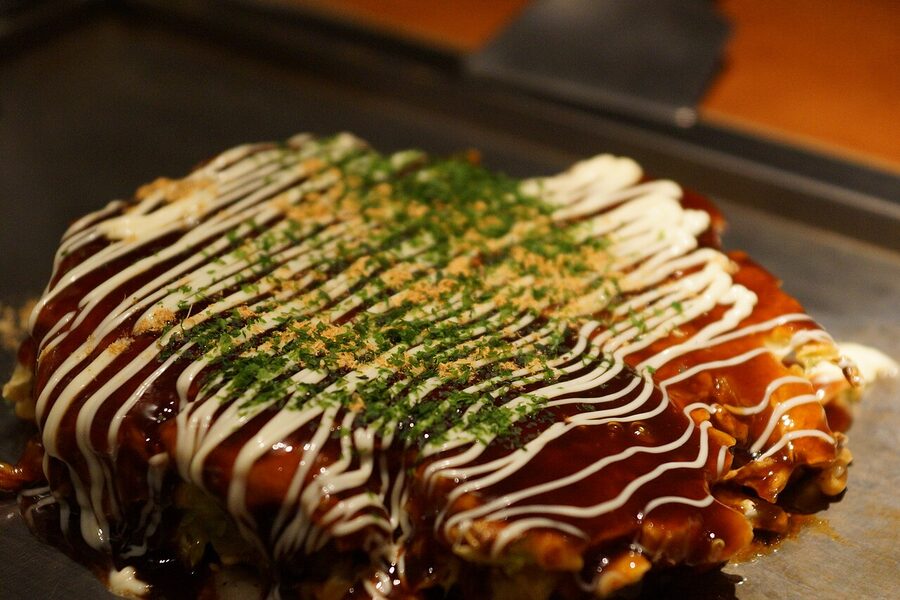
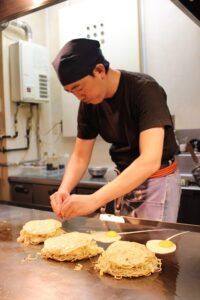
Okonomiyaki is the savoury cabbage-and-flour pancake that every Japanese city has a version of. Osaka’s is the konomiyaki style, ingredients mixed into the batter before it hits the teppan. Hiroshima’s is the layered version where noodles sit between a thin pancake and a mountain of cabbage. Osakans think their version is superior. Hiroshima people disagree. I’d say Hiroshima’s wins on engineering and Osaka’s wins on flavour balance, but I’ve been shouted down for saying that more than once.
Mizuno (美津の) at 1-4-15 Dotonbori is the old-school Dotonbori pick. Founded 1945, Michelin Bib Gourmand regular. ¥1,500-2,000 for the house yamaimo-yaki, which uses grated mountain yam instead of flour and comes out lighter and more custardy than the standard version. Queue can be 30-60 minutes at peak. Open 11am to 10pm, closed Mondays. The queue is real but the food earns it.
Chibo (千房) at 1-5-5 Dotonbori is the chain pick, founded 1973, multiple Osaka branches, the Dotonbori flagship does mixed okonomiyaki for ¥2,200 (pork, shrimp, squid in one). Don’t dismiss Chibo because it’s a chain, the Osaka branches are the original ones and the quality’s held up. It’s a more forgiving introduction than Mizuno if you’ve never had proper okonomiyaki.
The quieter choice: Ajinoya (味乃家) at 1-7-16 Namba, two blocks south of Dotonbori. No queue, better than either of the famous ones in my opinion, and the pork-squid-shrimp “mix” is ¥1,300. It’s what people who’ve lived in Osaka eat. Open 11am to 10pm, closed Mondays. I’d walk the five extra minutes and skip Mizuno unless you specifically want to queue.
Kani Doraku and the crab thing
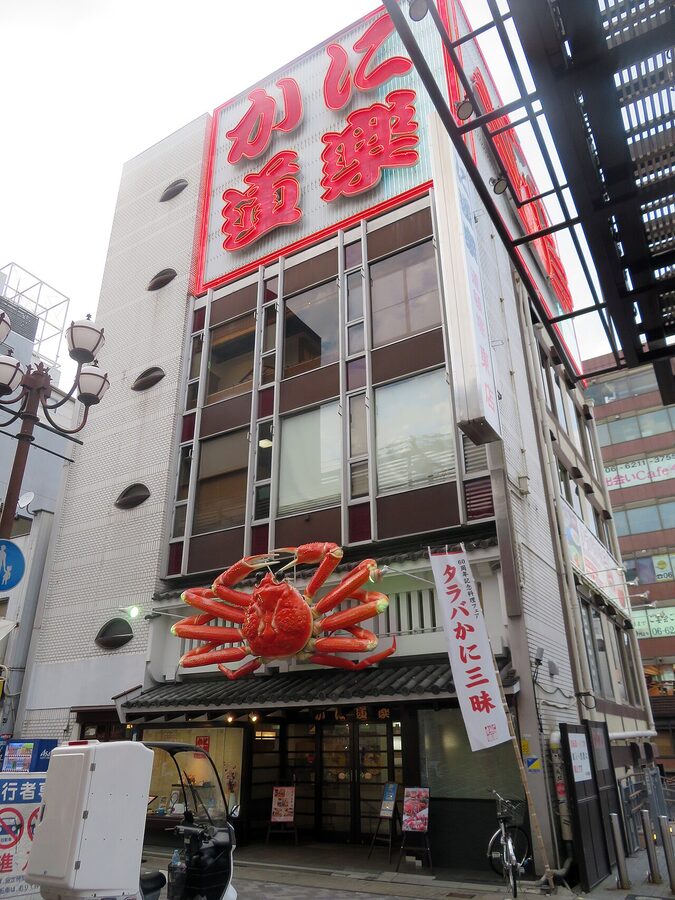
Kani Doraku Honten at 1-6-18 Dotonbori is an Osaka landmark more than a restaurant. The main building does full crab kaiseki sets for ¥6,000 upwards, fine food, but nothing you’d travel for. The move here is the takeaway window at the front corner. They sell kani-man (pork-and-crab steamed buns) for ¥700 each. Hot, soft, full of crab, the best snack on the strip in the 10-minute window it takes to walk over to the bridge. Cash, card, or IC payment only at the window, they don’t take cash in the full restaurant.
Worth walking past even if you don’t eat there, stand under the crab, look up, wait for it to move. It does the full body shimmy every few minutes. The whole Dotonbori “eccentric signboard” tradition traces back to this thing. After Kani Doraku got a giant crab, every place started getting something, the giant octopus at Juhachiban, the giant dragon at Kinryu Ramen, the giant puffer fish at Zuboraya (closed during COVID and not coming back, sadly). Look up while you walk.
Kinryu Ramen and the late-night stand
Kinryu Ramen Dotonbori (金龍ラーメン) is the 24-hour pork-bone broth place with the giant dragon head stuck to the front. Around ¥800 for a bowl. Four toppings on the counter, kimchi, leek, garlic, pickled greens, you pile them in yourself, then slurp the noodles standing at the outdoor bench. The broth is rich without being heavy. It’s the ramen you eat at 2am, not the one you travel for. But at 2am, it’s the right bowl. Queue is 5-10 minutes even at 3am on a weekend.
For a proper ramen you travel for, walk away from Dotonbori and go to Jinsei Jet in Fukushima (JR Loop to Fukushima station, west exit, 3-minute walk), charcoal-broth soy ramen, ¥950 a bowl, closed Sundays, queue is a reality but it moves. Or Menya Joroku in Tamatsukuri for the horumon-based broth that locals consider the Osaka-specific bowl. Kinryu Ramen is for convenience; these are for the craft. If you want to compare, our Fukuoka ramen guide covers the tonkotsu geography further west, Osaka’s broths are generally lighter than Hakata’s.
Kuromon Ichiba, Osaka’s kitchen, for real
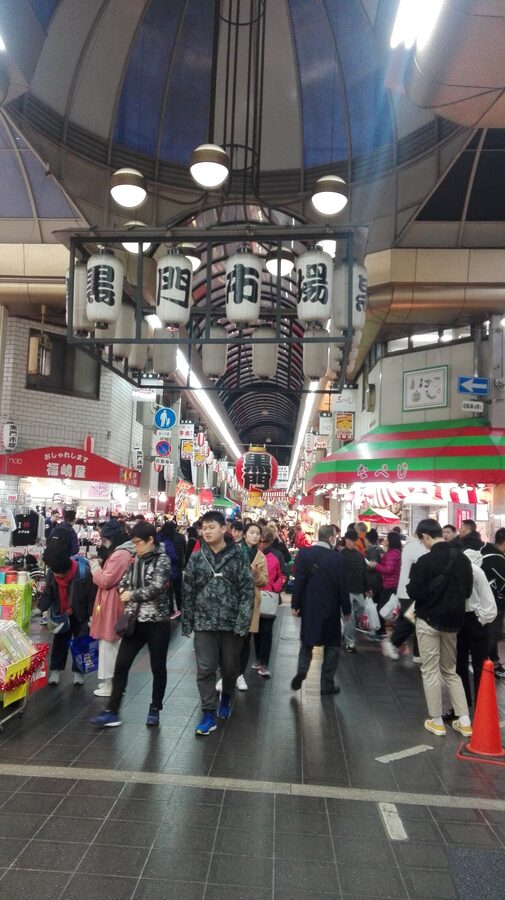
Kuromon Ichiba is the 580-metre covered market arcade that Osakans call “the city’s kitchen.” 150-odd stalls, most specialising in seafood, wagyu, fruit, pickles, or a single specific thing like octopus or tofu. The arcade runs between Nippombashi and Tanimachi 9-chome stations on the Sennichimae and Tanimachi metro lines, Nippombashi Exit 10 is the closest. Five minutes east of Dotonbori if you walk straight.
The Kuromon pitch to tourists is “walk around and eat at the stall tables.” A lot of stalls will grill what you bought and hand it back to you on a tray with a little stand-up counter. You can get uni on rice (¥1,500), a whole grilled scallop (¥500), three pieces of o-toro tuna sashimi (¥1,800), a skewer of wagyu (¥800-1,500), or a half-dozen oysters (¥1,200). Nothing’s cheap by Japanese street-food standards, but you’re paying for quality that the Dotonbori snack stalls can’t touch.
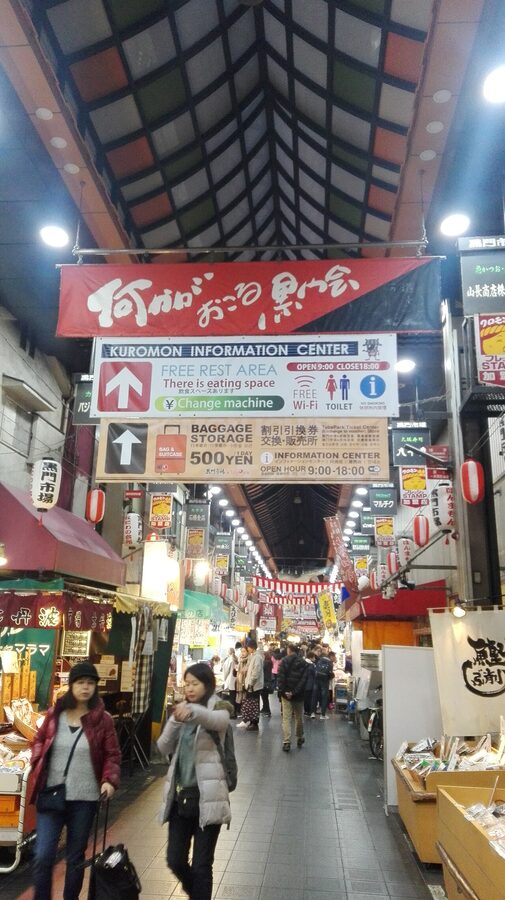
Go between 10am and 2pm. The market technically opens at 9am and runs to 6pm, but the volume and theatre peak mid-morning through early afternoon. By 3pm half the seafood stalls are packing up and the fish on display has been in the air too long. Monday is the slowest day, some stalls don’t open, so Tuesday to Saturday is the move.
What to actually eat at Kuromon
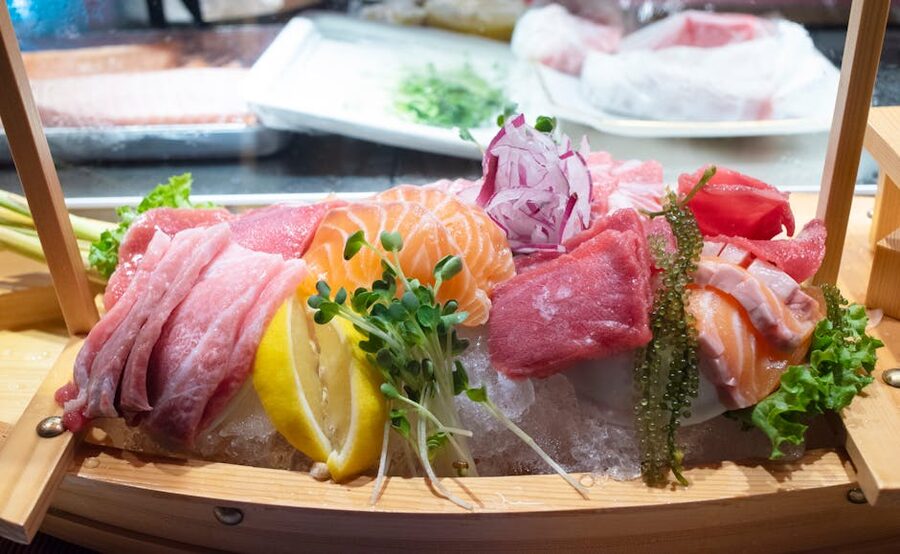
Maguroya Kurogin is the tuna stall about halfway down the arcade, west side. ¥1,800 for a three-piece sashimi set of o-toro (fatty belly), chu-toro (middle belly), and akami (lean). The guy cuts in front of you; you eat standing at a stand-up counter. This is the single most representative Kuromon meal.
Kurogane does the wagyu skewers, ¥800 for a standard grilled Japanese beef skewer, ¥1,500 for the A5-grade. They torch it in front of you with a handheld blowtorch. Don’t let them over-sear it; ask for “medium rare” (medium rare de) and make eye contact.
Yamazaki is the oyster stall near the south end, a dozen Hiroshima oysters for ¥2,400, three for ¥650, shucked to order with lemon and a drop of ponzu. The best two-hour window at Kuromon is a circuit of three or four of these stalls, eating as you go.
One warning. The uni-on-a-stick stalls near the Nippombashi entrance are tourist traps, ¥800 for a thin smear of sea urchin on a wafer. The uni is fine; the portion is pitiful. Walk past them to the middle of the arcade where the actual sea urchin dealers sell you a proper box of it. Same for the “wagyu skewer” signs that use generic Japanese beef and charge wagyu prices, look for the grade card. A5 is a real thing; it’s posted if they have it.
If you want a seated meal at the market, the Kuromon Sanpei fish counter at the north end does a proper kaisen-don (seafood rice bowl) for ¥1,800, tuna, salmon, squid, ikura, uni, sweet shrimp. There’s space for about 12 people. That’s the one sit-down I recommend inside the market proper.
Shinsekai and Tsutenkaku, the retro post-war quarter
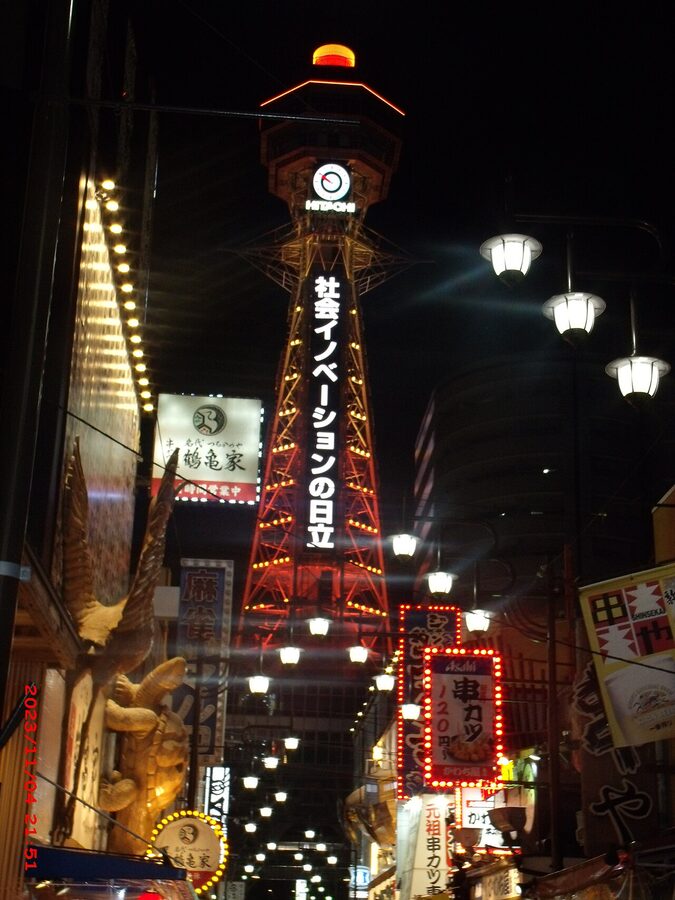
Shinsekai means “new world”, it was a 1912 development modelled half on Paris and half on Coney Island. The Eiffel-Tower-style Tsutenkaku is the centrepiece. The original burnt down in WWII; the current tower is a 1956 rebuild. The neighbourhood itself is a twenty-minute train ride south of Dotonbori, JR Kanjo (Loop) Line to Shin-Imamiya, or Osaka Metro Midosuji Line to Dobutsuen-mae, south exit. Walk five minutes north and you hit the entrance to Tsutenkaku-Hondori, the main food arcade.
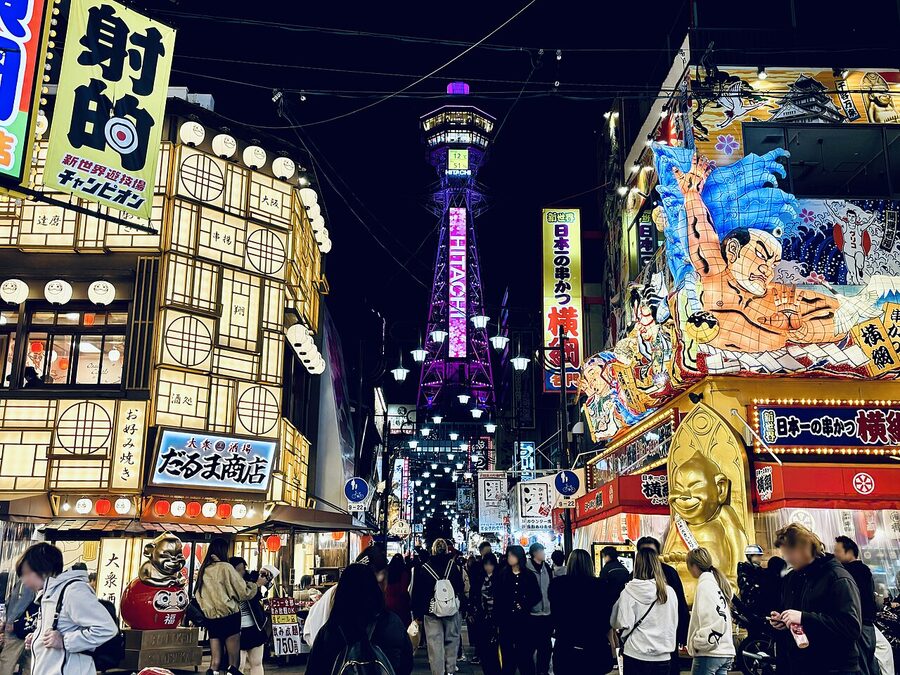
This is the scrappier, older part of Osaka. It feels like the 1960s, peeling paint on the signs, handwritten menus, a Billiken statue in every other storefront (the strange-looking unofficial good-luck mascot with the grin and the pointed head). Rub his feet for luck. Actually rub them, they’re polished smooth from decades of hands. For a sense of the neighbourhood’s pacing, pair this stop with one of the izakayas I wrote about in the Japan izakaya guide, several of Osaka’s best are here, not in Dotonbori.
Kushikatsu Daruma and the no-double-dipping rule
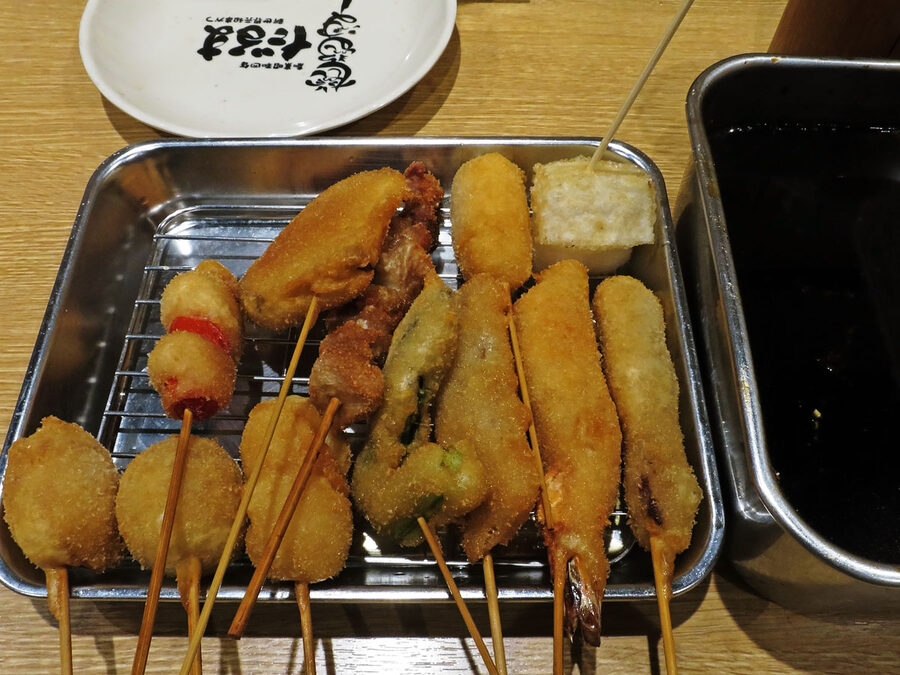
Kushikatsu is the Shinsekai signature dish. Cubes of meat, fish, or vegetables threaded on a bamboo skewer, dipped in panko batter, deep-fried, eaten at a counter with a shared dipping sauce. Cheap, fast, hot, filling. The dipping sauce is Worcestershire-based, served in a trough at each counter space. The golden rule, painted on the wall of every kushikatsu joint in town: no double-dipping. One dip per skewer. If you need more sauce, use the chopped raw cabbage on your plate to scoop it onto the skewer.
Kushikatsu Daruma at Shinsekai Sohonten is the famous one. The angry-chef sculpture out front is the Shinsekai Instagram shot. The chain has expanded across Japan but the original is here. Individual skewers are ¥130-200; a set of 10 is ¥1,500. It’s good. It’s also crowded, the staff are rushed, and you’ll be out in 25 minutes. Open 11am to 10:30pm daily.
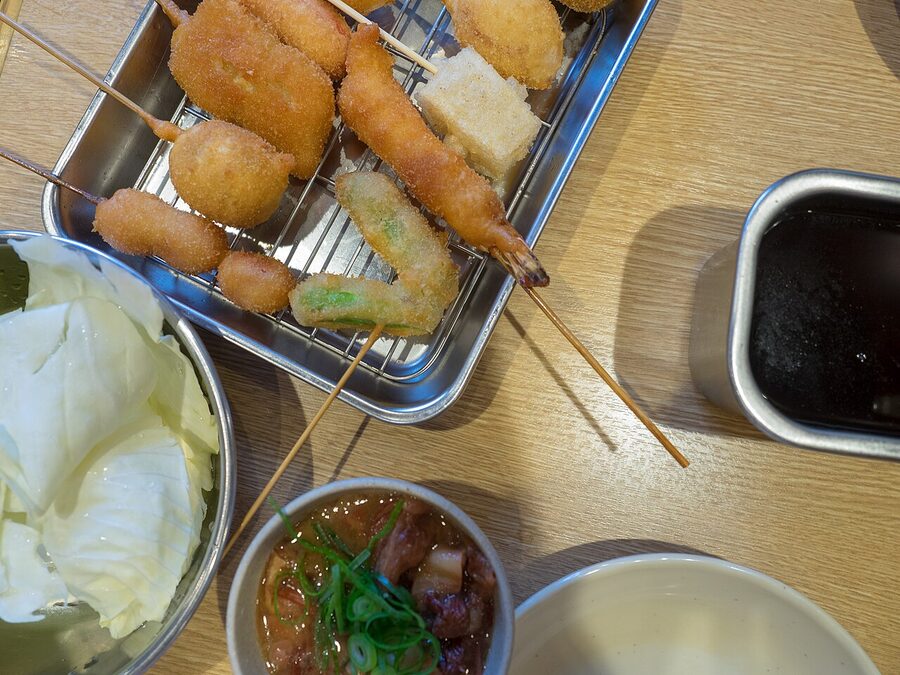
The better pick is a five-minute walk south, Yaekatsu (八重勝), also on Tsutenkaku-Hondori, also open 11am to 10pm. Eight seats at the counter, queue outside. The batter is lighter than Daruma’s, the vegetables get their own frying time instead of being thrown in with the meat, and the sauce is house-made rather than the Daruma-chain version. ¥130-180 a skewer. If you only eat kushikatsu once, eat it here.
For the real dive-bar version, slip down any of the side alleys off the main arcade and find a counter with five old guys on it, that’s the one. I’ve never ordered badly in a three-person kushikatsu place off a Shinsekai side alley. The guys running them don’t have English menus and don’t want you taking photos, but they’ll feed you for ¥2,000 a head with a cold beer and a cheerful yell.
Jan-Jan Yokocho, the side alley
Jan-Jan Yokocho (正確にはジャンジャン横丁) is the parallel-to-Tsutenkaku-Hondori alley that most tourists miss. Run by retirees and long-time locals. Narrow, covered, 180 metres of kushikatsu, doteyaki, horumon grills, and the occasional old-school pachinko parlour. The name comes from the sound of the shamisen players who used to busk here (jan-jan).
Tengu on Jan-Jan is my personal Shinsekai kushikatsu pick, ¥120-180 per stick, a live pot of oil bubbling on the counter, and the option to try doteyaki (beef tendon stewed in sweet miso) for ¥400 a bowl as a side. Closed Tuesdays. For horumon, grilled offal, an Osaka staple, walk 50 metres further and sit at any counter that has the distinctive iron-grate grills on the bar. Don’t be put off by the names on the menu. Start with karubi (rib) and work your way toward mino (tripe), which is the hardest one to love. If you’re genuinely adventurous, our hardest Japanese foods guide runs through the horumon cuts and other challenging dishes in more depth.
Ura-Namba, the hip-local counterpart
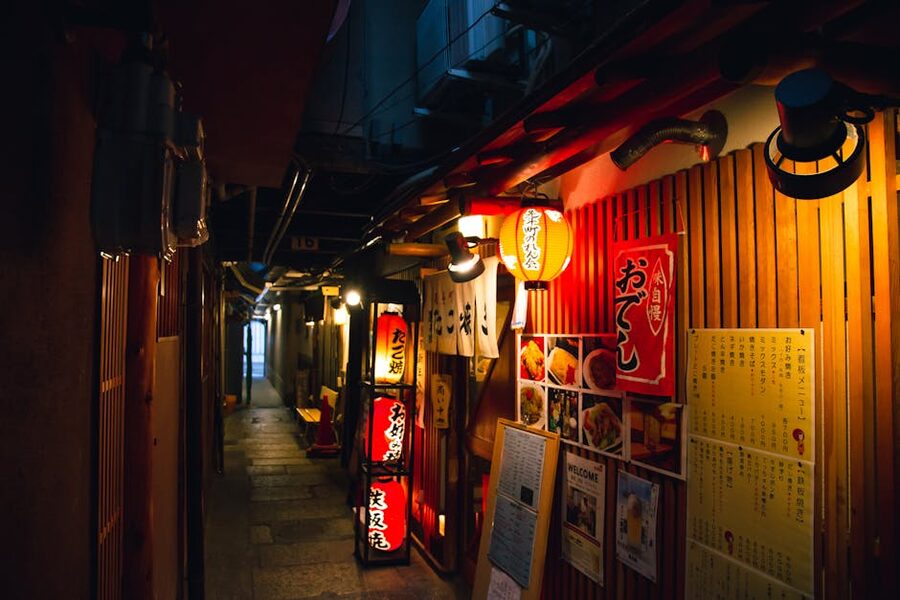
Ura-Namba is the four-square-block zone south of Dotonbori between the Shinsaibashi and Nipponbashi stations, specifically the alleys around Nanba 3-chome and 4-chome. Locals call it “the back of Namba.” It’s where the next generation of Osaka food-makers, younger chefs, craft-beer people, natural-wine bars, are opening up instead of on Dotonbori proper, which they correctly identify as tourist infrastructure.
You go here at 7pm onwards. Walk the alleys. Push open doors. The best places have no English sign, a noren (split curtain) at the entrance, and 6-10 seats. Standing bars are common, you literally stand at a counter with your drink and pick at small plates for an hour. Prices run ¥500 a small plate, ¥600 for a beer, ¥900 for sake, maybe ¥3,000 total a head for a proper dinner.
Specific names to try: Urabocchi (裏ぼっち) for seafood small plates; Nakazaki Tachinomi for standing-bar sake; Fujiya 1935 for the ambitious craft-cocktail end of the scene. The Ura-Namba rule is the same as the Shinsekai rule, if an alley is empty-ish and has four Japanese people at a counter, it’s a good place. The places with loud English signage and tourist menus are not.
This is also where to find negiyaki, Osaka’s other savoury pancake, a flat, crispy, green-onion-heavy sibling of okonomiyaki, lighter and more savoury. Yamamoto on the west side of Namba does negiyaki for ¥1,000 a plate and has been doing so since 1965. If you’ve had okonomiyaki and thought it was fine but too cabbagey, negiyaki is the upgrade. The dough is thinner, the scallions carry the dish, and it’s finished with soy-based wari-joyu rather than Worcestershire sauce.
Tenjinbashi-suji, Japan’s longest arcade
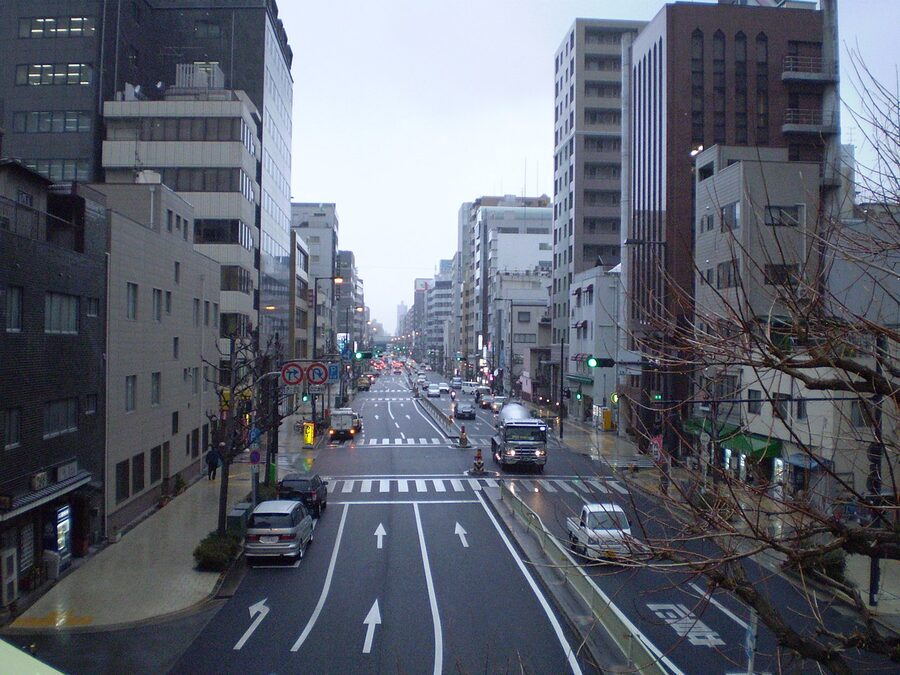
Tenjinbashi-suji Shotengai is 2.6 kilometres of covered shopping arcade, the longest in Japan. North of Dotonbori, spanning from Ogimachi station (Osaka Metro Sakaisuji Line, or JR Tenma) at the south end to Tenjinbashi-suji 6-chome at the north. The whole walk is 35-40 minutes end to end. You can drop in and out at six different stations along the route.
This is where I take anyone who’s been to Dotonbori and wants the un-theatrical version of Osaka. No neon, no giant crabs, no English menus. Just 600 shops in a straight line, about a third of them food. Retro kissaten (Showa-era cafes) with cream sodas and thick buttered toast. Shokudo lunch counters with one-plate sets for ¥800. Old-school sushi counters. A market at the southern end that’s been selling the same pickled vegetables for a century.
For a kitsune udon, the sweet-fried-tofu-topped udon bowl that was invented in Osaka in the 1890s, walk to Usami-tei Matsubaya at 3-8-1 Uemachi (not technically on the arcade, but a short walk from Tenma station). Open since 1893. ¥650 for the original kitsune udon. The noodles are softer than Sanuki-style udon; the broth is a distinctive Osaka-sweet dashi. This is where the dish was invented. It’s tiny, about ten seats, and closed Tuesdays.
The dishes: what to point at
English menus get better every year in Osaka, but the best places still don’t bother. Here’s what you’re looking for on a handwritten Japanese board. Prices are 2024-2025 ranges at decent stalls.
Takoyaki (たこ焼き, ¥500-800 for 8). Wheat-flour batter balls with an octopus cube inside, dashi-based batter, crisp outside and deliberately half-cooked inside. The goo is the point, don’t expect a dense interior. Authentic Osaka versions use a higher ratio of dashi to flour, giving a more molten centre than the Tokyo versions.
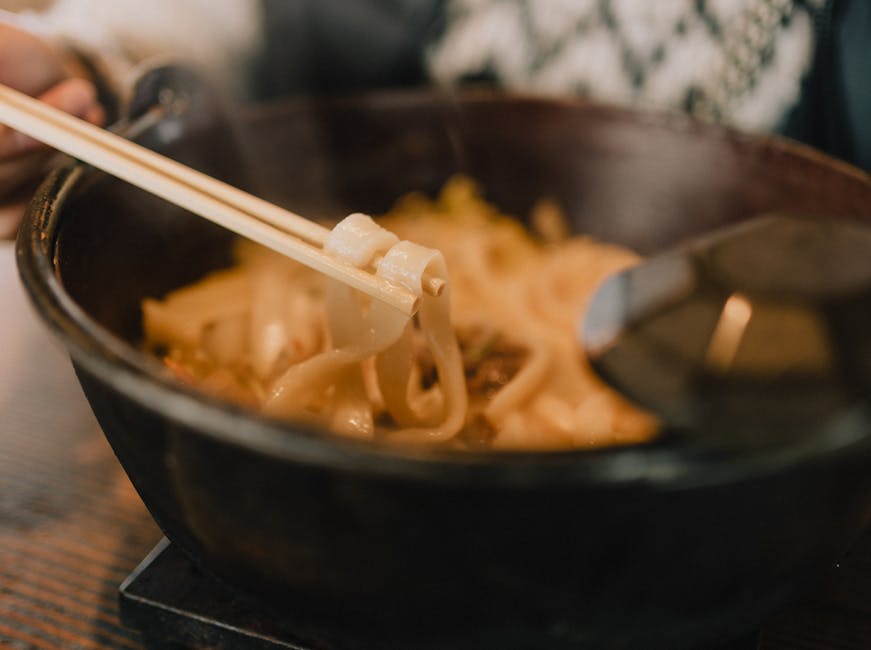
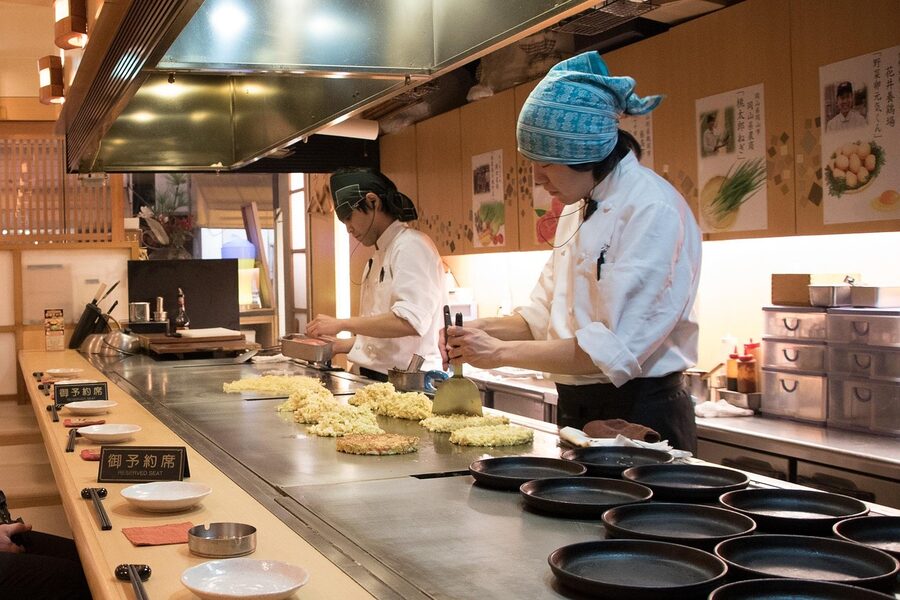
Okonomiyaki (お好み焼き, ¥900-1,800). Savoury cabbage pancake, Osaka mixed-style. Everything in the bowl first, then onto the teppan, then flipped once, then sauce and bonito. The flour is a minority ingredient by volume; cabbage dominates. “Modan-yaki” is the version with a layer of fried noodles added, heavier, more filling.
Kushikatsu (串カツ, ¥120-250 per stick). Panko-battered deep-fried skewers of everything, pork, beef, quail egg, asparagus, lotus root, shiitake, tofu, cheese, chicken, squid. Order 6-10 sticks; you’ll be full. Dip once. Use cabbage if you need more sauce. This is a Shinsekai thing more than a Dotonbori thing; the Dotonbori ones are tourist versions.
Negiyaki (ねぎ焼き, ¥900-1,200). Okonomiyaki’s thinner, scallion-heavy cousin. Almost all scallion with just enough batter to hold it together, finished with soy-based dipping sauce instead of Worcestershire. Lighter, sharper, better than the standard okonomiyaki once you’ve had a few.
Horumon (ホルモン, ¥300-800 per small plate). Grilled offal, small intestine, large intestine, liver, tripe, heart. Osaka and Kyushu are the two Japanese cuisines that celebrate offal; Tokyo less so. The Osaka version is usually grilled on a tabletop metal grate with a sweet-salty sauce. Karubi (rib) is the gateway; mino (honeycomb tripe) is the boss fight. The best horumon places are dark, smoky, and have a ventilation fan working at 110% of capacity.
Kitsune udon (きつねうどん, ¥600-900). See Tenjinbashi-suji section above. Osaka invention. Sweet tofu, light dashi, soft noodles. Different philosophy from the chewier Sanuki-style udon you get in Shikoku. For the Osaka-vs-everywhere-else noodle context, contrast this with the refined, restrained Kyoto dishes I covered separately, Kyoto food is where Osaka isn’t.
Ikayaki (いか焼き, ¥200-350). A squid-and-batter pancake-stick thing you get at station basements and Hanshin department-store food halls. Not actually “squid on a stick”, it’s a squid pancake folded around a piece of squid, cooked on a press. The Hanshin Umeda food hall version is famously good. This is an under-rated Osaka snack.
Hiyashi ame (冷やしあめ, ¥300-500). Ginger syrup drink, ice, syrup, water, a slice of ginger. Cold and fizzy-spicy. Common at old dagashi (traditional candy shop) counters in Shinsekai and Tenjinbashi. Not available in most of the country; Osaka and Kyoto hold onto it. A handful of old kissaten in Shinsekai still make their own syrup.
Kani-man (かに饅, ¥500-700). See Kani Doraku section. Steamed pork-and-crab bun, sold from the takeaway window at the big crab signboard. The one snack on Dotonbori I come back for every time.
Etiquette at the counter
Osaka service is different from Tokyo service. Louder, faster, more informal. You’ll get shouted greetings when you sit down, irasshaimase!, and shouted goodbyes when you leave. This isn’t aggressive. It’s the city. Participate if you like. Don’t take it personally if you don’t.
Order by pointing or by naming the dish. Cash is still king at the smaller counters, most takoyaki stalls and old kissaten don’t take cards. Suica/ICOCA IC cards work at larger places. Google Pay is spotty. Carry ¥10,000 in mixed notes and you’ll be fine for a full day of eating.
Tipping is not a thing, don’t tip, and don’t leave change on the counter. At the teppan counter, leave the cook’s spatula on the grill when you’re done, not on the counter. Cut the okonomiyaki with the spatula on the teppan, transfer a wedge to your own plate, eat with chopsticks. Pouring beer for your companion is standard, never pour your own first.
No-double-dipping is a genuine rule at kushikatsu places, enforced socially rather than by the staff. The sauce trough is shared with the whole counter. Use the cabbage. You’ll be forgiven one dip with a sheepish laugh from the cook, but don’t push it.
One phrase that’s more useful in Osaka than anywhere else: kore, onegaishimasu“this one, please”, while pointing at the menu or at what the person next to you is eating. The counter cooks here respond well to decisive ordering. Hesitation gets you a bemused look.
A two-day eating plan
If you’ve got 48 hours in Osaka and eating is the priority, this is how I’d spend it:
Day 1 morning: Kuromon Ichiba between 10am and 1pm. Skip breakfast. Eat your way down the arcade, tuna sashimi at Maguroya Kurogin, a wagyu skewer at Kurogane, grilled oysters at Yamazaki, finish with a kaisen-don at Sanpei if you have room. Budget: ¥5,000-6,000.
Day 1 afternoon: Train to Shinsekai. Walk Tsutenkaku-Hondori and Jan-Jan Yokocho. Early kushikatsu at Yaekatsu or Tengu with a beer. ¥2,000-3,000. You can easily kill three hours wandering Shinsekai.
Day 1 evening: Dotonbori at 9pm for the theatre. Kani-man at Kani Doraku (¥700), takoyaki at Juhachiban (¥600), walk the strip, climb up to the Glico sign, take the photo. Skip the sit-down restaurants on Dotonbori itself. Finish with Kinryu ramen at midnight (¥800).
Day 2 morning: Walk Tenjinbashi-suji from the south end north. Stop for a kissaten breakfast, egg sandwich and thick toast with hand-drip coffee at one of the retro cafes (¥800). Kitsune udon at Usami-tei Matsubaya for lunch (¥650).
Day 2 evening: Ura-Namba. Push open the doors of the smallest bars. Standing sake at Nakazaki Tachinomi, seafood at Urabocchi. Proper negiyaki at Yamamoto. ¥4,000-5,000 across three or four stops.
That’s two days and you’ve eaten everything Osaka claims to be. Total food spend around ¥13,000-16,000 a person. You’ll walk about 25 kilometres. You’ll be tired, full, and already planning the next trip.
What to skip
A handful of Dotonbori places deserve a warning. The sit-down Ichiran ramen branch on Dotonbori, fine if you’ve never had Ichiran, but you can get the same bowl at any Ichiran in Japan, and you’ll queue 45 minutes for it here versus 10 minutes in Shinjuku. Skip.
The themed chain okonomiyaki places that Japanese TV shows film at, they’re paying for the feature. Food is competent; price is 25% above Ajinoya for worse pancakes. Skip.
Any sushi conveyor-belt place on Dotonbori itself. Go to Daiki Suisan one street over, or better, skip conveyor-belt altogether and go to a proper sushi counter in Ura-Namba. The Dotonbori conveyor sushi is expensive by conveyor standards and not notably better.
The themed character cafes that have appeared since 2020, Pokemon cafe, Snoopy cafe, whatever. Tokyo does these better. In Osaka you’re eating street food, not visiting a mascot.
And Kinryu Ramen at lunch. It’s a late-night bowl. Lunch-time Kinryu is just a mediocre tonkotsu ramen that you’re eating because you’re hungry. Save it for 2am when it becomes the best bowl of ramen in the city.
The wider Osaka food thing
Osaka is the cheap-and-loud counterpart to Kyoto’s refined and restrained. Kyoto does kaiseki, tofu, matcha, and shojin ryori, the monastic vegetable tradition. Osaka does what the merchants ate: grilled, fried, sauced, and full. Tokyo has more variety and more expensive versions of everything, but Osaka invented more dishes that spread nationally than any other city except maybe Nagoya. If Tokyo’s Shibuya standing-bar scene feels over-produced, Osaka’s Ura-Namba is the older, rougher, louder version. For the wider Tokyo food-neighbourhood map and how Osaka compares, I’ve covered it in a separate Tokyo food neighbourhoods piece, both cities reward long walks and cheap standing bars; Osaka’s cheaper, Tokyo’s more specialised.
Go at least three nights. One night is Dotonbori and the neon, cover it off, take the photo, eat two snacks. One night is Shinsekai or Ura-Namba for the actual dinner. One night is whatever you missed the first two, a back alley, a depachika food hall, a kissaten you walked past. Osaka is small enough that three nights puts you in most of the good places. Five nights puts you in all of them.
Bring cash. Wear shoes you can walk in. Budget ¥6,000 a day on food if you’re eating well, ¥10,000 if you’re pacing yourself poorly. And if you see a counter with five old guys on it and no English menu, sit down.

.jpg)


.jpg)
.jpg)

.jpg)
