Must-Try Foods in Korea: A Field Guide to Seoul and Beyond
There’s a moment, on your first Korean barbecue night, when the server comes over with a pair of scissors and starts cutting the meat on the grill in front of you, and you realise you have no idea what the etiquette is. Are you supposed to help? Are you supposed to flip your own pieces? And what, exactly, are all those little bowls that keep arriving without anyone ordering them?
I’ll save you the trouble. The server does the cutting. The grill does the cooking. You eat. And those little bowls are banchan, free side dishes that are the hidden backbone of any Korean meal. They’ll refill them without being asked. You’ll leave full.
Korean food is one of the easier Asian cuisines to fall into because most of the greatest hits are designed around a table where everyone is eating together, reaching, wrapping, dipping. It’s not a cuisine that rewards eating alone, and that’s most of what makes it work. The flip side is that some of the best dishes, dwaeji gukbap, makgeolli with pajeon, bindaetteok straight off the market griddle, are rarely the ones that make it onto the bibimbap-and-kimchi shortlist you get handed before your first trip. This is the guide that fills in the rest of the map, Seoul-first but with detours to Busan, Jeonju, and Jeju where they matter.
A quick note: I came to Korean food via south China first, where the trade with northeast Asia meant Korean BBQ joints were familiar, and where you could order kimchi at half the Cantonese restaurants in Shenzhen. If your food geography is the same and you want to see how the regional traditions overlap, I’ve mapped the parallel for Chinese regional cuisine separately. Korea takes pickling and fermentation further, uses less oil, and leans harder on chilli. The overlap is in the fundamentals, rice, garlic, soy, sesame, but the result is a completely different-feeling cuisine.
In This Article
- Korean BBQ (gogi-gui), the dish that got Korea famous
- Where to actually eat Korean BBQ in Seoul
- Banchan, the quiet masterpiece of the meal
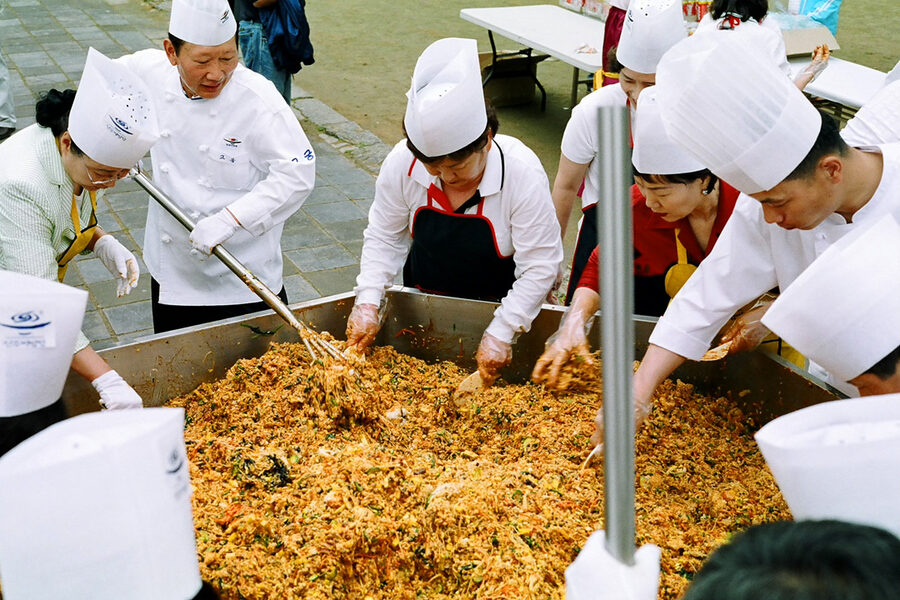
- Kimchi, not one thing, a whole category
- Bibimbap and the case for the stone bowl
- Chimaek, fried chicken and beer
- Tteokbokki and the case for street food
- Gwangjang Market, the elder of markets
- The other markets, ranked honestly
- Bingsu, the ice dessert
- Soju, makgeolli, and what to drink with your food
- Beyond Seoul, Busan, Jeju, and why you should leave the capital
- Seoul food-neighbourhood cheat sheet
- A few pieces of ordering etiquette I wish I’d known earlier
- What to eat on your first, third, and fifth day
Korean BBQ (gogi-gui), the dish that got Korea famous
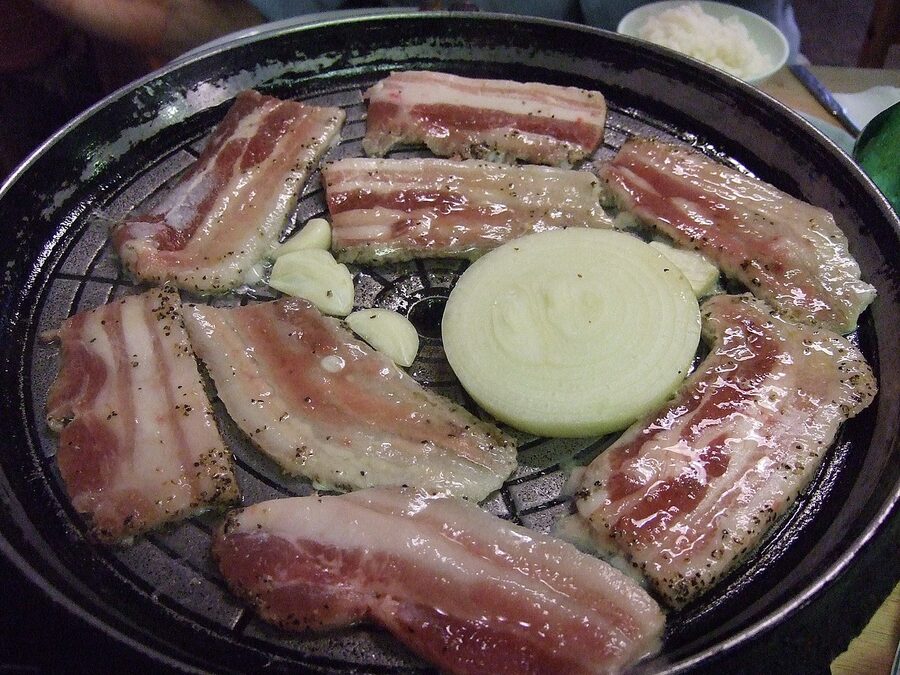
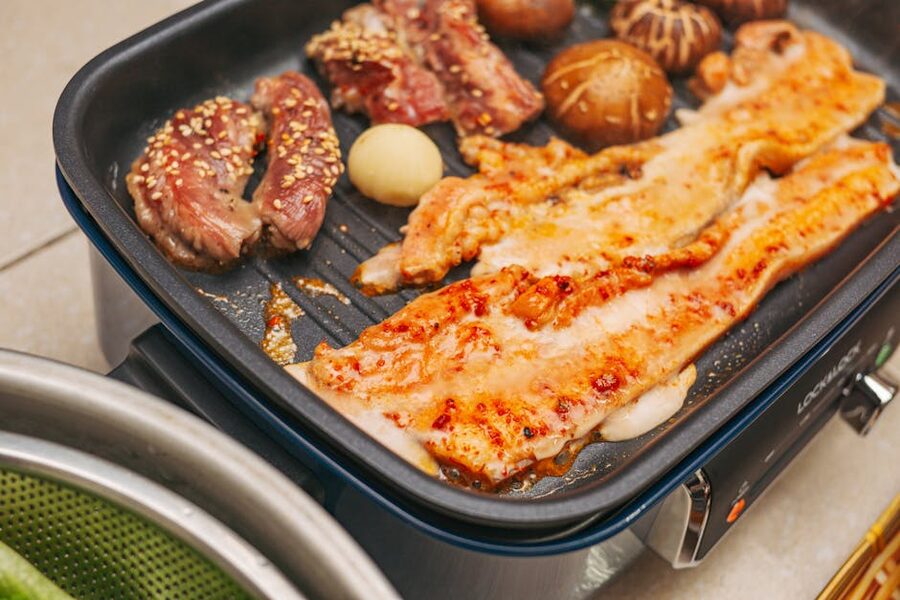
Korean barbecue is called gogi-gui (고기구이, literally “grilled meat”) and it’s the set piece of the cuisine. Three cuts dominate and they are not interchangeable. Samgyeopsal (삼겹살) is thick-cut pork belly, unmarinated, grilled until the fat crisps and the lean parts are just cooked through. Galbi (갈비) is short ribs, usually marinated in a soy-garlic-pear mixture, you’ll most often see it as L.A. galbi (flanken-cut) or regular bone-in. Bulgogi (불고기) is thin-sliced beef, marinated, often cooked on a domed grill that lets the juices run off into a surrounding moat. They’re different experiences and serious Korean eaters have strong opinions about where to go for each.
The mechanics: you order a couple of cuts (two people = one or two orders of each; portions are smaller than you think), the grill sits in the middle of the table, the server lays the meat on, waits, flips, cuts into strips with scissors. You are not cooking your own dinner, this is a performance and the server is doing it. Alongside you get a stack of perilla leaves, lettuce leaves, raw garlic cloves, shredded scallions, ssamjang (a thick soybean-chilli paste) and rice. Build a ssam, a wrap, with a leaf on your palm, meat, ssamjang, garlic, rice, and eat the whole thing in one bite. Once you’ve done it twice you’re doing it for the rest of the night.
Charcoal (sut-bul숯불) versus gas is a genuine difference and worth paying for. A good charcoal place will have tabletop grates where the actual lump charcoal is changed out by the server between rounds; gas places run on a flat iron griddle. The charcoal smoke permeates the meat in a way a gas grill can’t touch, and the best Seoul samgyeopsal joints, the ones locals will fight about, are all charcoal. You’ll pay roughly ₩18,000-25,000 per person for gas-grill samgyeopsal and ₩30,000-45,000 for charcoal at a recognised joint, not including soju.
Where to actually eat Korean BBQ in Seoul
The district name to remember for samgyeopsal is Mapo (마포), specifically around Gongdeok and Mapo Station on Seoul Metro Line 5 and Line 6. “Mapo-style” is its own thing, historically associated with office workers who’d drift over from the Yeouido financial district after work and demand unfussy pork belly and cold soju. Back streets near Mapo Station have a concentration of old-school charcoal joints. Mapo Jeong Daepo (마포 정대포) is the canonical one, opened in 1986, still doing the same thick pork belly at a table that hasn’t been redecorated in decades. Expect to queue after 6pm and expect the smoke to get in your clothes.
For galbi, the default neighbourhood is Nonhyeon (논현동) along the stretch between Gangnam Station and Sinsa Station (Line 2 / Line 3). It’s a more polished experience than Mapo, tablecloths, bigger bills (₩50,000-80,000 per person is normal), but the quality of the meat is usually the tradeoff. Specific name that’ll come up: Byeokje Galbi (벽제갈비), a minor institution with multiple outlets, and one of the few places that does the old-style wood-fired grilling. Reservations essentially mandatory on weekends.
If you’re in Seoul on a short trip and you just want to eat samgyeopsal without making a project of it, honestly, go to any charcoal-grill place in Hongdae with a queue out the door. You’ll do fine. The worst Korean BBQ in Seoul is better than the best one in most cities anywhere else.
Banchan, the quiet masterpiece of the meal
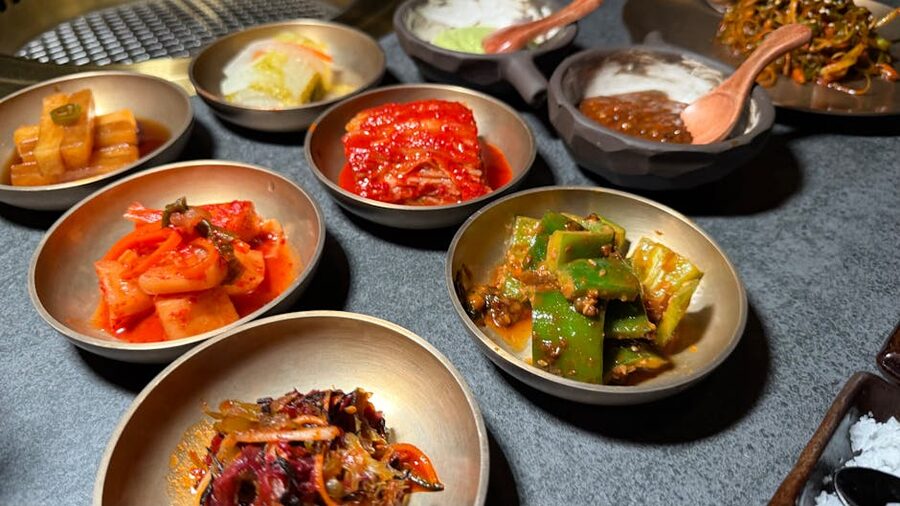
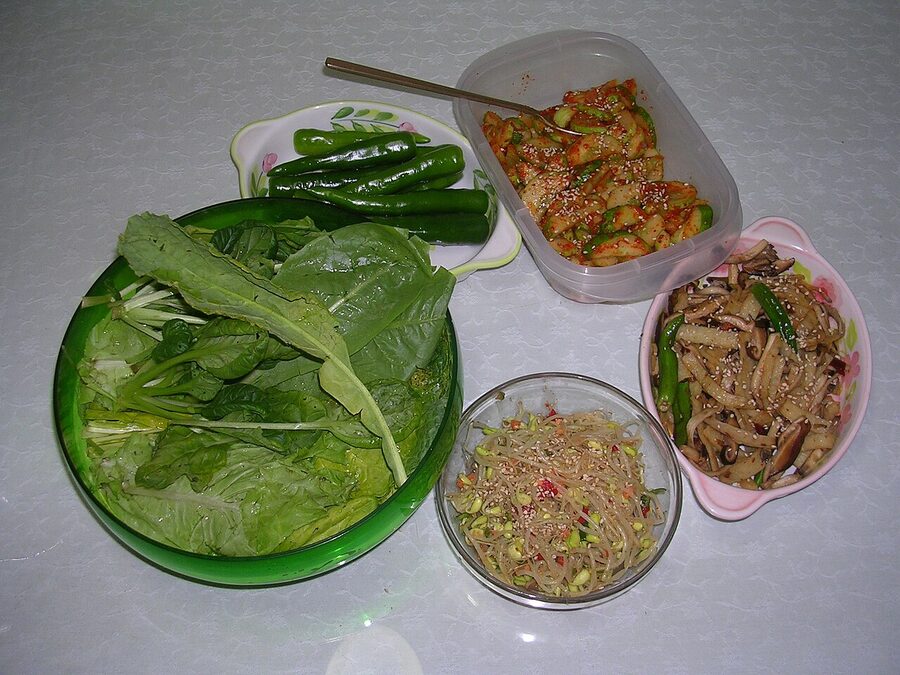
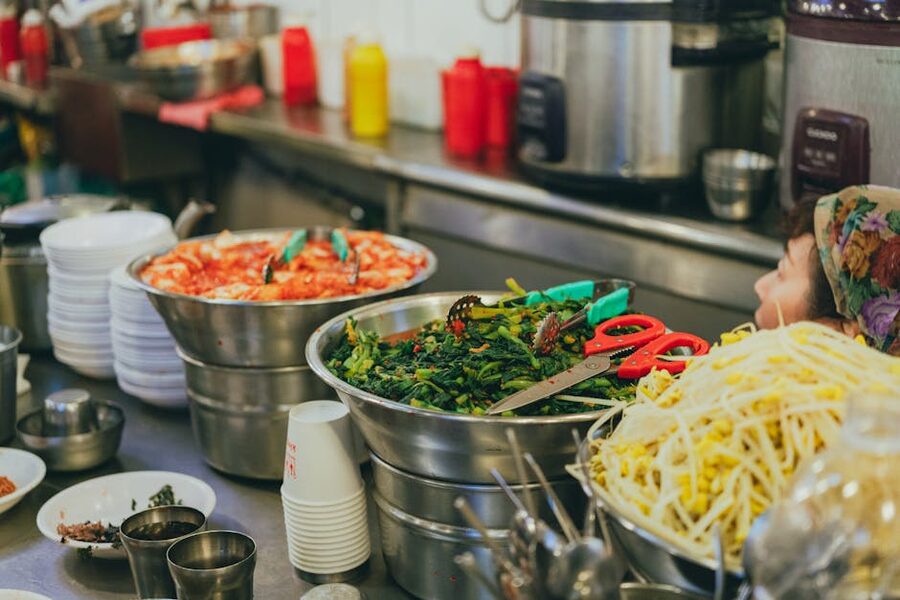
Every Korean restaurant opens with a clatter of small bowls arriving before you’ve finished ordering. That’s banchan (반찬), side dishes, anywhere from three or four at a humble place to a dozen or more at a good one. Complimentary, refilled without asking, changing through the year with what’s in season. A proper samgyeopsal joint might give you six: kimchi (always), soybean sprouts, pickled radish, a spinach dish with sesame, a cold egg custard, maybe a miso soup. None of these are courses; they’re all meant to be eaten alongside the main event as whatever-you-want-whenever-you-want.
The rules are simple. Ask for refills, just point at the empty bowl. Korean servers will quietly judge a table that doesn’t empty the sprouts. You do not take banchan away with you. And you don’t cover the bowls with your meat plate even if the table is tight, bad form.
Banchan is where the cuisine’s fermentation bent shows clearest. You’ll hit at least three pickled or fermented items in every spread, and paying attention to them teaches you the flavour vocabulary faster than any formal tasting. By the end of a week in Korea you’ll have opinions about which restaurant does banchan well. That’s the point.
Kimchi, not one thing, a whole category
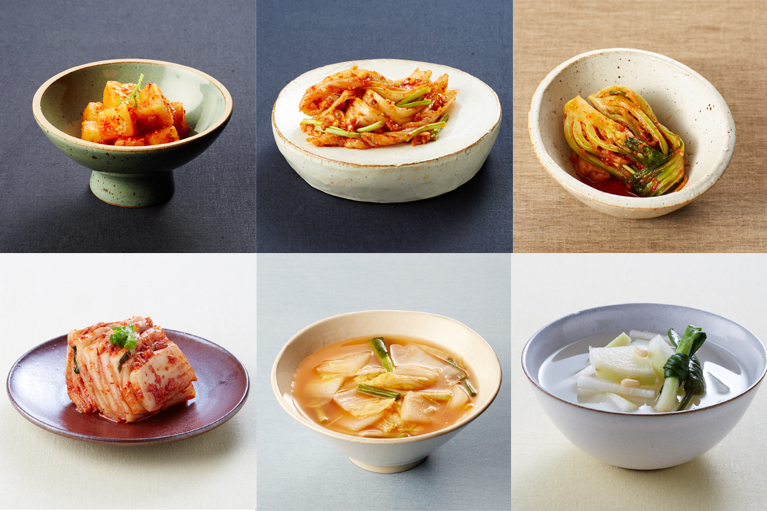
Here’s where Western understanding of Korean food most often lets people down: they arrive thinking kimchi is a dish. It isn’t. Kimchi is a category, something like “pickles” in English but with more internal variety and much more seasonal logic. There are hundreds of different kimchis and a reasonably attentive Korean home will make two or three of them in rotation through the year.
The main player is baechu kimchi (배추김치), made from napa cabbage, salted, then packed with a paste of gochugaru (Korean chilli flakes), garlic, ginger, fish sauce, and sometimes fermented shrimp. It ferments for days to weeks depending on how sour you want it. This is the red, sour-spicy thing that tourists think of as “kimchi” and it’s genuinely everywhere. Every Korean restaurant on Earth will serve it as banchan, and it’s the one whose absence would be a scandal.
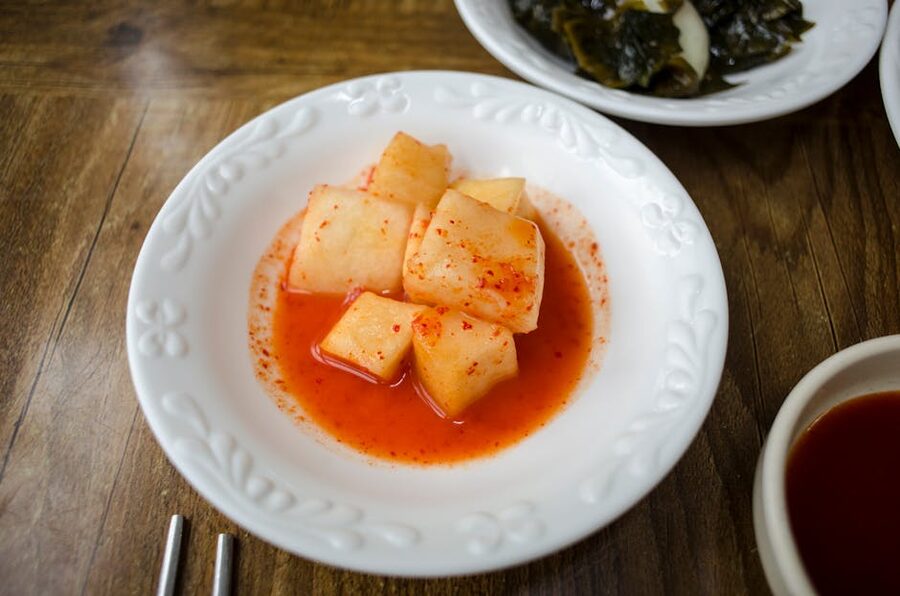
But look past the cabbage and you’ll find kkakdugi (깍두기), cube-cut daikon radish kimchi that ferments in days rather than weeks and has a clean, almost lacquered quality to it. Oi-sobagi (오이소박이), stuffed cucumber kimchi, is the summer one, made when cucumbers are in season and eaten within days, before the whole thing collapses. Yeolmu kimchi (열무김치), made from young summer radish greens, is less spicy and more tangy, and it’s the one that shows up in yeolmu bibimbap. Baek kimchi (백김치), white kimchi, uses no chilli at all and is the traditional winter variety you’d eat with dishes that don’t want a red overlay.
The point of paying attention to which kimchi is in front of you is that the fermentation stage matters. Fresh kimchi is bright, crunchy, and the chilli is dominant. Two weeks in, it’s gone slightly sour and the flavour is deeper. At six weeks it’s fully sour and starting to funk, and this is when you stop eating it raw and start cooking it, into kimchi jjigae (kimchi stew), kimchi bokkeumbap (kimchi fried rice), or kimchi pajeon (kimchi scallion pancake). A Korean grandmother’s freezer probably has three jars at three different stages and she knows exactly which one goes into which dish.
Bibimbap and the case for the stone bowl
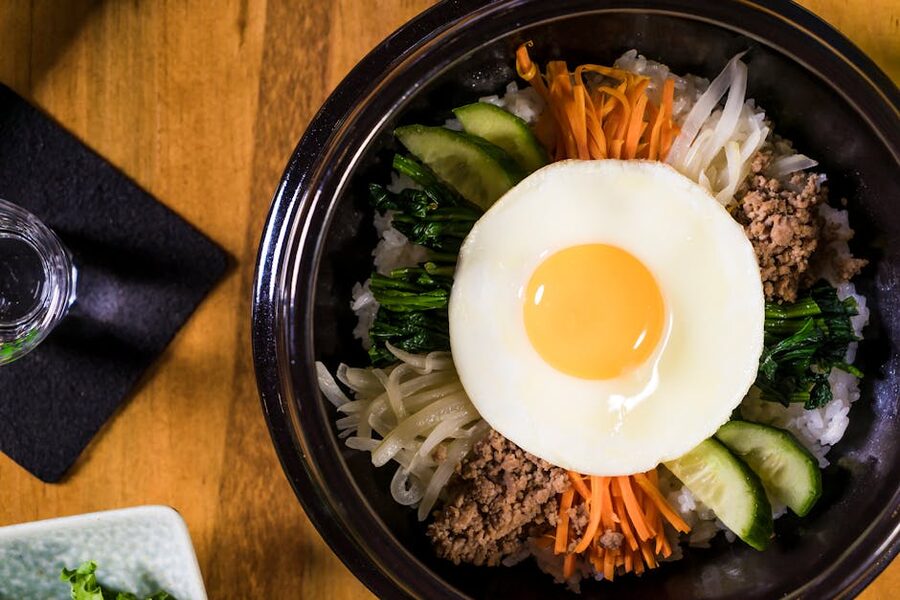
Bibimbap (비빔밥) literally translates as “mixed rice” and it’s what most people think of as the healthy Korean dish. The logic: a bowl of rice, a circle of arranged julienned seasoned vegetables around the edge (seasoned spinach, carrots, bean sprouts, mushrooms, some form of protein, usually ground beef or, in the Buddhist temple version, nothing), an egg on top, and a squirt of gochujang (Korean red chilli paste) on the side. You add the gochujang, you mix everything violently, you eat.
Here’s the thing nobody tells you on your first trip: plain bibimbap is fine, but it’s the dolsot bibimbap (돌솥비빔밥) that’s the actual experience. Dolsot means “stone pot”, the same ingredients arrive, but in a heavy granite bowl that’s been preheated to a temperature that’d flash-sear beef, and by the time it reaches your table, the rice touching the bowl wall is forming a crust. You mix, and then you wait, don’t stir aggressively. The magic is the crispy, nutty-brown crust of rice that develops at the bottom, called nurungji. You scrape this off with your spoon last, once the centre is eaten, and it’s the best part of the dish.
If you can make the trip, Jeonju (전주) is the historical home of the dish. It’s 1h40 by KTX from Seoul Station (₩34,600 one way), and the old town, Jeonju Hanok Village, has about thirty restaurants specialising in bibimbap. The famous ones are Hankuk-jib (한국집) and Gajok Hoegwan (가족회관), both open for over fifty years, both serving what’s technically called Jeonju-bibimbap, made with bean sprouts rather than the rice itself boiled in beef broth, with a specific sequence of twenty-odd toppings. It’s different from Seoul bibimbap and noticeably better if you care about this stuff. If you’re doing a Korea trip longer than a week, Jeonju is worth the day trip.
Chimaek, fried chicken and beer
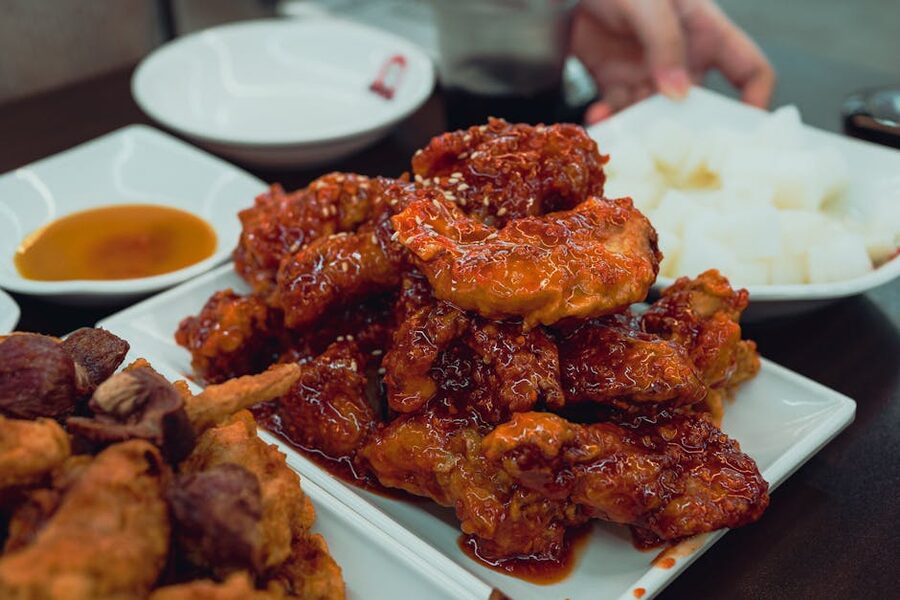
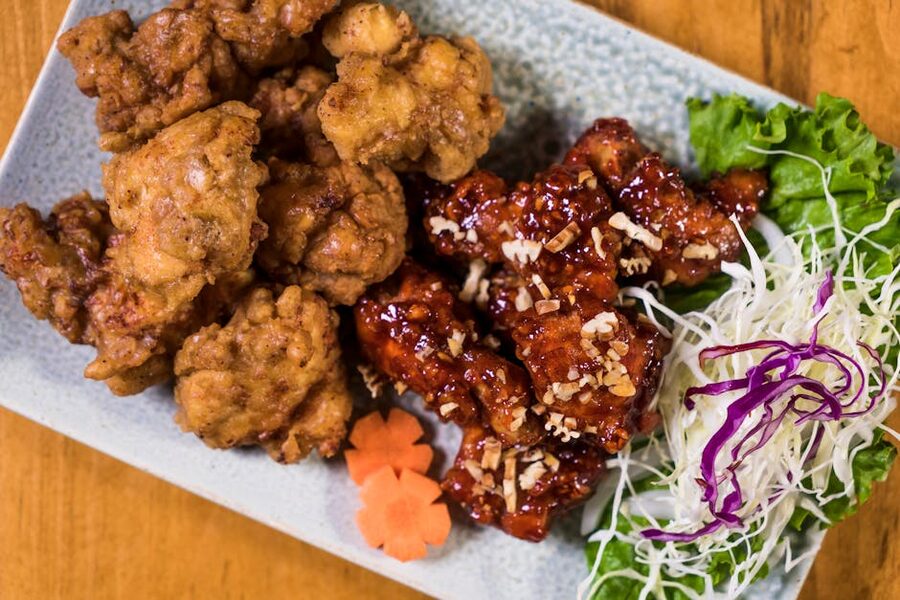
Korean fried chicken is its own tradition and the comparison to American fried chicken is misleading. The batter is thinner. The oil is hotter. The chicken is fried twice, once to cook it through, then a second time at higher heat to crisp the skin to something closer to glass than breading. The result stays crunchy for forty-five minutes even under sauce, which is the technical achievement that makes the whole thing work.
There are two sauces that matter and you should order both. Yangnyeom (양념), the red one, gochujang, garlic, soy, honey, a little ginger, is sweet and spicy and sticky. Ganjang (간장), the soy-garlic one, soy sauce, garlic, sesame, is salty and deep and less aggressive. At most proper chicken shops you can order banban (반반, “half and half”) which gets you one order of each on the same plate. This is the correct move. You’ll use one to cut the intensity of the other and by the end of a ₩25,000 bucket you’ll have opinions about which is better. (Ganjang, usually, if you’ve been drinking.)
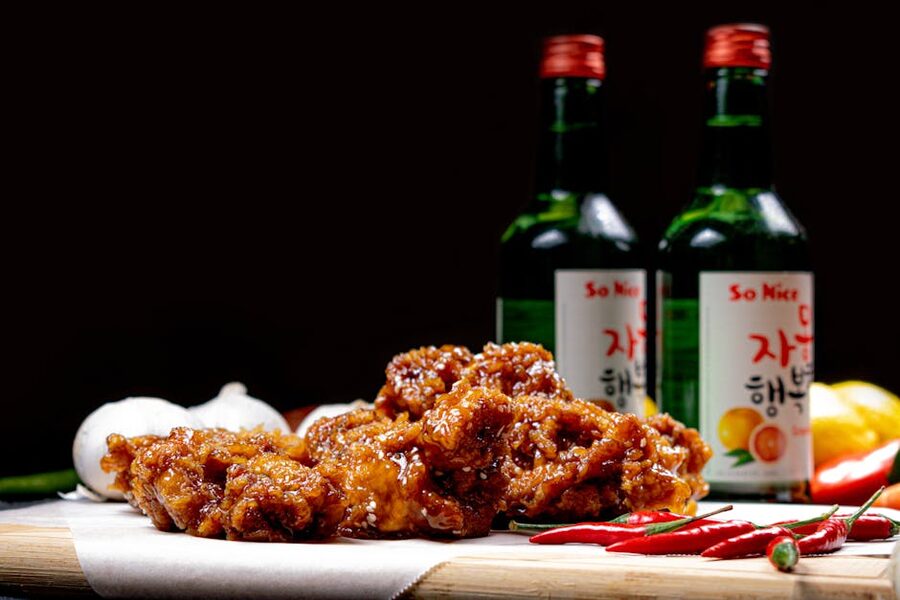
The pairing is called chimaek (치맥), a portmanteau of chicken and maekju (맥주, beer). This is the core Seoul weeknight social institution: you arrive at a chicken shop with three friends, you order two buckets of banban and a pitcher of draft Cass, you stay until midnight, and at some point someone orders the soju. The best chicken shops are in Hongdae (around Hongik University Station, Line 2, Exit 9) where the crowd is students and twentysomethings, or in Gangnam for the after-work version. The chain BHC is everywhere; the chain Kyochon is marginally fancier and the sauce is genuinely better; the independent joints in Hongdae’s side streets are the ones that get returning customers. There are more than 100 chain chicken brands in Korea, the saturation is genuine, and it tells you how seriously the country takes this dish.
Tteokbokki and the case for street food
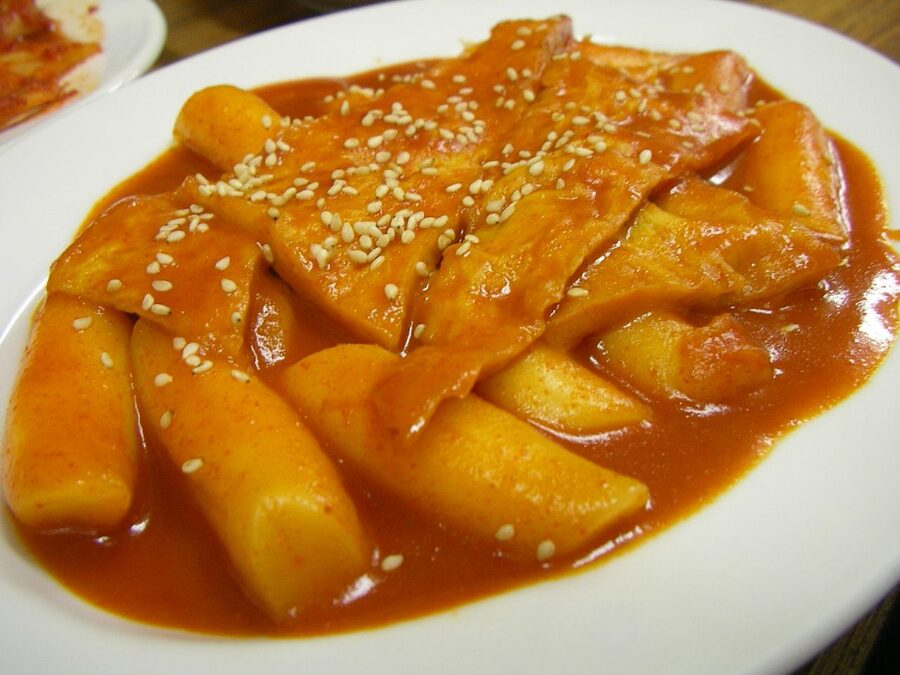
Tteokbokki (떡볶이) is chewy cylindrical rice cakes simmered in a thick sweet-spicy gochujang sauce with fish cake slices (eomuk), boiled eggs, and sometimes ramen noodles added at the end. It is the signature of Korean street food and a dish that divides visitors sharply. On your first attempt you’ll think it’s a sauce-heavy rice cake experience. By your third attempt you’ll be a convert.
The origin story: the dish has existed in one form or another since the Joseon dynasty, but the modern red, spicy, sweet version traces back to Sindang-dong (신당동) in central Seoul, where a woman named Ma Bok-rim started selling it from a streetside stall in 1953. She combined leftover rice cakes, gochujang, and anchovy stock, and the neighbourhood, now called Sindang-dong Tteokbokki Town (신당동 떡볶이 타운), became dense with copycat stalls over the following decades. You can still visit. The closest metro is Sindang Station (Line 6), Exit 9, and a cluster of tteokbokki restaurants still run within a two-block radius. The atmosphere is dated in a deliberate way; the tteokbokki is fine, sometimes excellent. Go for one meal and order the gireum-tteokbokki (oil-fried version) if it’s offered, it’s the older style, less sweet, much better.
In the last ten years a parallel tradition called rosé tteokbokki (로제 떡볶이) has taken over Seoul’s Instagram feeds, the same rice cakes in a creamy pink sauce with cream, gochujang, and often bacon or sausage. Not traditional. Delicious. Started in coffee shops around Hongdae and Itaewon around 2019 and now on chain restaurant menus across Seoul. If you have limited stomach space, order a half-and-half: traditional red on one side, rosé on the other.
Gwangjang Market, the elder of markets
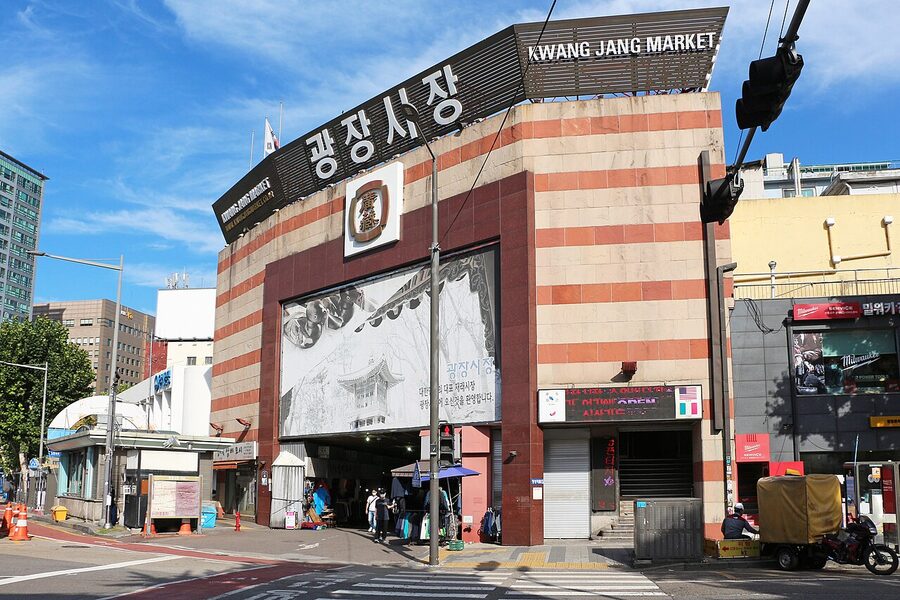
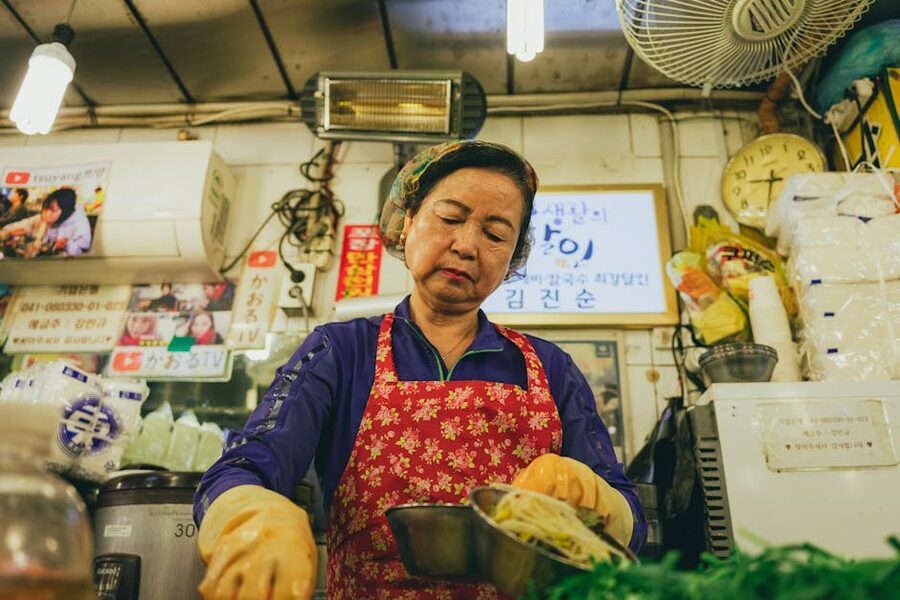
If you do one food-specific thing in Seoul, make it a night at Gwangjang Market (광장시장). It opened in 1905 as a silk and cotton market and only started doing food seriously in the last few decades, but the food section is now what the market is famous for. It’s in the Jongno district, reachable via Jongno 5-ga Station (Line 1, Exit 8) or Euljiro 4-ga Station (Line 2/5). Don’t bother arriving before 5pm; you want the dinner crowd, the fluorescent light, and the steam.
What to order, in rough priority: bindaetteok (빈대떡), a thick mung bean pancake fried crisp in a pan the size of a dinner plate, served with a vinegar soy dip. The stall named Park Geun-nyeo’s is the original, and the grandmother who started it is still alive. ₩5,000-7,000 per pancake, and one is enough for two people as a starter. Mayak gimbap (마약김밥, literally “drug kimbap”), tiny seaweed-rice rolls the size of a thumb, sold by the dozen, dipped in a mustard sauce. The name is a joke about how addictive they are and the name has stuck. ₩4,000 for ten.
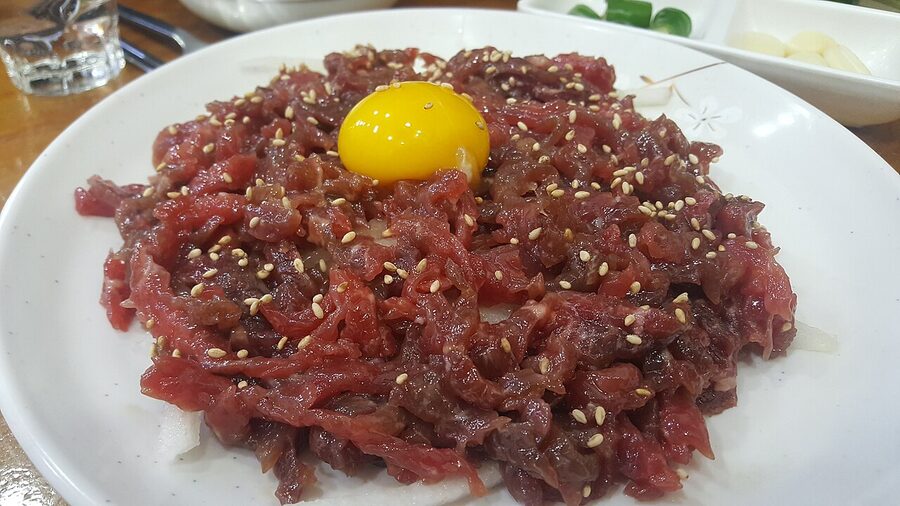
And then, if you’re feeling brave: yukhoe (육회), Korean-style raw beef tartare. It’s hand-chopped lean beef (eye round, usually), dressed with sesame oil, sugar, soy, pear juice, and garlic, served with a raw egg yolk on top and slivers of Korean pear around the plate. You mix it at the table, and eat it with chopsticks or a piece of the pear as a spoon. The canonical stall is Jeonju Yukhoe, a counter in the centre of the food street, open since the 1970s, where three or four yukhoe specialists serve the same dish slightly differently. ₩15,000-20,000 a portion. It’s not “adventurous” in the sense that the Korean fermented-skate dish is; this is just very fresh raw beef, and the combination of the yolk, the pear, the oil and sugar is one of the most controlled flavours in the cuisine.
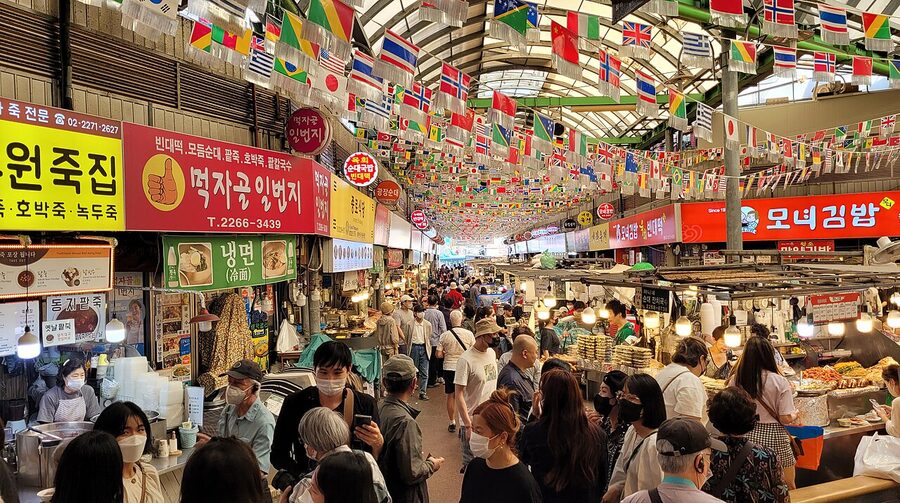
The market is cash-heavy, not all stalls take cards, and ATMs inside the market are a little scarce. Pull ₩40,000-60,000 before you go and don’t worry about it. The market is open roughly 8am-11pm but the food section doesn’t really get going until 5pm and peaks around 8-9pm. Come hungry, share everything, and wear something you don’t mind getting splattered with fermented bean sauce.
The other markets, ranked honestly
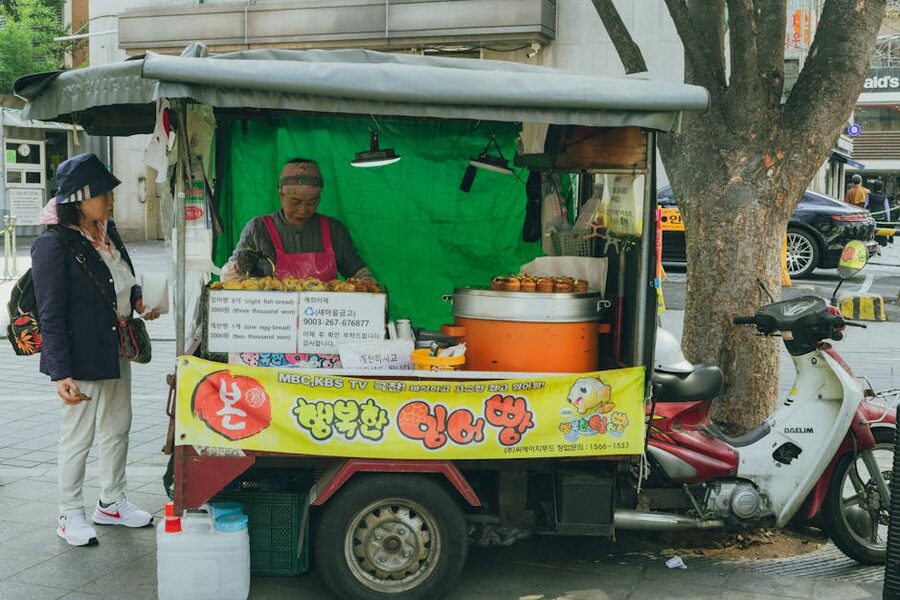
Seoul has five or six markets worth mentioning and it helps to know which is which. Gwangjang is the elder, as discussed. Mangwon Market (망원시장), in the Mapo-gu district (Mangwon Station, Line 6, Exit 2), is the younger, more residential one, smaller, much less touristy, the food cheaper and the crowd skewing local. This is where you go for a weeknight dinner if you’re staying in western Seoul. The tteokbokki stall at the east entrance is excellent; the hotteok (sweet pancakes) near the middle are famous locally.
Myeongdong (명동) is the big touristy one, a pedestrian shopping district in central Seoul (Myeongdong Station, Line 4, Exit 6-8) that turns into a street food corridor every evening. The food is fine, the crowd is mostly Chinese and Japanese tourists and Korean teenagers, and the prices are about 30% higher than anywhere else. Go once for the atmosphere. Order the tornado potato (a potato on a skewer, spiralised and deep fried) and the Korean-style cheese-stuffed corn dog. Don’t eat a proper dinner there.
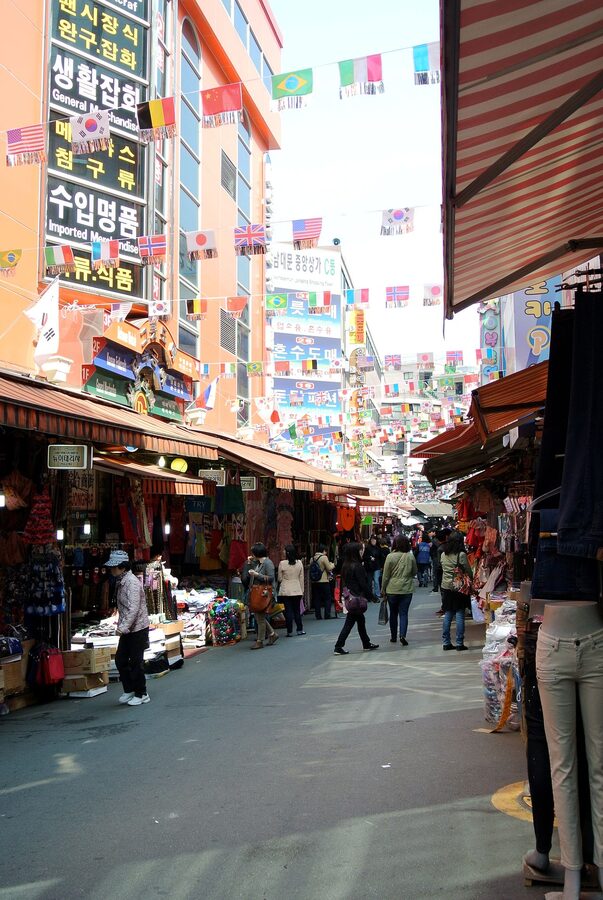
Namdaemun Market (남대문시장, Hoehyeon Station, Line 4, Exit 5) is the oldest of the lot, opened in 1414, and it’s still primarily a wholesale and retail market rather than a food destination. The food alleys are tucked in and you have to know they’re there. The specialty is galchijorim (braised hairtail fish, aggressively spicy, served over rice) and kalguksu (hand-cut wheat noodles in a clear anchovy broth). The crowd skews significantly older than Gwangjang. If you’re a market completionist, this is the one to add; otherwise Gwangjang will cover the ground.
Hongdae is not a market, it’s a university district (around Hongik University, Line 2) that turns into a late-night food neighbourhood after 10pm. This is where you go for 1am chicken, 3am pojangmacha (street food tents with plastic tarps and low stools), and students drinking soju. It’s not the place for a deliberate culinary night out but it’s the place for a lot of the memorable ones.
Bingsu, the ice dessert
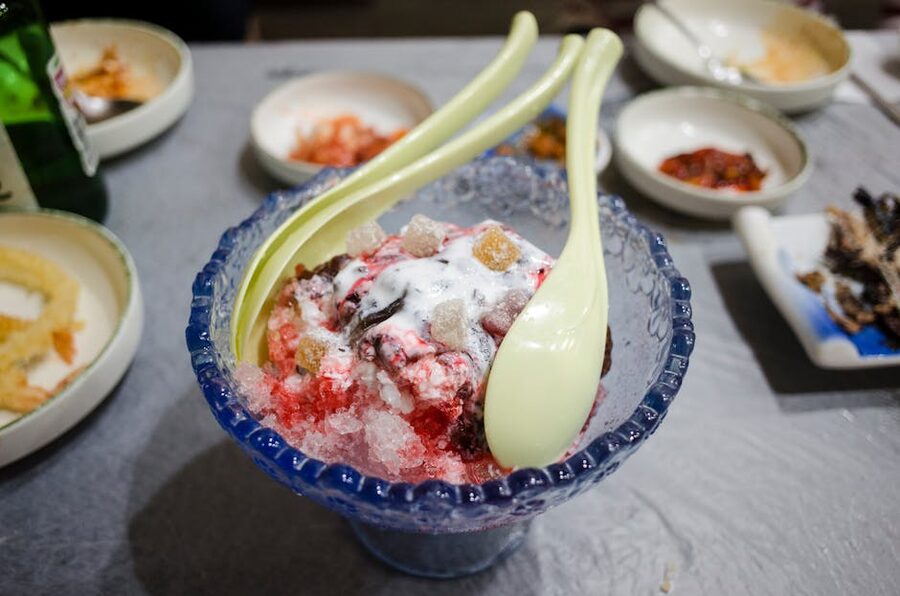
Korean summer has one defining dessert, bingsu (빙수), a mountain of finely shaved ice with toppings, served in a huge bowl meant to be shared. The classic is patbingsu (팥빙수), shaved ice with sweetened red bean paste, a scoop of ice cream, sliced rice cake, and sometimes condensed milk. Around since the 1970s and what your grandmother orders.
The modern evolution, which you’ll encounter more often in Seoul cafes, is fruit bingsu. Mango bingsu is the summer default, the ice base is milk rather than water (so it’s softer and creamier), topped with a mound of fresh mango chunks. Strawberry bingsu shows up in winter when Korean strawberries are at peak season (yes, Korean strawberry season is December-March, not June, this confuses everyone). Melon bingsu, sometimes served inside a hollowed-out Korean melon, is the expensive dessert cafes’ summer centrepiece, ₩25,000-45,000 and genuinely excellent if you splurge.
Where to find a good one: Sulbing (설빙) is the chain that took patbingsu mainstream, it’s a bit like a Korean Häagen-Dazs, ubiquitous, decent, not special. For the better versions go to dedicated dessert cafes in Gangnam or Garosu-gil (가로수길) where it becomes an item of food styling rather than a casual dessert. Two portions is plenty for a group of four.
Soju, makgeolli, and what to drink with your food
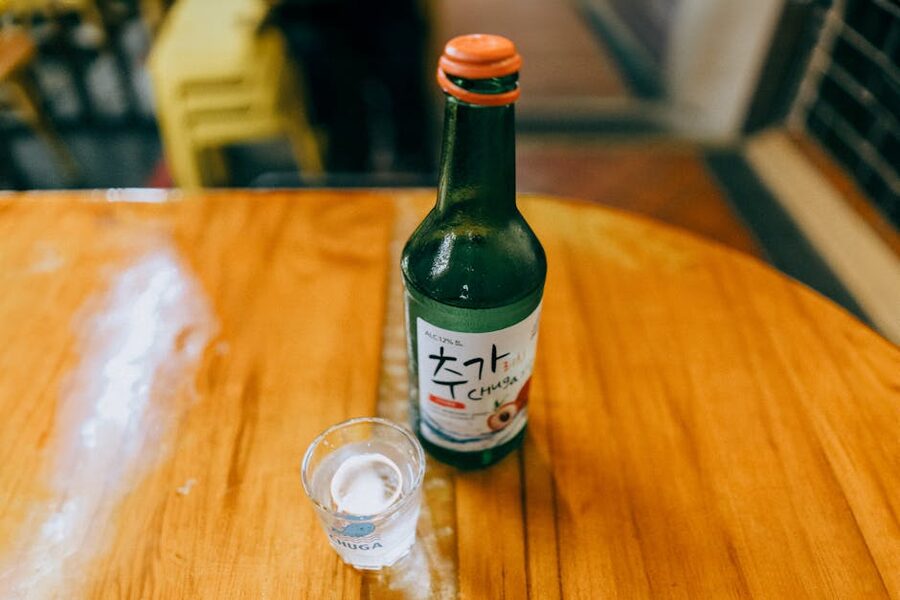
A quick clarification, because this trips up new visitors: soju is not the same as Japanese sake. Sake is brewed from rice, like wine. Soju is distilled, historically from rice and now from sweet potato or tapioca starch, and usually ends up around 16-17% ABV in its modern sweetened form. It’s closer in character to a soft vodka than to wine. It’s Korea’s everyday spirit, sold in small green bottles (₩4,000-5,000 at a restaurant) and drunk in shot glasses at the table. The pouring etiquette, you pour for the person next to you, they pour for you, younger people hold the bottle with both hands when pouring for elders, is a social ritual as much as a drinking pattern and you’ll pick it up within one dinner.
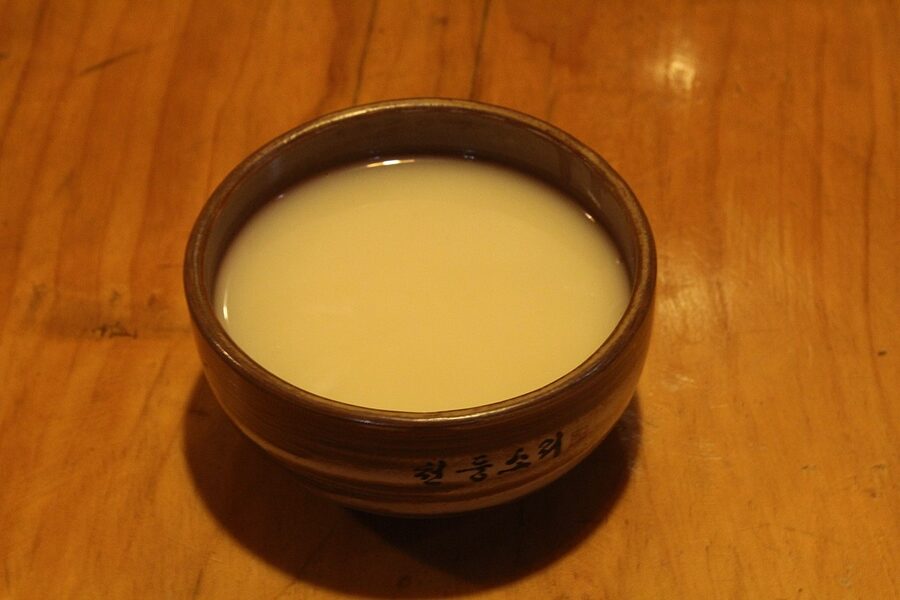
The alternative, and the one worth going out of your way for, is makgeolli (막걸리). This is the older Korean rice wine, milky, unfiltered, lightly fizzy, around 6-8% ABV. It’s been drunk in Korea for over a thousand years, traditionally associated with farmers and labourers, and has had a quiet revival among younger Korean drinkers in the last decade. It’s served in a ceramic bowl or metal kettle, poured into small cups, and tastes best ice cold. The flavour is slightly sour, yeasty, a bit sweet, a little like a cross between unfiltered sake and lemonade.
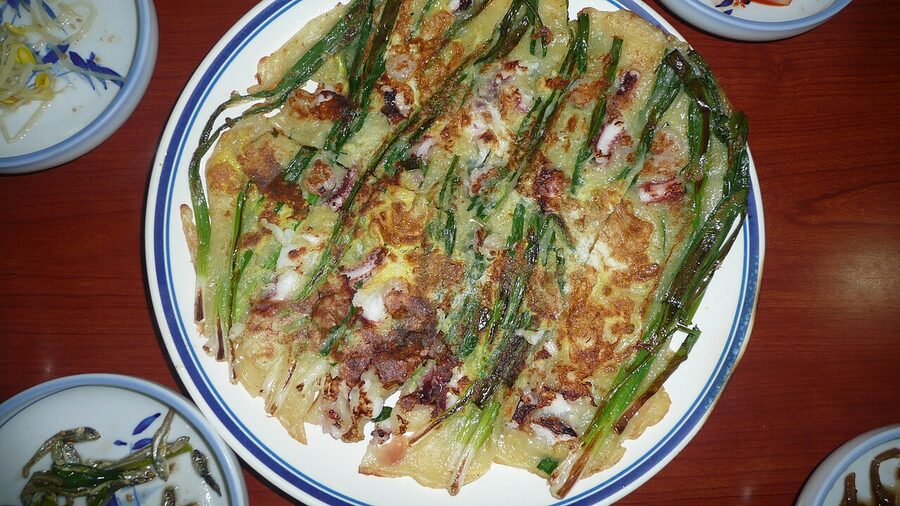
There’s a specific tradition worth following: Koreans drink makgeolli with pajeon (파전), a scallion-and-batter pancake, crisp-edged, about the size of a dinner plate, and they do it especially on rainy days. You’ll ask why, and nobody will give you a satisfying answer beyond “that’s what you do.” It turns out that the sound of rain and the sound of pajeon frying in oil are eerily similar, which some linguists credit as the origin. Either way: if it’s raining in Seoul and you don’t have plans, find a makgeolli bar and order pajeon, and you’ll be following one of the more specific national drinking traditions I’ve ever encountered. The neighbourhood to look in is Bukchon or Insadong, both near Anguk Station (Line 3, Exit 2-3), where traditional-style bars are thick on the ground.
Beyond Seoul, Busan, Jeju, and why you should leave the capital
Seoul has the biggest food scene but it doesn’t have the best version of every dish. If you have more than three days in Korea, get out of the capital. KTX makes every major Korean city a reachable day trip from Seoul Station.
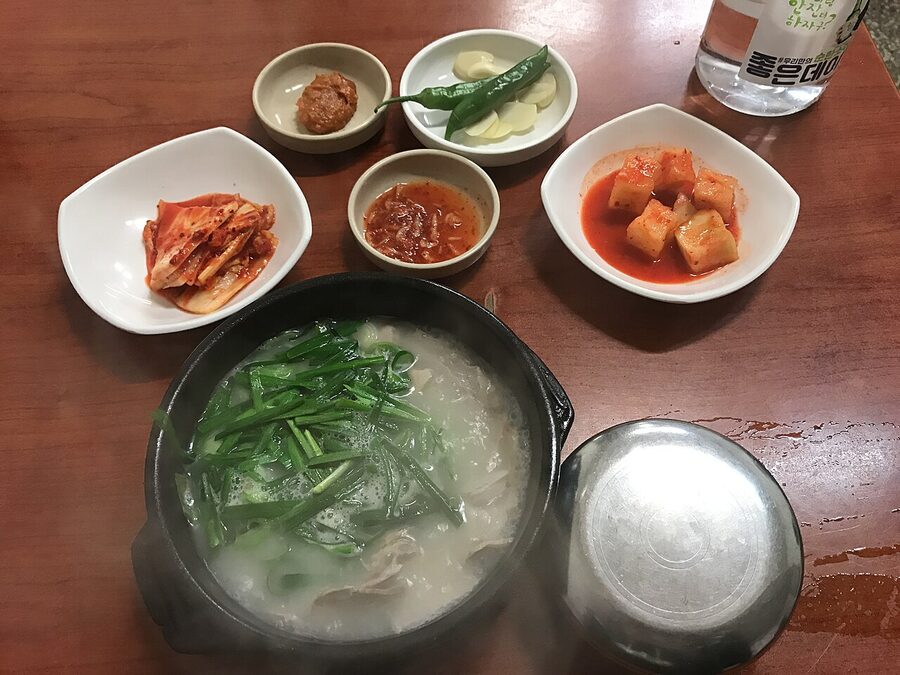
Busan is the obvious first detour, 2h20 on the KTX from Seoul Station (₩59,800), and the port city has two dishes worth making the trip for. Dwaeji gukbap (돼지국밥) is the big one, a milky, pork-bone-broth soup with shredded pork and rice at the bottom, served with a side plate of salted shrimp, a chilli paste, and a stack of raw scallions and onions to add yourself. The Yeongju-dong neighbourhood near Busan Station has a dozen specialist restaurants, Songjeong 3 Dae Gukbap is the three-generation institution, but the place across the street, Halmae Gukbap, is where locals go when they don’t want a queue. A bowl is ₩9,000. You add the seasonings yourself and the flavour evolves as you eat.
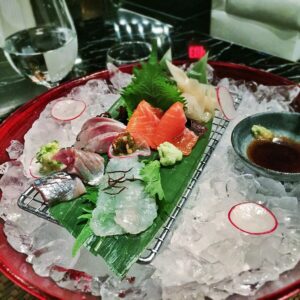
Busan’s other food identity is around raw seafood, the city is a port and the fish market at Jagalchi (자갈치시장, right on the waterfront, Jagalchi Station on Line 1) is one of the big experiences. You pick your fish at the downstairs market, a vendor kills and preps it on the spot, and you take it upstairs to one of the affiliated restaurants where it’s served as hoe (Korean sashimi, thinner-cut than Japanese, served with a sesame-chilli paste rather than soy). ₩30,000-50,000 per person for a two-person raw fish plate, plus drinks.
Jeju Island, the volcanic island south of the mainland, is a different food culture again. The signature dish is heuk dwaeji (흑돼지), black pig barbecue, from the local Berkshire-heritage breed, with a darker meat and a richer fat than mainland pork. It’s a different samgyeopsal experience and the best charcoal joints in Jeju-si do it well. The other local dish is galchi-guk (갈치국, hairtail fish soup, clear broth, pumpkin, spring onion), a summer dish, light and clean. You can fly to Jeju from Gimpo Airport in 55 minutes; it’s one of the busiest flight routes in the world and consequently cheap (₩70,000-90,000 one way).
And of course Jeonju for bibimbap, as discussed above. If I had to pick two day trips from Seoul, I’d go Jeonju for lunch (bibimbap, hanjeongsik, the multi-course traditional Korean set meal) and Busan for a two-day stay (dwaeji gukbap, hoe, a night at Haeundae Beach). If you’re already planning a wider Asia trip, I’ve mapped out a similar regional food-and-scenery three-day format for Yunnan that works on similar logic, pick the place with the dish, not the other way around.
Seoul food-neighbourhood cheat sheet
If this is starting to feel like a lot of place names, here’s a simplified version. Memorise the four districts and you’ll know where to go for what.
- Jongno / Gwangjang Market area (Line 1 or 2, around Jongno 5-ga): traditional market food, bindaetteok, yukhoe, mayak gimbap. Dinner onwards.
- Mapo (Line 5 or 6, around Mapo Station): old-school charcoal samgyeopsal. Mapo Jeong Daepo and the side streets.
- Hongdae (Line 2, Hongik University Station): late-night chicken and beer, student-tier prices, ending at pojangmacha street tents at 2am.
- Gangnam / Nonhyeon / Garosu-gil (Line 2 or 3): polished galbi, dessert cafes, the high-end bingsu places. Bring money.
- Myeongdong (Line 4): tourist street food. Visit once. Buy cosmetics while you’re there.
- Insadong / Bukchon (Line 3, Anguk): traditional makgeolli bars, pajeon, nakji bokkeum.
A few pieces of ordering etiquette I wish I’d known earlier
Korean restaurant etiquette is forgiving of foreigners but a handful of things change how the meal feels. First: the server does not bring a bill automatically. Ask by raising your hand or saying gyesanseo juseyo (계산서 주세요). At most places you pay at the counter at the front. Second: tipping is not a thing. No tip, no service charge. If you try to tip, a server will usually run after you with the change.
Third, and the one that most visitors find strange: you don’t pour your own drink. You pour for the person next to you, they pour for you. With an elder you hold the bottle in both hands when pouring, and turn your head slightly away when drinking. Any Korean will be delighted you know it, and won’t mind if you forget.
Fourth: when banchan arrives, eat it. A bowl sitting untouched is a mild insult to the kitchen. It doesn’t need to be finished, but put chopsticks in every bowl at least once.
Finally: most small independent restaurants in Seoul (and almost all in Busan and smaller cities) still only take cash. BC Global ATMs that accept foreign cards are in every 7-Eleven and subway station, pull enough when you land so you’re not short at dinner.
What to eat on your first, third, and fifth day
If you’ve got three days in Seoul, here’s a sequence that covers the ground. Day one, dinner: samgyeopsal in Mapo, do this early because it’s the benchmark the rest of the food is measured against. Day two, lunch: bibimbap, ideally dolsot, near whatever you’re sightseeing. Day two, dinner: Gwangjang Market, yukhoe, bindaetteok, mayak gimbap, a bottle of makgeolli. Day three, lunch: a Korean fried chicken lunch set in Hongdae (₩12,000-15,000 for chicken plus rice plus a drink). Day three, dinner: chimaek proper, two buckets, one Cass pitcher, and see how the night unfolds.
If you get five days, fit in Jeonju on day four (KTX down, bibimbap at Hankuk-jib, walk the Hanok Village, KTX back), and dedicate day five to whatever you’ve realised you loved most. More BBQ. A second night at Gwangjang. An afternoon at a makgeolli bar with pajeon. The trip shapes itself around whatever you decide is worth doubling down on.
One honest warning: Korean food portions, especially at BBQ joints, are smaller than you’ll expect. That ₩25,000 samgyeopsal order is maybe three pieces of pork belly each for two people. You’ll order twice. Sometimes three times. Budget more than you think. For context on what a layover-length food exploration looks like in another Asian capital, my one-day Singapore itinerary runs on similar logic, pick three neighbourhoods, one food per, pace yourself.
Come hungry. Stay late. Pour for the person next to you.