
One Day in Singapore: The Layover Itinerary That Actually Works
I’ve ended up with a single day in Singapore at least six times, usually on a layover from Shenzhen, twice on an end-of-year visa run, once because Scoot had a cheap direct flight, and the structure of the day has gradually settled into something I can now write down. This isn’t a listicle. It’s the actual itinerary I’d hand a friend who just messaged me saying “landing at Changi 8am, leaving midnight, what should I do?” Short version: the whole city is walkable if you pick the right six kilometres, the hawker food is genuinely one of the best reasons to come, and you can be at a rooftop bar above Marina Bay by sunset with time to spare.
Singapore is the one city in Southeast Asia where a layover itinerary genuinely works, because everything the first-time visitor wants to see is compressed into a neat central zone you can walk in an afternoon, and because the transit infrastructure is absurdly good by regional standards. Changi airport to anywhere downtown: 30 minutes on the MRT, S$2.40. The airport itself is borderline a tourist attraction (the Jewel, the waterfall dome, the rain vortex sculpture), if you’ve got a short layover and can’t leave airside, you could spend the entire stopover inside Terminal 3 without regretting it. This guide assumes you’re going into town.
In This Article
- The geography, briefly
- 8:30 am, Singapore Botanic Gardens
- 10:15 am, Chinatown and the Maxwell hawker lunch
- 1:00 pm, Clarke Quay walk and the Singapore River
- 2:30 pm, Marina Bay Sands and the ArtScience Museum
- 4:30 pm, Gardens by the Bay and the Supertrees
- 7:30 pm, Dinner and the Marina Bay light show
- 10:00 pm, One last drink before the airport
- Practicalities, money, SIM, heat
- What I’d do differently if I had two days
- Final note
The geography, briefly
Singapore is an island roughly 50km east-to-west and 27km north-to-south, with downtown occupying the south coast, the airport on the east end, and the bulk of the residential suburbs in the middle and north. For a day-tripper, the relevant zone is the 4-kilometre stretch along the water from Raffles Place in the east to the Singapore River mouth in the west, plus two detours inland to Chinatown (just south) and Orchard Road (further north, less essential). If you’ve got a car, ignore it. Walk or MRT the whole day.
The one-day itinerary I’ll lay out here runs north-to-south, starting at the Botanic Gardens at opening hour and ending at a rooftop bar in Marina Bay. That’s the direction I’d recommend, you get the greenery first, the hawker lunch in the middle, and the skyline show at the end. Reverse it if your flight schedule requires, but you’ll miss the heat-of-the-day problem (Singapore mid-afternoon is brutally humid; spend that portion indoors).
8:30 am, Singapore Botanic Gardens
The Botanic Gardens open at 5am and they’re free. Take the MRT to Botanic Gardens station (Downtown line; 15 minutes from central), follow the signs, and you’re inside a 160-year-old Victorian-era park that is deeply, improbably, calm. It’s the easiest way to start a Singapore day. I’d normally suggest heading straight for a coffee but on this particular day I’d suggest bringing one from the airport or the first café you spot and drinking it on a bench in the National Orchid Garden (S$15 extra ticket), which opens at 8:30. The orchid breeding collection here is the most extensive in the world, and the hybrid gallery contains plants named after various heads of state who’ve stopped by for photo ops.
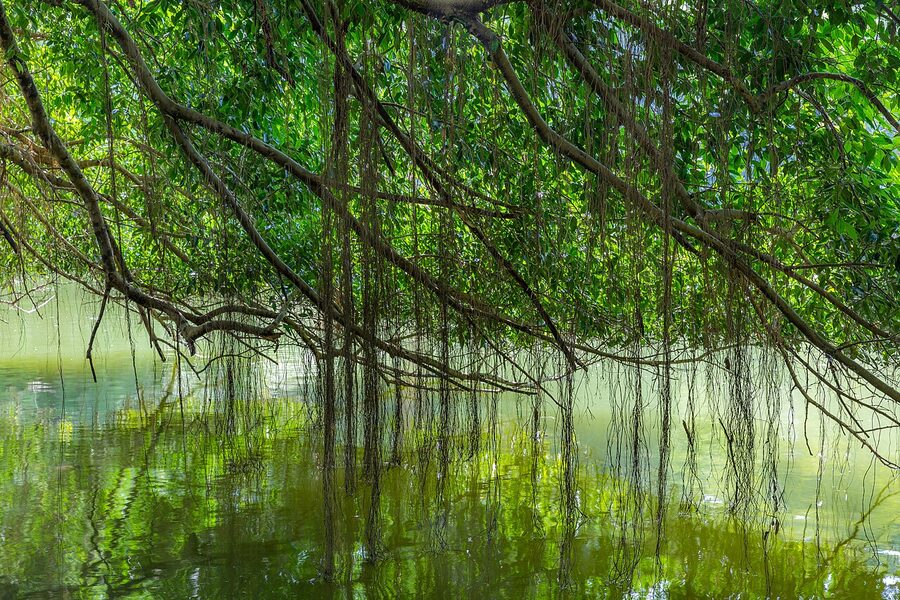

Don’t do the whole park. You don’t have time. Walk the loop around Swan Lake, poke your head into the Orchid Garden for 20 minutes, then catch the Gingko or Heritage Tree trail if you’ve got any interest in the old specimens (some of the original plantings from the 1860s are still alive). Budget 75 minutes total. By 10am you’ll be back at the gate with enough morning left to be somewhere else.
10:15 am, Chinatown and the Maxwell hawker lunch
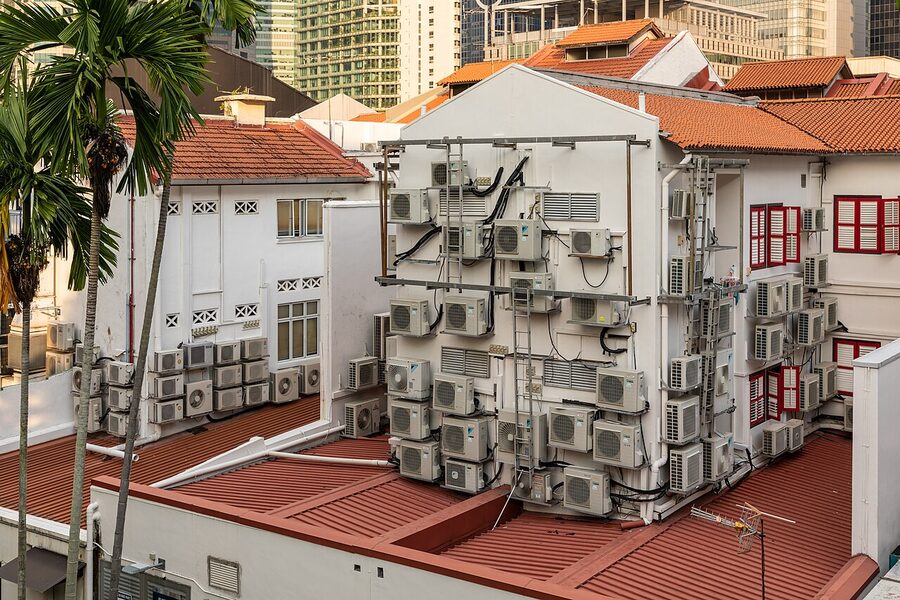
MRT from Botanic Gardens to Chinatown (Downtown line, 4 stops, 12 minutes, S$1.80). Chinatown in Singapore is less “functioning ethnic neighbourhood” and more “heritage preserved commercial district”, it’s clean, bilingually signed, and geared to visitors more than residents. That doesn’t make it bad; it makes it one of the most efficient heritage walks in Southeast Asia. You can do the whole thing in about 90 minutes and come away with a reasonably informed sense of what Chinese immigration to Singapore looked like across three generations.
,_China_Town_--_2019_--_4524.jpg)
Start at Chinatown Heritage Centre if you want the context (two-storey shophouse museum on Pagoda Street, S$15, allow 45 minutes). Walk the shophouse blocks, Pagoda, Temple, Smith, and Mosque Streets form a tight grid of terraces, all restored to something close to their 1920s appearance. The Buddha Tooth Relic Temple on South Bridge Road is the other big visual anchor, a four-storey pagoda-style building with (genuinely) a piece of Gautama Buddha’s tooth in the rooftop shrine. Entry is free, shorts and tanks are not.
By 11:45 you’re ready for lunch, and lunch is Maxwell Food Centre, the most famous of Singapore’s hawker centres, one street south of the Chinatown shophouse grid, walking distance from the Buddha temple.

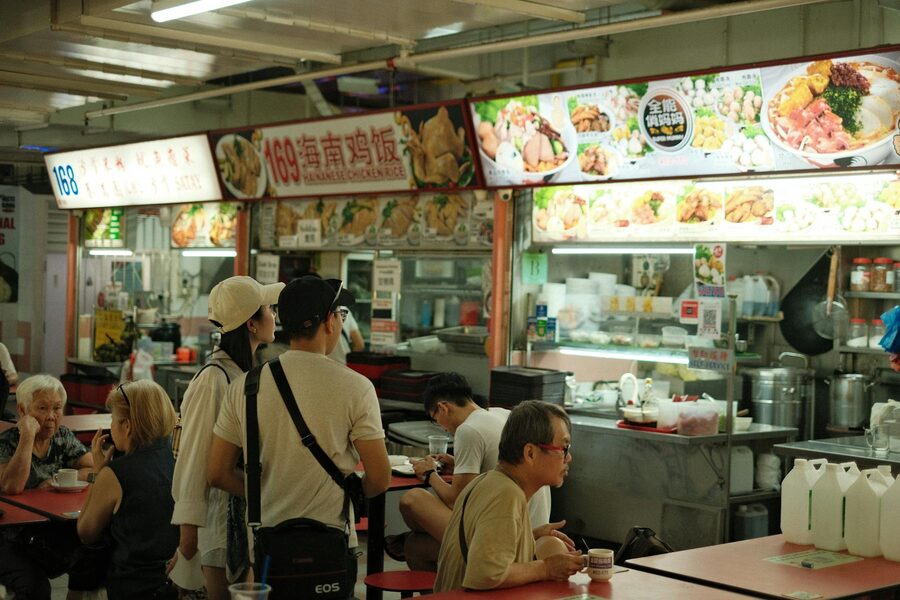
Maxwell is a covered hawker hall with roughly a hundred stalls under one roof, and at lunch hour it’s a proper rush. The most famous stall is Tian Tian Hainanese Chicken Rice, regularly voted the best in Singapore, featured in every food show ever made, and with a queue to match. If the queue looks impossible, get the chicken rice from the stall next door; the quality dropoff is marginal and the wait drops from 40 minutes to 5. Other Maxwell classics: Zhen Zhen Porridge (century egg and pork congee, proper Cantonese breakfast, open until mid-afternoon), Tong Xin Ju for shrimp and pork dumplings, and whichever Indian stall has the longest line (south Indian banana-leaf biryani is the move). Lunch for S$7–12 per person; pay at each stall individually.
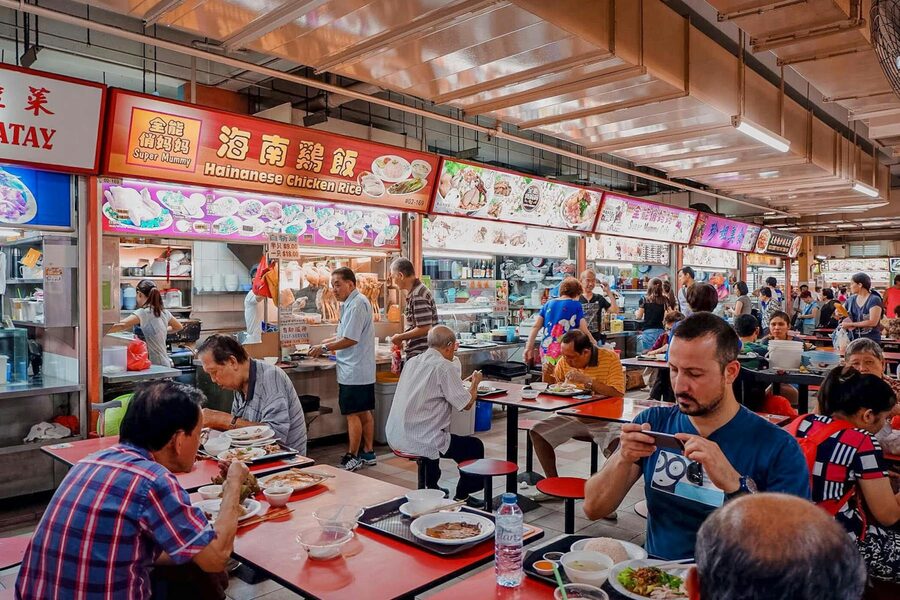
One specific advice: grab a table before queuing. Tissue packets reserve seats (a Singaporean convention called chope, widely respected). Drop a pack of tissues on an empty seat and the stool is yours for the duration. You’ll see locals doing it everywhere. For a broader picture of Singapore’s Chinese food lineage, which largely traces back to the same regional traditions I’ve written about in my must-try food in China guide, the hawker centre is basically a greatest-hits compilation of Hokkien, Teochew, and Hainanese cooking that came over with 19th-century immigration.
1:00 pm, Clarke Quay walk and the Singapore River
From Maxwell, walk north through the Central Business District (South Bridge Road → Hill Street → across the river). This is the 10-minute walk that lets you see the CBD, the banking towers, the old colonial buildings, the strange contrast of 1930s cricket club architecture next to 2020s glass. Don’t stop. Just walk.
When you hit the Singapore River, turn right and follow the embankment east through the Boat Quay and Clarke Quay districts. These are restored warehouse zones, now mostly restaurants and bars, which during the day are deceptively quiet and during the evening get lively. The walk itself is 25 minutes at a slow pace. Keep the river on your left. If the humidity is getting to you, the Asian Civilisations Museum along the walk is air-conditioned and genuinely excellent (S$15, allow 90 minutes if you want to properly do it). This is the “Indoor during heat” option, worth consideration if the sun is hammering.
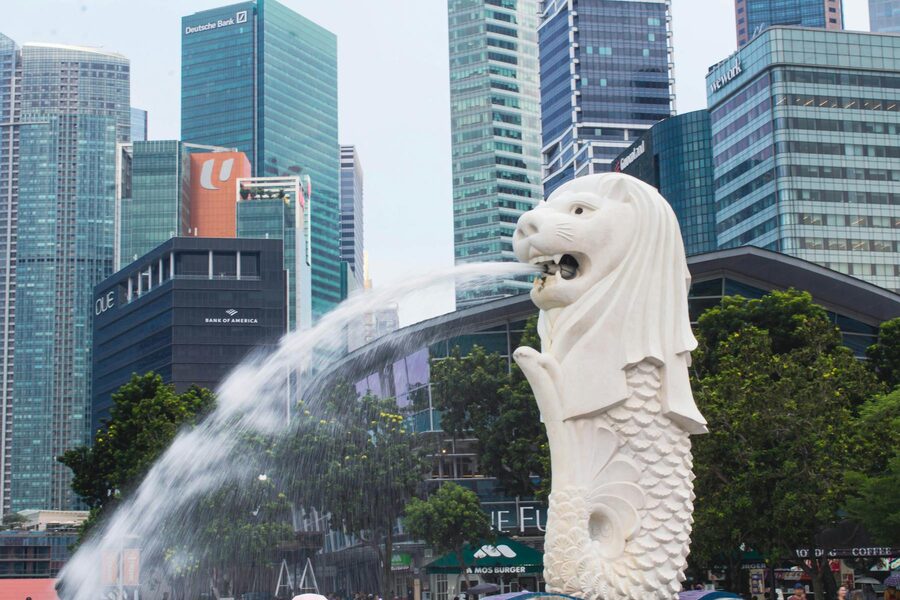
The river runs out at Marina Bay, that’s the wide circular bay with the Marina Bay Sands hotel on the far side. Before you cross the bridge to Marina Bay proper, the Merlion statue is on your right at Merlion Park, and you’re going to want a photo. The Merlion itself is a made-up symbol, invented by the Singapore Tourism Board in 1964, based on a legend cooked up to give the city-state a recognisable mascot, but it’s become genuinely iconic, and the photo-op line moves fast. Five minutes, then cross the Jubilee Bridge onto the Marina Bay Sands side.
2:30 pm, Marina Bay Sands and the ArtScience Museum
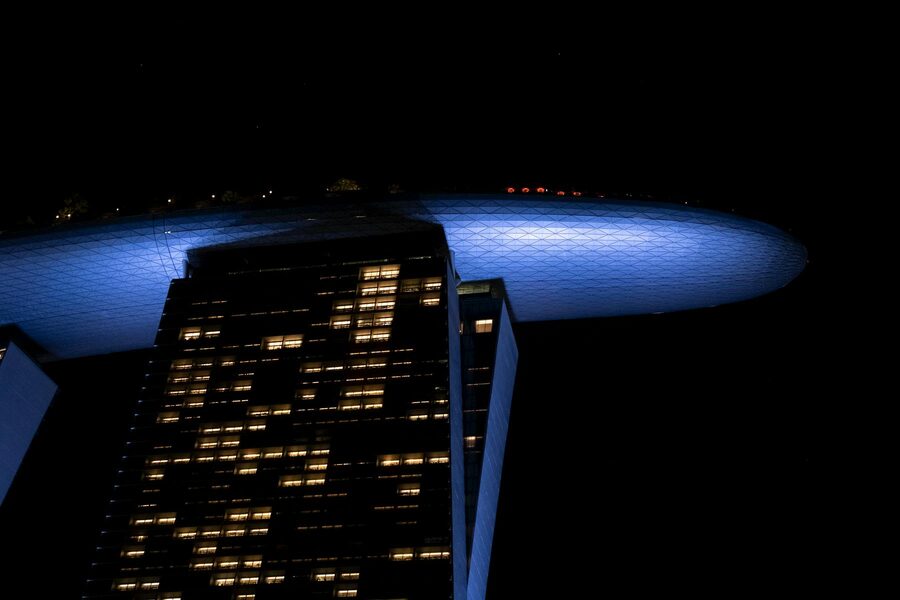
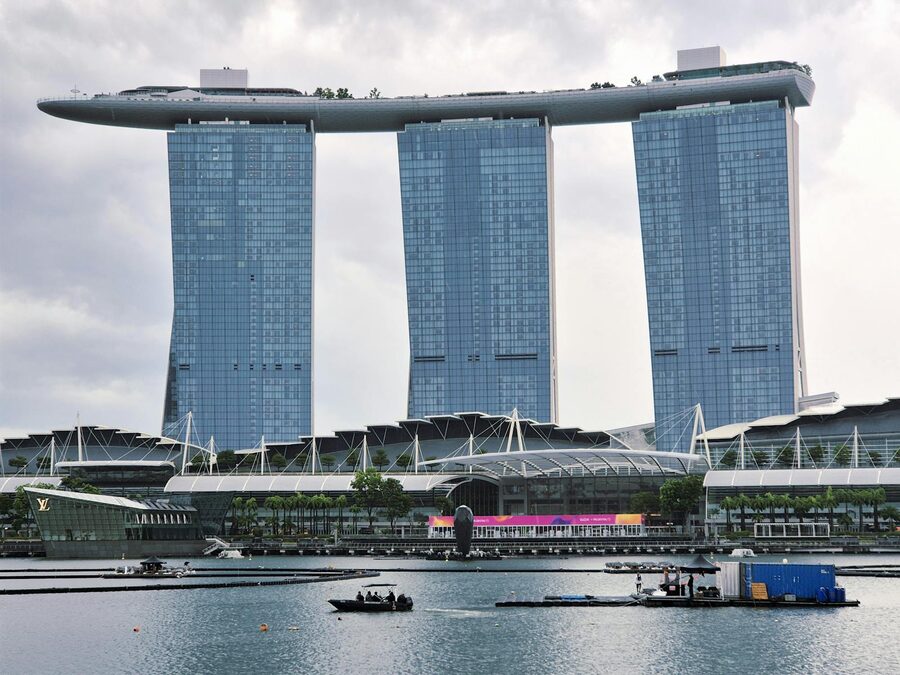
Marina Bay itself is the newest part of central Singapore, most of what you see here was built on reclaimed land in the 2000s. The Sands hotel is the obvious landmark; the three towers support a SkyPark on top, which includes the famous infinity pool (hotel guests only, no exceptions, don’t try) and a paying observation deck (S$32, genuinely not worth it unless you’re architecture-obsessed). The better move is not to go up the Sands but to look at it, from the opposite side of the bay, at any hour after sunset.
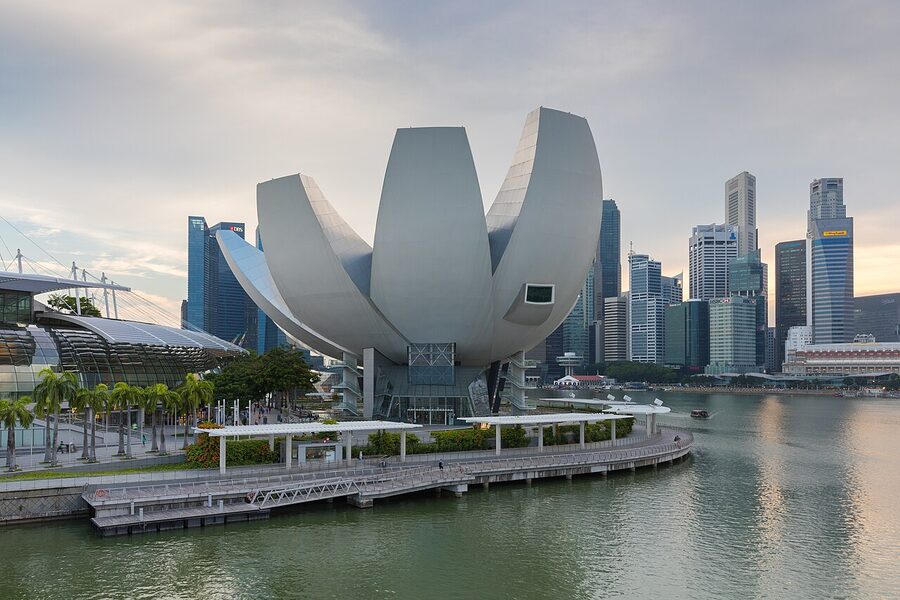

What you should do at Marina Bay Sands is the ArtScience Museum, the lotus-flower-shaped building adjacent. The permanent TeamLab “Future World” exhibit runs here and it’s a full-room digital art installation of the kind that’s gone viral on Instagram many times over. It’s S$19, takes 60–90 minutes, and is properly engaging, dark rooms with projections that respond to your movement, the kind of thing you can’t easily describe but end up remembering years later. On this one-day itinerary, I’d do this between 3 and 4pm, when the afternoon heat outside is at peak and the air conditioning is doing you an actual favour.
When you come out, you’ve got two options for the next 90 minutes: the Shoppes mall (a vast luxury retail complex inside the Sands base, skip unless you’re genuinely shopping), or a walk around the bay toward Gardens by the Bay, which is the right move.
4:30 pm, Gardens by the Bay and the Supertrees
From Marina Bay Sands, walk across the rooftop connector (it’s signed) to Gardens by the Bay, the 101-hectare park on the south-east side of the bay. This is what you really came to Singapore for, an urban-biome project on reclaimed land that’s simultaneously a public park, a botanical showcase, and a proof-of-concept for tropical sustainable urbanism. It opened in 2012. It’s the cleverest thing Singapore has built in the last twenty years.
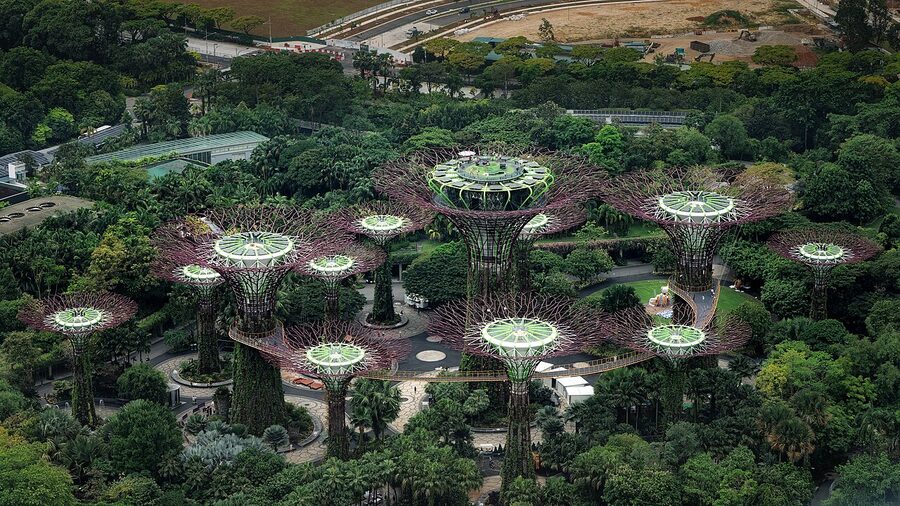
The headline feature is the Supertree Grove, eighteen vertical garden structures, 25–50m tall, wrapped in tropical plants and wired up with LEDs. They do a light show every evening at 7:45 and 8:45, free to watch from the ground. If you’ve got the budget, pay the S$12 for the OCBC Skywalk, a 128-metre walkway between two of the supertrees that opens from 9am to 9pm, go up in daylight if possible, since the view is the point.
The two conservatories, Flower Dome and Cloud Forest, are climate-controlled biomes under two enormous glass shells. One is a cool-dry Mediterranean environment; the other is a cool-wet tropical mountain with a 35-metre indoor waterfall. Combined ticket S$32; I’d pick Cloud Forest if you’re only doing one, for the indoor waterfall alone.
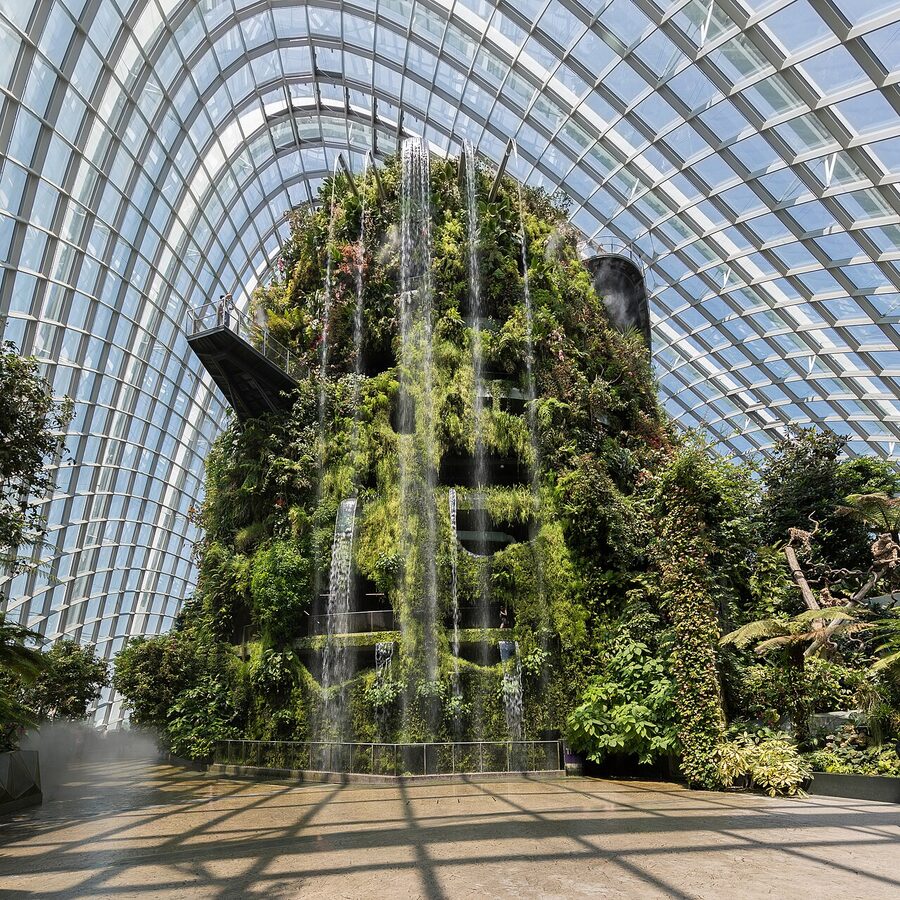

Plan to be done with the conservatories by 6pm, out in the grove for sunset, and finding a dinner spot as the Supertrees start their first light show at 7:45.
7:30 pm, Dinner and the Marina Bay light show
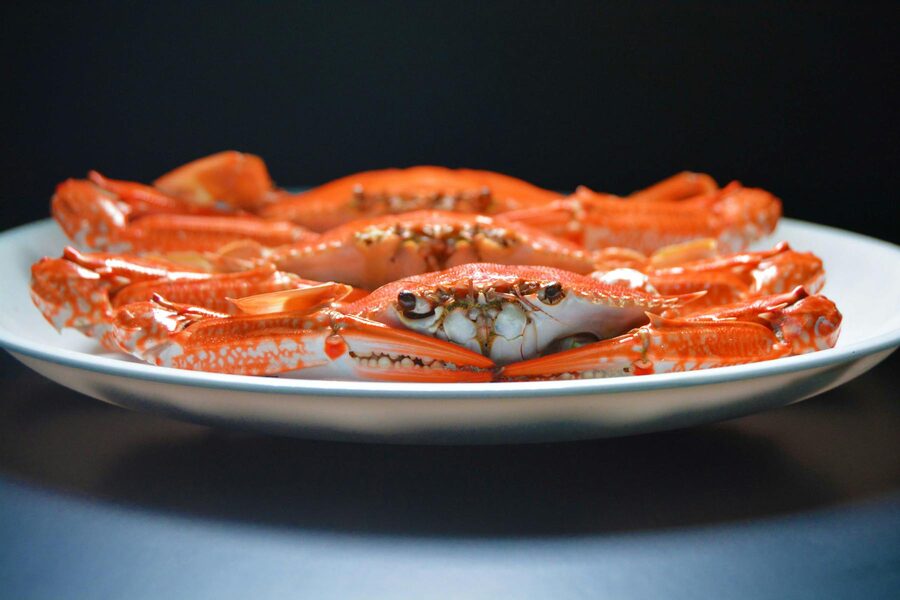
For dinner, the move is satay by the bay, a row of hawker stalls run by Gardens by the Bay themselves, on the eastern edge of the park facing the water. Proper hawker-level pricing, outdoor seating on a wooden deck, and the Supertree Grove visible in the middle distance. Order chilli crab (or black pepper crab if you prefer, both are national dishes), Hokkien mee, carrot cake (the Singaporean one, a stir-fried radish pancake, nothing to do with the British dessert), and a Tiger beer. Around S$40–60 a head; the crab is the expensive item.
Alternative: if satay by the bay is too busy (Saturday nights are chaos), head back across the bridge to Lau Pa Sat, the Victorian-era cast-iron market hall in the CBD, which at night turns into an enormous hawker centre with a street-food satay section out back (Boon Tat Street closes to traffic after 7pm and fills with charcoal grills). The chicken satay there is its own destination; budget S$15–25 a head for a decent meal.
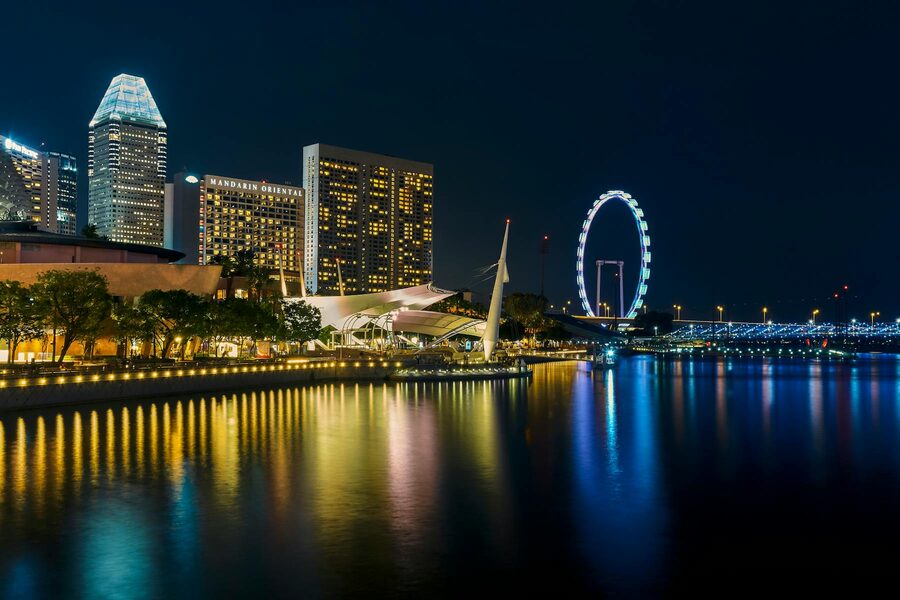
After dinner, the Spectra light show at Marina Bay happens at 8pm and 9pm every evening (with an extra 10pm show on weekends). It’s a 15-minute music-and-water-jets performance in the bay, visible for free from the boardwalk across from Marina Bay Sands. No ticket. No reserved seats. Just show up at 7:55 and find a spot on the railing. It’s tacky-good in the same way the Sea World fountain in Shenzhen is tacky-good, overengineered public spectacle with enough scale to feel worthwhile.
10:00 pm, One last drink before the airport
If you’ve got time for a nightcap before Changi, make it a rooftop bar. Three to pick from:
Ce La Vi at the top of Marina Bay Sands itself (57th floor, S$25 entry Fri-Sat, absurd cocktails at S$28 a pop but you’re paying for the view, the only legal way for non-hotel-guests to get on top of the Sands). 1-Altitude across the bay in Raffles Place, cheaper entry, similar skyline view, less cinematic. Smoke & Mirrors on top of the National Gallery Singapore, highbrow cocktail programme, serves serious drinks to serious drinkers, this is the move if you care about what’s in your glass more than what’s across the water. All three are 20 minutes from Changi by taxi (S$25–35 depending on the hour; allow extra during the midnight rush).
From any of these, an 11:30pm taxi gets you to Changi by midnight. The MRT also runs until roughly 11:30pm if you’re watching the budget; allow 40 minutes from any central station to the airport.
Practicalities, money, SIM, heat
Currency. The Singapore dollar (S$ or SGD), roughly 1.35 SGD to the US dollar at time of writing. Cards work everywhere including hawker stalls (Maxwell has gone cashless-friendly across most stalls as of 2024), but cash is still useful for smaller vendors. ATMs at Changi dispense SGD directly from most international cards. Taxis take cards; Grab (the local Uber equivalent) is easier and pre-sets the fare.
Transport. The MRT is the cheapest and fastest option; buy a tourist pass for S$10 (1-day unlimited), S$16 (2-day), or S$20 (3-day) at any MRT station, or just tap your contactless bank card at the gates, the automatic fare system works for most international cards in 2025. Single journeys are S$1.50–2.50.
Heat. Singapore sits almost exactly on the equator. The temperature is 28–33°C year-round with 80–90% humidity, and “I’ll just walk a bit further” is a phrase that makes less sense here than almost anywhere. Build air-conditioning stops into your itinerary (the Asian Civilisations Museum, the ArtScience Museum, the conservatories, any hawker centre with ceiling fans, not strictly air-conditioned but vastly better than the street). Carry water. Come back every 90 minutes to somewhere cooler.
Weather window. The two Singapore-specific weather issues are the occasional haze (the burning-season smog from palm-oil fires in Indonesia and Malaysia, worst in September–October, air quality drops noticeably) and the afternoon thunderstorms (frequent in November–January, typically 45 minutes of tropical downpour that shuts down outdoor activity). Check the forecast, carry a compact umbrella, and have a museum in your back pocket for any afternoon the sky opens up.
What I’d do differently if I had two days
If you have a full second day, spend it in the districts that don’t fit into the compact central loop. Little India (Serangoon Road, Tekka Market) is the sensory opposite of the CBD, loud, saffron-yellow, deeply human, and with some of the best south Indian food in Southeast Asia outside of actual south India. Kampong Glam (the Arab Quarter around Haji Lane and the Sultan Mosque) has the textile and perfume shops, hipster coffee, and Middle Eastern food that round out the ethnic-district trinity. Tiong Bahru, west of Chinatown, is the 1930s social-housing estate that became the city’s quiet creative neighbourhood, independent bookshops, brunch spots, a Sunday morning market. And Pulau Ubin, a small offshore island 15 minutes by bumboat from Changi Village, is the one place in Singapore that still feels like the country looked before the skyline showed up, take a mountain bike, pack a lunch, lose a morning.
And if you have three days, the third should be spent getting out of the city entirely. The ferry to Batam (Indonesia) or the crossing to Johor Bahru (Malaysia) are both useful day trips that put Singapore in perspective. For longer context on south China as another base to spin off similar trips from, see my Shenzhen city guide, Singapore works particularly well in combination with a Shenzhen or Hong Kong stop on the same trip, since the three cities sit on roughly the same longitude and the cheapest flights between them run all week. If you’ve got a longer Asia run, consider stitching Singapore into a loop that includes Yangshuo’s karst country for the rural-China contrast.
Final note
Singapore delivers its highlights efficiently: an evening at Maxwell, a walk through Gardens by the Bay at dusk, a rooftop drink above Marina Bay, and a taxi to Changi that gets you there without fuss. It’s one of the few Asian cities where a single day actually works as a trip. Come, spend the day, eat the crab, watch the light show, fly onward.