
Japan’s Hardest-to-Eat Foods: A Ranked Guide
What’s the single hardest thing I’ve eaten in Japan? Not fugu. Not the cold cup of raw horse with ginger that my friend in Kumamoto ordered for the table. It was a tiny, wrinkled, dark-red umeboshi at breakfast in a ryokan in Yamanashi, eaten on an empty stomach at 7am, that made my whole face collapse inward like a pulled drawstring. I was 28 and I still think about it. The lesson I took away: “hardness” in Japanese food has very little to do with whether it’s safe, or rare, or expensive. It has to do with the small, private decision at the table, do I put that thing in my mouth or not?
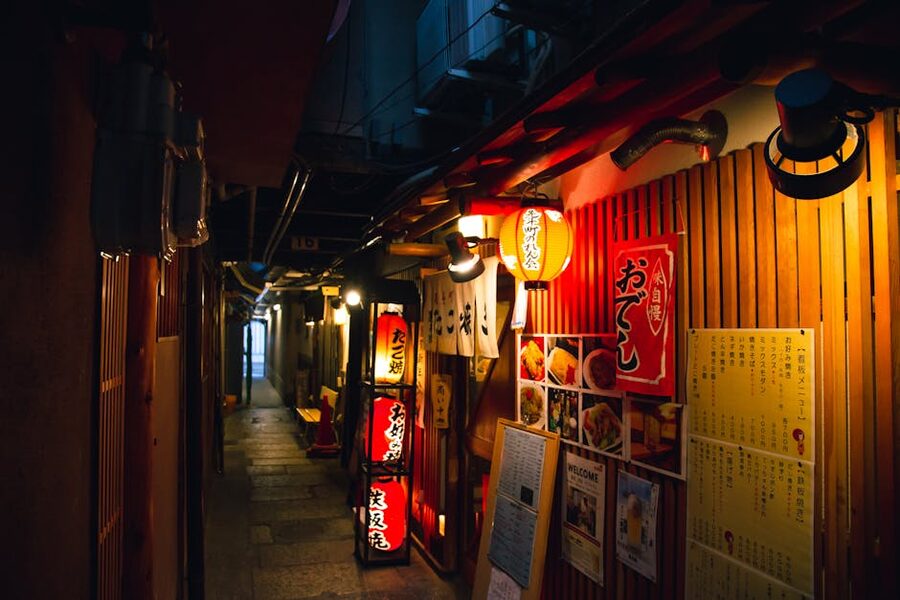
So I put together a list. Fifteen dishes that visitors to Japan tend to flinch at, ranked roughly from “surprisingly fine, just order it” at the top to “genuinely difficult and I wouldn’t push you” at the bottom. For each one I’ve tried to answer four questions, why it’s hard, when in your trip to try it, where to find it and should you actually bother. I have eaten all 15. Some I happily order again. A few I don’t.
One note before we start. Nothing on this list is a dare. These are foods people in Japan eat every week, some of them every day. Treat them that way. If you walk into a Kumamoto basashi restaurant smirking about “raw horse meat, bro”, you will deserve the cold service you get. The point of eating this stuff is not to have a funny story for the plane home. It’s to be in the country you came all that way to see.
In This Article
- 1. Umeboshi, 梅干し, the pickled plum
- 2. Iwagaki, 岩牡蠣, the giant raw oyster
- 3. Ika sōmen, いかそうめん, raw squid sliced like noodles
- 4. Fugu, ふぐ, the pufferfish with a reputation
- 5. Ankimo, あん肝, the foie gras of the sea
- 6. Sazae no tsuboyaki, サザエのつぼ焼き, grilled turban shell
- 7. Basashi, 馬刺し, raw horse
- 8. Inago no tsukudani, いなごの佃煮, grasshoppers in soy and sugar
- 9. Hachinoko, 蜂の子, bee and wasp larvae
- 10. Shirako, 白子, cod milt
- 11. Odori ebi, 踊り海老, the “dancing” shrimp
- 12. Shiokara, 塩辛, fermented squid in its own guts
- 13. Natto, 納豆, the stringy fermented soybean
- 14. Kujira, 鯨, whale meat
- 15. Kusaya, くさや, the smell
- The ranking explained, briefly
- A few practical notes
- One last thing
1. Umeboshi, 梅干し, the pickled plum
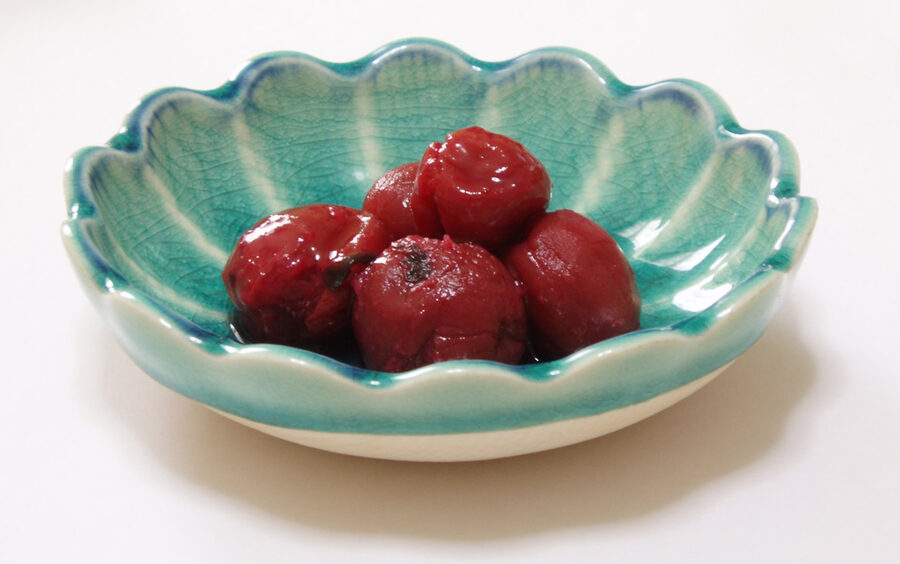
Why it’s hard: it is, hand on heart, the most aggressively sour thing you will ever put in your mouth. A proper umeboshi (pickled with salt and red shiso, sometimes aged for years) is about 20% salt and tastes like someone has put a lemon through a printing press and then pressed it back into a plum. Your cheeks cave in. You make a face. The Japanese have a word for that face, suppai-kao“sour face”, and half the fun of serving one to a visitor is watching it arrive.
When: your first morning in a ryokan. It will appear, tiny and perfect, in the corner of the breakfast tray. The move is to eat a small mouthful of plain white rice, put a quarter of the umeboshi on top, and eat them together. Never alone. A whole umeboshi eaten on its own with nothing to cushion it is what they give prisoners in manga.
Where: every ryokan breakfast in the country. Convenience stores sell them in resealable tubs from around ¥300. The high-end ones at department store basements in Tokyo or Osaka run ¥2,000 for six plums and taste properly of plum, not just salt.
Should you bother: yes. It’s the easiest “weird” food on this list and the one that most rewards a second try. The umeboshi ranks at #1 because by lunchtime on day two you’ll be putting them in your onigiri like everyone else.
2. Iwagaki, 岩牡蠣, the giant raw oyster
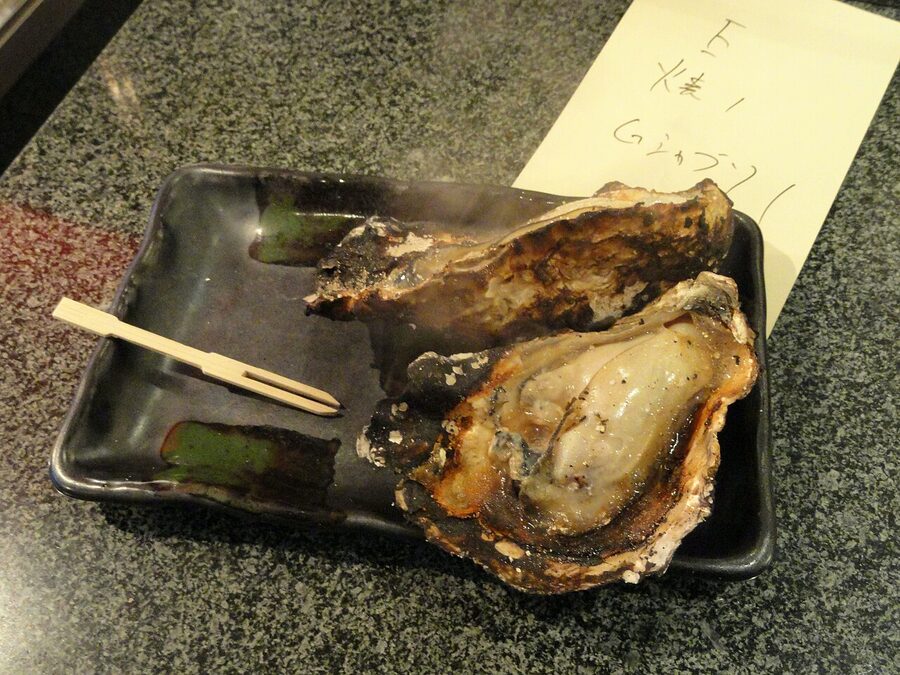
Why it’s hard: it’s big. A single iwagaki (the summer rock oyster, distinct from the more common winter kaki) can be larger than your palm, and when you tilt the shell into your mouth a proper one fills it entirely. People who are fine with a small oyster from a Paris counter often freeze at the size of an Ishinomaki iwagaki. Texture is also a thing, dense, almost custardy flesh, nothing like the thin slip of a Kumamoto or a Beausoleil.
When: summer, June to September. In winter, switch to kaki, the smaller Hiroshima farmed oyster, which is better cooked than raw anyway. Grilled Hiroshima oysters at a dockside stall in Miyajima are one of the best ¥500-a-piece snacks in the country.
Where: Ishinomaki in Tohoku is the iwagaki capital, the oysters are still recovering from the 2011 tsunami and tasting better each year. Ishikawa prefecture (Noto peninsula) and Akita also. In Hiroshima the season flips: winter kaki by the boat-load, grilled on the street near Miyajima ferry. Tokyo’s oyster bars all stock iwagaki from June, but expect ¥1,200-¥1,800 per oyster.
Should you bother: yes, with one caveat, if you don’t already enjoy raw oysters at home, this is not the one to start on. The sheer volume is the issue, not the rawness. Order grilled if you’re nervous. A grilled Hiroshima kaki with a squeeze of lemon at 4pm on the Miyajima waterfront is hard to beat.
3. Ika sōmen, いかそうめん, raw squid sliced like noodles
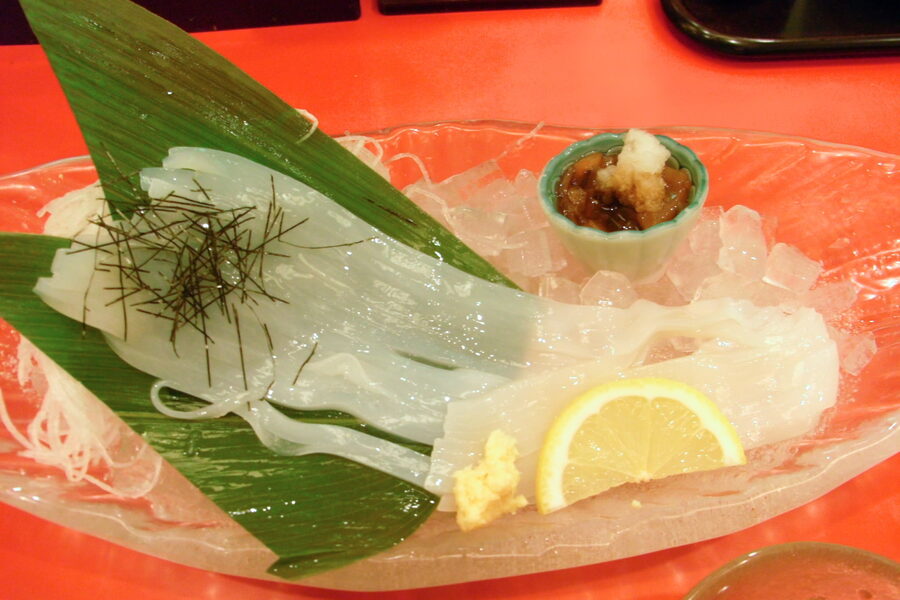
Why it’s hard: it looks wrong to a western eye. Raw translucent squid, shredded into noodles on a bed of ice, often served with a raw quail yolk to dip. Nothing about it says “food you eat with chopsticks”. The texture, once you commit, is slippery-sweet with a faint crunch, and the raw yolk binds everything into something much more interesting than either ingredient alone.
When: day 3 or 4 in Hokkaido, after you’ve had a few more standard sashimi meals and your brain has stopped flagging “raw” as a warning. Morning is actually best. The ika-somen counters at Hakodate’s morning market (Asaichi) open at 5am and sell out by 10.
Where: Hakodate is the spiritual home, the squid come in from the straits at night and hit the counters by 4am. Otaru Canal has three or four ika-somen specialists that are equally good. Most Tokyo izakaya stock it too but the lag takes something off; in Hokkaido you can almost watch the animal change hands. The izakaya guide has more on how to order raw seafood at a counter without getting the tourist version.
Should you bother: yes. It’s the best single dish for curing a western fear of raw things, because the slicing is so delicate and the dressing so active that you spend most of the meal thinking about the sauce, not the squid. ¥1,200, ¥2,000 at a Hokkaido counter, double that in Tokyo.
4. Fugu, ふぐ, the pufferfish with a reputation
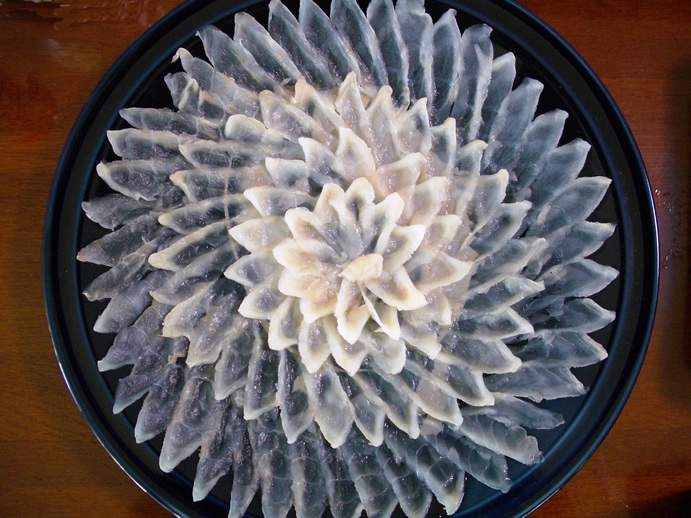
Why it’s hard: reputation, mostly. Fugu liver and certain organs contain tetrodotoxin, which has killed people (usually home amateurs, not restaurant diners). Every chef serving fugu in Japan has a separate three-year licence just for this fish; the industry has essentially zero restaurant fatalities over the past two decades. The actual taste? Mild, clean, firm. Less “dangerous thrill” than “why did this cost so much”.
When: winter is peak season (October to March). The flesh is at its best and the whole fugu-course tradition (sashimi, karaage, hot-pot, final rice porridge made from the cooking broth) runs about ¥12,000-¥25,000 for a proper course. Summer fugu exists but is thinner and less special.
Where: Shimonoseki, at the tip of Honshu, is the capital, it handles about 80% of the national fugu trade, and the Karato market there is where local chefs go to bid at 3am. The city even has a sculpture of a fugu outside the station. Tokyo high-end (Ginza, Shibuya basements) serves beautiful fugu at Tokyo prices. Osaka cooks a much heartier tessa version at Dotonbori and Sennichimae, see the Osaka street food guide for where the actual locals go rather than the plastic-sign tourist shops.
Should you bother: once, yes. Fugu isn’t worth a pilgrimage for taste alone, it’s not a dish people crave. But a proper winter course in Shimonoseki, with the final porridge, is genuinely special and you understand why Japan built a whole infrastructure around a slightly dangerous fish.
5. Ankimo, あん肝, the foie gras of the sea
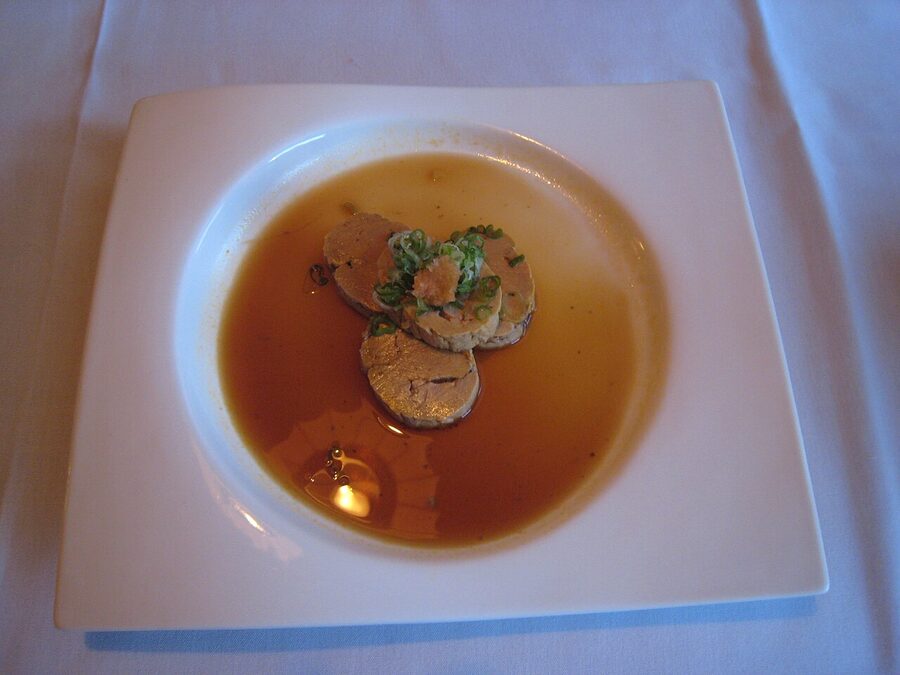
Why it’s hard: it’s liver. The “of the sea” nickname is accurate, the texture really is creamy-dense like a very refined pâté, but the flavour has a clear mineral, almost metallic undertone that is pure organ meat. If you don’t like liver in general, you won’t like ankimo. If you do, it’s one of the great Japanese winter luxuries.
When: winter only. The monkfish is at its fattest from November to February and the liver is almost never served outside that season. Ankimo in April is either frozen or bad.
Where: Tokyo’s Tsukiji outer market (the Toyosu wholesale market moved in 2018 but the outer stall area around Tsukiji still runs) has counters that serve ankimo for around ¥1,500 as a single course with rice. Upscale sushi restaurants in Ginza include it in the winter omakase without fuss. For the fuller context of what else is worth eating around Tsukiji, see the Tokyo food neighbourhoods guide.
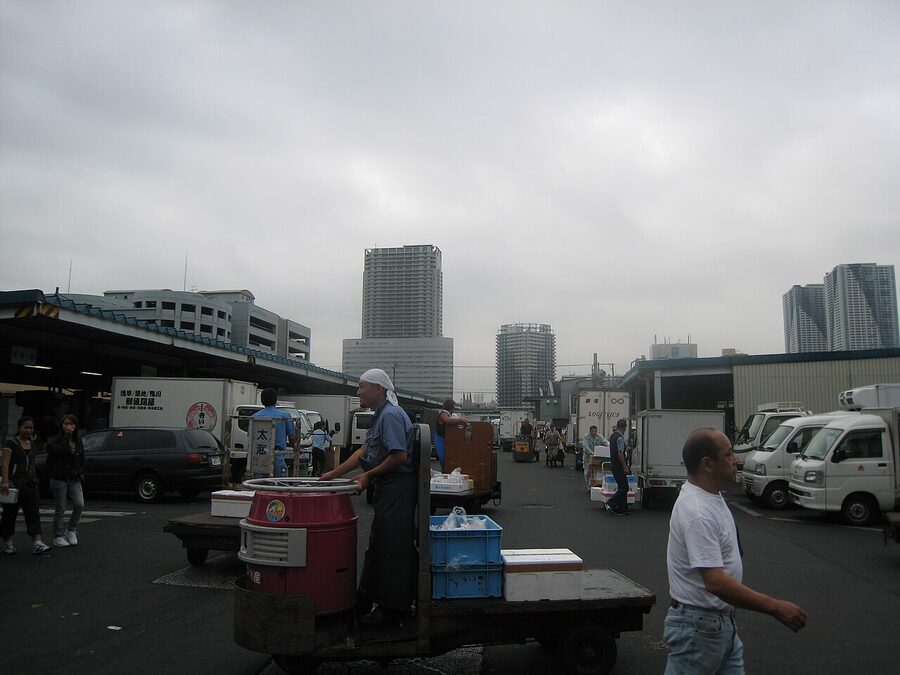
Should you bother: yes if you like liver at home. Skip if you don’t. Ankimo is not going to convert you to offal. But if you’re already in, a winter plate with ponzu and grated daikon is one of those small perfect things.
6. Sazae no tsuboyaki, サザエのつぼ焼き, grilled turban shell
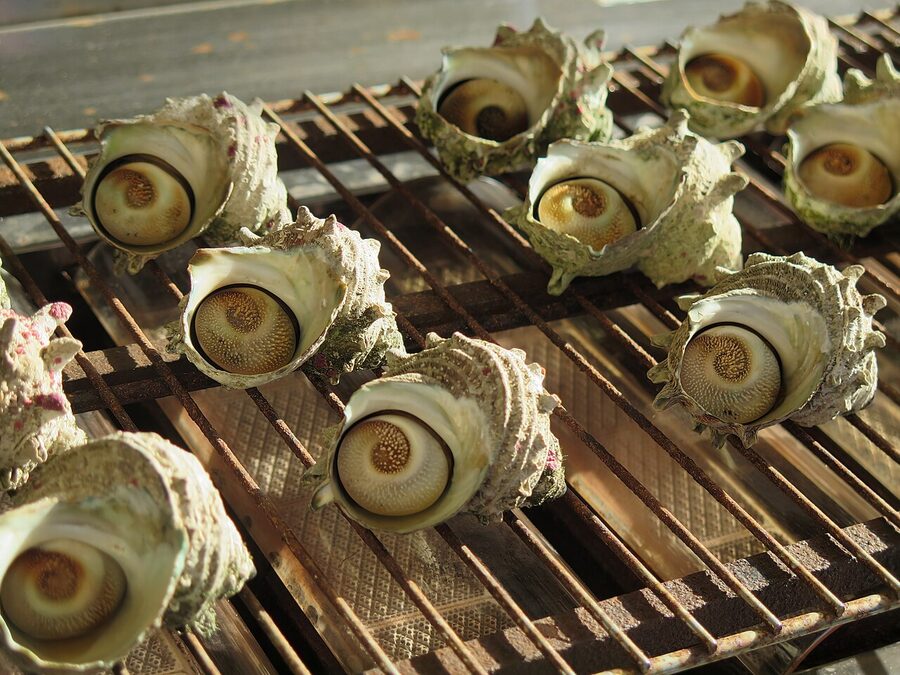
Why it’s hard: it’s a sea snail. A big one, horned, alien-looking. Grilled in its shell with a splash of soy and sake, the flesh comes out as a long spiral. Most of it is firm and chewy and tastes like concentrated sea; the last inch near the tail is the dark-green liver and it is, objectively, bitter. That’s where the tourists tap out.
When: any time of year, at a coastal fish stall. It pairs best with a cold beer at 3pm after a morning on a train.
Where: any seaside fishing port with a fish-grill stall, Enoshima in Kanagawa, the Izu peninsula, the Noto peninsula, Miyajima in Hiroshima. Around ¥800-¥1,200 per shell. Kuromon Ichiba in Osaka has a couple of stalls selling them all day; the one near the south entrance has the better grill. The Osaka street food guide marks which Kuromon stalls actually cook it fresh versus reheat a display one.
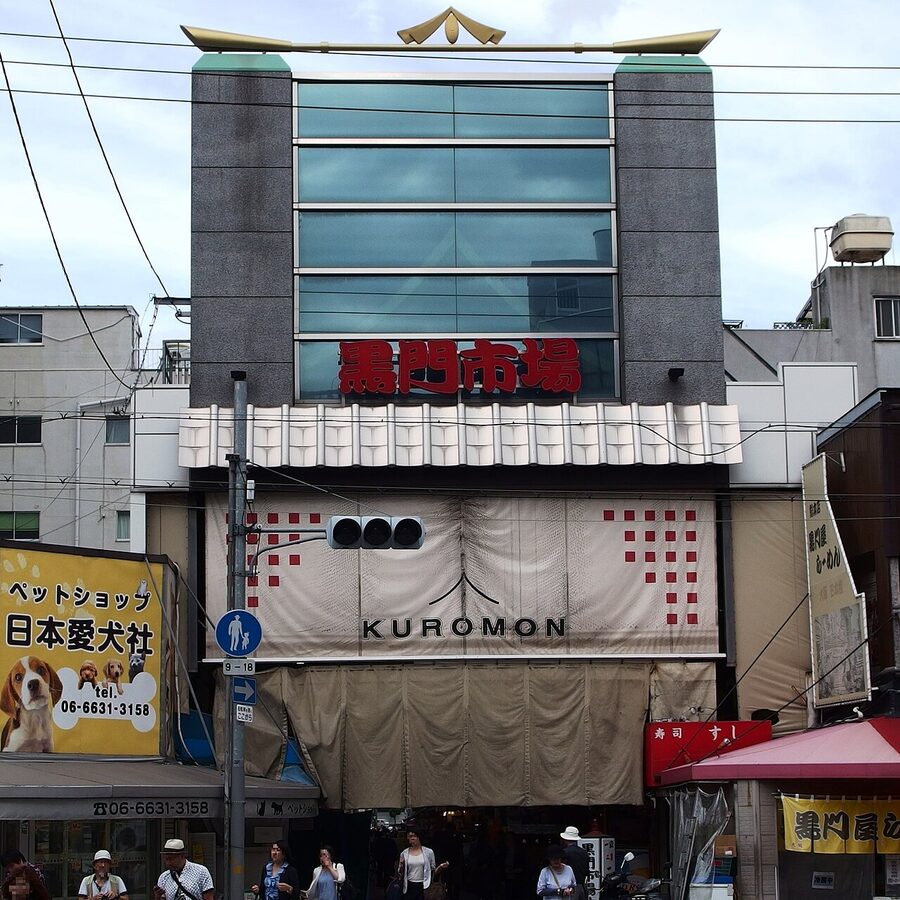
Should you bother: yes, and eat the green part. If you eat only the white flesh you’re getting the same flavour as any whelk or conch. The green liver is what makes it specifically sazae, briny, bitter, a tiny bit funky, and the whole point.
7. Basashi, 馬刺し, raw horse
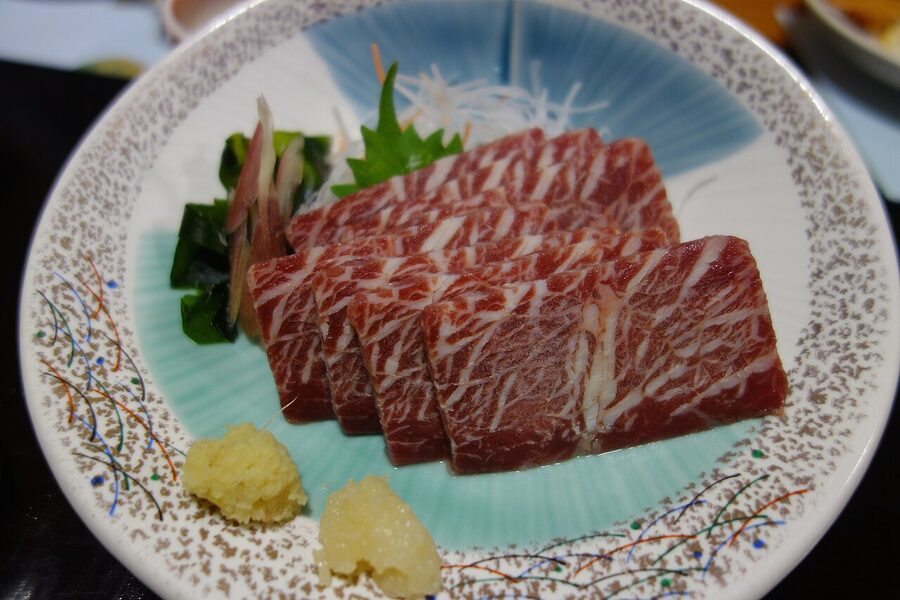
Why it’s hard: cultural, not technical. The horse is a pet in a lot of the world; eating one raw, thinly sliced, with ginger, is a jolt. Texturally it’s closer to very good raw tuna than to beef, soft, delicate, almost sweet. The garlic and ginger are the whole point; without them it would be flatter than it is.
When: any time, but the dish is more common in winter. A cold bottle of local shochu is the standard pairing.
Where: Kumamoto is the unquestioned capital. Basashi restaurants cluster around Shimotori arcade and the Sakuranobaba area; the “Suganoya” chain (six branches in Kumamoto city) is the reliable starting point, ¥1,800-¥2,500 for a proper sashimi plate. Nagano has its own horse-eating tradition and serves a slightly chewier, more iron-tasting version. Takayama and the broader Hida region occasionally have it; if you’re based there, see the Takayama food and drink guide for where the Hida sannomachi places stock it. Tokyo izakaya in the Yakuza-movie-looking streets of Gotanda and Shimbashi have it too, a few grades less fresh.
Should you bother: yes, if the concept doesn’t actively upset you. Declining is completely fine and no local will argue with you. If you do order it, order the ginger-garlic version (the classic Kumamoto serve), not the sesame-oil modern one, which flattens the flavour into something that could be any meat at all.
8. Inago no tsukudani, いなごの佃煮, grasshoppers in soy and sugar
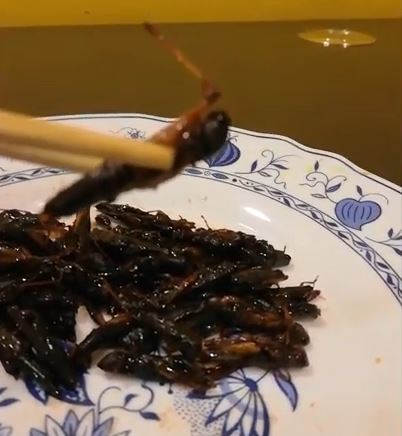
Why it’s hard: they have faces. And legs. Tsukudani is a preservation method, sweet soy, long simmer, that softens the legs and makes the whole insect easier to eat, but you can still see what you’re eating, and that matters more than any flavour question. Once it’s in your mouth, it’s crunchy on the outside, mealy-nutty inside, quite sweet. Closer to a sweet fried seed than anything recognisably “insect”.
When: autumn, when the rice harvest brings the grasshoppers out. The inland Japan-Alps prefectures (Nagano, Yamagata, a bit of Gifu) sell them in supermarkets and souvenir shops from October.
Where: Nagano is the heartland. The Nishiki Market in Kyoto sometimes stocks them as a tourist curiosity. In Nagano proper, Zenko-ji Nakamise and the Matsumoto-jo area have shops that sell them in small vacuum packs from ¥400. Don’t buy the huge 200g pouch unless you’re really committed, a half-pack per person is more than enough.
Should you bother: once. The novelty is half the point, and the flavour is actually not bad, it’s the visual that everyone finds hard. Try three, confirm you’ve done it, move on to the nozawana pickles.
9. Hachinoko, 蜂の子, bee and wasp larvae
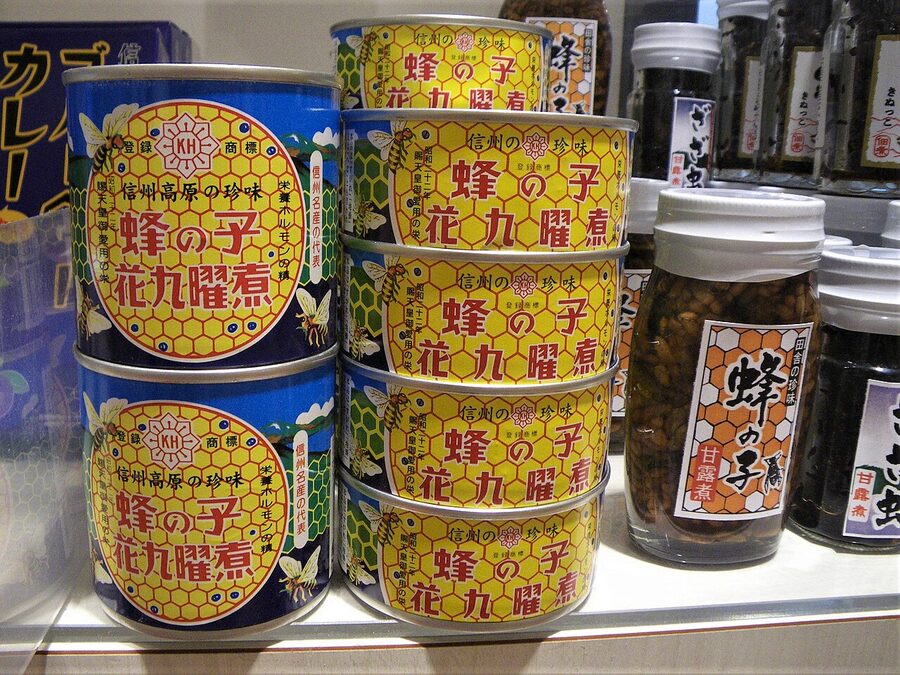
Why it’s hard: the idea is worse than the reality. Bee and wasp larvae simmered in sweet soy come out looking like pale peanuts, a little plumper, and taste, genuinely, sweet, nutty, faintly like browned butter. The hard part is knowing what you’re eating. This one goes past even the grasshoppers for me; I can look at an inago, but a hachinoko sitting in a spoonful of rice takes a second to push forward.
When: traditionally autumn, when the wasp colonies are at full size. In modern Japan the jars are on shelves year-round.
Where: Nagano again, the mountain prefectures have the strongest bug-eating tradition, which survived because meat was scarce in the pre-refrigeration era. Gifu has a small scene too, and the Hida region around Takayama has hachinoko occasionally on ryokan evening menus. The Takayama food guide covers which of the old-town restaurants serve it without fanfare.
Should you bother: only if you’re already in Nagano or Gifu. This is not a dish to plan a trip around. But at a ryokan dinner when it appears as a small ceramic bowl, eat two and acknowledge the work of the mountain food tradition that kept these villages fed for a thousand winters.
10. Shirako, 白子, cod milt
Why it’s hard: it’s fish sperm sac. That’s what the word means. Even in translation the concept doesn’t soften much. The texture is custard-like, almost like panna cotta that refuses to set, and the flavour is faintly sweet and clean, more like a delicate custard than anything you’d associate with an organ. But your brain fights the bite for the first one or two. Mine did.
When: deep winter. Shirako is only in season from late November through February, when cod are at their reproductive peak. Out of season it’s either frozen or not the same fish at all.
Where: Hokkaido is the single best region, Hakodate, Sapporo, Otaru all have counters that do shirako in four or five preparations (raw with ponzu, grilled, tempura, in hot pot). Tokyo izakaya serve it too from December; Shinjuku’s Omoide Yokocho and the Shimbashi arches have standing bars that do a very good grilled shirako for about ¥900. In Kyoto some of the upscale counters do a version with yuba, which is oddly brilliant, see what to eat in Kyoto for the smaller Kyoto specialties that get overlooked behind kaiseki.
Should you bother: yes, and this surprises me every time I say it. Of the “texture” dishes on this list, shirako is the one with the biggest gap between the reality and the idea. The first bite is hard. The second is interesting. By the fourth it’s just a food you like, and you realise the whole war was in your head.
11. Odori ebi, 踊り海老, the “dancing” shrimp
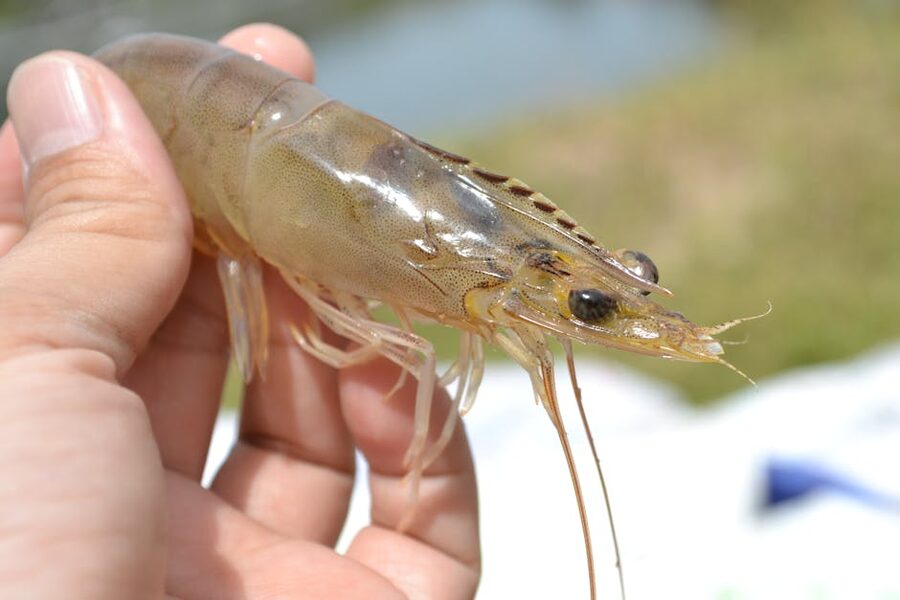
Why it’s hard: the shrimp is alive on the plate. Its body and antennae twitch under the sauce. You eat it alive, with a quick dip in soy, and the nervous system of the animal is literally reacting to you. Some people find it a clean, sweet, rubbery-but-good kuruma shrimp experience. Some people find it awful and do not finish. You won’t know which one you are until the plate arrives.
When: at a high-end sushi counter, usually as one course in an omakase. This is not a street food. The cost is high, ¥2,500-¥4,000 per shrimp, which limits who orders it.
Where: Tokyo Ginza for the most famous version. Osaka’s Dotonbori and Kuromon have a couple of counters that serve it too, quite theatrically. Do not order odori ebi at a cheap conveyor-belt place; the shrimp will not be fresh enough for the gesture to mean anything. If you’re after good Osaka food generally, the Osaka street food guide covers which counters actually do the high-end versions well and which just do the show.
Should you bother: I don’t, anymore. I’ve tried it twice; the second time I felt worse about it than the first, and I now skip the course when it appears on the omakase. Eat the shrimp cooked as tempura at the end, same animal, no theatrics, much nicer flavour. This is the one dish on the list that I think the ethical weight actually tips against.
12. Shiokara, 塩辛, fermented squid in its own guts
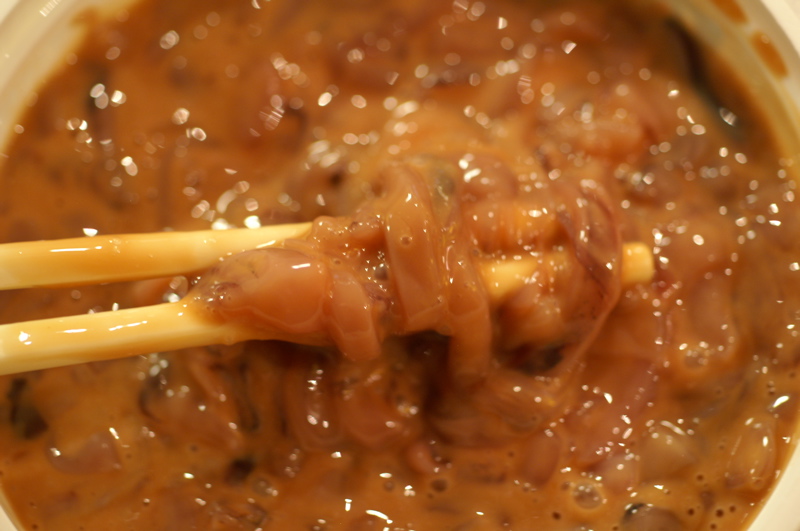
Why it’s hard: it’s squid flesh cured in salt and its own internal organs for several weeks, then served cold. The texture is slippery and chewy at once; the flavour is like anchovy paste amplified, with an underlying bitterness from the guts that catches at the back of your throat. One small bite is fine. A mouthful is too much. A whole bowl, shovelled onto rice, is a level of aggression that surprised me the first time.
When: as a sake side. Shiokara was invented for sake, and sake alone makes it work. With water, beer, or wine it falls apart.
Where: Hokkaido is the best, Otaru has a shop or two that make it daily, but every izakaya from Sapporo to Kagoshima has some. The izakaya guide covers how to ask for the house version rather than the cheap commercial one; the gap in quality is enormous, and the commercial version is what puts most people off for life.
Should you bother: yes, but only at a good izakaya and only with sake. One ¥300 bowl, one warmed cup, take the small bites. This is food that exists to be a minor key between bigger flavours. Don’t approach it as a main event; nothing will be gained.
13. Natto, 納豆, the stringy fermented soybean
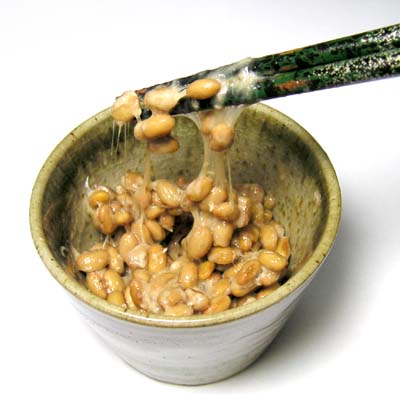
Why it’s hard: the smell, the texture, the stickiness, and the way it coats everything in your mouth so that the next half-hour of your breakfast tastes of natto whether you want it to or not. The smell alone is where most visitors quit, earthy, slightly ammoniac, like a blue cheese that has been ignored for a week. It’s the dish Japanese people most enjoy offering to foreigners specifically to see the reaction.
When: at breakfast in a ryokan or an onsen town. Trying it at an izakaya at night is the wrong room, the wrong mood, and the wrong rice. The breakfast setting is what makes it make sense.
Where: nation-wide, but Mito in Ibaraki prefecture is the spiritual home. Tokyo supermarkets stock a dozen brands from ¥60 per three-pack, and it’s the single cheapest protein in the country. The small-bean Mito style is generally considered the best starting point, gentler smell, smaller bean, stickier thread.
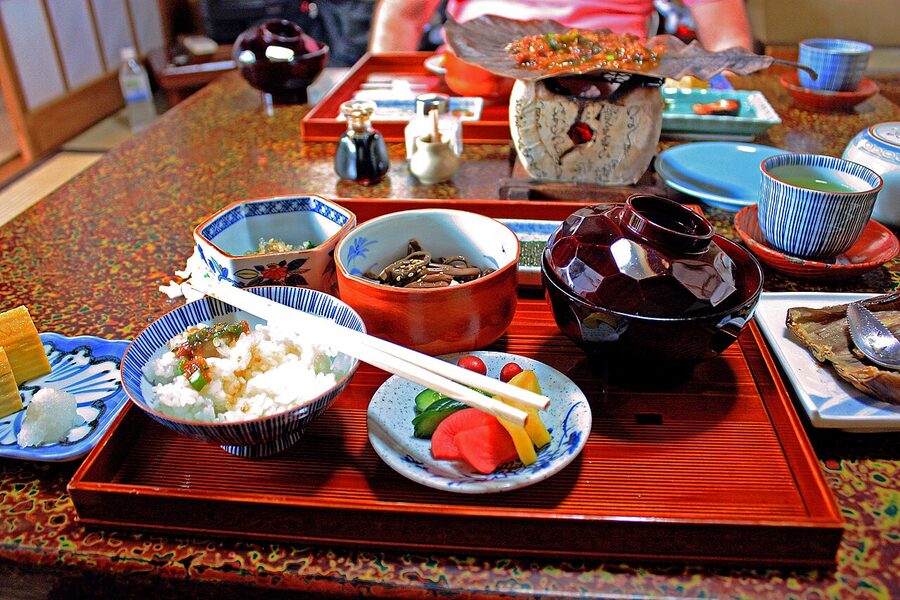
Should you bother: you’ll know within one bite whether this is yours or not. Around half of visitors never get there. I’m at about 60%, I eat it if it’s offered and don’t order it for myself. The one trick that makes the biggest difference: stir it for at least 50 rotations before adding soy. Unstirred natto is grim. Properly stirred, the threads become creamy rather than sticky, and the whole thing is a different experience.
14. Kujira, 鯨, whale meat
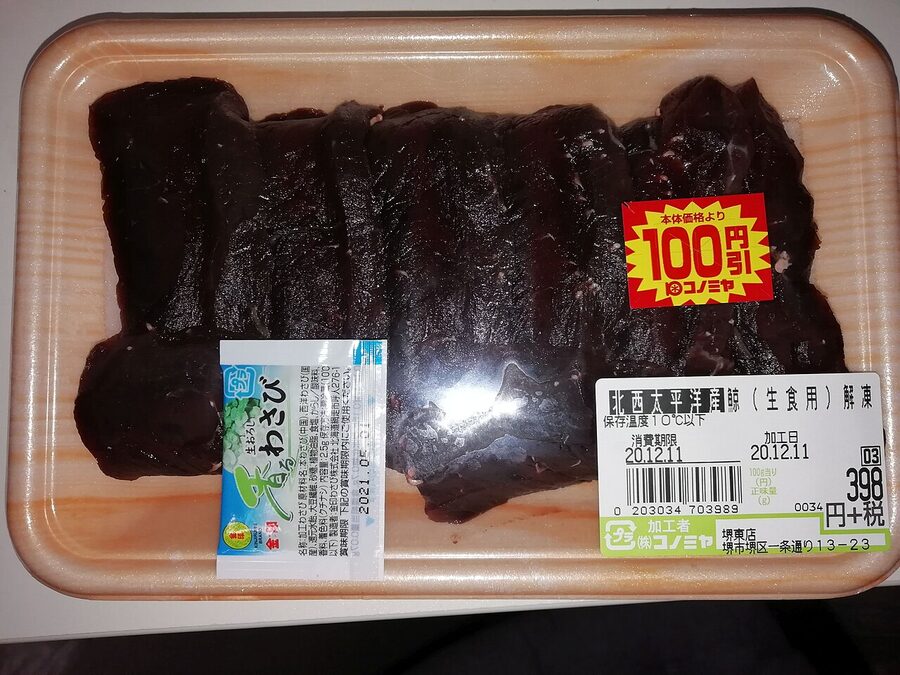
Why it’s hard: the moral weight, not the taste. Japan’s whaling programme, specifically the commercial hunt that resumed in 2019 after it withdrew from the IWC, is a genuine ethical issue, and you should not pretend otherwise. A lot of the whale meat in Japanese restaurants now is from legal, domestic, quota-regulated hunts; some is from imports (Iceland, the Faroes); some is from freezer stock that has been sitting around since the 1980s. If any of that sits uncomfortably with you, don’t order it, and nobody will think less of you for it.
When: if you do order it, winter has the best cuts. Sashimi and the classic “sarashi kujira” (thin-sliced blubber with vinegar miso) are the two most common preparations.
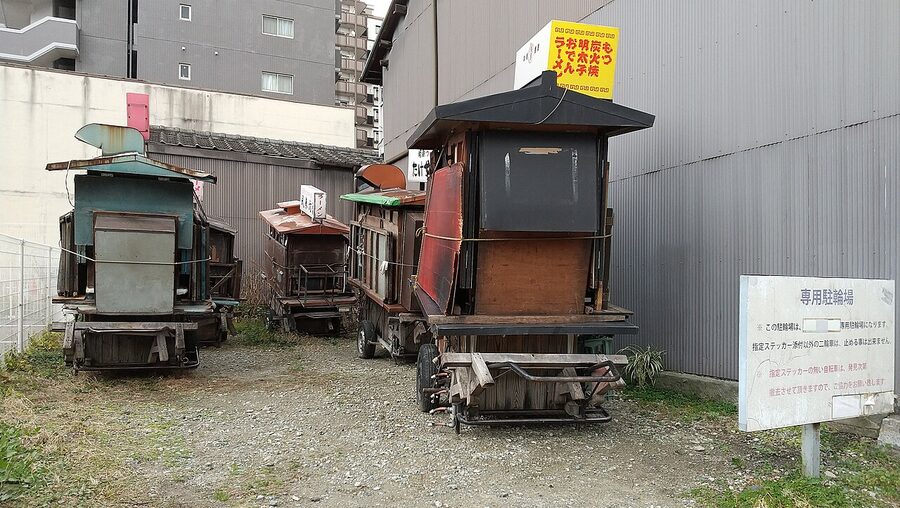
Where: Osaka’s Kuromon Ichiba has a few stalls, though many are tourist-priced and the quality is uneven. The Osaka street food guide covers which end of the market has the better counters. Fukuoka’s yatai scene, see the Fukuoka guide, has whale on a few menus as a reminder of the Kyushu whaling history around Taiji. Tokyo has a dedicated whale restaurant called Kujira-ya in Shibuya that has been there since 1951 and is as close to “old-school” as the dish gets.
Should you bother: I’ve tried it twice and I don’t order it any more. Not because it tastes bad, raw whale is actually pleasant, closer to beef carpaccio than to any fish, but because the ethics don’t add up for me, and the taste is not so extraordinary that it overrides that. Your call is your call. Just make it an informed one. The one thing I would push back on is ordering it for novelty alone; this is not a “fun fact about your trip” food.
15. Kusaya, くさや, the smell
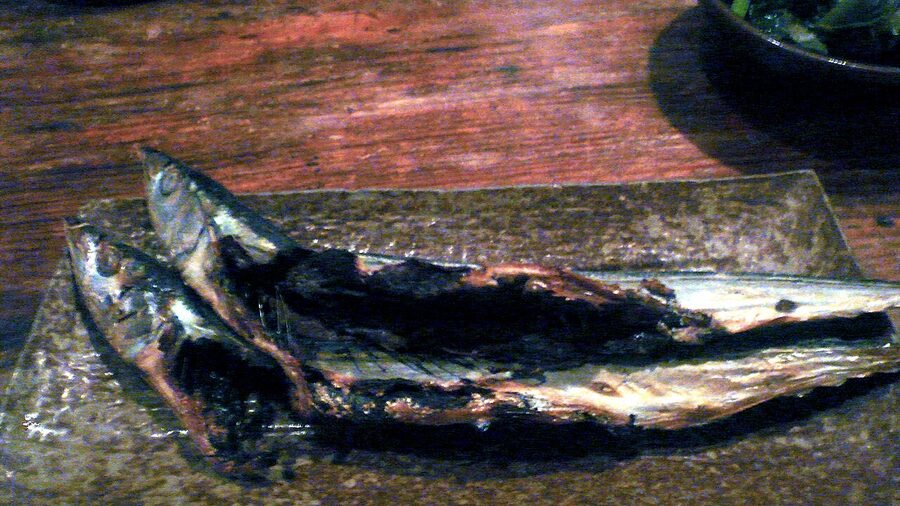
Why it’s hard: the smell. I don’t know how else to put this. “Kusai” in Japanese means “stinks”; the noun form, “kusaya”, means “the stinky one”. This is a fish (usually horse mackerel or flying fish) that has been aged in a centuries-old brine that every maker guards and refuses to change. The brine is now, technically, alive. When you grill the fish, the smell that comes off is sharp enough that my housemate in Tokyo once asked if something had died in the wall. The taste, weirdly, is quite restrained, salty, a little mushroom-umami, more like a strong dried fish than anything you’d predict from the arrival. But you have to get past the nose.
When: not at your hotel. If you are staying in a small ryokan or a guest-house with thin walls, do not order kusaya to take back. The smell gets into curtains. Eat it at a specialist place, commit, walk it off.
Where: Izu Oshima and the other Izu islands, Niijima, Hachijojima, are the source. The brine culture only exists there. In Tokyo, a few specialist izakaya around Shibuya, Shimbashi, and Asakusa serve it, and some fisherman-themed places in the Tsukiji outer market have it at lunch. At the source, a proper Oshima kusaya plate with shochu runs about ¥1,500; in Tokyo, double that.
Should you bother: only if you’re chasing the full experience, or if you love very strong preserved fish already. Kusaya is genuinely the hardest thing on this list, harder than natto, harder than whale. If you’ve eaten Scandinavian surströmming (fermented herring), you know the family; kusaya is the Japanese cousin. If you haven’t, do not start here. Start three dishes up.
The ranking explained, briefly
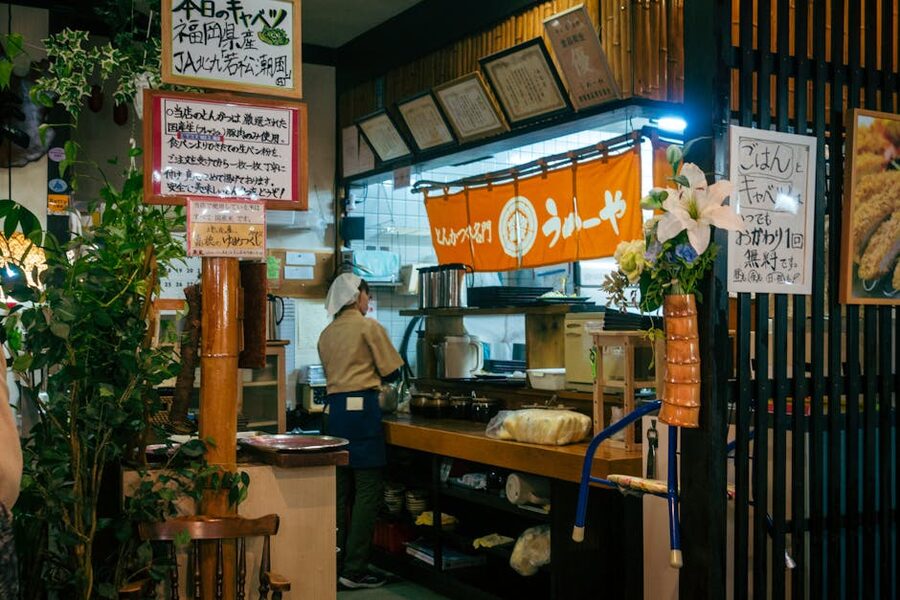
The top of the list, umeboshi, iwagaki, ika somen, are foods that look daunting and aren’t. The visual, the rawness, the size, the sourness: all easier than the description suggests, and all worth ordering. You’ll like at least two of the three by day three of your trip.
The middle, fugu through hachinoko, are foods that are worth one real try, either for the cultural context or because the reality is genuinely nicer than the reputation. Fugu is a bucket-list box-tick with a decent taste attached. Ankimo is liver. Sazae is a sea snail you should eat completely, green part and all. Basashi is a regional tradition that deserves respect. The insects are fine; they really are.
The bottom third, shirako, odori ebi, shiokara, natto, kujira, kusaya, are the foods that will actually test you. Shirako is easier than its description. Odori ebi is, for me, the one place where the ethics tip. Shiokara and natto reward a second try at a better setting. Kujira carries moral weight that is yours to weigh. Kusaya is the one I’d rank genuinely hardest, on sheer sensory assault alone.
If you want a one-line strategy: eat the top five happily, try the middle five with an open mind, and treat the bottom five as a choose-your-own. Skipping any of them is fine. Pretending to like something you don’t is worse than declining; it reads as tourist-theatre and nobody is fooled.
A few practical notes
Most of the “hard” foods on this list are izakaya food, which means you encounter them at counters, one small plate at a time, alongside a lot of things you already like. You can always order three familiar dishes and one challenging one, that’s how most Japanese friends would order for a mixed table anyway. If you’re new to izakaya etiquette (how to signal you’re done, how to order sake, which side of the menu has the seasonal specials), the izakaya guide covers the basics so you don’t get stuck with the English plastic menu version of everything.
Prices: none of the foods on this list except fugu and odori ebi are expensive. Umeboshi is ¥300 a jar at any conbini. Natto is ¥60. Basashi is around ¥2,000 a plate in Kumamoto. The perception of “rare and exotic” mostly comes from the language barrier; the foods themselves are everyday.
Where to stay for access: if you want to plough through as many of these as possible in one trip, base yourself in Tokyo for Tsukiji ankimo, shirako at Shimbashi, and kusaya at Asakusa; then do a Hokkaido leg for shiokara, ika somen, iwagaki; then a Kyushu leg for basashi (Kumamoto) and yatai whale in Fukuoka. Osaka’s Kuromon covers the middle-bracket items (sazae, fugu, lighter odori ebi) in a compressed package. Nagano gets you hachinoko and inago. Kyoto is lighter on the list but strong on seasonal specials, what to eat in Kyoto covers the hamo, the yuba, and the winter fugu options that fly slightly under the tourist radar.
One last thing
I said at the start that nothing on this list should be a dare. A year after I wrote my own hardest-food-I’ve-eaten list on the back of a napkin in an Osaka basement bar, a chef there corrected me gently. “You tried them all at restaurants,” he said. “In my grandmother’s village, these were just food. Some we ate because they were good; some we ate because there was nothing else that year. You are choosing to eat them. That is the difference.”
He was right. The foods on this list are hard partly because they’re unfamiliar and partly because we’re approaching them as tourists, with enough money and novelty tolerance to treat dinner as a small adventure. The people who invented them were doing the opposite, keeping food available through a winter, preserving a catch, making the most of every part of an animal. The respect that costs nothing is worth giving. Eat one grasshopper slowly. Finish the green part of the sazae. Order natto the way the woman at the next table is ordering it.
Then, on day seven, after all that, sit in a small alley bar in Shinjuku at 11pm and order a grilled salted mackerel and a cold beer. That’s the food you came for, too.


.jpg)
.jpg)


.jpg)
.jpg)

