
Phuket Food Guide: Sino-Portuguese Old Town, Moo Hong, and the Southern Thai Kitchen
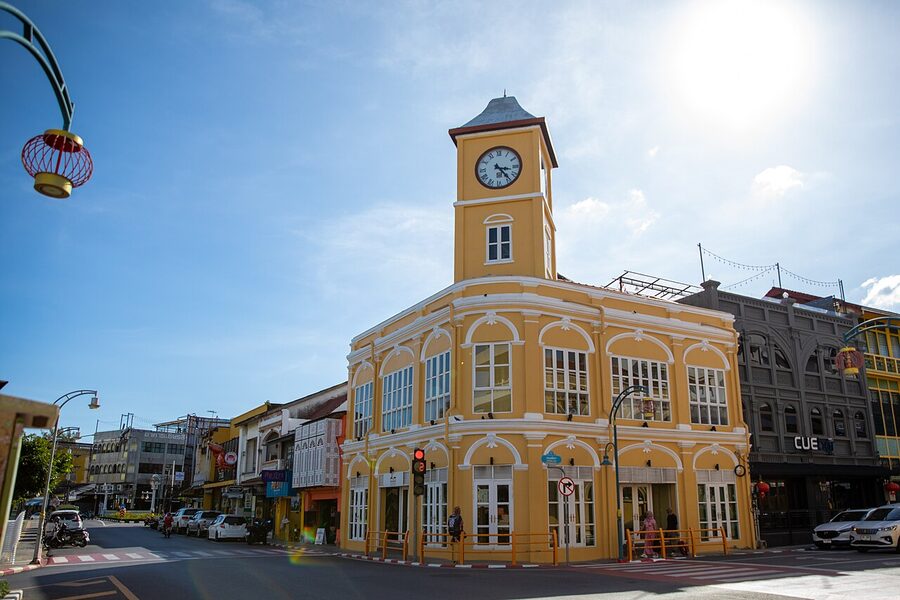
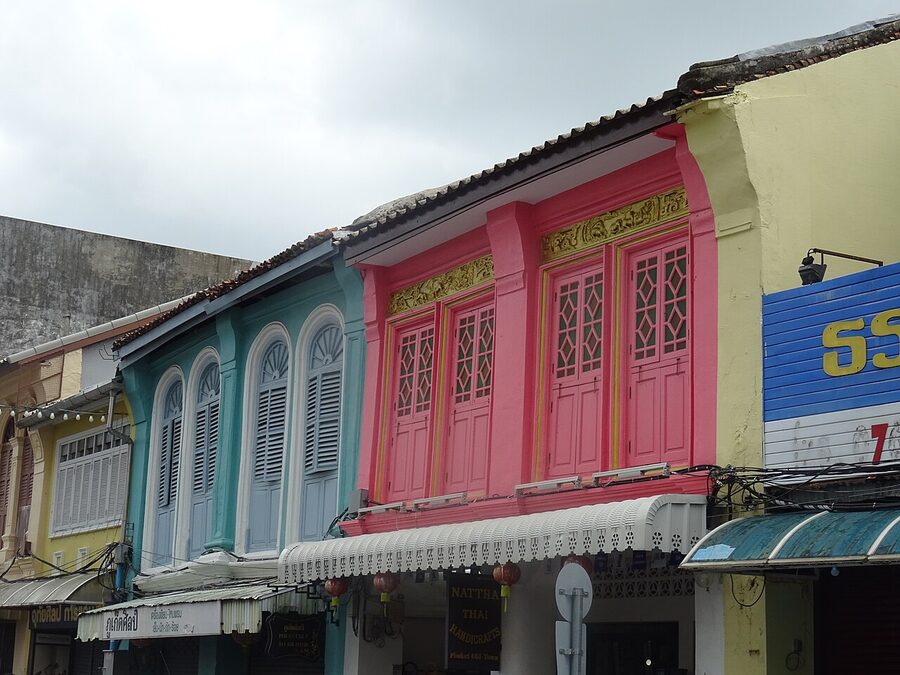
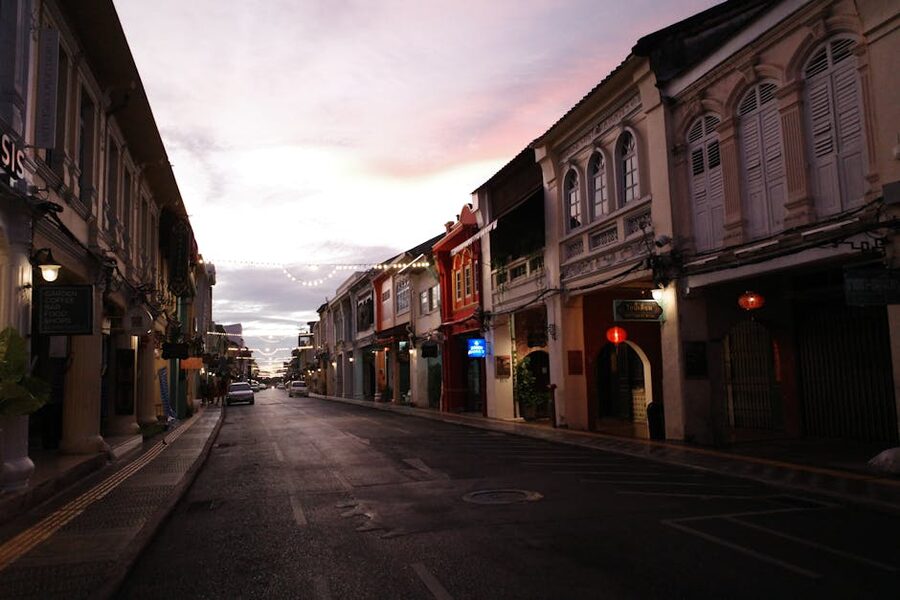
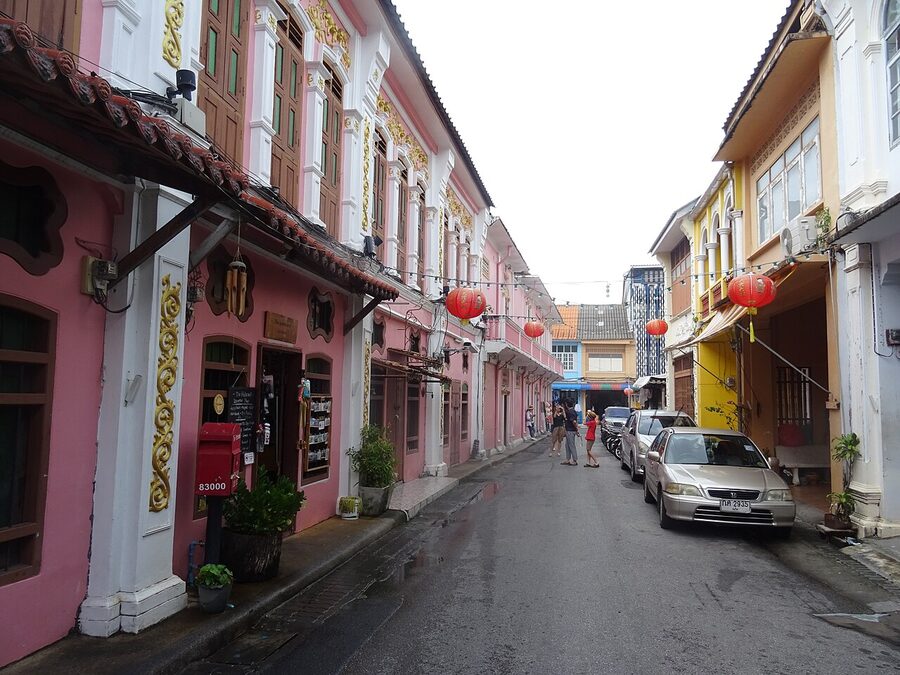
Patong Beach is one Phuket. Phuket Old Town, twenty minutes inland, is a completely different one. Sino-Portuguese shophouses painted in faded pastels, Hokkien noodle broths that have been simmering in the same kitchen since 1946, oyster omelettes loose enough to eat with a spoon, and a version of quiet the beach strip just doesn’t have. Go to one. Eat in the other.
I came to Phuket for the diving and ended up staying two weeks in the Old Town because the food surprised me that much. This is what I ate, where I ate it, and what I’d skip next time.
In This Article
- Two cuisines stacked on one island
- Where to base yourself
- Moo hong, the dish that defines the Old Town
- Mee Hokkien Phuket, at the only place that matters
- O-tao, the oyster omelette that doesn’t look like the Taiwanese one
- Kanom jeen nam ya, which is everywhere and also hard to get right
- Dim sum at 7am
- The old Chinese coffee shops
- Sunday Walking Street on Thalang Road
- The southern Thai curries
- Seafood: Rawai, not Patong
- Talat Yai, the market that isn’t for you
- Sweet things and coconut stuff
- Bars, beer, and a word on Patong
- A 2-day eating itinerary if you only have a weekend
- Stuff I’d skip
- Practical notes
Two cuisines stacked on one island
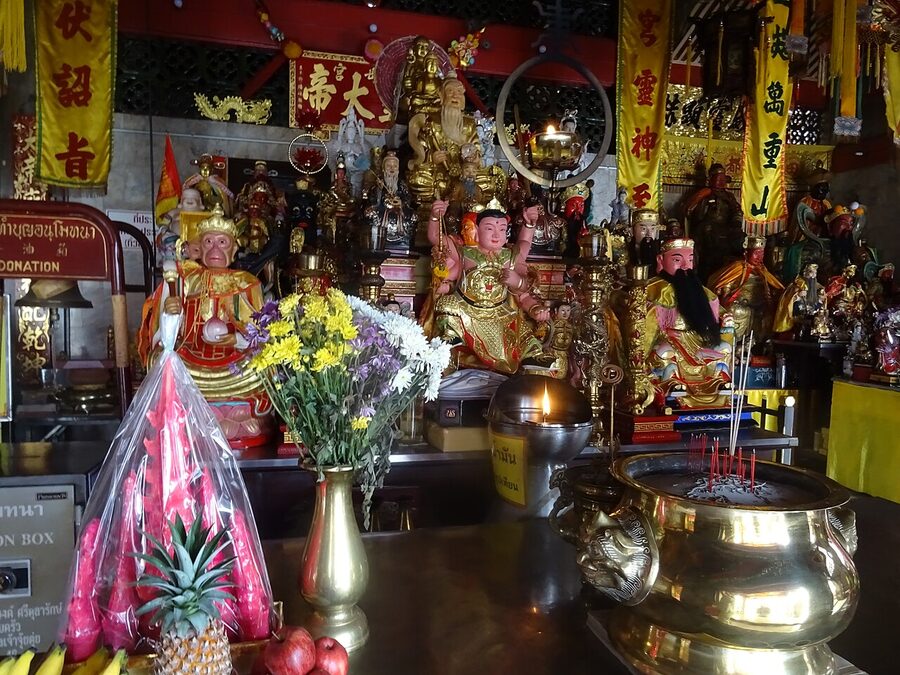
Phuket’s food makes sense once you understand that two traditions are sitting on top of each other. The first is Baba Peranakan. Hokkien Chinese men showed up in the 19th century to work the tin mines, married local Thai and Malay women, and produced the community called the Phuket Babas. The second is southern Thai, known as paa tai or ahaan tai. It’s spicier than central Thai food, leans heavily on turmeric and dried fish, and picks up Muslim-Thai notes as you get closer to the Malaysian border.
Wikipedia gives the short version: the Phuket Babas maintained family links with their cousins in Penang and Malacca, which is why a plate of mee Hokkien in Phuket Old Town tastes like a plate of mee Hokkien in George Town. Same migration, different country. The architecture you eat inside is part of the same story. The restored shophouses on Thalang Road and Soi Rommanee are the 1860s-to-1910s tin-boom housing stock. In 2004 Phuket Town was upgraded to city status, and as of 2019 the 2.7-square-kilometre heritage district that spans ten streets (Klang, Phang Nga, Rassada, Dee Buk, Krabi, Thep Kasattri, Phuket, Yaowarat, Satun, and Soi Rommanee) was being prepped for a UNESCO World Heritage bid.
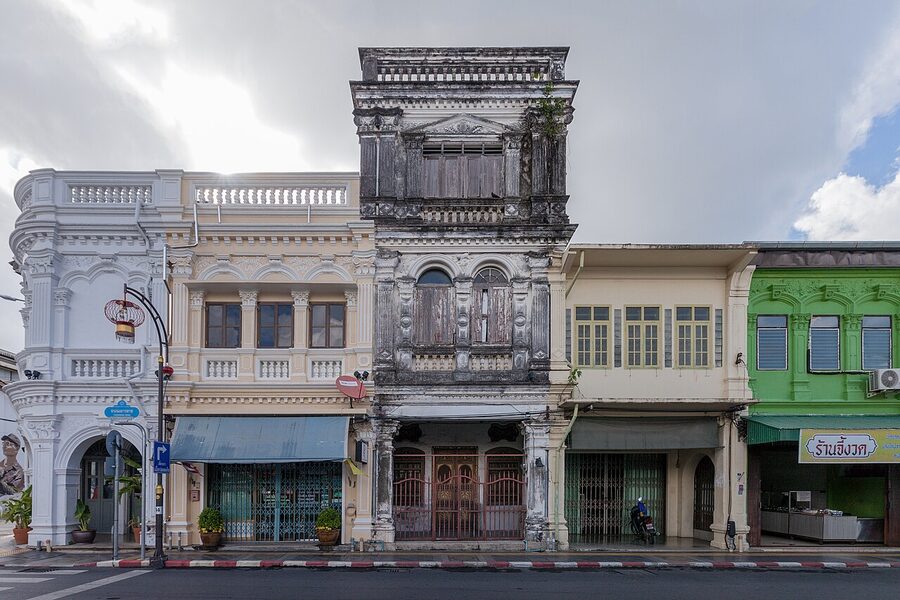
None of this matters if you just want to eat, but it explains why one menu can put a coconut-milk southern Thai curry next to a bowl of Hokkien noodles and call both of them “Phuket food.”
Where to base yourself
Stay in the Old Town, not Patong. The Old Town is walkable (you can cross the whole heritage district in 15 minutes), the food is three or four times cheaper, and the best restaurants are the ones you can get to on foot. If you’re set on beach time, budget a couple of nights on Patong or Kata and use the other nights inland. A taxi between Patong and the Old Town runs ฿600-800 and takes 30 to 45 minutes. From the airport, a metered taxi to the Old Town is around ฿900 (45 minutes), to Patong ฿800 (30 minutes).
For getting around once you’re based, a scooter is the move if you’re comfortable. About ฿300 a day, traffic is manageable outside peak hours, and Phuket is big. The public bus network is thin. Grab and inDrive work inside the Old Town, and motorbike taxis are the local default at 40 to 80 baht for a short hop.
Moo hong, the dish that defines the Old Town
Moo hong is pork belly slow-braised for hours in dark soy, black pepper, garlic, palm sugar, and a small mountain of coriander root. That’s the dish. What makes it a Phuket thing and not just another Chinese braise is the pepper. Real moo hong is aggressively peppery, almost black-pepper-prawn levels of heat, and the sugar cuts it rather than drowning it. A good portion is ฿180-250 in a neighbourhood restaurant, ฿400-600 at a restored-shophouse place.
Raya (48/1 Dibuk Road, 7 minutes’ walk from Thalang Road) is the tourist institution. Housed in a big preserved Sino-Portuguese mansion, open for 40 years, the moo hong is excellent. The catch is the queue. If there’s more than a 30-minute wait, skip it and go eat moo hong somewhere else. The braise is not good enough to stand an hour outside in tropical heat.
One Chun (48/1 Thep Kasattri Road, close to the Thai Hua Museum) does a leaner version with more of a pepper kick and less sugar. Smaller dining room, faster service, roughly 60 to 70 per cent of Raya’s prices. I went three times.
Mee Ton Poe (on the Surin Circle side of the Old Town, the corner place) is primarily a noodle shop but their moo hong side dish is a steal at ฿80 for a small bowl you can pair with a rice plate. Which brings us to the next thing.
Mee Hokkien Phuket, at the only place that matters
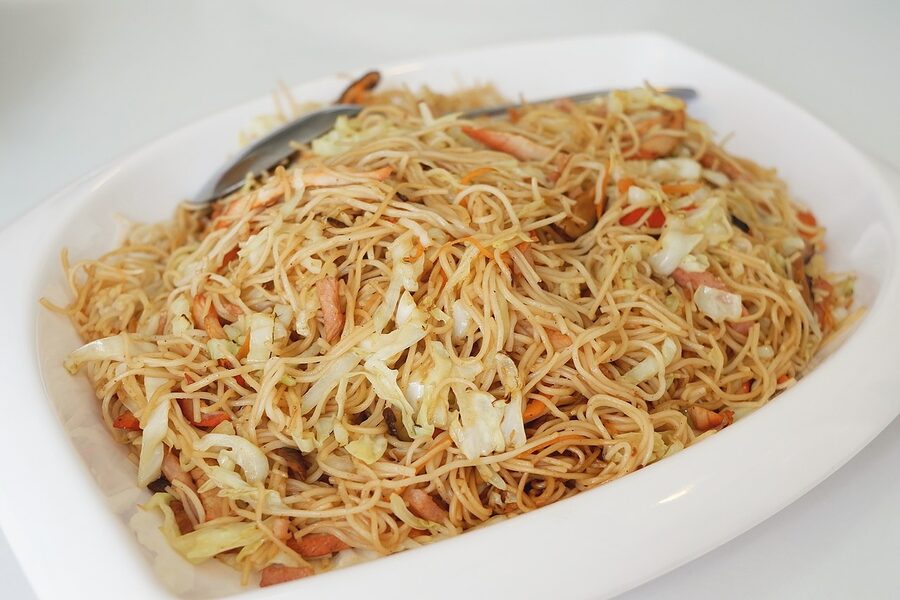
Mee Ton Poe has been pouring the same broth since 1946. That’s its thing. Two dishes are why people queue. The first is mee hokkien, which in Phuket means thick yellow egg noodles tossed with pork, prawn, squid, pieces of char siu, fried garlic, and a clear oyster-sauce broth that gets ladled over at the end. It’s the most un-Malaysian Hokkien mee you’ll eat. The second is mee sua, thin wheat noodles stir-fried with egg and prawn in a dry, smoky pan toss. Both run ฿80 to ฿130 depending on size.
Practical advice: go for lunch, not dinner. The lunchtime crowd is locals. The dinner crowd is tourists doing the Old Town walk, which means the broth has been sitting and the wait is longer. They close at 7:30pm most nights. Cash only. The second location (there are two Mee Ton Poe storefronts about three minutes apart) is usually quieter.
If you want to try the noodles at a food court rather than a standalone shop, Lock Tien (173 Yaowarat Road, at the corner of Dibuk, 20 to 30 minutes’ walk from Thalang) is a 50-year-old open-air hawker centre that still draws locals. You pay each vendor separately. The mee leung pad hokkien sai kai (yellow noodles fried Hokkien-style with an egg on top) is what they’re known for, and they also do Phuket-style po pia sod (fresh spring rolls, ฿50-70) and lo bah (five-spice braised pork offal, ฿40-80). Closed Tuesdays. Open 6:30am to late afternoon.
O-tao, the oyster omelette that doesn’t look like the Taiwanese one
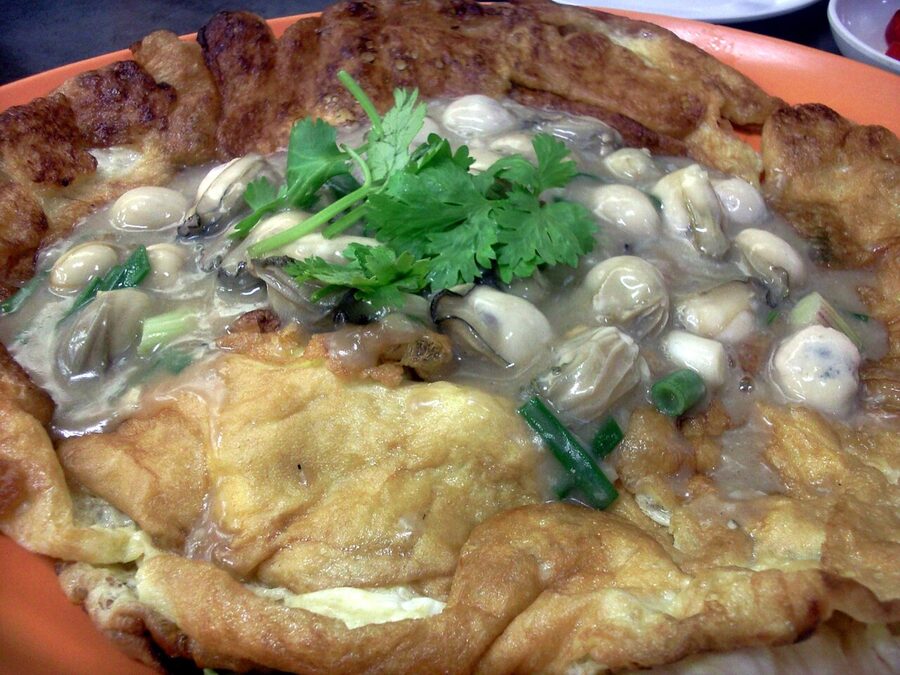
O-tao is the Phuket version of the Hokkien oyster omelette. Small oysters, cubes of taro, egg, a rice-flour and tapioca batter, cooked loose rather than crisp, then topped with crispy pork lard, fried shallots, and coriander. A plate is ฿80 to ฿150 at a street stall, ฿250 at a restaurant. It’s heavier than it looks.
O-Tao Bang Niao (Phuket Road, near Jui Tui Shrine) has been grilling them on a flat iron since the 1950s and is the one most locals will point you to. The downside is they’re only open in the evenings, usually 4:30pm to 11pm, so this is dinner, not lunch. The Yao Yen-Ta-Fo shop inside a little food court at 45 Patipat Road, Talad Nuea, has a o-tao stall that some Phuket expats rate even higher. It’s smaller and friendlier. Takeaway in a banana leaf if you ask.
Kanom jeen nam ya, which is everywhere and also hard to get right
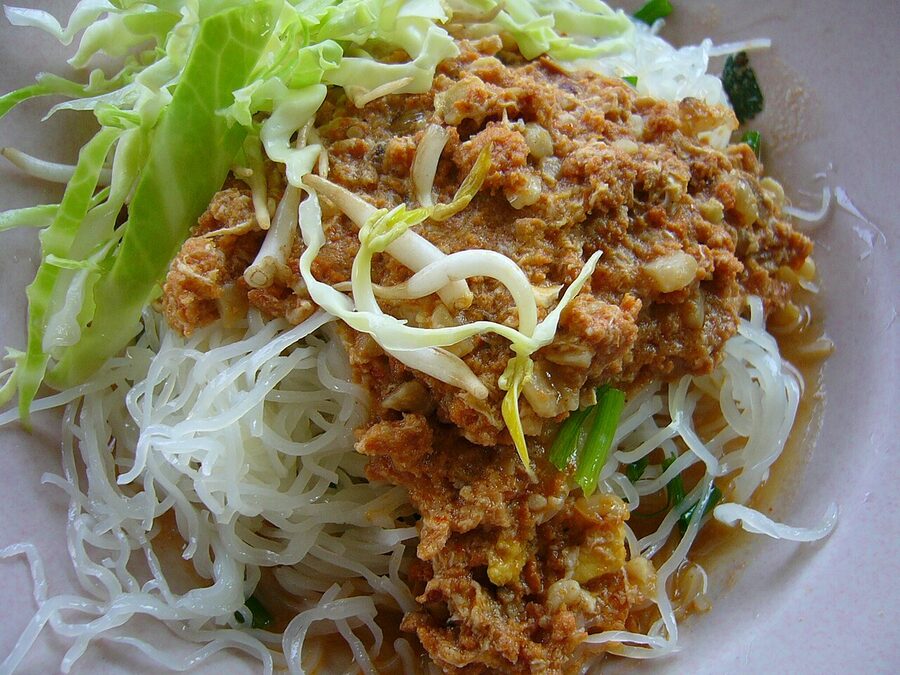
Kanom jeen is fermented rice noodles. Nam ya is a fish-based coconut curry, usually made with ground mackerel and a lot of fresh turmeric. The two come together as kanom jeen nam ya, which is a morning dish south of Hua Hin and a breakfast institution in Phuket. You get a bowl of noodles, a ladle of the soupy curry, and a big plate of raw vegetables (long beans, cucumber, bean sprouts, cabbage, sator if it’s in season, pickled mustard greens, a hard-boiled egg) that you tear up and throw in.
Good places:
- Kanom Jeen Pa Mai (off Phuket Road near Sapan Hin Park). Old school. Two curries on offer: nam ya and nam prik. Open from around 7am until they sell out, usually by 11am. A big bowl is ฿50 to ฿60. The raw vegetable plate is unlimited.
- Khanom Jeen Mae Ped (on Ong Sim Phai Road, a 5-minute scooter ride from Thalang). Similar setup, slightly different curry balance, lots of locals. ฿40-50 a bowl.
- A-Paw (inside a small market off Bangkok Road). Not signed in English. Ask and point. Better for the fried sides they sell on the side (fish cakes, fried Chinese sausage) than the kanom jeen itself, which is decent but not the best in town.
The kanom jeen bowl at your hotel buffet is not this. Eat it at a stall.
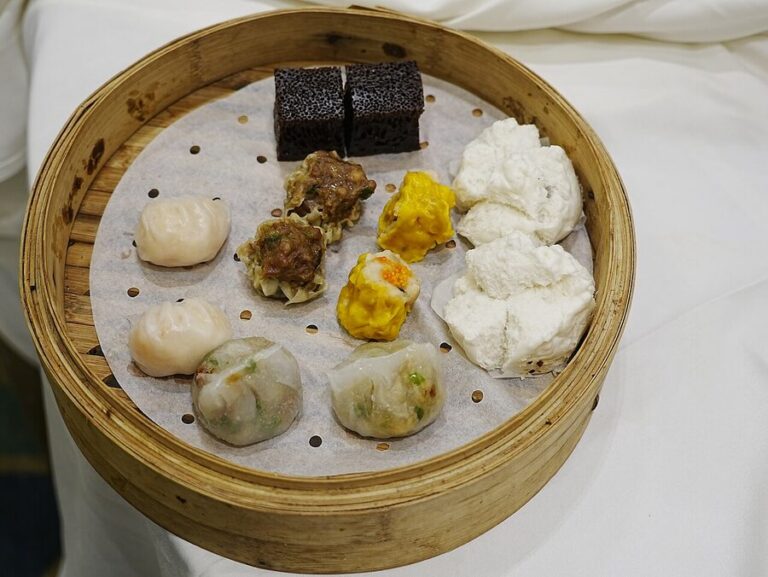
Dim sum at 7am
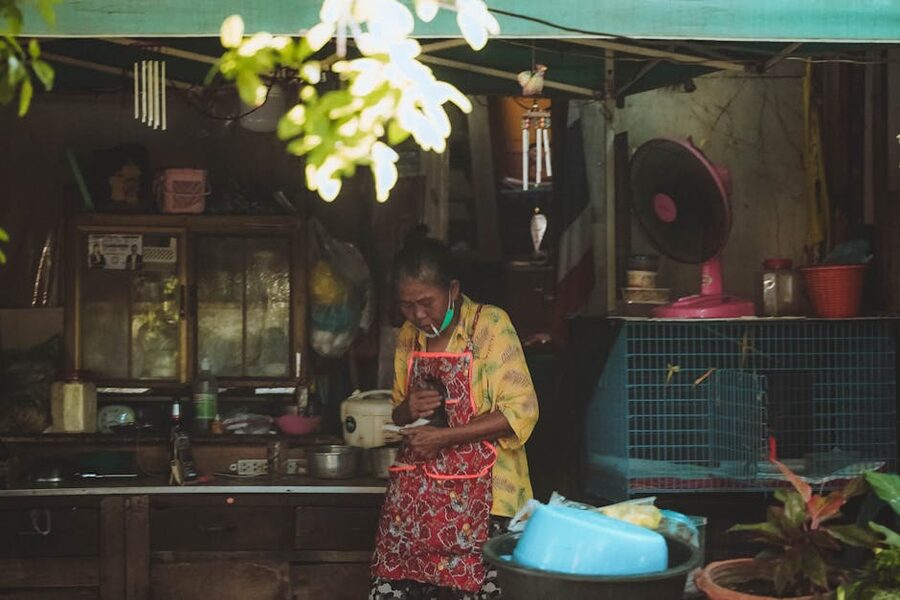
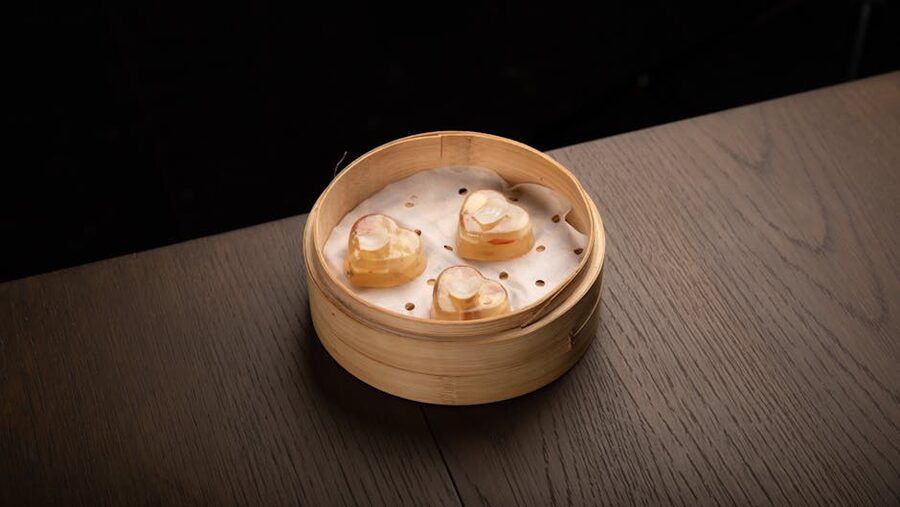
The Phuket Chinese breakfast is dim sum with Chinese coffee. It’s specifically a morning thing, the way cha chaan teng breakfast is a morning thing in Hong Kong’s tea-cafe culture, and by 10am most of the old shops have sold their best steamers. Three places to know:
- Sam Kong (about a 10-minute walk from the clock tower, on Mae Luan Road). The institution. Open from 6am, and by 8am it’s full of Thai retirees drinking kopi and reading the paper. The siu mai are sweeter than the Hong Kong version, the har gow are bigger, and they do a southern-Thai spicy dipping sauce that’s not subtle. A plate with six assorted pieces is around ฿120. Tea is ฿30. Cash only.
- Lao Keng Chay is inside a shophouse on Thep Kasattri. Older-school still, mostly older Phuket Babas, maybe half a dozen dim sum items on the counter. Don’t expect English.
- Chokchai Dim Sum (46/2 Mae Luan Road) is the one Phuket-born Thais keep telling Bangkok friends about. Louder, busier, the spicy dipping sauce is locally famous. Cheap.
If you’ve done dim sum in Hong Kong you’ll find Phuket dim sum less refined. The steamers are simpler and the frying is heavier. It’s not trying to be the same thing. It’s a neighbourhood breakfast with coffee.
The old Chinese coffee shops
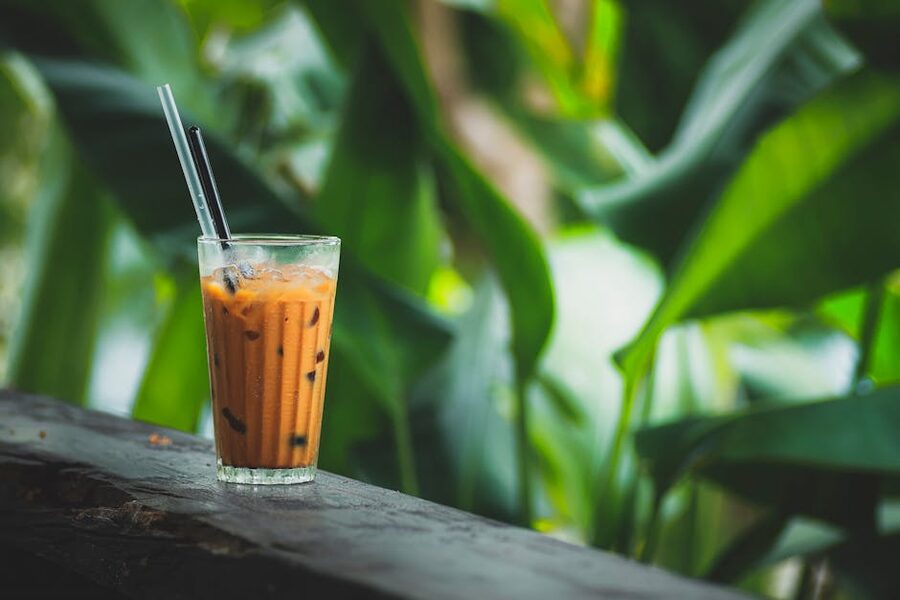
On On Cafe (attached to the On On Hotel on Phang Nga Road, said to be the oldest hotel in Phuket) serves kopi the Hokkien way: thick, black, with condensed milk, brewed through a sock filter. Also on the menu: cha yen (Thai iced tea, ฿40), kaya toast, half-boiled eggs with soy and pepper. It’s the ideal second breakfast after dim sum. ฿30 for a kopi, ฿50 for a coffee-set with toast and eggs.
If you want third-wave coffee, head to Bodhi Garden (small courtyard café on Soi Rommanee, tucked behind one of the prettiest façades in town) or Campus Coffee, both of which do proper espresso for ฿80 to ฿120. That’s the tier above what you’ll pay at the kopi shop, and the atmosphere is the payoff.
Sunday Walking Street on Thalang Road
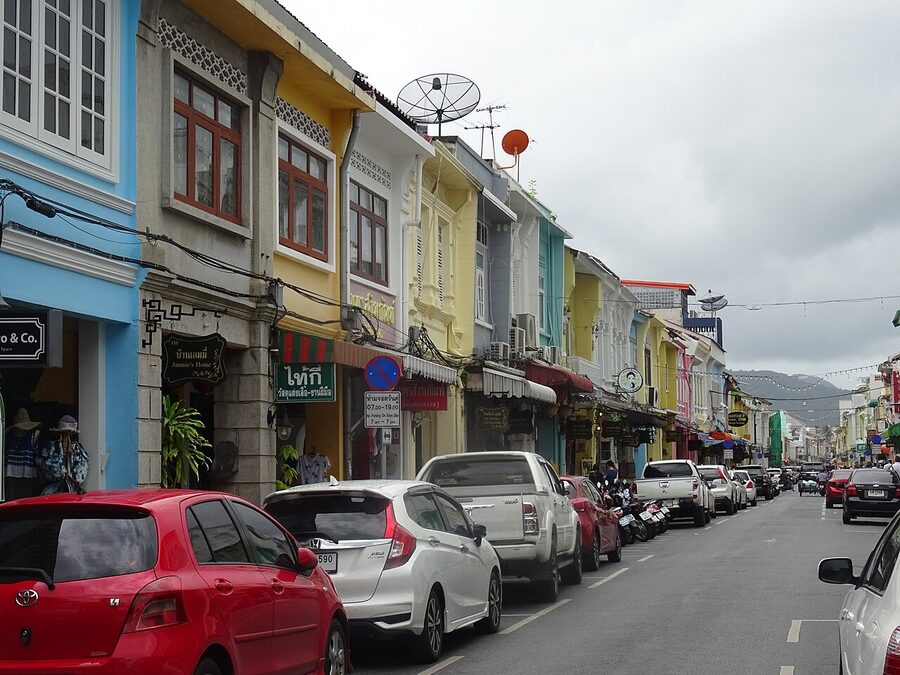
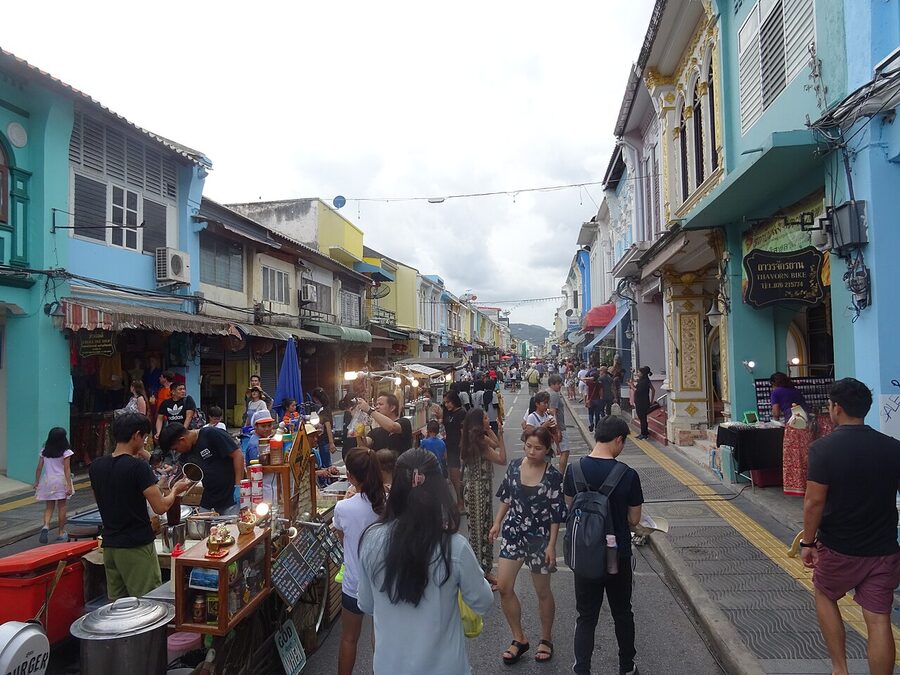
Called Lard Yai in Thai. Every Sunday from 4pm to 10pm (sometimes until midnight in high season), Thalang Road shuts to cars and fills up with food stalls, drink vendors, artists, live music, and enough foot traffic that you want to get there before 6pm. The stalls are a mix of southern Thai classics and southern Thai reimaginings. Things to eat:
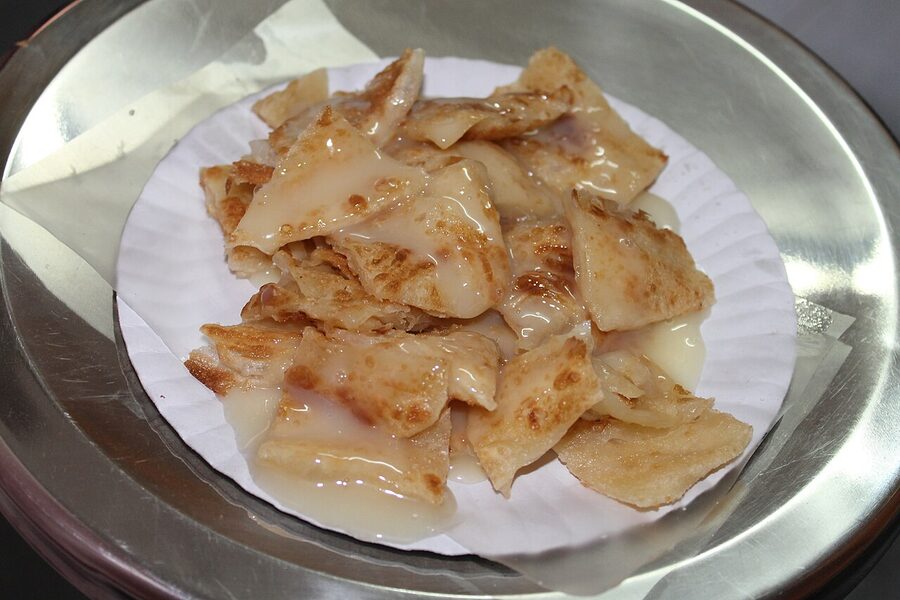
- Roti tao, Phuket’s crisp coconut crepes grilled over charcoal, rolled up, and dusted with sugar. ฿20 a piece. The best cart I found was down near the Phang Nga intersection.
- Aa pong, very similar to roti tao, but thinner and more fragile. Eaten hot because they go soft within minutes. ฿15-20.
- Lo bah, five-spice pork belly and tofu in a soy braise, deep-fried, served with a tamarind-chilli dipping sauce. ฿50-80.
- Kanom jak, grilled banana-leaf parcels filled with sticky rice, shredded coconut, and smoked fish. Hot, smoky, ฿25-30.
- Sator, stink bean, dry-stir-fried with prawns and shrimp paste. Intense, you’ll know if you like it. ฿100-150.
- O-aew, Phuket shaved-ice dessert with red beans, grass jelly, red syrup, and palm-seed bits. ฿40. This is the one you shouldn’t miss.
- Khao mok gai, southern biryani-style chicken rice from the Muslim-Thai stalls near the intersection with Yaowarat. ฿60.
Worth saying clearly: Sunday Walking Street is the single best night of the week in Phuket if you care about food, and it’s worth rearranging your itinerary for. It’s also crowded. If crowds stress you out, get there at 4pm when the stalls are setting up. The food is ready by 4:30, the tourists haven’t arrived in volume yet, and the light on the shophouses is golden.
The southern Thai curries
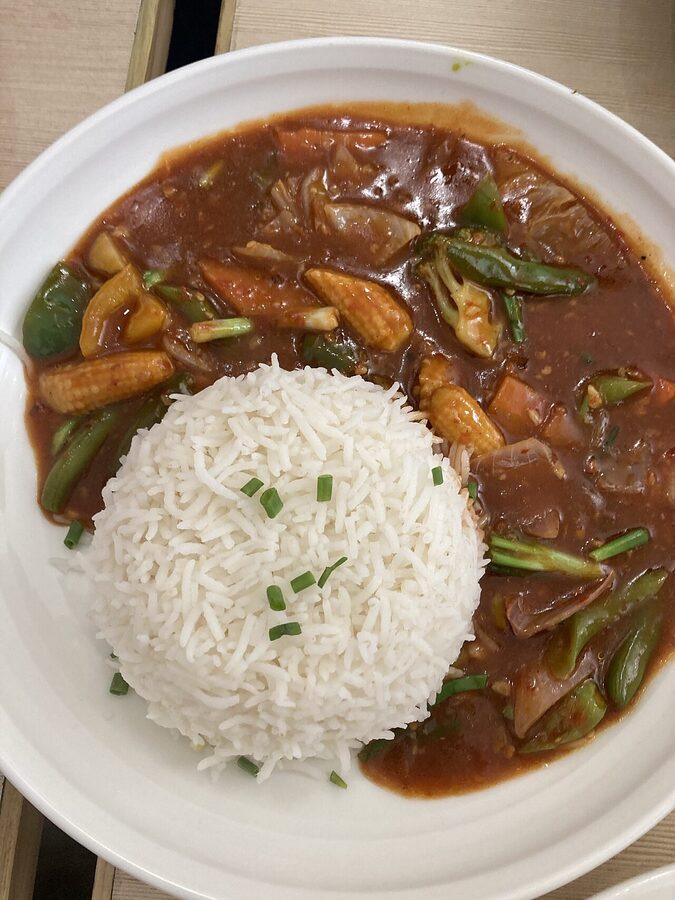
Southern Thai food is its own chapter in Thailand’s curry tradition, and worth the stopover just for this. A few to seek out:
Gaeng tai pla is the famously divisive one. A murky, deeply flavoured curry made from fermented fish guts, turmeric, long beans, and local vegetables, often with chunks of fish. It’s an acquired taste. Some people fall for it on the first bite, others never. If you don’t love it in the first three spoonfuls, you won’t on the fifth. Skip with no regrets.
Moo phad kati kling is pork stir-fried with dry turmeric paste, coconut, lime leaves, and pepper. Not too spicy, very fragrant, and reliably good anywhere that has a pot of it on the counter.
Kua kling is a stir-fried southern curry. Minced pork or beef, red curry paste, tons of lime leaf, and enough fresh chilli to take your head off. It’s the one southern Thai dish that most westerners find genuinely hot. A small plate is ฿80 at a rice-and-curry shop.
Gaeng som is a sour orange-yellow curry with fish or prawns, turmeric, tamarind, and a lot of fresh chilli. Served with a plate of blanched greens on the side. A good one is at Yoy Pochana (on Rassada Road, near the Governor’s Mansion), which does a Teochew-Thai hybrid menu worth booking a whole meal around.
For the rice-and-curry setup (called khao gaeng, where you point at pots), Krua Charifa is a Muslim-Thai option across the street from Talat Kaset morning market. The fish curry with curry leaves (gaeng gari pla) is the stand-out, and the yam Phuket (green mango, coconut, dried fish salad) is the thing you won’t find at a tourist place. Halal. ฿40-80 per dish.
Seafood: Rawai, not Patong
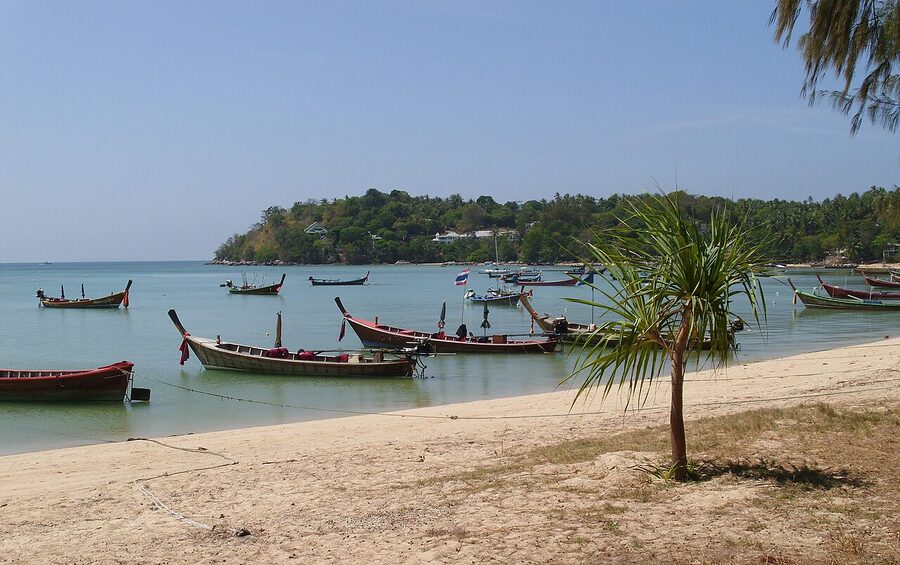
Phuket is an island. Fresh seafood is everywhere. The question is where it’s worth paying for and where it’s a tourist tax.
Rawai is the answer for a long dinner at the beach. It’s a 30-minute drive south from the Old Town (฿400-500 by Grab, or you can scooter it in 25 minutes). The strip of seafood restaurants along the Rawai promenade mostly operate the same way: buy seafood by the kilo off an ice counter, hand it to the kitchen, pay an extra flat fee for cooking (฿100-150 per dish). A big fresh flower crab in black pepper costs ฿400 to ฿600. Rock lobster is ฿900 to ฿1,400 per kilo at peak. The pointed-rice paddy prawn grilled with garlic is the local best buy at ฿250 to ฿350 a plate.
Go before sunset. The boats come in late afternoon, so the fish on ice at 6pm is fresher than at 9pm.
Phuket Weekend Market (Talat Tai Rot, Saturday and Sunday evenings, near Central Festival mall) is the cheap seafood option. Squid skewers at ฿30, grilled fish at ฿80-150, massive bowls of pad thai with huge prawns at ฿100. This is where locals actually go. It runs from about 4pm to 11pm. The Bangkok street-food rules apply: eat where lines of locals are, avoid stalls that look like they’ve been sitting for hours.
Banzaan Market in Patong is the tourist version of the same thing. It’s clean, English-speaking, all the vendors accept card, and the prices are roughly double what you’d pay at the Weekend Market or Rawai. If you’re locked into Patong and don’t want to make the drive, it’s fine. It’s just not the bargain it looks like. Skip the upstairs seafood restaurant inside and eat downstairs at the market stalls if you want the better-value version.
Talat Yai, the market that isn’t for you
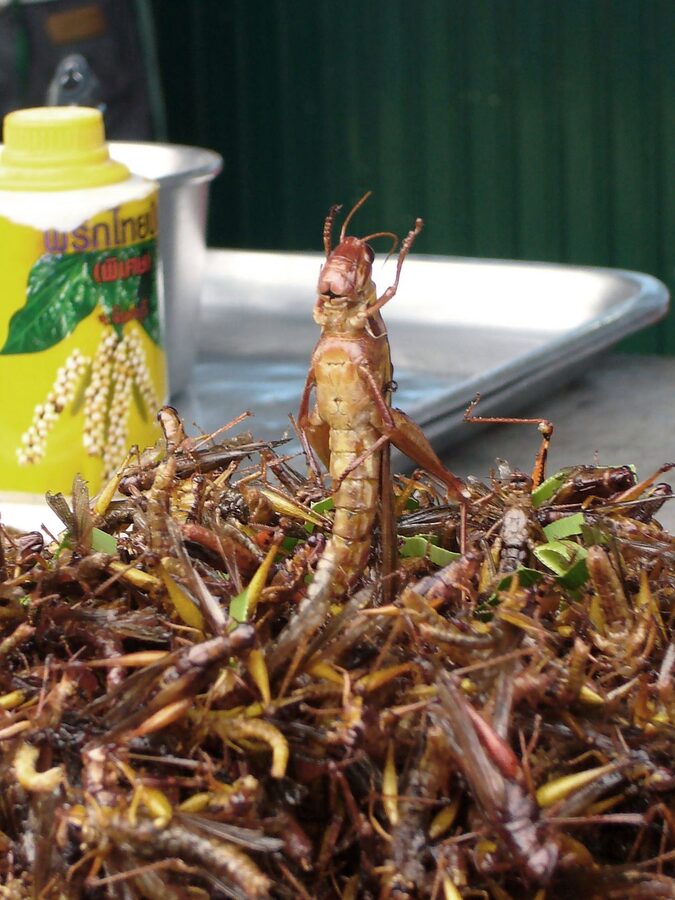
Talat Yai (also spelled Talat Kaset or Talad Sod Kaset, on Ranong Road) is the Old Town’s morning fresh market. It’s a working wet market, not a street food destination, but it’s where southern Thai home cooks source their fish, southern herbs, turmeric, fermented shrimp paste, and stink beans. Walk through it at 7am and you’ll understand what half the Old Town restaurants are cooking that day.
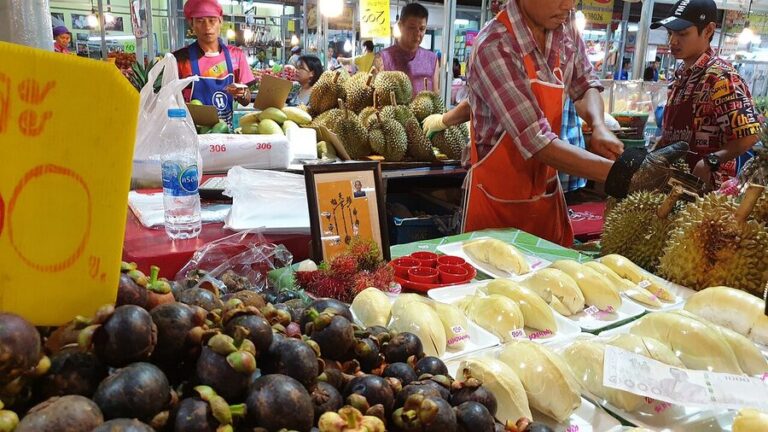
Around the edges there are a handful of breakfast stalls selling rice congee (jok), Phuket-style dim sum, fresh roti mataba (stuffed with egg, egg yolk, onion, and curry), and khao man gai (Thai chicken rice). ฿40-70 each. If you’re in the Old Town for a day or two, an early market walk is the one touristy thing that’s actually worth doing. You see what’s in season, smell what’s fermented, and realise how little of this stuff makes it to the hotel breakfast buffet. Some of the stalls also sell the tropical fruit that southern Thailand specialises in, from durian and mangosteen to rambutan and salak.
Sweet things and coconut stuff
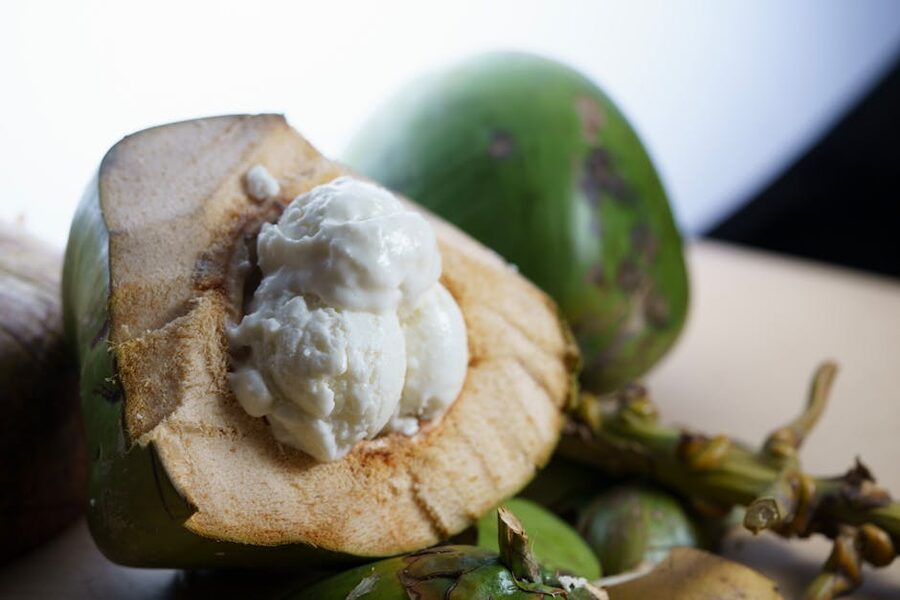
Phuket’s dessert game is surprisingly good for an island where most tourists never leave the beach. Torry’s Ice Cream (Soi Rommanee) is the most famous. Homemade small-batch ice cream, coconut and durian and sticky rice flavours, in a pretty little shophouse with outdoor seats for ฿80-120 a scoop.
On Thalang itself, the coconut ice cream stalls operate every day, not just Sundays. They’re usually carts parked outside the bigger cafes. ฿50-80 for a two-scoop serve in a coconut shell, with optional toppings: peanut, roasted rice, sweet corn, sticky rice, palm seed. The topping combo changes the dish completely. The sticky-rice add-on is the one to get.
Ahpong Mae Sunee (central Old Town, search the map) does the crispiest khanom ahpong in Phuket. The clay-pot coconut crepes come off the lids in seconds, you eat them standing up, and the whole thing feels more like street theatre than a dessert stand. Queues move fast. ฿20-30 for a small cone of them.
Bars, beer, and a word on Patong
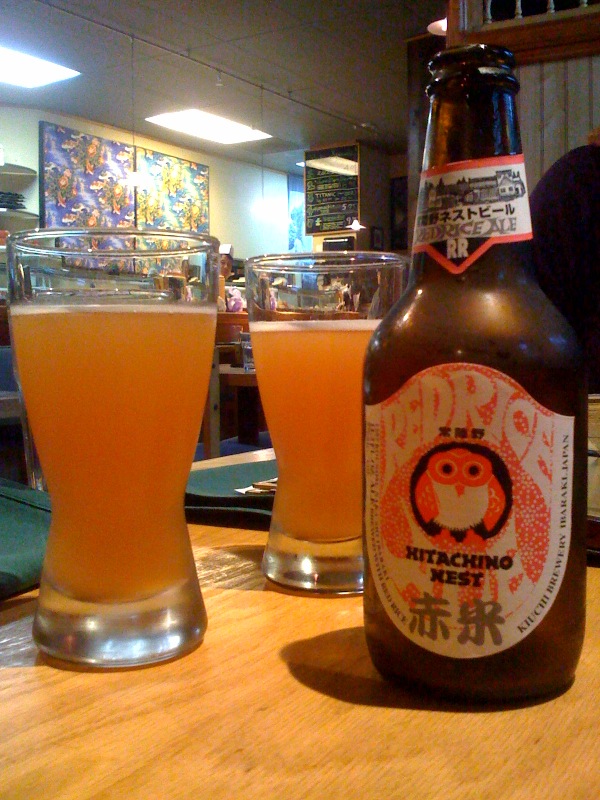
Phuket’s drinking scene splits into three layers. At the bottom of the price curve is domestic lager: Singha, Chang, Leo, for around ฿80-120 a bottle at a local restaurant, ฿150-200 in a beachfront bar. In the middle, the craft-beer scene runs out of Full Moon Brewworks in Pangnga just north of Phuket and Samui Beer House, both of which supply a growing list of Old Town bars (The Circle on Thalang and Standard Rebel on Dibuk being two that consistently stock them). A craft pint is ฿180-260. At the top end, the Old Town has a handful of proper cocktail bars that would hold their own in Bangkok: Zimplex Mixology Laboratory (48 Phang Nga Road) and Dibuk House (39/2 Dibuk Road) are both worth an evening. Cocktails are ฿300-450.
Patong’s bar scene is a different animal. The Bangla Road strip is the one most Phuket guides talk about. It’s loud, it’s touristy, it’s Patong’s thing. If that’s what you came for, great. If it’s not, skip it without guilt. Nothing you’re missing.
A 2-day eating itinerary if you only have a weekend
Land Friday night. Drop your bag in the Old Town. Walk Thalang at 7pm to pick a dinner place, end up at Yoy Pochana for Teochew-Thai with gaeng som and tamarind prawns. Cocktail at Dibuk House.
Saturday at 7am, dim sum at Sam Kong. Kopi at On On. 10am, walk Thalang and Soi Rommanee with a coconut ice cream. Noon, lunch at Mee Ton Poe (mee hokkien, moo hong side). Afternoon nap. 4pm, scooter to Rawai for sunset seafood. Back by 9pm.
Sunday morning, kanom jeen nam ya at Pa Mai. Mid-morning, Talat Yai market walk. Lunch at One Chun (moo hong, gaeng tai pla if you’re brave, stir-fried vegetables). Afternoon, coffee at Bodhi Garden. 4pm, Sunday Walking Street until you can’t eat another thing. Late drink at Zimplex.
You’ll have done most of the Phuket food canon in 48 hours. You won’t have done any of it slowly, which is the point of a three-day version.
Stuff I’d skip
Being specific here: the hotel buffet breakfast in Patong is a waste of two meals. The beachfront seafood restaurants in Karon and Kata are overpriced by 50 to 100 per cent compared to Rawai. The “Thai cooking class” chains that charge ฿1,500 for what’s essentially a market tour plus four dishes made with premixed pastes are not worth it. Phuket FantaSea dinner-and-show is not a meal, it’s a buffet inside a show, which means the food suffers for both. If you love cabaret-meets-buffet, fine. If you’re here to eat, eat at Raya instead.
And don’t order the “pad Thai” at a Patong tourist bar. Phuket is a southern Thai island. Pad Thai is central-Thai noodle territory. You want mee hokkien, mee sua, or kanom jeen. Pad thai here is the thing they cook because tourists ask for it.
Practical notes
Cash. A lot of the places worth eating at are cash-only. ATMs are easy to find, charge ฿220 per foreign-card withdrawal, and limit you to ฿20,000 per pull. Pull big, spend slowly.
Timing. The Old Town wakes up at 6am (dim sum, markets) and a lot of the best eating happens before 10am. Mid-afternoon (2-4pm) the old places are closed. Evening food culture picks up from 5pm. Late-night eating is thinner than in Bangkok.
Chilli. Southern Thai runs hotter than central Thai. If you’re not confident, ask for mai pet (not spicy). Expect it to still be spicy.
Fermented shrimp paste (kapi) shows up in a lot of southern dishes. If you’re allergic to shellfish or you really hate dried-fish flavour, check before ordering.
Coffee. Old Chinese-Thai kopi is sweet by default. Ask for kopi-o (black with sugar) or kopi-o kosong (black, no sugar) if you want to skip the condensed milk.
Queues. If a moo hong queue is more than 30 minutes, go eat moo hong somewhere else. There are four places that do it properly within a 10-minute walk. The gap between the best and the third-best is smaller than the gap between a 30-minute queue and a 2-hour queue.
The Sunday Walking Street is the single best night in the Old Town. Plan around it.
And the best piece of Phuket advice I picked up, from a local who’d lived in Patong for 20 years: stay inland, eat in the Old Town, go to the beach in the afternoon. The island is worth it if you flip the usual order.
You Might Also Enjoy
 Must-Try Foods in Korea: A Field Guide to Seoul and Beyond
 Okinawa Food Guide: Goya Champuru, Taco Rice, and the Ryukyu Kingdom Kitchen
 The Regional Ramen Map of Japan: From Sapporo Miso to Hakata Tonkotsu and Everything Between
 What to Eat and Drink in Takayama: Hida Beef, Sake Breweries, and Morning Markets

.jpg)


.jpg)

