
What to Eat in Kyoto: Obanzai, Yudofu, and the ¥900 Meal That Beats the ¥20,000 One
I booked a ¥22,000 kaiseki for my first dinner in Kyoto. Seven courses, ryokan view, the whole ceremony. The best meal I had in the city was a ¥900 obanzai set the next morning at a wooden-counter place two blocks from the inn, a lacquer tray holding six small bowls of whatever the owner had pickled, simmered, grated and dressed that week. The kaiseki was beautiful and cold in a way I can’t explain. The obanzai was the meal I still think about.
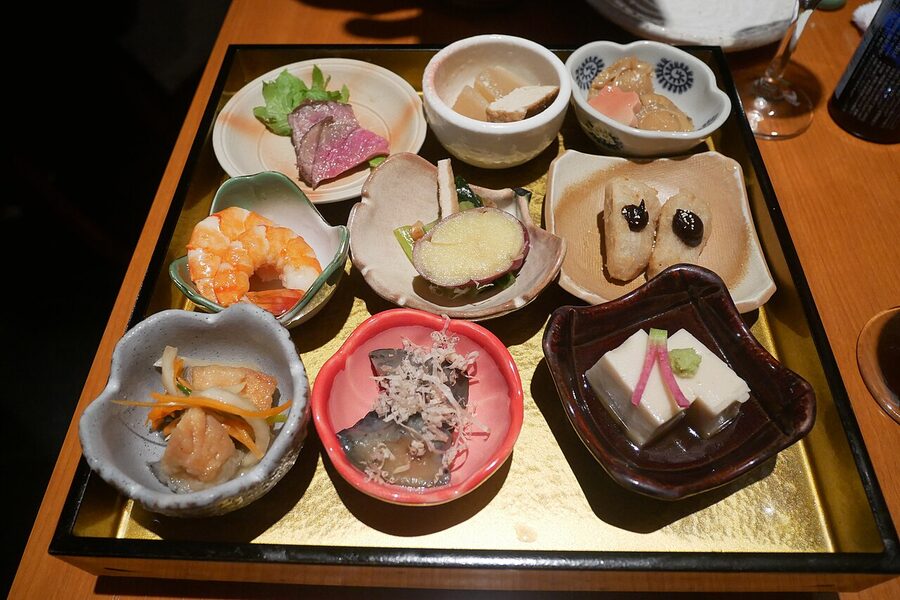
What I want to do here is save you that ¥22,000 mistake, or at least help you spend it in the right place. Kyoto food is weird and specific. It evolved in a landlocked capital where the imperial court ate vegetables while everyone else ate pickles, where monks turned tofu into an art form, and where the well water is so soft the tofu feels like it’s going to collapse if you breathe on it. Kyoto is not Osaka. The portions are small. The flavours are quiet. The bill, if you’re not careful, can be ruinous. And yet some of the best food in Japan is here for ¥1,000 at lunch.
This is what I ate, where I ate it, what I’d skip next time, and how to read the ¥900-to-¥30,000 range without getting fleeced.
In This Article
- Obanzai: Kyoto’s Home Cooking
- Yudofu and the Water Problem
- Where to eat it
- Kaiseki Without Selling an Organ
- Shojin Ryori: Temple Food That Isn’t Boring
- Yuba: Kyoto’s Weirdest Staple
- Nishiki Market: Go Tuesday, Not Saturday
- Matcha and the Sweet Shops
- Kushiage: Deep-Fried Everything on a Stick
- Kyoto Coffee: The 100-Year-Old Kissaten
- Set-Lunch Shokudo: The ¥900 Meal That Wins
- Where to Drink: Pontocho, Kiyamachi, Ishibei-koji
- The Izakaya Section of the Evening
- Ichijoji: The Ramen Battleground You Should Know About
- The Practical Layer
- What I’d Actually Do in Three Days
Obanzai: Kyoto’s Home Cooking
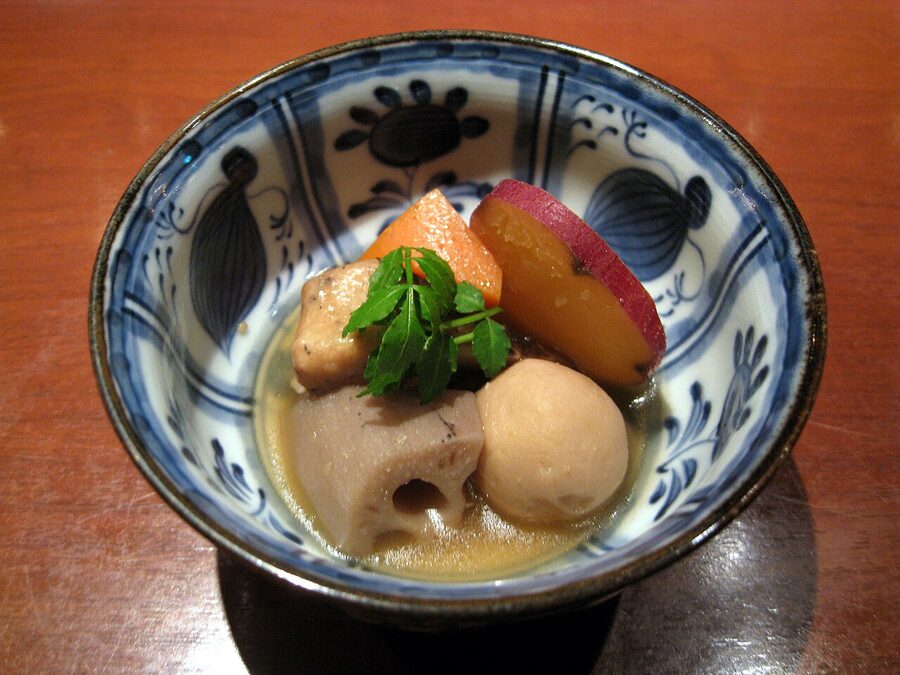
Obanzai is what Kyoto cooks at home. The word itself is local, you won’t hear it in Tokyo or Osaka, not really. It means everyday dishes: root vegetables simmered in dashi, pickled greens, tofu mashed with white miso, boiled beans, a piece of oily fish if there’s money, seasonal wild herbs in spring.
There’s a half-myth that proper obanzai uses seven vegetables from the day’s market, that nothing is wasted, that you eat what the season gives you. The myth is mostly true in the sense that it reflects how Kyoto grandmothers actually cooked, but it’s also been polished up by restaurants who charge ¥1,500 for a set and tell you a story about old Kyoto while they do it. That’s fine. The food is still good.
Three places I’d send you without overthinking it:
Menami, one of the most famous obanzai counter bars in the city, a few minutes walk from Sanjo Station on the Keihan line, on Kiyamachi street. You sit at a long wooden counter with maybe twenty dishes laid out in front of you in small bowls. You point. They scoop it onto a plate. You get rice, miso soup and pickles along with whatever you’ve chosen. A filling meal is ¥2,500-¥3,500, beer extra. Go early, it’s a dinner place, they open around 17:00, and by 19:00 the counter is usually full.
Omen in Gion, technically a udon specialist but the counter puts obanzai-style side dishes in front of you as the noodles cook. A bowl of udon with ten side dishes runs about ¥1,300 at lunch. The Gion location is a 6-minute walk from Gion-Shijo Station on the Keihan line. There’s a second branch in central Kyoto near Nishiki but I’ve only been to the Gion one.
Obanzai shokudō near Nishiki Market, I’m being vague because these come and go, and the tourist-facing ones cluster along the north side of Nishiki itself. Look for places with no English menu, a wooden counter, and a row of covered pots on the serving bar. A set lunch is usually ¥900-¥1,300. If the place has a picture menu in five languages at the door, keep walking.
Obanzai at dinner is more expensive than at lunch, counter-bar style is a drinking place, and once you order two beers and three small dishes, you’re at ¥3,000. The lunch version, where you get a fixed set on a lacquer tray, is where the value is. Aim for that.
Yudofu and the Water Problem
Kyoto is famous for tofu because Kyoto has soft water. The groundwater that runs down from the hills around the city is low in minerals, which means the tofu set from it has a delicate, almost pudding-like texture you don’t get elsewhere. It’s also why the sake and the matcha here taste the way they do. Water is the story underneath most Kyoto cuisine; you just don’t see it.
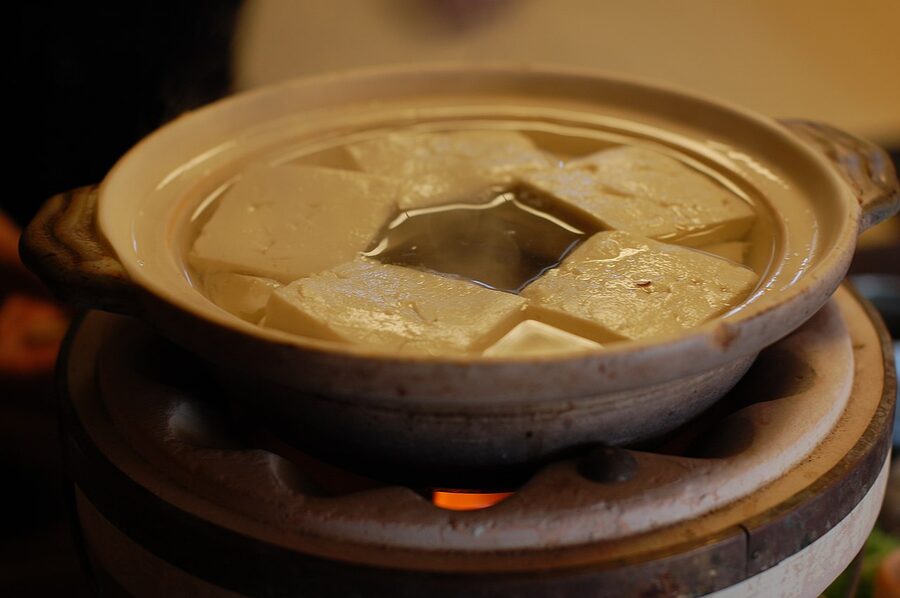
Yudofu is the simplest tofu dish in the world. Squares of tofu simmer in a clay donabe pot of kombu broth. You lift them out, dip them in soy sauce with grated ginger and scallion, and eat them. That’s it. A full yudofu set with the hotpot, a few side dishes, rice and pickles is usually ¥2,500-¥4,500 depending on the restaurant.
Where to eat it
Three areas. Pick one.
Nanzen-ji temple gate, Higashiyama. The classic. Two centuries-old yudofu houses sit directly outside the temple: Okutan (the older branch, dates to 1635) and Nanzenji Junsei. Both do yudofu kaiseki sets from about ¥3,800. The Okutan garden is what you’re paying for as much as the tofu, you sit on tatami, look at a maple and a stone lantern, and eat in near silence. Bus 5 from Kyoto Station gets you to Nanzenji-michi stop, then it’s a 7-minute walk up to the temple. Don’t go in winter without a coat; the rooms are barely heated, which is part of the feeling.
Tousuiro, near Sanjo and the Kamo River. A modernish yudofu and tofu kaiseki place with the best river view in the city, ask for a seat on the wooden porch that hangs over the Kamo. A full kaiseki-style tofu course runs ¥4,500-¥6,500; they do a ¥3,800 lunch set that is the value choice. Closer to the centre than Nanzen-ji if you’re on a tight schedule. A 4-minute walk from Sanjo Station on the Keihan line. Book at least two weeks ahead for the porch seats in May.
Arashiyama yudofu shops. Arashiyama is the western edge of the city, temple country, and there’s a small district of yudofu restaurants near Tenryu-ji. Yudofu Sagano is the most visible one and it’s fine, the setting (wooden garden rooms, koi pond, bamboo just beyond) does more than the food. Sets from ¥3,800. The Randen tram from Shijo-Omiya or the JR Sagano line from Kyoto Station both get you there in under 20 minutes.
Honest take: if you’ve only got one tofu meal in you, do Okutan at Nanzenji for the history, or Tousuiro for the view. Skip the Arashiyama tofu joints unless you’re already out there for the bamboo grove, they’re not bad, they’re just paying for the postcode.
Kaiseki Without Selling an Organ
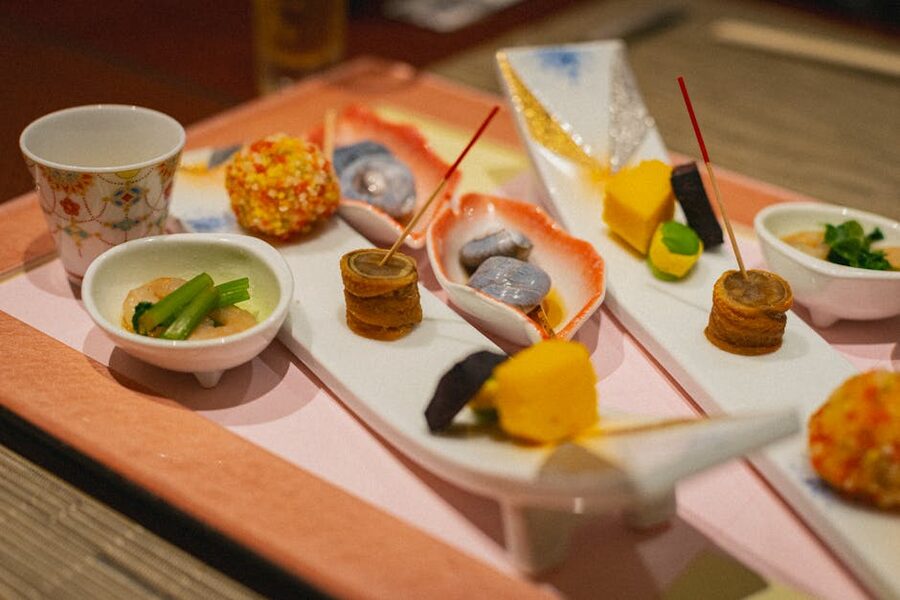
Kaiseki is the thing Kyoto is most famous for and the thing most people get wrong. Here’s the short version: it’s a multi-course seasonal meal, each course a small plate, usually 8-14 courses, often in a private tatami room. It descends from tea ceremony cuisine and temple kitchens. At the top end, the Michelin places, Hyotei and Kikunoi and Arashiyama Kitcho, it’s ¥25,000-¥40,000 per person for dinner and requires a reservation weeks out through a hotel concierge.
You do not need to spend that money. Here’s what I’d actually do:
Giro Giro Hitoshina, a 5-minute walk south of Shijo on Nishikiya-cho. Eight-course modern kaiseki for ¥4,500 per person, counter seating, loud and chatty (unusual for kaiseki). You have to book online about two weeks out. This is the one I recommend if you want the experience without the price. A friend of mine who lives in Kyoto and is hard to impress puts Giro Giro in her top three.
Tousuiro kaiseki lunch (mentioned above), not technically kaiseki but close, and the tofu-course structure gives you the same rhythm of tiny plates arriving. ¥3,800 at lunch. Book the porch seat.
Kaiseki lunch at Gion restaurants. Most high-end kaiseki restaurants do a cheaper lunch set, often ¥6,000-¥10,000 instead of the ¥25,000 dinner. Hachidaime Gihey near the Kyoto Station area is a rice specialist doing reasonably priced kaiseki lunches with rice as the centrepiece, from about ¥3,500. A 5-minute walk from Kyoto Station, so good for the day you arrive or leave.
Skip the ¥30,000 dinner unless you already know you love kaiseki. At that price you’re paying for the ryokan-level service and the private tatami room; the food itself is only marginally better than a ¥6,000 lunch. I speak from experience. That ¥22,000 kaiseki in the opener was not a life-changing meal.
Shojin Ryori: Temple Food That Isn’t Boring
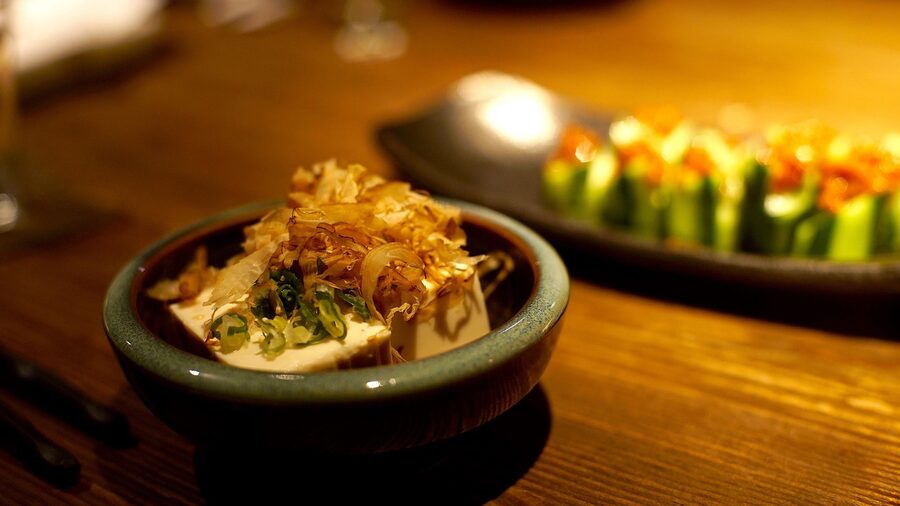
Shojin ryori is the food Buddhist monks have been cooking and eating in Kyoto temples for nine centuries. No animal products. No alliums. A lot of tofu and yuba and pickles and vegetables cut into leaf shapes. If you’re not already curious about it, you’re going to think that sounds miserable. It isn’t.
Two places I’ve eaten it and would send you to:
Shigetsu at Tenryu-ji, Arashiyama. This is shojin ryori served inside the grounds of a working Zen temple. You pay the temple garden admission (¥500) plus the meal. Sets start at ¥3,500 for the small course and go up to ¥8,000 for the full thirteen-dish version. You eat in a wooden hall overlooking the garden. It’s ritualised, they walk you through each dish, and it’s quiet in a way that’s hard to find in Kyoto. Book at least a week ahead.
Izusen at Daitoku-ji, northern Kyoto. Less visited, partly because Daitoku-ji is outside the tourist rail corridor, partly because the Daitoku-ji complex itself is more diffuse than Tenryu-ji. Bus 206 or 205 from Kyoto Station to Daitokuji-mae stop gets you there. Izusen sits in the grounds and serves shojin in nested red lacquer bowls, you eat one course, the bowls rearrange into the next. It’s theatrical in a sweet, strange way. Sets ¥3,500-¥6,000. Lunch only.
Honest take: if you’re doing one temple meal, Shigetsu is the more reliable experience. Izusen is more interesting if you already know what shojin ryori is and want the lacquer-bowl variety.
Yuba: Kyoto’s Weirdest Staple
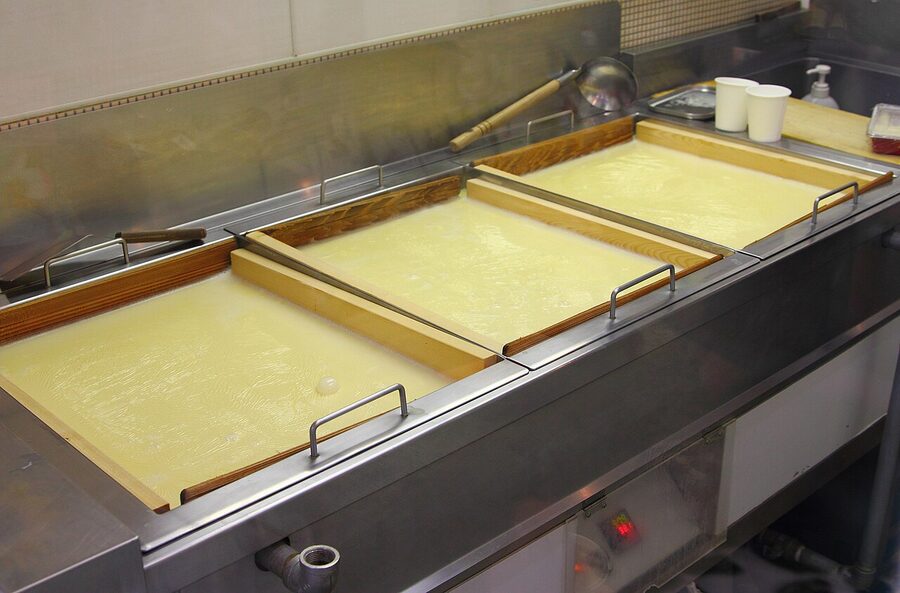
Yuba is the skin that forms on top of hot soy milk. When tofu makers heat their soy milk in wide vats, a film of protein surfaces. Scoop it off, that’s yuba. You can eat it fresh as a creamy sheet, you can dry it, you can roll it up, you can deep-fry it. In Kyoto it’s a staple; outside Kyoto most Japanese people have heard of it but rarely eat it.
Try it in two forms:
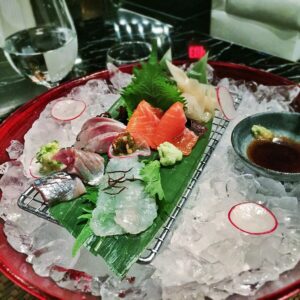
Fresh yuba sashimi, raw sheets of yuba with wasabi and soy sauce. Shows up on shojin ryori courses and yudofu kaiseki. This is where to start. It tastes like concentrated cream with none of the sweetness.
Yuba donburi at specialty shops in Higashiyama and near the Imperial Palace. Yuba Kichi and Yuba Han both do yuba-over-rice bowls at lunch for ¥1,500-¥2,500. Light, a bit slippery, weirdly satisfying. Not something you’d crave but something you should try.
If you end up in a shojin ryori or yudofu kaiseki meal, there will be yuba on the tray. You don’t have to hunt it down separately.
Nishiki Market: Go Tuesday, Not Saturday
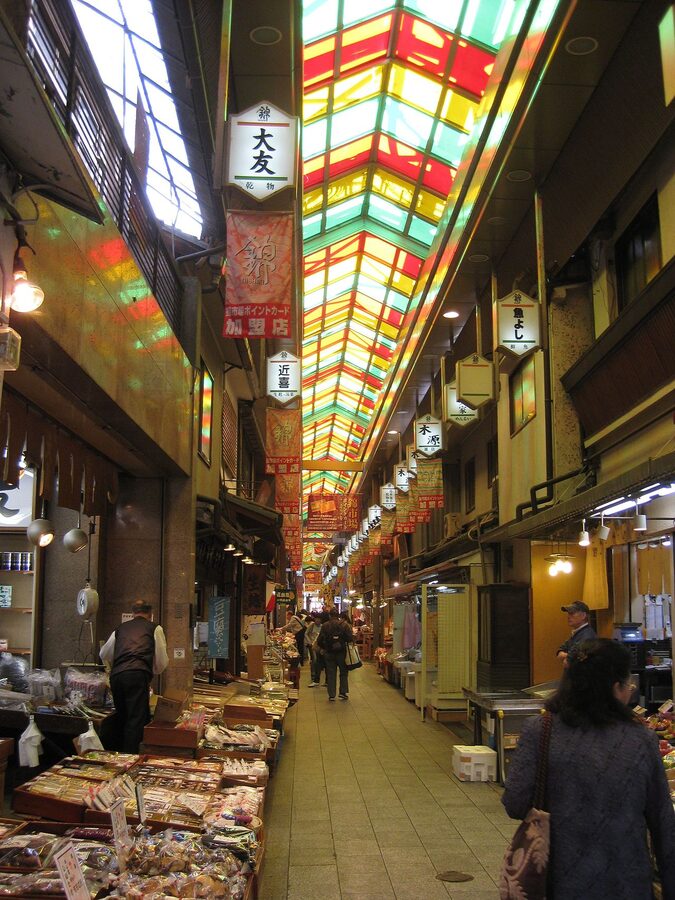
Nishiki Market is a 400-metre covered arcade that runs east-west, one block north of Shijo-dori, ending at Teramachi. Locals call it “Kyoto’s kitchen” and it has been one for roughly four centuries. There are over 100 shops along the length of it, most family-run, most selling one specific thing: pickles, or tofu, or sweet omelette, or knives, or just tea.
It’s also, let me be blunt, a tourist trap on weekends. The arcade is narrow. In the afternoon between noon and 17:00 on a Saturday, you will not enjoy walking through it. People stop to photograph things, lines form outside the skewer shops, and the whole thing becomes a slow shuffle.
Go on a Tuesday morning before 11:00. Or a Wednesday. Or any weekday before the lunch rush. The same shops are open, the same food is available, and you can actually stop and look at what people are buying.
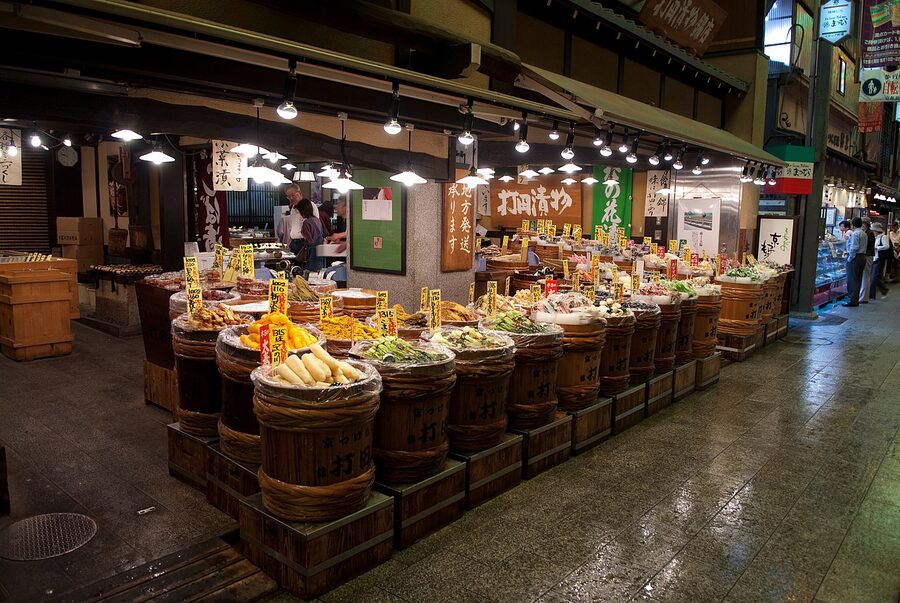
What to order while you walk:
Tako tamago, a baby octopus stuffed with a quail egg, candied, on a stick. ¥400 or so. Absurd, sweet, iconic. If you try one thing at Nishiki, this is it.
Hamo tempura, pike conger eel, summer only (May through August). The bones are famously hard to prepare; a skilled cook slices them into hairlines. Deep-fried, it comes out impossibly light. A piece on a stick is about ¥500.
Dashimaki tamago, the thick Japanese omelette, sweet and savoury, ¥200-¥400 a slice. The stall called Mikouan roughly halfway along has one of the best versions.
Fresh yuba, small cups at the tofu shops, ¥300-¥500 with wasabi and soy sauce. A quick way to try it without committing to a full meal.
Pickles, you can get small 100g packs of Kyoto-style tsukemono for ¥500-¥800. These travel well. Nishiri is the flagship pickle shop and has a location near the centre of the market. The shibazuke (red-purple pickled eggplant and shiso leaves) is the Kyoto classic.
Skip: the green tea soft-serve cones that don’t say “Uji”, they’re regular matcha ice cream at a 40% tourist markup. For real Uji matcha soft-serve, walk the 15 minutes to Nakamura Tokichi’s Gion branch instead.
Matcha and the Sweet Shops
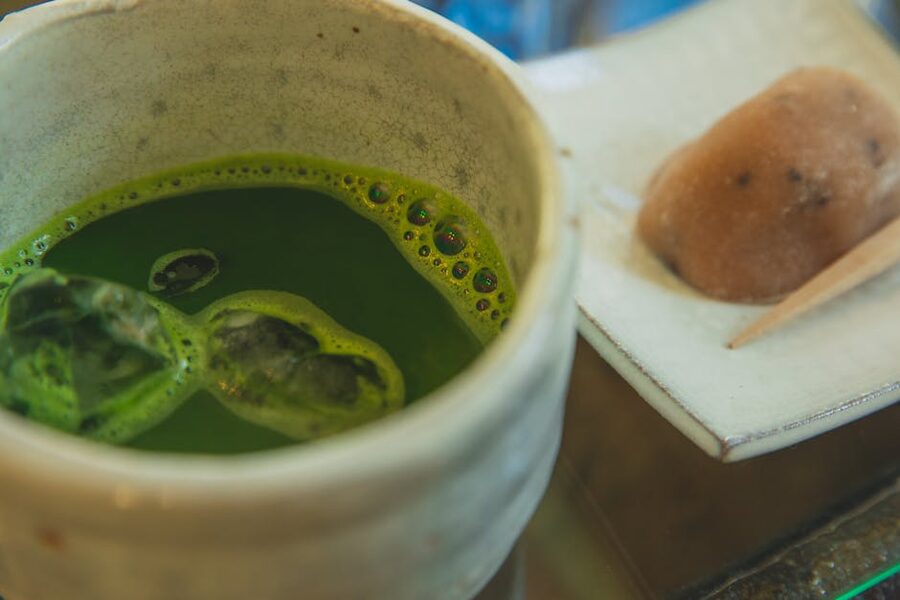
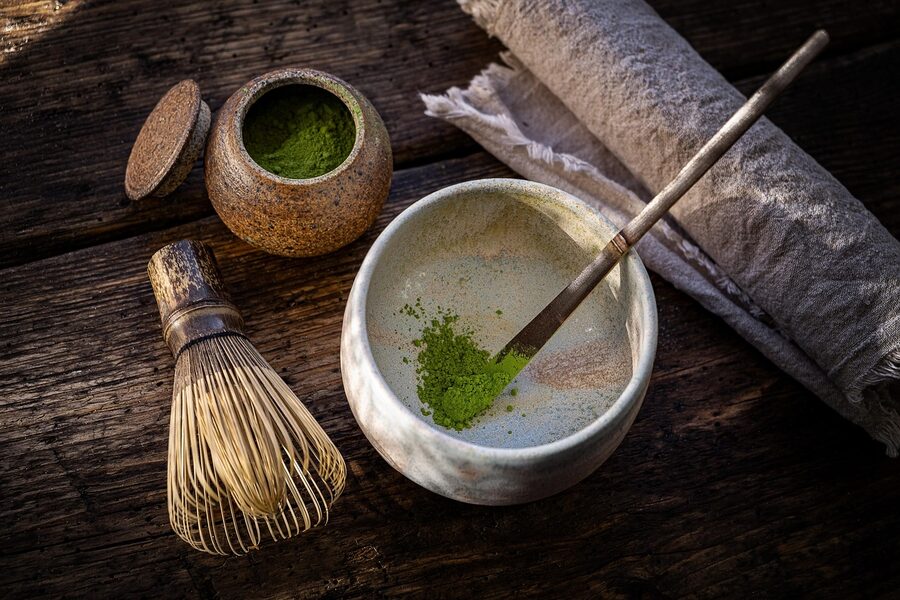
Matcha grew up in the hills around Uji, just south of Kyoto city. The tea ceremony, the full 3-hour formal version, is not what I’m recommending here. What I am recommending is sitting in a tea room for twenty minutes, drinking a bowl of thick matcha with a single wagashi sweet on the side, and paying ¥1,000-¥1,500 for the privilege.
Nakamura Tokichi has two locations that matter: the original in Uji (a 20-minute JR Nara Line ride from Kyoto Station to Uji station) and a branch in Gion near Yasaka Shrine. Both do matcha parfaits, a tall glass of matcha ice cream, jelly, castella, whipped cream, red beans, for ¥1,500-¥1,800. The Uji original is the pilgrimage; the Gion branch is the practical version. The Gion branch runs a queue on weekend afternoons; go before 11:00 or after 15:30.
Kagizen Yoshifusa, Gion. A traditional sweet shop with a serene tea room at the back. Their speciality is kuzukiri, strands of kudzu starch served cold in a box with black sugar syrup. ¥1,300. It tastes like something between noodles and jelly, and when you try to explain why that’s wonderful, you find you can’t. Go in, sit on a cushion, drink matcha, eat kuzukiri. That’s an hour in Kyoto you won’t forget.
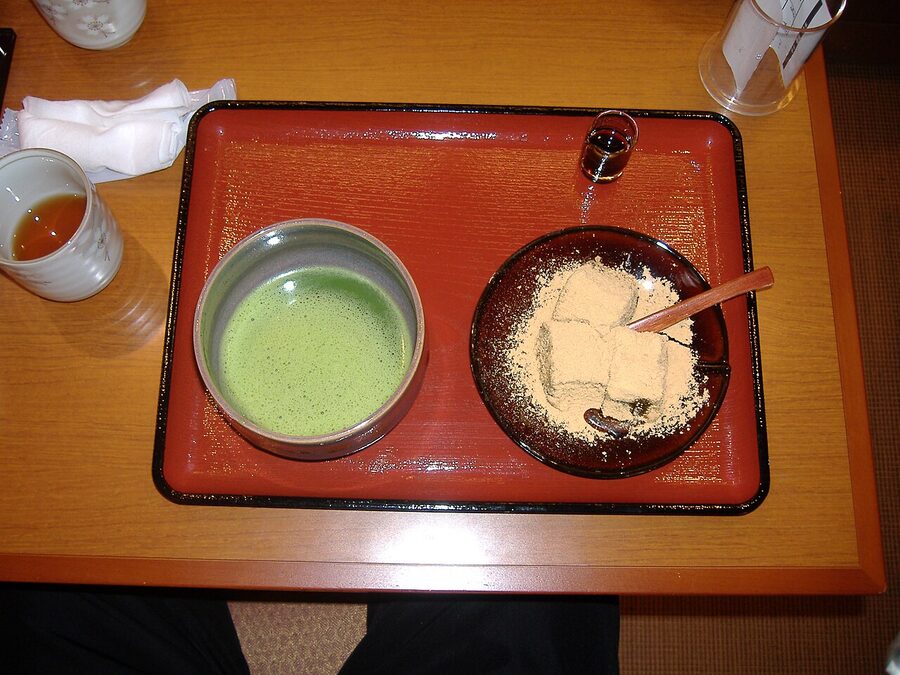
Warabi mochi is the dessert nobody outside Japan really talks about and you should. It’s made from bracken starch (warabi) rather than rice, so it’s jelly-soft rather than chewy like regular mochi, dusted in roasted soybean powder (kinako) and drizzled with black sugar syrup. A small cup at a street stall in Gion or along Ninenzaka is ¥400-¥600. Sit on a step, eat it with the tiny wooden pick they give you, and try to work out why you’ve never had this before.
Kushiage: Deep-Fried Everything on a Stick
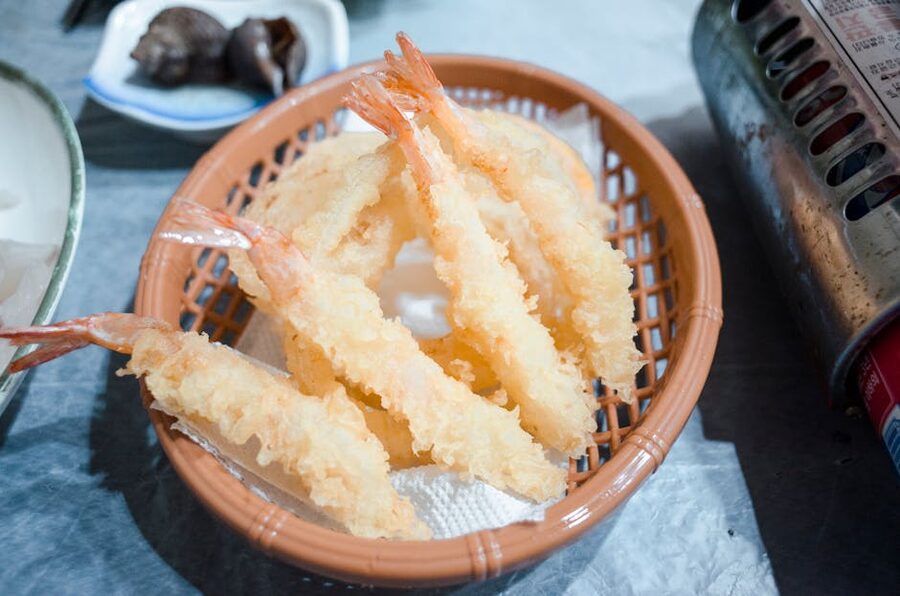
Kushiage is meat, fish, vegetables, cheese, basically anything, skewered, breaded in panko, deep-fried, and eaten one at a time with a communal pot of dipping sauce. You don’t double-dip. That’s the rule and the waiter will politely tell you once and never again.
It’s originally an Osaka thing, you’ll see it referenced in my Japan izakaya guide, but it’s alive and well in Kyoto, especially around Kiyamachi and Pontocho. Katsukura is a chain with a Kyoto location on Shijo-dori, which sounds like damning with faint praise but isn’t, the chain is consistent, reasonably priced (¥2,500-¥3,500 for a full set with rice), and good for a first time. You pick the skewers from a menu, they come out in flights of three, and you eat them hot.
For the counter experience, Rokukan and similar small places in Pontocho Alley do one-skewer-at-a-time kushiage where you point at the raw ingredients behind the counter and the chef fries them to order. ¥200-¥400 per skewer, and a satisfying dinner is 10-15 skewers plus a beer or a sake. Budget ¥4,000 per person.
Kyoto Coffee: The 100-Year-Old Kissaten
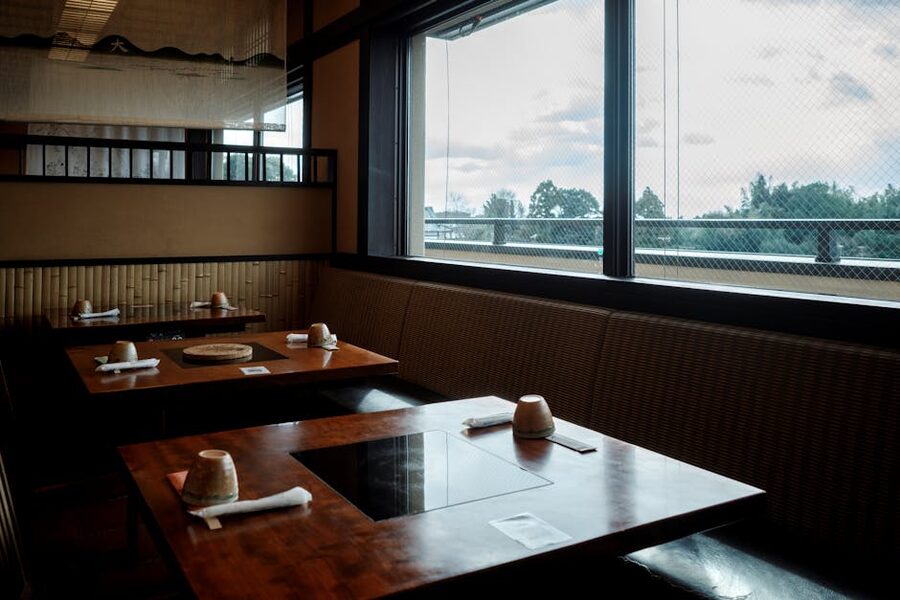
Kyoto has a coffee tradition older than most travellers realise. The Showa-era kissaten, café, was where salarymen and students of the 1930s-60s drank siphon coffee, read the paper, and smoked. The remaining ones in Kyoto are a pilgrimage for anyone who cares about that specific strand of Japanese café culture.
Inoda Coffee, main branch on Sakaicho-dori. Opened 1940. Mahogany-wood interior, jazz quietly playing, ¥700 for a cup of their house blend (called Arabian Pearl, roasted strong and served with cream already in it, if you want it black, you have to ask before they pour). The morning set with thick-cut toast, boiled egg and a small fruit plate is ¥1,200. A 6-minute walk from Karasuma-Oike Station on the subway Karasuma and Tozai line junction.
Smart Coffee, Teramachi arcade. Opened 1932. Dark, low, and mostly unchanged. Their hotcakes (fluffy, tall, topped with butter and syrup) are the thing to order at breakfast, ¥800. Quicker to get in here than Inoda.
Francois Salon de Thé, near Shijo-Kawaramachi. Less famous, a kissaten done up like a 1930s Paris tea room with art-deco stained glass. ¥900 for coffee and a small cake. The crowd tilts older, the mood is hushed. Go for the atmosphere.
None of these are cheap. Coffee at a Kyoto kissaten is ¥650-¥900 when a 7-Eleven coffee is ¥150. What you’re paying for is the hour you spend there.
Set-Lunch Shokudo: The ¥900 Meal That Wins
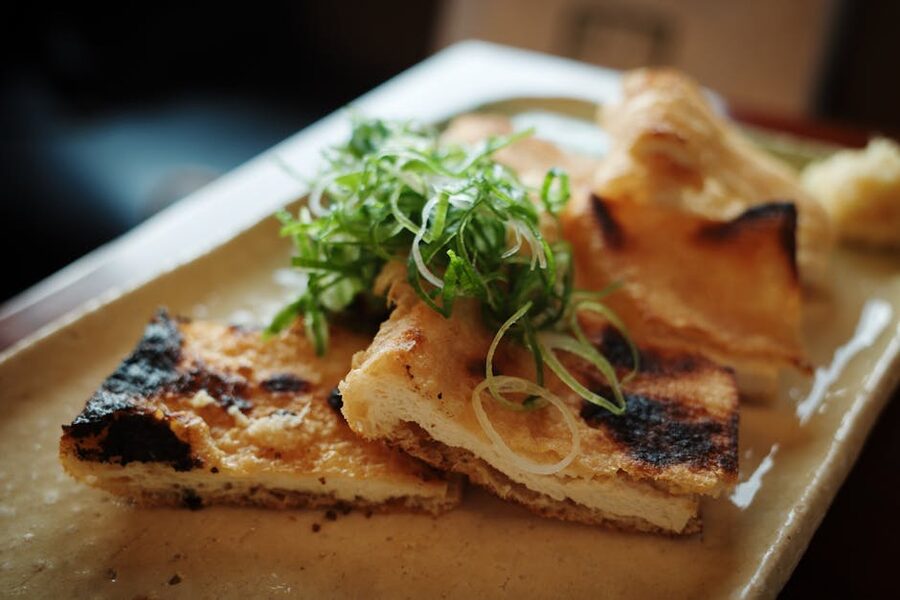
Shokudo (食堂) literally means “dining hall”, the modest, unfashionable, family-run lunch place where you get a set meal for ¥800-¥1,200. These are everywhere in Kyoto and they’re the single best value you’ll find. A typical set: grilled fish (salmon, mackerel, saba), rice, miso soup, pickles, a small simmered vegetable side, sometimes a tiny dessert. You leave full. You spend less than you would at Starbucks.
The trick is to spot them. Signals:
Plastic food samples in the window with Japanese-only labels.
A noren curtain over the door in worn indigo.
A handwritten chalkboard outside listing three or four set meals.
No TripAdvisor sticker. No English menu visible.
Usually open 11:30-14:00 and then again for dinner 17:00-21:00, closed in between.
Two areas thick with them: the side streets behind Kawaramachi between Shijo and Oike, and the blocks west of Kyoto Station around Higashihonganji temple. Walk into the first one that looks busy with locals. You’ll do fine.
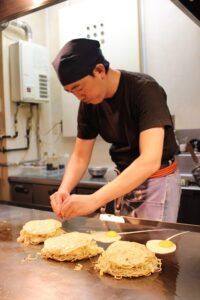
For something specifically Kyoto at lunch, look for Kyoto-style okonomiyaki (konamon), a thinner, crepier version than Osaka’s, at places around Sanjo and Pontocho. Or nishin soba, buckwheat noodles topped with a simmered herring, which is a Kyoto classic for ¥900-¥1,200. The sweetness of the herring against the bonito broth is strange at first and addictive by the second bowl. For regional food contrasts across China and Japan, I’ve written more on that in a regional food map of China; Japanese regionalism runs just as deep, and Kyoto’s noodle-broth balance is to Kansai what Sichuan’s chilli is to southwest China.
Where to Drink: Pontocho, Kiyamachi, Ishibei-koji
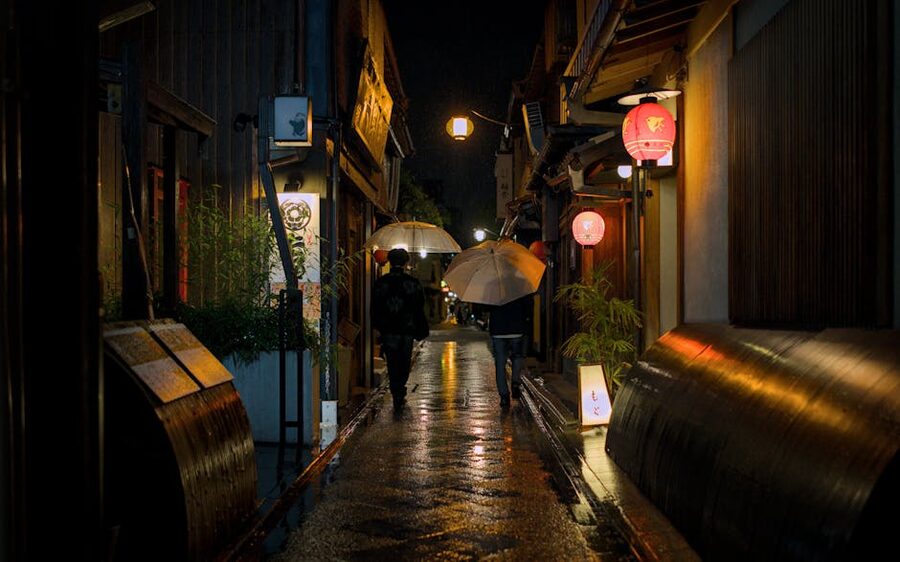
Three drinking districts, all walkable from Sanjo Station on the Keihan line. Each one has a different mood.
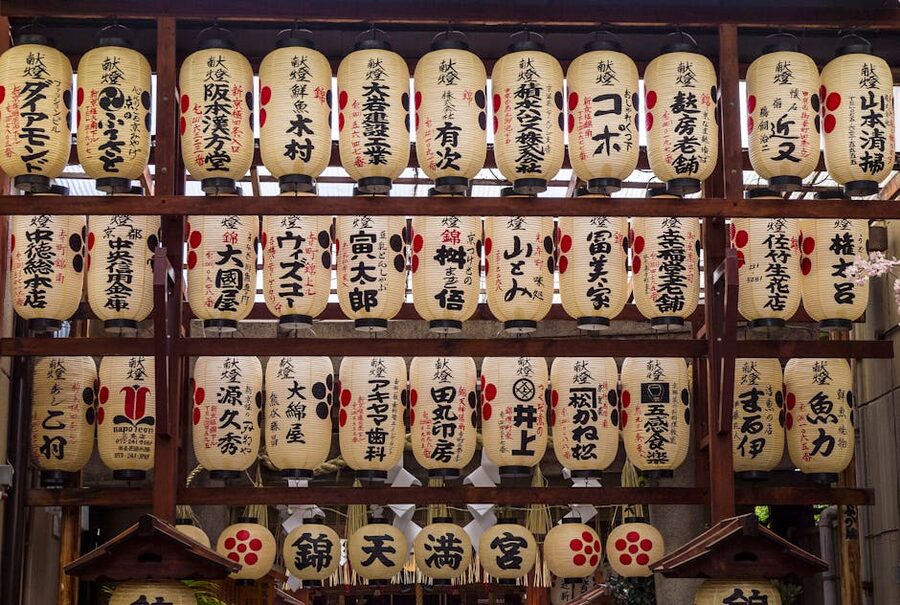
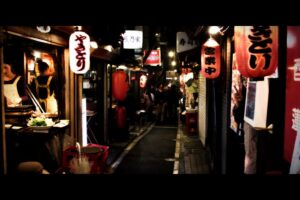
Pontocho Alley is the narrow lantern-lit alley that runs parallel to the Kamo River, from Sanjo-dori down to Shijo-dori. 500 metres long, maybe 2 metres wide. Both sides are lined with restaurants and bars, some ¥5,000 neighbourhood izakaya, some ¥30,000-per-person kaiseki houses. In summer the restaurants put out “yuka” wooden decks over the river, and you can eat outside over moving water, which is the actual Kyoto thing to do in July and August. Walk the length of Pontocho once in the evening, pick the place that looks right for your budget, and don’t overthink it.
Kiyamachi runs one block west of Pontocho, along a small canal. It’s louder, younger, cheaper. More standing bars, more ramen, more second-floor places where students and salarymen drink. This is where a lot of the izakaya-style obanzai counters are. Menami is on Kiyamachi. A typical night out here is ¥3,000-¥5,000 per person including drinks.
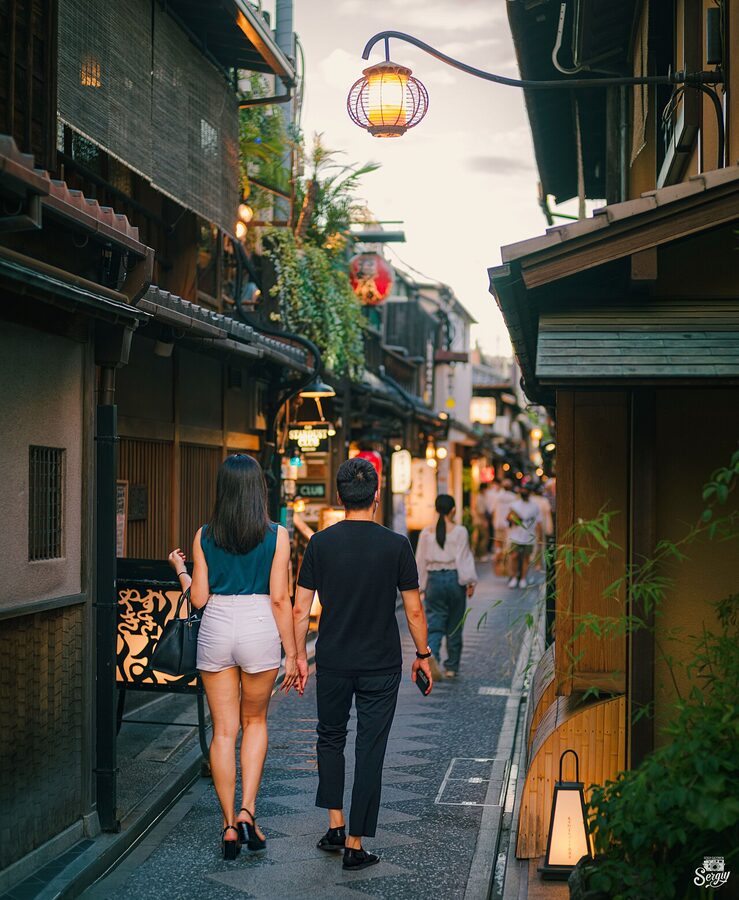
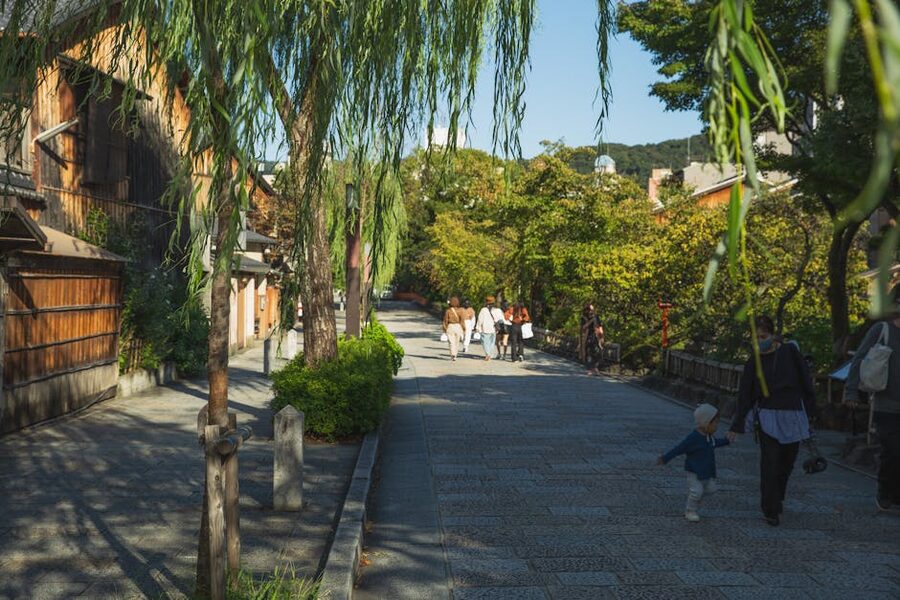
Ishibei-koji is the hidden one. A 4-minute walk east from Yasaka Shrine, down a cobbled lane behind Maruyama Park, this is where the old wooden machiya houses have been converted into high-end sake bars and kaiseki restaurants with no sign on the door. Seriously, many have just a small noren curtain and a name-card. You need reservations or a Kyoto-local who can introduce you. The moment I walked down it at 20:00 on a Friday and heard nothing but the sound of my own footsteps on stone was one of the quieter moments I’ve had in any city. This is not a budget spot. But it exists.
For standing sake bars with no reservation needed, Kyoto Beer Lab near Gojo and Sake Bar Yoramu off Nijo-dori both serve tasting flights of regional sake for ¥1,500-¥2,000 and will walk you through what you’re drinking.
The Izakaya Section of the Evening
Kyoto izakaya are quieter than Tokyo or Osaka ones. The volume is different, the lighting is softer, the seats sometimes lower. For a full primer on how to order and what to drink, I wrote a dedicated Japan izakaya guide; the rules there all apply here, just turn the volume down two notches.
Three Kyoto-specific izakaya picks:
Menami, already mentioned above for obanzai, but just as good as a drinking counter. Point at the counter dishes, order sake, stay three hours.
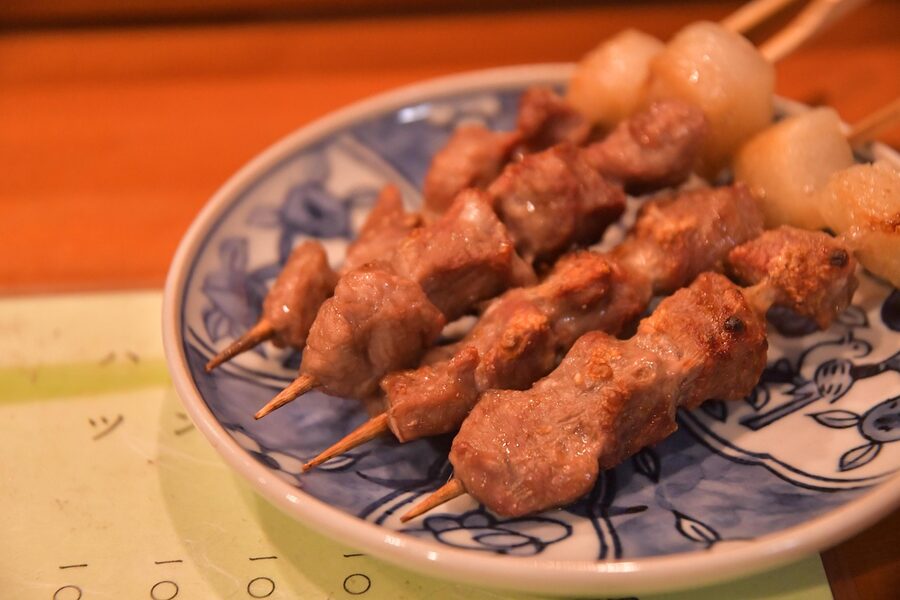
Torikushi yakitori in Kiyamachi, charcoal-grilled chicken skewers, neck meat, liver, cartilage, skin. ¥200-¥500 per skewer. Ten skewers plus beer is ¥3,000-¥3,500. They don’t take reservations for under four people; go early or late.
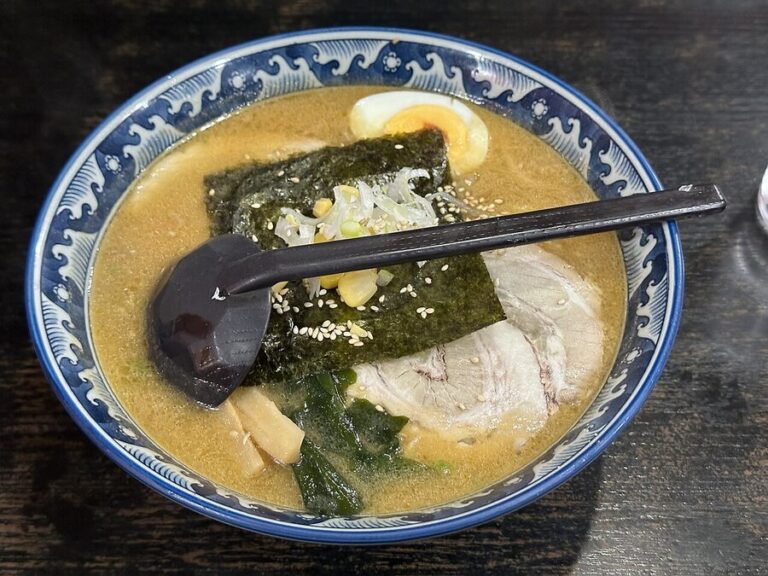
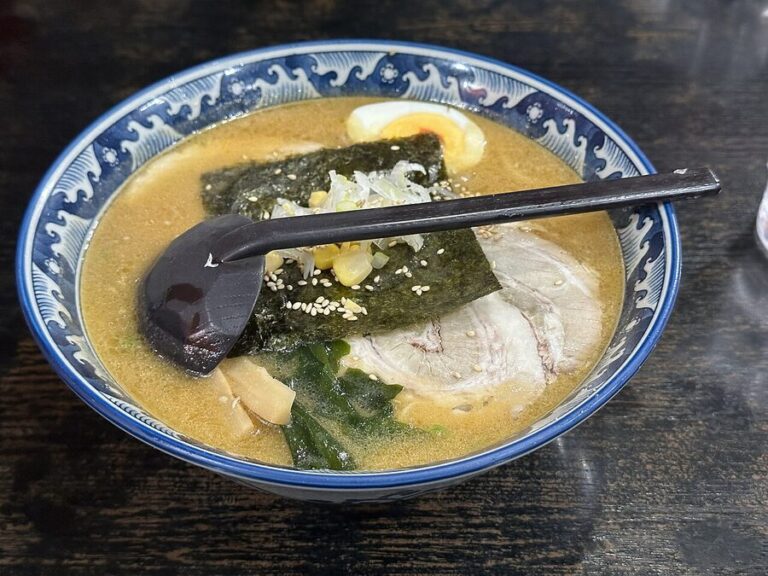
Gogyo ramen, south of Shijo, not strictly an izakaya but open late, serves their signature burnt-miso ramen until 24:00. Good final stop of the night. ¥1,200 a bowl.
Ichijoji: The Ramen Battleground You Should Know About
If you’ve been told “Kyoto isn’t a ramen city”, wrong. Ichijoji is a neighbourhood in northeast Kyoto, a 15-minute ride on the Eizan Railway from Demachiyanagi Station, and it has one of the densest concentrations of ramen shops in Japan. Kyoto University students made it famous; the university’s proximity kept prices low and experimentation high.
The classic Ichijoji lineup:
Menya Gokkei, chicken paitan ramen, thick and creamy, ¥1,100. Ten-minute wait at lunch is common, worth it.
Gogyo (same chain as the central-Kyoto one above but the Ichijoji location is original), burnt-miso ramen, the signature bowl, ¥1,200.
Takayasu, tonkotsu ramen with a heavier Kyoto-style background-soy broth, ¥900.
If you’ve got a free afternoon, take the train up, eat ramen at two places back-to-back, walk it off around Manshu-in temple, and come back. It’s a half-day that most travellers miss.
The Practical Layer
Reservations. Every kaiseki restaurant above ¥8,000 needs a booking, usually 2-3 weeks ahead, often via hotel concierge since many don’t take direct foreign bookings. Giro Giro, Tousuiro, Okutan, Shigetsu, book these before you land. Walk-ins work at lunch for most mid-range places; walk-ins rarely work at dinner at Gion or Pontocho restaurants.
Cash. A lot of the older kissaten, small shokudo, and pickle shops still run cash-only. ATMs at 7-Eleven work with foreign cards; the one inside Kyoto Station opposite platform 0 is open 24 hours. Carry ¥10,000-¥15,000 in cash per day if you’re eating mostly at small places.
Buses over subways. Kyoto’s subway is skeletal, two lines that barely cover the city. The bus network is what everyone uses. Bus 100 and 206 run through Higashiyama for the temple-front restaurants. Bus 5 runs to Nanzen-ji. Bus 204 and 205 head north to Daitoku-ji. A one-day bus pass is ¥700 and will pay for itself by the third ride. Get one at Kyoto Station bus information counter or any major hotel lobby. For Arashiyama, take the JR Sagano Line or the Randen tram instead, they’re faster than the bus.
Budget ranges. What you should actually plan to spend on food per day:
Backpacker: ¥3,000 per day. Shokudo lunch, konbini breakfast, ramen dinner, one ¥150 coffee.
Mid-range: ¥6,000-¥8,000 per day. Nakamura Tokichi matcha, obanzai dinner at Menami, kaiseki lunch at Giro Giro once during the trip.
Upmarket: ¥15,000-¥25,000 per day. Yudofu at Okutan, kaiseki at Kikunoi one night, Inoda for breakfast, shojin at Shigetsu for lunch.
A few other contrasts worth keeping in your head. Kyoto is not Osaka, Osaka is louder, cheaper, messier, and the food is sauce-forward and portion-heavy; in comparison Kyoto is precise, quiet, and vegetable-forward. If you want both sides of Kansai food culture, spend two days in each city, they’re 15 minutes apart on the JR Special Rapid. The contrast is the whole point. And Kyoto is not Tokyo, Tokyo neighbourhood food is a thousand different scenes layered on top of each other; Kyoto’s food scene is one unified tradition that’s been polishing itself for 1,200 years. Different pleasures. Don’t compare them. And if you’re travelling into Kyoto from elsewhere in Asia, from Hong Kong on a long holiday, say, the precision-and-restraint angle reads differently after you’ve had three days of Hong Kong dim sum. You notice what Kyoto isn’t doing. You notice what it does.
What I’d Actually Do in Three Days
Day one: Arrive, drop bags. Lunch at a shokudo in the grid behind Kawaramachi, whichever one looks busy, ¥950. Nakamura Tokichi Gion for matcha parfait at 15:00 before the queue hits. Walk through Gion to Ishibei-koji for the silent alley at 17:30. Dinner at Menami on Kiyamachi, 18:00 sharp before it fills, obanzai counter style with two beers, ¥3,500 per person.
Day two: Nishiki Market at 09:30 on a weekday. Buy tsukemono to take home. Tako tamago on a stick. Coffee at Inoda main branch at 11:00. Bus 100 to Nanzen-ji for yudofu lunch at Okutan, ¥3,800 set in the garden room. Walk the Philosopher’s Path north, pick up a warabimochi from a street stall, drift back to the hotel. Evening drink at Sake Bar Yoramu to try three regional sakes.
Day three: Randen tram out to Arashiyama. Shigetsu shojin ryori at Tenryu-ji for lunch, ¥3,500 set. Walk the bamboo grove on a full stomach. Train back in the afternoon. Giro Giro Hitoshina at 19:30 for the ¥4,500 eight-course kaiseki, booked two weeks ago. One last walk down Pontocho before bed.
Total food spend: around ¥22,000 per person across three days if you skip the splashy kaiseki, closer to ¥45,000 if you do Giro Giro and one other kaiseki lunch. Compare that to the single ¥22,000 kaiseki I blew on night one and didn’t remember a week later.
The obanzai I still remember.


.JPG)


.jpg)