
3-Day Lijiang Itinerary: Old Town, Jade Dragon, and the Naxi Country of Yunnan
The flight into Lijiang does something odd to your sense of scale. You leave Kunming at 1,900 metres of elevation and 45 minutes later you’re descending toward a broad basin at 2,400 metres, surrounded by a horizon-wide wall of 5,000-metre peaks. Your ears pop. You step off the plane and the air feels thin and cool in a way that suggests you’ve gone somewhere entirely other than where the ticket said. Welcome to Yunnan. This is a three-day guide for the traveller who’s heard Lijiang is “a cute Unesco old town” and has no idea what else is here.
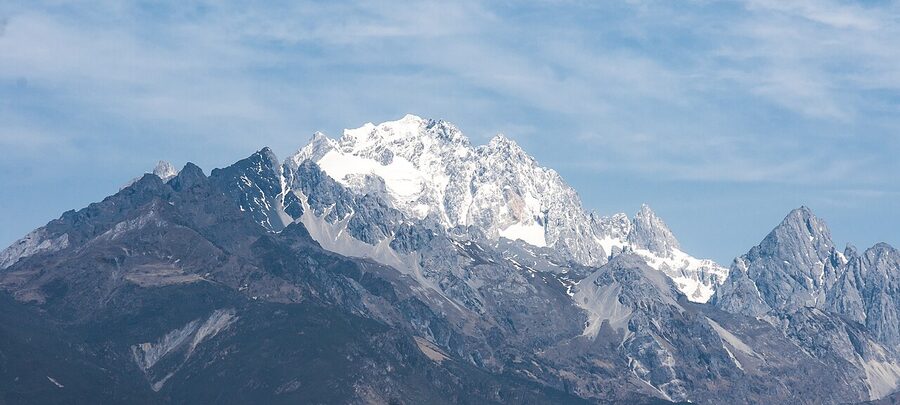
The short version: Lijiang is three days minimum. One day for the old town itself and the surrounding Naxi cultural sites. One day for Jade Dragon Snow Mountain and the glacier cable car at 4,500 metres. One day either for the Black Dragon Pool and a morning in Shuhe (the quieter old town next door) or for a half-day out to Tiger Leaping Gorge if you’re feeling adventurous. You could do it in two days if you skip Tiger Leaping Gorge. You cannot do it in one.
If you’re arriving on a weekend visa run from Shenzhen (which is how I first went), you’ve got one additional piece of travel friction to plan around: Lijiang sits at 2,400m and Jade Dragon’s cable car top is at 4,506m, which puts you firmly in altitude-sickness territory. I’ll come back to this, because it’s the single most important practical detail in the trip and the one that most guides skip.
In This Article
Why Lijiang matters more than it first seems
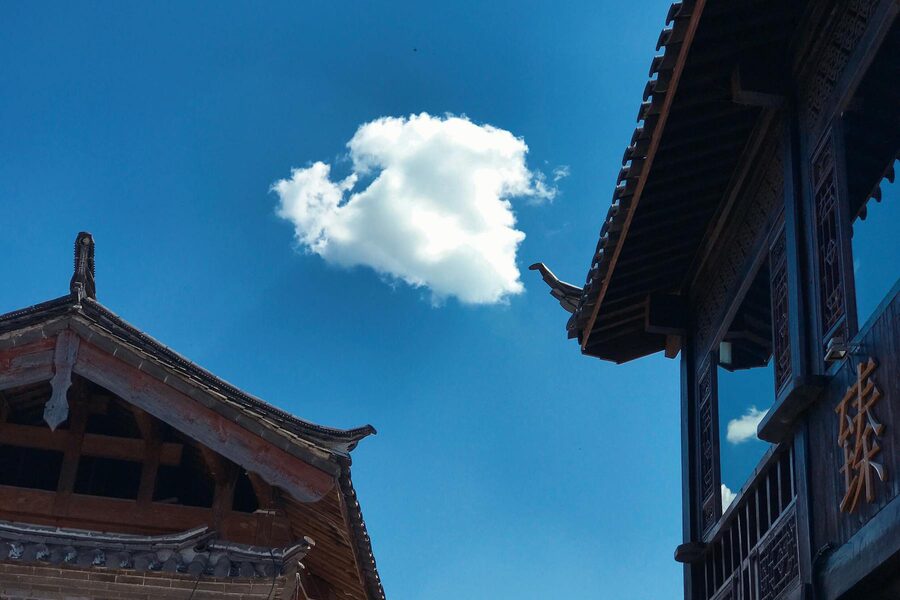
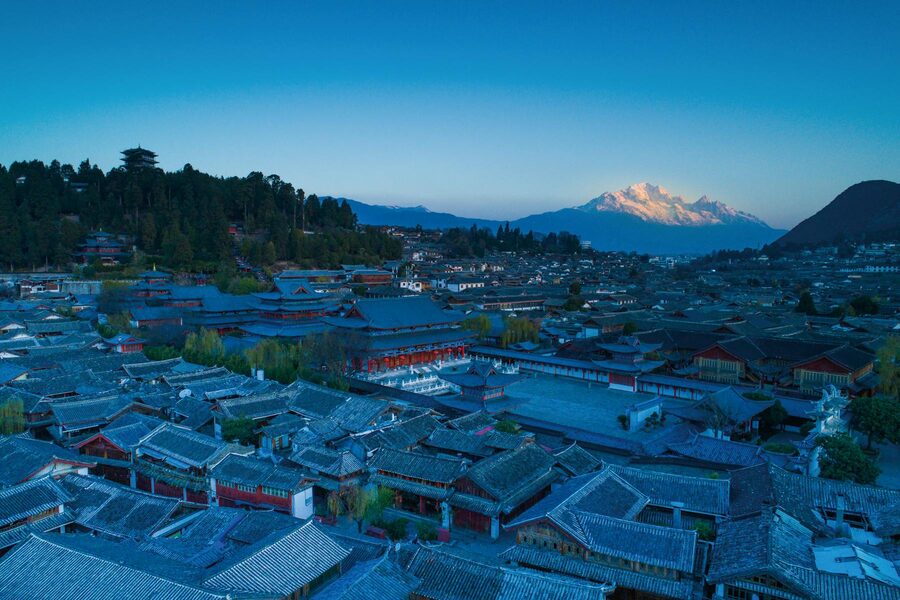
Most Chinese cities feel, to a foreign visitor, like variations on a theme, skyscrapers, glass plazas, eight-lane roads. Lijiang is different. It’s a Unesco-protected old town built between 1271 and 1279, during the Yuan Dynasty, by the Naxi minority people who trace their lineage back to a Tibetan-adjacent ethnic group with their own script, their own religion (a form of Bon-Buddhist syncretism called Dongba), and their own architecture. The old town survives largely intact, tiled roofs, stone-paved alleys, a network of canals that were the water supply for eight hundred years. Walk it and you’ll see immediately what the UNESCO committee saw in 1997.
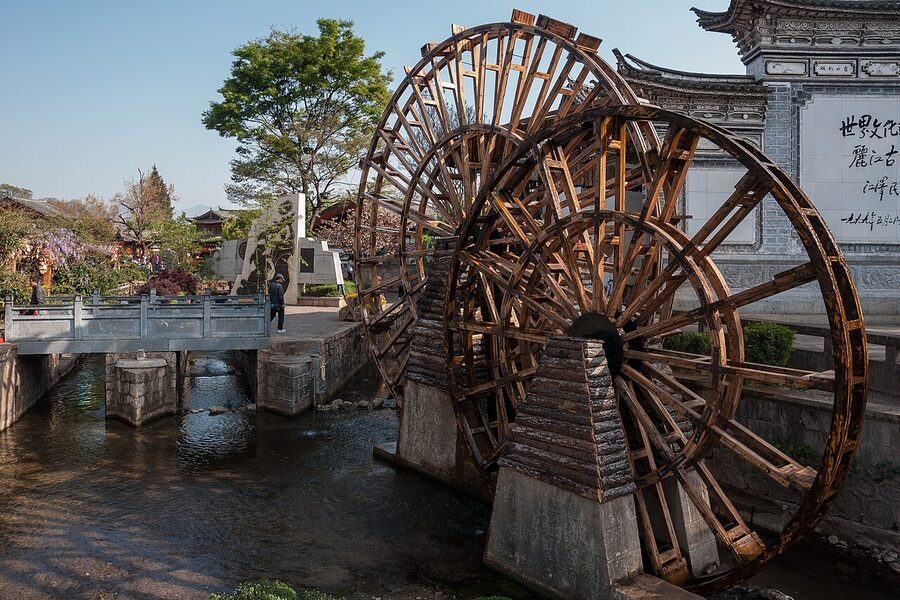
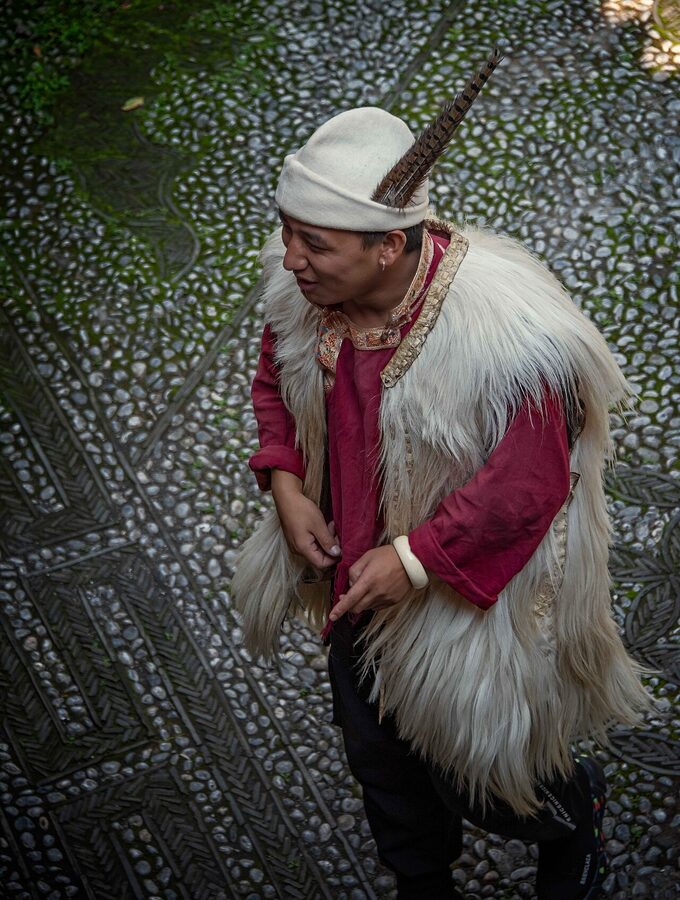
The Naxi themselves are the second reason to come. They’re one of the 55 officially recognised ethnic minorities in China and they have a distinct culture, Dongba pictograph script still in active (if fragile) scholarly use, traditional Naxi music that’s been preserved in a few specialist halls, a matrilineal social structure that persists in some of the surrounding villages. The old town is partly restored, partly touristy, but the surrounding Naxi communities are still living cultures, and if you take a day to get out to Baisha (ancient capital of the Naxi) you can see it operating without the tourism overlay.
And then there’s the geography. Yunnan is where China meets Tibet, Myanmar, Laos, and Vietnam, and the topography here goes big, the Hengduan mountain system, three parallel rivers (the Yangtze, Mekong, and Salween, all running within 100km of each other before they split apart), Tiger Leaping Gorge (one of the world’s deepest canyons), and the permanent ice cap of Jade Dragon. It’s a completely different China from the karst country I’ve written about in Yangshuo or the megacity energy of Shenzhen.
Getting there, and the altitude warning
Fly. There’s no practical rail option; the nearest high-speed rail station is in Kunming, and the onward journey is a full day on regional rail plus a 3-hour bus. Lijiang Sanyi International Airport has direct flights from Shenzhen (2h45m), Guangzhou (2h30m), Shanghai (3h45m), Beijing (3h50m), and Hong Kong (via Kunming). Budget ¥800–1,600 for the round trip from Shenzhen in shoulder season. The airport is 30km from the old town; a taxi is ¥80–120 and an airport shuttle bus is ¥20.
Altitude considerations. Lijiang is at 2,400m. Most visitors feel absolutely fine at this elevation, mild headache, slight breathlessness on stairs, nothing worse. But if you’re flying in from sea level (Shenzhen, Hong Kong, Singapore, anywhere coastal), your first 24 hours need to be low-intensity. Drink a lot of water. Don’t drink alcohol on the arrival night. Skip the hotel gym. Plan your Jade Dragon Snow Mountain day (which tops out at 4,506m) for day 2 or 3, not day 1, your body needs the intervening hours to start adjusting. Altitude sickness at 4,500m can be genuinely dangerous; I saw one person in my group need emergency oxygen on the cable-car observation deck because they’d ignored the acclimatisation advice.
Symptoms to watch for (above 3,500m): persistent headache, nausea, breathlessness at rest, confusion, dry cough. If any of these persist or worsen, descend. The Jade Dragon cable-car station has an oxygen bar and emergency oxygen canisters; use them if needed and descend. Don’t push through it.
I’ve written more about this broader topic in another article, if you’re heading to high-elevation destinations in China more than once, acclimatisation strategy matters. For Lijiang specifically, give yourself a gentle first day.
Day 1, the old town, at walking speed
Your first day should be spent entirely in Lijiang Old Town (Dayan), which is the original Unesco-protected area and the heart of the Naxi district. Allow the day. Don’t try to rush it. The old town is roughly 1 square kilometre of stone-paved alleys, canals, and courtyard houses; at walking pace you’ll want 6–8 hours to do it right.
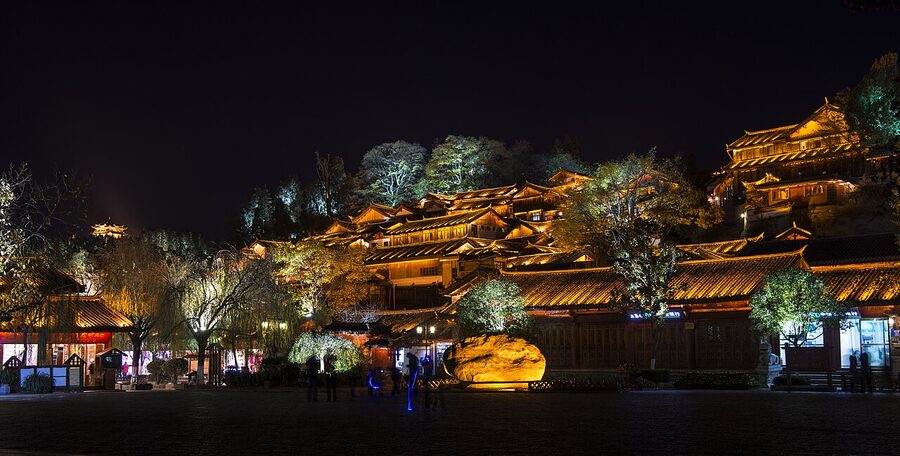
Start at the Sifang Square (四方街, Sìfāng Jiē), the central plaza at the old town’s physical and social heart. This is where the Naxi traders have met for centuries; today it’s where most tour groups gather, so come either early (before 9am) or late (after 6pm) to see it without the crowds. Spin off into the alleys in any direction. The four streets radiating from Sifang are the old thoroughfares, Xinhua Street south, Mishi Alley north, Wuyi Street east, and every alley feeds into smaller alleys. You cannot really get lost; the layout follows the downhill flow of water so if you walk downhill long enough you’ll hit the main canal and can navigate from there.
Key stops: Lion Hill Park (狮子山, Shīzi Shān) on the northwest side of the old town, a small wooded hill with a pavilion at the top that gives you the classic panorama of tiled rooftops fading into the Jade Dragon Snow Mountain behind. ¥50 entry. Best light is 5pm in summer, 4pm in winter. Mu Family Mansion (木府, Mùfǔ), a restored compound at the south end of the old town, the Mu family ruled Lijiang for 22 generations from the 13th century until Qing-dynasty administrative reform in the 1720s, and the mansion complex is a Qing-era rebuild but modelled on the original layout. ¥60 entry. Allow 90 minutes.
For lunch, find a courtyard restaurant (any Naxi-style place with seating in an open courtyard around a fountain, there are dozens) and order Naxi barley cakes (a chewy, griddled bread eaten with honey or yak butter tea), suan cai yu (sour pickled-cabbage fish, a Yunnan specialty, not Sichuanese despite the name), and chicken with crossing-the-bridge rice noodles (过桥米线, guò qiáo mǐxiàn), which is Yunnan’s signature noodle dish. The broth arrives boiling hot with an oil layer on top that keeps it at near-boiling temperature; you add the raw meat and noodles yourself and they cook in the broth in about 60 seconds. ¥40–60 a head for lunch.
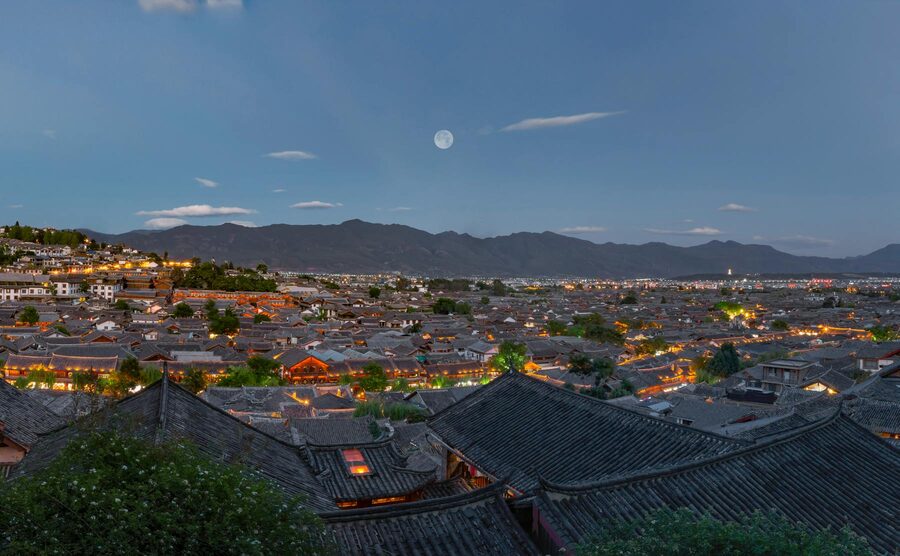
In the evening, two options. If you’re up for it, the Naxi Ancient Music Concert at the Naxi Ancient Music Hall runs nightly at 8pm (roughly ¥160 ticket). The ensemble is mostly elderly musicians playing instruments and repertoire that predate Han Chinese influence, Dongjing music originally from the Tang Dynasty, preserved in this specific valley across eight hundred years. It’s a small performance, intimate, and genuinely rare. If musical cultural tourism isn’t your thing, just walk the old town after dark, the streets are quieter, the lanterns illuminated, the whole place visually transformed.
Day 2, Black Dragon Pool and Jade Dragon Snow Mountain
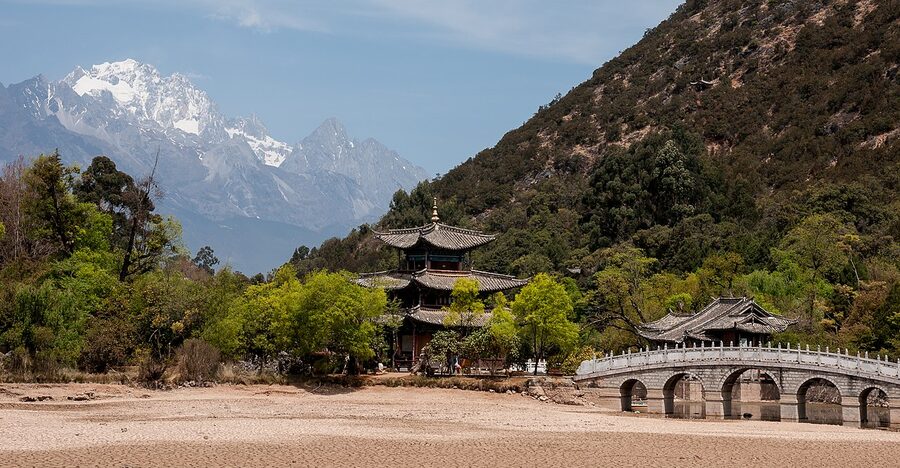
Morning at Black Dragon Pool (黑龙潭, Hēilóngtán), a spring-fed pool just north of the old town that produces the canonical Lijiang photograph: the Five-Phoenix Tower rising from the water, Jade Dragon Snow Mountain on the horizon behind. It’s a 20-minute walk from Sifang Square or a ¥15 taxi. Entry ¥60. Allow 90 minutes. The best photo position is on the marble bridge at the north end of the pool, shooting south-east toward the mountain; early morning light is best, ideally before 9am when the glare off the water isn’t yet harsh.
After Black Dragon Pool, transfer to the Jade Dragon Snow Mountain scenic area, which is a 40-minute drive north of Lijiang (taxi ¥80–120, or via organised tour for ¥250–350 with cable-car ticket included, tours are usually the easier option). The mountain has three cable cars serving different peaks. The headline is the Glacier Park cable car, which rises to 4,506m and puts you at an observation deck with direct views of the glacier and the mountain’s main ridge. The entrance fee (¥100), cable-car ticket (¥170), and the eco-bus fee inside the scenic area (¥50) add up to about ¥320 per person. An oxygen canister (¥50) is worth it; the observation deck is windy, cold even in summer, and the altitude will slow you down.
Practical advice: do the cable car in the morning before the cloud builds up. By 2pm the summit is frequently socked in with cloud and your view of the glacier vanishes. Start from Lijiang by 8am, be on the cable car by 10am, and you’ll usually have clear visibility. Bring layers, it’s 15-20°C colder at the top than at the base. Sunblock is essential (thin air + high UV + snow glare = sunburn in 30 minutes). Sunglasses likewise.
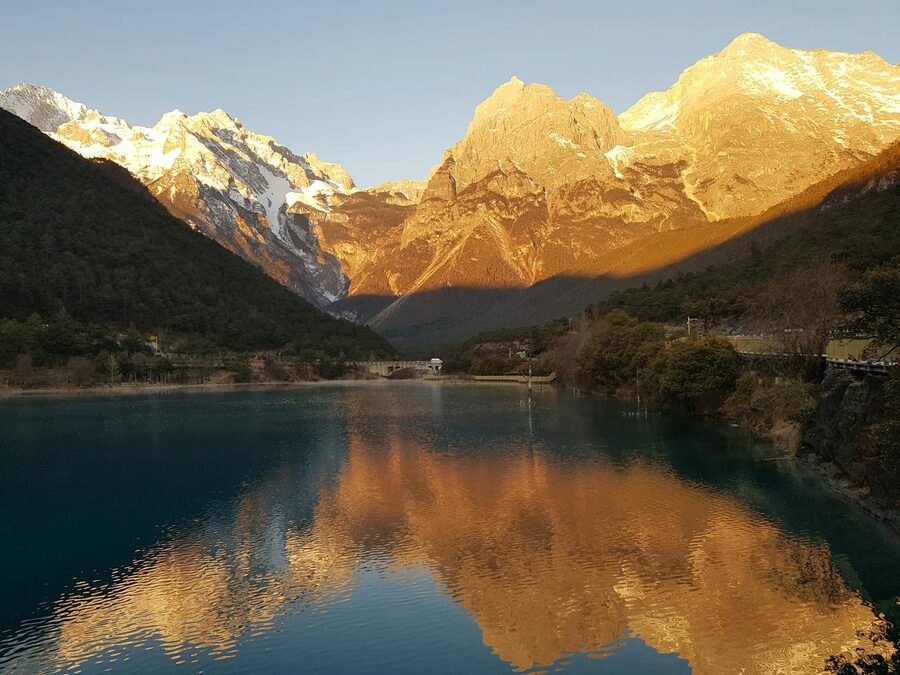
After the cable car, the eco-bus route through the scenic area also takes in Blue Moon Valley (蓝月谷, Lán Yuè Gǔ), a series of turquoise lakes at the base of the mountain fed by glacier meltwater, and Spruce Meadow, a high alpine pasture with a small ski facility. Both are scenic stops but neither requires more than 45 minutes.
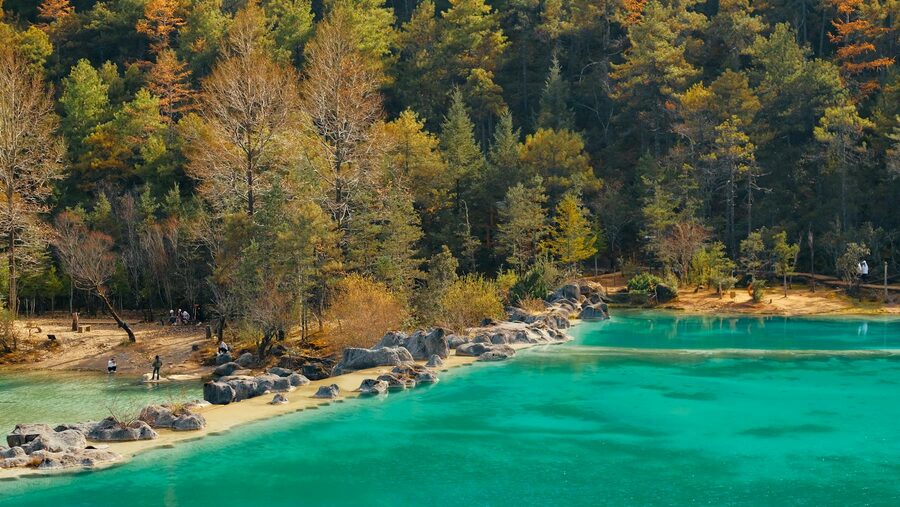
You’ll be back in Lijiang by 5pm. Dinner in the old town; early night. Day 2 has been physically demanding and day 3 needs you up early.
Day 3, Shuhe or Tiger Leaping Gorge
You’ve got two strong options for your third day. Pick based on energy levels and travel preference.
Option A, Shuhe Old Town (束河古镇). Shuhe is Lijiang’s smaller, quieter sister, another Unesco-listed Naxi settlement about 6km north-west of Lijiang, reached by a ¥15 taxi or the #11 city bus. It’s less crowded, less commercialised, and has more of the quiet-mornings feel that Lijiang Old Town loses under peak tourism. Allow half a day. The Tea-Horse Road Museum there is genuinely excellent, the Tea-Horse Road was the thousand-year-old trade route that carried Yunnan tea to Tibet and Tibetan horses to the Chinese interior, and Shuhe was one of its key waystations. Museum is ¥40, allow 60 minutes.
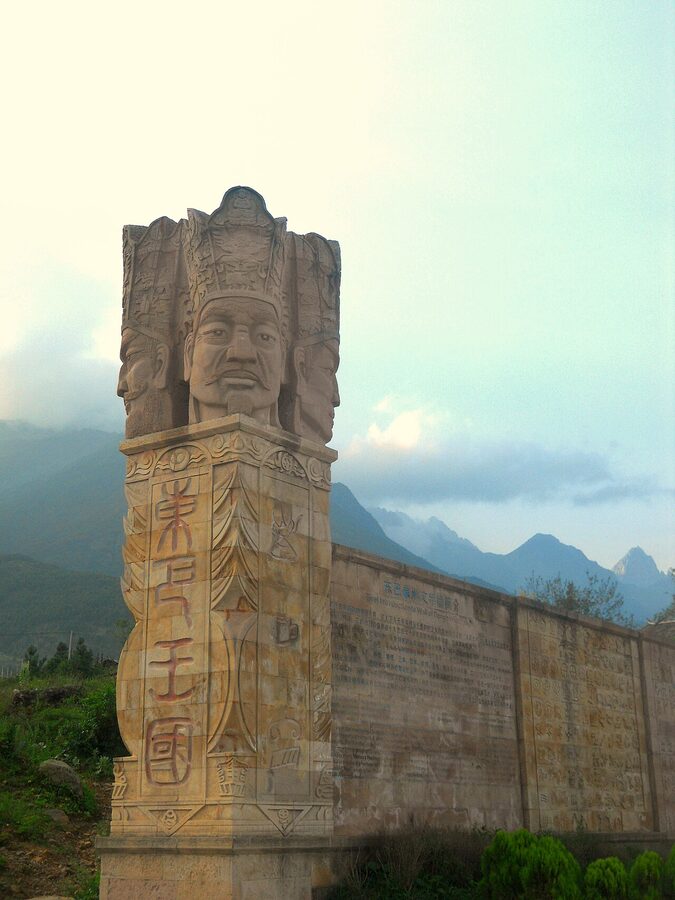
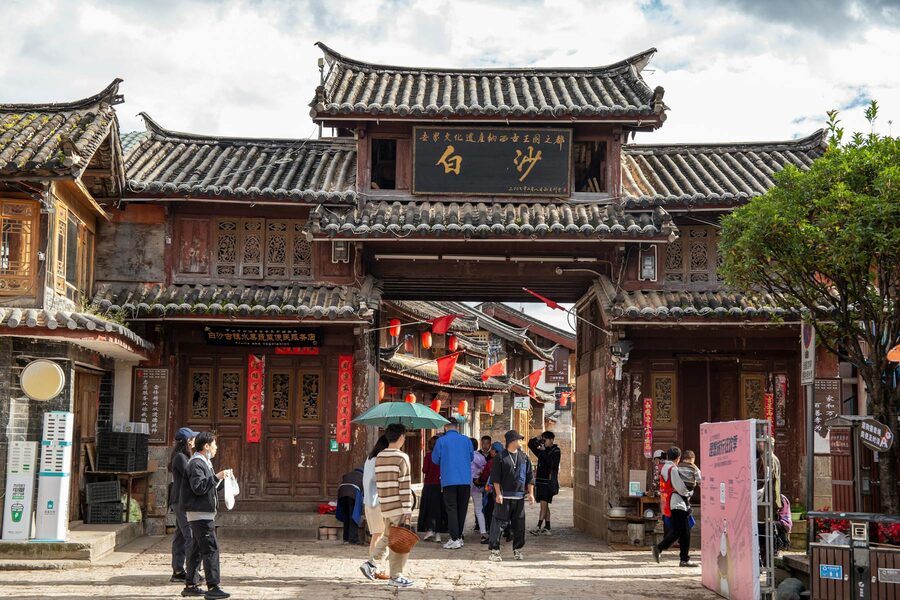
If you do Shuhe in the morning, pair with the Naxi village of Baisha (白沙古镇) in the afternoon, another 10 minutes’ drive further north. Baisha was the pre-Ming capital of the Naxi kingdom and is the quietest of the three old towns, with a street of Ming-dynasty frescoes at the Baisha Murals Hall that are genuinely art-historical (¥50 entry, allow 45 minutes). If you want a single day that shows you the Naxi cultural spectrum without the Jade Dragon altitude stress, Shuhe + Baisha is it.
Option B, Tiger Leaping Gorge (虎跳峡, Hǔ Tiào Xiá). This is the adventure-day option. Tiger Leaping Gorge is a 16-kilometre section of the Yangtze river 60km north of Lijiang, squeezed between Jade Dragon Snow Mountain (east) and Haba Snow Mountain (west), with the river drop creating one of the world’s deepest canyons (3,790m from river to peak). The full two-day trek along the High Trail is a classic of Chinese adventure travel; for a single day, the low-trail observation platform at the Upper Gorge viewpoint is a 2-hour drive from Lijiang (¥400–600 for a car), and a 90-minute walk down and back gets you to the legendary “tiger leaping stone” where the river narrows to 25 metres between the mountains.
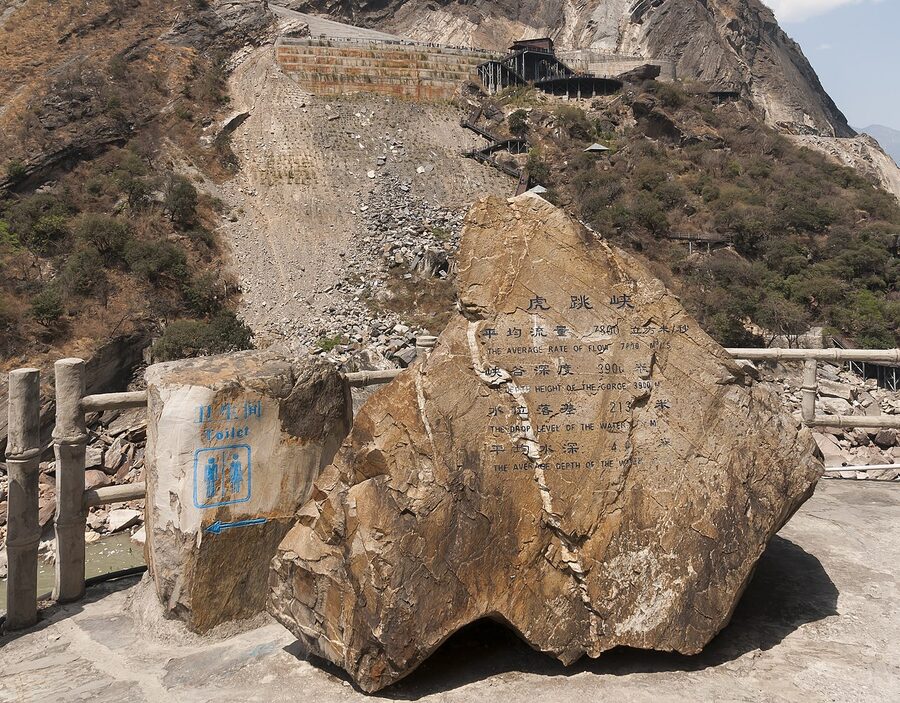
Tiger Leaping Gorge in a day is long (you leave Lijiang at 7am, return by 6pm) and the road gets twisty. Car sickness is common; sit in front, keep windows slightly open. The walk down to the viewpoint is well-paved but has about 400 steps each way; people with knee issues should be warned. For the truly ambitious, the two-day High Trail hike (staying overnight at Halfway Guest House) is one of the best treks in China, but it’s outside the scope of a three-day itinerary.
If this is your first trip to Yunnan and you’re time-limited, I’d lean toward Shuhe + Baisha. Tiger Leaping Gorge is spectacular but it’s also a one-off scenic shot, and the Naxi cultural context you get from Shuhe and Baisha ties in much more meaningfully with what you’ve been seeing in Lijiang Old Town itself.
Where to stay
Inside the old town, boutique guesthouses in restored courtyard houses. Prices ¥400–900 for a double; a few higher-end options (Amandayan, Banyan Tree Lijiang) run ¥2,000+. Stay inside the old town wall if you can, the atmosphere at 6am and 10pm is the point, and you can’t get it from an outside-the-wall hotel. Recommended: Lijiang Old Town Deer Park (mid-range, Naxi courtyard design), Blossom Hill (higher-end, small courtyard hotel), Lux Tide Hotel (newer, design-forward).
In Shuhe, if you want a quieter base with easier car access, Shuhe has 60+ guesthouses at slightly lower prices (¥300–700), and it’s a 15-minute drive to Lijiang for day trips. For a traveller who’s already spent time in busier Chinese cities, Shuhe is a calmer night’s sleep.
Food, specifically Yunnanese
Yunnan cooking isn’t in the Eight Great Traditions, and that’s part of what makes it interesting, it’s a cuisine shaped by borders (Myanmar, Laos, Vietnam, Tibet) rather than by central-Chinese tradition. The signature ingredients are mint and cilantro (used more like in Thai cooking than in Chinese), fresh mushrooms (Yunnan is one of the world’s great mycological regions, over 800 edible species come out of the local forests), and pu’er tea from the Xishuangbanna region to the south.
Specific dishes to try in Lijiang: crossing-the-bridge rice noodles (mentioned above, the signature Yunnan dish), Naxi BBQ (hotpot-adjacent but with Naxi herbs and smoked pork), wild mushroom hotpot (seasonal, best in summer, uses 15+ varieties of local mushrooms), steam-pot chicken (pressure-cooked in a specialised ceramic pot with medicinal herbs), and rushan (a Yunnan cheese, genuinely unusual in a Chinese cuisine where dairy is rare, grilled and served with honey as a snack). Most of these are hard to find outside Yunnan, so eat widely while you’re here.
For context on how Yunnanese fits into the broader Chinese food map, see my must-try food in China guide, which puts it alongside the Eight Great Traditions.
When to come
Lijiang has four weather seasons in concept and really two in practice. Dry and cool (October–April): daytime 10–18°C, nights can drop below freezing December–February, skies are clear, Jade Dragon’s snow cover is at its best. Wet and mild (May–September): 15–24°C daytime, frequent afternoon thunderstorms (especially July–August), Jade Dragon often hidden behind cloud.
The sweet spots are late October to early November (dry, clear, autumn foliage at Blue Moon Valley) and March–April (rhododendron flowering on the mountain slopes, wildflowers in the valleys, but altitude-related haze from burning fields in the surrounding agricultural area can cut visibility some days). Avoid the Golden Week (October 1–7) and Chinese New Year, the old town doubles in capacity and the atmosphere suffers.
Tying it back
Lijiang is one of the few Chinese destinations that genuinely delivers on the “different country” promise. You arrive from a glass-and-concrete megacity and you’re suddenly in a Ming-era old town, surrounded by a minority culture with its own script and its own matrilineal history, underneath a 5,596-metre mountain. The three days pass fast. Most travellers I know who came on a “quick Yunnan stopover” ended up extending. If you’ve got the visa flexibility and the weather cooperates, add a fourth day for Tiger Leaping Gorge or a fifth to fly south to Dali or Shangri-La. But even if you don’t, three days here delivers more per-day distinct experience than almost anywhere else in China.
For the pairing with the rest of the south, Yangshuo’s karst country, the food map of the mainland, the CBD contrast of a Shenzhen home base, my Shenzhen pillar guide, Yangshuo guide, and China food guide cover the loops. Lijiang fits best at the end of a longer trip, after you’ve already had the fast cities and the kart country, when you’re ready for something higher and quieter. Come in October. Go up the mountain on day two. Sit in a Dayan courtyard with a pot of pu’er tea and watch the lanterns come on. Best three days in China, bar none.



.jpg)
