
Sea World Shenzhen: The Ship, the Plaza, and the Expat Heart of Shekou
On my second night in Shenzhen, lost and hungry and trying to find dinner somewhere that didn’t involve pointing at pictures on a menu, I walked out of the Shekou metro station and into what looked, briefly, like a hallucination. A full-sized ocean liner, four decks high, sitting in the middle of a paved city plaza. Not beached. Not in a museum. Just there, with fairy lights strung up its mast, a row of teppanyaki restaurants under its stern, and a synchronised fountain show throwing jets of water at its hull to a soundtrack of Andrew Lloyd Webber. Welcome to Sea World, Shenzhen. Which, despite the name, is not a theme park and has no orcas.
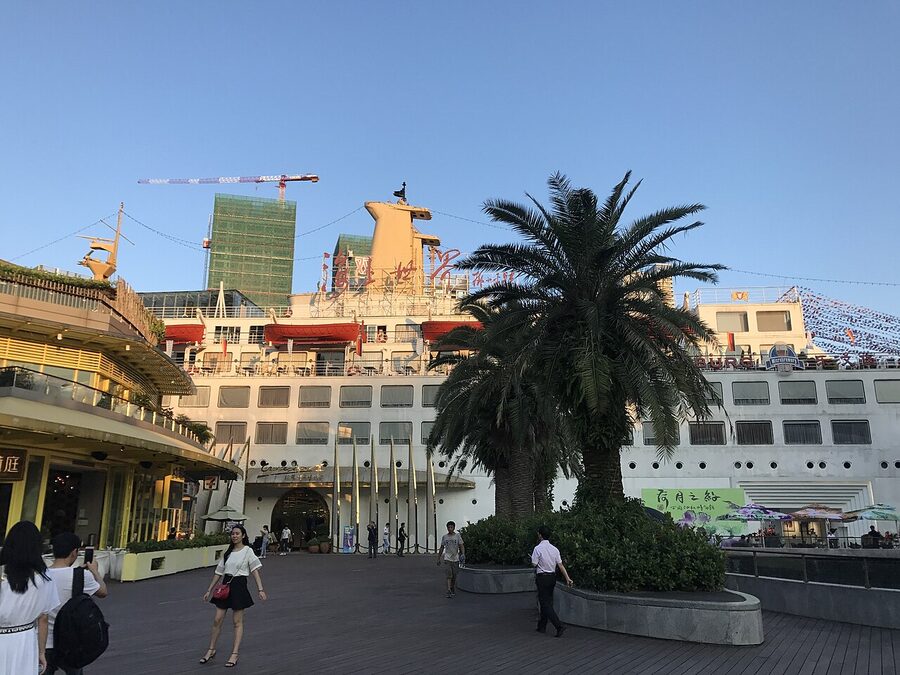
Sea World is the expat heart of Shenzhen. If you ask twenty foreigners living in the city where they spent their Saturday night, around fifteen of them will tell you Shekou, and of those fifteen, at least twelve were within a hundred metres of this ship. It’s one of those unplanned landmarks that ends up doing more for a neighbourhood than any amount of city planning would have managed on purpose, less of a tourist attraction than a genuinely working social infrastructure, built around an oddball piece of maritime history nobody quite set out to preserve.
Nobody comes to Shenzhen specifically for this plaza, and it’s usually overshadowed on a short-trip itinerary by the Ping An observation deck or the broader city guide. But for anyone spending more than a weekend in the city, it’s the single most useful corner to know about, a place to eat, drink, and meet other people from outside China when the 17 million locals start to feel like a lot.
In This Article
First, the ship
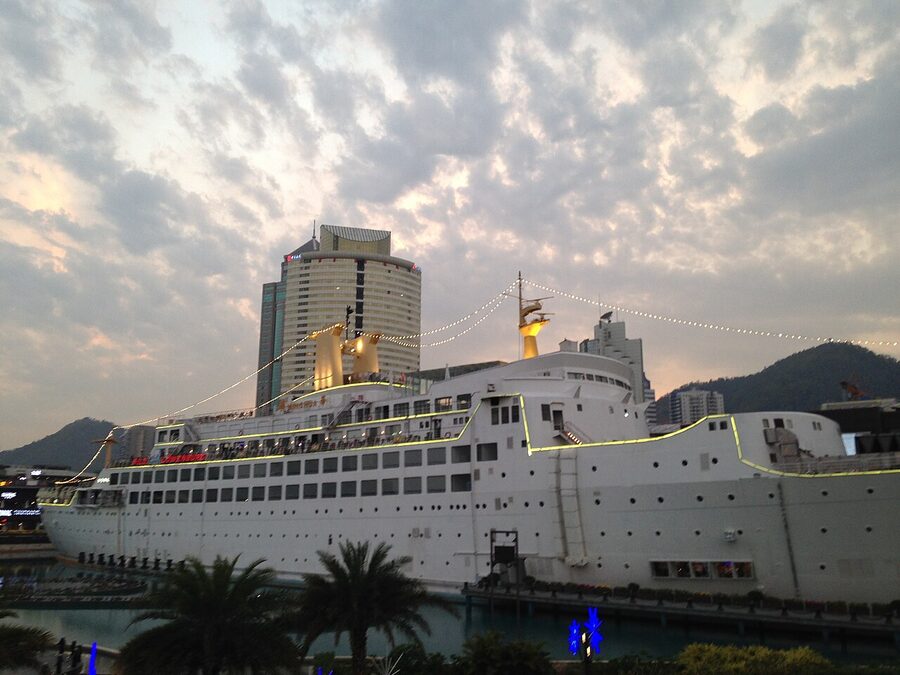
The central object in the plaza is a vessel called the Minghua (明华). You’ll also sometimes hear it called the Anceville, because that was its original name. Laid down in a French shipyard in 1962 and launched into service with Messageries Maritimes, it spent most of its working life running the France-to-Madagascar passenger route, back when Madagascar was a French colony and the route still made commercial sense. By 1973 it had been decommissioned; by 1984, China’s Merchant Shipping bureau had bought it for scrap metal prices and towed it to Shekou. The original plan, as I understand it from a plaque inside, was to use it as a floating hotel. The original plan did not survive contact with reality, they found out the ship drew too much water for the plaza’s tidal channel. So they drained the water, cemented the hull in place, and made it a permanent feature of the hardscape.
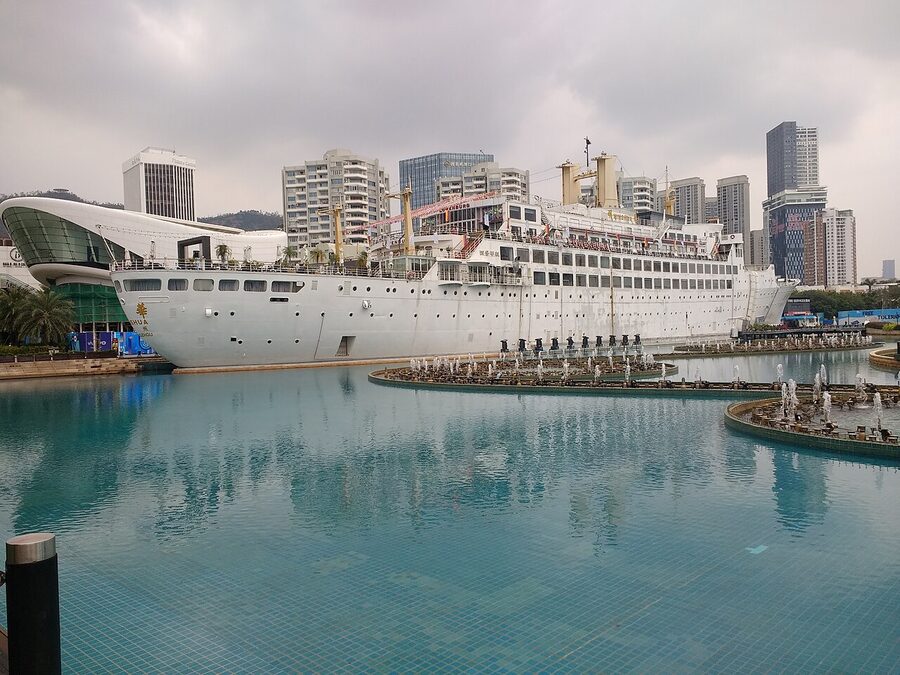
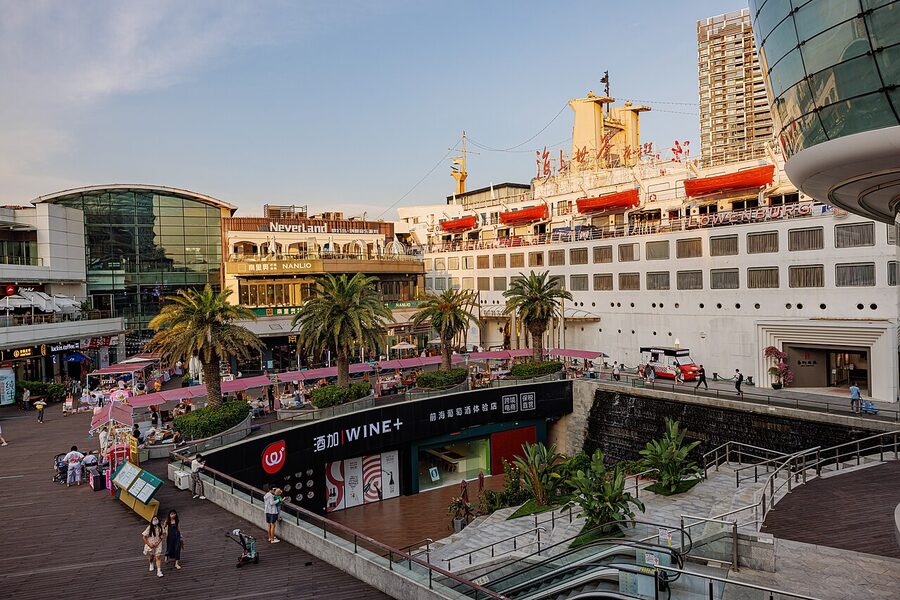
Today the ship houses a hotel (the Cruise Inn, middling reviews, worth staying once if you want the story), several restaurants across different decks, a couple of bars, and a wedding venue on the top deck that, on a Saturday evening, often has a crowd in cocktail dresses gathered around the stern. You can walk on. You can sit in the café on what used to be the captain’s bridge. The brass fittings are original. The 1960s art deco tile work in the lower-deck corridors is genuinely beautiful if you notice it. Most people don’t, they come for the fountain show or the craft beer strip and walk past the ship’s actual history without a second glance.
The fountain show, explained
Every evening, on the hour from around 7pm, a synchronised fountain display runs in the paved basin at the front of the ship. This is not a Bellagio-level spectacle, they’re pushing a few dozen water jets against a handful of coloured spotlights, but what it lacks in scale it makes up for in pure Chinese public-entertainment commitment. The show runs about 12 minutes, the track list rotates through maybe half a dozen numbers, and on any given evening at least one of them will be either the theme to Phantom of the Opera or a Celine Dion ballad at a volume calibrated for outdoor plazas rather than living rooms.
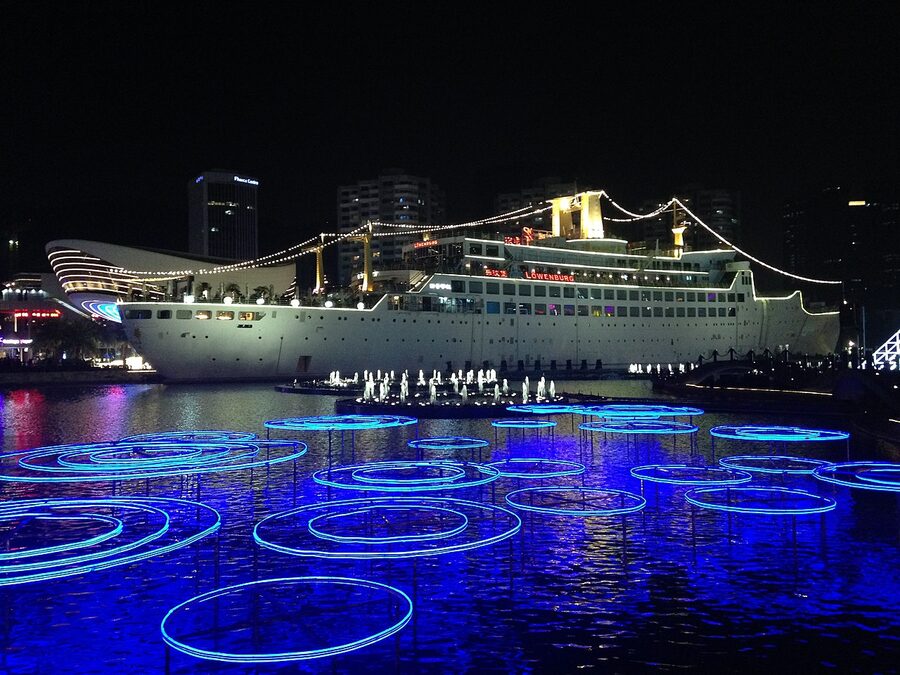
The best way to see it is from one of the restaurant terraces on the upper decks of the ship, Café Sevva, whose outdoor seating looks directly down on the fountain, books up around weekends. Second-best is from any of the bars across the plaza, several of which have a line of bar stools facing the water. If you’re not drinking, just stand at the railing on the north side of the basin; the sightline is unobstructed and there’s no entry fee to any of this. Shows run on the hour at 7, 8, and sometimes 9pm; on Chinese New Year and other holidays they add extra sessions. I can’t tell you what the schedule is on the day you’re reading this, but the fountain clerk behind the stone railing at the east end of the plaza knows.
It’s tacky in the best possible way. It’s also free, reliable, and the single most “take a picture, send it to your parents” moment in the whole city.
Getting there, and when to come
Sea World has its own metro station on Line 2, confusingly also called Sea World. The C exit puts you out about 200 metres from the ship; follow the crowd. From Futian, the ride is about 35 minutes. From Shenzhen Bay Park it’s one stop. From Bao’an airport, take Line 11 to Houhai and change to Line 2, allow 45 minutes total. Taxis from most central hotels will be ¥40–80, which is basically the same price as two metro tickets for two people, so if it’s late and you’ve had a drink, take the taxi.
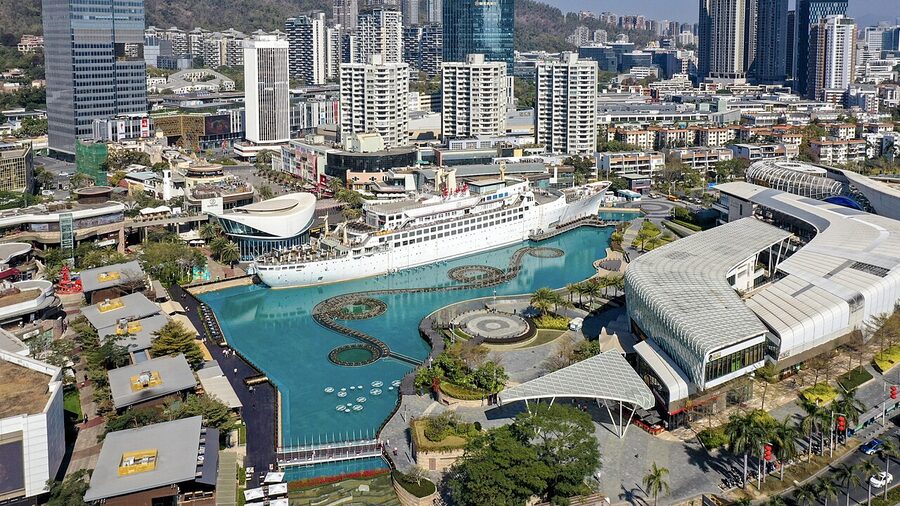
Time of day matters more here than at most places. During daylight hours, Sea World is flat, the restaurants open lazily around lunchtime, the bars not really until 5pm, the ship’s own venues are a mix of closed-for-cleaning and half-staffed. Visitors show up around 4pm, get disappointed by the sleepy atmosphere, and leave before things get good. The correct arrival time is 6pm onwards, with a plan to eat first, then settle in for the 7pm fountain show and whatever happens after.
Weekdays and weekends are different animals. Weekdays (Mon–Thu) are quieter, with table-hopping easy, waiters friendlier, and the 8pm fountain often better than the 7pm. Fridays and Saturdays are packed; the plaza fills up by 8pm with groups of 4–6 heading to whichever bar has the right playlist. Sundays mellow out again, good day for a long brunch on a ship deck. The worst evenings are immediately before and after Chinese public holidays (National Day, Spring Festival, Mid-Autumn), when the place gets swarmed by domestic day-trippers and the service degrades to chaos. Check the Chinese holiday calendar before you commit to a specific date.
Where to eat, in three tiers
The food around Sea World is, roughly, three concentric circles, each widening into a different cuisine and a different price range.
On the ship itself, middling Western and pan-Asian, mid-to-high prices. The marquee names rotate frequently (as of my last visit the upper-deck options included a steakhouse, a Japanese teppanyaki, and a buffet) but the constant is that you are paying a view premium. ¥300–600 per person for a proper dinner. Come here for the deck terrace, not the cooking. The one exception is the Sevva Café halfway up the bow, the food is unremarkable but the iced coffee on a hot evening, looking down at the fountain, is one of the better five-minute experiences the city offers.
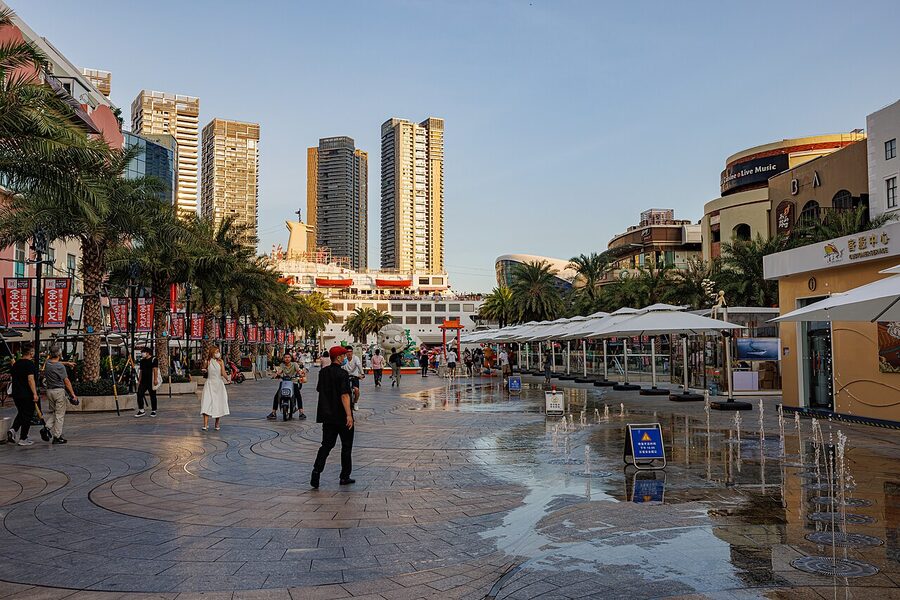
Around the plaza, a ring of mid-range restaurants at the edges of the pedestrianised zone, covering most of the cuisines you’d expect. The Cantonese seafood places at the north-east corner are solid (the Chinese-language-only ones are better than the English-menu ones); the Italian trattoria on the south side does a genuine thin-crust pizza that compares well with anywhere in Asia; the Japanese places are fine but nothing special, you’re in China, get Chinese food. One I’d specifically recommend: a Sichuan hotpot called Shu Jiu that runs up a side alley on the plaza’s east side, ¥150-ish per head for all-you-can-boil, no frills, queue moves fast. Chinese menu only; point and hope.
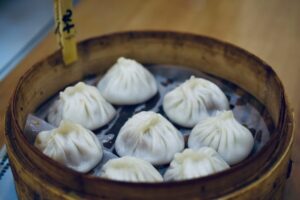
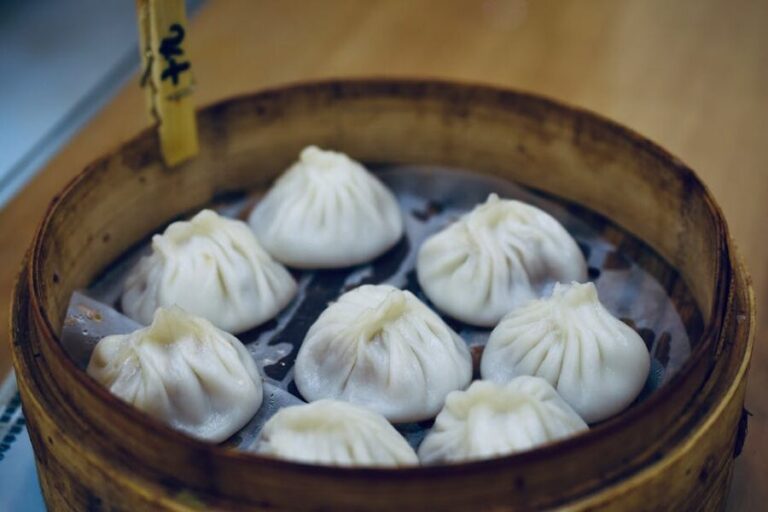
The Shekou old town grid, a ten-minute walk further out, into the actual residential streets. This is where the best food is and where almost no tourists venture. Nanhai Boulevard and the adjacent Taizi Road have dozens of small dumpling houses, noodle shops, and the occasional Malaysian or Indian restaurant catering to the Shekou foreign-worker population. ¥30–80 per head; open late; mostly cash-and-WeChat-pay. If you’re staying in a Shekou hotel, this is where you go for dinner when you’re tired of the plaza scene. The unmarked place called “Dim Sum Icon” two blocks east of the station does 4am dim sum for the post-club crowd and serves the best har gow I had anywhere in Shenzhen. Open until 6am on weekends.
For the full national regional picture of what to order once you’re sat at one of these tables, I’ve written a separate guide to the must-try dishes across China’s main regional cuisines. Ignore the “top 10 Chinese foods” lists, the real map is Cantonese, Sichuanese, Hunanese, Northern, and five others worth knowing.
The bar strip
If you have an hour and want one drink in Shenzhen with a view, go to one of the rooftops on the south side of the plaza. If you have an evening and want actual conversation, head into the back streets. The plaza bars are where Shenzhen’s young professional expats spend their weekends, and the crowd is specifically: English teachers, tech company engineers, logistics people from Hong Kong who’ve crossed over for the cheaper drinks, and a steady contingent of medical conference attendees that ends up here whenever the Shekou convention centre is hosting something.
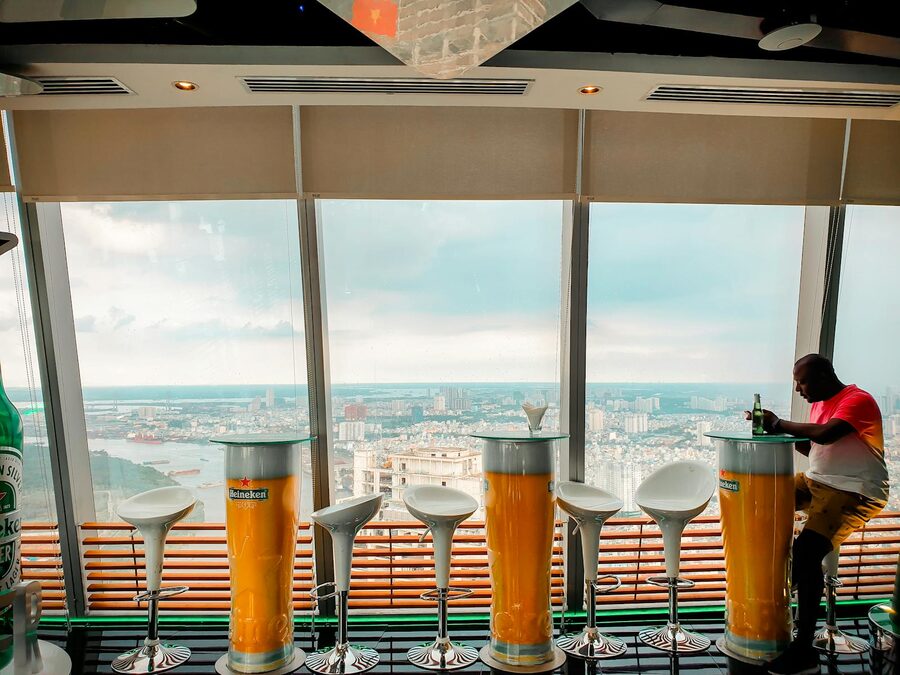
A few bars I’d name specifically (with the caveat that Shekou’s bar scene churns more than most, two-year-old names won’t always still be there). McCawley’s is the Irish-style pub on the plaza’s north-west corner, loud, good for sports, decent fish and chips. Brew does craft beer on tap with rotating local brews; quieter, for people who want to sit and read. Terrace is a rooftop with a plaza view that does decent cocktails but mark-up prices, come for one gin and tonic at sunset, not for a whole night. Mo’s Bistro in the back streets of the old town is the post-1am move; it’s small, mostly expats who know each other, and the chef will send out snacks well past the official kitchen close time.
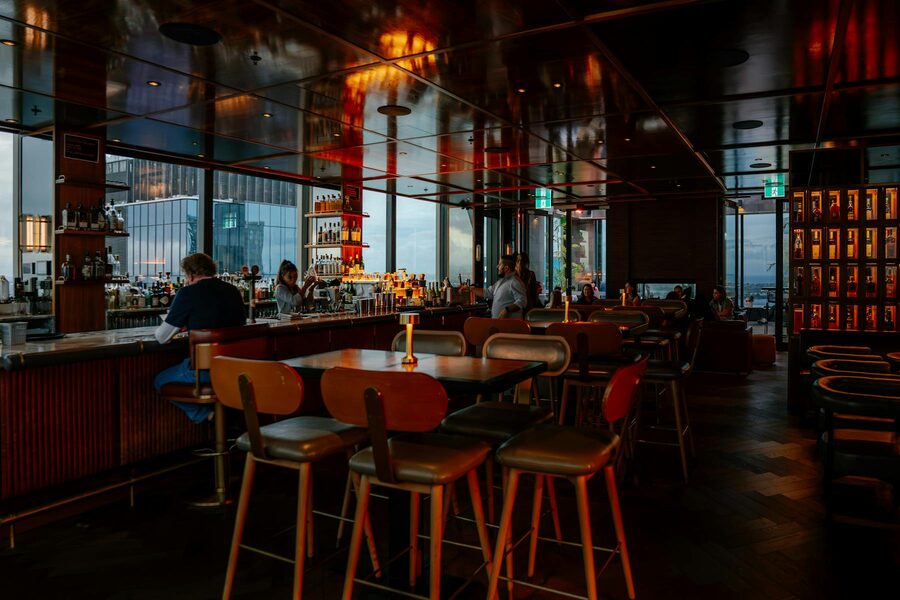
One specific warning: the “strip” of hostess bars along Haishang World Road, a couple of blocks east, is not a place for unaccompanied tourists. The bar owners there routinely run the old “one beer for 30 yuan, but your companion’s drink for 400” trick; if you wander in by accident, finish one drink, pay in cash, and leave. These are not the bars on the plaza itself. Stay on the plaza.
The rest of Shekou, what else is worth a walk
Sea World takes most first-time visitors about 90 minutes to absorb, which leaves plenty of an afternoon or morning left over if that’s when you’ve shown up. Luckily the surrounding Shekou district is more interesting than the average Shenzhen neighbourhood, and you can walk most of it.
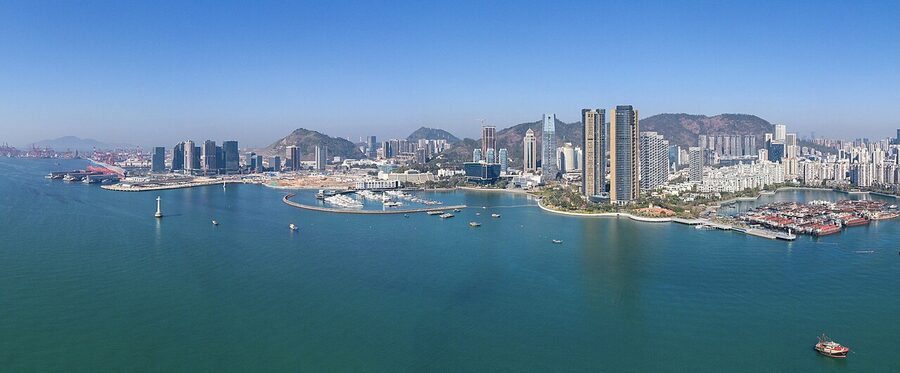
Shekou Fishing Harbour is a 20-minute walk south of Sea World along Nanhai Avenue. This is the original fishing harbour that the 1979 SEZ was designed to absorb into industrial shipping, the Bao’an fishermen’s cooperative that used to run here is still nominally operating, though the actual fish auction has long since decamped elsewhere. What you get today is a small harbourfront with a scatter of fishing vessels, a couple of down-at-heel seafood restaurants that serve you whatever came in that morning, and, on a clear day, a stunning view across to Yuen Long in the Hong Kong New Territories. Come here for an afternoon walk, not for a meal.
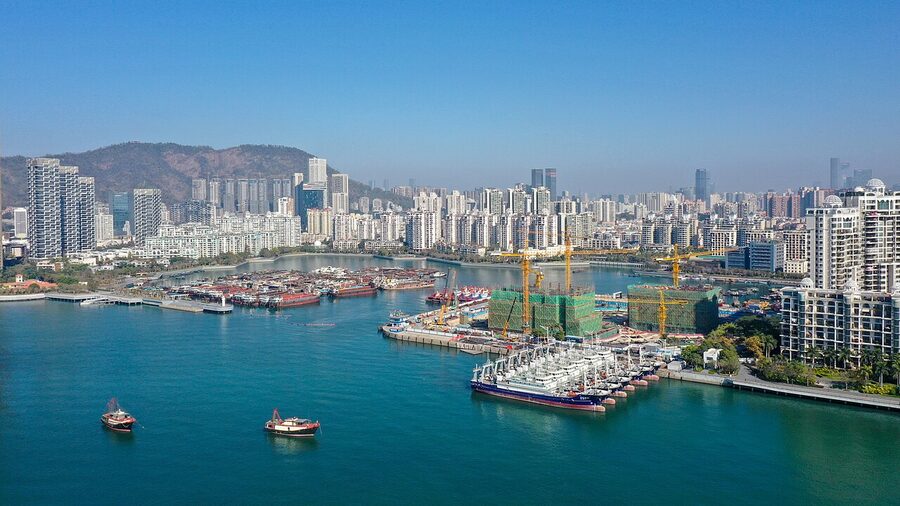
Chiwan Tianhou Temple, a 15th-century Ming-era temple dedicated to the sea goddess Mazu, a 10-minute taxi west of Sea World. It’s tucked into the foothills above Shekou and visited mostly by local grandmothers who burn incense for their fishermen grandsons. Entry is free. The temple itself is small; the atmosphere, dragonfruit trees in the courtyard, the smell of sandalwood, the surprise that this exists in a city where most things are less than forty years old, is why you go. Best visited on a weekday morning when you’ll have the place almost to yourself.
Shekou Cruise Terminal, the international ferry terminal, three stops south of Sea World on the metro (Coastal City station, then a 10-minute walk). This is where you catch the ferries to Hong Kong (Central, SkyPier), Zhuhai, and Macau. If you’re planning a day trip to Macau, this is the move, the ferry takes about an hour and lands you in the Portuguese-cobbled old quarter by late morning. I’ve done the return journey in a single day more than once; it’s one of the most underrated things you can do from this neighbourhood.
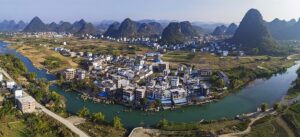
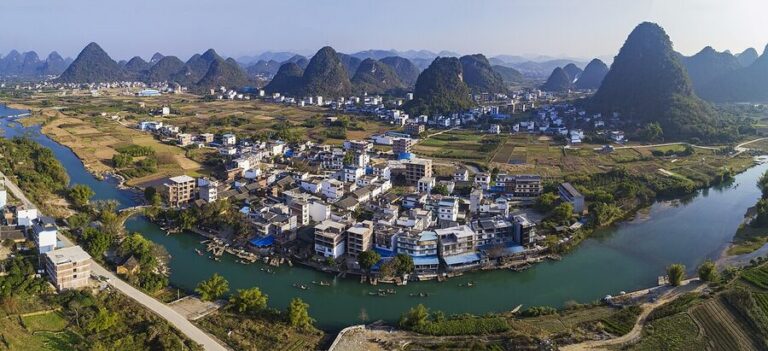
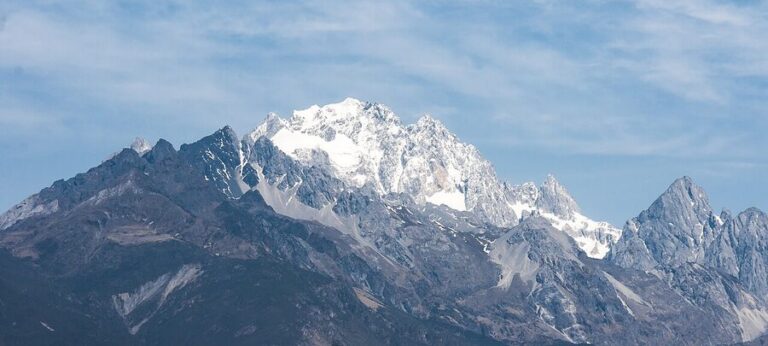
For longer weekend escapes, expats based in Shekou tend to head out from Shenzhen North station, the obvious moves are a weekend to Yangshuo for the karst country (3.5 hours by high-speed rail) or the fortnightly splurge of a 3-day run to Lijiang and the Jade Dragon Snow Mountain up in Yunnan.
Where to stay if you’re basing here
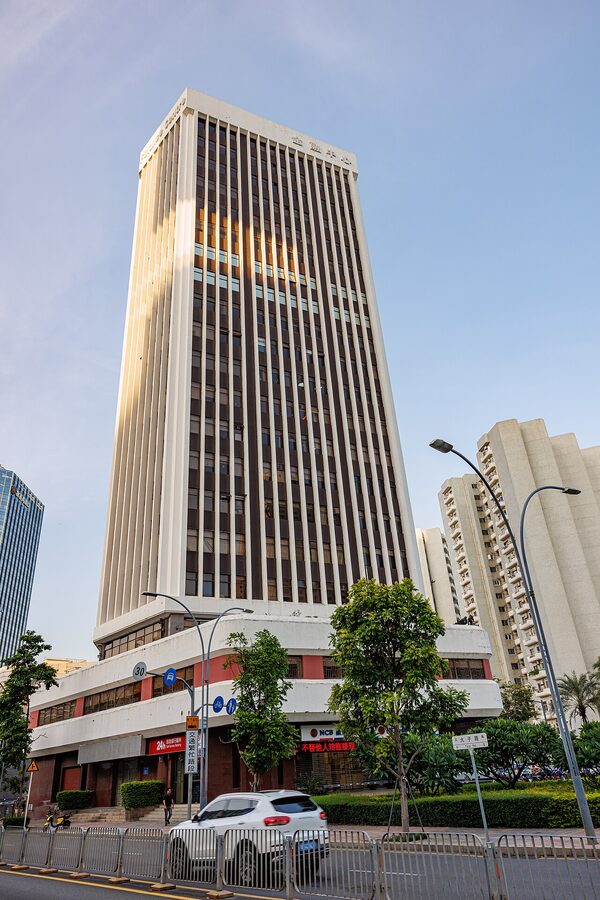
For a Shenzhen trip of three nights or more, basing in Shekou makes more sense than staying in Futian. You trade a 20-minute metro ride into the CBD for mornings in a walkable neighbourhood with sea air, better food, and easy escape routes (ferries, the airport, Hong Kong) in three different directions.
The hotels cluster in two tiers. On or adjacent to the Sea World plaza, you’ve got the InterContinental Shenzhen (¥1,100–1,800, the upmarket move; their executive club lounge on the 30th floor has the best view of the ship), the Crowne Plaza (¥700–1,100, solid business-traveller standard), and the quirky Cruise Inn inside the Minghua ship itself (¥500–900, more for the novelty than the comfort; rooms are small and surprisingly creaky). A walk or short taxi away in the Nanhai grid, mid-range business hotels run ¥400–700, unflashy, clean, breakfast included, usually with English-speaking reception. I’ve stayed at several of these and would happily again; the Holiday Inn Express Nanhai is the most reliably bookable of the bunch.
One specific tip if you’re booking: avoid the rooms on the plaza-facing side of whichever hotel you pick on Friday and Saturday nights. The music from the ship’s upper-deck bars runs until well past midnight, and the fountain show repeats on the hour. You’ll love all of this for the first evening and resent it by 2am on night three.
The Shekou character, briefly
One thing that distinguishes Shekou from every other Shenzhen neighbourhood is that it’s old. Not old in a historical sense, the neighbourhood as you see it today is mostly 1990s–2000s construction, with a few earlier survivors from the pre-SEZ period, but old in the specific sense that people have been living here long enough for it to have a civic rhythm. You’ll see kids on scooters coming home from school. You’ll see groups of pensioners doing tai chi on the promenade at 6:30am. You’ll see the same waiter recognising the same regulars at the same breakfast place for two weeks running.
That’s rare in Shenzhen, a city where the migratory churn is so high that most neighbourhoods feel like they were put up last Tuesday. Shekou has grandmothers. That makes it feel, for a foreigner, less like a movie set and more like an actual place. If you’re going to spend more than three days in this city, spend at least one of them specifically in Shekou, doing nothing. Walk the promenade. Eat lunch at a seafood place the InterContinental concierge wouldn’t recommend. Read a book on a bench in Haishang World Park. The best parts of Shenzhen are the ones that don’t feel like Shenzhen.
In short
The ship is strange. The fountain is good in a specifically Chinese way. The restaurants around the plaza are a mix of hit-and-miss, with the hits clustered in the old Shekou grid behind. The bar scene is friendlier than you’d expect, largely because a high percentage of the drinkers are also foreigners. It’s the easiest place in Shenzhen to make a small evening out of without a plan.
If you’ve got one evening in Shenzhen and have seen the CBD skyline, come here. Take the metro. Have dumplings first. Watch the fountain do Phantom of the Opera at 8pm. Then find a bar with a rooftop view. For the wider context around this plaza, the full Shenzhen city guide covers the rest of the city.
For the bookable side of a trip to Shenzhen, a Shenzhen tech tour with drone delivery and a robotaxi ride. Visit Shenzhen keeps the official listings.



.jpg)


.jpg)

.jpg)