
Thai Curries: A Regional Field Guide from Green and Red to Khao Soi and Jungle
Thai green curry at a London takeaway and Thai green curry at a Bangkok street stall are not the same dish. The gap between them is wider than the gap between either and the original Thai recipe, which changes every two hundred kilometres anyway. Five different cooks in five different provinces will pound five different green curry pastes, and each one will tell you theirs is correct and the other four are suspect. They are all correct.
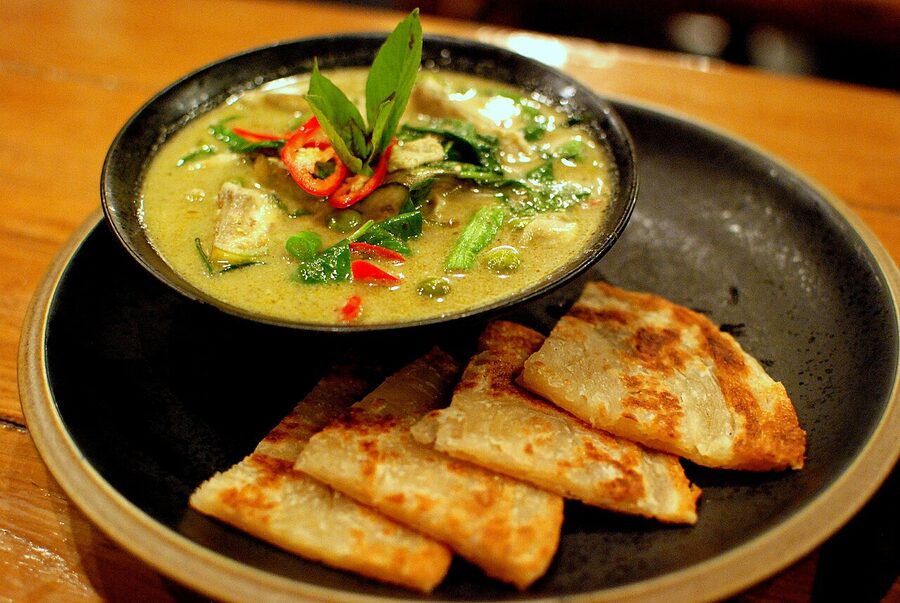
This is a guide to fifteen of them. Green, red, yellow, massaman, panang, the four you have heard of, plus the ten or eleven you probably have not. I have eaten most of these at the source, in Bangkok and Chiang Mai and the deep south, and I have had enough bad versions in London and Hong Kong to know what gets lost on the way out of the country. What I am most interested in is the paste. Everything else about a Thai curry is secondary. If the paste is right, the curry is right.
In This Article
- Why the Paste Is the Dish
- Gaeng Khiao Wan: Green Curry and Its Myths
- Gaeng Phet: The Red Curry Family Tree
- Gaeng Karee: Thai Yellow Curry and the Indian Connection
- Massaman: The Persian Thai Curry That CNN Called Best in the World
- Panang: The Drier, Sweeter Cousin
- Khao Soi: Chiang Mai’s Curry Noodle
- Gaeng Hang Lay: The Northern Pork-Belly Curry
- Gaeng Pa: Jungle Curry With No Coconut Milk
- Gaeng Som: The Sour Curry People Miss
- Gaeng Tai Pla: The Southern Challenge
- Kua Kling: The Dry Curry
- Choo Chee: When a Sauce Becomes a Dish
- Gaeng Daeng and the Northern Reds
- Khao Mok Gai: The Biryani Branch
- The Commercial Paste Brands: Which Ones to Trust
- Cooking Classes Worth Doing
- Where Thai Curry Goes Wrong in Export
- Eat Each Curry at Its Source
- The Short Version
Why the Paste Is the Dish
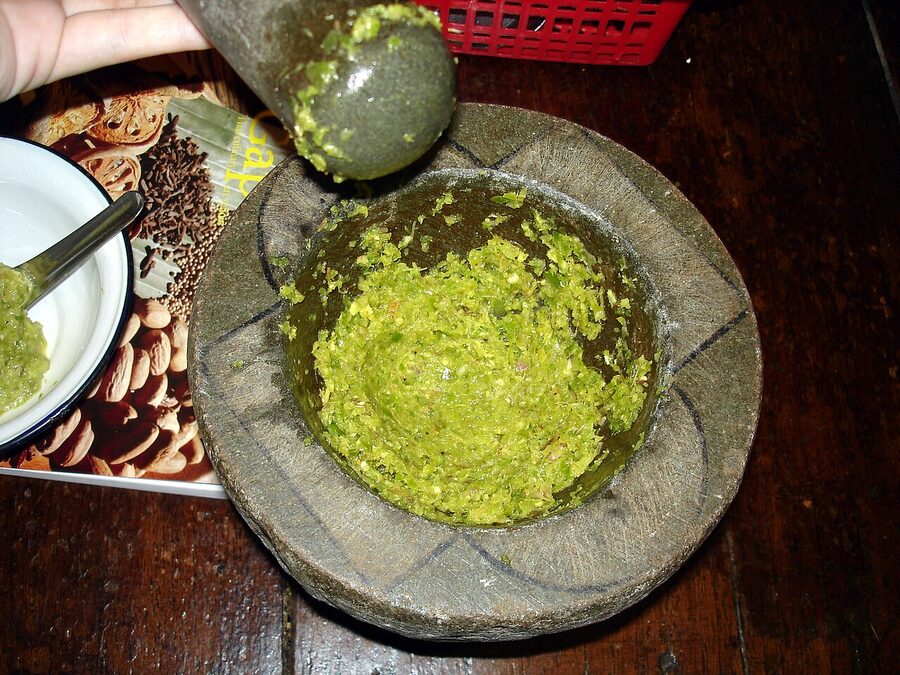
A Thai curry paste is called nam phrik gaeng. Roughly translated it means “curry chili sauce” but that sells it short. It is ten to twenty ingredients pounded into a fine paste with a stone mortar and pestle. Fresh chilies, dried chilies, garlic, shallots, lemongrass, galangal, kaffir lime zest. Coriander root (the root, not leaves, which you rarely see in Western Thai). Shrimp paste. Cumin seeds, coriander seeds, white peppercorns, and depending on the curry, cinnamon, cardamom, nutmeg, star anise, mace. Ingredients go in hardest first so they break down evenly. A proper cook spends twenty to forty minutes pounding before the paste is smooth.
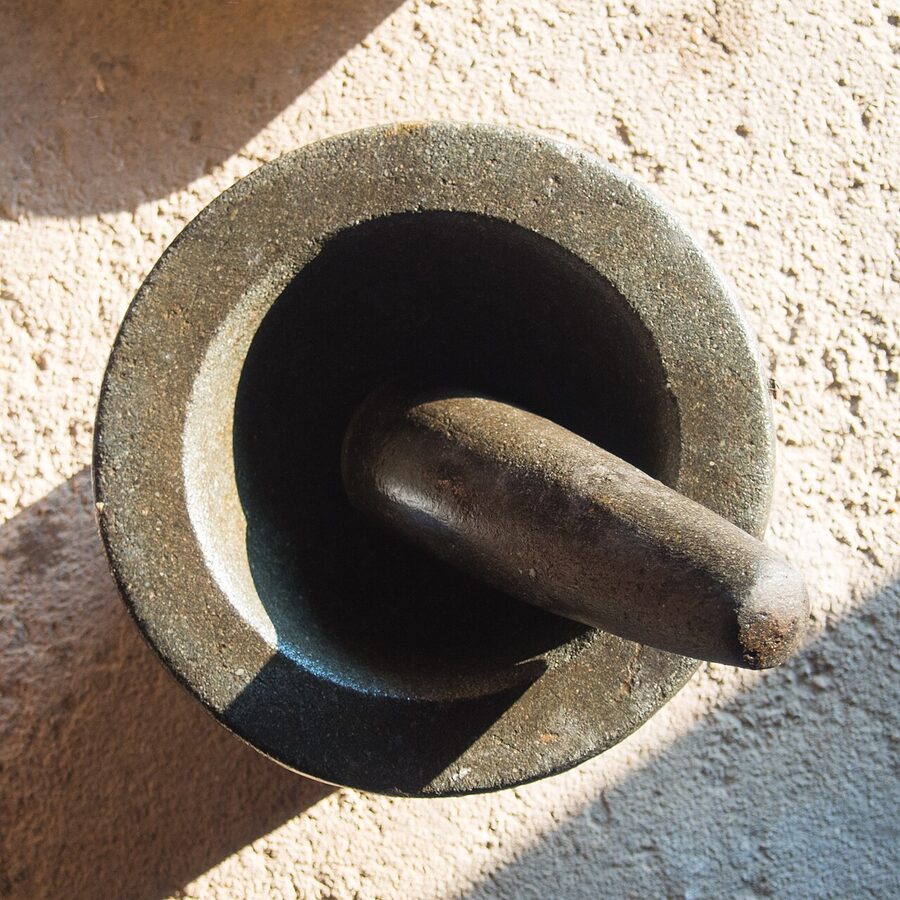
The reason every Western jar-sauce Thai curry tastes a bit off is that a jar cannot hold a fresh paste. Galangal and kaffir lime zest and coriander root all lose their volatile oils within a day or two. A properly pounded paste is alive. A jar paste is asleep. You can approximate the structure but not the flavour.
Which brings you to the paste divide at every Thai market. You will see two kinds of stall. The dried-goods stall sells Mae Ploy and Maesri and Mae Anong pastes in tubs. These are decent starter pastes, perfectly fine for a home cook outside Thailand. The wet-goods stall sells fresh paste the stall owner pounded that morning, kept on ice under a tarp. The fresh paste costs two or three times more, ruins the fridge in forty-eight hours, and makes a curry that tastes like Thailand.
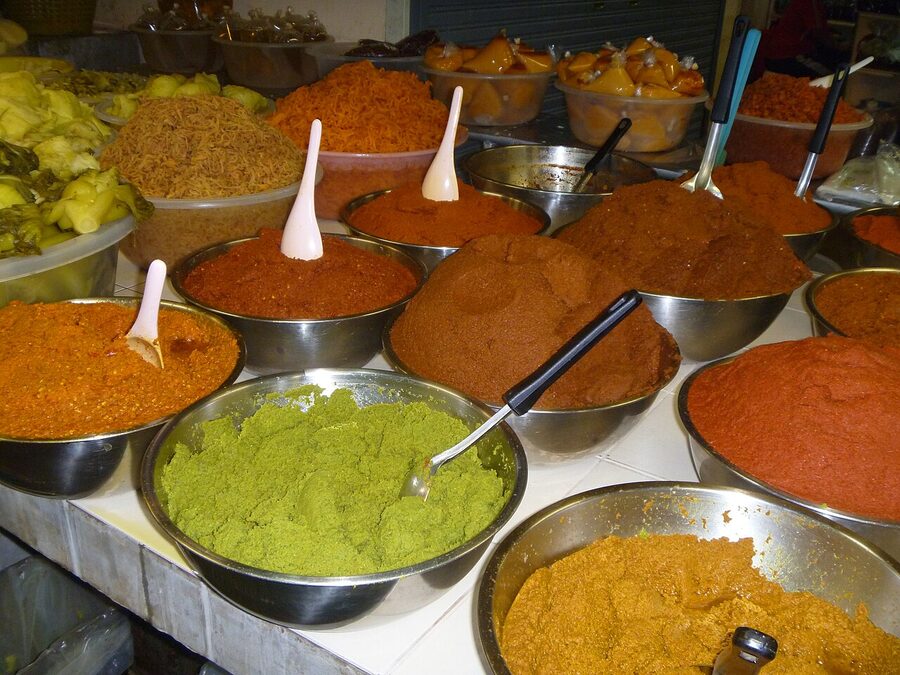
In Bangkok the two addresses that matter are Or Tor Kor Market (the posh one, opposite Chatuchak, metro Kamphaeng Phet exit 3) and Pak Khlong Talat, the 24-hour flower and produce market south of Rattanakosin. Or Tor Kor is cleaner, more expensive, easier for the first-timer. Pak Khlong is the one the chefs actually use. If you visit one market on your trip, make it Or Tor Kor between 08:00 and 11:00 when the paste vendors are freshest. Expect to pay 80 to 150 baht for a small plastic bag of fresh red or green paste, enough for three or four curries at home.
Gaeng Khiao Wan: Green Curry and Its Myths
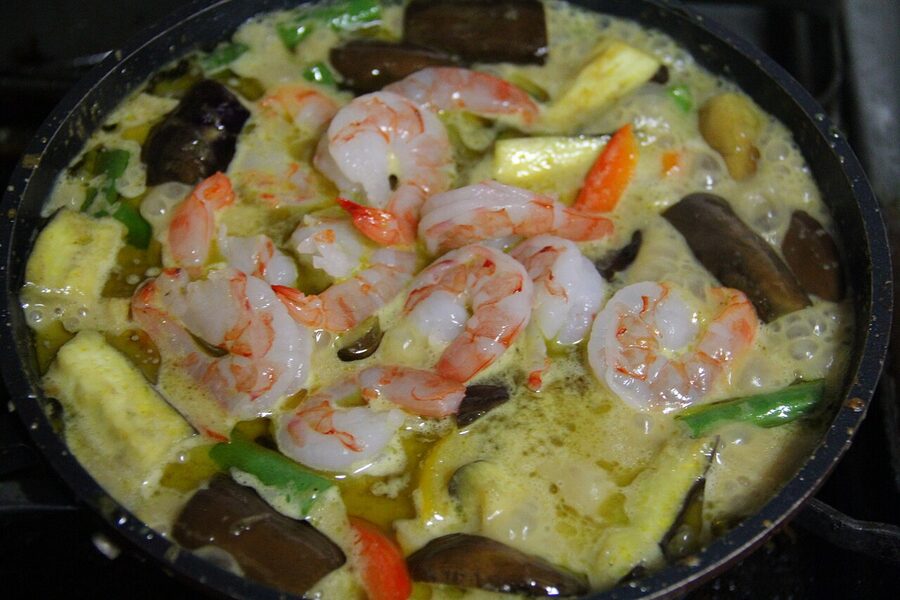
Gaeng khiao wan (แกงเขียวหวาน) means “sweet green curry”, and the “sweet” is a tell. It is not sweet in the dessert sense. In the central Thai kitchen, wan means the rounded flavour that comes from fresh green chilies, palm sugar, sweet basil, and a splash of fish sauce playing off against each other. It is one of the harder balances in Thai cooking because if you tip too far one way you get cloying. Tip too far the other and you get a muddy chili broth.
The green comes from fresh green Thai chilies, coriander root, kaffir lime zest, and Thai sweet basil, all pounded together with galangal, lemongrass, garlic, and white pepper. The paste goes yellow-green, not emerald. If your green curry looks neon in the UK, that is food colouring or frozen pre-made paste, and you can taste it.
The classic central Thai version has Thai eggplant (the little round white ones) and tiny bitter pea aubergines, chicken thigh or fish balls, sweet basil leaves scattered on top. A restaurant in Bangkok will do a clean version at 140 to 220 baht. I like the one at Krua Apsorn in Dinso Road near Democracy Monument. It is one of the places that has won the Michelin Bib Gourmand several years running and they do not mess with the recipe. The green curry with beef is the one I keep going back for.
Where it goes wrong in export is three places. First, Western versions use too much coconut milk and not enough paste, so the sauce is sweet and thin. Second, the fresh green chilies get substituted with green food colour and ground serrano pepper. Third, the Thai eggplant and pea aubergines get replaced with green bell pepper and mangetout, which belong to a different continent entirely. A London takeaway green curry is not wrong in the sense that it is bad food. It just is not this dish.
Gaeng Phet: The Red Curry Family Tree
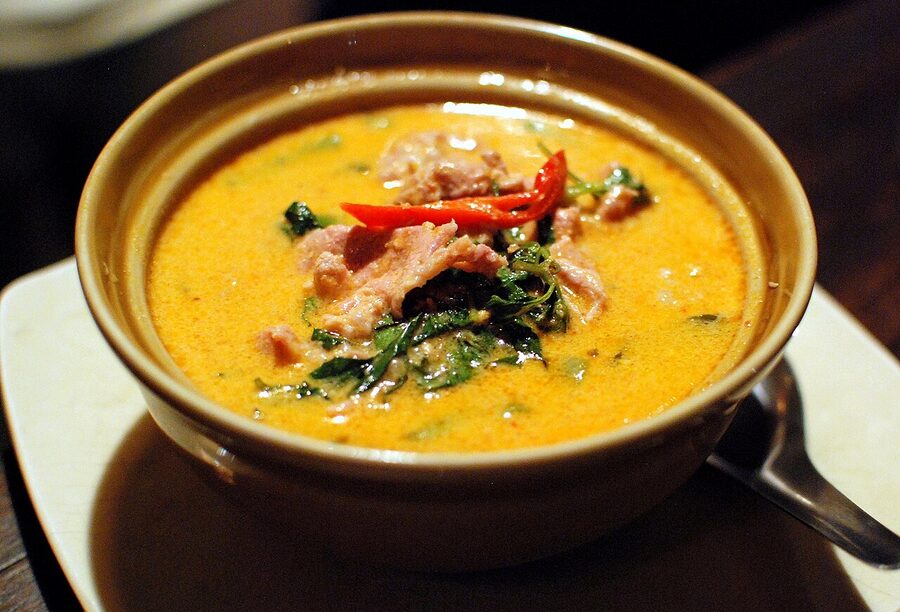
Gaeng phet (แกงเผ็ด) means “spicy curry” and it is the base red-paste curry from which a dozen others branch. The paste uses dried red chilies (rehydrated first), shallots, garlic, galangal, lemongrass, coriander root, white pepper, kaffir lime zest, shrimp paste, cumin, and coriander seeds. Pounded correctly it goes a deep brick red, almost brown once cooked out with coconut cream.
The trick with a good red curry is letting the paste fry in coconut cream until the oil splits out of the fat. The Thai term is taek man, “breaking the fat”. You know it is ready when you see little pools of orange oil sitting on top. Only then do you add the thin coconut milk, the protein, and the rest. Skip this step and the paste tastes raw.
Order it with roasted duck (gaeng phet ped yang) and you have what is probably the most loved Thai restaurant dish in Bangkok. The duck gets carved off the bird at the table and laid on the curry with pineapple, cherry tomatoes, and sweet basil. 200 to 350 baht for a proper version. Krua Apsorn does this one too. So does Ruen Urai in the Rose Hotel Surawong, which is a nice upgrade.
The red curry is also the mother paste for panang, choo chee, and kua kling, which are all variations on the theme. The export version is typically the sweetest and thinnest of all Thai curries, because red curry jar sauce at a UK supermarket has been adjusted to suit a palate that does not want to be surprised. The Bangkok version will make your lips tingle.
Gaeng Karee: Thai Yellow Curry and the Indian Connection
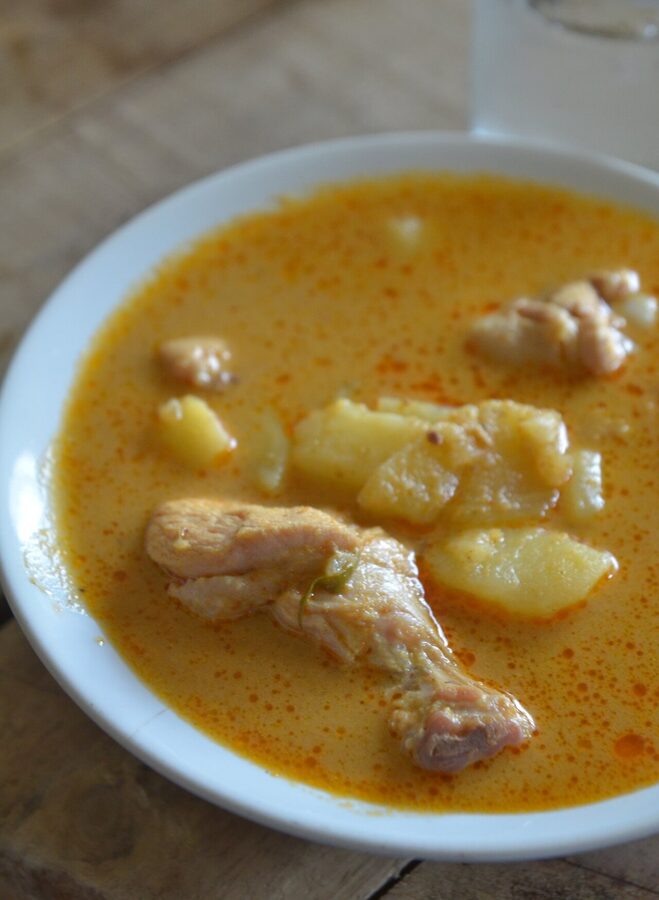
Gaeng karee (แกงกะหรี่) is the one with turmeric. The yellow comes from fresh or dried turmeric root, pounded into a milder paste with cumin, coriander seed, white pepper, shallots, garlic, lemongrass, and a smaller chili load than the red or green. It is a Thai-Muslim dish, historically from the Indian-influenced communities that arrived through maritime trade ports like Phuket, Ayutthaya, and Songkhla from the sixteenth century onwards.
The word “karee” itself is a loanword from the Tamil kari, and the Indian template shows. Potatoes and onions float in the sauce, which is not a feature of the green or red curries. A Thai-Muslim family in Krabi will serve it with a thicker roti than you get further north.
Yellow curry is the mildest of the four major curry colours and the one most Westerners find easiest to like first. That is fine, but do not stop there. In Bangkok the Muslim community around Bang Rak does good versions for 100 to 180 baht. Khao Mok Kai Convent (BTS Chong Nonsi exit 3) is the reliable pick. Phuket’s Old Town has Raya on Dibuk Road, a hereditary Thai-Muslim family restaurant, though Raya leans more toward massaman than plain yellow.
Massaman: The Persian Thai Curry That CNN Called Best in the World
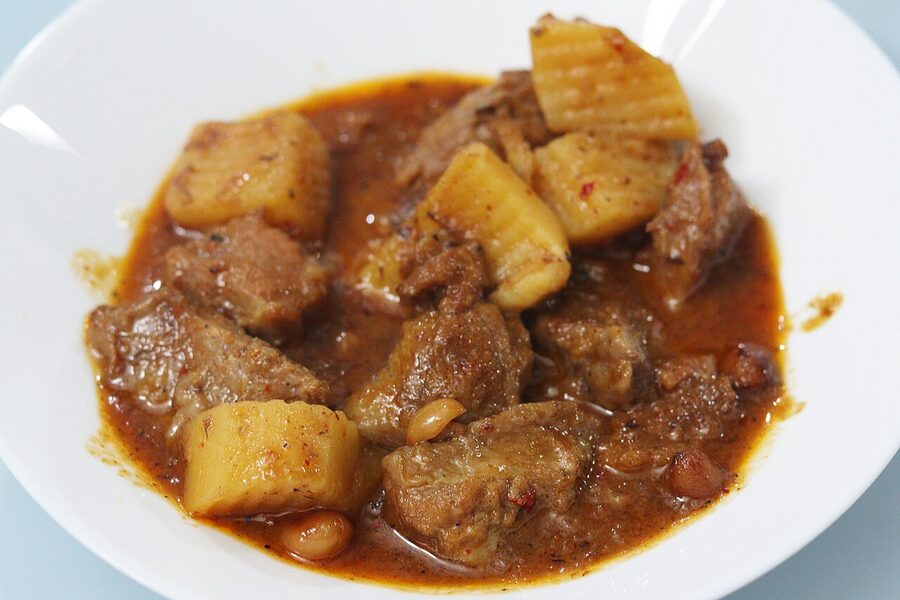
In 2011 CNN Travel ran a reader poll of the World’s 50 Best Foods. Massaman curry came in at number one, ahead of Neapolitan pizza and Italian lasagne. The Thai government promptly took out newspaper ads quoting the result. There was some good-natured eye-rolling from other countries. The reason it won is that massaman is the Thai curry that tastes most familiar to a Western palate, and CNN polls tend to reward the crossover candidate rather than the most interesting one. Massaman is genuinely excellent, but it is not the most Thai of the Thai curries. It is the most foreign of them.
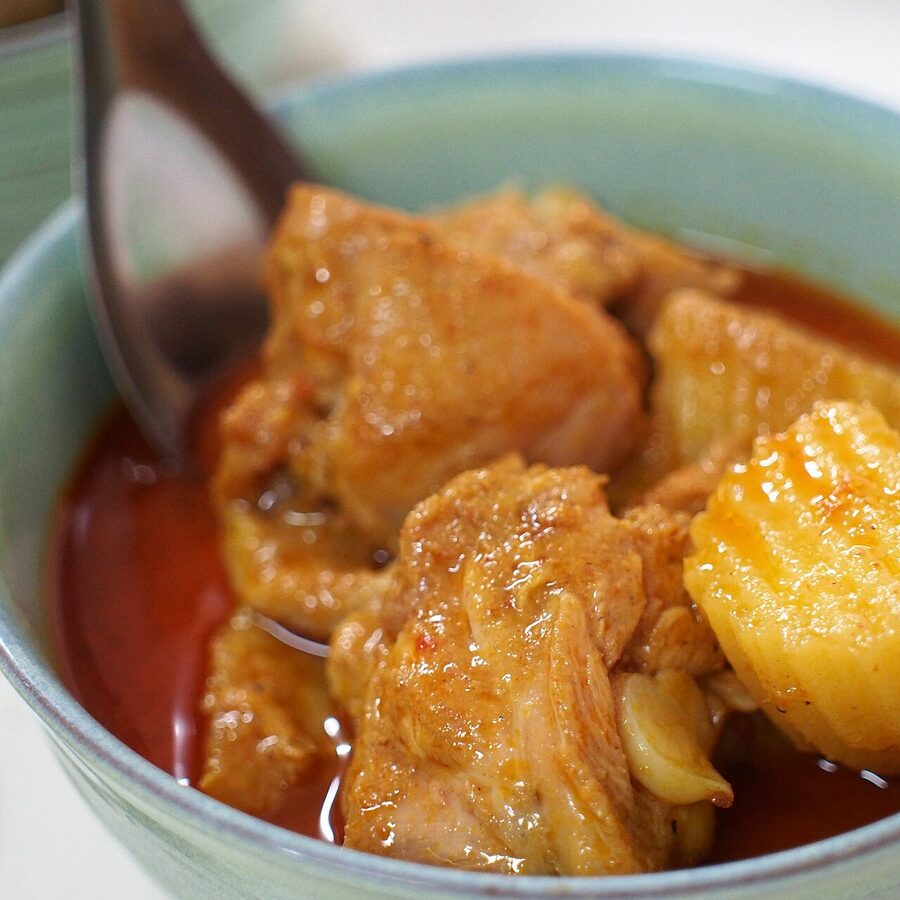
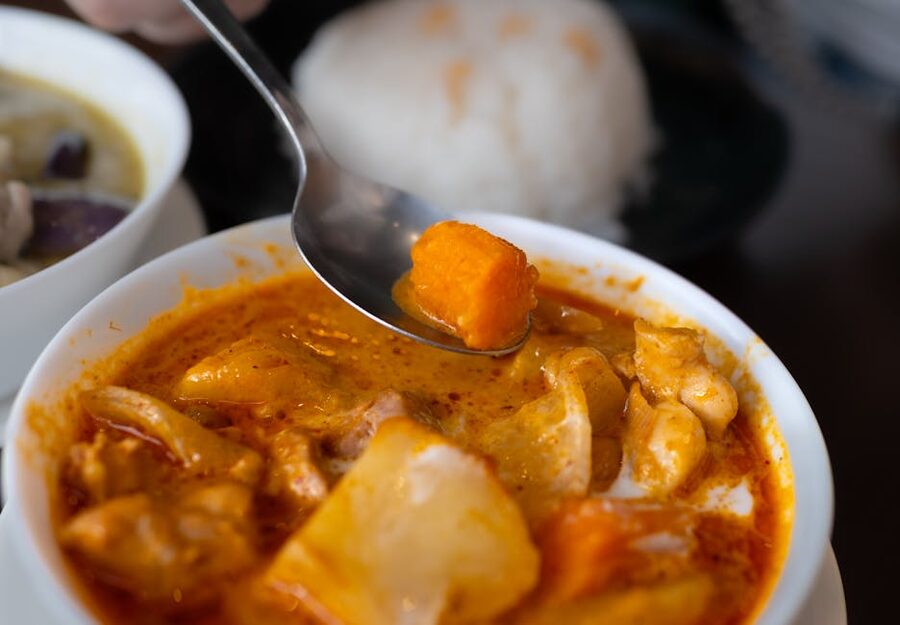
The origin story is solid. Massaman came to Thailand through Muslim traders, probably Persian in origin, arriving in Ayutthaya during the sixteenth and seventeenth centuries. The name is a Thai rendering of musulman, the Persian word for Muslim. The ingredients reflect the maritime trade route: cardamom and cinnamon from Sri Lanka, cloves and nutmeg from the Indonesian spice islands, cumin and coriander from India, star anise from southern China. All of these joined the Thai chili paste base in the royal kitchens of Ayutthaya and then spread south, where the larger Muslim populations adopted it as a signature dish.
The recipe is slow. Beef or chicken, potatoes, peanuts, a heavy paste with all the warming dry spices above, plus tamarind for sour, palm sugar for sweet, and fish sauce or salt for the savoury backbone. It simmers for an hour or more, often with the lid on. The result is rich, unctuous, and only moderately spicy, which is why it has travelled better than red or green curry.
Jay Fai in Bangkok (131 Mahachai Road, the Michelin-starred lady with the ski goggles) does not do massaman, but Nahm at the COMO Metropolitan does, and so does Krua Apsorn. Jay So is a little further afield and does a great one. For a non-Bangkok version, Raya in Phuket Old Town, Baan Rim Pa near Kamala, or almost any Muslim-run restaurant in Krabi or Pattani. Expect 200 to 400 baht for a proper beef massaman in a sit-down restaurant.
Panang: The Drier, Sweeter Cousin
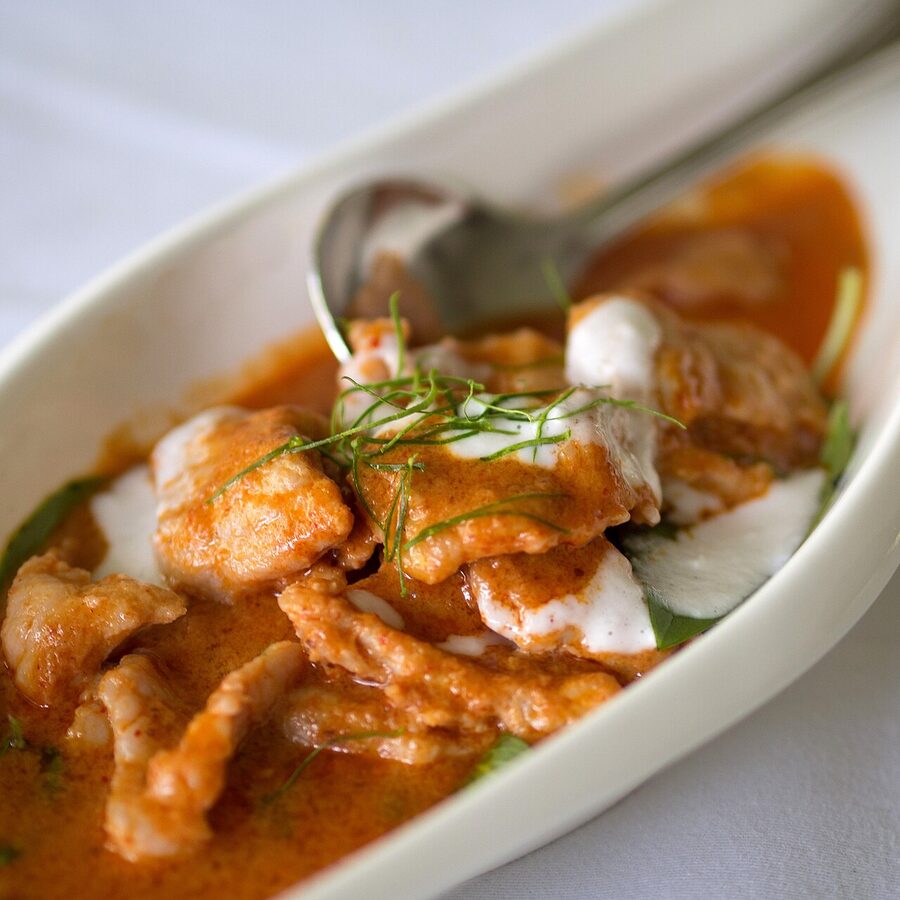
Panang curry (พะแนง, sometimes spelled panaeng) is the red curry’s richer, thicker, sweeter cousin. The paste is broadly the same as red curry but with peanuts ground in and a higher ratio of coconut cream to coconut milk at the finishing step. The result is a thick sauce that coats the meat rather than drowning it. It is closer to an Indian korma in structure than to any other Thai curry.
The etymology is contested. The popular story is that panang is named after Penang Island in what is now Malaysia, which would fit the south-to-central migration pattern of Muslim-trader cuisine. The scholars are less sure. Nobody in Penang calls this dish panang, and Malaysian curries use different spice blends. A second theory is that panaeng comes from a Thai cooking technique where meat is simmered in a “cross” pattern, because the dish was traditionally cooked with a chicken whose legs were tied across its breast. The Royal Institute has not picked sides.
Good panang is the dish to order if you want to introduce someone to Thai curry without scaring them off. The chili heat is present but muted. Peanut-and-coconut richness is the dominant note. Beef panang (phanaeng nuea) is my favourite, slow-stewed shin or cheek. 180 to 300 baht in Bangkok at Baan Phadthai in Charoenkrung, or Bo.lan if you are feeling flush.
Khao Soi: Chiang Mai’s Curry Noodle
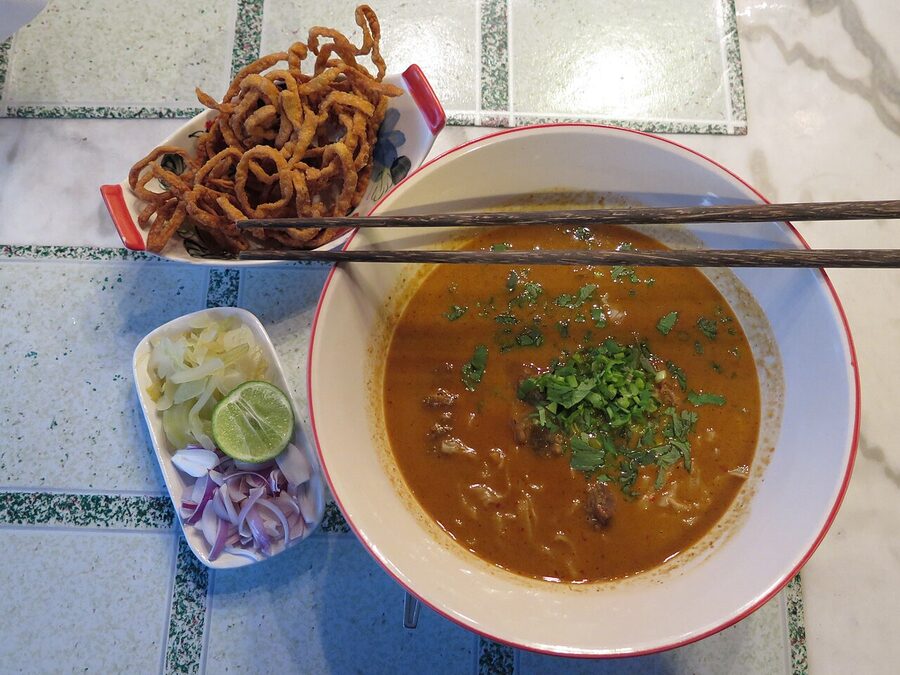
Khao soi (ข้าวซอย) is the reason to go to Chiang Mai. A spiced coconut-curry broth, richer than green curry but with a lighter chili heat, poured over soft egg noodles and topped with a nest of the same noodles deep-fried until crispy. The textural contrast is the point. The paste leans on turmeric and dried red chili, which is why the broth is yellow-orange rather than green or red. Condiments on the side: pickled mustard greens, sliced raw shallot, lime wedges, fish sauce, and a fiery dark-red chili oil you stir in until you find your level.
Khao soi is Burmese Hui Muslim in origin, carried across the Shan states into Lanna northern Thailand by the Chin Haw (chin ho), a community of Yunnanese Muslim traders whose caravan routes ran from southwest China down through the Shan hills. The Chin Haw version was a simpler broth. Coconut milk got added later, probably during the twentieth century, as the dish moved south into Chiang Mai kitchens.
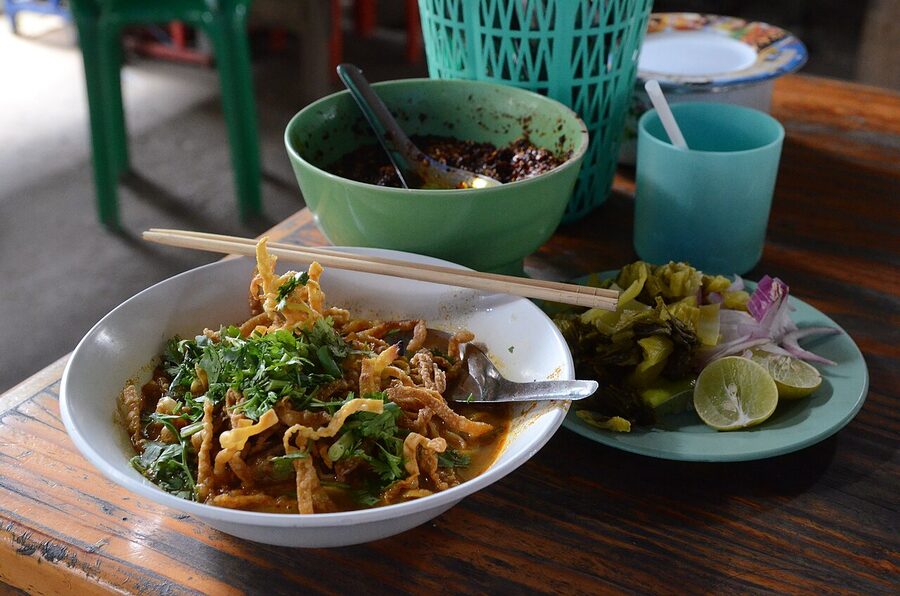
Where to eat it. Khao Soi Khun Yai off Ratchaphakinai Road is the lean, chili-forward version, 60 baht for a bowl. Khao Soi Mae Sai in the north of the city, nearer Chiang Mai University, runs sweeter and richer, 55 to 70 baht. Khao Soi Lam Duan Fah Ham on Faham Road is the old-school Chin Haw Muslim restaurant, 60 baht and closed on Sundays. All three are a long way ahead of anything you will find in Bangkok, where most khao soi is an imported afterthought.
The lazy summary of “Thai curry” that leaves out khao soi is missing half the story. If you want to dig further into the noodle side of this, see our Bangkok street food guide, which covers the sibling dishes you find down south. The northern noodle tradition is its own animal.
Gaeng Hang Lay: The Northern Pork-Belly Curry
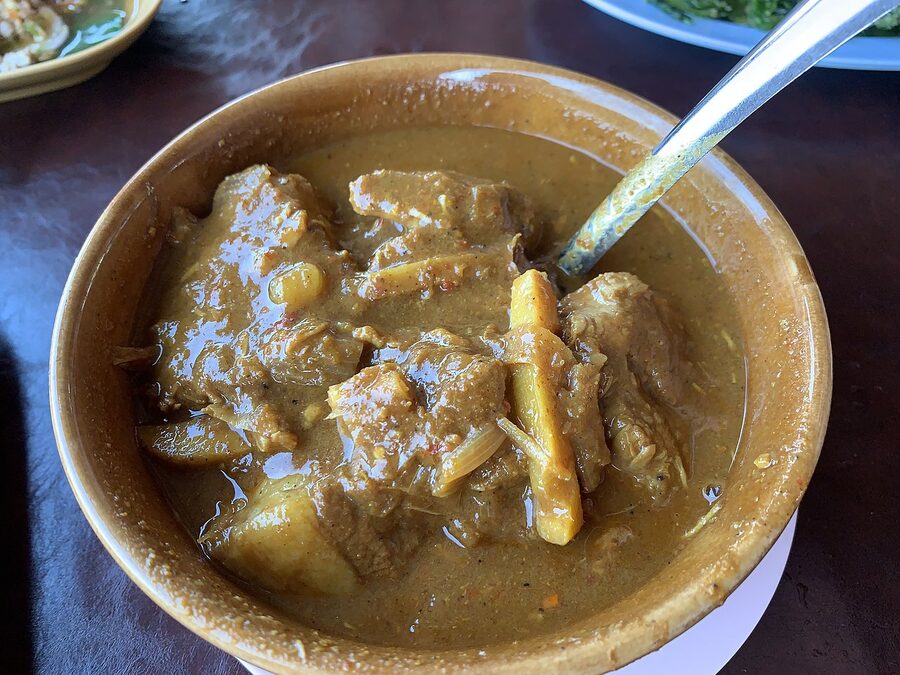
Gaeng hang lay (แกงฮังเล) is a northern Thai pork-belly curry with heavy Burmese influence. No coconut milk. The sauce is dark brown from dried red chili, tamarind, palm sugar, soy, fish sauce, and a heavy hand of fresh ginger, plus garlic, shallots, and peanuts. The pork belly is slow-cooked for an hour or more until the fat is gelatinous and the meat collapses at a touch.
“Hang lay” is thought to be a corruption of the Burmese hin-gyin-lay, meaning ginger curry. It arrived with the Shan peoples across the border and settled into Lanna cooking. Traditionally served at weddings and temple ceremonies, which is why the Chiang Mai restaurants that serve it well tend to be the old-school khantoke banquet houses.
Huen Phen on Rachamanka Road in Chiang Mai old city is the reliable named place. Daytime canteen is good, evening restaurant is better. Their hang lay is 180 baht and comes with sticky rice. Lert Ros is funkier and cheaper. Hang lay is the curry I always have on the first night in Chiang Mai because it sets you up for the khao soi the next morning.
Gaeng Pa: Jungle Curry With No Coconut Milk
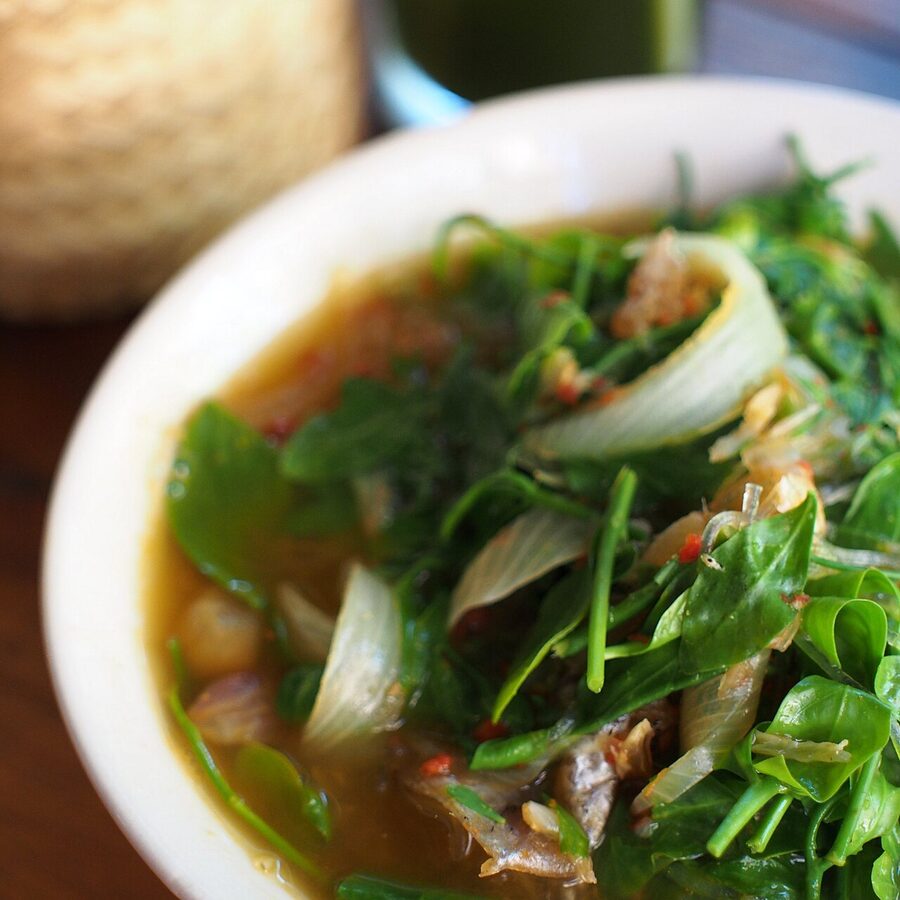
Gaeng pa (แกงป่า) literally means forest curry. It is a curry for people who think they like spicy food, and it is usually a wake-up call. No coconut milk. The broth is a thin red chili stock seasoned with fish sauce, green peppercorns on the stem, bitter forest vegetables like pea aubergine and fingerroot, and whatever protein the cook has. Wild boar, chicken, catfish, anything.
It exists for practical reasons. Forest villages in central and northern Thailand did not have coconut palms, which are a coastal crop. What they had was chili, herbs, forest leaves, and whatever animal they could stew. The curry is pure broth, no fat, no cream, just heat and herbal notes and the occasional mouth-burning surprise of a whole green peppercorn that has not dissolved.
Order it at a specific kind of place. Ruen Mallika in Bangkok serves a proper jungle curry with free-range chicken for 280 baht. In Chiang Mai, Aum Vegetarian on Moonmuang Road does a meat-free version that is still properly spicy, around 100 baht. Skip the Western-targeted restaurants. Tourists do not order jungle curry, so most Western-facing kitchens have stopped stocking the ingredients.
Gaeng Som: The Sour Curry People Miss
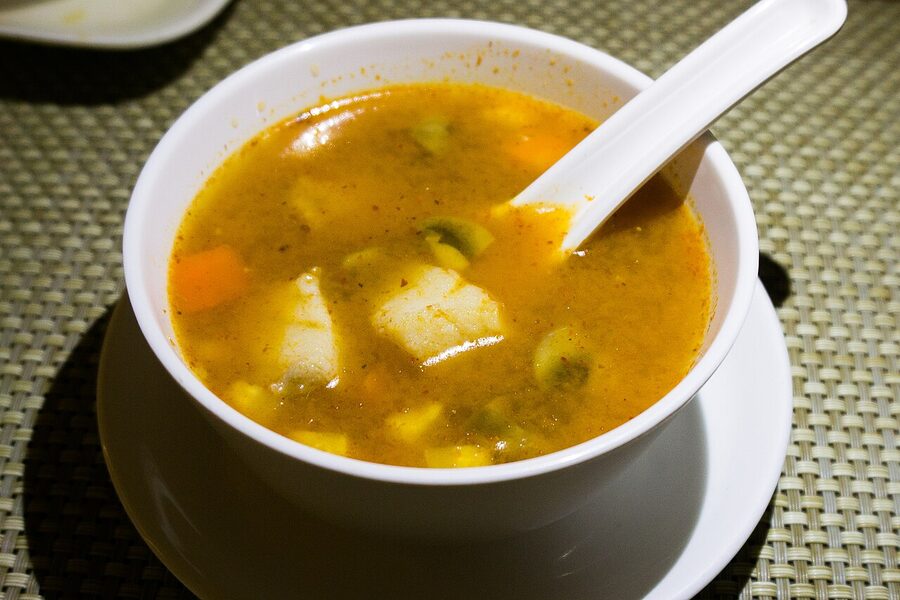
Gaeng som (แกงส้ม, literally “orange curry” though the som also carries the meaning of sour) is the sour fish curry that central and southern Thai households eat far more often than the tourist-facing curries. No coconut milk. The paste is turmeric, dried red chili, shallots, garlic, shrimp paste, salt. Tamarind paste goes in for the sour. The broth stays thin, bright orange-yellow, and almost acidic in the mouth. White fish (sea bass, grouper, sometimes snakehead) goes in with a vegetable of the season, usually a green one like cha-om (acacia shoots), morning glory, or chayote.
Gaeng som gets confused with tom yum by people who have not cooked either. The difference is the source of the sour. Tom yum gets its sour from fresh lime juice added at the end. Gaeng som gets its sour from tamarind simmered in the broth. The finished tastes are totally different. Tom yum is bright and aromatic. Gaeng som is deep and savoury.
The dish is rarely on a tourist menu in Bangkok. The way to find it is to go to a raan ahan tam sang, a “cook-to-order” Thai family restaurant, and ask. You will see these all over residential Bangkok, plus the Or Tor Kor food court. 120 to 180 baht for a clay pot with fish and vegetables in it, rice separate. Krua Apsorn does it. So does Thipsamai, though Thipsamai is more famous for pad thai.
The southern version of gaeng som leans harder on the tamarind and adds a bit more turmeric, which is why it is sometimes brighter. In the deep south, it picks up fermented fish sauce (budu) from Malay-Muslim cooking, which pushes it into a stronger, funkier register.
Gaeng Tai Pla: The Southern Challenge
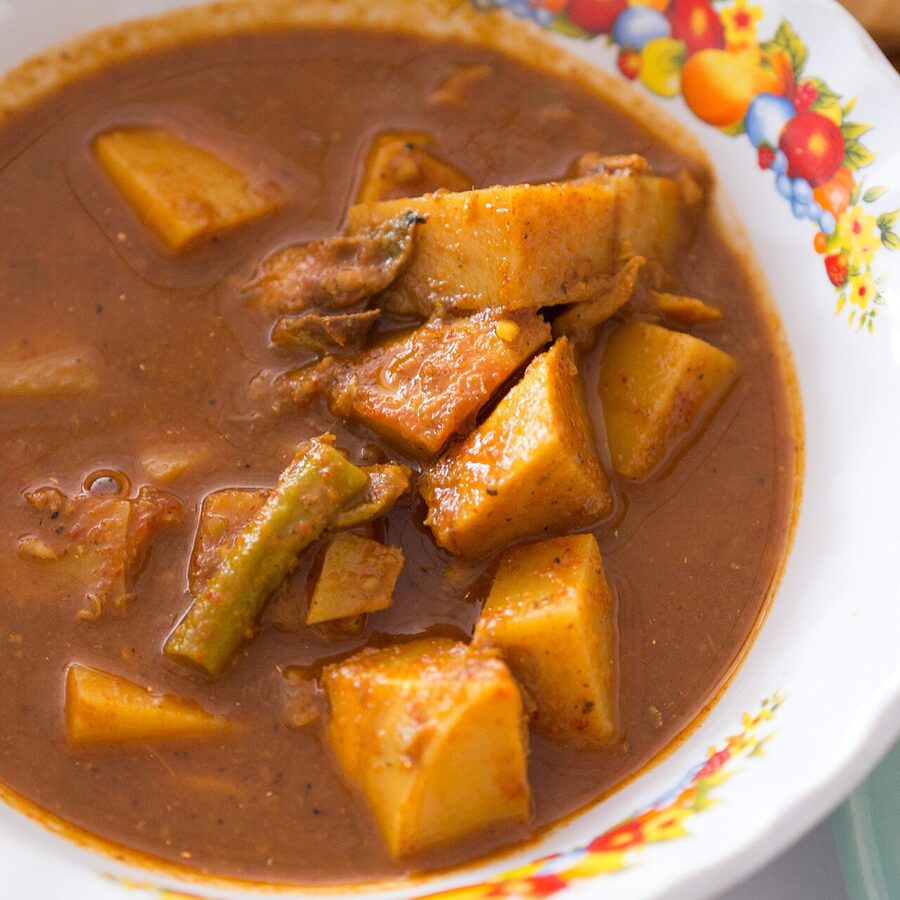
Gaeng tai pla (แกงไตปลา) is the southern-Thai curry most central Thais will not touch. Tai pla means fish entrails, specifically the salted and fermented innards of mackerel. A cook takes the innards, salts them, ferments them for weeks, and then pounds them into a paste with turmeric, chili, lemongrass, galangal, kaffir lime peel, and shrimp paste. The paste is fried in oil and then brothed out with water and whole bamboo shoots, yardlong beans, and little cubes of pork or fish.
The flavour is intense. Deeply savoury, almost meaty-funky, with the dried chili giving an even base heat across the whole bowl. It is genuinely challenging for a first-timer. Some locals eat it twice a day. I have had it three or four times and I respect it more than I love it, but I am glad I tried.
Nakhon Si Thammarat and Surat Thani are the homelands. In Bangkok, the place I know is Ran Jay Fai Tai Pla in Thonburi, which is a family-run spot that ships the fermented fish paste up fresh. 120 to 180 baht. If you want a softer introduction to southern Thai curry, go for the khanom jeen (rice noodles) with nam ya curry sauce instead, which uses the same template but dials the fermented-fish quotient down.
Kua Kling: The Dry Curry
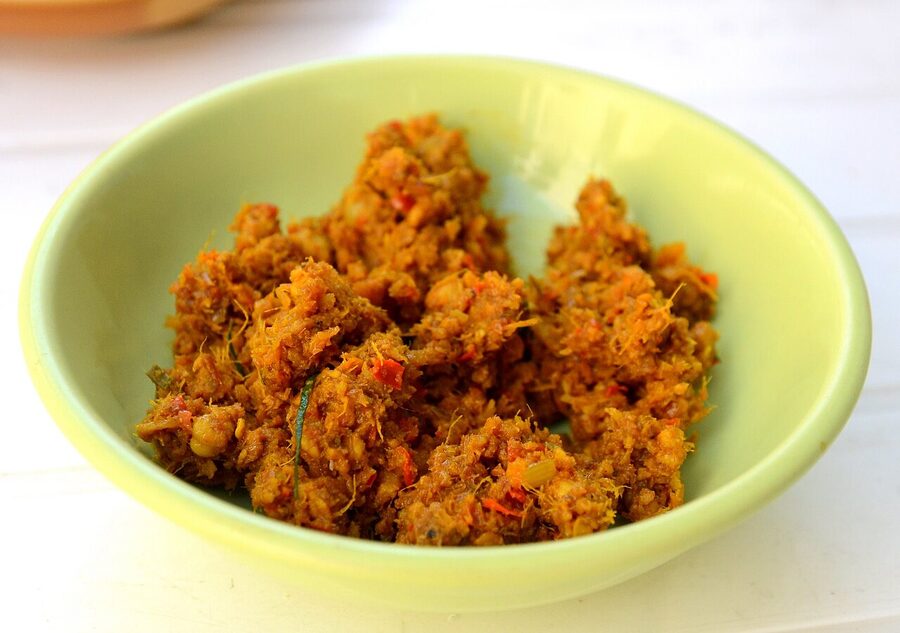
Kua kling (คั่วกลิ้ง) is what you cook when you have curry paste in the fridge but no time and no coconut milk. Minced pork, beef, or chicken gets stir-fried in a wok with a heavy load of southern-Thai red curry paste until the liquid cooks out and the meat is almost dry. Kaffir lime leaves and fresh bird’s-eye chili go in at the end. The result is a sharp, savoury, extremely spicy mince that you eat with a mountain of plain rice and a cooling cucumber or raw vegetable plate on the side.
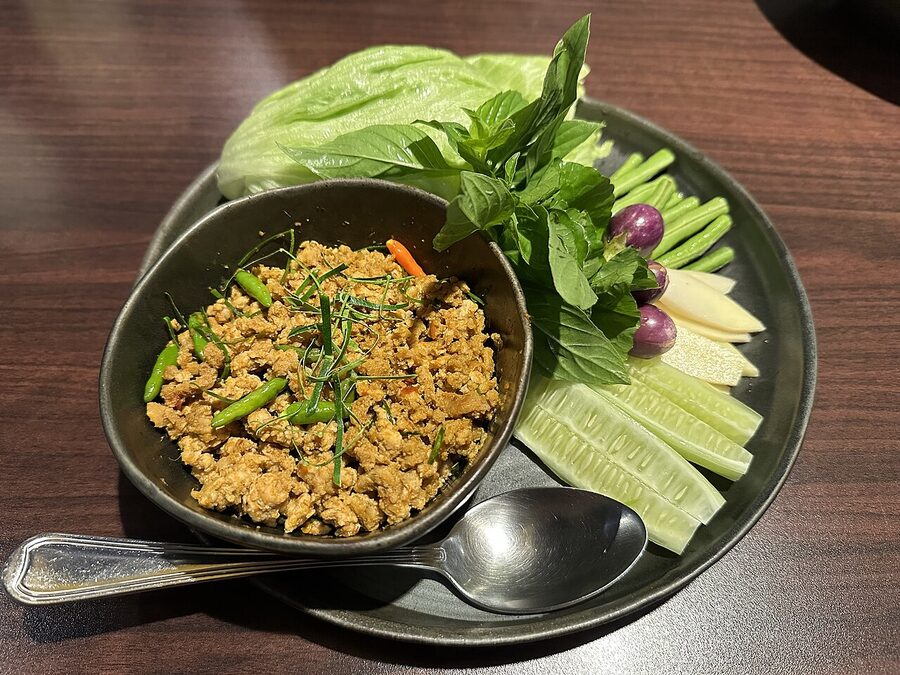
It is southern-Thai home cooking at its most accessible. Every Thai canteen in Nakhon Si Thammarat, Krabi, Trang, and Phuket old town will have it on the curry-rice steam-table. 60 to 100 baht for a plate with rice. In Bangkok, Khua Kling Pak Sod is a small chain that has spread from the original Nakhon shop and does a respectable version. Prai Raya in Phuket does a classier one.
Choo Chee: When a Sauce Becomes a Dish
Choo chee (ฉู่ฉี่) is less of a curry and more of a technique. Take a thick red curry paste, fry it hot in coconut cream until the oil breaks, and pour the resulting thick orange sauce over a piece of lightly fried fish. Shredded kaffir lime leaves and sliced red chili go on top. That is the whole dish.
The fish is usually a firm-fleshed variety. Pla kapong (sea bass) and pla tu (mackerel) are the classics. The contrast is between the crispy fried fish skin underneath and the thick, shiny, slightly sweet curry sauce ladled over it. It is a restaurant dish rather than a street-stall dish, because it needs a bit more finesse in timing the two components. 180 to 280 baht in a mid-range Bangkok Thai restaurant for choo chee pla kapong. Krua Apsorn, Supanniga Eating Room, and Err in Tha Tien all do it well.
If you have ever wondered why the curry sauce at some Thai restaurants seems thicker than usual even on regular red curry, it is probably because the chef used a choo chee-style paste fry and then added only a splash of thin coconut milk, which results in a lush half-curry, half-sauce consistency.
Gaeng Daeng and the Northern Reds
Travel north of Chiang Mai into Chiang Rai and the red curry starts shifting. Gaeng daeng (แกงแดง), which literally means “red curry”, is technically the same thing as gaeng phet, but northern mountain cooks make a paste heavy on dried red chili and light on shrimp paste, and they finish the curry with more water and less coconut cream, resulting in a thinner, drier, more broth-like dish. In Chiang Rai’s food courts and roadside Lanna restaurants you will see three distinct red curries side by side. Central gaeng phet. Chiang Mai gaeng daeng. Chiang Rai gaeng daeng. Each is a reflection of who lived where, what they grew, and what they could carry from the market that week.
The Chin Haw Muslim community in the Fah Ham district of Chiang Mai and in Mae Salong to the north also has its own curry-noodle tradition. Many of them will tell you their version of khao soi is the original one, pre-coconut, and that the coconut version is a later lowland adaptation. It is an argument nobody will win, and the food is good on either side of it. If you make it to Mae Salong, stop at one of the tea-house cafes on the main ridge road and order the Chin Haw noodle soup with the dried-beef-and-turmeric broth. 60 baht, and it tastes nothing like a Chiang Mai khao soi.
Khao Mok Gai: The Biryani Branch
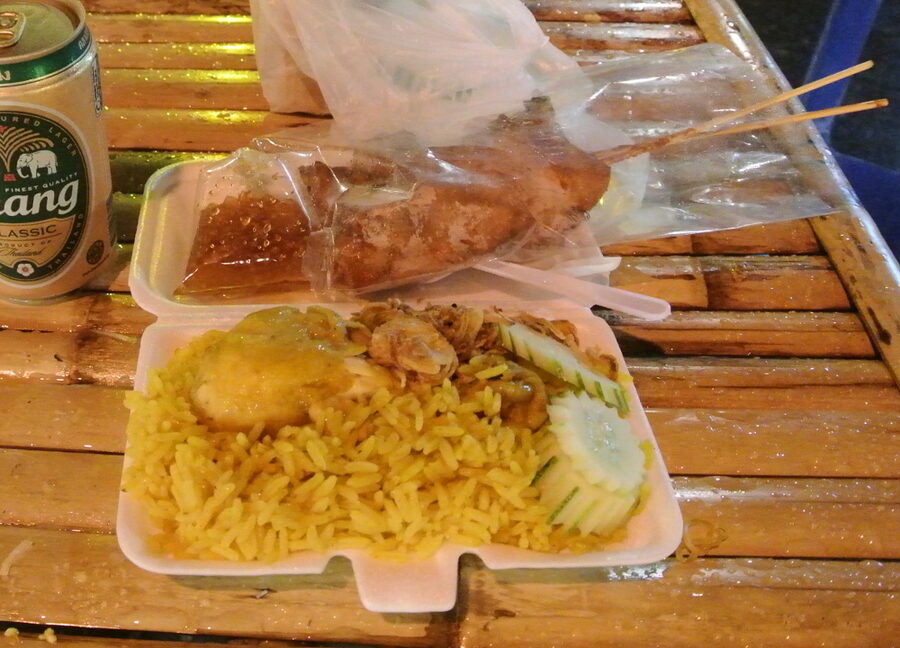
Khao mok gai (ข้าวหมกไก่) is where Thai curry stops being curry-as-sauce and becomes curry-as-rice. The rice gets cooked with the spiced, yogurt-marinated chicken already in the pot, the way an Indian cook would layer a biryani. Cumin, coriander, cardamom, turmeric, cinnamon, cloves, and mild chili give the rice a yellow tint and a warming but not punishing heat. A clear chicken broth comes on the side with coriander leaves, and a green chili-and-vinegar dipping sauce for the chicken.
This is a Hat Yai signature, and the deep-south Muslim communities in Pattani, Yala, Narathiwat, and Satun cook the best versions. Hat Yai’s most famous name is Khao Mok Gai Dawa on Plainai Road, 70 baht for a full plate. The Bangkok outpost tradition lives in the Muslim neighbourhoods south of Silom, and the most accessible option is a little chain called Kao Mok Kai Convent near BTS Chong Nonsi, 80 baht.
There is also a khao mok neua (beef) version, which is rarer but worth trying if you see it. Khao mok gai is the dish I recommend to friends who want to eat Thai curry but are not yet comfortable with chili heat. It is spiced but not sharp.
The Commercial Paste Brands: Which Ones to Trust
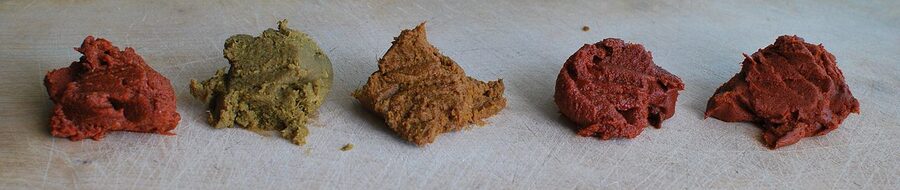
If you cannot get fresh paste where you live, the three brands worth using are Mae Anong, Maesri, and Mae Ploy. All three are Thai-made, sold in most Asian grocery stores abroad, and they are made with recognisable ingredients rather than colour and flavour enhancers.
Mae Anong and Maesri come in 4-ounce tins that are single-curry portions. Buy the red, green, panang, and massaman. Avoid the “yellow curry” tin if you can find Mae Anong, because their yellow-curry tin is underwhelming; get Maesri for yellow instead. Mae Ploy comes in 400-gram tubs which are bigger and more economical, but once you open a tub it needs to be used within a month (freeze what you do not use). Mae Ploy’s green curry paste is the one I trust most. Their massaman is a close second. I find their red curry slightly oversalted.
A rough rule of thumb for all three brands: use about 3 tablespoons of paste per 400ml can of coconut milk for a medium-strength curry serving two. Fry the paste in coconut cream first. Do not dump it straight into the coconut milk and boil. That is the step that separates a proper curry from an empty-tasting one.
Cooking Classes Worth Doing
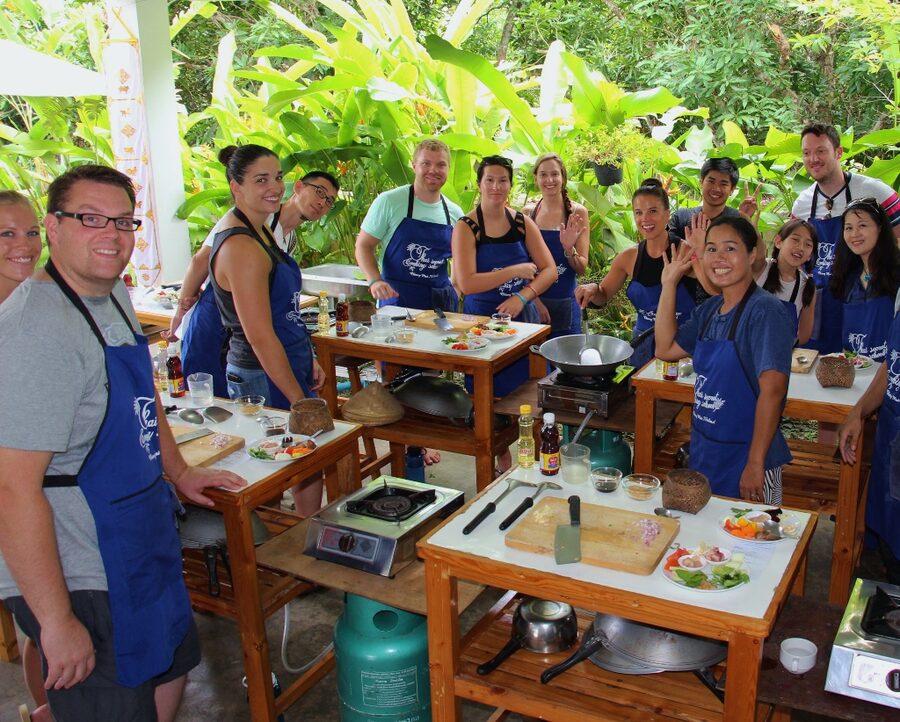
A cooking class is the single best way to learn what the paste is actually doing. Four I rate, across Bangkok and Chiang Mai:
Silom Thai Cooking School (Bangkok) is a five-hour class with a market visit and four to five dishes. Around 1,400 baht. Small groups, near BTS Chong Nonsi. They teach green curry, panang, or massaman depending on the day. Best value hands-on class in Bangkok.
Blue Elephant (Bangkok and Phuket) in a restored colonial building on Sathorn Road is the fancy option, 3,300 baht for a morning session, royal-Thai style rather than street. If you want to learn how to carve vegetables into flowers, this is the only one that does it properly.
May Kaidee (Bangkok and Chiang Mai) is the vegetarian option. May has been teaching for thirty-plus years and has published four cookbooks. Around 1,500 baht, and her vegetarian panang paste class doubles as an education in how to cook without fish sauce.
Thai Farm Cooking School (Chiang Mai) runs out of an organic farm forty minutes outside the city. The half-day class is 1,000 baht, the full day 1,500. You harvest your own herbs before cooking. I went there on a hot afternoon three years back and the khao soi paste we pounded was the best one I have made since. Book directly through their site, because the platform commission pushes the price up.
A class will not make you a Thai cook, but it will make you a much better Thai-food eater.
Where Thai Curry Goes Wrong in Export
The short answer is that it is too sweet and not spicy enough. The longer answer has three parts.
First, the paste. Most Thai restaurants abroad use factory paste, either Mae Ploy-style tub paste or the frozen blocks imported from industrial Thai kitchens. The paste is not freshly pounded. The flavour is a sketch of what the dish should taste like, not the dish itself.
Second, the coconut milk. Western restaurants use a single grade of canned coconut milk, usually a low-fat light version. Thai kitchens separate the coconut cream (the thick stuff that floats to the top of a can) from the thinner coconut milk underneath. The paste gets fried in the cream, the milk goes in later. This is what gives a proper Thai curry its split-oil glisten. A Western curry that uses one tin of light coconut milk and dumps the paste straight in tastes milky-sweet, not rich.
Third, the sugar balance. Restaurants catering to Western palates tend to add more palm sugar and less fish sauce to the finishing seasoning, which reads as blander and less assertive than the original. The fix is simple but rarely done: taste at the end, and add fish sauce and dried chili rather than sugar, until the balance is right.
I am not snobbish about this. Western Thai food is its own genre, and at a good British-Thai or American-Thai restaurant the green curry is a perfectly pleasant dish. It just is not Thai green curry in the sense Bangkok would recognise.
Eat Each Curry at Its Source
A rough regional map if you are planning a trip.
Bangkok and the central plains. Green curry, red curry, panang, choo chee, yellow curry, gaeng som with fish. Or Tor Kor market food court is a one-stop tasting menu. Krua Apsorn on Dinso Road is the reliable sit-down pick. For upgrade meals, Nahm at the COMO Metropolitan and Bo.lan are the two most serious central-Thai fine-dining rooms.
Chiang Mai and the north. Khao soi, gaeng hang lay, gaeng daeng. Khao Soi Khun Yai and Khao Soi Mae Sai for khao soi. Huen Phen for hang lay. Aum Vegetarian for a meat-free jungle curry.
Chiang Rai and the far north. Lu Lam for gaeng hang le. Khao Soi Phor Jai on the main ring road. A detour up to Mae Salong for the Chin Haw Muslim curry-noodle tradition.
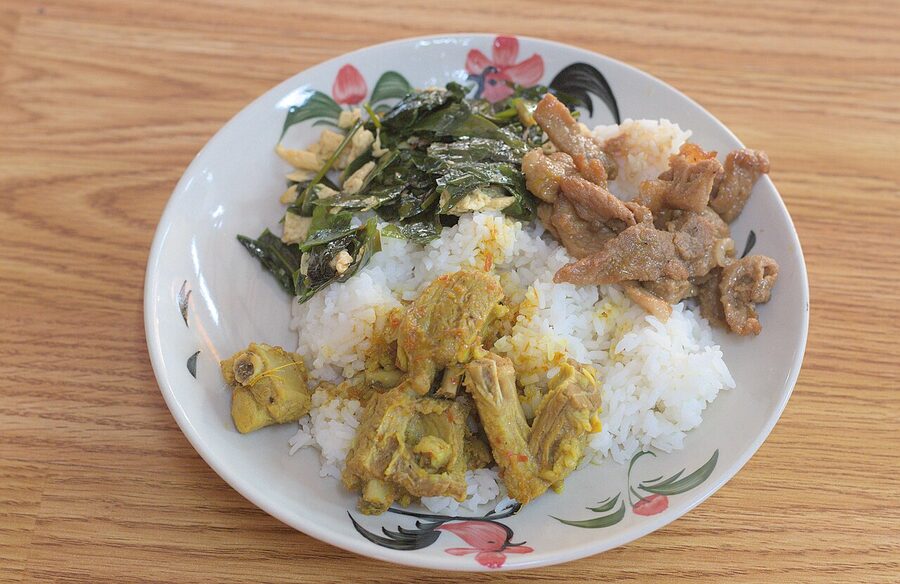
The deep south. Gaeng tai pla, kua kling, khao mok gai, southern gaeng som. Hat Yai is the food capital of the south. Khao Mok Gai Dawa for biryani, any raan khao gaeng (rice-and-curry shop) you see open at 10am for the steam-table tray spread. In Phuket old town, Raya and Prai Raya are the two hereditary family restaurants. Krabi and Trang also have excellent Muslim-Thai curry kitchens.
Isaan (the northeast). This region is not in the brief because Isaan does not really do curry. Isaan food is grilled meat, sticky rice, papaya salad, laap. A guide to Thai curry can leave it aside, with the note that Isaan cooks who migrated to Bangkok have taken jungle curry and made it their own, and often do it very well.
The Short Version
If you want to eat Thai curry well, go to Thailand. If you cannot go to Thailand, cook at home with Mae Ploy green or massaman paste, coconut cream, fish sauce, and palm sugar, and be willing to use more paste and less coconut milk than the tub label says. If you cannot cook at home, find a Thai restaurant that has Thai cooks in the kitchen, not a franchise chain, and order the massaman or the panang rather than the green curry, because those two travel better.
And if you are in Bangkok, go to Or Tor Kor on a weekday morning, buy a small bag of fresh green curry paste, a small bag of fresh red paste, and a bag of fresh coconut cream from the old woman pressing it by hand with a muslin cloth. Cook both curries in the same evening. Compare. The difference between that paste and a supermarket tub back home is roughly the distance between a dish you eat and a dish you remember.
For more on the broader Bangkok food scene, see our Bangkok street food guide. The coconut and tamarind pieces also show up across Southeast Asia, which we cover in the tropical fruit guide. Hong Kong’s Thai-influenced noodle soups and the Chinese Yunnan border food both connect to the khao soi story, and you can find the Hong Kong side in our Hong Kong dim sum guide as a jumping-off point for the wider southern-Chinese cooking traditions.
You Might Also Enjoy
 Phuket Food Guide: Sino-Portuguese Old Town, Moo Hong, and the Southern Thai Kitchen
 Okinawa Food Guide: Goya Champuru, Taco Rice, and the Ryukyu Kingdom Kitchen
 Kanazawa Food Guide: Omicho Market, Jibuni, and Gold-Leaf Ice Cream
 The Regional Ramen Map of Japan: From Sapporo Miso to Hakata Tonkotsu and Everything Between



_and_pestle.jpg)
.jpg)


