
Tropical Fruits of Southeast Asia: A Tasting Guide
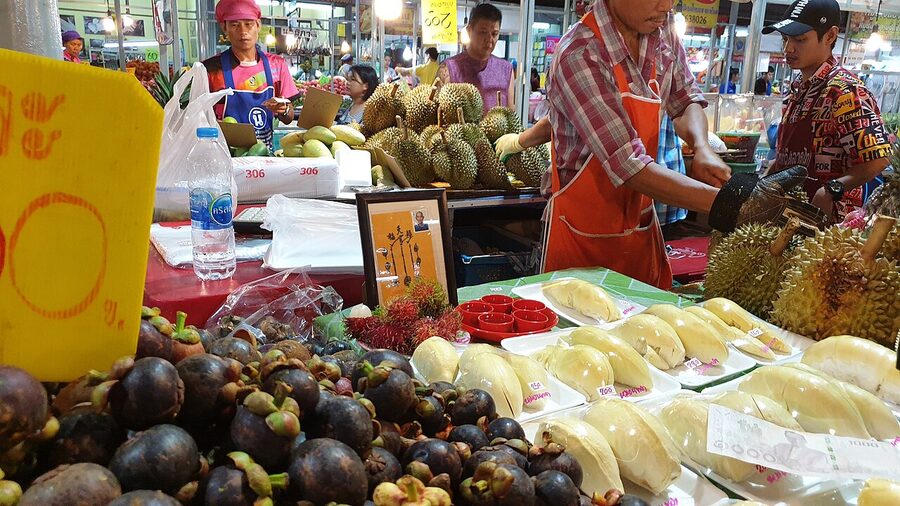
The first time I tried a Musang King durian, I was sitting on a plastic stool outside a no-name stall in George Town, Penang. The vendor, a woman in her sixties with gold bangles and a short knife, had cracked the fruit open with two chops and pushed a segment towards me on a scrap of newspaper. The smell had arrived maybe fifteen seconds before the fruit. Somewhere between onion, petrol, and overripe banana. I remember thinking: this is going to be a mistake. It wasn’t. The flesh was body-temperature warm, buttery, sweet the way condensed milk is sweet but with an almost savoury finish. I bought a second segment and then a third. Forty ringgit disappeared from my wallet. Outside the stall, a sign in four languages politely asked people not to take durian into the hotel across the street.
Southeast Asia has somewhere between forty and a hundred tropical fruits you’ve likely never seen in a western supermarket, depending on how picky you want to get about subspecies. This is a field guide to the ones that matter, what they taste like, what they cost, when to find them, and which ones to skip. I’ve eaten every fruit on this list at least twice, usually in a wet market at an hour most tourists are still asleep.
A quick word on where to buy before we start. Wet markets at dawn, Pasar Chowrasta in Penang, Warorot in Chiang Mai, Tekka in Singapore, Sa Đéc in the Mekong, sell at the same prices locals pay, and the fruit is always fresher than the supermarket version. Tourist-area night markets charge two to three times more and their durian has often been sitting in a cooler for a day. Supermarkets are the safe option for a first-timer, but you’ll pay a premium and the selection is narrower. If you can hit one wet market at 7am on a trip, do it.
In This Article
- Durian, the one you came here to argue about
- Mangosteen, the queen, no argument
- Rambutan and its cousin longan
- Dragon fruit, the one that looks wilder than it tastes
- Jackfruit, cempedak, and the art of the giant
- Salak, the scaly one
- Rose apple, jambu air, underrated
- The mango question
- Bananas that aren’t the Cavendish
- Soursop and the milkshake trick
- Langsat, longkong, and the grape-cluster fruit
- Pomelo, the grapefruit’s elder cousin
- Starfruit, custard apple, and the others worth mentioning
- When to come, peak season is May to August
- Where to shop, markets by city
- How to eat fruit when you don’t have a kitchen
- The durian rules, don’t get fined
- One last note
Durian, the one you came here to argue about
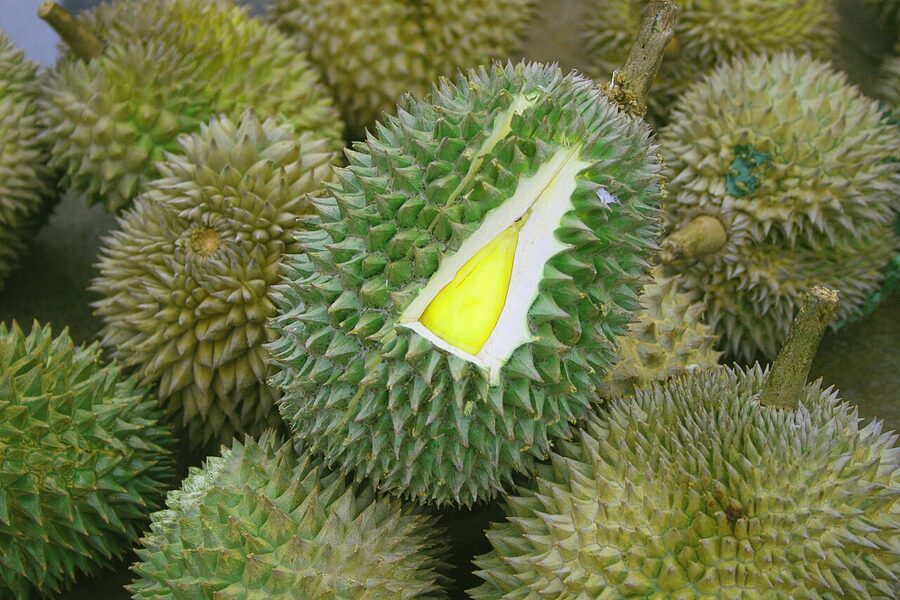
Durian is the fruit with the reputation, and the reputation is earned. The smell is real. The Singapore MRT has a specific “no durian” pictogram alongside no smoking and no flammables. Hotels in Kuala Lumpur will fine you RM500 if you smuggle one past reception. The Grab drivers in Penang will sometimes refuse a fare. None of this is theatre. A ripe durian in a warm car is a very particular kind of smell that hangs around for days.
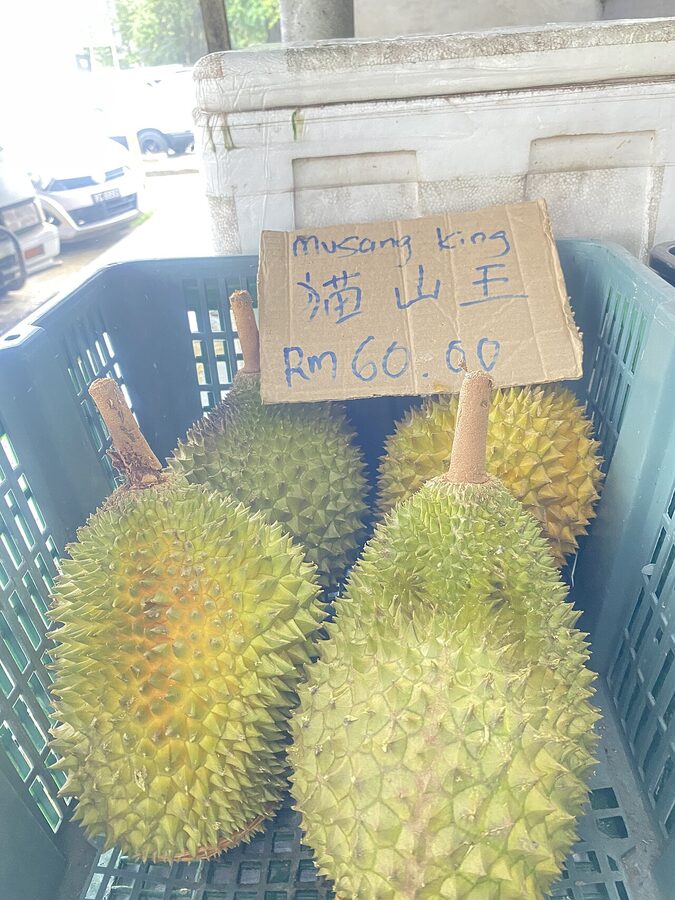
There are dozens of named cultivars in Malaysia alone, Musang King (the Ferrari of durians, sometimes called Mao Shan Wang), D24 (cheaper, creamier, more mainstream), D197 (a rarer Musang King derivative), Red Prawn (orangey flesh, milder), Monthong (the Thai export variety, less intense, which is why it’s in supermarkets abroad). I’d rank them: Musang King first, Red Prawn second for something different, D24 as the workhorse, Monthong for training wheels. Monthong is the durian you meet in Vietnam and Bangkok tourist markets. Malaysia has more interesting options.
Where to eat it. Penang between May and July is peak, Air Itam roadside stalls, Balik Pulau further along the coast, or a dedicated durian buffet in Bayan Lepas. Kuala Lumpur has SS2 night market. Bangkok has Or Tor Kor Market on Kamphaeng Phet Road (prices are tourist-adjacent but the quality is genuinely good). Singapore has Geylang and Balestier stalls, but at Singapore prices, expect S$25 to S$50 per kilo for Musang King, roughly double what you’d pay in KL. Avoid the pre-packed tray versions at 7-Eleven. The whole point of durian is eating it fresh, warm, and from the shell.
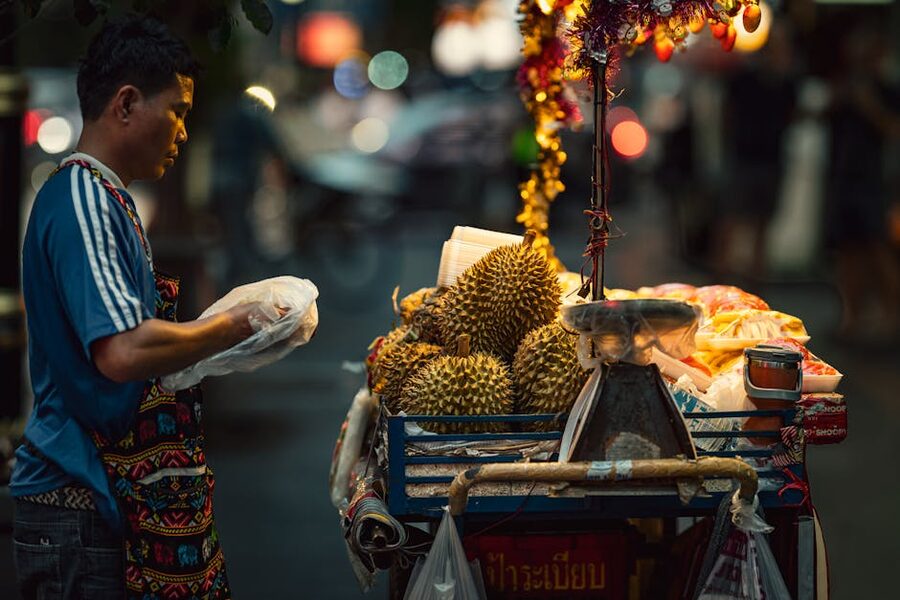
One etiquette note. Don’t try to eat cold durian. A lot of supermarkets sell refrigerated plastic trays and the cold kills most of the flavour. Room temperature, same day the vendor opened it, sitting at a plastic table, that’s the version worth the price. And if you don’t like it on the first bite, that’s fine. A lot of locals don’t either. You get one real attempt; if it’s not for you, try mangosteen instead, which is next on the list and fixes everything.
Mangosteen, the queen, no argument
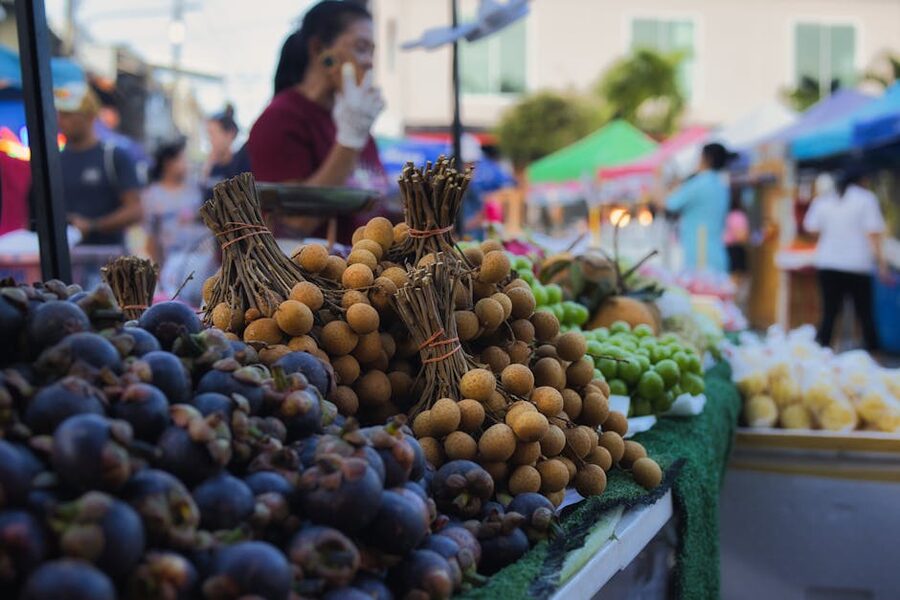
If durian is the king, mangosteen is the queen, and the marketing writes itself. You eat them together. The theory, widely held, unscientifically proven, but consistent across every durian stall I’ve ever been to, is that the cool sweet mangosteen cancels out the heaviness of durian. The heavy-hot-yin-yang logic. Whatever the science, it’s true: mangosteen is the perfect antidote to durian overload.
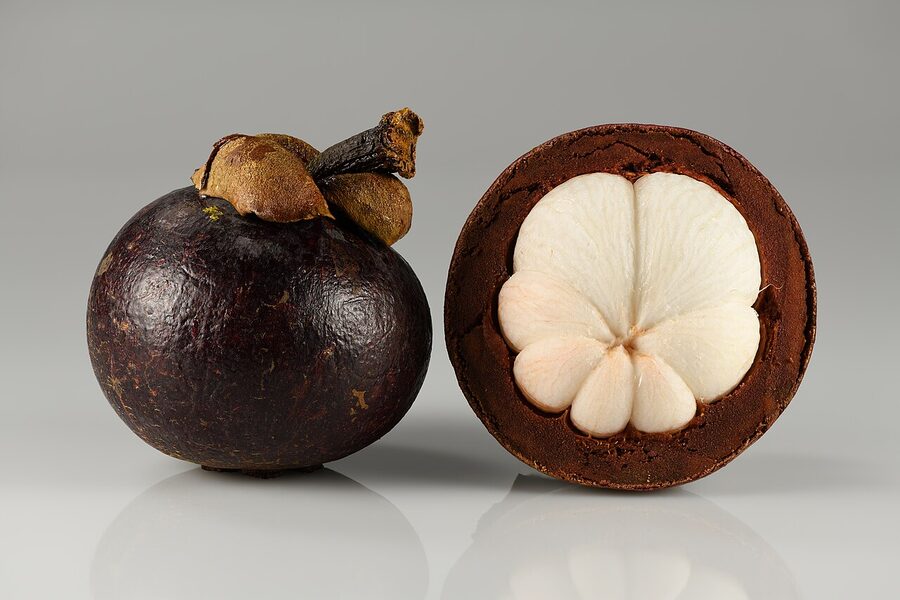
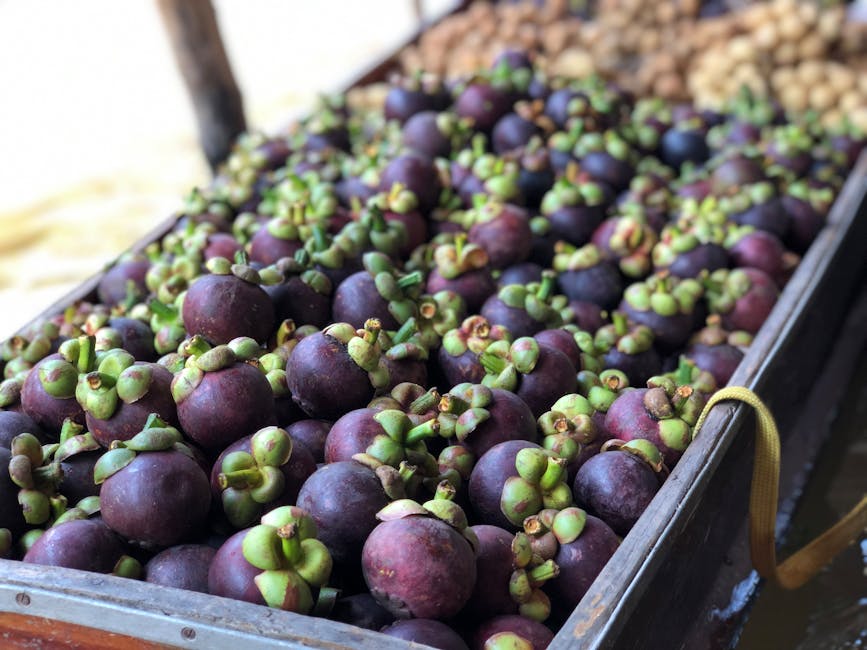
The flesh is the thing. Soft, white, segmented like a garlic bulb, and the flavour sits somewhere between lychee, peach, and something almost citrus-floral. It’s not heavy. It’s clean in a way not many other tropical fruits manage. A ripe mangosteen gives slightly under thumb pressure, a rock-hard one is underripe, a squishy one is past its prime. The season overlaps with durian (May to August across most of Southeast Asia, a bit earlier in southern Thailand), which is no coincidence; that’s the point.
Price check. In a Kuala Lumpur wet market, RM10 will get you a kilo, roughly 10 to 12 fruit. Bangkok’s Or Tor Kor sells them at ฿80-120 per kilo. Singapore’s Tekka Market runs S$4-6 per kilo in peak season, the best value in the city. One warning: the purple rind stains cotton like you wouldn’t believe. Wear something dark, or peel them over the sink. I’ve lost two t-shirts to mangosteen enthusiasm.
Rambutan and its cousin longan
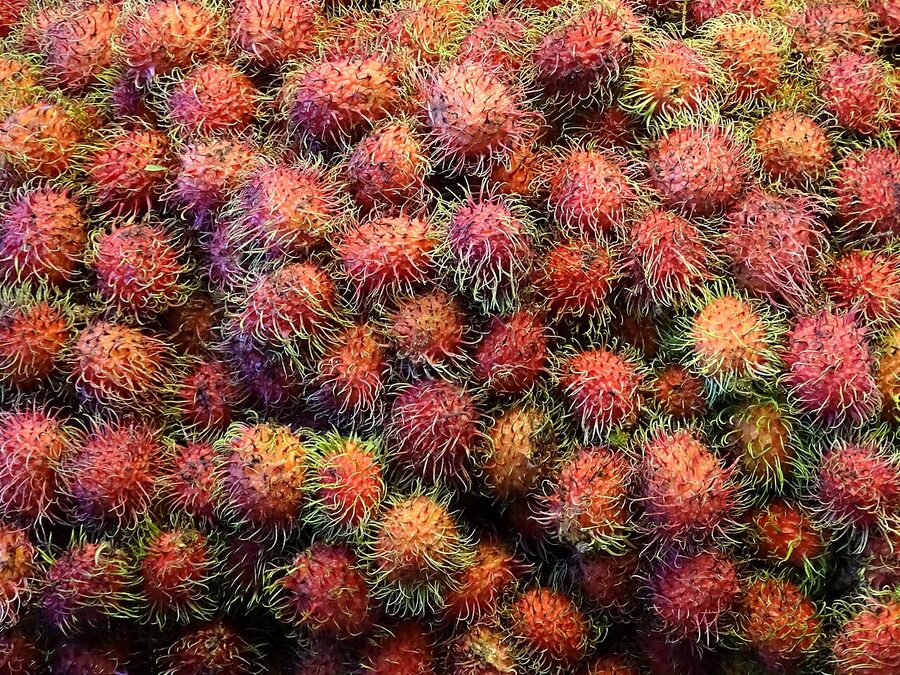
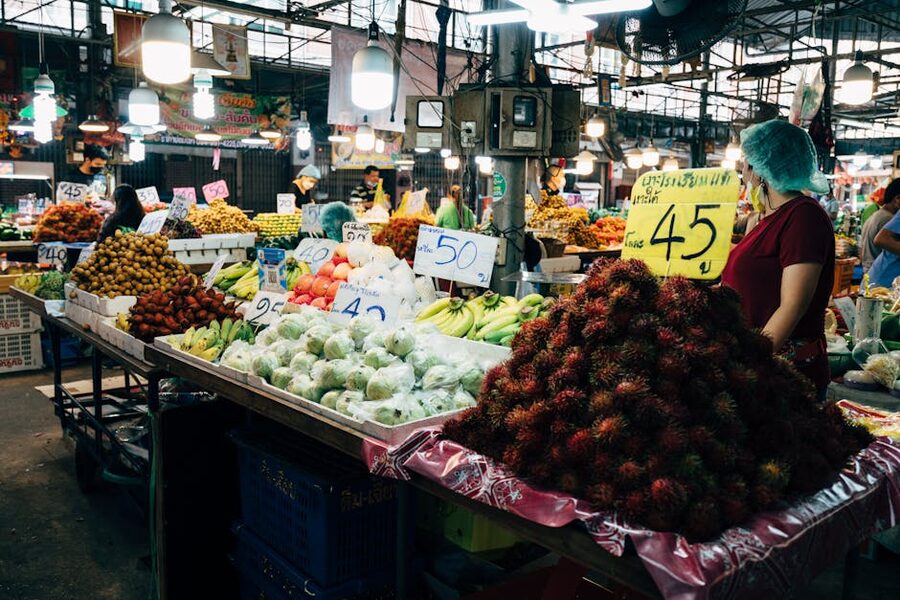
Rambutan looks alarming. A red golf ball with soft green hair. It’s in the same family as lychee and longan, and once you peel past the novelty skin it behaves more or less the same: a translucent white sphere of flesh around a single pip. The taste is grape-meets-lychee with a slightly waxier mouthfeel than lychee proper.
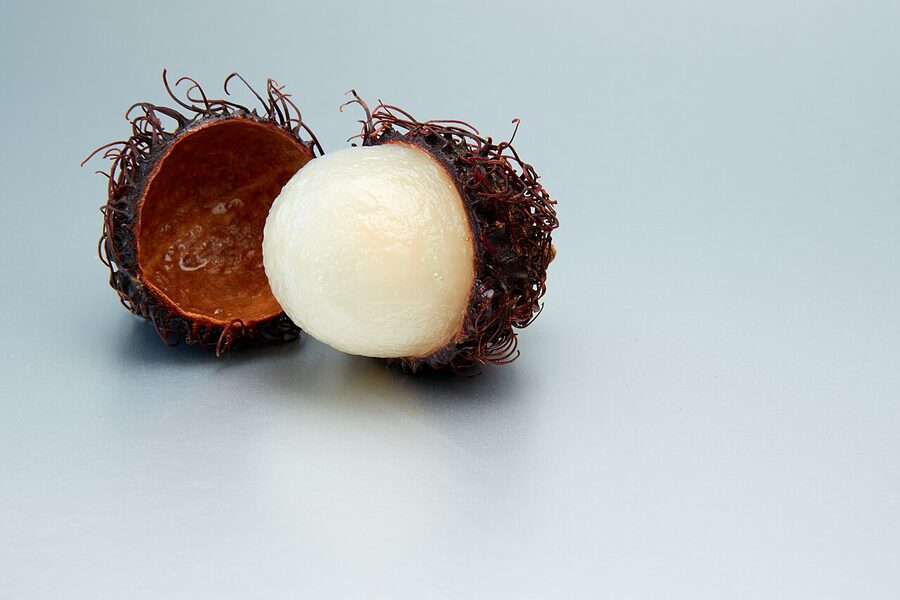
A freshness check: the hairs should be bright red with green tips, not dried and brown. Droopy hairs mean old fruit. Rambutans go off fast, so buy them to eat the same day, a whole kilo for RM8-12 in Malaysia is a fair price. Warorot market in Chiang Mai sells them at ฿40-60 per kilo in the June-August peak, sometimes in baskets of ten for ฿20, which is more than enough.
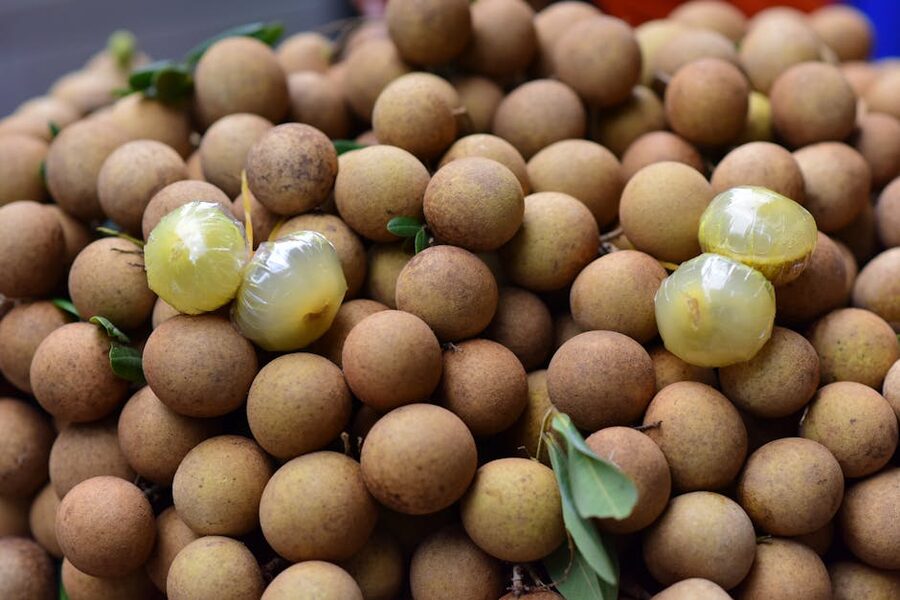
Longan is the smaller, less theatrical cousin. Pale beige skin, smooth. The name translates to “dragon eye” in Chinese because of how the black pip sits in the white flesh when you cut it in half. The flavour is sweeter and more musky than lychee, less floral, more honey-leaning. Longan keep better than rambutan, last a week in a fridge, and I like them best simply eaten by the handful. Peel by pinching the stem end; the skin splits open on its own.
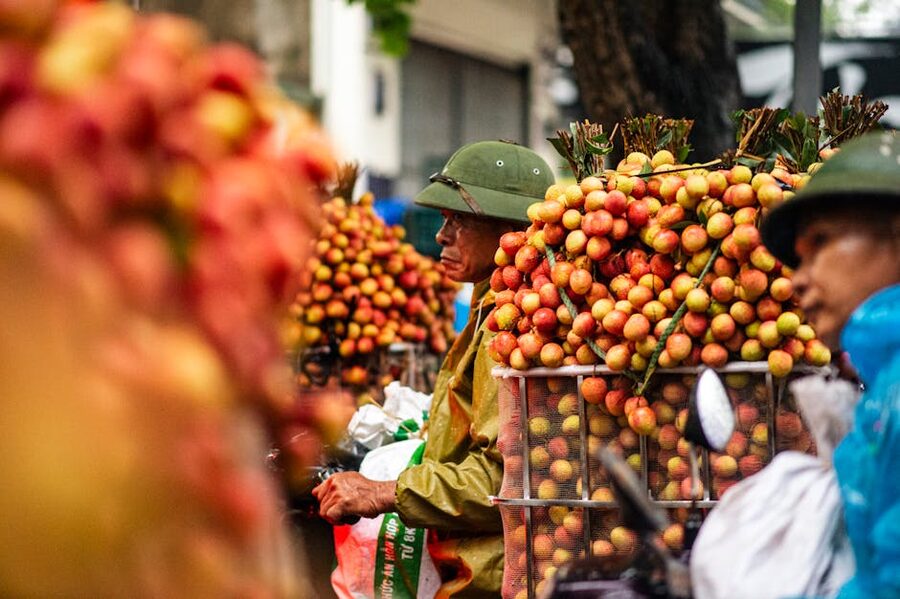
Lychee is the Chinese-southern crossover. Same family as longan, same peel-and-pop flesh, but rosier and more floral. In southern Vietnam and southern China, the June-July lychee season is a genuine event, if you spend any time in Yangshuo or the karst country around Guilin during early summer, you’ll see trucks of lychee rolling into town every morning. Bac Giang province in northern Vietnam is the other big growing region, and their Thieu lychee is sweeter than the mainstream variety.
Dragon fruit, the one that looks wilder than it tastes
Pitaya, in its home territory. The pink-green spiky exterior is pure drama; the interior is usually a mild kiwi-pear thing with no real backbone. White-flesh dragon fruit is the one most foreigners meet first, and it’s a bit boring. Not bad, not memorable. Crunchy, faintly sweet, mostly water.
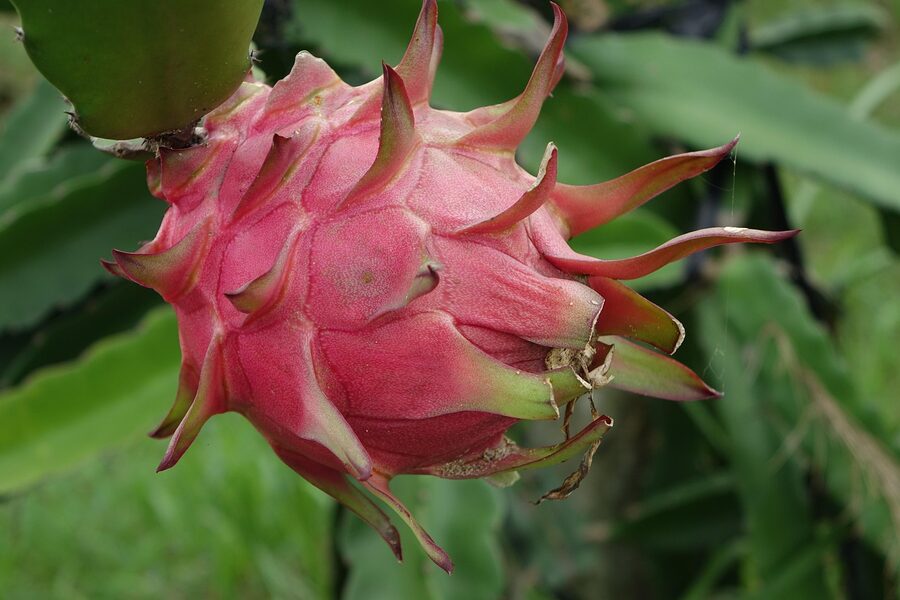
Red-flesh dragon fruit is the version you want. The flavour is bigger, more berry-like, closer to a cross between raspberry and beetroot than to the kiwi comparison. The tiny black seeds crunch pleasantly. In Vietnam, where most of the commercial crop comes from, red-flesh pitaya runs 20,000-40,000 đồng per kilo at a Mekong wet market. Bangkok’s MBK supermarket will charge you ฿80 for a single fruit.
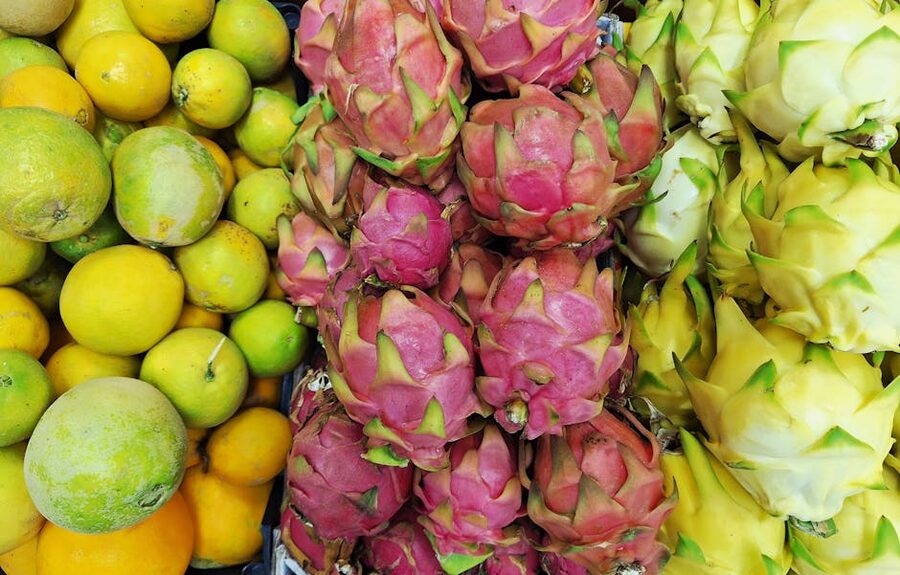
Jackfruit, cempedak, and the art of the giant
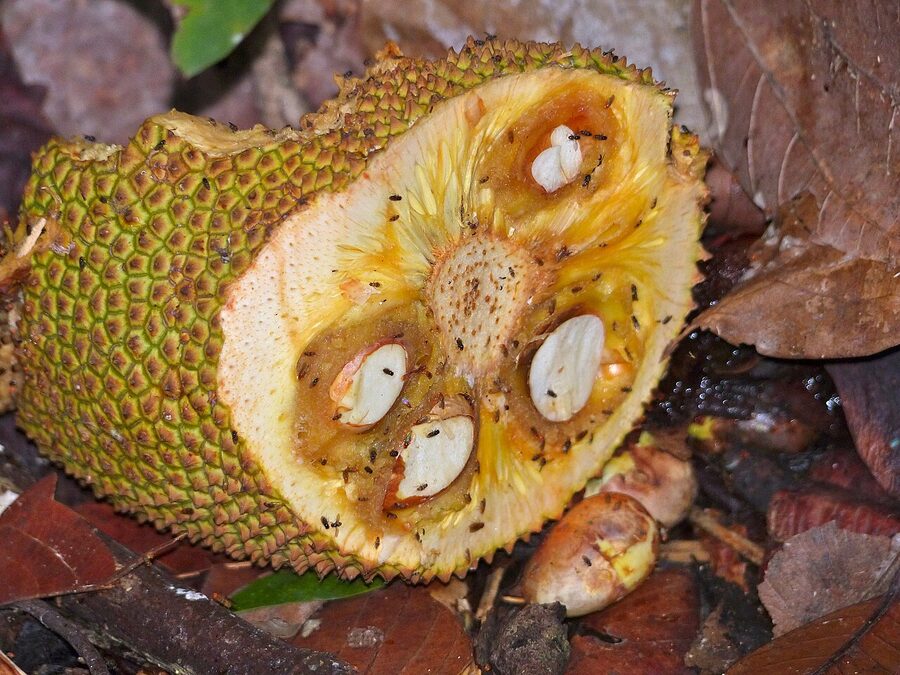
Jackfruit is the largest tree fruit on the planet. A single specimen can weigh 40 kilos. You will never buy a whole one. What you’ll see in markets is a vendor chopping segments off a mother-fruit with what amounts to a small machete, fingers oiled to stop the sap from sticking. Each bulb, and there can be hundreds per fruit, is a yellow, almost polystyrene-firm pocket of sweetness around a large brown seed. The flavour is banana-mango-pineapple in the same breath.
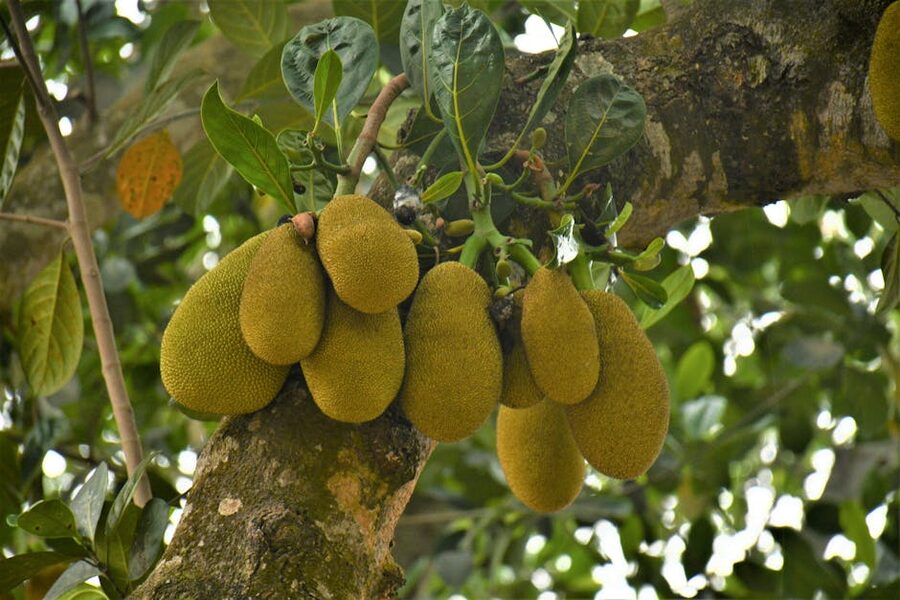
Pre-segmented jackfruit at a Malaysian wet market will cost RM5-8 for a 300g pack of bulbs, which is enough for two people. The seeds are edible boiled, they taste like a cross between chestnut and butter bean, and you’ll see them sold by weight in northern Thai markets. Worth ten baht of curiosity if nothing else.
Cempedak is jackfruit’s smaller, stronger-smelling cousin. The flesh is softer, the flavour more concentrated, and it has a faint durian-esque funk that the jackfruit doesn’t. Malaysian pasars sell it fried in batter, cempedak goreng, which is my absolute favourite hawker snack and not something you’ll see in any tourist trap. Try it at a night market outside KL, RM2 per piece.
Salak, the scaly one
Salak, or snakefruit. Indonesian in origin, named for the leathery brown scales that cover the outside like a pinecone. You peel it by pinching the pointy end and pulling, the skin flakes off in brittle sheets. Inside are three ivory-white lobes, each wrapped around a hard seed.
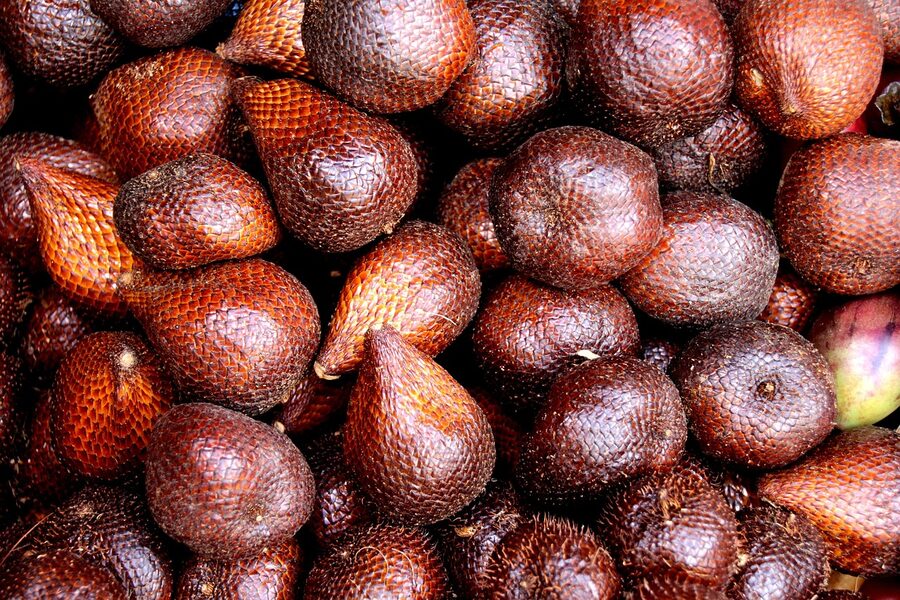
The taste is where it gets interesting. Crunchy rather than soft (uncommon for tropical fruit), and the flavour is apple-pineapple with a vague astringent edge that some people love and some find chalky. I’m in the love camp. In Indonesia’s Yogyakarta or Bali markets, a kilo runs 15,000-25,000 rupiah. Singapore’s NTUC supermarket stocks them in pre-packaged boxes at S$4-6 each, but you’ll find the same fruit fresher and cheaper at Tekka market. The Balinese salak (salak Bali) is nuttier; the Javanese salak (salak pondoh) is sweeter. Try both if you’re in Indonesia, you can usually buy one of each at the same stall.
Rose apple, jambu air, underrated
Rose apple, known as jambu air in Malaysia and Indonesia, chomphu in Thailand, wax apple in the Chinese diaspora. Bell-shaped, waxy pink skin, sometimes green. You eat it skin and all, seedless. The flesh is pale and surprisingly dry, more crunch than juice, with a taste somewhere between an unripe pear and a rose-scented lolly. Seriously.
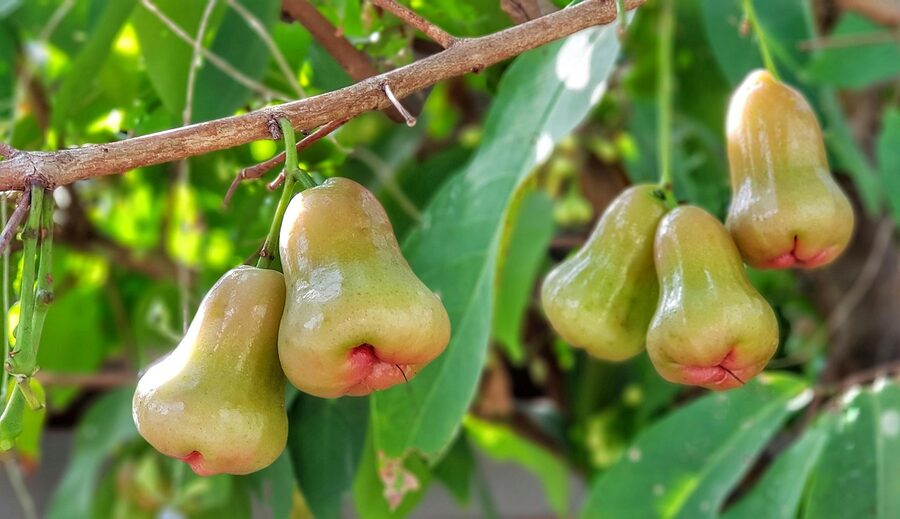
They’re cheap. A kilo in any Malaysian wet market is RM3-5. Most people eat them chilled on a hot day. Some stalls will sell them pre-sliced in a bag with a little dip of chili salt (prik kluea) in the Thai version, which sounds wrong and tastes great. This is the fruit I buy when I don’t know what I want, low-commitment, refreshing, doesn’t fill you up.
The mango question
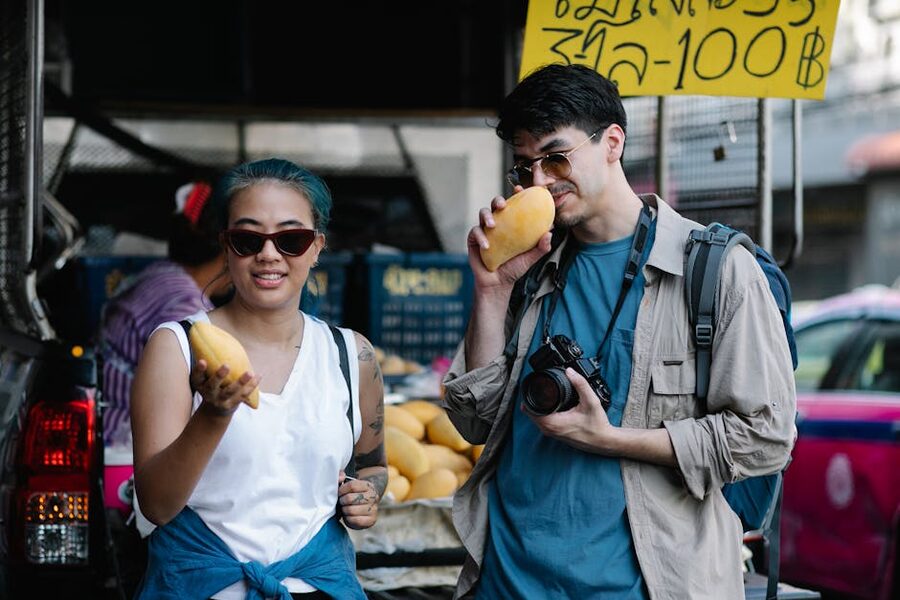
Southeast Asian mangoes are the quiet heroes. The Thai Nam Dok Mai is a long, yellow-skinned, thin-seeded fruit with a custardy flesh, sweeter than an Indian Alphonso, less perfumed, meant for eating fresh with glutinous rice and coconut cream (the famous khao niao mamuang, mango sticky rice). Then there’s the green sour variety, mamuang khiao, which Thais eat unripe with a chilli-sugar-fish sauce dip called nam pla wan. It’s the savoury-sour-salty-sweet combination that defines a lot of Thai cooking, now applied to an unripe fruit. Try it once at a night market; you’ll either love it or never touch it again.
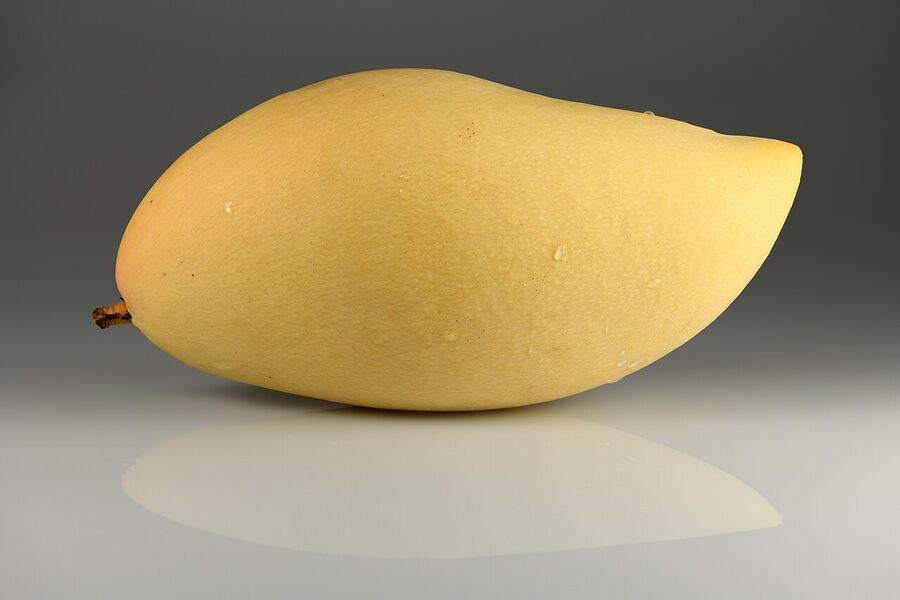
The Filipino Carabao mango is the world’s most famously sweet, it holds a Guinness record for highest sugar content. Cebu and Guimaras are the traditional growing regions. If you’re ever in Manila and see them whole at a roadside stall, they’re worth the detour. In Southeast Asian Chinese neighbourhoods, the Tekka area of Singapore’s Little India, for instance, you’ll also see Indian Alphonso during the April-May crossover. Those are the ones that come in a little wooden box and cost four times what the local Thai mangoes do.
Bananas that aren’t the Cavendish
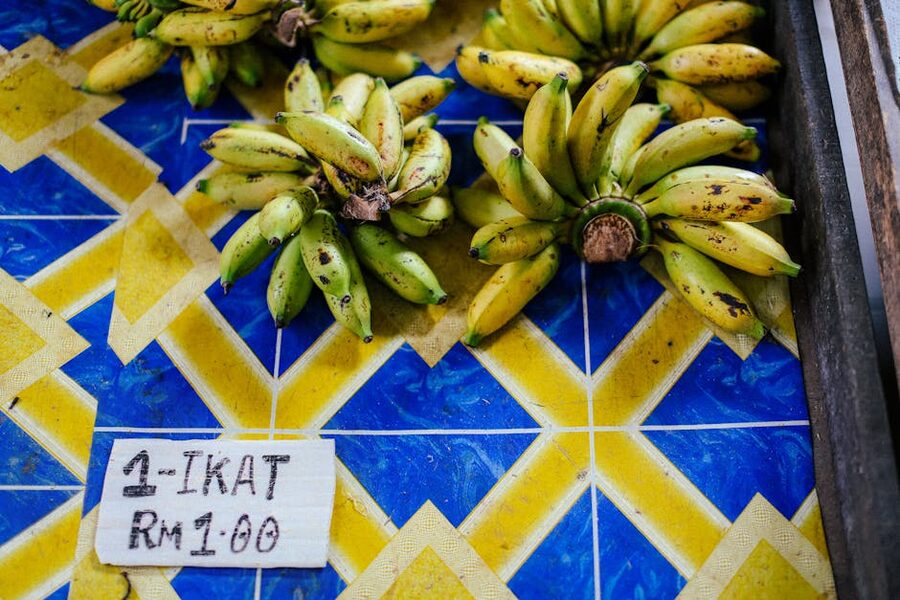
The banana you’ve eaten your whole life is a single clone called Cavendish, and it is the least interesting banana in Southeast Asia. What you want are the local varieties. Pisang emas in Malaysia, small, finger-sized, deep yellow, honey-sweet. Pisang raja, slightly larger, firmer, cooked or raw. Plantains, starchier, cooked only, often fried. And the smallest fingers, kluay khai in Thailand, which are three bites of sweetness.
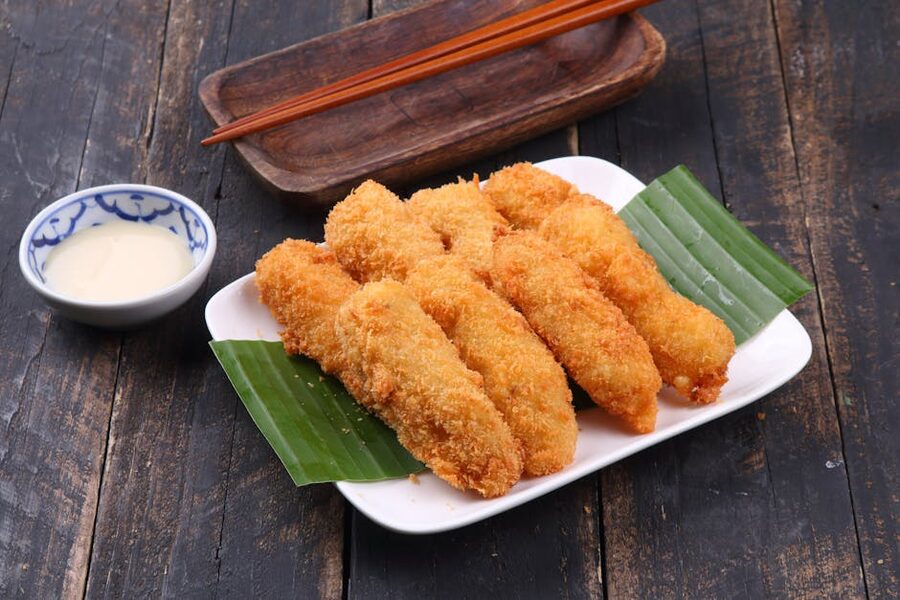
Fried banana, kluay tod, is a Thai street-food classic. Sliced ripe bananas dipped in a coconut-batter and deep-fried, served with a sprinkle of sesame. ฿20-40 for a paper bag, mid-afternoon at any Bangkok food market. Or look for banana steamed in banana leaves, khanom kluay, sweeter, softer, sometimes wrapped around a strip of sticky rice. In Penang, pisang goreng (fried banana Malaysian-style) is its own cottage industry; the roadside stalls on Lebuh Carnarvon will sell you a portion for RM2-3 that’ll ruin the idea of bananas forever.
Soursop and the milkshake trick
Soursop, sirsak in Indonesia, guyabano in the Philippines, is a spiky green American import that thrives all across Southeast Asia. The flesh is white, custardy, slightly fibrous, with a flavour between strawberry and pineapple and a mouthfeel like a very firm custard. It’s best blended with ice and a little condensed milk into a soursop shake (es sirsak in Indonesia, nước dừa mãng cầu in Vietnam).
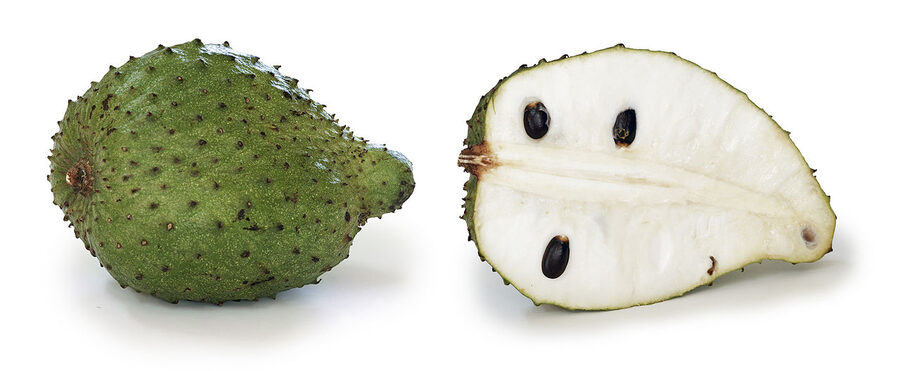
Eating one whole is harder work than blending it, too many seeds, too much scooping. A ripe soursop gives gently under thumb pressure and smells faintly like pineapple. Most Southeast Asian supermarkets now stock them for 15,000-30,000 rupiah per kilo in Indonesia, or around ฿60-100 in Thailand. The milkshake version costs about ฿60 at a Bangkok juice bar and is the version I’d push.
Langsat, longkong, and the grape-cluster fruit
Langsat (also called longkong, lansones, or duku depending on where you are) is a small yellowish fruit sold in branching clusters like grapes. The skin peels easily with a thumbnail pinch. Inside are five translucent wedges around one or two seeds. Taste is grapefruit-meets-lychee, more tart than either.
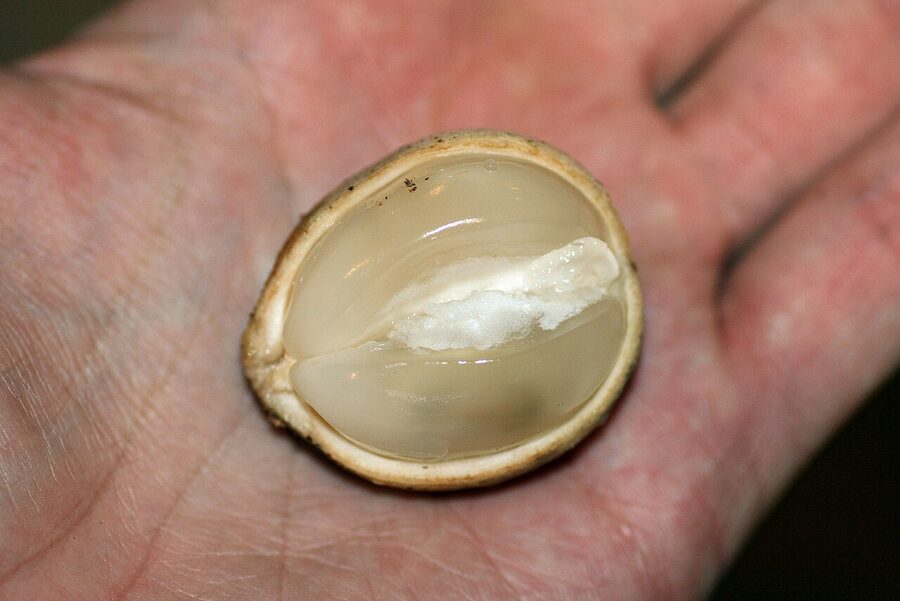
In southern Thailand the longkong (a sweeter variety with less tartness) is the one to look for; duku is the slightly larger Indonesian version. A cluster costs ฿30-50 in Thailand, usually in a bag of 20 or 30 fruit. They’re messy, the white sap is sticky and stains, but the flavour is distinctive enough to be worth the wipes.
Pomelo, the grapefruit’s elder cousin
Pomelo is the citrus grandfather. Grapefruits, oranges, and limes all descend from it. A pomelo is enormous, the size of a child’s head, with a thick white pith and segmented flesh that’s either pink or pale yellow. The flavour is mild, less bitter than grapefruit, more floral than orange.
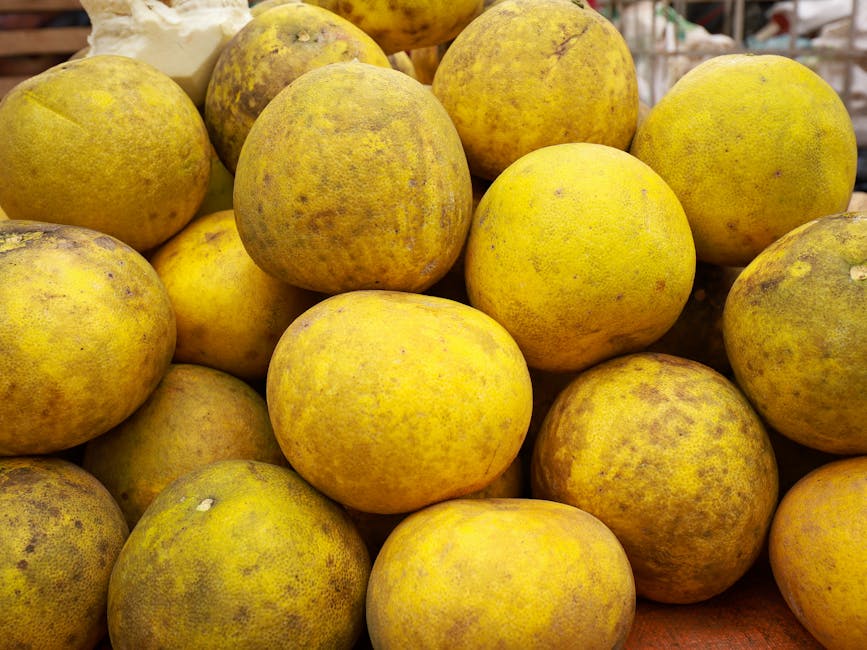
The trick with pomelo is the peeling. You don’t cut it, you tear off the skin. Score the rind lightly around the equator with a knife, then use your thumbs to lift sections of the thick pith away. Inside, each segment has its own membrane, which you also peel. What you eat is the individual juice sacs. It takes ten minutes to prepare one and two minutes to eat it, and it is worth it.
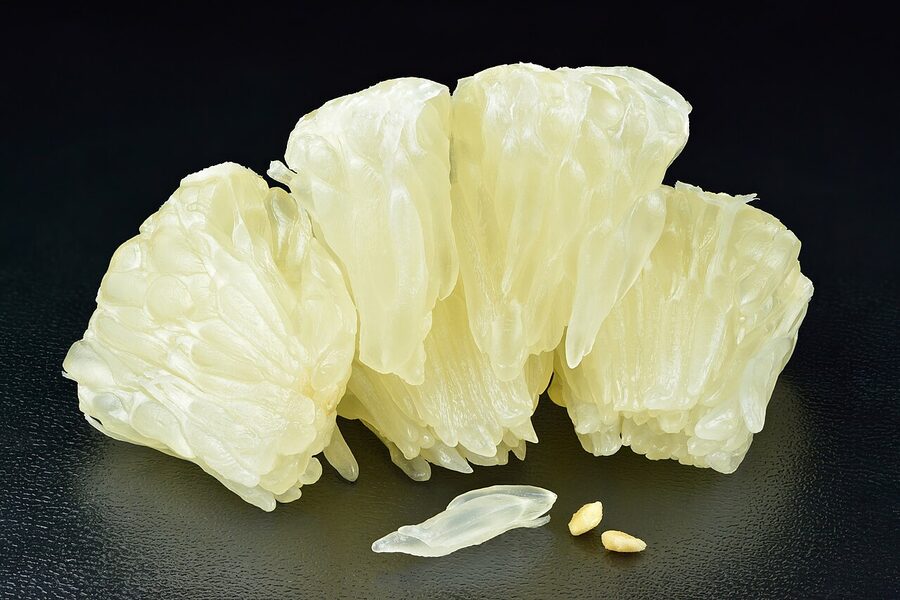
In Thailand you’ll see pomelo salad, yam som-o, with chili, lime, shrimp paste, and dried shrimp. It’s more common in the south of the country. A whole pomelo at a Bangkok market is ฿40-80 depending on variety. Singapore’s Chinese New Year season stocks pomelos up heavily because the word for it in Cantonese (yau) sounds like the word for “have”, a small linguistic good-luck thing.
Starfruit, custard apple, and the others worth mentioning
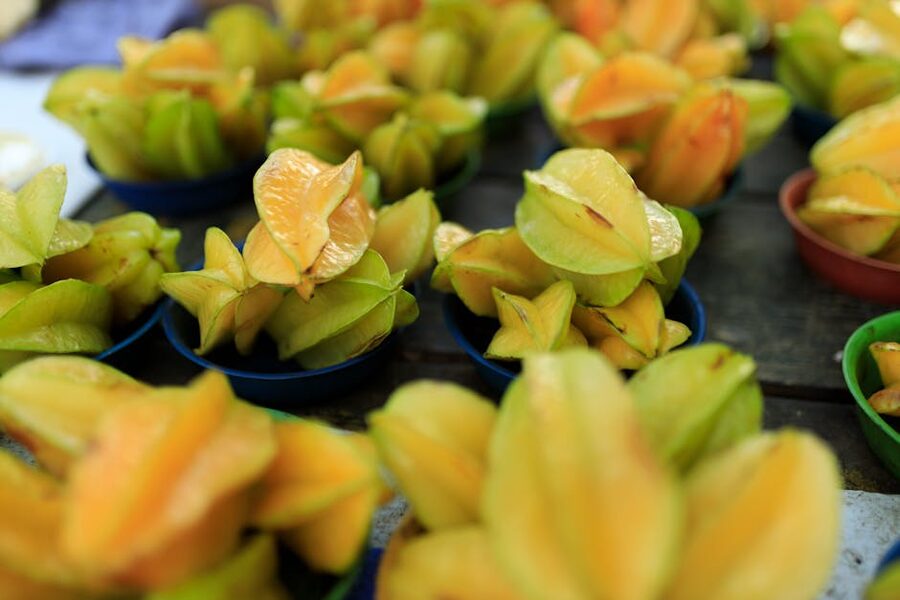
Starfruit, carambola, is sold as a novelty because it cuts into star-shaped slices. The taste is mild, between apple and pear, and not that exciting. Worth a try once for the shape, but if you see one at a higher price than mangosteen, skip it. Sweet starfruit (the one you eat raw) has fatter, waxier ribs; sour starfruit (used in cooking) has sharper ribs and a lemon-adjacent tartness, avoid eating that one whole.
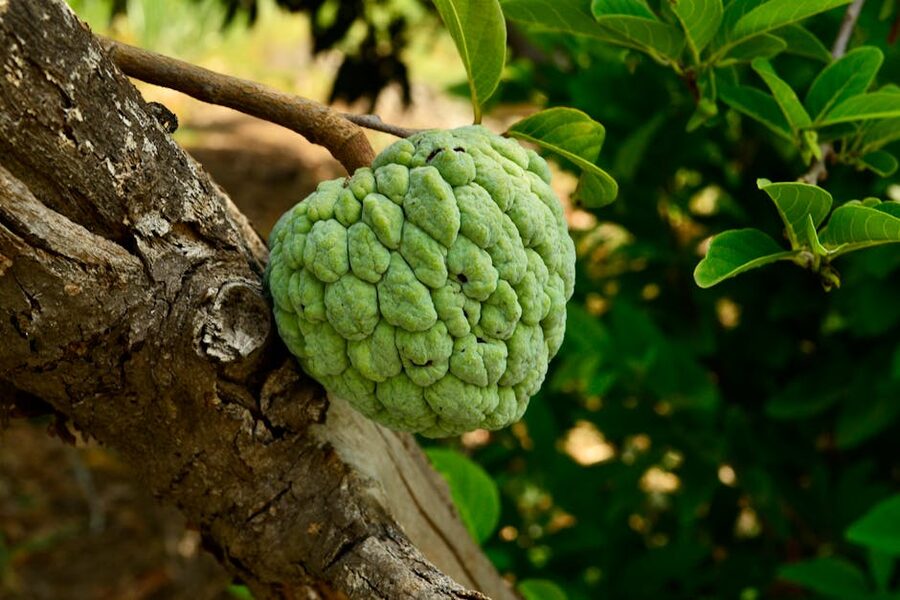
Custard apple (sweet sop, sitaphal, or sugar apple) has a lumpy green exterior like a hand grenade and a creamy, pulpy white flesh inside. You eat it by hand, peel back a section of skin and scoop with a spoon, or thumb. The taste is sweet vanilla-pear with a lot of small black seeds to spit out. They’re common at Bangkok markets in the September-November window, ฿30-60 per fruit.
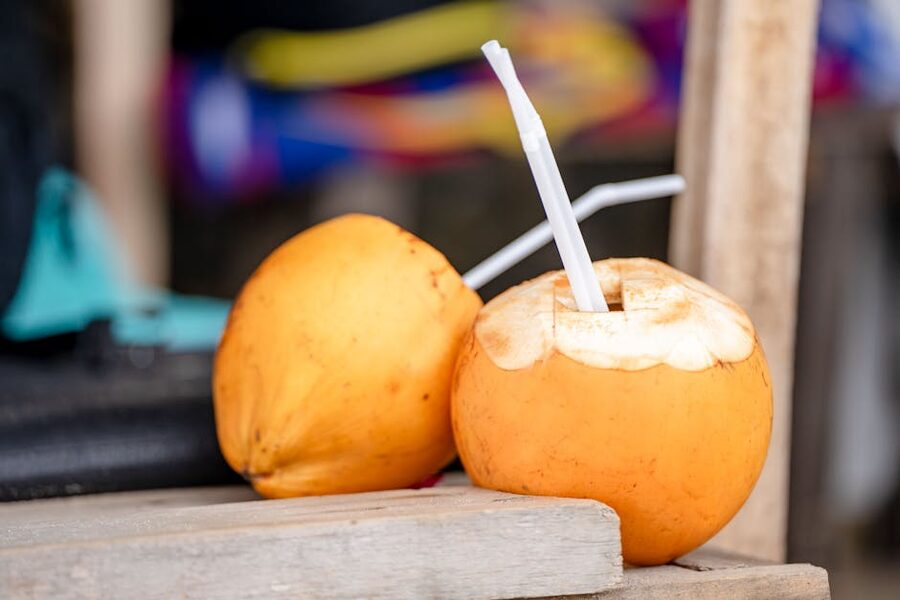
Coconut, I’ve left this near the end because everyone knows coconut, but two things worth mentioning. Young coconut (green or yellow skin, soft jelly inside, water cold and sweet) is the drinking version. Mature coconut (brown shell, hard white flesh, very little water) is the cooking version. A street vendor with a machete will hack the top off a young coconut in three chops, hand you a straw, and charge you ฿20-40 in Thailand, S$4-6 in Singapore. Drink the water, then ask for a spoon and eat the jelly. That jelly is the best part and most tourists leave it behind.
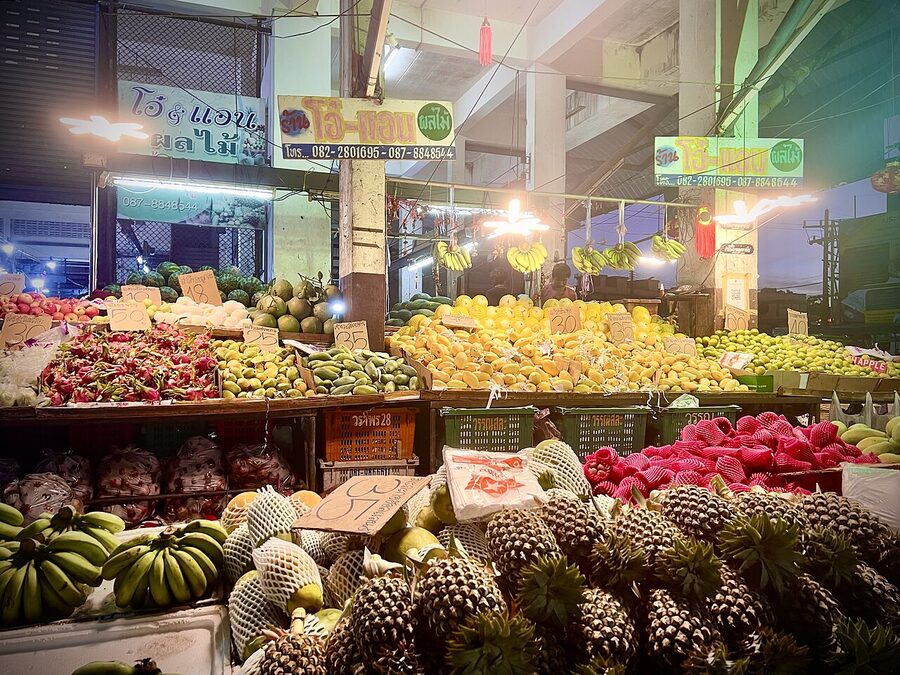
When to come, peak season is May to August
The big hitters, durian, mangosteen, rambutan, lychee, longan, all share a rough May-to-August window across Southeast Asia. Thailand’s fruit belt peaks in May and June (Chanthaburi province on the east coast is the durian heartland for exports, and Thai media literally run countdown tickers to the Chanthaburi durian festival). Malaysia’s Penang durian season is late May to mid-July. Indonesia is slightly earlier, and the eastern islands have a small secondary season in December.
Off-season, the market variety narrows. Dragon fruit and papaya are available year-round. Pomelo peaks September to January. Mangoes are mostly a March-June fruit in Thailand but have pockets of year-round supply from different growing regions. Jackfruit runs most of the year because each tree bears fruit for months on end. If you have only one window to visit for fruit, make it June or July, most things are ripe at once.
Where to shop, markets by city
Quick reference for the best-value wet markets I’ve actually bought fruit in.
Penang, Malaysia, Pasar Chowrasta on Lebuh Penang is the main central market; open from 6am, best by 8am. For durian specifically, the Air Itam roadside stalls around the Kek Lok Si temple area are the pilgrimage spot. Balik Pulau on the west coast is the durian orchard region; taxi from George Town is about RM60 return.
Kuala Lumpur, Chow Kit Market is the biggest wet market, but the smaller SS2 night market in Petaling Jaya has the best durian stalls (Thursday to Sunday, 5pm to midnight). Imbi Market on Jalan Pudu is another tight, well-stocked option.
Bangkok, Or Tor Kor Market (Kamphaeng Phet MRT, Exit 3, right next to Chatuchak) is technically a premium market and prices reflect that, but the quality is excellent and the vendors have been there for decades. Khlong Toei Market is rougher, cheaper, open at 4am, not tourist-friendly but spectacular if you’re up for it.
Chiang Mai, Talat Warorot on Thanon Wichayanon, just off the Ping River. Open from 4am. The fruit section is on the ground floor along the western edge. ฿100 goes a surprisingly long way.
Singapore, Tekka Centre in Little India has the best value for fruit in the whole city (MRT: Little India, Exit E). The hawker centre upstairs is a good lunch stop on a one-day Singapore itinerary. Geylang Serai and Chinatown Complex are the other two worth knowing.
Indonesia (Yogyakarta), Pasar Beringharjo on Jalan Ahmad Yani is the old central market. Open 6am. Look for salak pondoh and the small Javanese rambutans.
How to eat fruit when you don’t have a kitchen
Most travellers eat fruit in a hotel room, which means no knife, no cutting board, no fridge beyond the minibar. Three workarounds.
Buy pre-cut. Every wet market and most night markets have vendors who will slice and bag fruit for you on the spot. A bag of mixed mango, pineapple, rose apple, and watermelon with a chili-salt sachet costs ฿30-60 in Bangkok, RM5-8 in Malaysia. Rat Mai Fen on Sukhumvit Soi 38 is one I always recommend. The plastic bag is the Thai street-food equivalent of a fruit salad.
Eat the bare-hands fruits. Rambutan, lychee, longan, langsat, and mangosteen all peel by hand. Rose apple, starfruit, and small bananas eat whole. Pomelo needs a bit of work but no blade. If you’re staying in a hotel and don’t want to deal with a knife, these are your team.
The supermarket trick. If you really want a mango or a dragon fruit and you don’t have a knife, some supermarkets in KL, Bangkok, and Singapore will cut fruit to order at the produce counter. Cold Storage and NTUC in Singapore do this routinely. Ask “can you cut it?”, it’s a ten-baht affair at most and saves buying a knife you’ll leave in the hotel.
The durian rules, don’t get fined
A short etiquette note because this one catches people out. Durian smell lingers, and Southeast Asian public transport takes this seriously.
Singapore MRT, explicitly banned. The penalty is technically a fine but more commonly the security guard at the gates will simply refuse you entry. Take a taxi instead, and warn the driver.
Hotels, most major chains in Malaysia and Singapore have a no-durian clause in their house rules. RM500 fines are not uncommon if housekeeping finds the evidence. Eat your durian outside or at the stall.
Grab cars, drivers can (and often do) refuse. If you’re carrying durian, tell the driver before you get in; some will accept a small “cleaning” tip of RM10-20, some won’t carry it at all.
Airlines, most Southeast Asian carriers ban durian from cabin baggage. Some allow it frozen and sealed in checked luggage; some don’t. Don’t try unless you’ve specifically confirmed with the airline.
None of this is an exaggeration. I’ve watched a family try to sneak a durian through the lobby of the Concorde Hotel in KL, get caught, and have to eat it at a plastic table on the pavement outside. They seemed fine about it, in the end. That’s the Southeast Asian durian story: the rules look strict, they’re enforced without much fuss, and you eat on the street with everyone else.
One last note
Not every fruit on this list is worth chasing. Starfruit is a novelty that doesn’t quite deliver flavour-wise. White-flesh dragon fruit is fine. Banana at a tourist market is no better than the banana at your local shop back home. The fruits that genuinely surprise, the ones I still think about months later, are durian (if you give it a real chance), mangosteen, Musang King specifically, cempedak, and a perfectly ripe Nam Dok Mai mango eaten on a warm Bangkok evening while the mango sticky rice vendor two stalls down waits for your order.
If you’ve only got one trip, here’s the shortlist: find a wet market at dawn, eat mangosteen and rambutan and langsat by the handful, split a whole durian with whoever’s willing, and finish with a young coconut. Spend the equivalent of a single hotel breakfast, cut nothing with a knife, and leave half of it for the next day. Do that once, and you’ll understand why the fruit here is one of the best things about the region, even better than Chinese regional food, which is saying something.



.jpg)


_%E2%80%93_langsat_(49970785441).jpg)

