Chinese New Year in China: The 2027 Dates, the Travel Rush, Temple Fairs and Whether You Should Go
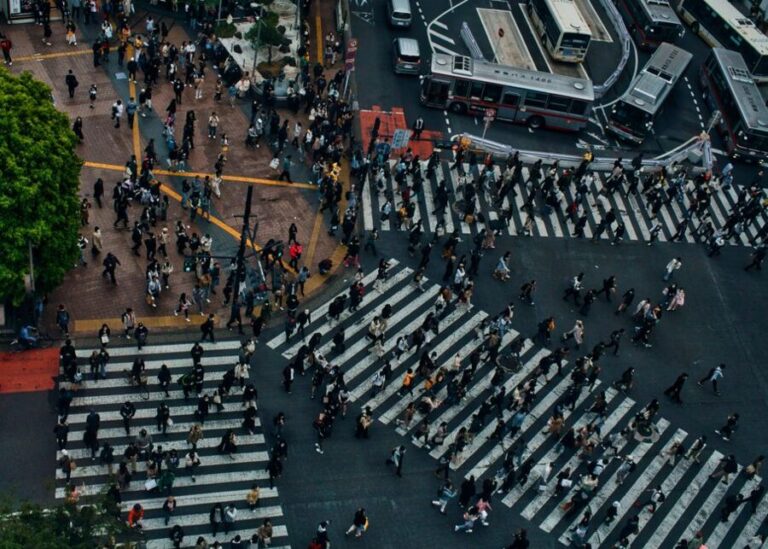
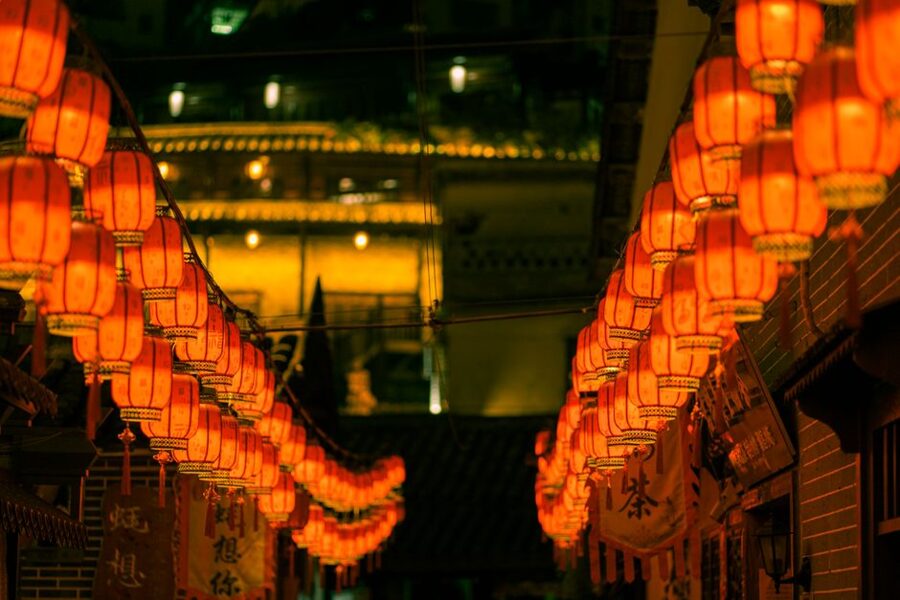
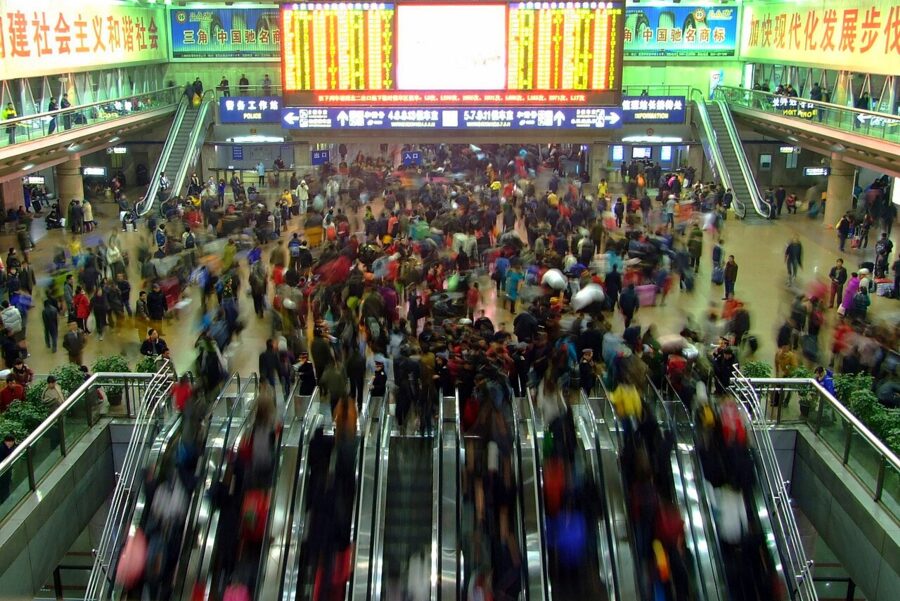
The busiest week of the Chinese year is also its quietest. In the run-up to Spring Festival the railway stations fill until the waiting halls look like football terraces. Then, almost overnight, the cities they drained go still: noodle shops pull down their shutters and tape a red notice to the front, and the office towers go dark. For a few days the only queues in town are at the temples, the temple fairs and the one dumpling restaurant that stayed open.
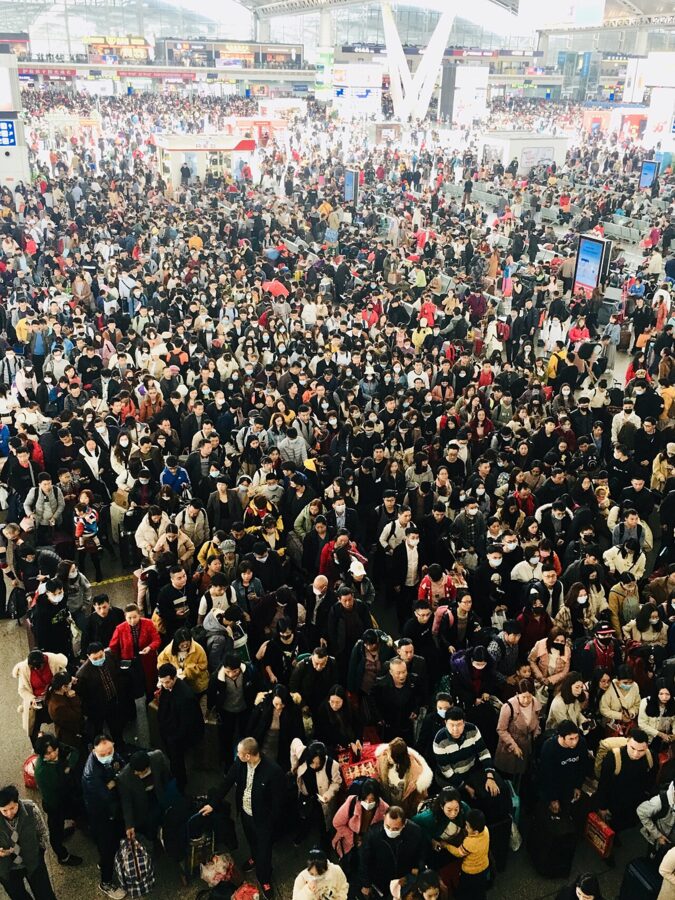
When I lived in Shenzhen, a city built almost entirely by people from somewhere else, Spring Festival was the week the place emptied. The delivery riders went home, the factories closed and the street I lived on lost most of its restaurants for a fortnight. It was the most peaceful week of the year, and the hardest one to get a train ticket in.
That contrast is the thing to understand before you plan anything. Spring Festival does not shut China down. It moves several hundred million people at once, closes a lot of small family businesses and fills every famous sight with domestic tourists. Handled well, it is the most colourful time of year to be here; handled badly, it is a week of sold-out trains and two-hour queues.
Here are the dates that matter, from the State Council’s notice for 2027 and the Hong Kong Observatory’s lunar calendar.
| 2027 (Year of the Goat) | 2028 (Year of the Monkey) | |
|---|---|---|
| New Year’s Eve (除夕) | Friday 5 February | Tuesday 25 January |
| New Year’s Day (春节) | Saturday 6 February | Wednesday 26 January |
| Official holiday | 5–13 February, nine days | Statutory days 25–28 January; the full arrangement is due in late 2027 |
| Make-up working days | Sunday 31 January and Sunday 14 February | Not yet announced |
| Lantern Festival (元宵节) | Saturday 20 February | Wednesday 9 February |
In This Article
- What Spring Festival actually is
- The calendar, from Laba to the lanterns
- The 2027 and 2028 dates, and the odd working Sundays
- Chunyun: the travel rush, and how not to be crushed by it
- How train tickets sell, and sell out
- Flights, and the reverse rush
- The days not to move
- The roads
- What is open, and what is shut
- New Year’s Eve and the first three days
- Museums and the big sights
- Small family places, and the eighth day
- Money: apps, cash and banks
- Where to see it
- Beijing: the temple fairs
- Guangzhou: the flower fairs
- Shanghai: the Yuyuan lanterns
- Xi’an: lanterns on the wall
- Chengdu: the Wuhou Shrine fair
- Harbin: the ice season
- The food
- The reunion dinner
- Dumplings in the north
- Nian gao and the southern table
- Tangyuan and yuanxiao
- Customs, red envelopes and a few rules
- Red envelopes, paper and digital
- Fireworks, and where they’re banned
- Couplets, fu characters and paper cuts
- Taboos, told lightly
- The Lantern Festival, two weeks later
- Prices and crowds
- So, should you plan a trip around it?
- How to do it well
- Skip this
What Spring Festival actually is
Chinese New Year, which China calls Spring Festival (春节, chunjie), is the first day of the first month of the lunar calendar, so it moves between late January and mid-February. Each year takes one of twelve zodiac animals. The Hong Kong Observatory’s tables give 2027 as a ding-wei year, the Year of the Goat (羊 covers goat and sheep, so you will see both on the merchandise), and 2028 as a wu-shen year, the Year of the Monkey.
The heart of it is family: the trip home, the long dinner on New Year’s Eve, money in red envelopes, visits to relatives in a careful order. Around that sits a public season of temple fairs, flower fairs, lantern shows, couplets and paper cuts, and UNESCO added the Spring Festival’s social practices to its intangible heritage list on 4 December 2024.
For most of the country it is also television. The CCTV Spring Festival Gala, a variety show that runs from 20:00 on New Year’s Eve until past midnight, has been on since 1983, and in a lot of homes it plays through dinner whether anyone is watching or not. If you are in a hotel that night, put it on for half an hour. It is a crash course in what the country finds funny.
The calendar, from Laba to the lanterns
The season starts well before New Year’s Day and ends well after it. This is how 2027 lines up:
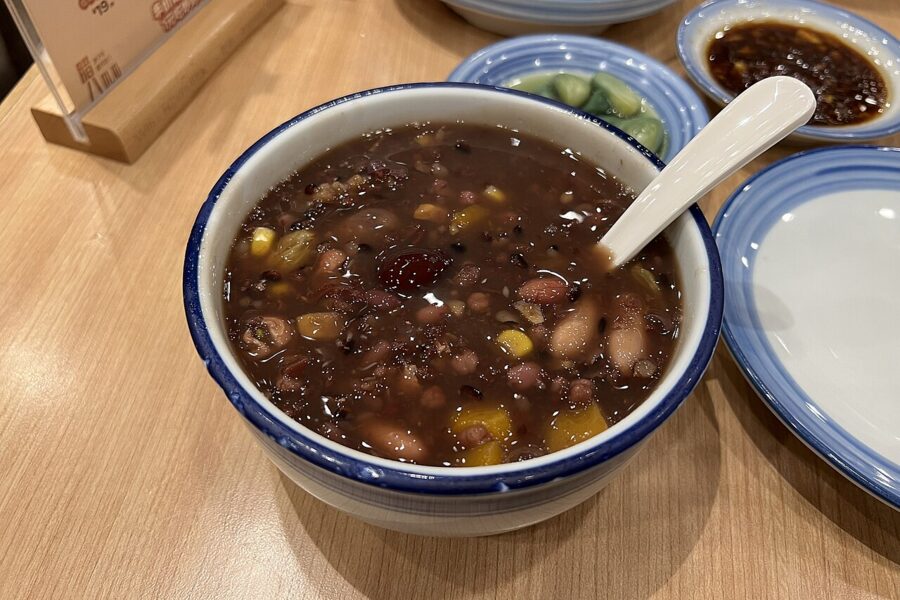
- Laba (腊八), 15 January: the eighth day of the twelfth month, Laba congee, and the countdown starts.
- Little New Year (小年), 30 January in the north, 31 January in the south: the Kitchen God is sent off to report on the household, and the big clean begins.
- New Year’s Eve, 5 February: the reunion dinner, the gala, and fireworks at midnight where they are allowed. The twelfth month has only 29 days this time, so there is no “thirtieth” (大年三十) and Eve falls on the 29th.
- New Year’s Day to the third day, 6–8 February: family visits, temples, the quietest days for business.
- The fifth day, 10 February: powu (破五), when many shops reopen and welcome the God of Wealth.
- The eighth day, 13 February: the last day of the official holiday, and a traditional day to go back to work.
- Lantern Festival, 20 February: the fifteenth day and the first full moon, which closes the season.
The 2027 and 2028 dates, and the odd working Sundays
Since 1 January 2025, the national holiday rules have given Spring Festival four statutory days: New Year’s Eve plus the first three days of the year. Before that it was three, and Eve was not one of them. Each autumn the State Council stretches the statutory days into a longer break by moving weekends around.
The 2027 notice came out on 5 November 2026. The holiday runs from Friday 5 February, New Year’s Eve, to Saturday 13 February, the eighth day: nine days. To pay for it, Sunday 31 January and Sunday 14 February are working days, so Valentine’s Day 2027 is a day at the office.
That second Sunday squeezes the return rush into the last two days of the holiday, Friday 12 and Saturday 13 February. If you have a domestic train or flight on either, book it the moment it goes on sale.
For 2028, New Year’s Day is Wednesday 26 January and the statutory days are 25 to 28 January. How they are bridged into a longer holiday won’t be known until the notice in late 2027, so don’t book anything non-refundable around the edges yet. Hong Kong and Macau keep their own, shorter holidays, so a border crossing on the same dates is a different calculation.
Chunyun: the travel rush, and how not to be crushed by it
Chunyun (春运), the Spring Festival transport season, is longer than the holiday. In 2026 it ran for 40 days, from 2 February to 13 March: fifteen days before New Year’s Day and twenty-five after. The government forecast 9.5 billion cross-regional trips, a record, about 540 million of them by rail and 95 million by air. Roughly eight in ten were by car.
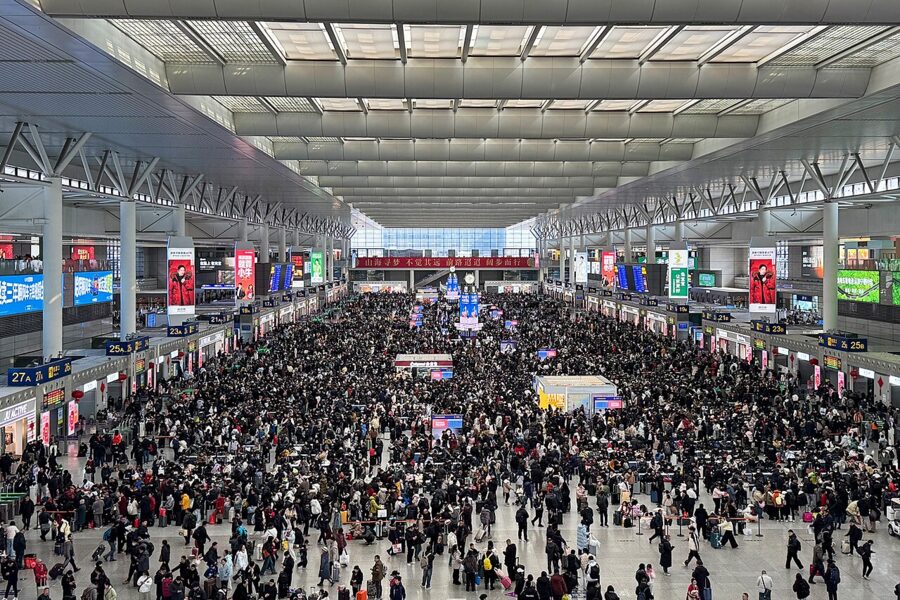
The 2027 dates had not been announced by mid-November 2026; the National Development and Reform Commission and the railway authorities publish them shortly before the season starts. On the 2026 pattern it would begin in the second half of January, but wait for the official dates.
How train tickets sell, and sell out
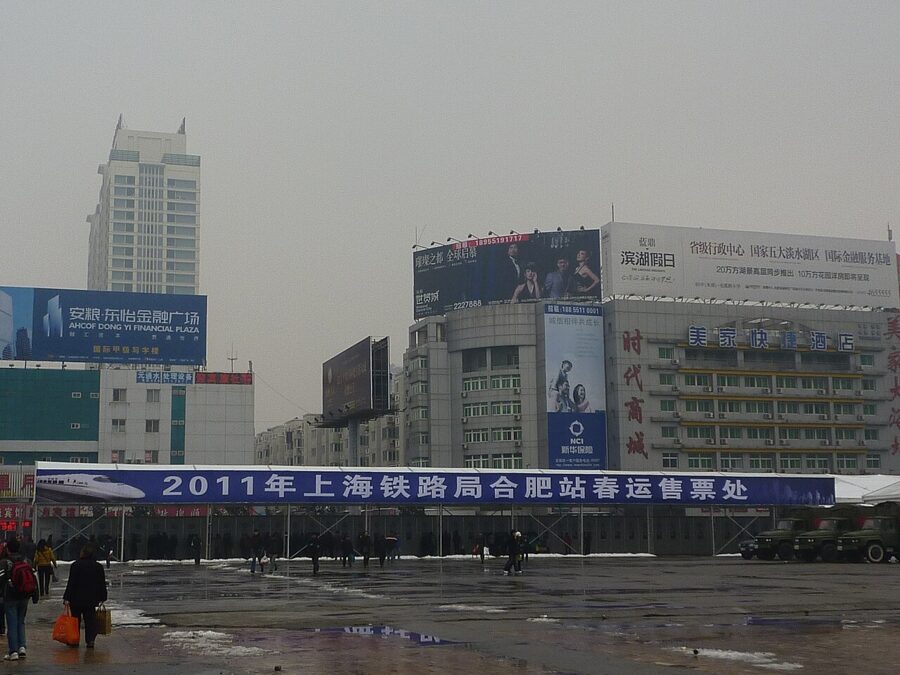
Rail tickets go on sale 15 days ahead, counting the travel day, on 12306 (the official railway app and site) and at station windows. Every platform has to follow that window, whatever a third-party site claims about selling 30 or 90 days out. For 2027, tickets for Thursday 4 February, the day before Eve, go on sale on 21 January, and tickets for Saturday 13 February on 30 January.
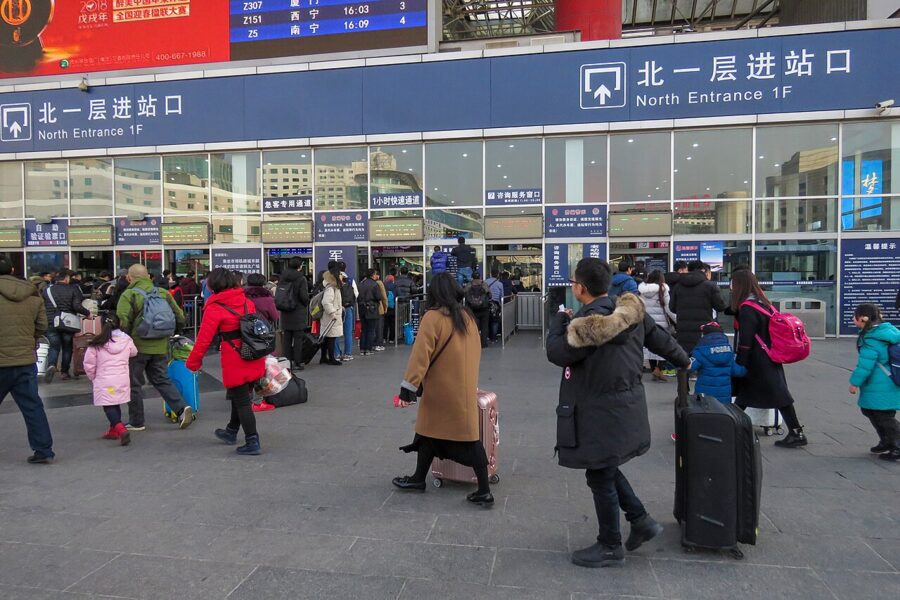
The popular trains on peak days go in minutes. If yours has gone, use the waitlist (候补, houbu): you pay up front, join a queue for returns and extra trains, and get the seat or your money back. You can add up to 60 date and train combinations to one request, and more combinations means better odds. It needs a verified account, so register your passport on 12306 well before you need it.
If you hedge with several tickets, know the refund rules: free more than eight days before departure, 20 percent of the fare inside 24 hours, and free changes more than 48 hours out. Buy on 12306, at a window or through Trip.com, and ignore anyone selling “acceleration packages” or “internal tickets”; the railway says there is no such thing as an internal ticket. My guide to China’s high-speed rail walks through the booking app.
Flights, and the reverse rush
Flying is easier and dearer. Fares out of the big cities climb in the week before Eve and fares back climb at the end, while the “wrong” direction stays cheaper. A growing number of families now do reverse New Year (反向过年), with parents flying to their children’s city, and searches for those reverse routes rose more than threefold on the month when the 2027 holiday was announced.
Booking platforms reported Spring Festival bookings up 43 percent on the year in the days after the notice, and flights in the week before Eve up 61 percent. The most searched destinations were Sanya, Shanghai, Chengdu, Haikou, Beijing, Guangzhou and Harbin, so the beach and the big cities sell first.
The days not to move
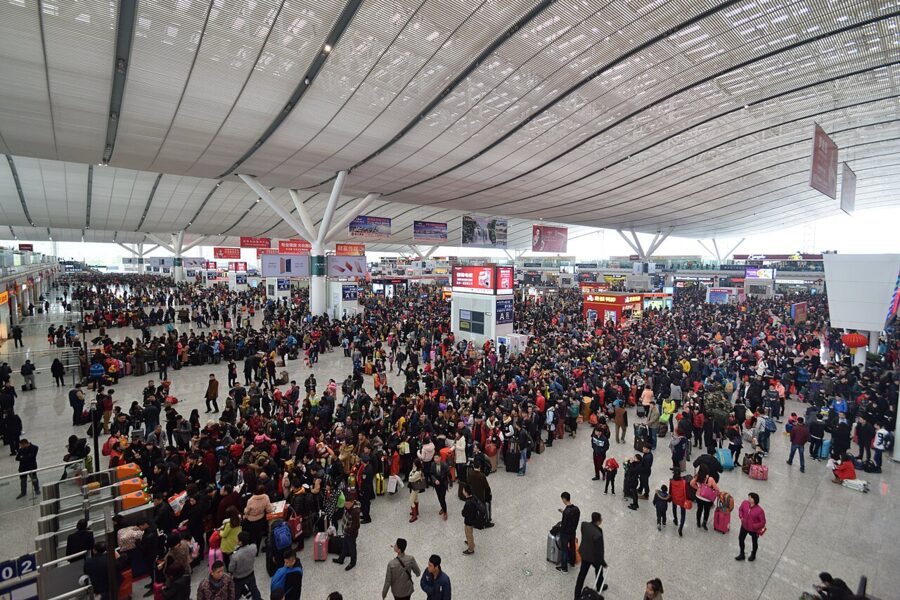
Plan around three windows. The first is the five or six days before New Year’s Eve, roughly 30 January to 4 February in 2027. The second is the last two days of the holiday, 12 and 13 February. The third is the week after the Lantern Festival, when students and the second wave of workers head back to the cities.
The sweet spot is New Year’s Eve afternoon or New Year’s Day itself. Almost everyone going home is already there, and trains and roads are at their quietest of the season. After a week of sold-out notices, a train on the first morning of the year can feel like a magic trick.
The roads
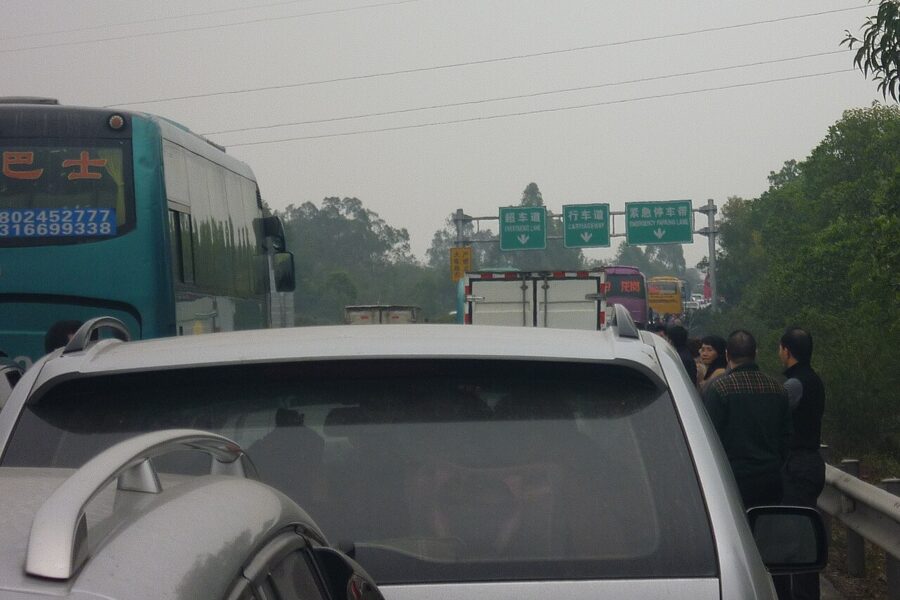
Don’t plan a self-drive trip in the holiday week. Small cars use the expressways toll-free during the main public holidays, so the roads fill with families on long drives, and the jams on the last two days are notorious. A car and driver for day trips is fine.
What is open, and what is shut
There is no national list. Government offices follow the holiday arrangement, but shops, restaurants, museums and sights each make their own call, and the picture changes by the day.
New Year’s Eve and the first three days
Eve afternoon is when the country stops. Shops close early, offices are long gone, and by evening a big city’s streets are empty in a way you won’t see at any other time. For the first three days, family restaurants, market stalls, tailors, small hotels and the noodle shop on the corner are mostly shut, often with a red notice saying which day they will reopen.
What stays open is the chains and the big places: supermarkets, convenience stores, big malls, hotel restaurants, fast food and many national restaurant chains, some on shorter hours. Have a plan for Eve dinner. Either book a hotel restaurant’s reunion banquet well ahead, or accept that dinner might come from a convenience store.
Museums and the big sights
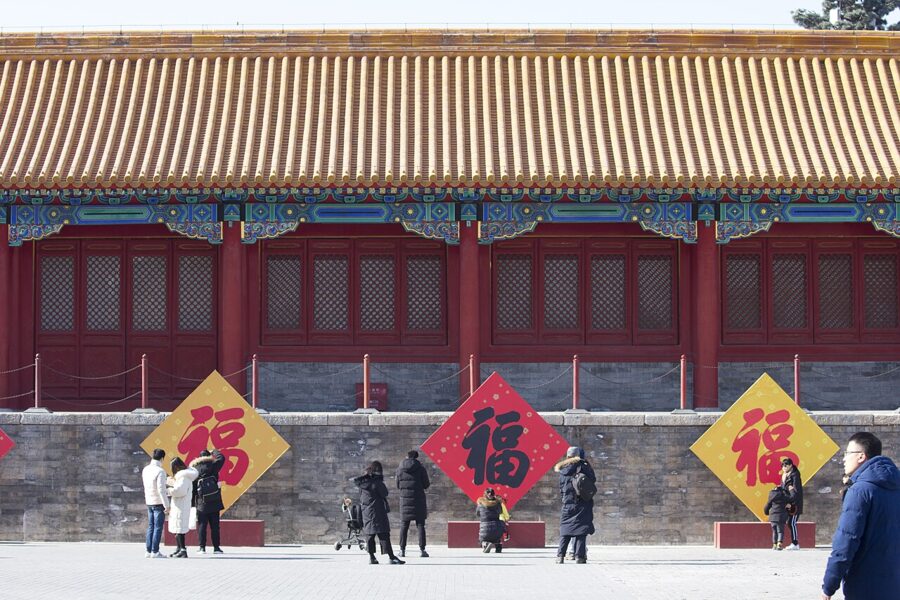
Most big sights open through the holiday, many with special programmes, and they are among the busiest days of their year. The Forbidden City is the clearest case: no tickets on the day, booking from seven days ahead at 20:00, ¥40 in winter. Treat every timed, real-name ticket the same way: find out when booking opens, set an alarm, book on the minute.
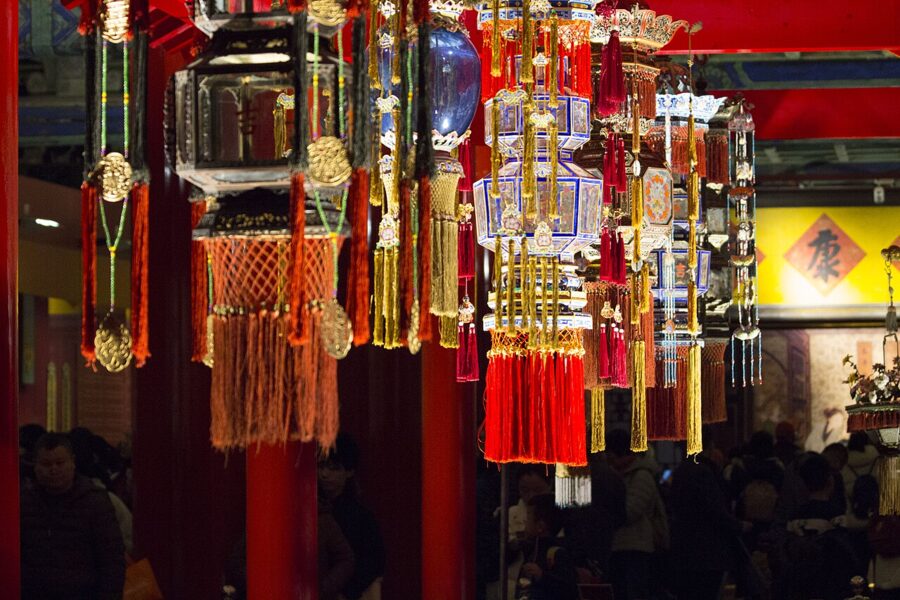
Check holiday hours, too: museums that close on Mondays usually keep that rule unless they say otherwise. Beijing counted 19.84 million visits over the nine-day 2026 holiday and Shanghai 21.67 million, so go at opening time.
Small family places, and the eighth day
This is where trips go wrong. The old-town guesthouse, the hole-in-the-wall dumpling shop, the teahouse where the owner knows everyone: these are the places most likely to close, some until the fifth day, the eighth or past the Lantern Festival. In smaller towns half a street can be shut for the whole first week.
If a small restaurant matters to you, message it before you go and have a second choice nearby. If a guesthouse is your bed, confirm the owner will be there. A booking that went through online is not proof that anyone will be home.
Money: apps, cash and banks
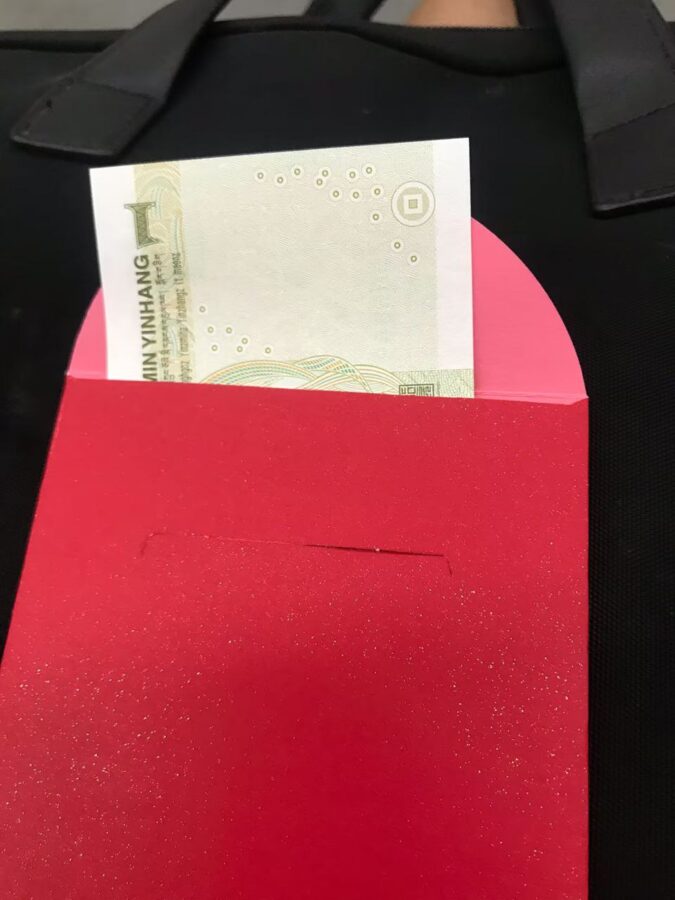
Payments work as normal. Alipay and WeChat Pay both take foreign cards; some small stalls and many ticketed sights are mobile-only, and cash is legal tender but change can be short. Bank branches run reduced hours, so do any banking before Eve, and if you want to give red envelopes, get crisp new notes while the banks still have them.
Where to see it
The best reason to come at Spring Festival is the public side: fairs, flower markets and lantern shows built for crowds and happy to have you in them. Each city publishes a new programme every year, so the details below are from 2026, a guide to what to expect in 2027.
Beijing: the temple fairs
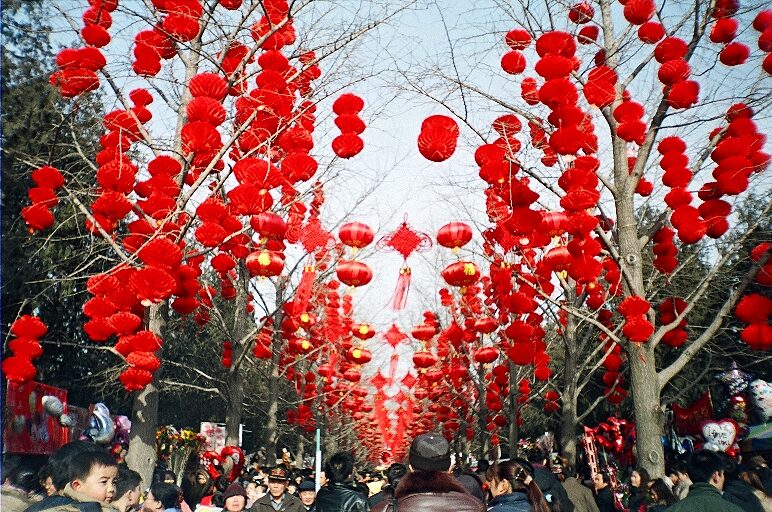
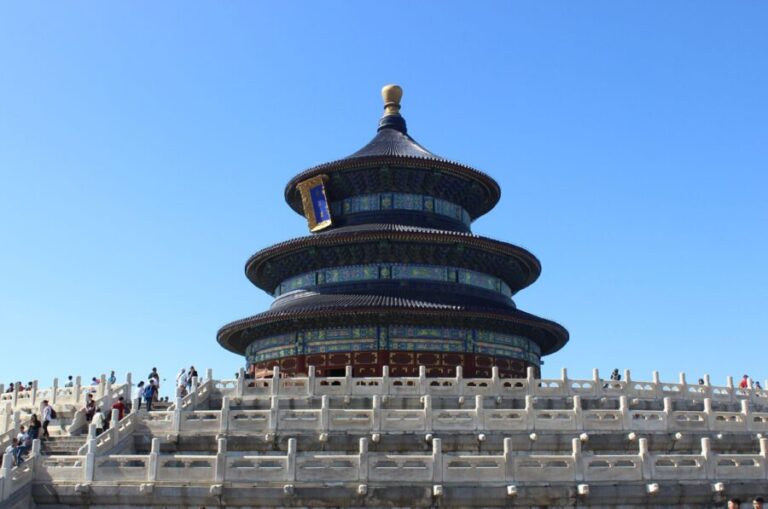
Beijing does the temple fair (庙会, miaohui) better than anywhere: part market, part street food, part folk show, in a park or around a temple for the first week of the year. The two big ones are in Dongcheng district. Ditan, around the Temple of Earth, held its 38th fair in 2026; Longtan, in Longtan Park just east of the Temple of Heaven, its 40th. Both ran from 17 to 23 February, the first to seventh days, 08:30–17:00, with tickets sold online and scanned at the gate.
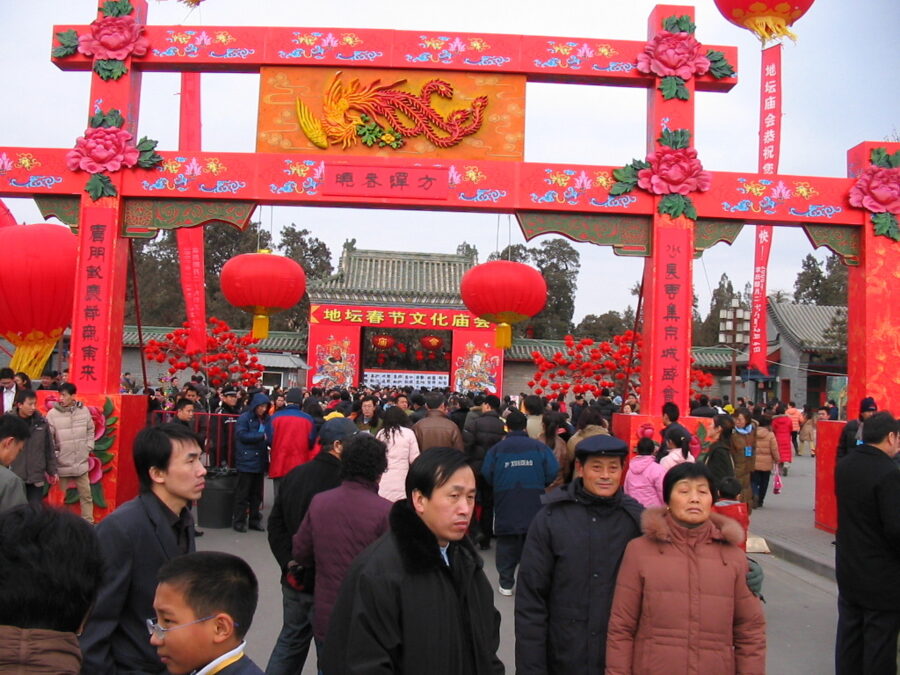
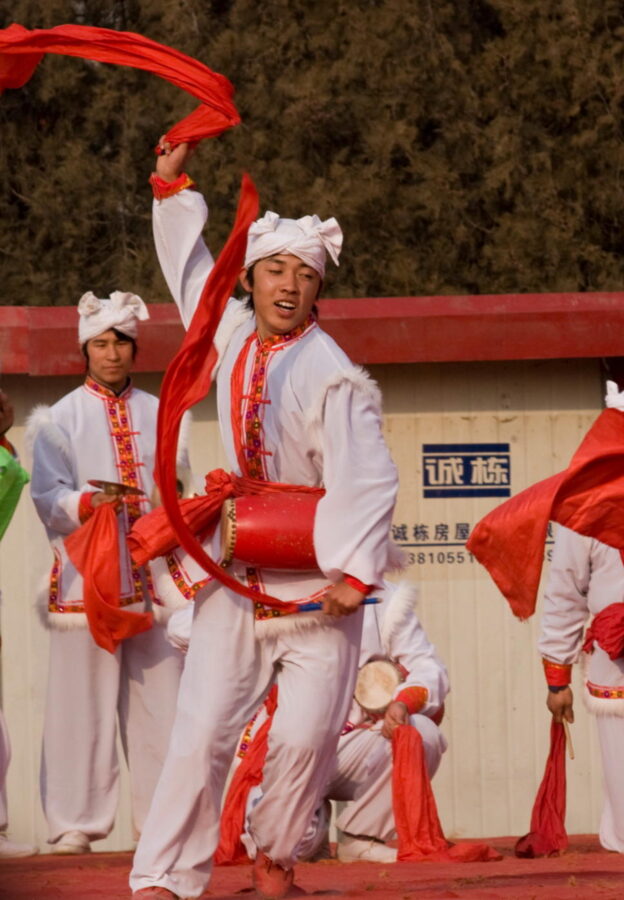
Ditan is the more traditional. In 2026 it opened with a re-enacted earth-worship ritual and a parade of old Beijing street vendors, with stalls heavy on old-brand shops and heritage crafts. Longtan went for lion dances, crosstalk comedy, yangge folk dancing and a parade of mecha costumes. Both have the snack lanes that are half the point.
Go early. Beijing’s police put the daily peak at the fairs at 10:00–15:00, so arrive at 08:30 or come in the last hour. The first days of the year are the busiest; by the fifth or sixth the crowds thin.
If the big parks are too much, the Changdian fair (厂甸庙会) is the one I would pick. It fills Liulichang East and West Streets, the old lanes of booksellers and calligraphy shops south of Hepingmen, and bills itself as Beijing’s only “literary” fair. In 2026 it ran 17–23 February with costumed performances, a hundred-metre lane of poetry lanterns, tanghulu and, best of all, calligraphers writing fu characters to give away free.
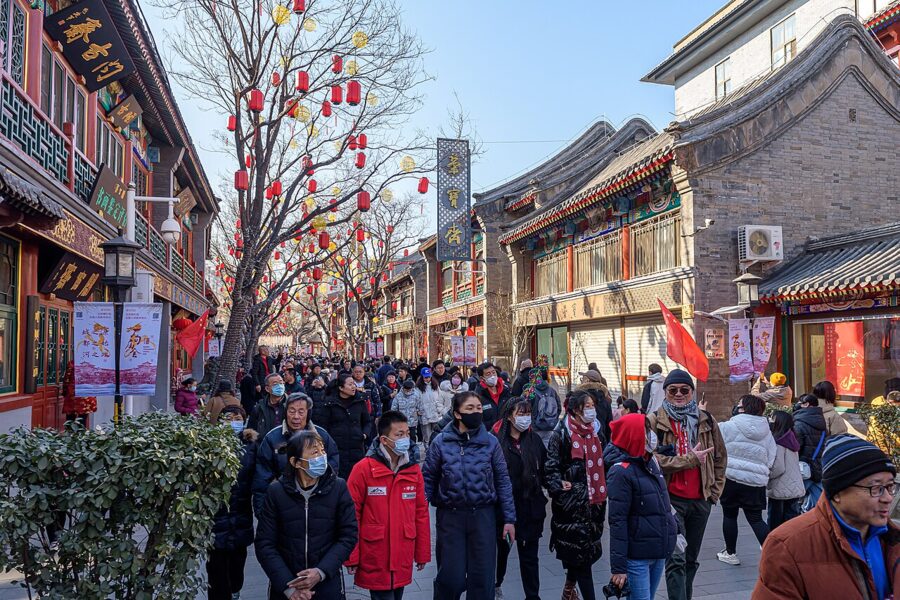
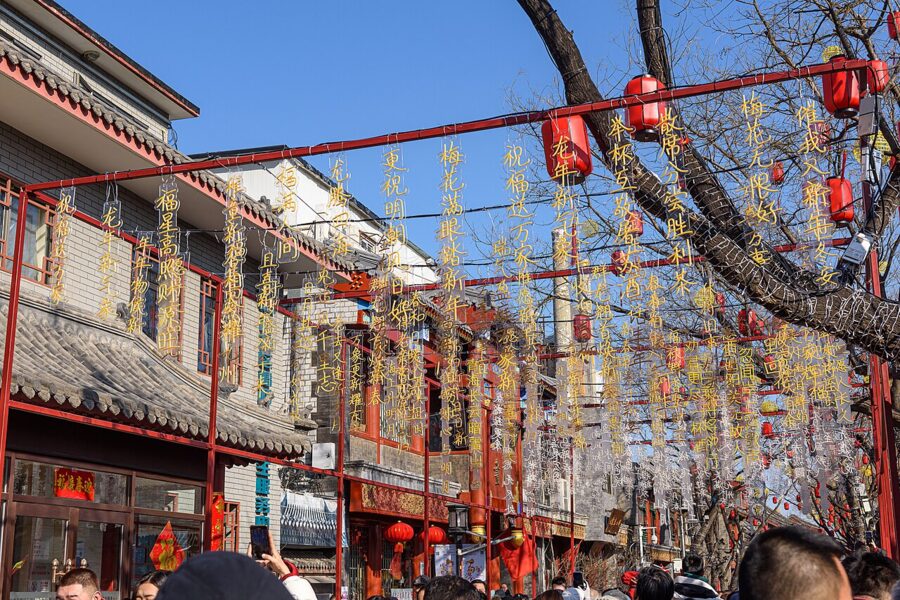
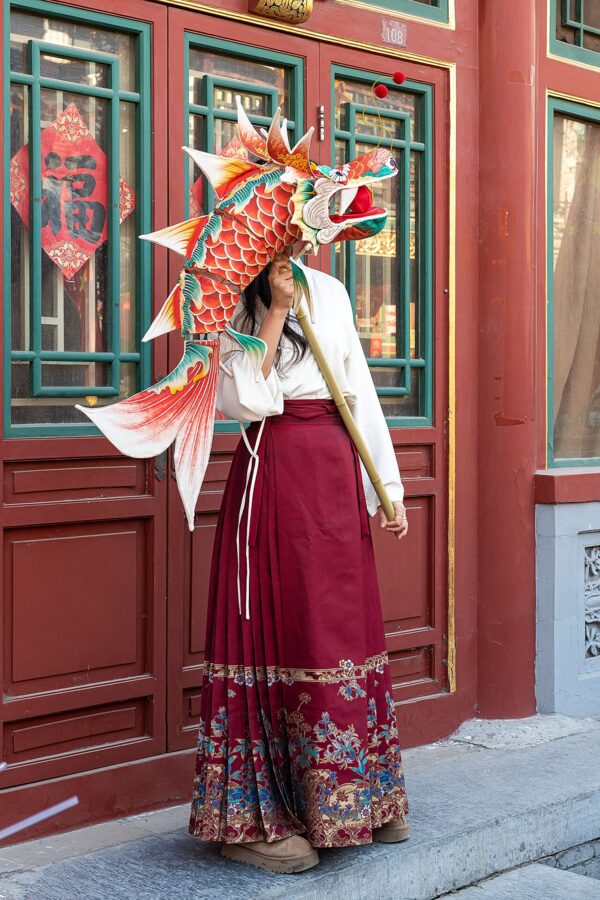
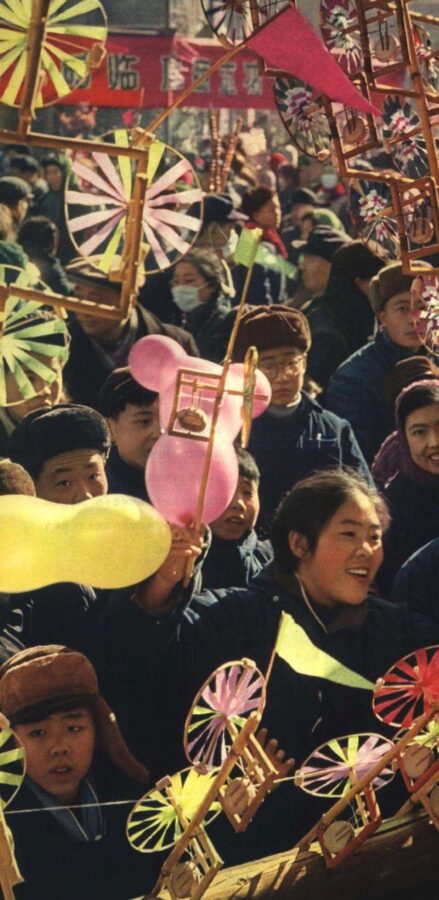
Changdian is also far older than the park fairs, and in the 1960s it was still the city’s big New Year outing.
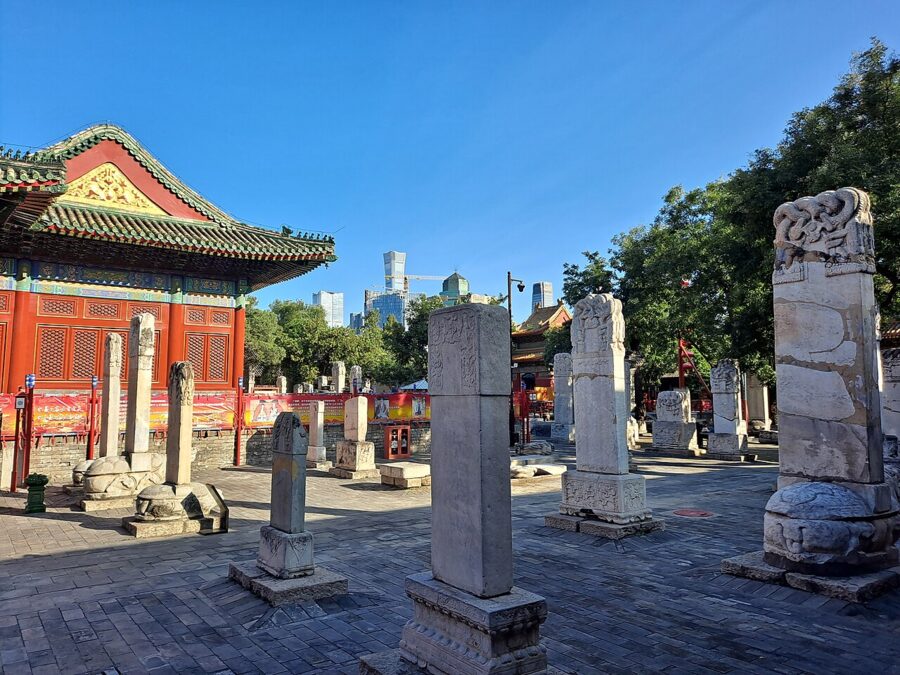
The other fair worth crossing town for is at the Dongyue Temple, the old Taoist temple on Chaoyangmenwai Dajie that now houses the Beijing Folk Customs Museum. Its 28th fair ran from 17 to 21 February 2026 with heritage performances, a market and Beijing New Year food, all inside a working set of temple courtyards.
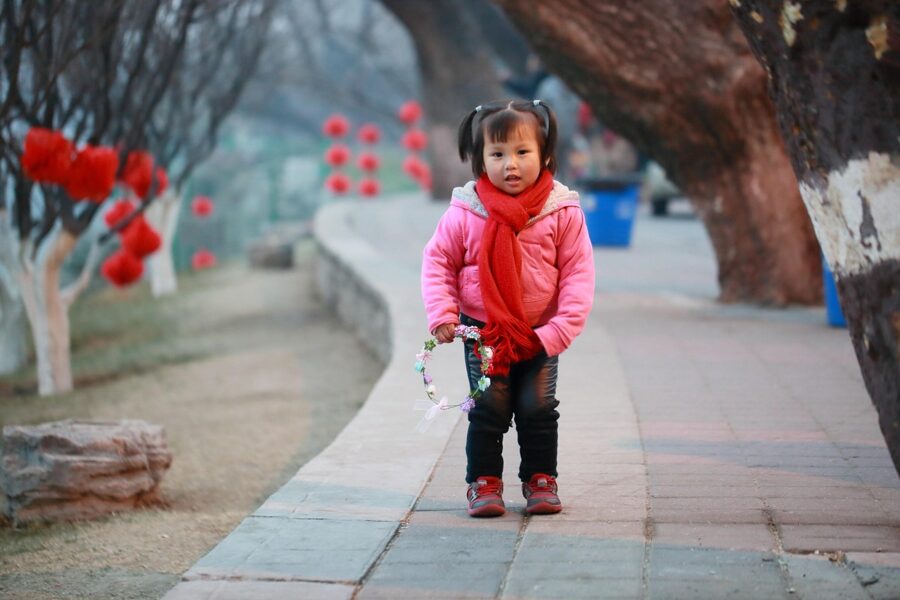
Beijing’s 2026 programme listed more than 40 fairs and lantern events. Among them: a garden fair at the Old Summer Palace (Yuanmingyuan) from 7 February to 3 March, the 40th ice lantern festival in the Longqingxia gorge in Yanqing from 15 January to 8 March, and a night event on the Badaling Great Wall over the holiday. And walking the hutongs, with new couplets on every door, costs nothing.
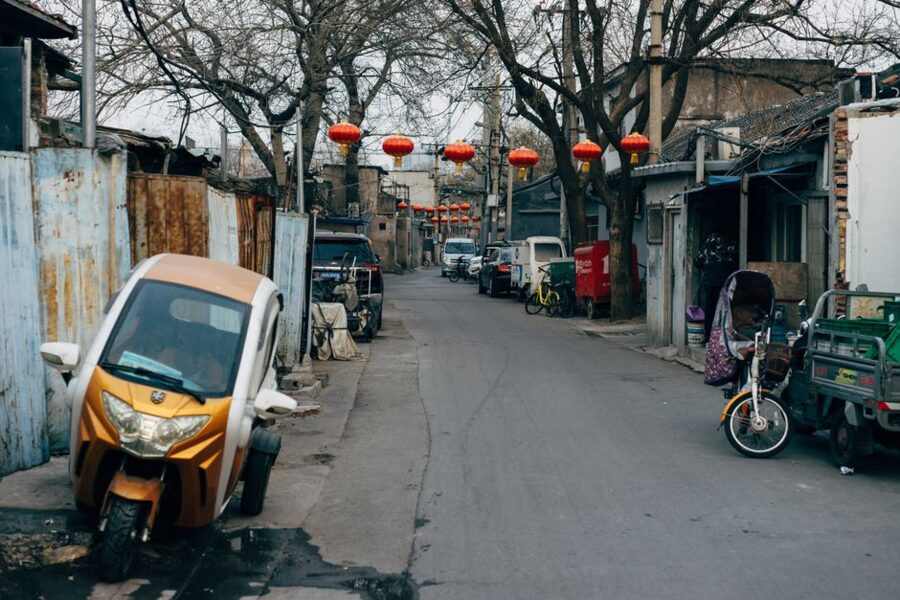
Guangzhou: the flower fairs
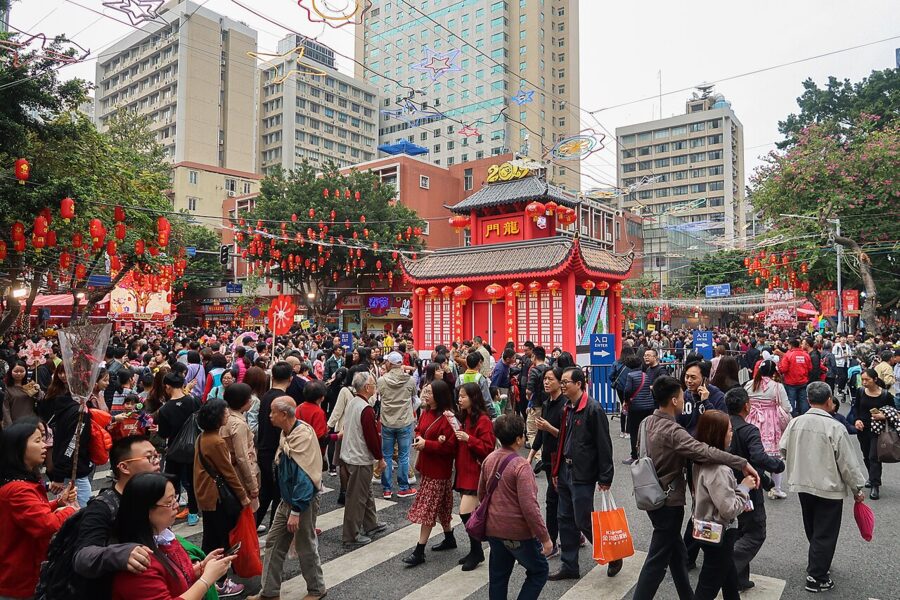
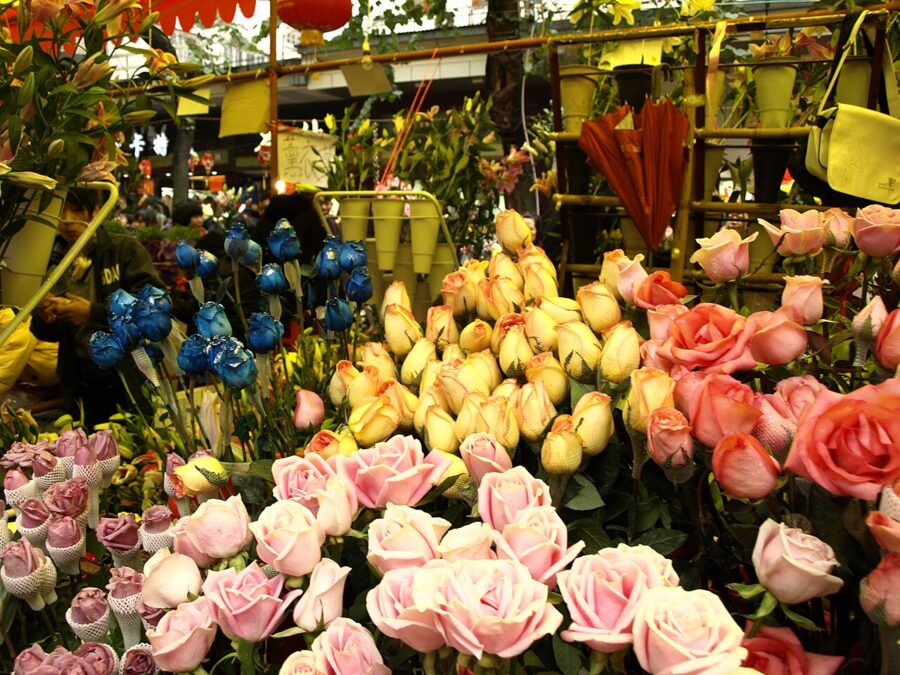
In the south the New Year is about flowers. Every district of Guangzhou sets up a Spring Festival flower fair (迎春花市) in the last days of the old year, and families go “walking the flower street”, hang fa gai (行花街) in Cantonese, for a kumquat tree, a branch of peach blossom or a pot of narcissus. The custom goes back to the Ming dynasty, and it joined China’s national intangible-heritage list in 2021.
In 2026 all eleven districts opened their fairs on 13 February, the 26th day of the twelfth month, and most traditional fairs ran into the early hours of New Year’s Day, 17 February. The one to see is the Yuexiu Xihu fair on Xihu Road and Jiaoyu Road, beside the Beijing Road shopping streets; Gongyuanqian (Lines 1 and 2) and Beijing Lu (Line 6) stations are at its edge. Tianhe’s runs around the Tianhe Sports Center, Liwan’s along Liwan Road, and there is a water-borne fair in the canals at Yongqingfang.
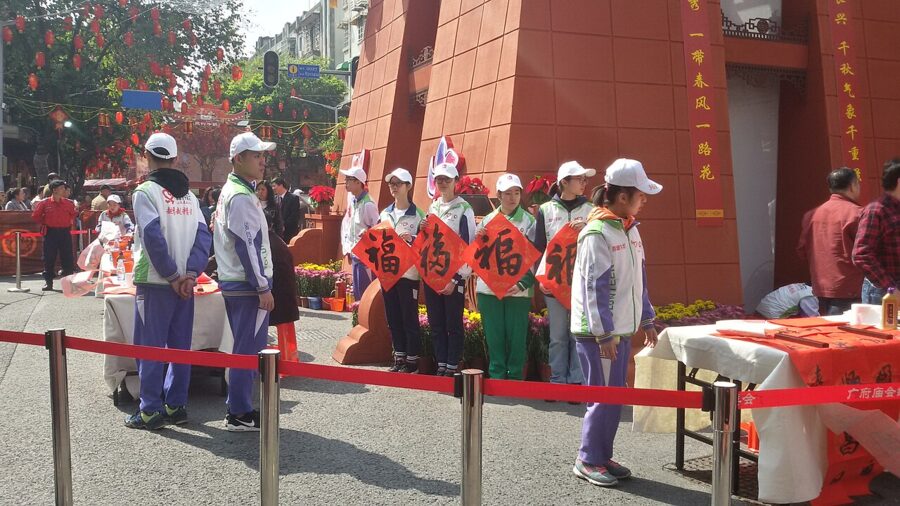
Go on the last night, New Year’s Eve, when the fair stays open past midnight: the one place in China where midnight on Eve is a public party. Shenzhen does its own version, and its Aiguo Road fair in Luohu had 343 booths in 2026.
Guangzhou’s New Year food is its own thing too, which my Cantonese food guide covers in detail.
Shanghai: the Yuyuan lanterns
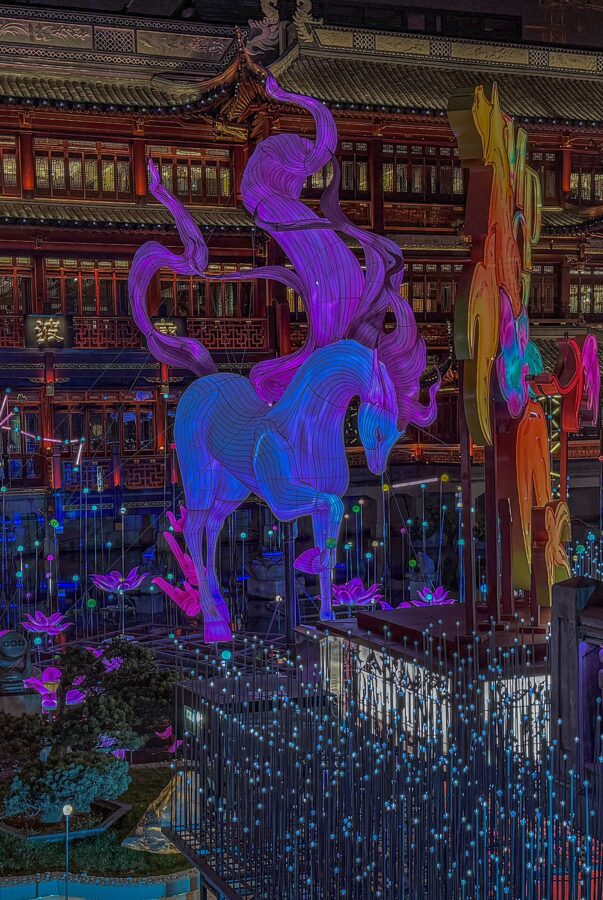
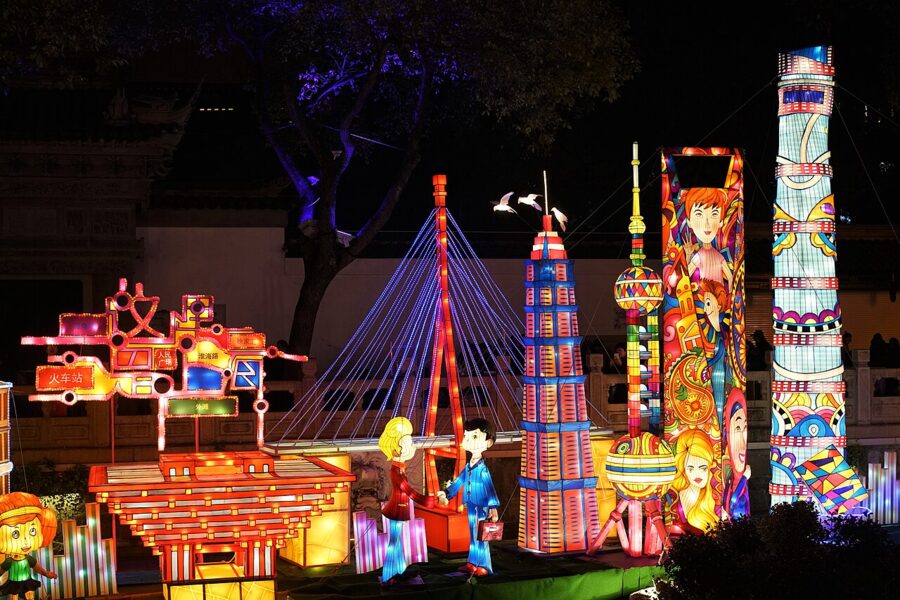
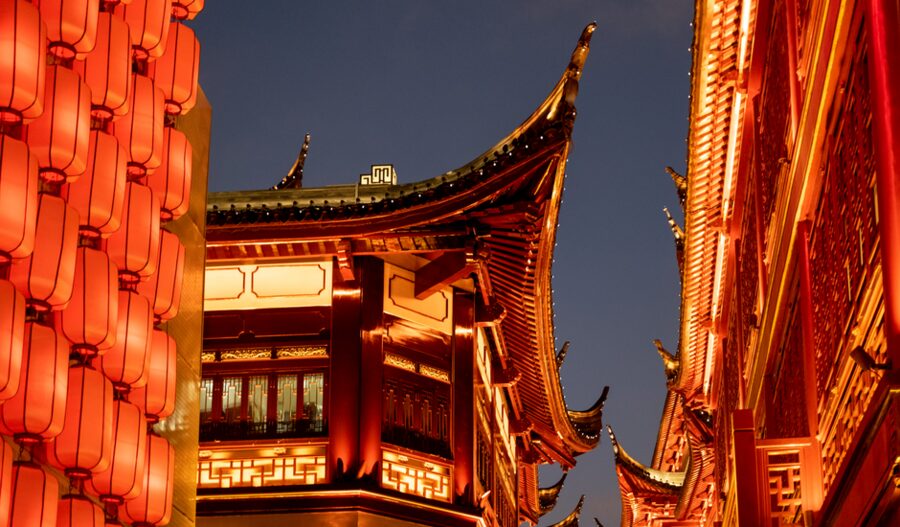
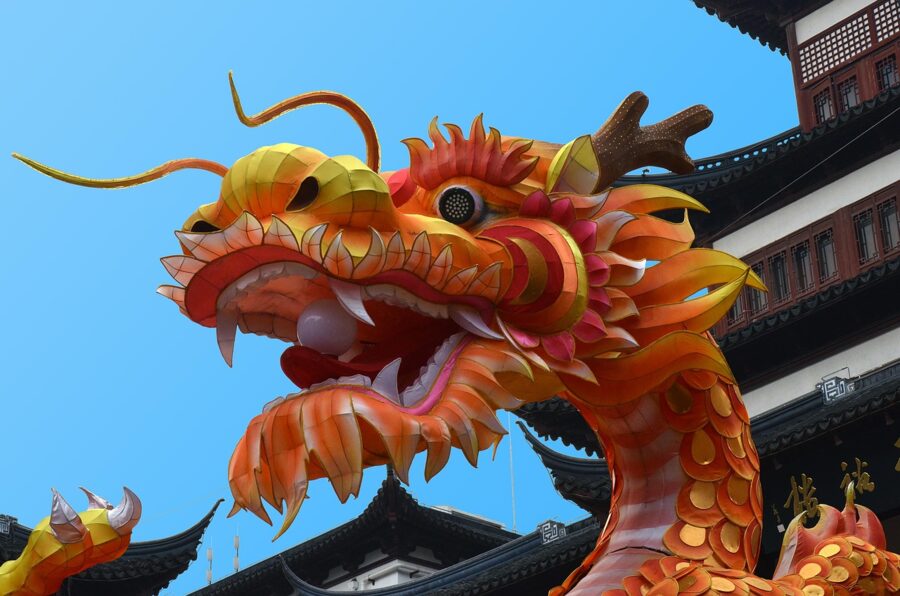
Shanghai‘s big event is the Yuyuan Lantern Festival, in and around Yu Garden and the old bazaar beside it. The modern show began in 1979. In 2026 it ran for 36 days, from 26 January to the Lantern Festival on 3 March, and spread for the first time to Gucheng Park, Fangbang Middle Road, Fuyou Road and the Bund, though only the core Yuyuan zone was ticketed.
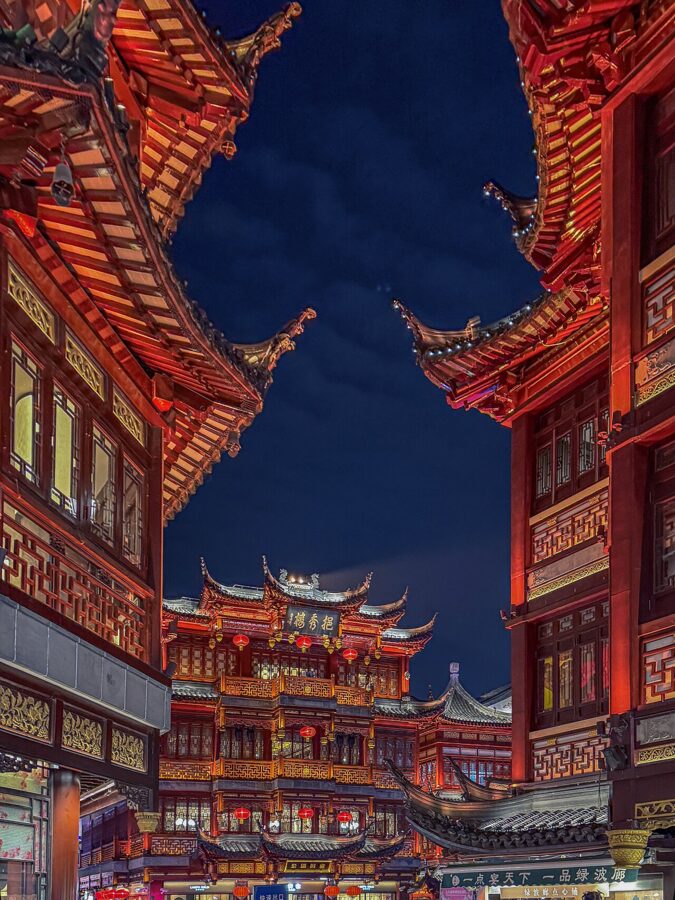
Core-zone tickets were ¥80 for adults and ¥50 for children, in timed slots through the Maoyan and Piaoxingqiu apps and mini programmes. Entry ran 14:00–22:00 on peak days (the holiday, weekends and the Lantern Festival) and 16:00–22:00 otherwise. On New Year’s Eve the lanterns stayed dark and no tickets were sold, worth knowing if you had planned your Eve around it.
Take Line 10 or Line 14 to Yuyuan station and walk. Weekday evenings early in the run, before the holiday, are the most comfortable.
Xi’an: lanterns on the wall
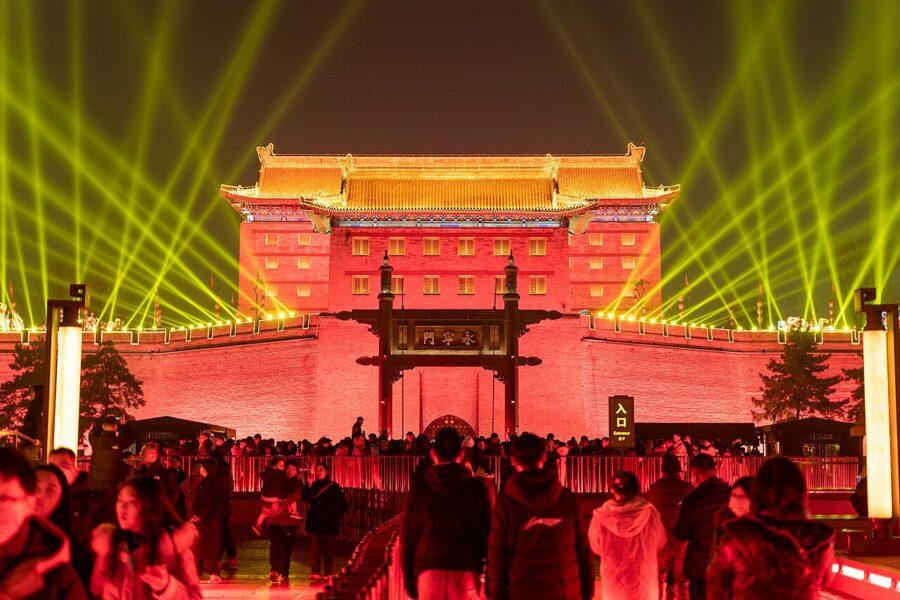
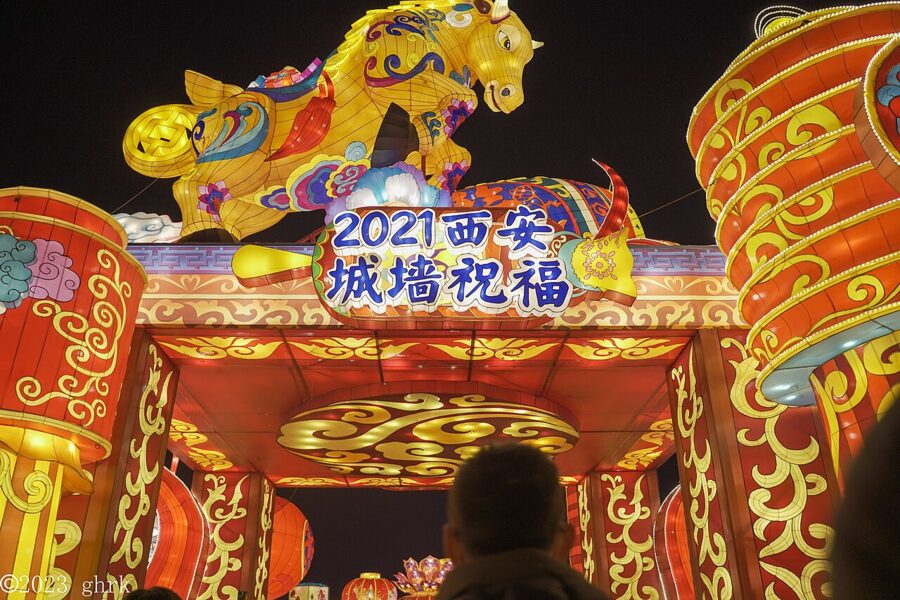
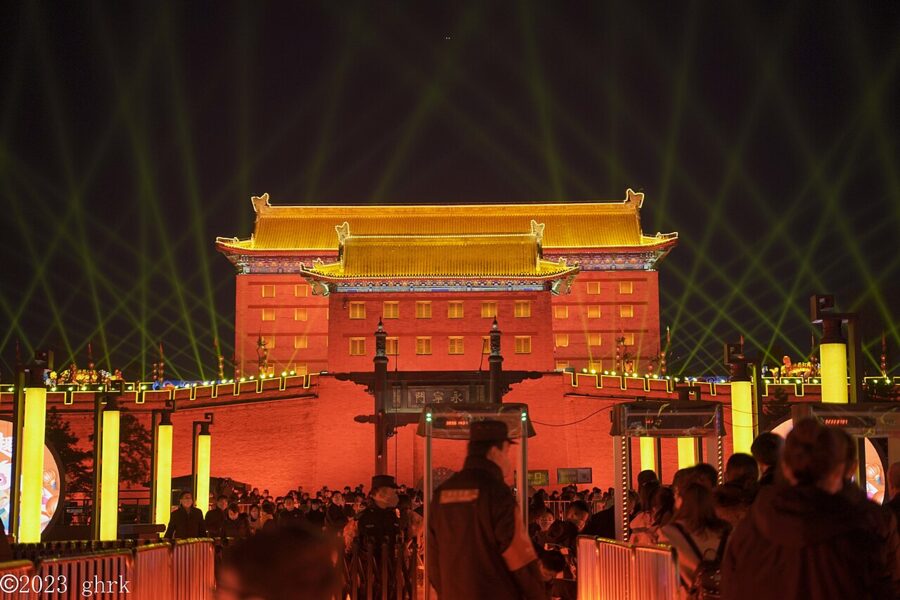
Xi’an puts its lanterns on the city wall. The 2026 Chang’an Lantern Festival (长安灯会) opened at the start of January and ran to the Lantern Festival, with giant lanterns at the South Gate, Yongningmen, and its barbican, along the wall from Wenchangmen to Zhuquemen, and in the barbican of the West Gate. A New Year market on the wall had more than 40 stalls, with storytelling, riddles and the old arrow-throwing game.
An adult wall ticket is ¥54 and gets you on at any open gate; Yongningmen station on Line 2 is right outside the South Gate. Go up at dusk and walk the south wall away from the gate, so you catch the lanterns coming on and leave the crush behind.
The Terracotta Warriors make a good holiday-morning trip from the city if you book the first entry slot.
Chengdu: the Wuhou Shrine fair
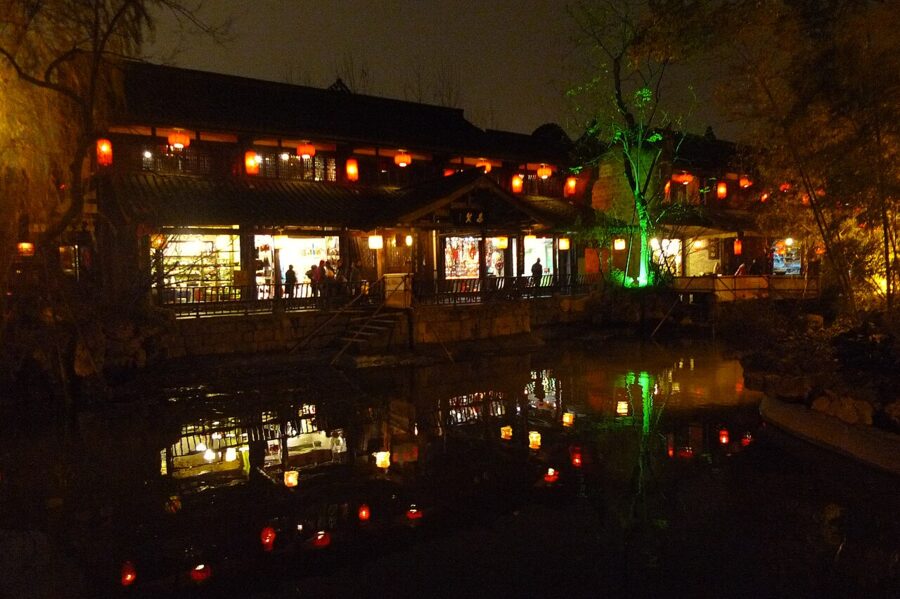
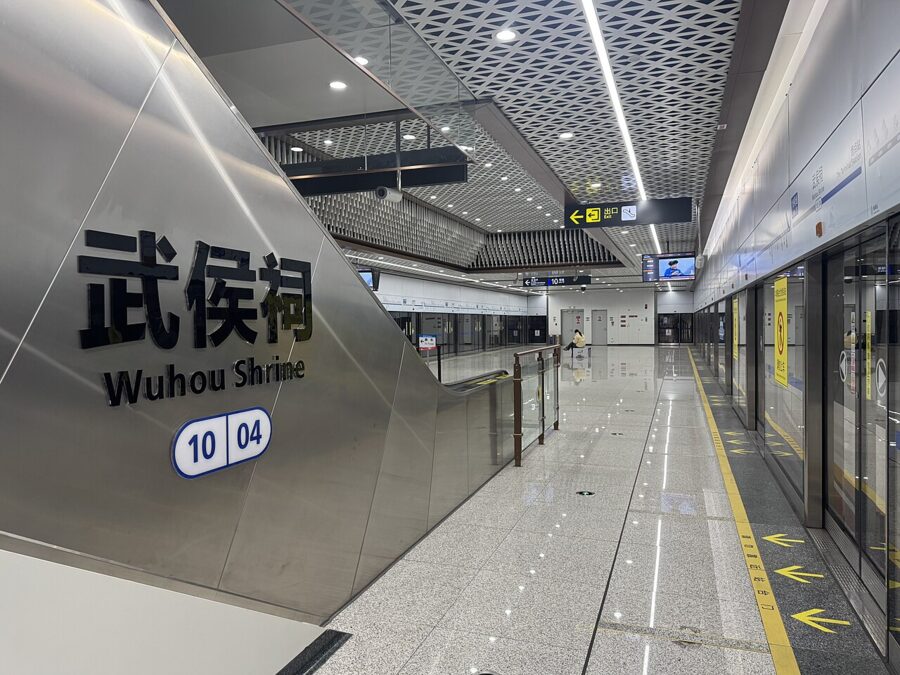
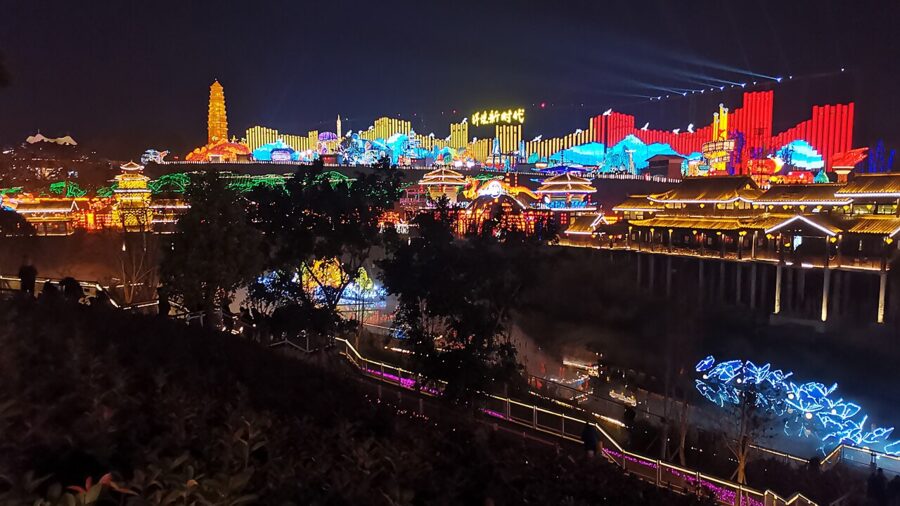
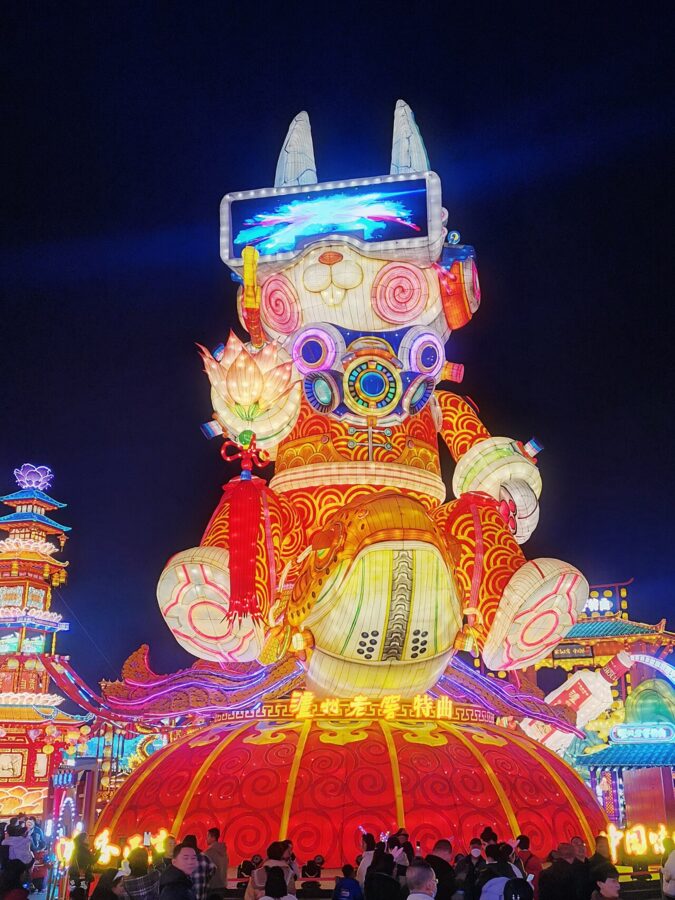
In Chengdu the fair to see is at the Wuhou Shrine, the memorial temple to Zhuge Liang and Liu Bei of the Three Kingdoms. The 2026 fair opened on the evening of 13 February with a Hakka dragon dance from the old town of Luodai and ran daily to 3 March, 09:00–22:00, across the shrine, the Nanjiao Park gardens and Jinli, with Three Kingdoms lanterns, shows and a market.
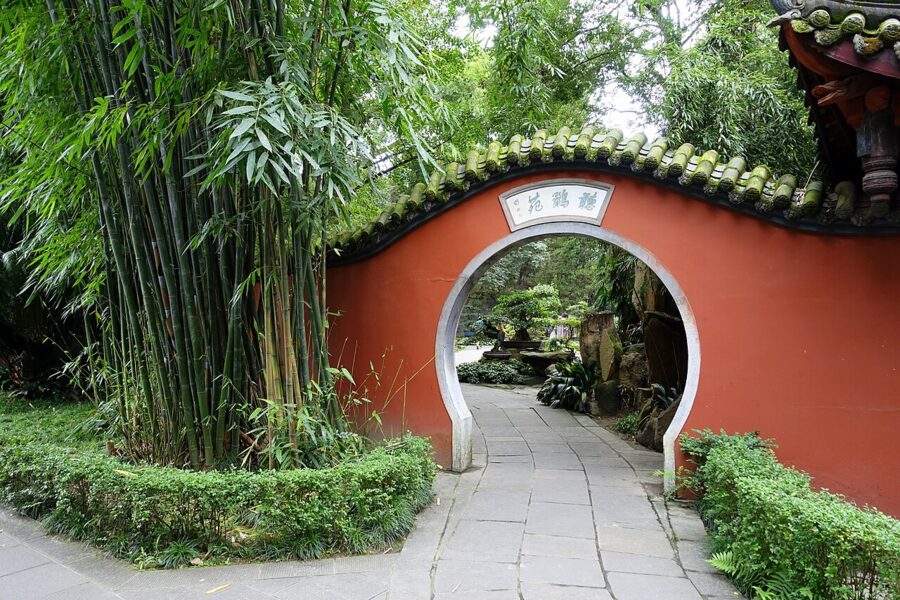
Roads around the shrine are controlled during the fair and parking is scarce, so take the metro. The evenings, with the lanterns lit, are the best part and the busiest.
For the biggest lanterns in the country, go south to Zigong, an old salt town famous for its lantern makers. The 32nd Zigong International Dinosaur Lantern Fair opened at the Chinese Lantern World park on 23 January 2026, and its advance tickets for 17–22 February, the first days of the holiday, sold out.
Harbin: the ice season
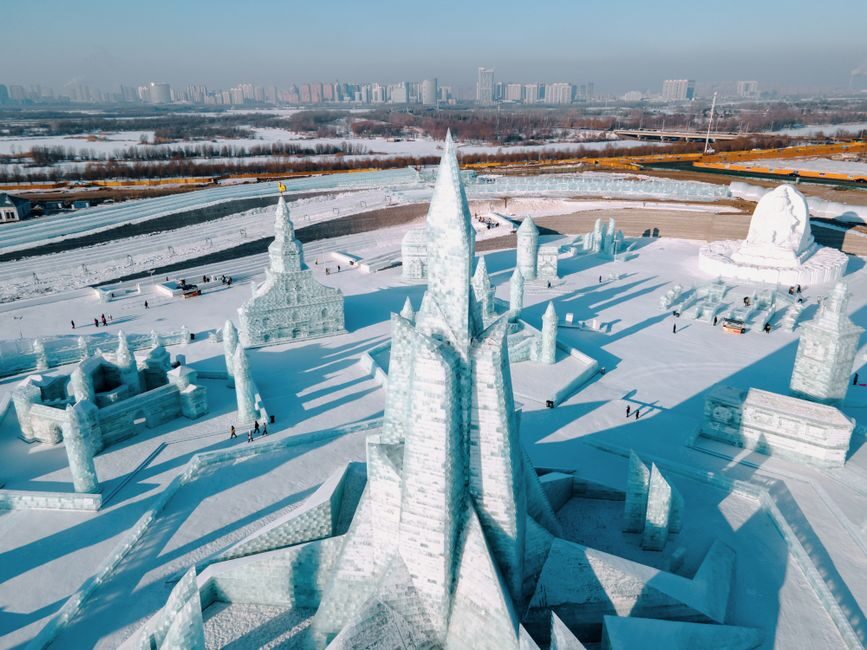
The other way to do Spring Festival is in the snow. Harbin‘s ice season runs through the winter, and the 2027 New Year falls in the middle of it, with Ice and Snow World, the Sun Island snow sculptures and the free ice lanterns in Zhaolin Park all open. The holiday week is the busiest and dearest of the season, so if you can, go in the second half of January and leave before the rush. My Harbin guide has the tickets, the clothing and the trains.
The food
If you are invited to a family’s New Year’s Eve dinner, you will eat more than you thought possible. If not, the restaurant version is still the best meal of the season, and every dish comes with a story.
The reunion dinner
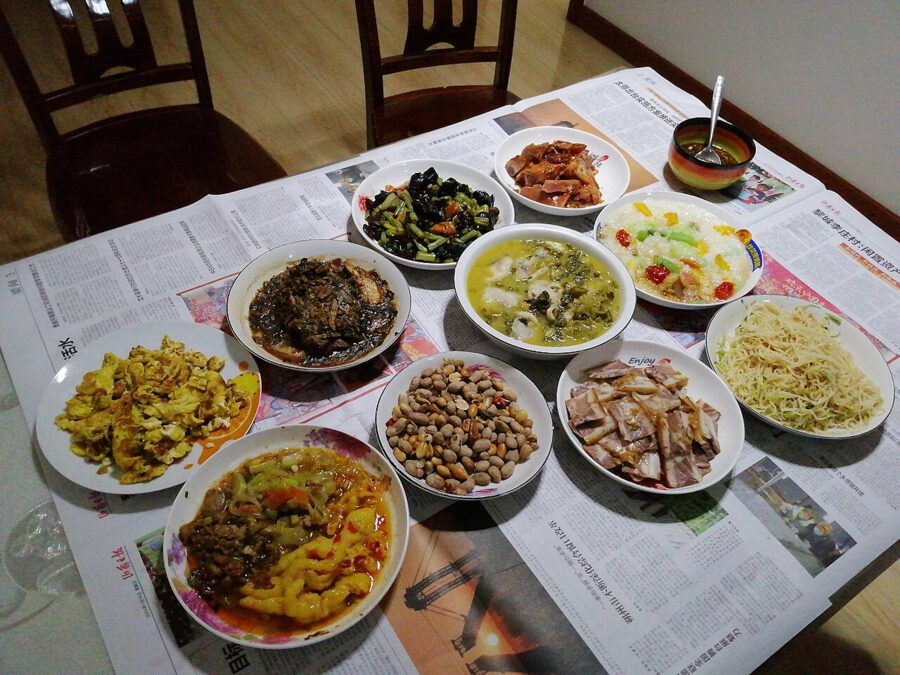
The reunion dinner (年夜饭, nianyefan) is the meal of the year, eaten on Eve with as much of the family as can get there. Regions differ wildly, but some things are near universal.
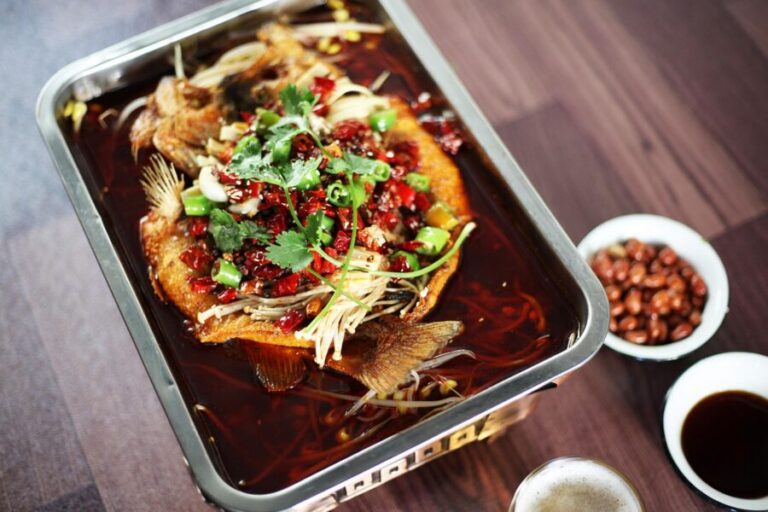
There is a whole fish, because fish (鱼, yu) sounds like surplus (余), and “may you have surplus every year” (年年有余) is the classic blessing; many families leave some uneaten on purpose. There is chicken or duck, served whole. And there is baijiu for the toasts.
Restaurants sell Eve banquets as fixed set menus for a whole table, and the good ones book out weeks ahead. On your own, a hotel restaurant is the realistic option; book as soon as your dates are firm.
Dumplings in the north
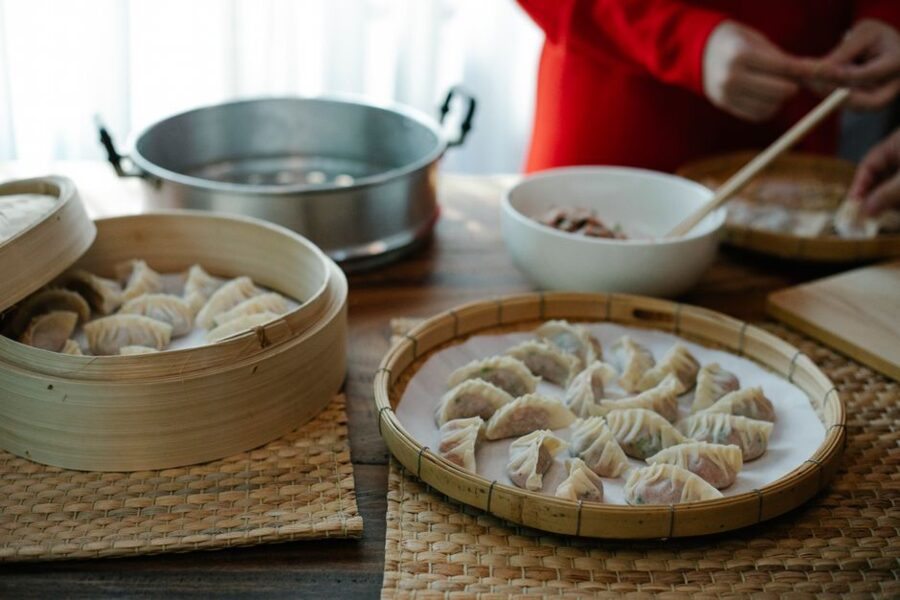
In northern China, New Year means dumplings: jiaozi (饺子), folded on Eve afternoon by the whole family and boiled at midnight, when the old year hands over to the new. The name is read as a pun on that changing of the hour, and the crescent shape is said to look like a silver ingot, so they are wealth as well as food. Some families hide a coin in one; whoever bites it has luck for the year, and possibly a chipped tooth.
Dumplings come round again on the fifth day, powu, when the old taboos lift and shops reopen. Pinching the edges shut that day is said to pinch shut the mouths of gossips, as good a reason to eat dumplings as any.
Nian gao and the southern table
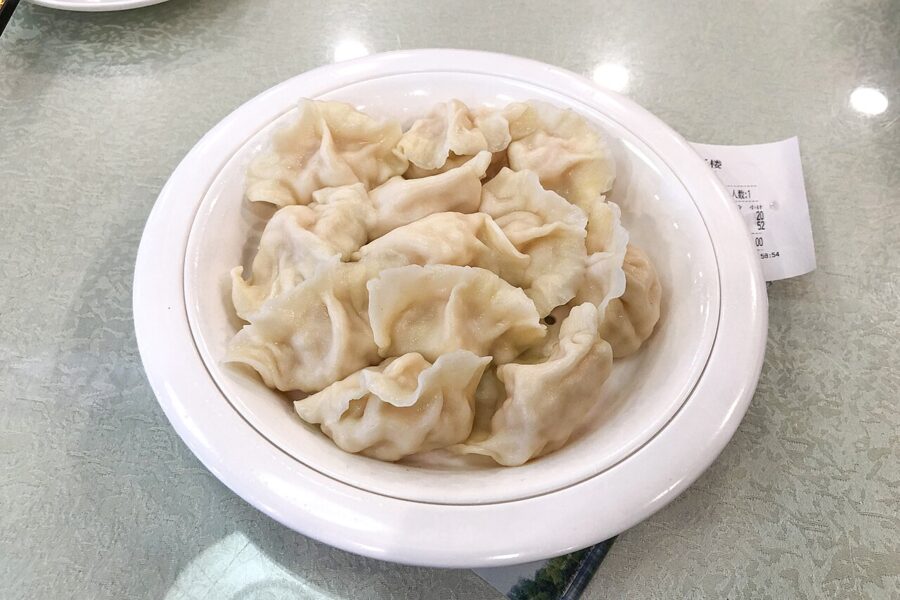
In the south and along the Yangtze the essential New Year food is nian gao (年糕), a sticky rice cake whose name sounds like “higher every year”. Shanghai and Ningbo eat it as white slices stir-fried with pork and greens; the Cantonese version is a sweet brown-sugar cake, steamed, sliced, dipped in egg and pan-fried.
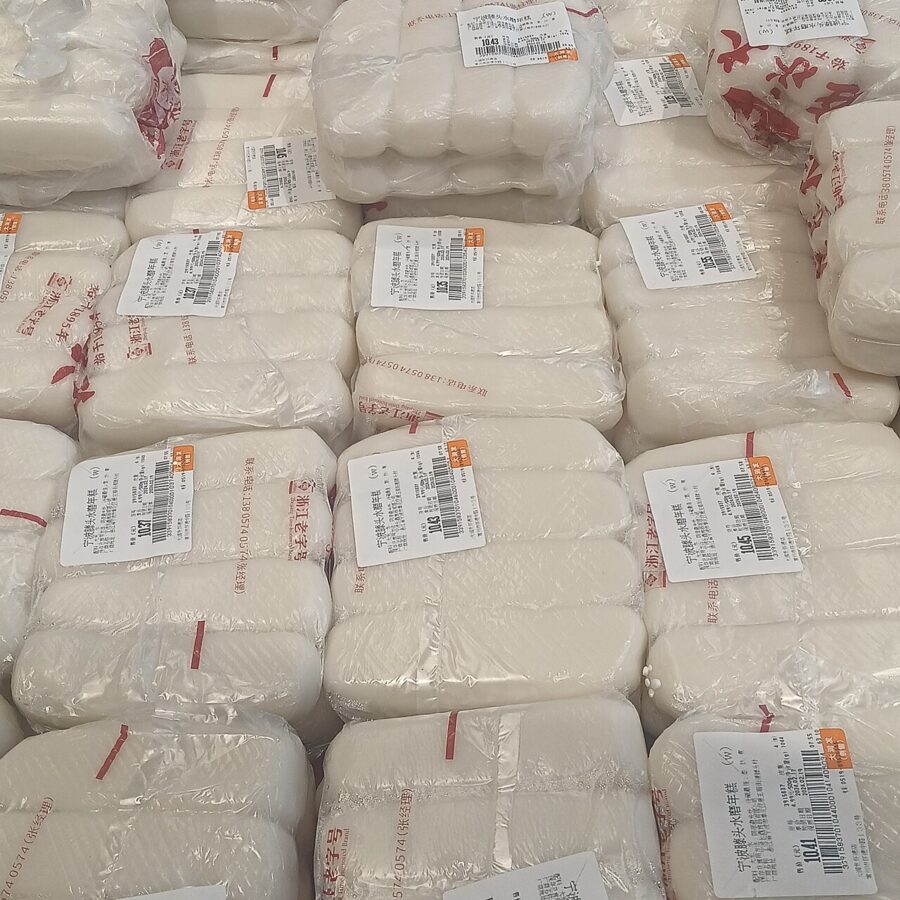
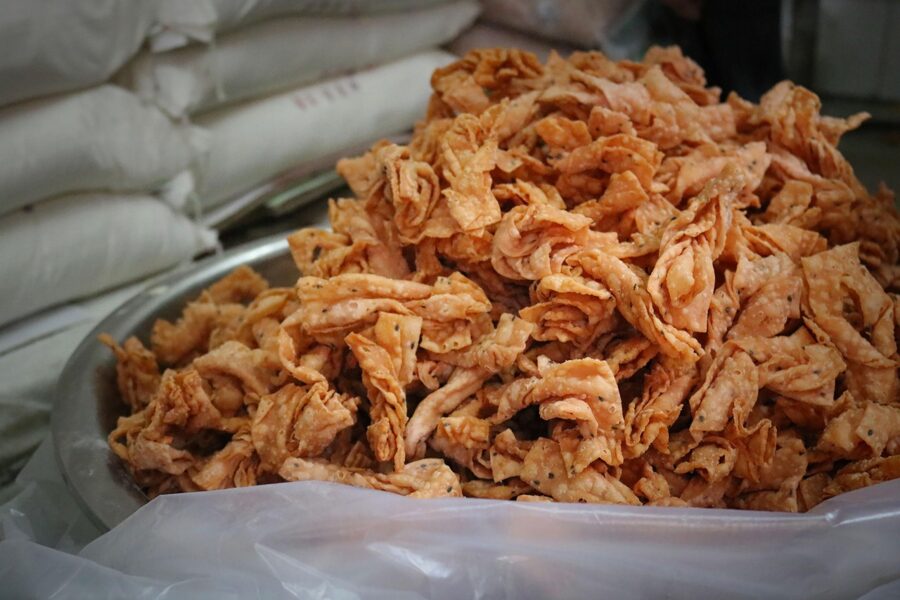
Further south, Cantonese households lay in turnip cake, fried dumplings and crisp sweets, and on the second day eat a “start of the year” dinner. Fujian and Chaoshan have their own snack cupboards again. The point is that the food of the run-up and the first week is different from what you’ll eat in March, and worth seeking out.
Tangyuan and yuanxiao
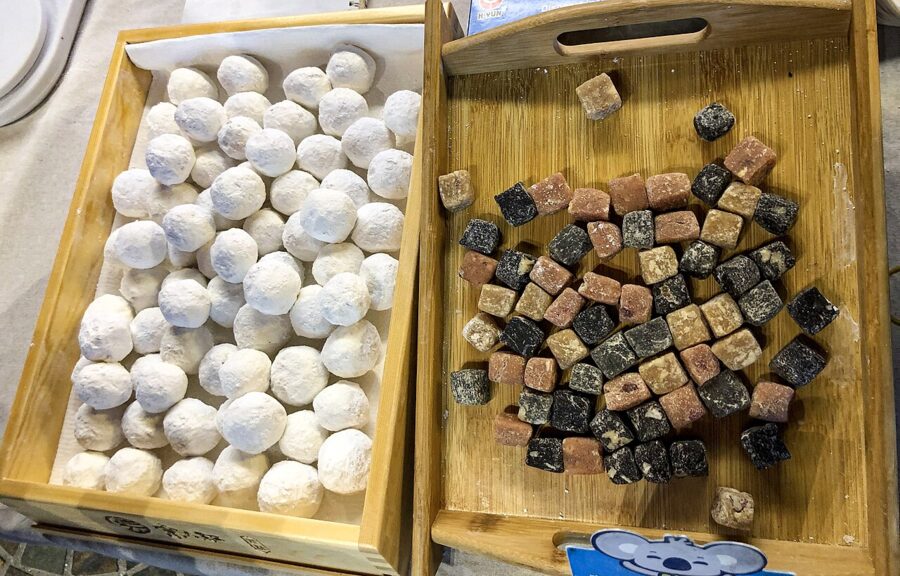
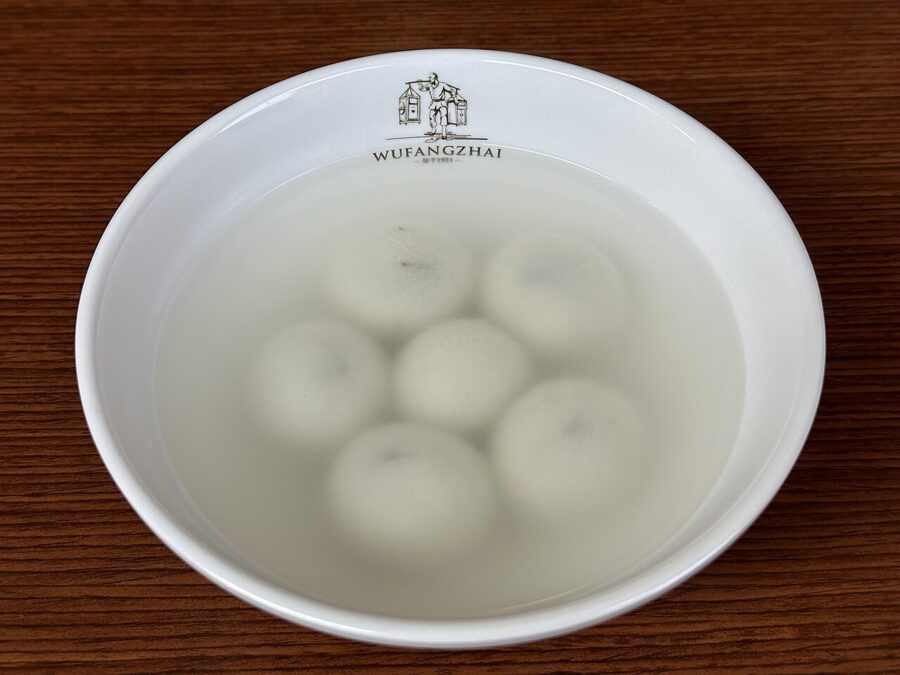
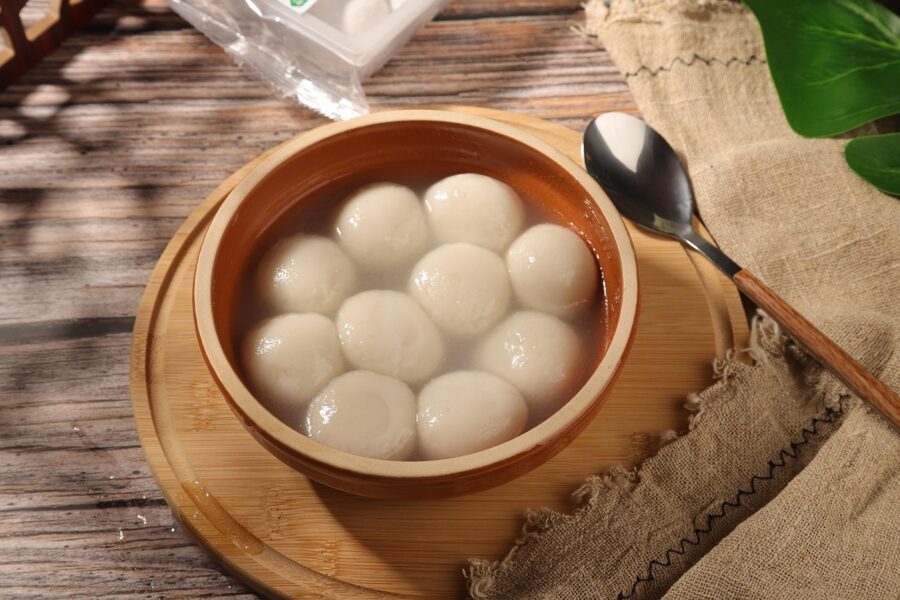
The season ends with sweet rice balls. In the south they are tangyuan (汤圆), a soft rice dough wrapped round black sesame, red bean or peanut. In the north they are yuanxiao (元宵), the filling rolled in dry rice flour until it builds a coat, which makes a firmer ball. Both are served in their cooking water, and both stand for the family coming full circle.
Customs, red envelopes and a few rules
Red envelopes, paper and digital
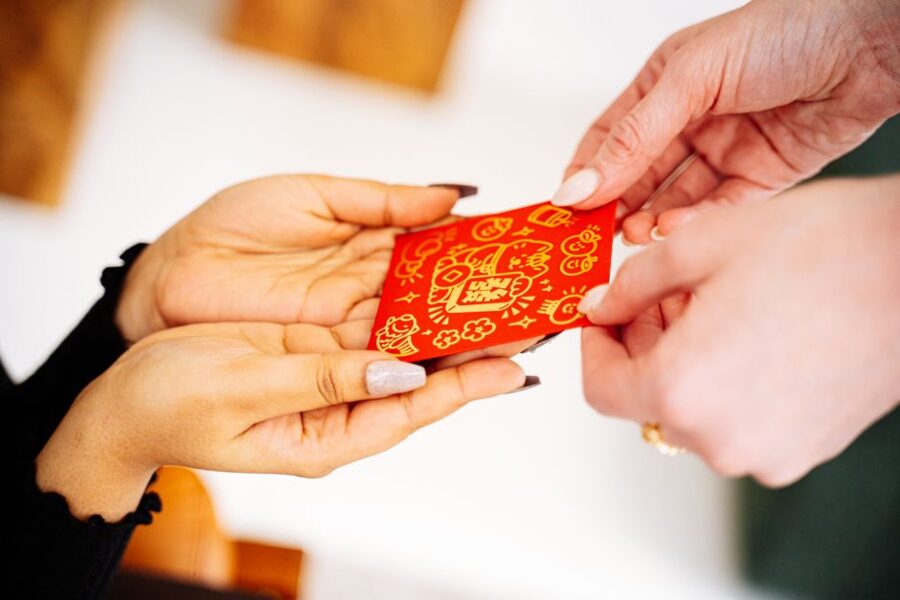
Red envelopes (红包, hongbao; lai see in Cantonese) are money gifts. Married adults give them to children and younger unmarried relatives, employers give them to staff, and the new notes and red paper matter more than the amount. You are not expected to give any, and handing them to strangers’ children would be odd. If a family invites you, a modest envelope for the children or a gift of fruit or good tea is plenty; ask your host what is normal.
The digital version took over years ago. WeChat launched its red packets at Spring Festival 2014, and racing to grab a share of one in a group chat is now a New Year’s Eve sport; a single packet has long been capped at ¥200. Don’t count on joining in: a wallet funded only by a foreign card is set up to pay merchants, and sending red packets from one is widely reported not to work.
Fireworks, and where they’re banned
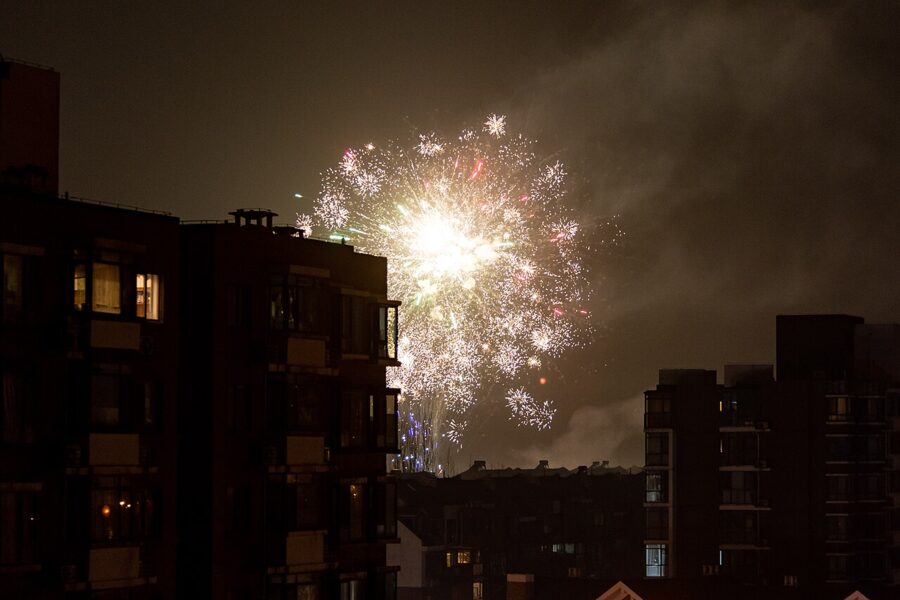
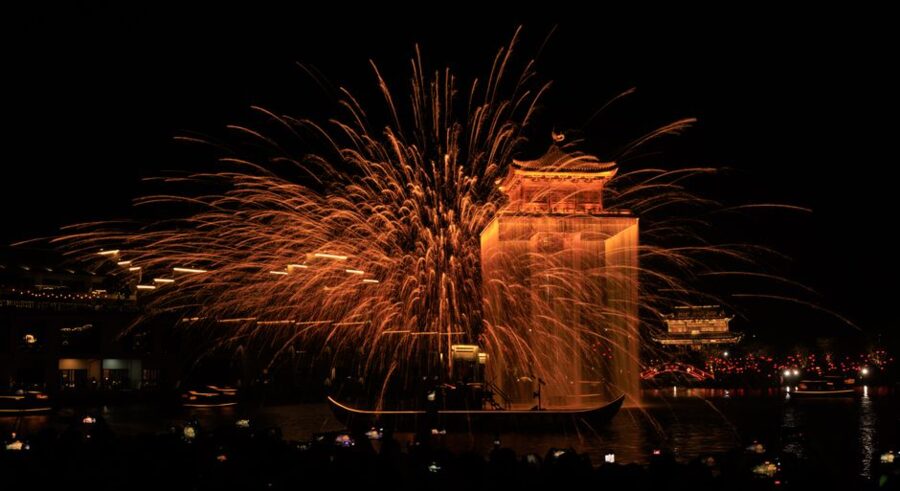
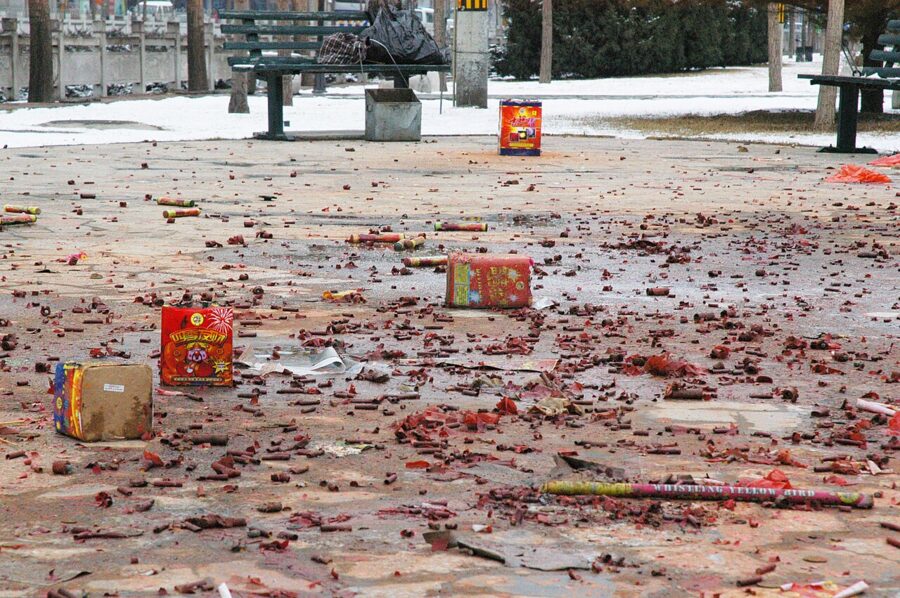
Firecrackers were the New Year’s soundtrack for centuries, meant to scare off the monster Nian. Most big cities now ban them. Beijing has long banned them inside the Fifth Ring Road, and since 1 January 2022 the whole municipality has been a no-fireworks zone. Shanghai bans them inside the Outer Ring Road all year, at stations, heritage sites and other listed places outside it, and everywhere on days of heavy pollution.
Smaller cities, county towns and the countryside are a different story, with rules that vary by place and year. If you want the midnight barrage, look to the towns and villages, not the capital.
Couplets, fu characters and paper cuts
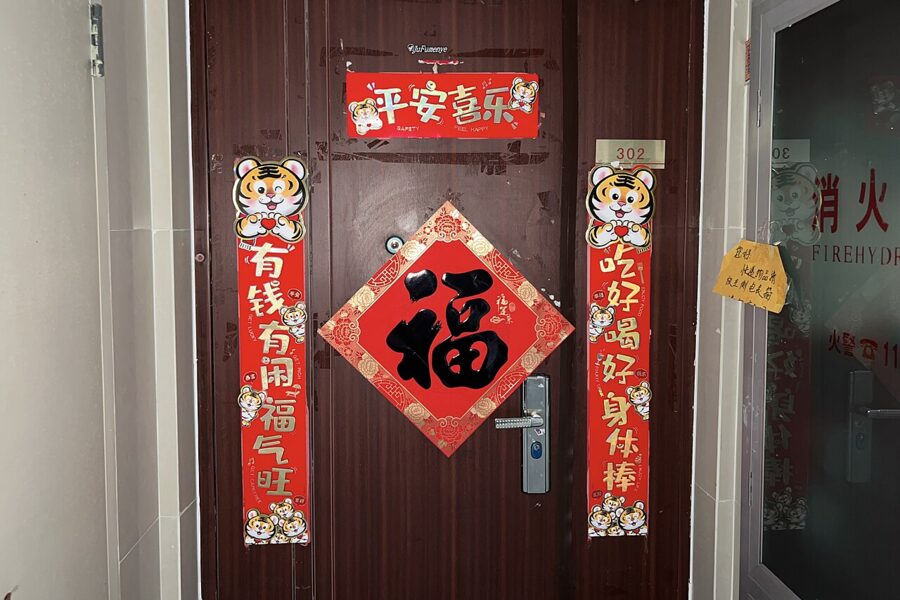
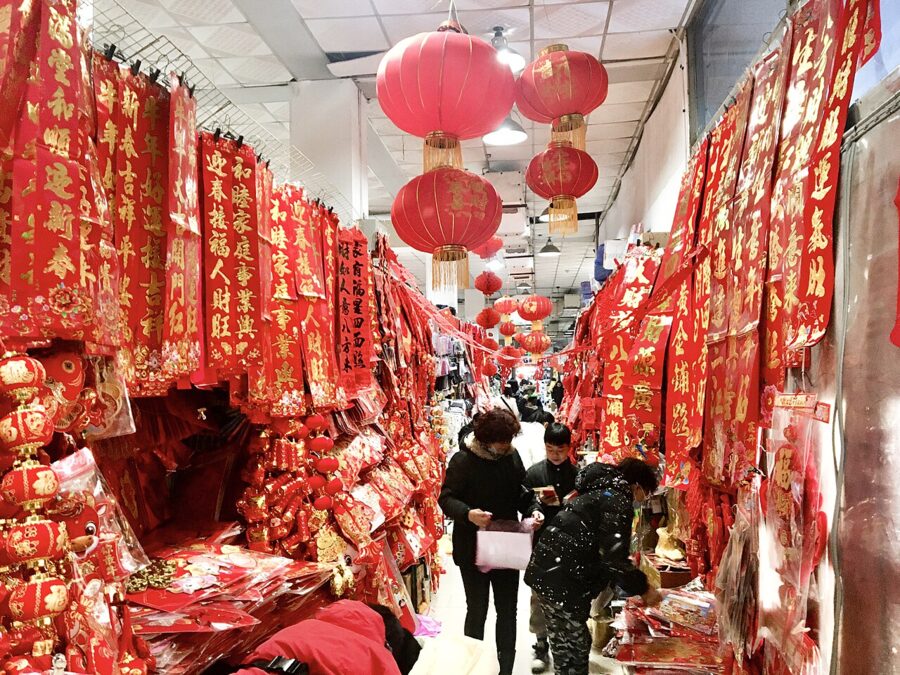
Spring couplets (春联, chunlian) are the red scrolls either side of a door: two lines of matched verse, the first on the right, the reply on the left, and a four-character scroll across the top. They go up on Eve or the day before and stay until they fade. The square red sign with 福 (fu, good fortune) is often hung upside down, because “fu upside down” (福倒了) sounds like “fortune has arrived” (福到了).
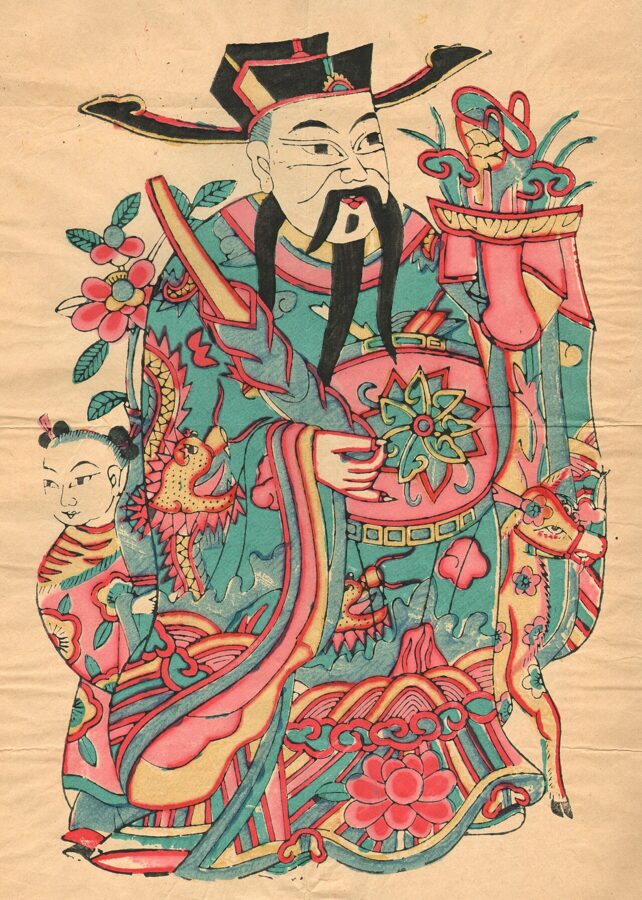
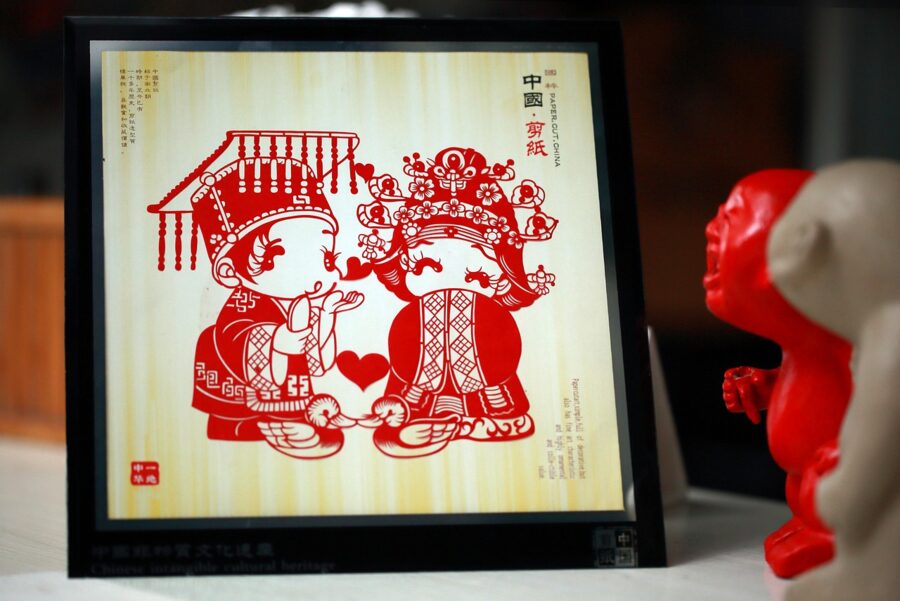
Add lanterns and the zodiac animal on everything from bank cards to coffee cups. In 2027, expect goats.
Taboos, told lightly
Families vary in how seriously they take these, and nobody expects a foreigner to know them. On New Year’s Day you don’t sweep or take out the rubbish, or you’d sweep out the luck. You don’t wash your hair, because hair (发) is also the “fa” of getting rich. If a bowl smashes, someone says suisui ping’an (岁岁平安), “peace year after year”, a pun on “broken”.
And never give a clock, because “giving a clock” sounds like attending a deathbed. Mostly it comes down to being cheerful and not talking about death or illness in the first few days, which is easy enough on holiday.
The Lantern Festival, two weeks later
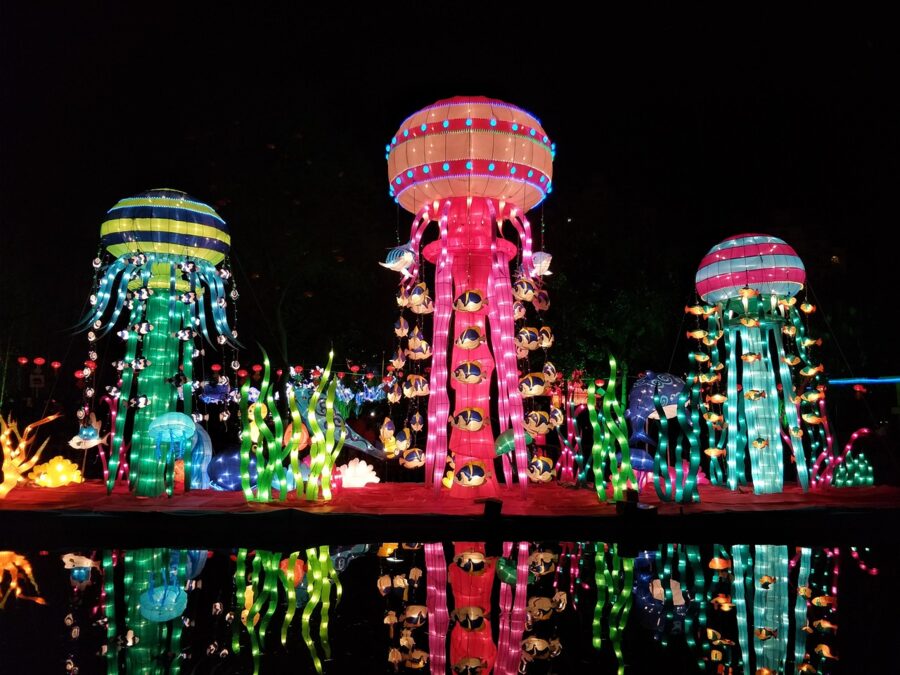
The Lantern Festival (元宵节, yuanxiao jie) is the fifteenth day and the first full moon of the year: Saturday 20 February in 2027, a week after the holiday ends, and Wednesday 9 February in 2028. It is not a public holiday, so it is an evening event: lantern shows, riddles hung under the lanterns, sweet rice balls, and in some places fireworks or a dragon dance.
If you are in China for it, this is the best night of the season. The lantern shows are at their peak and the trains have calmed down. In 2026 both the Yuyuan show and the Wuhou Shrine fair closed on the Lantern Festival night, so check the closing date before you plan around it. Beijing’s police put the peak at lantern events at 19:00–21:00; go just before or just after.
If you only have one window, aim for the second half of the holiday and the week up to the Lantern Festival: in 2027, roughly 10 to 21 February. You get the lanterns and fairs without the worst of the rush, and the small restaurants are back open.
Prices and crowds
Spring Festival is China’s biggest holiday and it is getting bigger. Over the nine days of the 2026 holiday, the Ministry of Culture and Tourism counted 596 million domestic trips and ¥803.5 billion in tourist spending, both records, and 95 million more trips than 2025’s eight-day break.
In practice: hotel rates in the festival cities and resorts rise for the holiday week, flights on the main routes are dearest just before Eve and at the end, and timed tickets for famous sights sell out. Hainan’s beach towns and the snow cities of the north-east see the highest demand, because that is where families go. The big cities, once the migrants have left, can be good value for the first few days, especially hotels in the business districts.
The crowds follow the same logic. Office districts, commuter lines and residential streets go quiet; temples, fairs, lantern shows, museums and scenic areas fill. You can have a near-empty subway carriage and a two-hour queue on the same morning.
So, should you plan a trip around it?
Yes, if the festival is the point. If you want the fairs, the lanterns, the flower markets and a country celebrating, there is no better time to be in China. The trip I would suggest is a week in one big city with a fair or a lantern show on the calendar.
No, if it is your first trip and you want the classic route. A two-week China itinerary that moves every two or three days and eats at small local places is the trip Spring Festival makes hardest: every move is a fight for tickets, half the restaurants are shut and every sight is at its busiest. Come in March or in autumn instead; my guide to the best time to visit China has the months that suit it.
How to do it well
- Pick one or two bases and stay put through the holiday: Beijing for temple fairs, Guangzhou for flowers and food, Shanghai for lanterns, Xi’an for the wall, Harbin for ice.
- Move on New Year’s Eve or New Year’s Day, not in the five days before Eve or the last two of the holiday.
- Book trains the day they go on sale, 15 days out, with a waitlist as backup.
- Book timed tickets the minute booking opens, and go at opening time.
- Sort Eve dinner early, and keep a list of chain restaurants near your hotel for the first three days.
- Stay for the Lantern Festival if you can.
My China travel tips cover the apps, payments and passport registration to set up before you fly, which matters more than usual in this fortnight.
Skip this
- A new city every day of the holiday. You’ll spend the festival in station queues.
- A temple fair at 11:00 on New Year’s Day. Go at 08:30, or on the fifth or sixth day.
- A small old town full of guesthouses as your base for the first three days. It may be charming, and it may be shut.
- A tour that promises a “real family dinner”. A family’s Eve is private; a restaurant banquet is the version you can book.
Book the train the morning it goes on sale. Get to the fair when the gates open. Then find a bowl of dumplings at midnight, and let the city be quiet for a few days.
You Might Also Enjoy
 Chinese Street Food: Jianbing, Roujiamo, Tanghulu, Stinky Tofu and the Snacks Worth Queuing For
 Okonomiyaki in Japan: Osaka, Hiroshima, Tokyo Monja and Every Griddle Between
 Japan in January: New Year, Snow, Hot Springs and the Best Things to Do All Month
 Udon in Japan: Sanuki, Inaniwa, Kishimen and the Regional Noodle Map