Beijing Hutongs: Where to Walk the Old Lanes, How to Read a Gate and Which Areas Are Worth It
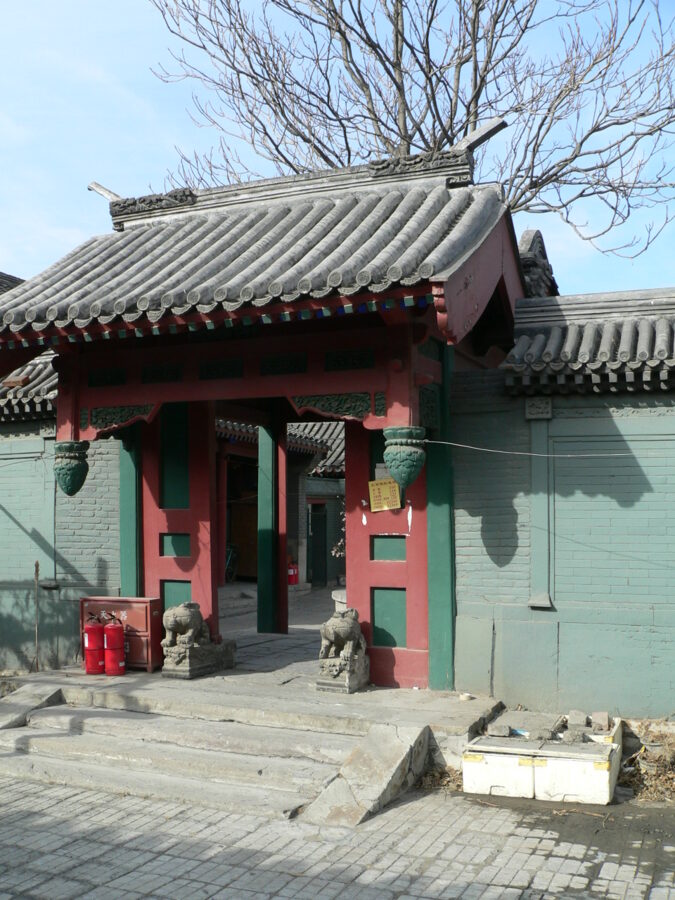
Most of the little stone lions on Beijing’s old gateposts have no faces. They sit on the carved blocks either side of a courtyard door, and in the 1960s, when old ornament of every kind was a target, someone with a hammer went down lane after lane knocking their heads off. The stones stayed because they hold the door up. Once you notice the stumps you see them everywhere, and that’s the trick of the hutongs: they look like grey walls until you learn what to look at.
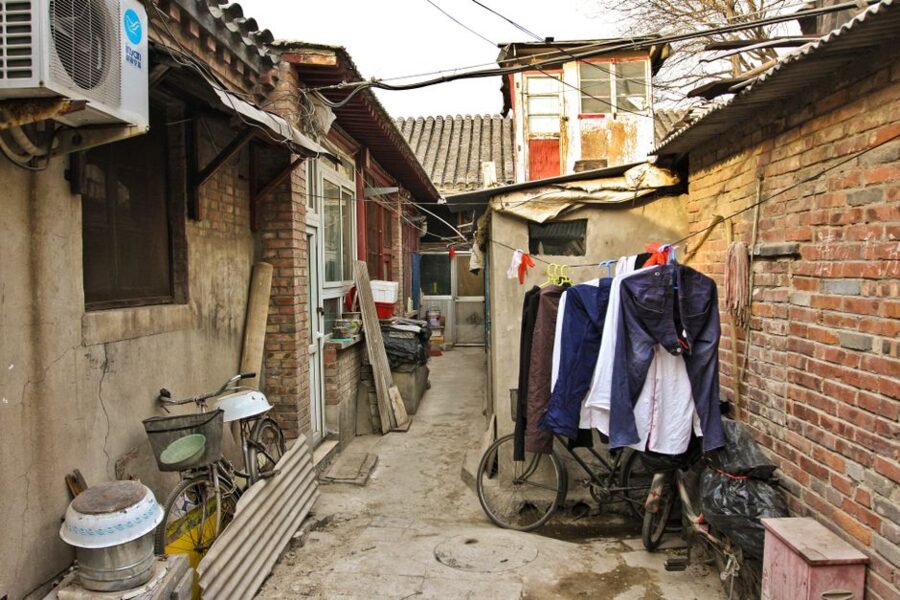
The second thing you notice is how few people get past the famous strips. On a holiday afternoon Beijing‘s best-known lane, Nanluoguxiang, moves at a shuffle. Turn into Ju’er Hutong, a minute from its top end, and you might hear nothing but a radio through a courtyard wall.
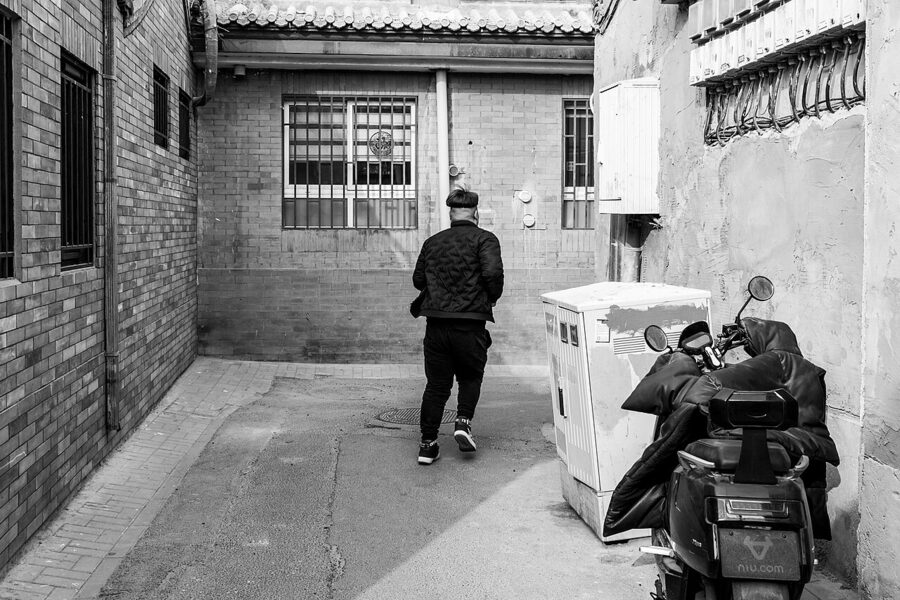
This is the slow version. It covers what a hutong and a siheyuan are, how to read a gate, and the six areas worth your feet, then rickshaws, courtyard hotels, food, two timed walks, manners and what to skip.
| Area | What it’s like | Nearest metro | Go for |
|---|---|---|---|
| Shichahai, Houhai, Yandai Xiejie | Three lakes ringed by lanes, bars and a prince’s mansion | Shichahai (Line 8), exit A1 | Lakeside walks, sunset, winter skating |
| Nanluoguxiang and side lanes | One packed lane, sixteen quieter ones off it | Nanluoguxiang (Lines 6 and 8), exit E | Gates and former residences |
| Gulou | The Drum and Bell Towers and the lanes around them | Shichahai (Line 8) | The drum show, the rooftop view |
| Dongsi | A grid of numbered lanes, mostly homes | Dongsi (Lines 5 and 6), exit B | The Yuan street plan, two free museums |
| Dashilar and Yangmeizhu Xiejie | Old shop street, a renewed diagonal lane, the opera lanes | Qianmen (Lines 2 and 8), exit C | Old brands, small shops |
| Baitasi | Quiet lanes under a 13th-century stupa | Fuchengmen (Line 2), exit B | The White Dagoba, Lu Xun’s house |
In This Article
- What a hutong is, and how much is left
- The courtyard behind the wall
- How many are left
- The bricked-up shopfronts and the restorations
- How to read a gate
- The ranks of gateway
- Mendun: the gate stones
- Door pins, knockers and couplets
- The screen wall inside
- Other things to look for
- Shichahai, Houhai and Yandai Xiejie
- Yinding Bridge and the lakes
- Yandai Xiejie
- Ya’er Hutong, the mansion and winter
- Nanluoguxiang and the lanes off it
- Mao’er Hutong
- Yu’er Hutong
- Ju’er Hutong and the lanes south
- Gulou, under the Drum and Bell Towers
- Tickets and the drum show
- The lanes around Gulou
- Dongsi and the numbered lanes
- Two free museums
- Dashilar and Yangmeizhu Xiejie
- Yangmeizhu Xiejie
- The Eight Great Hutongs
- Baitasi, under the White Dagoba
- The lanes around the temple
- Zhuanta Hutong
- Three more lanes worth a detour
- Rickshaw, bike or feet?
- Rickshaws
- Bikes and walking
- Sleeping in a courtyard
- Eating and drinking in the lanes
- Two walks, with times
- Walk one: lakes, towers and the centipede
- Walk two: shops, slanting streets and the opera lanes
- Hutong manners
- Skip this
What a hutong is, and how much is left
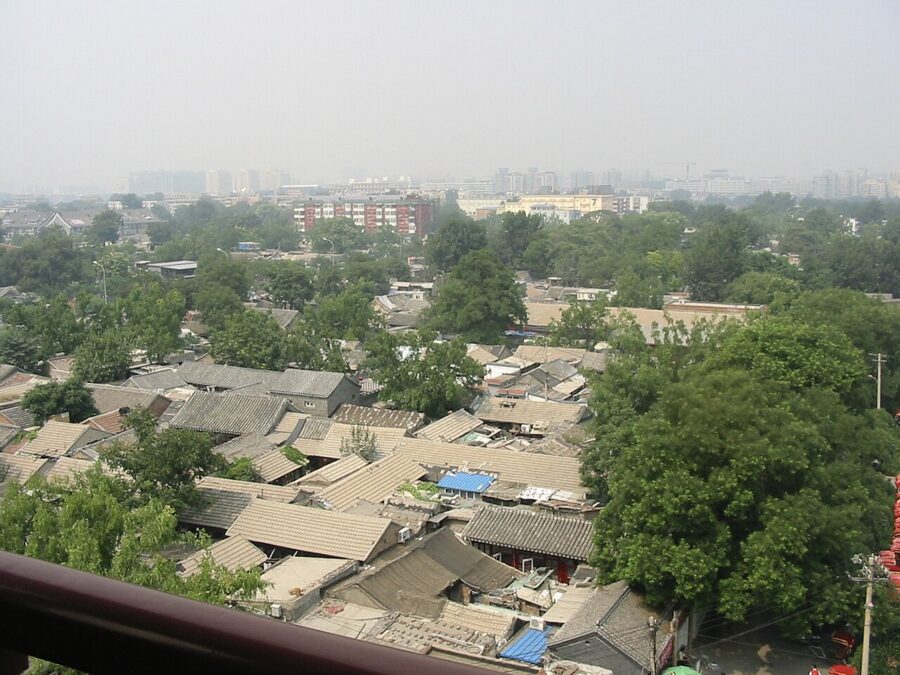
A hutong is a lane. In Beijing it means the lanes laid out when Kublai Khan built his capital, Dadu, in the 1260s and 1270s: wide avenues between the city gates, and between them rows of lanes running east to west. The plan set the widths. Main streets were 24 paces across, smaller streets 12, lanes six, a bit over nine metres.
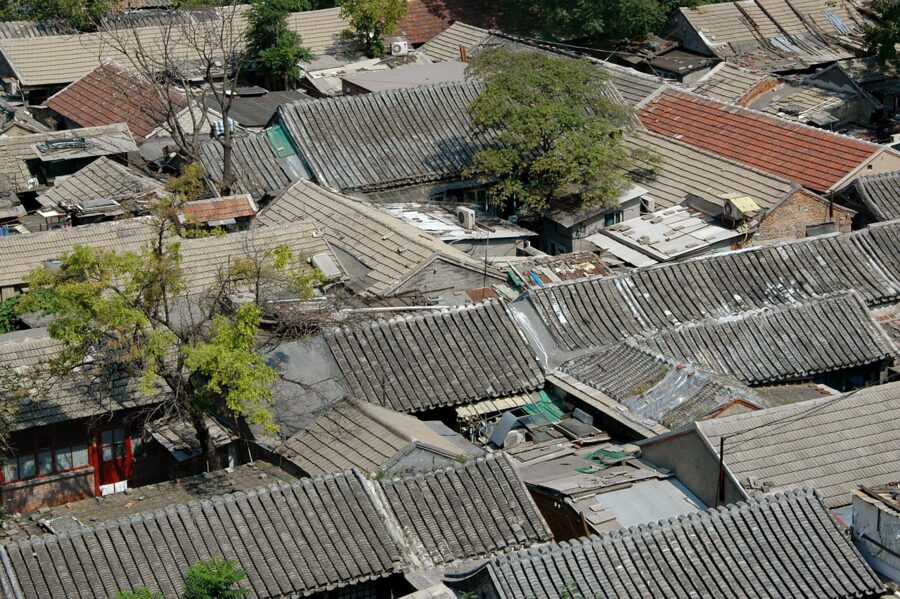
Where the word comes from is a fight. The popular story says it’s Mongol, from a word for a well, and every rickshaw driver tells it. Chinese linguists mostly trace it instead to old Chinese words for a lane, the same root as Shanghai’s long. The oldest lane name on record, Zhuanta Hutong, turns up in a Yuan play, and it’s still there near Xisi.
The courtyard behind the wall
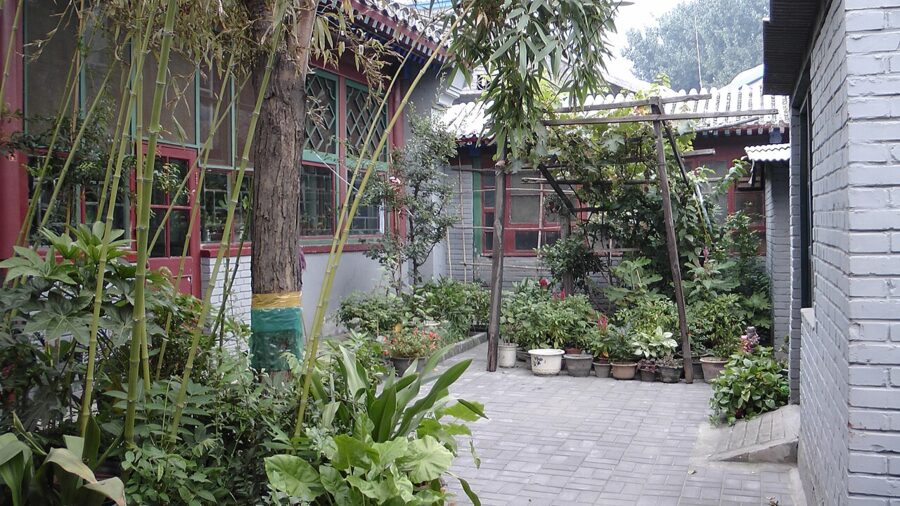
The lanes give access to houses, and the house is the siheyuan (四合院), rooms on four sides of a courtyard, all facing in. The main rooms sit on the north side facing south, catching winter sun, with wings east and west. The row along the south wall, the daozuofang, faces north and gets the worst light.
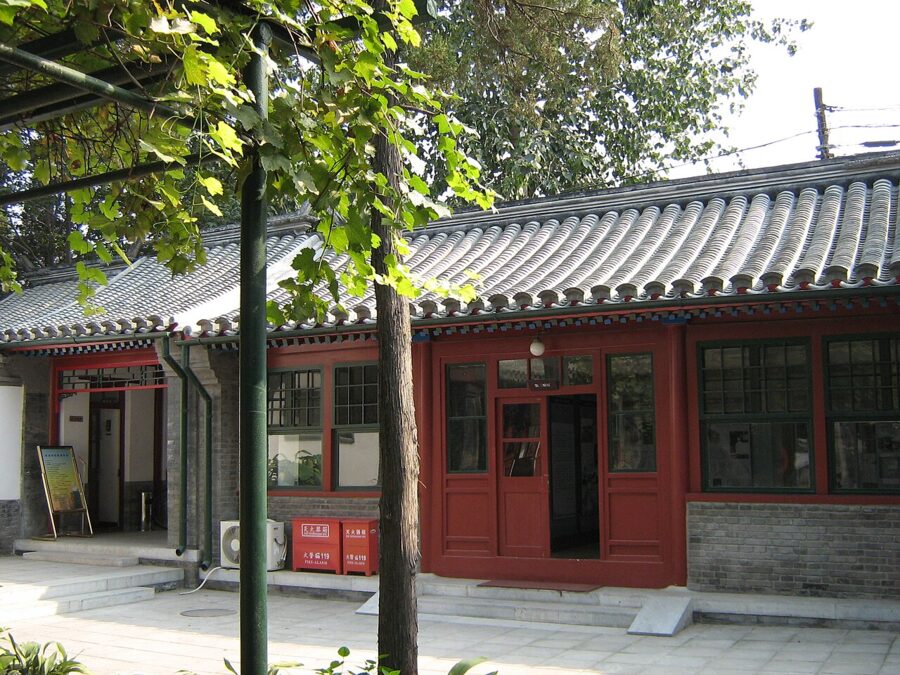
The gate goes in the south-east corner, almost never the middle, and a screen wall behind it stops anyone in the lane seeing in. Bigger houses add a second, ornate gate, the chuihuamen or hanging-flower gate, between a yard for visitors and the family’s inner yard. Houses grow backwards in courtyards called jin, and at full stretch one could run the whole depth between two lanes, about 77 metres.
How many are left
Counting is a mess because nobody agrees what counts. A 1949 survey found 6,074 named streets and lanes in the old city, 1,330 of them called hutong. Whole districts went after that, for factories, ring roads and the big redevelopments of the 1990s and 2000s.
The tide turned on paper in 2017, when the state approved Beijing’s master plan to 2035 with a line that the old city “must not be demolished any more”. A 2021 regulation protected the lanes, the courtyards and even the old place names, and by 2023 the city had 1,111 lane and street names in the old core on its protected list. The names, notice, not every wall.
The bricked-up shopfronts and the restorations
Before 2017 many lanes were lined with tiny shops opened by knocking a doorway through a courtyard’s street wall. That year the city ran a campaign against “opening walls and cutting holes” (开墙打洞), bricking up shopfronts lane by lane, Fangjia Hutong near the Lama Temple among them. The stated reasons were safety and the lanes’ original look. Many shopkeepers saw it as the end of the street’s life.
The other half is restoration. Since about 2011 the districts have offered residents compensation to move out, then repaired courtyards, buried cables and repaved lanes. Yangmeizhu Xiejie, Dongsi and Baitasi are the showpieces. Some results are lovely and some look like a stage set, sometimes on the same lane.
How to read a gate
Gates are the hutongs’ visiting cards. In the Qing the kind of gate you could build depended on rank, and the gates outlived the ranks. Ten minutes of theory turns every lane into a street of clues.
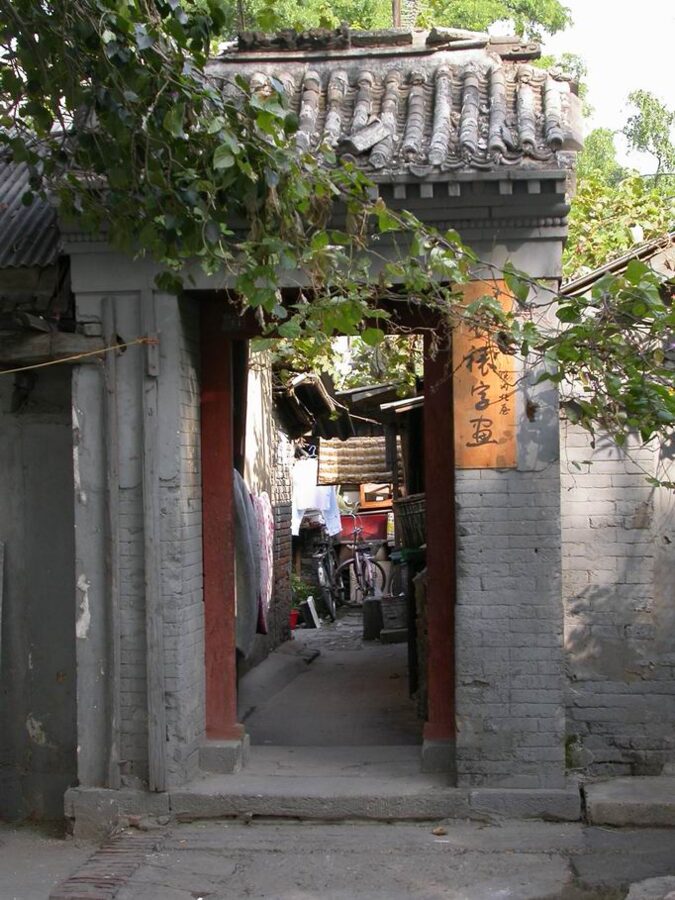
The ranks of gateway
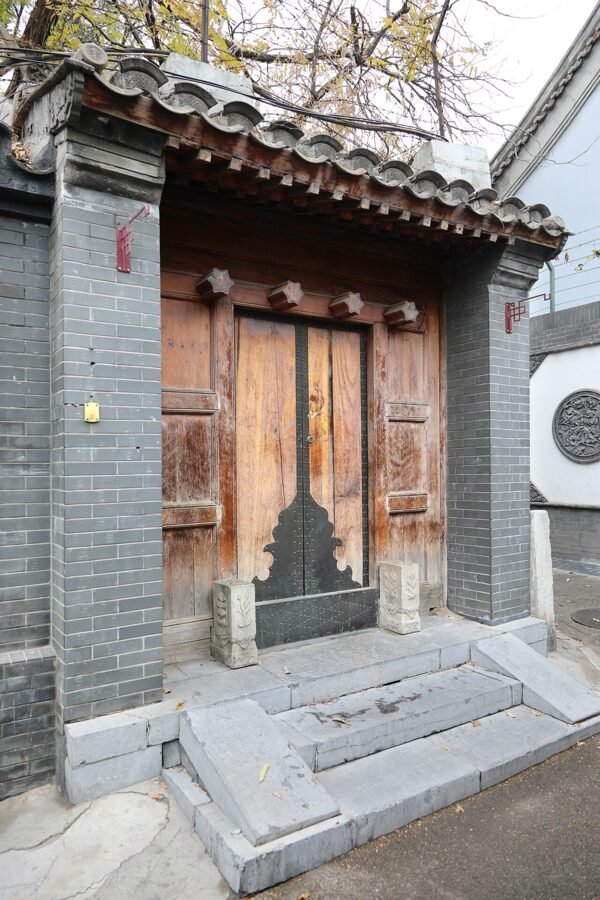
Each gate is a little gatehouse with a roof, and the clue is where the doors sit inside it.
- Prince’s gate (王府大门). Three bays, one open, doors studded with rows of round nails. You’ll see these at Prince Gong’s Mansion.
- Guangliang gate (广亮大门). Doors halfway back at the central pillars, leaving a deep porch: an official’s house.
- Jinzhu gate (金柱大门). Doors one pillar further forward, a shallower porch, still an official’s.
- Manzi gate (蛮子门). Doors right out at the front pillars, flush with the lane. A merchant’s gate.
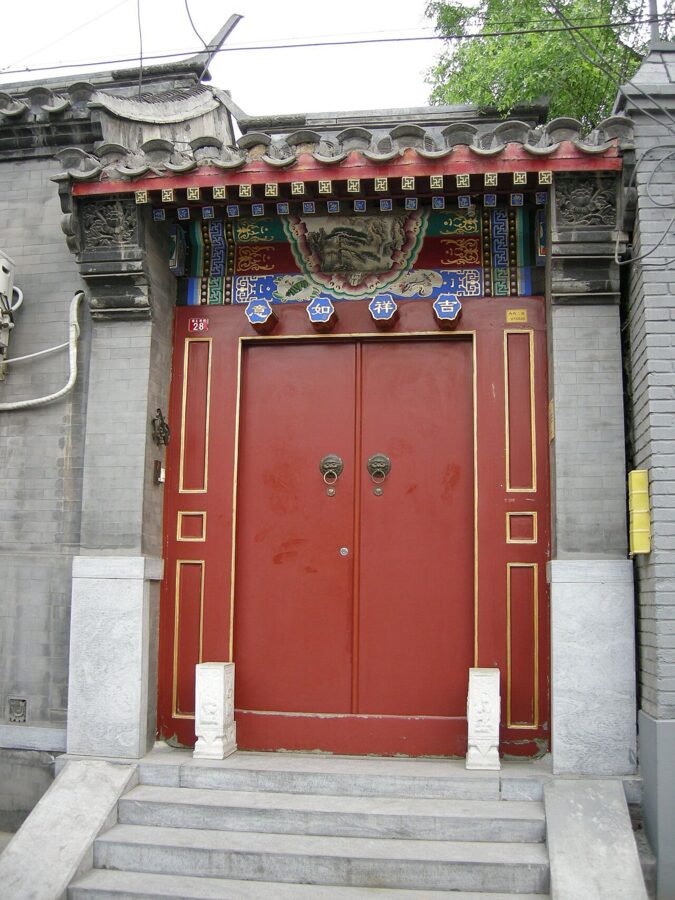
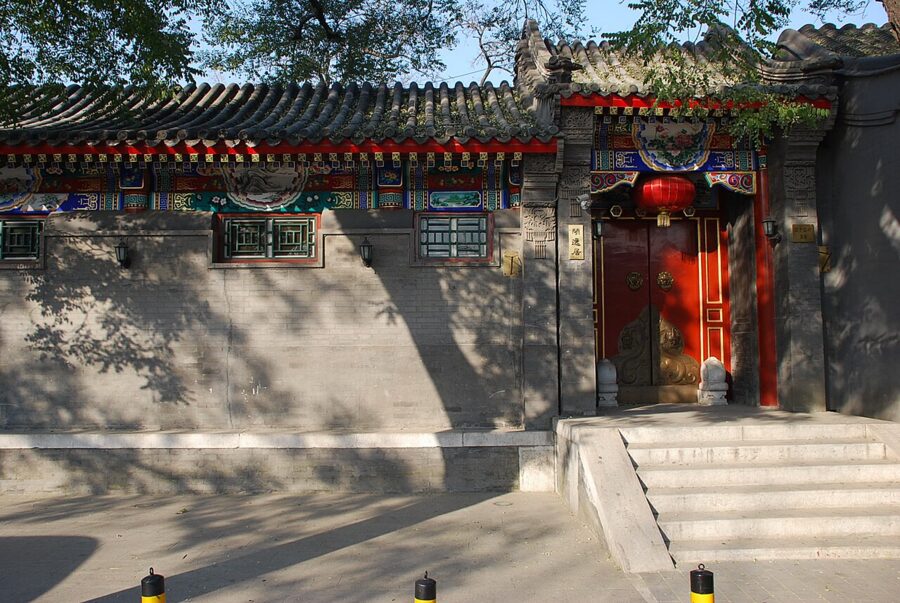
- Ruyi gate (如意门). The front filled with a brick wall and a small door set in it, with the money spent on brick carving above. Most of the pretty gates you photograph are these.
Below them is the plain wall gate. The late Qing also brought gates with Western pilasters, which Beijingers called Yuanmingyuan style after the European-looking palaces in the old Summer Palace.
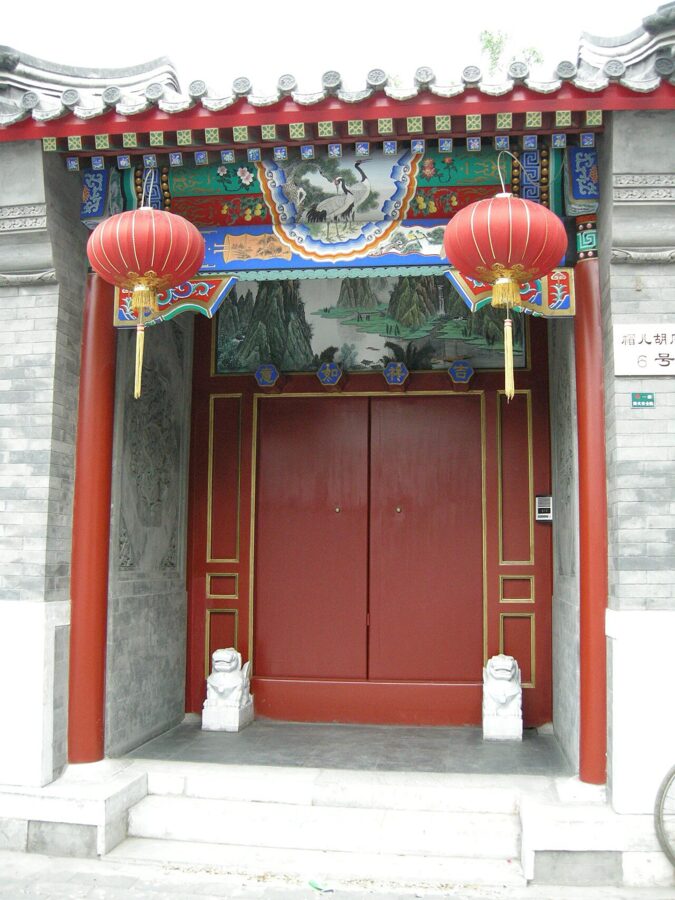
The quick test for the top three ranks is a pair of small carved brackets, queti, under the beam at the top of the outer pillars. Only gates with a porch have room for them.
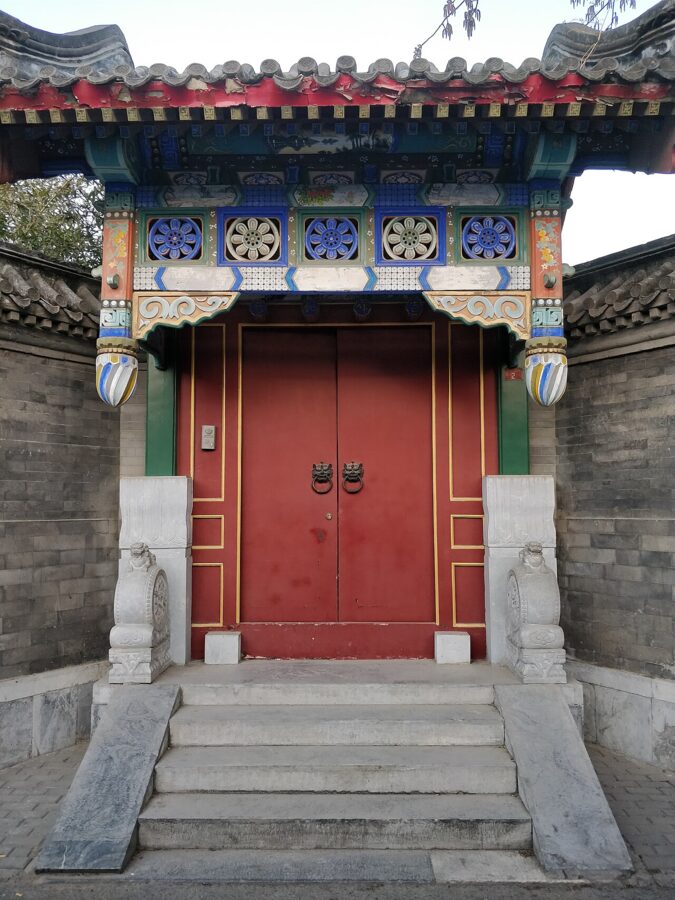
Mendun: the gate stones
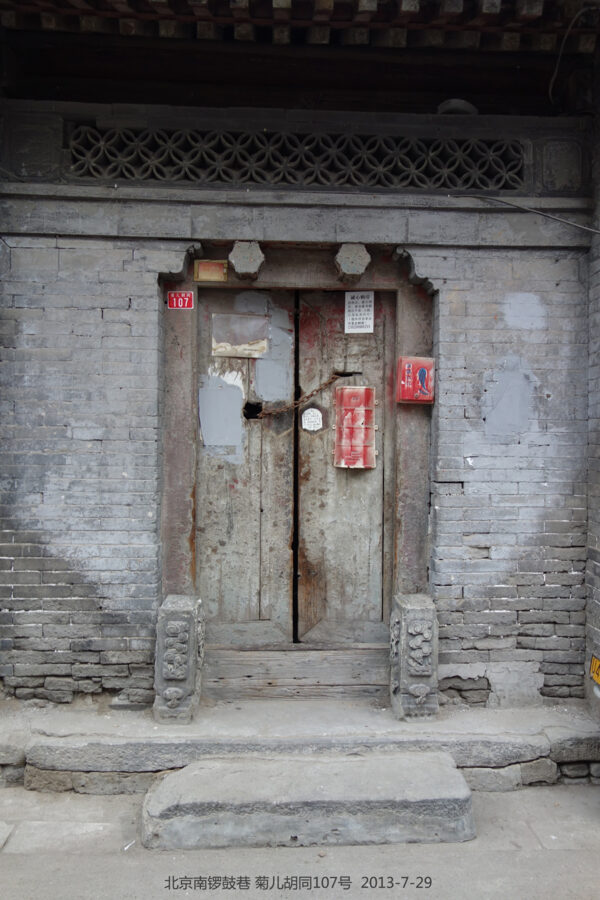
The carved blocks either side of the door are the mendun (门墩), and they’re structural: each is the end of a long stone under the threshold with a socket inside for the door’s pivot. The outside end became a carving, a lotus base topped by either a box or a drum on its edge, often with a lion on top.
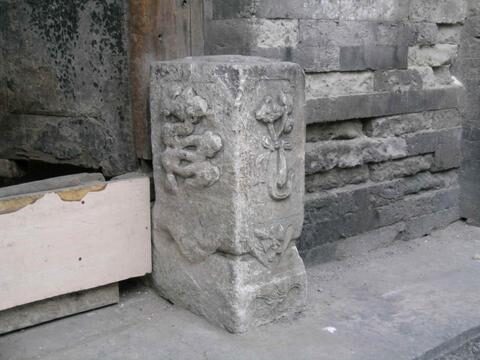
Guides like to say drum stones mean a military family and box stones a scholar’s. Treat that as a story; what’s reliable is that bigger gates have bigger stones, carved with lucky pictures and puns.
You’ll also hear that mendang huidui (门当户对), the phrase for a well-matched marriage, comes from these stones and the pegs above the door. Folk etymology, but it gives you something to look for.
Door pins, knockers and couplets
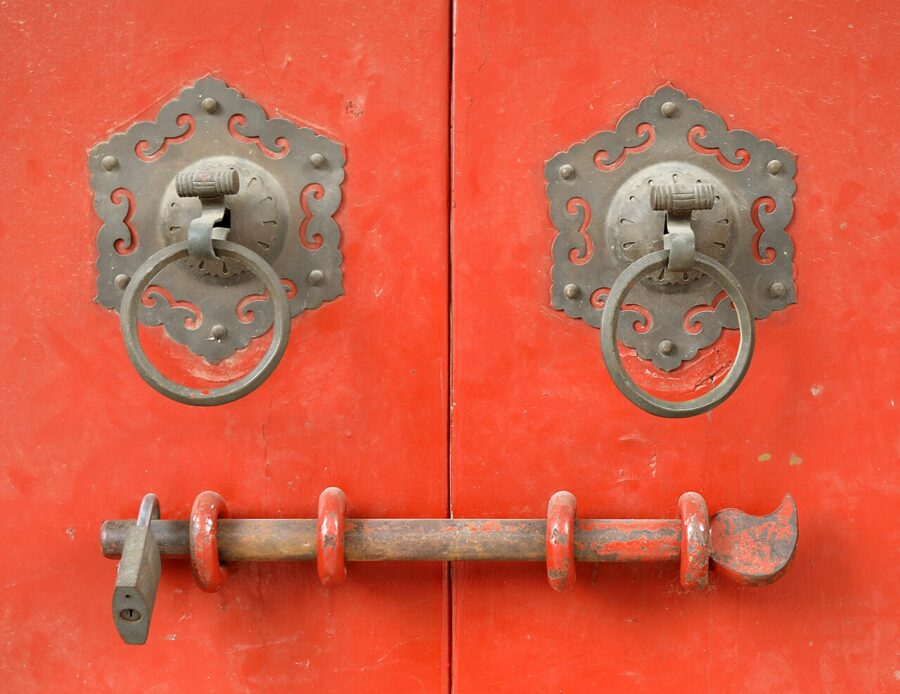
Look up. The round or six-sided pegs sticking out of the lintel are menzan, door pins, which lock the frame holding the top of the door. Big gates have four, small gates two, often carved with characters; 吉祥如意 (good fortune, as you wish) is a common set.
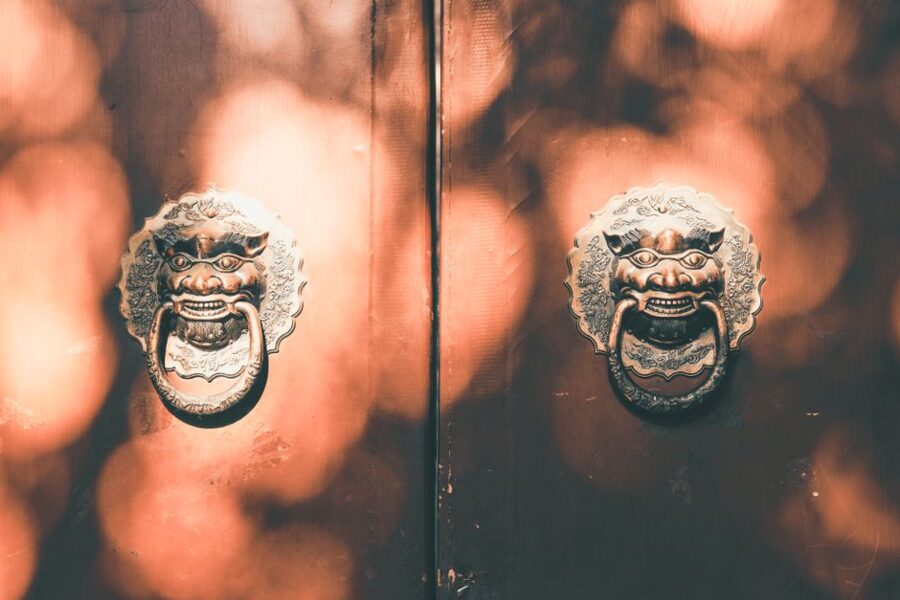
Halfway down the doors are the knockers, and on older doors a couplet is carved into the wood. The commonest says roughly “loyalty and generosity keep a family going; poetry and books serve the world” (忠厚传家久,诗书济世长). Open doors hide it. Shut ones introduce the house.
The screen wall inside
Through an open gate you’ll usually see a wall a step or two inside. That’s the yingbi (影壁), the screen wall, there to block the view and, people said, bad spirits, which only travel in straight lines. The centre is laid with square tiles on the diagonal, and the grander ones carry a carved 福 (good fortune).
Other things to look for
- Mounting blocks, knee-high stone steps beside a gate for getting on a horse. Money lived here once.
- Stones carved 泰山石敢当, set where a lane hits a house end-on, to turn away bad luck.
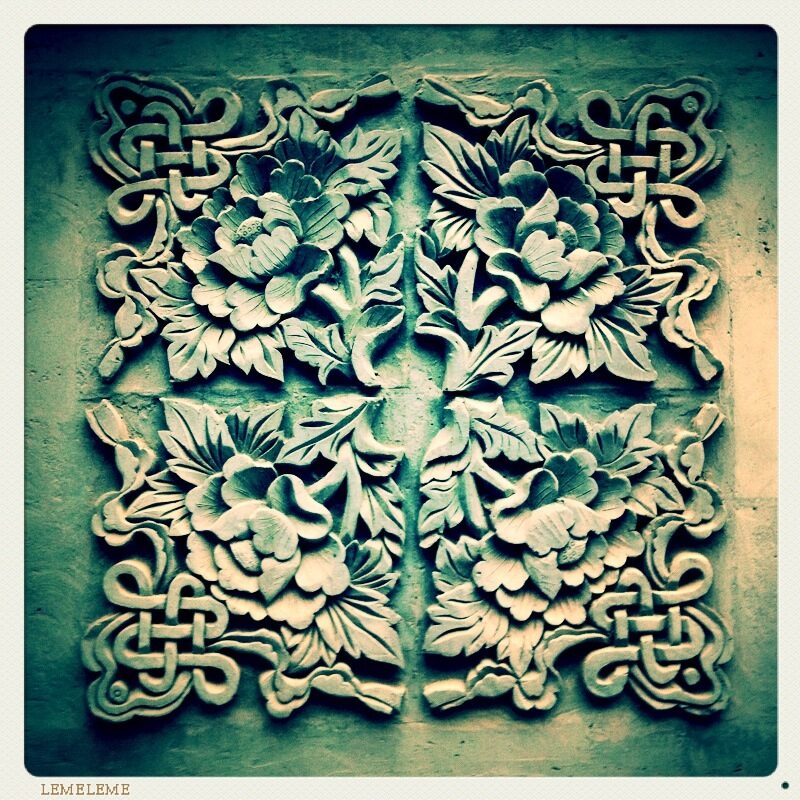
- Brick carving on the gable ends: flowers, vases and scrolls up at roof level.
- Blue lane plates. Lanes were often renamed to lose something rude, so Donkey Market Lane became Lishi Hutong.
- Public toilets. Many courtyards still have no bathroom, so there’s one every few hundred metres. Free, and the most useful map pin in the old city.
Shichahai, Houhai and Yandai Xiejie
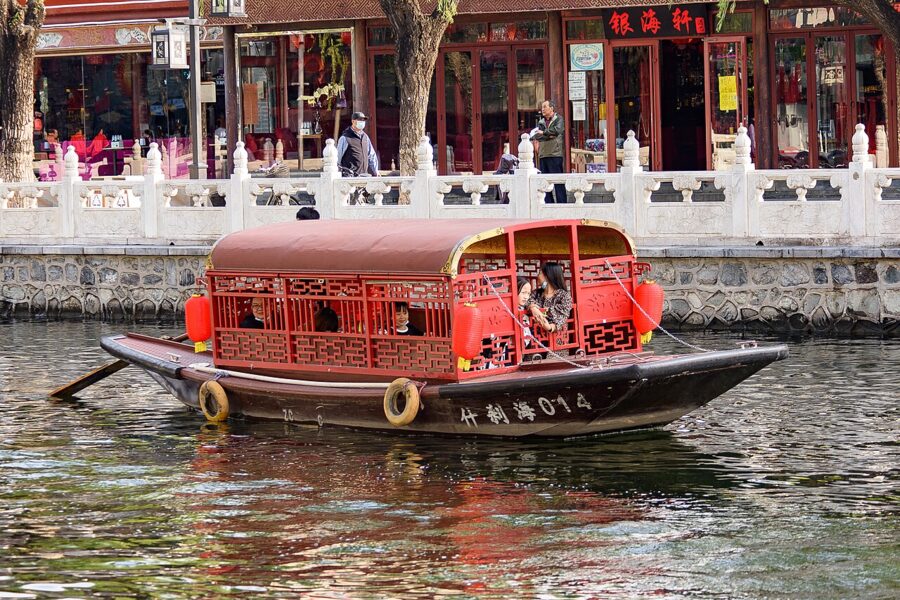
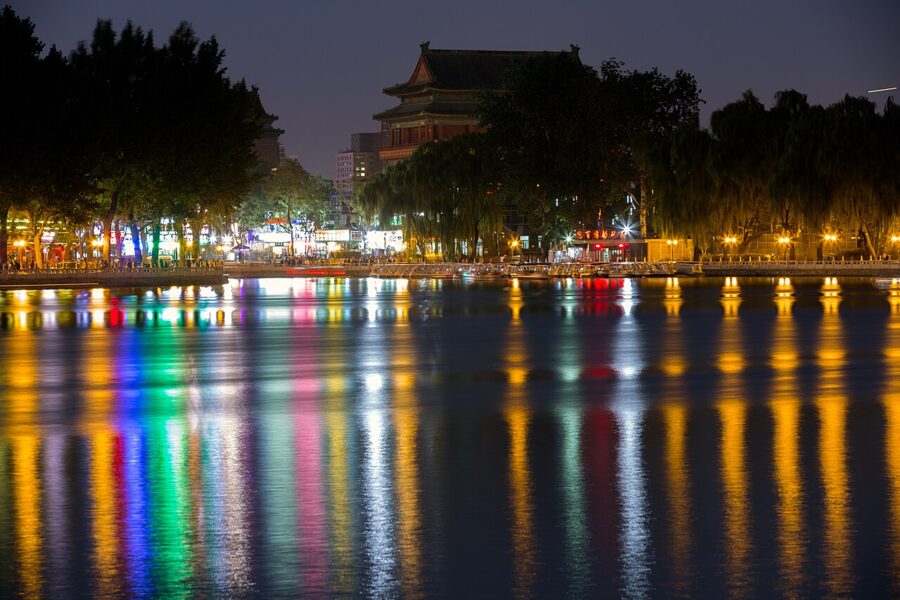
Shichahai is three lakes in a chain, Qianhai, Houhai and Xihai, about 34 hectares of water. In the Yuan they were the end of the Grand Canal, where grain barges from the south finished their journey, and people have been hanging out on the shores ever since. Today it’s lanes, mansions, bars and old men fishing with long rods.
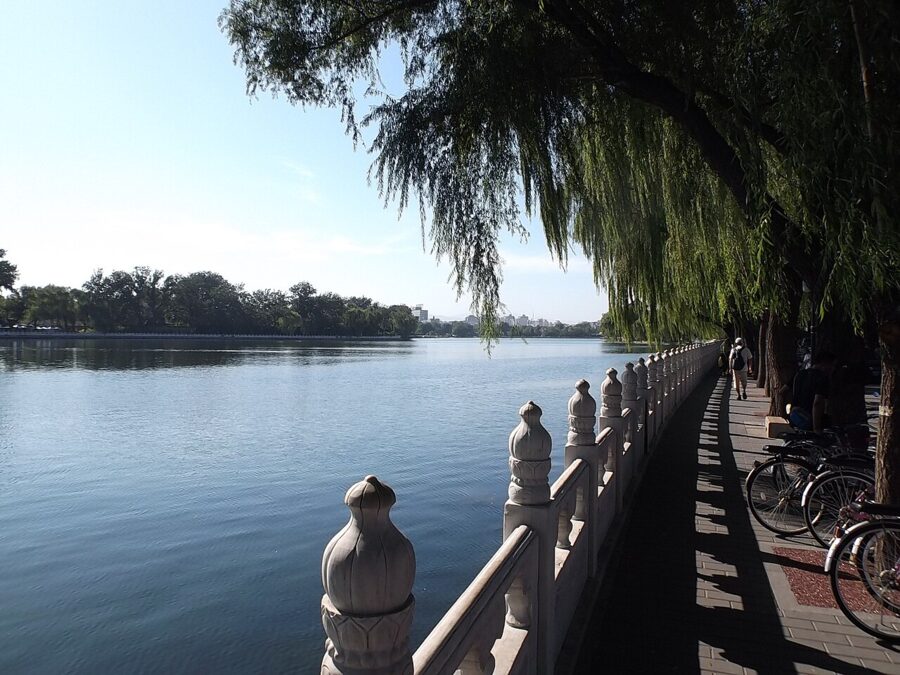
Take Line 8 to Shichahai. From exit A1 it’s five to eight minutes north up Di’anmenwai Street and left through Yandai Xiejie to Yinding Bridge. The lakes are free and open all day.
Yinding Bridge and the lakes
Yinding Bridge, the Silver Ingot Bridge, is the hinge between Qianhai and Houhai. It began as a wooden bridge shaped like an upturned ingot, became a stone arch, and was rebuilt in 2011. The old set-piece view from it was of the Western Hills, and on a clear day you still get it.
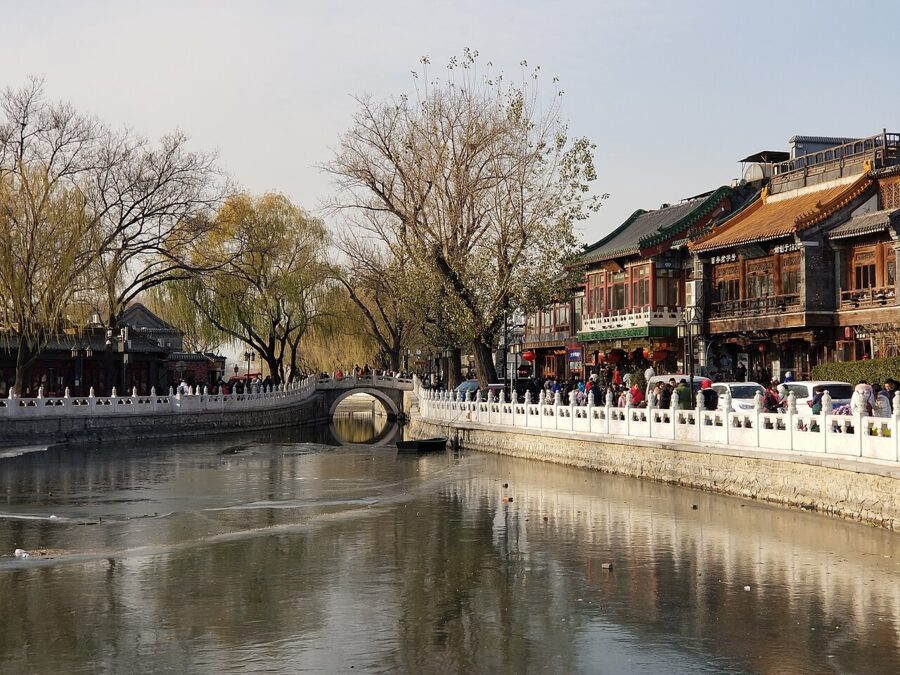
Walk Houhai’s north shore for the quieter side. The south shore has the bar strip that made Houhai famous in the 2000s, still there and still loud after dark.
Yandai Xiejie
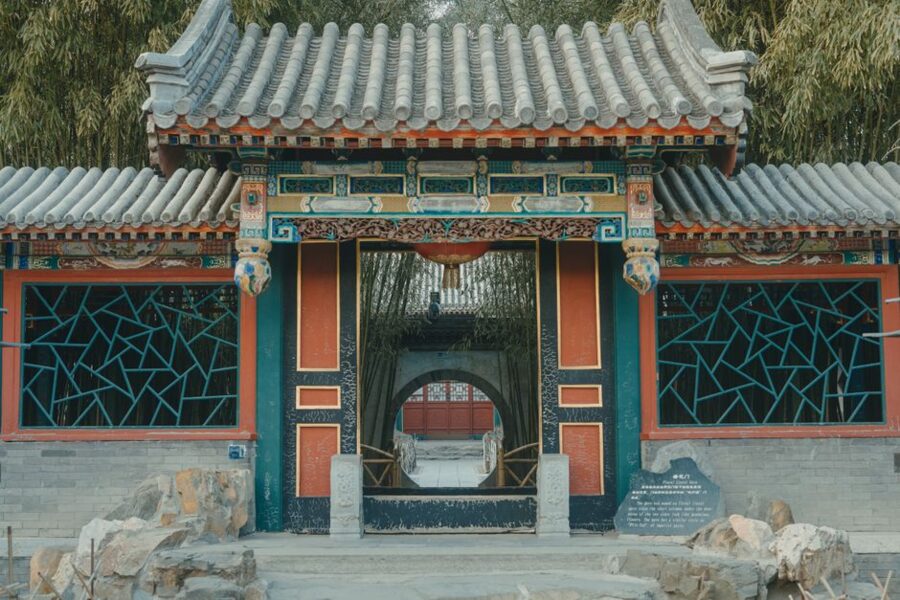
Yandai Xiejie, Tobacco Pipe Slanting Street, runs 232 metres from Di’anmenwai Street to the lakes, kinking twice. By the Qing it was lined with pipe and tobacco shops, one of them supposedly hanging a pipe a metre and a half long outside as its sign. After 1912 the pipe shops gave way to antique dealers as Qing families sold their heirlooms.
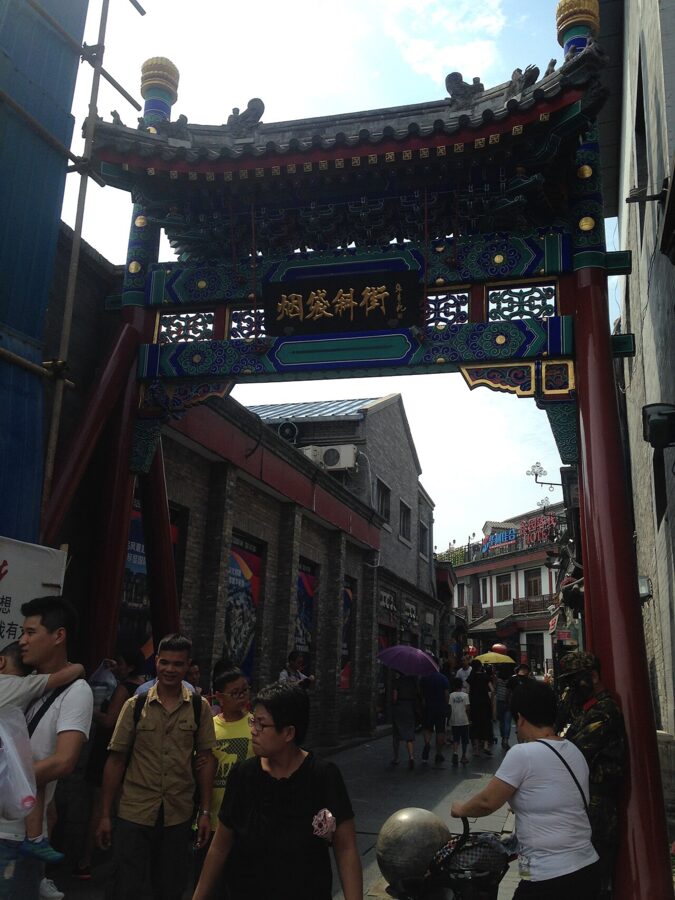
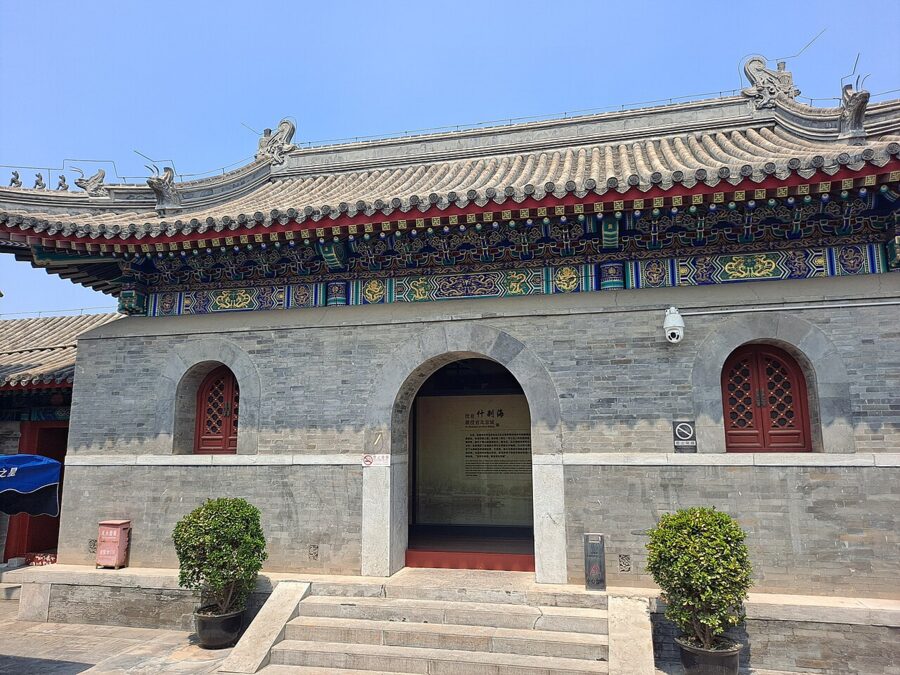
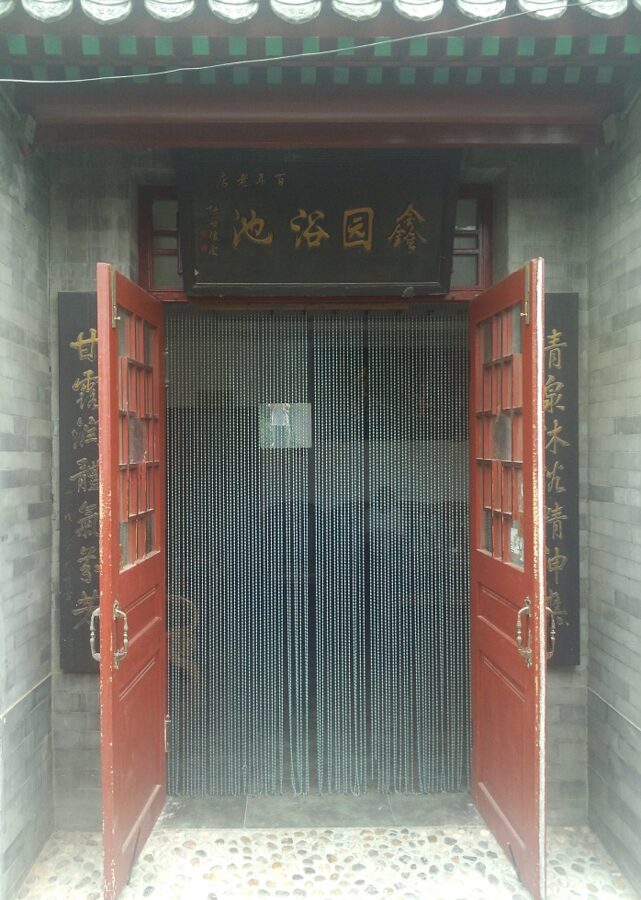
The district rebuilt the street from 2000 with stone paving, and in 2010 it was named one of China’s historic and cultural streets. Today it’s souvenirs, snacks and tea, a notch pricier than the streets around it. Look for Guangfu Guan, the little Taoist temple of 1459 at number 37, and for the old bathhouse doorway. At 15:00 on a Saturday it’s a crush; at 09:00 on a weekday it’s a pleasant way to the water.
Ya’er Hutong, the mansion and winter
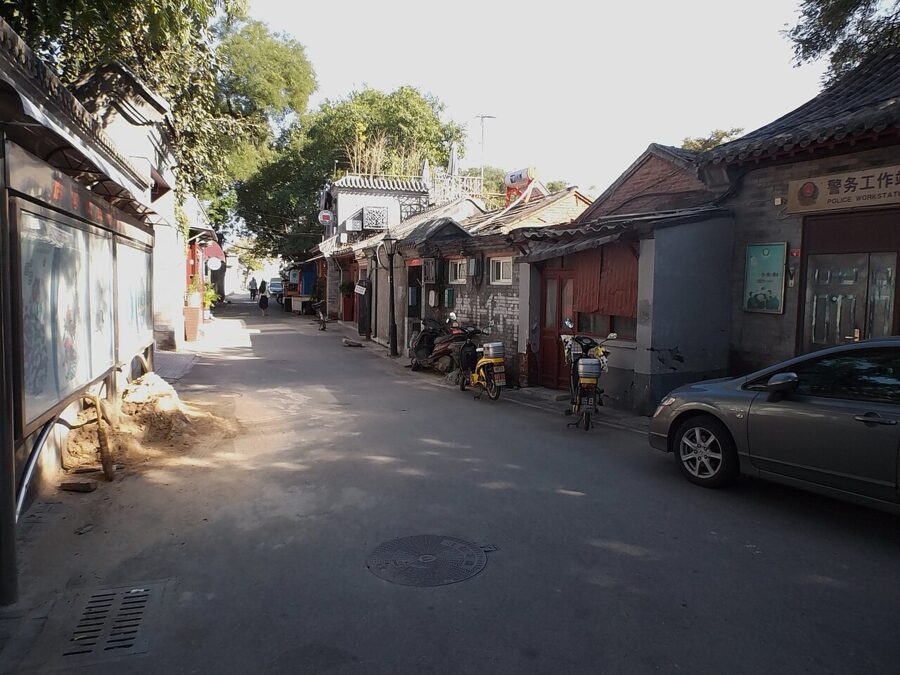
The best walk at Shichahai is away from the water. Ya’er Hutong runs behind Houhai’s north shore, a residential lane with old gates, the Guanghua Temple and few tour groups; the city’s culture bureau put it on a list of hutong filming locations in February 2026.
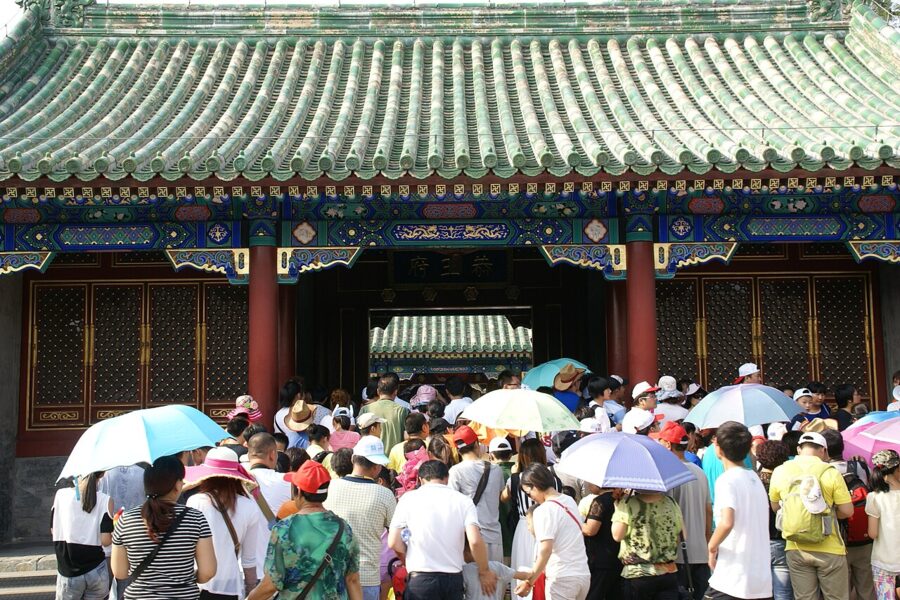
West of Qianhai is Prince Gong’s Mansion (恭王府), 17 Qianhai West Street, the best-preserved Qing princely house in the city, built for the Qianlong emperor’s favourite Heshen and given to Prince Gong in 1851. Tickets are ¥40 and there are no gate sales. Every visitor books a real-name ticket on the museum’s official system or WeChat account, up to ten days ahead, with sales opening at 20:00 each evening. Passports work, one ticket per ID per day.
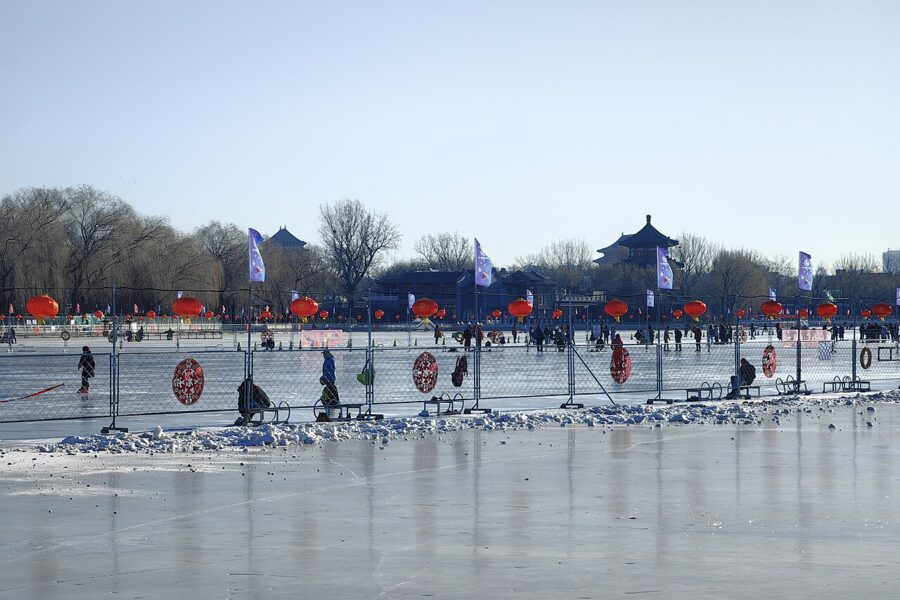
In a cold January the lakes freeze and part of them becomes the Shichahai ice rink, with skates for hire. It’s not the Harbin Ice Festival, but skating with the Drum Tower over your shoulder is its own thing. Opening depends on the ice, and the scenic area announces it each winter.
Nanluoguxiang and the lanes off it
Nanluoguxiang (南锣鼓巷) is 786 metres long and eight wide, running from Gulou East Street south to Di’anmen East Street. The Ming called it Luoguo Xiang, Hunchback Lane, because it’s higher in the middle. The point isn’t the main lane. It’s the eight lanes off each side, sixteen in all, a Yuan layout people call the centipede.
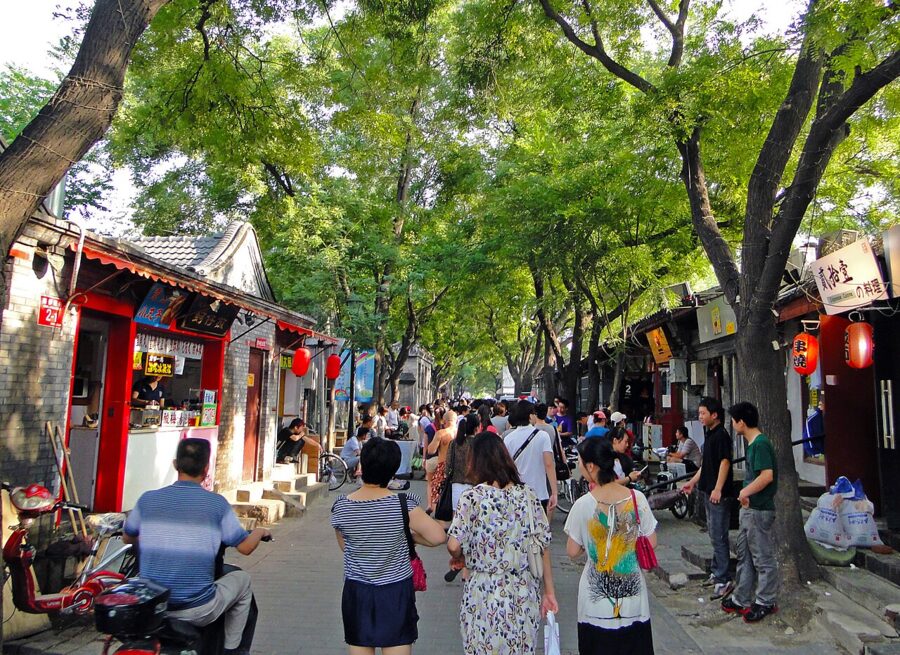
Its fame is recent. The first bar, Passby, opened in 1999, and in 2005 the lane had fewer than 60,000 visitors all year. By the 2010s it was taking 100,000 on peak days against a safe limit of 17,000 at a time. In April 2016 it gave up its AAA scenic rating to stop the tour buses, and that winter more than 80 shops were closed.
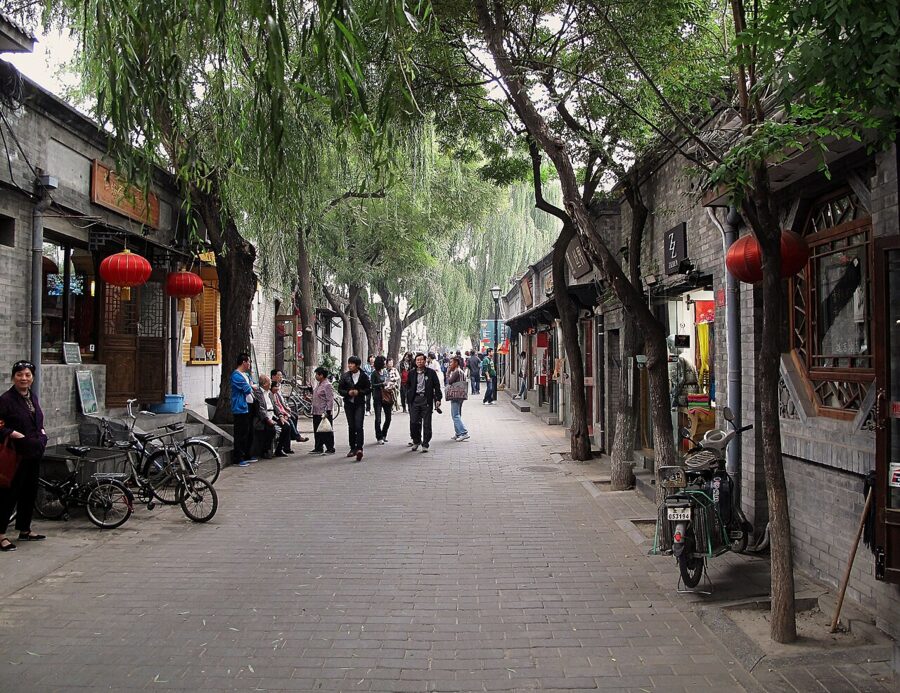
My advice: walk the main lane once, fast, and spend your time off it. On holidays and weekends there’s one-way flow and real-time limits, no booking needed. Nanluoguxiang station is at the south end, and exit E comes up at the mouth of the lane.
The side lanes on the west, north to south, are Qiangulouyuan, Heizhima, Shajing, Jingyang, Mao’er, Yu’er, Suoyi and Fuxiang; on the east, Ju’er, Houyuan’ensi, Qianyuan’ensi, Qinlao, Beibingmasi, Dongmianhua, Banchang and Chaodou. Four are worth aiming for.
Mao’er Hutong
Mao’er Hutong runs 585 metres west to Di’anmenwai Street. Numbers 9 and 11 are Keyuan, an 1850s garden house built for a Qing official and now a national monument. Numbers 35 and 37 were the family home of Wanrong, the last empress, before her wedding to Puyi, and number 13 belonged to Feng Guozhang, briefly president of the Republic. Most are viewed from the lane, which suits a gate-reader fine.
Yu’er Hutong
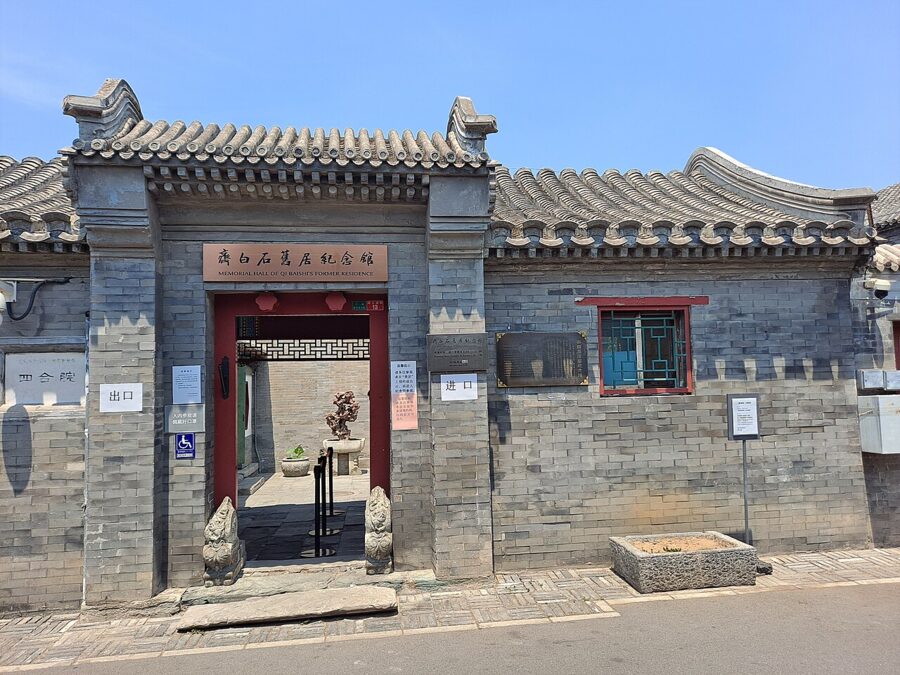
The painter Qi Baishi lived at 13 Yu’er Hutong (雨儿胡同13号), now a small free museum run by the Beijing Fine Art Academy. It opens Tuesday to Sunday, 09:00 to 17:00, last entry 16:00. Book a free slot at least a day ahead in the Meituan app (search 北京齐白石旧居纪念馆) and bring the passport you booked with.
At 2 Yu’er Hutong is Guanfen, Fenjiu’s three-floor house, opened in June 2026, with coffee by day, baijiu cocktails at night and a roof terrace over the lanes. My baijiu guide has more.
Ju’er Hutong and the lanes south
Ju’er Hutong, at the north-east corner, is famous among architects. In the late 1980s the Tsinghua professor Wu Liangyong rebuilt a run of crumbling courtyards as two- and three-storey courtyard housing with kitchens and bathrooms, which won a World Habitat Award in the early 1990s. It’s housing, so look from the lane.
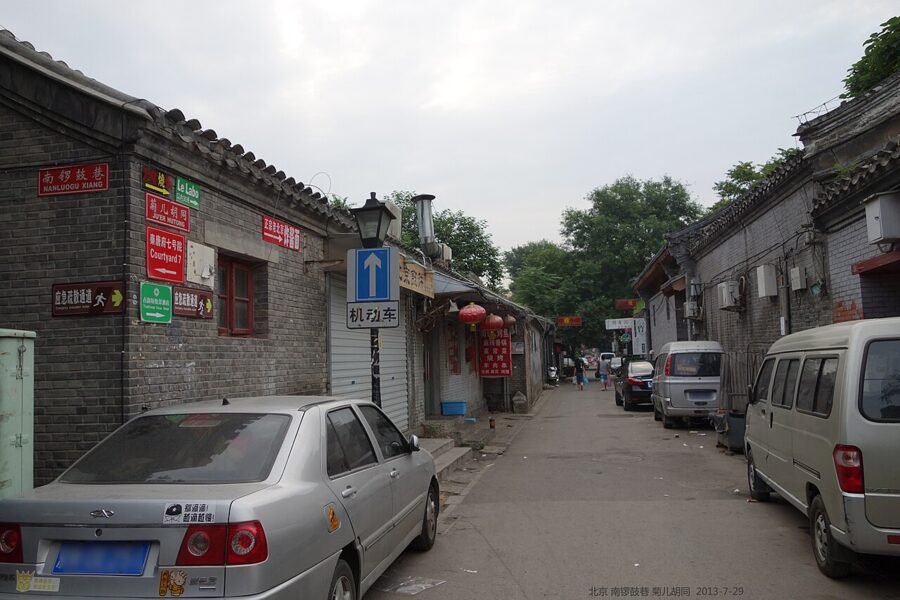
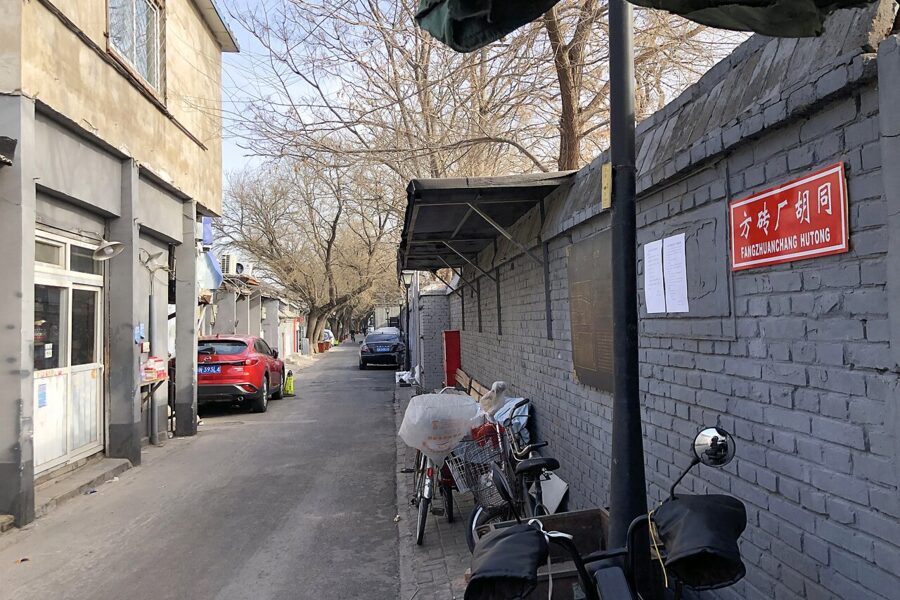
Further south, Dongmianhua Hutong has a brick-carved arch at number 15 that’s a city monument, and Beibingmasi Hutong, named after a Ming policing office, has fine gates. Fangzhuanchang Hutong runs west from the top of the main lane toward the lakes, with the zhajiangmian shop at number 69 that the Beijing food guide sends you to.
Gulou, under the Drum and Bell Towers
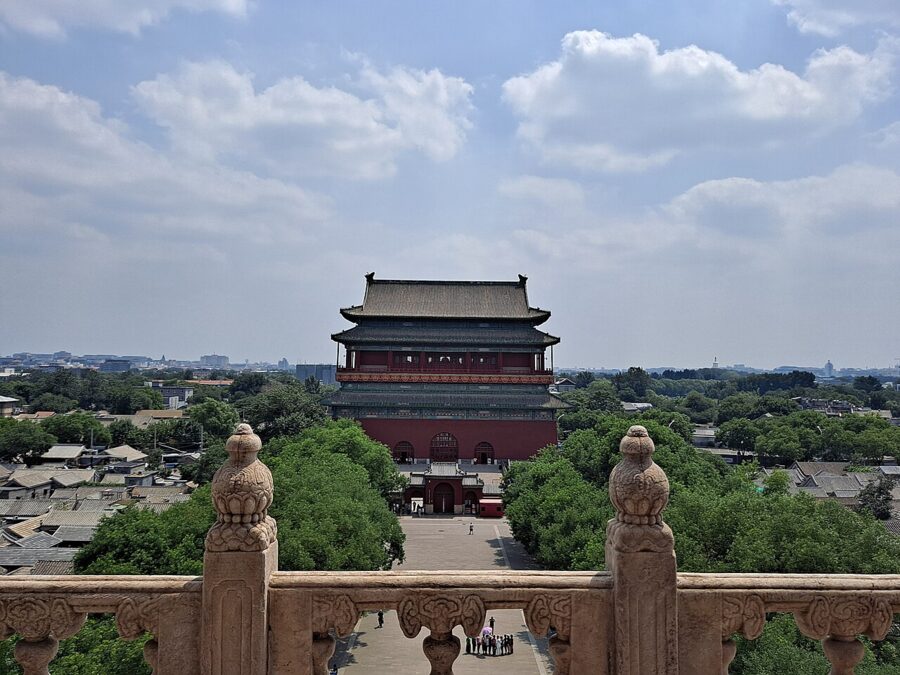
The Drum and Bell Towers stand at the north end of the old city’s central axis, the line through Tiananmen and the Forbidden City. For six centuries they told the time. At dusk the drum was struck 108 times, in sets of 18 fast and 18 slow, then the bell; through the night the bell alone marked the watches. The practice stopped in 1924 and a revived ceremony was first held on 31 December 2001.
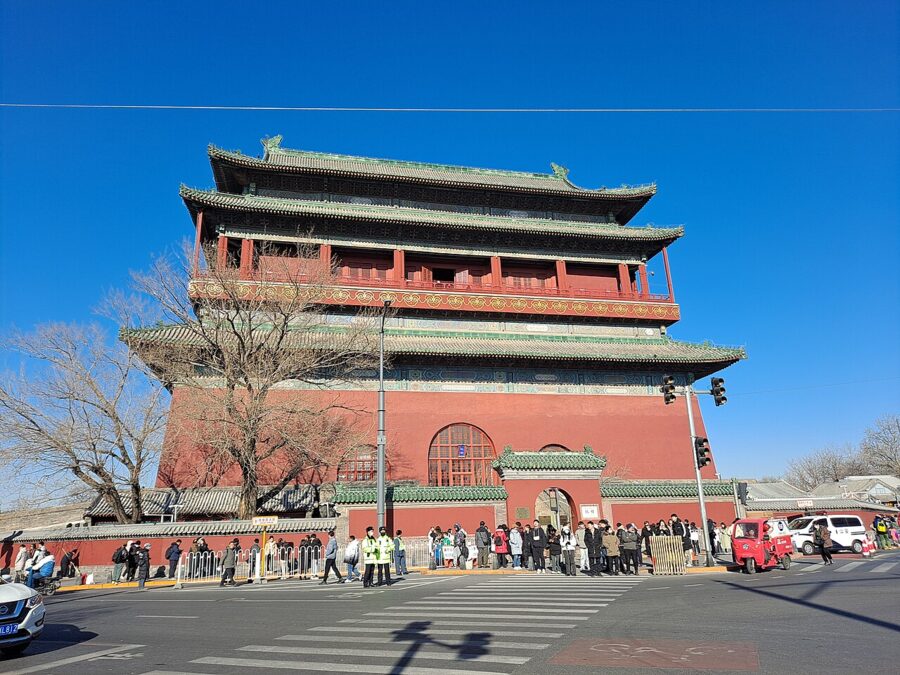
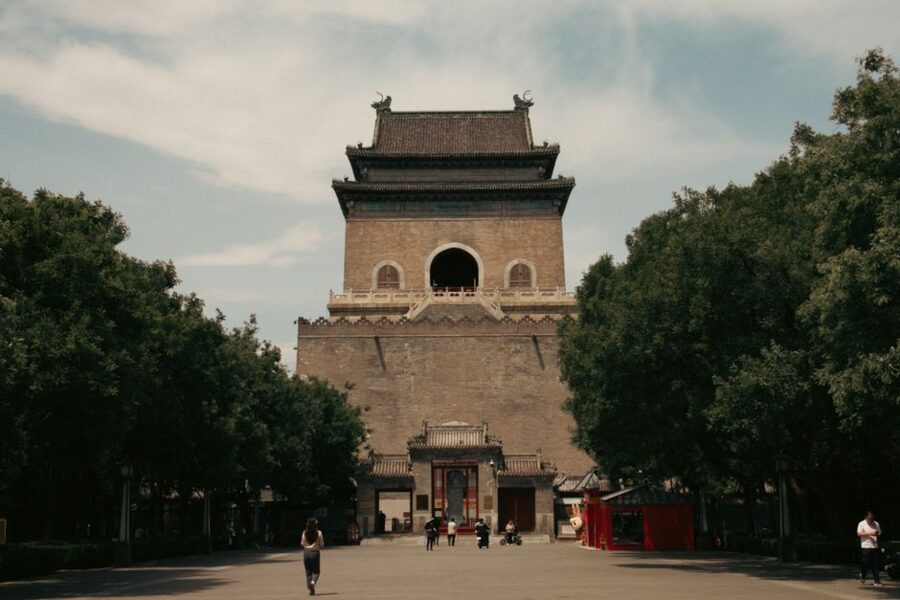
Both towers were first built in 1272 and moved to their present sites around 1420. The Drum Tower once held 25 drums; one survivor still carries cuts from 1900. The Bell Tower, 100 metres north, is grey stone, 47.95 metres high, with a Yongle-era bronze bell over five metres tall inside. In 2024 both became part of the Beijing Central Axis World Heritage listing.
Tickets and the drum show
A joint ticket is ¥30. Adults can buy full-price tickets on the official 北京钟鼓楼 WeChat account; discounted ones are sold only at the Drum Tower window, with ID. From 26 October 2026 the off-season hours are 09:30 to 16:30, last entry 16:20, with joint tickets on sale until 15:30, and summer hours run later.
The Drum Tower’s ground-floor hall has closed on Mondays outside public holidays in recent years, so don’t save it for a Monday.
The two-minute drum show upstairs runs on the hour, in the off-season at 10:00, 11:00, 12:00, 14:00, 15:00 and 16:00. Be upstairs ten minutes early; the rail fills first.
The lanes around Gulou
East of the towers, Baochao Hutong runs north from Gulou East Street, with The Orchid hotel at number 65. South-east, Doujiao Hutong has the original Great Leap Brewing at number 6. North of the Bell Tower the lanes are residential and nearly empty of visitors.
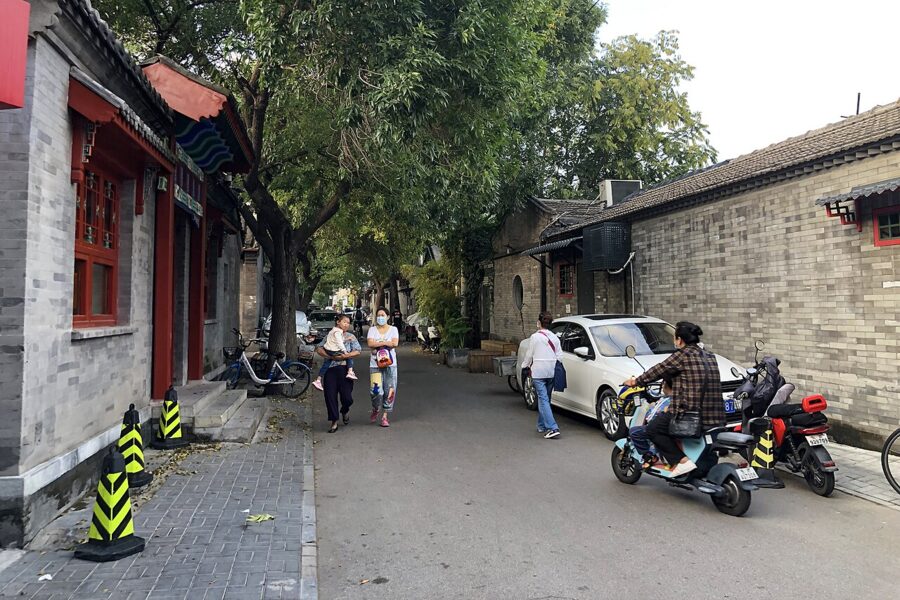
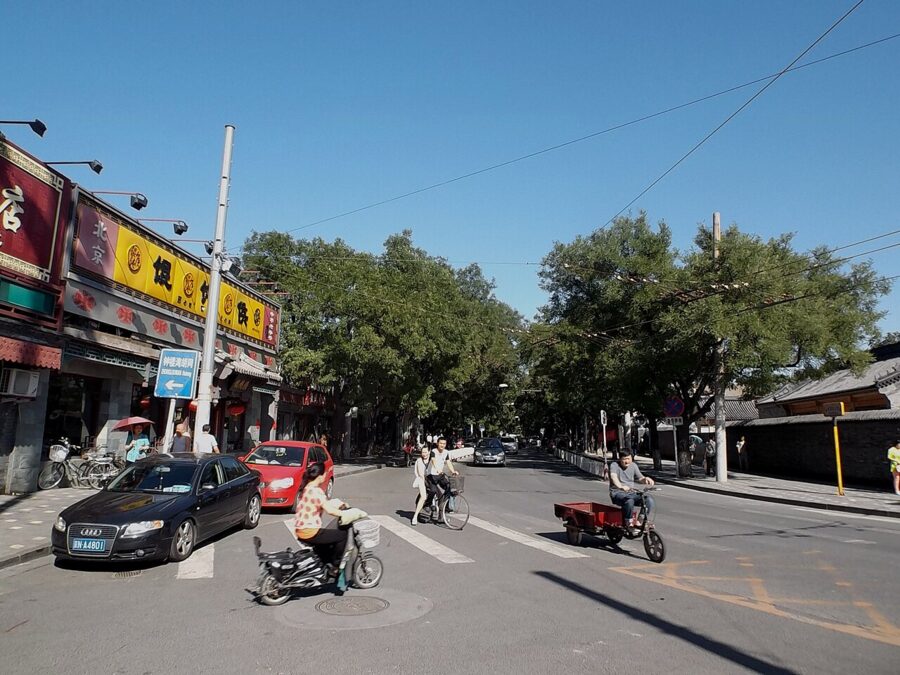
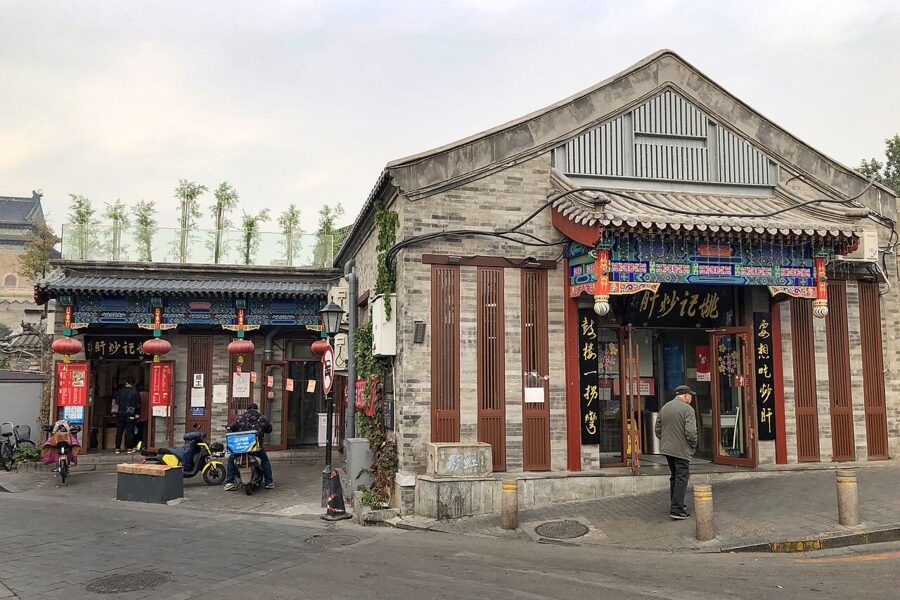
Gulou East Street links the towers to the top of Nanluoguxiang, about 800 metres. At number 311 is Yaoji Chaogan, where the Beijing breakfast crowd queues for chaogan (炒肝), garlicky pork liver stew.
Dongsi and the numbered lanes
To see the Yuan plan, go to Dongsi. East of Dongsi North Street the lanes are numbered, Dongsi Toutiao (First Lane) up to Shisitiao (Fourteenth), running east to west in parallel lines as Dadu laid them out. Shitiao, the tenth, became a main road. Santiao to Batiao, the third to eighth, were on Beijing’s first list of protected historic areas in 1999.
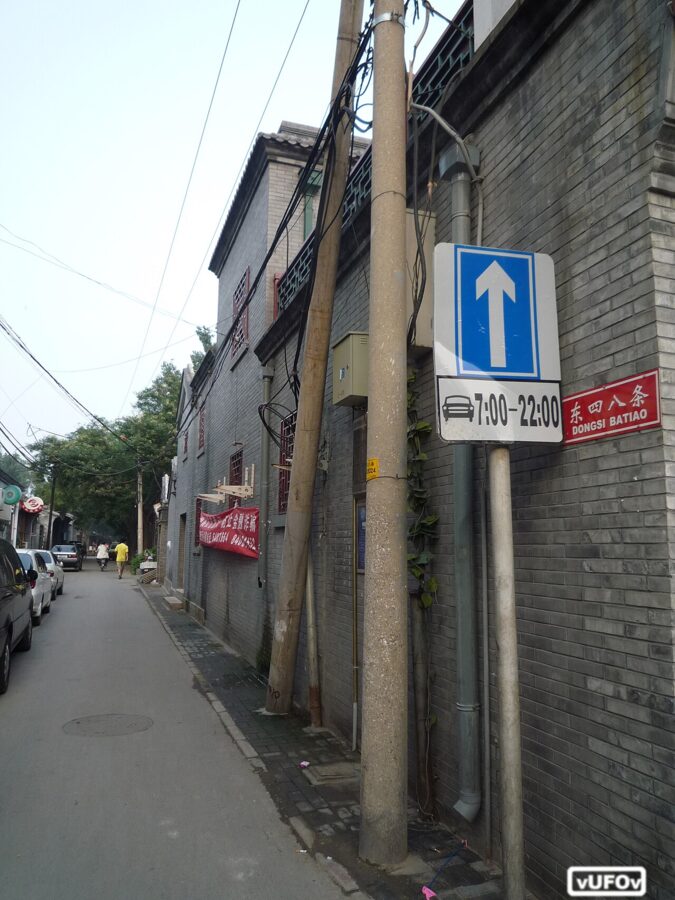
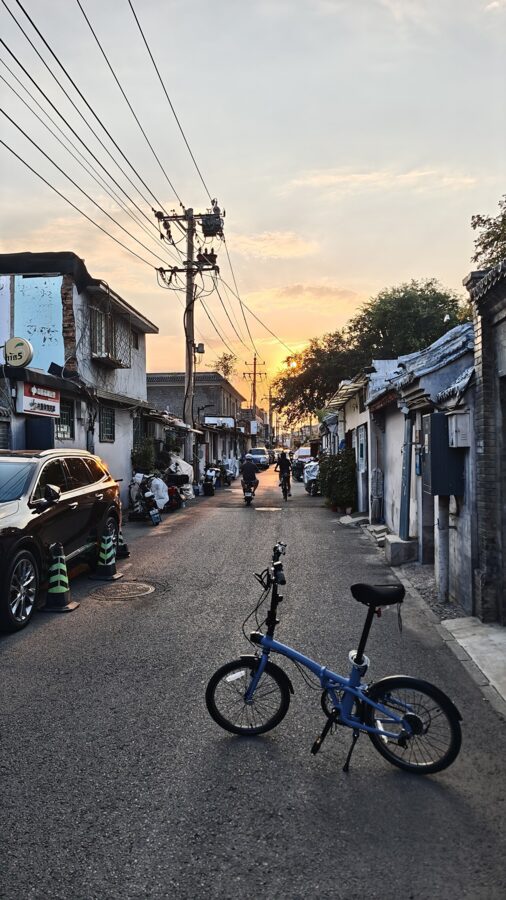
It isn’t showy. Fewer shops, fewer bars, more people getting on with their day, and that’s why I’d send you here to understand the hutongs rather than shop in them. Take Line 5 or 6 to Dongsi, exit B, and walk east into Sitiao.
Two free museums
The Dongsi Hutong Museum fills a three-courtyard house at 77 Dongsi Sitiao, the old police station, opened in 2018. It’s free and walk-in, but its days and lunch break have shifted, so check the notice on the door or its WeChat account.
The Shijia Hutong Museum (史家胡同博物馆), at 24 Shijia Hutong south of Dongsi, is the one I’d go out of my way for. It’s in the former home of the writer and painter Ling Shuhua, opened in 2013, and tells one lane’s story house by house. Free, no booking for individuals, Tuesday to Sunday 09:30 to 16:30, last entry 16:20.
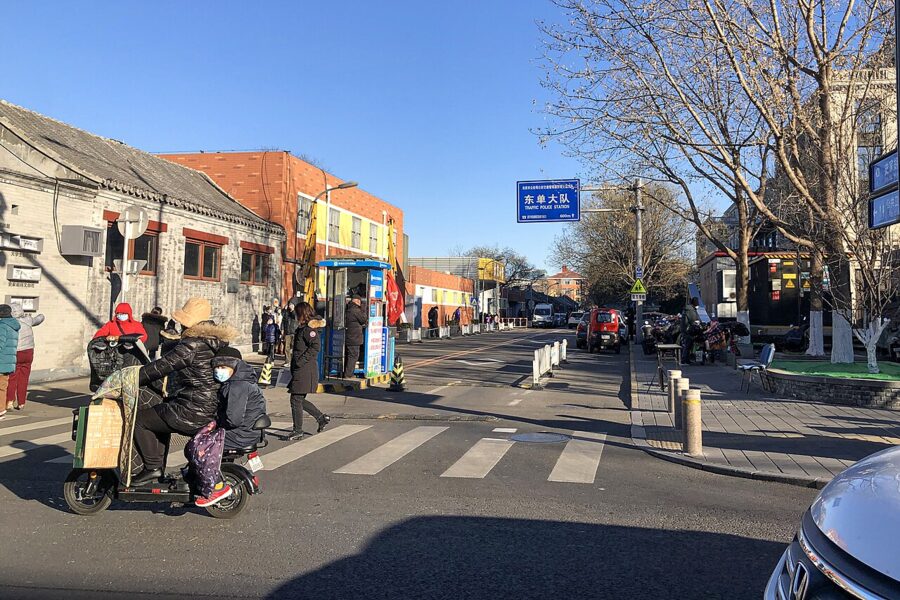
Shijia Hutong is a who’s who: the Beijing People’s Art Theatre was founded at number 20 in 1952, and number 51 was the scholar Zhang Shizhao’s home. In Dongsi proper, 63 and 65 Dongsi Liutiao were a Qing grand secretary’s 6,000-square-metre house, and the writer Ye Shengtao lived at 71 Dongsi Batiao. For food, Longfusi, the rebuilt temple-market quarter near Dongsi station, does new takes on old snacks, and my hot pot guide covers the area’s copper-pot lamb.
Dashilar and Yangmeizhu Xiejie
South of Tiananmen, just west of Qianmen Street, is Dashilar (大栅栏), said Dashilanr, the old shopping quarter outside the city gate. In 1488 the Ming put wooden barriers at the ends of lanes to keep order at night, more than 1,700 of them by the end of the Qing. The merchants here paid for an especially big one, and “big barrier” stuck. It burned in the late Qing; the iron gate went up in 2000.
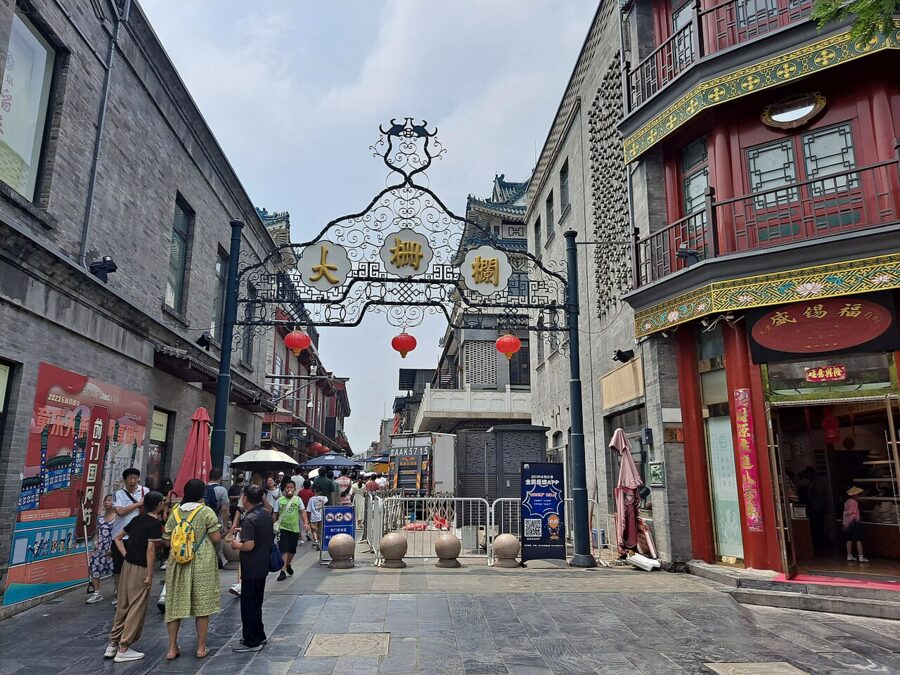
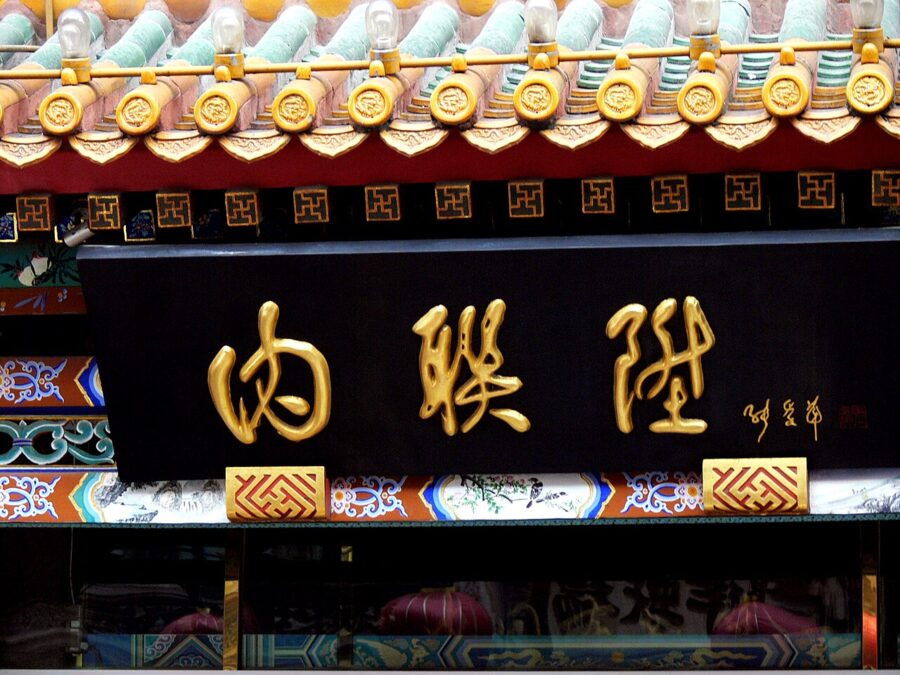
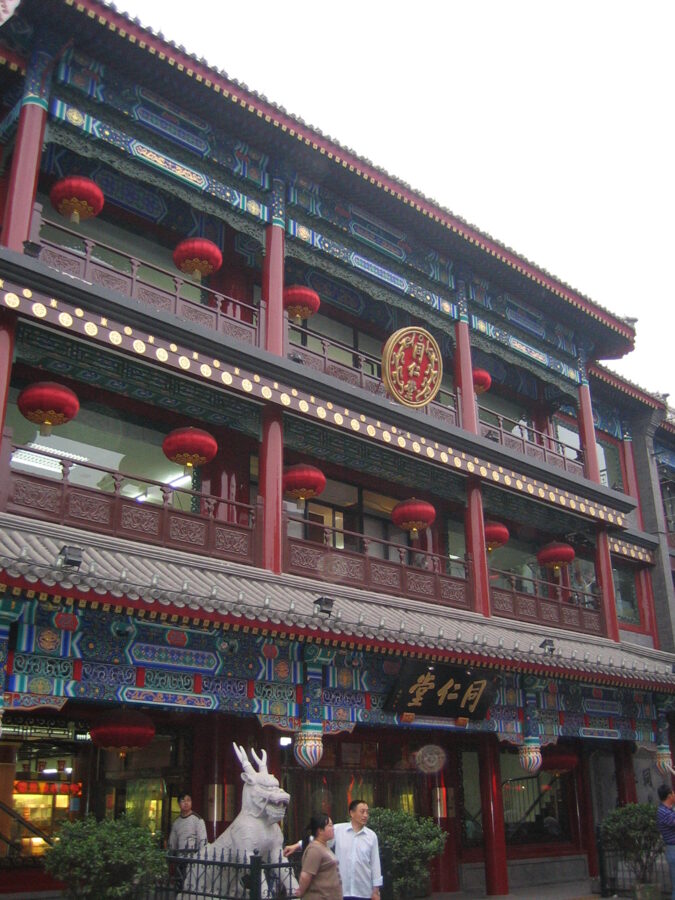
The street is 275 metres of old brands: Tongrentang for Chinese medicine, Ruifuxiang for silk, Neiliansheng for cloth shoes, Zhang Yiyuan for jasmine tea, Liubiju for pickles. Beijing’s first cinema, Daguanlou, opened here too. From Qianmen station (Lines 2 and 8) exit C it’s about 200 metres to the east end. The main street is crowded; the good part starts when you leave it.
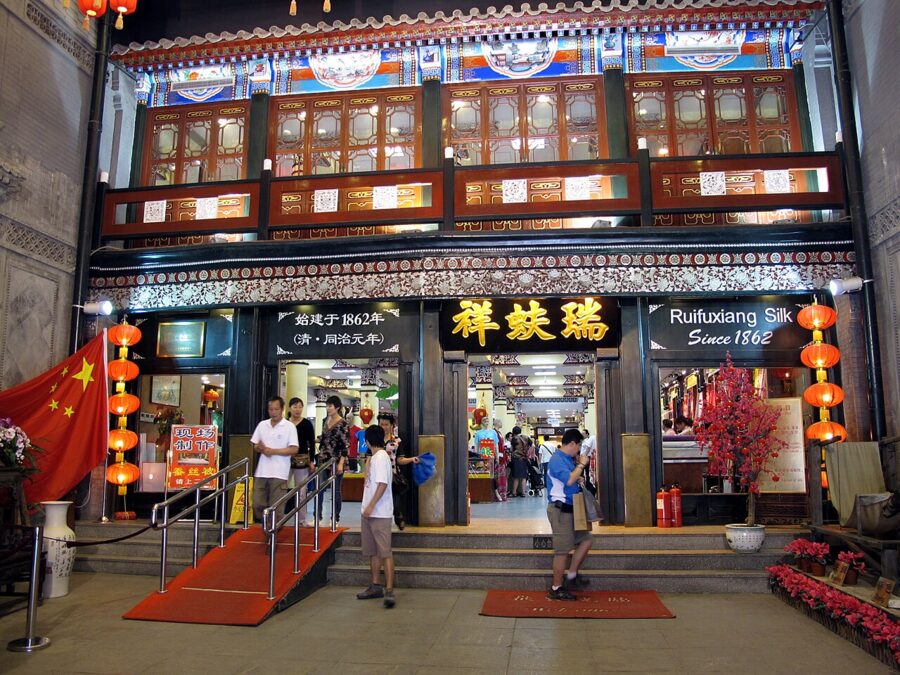
Yangmeizhu Xiejie
West of Meishi Street, Yangmeizhu Xiejie (杨梅竹斜街) runs diagonally for 496 metres to Yanshou Street. The slant gives away its age: when Kublai built his new capital, people kept walking from its south gate to the market in the old Jin city to the south-west, and their path became this street. Its name is a polished-up version of “Yang the Matchmaker’s Street”.
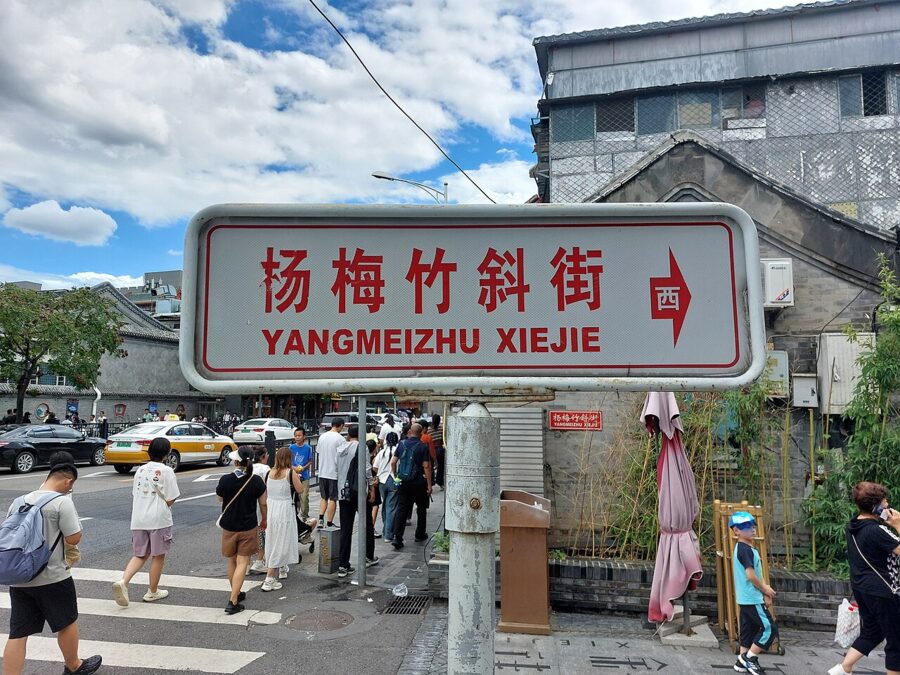
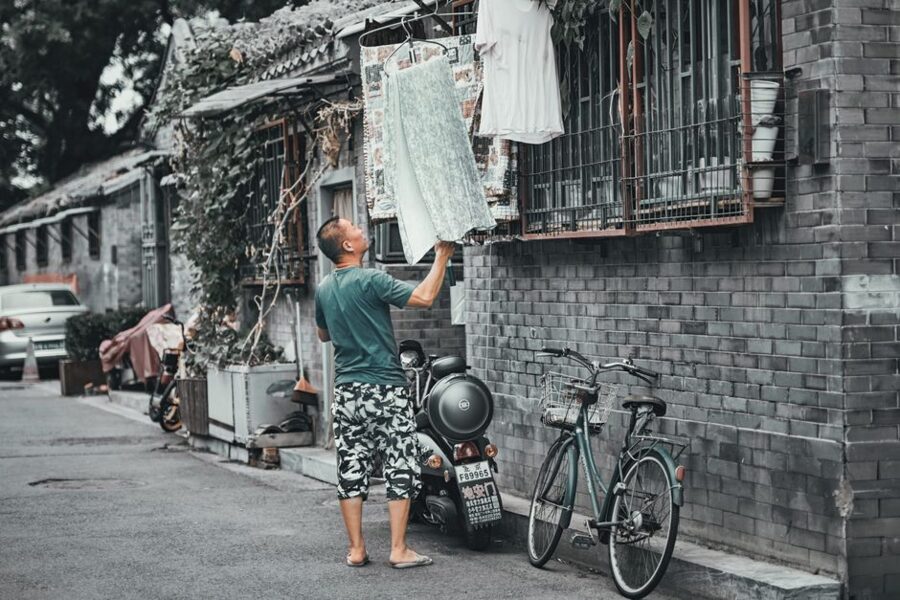
It’s the best of the renewal projects, I think. Repairs began in 2011 and residents could choose to leave; by 2017, 718 of 1,711 households had gone, and the rest stayed, some moved into shared courtyards with new kitchens. Small designers, bookshops and cafes filled the gaps, and Beijing Design Week used the lanes for years. Laundry still hangs next to the concept stores.
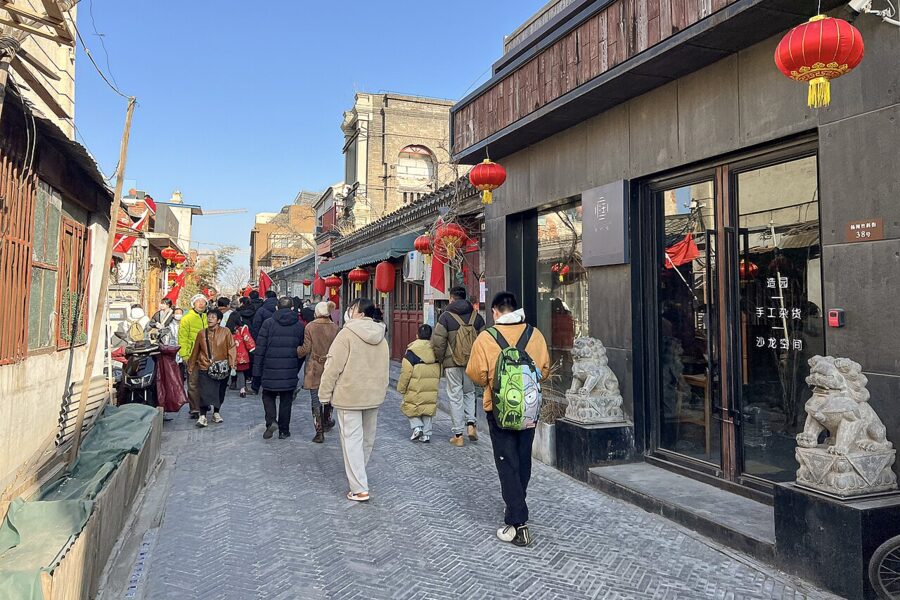
Look for number 75, the old World Bookstore with its Republican-era pilasters, and the back gate of Qingyunge, the old entertainment palace where the general Cai E met the courtesan Xiao Fengxian. The writer Shen Congwen lived at number 61 when he first reached Beijing.
The Eight Great Hutongs
South-west of Dashilar are the Bada Hutong, the Eight Great Hutongs, among them Shaanxi Xiang, Baishun and Hanjia. In 1790 four Anhui opera troupes came to the capital for the Qianlong emperor’s 80th birthday and settled here, and Peking opera grew out of their mix. Later the lanes became the brothel quarter, closed in November 1949.
It’s free, residential and has no single sight; you walk it for the gate carvings and the plaques. Allow 90 minutes. Start at Zhushikou West Street (Zhushikou station, Lines 7 and 8), where the 1934 Deshoutang pharmacy stands on the corner of Shaanxi Xiang, and work north.
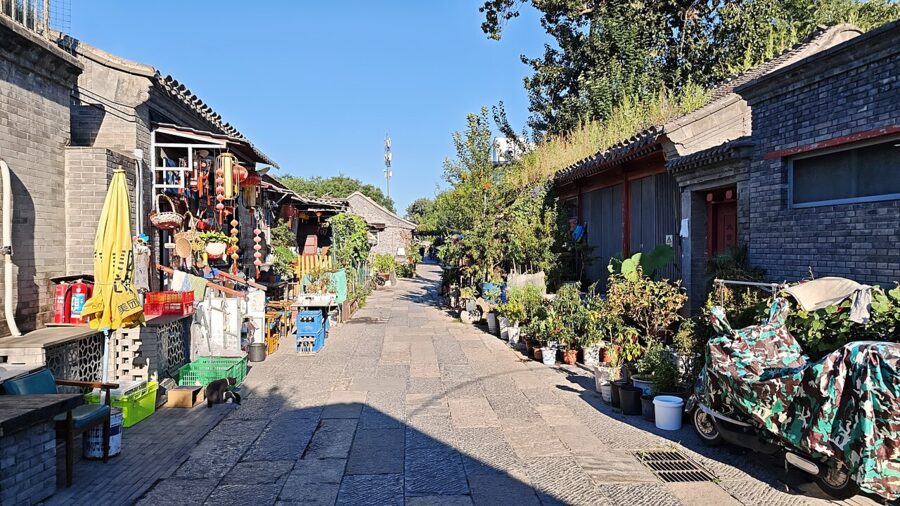
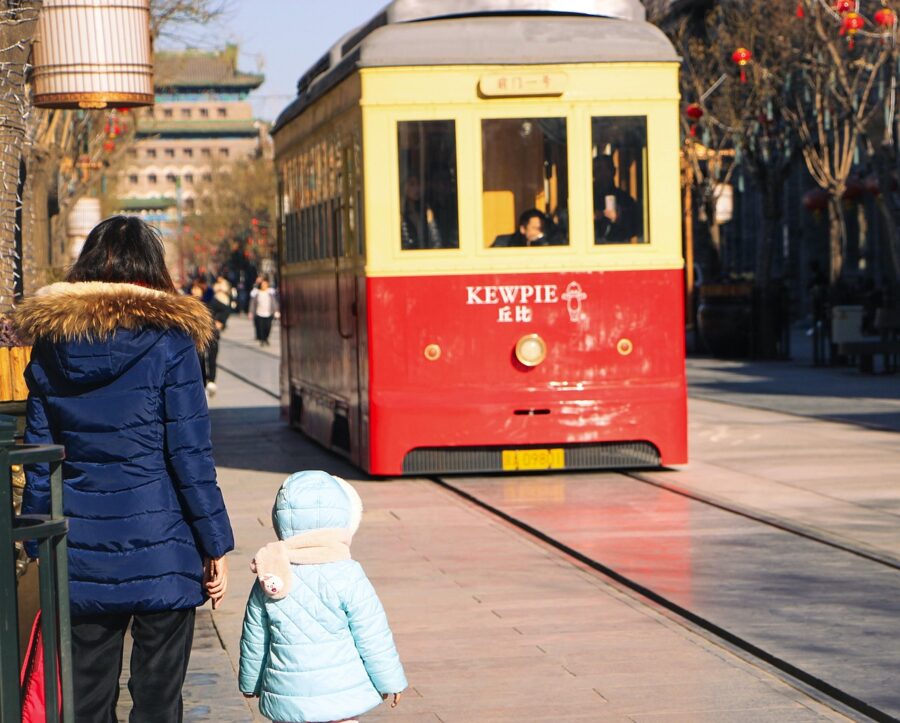
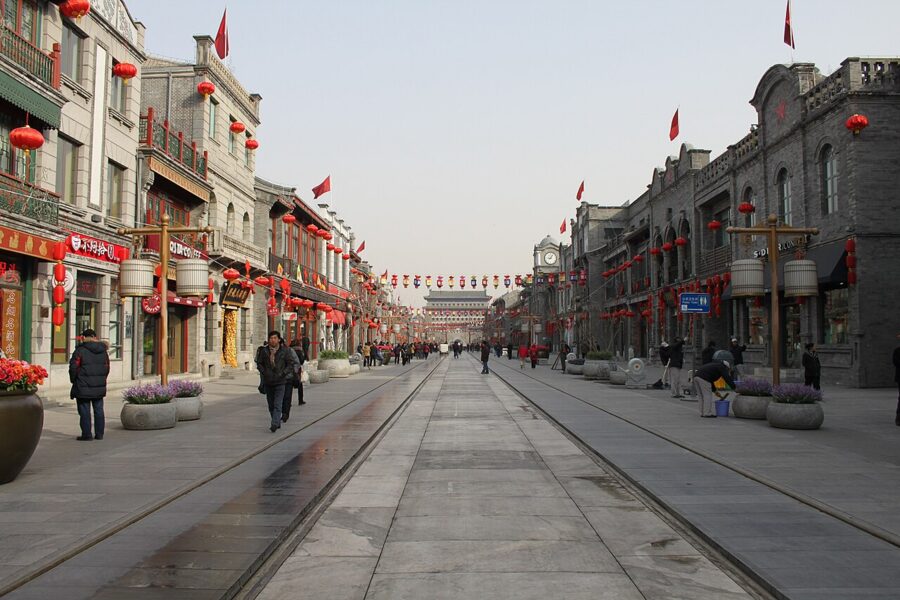
Qianmen Street, rebuilt in the 2000s, feels like a film set in parts. If you’re here for duck, my guide to Peking duck in a courtyard finds you Liqun in the lanes south-east of Qianmen, and the Temple of Heaven is a short ride south.
Baitasi, under the White Dagoba
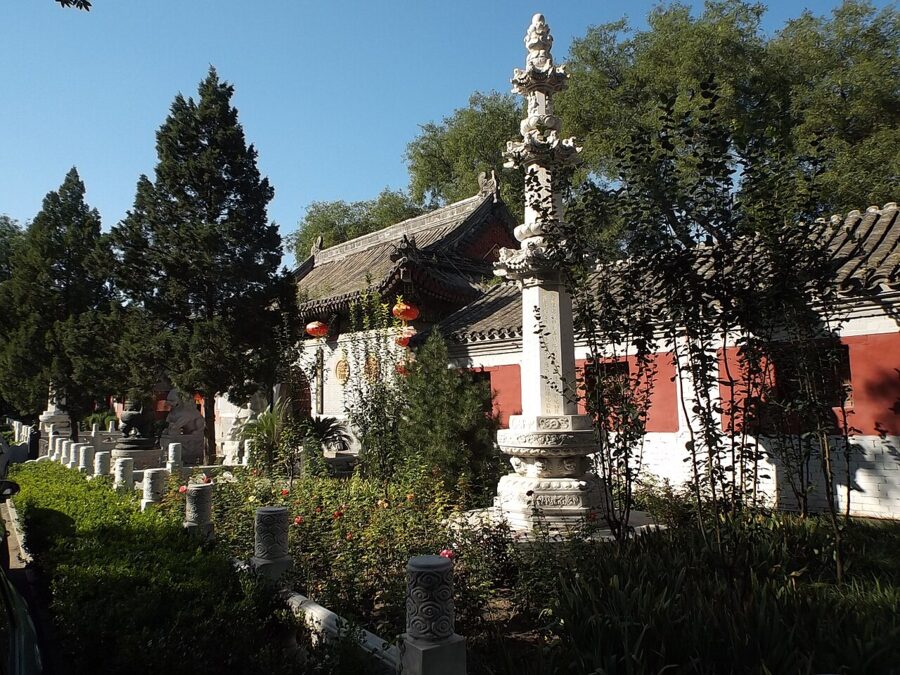
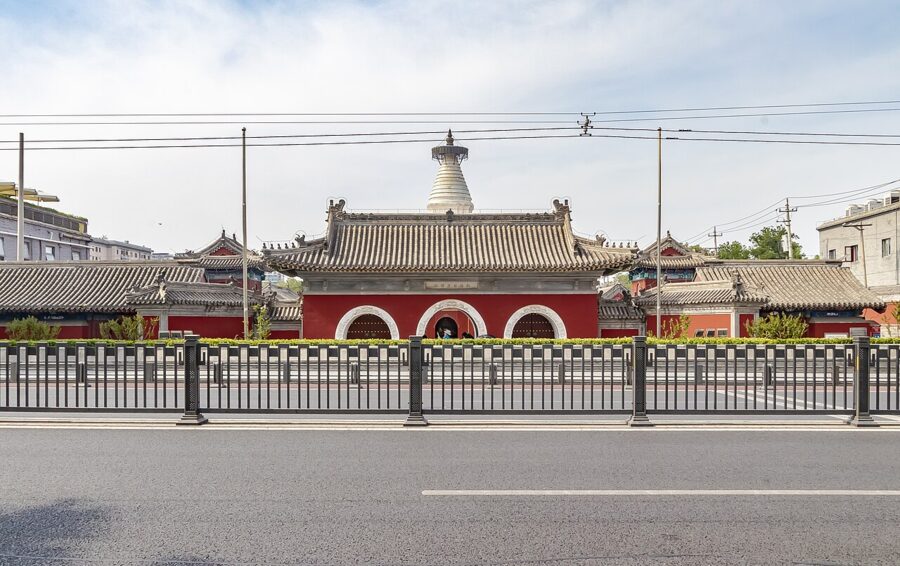
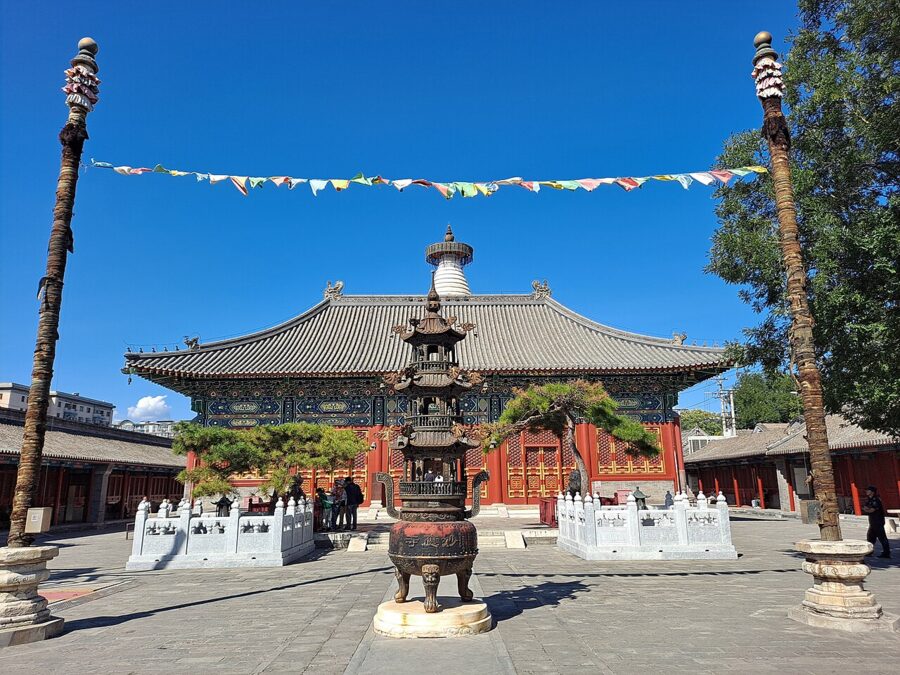
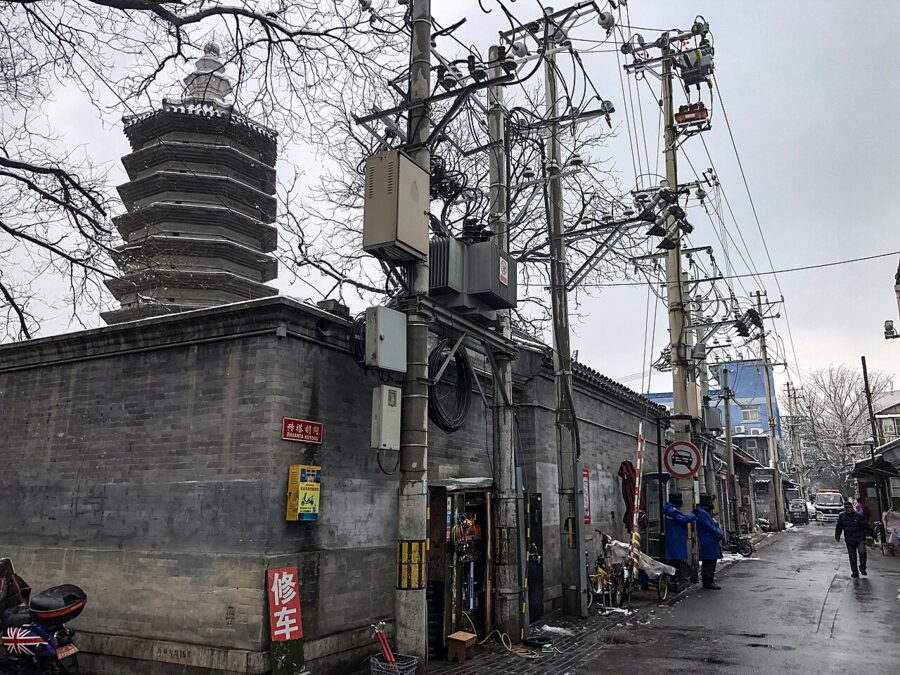
If I could have only one more hutong area, it would be Baitasi, on the west side of the old city. It’s built around Miaoying Temple and its White Dagoba (妙应寺白塔), a Tibetan-style stupa finished in 1279 and designed for Kublai Khan by Araniko, a Nepali craftsman who came to the Yuan court by way of Tibet. It’s the oldest and largest stupa of its kind in China, about 50 metres high, and you see it from every lane around.
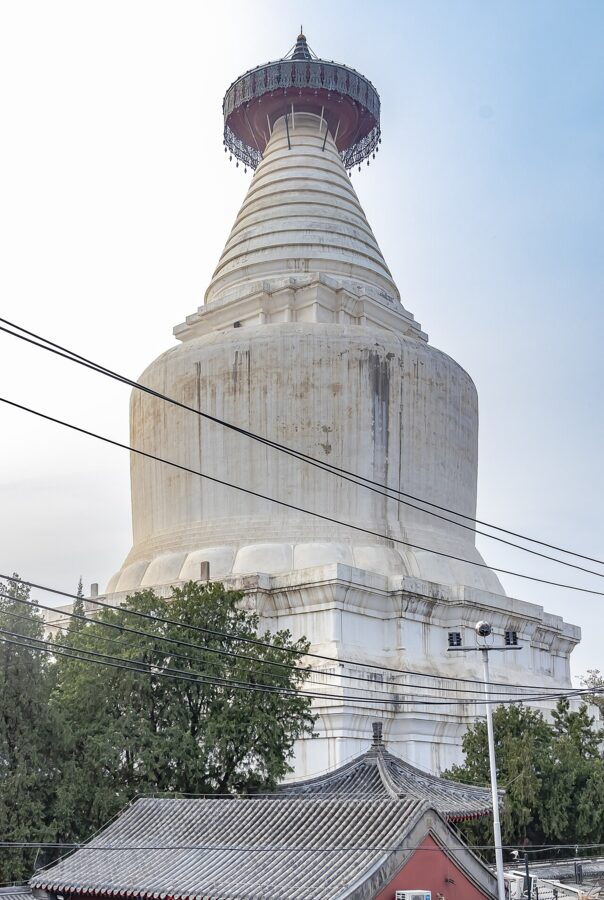
The temple is at 171 Fuchengmennei Street, five minutes from exit B of Fuchengmen station on Line 2. Entry is ¥20, Tuesday to Sunday 09:00 to 17:00, last entry 16:30, closed Mondays (in summer 2026 the closing day moved to Tuesday). Wednesdays have free entry for a limited number of booked visitors. Its evening programmes, White Dagoba Nights, sell their 230-odd ¥20 tickets in seconds.
The lanes around the temple
Gongmenkou and the little East and West Cha lanes around the temple went through a “micro-renewal” and now mix homes with small cafes and studios, several with roof terraces facing the stupa. In April 2026 the city’s culture and tourism bureau made this stretch its first official “Colorwalk”, 1.7 kilometres from Fuchengmen to Xisi, naming the cafe in the old Baitasi pharmacy among the stops.
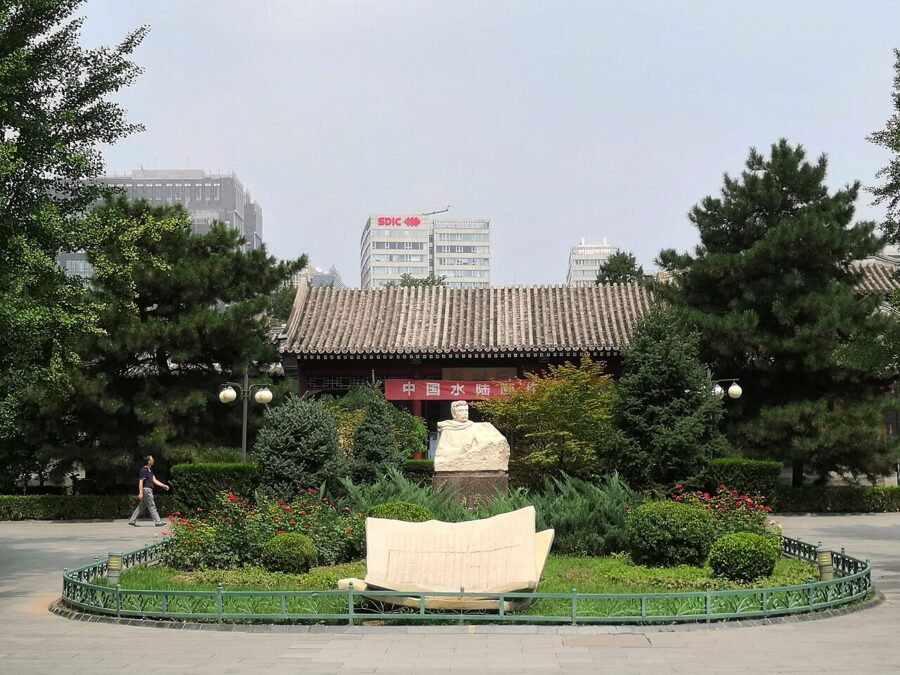
At the Fuchengmen end, the Beijing Lu Xun Museum, 19 Gongmenkou Ertiao, includes the courtyard where Lu Xun lived in the mid-1920s, lilacs he planted and all. It’s free, Tuesday to Sunday 09:00 to 17:00, last entry 16:30, no booking; foreign visitors show a passport at the door.
Zhuanta Hutong
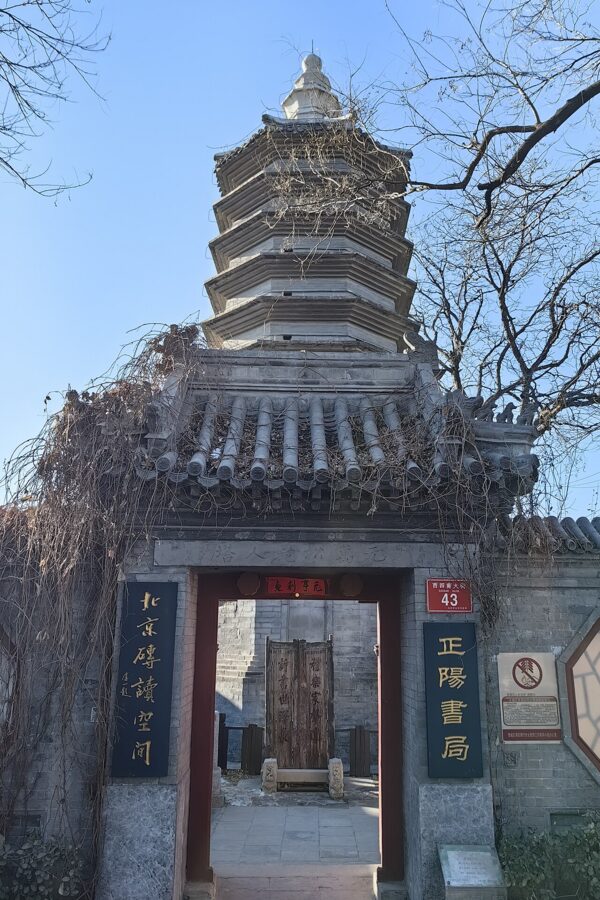
East toward Xisi is Zhuanta Hutong, the Brick Pagoda Lane, the oldest lane name in the city. The pagoda at 43 Xisi South Street holds the remains of Wansong, a Chan teacher of the late Jin and early Yuan. Since 23 April 2014 its courtyard has housed Zhengyang Bookstore, all books on old Beijing, where you can read under the pagoda.
Three more lanes worth a detour
- Wudaoying Hutong (五道营胡同). 632 metres west from Yonghegong Street, by the Lama Temple, with cafes, vegetarian restaurants and vintage shops. Yonghegong station, Lines 2 and 5.
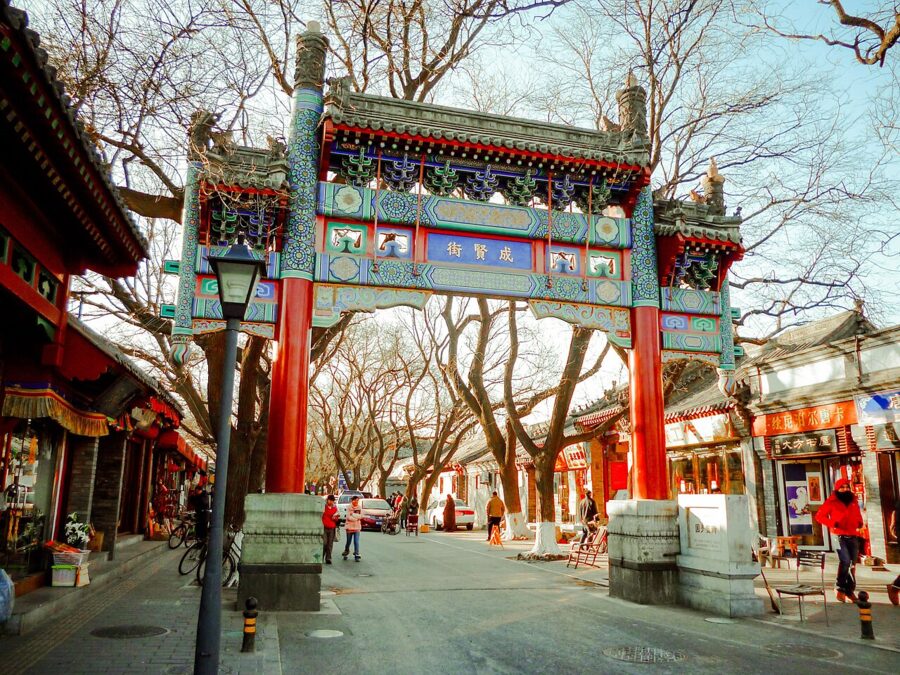
- Guozijian Street (国子监街). Just south, the lane of the Confucius Temple and the Imperial College under painted wooden arches, named one of China’s historic streets in 2009.
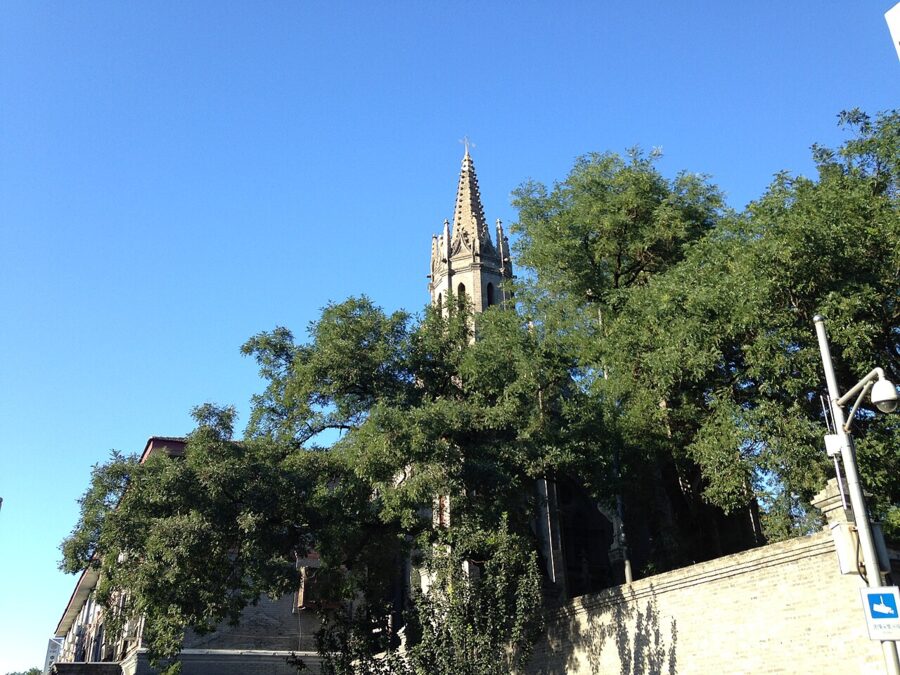
- Dongjiaominxiang (东交民巷). The longest hutong, nearly three kilometres, and the odd one out: the Legation Quarter after 1860, all banks, embassies and St Michael’s Church of 1901.
Rickshaw, bike or feet?
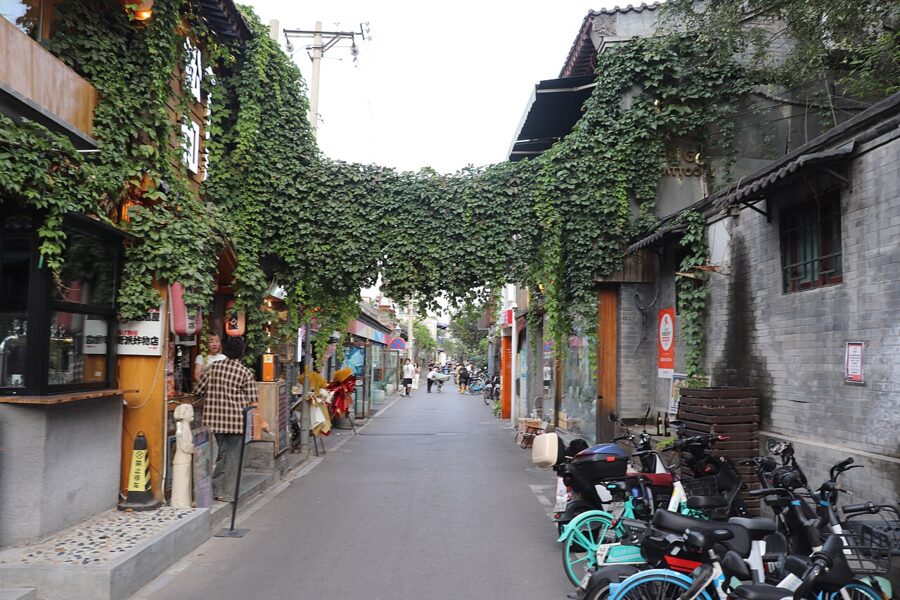
Within a minute of reaching Shichahai or the top of Nanluoguxiang you’ll be offered a rickshaw: a ride round “the real hutongs”, a family visit and a price that sounds tiny.
Rickshaws
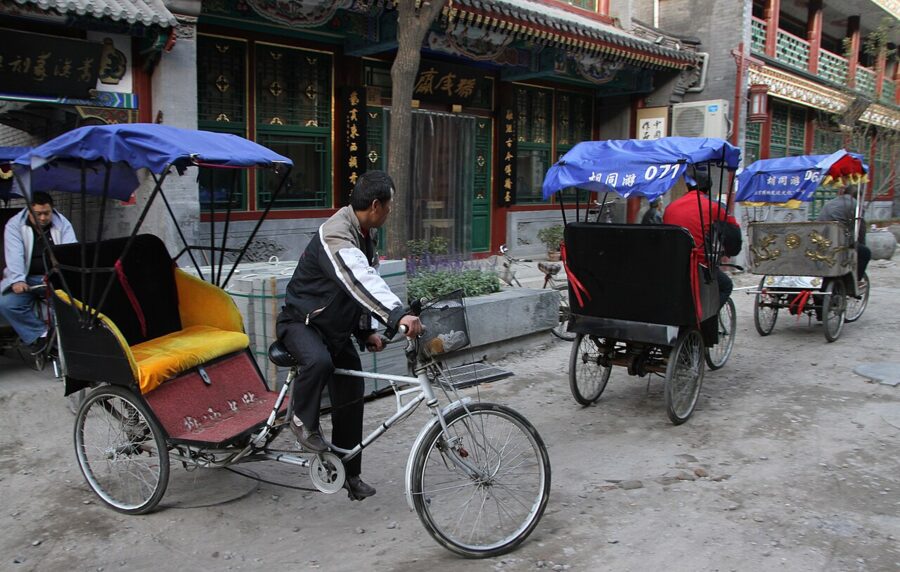
Shichahai has a licensed fleet run under a district franchise, each rickshaw with a numbered plate and franchise badge, working set daytime routes (07:00 to 17:00 when they returned after a pause in 2020). Ticket platforms list the standard licensed tour at around ¥150 an adult.
The unlicensed “black rickshaws” cause most of the complaints, with old tricks: a per-person price that turns out to be per stop, a fare raised halfway, a “home visit” that’s a sales pitch for paintings or tea sets, a detour to a courtyard that charges admission. Xicheng district has run joint enforcement around Shichahai this year and complaints there fell by about a third. The problem hasn’t gone.
- Agree the total price, route and time before sitting down, and have the driver type the number on a phone.
- Check for the plate. Anyone who approaches you rather than waiting at a stand is probably unlicensed.
- Refuse any family visit you didn’t book ahead through an agency.
- If it goes wrong, photograph the plate and driver and report it to the city hotline.
A rickshaw is fun for half an hour with kids or tired knees. For seeing the lanes it’s worse than walking, because you can’t stop at a gate or turn into a lane on a whim.
Bikes and walking
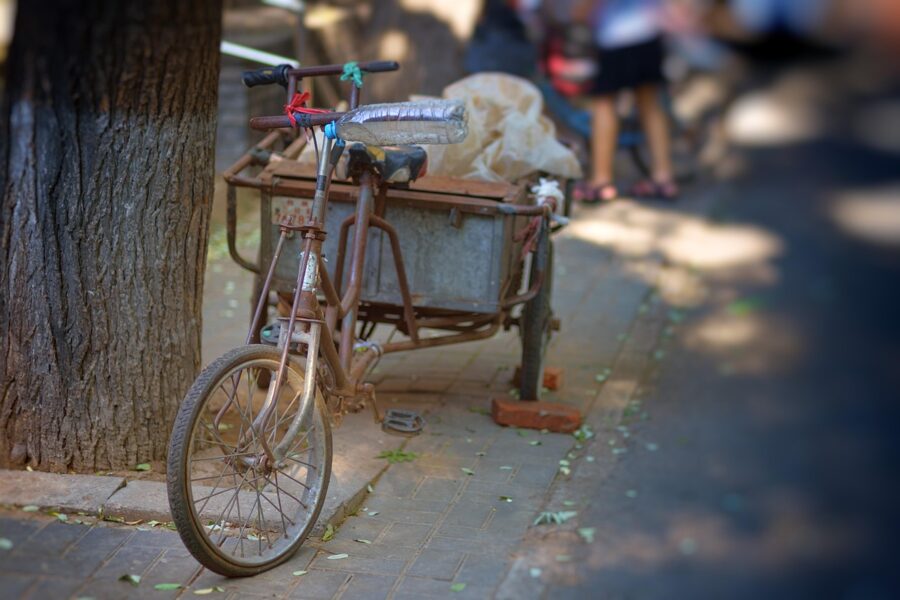
Shared bikes are everywhere, and you can usually start Meituan, Hello and DiDi bikes from mini programmes inside Alipay or WeChat with a foreign card. They’re ideal for linking areas, Dongsi to Nanluoguxiang say. In the lanes, ride slowly, ring at blind corners and park outside the narrowest stretches.
Walking is still the answer. Wear grippy soles, because stone paving is slick when wet, and carry a power bank; Amap is good for lane-level routes. Distances are short: Nanluoguxiang end to end is 15 minutes, the Drum Tower to the lakes ten.
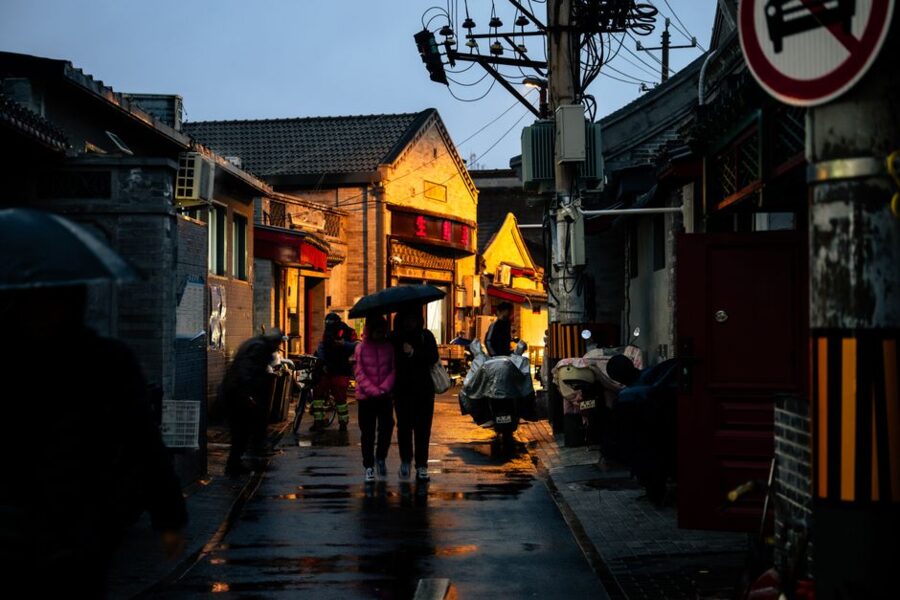
Sleeping in a courtyard
A courtyard hotel gets you the lanes at the hours nobody else sees them, before 08:00 and after 22:00. It isn’t a normal hotel, though.
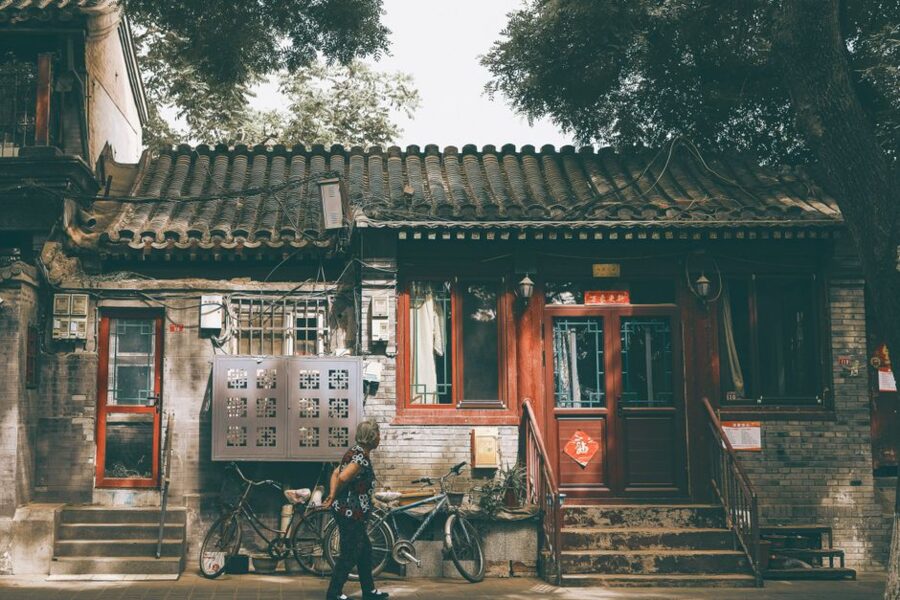
The Orchid, 65 Baochao Hutong, a few minutes east of the Drum Tower, is built around an old courtyard, with rooms opening onto the yard, some upstairs rooms with roof terraces and five private residences. Its restaurants in the same lane, Toast upstairs and the Cantonese dim sum house Furongji at number 63, take non-guests too. (Official site | Agoda)
Courtyard 7 (秦唐府客栈7号院), 7 Qiangulouyuan Hutong off the north end of Nanluoguxiang, is a listed three-courtyard Qing house with a hanging-flower gate and covered walkways. It opened as a hotel in 2008 and was refitted in 2016, and it’s the classic courtyard stay.
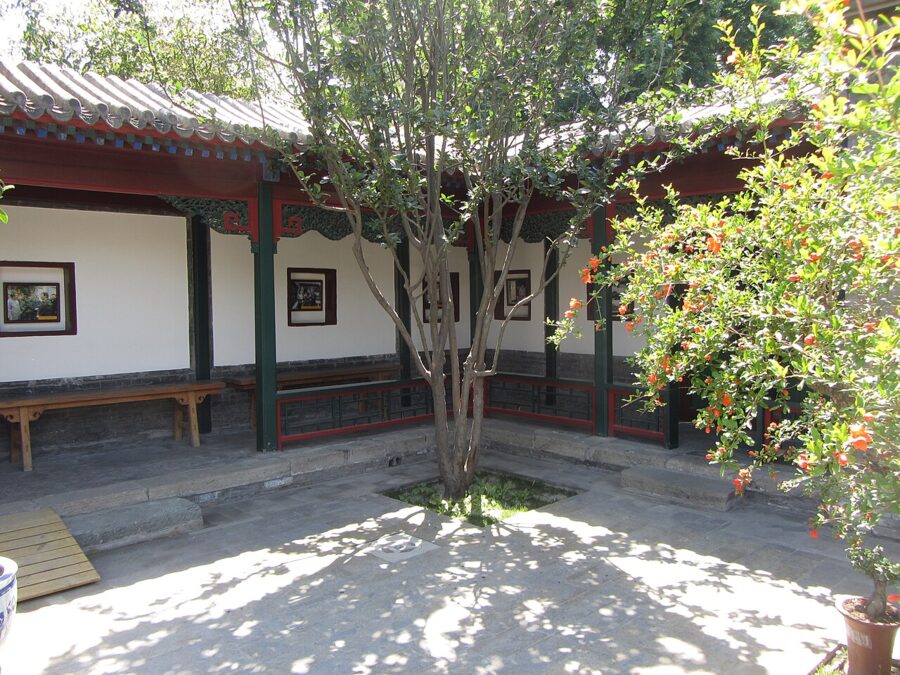
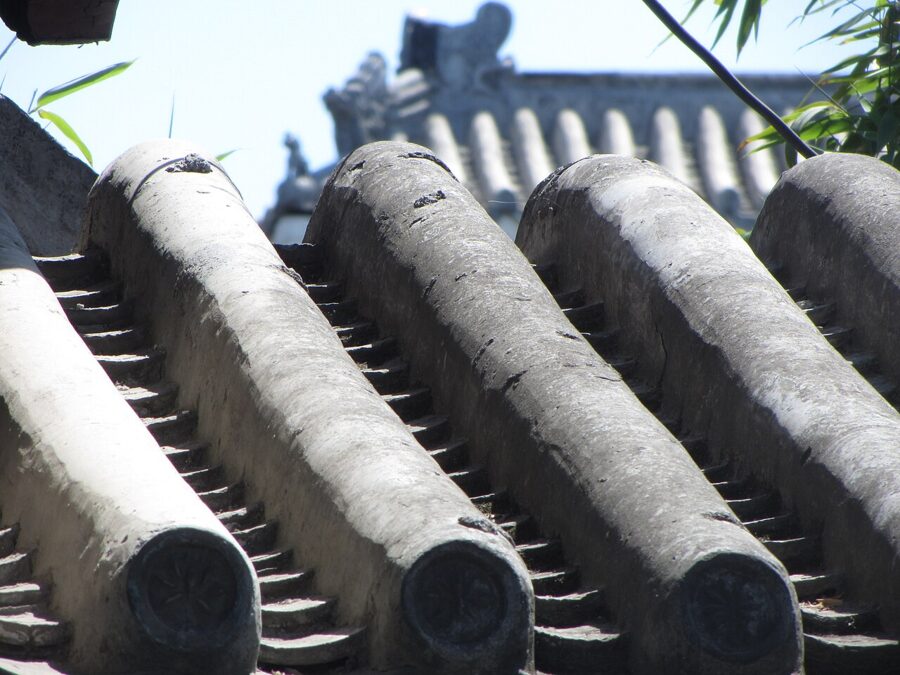
- Taxis can’t always reach the door; have the address in Chinese and expect to wheel your bag the last stretch.
- Rooms are small and open onto the yard, so in winter you step outside to reach breakfast.
- Walls are thin. You’ll hear the courtyard, and it will hear you.
- Some small guesthouses can’t register foreign passports. Ask before you book a homestay.
- Book well ahead for Golden Week, 1 to 7 October, and Spring Festival.
Heading to Shanxi? The walled town of Pingyao has courtyard hotels in old merchants’ houses, the Shanxi cousins of the siheyuan.
Eating and drinking in the lanes
My Beijing food guide covers Gulou, Nanluoguxiang and Dashilar in full, so this is the lane-walker’s shortlist.
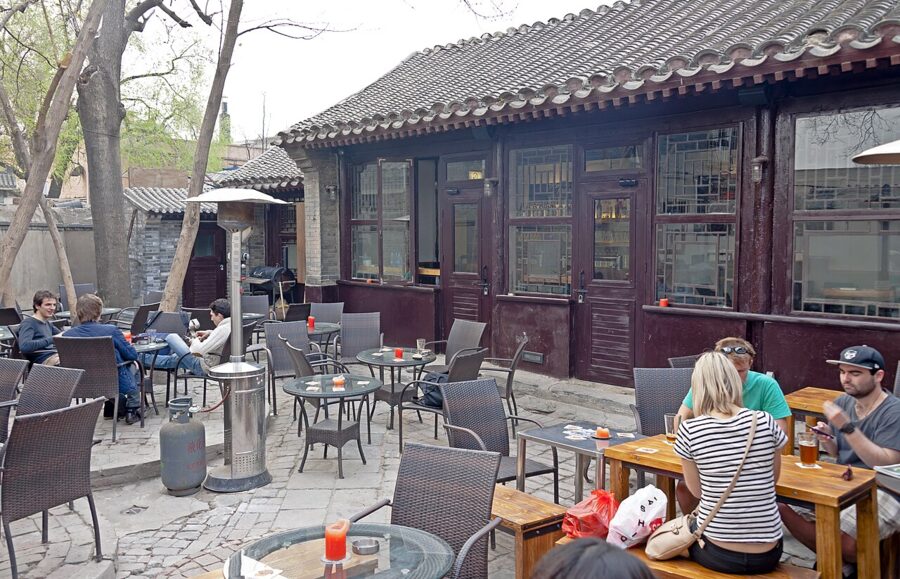
- Kaorouji (烤肉季) by Yinding Bridge, roasting lamb on a griddle since 1848. Go around sunset.
- Yaoji Chaogan, 311 Gulou East Street, for liver stew and steamed buns.
- Fangzhuanchang 69 (方砖厂69号炸酱面) for zhajiangmian, noodles with fried bean sauce.
- Wenyu Nailao (文宇奶酪), 49 Nanluoguxiang, for set milk pudding, the one main-lane queue I’d join.
- Great Leap Brewing, 6 Doujiao Hutong, for a pint in a courtyard.
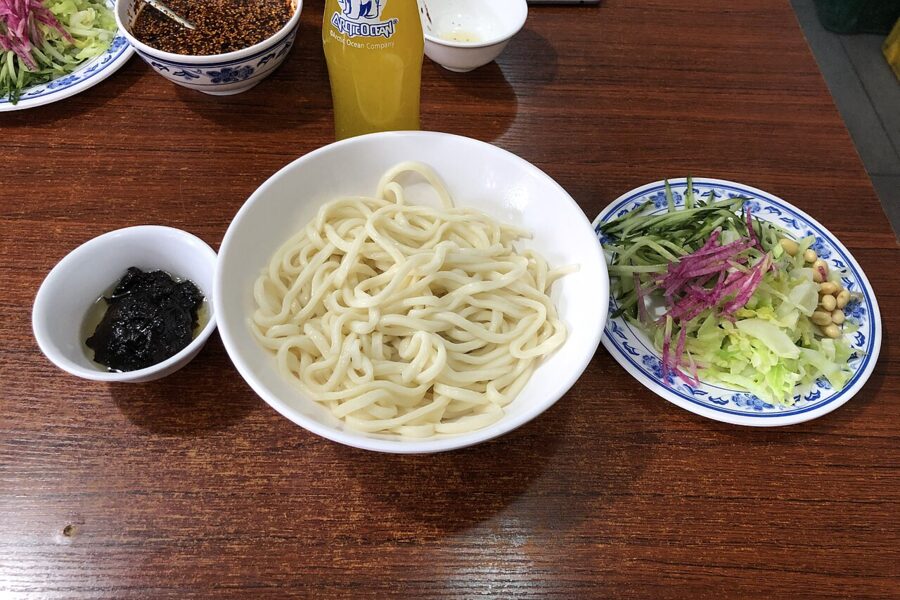
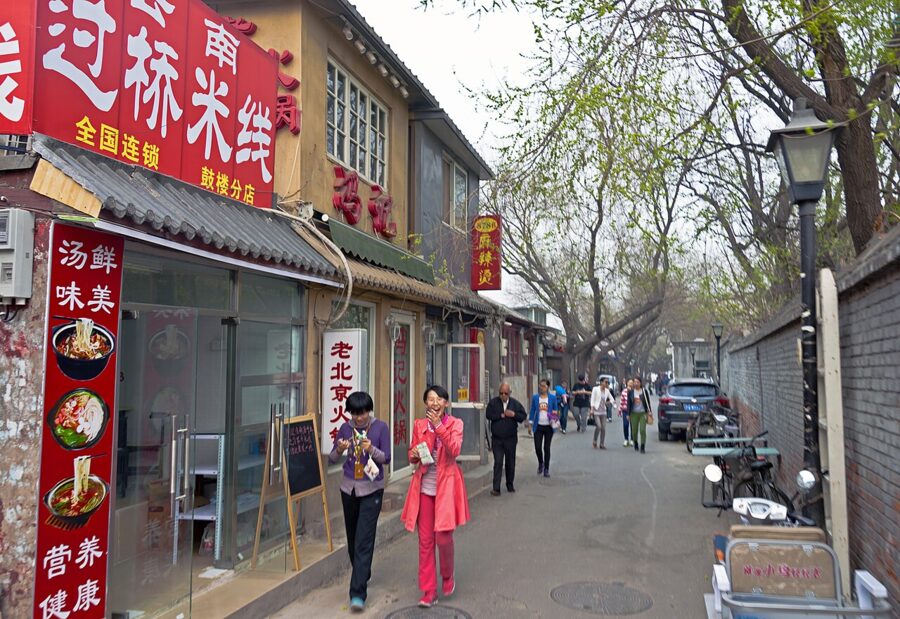
Prices rise with foot traffic. A bowl that costs ¥15 in a side lane can cost three times that on the main strip of Nanluoguxiang. The main-lane stalls mostly sell fried snacks from elsewhere in China, and my guide to Beijing snacks has better places. Pay with Alipay or WeChat Pay, both fine with foreign cards, but carry some cash for stalls short of change.
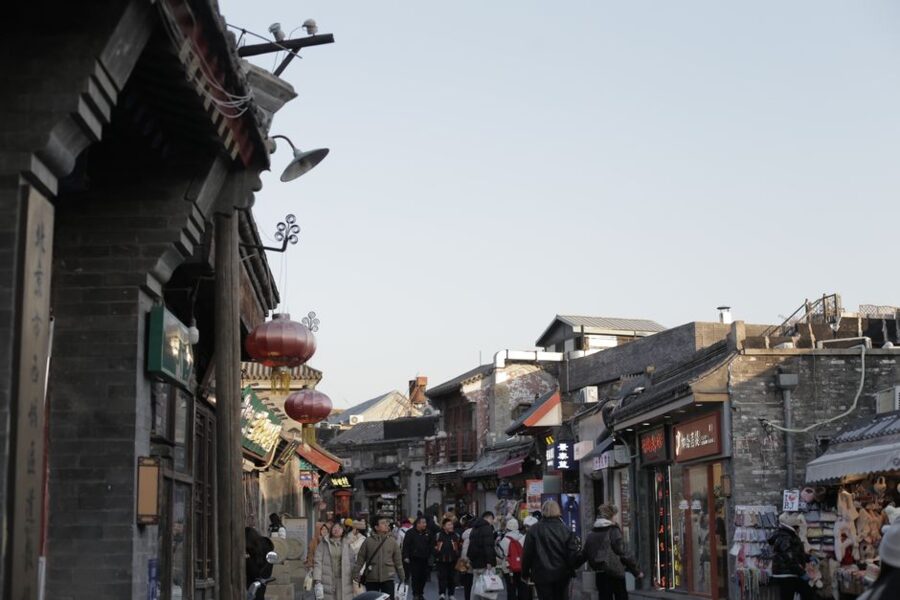
Two walks, with times
Walk one: lakes, towers and the centipede
About five kilometres, four to five hours with stops. Best on a weekday from 09:00.
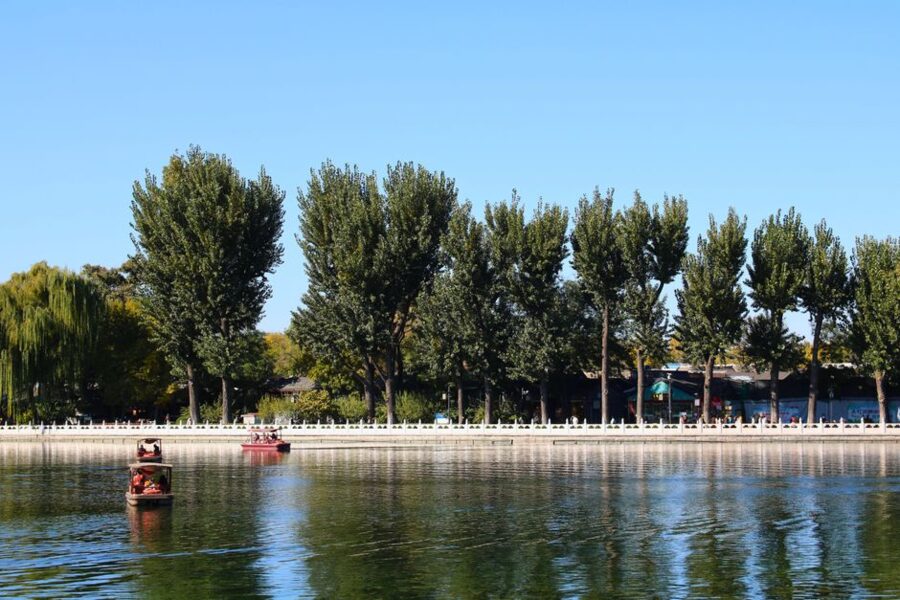
- 09:00, Shichahai station, exit A1. North up Di’anmenwai Street, left through Yandai Xiejie before the shops open, to Yinding Bridge. Eight minutes.
- 09:15, Houhai. Walk the north shore west, cut into Ya’er Hutong and come back east along it. Forty-five minutes.
- 10:15, Drum and Bell Towers. Ten minutes back through Yandai Xiejie. Buy the joint ticket on WeChat, catch the 11:00 drum show, then the Bell Tower. An hour.
- 11:30, Baochao Hutong and Gulou East Street. Coffee, or chaogan at Yaoji, then ten minutes east to the top of Nanluoguxiang.
- 12:30, the side lanes. Ju’er Hutong on the east, then Fangzhuanchang on the west for lunch.
- 13:30, Mao’er and Yu’er. Gates on Mao’er, Qi Baishi’s courtyard if booked, then the main lane south to exit E. Ninety minutes.
Walk two: shops, slanting streets and the opera lanes
About four kilometres, three to four hours, ending with dinner near Qianmen.
- 14:00, Qianmen station, exit C. 200 metres to Dashilar, then west past Tongrentang and Neiliansheng. Thirty minutes.
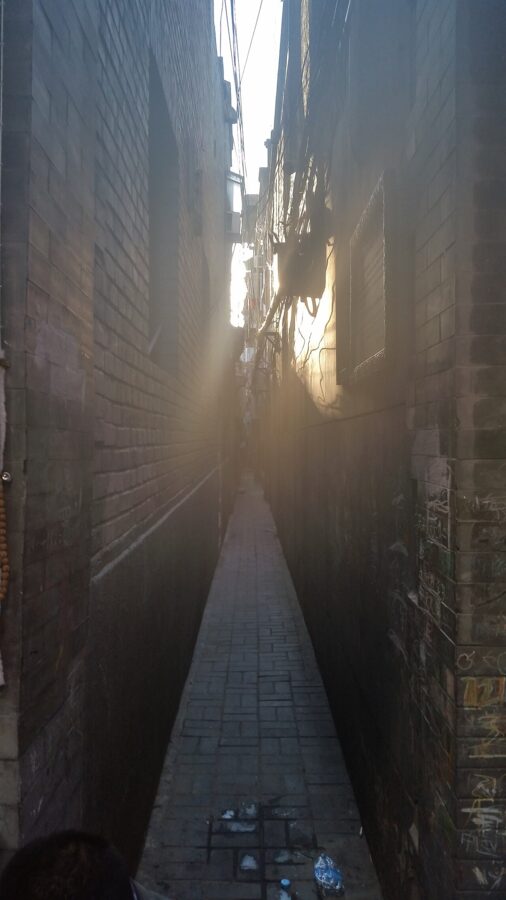
- 14:30, Qianshi Hutong. The narrowest lane, five minutes.
- 14:45, Yangmeizhu Xiejie from Meishi Street to Yanshou Street. Forty-five minutes.
- 15:30, Liulichang, the old street of books, brushes and paintings. Thirty minutes.
- 16:00, the Eight Great Hutongs. South to Zhushikou West Street, then north from Shaanxi Xiang through the opera lanes. Ninety minutes, with late light on the brick.
- 17:30, dinner on Dashilar West Street or in the lanes east of Qianmen Street.
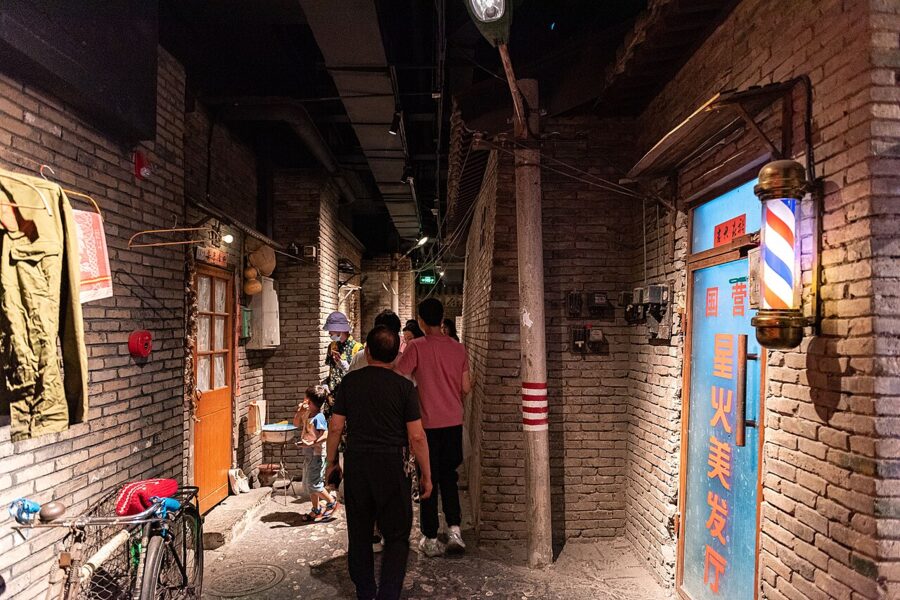
A short third option is the official Colorwalk from Fuchengmen to Xisi, 1.7 kilometres past the Lu Xun Museum, the White Dagoba and Zhuanta Hutong. Two hours, three with coffee.
Hutong manners
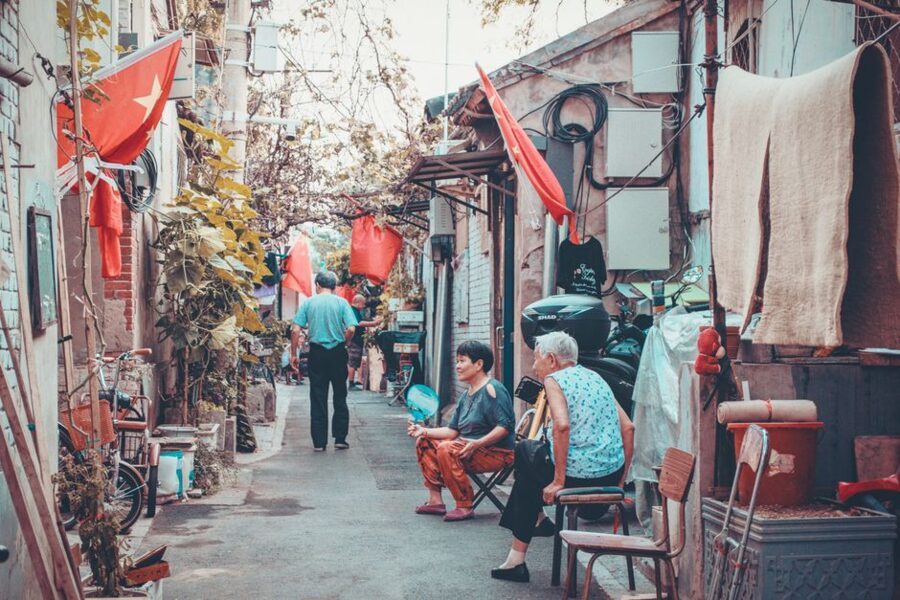
People live here. That’s the whole of it, but it helps to be specific.
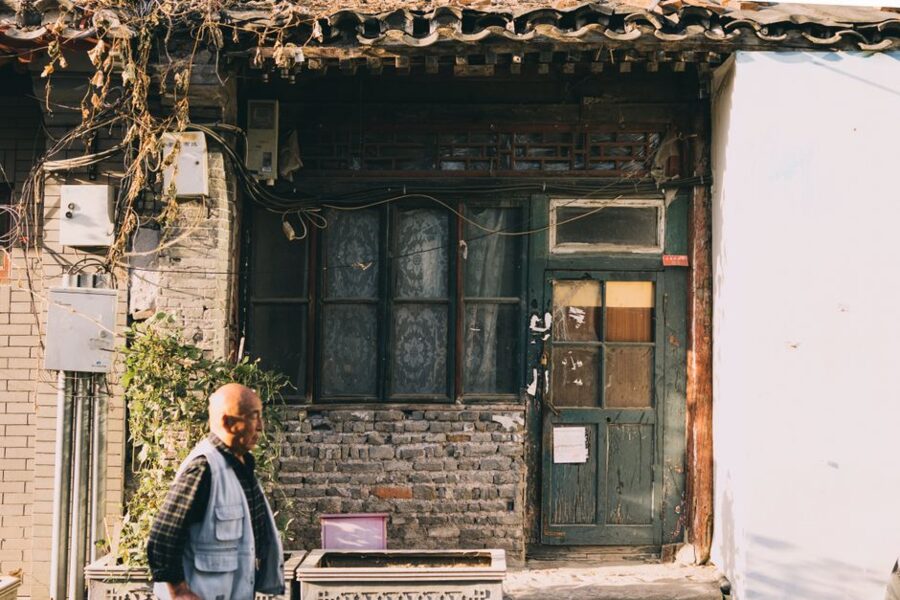
- An open gate isn’t an invitation. Look from the lane and never go past the screen wall.
- Ask before photographing people, and never shoot through windows.
- Keep your voice down early and late. Lanes carry sound like corridors.
- Step aside for bikes, scooters and delivery tricycles. They’re working; you’re not.
- Don’t sit on gate steps or stones. They’re someone’s front door.
- No drones in the central city.
Skip this
- Nanluoguxiang’s main lane as a destination. Walk it once, early or late.
- Any rickshaw that comes to you. Licensed ones wait at their stands.
- Street-offered “family visits” and courtyards that charge admission without a district sign.
- Shichahai, Nanluoguxiang and Qianmen in Golden Week. In 2026 Shichahai and Nanluoguxiang were both in the city’s ten most visited places over the 1 to 7 October holiday. Go to Dongsi or Baitasi instead.
- Prince Gong’s Mansion without a booking. There’s no ticket office to fall back on.
If you’re doing the big sights too, the Summer Palace and the Forbidden City show you how emperors lived; the hutongs show you everyone else. Give them a morning without a plan, turn into the least promising lane, and look down at the gate stones. Somewhere there’ll be a lion that still has its face.