
3 Days in Beijing: An Itinerary That Actually Works
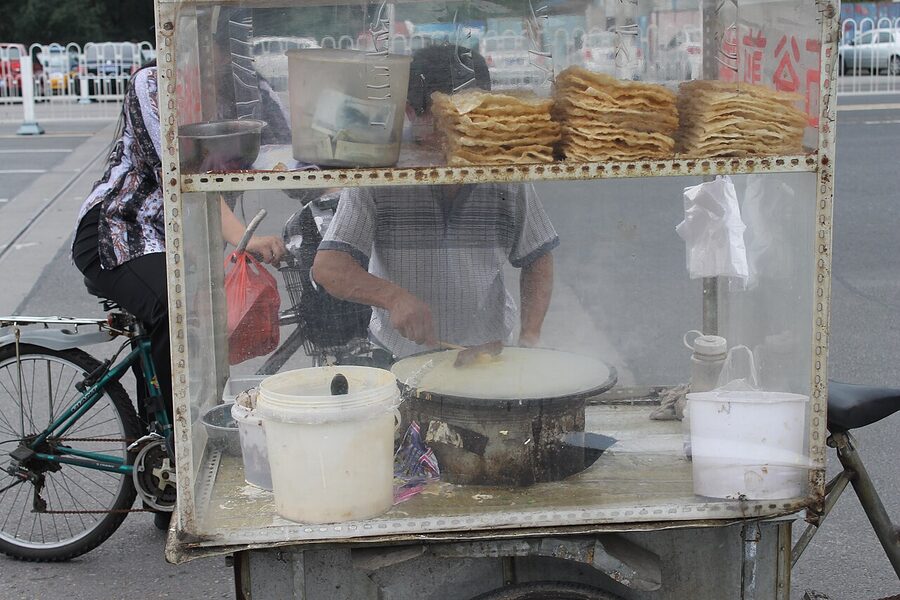
My first morning in Beijing I was awake at 4:42am, sitting on a curb in a hutong off Dengshikou, eating a jianbing the size of my face from a cart that wouldn’t open for another fifteen minutes if my body had been on the right time zone. The cook had taken pity on me. The pancake had a crispy wonton baked into it, an egg cracked over the top, hoisin and chili paste, scallions, coriander. It cost 12 yuan. The street smelled of coal smoke and frying oil and the cold dry air that February in north China does so well, the kind that makes your nose run before you’ve thought about anything. The sun came up over a cluster of grey-tile rooftops and a man on a tricycle delivered cabbage to a restaurant across the alley. I think that’s the best meal I’ve ever eaten standing up.
That’s the city this itinerary is built around. Three days is enough for Beijing if you’re ruthless about what you do and don’t try. People burn a whole day on the wrong section of Great Wall. People queue ninety minutes at the wrong gate of the Forbidden City. People eat scorpions on a stick because a guidebook in 2007 told them Wangfujing was a food street. None of that is necessary.
What follows is a working three-day plan: imperial core on day one, Mutianyu Great Wall on day two, hutongs and the Summer Palace on day three. Each day starts on a metro line you can walk to and ends on one you can stumble out of. Prices in yuan, station exits, queue advice, and the names of restaurants I’d send a friend. If you’re after slower food and a softer city after this, my 3-day Lijiang itinerary is the parallel guide for the south.
Quick prep before you fly: get an e-SIM with a VPN baked in (Holafly and Airalo both work, set them up before you leave because you can’t install them once you land), set up Alipay or WeChat Pay with a foreign card linked (now possible for most Visa and Mastercard holders), and book Forbidden City and Mutianyu tickets in advance. None of the major sights take walk-ups any more.
In This Article
- Day 1: the imperial core, on foot
- The Forbidden City: how to do it without burning out
- Lunch: Peking duck without the queue circus
- Jingshan Park sunset
- Evening: dumplings, then bed
- Day 2: the Great Wall, the Mutianyu way
- Getting there
- On the Wall, what to actually do
- Back in town: hotpot, slow
- Day 3: hutongs, the Summer Palace, and a slow evening
- A morning in the hutongs
- Afternoon: the Summer Palace
- Evening: Houhai or Sanlitun
- Where to stay: three neighbourhoods, three answers
- The subway, decoded
- A food map of Beijing
- Money, apps, and the air
- What to skip
- If you have a fourth or fifth day
- If you only have one day, or you have four
Day 1: the imperial core, on foot
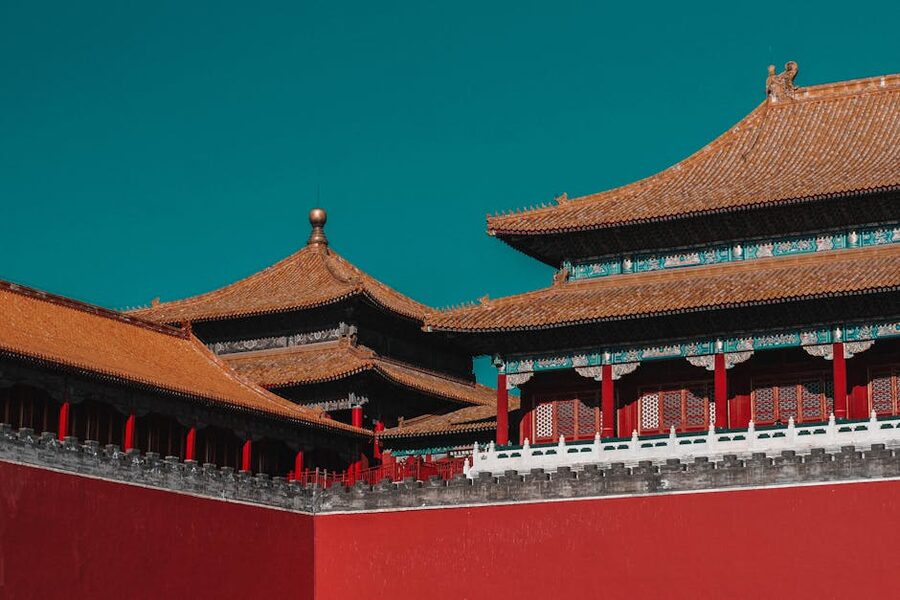
The plan: Tiananmen Square at dawn for the flag raising, the Forbidden City when the south gate opens at 8:30am, lunch at Siji Minfu by the east gate, the Hall of Supreme Harmony and the inner courts at a calm pace, north exit to Jingshan Park, climb the hill for sunset, dumplings somewhere off the back side of the park.
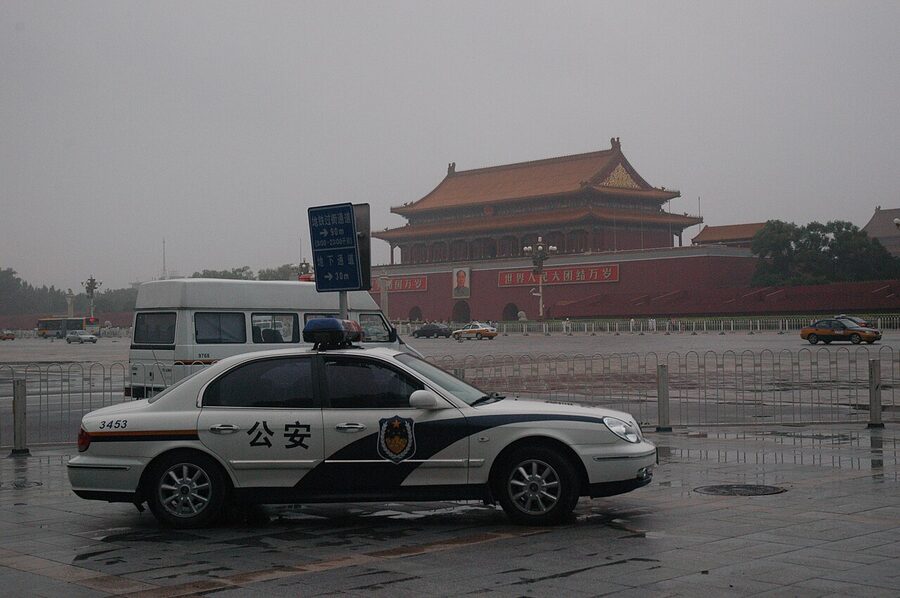
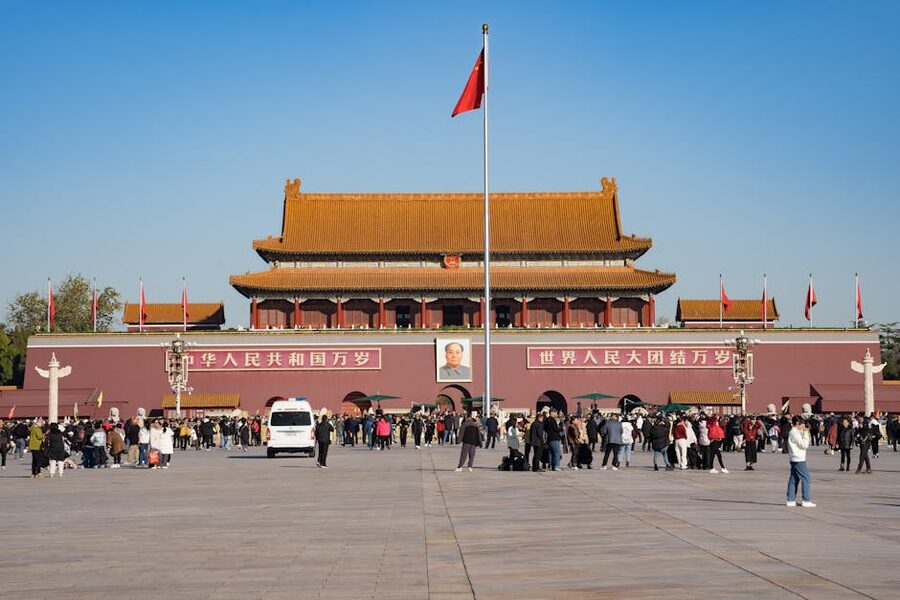
You can do this in the order above. Or you can sleep in, skip the flag raising, and start at 9am at the Forbidden City. Both work. The flag raising is genuinely something to see if you’re jet-lagged into the wrong time zone (which on day one you usually are), and it costs nothing. The square itself was designed in 1651, expanded fourfold in the 1950s, and is where Mao declared the founding of the People’s Republic of China on October 1st 1949. Stand at the north end, watch the soldiers march out of the gate at sunrise, then walk into the Forbidden City.
The Forbidden City: how to do it without burning out

The Forbidden City was built between 1406 and 1420 under the Ming Yongle Emperor, served as the imperial palace and political centre of China for nearly five hundred years (1420 to 1912 under Ming and Qing), and has been a UNESCO site since 1987. 72 hectares, north-south axis, around 8,886 actual rooms inside what tradition calls “9,999 and a half” (the half short of heaven, as a politeness to the gods). The largest preserved palace complex in the world. None of which matters as much as the practical question of how you walk through it without getting tour-group-rolled.
Three rules. One: enter from the south, exit from the north. Don’t backtrack. The flow of the complex is one-way and the crowd density doubles if you fight it. Two: book your ticket online seven days in advance through the official Palace Museum site (or any Chinese tour platform) with your passport number. They sell out the night before. The standard ticket is ¥60 in peak season (April to October), ¥40 the rest of the year. The Treasure Gallery and Clock Gallery are extra ¥10 each and worth it for the Qianlong-era jade and the absurd European mechanical clocks. Three: aim to be inside by 9am at the latest. By 11am the place is solid people. By midday in summer it’s actively unpleasant. The whole walkthrough is around three hours including the side galleries; less if you push.
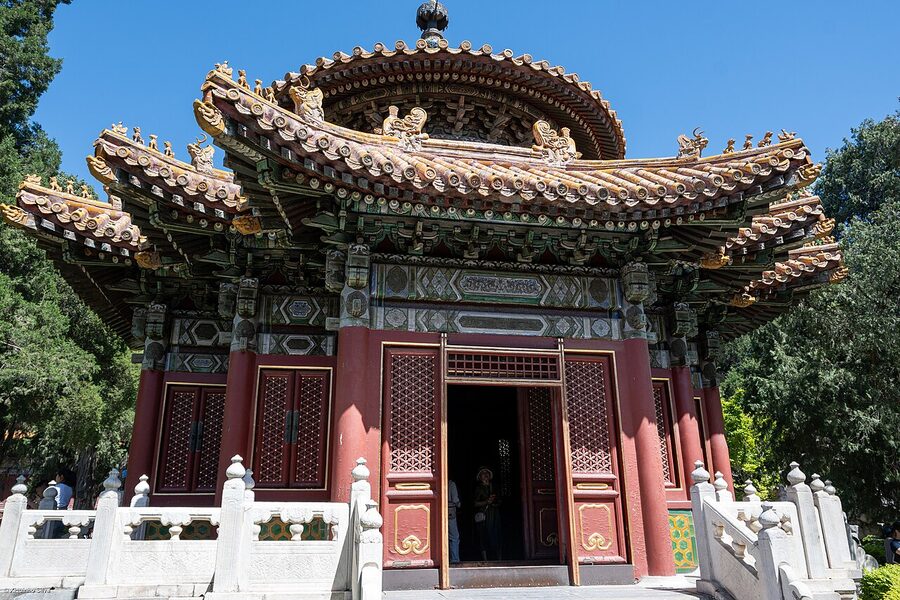
For deeper history, my Forbidden City guide goes wing by wing. Short version for a first visit: spend longer in the inner court (Palace of Heavenly Purity, Palace of Earthly Tranquility) than in the outer ceremonial halls, which all start to look alike. The Imperial Garden at the north end is a small joy and a good place to sit before you exit through the Gate of Divine Might.
Lunch: Peking duck without the queue circus
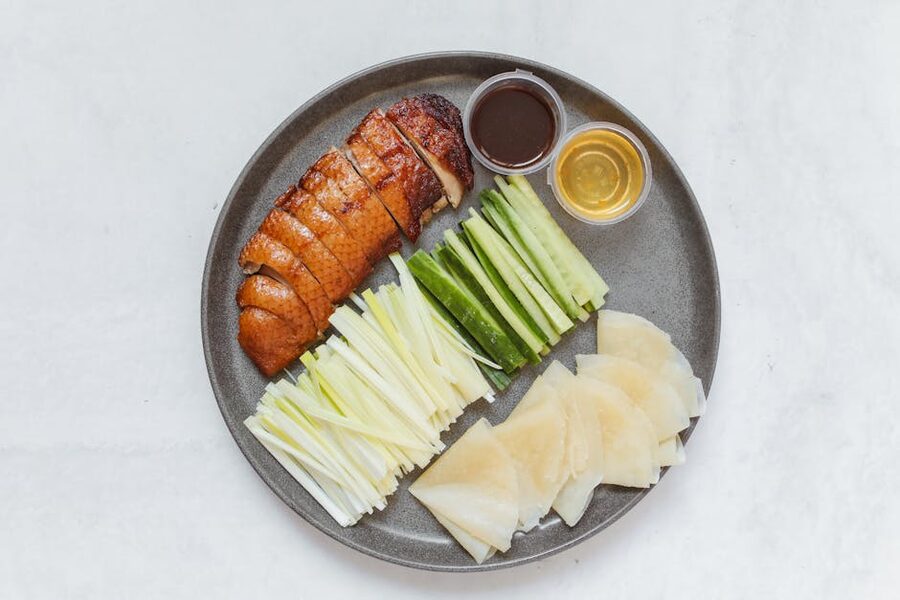
You exit the Forbidden City at the north (Shenwumen, the Gate of Divine Might) around midday. Across the road and a five-minute walk east is Siji Minfu Roast Duck (四季民福), the duck restaurant locals pick when they don’t want to wait two hours at Quanjude. There’s a branch right by the moat with a window onto the palace walls. Set duck plus six dishes for two: around ¥350 (¥175 a head). Open 11am to 10pm. They take walk-ins until they don’t, which on weekends is around noon. If you can be there by 11:30am you walk straight in.
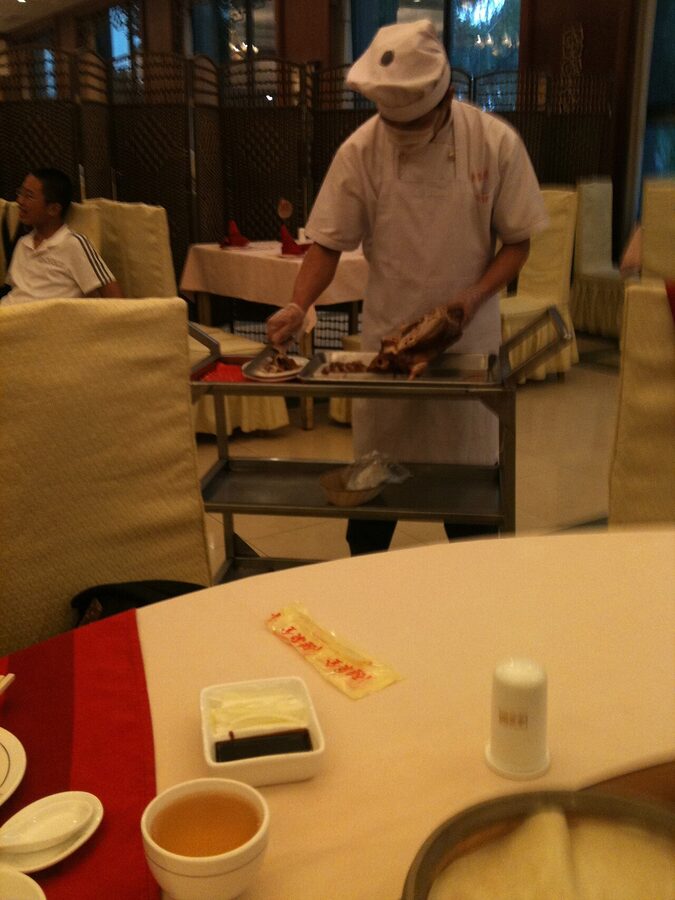
Quick history aside: Peking duck has been a Beijing dish since the Yuan-era imperial court served roast duck in the 13th and 14th centuries, but the modern form, with the hung oven and lacquered skin and pancake-and-scallion service, was refined at Quanjude when it opened in 1864. Quanjude is still going, tourist-trap pricing now, and the duck is fine but not better than Siji Minfu’s. Da Dong is Beijing-fancy: French plating, leaner skin, smaller portions. Use Da Dong for an anniversary; use Siji Minfu for lunch on day one. For a wider read on what to eat across the country, my China food guide covers it.
Jingshan Park sunset
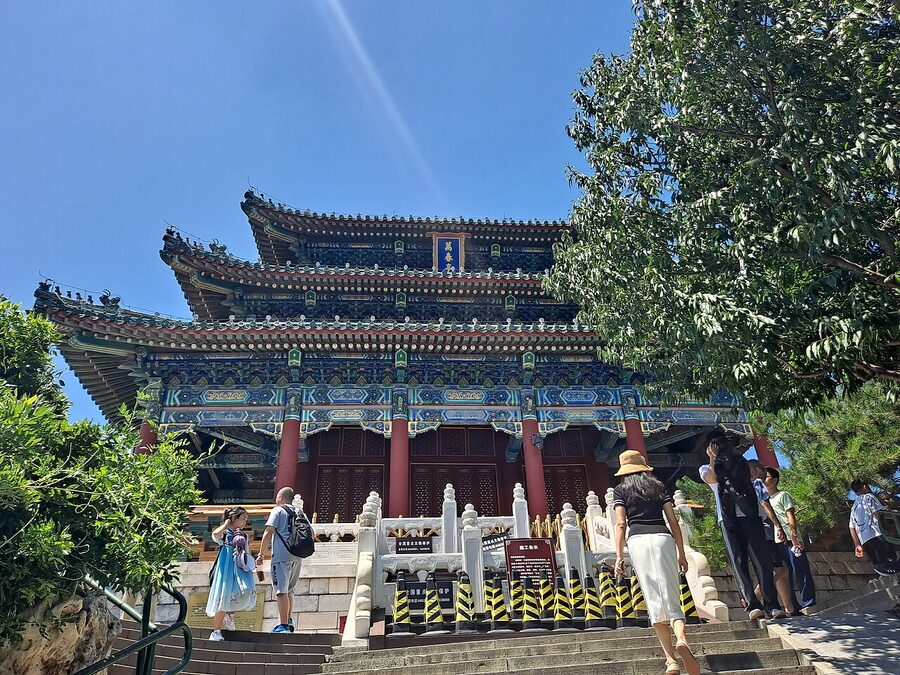
After lunch, a slow afternoon: walk five minutes north of Siji Minfu, cross the road, and you’re at Jingshan Park. Entry is ¥2 (yes, two yuan, which is twenty cents). The park is mostly the artificial hill that holds it up, which was made from the earth dug out to form the palace moat in the Ming dynasty. Climb the path up the south face, fifteen minutes at a slow pace with stops for breath, and you arrive at the Wanchun Pavilion at the summit. From here you look directly south down the Forbidden City’s full axis. It’s the single best photo of Beijing’s imperial geometry you can take.
Time it for an hour before sunset. The light goes amber on the yellow tiles, the haze (yes, the haze, this is north China) softens the modern towers in the distance, and for a few minutes the city looks the way it would have looked to the last emperor, except more apartment blocks. Stay until the lights come on. Park closes at 9pm in summer, 7pm in winter.
Subway: Tian’anmen East (Line 1) gets you to the south end of the route, Beihai North (Line 6) is the closest station to Jingshan’s exit. Walk the central axis between them: it’s a kilometre and a half and the most loaded kilometre and a half in any Chinese city.
Evening: dumplings, then bed
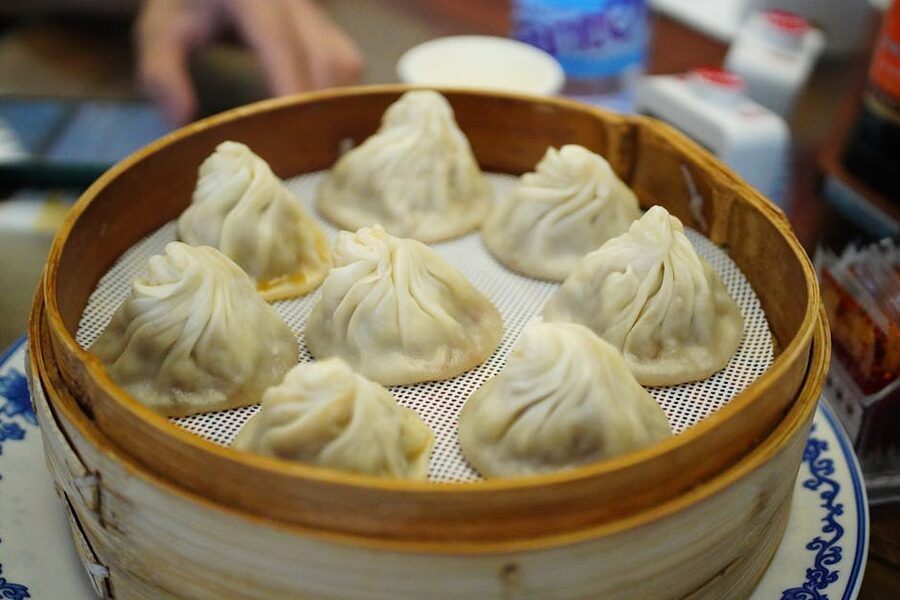
Day one ends best with something simple. Walk west from Jingshan along Wenjin Street, cross over to Di’anmen, and pick a neighbourhood dumpling place. Dongxinglou Dumpling House (东兴楼) does a clean steamed pork-and-chive jiaozi for ¥28 a basket. Bao Yuan Jiaozi (which has a few branches) does coloured dough dumplings (spinach for green, beetroot for pink) for tourists who like that kind of thing. Either works. Cash or Alipay. Bed by 9pm if you’re sensible because day two starts early. For more on Chinese dumpling regions and what to order where, my Chinese dumplings guide covers the lot.
Day 2: the Great Wall, the Mutianyu way
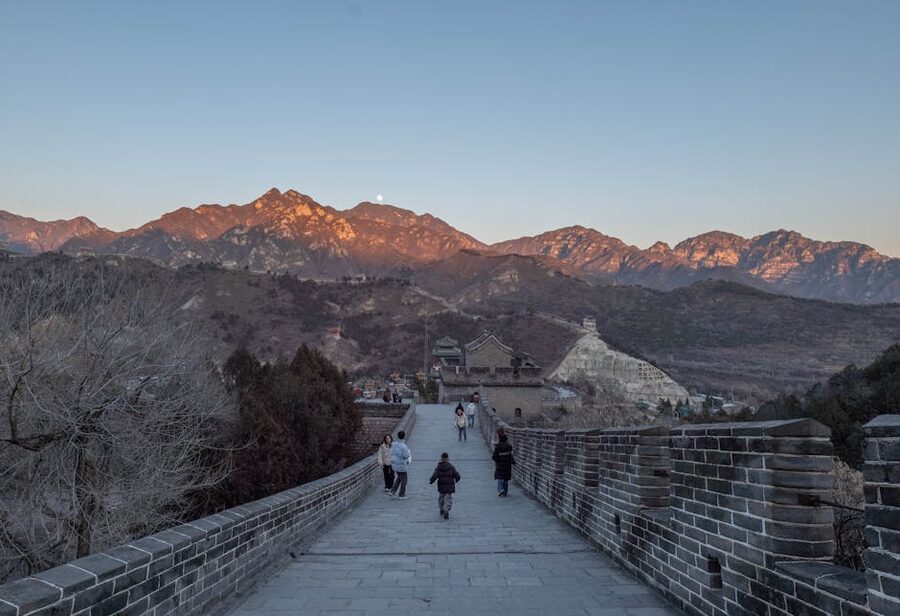
This day is a commitment: minimum eight hours door-to-door. The good news is you only have to make one decision well, which Wall section you go to, and the rest takes care of itself.
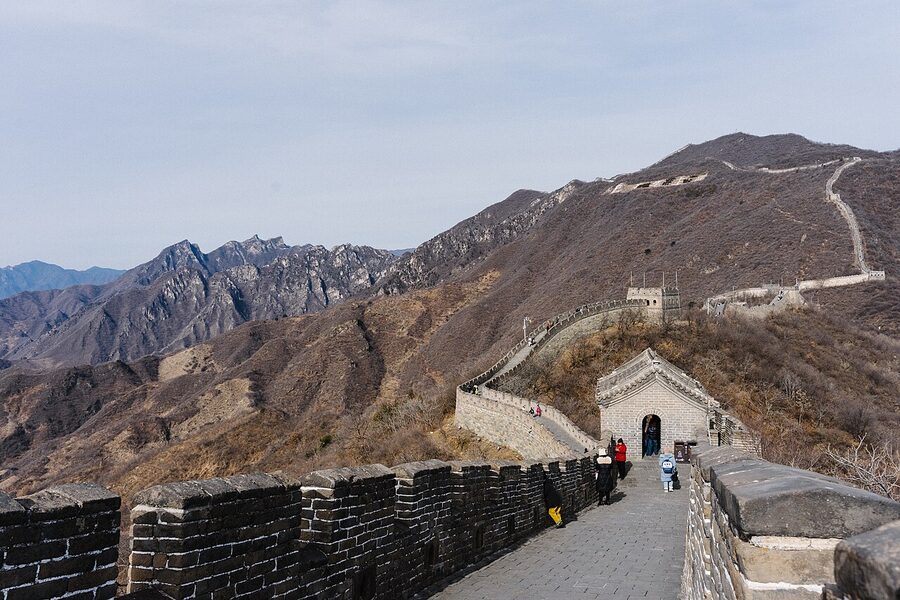
The two options pitched to first-timers are Badaling and Mutianyu. Skip Badaling. It’s the closest section, the most restored, the most crowded, with a souvenir stall every fifty metres from 9am to 4pm. Mutianyu is forty-five minutes further but feels like a different country. The watchtowers haven’t been re-bricked, the pine forest is thick, the path climbs and falls the way a wall is supposed to. There’s a cable car up, a chairlift up, and a toboggan down (yes, a toboggan) that costs ¥120 and is genuinely fun.
Getting there
Three ways to do Mutianyu, in order of how I’d rank them.
Private driver, half day. ¥600-¥900 for the car (three or four people split it cheaply), hotel pick-up, three to four hours on the Wall, drive back. What I’d book if you’re two or more. Most Beijing hotels arrange it the night before. You set your own pace and avoid the sales-pitch jade-factory stop that comes with cheap tours.
Group tour with English guide. ¥350-¥500 per person via Viator, GetYourGuide, or Klook. Includes pickup, ticket, cable car. Watch the listing for the dreaded “jade and silk shopping stops”, anything that includes them is a low-end tour.
Public bus. Subway Line 16 to Beigongmen, then Bus 916 Express to Huairou (¥10, 90 minutes), then a local H23 minibus or taxi the last twenty kilometres. Total ¥80-¥100 round trip. Slow, but the budget option. If you’re travelling on that kind of shoestring my Yangshuo guide has more of the same.
On the Wall, what to actually do
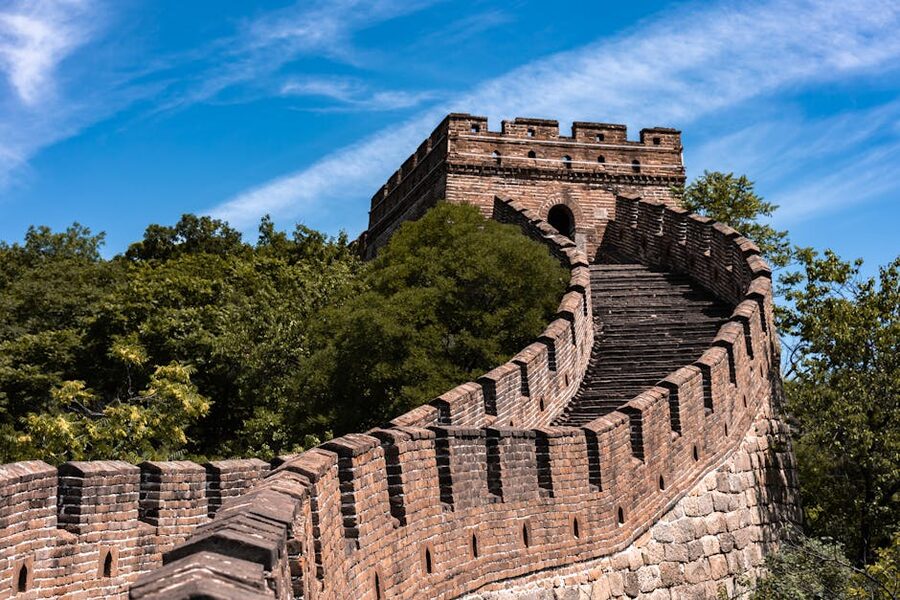
Most tours give you three to four hours. Use them this way: cable car up to Tower 14, walk east to Tower 20 (the steep section, also the most photogenic), turn around, walk back to Tower 6, toboggan down. About three hours with stops. If you have four hours, push past Tower 20 to Tower 23, where the restored section ends and the original “wild wall” begins; standing at that boundary and looking east at the un-restored ramparts marching off into the trees is the best moment of the day.
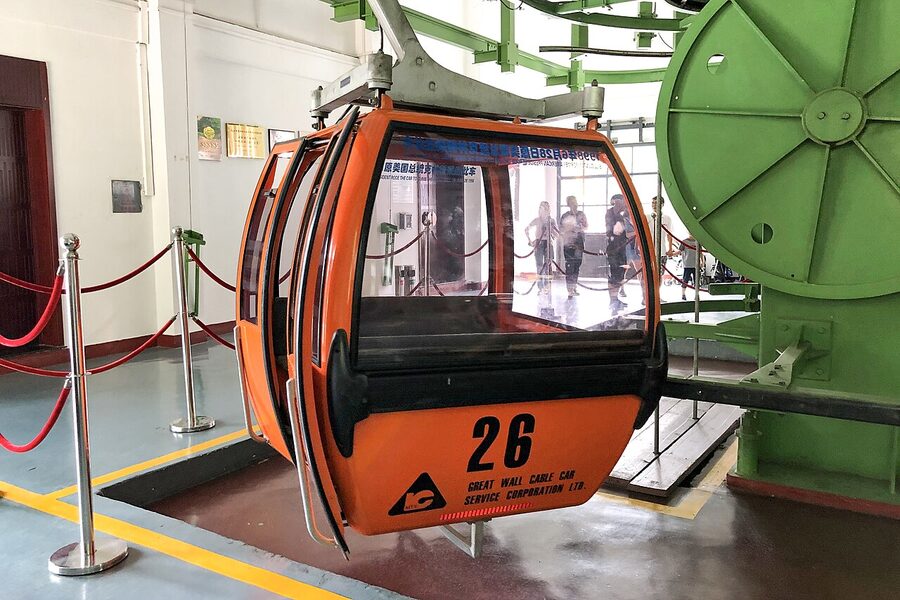
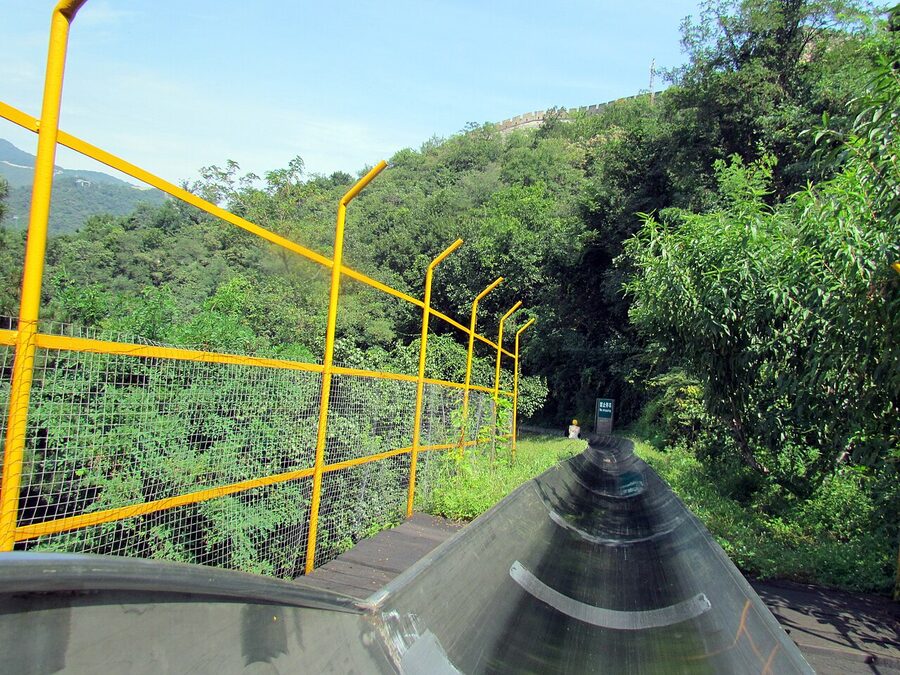
Bring water (one bottle minimum), sun layers, snacks if you’re a person who needs them. There’s a single overpriced snack stand near the cable-car station and nothing else along the wall. Tickets: ¥45 for the wall, ¥120 for the cable-car-up-toboggan-down combo, ¥100 for cable-car-up-and-down. The toboggan is the right answer.
The full Wall is, as everyone keeps repeating, more than twenty thousand kilometres long if you count every fragment built between the 7th century BCE and the 17th century CE. Most of what you see at Mutianyu is Ming, rebuilt in the 1560s under the Wanli Emperor’s defence engineers Qi Jiguang and Tan Lun. For the section-by-section breakdown, my Mutianyu Great Wall guide covers it.
Back in town: hotpot, slow
You’ll be back in Beijing between 5pm and 7pm depending on traffic. After a shower, you want something that doesn’t require thought. Winter answer: lamb hotpot. Summer: a cold beer with a view.
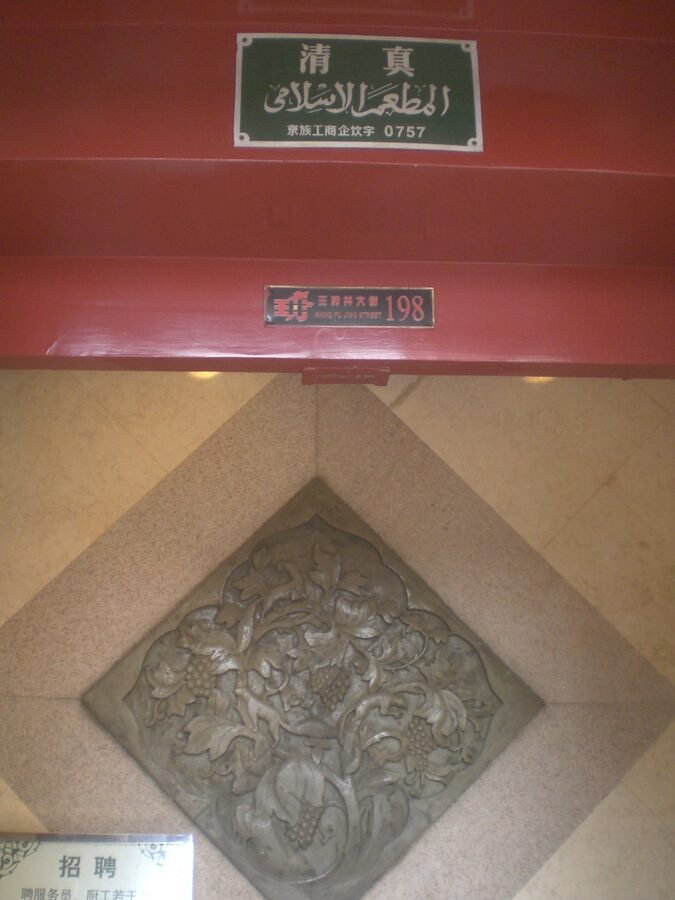
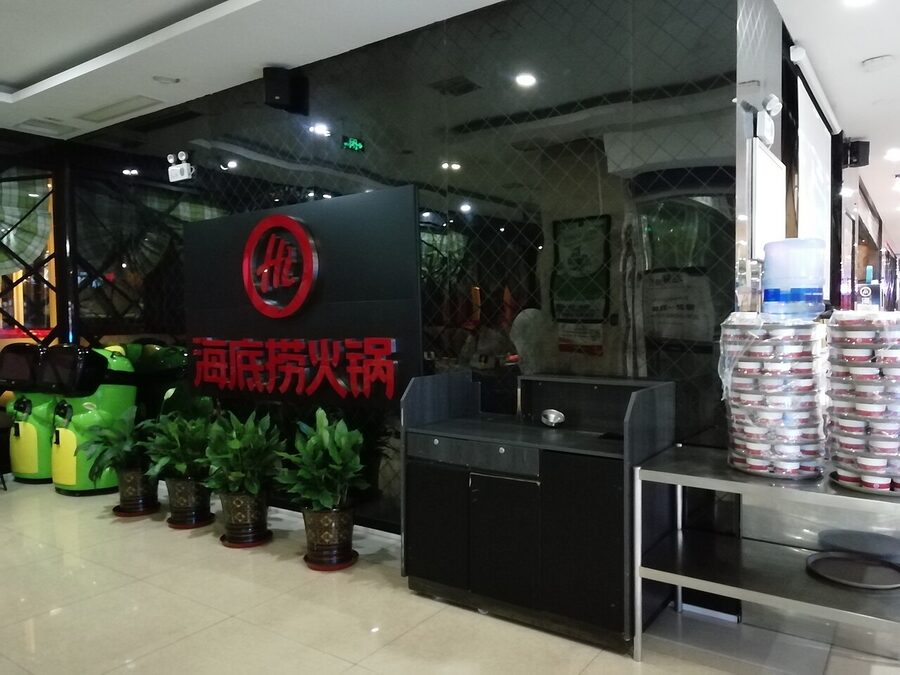
Dong Lai Shun (东来顺) is the Beijing institution for instant-boiled mutton hotpot: brass copper pot at the table, paper-thin lamb you cook for ten seconds in clear broth. The Wangfujing branch has been on the same corner since 1903. ¥150-¥200 a head with beer, open until 10pm. The other move is Haidilao, the chain with theatrical service (a person dancing while pulling noodles, free manicures while you wait), reliable everywhere, ¥150-¥180 a head. Locals are split on whether Haidilao is “real” Beijing food. My take: the lamb is good.
Day 3: hutongs, the Summer Palace, and a slow evening
Day three is slower and the better for it. Morning in the hutongs of Gulou and Houhai, midday at the Summer Palace, evening either back at Houhai or out east to Sanlitun. You’ll cover less geography than day one but you’ll see more of how people actually live.
A morning in the hutongs
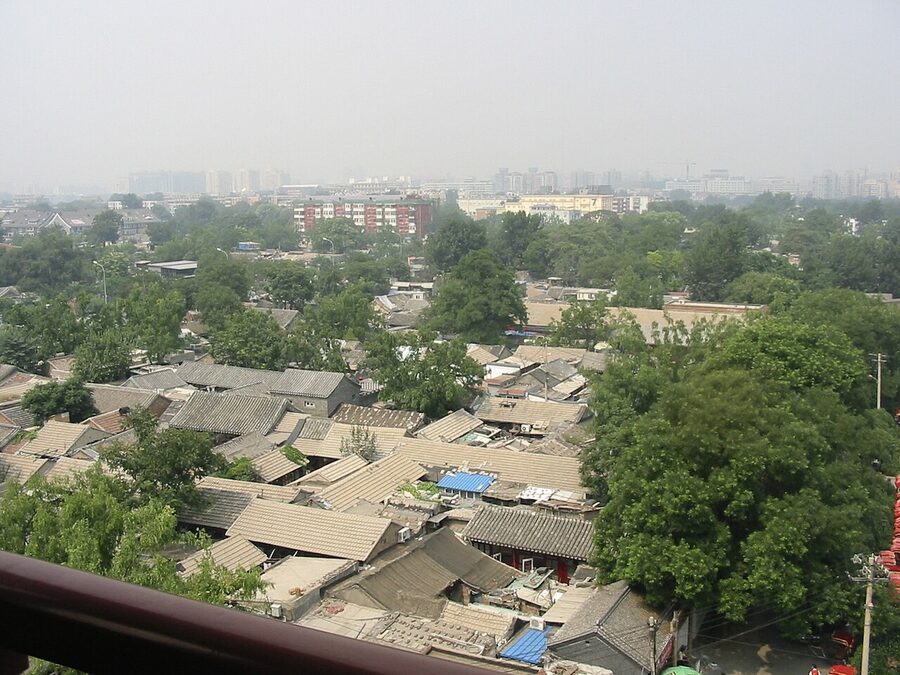
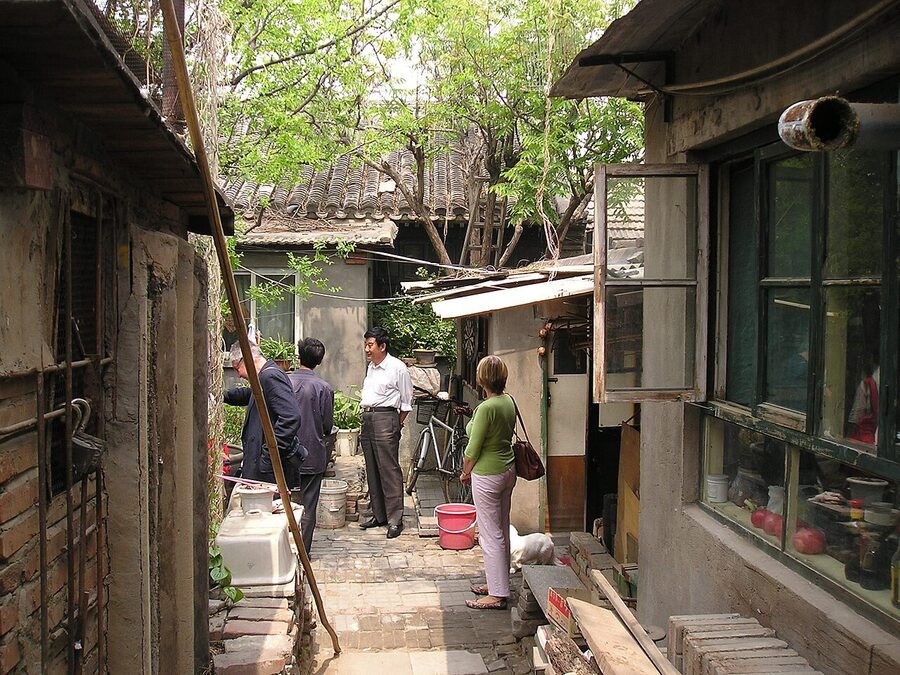
The hutongs are narrow alleys formed by lines of grey-brick courtyard houses (siheyuan) that made up most of Beijing’s residential fabric for seven centuries. They were first laid out under the Mongol Yuan dynasty in the 13th century, around the new capital Khanbaliq. The word “hutong” itself comes from the Mongolian for “alleyway” or “well”, a clue to what the lanes were arranged around: shared water. The grid expanded through Ming and Qing, peaked at around 7,000 hutongs in the early 20th century, and got brutally thinned by 1950s-2000s redevelopment. Maybe 1,500 are left, a few hundred properly intact.
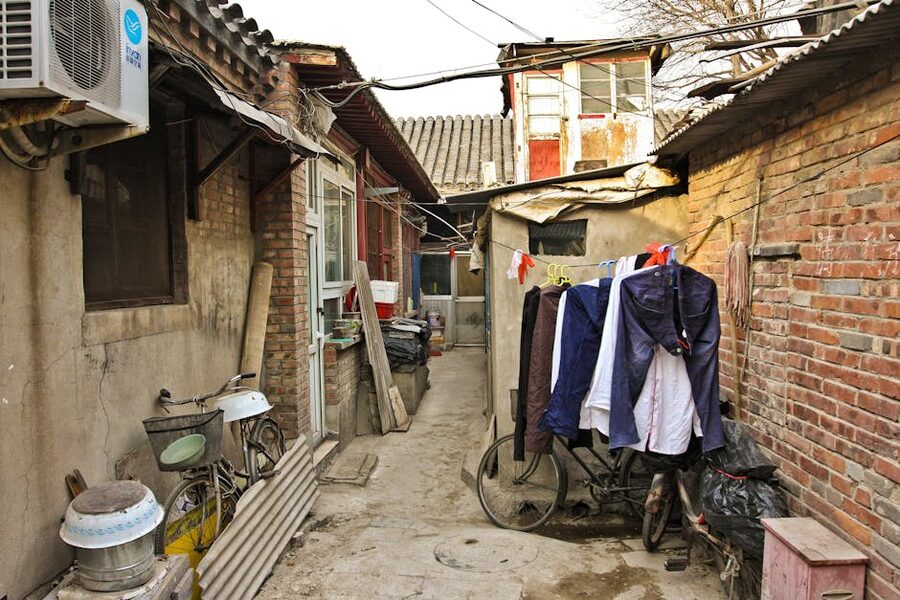
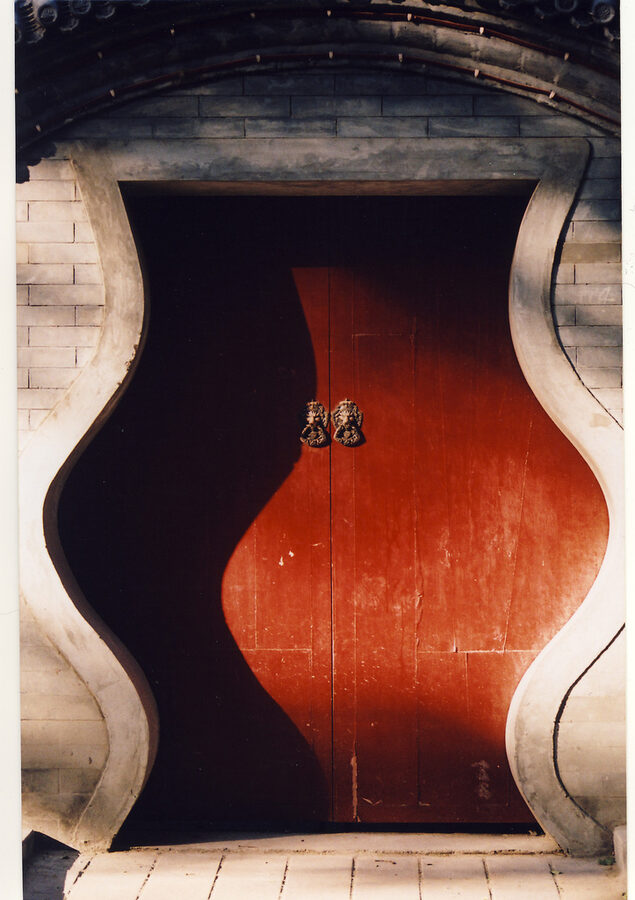
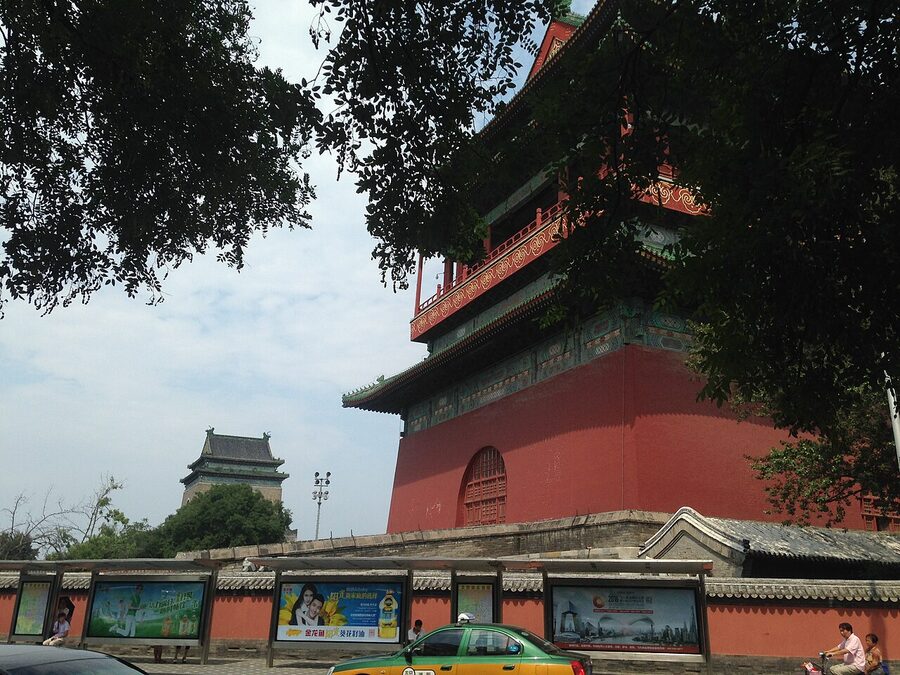
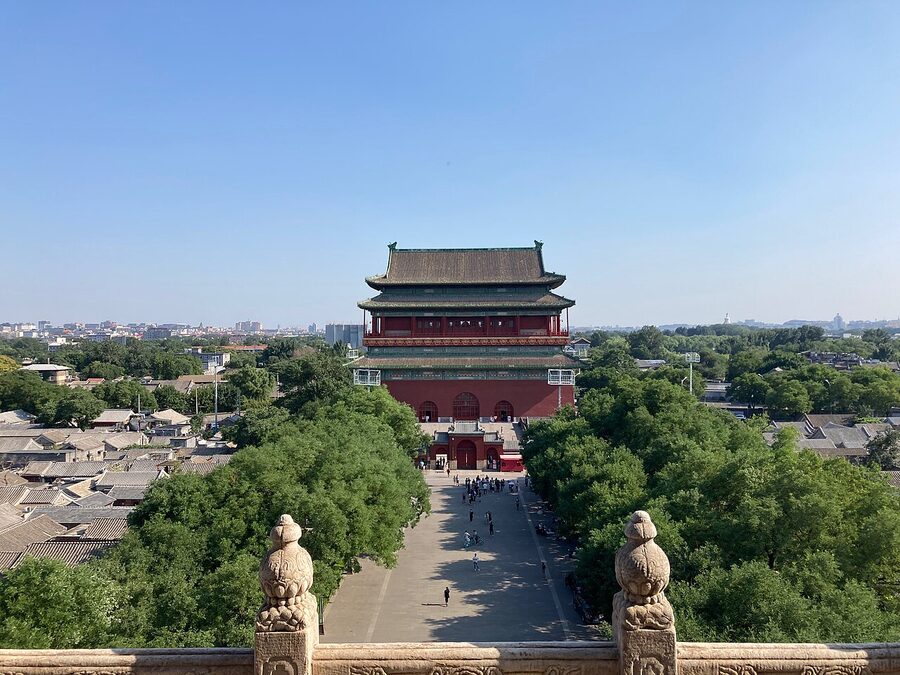
The best two-hour walking route: start at Shichahai (Line 8, Exit A2), walk north along the west side of Qianhai Lake into Yandai Xiejie (“Smoke Pipe Slanted Street”, historically where Manchu nobles bought their pipes, now a strip of cafes), cut west through the Drum and Bell Towers, then south through Nanluoguxiang. The Drum Tower (Gulou, ¥20) and Bell Tower (Zhonglou, ¥15) are a 45-minute stop with a rooftop view of the surrounding hutong roofs from Gulou’s upper deck.
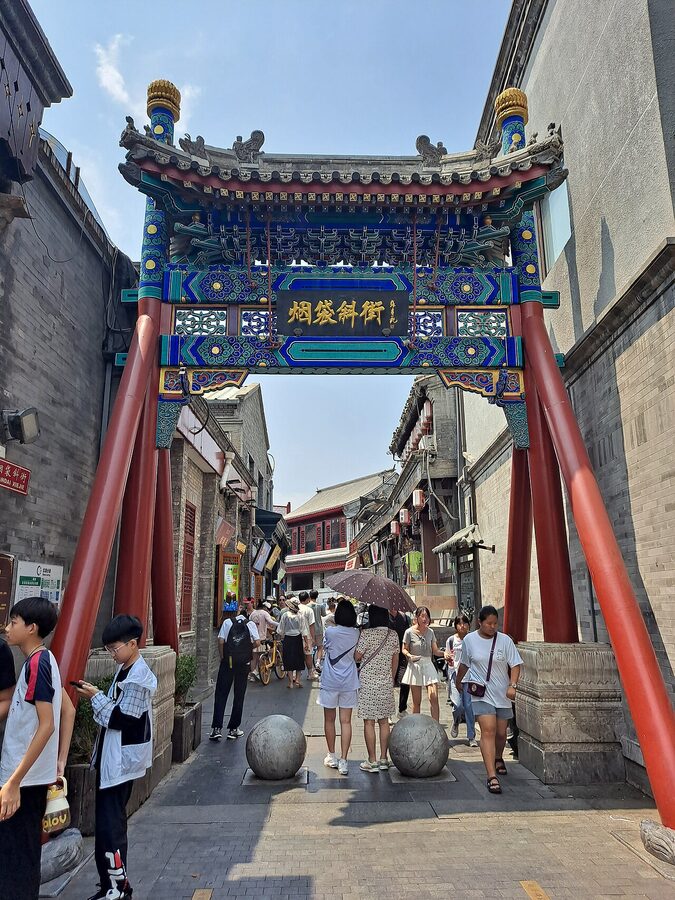
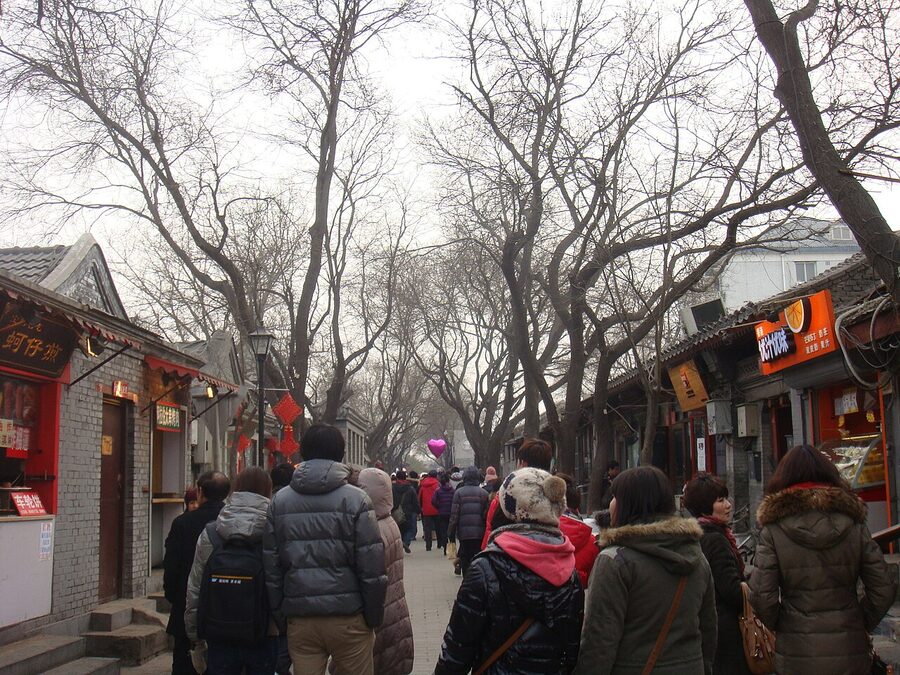
Nanluoguxiang has fully gone tourist: 800 metres of bubble tea, branded hoodies, and chain coffee. Use it for through-traffic but turn off into the side hutongs branching east or west from the main strip. Maoer Hutong has the surviving residence of Empress Wanrong (the Last Emperor’s wife) at 35-37, and ten metres further along you’re back in actual courtyard country.
Lunch in the hutongs: Mr Shi’s Dumplings on Baochao Hutong is the foreigner-favourite (¥30-¥50, English menu, decent jiaozi). Yao Ji Chao Gan on Gulou East Street has been doing the Beijing peasant breakfast chaogan (stewed pig liver and intestines in starchy broth) since 1923. Whether you like it depends on your relationship with offal.
Afternoon: the Summer Palace
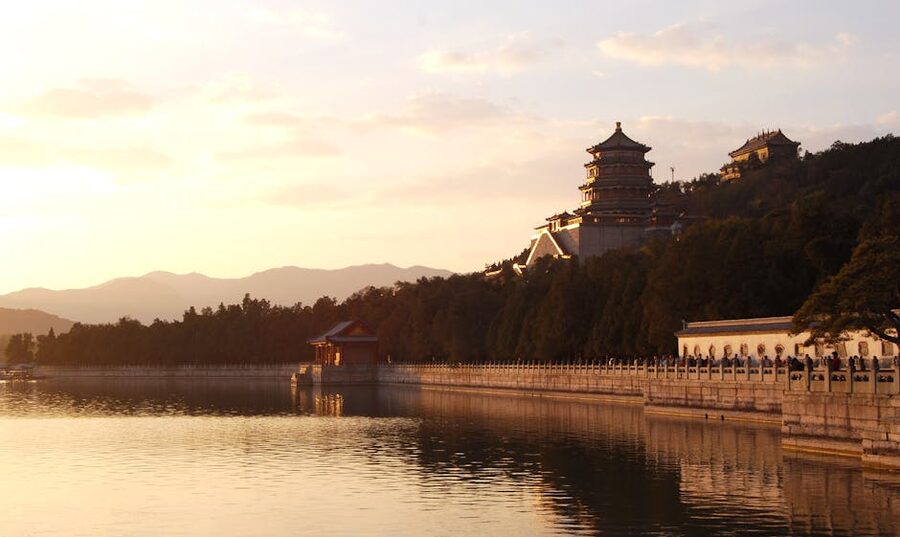
From the hutongs, the Summer Palace is a 35-minute taxi or 50-minute subway ride (Line 4 to Beigongmen, walk five minutes from Exit D). ¥30 for the park, ¥60 combined with the buildings. Get the combined ticket. Three hours minimum, four if you have them. 2.9 square kilometres, three quarters of which is the artificial Kunming Lake.
The Summer Palace was first laid out by the Qianlong Emperor in 1750 as a pleasure garden for his mother’s 60th birthday, comprehensively destroyed by Anglo-French troops during the Second Opium War in 1860, and rebuilt in the 1880s by Empress Dowager Cixi using funds officially earmarked for the Imperial Chinese Navy. The famous Marble Boat at the lake’s north shore is the most pointed artefact of that diversion. UNESCO World Heritage list, 1998.
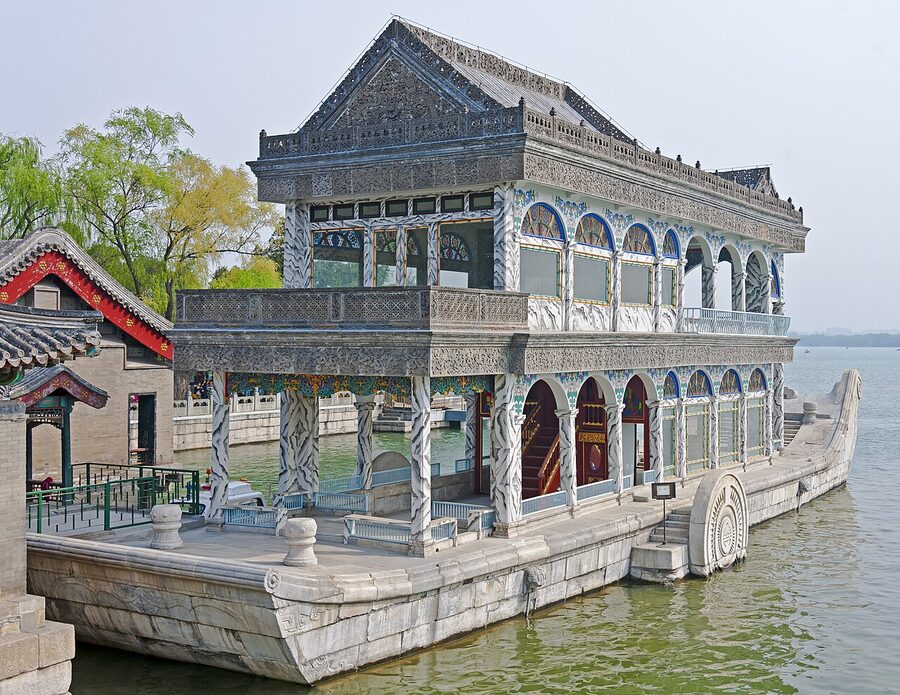
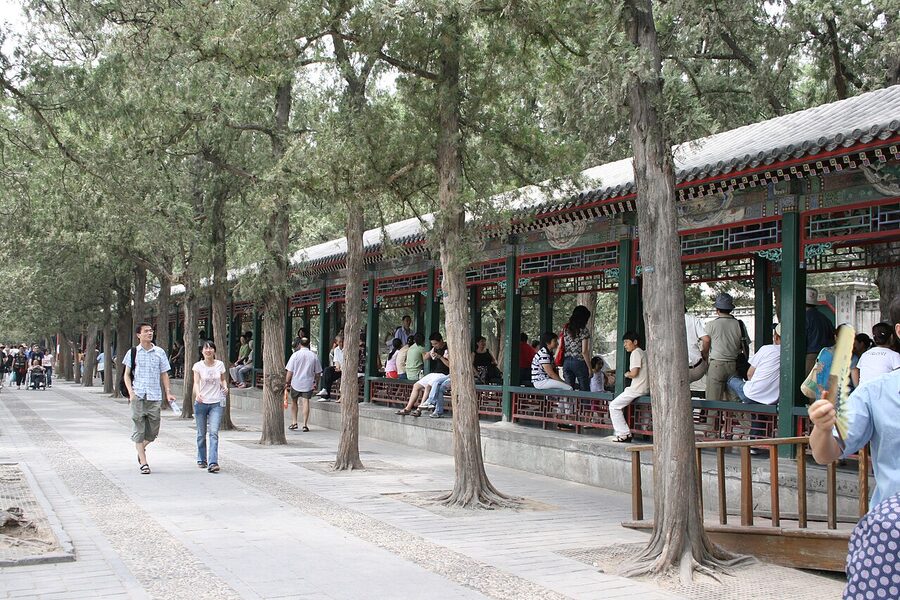
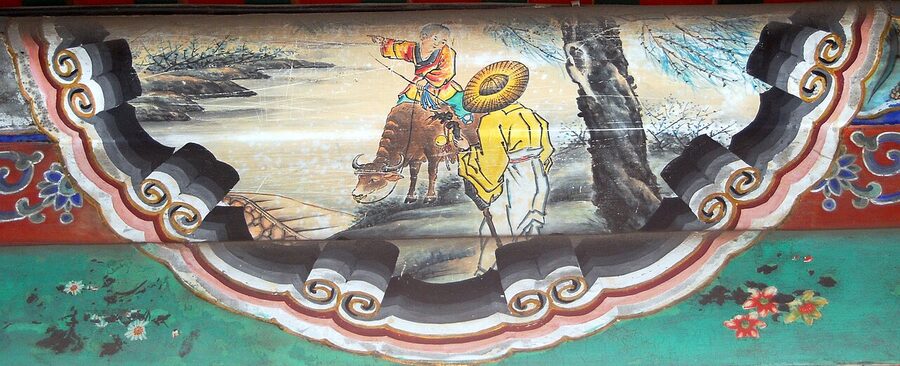
The walk I’d do, entering at Beigongmen (the north gate): down Longevity Hill, along the Long Corridor (a 728-metre covered walkway with hand-painted scenes from Chinese mythology, no two repeated), past the Marble Boat, around the west side to the Seventeen-Arch Bridge and South Lake Island. About two and a half hours. A one-way dragon-boat ferry across the lake (¥10) saves you forty minutes if your legs are gone.
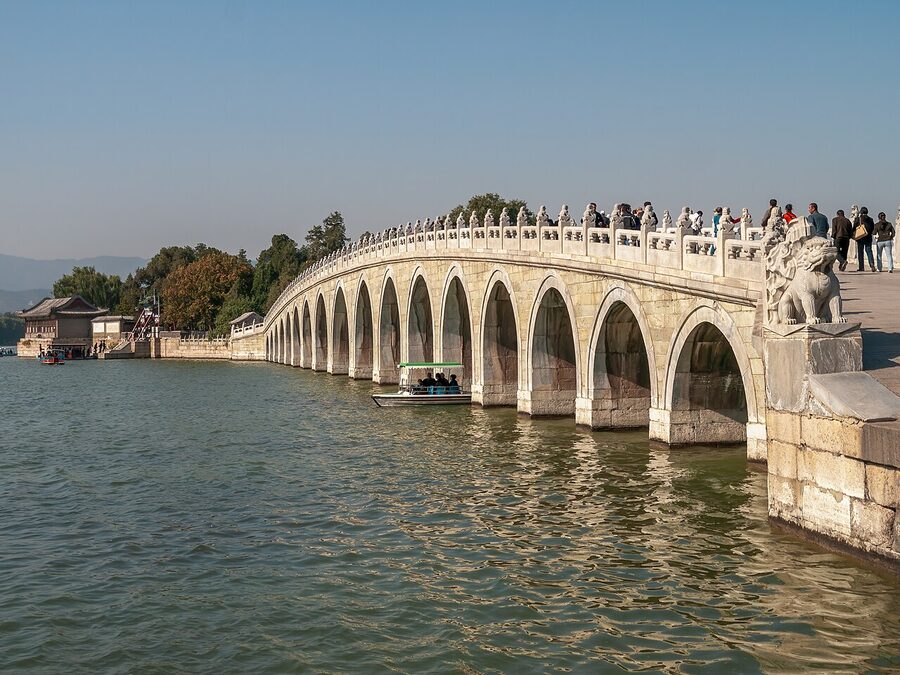
Time it for late afternoon. The light off Kunming Lake at golden hour is the prettiest you’ll see in Beijing. Park closes at 6pm in winter, 7pm in summer; ferries stop 90 minutes before close.
Evening: Houhai or Sanlitun
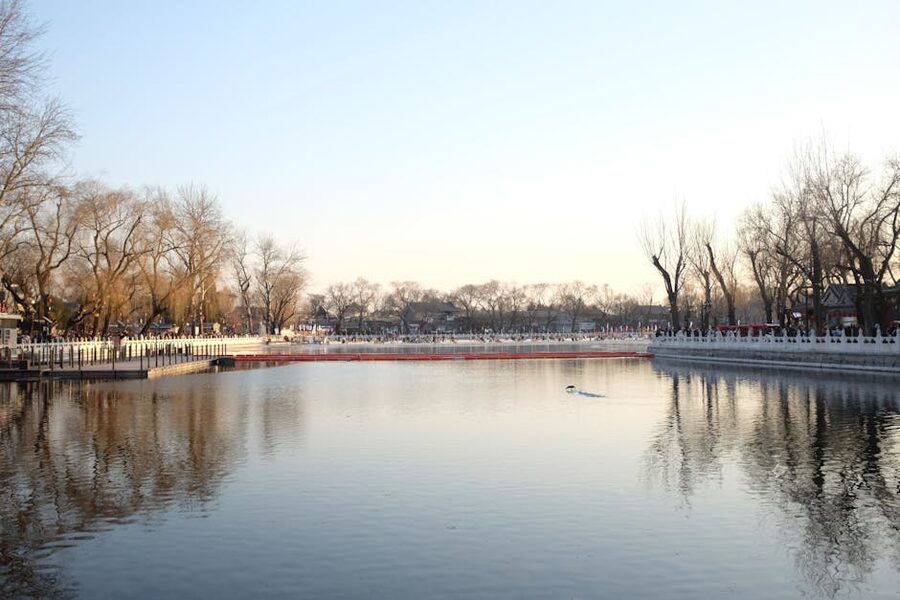
Two distinct ways to spend the evening.
Houhai (Line 8, Shichahai) is the lake-and-bar scene around the western shore of the Shichahai system you walked that morning. Live music at most of the bars, kitsch level high (think synth covers of Eagles songs at moderate volume), but the pre-bar walk along the lakeshore at sunset, with the willows and stone bridges and people fishing off the dock, is genuinely lovely. Pick a bar, drink a draft Yanjing for ¥30, listen for one set, leave.
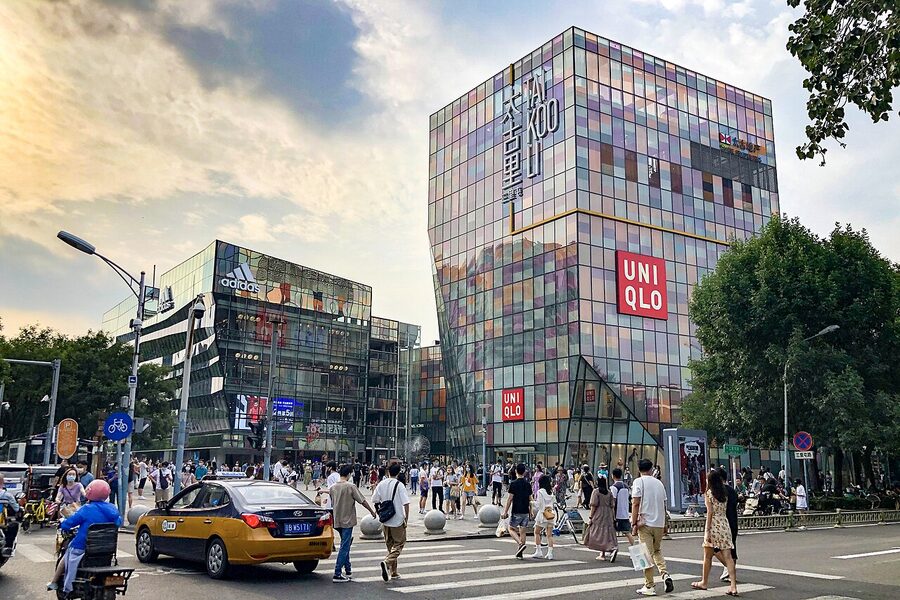
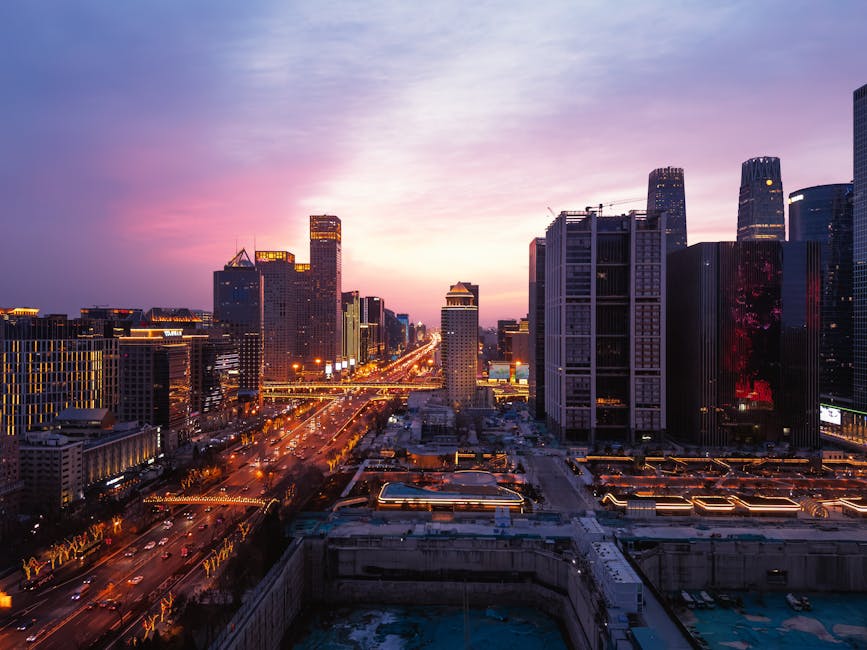
Sanlitun (Line 10, Tuanjiehu) is the modern-Beijing answer: embassy district, bar street, the Taikoo Li mall, the speakeasy cocktail bars and craft-beer taprooms the city has built up since 2010. Drinks ¥60-¥120 a cocktail. Migas Mercado does Spanish tapas with a roof terrace; Slow Boat Brewery does proper IPAs by the pint; Janes and Hooch is a basement cocktail bar off the back of Taikoo Li. Go here when you want to remember Beijing is also a 22-million-person megacity, not just an imperial museum.
Where to stay: three neighbourhoods, three answers
Three neighbourhoods do the job. I’ve stayed in all three. None is wrong; they’re answers to different questions.
Wangfujing / Dongcheng is the central choice and the right one for a first visit. Walking-distance from Tiananmen, the Forbidden City, and Jingshan; the airport express drops you nearby; both Line 1 and Line 5 run through. Budget ¥350-¥550 (Atour, JI Hotel), mid-range ¥700-¥1,200 (Crowne Plaza Wangfujing, Mercure Wangfujing), high-end ¥2,500-¥4,500 (Peninsula, Waldorf Astoria, the Beijing Hotel which has been operating since 1900 and looks every bit of it).
Qianmen / Dashilar is the hutong-character pick. South of Tiananmen, walking-distance to the Forbidden City but with older texture: courtyard hotels, old shop signs, the original Quanjude on Qianmen Street. The pedestrian Qianmen Street is touristy, but two blocks into Dashilar and you’re back in lived-in Beijing. Courtyard hotels ¥600-¥1,400 a night (Cours et Pavillons, Beijing Vue Hotel). Pick this for atmosphere over convenience.
Sanlitun / Chaoyang is the modern, nightlife-and-shopping pick. Further from the imperial sights (15-20 minutes by metro), but right on top of the bar scene, the embassy quarter, and Taikoo Li. Budget ¥400-¥700 (Atour, Holiday Inn Express), mid ¥900-¥1,800 (Hotel Eclat, the Opposite House if you can get a deal), high-end ¥3,000-¥6,500 (Bulgari, Conrad). Stay here on a return trip.
The subway, decoded
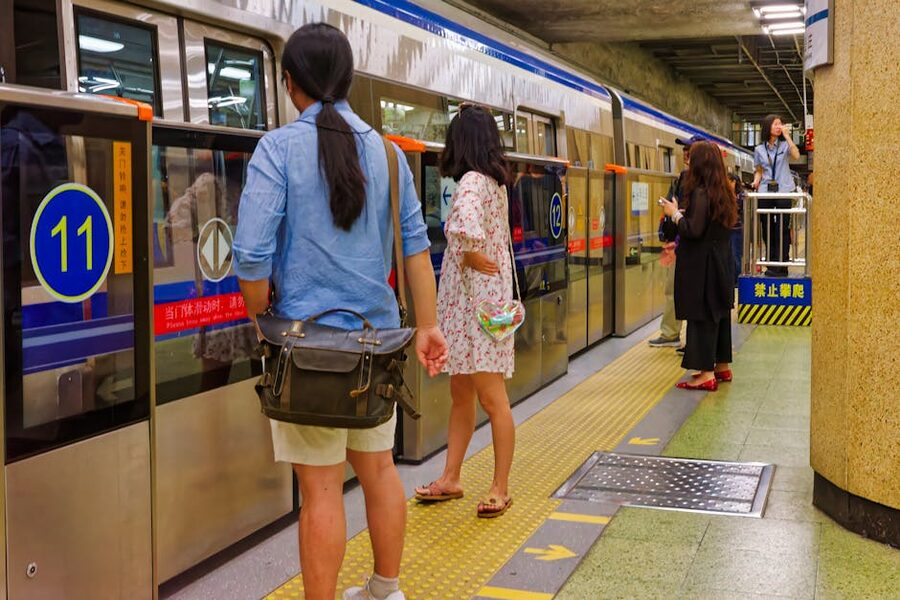
It’s color-coded and signed in English. Every station has English announcements. Apple Maps and the Beijing Subway app both work without a VPN; Google Maps transit works with one.
Get a Yikatong card or use Alipay’s transport pass. Tickets are ¥3-¥9 per ride; the card is the same fare but you skip the machine queue at every station. Most foreigners now use Alipay’s transit code on the phone.
Avoid peak hours. Morning and evening rush (7:30am-9:30am, 5:30pm-7:30pm) is intense. Lines 1, 2, 4, 6, and 10 become arm-to-arm scrums at the big transfer stations (Guomao, Dongdan, Xidan, Xizhimen). Move between 10am and 4pm if you can.
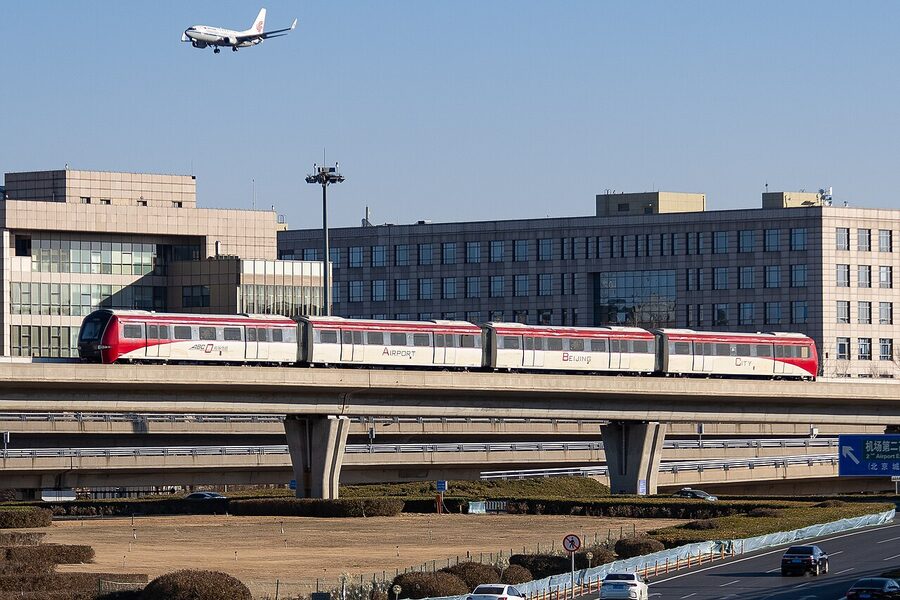
The airport express from PEK is ¥25, 25 minutes from Terminal 3 to Sanyuanqiao on Line 10. The Daxing Airport Express from PKX is ¥35, 19 minutes to Caoqiao on Lines 10 and 19. Either beats a taxi at almost any hour.
A food map of Beijing
Beijing isn’t the food capital of China. Cantonese cooking down south is finer, Sichuan more dramatic, Shanghainese more refined, Yunnan more exciting. But Beijing has its own deep set of dishes (mostly imperial, mostly Manchu-influenced, mostly dependent on lamb, vinegar, garlic, and dough), and a few things you can only really eat properly here. For a wider survey of Chinese regional food including the Beijing canon, my essential Chinese food guide is the partner read.
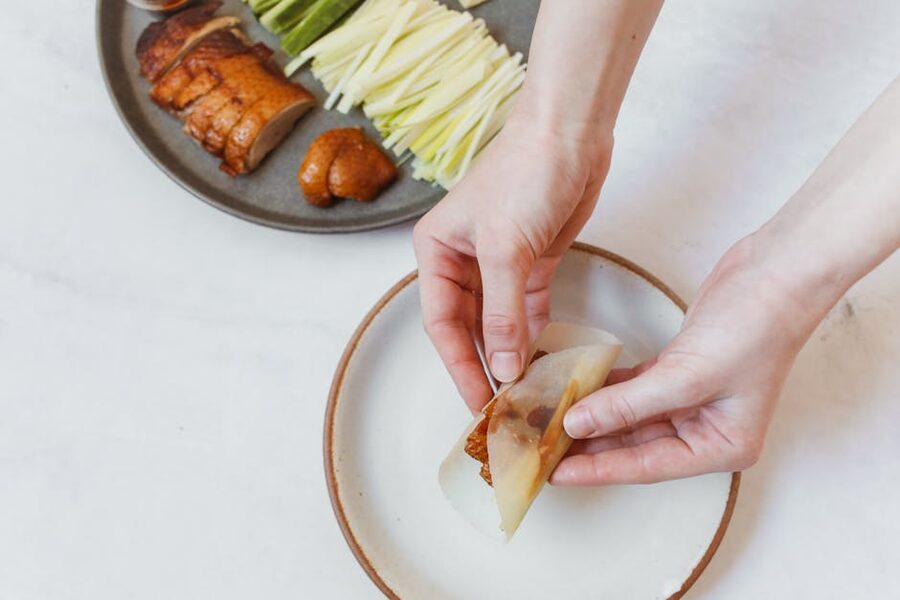
Peking duck. Three names matter. Siji Minfu for honest mid-tier (¥175 a head), branches across central Beijing including by the Forbidden City east gate. Da Dong for upmarket/restaurant-style with French plating (¥400 a head), Wangfujing Joy City is the easiest to get into. Quanjude for the famous-since-1864 institution (¥400-¥500 a head, a bit overpriced); skip the Wangfujing branch and go to the Hepingmen Quanjude for the old-school experience. Send a first-timer to Siji Minfu, a return visitor to Da Dong.
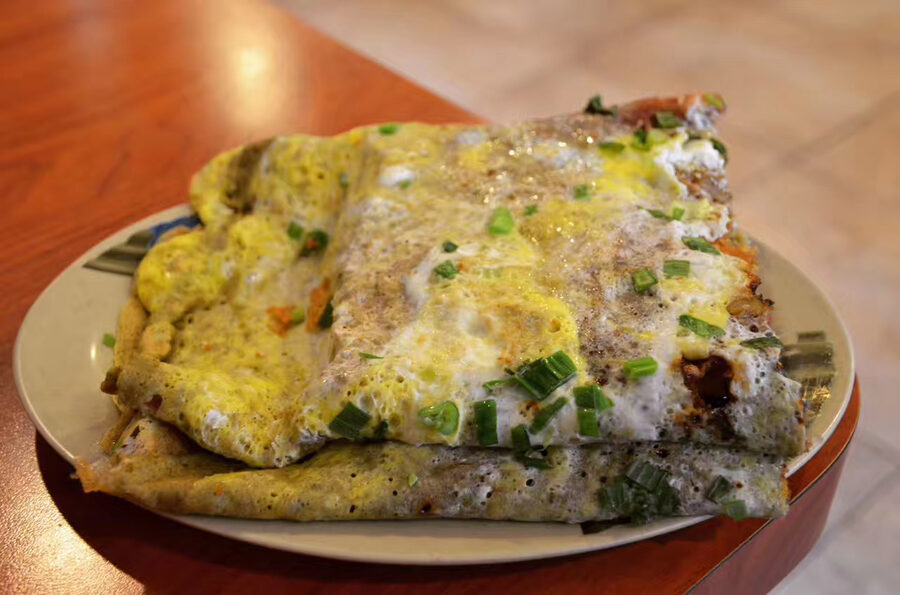
Jianbing. The breakfast crepe. Mung-bean-and-millet batter on a circular griddle, an egg cracked over it, hoisin and fermented bean paste, chili, scallions, coriander, and a crispy fried wonton (baocui) folded inside. ¥10-¥15 from any hutong cart before 9am. Best eaten standing up. Lao Bei Jing Wang Pang Zi Cong Hua Bing on Jiaodaokou South Street is the famous one, ¥18 a piece.
Lamb hotpot. Dong Lai Shun (东来顺), Wangfujing branch, brass copper pot at the table, paper-thin shoulder slices, you cook them yourself in a clear simmering broth and dip in sesame paste with chive flowers. ¥150-¥200 a head. The dish that warms you back up after a winter day on the Wall.
Dumplings. Mr Shi’s Dumplings (Baochao Hutong) is foreigner-easy and good. Bao Yuan Jiaozi does the coloured dough version. For a more thorough breakdown of dumpling types nationally, my dumplings guide covers shengjianbao, xiaolongbao, jiaozi, wonton, and the rest.
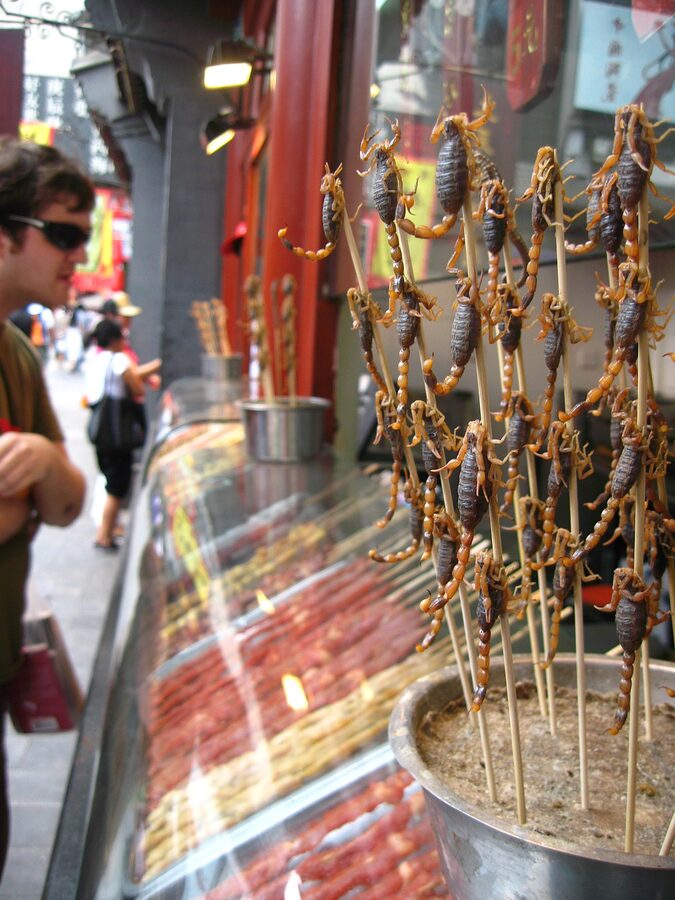
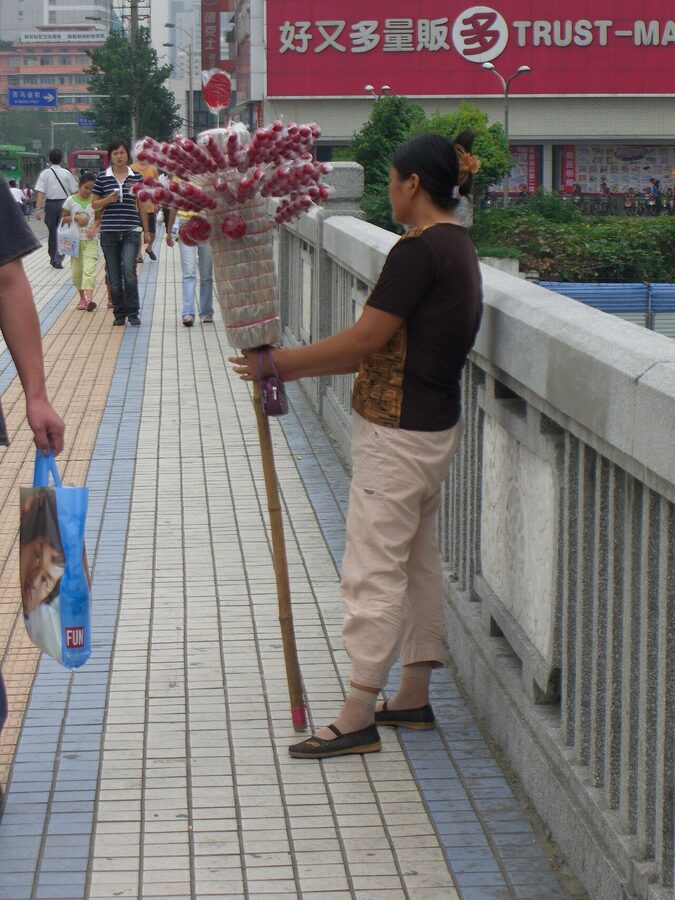
Wangfujing snack street. The famous tourist gauntlet of skewered scorpions, starfish, and sea horses. Locals don’t eat any of it. Walk the street for the look, then turn off into Donghuamen alley and order whatever the longest queue is buying. The proper Beijing snacks here are tanghulu (candied haws on a stick, ¥10), zhima qiu (sesame-seed balls), and luzhu (a heavy stew of pig offal and tofu, polarising). Cash or Alipay.
Money, apps, and the air
Cash, Alipay, WeChat Pay. The single biggest practical change for foreign travellers in 2024-2026 is that Alipay and WeChat Pay both now accept foreign-issued Visa and Mastercard cards directly inside the app. You set this up before you leave: download the app, link your card, verify with passport. Most everyday transactions in Beijing (subway, taxis, restaurants, snack stalls) take Alipay or WeChat Pay first, cash second. Some smaller hutong stalls are cash-only. Carry ¥200-¥500 in small notes (¥10s and ¥20s) for those situations. Foreign credit cards work at hotels and major restaurants but rarely outside of those.
VPN and apps. The Great Firewall blocks Google, Gmail, Instagram, Facebook, WhatsApp, Twitter, YouTube, and most western news. The single best practical move is to buy a tourist e-SIM with a VPN baked in (Holafly and Airalo both do this, around US$30-50 a week), set it up before you fly, connect on landing. China-issued SIM cards do not include VPN access. Without a VPN you can still use Apple Maps, Bing, Outlook, WeChat (which everyone uses anyway), and AirBnB.
Air quality. Beijing’s air has improved dramatically since 2017 but still has bad days in winter. Check IQAir AirVisual before you leave the hotel. Under 100 AQI is fine; 100-150 tolerable; over 150 wear a KN95 or move indoors.
Layered clothing. Continental climate, minus 10 to plus 35 across the year. Spring (April-May) and autumn (September-October) are the best. Mornings sharp, afternoons warm, dress for both. Winter (December-February) is cold and dry; wear a real coat. Summer is hot and humid; carry an umbrella. Walking shoes for any season.
What to skip
Six things to actively cut from a three-day plan.
Badaling Great Wall. The default tour-bus stop. Closest to the city, most restored, most crowded. Mutianyu is forty minutes further and ten times the experience. Just go to Mutianyu.
The midday Forbidden City queue. If you start at the south gate at 11am or later you will spend an hour in security, an hour shuffling through the outer halls behind a tour group, and you’ll come out tired and resentful. Start at 8:30am or don’t go that day.
The fear-factor scorpion stalls at Wangfujing. They’re a tourist gimmick. Locals don’t eat them. The actual Beijing street snacks (tanghulu, zhima qiu, jianbing) are better and cost a third as much.
Olympic Park (Bird’s Nest, Water Cube). Iconic from the 2008 games, very photogenic at night, but unless you’re an architecture nerd or you have a fourth day it’s a half-day round-trip from the centre to look at two buildings from the outside. Save it.
798 Art Zone in two-day-out-of-three Beijing. 798 is a converted East-German-built electronics factory in northeast Beijing that’s now China’s biggest contemporary art district. Genuinely good galleries, but it’s at least three hours minimum and right on the eastern edge of the city. Add it to a five-day plan, not a three.
The “10-yuan all-night fake-jade market”. Whichever Beijing tour offers a stop at one. They are uniformly traps. Walk straight back to the bus.
If you have a fourth or fifth day
Three add-ons in order of how I’d rank them.
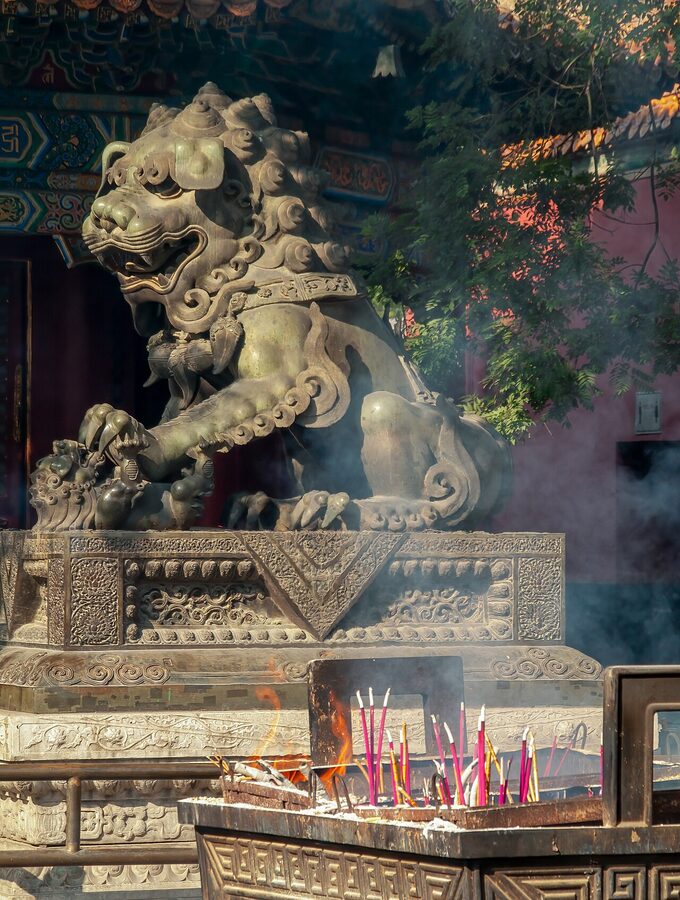
Lama Temple plus Confucius Temple, half day. The Lama Temple is the largest Tibetan-Buddhist monastery outside Tibet, with a six-storey indoor sandalwood Buddha that’s the biggest of its kind in the world. ¥25 entry. The Confucius Temple and Imperial Academy are across the street, ¥30 combined, almost always quiet. Yonghegong (Line 2 or 5). 3-4 hours total.
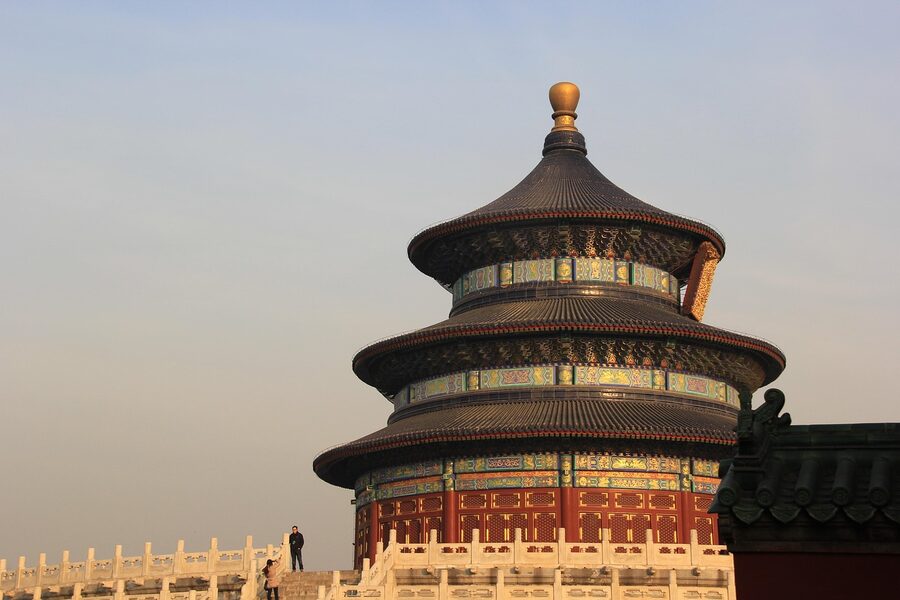
Temple of Heaven, half day. The 1420 Ming-dynasty complex where the emperor came annually to pray for good harvests. The blue-tiled three-tiered Hall of Prayer is the building everyone recognises. ¥30 entry, Tiantan East (Line 5). The park around it (273 hectares, three times the Forbidden City) is one of the best places in town to watch retired locals do tai chi, mahjong, and synchronised dance at scale.
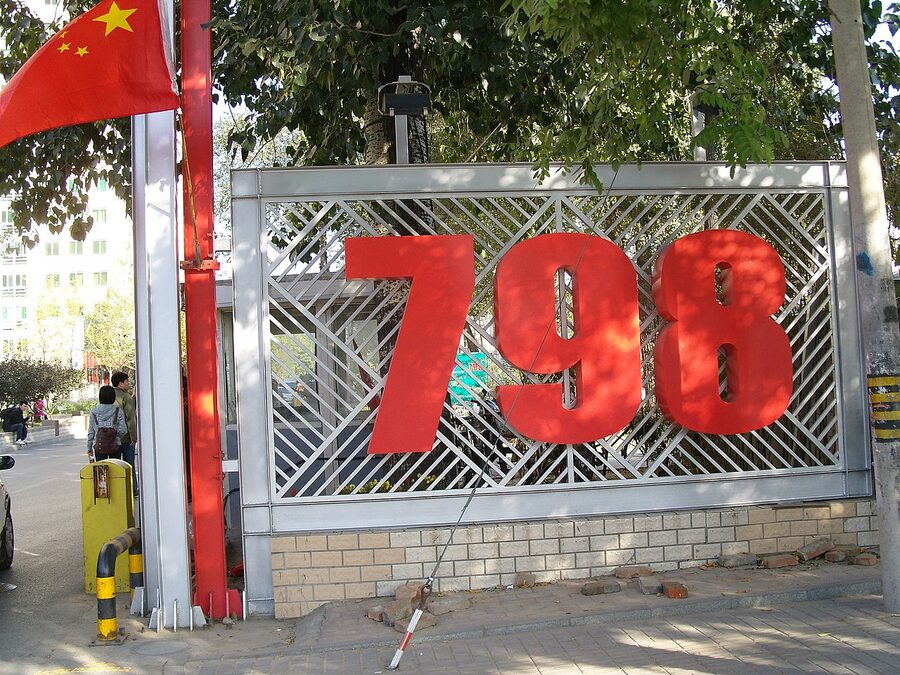
798 Art District, half to full day. Free entry to the district, ¥30-¥80 for individual gallery shows. UCCA Center for Contemporary Art is the heavyweight. Allow three hours.
If you’re flying domestic onward, Shenzhen and the south are about three hours by air or eight by high-speed train. My Shenzhen pillar guide covers what to do once you land down there. Or skip Shenzhen and go straight south to the karst country, in which case my Yangshuo guide picks up where Beijing leaves off.
If you only have one day, or you have four
One day in Beijing. Drop the Great Wall, drop the Summer Palace, do the imperial axis on foot. Tiananmen at sunrise, Forbidden City at 8:30am, Siji Minfu lunch by the east gate, Jingshan for the rooftop view, dumplings off Houhai for an early dinner, in bed by 9pm. You will see one of the great cities of the world. You will not have seen the Wall, which is the thing people will ask you about, so this only really works as a transit-day trade.
Four days in Beijing. Do the three-day plan as above, then add a fourth day for either Temple of Heaven plus Lama Temple plus a long lunch in the hutongs, or for 798 Art District plus a long late lunch in Sanlitun. If you’re an architecture or art-leaning traveller, take the second option. If you’re more interested in temples and history, take the first.
Five days. Now you have time for a more ambitious Wall day (Jinshanling instead of Mutianyu, or a Jinshanling-to-Simatai hike, both wilder than standard Mutianyu) plus a full day in 798 with a return evening in Sanlitun.
Three days is enough for the headlines, and the headlines in Beijing are some of the headline-worthiest in any city in the world. Get up early. Eat a jianbing on a curb. Walk through 600 years of imperial architecture before the queues catch up. Drink a cold beer by a frozen lake. Sleep on the plane home.

.jpg)

.jpg)

_1.jpg)

.jpg)


.jpg)


