
A Short History of Japanese Food (Not Really Short)
On a stormy August morning in 1543, a Chinese junk drifted onto a beach at the southern tip of a small island called Tanegashima, off the coast of Kyushu. On board were three Portuguese sailors, two of them shipwrecked, the third translating for them. The local lord rode down to meet them. He bought one of their matchlock guns. Within a few decades, Japanese smiths were copying the design well enough to change the country’s wars, but that’s the story you’ve already heard. The other thing the Portuguese were carrying that morning, and the thing nobody on Tanegashima could have predicted would matter more in the long run, was a bag of sugar, a frying technique, and a recipe for sponge cake.
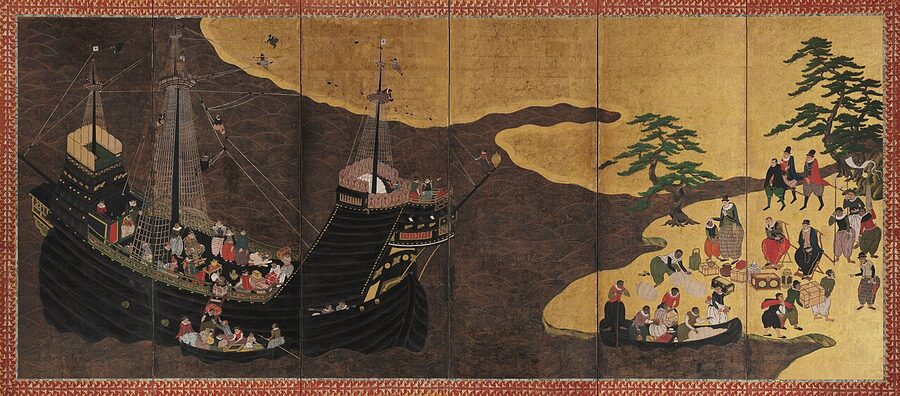
Tempura. Castella. Konpeito. Pan. Kabocha. The four most foreign-feeling words you’ll see written in Japanese script today, the ones that fool every traveller into thinking they’re hearing local heritage food, are actually Portuguese loanwords that walked off a wrecked junk one morning in 1543 and never left. The Japanese kitchen you’ll meet in Tokyo or Kyoto next week is the thirty-eighth iteration of fourteen thousand years of contact, refusal, contact again, mistake, refusal, mistake, blend. None of it was inevitable. A lot of it was an accident on a beach.
This is a long history piece. Plan a coffee. The reason it’s worth reading before you go is that the food you’re about to eat in Japan is an unusually legible record of the country’s own decisions, including the long stretches when Japan decided to eat almost nothing from outside. You can read 14,000 years of negotiation off a single conveyor-belt sushi train if you know where to look. By the end of this piece you should know where to look.
I’ll move chronologically through the eras, but the point isn’t a textbook. The point is to give you context for the bowl in front of you. Why the morning miso has dried fish in it. Why the konbini onigiri is a religious object dressed up as fast food. Why a Kyoto vegetable set costs more than a Tokyo wagyu steak. Why the curry on the rice in your Yokohama hotel restaurant is more British than Indian. Why the instant ramen in your hand luggage was invented eight years before the Beatles broke up. All of it has a date, a place, sometimes a person.
In This Article
- The 14,000-year base: Jomon and Yayoi
- The Heian aristocrat’s table
- Zen, tea, and the seeds of kaiseki
- The Portuguese arrive
- Edo: the urban food revolution
- Meiji: opening, beef, and the invention of yoshoku
- Taisho, early Showa, and the arrival of ramen
- Postwar: the wheat shift and the ramen explosion
- Heisei and Reiwa: globalisation in both directions
- What hasn’t changed
The 14,000-year base: Jomon and Yayoi
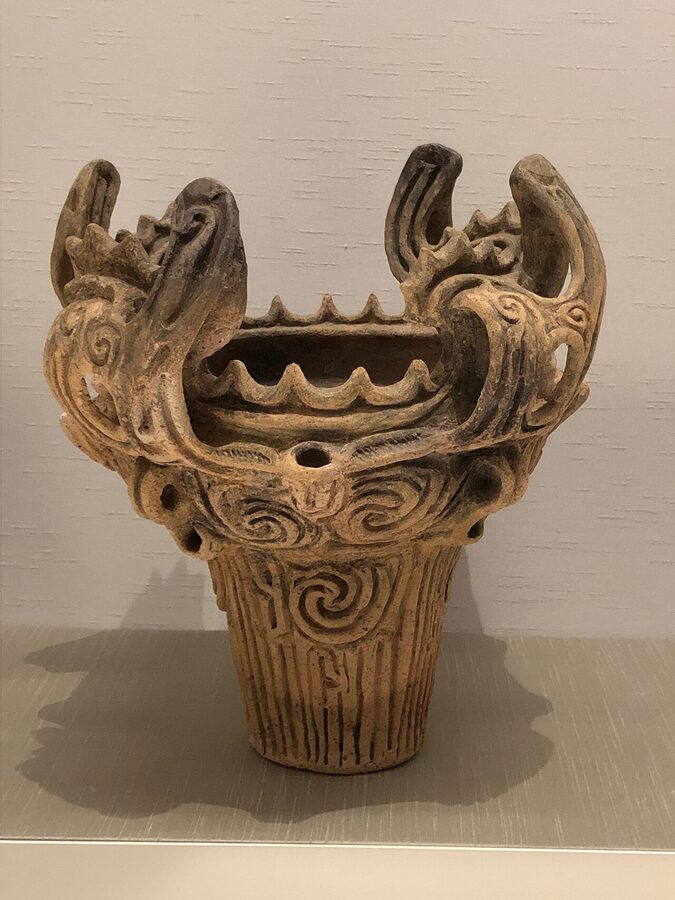
The most surprising thing about Japanese food history isn’t how much has changed. It’s how long the pre-rice base lasted before anything changed at all. The Jomon period runs from roughly 14,000 BCE to 300 BCE. That’s almost fourteen thousand years of one cultural lineage on the same archipelago, fishing the same coasts, gathering chestnuts and walnuts in the same valleys, hunting deer and wild boar in the same forests. By comparison, the entire history of writing in Europe is about five thousand years. Jomon ran almost three times longer.
The food was salmon and trout and bonito from the Pacific, deer and boar from the forests, hazelnuts and chestnuts and walnuts from autumn ground, mushrooms from after rain, and for a very long stretch, a lot of shellfish. The shell middens, kaizuka, are still being dug up in coastal Japan today, mounds of oyster and clam shell metres deep. The thing that was already in place was the seasonal instinct. You ate what came in. Spring greens, summer fish, autumn nuts and chestnuts, winter dried things and pickles. That word, shun, the moment when an ingredient is at its peak, is Jomon-era reflex written into the modern language. When a chef in Kyoto makes a fuss about a particular bamboo shoot in early April, you’re hearing the Jomon talking.
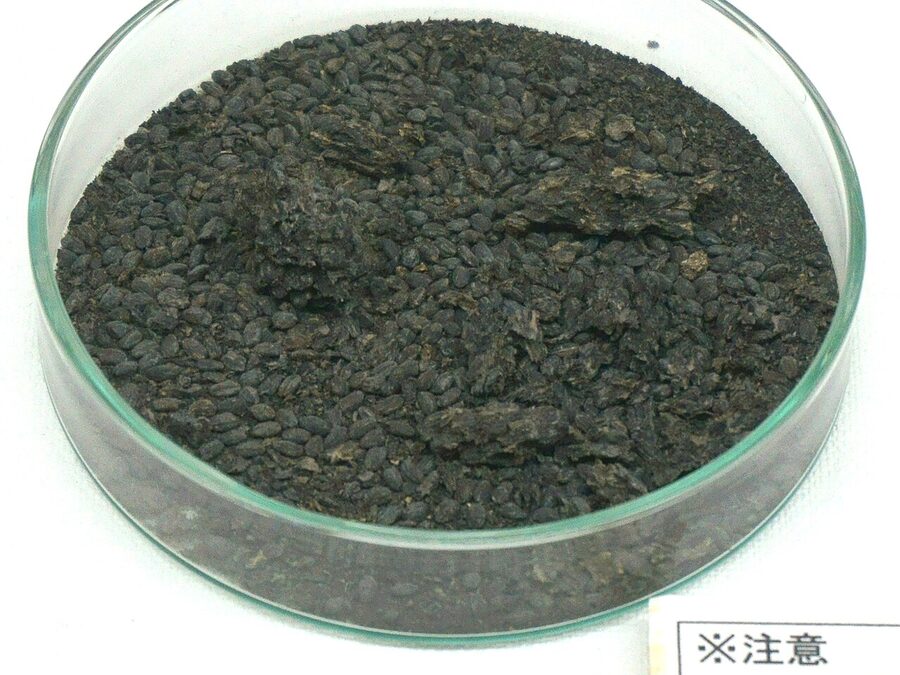
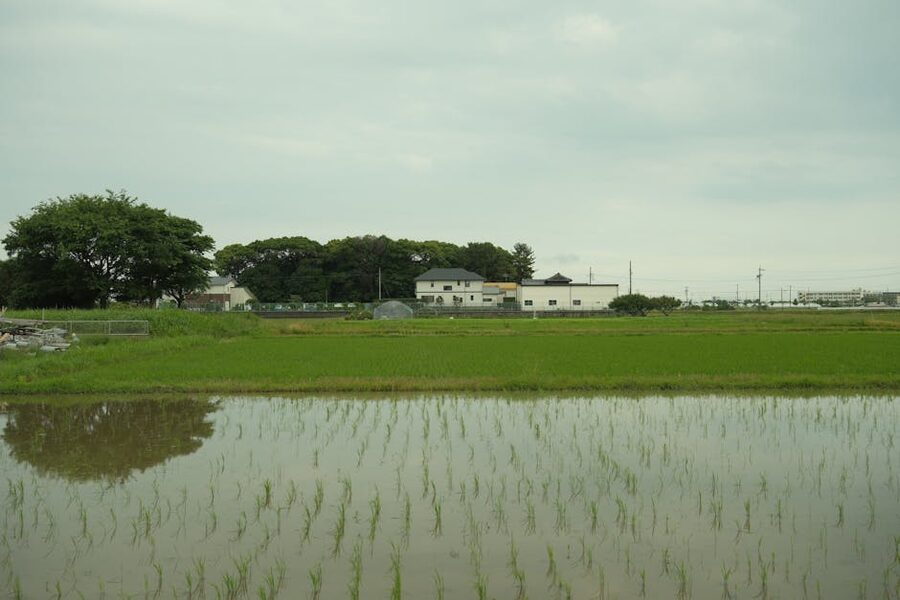
What changed was rice. Wet-paddy rice cultivation arrived from China by way of the Korean Peninsula around the 3rd century BCE, the start of the period archaeologists call Yayoi. (Some recent dating pushes Yayoi as early as 1000 BCE, but the broad shift is the same.) The early carbonised grains pulled out of the Nabatake site in Saga Prefecture date the practice to the very edge of the Jomon-Yayoi transition. Within a few centuries, the southwest of Japan reorganised around the rice paddy: where you put the field, who controlled the water, who held the storehouse, who married who, who paid tax in koku of rice, who got which seat at which festival. Rice became wealth. Rice became currency. Rice became state.
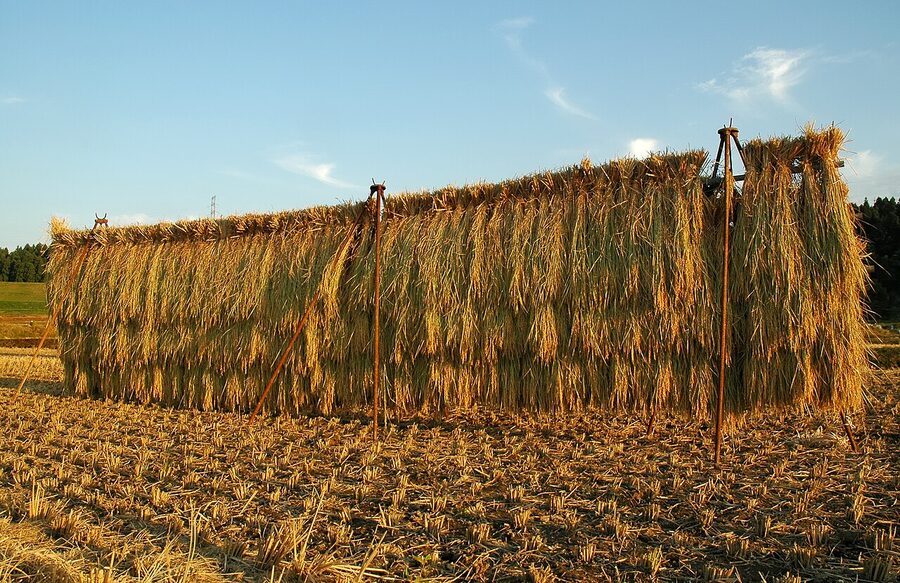
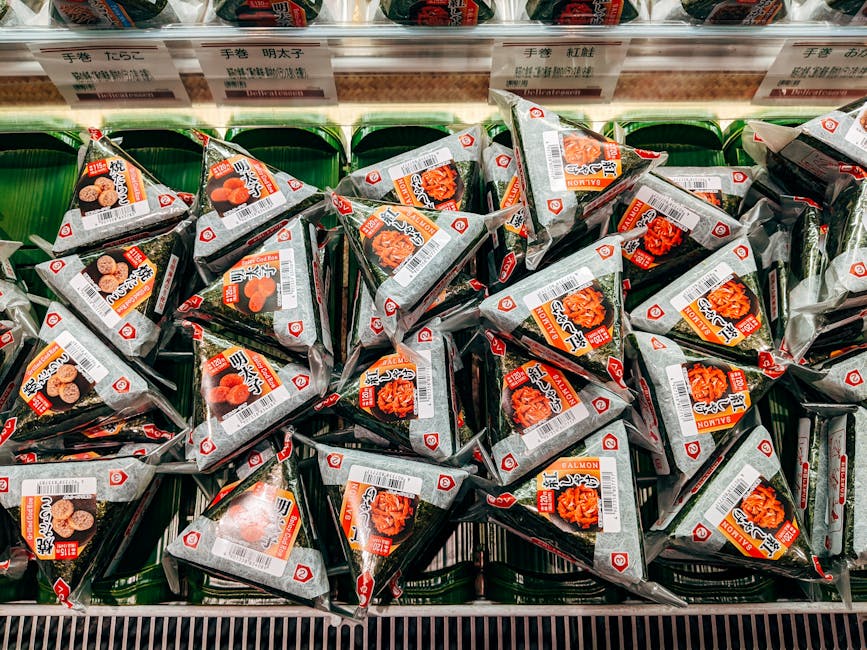
That last shift is the one that matters most for understanding modern Japan. By the Yayoi-Kofun era, rice was already not just food. It was a unit of account. A samurai’s stipend was measured in koku, the volume of rice required to feed a man for a year. A daimyo’s domain was measured in koku. A village’s tax was assessed in koku. Even now, when a Shinto priest blesses a new shrine with rice, when a foreigner gets handed a fresh onigiri at a roadside konbini, when a sushi chef shapes the shari, you’re touching the long shadow of a 2,000-year-old accountancy system that decided rice was the most important measurable thing on the islands. It’s why the bowl of plain white rice still sits in the centre of every traditional meal. It isn’t garnish. It’s the unit.
By the time the next big thing happens, around the 6th century, Japan already has a deep food culture, an organised state built on rice tax, a coastline of fishing villages exporting dried bonito and salt, and a strong taste for fermented things, namely the proto-shoyu hishio paste and the early salted fish ferments that would later become the great Kansai sushi tradition. What it doesn’t yet have is Buddhism, or chopsticks, or tea, or the meat ban. All of that is coming.
The Heian aristocrat’s table
Buddhism arrived in 538, traditionally, via a delegation from the Korean kingdom of Baekje carrying sutras and bronzes for the Emperor Kinmei. It took about a century to settle into court politics. Once it did, it changed the menu.
The pivotal date is 676 CE, when Emperor Tenmu issued a decree banning the eating of cattle, horses, dogs, monkeys, and chickens during the four warm months of the year. Fish wasn’t on the list. Wild deer and boar weren’t on the list either, which is why mountain villages kept eating game well into the 19th century. But the cultural direction was set. Over the next three hundred years, more decrees followed. Empress Koken in 752 banned fishing outright (and then quietly compensated the fishermen with rice rations, because nobody actually wanted them to starve). By the 9th century, court regulations declared that any noble who’d eaten meat was unclean for three days and barred from Shinto rites. The Buddhist taboo and the Shinto taboo on blood pollution stacked into a single, muscular rule. Don’t kill mammals. Don’t eat them. Get your protein from the sea.
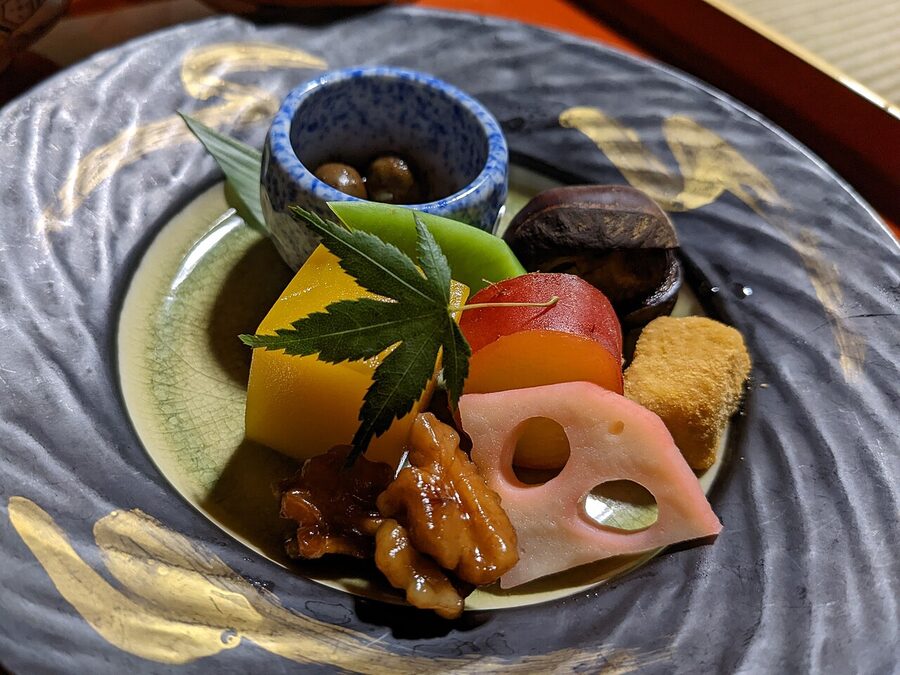
The cuisine the Heian aristocrat actually ate would seem strange to a modern Japanese eater, let alone a foreign one. Chopsticks had arrived from China during this period, but only the nobility used them. Commoners still ate with hands. The aristocrat would sit at his own small lacquered table, called a zen, with rice in one bowl, soup in another, and a series of small dishes around them: dried fish, fresh fish sliced thinly with vinegar (the namasu, ancestor of sashimi), seaweed dressings, simmered vegetables, pickles. Spoons existed but were rare. The seasonings on the table were salt, vinegar, and hishio, the proto-shoyu fermented from soybeans, wheat, sake, and salt. There was no soy sauce yet. There was no miso yet, not as we know it. Sugar was a medicine, imported in tiny quantities from Tang China, locked up like gold.
This is also when tea arrives. Buddhist monks Saicho and Kukai are said to have brought tea seeds back from China around 805 CE. Tea grows in court circles for a century or so, falls dormant, and only really catches in the Kamakura period three hundred years later. The Heian court drinks it as medicine, not as ceremony. The leaves are pressed into bricks and shaved, not whisked.
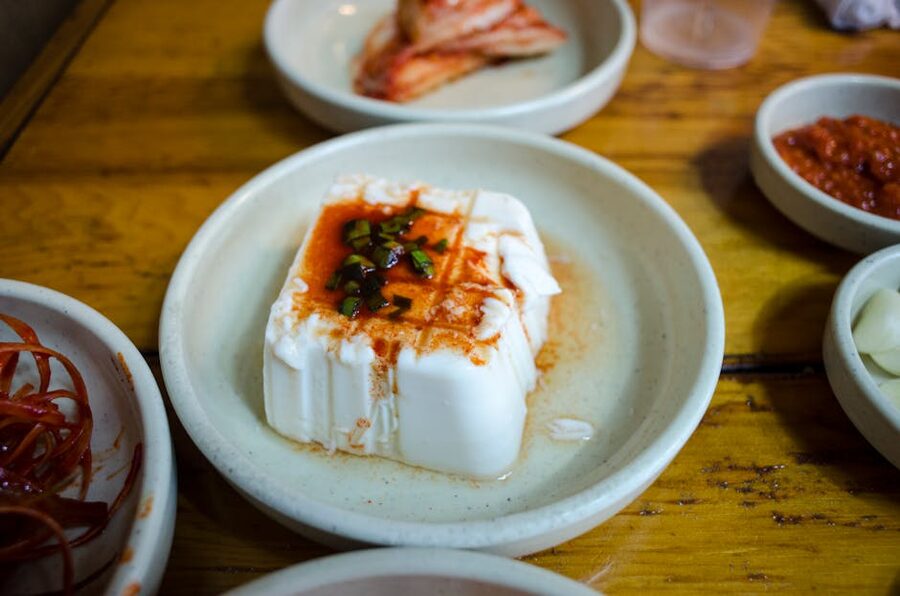
What’s also taking root in this era, quietly, is shojin ryori, the Buddhist temple cuisine that reorganises a meal around tofu, sesame, beans, vegetables, and the absence of any animal flesh. You can still eat shojin ryori in Kyoto temples today. The recipe range is narrow, the technique is exacting, the umami is built entirely from kombu and shiitake, and the meal can run two hours. It’s the only fully unbroken food tradition in Japan, by which I mean: the dish a Heian-era monk in 900 CE would have eaten is essentially the dish a Kyoto monk serves you now. Try it at a Kyoto temple and you’re sitting closer to a 1,200-year-old kitchen than anywhere else in the country.
Zen, tea, and the seeds of kaiseki
The Kamakura period (1185-1333) and the Muromachi period that followed (1336-1573) are the centuries when Japanese food becomes recognisably itself. Three things happen.
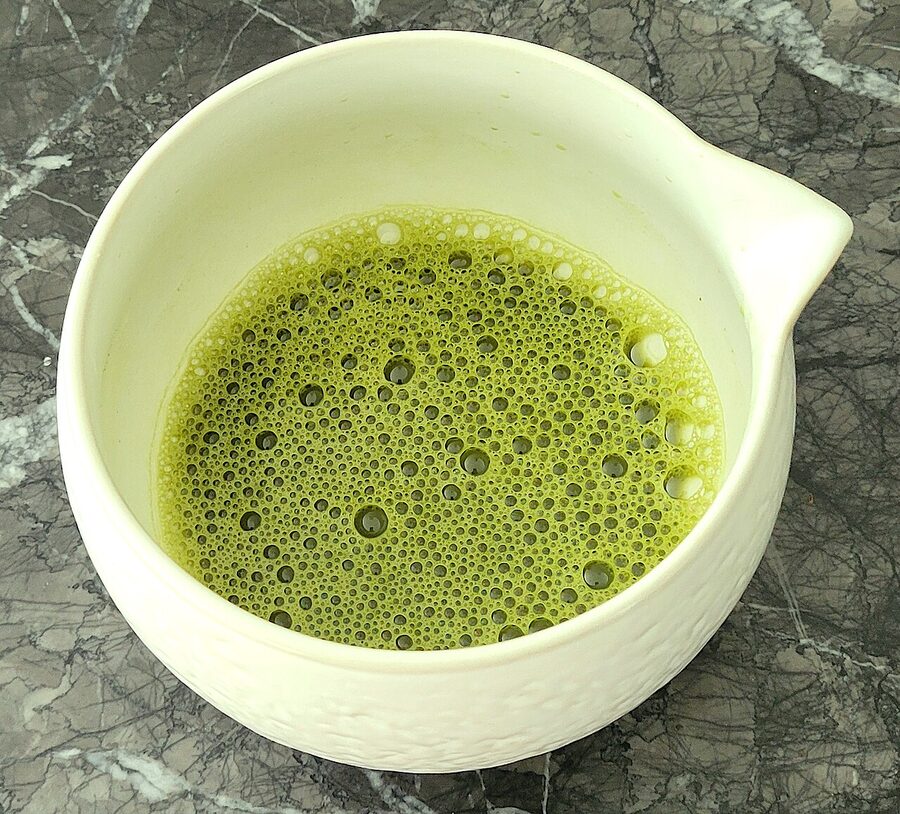
The first is the arrival, in 1191, of a monk named Eisai, returning from his second study trip in Song-dynasty China with a handful of tea seeds and a working knowledge of Zen Buddhism. He plants the seeds at Seburi mountain in Kyushu and sends some on to a friend in Kyoto. He writes a book called Kissa Yojoki (“Drinking Tea for Health”) in 1211, the first Japanese tea text. The tea Eisai brought back wasn’t the brick-shaved kind the Heian court had been using. It was matcha, leaf ground to powder, whisked into hot water with a chasen of split bamboo. By 1300, monks across Kamakura and Kyoto were drinking it in tea rooms.
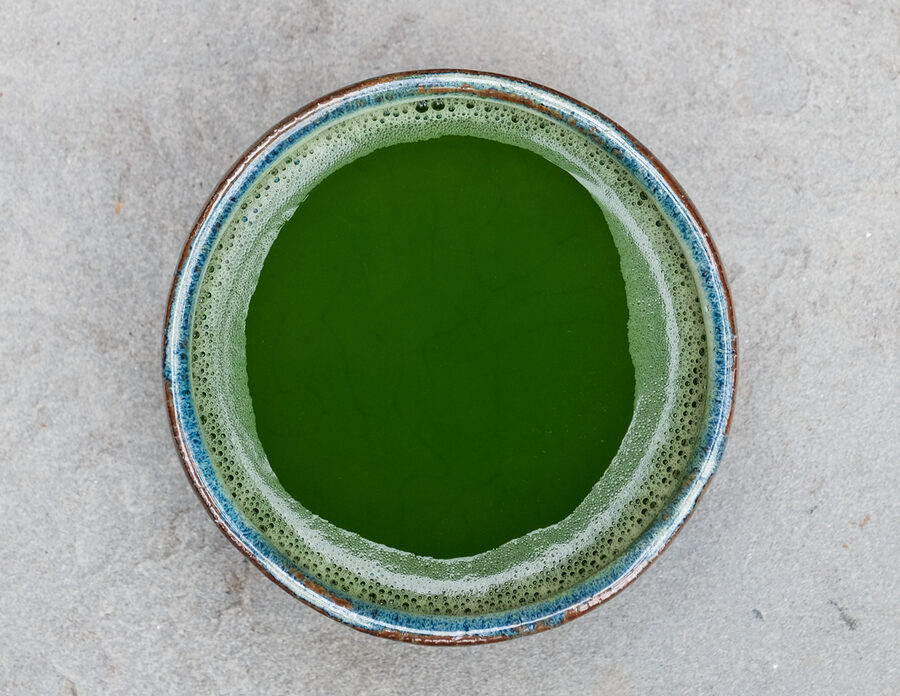
The second thing is the gradual standardisation of soy sauce, called shoyu. Throughout the Kamakura and Muromachi periods, soybean fermentation evolves from the rough hishio of Heian times into something closer to today’s shoyu, with miso splitting off as its own product. The traditional date for the discovery of liquid shoyu is around 1254, when the Zen monk Kakushin returns from China with a recipe for Kinzanji miso. As the miso ferments, a dark salty liquid pools in the bottom of the vat. Someone tastes it. Tamari, the ancestor of all soy sauce, is now part of the kitchen. The fact that an entire flavour family of Japanese cuisine descends from the runoff of a Buddhist monk’s miso vat is the kind of detail that makes Japanese food history worth reading.
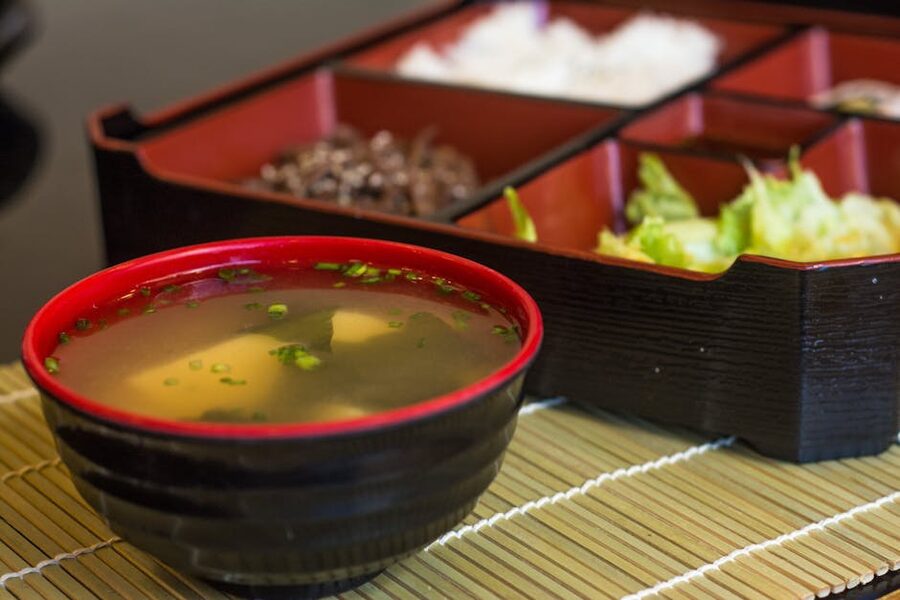
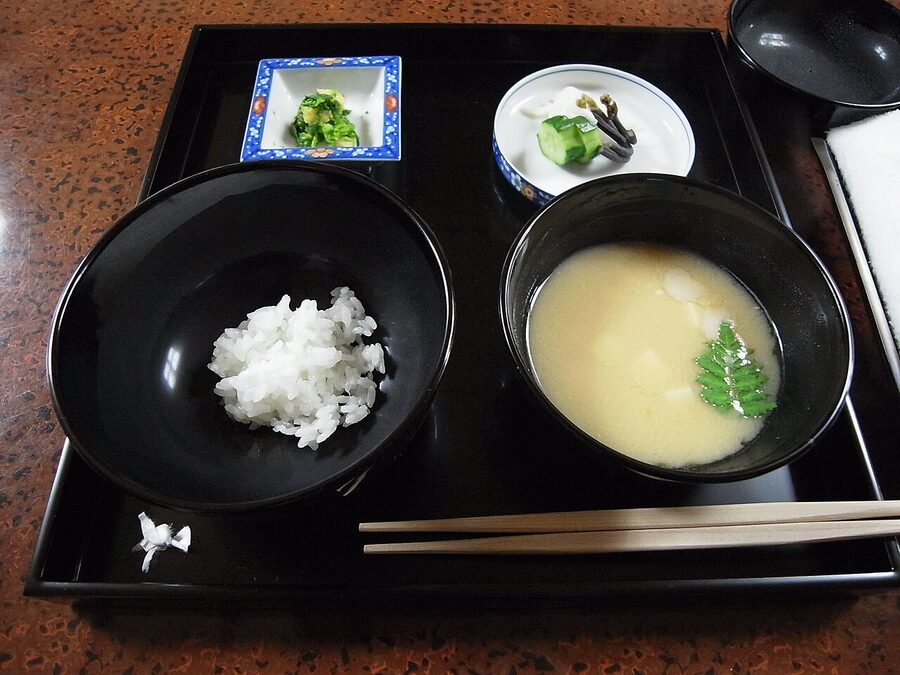
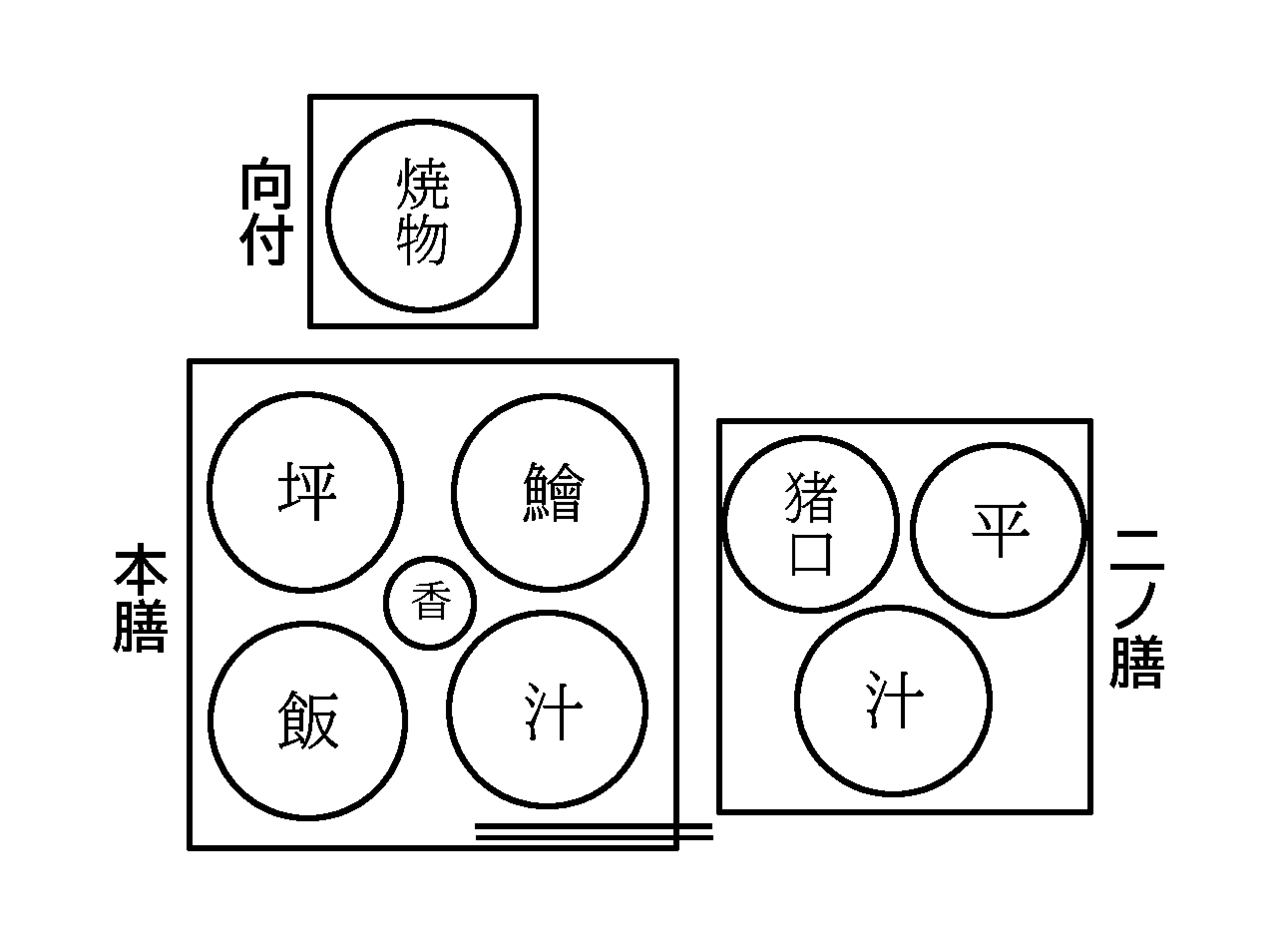
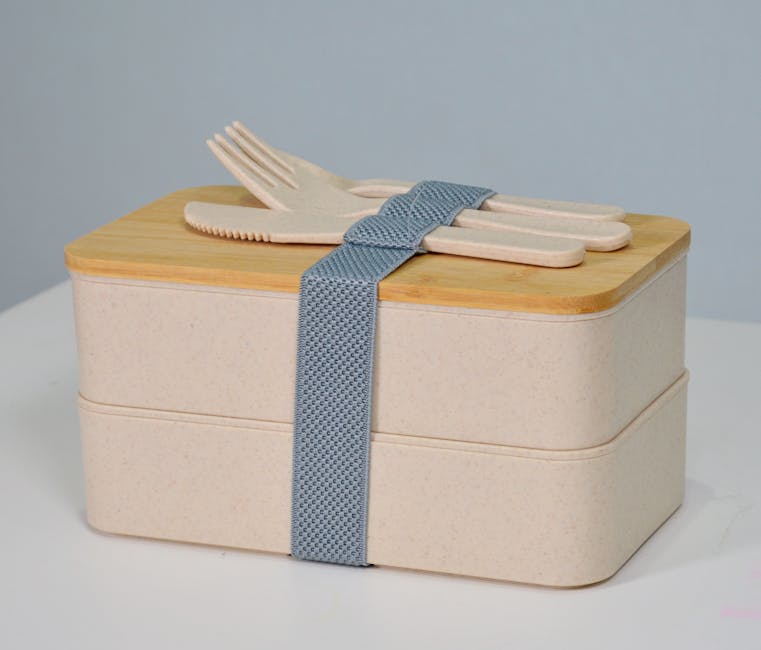
The third thing is honzen ryori. As the samurai class consolidates power, formal banqueting moves out of the imperial court and into the warrior household. The honzen format codifies how a meal is served: a primary tray, then a secondary tray, then a third, each with a fixed number of dishes (one soup three sides, two soups five sides, three soups seven sides). Every plate has a place. Every guest has his own table. It is, fundamentally, the original of every modern Japanese set meal you’ll meet on a plane, at a ryokan, in a department store basement. The honzen tray of 1450 is the bento box of 2026, just with the lacquer pared back.
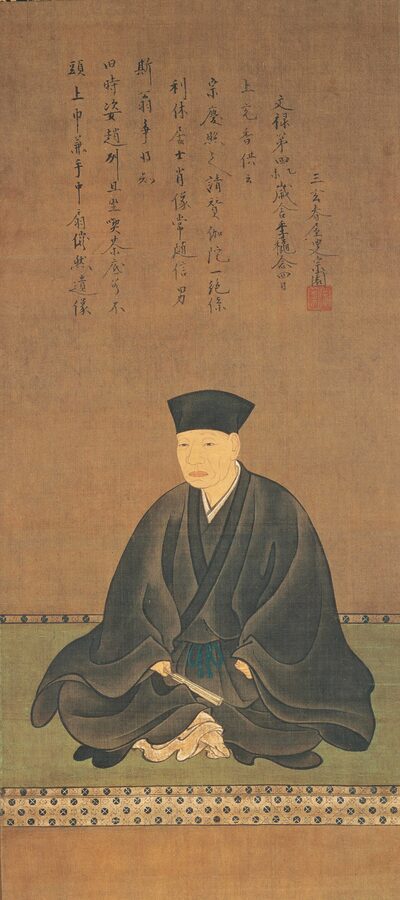
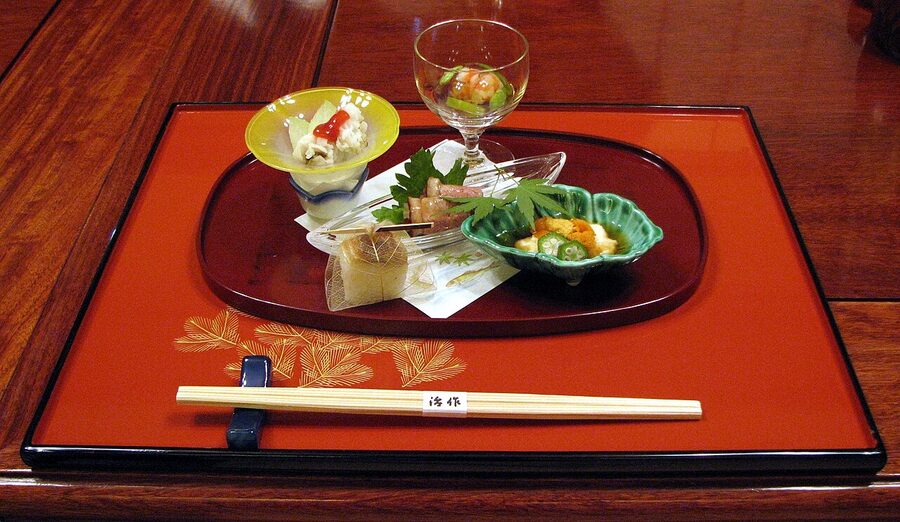
And then, in the late 16th century, a tea master named Sen no Rikyu pulls all of it together. Rikyu (1522-1591) refines the wabi-cha aesthetic of his teachers Murata Juko and Takeno Joo, stripping the tea ceremony down to a small dim room, four-and-a-half tatami at most, plain unglazed bowls, no decoration but a single flower in a bamboo tube, no decoration on the food. The meal eaten before the tea, called cha-kaiseki, becomes the seed of modern kaiseki cuisine: simple, seasonal, served in courses, plated with a deliberate sense of negative space. When you spend ¥40,000 on a Kyoto kaiseki dinner now and the chef brings out a single piece of grilled hamo conger eel on a leaf, you’re sitting inside Rikyu’s design choices. He died in 1591, ordered to commit seppuku by Toyotomi Hideyoshi, and his death by tea-master politics is itself a measure of how seriously the late Sengoku world took this stuff.
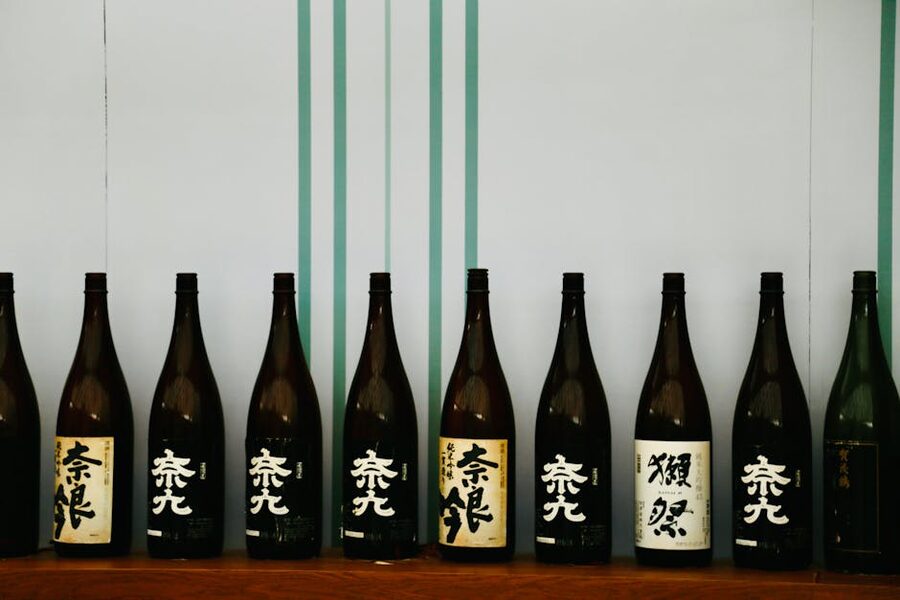
One more thing happens in Muromachi-era Nara. The temple kitchens of Shoryaku-ji refine sake brewing into something close to the modern technique. The bodaimoto starter method, the koji standardisation, the use of polished rice, all of it is being worked out behind temple walls in the 14th and 15th centuries. By the time Edo-era brewers get hold of it, they’re inheriting two hundred years of monastic R&D. I’ve gone deeper into that history in a separate piece on drinking sake in Japan, because it deserves its own thread; for now, the takeaway is just that monks invented your sake.
The Portuguese arrive
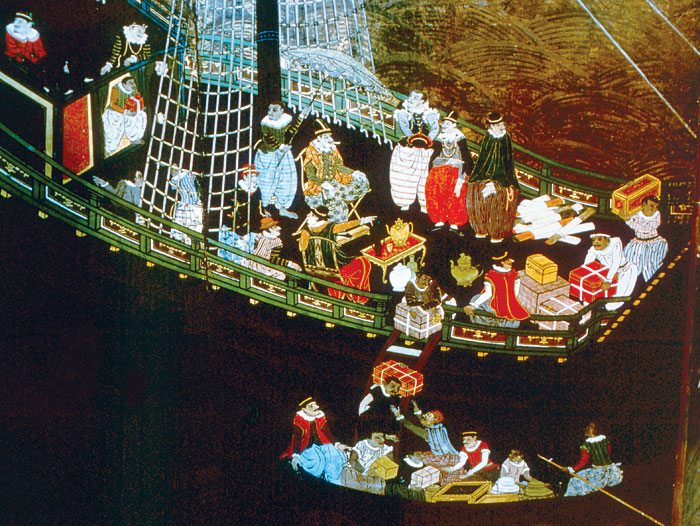
Back to Tanegashima. The shipwreck in 1543 is the start of what’s called the Nanban period, “Southern Barbarian” being the polite Japanese term for the Portuguese (and later the Spanish, Dutch, and English) who started showing up off the southern coast looking to trade silk for silver and to convert anyone who’d listen. For about ninety years, until the Tokugawa shogunate slammed the country shut in 1639, Japan was unusually open to foreign food.
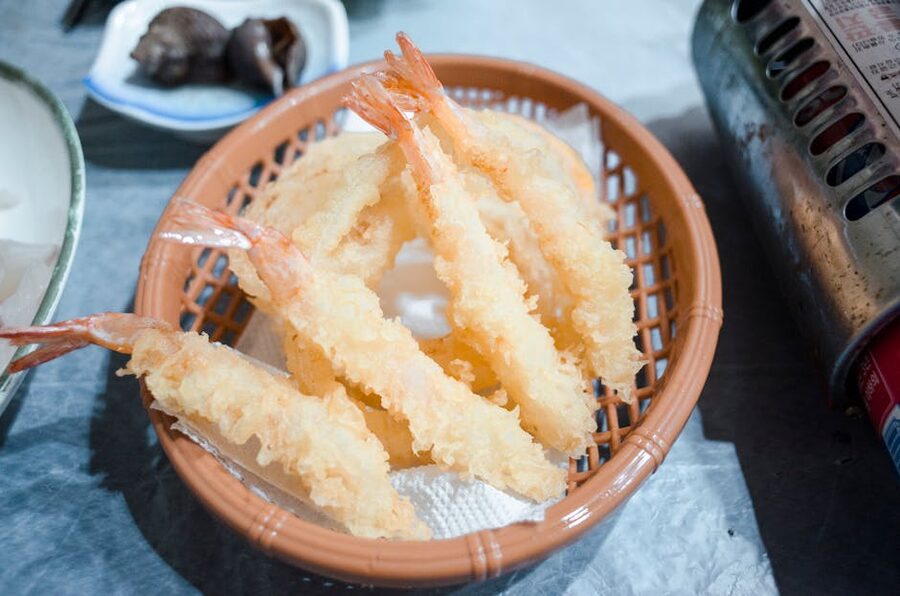
The most famous arrival is tempura. The accepted story, which is probably the right one, is that the technique came in via Portuguese Jesuits cooking battered green beans during the four Catholic Ember Days, the quattuor anni tempora (“four times of the year”) that mandated fasting from meat. Local Japanese saw the friars frying their fast-day vegetables, picked up the method, applied it to local fish and shrimp, and called it tempura, from “tempora”. By the late 16th century the technique is in Japanese kitchens. By the early Edo period there are tempura street stalls in Edo. By 1900 it is the dish you most associate with the entire country.
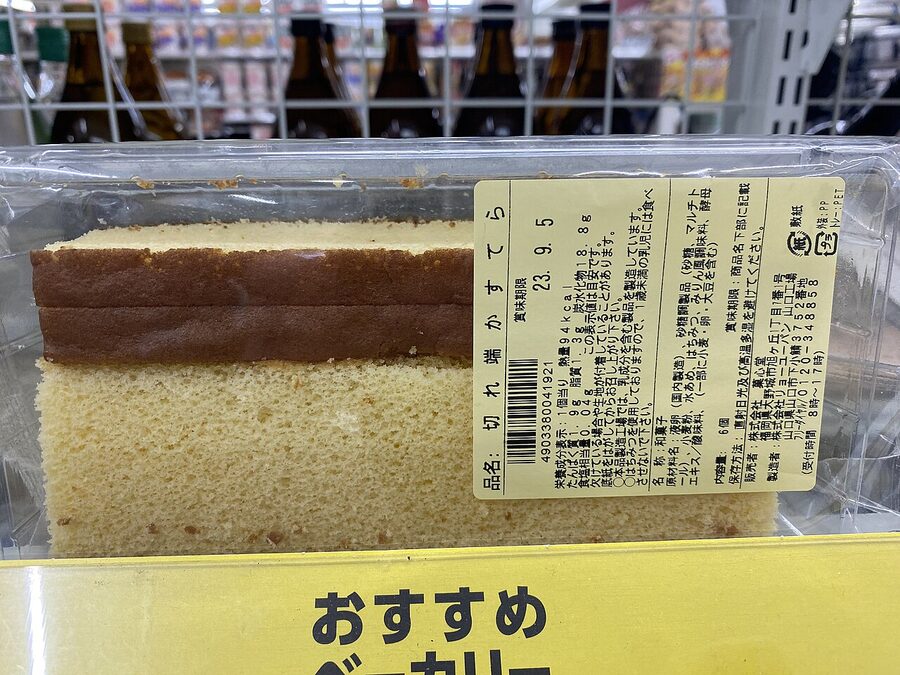
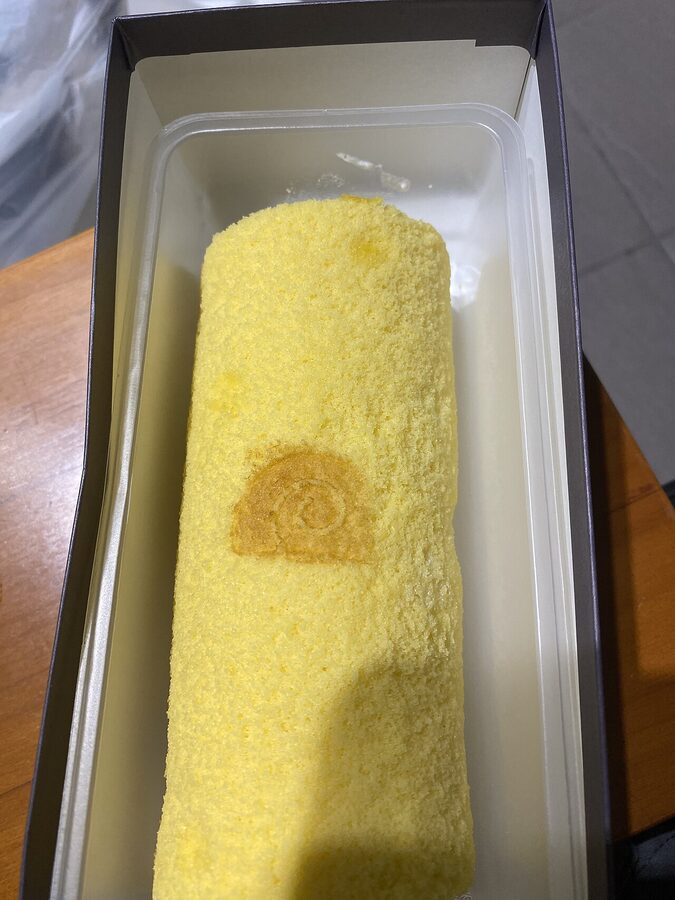
The second arrival is castella. The Portuguese sponge cake, called pão-de-Ló in Portugal, gets adopted in Nagasaki, the only foreign-trade port to remain partly open during sakoku, and basically never leaves. Modern Nagasaki castella is sold in the same long thin loaves, baked in the same wooden frames, sliced the same way. If you visit Nagasaki, the Fukusaya shop has been making it continuously since 1624, four hundred years and counting. Walk past on a winter afternoon and you can still smell the sugar and egg yolks from outside. The cake is unmistakably Portuguese, but four centuries of small Japanese refinements (the precise sugar ratio, the use of mizuame syrup at the bottom, the preference for slightly drier crumb) have made it Japanese in a way that doesn’t translate back.
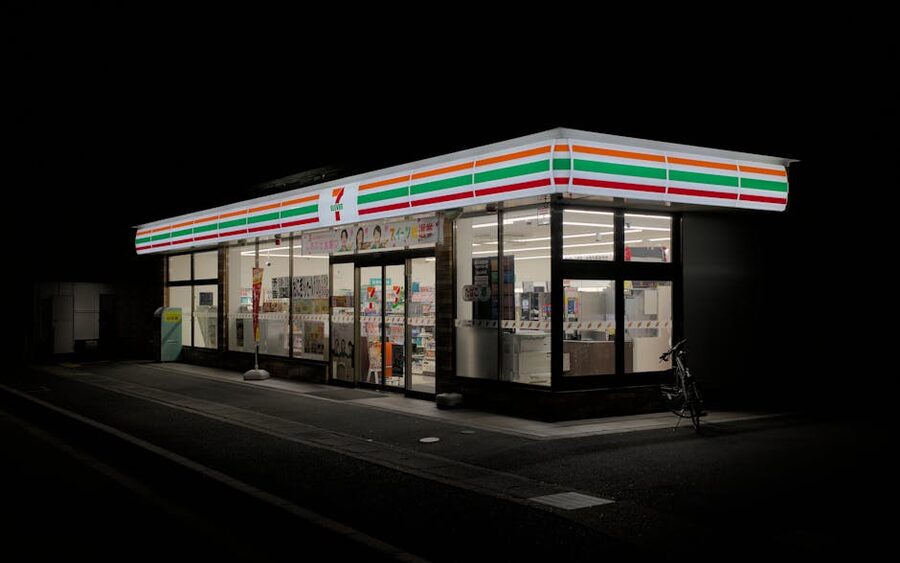
Konpeito, the small star-shaped sugar candy you’ll see in vending machines at Kyoto temples, also lands in this period, from the Portuguese confeito. So does pan, the word for bread, from pão, which sounds vaguely Latin every time you walk into a 7-Eleven and order a pan from the bakery shelf. So does kabocha, the Japanese pumpkin, named after the country it came via, Cambodia, but introduced by Portuguese traders. The list runs to about thirty loanwords, all in the kitchen. I’ve taken a closer look at fifteen of these “Japanese” foods that are really imports in a separate piece.
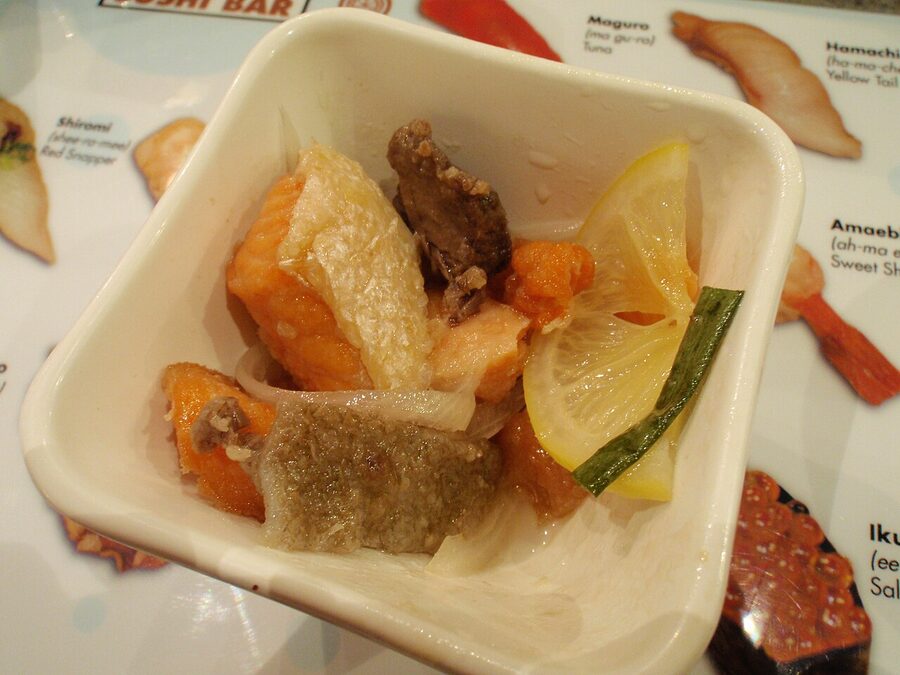
And then in 1639 the door slams. The Tokugawa shogunate, alarmed by Christian conversions and Iberian gunpowder politics, expels the Portuguese, restricts the Dutch and Chinese to a single fan-shaped artificial island in Nagasaki harbour called Dejima, and bans foreign travel by Japanese under penalty of death. The country goes dark for two hundred and fourteen years. What happens to Japanese food during sakoku, the closed-country period, is one of the most interesting kitchen experiments in world history: take a culture, cut it off from the world, and watch what it does with what it already has.
Edo: the urban food revolution
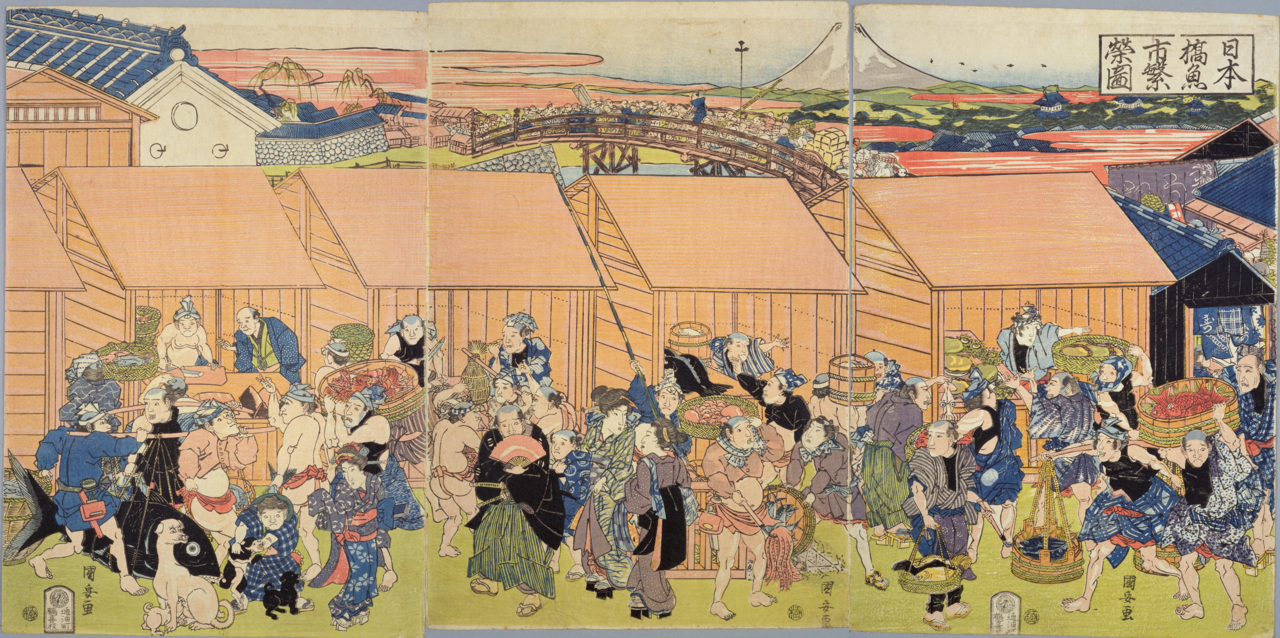
What it does with what it already has, mostly, is invent the modern Japanese kitchen.
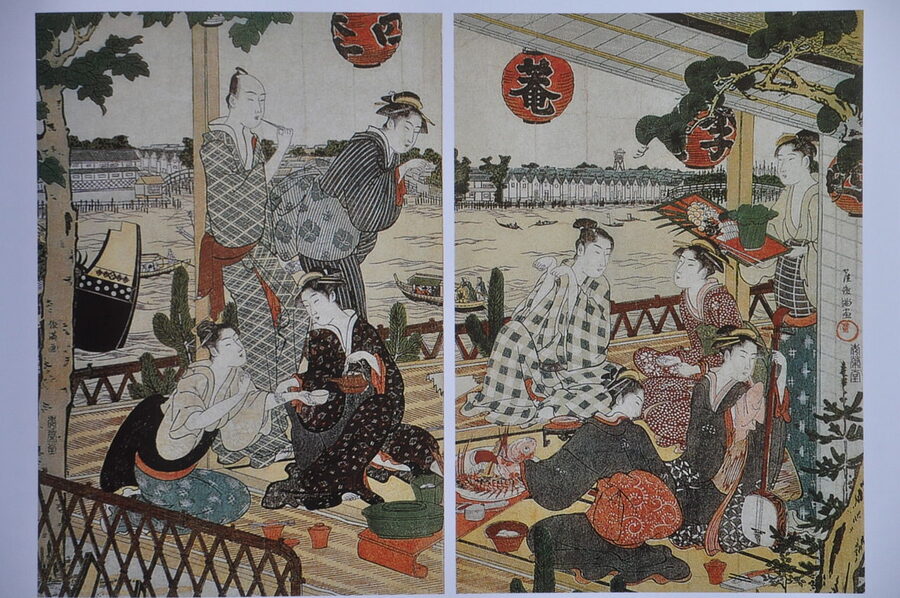
The Edo period (1603-1868) is the era when Japan urbanises faster than anywhere else on earth. The new shogun, Tokugawa Ieyasu, picks a small fishing village on the eastern coast called Edo as his administrative capital and starts turning it into a city. By 1700 Edo has a million people. London at the same date has roughly seven hundred thousand. Edo is, briefly, the largest city in the world. And it’s a city full of single men, samurai retainers without families, day labourers, fishmongers, woodcutters, all needing fast cheap food on the street.
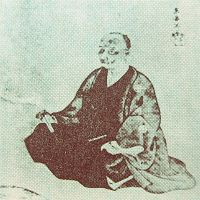
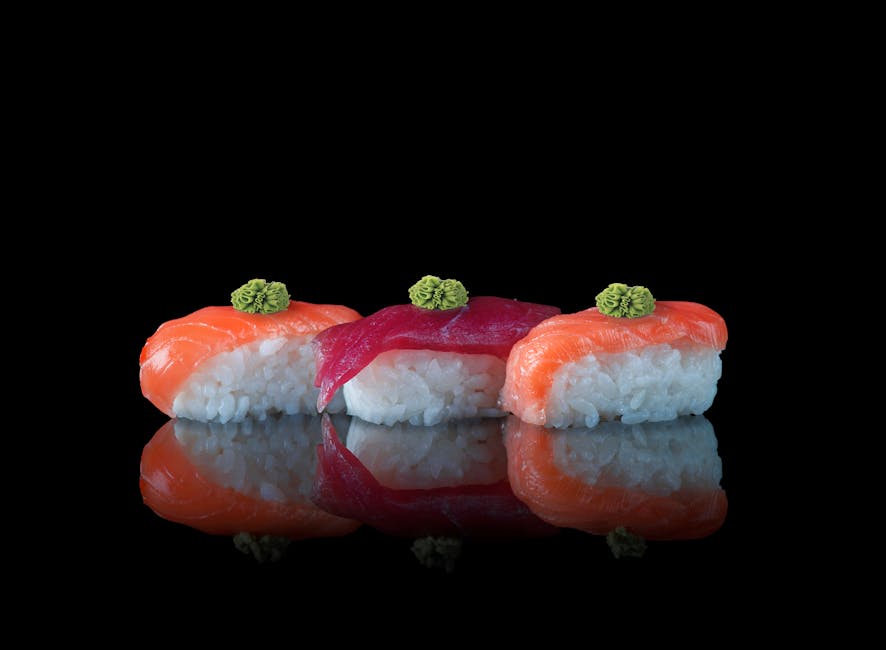
This is when sushi becomes recognisable. Until the Edo period, “sushi” meant nare-zushi, the long-fermented rice-and-fish preservation method that’s still made in Lake Biwa region (funa-zushi, which I’ve written about as one of Japan’s harder-to-eat foods). The fish gets buried in salted rice for months or years; the rice is discarded and the cured fish is eaten. It’s older than the country’s writing system. Edo couldn’t wait months. In the 1820s, a chef named Hanaya Yohei working at a stall in the Ryogoku neighbourhood of Edo started shaping small fingers of vinegared rice and pressing slivers of fresh fish on top. Edomae nigiri sushi. The fish from Edo Bay (edomae literally means “in front of Edo”, as in the Bay), the rice from the day’s pot, no fermentation, served in the time it takes to walk past the stall. The first conveyor-belt sushi invented two hundred years later is just Hanaya Yohei’s idea automated.
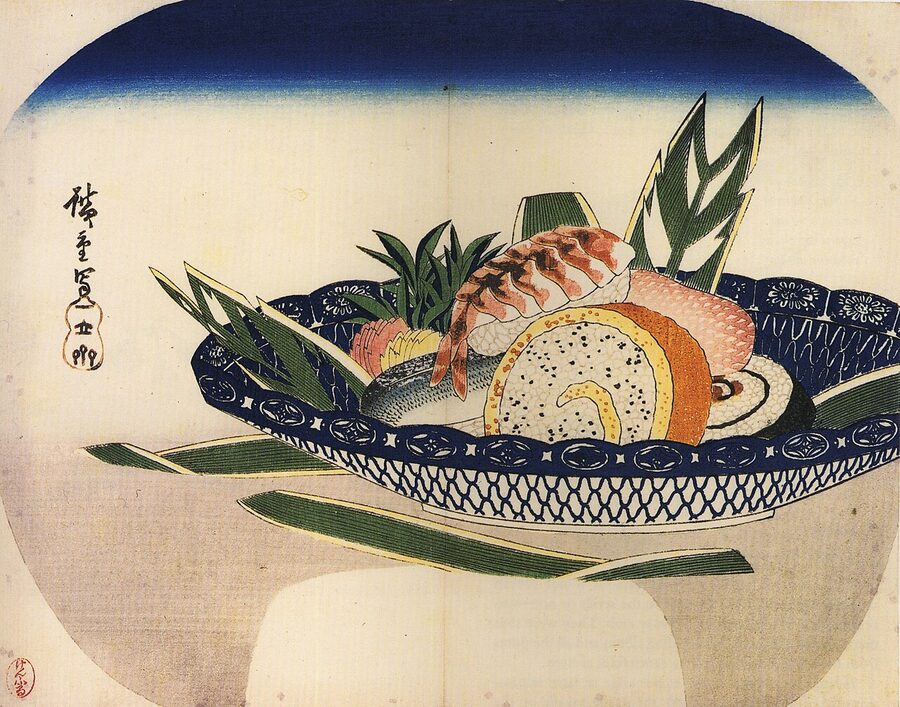
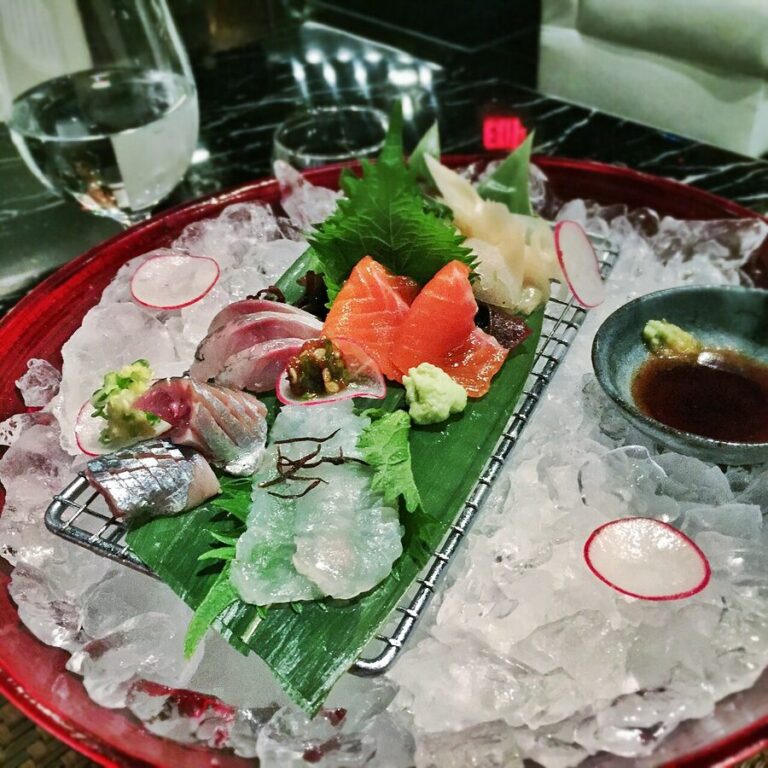
What’s worth knowing about Edomae sushi is that the original wasn’t the chilled raw-fish nigiri you eat now. Edo Bay had no ice. The fish had to be preserved between catch and counter. So the early Edomae chefs developed a vocabulary of light cures: a brush of soy on the tuna (zuke), a vinegar wash on the mackerel (shime-saba), a quick salt cure on the kohada gizzard shad, a kombu-tightening on the white fish, an anago that’s simmered in a soy-mirin glaze before it ever touches the rice. Modern Edomae traditionalists still cure their fish that way. If you’re at a serious sushi counter in Tokyo and the chef hands you a slice of mackerel with a slight cure-tang, you’re tasting the technique that made the dish work before refrigeration. The chef hasn’t done it because raw is unsafe; he’s done it because that’s how Edomae sushi was meant to taste. (Worth knowing too if you’re eating fish in Japan more broadly.)
The size of an Edo nigiri was also bigger than the modern bite. Hanaya Yohei’s nigiri were closer to a fist-and-a-half of rice; you ate two or three and you were done. The slim, two-bite modern nigiri took a hundred years to evolve, partly because diners wanted to taste more varieties in one sitting and partly because the rice itself got cleaner and tastier with milling improvements. The omakase counter today, with its eighteen carefully-paced courses, is a 20th-century reinvention of a 19th-century street snack.
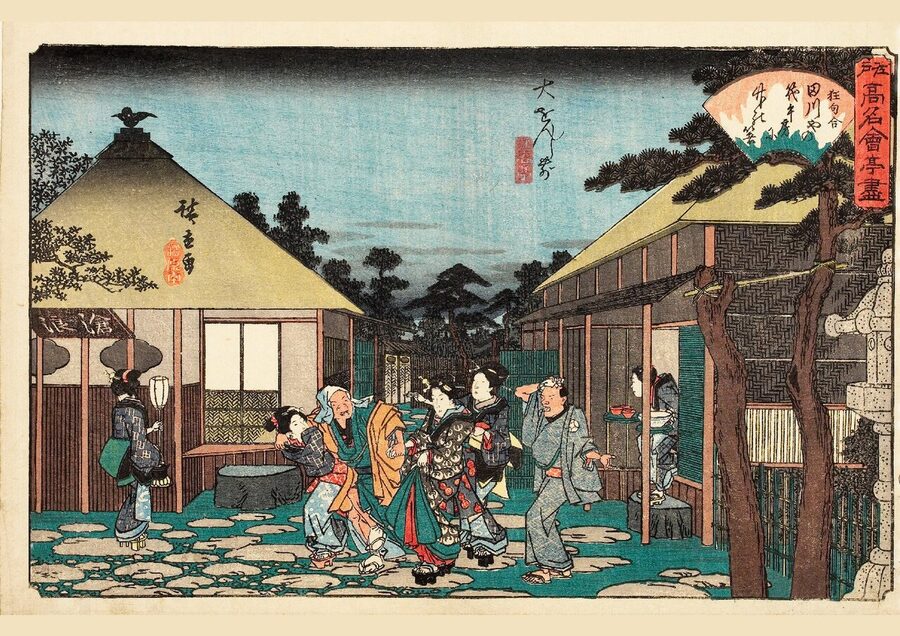
Tempura goes the same way. What had been a Portuguese trick at Jesuit dinners in Kyushu becomes Edo street food: tempura stalls along the Sumida river, oil hot, batter thin, customer eats standing. Until the early 20th century, tempura was bar food. The white-tablecloth tempura kaiseki you can pay ¥30,000 for at Mikawa or Kondo in modern Tokyo is a 20th-century elevation of what was, for two hundred years, a workman’s dinner.
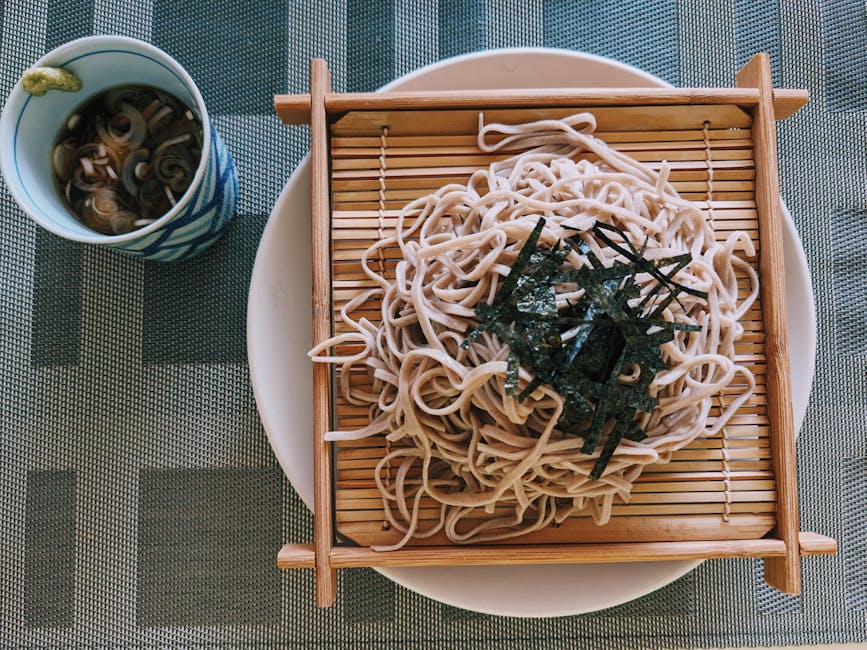
Soba and udon split into camps. Edo eats soba, the buckwheat noodle, served either in hot dashi (kake-soba) or chilled with dipping sauce (zaru-soba). Kyoto and Osaka, with their softer water and gentler dashi, prefer udon. The split holds today. If you’re served soba in Tokyo it’ll be slim and brown and dipped in a soy-forward broth. The same dish in Osaka, recast as udon, will be fat and white and floating in a paler kombu-bonito broth. Two cities, two waters, two grain choices, codified in the Edo period and never reconciled.
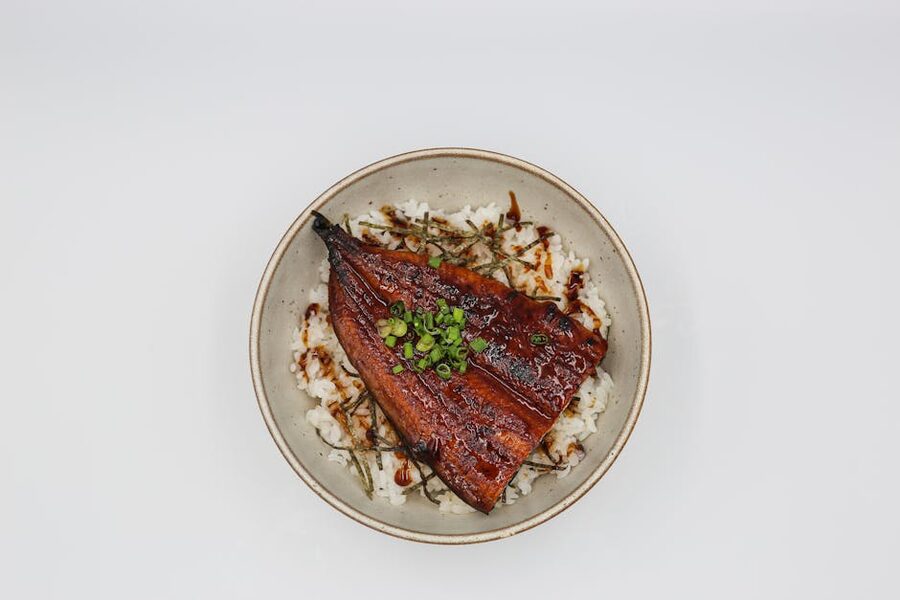
Unagi, grilled freshwater eel in the kabayaki style (split, boned, steamed, then grilled with a soy-mirin glaze), locks in during Edo. So does the doyo no ushi tradition of eating eel on the hottest day of summer. The marketing campaign for that tradition was a real one: a polymath named Hiraga Gennai (1728-1780), asked by a slumping Edo eel restaurant owner to drum up sales, suggested a sign reading “today is the day of the ox, eat eel”, capitalising on a piece of folk superstition that any food starting with “u” eaten on that day would prevent summer heatstroke. It worked. Three hundred years later the entire Japanese eel industry still has its biggest sales day every July because of one 18th-century copywriter.
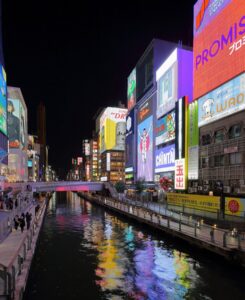
The Edo / Kyoto split that everyone in modern Japan still talks about hardens during this period. Edo cuisine is heavier, soy-forward, vinegar-bright, fast, masculine. Kyoto cuisine is dashi-led, vegetable-heavy, refined, slower, kaiseki-influenced. The Edoite eats nigiri sushi standing at a stall, soba slurped in three minutes, eel on rice, a dab of horseradish-bright wasabi to finish. The Kyotoite sits down to a multi-course meal of seasonal vegetables and tofu and conger eel and a single cup of well-made tea. The two food cultures aren’t enemies, but they’re not the same culture, and seeing both on the same trip (which a modern shinkansen ticket lets you do in two hours) is the most efficient way to understand how big and how internally varied Japanese cuisine actually is. Tokyo’s neighbourhoods walk you through the Edo side of the split; Osaka and Dotonbori show you what the Kansai answer looks like.
Sake industrialises during Edo. The Nada-Gogo region of Hyogo, with its hard mineral water and access to Edo by ship, captures roughly 80% of the Edo sake market by the late 17th century. The hashira-jochu method, adding distilled alcohol to the mash, is invented around 1700 and is the direct ancestor of modern honjozo. The first sake cookbook is published in 1796. Cookbooks become a publishing genre. Edo gets its own restaurant guides, its own tasting reviews, its own celebrity chefs. By 1800, Edo has a written food press as developed as anywhere in Europe at the same date. Most foreign visitors don’t know that.
And then in 1853, an American named Matthew Perry sails his black ships into Edo Bay, points his cannons at the shore, and politely demands that Japan reopen.
Meiji: opening, beef, and the invention of yoshoku
The end of sakoku is technically a date, 1854, when the Convention of Kanagawa is signed. The cultural unwinding takes longer. The Tokugawa shogunate falls in 1868. The young Emperor Meiji is restored to the centre of power. His advisors look at the Western powers parked in Japanese harbours and decide the country has to catch up, fast. Catching up, in their telling, means ironworks, steamships, railways, telegraph lines, beer, and beef.
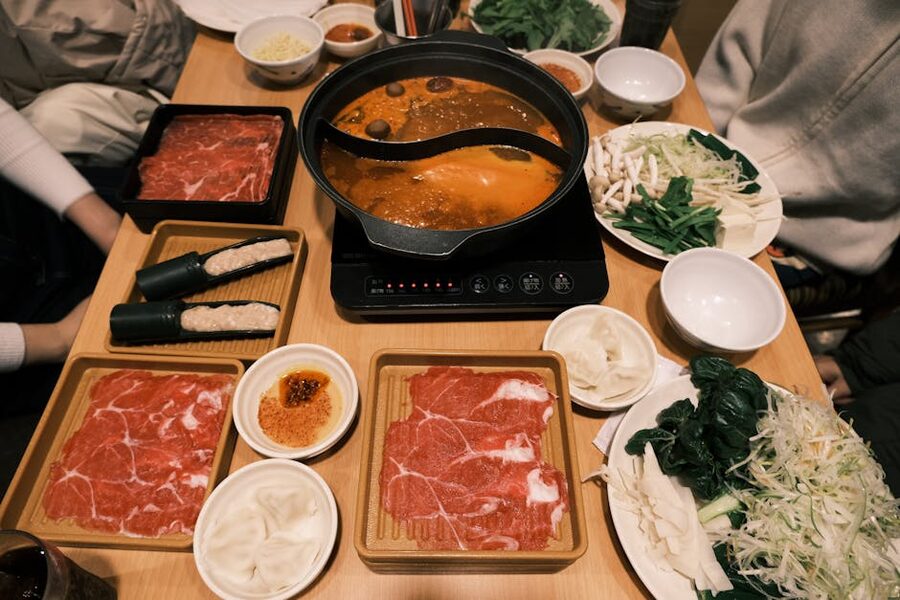
On the 24th of January 1872, Emperor Meiji eats meat in public for the first time. The act is staged. The newspapers report it. The implicit message is that the 1,200-year-old Buddhist taboo on meat eating is now officially over. A samurai’s daughter writing about that year describes it as the moment the world tipped over: her parents, devout Buddhists, refused to allow meat in the house even as the emperor was photographed at his beef dinner. The transition from “no meat” to “meat is normal” took a generation. By 1900 it was completed. By 1920, the average Japanese diet was still mostly rice and fish, but beef was on the menu in cities, served in a new restaurant format called gyu-nabe, beef hot pot, which evolves into modern sukiyaki. The first sukiyaki houses in Tokyo are reported in the 1860s, ahead of Meiji’s public meat dinner. The fashion was already there. The emperor’s plate was the official seal.
What’s more interesting than the return of meat, though, is the invention of yoshoku. The Meiji government wanted Western dishes on Japanese tables. What it got, instead, was Japanese chefs taking Western dishes and rebuilding them on Japanese principles, with rice instead of bread, with chopsticks instead of knife and fork, with shoyu and dashi as flavour anchors, with a final form that doesn’t quite exist anywhere else.
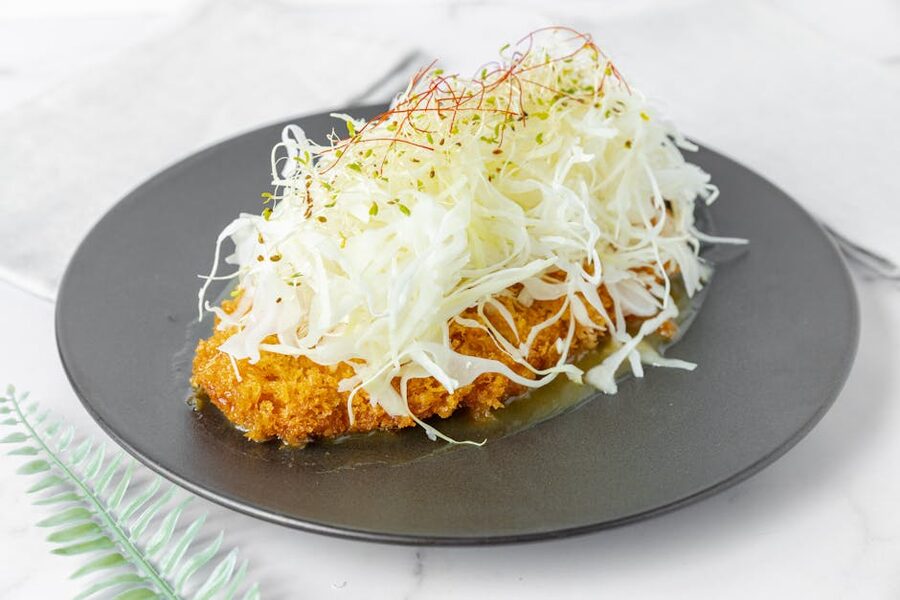
Tonkatsu is the cleanest example. A pork cutlet, breaded with panko, deep-fried, sliced into bite-size pieces, served with shredded raw cabbage, a wedge of lemon, a dab of mustard, and a thick brown sauce that descends from Worcestershire. The dish was codified at a Ginza restaurant called Rengatei in 1899 by a chef named Motojiro Kida, who had trained as a Western-cuisine cook and decided the Austrian schnitzel needed to be deeper and the cabbage needed to be raw and the rice needed to be on the side. Rengatei is still open in Ginza, by the way, and the tonkatsu they serve today is the same tonkatsu Kida invented. You can sit at a counter sixty years older than your grandparents and eat a dish more or less unchanged from the year of the Boer War.
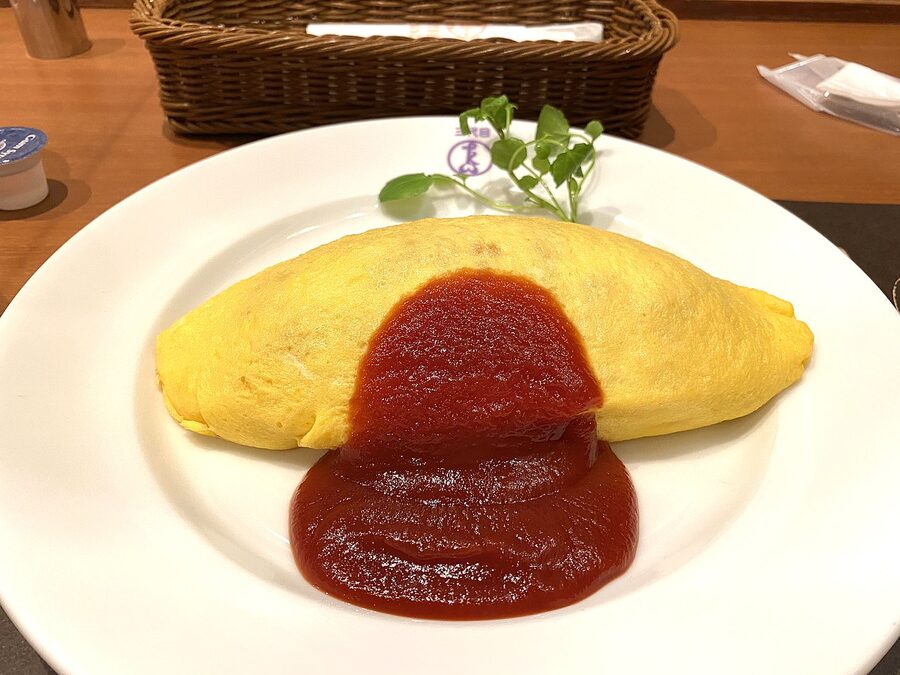
Omurice is another one: a thin omelette wrapped around chicken-and-tomato fried rice, drizzled with ketchup or demi-glace. Two restaurants claim the invention. Rengatei in Ginza says they did it first, around 1900. Hokkyokusei in Osaka says they did it in 1925. Hokkyokusei still has a small shop in Shinsaibashi, dim and cluttered, that takes the claim seriously enough to put it on the menu. Order the original omurice and you get a paper-thin egg sleeve over softly-flavoured rice; the demi-glace pools at the edges. It is, formally, a Western dish. It feels like a Japanese dish. It is, in practice, what yoshoku always is: a translation that has eaten the original.
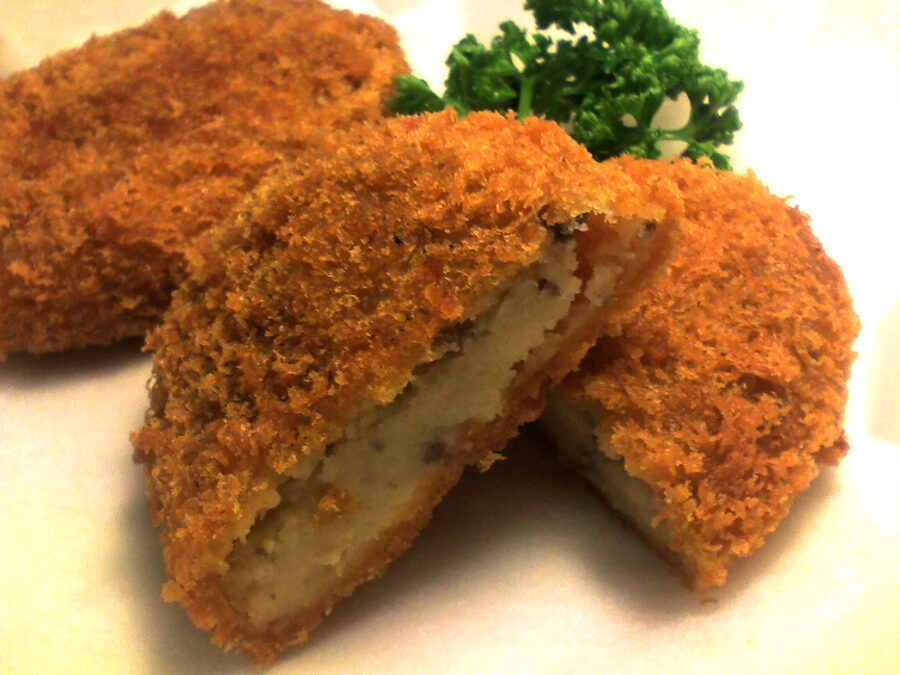
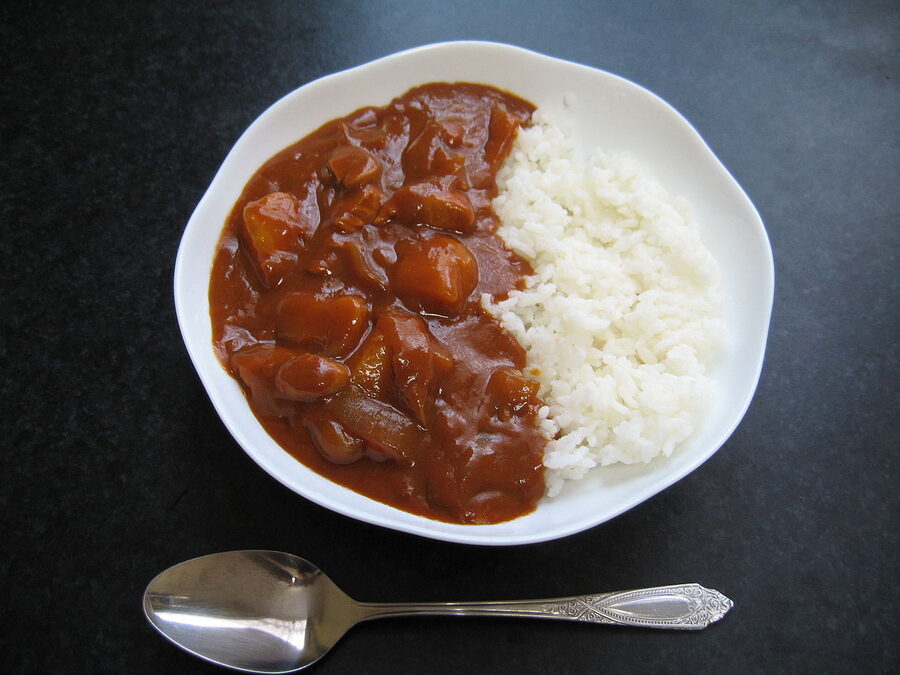
Korokke (potato croquette), hayashi rice (a slow-cooked beef-and-onion stew over rice), kare raisu (Japanese curry rice), hambagu (the Japanese hamburger steak, no bun, served with rice), naporitan (spaghetti in ketchup-tomato sauce, with sausage, served on a hot iron plate). Every yoshoku dish has the same fingerprint. Western technique, Japanese rice, Japanese plating, Japanese sauce logic.
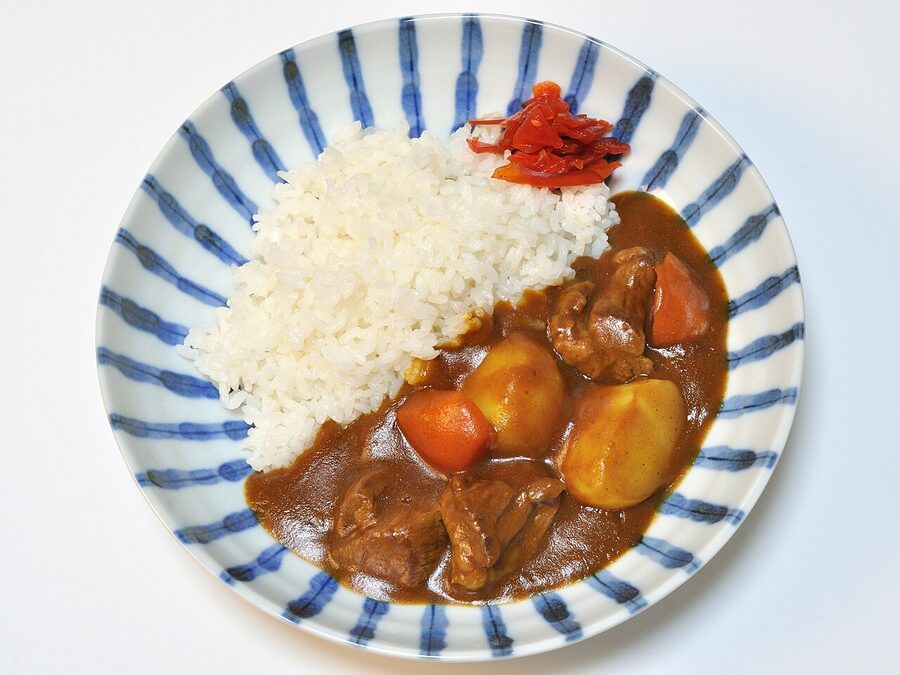
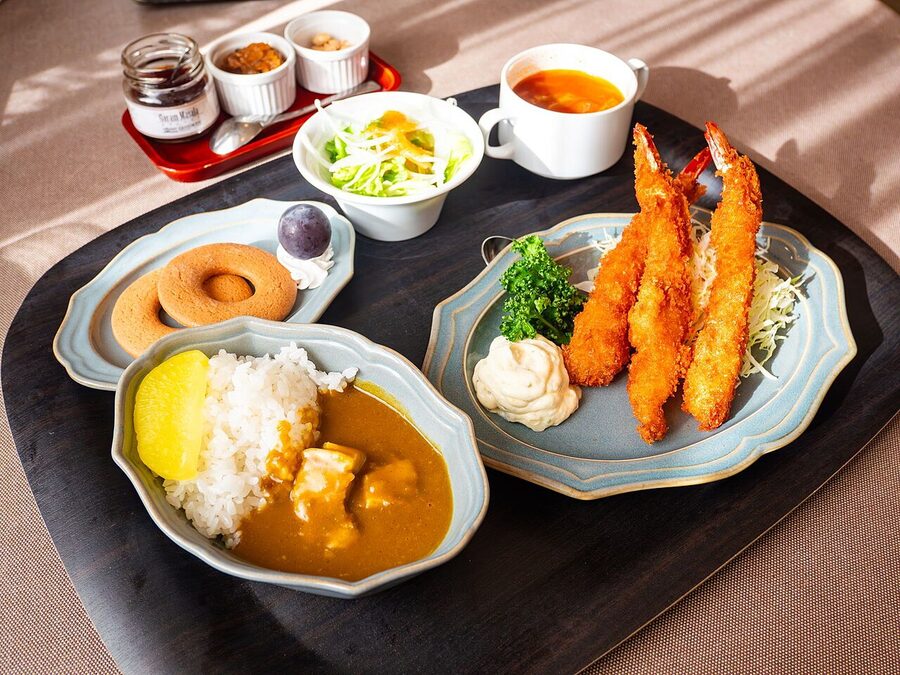
Curry rice is the strangest of them. The dish that every Japanese schoolchild eats, the dish that has its own dedicated chain restaurants (CoCo Ichibanya runs about 1,500 stores), comes from a British naval recipe. British colonial officers in India had developed a flour-thickened curry sauce in the late 19th century, which spread through the Royal Navy. Japanese naval cadets training with the Royal Navy in the 1870s and 1880s carried the recipe home. The Imperial Japanese Navy adopted it as a standard ration to combat beriberi, a vitamin deficiency endemic in rice-heavy diets. The thickened curry sauce was cheap, palatable, contained meat and vegetables, and could be cooked in bulk on a ship. Sailors carried it back to civilian life. Within fifty years it was a national dish. The Japanese curry on your tray in a hotel breakfast buffet is, in a real sense, a piece of Royal Navy ration food that emigrated.
Beer industrialises in the same period. Sapporo Beer is founded 1876, drawing on Hokkaido’s German-trained agronomists (the W.S. Clark connection at Sapporo Agricultural College loops in here). Kirin follows in 1888, Asahi in 1889. By 1900 there’s a four-major-brewer Japanese beer industry running on broadly the same template the country still uses; the small-craft revolution is still ninety years away. I’ve covered the post-1994 craft scene separately in a guide to Japanese craft beer.
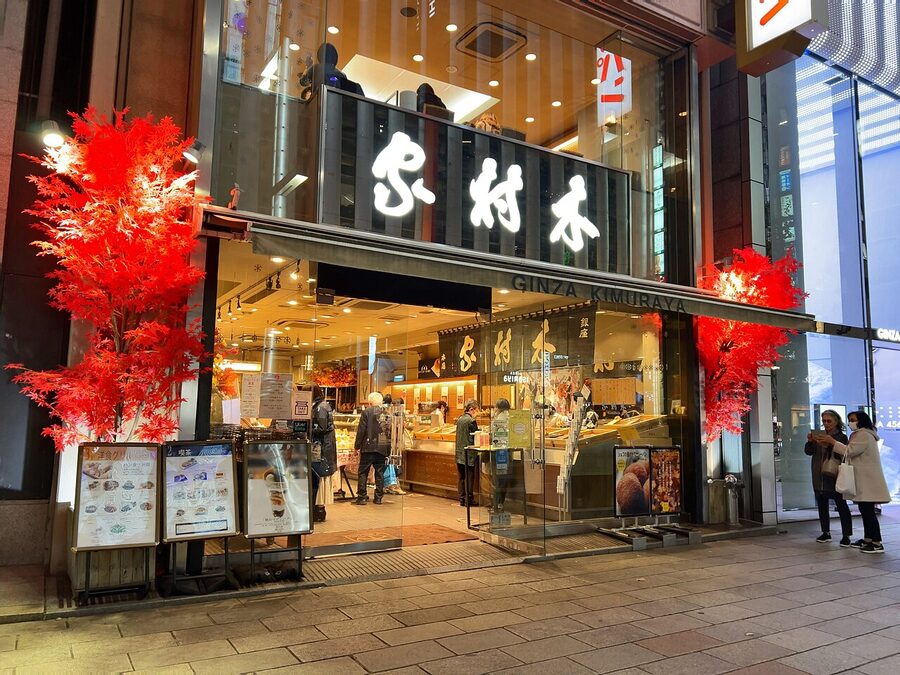
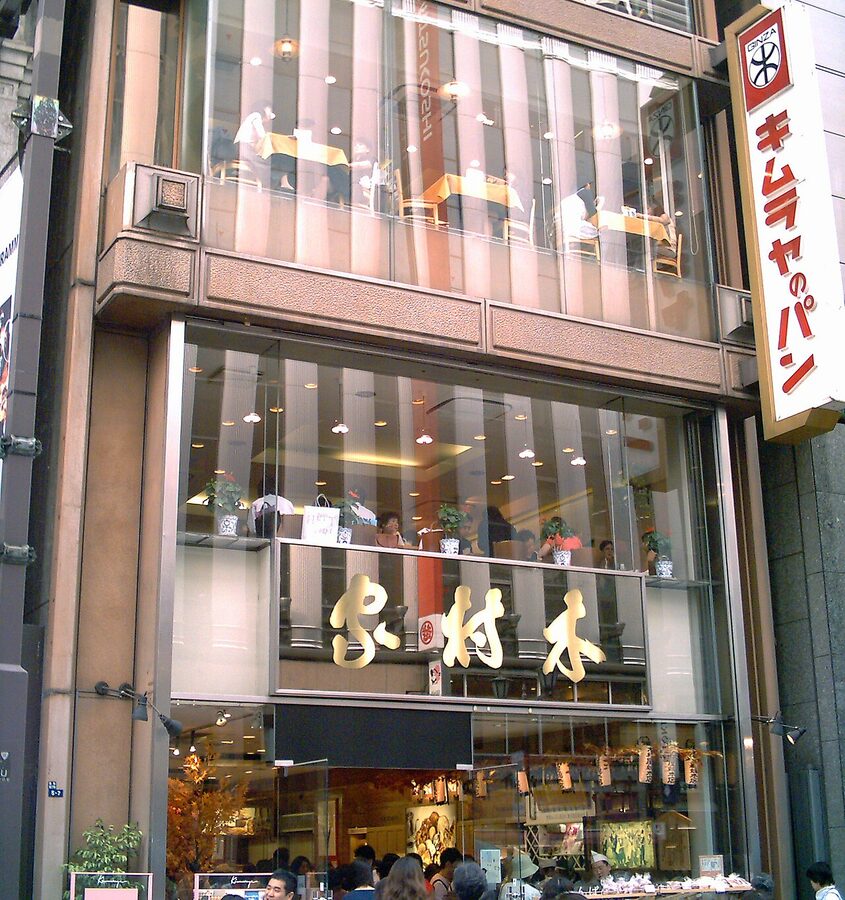
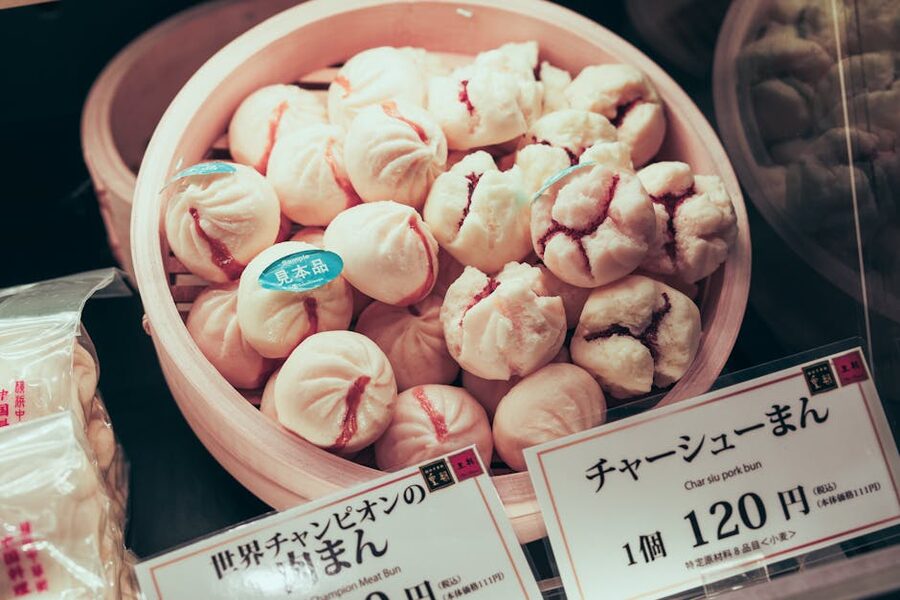
Bread becomes mainstream too. In 1874, a baker named Yasubei Kimura at his Ginza shop Kimuraya invents the an-pan, a soft sweet bun stuffed with red bean paste. It’s bread, technically, but it’s also Japanese in every way that matters: the dough is gentler than a French brioche, the filling is Edo-period azuki, the surface is decorated with a salt-pickled cherry blossom. The shop is still open at the same Ginza corner; you can buy the same an-pan today and the line on a Saturday morning runs around the block. Bread, in Japan, never quite became Western bread. It became its own thing, and the kissaten coffee-shop tradition that develops in Taisho-era Tokyo (matcha and milk coffee, an-pan, a cigarette, a newspaper) is the architectural template for every Japanese chain café operating today.
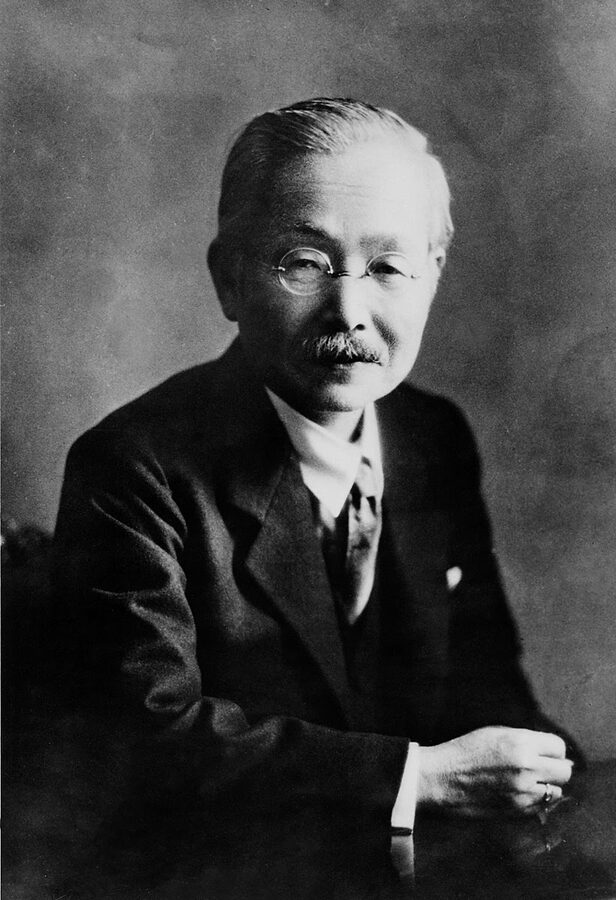
And dashi gets a name. In 1908, a chemist at Tokyo Imperial University named Kikunae Ikeda is eating yudofu in a Kyoto restaurant when he notices that the broth tastes savoury in a way that isn’t sweet, sour, salty, or bitter. He takes a sample home, runs it through a column, and isolates monosodium glutamate from kombu kelp. He patents it. He calls the taste umami, “savouriness”. His company, later called Ajinomoto, commercialises MSG and exports it to the world. But what Ikeda actually did, more importantly, was give Japanese kitchens a name for what they had been doing for a thousand years. Dashi made from kombu and bonito is glutamate-and-inosinate synergy. The umami philosophy of Japanese cooking, the reason the broth is more important than the noodle, is older than Ikeda’s discovery. He just put it in a beaker.
Taisho, early Showa, and the arrival of ramen
The cultural-cosmopolitan moment is brief. The Taisho era (1912-1926) and the early Showa years (1926 to about 1940) are the time when Tokyo gets jazz cafés, Western department stores, kissaten coffee houses with bow-tied waiters, modan boys (mobo) and modan girls (moga), French-style bakeries, and the first wave of department-store food halls (depachika). Walk into a Mitsukoshi or Takashimaya basement now and the format is unchanged: bento counters, dessert counters, Western pastry counters, sake counters, all under fluorescent light, all open until 8pm. That format was set in the 1920s.
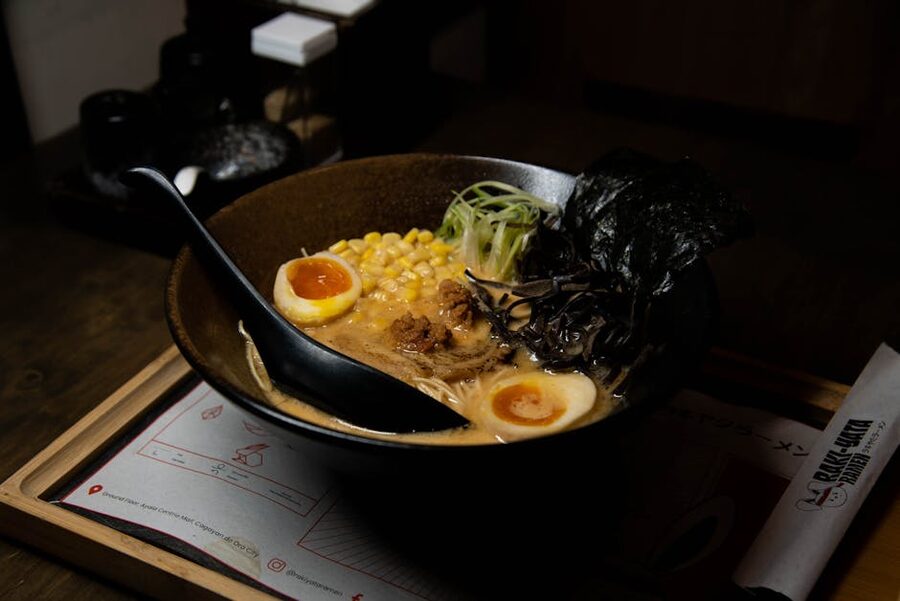
And ramen arrives. The dish whose Japanese identity is now so total that most foreign travellers think it’s been around forever actually shows up in Yokohama Chinatown (Nankin-machi) in the 1900s, brought by Chinese cooks serving wheat-noodle soup to Chinese workers and Japanese curious about the new neighbourhood. The original name was shina-soba, “Chinese noodle”. The first explicitly Japanese ramen shop is generally dated to 1910, the Asakusa Rai-Rai Ken in Tokyo, which served a salt-pork-broth bowl with thin curly noodles. By the 1920s, ramen stalls and shops are in every Tokyo neighbourhood. The dish at this point is essentially a Chinese-derived comfort food, salty, served at midnight, eaten by labourers and students.
The cosmopolitan moment ends at the Marco Polo Bridge in 1937, when full-scale war breaks out with China. Rationing tightens. Rice gets thin. By 1942, urban Japanese are eating suiton, a wartime soup of unleavened wheat-flour dumplings in thin broth, with whatever vegetable could be found. By 1945, Tokyo and Osaka are bombed flat and there is, in any practical sense, almost no food. The country’s ration card is for sweet potatoes. Some neighbourhoods report eating acorns and pine bark. The wartime food memoir is its own genre in Japanese; if you’ve read Studio Ghibli’s “Grave of the Fireflies”, you’ve read the food side of the war as honestly as any Western source has reported it. The country, on August 15, 1945, is starving.
It’s worth pausing on this, because the postwar food culture you’ll meet in modern Japan is shaped by the memory of that hunger. Almost every Japanese person born before 1955 has a parent or grandparent who remembers eating bark, or being given a single sweet potato as a school lunch. The cultural intolerance of food waste, the precision in portioning, the attention to a single grain of rice on the rim of a bowl, isn’t aesthetic snobbery. It’s the muscle memory of a country that was almost erased.
Postwar: the wheat shift and the ramen explosion
The first thing the American occupation does, after rebuilding a government, is feed people. Wheat flour starts arriving from the United States as part of food aid. Surplus American wheat shipped to Japan as relief, then as encouragement, then as a permanent part of the diet. The Japanese government, partly under American pressure and partly because it suited the Ministry of Agriculture’s own modernisation programme, begins a deliberate campaign to shift the national diet from rice to wheat. School lunch (kyushoku) standardises on bread and milk. A generation grows up eating school-lunch koppe-pan and drinking pasteurised milk in a way no Japanese generation before had. The kyushoku tradition is the lived ground for every Japanese person born after 1955; you’ll meet it in their childhood food memoirs. It also seeded the Japanese coffee chain, the Japanese sandwich industry, and the modern bread market. Walk past a Tokyo bakery in the morning and the wheat-aid programme of 1947 is still humming on the shelves.
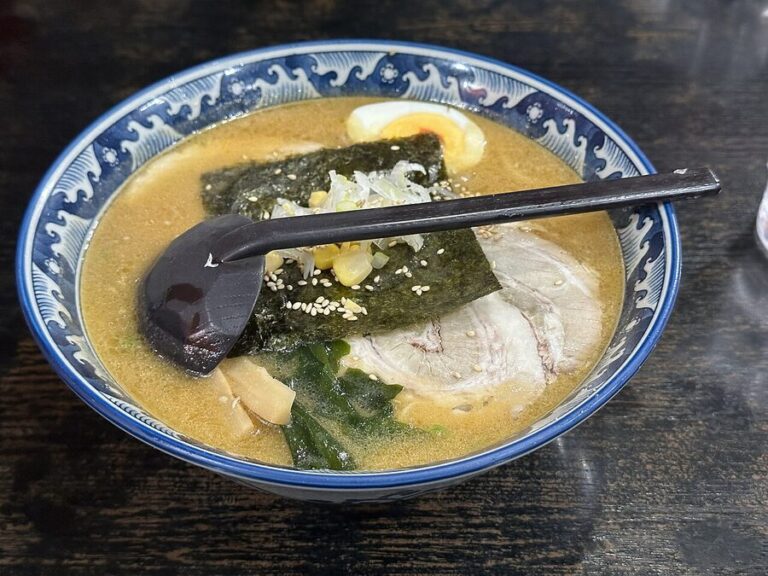
Ramen explodes. Ramen, which had been a niche city dish before the war, becomes the ideal postwar food: cheap, fast, hot, filling, made of wheat flour (which the country now had in large surplus), with whatever protein could be found. Ramen stalls open in the rubble of every burned-out commercial district. By 1950 there are tens of thousands of ramen shops nationwide. By 1955 the regional styles are starting to fix: Sapporo with miso, Hakata with tonkotsu, Tokyo with shoyu. I’ve put the regional ramen map together in a separate piece on regional ramen that goes deeper, but the headline is that almost every regional ramen identity you can list now was forged in the postwar decade. Before 1945 there’s almost no such thing as Sapporo miso ramen; by 1965 it’s a national style.
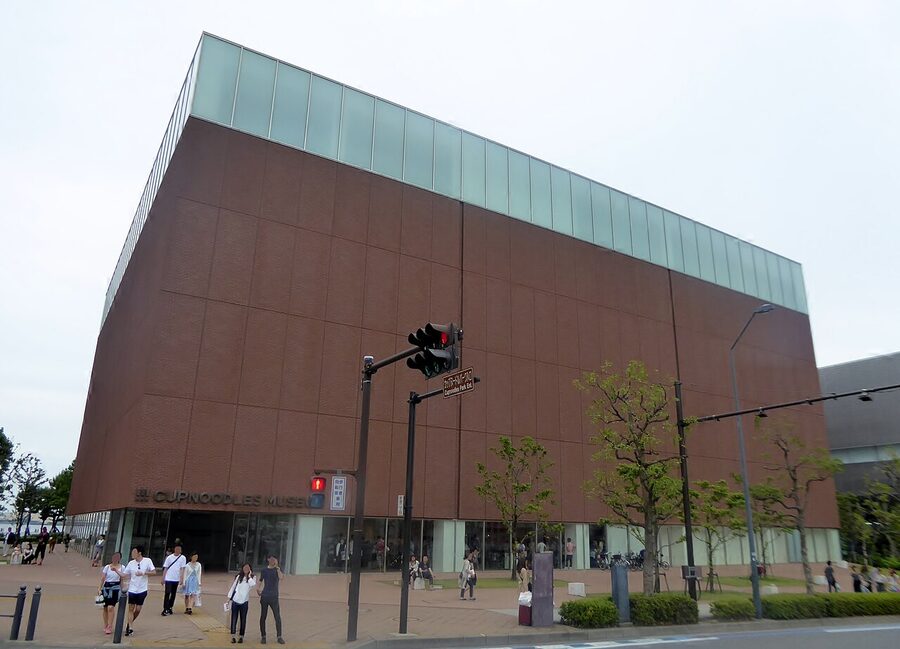
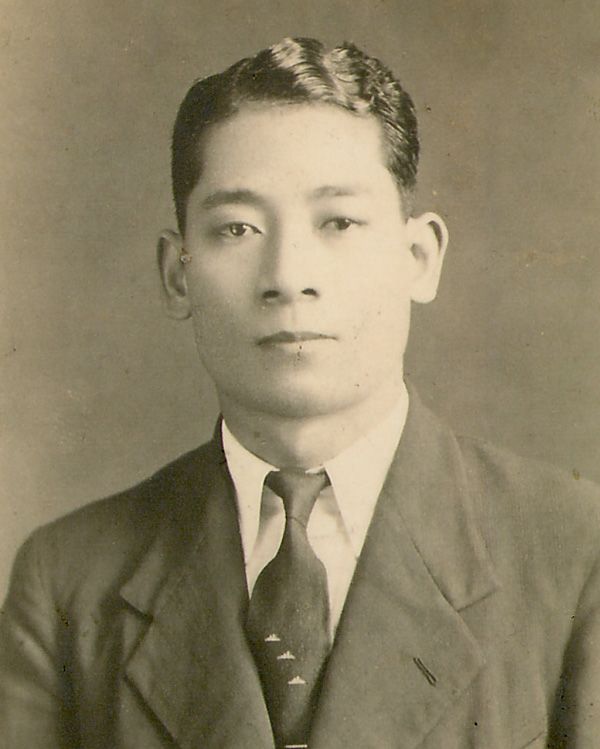
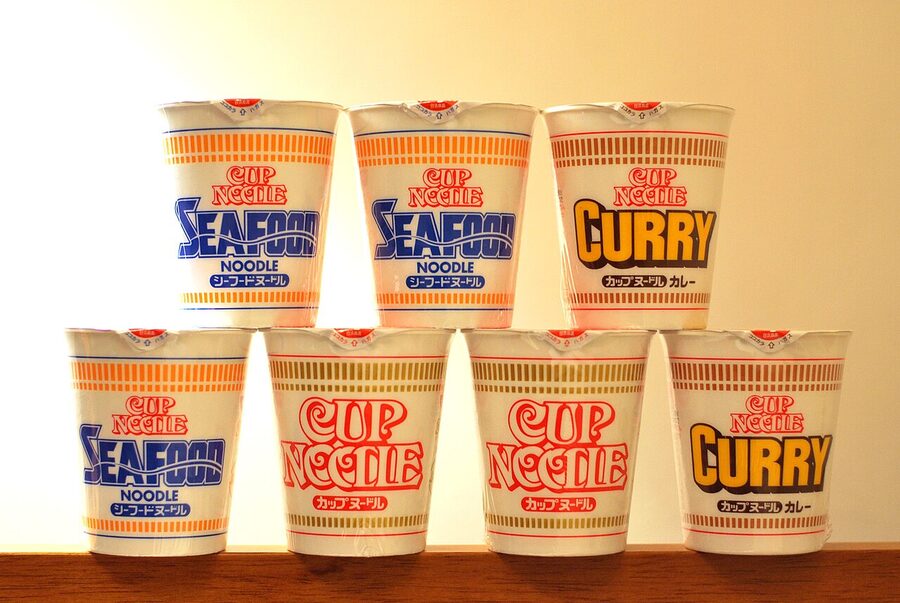
And then, in a small concrete factory in Ikeda, an industrial suburb of Osaka, on the morning of August 25, 1958, a 48-year-old businessman named Momofuku Ando rolls out his first batch of Chikin Ramen. Pre-cooked wheat noodles flash-fried in oil, dehydrated, packaged with a flavour pouch. Drop in boiling water, three minutes, eat. The instant ramen is invented. Within a year, Nissin Foods is the fastest-growing food company in Japan. Within a decade, instant ramen is being eaten in eighty countries. In 1971, Ando launches Cup Noodle, the same product packaged in a polystyrene cup that can be poured-water and eaten with the cup itself. That product, originally pitched at American office workers, conquers the world. The Cup Noodle Museum in Yokohama, where you can mix your own custom flavour and watch a short film about Ando’s life, is one of the more underrated tourist stops in Japan. The man, in some real way, fed the second half of the 20th century.
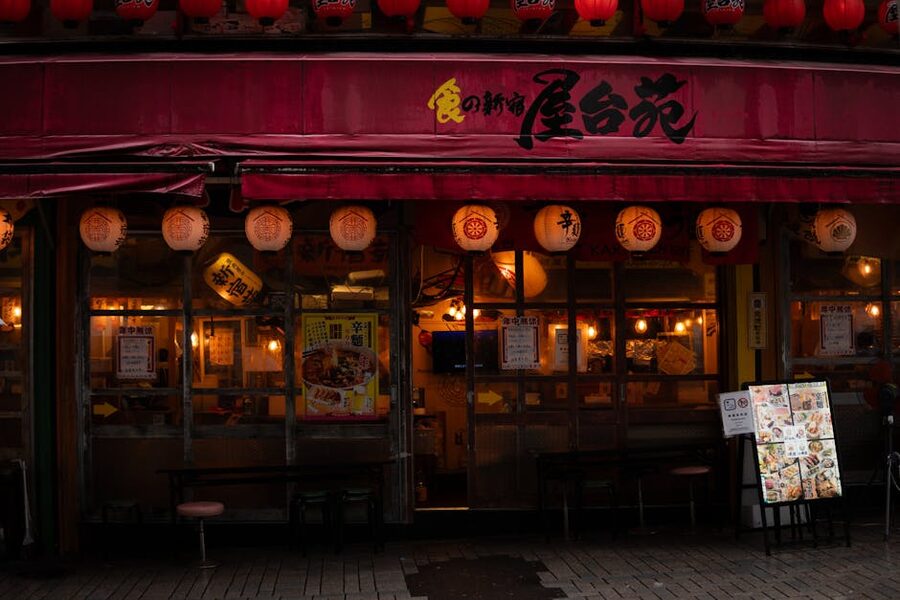
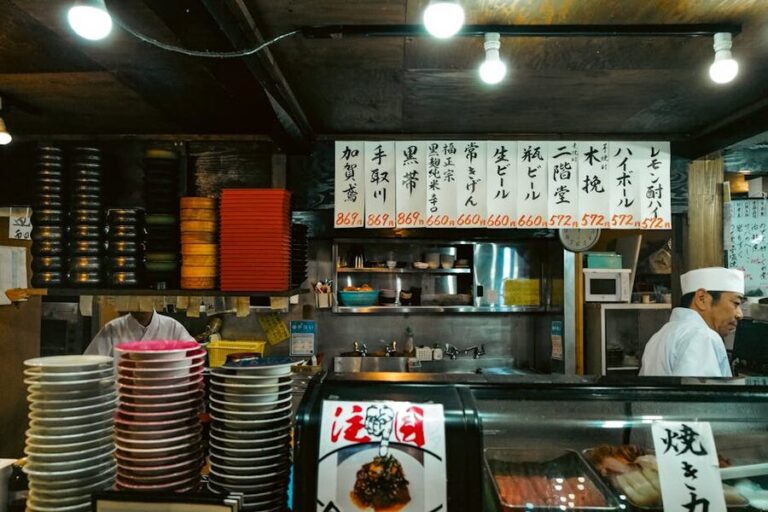
Through the 1960s and 1970s, Japan goes through its economic miracle. Restaurants multiply. Tokyo turns into a serious food city. The first sushi conveyor belt (Genroku Sushi, 1958, in Higashi-Osaka) industrialises Edomae. The first family restaurant (Skylark, 1970) industrialises yoshoku. The izakaya as a format codifies. Pachinko-parlour culture supplies the hungry late-night demographic that makes the modern izakaya scene possible. By 1980, urban Japan is over-fed in a way most of Asia isn’t yet, and the next thing happens almost without anyone noticing: Japanese chefs start travelling out, training in France and Italy and California, and bringing technique back. The seeds of the modern Tokyo restaurant scene are planted in the late 1970s.
Heisei and Reiwa: globalisation in both directions
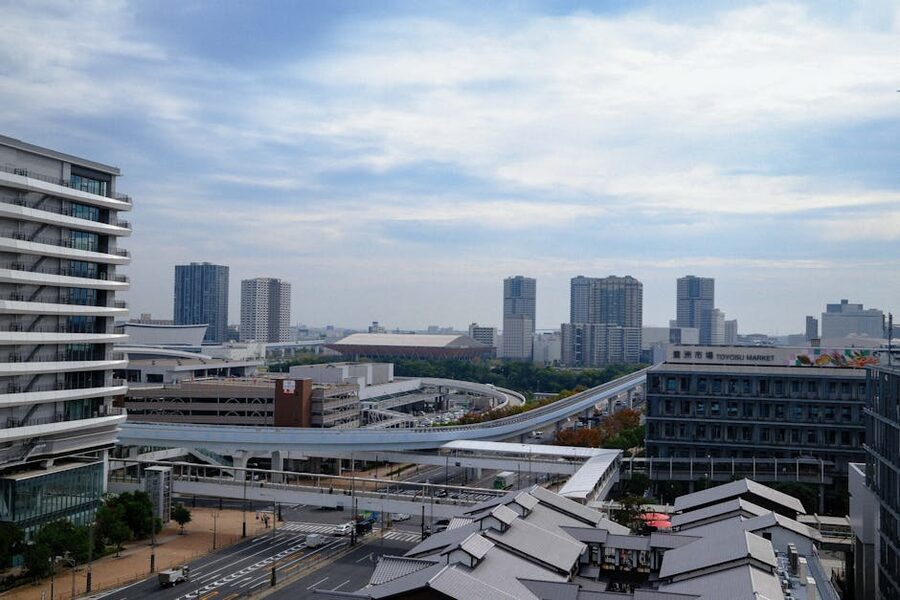
The Heisei era starts in 1989 with the death of Emperor Hirohito. The bubble economy, briefly the most insane property and stock market in human history, peaks the same year and crashes within twelve months. The country enters the so-called “lost decades”, a long stretch of low growth and deflation. What’s interesting, from a food point of view, is that the lost decades were the best decades for Japanese cuisine. With property cheap and labour available and consumers cautious, restaurants could be small, idiosyncratic, owner-run, and survive. The thing that makes the modern Tokyo restaurant scene the densest in the world is partly the bubble’s collapse.
In 2007, the Michelin Guide publishes its first Tokyo edition. The result is a slap. Tokyo gets 191 starred restaurants. Paris, the previous record-holder, has 64. The 2008 edition pushes Tokyo to 227 stars. By 2015 it’s the most-starred city in the world by a wide margin and has stayed there ever since. The Michelin guide isn’t the gold standard for Japanese eaters (most Japanese diners still trust Tabelog rankings or word-of-mouth more), but it surfaced something that everybody who’d been paying attention already knew: the depth of the Tokyo food scene, in that decade, was unprecedented anywhere.
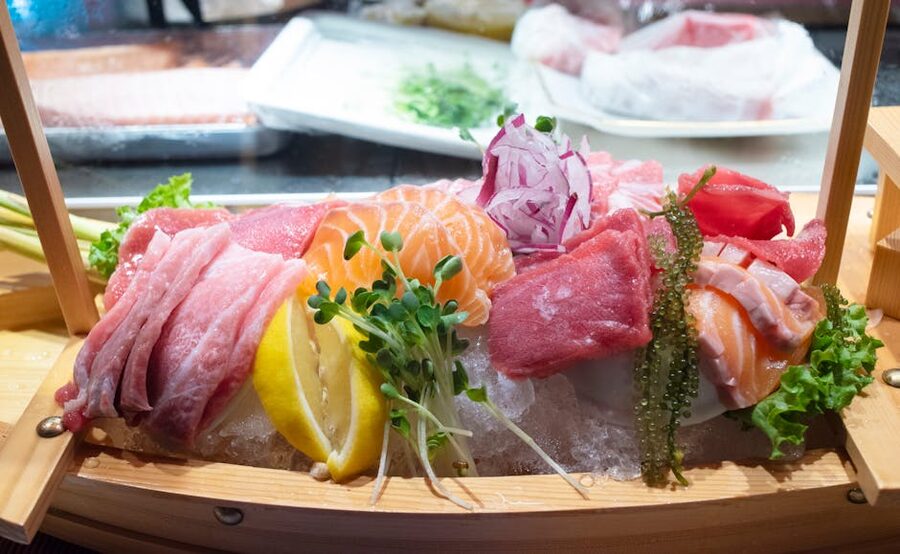
2013 is the year UNESCO inscribes washoku, traditional Japanese cuisine, on its Intangible Cultural Heritage list. The official wording emphasises seasonality, balance, respect for natural ingredients, and the new year (osechi) tradition. The inscription is partly defensive. Japanese consumption of traditional ingredients (rice, fish, soybeans, kombu) had been declining for thirty years; bread, pasta, and meat had been climbing. The UNESCO listing is a way of saying: this matters, please don’t lose it. Washoku, technically, now sits alongside the Mediterranean diet and French gastronomic meals as a globally recognised cuisine. What that means in practice for a traveller is that the restaurants serving classical Japanese cuisine increasingly know they’re representing something larger than dinner.
2016 is the year a small ramen shop in Sugamo, a working-class Tokyo neighbourhood, called Tsuta, becomes the first ramen restaurant in the world to receive a Michelin star. The chef, Yuki Onishi, served a shoyu-based bowl with truffle oil and porcini, made his own noodles, and ran a 9-seat counter. He was 38. Within months, Tsuta was the most famous ramen shop on earth. It moved to Yoyogi Uehara in 2019, lost the star briefly, regained it, lost it again. The story isn’t about Tsuta itself so much as the moment: ramen, a 100-year-old foreign import that became a national dish in 1958, was now being judged on the same ground as French haute cuisine. The bowl had finished its journey from Chinese street food to fine dining in a single century.
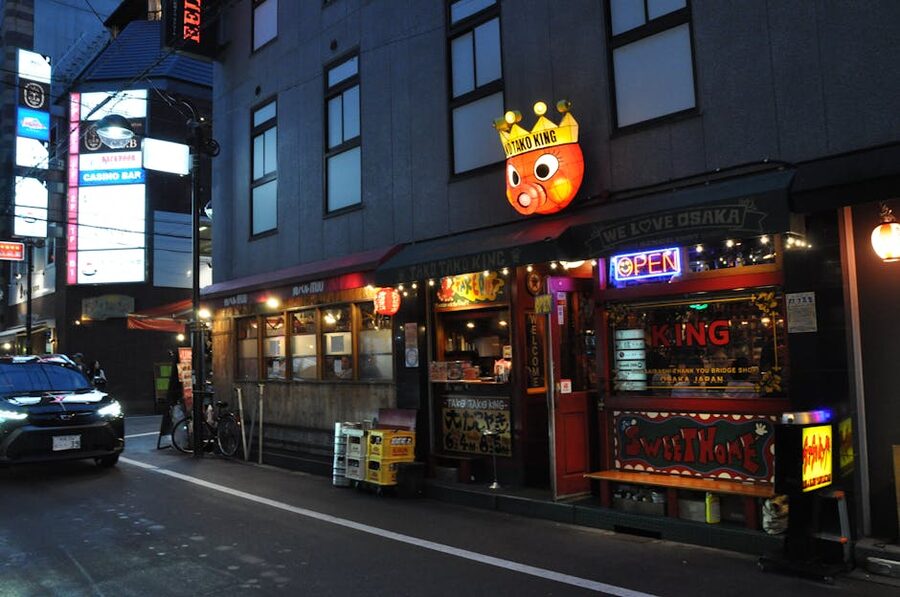
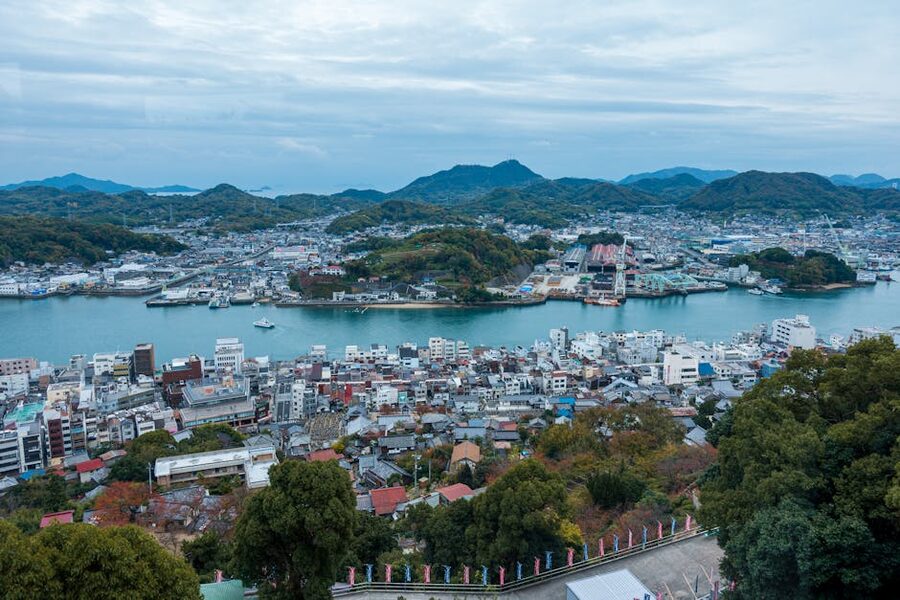
Regional cuisines reclaim space. Sanuki udon in Kagawa has been promoted into a regional identity strong enough to draw food pilgrims; Hakata tonkotsu ramen has its own tourist circuit through Fukuoka; Sapporo soup curry, Sendai gyutan, Kanazawa kaiseki at the level once available only in Kyoto, Hiroshima okonomiyaki, Osaka kushiage, Naha goya champuru, Hakodate squid donburi, Toyama firefly squid. The Shinkansen network, by collapsing the time between regions, has made every regional cuisine accessible to a Tokyo eater on a weekend. A traveller now has access to a regional food map that even a Japanese eater in 1980 would have struggled to assemble.
Foreign chefs come and stay. Western technique meets Japanese ingredients in restaurants like Florilege, Den, Inua, L’Effervescence; Japanese chefs return from Lyon and Modena and bring back fermentation labs and heirloom vegetables. The third-wave coffee scene (Onibus, Glitch, Fuglen Tokyo) builds on the kissaten tradition. The craft beer scene I’ve already mentioned takes off after the 1994 Liquor Tax law change. Single-origin chocolate from Minimal in Aoyama ferments cacao with koji. Japanese whisky, after Yamazaki’s 2003 Yoichi 10-Year wins the World Whisky Award and Hibiki 21 wins the World’s Best Blended in 2010, becomes a global category, covered in the whisky guide on this site.
And in the meantime, all the old stuff still works. The morning fish market at Toyosu opens at 5am for the wholesalers and the first uni boxes hit the auction floor by 5:30. The midnight okonomiyaki spot under the Hiroshima tracks. The 6am breakfast at Yoshinoya. The grandmother in Niigata who pickles plums in late June because that’s when the sour ume drop. The funa-zushi in Lake Biwa villages, fermenting in cedar barrels for two years, a dish a Heian aristocrat would recognise. None of it is preserved as theatre. It’s still being eaten.
What hasn’t changed
Three things to take with you, then, before the bowl arrives.
The first is that rice is still the centre. The Japanese meal, even now, is built around the bowl of plain rice. Everything else, the sashimi, the grilled fish, the pickle, the bowl of miso, is positioned in relation to it. When a Tokyo chef says a meal is finished, he’s saying you’ve finished the rice. The 2,000-year-old accountancy logic still runs through the structure of dinner. You can taste it without thinking about it.
The second is dashi. The kombu-bonito broth that flavours almost every traditional Japanese dish is older than the country’s writing system. It’s older than chopsticks. It’s older than soy sauce. The umami philosophy that Ikeda Kikunae described in 1908 was, by the time he described it, already a thousand years old in the kitchen. Dashi is the unbroken thread. If you taste one thing on your trip with full attention, taste a clear dashi. You’re tasting longer continuous culinary practice than anywhere else on earth.
The third is shun, the seasonal sense. Every traditional Japanese menu is a menu about now. The first bonito of the year. The peak of the bamboo shoot in early April. The matsutake mushrooms in the high autumn. The yellowtail at midwinter. The instinct that drives a Kyoto chef to change his menu twelve times a year is the same instinct that drove a Jomon hunter to read the salmon run. It hasn’t changed because it wasn’t ever decided. It was always there. The longer you stay in Japan, the more clearly you’ll feel that the food is telling you the date.
The Edo / Kyoto split is still alive too, although it now expresses itself as Tokyo / Kyoto. Tokyo is still soy-forward, fast, slightly heavier, generous with portions, occasionally vulgar. Kyoto is still dashi-led, slower, vegetable-heavy, deliberate, sometimes austere. If you can do both cities on one trip, do. They are two cuisines, not one.
The Portuguese walked off a beach in 1543 with sugar and a frying pan. The Buddhists banned meat in 676 and the country reorganised around fish. A monk brought tea seeds back from China in 1191 and Sen no Rikyu turned that, four hundred years later, into the most exacting hospitality ritual in human history. A Ginza chef put pork in a panko jacket in 1899. A businessman in Osaka pulled a tray of dried noodles out of an oven in 1958 and changed how the world ate at midnight. None of it was inevitable. All of it is on the table in front of you now.
If you only do one thing with this piece, do this: look at your next plate in Japan and try to put a date on it. The kake-soba is Edo, 1750. The omurice is Meiji, 1925. The Cup Noodle is Showa, 1971. The funa-zushi is Heian, 900. The kaiseki is Muromachi, 1580. The miso soup is Kamakura, 1254. The rice underneath all of it is Yayoi, 200 BCE. You’re eating fourteen thousand years.


.jpg)


