
Mutianyu: The Great Wall Section That’s Actually Worth Going To
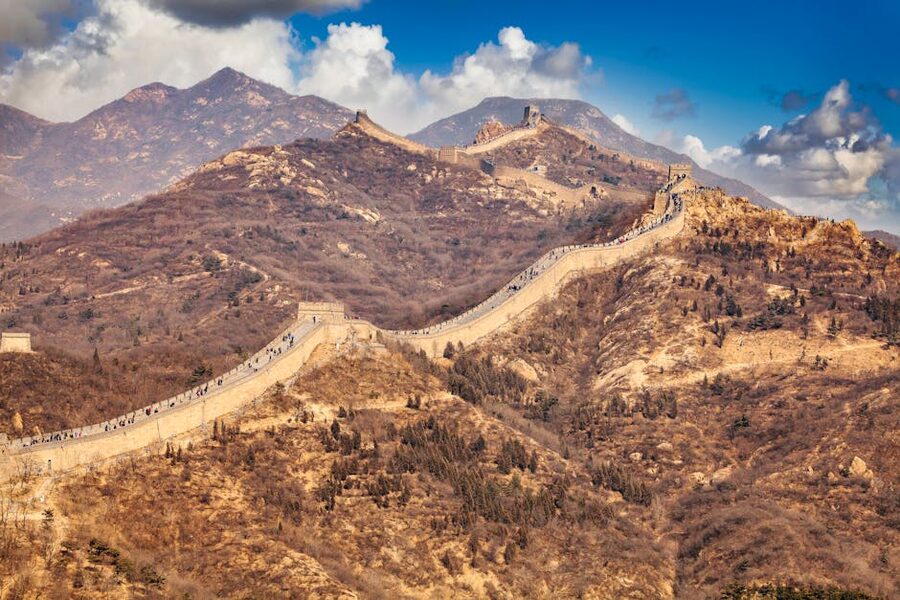
The picture you have of the Great Wall, the one in the postcards and the airline magazines and the back of every China guidebook, is not the wall most tourists actually walk on. The postcard is autumn light slanting through hills, no one in the frame, watchtowers stepping up a forested ridge like Lego on a green spine. The reality, for most people who fly into Beijing and book a tour, is Badaling at midday in July: a six-lane stair on a wall that has been buffed to within an inch of looking new, and so many tour groups stacked nose to tail that you could mistake the place for a queue for a theme-park ride. The crowd is so thick you stop seeing the wall and start seeing the back of someone else’s sun hat.
I went to Badaling first. I got there from a cheap hostel in central Beijing, took the wrong combination of buses, paid too much for a guide whose English ran out about ten minutes in, and spent two hours shuffling on the wall behind a tour group from Wuhan. Then someone at the hostel that night told me to go to Mutianyu instead. I went the next morning. It is, by any measurement that matters, the section worth the day trip from Beijing. This is the case for it, and the practical guide for actually getting there and walking it well.
A bit of context before the practical stuff: the Great Wall is not one wall. It is a system of fortifications built and rebuilt across roughly 2,500 years, by something like a dozen Chinese dynasties, against various groups of nomads coming down off the steppe. A modern archaeological survey put the total length at about 21,196 kilometres, which is about half the circumference of Earth at the equator. The Ming-built section that most tourists picture is roughly 8,850 km of that, running from Jiayu Pass in the desert west of Gansu to the sea at Shanhai Pass and then north into Manchuria. The point is: when someone says they’ve “seen the Wall,” it is roughly as informative as saying they’ve seen a bit of motorway. There are dozens of sections within day-trip range of Beijing alone. Five matter. Of those five, Mutianyu is the one you should pick.
In This Article
- Why Mutianyu, briefly
- Mutianyu vs the others, fast
- A small bit of history, because it matters when you’re up there
- How to get there from Beijing
- At the wall: layout, towers, and where to actually go
- How far to actually walk
- Cable car, chairlift, or walk: and the toboggan question
- What to bring
- When to go
- Where to eat
- The full day plan
- What to skip
Why Mutianyu, briefly
Mutianyu sits 70 kilometres northeast of central Beijing in Huairou District. The visitor section is about 2.25 kilometres of restored Ming wall with 22 watchtowers; if you count the connecting ridges to Jiankou and Lianhuachi on either side, the broader Mutianyu stretch runs closer to 5,400 metres, longest fully-restored section open to tourists. It opened to selected visitors in 1986 and to everyone in 1988, which is comparatively recent for a tourist site. Badaling has been a stop on the Beijing tourist circuit since the 1950s. Mutianyu has had thirty-plus fewer years to be ground down by foot traffic and tour buses, and it shows.
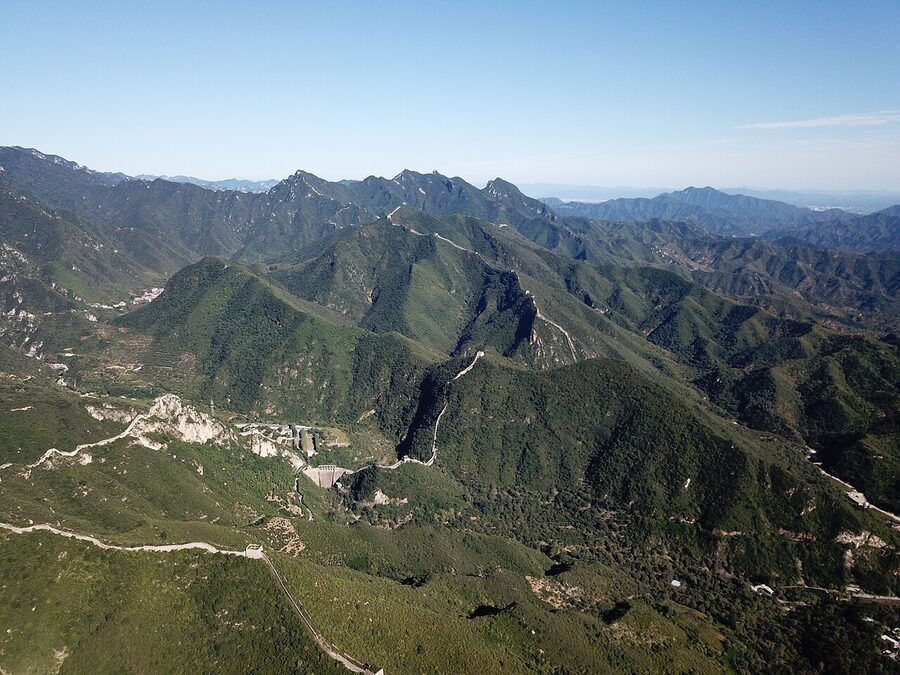
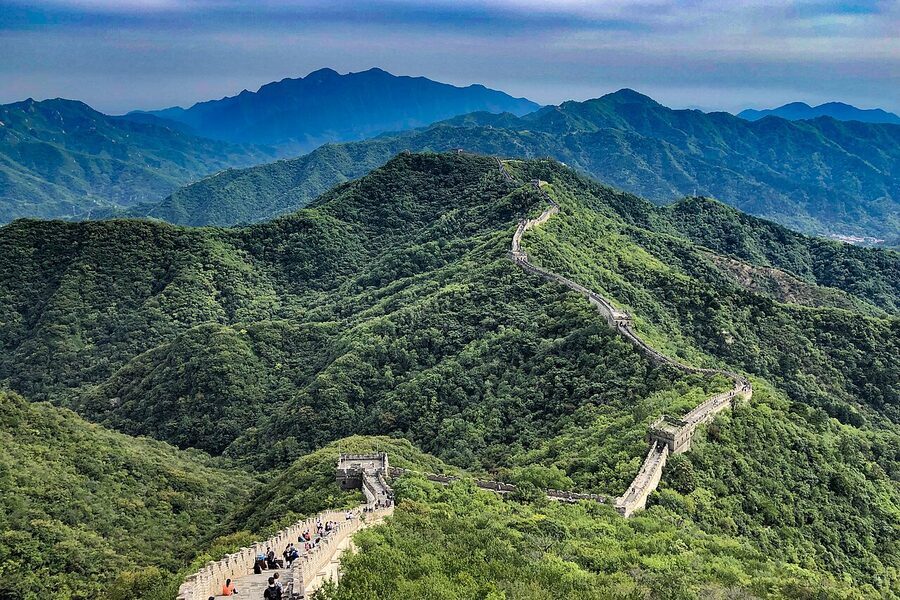
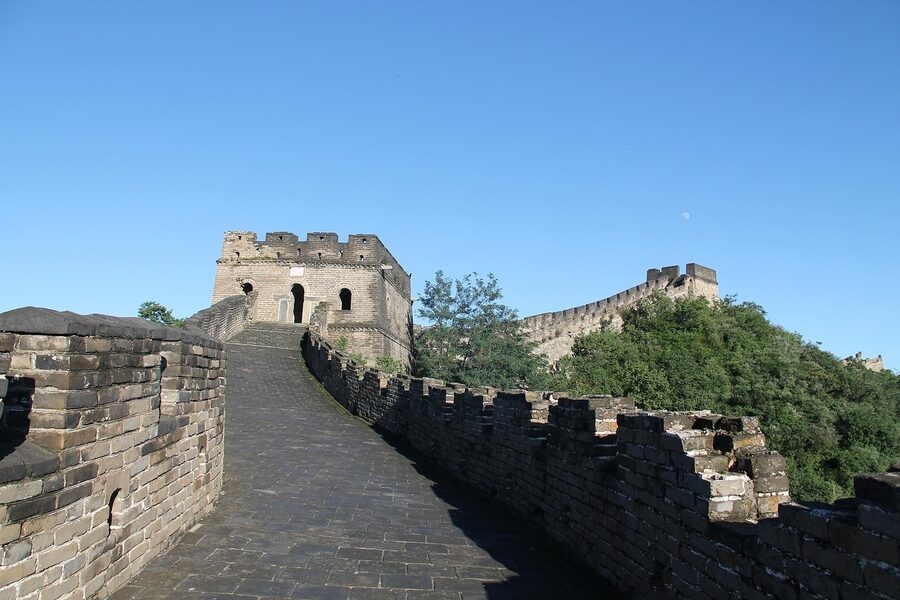
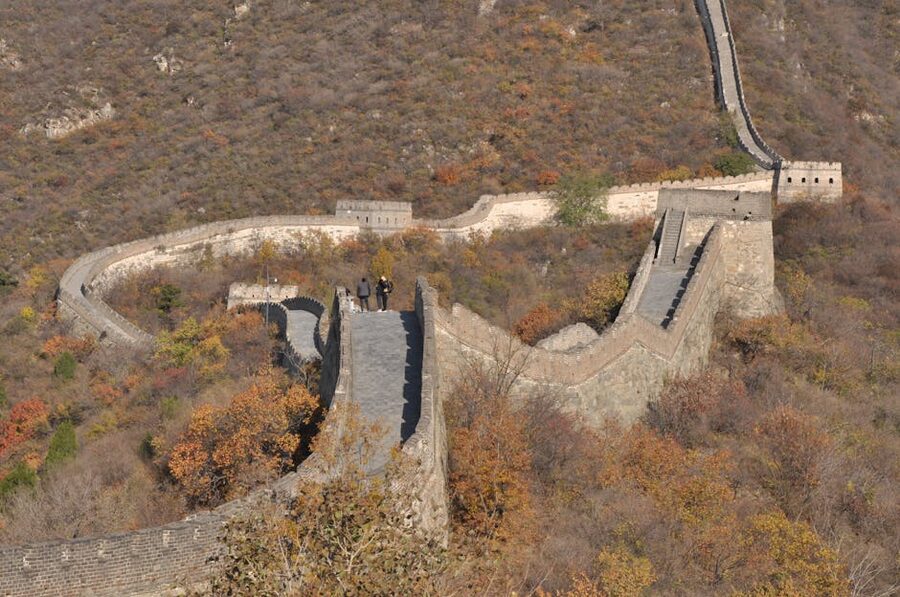
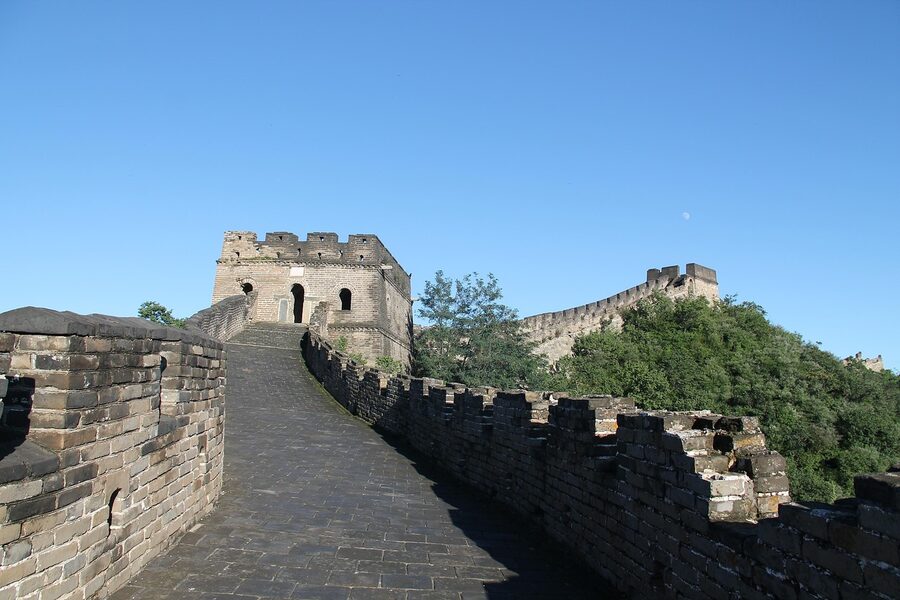
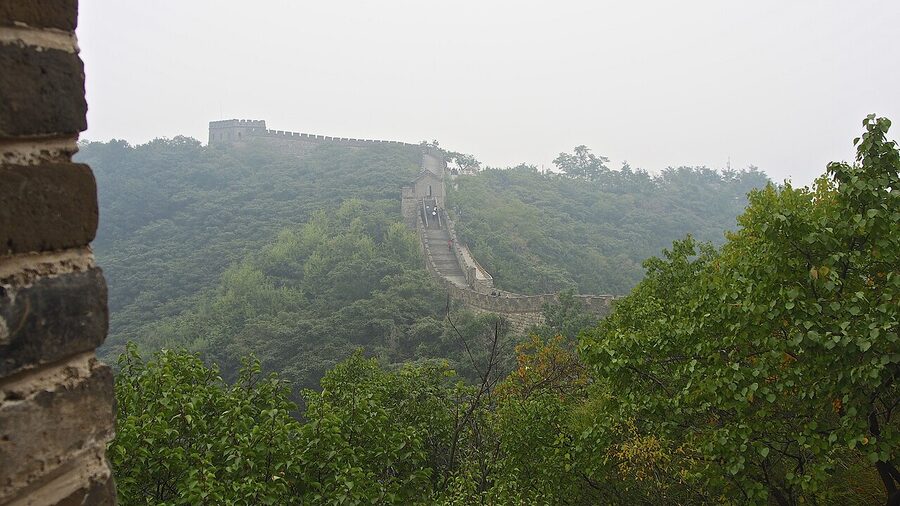
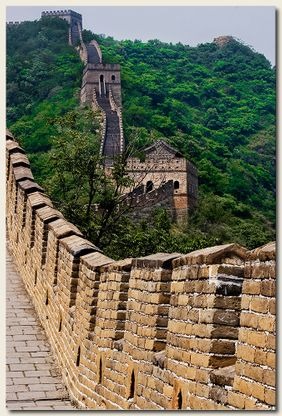
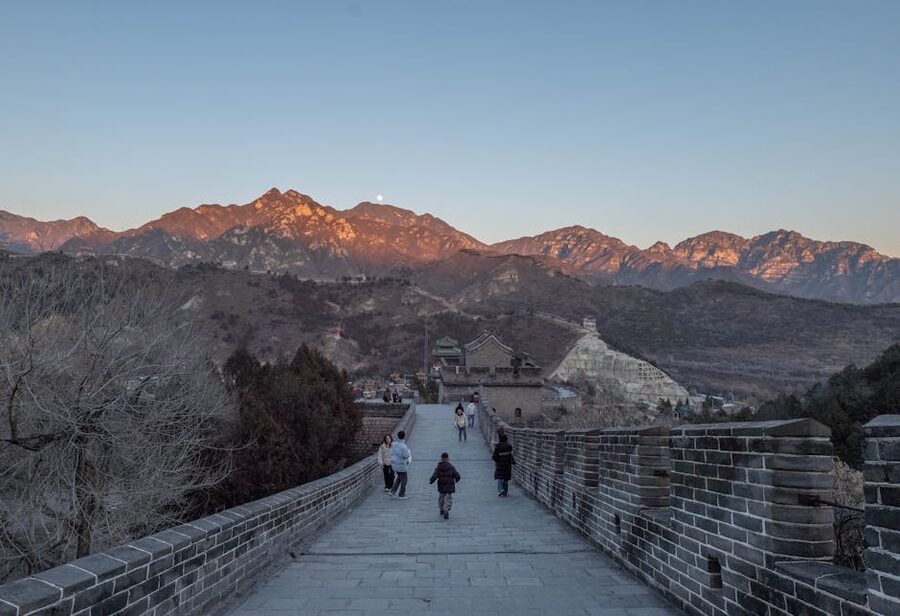
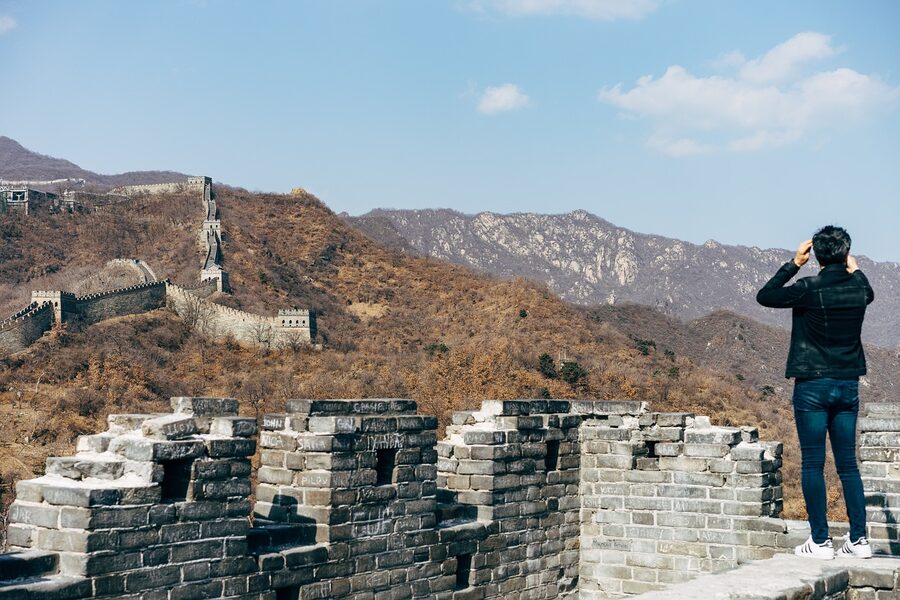
Five reasons it wins. One: it is meaningfully less crowded than Badaling. Not empty, not by any measure, but you can find a stretch of wall to yourself if you walk fifteen minutes from the cable car drop. Two: it has been restored, but not over-restored. The grey Ming brick was put back over the older Northern Qi rubble core, and the work was done well in the 1980s and 1990s. The wall is solid and walkable, but it still reads as old. Three: there are three ways up and two ways down (cable car, chairlift, or your own legs going up; toboggan, chairlift, or stairs going down), so the day adapts to whoever you’re with. Four: the watchtowers are dense, 22 in just over two kilometres, and they feel architectural rather than themed. Five: the setting. Mutianyu sits in a fold of the Yan Mountains and the slopes are forested. The reason the autumn postcard you have in your head exists is that someone took it here, in late October, when the trees turn red and the wall comes out of them like a backbone.
Mutianyu vs the others, fast
You can read 2,000 words about each section if you want. You don’t need to. Here is the short version.
Badaling. 70 km northwest, the most-visited section, where every package tour goes. Heavily restored to the point of looking new in places. Big paved access, tour-bus parking for hundreds, souvenir villages everywhere. Avoid unless someone you love insists on it.
Mutianyu. 70 km northeast, the section you want. See above.
Jinshanling. 130 km northeast, two-plus hours each way. Partially restored, partially wild, beautiful, longer hike. The right pick if you’d rather walk than sightsee, you have a full long day, and you don’t mind the drive.
Simatai. 120 km northeast, sits next to the manufactured Gubei Water Town, has a paid night-walk option that is admittedly atmospheric. Restored, narrower than Mutianyu, fewer watchtowers per kilometre. The night version is genuinely worth doing if you’re already in Beijing for four nights and want a non-day-trip variant. As a first-and-only Wall day, no.
Jiankou. 80 km northeast, mostly unrestored, properly wild. Crumbling, overgrown, technically off-limits in places, occasional rope sections, real fall risk. Photographers come here. Hikers come here. First-time Wall visitors should not. The Jiankou section ends where the Mutianyu section begins, so if you want a taste, walk west on the Mutianyu wall to Tower 23 and look. The wild bit you can see from there is Jiankou.
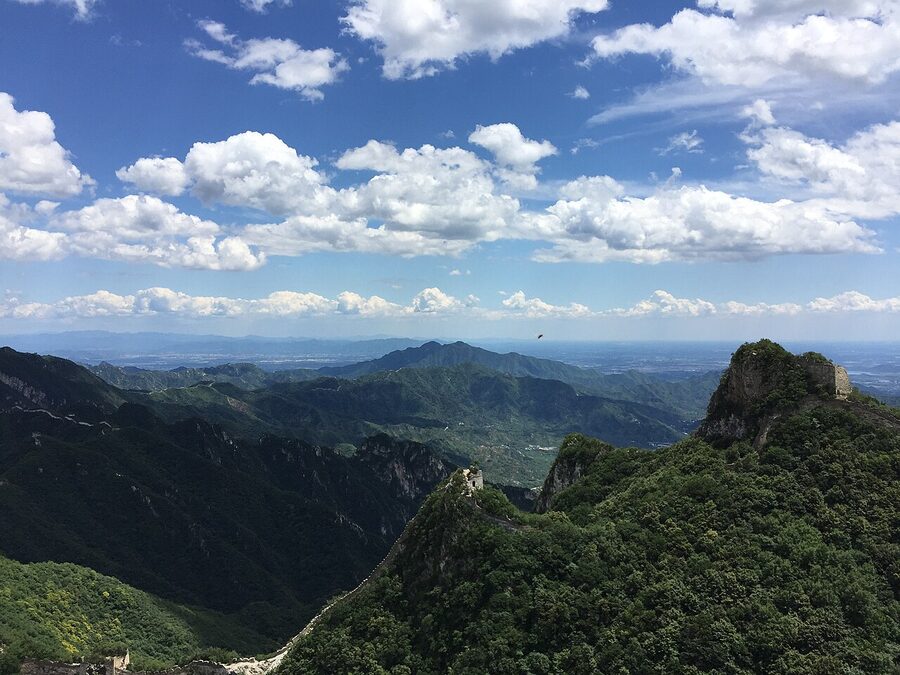
The whole “which section” question gets framed as if the reader needs to make a choice. They don’t. Pick Mutianyu. Move on to the practical bit.
A small bit of history, because it matters when you’re up there
Mutianyu started as a 6th-century wall built under the Northern Qi dynasty, somewhere between 550 and 577 AD. None of that wall is what you see now. The current structure is Ming. In 1368, the year the Ming dynasty took power, the Hongwu Emperor (Zhu Yuanzhang) ordered General Xu Da to build a defensive line through these hills to protect the new capital at Beijing and the imperial mausoleums to the north. A pass was added at Mutianyu in 1404. The wall was rebuilt again in 1569 under the Wanli emperor’s father, Longqing. What you walk on today is a Ming brick skin built over a Northern Qi rubble core, which is then partially restored Ming work from the 1980s.
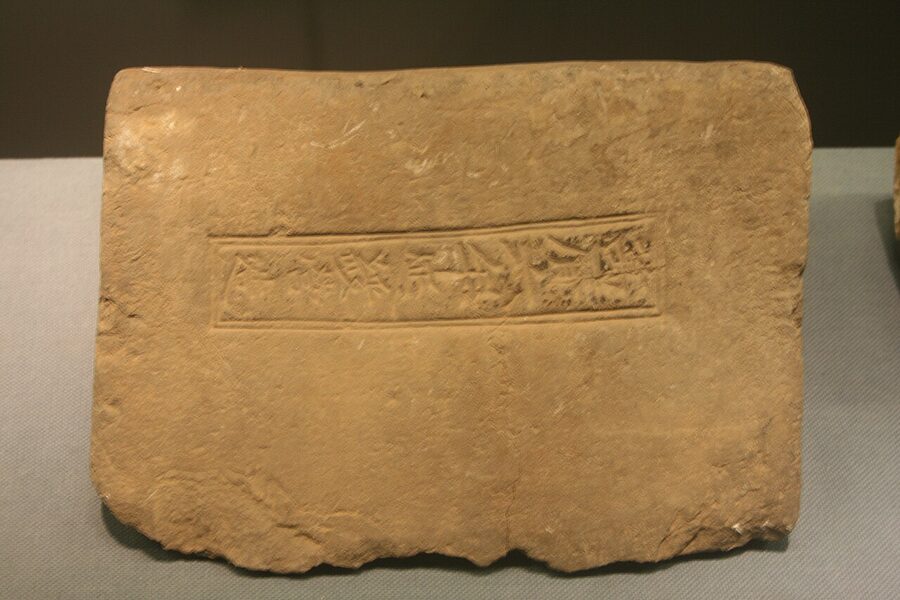
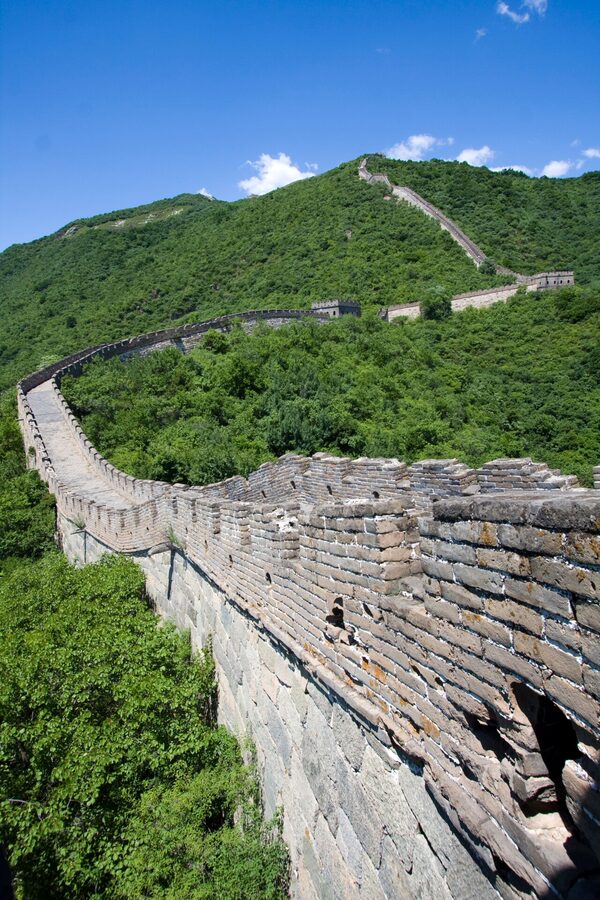
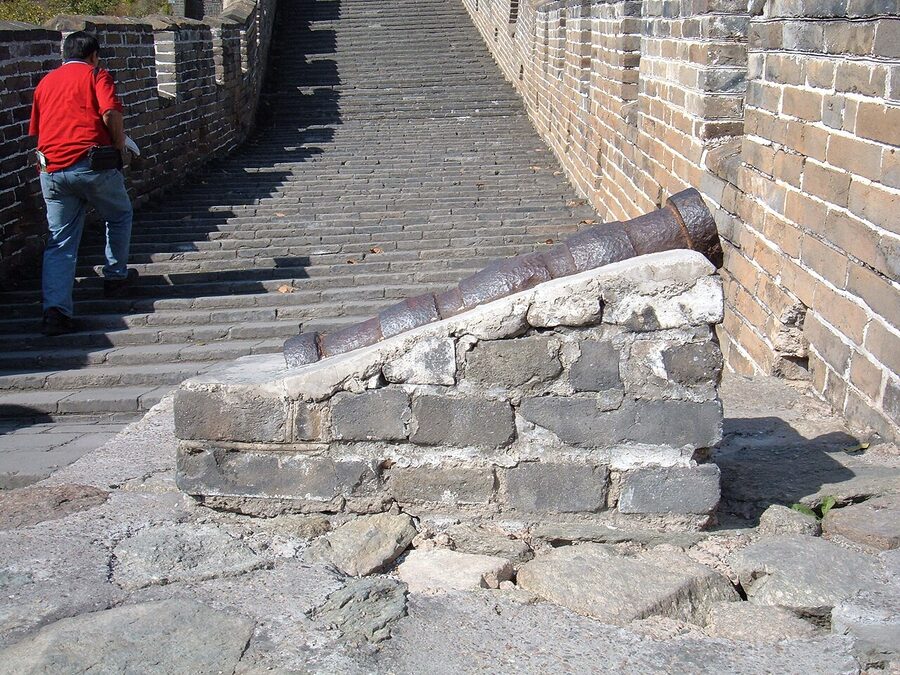
The reason this section was so heavily fortified is geography. Mutianyu sits on a hard pass through the Yan Mountains. Steppe nomads coming south toward Beijing, the Mongols above all, would funnel through this gap. The watchtowers were positioned roughly every hundred metres because that is the line-of-sight distance for a smoke or fire signal. The wall was less a fence than a ridge-top road for soldiers and runners, with garrisons in the towers, supply paths up the back, and a signal system that could move information from this ridge to Beijing in a few hours. It is the wrong question to ask whether the Wall “worked,” because the Wall was three things at once: a defensive obstacle, an administrative checkpoint that controlled what (and who) crossed in and out, and a piece of imperial theatre that said, in stone, where the Chinese world stopped and the steppe began. The Ming used it as all three. By the time the Manchus came over the wall in 1644, they came mostly through bribed gates rather than scaled stones, but you can argue that the Wall held the line for the better part of three centuries before that.
The “visible from space” thing, while we’re on it, is wrong. The Wall is a couple of metres wide, the same colour as the hills, and it does not show up to the naked eye from low Earth orbit. NASA has been clear on this for years. Yang Liwei, China’s first astronaut, said as much after Shenzhou 5 in 2003: he looked, he could not see it. So when you stand on Tower 14 and someone in your group says “you can see this from the moon,” they are repeating a 19th-century guidebook line that has not been true at any point. The Wall doesn’t need it. It is impressive on the ground.
How to get there from Beijing
Four real options. I’ll give you the prices in yuan and a clean opinion on each.
Option 1: organised day tour. Most hotels and hostels can book one. Expect ¥350-700 per person, depending on group size and whether lunch is included. Pick-up around 7am from your hotel, on the wall by 9-9:30am, three to four hours up there, lunch in the village or at a hotel restaurant on the way back, hotel by 4-5pm. The good ones include the entrance ticket and the cable car round trip. The bad ones make a stop at a “jade factory” or “tea ceremony” on the way back and you lose 90 minutes. Read the description. If it says “shopping stop,” book a different one.
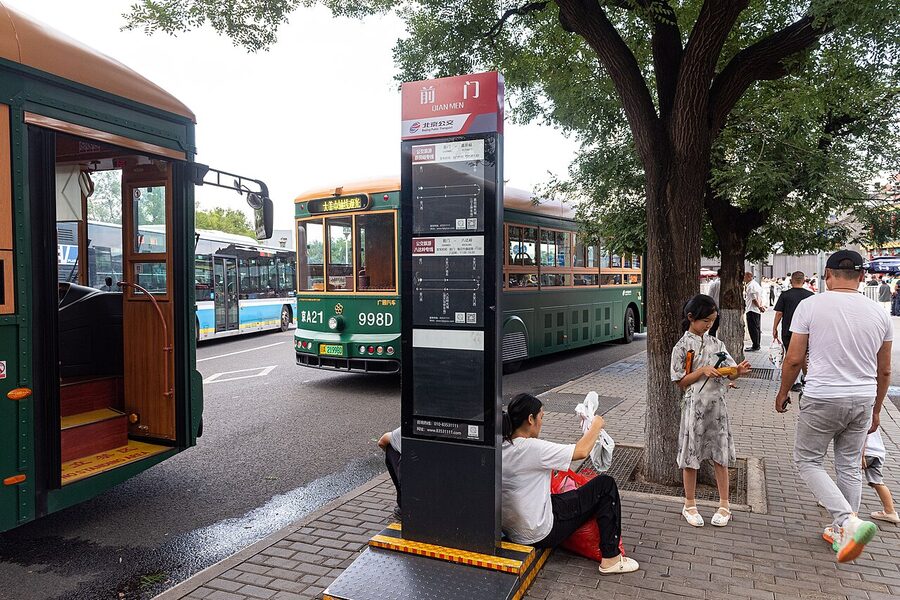
Option 2: tourist bus from Qianmen. Direct shuttle from Qianmen (Zhengyangmen, just south of Tiananmen Square) to Mutianyu. ¥80 round trip, 1.5 hours each way, departs between 7:30 and 10am as buses fill, returns between 1pm and 4pm. Subway: Line 2 to Qianmen, Exit B, walk 200 metres south to the loading area. Cash for the ticket once on board. This is the best DIY option. It avoids the public-bus scams and dumps you at the wall entrance.
Option 3: taxi or Didi. ¥600-1,000 round trip in a normal Didi, agreed in advance. ¥700-1,200 if you want a driver who waits the full day. The trick: Didi drivers will sometimes try to upsell you to a “wait and return” deal at three times the meter rate. You don’t need it. Plenty of drivers are sitting in the parking lot when you finish. Just hail a fresh ride down. Don’t let anyone talk you into hiring them for the day at the trailhead.
Option 4: public bus. Bus 916 express from Dongzhimen to Huairou North Avenue (¥12), then a local bus H23, H24, H35 or H36 to Mutianyu Roundabout (¥10), then a 3km walk or taxi to the entrance. Cheapest at maybe ¥40 round trip total. Slowest. Comes with a healthy chance of someone in an “official-looking” red vest at Huairou trying to drag you onto a private minibus and demanding fifty yuan for the privilege of taking you to a shut-down attraction in a random village. Possible. Annoying. Skip.
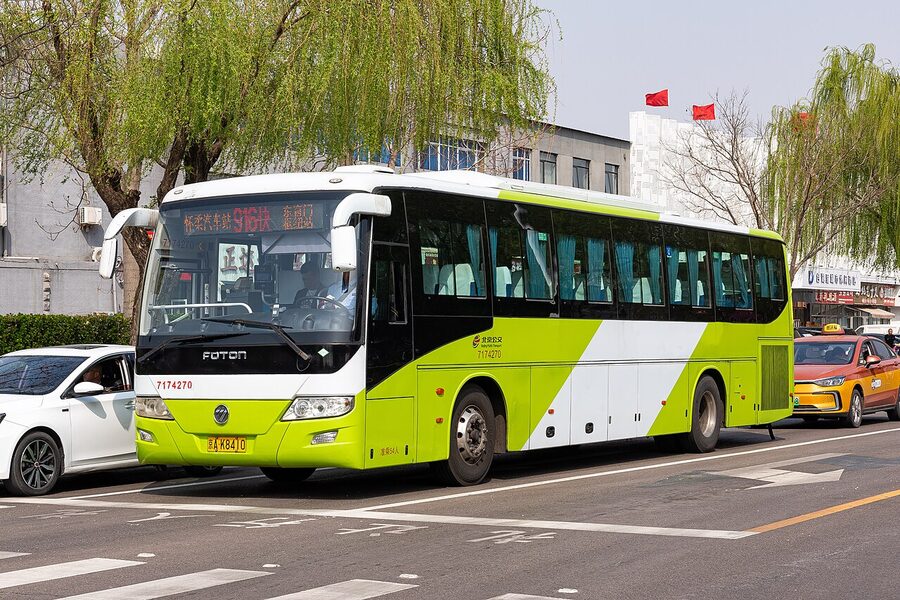
What I’d do, knowing what I know now: the tourist bus from Qianmen if I were on a backpacker budget, a Didi if I were two or more people splitting the fare. Skip the public bus, skip the “shopping” tours.
At the wall: layout, towers, and where to actually go
You enter through the visitor centre at the base of the hill. Tickets are ¥40 for the standard entry, ¥45 if you want the postcard ticket (it is a postcard with the entry stamp on it; harmless), or ¥60 if you want the entry plus the in-park shuttle bus. The shuttle covers the 1.5 km from the visitor centre to the lift stations, and unless you actively want a 25-minute walk uphill before you’ve even started, get the shuttle. Hours are 7:30am to 5pm in summer, 8am to 4:30pm in winter. There’s also a night session from 5:30pm to 9:30pm in summer, with the wall partially lit; pretty, but it’s a separate ticket and not really what you came for on a first visit.
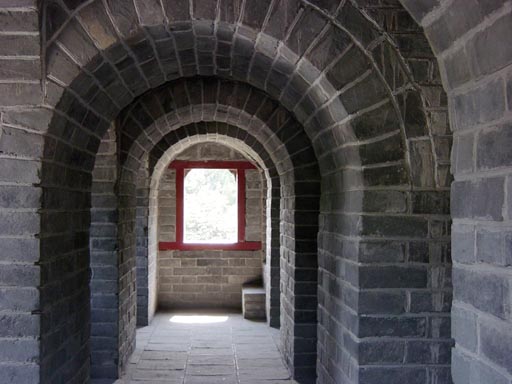
Once you’re on the wall, here is the layout that nobody draws clearly enough. Watchtowers are numbered Tower 1 through Tower 23 from west to east. The two access points, in the order you encounter them walking east-to-west:
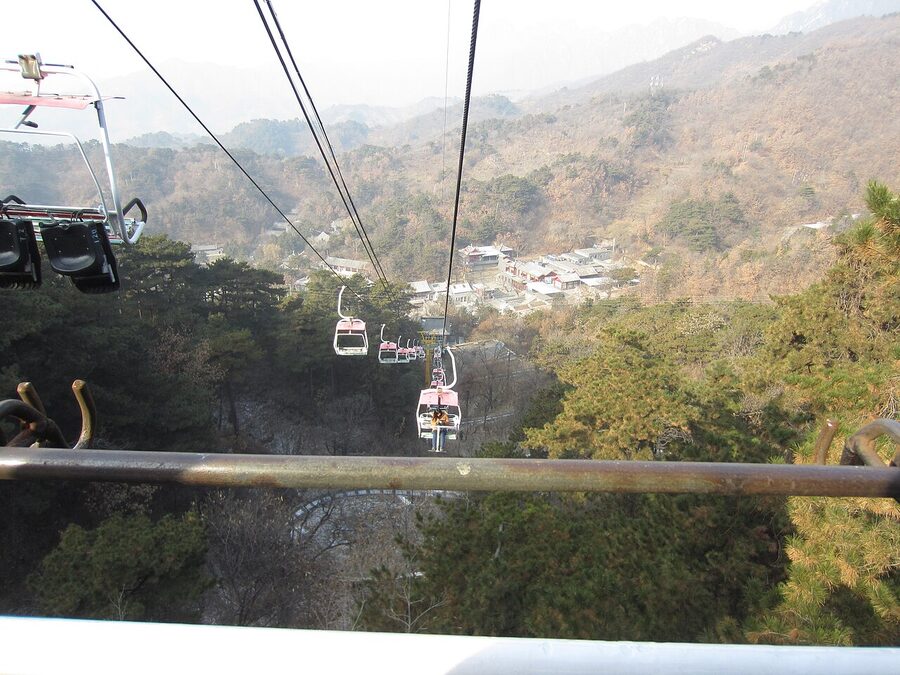
Tower 6 area. The chairlift station is here. Open two-person chairs, no doors, scenic the whole way up. The toboggan run starts from the same station and goes back down the slope on a stainless-steel half-pipe. Buying the chairlift-up plus toboggan-down combo gets you a round trip for about ¥140.
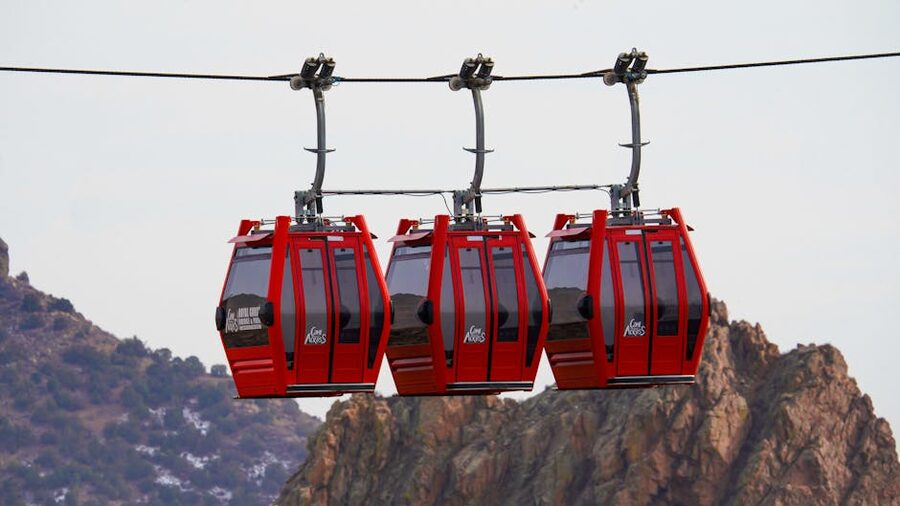
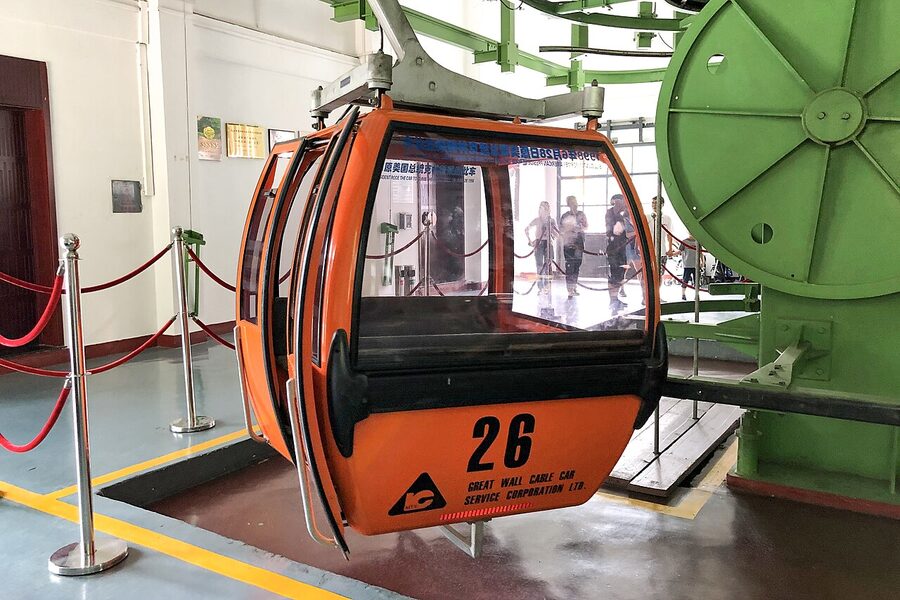
Tower 14 area. The cable car station, dropping you out roughly in the middle of the visitor stretch. Enclosed gondolas, six per car. Round trip about ¥140. Tower 14 itself has a small platform that gives you the panorama shot most people post on Instagram. Expect a small crowd here, especially between 10am and 1pm.
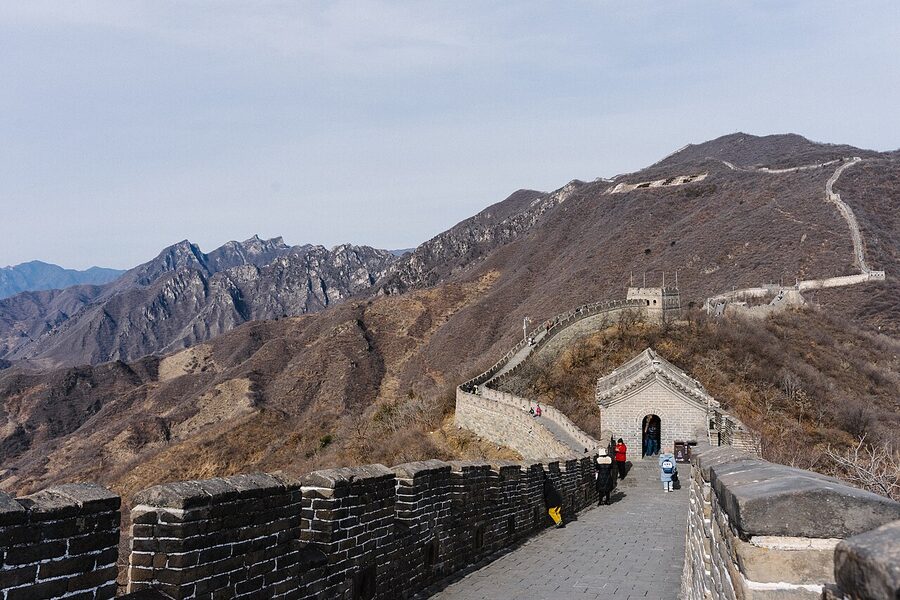
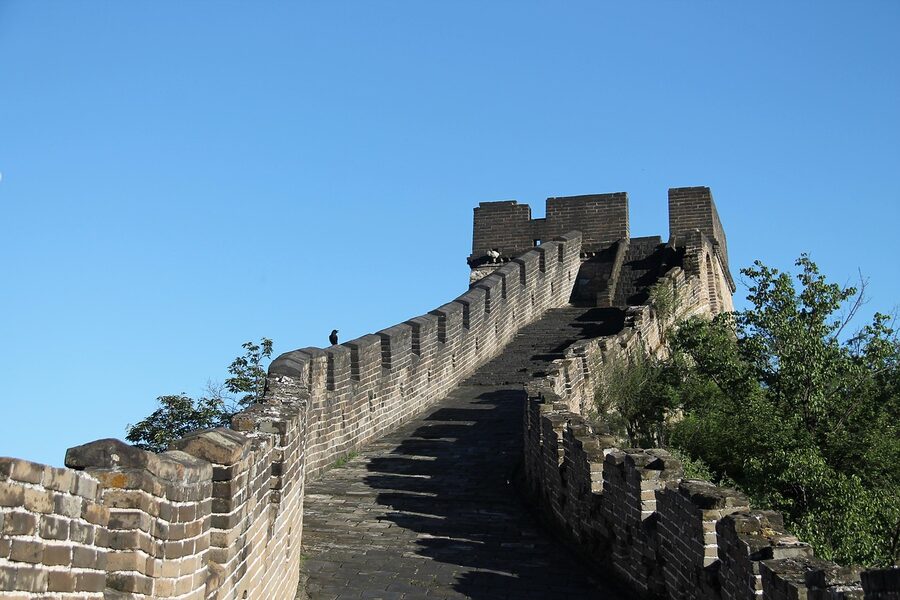
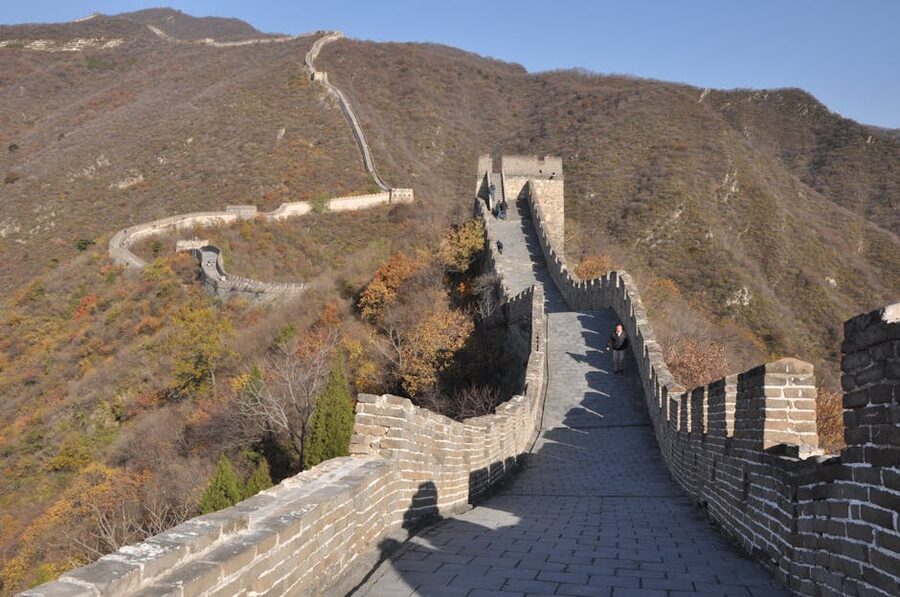
From Tower 14 you can walk east toward Tower 20 (“Hero Slope,” 198 steep stone steps to the highest point in the section, with the whole wall behind you) or west toward Tower 23, which is the limit of the visitor area. Beyond Tower 23 the restoration ends and the wild Jiankou section begins. There is a metal barrier and a sign asking you not to continue. People do, photographers in particular, but the path beyond is genuinely dangerous and you are in your own life-insurance arbitration if anything happens. Stop at Tower 23. Look. Take the photo. Walk back.
How far to actually walk
Most people overestimate how much wall they want to cover. The full Tower 6 to Tower 23 stretch is about 2.25 kilometres of physical wall, but it is steep wall: there are two big climbs (Hero Slope at Tower 20 and the run up to the western limit), the steps are uneven, and the gradient on some staircases is frankly closer to a ladder than a path. Two hours is plenty for a non-hiker. Three hours is plenty for a hiker. Anyone who tells you they spent six hours up there was probably stopping for tea breaks.
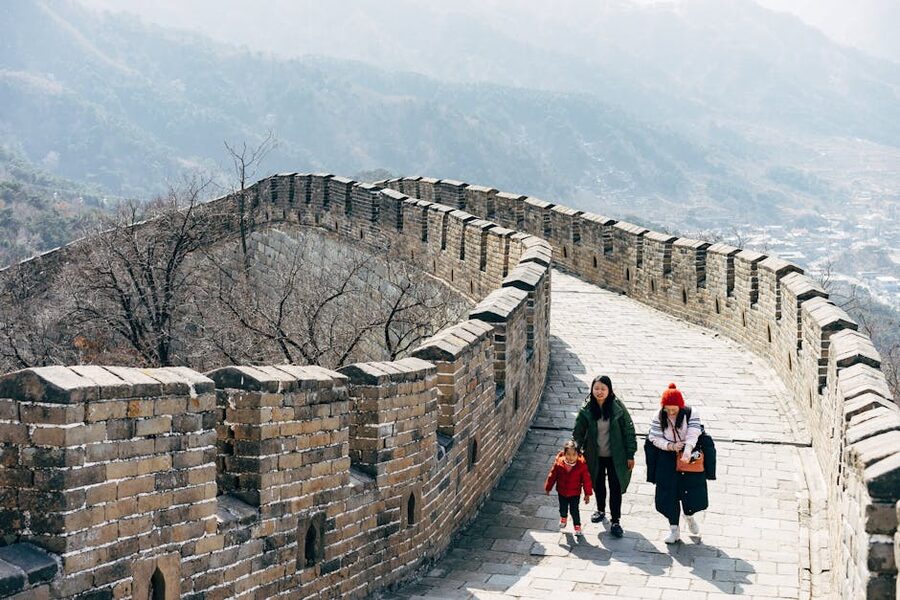
A workable plan: cable car up to Tower 14. Walk east to Tower 20 (Hero Slope) first, while you have the energy, ideally before the sun is straight overhead. Climb to the top, take five minutes at the panorama, walk back to Tower 14. From Tower 14 walk west toward Tower 6, slowly, through the densest run of watchtowers in the section. Arrive at Tower 6, take the toboggan down. Total: about two hours of actual walking, plus stops. You will have seen everything worth seeing, and you will not be limping for the next two days.
If you want quieter wall, walk a few towers past Tower 14 in either direction and the crowd thins. By the time you’re at Tower 18 or Tower 9, you’ll have stretches with three or four people in sight rather than thirty. This was true even in low season when I went and is reportedly still true on weekday mornings in shoulder season.
Cable car, chairlift, or walk: and the toboggan question
You can walk up to the wall instead of taking either lift. The trail up to Tower 6 is about 30 minutes of stairs through forest. It’s pretty, you save ¥100 each way, and you arrive at the wall already a bit melted in summer. I’d walk up if you’re under 40, the weather is mild, and you’re not pressed for time. Take the cable car if any of those isn’t true.
Cable car at Tower 14 versus chairlift at Tower 6: the cable car has the bigger views from the top because Tower 14 is at higher elevation; the chairlift is more fun because it’s an open chair. Most people pair the cable car up with the toboggan down, since the toboggan starts at Tower 6, which means you walk west across the wall during the day instead of doubling back.
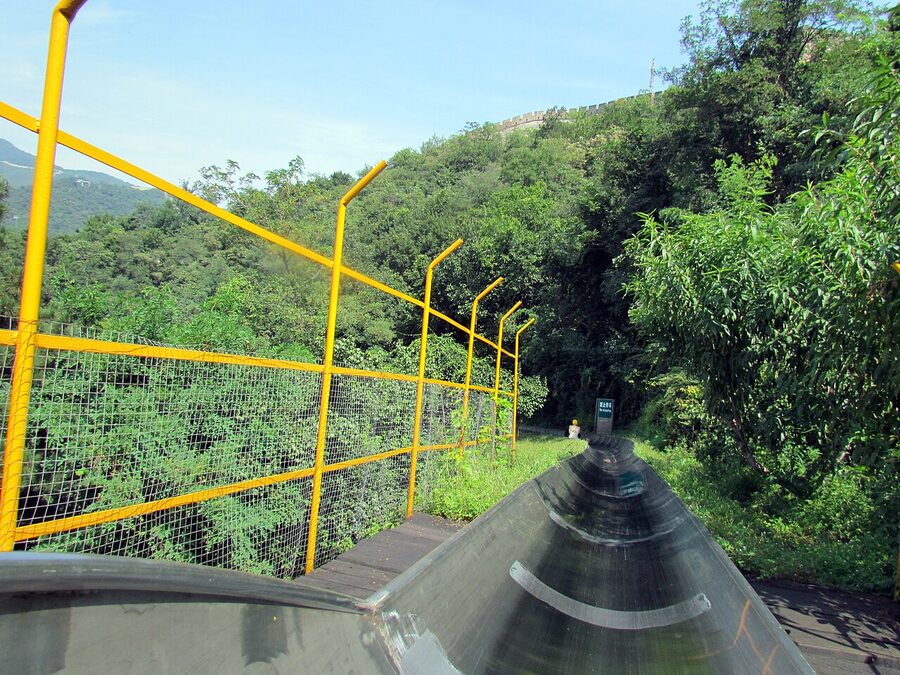
About the toboggan: it is genuinely fun. ¥100 one-way, or ¥140 if you bundle it with the chairlift up, which is the better deal. The run is about 1.6 kilometres of stainless-steel half-pipe with a sled that has a brake-and-throttle stick between your knees. You self-pace, so it is as fast or as slow as you want. Children love it. Adults pretend to be too cool, then go fast. The staff at the bottom will gently scold you in Mandarin for going too quickly; nobody minds. Do not skip it because you assume it’s a tourist trap. It’s a sled run on a thousand-year-old wall and you’ll think about it the next time you’re somewhere boring.
What to bring
Real shoes. Trainers, hiking shoes, anything with grip and ankle support. Not sandals. The stones are uneven, the steps in places are 30 centimetres deep and very narrow, and there is genuine slip risk when there has been any rain. I have watched a woman in flip-flops slide a metre on a wet step, which is not the souvenir you came for.
Water. There is a small shop at Tower 6 that sells ¥10 bottles of water and ¥15 instant noodles. The mark-up is what you would expect at a tourist site. Bring two litres if you’re doing the full walk, more if it’s hot. There is no shade on the wall.
A layer. The wind on the ridge can be 10 degrees colder than the parking lot, especially in shoulder season. Even in May or October, a thin shell or fleece is the difference between enjoying the panoramas and rushing through them. In winter, full proper jackets.
Sunscreen and a hat. The wall is a long stone surface in direct sun for most of the day. There is no tree cover anywhere on the actual wall (the forest is below it, not over it). I have come back with a sunburnt scalp twice from places that were nothing like as exposed as Mutianyu. Cap, sunscreen, sunglasses.
Cash, in small notes. Some of the village-level vendors and the bottom-of-mountain food stalls take WeChat Pay only, which doesn’t help foreign travellers without a Chinese bank link. Cash always works. ¥100 in small notes covers most contingencies.
When to go
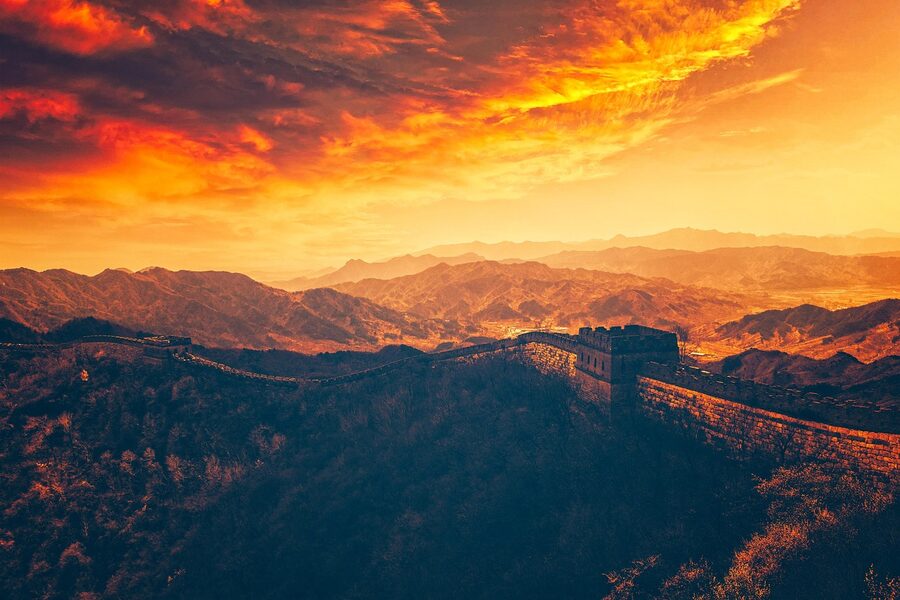
April to mid-May for wildflowers and mild temperatures. Late September to early November for the autumn foliage that everyone pictures, especially mid-October to first week of November. These are the windows. Aim for them if at all possible.
Summer (June to August) is hot and hazy. Beijing summer pollution can mean 40-degree afternoons and limited visibility. The towers are full of school groups on field trips. Avoid if you can; if you can’t, go at opening time, do your walking before 11am, and be on the toboggan by 1pm.
Winter (December to February) is cold but empty and crystal clear. Snow on the wall is one of the more striking sights in northern China and the haze that covers Beijing nine months a year is mostly gone. The catch is that the toboggan can be closed during heavy ice or snow days, the chairlift sometimes runs reduced hours, and you’ll need real cold-weather gear (gloves with grip, a proper down layer, hat that covers your ears). In return you get the wall to yourself, which is not a small thing.
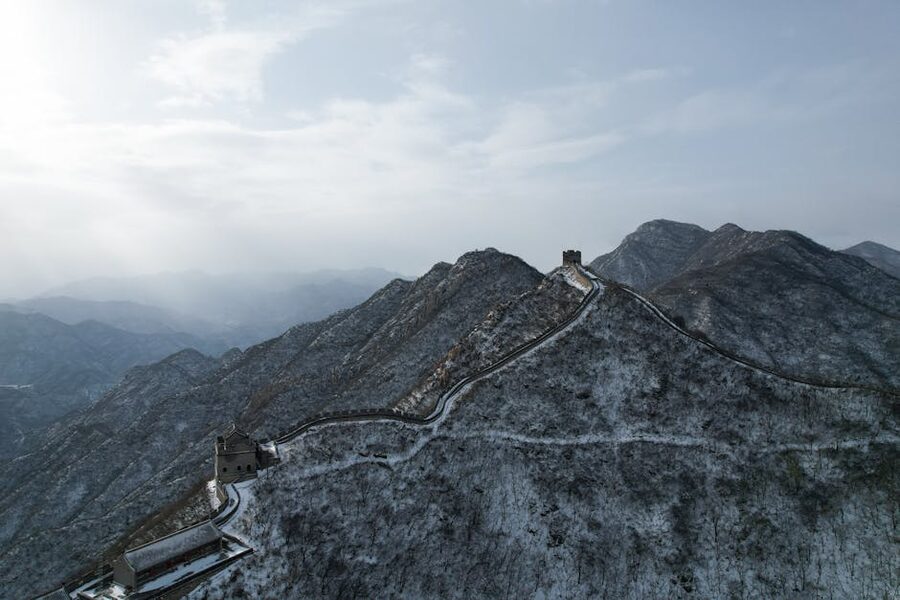
One specific timing note: the first 90 minutes after opening (before about 10am) and the last 90 minutes before close are dramatically quieter than the middle of the day. Tour buses arrive between 9:30 and 10:30 and clear out between 2 and 3. If you can be on the cable car at 8:30am, you will have a better wall.
Where to eat
Three real options at three price points.
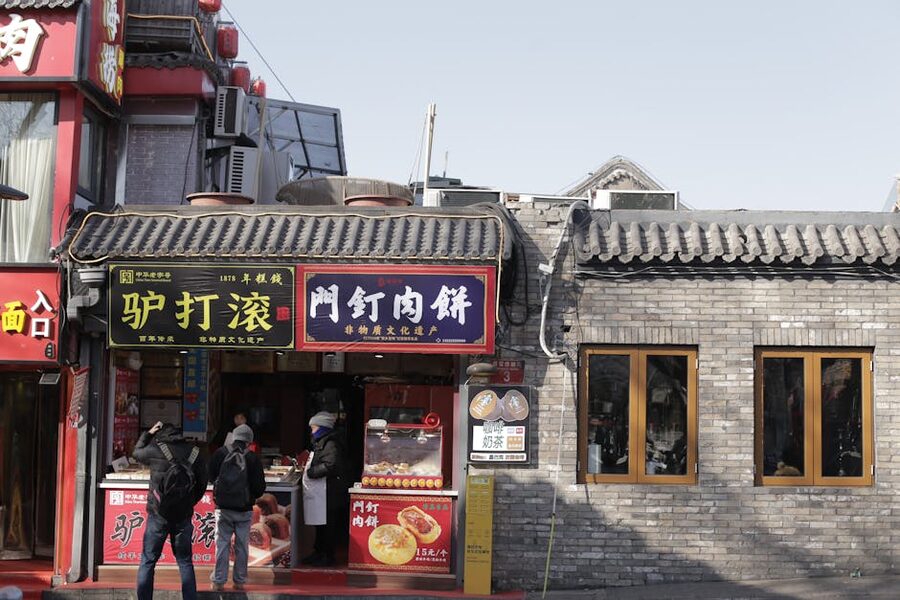
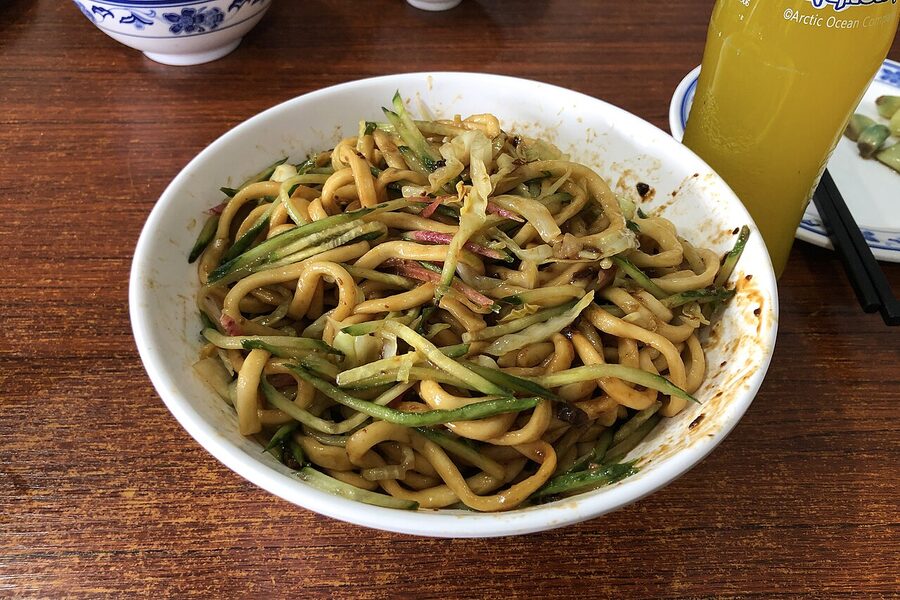
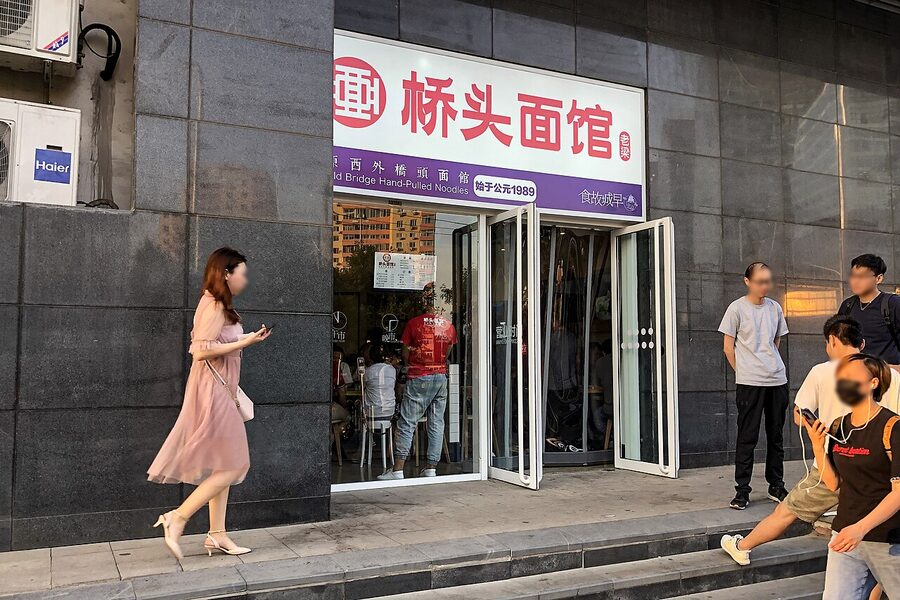
The village stalls at the base. ¥30-50 will get you a bowl of hand-pulled noodles, a meat skewer, or a plate of dumplings at one of the small canteens that line the road back to the parking lot. Quality varies. Look for the place where local drivers and guides are eating; that’s where I’d go. The Beijing-style noodle bowls (zhajiangmian, lamb noodle soup) are the safest bets.
The Schoolhouse at Mutianyu. The other end of the spectrum. A converted village school turned into a small farm-to-table restaurant by an American expat couple about fifteen years ago. The set lunch runs around ¥180-260 depending on the day, the wine list is real, and the place gets praised in every English-language Beijing food guide written since 2015. It deserves it. Reservations are advisable, especially at weekends.
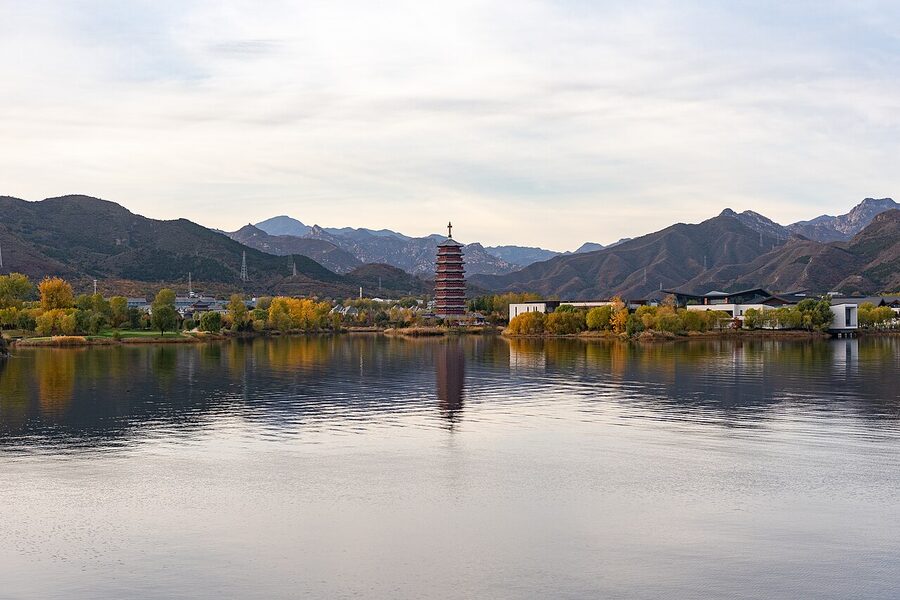
Yanxi Lake area. Twenty minutes’ drive south of the wall is Yanxi Lake, a resort area with a row of mid-range restaurants. ¥80-120 per person for solid Chinese food in a setting with views of the lake. Trip-Advisor-tier rather than insider, but reliably decent if you have a driver and want to extend the day before going back to Beijing.
For a primer on Beijing-side food generally, including the dumpling joints and noodle stalls worth a stop on the way back into town, my regional food guide to China covers what to eat where, and the dumplings primer lays out which northern styles you’ll find in central Beijing once you’re back.
The full day plan
If you want it written out as a single line of itinerary, this is what I’d do.
7:00am: leave central Beijing. Tour pickup or Didi or first tourist bus.
8:30-9:00am: arrive Mutianyu visitor centre. Buy ticket plus shuttle plus cable car/toboggan combo at the entrance. Total around ¥240.
9:00-9:15am: shuttle to lift station, cable car up to Tower 14.
9:30am-10:30am: walk east to Tower 20 (Hero Slope), climb the 198 steps, take the panorama photos.
10:30am-11:30am: walk back to Tower 14, then west to Tower 6 through the densest stretch of watchtowers. Stop at the towers that empty out as you go.
11:30am-11:45am: toboggan down from Tower 6.
12:00-1:30pm: lunch (Schoolhouse if booked, village stalls otherwise).
1:30-2:00pm: car or bus back to Beijing.
3:30-4:30pm: arrive Beijing, hotel by 5pm at the latest.
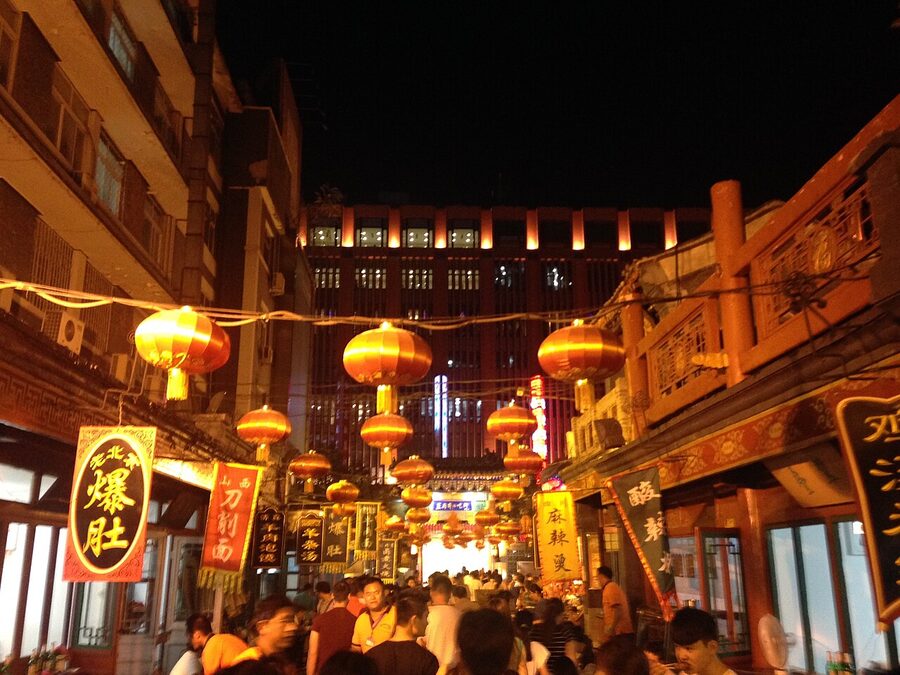
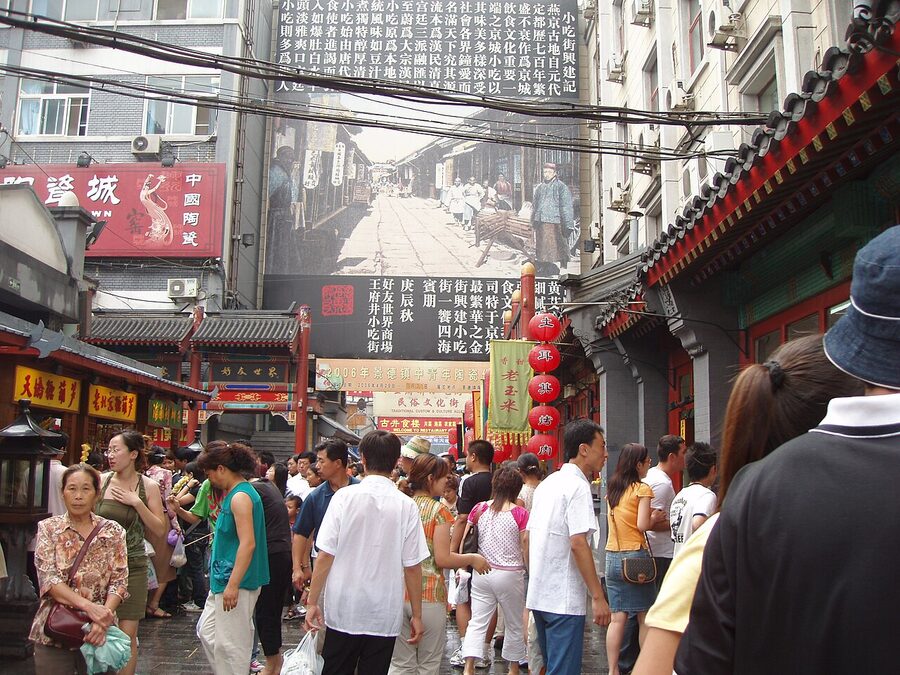
That gets you back to Beijing with the evening to walk Wangfujing, do a hutong dinner, or recover at the hotel. If you’re combining this trip with the rest of central Beijing, the 3-day Beijing itinerary is the parent piece; this Mutianyu day is meant as Day 2 of that, with the Forbidden City sitting on Day 1.
What to skip
The souvenir gauntlet between the parking lot and the entrance gate. Everything sold there is sold cheaper anywhere else in China. The “I Climbed The Great Wall” certificate booth at Tower 14, charging ¥50 to print your name on a thin certificate. The camel-photo guy near the visitor centre, who charges ¥30 to put a tourist on a tired-looking Bactrian camel for thirty seconds. The “calligrapher” who will paint your name in Chinese characters on a fan for ¥80 (he’s not a calligrapher; he traces). The bottled-water stalls inside the wall area, where ¥10 buys a bottle that costs ¥3 at any Beijing convenience store. None of these are scams in the strict sense; they are just charging tourist tax for things that aren’t worth it. Walk past, save the money for lunch.
If you have a second wall day in your trip, the answer to “which other section?” is Jinshanling for hikers and Simatai-after-dark for the lit-up novelty walk. But most people won’t have a second wall day, and they don’t need one. Mutianyu is a complete experience: the cable car, the long ridge, the toboggan, the crumbling Jiankou view at the western limit, the Schoolhouse lunch, the drive back through orchards. Do it once, do it well, and don’t try to combine it with a half-day at Badaling because someone told you to “see both.” Badaling is the wall as theme park; Mutianyu is the wall as wall.
The other small piece of advice I have, after more than one trip out from Beijing: don’t try to do this and the Forbidden City on the same day. People do, on the half-day-tour packages. They arrive at the wall at 11am, leave at 1, get back to the city by 3:30, and try to push through the Forbidden City as the afternoon thins out. It’s miserable. The Wall is its own day. Beijing has plenty of other things to do, and they reward an unhurried pace. If you came to China for one piece of the postcard, give it a full slow day.
For the wider China context that frames a Beijing trip, the Shenzhen pillar piece picks up the south China end, and parallel outdoor day-trip itineraries like Yangshuo from Shenzhen or the 3-day Lijiang itinerary in Yunnan are the natural follow-on if you find yourself liking the part of China that exists outside the capital.
Bring real shoes. Buy the cable car plus toboggan combo. Be on the wall by 9. Walk to Tower 20 first, then west to Tower 6. Skip Badaling.

.jpg)
.jpg)


.jpg)
.jpg)

.jpg)
_-_566.jpg)

.jpg)
.jpg)
.jpg)

