
The Yakitori Guide: Every Cut, Every Tare, Every Counter Worth Sitting At
You sit down at the eight-seat counter, the chef nods, and within three minutes a small wooden board appears in front of you with a single skewer on it. The meat is dark from the tare, glossy, the bamboo still smoking very faintly. He says one word, bonjiri, and goes back to the grill without translating it. You eat it. It tastes like crisp and sweet and rich all at once, and you realise, two bites in, that this is the part of the chicken closest to the tail, the small fatty triangle most western cooks throw out, and that you have been wrong about chicken your whole life.
Yakitori in English usually gets translated “chicken on a stick”, which is true the way “wine” is true as a translation of every bottle of Burgundy. There are roughly two dozen named cuts of the bird. Each one has its own preparation, its own seasoning convention, its own internal hierarchy of when in the meal it should appear. Most western menus list five or six. A serious Tokyo counter will list twenty and sell another four off-menu only to people who knew to ask. This guide is the version I wish someone had handed me before my first proper yakitori meal in Meguro, when I confidently ordered “everything tare” and the chef went very still for a second.
What follows is the full vocabulary, the binchotan tradition, the named Tokyo counters worth booking and the train-track stalls worth standing at, the etiquette that separates a regular from a tourist, and the few places I would actively skip. I have eaten at most of the restaurants named here. The few I have not been to are sourced from the Michelin Guide Tokyo current edition, cross-referenced against Tabelog scores above 4.0, which is a high bar in Japan and a fair filter for “still good, not just famous”.
One note. Nothing here is a dare. Everything I describe is something Japanese people eat every week, often every day. The ovary chain, the immature egg, the fatty parson’s nose, these are not stunt foods, they are the parts of the bird a butcher would have always used because the bird has always cost too much to waste. Read this with that in mind. The point is to eat at the counter the way the regulars do.
In This Article
- What yakitori actually is
- The full vocabulary, one cut at a time
- 1. Momo, もも, the standard
- 2. Negima, ねぎま, thigh and leek
- 3. Mune, むね, breast
- 4. Sasami, ささみ, tender
- 5. Tebasaki, 手羽先, wing tip
- 6. Tebamoto, 手羽元, drumette
- 7. Seseri, せせり, neck meat
- 8. Kawa, 皮, the skin
- 9. Reba, レバー, liver
- 10. Hatsu, ハツ, heart
- 11. Sunagimo, 砂肝, gizzard
- 12. Nankotsu, 軟骨, cartilage
- 13. Bonjiri, ぼんじり, the parson’s nose
- 14. Furisode, ふりそで, between breast and wing
- 15. Chochin, ちょうちん, the immature egg
- 16. Tama-himo, 玉ひも, the ovary chain
- 17. Shiro, シロ, small intestine
- 18. Petasu / Saezuri-adjacent, ペタス, diaphragm and oesophagus
- 19. Tsukune, つくね, the meatball
- Beyond chicken: the kushiyaki section
- Tare versus shio
- The grill: binchotan, ubame oak, and 1,000 degrees
- Named Tokyo counters worth booking
- The Michelin tier
- The cult counters
- Standing yakitori (tachi-nomi)
- Yurakucho gado-shita: the train-track stalls
- Omoide Yokocho: Memory Lane
- How to actually order
- Drink pairing
- Etiquette at the counter
- Regional variants
- What to skip
- Making yakitori at home
- One last skewer
What yakitori actually is
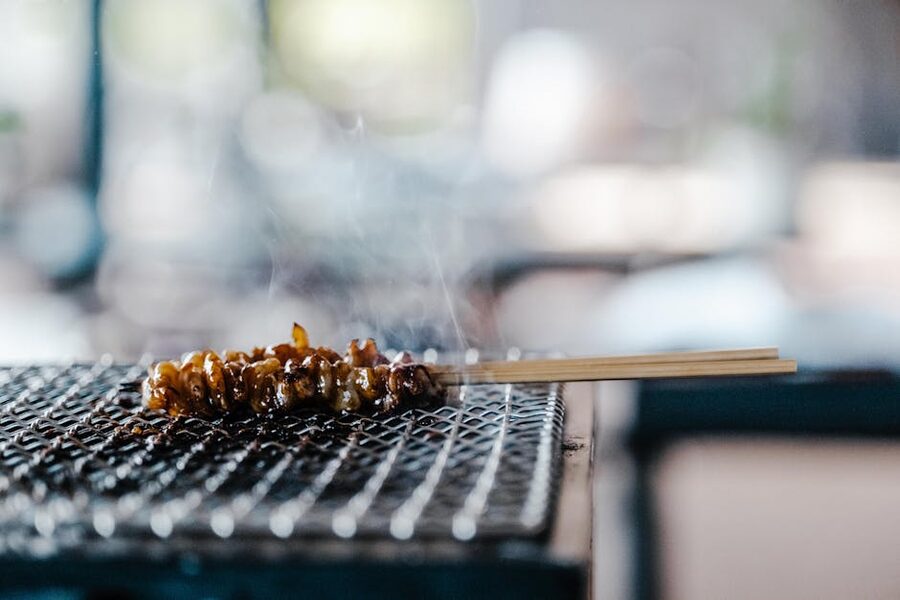
The base definition is simple. Pieces of chicken, threaded on a fifteen-centimetre bamboo skewer (the kushi), cooked over charcoal. Yaki means grilled, tori means bird. The skewer matters because the bamboo is soaked first and then sits with its handle off the fire while the meat takes direct heat, which means a good chef can hold the skewer in their fingers and rotate it with one hand without burning themselves. The grill is called a konro, narrow, designed exactly to the skewer’s length, with a bed of charcoal ten or twelve centimetres deep at the most. Nothing about the equipment is incidental. A round Weber kettle cannot do this; the skewer would burn.
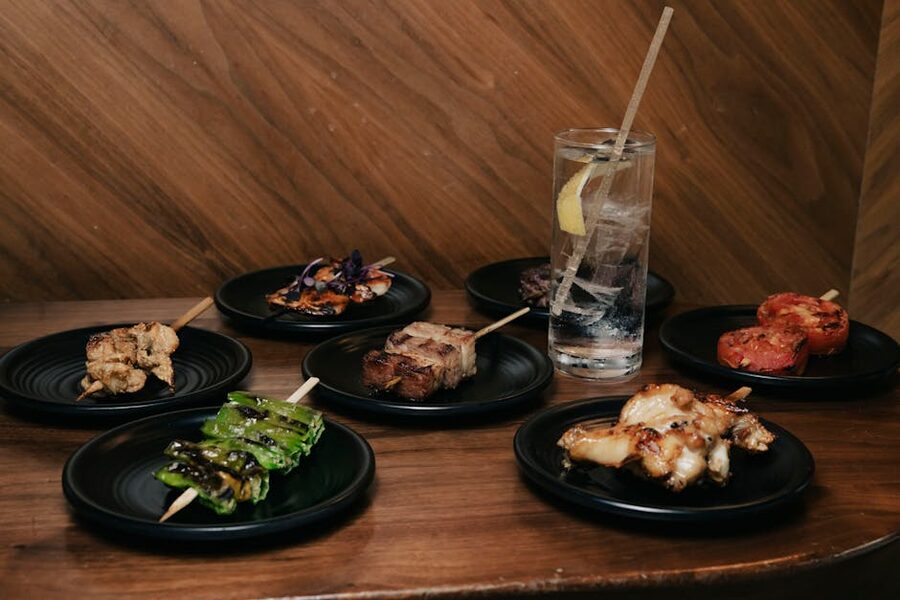
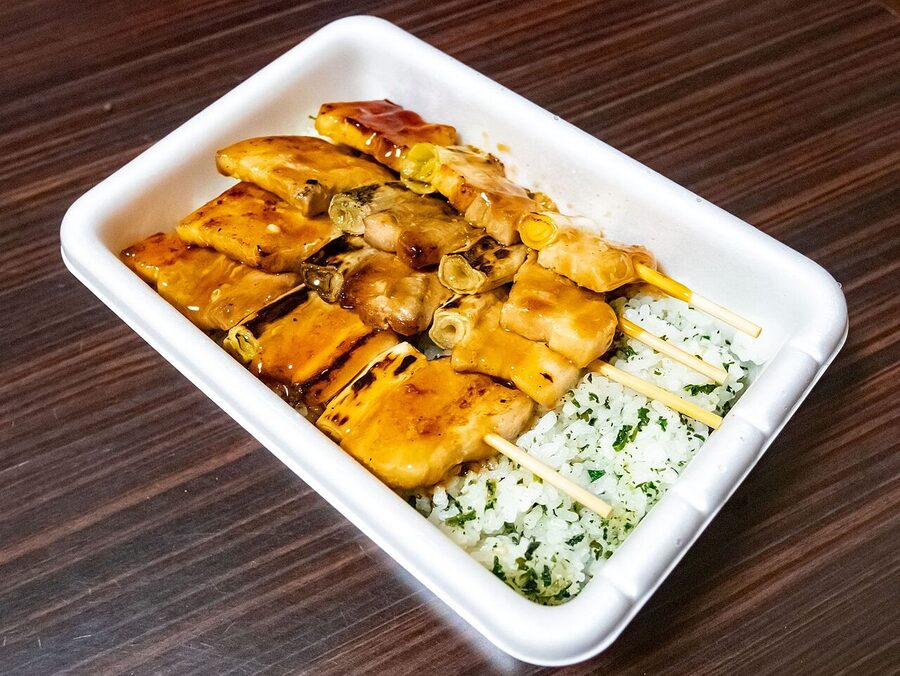
Each skewer carries one cut of the bird, sometimes alternating with a vegetable (negima is the famous example, thigh and leek). The seasoning is one of two things. Salt only, called shio. Or a sweet soy glaze, called tare, which is brushed and re-brushed and re-brushed during cooking until the surface is dark and slightly sticky. Never both on the same skewer. The chef chooses which seasoning each cut gets, and at a good counter this is not a question you are expected to ask. You eat it the way it comes.
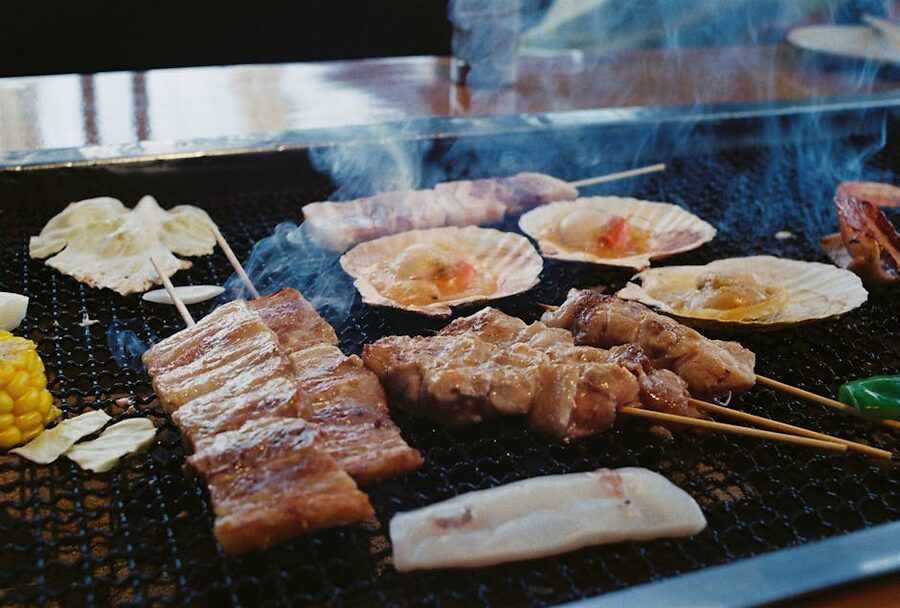
The looser term is kushiyaki, “skewer-grilled”, which covers anything cooked this way regardless of animal. Pork belly, beef tongue, mushrooms, ginkgo nuts, scallops. A yakitori counter will usually have a kushiyaki section on the menu. A pure yakitori counter (and there are some, especially the Michelin-starred ones) restricts itself to a single chicken, butchered that morning, skewered to order, with no pork or beef in the building.
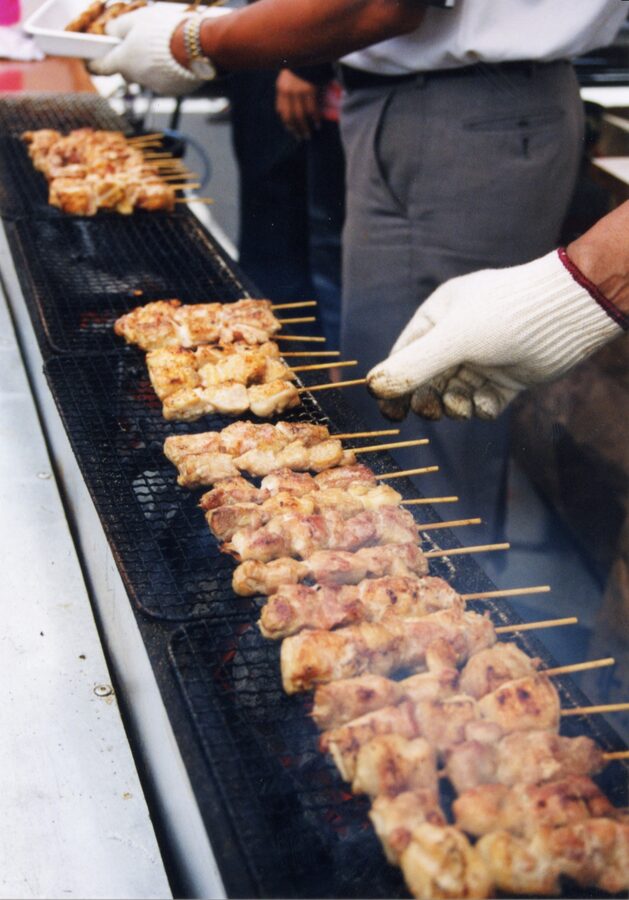
Yakitori as a counter form is younger than you’d think. It runs back to the Edo period, where street vendors grilled small game birds, sparrows, quail, sometimes duck, because chicken was too expensive for daily food. Chicken in Japan only became cheap after the postwar push for domestic poultry farming in the 1950s. The single-counter, all-chicken specialist is essentially a postwar phenomenon, and the Michelin-starred version of it is a 21st-century one. Birdland in Ginza, the first yakitori shop in the world to get a Michelin star, did so in 2008. That is recent. The whole “yakitori as fine dining” idea is younger than the iPhone.
The full vocabulary, one cut at a time
What follows is the menu most regulars work through over an evening. I have grouped them roughly in the order you would order them. Lighter and leaner cuts first, fattier and offaly cuts later, the meatball at the end. Japanese names, romaji, English explanation, where on the bird, and what the seasoning convention is.
1. Momo, もも, the standard
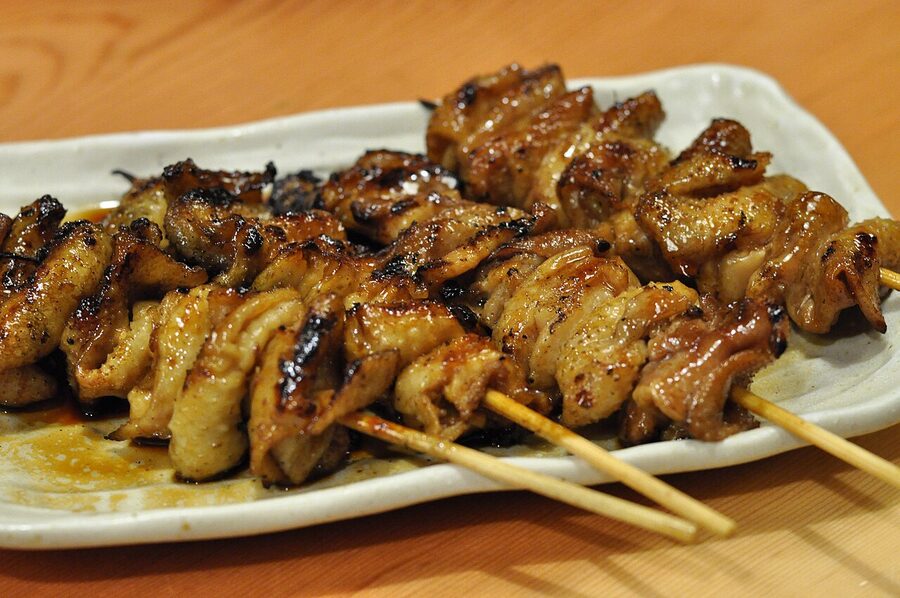
Thigh meat, cubed, skewered three or four pieces to a stick. The default and the test. Order it shio first, on its own, before anything else. If the counter’s momo is properly seasoned and the chicken is fresh, you stay. If the meat is rubbery or oversalted, you finish your beer politely and find somewhere else.
2. Negima, ねぎま, thigh and leek
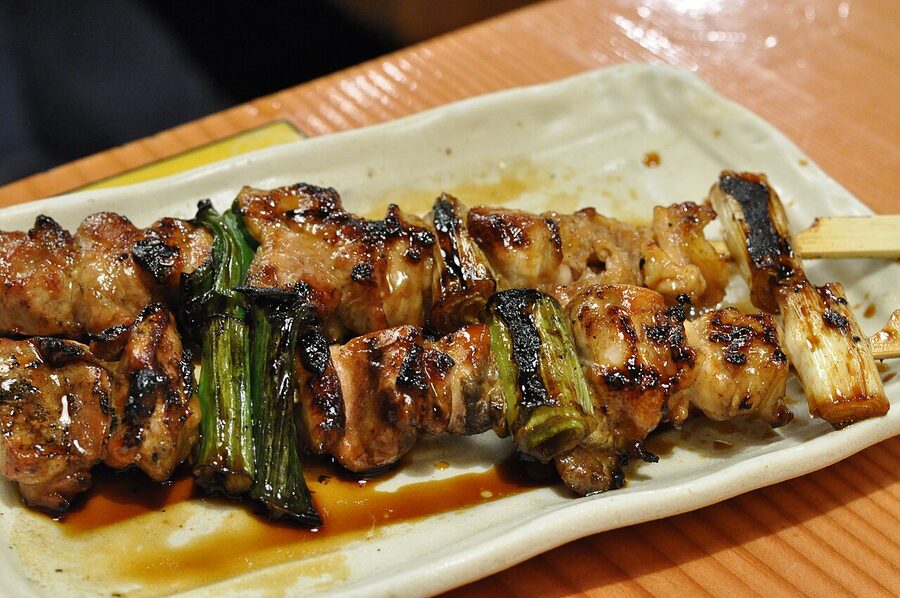
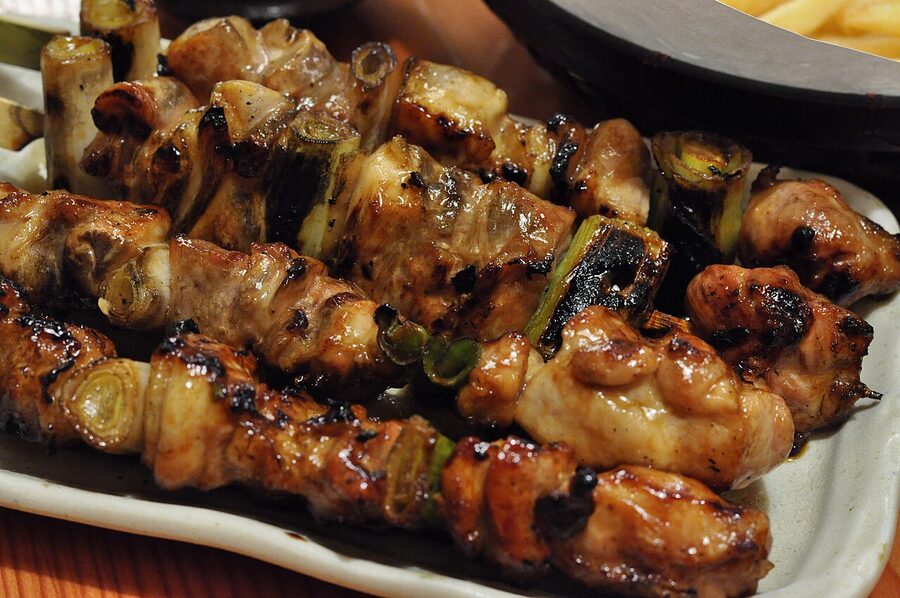
Cubes of thigh alternated with thick rounds of Tokyo negi (a fat Welsh onion, not a thin spring onion). One of the few skewers where vegetable and meat share equal billing. Goes either tare or shio depending on the counter. Some chefs slice the leek so the rings stay closed; others split them, which gives you more char on the cut surface.
3. Mune, むね, breast
Breast meat, the leanest cut. Underused in most western kitchens, treated with respect at a yakitori counter, where it gets the briefest possible time over the heat. Almost always shio. Sometimes finished with a hairline of yuzu zest. If the chef brings it overcooked, that is the only fault you will see all night.
4. Sasami, ささみ, tender

The slim inner-loin muscle. Pale, very tender, lightly cooked. At a serious counter it arrives with a pink centre and a daub of one of three things: wasabi, ume (pickled plum), or shiso. This is one of the prettiest skewers on the menu and one of the most easily ruined by overcooking.
5. Tebasaki, 手羽先, wing tip
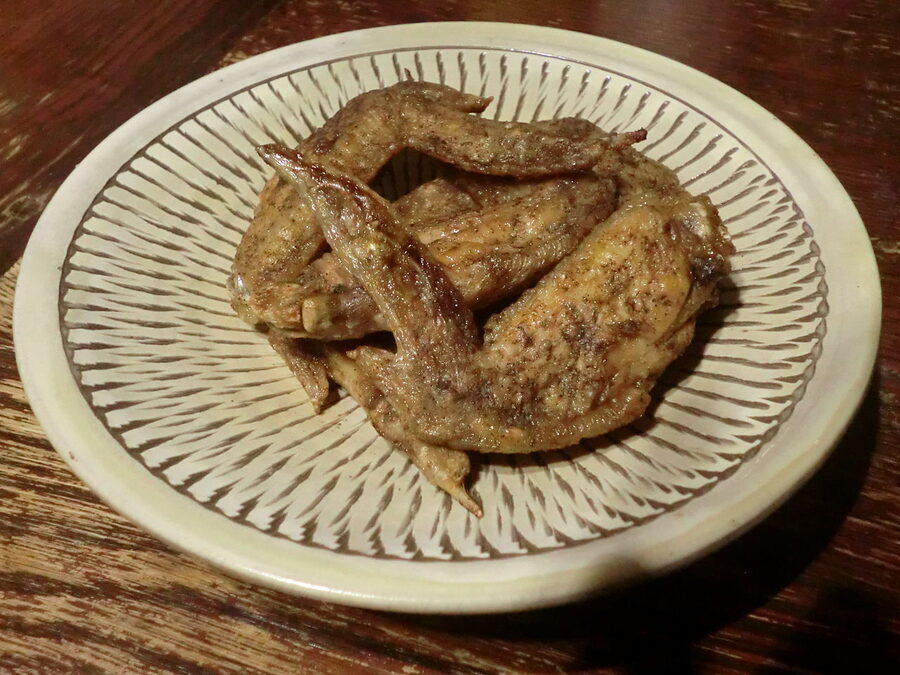
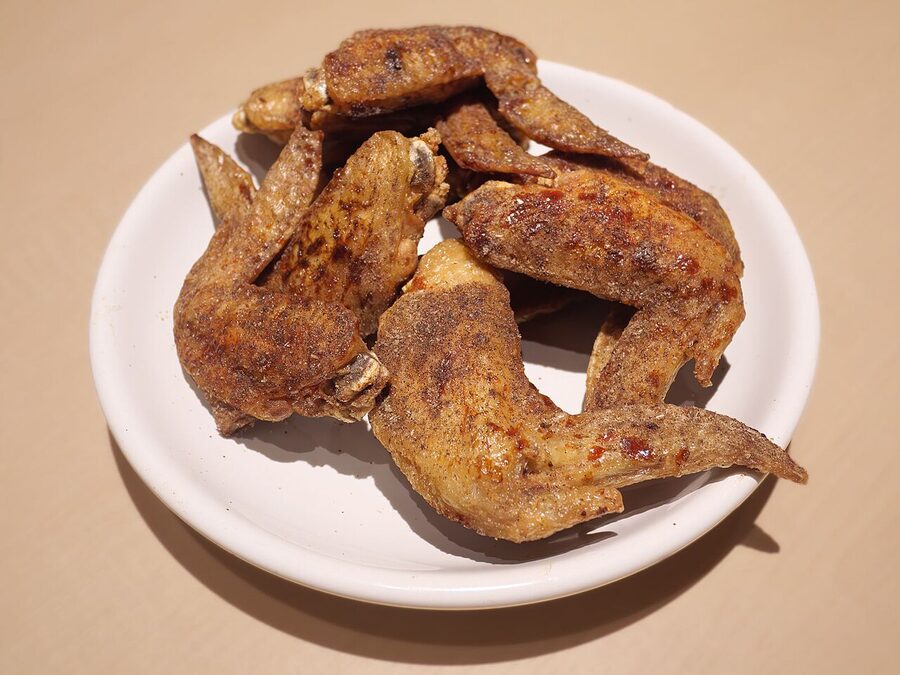
Wing tip. The Nagoya specialty is salt-and-pepper, served as a pair, eaten with your hands. The mainstream Nagoya version is at Sekai no Yamachan and Furaibo, both with locations across the city; the difference is mostly whether you prefer the thicker pepper crust (Yamachan) or the deeper-fry texture (Furaibo). Outside Nagoya, tebasaki shows up on Tokyo counters as a tare-glazed skewer; the Hakata version is a third variant entirely.
6. Tebamoto, 手羽元, drumette
The plumper end of the wing, between the body and the tip. Less common as a single skewer (the bone is awkward) but you’ll see it as a deboned piece at counters that grind their own bones for stock. Tare suits it.
7. Seseri, せせり, neck meat
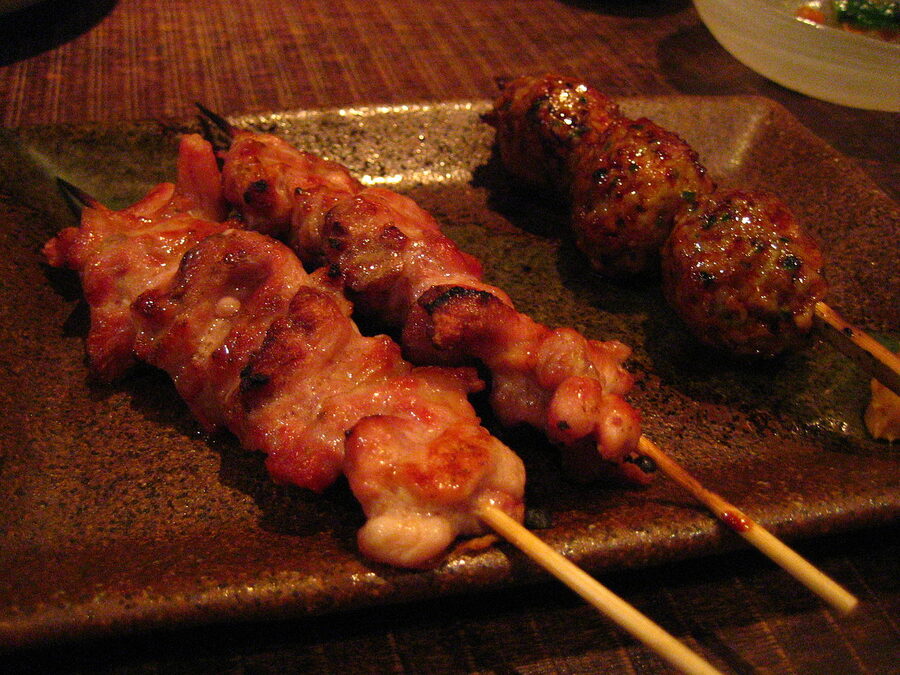
The bird’s neck meat, scraped off bone by bone, there is very little of it on each chicken, which is why this skewer carries a small premium. The taste is concentrated, the texture has the slightest bite. Almost always shio. If a counter offers seseri, order it; if they don’t, they probably aren’t butchering whole birds.
8. Kawa, 皮, the skin
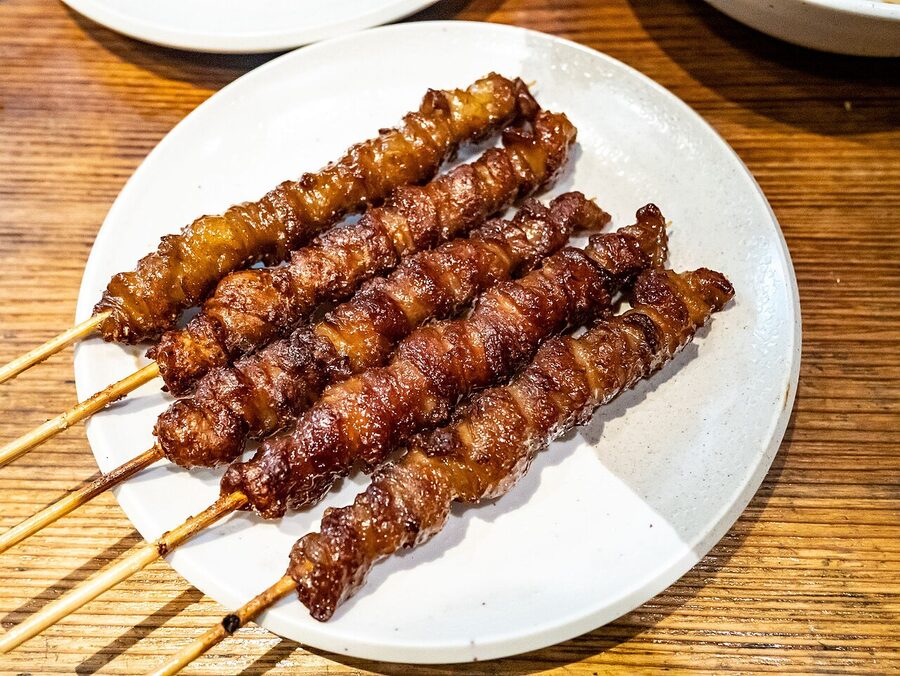
Skin. The Hakata (Fukuoka) variant, torikawa, is its own thing entirely; the skin is wrapped tight around a skewer and cooked, cooled, and re-cooked for six days, ending up shatter-crisp on the outside and slightly chewy at the heart. A Tokyo counter cooks kawa once but very slowly, low and patient, until most of the fat has rendered into the bed below. Order it tare. The fat will take the glaze.
9. Reba, レバー, liver
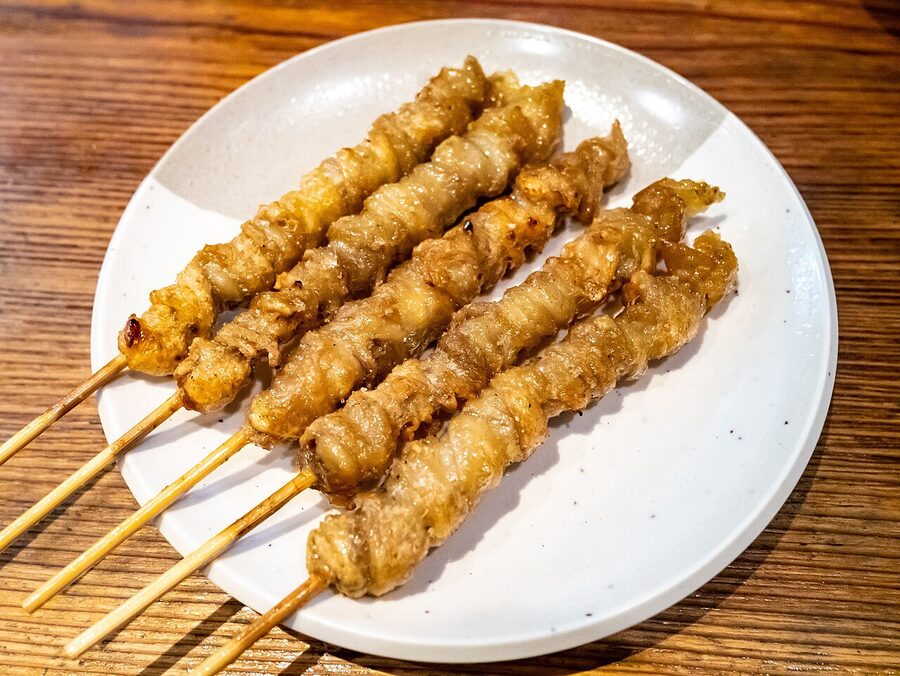
Chicken liver. Counters serve it cooked at the rare end of the spectrum, so the centre is still pink and creamy, almost like a paté. Tare suits it, the sweetness counters the iron, but a few classicist counters do it shio with a touch of grated ginger. If you don’t like liver at home, you won’t like reba. If you do, this is one of the best four-bite courses in Japan.
10. Hatsu, ハツ, heart
Chicken heart, sliced through and butterflied open so it grills fast. Surprisingly mild, almost lean and clean, more like a denser piece of breast than the iron-heavy heart of beef. Shio is the default. If they offer hatsu-moto (the aorta still attached) take it; the texture goes from tender to slightly rubbery on a single skewer, which is more interesting than it sounds.
11. Sunagimo, 砂肝, gizzard
The gizzard is a muscle the bird uses to grind grit and seed against itself, so it is dense, lean, and weirdly pleasant. The texture is the point, Japanese food writers describe it as korikori, a hard onomatopoeia for that specific cartilaginous crunch. Always shio. Cheap, often the third or fourth skewer at the standing counters.
12. Nankotsu, 軟骨, cartilage
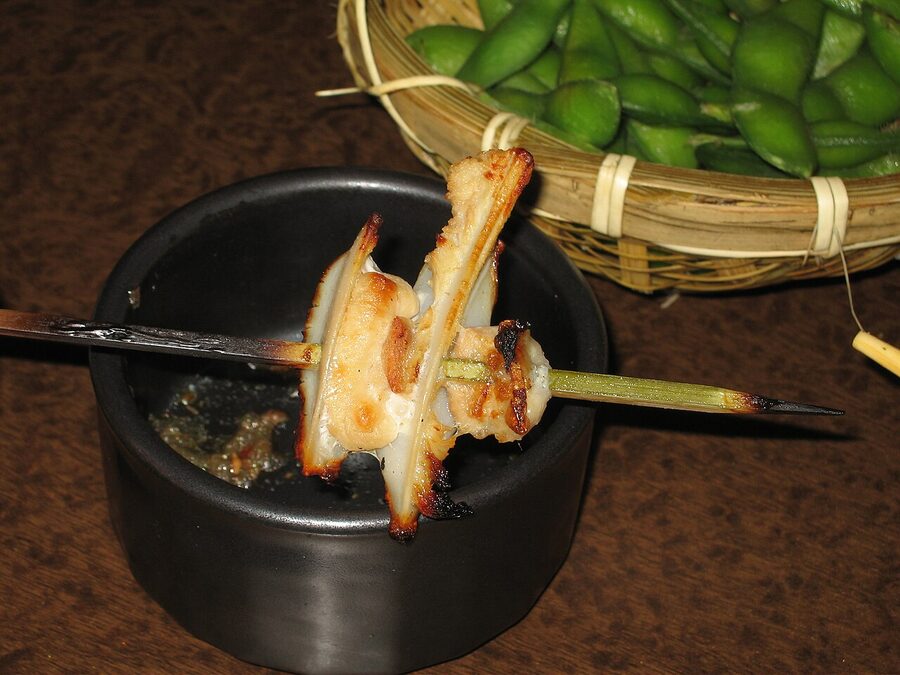
Soft cartilage, two kinds. Yagen-nankotsu is the V-shaped tip of the breastbone, melts under the bite, has the faintest meat trim still attached. Hizan-nankotsu is the kneecap, harder, much crunchier, sometimes ground into tsukune for texture. Always shio, always served crisp. Both are an acquired pleasure that lasts.
13. Bonjiri, ぼんじり, the parson’s nose
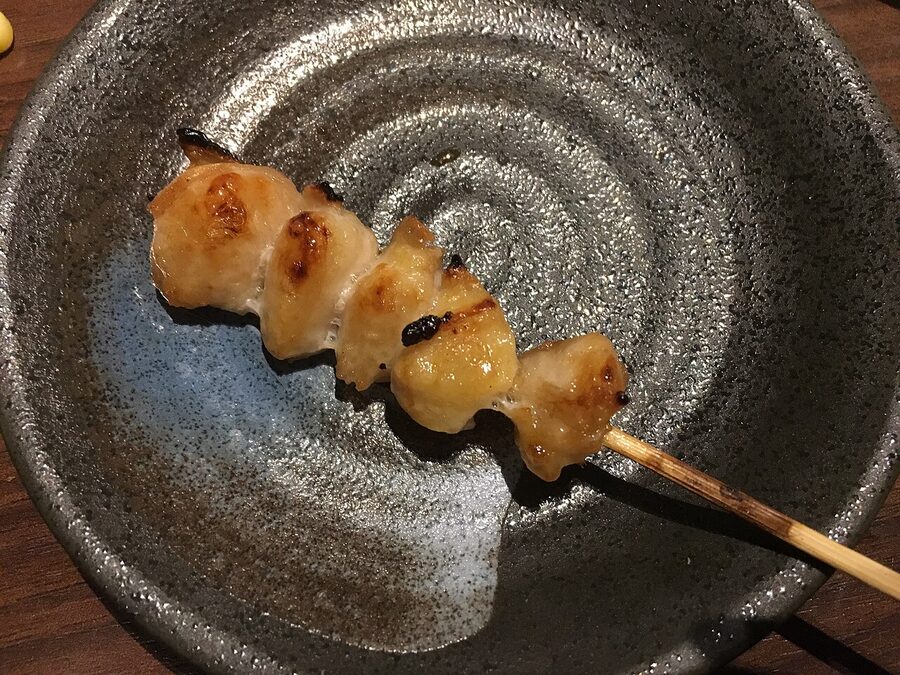
The fatty triangle at the base of the spine, what English roasting tradition calls the parson’s nose. In Japan it is “the chicken toro” because the texture is fatty-melting in the way tuna belly is. Tare is conventional, the sweetness rounds out the fat. If you only order one offal-adjacent skewer, make it this one.
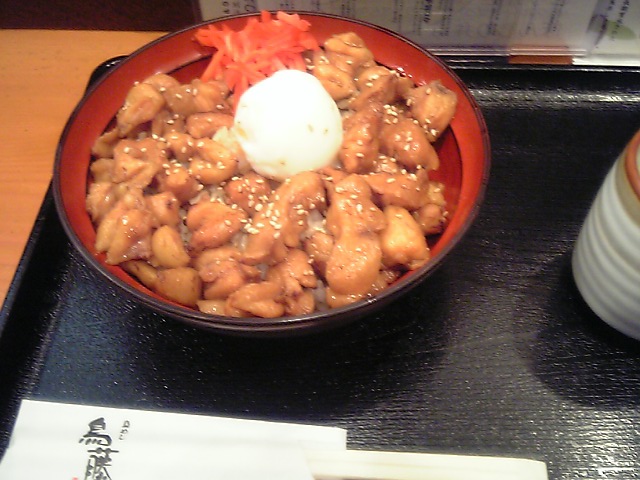
14. Furisode, ふりそで, between breast and wing
The small pad of meat at the joint where the wing meets the breast. The name means “long sleeve” because the shape resembles the sleeve of a kimono. Worked muscle, denser than breast, more flavour than thigh. Often grouped with the sasami section on the menu. Order it shio.
15. Chochin, ちょうちん, the immature egg
This is where you find out whether your counter is butchering whole birds. Chochin is the immature egg, the still-soft yolk, sometimes with the section of oviduct still attached, threaded onto a skewer and grilled until the membrane just sets. The name means “lantern” because that is what it looks like, glowing yellow on the bamboo. There are usually one or two on a hen and not every chicken has them. If a counter has it on the board, order it before they run out. The yolk runs at the first bite. Tare, always.
16. Tama-himo, 玉ひも, the ovary chain
One step further. Tama-himo is the chain of immature ova still attached to the oviduct, small yellow beads in a row, like a string of tiny suns, threaded onto a skewer. Each chicken yields one or two skewers, maximum. You will not find this at a chain or a tourist place. It is the cut that, more than any other, tells you the counter is sourcing whole heritage birds rather than pre-portioned breast packs. Tare, briefly, watching closely. The texture should be just-set, not chalky.
17. Shiro, シロ, small intestine
Chicken small intestine. Cleaned, scored, threaded, grilled. The taste is mild offal with a satisfying chew. Most often shio. If you’ve never tried offal in Japan, this is a softer landing than reba; it skews more textural than gamey.
18. Petasu / Saezuri-adjacent, ペタス, diaphragm and oesophagus
The diaphragm and around-the-oesophagus muscle, scraped off in slim pieces. Hard to find outside Tokyo. Slightly ropey, intensely chickeny. Order it shio. This is bonus-round territory; if your counter has it on the board, the chef has done their homework.
19. Tsukune, つくね, the meatball
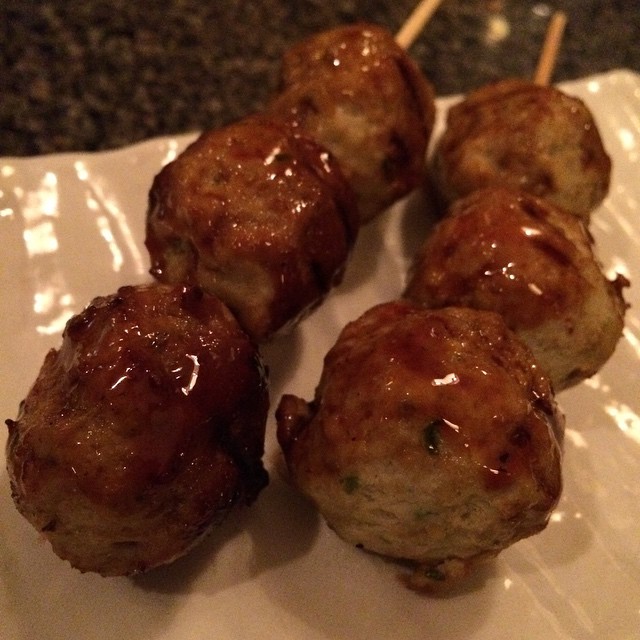
Minced chicken, formed by hand around the skewer, glazed with tare, served at most counters with a small side bowl of raw egg yolk to dip into. The mince composition is the chef’s signature. Some are 95% thigh, some include nankotsu for crunch, some have shiso or ginger threaded through. Order tsukune at the end. It is the closer, the test of how the kitchen handles their scraps as carefully as their cuts.
Beyond chicken: the kushiyaki section
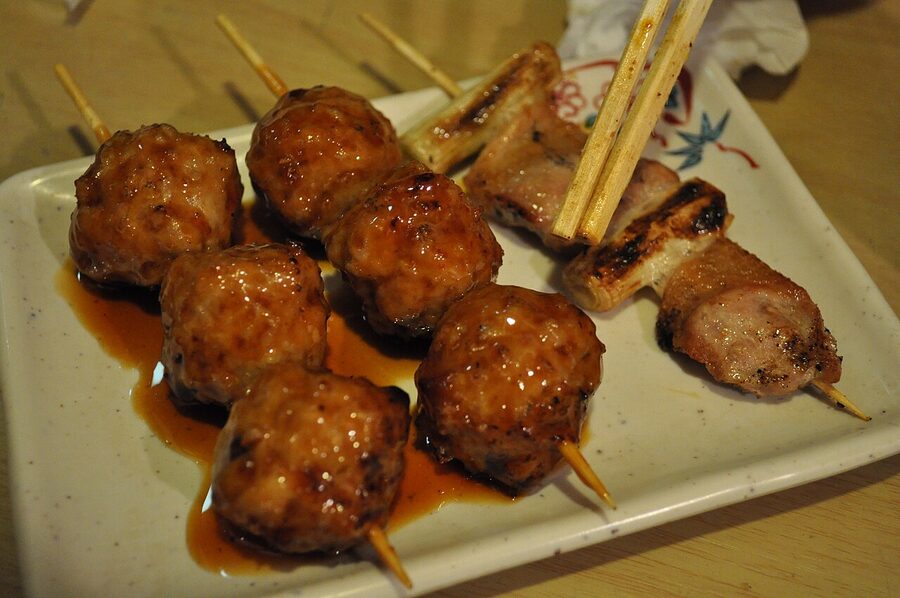
Most yakitori counters in Japan also do kushiyaki, anything else on a stick. The classics are buta-bara (pork belly, often the bestseller at lower-end counters), bacon-wrapped asparagus (a 1970s bar staple that refuses to die), shiitake (the mushroom soaks up tare beautifully), shishito peppers, ginnan (gingko nuts, threaded three to a stick on a special pine needle), uzura (quail eggs), and at Hokkaido counters sometimes lamb or mutton, the legacy of Genghis Khan-yakitori up north.
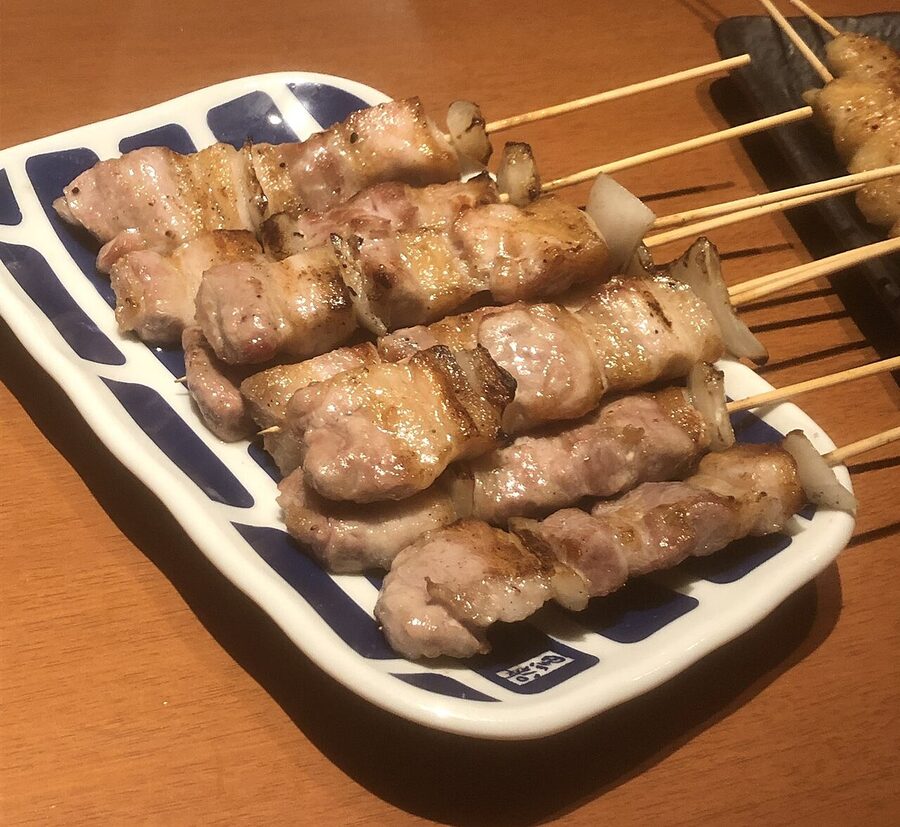
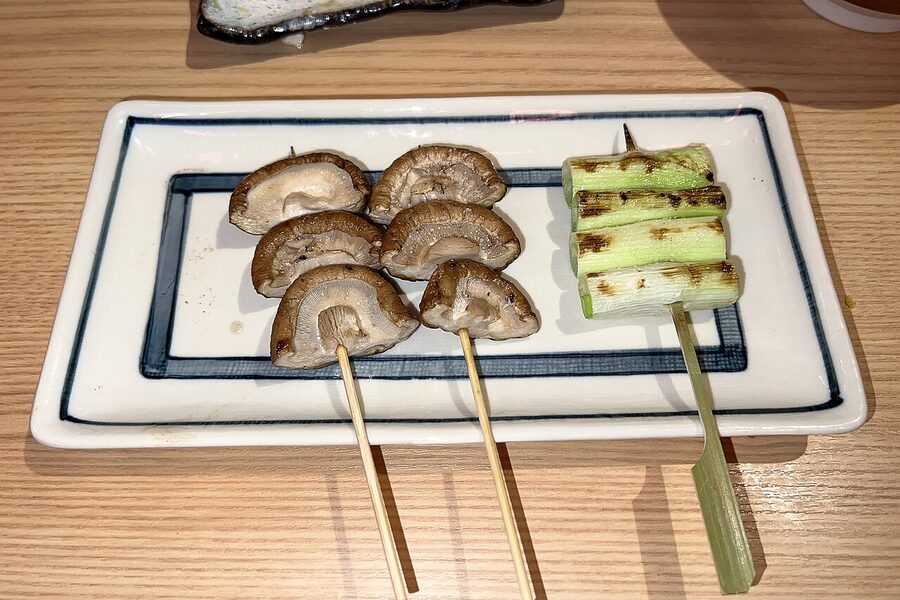
The Fukuoka cluster is the strongest case for going kushiyaki-heavy. Hakata yakitori counters traditionally lead with buta-bara before the chicken cuts, and serve a free starter of raw cabbage with a slick of vinaigrette to refresh between bites. Fukuoka itself is worth a long day around food alone, and a yakitori dinner at a Hakata counter is the right thing to do after a tonkotsu lunch.
Tare versus shio
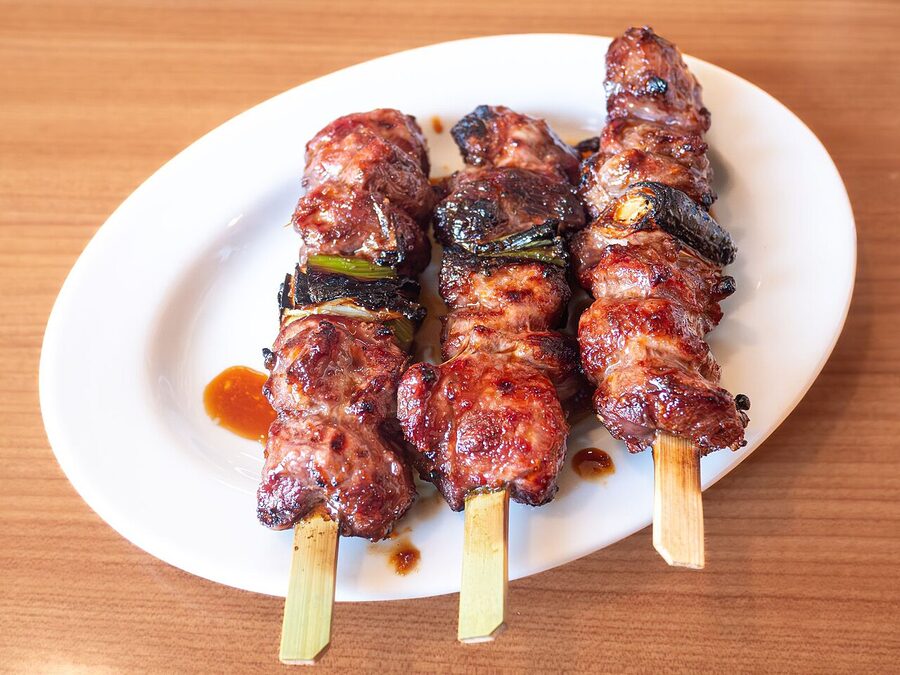
Tare is the dark soy-based glaze, made of mirin, sake, soy, and sugar in proportions that vary by counter. The skewer is dipped, brushed, or rolled in the tare repeatedly while it cooks, building up layers. The trick is in the pot. Most counters have a single tare pot that is never emptied; the chef tops it up with fresh ingredients daily, and the chicken fat that drips from each freshly grilled skewer is collected and added back. The pot at Toriki in Meguro is reportedly older than its current chef. The pot at Birdland in Ginza was started when the restaurant opened in 1987. The longest-running tare in Japan, by claim, is at a counter in Saitama where the pot is over a hundred years old.
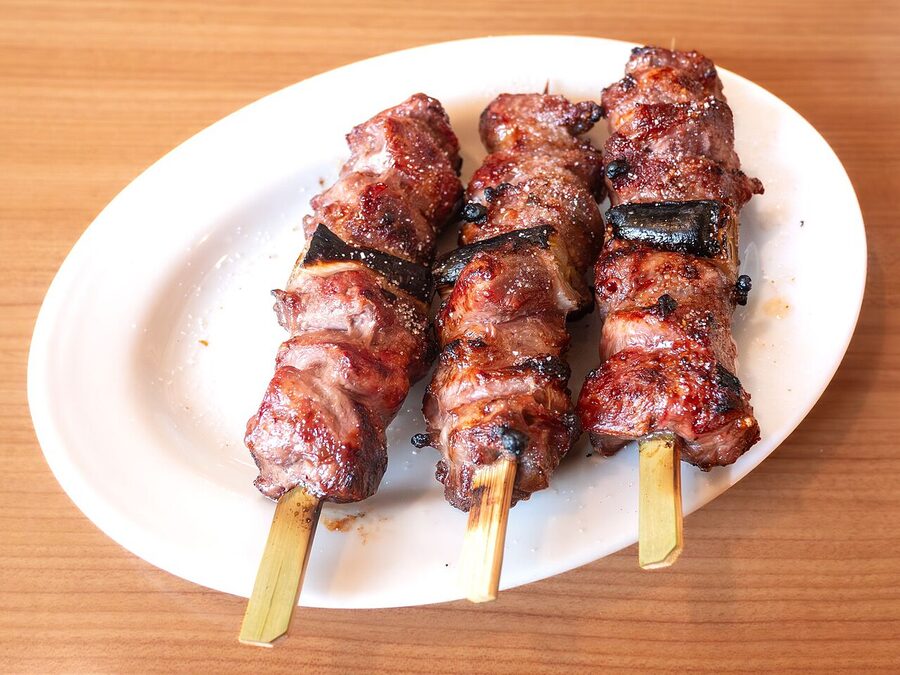
Shio is salt only, sometimes a particular salt, Akashio from Wakayama, Okinawan moshio, mineral-heavy or smoke-cured. Shio counters argue that sweet glaze masks the bird, and that a properly aged chicken should taste like itself. They are partly right. The cleanest counter experience is a serious shio house with one or two cuts done tare for contrast.
The standard ordering move at a counter you don’t know: shio momo first. If the bird tastes like a bird, you’re somewhere good and you can move into the offal cuts. If the bird tastes like a generic chicken from a supermarket, you finish the beer and go.
The grill: binchotan, ubame oak, and 1,000 degrees
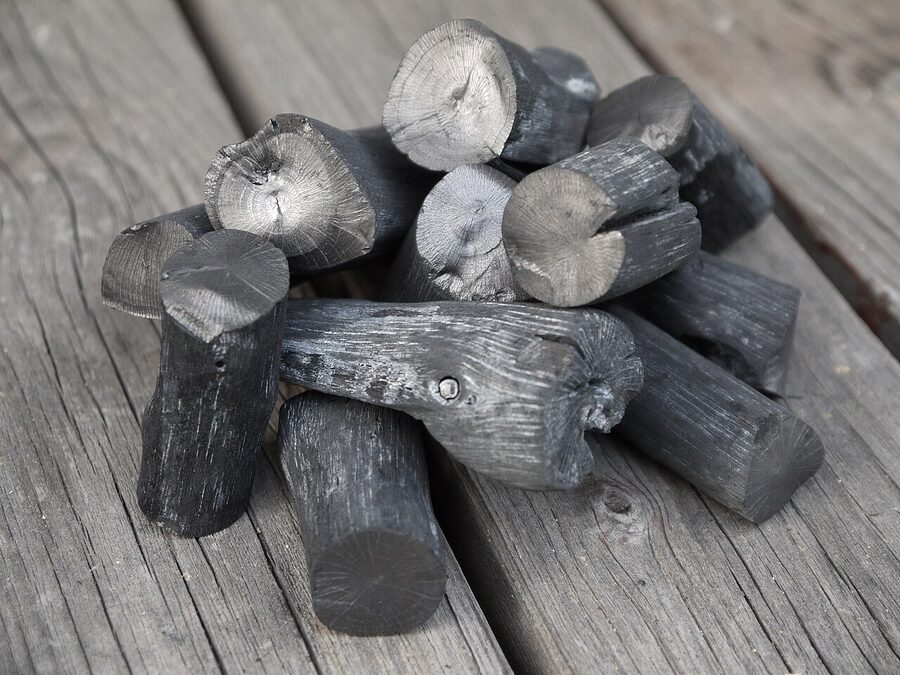
The fuel matters more than any other piece of equipment in the room. The traditional charcoal is binchotan, named for the Edo-period craftsman Bichu-ya Chozaemon, who began producing it in Tanabe, Wakayama, during the Genroku era (the 1690s). The wood is ubame oak (Quercus phillyreoides), now the official tree of Wakayama prefecture, and the production technique is roughly: pyrolyse the wood at 240°C for 120 hours, raise to 1,000°C, then quench the hot charcoal in a damp mixture of earth, sand, and ash. The result is a charcoal so dense it rings metallic when struck and so pure it burns nearly without smoke for hours.
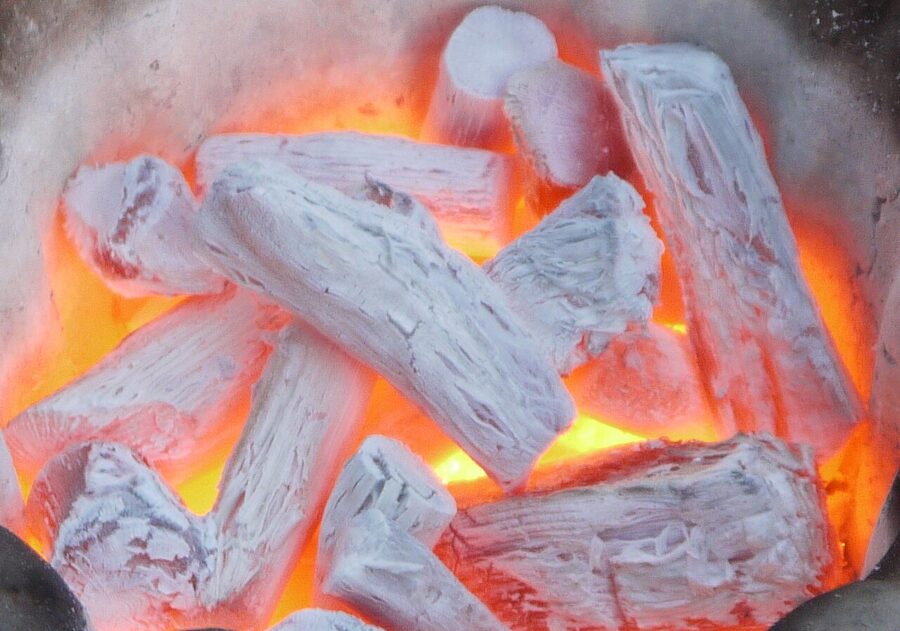
Why this matters for what you eat: binchotan radiates infrared more than visible flame. The skewer cooks from inside as well as outside. The skin crisps without scorching. Smoke is minimal, which means clear flavour rather than the campfire taste a charcoal grill at home would produce. And the burn is long enough that a single load of charcoal lasts a whole night of service, so the chef is not interrupted refueling.
Kishu binchotan from Wakayama became the first regional brand certified under Japan’s Regional Collective Trademark system on October 27, 2006. Tosa-binchotan from Kochi prefecture is a respected variant. Counterfeits exist, most “binchotan” sold cheaply in markets outside Japan is actually a Vietnamese or Indonesian charcoal of a similar style, often perfectly good for home use but not the same product. A Tokyo counter that lists “binchotan” on the menu and uses something else underneath is, if not lying, performing a half-truth, and the smoke will tell you within ten minutes.
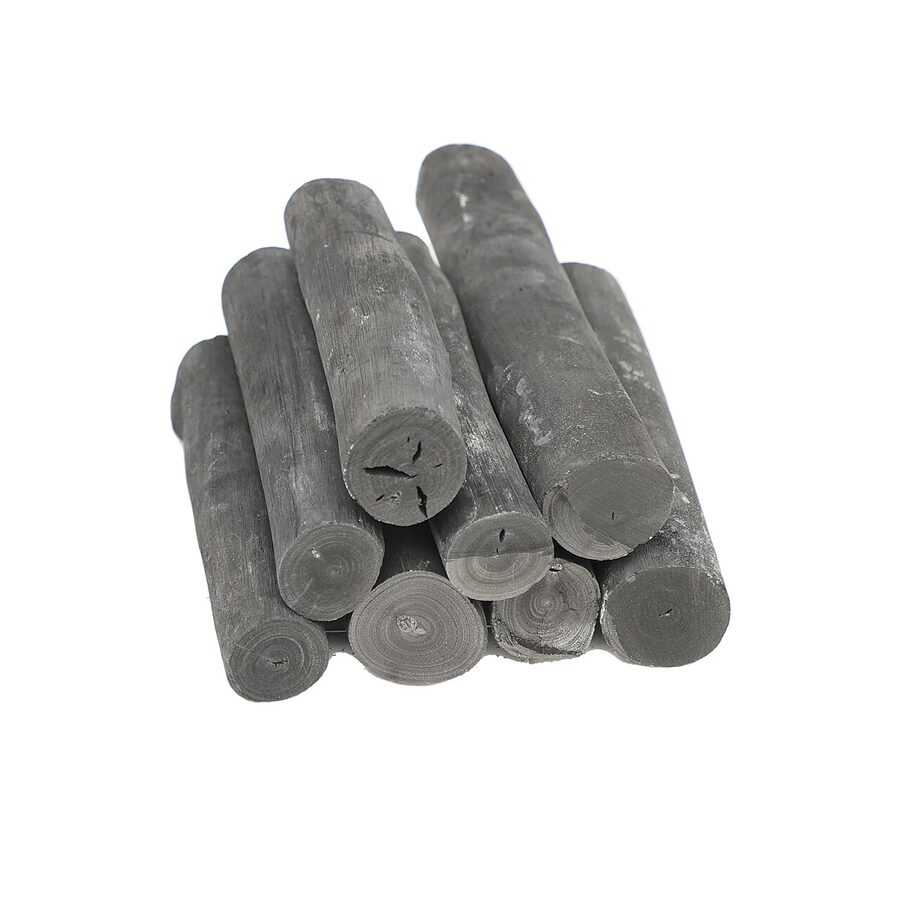
The konro grill itself is the second piece. Narrow, often about ten centimetres wide and as long as a metre, lined with diatomaceous earth from Noto for insulation. The geometry forces a chef into one specific posture: standing, leaning over the grill, with the skewers running across the long axis so the bamboo handles overhang the cool side. Most good counters in Tokyo run extraction systems aggressive enough that you do not leave smelling of smoke. The bad ones don’t, and you’ll know, because your jacket will tell you on the train home.
Named Tokyo counters worth booking
What follows is the working list. Tokyo’s yakitori scene splits roughly into four tiers. The Michelin counters take pre-bookings only and run ¥9,000-¥18,000 a head with the omakase course. The cult counters, mostly local-famous, sit at ¥4,000-¥7,000 and are walk-in or short-notice. The standing counters do thirty minutes for ¥2,500-¥4,000. The Yurakucho gado-shita stalls and the Omoide Yokocho strip do as long as you want for ¥1,500-¥3,000.
The Michelin tier
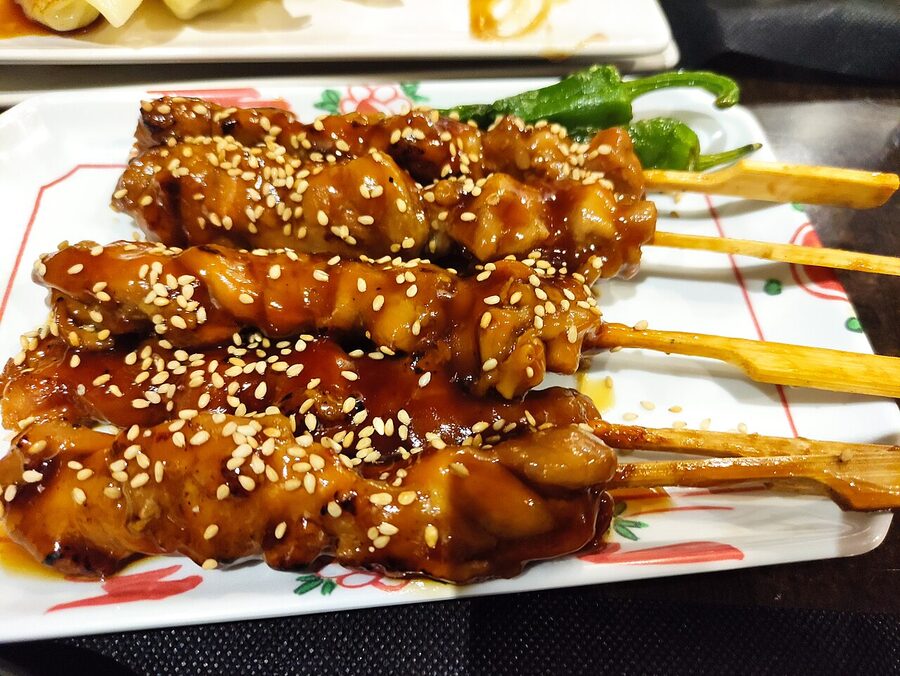
Birdland (バードランド). Ginza, Marronnier Gate basement. The first yakitori counter in the world to get a Michelin star (2008). Polished, slightly Western in service, English menus, tablecloth-equivalent atmosphere. Course only, around ¥9,500 per head, drinks separate. Booking required, two months out for weekend slots. The chef’s signature is the liver paté on toast, yes, on toast, served with a glass of Sauternes, which is one of those moments where you realise how seriously a yakitori counter can take itself.
Toriki (鳥喜). Meguro, eight-seat counter, no English menu, no photos allowed, lit so dim you have to learn the cuts by feel halfway through the meal. One Michelin star. The bird is a particular Tochigi-prefecture heritage chicken. The omakase is around ¥14,000 and runs about 25 skewers across two hours. Booking through a Japan-side concierge is essentially mandatory. The pot of tare at Toriki is reportedly older than the chef. This is the one I would push you to book if you have a single yakitori dinner in your trip.
Tori-Shiki (鳥しき). Meguro again. A cult counter that branched out into Tori-Shiki Ichimon, both highly-rated. Unlike Birdland, the format here is purely Japanese, small, low-lit, deliberate. Tabelog rates it consistently around 4.4. Very hard to book directly; the regulars and the concierges hold most of the slots.
Imai (今井). Aoyama. Less well-known to overseas guides than Toriki and Birdland but operating at the same level, and historically a chef’s-favourite yakitori. The tsukune here is the benchmark. Booking through a hotel concierge is the route in.
Yakitori Hasegawa (焼鳥はせ川). Multiple branches, each with their own following. The Roppongi original has a tasting menu in the ¥8,000 range, runs to about 18 skewers, and serves the rare cuts (chochin, tama-himo) without making a tourist event of them.
Yakitori Omino (焼鳥 おみ乃). Sumida ward, Michelin-starred. Less central than Ginza or Meguro, which means you can occasionally book a few weeks out. The chef’s hand-picked chicken from Saga prefecture is the draw.
The cult counters
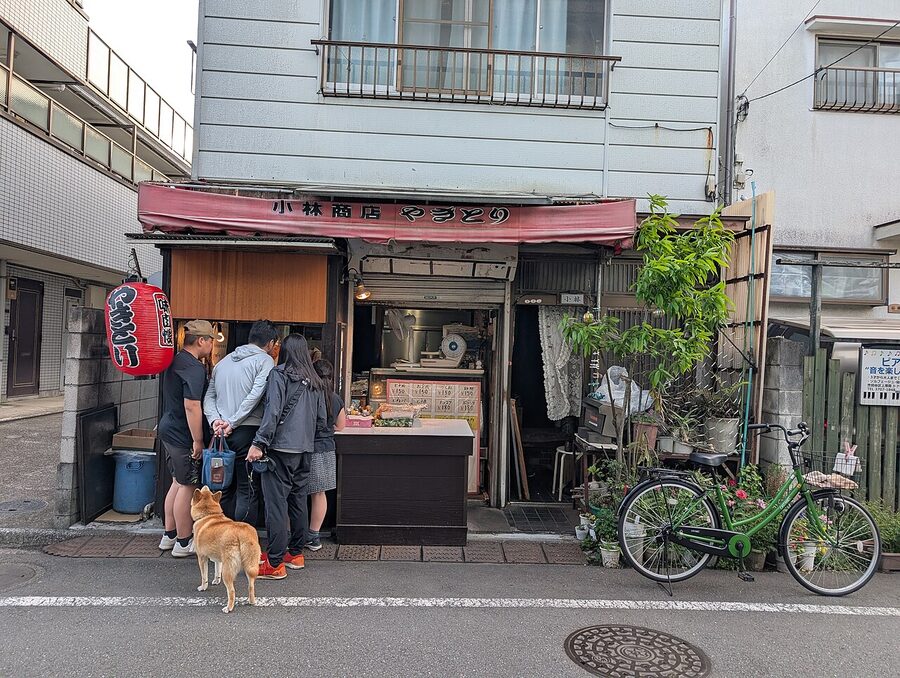
Toriyoshi (鳥よし). Akabane, north of central Tokyo. The kind of place where the salaryman regulars have been coming since the 80s and the chef knows their drink without asking. ¥4,000-¥5,000 a head, walk-in possible on a Tuesday, queue on Friday. Order chochin if it’s on the board.
Kushiwakamaru (串若丸). Naka-Meguro. A counter cult from the early 2010s that has stayed at the same level. The chicken is sourced from Kagoshima. ¥5,000-¥7,000 per head. The standing-room sister branch nearby is cheaper and almost identical in skewer quality.
Torijiro (鳥次郎). Roppongi. Late-night, the kind of counter where you wander in at 11pm after a longer dinner. Less of a destination, more a habit.
Takeshi (武). Daikanyama. Fewer than ten seats, prix fixe at around ¥6,500, very intimate, no English. If you want the cult-counter feel without paying Toriki prices, this is the one.
Standing yakitori (tachi-nomi)
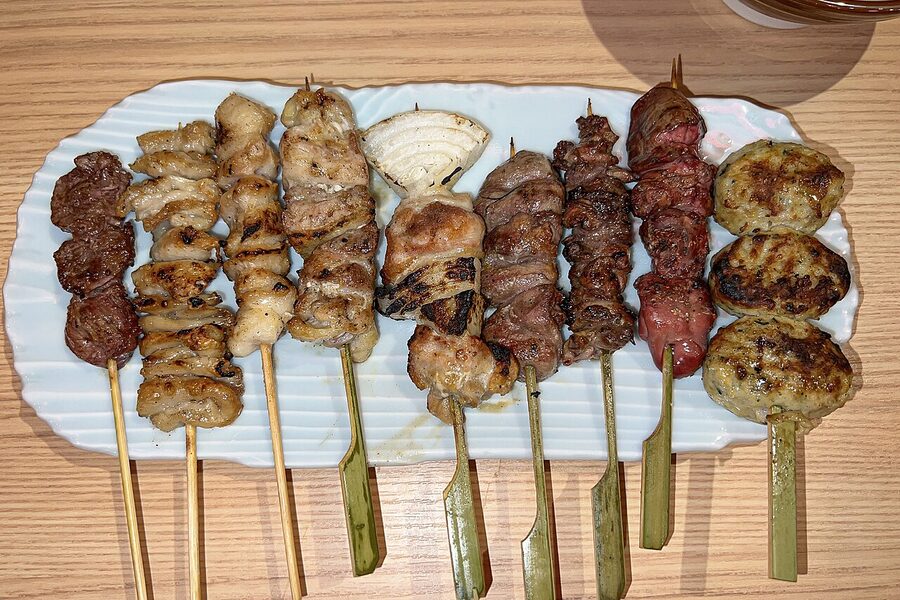
Standing-only yakitori is its own format and a particular kind of joy. You pay as you go, you stand at a chest-high counter, you talk to whoever is standing next to you, you finish in 30-45 minutes. ¥2,500-¥4,000 covers six or seven skewers, a beer, and a small drink chaser. Shibuya’s standing-yakitori scene is dense; Kushiwakamaru’s standing branch is the most polished, Imafuku and Namiki are the casual workhorses. Shimbashi south of the station has another cluster, full of after-work salarymen by 6:30pm and an under-rated late-night scene.
Yurakucho gado-shita: the train-track stalls
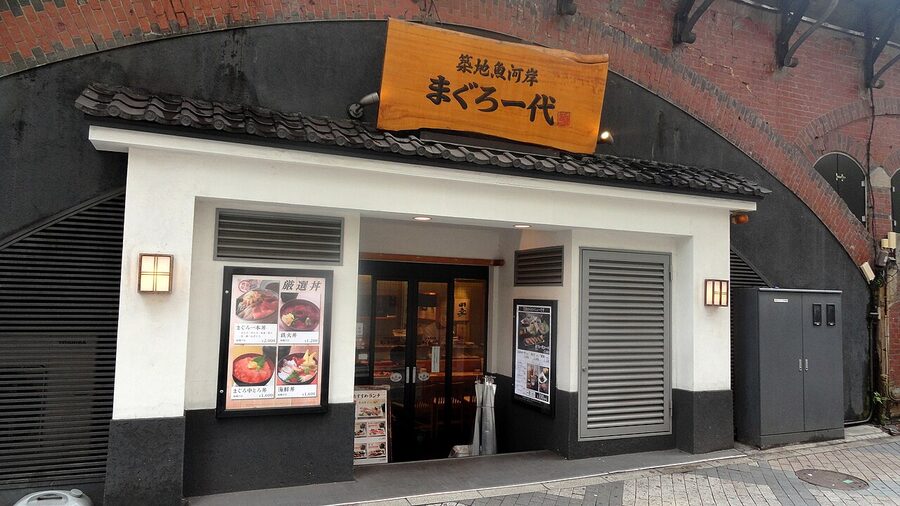
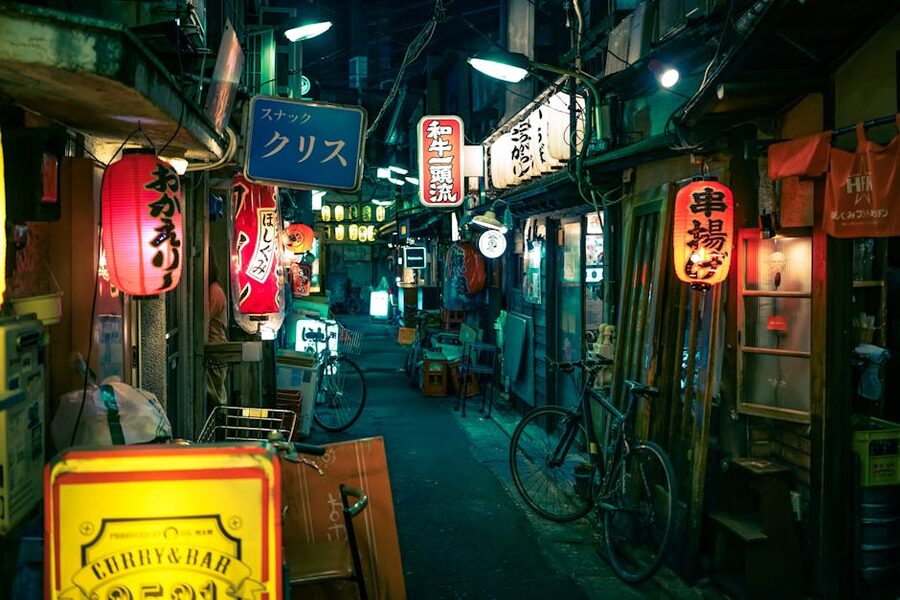
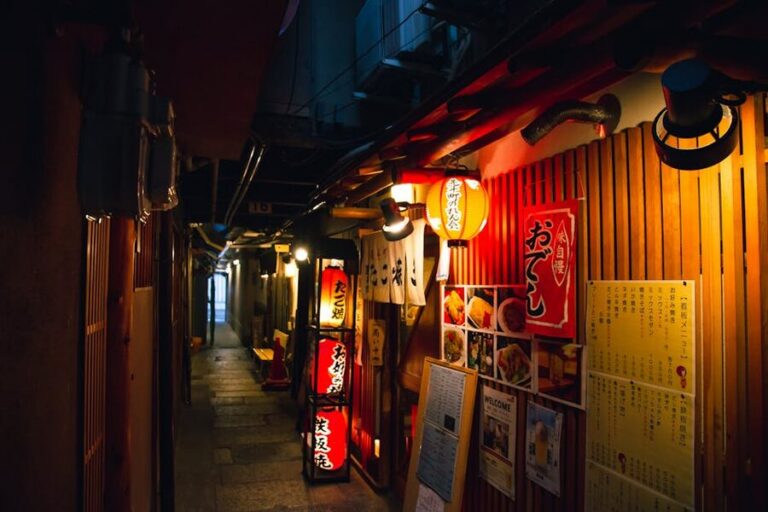
Take the Yamanote line to JR Yurakucho station, exit by the south ticket gate, and turn right under the raised tracks. You will find about a dozen yakitori stalls in 200 metres, each with five or six wooden stools out front, all lit by a string of paper lanterns that have been hanging there since the 1950s. This is gado-shita. The atmosphere is half the meal. Trains pass overhead every two or three minutes; the noise is part of the texture.
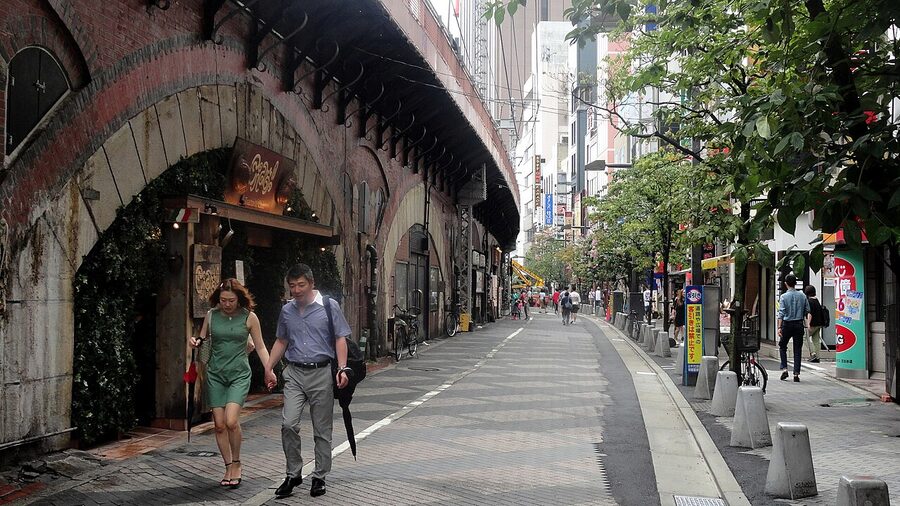
Standout stalls: Suehiro for tare-classic skewers and a half-litre beer for ¥600. Torigen for shio momo done right and a small kushiyaki menu. Andy’s for English-friendly service if your Japanese is shaky. Walk the strip first, see which stall is busiest with locals, then sit down. Almost all of them open around 4pm and are full by 6:30pm; if you want a stool, get there before 6.
Omoide Yokocho: Memory Lane
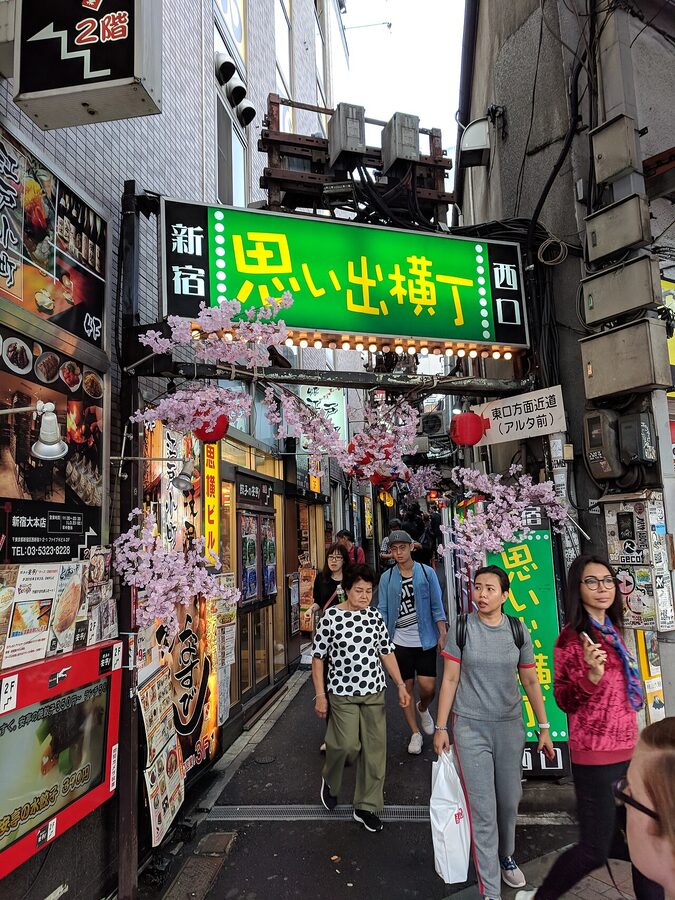
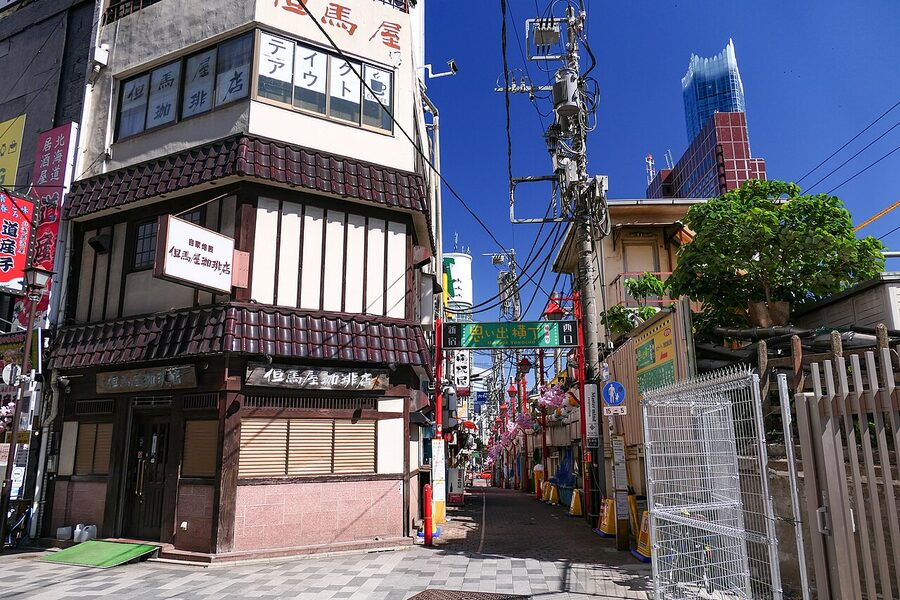
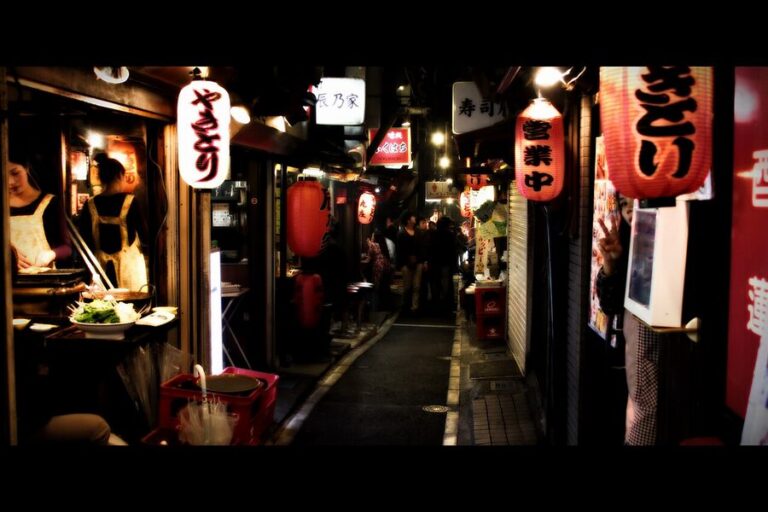
On the west side of Shinjuku station, between the JR tracks and the small road that runs north, there is a strip of about sixty stalls in five intersecting alleys called Omoide Yokocho, Memory Lane, sometimes nicknamed “Piss Alley” by older guidebooks for reasons that have aged poorly. About half are yakitori; the rest are ramen, motsuyaki, oden, and small standing bars. The whole strip is the size of a department store ground floor.
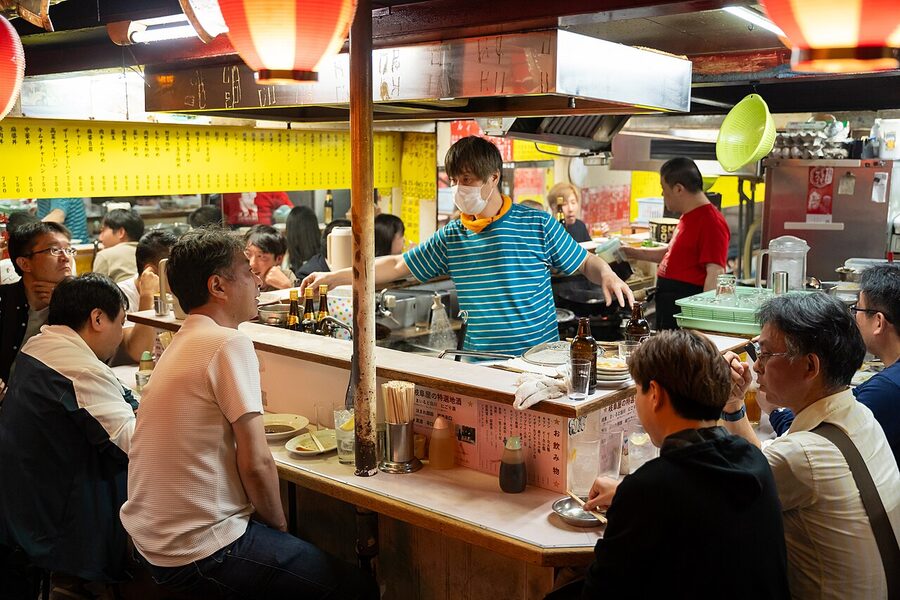
Omoide Yokocho gets crowded with tourists on weekend evenings. Tuesday and Wednesday at 6pm is the local sweet spot, most stalls have an English menu, prices are clearly marked at ¥200-¥400 a skewer, and the cooks have time to talk. Avoid the few stalls with English barkers out front trying to wave you in; the good ones don’t need to. The ones at the south end (further from the JR exit) are usually quieter and run by the same families that have held them since the 60s. A wider Tokyo food neighbourhoods guide covers the surrounding cluster (Shinjuku golden street, Kabukicho’s edge) for the rest of the night.
How to actually order
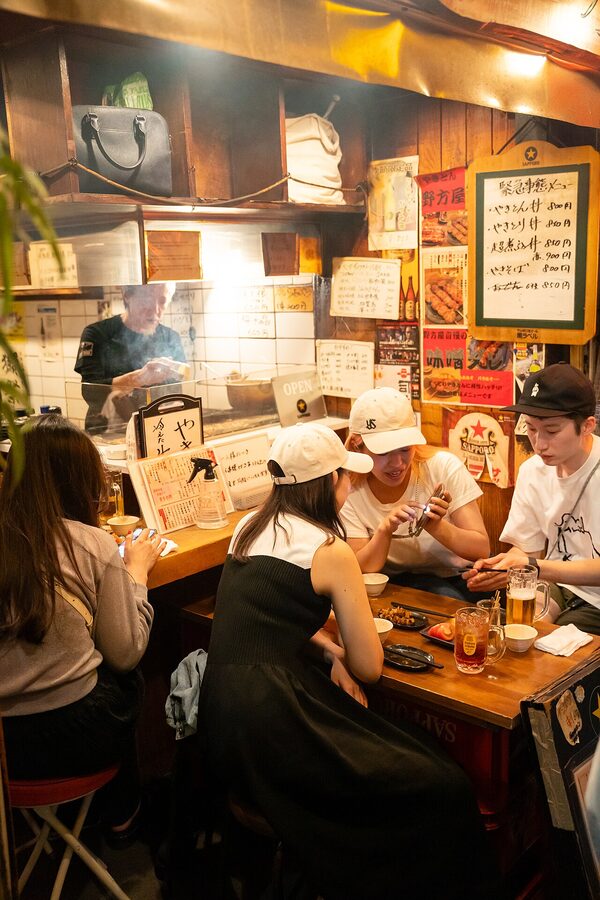
If a counter is course-only (omakase, mostly the Michelin tier), there is nothing to order, the chef brings what the chef brings. If a counter is à la carte, there is a strategy. The order I would suggest, working from light to fatty, runs like this:
- Round one (the test): shio momo, then sasami if it’s on the board. One bird-tasting cut, neat.
- Round two (build to something): negima, sunagimo, hatsu. Mid-weight, varied texture.
- Round three (richness): kawa, reba, bonjiri. The fatty edges.
- Round four (the rare): chochin and/or tama-himo if available, nankotsu, seseri.
- Closing: tsukune with the raw yolk, a vegetable skewer for palate cleanse, and zosui (rice porridge cooked in chicken broth) if it’s on offer.
Pacing matters. Order in twos and threes, never the whole list at once. You want each skewer to land hot. A small counter usually has a single chef working a single grill, so dropping ten orders in a single breath jams the kitchen and means three of those skewers will be cold when they reach you. Pause. Drink the beer. Order the next three.
Drink pairing
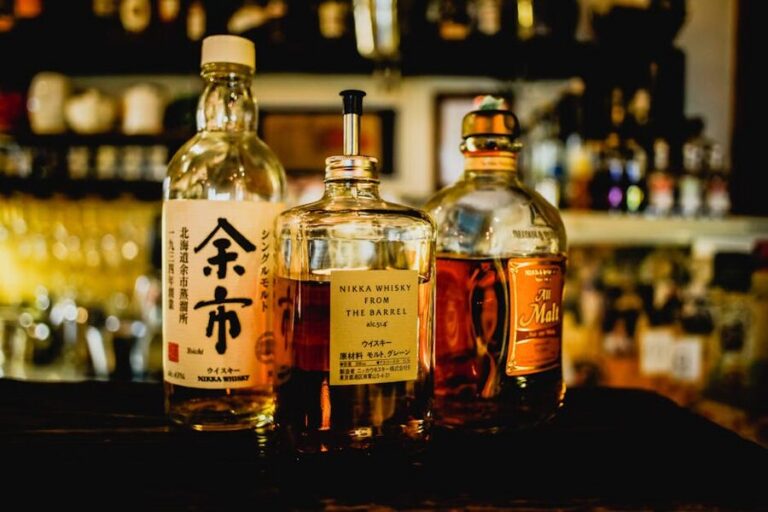
Beer, almost always Asahi or Sapporo on draft, is the default for the first half of the meal. The salty start of the menu wants the dry lager. Lemon Sour (lemon shochu highball) is the second-half drink for many regulars; it cuts the fat. A whisky highball is a third move, common in the Roppongi and Ginza counters, and pairs beautifully with the tare cuts. Sake works at the high-end counters but tends to compete with the smoke at lower-end places; save it for an omakase. Wine is rare except at Birdland, which has an actual wine list. Toriking-style cocktail menus are usually a sign you are in the wrong place.
Etiquette at the counter
Eat off the bamboo, not off the plate. Slide the meat off with your teeth in two bites, three at most. Do not stab the cubes off with chopsticks, it looks fussy and the bamboo is sized to your hand for a reason. The empty skewer goes into the bamboo cup that sits at every place setting. Some counters take the skewer for you; if you see the chef leaning across to remove it, lift it for them.
No fork. No ketchup. No requests for “more sauce on the side”. The chef’s seasoning choice is part of the dish; asking for more tare on something they served shio is a quiet way to insult them.
Photos vary. Toriki bans them outright (a sign on the wall says so, in three languages). Most cult counters tolerate one quick photo of the first skewer; ten minutes of food photography across an evening will get you a quiet word. Birdland and Imai are fine with photos. The standing counters and Omoide Yokocho stalls don’t care. The default rule of thumb: if the chef is visibly working, put the phone down.
Conversation OK at most counters, hushed at the Michelin tier. Toriki and Tori-Shiki run essentially in murmurs; loud English conversation will be remembered the next time you try to book.
Regional variants
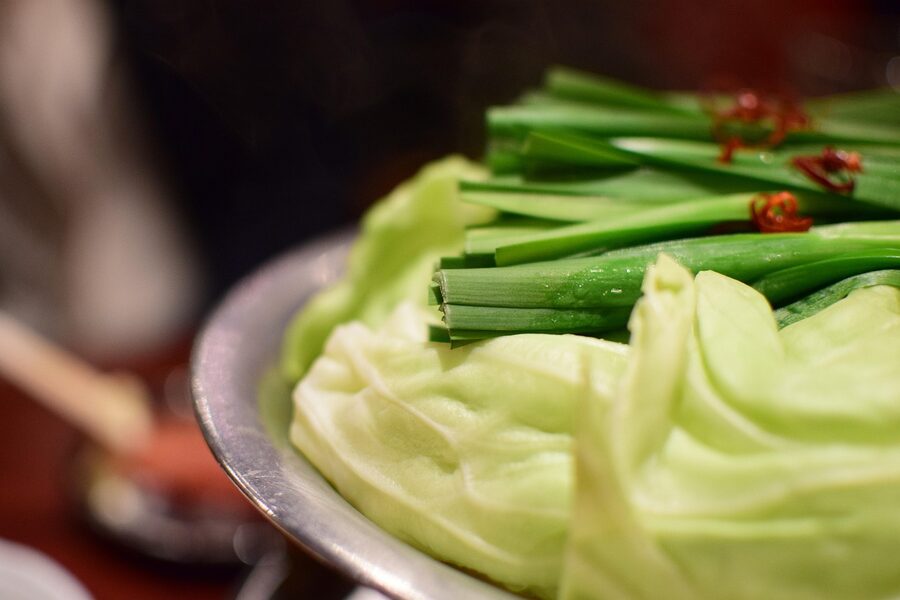
Hakata, Fukuoka. The pork-belly start, the cabbage starter, the slightly sweet local soy. Toritada at Hakata station is the most famous of the chain operations and the cabbage refills are unlimited. The yatai (mobile street stalls) along the Naka-gawa river do skewers as a sideline to ramen and oden, and at 11pm in summer there is no better place in Japan to be. The wider Fukuoka food piece covers the rest of the night.
Nagoya. Tebasaki capital. Sekai no Yamachan and Furaibo divide the city. The wing is salt-pepper-soy, deep-fried more than grilled, eaten as a snack rather than a meal. For the foreign-origin food cluster Nagoya plays its own role with miso katsu and ankake spaghetti; tebasaki is the local thing nobody outside Nagoya quite gets right.
Hokkaido. The lamb-skewer cousin (yakiniku-jingisukan, “Genghis Khan”, served on a domed iron plate) is more famous than yakitori up north. The yakitori on a Sapporo izakaya menu often has small ribbons of lamb tucked between thigh skewers. A Sapporo guide covers the rest of the city’s grilled-meat scene; lamb is a regional specialty worth crossing town for.
Imabari, Ehime. Yaki-tori, but cooked weighed-down on an iron plate rather than on skewers. Less famous, locally beloved. Worth a detour if you happen through the Shimanami Kaido en route between Honshu and Shikoku.
Hakata, again, for kawa. The six-day rendering process described above is essentially Hakata’s contribution to the form. Chain restaurants like Hakata Torikawa Daijin will sell you the result for ¥190 a skewer and it is genuinely a different food from anywhere else in the country.
What to skip
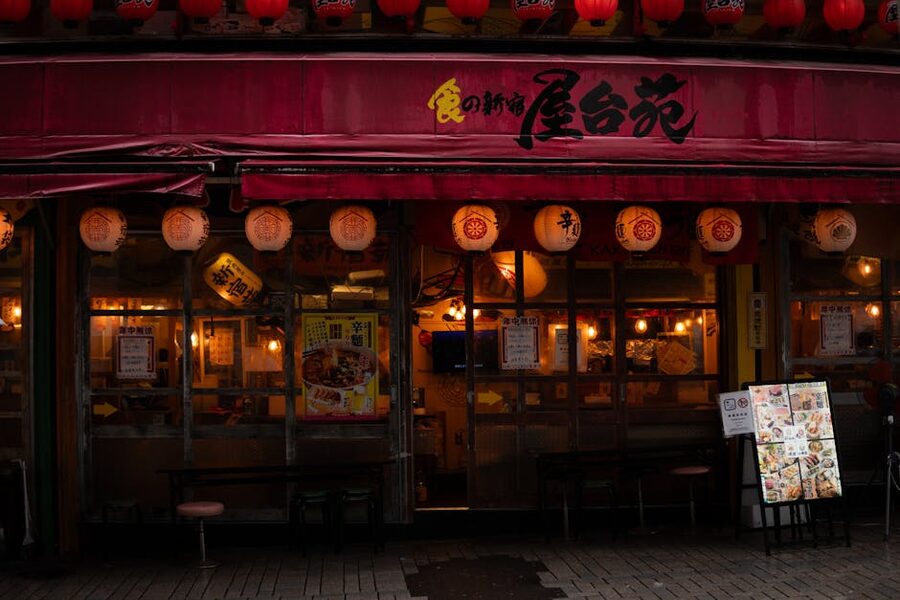
Not all yakitori is equal, and the bad version is genuinely bad. A short list of things to avoid.
Airport food courts and conveyor-belt yakitori. The skewers in Narita and Haneda departure halls are pre-cooked, frozen, microwaved, then briefly grilled to add char marks. The flavour is generic-sweet with a hint of plastic. Find a real meal somewhere else.
Counters that put “binchotan” on the sign but use coal underneath. A real binchotan grill produces a smoke like fine bonfire embers, almost none of it. If the place smells like a barbecue from across the room, the binchotan claim is decorative. Look at the smoke before you sit down.
Anywhere with photo menus and English-only signs. The combination is the tell. A Tokyo yakitori counter that doesn’t list cuts in Japanese is sourcing pre-portioned breast and thigh, full stop. The standing counters and the Yurakucho stalls have small Japanese menus with English help; that is fine. A laminated photo menu the size of an iPad is not.
Tour-bus yakitori. Several Roppongi and Ginza places run a “yakitori experience” for groups, ¥6,500 for a fixed five-skewer course of pre-grilled cuts. The chef on duty is wearing a costume rather than working. You will know within three minutes.
Counters where the chef is talking more than cooking. A serious yakitori chef during service essentially does not speak. A counter where the chef is making jokes with the table while skewers are on the grill is a counter where skewers are getting overcooked. The exception is Birdland, where the format is more Western and English-friendly conversation is part of the deal; you can tell the difference within the first thirty seconds.
Making yakitori at home
Half the readers of a guide like this will, within a week of getting home, look up a yakitori recipe. Here is what is actually feasible. The grill is the limiting factor. A standard kettle barbecue cannot make a real yakitori skewer because the geometry is wrong (round, deep, not long and shallow) and because the typical lump charcoal burns hotter and shorter than binchotan. The compromise that works is a Japanese shichirin grill, a small portable diatomaceous-earth box, available in Don Quijote and Tokyu Hands across Japan for ¥3,000-¥6,000 (the proper Noto-stone ones run higher), or online from Japanese specialty importers in most countries. Loaded with binchotan, run on a balcony or in a garden, a shichirin will replicate the konro experience at home about 75% of the way.
The bird matters as much as the grill. Supermarket boneless thigh in most countries comes from a 6-week-old bird and tastes flat. A heritage breed, ideally a 12-week-old chicken from a farm shop, makes the difference between yakitori and “chicken on a stick”. This is one of those recipes where the ingredient does most of the work.
For tare: equal parts mirin, sake, soy, with sugar to taste. Reduce by half. Save the leftover, refrigerate, top up next time. After a year of cooking it twice a week, your home tare will start to taste like something. After ten years you’ll have your own pot tradition. The principle is the same as a sourdough starter: don’t empty it, don’t sterilise it, don’t let it die.
For shio: a clean Japanese sea salt or a very lightly smoked salt. Nothing flavoured.
For binchotan outside Japan: most “binchotan” sold in Western kitchen shops is actually Vietnamese, Indonesian, or Chinese white charcoal. It is fine for home use. The genuine Wakayama Kishu binchotan runs about ¥3,500 a kilo at the source and three or four times that overseas, which puts a single home yakitori dinner into a particular price bracket. The Tosa-binchotan from Kochi, slightly cheaper, is the alternative most home cooks use.
One last skewer
If you take one thing from this, take the ordering pattern. Walk into a counter you don’t know. Order shio momo. Drink the first beer. If the bird tastes like a bird, you have found your place for the night and you can spend the next two hours working through the cuts on the menu, ending with tsukune and the yolk. If the bird tastes like a supermarket chicken, finish the skewer politely, pay the ¥600 it cost, and try the next stall down the alley. Tokyo has hundreds of these counters within a 30-minute Yamanote loop. You will rarely have to settle.
The yakitori counter is one of the few places left in Japanese food where price and quality only loosely correlate. A ¥250 skewer at a Yurakucho stall under the tracks can be better than a ¥1,200 skewer at a tourist place in Roppongi. The chef matters more than the postcode. A serious counter is recognisable within three minutes, by the smell of the smoke (clean, not sooty), the silence of the chef (focused, not performing), and the colour of the tare on the brush (dark amber, not generic teriyaki red). Once you know the signs, you stop needing this guide.
Bring cash. Most counters above the standing-tier accept cards now, but the alley stalls and the Yurakucho gado-shita are still cash-only. Bring a portable pocket ashtray if you smoke; the no-smoking rules in Tokyo restaurants are taken seriously, even at counters that smell of charcoal. And bring an appetite: a proper yakitori meal runs to twenty-plus skewers across two hours, and you do not want to be tapping out at skewer twelve when the chochin is about to land.
One more thing. The izakaya cousin covers the more relaxed all-purpose drinking-counter format. The fish counter cousin covers what omakase dining looks like on the seafood side. The yakitori counter is where the chicken side of that whole tradition lives, and it is worth at least one full evening of your trip.



_(16065642291).jpg)


.jpg)


.jpg)


.jpg)
.jpg)
.jpg)

.jpg)

.jpg)

