Konbini Food in Japan: What to Buy at 7-Eleven, FamilyMart, Lawson and Seicomart, Aisle by Aisle
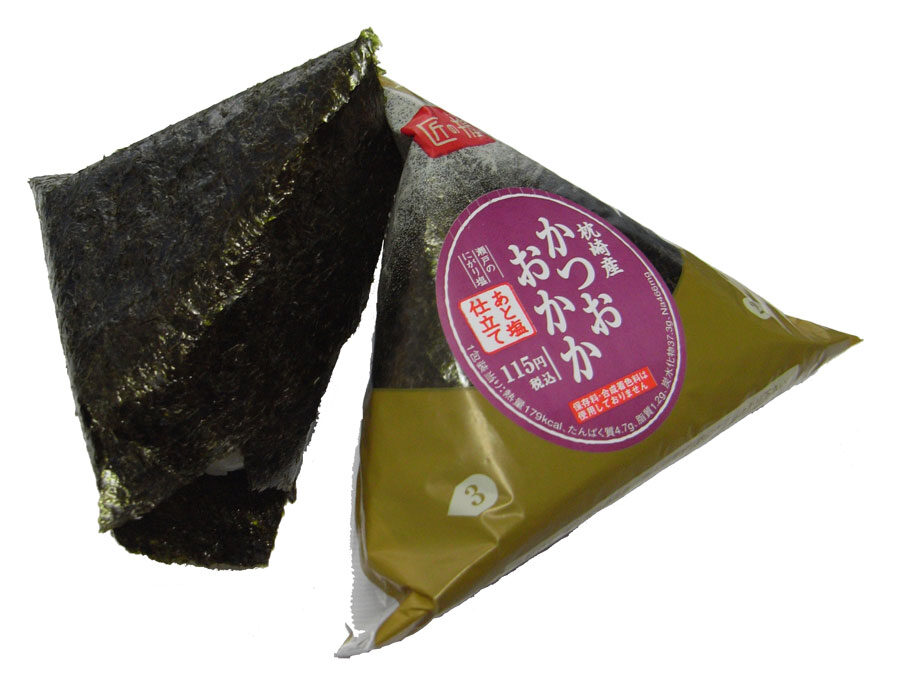
The first onigiri I bought in Japan came apart in my hands. I’d pulled the wrong strip of plastic, the nori split down the middle, and I stood outside a 7-Eleven in Osaka picking black flakes off a tuna-mayo rice ball while a schoolboy beside me opened his in three clean tugs. I’d been buying the same triangles for a year from the Lawson under my flat in Shenzhen. I had never once opened one properly.
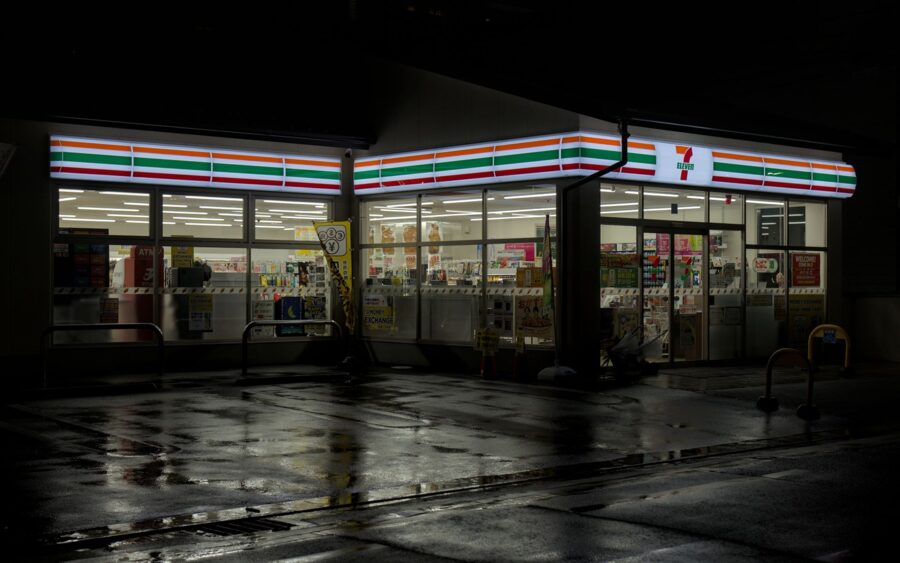
That’s the thing about konbini food. It looks like the convenience-store food you know from home, and it isn’t, starting with the scale. The seven chains that report to the Japan Franchise Association ran 56,208 stores between them in September 2026, and those stores counted about 1.31 billion customer visits in that one month, with the average basket at ¥763 before tax.
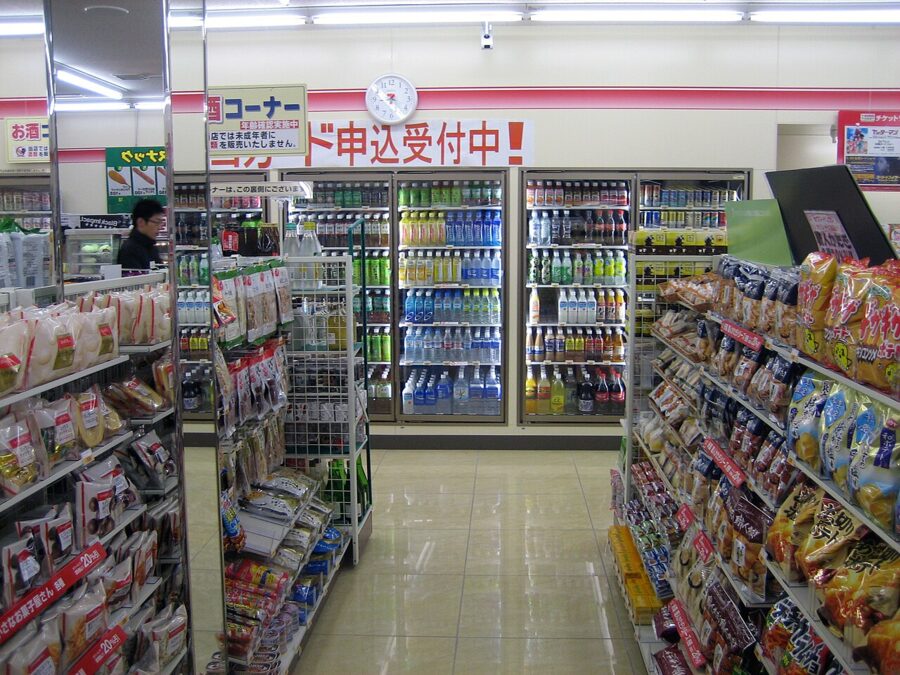
What those visits buy is mostly food. Rice balls that left a factory a few hours ago, egg sandwiches with a following overseas, fried chicken kept hot beside the till, coffee ground a cup at a time for ¥140. None of it pretends to be restaurant food. It’s the cheapest good meal in the country, it’s there at 3:00 on a Tuesday, and it rewards knowing what you’re looking at.
This guide goes through the chains, including the regional ones worth a detour, and then the store aisle by aisle: onigiri, sandwiches, bento, the hot case, desserts, drinks and the seasonal stock. Prices come from the chains’ own Tokyo-area listings in November 2026, tax included at the 8% takeaway rate, and they shift a little by region and by month.
| Chain | Where | Go for |
|---|---|---|
| 7-Eleven | Everywhere; more than 21,000 stores since 2019 | Onigiri, the egg sandwich, Seven Café coffee |
| FamilyMart | Everywhere | Famichiki, cream desserts, regional rice balls |
| Lawson | Everywhere | Karaage-kun, Premium Roll Cake, Bascheee |
| Seicomart | Hokkaido, plus Ibaraki and Saitama | Hot Chef katsudon and fried chicken cooked in the store |
| Hasegawa Store | Hakodate area, 14 stores | The yakitori bento (it’s pork) |
| Daily Yamazaki | Nationwide, thinner on the ground | Bread baked in the shop |
| Natural Lawson | Tokyo, Kanagawa, Saitama, Chiba | Lighter, healthier lines |
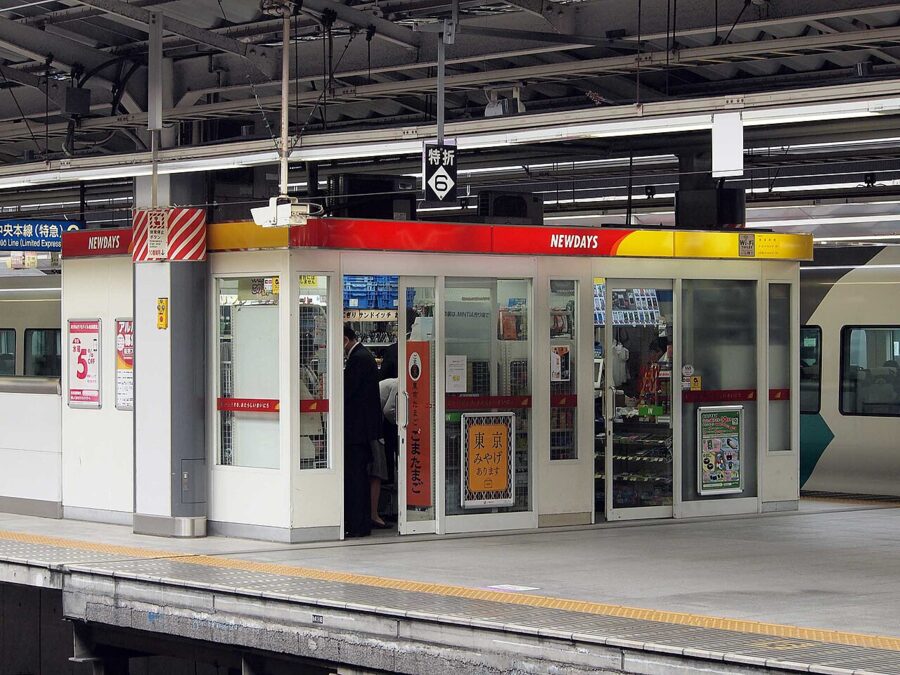
| NewDays | JR East stations | A rice ball before the train |
In This Article
- Why the rice is still fresh
- The big three
- The regional chains worth a detour
- Onigiri, the whole shelf
- How to open the wrapper
- What’s inside: the fillings by name
- Three price tiers
- Rice balls you’ll only find in one region
- Egg sandos and the bread shelf
- Bento, and the microwave question
- The hot case by the till
- Famichiki, Karaage-kun and the chicken wars
- Croquettes, buns and the pot
- The dessert fridge
- Coffee, tea and the beer fridge
- Breakfast at 7:00, dinner at 3:00
- What changes with the seasons
- At the counter: what the clerk will ask
- Prices at a glance, and what to skip
Why the rice is still fresh
Start with the logistics, because they explain almost everything. In March 1987 7-Eleven Japan began delivering rice products to its stores three times a day, and from November 1988 it held that rice at 20°C all the way from factory to truck to shelf. Twenty degrees is the point. It’s cool enough for a product that only has to last a day, and warm enough that the rice stays soft instead of hardening the way refrigerated rice does.
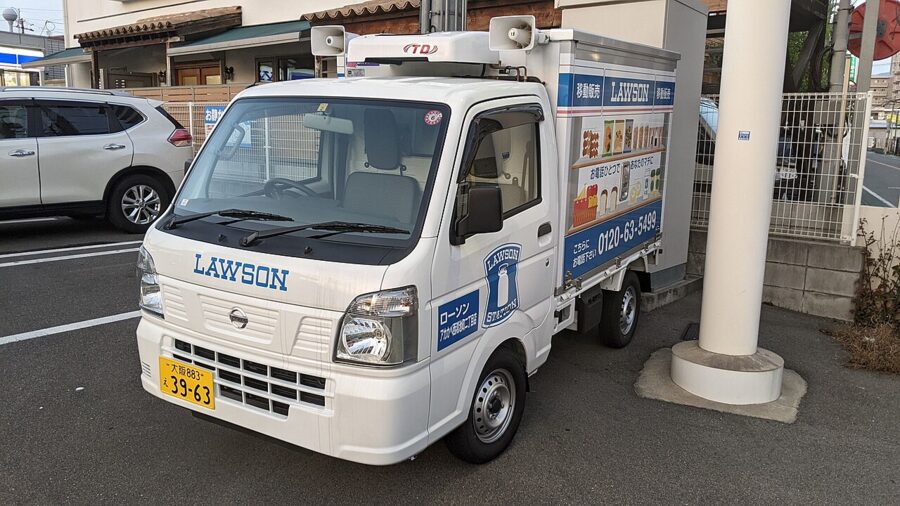
The other chains work the same way. The trucks are small and frequent, the shelves are refilled through the day, and the onigiri you pick up at 7:00 comes from a different batch to the one you pick up at 18:00. Every pack is stamped with a use-by date and hour. A rice ball is a one-day product, and the stores treat it like one.
Scale does the rest. 7-Eleven passed 21,000 stores in Japan in August 2019, a month after its first branches in Okinawa opened. At that size a chain can run factories that make nothing but its own rice balls and sandwiches, and keep fiddling with things you’d think were finished: 7-Eleven says it has reworked even its plain sandwich bread, changing the flour and cutting the sweetness so the wheat comes through.
The big three
7-Eleven, FamilyMart and Lawson are on every street in every city, and you’ll end up using all three. They sell the same categories at prices within a few yen of each other, so the differences come down to signature items. 7-Eleven is the one people rate for onigiri and sandwiches, and it was the last of the three to sell fresh coffee, in January 2013, and the one that made everyone else’s coffee counter matter.
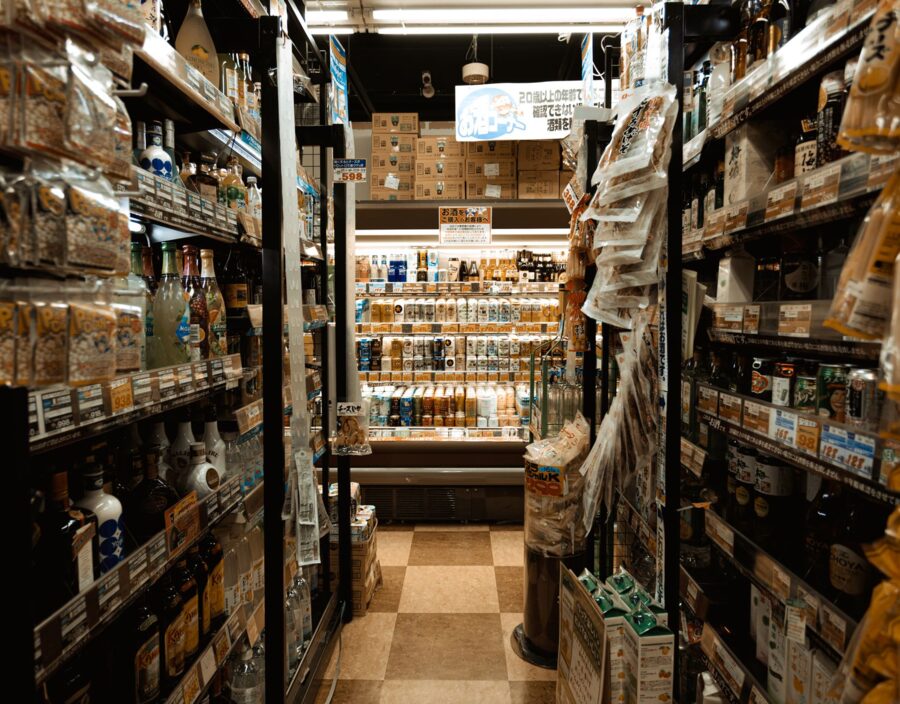
FamilyMart’s draw is the hot case, where Famichiki had become the chain’s biggest seller by units by 2020. It also runs a long list of regional rice balls you’ll only find in one corner of the country. Lawson has Karaage-kun, the Uchi Café desserts and, in some stores, a kitchen called Machikado Chubo that makes katsu sandwiches and rice bowls on site.
The regional chains worth a detour
Seicomart is the reason I’d plan a Hokkaido day around a convenience store. Its first shop opened in August 1971 in Kita-ku, Sapporo, three years before 7-Eleven arrived in Japan. Since Coco Store was absorbed into FamilyMart in 2016, it has been the oldest konbini chain still trading.
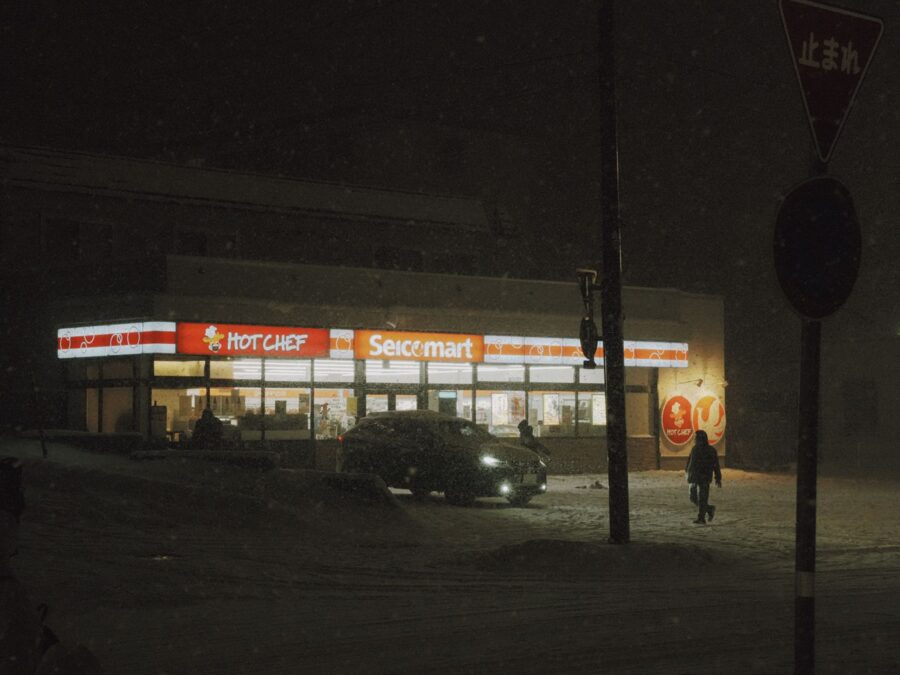
It has more than 1,000 stores in Hokkaido and about a hundred more in Ibaraki and Saitama, with a branch in 175 of Hokkaido’s 179 municipalities, including towns the national chains have left. Its own brand covers everything from milk and ice cream to cup noodles. It has also come top of Japan’s national customer-satisfaction index for convenience stores in every year but one since that survey began in 2011.
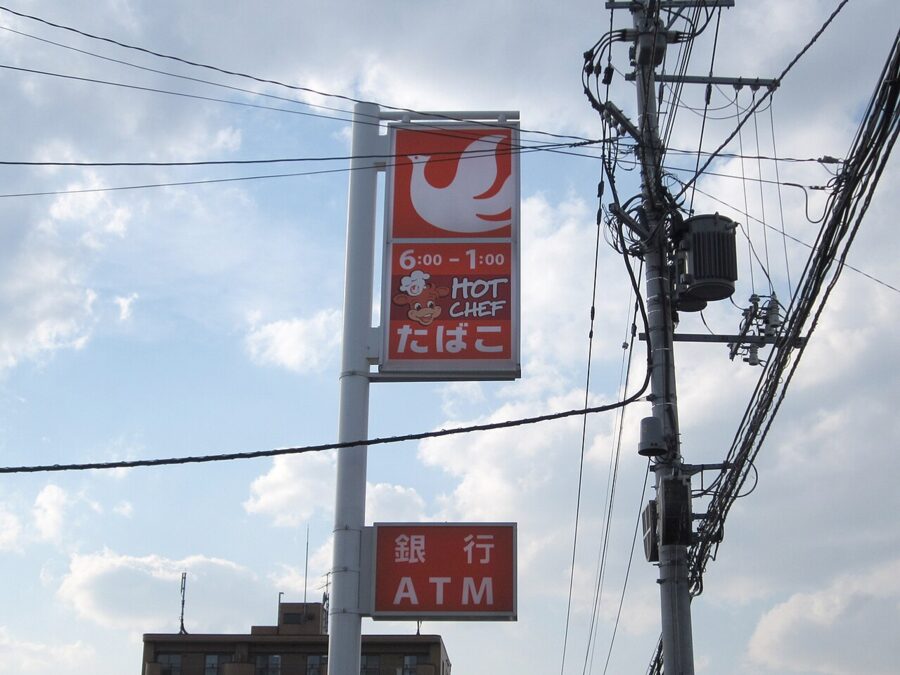
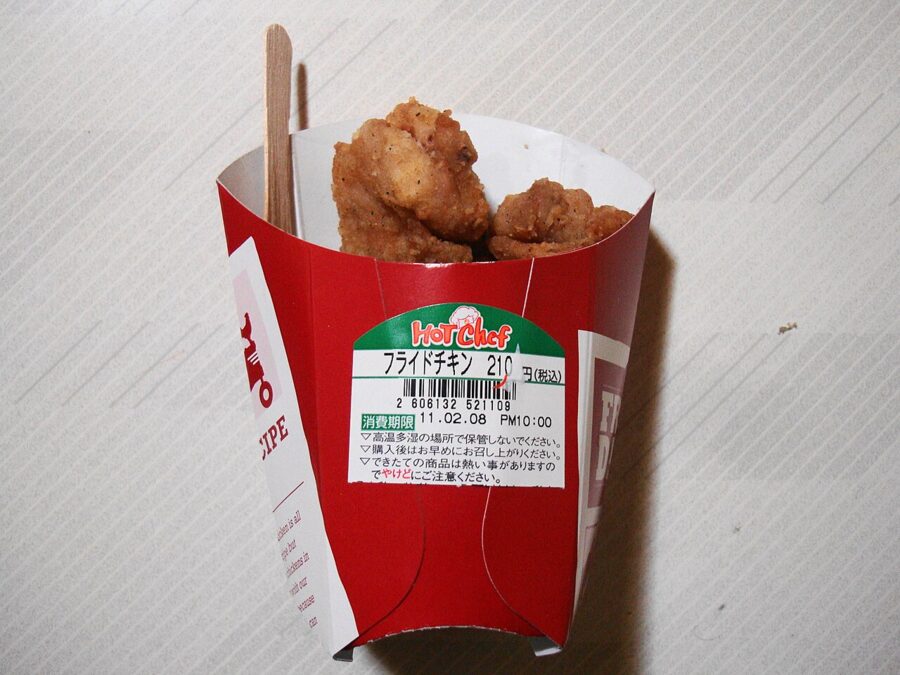
The real draw is Hot Chef. More than half the stores have a kitchen behind the counter, an idea first tried in 1994 at the Ashoro branch, where staff cook bento, rice balls and fried chicken through the day. What’s on depends on the store and the hour: in November 2026 the featured dish was a stewed demi-glace hamburg bowl at ¥712 in Hokkaido, alongside a three-piece aji fry bento at ¥637.
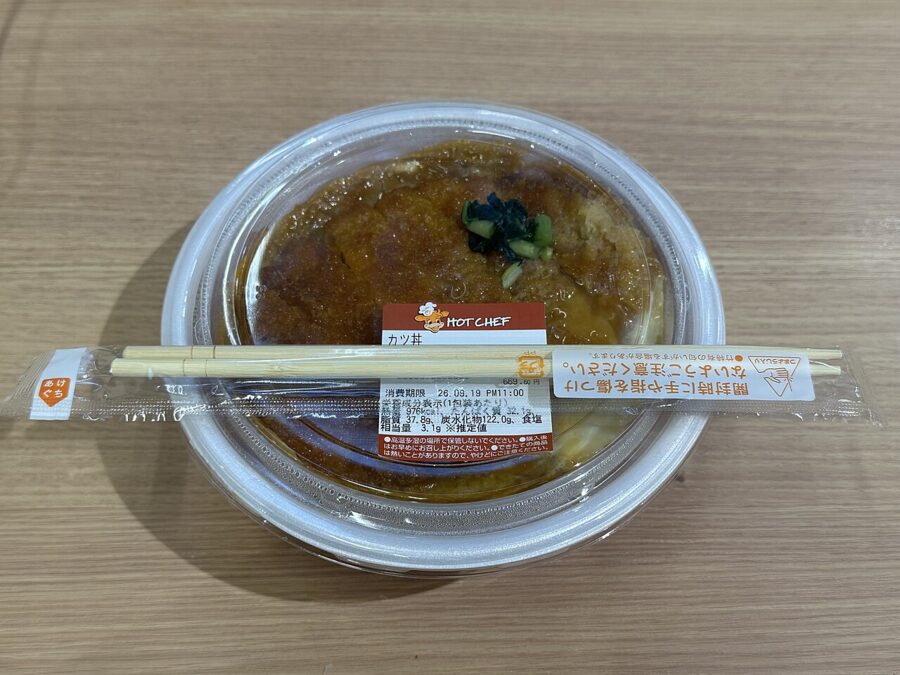
The katsudon is the one I’d go for: a pork cutlet simmered with egg and onion over rice, made a few metres from where you pay. The fried chicken comes in a red paper carton and tastes like it came out of the fryer ten minutes ago, which it usually did.
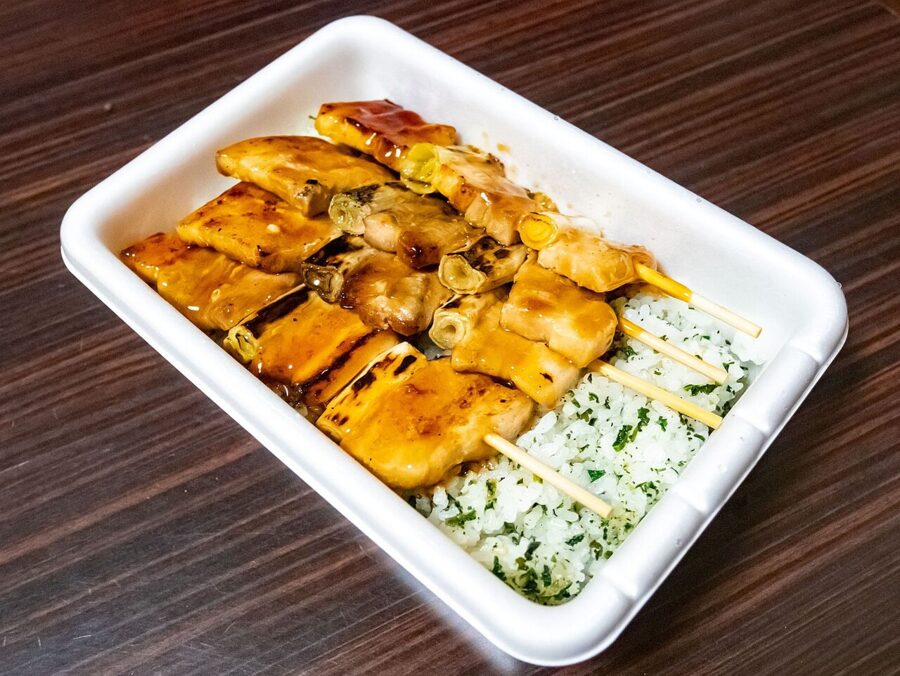
Hakodate has its own chain, Hasegawa Store, with 14 shops in and around the city and one product that justifies the trip. The yakitori bento was improvised on a night in August 1978, when the owner, working the till himself, put rice, nori and the skewers he’d started grilling as drinking snacks into a box for a customer who wanted a bento. You order it at the counter by size and seasoning.
The yakitori is pork. In Hakodate and the rest of southern Hokkaido, yakitori means pork unless you ask for chicken, and the bento lid has a groove so you can pin the skewer and slide it out, leaving the meat on the rice. Choose tare, or shio (salted, with a little garlic), or mix them: the shop’s own suggestion is to order along the lines of “one shio, two tare, small”.
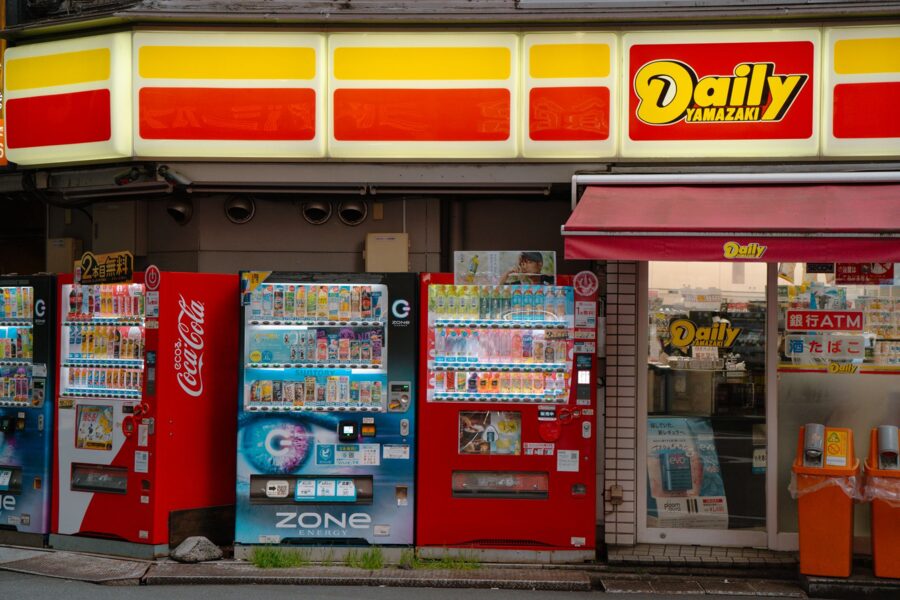
Daily Yamazaki belongs to Yamazaki Baking, the biggest bread maker in Japan, and it behaves like it. Branches with a Daily Hot counter bake bread in the shop and make their own bento, rice balls and sandwiches, and new breads arrive every month. The melon pan and curry pan are the ones to try.
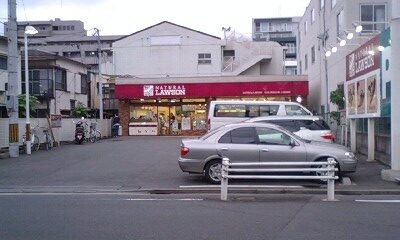
Lawson runs two offshoots. Natural Lawson, started in 2001, has 134 stores in Tokyo, Kanagawa, Saitama and Chiba and leans towards organic and healthier lines; it doesn’t sell Karaage-kun or most of the fried case. Lawson Store 100 was built around a ¥100 (before tax) price point with fresh vegetables on the shelves, though plenty of what it sells now costs more.
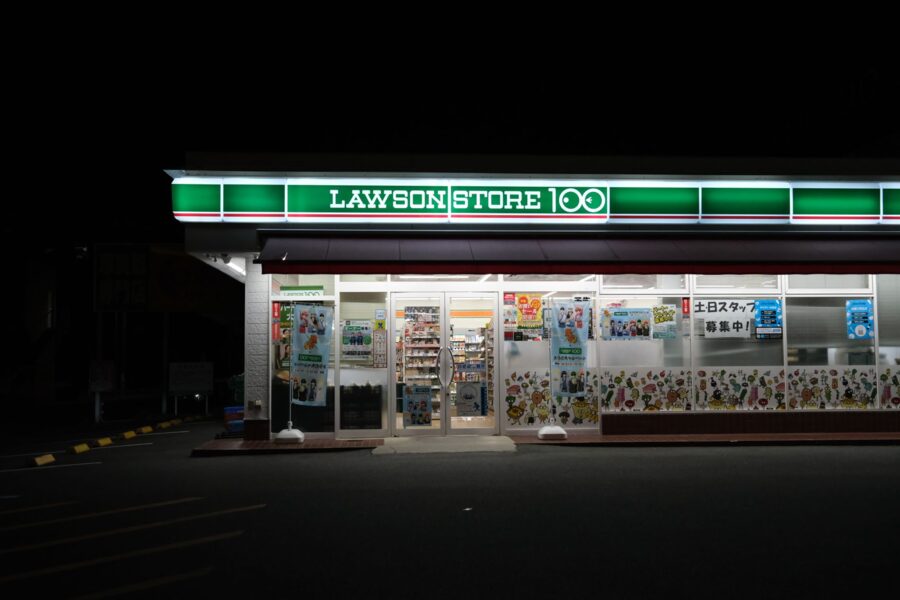
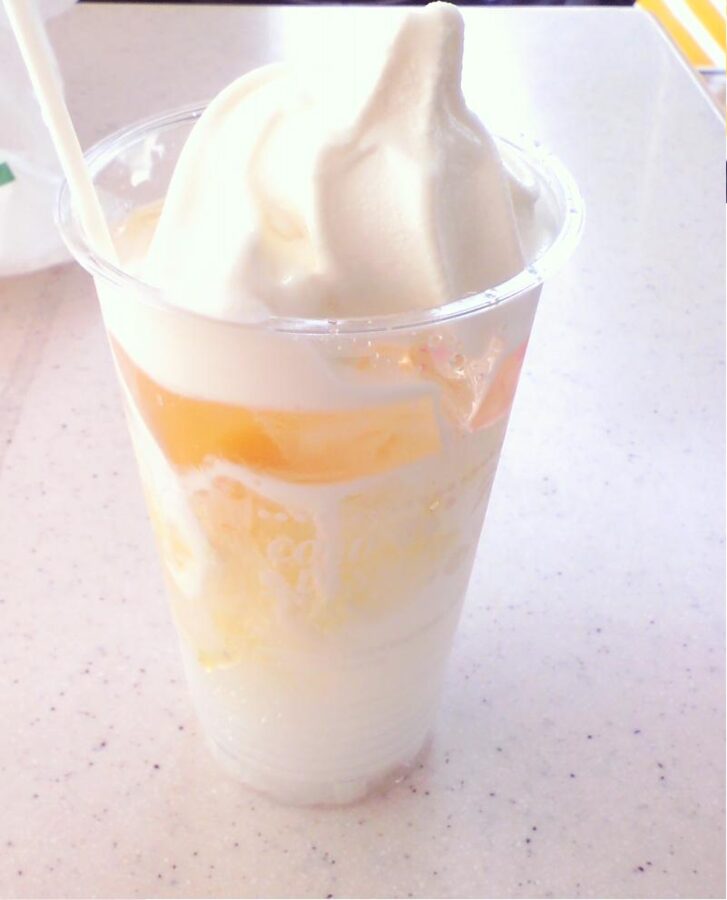
Ministop, part of the Aeon group, is built around an eat-in corner and soft-serve ice cream, which still sets it apart; in summer it sells Halo Halo, a cup of shaved ice and soft-serve named after the Filipino dessert. NewDays is JR East’s chain, inside and beside its stations, and it’s where you grab a rice ball when there’s no time to choose an ekiben.
Onigiri, the whole shelf
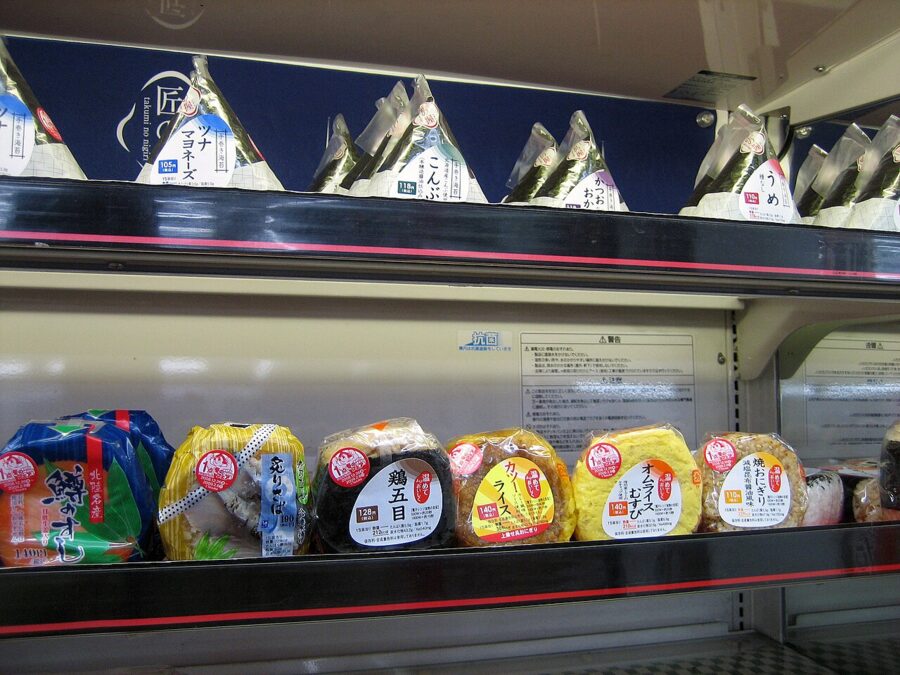
If you buy one thing, buy a rice ball. A konbini onigiri is a triangle of rice around a filling, wrapped in nori that’s kept apart from the rice by a sheet of film until you open it. Two of them and a bottle of tea make a lunch for around ¥600.
How to open the wrapper
The wrapper has a history. 7-Eleven introduced film-wrapped onigiri in 1978 so the nori would stay crisp instead of softening against the rice, but that first design had to be peeled and folded by hand, and people kept tearing it. Later versions had you roll the rice or pull it out by a corner, and in 1986 7-Eleven settled on the cut-tape design almost every chain uses now.
- Find tab 1 at the top point of the triangle. Pull it straight down the middle of the back, all the way to the bottom, so the outer film splits in two.
- Take corner 2 and pull it out sideways, gently, so its half of the film slides out from between the rice and the nori.
- Do the same with corner 3. Then fold the loose nori around the rice and eat.
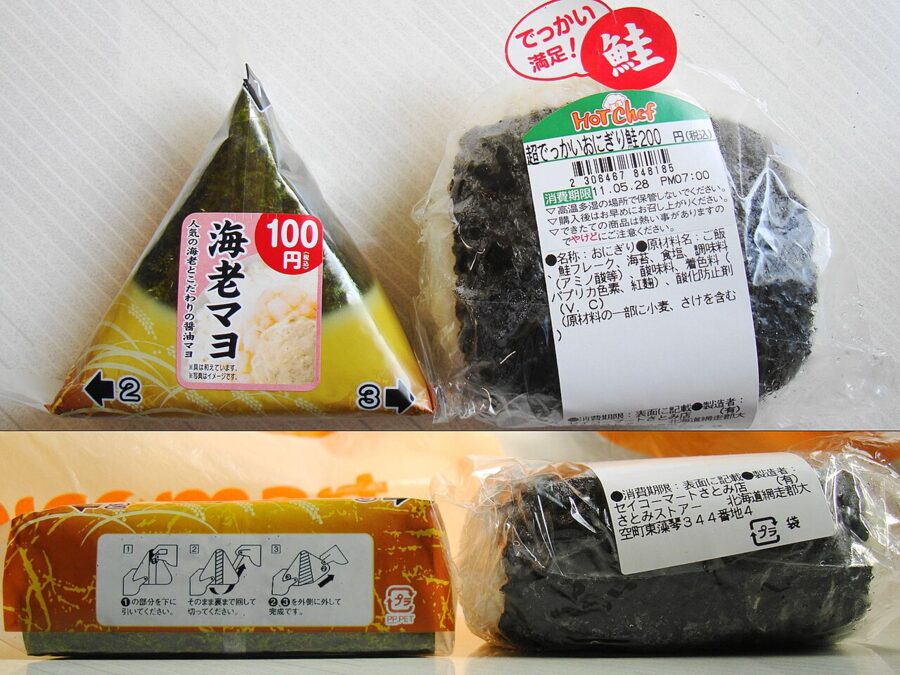
If you tear it, nobody minds. The schoolboy outside that Osaka 7-Eleven may have had an opinion.
Not every rice ball has the film. Jikamaki (直巻), “directly wrapped”, come with the nori already pressed onto the rice, soft and clinging, in a simple bag; temaki (手巻) are the crisp, three-step kind. Preferences split down the middle, and the chains stock both in roughly equal numbers.
What’s inside: the fillings by name
Labels are in Japanese, but the filling is usually printed large, and a handful of characters cover most of the shelf. In a 2014 survey of favourite fillings, salmon came first, then pickled plum, mentaiko, tuna and kombu. Here’s what to look for, with 7-Eleven’s Tokyo-area prices.
| On the label | Name | What it is | Price |
|---|---|---|---|
| しゃけ / 鮭 | Shake (salmon) | Salted, grilled salmon flakes, the bestseller | ¥213 |
| ツナマヨネーズ | Tuna mayo | Tuna in mayonnaise, the mildest choice | ¥196 |
| 梅 | Ume | Pickled plum, sour and salty | ¥196 |
| 明太子 | Mentaiko | Spicy pollock roe | ¥213 |
| 昆布 | Kombu | Kelp simmered sweet in soy | ¥196 |
| おかか | Okaka | Bonito flakes in soy, here on seasoned nori | ¥192 |
| 高菜 | Takana | Pickled mustard greens with a little heat | ¥203 |
| 赤飯 | Sekihan | Sticky rice with red beans, no filling | ¥213 |
Tuna mayo is the one most first-timers grab, and the one I’d move on from after the first day. Ume and kombu are the old guard: pickled plum, bonito flakes and simmered kelp were the standard fillings long before refrigeration because they kept rice from spoiling on the road. FamilyMart and Lawson sell tuna mayo under the Sea Chicken brand, so look for シーチキン there.
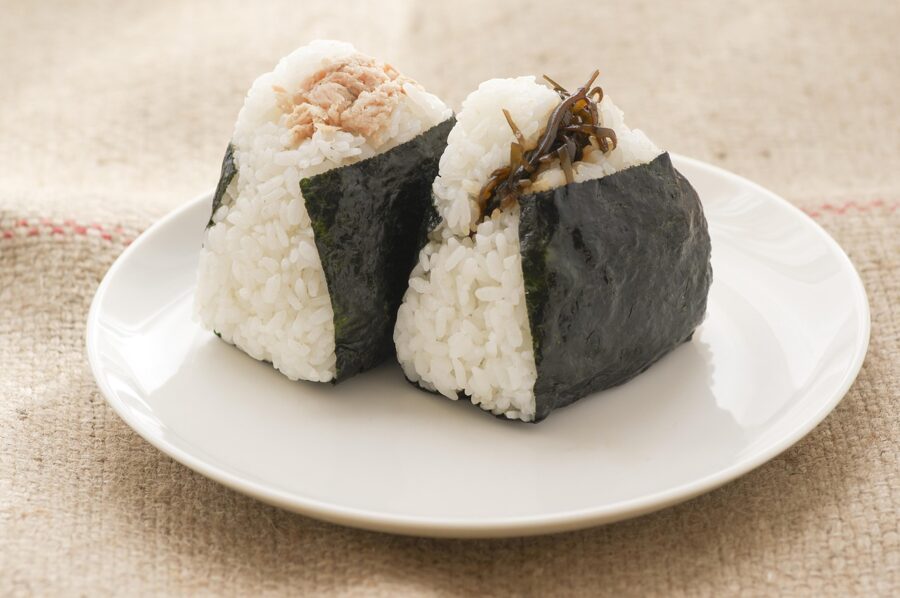
The odd one out is natto. You’ll rarely find it inside a triangle, but 7-Eleven sells a natto hand roll for ¥213, which is the cheapest way to find out if you’re a natto person before you face a whole breakfast bowl of it.
Three price tiers
Onigiri come in three bands, and the price tells you roughly what you’re getting. The cheapest are plain shio musubi (salted rice, no filling) and mixed-rice balls, from ¥149 at FamilyMart and Lawson. The standard filled triangle runs ¥170–235 across the three chains.
Above that sits the premium tier: bigger rice balls, better rice and fillings that show. Lawson’s premium line runs to grilled salmon belly at ¥297 and soy-marinated ikura at ¥322, and 7-Eleven sells a Niigata Koshihikari rice ball with a whole grilled red salmon fillet for ¥300. Try one once, as a picnic lunch. The ikura one is the best rice ball I’ve had out of a fridge.
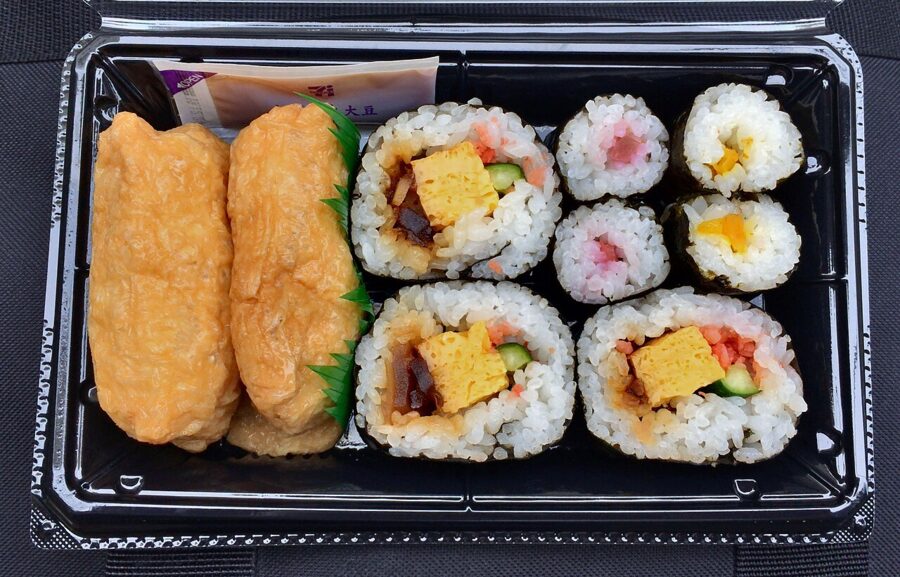
Next to the onigiri you’ll find the sushi that copes with a chiller: inari pockets and thick futomaki rolls, sold together as sukeroku for ¥518 at 7-Eleven. Rice in sweet fried tofu, or a roll packed with egg and pickles, survives a few hours in the cold far better than raw fish would.
Rice balls you’ll only find in one region
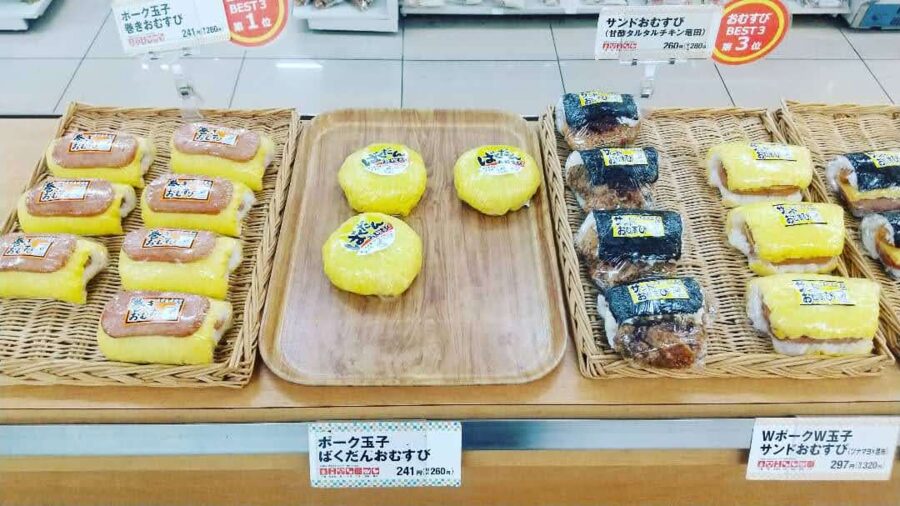
The core shelf is the same in Sapporo and Fukuoka, but each chain slips in regional stock, and FamilyMart’s list is the most fun to hunt. In Akita it sells bodakko, the prefecture’s fiercely salted salmon. In Hokkaido there’s sujiko, salmon roe still in its sac, for ¥275; in Kyushu, a fist-sized bakudan (“bomb”) musubi stuffed with three fillings for ¥378.
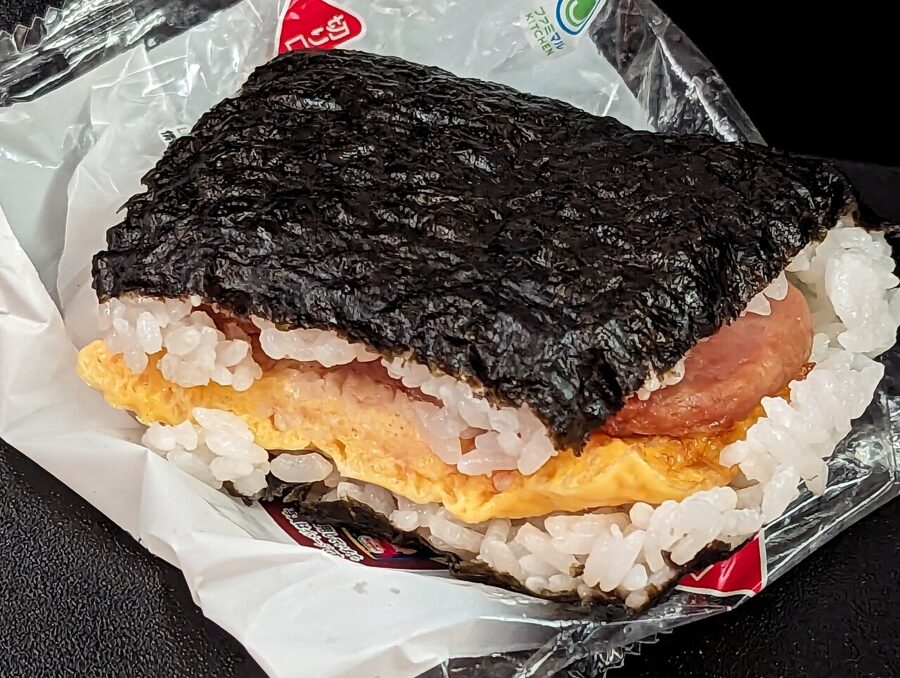
Okinawa has pork tamago: a slab of luncheon meat and a slice of omelette pressed between rice and nori, sold in konbini all over the islands. Lawson now sells a version with tuna mayo added everywhere outside Okinawa for ¥343, while its Okinawa stores keep their own. On Tokunoshima, in the Amami Islands, the local onigiri comes wrapped in a thin sheet of egg instead of nori.
Egg sandos and the bread shelf
The konbini egg sandwich has a following that crosses borders, and it’s mostly down to the bread: soft, crustless white, cut into halves around a filling that tastes more of egg than of mayonnaise. All three chains sell a plain egg version for about ¥300. 7-Eleven’s “THE Tamago Sando” is ¥300, Lawson’s is ¥297 and FamilyMart’s is ¥298.
Lawson describes its own as chunky, and you can see the pieces of white. The others are smoother. Buy all three on one walk and decide for yourself, because the argument has no end.
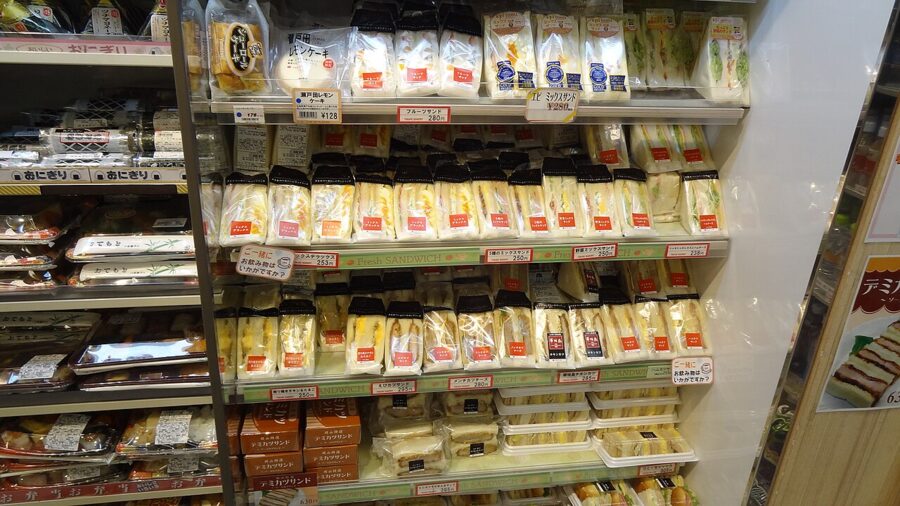
Beyond egg, look for the mixed sando (ham, egg and salad in one pack, ¥311 at 7-Eleven), the fruit sandwich with whipped cream (¥415 at FamilyMart for five kinds of fruit) and the katsu sando. Lawson’s Machikado Chubo stores make theirs in the shop’s kitchen with a sauce developed with Maisen, the tonkatsu house, at ¥505 for a pack or ¥279 for a single.
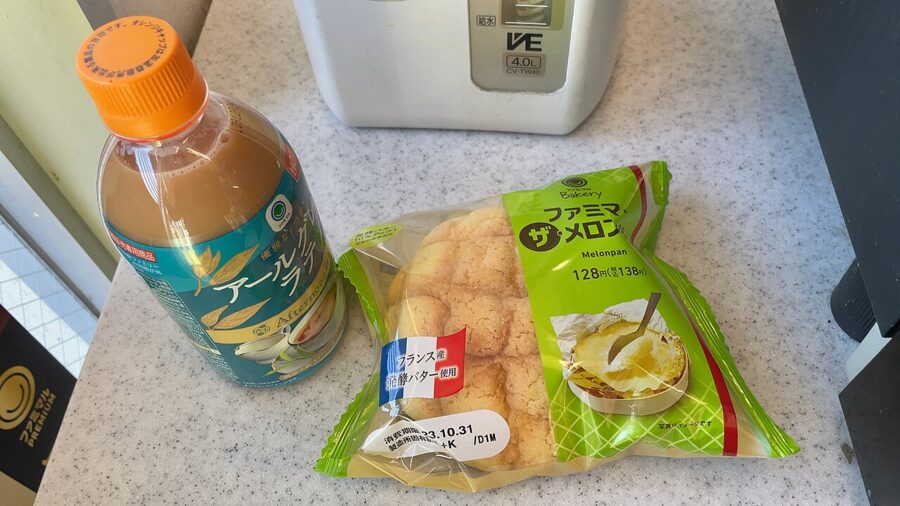
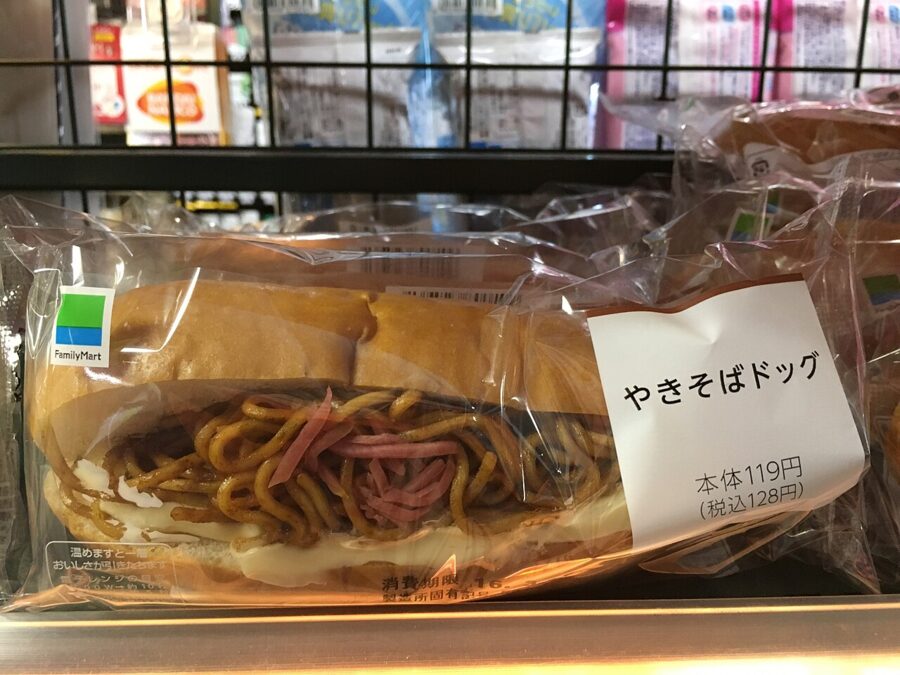
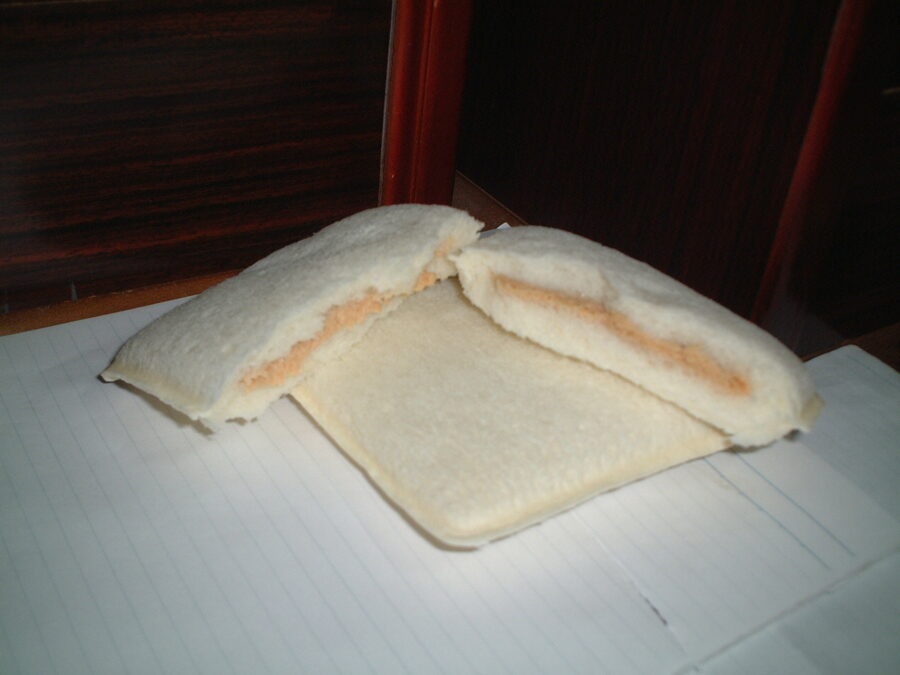
The bread shelf is its own world. Melon pan (a sweet bun under a crisp cookie crust, no melon involved), yakisoba pan (fried noodles in a hot-dog roll), a croquette roll at ¥181 and curry pan at ¥170 cover the sweet and savoury ends at 7-Eleven. Yamazaki’s Lunch Pack, two crustless pockets sealed at the edges, comes in more flavours than anyone can keep up with; peanut, at ¥171, is the one I’d start with.
Bento, and the microwave question
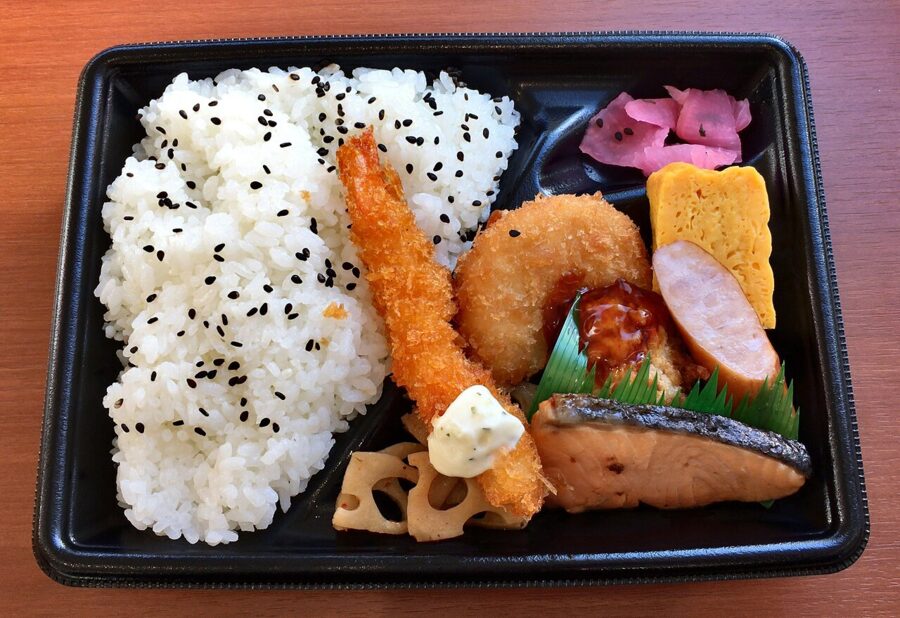
The bento shelf is where a konbini turns into a cheap restaurant. 7-Eleven’s Tokyo-area boxes in November 2026 ran from ¥464 for teriyaki chicken on dashi rice to ¥753 for a hamburg-and-karaage combination, with a nori bento at ¥594 and a pork katsudon at ¥699. Expect rice, a main and a couple of small sides.
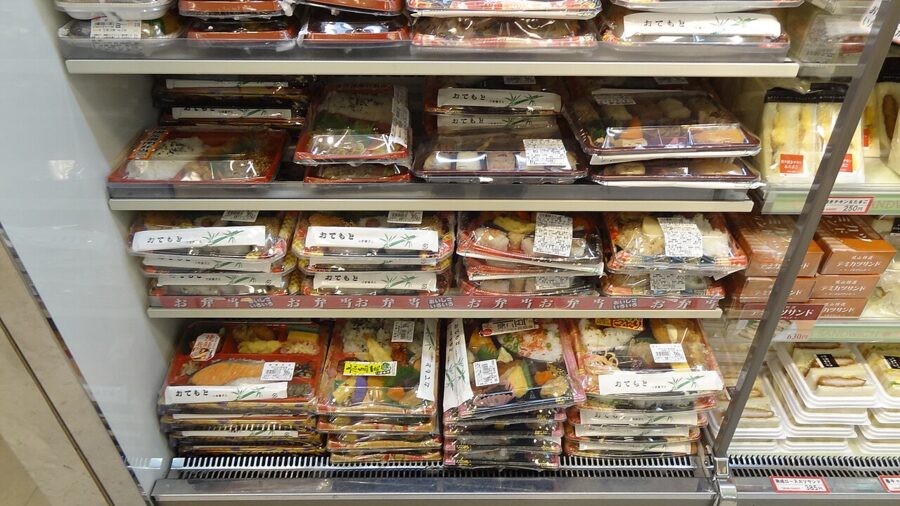
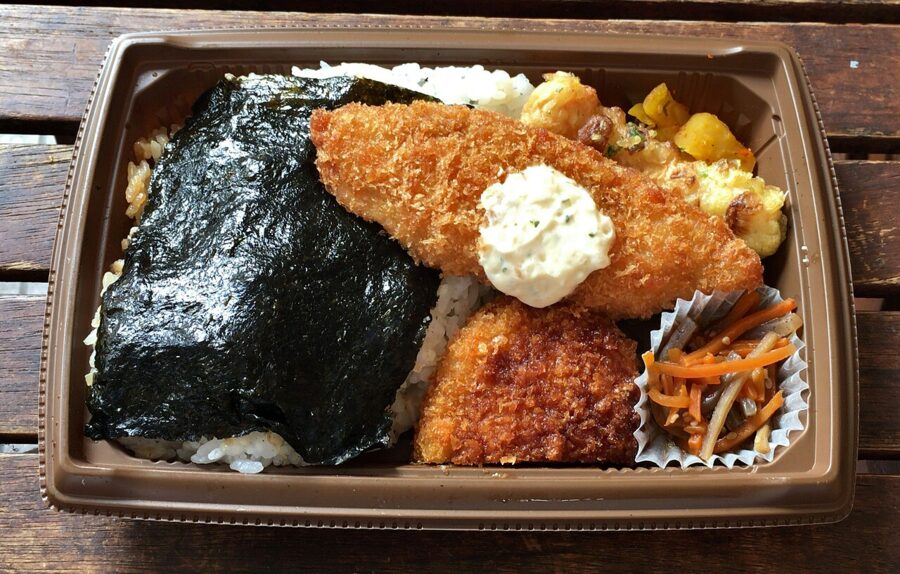
The makunouchi, a little of everything in compartments, is the safest order and the most Japanese one. Nori bento, rice under a sheet of seaweed with fried fish and a few sides on top, is the most comforting. Donburi like gyudon and oyakodon come in deep bowls and want heating more than anything else on the shelf.
At the till, the clerk will ask “atatamemasu ka?” (温めますか), shall I heat it? For a bento or rice bowl, say “hai, onegaishimasu”, and they’ll run it through the microwave behind the counter and hand it back hot with chopsticks. Say no to sandwiches and salads, which are built to be eaten cold.
Onigiri are the regional wrinkle. A 2006 survey by a national rice-promotion body found about a quarter of customers had their rice balls warmed, but 40–60% in Hokkaido, Tohoku and the northern Kanto prefectures, and 75% in Okinawa, where the clerk will usually ask. Elsewhere you may have to request it, and a heated temaki loses the crisp nori the wrapper exists to protect.
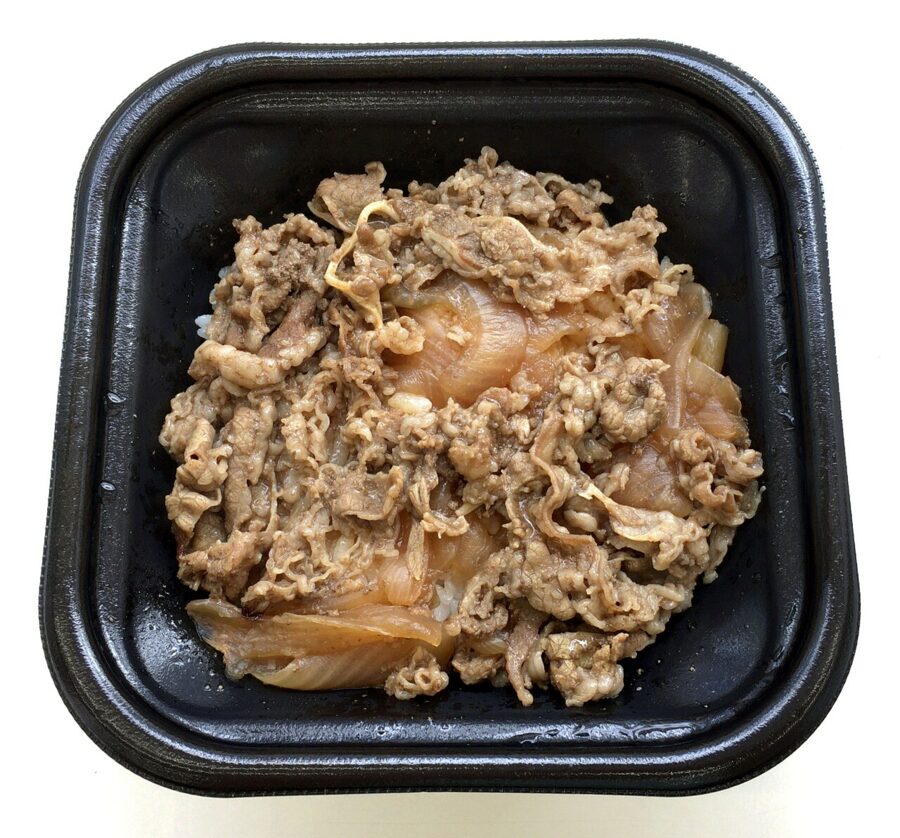
Next to the bento are noodles: cold soba in summer, a nabeyaki udon to heat in winter (¥442 at 7-Eleven), and more pasta than you’d expect. Ramen tie-ups with famous shops come and go; 7-Eleven’s November line-up included a bowl supervised by Tomita, the Matsudo tsukemen shop, at ¥734.
The hot case by the till
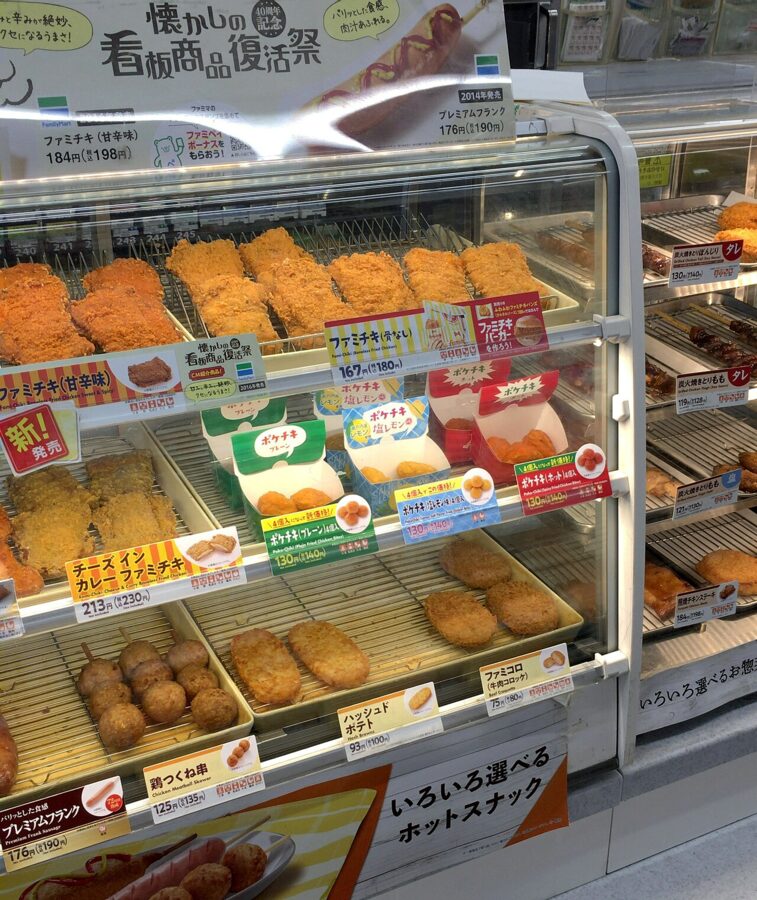
Every konbini keeps a heated glass case beside the register, and this is where the chains compete hardest. You don’t touch anything. Point, or say the name, and the clerk bags it for you. Most of it is fried in the shop; 7-Eleven only started frying at the counter in October 2007.
Famichiki, Karaage-kun and the chicken wars
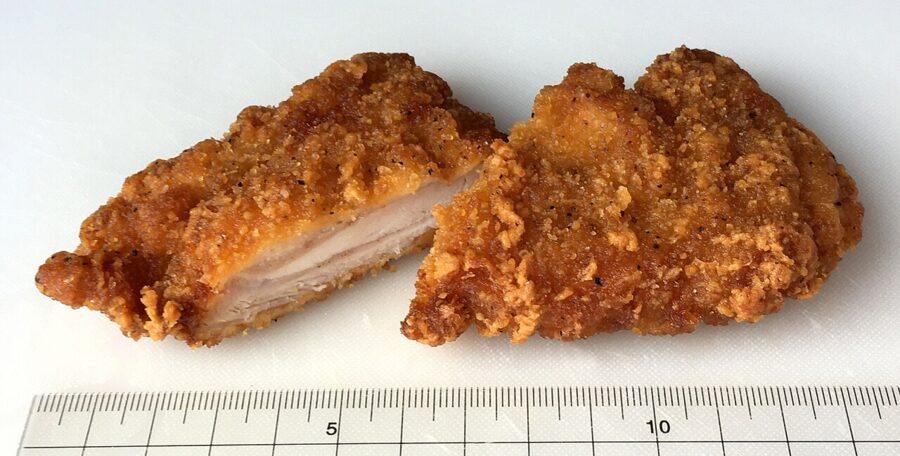
FamilyMart’s Famichiki, launched in 2006, is a boneless piece of fried chicken about the size of your palm, ¥248. The chicken is seasoned and coated at a plant in Thailand and fried in each store for five to eight minutes. The spice mix hasn’t been changed since launch.
Lawson’s answer is older. Karaage-kun went on sale on 15 April 1986: five bite-sized nuggets of chicken breast in a little cardboard box, ¥288 for the regular, the spicy Red or Hokkaido cheese. Flavours rotate constantly, and in November 2026 the extras were lemon, dashi soy and a Cajun one whose name is a pun.
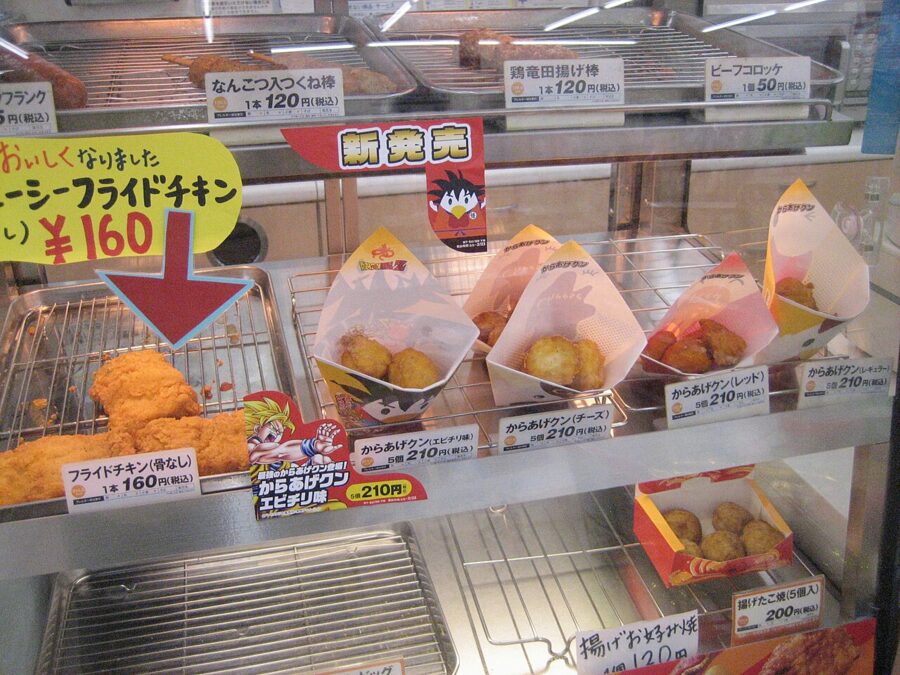
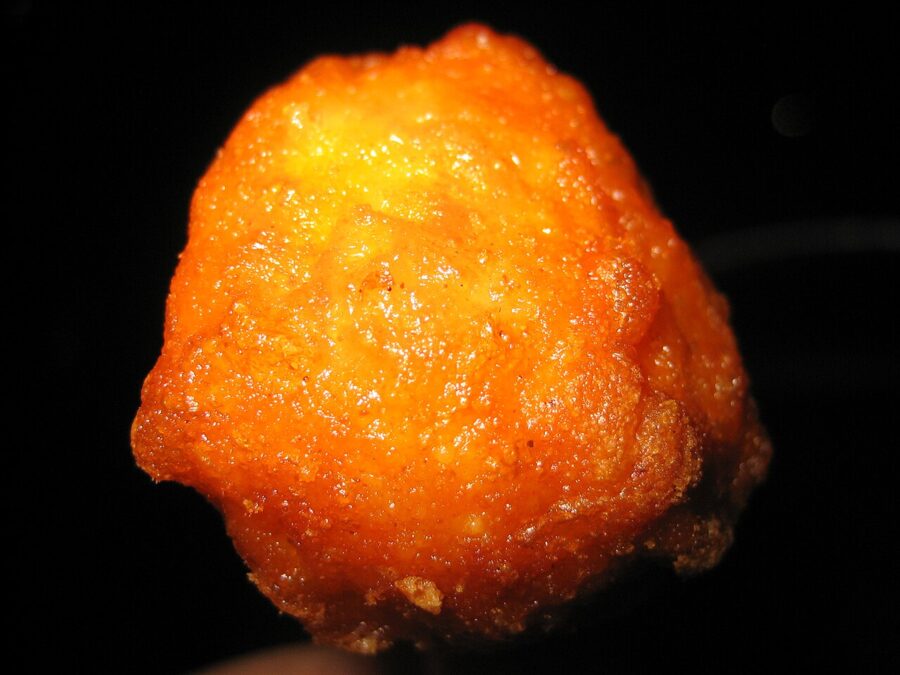
7-Eleven has Nanachiki (¥250), a milder fried chicken, and Lawson also sells L-Chiki (¥248), with a spicier coating than Famichiki. I’d rank them Famichiki, then Karaage-kun, then the rest. The argument is half the fun, and every one of them costs less than ¥300.
Croquettes, buns and the pot
Beyond chicken, look for korokke, a potato croquette (¥120 at FamilyMart, ¥128 at 7-Eleven), the American dog, which is a corn dog (¥150), and 7-Eleven’s charcoal-grilled chicken skewers (¥213). Many FamilyMarts also sell a whole baked sweet potato for ¥298, which on a cold day is the best thing in the case.
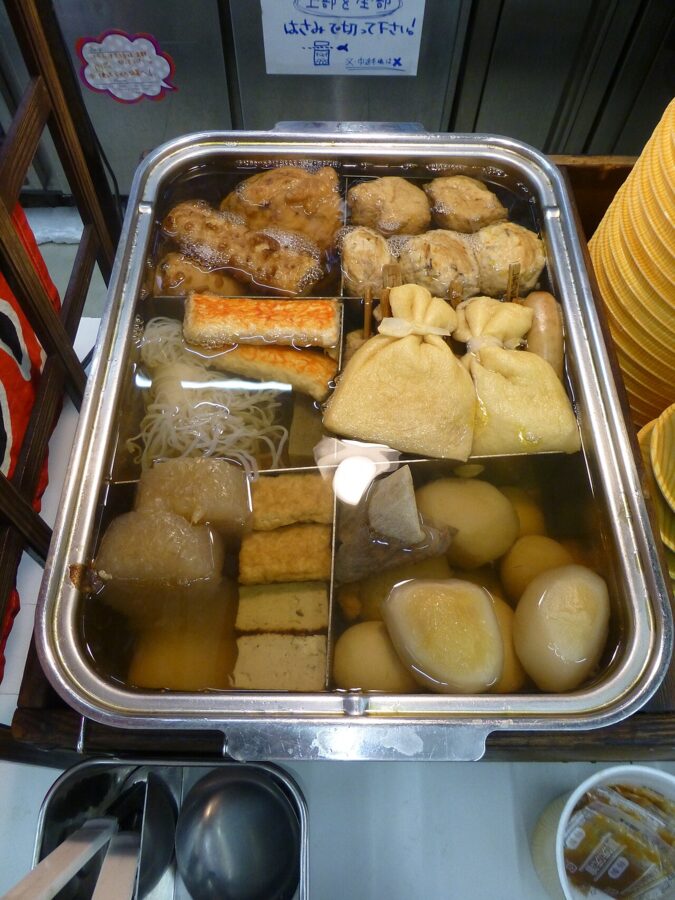
From the steamer by the till come chukaman, steamed buns. Nikuman with pork is ¥168 at 7-Eleven, pizza-man ¥171, and anman with sweet bean paste ¥160 at FamilyMart. They’re a cold-weather habit.
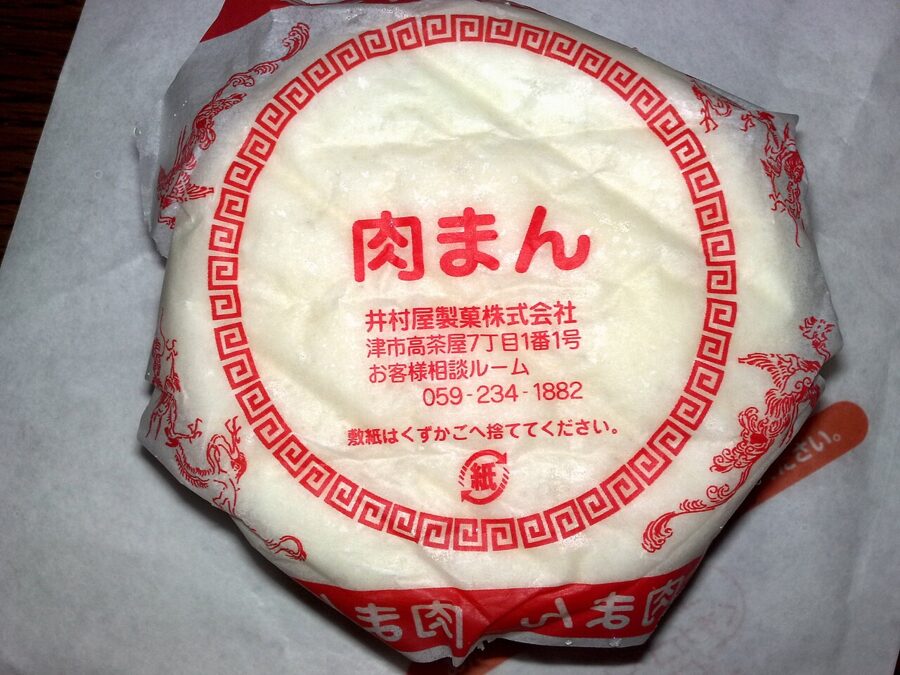
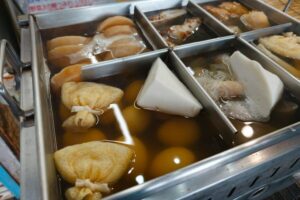
Then there’s the oden pot: daikon, eggs, fish cakes and konnyaku in a partitioned tray of dashi beside the till, from late summer into spring. At 7-Eleven a daikon round is ¥130 and an egg ¥150. I’ve written a whole guide to oden, including how to order from the konbini pot, so I’ll leave it there.
The dessert fridge
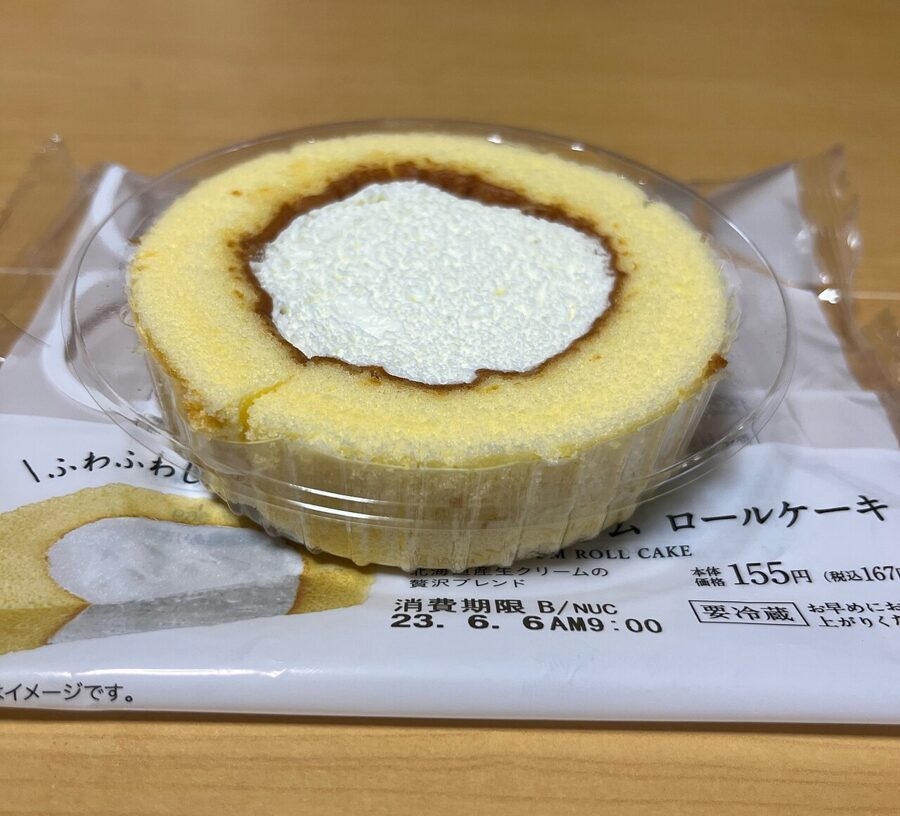
Konbini desserts are good enough that Japanese food sites review new ones every week, and the chains keep them coming. Lawson’s Uchi Café range is the benchmark. The Premium Roll Cake, a soft sponge rolled around a thick core of cream that you eat with a spoon, is ¥214, and Bascheee, a burnt Basque-style cheesecake, is ¥324.
Bascheee came out of a trial in Gunma in February 2019, and it sold well enough to be credited with part of Lawson’s profit growth that year. 7-Eleven followed with its own Basque cheesecake about six months later. It’s denser than it looks, and better eaten after ten minutes out of the fridge.
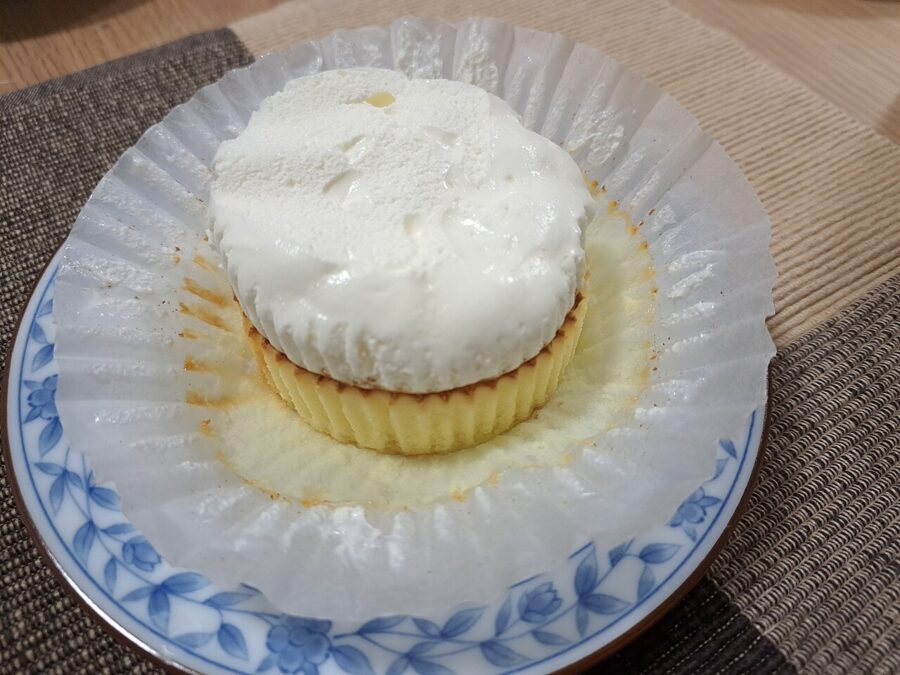
FamilyMart goes for volume. Its “infinite cream” series is what it sounds like: a cake that’s billed as almost entirely cream at ¥248, double-cream éclairs, a cream-stuffed crêpe. It also sells chilled cream buns made with Hattendo, the Hiroshima bakery, which you eat cold.
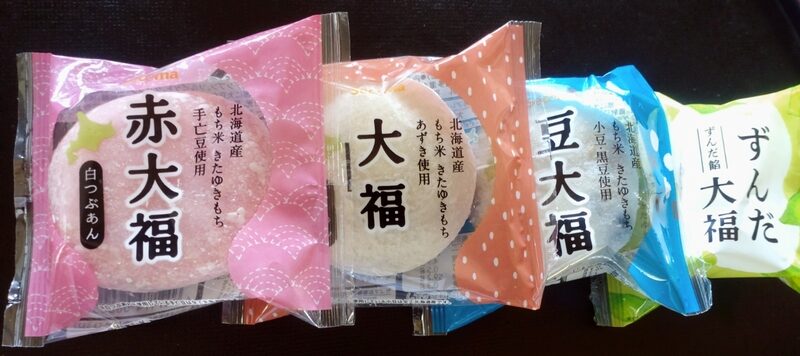
7-Eleven’s chiller leans Japanese, with salted-bean daifuku and kusa-mochi at ¥213 each, chilled mitarashi dango and a kiln-baked custard pudding at ¥289. If that end of the shelf hooks you, my guide to wagashi covers where the handmade versions come from.
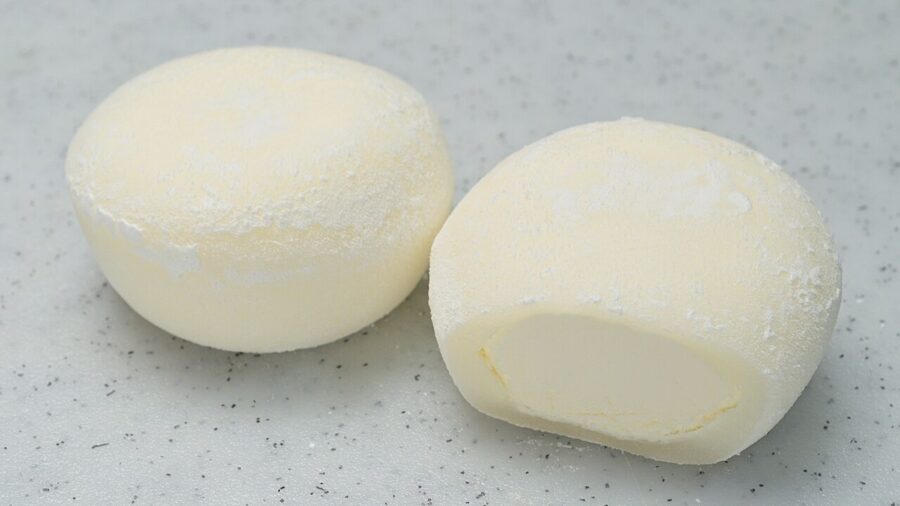
The ice cream freezer deserves a look too. Alongside the chains’ own lines you’ll find the big brands, and in November 2026 7-Eleven had a premium Yukimi Daifuku with Amaou strawberry at ¥270.
For Kit Kats, crisps and the snack aisle as souvenirs, my guide to Japanese snacks has the full rundown.
Coffee, tea and the beer fridge
Konbini coffee is proper coffee, ground and brewed a cup at a time. At 7-Eleven you pay at the till for a cup, ¥140 for a regular hot or iced and ¥220 for a large hot, then take it to the Seven Café machine and press the matching button. At Lawson a small coffee is ¥160 and a matcha latte ¥298.
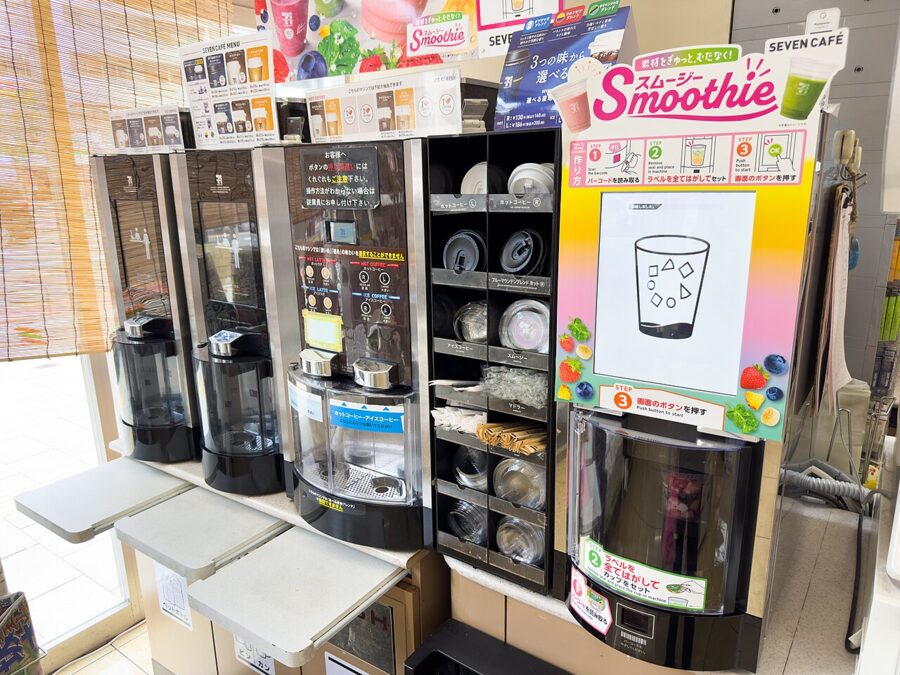
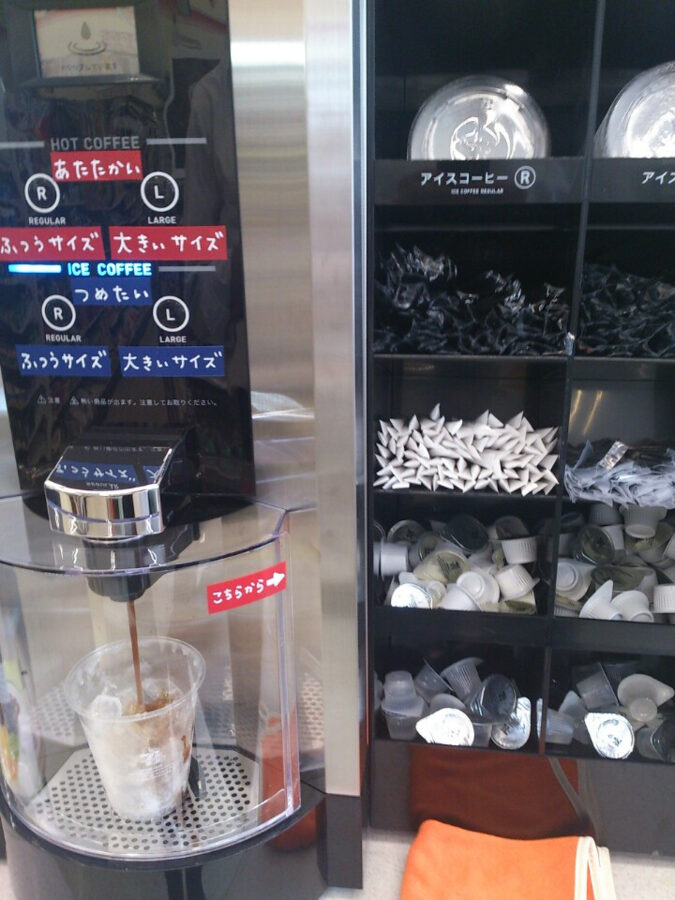
It’s good enough that I stopped hunting for chain cafés on early starts. For the opposite experience, a hand-dripped cup in a room that hasn’t changed since the 1970s, find a kissaten.
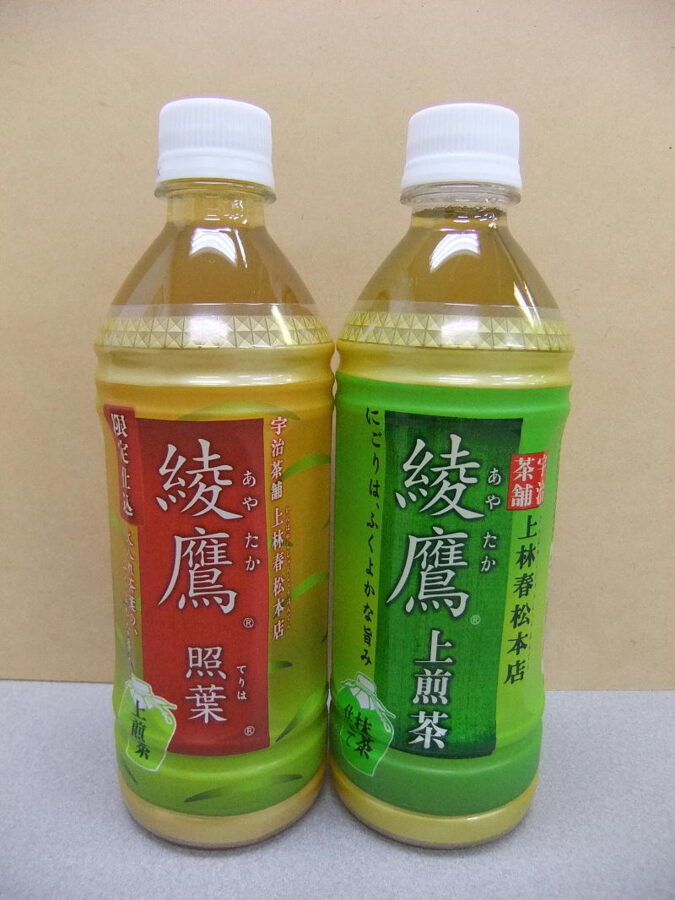
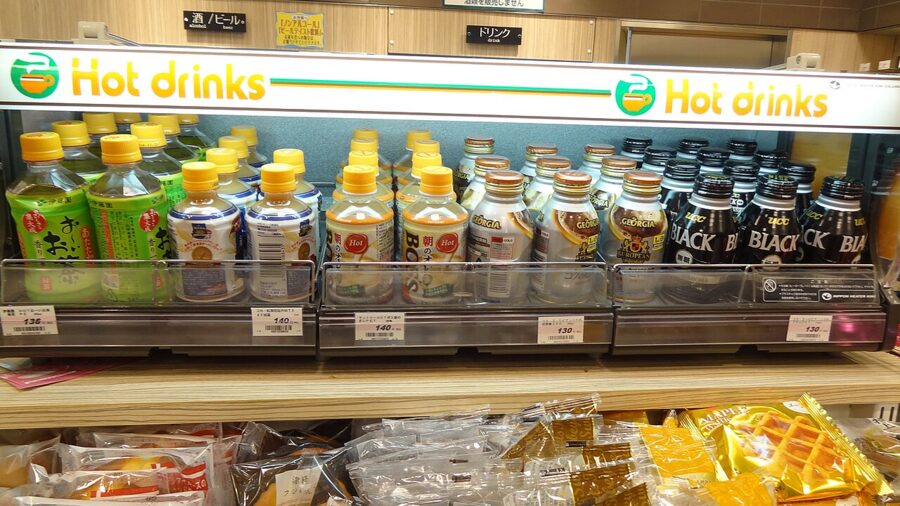
The drinks fridges fill the back wall. Unsweetened green tea in plastic bottles is the default drink of the country, with roasted hojicha, barley tea and jasmine beside it. In the cold months a heated shelf near the till holds hot bottled tea and canned coffee.
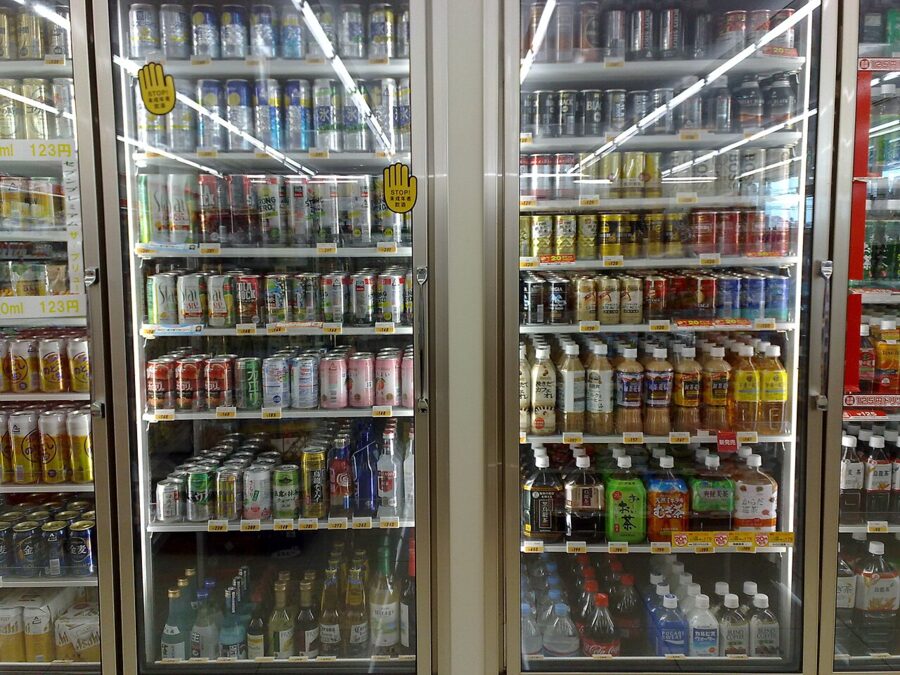
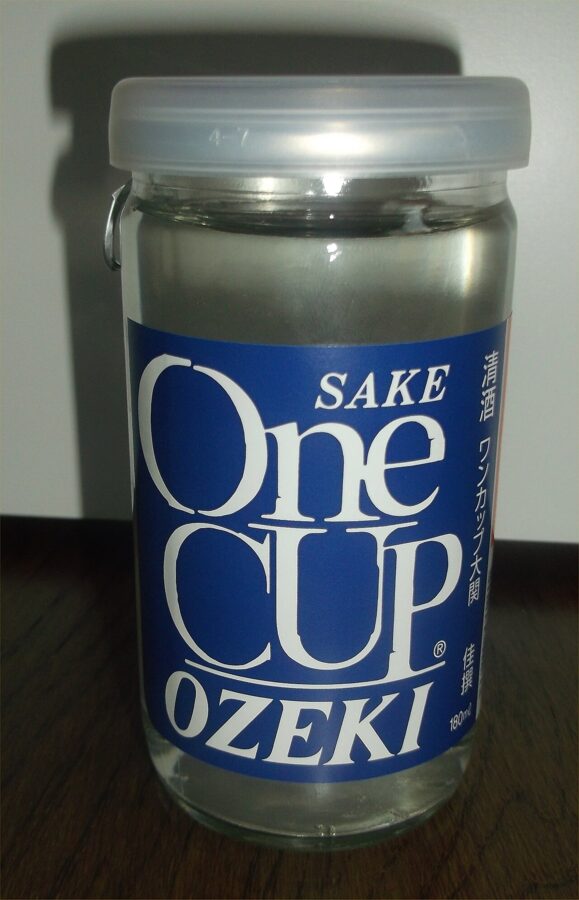
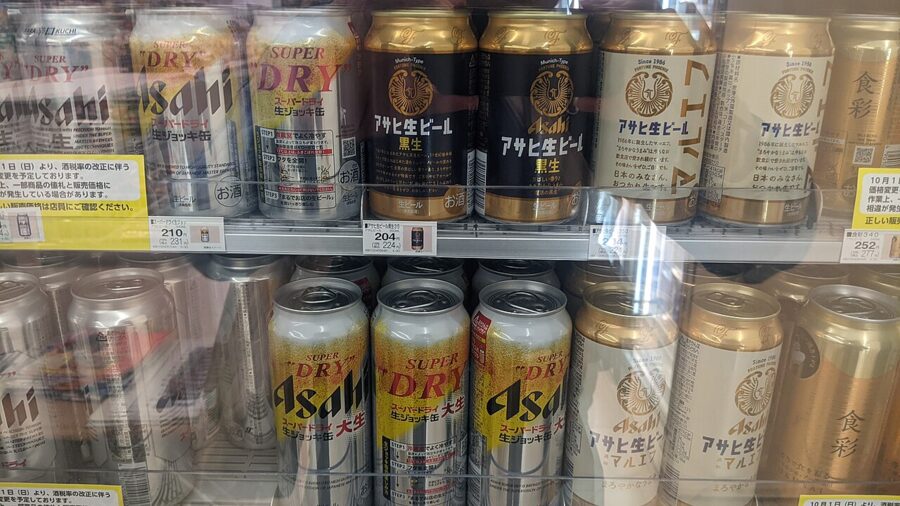
The beer fridge is the other reason to come in after dark. Every big chain sells beer, cans of chuhai (originally shochu and soda), cup sake and whisky highballs, and the drinking age is 20, so the till will ask you to tap a screen to confirm yours. The beer is mostly the national lagers; for anything more interesting, my guide to Japanese craft beer points you to the bars and bottle shops.
Breakfast at 7:00, dinner at 3:00
The konbini runs on a daily rhythm you can see on the shelves. Mornings are bread, onigiri and coffee for commuters; lunch is bento and noodles; after dark the sales shift to beer, snacks and dessert. Two rice balls, a carton of tea and, in winter, a cup of oden is the breakfast plenty of commuters actually eat, and if you want the sit-down version, my guide to the Japanese breakfast covers where to find one.
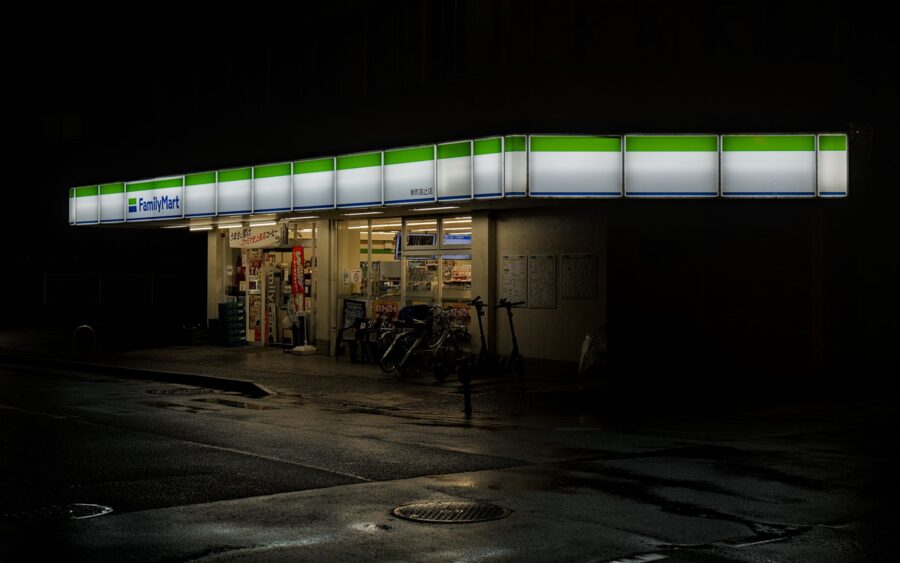
Late at night the konbini is often the only thing open in a neighbourhood, which is when it’s most useful and least impressive. The hot case thins out and the sandwich shelf runs low before the next delivery. Most city stores still never close, but 7-Eleven drew up guidelines for overnight closure in 2019, so in the countryside check before you count on it.
What changes with the seasons
Konbini always run a season ahead of the weather. New lines land most Tuesdays, so the store you walk into in March and the one in November barely look alike.
Autumn means chestnut and sweet potato. In November 2026 7-Eleven had a Mont Blanc pudding cake made with Beni-haruka sweet potato and Kasama chestnut at ¥399, and FamilyMart a Hokkaido pumpkin Mont Blanc pudding at ¥348. Spring brings sakura flavours, summer cold noodles and ice, and winter the steamer, the oden pot and the hot drinks shelf.
Then there are the event foods. For Setsubun at the start of February every chain sells ehomaki, an uncut sushi roll you eat in silence facing the year’s lucky direction; 7-Eleven began selling it in Hiroshima in 1989 and nationwide in 1998, which is largely how an Osaka custom became a national one.
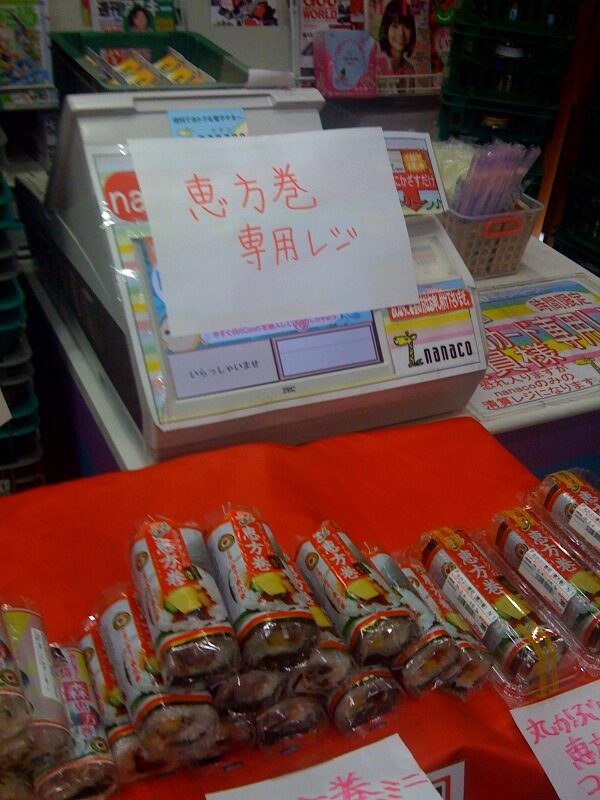
Unagi arrives for Doyo no Ushi in midsummer, and in autumn the counter starts taking orders for Christmas cake and New Year osechi.
At the counter: what the clerk will ask
Paying is quick, and the script barely changes. Put your things down, and the clerk scans them and runs through a few questions. You can answer every one with “hai” (yes) or “daijobu desu” (no thanks).
- 温めますか? Atatamemasu ka? Shall I heat it? Asked about bento, noodles and rice bowls.
- お箸おつけしますか? O-hashi otsuke shimasu ka? Do you want chopsticks? A spoon or fork may be offered with soups and desserts.
- 袋はご利用ですか? Fukuro wa go-riyo desu ka? Do you need a bag? Plastic bags have been charged for since July 2020, so carry your own.
- 店内でお召し上がりですか? Tennai de o-meshiagari desu ka? Are you eating in? This one changes the tax.
- ポイントカード? Pointo kado? Do you have a points card? “Nai desu” (I don’t) ends it.
Takeaway food is taxed at 8% and food eaten in the store at 10%, a split that has applied since October 2019. If you buy to take away and then decide to sit down after all, the national tax agency has said that isn’t a problem, so don’t worry about it.
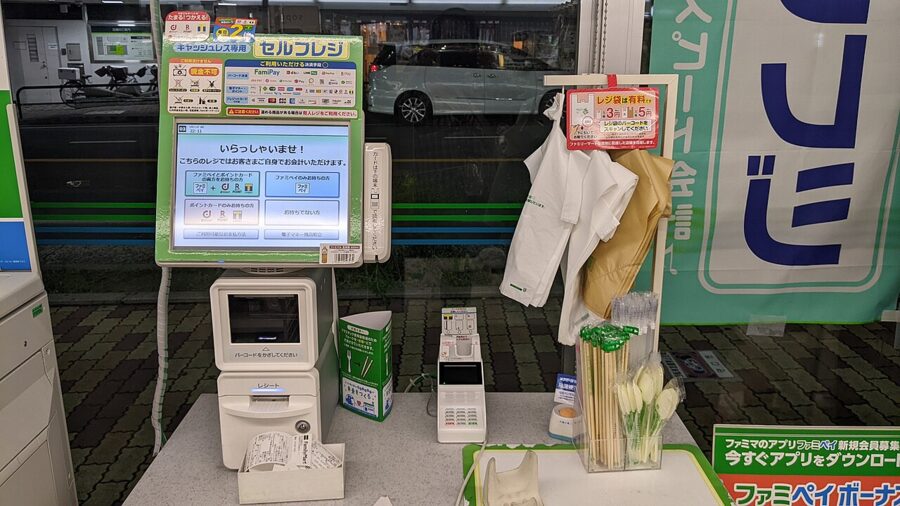
Cash works everywhere. The big chains also take international credit cards and IC cards like Suica, and most take QR payment apps; 7-Eleven, for the record, only started accepting credit cards in June 2010.
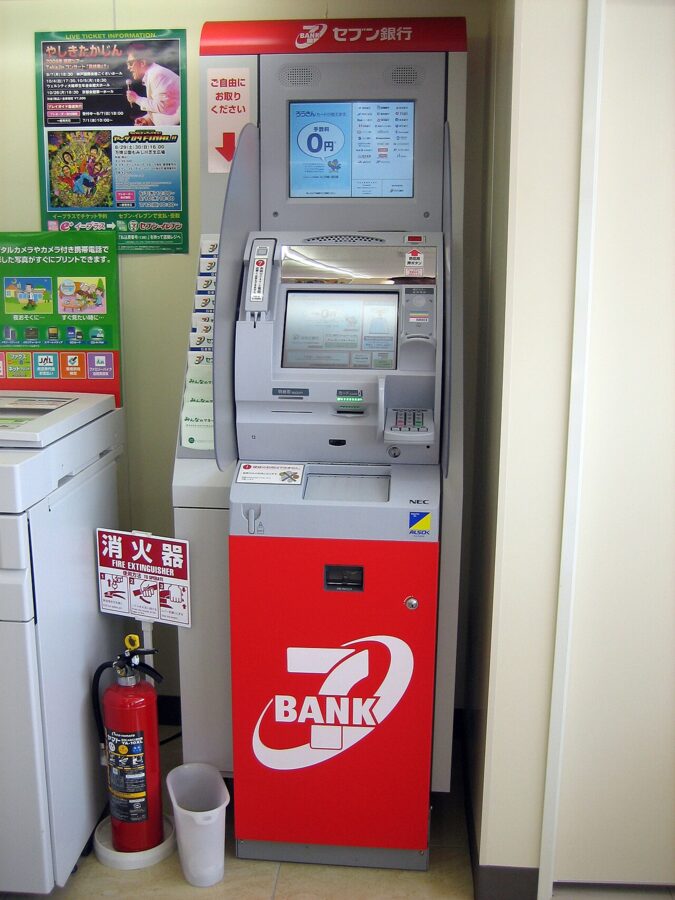
The rest of the store is a small bank and post office. Seven Bank cash machines in 7-Eleven take most foreign cards, which makes them the easiest place to draw yen, and the multi-copy machines print, scan and sell event tickets.
Not every store has seats. Where there’s an eat-in corner it’s for food bought there, and some close theirs late at night. Japan has very few public bins, so the konbini bins, sorted into burnables, plastic bottles and cans, are where your rubbish ends up; use them for what you bought in that store, and nothing else.
If you’re vegetarian, read labels with care, because dashi and fish extracts turn up in a lot of rice and almost every broth. Salt onigiri, ume, natto rolls and the egg sandwich are the usual starting points, and my guide to vegetarian Japan goes through the rest.
Prices at a glance, and what to skip
| Item | Tokyo-area price, November 2026 |
|---|---|
| Salt onigiri | ¥149 |
| Filled onigiri | ¥170–235 |
| Premium onigiri | ¥297–322 |
| Egg sandwich | ¥297–300 |
| Bento or rice bowl | ¥464–753 |
| Famichiki / Karaage-kun | ¥248 / ¥288 |
| Nikuman | ¥168–198 |
| Oden, per piece (7-Eleven) | ¥120–210 |
| Fresh coffee, small | ¥140–160 |
| Premium Roll Cake / Bascheee | ¥214 / ¥324 |
A full day of konbini eating, two salmon rice balls for breakfast, a nori bento at lunch, a coffee, a Famichiki and a roll cake, comes to about ¥1,600 before drinks. That’s less than one sit-down dinner in most of Tokyo.
Some of the shelf isn’t worth your money:
- Nigiri sushi packs. Raw fish and a chiller don’t get on. The inari and sukeroku beside them are better food.
- Big bottles of water and soft drinks. For anything over 500 ml, a supermarket or drugstore down the street is usually far cheaper.
- The hot case late at night. Fried chicken is held in the heated case until it sells, and the last batch of the evening has been sitting a while. Buy it when a fresh tray goes in.
- Heating a crisp-nori onigiri. Warm rice in soggy seaweed defeats the wrapper. If you want something hot, buy a bento.
- A konbini picnic for a special day. For a step up in price and quality, the food halls under department stores are a better bet, and my guide to depachika shows you how to work them.
Go in the morning, when the shelves are full. Pick a salmon rice ball and open it properly: tab 1 down the middle, corner 2, corner 3. Then come back at 16:00 for a Famichiki, because by then you’ll have earned it.