Vegetarian and Vegan in Japan: Shojin Ryori, the Dashi Problem and Where to Eat Well
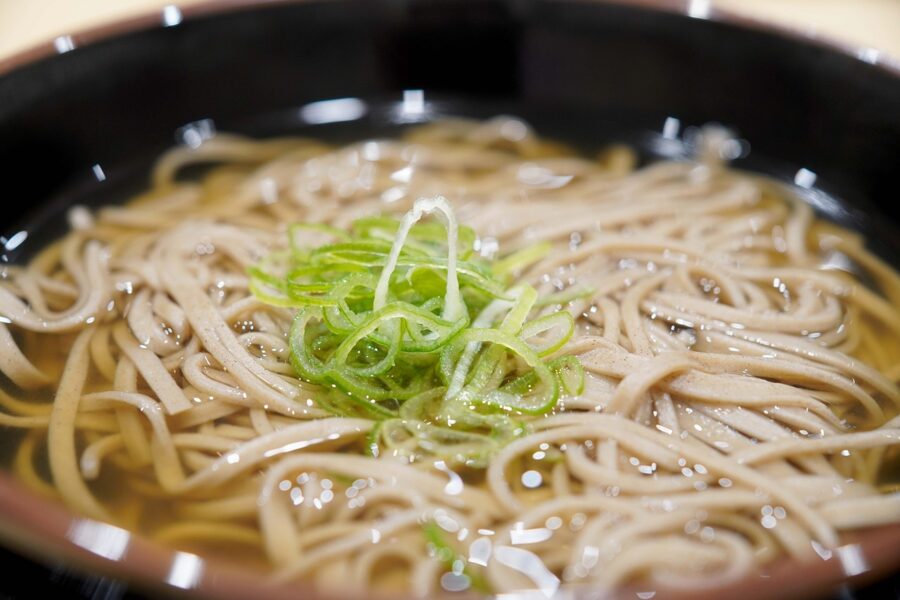
The cheapest button on the ticket machine at a station soba counter is almost always kake soba: buckwheat noodles in hot broth, a pinch of spring onion, nothing else. I bought one for a vegetarian friend from my Shenzhen years on her first morning in Tokyo, because it was the only thing on the machine with no meat in the picture. She’d eaten half of it before I remembered what the broth is made of. It’s a stock of shaved, smoked, dried skipjack tuna, and it is in almost everything.
That’s the strange thing about eating vegetarian here. This is the country that turned Buddhist temple food into one of the most refined vegetable cuisines anywhere, and the same country seasons its miso soup, its noodle broth, its tofu and even its grilled peppers with fish. Most cooks don’t think of dashi as fish at all. It’s just the water food is cooked in.
So it can be done, and done very well. You just have to know three things: where the fish hides, which kitchens cook without it on purpose, and how to say what you need in a way a busy cook understands. This guide covers all three, plus the temple meals in Kyoto, Tokyo and Kamakura that make the effort worth it.
If you only want the short version, here it is. Strict vegans will eat best in dedicated vegan restaurants and temple kitchens, and should book the temple meals ahead. Vegetarians who can live with an occasional trace of fish stock will find Japan much easier than its reputation. And everyone should learn one word before landing: dashi.
In This Article
- The fish in the broth
- What dashi actually is
- Kombu and shiitake: the temple version
- Why the cook says it’s vegetarian
- Which dishes are safe, and which are traps?
- Soup and noodles
- Tofu dishes
- Tempura, okonomiyaki and the batter question
- Sushi, onigiri and rice
- Shojin ryori: what the monks actually cook
- Dogen and the kitchen as practice
- The rules: no flesh, no pungent roots
- Goma-dofu, yuba, fu and koya-dofu
- Fucha ryori, the Chinese branch
- Eat it in Kyoto
- Shigetsu at Tenryu-ji
- Izusen at Daitoku-ji
- Fu and yuba at Hanbey-fu
- Fucha at Manpuku-ji, Uji
- Yudofu, and a vegan café
- Tokyo and Kamakura
- Sougo, Roppongi
- Daigo, Atago, with one catch
- Kamakura: the soup with a temple’s name
- Temple lodgings and the mountains
- Everyday food that works
- Tofu shops, soba and the noodle exceptions
- Indian restaurants and curry chains
- Vegan restaurants worth crossing town for
- Izakaya and the drinks list
- Sweets
- Read the label
- The words to look for
- What tends to pass
- Say it in Japanese
- Halal, kosher, gluten-free
- Skip this
The fish in the broth
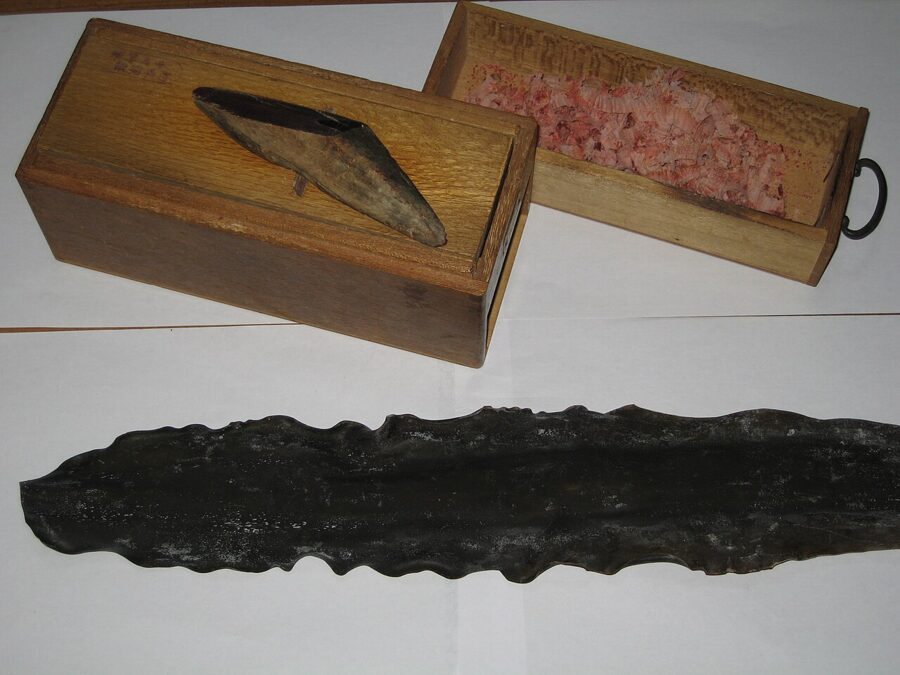
Dashi is stock. It’s the base of soups, simmered dishes, dipping sauces, noodle broth, batters and dressings, and it’s the reason so much Japanese food tastes savoury without tasting of anything in particular. The standard version is made by steeping kombu in water, then adding a handful of katsuobushi shavings, letting them sink and straining.
What dashi actually is
Katsuobushi starts as skipjack tuna. The fillets are simmered, smoked over hardwood for days and dried, and the best grades are then deliberately inoculated with mould and sun-dried again, until a fillet is hard enough to plane like timber. Shave it thin and you get the pink flakes you see in packets and on top of food.

Other fish dashi exist too. Niboshi, small dried sardines, go into a lot of home miso soup and some ramen; dried mackerel and round herring turn up in regional noodle broths. Instant granules, sold in every supermarket, are mostly bonito extract with salt and glutamate. If a menu says wafu (Japanese-style), assume one of these is in it.
The chemistry explains why cooks are attached to it. In 1908 the chemist Kikunae Ikeda isolated glutamate from kombu and named its taste umami; a few years later one of his students, Shintaro Kodama, found a second savoury compound, inosinate, in katsuobushi. The two together taste far stronger than either alone, which is why kelp-only stock tastes thinner to a Japanese cook and why bonito is so hard to dislodge. My history of Japanese food tells the longer story.
Kombu and shiitake: the temple version
The vegetarian answer is shojin dashi, the temple stock. It’s kombu, dried shiitake, sometimes dried daikon strips, dried gourd or soybeans, soaked slowly in cold water. Shiitake carries a third savoury compound, guanylate, so a good kombu and shiitake stock is rounder than you’d expect.
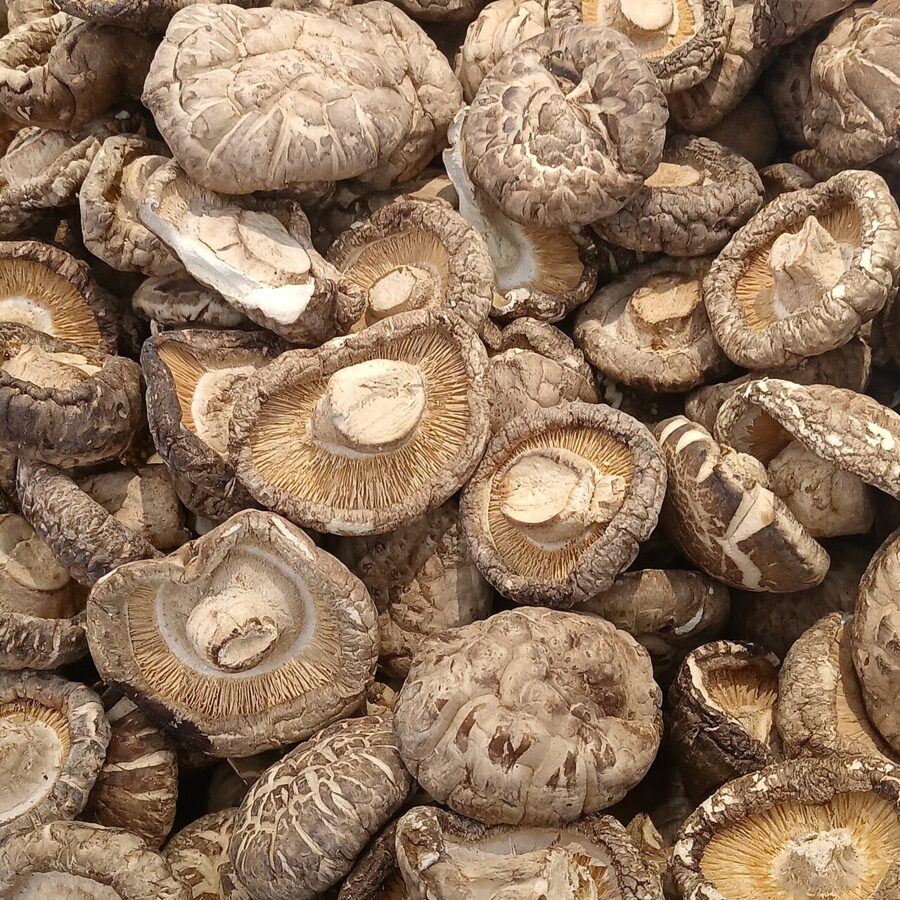
There’s a lovely footnote here. In 1223 a young Japanese monk called Dogen was waiting on a ship in a Chinese port when an elderly temple cook came a long way on foot to buy Japanese mushrooms from the cargo for his monastery’s kitchen. Dogen tried to persuade him to stay and talk; the old cook refused, because the cooking was his practice. That conversation ended up in Dogen’s Tenzo Kyokun, the founding text of Japanese temple cooking, which I come back to below.
Why the cook says it’s vegetarian
You’ll ask whether a dish has meat in it, hear “no”, and get fish stock. Nobody is misleading you. In everyday Japanese, niku means meat from animals with legs, and fish (sakana) is a separate category; dashi isn’t thought of as either. Ask about dashi by name, and if you’re vegan, ask about eggs and dairy separately, because those are separate categories again.
Which dishes are safe, and which are traps?
The table below is the one I’d screenshot. “Usually” matters: kitchens differ, and a few cook vegetarian versions on request. But if you can’t ask, these are the defaults.
| Dish | What usually hides in it | What to do |
|---|---|---|
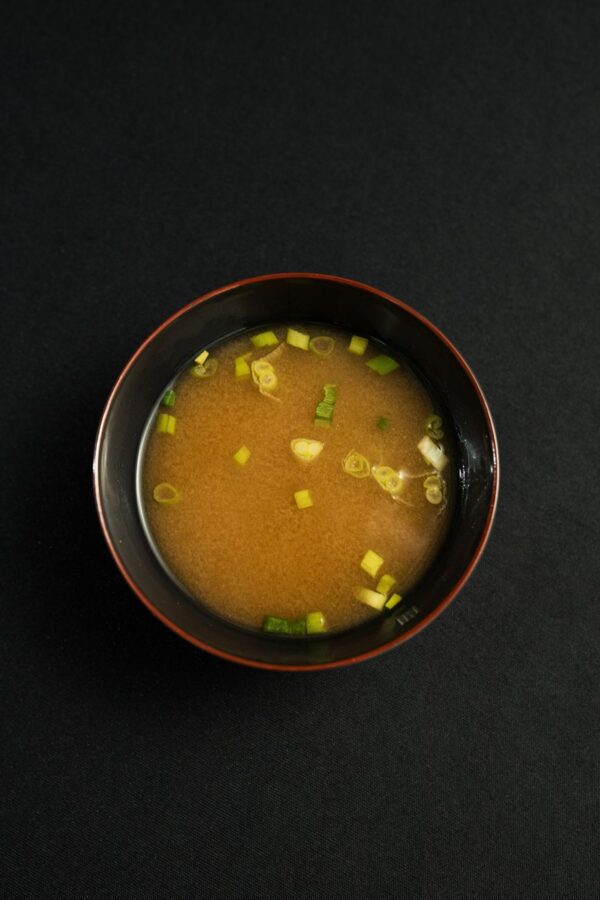
| Miso soup | Bonito or sardine dashi | Skip it, or ask for kombu dashi at temples and vegan places |
| Soba and udon, hot or cold | Bonito dashi in the broth and the dipping sauce | Look for shops that say kombu or vegetable broth; otherwise pass |
| Vegetable tempura | Egg in the batter, dashi in the dipping sauce | Eat it with salt instead of the sauce; vegans skip the batter |
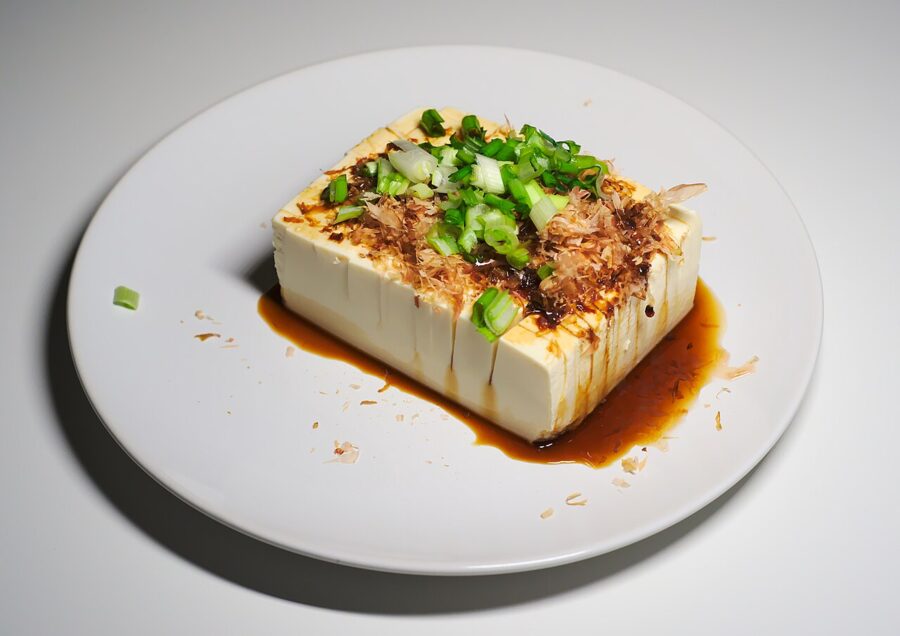
| Hiyayakko, agedashi tofu | Bonito flakes on top, dashi in the sauce | Ask for katsuobushi nuki; agedashi is in dashi, so skip |
| Okonomiyaki, takoyaki | Dashi in the batter, bonito on top, octopus or pork inside | Only at a shop that does a meat-free batter |
| Ramen | Pork, chicken or fish bone broth, even in “shio” and “shoyu” | Only at vegan ramen shops |
| Japanese curry rice | Beef or pork fat and extract in the roux | Chains with a separate vegetable curry; see below |
| Onigiri, inari sushi | Bonito extract in some fillings and in the sweet tofu skin | Read the label; umeboshi and plain salted are best bets |
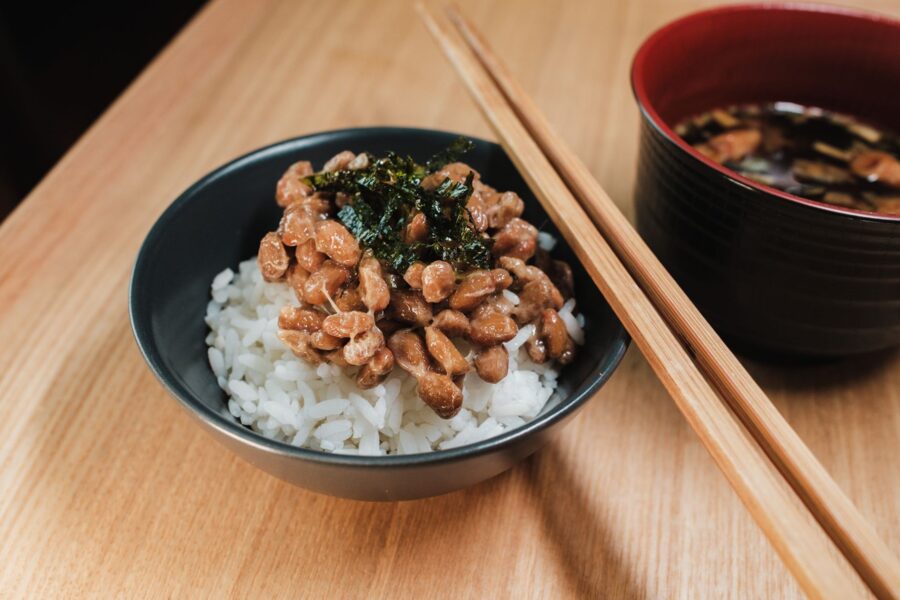
| Natto | Bonito extract in the sauce sachet | Use soy sauce instead of the sachet |
| Wagashi | Mostly beans, rice and sugar; egg in dorayaki and castella | Generally the easiest win in Japan |
Soup and noodles
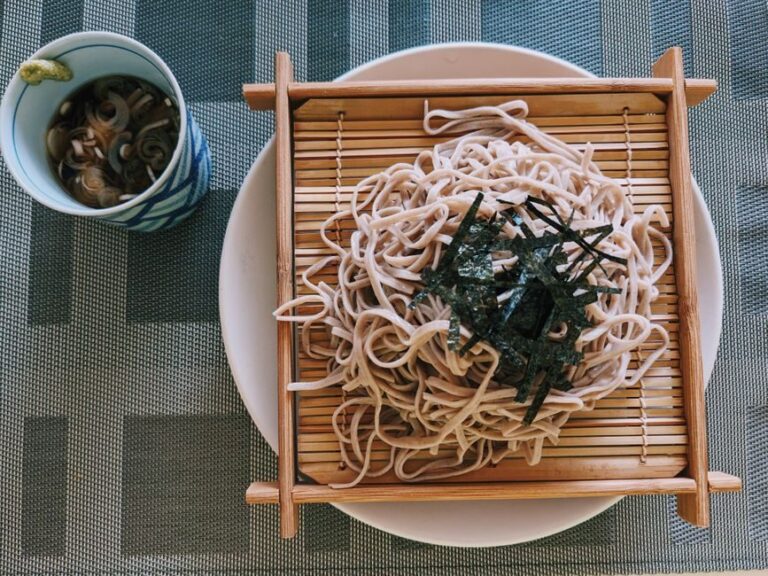
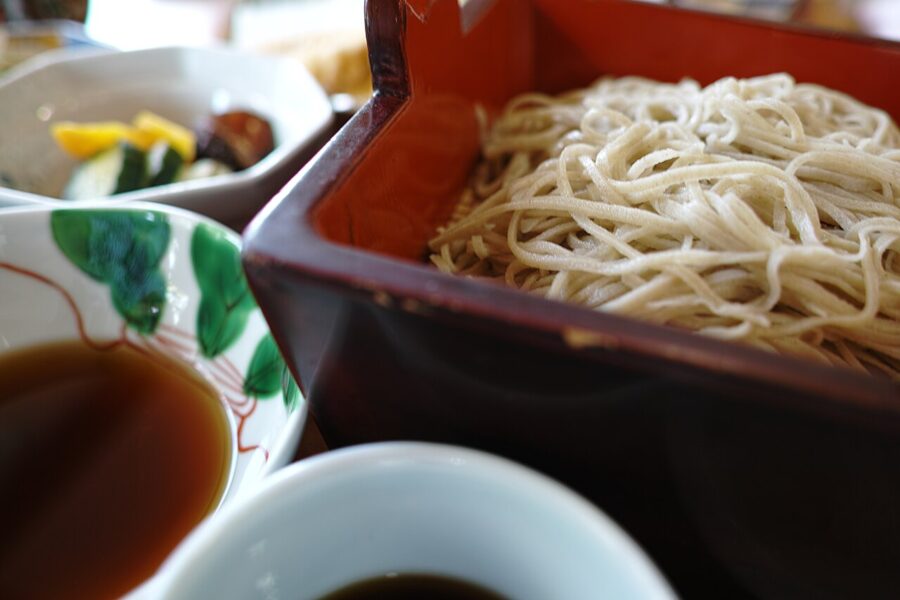
Noodles are where most vegetarians get caught, because they look so innocent. The dark sauce for soba is kaeshi (soy, mirin, sugar) let down with bonito dashi, and that applies to the cold dipping sauce for zaru soba as much as the hot broth. The paler Kansai broth for udon leans on kombu, which sounds promising, but it’s almost always kombu plus bonito or mackerel.
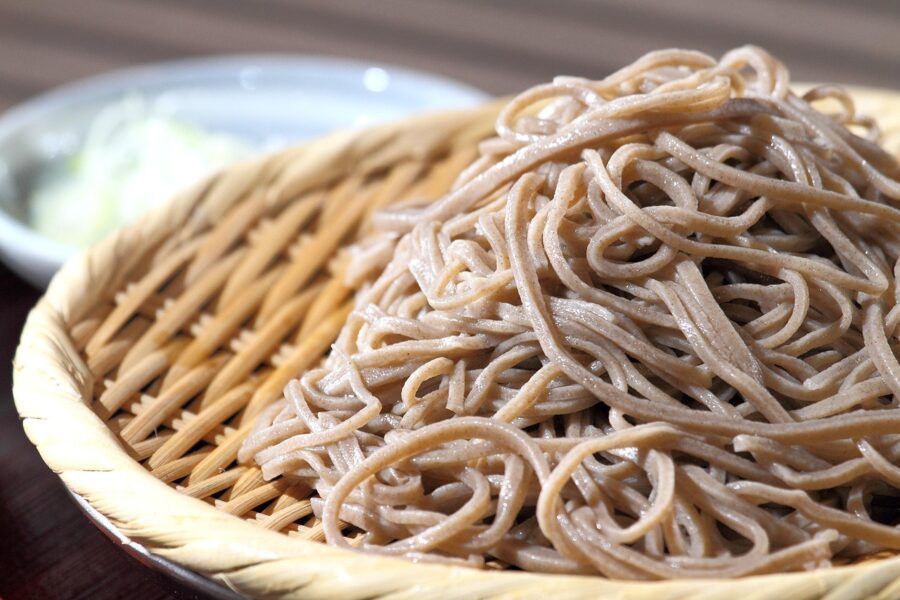
Hot pots and simmered dishes follow the same rule. Oden stewing at a convenience store counter is in fish stock, and so are most nimono, the simmered vegetables in a set meal. Ramen is a lost cause outside vegan specialists, and I’d include the “vegetable” ramen at ordinary shops in that: it’s vegetables on top of a pork or chicken broth.
Tofu dishes
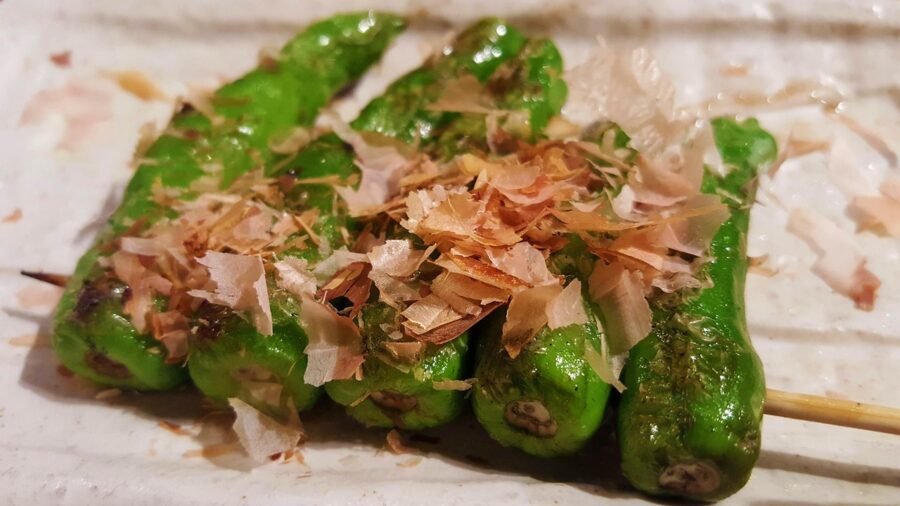
Tofu itself is fine. It’s soybeans and a coagulant, usually nigari from seawater. The problems come from what’s put on it or around it: bonito flakes on cold tofu, dashi under deep-fried agedashi tofu, a dashi-based dipping sauce with yudofu, and bonito in the sweet-salty glaze on grilled tofu skewers.
Tempura, okonomiyaki and the batter question
Vegetable tempura has an old name: shojin-age, temple frying. The batter at most restaurants is flour, cold water and egg, so vegetarians are fine and vegans aren’t, and the dipping sauce (tentsuyu) is dashi. Ask for salt (shio) instead, which good tempura counters often prefer anyway; my tempura guide covers the counters themselves.
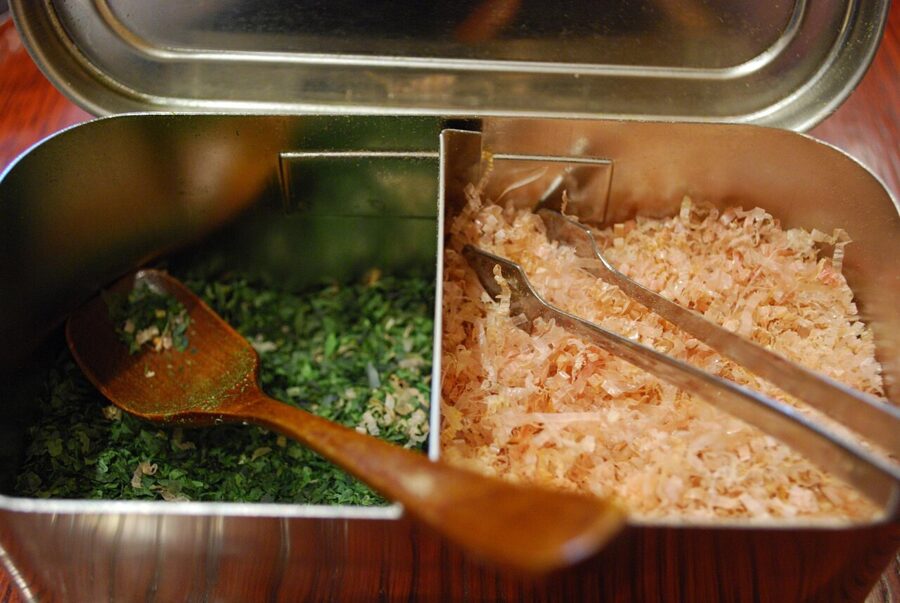
Okonomiyaki and takoyaki are harder. The batter is usually mixed with dashi, the sauce is fine, and the finishing touch is a heap of bonito flakes that wave about in the heat. Even with no pork or octopus, a standard okonomiyaki is not vegetarian.
Sushi, onigiri and rice
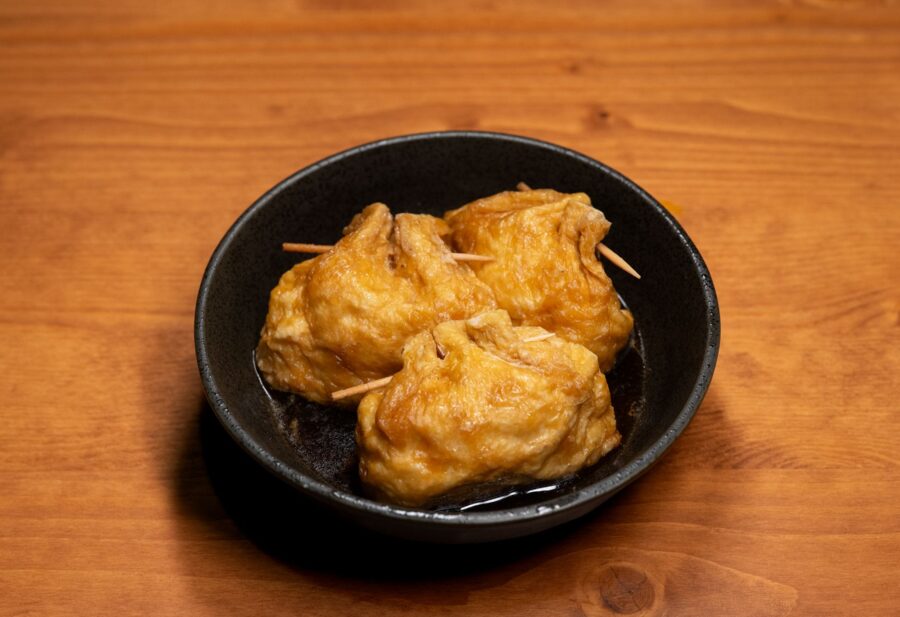
Plain rice is safe. Sushi rice is seasoned with vinegar, sugar and salt, and some shops add a piece of kombu to the cooking water, which is fine. That means a few pieces of sushi work well: kappa maki (cucumber), oshinko maki (pickled daikon), kanpyo maki (sweet gourd strips, though the simmering liquid sometimes includes dashi), nasu (aubergine) and inari, rice in a sweet fried tofu pouch.
Shojin ryori: what the monks actually cook
Shojin ryori is the food of Japanese Buddhist temples. The word shojin comes from a Sanskrit term for diligent effort, and over time it came to mean living simply and abstaining from meat, which is why the meal at the end of a mourning period, when the family goes back to eating fish and meat, is still called shojin otoshi, “dropping the shojin”. It’s the source of half the vegetarian techniques in Japanese cooking.
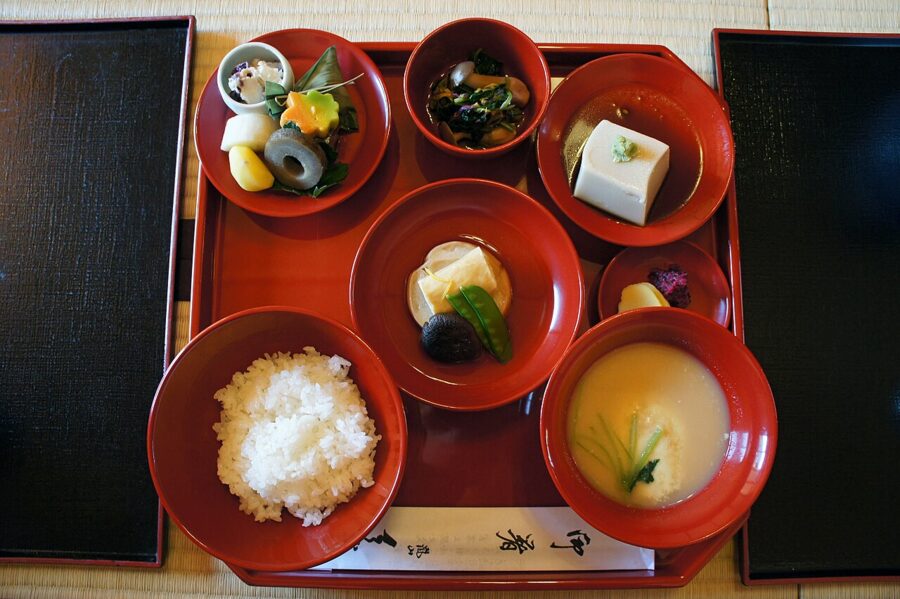
Buddhism reached Japan in the sixth century, and the court issued its first ban on eating cattle, horses, dogs, monkeys and chickens in 675, under Emperor Tenmu. But the cuisine as you’ll eat it took shape later, in the Kamakura period, when Japanese monks studied Zen in Song China and brought back both the teaching and the kitchen: tofu, wheat gluten, sesame, new ways of frying and grinding, and the idea that cooking was part of practice.
Dogen and the kitchen as practice
Dogen, the founder of the Soto school of Zen, is the figure who matters most here. After his years in China he wrote two short texts that are still read in temple kitchens: Tenzo Kyokun (Instructions for the Cook, 1237) and Fushukuhanpo (The Method of Taking Food, 1246). The first is about the tenzo, the monk in charge of the kitchen, and it treats washing rice and cutting vegetables as seriously as meditation.

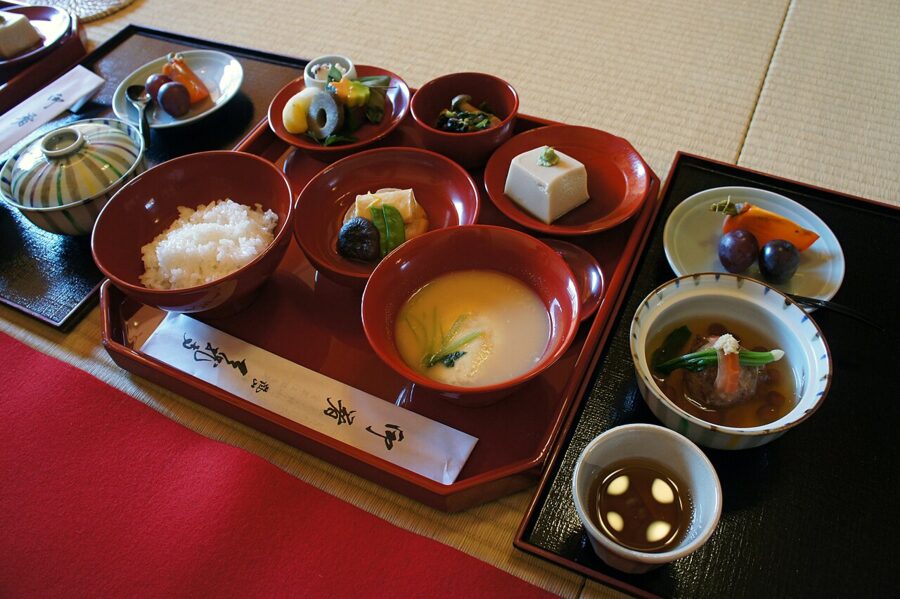
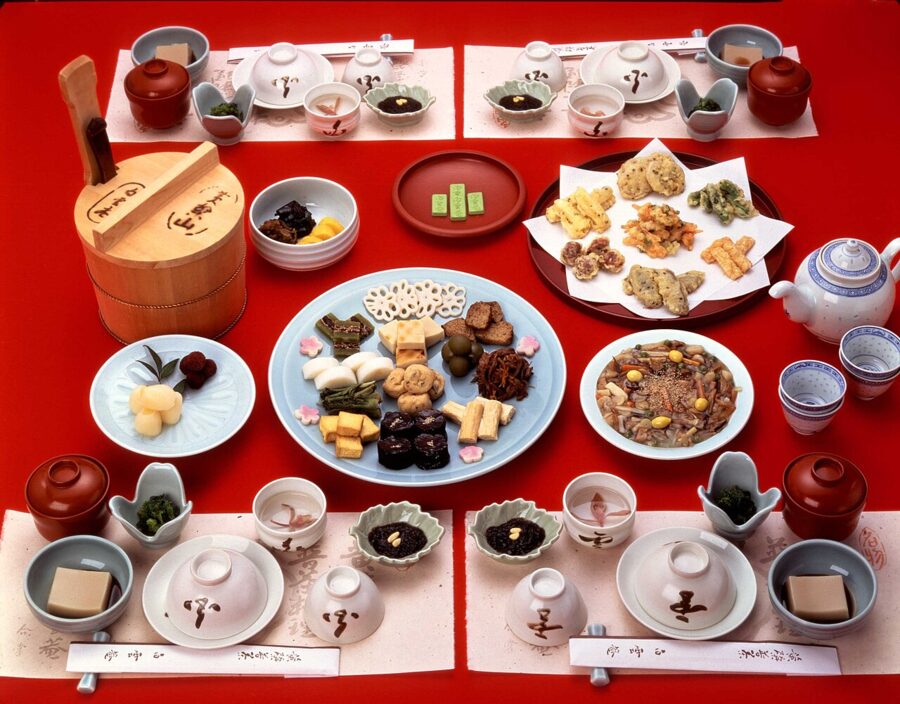
Out of that thinking came a set of kitchen habits rather than recipes. A meal should balance five flavours (sweet, salty, sour, bitter, hot), five colours (green, yellow, red, white, black) and five methods (raw, simmered, grilled, fried, steamed). Peel and stalk go into stock; the trimmings of one dish become the next. It’s why a shojin tray looks like a colour chart.
The rules: no flesh, no pungent roots
Two groups of ingredients are banned. The first is anything from an animal: meat, fish, shellfish and, in strict temple practice, eggs. The second is the gokun, five pungent plants believed to stir up the passions and leave the breath smelling: garlic, onion, spring onion, Chinese chives and rakkyo shallots. Ginger and sansho pepper are allowed, which is why both turn up so often.
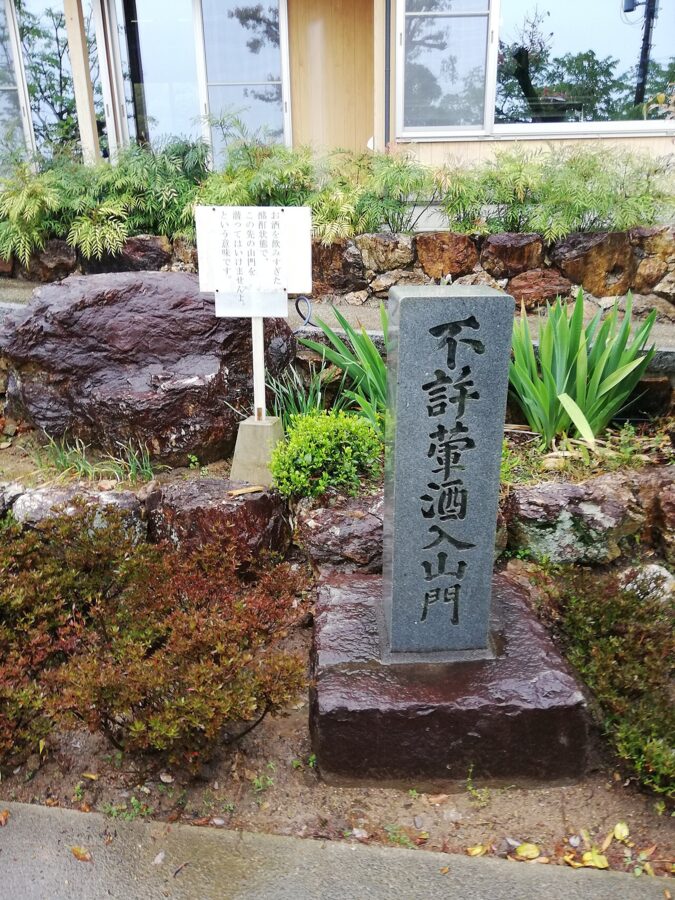
That second rule is good news for some travellers and a surprise for others. Shojin ryori is close to vegan, and it’s also free of the alliums that some Buddhist, Jain and Hindu diets avoid. Honey is a grey area that temple kitchens don’t all treat the same way, so if it matters to you, say so.
Goma-dofu, yuba, fu and koya-dofu
Four ingredients do most of the heavy lifting on a shojin tray, and all four are worth knowing by name, because you’ll see them in shops and markets too.
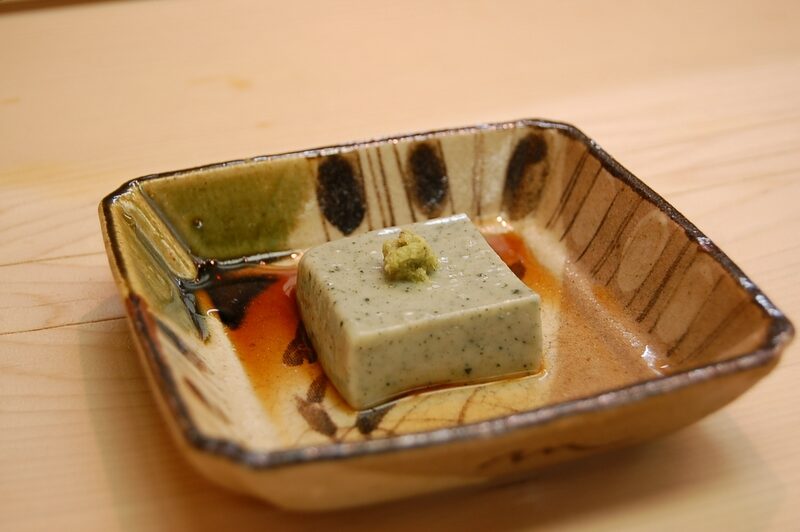
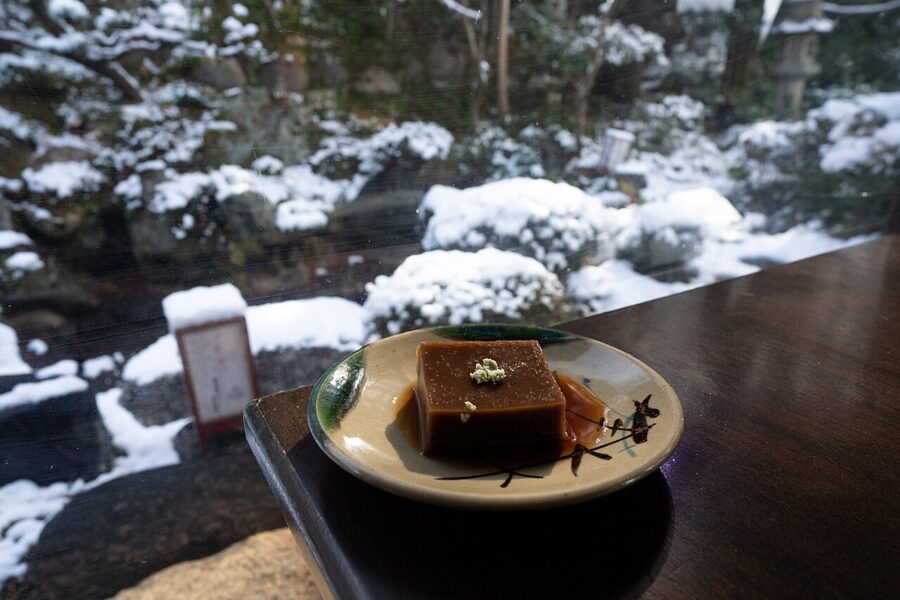
Goma-dofu isn’t tofu at all. It’s white sesame ground for a long time into a paste, mixed with water and kudzu starch, then stirred over heat until it’s glossy and set in a mould. It’s served chilled with a dab of wasabi and is the dish most associated with Koyasan and Eihei-ji. The texture, somewhere between panna cotta and very soft cheese, is the reason people come back to shojin.
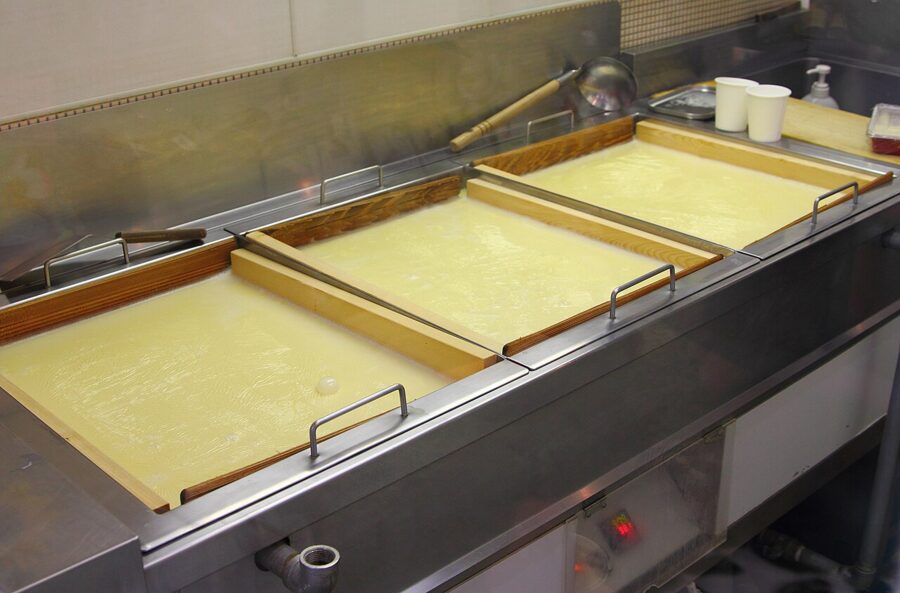
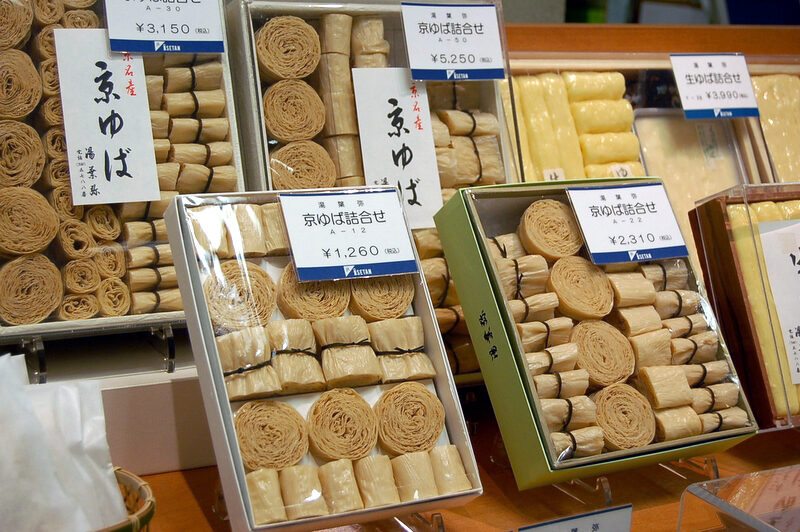
Yuba is the skin that forms on soy milk as it’s heated, lifted off with a bamboo stick. Fresh yuba is eaten like sashimi with soy and wasabi; dried yuba is rolled, knotted or layered into simmered dishes. Kyoto writes it 湯葉 and lifts each sheet by its edge, so it’s thin. Nikko, the other great yuba town, writes it 湯波 and lifts the sheet from the middle so it folds double and comes out thicker.
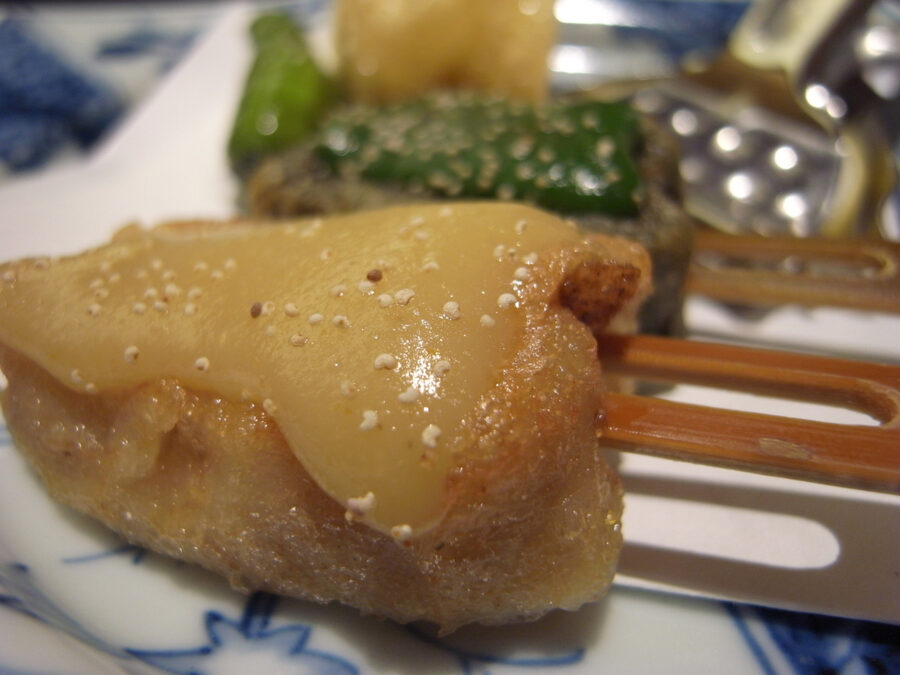
Fu is wheat gluten, the same stuff sold as seitan elsewhere, and it came to Japan with Chinese Zen monks in the early Muromachi period. Nama-fu, the fresh kind, is steamed and chewy, often mixed with sesame or mugwort and grilled with miso; yaki-fu is baked and dry, like a light crouton that drinks up broth. Kyoto makes the most elaborate fresh fu in the country, coloured and moulded into maple leaves and flowers.
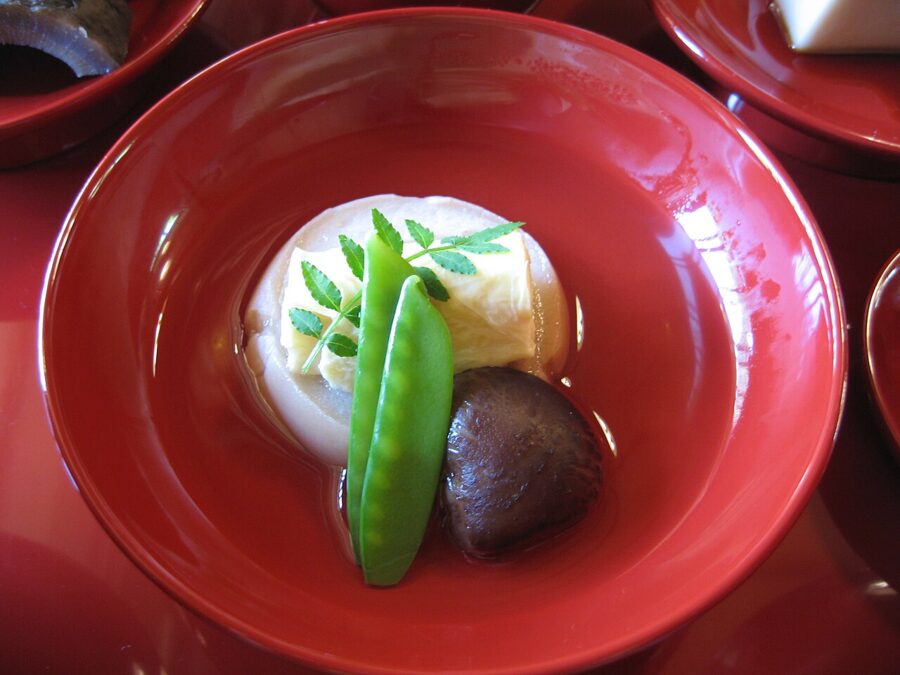
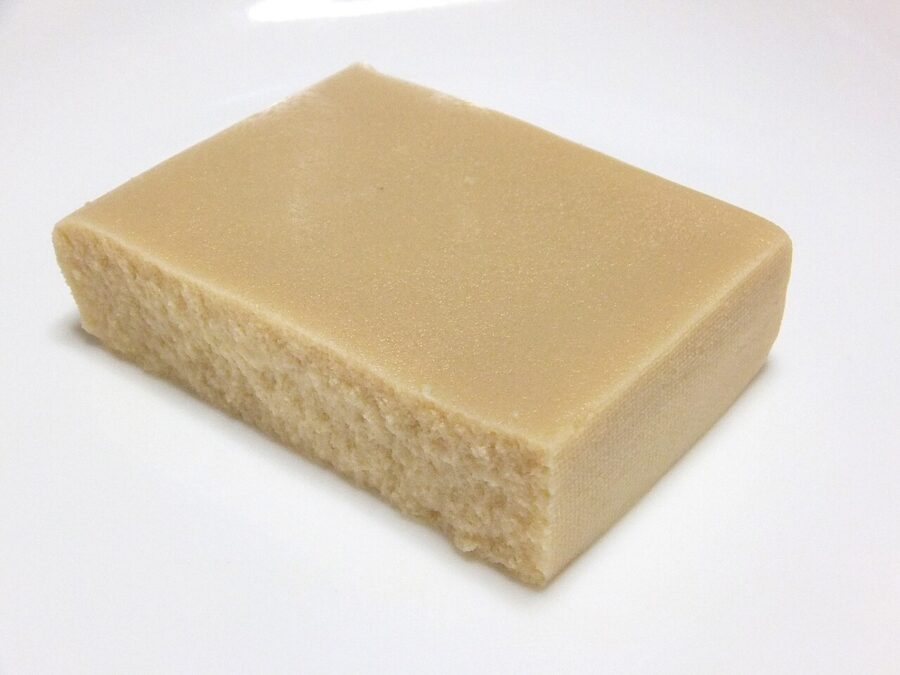
Koya-dofu is tofu that’s been frozen, aged and dried until it’s a light, spongy block. Soaked and simmered, it soaks up stock like nothing else. It’s named after Koyasan, the mountain monastery town in Wakayama where the method is said to have been perfected and where it was sold to pilgrims, although these days more than nine-tenths of it is made in Nagano.
Fucha ryori, the Chinese branch
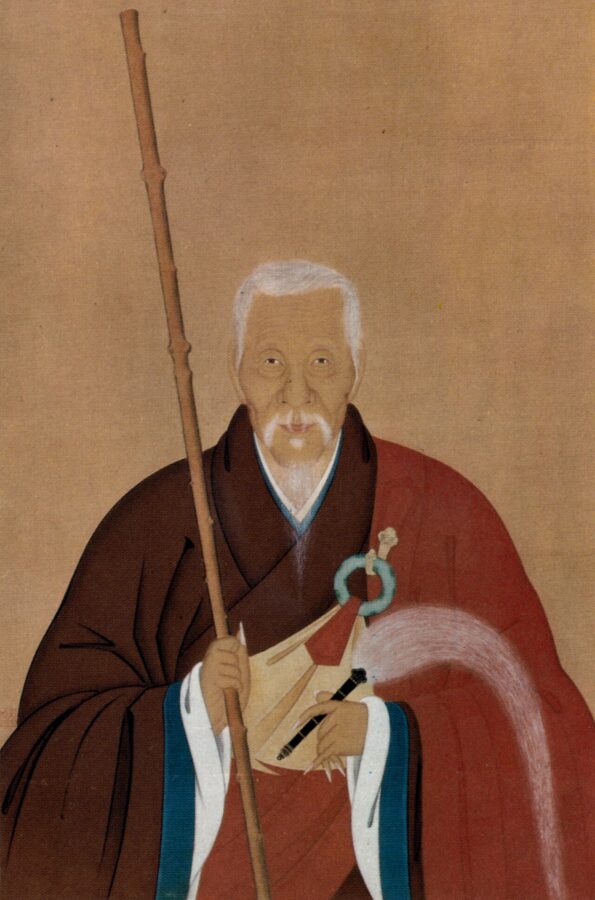
There’s a second, louder kind of temple food, and hardly anyone outside Japan has heard of it. In 1654 the Chinese monk Yinyuan Longqi, known in Japan as Ingen, sailed to Nagasaki, and in 1661 he founded Manpuku-ji at Uji, south of Kyoto, as the head temple of the Obaku school of Zen. He brought Ming-dynasty temple cooking with him, and it became fucha ryori.
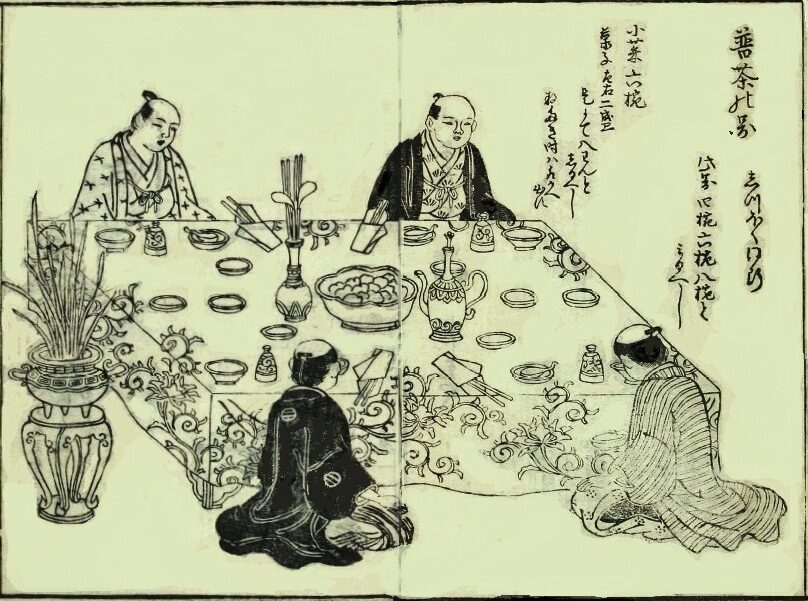
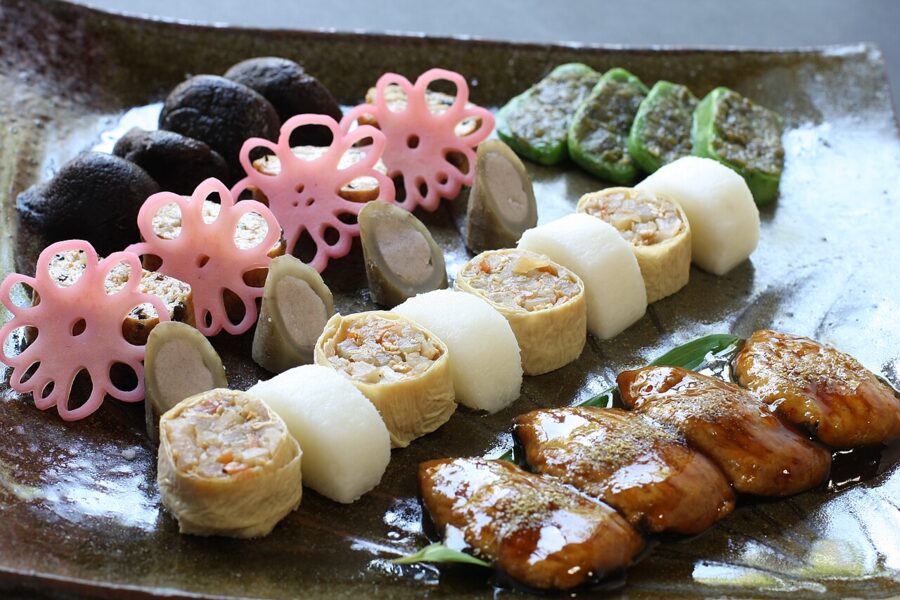
Fucha is shojin’s sociable cousin. Four people sit around one table and share large platters, instead of each eating from a private tray, and the cooking uses far more oil and kudzu starch: deep-fried vegetables, stir-fries, thick glossy sauces. It also has modoki, mock dishes, such as tofu shaped and glazed to look like grilled eel.
Eat it in Kyoto
Kyoto has more temple kitchens open to the public than anywhere else, and a couple of them have been feeding visitors for generations. The table below lines up the ones I’d book first; prices are per person and don’t include temple admission unless I say so.
| Where | Style | Price | Book |
|---|---|---|---|
| Shigetsu, Tenryu-ji, Arashiyama | Shojin, temple-run | ¥3,800–9,000 + ¥500 garden | 2–3 days ahead |
| Izusen, Daiji-in, Daitoku-ji | Shojin in nested bowls | ¥4,500–6,500 | Groups of 6 or more |
| Sabo Hanbe (Hanbey-fu), Gojo | Fu and yuba course | ¥4,400 | Required |
| Manpuku-ji, Uji | Fucha ryori | ¥3,300–6,600 + ¥600 admission | 3 days ahead, by phone |
Shigetsu at Tenryu-ji
Shigetsu is run by Tenryu-ji itself, the Zen temple at the centre of Arashiyama, and it’s the one I’d send a first-timer to. The temple says plainly that no animal ingredients are used. You pay the ¥500 garden admission on top of the meal, eat in a large hall inside the temple grounds, and walk the Sogenchi pond garden afterwards.
There are three sets. Yuki, one soup and five dishes, is ¥3,800 and needs booking two days ahead; Tsuki, one soup and six dishes, is ¥6,500; Hana, one soup and seven, is ¥9,000. The bigger two need at least two people and three days’ notice. It serves 11:00–14:00 only and closes on Thursdays, and there’s no service charge.
Each winter, from early January to early March, the temple swaps the soup for a soy-milk hot pot, cooked in a paper pot with fresh yuba, nama-fu and vegetables. Once the solid bits are gone you add ponzu to what’s left and drink it as a kind of loose tofu soup, so nothing goes to waste. I’d time a winter visit for it.
Izusen at Daitoku-ji
Daitoku-ji, in the north of the city, is a whole walled precinct of sub-temples, and Izusen has served shojin inside one of them, Daiji-in, since 1963. Its speciality is teppatsu ryori, food served in a nest of lacquered bowls modelled on a monk’s begging bowl, which come apart course by course. Sets run from ¥4,500 (Ayame) through ¥5,500 (Yuri) to ¥6,500 (Botan).
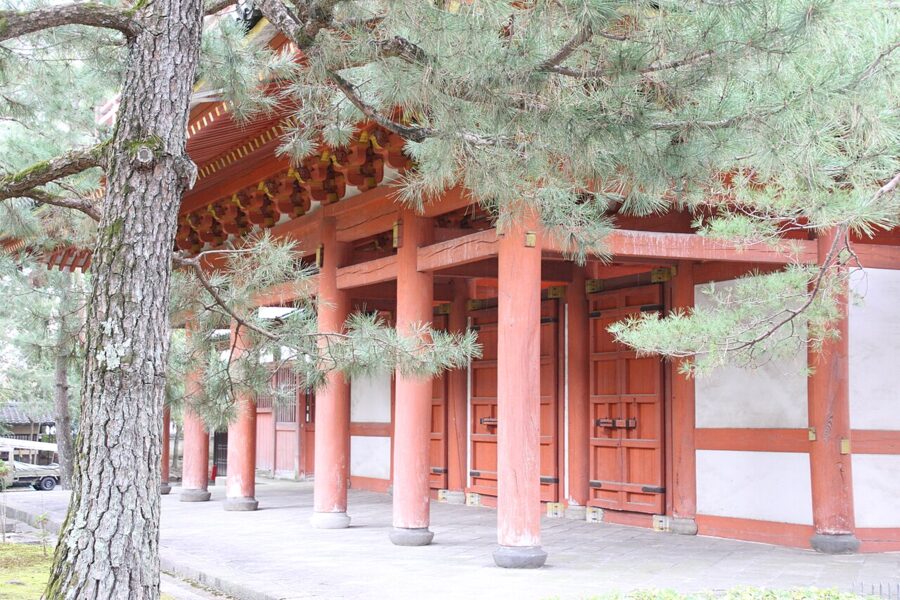
It opens 11:00–16:00 every day except 28–31 December. City buses 204, 205 and 206 run from Kyoto Station to Daitokuji-mae in about 40 minutes, and it’s a few steps north from the stop; from Kitaoji subway station the bus is about seven minutes. Izusen doesn’t publish whether its stocks are entirely plant-based, so if you’re strict, ask when you sit down.
Fu and yuba at Hanbey-fu
Hanbey-fu has been making fu in Kyoto since 1689, and above its shop near Gojo it runs a small dining room, Sabo Hanbe, that serves a single set called mushi-yashinai: a run of small dishes built around its own fu and yuba. It’s ¥4,400, it’s lunch only (11:00–16:00, last entry 14:30, closed Wednesdays) and you need to book. The shop says it will cook a fully vegan version if you ask when booking.
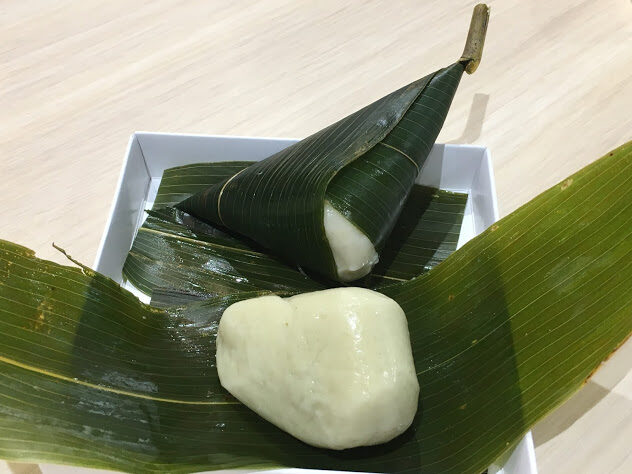
Getting there is simple: the shop is right by Exit 2 of Kiyomizu-Gojo Station on the Keihan line, or about five minutes on foot from the Kawaramachi-Gojo bus stop. The dining room is up a flight of stairs with no lift.
Fucha at Manpuku-ji, Uji
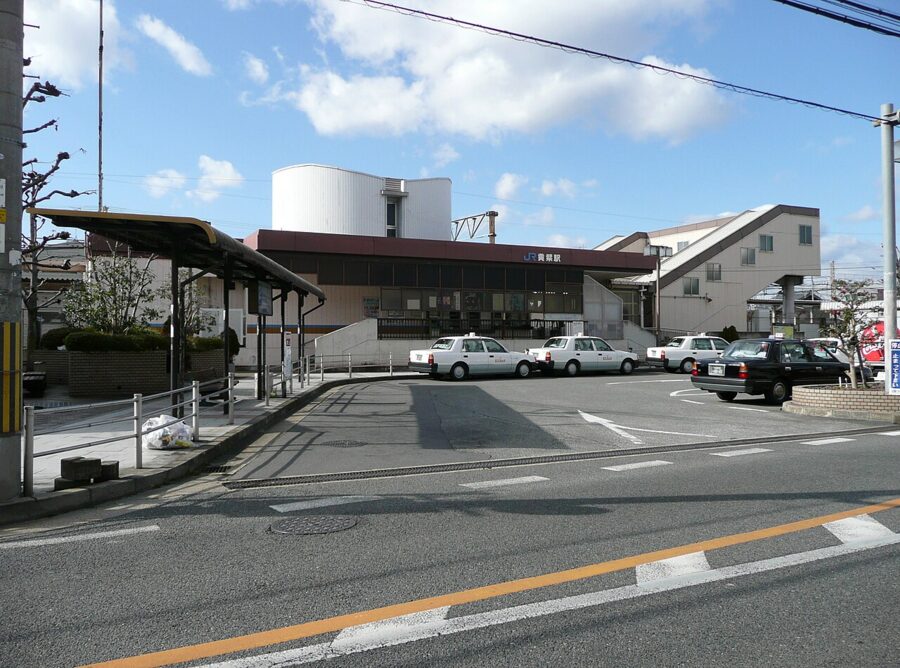
Manpuku-ji still serves fucha ryori in its own grounds, and it’s worth the half-day trip. The buildings are the surprise: the temple was built in late-Ming Chinese style and has kept it, so the halls, the round windows and the wooden fish gong look like nowhere else in Japan. Admission is ¥600, and the temple is a five-minute walk from Obaku Station on either the JR Nara Line or the Keihan Uji Line.
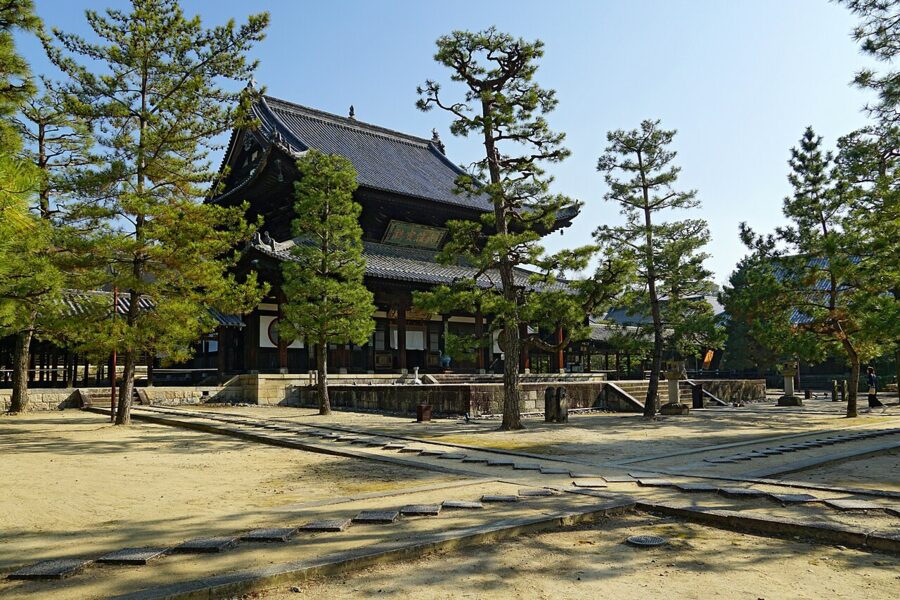
There are two options a visitor can actually book. The fucha bento, the classic dishes packed into a shokado-style lunchbox with a clear soup, is ¥3,300 and can be booked for one. The special fucha, served on shared platters the traditional way, is ¥6,600 and needs at least two people. Book by phone by the morning three days before; lunch is 11:30–14:30 and you need to be seated by 13:00.
Yudofu, and a vegan café
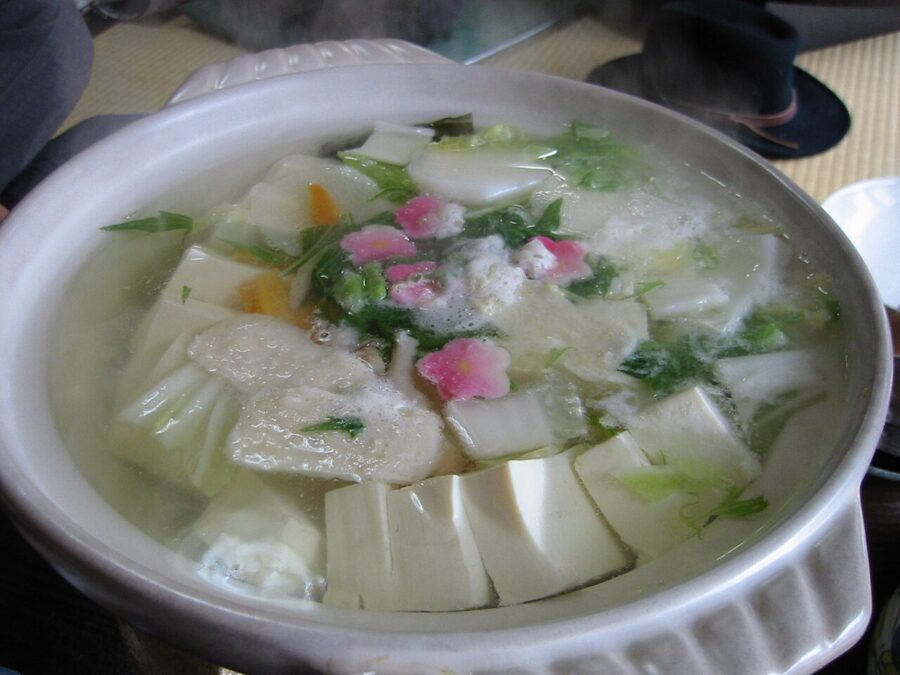
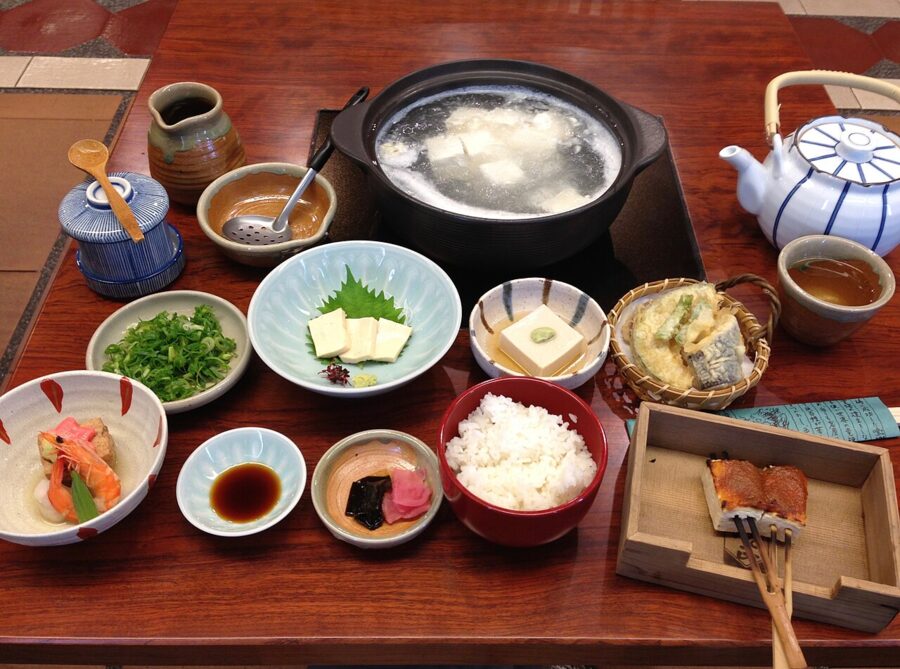
Kyoto’s other temple-quarter meal is yudofu, tofu warmed in a pot of kombu water, and I’ve written about where to eat it in my guide to what to eat in Kyoto. The pot is vegetarian. The dipping sauce and the side dishes often aren’t, so if you’re strict, ask whether the tsuke-joyu has dashi in it.
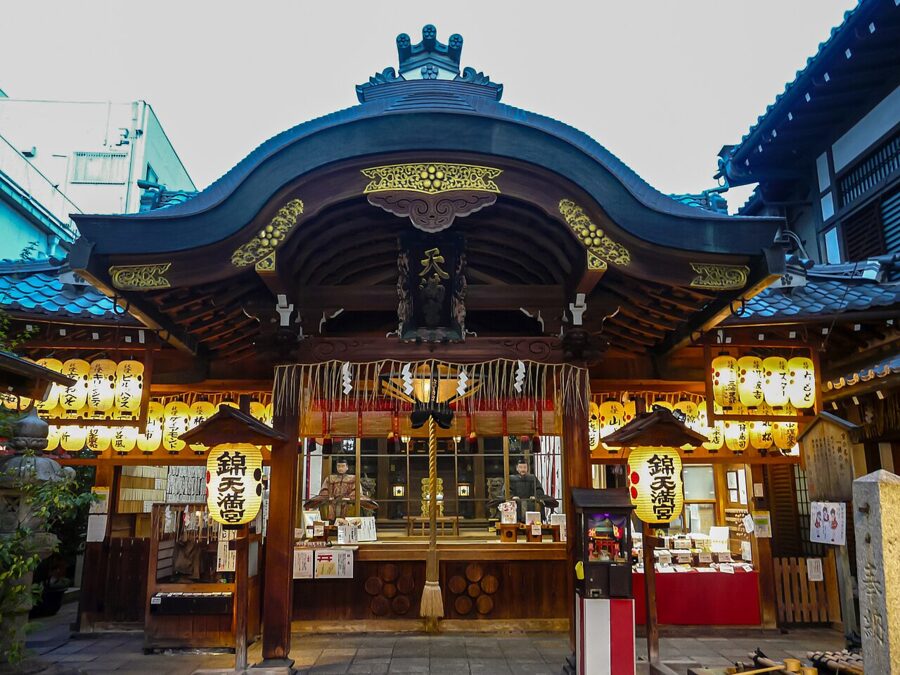
When you’ve had enough tradition, AIN SOPH. Journey has a Kyoto branch just behind Nishiki Tenmangu shrine, off Shinkyogoku, at the east end of the Nishiki market. Everything on the menu is vegan, much of it gluten-free, and some dishes can be made without the five pungent plants on request. It’s burgers, pancakes and matcha cakes rather than temple food, which is exactly the point some evenings.
Tokyo and Kamakura
Tokyo has fewer temple kitchens and more vegan restaurants, which is a fair trade. For shojin the two names you’ll hear are Sougo in Roppongi and Daigo at Atago, and they’re very different propositions.
Sougo, Roppongi
Sougo is modern shojin. Its owner-chef, Daisuke Nomura, grew up in the family that runs Daigo, the old shojin house at Atago, and was its third-generation head chef before opening Sougo in 2015. The restaurant says its cooking is safe for vegans, the menu changes about every three weeks, and it asks for two days’ notice of any allergy or restriction. It’s on the third floor of the Roppongi Green Building, Roppongi 6-1-8.
Lunch is the bargain. A set lunch tray or a shojin curry set is ¥1,980, a two-tier bento (ten a day) is ¥6,600 and a lunch kaiseki is ¥13,200; lunch runs 11:30–15:00 with last entry at 14:00. Dinner is a kaiseki course at ¥15,400 or ¥18,700, plus 10% service, from 17:30 with last entry at 21:30. It closes on Sundays and public holidays.
Daigo, Atago, with one catch
Daigo is the grand old name of Tokyo shojin, a private-room restaurant at Atago 2-3-1, about five minutes’ walk from Onarimon Station on the Toei Mita Line. It began in the grounds of Seisho-ji, the Soto Zen temple next door, whose head priest gave it its name. And it uses bonito dashi in its cooking.
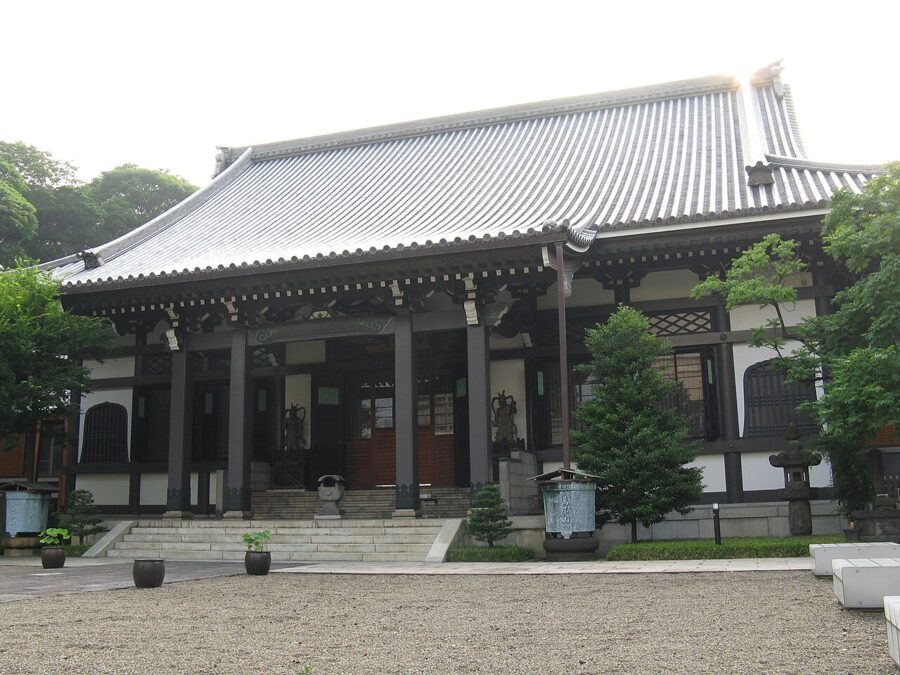
That surprises people, but it fits what Daigo is: shojin for entertaining guests, a ryotei tradition, rather than temple food for monks. It’s a beautiful meal. If you’re vegetarian or vegan, though, you have to say so when you book and ask what they can do; don’t assume the word “shojin” on the sign covers you. The same goes for any restaurant calling itself shojin, and for kaiseki, where my guide lists which kitchens take vegan requests and how far ahead.
Kamakura: the soup with a temple’s name
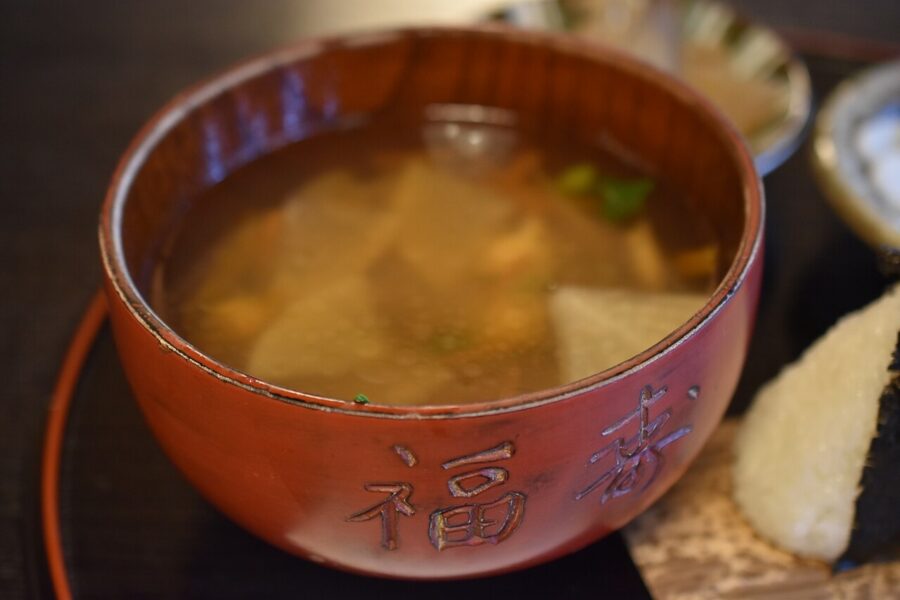
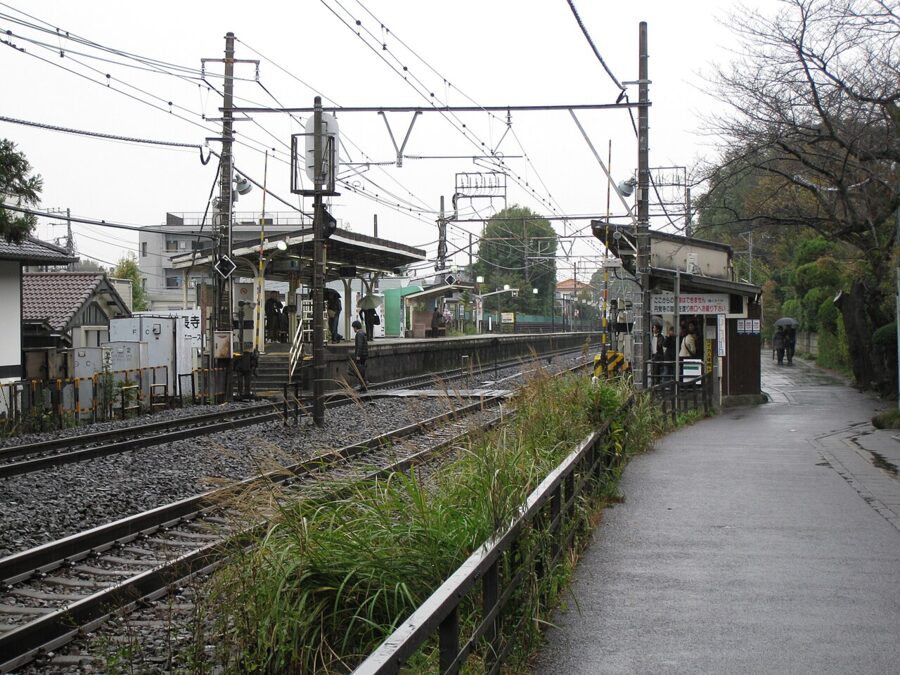
Kencho-ji in Kita-Kamakura was founded in 1253, one of Japan’s earliest Zen training monasteries, and it gives its name, the story goes, to kenchin-jiru: a clear soup of root vegetables, konnyaku and crumbled tofu, fried first in sesame oil and simmered in kombu and shiitake stock. Dictionaries prefer a different origin, from a Chinese-style dish called kenchin, but the temple version is the one people come for.
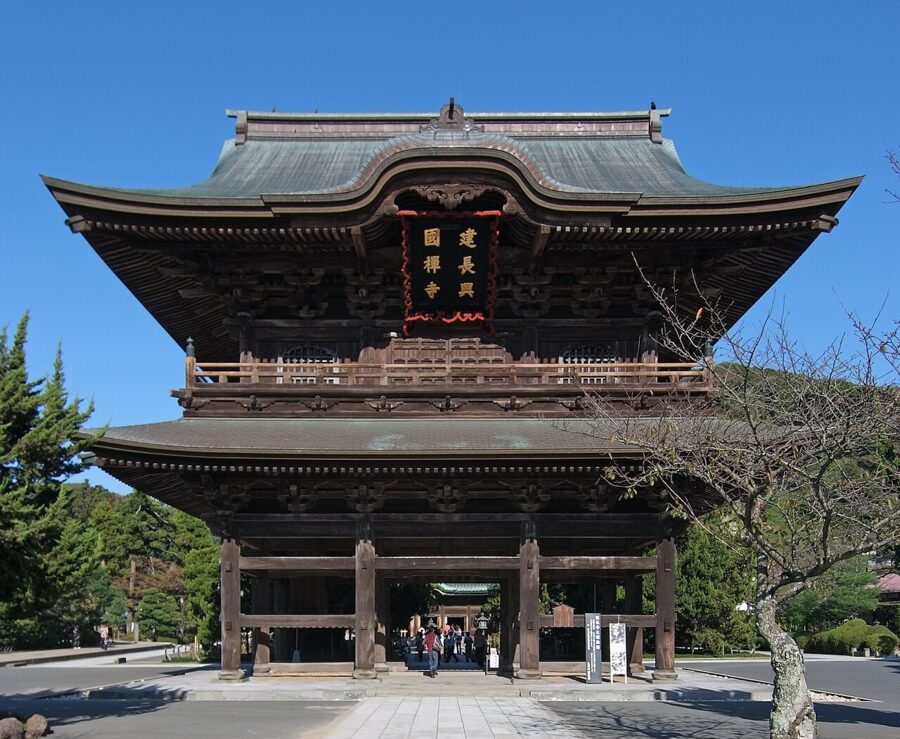
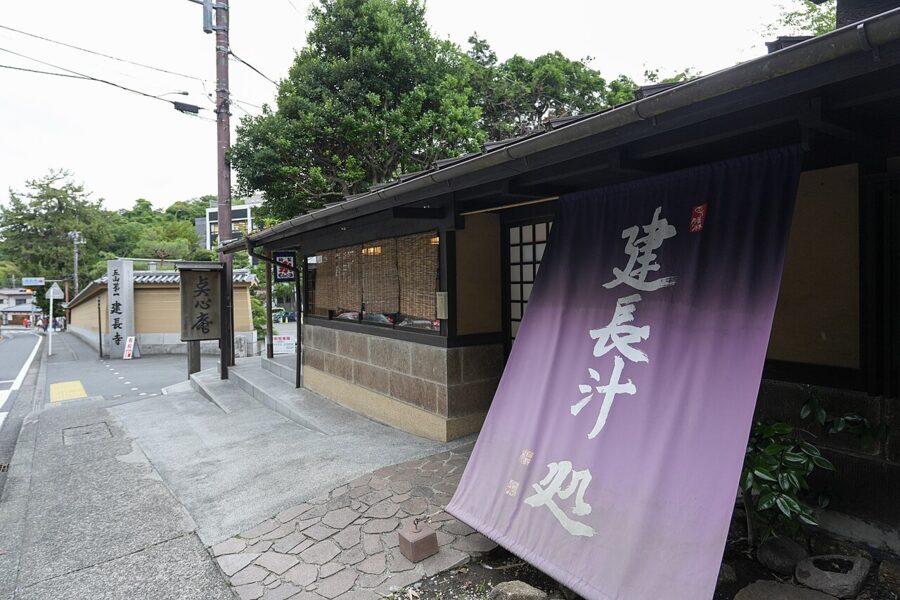
Tenshin-an, just outside the temple gate, makes it to a recipe the temple taught it directly. A bowl with two salt rice balls is ¥1,200, and there’s a kenchin soba at ¥1,100. It’s open 11:00–16:00 (last order 15:00), closed on Tuesdays, and doesn’t take table bookings. In 2025 the Agency for Cultural Affairs added Kamakura’s kencho-jiru to its list of “100-year foods”.
For a full shojin meal in Kita-Kamakura, Hachinoki’s Kita-Kamakura branch, four minutes on foot from the station, serves shojin set meals. The family business started in the 1960s as a little shop by Kencho-ji’s gate selling rice balls with vegetable shojin-age, and it has grown into three restaurants in Kita-Kamakura; the newest, the annexe, serves kaiseki.
Temple lodgings and the mountains
The fullest version of all this is a night at a shukubo, a temple lodging, where dinner and breakfast are both shojin. Koyasan in Wakayama is the famous place for it, with dozens of temples taking guests; it deserves a guide of its own, so I’ll leave it there for now.
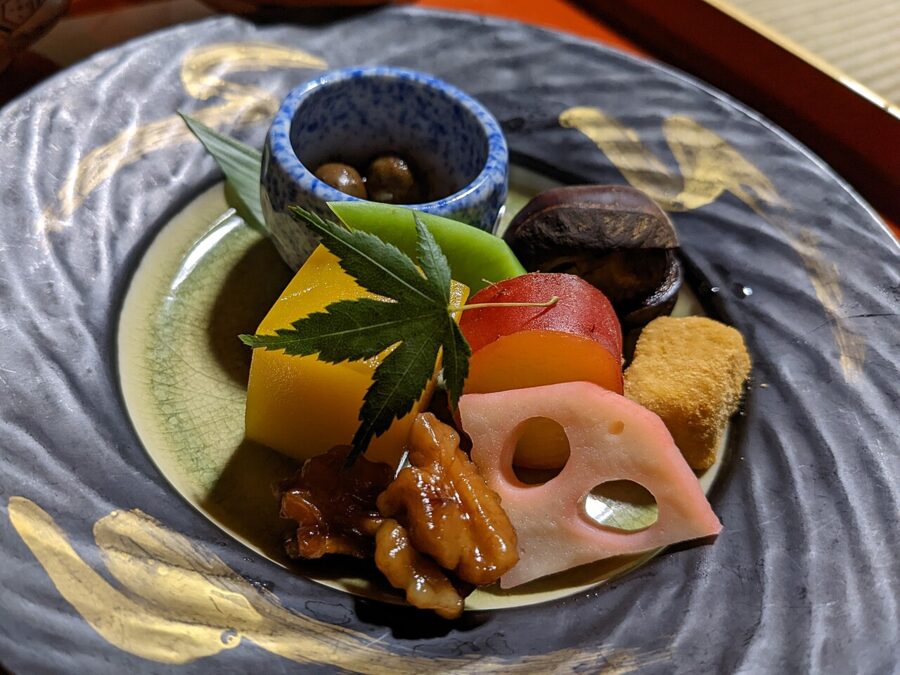
Elsewhere, ask the inn. Plenty of ryokan will swap the fish and meat courses for a shojin menu with a day or two of notice, and in Takayama, where the Hida beef is everywhere, the old ryotei kitchens have been doing it for a long time. What they won’t do is change the dinner when you arrive at 18:00.
Everyday food that works
Temple meals are lunches you plan around. The rest of the time you need breakfast, a quick lunch and something on the train, and that’s where most of the effort goes.
Tofu shops, soba and the noodle exceptions
Japan’s tofu is the best thing that will happen to you as a vegetarian here. Neighbourhood tofu makers sell fresh blocks, fried tofu and ganmodoki (fried tofu patties with vegetables) in the morning, and in Kyoto and the temple towns there are restaurants built entirely around it. Just keep checking what goes on top.
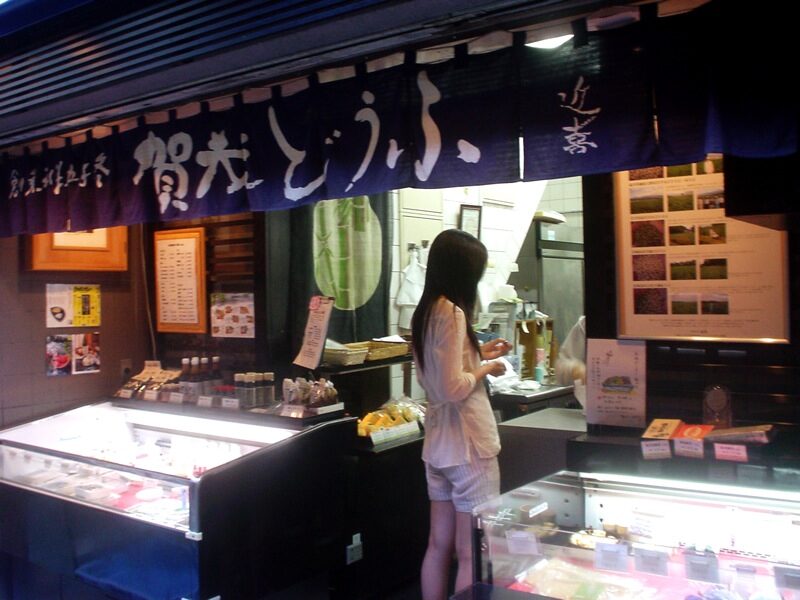
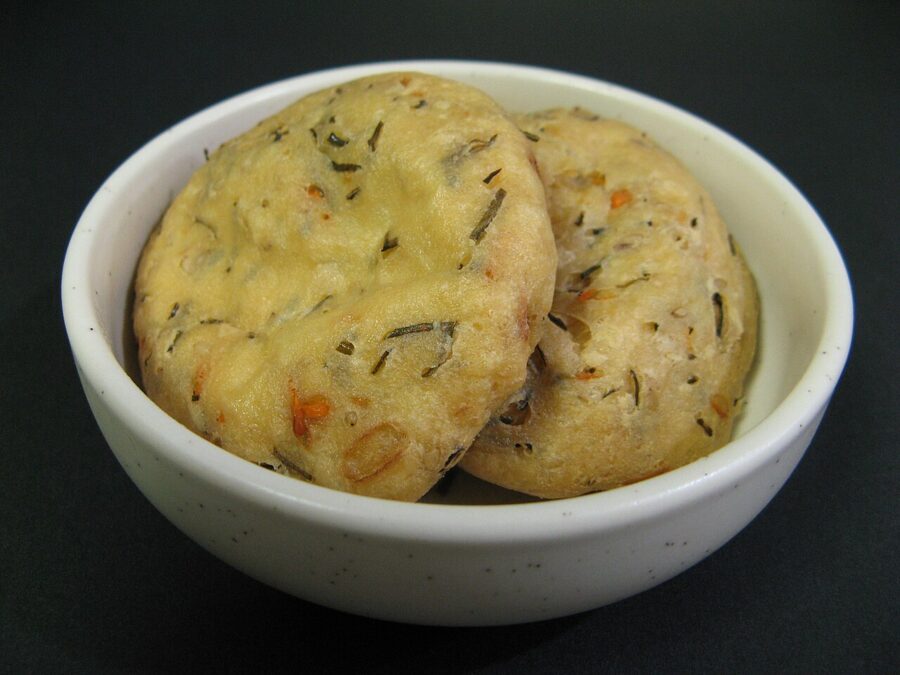
The fried things on a tofu shop counter are worth learning. Aburaage is a thin fried sheet, the one used for inari; atsuage is a whole fried block; and ganmodoki, “mock goose”, is a patty of mashed tofu with carrot, burdock and sesame, fried until it puffs. All three are usually vegan as sold, before anyone simmers them in stock, though some factory-made ganmodoki use egg white, so check the label.
For noodles, look for the few shops that make a point of a kombu or vegetable broth; they’ll usually say so in English because they know who’s asking. Otherwise, a cold soba with plain soy sauce, or a bowl of tororo (grated mountain yam) with rice, is often the easiest compromise. Vegans eating out should assume noodle broth is off unless the shop says it isn’t.
Indian restaurants and curry chains
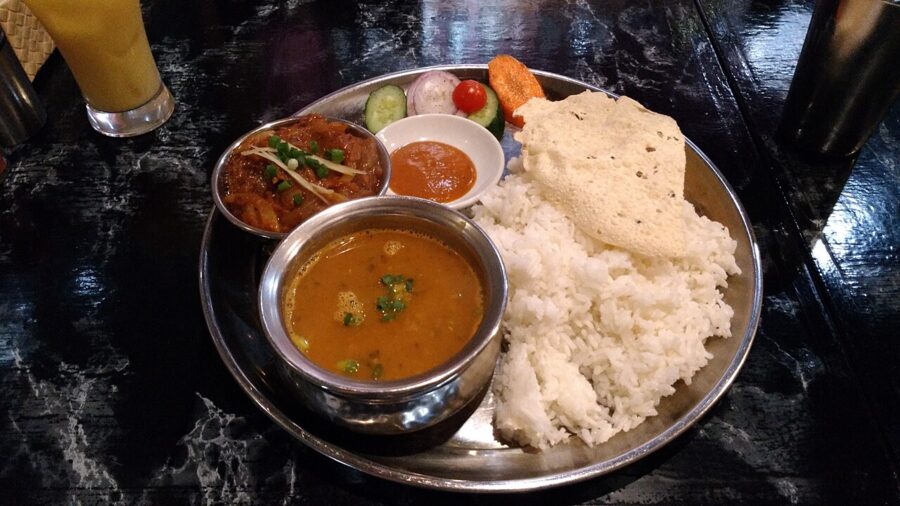
Here’s a tip that saves a lot of evenings: Indian and Nepali restaurants. There’s one in nearly every town, often run by Nepali cooks, and they almost always have a dal, a vegetable curry and a chana masala, with naan the size of a tea tray. Staff tend to understand “vegetarian” as you mean it, and if you’re vegan you can ask for no ghee or cream.
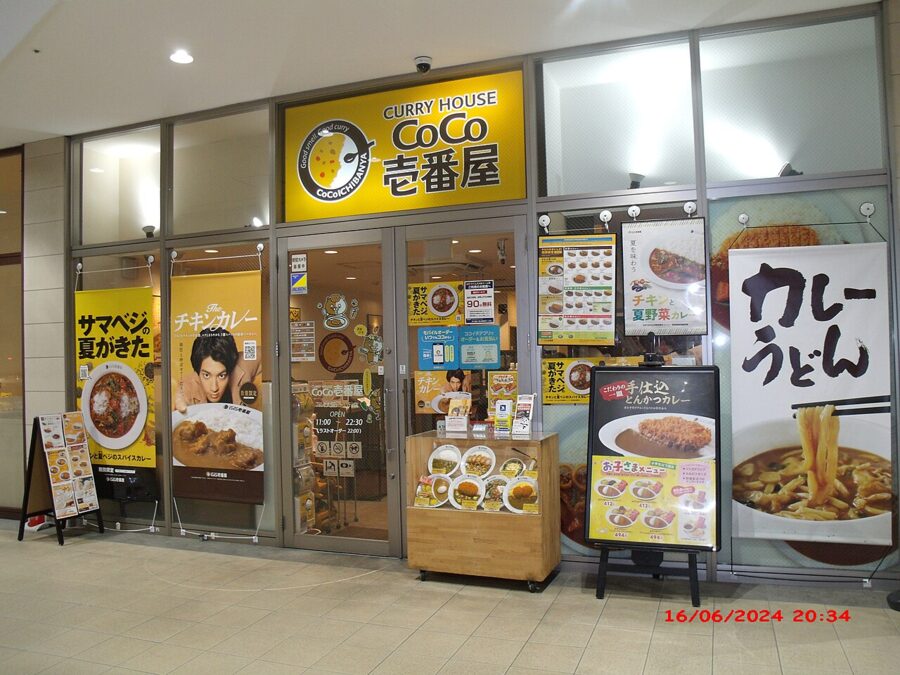
Japanese curry is the opposite case. The standard roux is built on beef or pork fat and meat extract, so a plate of “vegetable curry” at an ordinary shop is vegetables in meat sauce. The exception is CoCo Ichibanya, the big curry chain, which serves a separate vegetarian curry made with no animal-derived ingredients for ¥683; prices vary a little by branch, and not every branch carries it, so check before you queue.
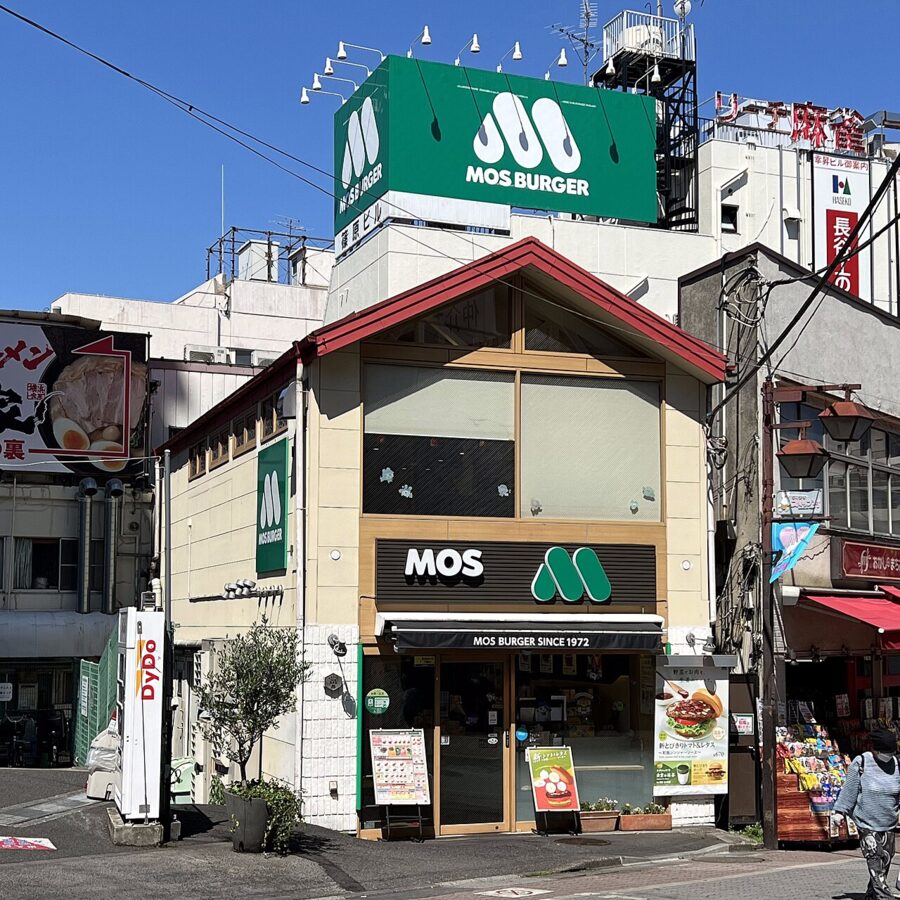
MOS Burger, the Japanese burger chain, does a Green Burger: a soy patty in a green bun coloured with spinach, with no meat, fish, egg or dairy in the main ingredients and none of the five pungent plants either. The teriyaki sauce is plant-based, and the egg-free mayonnaise comes on the side. It’s at most branches, though the company notes that the kitchens also handle animal products.
Vegan restaurants worth crossing town for
T’s Tantan makes vegan ramen, mostly sesame tantanmen, with no meat, seafood, dairy or egg anywhere, and its shops sit in train stations, which is perfect for a traveller. The Tokyo Station shop is in Gransta Tokyo on the basement floor, outside the ticket gates; there are others inside the gates at Ikebukuro and Ueno, one by the Electric Town exit at Akihabara and one in Narita Airport’s Terminal 2. Its parent restaurant, T’s Restaurant, is in Jiyugaoka.
AIN SOPH. is a small vegan group that’s been at this since 2009: the original restaurant in Ginza, Journey in Shinjuku, Soar in Ikebukuro, plus Kyoto, Sendai and Tateshina in Nagano. It’s the place to take a meat-eating friend, because the food is rich and generous rather than worthy. In Toyosu, Vegan Ramen UZU sits in the grounds of the teamLab Planets art space, if you’re there anyway.
Izakaya and the drinks list
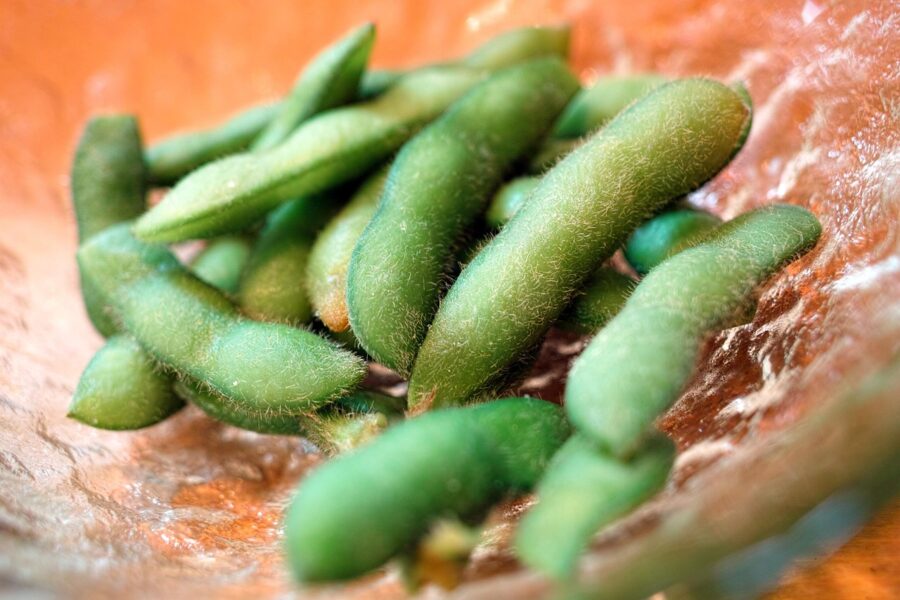
An izakaya is easier than you’d expect if you order in small plates. Edamame, cucumber with miso, plain grilled rice balls, pickles, salt-grilled ginkgo nuts, fried potatoes and a tomato salad are the usual safe ones; anything simmered, dressed or topped with flakes needs a question. Drinks are the easy part: a glass of shochu or a beer won’t complicate anything.
Sweets
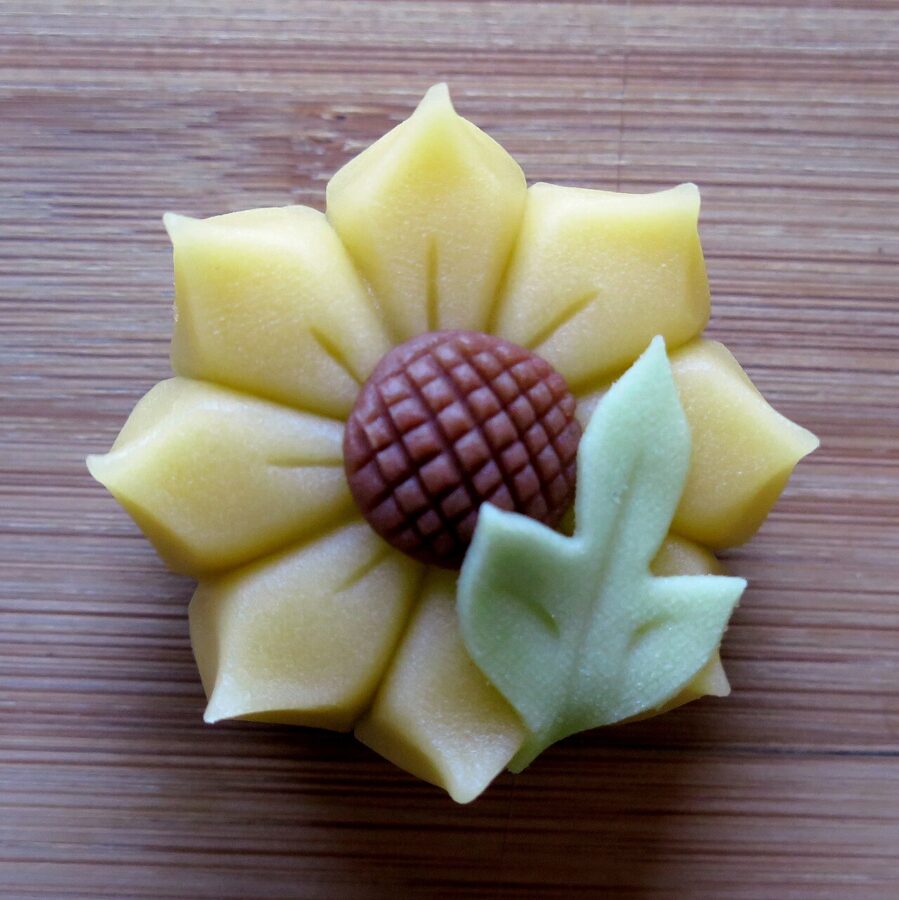
Traditional sweets are where vegetarian Japan relaxes. Most wagashi are made from beans, rice, sugar and agar, so daifuku, dango, yokan and the little seasonal nerikiri served with matcha are usually fine for vegans too. Watch out for the pancake sweets, dorayaki and castella, which use egg, and for Western-style cakes, which use plenty of butter and milk.
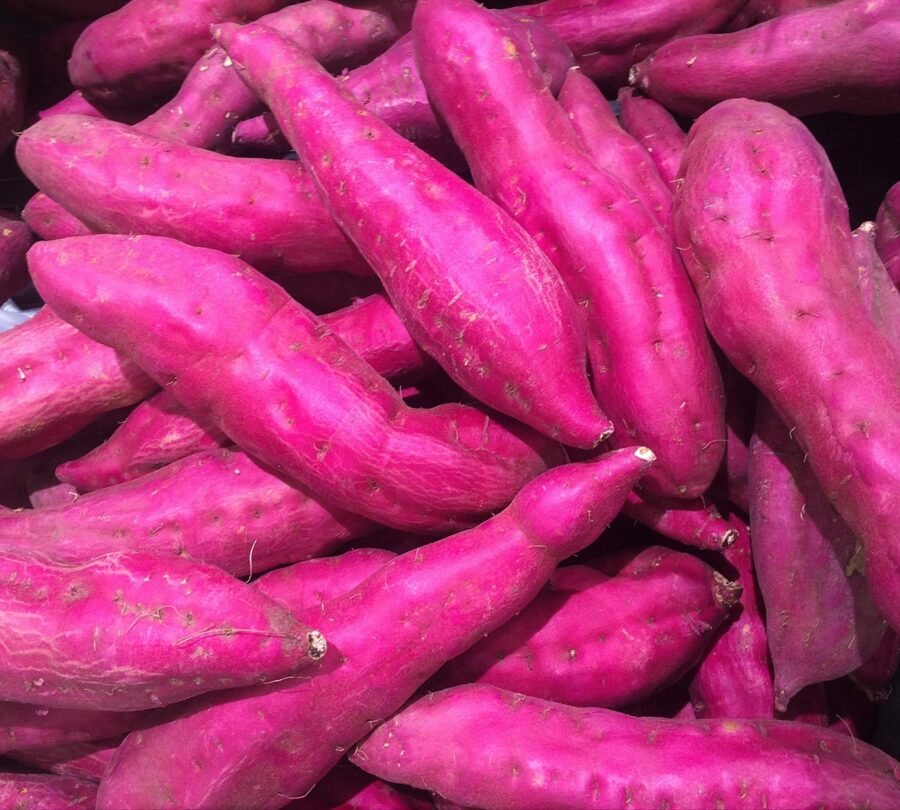
In the cold months, follow your nose to yaki-imo, sweet potatoes roasted slowly over hot stones. They’re plant-based, filling and cheap, and once you start eating them you’ll find the stone ovens everywhere.
Read the label
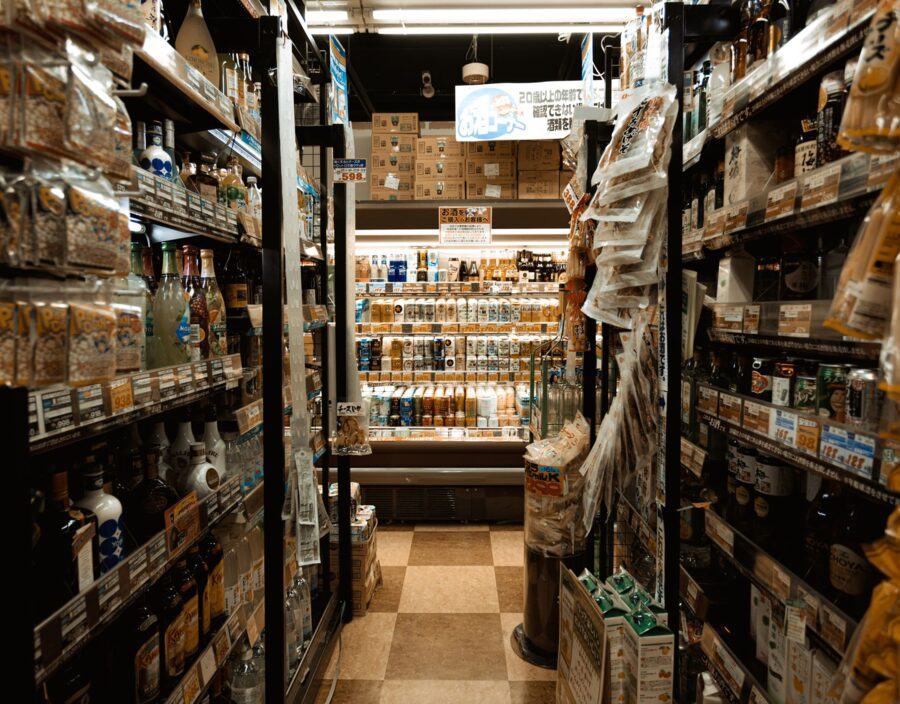
The konbini, the convenience store, is where you’ll feed yourself on travel days, and its great advantage is that everything has an ingredient list. The list is in Japanese, but you only need to recognise a handful of characters, and a camera translation app does the rest.
The words to look for
The ingredients panel is headed 原材料名 (genzairyo-mei). Scan it for these:
- かつお, 鰹, かつおエキス, 鰹節: bonito in any form
- 魚介エキス, 煮干し, いりこ: seafood extract, dried sardines
- だし, 風味調味料: dashi or “flavour seasoning”, which is usually instant dashi
- ポークエキス, チキンエキス, ビーフエキス: pork, chicken and beef extract
- 豚脂, ラード, 牛脂, 動物油脂: lard, beef tallow, animal fat
- ゼラチン: gelatine
- 乳, 乳製品, 卵: milk, dairy, egg (for vegans)
One warning. Japan’s mandatory allergen labelling covers eight items, including egg, milk, shrimp and crab, and there’s a longer recommended list that adds pork, beef, chicken and gelatine. Bonito isn’t on either list. So the allergen chart at a chain restaurant is useful for meat, egg and dairy, and useless for dashi.
What tends to pass
With that list in hand, a lot of the shop is fine. Plain salted rice balls and pickled-plum umeboshi onigiri usually pass, though kombu fillings are often simmered with bonito extract. Bananas, nuts, roasted sweet potato, edamame, plain tofu, soy milk, bread rolls (check for milk) and the salad counter are the staples. Instant noodles are hit and miss; a few are labelled vegan, but most use meat or seafood extract.
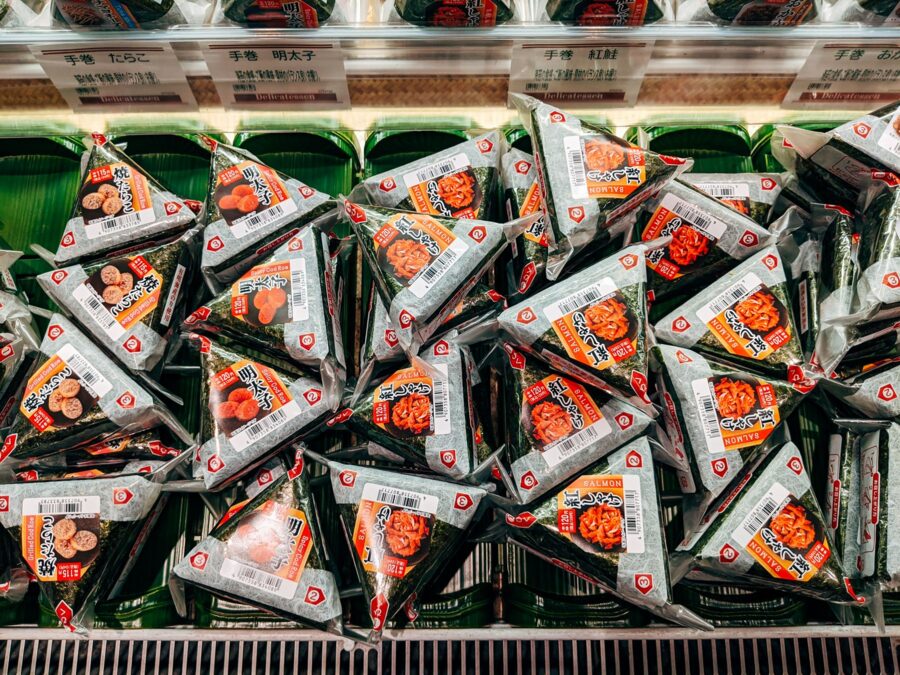
For something more like a meal, the food halls in department store basements, the depachika, have tofu, salads, rice dishes and pickles with labels, and staff who’ll check for you. Train bento are harder: most ekiben are built around meat or fish, so I’d stock up at a konbini or depachika before the train.
Say it in Japanese
The single most useful thing you can do is carry a written card. Spoken Japanese from a stranger at a busy counter goes in one ear and out the other; a card can be read, shown to the kitchen and answered with a nod. Here’s what I’d put on it, in this order.
- 私はベジタリアンです。 Watashi wa bejitarian desu. I’m vegetarian.
- 肉と魚は食べられません。 Niku to sakana wa taberaremasen. I can’t eat meat or fish.
- かつおだしや煮干しも食べられません。 Katsuo-dashi ya niboshi mo taberaremasen. I also can’t eat bonito stock or dried sardines.
- 昆布だしなら大丈夫です。 Konbu-dashi nara daijobu desu. Kombu stock is fine.
- 卵と乳製品も食べられません。 Tamago to nyuseihin mo taberaremasen. I can’t eat egg or dairy either (vegans).
- ネギ、玉ねぎ、ニンニク、ニラ、らっきょうも食べられません。 I can’t eat spring onion, onion, garlic, chives or rakkyo (for no-allium diets).
Then two questions for the menu. この料理にだしは入っていますか? (Kono ryori ni dashi wa haitte imasu ka?) asks whether a dish has dashi in it. かつお節抜きでお願いします (Katsuobushi nuki de onegai shimasu) asks for it without bonito flakes; nuki, “leaving out”, works for anything.
Two words help in the other direction. Shojin on a menu means the cook has at least heard of the rules, and 五葷抜き (gokun-nuki) marks dishes without the pungent plants. Taiwanese and Chinese visitors who eat sushoku (素食) will find that term understood in Tokyo and Kyoto vegan restaurants too. HappyCow’s map is still the quickest way to find vegan places nearby; read the latest comments before you set off, because small places close.
Halal, kosher, gluten-free
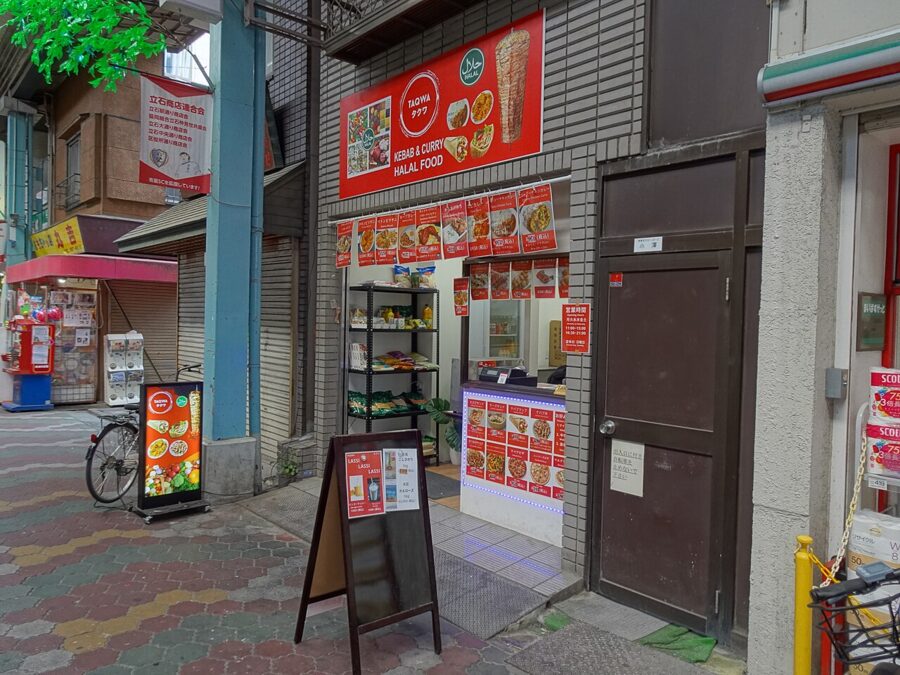
Halal is easier than it was. Muslim-friendly restaurants are common in Tokyo, Osaka and Kyoto, and many show a sign or a certificate in the window. The hidden issue is alcohol: mirin and cooking sake go into most Japanese sauces, and pork extract turns up in instant stocks, so halal-certified places are safer than “no pork” ones.
Kosher food is rare and needs planning weeks ahead; a few high-end kitchens can arrange it, as my kaiseki guide explains. Gluten-free travellers have it harder than vegetarians: ordinary soy sauce is brewed with wheat, many soba noodles are part wheat, and tempura batter is flour. Ask for tamari, the soy sauce that’s usually made without wheat, and look for juwari soba, which is 100% buckwheat.
Skip this
- “Vegetable” ramen at an ordinary ramen shop. It’s vegetables on a pork or chicken broth. Go to a vegan ramen shop instead.
- Turning up to a ryokan dinner and asking then. The kitchen planned your meal days ago. Email when you book and confirm a week before.
- Trusting the word “shojin” on its own. Some of the most famous shojin restaurants use bonito stock. Ask.
- Allergen charts, for dashi. They’re good for egg, milk and meat, but bonito isn’t a listed allergen, so it won’t show up.
- The cheap “Japanese curry” lunch set. Unless it’s a separate vegetarian curry, the sauce has meat in it.
And one thing not to skip: book a temple lunch in your first few days, before you’re tired of reading labels. A tray of sesame tofu, yuba and grilled fu in a Zen temple is the meal that makes the rest of the work feel like part of the trip. Then buy a bag of dried shiitake to take home, and make the stock yourself.
You Might Also Enjoy
 Yakiniku in Japan: Tsuruhashi, Horumon and How to Order Japanese Barbecue Cut by Cut
 What to Eat and Drink in Takayama: Hida Beef, Sake Breweries, and Morning Markets
 Thai Curries: A Regional Field Guide from Green and Red to Khao Soi and Jungle
 Must-Try Foods in Korea: A Field Guide to Seoul and Beyond