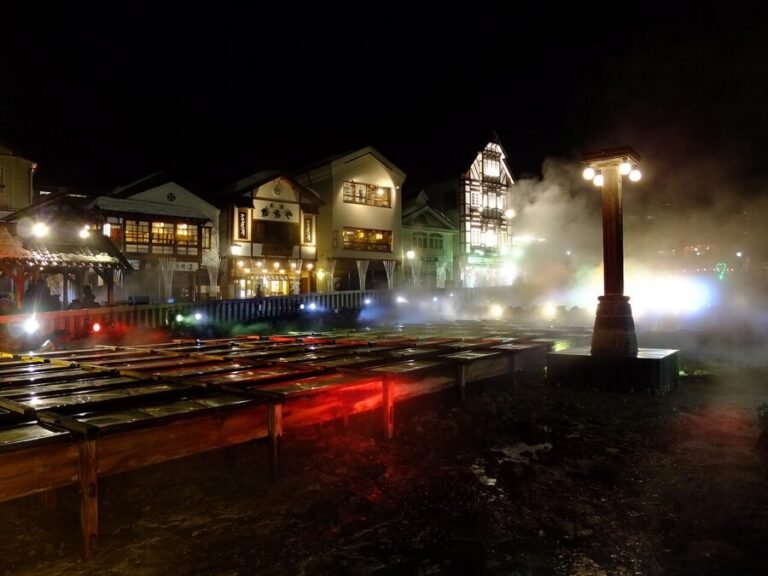
Oden in Japan: Every Ingredient in the Pot, Shizuoka’s Black Broth and the Counters Worth Sitting At
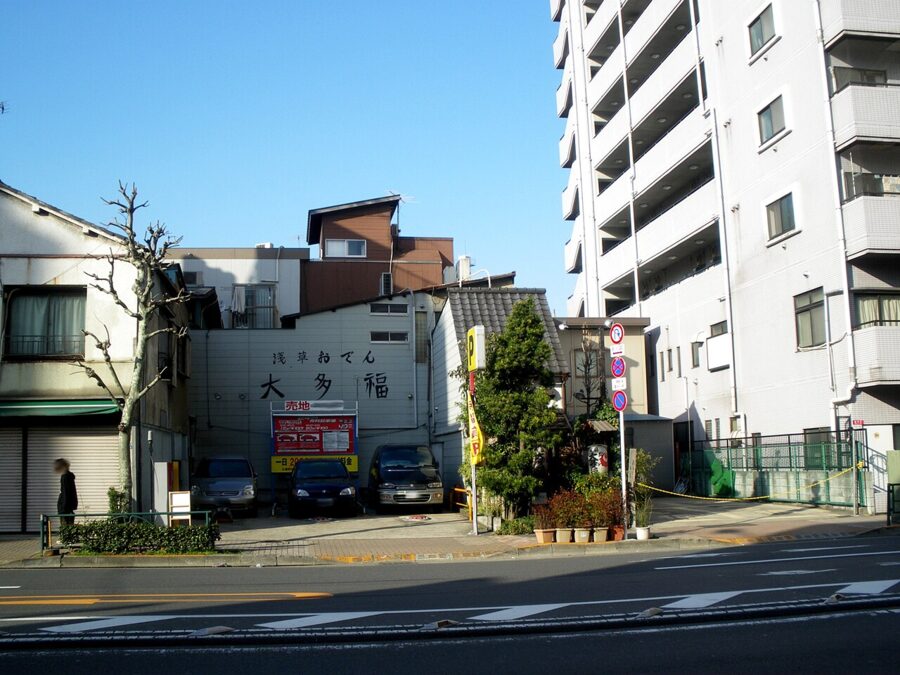
The first oden I ever ate came out of a steel tray beside the till of a 7-Eleven in Shenzhen, under a sign that called it guandongzhu. I pointed at a fish ball, a tofu puff and something on a stick, the clerk ladled broth over them into a paper cup, and I finished the lot on the walk home without any idea I was eating a Japanese dish. Years later, in Asakusa, I learned that the daikon at Otafuku spends about three days in the pot before anyone is allowed to order it.
Those two pots are the same dish. The Chinese name on that Shenzhen sign, written 关东煮, is simply the Japanese Kanto-ni, “Kanto stew”, the name Osaka once gave to Tokyo’s version. Oden travelled, first to Taiwan and Korea under Japanese rule and later with the convenience-store chains, which carried it to mainland China and Thailand.
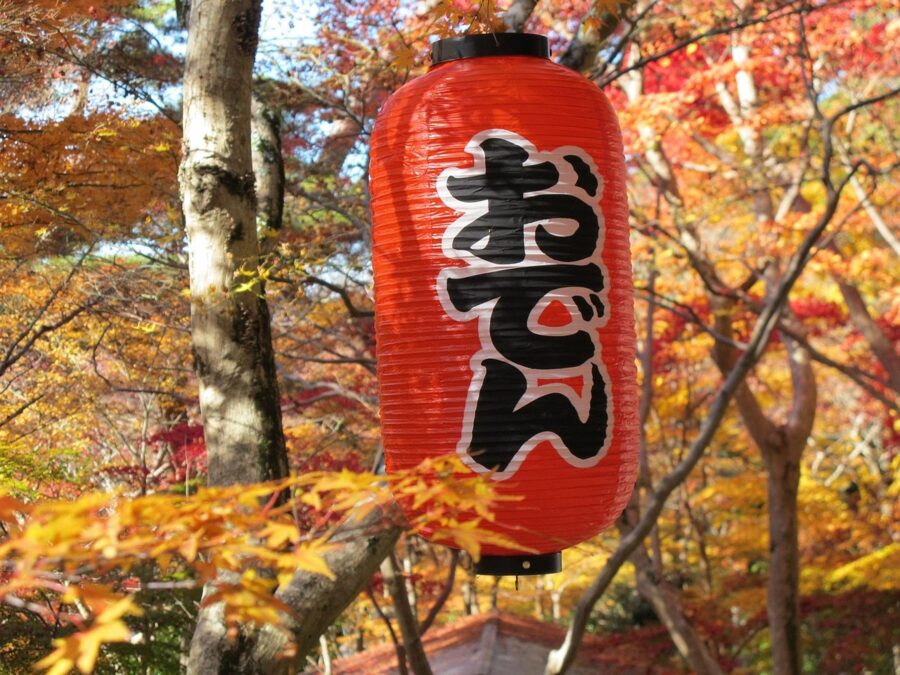
At home in Japan it is a winter habit with a long tail. You’ll find it at konbini counters, in hundred-year-old Tokyo houses, under the lanterns of a Shizuoka alley where the broth is black, and in Okinawa with a pig’s trotter in it. The rules change every few hundred kilometres. The ingredients mostly don’t.
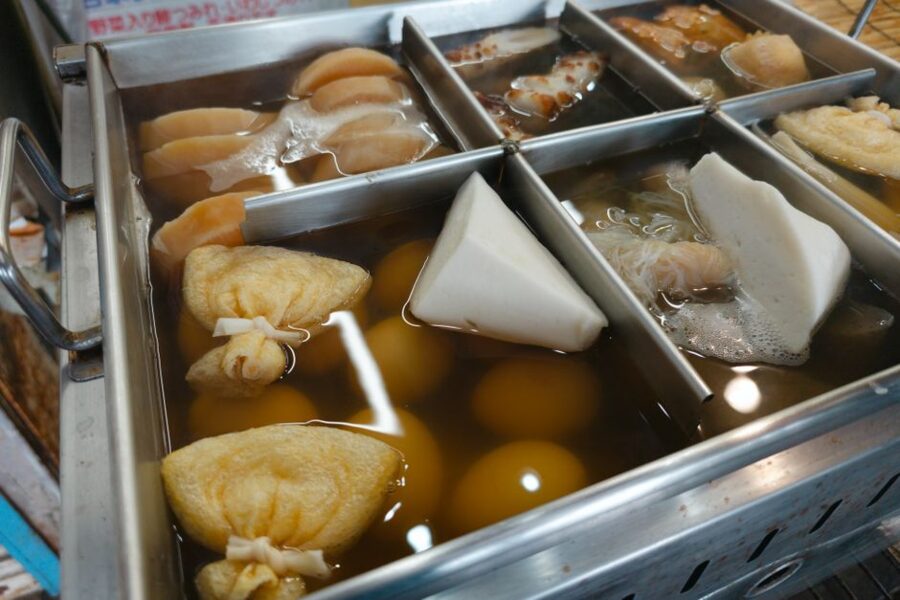
This guide covers what goes in the pot and how to order it by name, where each regional style comes from, and the shops, alleys and counters where it is worth sitting down. If you only have a minute, the table is the short version.
| Style | Where | Broth | What marks it out |
|---|---|---|---|
| Kanto (Tokyo) | Tokyo and around | Bonito and kombu, dark soy, a little sweet | Chikuwabu, white hanpen, shark-cartilage suji |
| Kanto-daki | Osaka, Kansai | Kombu-led, light soy | Beef tendon, octopus, whale |
| Shizuoka | Shizuoka City | Black, meat-based, topped up for years | Every piece skewered, kuro hanpen, fish powder and aonori |
| Kanazawa | Ishikawa | Light, gently sweet seafood stock | Kuruma-fu, bai-gai whelk, kani-men crab in winter |
| Himeji | Hyogo | Varies by shop | Eaten with ginger soy sauce |
| Miso oden | Nagoya, Aichi | Hatcho miso | Thick, dark and sweet; in Nagoya the dashi kind is “kanto-ni” |
| Aomori | Aomori City | Standard dashi | Ginger-miso sauce, tsubu whelk, thin bamboo shoots |
| Okinawa | Okinawa | Pork-rich | Tebichi pig’s trotter, leafy greens, eaten all year |
In This Article
- What’s actually in the pot
- From a dance to a stew
- Dengaku: tofu on stilts
- Edo puts it in the pot
- Kanto-daki, and the trip back east
- From the street to the konbini counter
- Order by name: the oden vocabulary
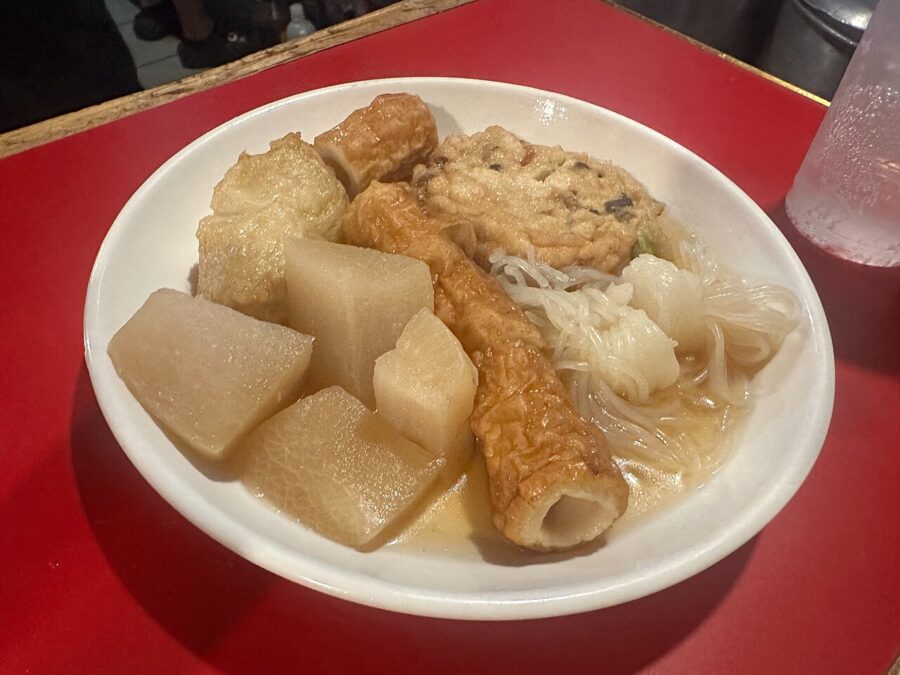
- Start with daikon, egg and konnyaku
- The fish-paste family
- Chikuwabu, Tokyo’s argument starter
- Tofu, pouches and rolls
- Meat, octopus and the slow stuff
- Karashi, and what else goes on top
- Regional oden, from black broth to pig’s feet
- Shizuoka: the black pot
- Kansai: kanto-daki and the oldest shop in Japan
- Kanazawa: oden all year
- Himeji: oden with ginger soy
- Nagoya and the miso pots
- Aomori: ginger miso
- Okinawa: pig’s feet and greens
- Kagawa, Matsue, Fukuoka and the rest
- Where to eat it
- The konbini counter
- Tokyo’s old oden houses
- Yatai, and where they’ve gone
- Aoba Oden-gai and Aoba Yokocho, Shizuoka
- Sake, beer and a can from a vending machine
- The oden can of Akihabara
- What it costs, and a few manners
- Skip this
What’s actually in the pot
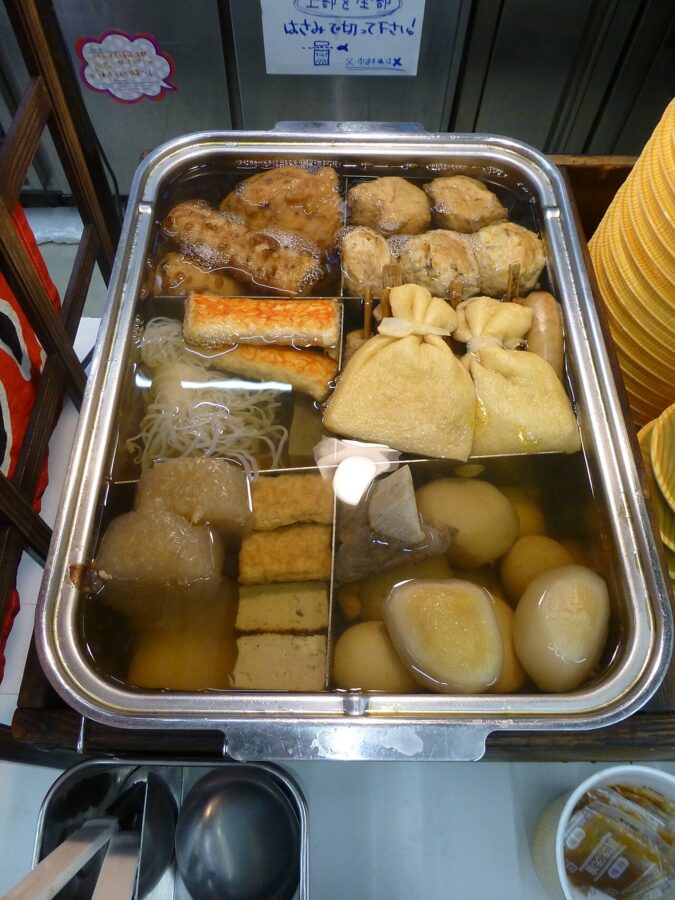
Oden is a broth and a set of tane, the word cooks use for the pieces that sit in it. The broth is dashi, usually kombu and bonito, seasoned with soy, mirin and salt. Into it go daikon, eggs, konnyaku, tofu in several forms and a long list of fish cakes, each simmered gently enough that nothing breaks and the liquid stays clear.
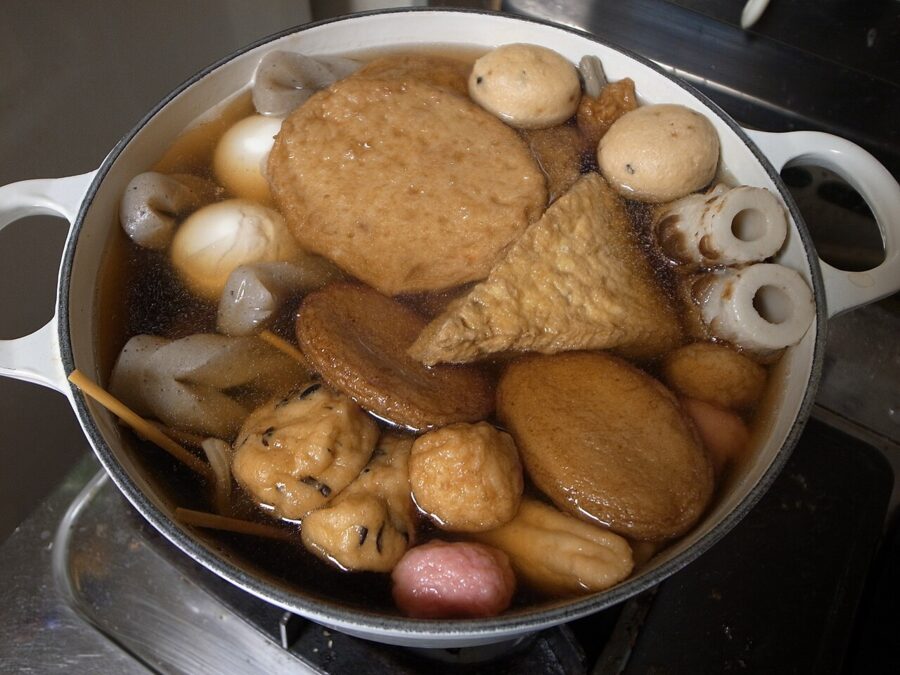
It gets filed with nabemono, the hot-pot family that includes sukiyaki and shabu-shabu, but nobody cooks oden at the table. It is ready before you arrive. At a specialist shop the pot is on long before opening, and the broth itself may be decades old: Kuroyuri in Kanazawa Station has been topping up the same stock since it opened in 1953.
That’s the real difference between a good oden counter and a bad one. Time. A daikon round needs hours to take on flavour without collapsing, an egg needs a day or two to colour through, and fish cakes need the opposite, ten or fifteen minutes before they go soft and lose their spring. A cook who handles all three in one pot is juggling.
From a dance to a stew
Dengaku: tofu on stilts
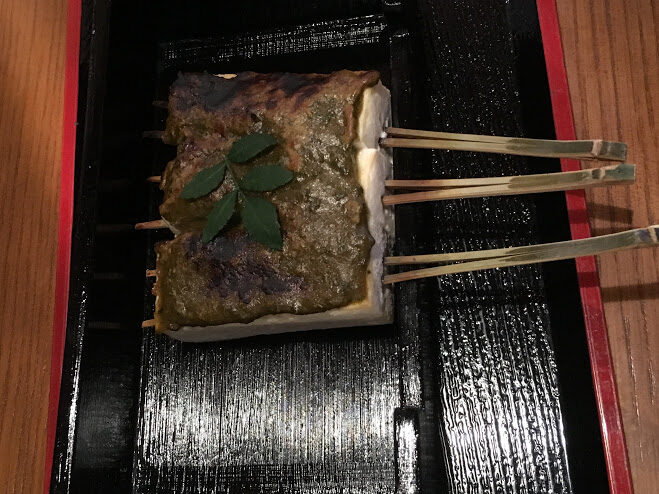
The name started as a joke about a dance. Dengaku was a rice-field performance dating back to the Heian period, and one of its acts had a performer balancing on a single tall pole. Slabs of tofu pushed onto a skewer looked enough like that to borrow the name, and skewered tofu grilled with miso became tofu dengaku.
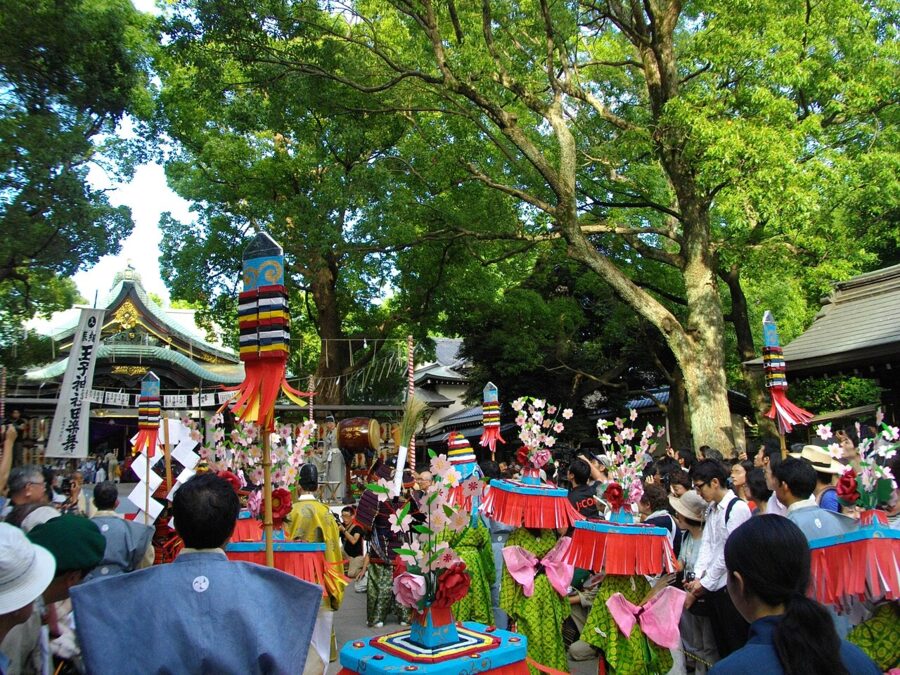
Ladies of the imperial court, who had their own polite vocabulary, shortened dengaku to o-den: the honorific “o” plus the first syllable. The Ministry of Agriculture’s own regional-food record repeats this story, and the word for a grilled snack stuck long after the court ladies were gone.
Edo puts it in the pot
By the Edo period there were two kinds: grilled dengaku and nikomi dengaku, simmered in liquid. Konnyaku dengaku was especially popular, and the simmered kind slowly took over the word “oden”. The Morisada Manko, Kitagawa Morisada’s encyclopedia of city life compiled from the 1830s, describes street vendors called jokan oden who sold warm sake alongside skewers of konnyaku.
What turned it into the dark Tokyo stew was soy sauce. In the early 1700s most soy sold in Edo came from Kansai, but by 1856 local breweries in Choshi and around the Kanto plain supplied almost all of it. Local soy plus bonito shavings, sugar and mirin made a sweet, dark broth, and the street stalls hung curtains that read oden kanzake: oden and hot sake.
Edo’s stalls also sold sushi, tempura and soba, and oden belonged to the same grab-and-go world. Hanpen arrived in the pot around this time too.
Kanto-daki, and the trip back east
In Osaka, “oden” still meant grilled dengaku, so the simmered Tokyo dish needed another name: Kanto-daki or Kanto-ni, “Kanto stew”. Osaka cooks made it their own with kombu, whale, beef tendon and pale light soy. Then came the 1923 Great Kanto Earthquake, and cooks moving between the regions during the rebuilding carried the Kansai version back to Tokyo.
That’s why some of Tokyo’s oldest oden houses serve a pale, Kansai-leaning broth, and why one of its best-known turns out to be from Osaka. In 1937 the Imperial Army’s cooking manual still listed the dish as “Kanto-ni”, with chikuwabu, satoimo and ganmodoki.
From the street to the konbini counter
After the war, black markets sold udon, rough kasutori shochu and oden. Pushcart stalls stayed common into the 1980s, and then the konbini took over. 7-Eleven Japan started selling oden in 1979, and by the 2011 financial year it was selling 277 million pieces a year.
Order by name: the oden vocabulary
Every oden counter works the same way. You look at the pot, you say what you want, and the cook lifts it out with long chopsticks or a small ladle. So the useful skill isn’t cooking, it’s knowing the names, and the list is longer than any menu in English will admit.
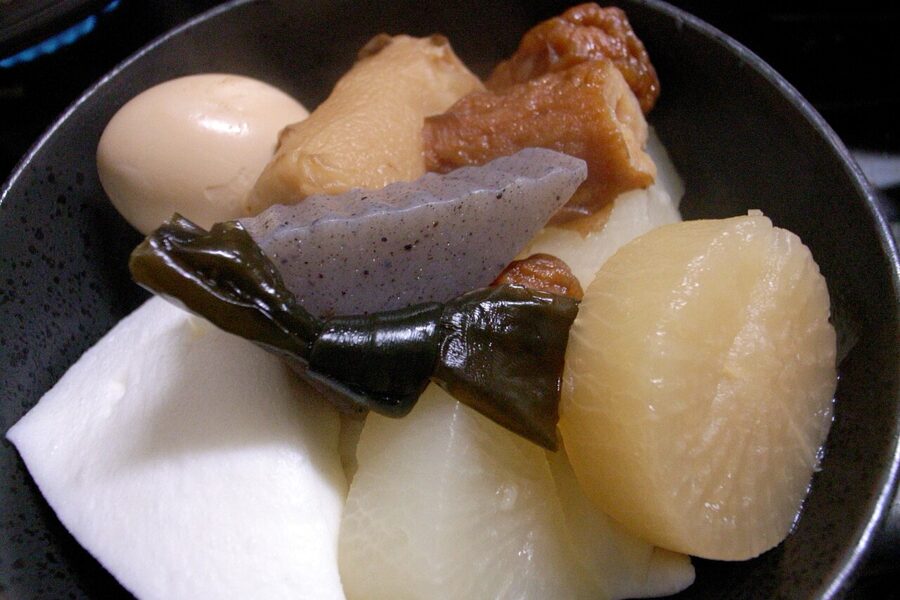
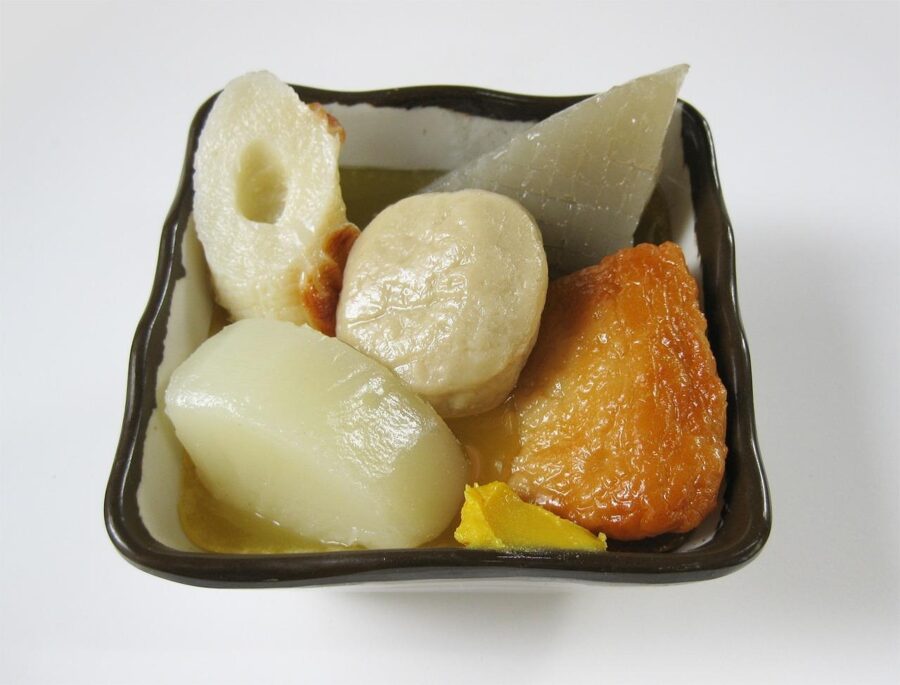
A household survey by the fish-paste maker Kibun ranks the national favourites as daikon, egg, chikuwa, konnyaku, hanpen, atsuage, satsuma-age, mochi kinchaku, gobomaki and potato. That’s a fair order for a first visit, too.
| Say | Written | What you get |
|---|---|---|
| daikon | 大根 | A thick round of white radish, the test of any pot |
| tamago | 玉子 | Boiled egg, browned by the broth |
| konnyaku | こんにゃく | Grey konjac jelly, often cut in triangles |
| shirataki | 白滝 | Konjac noodles tied in a knot |
| chikuwa | 竹輪 | Grilled fish-paste tube |
| chikuwabu | 竹輪麩 | Wheat-flour tube, Tokyo only |
| hanpen | はんぺん | Fluffy white fish cake (black in Shizuoka) |
| gobomaki | ごぼう巻 | Fish paste wrapped round burdock root |
| tsumire | つみれ | Sardine ball |
| atsuage | 厚揚げ | Thick deep-fried tofu |
| ganmo | がんも | Tofu fritter with vegetables |
| mochi kinchaku | 餅巾着 | Fried tofu pouch with rice cake inside |
| gyusuji | 牛すじ | Skewered beef tendon |
| karashi | からし | Hot Japanese mustard |
Start with daikon, egg and konnyaku
Order the daikon first. It has no flavour of its own worth mentioning, so it tells you everything about the broth, and a good one breaks with the side of your chopstick. Otafuku gives its daikon around three days and its eggs around two.
Konnyaku is the original oden ingredient, the thing those Edo vendors were selling, and it comes grey or white, in slabs, knots or little balls. Otafuku works hijiki seaweed into its own. Eat it for the texture: firm and slightly bouncy, with whatever the broth has given it.
The fish-paste family
Most of what floats in the pot is nerimono, fish paste shaped, then steamed, grilled or fried. Chikuwa is the grilled tube, satsuma-age is fried and comes in every shape, and gobomaki, ika-maki and the egg-filled bakudan (“bomb”) are fried paste wrapped round burdock, squid or a whole boiled egg.
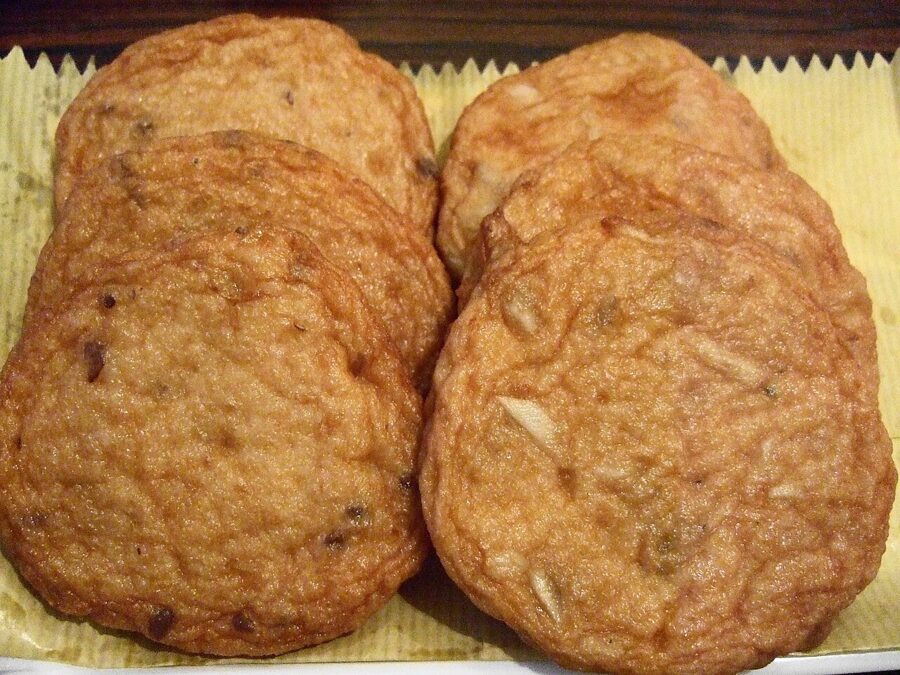
Hanpen is the odd one in Tokyo: white, square and soft as a marshmallow. One story credits a Suruga cook called Hanpei with the name.
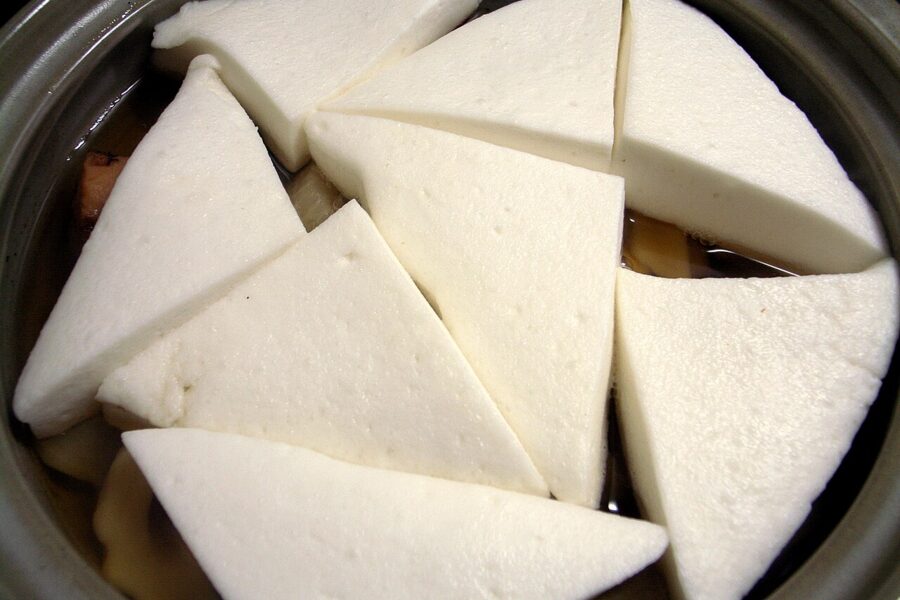
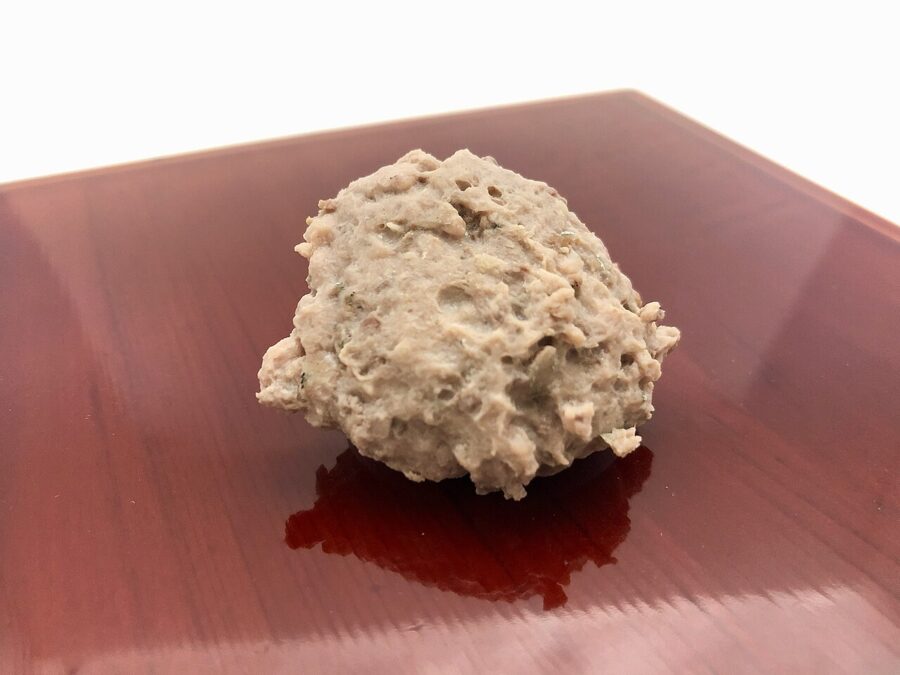
Tsumire are sardine balls, and the word comes from tsumi-ire, “pinch and drop”, which is exactly how they are made. They’re the strongest-tasting thing in a Tokyo pot.
One Tokyo trap: suji on a Kanto oden menu is not beef. It’s a grey, chewy stick made from shark cartilage and sinew left over from hanpen production. Order gyusuji if you want the beef.
Chikuwabu, Tokyo’s argument starter
Chikuwabu looks like chikuwa and contains no fish at all. It’s a tube of wheat dough, kneaded, wrapped round a rod and boiled, with ridged sides like a gear wheel. Tokyo loves it, the rest of the country mostly doesn’t know it, and it only reached Kansai supermarkets in the 21st century.
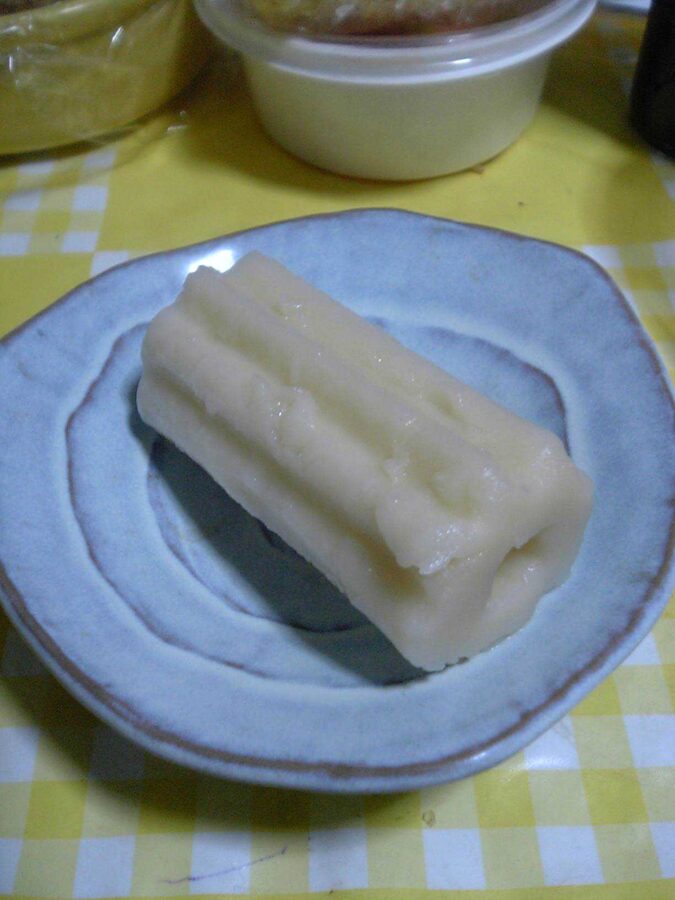
Nobody knows exactly where it came from. The rakugo storyteller Yanagiya Kosan III, working in the late Meiji and Taisho years, joked about soba shops using chikuwabu as cheap stand-ins for chikuwa, and a 1924 cookbook already lists it for oden. I like it after an hour in the pot, when the outside has gone soft and the inside still has bite. Some people never get past the texture.
Tofu, pouches and rolls
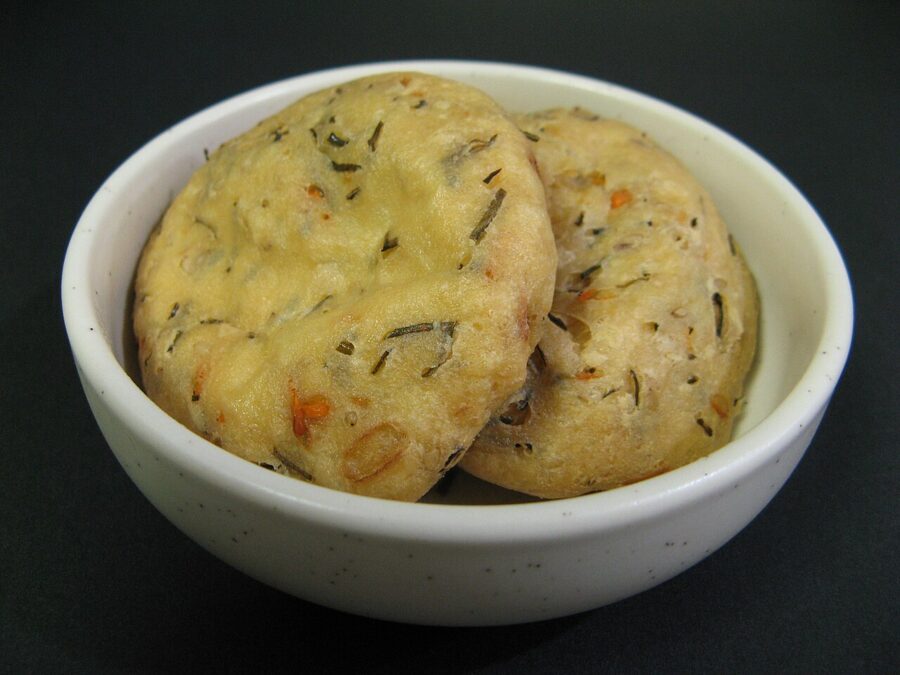
Atsuage is thick tofu fried until it has a skin. Ganmodoki, “ganmo” for short, is a fritter of mashed tofu with carrot, burdock and seaweed, and it soaks up broth like a sponge.
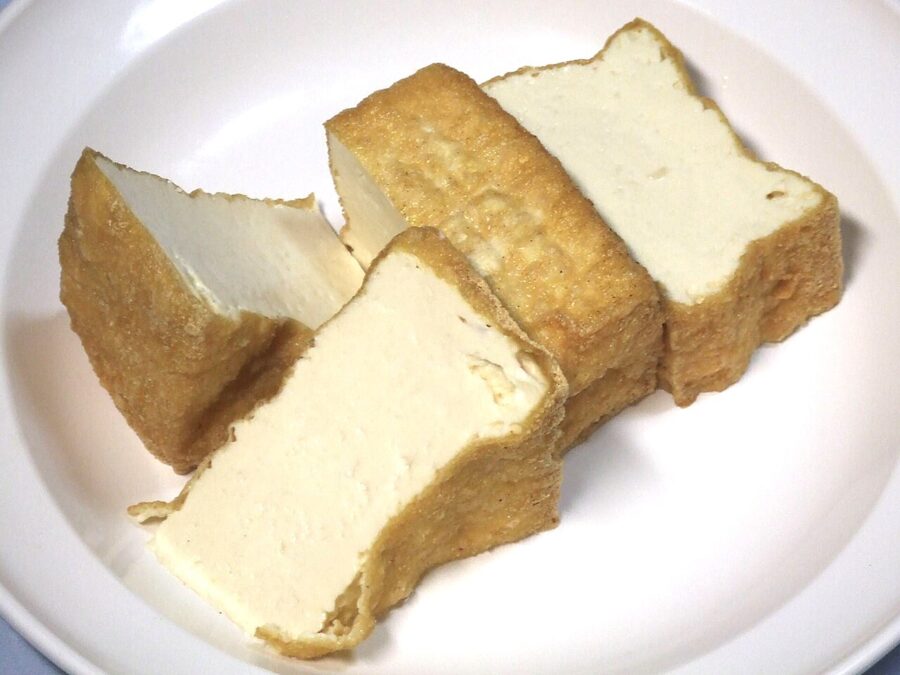
Mochi kinchaku is a pouch of thin fried tofu tied shut with a strip of dried gourd, with a rice cake inside that melts as it simmers. Cabbage rolls are common too: Otafuku stuffs its kyabetsu-maki with minced meat and onion fried in sesame oil.
Meat, octopus and the slow stuff
Gyusuji, skewered beef tendon, is a western Japan ingredient that konbini chains spread nationwide. In Osaka the same tendon once filled radio-yaki, the snack that turned into takoyaki when someone swapped in octopus. A small warning: much of the konbini “gyusuji” is actually the membrane from around the skirt, not tendon at all.
Octopus legs, baby iidako octopus, chicken tsukune, whelks and, in autumn, satoimo taro and skewered ginkgo nuts all turn up at specialist shops. Otafuku put out its first satoimo and ginkgo of the season in late October 2026, and Takoume in Osaka adds square shiho-chiku bamboo shoots and shiitake as they come in.
Karashi, and what else goes on top
The standard condiment is karashi, a hot yellow mustard that clears your sinuses if you overdo it. Put a little on the rim of the bowl and add it bite by bite. That’s how it’s served at most counters, and it saves you from the mistake of loading a whole egg.
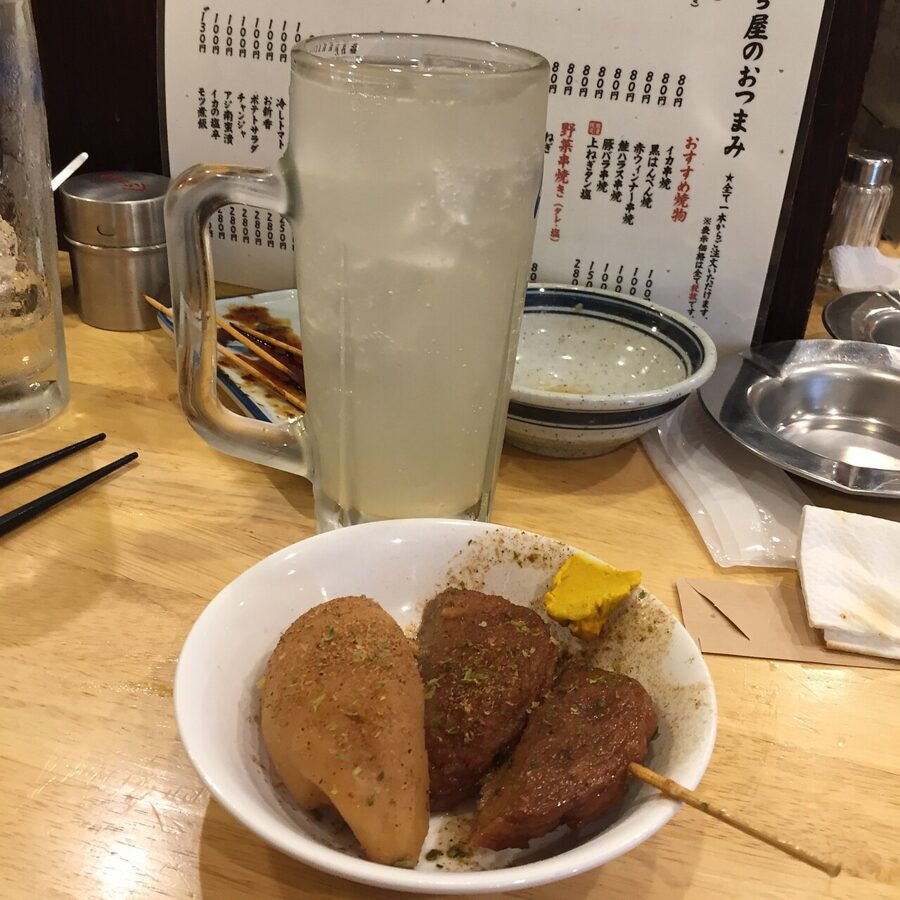
Elsewhere it changes. Nagoya uses a thick miso, Kagawa a mustard-miso sauce, Ehime a similar migarashi miso, Himeji ginger soy, Shizuoka a dusting of fish powder and seaweed. Yuzu kosho, the citrus and chilli paste, has crept onto plenty of modern menus too.
Regional oden, from black broth to pig’s feet
Shizuoka: the black pot
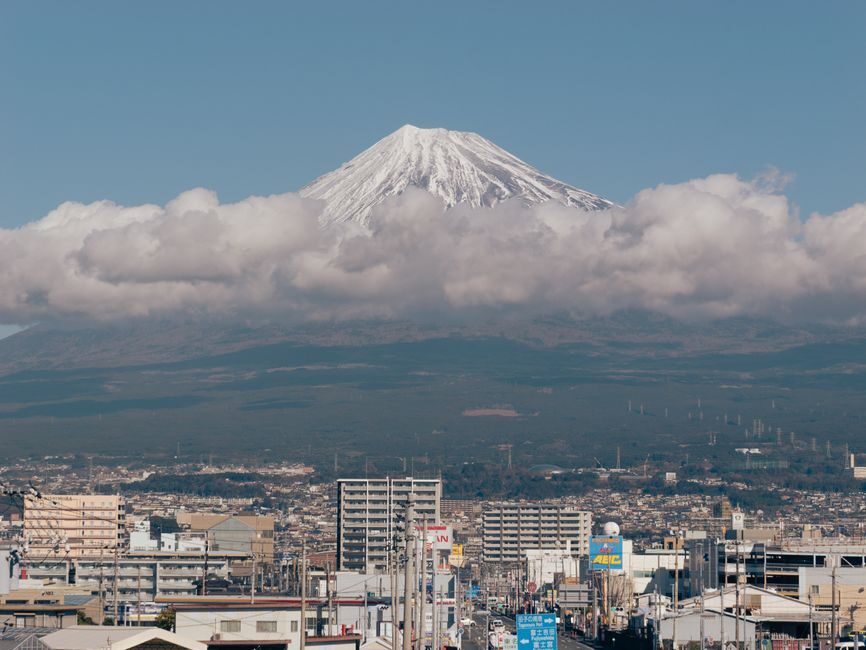
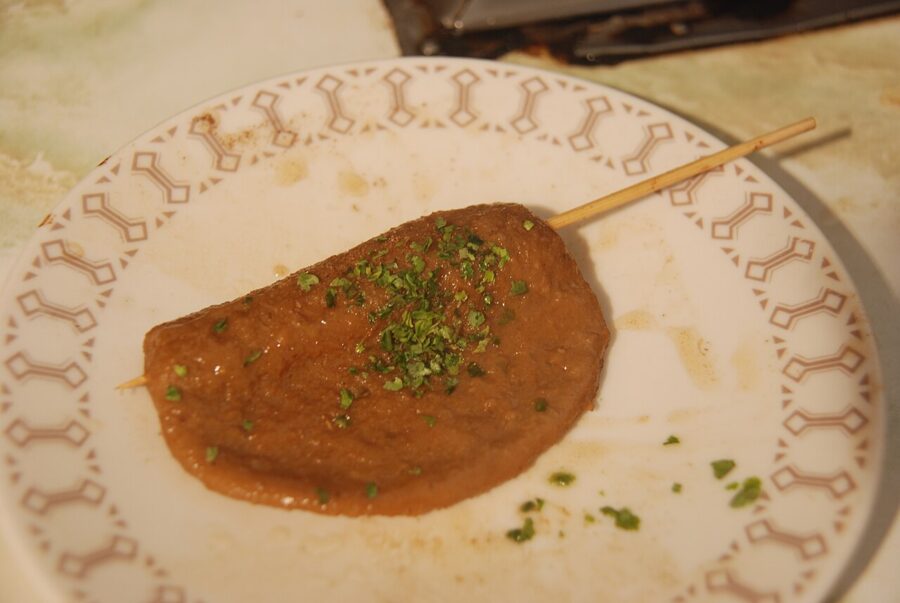
Shizuoka City’s oden is the one that surprises people. The broth is black, built on beef tendon, chicken bones or pork offal with dark soy, and at the older shops it is never emptied, only topped up, so you can’t see the bottom of the pot. Every single piece is on a bamboo skewer.
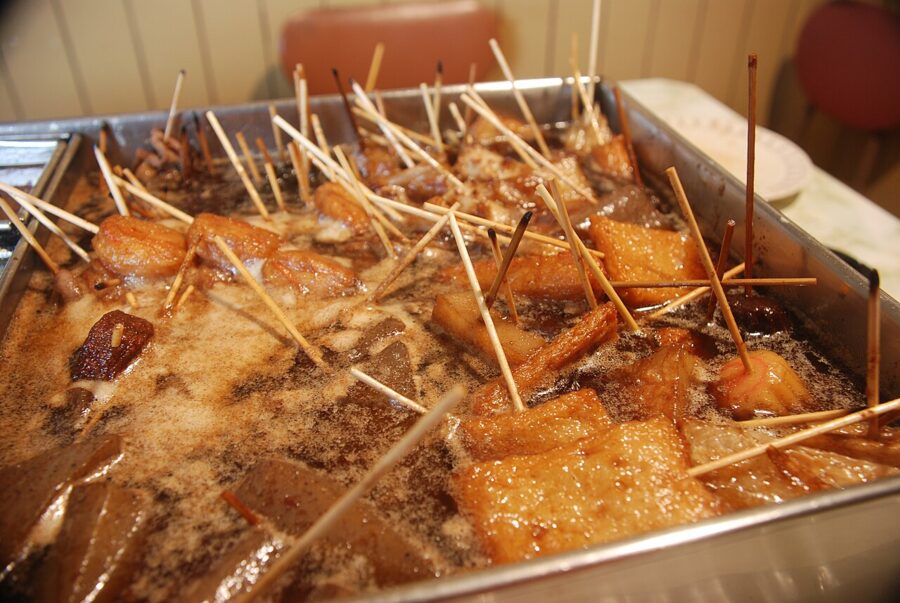
The star ingredient is kuro hanpen, black hanpen. It’s nothing like the Tokyo kind: a dense, grey, half-moon cake made from mackerel, horse mackerel or sardine ground up bones and all, with a slightly gritty bite. Yaizu, the big fishing port down the coast, is its home, and in Shizuoka plain “hanpen” means this one.
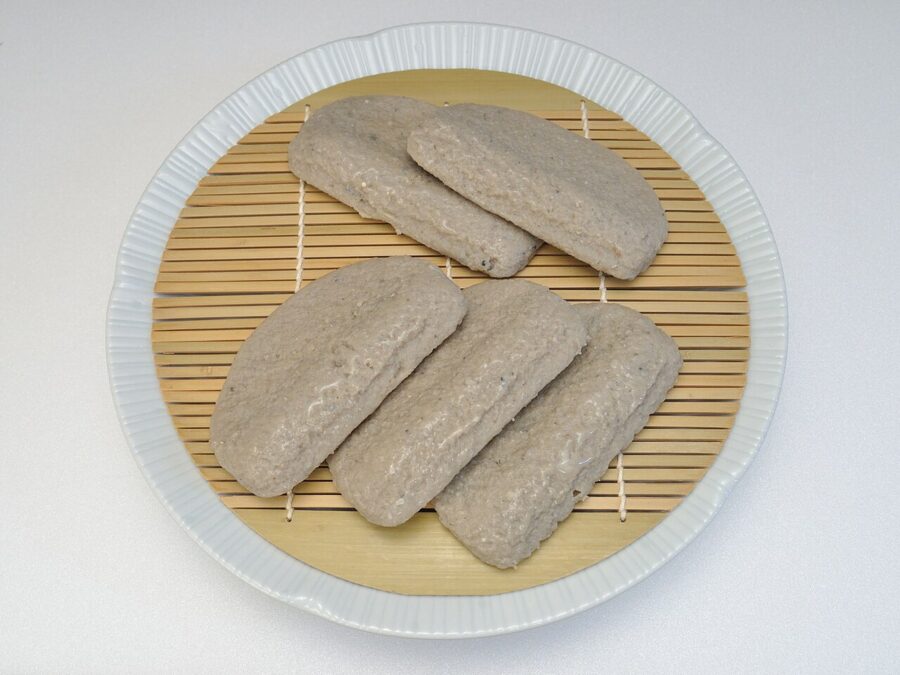
Before you eat, you shake on dashi-ko, powdered dried sardine or bonito, and green aonori seaweed. Some shops add a sweet miso. The Kirin Ichiban Shibori beer advert starring the actor Koichi Sato made the style famous nationally, and in 2007 the Shizuoka Oden no Kai association took it to the B-1 Grand Prix food contest and came third.
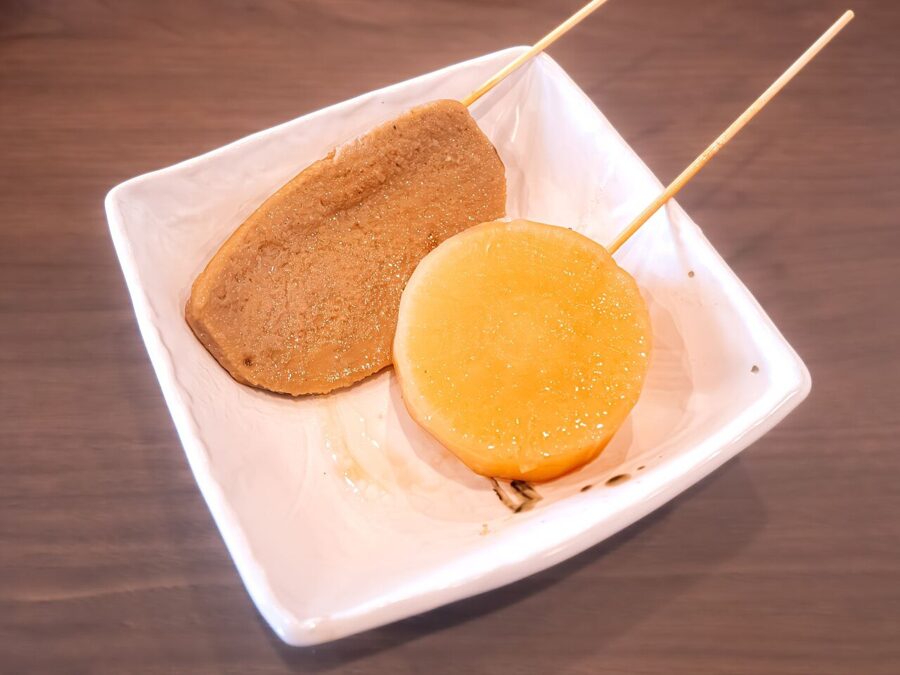
There are around 70 shops serving it in the city. Food writers split them into two kinds: dagashiya-kei, daytime snack and sweet shops where children buy a skewer after school, and yokocho-kei, the night-time alley counters. Some of the snack shops serve shaved ice alongside, and locals alternate bites. It sells in summer too, at swimming pools as well as bars.
Kansai: kanto-daki and the oldest shop in Japan
Osaka still calls the dish kanto-daki, and its pot is paler, kombu-led and seasoned with light soy and salt. Beef tendon, octopus and whale are the classic Kansai pieces. In Tenma, octopus simmered sweet and dark was so popular that some people used kanto-daki to mean the octopus alone.
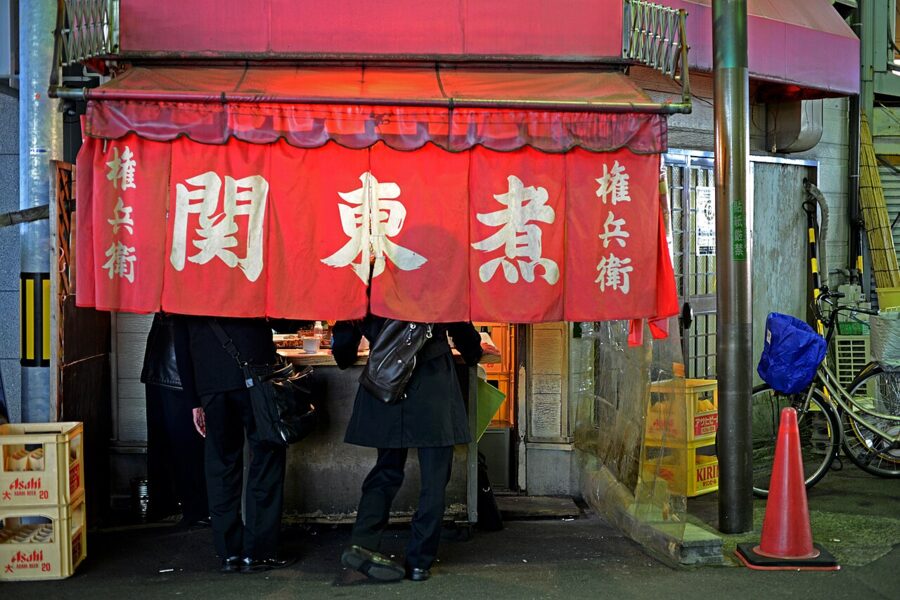
Takoume on Dotonbori claims to be the oldest oden shop in Japan. It opened in 1844 as a jokan-ya, a hot-sake bar, and is now run by the fifth generation of the founder’s family. Its two signatures are tako kanroni, octopus simmered in a sweet soy glaze, and saezuri, the tongue of baleen whales, which the founder first put in the pot.
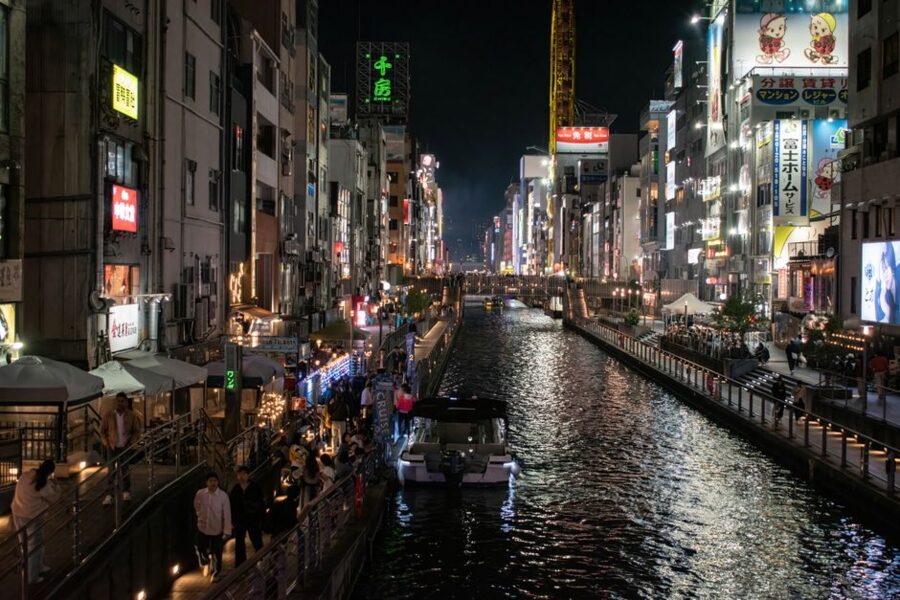
Takoume still warms its sake in tin flasks set in hot water and serves it in tin cups. There’s a second branch, Kita, in the Shin-Umeda Shokudogai arcade by Osaka Station. In November it adds kujira harihari, a fried tofu pouch stuffed with whale and mizuna, at ¥550 before tax.
East of the city, the approach to Ishikiri Tsurugiya Shrine in Higashi-Osaka keeps a different tradition: “Ishikiri oden”, a Kanto-style pot without beef or octopus. In 2024 the Agency for Cultural Affairs listed it among its “100-Year Foods”.
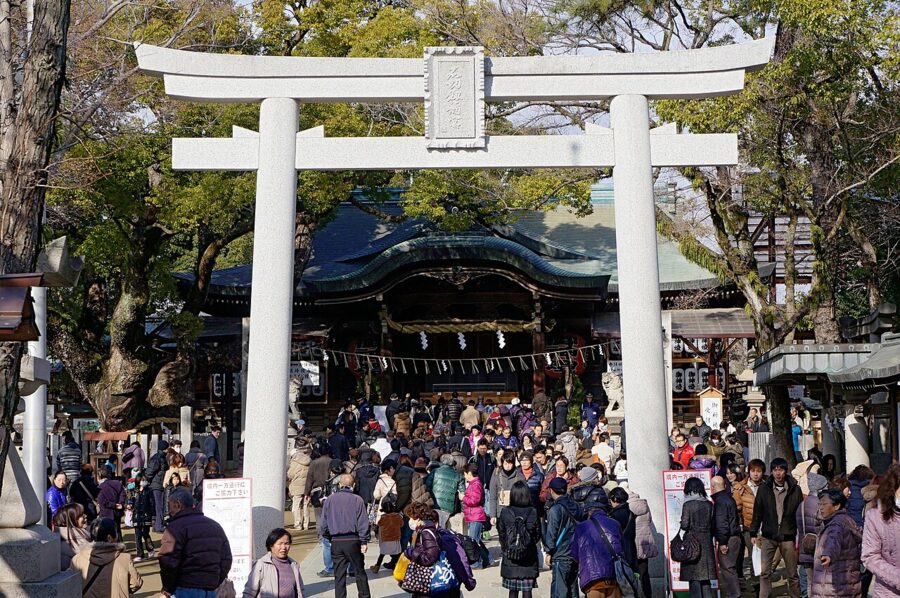
Kanazawa: oden all year
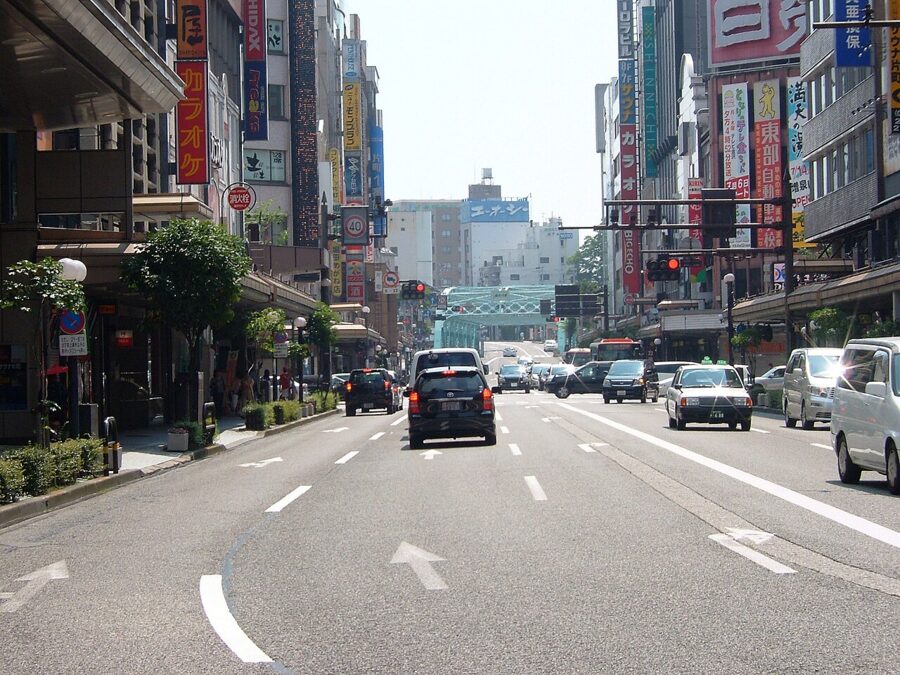
Kanazawa treats oden as a local dish rather than a winter extra, and it doesn’t stop for summer. The local definition is loose but useful: ingredients tied to the city, a stock each shop has carried forward for years, and a pot that’s on twelve months a year. The broth is light and faintly sweet.
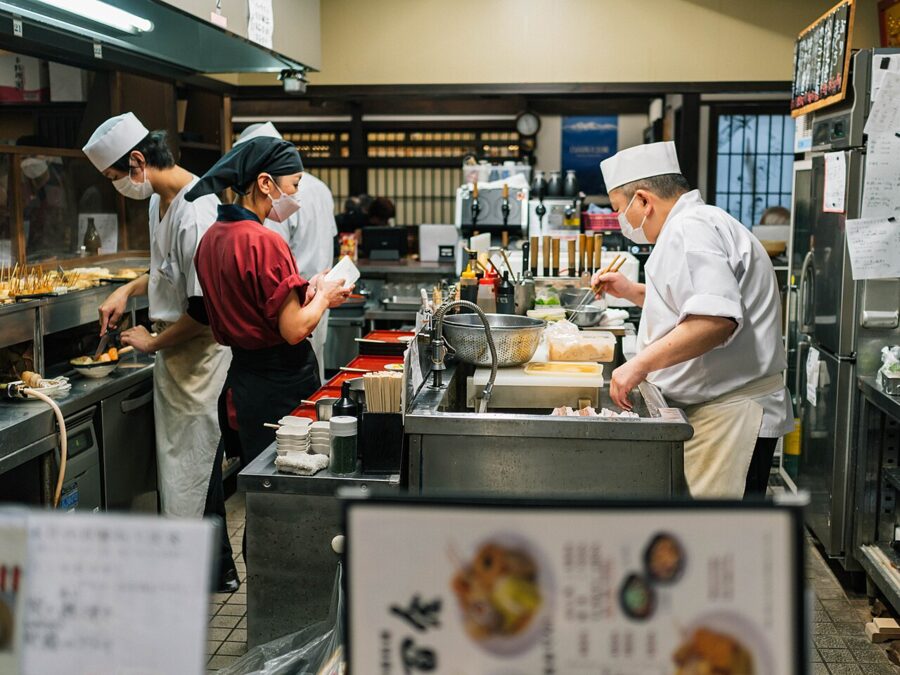
Kuroyuri is the easy first stop, inside the Kanazawa Hyakubangai Anto arcade at the station, open 11:00–22:00 without a break. Daikon costs ¥380, an egg ¥150, kuruma-fu ¥350 and a bai-gai whelk ¥700, tax included. It takes no reservations at weekends: take a number from the machine at the front and wait nearby.
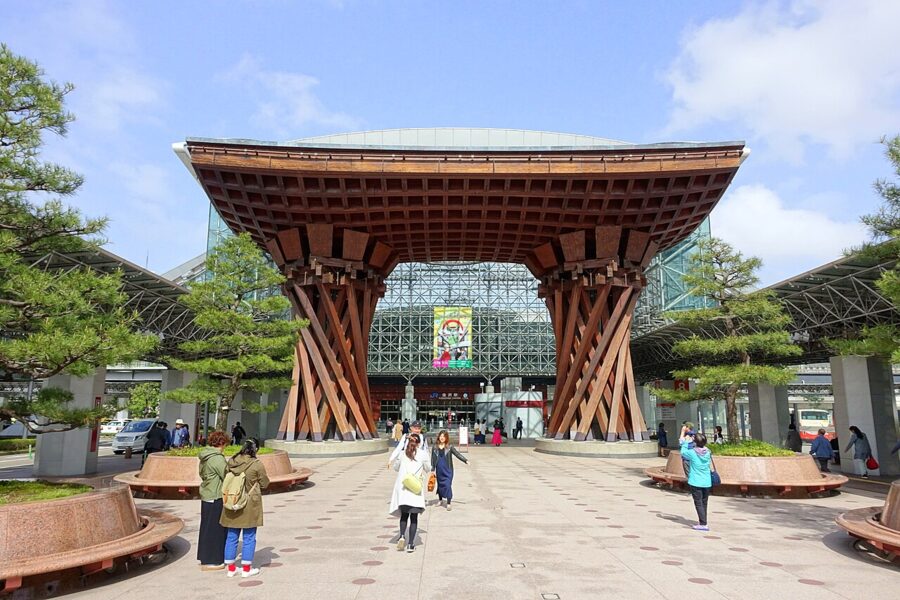
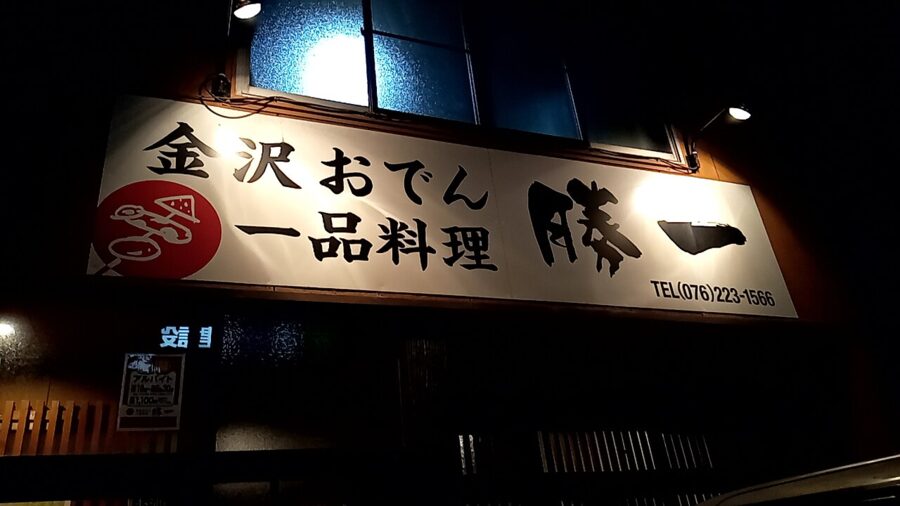
The Kanazawa pieces to order are kuruma-fu, a wheel of baked wheat gluten that turns to custard in the broth, bai-gai whelks from the Sea of Japan, and akamaki, a fish-paste roll wrapped in red. In the city centre, Akadama Honten in Katamachi has been at it since 1927 and adds its own “akadama”, a quail egg wrapped in fish paste coloured with paprika.
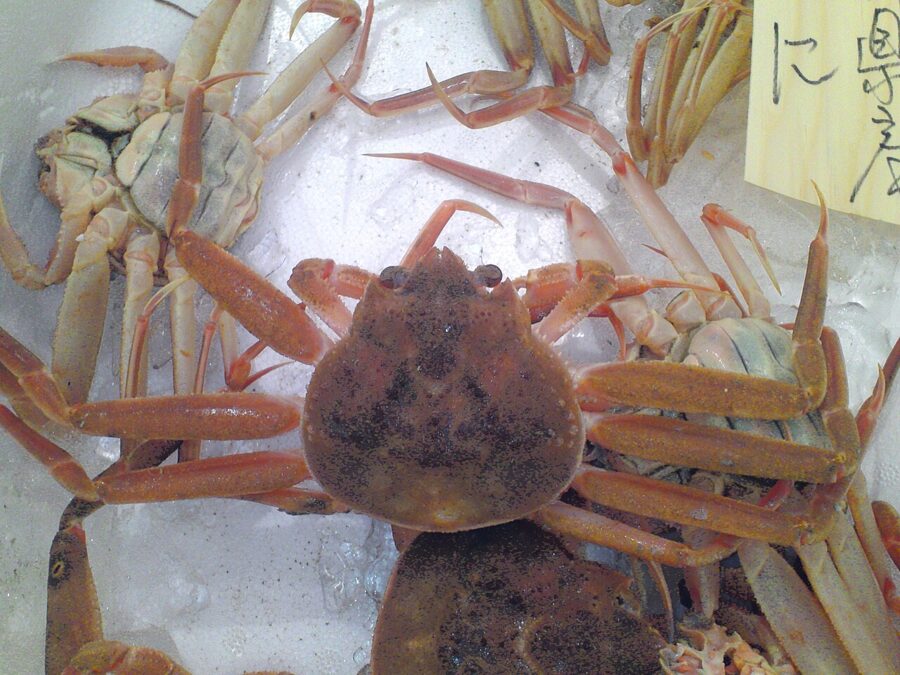
The winter treat is kani-men, “crab face”: a female kobako crab’s shell refilled with its own meat, roe and miso and warmed in the broth. It appears from early November and is usually gone by late December, and it’s the one thing I’d plan a Kanazawa winter trip around.
Himeji: oden with ginger soy
Himeji’s twist is in the dipping, not the pot. You dip your oden in shoga-joyu, soy sauce with grated ginger. The usual explanation is that the area around Himeji has long been a soy-brewing district. The broth itself varies: some shops make a sweet, dark kanto-daki and others a light one, and both count.
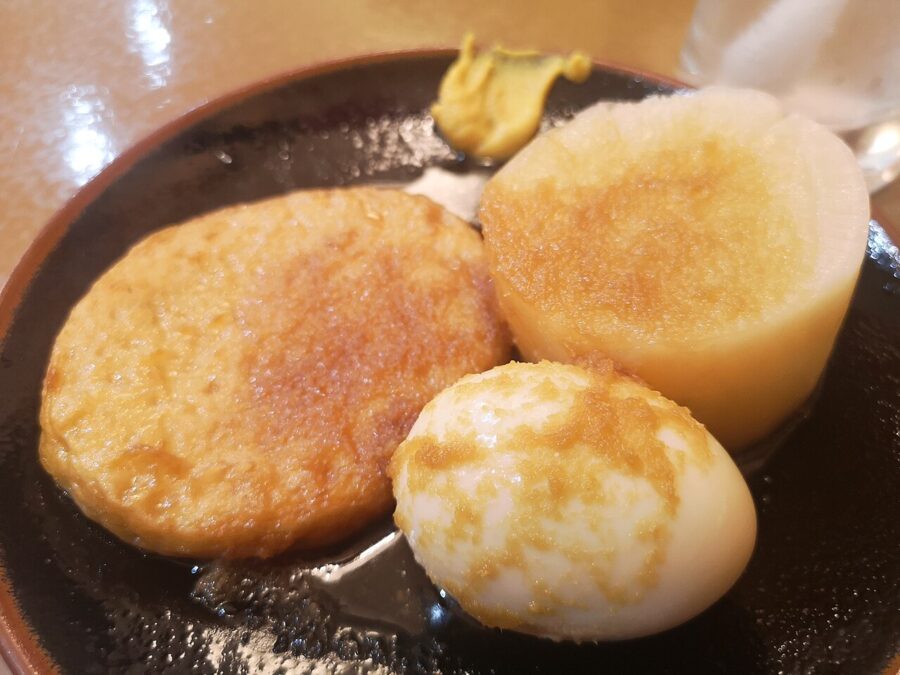
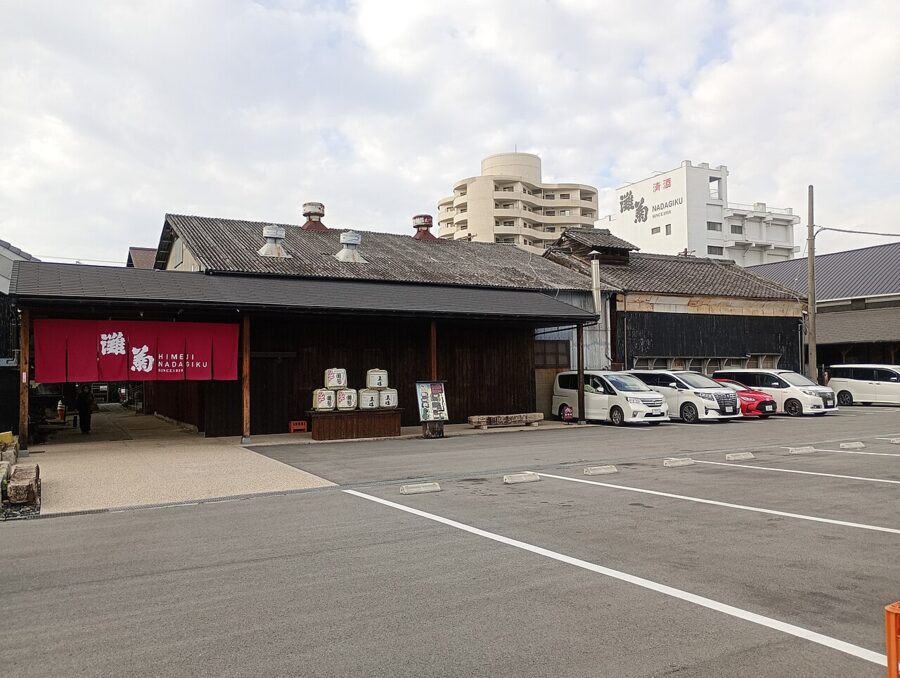
Nadagiku Kappa-tei, four minutes’ walk from JR Himeji Station, is run by the Nadagiku sake brewery and has served oden since 1959. Its big-skewer ogushi oden simmers in a pot shaped like a castle, the ginger-soy kind is listed as “black” oden, and in winter there’s a “white” oden flavoured with sake lees.
Nagoya and the miso pots
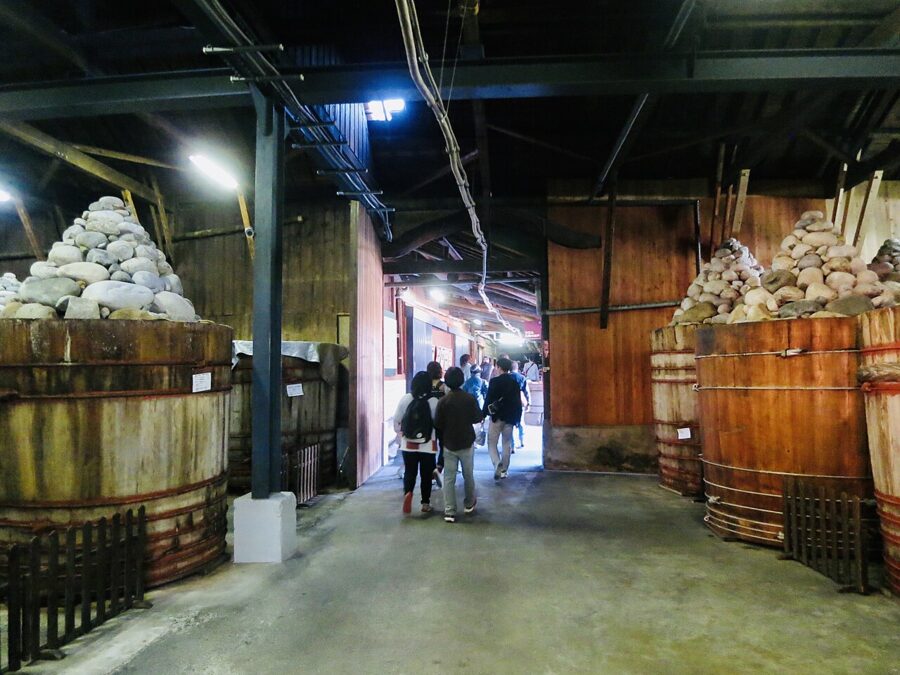
In Nagoya and western Shizuoka, plain “oden” means miso oden, simmered in Hatcho miso until it’s thick, dark and sweet. The dashi kind is called kanto-ni. Cooks pile the miso into a bank, a dote, on an iron plate, so the same pot is also called dote-yaki or doteni, and it spread with the street stalls on Hirokoji-dori in the mid-Showa years.
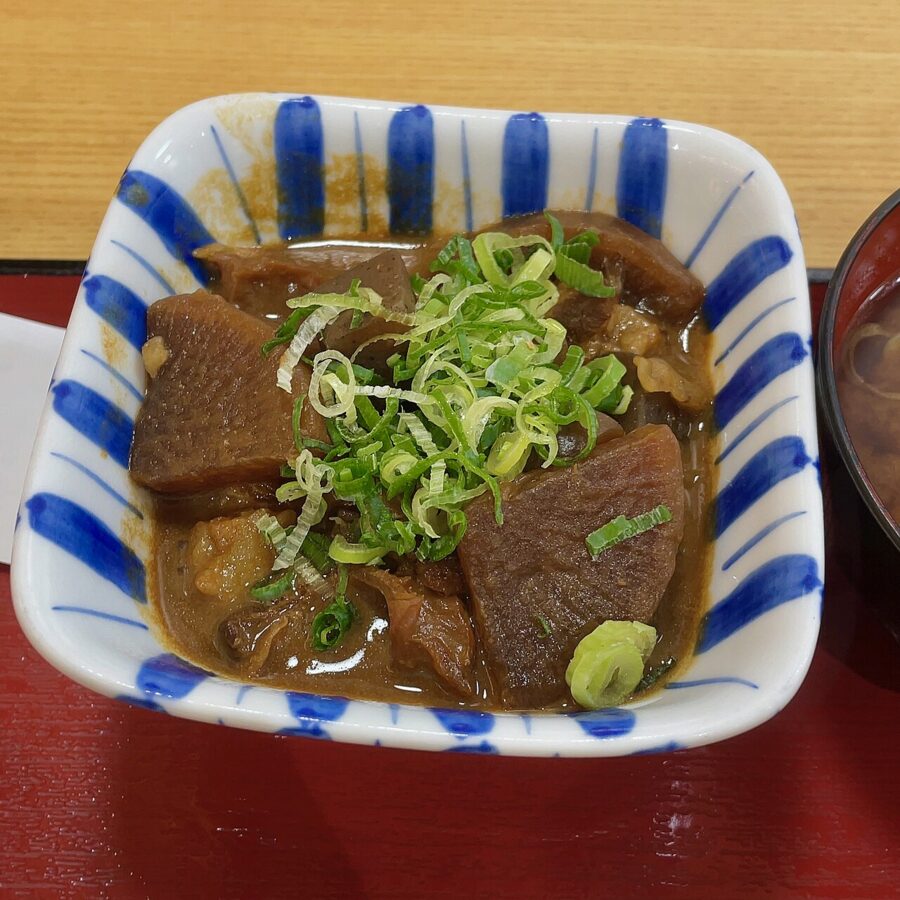
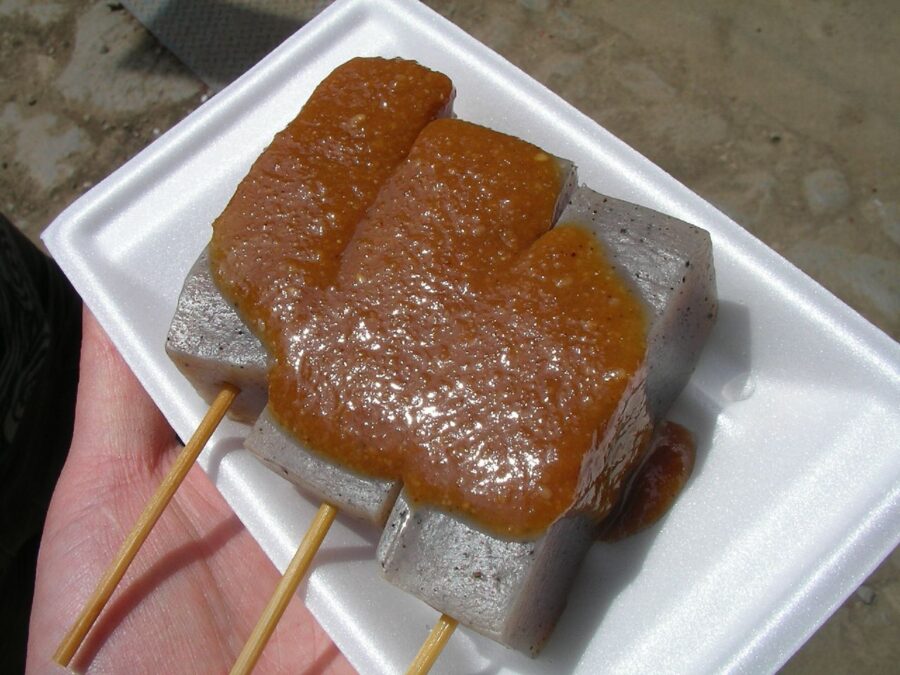
North of Tokyo, Gunma’s konnyaku farmers have their own konnyaku miso oden: boiled konnyaku slabs on sticks with sweet miso spread on top. It’s closer to the original dengaku than anything in a dashi pot, and versions of it are sold on hiking trails such as Mount Takao’s.
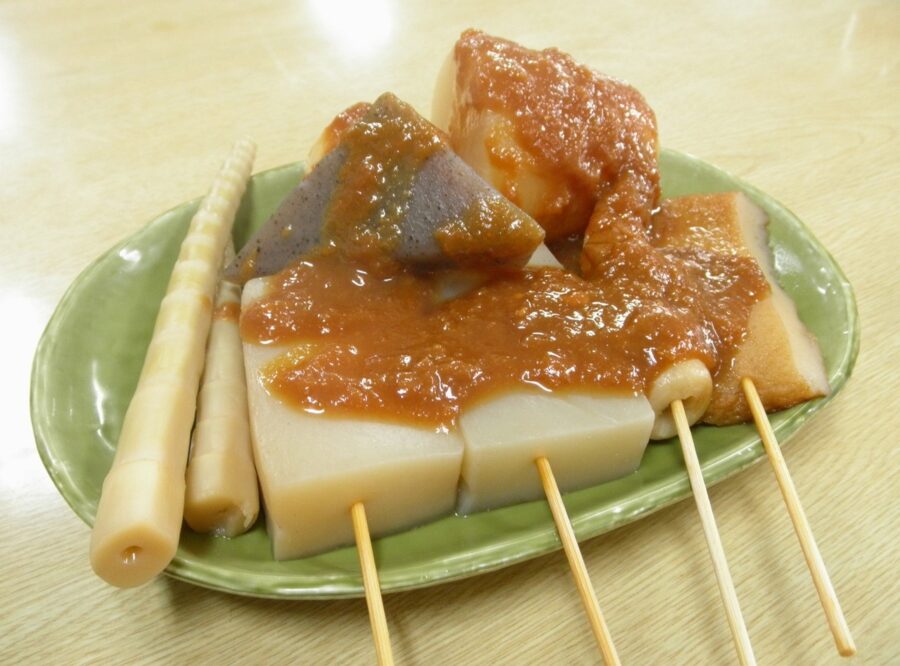
Aomori: ginger miso
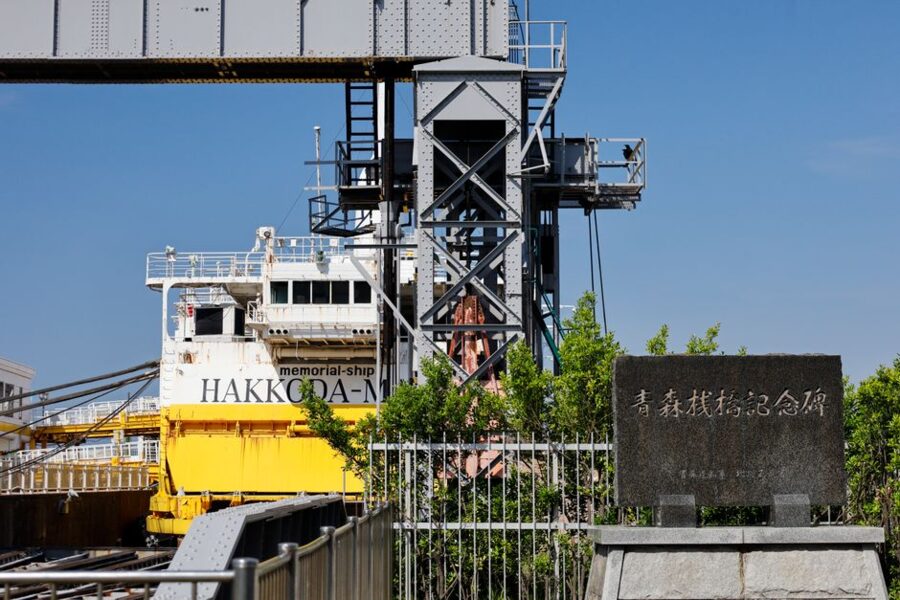
Aomori City spoons a ginger-miso sauce over its oden. The pot has its own regulars too: tsubu whelks, slender nemagari-dake bamboo shoots and okaku-ten, a wide, thin square of fried fish paste. The Aomori Oden no Kai association started promoting it in 2005, and it marks 10 October as its oden day.
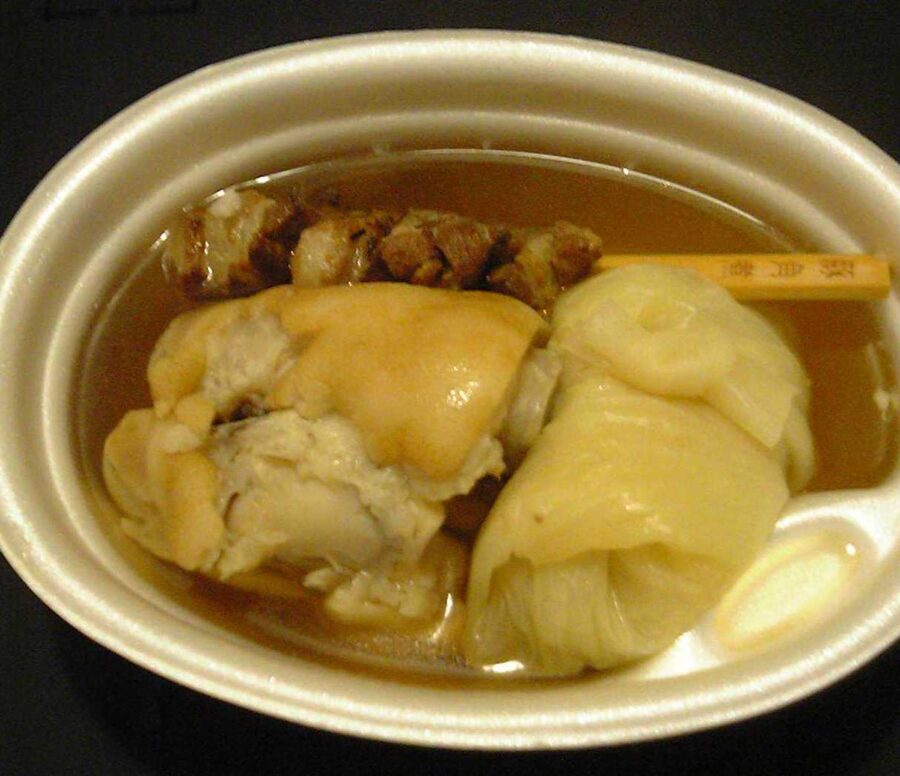
Okinawa: pig’s feet and greens
Okinawa makes oden a pork dish. Tebichi, pig’s trotter, simmers until it falls off the bone, sometimes with soki pork ribs, and gives the broth a rich, sticky body. Frankfurters are standard. It’s eaten all year, heat or no heat.
Kagawa, Matsue, Fukuoka and the rest
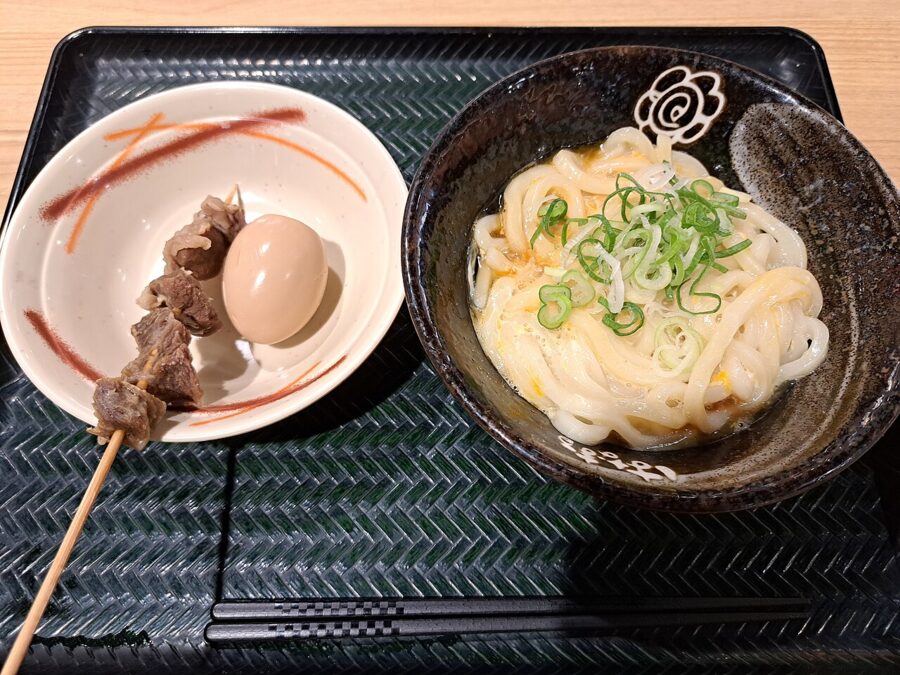
In Kagawa, the udon shops keep a self-service oden pot by the counter, and you help yourself while the noodles are made, with a dab of mustard-miso on top. It’s one of the few places where oden is the side dish rather than the meal.
Matsue in Shimane cuts its oden big and adds leafy seri and shungiku. Fukuoka’s yatai keep oden pots beside the ramen, and there you may meet gyoza-maki, a fish-paste stick with a gyoza inside, which otherwise turns up mostly in Kanto and Tohoku. Most regions have some small twist like these, and the way to find it is to ask “what’s the local one here?” at the counter.
Where to eat it
The konbini counter
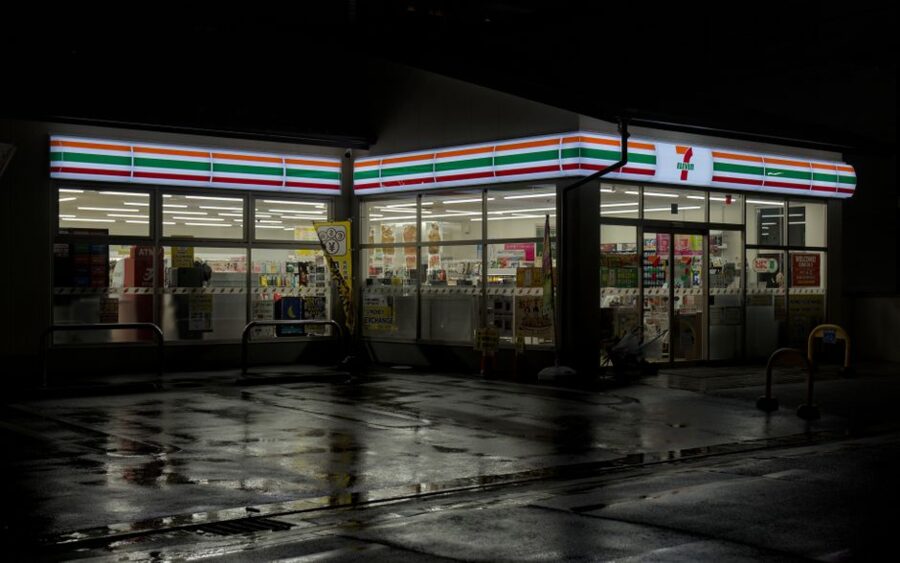
For a lot of people in Japan, oden simply means the konbini pot. The pot appears beside the till from late summer, sales peak in October and November, and some stores now keep it going all year. 7-Eleven, Lawson and FamilyMart all sell it, though not every branch has a pot, and some have switched to sealed packs since the pandemic.
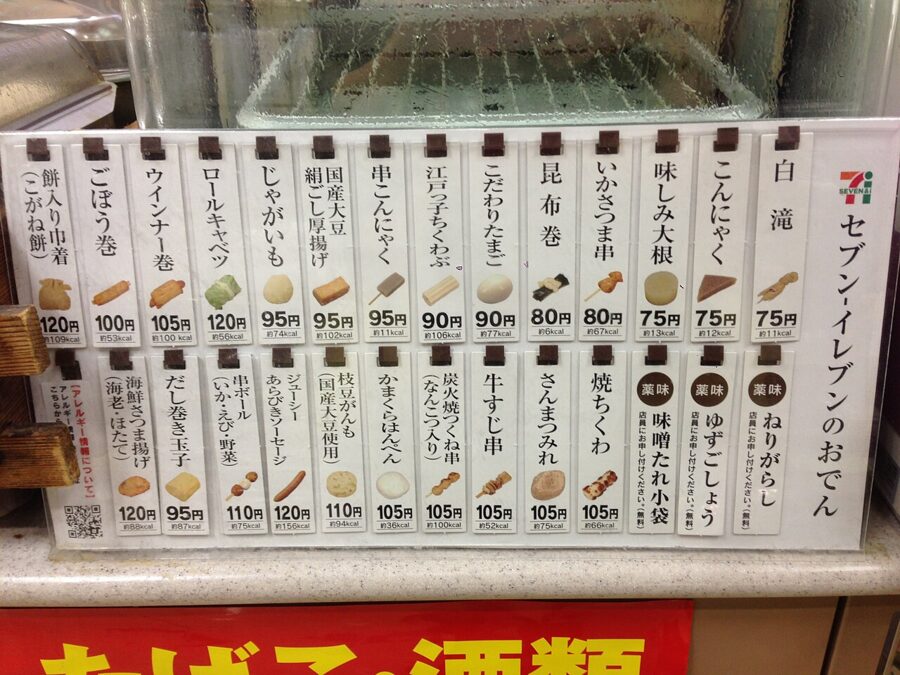
Ordering is simple. Point at the tray or say the names, the clerk fills a cup or a lidded bowl and adds broth, and you can ask for tsuyu oome, extra broth. Say “karashi” and a sachet of mustard goes in the bag. Konbini broth is usually Kansai-style, partly because a pale broth lets you see what you’re choosing and smells less across the shop floor.
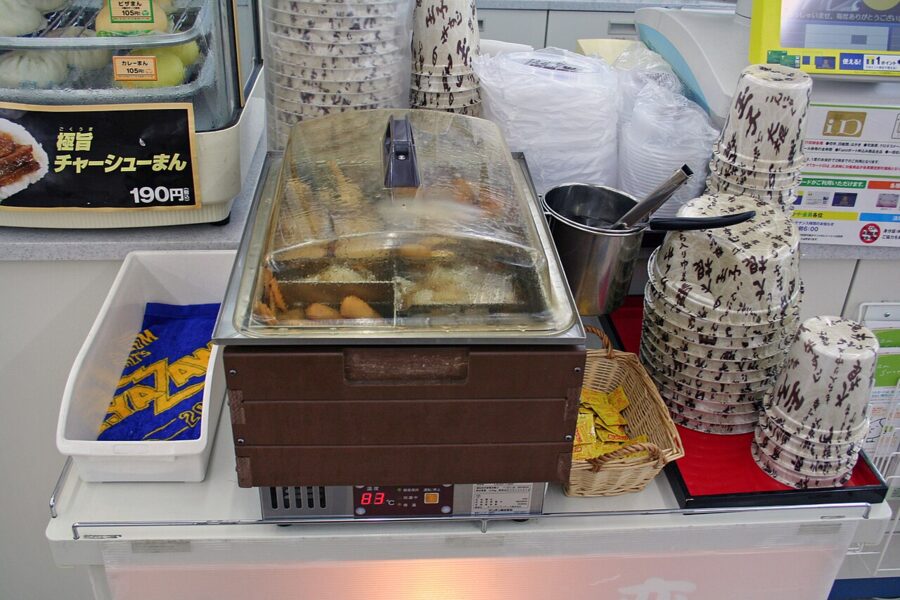
7-Eleven runs an “all oden 10% off” sale each autumn, which in 2026 fell on 16–20 October. Lawson went the other way this year and in late September launched an oden meant to be eaten straight from the fridge, at ¥297 with tax. I haven’t been brave enough.
Tokyo’s old oden houses
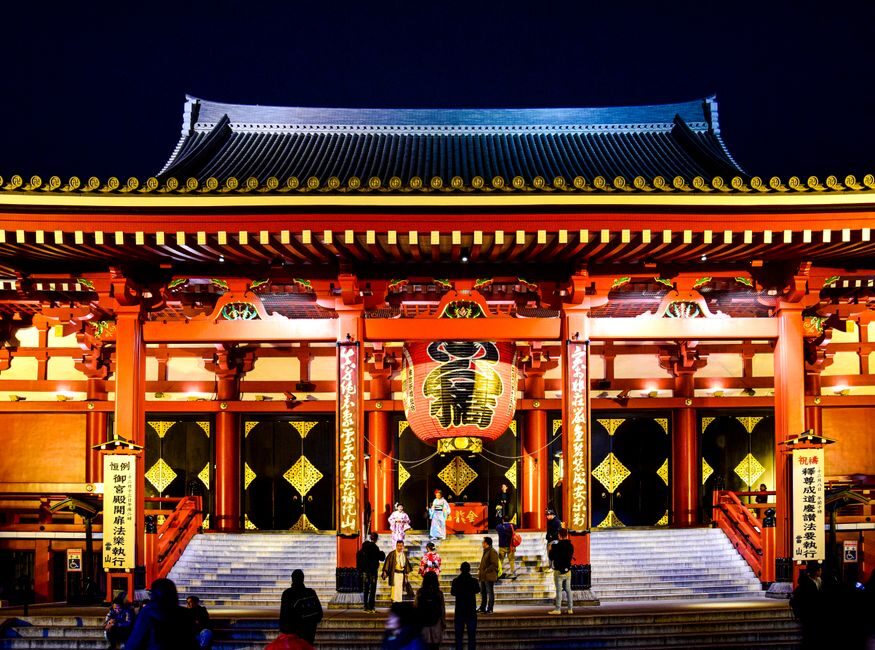
Otafuku in Asakusa is the one to book. It sits at Senzoku 1-6-2, five minutes on foot from Asakusa Station on the Tsukuba Express and ten from Tawaramachi on the Ginza Line. It opens 17:00–23:00 (last order 22:00), closes on Sundays except in winter, charges a ¥500 seat fee and suggests a budget of ¥5,000–8,000. There’s an English menu.
Its takeaway comes in a glazed Mashiko-ware octopus pot, which came back in May 2026 after a break. Otafuku is also where I’d order the things that are hard to find elsewhere: whale-skin koro, baby octopus and ginkgo.
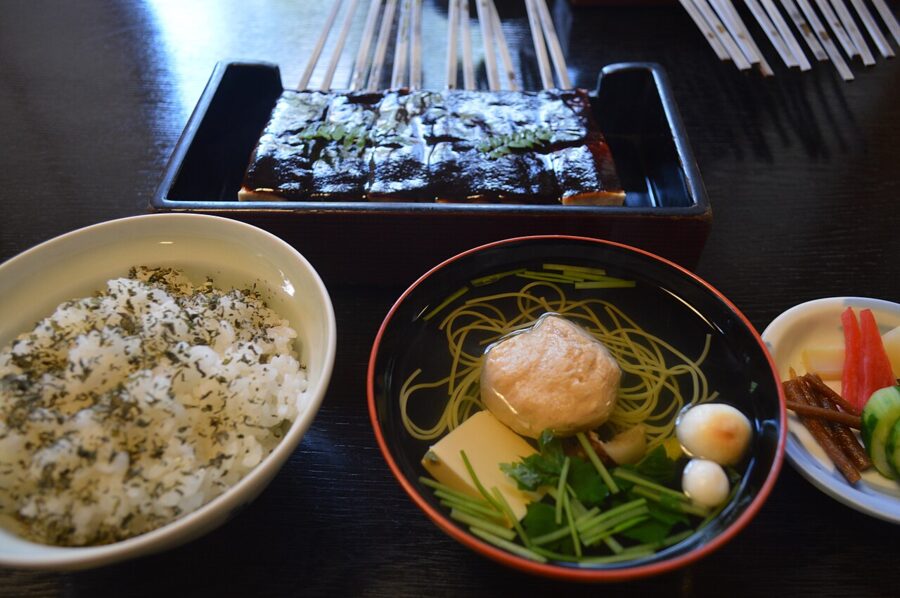
Otako Honten in Nihonbashi, a minute from Exit B5 of Nihonbashi Station, is the classic dark-broth Kanto house, and the Ministry of Agriculture names it among the standard-bearers of Edo oden. Its famous dish is tomeshi: a whole block of tofu simmered in the pot and laid over tea-flavoured rice. Weekday lunch runs 11:30–14:00, dinner 16:30–22:30, Saturdays and holidays 16:00–22:00.
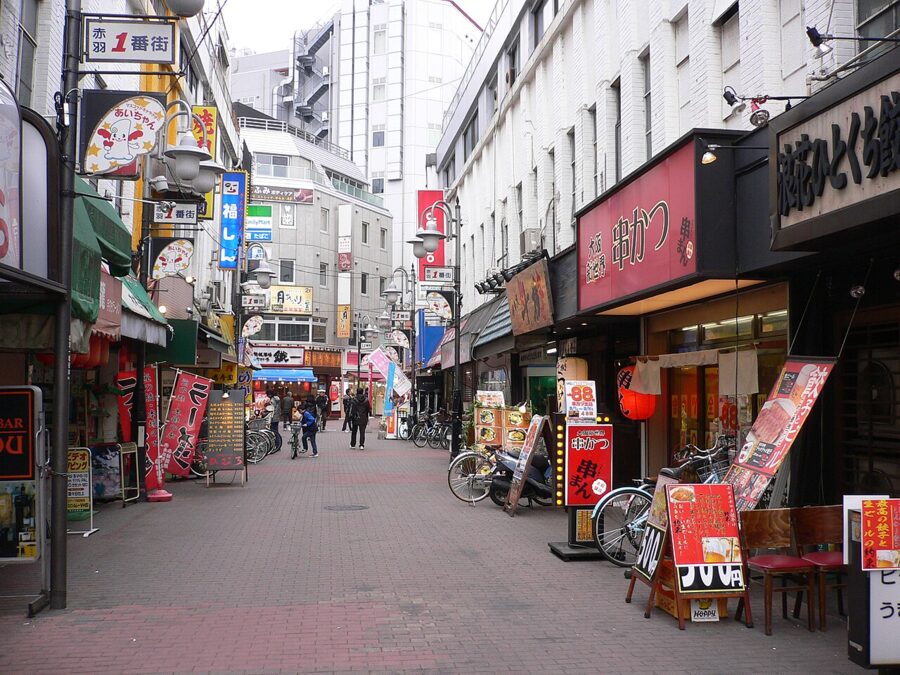
For something cheaper and louder, take the train to Akabane. Maruken Suisan, at Akabane 1-22-8 in the Ichibangai arcade, is a fish-cake maker with a standing counter, open 10:30–21:00 and closed Mondays and Wednesdays. Order a cup of sake and ask for dashi-wari: they top it up with oden broth and a shake of shichimi. If you’ve clearly been drinking already, they’ll only serve you one.
Yatai, and where they’ve gone
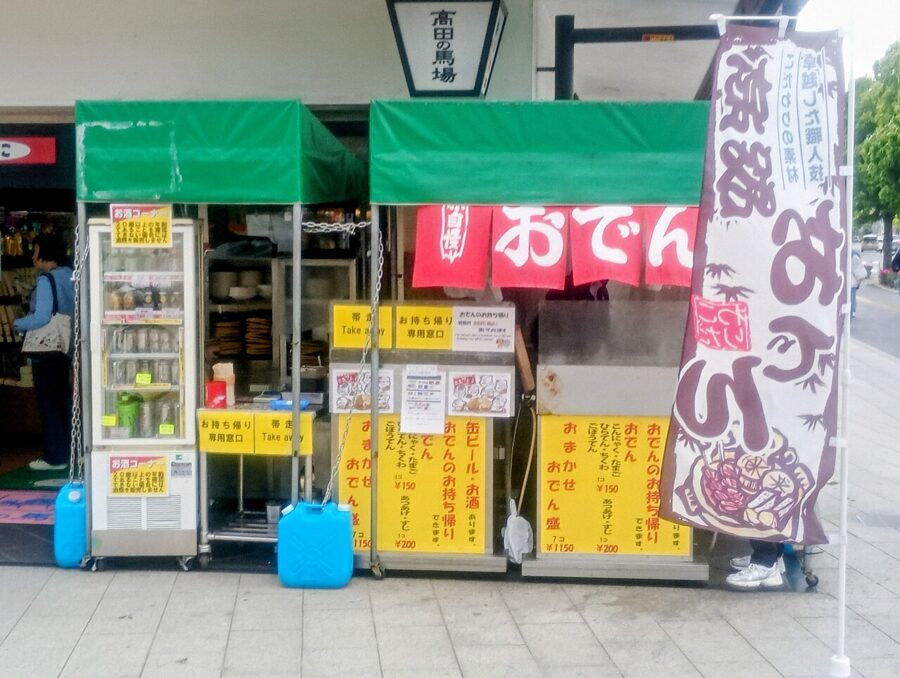
The oden stall on wheels is mostly a memory. Yokohama’s row of about ten oden yatai by the river outside the station’s west exit closed for good in January 2016, and Kochi’s stalls had to close or move indoors in March 2024. You’ll still see a cart at shrine fairs, and that’s about it in most cities.
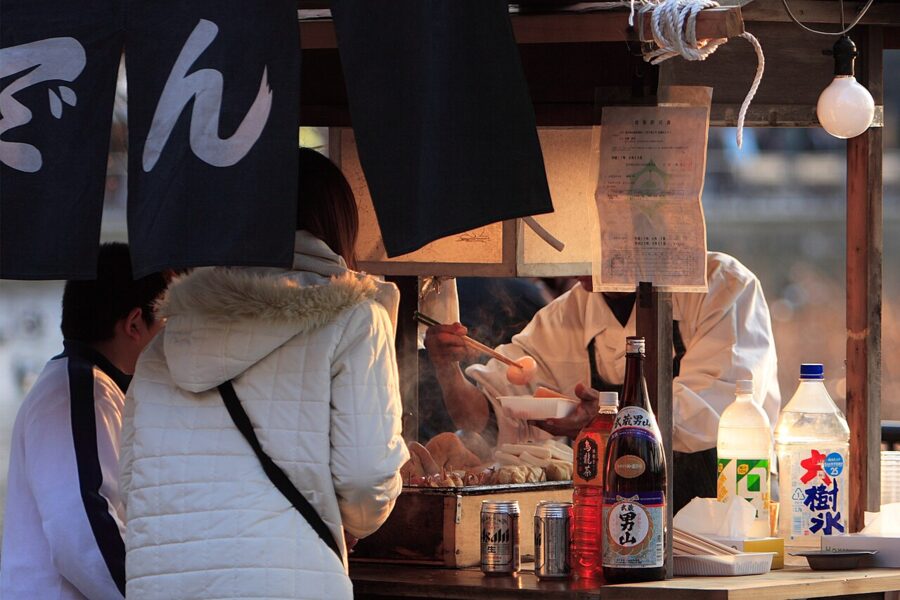
The exception is Fukuoka, where a city ordinance keeps the stalls legal. I’ve covered the yatai there in detail with the ramen; for oden, just know that many stalls keep a pot going beside the noodles, at roughly ¥200–400 a piece.
Aoba Oden-gai and Aoba Yokocho, Shizuoka
If one place justifies a trip for oden alone, it’s these two alleys in Shizuoka City’s Tokiwacho, a short walk north of JR Shizuoka Station. Shizuoka’s stalls once crowded the city centre; urban redevelopment cleared them in 1968, and the survivors regrouped in these lanes.
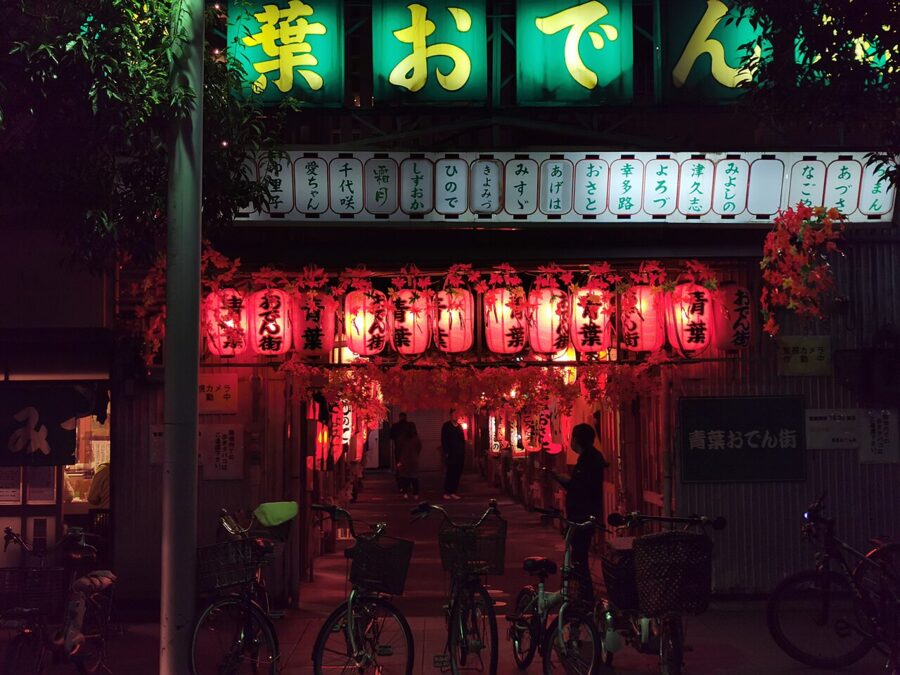
Aoba Oden-gai is the lantern-hung lane; Aoba Yokocho is a narrower one nearby. Mikawaya, at the entrance to Aoba Yokocho, started as a street stall in 1948 and moved into its shop here in 1972. Expect skewers from around ¥120 and a black broth that is sweeter than it looks.
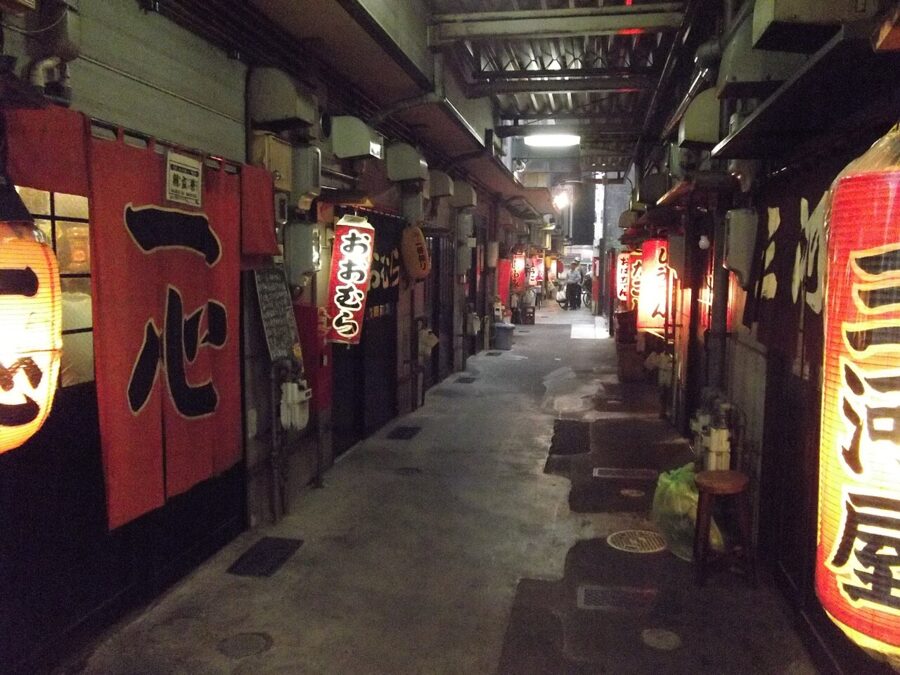
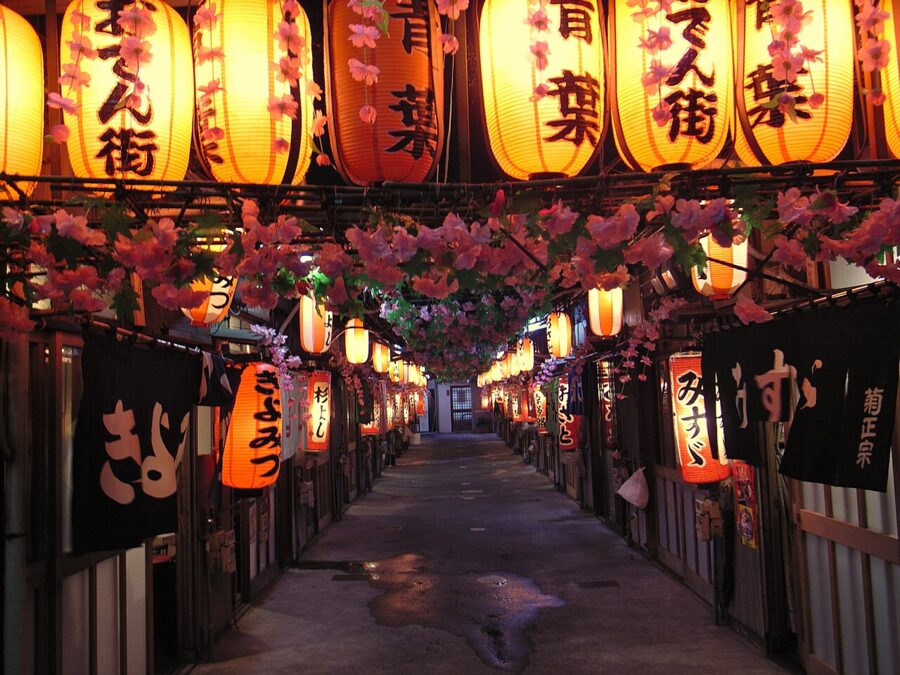
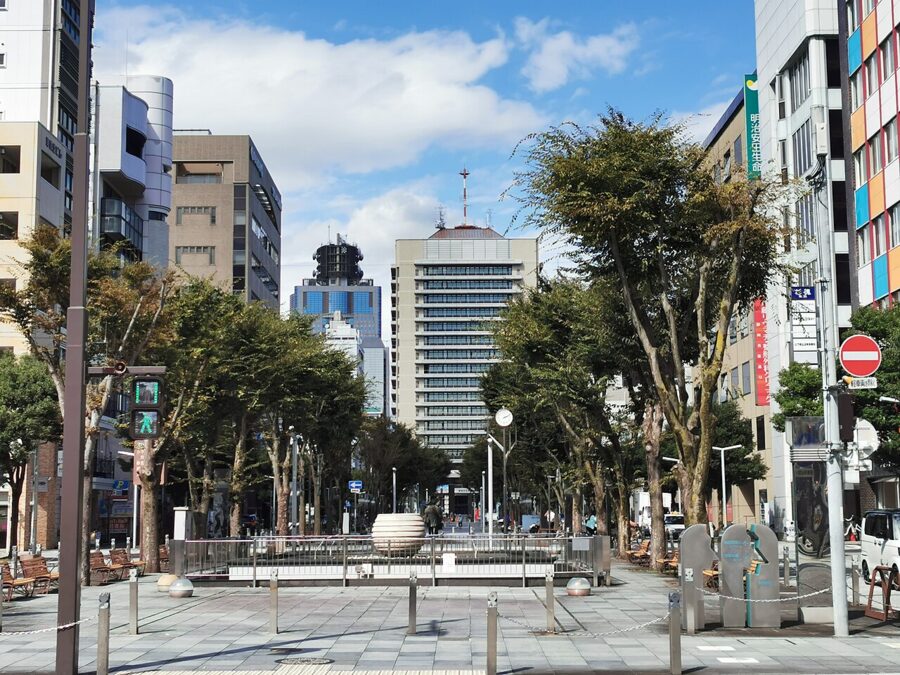
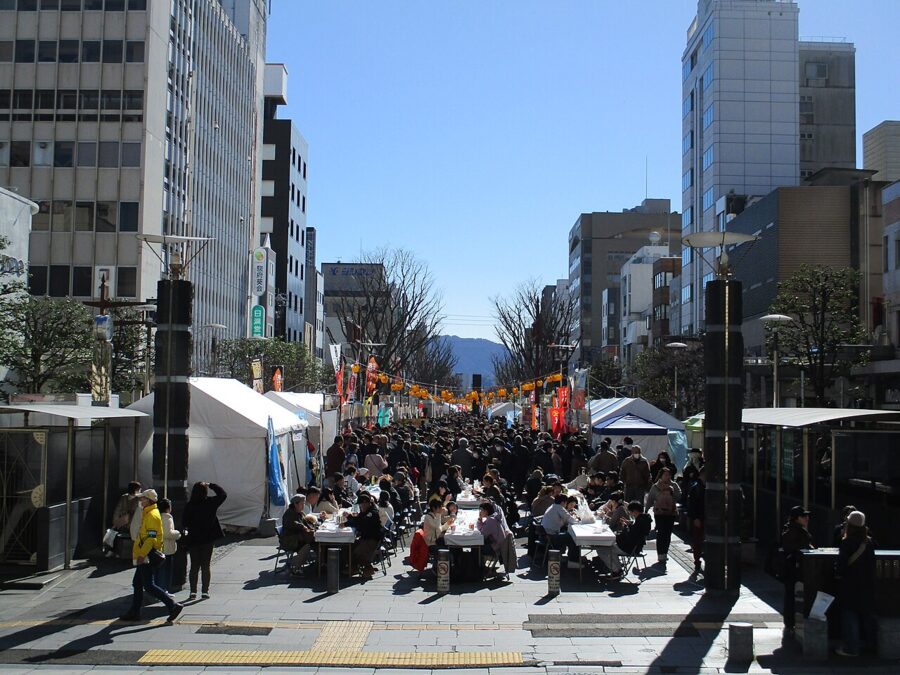
Time a visit for the Shizuoka Oden Matsuri if you can. It’s held around the end of February and the start of March on Aoba Symbol Road, the avenue where the stalls once stood, with oden from other regions and from abroad alongside the local pots.
Sake, beer and a can from a vending machine
Oden was sold with hot sake before it was sold with anything else, and the pairing still works best. Ask for atsukan, hot, or nurukan, warm. A dry, plain sake suits the pot better than anything fragrant.
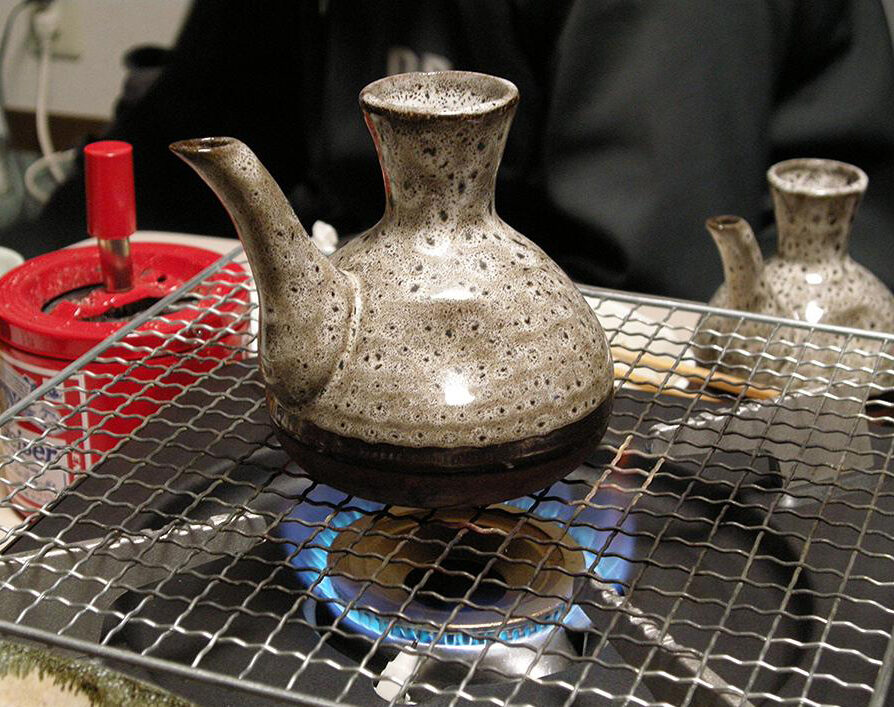
At an izakaya, oden is one dish among many, and the kitchen will often serve it as a moriawase, a mixed plate. At a specialist counter, order a few pieces at a time. They come hotter that way.
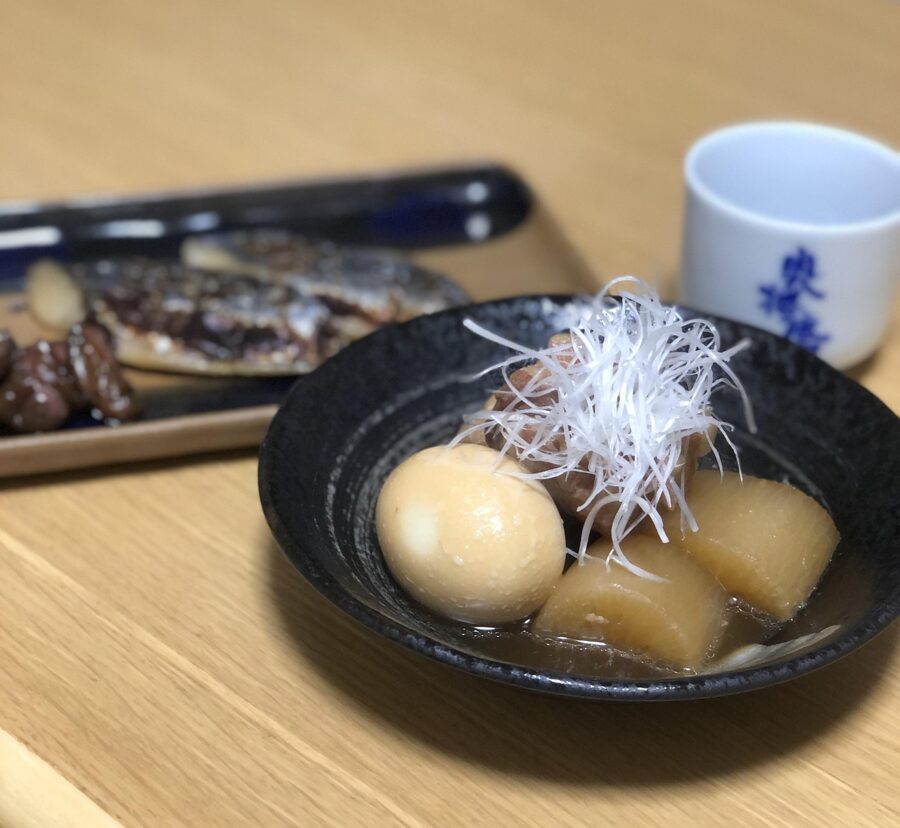
Beer is the other obvious partner. In my guide to craft beer I suggest a porter or dark lager with oden, and I stand by it with a Kanto pot. With a pale Kansai broth, a crisp lager or a whisky highball is lighter on the palate.
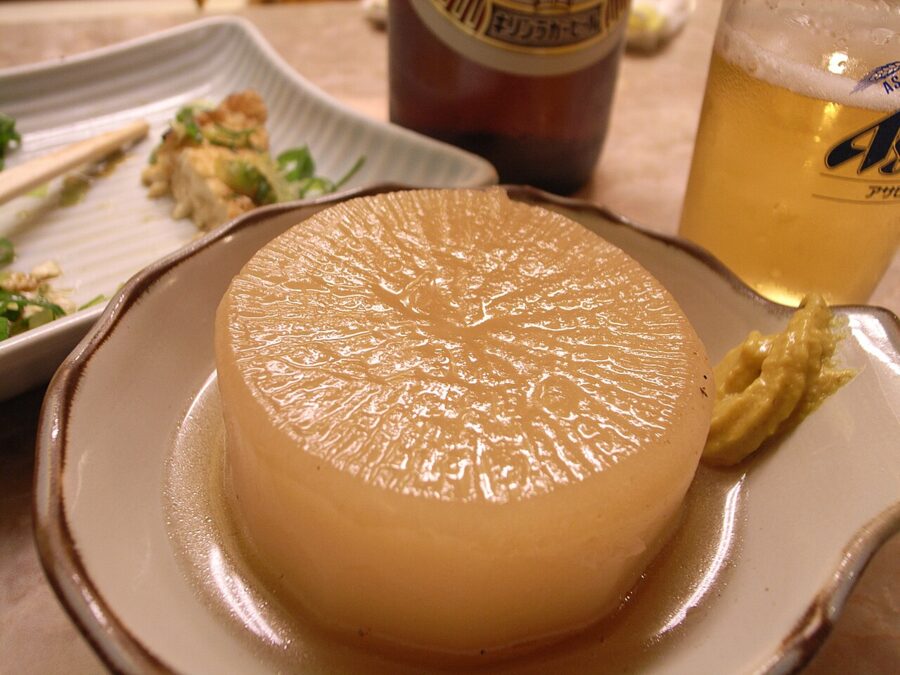
In Kanazawa, Kuroyuri pours a Manzairaku daiginjo from Hakusan in 45ml measures, so you can try a good bottle without committing to a whole flask. Takoume recommends its November whale pouch with sake, shochu or beer. And at a yakitori counter, a few pieces of oden between skewers is a perfectly normal order.
The oden can of Akihabara
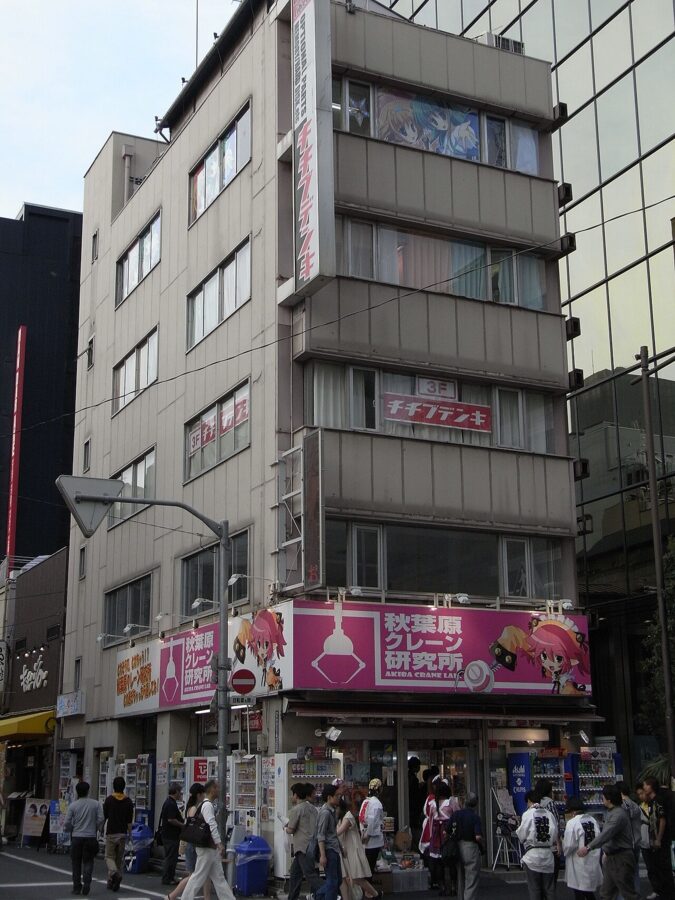
Akihabara made canned oden famous. Tengu Kanzume, a Nagoya canning company, launched its first oden can in 1985, which needed a can opener; a ring-pull version followed in 1993. In the early 1990s the parts shop Chichibu Denki added the cans to its street vending machine to keep sales up in winter, and they turned into an Akihabara souvenir.
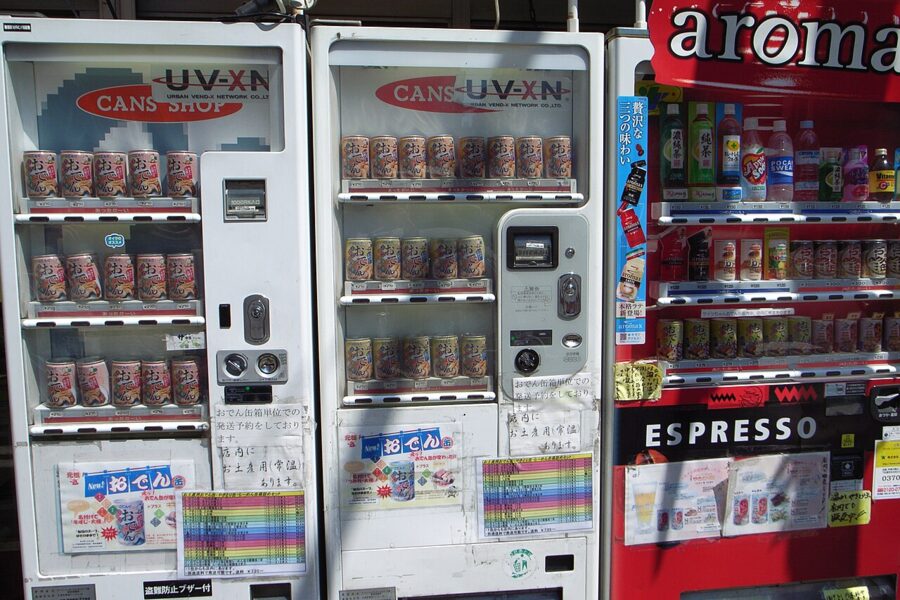
Chichibu Denki closed its shop on 20 May 2015. Cans still turn up in a few of Akihabara’s novelty vending machines, and in shops that sell them as gifts, but it’s a curiosity rather than a meal. Buy one if you pass a machine. Don’t cross town for it.
What it costs, and a few manners
Oden is still one of the cheapest hot meals in Japan, and the most flexible. You can spend ¥300 at a konbini or ¥8,000 at Otafuku, and the gap is mostly the setting and the broth’s age, not the size of the portions.
| Where | What you’ll pay |
|---|---|
| 7-Eleven (autumn 2026) | Daikon ¥121, egg ¥139, before tax |
| Fukuoka yatai | Roughly ¥200–400 a piece |
| Shizuoka alley counters | Skewers from around ¥120 |
| Kuroyuri, Kanazawa | ¥150–700 a piece, tax included |
| Takoume, Osaka | Kujira harihari ¥550 before tax (November) |
| Otafuku, Asakusa | ¥5,000–8,000 a head, plus ¥500 seat charge |
A few manners. Order two or three pieces at a time rather than ten, and keep the mustard on the rim. The broth is there to drink, and at most counters it’s fine to ask for a little more.
At self-service pots, like the ones in Kagawa’s udon shops, use the shop’s tongs or ladle, never your own chopsticks. And if a piece you wanted has run out, take it as a sign the shop is good.
Skip this
- Hunting for an oden yatai in Tokyo or Yokohama. Outside Fukuoka they’ve almost all gone.
- Crossing Tokyo for the Akihabara oden can. It’s fun to find, not worth a journey.
- Judging chikuwabu on one bite from a konbini pot. Try it at a Kanto house that gives it time, or skip it if doughy textures aren’t your thing.
- Hunting for kani-men outside November and December. The crab season is closed and it isn’t served.
Start at a konbini on the first cold evening of October: daikon, egg, konnyaku, extra broth and a sachet of karashi. Then sit at a proper counter, in Asakusa or Shizuoka or Kanazawa, and order the same three. You’ll taste the difference that three days makes.
You Might Also Enjoy
 Japanese Wagyu: A Regional Map of Kobe, Matsusaka, Hida and Seven More
 Yokohama Chinatown: What to Eat, Where to Sit Down and the History Behind the Gates
 Harbin Ice Festival: Ice and Snow World, Sun Island and How to Survive Harbin in January
 Staying in a Ryokan: What Happens, What It Costs and How to Choose One