Udon in Japan: Sanuki, Inaniwa, Kishimen and the Regional Noodle Map
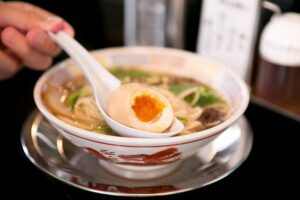
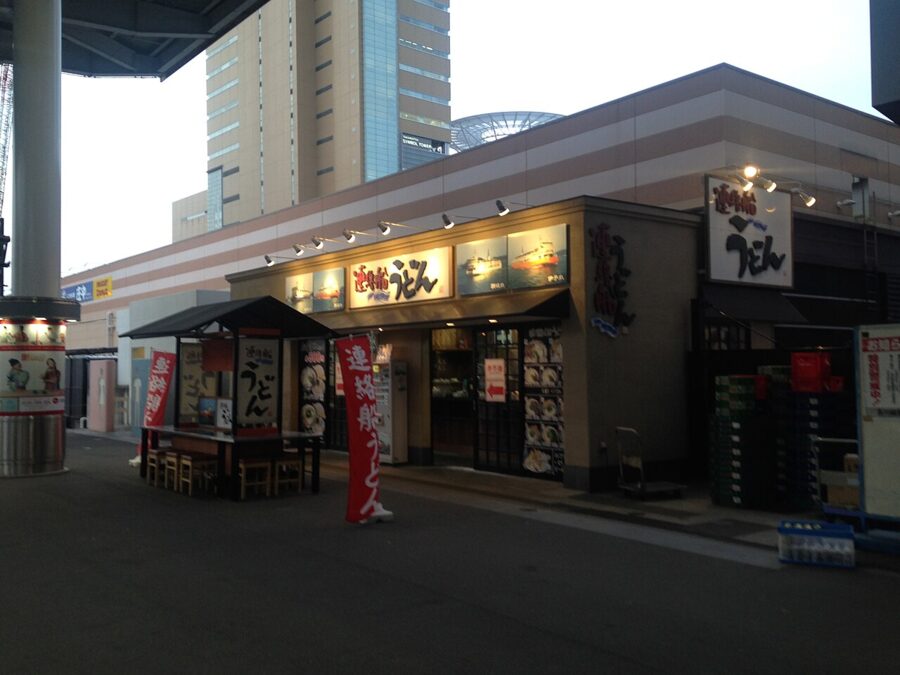
The man in front of me at Gamo Udon in Sakaide didn’t look at a menu, because there isn’t really one. He said “hitotama, atsui” (one ball, hot), took a bowl of plain noodles from the counter, dropped a fried tofu pouch on top, paid ¥300 and carried the lot outside to eat standing up next to the car park. It was 8:40 on a weekday morning, and the whole transaction took less time than it took me to work out which tap held the cold broth.
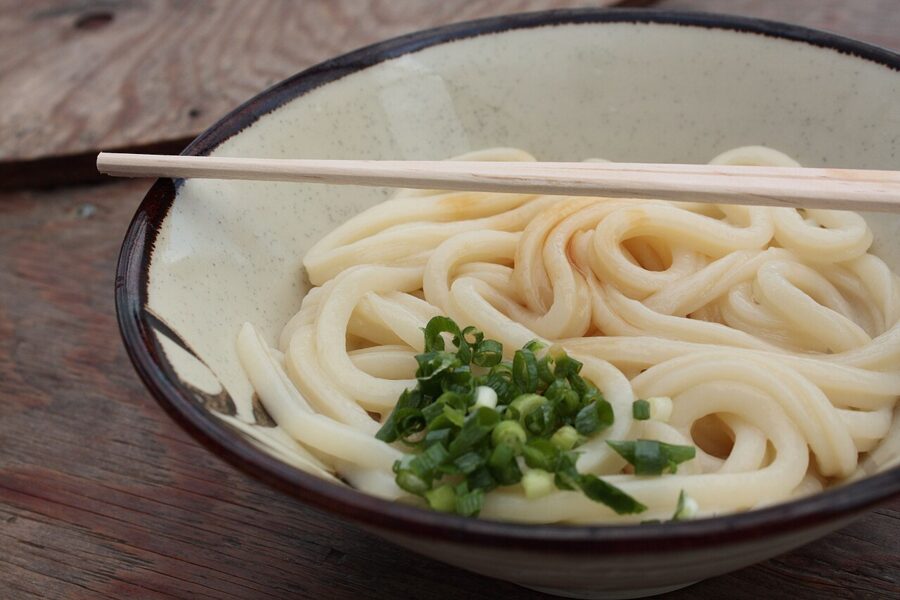
That is udon in its home prefecture: thick wheat noodles, a ladle of broth made from dried sardines, and a self-service system that assumes you already know the rules. Kagawa calls itself udon-ken, the udon prefecture, and the nickname isn’t a slogan stuck on top of a tourist trail. The shops sit in residential streets, beside rice paddies and inside working noodle factories, and most of them close by early afternoon.
But udon is a national dish with a dozen regional faces. Akita hand-stretches it thin and flat. Nagoya rolls it into wide ribbons called kishimen. Ise boils it for close to half an hour until it is soft as a pillow.
Hakata, where the noodle may have first arrived in Japan, prefers it gentle too. Below: the regional styles, the Kagawa counter step by step, the menu board, and where to eat well if Shikoku isn’t on your route.
| Style | Home | The noodle | How it’s usually eaten |
|---|---|---|---|
| Sanuki | Kagawa | Thick, square-cut, firm and springy | Kake, bukkake, kama-age, kama-tama, often self-service |
| Inaniwa | Yuzawa, Akita | Thin, flat, hand-stretched and dried | Cold with a dipping sauce, or in a light hot broth |
| Mizusawa | Shibukawa, Gunma | Slightly thin, glossy, translucent in places | Cold on a tray with soy or sesame dip |
| Kishimen | Nagoya, Aichi | Wide, thin ribbons around 1.5mm thick | Hot with bonito flakes, or chilled in summer |
| Ise | Ise, Mie | Very thick and very soft, boiled 25 minutes or more | With a small pool of dark tamari sauce |
| Hakata | Fukuoka | Soft, slightly flat, no fight to it | Clear broth with burdock tempura or fish cake |
| Goto | Goto Islands, Nagasaki | Round, about 2mm across, camellia oil in the stretch | Jigoku-daki: from the pot into flying fish broth |
| Himokawa and kawahaba | Kiryu, Gunma and Konosu, Saitama | Flat sheets from a few millimetres to several centimetres wide | Hot or as a dipping noodle |
| Yoshida no udon | Fujiyoshida, Yamanashi | Thick, twisted and very hard | Hot with cabbage, simmered meat and chilli paste |
In This Article
- Flour, salt, water and a pair of feet
- What counts as udon, legally
- Koshi, and why it doesn’t last
- The regional map
- Sanuki (Kagawa)
- Inaniwa (Akita)
- Mizusawa (Gunma)
- Kishimen and miso-nikomi (Nagoya)
- Ise udon (Mie)
- Hakata udon (Fukuoka)
- Goto udon (Nagasaki)
- Himokawa, kawahaba and the wide ones
- Yoshida no udon, Musashino and hoto: the wheat belt
- Kagawa, where the shop is the factory
- Three kinds of shop
- How the counter works, step by step
- Sakaide before breakfast
- Kama-tama and the Ayagawa drive
- Takamatsu without a car
- Kotohira: noodles and 785 steps
- Reading the menu board
- Kitsune and tanuki
- Osaka broth versus Tokyo broth
- Curry udon
- Nabeyaki and yaki udon
- No time for Shikoku? Udon in the big cities
- Tokyo
- Osaka
- Kyoto
- Nagoya
- Fukuoka
- Etiquette, prices and what to skip
- Skip this
Flour, salt, water and a pair of feet
Udon is wheat flour, salt and water. No egg, and none of the alkaline mineral water that turns ramen noodles yellow and springy. Everything else, the bite, the shine, the way it holds up in hot broth, comes from what happens between mixing the dough and dropping it in the pot.
The salt matters more than you’d guess. Kagawa makers still quote an old ratio rule, do-san, kan-roku, tsune-go: in the heat of midsummer, one measure of salt to three of water; in the depth of winter, one to six; the rest of the year, one to five. Salt tightens the gluten and makes the dough stretch, but too much works against you, so the brine shifts with the weather.
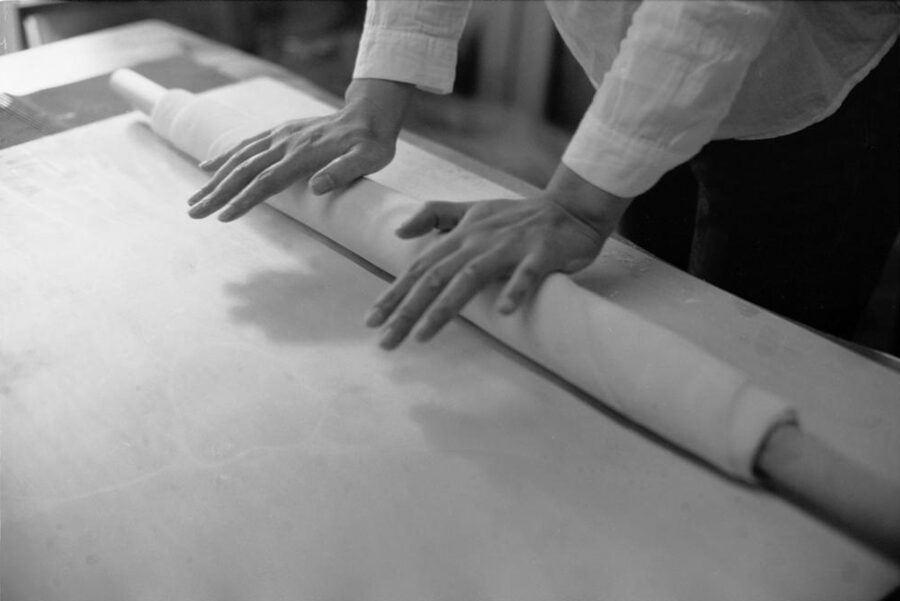
Then come the feet. Traditional dough is kneaded by treading on it, today through a plastic sheet, which works the gluten in every direction in a way a hand or a straight roller can’t. A kneading machine was developed in 1965, partly over hygiene worries, and from 1968 Kagawa made it a condition of a noodle-making licence. Plenty of shops still do the stepping anyway.
Most of the flour isn’t Japanese. More than half the wheat in Japanese udon is Australian Standard White, a blend bred in Australia for exactly this noodle. Kagawa answered with its own varieties, Sanuki no Yume 2000 and then Sanuki no Yume 2009, and a shop that uses them will usually tell you so on the wall.
What counts as udon, legally
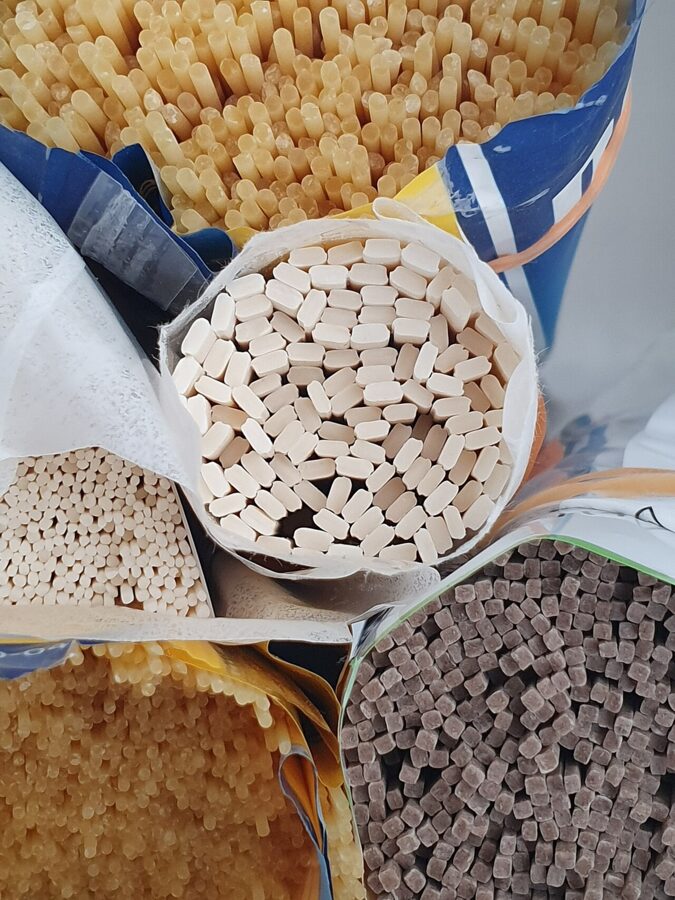
Japan does write it down, at least for dried noodles. Under the national food labelling rules, a dried noodle 1.7mm or more across may be sold as udon. Between 1.3mm and 1.7mm it’s hiyamugi or thin udon, and below that it’s somen. A noodle 4.5mm or wider and no more than 2mm thick can be called kishimen, himokawa or hiramen, flat noodle.
Fresh and boiled noodles have no fixed measurement, which is why Inaniwa can be thinner than some hiyamugi and still be udon. The long history of wheat noodles in Japan, the Chinese arrivals and the medieval names, is covered in the history of Japanese food. Here it’s enough to know the noodle was being eaten across the country, in more or less its current form, by the early Edo period.
Koshi, and why it doesn’t last
Every conversation about udon in Japan comes back to koshi. People translate it as “chewiness” or “firmness”, but neither is quite right.
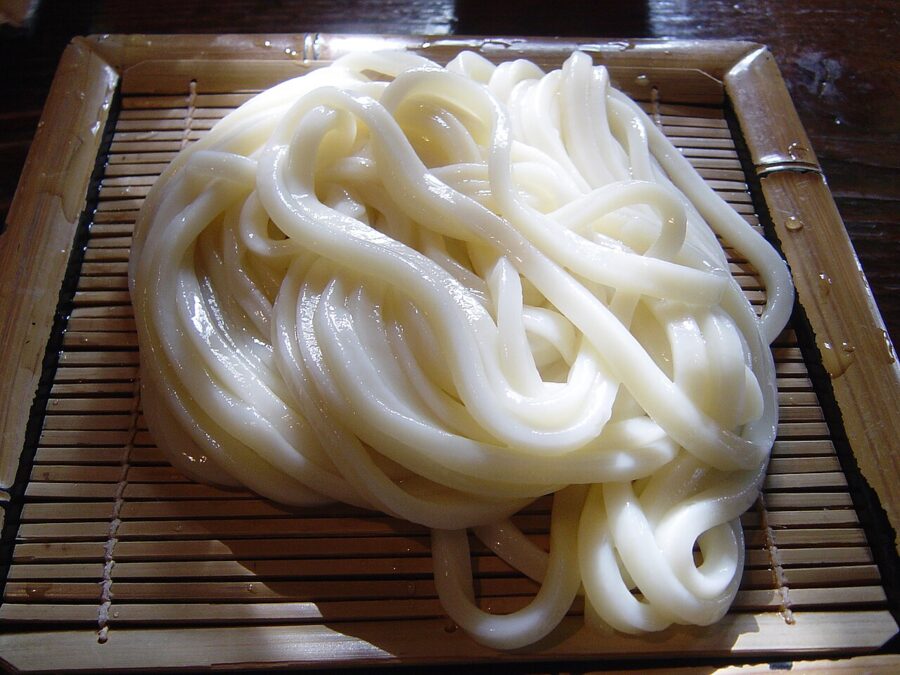
Good koshi is a noodle that feels soft when you first bite and then pushes back, so you need real force to bite through it. A noodle that’s simply hard doesn’t have koshi. It’s just hard.
Koshi also fades, fast. Texture studies have measured a freshly boiled noodle losing about a third of its breaking strength within two hours, because the moisture evens out as it sits and the whole strand turns uniformly soft. That’s why the serious shops boil in small batches all morning and why Kagawa people say timing is everything. Walk in just after a fresh batch comes out and you’re eating a different noodle from the person who arrived twenty minutes earlier.
Not every region wants koshi, though. Osaka, Kyoto, Hakata and Ise have long preferred softer noodles that soak up broth.
The regional map
Japan’s ramen has a famous regional ramen map, and udon has one just as varied, only older and quieter. The “three great udon” of Japan is a label several regions claim at once; the Japan Udon Society points out that no official body ever chose three. Sanuki and Inaniwa appear on every version. The third slot goes to Mizusawa, Goto, Himi or Nagoya’s kishimen depending on who’s talking.
Sanuki (Kagawa)
Sanuki is the old name for Kagawa, and Sanuki udon is the style most people outside Japan mean when they say udon: thick, square-cut, glossy and firm. The region had what the noodle needs. A dry, sunny climate on the Seto Inland Sea was good for winter wheat grown after the rice harvest, the coast at Sakaide produced salt, Shodoshima and Hiketa brewed soy sauce, and the island of Ibukijima supplied iriko, small dried sardines.
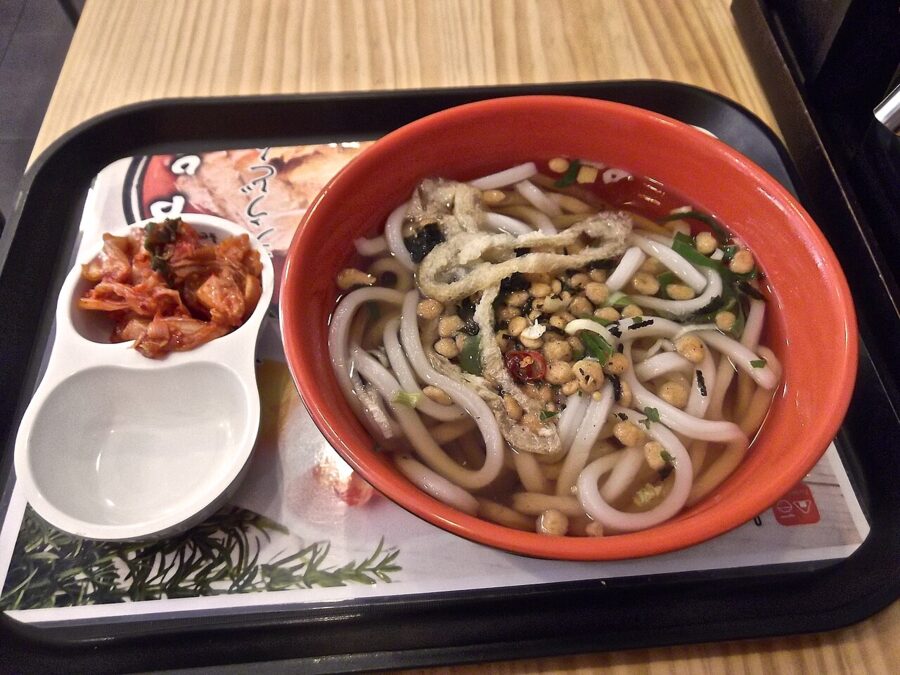
The iriko is the giveaway. Most Japanese cooking keeps dried sardines for miso soup and simmered dishes because they taste stronger than bonito. Kagawa puts them up front with Hokkaido kombu, because a delicate bonito broth would be flattened by such an assertive noodle. Ginger and spring onion are the standard condiments, and they suit the sardine.
The numbers explain the nickname. In one survey of Kagawa residents, 90.5 percent said they ate udon at least once a week. In 2021 the prefecture had about 50 udon shops for every 100,000 people, roughly three and a half times the national average, and the annual guidebooks to Kagawa’s udon list around 800 shops. July 2, the old farming day of Hangesho, is Sanuki Udon Day.
Inaniwa (Akita)
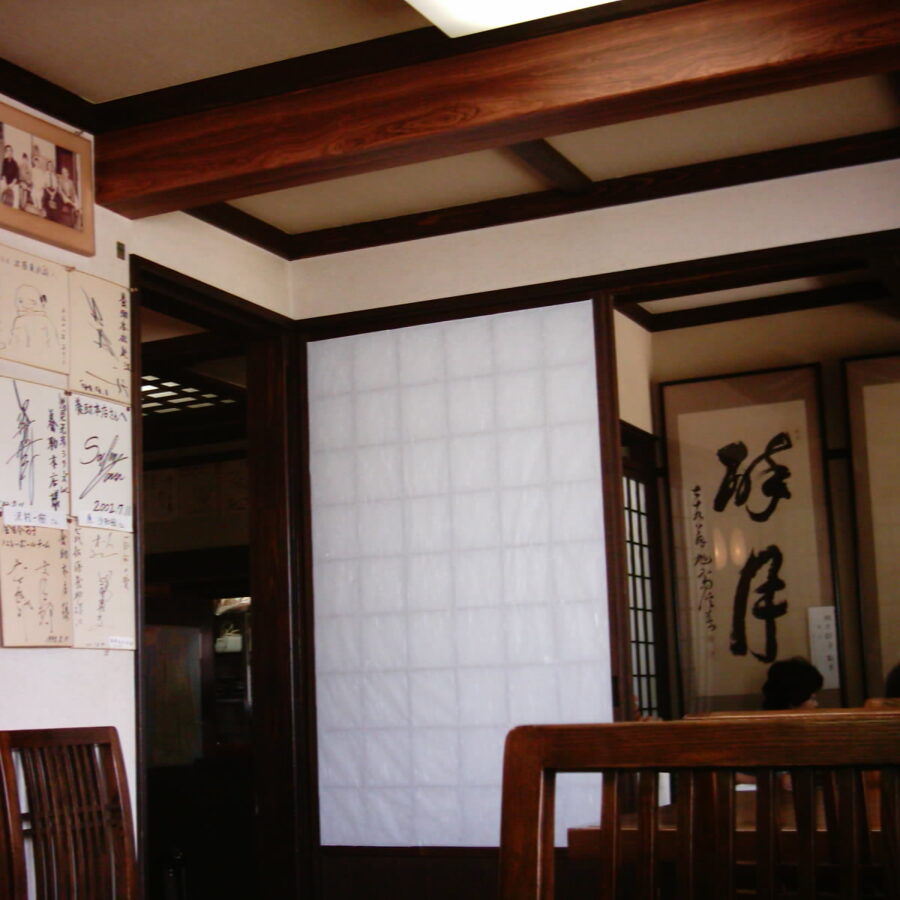
At the other end of the country and the other end of the texture scale, Inaniwa udon comes from the village of Inaniwa in what is now Yuzawa in southern Akita. A local record credits Sato Ichibei with starting it before the Kanbun era (1661–1673), and the method stayed a family secret until 1972. Only then did production grow enough for ordinary people to eat it regularly.
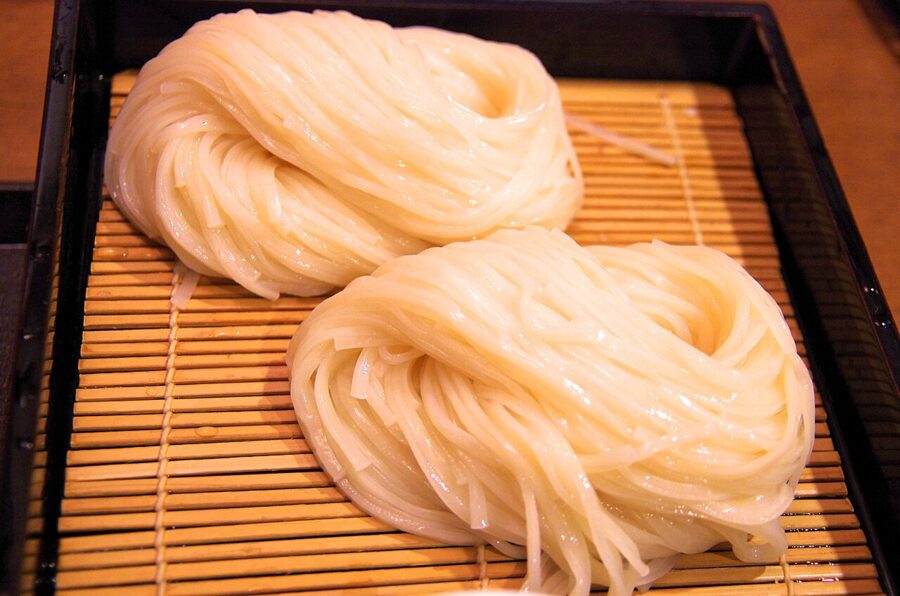
Inaniwa is closer to somen than to Sanuki in how it’s made. The dough is twisted as it’s kneaded, stretched by hand rather than cut, dusted with starch instead of flour, then dried. The twisting traps tiny air pockets inside the strand, which gives Inaniwa its smooth, almost slippery feel. It’s flat, slightly yellow, and best cold, dipped into a light soy and dashi sauce.
You don’t need to go to Akita for it. Sato Yosuke runs restaurants in Ginza, Hibiya and Asakusa in Tokyo as well as its main shop in Yuzawa, so a cold Inaniwa lunch is easy to fit into a Tokyo day.
Mizusawa (Gunma)
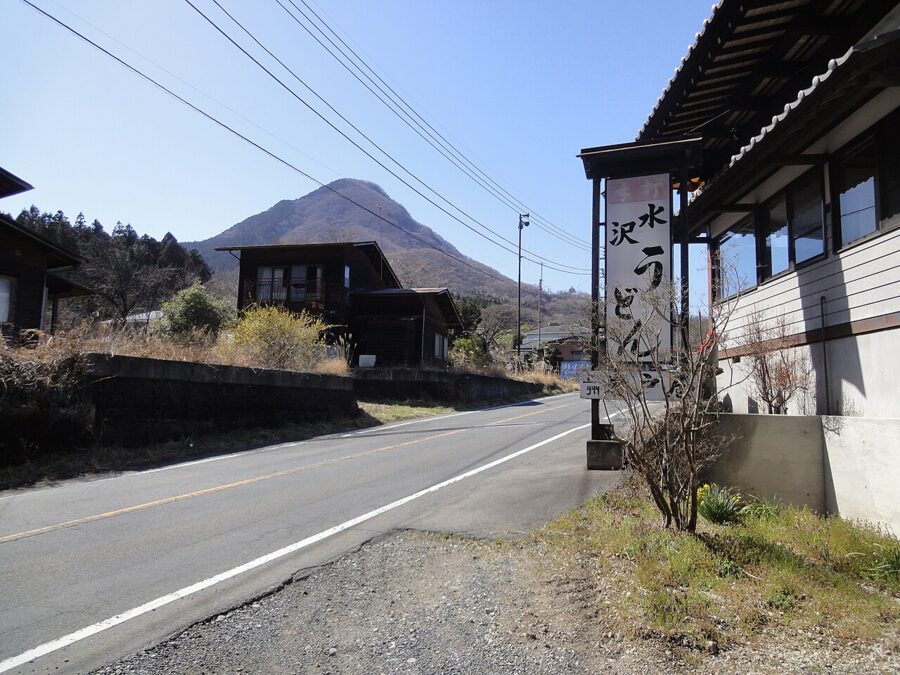
Mizusawa udon began about 400 years ago as food for pilgrims at Mizusawa-dera, the temple also known as Mizusawa Kannon, on the slopes south-east of Ikaho Onsen. Today around a dozen shops line the road near the temple, about 4km from Ikaho’s hot spring town, and they share the Mizusawa name under a trademark group.
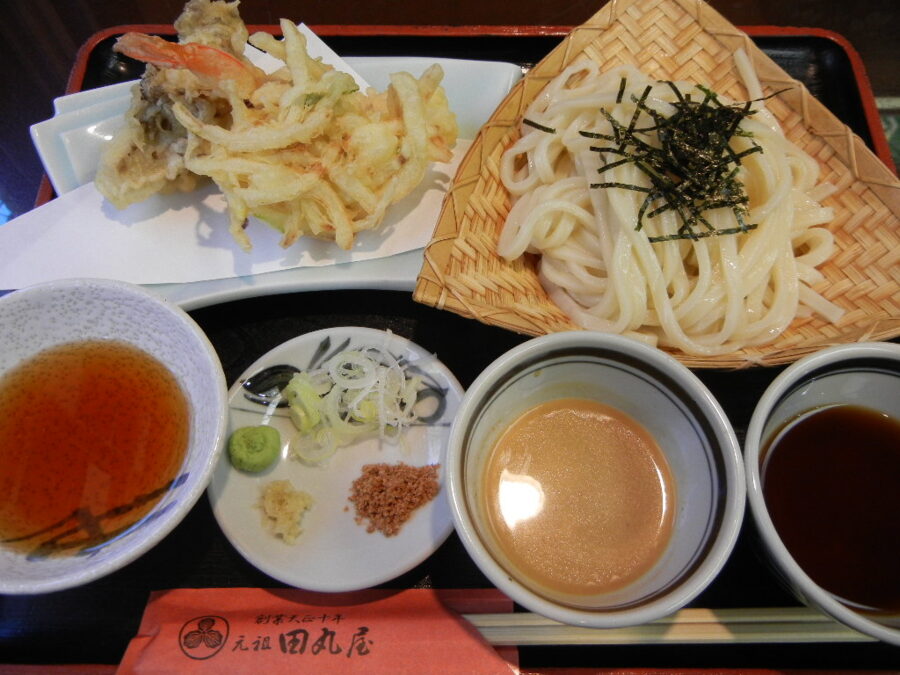
The noodle is a little thinner than Sanuki, very smooth, glossy and translucent in places, made by repeating cycles of kneading, stretching and resting. Order zaru and you’ll get it chilled with both dips. Osawaya, one of the long-running shops on the road, opens its first branch at 10:00 on weekdays and 9:30 at weekends, closing at 16:00, and pairs its zaru with maitake mushroom tempura.
Kishimen and miso-nikomi (Nagoya)
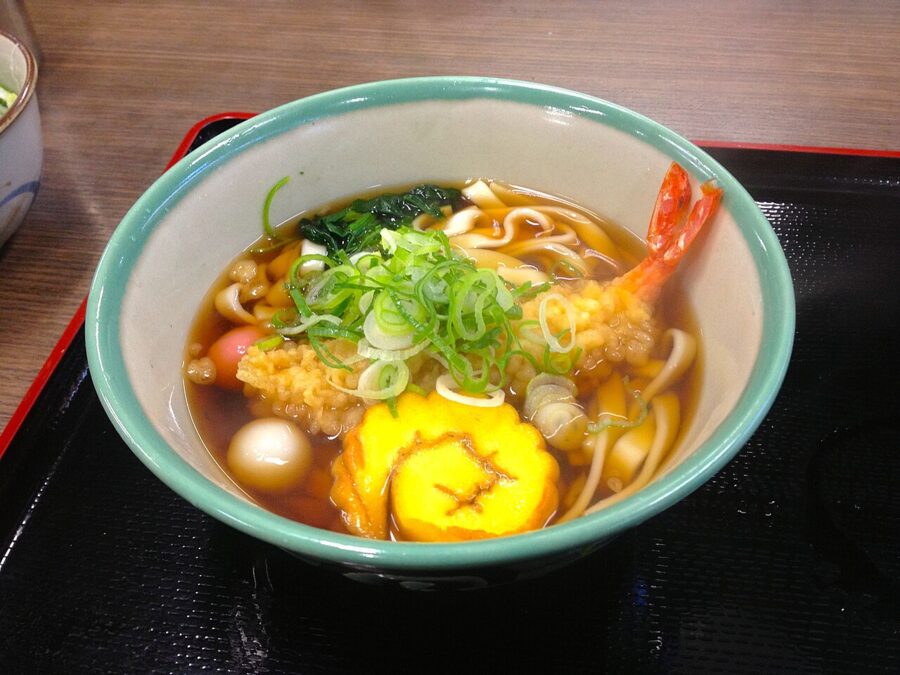
Nagoya’s udon comes in two very different forms. The first is kishimen, a wide, thin ribbon noodle. A packet sold as “Nagoya kishimen” has to be made in Aichi with about 4 percent salt and about 30 percent water, rolled to around 1.5mm thick and boiled for no more than five or six minutes. The result is slippery and soft, with very little koshi, and it soaks up broth quickly.
Nobody agrees where kishimen came from. One theory traces it to a flat “Imokawa udon” sold on the old Tokaido road in what is now Kariya. Nagoya’s education board prefers a story about pheasant meat noodles, kiji-men. A third links the name to a Chinese snack of flat, go-stone-shaped dough.
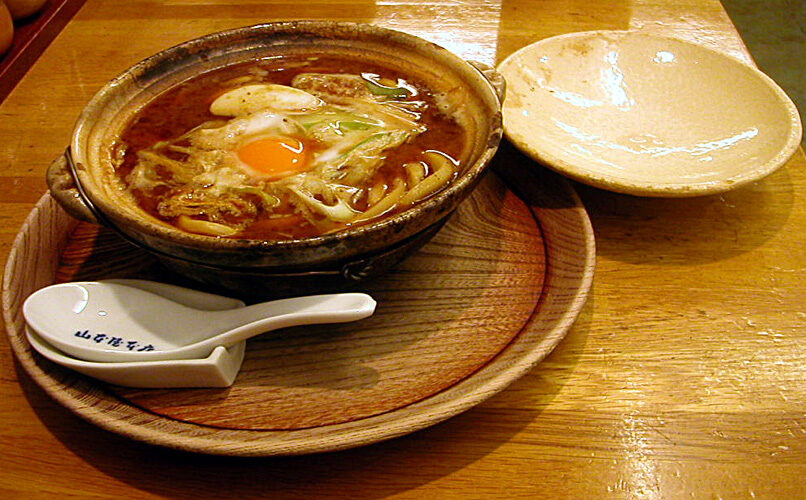
The second Nagoya form is miso-nikomi udon, and it’s the opposite of delicate. Noodles made with no salt at all, so they don’t oversalt the pot, are simmered in a dark broth of soybean miso and bonito, with chicken, egg and spring onion, in a small clay pot. The noodles are served deliberately firm, almost underdone in the middle, and first-timers sometimes complain about it.
Ise udon (Mie)
Ise udon is the bowl that makes Kagawa people wince. The Ise Udon Council’s standard calls for noodles at least 6mm thick, measured as width plus height, boiled for 25 minutes or more. They come out very soft and almost fluffy, and there’s no broth: just a few spoonfuls of dark sauce made from tamari (the liquid that collects when soybean miso is made) and bonito stock, with chopped spring onion.
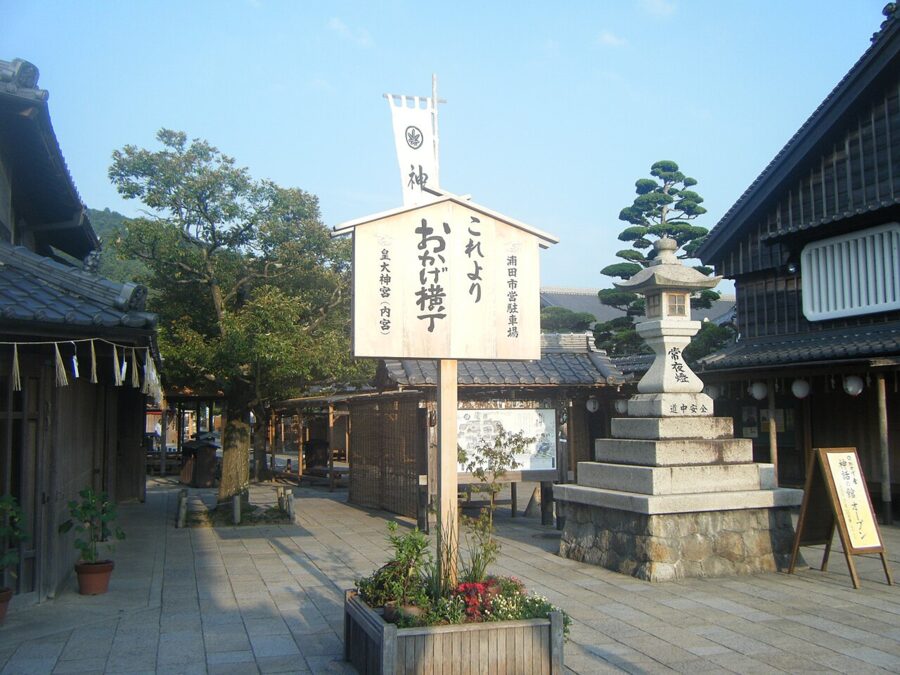
The style grew up feeding pilgrims to Ise Jingu. Shops could keep noodles boiling all day and serve them the second a customer sat down, which was handy with crowds of worshippers to get through. Locals just called it udon until the 1960s; the shops’ trade association adopted the name “Ise udon” in 1972, after the broadcaster Ei Rokusuke had popularised it.
Hakata udon (Fukuoka)
Fukuoka is better known abroad for pork-bone ramen (the Fukuoka ramen guide covers that properly), but udon got there first, maybe first in all of Japan. The Zen monk Enni, known as Shoichi Kokushi, came back from Song China in 1241, founded Jotenji temple in Hakata the next year and is said to have brought milling techniques for flour with him.
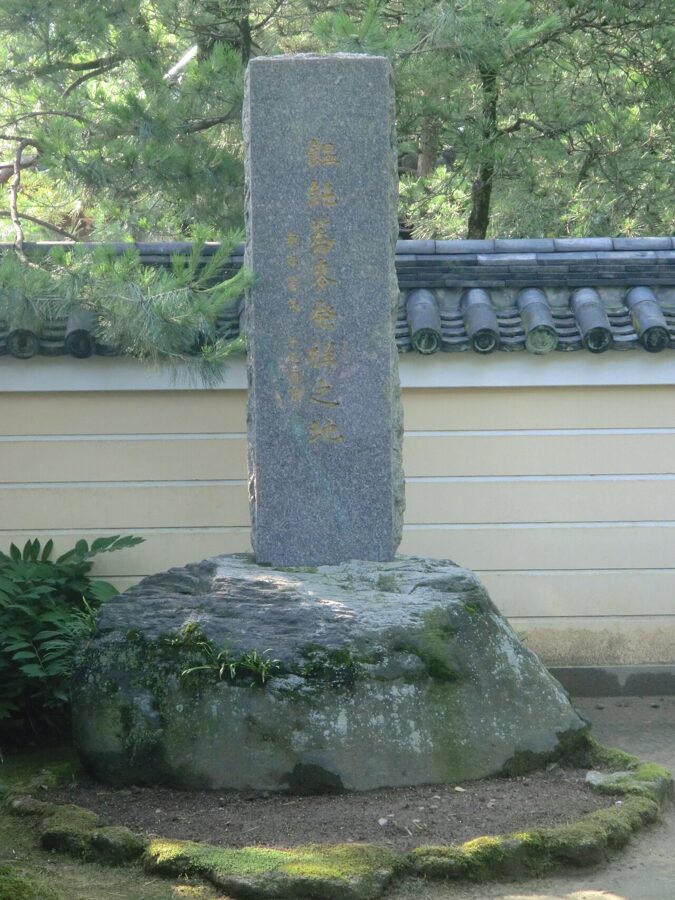
Historians argue about whether Enni’s noodles looked anything like today’s, and the stone makes a confident claim about a contested story. The local style that grew up later is clear enough, though. Hakata udon is soft, slightly flat and gentle, traditionally boiled in advance for merchants who wanted to eat quickly. The broth is pale and clear, built on kombu, bonito, mackerel flakes, dried sardines or flying fish, finished with light soy sauce.
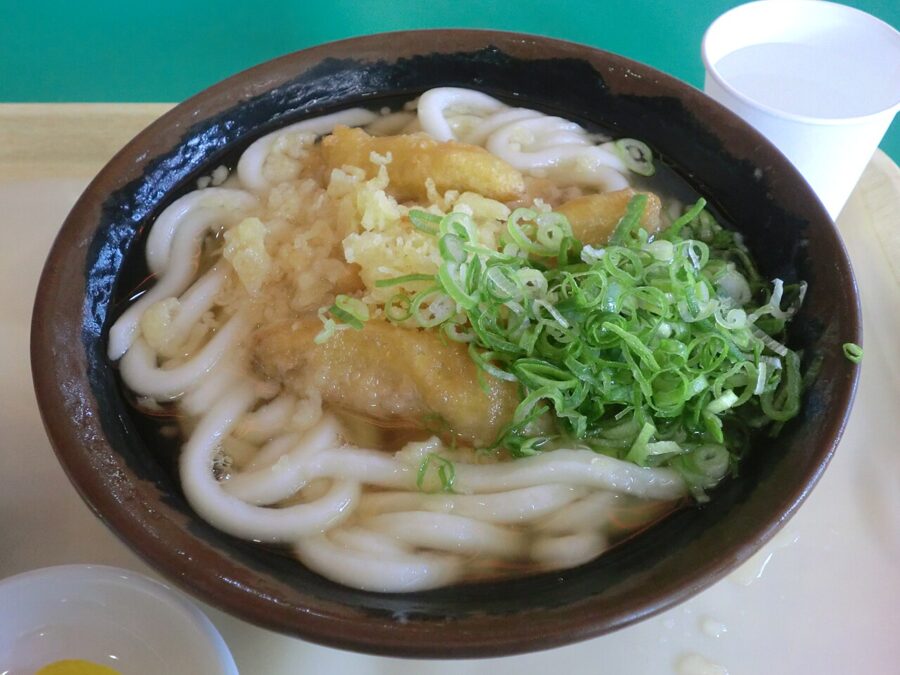
The other regional toppings are maruten, a round fried fish cake, and sweet soy-simmered beef. Many shops put yuzu kosho, the citrus and chilli paste, on the table. A rice ball of kashiwa meshi, chicken and burdock rice, is the classic side.
Goto udon (Nagasaki)
The Goto Islands off western Nagasaki make a thin, round udon, about 2mm across, hand-stretched with camellia oil instead of starch or flour, then dried. Despite the thin strand, it holds a good bite and doesn’t go soggy quickly. Most of the dried noodles come from Shin-Kamigoto on the northern islands.
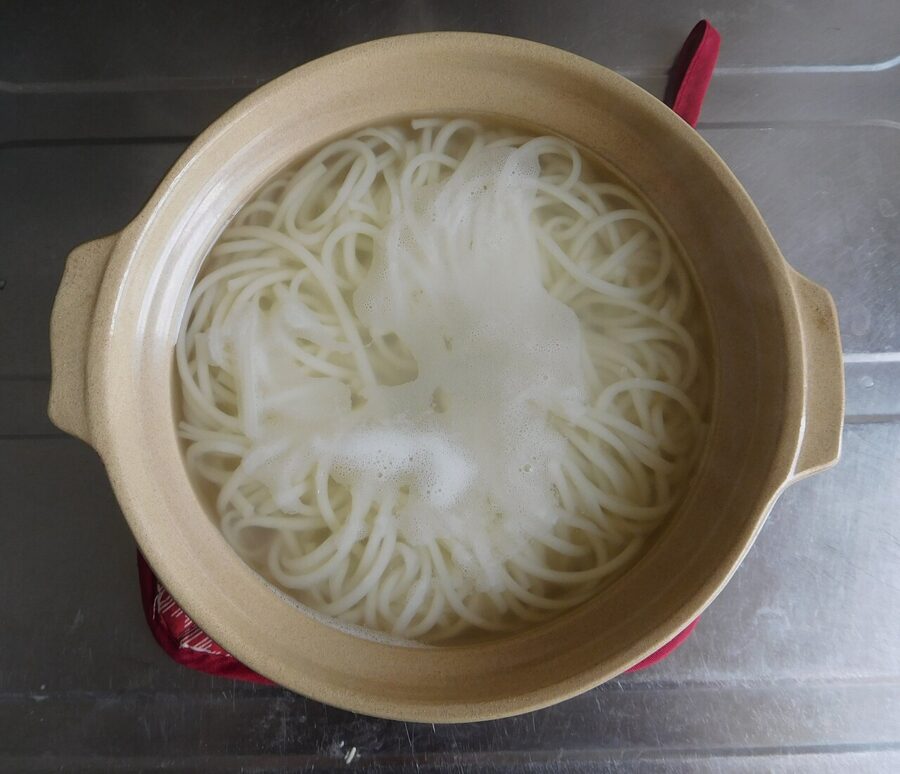
The local way to eat it is jigoku-daki, “hell boil”: the noodles go straight from a bubbling iron pot into a dipping sauce made with ago, grilled flying fish, or into beaten egg with soy sauce and condiments. The islanders have their own story of the noodle arriving directly from China, separate from Kagawa’s, which is either history or very good marketing.
Himokawa, kawahaba and the wide ones
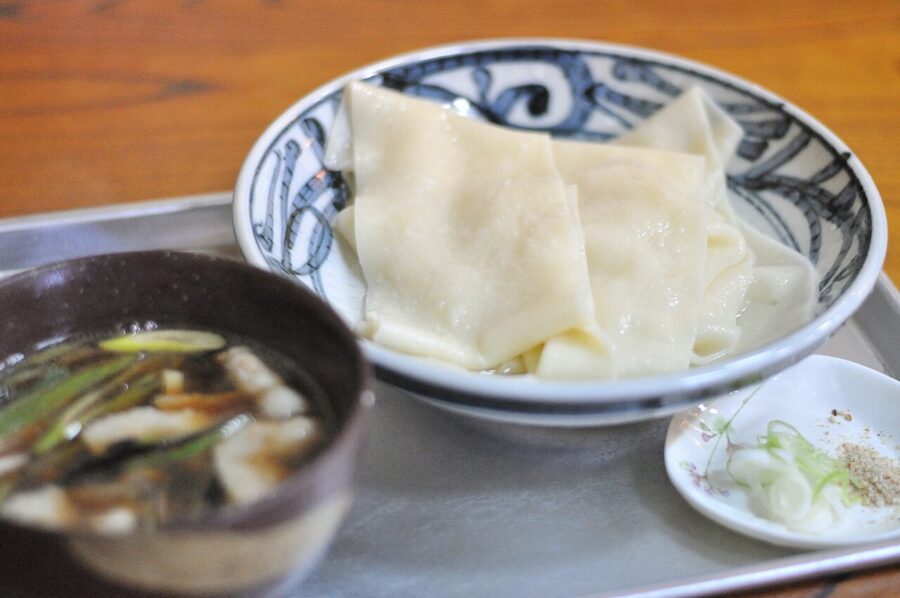
Flat noodles turn up all over eastern Japan. In Kiryu, Gunma, himokawa ranges from around 5mm wide to sheets more than 15cm across, so wide you fold them with chopsticks rather than slurp them. By the late Edo period, people in Edo called flat udon himokawa, and the author of the Morisada Manko, a survey of Edo customs, thought the word was a garbled “Imokawa”, the same Tokaido village tied to kishimen.
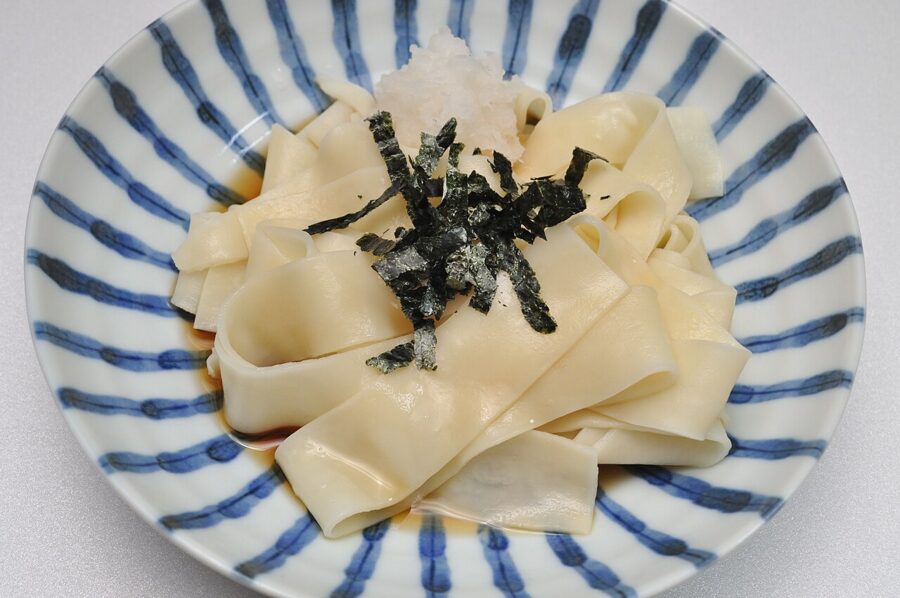
Konosu in Saitama went further in 2009 with kawahaba udon, “river-width” noodles about 8cm across. It’s a novelty, but a cheerful one, and it shows how seriously Saitama takes udon. The prefecture is second only to Kagawa in udon production.
Yoshida no udon, Musashino and hoto: the wheat belt
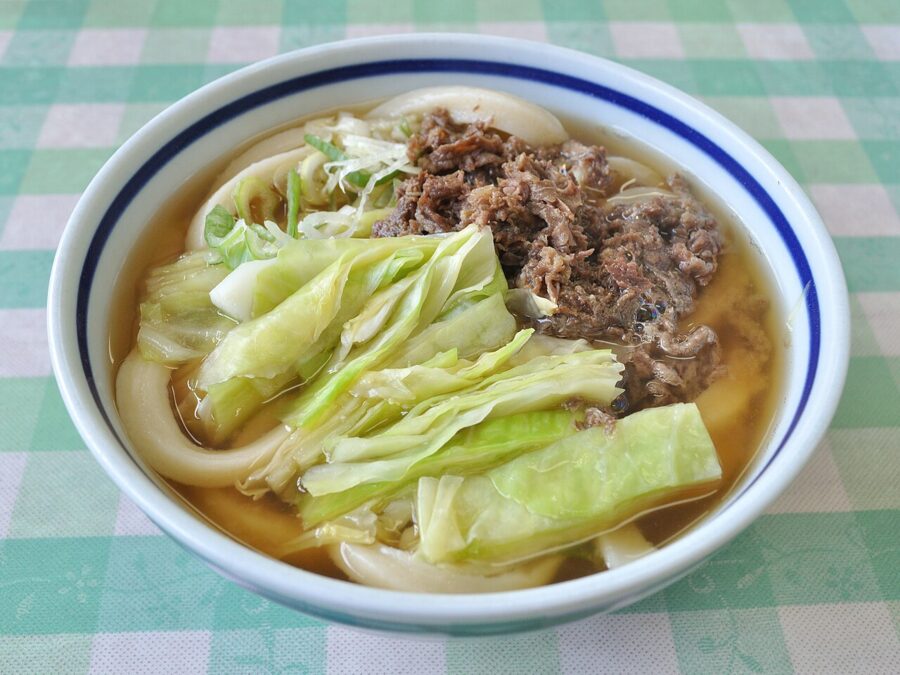
The Kanto plain and the hills of Yamanashi had poor ground for rice, so wheat and flour dishes filled the gap. Three are worth knowing. Yoshida no udon from Fujiyoshida, at the foot of Mount Fuji, is one of the hardest udon in Japan: thick, twisted and so firm you have to bite through it properly. It comes with boiled cabbage, sweet simmered meat (horse traditionally, more often pork now) and suridane, a paste of red chilli, sesame and sansho fried in oil.
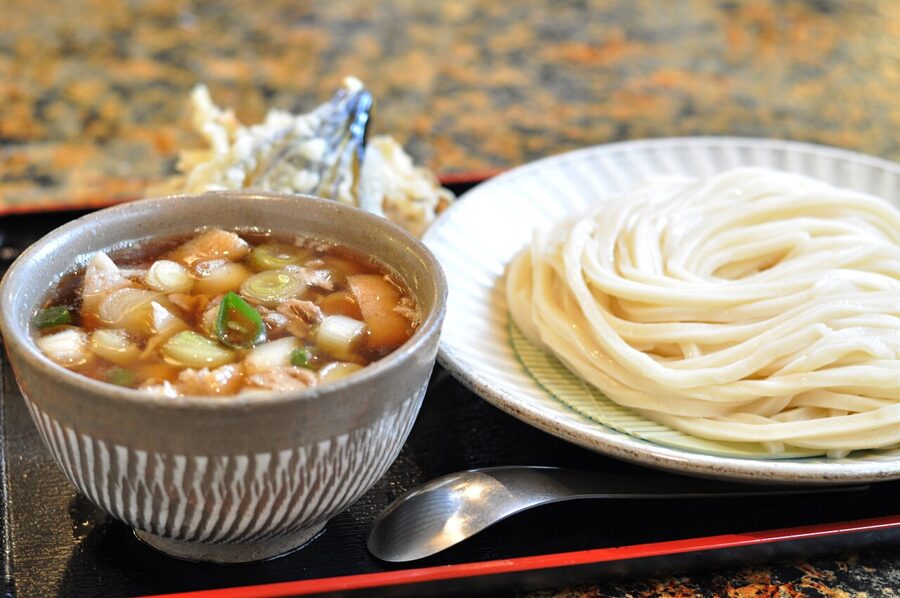
Musashino udon, from the old Musashi province around western Tokyo and Saitama, is dark, rough and firm, made with less water and more salt than most. The standard way to eat it is nikujiru: cold noodles dipped into a hot, sweet pork and spring onion broth, often with thick-cut kinpira burdock on the side.
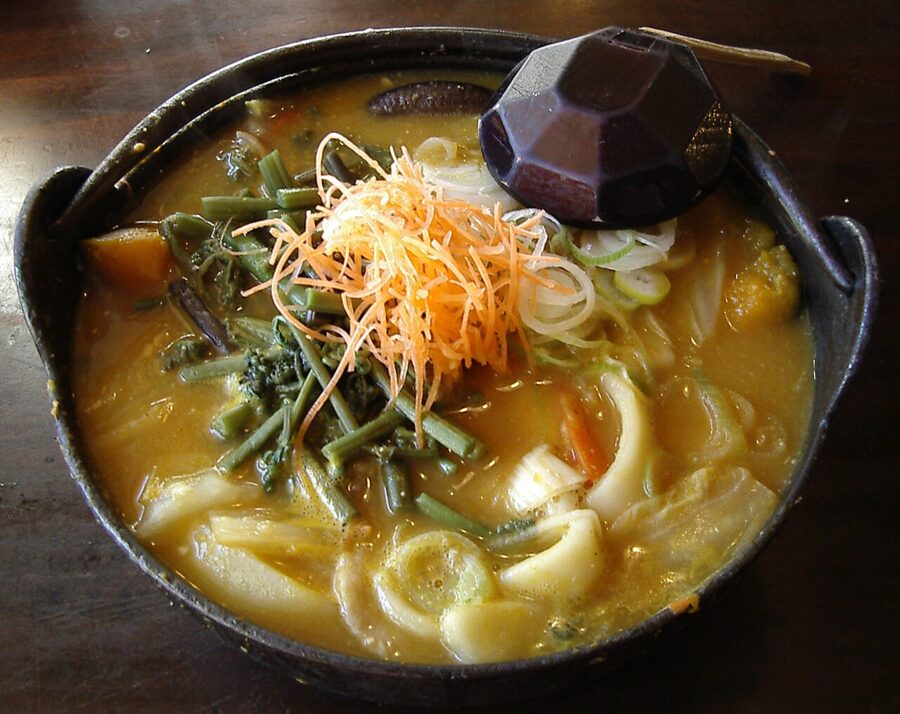
Yamanashi’s hoto isn’t technically counted as udon at all. The flat noodles have no salt in the dough and go into the pot raw, straight into a miso stew with pumpkin and root vegetables, so the flour thickens the broth. In winter, after a cold day around the Fuji Five Lakes, it’s the best thing in Yamanashi.
Kagawa, where the shop is the factory
Kagawa had udon long before it had an udon industry. An early 1700s folding screen of the festival town at Kotohira shows three udon shops among the 200 or so buildings. But until the 1960s most local udon was made at home or bought as boiled noodle balls, and shops that sold only udon barely existed even in Takamatsu.
Then three things happened in quick succession. Self-service udon shops appeared in the mid-1960s; one that opened in Marugame in 1966 sold kake for ¥20.
Some seimen-jo, noodle factories that supplied local shops and households, started letting customers eat on the premises. And from the late 1980s a Takamatsu magazine began running a column that sent readers hunting for the strangest, most hidden udon shops, which became a craze, then a book series, then national television. The Seto Ohashi bridge opened in 1988, and the Akashi Kaikyo bridge connected Kagawa to Kobe and Osaka by expressway in 1998. The udon tours never stopped.
Three kinds of shop
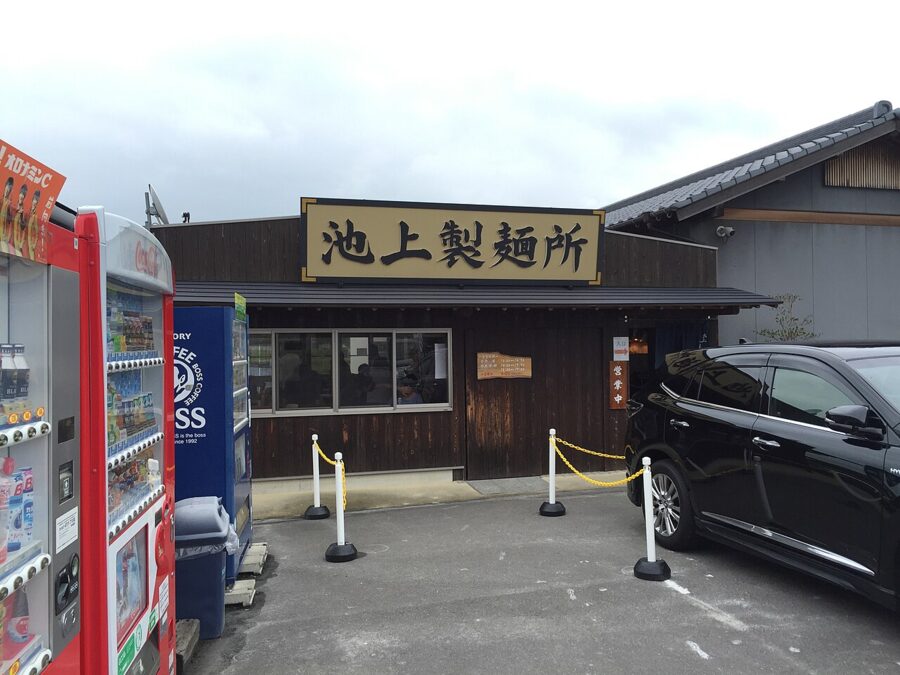
You’ll meet three formats. An ippan-ten, ordinary shop, works like any restaurant: you sit, order and someone brings the bowl. A self shop has you carry your own tray along a counter. A seimen-jo is a working noodle factory with seats, often down a lane, sometimes with no sign.
Even in ordinary shops, rice balls and oden are usually self-service, and you’re expected to pick them up while you wait.
How the counter works, step by step
The details vary from shop to shop, and even Kagawa people hesitate at a counter they don’t know, which is why many shops post the procedure on the wall. This is the common pattern:
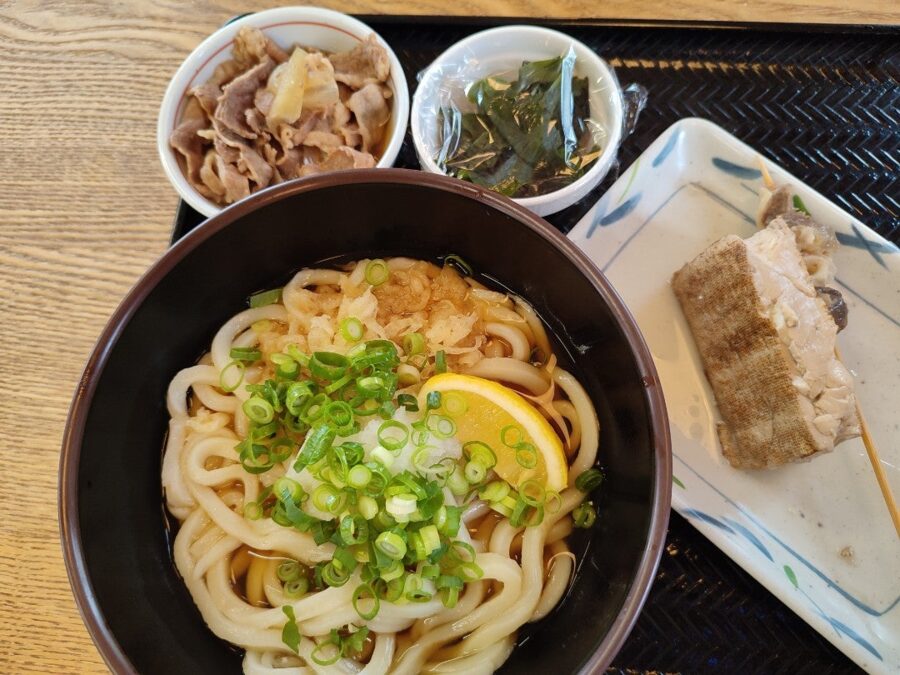
- Say the number of noodle balls (tama): sho or one ball, chu or two, dai or three. Then say hot (atsui) or cold (tsumetai). At a few shops you also choose kake, bukkake or kama-age at this point.
- Take your bowl. At some shops it comes with broth already in it. At others you get bare noodles and reheat them yourself in a tebo, a long-handled sieve, dipped into a pot of hot water.
- Choose toppings from the tempura and side trays. Use the tongs; one piece per plate is normal.
- Pay at the register. Payment almost always comes before you eat. Small notes and coins make you popular.
- Add broth from the tap (usually cold) or the ladle (usually hot), then spring onion, ginger, tenkasu (tempura crumbs) and sesame.
- Eat, then return the bowl to the rack or sink and bin your disposable chopsticks.
Hot noodles in cold broth or cold noodles in hot broth are both fine. The second, hiya-atsu, keeps more of the noodle’s bite and is a standard request at many shops, handy if you don’t like your broth scalding.
Sakaide before breakfast
Sakaide, on the coast west of Takamatsu, is the best morning in udon country. Gamo Udon, about 1km or a 15-minute walk from JR Kamogawa Station, opens at 8:30 and runs until about 14:00 on weekdays and 13:00 on Saturdays, or until the noodles run out. It closes on Sundays and Mondays and announces occasional extra closures, so check before you go.
Gamo is the scene from the top of this guide. One ball costs ¥180, two ¥280, three ¥380, and a sweet fried tofu pouch, a croquette or a piece of tempura is ¥120 each. You give your order at the counter on the left as you walk in, collect your bowl, take toppings, pay, then pour cold broth from a tank tap or hot broth from the pot. Most people eat outside by the entrance; indoors there are only a couple of tables and fans instead of air conditioning.
Across town, Hinode Seimenjo in Sakaide’s Fujimi-cho is a noodle factory that opens its eating area for exactly one hour a day, 11:30–12:30, so lunch doesn’t get in the way of making noodles. Anyone in the queue at 12:30 still gets served. It sells packed noodles from 9:00 until 16:00, or 15:00 at weekends.
Kama-tama and the Ayagawa drive
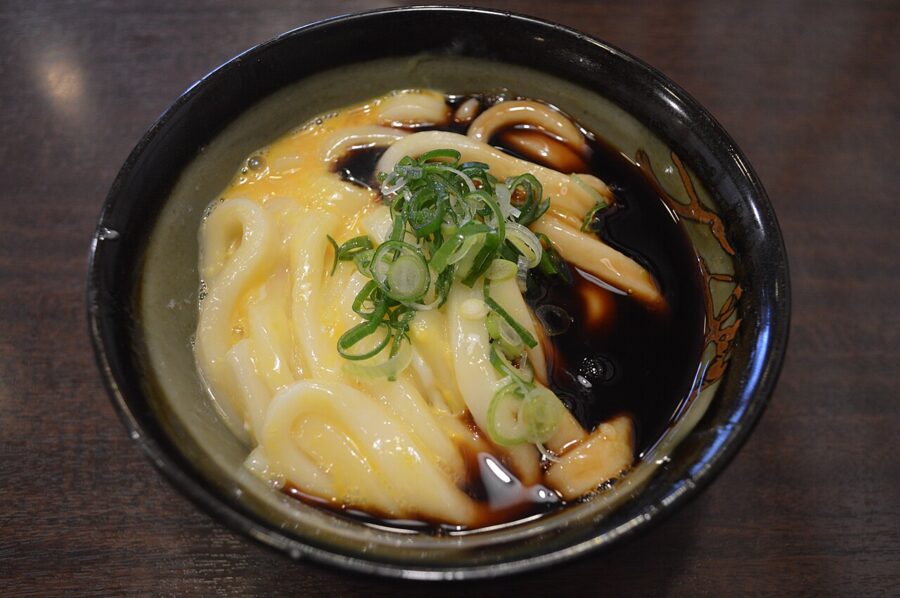
Kama-tama is the bowl most visitors fall for: noodles lifted straight from the boiling water without being rinsed, then tossed with a raw egg and a splash of soy sauce or strong broth, so the heat half-sets the egg into a glossy coat. Families made it at home for decades. Yamagoe Udon in Ayagawa is generally credited with putting it on a shop menu, after regulars started bringing their own eggs.
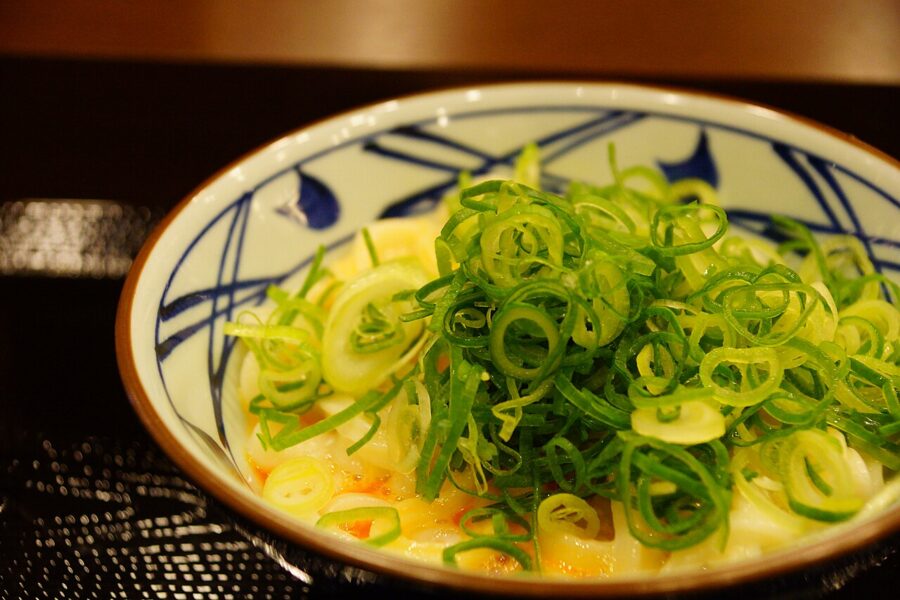
Yamagoe is open 9:00–13:30 and closed on Wednesdays and Sundays, with extra closures around Golden Week, Obon and New Year. The nearest station, Takimiya on the Kotoden line, is a long way off, so most people drive; three car parks hold about 150 cars.
Decide your order from the board outside before you join the queue. Inside, you order, take a bowl, pick tempura (the potato tempura is the one that sells out first), pay, then add broth and condiments at the tables. On weekday mornings the queue already reaches outside by mid-morning.
Takamatsu without a car
If you don’t drive, base yourself in Takamatsu, where good shops are a short walk from a station.
Chikusei, in Kameoka-cho, opened in 1968 as Takamatsu’s first self-service udon specialist. It’s open 10:45–14:30 or until the noodles are gone, closed on Sundays and Mondays, and an 8-minute (600m) walk from JR Ritsurin-koen Kitaguchi Station. You order only the number of balls, ¥330 each, then take tempura from the counter at ¥160 a piece. Everyone takes the soft-boiled egg tempura and the chikuwa (fish cake tube) tempura.
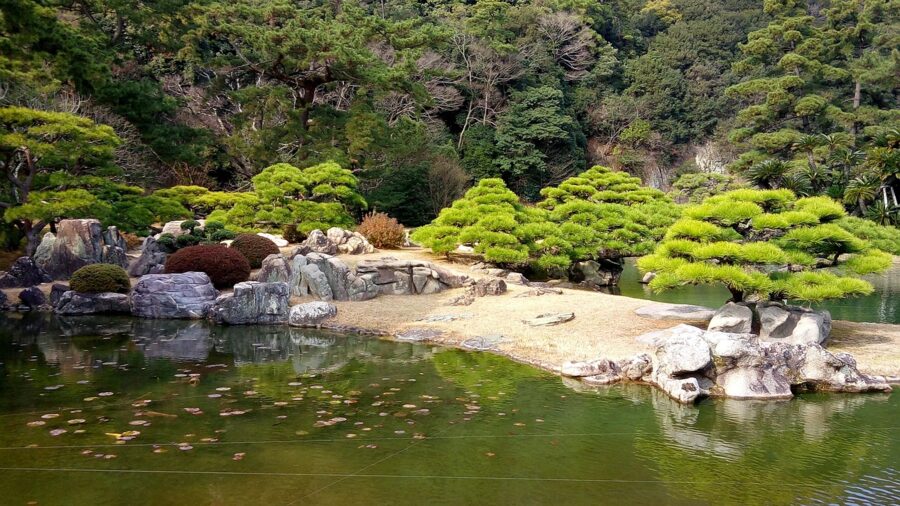
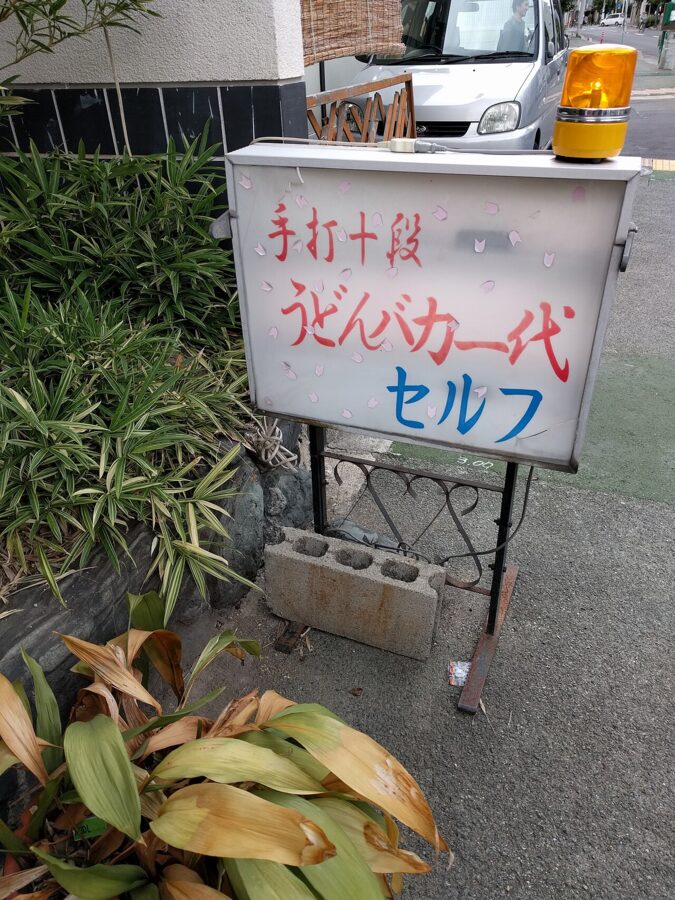
Teuchi Judan Udon Bakaichidai in Taga-cho opens at 6:00 and closes at 18:00, every day except New Year’s Day, about a 5-minute (350m) walk from Kotoden Hanazono Station. Its signature is kama-butter: hot unrinsed noodles with raw egg, a knob of butter and a lot of black pepper, which tastes a bit like carbonara. A small kama-butter is ¥530, a small kake ¥330, and each extra ball adds ¥110.
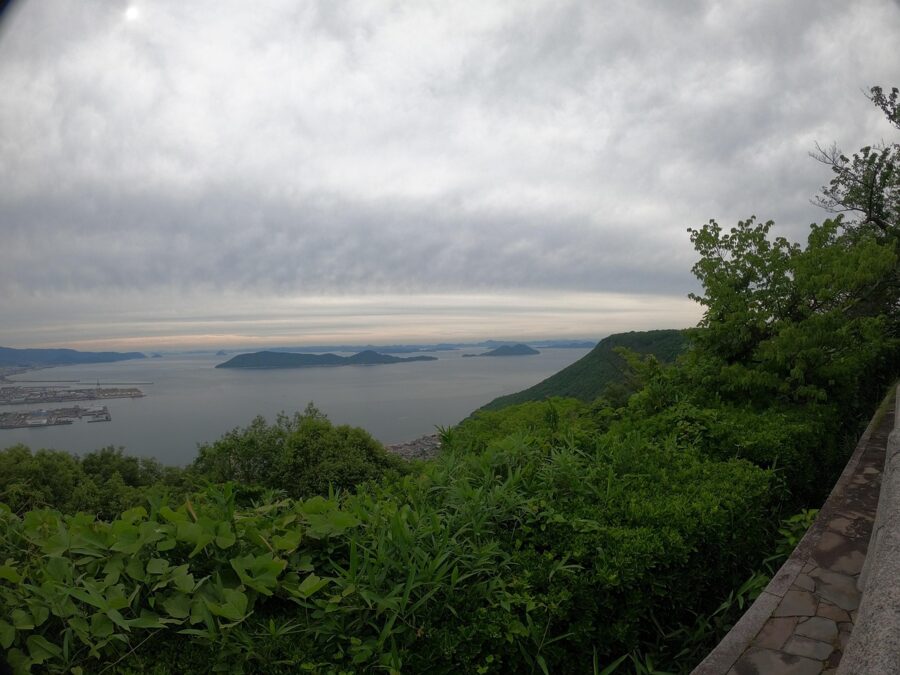
For a sit-down version, Waraya at Yashima serves kama-age in an Edo-period thatched farmhouse that was moved here from Nishi-Iya in Tokushima. It’s open 9:30–17:30 every day. A regular kama-age is ¥540, and a big family tub for four or five people is ¥2,800. Kotoden Yashima Station is 400m away, about ten minutes uphill on foot.
Kotohira: noodles and 785 steps
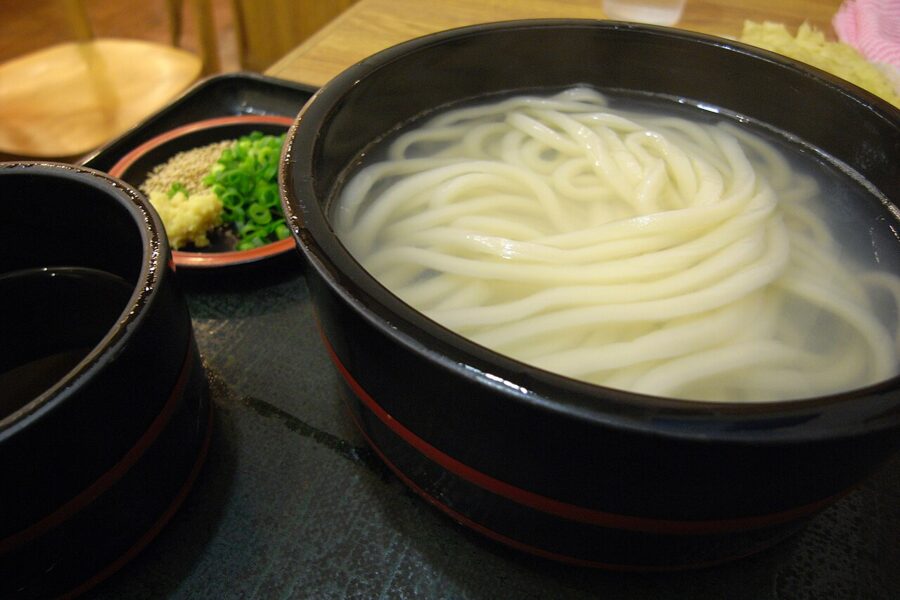
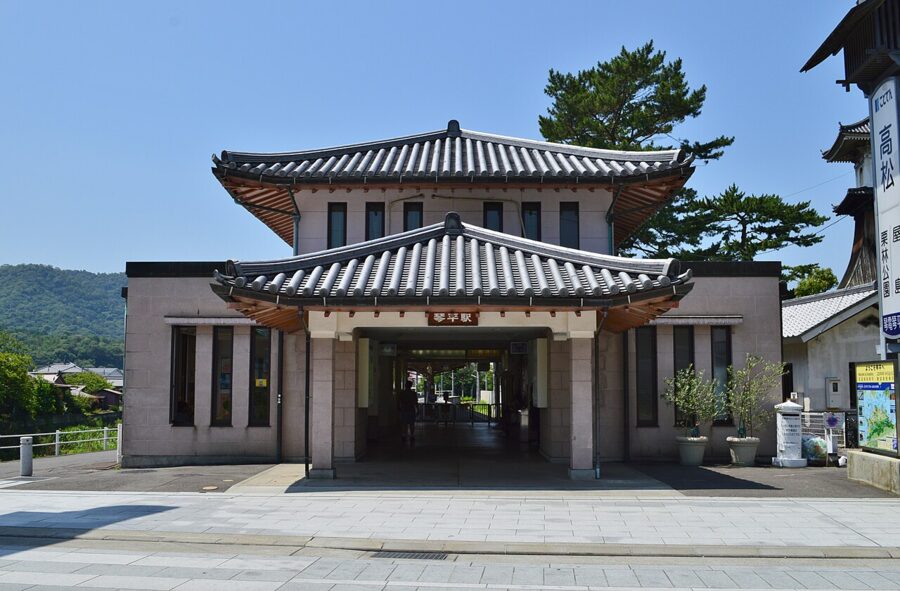
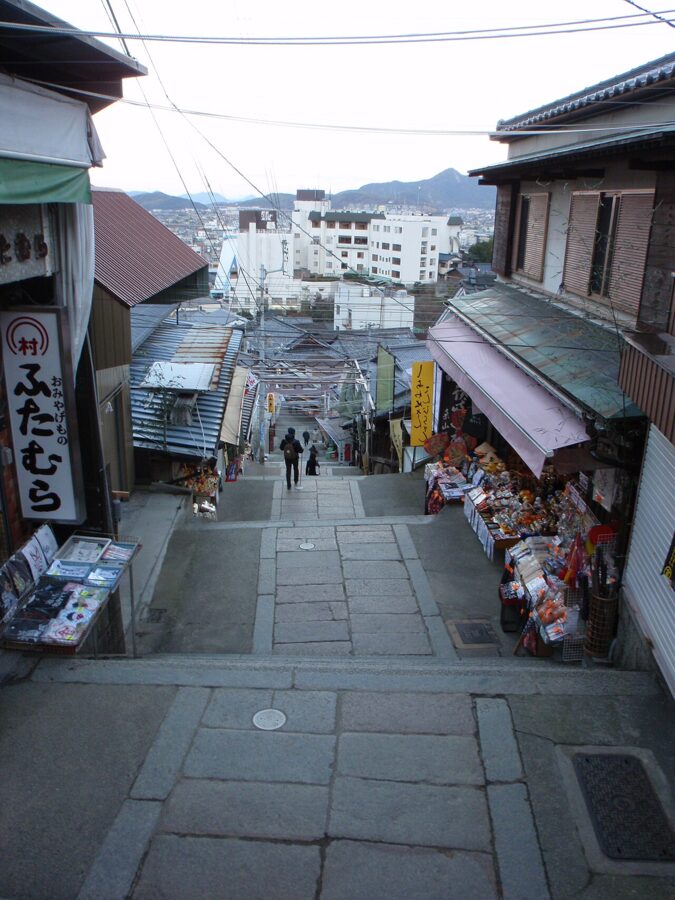
Kotohira, at the end of the Kotoden Kotohira line from Takamatsu and also on the JR Dosan line, is Kagawa’s classic pilgrimage town. Kotohira-gu shrine, Konpira-san to everybody, sits on the slope of Mount Zozu, and it’s 785 stone steps from the bottom of the approach to the main shrine and 1,368 to the inner shrine. The town has been feeding climbers since the Edo period, when the pilgrim inns often ran an udon shop on the ground floor.
Nakano Udon School in Kotohira town runs udon-making sessions where you knead, step on, roll and cut your own noodles, then eat them. A session lasts about 40 to 60 minutes and runs between 9:00 and 15:00. Book online for small groups; parties of 15 or more, or bookings more than 15 days ahead, go through the phone or a separate form. You leave with a rolling pin and a scroll recipe, which is a better souvenir than it sounds.
Reading the menu board
Most udon menus build on the same few bases, then add a topping. Learn the bases and the board stops being a wall of katakana and kanji.
- Kake. Noodles in a light hot broth with spring onion. In western Japan outside Kagawa, the plain bowl is often called su-udon and usually has a slice of fish cake or some kombu on top.
- Zaru or mori. Cold noodles on a bamboo tray with a dipping sauce. In eastern Japan the condiment is usually wasabi, in the west it’s ginger.
- Bukkake. A short pour of strong broth over noodles, hot or cold, usually with grated daikon.
- Kama-age. Unrinsed noodles in their cooking water with a dipping broth.
- Kama-tama. Kama-age noodles tossed with raw egg and soy or broth.
- Shoyu or kijoyu. Cold noodles with just a little soy sauce, a Kagawa test of the noodle itself.
- Shippoku. An autumn and winter bowl from eastern Kagawa with root vegetables simmered in sardine broth.
- Chikara. “Power” udon, with grilled rice cakes.
- Niku. Sweet simmered meat, usually beef or pork.
Then there are the toppings that change meaning depending on where you are, which is where things get confusing.
Kitsune and tanuki
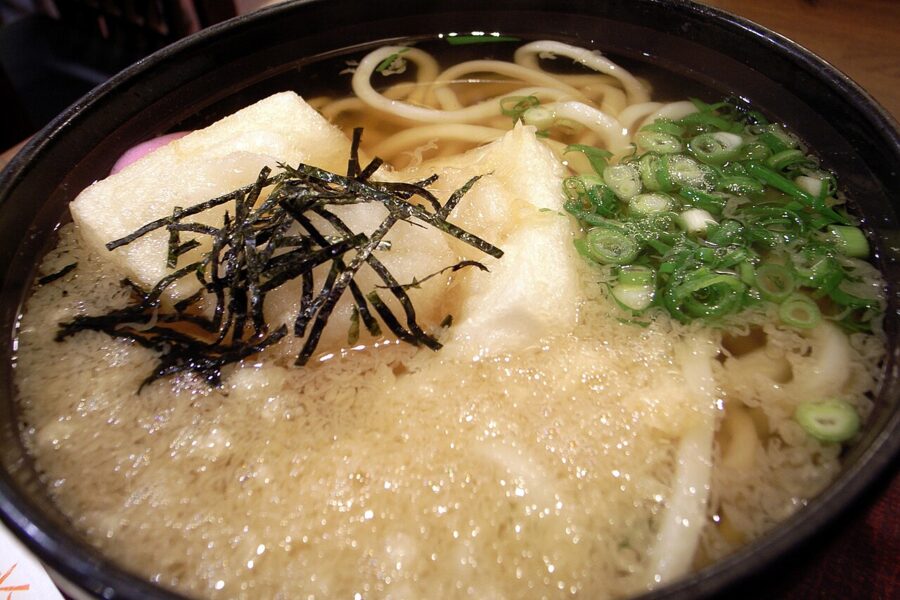
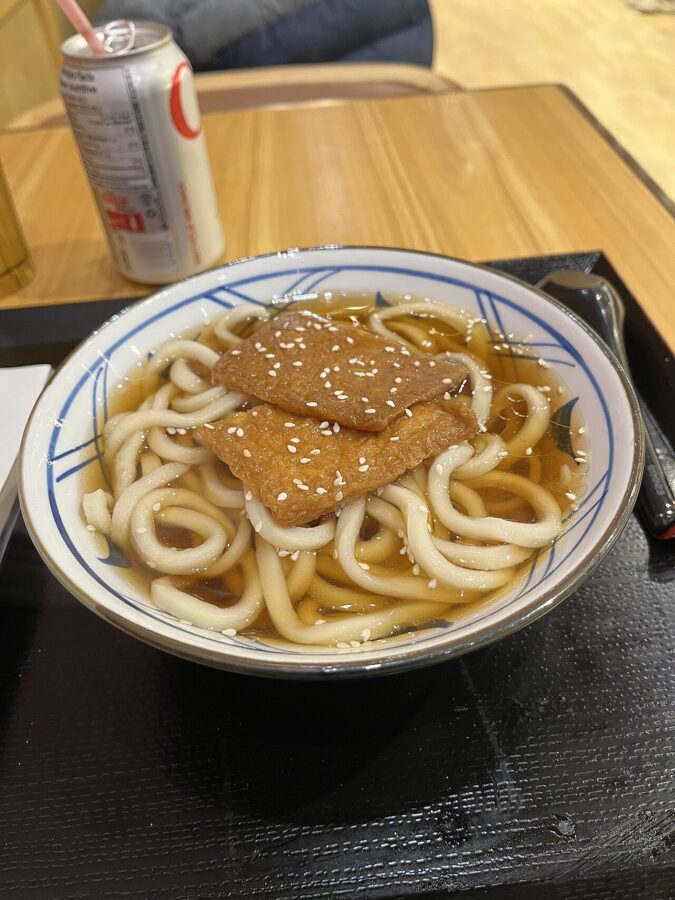
Kitsune udon is udon with a large, sweet soy-simmered fried tofu pouch. The name comes from the old belief that foxes like fried tofu, the same reason inari sushi is named after the fox god’s shrines. Usami-tei Matsubaya in Osaka’s Minami-Semba, founded in 1893, says it invented the dish; the founder is said to have got the idea from the inari sushi at the sushi shop where he trained.
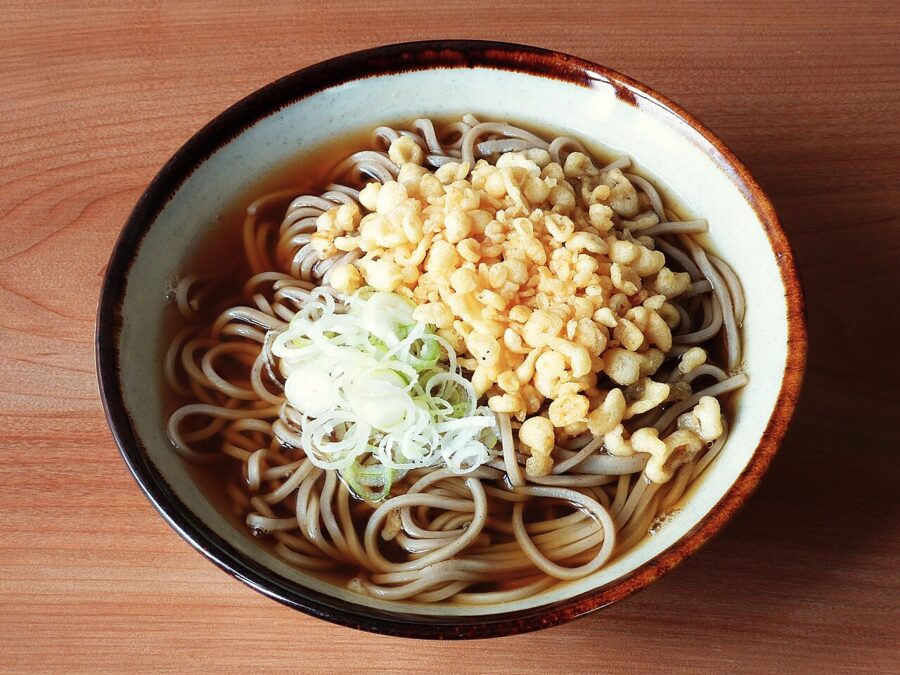
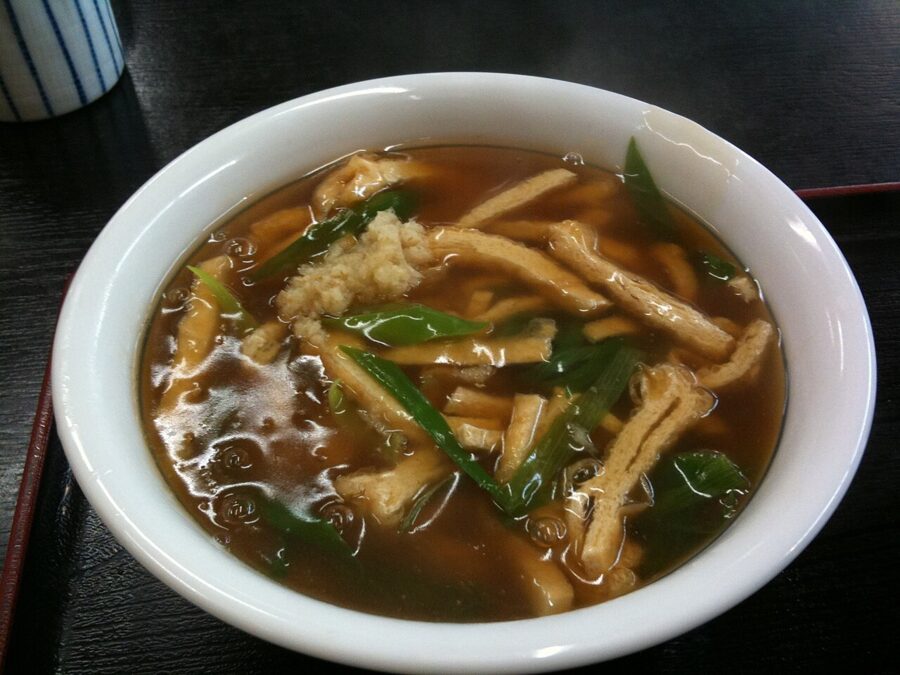
Tanuki is where Japan stops agreeing. In Tokyo and most of eastern Japan, tanuki means udon or soba topped with tenkasu, the crunchy crumbs left over from frying tempura. In Osaka, “tanuki” is the kitsune topping on soba instead of udon, and you’ll rarely see “kitsune soba” or “tanuki udon” on a menu at all. In Kyoto, tanuki is chopped unseasoned fried tofu under a thick, glossy ankake sauce.
Osaka broth versus Tokyo broth
The broth tells you which half of Japan you’re in. Western Japan seasons udon broth with usukuchi, light-coloured soy sauce, which is saltier but paler, so the kombu and fish come through and you can see the bottom of the bowl. Eastern Japan uses darker koikuchi soy sauce, and the broth is brown and stronger. Western bowls tend to use green spring onion, eastern bowls white.
Osaka’s style of soft noodles and kombu-forward broth gets a full treatment in the Osaka street food guide, so I won’t repeat it here.
Curry udon
Curry udon is udon in bonito and soy broth thickened with curry roux or curry powder and potato starch. It’s a Meiji-era invention with two competing origin stories. One credits Sanchoan, a soba shop in Waseda in Tokyo, which put a curry noodle with spring onion on the menu in 1904 and called it curry nanban. The other credits Tokyo Soba in Osaka’s Tanimachi, which launched its own curry nanban in 1909.
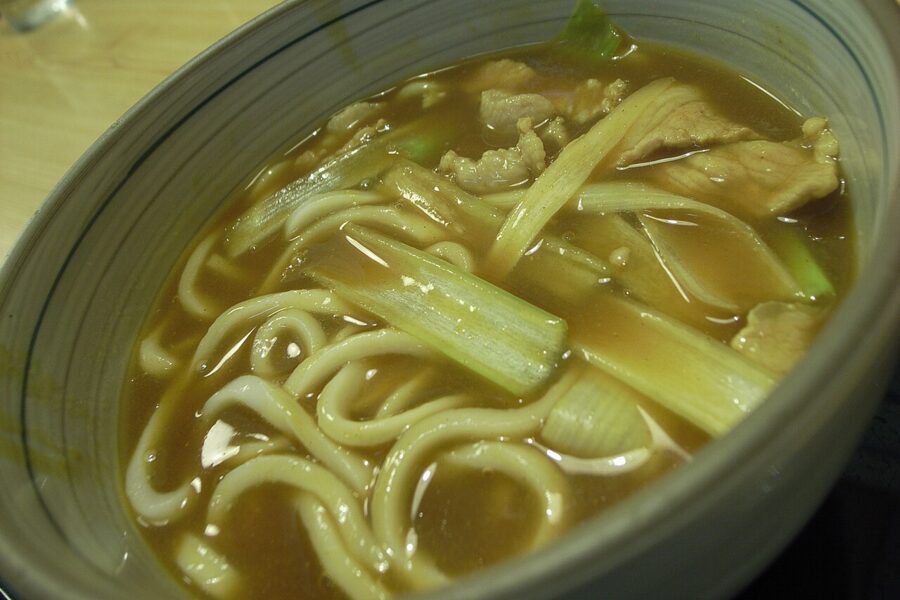
Curry arrived in Japan by way of Britain, one of several foreign-origin foods the country made its own, and Japanese curry deserves its own guide. On a cold day in Kyoto, a curry udon with sliced beef and spring onion beats any of its rice-based cousins.
Nabeyaki and yaki udon
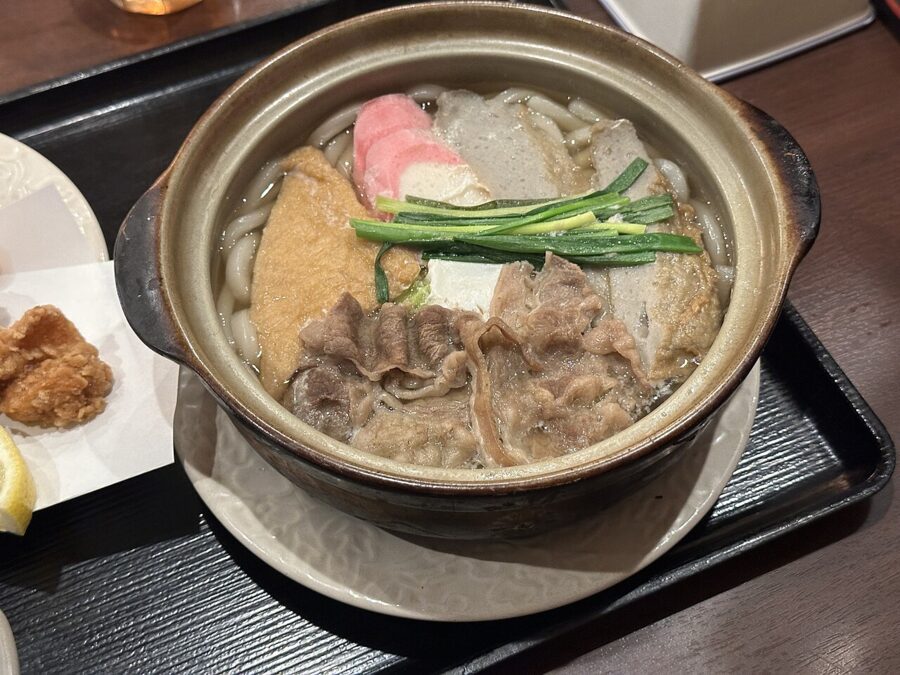
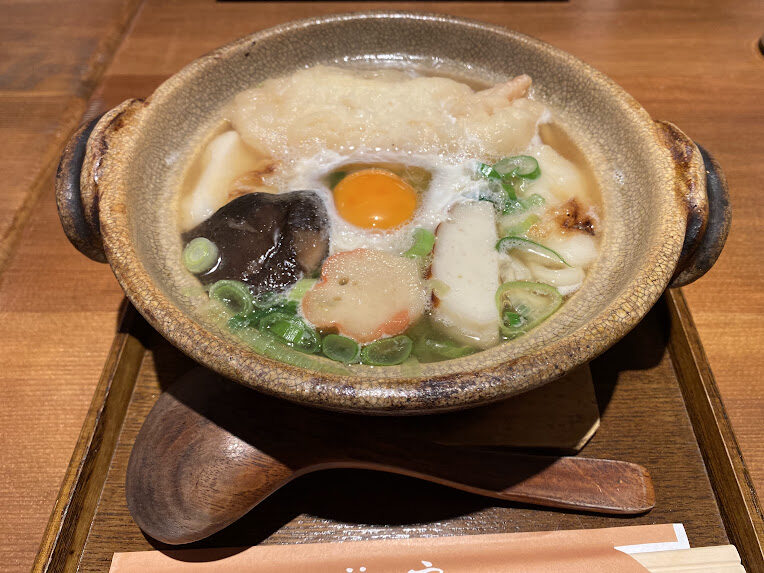
Nabeyaki udon is cooked and served in its own small pot, with prawn tempura, fish cake, shiitake, a raw egg and greens, and it comes to the table still boiling. It’s mostly a winter dish, except in Matsuyama in Ehime, where locals eat a sweeter version in an aluminium pot all year round with soft noodles and sweet simmered beef.
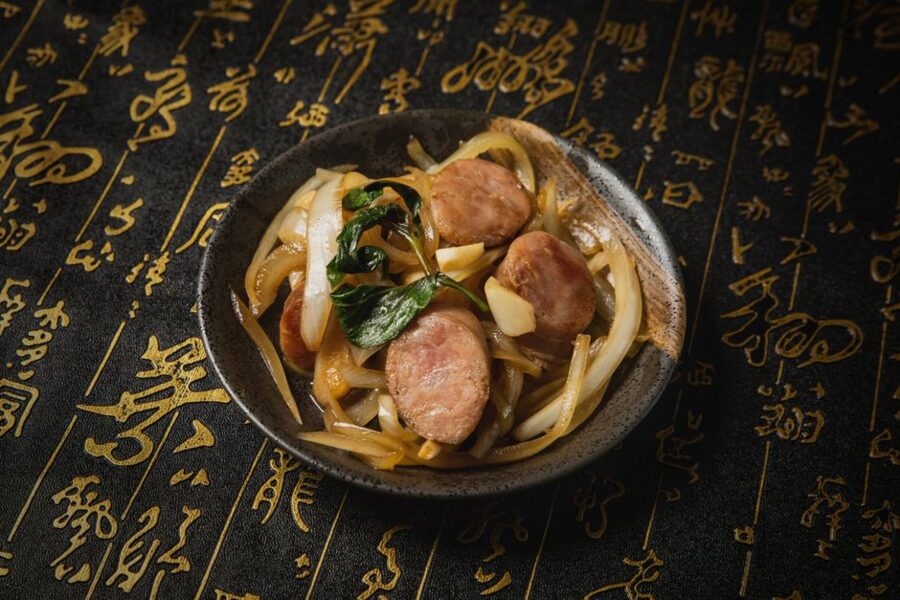
Yaki udon, stir-fried with pork, cabbage and onion and seasoned with sauce or soy, is generally traced to Kokura in Kitakyushu just after the war. The story goes that a diner owner wanted to make yakisoba, had no soba noodles, and used dried udon instead. Today it’s a staple of home cooking and of izakaya menus, ordered at the end of the night when nobody wants to leave yet.
No time for Shikoku? Udon in the big cities
You can eat very good udon without crossing to Kagawa. The national self-service chains, Marugame Seimen and Hanamaru Udon (both started in 2000), copy the Kagawa counter with fewer steps and are fine for a cheap lunch. These are the places to plan around.
Tokyo
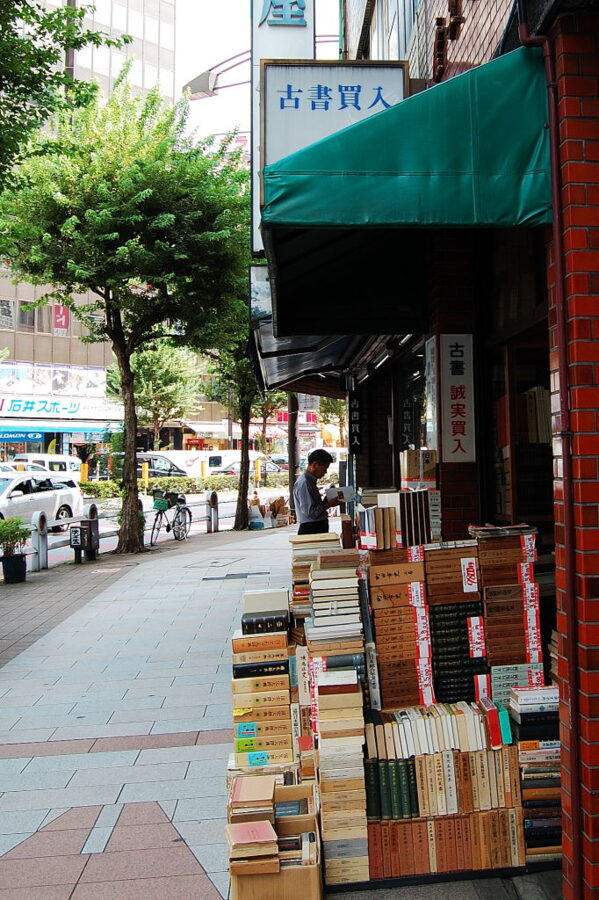
Tokyo is a soba city by tradition, but a few udon shops here are worth a detour. Maruka, in the Jimbocho and Kanda book district, is the Sanuki-style shop Tokyo udon fans argue about most; a kake is ¥500, it’s closed on Sundays and public holidays, and the queue at lunch runs down the street. Pair it with a walk through Jimbocho’s second-hand bookshops.
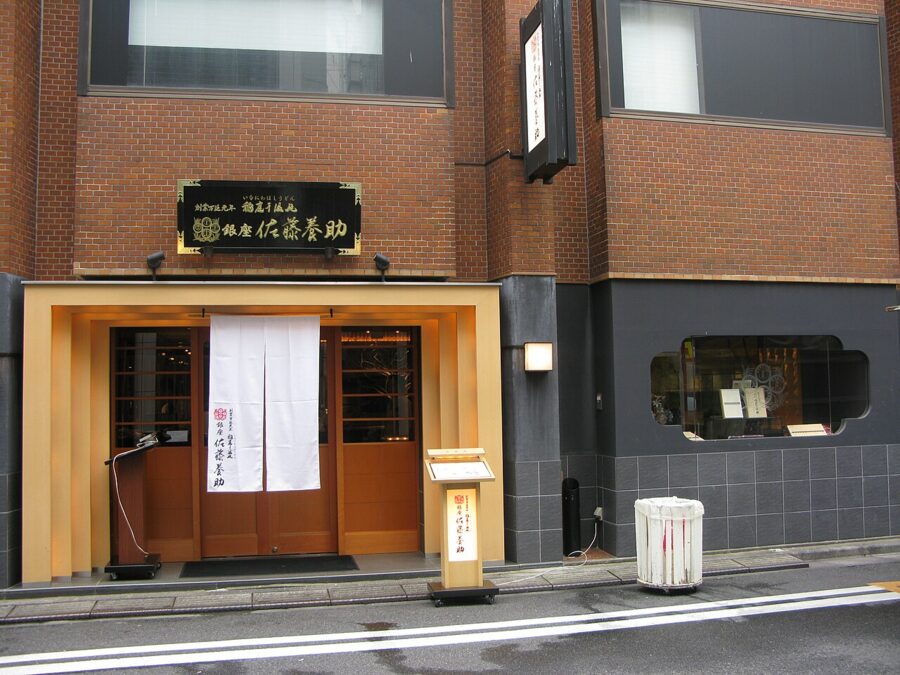
For Inaniwa, Ginza Sato Yosuke at Ginza 6-4-17 is a two-minute walk from Ginza Station on the Marunouchi line, with lunch from 11:30 and dinner from 17:00. It suits a long, quiet lunch between department stores.
Osaka
Osaka is soft-noodle country, built on kombu broth. Dotonbori Imai, founded in 1946 at Dotonbori 1-7-22, makes its broth from natural Hokkaido ma-kombu with mackerel and round herring flakes from Kyushu, and it’s one of the city’s best-known udon houses. It’s open 11:30–21:30 (last order 21:00), closed on Wednesdays unless they fall on a holiday, and four minutes’ walk from Namba Station on the Midosuji line.
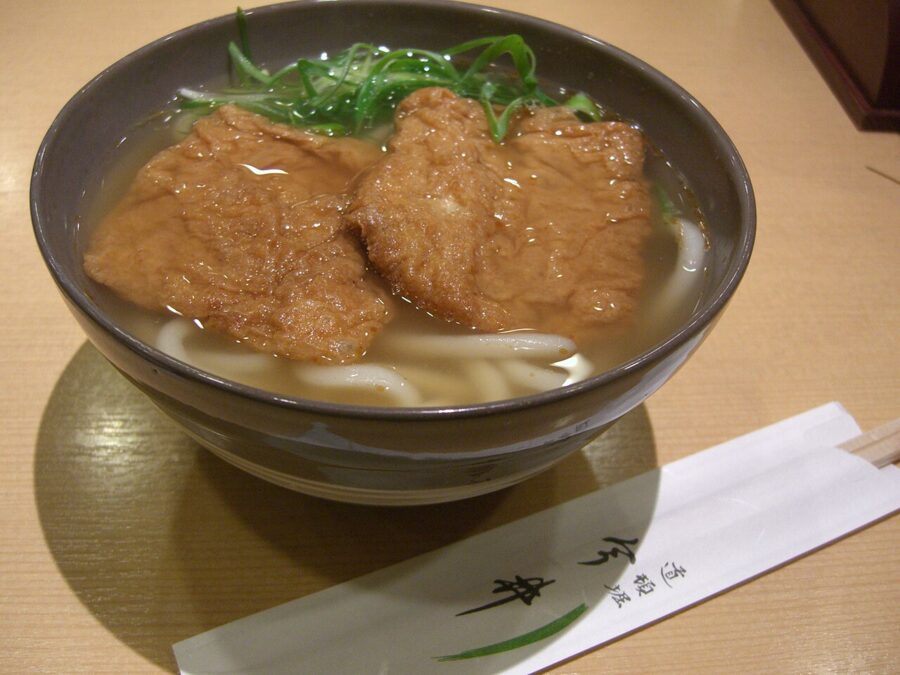
For the kitsune origin story, Usami-tei Matsubaya at Minami-Semba 3-8-1 is just under ten minutes on foot from Shinsaibashi Station. It’s open 11:00–19:00 Monday to Thursday and until 19:30 on Fridays and Saturdays, closed on Sundays and public holidays. The kitsune is the obvious order, but regulars rate the ojiya udon, a loaded udon bowl with rice hidden at the bottom, just as highly.
Kyoto
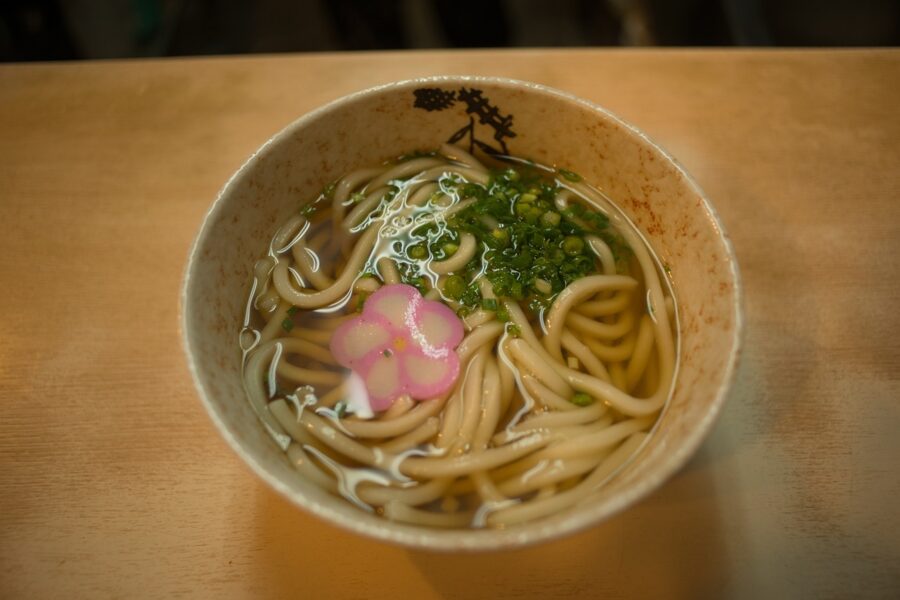
Kyoto’s udon is softer than Osaka’s, with noodles cooked until they almost fall apart and a lot of care put into the dashi. The city’s quirks are covered in what to eat in Kyoto, so here are two bowls to look for.
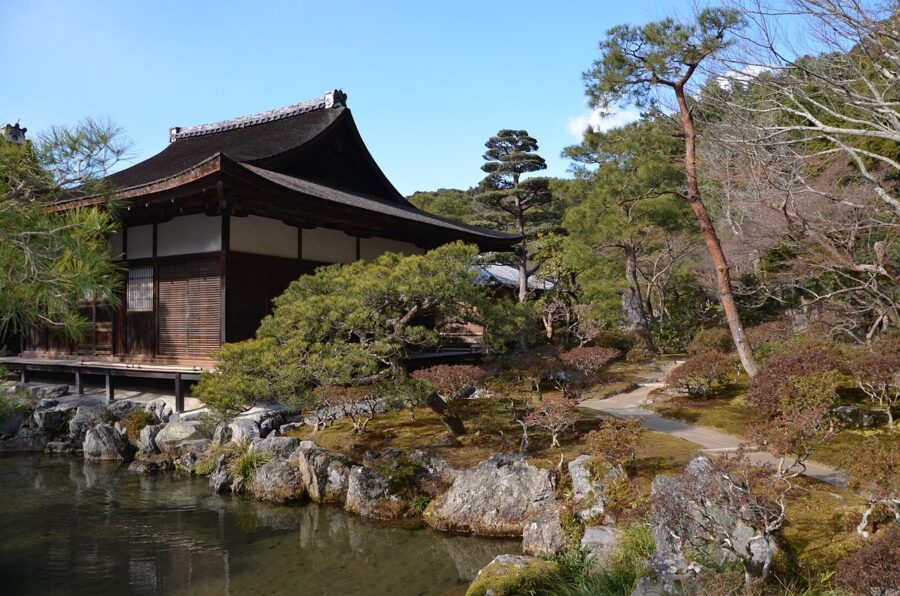
Omen, at Jodoji Ishibashi-cho 74 near Ginkaku-ji, serves a dipping udon of the same name: noodles with a slightly strong broth into which you add kinpira burdock, seasonal vegetables and ground sesame. The Ginkaku-ji main shop opens at 10:30 and runs until 17:00 Monday to Wednesday, and on other days 10:30–16:00 then 17:00–20:30. It closes on some Thursdays, so check the calendar on its website. There’s a second shop in Pontocho.
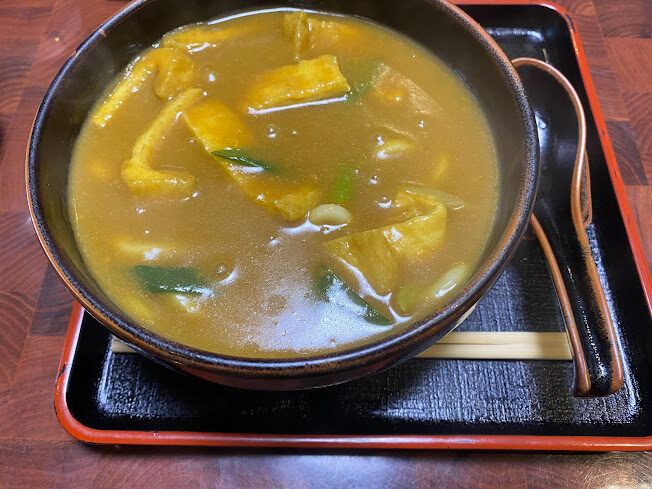
Curry udon is the other Kyoto bowl to look for, built on strong dashi with soft noodles. The well-known places near Nanzen-ji draw lunchtime queues.
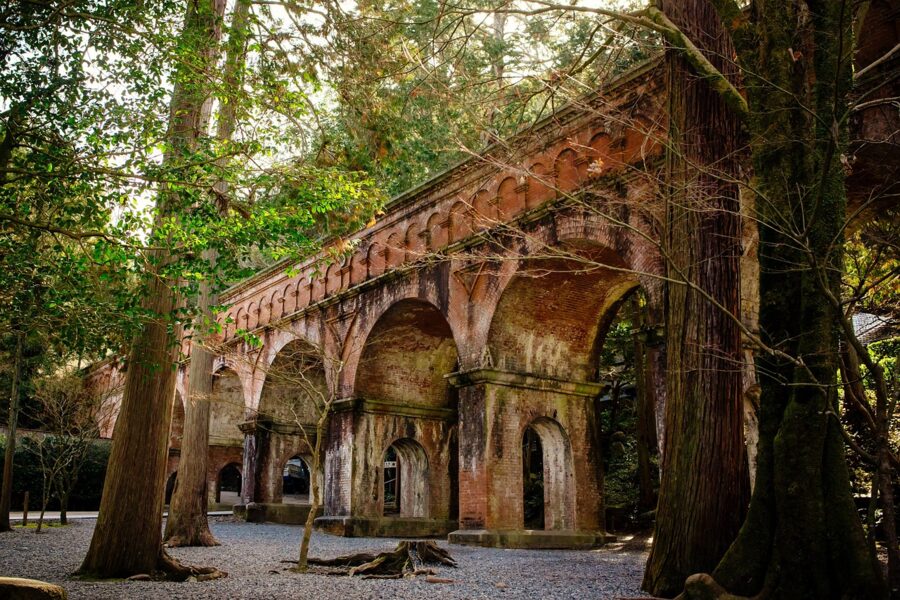
Nagoya
Nagoya is the easiest city for kishimen, because you don’t even have to leave the station. Sumiyoshi runs stand-up kishimen counters on the JR platforms at Nagoya Station, including the Shinkansen platforms, from 7:00. A bowl of hot kishimen with bonito flakes takes about four minutes to eat if your train is close.
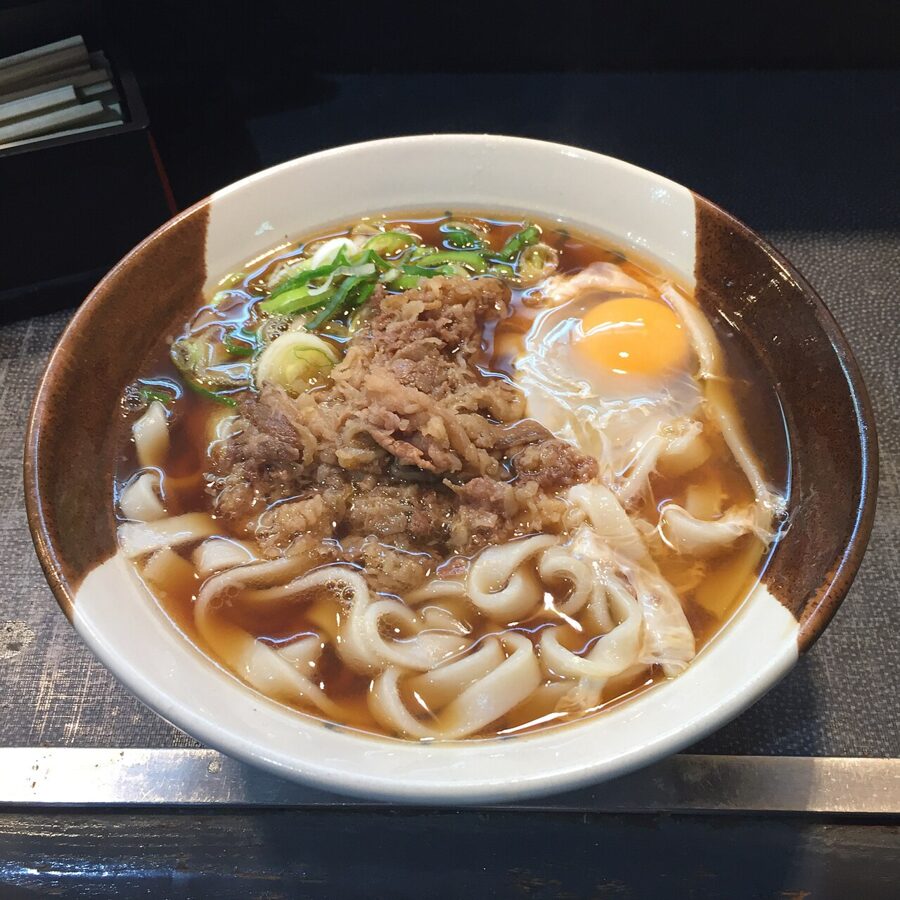
For miso-nikomi, Yamamotoya Sohonke’s original shop in Sakae is closed for now, but its branch on the 13th floor of JR Central Towers above Nagoya Station is open 11:00–23:00, and there’s another in Kinshachi Yokocho by Nagoya Castle, 10:30–17:30. Ask for rice on the side; the leftover miso broth is meant for it.
Fukuoka
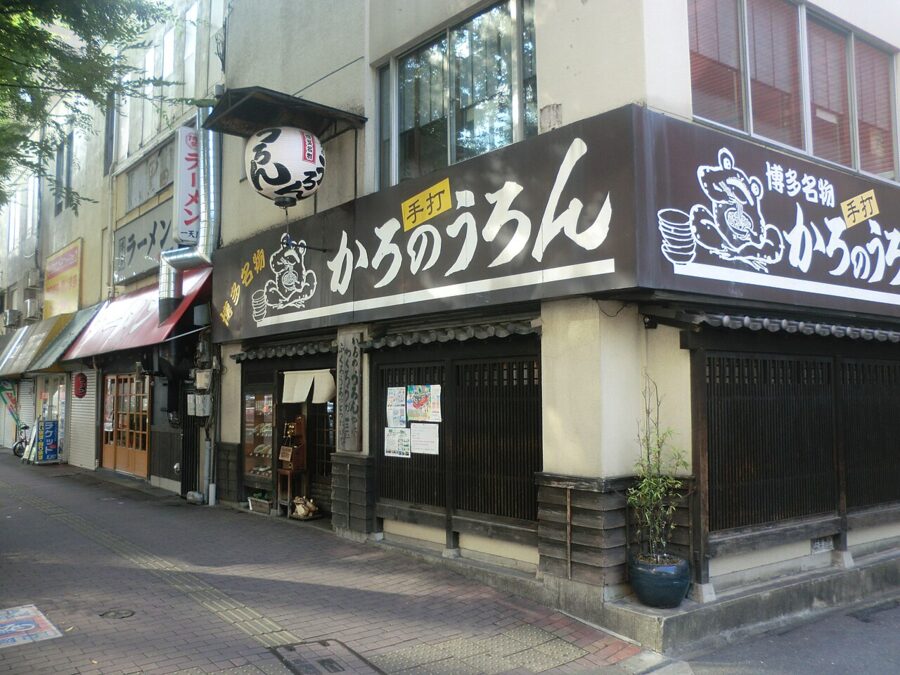
In Fukuoka, start at Karonouron in Kamikawabata, founded in 1882 and often called the city’s oldest udon shop. The name is “kado no udon”, the udon shop on the corner, said in the Hakata accent. It’s one or two minutes’ walk from Kushida-jinja-mae Station on the Nanakuma line, closed on Tuesdays, and the broth uses Rausu kombu, dried sardines and bonito. Photos aren’t allowed inside.
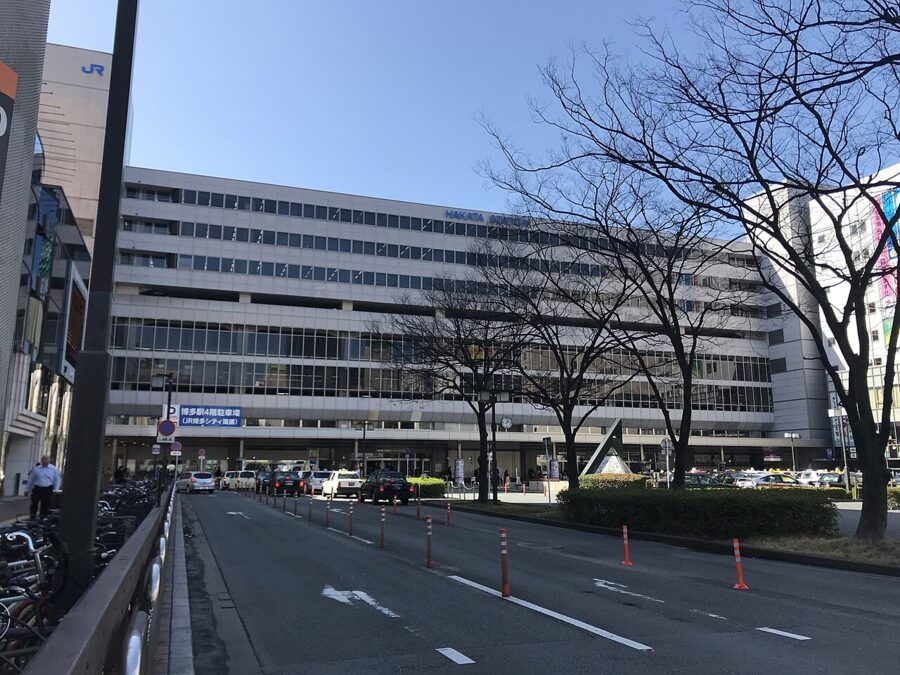
Near Hakata Station, Daichi no Udon in the basement of the Asahi Building at Hakata Ekimae 2-1-1 serves a huge burdock tempura that sits on top of the bowl like a crown. The beef and goboten udon is ¥800, you order from a cash-only ticket machine, and it opens 10:00–16:00 and 17:00–21:00. If you’ve come to Fukuoka for ramen, this is the bowl to break the streak with.
Etiquette, prices and what to skip
Slurping is fine, and expected. It cools the noodles and pulls in air with the broth. Lift the bowl to drink from it; nobody needs a spoon for kake. Don’t leave a tip, don’t hold your place in a queue for friends who haven’t arrived, and at a self shop, always return your bowl.
Prices are low. In Kagawa, one ball in broth is usually ¥180–350 and a piece of tempura ¥120–160, so a filling breakfast with two toppings costs under ¥600. In Tokyo, Osaka and Kyoto, expect ¥500–1,300 for a bowl at a well-known shop. Many seimen-jo and older shops take cash only, so carry coins and ¥1,000 notes.
Timing matters more than location. Most Kagawa shops open between 6:00 and 10:00 and shut by early afternoon, many close one or two weekdays, and some close without warning when the noodles run out. Go in the morning, go on a weekday, and have a back-up shop in mind.
Skip this
Skip the eight-shop day. Hopping between udon shops by car is a Kagawa pastime, and it’s tempting to cram in as many as possible. In practice, the third bowl tastes like the second, and you’ll spend more time in queues and car parks than eating. Three shops, small portions, hot in the morning and cold at noon, is plenty.
Skip the souvenir “Sanuki udon” at airports and service areas unless it says where it was made. The name isn’t protected, only phrases such as “real home” or “local speciality” are, so plenty of packs labelled Sanuki were produced far from Kagawa. The semi-dried packs from named Kagawa makers, or a bag of Inaniwa from Akita, travel much better.
And skip the idea that soft udon is bad udon. Ise and Hakata cook it soft on purpose, and it’s meant to be eaten that way.
So: one ball, hot, at 8:30 in Sakaide. A fried tofu pouch for ¥120. Ginger from the jar, spring onion from the tub, cold broth from the tap if you’re brave. Eat it standing in the car park, put the bowl in the sink, and drive on to the next one before the noodles run out.