Pu-erh Tea in Yunnan: Raw and Ripe, the Old Tea Mountains, the Tea Horse Road and How to Buy It
On 24 April 2026, at the opening of the tenth Kunming spring tea week, the city’s tea industry association published what a kilo of that spring’s leaf had cost at source on 108 famous Yunnan tea mountains. First-grade leaf from Bingdao Laozhai, a Dai village in Lincang, came in at ¥35,000 a kilo. Lao Banzhang’s old-tree leaf was ¥8,500. That same year, tea labelled “Bingdao” was on sale for ¥380 a kilo.
Both are sold as pu-erh, and only one of them is what the wrapper says. That gap, between a leaf picked from a 300-year-old tree in a forest on the Myanmar border and a brown disc in a gift box, is the whole subject of this guide. It’s also why pu-erh is the most fun tea in China to chase, and the easiest to get wrong.
In Shenzhen, where I lived for a while, ripe pu-erh was simply the office tea: dark, cheap, brewed strong on a tea tray and topped up all afternoon. It took a trip to Yunnan to understand that the same word covers a fresh, bitter, almost green tea from a named village and a brick that’s been sitting in a warehouse for twenty years. Pu-erh gets a short section in my Yunnan food guide, and the six tea families get their own page in my guide to Chinese tea. This one goes up the mountains.
Here’s the map in one table. The prices are the 2026 spring purchase index for raw leaf (maocha) at source, the figure the trade uses as its benchmark, so a finished cake costs more once it’s pressed, wrapped and sold on.
| Area | Where | Character in the cup | 2026 source price, top leaf | Can you visit? |
|---|---|---|---|---|
| Yiwu (易武) | Mengla county, Xishuangbanna | Soft, thick, long finish | Bohetang first grade ¥25,000 a kilo | Yes: old street, museum, tea houses |
| Lao Banzhang (老班章) | Bulang Mountain, Menghai county | Bitter, strong, big sweet return | Old trees ¥8,500 a kilo | Yes, by car from Menghai |
| Bingdao (冰岛) | Mengku, Shuangjiang county, Lincang | Sweet, gentle, low bitterness | Laozhai first grade ¥35,000 a kilo | Yes, by car from Lincang |
| Jingmai (景迈山) | Lancang county, Pu’er city | Fragrant, lighter, quick to sweeten | Not among the headline prices | Best of all: villages, buses, guesthouses |
In This Article
- Raw, ripe and pressed
- From leaf to maocha
- Ripe tea, the 1970s shortcut
- Why it comes as a cake
- Recipe numbers, wrappers and the name on the label
- Where does it actually grow?
- Yiwu and the six old mountains
- Menghai, Nannuo and Lao Banzhang
- Lincang and Bingdao
- Pu’er city, which isn’t where the name came from
- Go to Jingmai Mountain
- The villages
- Getting there
- When to go, and staying the night
- The Tea Horse Road
- Where you can still walk it
- Brewing it in a gaiwan
- What aged tea should taste like
- Buying pu-erh without getting burned
- Kunming’s tea cities
- What things really cost
- Fakes, and the crash of 2007
- Carrying it home
- Skip this
Raw, ripe and pressed
Pu-erh (普洱, pu’er in pinyin) is a dark tea, the heicha family, made from the large-leaf tea plant of Yunnan, Camellia sinensis var. assamica. What sets it apart is that it’s fermented by microbes after it’s made, slowly in the case of raw tea and fast in the case of ripe. Every other step is about getting the leaf into a state where that can happen.
From leaf to maocha
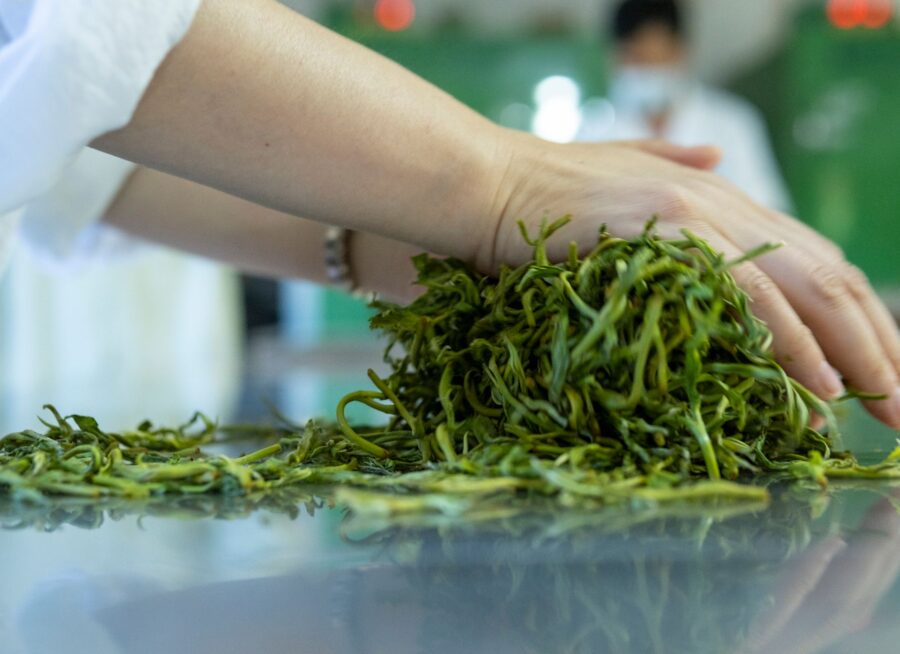
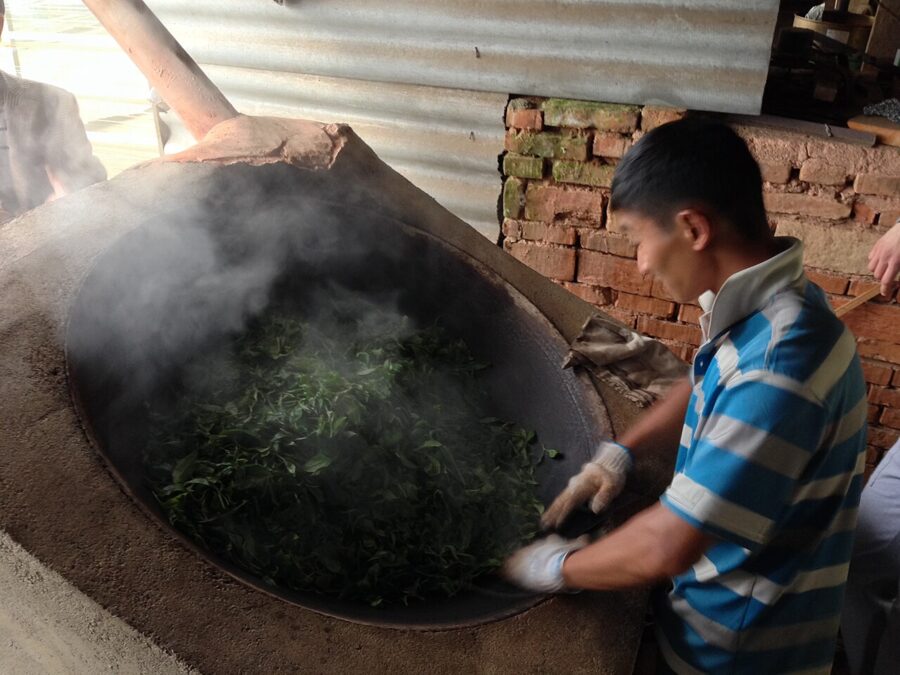
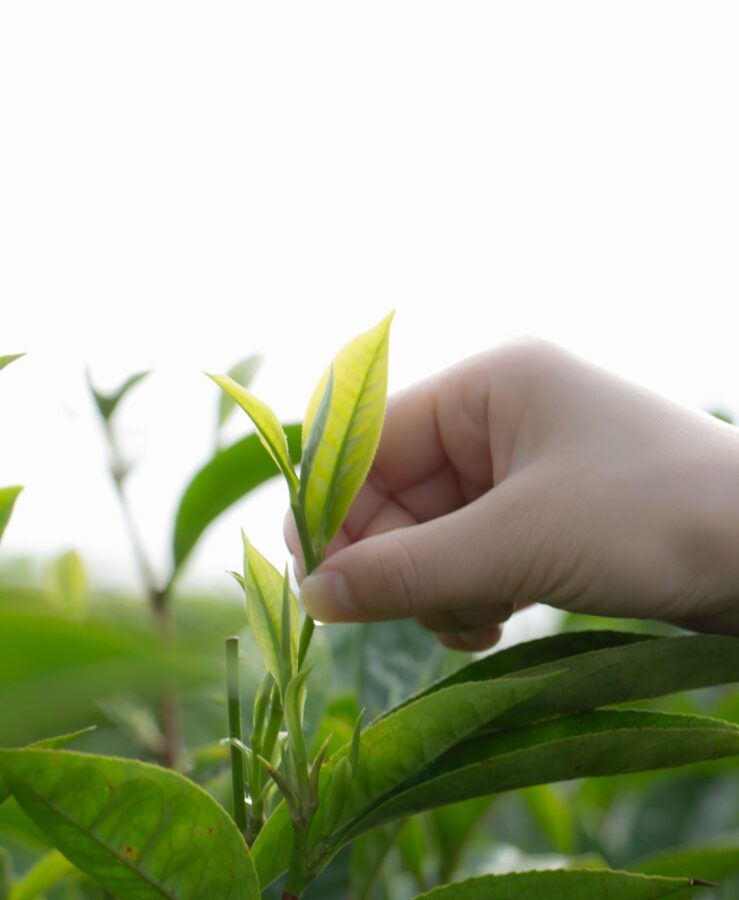
Every pu-erh starts as maocha (毛茶), “rough tea”. The leaves are withered a little, then thrown into a hot wok and turned by hand to “kill the green” (杀青, shaqing), which stops most of the enzymes that would otherwise oxidise them into a red tea. Then they’re rolled and bruised, and laid out to dry in the sun.
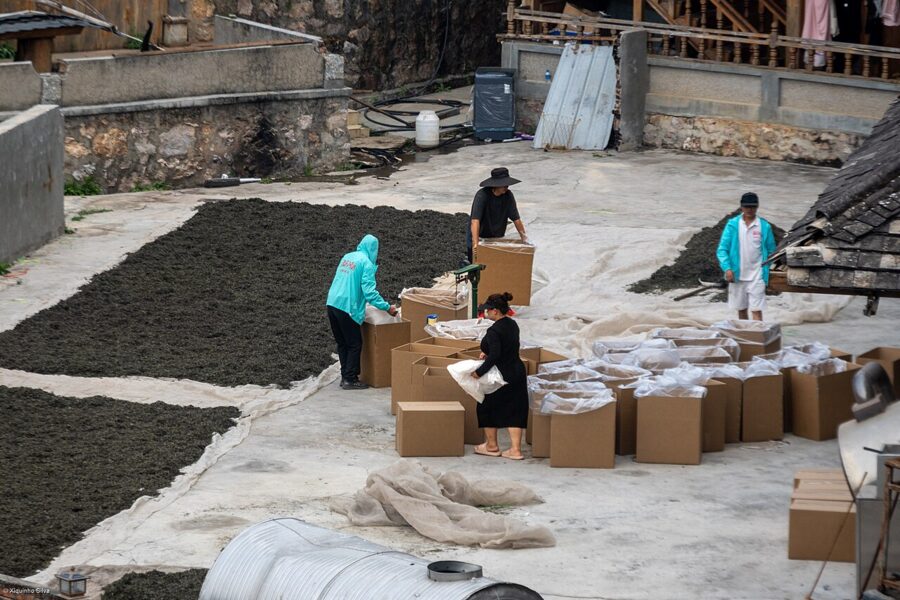
That sun-drying is the quiet trick. A green tea elsewhere in China is dried hard with heat to finish it off, and Japanese green tea is steamed (my Japanese tea guide has that story). Sun-dried maocha keeps a little life in it. That’s what lets it change in a cake for decades instead of going stale in a year.
Pressed straight from maocha, the tea is sheng (生茶), raw. Young, it’s green-gold in the cup, floral, often bitter and drying, with a sweetness that rises in your throat a few seconds after you swallow. The Chinese word for that rising sweetness is huigan (回甘), and you’ll hear it in every tea shop in Yunnan.
Ripe tea, the 1970s shortcut
Raw tea takes ten or twenty years to turn dark and mellow. In the early 1970s, with buyers in Hong Kong wanting that aged taste now, technicians from the state tea factories in Kunming and Menghai studied how Guangdong merchants sped tea up in damp warehouses. The Kunming Tea Factory worked out a controlled version in 1973, Menghai followed, and mass production of ripe tea began in 1975.
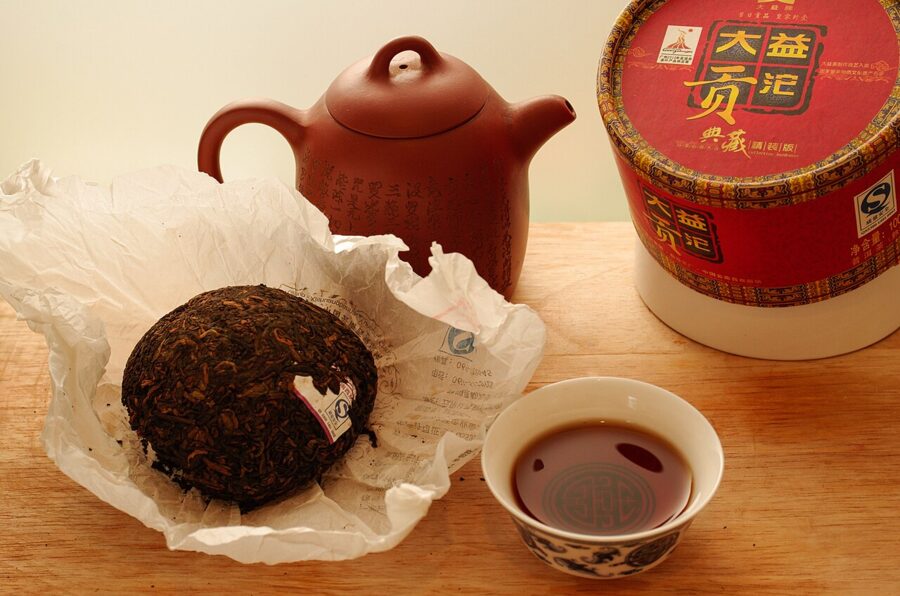
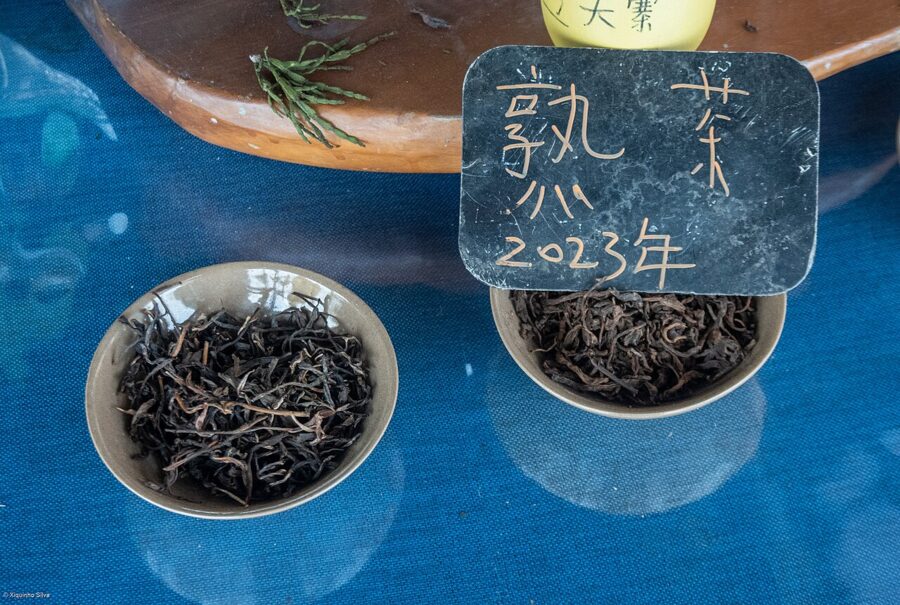
The method is wo dui (渥堆), wet piling. Maocha is heaped, dampened, kept warm and turned for six to eight weeks, sometimes longer, while moulds, yeasts and bacteria do in weeks what a warehouse does in decades. The result is shou (熟茶), ripe tea: smooth, earthy, dark as cola, with no bitterness to speak of.
Some traditionalists still argue that ripe tea isn’t proper pu-erh. Ignore them. A clean ripe tea is the best first pu-erh there is, and it’s what a lot of southern China drinks after a heavy meal. A badly piled one smells of a damp cellar or a fish market, and that smell, duiwei (堆味), “pile taste”, is the thing to sniff for.
Why it comes as a cake
Pressing tea into hard shapes started as a way to move it over mountains on mules. Today it’s about ageing: a dense, compressed tea changes slowly and evenly, where loose leaf changes fast and unevenly. Maocha is weighed, steamed until it’s soft and tacky, bagged in cloth, twisted into a ball and pressed, by a hydraulic press in a factory or a carved stone in a village.
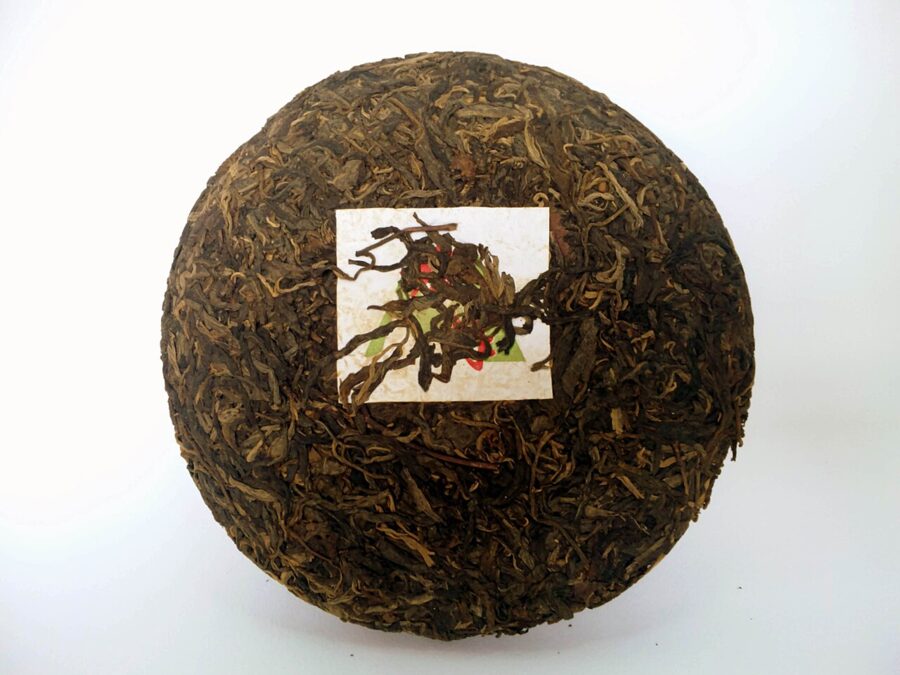
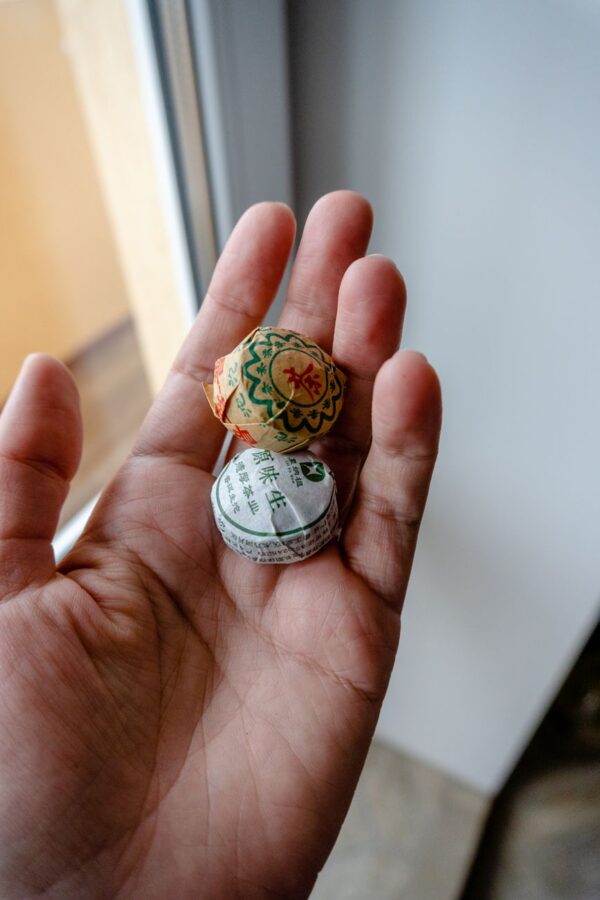
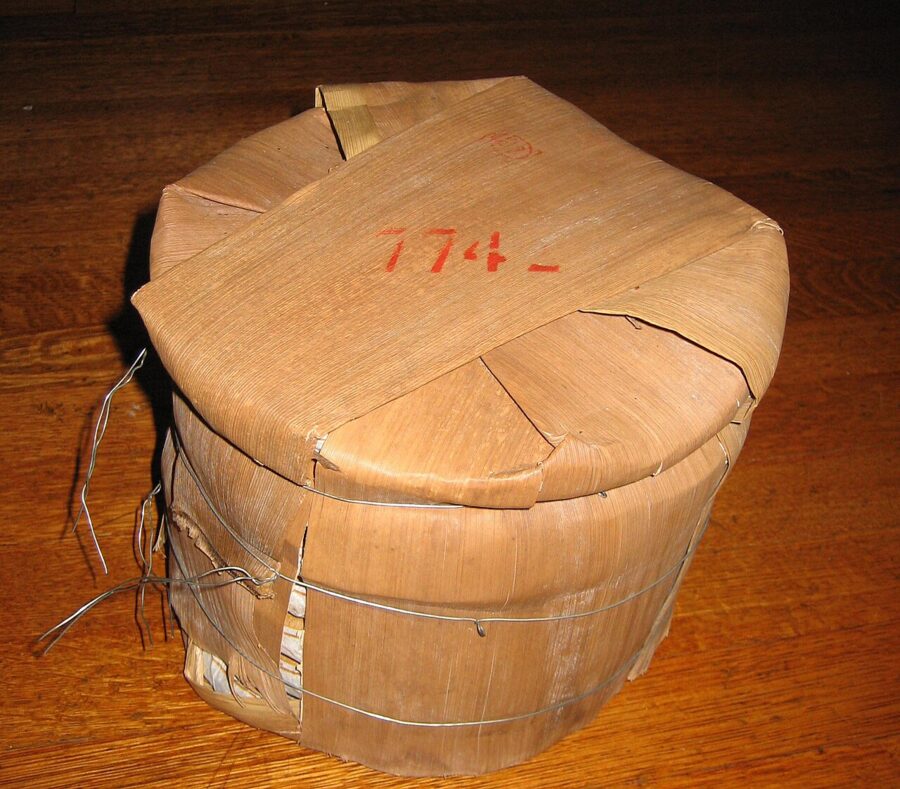
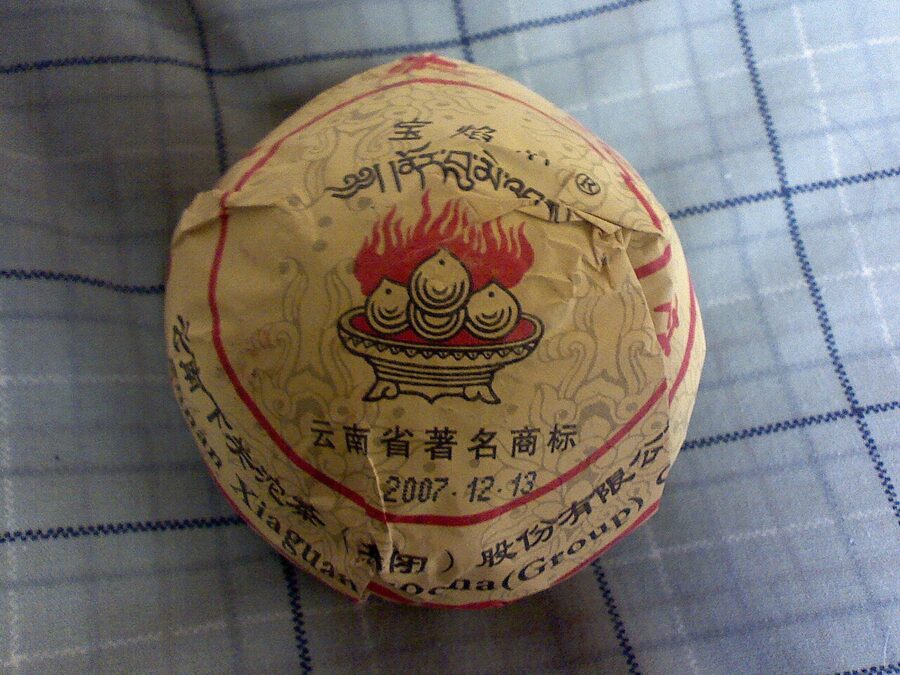
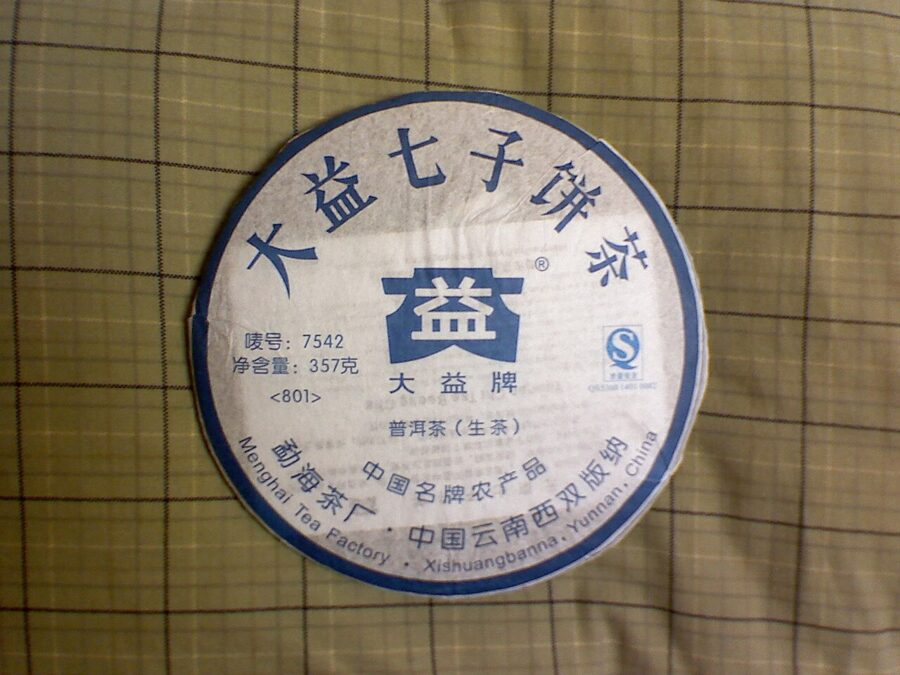
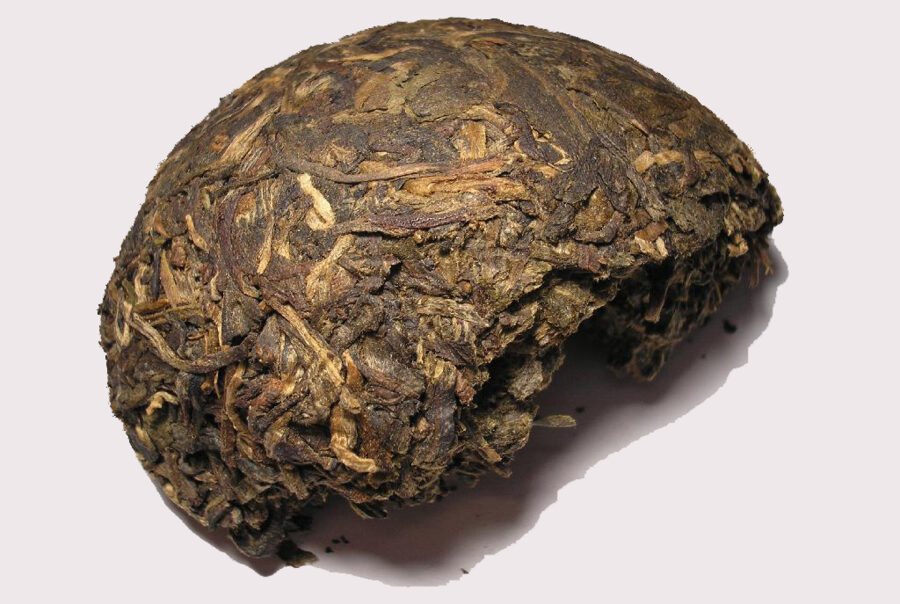
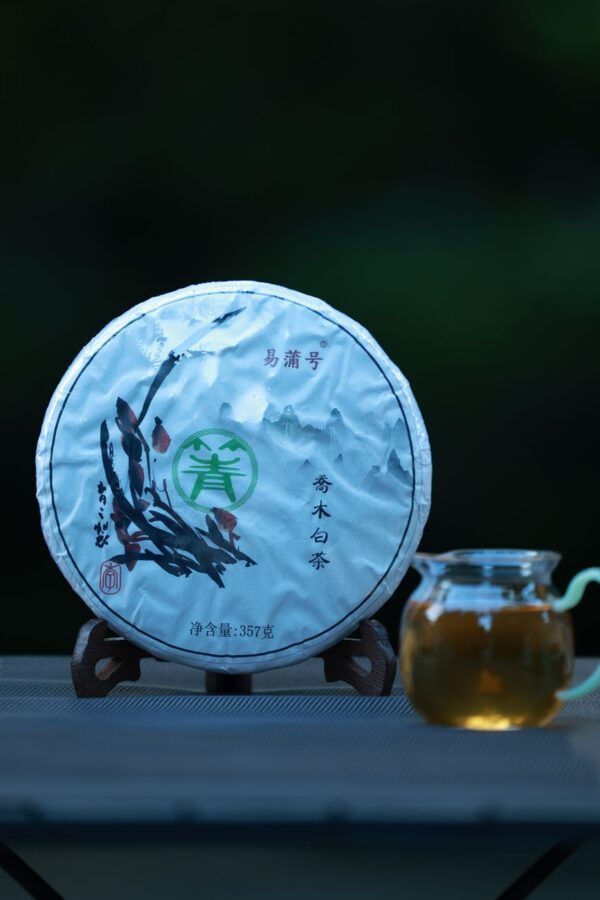
The shape you’ll see everywhere is the bingcha (饼茶), a flat disc, most often 357 grams. Seven of them stacked and wrapped in bamboo husk make a tong (筒), which is why the round cake is also called a seven-sons cake, qizi bingcha (七子饼茶). Then there are bricks, zhuancha (砖茶); small bowl-shaped nests, tuocha (沱茶); and the mushroom-shaped jincha (紧茶), the “tight tea” made for Tibet.
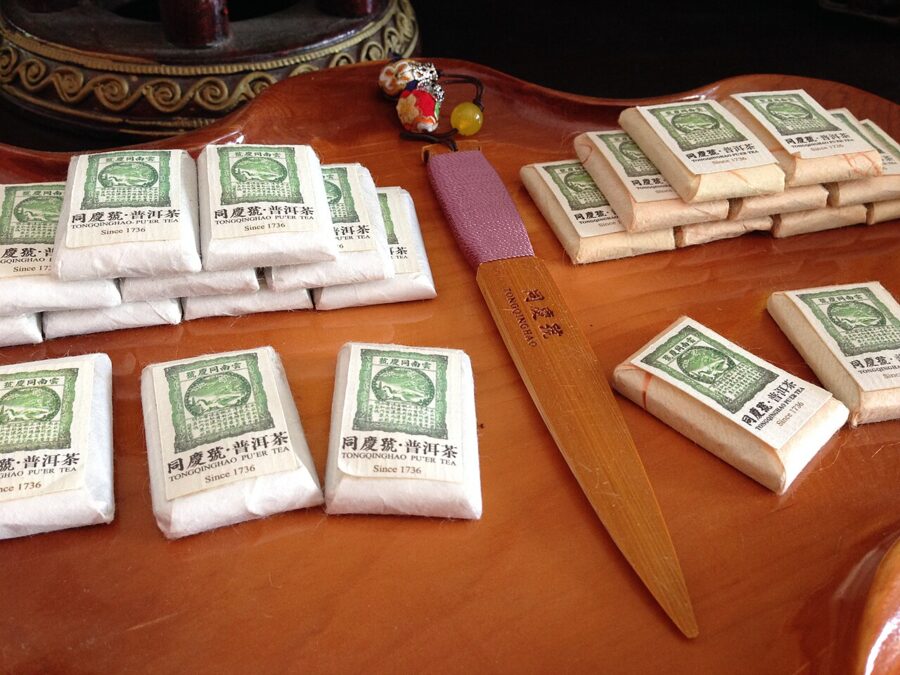
Recipe numbers, wrappers and the name on the label
The big state factories sold their tea by four-digit recipe numbers, and the habit stuck. In Menghai’s famous 7542, the 75 is the year the recipe was first made, 1975, the 4 is the leaf grade, and the 2 is the factory: Menghai. A hyphenated code after it, like 801 on a 2008 cake, marks the year and the batch.
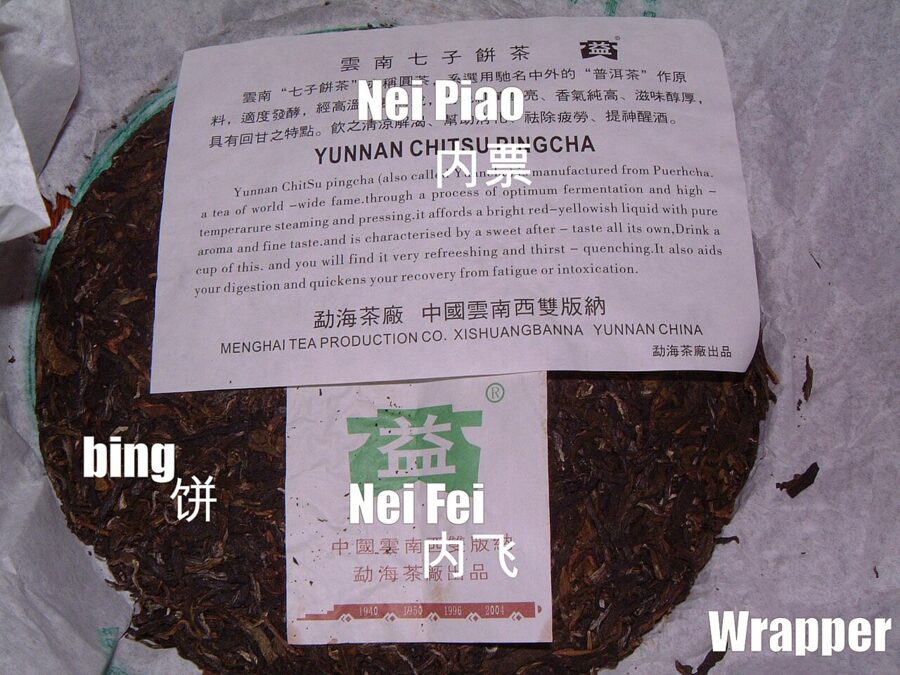
Inside the wrapper there’s usually a loose leaflet, the nei piao (内票), and in the tea itself the nei fei ticket. Factory cakes are often blends, with finer leaf on the outside and coarser leaf in the middle, which is why a cake can look better than it brews.
Then there’s the name itself. Since a national standard took effect on 1 December 2008, only tea made from Yunnan large-leaf maocha, grown inside a defined area of Yunnan (639 townships across 11 prefectures and cities), can legally be called pu-erh in China. Similar dark tea from Guangdong or elsewhere has to sell under another name.
Storage changes everything after that. Hong Kong and Guangzhou are humid, and tea kept there ages faster and darker: “wet storage”, in the trade. Kunming is dry and cool, and tea kept there ages slowly and stays brighter. It’s why Hong Kong’s old dim sum houses pour such a dark, earthy pot, and why many Kunming dealers prefer their tea dry-stored.
Where does it actually grow?
All of Yunnan’s pu-erh country sits along the Lancang, the river that becomes the Mekong when it leaves China. The trade sorts it into three big areas: Xishuangbanna in the far south, Lincang to the west and Pu’er city in between. Tea people sum up the styles in four characters, “east soft, west strong” (东柔西刚), meaning Yiwu’s mellow teas east of the river against Menghai’s punchy ones west of it.
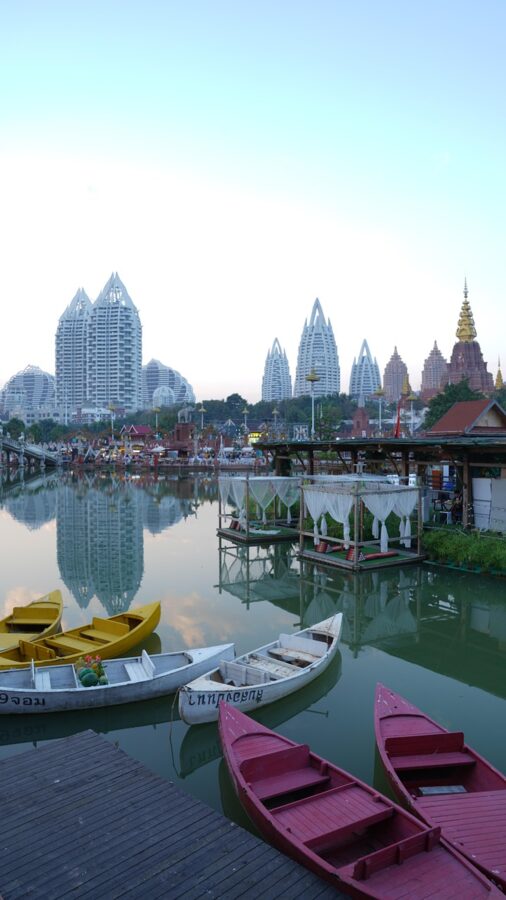
Two words will follow you round every tea shop. Gushu (古树), “old tree”, means leaf from trees commonly counted as more than a hundred years old, usually growing loose in forest. Taidi (台地) means terrace or plantation tea, from bushes in rows.
Plantation tea isn’t bad tea, and most pu-erh comes from it. It just isn’t what the money chases.
Yiwu and the six old mountains
The oldest roll-call of pu-erh country is a list of six mountains in an 1799 book on Yunnan, the Dian Hai Yu Heng Zhi (滇海虞衡志): Youle, Gedeng, Yibang, Mangzhi, Manzhuan and Mansa. Youle is today’s Jinuo Mountain near Jinghong; the other five are in the north of Mengla county. Yiwu, on the old Mansa mountain, became their market town and a starting point for the tribute tea sent to the Qing court in Beijing.
Yiwu is worth a day. The stone-paved old street (易武老街) still has the houses of the great tea firms, Tongqinghao, Tongxinghao, Tongchanghao and Cheshunhao, now protected as part of the national Tea Horse Road listing, and a stone marking where the caravan road began. A post road from Yiwu to Simao opened in 1735, and in 1845 it was paved with blue stone slabs, a job that took six years.
The Yiwu Tea Culture Museum (易武茶文化博物馆), on the site of the old Guandi temple in the middle of town, is free and holds century-old tea samples, old tea tickets, caravan bells and the tools of hand-made tea. Yiwu tea is the gentle one: thick, sweet, low on bitterness. The famous hamlets around it, Mahei, Guafengzhai and Bohetang, sell their leaf for sums that make people blink.
Menghai, Nannuo and Lao Banzhang
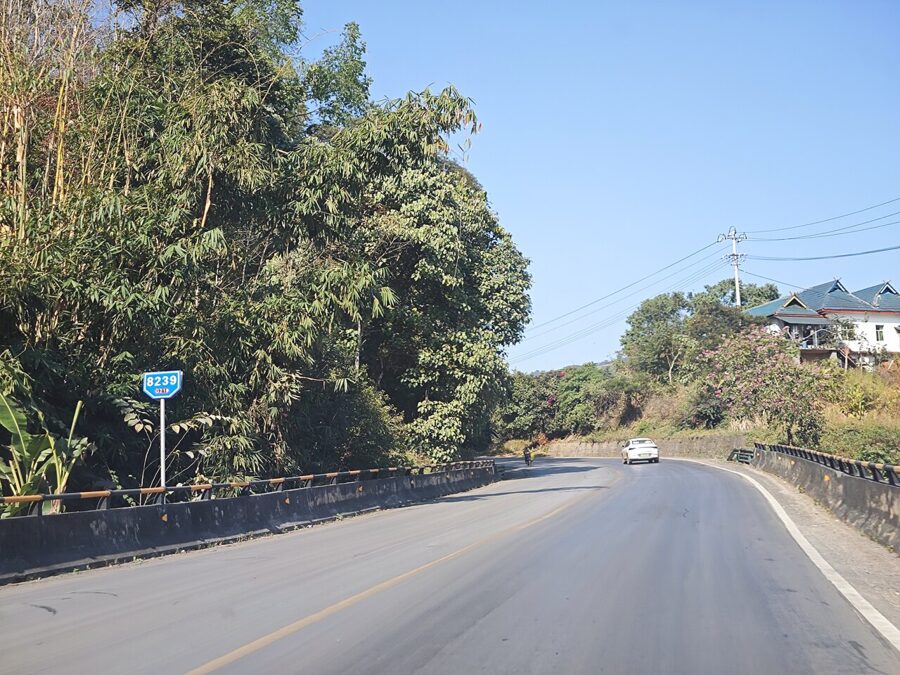
West of the river, Menghai county is where the industry lives. The Menghai Tea Factory began in 1940 as the Fohai experimental tea factory, became the state factory that made 7542 famous, registered the Dayi brand in 1989 and went private in 2004. Drive out of Menghai town and the G219 climbs through Nannuo Mountain, one of the classic tea hills, with old gardens above the road.
Lao Banzhang (老班章) is the name every dealer drops. It’s a Hani village at about 1,700 metres in Bulang Mountain township, close to the Myanmar border, and its old-tree tea is the strong one: bitter at first, then a sweetness that sits in your throat for minutes. The 2026 source price was ¥8,500 a kilo for old-tree leaf and ¥3,500 for mixed and big-tree leaf.
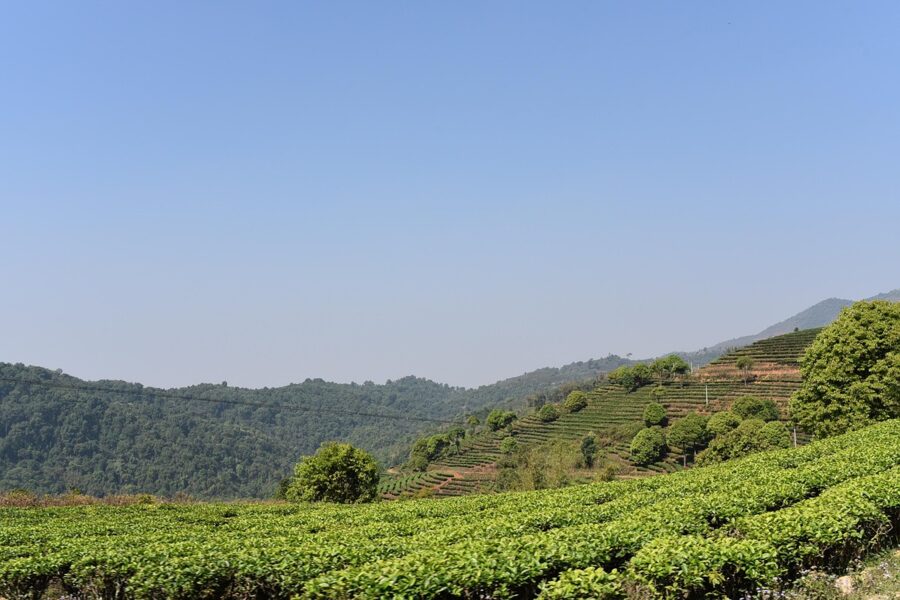
You can drive up, and plenty of tea buyers do in spring. But the gardens belong to families, so don’t wander into a tea plot uninvited, and don’t expect a museum: it’s a working village of tea workshops and houses rebuilt with tea money. Go with someone who knows a family, or hire a driver in Menghai who does.
Lincang and Bingdao
Lincang, west of Pu’er across the Lancang, is Yunnan’s biggest tea-growing prefecture, and its star is Bingdao (冰岛), a Dai village at the north end of Mengku township in Shuangjiang county. The name means “ice island” and has nothing to do with Iceland. Its tea is sweet and soft, the opposite of Banzhang, and the old hamlet, Bingdao Laozhai, is the most expensive address in pu-erh.
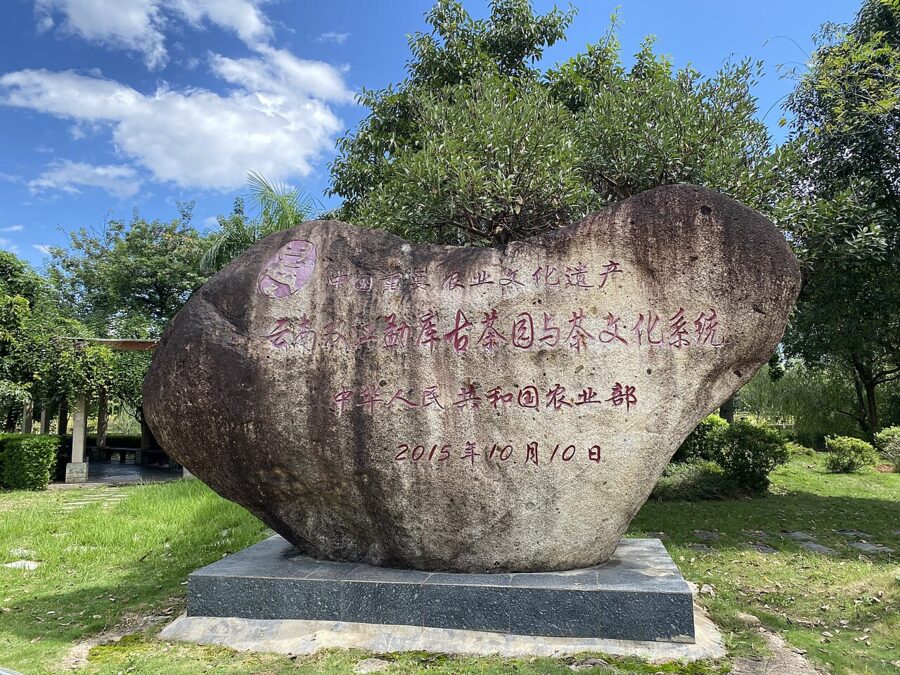
Second-grade Laozhai leaf was ¥20,000 a kilo in 2026, first-grade ¥35,000. Xigui, a village on a bend of the Lancang in the same prefecture, is the other famous Lincang name. Lincang is also the home of Yunnan’s red tea, dianhong, first made at Fengqing.
Pu’er city, which isn’t where the name came from
The tea is named after Pu’er, the Qing prefecture town where it was collected and traded. That old town is today’s Ning’er, in Ning’er county. The modern city called Pu’er is the old Simao, which took the name in 2007, and it’s the place most travellers pass through on the way to Jingmai.
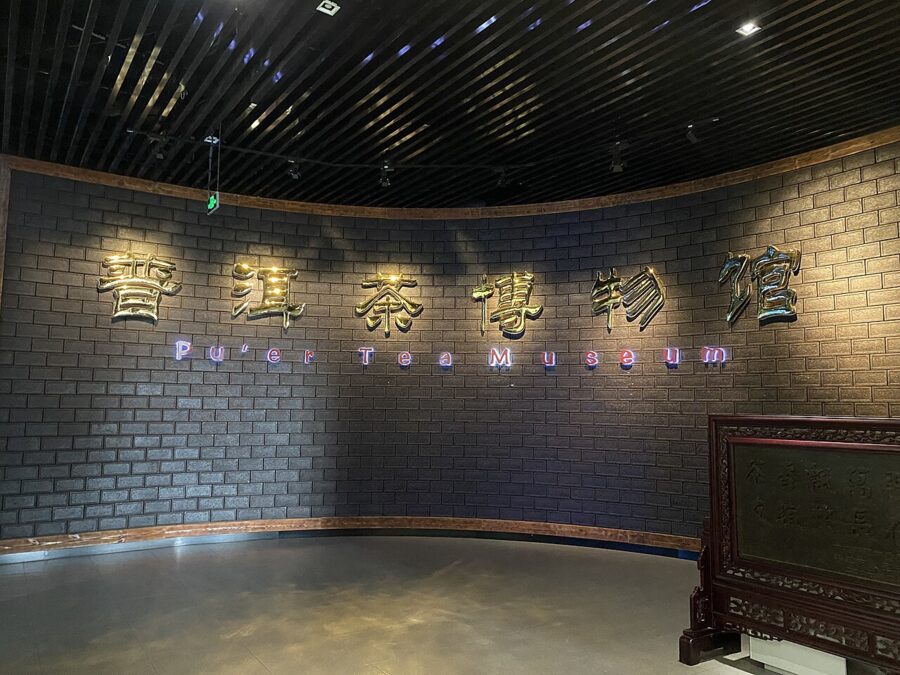
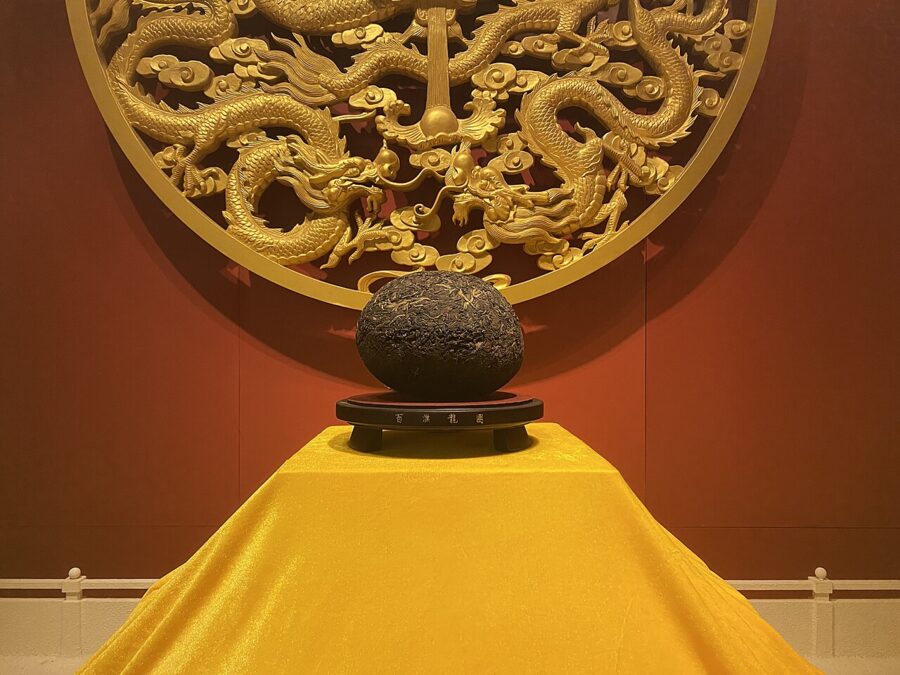
If you have an afternoon in Pu’er, spend it at the Pu’er City Museum (普洱市博物馆) in the city’s culture centre. It’s free, open Tuesday to Sunday 09:00–17:00 with last entry at 16:30, and closed on Mondays. The tea floor is the best short course in pu-erh history I know of in Yunnan.
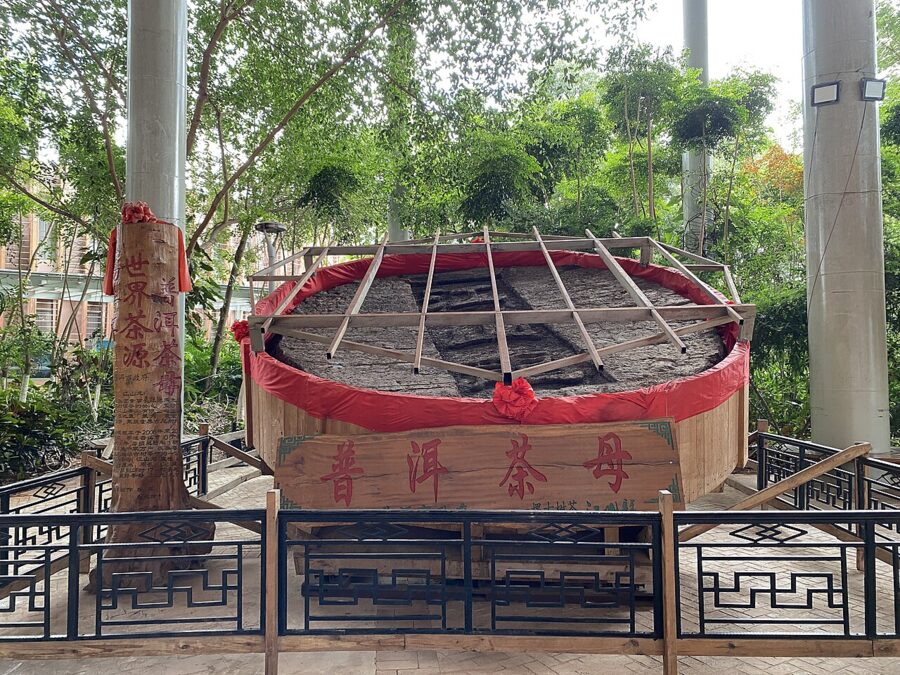
South of the city on Yingpan Mountain, the China Pu’er Tea Expo Garden (中华普洱茶博览苑) is a park of tea terraces, with tea-making sessions among its ticket options. It’s pleasant, and it’s plantation tea. If you only have time for one tea place near Pu’er, skip it and go to Jingmai.
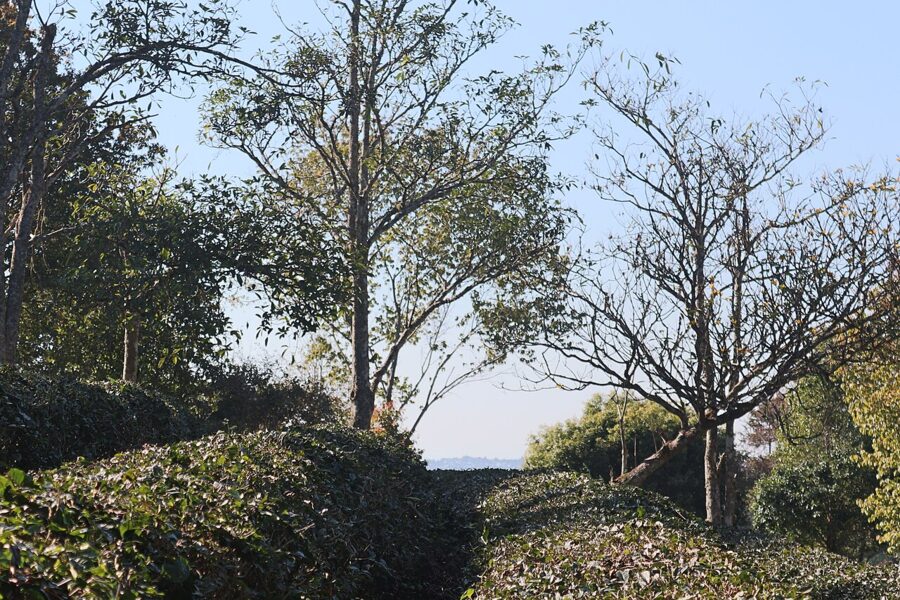
Go to Jingmai Mountain
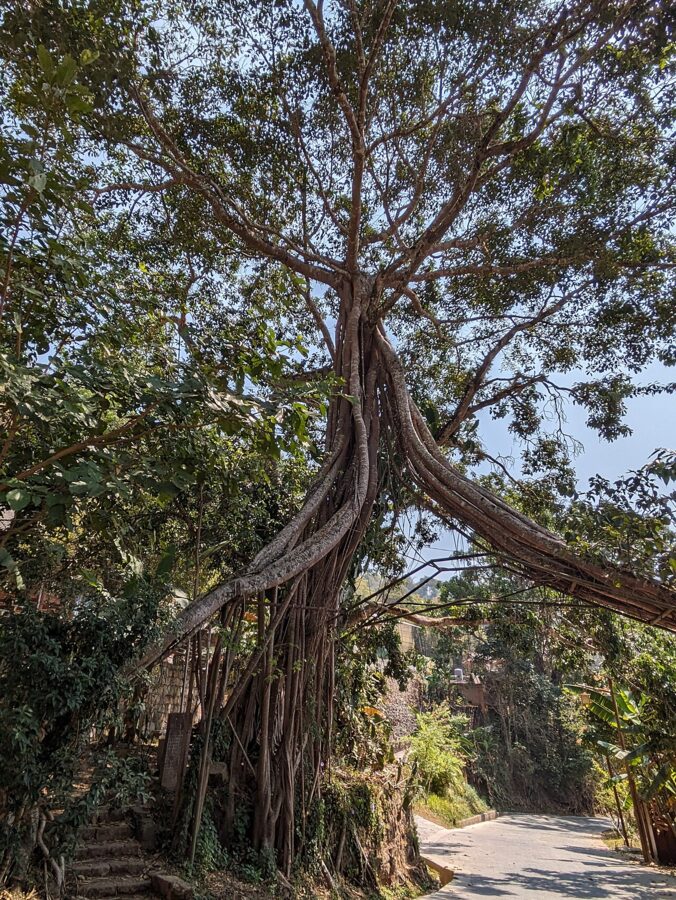
Of all the tea mountains, Jingmai (景迈山) is the one I’d send anyone to first. On 17 September 2023 Jingmai’s old tea forests and their villages became a UNESCO World Heritage Site, the first anywhere listed for tea. It’s in Lancang county, right on the Myanmar border, at an average height of about 1,400 metres.
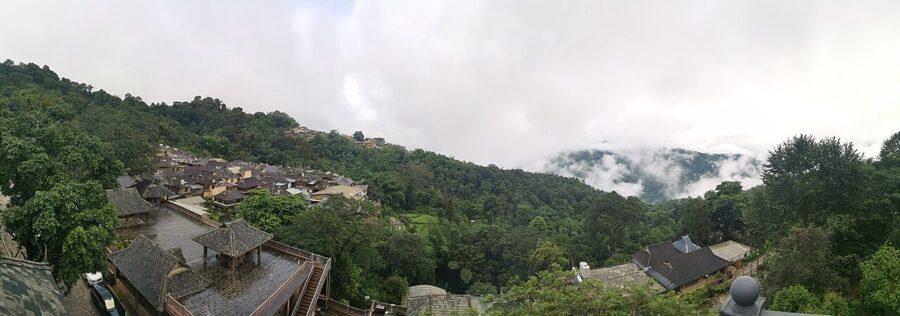
What UNESCO listed isn’t a building. It’s a way of farming: Bulang and Dai settlers, arriving between the 10th and 14th centuries, found wild tea in the forest and planted more under the trees instead of clearing them. The listing covers five old tea forests, nine old villages (five Bulang, four Dai) and three strips of “partition forest” planted to stop pests spreading between gardens. More than a million old tea trees grow inside the core zone.
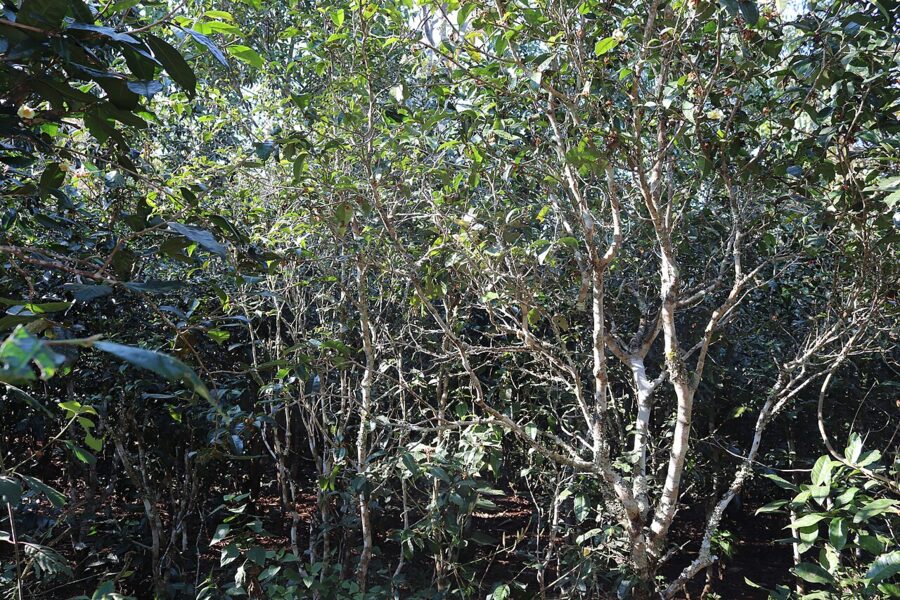
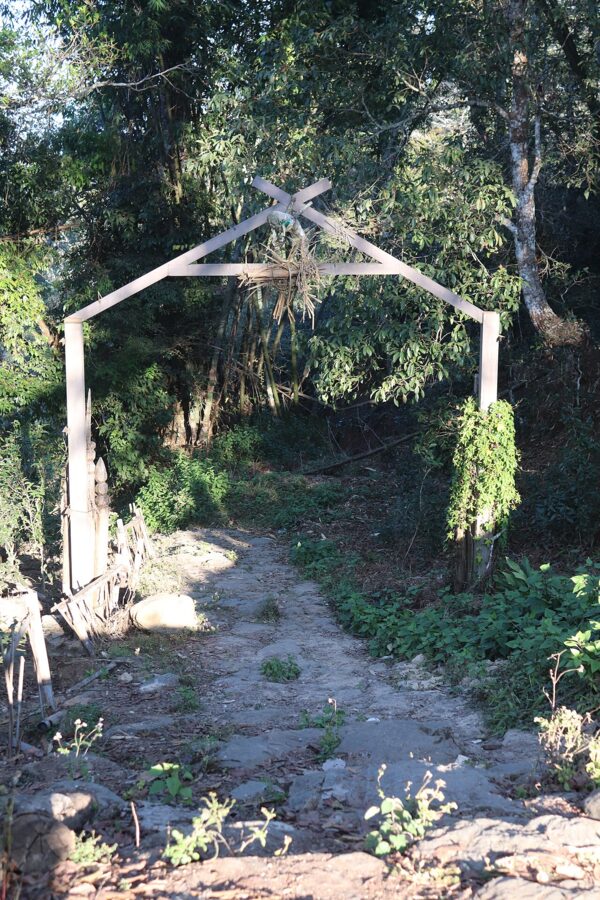
The biggest forest is Dapingzhang (大平掌). You can walk through it or take the shuttle, going in at the west gate and out at the east. Walk it, slowly, and look at the trunks: moss and ferns grow on the tea trees, and the path winds between them rather than through any clearing.
The villages
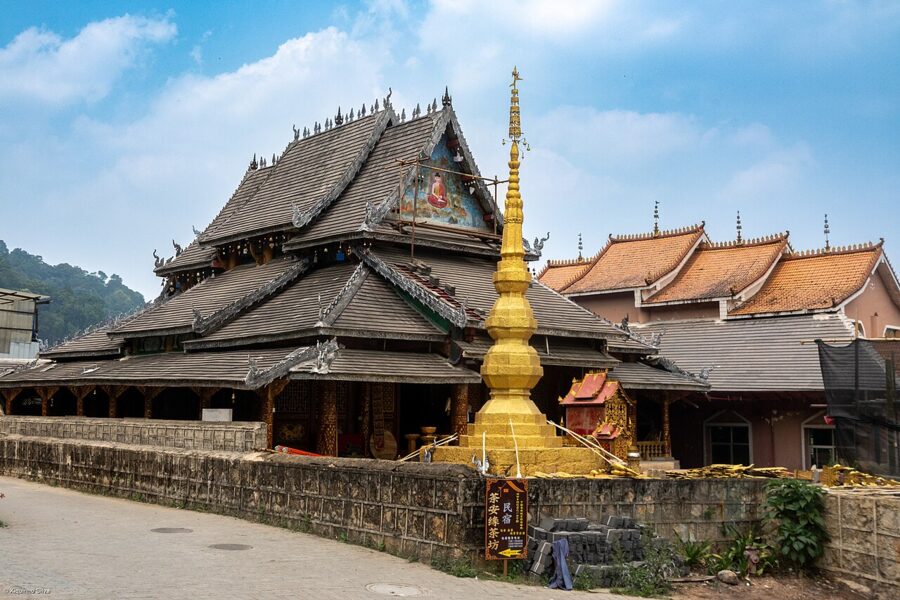
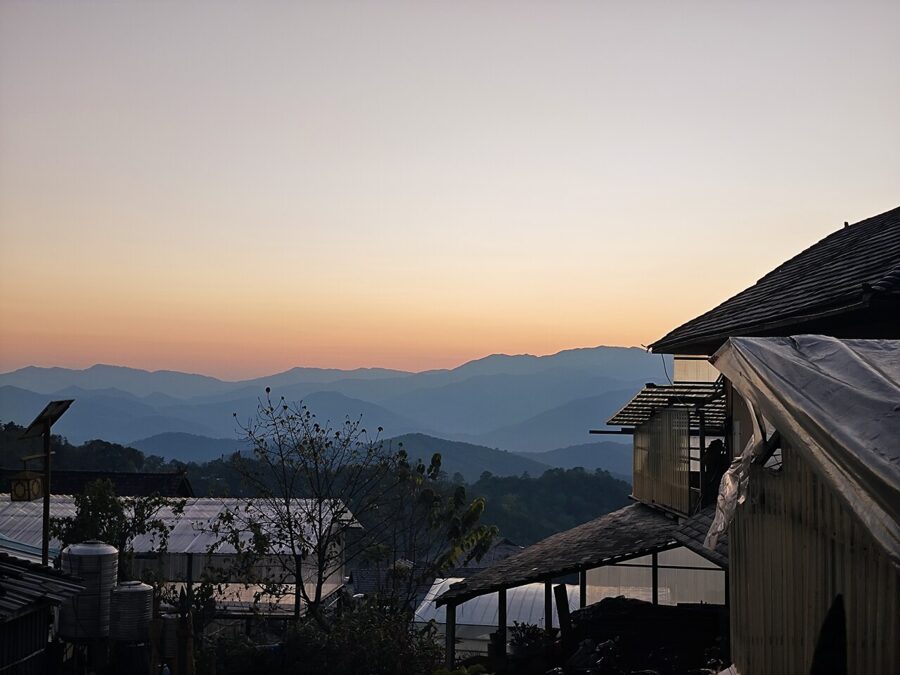
The road along the mountain strings the villages together. Jingmai village is mostly Dai and Mangjing mostly Bulang, and each hamlet has its own thing. Jingmai Dazhai has a golden pagoda for sunrise and the sea of clouds. Nuogan (糯干) is an old Dai village with snack stalls; Wengji (翁基) is the Bulang village for sunset.
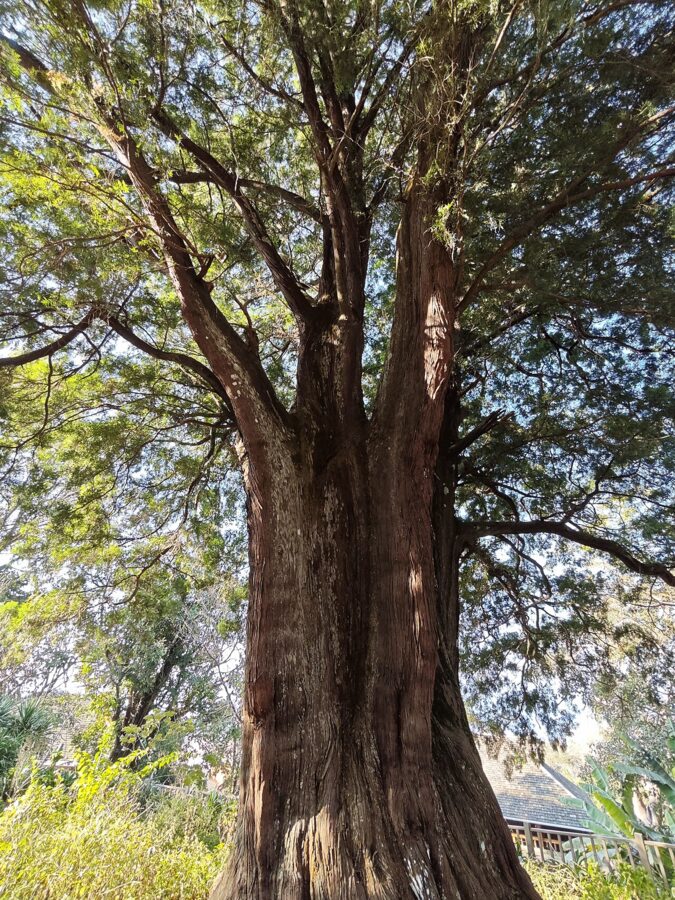
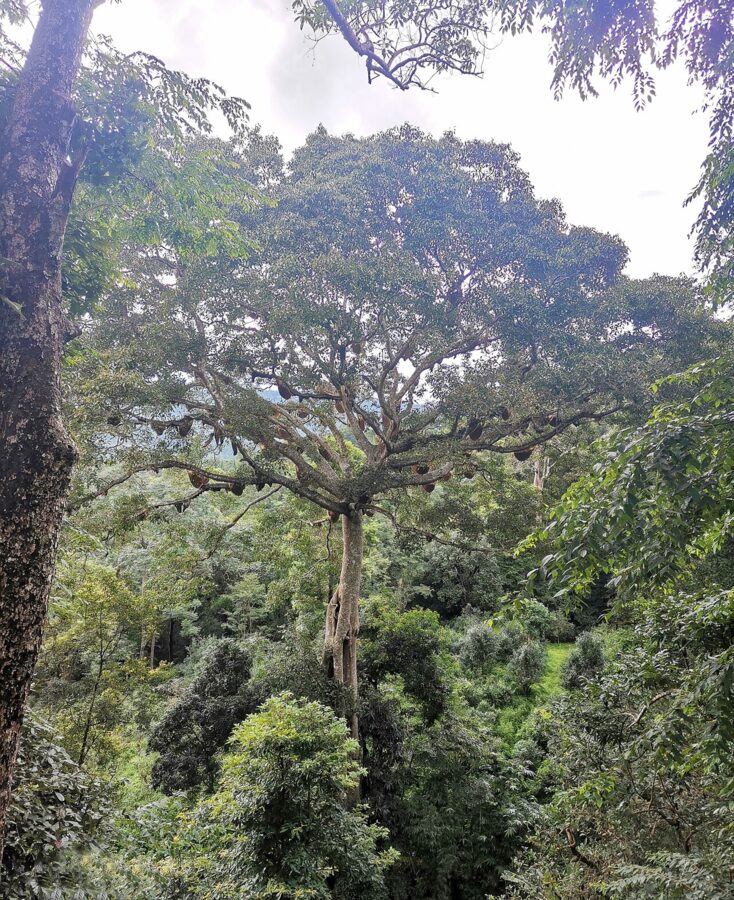
Mangjing (芒景) is the Bulang heart of the mountain. In Mangjing Shangzhai stands the “bee-god tree”, a tall tree hung with more than 70 wild bees’ nests. Manghong, further on, has an old octagonal pagoda and some of the best views on the mountain at sunrise and sunset.
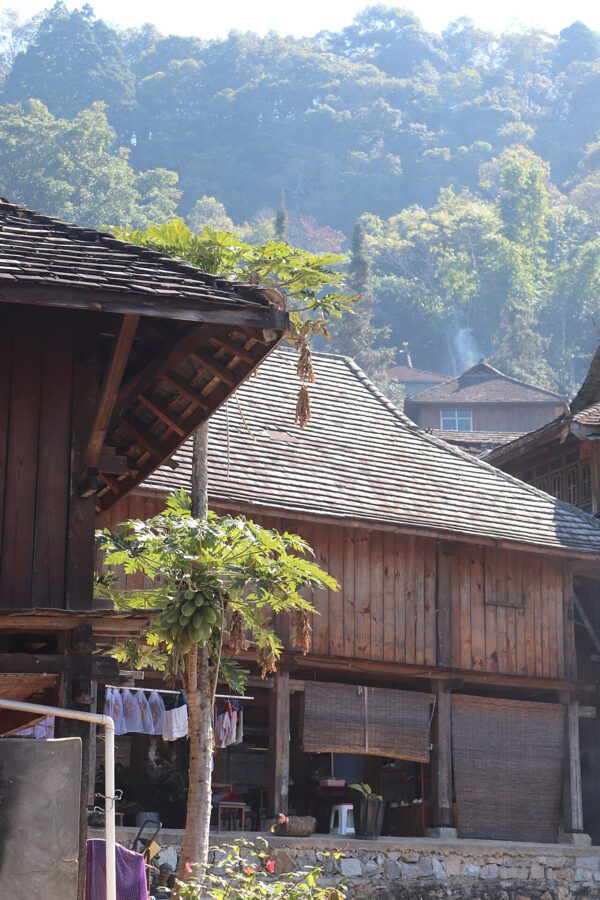
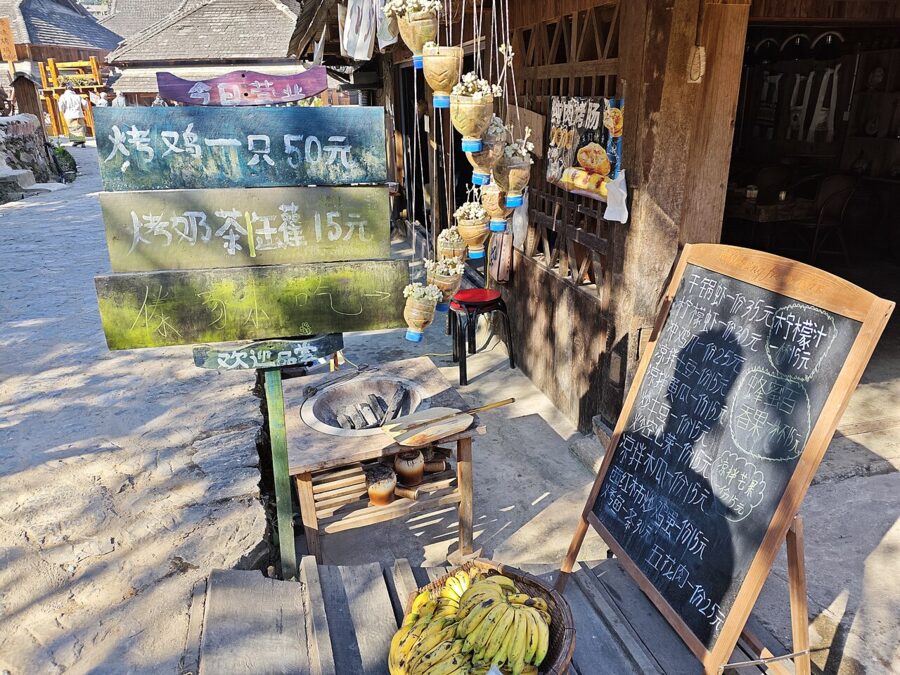
Tea is food here too. Bulang kitchens make sour tea, leaf packed into bamboo and left to ferment, and cook whole tea-leaf banquets with fried tea leaves and tea roasted in a pot by the fire. Dai cooks do bamboo-tube rice and a “hundred-herb” feast, and Hani cooks wrap small river fish in leaves and roast them.
Getting there
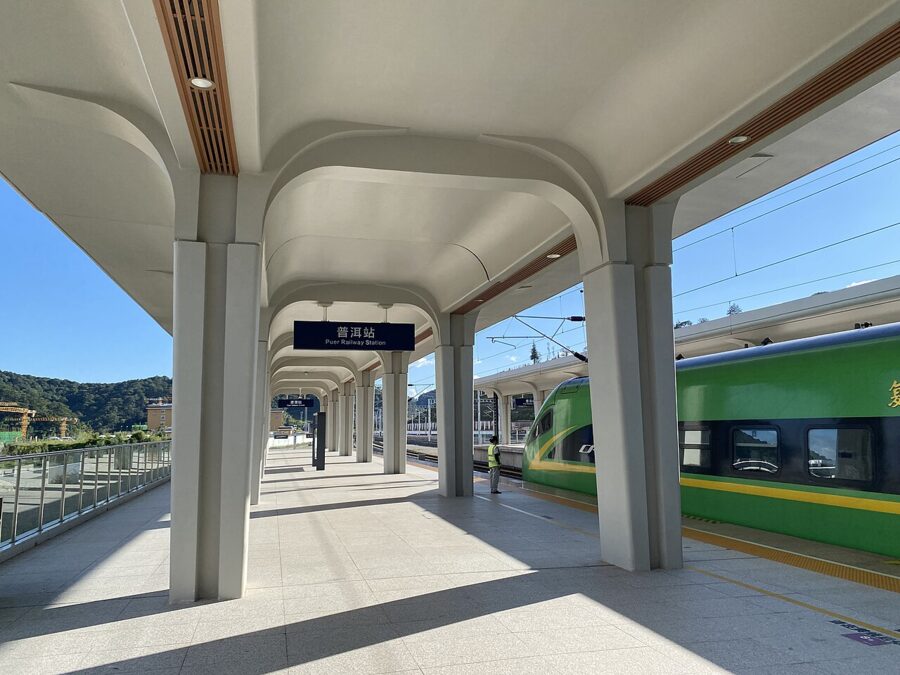
Jingmai sits above Huimin town (惠民镇), and almost every route ends there. From Kunming, take the train to Pu’er, about two and a half hours on the fastest trains on the China–Laos line, or to Xishuangbanna station in Jinghong, three to four hours on C and D trains. Book on 12306 or Trip.com, and expect weekend and holiday trains to sell out.

The official Jingmai visitor guide gives these coach fares, all bookable on the Golden Peacock ticketing mini programme (金孔雀票务) in WeChat: Pu’er high-speed rail bus station to Jingmai Mountain ¥150; Pu’er Wuyi bus station to Jingmai ¥140, or to Huimin ¥120; Jinghong bus station to Huimin ¥44; Lancang county bus station to Huimin ¥23. From Huimin a local bus runs the 24 km up the mountain for ¥15, stopping at the villages along the ridge from Manggeng to Manghong.
The nearest airport is Lancang Jingmai, about 71 km away; Xishuangbanna Gasa is about 133 km and Pu’er Simao about 237 km. In Huimin itself, the Jingmai Heritage Exhibition Centre is worth an hour before you go up. A few outlying villages, such as Bangai, Nanzuo and Longbeng, are only reachable by car.
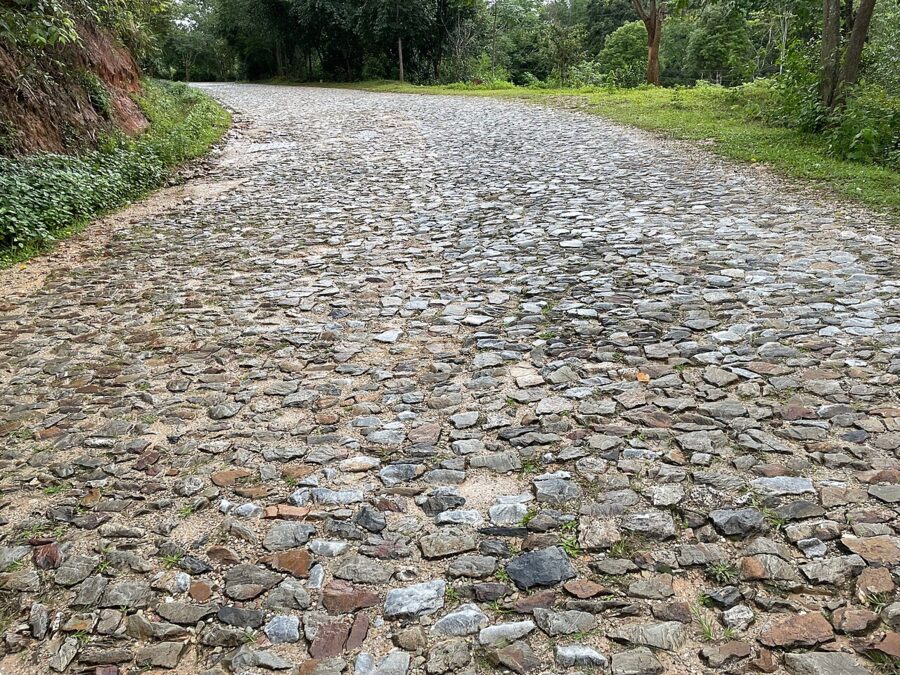
Entry is free but booked. Since 1 October 2025 the heritage area has run a free reservation system: you book by vehicle, not by person, up to 30 days ahead, on the WeChat mini programme 景迈山预约服务 (“Jingmai Mountain reservation service”), and show the QR code at the checkpoint at the Jingmai Bridge service point. Book before you set off, and keep a screenshot, since signal on the mountain comes and goes.
When to go, and staying the night
Spring is tea season. Picking starts as early as late February at low altitude and runs through March and April, and early spring leaf, toucun (头春), is the most prized. Summer leaf, picked in the rains, is ershui (二水), “second water”; autumn leaf is guhua (谷花), “rice-flower tea”, picked when the rice is in bloom.
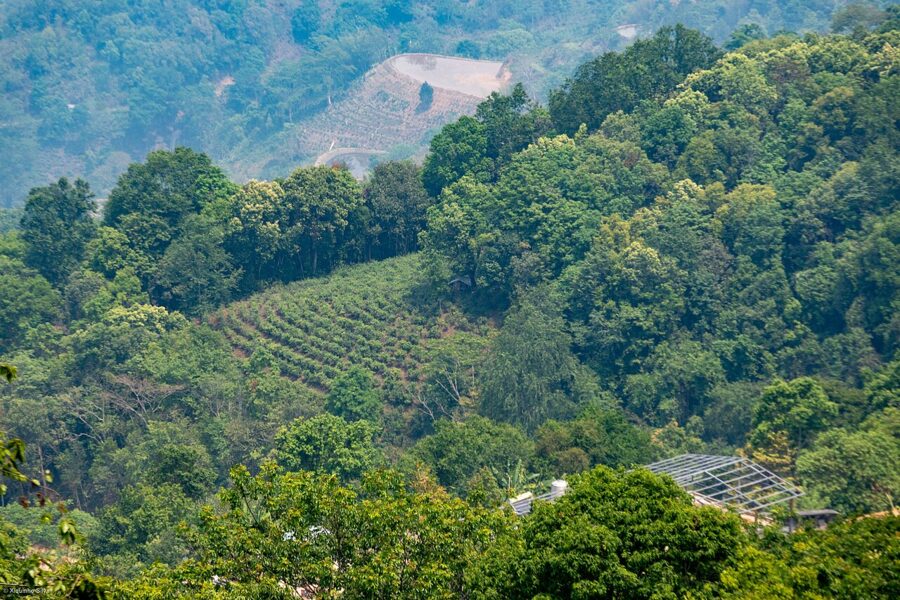
If you want to watch tea being made, come in spring and stay in a village guesthouse: the families pick in the morning and fire leaf in the afternoon and evening, and most will let you watch or have a go. If you want the views, October and November are better. Avoid the May Day holiday and Golden Week (1–7 October), when the guesthouses fill and the roads queue.
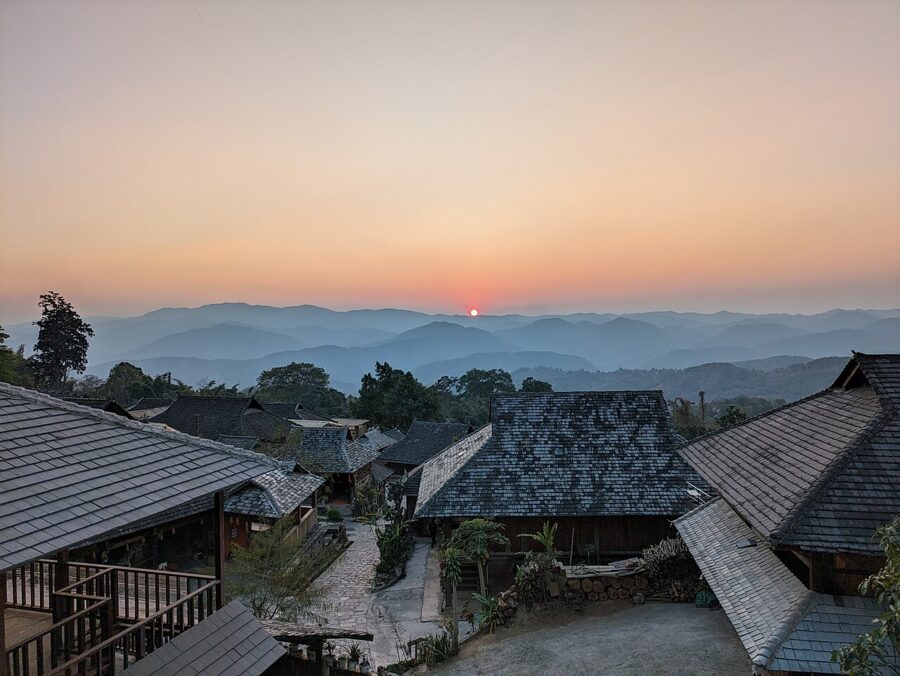
Guesthouses in Wengji, Nuogan, Jingmai Dazhai and Mangjing are family-run and booked through Trip.com or by phone through the family. Outside cars often have to park at the village gate, not at your door, so pack a bag you can carry up steps. Pay by Alipay or WeChat Pay; both take foreign cards now, and few village families keep much change.
The Tea Horse Road
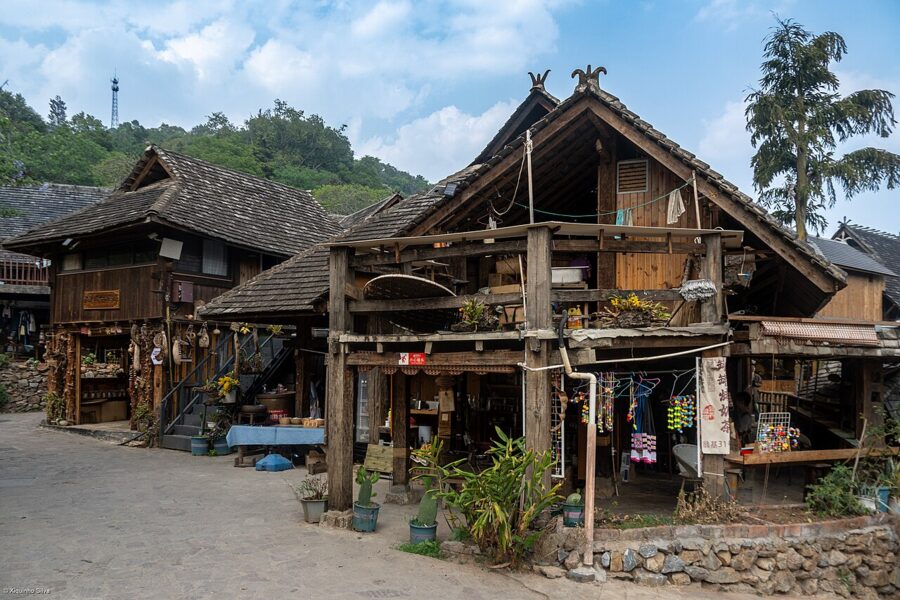
Before trucks, Yunnan’s tea walked out on mules and on people’s backs. The Tea Horse Road (茶马古道, chama gudao) wasn’t one road but a web of caravan paths, and the Yunnan–Tibet branch started at Yiwu and Pu’er and climbed north through Dali, Lijiang and Shangri-La to Lhasa, with some loads going on to Nepal and India. The trade gave it its name: tea from China for horses from Tibet, a swap documented since at least the Song dynasty.
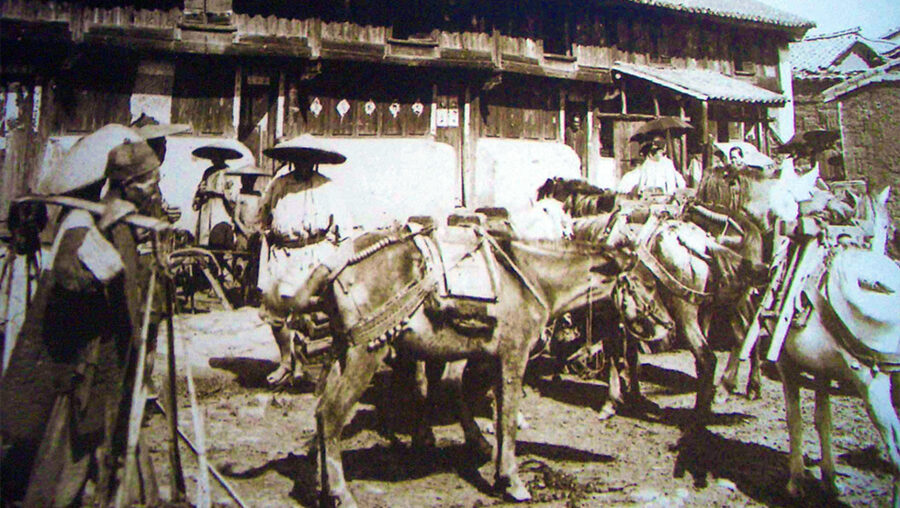
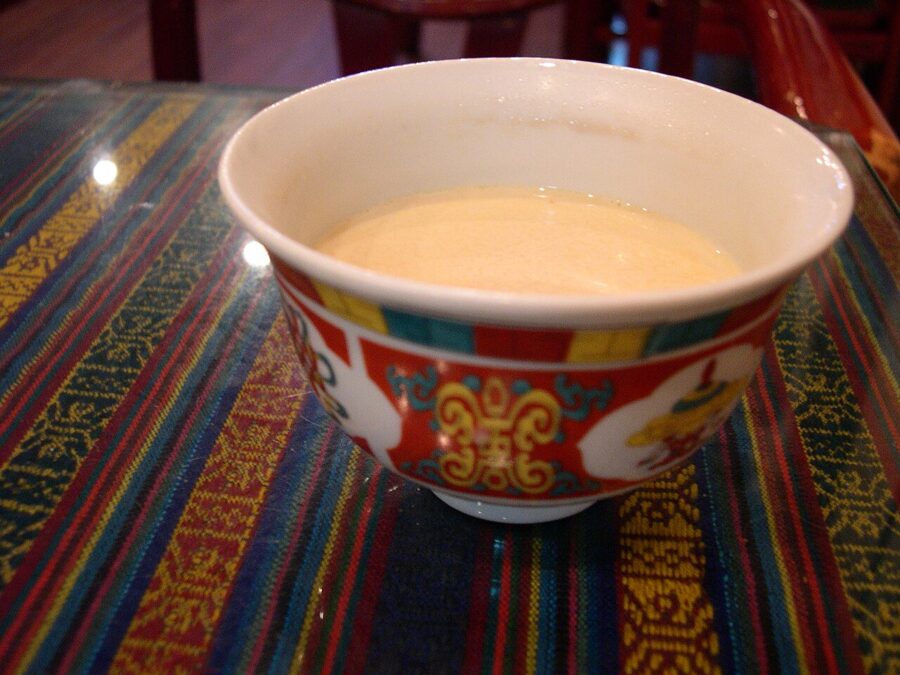
Pressed tea was made for this. A cake or brick packed tight and wrapped in bamboo could survive rain and months on a mule, and the mushroom-shaped jincha was pressed for the Tibetan market, where tea churned with butter and salt was a daily need, not a luxury. In Sichuan, on the parallel route out of Ya’an, porters carried loads of brick tea that weighed more than they did.
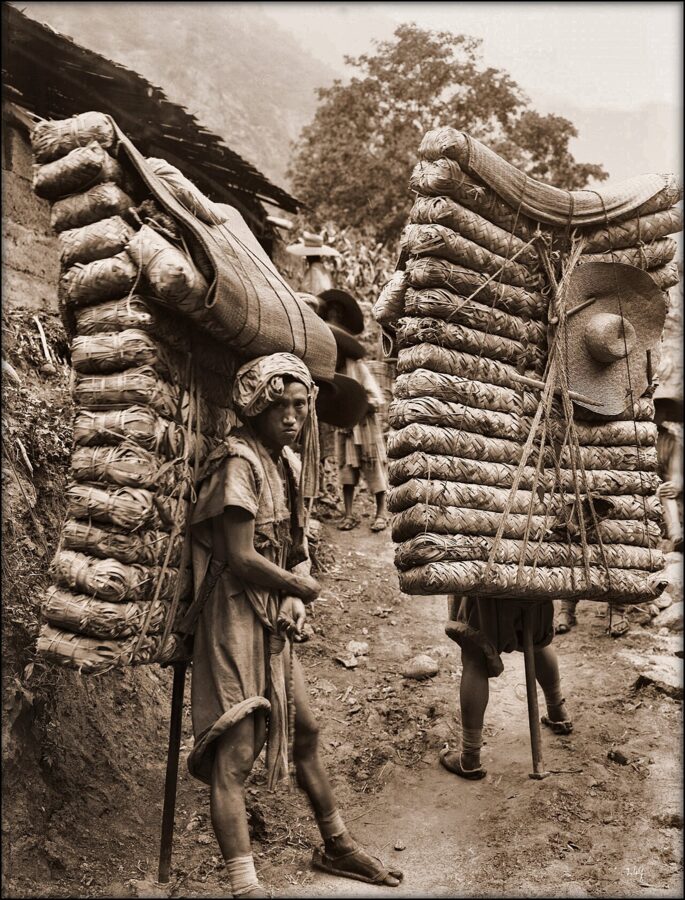
The caravans faded out once motor roads reached the mountains in the 20th century. In 2013 the State Council listed the surviving pieces across Sichuan, Yunnan and Guizhou as a national monument; in Yunnan alone that’s 86 sites in 21 counties, from paved trails and bridges to inns, tea houses and temples.
Where you can still walk it
The closest piece to the tea mountains is at Nakeli (那柯里), a village in Tongxin town, Ning’er county, on the old road between the Pu’er prefecture town and Simao. There’s a stretch of stone road and the old horse inns and shops where caravans stopped to rest and feed their animals. It’s an easy stop on the way from Pu’er city towards Kunming, and Ning’er has its own station on the railway.
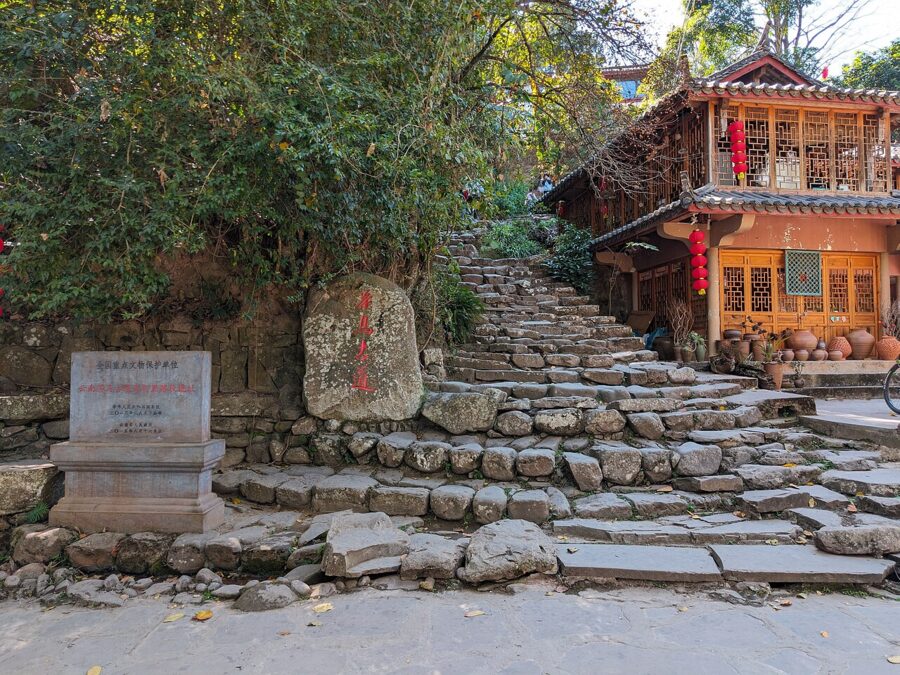
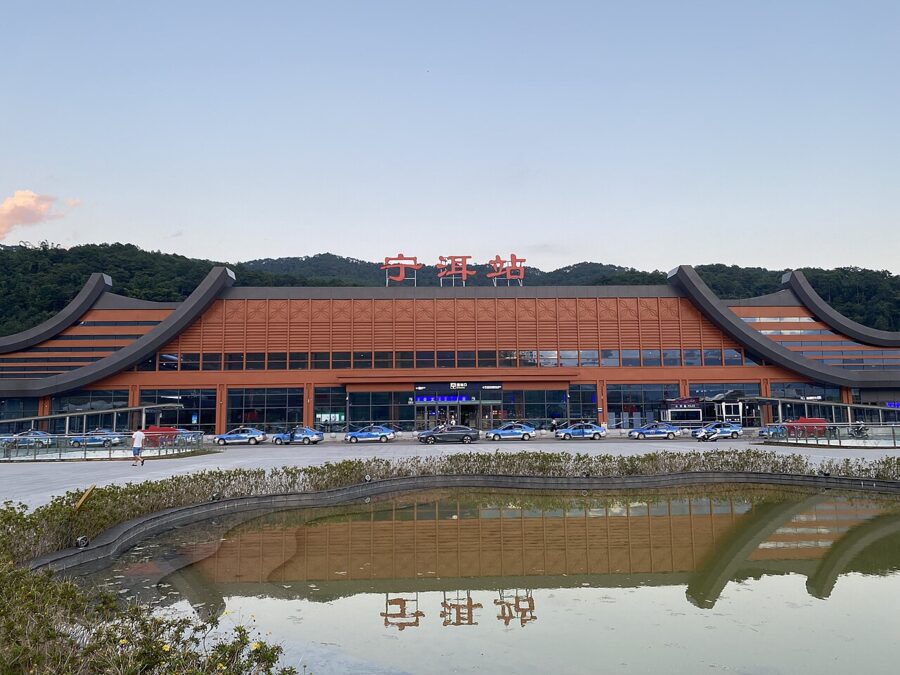
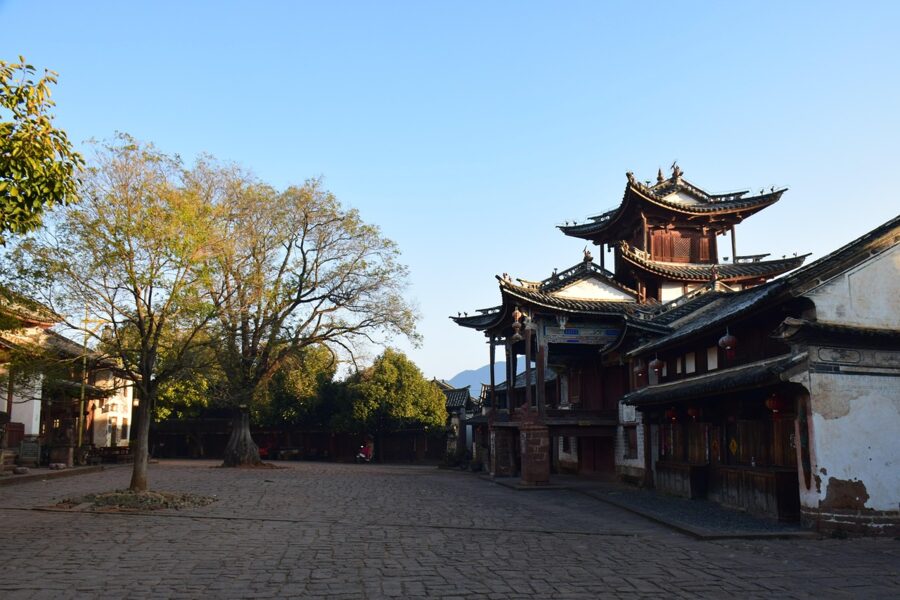
The best-preserved market town on the whole route is Shaxi (沙溪), a Bai town in Jianchuan county between Dali and Lijiang. Its Sideng Street (寺登街), with its square, its old stage and the Xingjiao Temple, was put on the World Monuments Fund’s watch list in 2001 as the only surviving market on the Tea Horse Road, and a careful restoration followed. There’s no entrance ticket, and it’s about one and a half to two hours by road from Dali.
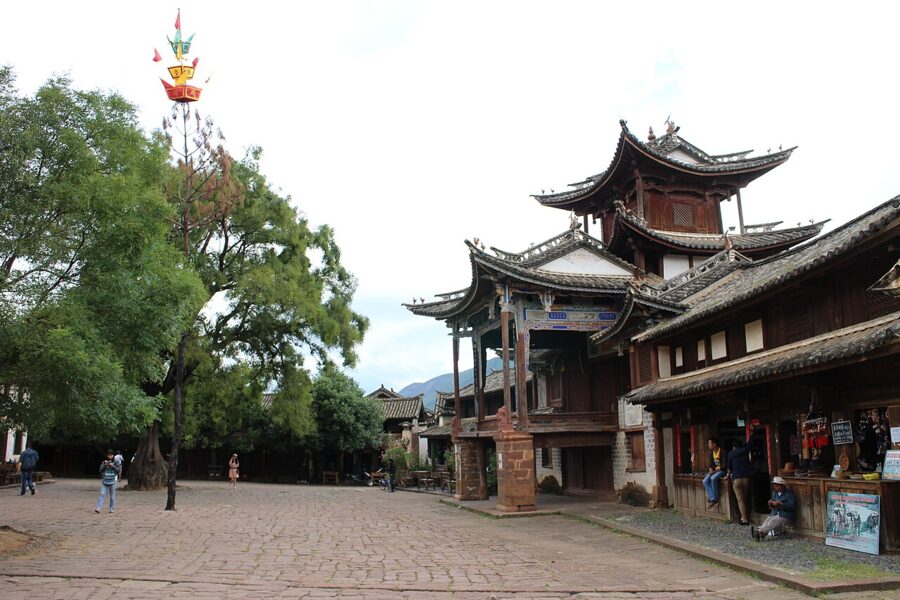
The square, Sifang Street (四方街), is the heart of it. The old stage faces the gate of the Xingjiao Temple across the paving, and the shopfronts round the edge still have their horse yards behind them: shop at the front, mule inn at the back.
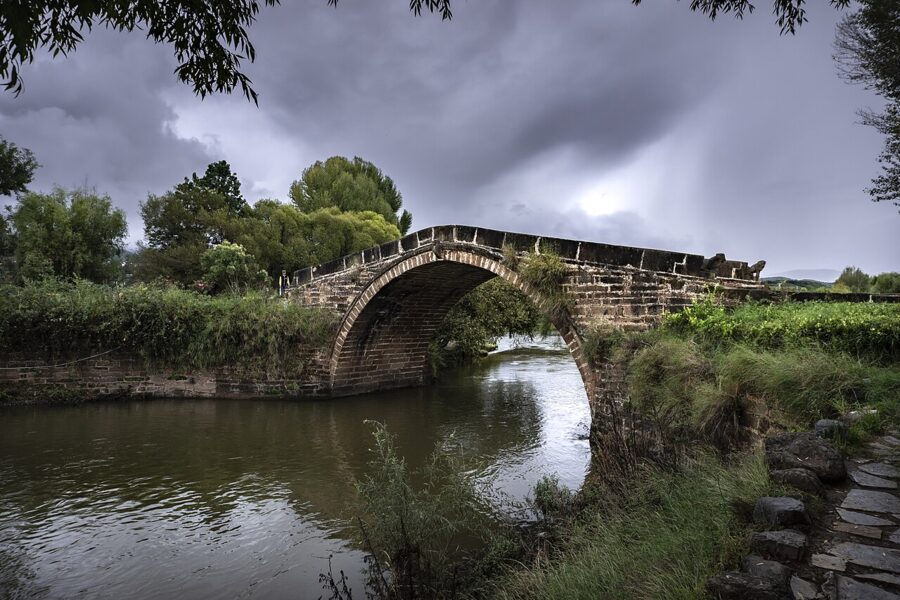
Then walk to the end of Sideng Street and out to the Yujin Bridge (玉津桥), a single stone arch over the Heihui river. Go at about 06:00 if you can, when there’s often mist on the water, or at about 17:00 for softer light.
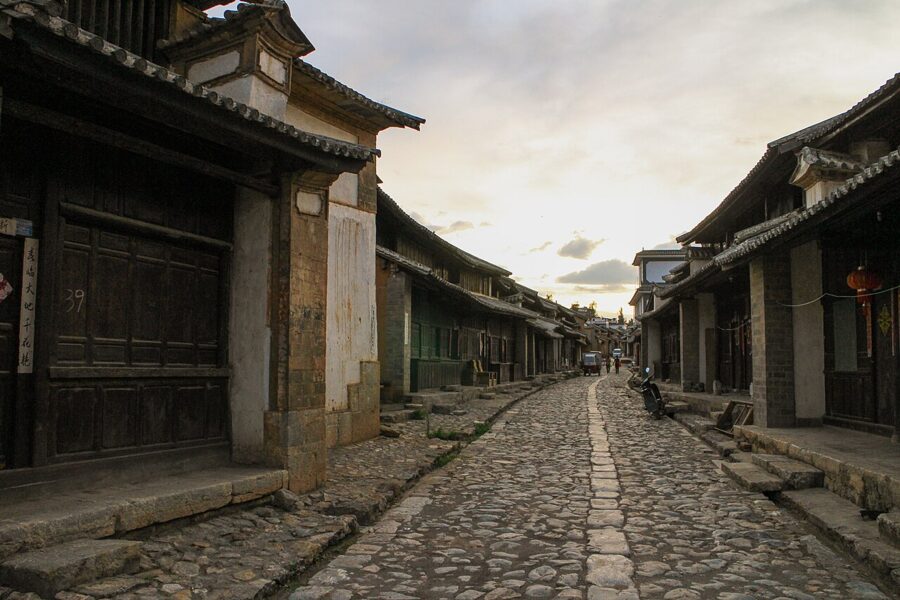
Further east, at Yunnanyi in Xiangyun county, a cobbled post road runs straight through an old village of inns. And Lijiang’s old town grew rich on the same caravans; my 3-day Lijiang itinerary covers it, and Shaxi makes an easy side trip on the way.
Brewing it in a gaiwan
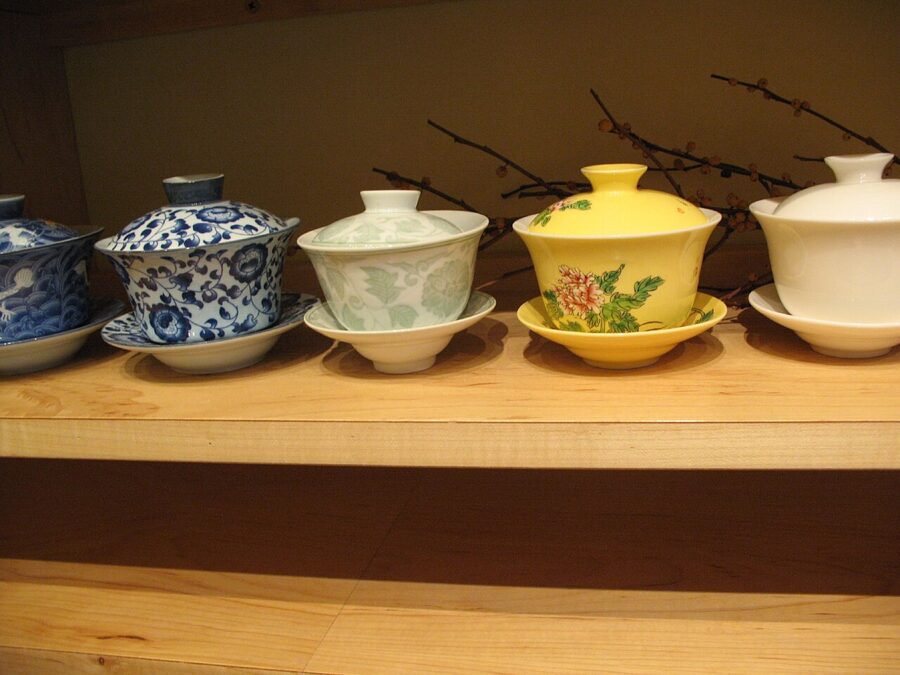
Tea shops in Yunnan nearly all brew the same way, and it’s easy to copy. You need a gaiwan (盖碗), a lidded bowl of about 100–120 ml, a jug to pour into and some small cups. Put in about 7 grams of tea, roughly a third of the bowl if it’s loose leaf, prised off the cake in flakes with a tea knife.
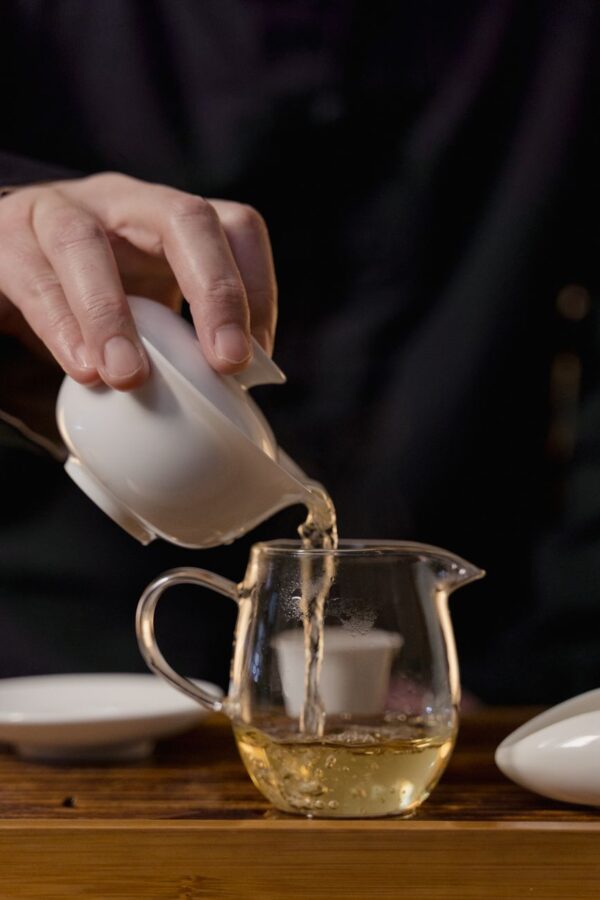
First, the rinse. Pour hot water over the leaf, wait a few seconds and tip it away; with a compressed or older tea, do it twice. It opens the leaf and washes off dust from storage, and it isn’t for drinking.
Then the water temperature. Young raw tea is happier at 90–95°C, or it turns harsh; ripe tea and old raw tea take water straight off the boil. Keep the first infusions short, about 10 to 20 seconds, pour off every drop into the jug, and add a few seconds each round.
A good tea gives you ten to fifteen infusions, and old tea from good leaf can go past twenty. The flavour changes as you go, which is half the point: a young raw tea might start floral and bitter, go fruity in the middle and end up sweet and thin. When it tastes like warm water, stop.
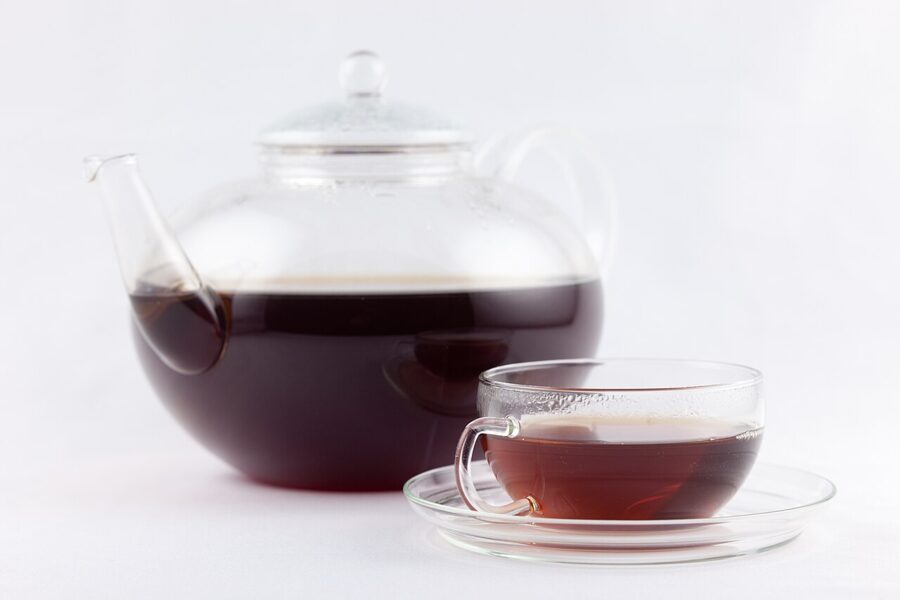
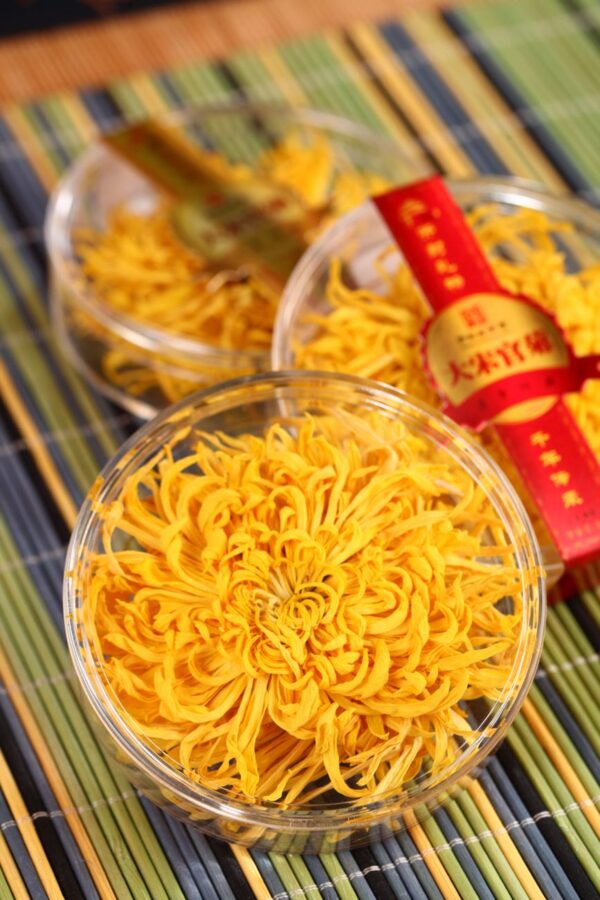
Cantonese drinkers add a few dried chrysanthemum flowers to a pot of ripe pu-erh, the guk pou you’ll be poured at Hong Kong dim sum, where the tea is called bo lei. It’s good after rich food, which is the reason ripe pu-erh became the Cantonese table tea in the first place; my Cantonese food guide covers the morning-tea rooms of Guangzhou.
What aged tea should taste like
Old pu-erh shouldn’t taste of a cellar. Well-aged raw tea smells of wood, dried fruit, camphor and old leaves, and tastes smooth, thick and gently sweet, with only a trace of bitterness and almost no dryness. The liquor is a clear amber-red, like a dried jujube held up to the light.
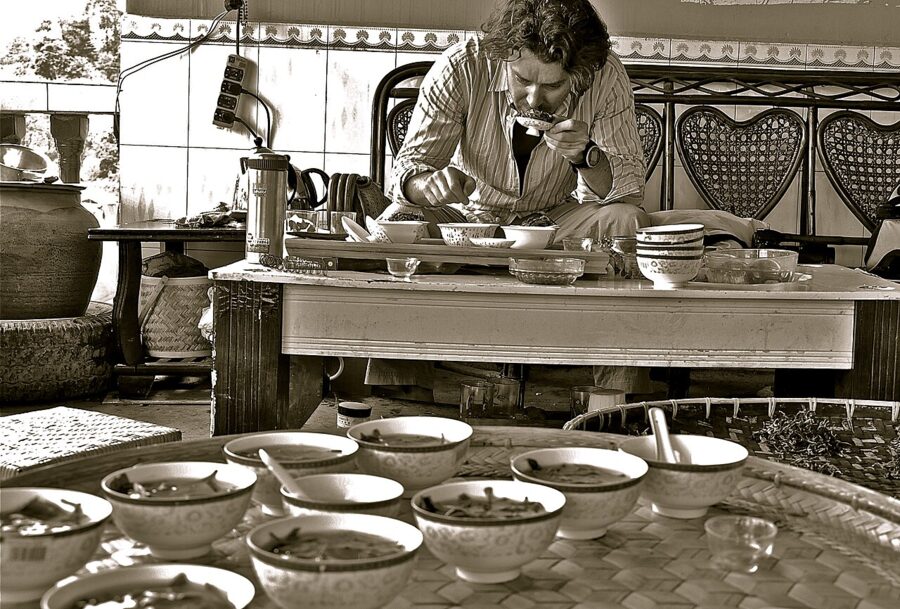
Mould, must and mushroom are faults, whatever the seller says about “old warehouse character”. So is a sour edge. Ripe tea has its own fault list: fishiness, a compost smell, or flavour that falls off a cliff after two infusions, which can mean added flavouring.
Look at the spent leaves too. Tip them onto a white plate after the fifth infusion. Old-tree leaf tends to be thick and springy, whole leaves and stems should be easy to pick out, and aged raw leaf should open up flat; if it’s mush, or full of twigs and seeds, the tea was cheap to start with.
Buying pu-erh without getting burned
Kunming is the place to buy, because it’s where the tea from every mountain comes to be sold, and because Kunming storage is dry. Every shop will brew you samples for free. Sit down, taste three or four, and buy small first.
Kunming’s tea cities
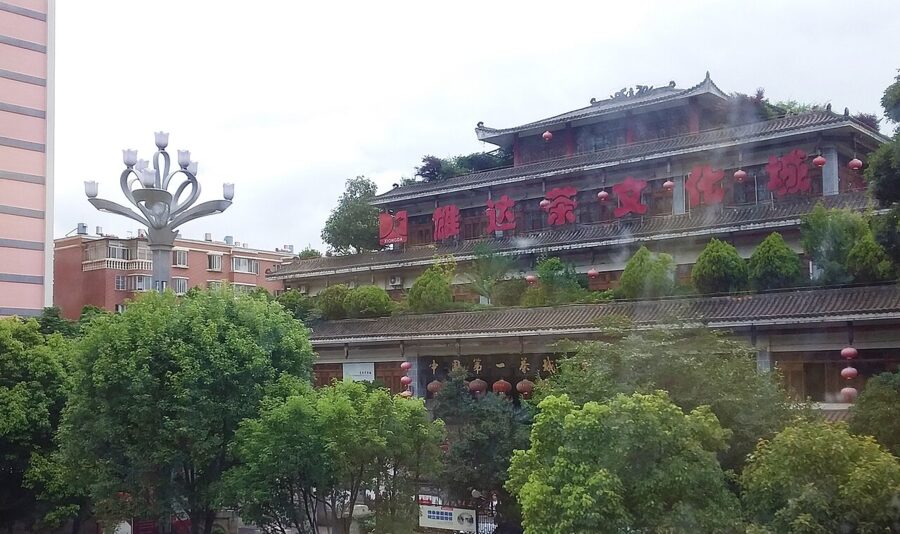
Xiongda Tea Culture City (雄达茶文化城) is the big one in the north of the city, at 1 Jinshi Road (金实路1号) in Panlong district, beside the Jinxing interchange. It’s about a ten-minute walk from Jinxing station on Metro Line 2. More than 600 shop units fill a grid of mock-old halls, and the cheapest way to learn pu-erh in China is to spend an afternoon walking from one tasting table to the next.
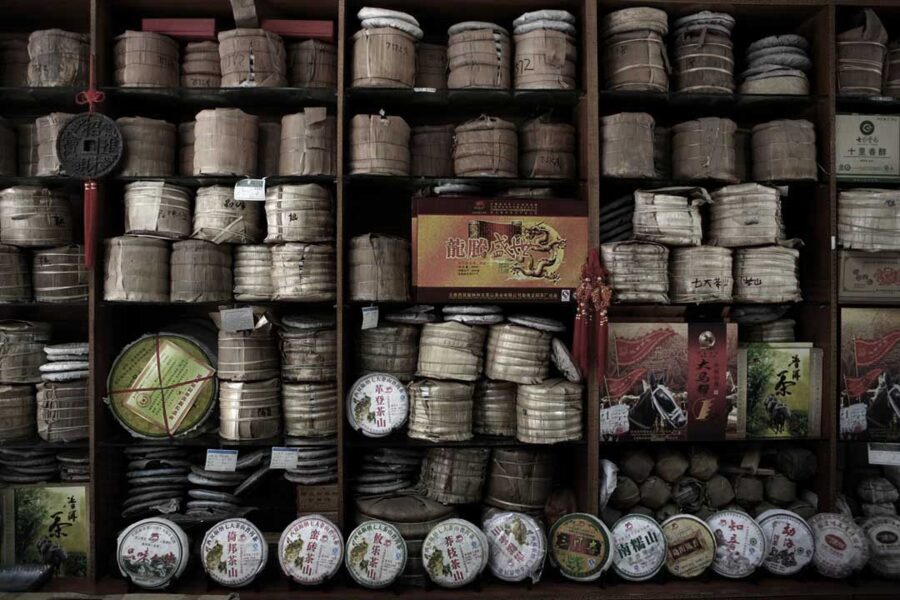
Yunnan Kangle Tea Culture City (云南康乐茶文化城) is in the south, at 1863 Guannan Avenue (官南大道1863号) in Guandu district; the nearest metro stop is Xiaojie on the southern section of Line 2. It’s a huge wholesale market with hundreds of shops, and in 2026 it was made a national AAA tourist site, which in practice means tea-art shows, folk performances and a spring tea fair around May Day. Both markets run on Alipay and WeChat Pay.
Ask three questions of anything you’re offered: which village (哪个村寨), which year, and spring or autumn leaf. A seller who can answer the first with a hamlet name, not just a mountain or “old tree”, is worth listening to. And ask to taste the cake you’re buying, not a sample of something like it.
What things really cost
Here’s the arithmetic, using that 2026 spring index from the Kunming Tea Industry Association. A 357-gram cake is a third of a kilo. So the raw leaf alone in a pure Lao Banzhang old-tree cake cost about ¥3,000 at source in 2026, and in a first-grade Bingdao Laozhai cake about ¥12,500, before anyone has pressed, wrapped, shipped or marked it up.
| 2026 spring leaf, at source | Per kilo | Raw leaf in one 357 g cake |
|---|---|---|
| Midi old trees (highest in the index) | ¥76,000 | about ¥27,000 |
| Mansong Wangzishan old trees | ¥45,000 | about ¥16,000 |
| Bingdao Laozhai, first grade | ¥35,000 | about ¥12,500 |
| Yiwu Bohetang, first grade | ¥25,000 | about ¥8,900 |
| Lao Banzhang old trees | ¥8,500 | about ¥3,000 |
| Lao Banzhang, mixed and big trees | ¥3,500 | about ¥1,250 |
Now the other end. Menghai’s 7542, a good, reliable, everyday factory raw tea, is bought and sold by the 42-cake case in Guangzhou’s Fangcun wholesale market, and at the end of October 2026 a case of the 2024 batch was trading at about ¥4,000. That’s under ¥100 a cake. Between those two ends is where you’ll actually shop, and the sums above are your check: work out what the leaf in a cake would cost at source, and be suspicious of any famous name selling for less.
Fakes, and the crash of 2007
Pu-erh has been a speculative market once already. Prices climbed through 2006 as people bought cakes to hold, not drink, and in the middle of 2007 they fell off a cliff, leaving warehouses of tea nobody wanted. Collectors still talk about it, and it’s why a good dealer will tell you to buy what you like drinking, not what you think will go up.
The fakes come in four flavours: the tea is younger than the label says; the leaf is from somewhere else in Yunnan, or outside it, under a famous village name; plantation leaf is sold as “old tree”; or a plain green tea is sold as raw pu-erh.
Menghai started microprinting its nei fei tickets because of counterfeits, and a cake whose factory had stopped making it is a classic tell: the old state Kunming Tea Factory stopped production in the 1990s, so a “Kunming brick” with a later date on it needs a very good story.
Carrying it home
Pu-erh travels better than any other tea. Keep cakes in their paper wrappers, pack them flat in your hold bag, and they’ll be fine; a tong of seven cakes weighs about 2.5 kg. At home, keep them somewhere dark, with a little air and no smells: not the kitchen, not next to the coffee, and not sealed in plastic for years.
Dry tea for personal use is fine to bring into most countries, but declare it where you’re asked about plant products, as in Australia and New Zealand. Keep the receipt with the cakes. It helps at customs, and it reminds you what you paid when you’re tasting it again in five years.
Skip this
- “Bingdao” or “Lao Banzhang” at a few hundred yuan a kilo. The leaf in a real Bingdao Laozhai cake costs more than that on the tree.
- “Thirty-year-old” cakes from a market stall at a market-stall price. Real aged tea is sold by people who know exactly what it’s worth.
- Cakes labelled only “ancient tree” or “Yunnan large-leaf” with no village. That label proves nothing.
- “Old tree” tea and “wild honey” from roadside stalls on the tea-mountain roads, unless you’re buying from the family whose trees you’ve just walked through.
- Gift boxes. You’re paying for the box.
Buy one ripe cake from a factory with a name, one raw cake from a village you’ve been to, and a tea knife. Drink the ripe one now. Open the raw one next spring, and the spring after, and see what the mountain does to it.
You Might Also Enjoy
 Eating Fish in Japan: A Guide to Sashimi, Sushi, and the Market Breakfast
 Baijiu: China’s Spirit Explained, From Moutai and Wuliangye to the Banquet Toast
 3-Day Lijiang Itinerary: Old Town, Jade Dragon, and the Naxi Country of Yunnan
 Arashiyama and Sagano: The Bamboo Grove Before 8:00, Tenryu-ji, the River and a Tofu Lunch