The Best Time to Visit China: Month by Month, Region by Region, and the Holiday Weeks to Avoid
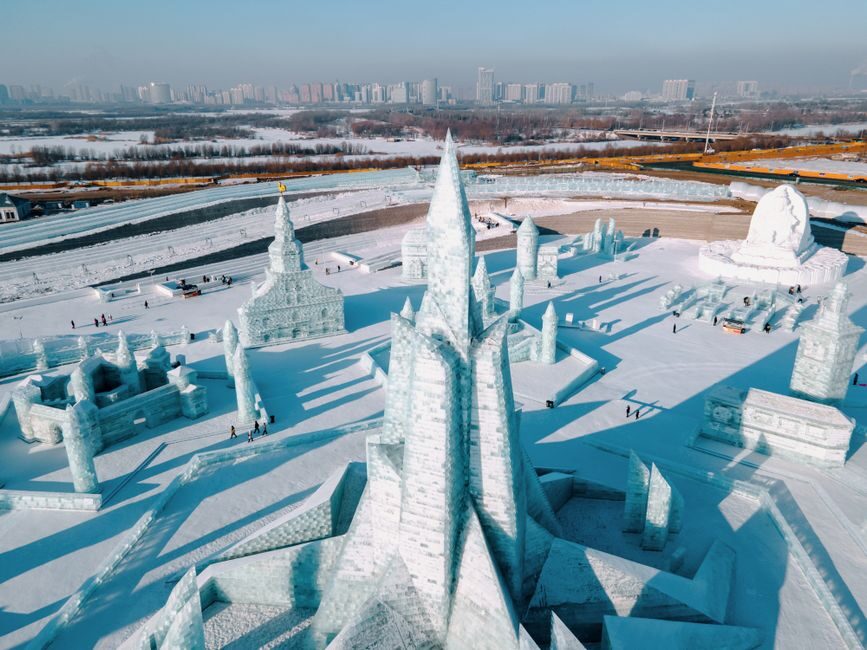
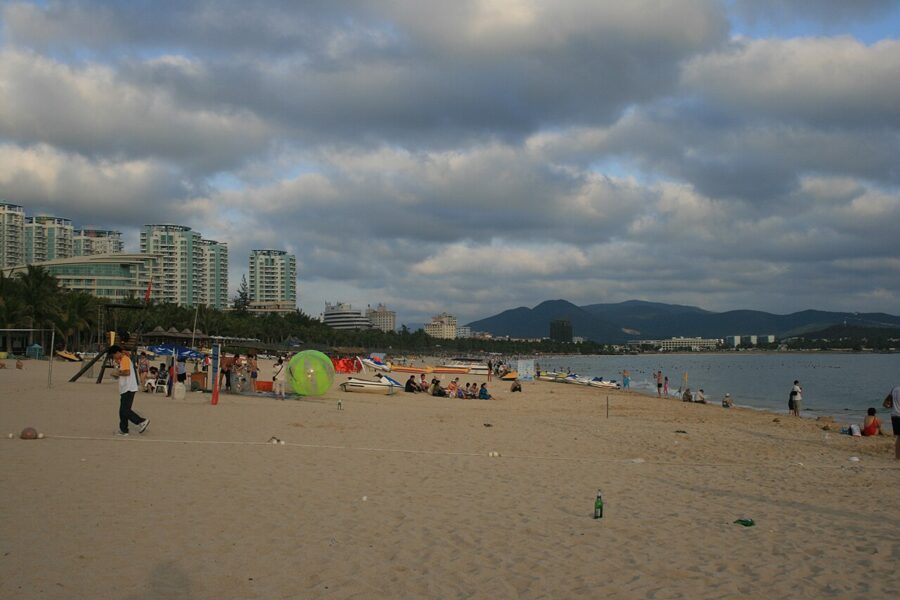
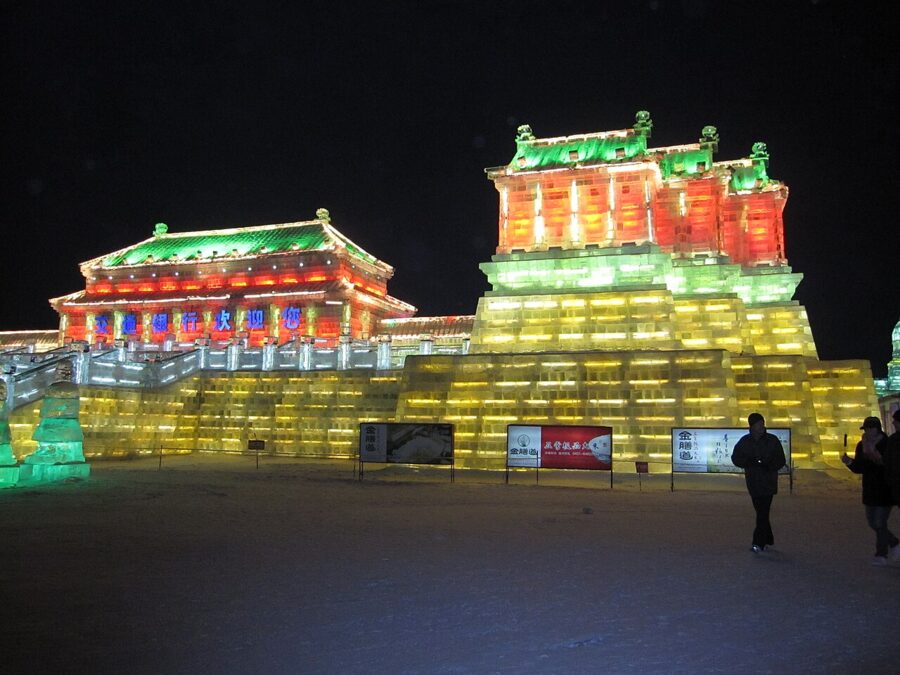
On an average January night, Harbin falls to about minus 22°C, and the palaces of its ice park, built from blocks sawn out of the frozen Songhua River, glow against the dark. On the same night in Sanya, at the southern tip of Hainan, the low is about 20°C. In between, Shanghai sits damp and grey at 3°C, Kunming warms to 16°C by lunchtime, and Beijing is so dry that the whole of January brings about 2 mm of rain or snow.
That spread is the first thing to understand about timing a trip to China. There is no month when the whole country is pleasant, and no month when all of it is miserable. When I lived in Shenzhen, friends planning a visit always asked me what the weather would be like. It was the wrong first question.
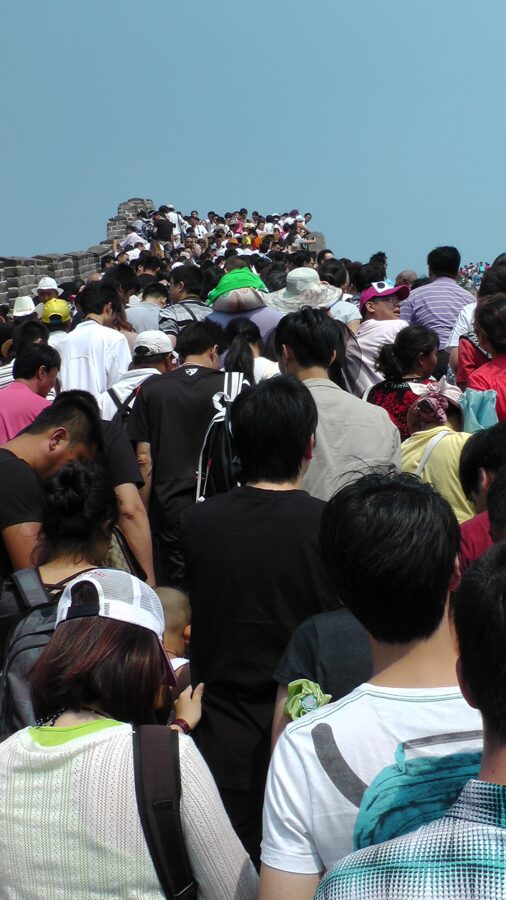
The better question is about the calendar. In a country this size there is always somewhere with decent weather; what decides whether a trip goes smoothly is the handful of weeks when everyone else is travelling too. Over the seven days of Golden Week in October 2026, the Ministry of Culture and Tourism counted 826 million domestic trips. The nine days of Spring Festival 2026 added another 596 million.
So here is the short answer. For most trips, go in April, May, September or October, and keep clear of two weeks: the May Day holiday (1–5 May 2027) and Golden Week (1–7 October 2027). The fortnight after Golden Week is the best of the year for a first visit.
If summer or winter is all you have, the trip still works. You just pick the region to suit the month, and the table below is the cheat sheet.
| Region | Best months | Hardest months | In one line |
|---|---|---|---|
| Beijing and the north | April–May, September–October | July–August | Short springs, clear dry autumns, hot wet summers |
| Shanghai, Hangzhou, Suzhou | April–May, October–November | Mid-June to August | Plum rains in June, then heat |
| Chengdu and Chongqing | March–May, September–November | July–August | Mild, grey winters; Chongqing summers are brutal |
| Guangzhou, Guilin, Yangshuo | October–December | April–June | Dry, sunny autumn after a very wet early summer |
| Kunming, Dali, Lijiang | November–April | June–September (rain) | Cool all year; the question is rain, not heat |
| Xi’an and Dunhuang | May–June, September–October | July–August, December–February | Dry heat in summer, hard cold in winter |
| Harbin and the northeast | January (ice), June–August (green) | Late February (the ice can melt) | Built for winter; mild in summer |
In This Article
- Seven climates, one country
- Beijing and the north
- Shanghai and the Yangtze delta
- Sichuan and Chongqing
- Guangzhou, Guilin and the south
- Yunnan: Kunming, Dali and Lijiang
- Xi’an and the northwest
- Harbin and the northeast
- January to December, month by month
- January
- February
- March
- April
- May
- June
- July
- August
- September
- October
- November
- December
- The holiday weeks in 2027
- Spring Festival
- May Day and Golden Week
- Qingming, Dragon Boat and Mid-Autumn
- School holidays
- Worth planning a trip around
- Spring blossom and rapeseed
- Autumn colour
- Ice and snow
- The plateau summer
- Festivals worth the detour
- Rain, typhoons, dust and fog
- The plum rains
- Typhoons
- Spring dust
- Fog and winter grey
- What it costs, and when to book
- Which months suit which trip
- Skip this
Seven climates, one country
China’s weather runs on one big engine. In summer, the monsoon pushes warm, wet air north off the South China Sea and the Pacific, so most of the country gets the bulk of its rain between May and September, the south first and the north last. In winter the wind turns round and blows cold and dry out of Mongolia and Siberia. Mountains and altitude bend the pattern: the southwest plateau stays cool, the Sichuan Basin traps cloud, and the desert northwest barely gets rain at all.
The figures in this section are the China Meteorological Administration’s 1991–2020 averages for each city’s main weather station. They describe the shape of a normal year, not next week’s forecast.
Beijing and the north
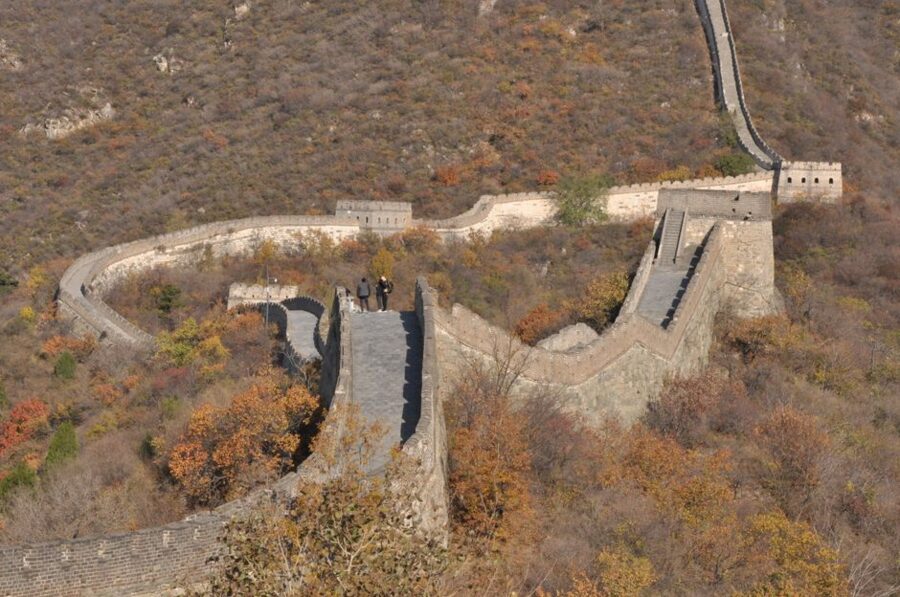
Beijing has four sharp seasons and two good ones. Spring arrives fast in late March, with average highs of 21°C by April and 28°C by May. Autumn is better still: September averages a high of 27°C, October 20°C, and the air is at its clearest. Winters are cold and very dry, with January highs around 3°C and lows of minus 7°C.
Summer is the problem. July averages 32°C by day and 23°C at night, and the humidity makes it feel worse. July alone brings about 210 mm of rain, more than a third of the year’s total, usually in short heavy storms, and about 70 per cent of the year’s rain falls in June, July and August. Add the school holidays and you have the two hardest months for a city where nearly every big sight, from the Forbidden City to the Great Wall, is outdoors.
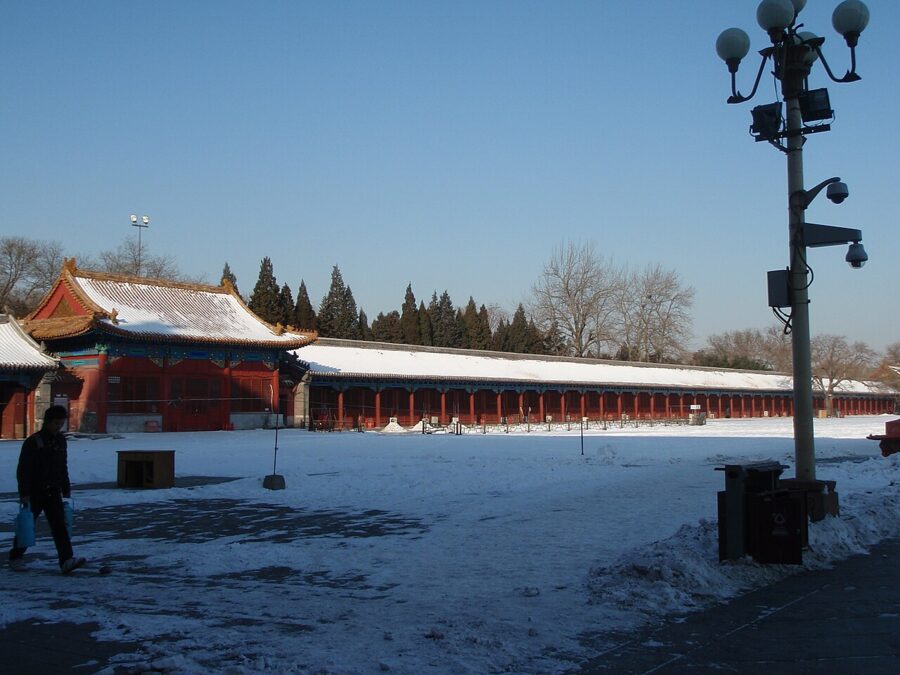
Winter has one thing going for it, and it’s a big one: the light. Beijing averages about 183 hours of sunshine in January, which is more than Chengdu gets in any month of the year. If you don’t mind the cold, a clear December or early January morning at the Temple of Heaven is one of the best things the city does.
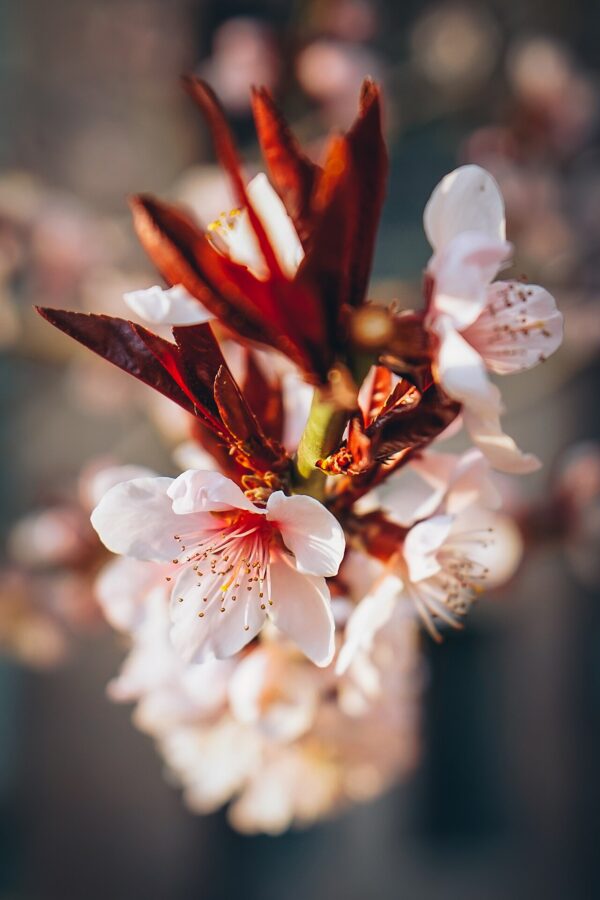
Shanghai and the Yangtze delta
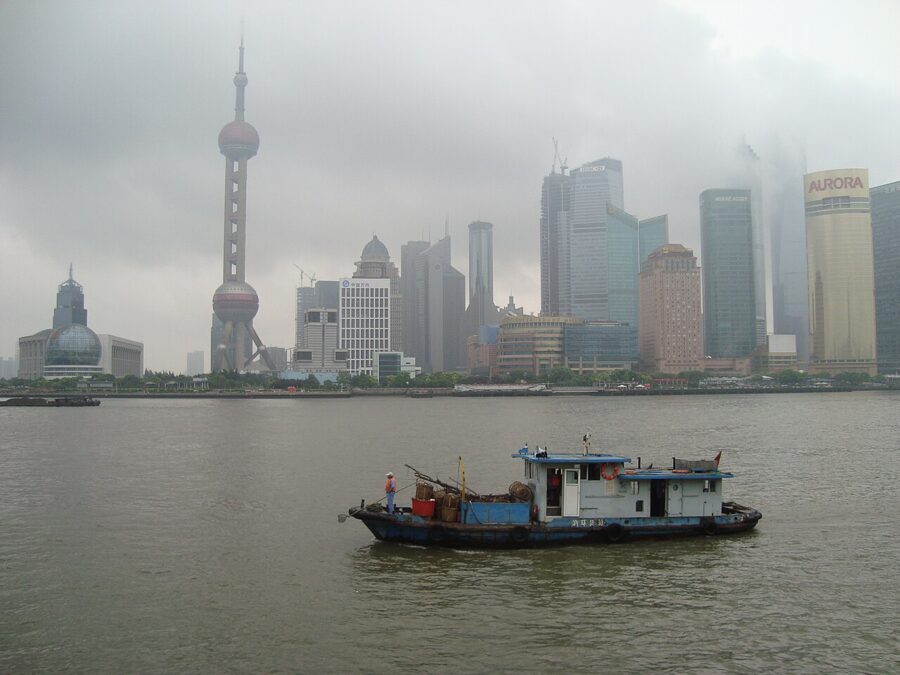
Shanghai, Hangzhou and Suzhou share one climate: mild, humid and wet in every month. Winters are chilly rather than cold, with Shanghai’s January averaging 9°C by day and 3°C at night, but it is a damp cold that gets into everything. Spring and autumn are long and pleasant. April and May average 21°C and 26°C, October 24°C and November 18°C.
Two stretches are hard work. The plum rains (meiyu, 梅雨) usually arrive in Shanghai around 19 June and last about three weeks, bringing warm drizzle and heavy downpours day after day. Then the heat sets in. July averages 33°C by day and 26°C at night in Shanghai, and Hangzhou is a degree hotter.
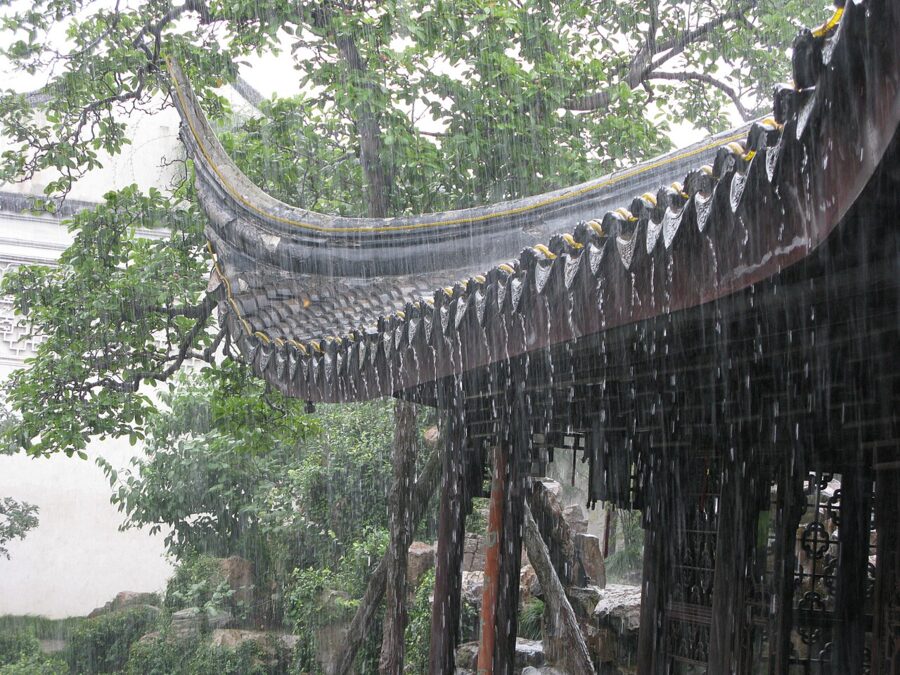
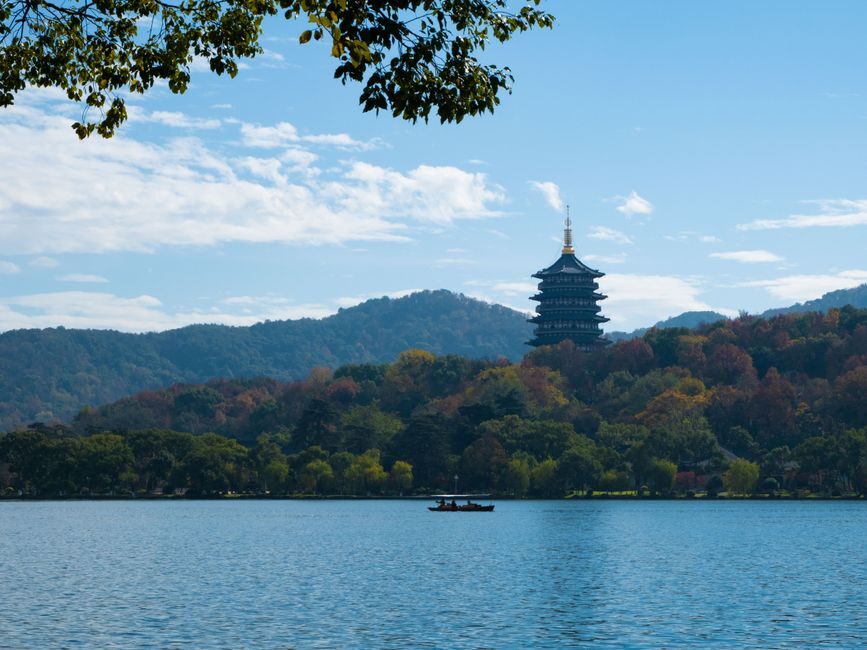
The delta is also where autumn lasts longest. October has fewer rainy days than any other month, about seven and a half in Shanghai, and November is still comfortable for walking. If you’re pairing Shanghai with the water towns, late October to mid-November is the window I’d pick.
Sichuan and Chongqing
The Sichuan Basin is a bowl ringed by mountains, and it holds on to its cloud. Chengdu is mild all year, with January averaging 10°C by day and 3°C at night and July 31°C and 23°C. What it lacks is sun. December and January each average about 38 hours of sunshine, roughly a fifth of Beijing’s.
Rain piles into midsummer: July and August bring about 437 mm between them, nearly half the year’s 911 mm. October is drier but often drizzly, with rain on about 15 days. The good months are March to May and September to November, when the temperature is easy and the teahouses in the parks are full.
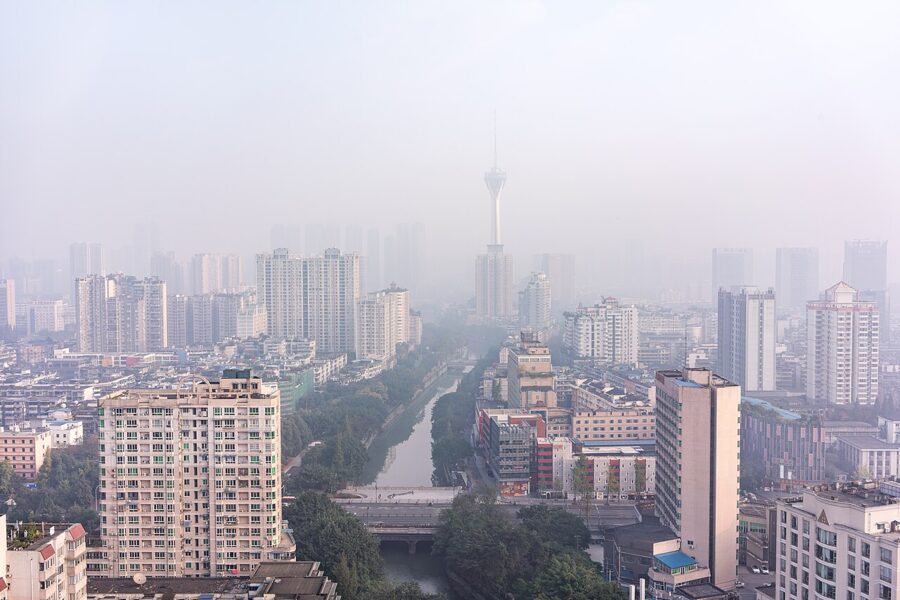
Chongqing is lower, hotter and wetter. It is one of the three cities Chinese call the “furnaces” (火炉): July and August both average about 34°C by day and 25°C at night at the Shapingba station, and the city logged 149 days of 40°C or more between 1951 and 2024, the most of any provincial-level city. Its record is 43.7°C, set in August.
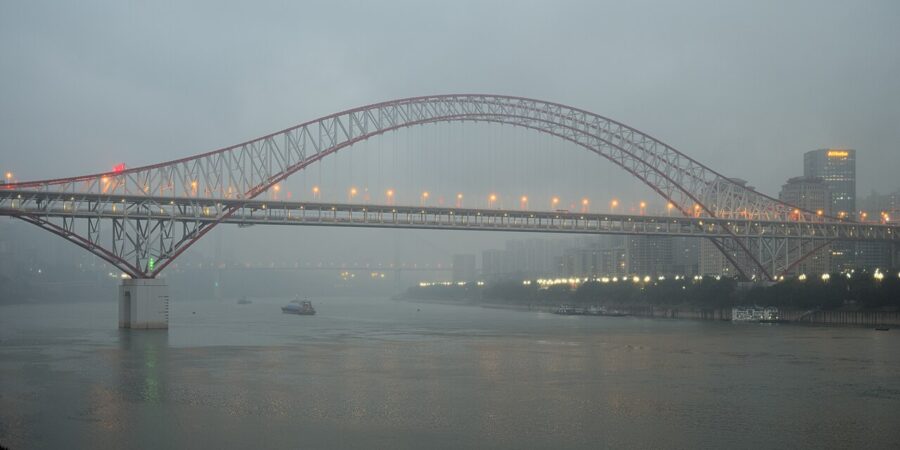
Winter is the opposite, mild and foggy. The mist that sits in the river valleys from late autumn gave the city one of its old nicknames, the fog capital (雾都), and it softens the skyline far more than the photographs suggest.
Guangzhou, Guilin and the south
Guangzhou is subtropical: warm in winter, hot and wet for half the year. January averages 19°C by day and 11°C at night, a gentle place to land after the north. From April to September it rains hard, with May and June averaging 329 mm and 365 mm, and July and August hold at 33°C by day and 26°C at night.
October to December is the reward. It is dry, sunny and warm, with rain on fewer than six days a month. Living in Shenzhen, I also learnt the south’s least advertised season, the clammy weeks of late winter and early spring when warm sea air meets cold walls and every surface sweats. Cantonese call it huinantian (回南天), and laundry hung indoors simply never dries.
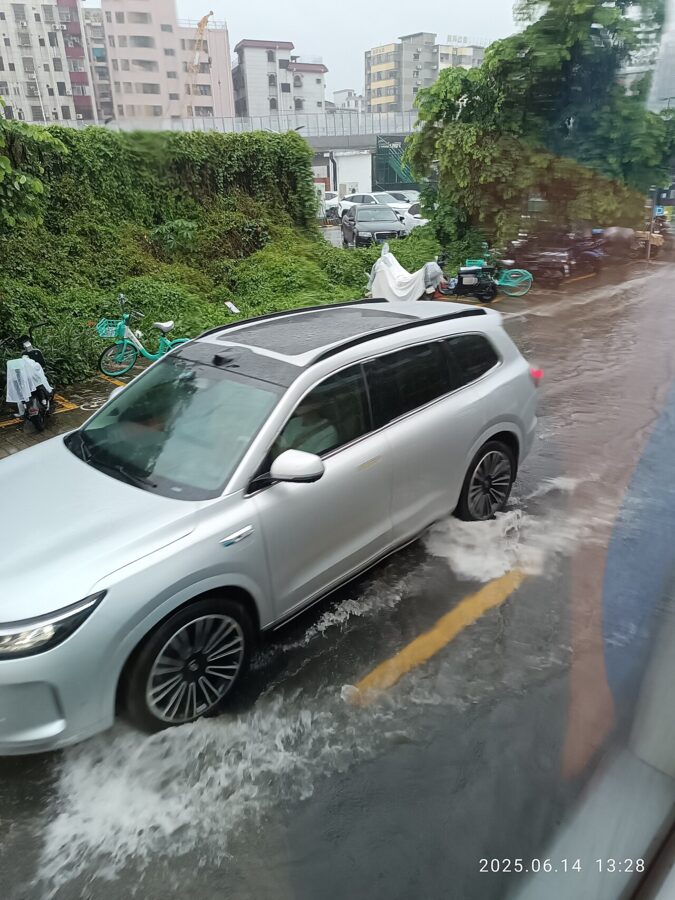
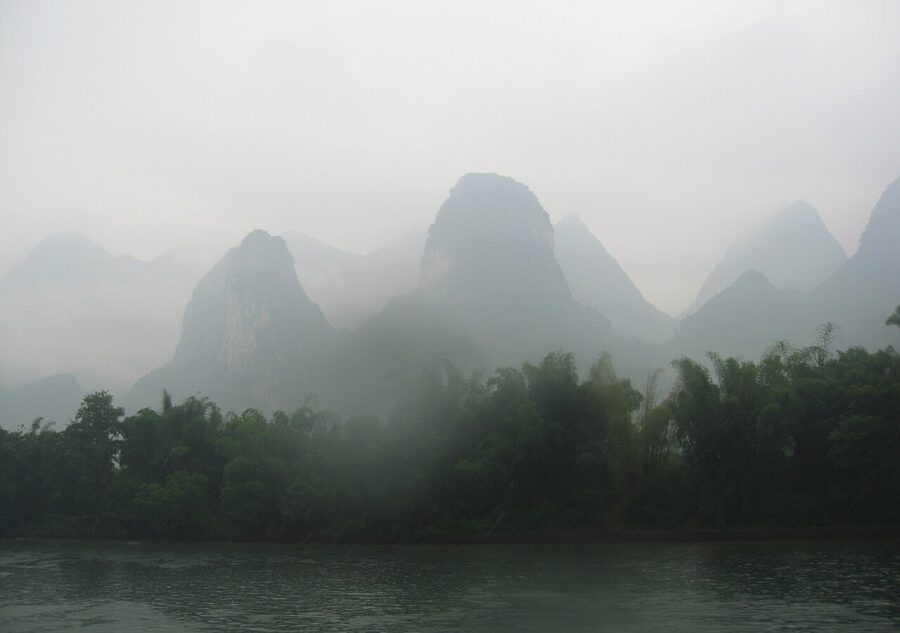
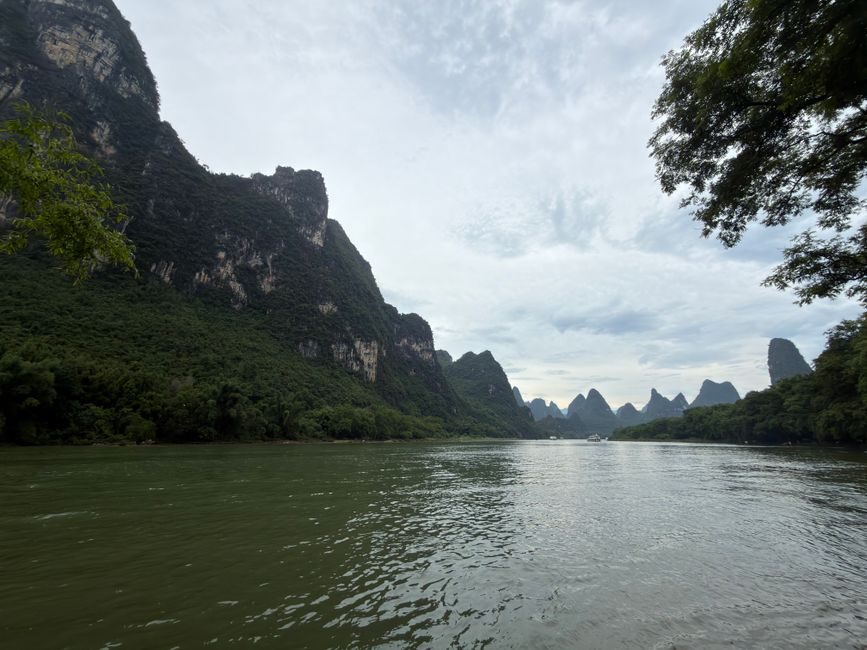
Guilin and Yangshuo get even more early-summer rain. Guilin’s June averages 449 mm, the wettest month of any city in this guide, and May isn’t far behind at 321 mm. Autumn is clear and settled; October gets just 55 mm on about seven days. Winter is cool and often grey, with January averaging 12°C by day and 6°C at night.
Yunnan: Kunming, Dali and Lijiang
Altitude flattens Yunnan’s seasons. Kunming sits at about 1,890 m and goes by the nickname City of Spring (春城), and its averages barely move: highs of 16°C in January and 25°C in June. What changes is the rain. The dry season runs from November to April, with sunny days and cold nights; from June to September the monsoon brings rain most days, and Kunming’s July averages 216 mm.
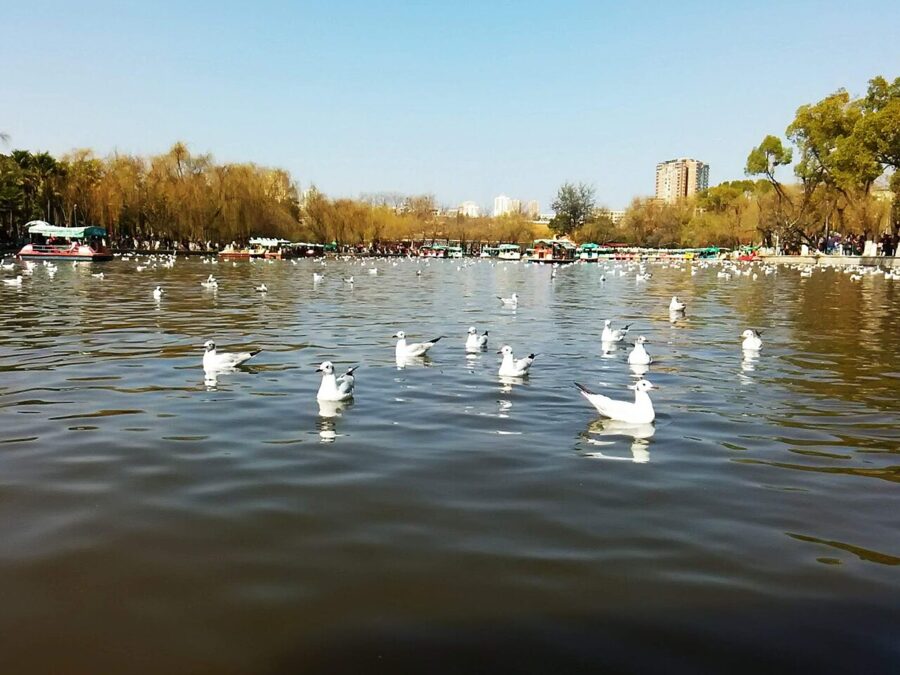
Dali has the same pattern. The dry season from November to April is the clearest, with gulls on Erhai and the rapeseed flowering on the plain in February, and the rains come from about May to October. Lijiang, higher and further north, is colder at night, close to freezing in December and January, and wetter in summer: July averages 253 mm on about 24 rainy days.
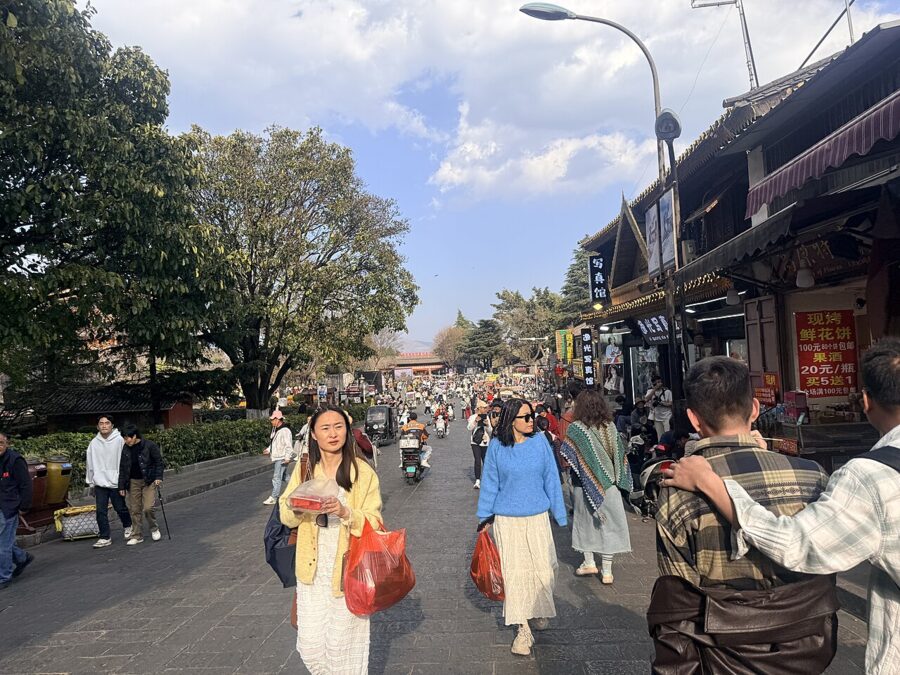
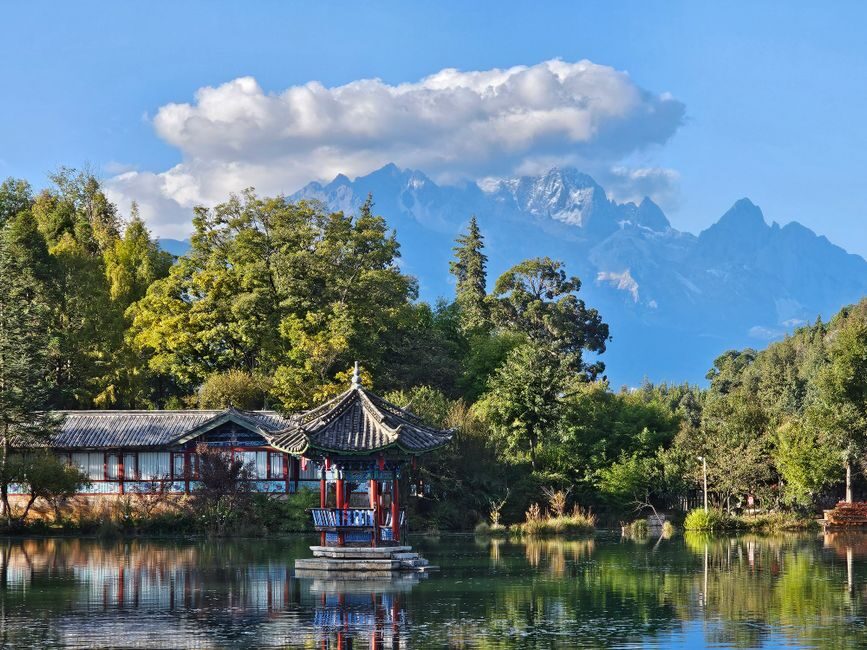
So Yunnan’s “plateau summer” is real, but it’s a green, cool and wet summer, not a dry one. Afternoon highs stay in the low to mid 20s while the rest of eastern China bakes, and the mountain meadows are at their best. Just expect cloud on Jade Dragon Snow Mountain and build in a spare day.
Xi’an and the northwest
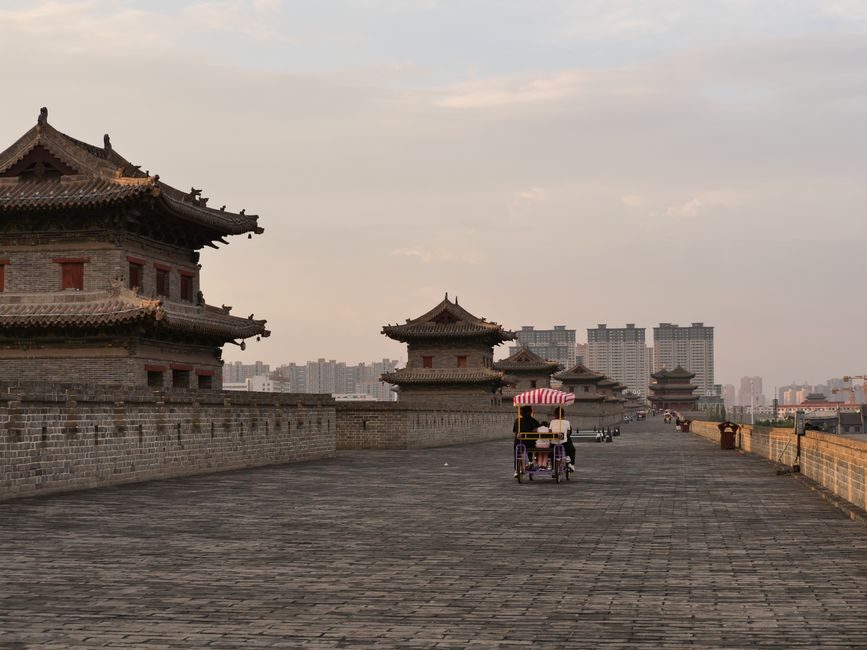
Xi’an has a Beijing-style year with a twist. Summers are hot, with July averaging 33°C, and winter nights fall below freezing, but its wettest month is September, at about 117 mm on 12 rainy days, when the autumn rains settle over the Wei River plain. April and May are the most reliable months, and October is good once the rain eases.
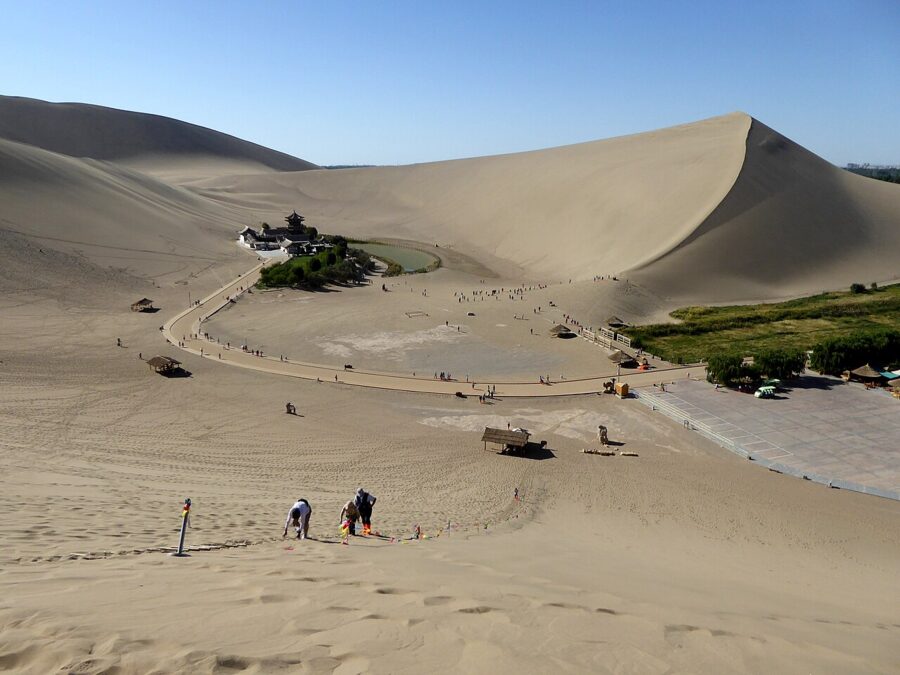
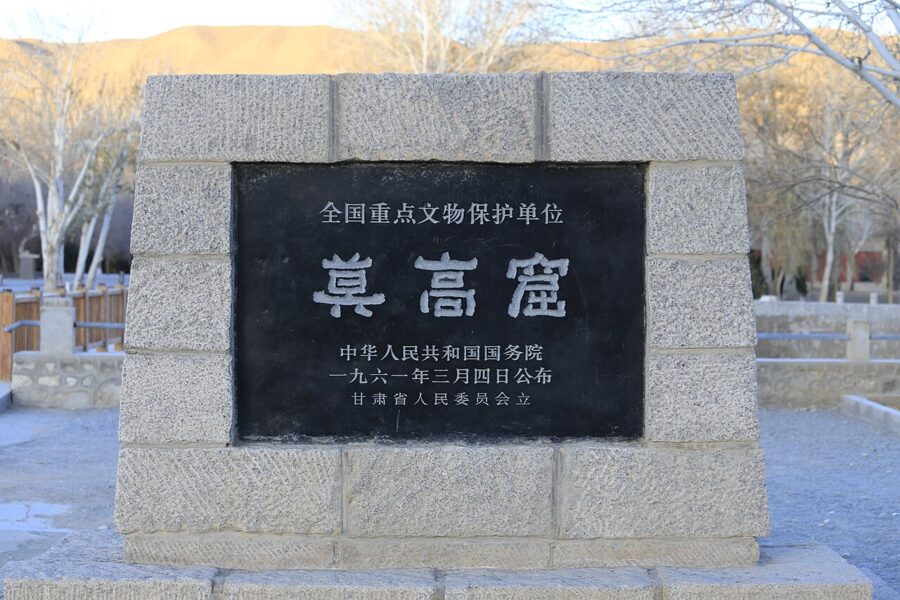
Dunhuang, out at the western end of the Hexi Corridor in Gansu, is desert. It gets about 45 mm of rain in a whole year, swings from 34°C July afternoons to minus 14°C January nights, and has a short list of good months: May, June, September and October. April is sandstorm season, and the Mogao Caves close in strong sandstorms or heavy rain and refund unused tickets in full.
Harbin and the northeast
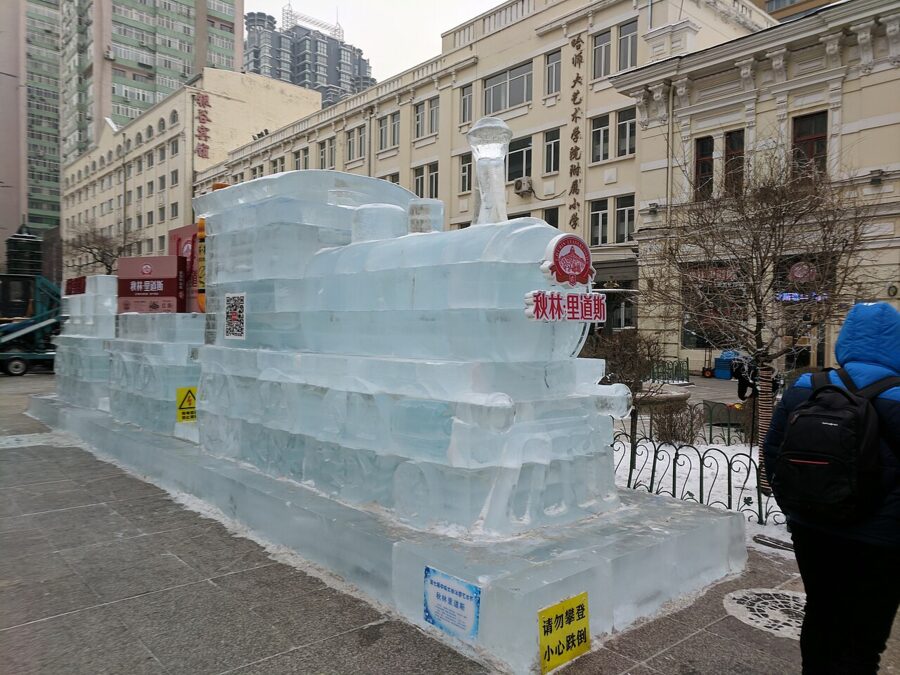
Harbin is built for winter. January averages about minus 12°C by day and minus 22°C at night, the air is very dry, and the wind off the river makes all of it feel colder. The ice festival is the reason most visitors come, and the city handles the cold well: indoors, the heating runs hot enough for a T-shirt.
Summer is short, green and mild, with July averaging 28°C by day and 19°C at night. That makes the northeast one of the places Chinese families go to escape the heat in July and August, along with Yunnan and the high plateau. Spring and autumn are brief, and the cold comes back in earnest by November.
January to December, month by month
This is the year as I’d plan it, with the holiday dates for 2027. Wherever a month says “good”, it still means booking the big sights ahead; more on that further down.
January
The coldest month across the north, and the best one for Harbin. Beijing is cold, dry and clear, the south is mild, and Kunming and Dali are sunny. The catch in 2027 is the run-up to Spring Festival: the travel rush started 15 days before New Year in 2026, and with New Year on 6 February 2027, the same shape would put the start of the rush in late January. Beijing’s primary and middle schools also break up on 18 January.
February
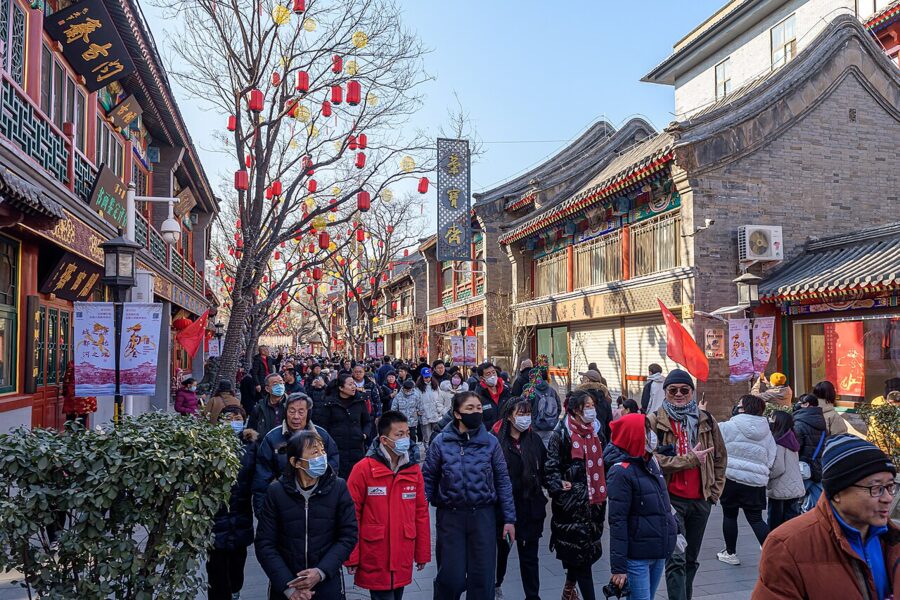
Spring Festival dominates. The 2027 holiday runs from 5 to 13 February, with Lunar New Year’s Day on the 6th, and the Lantern Festival follows on 20 February. Trains are full for weeks either side, sights are busy, and some family-run restaurants close for a few days. Away from the crowds, February is a lovely month in Yunnan: the rapeseed flowers at Luoping and on the Dali plain, and the skies are dry.
March
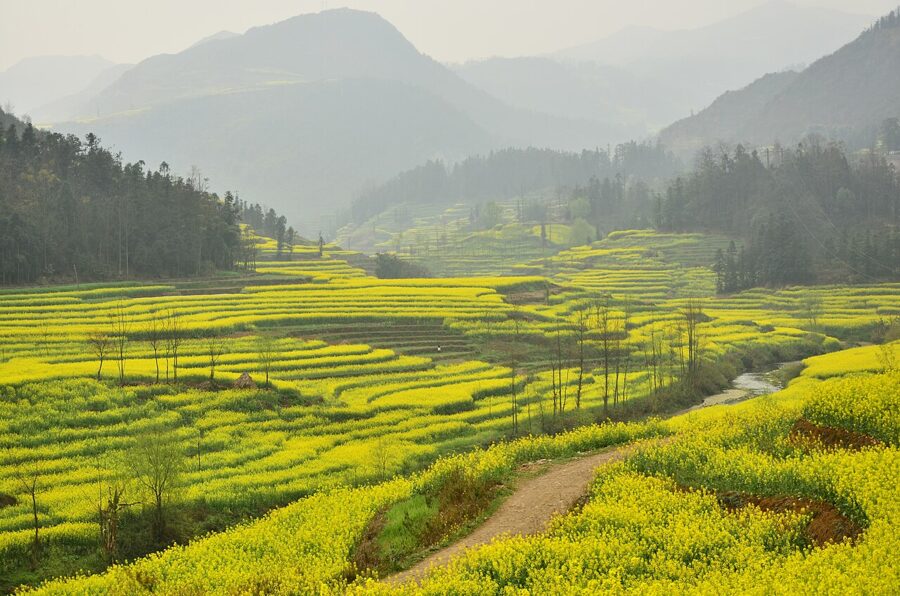
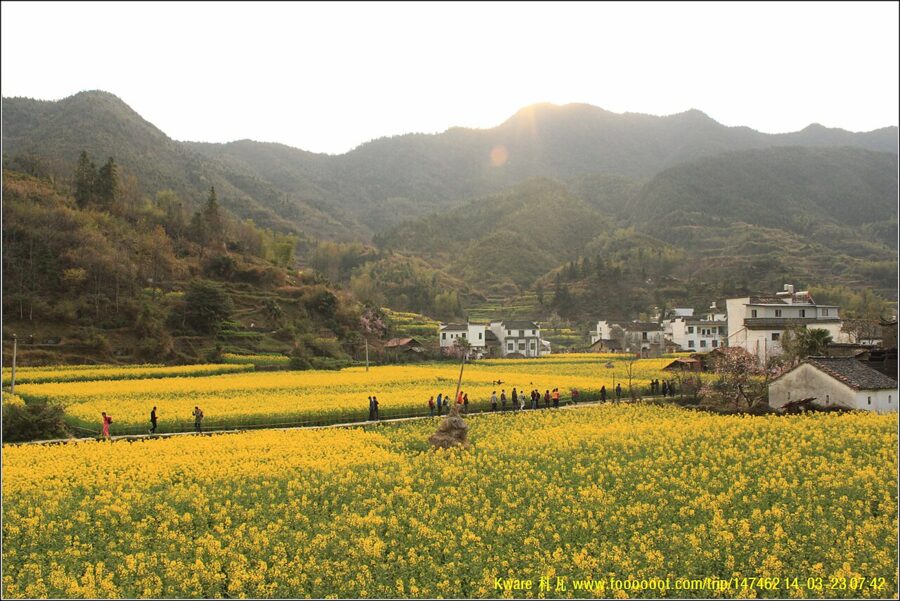
Spring comes up from the south. The rapeseed reaches Wuyuan in Jiangxi, Beijing’s early blossom opens, and the Yuyuantan Park cherry season in Beijing, whose 2026 programme opened in mid-March and ran until mid-May, gets going. In the north, March and April are also dust season. Pack a mask that filters fine particles and check the forecast before a Great Wall day.
April
One of the best months almost everywhere. Beijing reaches the low 20s, the delta is mild, and Yunnan is warm and dry. Qingming (3–5 April 2027) makes for one busy long weekend.
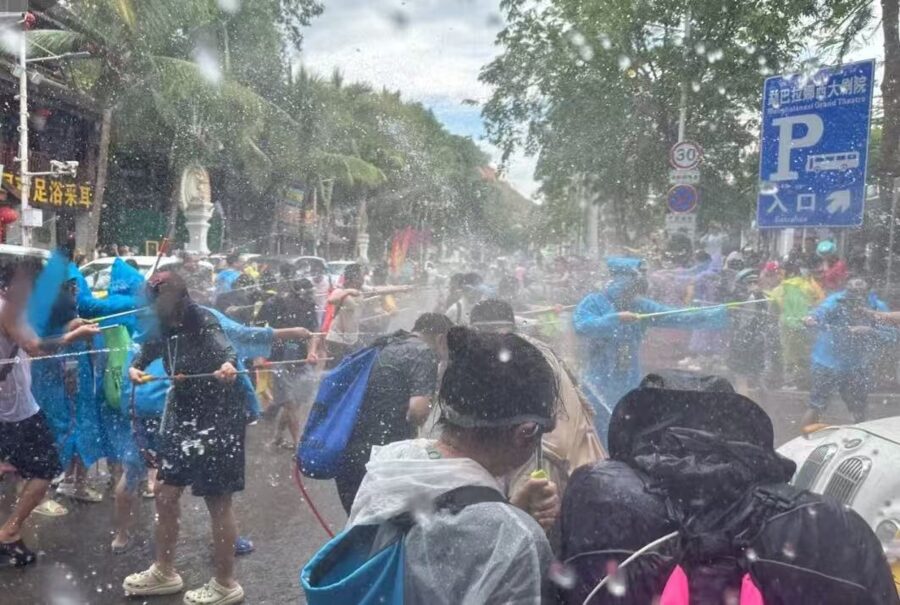
In mid-April, Jinghong in Xishuangbanna holds the Dai New Year water-splashing festival; in 2026 the celebrations opened on 13 April on the bank of the Lancang River. Guangzhou’s spring Canton Fair (15 April to 5 May in 2026) fills that city’s hotels, and the far south starts to get wet.
May
Lovely weather, with one bad week. The May Day holiday runs from 1 to 5 May 2027, with Saturday 8 May a make-up working day, and for those five days every famous sight is crowded. The two weeks after it are among the best of the year in Beijing, Xi’an, Dunhuang and the delta. In the south the rains are getting serious, and Guilin’s May averages 321 mm.
June
The rains move north. The plum rains settle over Shanghai and the Yangtze from around mid-June, Guilin and Guangzhou have their wettest month, and Beijing heats up to 31°C. The Dragon Boat Festival falls on Wednesday 9 June in 2027, a single day off, so its effect on crowds is small. June is good on the plateau, in the northeast and in Dunhuang, and the waterfalls at Jiuzhaigou are at full volume.

July
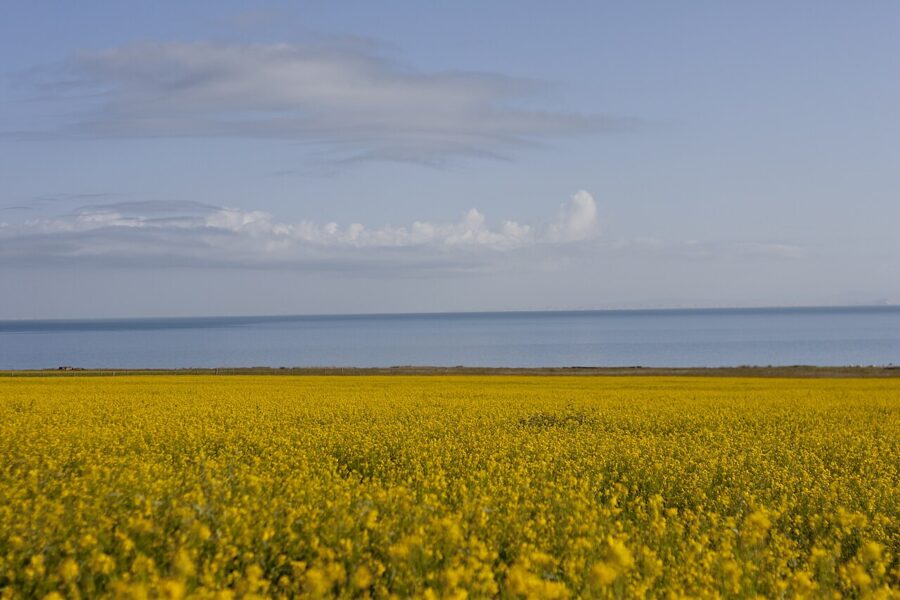
Hot, wet and busy. The plum rains usually end in early July (7 July in 2026), the heat takes over the east, and school holidays begin: Beijing’s primary and middle schools are off from 6 July to 31 August 2027. Typhoon season starts in earnest. This is the month to head up instead of round: Yunnan, the northeast, and Qinghai Lake, where the rapeseed flowers through the summer.
August
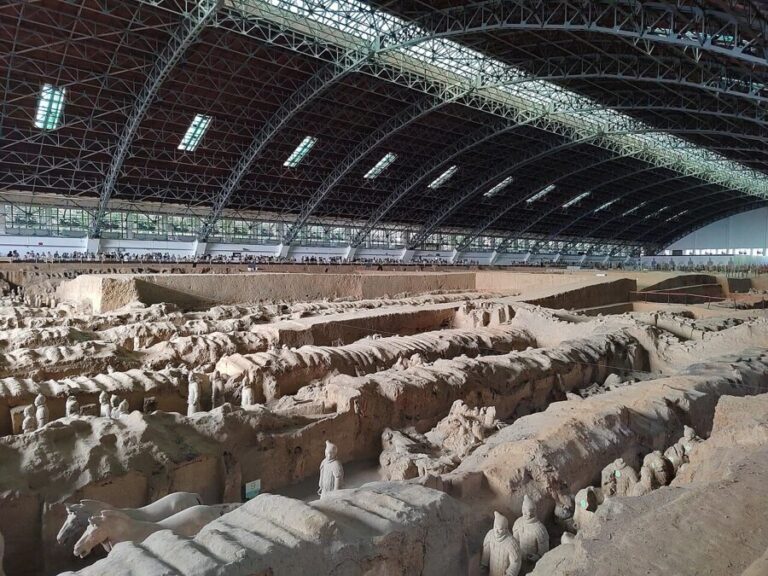
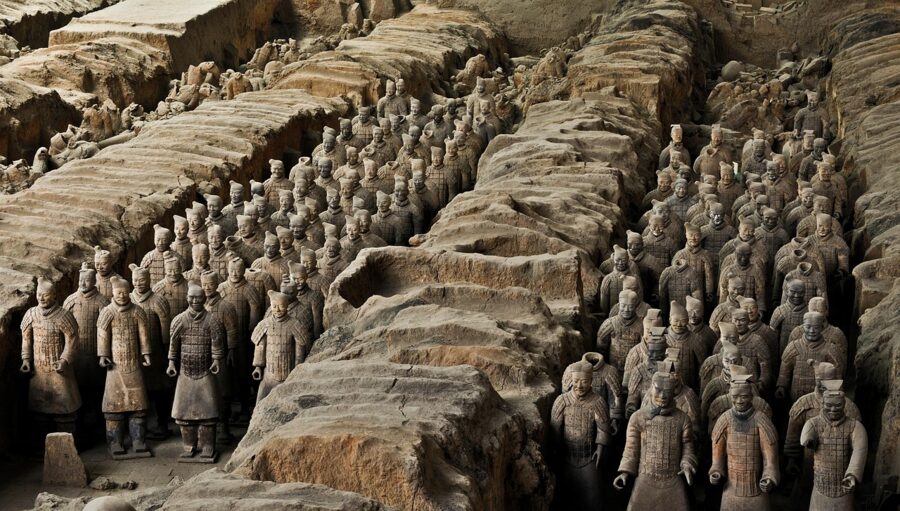
The peak of the domestic summer. Every family attraction, from the panda bases to the Terracotta Army, is at its busiest, and August is the year’s top month for typhoons, with about 2.3 landfalls on average. It is also the best month on the plateau: meadows in flower in Shangri-La, rapeseed at Qinghai Lake, and cool nights at Xining, where July and August lows are about 11°C.
September
Summer breaks, and the best season begins. Beijing averages 27°C, the delta is still warm, and the northwest has some of its best weather of the year. Two cautions: typhoons are still possible along the south and east coasts, and Xi’an has its wettest month. The Mid-Autumn Festival falls on Wednesday 15 September in 2027, a single day off.
Train tickets for the start of Golden Week go on sale about two weeks ahead; in 2026, tickets for 1 October were released on 17 September.
October
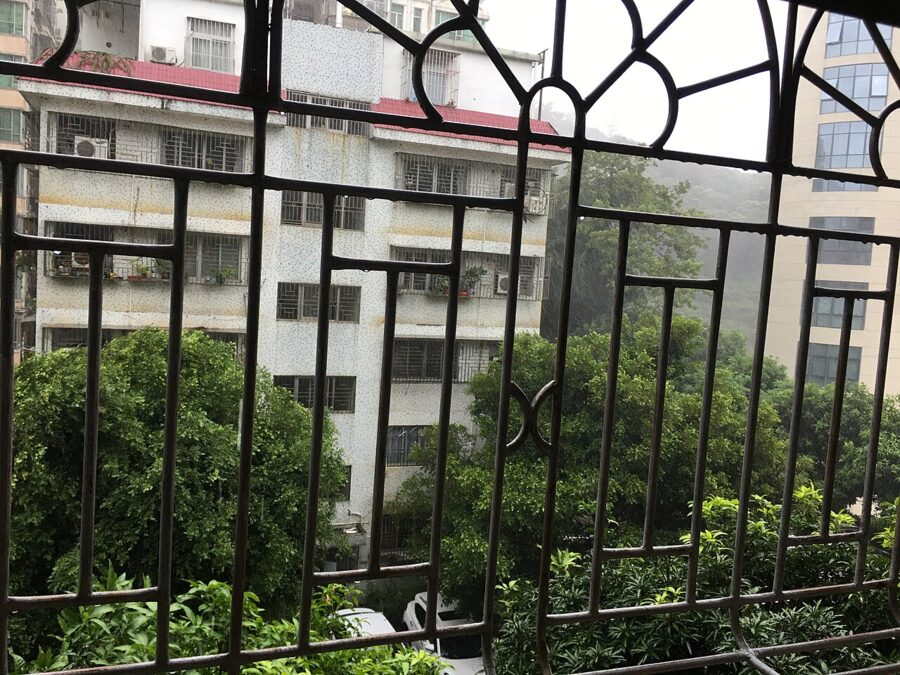
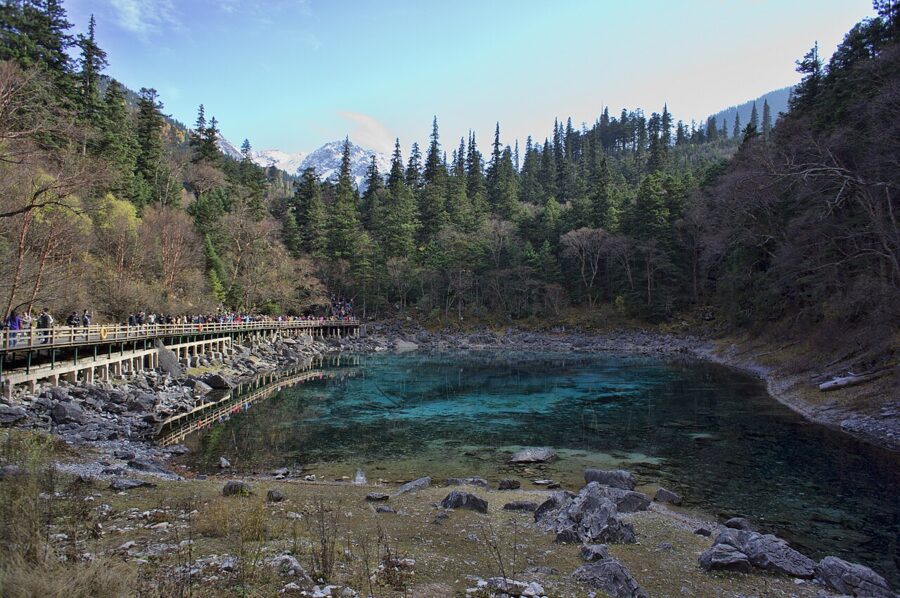
The best month of the year, minus its first week. Golden Week runs from 1 to 7 October 2027, with Sunday 26 September and Saturday 9 October as make-up working days, and it is the single worst week to travel in China. From the 8th, the country goes back to work and the trip becomes a joy: Jiuzhaigou’s colour peaks in mid to late October, the Beijing hills turn red, and the south dries out.
November
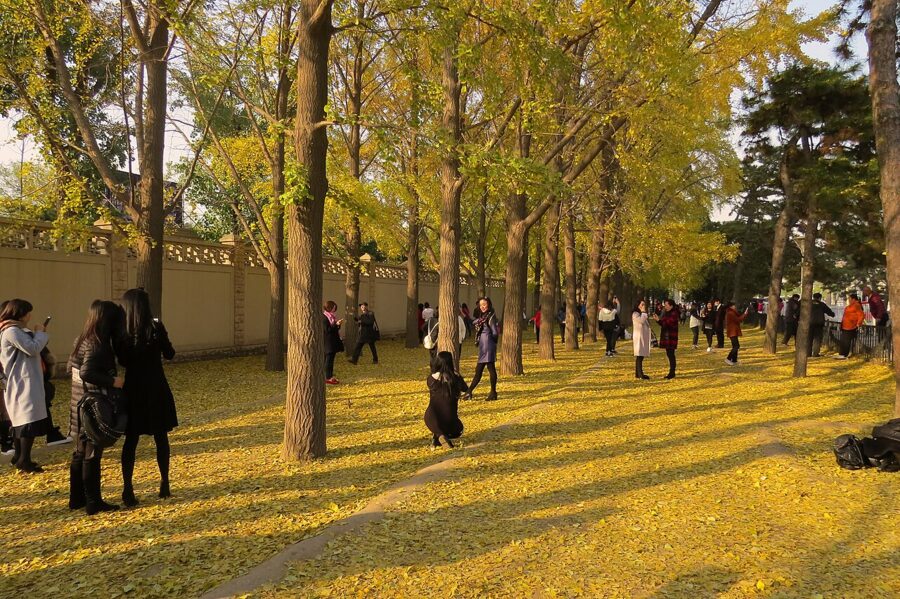
Underrated. The south and the delta are at their best, Beijing has its ginkgo and its last clear, mild days, and Huangshan’s season of seas of cloud begins. Prices drop at the big parks: Jiuzhaigou’s low season starts on 16 November. The north turns cold fast, and by the end of the month Beijing’s nights are below freezing.
December
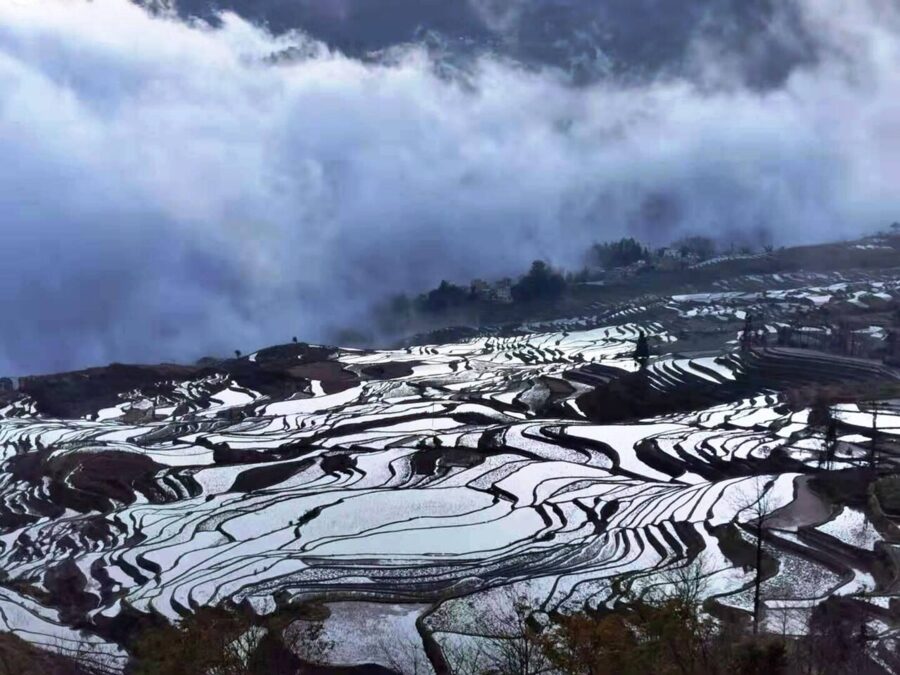
Quiet, cheap and cold in the north. Harbin’s ice park opens in mid-December, the Mogao Caves drop to their winter ticket on 1 December, and the south and Yunnan are dry and sunny. In southern Yunnan, the Hani rice terraces at Yuanyang are freshly flooded in November and December, mirrors for the sunrise. There’s no holiday crowd until the New Year weekend.
The holiday weeks in 2027
China’s public holidays are fixed each year by the State Council, which published the 2027 schedule on 5 November 2026. Some holidays are stretched by moving weekend days around, so a few Saturdays and Sundays become working days. Here is the full list.
| Holiday | 2027 dates | Days off | Make-up working days | What it does |
|---|---|---|---|---|
| New Year | 1–3 January | 3 | None | Busy weekend near the big cities |
| Spring Festival | 5–13 February | 9 | Sunday 31 January, Sunday 14 February | The year’s biggest travel rush |
| Qingming | 3–5 April | 3 | None | Busy long weekend |
| May Day | 1–5 May | 5 | Saturday 8 May | One of the two worst weeks |
| Dragon Boat | 9 June (Wednesday) | 1 | None | Little effect |
| Mid-Autumn | 15 September (Wednesday) | 1 | None | Little effect |
| National Day (Golden Week) | 1–7 October | 7 | Sunday 26 September, Saturday 9 October | The worst week of the year |
Spring Festival
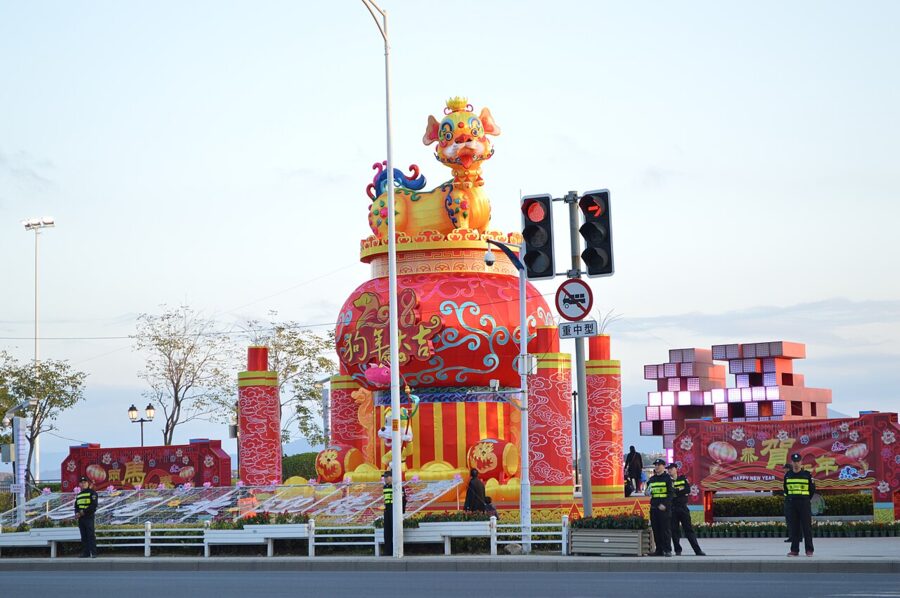
Chinese New Year is the one holiday that empties cities rather than filling them. Hundreds of millions of people go home, so the trains and planes are the problem, not the sights. In 2026 the 40-day travel rush (chunyun, 春运) ran from 2 February to 13 March, and the government forecast 9.5 billion trips in that time, about eight in ten of them by car, with 540 million by rail and 95 million by air.
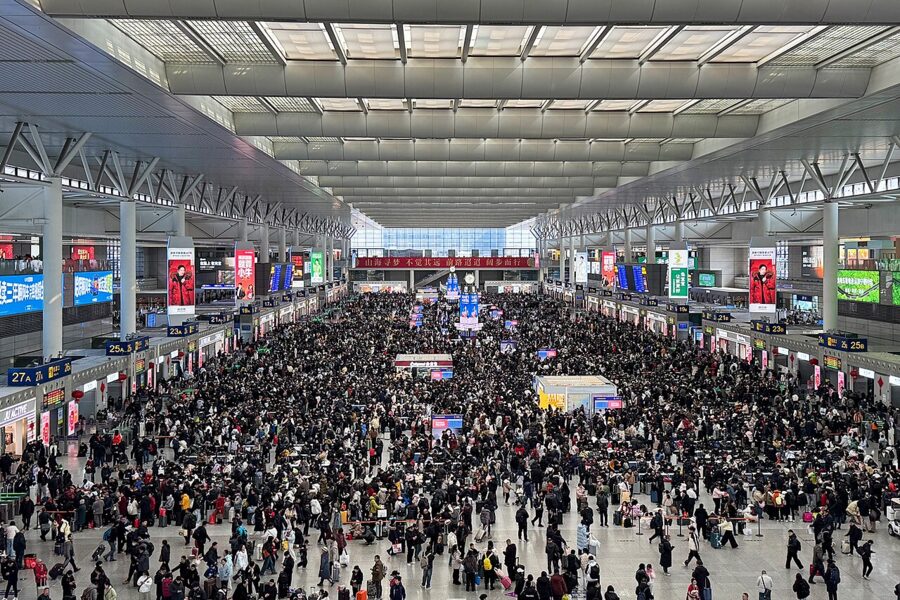
If you are in China for it, it is wonderful, with temple fairs, lanterns and the best food of the year. If you are trying to cross China during it, it’s hard work. The big sights are busy right through to the Lantern Festival, and small family-run restaurants close for a few days. My guide to Chinese New Year in China covers where to be and what to expect.
May Day and Golden Week
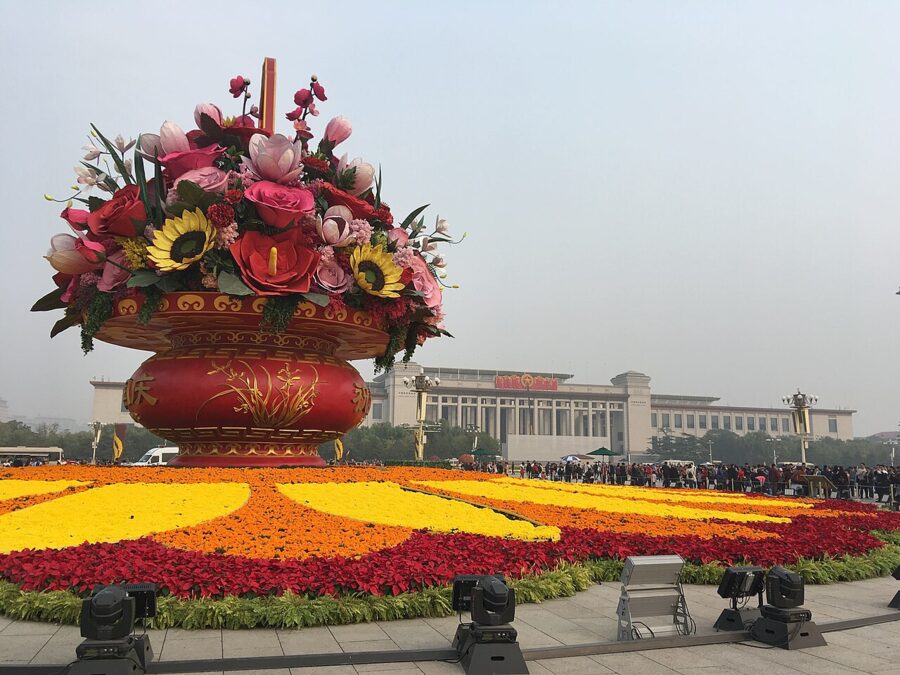
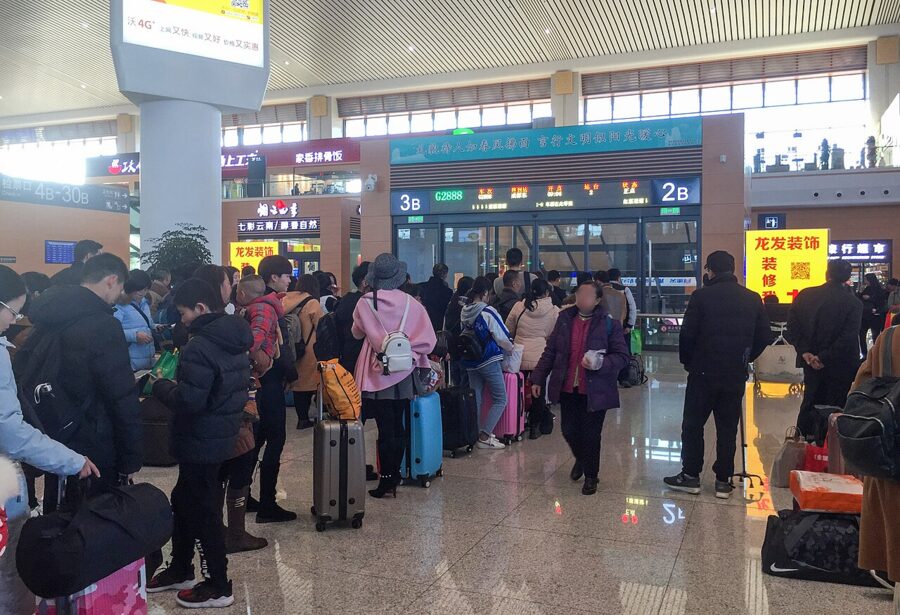
These are the two weeks that matter most for a foreign visitor, because the whole country is off at once and the weather is good. In 2026 Golden Week saw 826 million domestic trips in seven days, and the big scenic areas ran at their caps. Jiuzhaigou’s daily limit of 41,000 is the number that matters there, people waiting for Zhangjiajie’s park buses have reported two-hour queues, and Beijing’s Summer Palace turns its Seventeen-Arch Bridge into a queue.
If your dates are fixed, there are ways through. Spend the holiday in a big city rather than a scenic area, since cities absorb crowds better than valleys and mountains. Book every timed ticket the moment its window opens, and buy the train tickets on the day they are released. Then go early: the first hour after opening is calmer everywhere, even in Golden Week.
Qingming, Dragon Boat and Mid-Autumn
Qingming, the tomb-sweeping festival, gives a three-day weekend, 3–5 April in 2027, and the parks and nearby hills fill with families. The Dragon Boat and Mid-Autumn festivals fall on Wednesdays in 2027, so each is a single day off with little knock-on effect. Mid-Autumn is still worth knowing about: the bakeries sell mooncakes for weeks beforehand.
School holidays
Summer is when Chinese families travel, and the dates run roughly from early July to the end of August. In Beijing, primary and middle schools are off from 6 July to 31 August 2027 and over the winter from 18 January to 21 February; other cities set their own calendars, a week or so either way. The effect is steady rather than spiky. Expect family attractions such as the panda bases, theme parks and the big museums to be busy every day of July and August, not just at weekends.
Worth planning a trip around
Some things only happen for a few weeks a year. These are the ones I’d move dates for.
Spring blossom and rapeseed
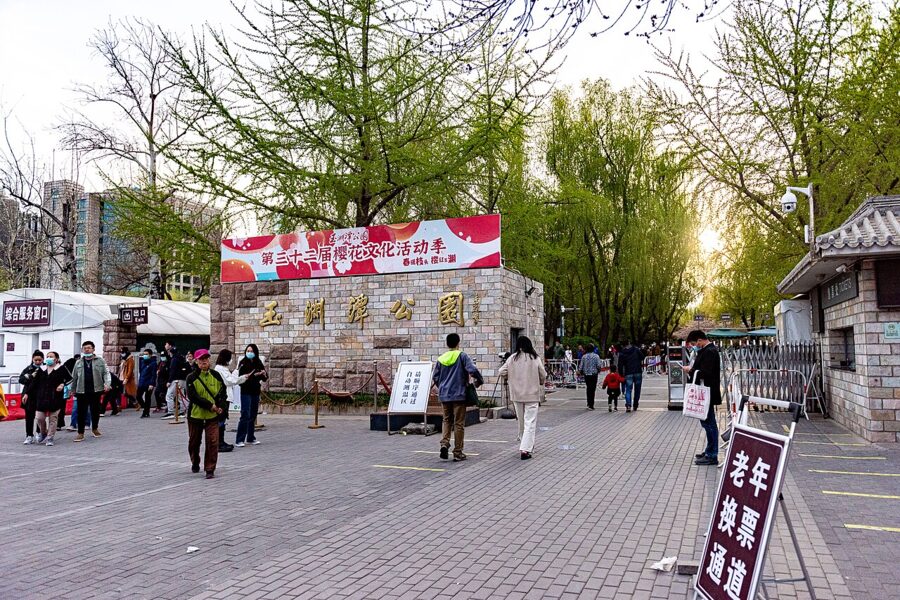
Spring arrives in a wave from southwest to northeast. The rapeseed fields at Luoping in eastern Yunnan flower first, in February and March, followed by Wuyuan in Jiangxi in March. Beijing’s cherry trees at Yuyuantan Park start in mid-March, and the park’s 2026 cherry programme ran to mid-May.
Autumn colour
Jiuzhaigou is the headline. The forests turn from late September, the colour usually peaks in mid to late October, and the lower Shuzheng Valley holds on into early November. Peak-season tickets are ¥190 plus ¥90 for the bus until 15 November, then ¥80 plus ¥80. Every ticket is real-name and online only, and the park’s own advice is to book seven to fourteen days ahead; for October weekends, book the moment you have your train.
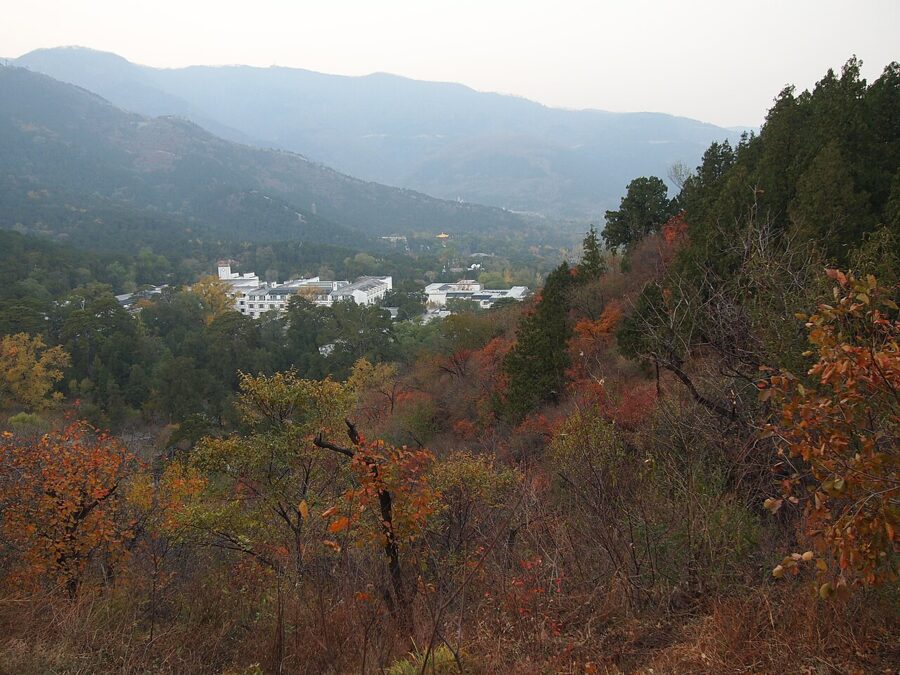
In Beijing, the Fragrant Hills (Xiangshan, 香山) are the classic. The park has about 140,000 red-leaf trees, more than 100,000 of them smoke trees, and the city’s red leaves are at their best from mid to late October into early November. The 2026 Red Leaf Festival ran from 16 October to 15 November, with about 10 per cent of the leaves turned at the opening and the peak expected in late October. The ginkgo avenues follow in early November.
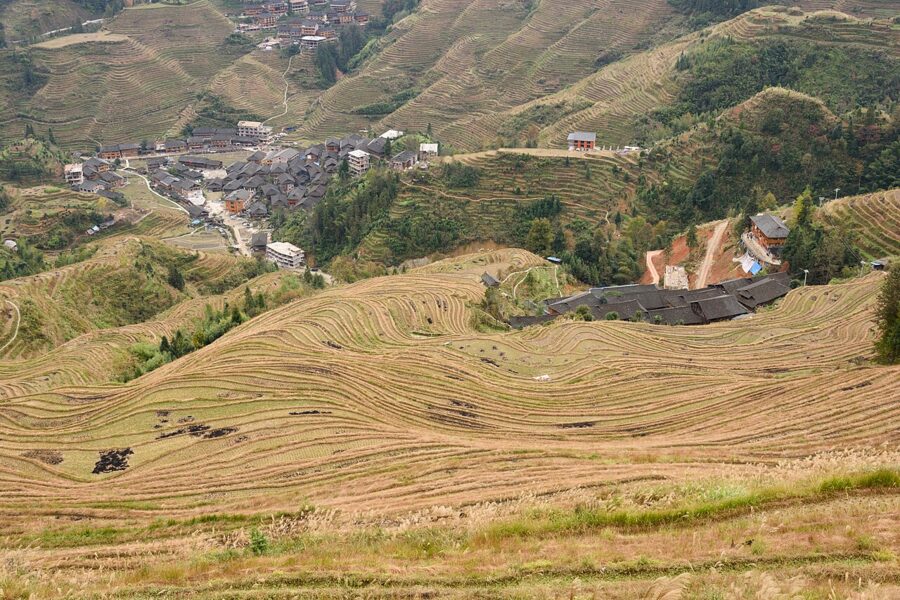
At Zhangjiajie, autumn from mid-September to mid-November is the clearest and most comfortable time, with the leaves turning from late October. The Longji rice terraces outside Guilin go gold in autumn just before the harvest, and once the rice is cut they turn brown fast.
Ice and snow
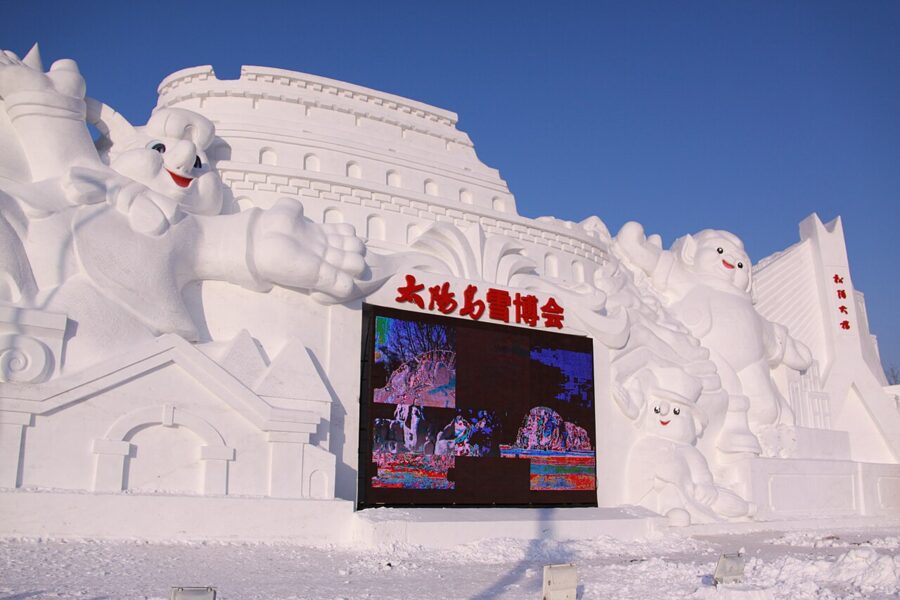
Harbin is the obvious one, and the timing is precise: the big ice park opens in mid-December (17 December last season), and the second and third weeks of January are the best. Lunar New Year week, 6 February 2027, is the busiest and most expensive of the season. Late February is a risk: in 2026, record warmth started the ice slumping and Ice and Snow World closed on 21 February, a week early.
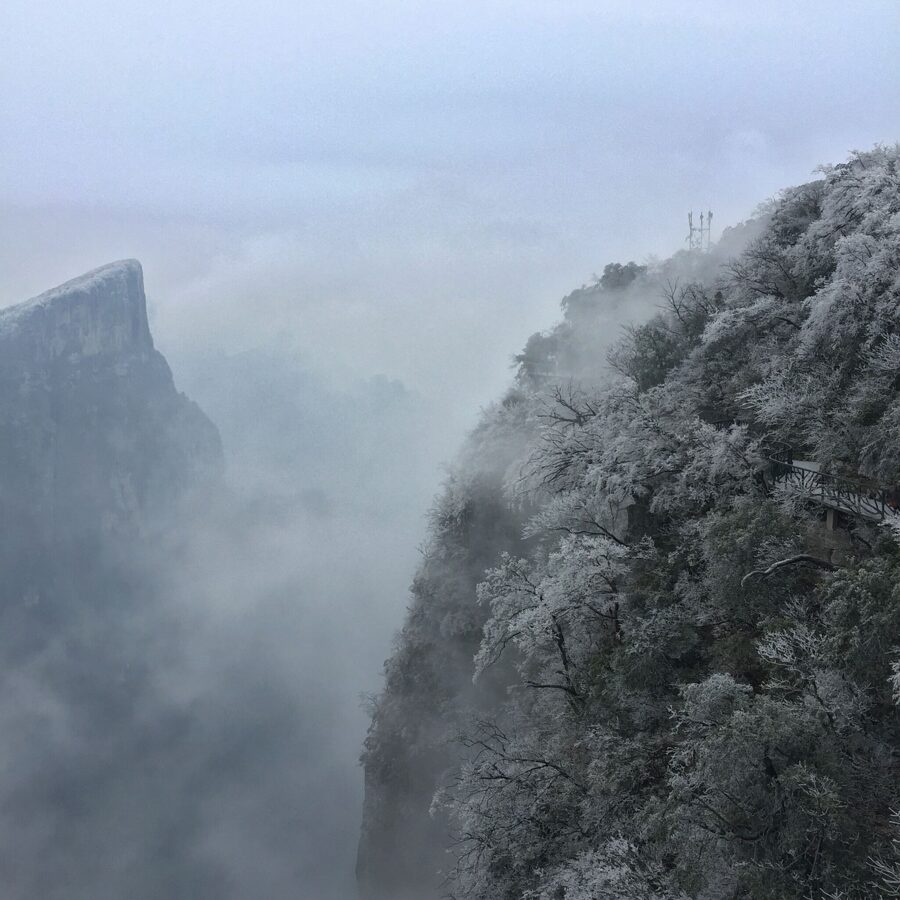
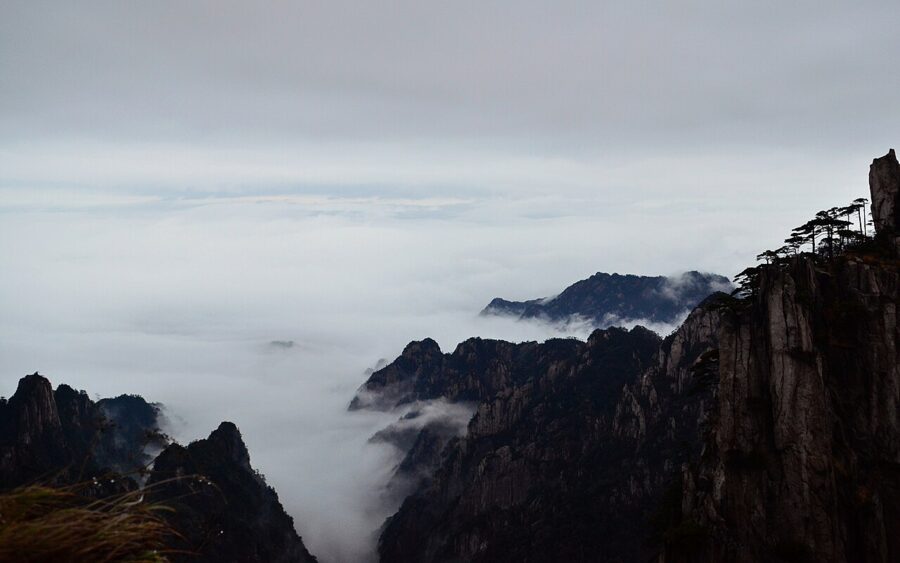
Winter elsewhere is quieter than you’d think. Huangshan’s sea of clouds forms most often from November to May, and Huangshan under snow is one of China’s great winter sights. Jiuzhaigou freezes too: in a cold January, Nuorilang Waterfall becomes a curtain of icicles and blue ice, and low-season prices apply.
The plateau summer
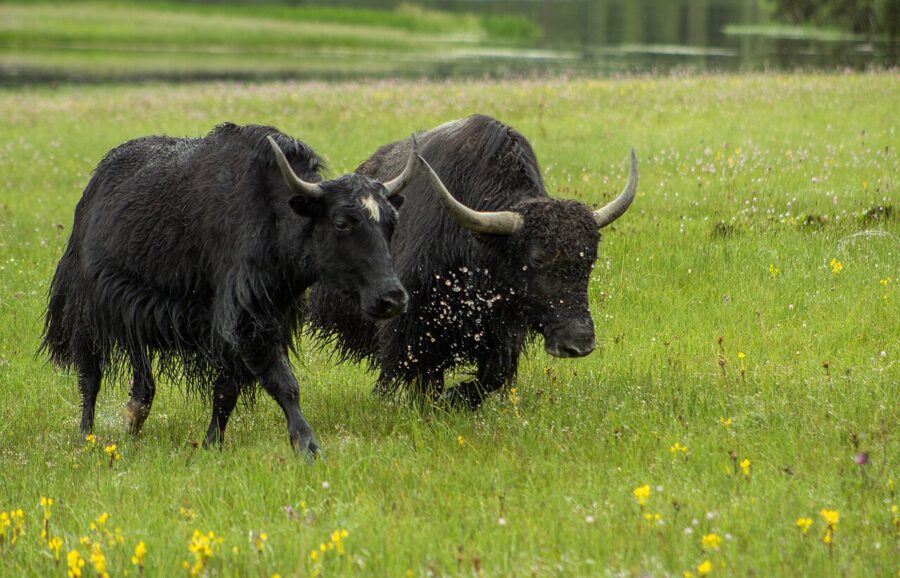
When the east is at 33°C, go up. Yunnan’s highlands stay in the low to mid 20s, the meadows around Shangri-La are green, and Qinghai Lake, at about 3,260 m, is ringed with rapeseed. Jiuzhaigou is green in summer, and its waterfalls are at their fullest. The trade-off is rain, so build a spare day into anything that depends on a mountain view.
Festivals worth the detour
Beyond the national holidays, a few regional festivals are worth building a trip around. The Harbin ice festival runs from mid-December to February. The water-splashing festival in Xishuangbanna comes in mid-April, the Lantern Festival closes the New Year season, and dragon boat races fill the rivers of the south in early summer. For Mid-Autumn, all you need is a mooncake and a clear night.
Rain, typhoons, dust and fog
Weather in China rarely stops a trip outright. It does reshape days, and a few patterns are worth planning around.
The plum rains
The meiyu is the monsoon front stalling over the Yangtze valley. In Shanghai it usually starts around 19 June and lasts about 21 days; in 2026 it ran from 18 June to 7 July, and in 2025 it started as early as 7 June. Expect humid days in the high 20s, rain that comes and goes for hours, and laundry that stays damp.
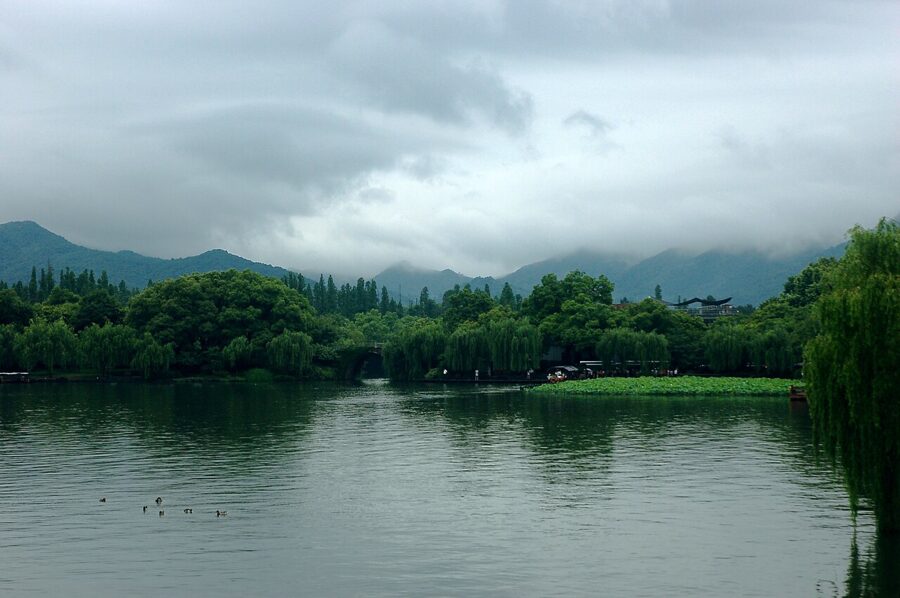
The gardens of Suzhou and Hangzhou look their moodiest in it. Hiking in Huangshan, where the June average in the city below is 381 mm, is a gamble.
Typhoons
Typhoons can form at any time of year, but July to September is the active season, and August is the peak, with about 5.6 forming and 2.3 reaching China in an average month. Most landfalls are on the coasts of Guangdong, Hainan, Fujian and Zhejiang. 2026 was busy: seven had come ashore by the start of September, about two more than usual, and three of them hit the same stretch of Zhejiang coast near Yuhuan, which had never happened before.
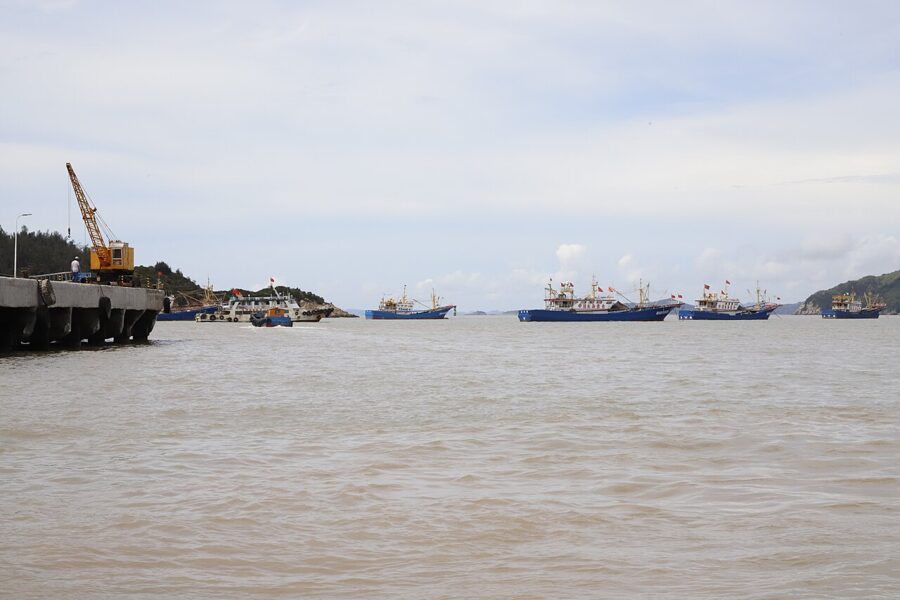
A typhoon usually means a day or two of cancelled flights and ferries, closed parks and heavy rain, then a clear, washed sky. If one is forecast while you’re in the south or on the east coast, stay put, keep the next day free, and book refundable trains.
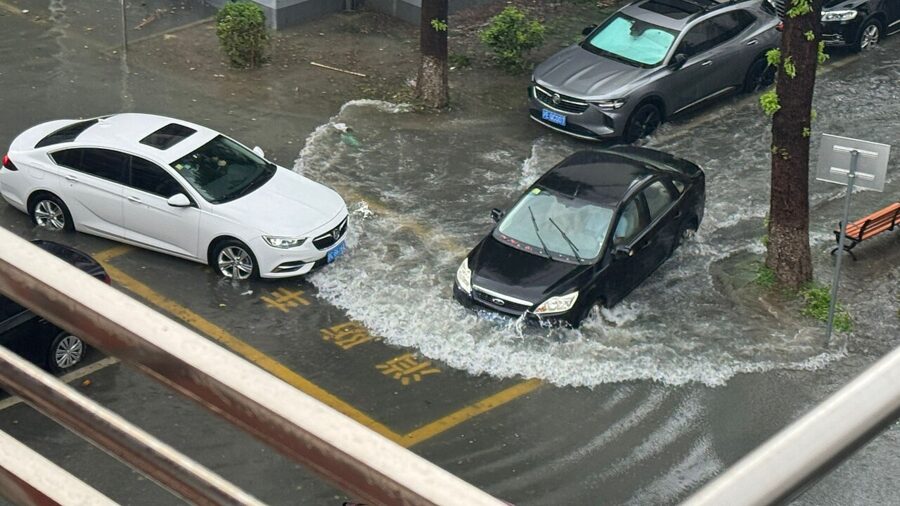
Spring dust
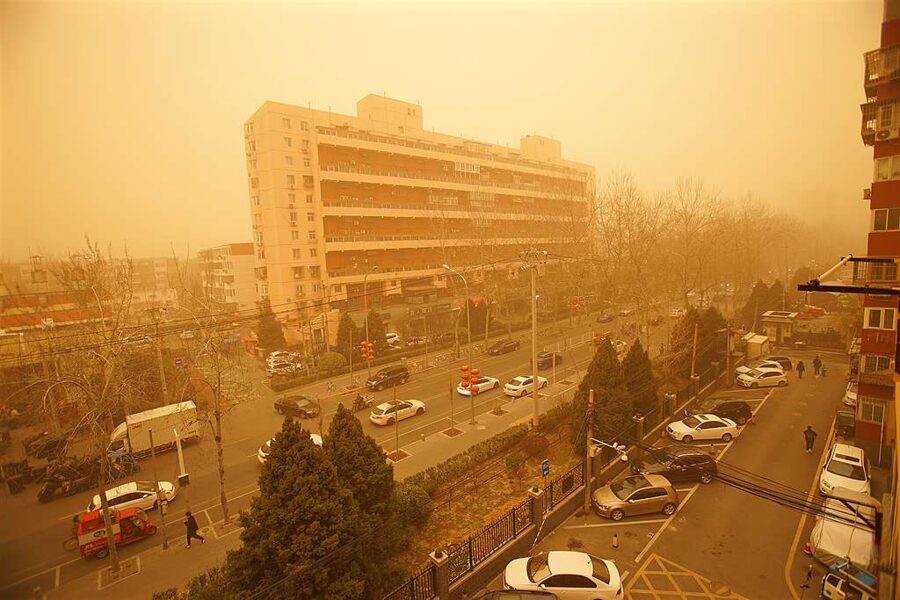
From March to May, wind off the Gobi and the deserts of Inner Mongolia and Xinjiang can turn the northern sky yellow. Dust events have become fewer and weaker over the past 20 years, from an average of 12.5 a spring to 9.6, but 2026 still had eight across the country, and the worst of them, on 17–19 April, reached Beijing. In Dunhuang, April is the sandstorm month. A few days of haze won’t ruin a spring trip, but it might spoil the one morning you set aside for the Great Wall.
Fog and winter grey
The Sichuan Basin is the cloudiest corner of the country in winter: Chengdu averages under 40 hours of sunshine in December and January, and Chongqing’s river fog lingers through the cold months. Huangshan, with cloud or fog on 250 days a year or more, can disappear at any season. None of it is dangerous, but if you’re there for a view, give yourself two chances at it.
What it costs, and when to book
The single biggest price swing in Chinese travel is holiday versus non-holiday. Booking platforms reported that from 10 to 31 October 2026, after Golden Week, the average flight fare paid was more than 30 per cent below the holiday week, and hotel prices at some popular destinations were about 20 per cent lower. Spring Festival has its own pattern, which the government’s 2026 forecast summed up: travel spread out before New Year, tourism strong during the holiday, and the return journeys bunched up afterwards. Book your way out of a holiday before your way in.
Several big sights also cut their prices out of season. Jiuzhaigou drops from ¥280 with the bus to ¥160 from 16 November, the Mogao Caves from ¥238 to ¥140 from 1 December, and the Forbidden City from ¥60 to ¥40 from November to March. Weekdays matter almost as much as seasons: a Tuesday in October is a different trip from a Saturday.
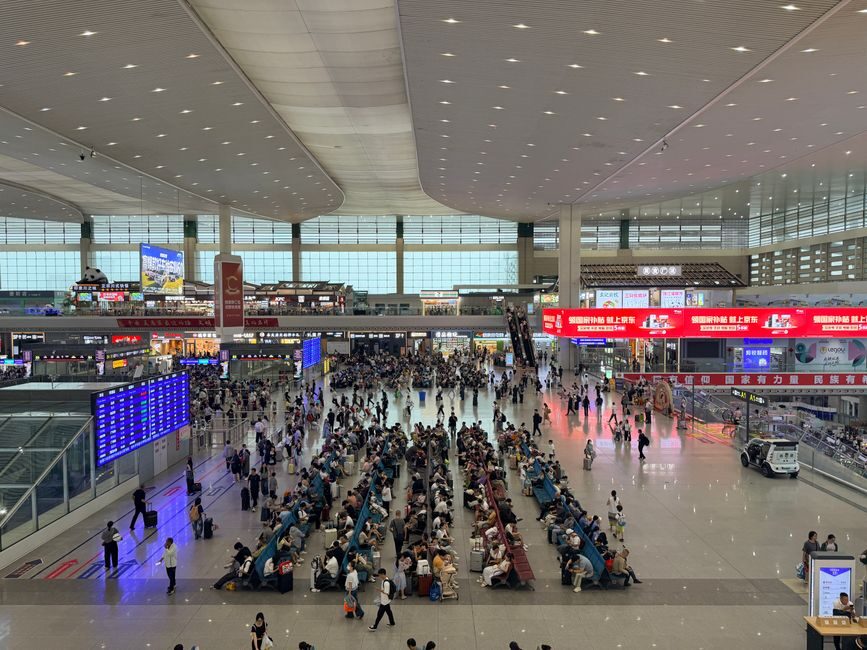
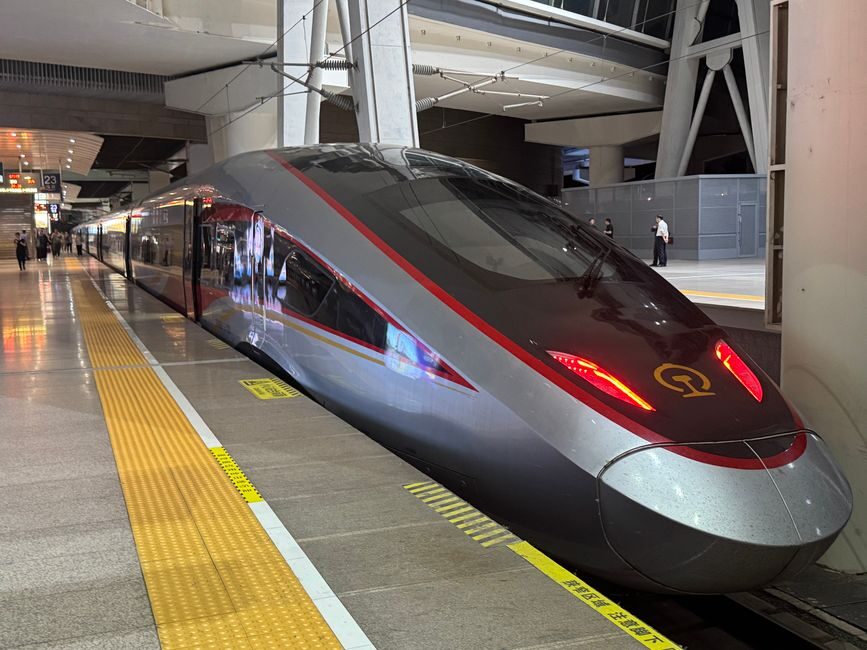
The other thing that has changed is booking. Most big sights now sell timed, real-name tickets online only, bought against your passport number, and many release them on a rolling window. Trains go on sale 15 days ahead, and each station has its own release time, which you can look up in the 12306 app under 起售时间. My guide to China’s high-speed rail covers how to buy them.
| What | Booking window | Where |
|---|---|---|
| Trains | 15 days ahead, release time varies by station | 12306 app or website, Trip.com |
| Forbidden City | 7 days ahead, new day at 20:00; closed Mondays except holidays | Palace Museum official site or mini programme |
| Summer Palace | 1–7 days ahead, new day at 21:00 | The park’s WeChat mini programme |
| Temple of Heaven | 1–7 days ahead | The park’s WeChat account |
| Shaanxi History Museum, Xi’an | 5 days ahead, at 17:00 | The museum’s official channels |
| Chengdu panda base | Up to 14 days ahead | The base’s official channels |
| Jiuzhaigou | Official advice 7–14 days ahead | WeChat mini programme 九寨沟旅游官方平台 |
| Huangshan | At least 3 days ahead | 黄山旅游官方平台 mini programme |
| Mogao Caves, Dunhuang | No fixed window; July, August and Golden Week go about a month ahead | The Dunhuang Academy’s official account |
For a holiday week, the rule is simple: book your trains the day they’re released, then every timed ticket the moment its window opens. Pay with Alipay or WeChat Pay, both of which now take most foreign cards, and carry your passport everywhere, because it is your ticket at most gates. My China travel tips cover the setup in detail.
Which months suit which trip
Most first trips combine several regions, which is where timing gets interesting. A route that’s perfect in Beijing in May can be wet in Guilin the same week. Here’s how I’d time the common routes.
| Trip | Best | Fine | Avoid |
|---|---|---|---|
| First-time classic: Beijing, Xi’an, Shanghai | Mid-April to May (not 1–5 May), 8 October to early November | March, late September | Golden Week, July–August |
| Add Guilin and Yangshuo | October to early November | March, April | May–June (heaviest rain) |
| Yunnan: Kunming, Dali, Lijiang | November to April | May, October | June–September for mountain views; Spring Festival |
| Sichuan: Chengdu, pandas, Jiuzhaigou | April–May, mid to late October | September, early November | July–August, Golden Week |
| The Silk Road: Xi’an, Dunhuang | May–June, September–October | Early November | July–August in the desert, December–February |
| The south: Guangzhou, Guilin | October to December | March | April–June |
| Harbin and the ice | Second and third weeks of January | Late December | Late February, Spring Festival week |
| Summer escape | July–August in Yunnan, Qinghai, the northeast | June | The eastern lowlands |
If you are building a longer route, my two-week China itinerary runs on these timings. The order matters as much as the month. In late October, for example, start in the north while it’s still mild and finish in the south, where the warm weather lasts longest.
Skip this
- Golden Week anywhere famous. If you’re in China from 1 to 7 October, stay in a big city and save the scenery for the week after.
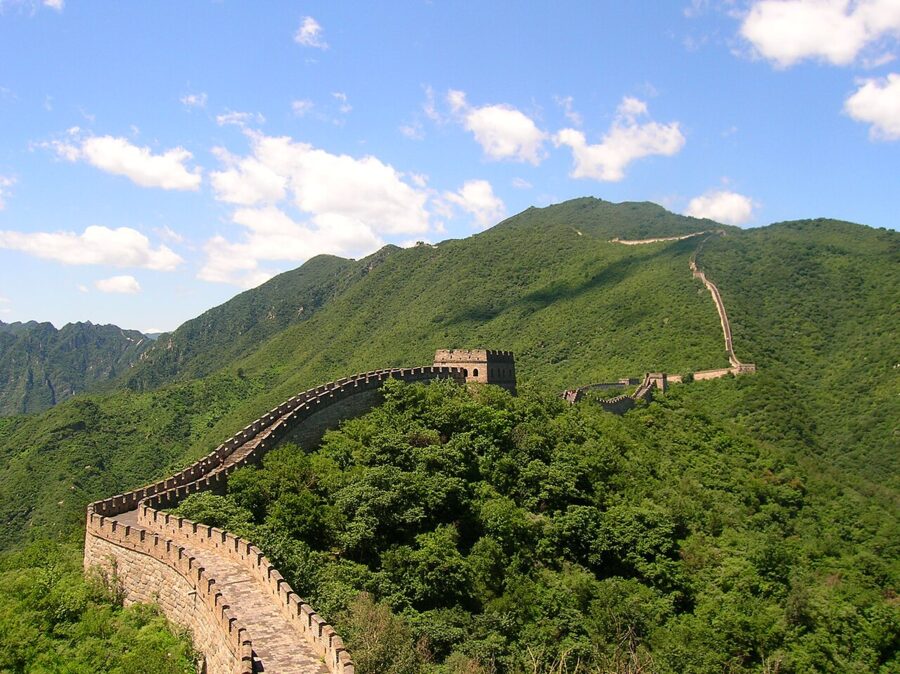
- Badaling in the school holidays. Mutianyu takes longer to reach and is worth it.
- Harbin in the last week of February. The ice may already be going soft.
- The Li River in June, if the river is the point of the trip.
- Chongqing in August, unless you want your hot pot with 34°C afternoons and 25°C nights.
- Turning up at Jiuzhaigou in October without a ticket. There is no ticket window.
If I could pick one fortnight for a first trip, it would start on 8 October: north first, south last, a hot pot in Chengdu somewhere in the middle. Book the trains the day they open, carry your passport, and leave the first week of the month to everyone else.