Hakone: The Loop, the Hot Springs and What to Eat, Planned for a Day or a Night
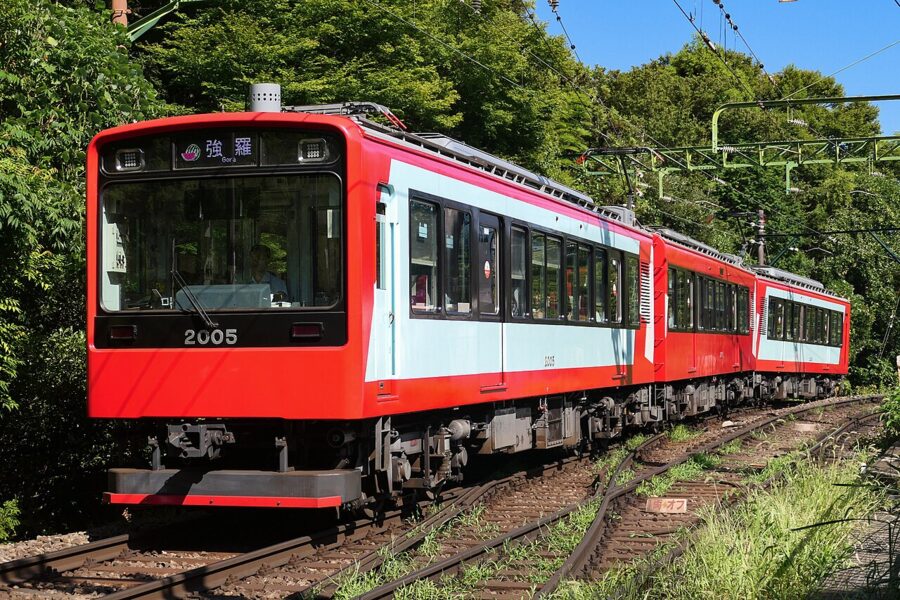
A few minutes above Hakone-Yumoto, the train stops in a cutting in the woods. There is no platform, no station sign and nobody waiting. The driver and the conductor swap ends, a signal clicks over, and the little red train sets off again in the direction it just came from, climbing. It does this three times on the way up the mountain, and every time the carriage full of strangers goes quiet and watches.
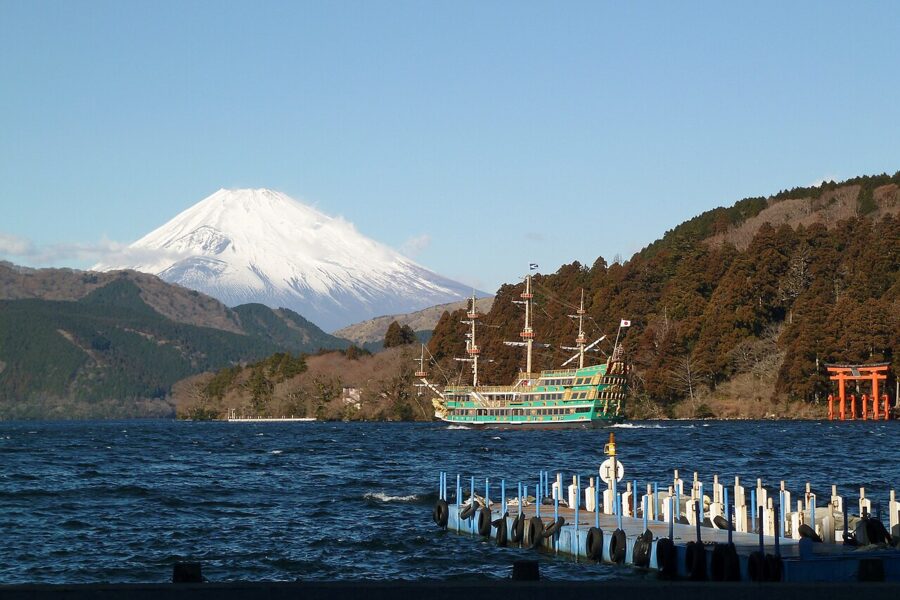
That zigzag is the Hakone experience in miniature. You get a long chain of small, slightly absurd vehicles, a mountain that is still a live volcano, and a lake with a pirate ship on it. Then you finish in a hot bath, roughly 90 minutes from Tokyo. People from the capital have been coming for the water since the Edo period, and for the rest of it since the railway opened in 1919.
The trick is doing it in the right order, on the right day, without spending half of it in queues.
Prices and hours below come from the operators, checked in November 2026. Fares on the ropeway and the lake boats went up on 1 October 2025, so older guides quote numbers that no longer exist.
| Leg | From and to | Time | Adult single | On the Free Pass? |
|---|---|---|---|---|
| Odakyu Romancecar | Shinjuku to Hakone-Yumoto | about 80 min | fare plus ¥1,200 express ticket | Fare yes, express ticket no |
| Hakone Tozan Railway | Hakone-Yumoto to Gora | about 40 min | ¥460 | Yes |
| Hakone Tozan Cable Car | Gora to Sounzan | about 10 min | ¥430 | Yes |
| Hakone Ropeway | Sounzan to Togendai via Owakudani | about 30 min | ¥2,000 | Yes |
| Sightseeing cruise (pirate ship) | Togendai to Hakone-machi or Moto-Hakone | 25–40 min | ¥1,700 | Yes |
| Hakone Tozan Bus | Lake Ashi back to Hakone-Yumoto | about 30–40 min | by distance | Yes |
In This Article
- A volcano with a timetable
- The road everyone had to walk
- Fuji: the odds
- The loop, leg by leg
- Romancecar from Shinjuku
- Hakone-Yumoto, the front door
- The Tozan Railway and its switchbacks
- Gora and the cable car
- The ropeway over Owakudani
- Owakudani and the black eggs
- Lake Ashi and the pirate ships
- Hakone Shrine and the lake torii
- Back down by bus
- Clockwise or anticlockwise?
- Does the Free Pass pay?
- Where to get in the water
- Day baths that are worth the detour
- Tattoos and the etiquette that matters
- Staying in a ryokan
- What to eat on the way round
- Soba in Yumoto
- Tofu and yuba
- The Fujiya Hotel’s curry and pies
- The fishcake town at the bottom of the hill
- Museums, an old road and a teahouse
- The Hakone Open-Air Museum
- The Pola Museum of Art
- The old Tokaido and the cedar avenue
- Amazake-chaya
- Hatajuku and yosegi
- The Hakone Sekisho
- One day from Tokyo
- One night, done properly
- Crowds and seasons
- Skip this
A volcano with a timetable
Hakone is not a town. It is a whole volcano, or rather the collapsed remains of several, with a ring of outer peaks around a caldera and a cluster of younger cones in the middle. The lake, the steam, the hot water in every inn and the reason the roads twist like dropped string all come from the same geology. The Hakone volcano started erupting about 400,000 years ago and is still officially active.
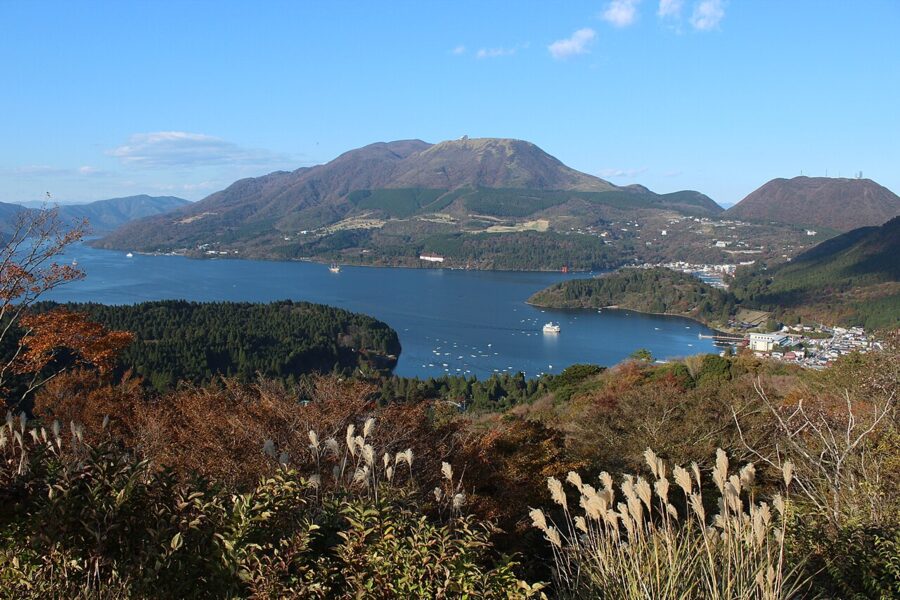
Lake Ashi itself is young. About 3,100 years ago a steam explosion on Kami-yama, the volcano’s highest peak at 1,438 m, brought part of the mountain crashing down, and the debris dammed the Hayakawa river inside the caldera. When you sail across the lake on a pirate ship, you are floating on a reservoir that a landslide made. Its water, oddly, belongs to Shizuoka: in 1670 farmers on the far side of the rim finished a tunnel through it to irrigate their fields, and their successors still hold the rights.
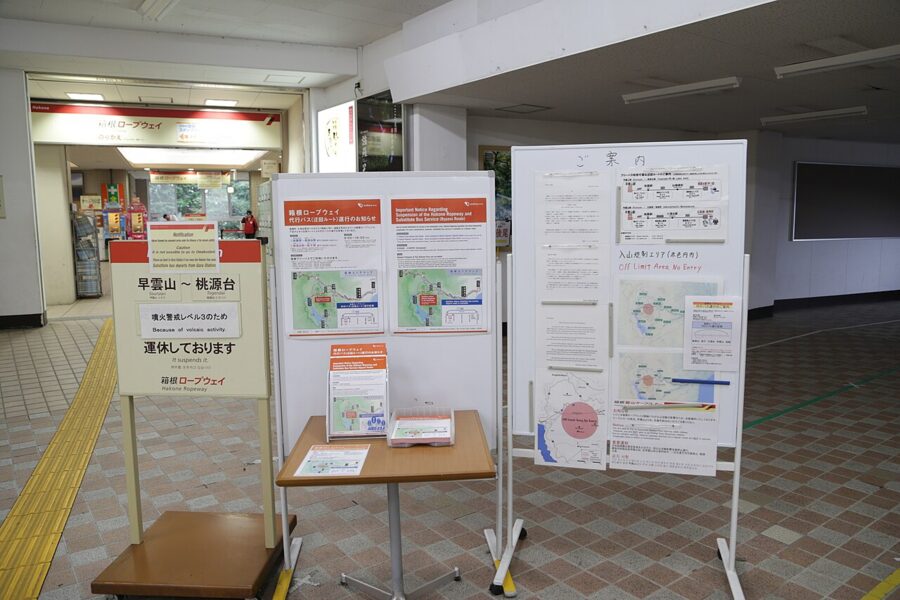
The volcano has not finished. In May 2015 the Japan Meteorological Agency raised the alert level at Owakudani, a tiny steam eruption followed in late June, and the ropeway did not run its full length again for more than a year. It closed again for five months in 2019. That is the backdrop to every Hakone plan: the most famous stop on the loop can shut on a day’s notice, and nobody in the valley thinks that is strange.
The road everyone had to walk
The second thing Hakone has always been is in the way. The Tokaido, the great road between Edo and Kyoto, had to cross these mountains, and the stretch from Odawara over the pass to Mishima was called Hakone Hachiri, “eight ri of Hakone”, about 32 km of mud, stone and cedar. The old packhorse drivers’ song says a horse can get over Hakone, but nobody gets over the Oi River. Hakone was the second-worst obstacle on the road, and proud of it.
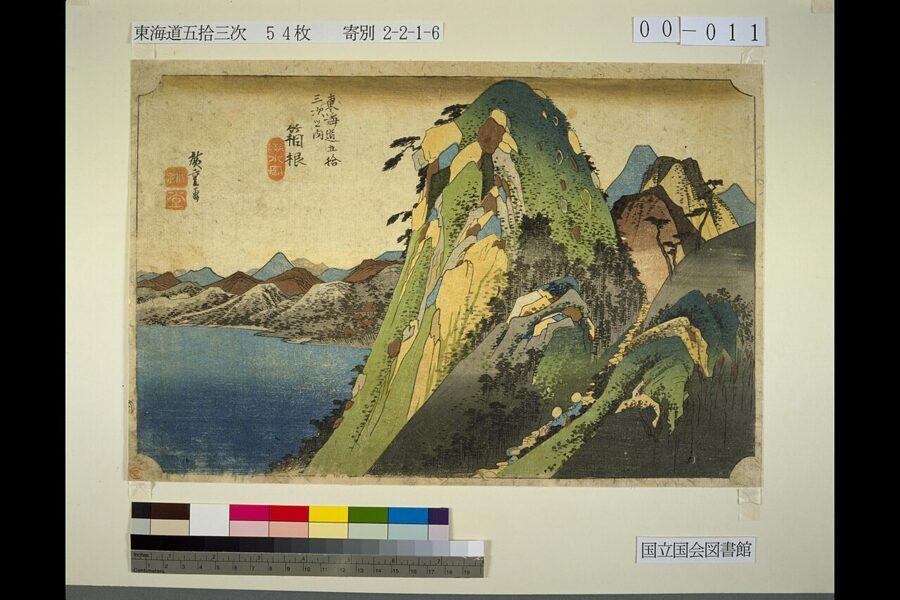
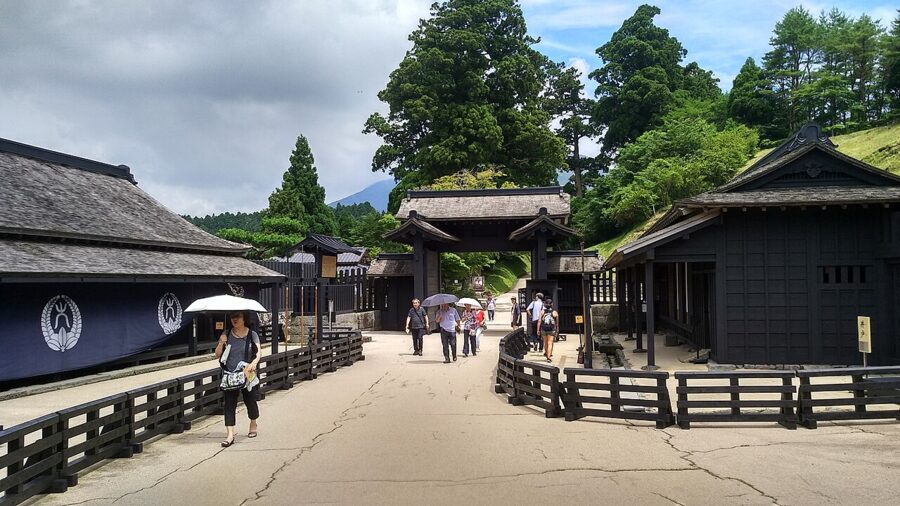
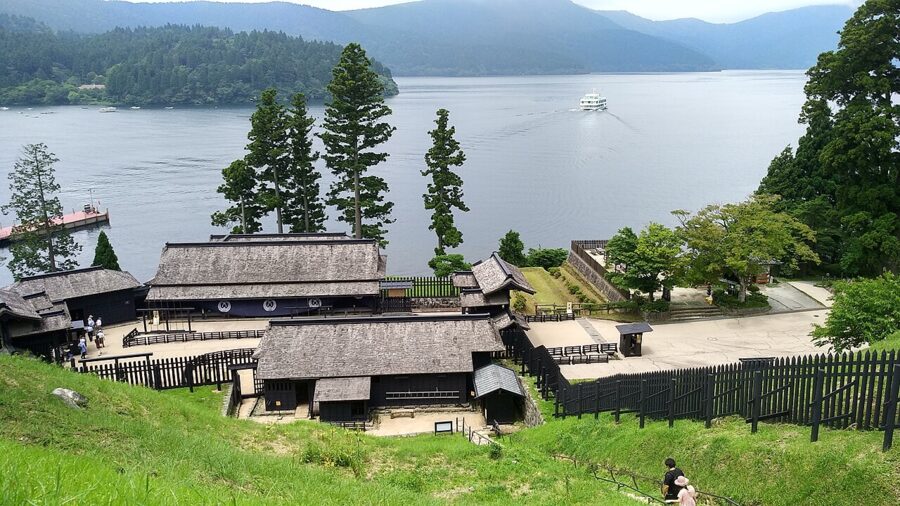
In 1619 the shogunate put a checkpoint on the lakeshore, the Hakone Sekisho, and kept it there until 1869. Its job was famously summed up as watching “guns coming in, women going out”: weapons heading for Edo, and above all the wives of provincial lords trying to slip home from the capital, where they were held as polite hostages. Today’s buildings are a reconstruction, built from an 1865 repair record found in 1983, and they are better than reconstructions usually are.
Then the railway came. The Hakone Tozan line reached Gora in 1919, the ropeway opened in stages in 1959 and 1960, and through the 1950s and 1960s two rival railway empires, Odakyu and Seibu, fought a long, petty battle for tourists, so public that it became a 1962 film, still known as the Hakone Mountain War. You still ride the result. There are still two bus companies, two boat operators and two ropeways, and the Hakone Free Pass covers only the Odakyu side.
Fuji: the odds
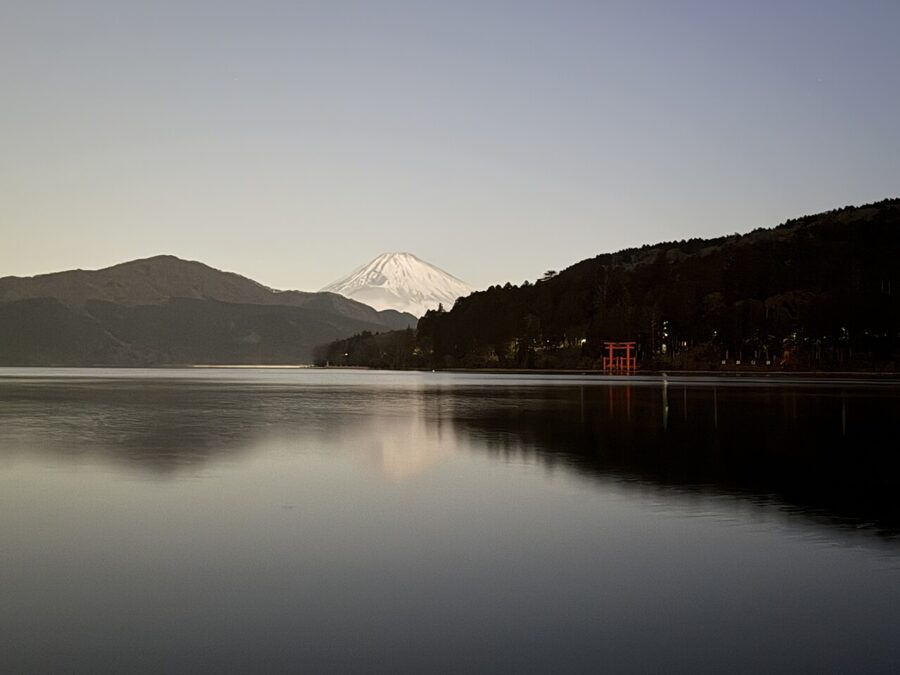
Fuji is about 30 km from the lake, and it appears on every poster. Whether it appears for you is a weather question. Hakone is wet, the mountains make their own cloud, and fog is most likely in June and July. September brings long rains.
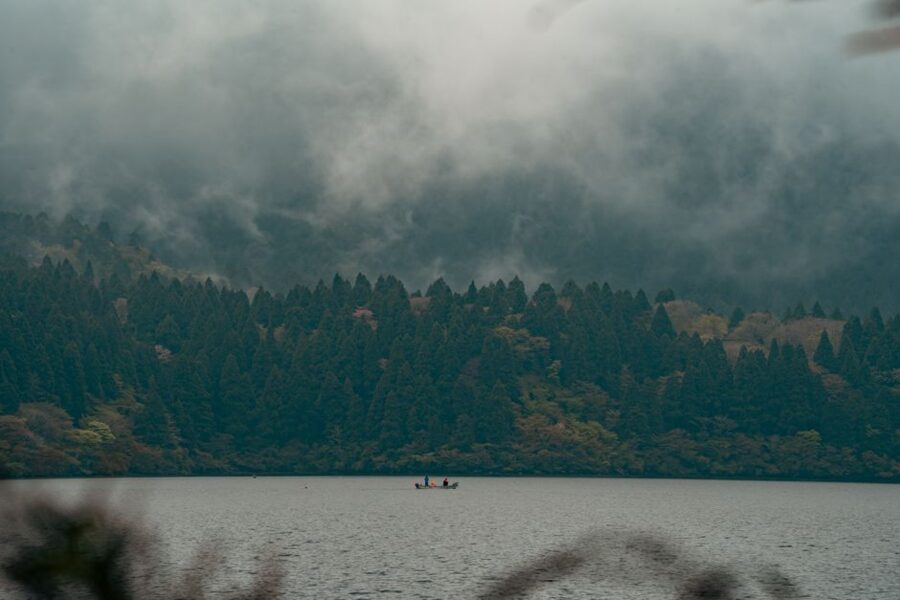
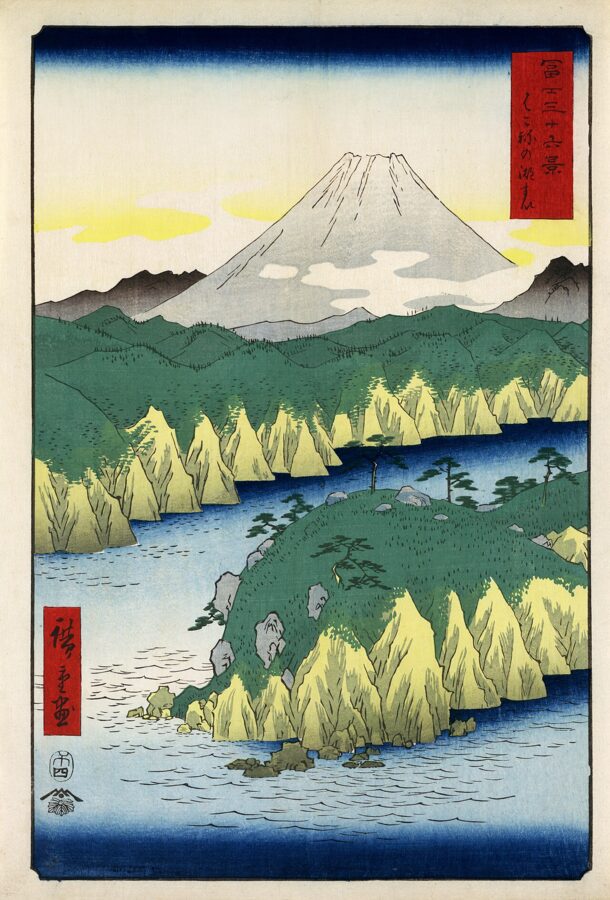
The best odds are clear winter mornings from December to February, especially the day after rain has washed the air. Autumn gives you colour but less reliable views. If you are coming mainly for Fuji, go to Kawaguchiko on the far side of the mountain instead: it is closer, faces the cone head-on and has more vantage points. Hakone is the trip for the whole package, and Fuji is a bonus when it turns up.
The loop, leg by leg
The classic route has a name in Japanese, the Hakone Golden Course, and it has existed since the ropeway reached the lake in 1960. Odakyu’s official version runs anticlockwise: up the mountain by train and cable car, over Owakudani by ropeway, across Lake Ashi by boat, and back down to Hakone-Yumoto by bus. Every leg is a different vehicle, and that is half the fun.
Romancecar from Shinjuku
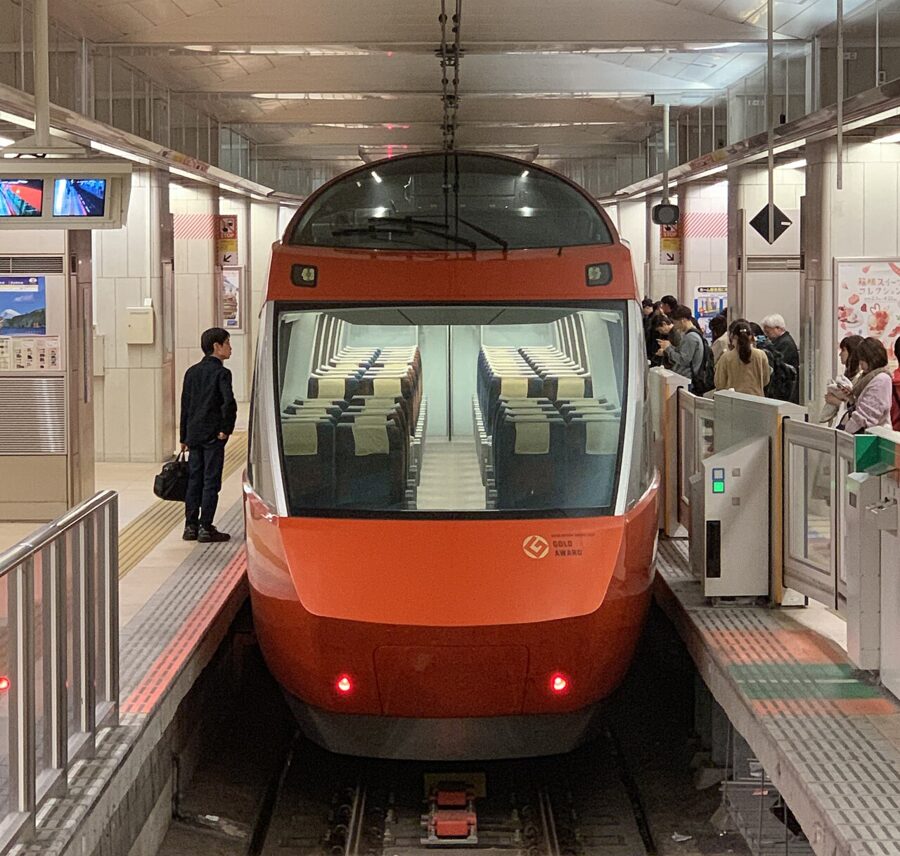
The Odakyu Romancecar runs direct from Shinjuku to Hakone-Yumoto in about 80 minutes. Every seat is reserved, and you need a limited express ticket (¥1,200 one way from Shinjuku) on top of the ordinary fare or a Free Pass. The ordinary trains get you there for the fare alone, with a change at Odawara and a longer ride.
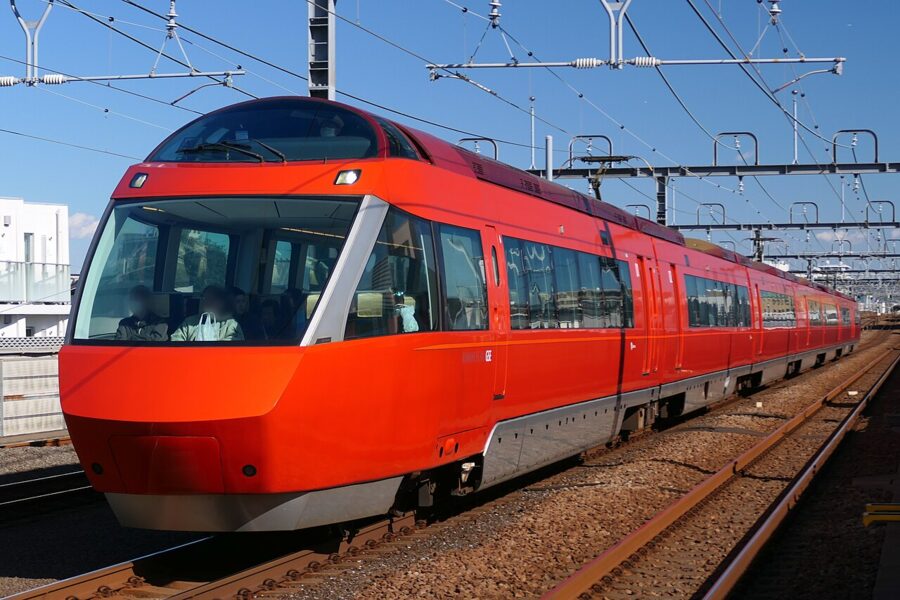
Sit on the right-hand side heading out of Tokyo if you want the best chance of an early Fuji glimpse. Buy lunch before you board. An ekiben from Shinjuku eaten at a window seat is the cheapest good meal you will have all day.
Hakone-Yumoto, the front door
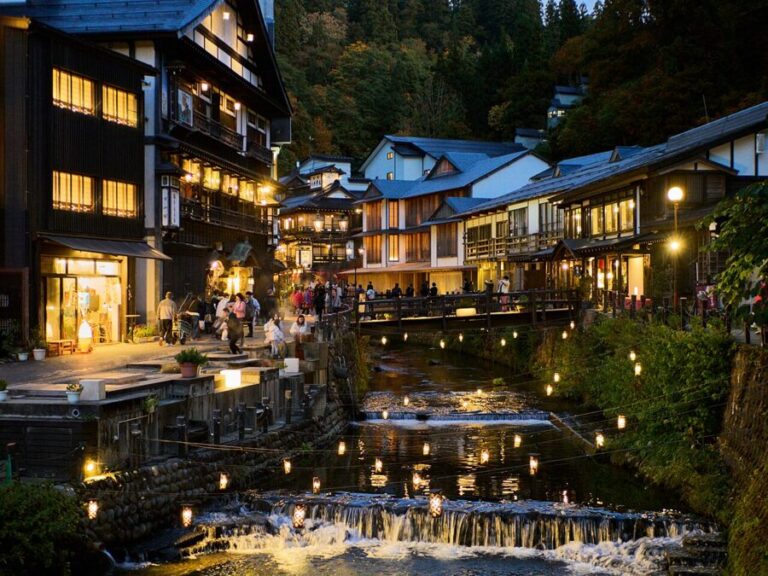
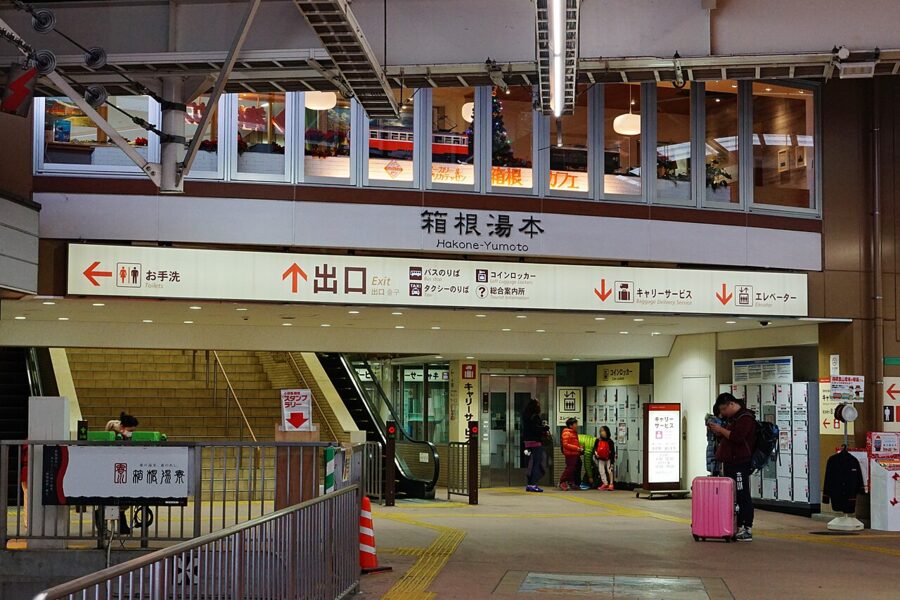
Yumoto is where the Romancecar stops and the mountain begins. It is the oldest and biggest of the hot-spring towns, with a tradition that dates its first spring to 738, and the main street running uphill from the station is all souvenir shops, steamed buns and dried fish. Most people walk straight through it to the Tozan platform. Come back at the end of the day instead, when the shops are quieter and you have earned a bath.
The Tozan Railway and its switchbacks
From Yumoto to Gora the Hakone Tozan Railway climbs 445 m in 8.9 km, and nearly half of that distance is at a gradient of 80 per mille: 8 m of climb for every 100 m of track. That is the steepest grade on any adhesion railway in Japan, meaning trains that grip the rails with their wheels alone, no cogs. You will feel it. The hanging straps hang at an angle.
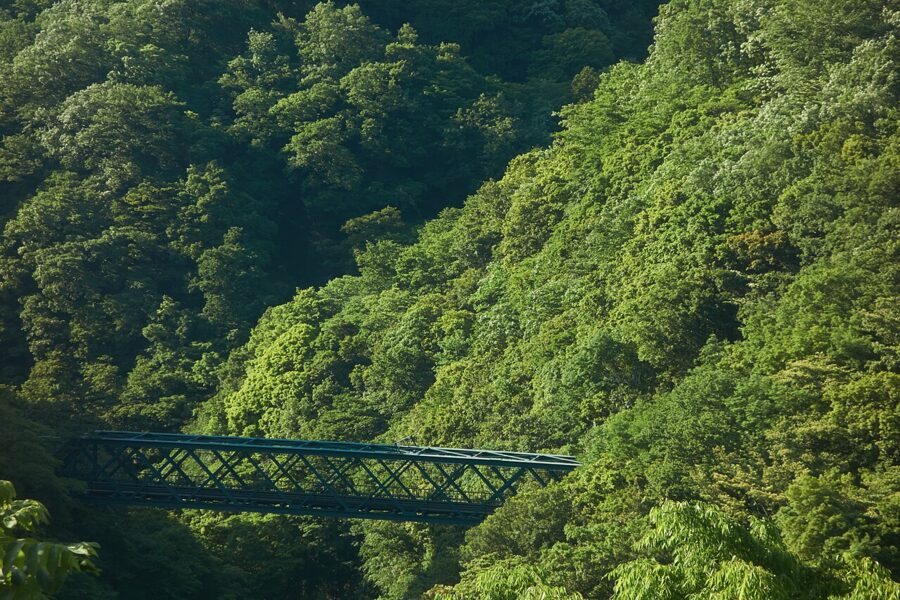
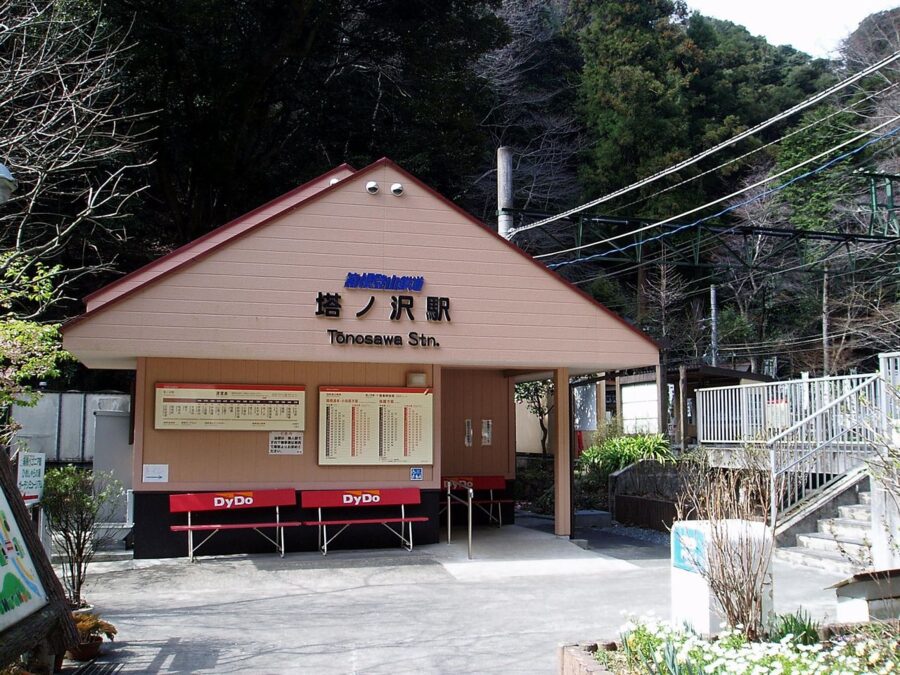
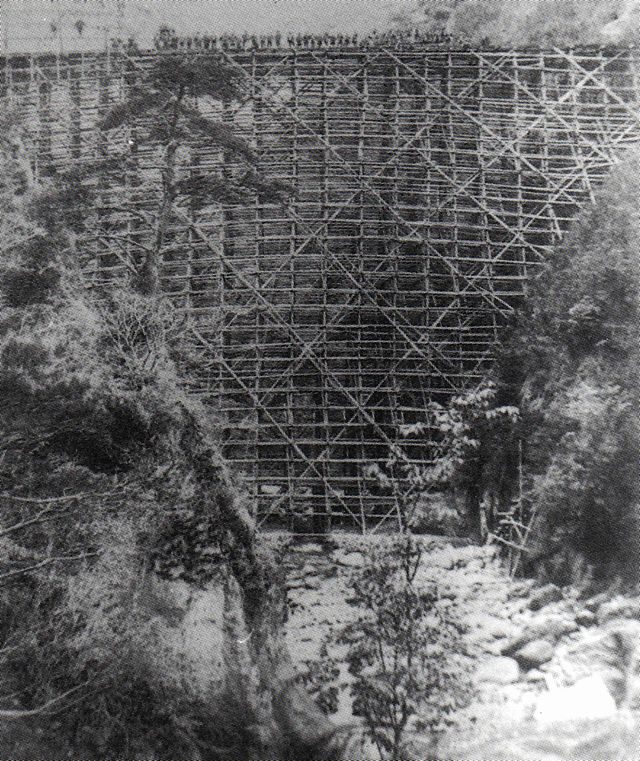
The line opened on 1 June 1919 after more than seven years of work. In its first years many passengers rode up and walked down, because a return ticket cost about what a craftsman earned in a day. The trains stop at Tonosawa, where a small shrine to Zeniarai Benten, the goddess you wash coins for, sits in a corner of the uphill platform, then Ohiradai, Miyanoshita, Kowakudani and Chokoku-no-Mori.
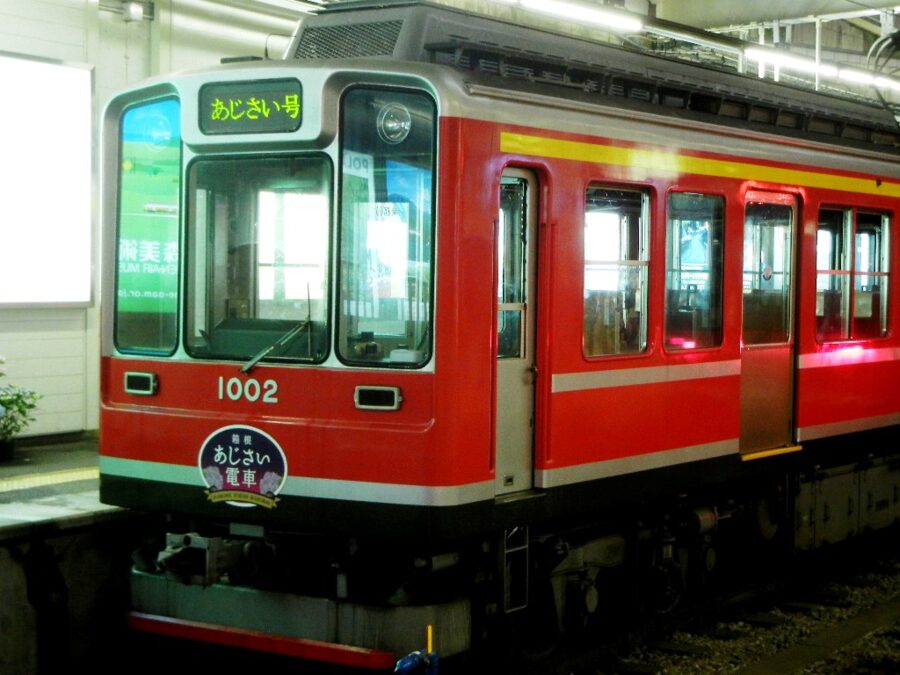
In mid-June to mid-July the line turns into the “hydrangea train”. Railway staff planted more than 10,000 hydrangea bushes along the track, originally to hold the banks together, and trains slow down past the best stretches. The special evening trains for the light-ups need a reserved seat.
Typhoon Hagibis tore out sections between Ohiradai and Kowakudani on 13 October 2019, and trains did not reach Gora again until 23 July 2020.
Gora and the cable car
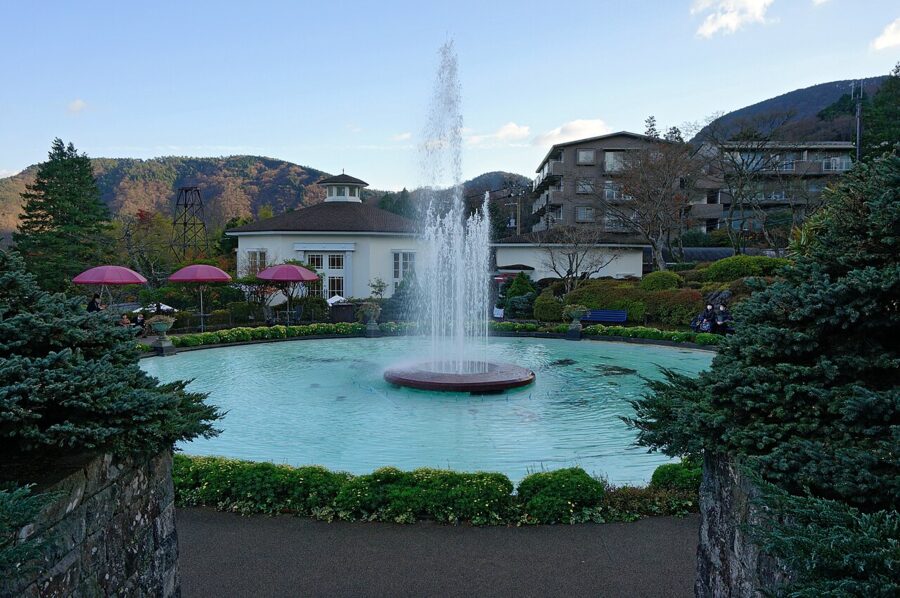
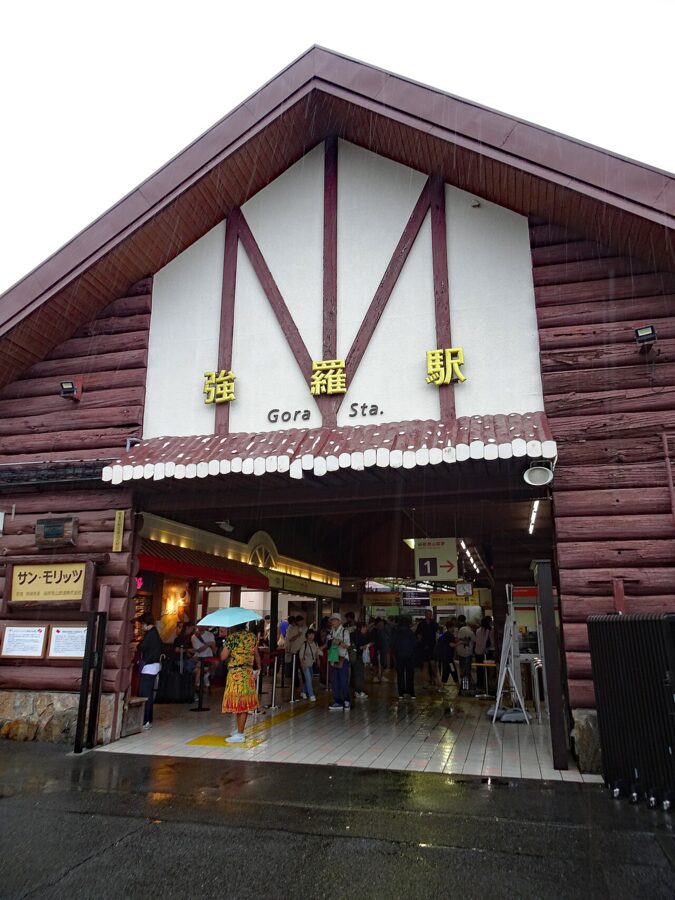
Gora, at 541 m, is the top of the railway and the bottom of the cable car. It is a resort district rather than a village, which grew up in the 1910s around a formal French-style park, and it makes a good base: the station is a short walk from Gora Park, a bakery or two and one of Hakone’s busiest lunch counters.
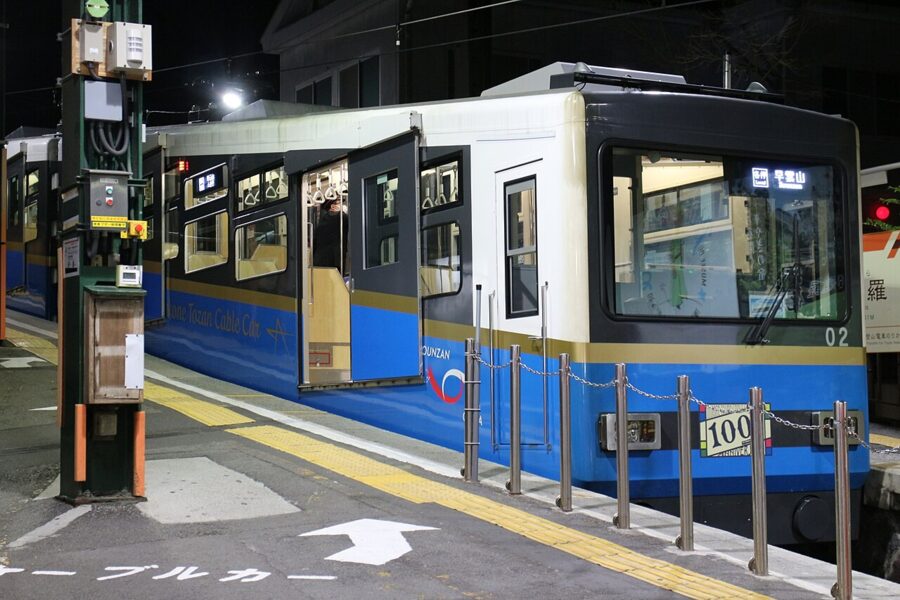
The cable car is packed at weekends, and on autumn Sundays expect to wait at Gora. Stand on the downhill end and look back. The view over the roofs of Gora to the outer rim is better than anything you will get from the front.
The ropeway over Owakudani
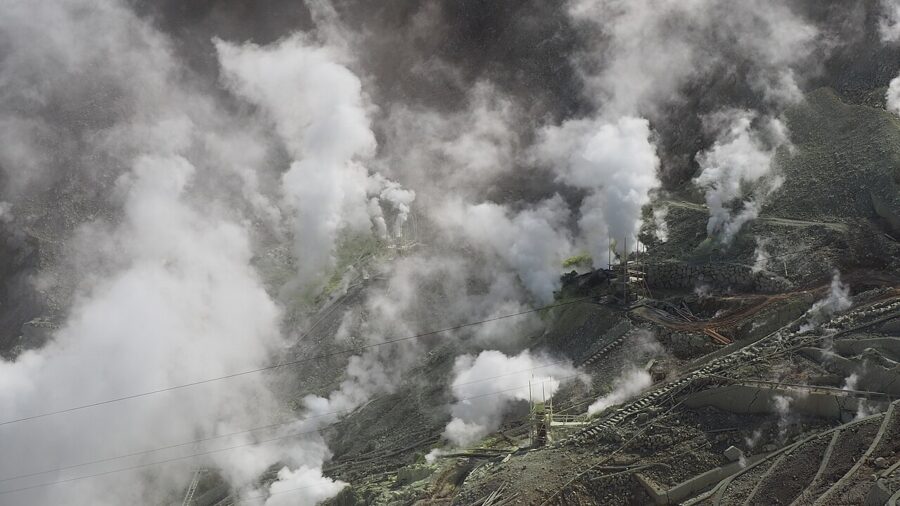
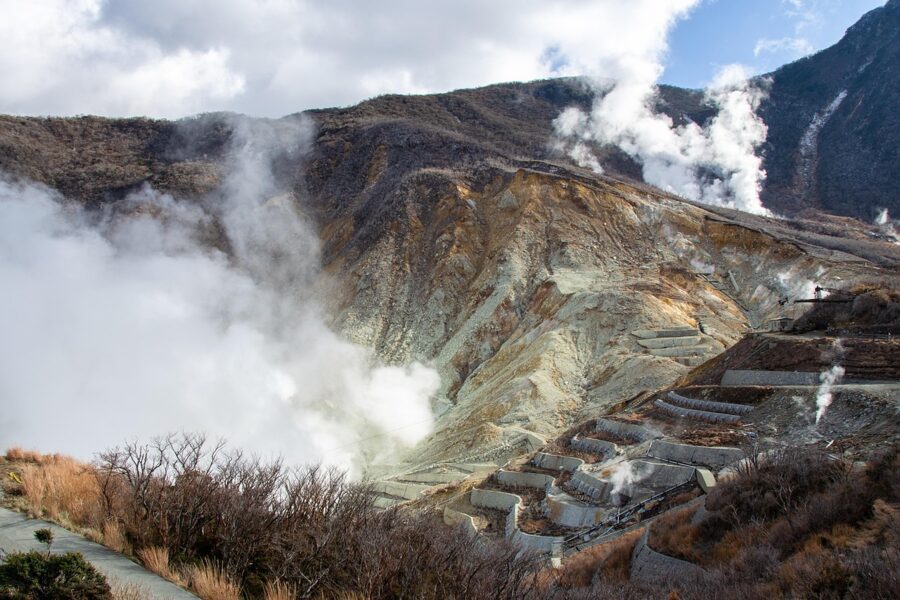
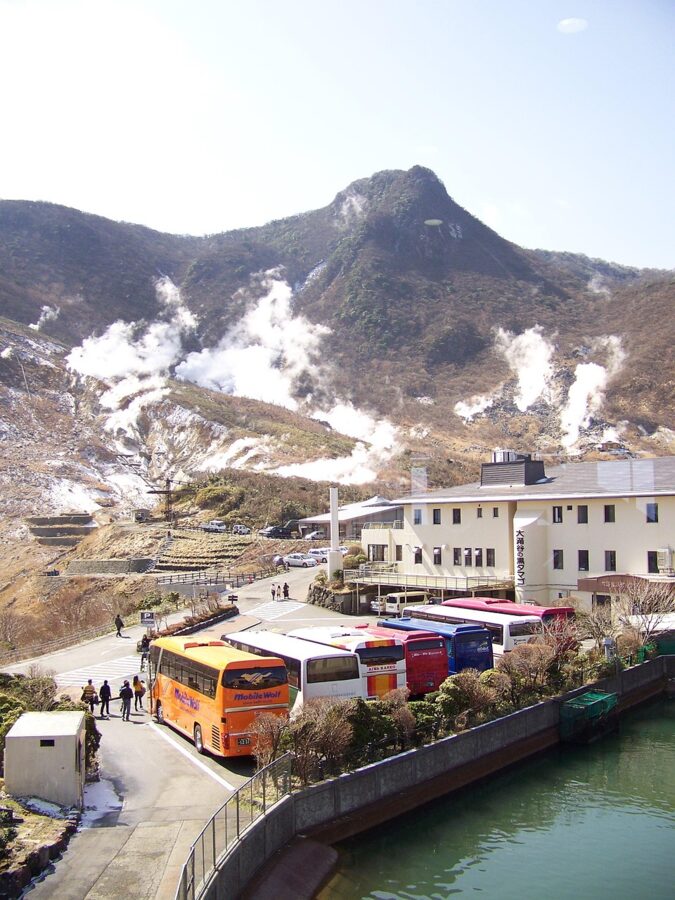
At Sounzan you change to the Hakone Ropeway, and this is where the trip turns strange. Gondolas for 18 people leave about once a minute and carry you over a ridge, and then the ground simply falls away into a bare, yellow-grey valley pouring out steam. From the Sounzan side the cabins pass about 130 m above the valley floor. The smell of sulphur reaches you before the view does.
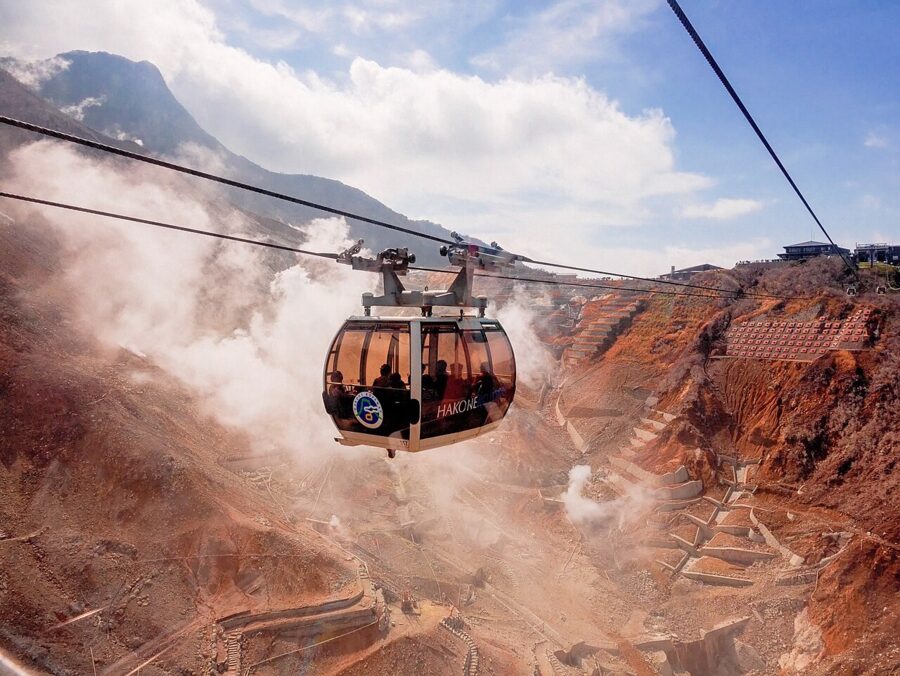
The ropeway runs from about 9:00 to 17:00 from February to November and until 16:15 in December and January. Since 1 October 2025 a single ride end to end costs ¥2,000 and a return ¥3,000, and you change gondolas at Owakudani either way. The whole line is about 4 km and takes roughly 30 minutes, in three hops of about ten.
Now the closures. The ropeway measures volcanic gas at several points along the line and shuts when concentrations rise, which can happen with a change of wind. The operator advises anyone with asthma, a heart condition or simply feeling unwell not to ride the Sounzan to Ubako section at all. Check the operator’s live status page the morning you go, and if the ropeway is down, expect replacement buses between the stations, as in past closures.
Owakudani and the black eggs
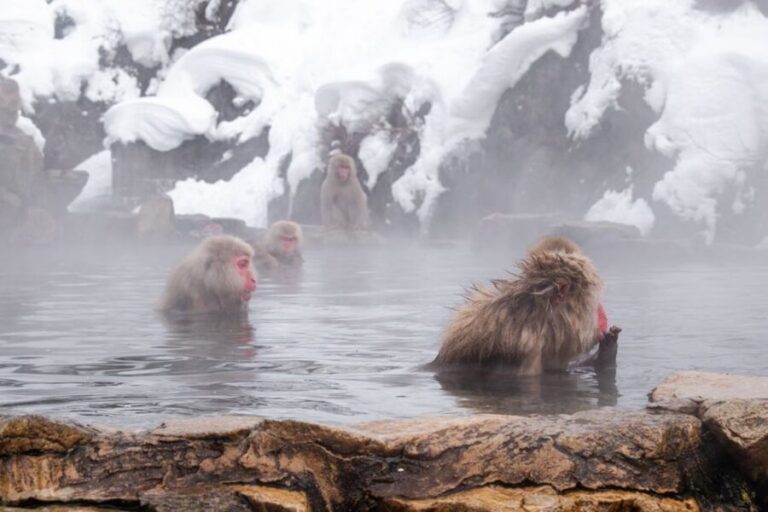
Until 1873 this valley was called Jigokudani, “Hell Valley”, the same name as the Nagano valley where the snow monkeys bathe. It was renamed for a visit by the Emperor and Empress, presumably because nobody wanted to send royalty to hell. The new name means “great boiling valley”, which is fair.
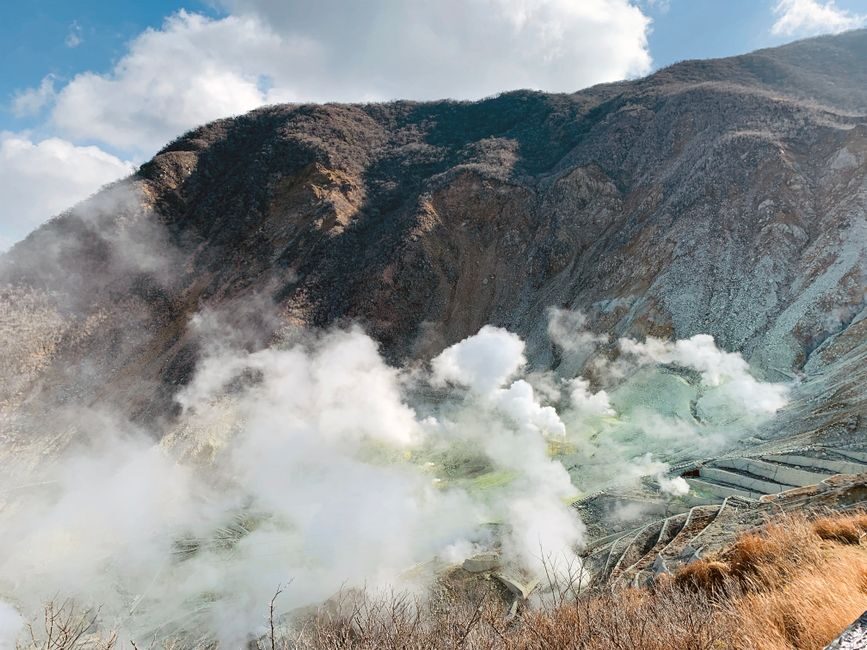
Most people spend 30 to 45 minutes here. You can look over the valley from the station terraces, and since 2025 there is a new viewing area at the station, Chikyu no Tani, with a glass-floored deck looking down on the vents. The old Owakudani nature trail, a 700 m path close to the fumaroles, has reopened as a guided walk only. You need to book it in advance.
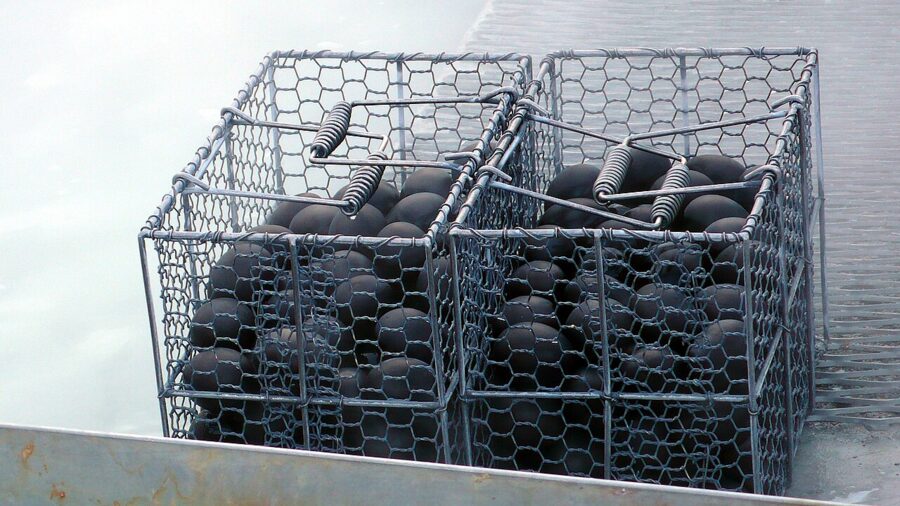
Then there are the eggs. The kuro-tamago are ordinary hen’s eggs boiled in a hot pool and then steamed, sold at the Owakudani Kurotamago-kan in bags of four for ¥500. Eggs sell from 9:00 to 16:40, they are made fresh each day, and they do sell out. Eat one warm on the terrace and the seven-year promise feels slightly more plausible.
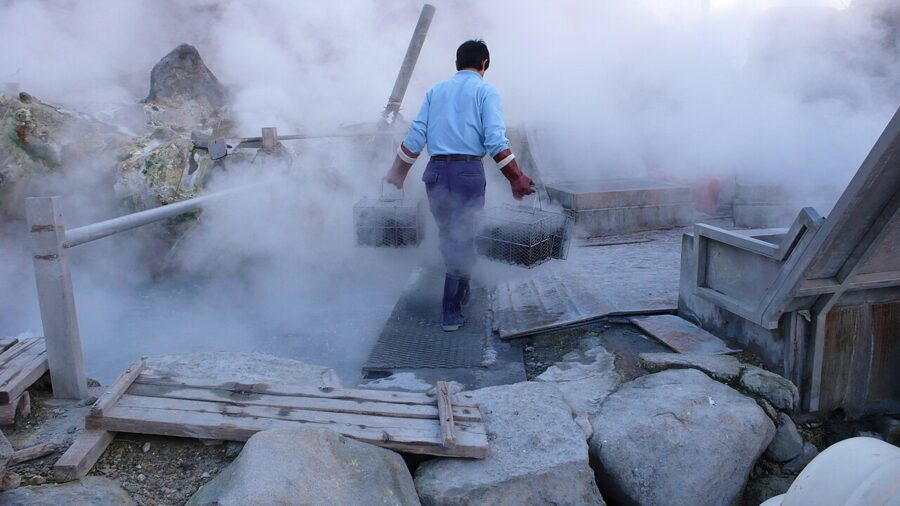
I like the eggs more for the ritual than the taste, but the ritual is good: steam in your face, a warm egg in a cold hand, a view that changes every time the wind turns. Skip the queue for the giant egg sculpture photo. The real ones are more interesting.
Lake Ashi and the pirate ships
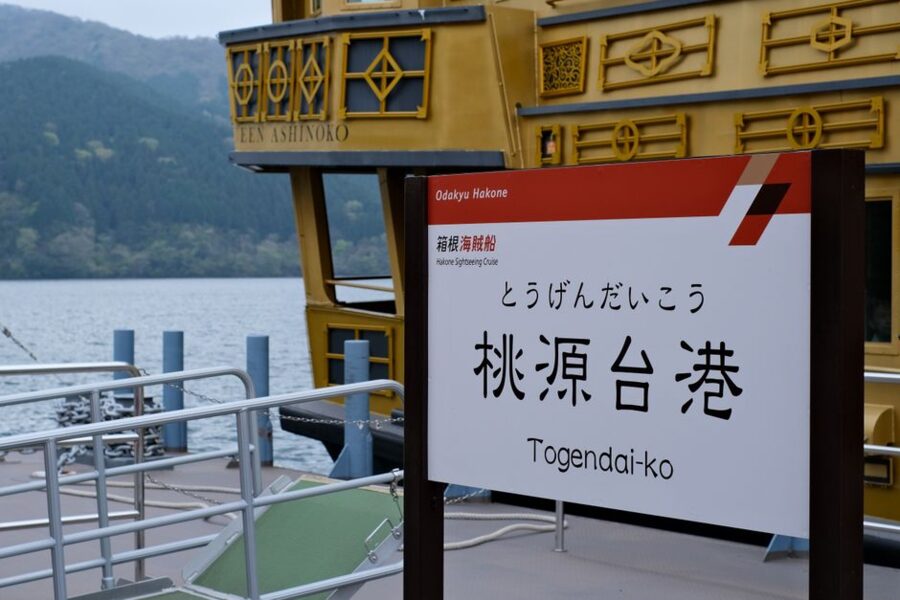
The second ropeway hop drops you to Togendai on the north shore of Lake Ashi, and here the trip turns cheerfully ridiculous. The sightseeing boats are full-size replicas of seventeenth and eighteenth-century warships, painted, gilded and fitted with carved figureheads. They cross to Hakone-machi and Moto-Hakone at the southern end in 25 to 40 minutes.
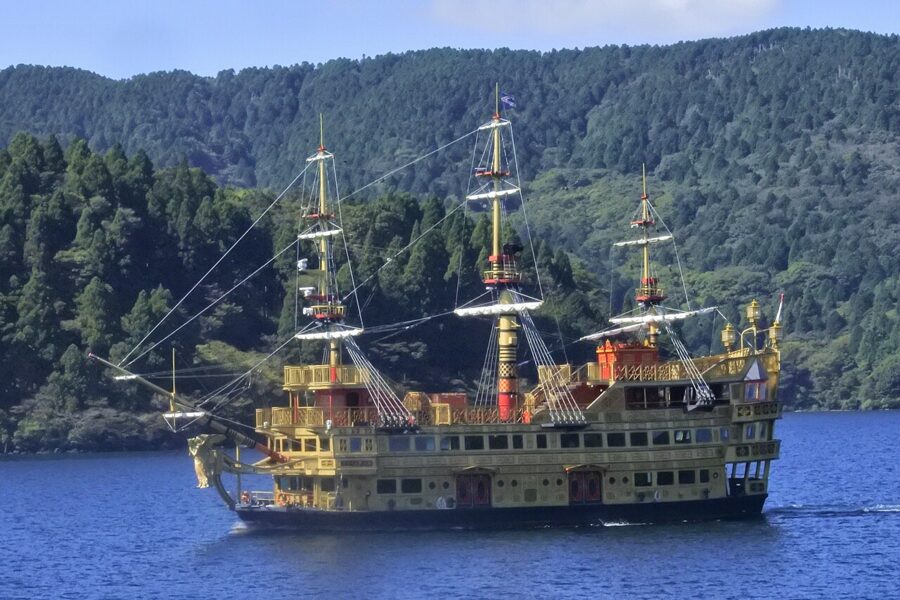
The pirate theme dates to 1964. The company had spent years losing passengers to a rival’s catamarans, and its president came home from a visit to Disneyland with a better idea. The ships are built at coastal shipyards, cut into blocks, trucked up the mountain and welded back together at the Togendai yard, because nothing that size could reach the lake any other way.
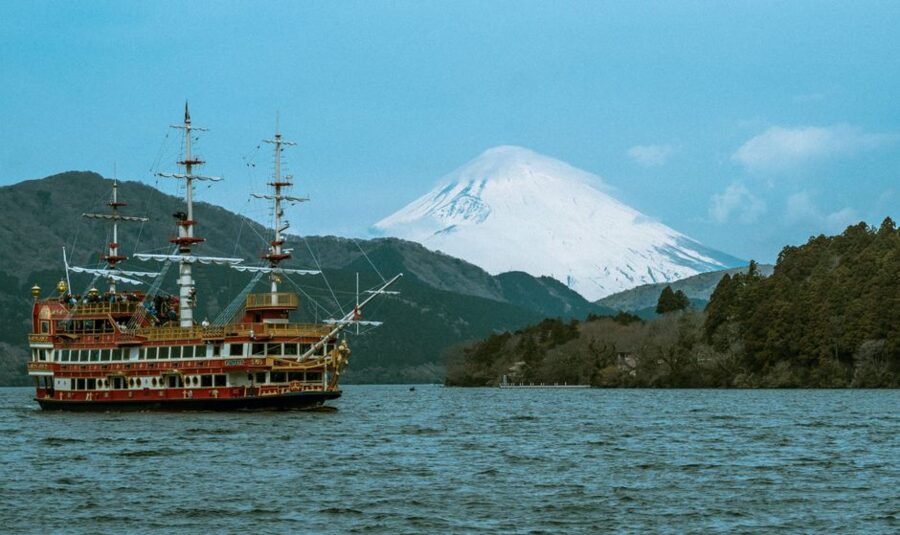
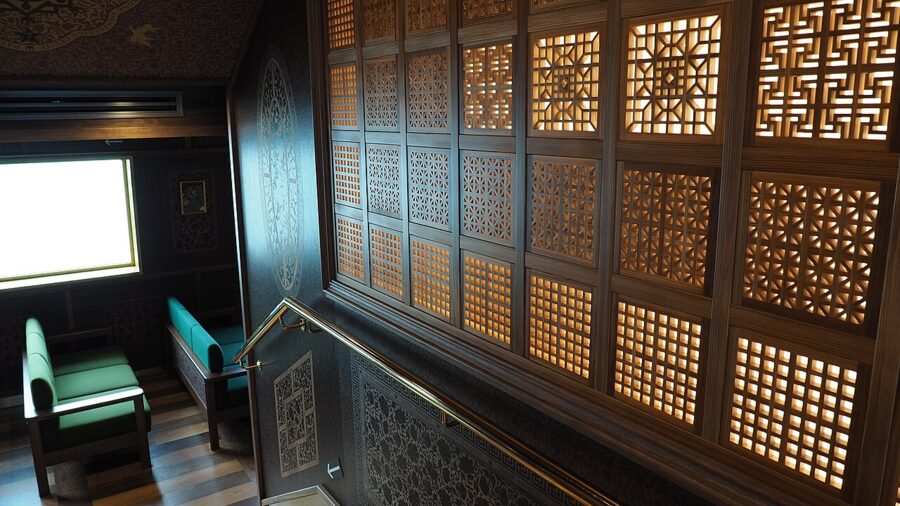
Fares went up in October 2025. Togendai to either southern port is ¥1,700 one way, and the short hop between Hakone-machi and Moto-Hakone is ¥600. The other boats you will see, smaller and without the cannon, belong to a different company and are not covered by the Free Pass. That is the Hakone Mountain War again.
Hakone Shrine and the lake torii
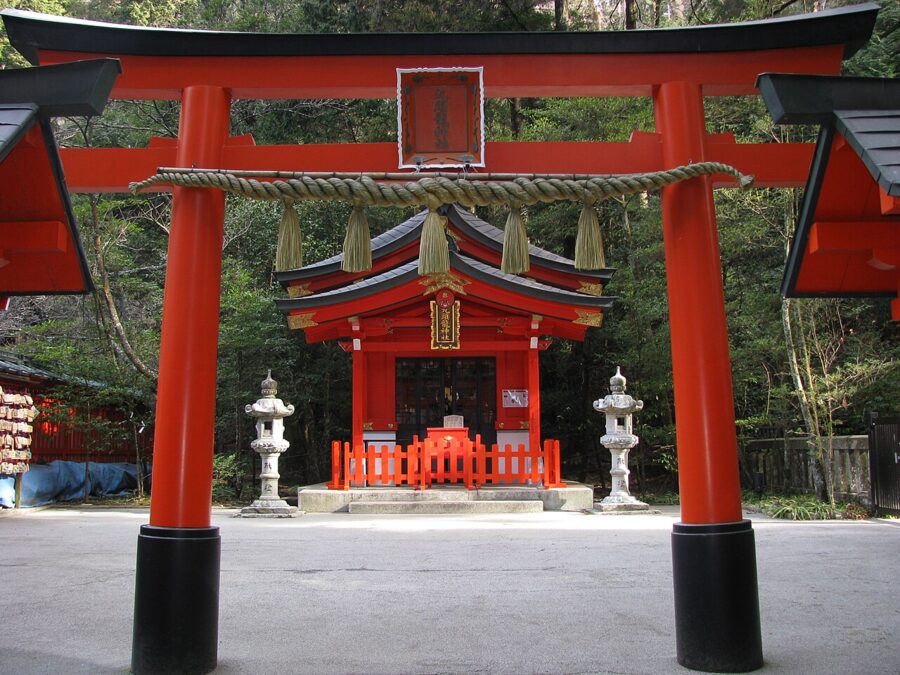
From Moto-Hakone port it is a 10-minute walk along the shore to Hakone Shrine. Tradition says a monk named Mangan founded it on this spot in 757, and the shogunate’s founder Minamoto no Yoritomo was a devotee in the twelfth century. Fire destroyed it during Toyotomi Hideyoshi’s siege of Odawara in 1590, and Tokugawa Ieyasu paid to rebuild it.
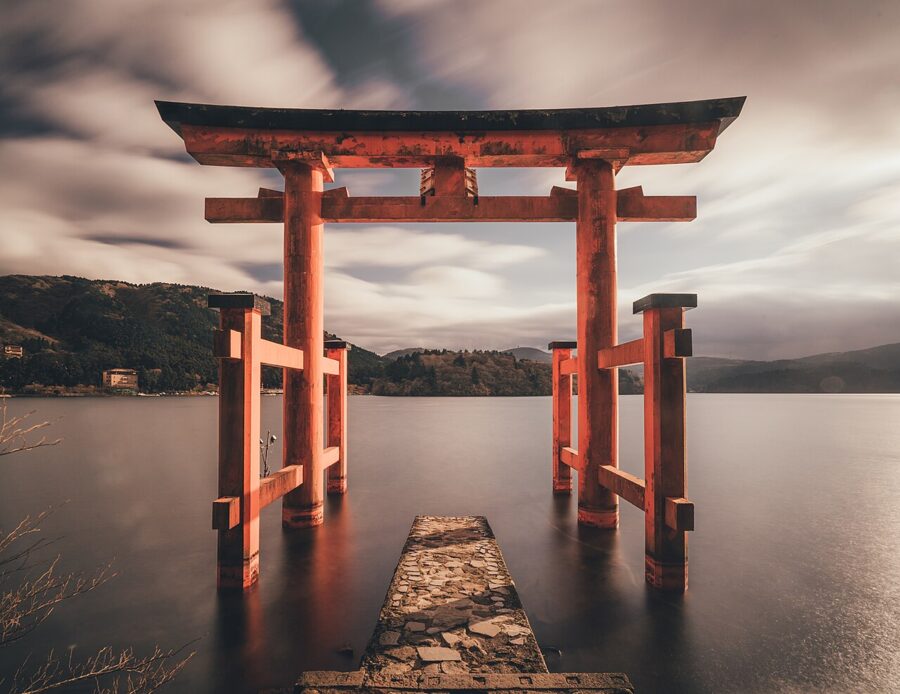
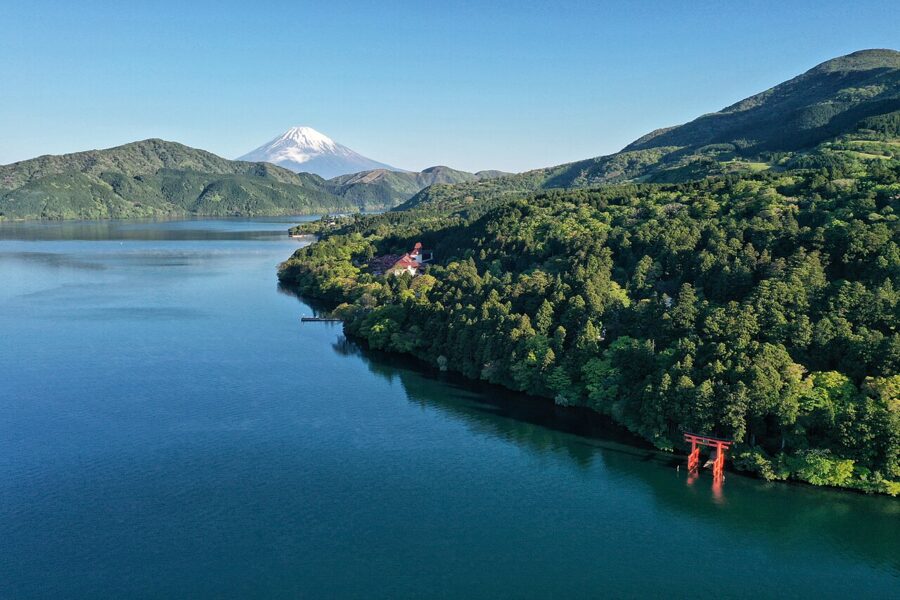
The lake torii is the most queued-for photograph in Hakone. By late morning the line of people waiting for their solo shot on the stone platform can take half an hour or more. Go before 9:00, take your picture from the boat as it pulls in, or skip the platform and shoot from the shore path beside it.
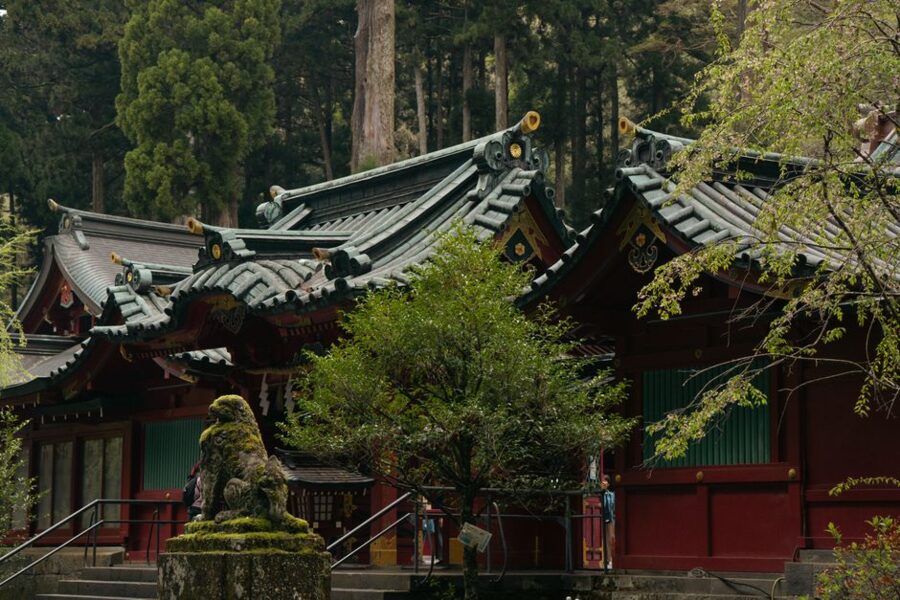
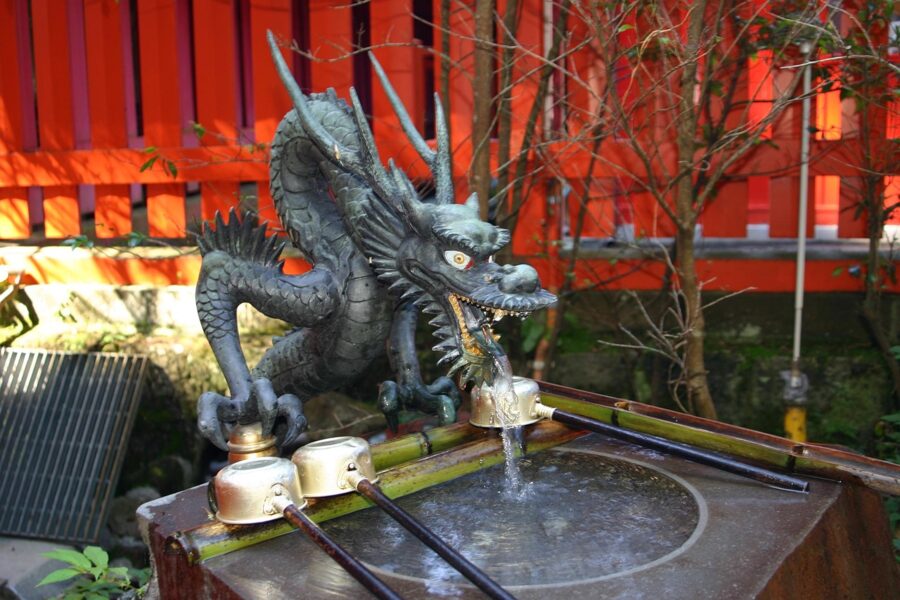
Dragons are everywhere here. The legend says Mangan subdued a nine-headed dragon that terrorised the lake and enshrined it as a guardian, and the Kuzuryu Shrine annex next to the main hall, built in 2000, draws a steady crowd of its own. Every February, at the Setsubun festival, performers dressed as demons are chased across the lake on water skis while shrine officials pelt them with beans from the torii and from boats.
Back down by bus
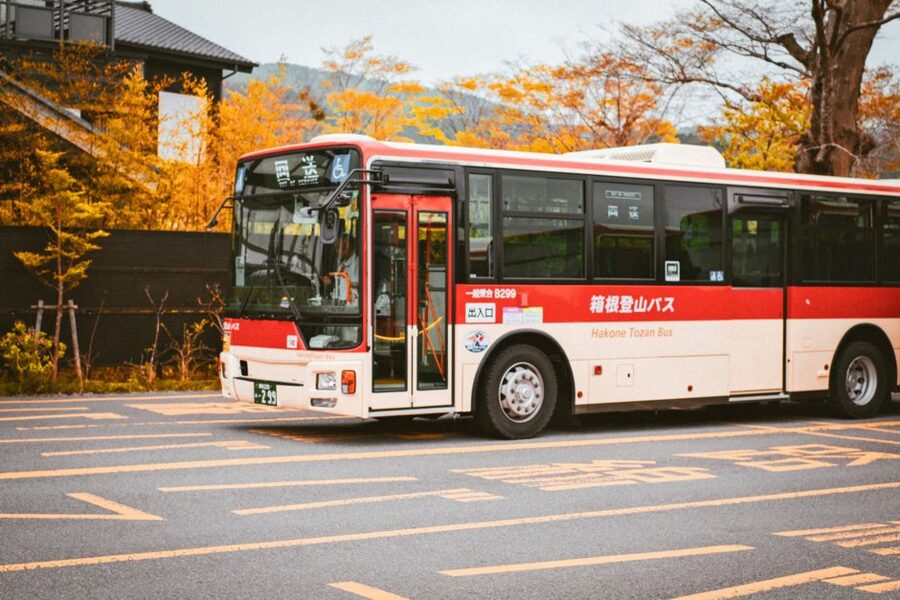
From Moto-Hakone or Hakone-machi, Hakone Tozan buses run back down to Hakone-Yumoto. The Hakone Shindo express from Hakone-machi goes straight through without changes, while the H line wanders down past Kowakudani and Miyanoshita. The K line takes the old road via Amazake-chaya and Hatajuku, which is slower and far more interesting.
Clockwise or anticlockwise?
The official direction is anticlockwise from Yumoto, and so are most tour groups. The reverse makes a lot of sense: take the bus from Yumoto straight up to the lake first, do the shrine early, sail north, ride the ropeway over Owakudani and come down by cable car and train. You meet the crowds coming the other way rather than standing behind them.
The catch is Owakudani. Mornings are usually clearer, and the earlier you reach the ropeway, the more slack you have if it stops for gas. Going clockwise also puts the cable car queue at Gora in the busiest part of the afternoon.
My rule: if the forecast is clear and you are staying overnight, go anticlockwise and see Owakudani first thing. On a day trip in busy season, go clockwise and accept that the steam might be in cloud by the time you get there.
Does the Free Pass pay?
The Hakone Free Pass is Odakyu’s two- or three-day ticket, and it has sold more than ten million copies in twenty years. It covers a return trip on the Odakyu line plus unlimited rides on eight modes of transport inside Hakone: the Tozan train, cable car, ropeway, pirate ships, designated Hakone Tozan and Tokai buses, the Odakyu highway bus within the area and the sightseeing loop bus that serves the museums. It also gets you discounts at about 70 places, from museums to day baths.
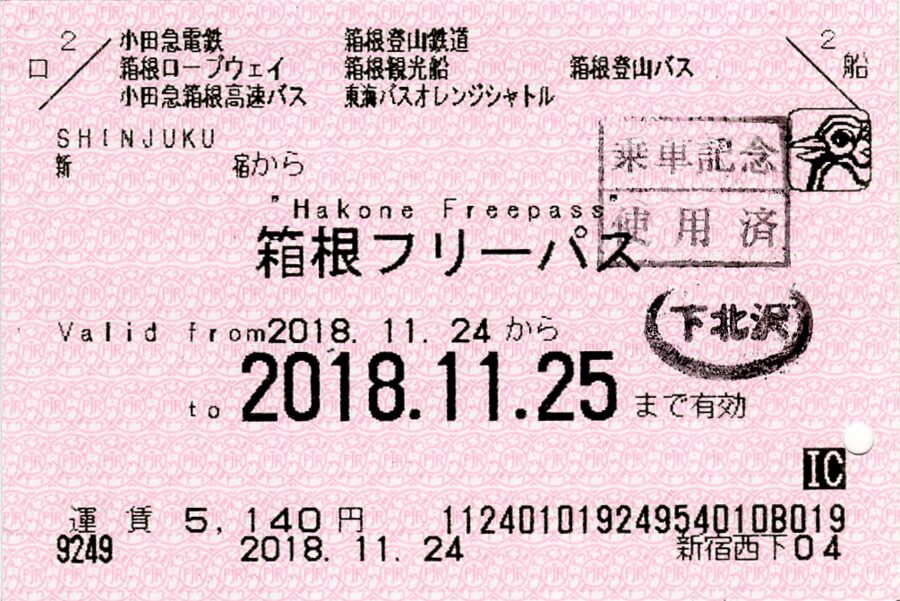
Here is the arithmetic for one loop from Shinjuku. The ordinary fare is ¥910 to Odawara plus ¥360 on to Yumoto, so ¥2,540 for the return. Add the loop: ¥460 for the train, ¥430 for the cable car, ¥2,000 for the ropeway and ¥1,700 for the boat, another ¥4,590. That is ¥7,130 before you pay for the bus back down, and the two-day pass from Shinjuku costs ¥7,100.
| Pass | Valid | Adult | Child |
|---|---|---|---|
| From Shinjuku | 2 days | ¥7,100 | ¥1,600 |
| From Shinjuku | 3 days | ¥7,500 | ¥1,850 |
| From Odawara (Hakone area only) | 2 days | ¥6,000 | ¥1,500 |
| From Odawara (Hakone area only) | 3 days | ¥6,400 | ¥1,750 |
So yes, from Tokyo it pays for itself in one day, even though no one-day version exists. From Odawara, which is where you start if you come by Shinkansen or a JR pass, it is roughly break-even on a single loop and pulls ahead the moment you add an extra bus ride or a second day. The Romancecar express ticket is always extra, ¥1,200 each way from Shinjuku.
What it does not cover matters too. The Komagatake Ropeway on the east shore and the Izu-Hakone buses belong to the Seibu side of the old war, and the smaller lake boats are run by another company again. If weather cancels a vehicle you never managed to ride, the station where your trip ends refunds that leg, but only if you did not use it at all.
Where to get in the water
Hakone has been a bathing place for close to 1,300 years. By the Edo period the circuit was known as the Seven Hot Springs of Hakone: Yumoto, Tonosawa, Dogashima, Miyanoshita, Sokokura, Kiga and Ashinoyu, all within reach of the Tokaido. After the railway, new springs at Gora, Sengokuhara, Kowakudani and around the lake brought the count to seventeen, then twenty.
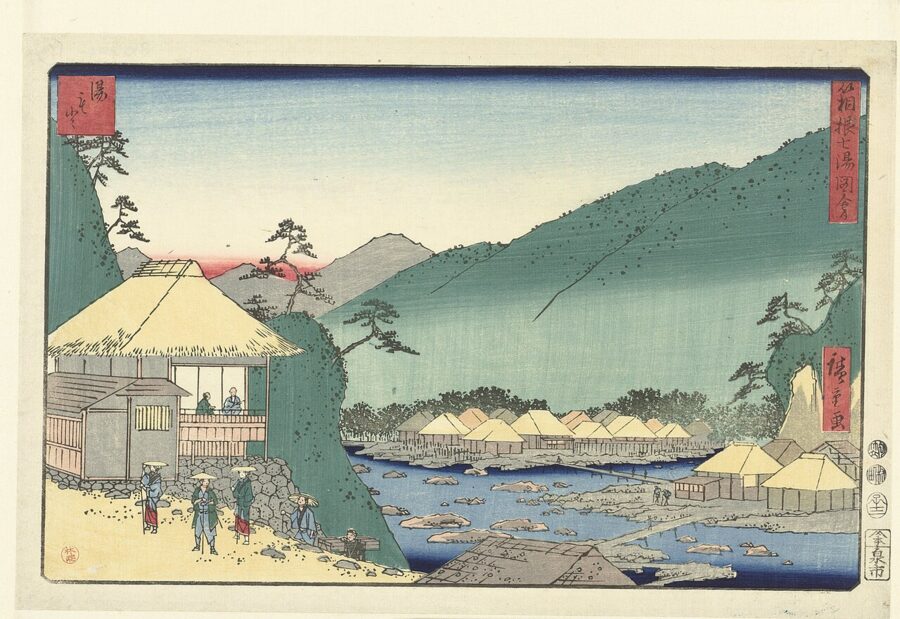
The waters differ. Yumoto and Tonosawa have clear, mild alkaline springs, gentle enough for a long soak. Miyanoshita and Sokokura have saltier sodium chloride water.
Up around Gora and Sengokuhara the milky, sulphurous water often comes piped from Owakudani, where a company has been making hot-spring water from volcanic steam and groundwater since 1930. If you have bathed in Beppu, Hakone is gentler and more polished, and a great deal closer to Tokyo.
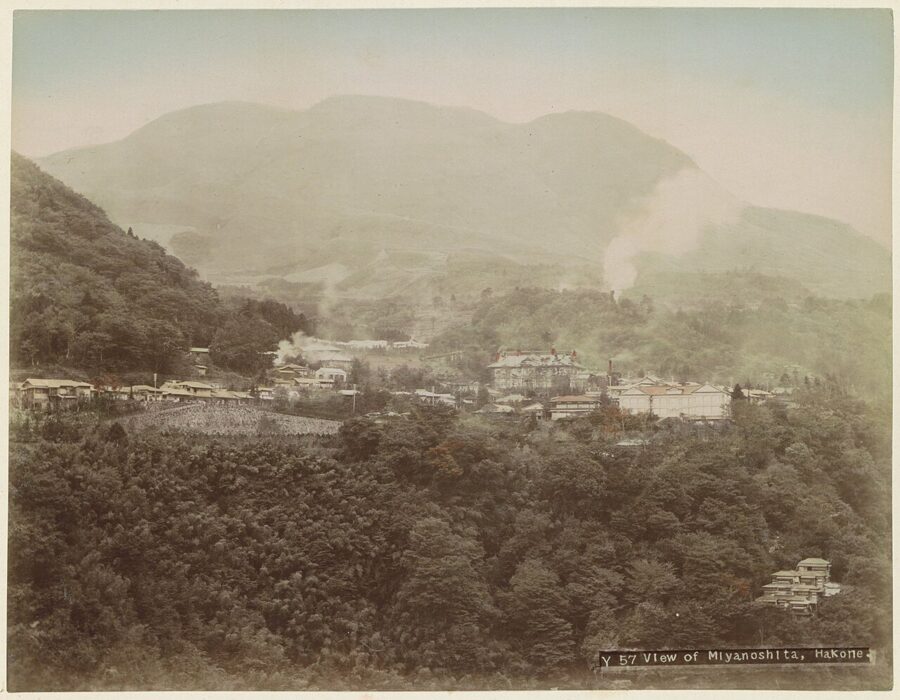
Day baths that are worth the detour
Tenzan Tōji-kyō, in Oku-Yumoto, is the one I would pick if I had a single bath. It is a large, rambling, deliberately rustic bathhouse beside the Sukumo river, with outdoor pools in a wooded gully, seven of its own spring sources and every bath drained and refilled each night. Entry is ¥1,450, it is open 9:00–23:00 (last entry 22:00) and it closes for about five days each December, which in 2026 means 7–11 December.
Tenzan has rules, and they are part of its character. There are no reservations, no groups over six, no tour parties and no tour guides allowed in; payment is mostly cash and there is no ATM nearby. Bring a small towel or buy one at the desk for ¥200. To get there, take the K line bus from stop 4 at Yumoto Station to Oku-Yumoto-iriguchi (¥260) and walk five minutes, or ride the shared inn shuttle (¥200).
Hakone Yuryo, in Tonosawa, is the polished alternative and a better bet if you want privacy. It runs a free shuttle from Hakone-Yumoto every 10 to 15 minutes (three minutes each way), has large indoor and outdoor baths, and rents out 19 private open-air bath rooms, from ¥10,400 per room for two hours on a weekday. The main baths cost ¥1,700–1,800 on weekdays and ¥2,000–2,200 at weekends, open 10:00–20:00 on weekdays and until 21:00 at weekends.
Hakone Kowakien Yunessun, in Kowakudani, is the swimsuit option, closer to a water park than a bathhouse, with wine, coffee and green-tea pools that families love and purists avoid. Its nude section, Mori-no-yu, is a conventional onsen next door. Prices change by date, so check the site before you go.
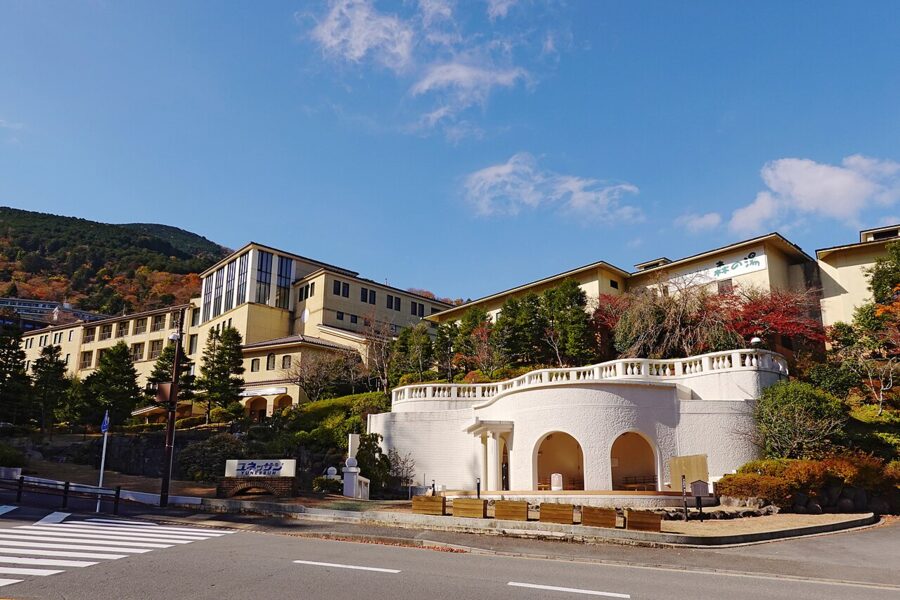
Tattoos and the etiquette that matters
Tattoo rules in Hakone are changing faster than the guidebooks. Hakone Yuryo lifted all tattoo restrictions on 1 April 2025. Tenzan admits a tattooed bather only if they come alone; two tattooed people together, even arriving separately, will be asked to leave, and you are asked to keep a layer on in the lounges. Yunessun lets you into the swimsuit area with tattoos covered by a rash guard, and into Mori-no-yu since October 2025 only if two of its paid cover stickers hide them completely.
The rest is simple. Wash thoroughly at the taps before you get in, keep your small towel out of the water (it goes on your head or the side of the pool), tie up long hair and do not swim. Sulphur springs blacken silver, so leave jewellery in the room.
Staying in a ryokan
Hakone has inns of every kind, from grand old riverside ryokan in Tonosawa and Yumoto to modern places in Gora with a private bath on every balcony. What you are paying for is the room, the bath and two meals: a multi-course dinner in the kaiseki style, often served early, around 18:00, and a full Japanese breakfast in the morning. If tattoos or shyness make the shared baths awkward, book a room with its own open-air tub, or an inn with private family baths you can lock.
Book well ahead for weekends and autumn. Weekday rates can be far lower than Saturday’s for the same room, and the mountain is calmer on a Tuesday.
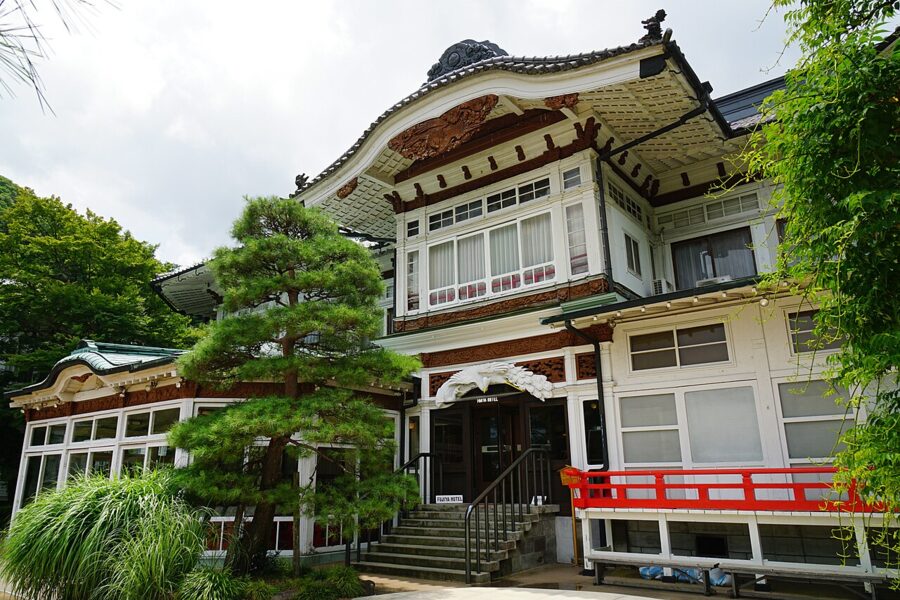
What to eat on the way round
Hakone is not a great eating town in the way Osaka is. It is better than that reputation, though, and the good things are specific: soba, tofu, fishcake, a grand-hotel curry and a cup of sweet rice drink by the old road. You will eat most of it between legs of the loop, so plan lunch around where you will be at noon.
Soba in Yumoto
Soba came to Hakone later than you might think. When Komiya Giichi and his wife Teru opened Hatsuhana beside the Hayakawa on 14 November 1934, five minutes’ walk from Yumoto Station, there was, by the shop’s own account, no other soba shop in Hakone. After the war they hit on the recipe the shop still uses: buckwheat flour, grated jinenjo (wild mountain yam) and egg, with no water at all.
The noodles are firmer and sweeter than ordinary soba, and the yam makes them hold up without going soft. The most popular order is the seiro soba, cold noodles served with more grated jinenjo to stir into the dipping sauce. The main shop opens 10:00–19:00 (last orders 18:45) and closes on Wednesdays; the annex across the street is currently shut, so expect a queue at lunch.
Tofu and yuba
Good spring water means good tofu, and Hakone has tofu makers that go back more than a century, which also makes it an easy place for anyone eating vegetarian if they ask about the dashi. In Yumoto, Yuba-don Naokichi, three minutes from the station, built its menu around a single dish: a bowl of rice under yuba, the skin that forms on hot soy milk, simmered in a light dashi. It opens from 11:00 and fills quickly at weekends.
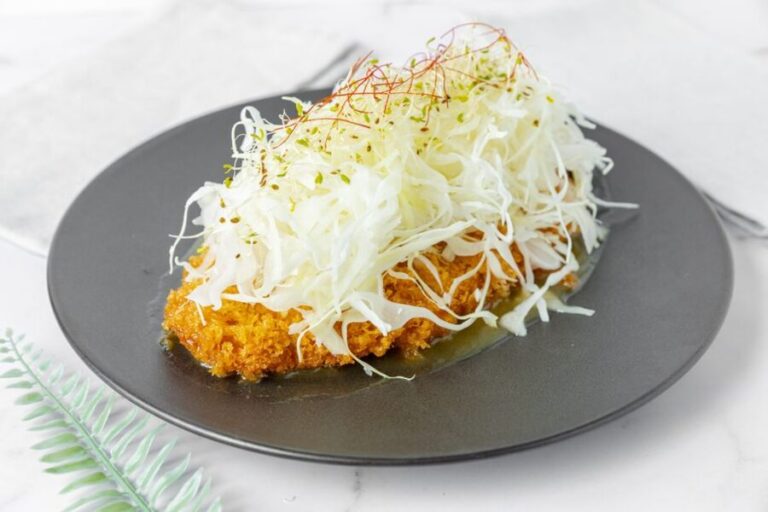
Up in Gora, Tamura Ginkatsu-tei, two minutes from the station, is famous for tofu katsu-nikomi: a block of tofu filled with minced pork, breaded, fried and then simmered in a clay pot with egg, made with tofu specially ordered from a Gora tofu maker. It is a tonkatsu house first, and the plain pork cutlets are good too. It hands out same-day numbered tickets from 9:30, closes on Wednesdays and does lunch only on Tuesdays.
The Fujiya Hotel’s curry and pies
The Fujiya Hotel in Miyanoshita, seven minutes’ walk from Miyanoshita Station, has fed a long list of famous guests, Charlie Chaplin and Helen Keller among them. What brings most non-guests in is the beef curry, served in Restaurant Cascade, a 1920 banqueting room restored with its original stained glass of Hakone and Fuji. It costs ¥4,300, lunch runs 11:30–15:00 with last orders at 13:30, and you do not need to be a hotel guest.
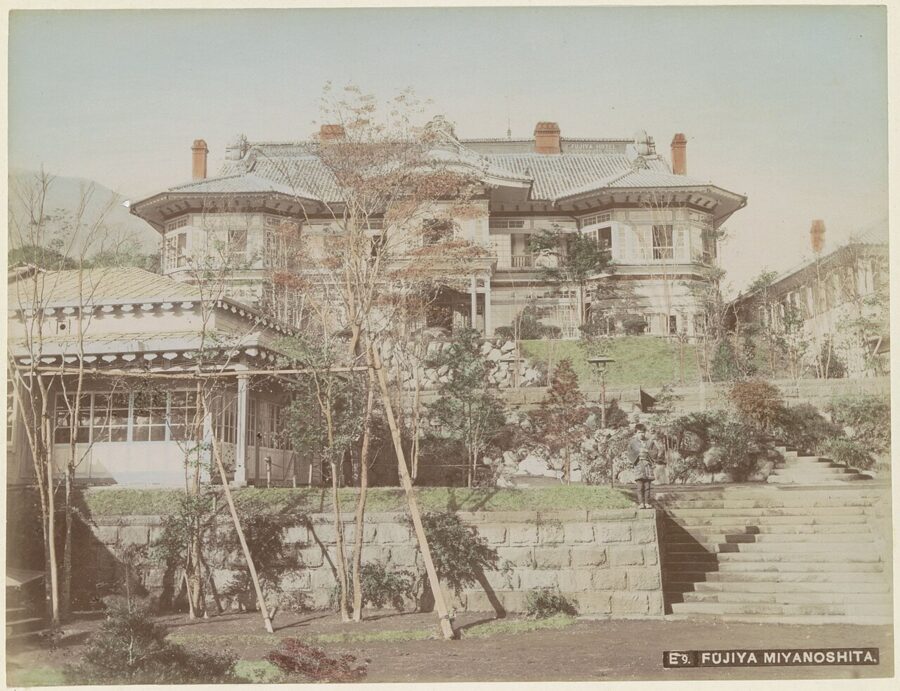
The hotel is unusually open about the recipe. The sauce starts with the same long-simmered consommé as its soup, adds coconut milk infused in cow’s milk and a dash of pickle brine, and rests in the fridge for several days before it is served. If you love Japanese curry, this is the grand-hotel version, and it tastes more like a rich French sauce than the brown roux you get in a chain shop.
If ¥4,300 is too much, the hotel’s bakery, Picot, opens 8:00–17:00 and sells a classic curry bread, raisin bread and apple pie to take away. The lounge serves the apple pie too, by the slice.
The fishcake town at the bottom of the hill
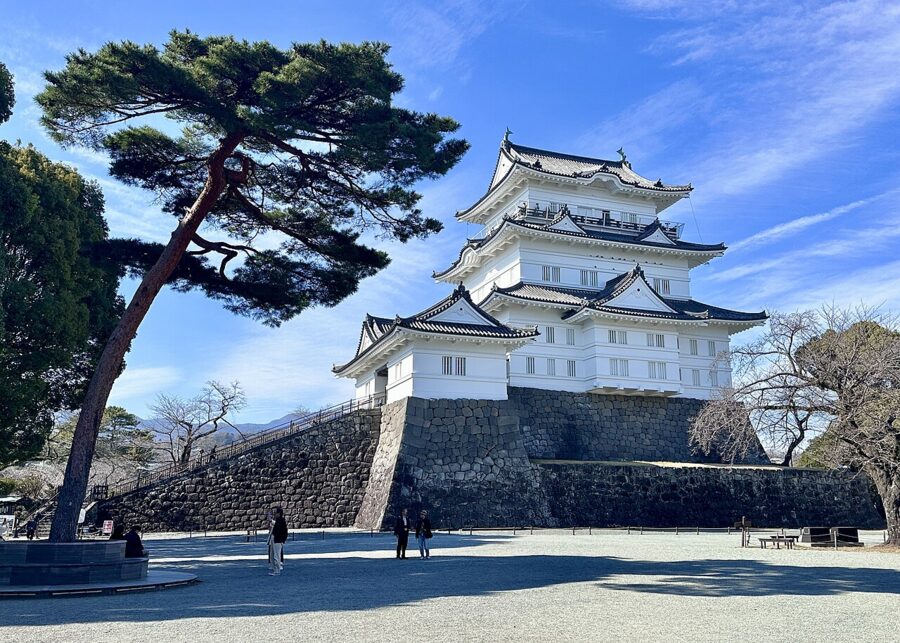
Odawara, where the Shinkansen and the Tozan line meet, is the old castle town that guarded the eastern approach to the pass. Most people change trains here without leaving the station. Give it an hour or two if you can, because it is where the best food souvenir in the region comes from.
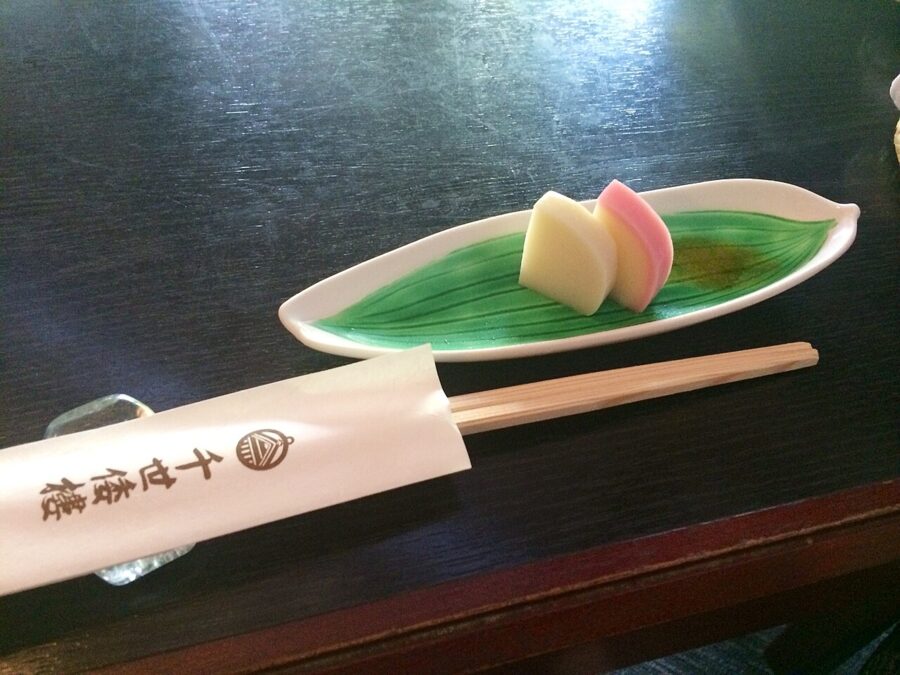
Odawara kamaboko is a firm, glossy, white steamed fishcake moulded onto a wooden board, and the city has been making it since at least the late Edo period. The local makers have used guchi, a white croaker, since 1912, and Odawara still uses more of it than anywhere else in Japan. The name is a registered regional brand, and the Agency for Cultural Affairs listed it as a “100-year food” in 2022.
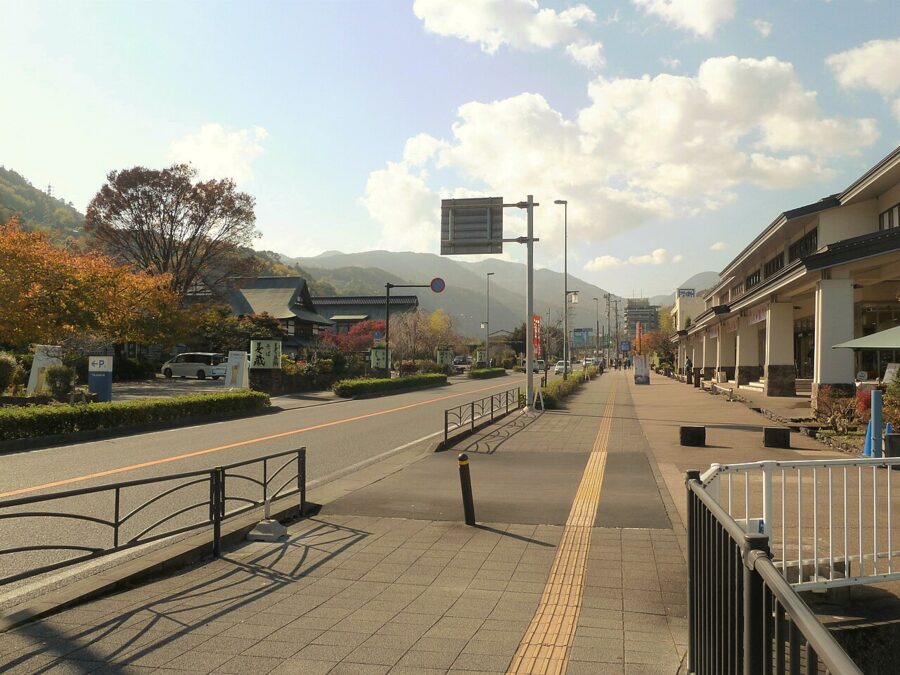
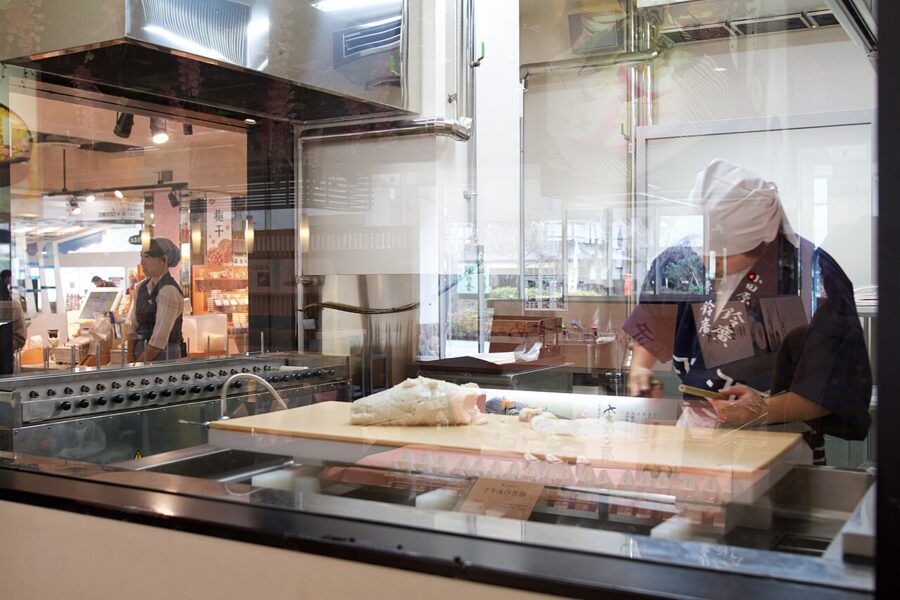
The easy place to try it is Suzuhiro Kamaboko no Sato in Kazamatsuri, a complex of shops, restaurants and a kamaboko museum attached directly to Kazamatsuri Station, two stops up the Tozan line from Odawara. Suzuhiro has made kamaboko since 1865. The main shop opens 9:00–18:00 and the museum 9:00–17:30, with hands-on sessions where you shape your own on a board.
Museums, an old road and a teahouse
Hakone has more museums than any sensible person can visit in one trip. Two are worth planning around, and a third is worth it in November.
The Hakone Open-Air Museum
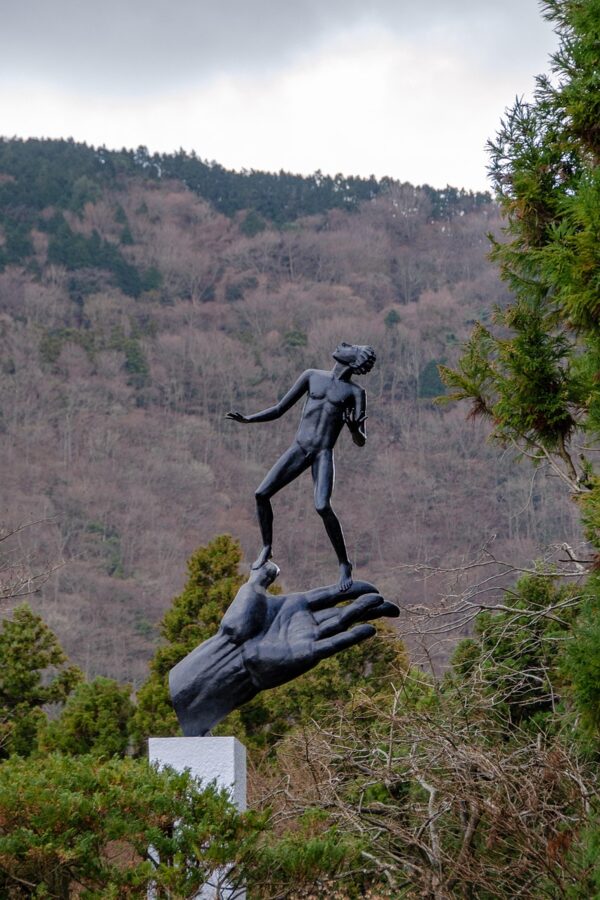
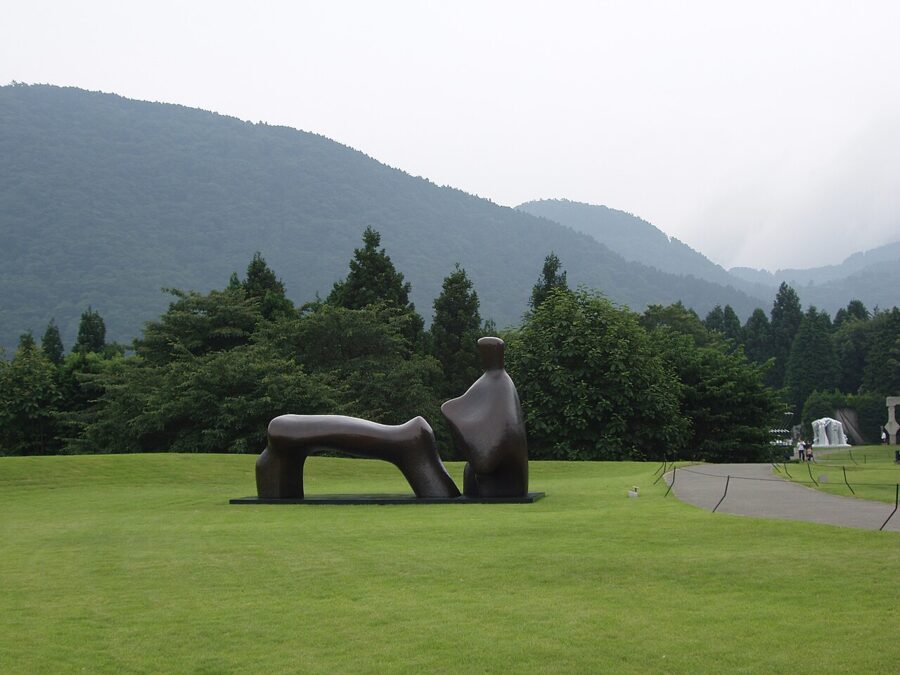
Opened on 6 September 1969 as Japan’s first open-air museum, it fills about 70,000 square metres of hillside next to Chokoku-no-Mori Station with sculpture: Henry Moore on the lawns, a Picasso pavilion renovated in 2019, and Yayoi Kusama’s pumpkin from April 2026. It opens 9:00–17:00 every day, and tickets cost ¥2,000 at the gate or ¥1,800 online.
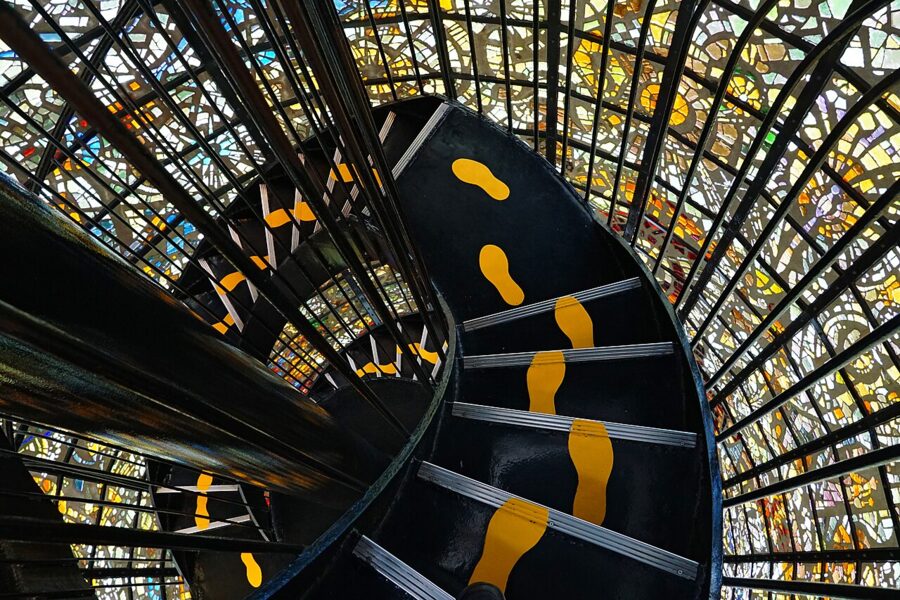
This is the one museum I would add to a day trip, because it sits right on the Tozan line and takes two hours rather than a day. There is a hot-spring foot bath in the grounds. Ten minutes in it, looking at the hills, does more for tired legs than another coffee.
The Pola Museum of Art
The Pola, in the forest at Sengokuhara, holds the collection of Suzuki Tsuneshi of the Pola cosmetics family: about 10,000 works, including one of the largest Impressionist collections in Japan, alongside Japanese painting, glass and antique cosmetic boxes. It opened in September 2002 and is marking its 25th anniversary with a Monet exhibition. It is open 9:00–17:00 (last entry 16:30) every day except during exhibition changes.
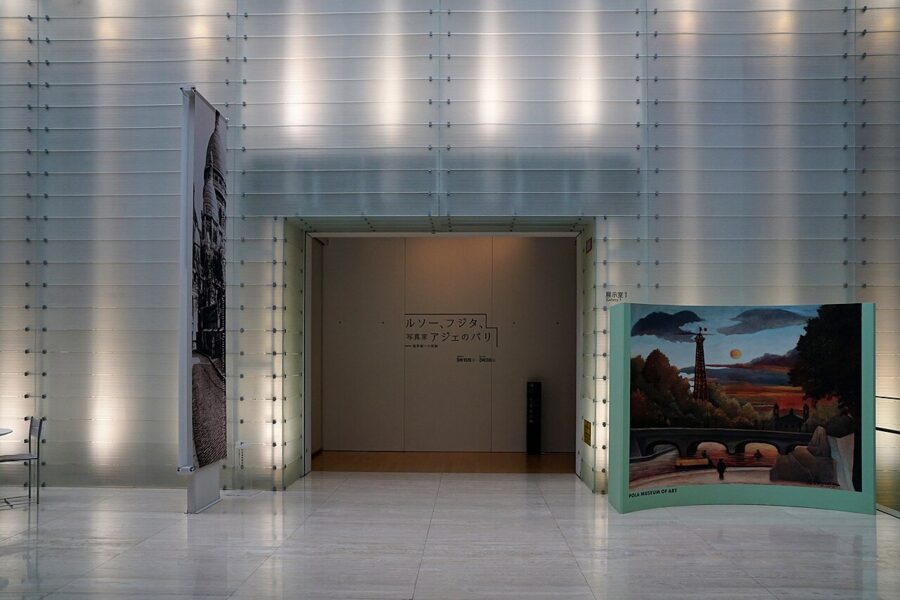
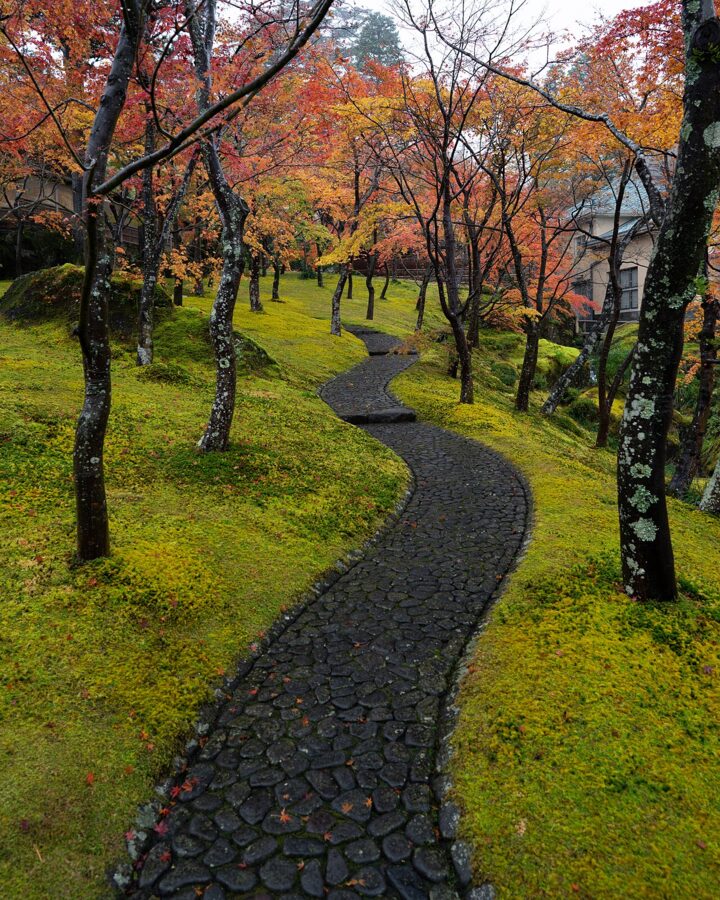
If you have time for a third, make it the Hakone Museum of Art in Gora, a minute from Koen-kami on the cable car. It is the oldest museum in Hakone, devoted mostly to old Japanese ceramics, but the reason to go is the garden: a moss garden under maples, with a tea house, Shinwatei, serving matcha and a sweet. The Free Pass gets you a discount.
The old Tokaido and the cedar avenue
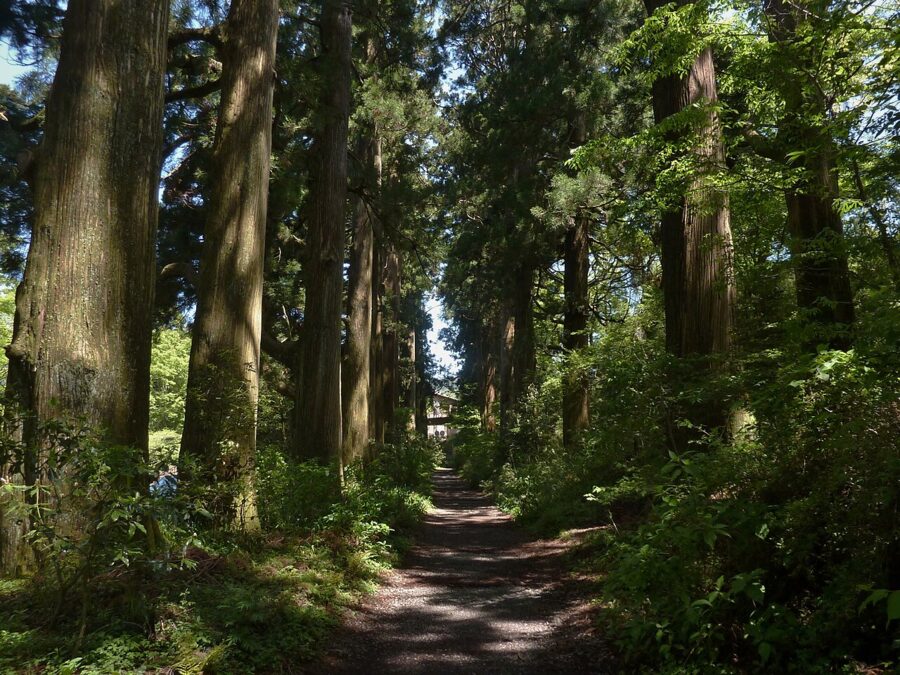
Between Moto-Hakone and Hakone-machi, Route 1 runs beside a line of enormous cedars planted in the early Edo period to shade the Tokaido. More than 400 survive, and you can walk the old road under them for about 500 m between the shrine and the checkpoint. It is the most beautiful ten minutes on the lakeshore.
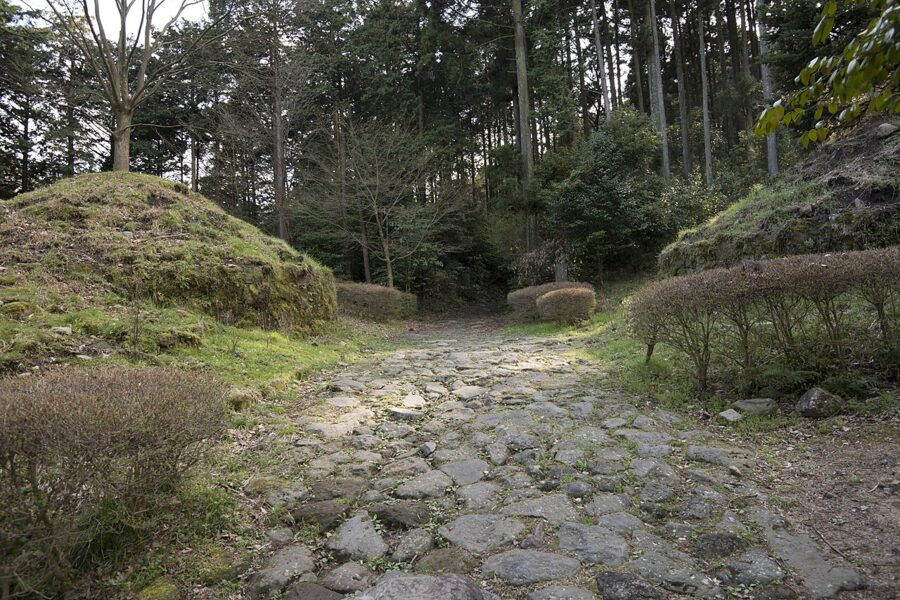
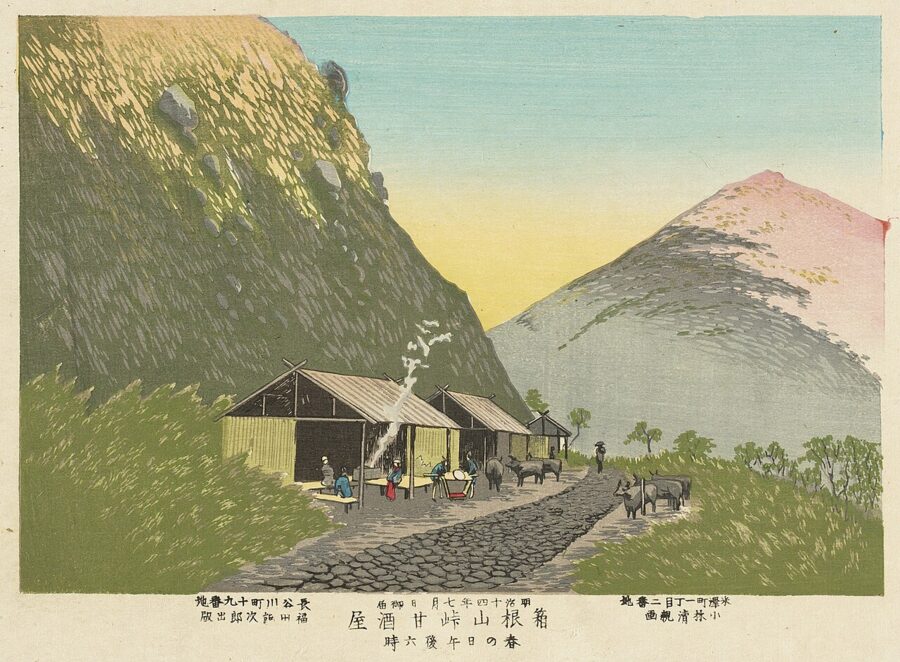
For more, the stone-paved stretch of the old road downhill from Moto-Hakone towards Hatajuku is a proper walk, about 4 km and mostly downhill. The stones are big, uneven and slick after rain, so wear shoes with grip. Halfway down is the teahouse.
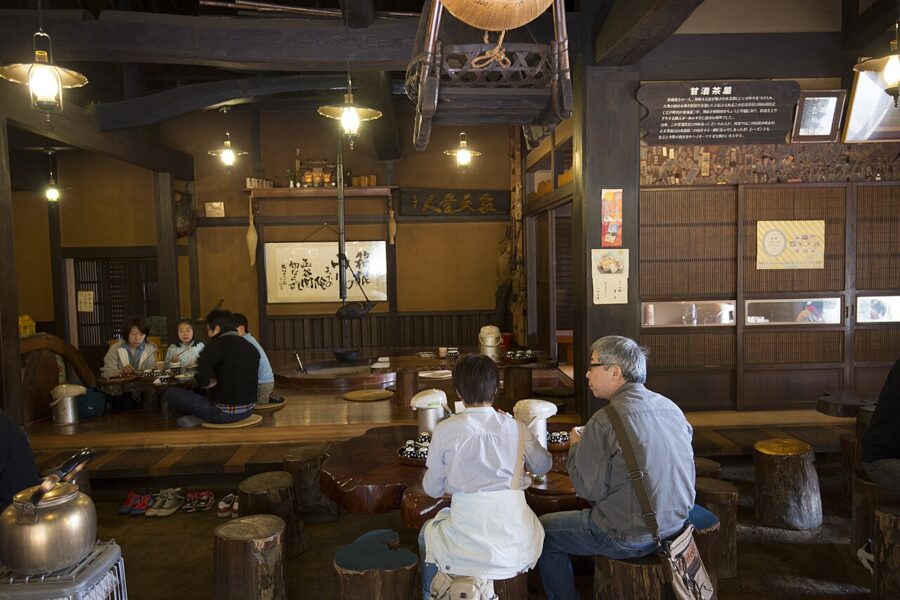
Amazake-chaya
After the checkpoint opened in 1619, four teahouses grew up at this spot on the road, selling tea, sweet rice drink and snacks to travellers and housing post riders and their horses. When the new road took the traffic away, three closed. Amazake-chaya carried on and is now run by the thirteenth generation of the same family.
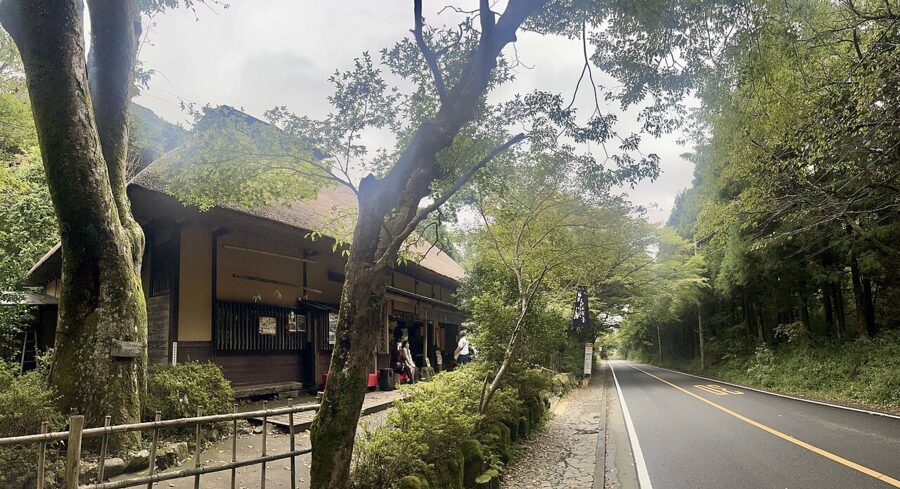
The amazake here is made the old way, from local rice and rice koji, with no sugar added, so it tastes of rice rather than syrup and has no alcohol. Pair it with chikara-mochi, rice cakes grilled over charcoal and finished isobe-style with soy and nori, with green soybean flour or with black sesame. If you like wagashi, this is the simplest and best version you will find in Hakone. The teahouse opens at 7:00, which makes it a good breakfast stop for early walkers, and it is cash only.
Hatajuku and yosegi
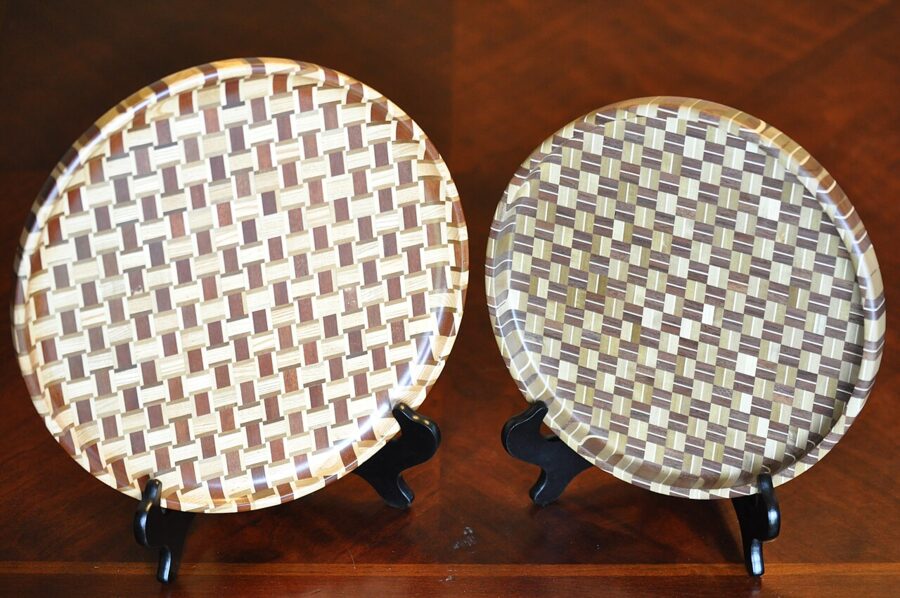
Hatajuku, at the bottom of the stone road, is the home of yosegi-zaiku, Hakone’s marquetry. Craftsmen glue strips of differently coloured woods into geometric blocks, then shave off sheets as thin as paper to cover boxes, trays and the famous puzzle boxes that open only after a sequence of hidden slides. The local tradition credits a Hatajuku man, Ishikawa Nihei, with starting the craft about 200 years ago.
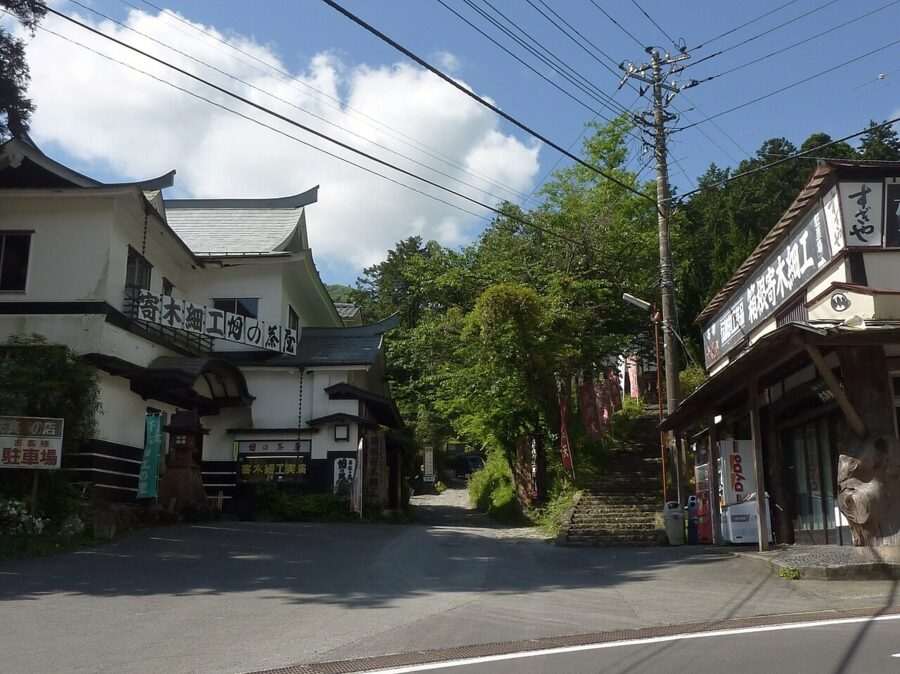
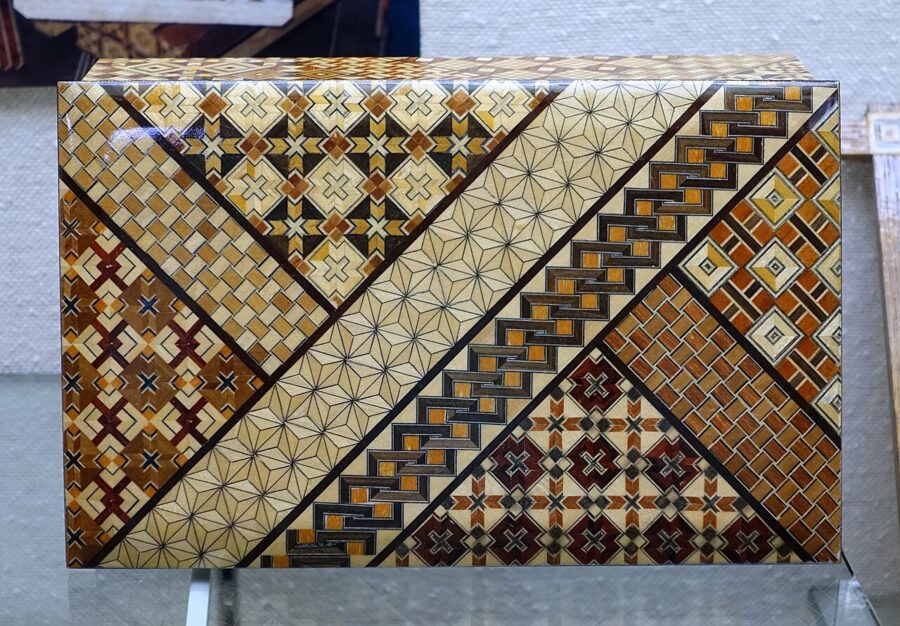
Buy yosegi from a maker rather than a station kiosk if you can. Hatajuku’s workshops sell direct, and the cheapest pieces anywhere are usually a paper-thin veneer over plain wood rather than solid work. A small secret box makes the best Hakone souvenir there is: light, local and genuinely hard to open.
The Hakone Sekisho
The rebuilt checkpoint sits on the lakeshore five minutes’ walk from Hakone-machi port. You walk through the gates, look into the guardhouse where officials sat in judgement and climb to a lookout above the lake. The exhibition hall explains the travel permits, the women inspectors who checked female travellers and the punishments for anyone caught going round it.
One day from Tokyo
This is the plan I would give a friend with one clear day and a Free Pass. It runs anticlockwise, puts Owakudani early and leaves time for a bath. If the forecast promises a clear afternoon instead, run it in reverse.
- Morning: a Romancecar that reaches Hakone-Yumoto by about 9:30. Go straight to the Tozan platform; Yumoto can wait for the evening.
- 10:15: Gora, then the cable car to Sounzan and the ropeway to Owakudani. Black eggs, the view, back on the ropeway within 45 minutes.
- 11:45: Togendai. Eat near the pier or carry snacks, then take the next boat south to Moto-Hakone.
- 13:00: Hakone Shrine, then the cedar avenue to the Hakone Sekisho (last entry 16:30, or 16:00 in winter).
- 15:30: the Tozan bus from Hakone-machi back to Yumoto, about 40 minutes.
- Evening: soak at Hakone Yuryo or Tenzan, eat soba at Hatsuhana before 18:45, and catch a late Romancecar home.
If you would rather swap the Sekisho for the Open-Air Museum, get off the train at Chokoku-no-Mori on the way up and give it two hours. You cannot do everything in a day, and trying to is the most common Hakone mistake.
If you are choosing between Hakone and Nikko for a single day out of Tokyo, the difference is simple. Nikko is shrines and forest, best in autumn colour. Hakone is vehicles, steam and water, and it ends in a bath.
One night, done properly
An overnight stay turns Hakone from a checklist into a holiday. You can ride the ropeway when it opens, see the torii without the queue and spend the evening in hot water rather than on a train.
- Day one, late morning: Romancecar to Yumoto, soba at Hatsuhana, then the Tozan train to Miyanoshita for a walk past the Fujiya Hotel and pie in the lounge.
- Afternoon: back on the train to Chokoku-no-Mori for the Open-Air Museum, then check in at Gora or Miyanoshita by 16:00.
- Evening: bath before dinner, dinner at the inn, bath again before bed.
- Day two, 9:00: first ropeway over Owakudani while the air is clear, then the boat from Togendai to Moto-Hakone.
- Late morning: Hakone Shrine and the cedar avenue, then the K line bus or the stone road down to Amazake-chaya for amazake and mochi.
- Afternoon: bus on to Hatajuku for yosegi, then down to Oku-Yumoto for a last, long soak at Tenzan before the train home.
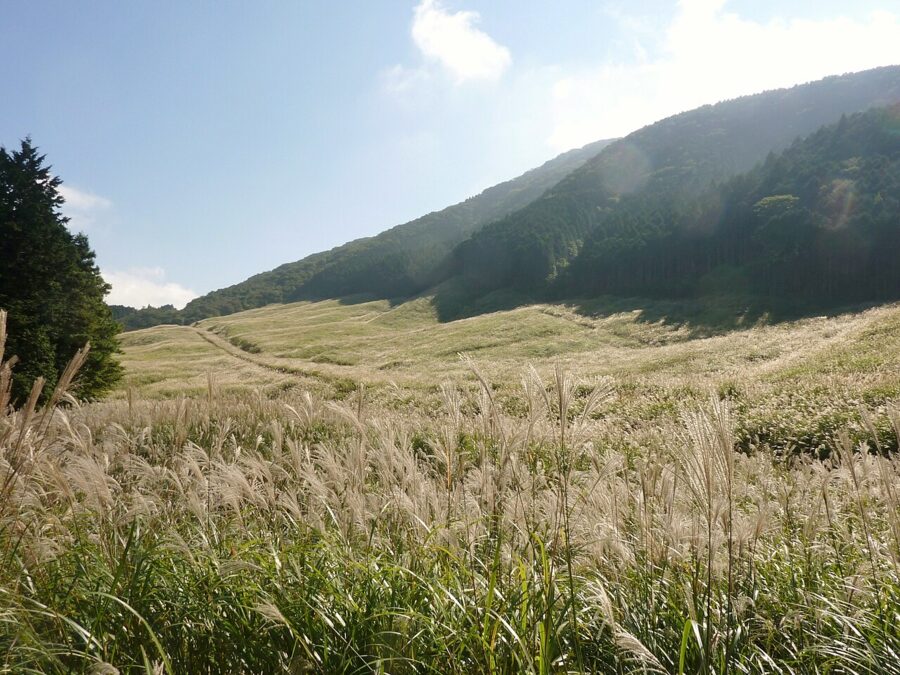
With a second night, add Sengokuhara: the Pola Museum, the pampas grass in autumn and the quieter north side of the caldera that most loop riders never see.
Crowds and seasons
Hakone is busiest at weekends, in Golden Week (late April into early May), at Obon in mid-August and on every November weekend when the leaves turn. Weekdays outside those weeks are a different place. If you can only come at a weekend, start early: the queues at the cable car and ropeway build through the late morning.
- Spring: cherry blossom from early April at the lower elevations, azaleas in May.
- Early summer: hydrangeas along the Tozan line from mid-June to mid-July, and the fog that comes with them.
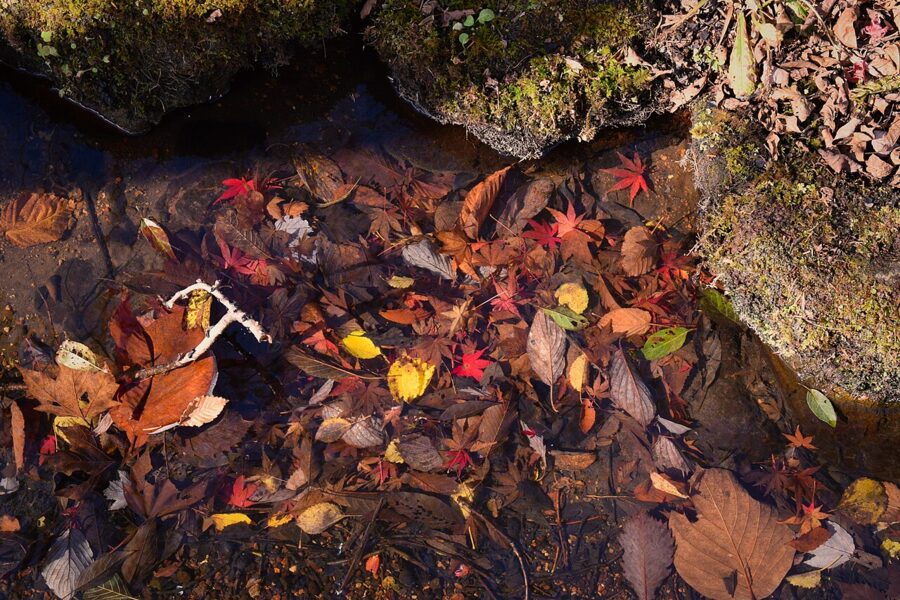
- Autumn: pampas grass at Sengokuhara, then red maples through November. On 3 November the Hakone Daimyo Procession closes roads in Yumoto, and the buses run diversions.
- Winter: the clearest Fuji views and the emptiest trains, with shorter ropeway hours (to 16:15) and occasional snow above Gora.
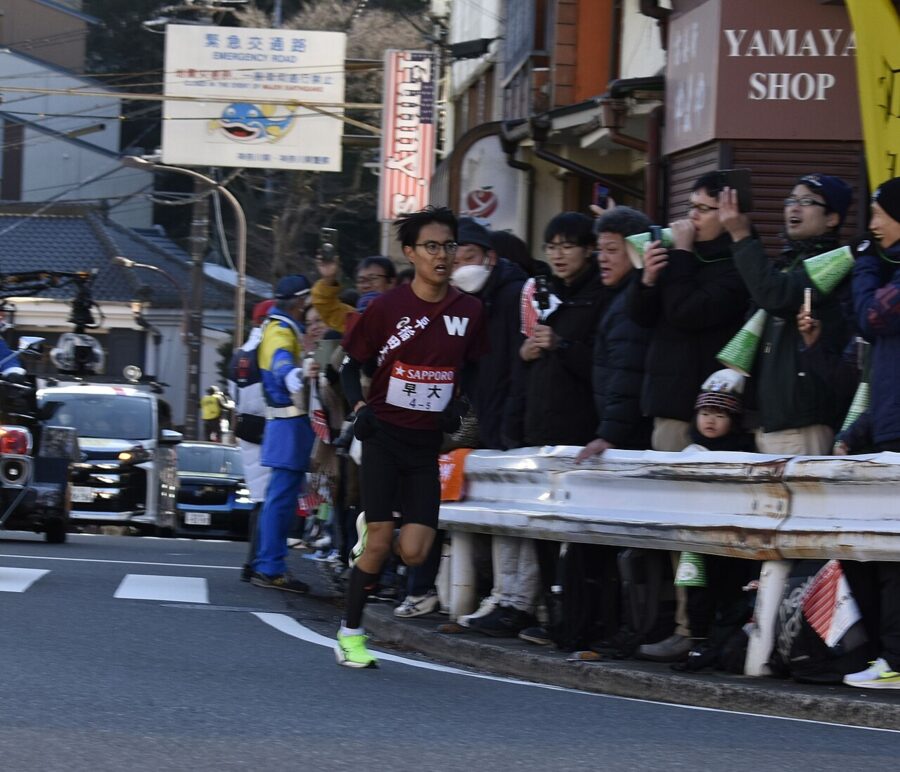
- 2–3 January: the Hakone Ekiden, the university relay race from Tokyo up Route 1 to Lake Ashi and back. Roads close and the buses grind to a halt, so ride the trains or stay away.
Skip this
- The midday torii queue. Thirty minutes for a photo you can take from the boat, or at 8:00 with almost nobody else in it.
- The special cabin on the pirate ship. The open bow deck is free and has the better view.
- Driving on autumn weekends. Route 1 and the lake roads jam solid, and parking at Owakudani fills fast at weekends.
- Cramming the loop and three museums into one day. Pick one museum and a bath.
Bring a small towel, some cash and a warm layer for the lake. Ride the ropeway early, eat one black egg, and finish the day with the steam rising off a pool in the dark at Tenzan.
You Might Also Enjoy
 China Travel Tips for 2026: Visa-Free Entry, Paying With Your Phone, Apps, Trains and What First-Timers Get Wrong
 Sapporo Food Guide: Miso Ramen, Soup Curry, and Susukino After Dark
 Tokyo in 3 Days: An Itinerary by Neighbourhood, From Senso-ji at Dawn to Golden Gai at Night
 Nagasaki Food Guide: Champon, Castella, Turkish Rice and Four Centuries of Foreign Kitchens