Kawaguchiko: Mount Fuji Views, the Five Lakes and Hoto, Planned for a Day or a Night
At 7:40 on a cold November morning the mountain was so sharp from the north shore of Lake Kawaguchi that I could count the gullies in its snow. A heron stood in the shallows. Two photographers had their tripods out, and nobody else was there. By 10:30, when the day-trip coaches from Tokyo reached the north shore, a cap of cloud had settled on the summit and the crowd was photographing a white smudge.
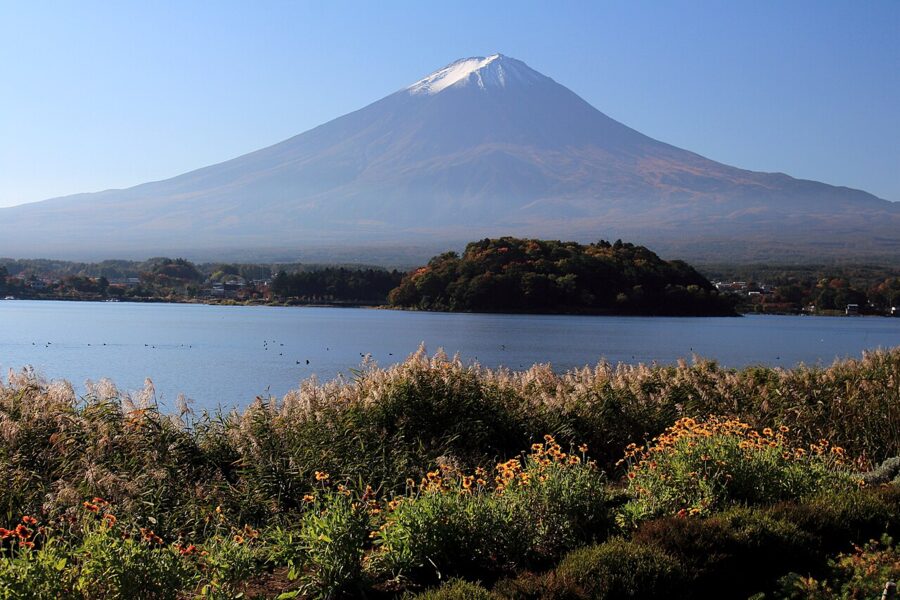
That is the whole trick of Kawaguchiko, and almost nobody plans around it. Fuji does its best work early, it hides for most of the summer, and the town that grew up to sell its view is now working hard to manage the people who come for it. Get the timing right and this is one of the best days out of Tokyo. Get it wrong and you’ve paid for a long bus ride to a lake with a cloud on the end of it.
This guide covers the lake and its four neighbours, how to get there by bus or the Fuji Excursion train, the viewpoints and the new rules around them, what to eat (hoto first, but not only hoto), where to sleep and which season suits you. Prices and times were checked against the operators and local governments in November 2026.
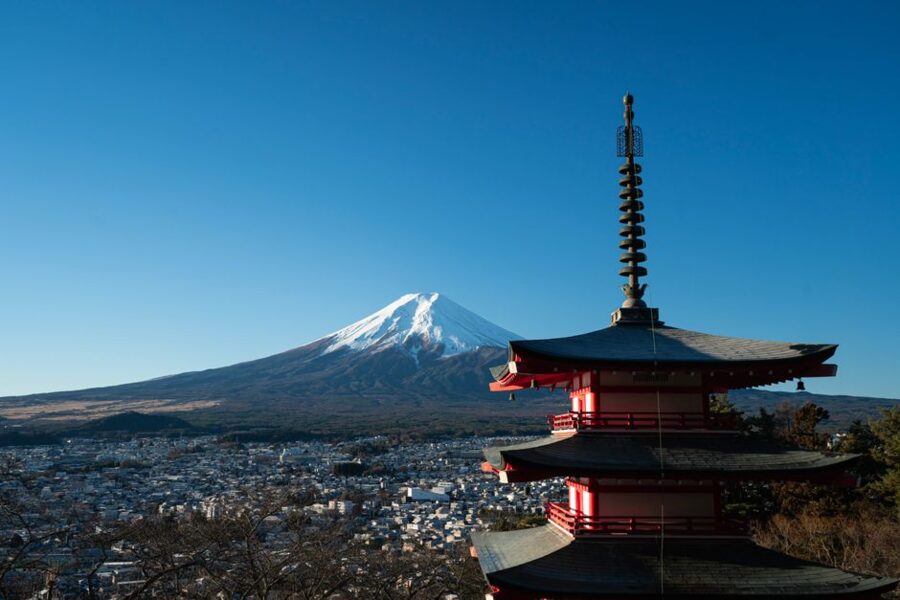
If you only want the short version, these are the views worth planning a morning around.
| Viewpoint | Best time | Cost | How to get there |
|---|---|---|---|
| North shore, Oishi Park | Sunrise to about 9:00 | Free | Red Line bus, 27 min (first bus 9:00), or walk or cycle earlier |
| Chureito Pagoda deck | Morning, sun behind you | Free, open 24 hours | Shimoyoshida Station, 10–15 min walk, then 398 steps |
| Kachi Kachi Ropeway, Mount Tenjo | First cars of the day | ¥1,200 return, ¥800 one way | Red Line bus, 11 min, then 3 min walk |
| Lake Shoji, the “Kodaki Fuji” view | Morning | Free | Blue Line bus, 48 min, five buses a day |
| Lake Motosu, Nakanokura Pass | Calm mornings | Free | Blue Line bus, about 1 hour, plus a 30 min climb |
| Honcho-dori, Fujiyoshida | Any clear hour | Free | Fujikyu line to Shimoyoshida; stay on the pavement |
In This Article
- How often you actually see Fuji
- Five lakes, one volcano
- Getting there: the bus, the train, and the loops round the lake
- Highway buses from Shinjuku and Tokyo Station
- The Fuji Excursion and the Fujikyu line
- The sightseeing buses round the lakes
- Chureito Pagoda and the 398 steps
- Why there’s no festival any more
- Honcho-dori and the crossing
- The north shore: Oishi Park and the slow way round
- Up the Kachi Kachi Ropeway
- The Lawson, the black screen and a town that has had enough
- The rules that came after
- Saiko, Shojiko and Motosu: the quieter west
- Lake Saiko and Iyashi no Sato Nenba
- The caves and Aokigahara
- Lake Shoji and the mountain holding a child
- Lake Motosu and the ¥1,000 view
- Hoto, and the rest of the table
- Hoto: the dish to sit down for
- Yoshida udon: lunch only, and chewy
- Shingen mochi: the souvenir everyone carries home
- Fujizakura Heights beer
- Stay the night
- Climbing Fuji, in one paragraph
- Which season?
- Spring: cherry blossom and moss phlox
- Summer: lavender, fireworks and cloud
- Autumn: the leaves festival
- Winter: the clearest air
- What it costs
- Skip this
How often you actually see Fuji
Less than you’d hope. Fuji City, on the Shizuoka side of the mountain, has logged the view every morning at 8:00 since 1990, and it’s the best long record I know of. Across 35 years, the whole mountain was visible on about six mornings in ten in December and January. In July it was one in ten.
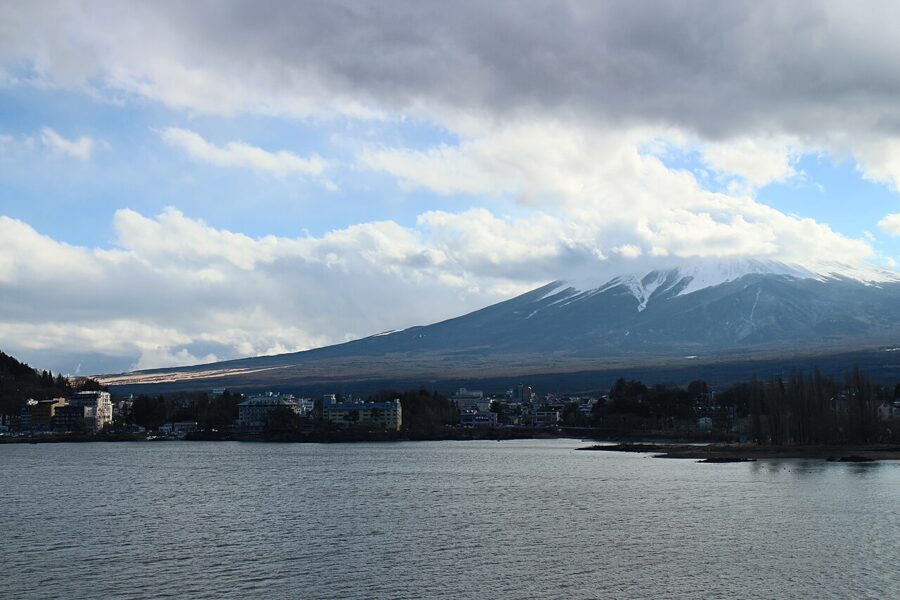
Fuji City is south of the summit and Kawaguchiko is north, so the numbers won’t match exactly. The pattern does. Here is the share of mornings when the whole mountain was in view, averaged over 1991 to 2025:
| Month | Whole mountain visible at 8:00 | Month | Whole mountain visible at 8:00 |
|---|---|---|---|
| January | 60% | July | 10% |
| February | 53% | August | 15% |
| March | 41% | September | 27% |
| April | 36% | October | 41% |
| May | 30% | November | 54% |
| June | 12% | December | 62% |
Time of day matters nearly as much as month. In 2025 the same observers saw the whole mountain at 8:00 on 37% of days, at noon on 26% and at 16:00 on 25%. As the slopes warm, damp air climbs them and condenses, and the summit pulls on a hat of cloud. That’s why the people who stay overnight see more of Fuji than the people who come for lunch.
So plan the day backwards. Be at your first viewpoint before 9:00 if you can, spend the cloudy middle of the day on food, caves or the ropeway, and treat a clear evening as a bonus. If the forecast is grey for your whole trip, move the trip. Nothing else here is worth the journey on its own.
Five lakes, one volcano
The Fuji Five Lakes run in an arc along the mountain’s northern foot. From east to west: Yamanakako, the biggest; Kawaguchiko, the lowest and the one with the longest shoreline; then Saiko, Shojiko and Motosuko. Four of them, everything but Yamanaka, sit inside the single town of Fujikawaguchiko.
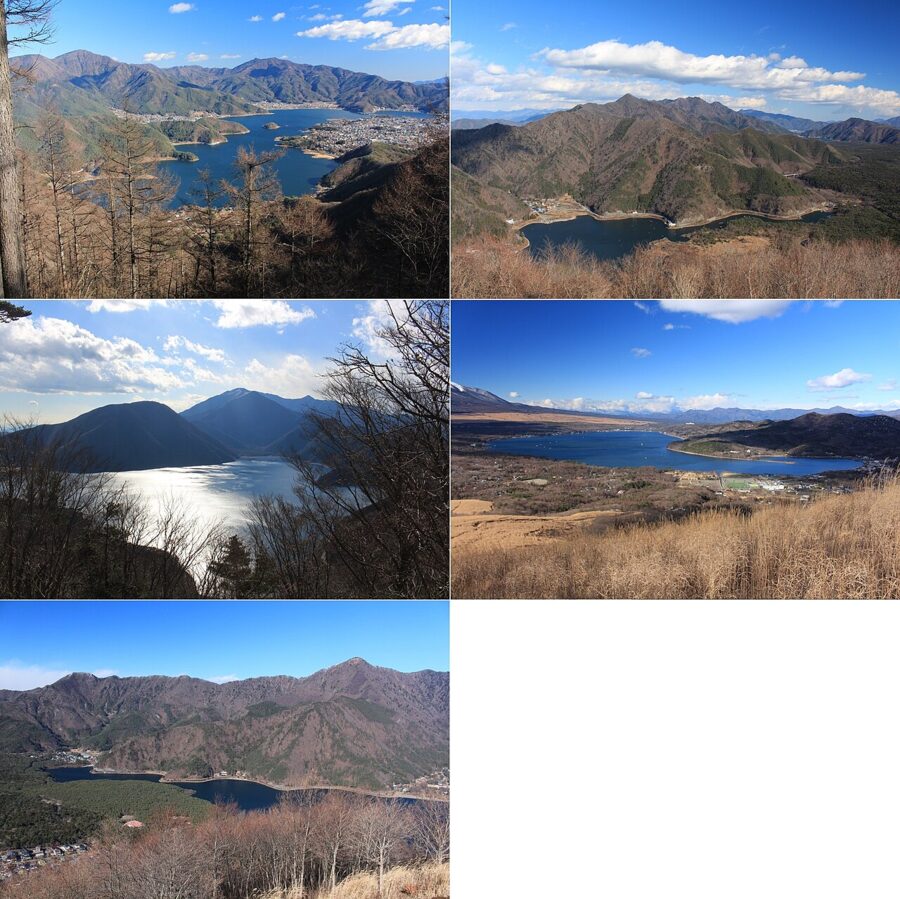
The western three were once one lake. Court records from 864 describe lava from that year’s great eruption pouring into Motosu and into a lake called Senoumi, burying villages on the way. What was left of Senoumi became Saiko and Shojiko, and the forest that grew over the lava is Aokigahara. All three western lakes still sit at the same height, about 900 m, and their water levels rise and fall together through the porous rock between them.
Kawaguchiko has no natural outlet at all. For centuries it flooded the villages on its shore after heavy rain, until the people of Arakura, on the far side of the hills, dug a 3.8 km tunnel through the rock by hand to take its water for their fields. It took most of the Edo period. Today a modern spillway does the job, and the lake is a shallow 14.6 m at its deepest.
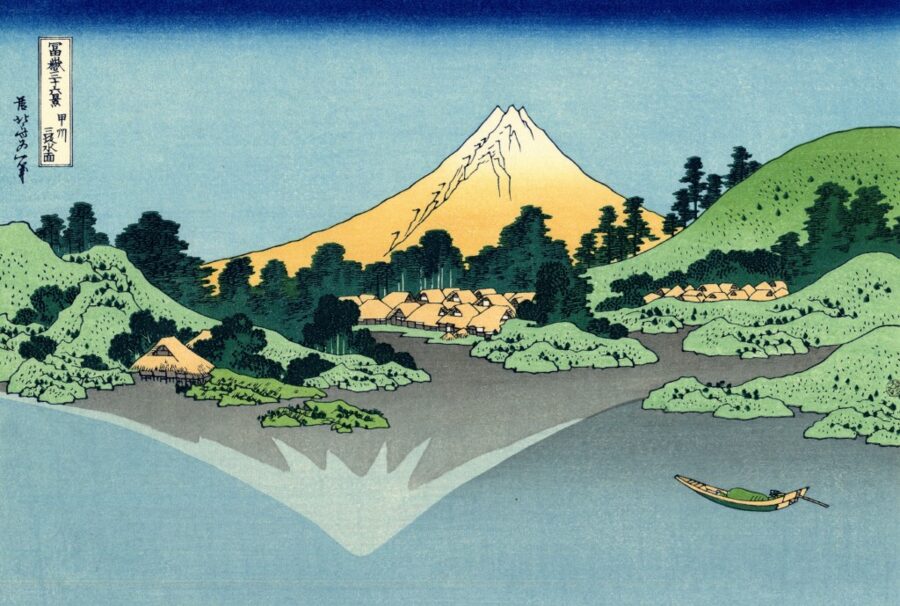
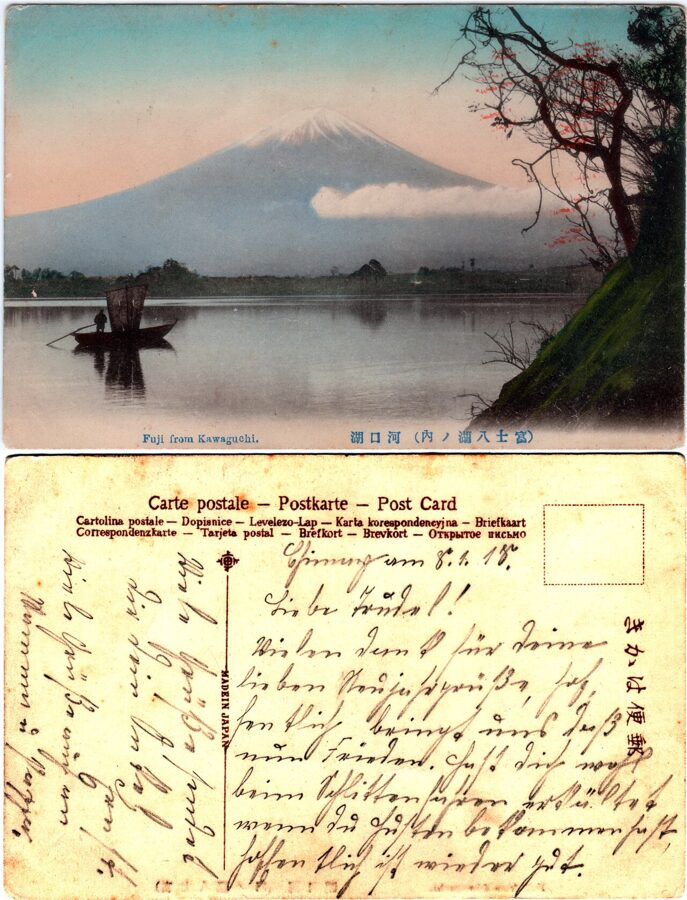
Artists found the lake long before the coaches did. Hokusai drew it from the Misaka Pass in the 1830s, and a century later the novelist Dazai Osamu stayed at the teahouse on the same pass, and wrote the line about evening primroses suiting Fuji that is now carved on a stone up there. Tanizaki Jun’ichiro sent two of his characters in “The Makioka Sisters” here on holiday, after staying at a lakeside hotel himself in September 1942.
Getting there: the bus, the train, and the loops round the lake
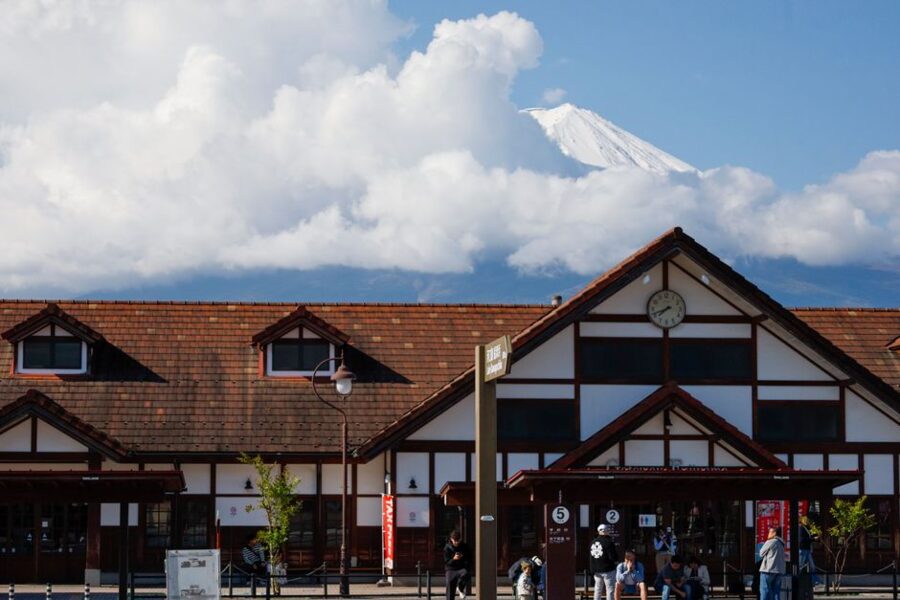
The cheapest and usually quickest way from Tokyo is the highway bus. The most comfortable is the Fuji Excursion train. Both arrive at Kawaguchiko Station, and both sell out on weekends, so book as soon as your dates are fixed.
Highway buses from Shinjuku and Tokyo Station
Buses leave from the fourth floor of Busta Shinjuku, the expressway terminal above the south side of Shinjuku Station. The run to Kawaguchiko takes about 1 hour 45 minutes when the Chuo Expressway is clear, and it often isn’t on Friday evenings and holiday mornings. The adult fare is from ¥2,200, or ¥2,000 if you buy online, and children pay half.
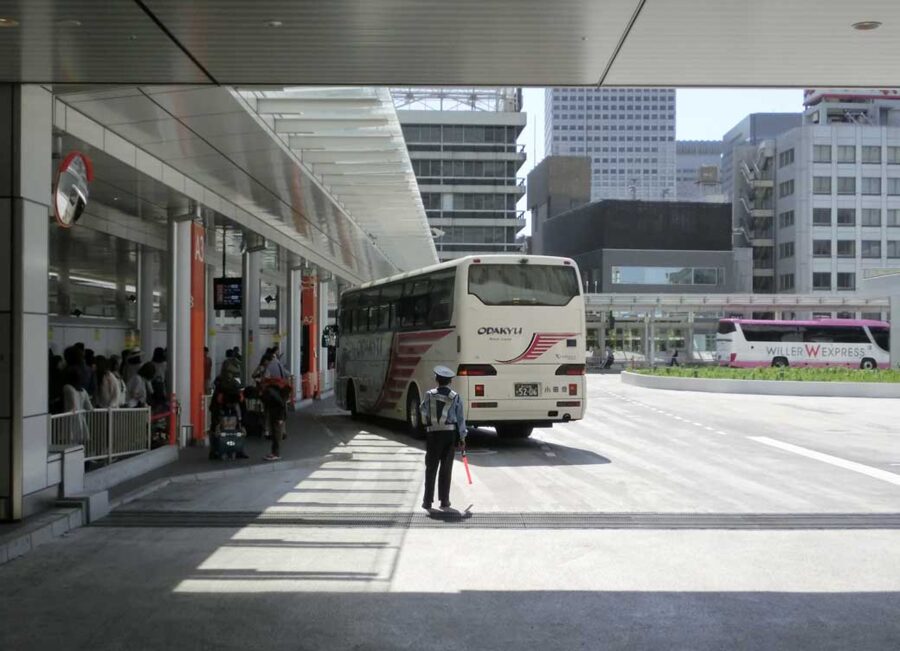
Two companies, Keio and Fujikyu, run the Shinjuku route together, and since 1 October 2026 each has sold its own buses through its own booking site. Either site shows every departure, but you can’t move a booking from one company’s bus to the other’s without cancelling, so check which company runs your bus before you change plans.
From Tokyo Station (Yaesu side) and Ueno, Fujikyu runs a separate route that takes about 2 hours 10 minutes and costs from ¥2,300. It’s handy if you’re staying in the east of the city. The Japan Rail Pass isn’t valid on any of these buses.
One tip the timetables don’t shout about: many Shinjuku buses stop at Chuo-do Shimoyoshida before they reach the lake. That stop is the closest bus stop to the Chureito Pagoda, and getting off there saves you doubling back from Kawaguchiko later.
The Fuji Excursion and the Fujikyu line
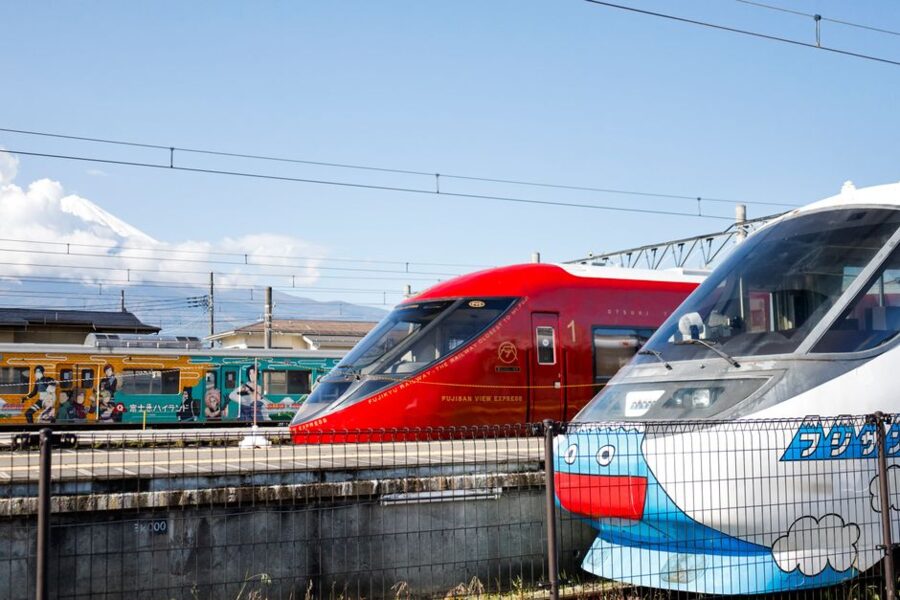
The Fuji Excursion is a limited express that runs right through from Shinjuku to Kawaguchiko, four times a day in each direction. The three cars travel coupled to a Kaiji or Azusa express as far as Otsuki, then split off and climb the Fujikyu line on their own. The fastest trips take 1 hour 53 minutes.
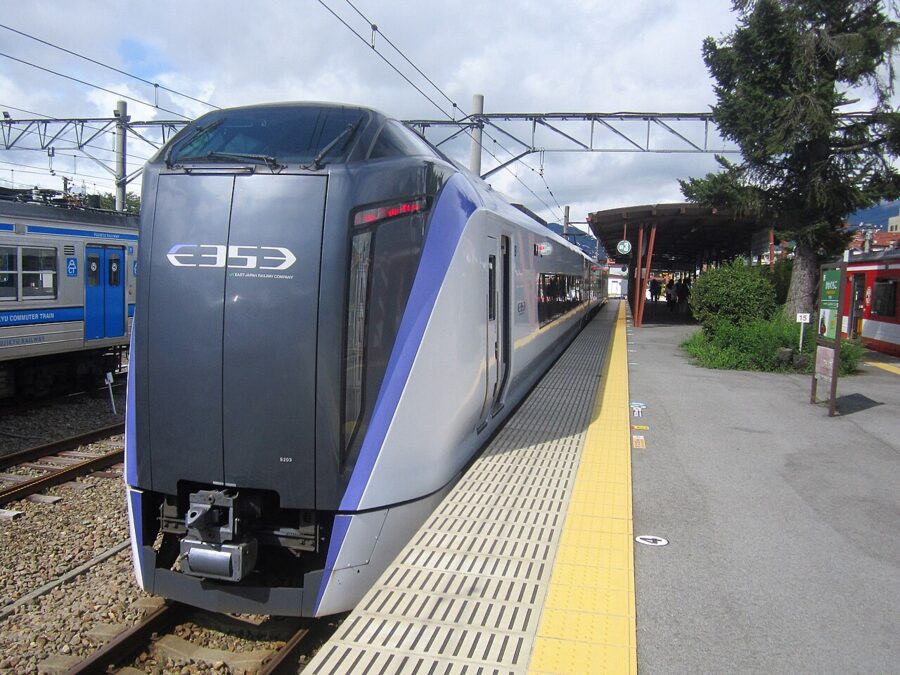
It costs ¥4,200 one way from Shinjuku, fare and express charge together, at the prices set in March 2026. Get off one stop early at Shimoyoshida for the pagoda and it’s ¥4,010. If you hold a JR pass, it covers you only as far as Otsuki, and you pay for the Fujikyu section on top.
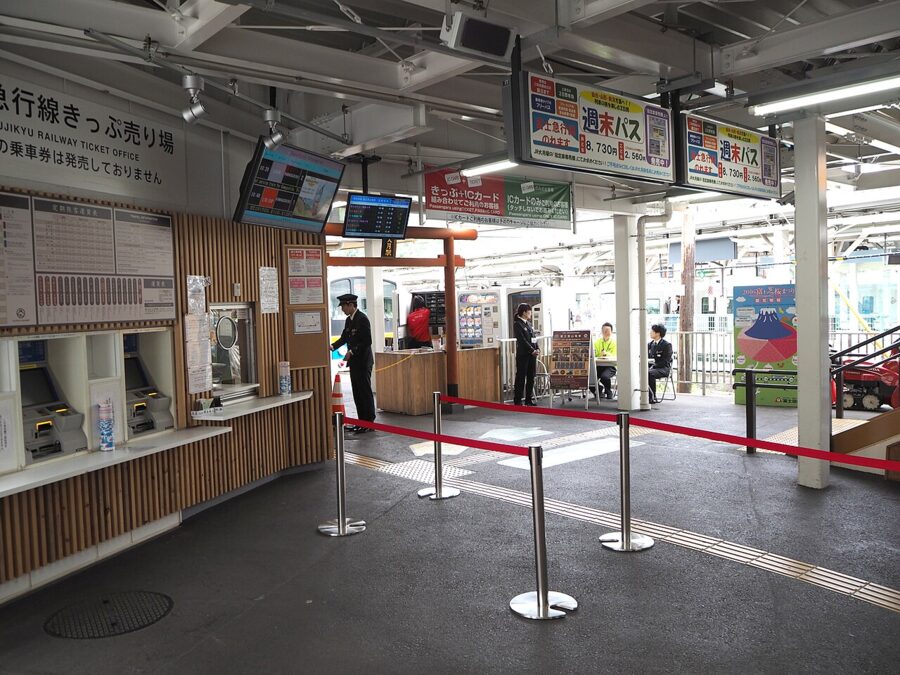
The slow way costs ¥2,580: a Chuo Line train to Otsuki, then a Fujikyu local up the valley, about two and a half hours in all. I like it more than I should. The Fujikyu line climbs nearly 500 m through Tsuru and Fujiyoshida, and the mountain grows in the windows the whole way up.
The sightseeing buses round the lakes
Fujikyu’s three sightseeing lines all start from Kawaguchiko Station. They were designed by Mitooka Eiji, the industrial designer who also styled the Fujisan View Express train and the amphibious Kaba bus on Lake Yamanaka, which is why they look more like old trams than buses. A single ride starts at ¥180, a one-day pass for all three lines is ¥1,500 and a two-day pass is ¥2,000, sold at the station counter, online and (one-day only) on board.
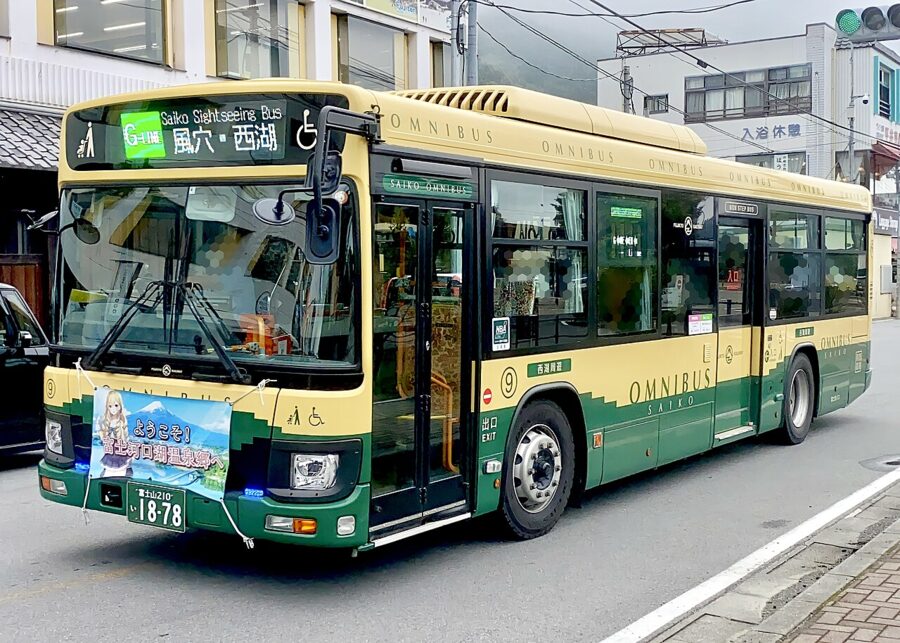
- Red Line: the east and north shores of Lake Kawaguchi, every 15 minutes from 9:00 to 17:45. It reaches the ropeway in 11 minutes and Oishi Park in 27.
- Green Line: the south shore, Lake Saiko, Iyashi no Sato Nenba (40 minutes) and the Fugaku Wind Cave (49 minutes), every 30 minutes from 9:10 to 16:40.
- Blue Line: the caves, Lake Shoji and Lake Motosu, with only five departures a day, the last at 15:35. It takes an hour to reach Motosu, and the last bus back leaves there at 16:45.
Look at that first Red Line departure again: 9:00. The sightseeing buses don’t run when Fuji is at its clearest. If you’re staying by the lake, the dawn views are on foot, by rental bike or by taxi, and that alone is a good reason to sleep on the north shore or close to the station.
Chureito Pagoda and the 398 steps
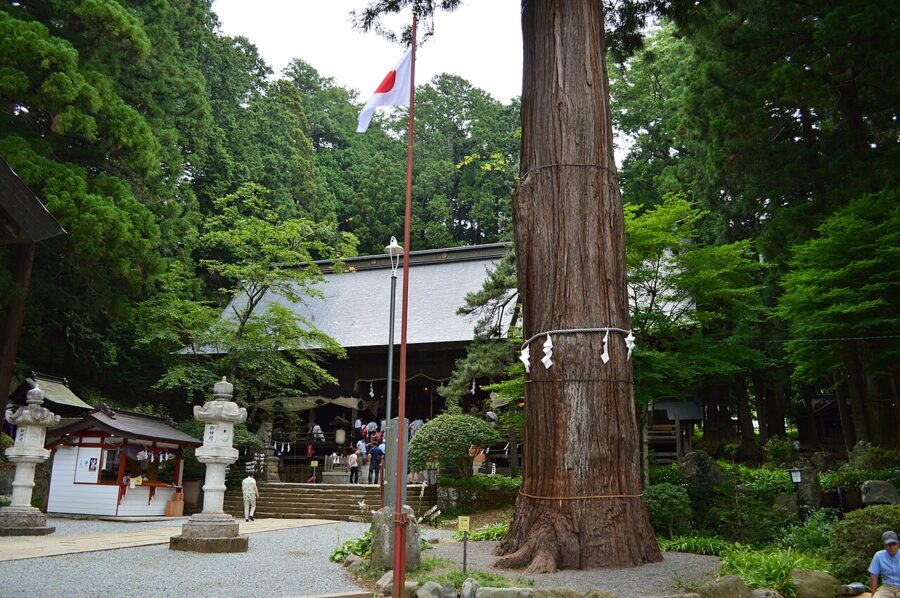
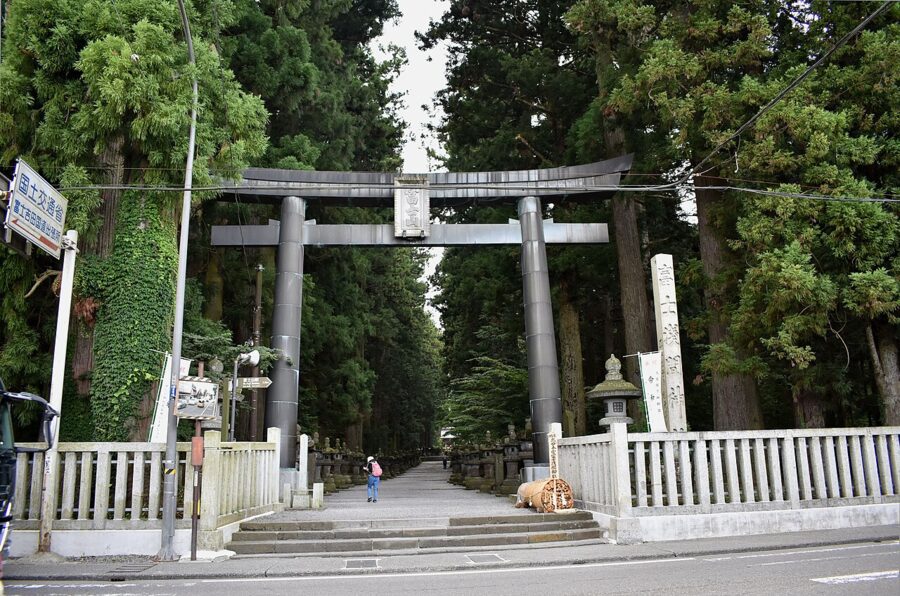
The pagoda that made this corner of Japan famous isn’t old and isn’t a temple. Chureito, the “tower of loyal spirits”, was built in 1962 as Fujiyoshida’s memorial to its war dead. It stands on the side of Mount Arakura inside the grounds of Arakura Fuji Sengen Shrine, and for decades the view from behind it was something only locals bothered with.
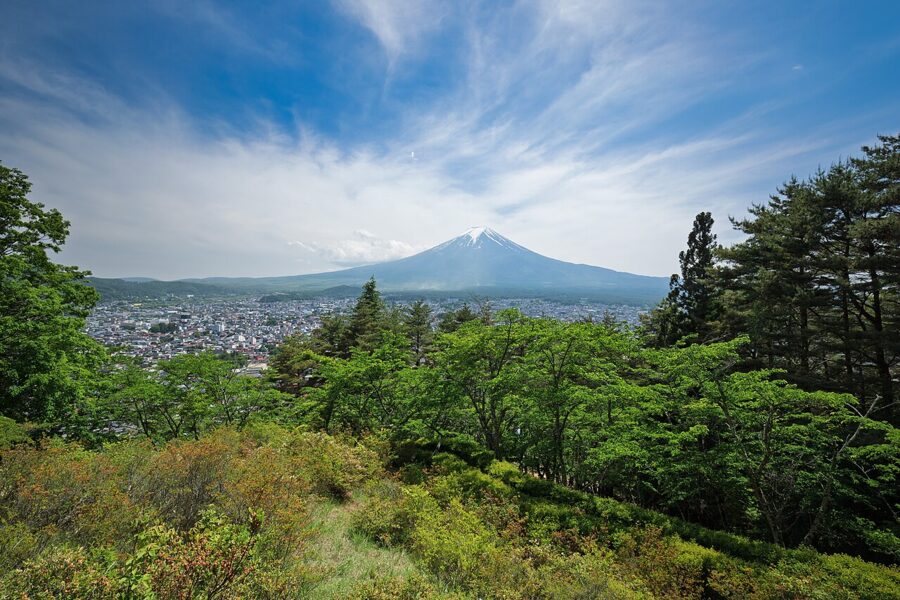
Then the 2015 Michelin Green Guide gave it space, a National Geographic Traveler cover used it in 2018, and the city started a cherry blossom festival in 2016. By spring 2019 there was an hour’s queue for the viewing deck. The deck was rebuilt in February 2022 so that you can see Fuji on both sides of the tower rather than over each other’s heads.
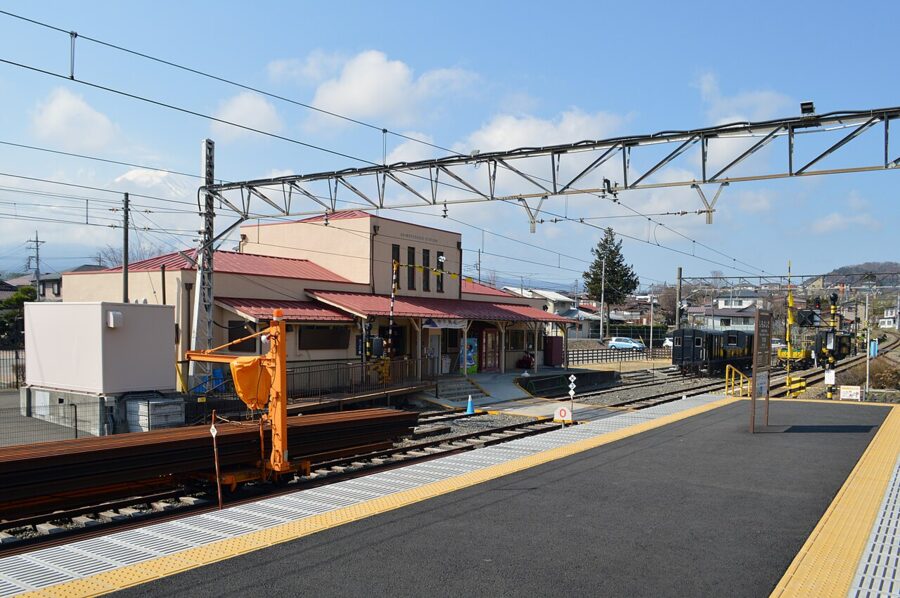
Getting there is simple. Take the Fujikyu line to Shimoyoshida, follow the signs for 10 to 15 minutes to the shrine, and climb. The 398 steps are known as the Sakuya-hime stairs; there’s also a gentler slope path that takes 15 to 20 minutes. Entry is free and the park never closes.
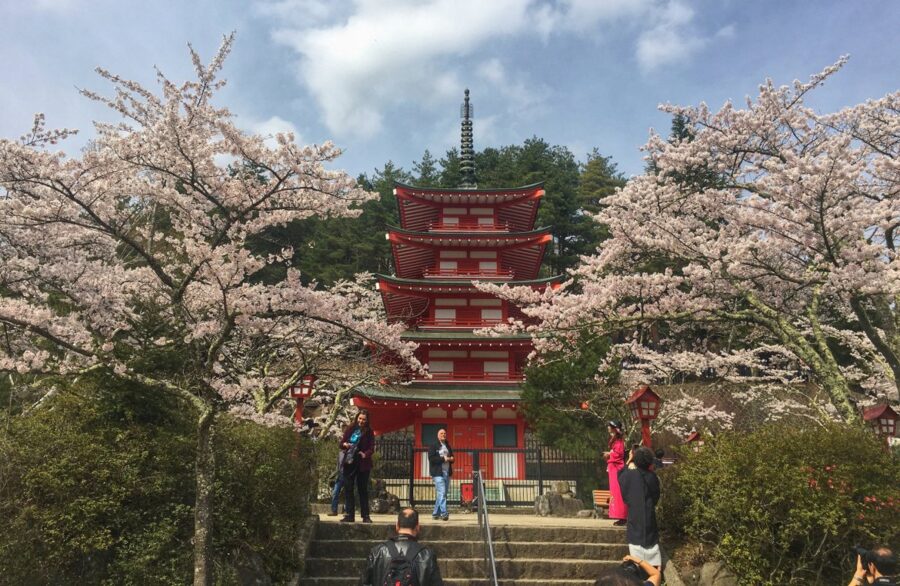
Go in the morning. The sun comes from behind you, the snow on Fuji is lit from the front, and the prefecture’s tourism office gives the same advice for autumn photographs: before noon, ideally early. In the afternoon the mountain is backlit and, as the table above shows, more likely to be in cloud anyway.
Why there’s no festival any more
In February 2026 Fujiyoshida announced that it would no longer hold the Arakurayama Sengen Park cherry blossom festival. The mayor said the city had to protect its residents’ daily lives and dignity. About 200,000 people had been coming each spring, and residents reported strangers walking into homes to use the toilet, people in their gardens and cigarette butts in the lanes.
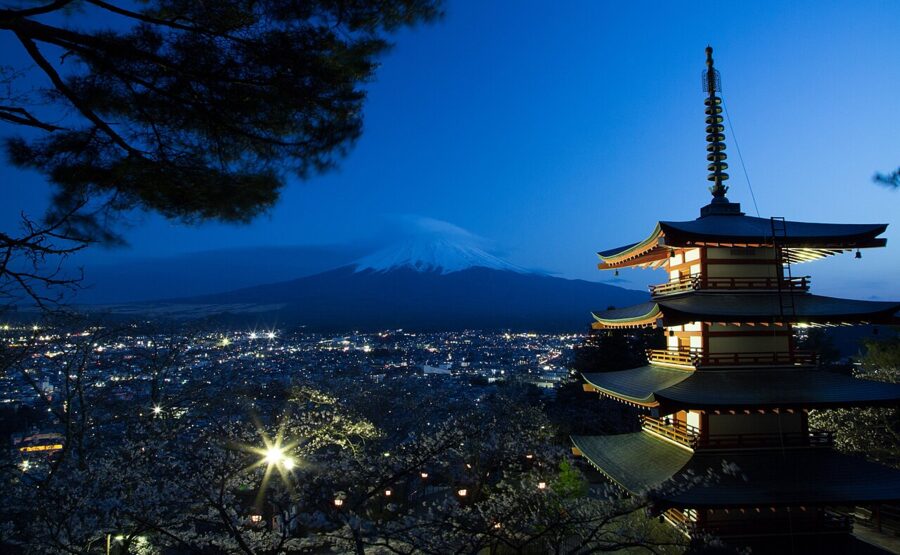
The blossom still comes, of course, and so do the crowds. In 2026 the city ran guards, traffic control, temporary car parks and portable toilets from 1 to 17 April, with road restrictions until 19 April. Its requests are short: come by public transport, stay out of the residential streets, and don’t photograph people or homes without asking.
Autumn is the better trade. The maples and cherry leaves in the park turn from late October to mid-November, Fuji has its first snow, and there’s no festival to cancel.
Honcho-dori and the crossing
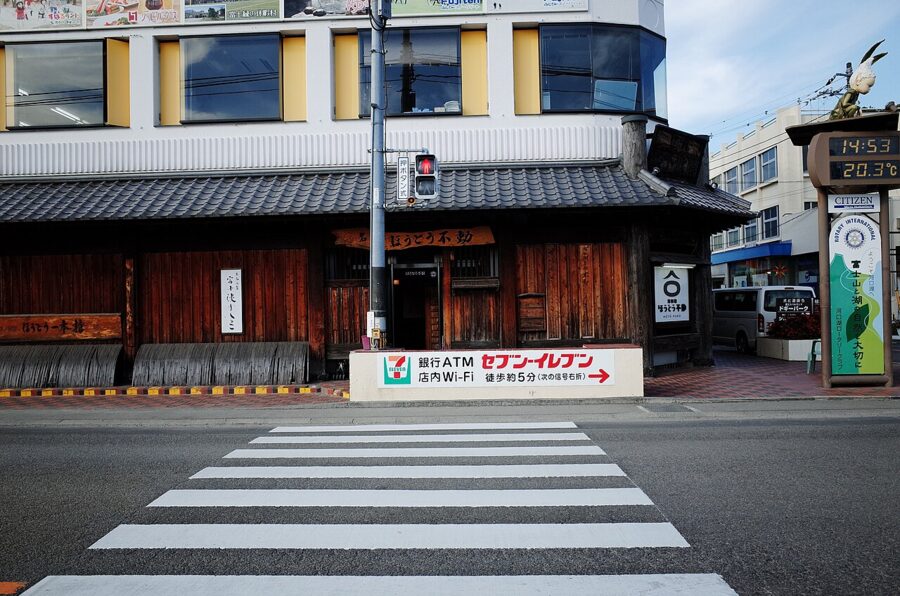
Down in Fujiyoshida, one ordinary shopping street has become a photo stop of its own. From the crossing at Honcho 2-chome, Honcho-dori runs straight at the mountain between low shopfronts and electric wires, and on a clear day Fuji fills the end of the road.
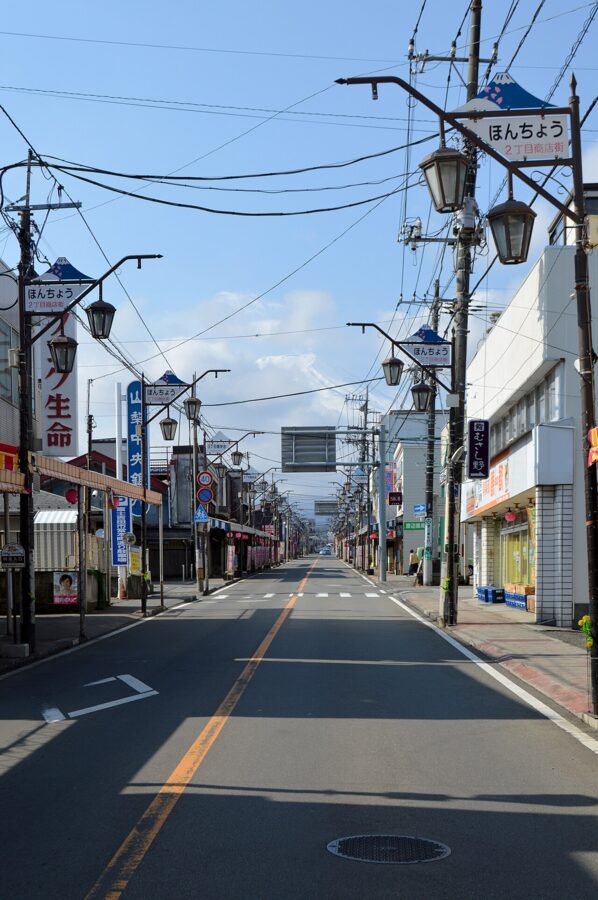
The trouble is the best angle is from the middle of the crossing. In early 2025, video of dozens of people blocking the junction for photos while cars waited on a green light spread across Japanese social media. The city keeps guards on the crossing all year, and in October 2026 it changed how the traffic signals there work to keep people and cars apart. Take the photo from the pavement, or walk a block or two along a side street where the same mountain looks down on quieter roofs.
The north shore: Oishi Park and the slow way round
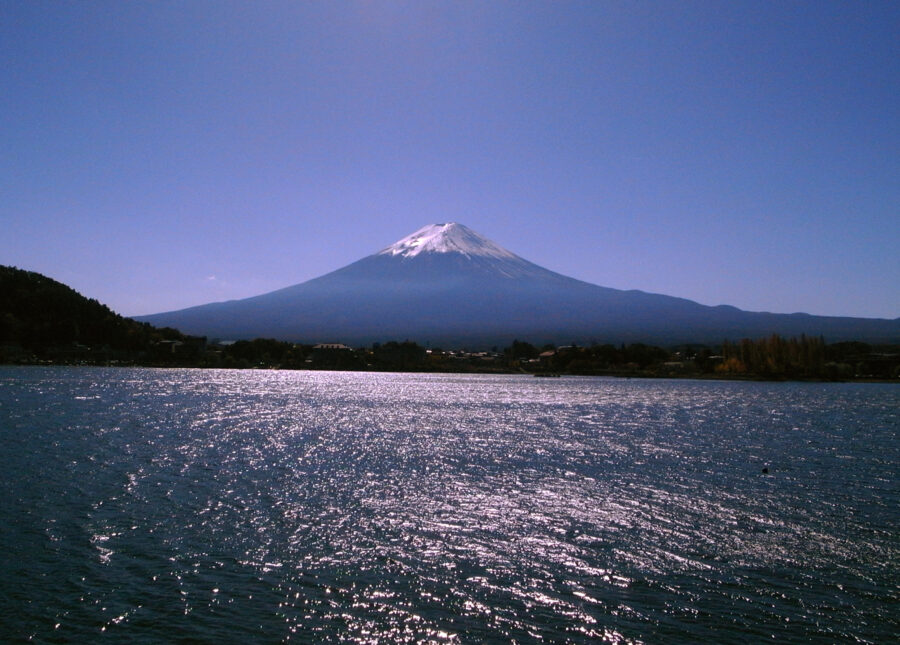
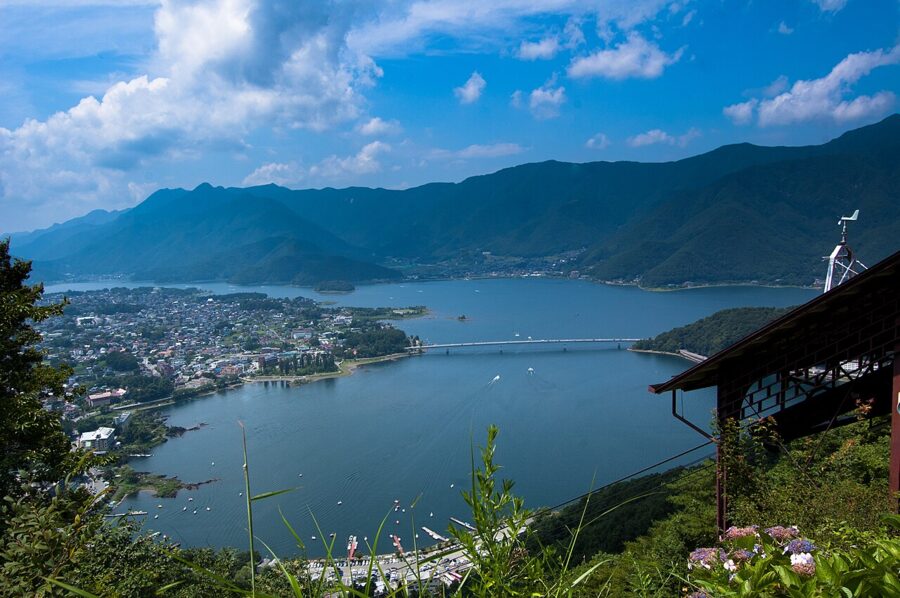
If you only see one stretch of the lake, make it the north shore between the Kawaguchiko Ohashi bridge and Oishi Park. This is the side that faces the mountain, so Fuji stands across the water from almost every bench, and the lakeside path is flat enough for a rental bike.
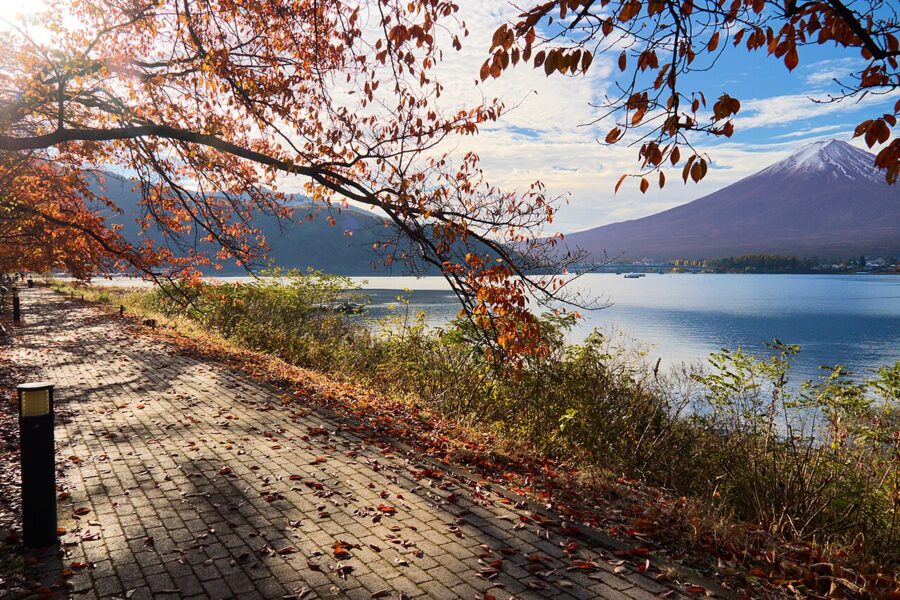
Oishi Park is a long strip of flower beds along the water at the western end of the north shore. It’s free, there’s no gate, and the Kawaguchiko Natural Living Center at its back sells jam, ice cream and the usual Fuji-shaped everything. Lavender is the famous crop: it usually peaks in the first half of July, and the town’s herb festival runs from late June into July.
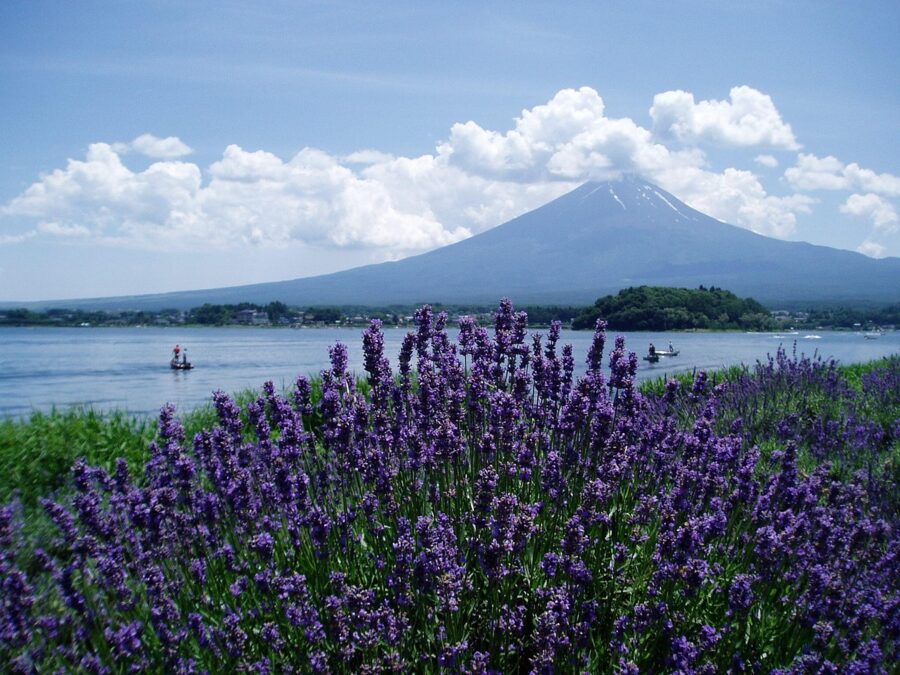
It gets busy. In October 2026 the town tourism association asked coach operators to stop using the Oishi Park car park and drop passengers at a temporary site instead, because the road along the shore was jamming. If you’re in a car, come early or don’t come by car. On the bus, it’s the last stop of the Red Line.
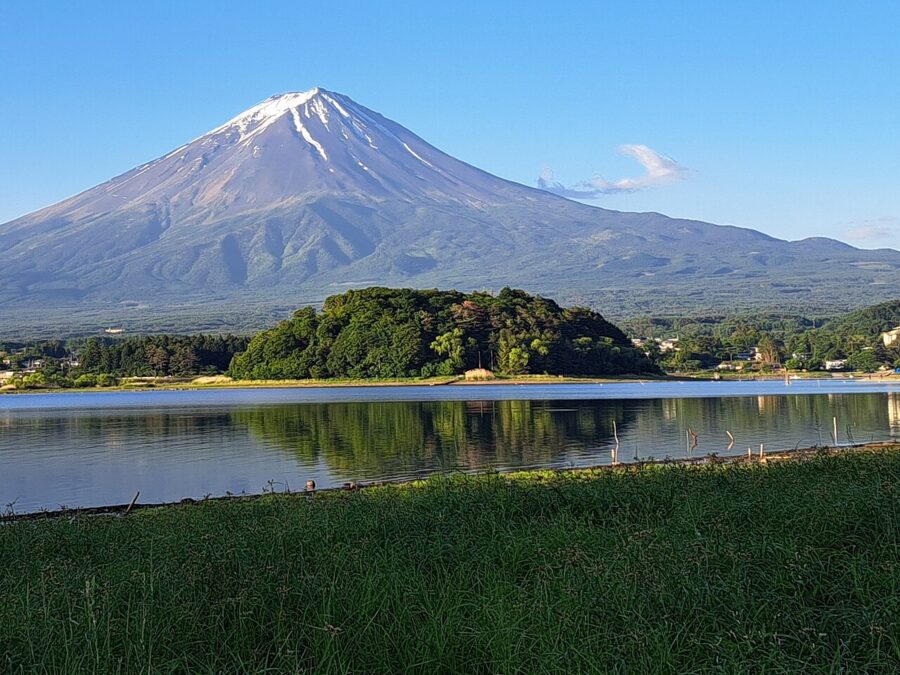
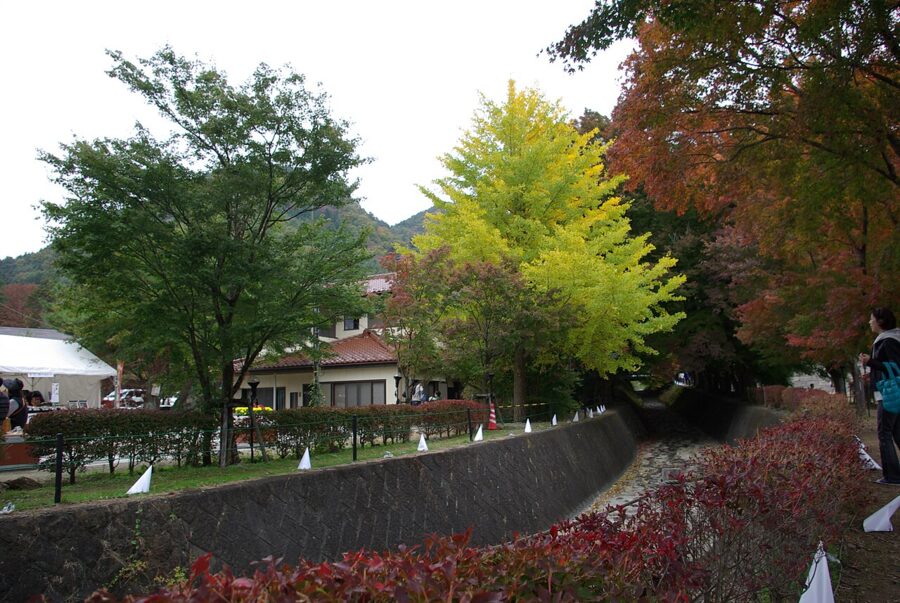
East along the north shore, in the Kawaguchi district, is the Momiji Kairo, a corridor of old maples. It’s the centre of the autumn leaves festival in November and a pleasant ten minutes in any other month. Beyond it, the Kawaguchiko Ohashi bridge crosses the lake on a line about 500 m long, and the view from it was chosen as one of Japan’s 100 best roads.
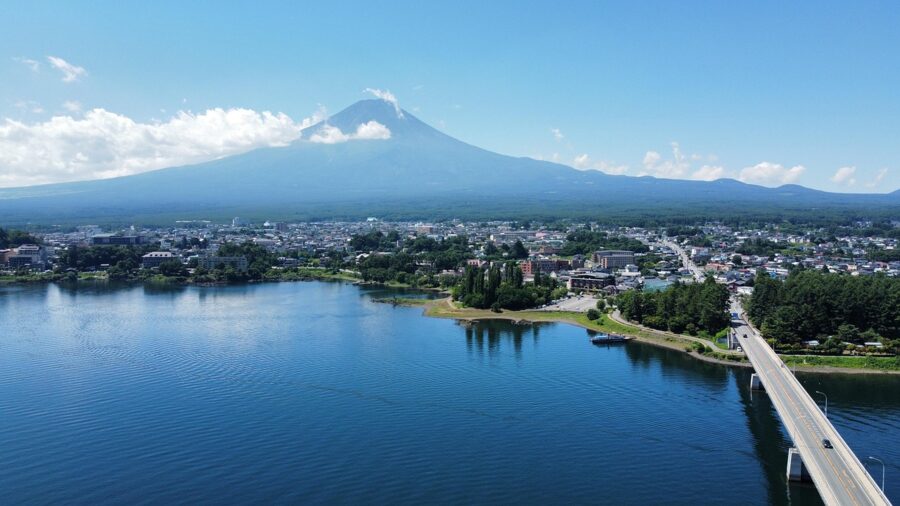
On the east shore near the hot-spring hotels, the little headland of Ubuyagasaki has a shrine and one of the classic reflection views when the water is calm. Inland from the north shore, Kawaguchi Asama Shrine is worth a detour on a grey day: it was founded after the 864 eruption to calm the mountain, and its approach is lined with enormous cedars.
Up the Kachi Kachi Ropeway
The ropeway on the east shore climbs Mount Tenjo in three minutes, from the lake to a viewing area at 1,075 m. Its official name is now the Mt. Fuji Panoramic Ropeway, but everyone still calls it the Kachi Kachi Ropeway, after the folk tale said to be set on this mountain.
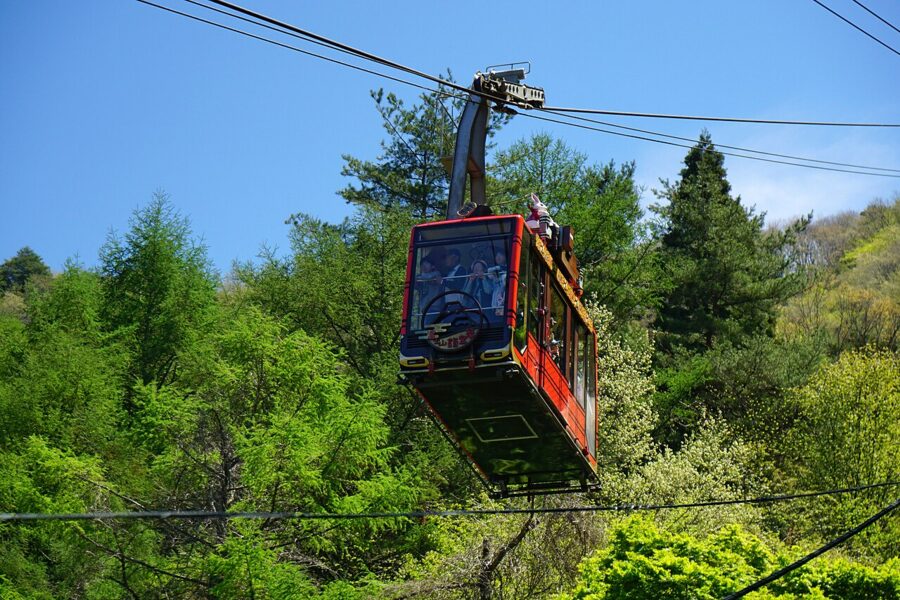
From 1 November 2026 a return ticket is ¥1,200 and a one-way ticket ¥800. There’s no booking: you join the line. Hours change with the season, and in the main season the last car up leaves at 17:00. Check before you go in December, because the ropeway is closed for its annual inspection from 7 to 18 December 2026, and it opens late after snow or ice.
The story is a grim one for a children’s tale. A tanuki kills an old woman and tricks her husband into eating her; a rabbit takes revenge by setting fire to the bundle of sticks on the tanuki’s back, then lures it onto a boat made of mud, which sinks in Lake Kawaguchi. The clicking of the fire-striker, “kachi kachi”, gives the mountain its name.
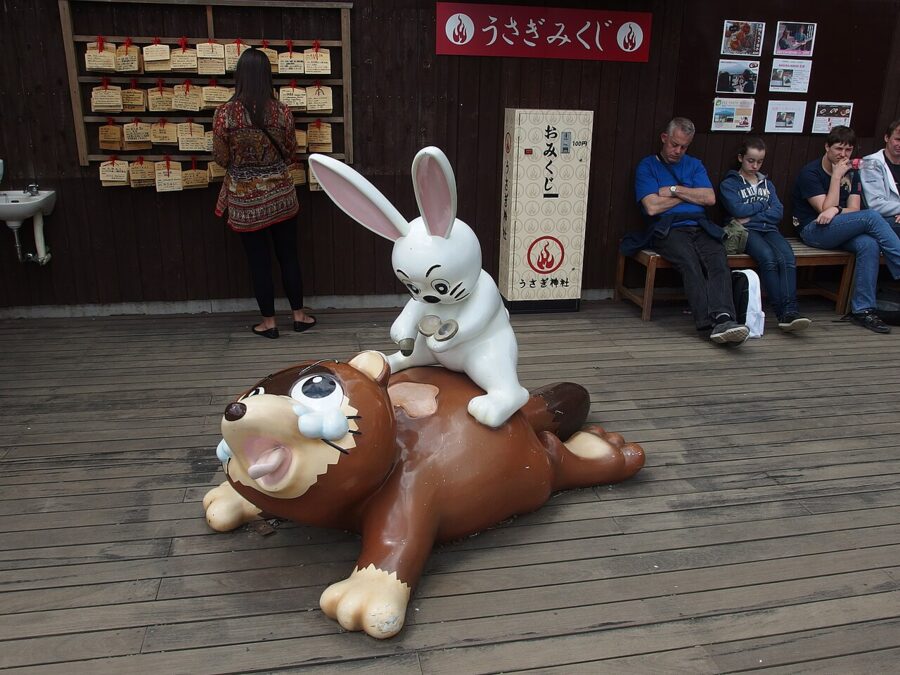
At the top you’ll find a viewing deck, a bell people ring for luck, a small rabbit shrine and the Tanuki Chaya teahouse, which sells dango. The better plan is to ride up and walk down. The trail drops past the Dazai monument at Nakaba-daira and a hydrangea slope to the lakeshore in about 40 minutes, and on a clear day the views of Fuji start before you’ve left the top station.
The Lawson, the black screen and a town that has had enough
The strangest viewpoint near the lake is a convenience store. From one patch of pavement a short walk from Kawaguchiko Station, Fuji appears to sit on the roof of a Lawson, and that angle went around the world on social media. The store became a queue. People stood in the road, wandered onto private property and left rubbish in the streets.
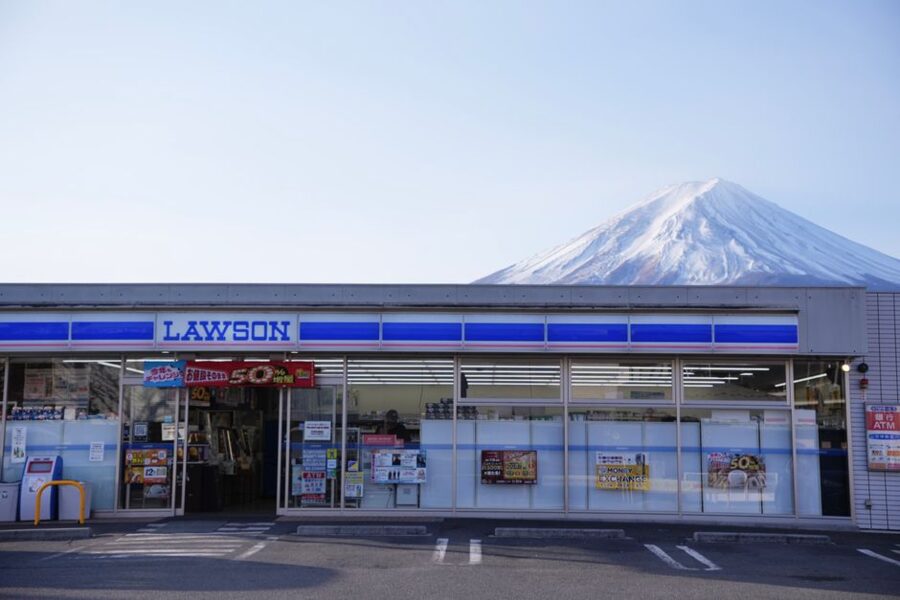
On 21 May 2024 the town put up a black mesh screen, 2.5 m high and 20 m long, on the pavement opposite. Within days someone had poked holes in it, and by late July it had been replaced with a tougher brown sheet. It came down on 15 August 2024, ahead of Typhoon Ampil, and officials said it could go back up if the trouble returned. The guards stayed.
Skip it. The view from the north shore is better in every way, and there’s nothing to buy at this konbini that you can’t buy at the next one.
The rules that came after
The screen was the headline, but the real change has been quieter, and it’s still going. Kyoto’s Arashiyama went through the same thing with its bamboo grove, and the Fuji towns have reached for a similar toolkit: guards, signs, traffic changes and, now, money.
- Chureito Pagoda: no festival from 2026, with crowd measures every April.
- Honcho-dori: guards on the crossing all year and new signal timings from October 2026.
- Climbing Fuji: since 2024 the Yamanashi side has charged a fee and closed its trail gate overnight. In 2026 it’s ¥4,000 a head, and the Shizuoka trails now charge the same.
- Staying the night: from 1 April 2027 Fujikawaguchiko will charge an accommodation tax of ¥200 per person per night, and Fujiyoshida is bringing in its own.
None of this should put you off. It means the towns are spending on the problem rather than shrugging at it, and the polite version of you, the one on the pavement with the bus pass, isn’t the person they’re aiming at.
Saiko, Shojiko and Motosu: the quieter west
Most day-trippers never get past Lake Kawaguchi, and that’s the best argument for going further. The three western lakes are smaller, higher and wilder, with forest down to the shore and far fewer souvenir shops. You need more time and a careful eye on the bus timetable.
Lake Saiko and Iyashi no Sato Nenba
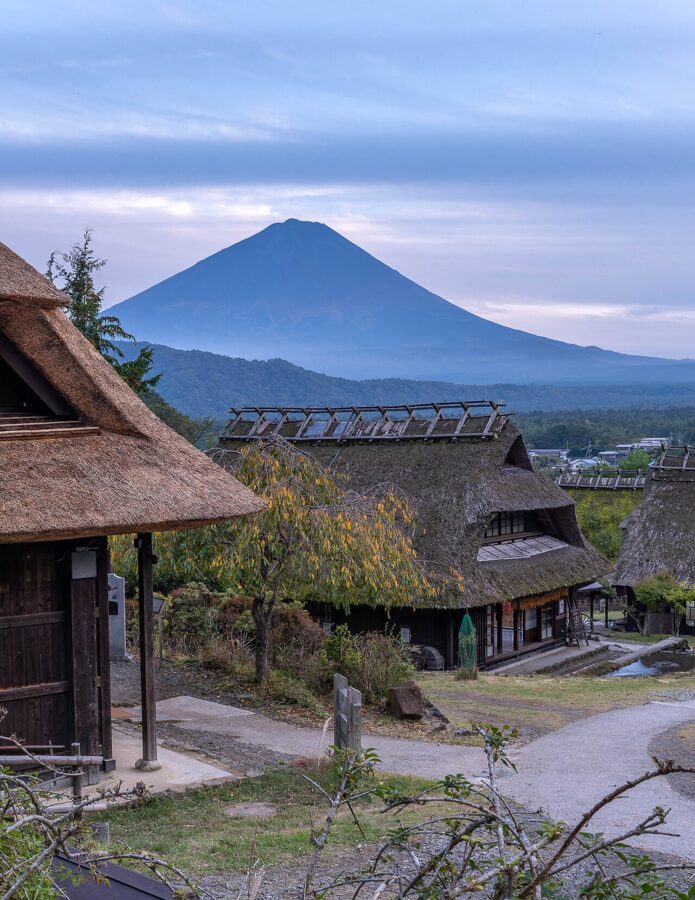
On the western shore of Lake Saiko, Iyashi no Sato Nenba is a village of about 20 thatched farmhouses facing Fuji. The real village of Nenba was destroyed by landslides in a typhoon in 1966. The houses were rebuilt and opened in 2006 as craft workshops, small galleries, places to eat and souvenir shops, so yes, it’s a reconstruction.
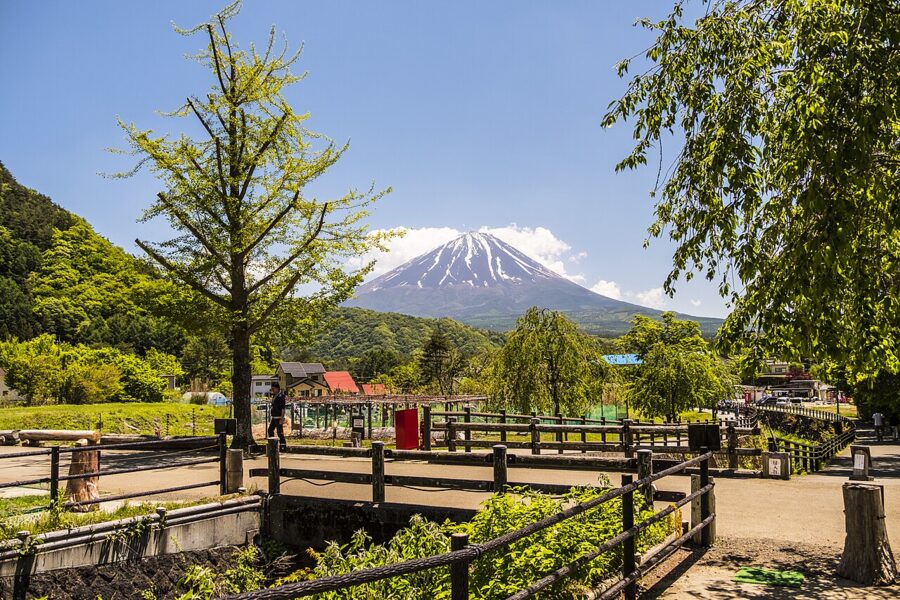
It’s still lovely in the early morning, before the coach groups. From the upper end of the village, Fuji rises behind the thatch. Go on a weekday and you’ll have stretches of it to yourself.
The caves and Aokigahara
Between Saiko and Shojiko, the lava that filled Senoumi left a forest on bare rock: Aokigahara, the Sea of Trees. The trees root sideways over lava because there’s barely any soil, and moss covers everything. Marked trails link the main caves, and you should stay on them; it’s very easy to lose your bearings once you step off.
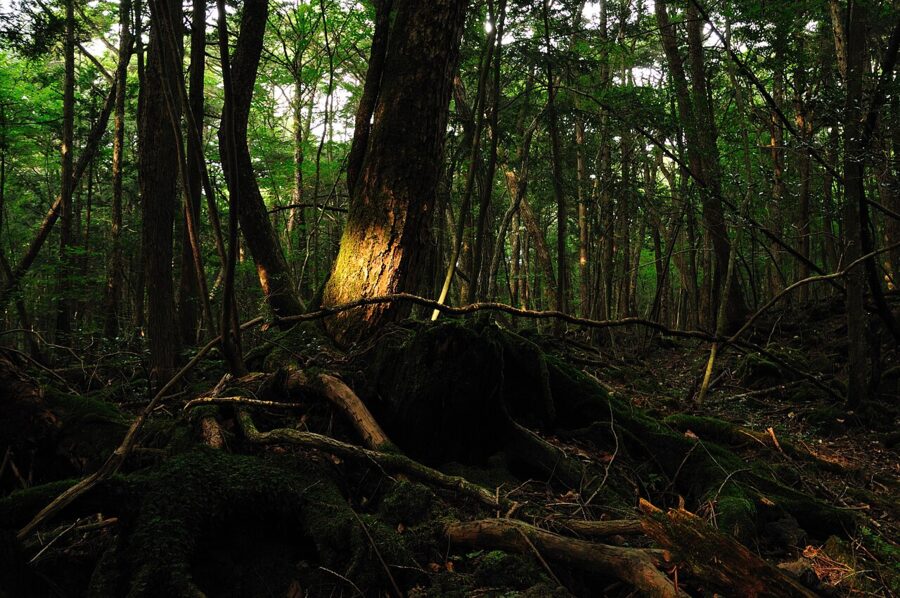
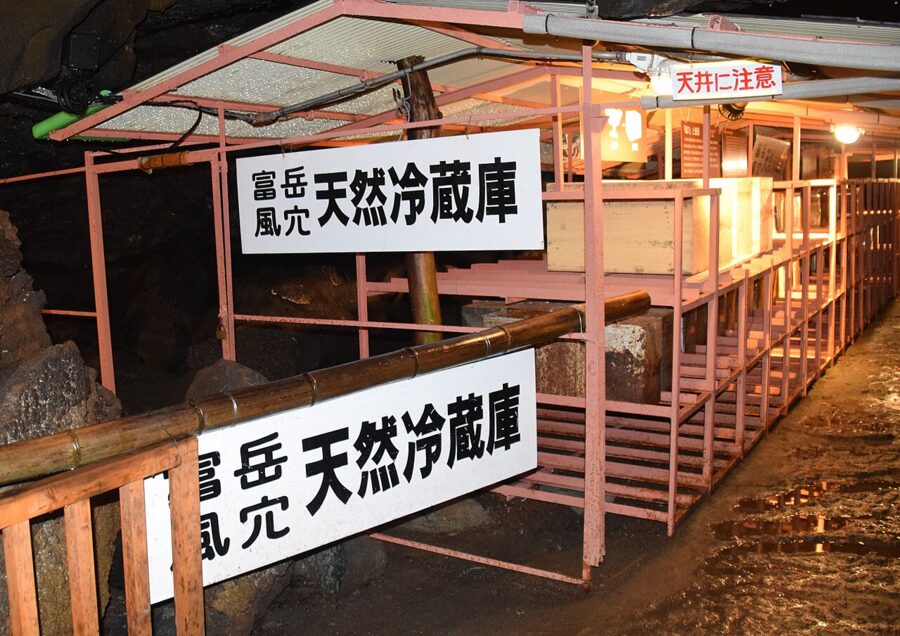
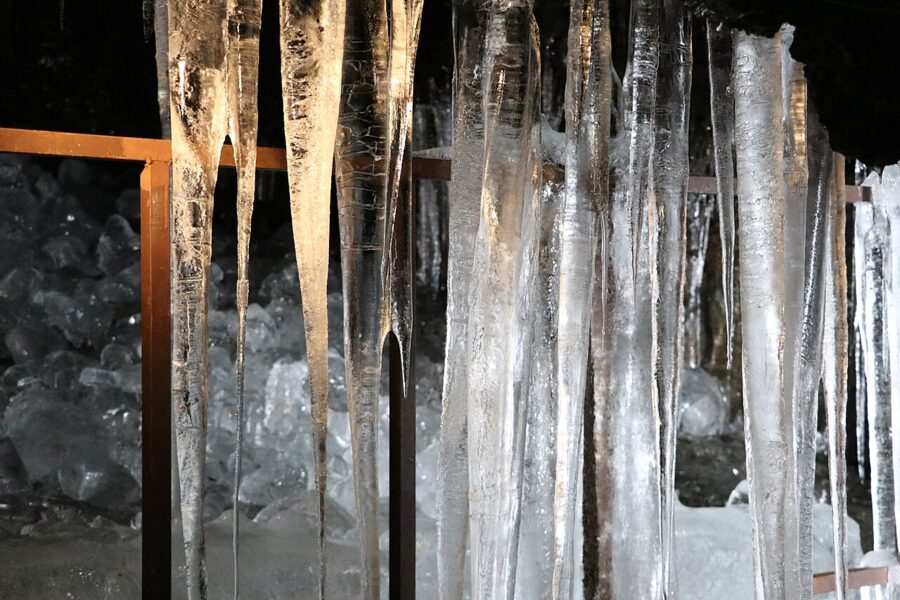
Two lava caves are open as paid attractions, both protected as natural monuments. Fugaku Wind Cave stays cold enough all year that it was once used to store silkworm eggs; Narusawa Ice Cave, about 30 minutes’ walk through the forest from it, keeps its ice all year. Each costs ¥350 for adults, and they open at 9:00 and close between 16:00 and 17:30 depending on the season.
Lake Shoji and the mountain holding a child
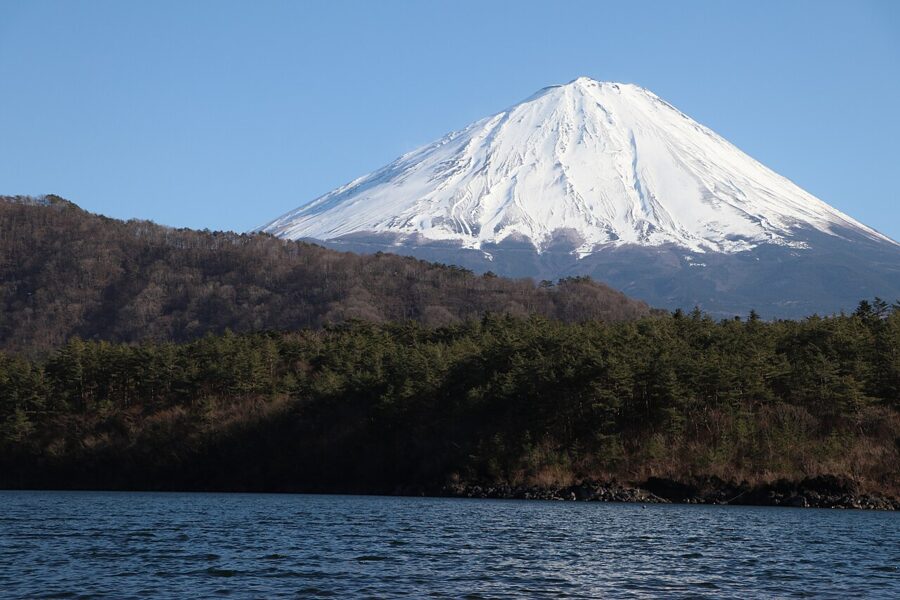
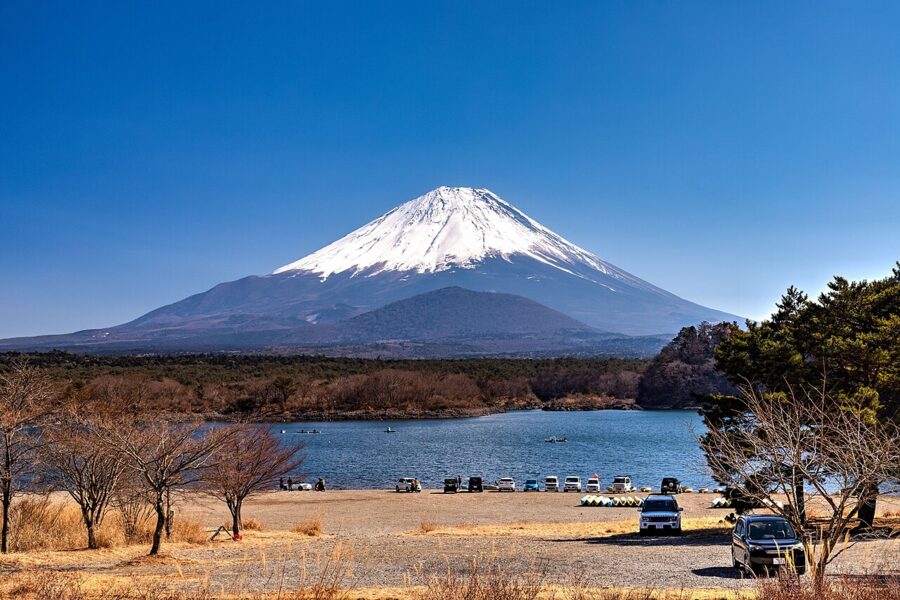
Shojiko is the smallest of the five lakes, half a square kilometre, with a scatter of guesthouses and a lot of anglers. From its north shore, Fuji appears with the smaller cone of Omuroyama in front of it, and locals call this “Kodaki Fuji”, Fuji holding a child. The Blue Line stops at a viewpoint of that name, 48 minutes from Kawaguchiko.
Lake Motosu and the ¥1,000 view
Motosu is the deepest of the five, at about 121 m, and the clearest. In 1935 the photographer Okada Koyo stood on the Nakanokura Pass above the lake’s western side and took “Kohan no Haru” (Spring by the Lake), a picture of Fuji reflected in the water. That photograph became the design on the back of the 1984 ¥5,000 note and then the ¥1,000 note issued from 2004.
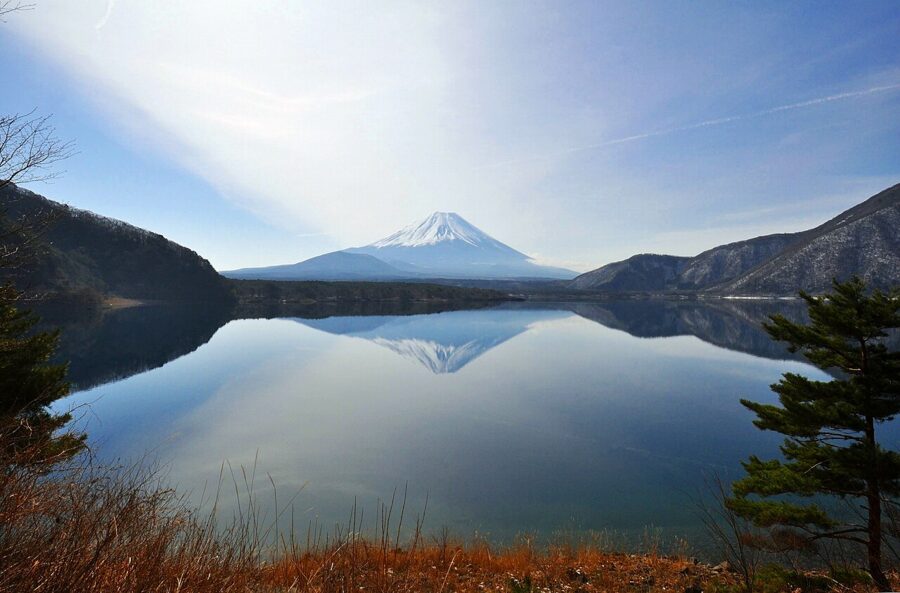
If you’ve got an old ¥1,000 note in your wallet, hold it up at the pass and compare. The new ¥1,000 note that came out in July 2024 swapped the view for Hokusai’s Great Wave, so the old ones are worth keeping for this. The viewpoint is about 30 minutes’ climb from a trailhead on prefectural road 709, the path is slippery when wet, and it’s realistically a car or taxi trip.
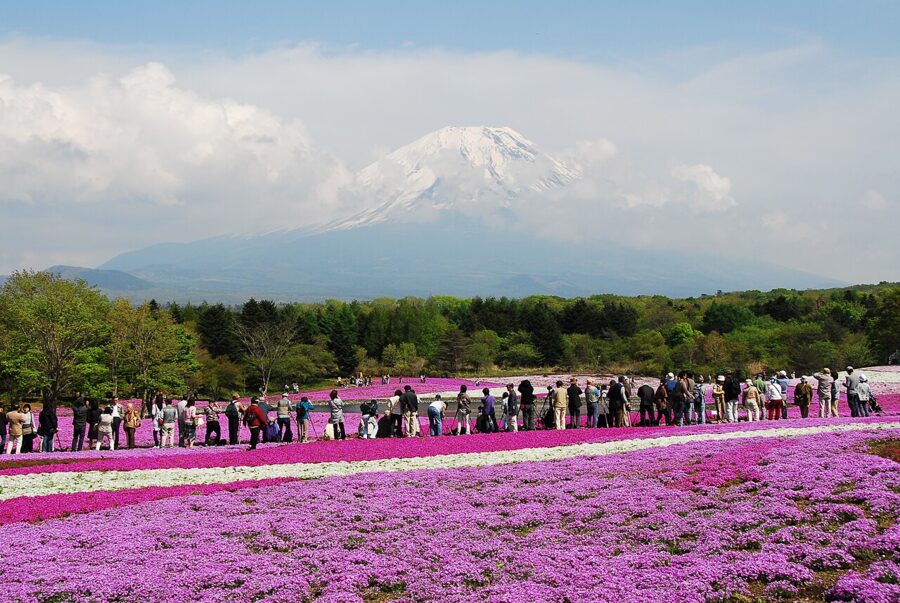
From mid-April to late May, the Fuji Shibazakura Festival fills the slopes near Motosu with pink moss phlox. The Blue Line runs out to the festival site in season. It’s popular and it’s crowded, but it’s also the one spring event out here that doesn’t depend on a single week of blossom.
Hoto, and the rest of the table
The food around the lake is mountain food: wheat rather than rice, miso, pumpkin, horse meat and very hot pots. It makes sense on a cold morning at 900 m and is a bit much in August, which tells you something about when to come.
Hoto: the dish to sit down for
I covered hoto briefly in my hot pot guide, but this is its home ground. Hoto is a wide, flat wheat noodle simmered in a miso broth with pumpkin and whatever else is in season, and served bubbling in its own iron pot. It’s on the national government’s 2007 list of 100 regional dishes worth keeping alive, and in Yamanashi it’s still home cooking as much as restaurant food.
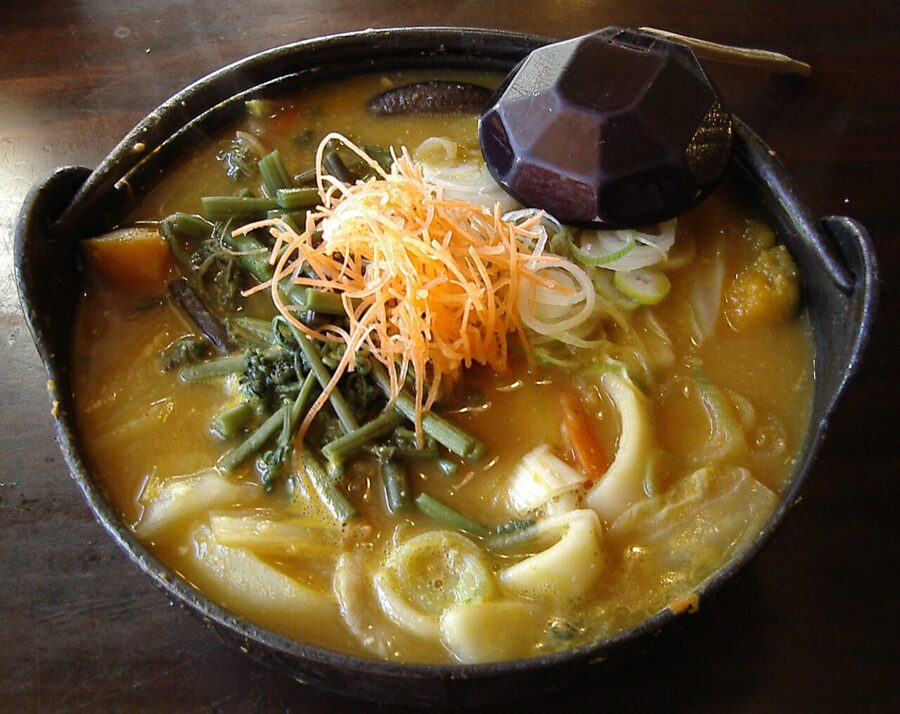
What makes it different from udon is the dough. Hoto dough is mixed with water and no salt, cut straight away without resting, and goes into the broth raw. The starch comes off the noodles and thickens the soup, and there’s no springiness at all. Families make a big pot and eat it again the next day, and plenty of people swear the reheated version is better.
You’ll be told it was Takeda Shingen’s battlefield ration, and that the name comes from the “treasured sword” (hoto) he cut the noodles with. The prefecture’s own folklore history treats that as a story built for tourism after the war. The older record is better anyway: a travelling mountain monk from Kyushu wrote in 1815 that “hoto” was already the famous dish of Kai province, as Yamanashi was then called.
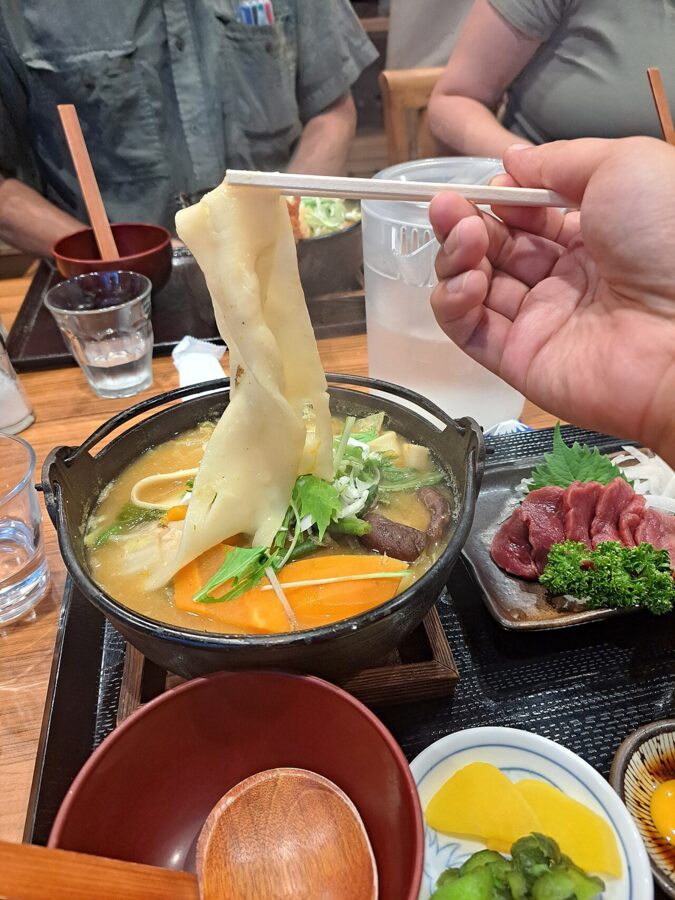
Two places near the station cover most needs. Kosaku’s Kawaguchiko branch is a big farmhouse-style dining room with 250 seats, open 11:00–20:00 every day (last orders 19:30). Its pumpkin hoto is ¥1,450 and the pork version ¥1,850, there’s bear meat hoto at ¥2,700 if you’re curious, and since September 2026 it takes cards, though not QR payments.
Hoto Fudo does one hoto only, at ¥1,380 on its own price list, with a broth built on fish and meat stock and noodles with more bite than most. It has four shops around the lake, including one opposite Kawaguchiko Station and the white, cloud-shaped building at the Higashi-Koiji crossroads on Route 138, which seats about 300 and is about eight minutes from the station by taxi. It opens 11:00–20:00 and shuts when the noodles run out.
Order one pot each unless you’re sharing with someone small: Fudo’s single portion arrives in the biggest iron pot I’ve seen. In summer, look for ozara, hoto noodles served cold with a warm dipping broth, which Kofu’s hoto shops started selling around 1970. And try azuki hoto at Kosaku once, the noodles in sweet red bean soup, a festival dessert that turns out to be lighter than it sounds.
Yoshida udon: lunch only, and chewy
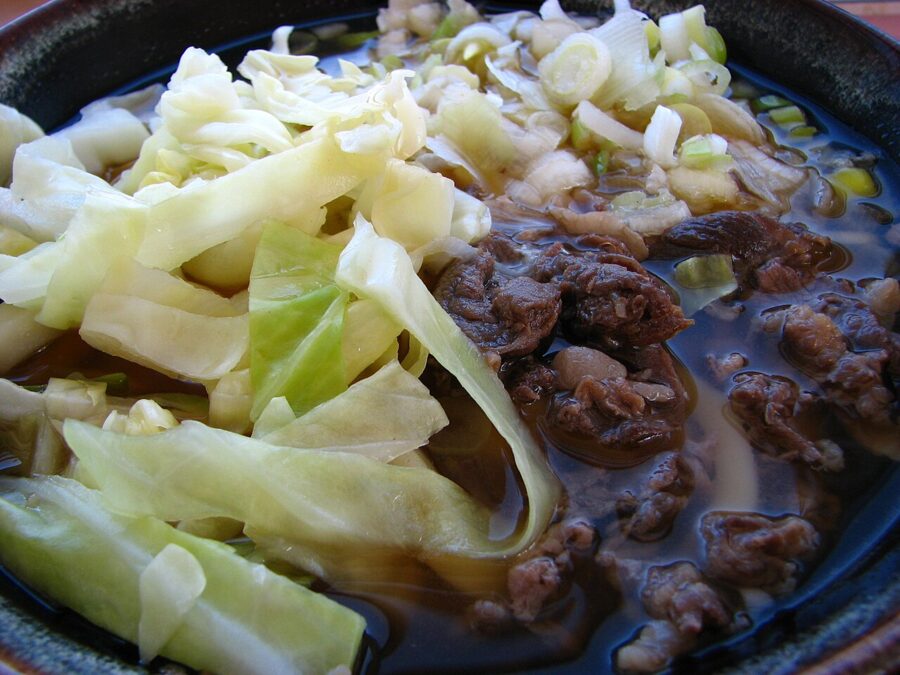
Up the line in Fujiyoshida, the wheat goes the other way. Yoshida no udon is among the firmest udon in Japan, thick, often uneven and hard enough that you have to bite through it. It comes in a broth of soy sauce and miso with boiled cabbage, sweet-simmered meat (horse is traditional, pork is common now) and a spoon of suridane, the house chilli paste of sesame and pepper.
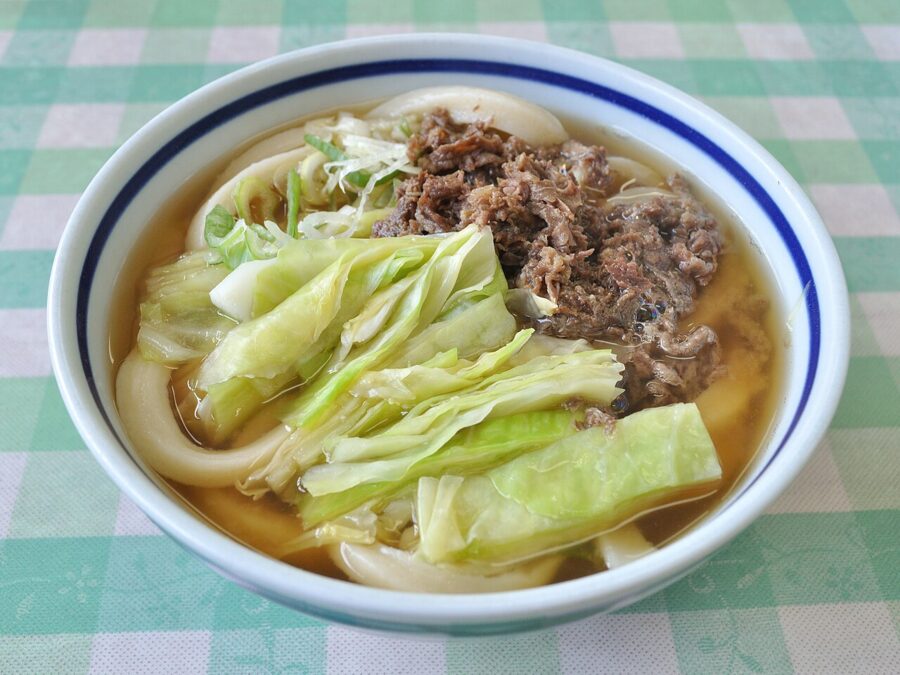
The habit comes from the town’s weaving years. Women ran the looms, so men cooked lunch, and they kneaded the dough with real force; textile buyers who came from the cities were fed too. Households known for good udon started opening their front rooms at lunchtime, which is why many of the 50 or so shops still look like private houses and close by early afternoon. My udon guide has the national picture; here, just remember to eat before 14:00 and to expect a bowl that costs well under ¥1,000.
Shingen mochi: the souvenir everyone carries home
Yamanashi’s best-known sweet is a few small pieces of soft mochi sitting in roasted soybean flour, with a little bottle of black sugar syrup to pour over the top. Two makers dominate. Kinseiken of Hokuto holds the trademark on “Shingen mochi”, while Kikyoya of Fuefuki makes the even more famous “Kikyo Shingen mochi”, tied up in a little plastic cloth.
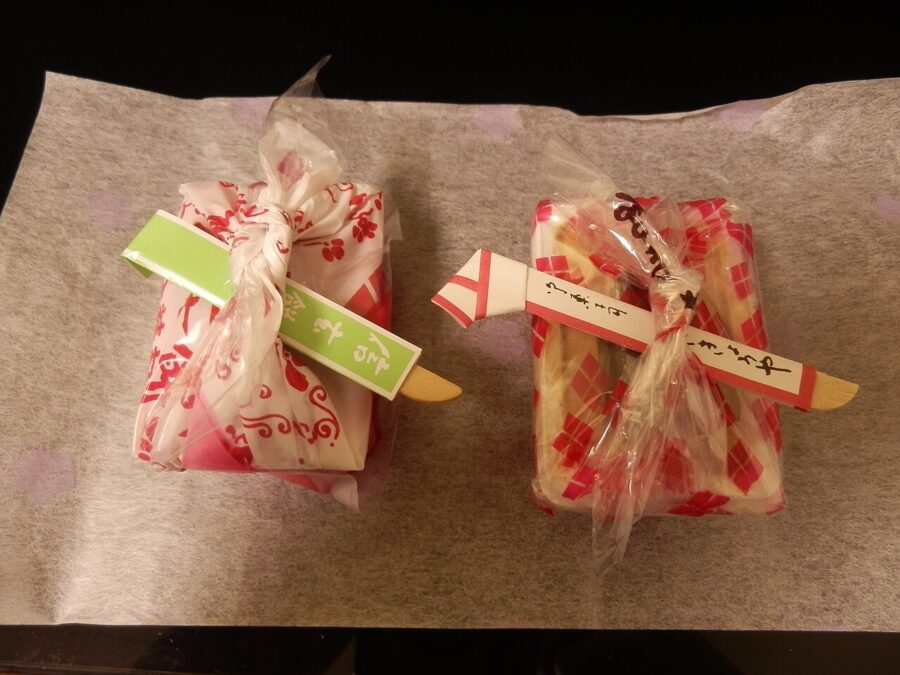
You’ll find both in the station shops and at every roadside station. They’re covered properly in my wagashi guide, so I won’t repeat it here; buy them on the way home, when the box doesn’t have to survive a day in your bag.
Fujizakura Heights beer
The beer to drink here is Fujizakura Heights, brewed at the foot of the mountain since 1997. It’s German in style and method: Pils, Weizen, a smoked Rauch and a dark Schwarzweizen, made with the area’s soft Fuji groundwater, carbonated naturally, and bottled unfiltered. The brewers ferment in open tanks and reuse their yeast so that it gets used to the local water.
The Rauch is the one to try. It tastes of bacon and woodsmoke, and the brewery bills it as a double winner at world competitions, out of more than 150 awards in all. If you’ve been following Japan’s craft beer scene, this is one of the older names, from the first wave of small breweries in the late 1990s.
Stay the night
Everything above points the same way: sleep here. The first sightseeing bus leaves at 9:00, the mountain is clearest before then, and the day-trippers arrive just as the cloud starts building. A night by the lake turns a gamble into a fair bet, and two nights in winter give you very good odds of a clear morning.
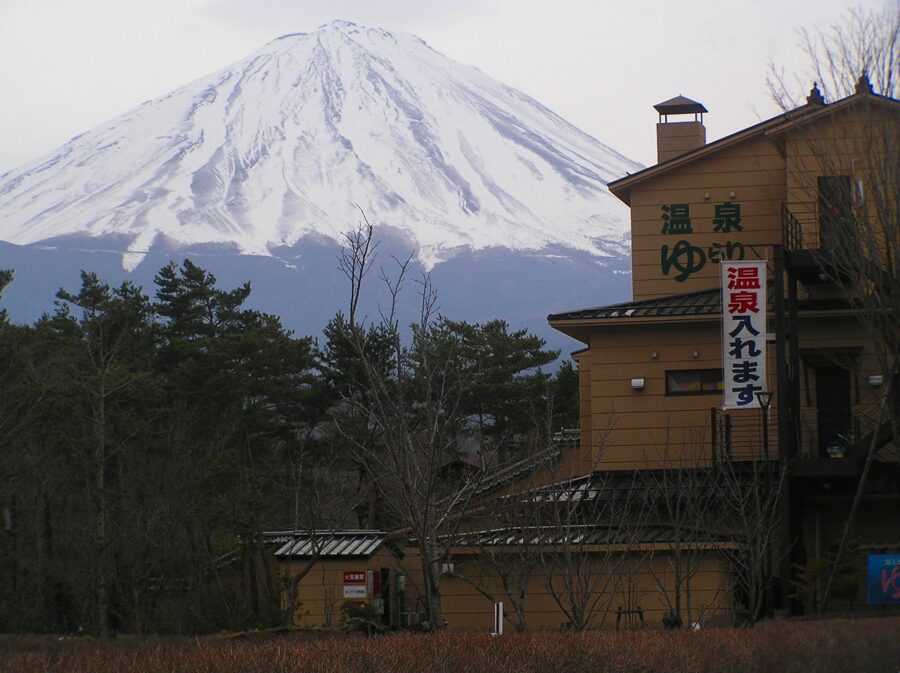
The hot-spring hotels cluster on the south-east shore of Kawaguchiko, in Funatsu, between the station and the ropeway. The water there is young; the springs were only drilled after 1989. What you’re paying for is the view: rooms, baths and dining rooms that face Fuji across the water.
- Konansou (official site): a big lakeside onsen ryokan in Funatsu with lake-and-Fuji rooms and indoor and outdoor baths. Guests can park free at the prefectural car park opposite.
- Ubuya (official site): built so you can see Fuji from the baths, the rooms and the lounge; it calls the idea “nagara Fuji”, Fuji while you do other things. It’s about 10 minutes by taxi from the station, and it will pick you up between 15:00 and 18:00 if you phone on arrival.
Book a room that faces the mountain, not just the lake; the difference in price is worth it here and nowhere else. Most ryokan include a kaiseki-style dinner and a full Japanese breakfast, and breakfast is the meal to take by the window, since 7:00 to 8:00 is exactly when Fuji is most likely to be out.
If you’re not staying, the best public bath is Fuji Chobo no Yu Yurari in Narusawa, on the way to the caves. It has around 16 baths, including outdoor ones facing the mountain, and it’s run by the same company that brews Fujizakura Heights. Entry is ¥1,400 on weekdays and ¥1,700 at weekends and on holidays. Like most baths here, it has rules about tattoos, so check before you go.
Climbing Fuji, in one paragraph
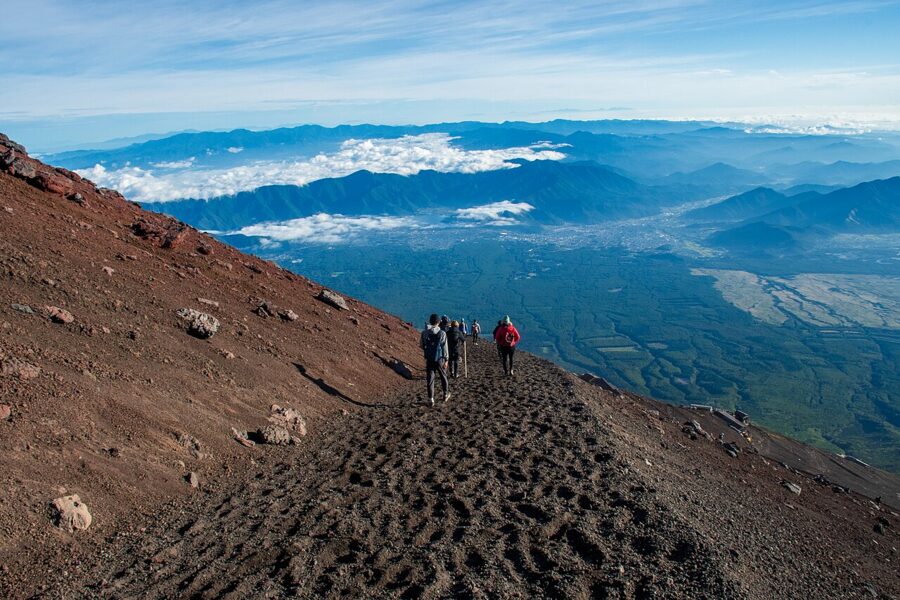
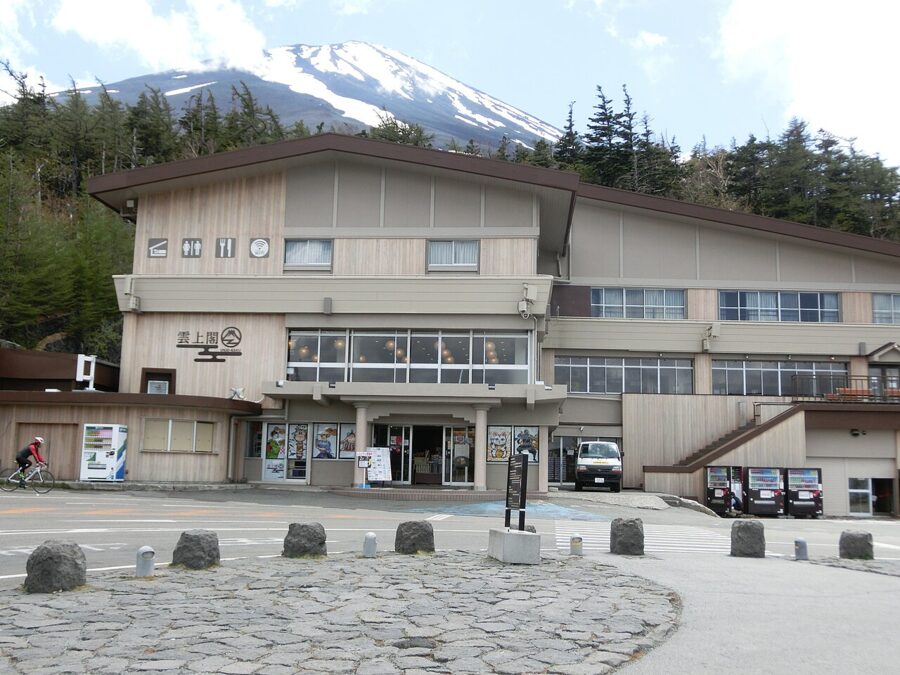
This isn’t a climbing guide, but from Kawaguchiko you’re one bus from the trail. On the Yamanashi side the Yoshida Trail is open from 1 July to 10 September, the fee is ¥4,000 per person, numbers are capped at 4,000 a day, and the gate at the Fuji Subaru Line Fifth Station is shut from 14:00 to 3:00 for anyone without a mountain hut booking. Staff check that you have warm clothes, separate rain gear and proper boots before you go through. Allow about six hours up and four down, and don’t try to do it overnight without sleep.
If all of this sounds like a lot of planning for one mountain, Hakone is the other classic Fuji trip from Tokyo, with more to do when the summit is hidden. And for a day trip with no weather risk at all, Nikko‘s shrines look just as good in the rain.
Which season?
Every season has a reason to come and a reason not to. The visibility numbers make the case for winter, but the lake has its own calendar of flowers, leaves and fireworks.
Spring: cherry blossom and moss phlox
Cherry blossom around Lake Kawaguchi usually peaks in mid-April, a couple of weeks after Tokyo, with the north shore and the pagoda the busiest spots. Fuji still has its winter snow, which is what makes the photographs. The cost is crowds, haze (April mornings are clear only about a third of the time) and hotel prices at their highest.
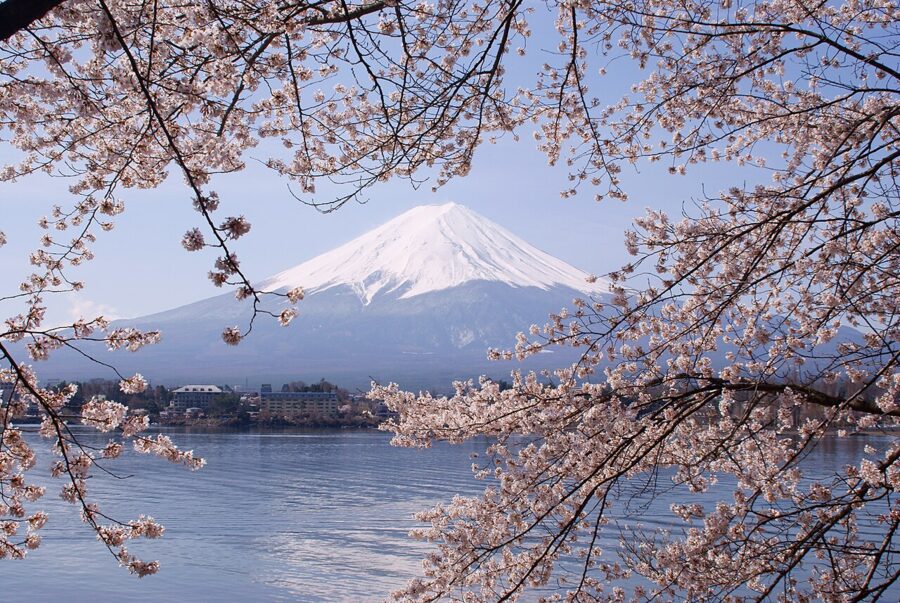
Summer: lavender, fireworks and cloud
June to August is the worst time to see Fuji and the best time to climb it. The lavender is out on the north shore in early July, and on 5 August the lake’s big summer festival ends with fireworks over the water. Come for those, the cool air and the caves, and don’t come expecting the mountain.
Autumn: the leaves festival
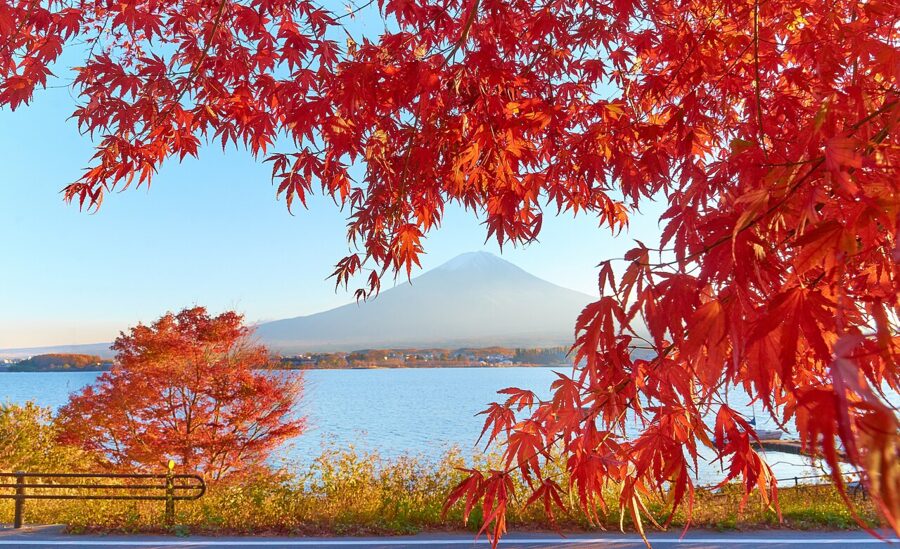
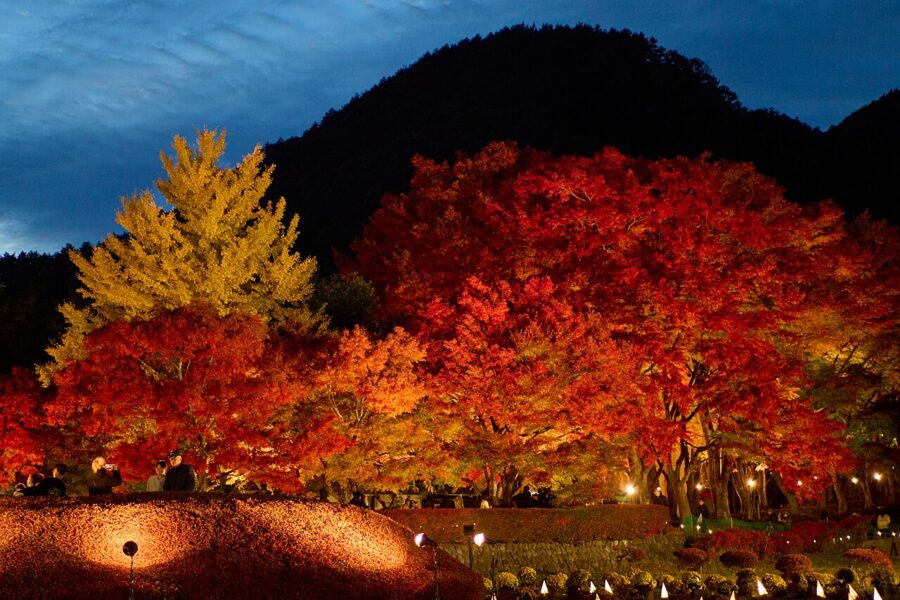
The 28th Fujikawaguchiko Autumn Leaves Festival runs from 7 to 29 November 2026 along the Momiji Kairo on the north shore. Entry is free, the stalls are open 9:00–19:00, and the maples are lit up from dusk until 21:00. November also has the second-best odds of a clear morning in the year, and the first snow on Fuji.
Winter: the clearest air
From December to February the mountain is out on more than half of all mornings, the light is low and gold, and the lake is quiet except at weekends. In the 2026 season, fireworks went up over the lake from 20:00 to 20:20 on weekend nights from late January into February. Bring proper cold-weather clothes: Kawaguchiko is 5 to 6°C colder than Tokyo, and the nights drop well below freezing.
What it costs
| Item | Price |
|---|---|
| Highway bus, Shinjuku to Kawaguchiko | From ¥2,200 (¥2,000 online) |
| Fuji Excursion, Shinjuku to Kawaguchiko | ¥4,200 |
| Local trains via Otsuki | ¥2,580 |
| Sightseeing bus pass, 1 day / 2 days | ¥1,500 / ¥2,000 |
| Kachi Kachi Ropeway return | ¥1,200 |
| Iyashi no Sato Nenba | ¥500 |
| Fugaku Wind Cave or Narusawa Ice Cave | ¥350 each |
| Hoto lunch | ¥1,380–1,850 |
| Yurari day bath | ¥1,400 weekdays, ¥1,700 weekends |
| Accommodation tax from April 2027 | ¥200 per person per night |
A careful day trip, with the bus both ways, a bus pass, the ropeway and a hoto lunch, comes to around ¥8,000 a person. Add an onsen ryokan with dinner and breakfast and you’re into the tens of thousands, and that’s the money that actually buys you the view.
Skip this
- The Lawson photo, and standing in the road on Honcho-dori for the street shot.
- Arriving at 11:00 in July and expecting to see the mountain.
- Chureito Pagoda at midday on an April weekend.
- Trying to do all five lakes in a day by bus; the Blue Line has five departures, and if you miss the last one back from Motosu at 16:45 you’re paying for a long taxi.
Do the opposite. Sleep on the lake, set an alarm for dawn, and walk the north shore with a coffee from the station before the first bus comes round. If Fuji is out, you’ll have it with the herons. If it isn’t, go and eat hoto, and try again tomorrow.