Hakodate Food Guide: The Morning Market, Live Squid, Shio Ramen and the Port’s Odd Local Chains
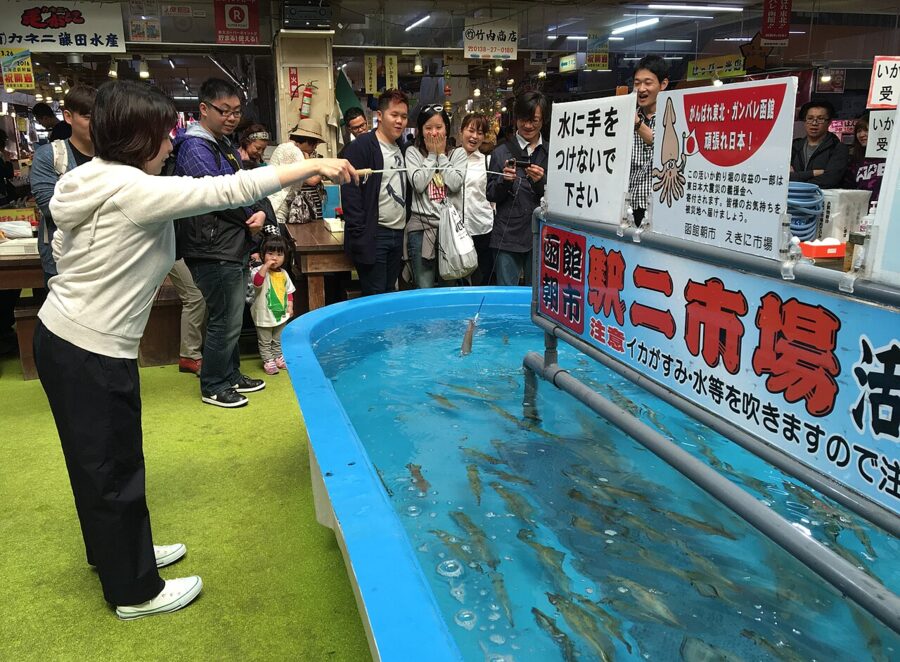
The squid in the pool at Ekini Market don’t look like much until one of them is on the end of your line. Then the water goes everywhere, the queue behind you laughs, and a man in rubber boots unhooks it, carries it to a board and has it sliced into clear, faintly amber strips before it has properly stopped moving.
That plate is the reason most people come to Hakodate hungry. It’s also the most fragile thing on the menu. In June 2026, for the second year running, the first squid auction of the season at the city’s fish market was called off because the boats came back almost empty.
So this guide starts with the morning market and the squid, and tells you plainly what’s been happening to both. Then it goes where Hakodate actually eats: a clear salt ramen that Hakodate traces back to the 1880s, a burger chain that exists only in and around this one city, and a convenience store whose famous yakitori is made of pork.
I came up from Tokyo on the Hokkaido Shinkansen with a list of bowls and not much else. What I hadn’t expected was how much of Hakodate’s food is really about the port: who sailed into it after 1859, what they came to buy, and what the fishing fleets brought home.
If you only have a day, here’s the short version. Everything in it is a walk or a short tram ride from Hakodate Station, and my guide to eating fish in Japan covers the wider market-breakfast habit if this is your first one.
| Eat | Where | When | Worth it because |
|---|---|---|---|
| Kaisen-don (uni, ikura, scallop) | Hakodate Asaichi: Kikuyo, Donburi Yokocho | From 6:00 | The market breakfast, rice and all |
| Live squid sashimi | Ekini Market pool, Donburi Yokocho counters | Morning, June–December at its best | Translucent and crunchy, the city’s signature |
| Additive-free uni bowl | Uni Murakami, beside the market | 8:30–15:00, not Wednesdays | Uni that tastes of the sea, not of alum |
| Shio ramen | Ajisai, Jiyoken, Shinano | Lunch or late | Clear salt soup, Hakodate’s own bowl |
| Chinese Chicken Burger | Lucky Pierrot, Bay Area and around town | Any time | A chain you can’t eat anywhere else |
| Yakitori bento (pork) | Hasegawa Store | Any time | ¥680, grilled after you order |
| Curry in a Meiji dining room | Gotoken, Suehiro-cho | Lunch | A restaurant that opened in 1879 |
| Craft beer | Hakodate Beer, Otemachi | Evening | Beer brewed near the waterfront |
In This Article
- A port first, a food town second
- Hakodate Asaichi, stall by stall
- How it’s laid out
- The squid pool
- Picking a bowl
- Uni Murakami and the uni question
- Crab, melons and what to carry home
- Beyond the Asaichi
- Squid, every way Hakodate serves it
- Ika-sashi and the dancing bowl
- Ikameshi, shiokara and squid ink
- Where did the squid go?
- Shio ramen: Hakodate drinks it clear
- Where to drink the soup
- The chains you can only eat here
- Lucky Pierrot
- Hasegawa Store and the pork yakitori bento
- Conveyor-belt sushi, the local way
- Red brick, Motomachi and the Western table
- Motomachi’s churches and the old Western dining rooms
- Getting there, and getting around
- Mount Hakodate, after dinner
- What it costs, and what to skip
- A day and a half, eaten in order
A port first, a food town second
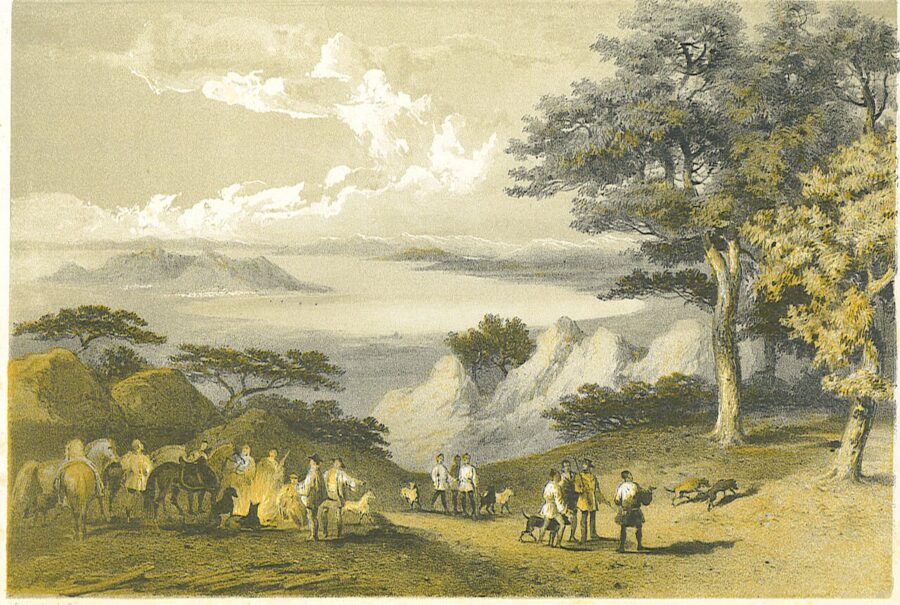
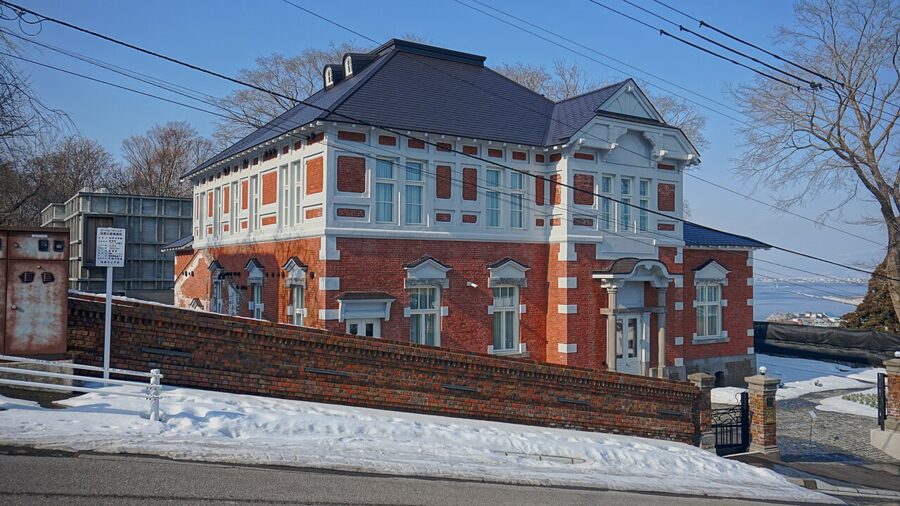
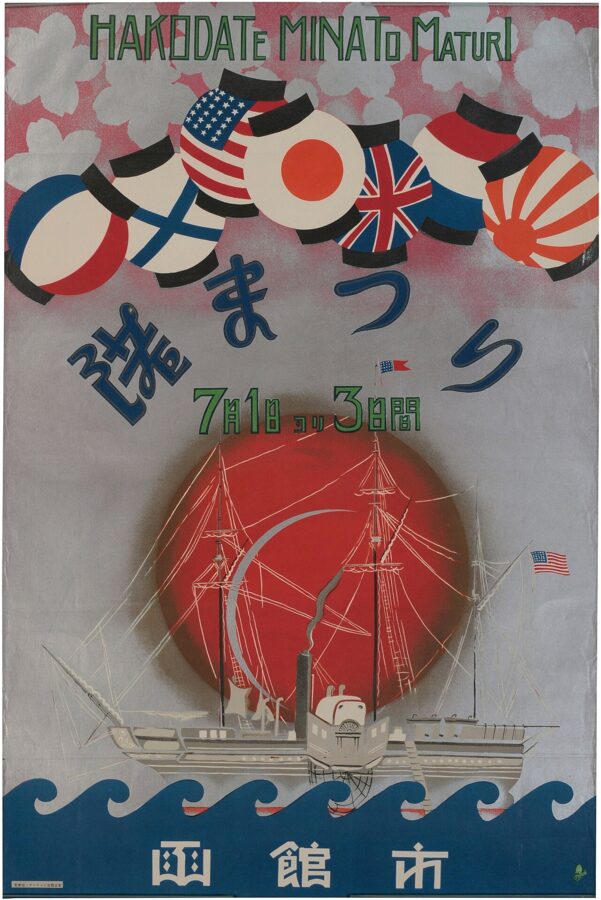
Hakodate opened to foreign trade on 1 July 1859, the same summer as Yokohama and Nagasaki. The Americans had been in five years earlier. Under the 1854 treaty the harbour became a place for foreign ships to take on water, firewood and food, and Perry’s squadron came in that May to survey it.
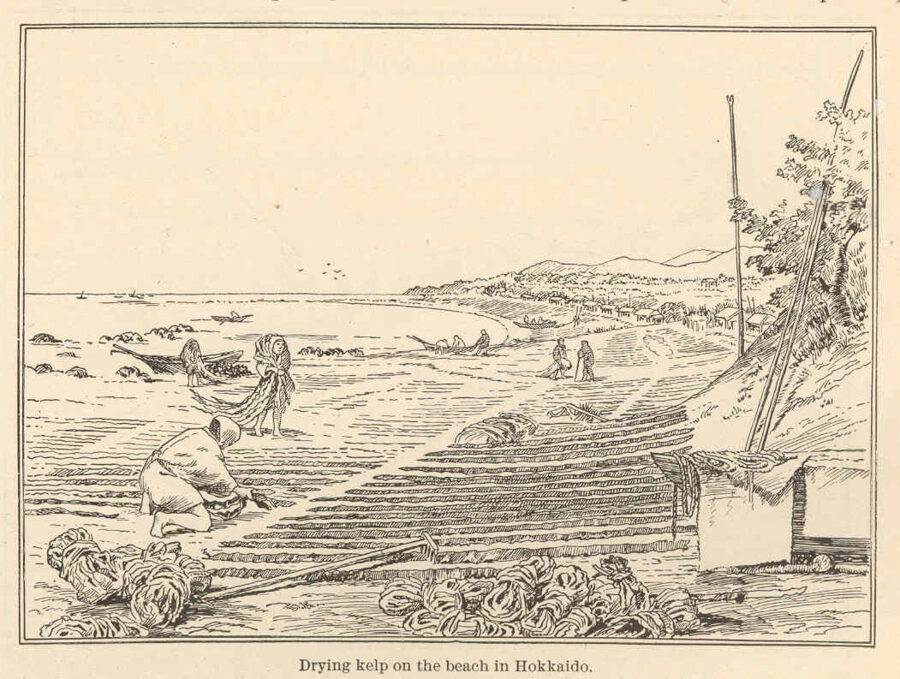
Trade here was never on Yokohama’s scale. What Hakodate sold was the sea, above all kombu, much of it shipped to Qing China. The merchants who came to buy it were largely from southern China, and locals called them “Canton-san”. Hold on to that, because the city’s clear salt ramen probably started in their kitchens.
The Russians came for other reasons. Their consulate’s chapel is the ancestor of the white Orthodox church in Motomachi, and in 1879 a shop selling Russian food and bread opened under the name Gotoken, with a head chef who had picked up his Russian dishes at that church. Gotoken still serves curry a few streets downhill. The British consulate, the Catholic mission and the Anglicans all left buildings within a few minutes’ walk of each other on the same slope.
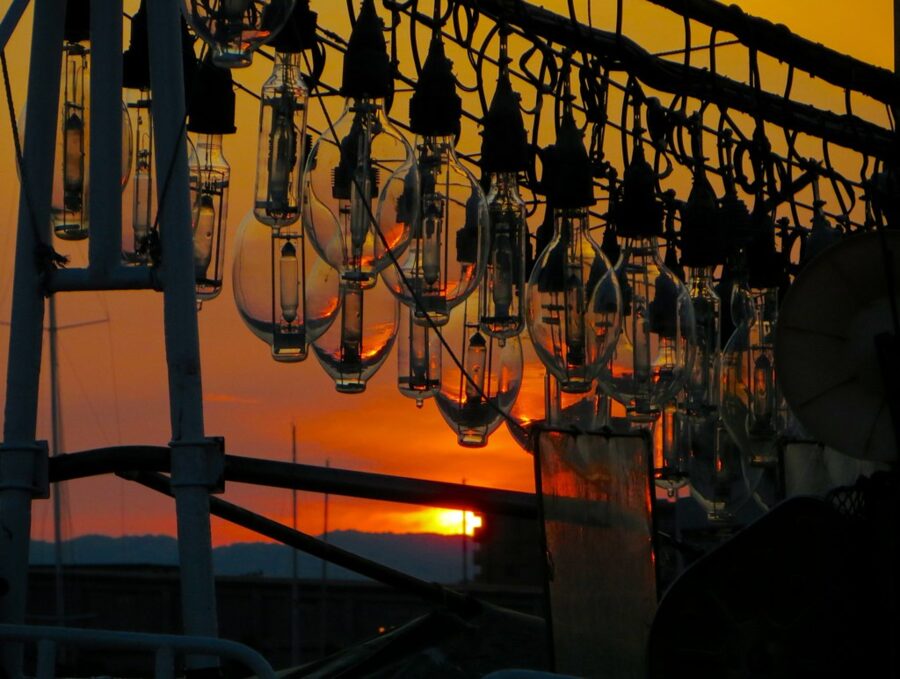
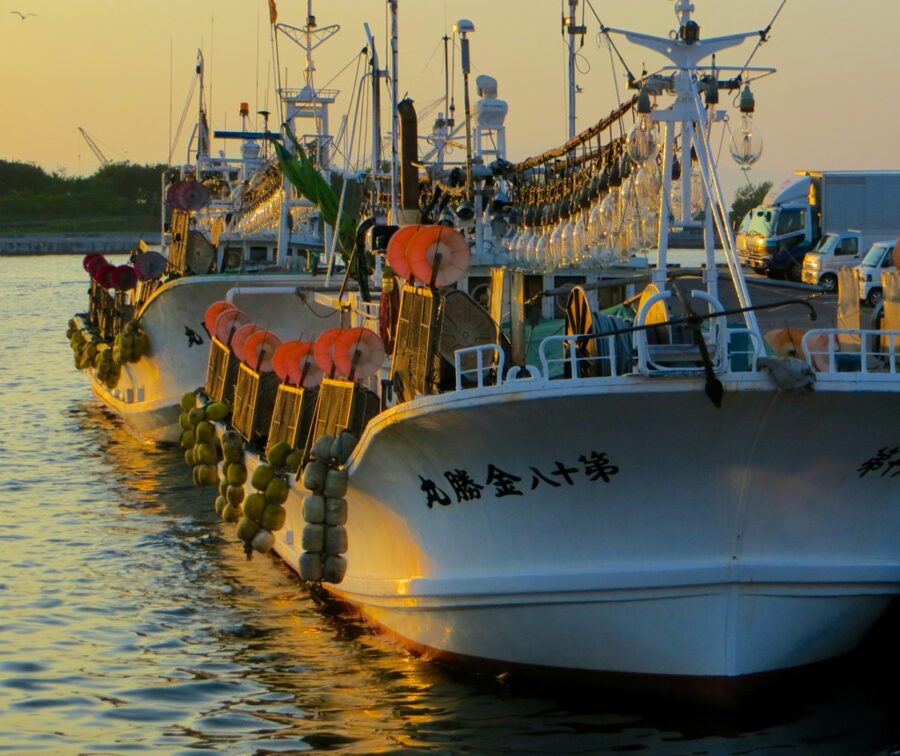
And then there’s the fishing. Hakodate grew into the home port for Japan’s North Pacific fleets, and it stayed that way until the 200-nautical-mile limits of the late 1970s closed most of those grounds. The morning market lost a large slice of its working customers in those years and turned, slowly, towards visitors.
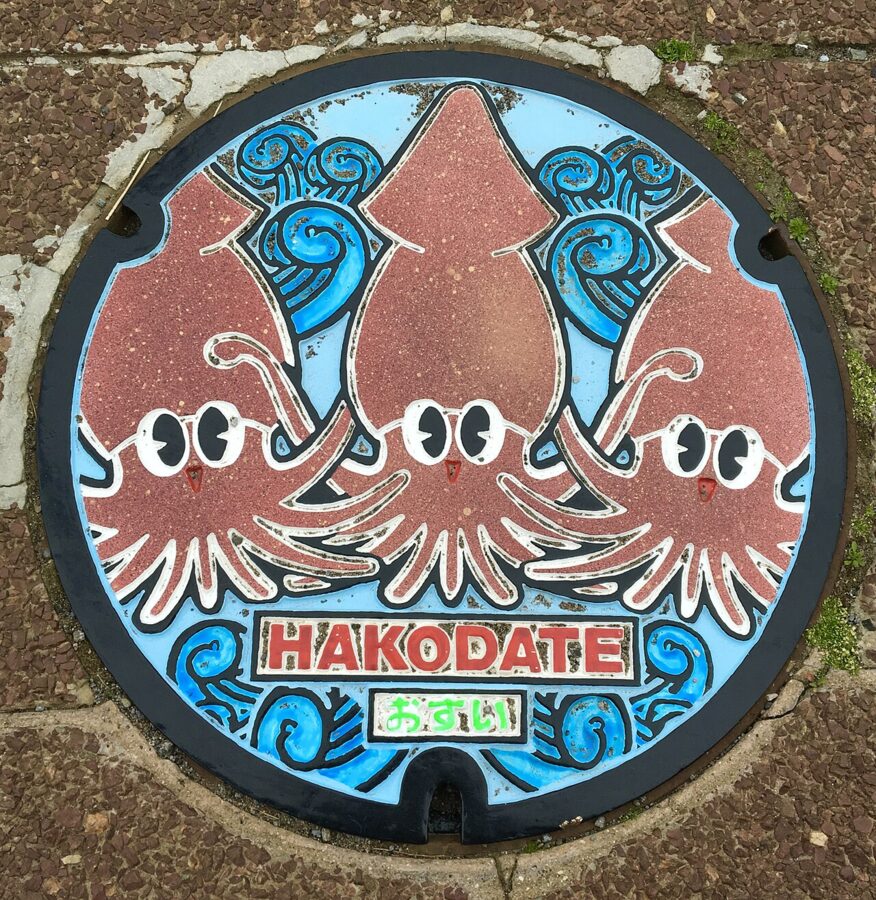
Squid stayed. It’s the official city fish, the subject of the ika odori, the squid dance that parades through the streets during the port festival every August, and a fixture of the big seafood breakfasts that the hotels near the station compete over. Which brings me to the market.
Hakodate Asaichi, stall by stall
The morning market started in 1945, when farmers from around Hakodate began selling vegetables from a corner of the station plaza. It moved three times before settling on its present site in 1956, and today it’s roughly 250 shops on three hectares, starting a one-minute walk from JR Hakodate Station.
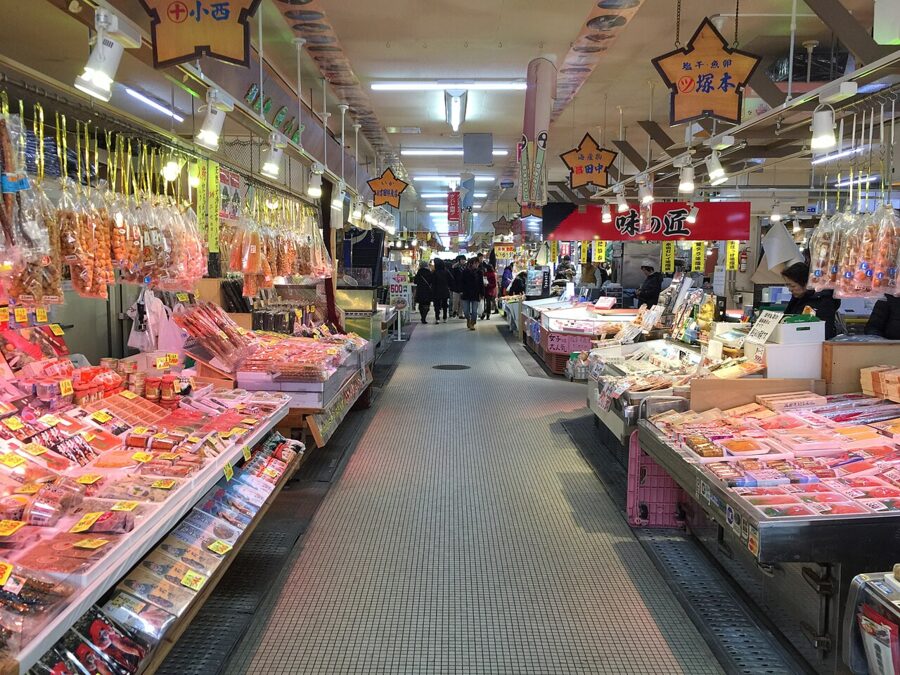
Opening hours follow the season. From May to December the market starts at 5:00, from January to April at 6:00, and most shops wind down a little after 14:00. Each shop sets its own days off, and Wednesday is the most common one.
It’s a tourist market now, and it would be silly to pretend otherwise. The market association’s own figures put visitors at around 1.5 million a year. But it’s a well-run one, and the bowls are still the best breakfast in town.
How it’s laid out
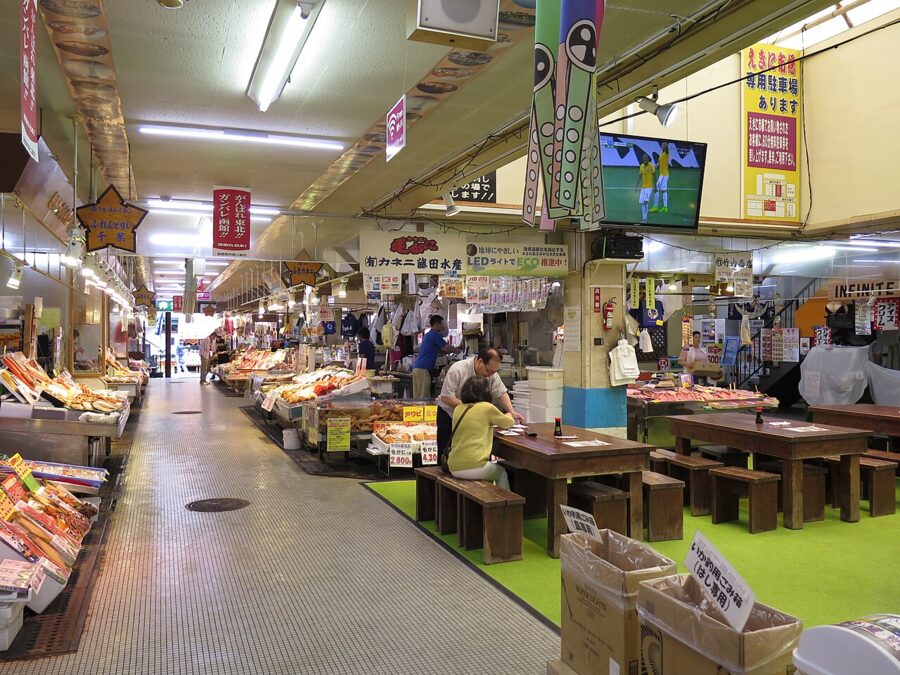
Think of it as three pieces. The first is the open-air grid of fish dealers, dried-goods shops and fruit stands spreading out from the station. The second is Ekini Market, a big covered hall built in 1981, with the squid pool in the middle and stalls all round it.
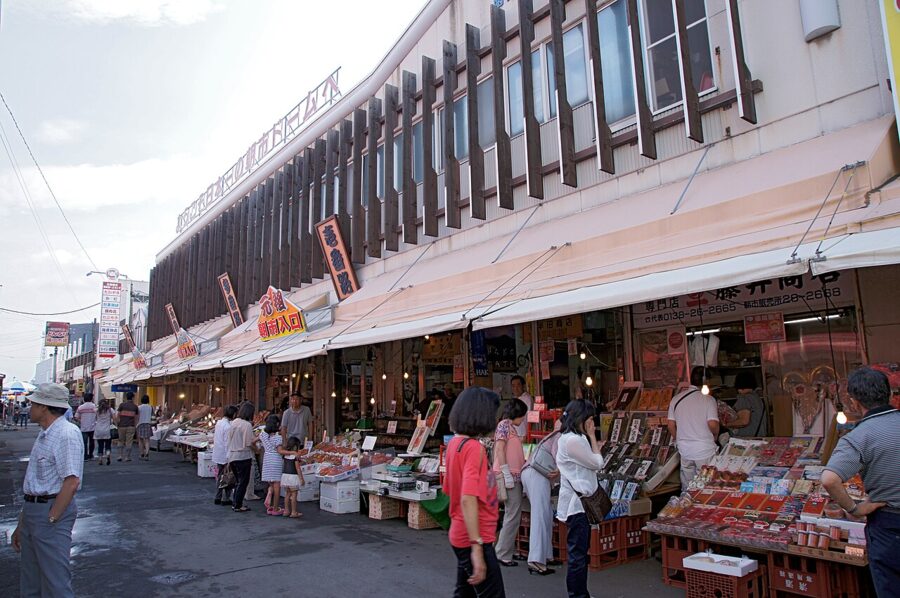
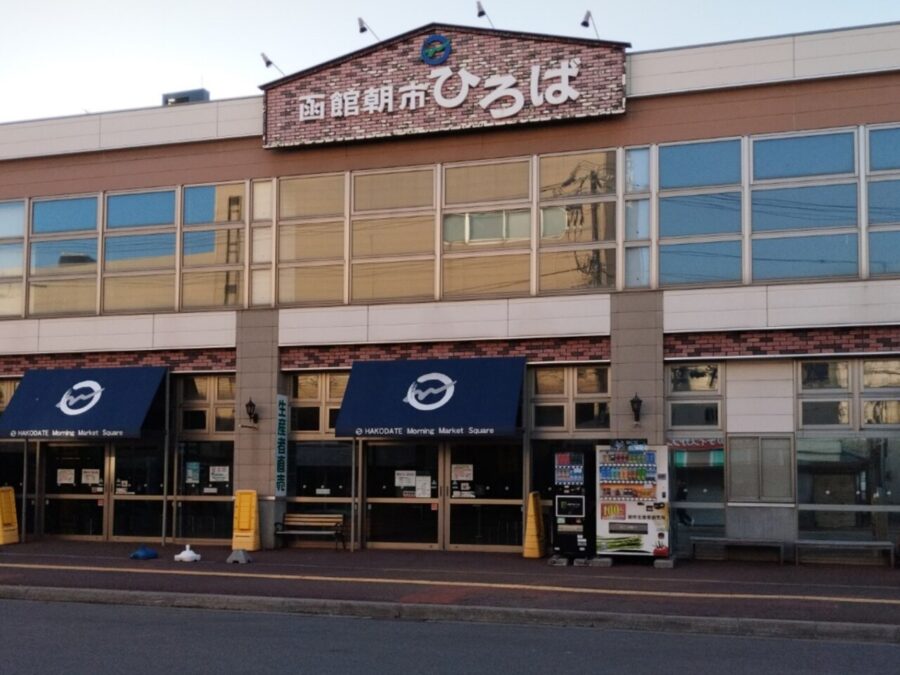
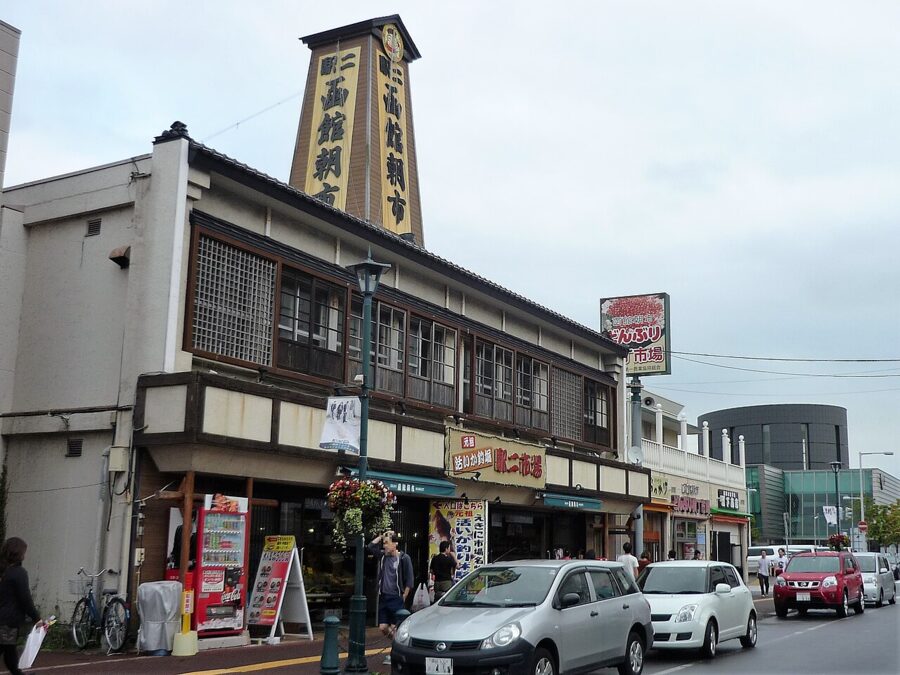
The third is the restaurant cluster. Donburi Yokocho Market is a white building of about twenty shops and eateries, refitted in 2005 to echo the old Hakodate Public Hall, with 440 seats between them and dining rooms that seat anywhere from 12 to 58. The newer Hakodate Asaichi Hiroba, which replaced an old produce hall in April 2014, adds a food court and more counters.
About 150 of the shops belong to the market federation and hang its sign, a cartoon called Asaitchan. Those shops sign up to five rules: no hard selling, polite service, clear prices and explanations, a business card for any follow-up, and, my favourite, never running out of smiles. If you’re buying crab to ship home, buy from one of them.
The squid pool
The pool sits in the middle of Ekini Market under a big sign reading Ganso Katsu-ika Tsuribori, the original live-squid fishing pool. You pay, you’re handed a short rod, and you wait for a squid to swim close. It usually takes well under a minute.
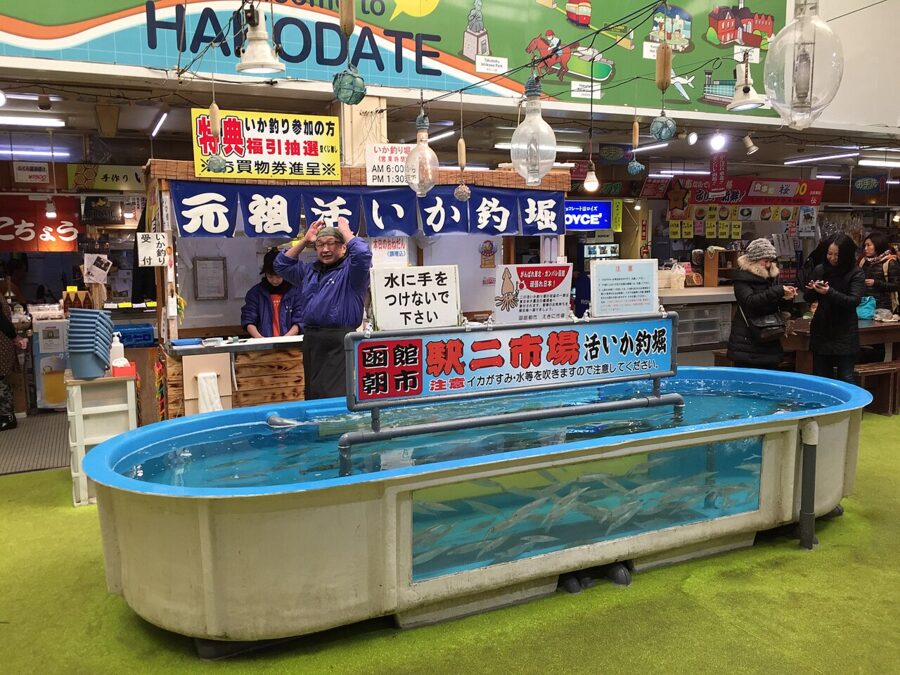
Then the staff take over. Your squid is sliced into sashimi on the spot and handed back on a plate with soy and ginger, and you eat it at the counter while the next person tries their luck. The price is the day’s market price; in 2026 it was running around ¥1,500–2,000 a squid depending on the season.
Get there early. The queue builds from opening, and on weekends in summer it can be the longest line in the market. If the board says there’s no squid today, believe it: in a bad season that happens more than anyone here would like.
Picking a bowl
There are dozens of rice-bowl counters, and the plastic models outside give you the menu and the price before you commit. Most open at 6:00 or 7:00 and close around 14:00. These are the ones I’d send you to first.
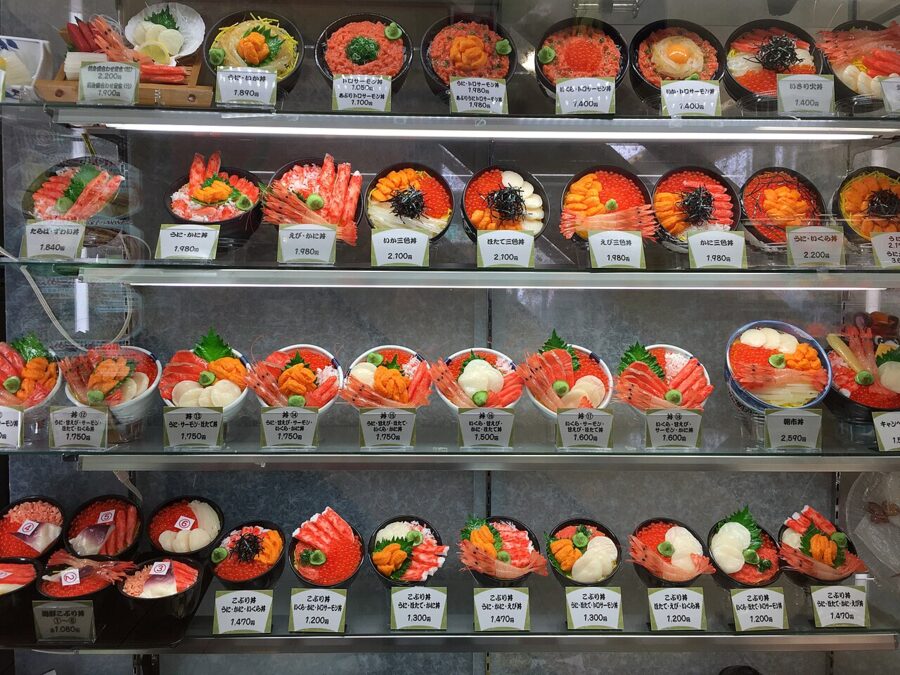
Kikuyo Shokudo has been here since 1956 and claims the original tomoe-don, a bowl split three ways between uni, ikura and scallop. The Ganso Hakodate Tomoe-don is ¥3,278. The rice is the real reason to come: Hokkaido-grown Fukkurinko, cooked in a charcoal-fired steaming pot the owners designed themselves in 2004 from diatomaceous earth quarried on the Noto Peninsula.
The main shop, at Wakamatsu-cho 11-15, opens 6:00–14:00 from May to November and 6:00–13:30 from December to April. It doesn’t take reservations, but the branch around the corner at 10-11 does. Both are a two-minute walk from the station’s west exit.
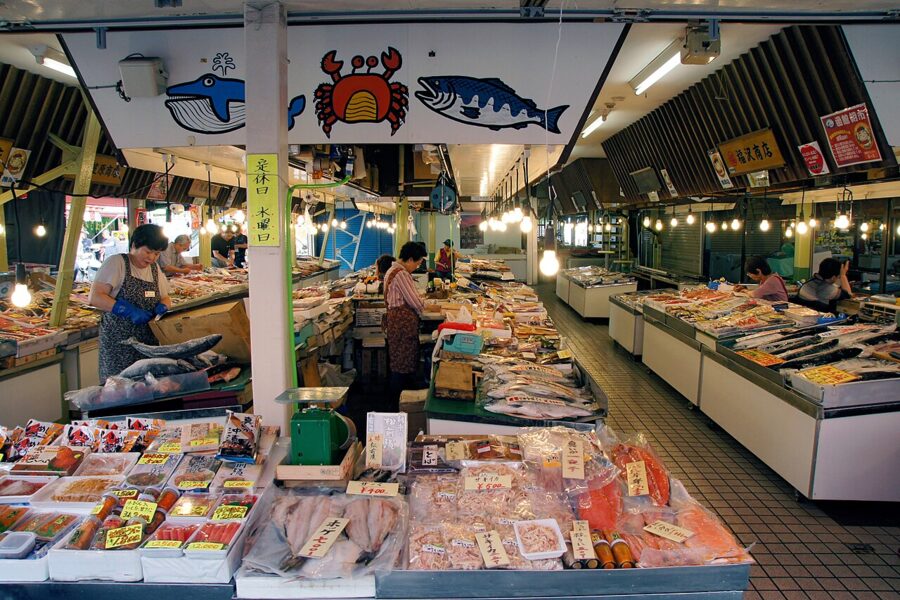
Ebisu, inside Donburi Yokocho, opened in 1948 and is one of the oldest diners in the market. Its asaichi-don of uni, ikura, scallop, squid and shrimp is ¥4,000, and the smaller bowls start at ¥1,320, which is the cleverest order in the building if you want to try two places. There’s a tank of live squid inside, and it takes cards and QR payments.
Ichihatei Tabiji, also in Donburi Yokocho, is the place for the live-squid odori-don, the “dancing” bowl, at market price. Its nanairo-don piles squid, surf clam, scallop, crab, uni, ikura and botan shrimp on one bowl for ¥3,800. It’s cash only.
Chamu is the small one, fifteen seats, and the squid sashimi set at ¥1,300 comes with a couple of the owner’s home-made side dishes. The Hakodate-don of uni, ikura and crab is ¥2,100. Ikura-tei, a few doors along, makes its own ikura and does a ramen-and-bowl set for ¥1,780, a decent answer to a cold morning.
Uni Murakami and the uni question
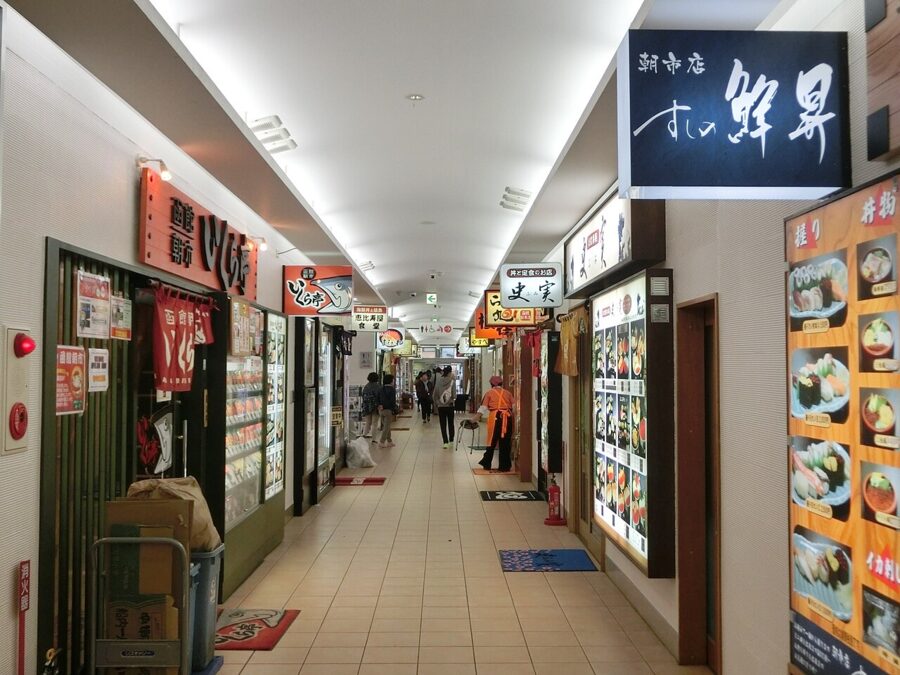
Much of the uni sold in Japan is treated with alum so it holds its shape for a week. It works, but the urchin turns faintly bitter as the days go by. Uni Murakami uses none, and its Hakodate main shop sits right by the market at Otemachi 22-1.
It’s a morning shop: 8:30–15:00, last orders 14:30, closed on Wednesdays. A middle-sized bowl with 60 g of uni was ¥6,820 this autumn, so this is a treat, not a habit. For the evening there’s the sister shop, the Hakodate Ekimae branch, three minutes’ walk away, open 11:30–14:30 and 17:30–21:30.
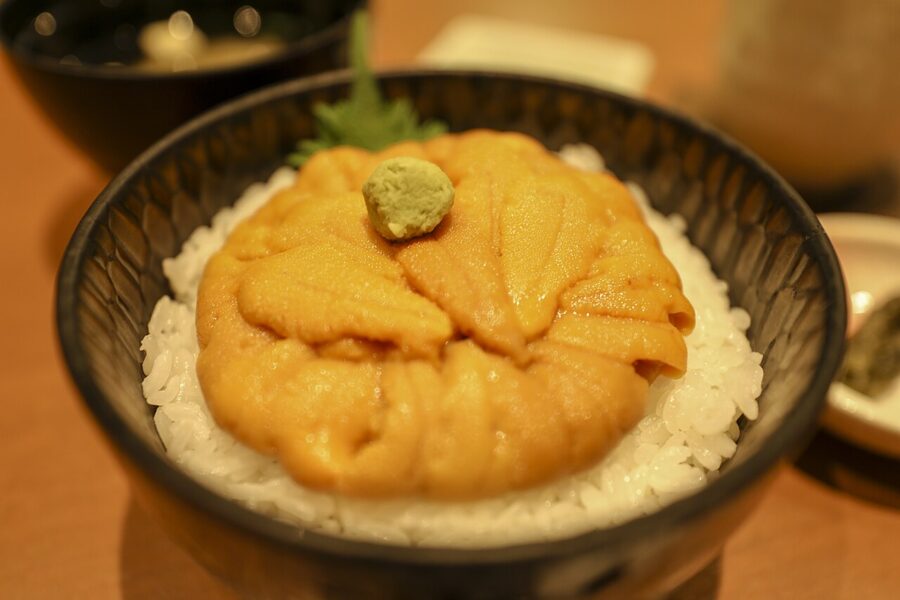
Two urchins turn up in Hakodate. Ezo bafun uni is the small orange one, richer and sweeter; Ezo murasaki uni is paler and cleaner. The season runs roughly April to mid-September. Outside it, shops like Kikuyo work hard to keep buying additive-free uni from around Hokkaido rather than switching to the treated kind, which is one reason the bowls cost what they do.
Crab, melons and what to carry home
Crab here is sold live, boiled, or as legs in vacuum packs. The live ones are priced by weight at the day’s rate, and a stall that knows its business will tell you the price before anything goes in the pot. If it doesn’t, ask.
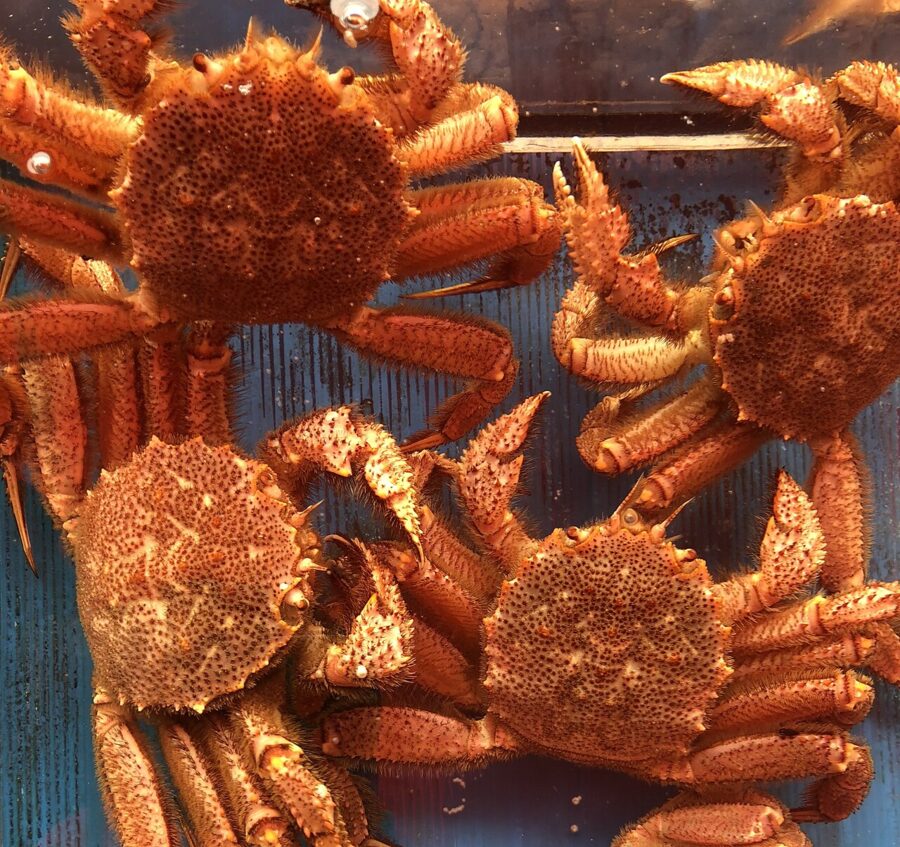
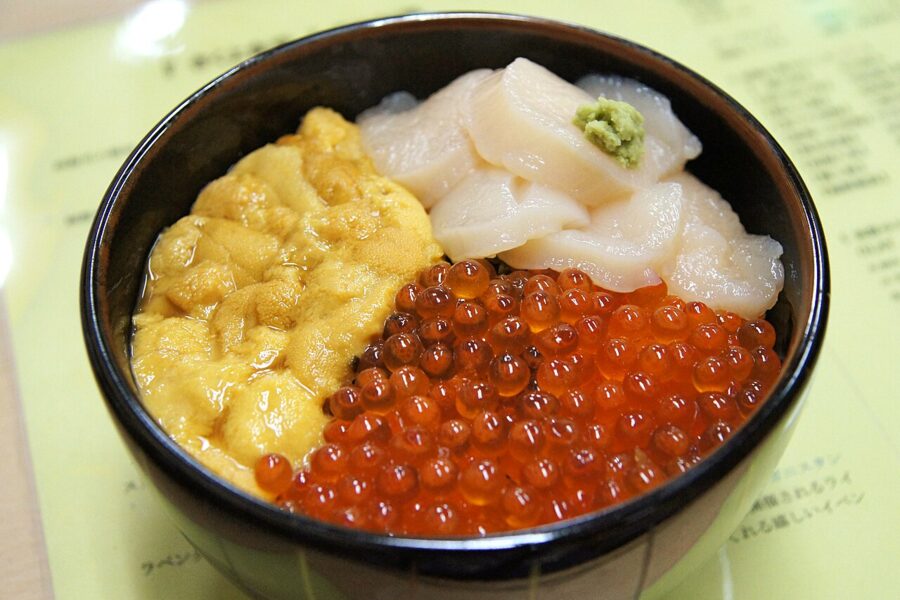
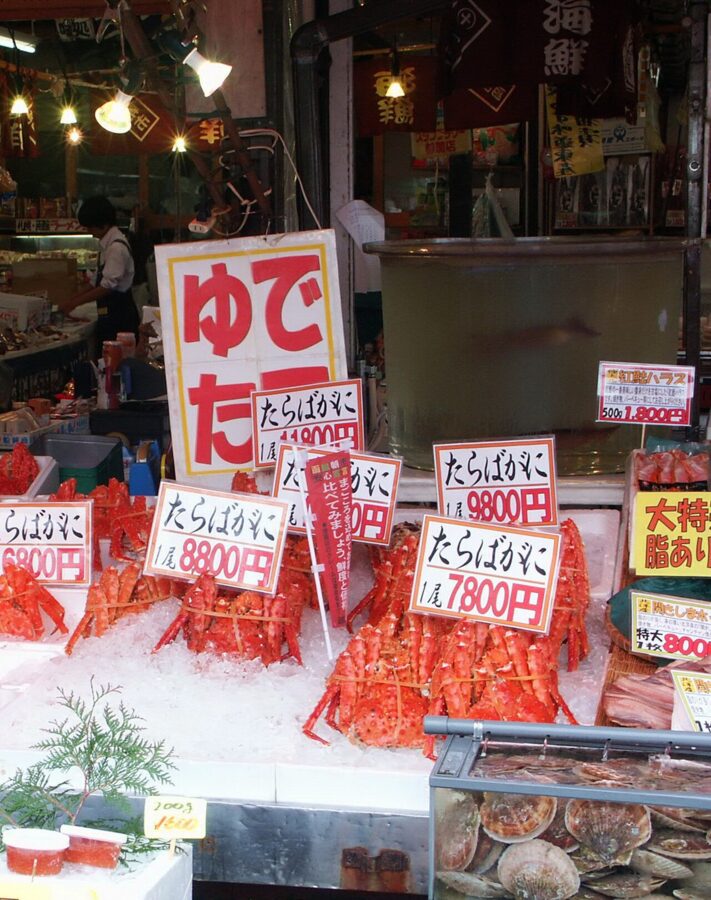
The market federation also runs a house brand called Select Asaichi, a few dozen products chosen for quality and local character. The list reads like a summary of the market: soy-marinated ikura, overnight-dried atka mackerel, red salmon, crab boiled alive, wild bluefin from the Tsugaru Strait and raw ikameshi to cook at home. It’s a sensible shortlist if you’re overwhelmed.
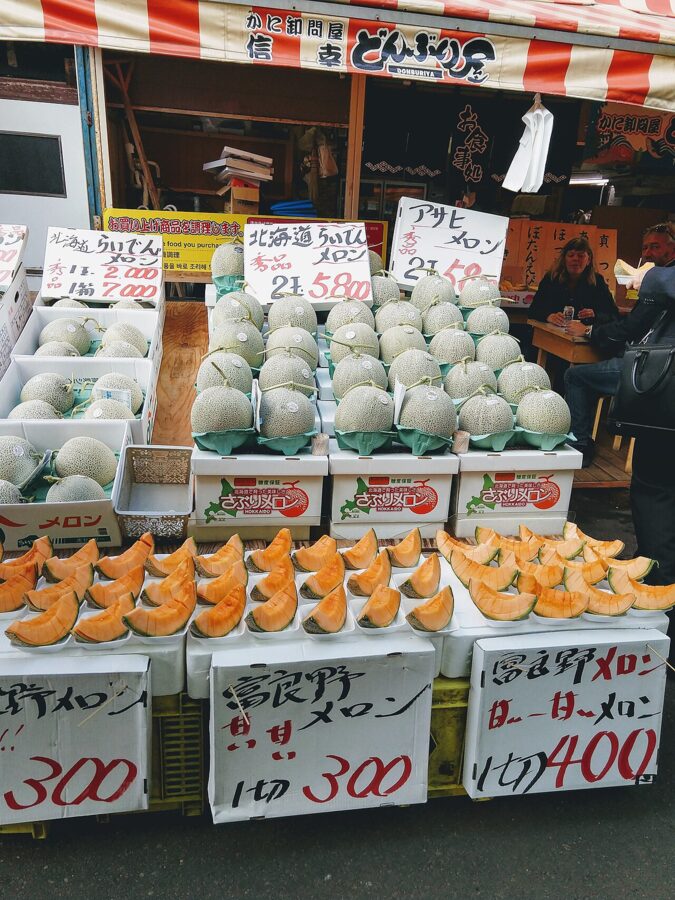
One small thing. If you drive in, the market car parks charge ¥100 per 20 minutes, and federation shops give you an hour free when you spend ¥2,200 or more. Keep the receipt.
Beyond the Asaichi
Hakodate people mostly don’t shop at the Asaichi any more. The produce went upmarket when the visitors arrived, and the locals moved to supermarkets and to Hakodate Jiyu Ichiba, a covered market in Shinkawa-cho, a short tram ride east. It’s smaller, plainer and a better idea of what a Hakodate kitchen buys on a weekday.
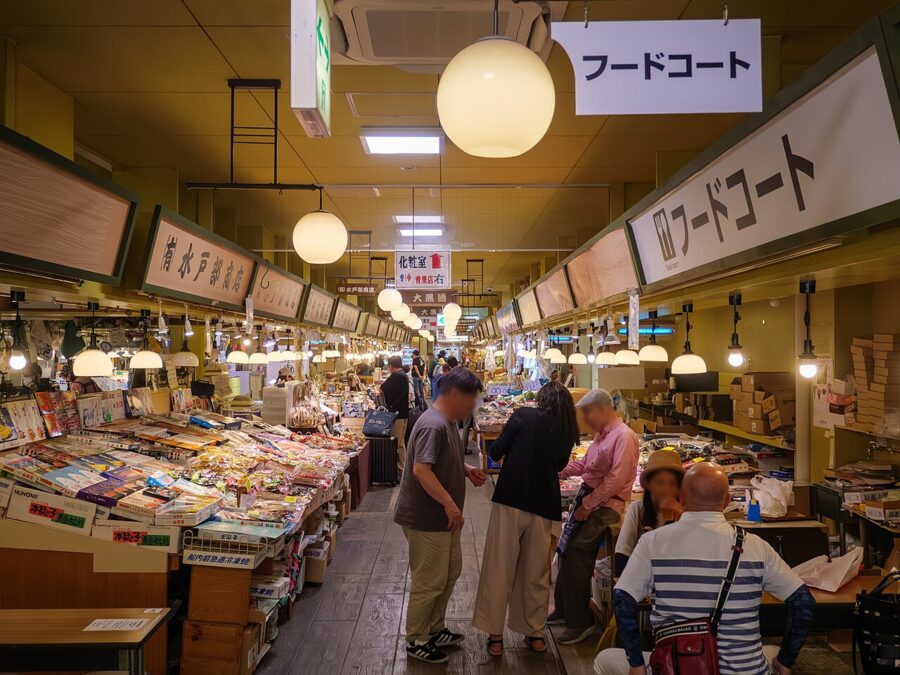
If you’ve done Tokyo’s Tsukiji Outer Market, you’ll find the Asaichi gentler and more seasonal: less sushi, more crab and squid, and everyone done by mid-afternoon. And compared with the markets in Sapporo, the big difference is the squid. Nowhere in Hokkaido makes so much of it.
Squid, every way Hakodate serves it
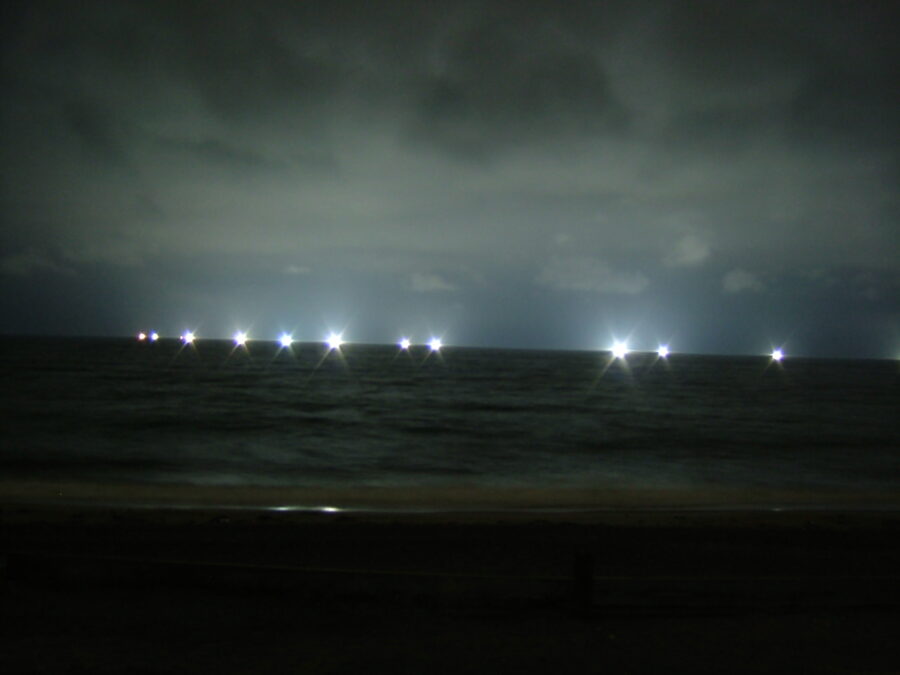
Hakodate eats two squid through the year. From June to December it’s ma-ika, the Japanese flying squid that the rest of Japan calls surume-ika. From January to May it’s yari-ika, the slimmer spear squid. When people here say “live squid” without qualification, they mean the first.
Ika-sashi and the dancing bowl
Fresh squid is the colour of weak tea, translucent and slightly amber, with real crunch. As it ages it turns milky white and soft. That’s the whole test, and once you’ve seen it you’ll spot tired squid in any display case in the country.
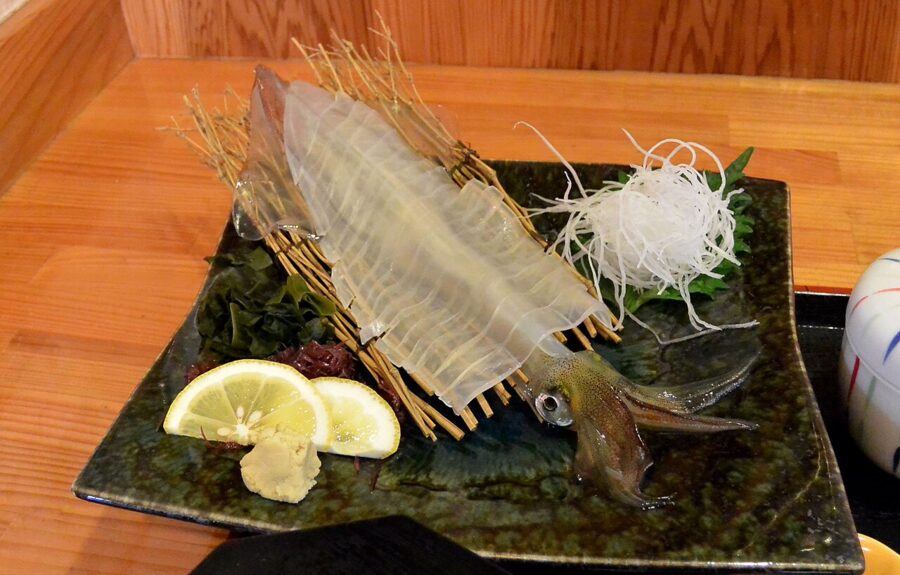
Ika-sashi is usually cut into strips and eaten with grated ginger and soy. Ika somen goes further, cutting the body as fine as noodles so you can almost slurp it. Many places with a tank will send the legs and fins back as a second course if you ask, salt-grilled or fried.
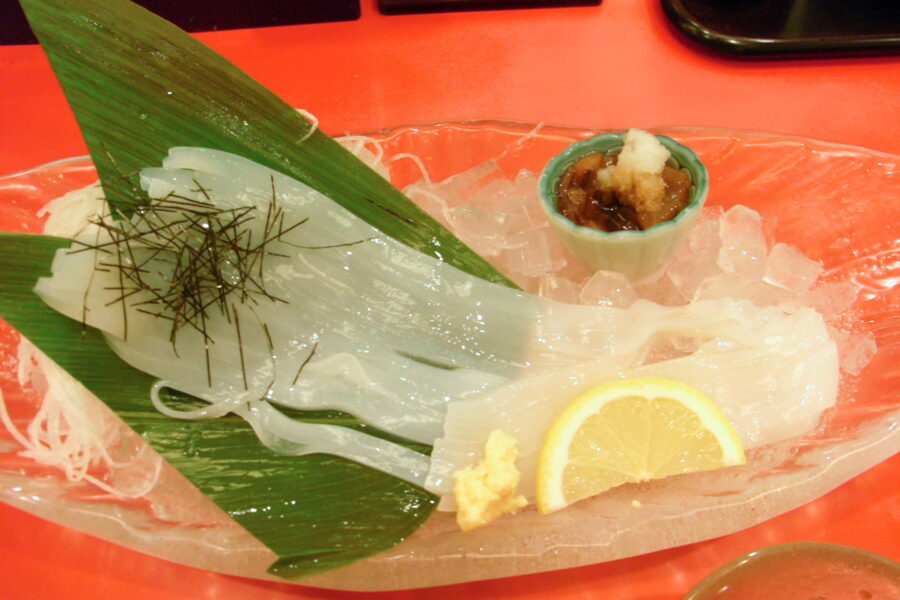
The katsu-ika odori-don is the show-off version. A whole live squid is sliced and laid on rice with the head and legs still attached, and when the soy goes on, the legs move. It’s on the menu at Ichihatei Tabiji, and the market federation has given it a Select Asaichi listing. If that sounds like too much theatre for 7:00, order ika-sashi instead; it’s the same squid without the performance.
Ikameshi, shiokara and squid ink
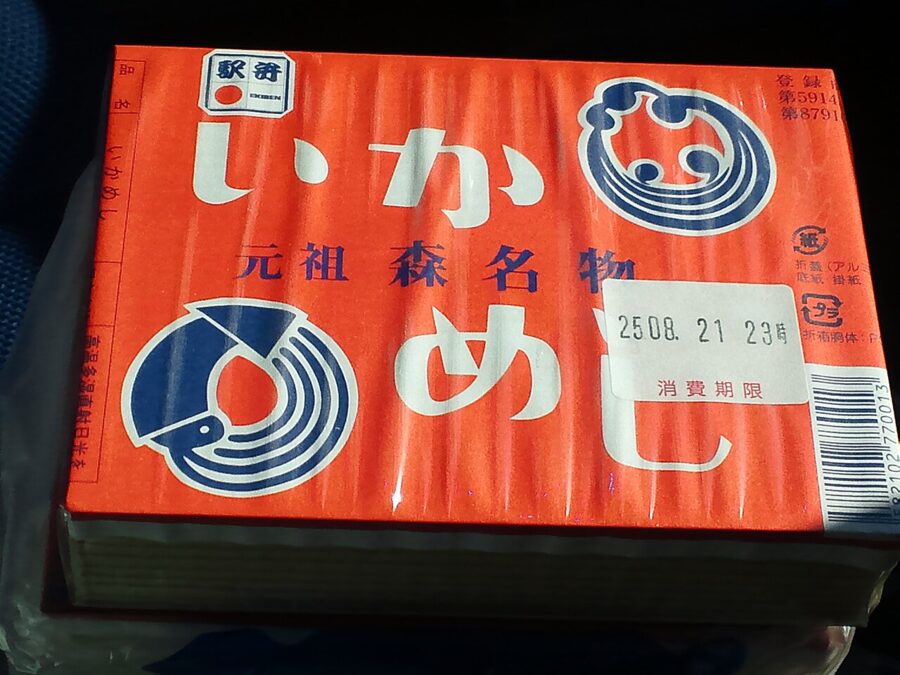
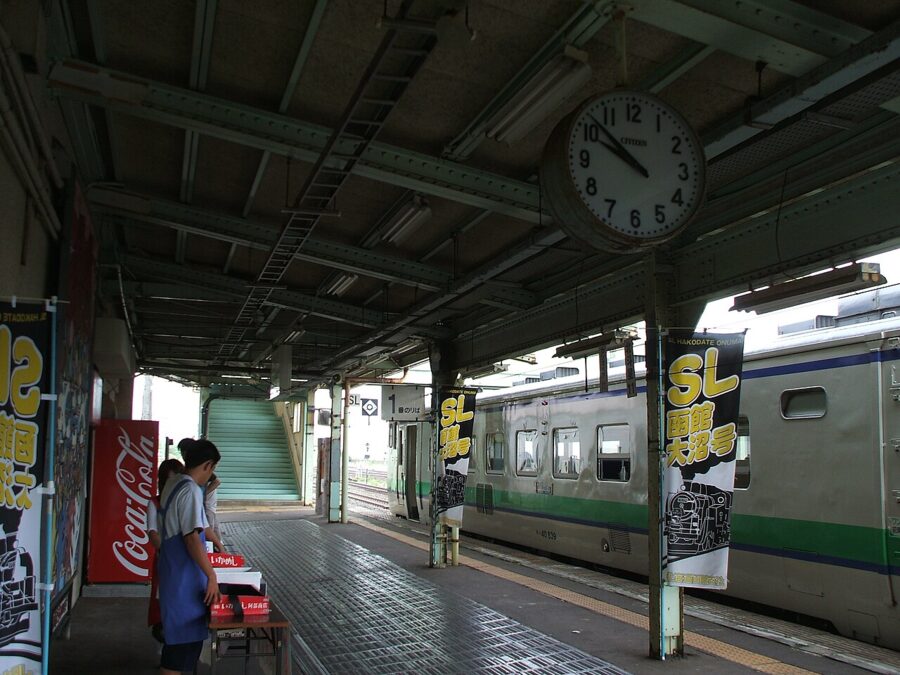
Ikameshi is the other squid dish people come for: a whole squid stuffed with sticky rice and simmered in soy and sugar. It belongs to Mori, a small town up the line towards Sapporo, where it has been sold since wartime, and I’ve covered it properly in my ekiben guide. In Hakodate you’ll find it in the station shops and in the market, sometimes raw to cook at home.
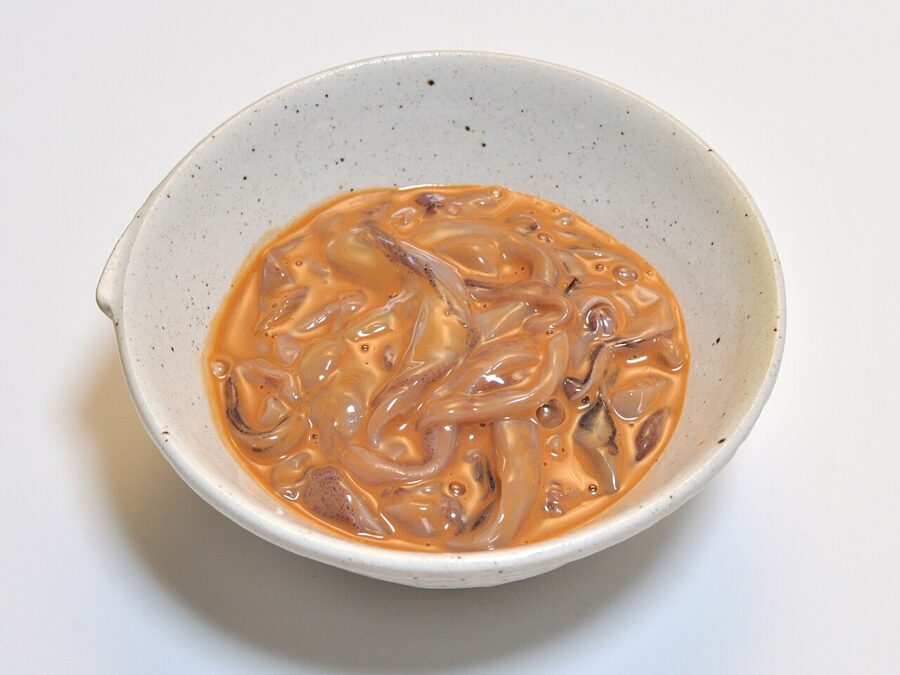
Ika shiokara, squid fermented in its own salted liver, is the drinker’s version, and plenty of stalls in the market sell it by the jar. Squid ink is the newest twist. In August 2026 a ramen counter called Hakodate Asaichi Ramen opened in the Hiroba food court, serving a black squid-ink soy ramen for ¥1,180 alongside a regular Hakodate shio ramen, from morning to lunchtime.
For the evening, Daimon Yokocho, the stall village near the station, has a stall called Hakodate Ika-ya among its twenty-six. Squid, a beer and a stool at a tiny counter is about as Hakodate as an evening gets.
Where did the squid go?
Here’s the part the brochures leave out. In June 2025 the Japanese flying squid season opened off southern Hokkaido and the boats caught almost nothing. The first auction of the season at Hakodate’s fish market was called off for lack of squid.
Then the year turned upside down. By autumn the squid had come back in huge numbers off the Pacific coast, the national catch limit, which had started at a record low, was overshot, and in October 2025 small boats were ordered to stop fishing. One fisheries scientist explained the early failure this way: the autumn-born squid that ride the Tsushima warm current north through the Sea of Japan simply didn’t arrive, while the later glut came up the Pacific side.
In 2026 the early season failed again. On 1 June nine boats went out from Hakodate’s fishing port and came back with next to nothing, and the first auction was scrapped for the second year in a row. A May survey by the Hakodate fisheries research station had caught no squid at all, a first since the survey began in 2001.
July was worse on paper. The city’s own figures put fresh squid through the Hakodate market at 34 tonnes for the month, the lowest on record, before landings picked up in August. So if you’re coming in early summer, go to the squid pool knowing it may be empty, and expect to pay more for squid than the old guidebooks say.
What does that mean for your trip? In both of the last two years, late summer and autumn were the safer months for live ma-ika. In winter and spring, ask for yari-ika and you’ll be eating what’s actually local. And whatever the season, a shop that tells you straight where today’s squid came from is a shop worth eating in.
Shio ramen: Hakodate drinks it clear
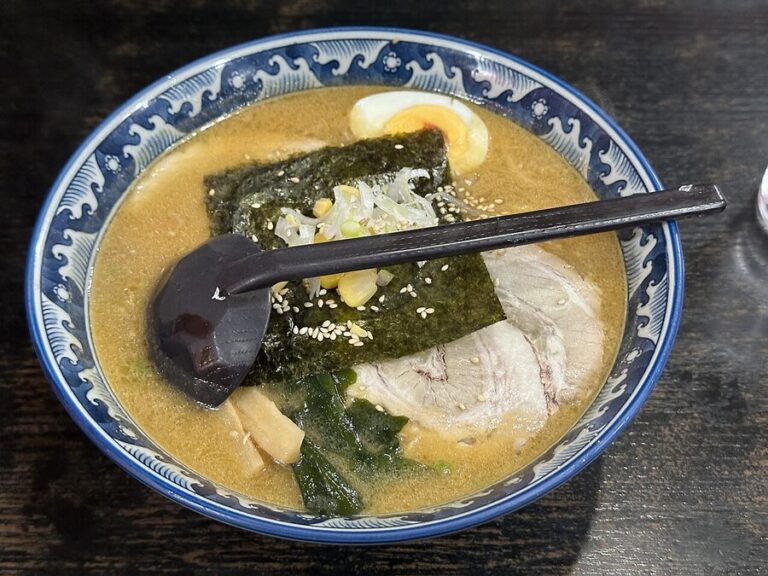
On the regional ramen map, Hokkaido splits three ways. Sapporo has miso, Asahikawa has soy, and Hakodate has salt. In Hakodate itself, people mostly don’t bother with the word shio: they just say ramen, or the older shina soba, and the salt is assumed.
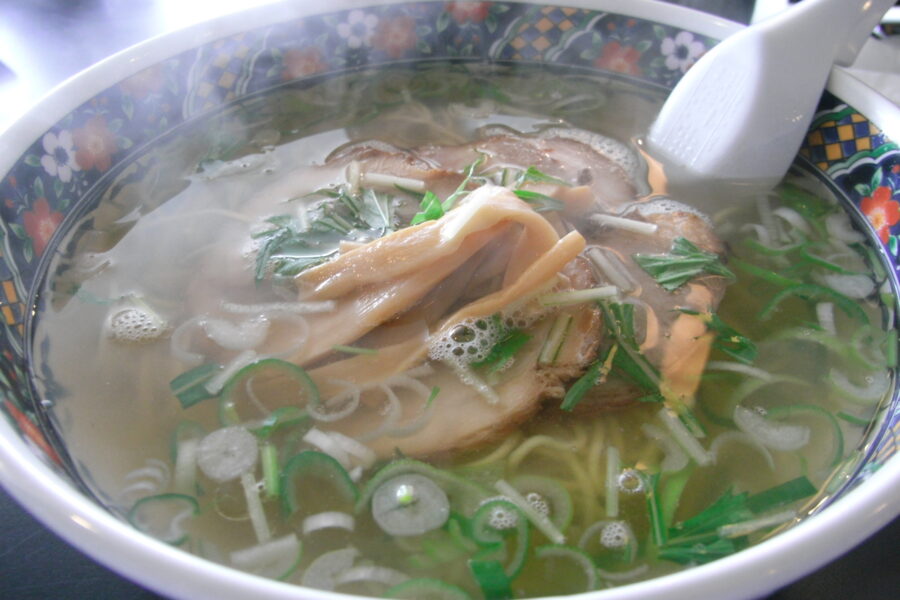
The style is easy to describe. The soup is mostly pork bone, sometimes with chicken, kept just under the boil so it stays clear, then seasoned with a salt tare. The noodles are straight, medium-thick and on the soft side, and the toppings are chashu, menma, spring onion and spinach, with a slice of fu or naruto.
The history is the fun part. In April 1884 Yowaken, a western-style restaurant in what is now Suehiro-cho, run by Chen Nanyang, a Chinese cook who had worked at the British consulate, advertised “Nanking soba” in a local paper for 15 sen, when a plain bowl of buckwheat soba in Hakodate cost about 2. Nobody has found a recipe, so no one can prove that bowl was ramen as it’s eaten today. But the straight noodles and clear soup point to the Cantonese salt-soup noodles of the merchants who came for the kombu.
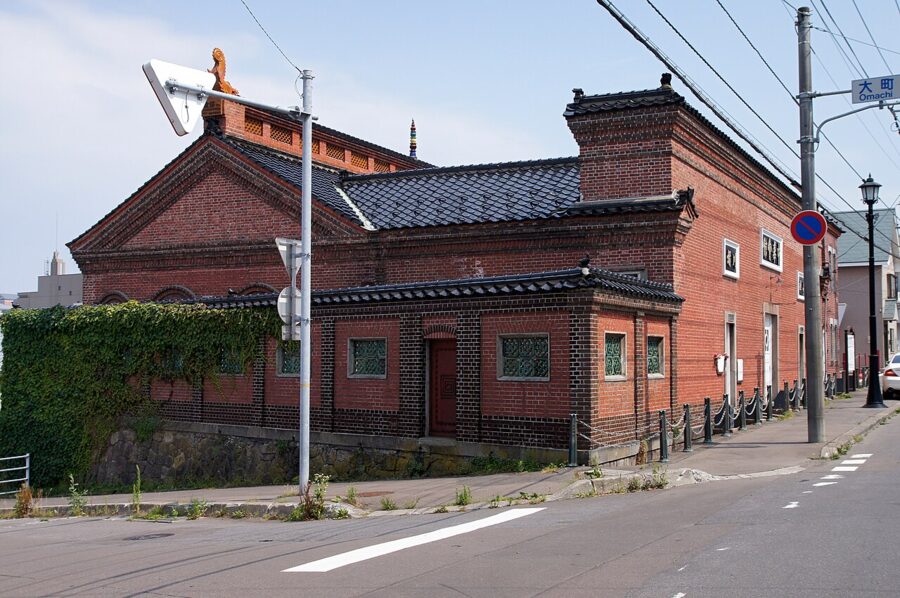
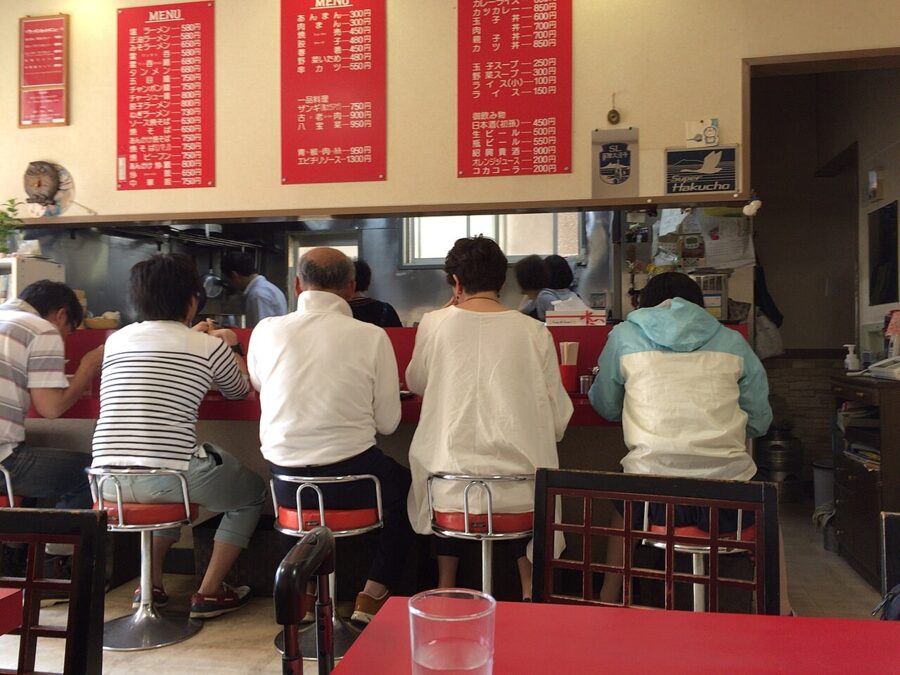
By the late 1930s Hakodate had a shina soba trade association, and by 1941 some thirty-one noodle shops, and after the war the Daimon district in front of the station filled with ramen stalls and handcarts. The name “Hakodate ramen” is younger than you’d think. It’s said to date from 1971, coined for visitors when a ramen shop opened at the airport, and “shio ramen” only became common on Hakodate menus around 2000.
Where to drink the soup
Ajisai is the name everyone gives you, and it’s earned it. The main shop is in Goryokaku-cho, near the star fort, currently opening at 11:00 with last orders at 20:25, and closed on the fourth Wednesday of the month. More convenient for most visitors are the Kurenai branch inside Hakodate Bay Bishoku Club in the Bay Area, last orders 21:30, and the branch on the second floor of JR Hakodate Station, last orders 19:30 and open every day.
Jiyoken, in Matsukaze-cho a few minutes’ walk from the station, opened in 1947 and is known for its own noodles. It’s a small, old-fashioned room with a queue outside at opening, and its hours are short, so check the day before. This is the one I’d choose if I had a single bowl.
Shinano is the youngster, open since 2007 near the station, and it’s on this list for one practical reason: it serves into the late evening, until about 22:00, when most of the old shops have shut. Expect a line at lunch and again late at night.
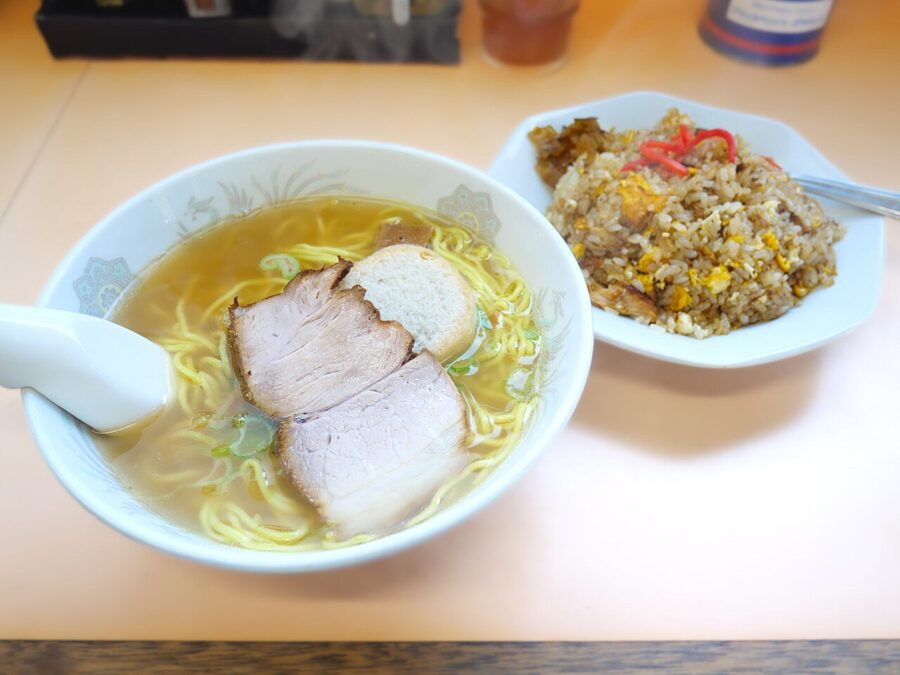
One warning. Hakodate shio ramen is gentle, and if you’ve just come from a bowl of tonkotsu or Sapporo miso, the first spoonful can taste like nothing much. Give it three. The flavour is in the bones and the salt balance, and it creeps up on you.
The chains you can only eat here
Hakodate’s two most loved fast foods are both local companies, and both are a bit odd. I mean that kindly.
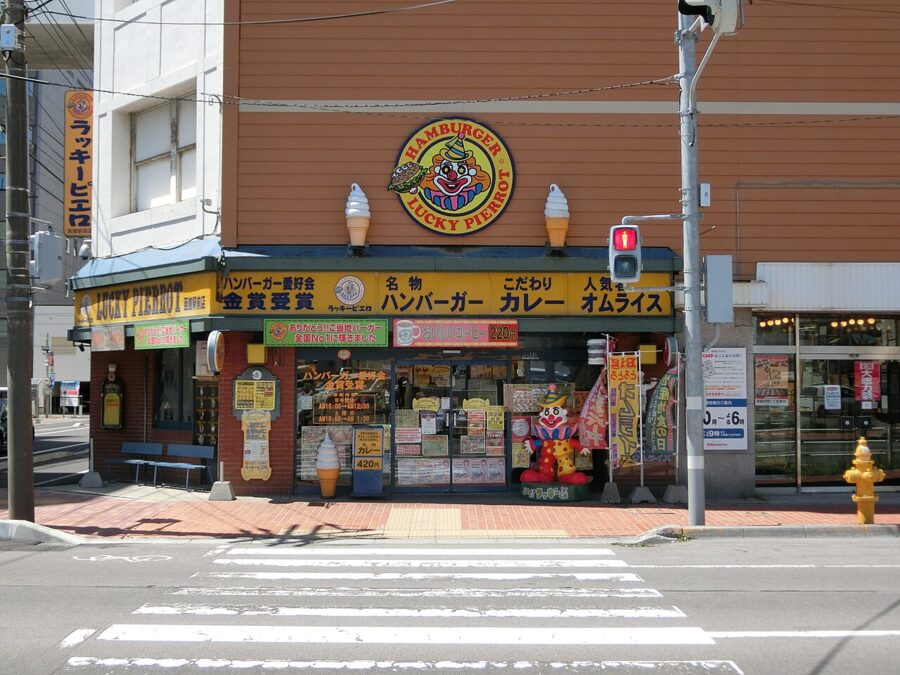
Lucky Pierrot
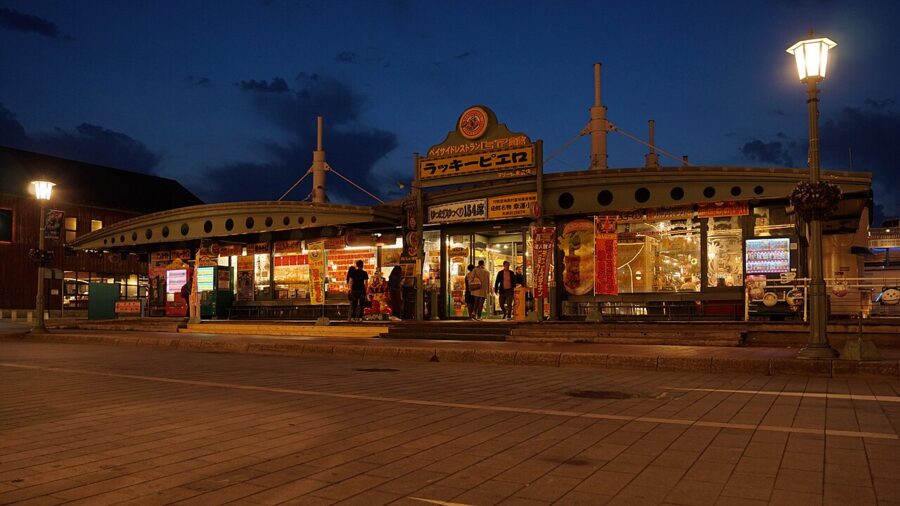
Lucky Pierrot opened its first shop in 1987 on the waterfront in Suehiro-cho, next to the Kanemori red-brick warehouses, and that shop is still the Bay Area main store. It started as a takeaway counter and grew into a dining room with swing seats hung from chains and carousel horses. It’s open 10:00–21:00, last orders 20:30.
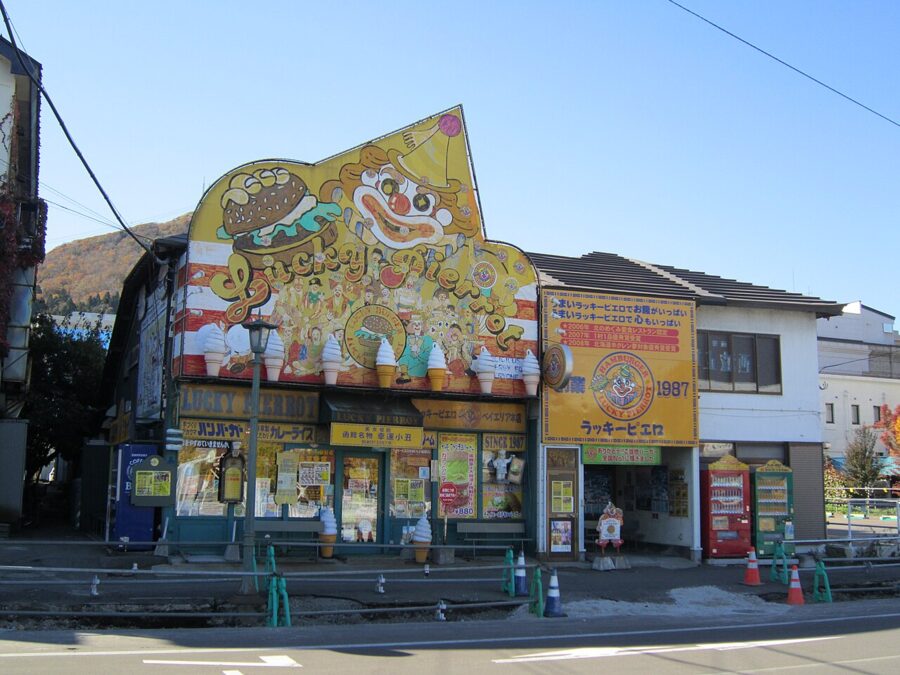
The founder, who ran a Chinese restaurant in Chiba before he settled in Hakodate, built the menu around Chinese cooking techniques. The result is the Chinese Chicken Burger: three big pieces of fried chicken in a sweet-savoury sauce, with mayonnaise and lettuce in a soft bun. It is by a wide margin the most popular thing on the menu, and it’s the order if you only eat one.
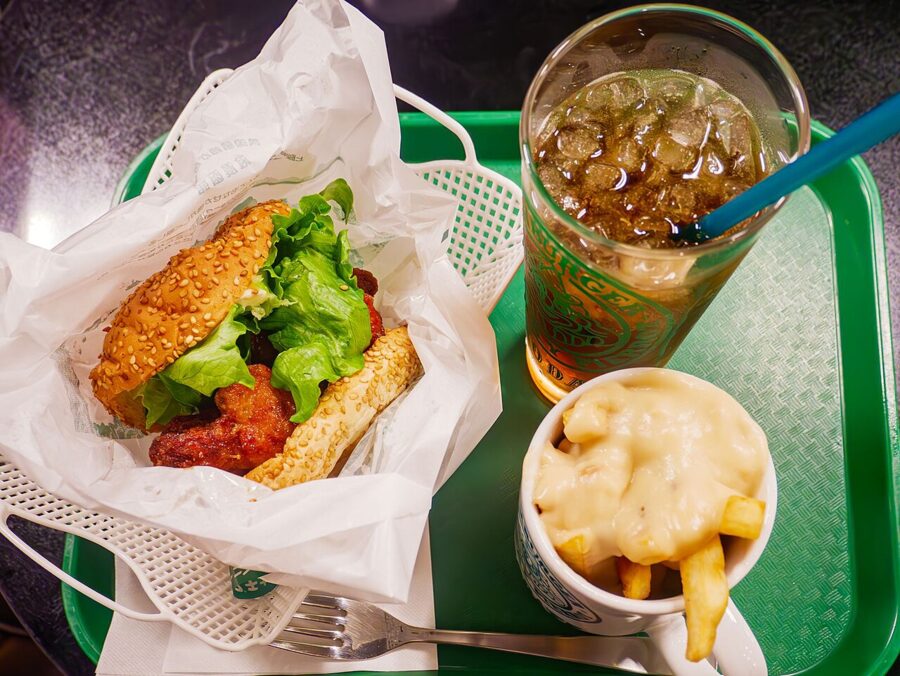
Every branch has its own theme and decor, which turns visiting several into a small hobby for some fans. There are more than a dozen, all in the Hakodate area and the towns next door, including one by Goryokaku Tower and another, the Toge-shita main store, a seven-minute drive from Shin-Hakodate-Hokuto Station.
The rest of the menu is long and mostly heavy: curry rice, omurice, yakisoba, a pork-cutlet burger, and the Futoccho Burger, two patties, a croquette, cheese and a thick tomato stacked about 18 cm high, limited to twenty a day per shop. Skip it unless you’re four people with one plan.
Hasegawa Store and the pork yakitori bento
Hasegawa Store is a local konbini chain with fourteen shops around Hakodate, and it would be unremarkable except for one thing. Late one night in 1978, the story goes, a drunk customer asked the then company president, who was on the till himself, whether there was a bento. He grabbed the shop’s rice, some nori and the skewers they’d started grilling as drinking snacks, and put them in a box.
That’s the yakitori bento, and the yakitori is pork. In southern Hokkaido “yakitori” means pork on a skewer, called buta-seiniku and cut with a balance of fat and lean, and if you want chicken here you ask for “yakitori, chicken”. The company’s own explanation is that pigs were cheaper than chickens locally, and that pork kept outdoor workers going through the winter. If you’ve read my yakitori guide, forget most of it for a day.
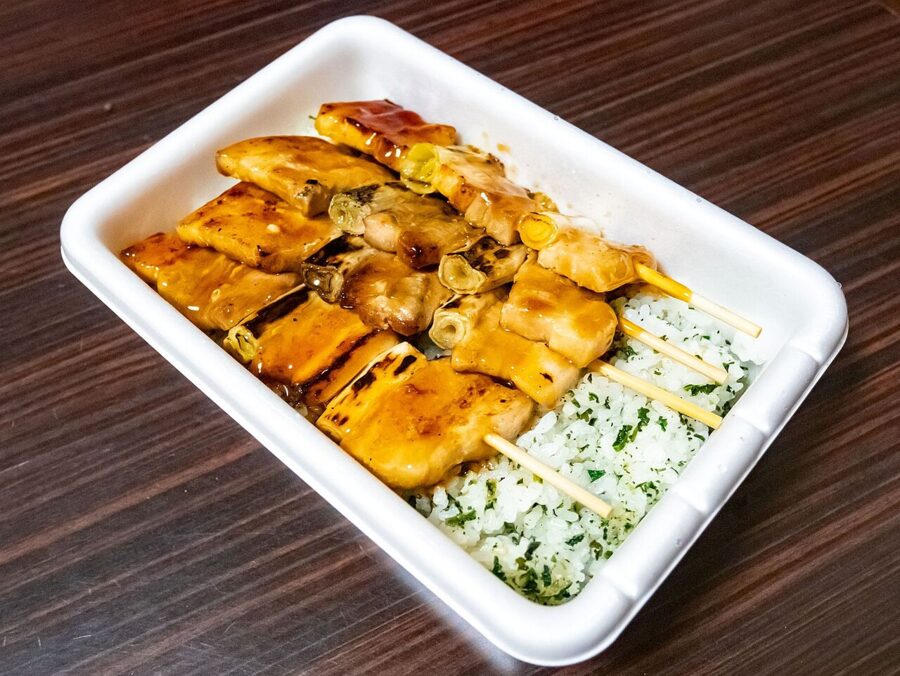
It’s made to order. You fill in a slip with size and sauce, hand it over at the yakitori counter and wait while they grill. The small box, 200 g of rice with three skewers, is ¥680 including tax.
There are five flavours. Tare is by far the most popular; shio has a quiet hit of garlic; and there’s shio-dare, a spicy umakara and a miso-dare too. The staff spray the skewers with red wine from Hakodate Wine as they grill, and you can mix flavours by asking for “one shio, two tare”.
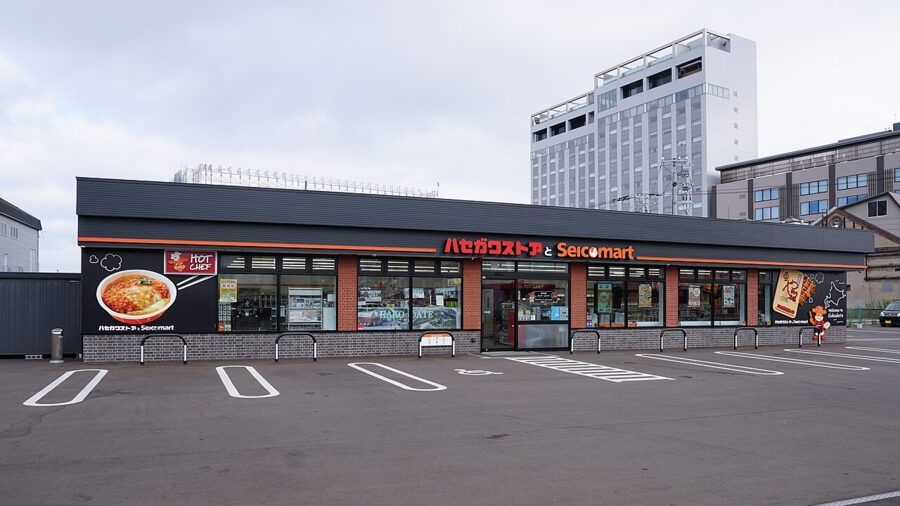
For visitors, two branches matter. The Hakodate Ekimae shop, two minutes from the station, is open 8:00–20:00. The Bay Area shop at Suehiro-cho 23-5, by Nishi-Hatoba on the waterfront, opens 7:00–22:00 and is the one to hit after the warehouses.
Conveyor-belt sushi, the local way
Hakodate’s kaiten sushi is better than it has any right to be, because it draws on the same waters as the market. Kantaro is the local chain, with large toppings and tablet ordering. Ask for whatever squid is on, and the bluefin, and read up on the forms in my guide to types of sushi before you go if the plates baffle you.
Red brick, Motomachi and the Western table
Hakodate’s Bay Area and the Motomachi slope behind it are where the 1859 opening is still visible. It’s also where you’ll do most of your eating between meals.
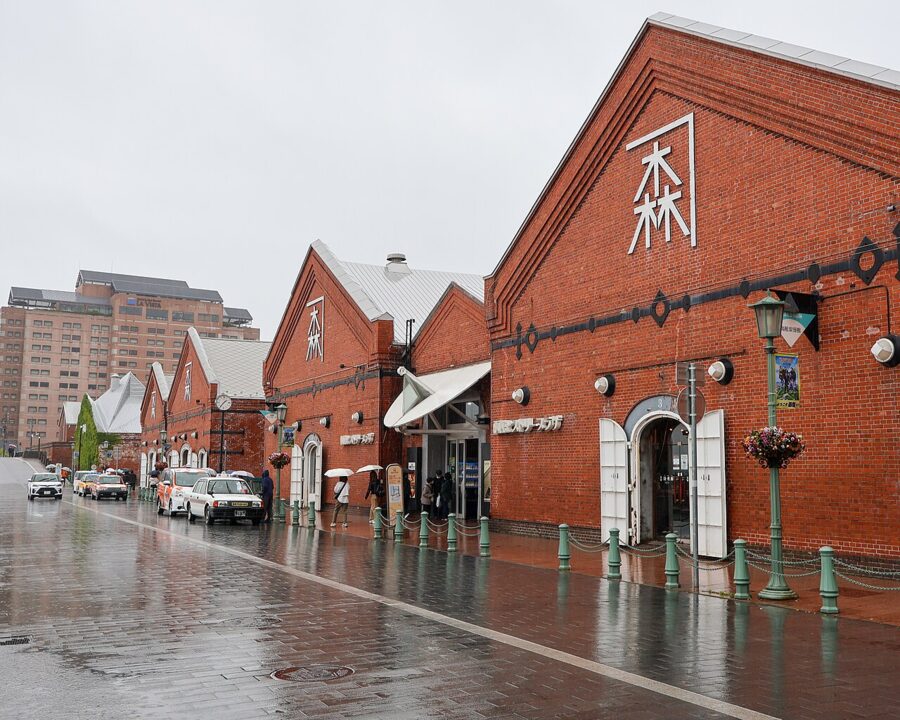
The Kanemori warehouses are shops and cafes now, and they’re pleasant rather than essential for food. The better plan is to use them as the hub: Lucky Pierrot’s original store, the Bay Area Hasegawa Store and Ajisai’s Kurenai branch are all within a few minutes’ walk.
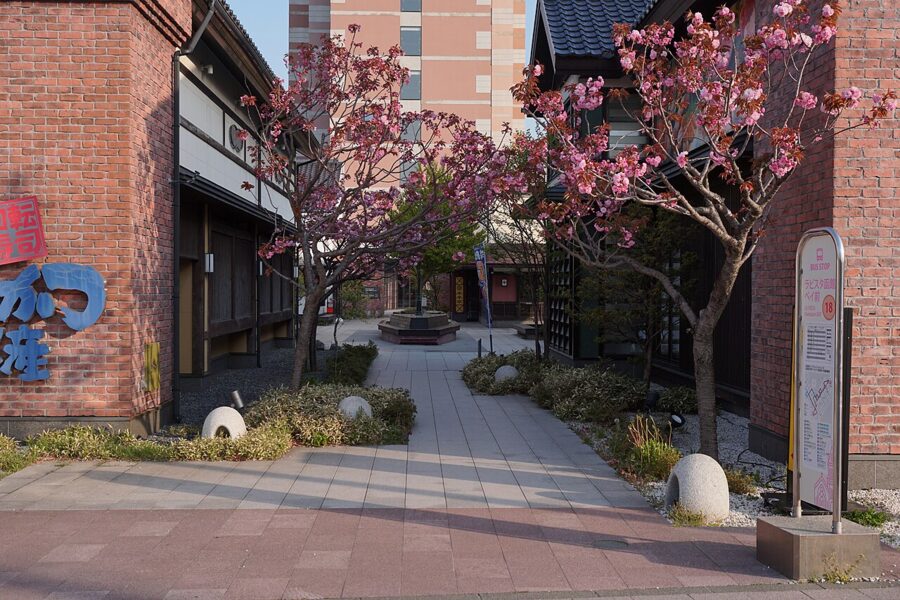
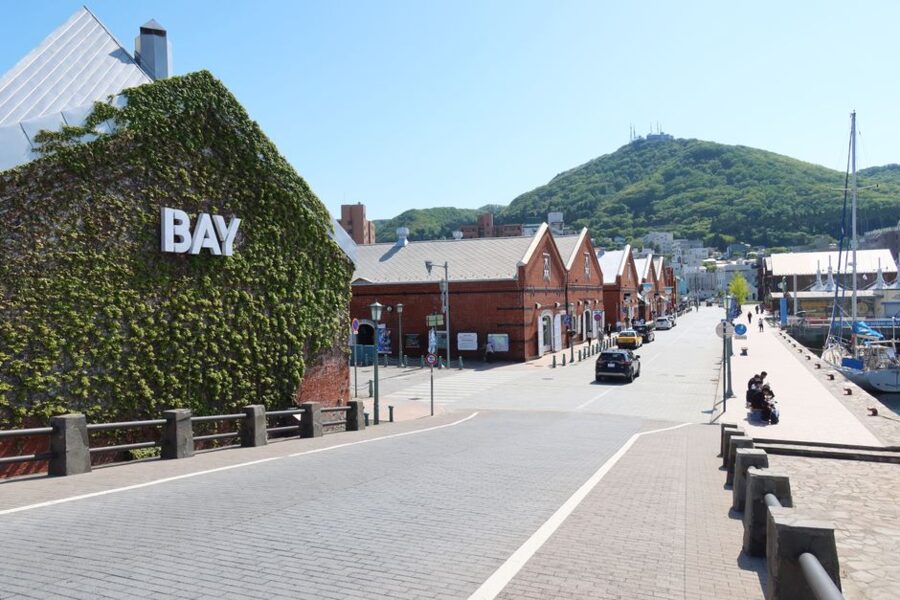
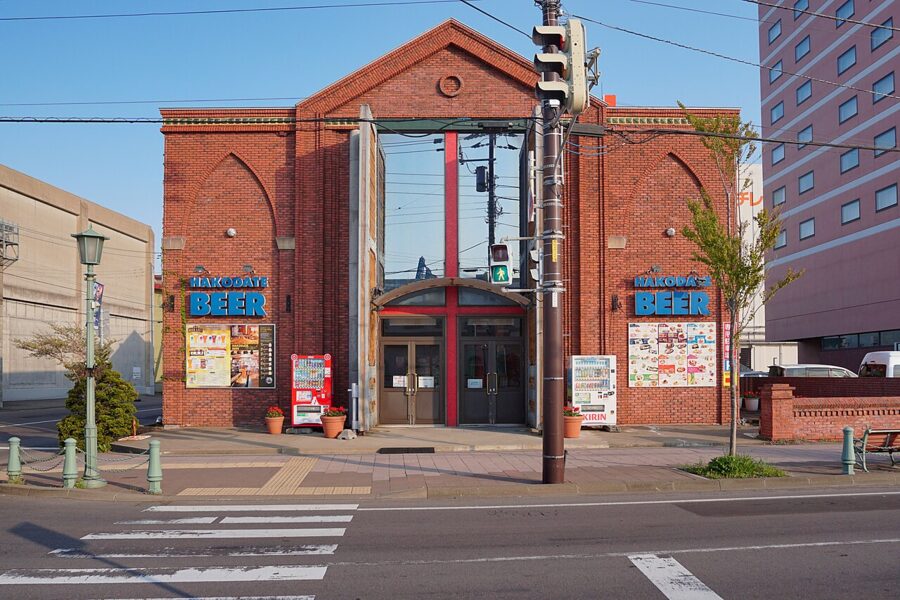
For a drink, Hakodate Beer, in Otemachi between the Bay Area and the station, is a brewpub in a brick-fronted building that brews its own craft beer and serves food with it. Start with the tasting set of four.
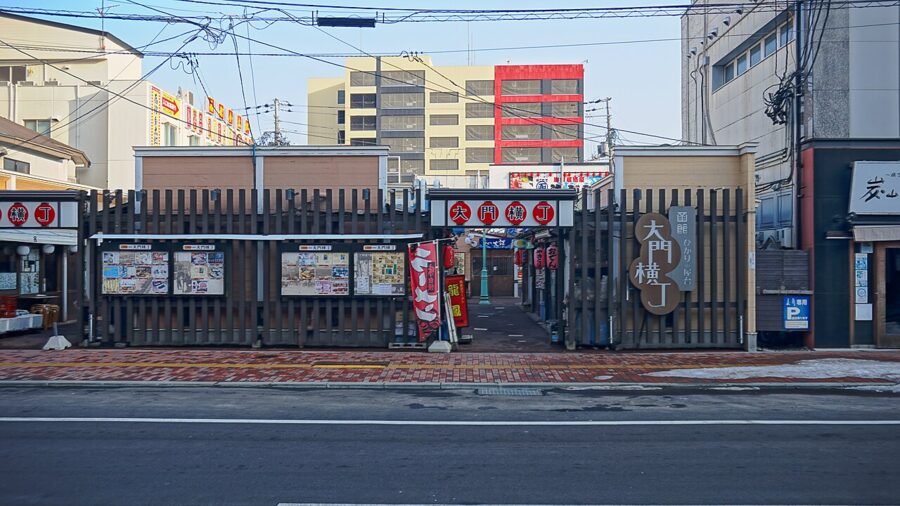
Later on, walk back to the station side for Daimon Yokocho. It’s a stall village of twenty-six tiny bars and eateries, open since 2005, five minutes on foot from JR Hakodate Station, and it does for Hakodate what the alleys in my guide to Tokyo’s yokocho do for Tokyo. Each stall sets its own days off, so if the one you want is shut, there are twenty-five others.
Motomachi’s churches and the old Western dining rooms
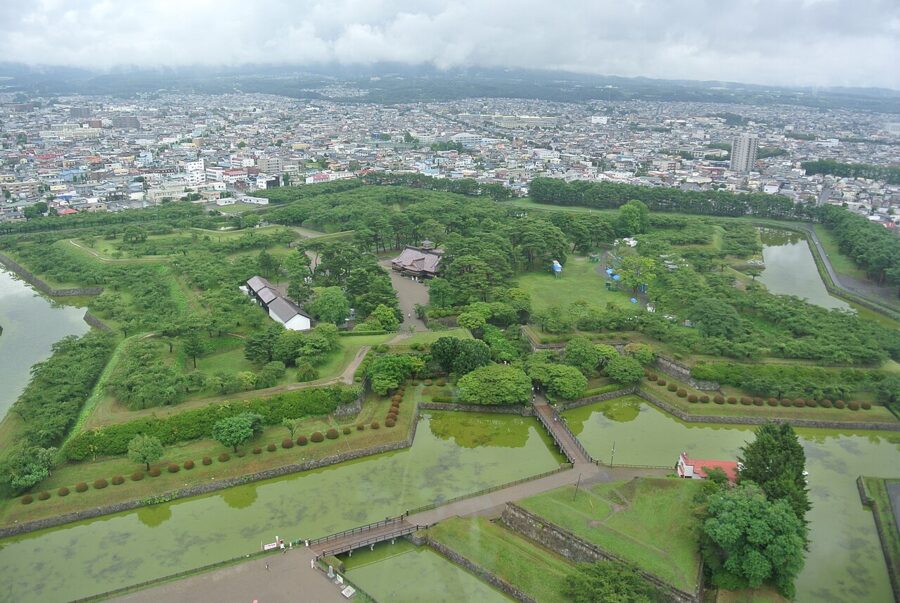
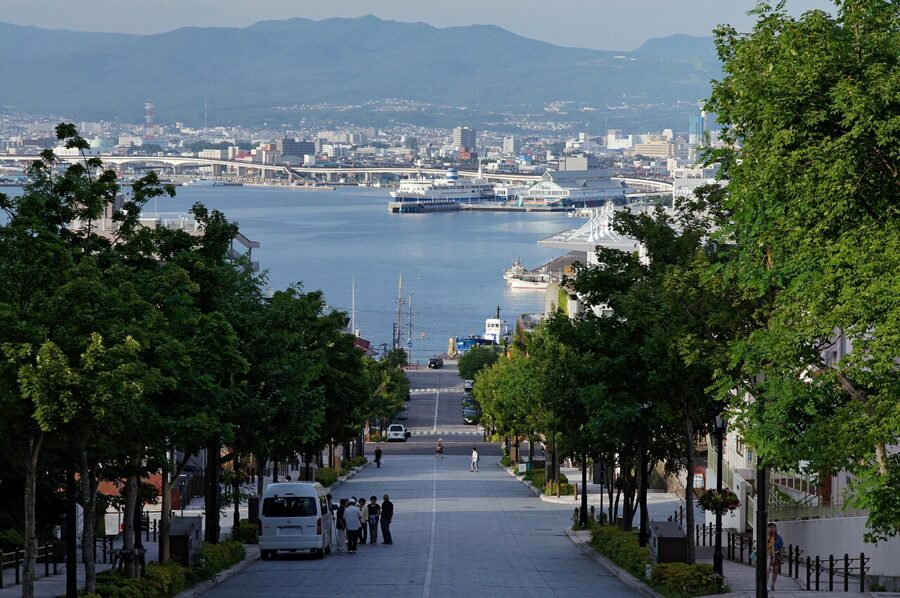
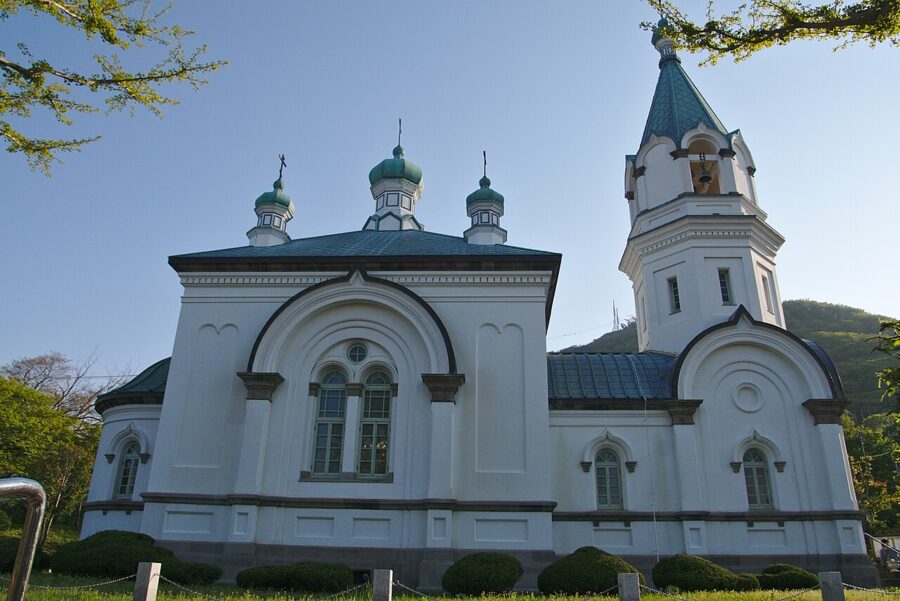
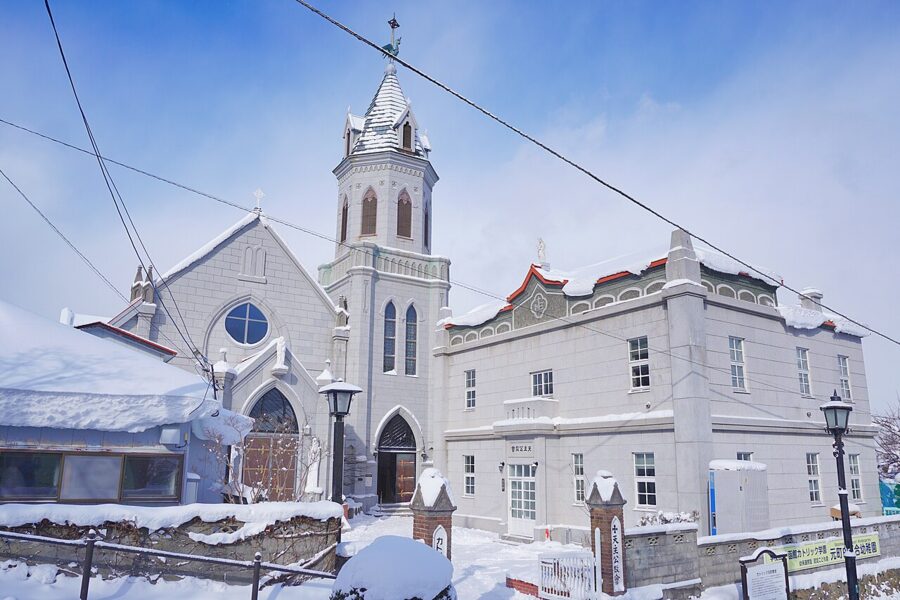
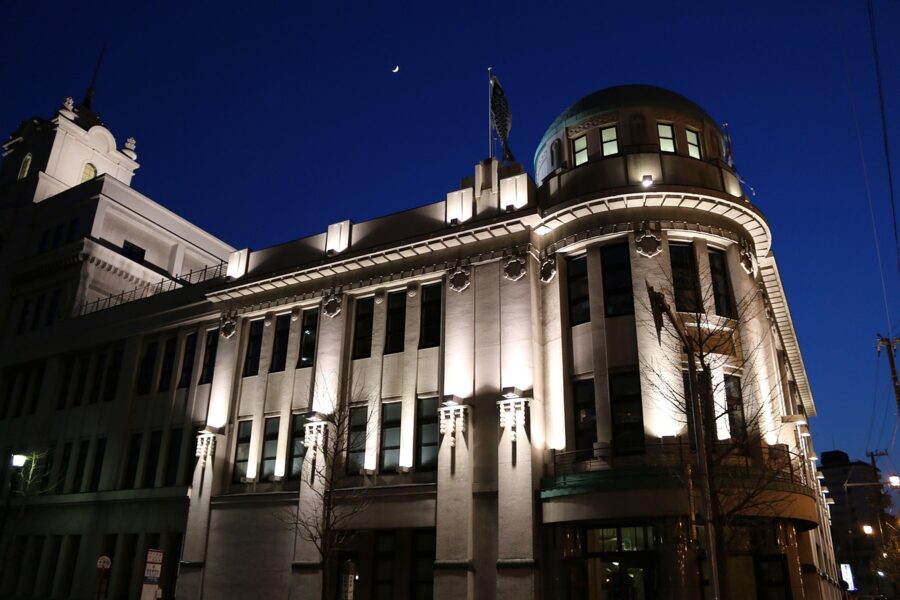
Climb from the Bay Area up Hachimanzaka, the wide slope that frames the harbour in every postcard, and you’re in Motomachi. The Orthodox church, the Catholic Motomachi Church and the Anglican church stand within a couple of minutes of each other, and the former British Consulate is a short walk away by Motomachi Park.
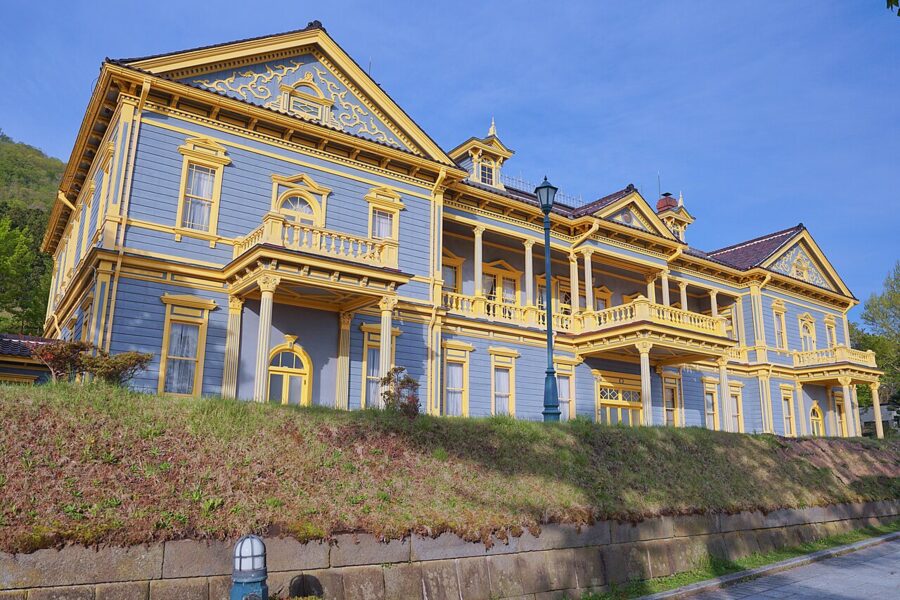
Along the hillside, above Motomachi Park, sits the blue-and-yellow Old Public Hall of Hakodate Ward, finished in 1910 after a great fire and now a national Important Cultural Property. It’s the building Donburi Yokocho’s white market hall was styled to echo, which tells you how much Hakodate likes its Western past.
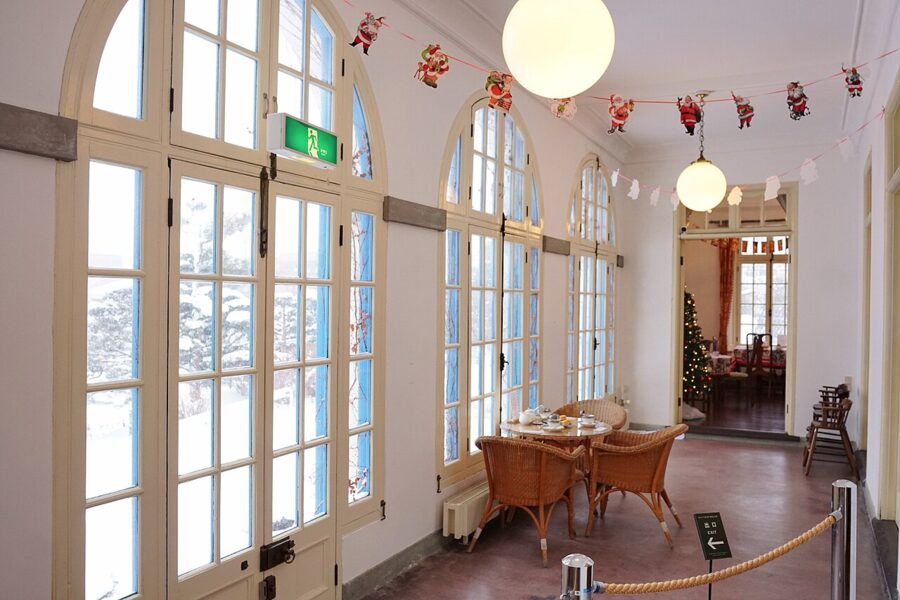
The former British Consulate has a tea room, Victorian Rose, serving English-style tea under tall arched windows. It’s open 10:00–16:30, last orders 16:00, and it’s the most civilised place on the hill to sit out a shower.
Then there’s Gotoken. It opened in April 1879 as a bakery and a shop for Russian food, named after its first head chef, who came from the Goto Islands, and it’s still in business in Suehiro-cho. Its curry started with the Russian dishes that chef learned at the Orthodox church, and was reshaped in the Taisho era by a second chef who trained at Tokyo’s Imperial Hotel.
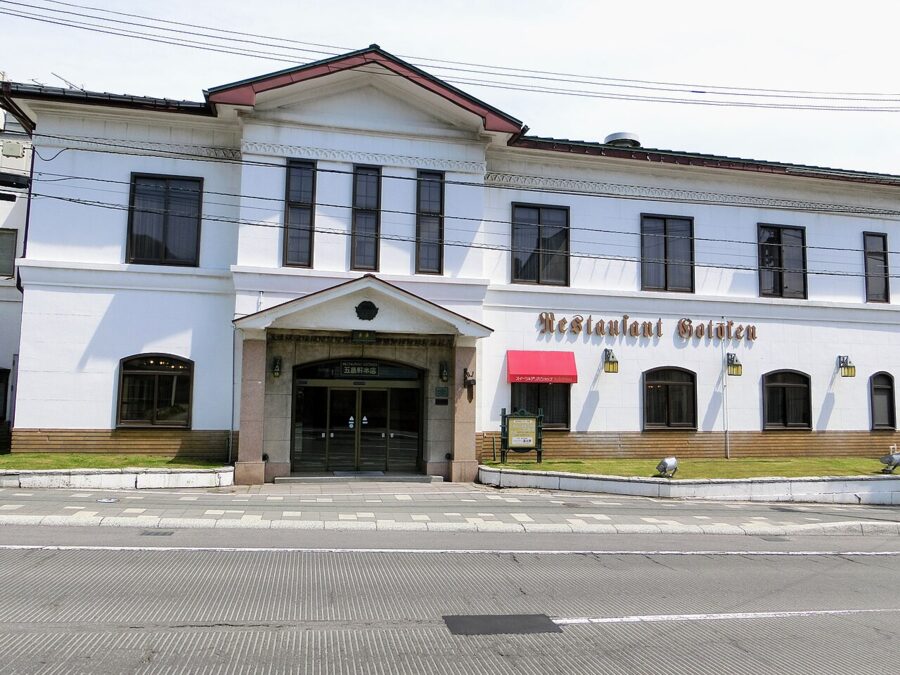
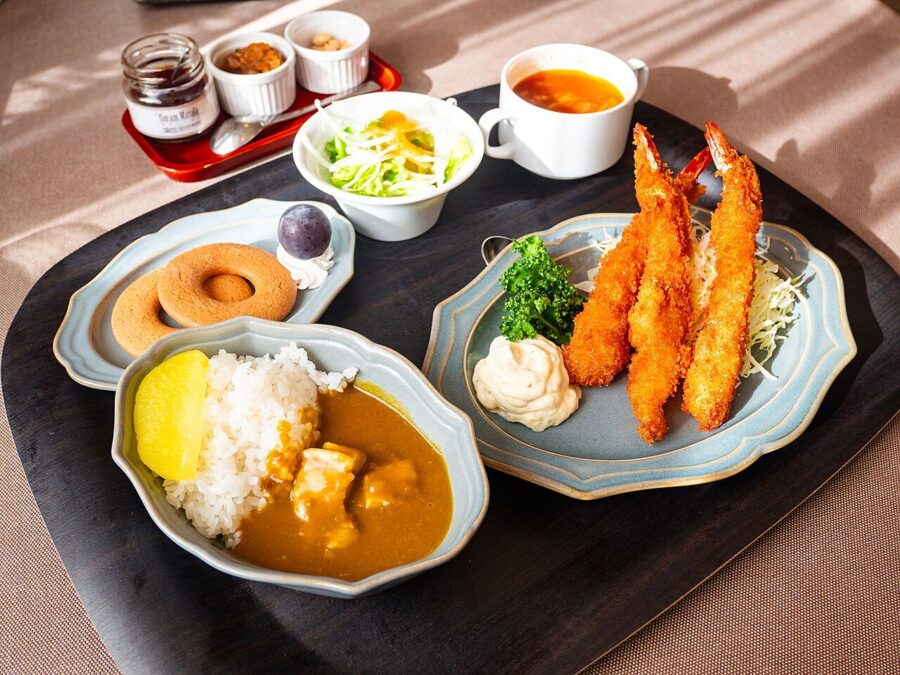
Today the restaurant is called Sekkatei, and the menu is old Japanese-Western yoshoku, with curry and fried shrimp at its heart. In 1989 the then Emperor and Empress lunched there on a duck curry. If you like the curry, the shop sells it in retort packs to take home, and my guide to Japanese curry explains where this style sits in the family tree.
Getting there, and getting around
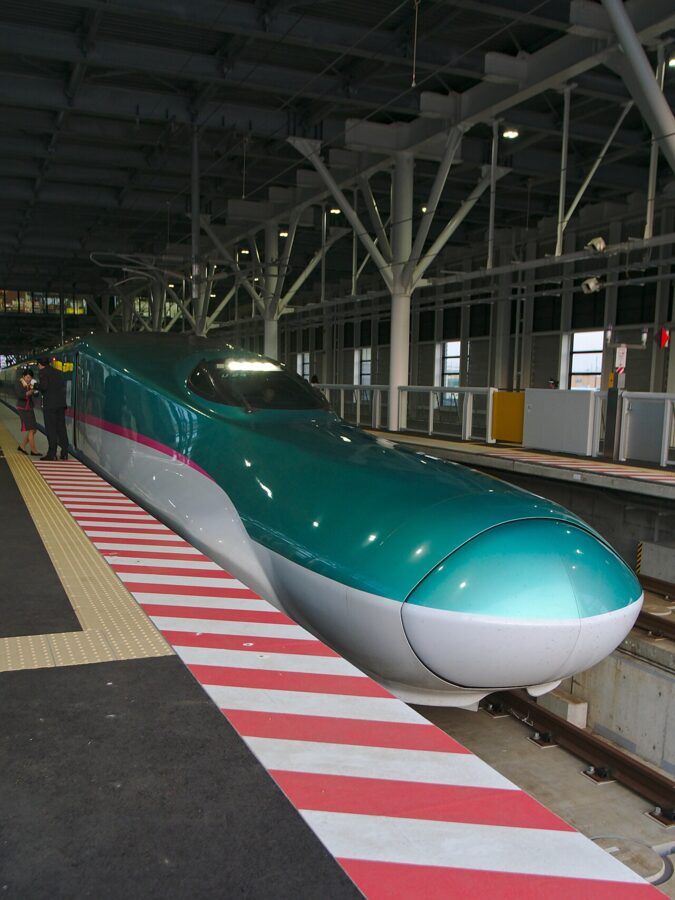
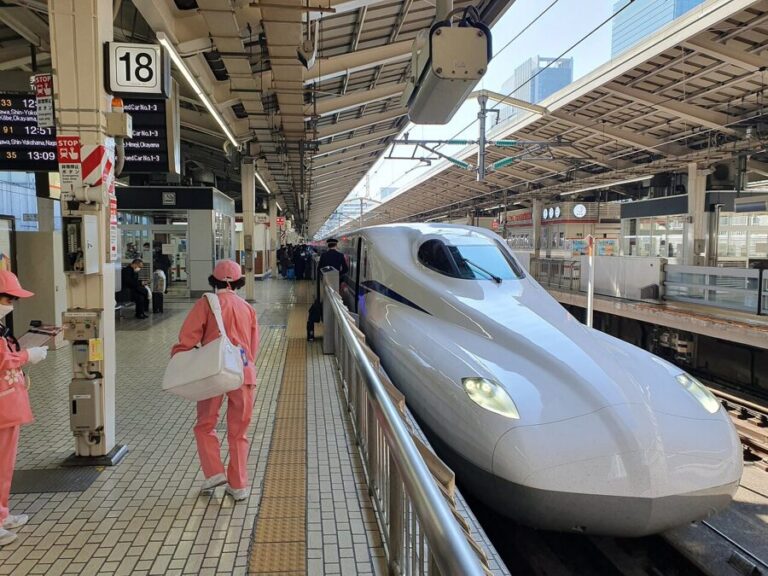
The Hokkaido Shinkansen runs from Tokyo to Shin-Hakodate-Hokuto in a little under four hours on the fastest trains, 3 hours 57 minutes at best. Shin-Hakodate-Hokuto isn’t Hakodate, though. It’s 18 km north, and you change to the Hakodate Liner, a local train timed to meet the shinkansen, for the last 15 to 20-odd minutes into Hakodate Station.
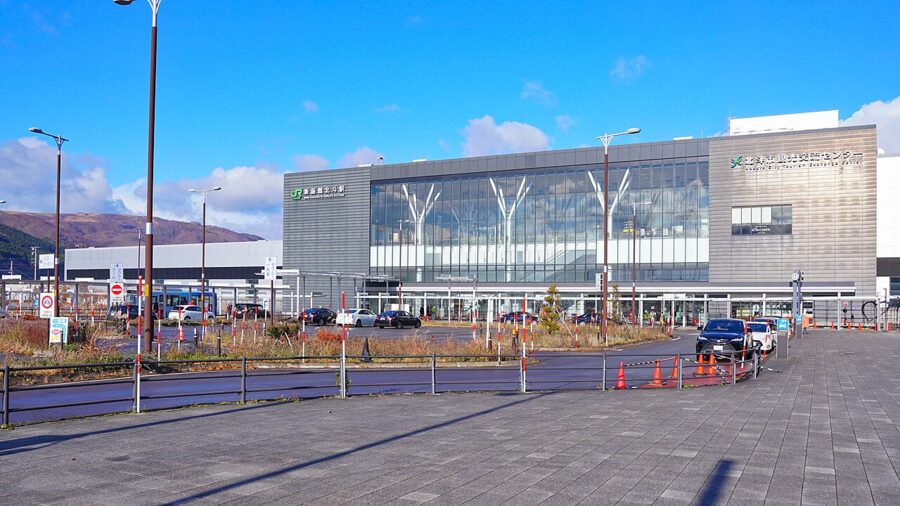
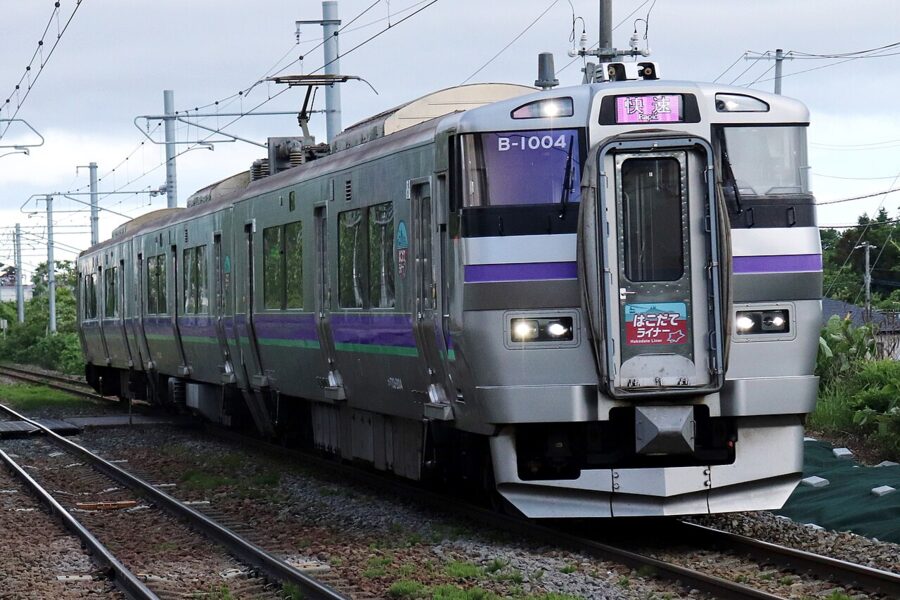
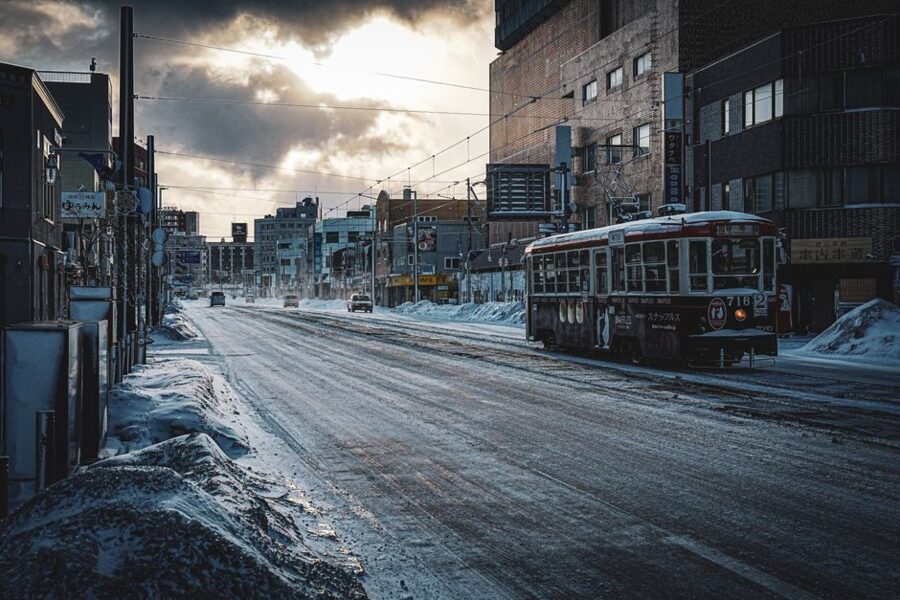
From Hakodate Station, the morning market is right there and Daimon Yokocho is five minutes on foot. For the Bay Area and Motomachi, take the tram from Hakodate-ekimae to Jujigai, or walk if the weather’s kind; Lucky Pierrot reckons its Bay Area store is five minutes from the station by car. Goryokaku, for Ajisai’s main shop and the star fort, is a longer tram ride inland.
Mount Hakodate, after dinner
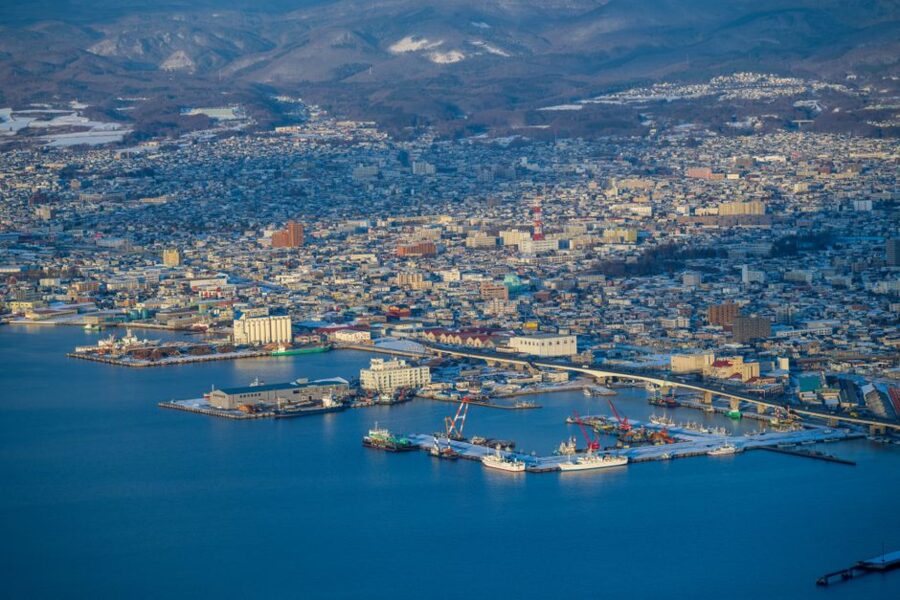
You’ll go up Mount Hakodate for the night view, and you should. The city sits on a narrow neck of land between Hakodate Bay and the Tsugaru Strait, so from the top the lights pinch into a waist with black water on both sides. The ropeway is ¥1,800 return for adults and runs 10:00–22:00 from 20 April to the end of September, and 10:00–21:00 the rest of the year. Go on a clear night just after dark, and look at the summit before you buy a ticket: when sea fog rolls in, you’ll see nothing but the inside of a cloud.
What it costs, and what to skip
Here’s roughly what I’d budget, from the shops’ own current prices.
| Item | Where | Price |
|---|---|---|
| Small seafood bowl | Ebisu, Donburi Yokocho | from ¥1,320 |
| Squid sashimi set | Chamu, Donburi Yokocho | ¥1,300 |
| Tomoe-don (uni, ikura, scallop) | Kikuyo Shokudo | ¥3,278 |
| Seven-topping bowl | Ichihatei Tabiji | ¥3,800 |
| Live squid from the pool | Ekini Market | market price, around ¥1,500–2,000 |
| Uni bowl, 60 g | Uni Murakami | ¥6,820 |
| Squid-ink black ramen | Hakodate Asaichi Ramen | ¥1,180 |
| Yakitori bento, small | Hasegawa Store | ¥680 |
| Mount Hakodate ropeway, return | Ropeway base station | ¥1,800 |
And the skips:
- Don’t let a stall boil a crab before you’ve agreed the price. Ask first, every time.
- Skip the squid pool on a summer weekend after 8:00 unless you enjoy queues. Go at opening or not at all.
- Don’t eat every meal in the market. The bowls are excellent, but the cheapest, most local food in Hakodate is the ramen, the bento and the burgers.
- Skip the Futoccho Burger alone. Really.
- Don’t ride up Mount Hakodate in fog just because you’ve come all this way. Come back tomorrow night.
A day and a half, eaten in order
Day one: get to the market by 7:00, fish for a squid at Ekini if there are any, then sit down at Kikuyo or Ebisu for a bowl. Walk it off to the Bay Area, and have a Chinese Chicken Burger at the original Lucky Pierrot for a late lunch. Climb Hachimanzaka, take tea at the old British Consulate, spend the evening on Mount Hakodate, and finish with a drink at Daimon Yokocho.
Day two: shio ramen for an early lunch at Ajisai in the station or Jiyoken if it’s open, then a yakitori bento from the Hasegawa Store by the station for the train. Ikameshi if your train north passes Mori. That’s Hakodate in four meals, and you’ll still have missed half the counters.
Go early, ask the price, and eat the squid while there’s squid to eat.
You Might Also Enjoy
 Thai Curries: A Regional Field Guide from Green and Red to Khao Soi and Jungle
 Hong Kong Day Trip: A Working Plan from Shenzhen (or a Cruise Ship, or a Layover)
 What to Eat and Drink in Takayama: Hida Beef, Sake Breweries, and Morning Markets
 Konbini Food in Japan: What to Buy at 7-Eleven, FamilyMart, Lawson and Seicomart, Aisle by Aisle