Suzhou: The Classical Gardens, the Old Canals and How to See the City in One or Two Days
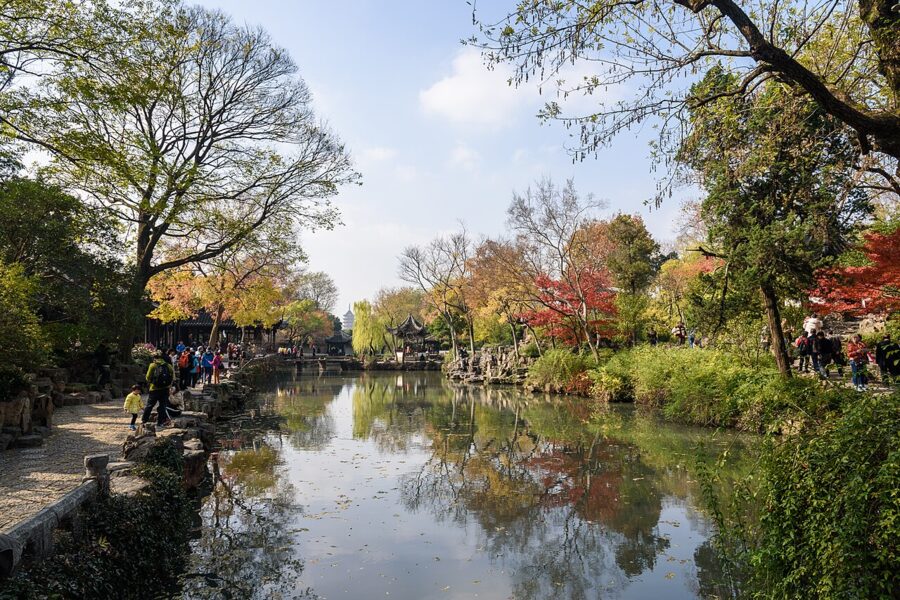
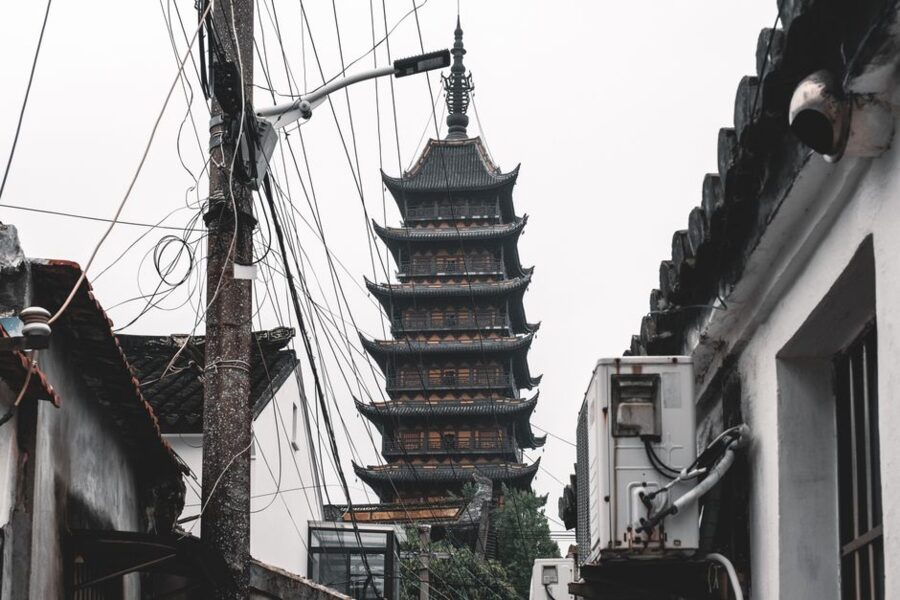
Sit on the bench outside the Pavilion of Phoenix Trees and Bamboo, at the eastern end of the big pond in the Humble Administrator’s Garden, and look west. Past the willows and the roofs of the halls, a nine-storey pagoda stands over the far wall as if somebody had put it there for you. It isn’t in the garden at all. It’s the Beisi Pagoda, about a kilometre away, and the garden’s makers framed it so carefully that it has been part of the view for centuries.
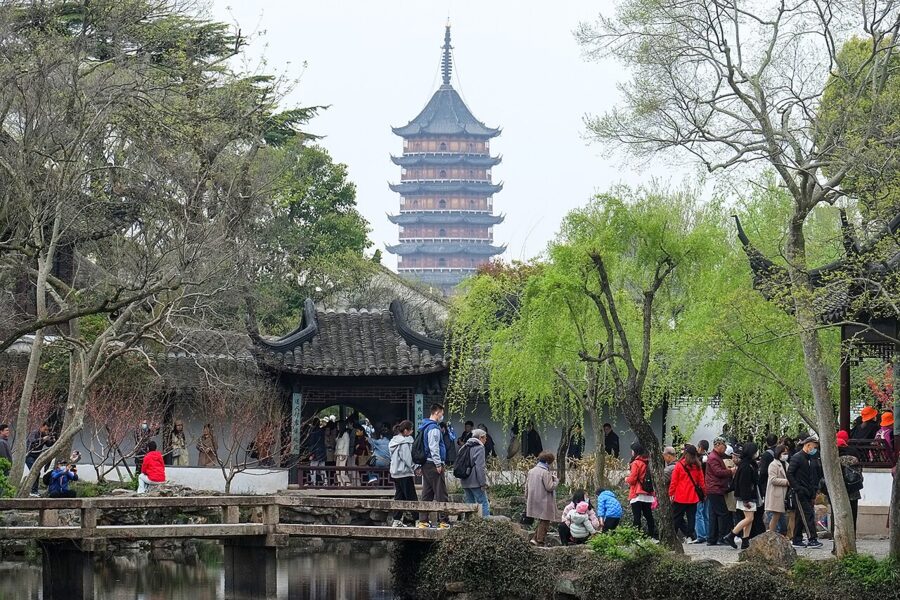
That trick, taking something you don’t own and making it part of the picture, is Suzhou in one move. The city has been rich, bookish and short of space for a thousand years, and its retired officials spent their money building hills, lakes and forests inside a few walled acres. Nine of those gardens are on the UNESCO list. Most visitors see one at 11:00 on a Saturday, shoulder to shoulder with three tour groups, and leave wondering what the fuss was about.
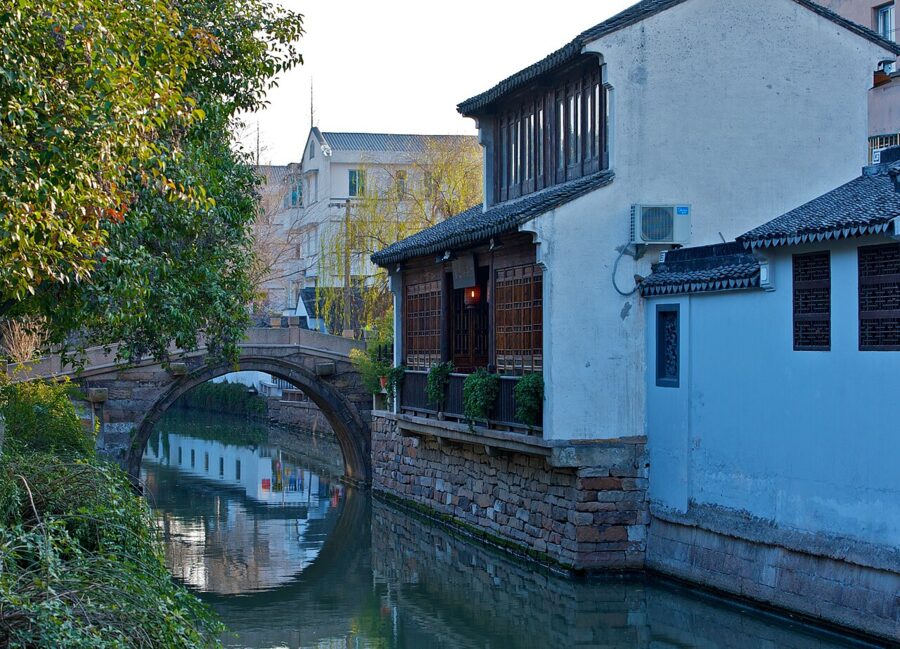
It doesn’t have to go that way. Suzhou is about 25 minutes from Shanghai by high-speed train, and with a booked time slot, an early start and the right two or three gardens, it’s one of the best days out in China. Stay a night and it gets better: the canals after dark, noodles at 07:00, Tiger Hill before the coaches.
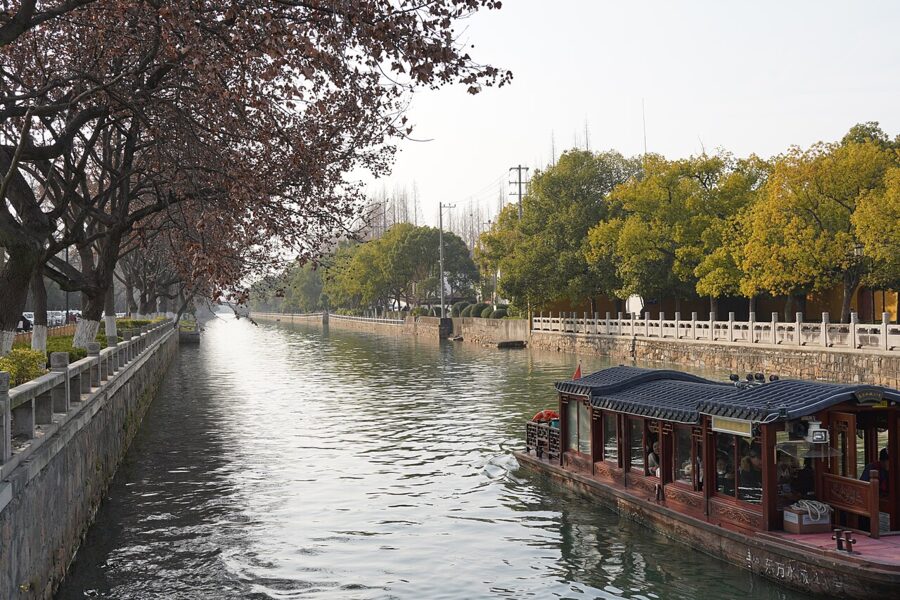
This guide covers which gardens to choose and how to read them, the booking rules, Pingjiang Road and Shantang Street, the canal boats and old gates, Tiger Hill, I.M. Pei’s museum, the food, and a one-day and a two-day plan. Here are the prices. Peak season means April, May and July to October; the lower price applies in the other months.
| Sight | Adult ticket (peak / off-peak) | Time to allow | Worth it? |
|---|---|---|---|
| Humble Administrator’s Garden | ¥80 / ¥70 | 2–3 hours | Yes, but go at opening time |
| Lingering Garden | ¥55 / ¥45 | 1.5–2 hours | Yes, the best buildings and rocks |
| Master of the Nets Garden | ¥40 / ¥30 (night garden ¥120) | 1 hour | Yes, the most perfect small garden |
| Lion Grove Garden | ¥40 / ¥30 | 1 hour | Fun rock maze, skip at weekends |
| Couple’s Retreat Garden | ¥25 / ¥20 | 1 hour | Yes, for a quiet one |
| Tiger Hill | ¥70 / ¥60 | 2 hours | Yes, for the leaning pagoda |
| Suzhou Museum | Free, booking required | 1.5 hours | Yes, for the building alone |
| Pingjiang Road rowing boat | ¥40 a person | 30–40 minutes | Once, early or late |
In This Article
- A city that grew up inside its moat
- Which gardens, and in what order
- The Humble Administrator’s Garden (拙政园)
- The Lingering Garden (留园)
- The Master of the Nets Garden (网师园)
- The Lion Grove Garden (狮子林)
- The Couple’s Retreat Garden (耦园)
- If you have more time
- How to read a garden
- Tickets, booking and the busy hours
- Pingjiang Road, as it really is
- Shantang Street and the boats on the canal
- Panmen and the old gates
- Tiger Hill and the leaning pagoda
- The Suzhou Museum
- What to eat in Suzhou
- The morning bowl
- The famous fish, and the rest of the table
- Getting there, and getting around
- Where to stay
- Suzhou in a day from Shanghai
- Two days in Suzhou
- Skip this
A city that grew up inside its moat
Suzhou dates its founding to 514 BC, when King Helü of Wu had his minister Wu Zixu lay out a walled capital here. Archaeologists still argue about whether that first city stood on exactly this spot. But the moat around the old town, Gusu, follows a line that has barely moved in centuries, and inside it is a rough rectangle of canals, lanes and low white houses you can cross on foot in under an hour.
Water made Suzhou rich. The Grand Canal ran past its western gates, carrying rice and silk north to the capital, and the city’s own canals brought trade to almost every door. By the Ming and Qing dynasties it was one of the wealthiest cities in China, famous for silk, embroidery and an outsized share of the men who passed the imperial exams. Officials who retired came home and built gardens.
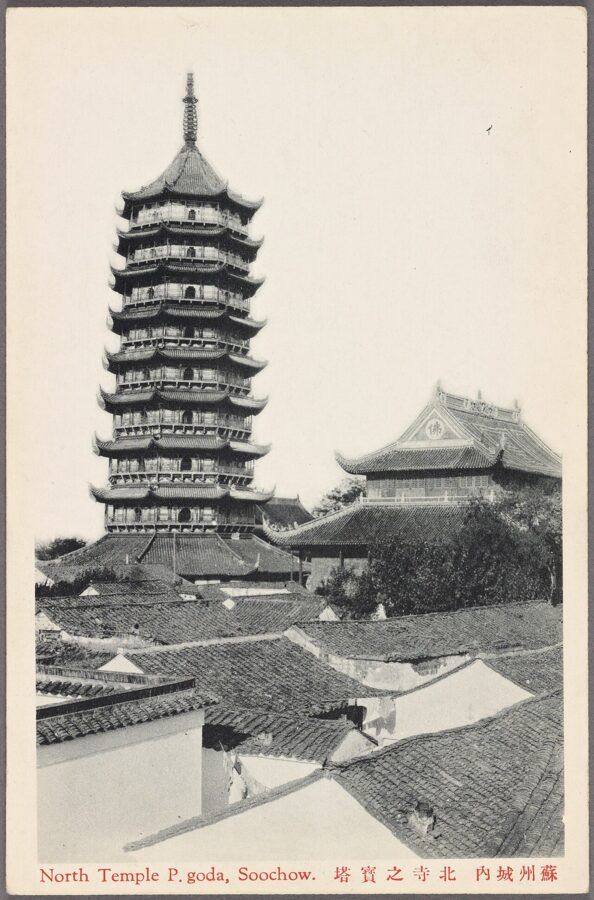
Then came 1860. The Taiping army took the city, retreating imperial troops set fire to the suburbs outside Changmen, and the commercial heart of Suzhou burned for three days. Shanghai took the trade and never gave it back.
Don’t expect a city wall. Most of it was pulled down after 1949, and only about 2 km survives; the best pieces are at Panmen in the south-west and Xumen on the west side. If you’ve walked the walls of Pingyao or Xi’an, this is different: Suzhou kept the water, not the wall.
The city’s official register lists 108 gardens, from Ming estates to courtyards behind private houses. UNESCO inscribed four in 1997 (the Humble Administrator’s Garden, the Lingering Garden, the Master of the Nets and the tiny Mountain Villa with Embracing Beauty) and five more in 2000, including the Lion Grove, the Couple’s Retreat and the Tuisi Garden in Tongli.
Which gardens, and in what order
Don’t try to see them all. Two big gardens and one small one make a full, happy day; four is the most I’d attempt. My order for a first visit: the Humble Administrator’s Garden for the water, the Lingering Garden for the buildings and rocks, and the Master of the Nets for proof that a garden the size of a tennis club can feel endless.
The Humble Administrator’s Garden (拙政园)
This is the big one, about 5 hectares. An imperial censor, Wang Xianchen, began it in 1509 after quitting office and named it after a line by the poet Pan Yue about watering one’s own vegetables being “the governing of a humble man”. His friend Wen Zhengming painted the garden in 1533 as an album of 31 views. Wang’s son is said to have lost the lot in a single night of gambling.
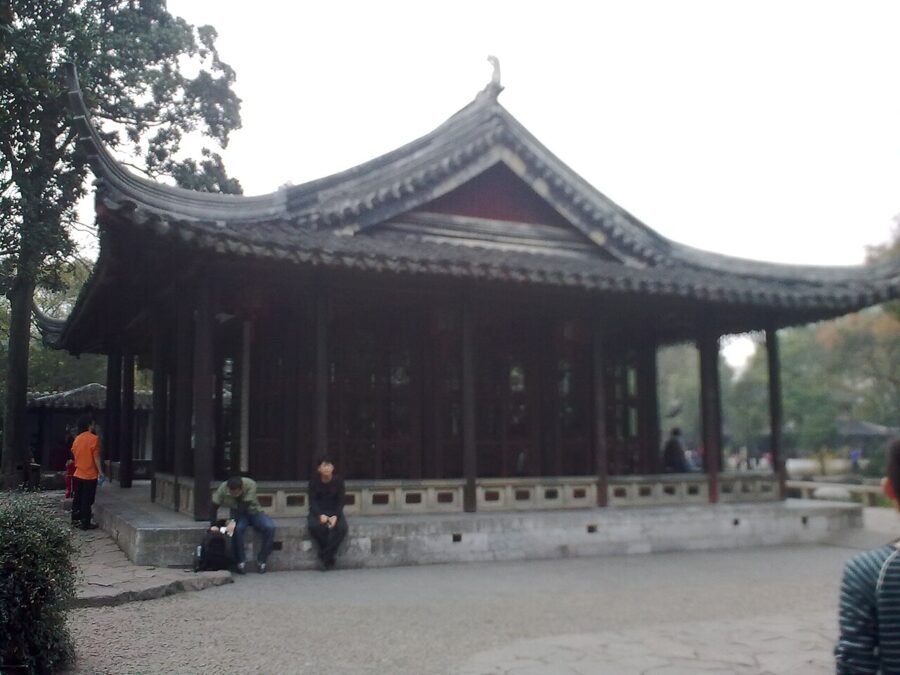
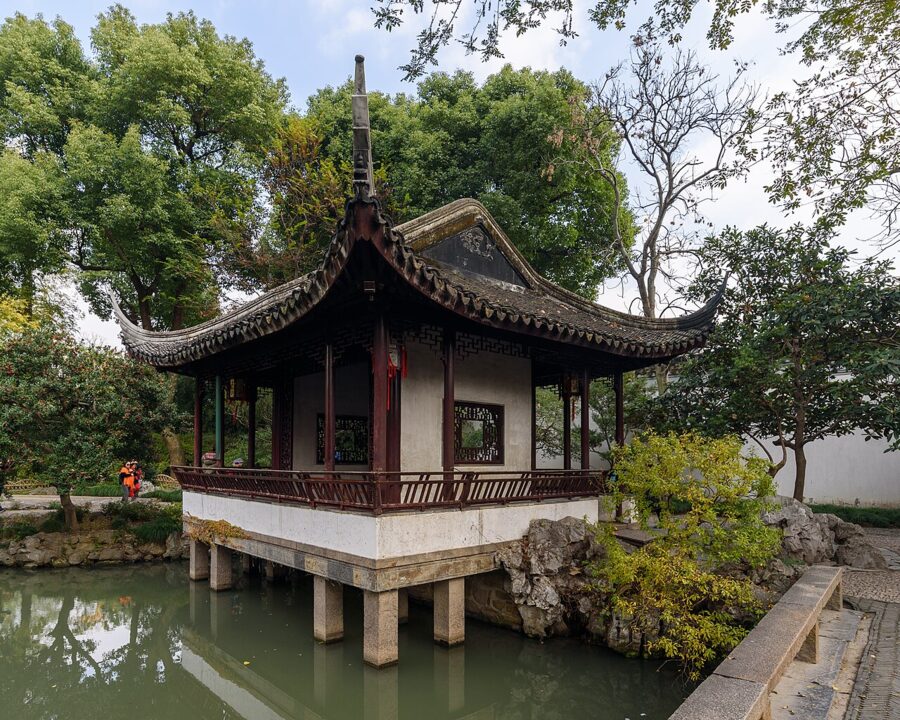
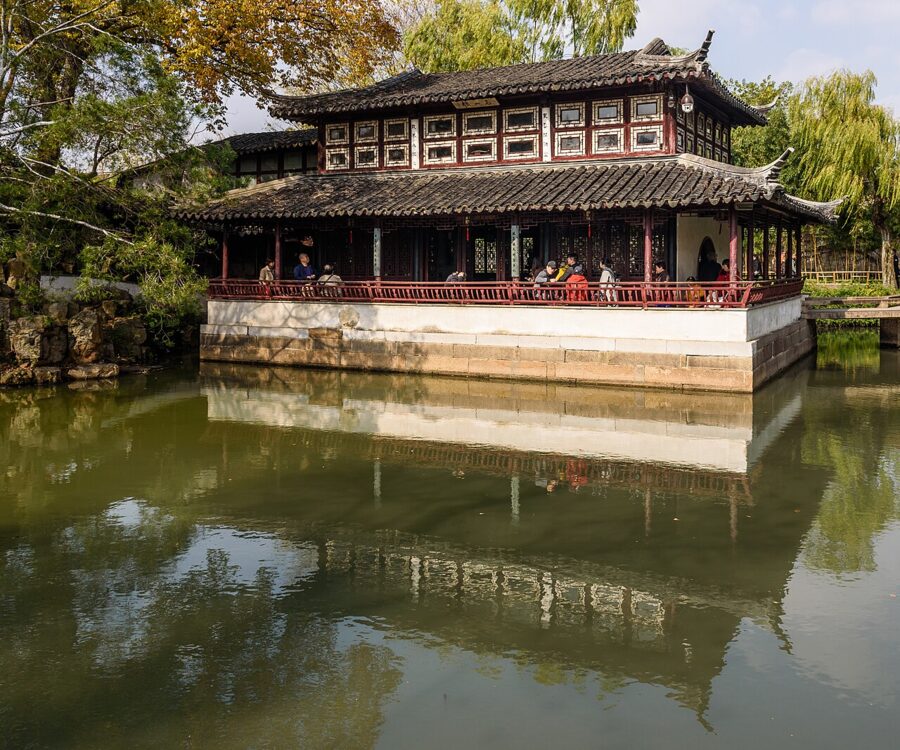
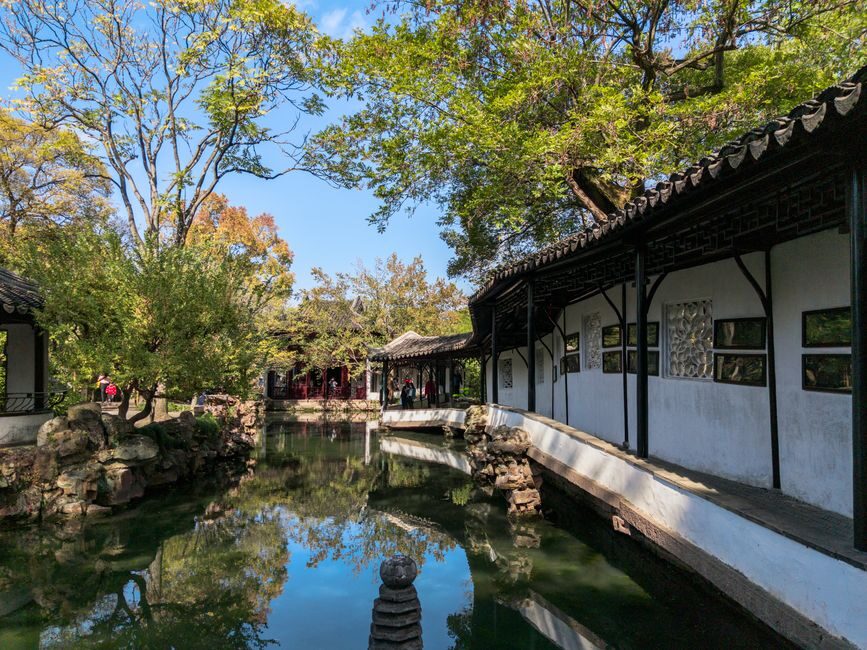
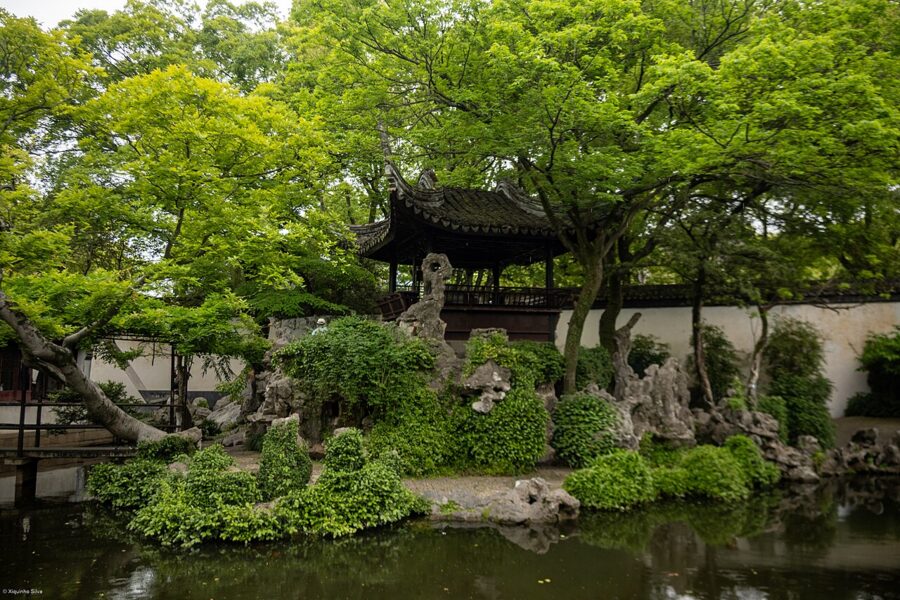
The garden has three parts. The east is lawns and pines, pleasant but not why you came. The centre is the masterpiece: a big pond with the Hall of Distant Fragrance (远香堂) facing the lotus, the covered bridge called the Small Flying Rainbow (小飞虹), a boat-shaped pavilion and the two-storey Mountain View Tower (见山楼). The west, bought by a merchant in 1877, is smaller and fussier, with the best interiors.
When the Taiping army held Suzhou, its commander Li Xiucheng, the Loyal Prince, is said to have used the Mountain View Tower as his office. In the west section, find the little fan-shaped pavilion called With Whom Shall I Sit (与谁同坐轩). The answer, from a poem by Su Shi, is the bright moon and the clear breeze.
The catch is the crowd. Between about 10:00 and 14:30 the tour groups move through in a slow river. Book the first slot and walk straight to the central pond, and you’ll have it nearly to yourself for half an hour. In summer 2026, for the first time in 74 years, the garden opened at 06:45 (19 June to 7 October); check whether it repeats that next year.
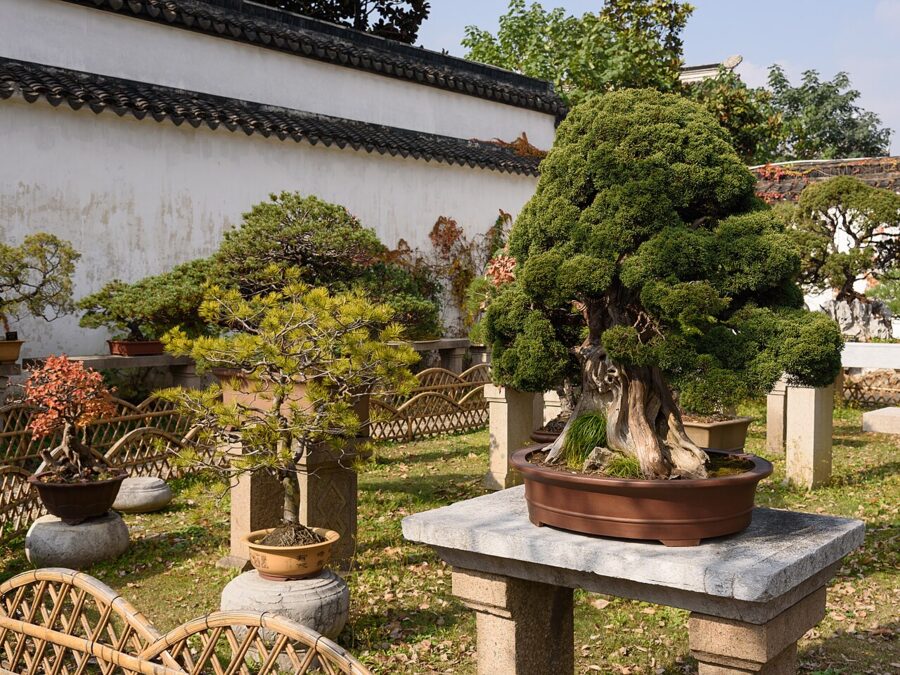
Leave time for the penjing courtyard near the west section. The main gate is on Dongbei Street, two minutes’ walk from the Suzhou Museum and five from the Lion Grove.
The Lingering Garden (留园)
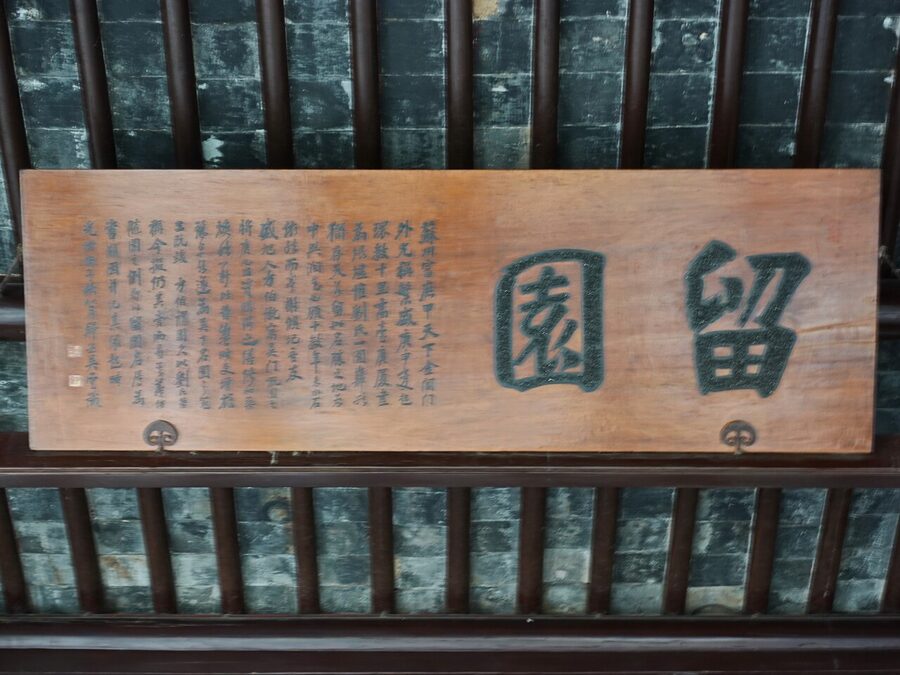
If the Humble Administrator’s Garden is about water, the Lingering Garden is about buildings and stone. It began in 1593 as the East Garden of a retired official, Xu Taishi, became the Liu family garden in 1798, and was bought in 1873 by Sheng Kang, who renamed it Liu Yuan with a character that sounds the same but means “to linger”. It’s just outside the moat to the west, at 338 Liuyuan Road.
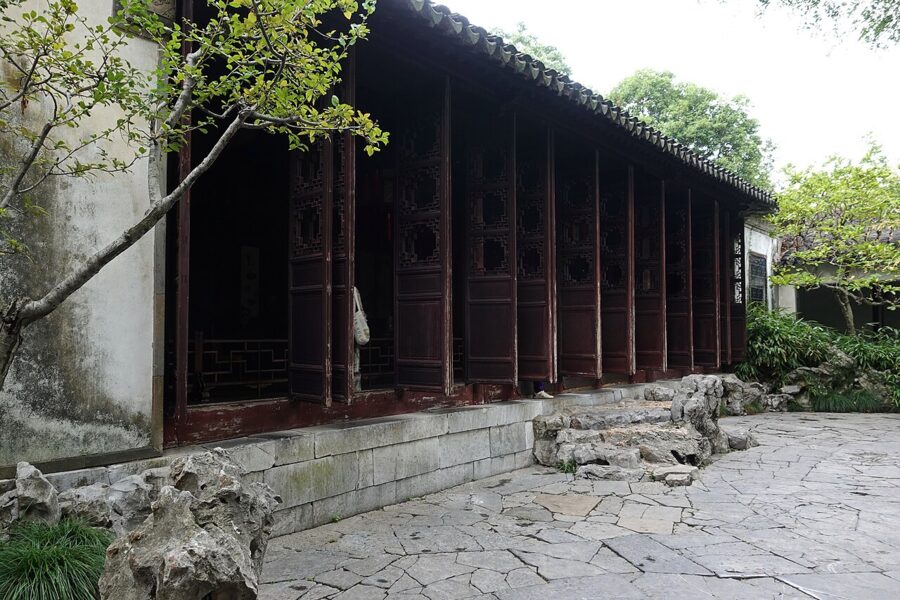
Its corridors run for more than 700 m, twisting between courtyards and along the water, with more than 300 carved calligraphy tablets set into their walls. The Hall of Five Peaks (五峰仙馆) is the biggest hall in any of the region’s gardens, with pillars of nanmu wood.
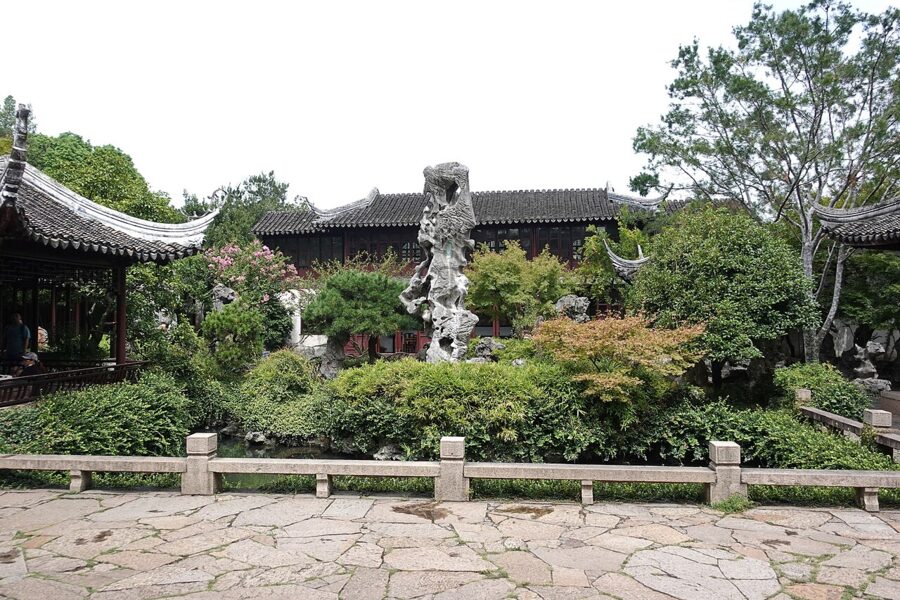
The star stands in a courtyard in the east of the garden. Cloud-Capped Peak (冠云峰) is a single Taihu limestone rock about 6.5 m high, said to be a leftover from the stones the Song emperor Huizong shipped north for his palace gardens. It’s the tallest garden rock in the region.
The tour groups arrive from about 10:00 to 14:00, so go at opening time or after 15:00. It pairs well with Tiger Hill and Shantang Street on the same side of town. It isn’t on a metro stop; a taxi from the old city takes 10 to 15 minutes.
The Master of the Nets Garden (网师园)
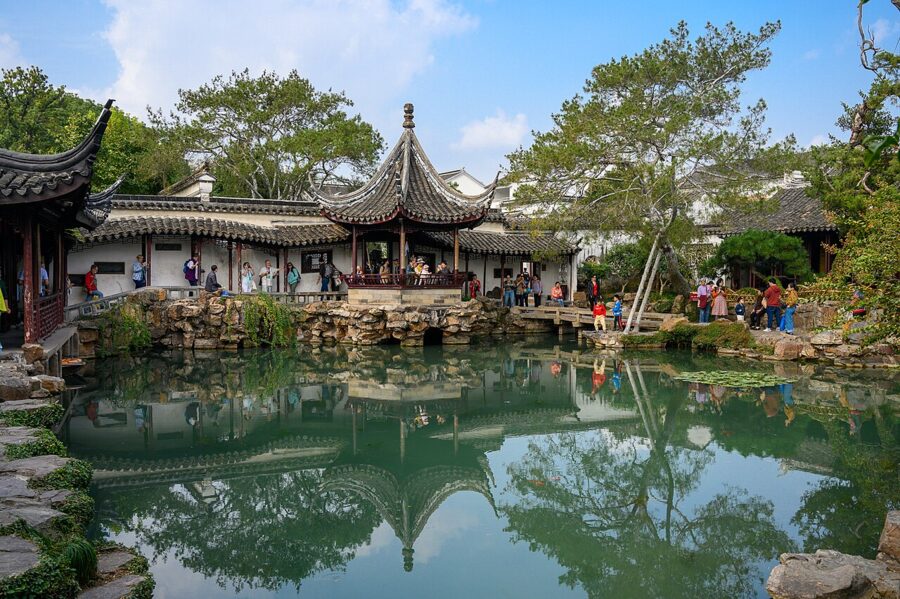
This is less than a sixth the size of the Humble Administrator’s Garden, and the one garden lovers tend to like best. A Southern Song official, Shi Zhengzhi, built a library here in the 1170s; a Qing official rebuilt it around 1765 as the Master of the Nets, another way of saying fisherman.
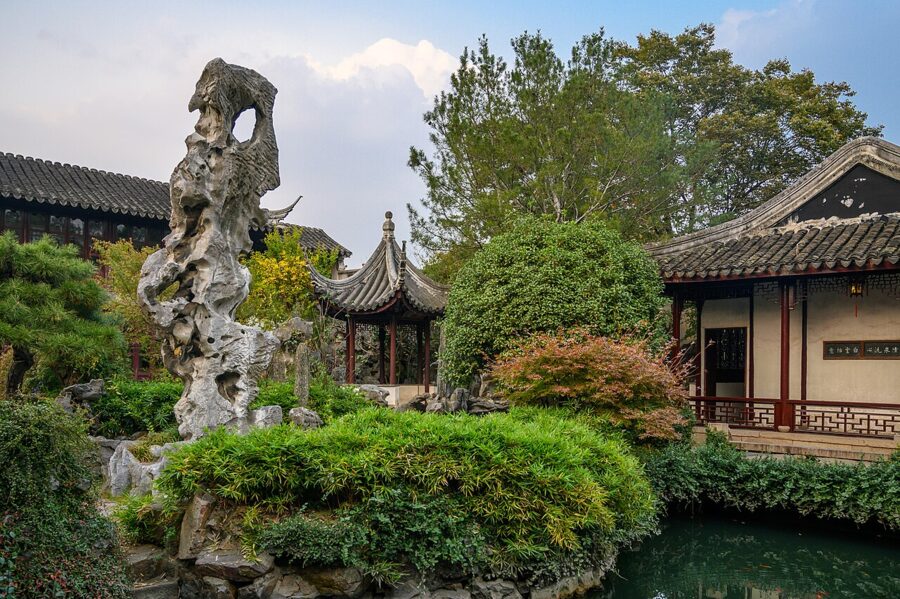
Everything faces one pond, and everything is scaled to make it look bigger. The tiny Leading to Quietude Bridge (引静桥), three steps across, makes the water beside it look wide. The Moon Comes with the Breeze pavilion (月到风来亭) holds a large mirror, so on the right night you see three moons: in the sky, in the water and in the glass. The carved brick gatehouse in the residence is often called the finest in the region.
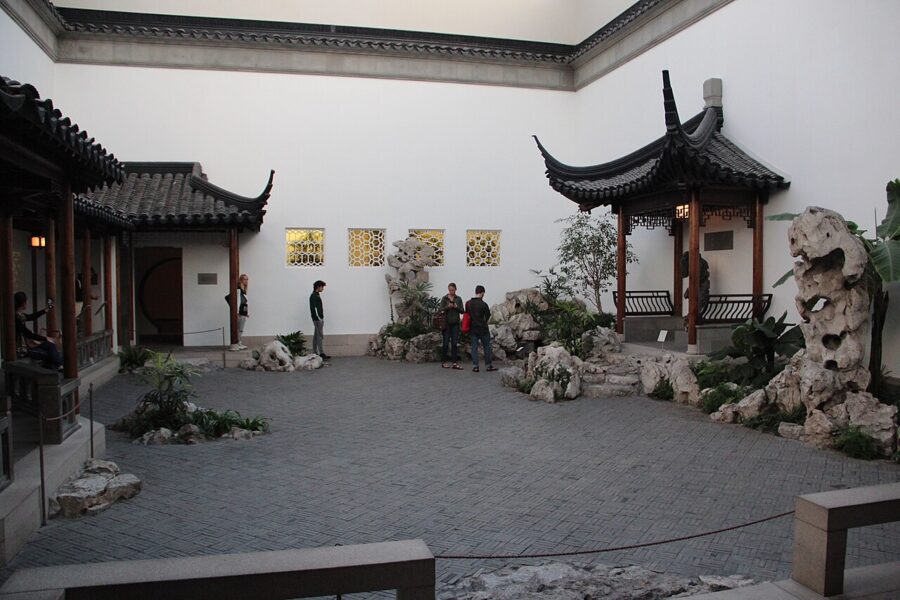
In the north-west corner is the Late Spring Studio (殿春簃), which in 1980 became the model for the Astor Court at the Metropolitan Museum of Art in New York. The painter Zhang Daqian once lived in this courtyard and, so the story goes, kept a tiger there to study for his paintings.
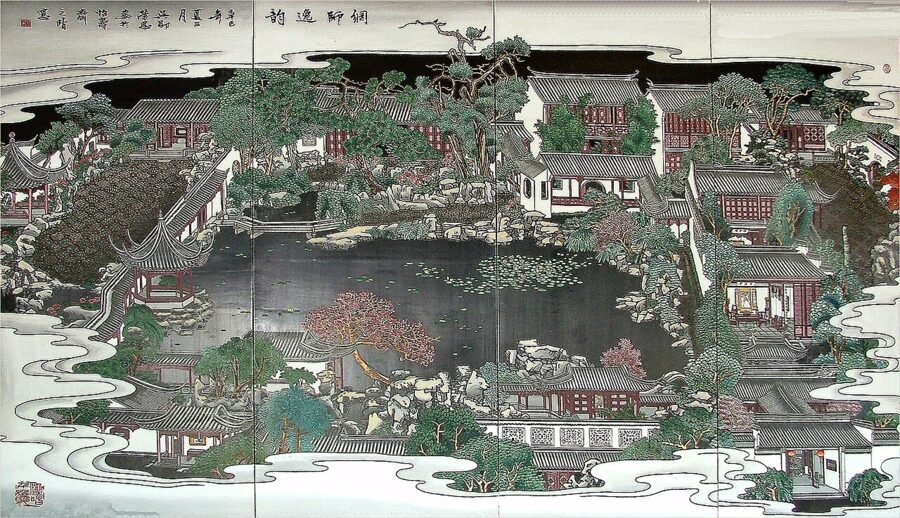
Its night garden (网师夜花园) is a 45-minute walk through the lit garden, with short performances of pingtan, Kunqu, music and dance in different rooms. It costs ¥120, on a separate ticket. The 2026 season ran from 20 March to 15 November, so in winter you’ve missed it; past seasons have reopened in spring, but 2027 dates hadn’t been announced when I checked. In season, book ahead.
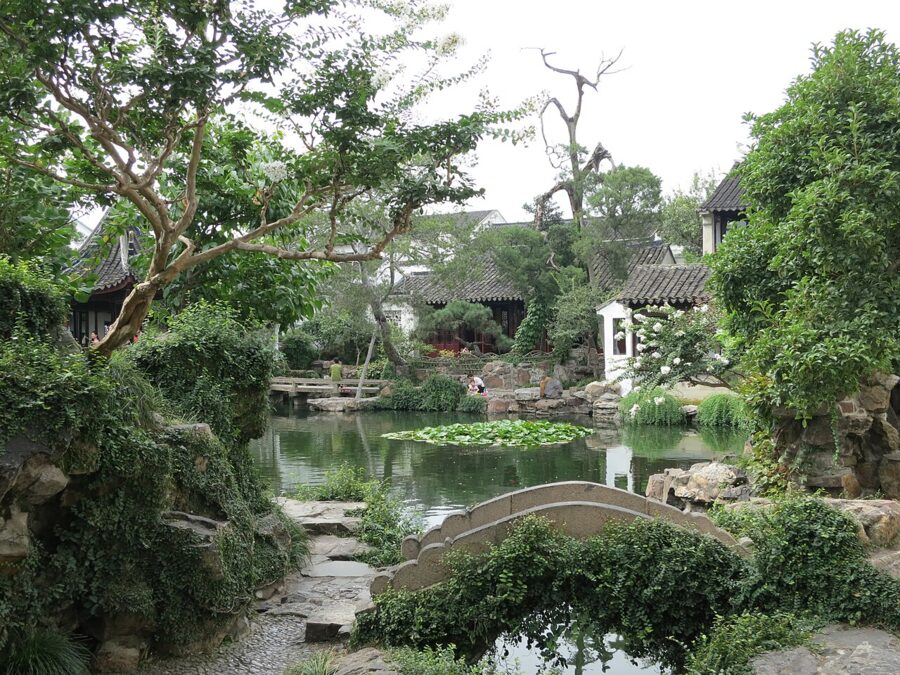
The Lion Grove Garden (狮子林)
The Lion Grove is all rock. Disciples of a Chan monk called Tianru built it in 1342, and later owners kept adding until it became a maze: nine ridges of piled Taihu stone, 21 caves and paths that climb in and out of each other, so you can see a friend across a gully and take ten minutes to reach them. Children love it.
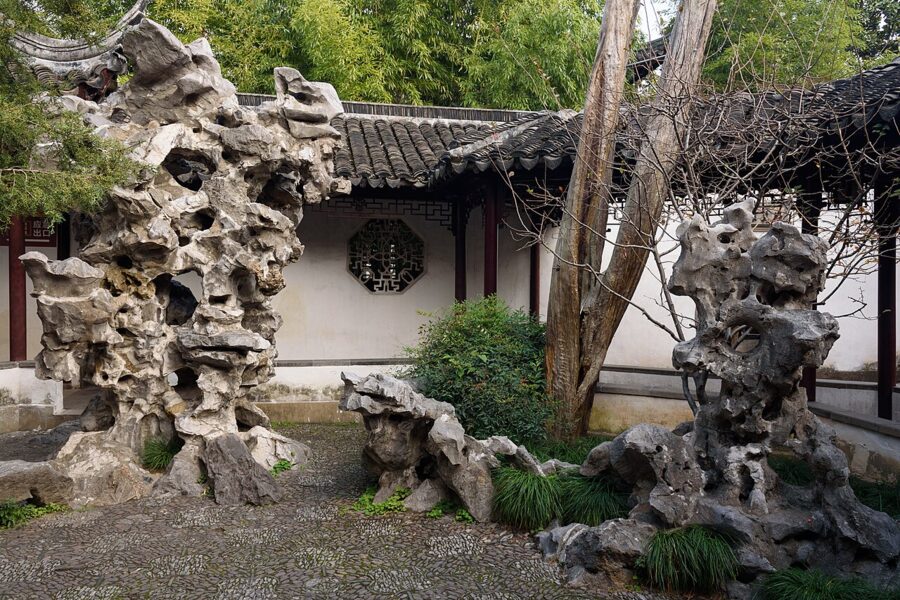
In 1917 it was bought by Bei Runsheng, a Shanghai paint magnate and great-uncle of the architect I.M. Pei, who restored it and added touches purists hated, including coloured glass and cement. Nine decades later his great-nephew built the Suzhou Museum round the corner. It’s small and popular, so at weekends it’s the one garden I’d skip.
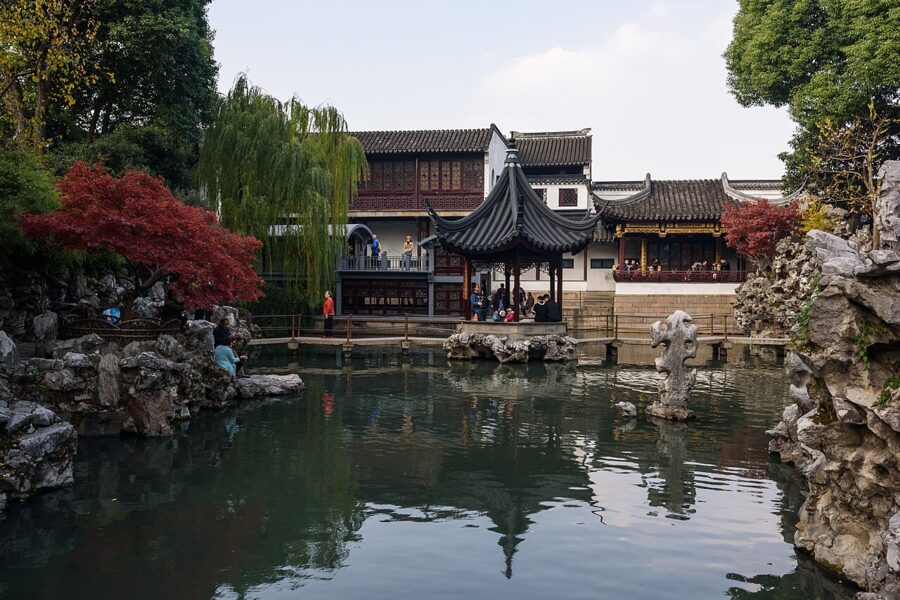
The Couple’s Retreat Garden (耦园)
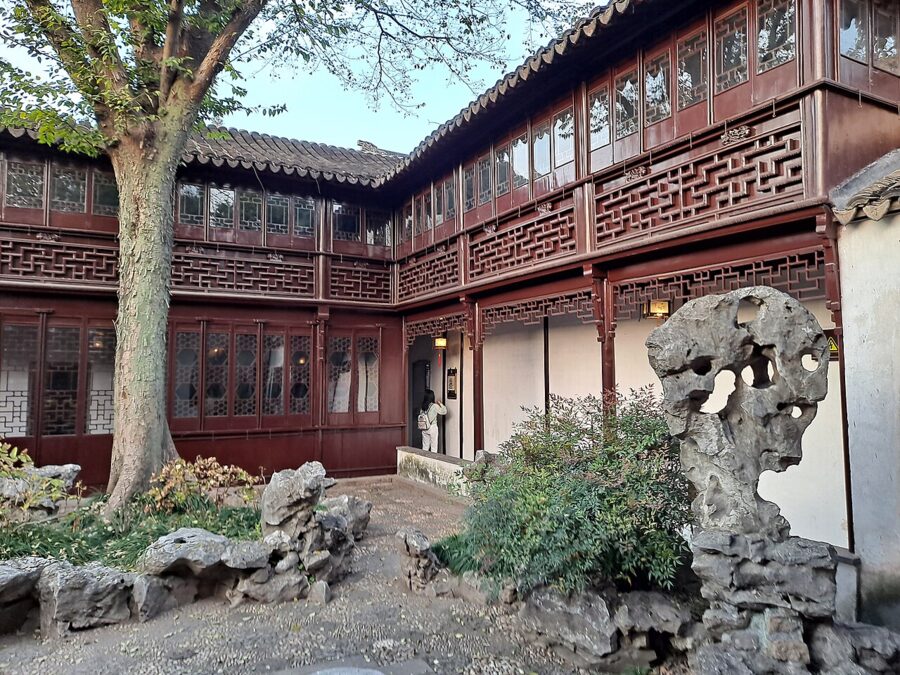
Want a garden to yourself? Try this one, at the east end of the lanes off Pingjiang Road with canals on three sides. A scholar called Lu Jin laid it out in the Yongzheng reign (1723–1735); a retired official, Shen Bingcheng, rebuilt it in the 1860s or 1870s and retired there with his wife, giving it a name that puns on the word for a married pair.
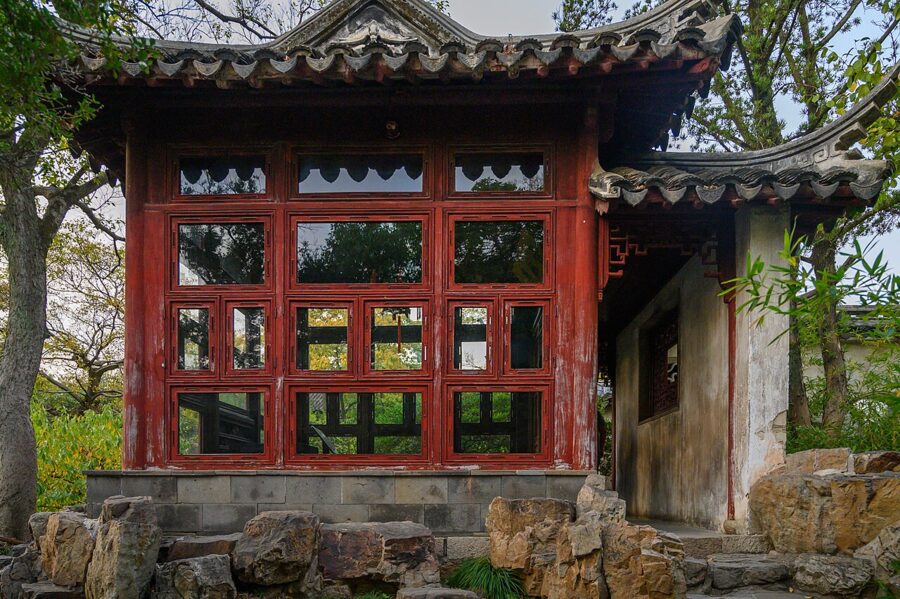
At ¥25 in peak season, it fits neatly into a Pingjiang Road walk. Go before 10:00.
If you have more time
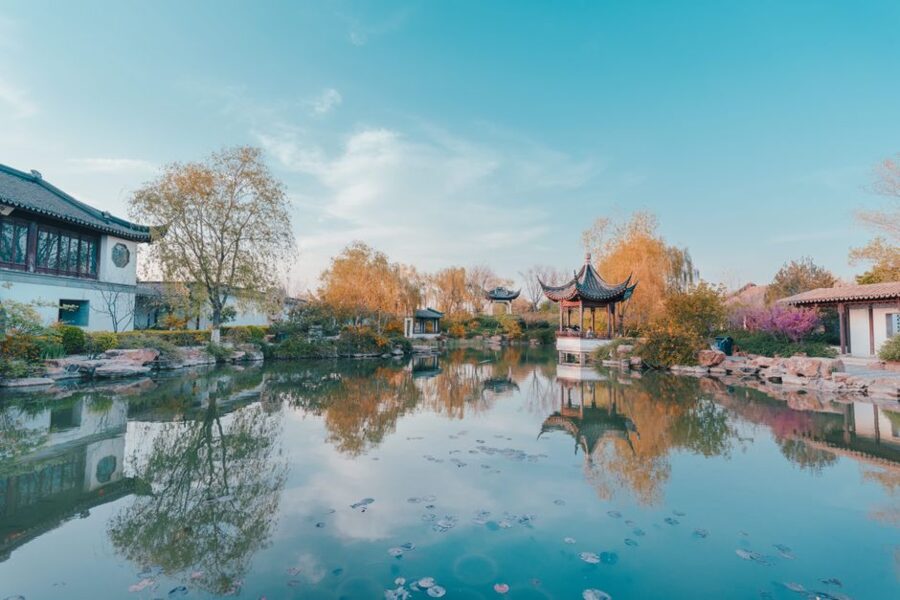
Canglang Pavilion (沧浪亭), in the south of the old city, is the oldest surviving garden site in Suzhou, with an outer canal and a double corridor full of framed windows; it costs ¥20. The Garden of Cultivation (艺圃) is a small Ming-period garden hidden in the lanes of the north-west, loved by locals for its teahouse over the pond.
How to read a garden
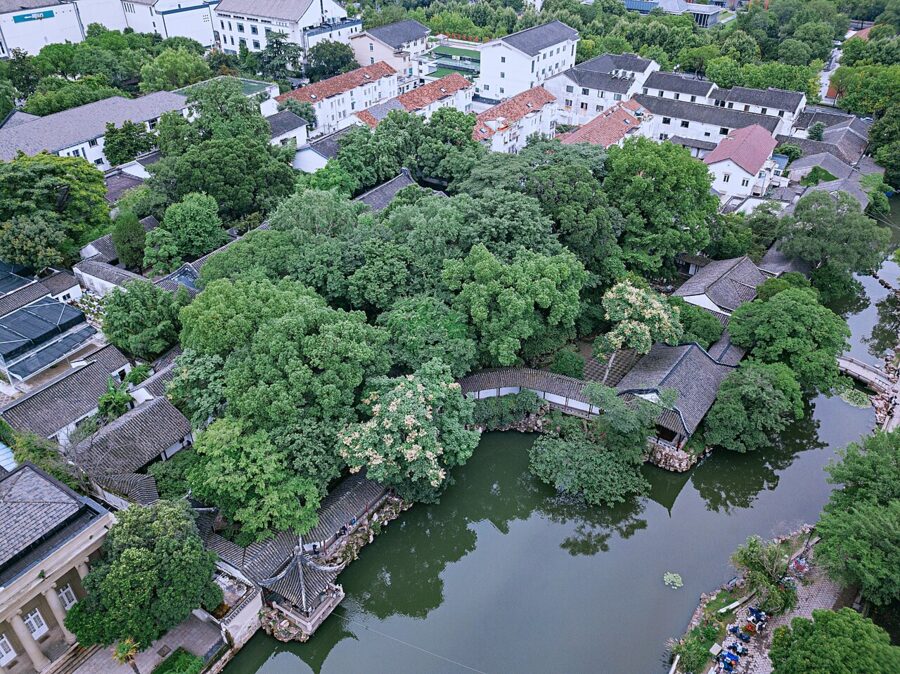
A Chinese garden isn’t a park. It’s a series of composed pictures, built for a scholar who would sit with tea and look. Learn a few of the tricks and the gardens get far more interesting.
Borrowed views. The pagoda over the wall is the famous one, but gardens also borrow the sky and the water: a pond is there partly to show the buildings around it upside down. From the upper floor of the Cloud-Capped Tower in the Lingering Garden, the garden borrows Tiger Hill.
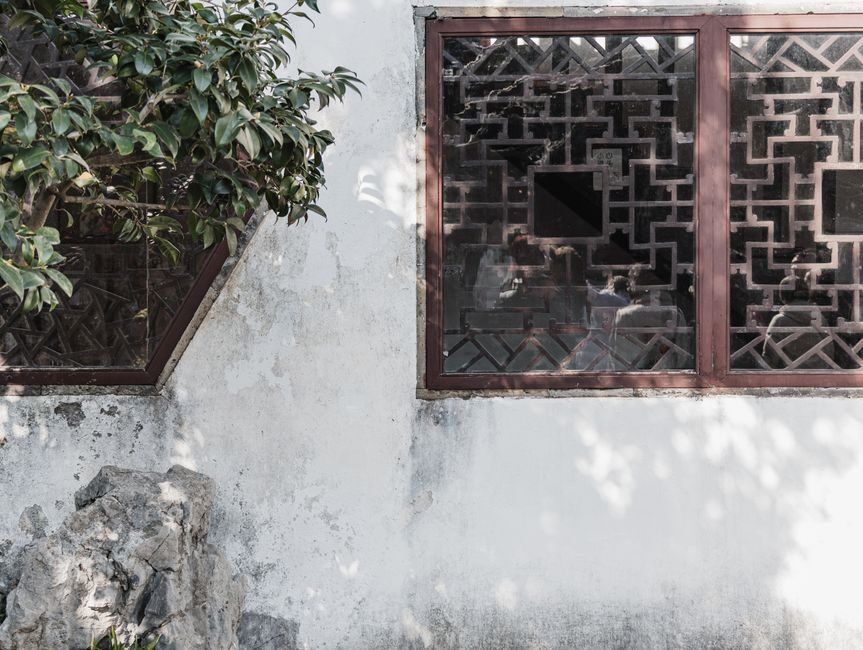
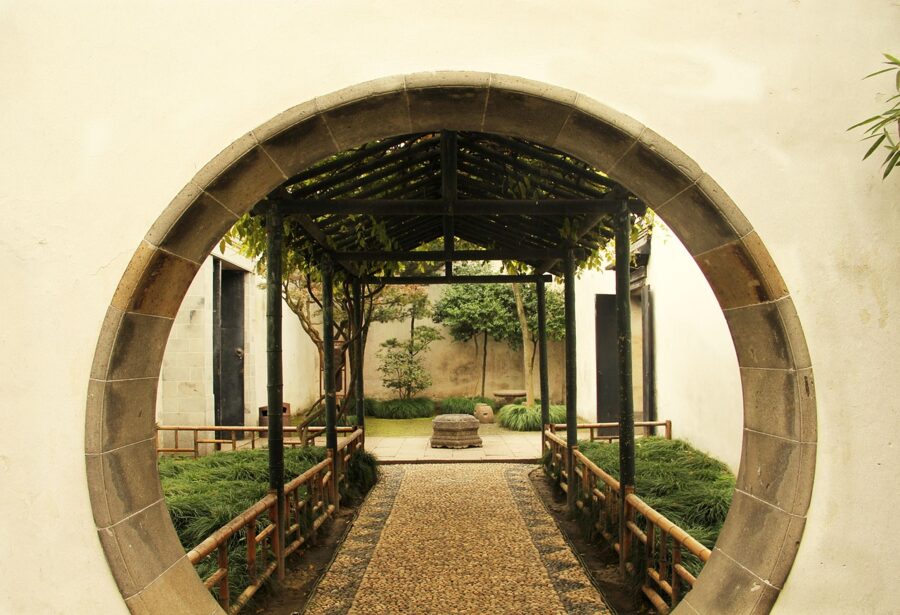
Framed views and lattice windows. Garden walls are full of holes: moon gates, vase-shaped doors and windows latticed in brick or tile, nearly every one a different pattern. They show you half of the next courtyard, which makes you want to go there. Some frame a single plant or rock like a hanging scroll.
Rockeries. Taihu rocks are mountains in miniature. The best were dredged from Lake Tai, pitted by water over centuries, and judged on four words: thin (瘦), leaky (漏), perforated (透) and wrinkled (皱). A great rock was worth a fortune.
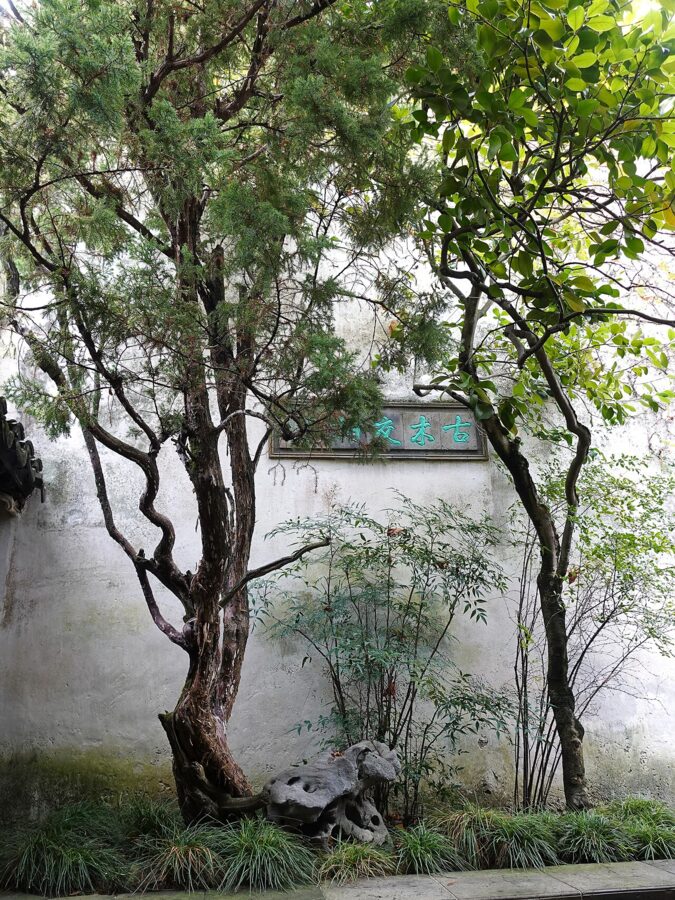
Halls and names. Every building has a job (receiving guests, reading, watching the moon, listening to rain on lotus leaves) and a name from poetry over the door. Mandarin Duck Halls are split into two differently decorated rooms, traditionally one for the warm months and one for the cold. The audio guides are worth renting for the names alone.
Slow down at corners. The view is designed to change every few steps, and the best surprises are kept for the turns. Sit in a pavilion for five minutes and let the next tour group pass.
Tickets, booking and the busy hours
The big gardens sell real-name, timed tickets online; book rather than hope. The official channel is the Suzhou garden tourism system (苏州园林旅游), reached through its WeChat account and mini programme, which has an English version, and the city’s tourism mini programme, 君到苏州, sells the same tickets. Choose the garden, date and time slot, select passport, and type your name and number exactly as printed.
Booking opens seven days ahead. Weekend and holiday slots at the Humble Administrator’s Garden go fast, especially over the May Day holiday and Golden Week (1–7 October). Bring the original passport you booked with; a photo on your phone won’t get you through. If the online system rejects your passport, try the staffed ticket window rather than a reseller.
Most gardens open at 07:30. From March to October they close at 17:30, with last entry at 17:00; from November to February they close at 17:00, last entry 16:30, and on public holidays half an hour later. The rush is roughly 10:00 to 14:30, when the coaches from Shanghai arrive.
The annual garden card is for residents with local ID, so visitors pay per garden. Children 1.4 m and under go free at the big gardens, and so do over-70s with ID; carry your passport if you’re claiming it.
Pingjiang Road, as it really is
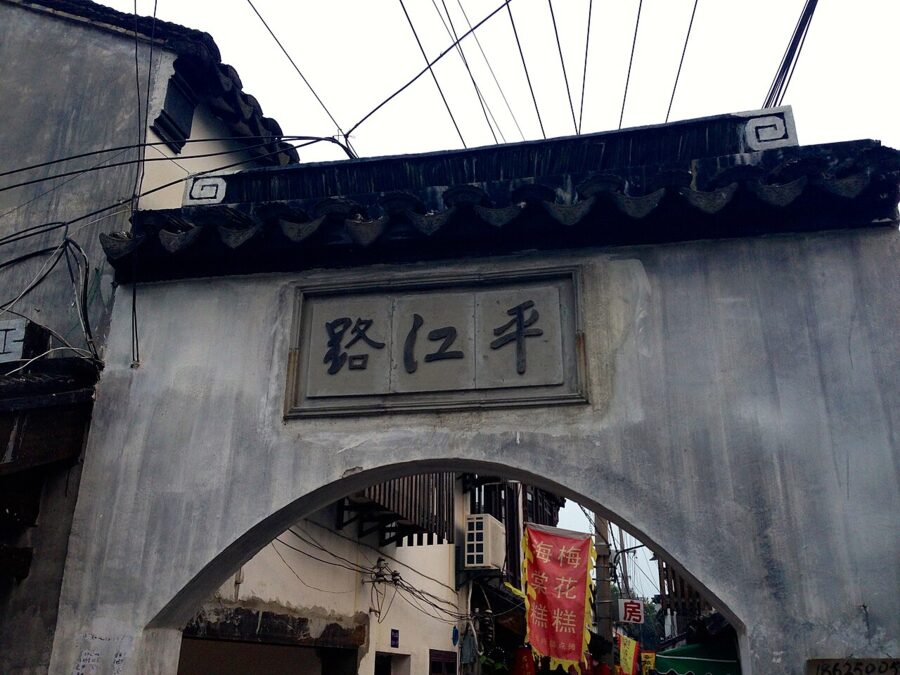
Pingjiang Road (平江路) runs for 1.6 km along a narrow canal in the north-east of the old city, from Ganjiang East Road to Baita East Road, a few minutes from the Humble Administrator’s Garden. It carries the city’s Song-dynasty name, Pingjiang, and appears on the 1229 stone map. The district has 18 stone bridges, a dozen of them where the old map shows bridges too.
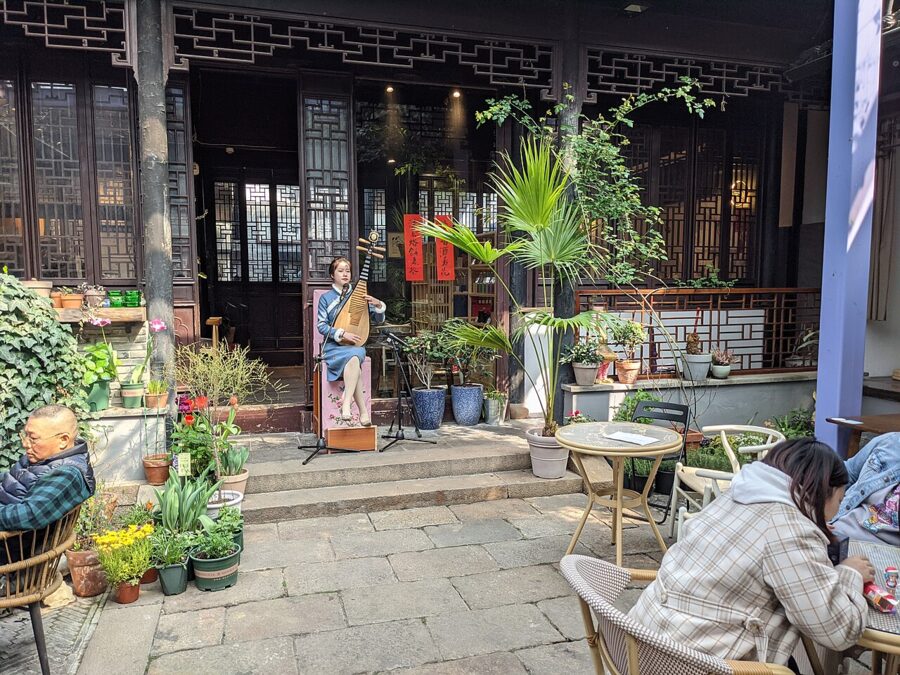
Now, the truth. The main street is pretty and very commercial: milk tea, souvenirs, Hanfu costume rental and cafés in old shopfronts, and from about 14:00 at weekends it’s shoulder to shoulder. Walk it before 10:00 or after dark, and spend most of your time in the side lanes.
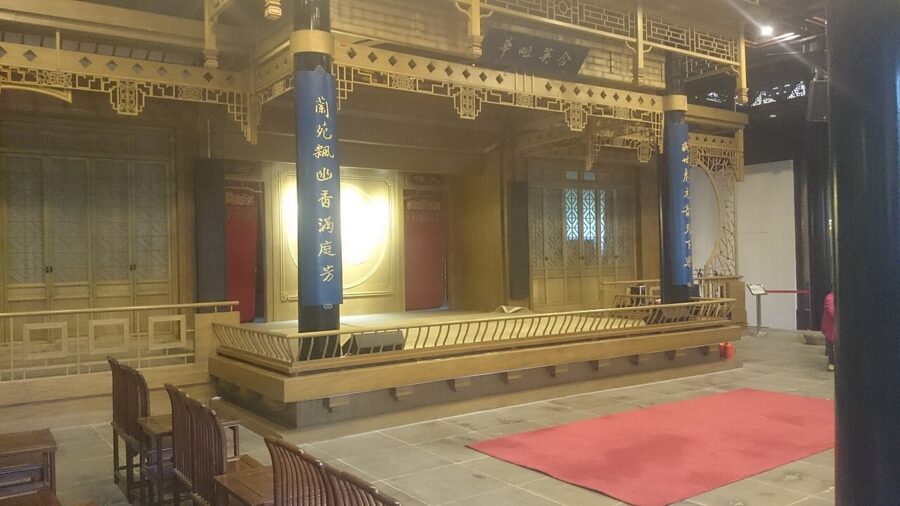
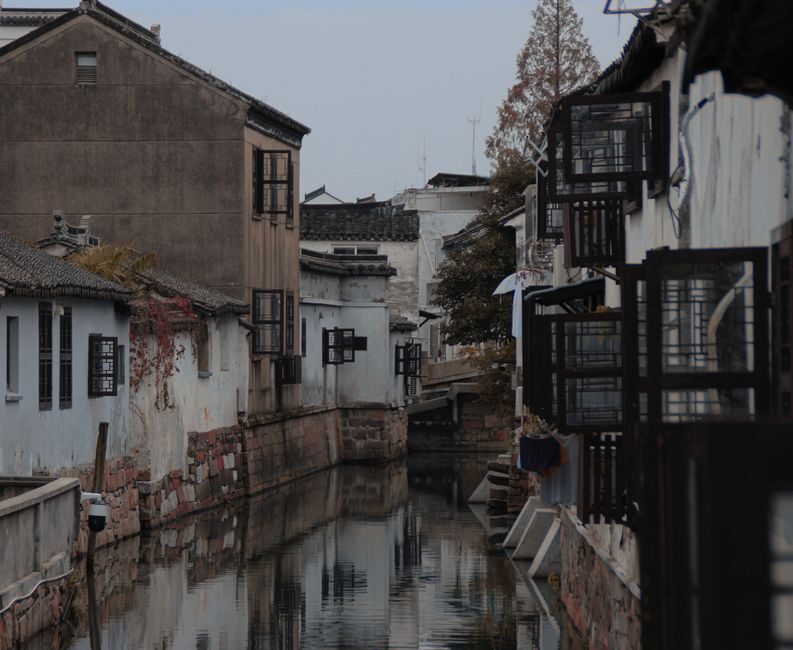
Those lanes are where people live. Turn down Daru Lane, Dingxiang Lane or Xuanqiao Lane and within a minute the noise drops, washing hangs over the water and old men play cards outside courtyard doors. On Zhongzhangjia Lane, the China Kunqu Opera Museum (中国昆曲博物馆) fills an old guild hall with a carved opera stage; Kunqu, the 600-year-old opera of this region, is still performed in Suzhou.
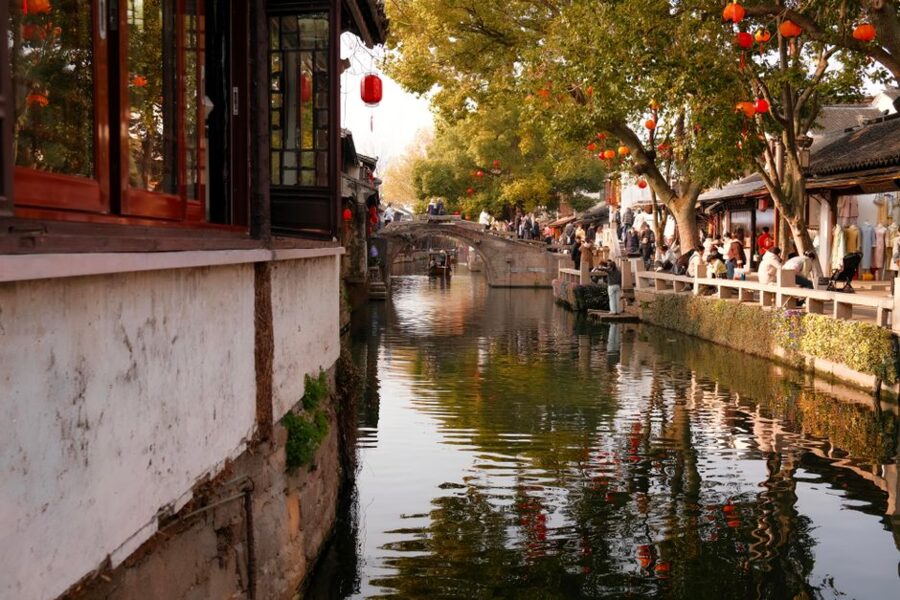
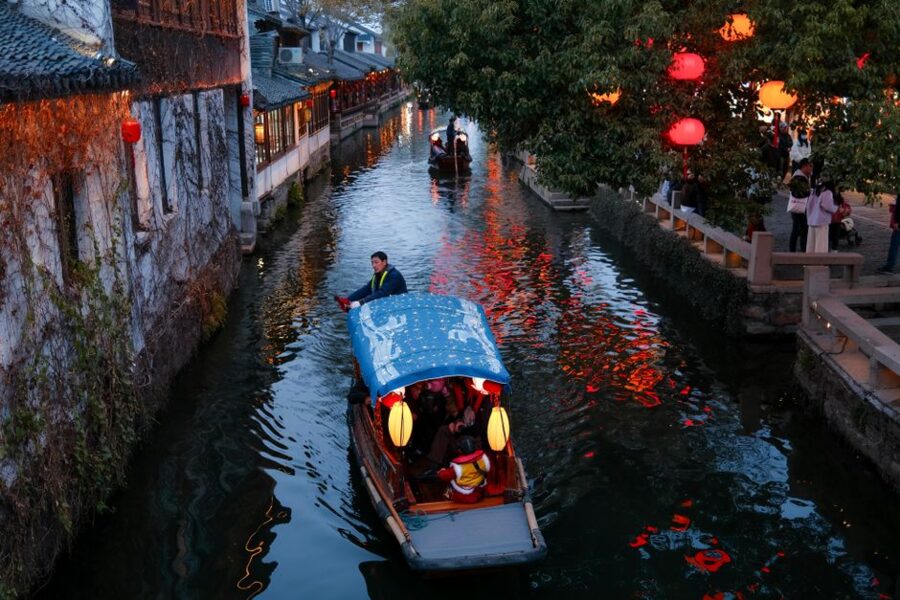
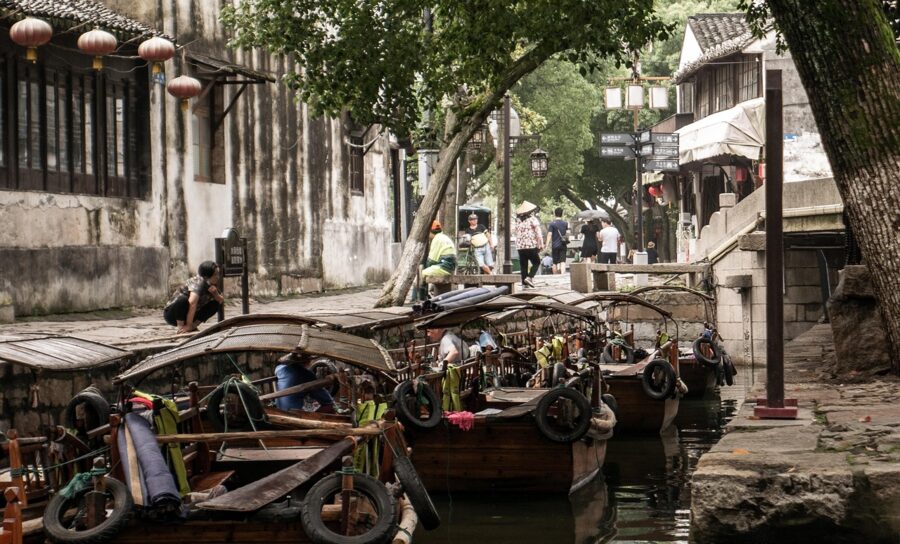
Hand-rowed boats leave from small docks along the canal and cost ¥40 a person for 30 to 40 minutes, six to eight people a boat. The boatwomen sometimes sing. It’s touristy and it’s lovely, especially in the early evening, when you see the houses from water level, which is how they were built to be seen.
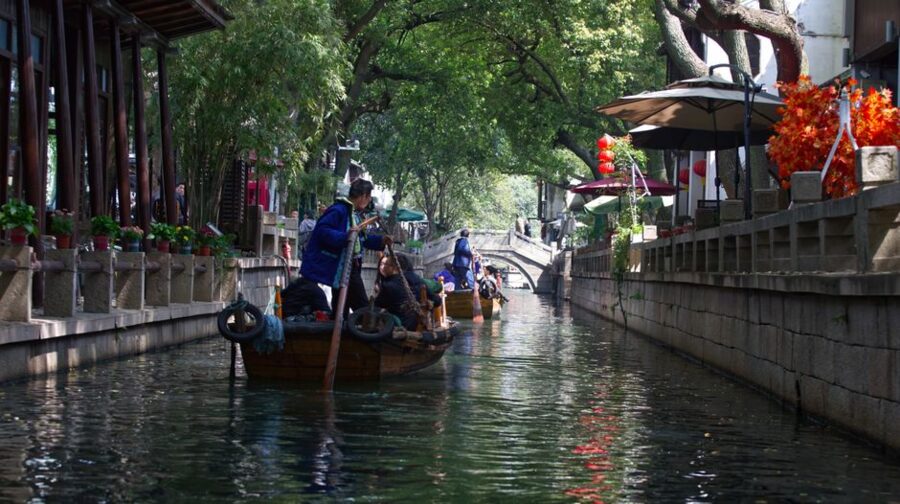
If you know Beijing’s hutongs, the contrast is striking. Those are built around dry courtyards and lanes wide enough for a cart; here many houses face the street and step down to the water behind, with a water door for deliveries by boat.
Shantang Street and the boats on the canal
Shantang Street (山塘街) is longer and grander than Pingjiang Road. The poet Bai Juyi, governor of Suzhou in the 820s, dug the Shantang River from Changmen to Tiger Hill, and the street along it runs for 3.8 km. Locals call it Seven-Li Shantang, after its old length.
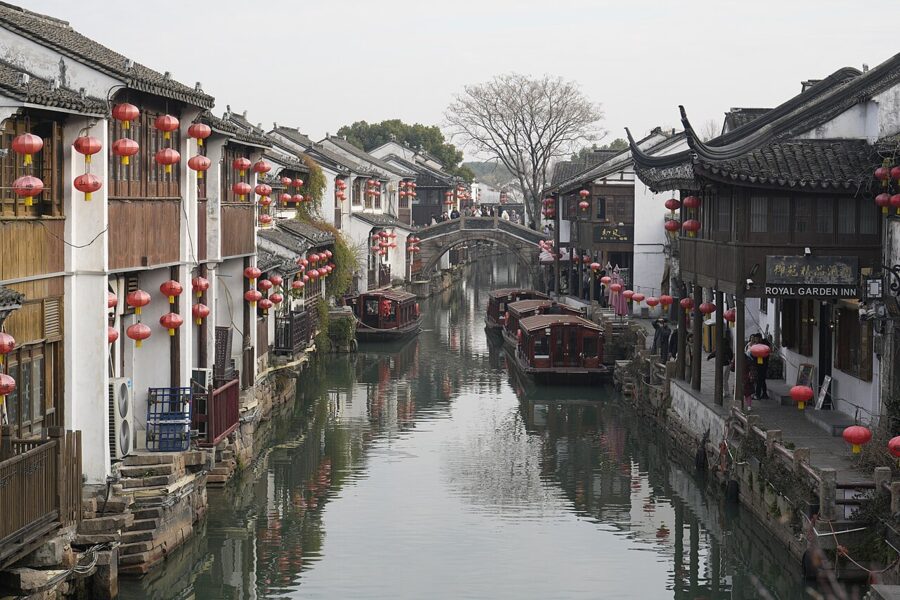
The restored stretch near Changmen is crowded with snack stalls and souvenir shops, and best at night, when the lanterns double in the water. Qianlong loved the street so much on his tours south that he had a copy built at the back of Beijing’s Summer Palace, where it’s still called Suzhou Street.
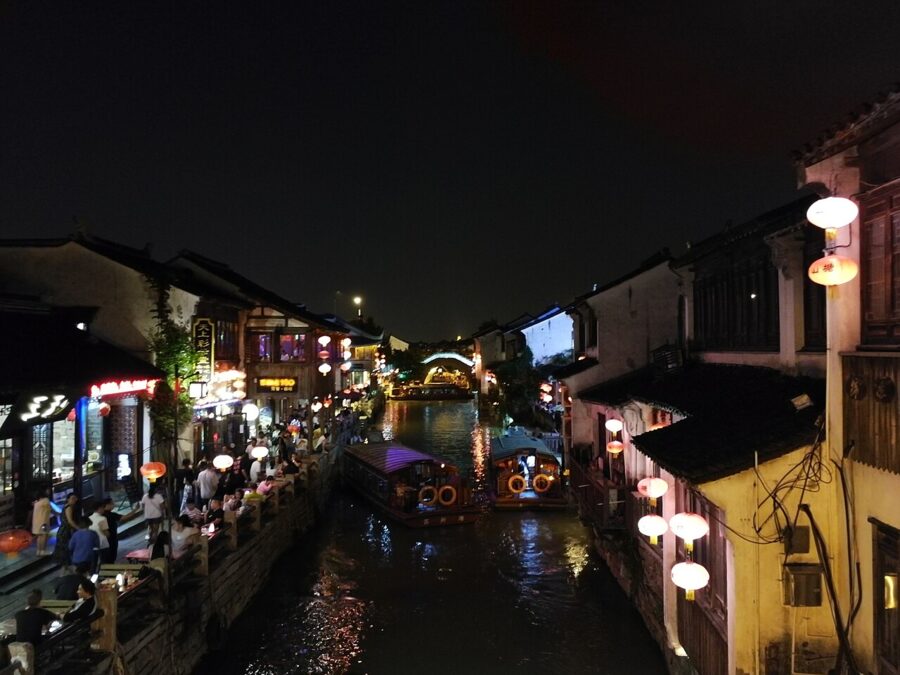
Boats from the old opera stage dock (古戏台码头) cost about ¥50 a person for about 40 minutes and run until about 21:00; you’ll find the same ride online for a little less. Or walk it: Line 2’s Shantang Jie station is beside the street, and the whole length to Tiger Hill is about an hour’s stroll.
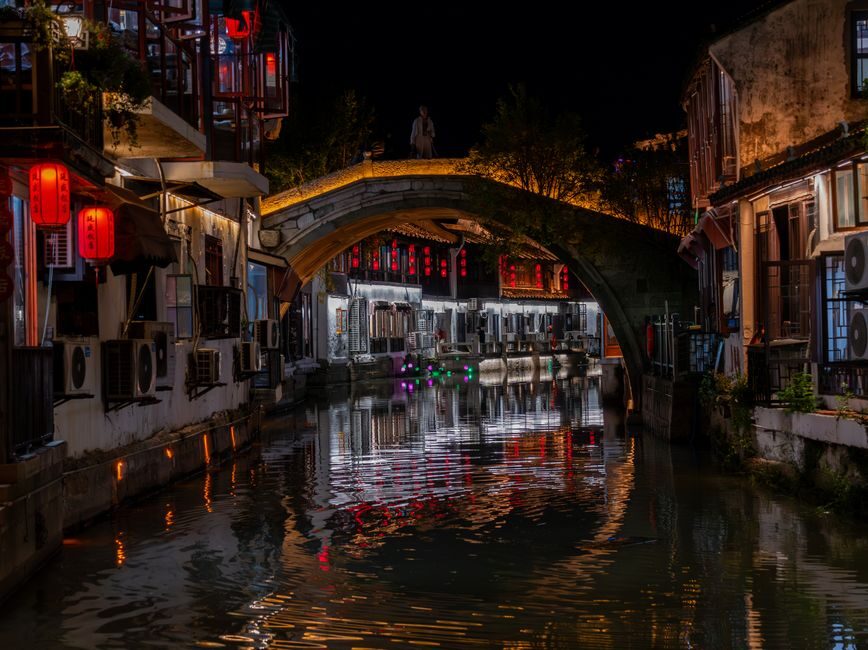
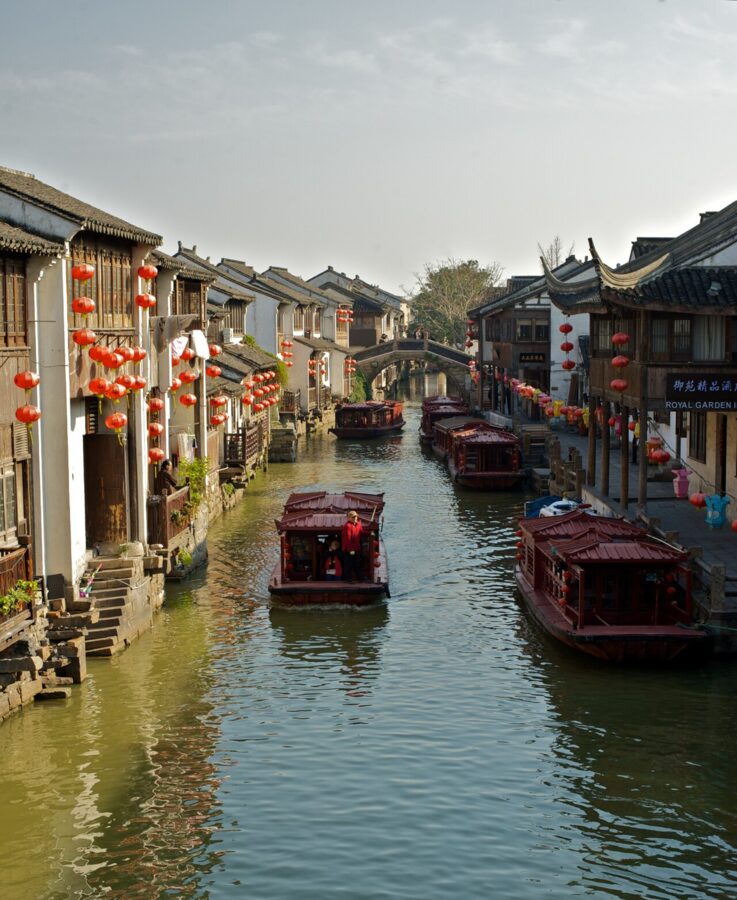
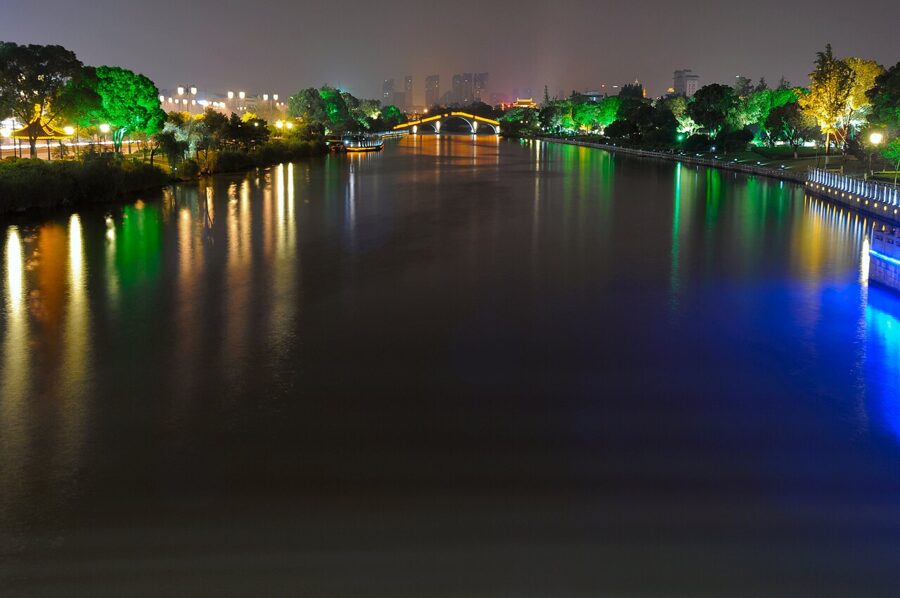
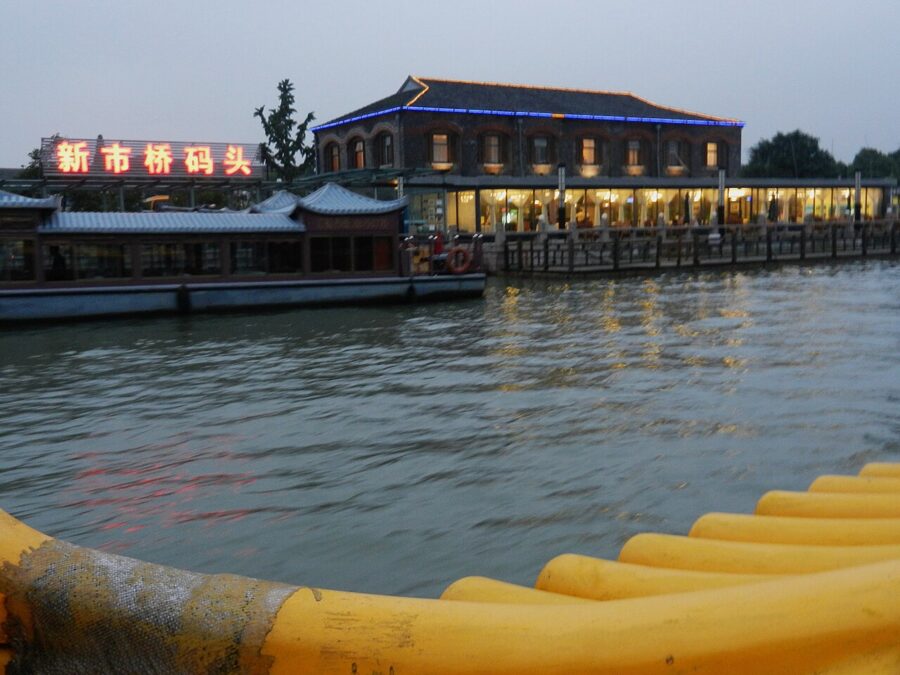
For a bigger loop, the Grand Canal boats leave from Xinshiqiao dock (新市桥码头) on the moat near Panmen and sail in the evening along the outer moat past the old gates. Prices vary by boat and time, so check at the dock or on 君到苏州; the night sailing, with the gates lit, is the one to take.
Panmen and the old gates
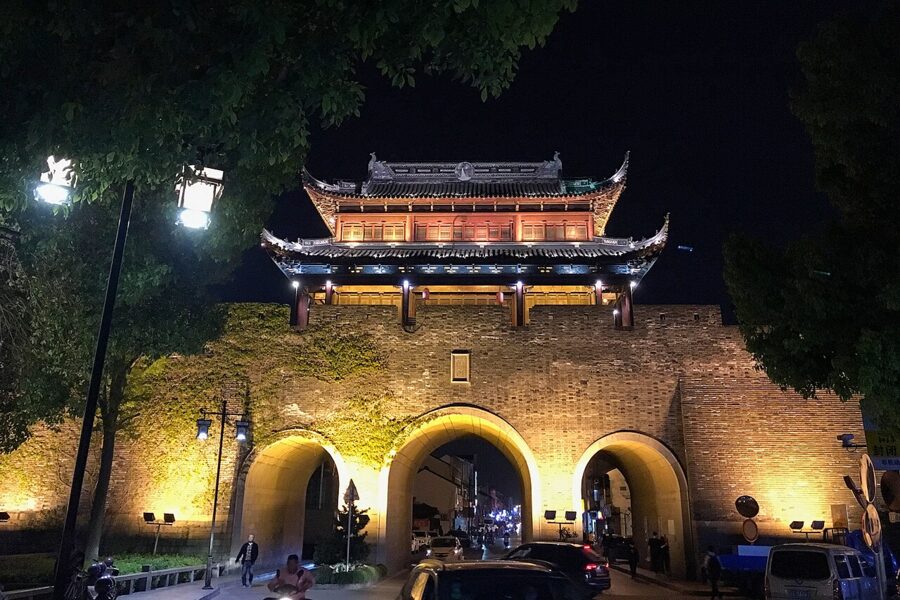
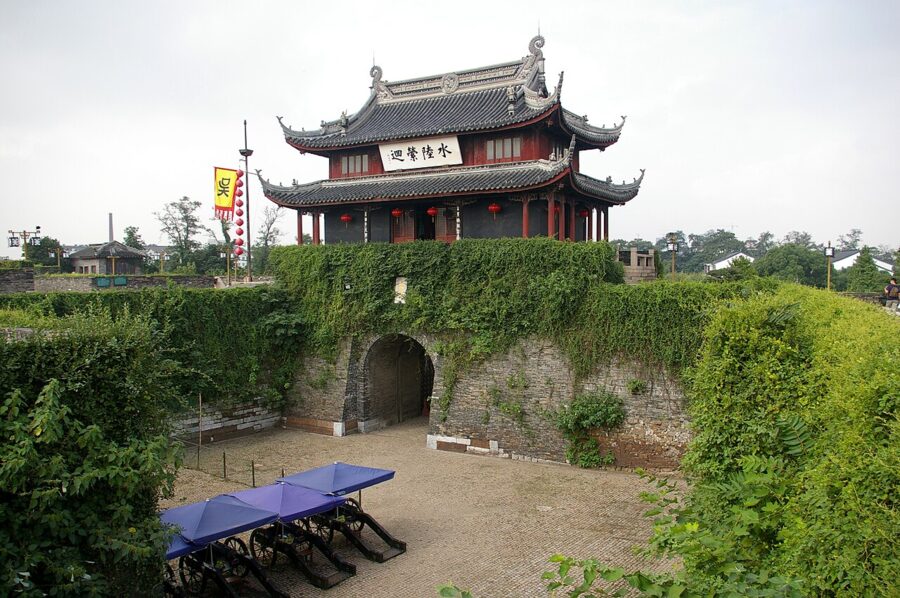
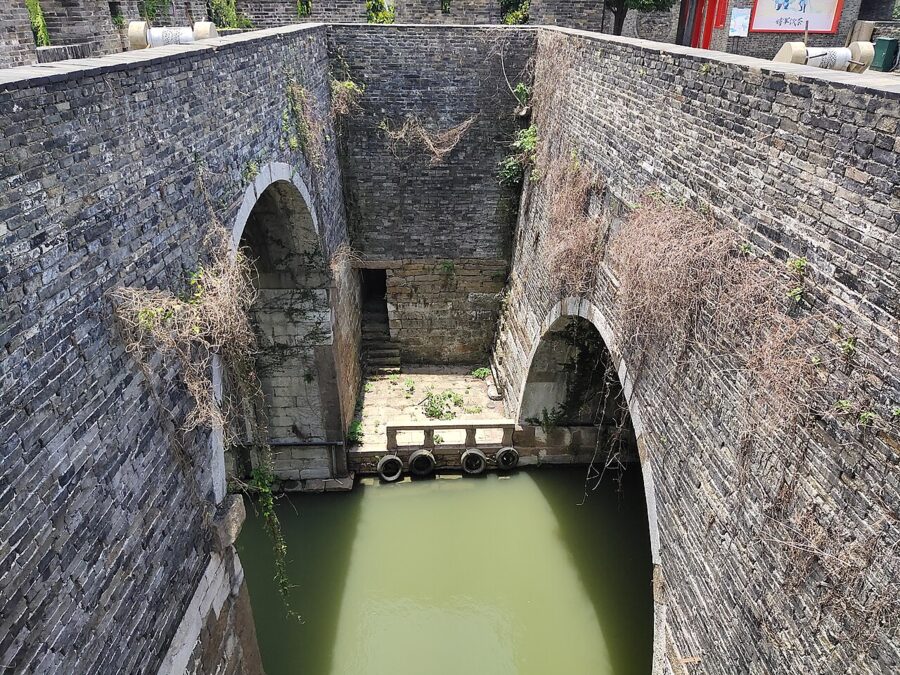
Panmen (盘门) is the best-preserved piece of the old wall, and it’s a double gate: one for people and carts, one for boats. The present gate dates from 1351, and a few years later an enclosed courtyard was added between outer and inner gates where defenders could trap attackers. The water gate beside it has its own pair of sluices.
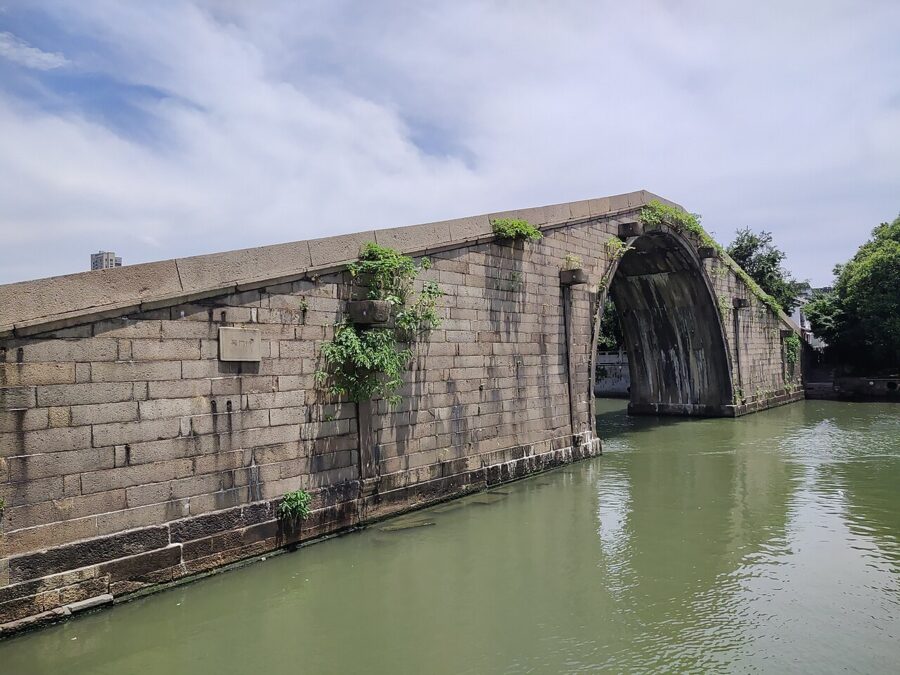
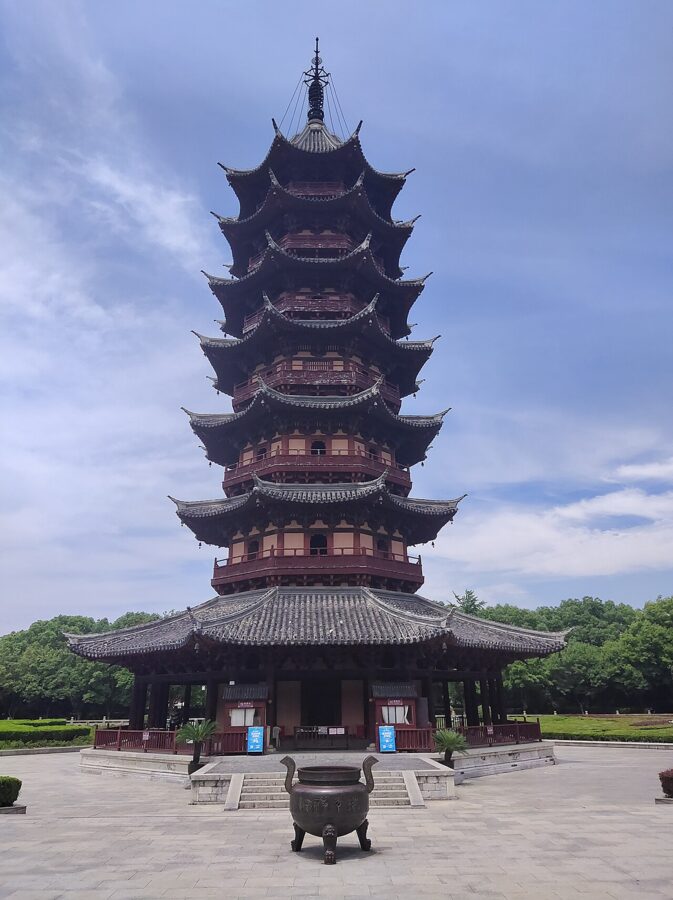
Two neighbours complete what the city calls the Three Sights of Panmen. Wumen Bridge (吴门桥), rebuilt in 1872, is the city’s biggest single-arch stone bridge, about 10 m high so that loaded boats could pass under. The seven-storey Ruiguang Pagoda (瑞光塔) dates from around 1004.
Panmen is a calm, green corner, right for a late afternoon, and the scenic area stages a light show in the evenings. It’s smaller and gentler than the gates of Xi’an, but the water gate is something no other Chinese city has kept.
Tiger Hill and the leaning pagoda
Tiger Hill (虎丘) is where King Helü of Wu was buried in 496 BC, with, so the old histories say, three thousand swords. Three days after the burial a white tiger was seen crouching on the mound, and the hill took its name. The Song poet Su Shi wrote that coming to Suzhou without seeing Tiger Hill was a cause for regret, and the city has quoted him ever since.
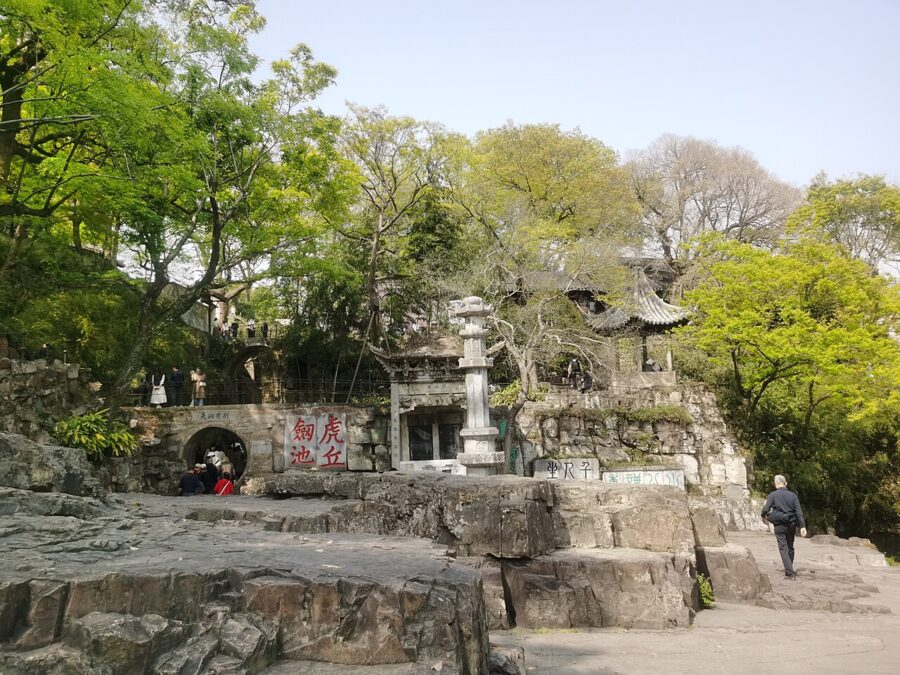
The hill is barely 35 m high, a 15-minute climb. On the way you pass the Sword-Testing Stone, split clean in two by a legendary blade, and come out on Thousand-Person Rock, a broad red slab where a monk is said to have preached so movingly that the stones nodded. Beside it, between two cliffs, is the Sword Pond, where Helü’s tomb is supposed to lie, though nobody has found it.
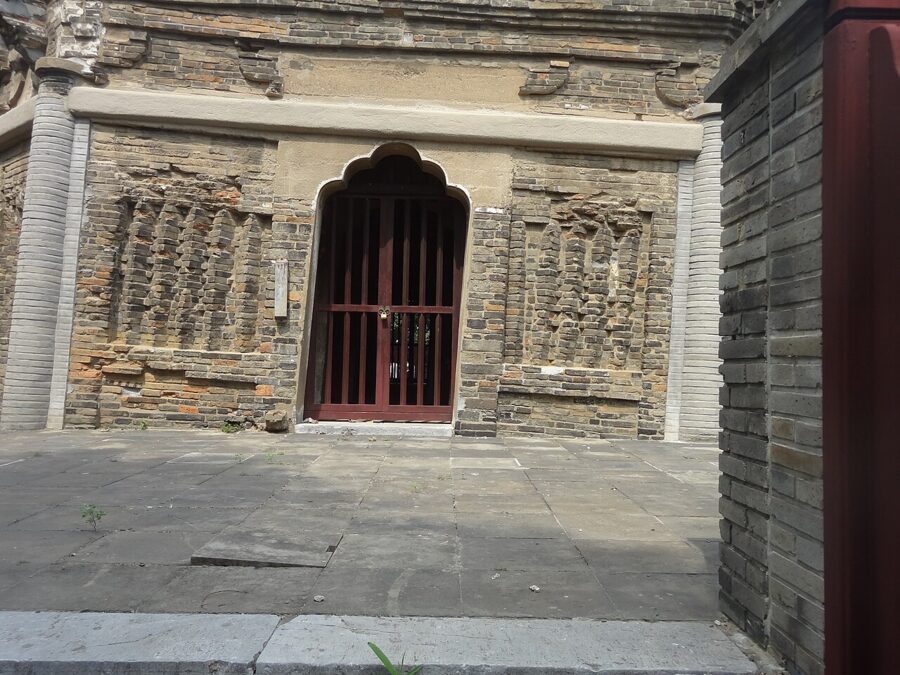
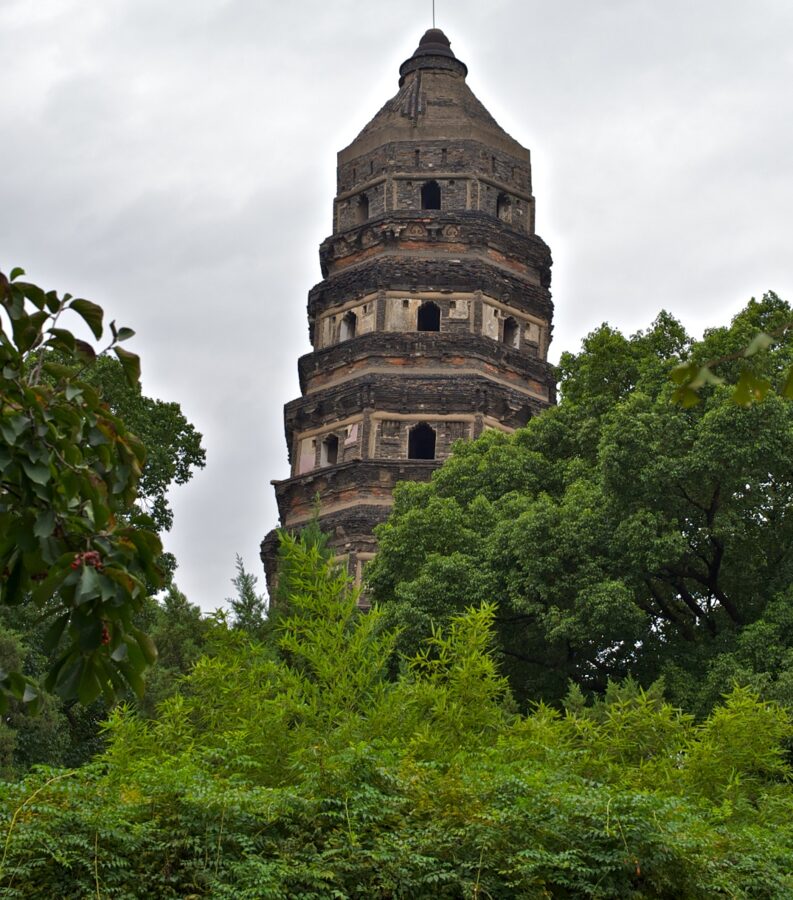
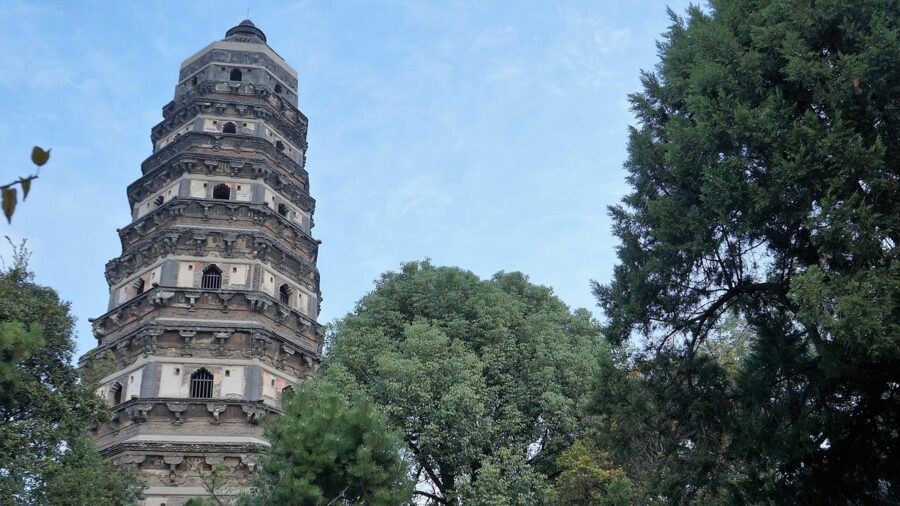
At the top stands the Yunyan Pagoda (云岩寺塔), seven storeys of brick, 47 m tall, begun in 959 and finished in 961 on a foundation half rock and half soil, which is why it has tipped to the north-east. During repairs in 1957, builders found a stone box of scriptures sealed inside in 961, and finds from the pagoda are now in the Suzhou Museum.
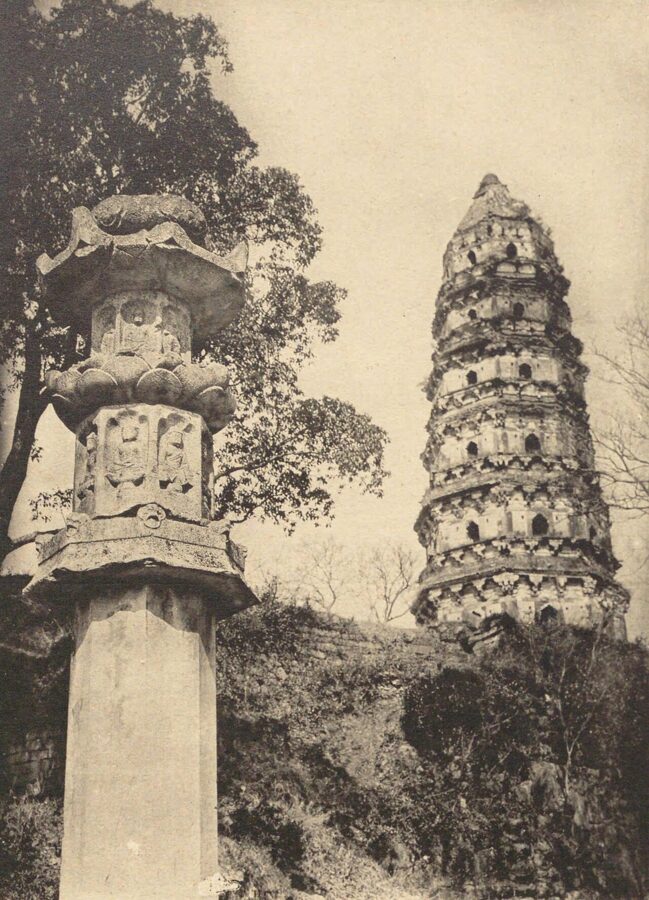
Tickets are ¥70 in peak season and ¥60 otherwise. The gates open at 07:30 and close at 18:00 from May to October and 17:30 in other months, with later summer evenings and a lantern festival around Spring Festival. Line 6, opened in 2024, has a Huqiu station a short walk away. Come first thing, then walk or ride the boat east along Shantang Street.
The Suzhou Museum
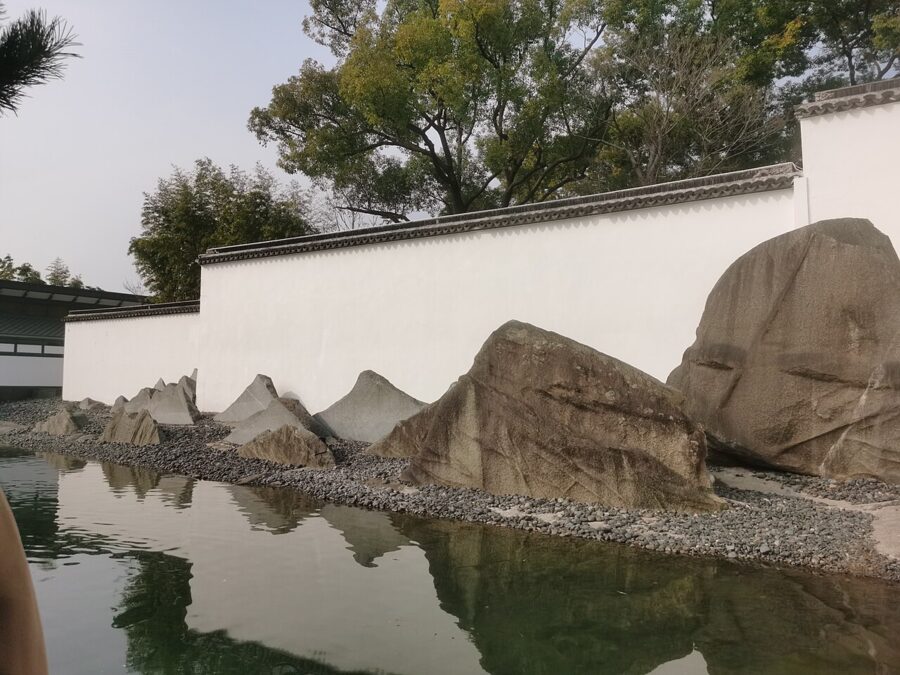
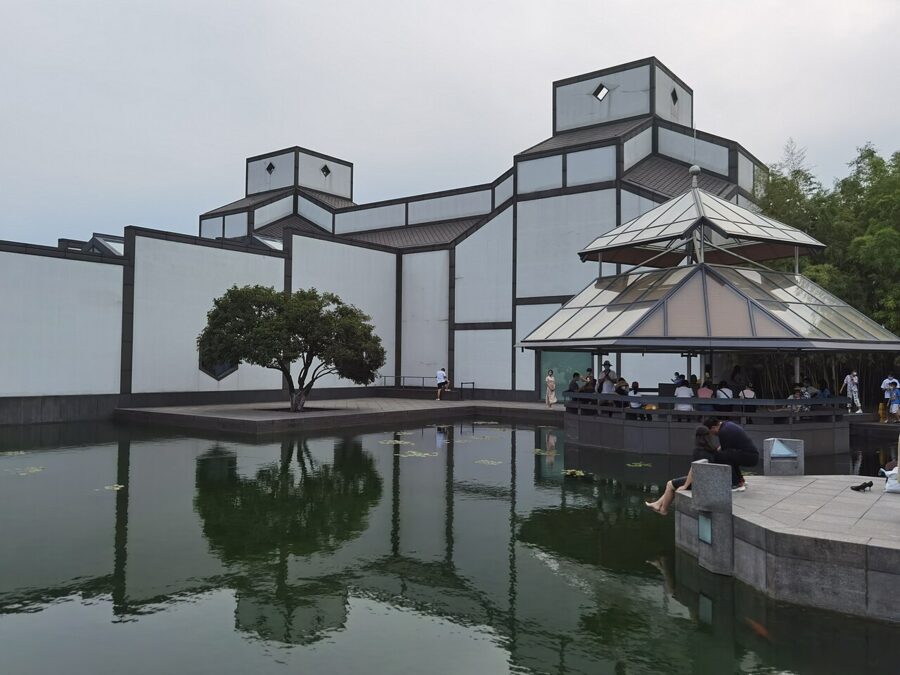
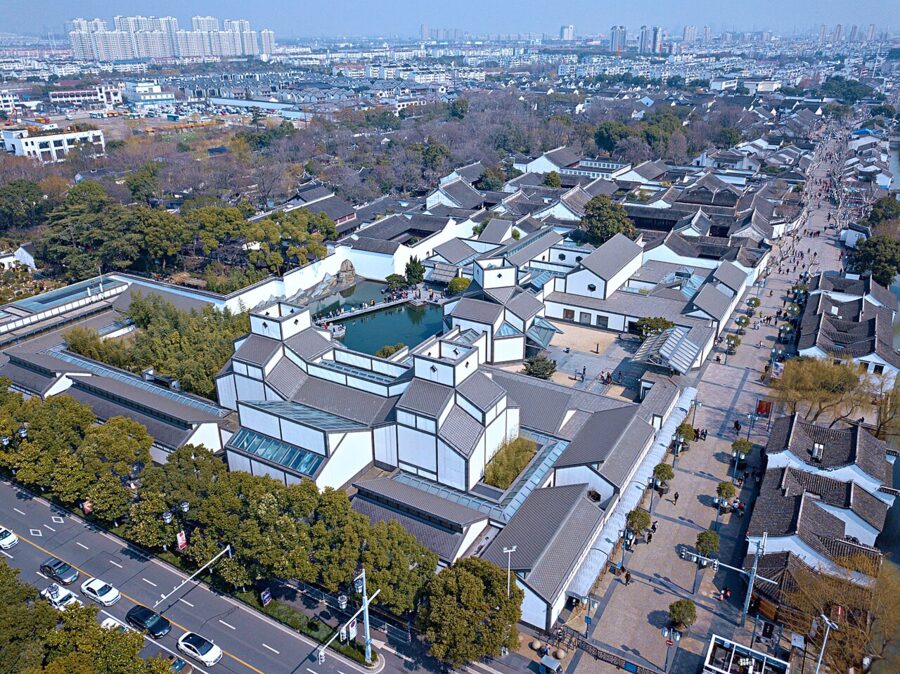
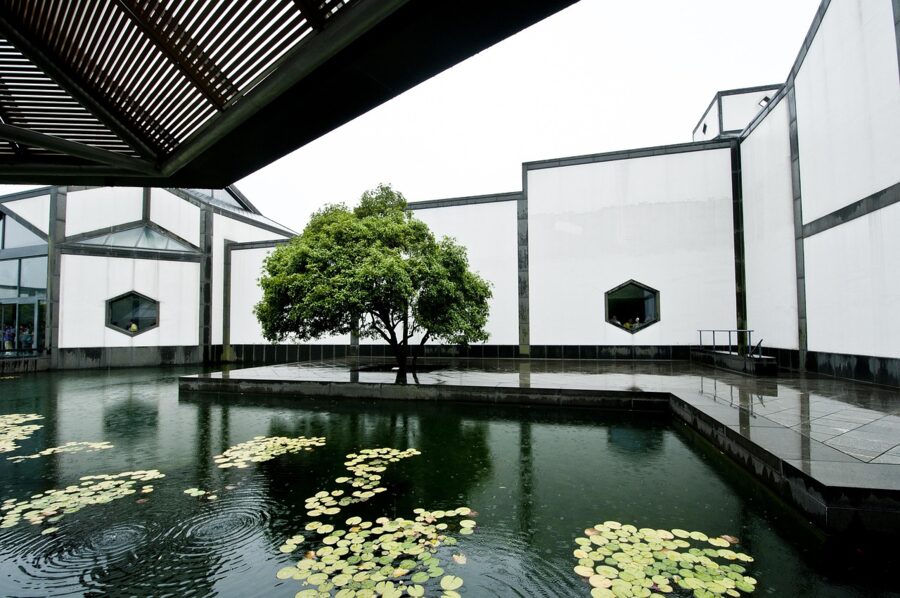
I.M. Pei’s family came from Suzhou, and he was 89 when his Suzhou Museum opened on 6 October 2006. It’s a quiet masterclass: white walls and grey stone roofs like the houses around it, folded into sharp geometry, with slatted skylights so the light falls softly into the galleries. It’s next to the Humble Administrator’s Garden on Dongbei Street, and the two make an easy pair.
The collection is strong on Suzhou itself: Wu-region jades and bronzes, painting and calligraphy by the Ming and Qing Suzhou masters, and the treasures from the Yunyan and Ruiguang pagodas, including a celadon lotus bowl from Tiger Hill. The oldest part of the complex, the mansion of Li Xiucheng, is part of the same visit.
Entry is free but must be booked. The main museum (本馆) uses timed, real-name tickets that open seven days ahead, counting the day itself, on its website, its WeChat account or its 苏州博物馆全预约 mini programme. It opens Tuesday to Sunday, 09:00 to 17:00, last entry 16:00, and closes on Mondays except public holidays. Holiday slots go fast: over the 2026 Dragon Boat Festival they were fully booked.
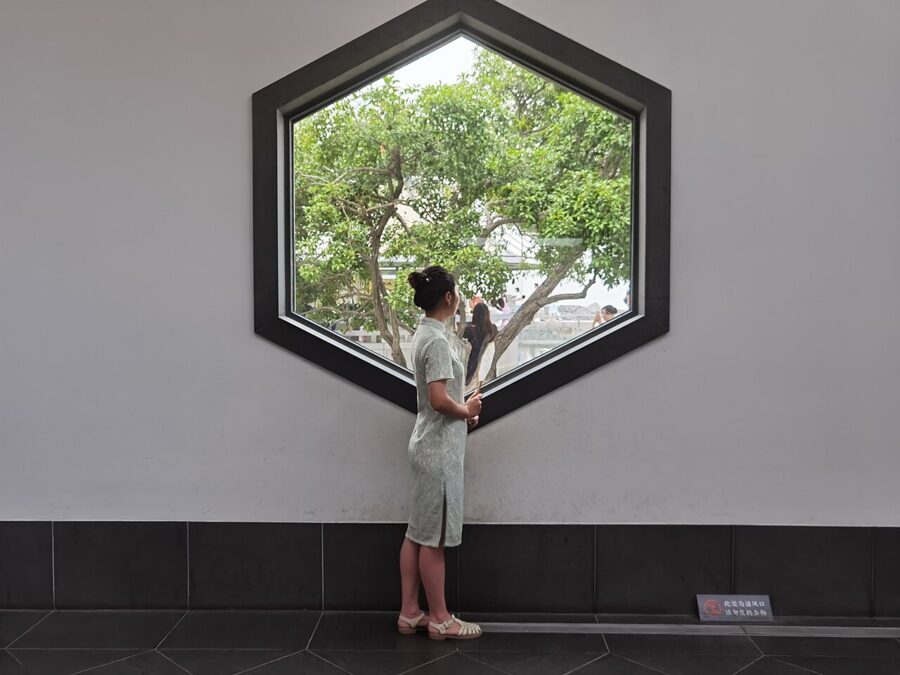
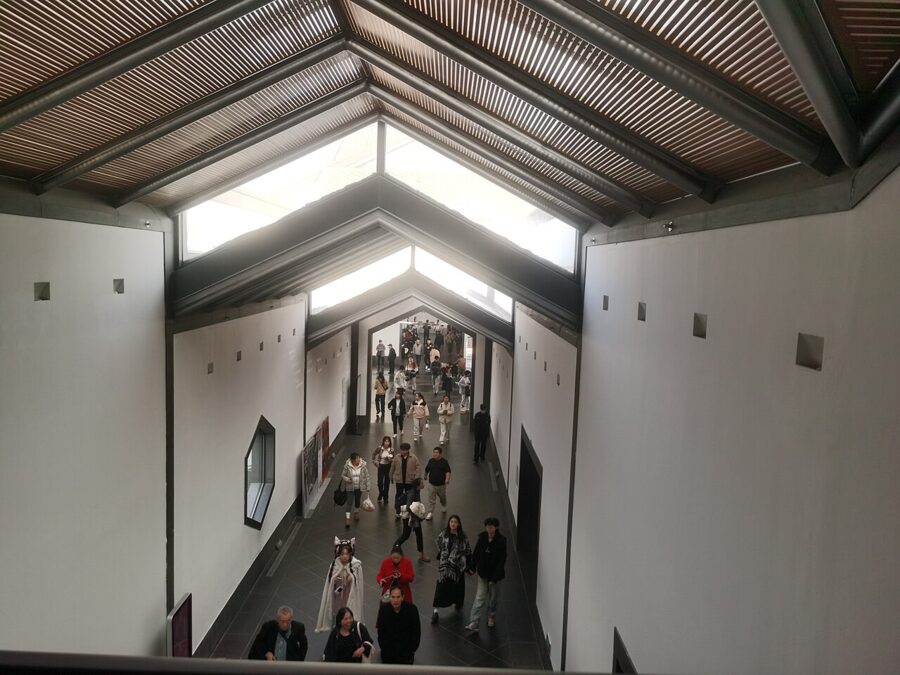
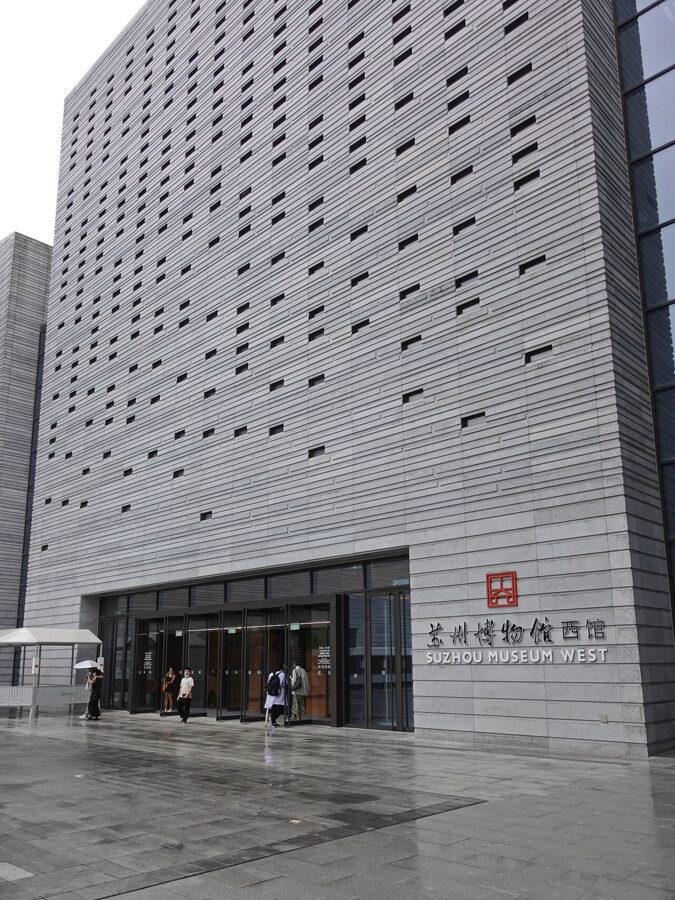
No slot? Go to the Suzhou Museum West (苏州博物馆西馆), opened in 2021 at 399 Changjiang Road in the New District, about half an hour by taxi. It needs no booking and has a long gallery on Suzhou’s history. It lacks Pei’s building, but it’s a good museum in its own right.
What to eat in Suzhou
Suzhou cooking is sweeter than Shanghai’s, prettier on the plate and obsessed with the season. The local style, Subang cai (苏帮菜), is built on what comes out of the lakes and canals: river fish, freshwater shrimp, crab in autumn, lotus root and water chestnut. Even the noodle toppings change with the month.
The morning bowl
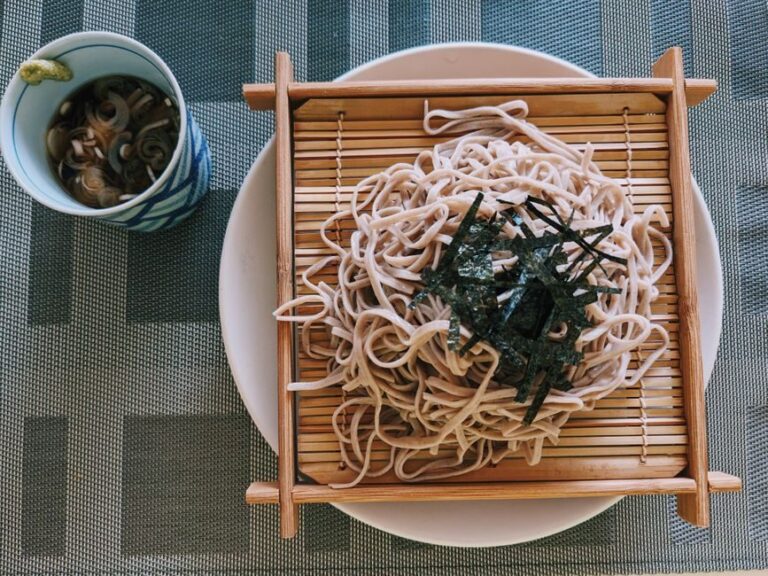
If you eat one thing, make it a bowl of Suzhou noodles (苏式汤面) for breakfast. Fine noodles are folded neatly in the bowl, like the back of a fish, in a broth simmered from pork and eel bones; the first bowls from a fresh pot, the “first broth” (头汤面), are why locals queue at 06:30. My guide to Chinese noodles covers the bowl itself; here’s how to order it in Suzhou.
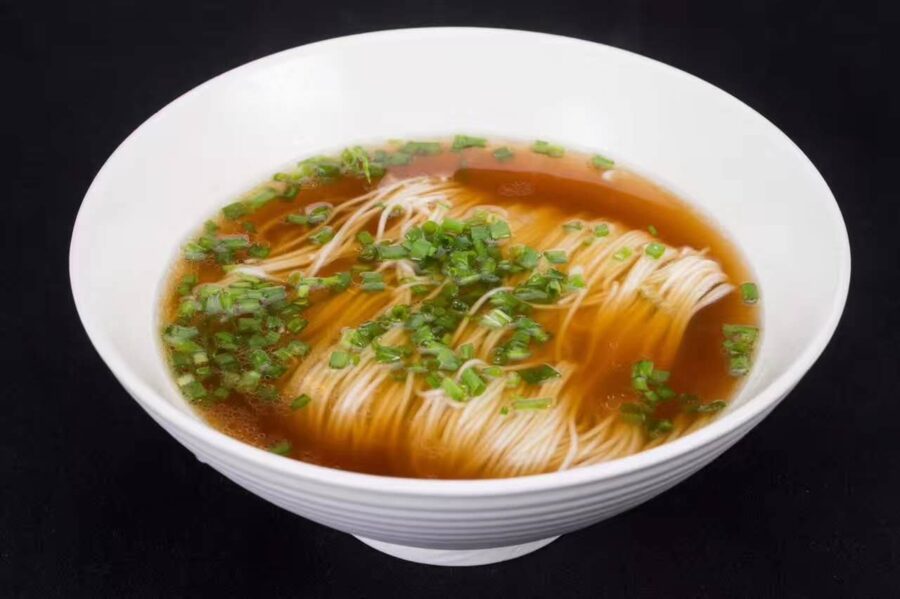
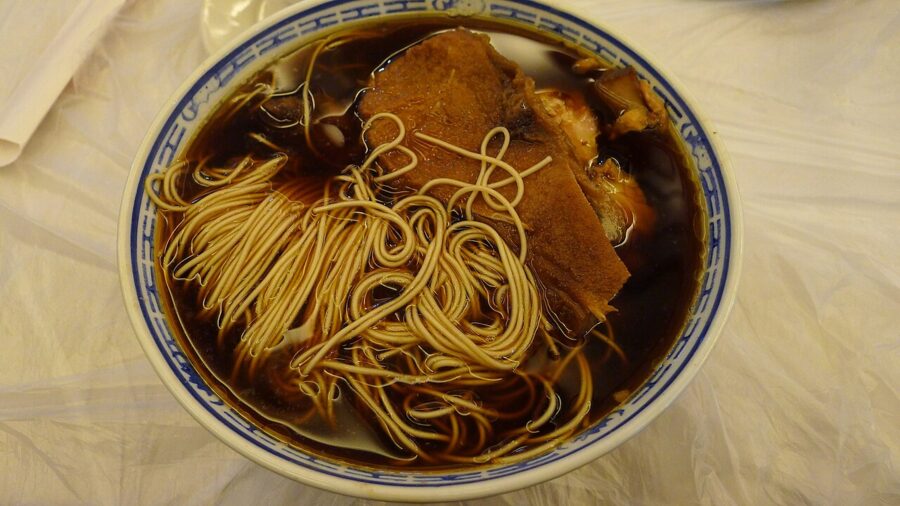
Choose red broth (红汤), coloured with soy and the juices of braised pork, or white (白汤). Then pick a topping, or jiaotou (浇头): braised pork belly, crisp-fried eel, fried fish, shrimp, or mushrooms and greens. Kuan tang means extra broth, zhong qing extra garlic leaf, and guo qiao (“over the bridge”) the topping on a separate plate so it stays crisp. Order and pay at the counter, usually by Alipay or WeChat Pay.
Two shops on the 2026 Michelin Bib Gourmand list. Tongdexing (同得兴), at 6 Jiayufang off Renmin Road, is known for its seasonal bowls. Weiji Aomian (伟记奥面馆), on Baita East Road at the north end of Pingjiang Road, serves Aozao noodles (奥灶面), the Kunshan style with fried fish or braised duck. Go early: both queue, and the first broth goes first.
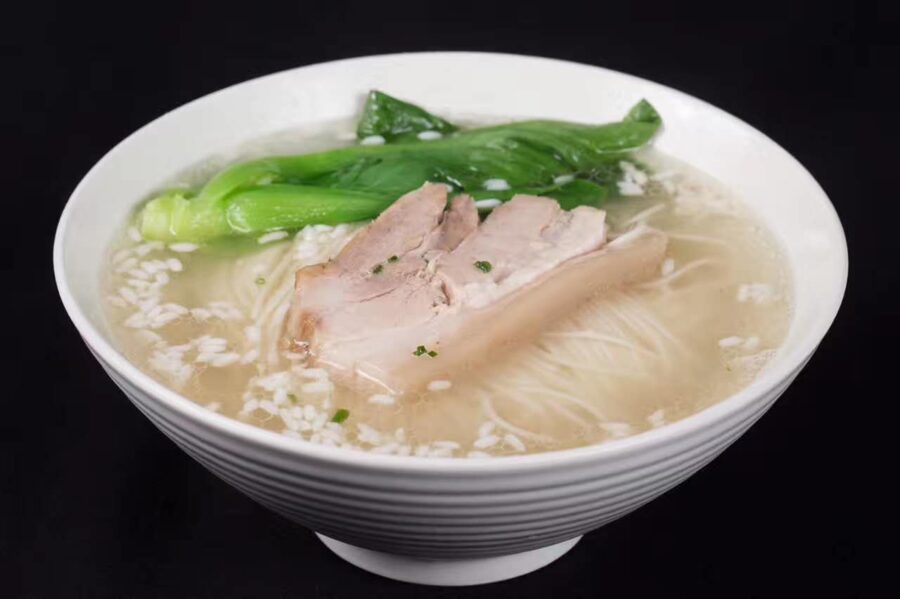
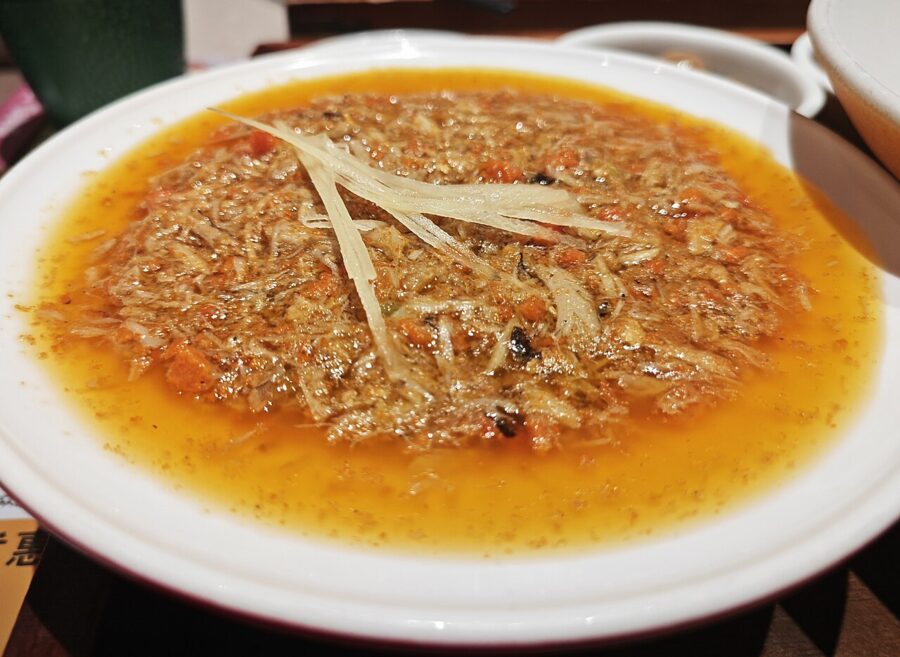
The bowl follows the season. From May to October, Suzhou eats Fengzhen pork noodles (枫镇大肉面), a white broth sharpened with fermented rice wine under a slab of soft pork belly; Tongdexing serves it only in those months. Early summer brings three-shrimp noodles (三虾面), with shrimp meat, roe and tomalley. In autumn come crab roe noodles (蟹粉面) and tu huang you (秃黄油), crab roe and fat spooned over rice or noodles.
The famous fish, and the rest of the table
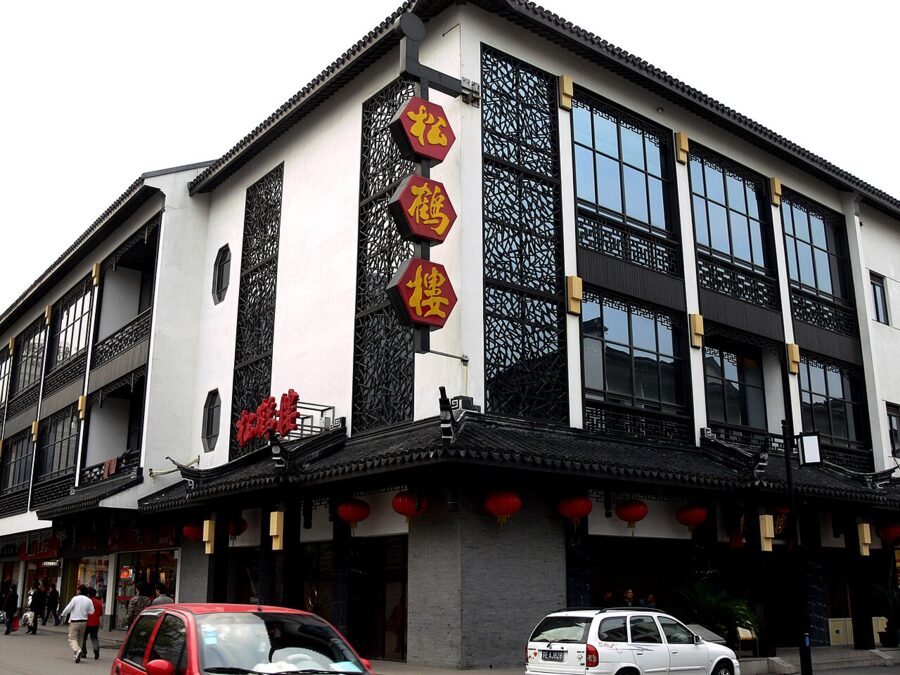
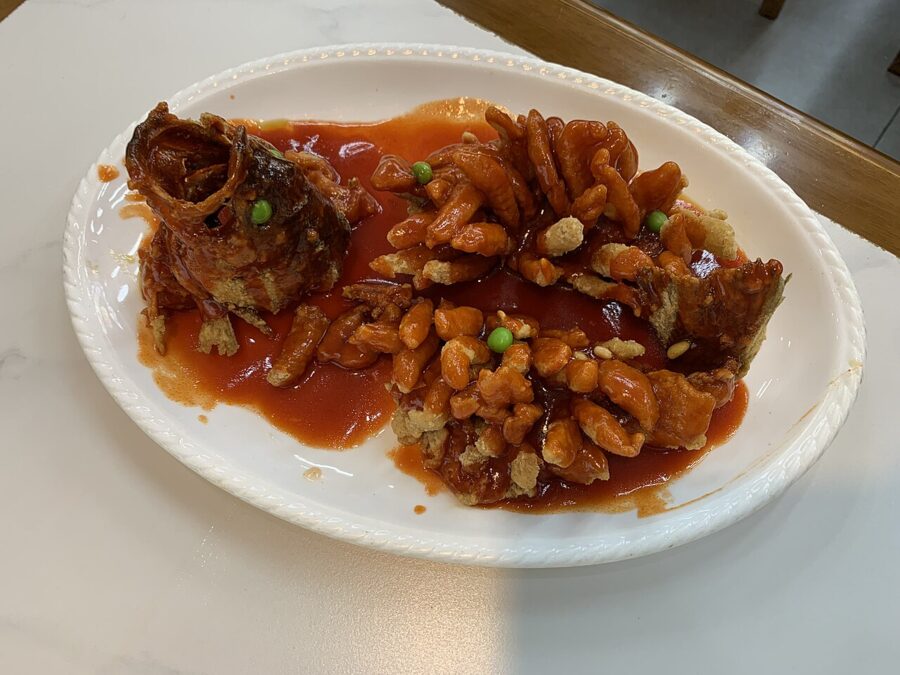
The signature dish is squirrel-shaped mandarin fish (松鼠鳜鱼): boned, scored deep, fried until the flesh fans into spikes and served in a bright sweet-and-sour sauce. The story goes that the Qianlong emperor first ate it at Songhelou (松鹤楼) on Guanqian Street, which still serves it. It’s priced by weight, so check first; it’s usually the priciest thing on the table.
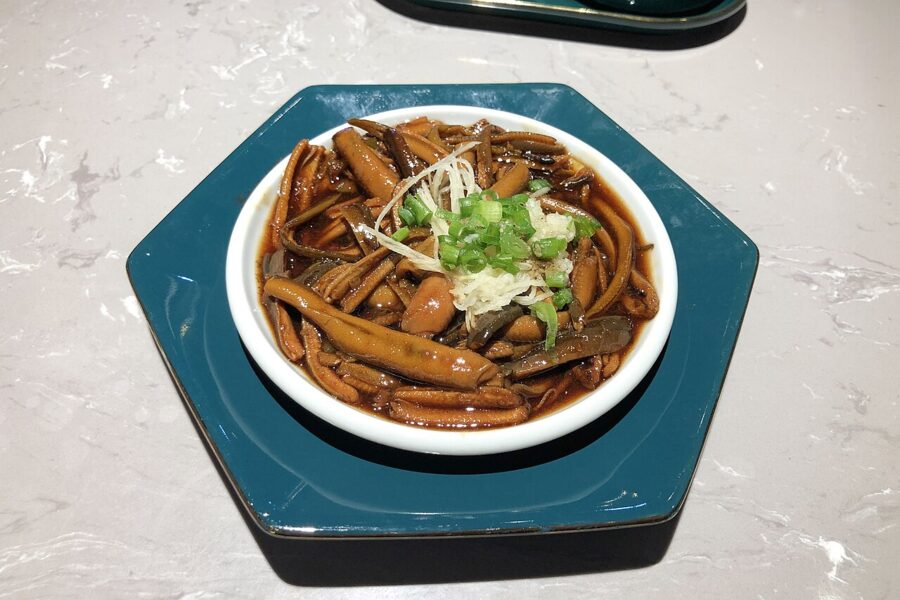
Also look for river shrimp stir-fried with Biluochun tea leaves and eel shreds sizzled with hot oil (响油鳝糊). Pan-fried pork buns, sheng jian (生煎), started in Suzhou before Shanghai adopted them; Yaba Shengjian (哑巴生煎), at 12 Wenjia’an off Lindun Road, is the famous one, with a queue and shared tables. The city’s xiaolongbao follow the same sweet Jiangnan line.
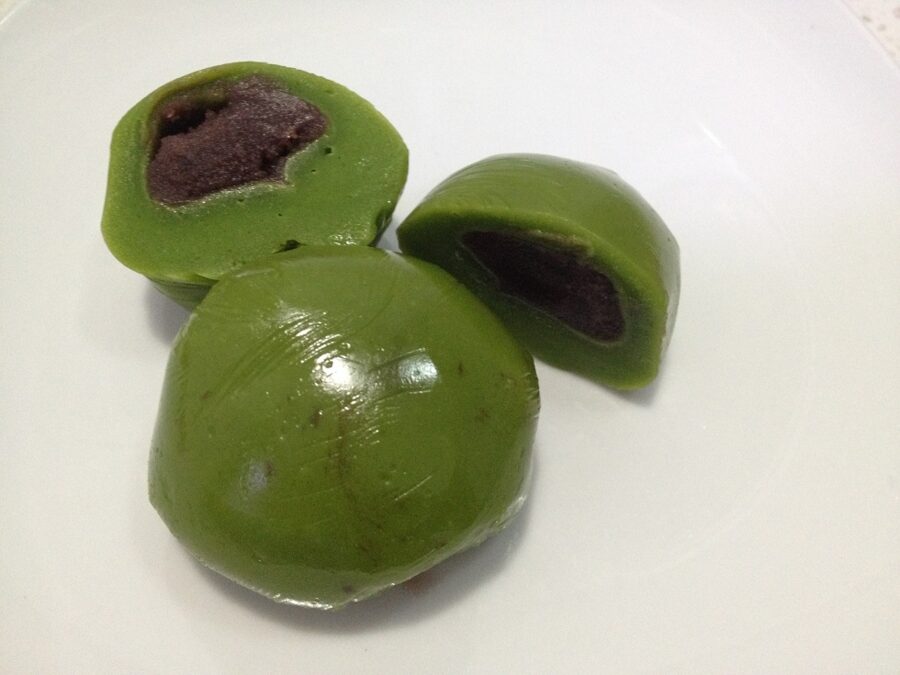
Snacks follow the calendar: green rice balls (青团) in spring, fresh foxnuts (鸡头米) in osmanthus syrup in late summer, hot fresh-meat mooncakes in autumn, and around the winter solstice a sweet osmanthus wine called dongniang jiu (冬酿酒).
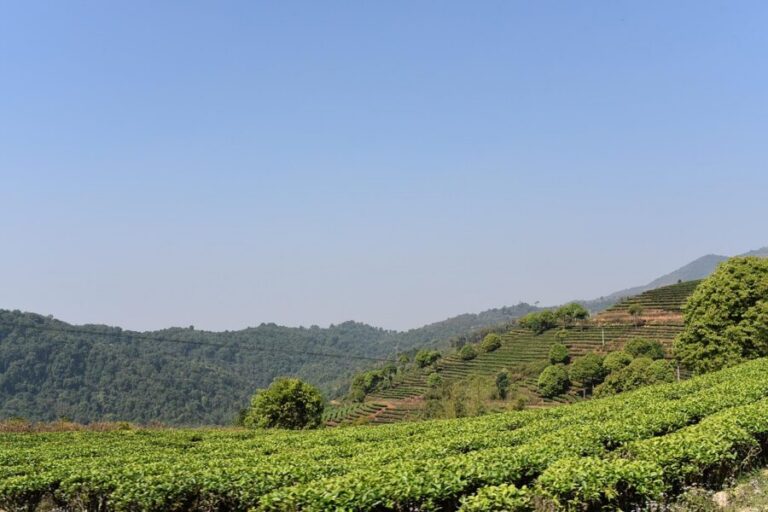
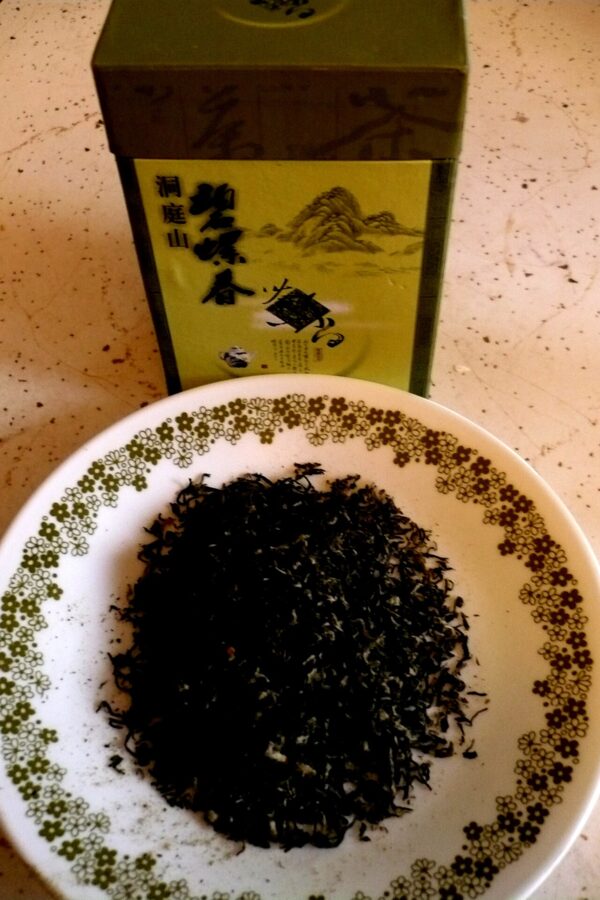
Then there’s the tea. Biluochun, one of China’s most famous green teas, grows on the Dongting hills that jut into Lake Tai south-west of the city; my guide to Chinese tea has the full story.
Getting there, and getting around
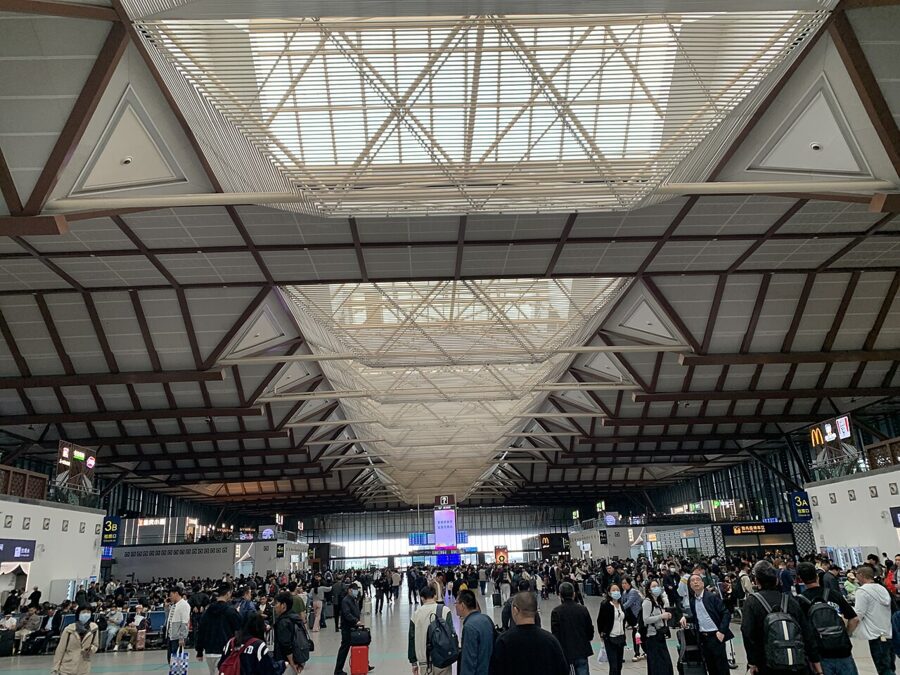
From Shanghai, take the train. G trains from Shanghai Hongqiao reach Suzhou in as little as 21 minutes and most take 25 to 40; there are well over 100 a day, and second class costs about ¥40. Trains from Shanghai station in the centre are a little cheaper. Book on 12306 (it has an English version) or Trip.com with your passport, which then works as your ticket at the gate.
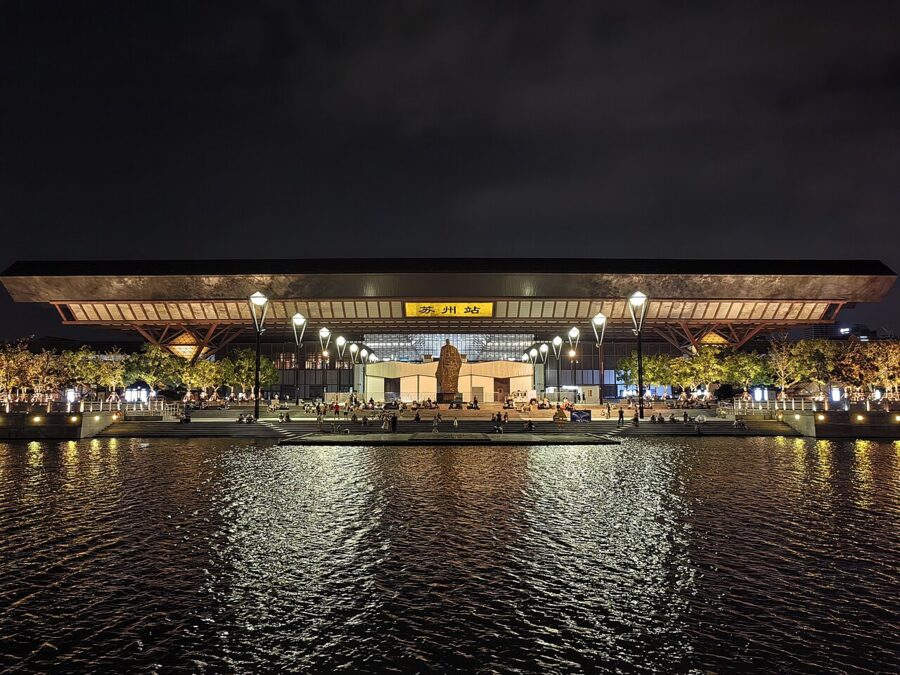
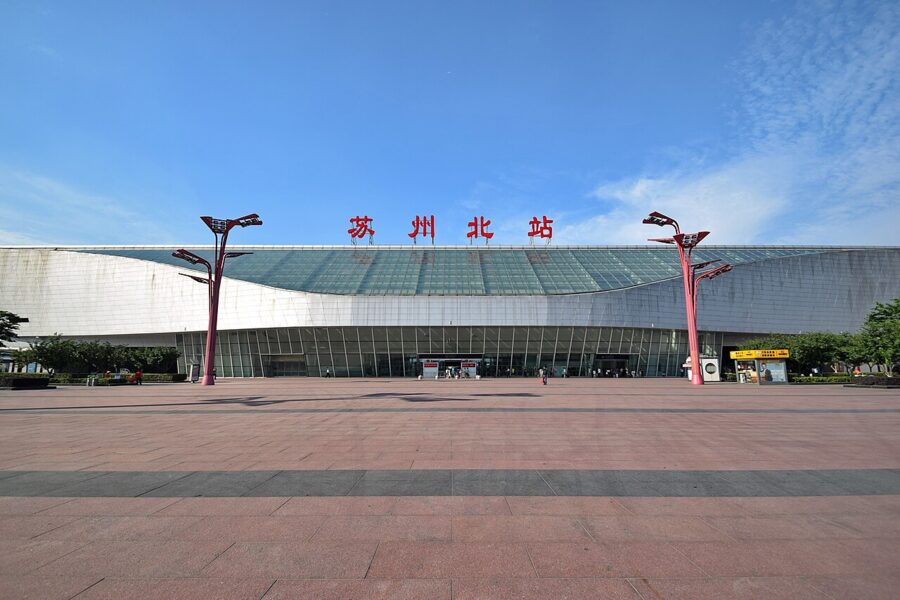
Check which Suzhou you’re going to. Suzhou station (苏州站) is the one you want, on the moat at the north edge of the old city, on metro Lines 2 and 4. Suzhou North (苏州北站), on the Beijing–Shanghai high-speed line, and Suzhou Industrial Park station are further out.
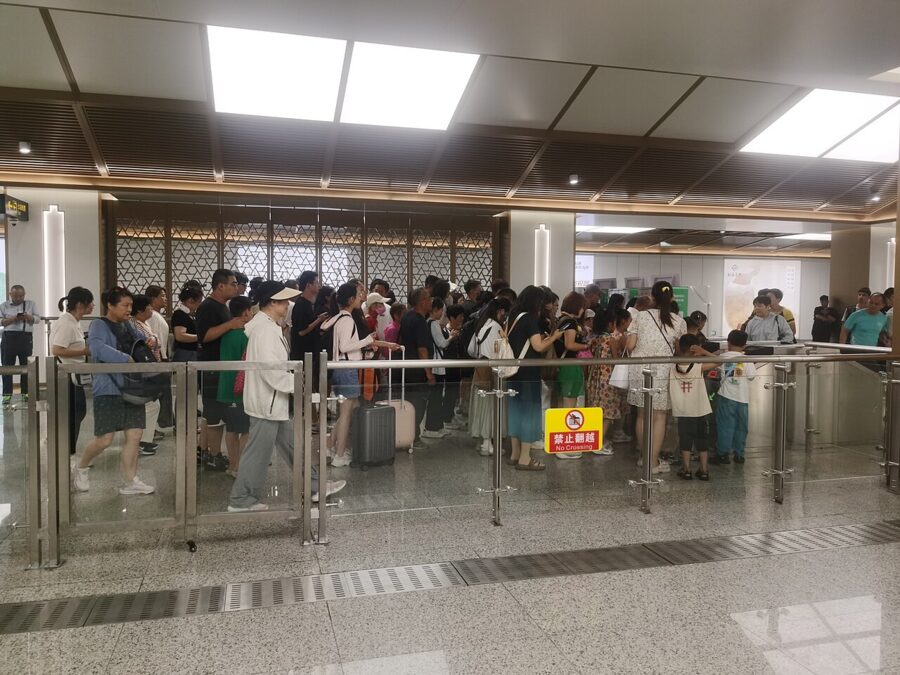
In town, the metro does most of the work. Line 6, opened in June 2024, crosses the old city with stops for the Humble Administrator’s Garden and Suzhou Museum (拙政园苏博站) and Huqiu for Tiger Hill. Line 4 runs north to south from Suzhou station via Beisita, and Line 2 stops at Shantang Jie.
Pay for the metro with a QR code in Alipay or WeChat Pay. Didi taxis fill the gaps, though traffic is restricted near the big gardens.
The old city is flat and the distances small: the Humble Administrator’s Garden to Pingjiang Road is a 10-minute walk, and the Couple’s Retreat another 10. Only the Lingering Garden, Tiger Hill and Panmen are worth a taxi or the metro.
Where to stay
Stay inside the moat, so you can walk to the gardens at opening time and have the canals after the day-trippers leave. The north-east, around Pingjiang Road, is best for walking; the south, around Shiquan Street and the Master of the Nets, is calmer.
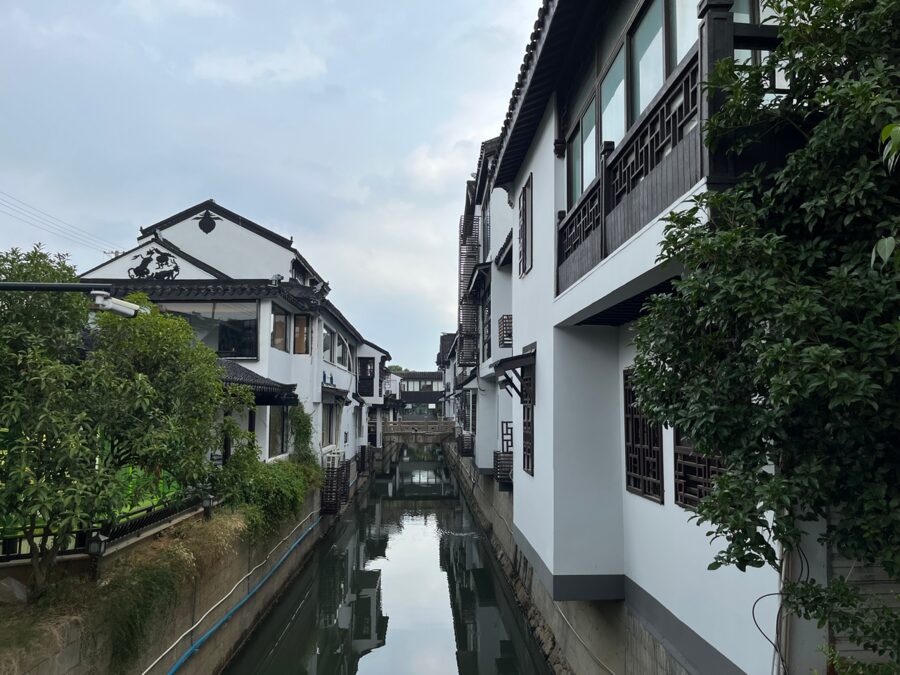
Garden Hotel Suzhou (苏州南园宾馆) (Official site | Booking.com | Agoda | Trip.com). A walled garden compound of about 4.8 hectares at 99 Daichengqiao Road, a state guesthouse from 1952; one villa belonged to He Yanong, who bought the Master of the Nets in 1940. It’s a short walk from that garden, and the grounds are the point.
Pan Pacific Suzhou (Official site). A large hotel in a garden setting at 259 Xinshi Road, next to the Panmen scenic area and about five minutes’ walk from Nanmen station (Line 4) and Xinshiqiao station (Line 5). The pick for space and quiet in the south-west, close to the canal boats.
There are dozens of courtyard inns around Pingjiang Road. Pick one on a side lane, not the main street, and check whether a car can reach the door; dragging a suitcase over 300 m of stone paving isn’t fun.
Suzhou in a day from Shanghai
This plan works on a weekday. At weekends start earlier and swap the Lion Grove for the Couple’s Retreat.
- 07:00. Train from Shanghai Hongqiao or Shanghai station to Suzhou station, then Line 4 or a taxi to the north-east of the old city.
- 07:45. Noodles at Weiji Aomian on Baita East Road.
- 08:30. The Humble Administrator’s Garden, booked for an early slot. Central pond first. Two and a half hours.
- 11:00. The Suzhou Museum next door, booked for late morning.
- 12:30. Lunch near Pingjiang Road, then the side lanes and the Kunqu Opera Museum.
- 15:00. Taxi to the Lingering Garden as it empties out.
- 17:00. Shantang Street: dinner, then the boat after dark.
- 20:00. Line 2 from Shantang Jie to Suzhou station, one stop, and the train back.
If you’re spending three days in Shanghai, Suzhou is the obvious day out, and I’d take it over a water town if you only have time for one. In night-garden season, swap Shantang Street for the Master of the Nets and catch a later train.
Two days in Suzhou
Day one: the north and east. The Humble Administrator’s Garden at opening, the Suzhou Museum, lunch, then the Lion Grove or the Couple’s Retreat. Late afternoon in the Pingjiang lanes, the boat as the light goes, and dinner on Shiquan Street.
Day two: the west and the water. Noodles at 07:00, Tiger Hill at 07:30, then walk or take the boat down Shantang Street to Changmen. The Lingering Garden in late morning, the Master of the Nets after lunch, and Panmen for sunset, with the Grand Canal boat from Xinshiqiao to finish.
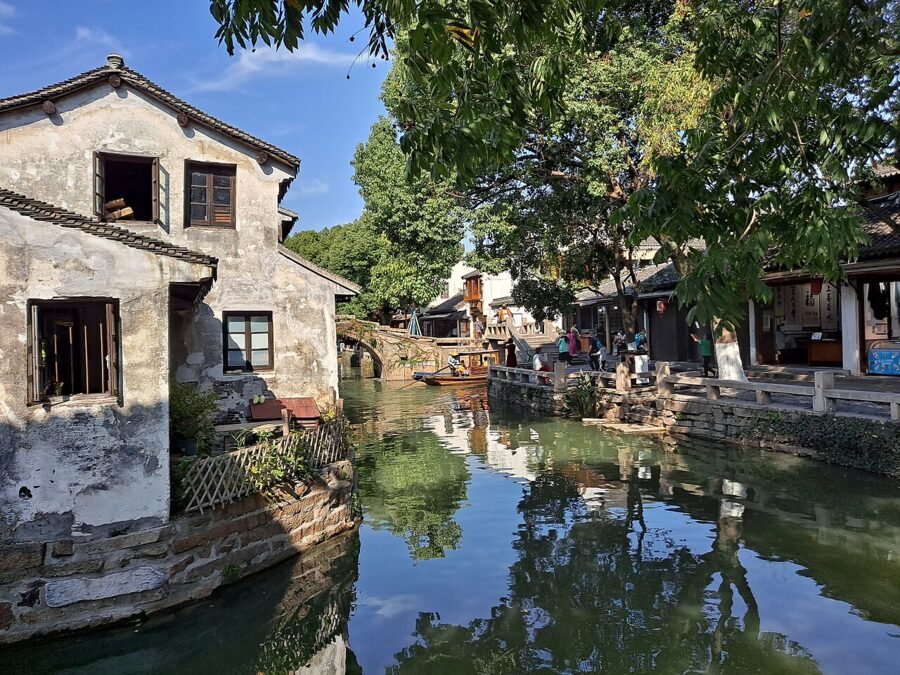
With a third day, go to the water towns. Tongli (同里) is the closest, with its UNESCO-listed Tuisi Garden and a stop on Line 4; Zhouzhuang (周庄) is the most famous and the busiest, out in Kunshan. My guide to the water towns near Shanghai compares them.
Going on? Hangzhou, with West Lake and the Longjing tea villages, is an easy onward hop by high-speed train, and the old saying pairs the two cities as heaven on earth. From Hangzhou, the trains run on into Anhui and the mountains of Huangshan.
Skip this
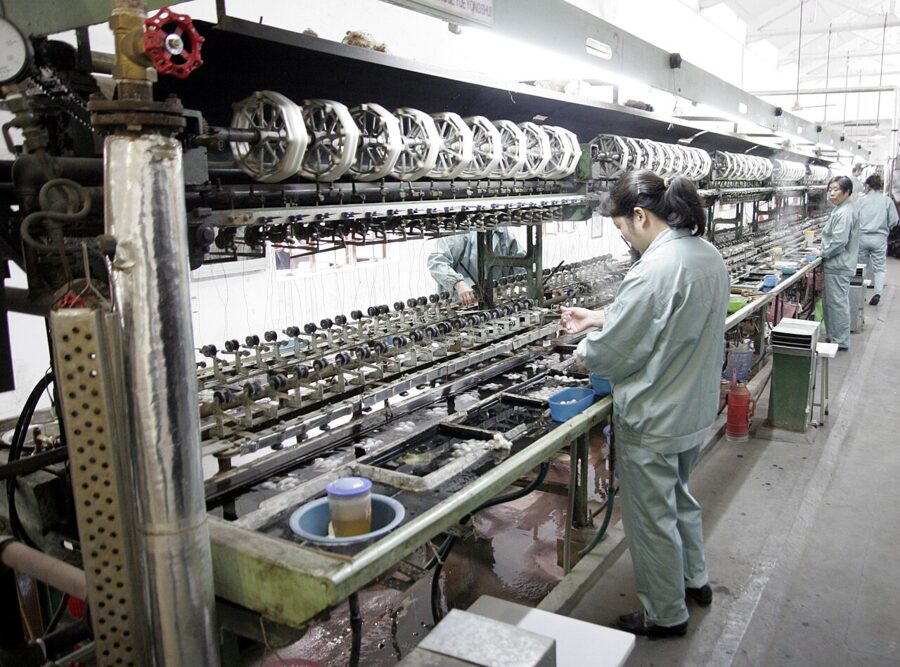
- Silk factory shopping stops. Fine as a demonstration, dull as a sales pitch.
- The Humble Administrator’s Garden at midday. The same garden at 11:00 is a much worse place.
- The Lion Grove at weekends. A maze full of people stops being a maze.
- Pingjiang Road’s main street on a Saturday afternoon. Use the side lanes.
- Costume photo shoots in the gardens. Unless that’s your thing, in which case you won’t be alone.
Book the first garden slot of the day, carry your passport, and order the noodles with the topping on the side. Then sit somewhere by the water and let the view come to you. That’s what the gardens were built for.
You Might Also Enjoy
 Penang Hawker Food: The Street Canon of Malaysia’s Food Capital
 Xi’an Food Guide: The Muslim Quarter, Roujiamo, Yangrou Paomo and the Noodles of Shaanxi
 Must-Try Foods in Korea: A Field Guide to Seoul and Beyond
 Sukiyaki and Shabu-Shabu: The Japanese Hot Pot Guide, from Yokohama Gyunabe to Ryogoku Chanko