Xiaolongbao: Shanghai’s Soup Dumplings, Their Jiangnan Cousins and Where to Eat Them
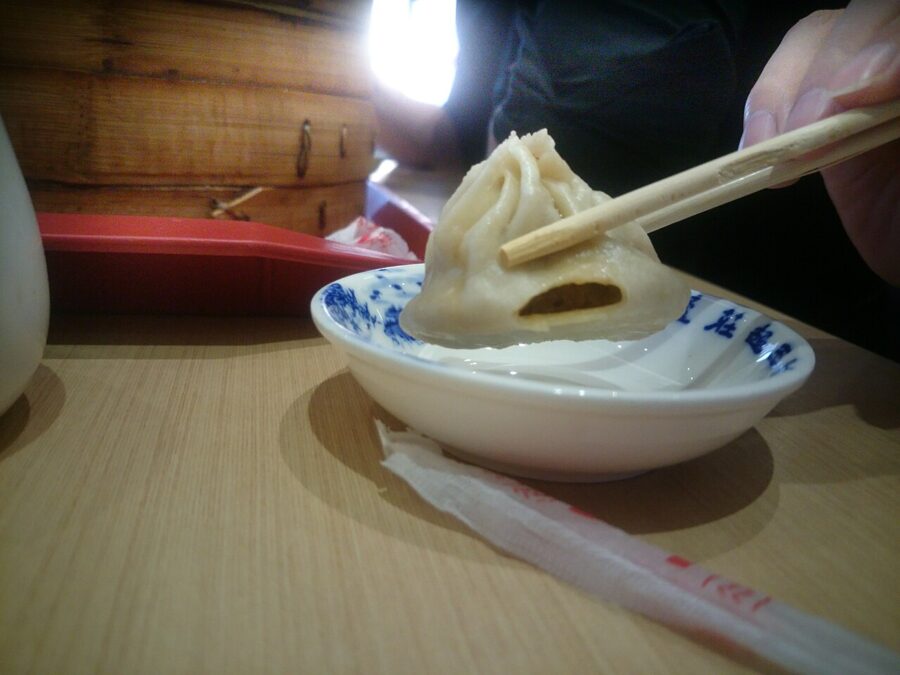
In the 1870s, a dumpling maker in the town of Nanxiang had a rule for every basket that left his kitchen. He picked one dumpling at random, set it on a small saucer and pierced it with a chopstick. If the soup that ran out did not fill the saucer, the whole basket went unsold.
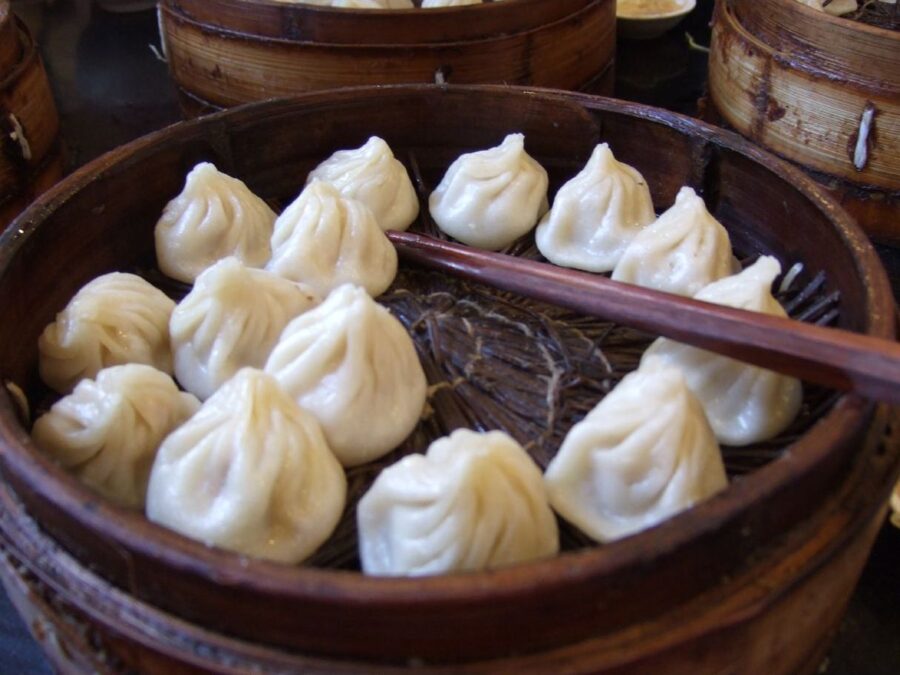
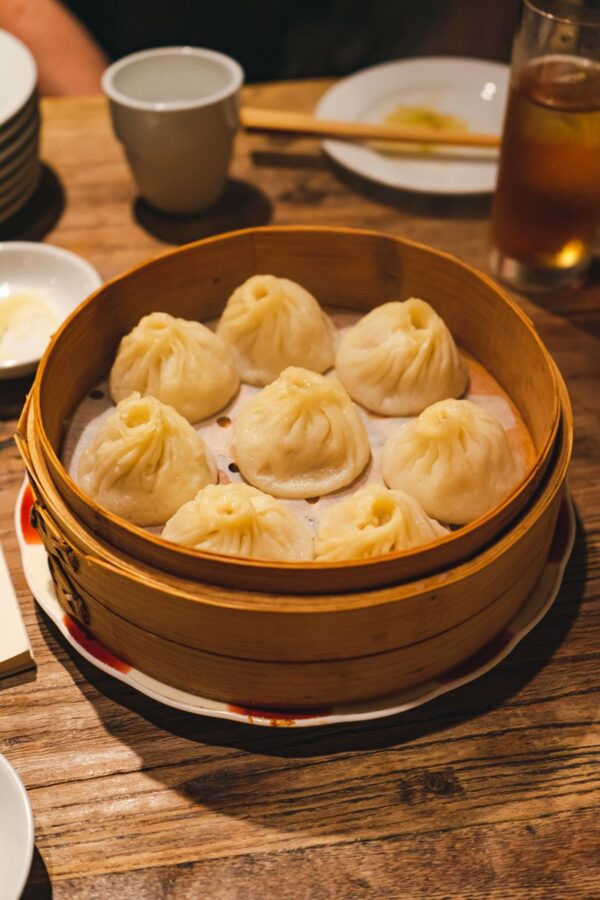
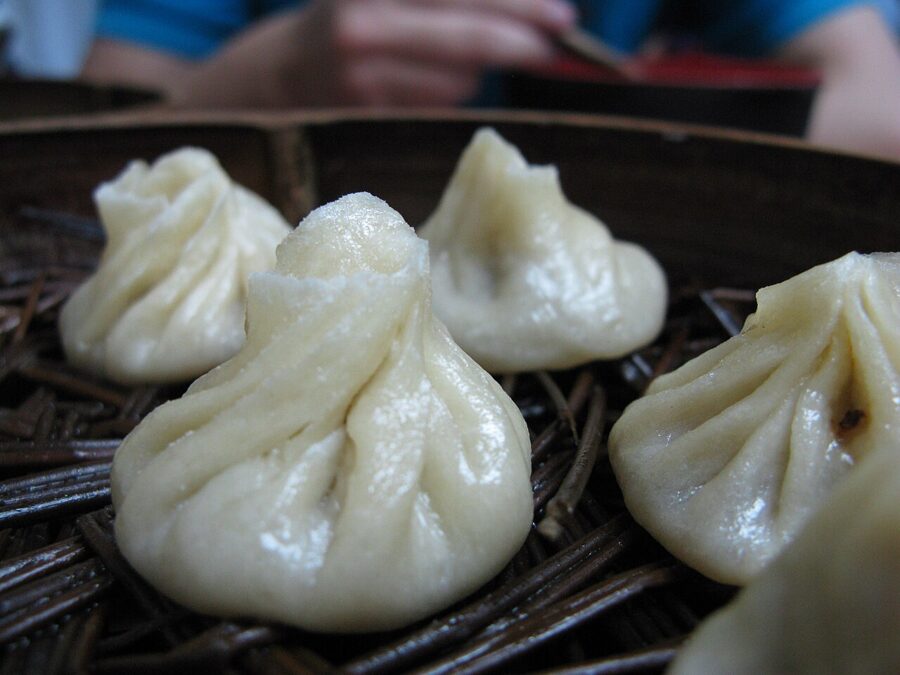
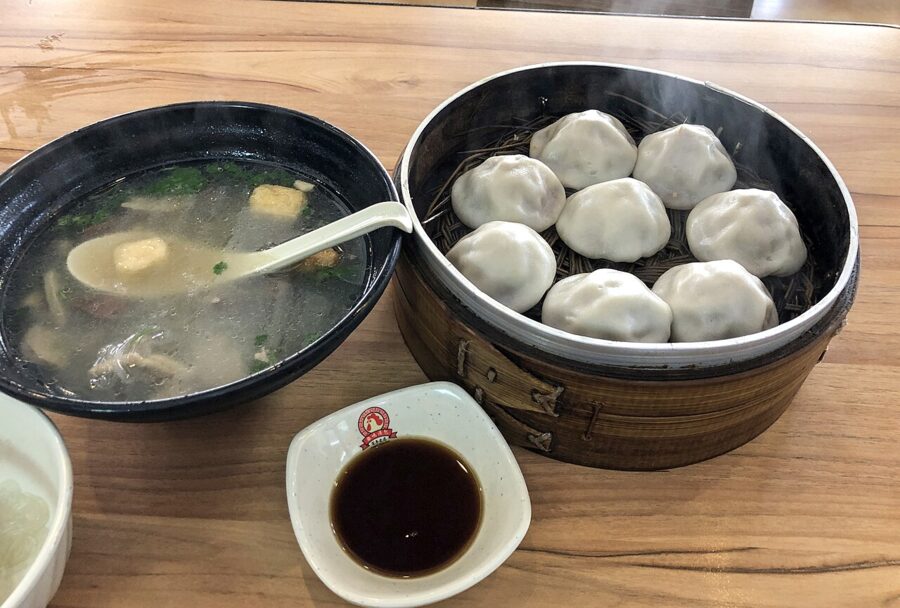
That rule is the whole dish. A xiaolongbao (小笼包) is a small pork dumpling with a skin thin enough to show the filling and enough hot broth inside to make you careful. Shanghai calls it xiaolong mantou (小笼馒头), using the old Wu word for a filled bun, and the city treats it the way Naples treats pizza: the argument about who makes the best one never ends, and everyone has a shop.
This guide goes deeper than the one section I gave it in my Chinese dumplings guide. It covers how the soup gets inside, where the dish came from, how to eat one without burning yourself, the cousins in Wuxi, Changzhou and Jingjiang, crab season, and the Shanghai shops that are open and worth a queue in 2026.
If you only want the short version, here it is in one table. Each of these gets its own section further down.
| Style | Home | What sets it apart | How you eat it |
|---|---|---|---|
| Nanxiang / Shanghai xiaolongbao | Nanxiang, Jiading; central Shanghai | Thin unleavened skin, savoury pork, clear broth | Lift onto a spoon, bite a small hole, sip, then eat |
| Wuxi xiaolongbao | Wuxi, Jiangsu | Bigger, sweeter filling with more soy and sugar | As Shanghai, with more vinegar to cut the sugar |
| Changzhou jiaxie (加蟹) | Changzhou, Jiangsu | Crab oil added to pork, ordered pure crab or half-and-half | Dip first, bite the side near the base, drink |
| Crab tangbao (蟹黄汤包) | Jingjiang, Huai’an, Yangzhou | One giant bun per steamer, almost all soup | Straw or a small bite, drink it like a cup |
| Shengzhou “Hangzhou” xiaolongbao | Shengzhou, Zhejiang (sold nationwide) | Leavened, fluffier, bun-like skin | Two bites, like a small bun |
| Sheng jian bao (生煎包) | Shanghai, Suzhou | Pan-fried, crisp base, sesame and spring onion | Bite the side carefully, it spurts |
In This Article
- Pork, jelly and a wrapper you can almost read through
- The aspic
- The wrapper
- Fourteen pleats, or eighteen, or thirty-two
- From a Nanxiang cake shop to the Zigzag Bridge
- Before Nanxiang: Kaifeng and the soup bun
- Huang Mingxian’s dumpling, 1871
- 1900: the move into Shanghai
- Who owns the name
- How to eat one without scalding your mouth
- Vinegar, ginger and the spoon
- The order of a basket, and what to eat with it
- The family across Jiangnan
- Wuxi: sweeter, bigger, unapologetic
- Changzhou: jiaxie, and the half-and-half basket
- Jingjiang and Huai’an: one bun, one straw
- Nanjing and Yangzhou
- Suzhou and Hangzhou
- Sheng jian bao, the fried cousin
- Crab season, and what xiefen actually costs
- Where to eat them in Shanghai
- Nanxiang Mantou Dian, Yuyuan
- Jia Jia Tang Bao, Huanghe Road
- Lai Lai Xiao Long, Tianjin Road
- Wanshouzhai, Shanyin Road
- Wu You Xian and the high end
- The chain question
- Go to Nanxiang for the day
- Getting there
- Where to eat in Nanxiang
- Guyi Garden and the old town
- Prices, queues, takeaway and paying
- Skip this
Pork, jelly and a wrapper you can almost read through
Nothing is injected. People ask, and the answer is better than any syringe: the soup goes in solid.
The aspic
Cooks simmer pork skin, often with chicken stock, until the collagen comes out, then let it set into a firm jelly and chop it into the minced pork. In Nanxiang’s own telling, the founder boiled the pork skin in chicken broth and stirred a little ground sesame into the filling. In the steamer the jelly melts back into broth, and that is the soup.
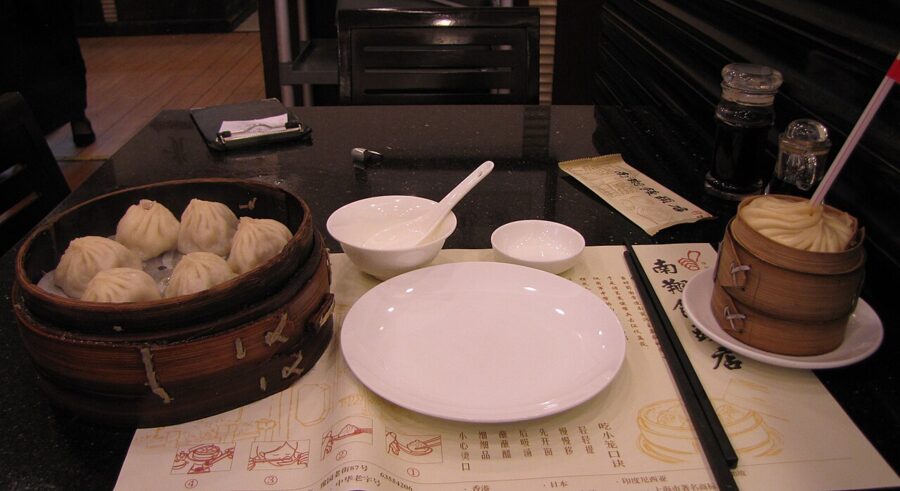
The pork is the next variable. Nanxiang’s recipe called for lean leg meat; most shops now balance lean and fat so the filling stays soft. Shanghainese taste runs slightly sweet, and you’ll notice a touch of sugar even in the plain pork version, though nowhere near Wuxi levels.
The wrapper
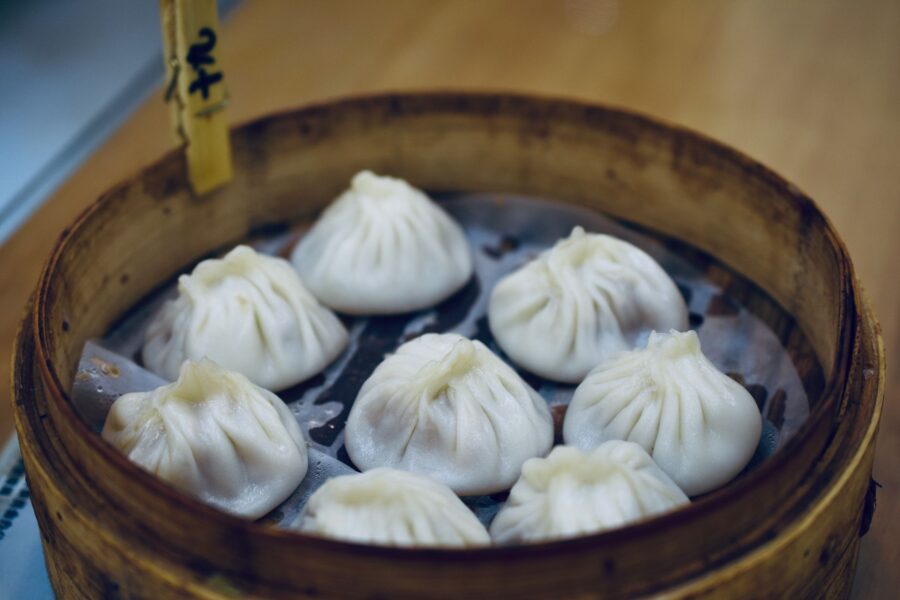
Shanghai’s skin is jinjiao (紧酵), a tight, barely risen dough rolled very thin. The old Nanxiang standard was ten dumplings from every liang (50 g) of flour, and the food writer Tang Lusun praised Nanxiang skins for being rolled evenly all round, so that not one leaked when lifted. A wrapper that feels bready or springs back like a bun belongs to a different tradition, which I come to under Hangzhou.
Fourteen pleats, or eighteen, or thirty-two
The pleat count is the most quoted number about the dish and the least consistent. The Nanxiang founder’s recorded standard was 14 folds, and some accounts of the Yuyuan shop give 16. Din Tai Fung, the Taiwanese chain, made 18 its trademark, and many Shanghai shops now say 18 too.
At the top end, Wu You Xian (屋有鲜) on South Maoming Road makes its dumplings with 32 folds and a wrapper enriched with duck egg yolk. More pleats look good. They don’t make the soup better, and a thick knot of dough at the top is the part most people leave in the basket.
From a Nanxiang cake shop to the Zigzag Bridge
The soup-filled bun is older than Shanghai’s version of it. Most Chinese food historians start in Kaifeng, the Northern Song capital, where a memoir of the capital’s markets singles out the filled buns of one big restaurant as the best in the city. Kaifeng still says a good soup bun looks like a lantern when you lift it and a chrysanthemum when you set it down.
Before Nanxiang: Kaifeng and the soup bun
When the Song court fled south in the 1120s, northern wheat cooking came with it, and the filled bun met Jiangnan pork, crab and sugar. By the Ming and Qing, Yangzhou and Huai’an were famous for crab tangbao with skins “thin as paper”. Kaifeng kept its own line: Diyilou (第一楼), founded in 1922, still sells guantangbao (灌汤包) by the steamer.
Huang Mingxian’s dumpling, 1871
The Shanghai version has a name, a town and a date. Huang Mingxian ran Ri Hua Xuan (日华轩), a cake and dumpling shop in Nanxiang, a market town now inside Shanghai’s Jiading district. Around 1871 he took over the business and, facing copycats who sold the same big meat buns, went the other way: smaller, thinner skin, more filling.
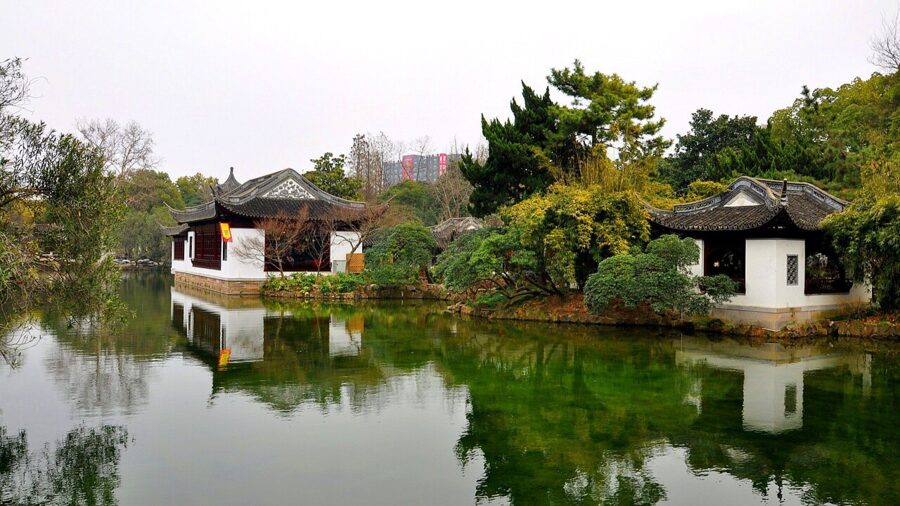
His rules are recorded in detail. Ten dumplings from each liang of flour, a fixed weight of filling checked on a small scale, aspic made with chicken stock, seasonal additions of crab, shrimp or spring bamboo shoots, and that saucer test. The diners who ate them were mostly visitors to Guyi Garden, the Ming garden next door, and the dumplings took the garden’s name before they took the town’s.
1900: the move into Shanghai
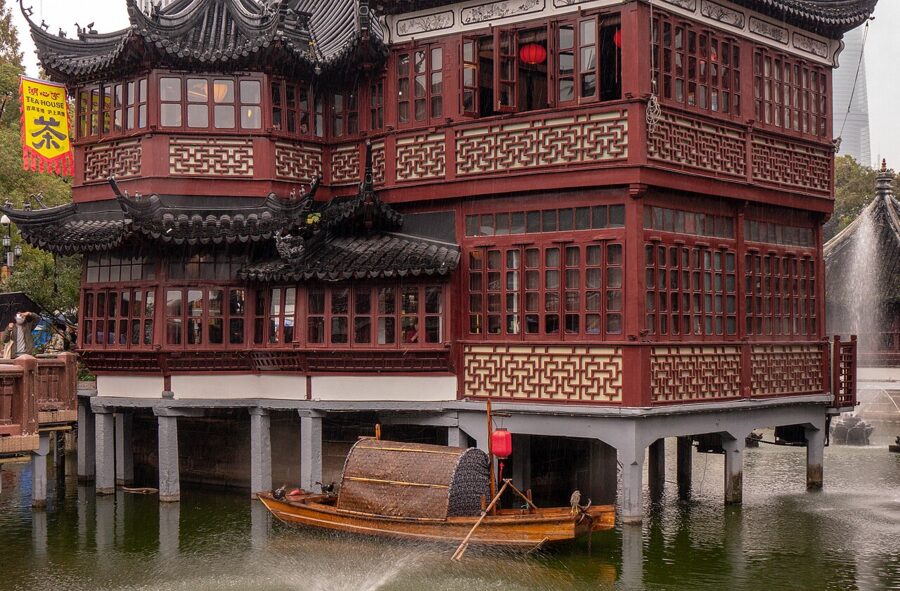
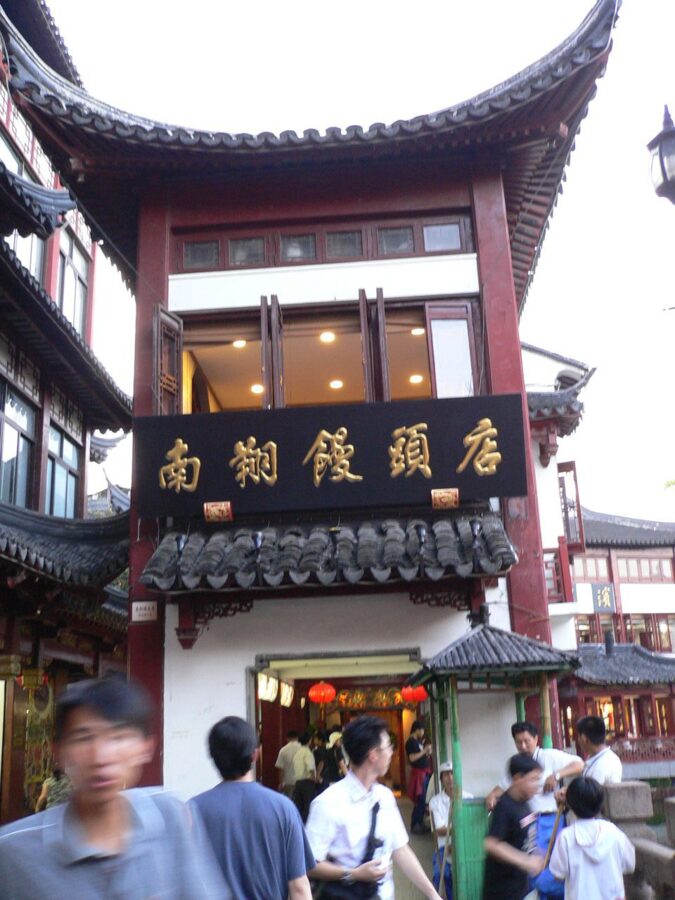
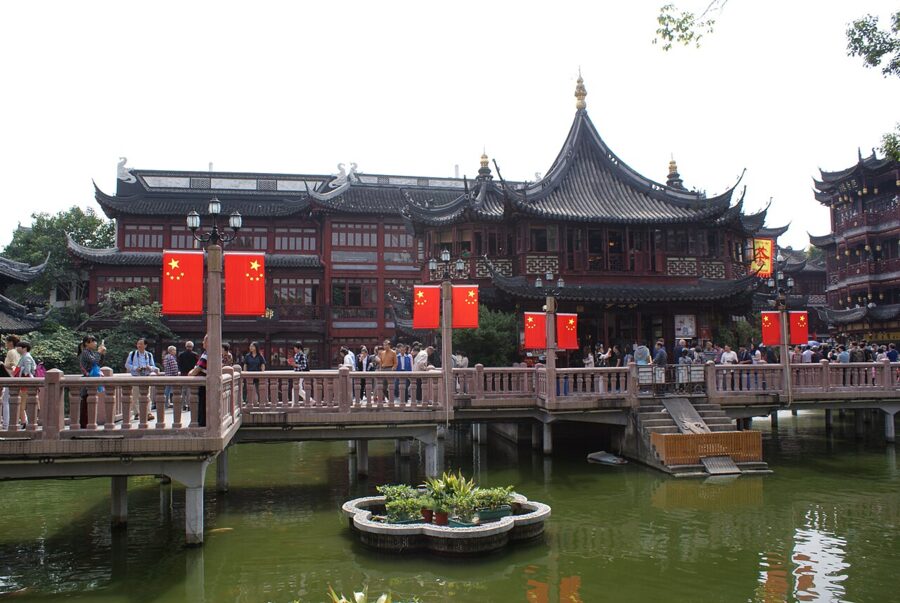
In 1900 Wu Xiangsheng (吴翔升), who had learned the trade in Huang’s shop, took a dumpling maker named Zhao Qiurong to the walled county town of Shanghai. They rented a pavilion beside the Zigzag Bridge in the City God Temple grounds and called the shop Changxinglou (长兴楼). It later took the name it has now, Nanxiang Mantou Dian (南翔馒头店), and it has served from that spot ever since.
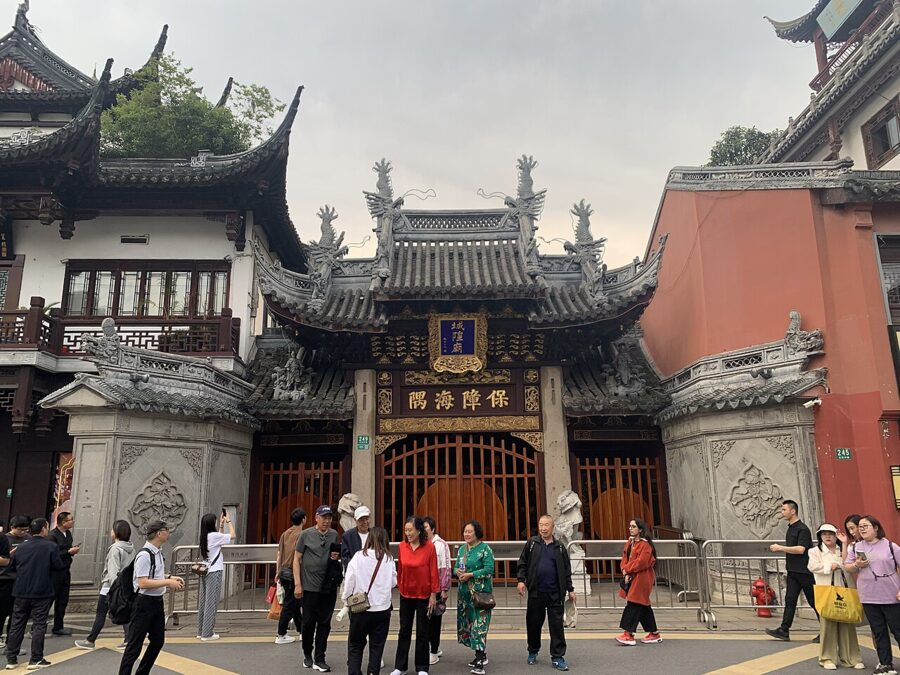
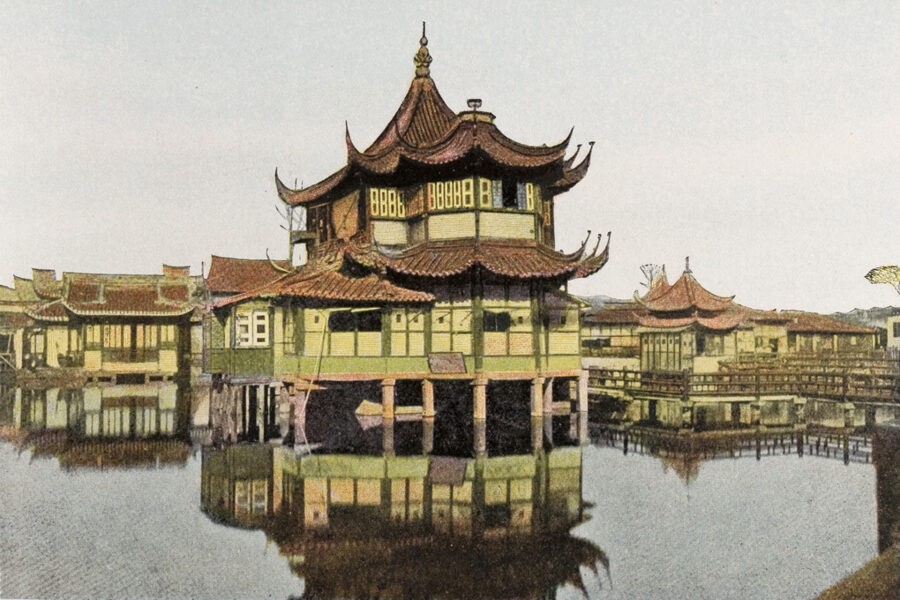
Nanxiang itself had a harder century. Ri Hua Xuan was destroyed when fighting reached the town during the battles for Shanghai, and the Nanxiang line survived through the shops around Guyi Garden. The making of Nanxiang xiaolongbao went onto Shanghai’s intangible heritage list in 2007 and onto the national list in 2014.
Who owns the name
Walk around Shanghai and you’ll see “南翔小笼” on more than a hundred shopfronts. Many have nothing to do with either Nanxiang or the Yuyuan shop. In 2021 a Pudong court ruled that a company running Nanxiang-branded franchises had infringed the Yuyuan group’s trademark and ordered it to pay ¥2 million in damages, so the name is now policed, but plenty of small “Nanxiang” shops are simply using a word that means “soup dumpling” to most locals.
How to eat one without scalding your mouth
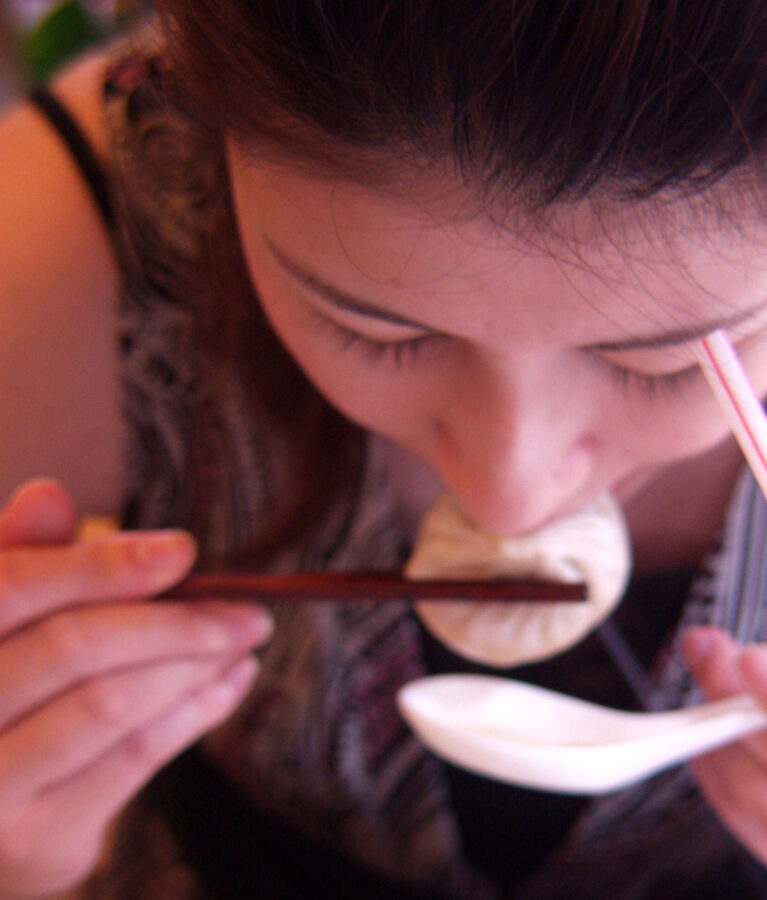
The broth inside a fresh dumpling is hot enough to burn, and the skin holds the heat. Eat the first one in one go and you’ll spend the rest of the meal with a numb tongue.
Shanghai has a rhyme for this: qing qing ti, man man yi, xian kai chuang, hou he tang (轻轻提,慢慢移,先开窗,后喝汤). Lift gently, move slowly, open a window, then drink the soup. It is the best food advice I know.
Vinegar, ginger and the spoon
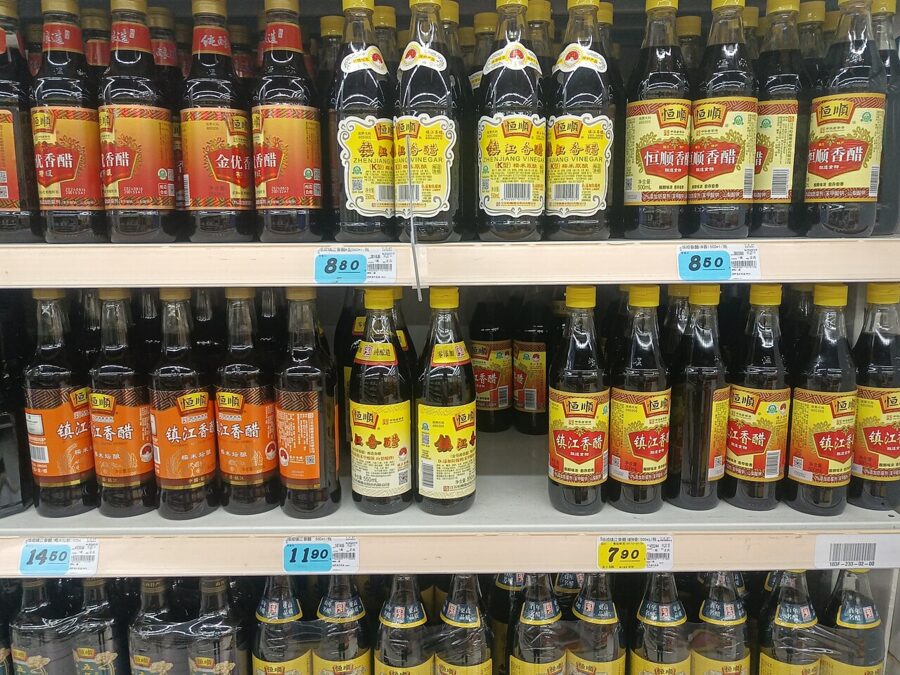
Every table gets a dish of shredded young ginger, and you pour vinegar over it. In Shanghai that is usually Zhenjiang black vinegar or a lighter rice vinegar, sometimes sweetened; Jia Jia’s regulars complain theirs has become too sweet. Lai Lai charges about ¥1 for the dish of ginger and vinegar, so don’t assume it’s free everywhere.
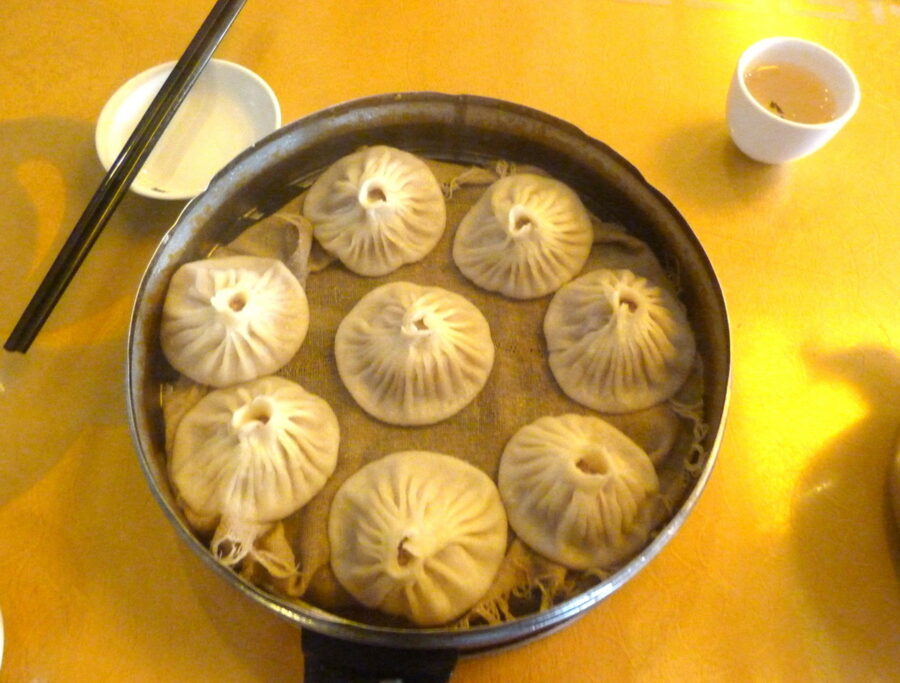
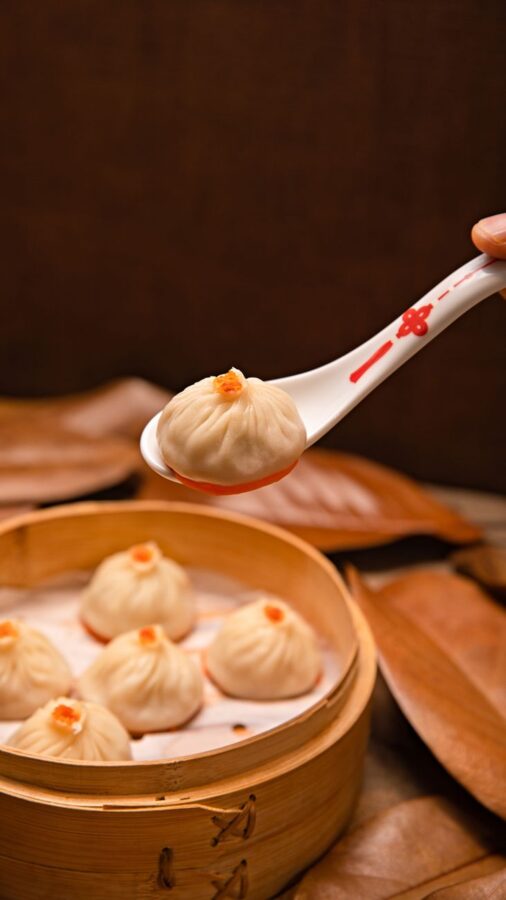
Here is the sequence. Lift the dumpling onto the spoon. Bite a small hole near the top, wait a few seconds, then sip the soup from the hole or tip it into the spoon. Add a few strands of ginger and a little vinegar to the spoon, then eat the rest in one bite.
Changzhou does it in the other order: dip the dumpling in vinegar first, turn it slightly outward, bite open the side near the base and drink, then let some vinegar run inside before you finish it. Both work. The only wrong way is a soak, which waterlogs the skin.
The order of a basket, and what to eat with it
If you order a mixed basket, eat the plain pork first and the crab last. Crab dulls your palate for anything subtler. Changzhou’s old diners take this further and alternate, one plain, one crab, on the grounds that only the contrast lets you taste the crab at all.
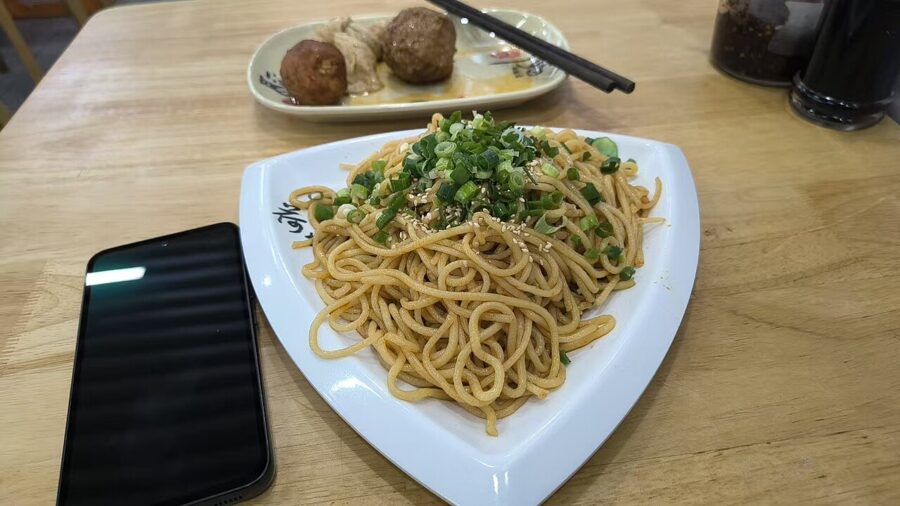
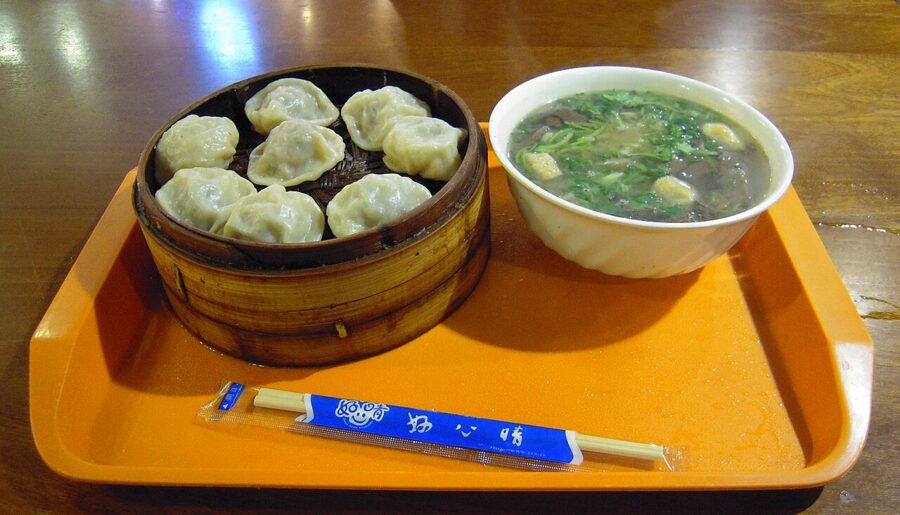
The Shanghai breakfast partners are a bowl of jiya xue tang (鸡鸭血汤), chicken and duck blood soup with vermicelli, or a clear soup with egg ribbons and seaweed. Scallion oil noodles, congyou banmian (葱油拌面), are the other standard order, and I cover them properly in my Chinese noodles guide.
The family across Jiangnan
Shanghai likes to treat xiaolongbao as its own, but every city between Shanghai and Nanjing has a version, and the local differences are strong enough that people from Wuxi and Changzhou will tell you Shanghai’s is the odd one out. The old saying ranks them by taste: Changzhou for freshness, Nanjing for clarity, Wuxi for sweetness.
The high-speed line from Shanghai to Nanjing runs through Suzhou, Wuxi and Changzhou. The fastest G trains from Shanghai Hongqiao reach Wuxi East in about half an hour and most take 35 to 45 minutes, so a soup-dumpling day trip is easy. For the wider cooking of the region, start with my map of regional food in China.
Wuxi: sweeter, bigger, unapologetic
Wuxi xiaolongbao are bigger than Shanghai’s, with more filling and a pork mixture seasoned heavily with soy sauce and sugar. The first one tastes like a dessert that took a wrong turn. By the third you understand why people drive from Shanghai for them, though if you dislike sweet savoury food, this is the stop to skip.
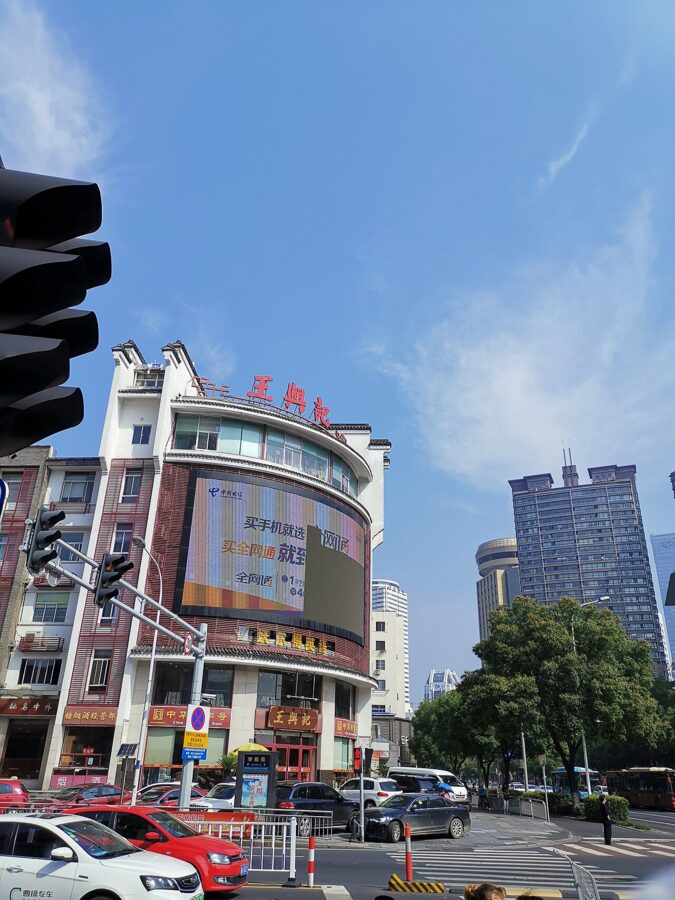
The name to know is Wangxingji (王兴记), a Chinese Time-Honoured Brand since 2011 whose main shop is on Zhongshan Road in the old centre. It began beside Chong’an Temple in the early Republican years selling wontons, and its three-delicacy wonton is still half the reason to go. Some Wuxi diners find the modern Wangxingji style too sweet and prefer the older style tied to the Qin family of Jichang Garden at Huishan, whose recipe is said to go back to a Qianlong-era imperial visit.

Changzhou: jiaxie, and the half-and-half basket
Changzhou’s crab xiaolongbao, jiaxie xiaolong (加蟹小笼), are traditionally credited to the Wanhua teahouse in the Daoguang era of the Qing, and they go on sale around the Mid-Autumn Festival when the osmanthus flowers. The ordering vocabulary is the best part. Suihao (随号) is a basket without crab, jiaxie is all crab, and duixiang (对镶) is half and half.
Old Changzhou diners order duixiang almost every time, for the alternating reason above. The local motto is that “people should wait for the dumplings, never dumplings for the people”. Ma Fuxing (马复兴), at Shuangguifang, dates from the Tongzhi era and still makes them; Yinggui (迎桂), a name since the 1940s, has neighbourhood branches that locals prefer to the ones near the sights.
Jingjiang and Huai’an: one bun, one straw
North of the Yangtze, the dumpling grows into something else. Crab tangbao (蟹黄汤包) in Jingjiang and Huai’an are the size of a saucer, one to a steamer, with a skin pleated around what is basically a cup of crab broth. You drink it, through a short straw or a small bite, and only then eat the skin.
In Jingjiang, a county-level city across the river from Jiangyin, the best-known shop is Nanzhiyuan (南之缘), in the Nanyuan Hotel on Renmin Middle Road. Expect to pay about ¥20–33 per bun, and expect a queue: local media reported waits of at least an hour over Spring Festival 2026, and the tangbao shops fill from 06:00 or 07:00 during Golden Week. Huai’an’s Wenlou (文楼) tangbao are the other famous name, on Jiangsu’s provincial heritage list since 2009, and the “open a window, then drink” rhyme is usually told about them.
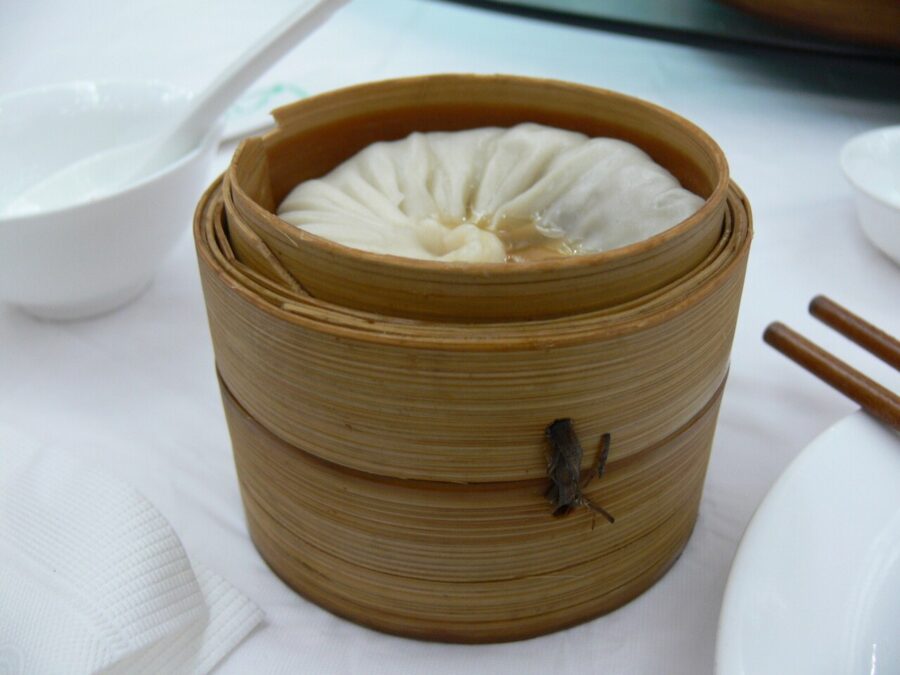
One warning, and it’s the big one. The giant tangbao sold around Shanghai’s Yuyuan bazaar with a straw stuck in the top are a tourist novelty with a thick skin and a thin, lukewarm broth. The real thing is in Jingjiang and Huai’an, not here.
Nanjing and Yangzhou
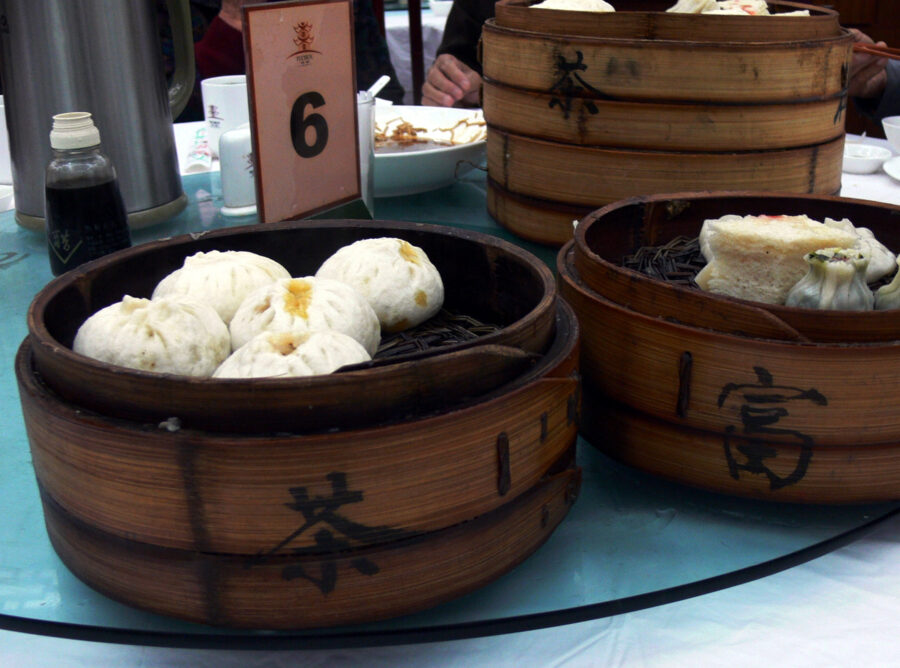
Nanjing makes a smaller tangbao with a chicken-broth filling, usually eaten with duck blood vermicelli soup, the city’s signature breakfast pairing. Yangzhou’s Fuchun Teahouse, founded in 1885, is the morning-tea institution of the region, and its crab tangbao and sanding bao (三丁包) are the order. Local advice for the old Deshengqiao shop is to arrive before 06:30, or expect an hour’s queue.
Suzhou and Hangzhou
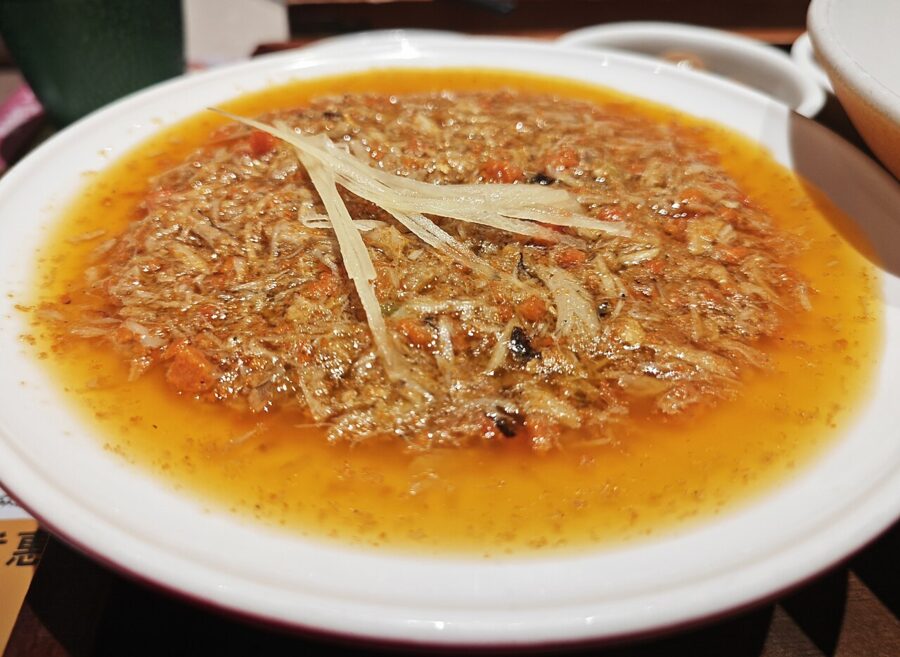
Suzhou’s main claim in this story is the fried cousin, which comes next: sheng jian started there in the early 20th century and spread to Shanghai and the rest of the region in the 1920s. Its xiaolongbao follow the sweet Jiangnan line, and in autumn the city’s crab roe noodles, xiefen mian (蟹粉面), are a better use of crab than any dumpling.
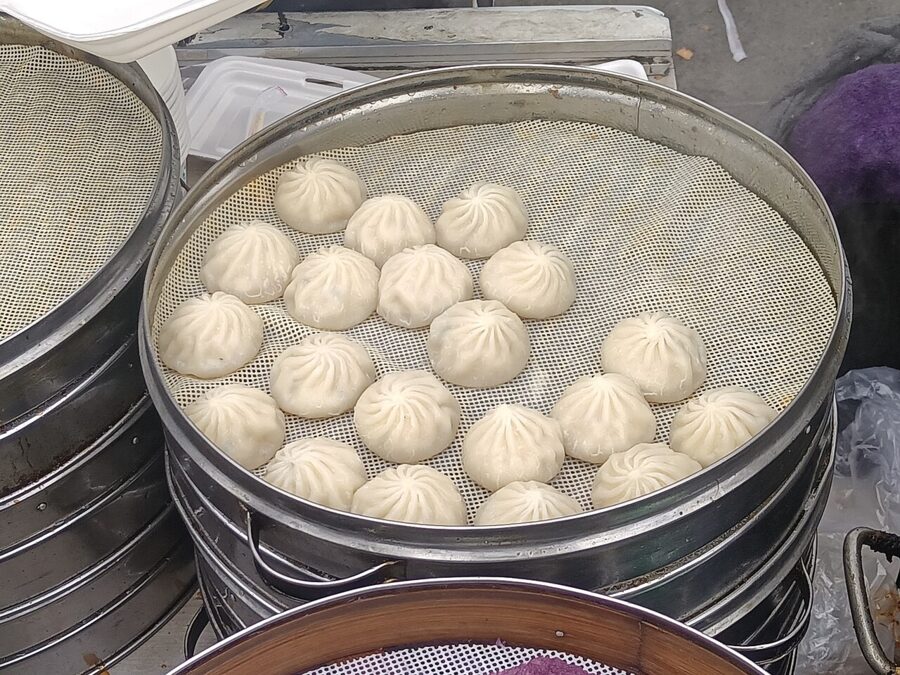
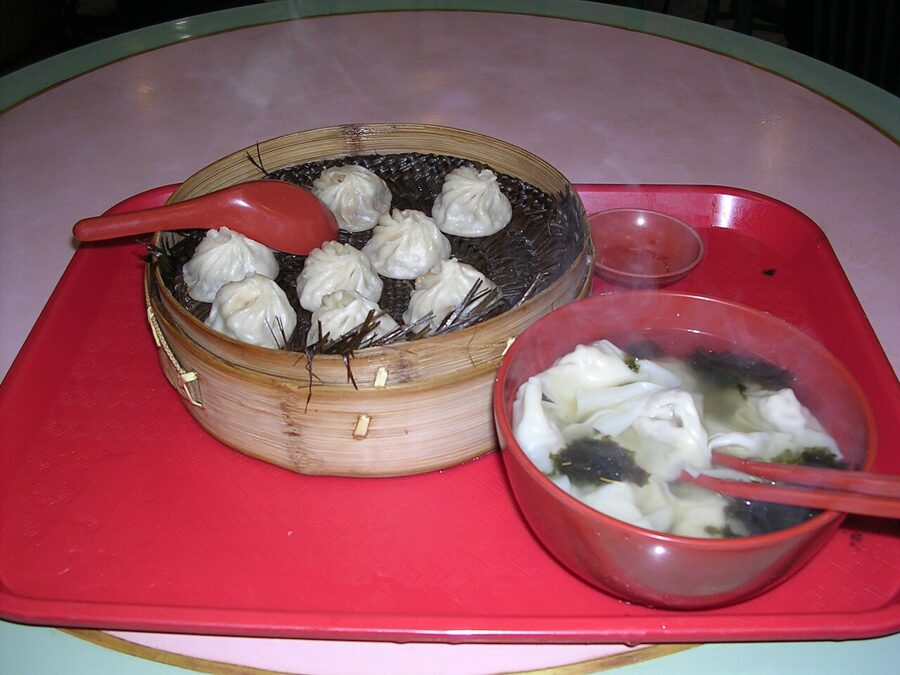
Hangzhou is where the name gets confusing. The “Hangzhou xiaolongbao” shops you see across China are almost all run by people from Shengzhou, a county-level city in Zhejiang, who began opening them in the 1990s; at the peak about 80,000 Shengzhou people ran around 30,000 shops. Their dumplings use a leavened dough, so the skin is fluffier and more bun-like. In Hangzhou itself, Zhiweiguan (知味观) is the old name for xiaolongbao and wontons by West Lake.
Sheng jian bao, the fried cousin
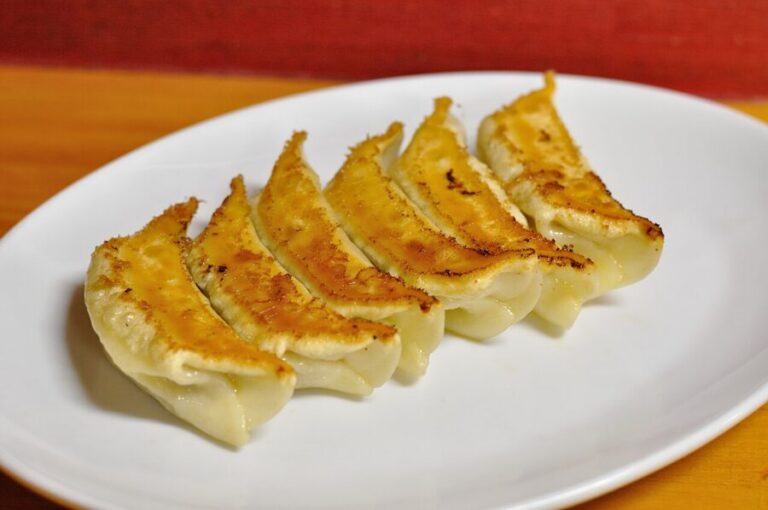
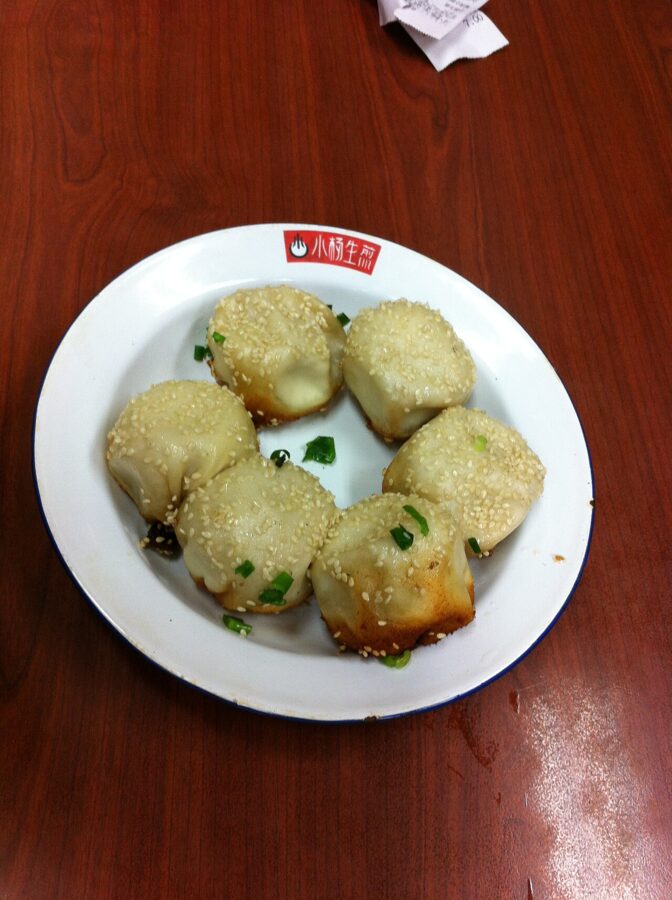
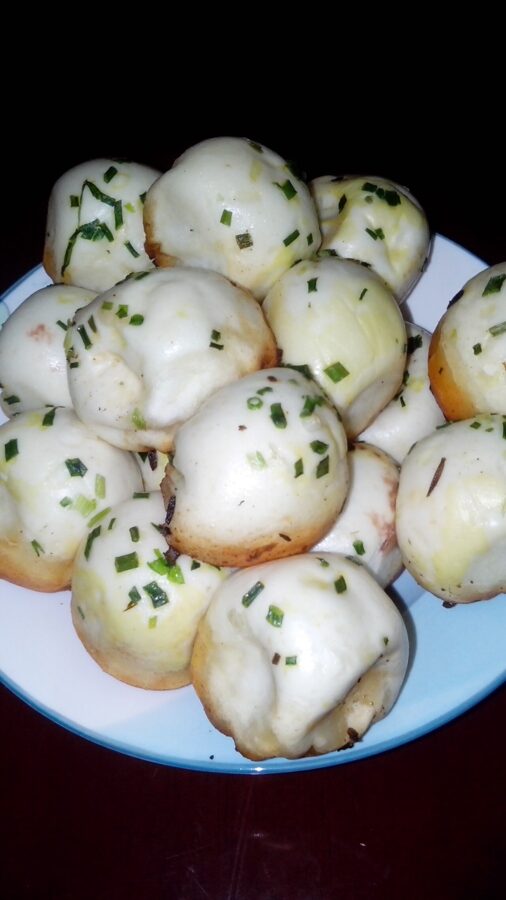
Sheng jian bao (生煎包, sheng jian mantou in Shanghai) are pleated, soup-filled buns fried in a wide iron pan with a splash of water, so the bottom crisps while the top steams. My dumplings guide has the basics, and Japan’s pan-fried version is a different animal again (see my gyoza guide). What matters here is the split inside Shanghai.
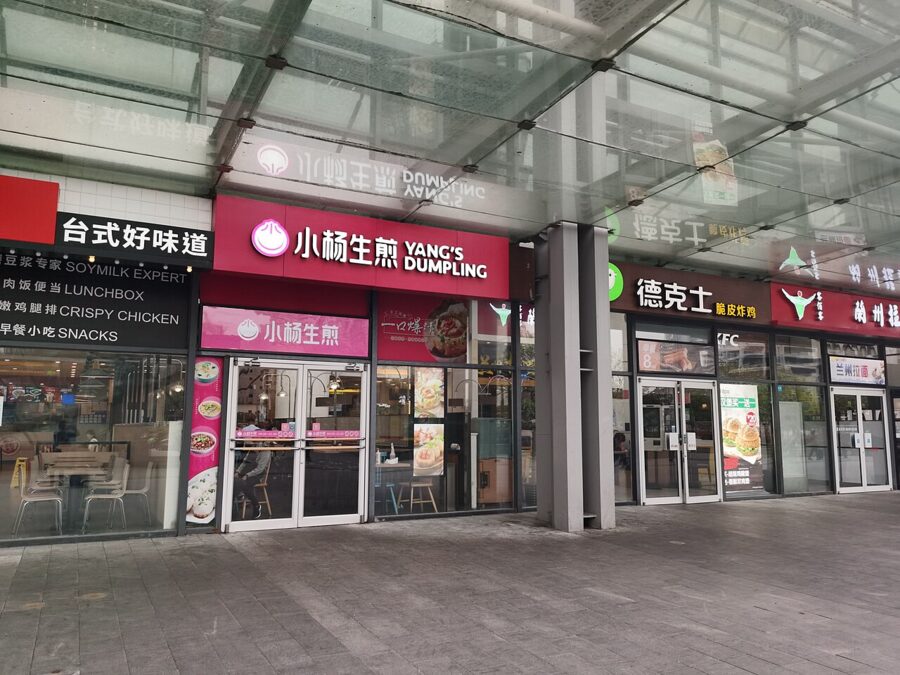
Hunshui (混水) sheng jian use a tight dough and an aspic filling, so they spurt; Xiao Yang Sheng Jian, which opened its first shop on Wujiang Road in 1994, is the famous one. Qingshui (清水) sheng jian use a risen dough and no aspic, so the juice comes only from the meat. Da Hu Chun (大壶春), founded in 1932, is the standard-bearer, and its shop on Sichuan Middle Road still has a queue at breakfast.
Crab season, and what xiefen actually costs
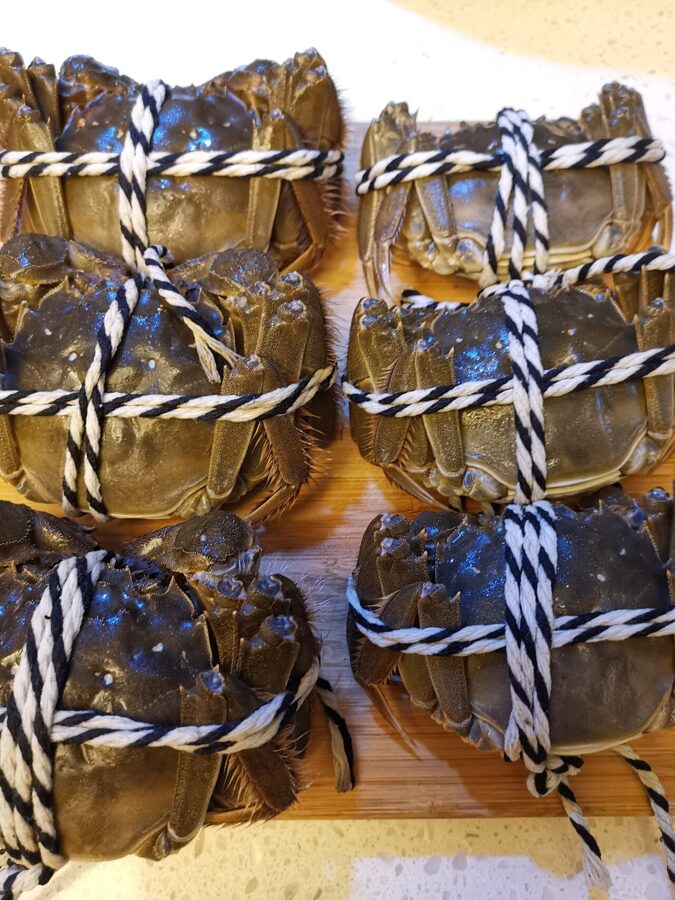
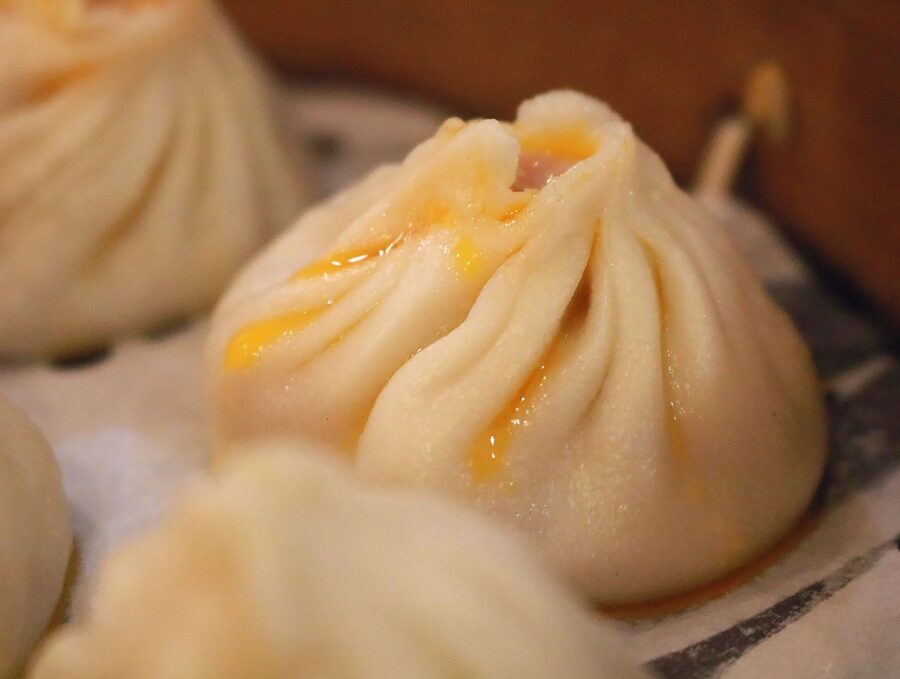
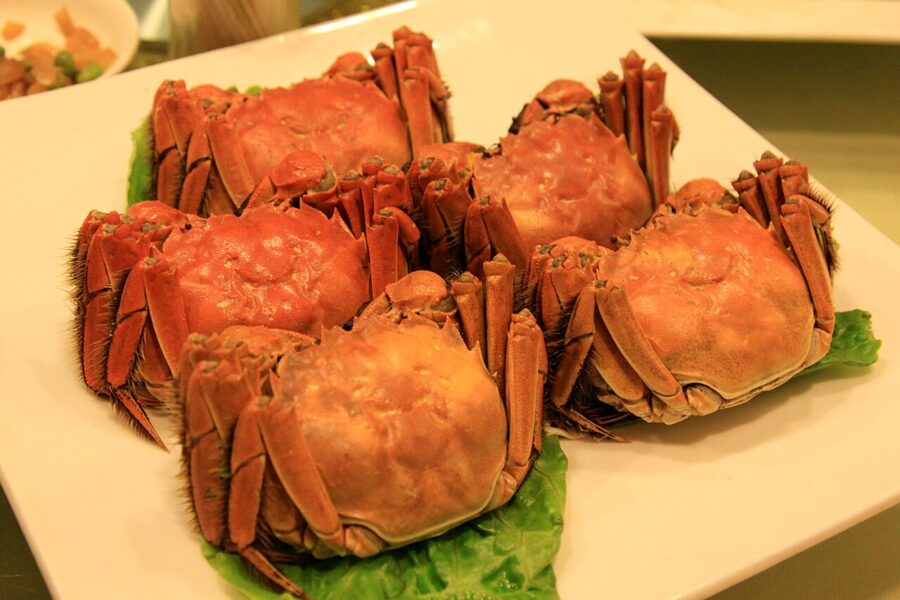
Crab xiaolongbao, xiefen xiaolongbao (蟹粉小笼包), are filled with pork plus xiefen, the meat and roe of the Chinese mitten crab, known everywhere as hairy crab or dazhaxie (大闸蟹). Yangcheng Lake near Suzhou is the most famous source, and its season opens with a public ceremony: in 2026 the first catch came out of the lake on 28 September.

The old rhyme says jiu yue yuan qi shi yue jian (九月圆脐十月尖): round-bellied females in the ninth lunar month, pointed-bellied males in the tenth. In practice, that means the roe-heavy females are at their best through October and the males peak in November. Crab xiaolongbao at the specialist shops are best from October to December.
Outside the season, most shops still sell crab dumplings, made with preserved roe or crab paste, and they taste flatter and slightly metallic. If the menu offers crab xiaolongbao in June, order pork. The better crab specialists in Shanghai, such as Lai Lai, use live crabs picked by hand.
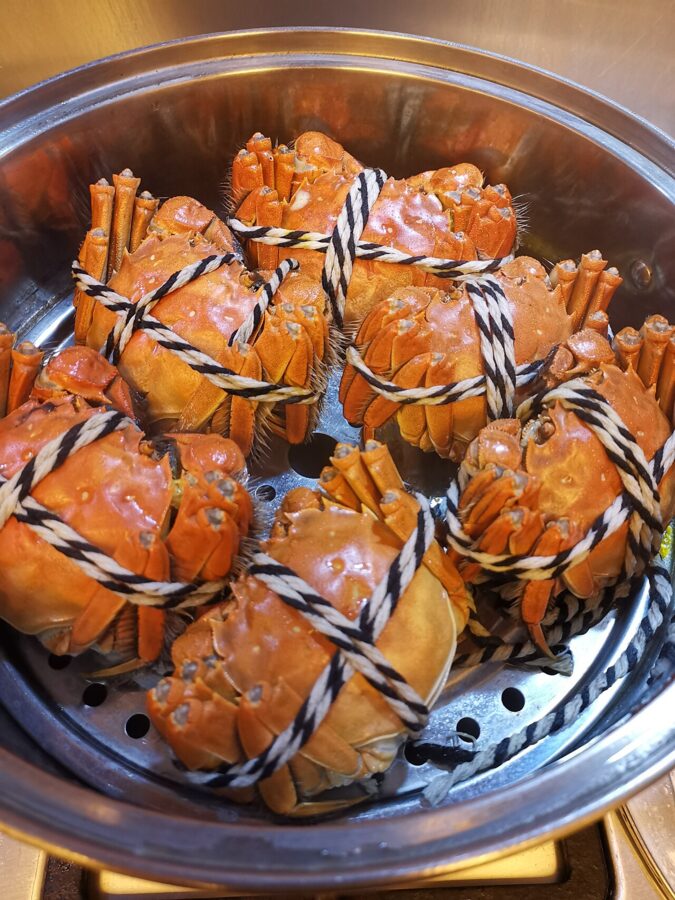
The prices below come from 2026 menus and are for a basket. Pure-crab baskets with no pork, chun xiefen (纯蟹粉), cost several times the crab-and-pork version and vary a lot between seasons.
- Jia Jia Tang Bao: crab and pork ¥38 for twelve; plain pork ¥25 (November 2026 menu).
- Lai Lai Xiao Long: crab and pork ¥46 for eight.
- Nanxiang Mantou Dian, Yuyuan: the ground-floor takeaway window sells plain pork from about ¥30 for six; upstairs, where the crab versions are served, costs more.
Where to eat them in Shanghai
Every shop below was trading in 2026. Shanghai’s small food businesses open, move and close fast, so I’ve added what’s changed where it matters. Expect to pay by Alipay or WeChat Pay, both of which accept foreign cards; carry a little cash anyway.
Nanxiang Mantou Dian, Yuyuan
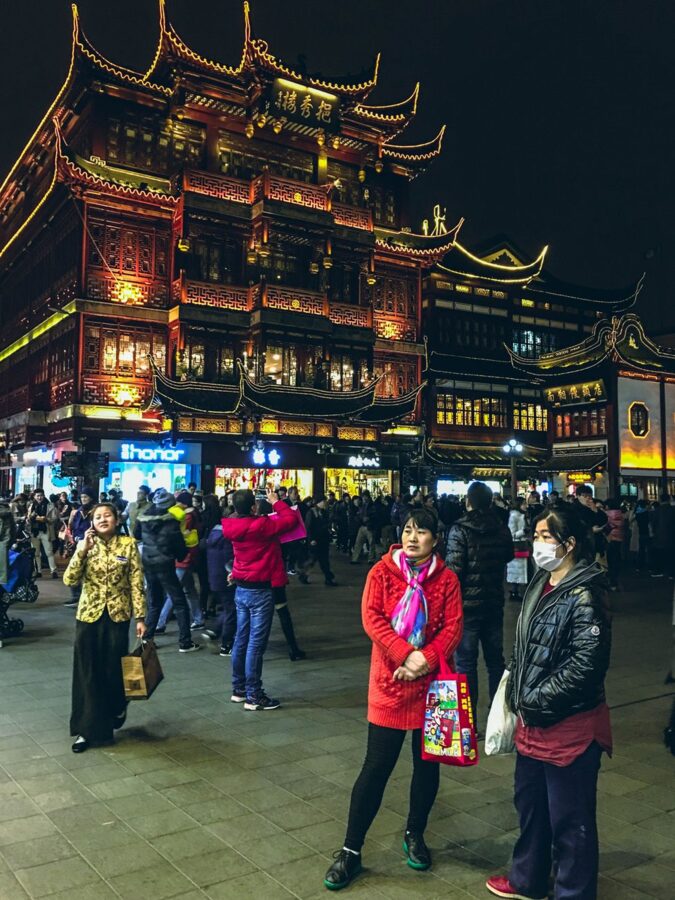
The original city shop is inside the Yuyuan bazaar at the foot of the Zigzag Bridge, on Yuyuan Road (listings give number 85 or 87; follow the bridge and the queue). It opens 07:30–20:30. The ground floor is a takeaway window that sells only plain pork; the upstairs halls serve crab versions and set menus, and the top floor has the views and the highest prices.
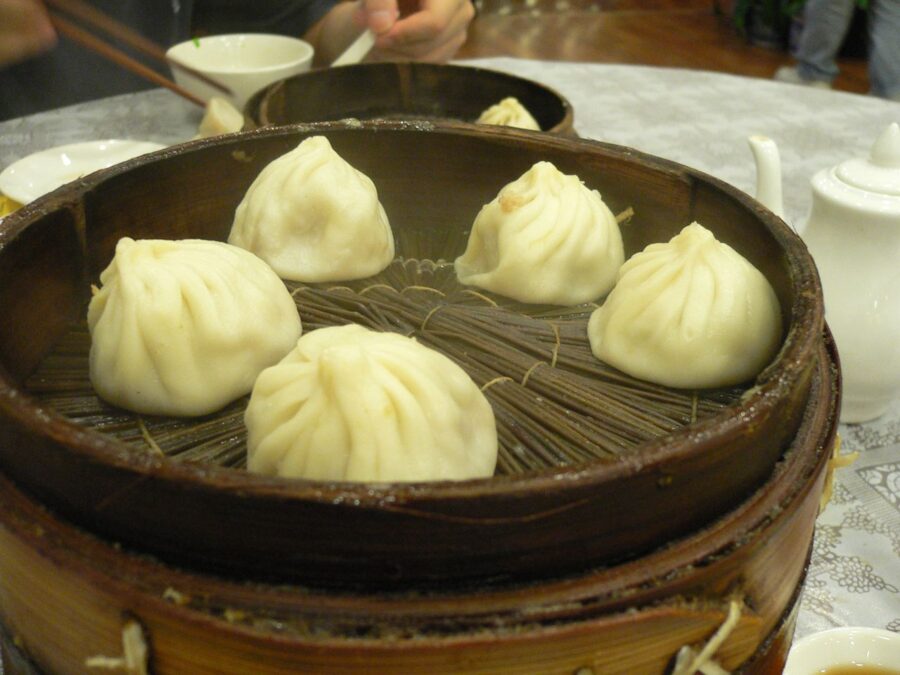
It is touristy, and the ground-floor queue can run past an hour on weekends and holidays. But the dumplings are well made, the setting is the best of any xiaolongbao shop in China, and an upstairs table on a weekday afternoon is usually quick. My advice: skip the takeaway queue, go upstairs, order one pork and one crab basket, and look out at the bridge.
Jia Jia Tang Bao, Huanghe Road
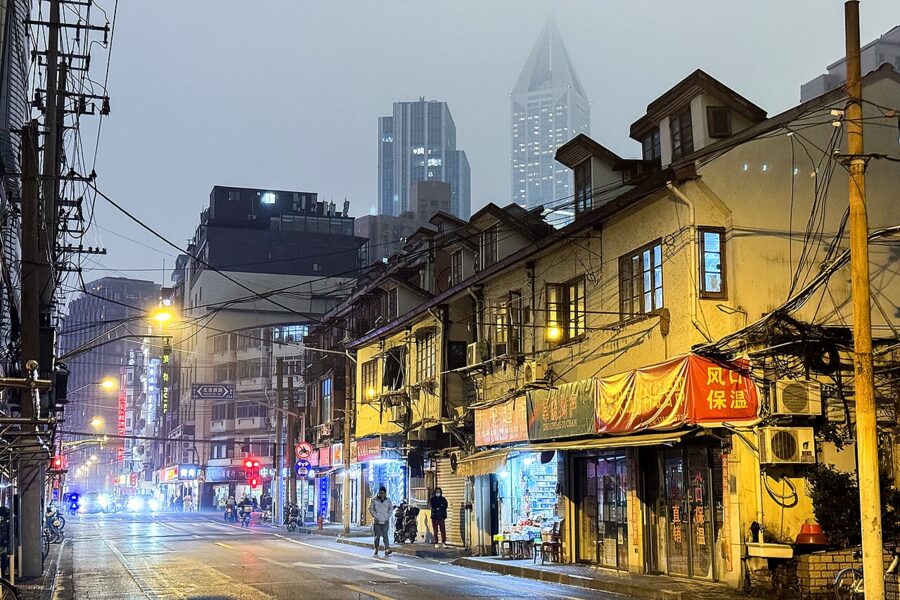
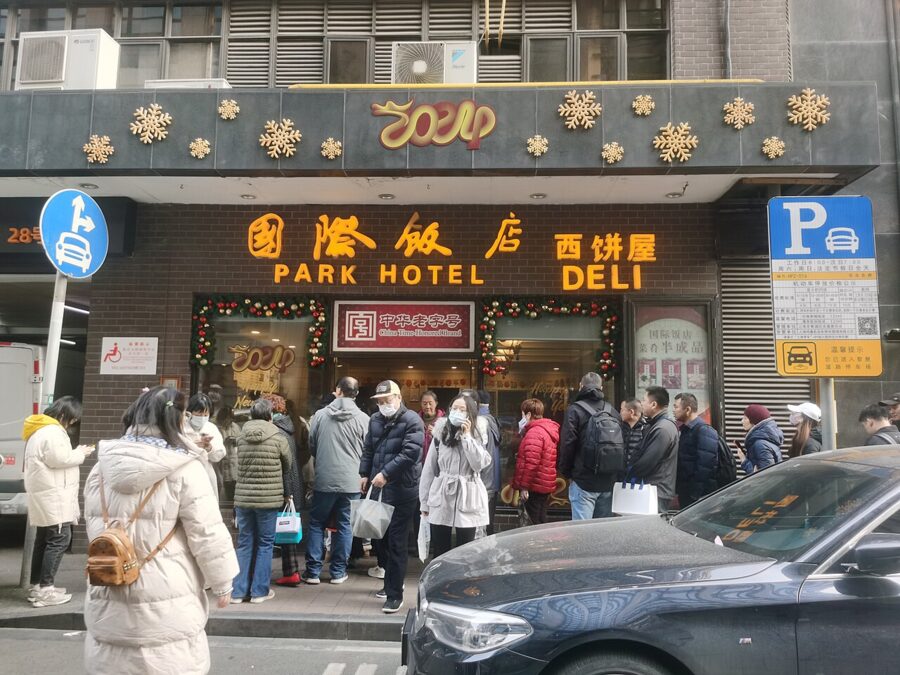
Jia Jia (佳家汤包) started in 1986 as a tiny shop on Henan South Road, where the founder, Feng Shuiying, made everything to order because there was no space to do otherwise. The Huanghe Road branch, at number 127, is the famous one: about 340 m from People’s Square station, Exit 8. It opens at 07:30 and the queue usually starts forming by 09:30.
One trap: Jia Jia used to be at number 90 on the same street, then closed for renovation and reopened at 127 in 2020. Number 90, thirty metres away, is now Jiale (佳乐), a separate shop with a nearly identical menu, and some regulars now prefer it. Check the sign before you sit down.
Order at the counter or through the shop’s mini-programme on your phone. The classic order is a quanjiafu (全家福) basket with four each of pork, mushroom and pork, and crab and pork, plus the golden crab noodles if you’re hungry. Regulars grumble that the dumplings have grown bigger and the vinegar sweeter since the early days. They’re still very good.
Lai Lai Xiao Long, Tianjin Road
Lai Lai (莱莱小笼) is a small shop at 506 Tianjin Road, a few minutes’ walk north of the Nanjing Road East pedestrian street. It opened in 1994 selling wontons and noodles, and the founder, Mr Cheng, rebuilt it around crab after a crab dinner with friends. It closes for a break between 14:00 and 15:00 and otherwise runs 08:00–20:00.
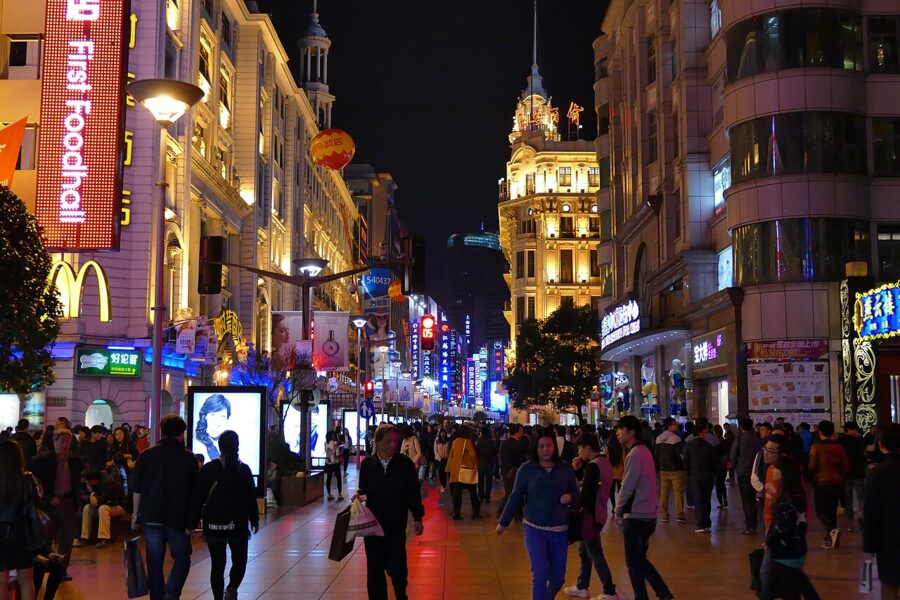
This is the shop for crab. Lai Lai uses live crabs and hand-picked meat, and the crab-and-pork basket of eight costs about ¥46. You’ll share a table, and in October and November the queue is long. Go just after 15:00, when the afternoon session opens.
Wanshouzhai, Shanyin Road
Wanshouzhai (万寿斋) has been at 123 Shanyin Road in Hongkou since April 1949. It has six tables, the dumplings are steamed on old-fashioned straw mats, and the menu is short on purpose: xiaolongbao, three-delicacy wontons, scallion oil noodles. Across the road is the old lane where Lu Xun spent his last years.
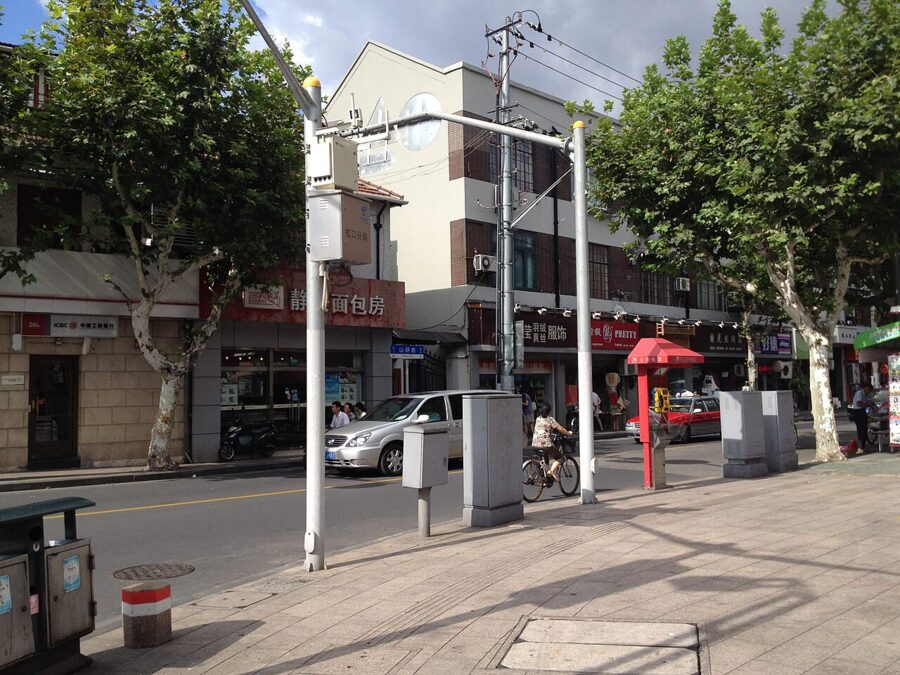
The pork xiaolongbao are a little sweet in the Shanghai way, with a lot of soup. In 2026 the shop added a coriander version that regulars rate highly, a rare new item for a place that has changed almost nothing in decades. Expect to share a table and to order fast.
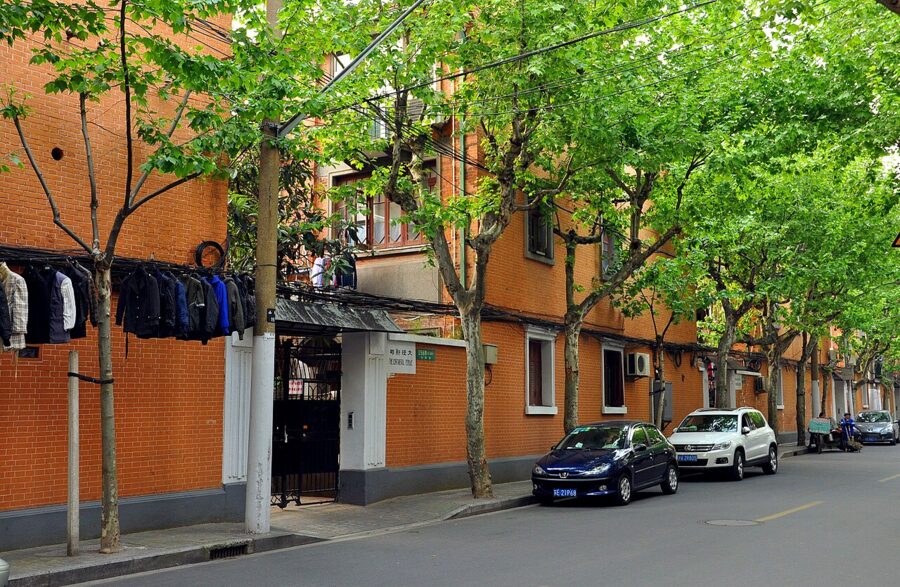
Wu You Xian and the high end
Wu You Xian (屋有鲜), Room 103, 7 South Maoming Road, is the refined version: 32-fold dumplings, a duck-yolk wrapper and a tasting set of crab roe, crab paste and crab meat fillings in one steamer. It opens 09:00–20:00 and averages about ¥130 a head. If you want one sit-down crab meal near Huaihai Road, this is it; for the classic dish, the cheaper shops above do it at least as well.

The chain question
Din Tai Fung, the Taiwanese chain that made 18 pleats famous, has fewer mainland branches than it used to; in Shanghai its Grand Gateway restaurant closed in August 2026. It is consistent and comfortable, with English menus. If you’ve eaten it at home, spend your Shanghai meals in the local shops instead.
The “南翔小笼” chain shops are the other question. Some are franchises of the Yuyuan brand, some are not, and they range from fine to frozen. A quick test works anywhere: if you can’t see anyone pleating and the basket arrives in under five minutes, the dumplings were made earlier and reheated.
One famous name you’ll find in older guides is missing here on purpose. Fu Chun (富春小笼), long a fixture at 650 Yuyuan Road, closed on 2 January 2022 for redevelopment, and the rebuilt shop is not expected to reopen before the second half of 2027.
Go to Nanxiang for the day
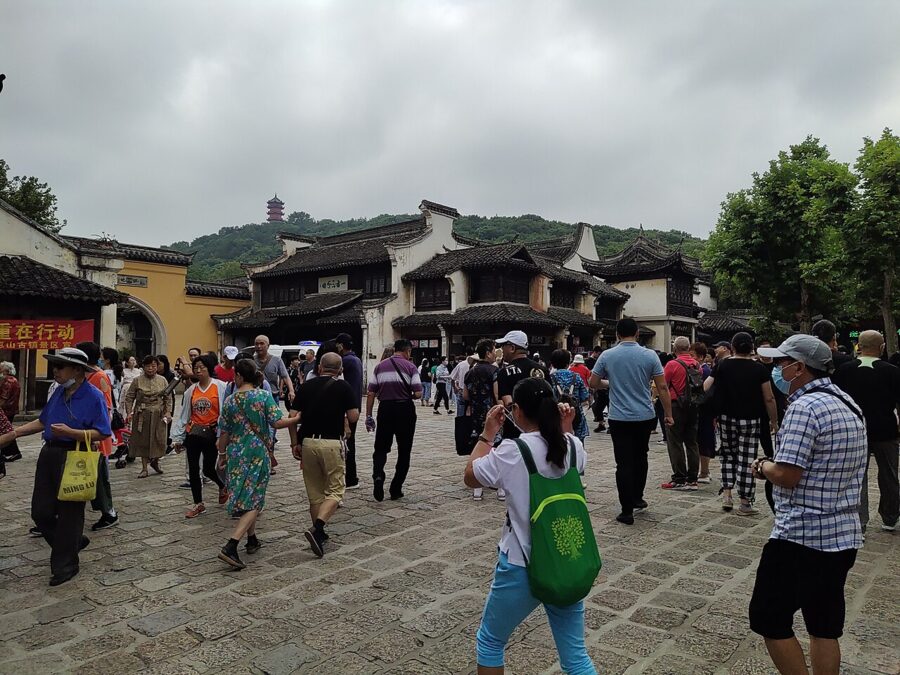
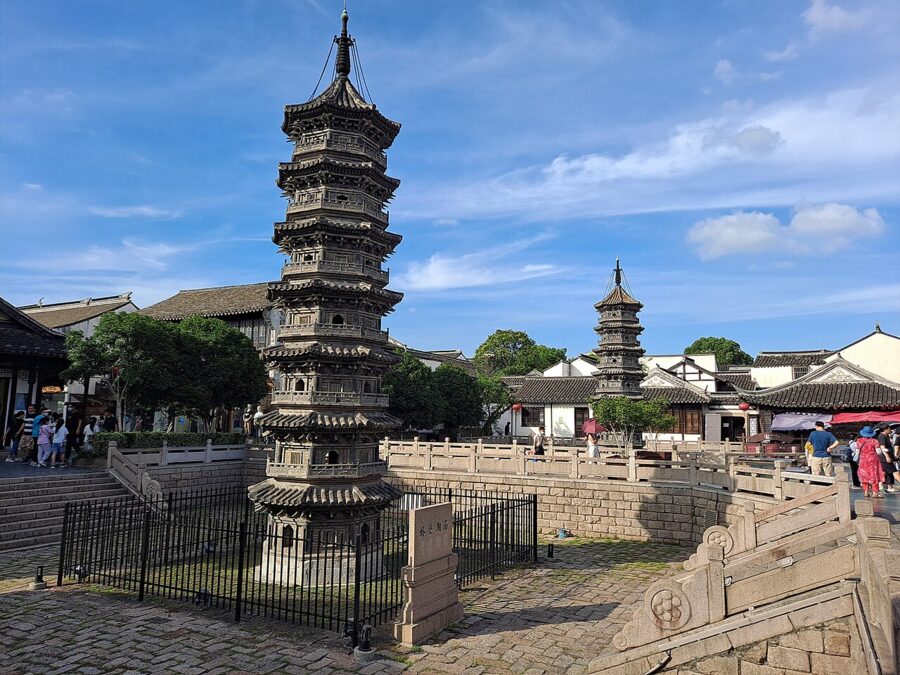
Nanxiang is an easy half day from central Shanghai, and the dumplings there are cheaper and often fresher than in the Yuyuan bazaar. It’s a real town, not a museum, with a few old streets, two brick pagodas and a Ming garden.
Getting there
Take Metro Line 11 to Nanxiang station; the line runs straight there from Xujiahui and Jiangsu Road. Leave by Exit 2 and walk west along Huyi Highway for about ten minutes to the south gate of Guyi Garden. The old town is a short walk further on.
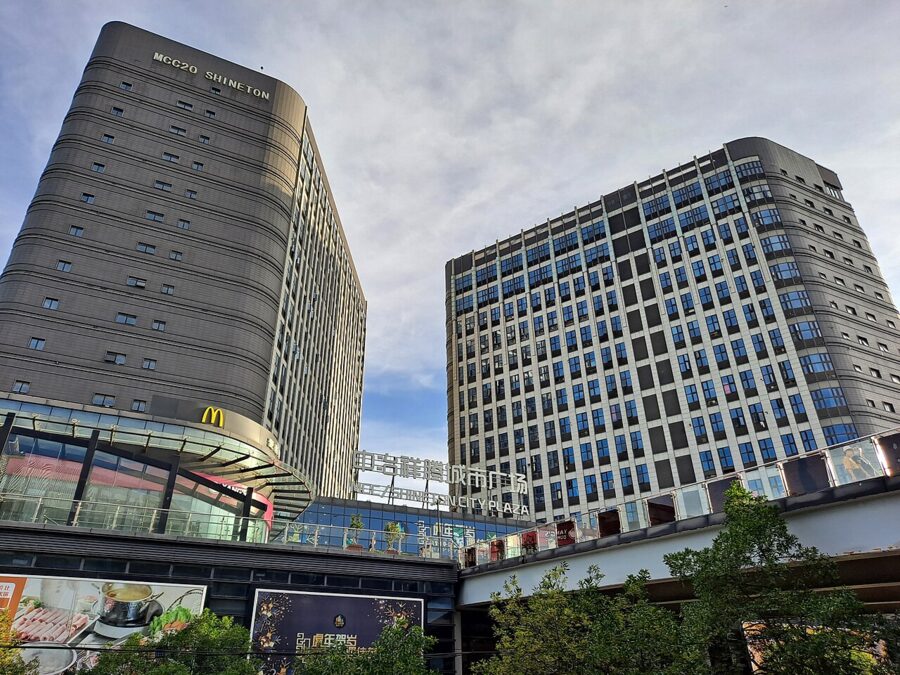
Where to eat in Nanxiang
In November 2025 the town held a xiaolongbao skills contest, and five shops came out on top. Those five are where I would go.
- Gulong Restaurant (古龙饭庄), 166 Guyiyuan Road, 05:00–20:00. The overall winner; its champion maker has been pleating for 16 years.
- Guyiyuan Restaurant (古猗园餐厅), 218 Huyi Highway, at the south gate of the garden, 08:00–19:00 (the main hall closes at 16:00 on weekdays). Opened inside the garden in 1958 and moved here in 1994. Best in crab season, when the crab is picked in-house.
- Nanxiang Xiaolong Guan (南翔小笼馆), 135 Shengchan Street, 06:30–19:30. Fast, very fast, and good.
- Nanxiang Restaurant (南翔饭店), by the old street, 09:00–20:00. Uses an old-dough starter for the wrapper.
- Changxinglou (长兴楼), in the old town, 07:00–20:00. An old Nanxiang name (not to be confused with the Yuyuan shop’s original name) that sells a plain, classic basket with no gimmicks.
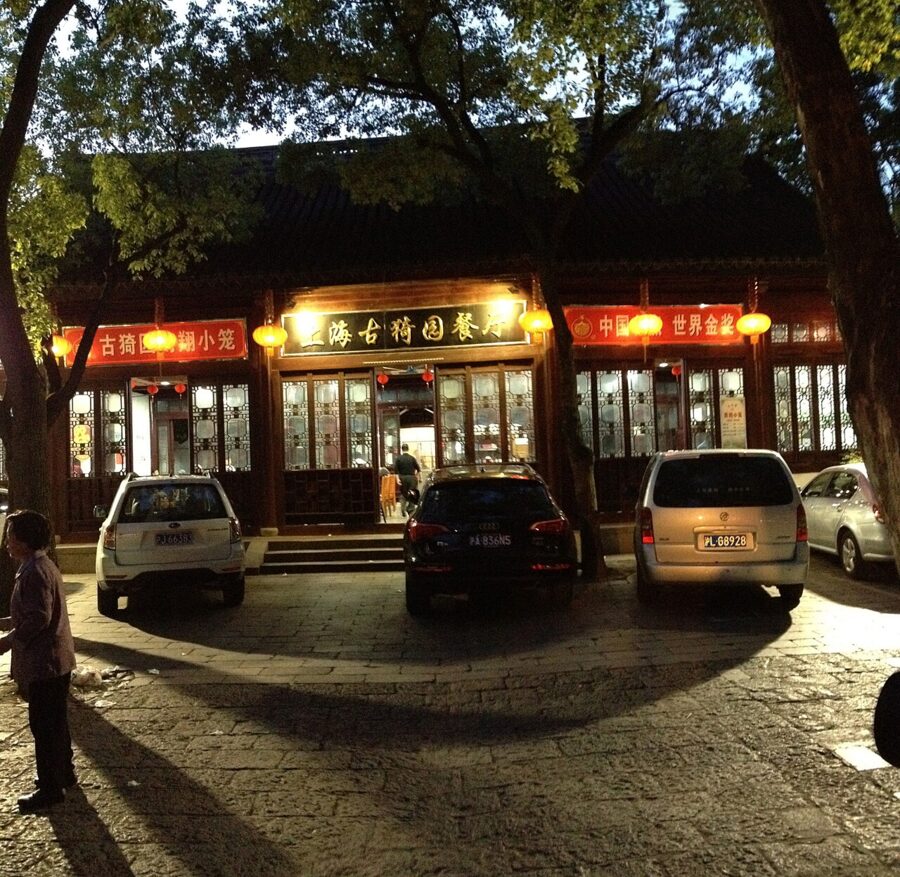
An older food tour once called the big restaurant behind the garden the worst dumplings on the street, the baskets left sitting too long. That was years ago and the restaurant has since won prizes, but the lesson holds anywhere in Nanxiang: pick the shop where you can see dumplings going into the steamer, not the one with a stack of baskets ready.
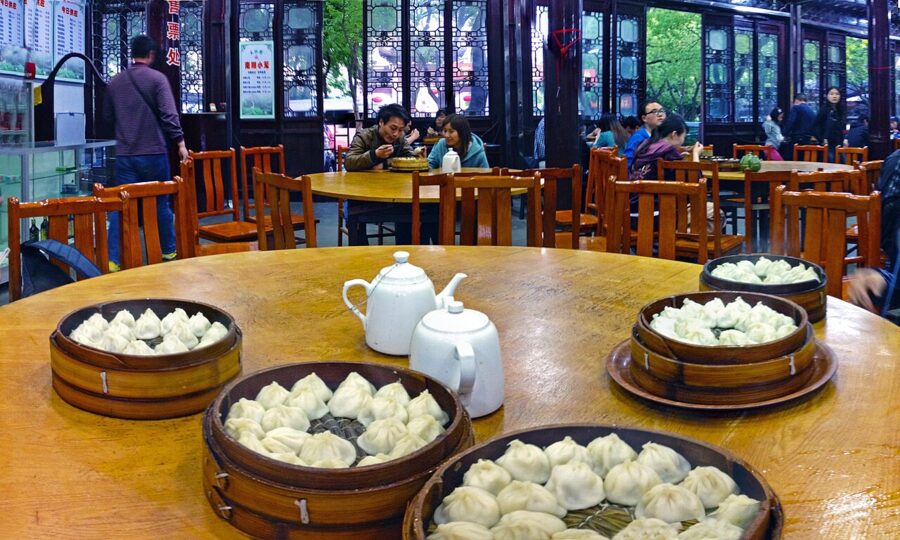
Guyi Garden and the old town
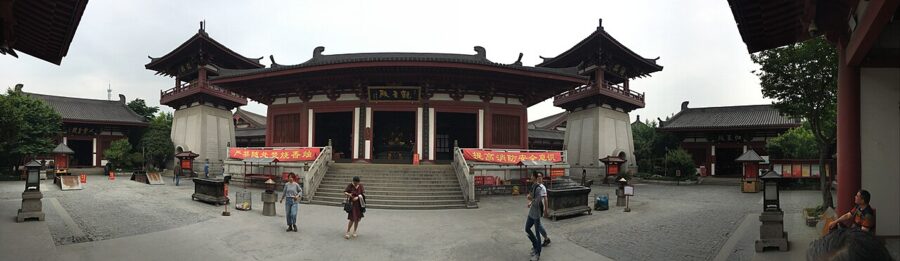
Guyi Garden charges ¥12, and from March to November the south gate opens 07:00–18:30. It started as a private garden in the mid-16th century and was renamed in the 1740s. Look for the pavilion with one corner missing, built in 1933 as a reminder of the northeast provinces lost two years before.
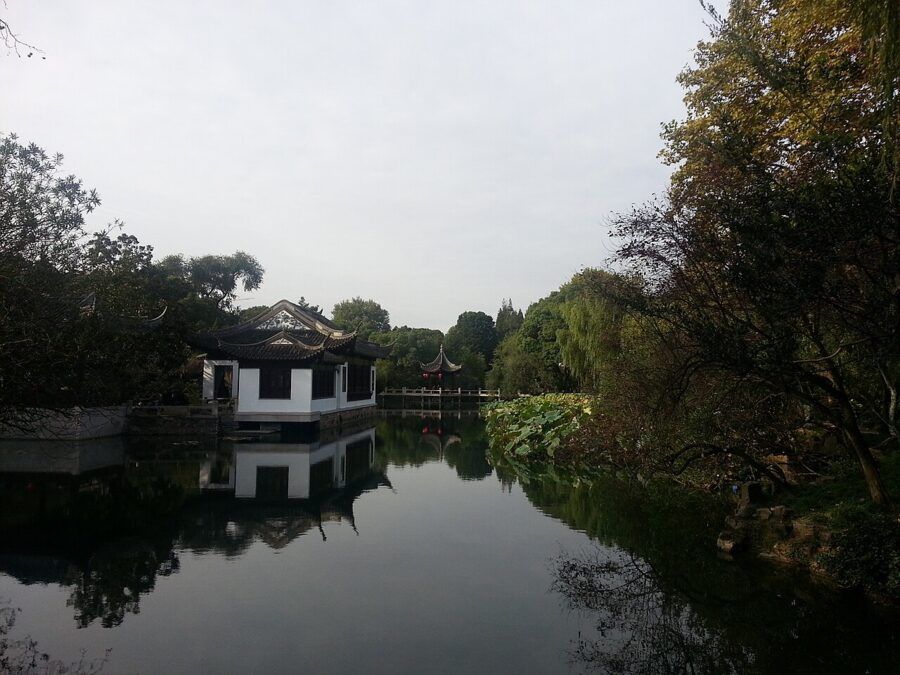
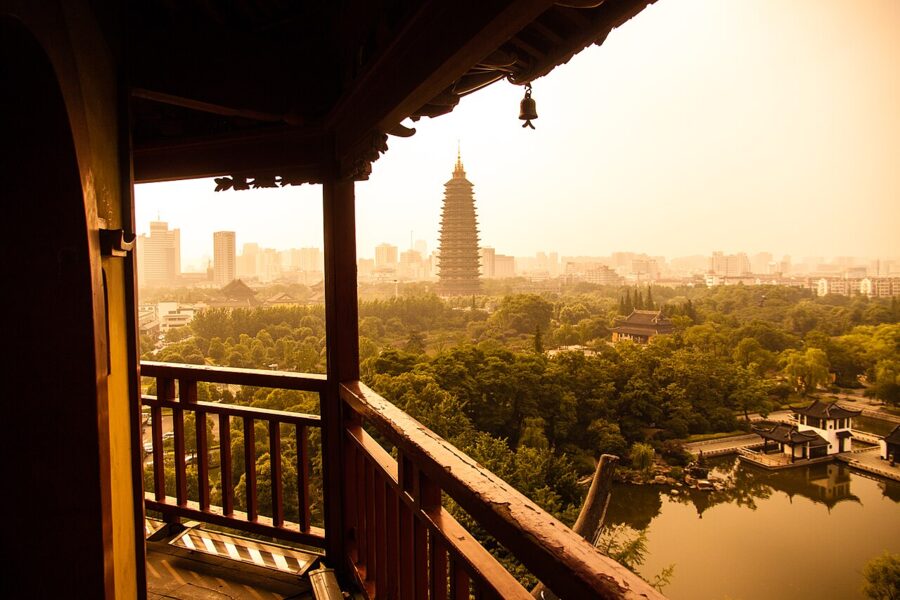
The old town is named after a temple, and the pair of small brick pagodas at its centre are the most photographed thing in it. Give the whole trip four or five hours: dumplings, the garden, a walk through the old streets, and a second basket at a different shop before the train back.
Prices, queues, takeaway and paying
Here is what you can expect to pay and wait in 2026. Plain pork at a neighbourhood shop is still one of the best-value meals in the city.
| Where | Typical basket | Queue | Notes |
|---|---|---|---|
| Neighbourhood shop | ¥15–25 pork | Minutes | Often the freshest; menus in Chinese |
| Jia Jia, Huanghe Road | ¥25 pork, ¥38 crab and pork (12) | 20–30 minutes at peak | Opens 07:30; queue builds from 09:30 |
| Lai Lai, Tianjin Road | ¥46 crab and pork (8) | Long in crab season | Break 14:00–15:00 |
| Nanxiang Mantou Dian, Yuyuan | About ¥30 pork (6) at the window | Up to an hour downstairs | Upstairs faster and dearer |
| Nanxiang town | Usually cheaper than Yuyuan | Short on weekdays | Busy on holiday weekends |
Timing matters more than anything else. Arrive just before the lunch rush or in mid-afternoon, and avoid Golden Week (1–7 October), the May Day holiday and the Spring Festival week, when every famous shop and Nanxiang itself are packed. Weekday afternoons in crab season are the sweet spot.
Takeaway is a compromise. The soup starts soaking into the skin the moment the basket comes off the steam, and after ten minutes in a box you’re eating a soggy dumpling. If you must, buy sheng jian instead, which travel better. Many shops sell frozen raw xiaolongbao to cook at home, and they’re fine for what they are.
On payment, all the shops in this guide take Alipay and WeChat Pay, which work with foreign cards once linked. Cash is legal tender, but small shops may be short of change for a ¥100 note, so keep some smaller notes.
Skip this
- The giant straw buns sold around the Yuyuan bazaar. Thick skin, thin broth. Go to Jingjiang or Huai’an for the real one.
- Crab xiaolongbao out of season. Outside autumn and early winter, the crab is preserved and it shows.
- Soy sauce. It drowns the broth. Ginger and vinegar only.
- Any shop where the baskets are stacked and waiting. Freshly steamed is the whole point.
- Eating the first dumpling whole. Everyone tries it once.
If you’re coming from the south, Shenzhen and Hong Kong dim sum kitchens make their own soup dumplings and they’re perfectly decent (see my guide to Hong Kong dim sum). They aren’t the same thing, and the difference is all in the skin.
Go to Jia Jia at 07:30 on a weekday in October. Order a crab-and-pork basket and a bowl of blood soup, lift the first dumpling onto your spoon, open a window and wait. Then take Line 11 to Nanxiang and do it again where it started.
You Might Also Enjoy
 Sapporo Food Guide: Miso Ramen, Soup Curry, and Susukino After Dark
 The Summer Palace in Beijing: Tickets, Gates, the Long Corridor and a Route That Beats the Crowds
 Osaka Street Food: Dotonbori, Kuromon, and the Kuidaore Tradition
 Sichuan Food: Mala, Mapo Tofu, Dan Dan Noodles and Where to Eat Them in Chengdu