Things to Do in Chengdu: People’s Park Teahouses, Wenshu Monastery, Sanxingdui and a Three-Day Plan
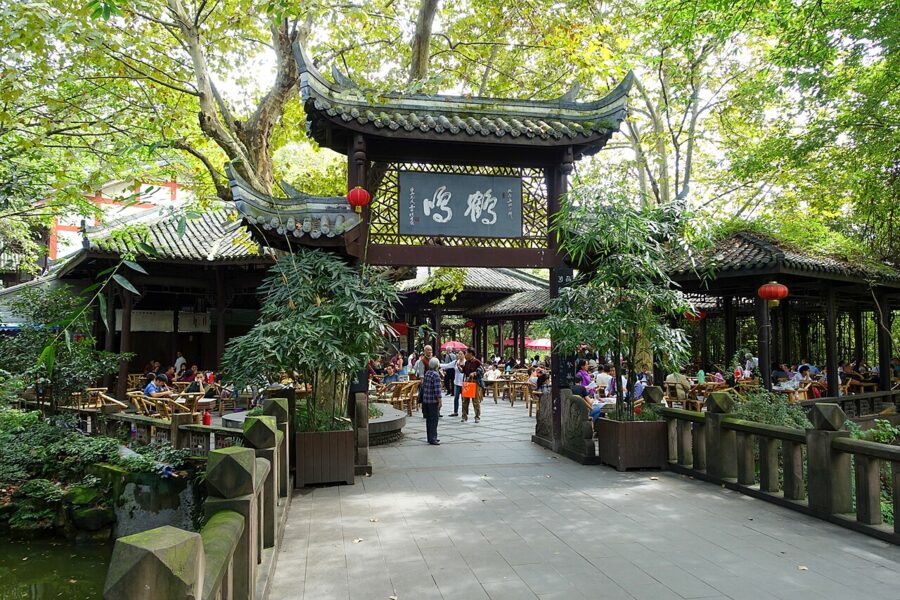
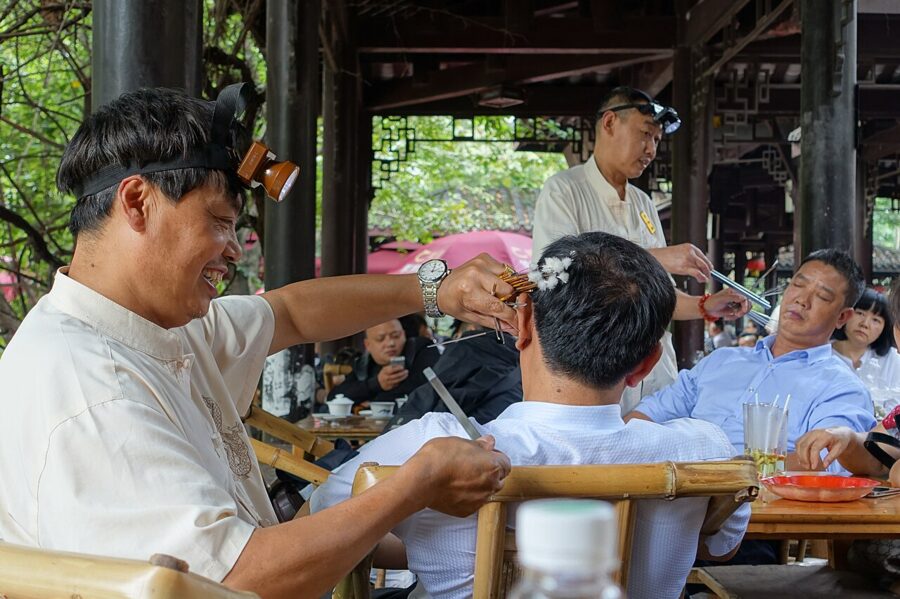
You hear the ear cleaner before you see him. He works the tables of the teahouse in People’s Park with a long metal tuning fork, flicking it so it rings a thin, high note over the clatter of mahjong tiles, and anyone who wants the service just lifts a hand. By 08:00 on a weekday the bamboo chairs by the lake are full of retired men with lidded cups of jasmine tea, a woman is knitting, and nobody looks as if they plan to move before lunch.
That is the Chengdu you came for, and it is still there in 2026, two minutes from a metro exit, in a city of more than twenty million people. The capital of Sichuan has a reputation for taking life slowly, and it earns it. People here sit for hours, eat late, argue about hot pot and treat an afternoon of tea as a perfectly good plan.
The city also has two thousand years of history to back up the attitude. It was the capital of the ancient Shu kingdom, then of Liu Bei’s Shu Han in the Three Kingdoms period, and the Tang poet Du Fu wrote some of his best-loved poems in a cottage on its western edge. This guide covers the teahouses, the temples, the old lanes and what is left of them, the Bronze Age treasures of Sanxingdui, Sichuan opera, the day trips, where to stay, how to get in from the airports, and a three-day plan.
The table below is the quick version. Prices are in yuan, and prices and booking rules were checked in November 2026.
| Place | Ticket | Metro | Give it |
|---|---|---|---|
| People’s Park and Heming teahouse | Free; tea ¥20–30 | People’s Park, Line 2, exit B | 1–2 hours, early |
| Wenshu Monastery | Free | Wenshu Monastery, Line 1, exit K | 1–2 hours |
| Kuanzhai Alley | Free | Kuanzhai Alley, Line 4, exit B | 1 hour |
| Wuhou Shrine and Jinli | ¥50 (Jinli free) | Wuhou Shrine, Line 10 | 2–3 hours |
| Du Fu Thatched Cottage | ¥50 | Du Fu Thatched Cottage, Line 13, exit C2 | 2 hours |
| Qingyang Palace | ¥10 | Qingyang Palace, Line 5 | 1 hour |
| Sanxingdui Museum | ¥72, under-18s free | Train to Guanghan North, then bus | Half a day plus travel |
| Jinsha Site Museum | Closed until 30 April 2027 | Line 7 | Not this trip |
In This Article
- How the city fits together
- Tea, mahjong and ear cleaning in People’s Park
- Heming teahouse
- Wenshu Monastery and its teahouse
- Kuanzhai Alley and Jinli, without the gloss
- Kuanzhai Alley
- Jinli
- The Three Kingdoms at the Wuhou Shrine
- Du Fu Thatched Cottage and Qingyang Palace
- Du Fu Thatched Cottage
- Qingyang Palace
- The Shu bronzes: Jinsha and Sanxingdui
- Jinsha Site Museum: closed until 2027
- Sanxingdui Museum
- Sichuan opera and the face-changers
- Taikoo Li, Chunxi Road and where to eat
- Eating your way round
- The pandas, briefly
- Day trips from Chengdu
- Leshan
- Dujiangyan
- Mount Qingcheng
- Where to stay
- Chunxi Road and Taikoo Li
- Wenshu Monastery
- Yulin
- Getting in and getting around
- From Tianfu (TFU)
- From Shuangliu (CTU)
- By train
- Around the city
- Three days in Chengdu
- Day 1: tea, temples and the west side
- Day 2: pandas and the Three Kingdoms
- Day 3: Sanxingdui and the cottage
- Skip this
How the city fits together
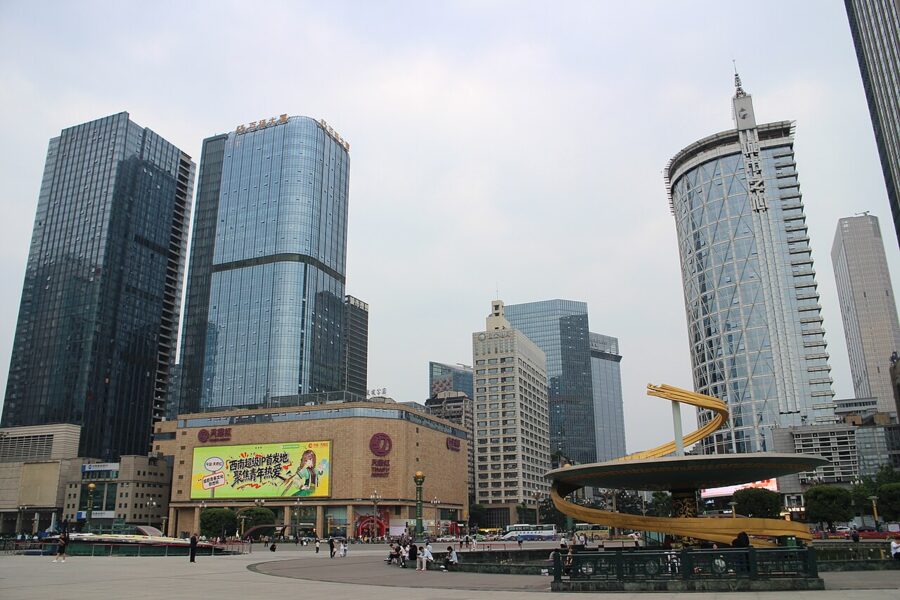
Central Chengdu is easier to read than its size suggests. Tianfu Square is the middle, a huge open plaza with Mao Zedong’s statue on its north side and Lines 1 and 2 of the metro crossing underneath it. Around it the city spreads out in rings: the First Ring Road wraps the old centre, the Second and Third Ring Roads follow, and the expressway rings beyond them mark where the newer districts begin.
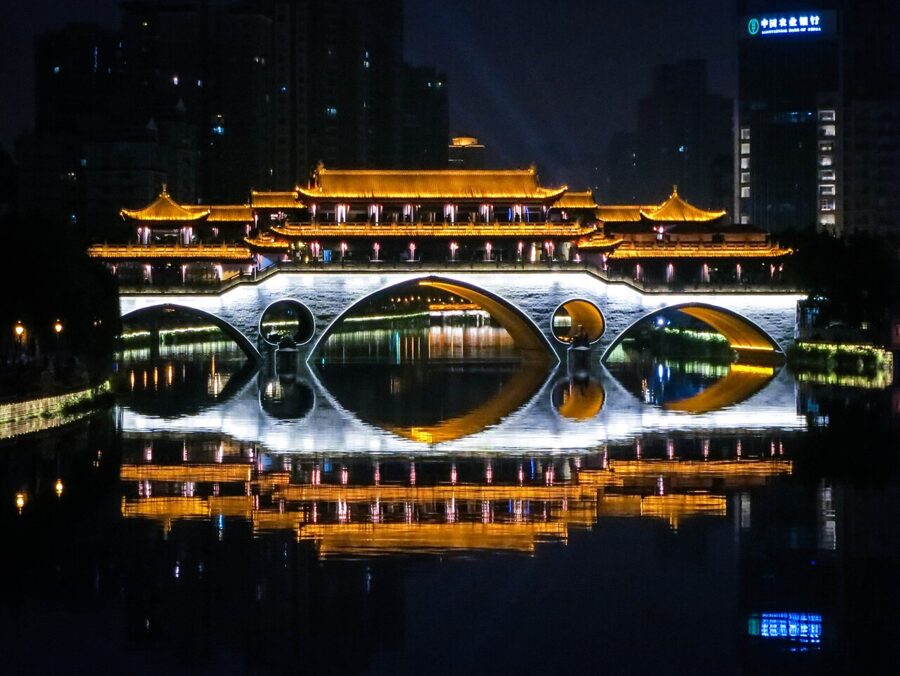
Water does the rest of the work. Two rivers wrap the old centre, the Fu on the north and east and the Nan on the south and west, and they meet at Hejiangting to become the Jin River (锦江). The covered Anshun Bridge, just upstream of the Jiuyan Bridge, is where the river looks its best after dark.
The useful split for a visitor is west and east. West of Tianfu Square is the old Shaocheng, the Manchu garrison town of the Qing dynasty: People’s Park, Kuanzhai Alley and, further out, Du Fu Thatched Cottage and Qingyang Palace. East is commercial Chengdu, with Chunxi Road, Taikoo Li and the river bars. The Wuhou Shrine and Jinli sit to the south-west, Wenshu Monastery to the north.
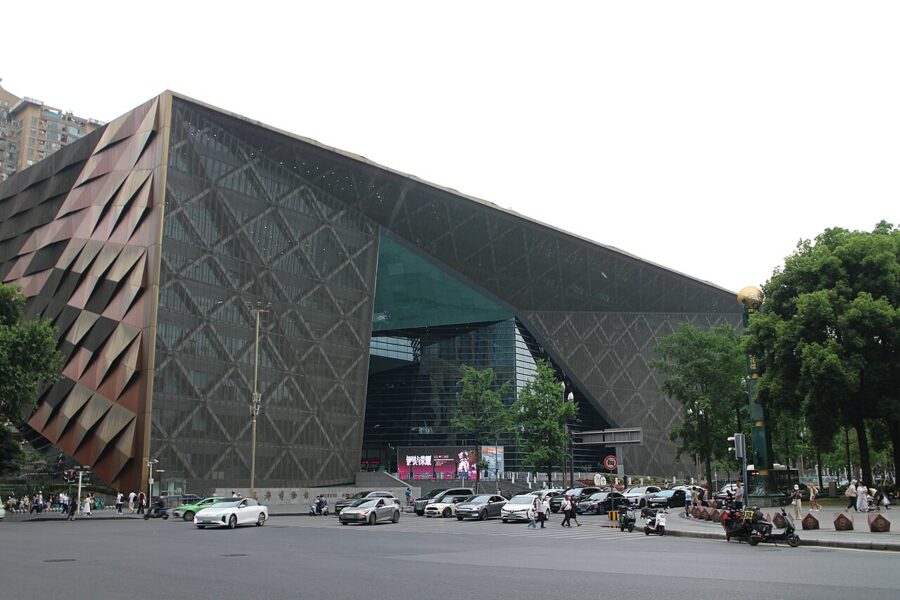
The Chengdu Museum, on the west side of Tianfu Square, is the best introduction to the city’s long story, and it is free. You do need to book through its official WeChat account, and it closes on Mondays. Go on a wet afternoon, which in Chengdu is not a hard thing to arrange: the old saying that Sichuan dogs bark at the sun, because they so rarely see it, still gets quoted with a straight face.
Tea, mahjong and ear cleaning in People’s Park
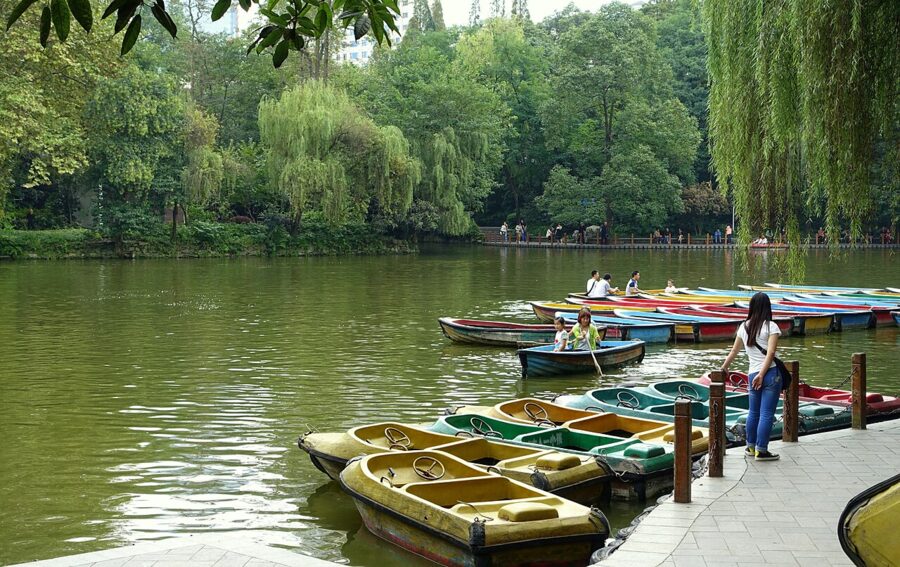
If you only do one thing in Chengdu, make it a morning in People’s Park (人民公园). It opened in 1911 as Shaocheng Park, the city’s first public park, and it still works like a public front room. Take Line 2 to People’s Park station and leave by exit B; the north gate is just across the road.
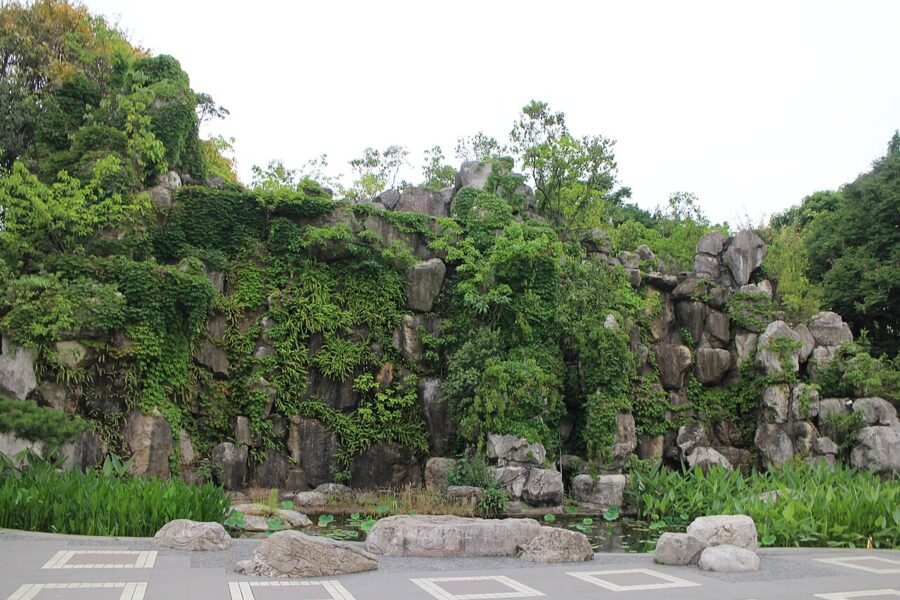
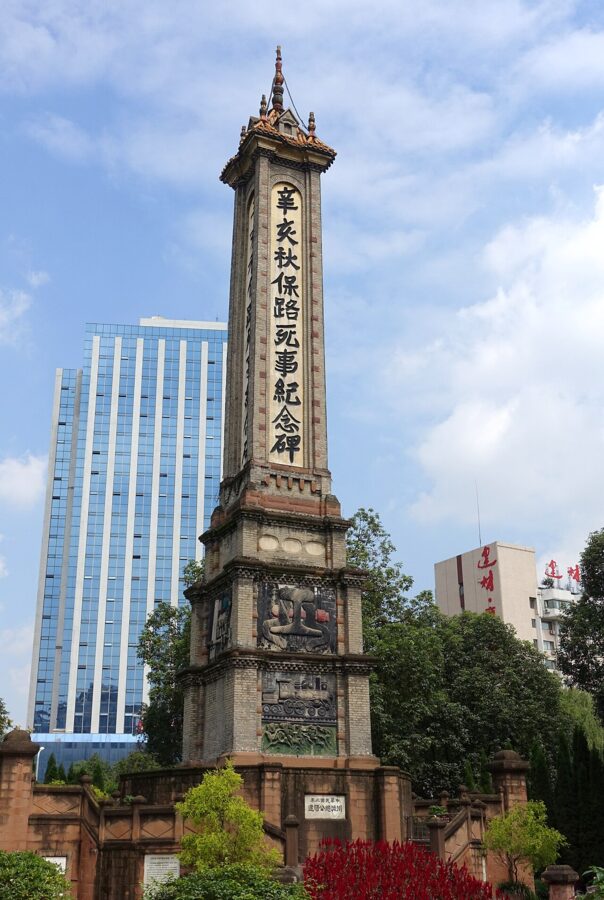
Inside, the park is a sequence of small worlds: card players under the trees, ballroom dancing to a portable speaker, a choir in one corner and calligraphers writing in water on the paving in another. Rising above it all is the obelisk of the Monument to the Martyrs of the Railway Protection Movement, more than 30 metres tall. It went up in 1913 for the people killed in the 1911 protests in Chengdu, the unrest that helped bring down the Qing.
Heming teahouse
The teahouse everyone means is Heming (鹤鸣茶社), which has stood by the lake since 1923. It is open-air, loud, cheap and run on gaiwan tea. Walk past the first section you meet from the photo wall, which sells set packages for two, and keep going to the ordinary tables, where you order a single cup.
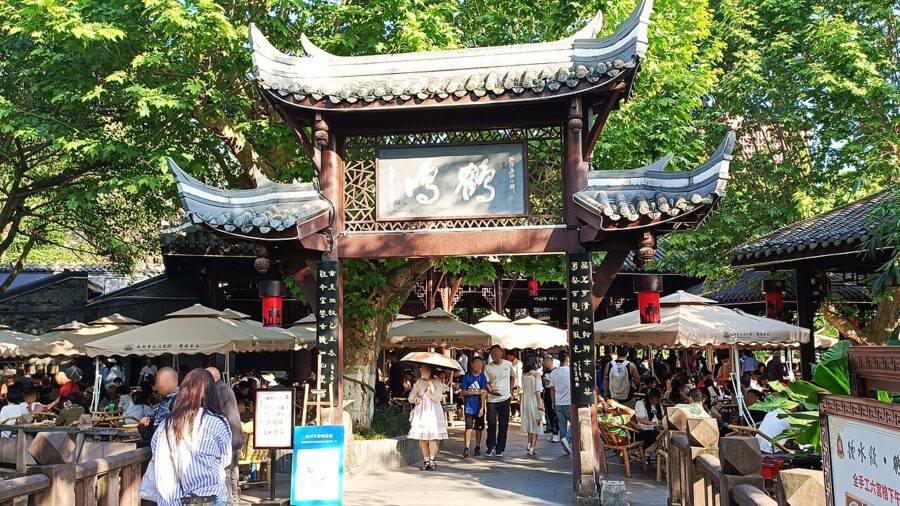
Get there before about 08:30 and the cheapest early-morning cup is ¥3. After that, most teas cost ¥20–30, and the evening menu runs a little higher. Refills of hot water are free, there is no minimum spend, and you pay by Alipay or WeChat Pay at the counter.
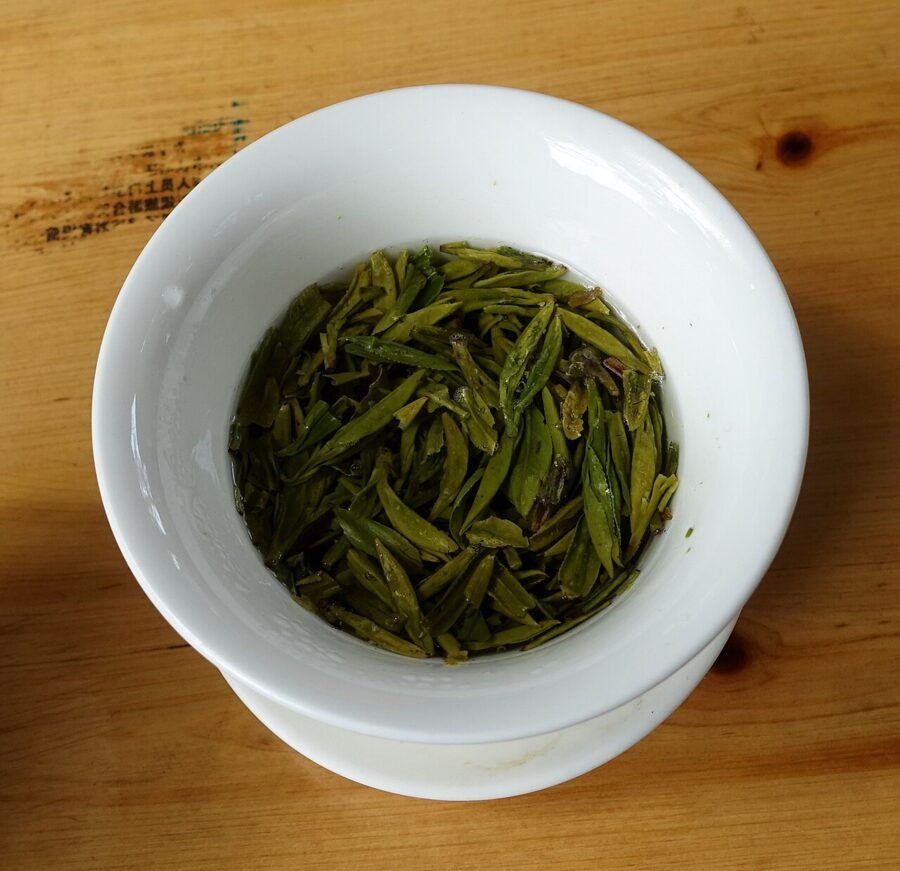
Then do what everyone else does: nothing. Read, play cards, watch the ear cleaners, buy a bag of sunflower seeds. If the ear cleaner offers a longer package with a wash and a massage, it is fine to say you just want the basic, which takes a few minutes. My guide to Chinese tea covers the jasmine, the green teas and how a gaiwan is meant to be handled, so here I’ll only say that the cheapest jasmine is the right order.
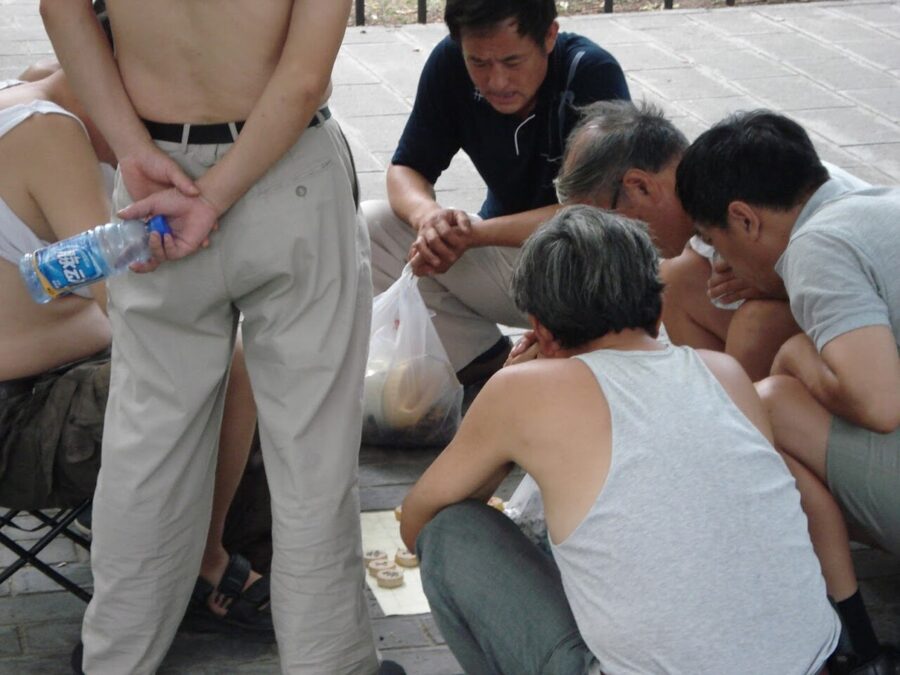
If the park is too much of a scene, Chengdu has teahouses on almost every residential block, and the old market town of Pengzhen, in Shuangliu to the south-west, is where the city’s photographers go for teahouses whose regulars arrive before dawn. For most short trips, though, People’s Park is the one.
Wenshu Monastery and its teahouse
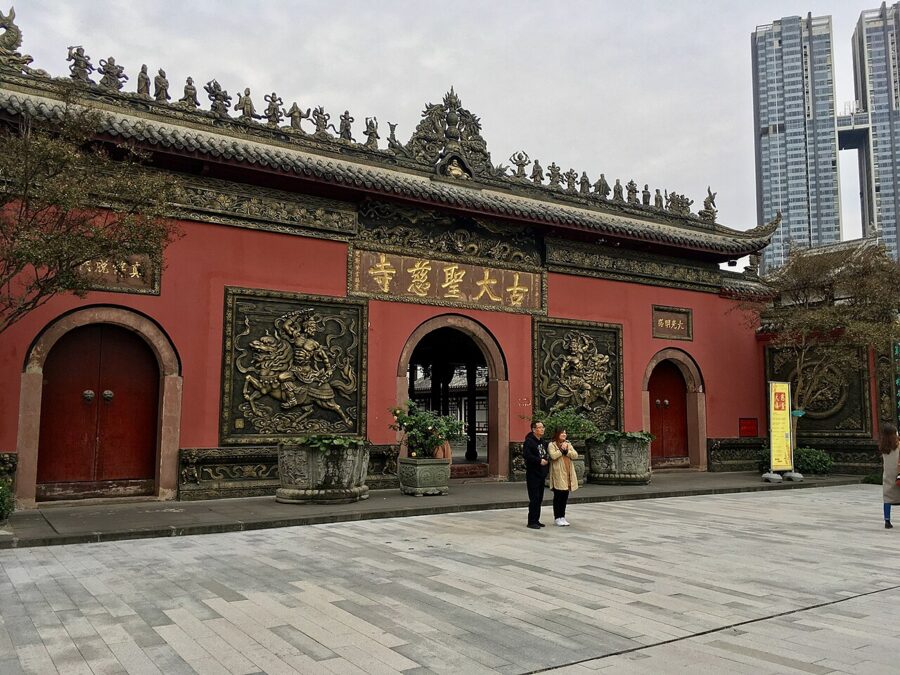
Wenshu Monastery (文殊院) is the city’s best-loved Buddhist temple, and it is a working one: the incense is real, the monks are busy, and the courtyards are full of people praying rather than posing. Entry is free. The gates open at 08:00 and close at 17:00, with last entry at 16:30.
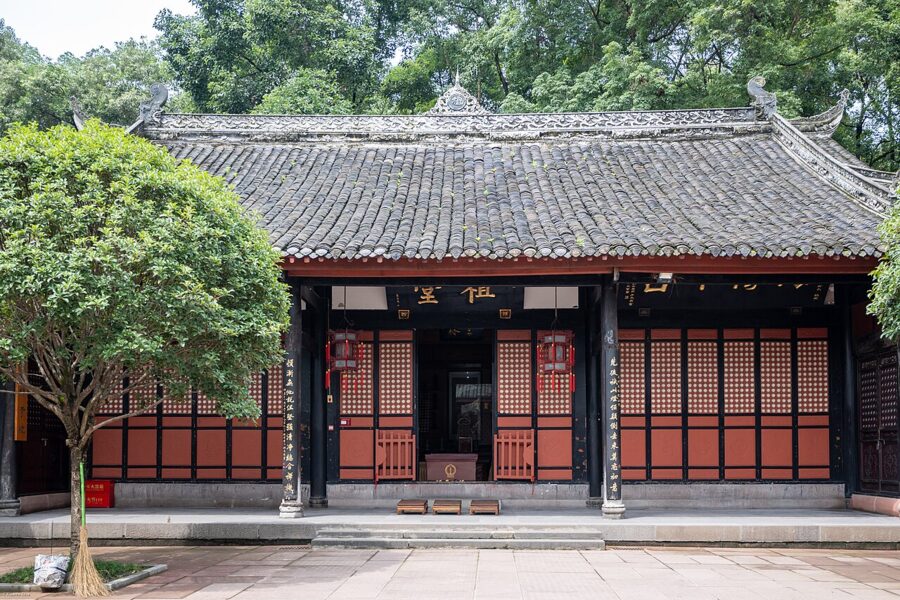
Take Line 1 to Wenshu Monastery station and leave by exit K, then walk up Wenshuyuan Street. The monastery sits at the end of a block of rebuilt old-style streets, which are pleasant but mostly souvenir shops; the temple itself starts at the gate.
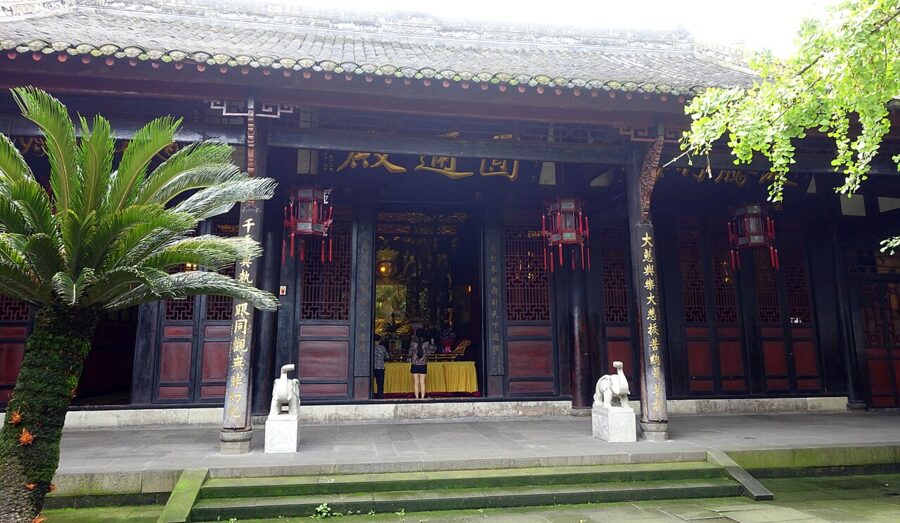
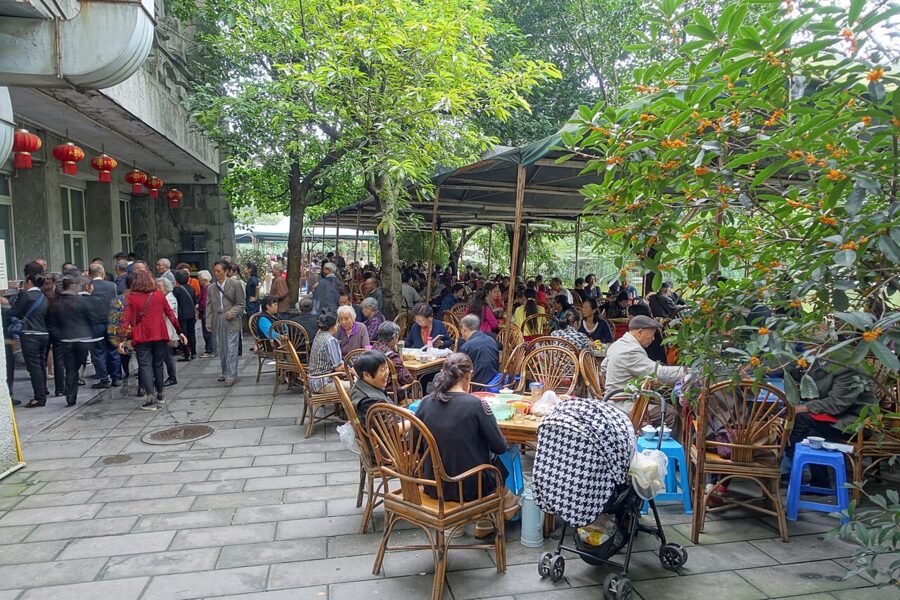
The reason to linger is the teahouse inside the grounds, which spreads across a courtyard under the trees. It is calmer than People’s Park and less of a show, with the same gaiwan tea and a steadier, older crowd. The monastery also runs a vegetarian restaurant if you want lunch without leaving.
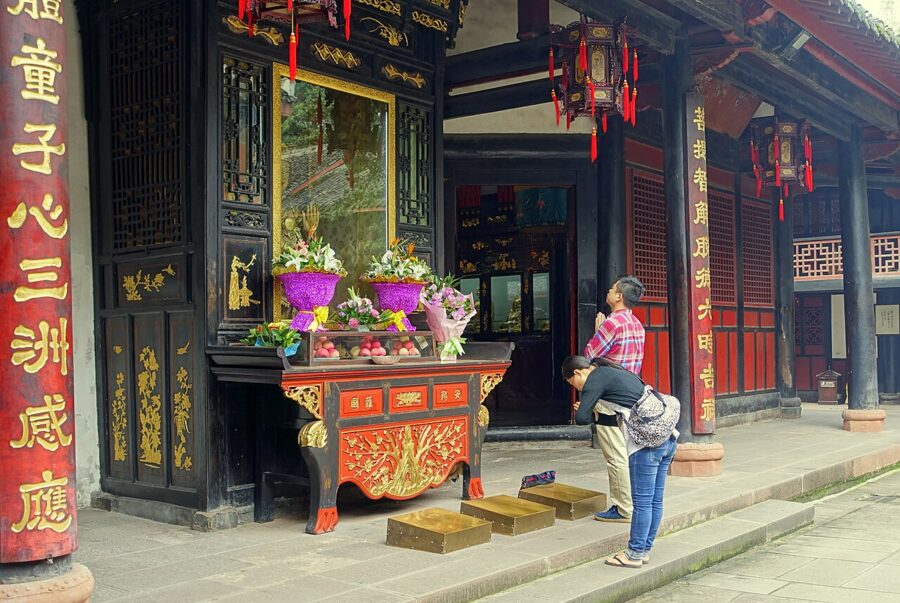
Wenshu is also where Chengdu people go for noodles. Tianshui mian (甜水面), thick, chewy and coated in sweet soy and chilli oil, is sold in the lanes around the gate for around ¥12 a bowl. My Sichuan food guide names the places around the monastery and the rest of the city’s snack shops, so I won’t repeat them here.
Kuanzhai Alley and Jinli, without the gloss
Every Chengdu itinerary includes these two, and you should see them. Just go with the right expectations: both are rebuilt heritage streets designed for visitors, and neither is where Chengdu actually lives or eats.
Kuanzhai Alley
Kuanzhai Alley (宽窄巷子), the Wide and Narrow Alleys, is three parallel lanes, Kuan Xiangzi, Zhai Xiangzi and Jing Xiangzi, in what was once the Manchu garrison town. The courtyard houses were largely rebuilt, and the area reopened in 2008 as a shopping and dining street. Entry is free; take Line 4 to Kuanzhai Alley station, exit B, and you are in the lanes.
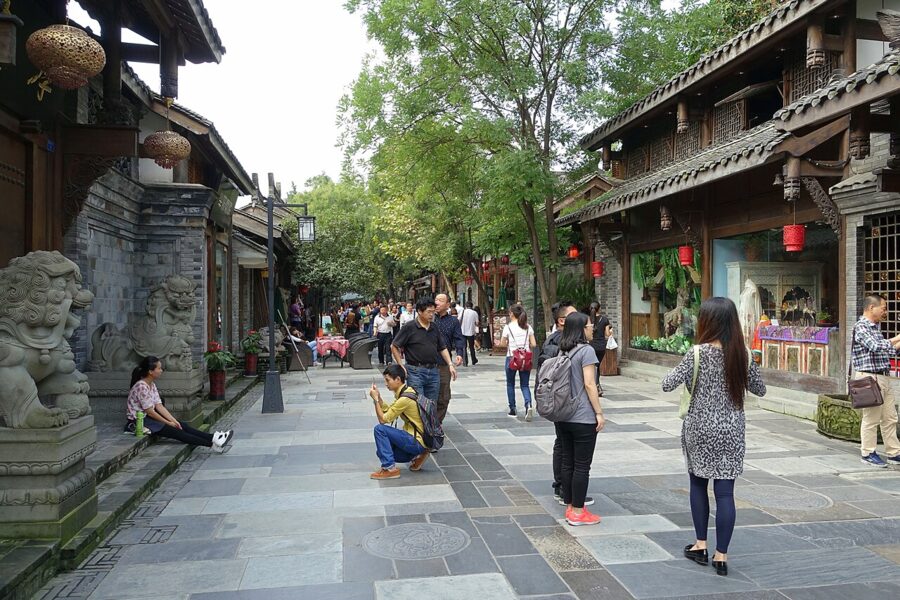
The lanes look their best before 10:00, when the shops are opening and you can actually see the gateways. By lunchtime, and on any weekend, it is a slow shuffle. Walk all three, look into the courtyards that let you, and buy something small if you like it.
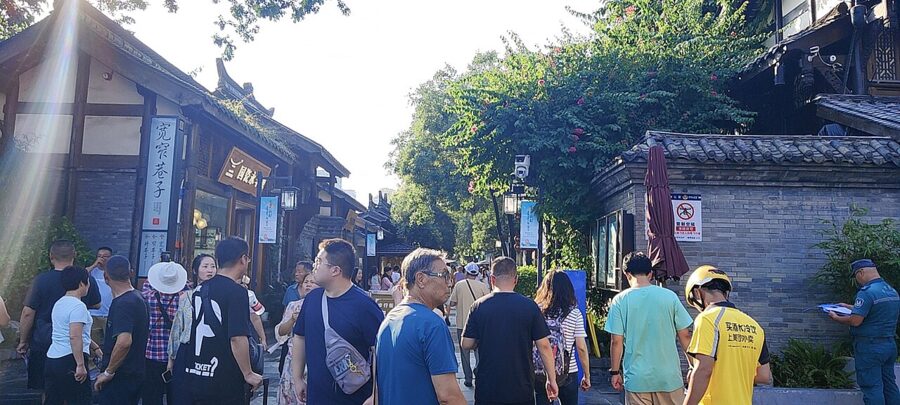
Then leave to eat. Kuixinglou Street (奎星楼街), a few minutes’ walk from exit B, is where the city’s younger crowd eats: small shops, skewers, noodles and late hours. Prices drop the moment you step out of the lanes.
Jinli
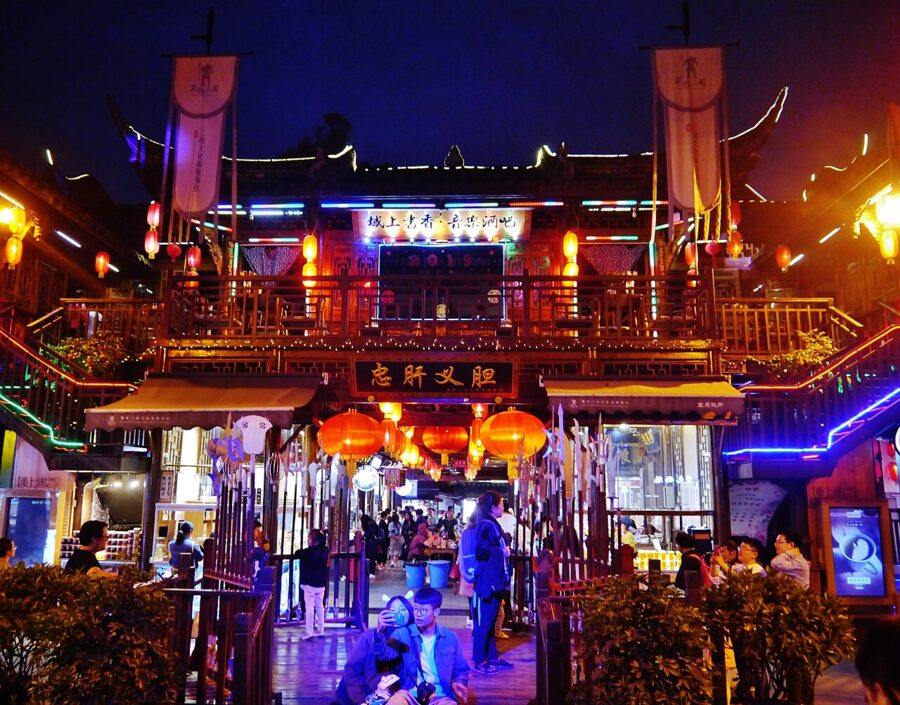
Jinli (锦里) is a lantern-hung street about 550 metres long, built in the early 2000s right beside the Wuhou Shrine, and it is free and open all day. The name borrows an old Chengdu street name, and the architecture borrows the Qing style. By day it is a lane of snack stalls and souvenir shops; after dark, with the red lanterns lit, it is lovely to walk through.
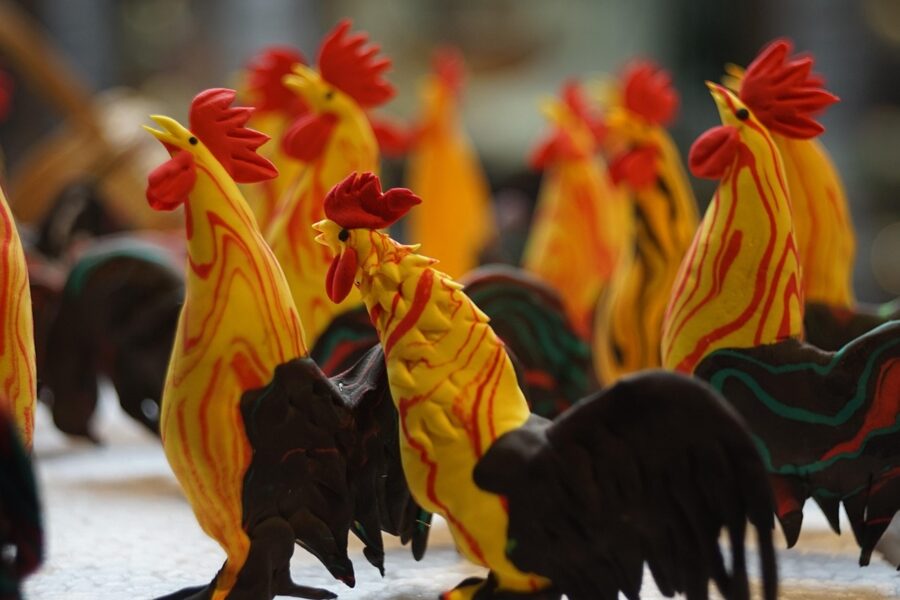
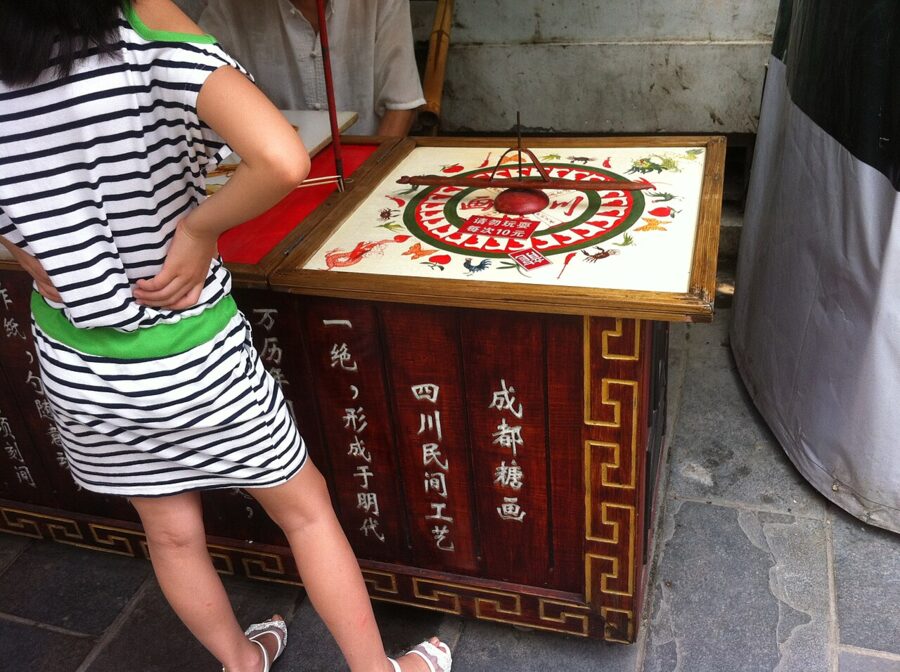
This is where you will see the street craftsmen of old Chengdu: sugar painters drawing dragons and birds in hot syrup on a marble slab, and the stalls selling san da pao (三大炮), sticky rice balls thrown against a board so they bang before landing in soy flour. Sugar painting is one of the snacks I cover in my guide to Chinese street food, and Jinli is one of the easiest places to watch it done.
The Three Kingdoms at the Wuhou Shrine
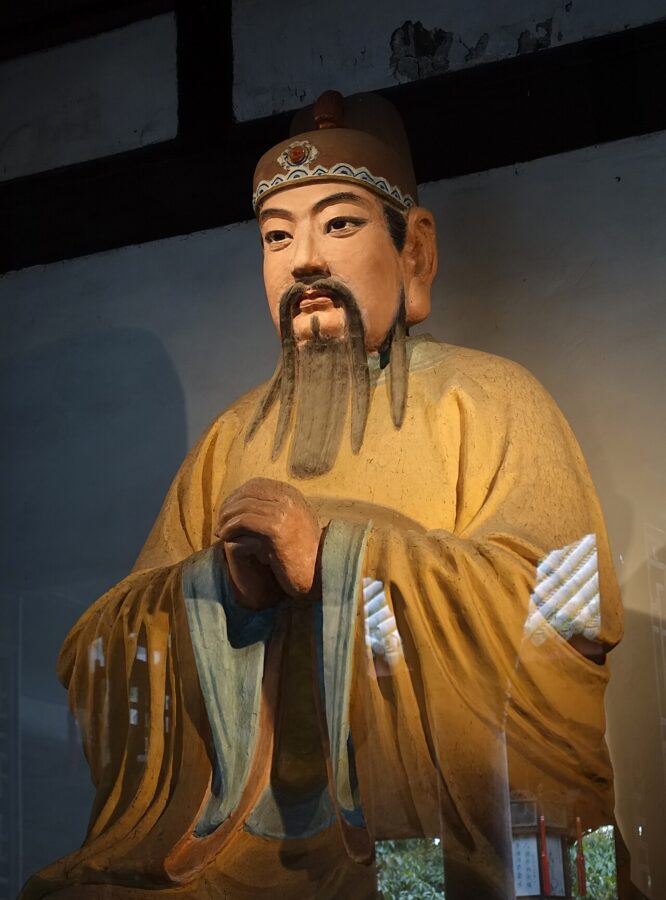
If you have played, read or watched anything about the Three Kingdoms, the Wuhou Shrine (武侯祠) is the reason to come to Chengdu. It honours Zhuge Liang, the strategist and chancellor of the Shu Han state, and Liu Bei, the ruler he served, and it is the only temple in China where a ruler and his minister are worshipped together.
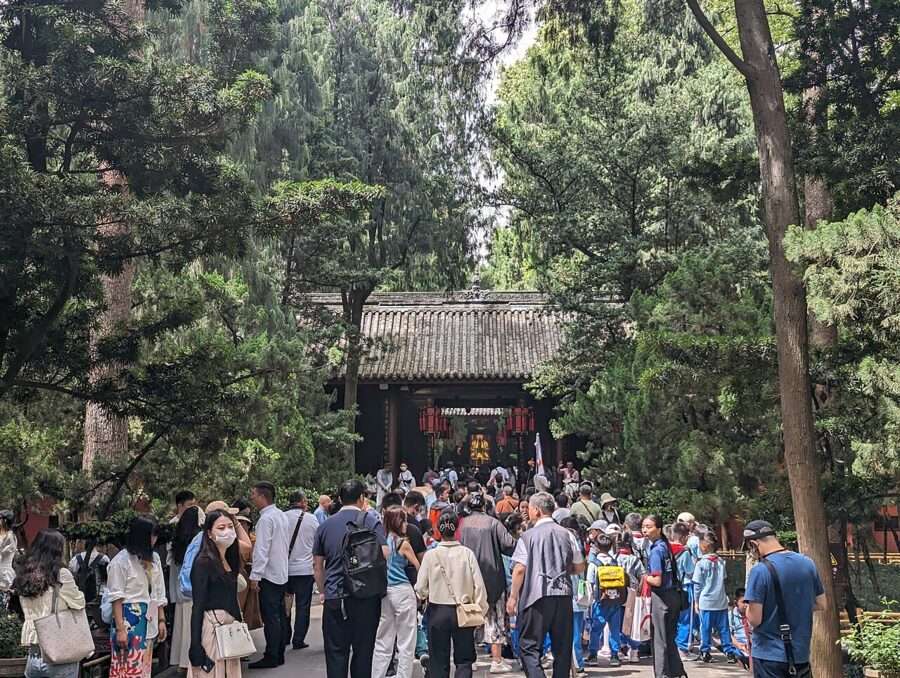
Liu Bei’s temple and Zhuge Liang’s were once neighbours. In the early Ming dynasty they were merged, and that is why the first great hall you walk into is dedicated to the emperor, not the marquis whose title gives the shrine its name. Liu Bei’s tomb, Huiling, is a grassy mound behind a wall on the west side.
Look out for the Three Excellences Stele, put up in 809 in the Tang dynasty, so called because the text by the chancellor Pei Du, the calligraphy by Liu Gongchuo and the deeds of Zhuge Liang it records were all thought outstanding. Then walk the red-walled lane with bamboo along it, which may be the most photographed few metres in the city.
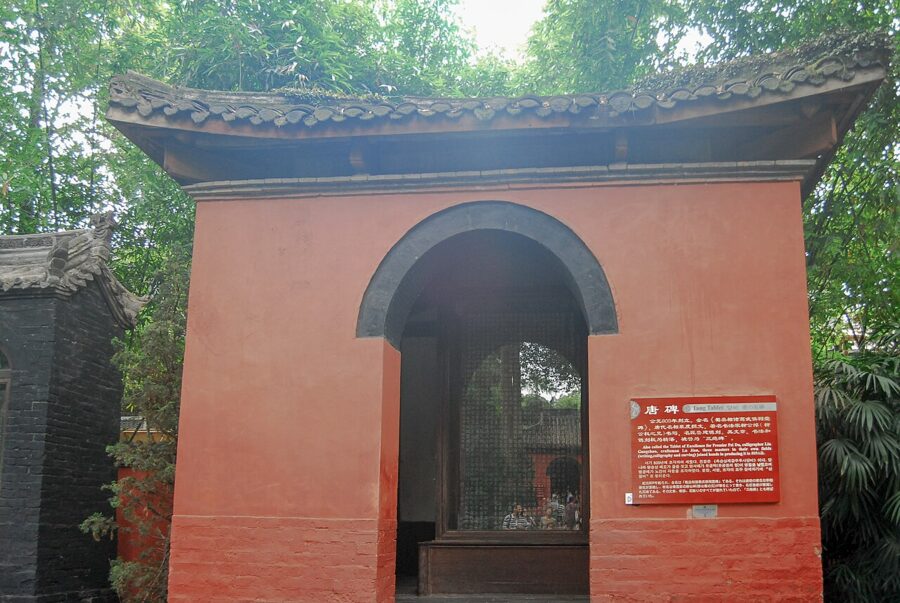
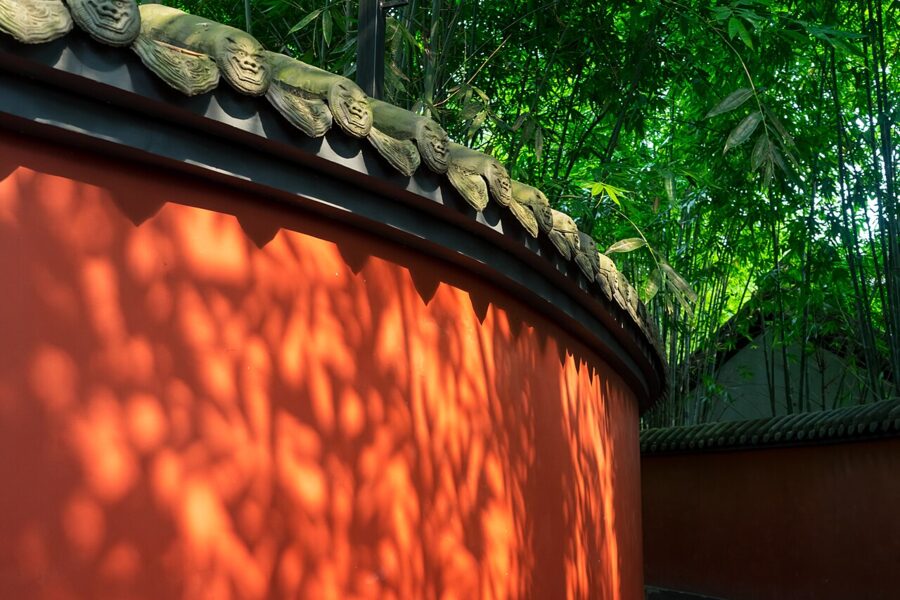
Tickets are ¥50, sold through the museum’s official booking channels and at the gate. The shrine is open 09:00–18:00, with ticket sales ending at 17:00; summer hours and festivals can stretch that. At Spring Festival it holds a temple fair with lanterns that keeps it open into the evening: in 2026 the fair ran from 13 February to 3 March, 09:00–22:00.
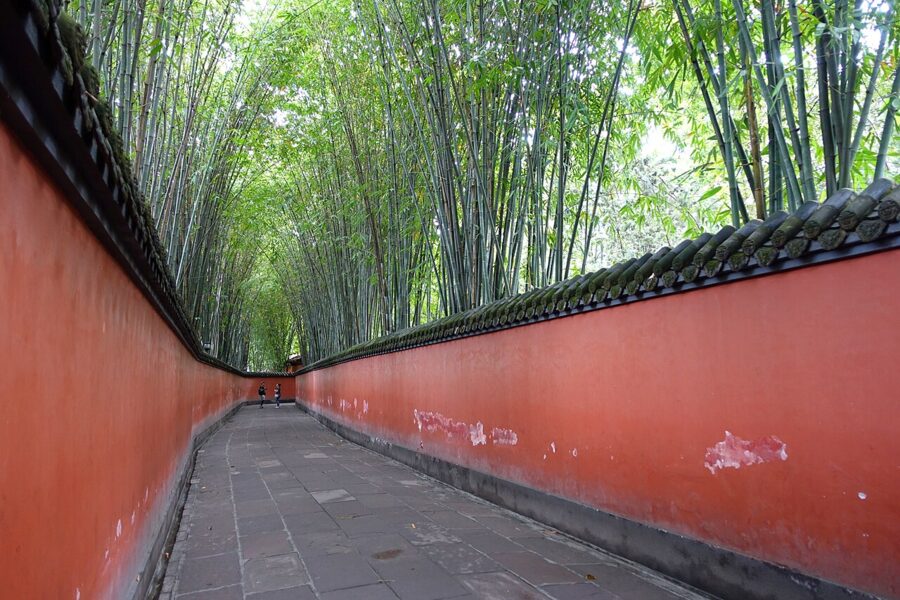
The simplest way in is Line 10, which since September 2025 has had a Wuhou Shrine station. From the older Gaoshengqiao station on Lines 3 and 5, leave by exit D and walk about 800 metres along Wuhouci Street. Jinli runs right alongside the shrine, so see the shrine in the afternoon and walk out into the lanterns at dusk.
Du Fu Thatched Cottage and Qingyang Palace
West of the centre, three of Chengdu’s quieter sights sit close together: a poet’s garden, a Daoist temple and a long riverside park. Put them in one day and you get the slow city at its most pleasant.
Du Fu Thatched Cottage
Du Fu, often called China’s greatest poet, arrived in Chengdu at the end of 759, a refugee from the An Lushan Rebellion. He built a thatched house by the Huanhua stream on the city’s western edge, lived there for close to four years and wrote more than 240 poems, among them the one about his roof being torn off by the autumn wind.
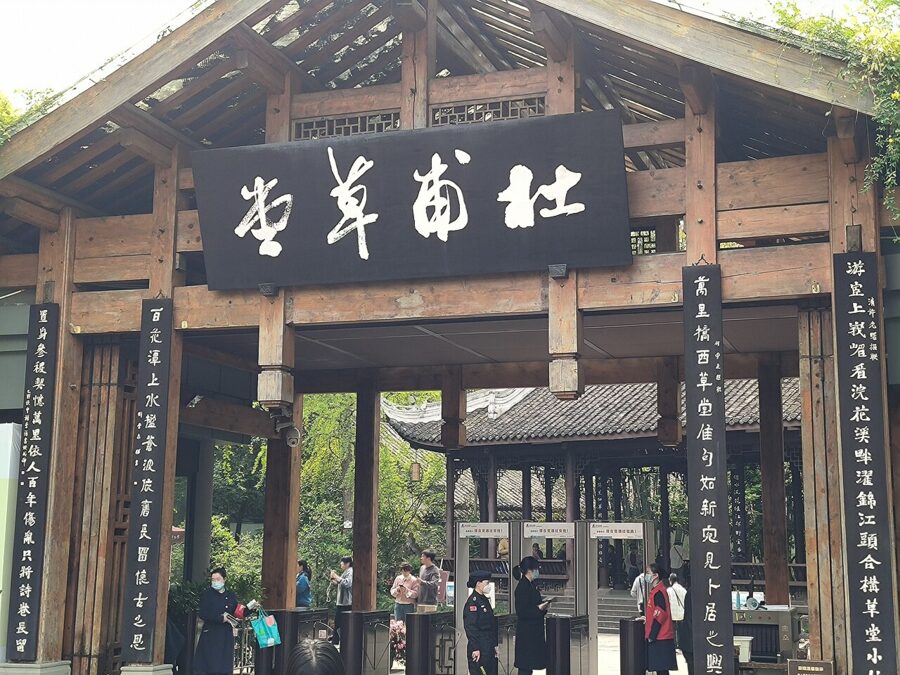
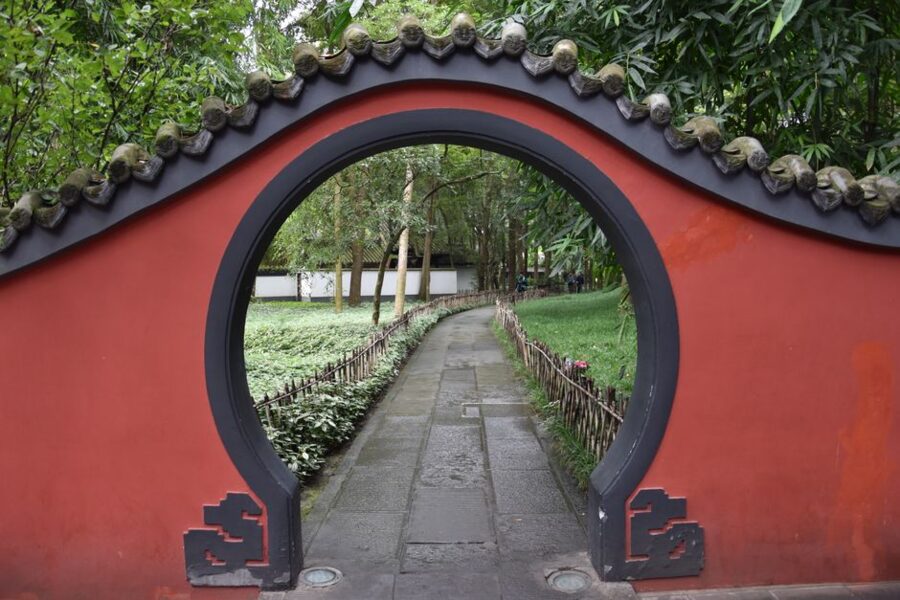
What stands now is a museum and a long run of Ming and Qing gardens, shrines and halls, with a rebuilt thatched cottage furnished as it might have been. It is a garden first and a monument second, and the bamboo, the plum trees and the little bridges are the point. Late winter, when the plum blossom is out, is a lovely time to come.
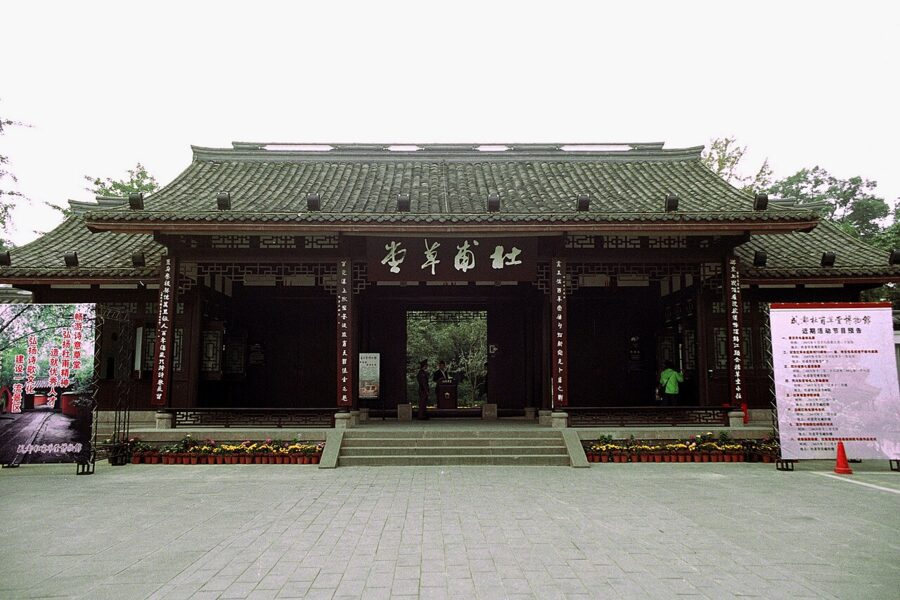
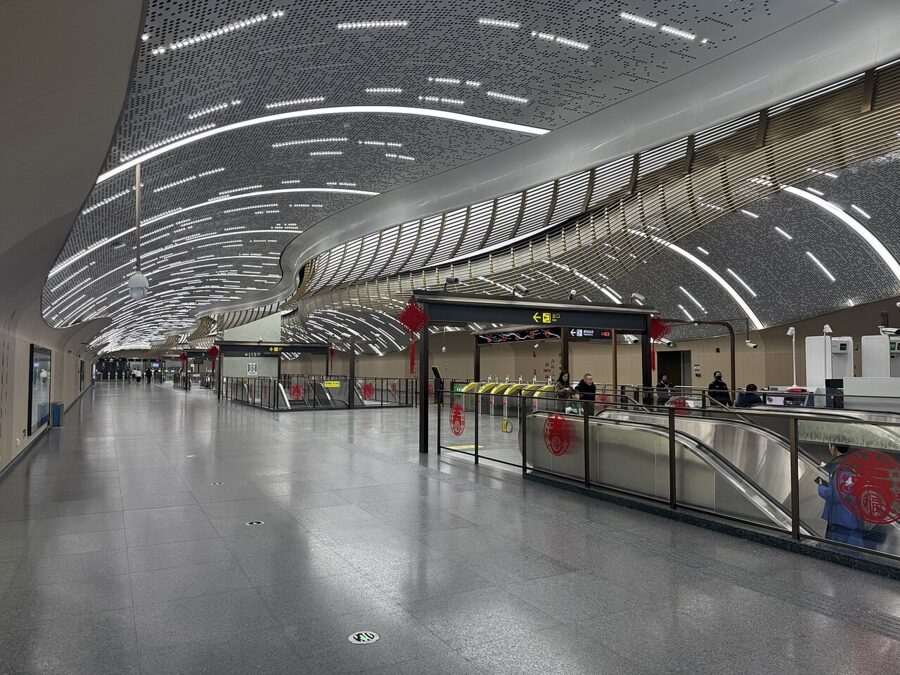
Tickets are ¥50, half price ¥25, booked through the museum’s official WeChat account; the doors open at 09:00. The easiest way in is Line 13, which opened in December 2025 with a Du Fu Thatched Cottage station: leave by exit C2 and it is about 340 metres east along Qinghua Road to the north gate. From Caotang North Road station on Line 4, exit B, it is about 900 metres.
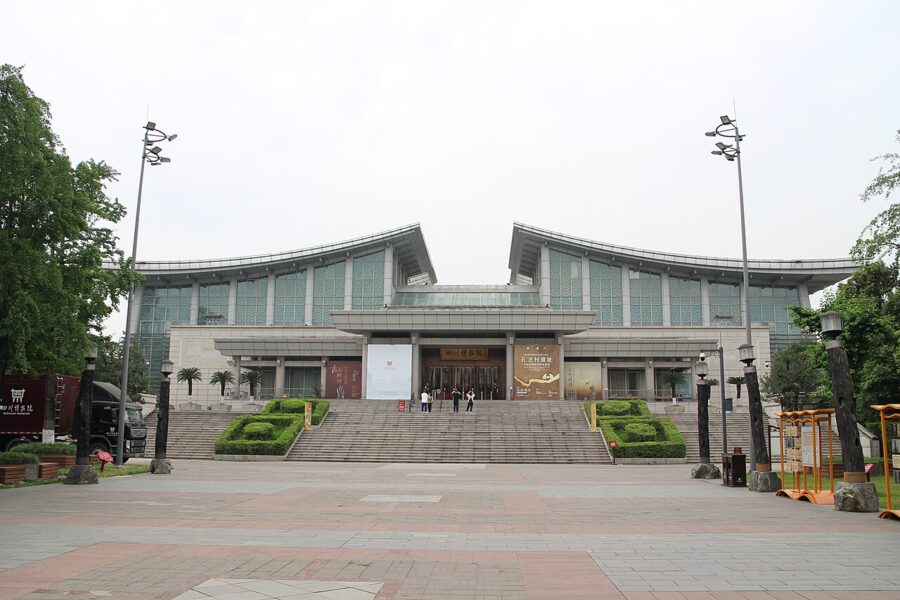
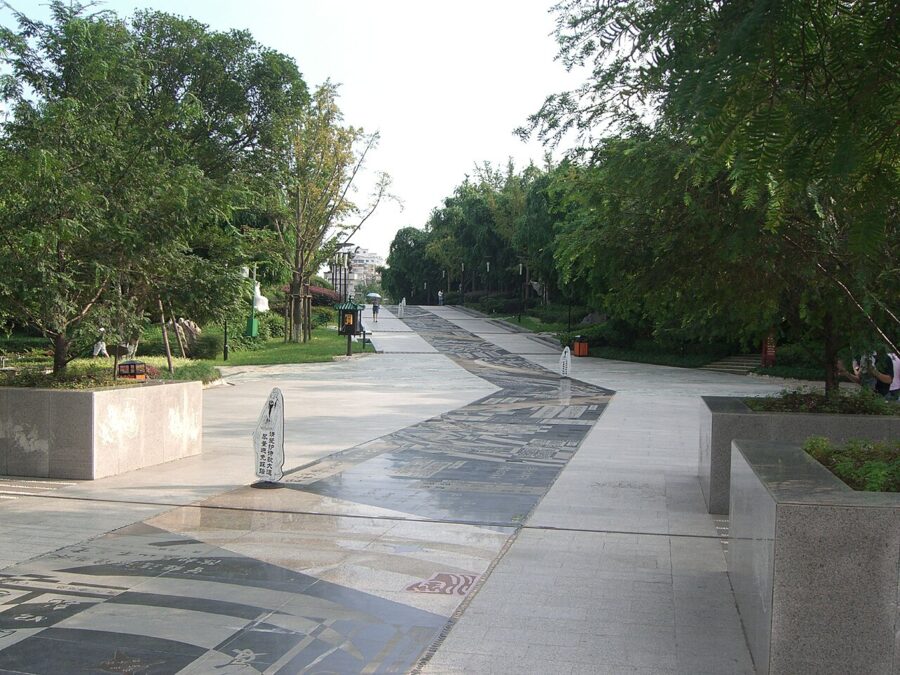
The cottage’s east gate leads straight to the Sichuan Museum, so you can pair them. Huanhuaxi Park, next door, is the city’s largest open-air park and free, with a lane of poems carved in stone along the stream.
Qingyang Palace
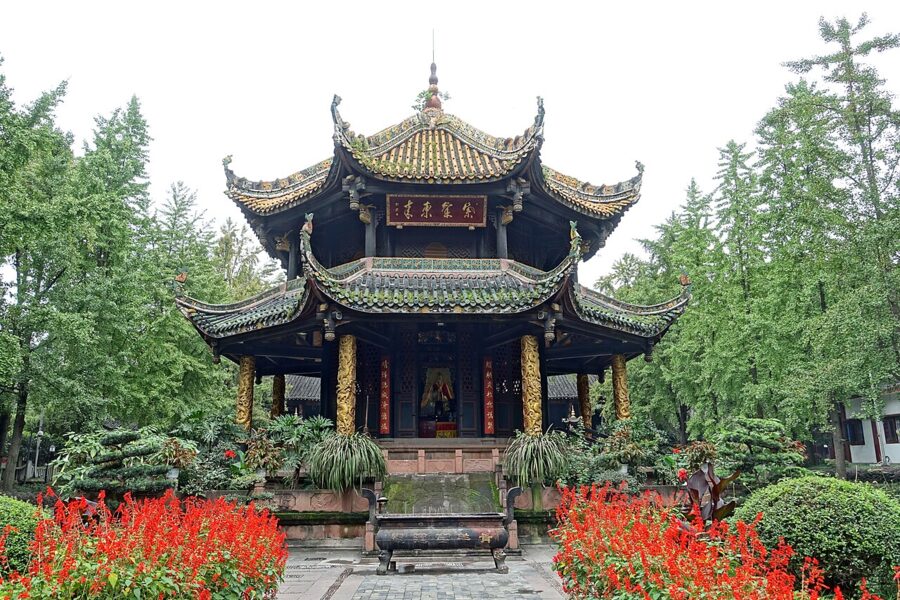
Qingyang Palace (青羊宫), the Green Goat Palace, is Chengdu’s main Daoist temple, and it claims a history that reaches back to legends of Laozi. Inside the Sanqing Hall stand two bronze goats; one has a single horn and is said to combine features of all twelve animals of the Chinese zodiac, and people rub it for luck.
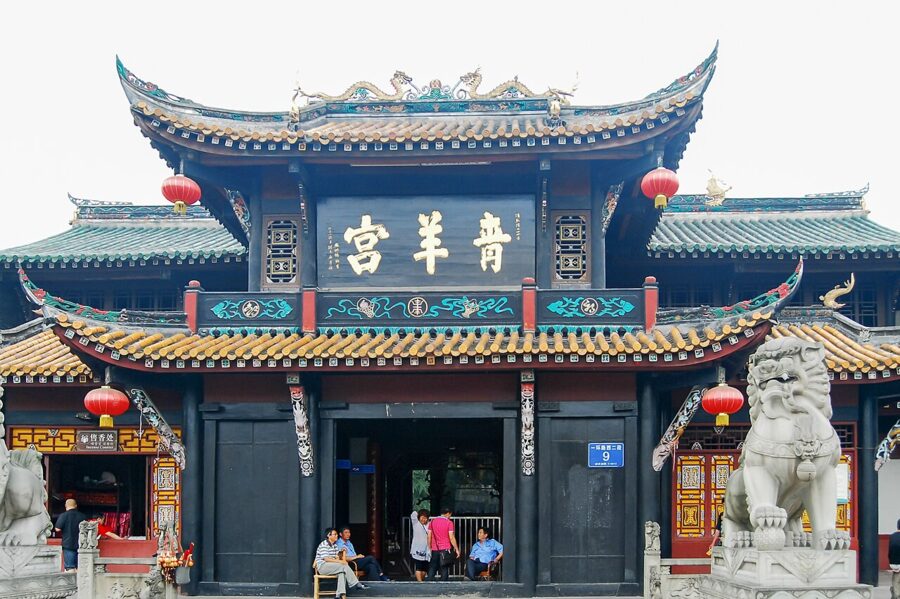
Entry is ¥10. Take Line 5 to Qingyang Palace station; the temple is a short walk, and Culture Park, next door, is free and full of teahouses. From here it is about 20 minutes on foot to Du Fu Thatched Cottage’s north gate, or a short ride on a shared bike.
The Shu bronzes: Jinsha and Sanxingdui
Three thousand years ago, while the Shang ruled the Yellow River plain, the Sichuan basin had a Bronze Age culture of its own, and nothing about it looks like the rest of ancient China. Its bronzes have huge eyes, protruding pupils and ears like wings. Chengdu has one great museum of it, Jinsha, and the other, Sanxingdui, is a short train ride away.
Jinsha Site Museum: closed until 2027
The Jinsha Site Museum (金沙遗址博物馆) stands over a site found by builders in 2001, and its star is the gold disc of the sun and immortal birds, thinner than paper, which became the emblem of Chinese cultural heritage. Unfortunately for anyone travelling now, it is shut. The museum closed for a full renovation on 5 December 2025 and all areas stay closed until 30 April 2027.
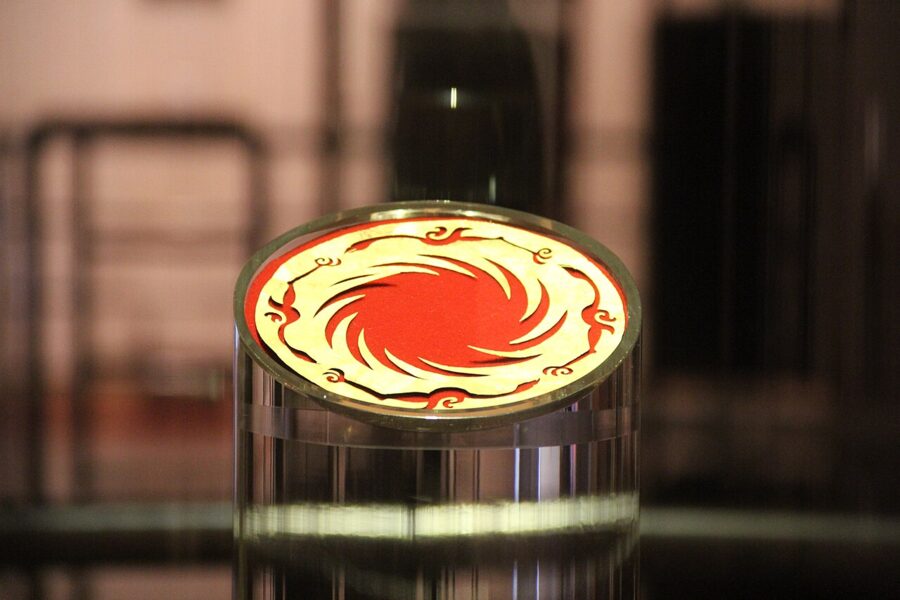
If your trip falls after that date, it is on Line 7 at Jinsha Site Museum station. Until then, put your Bronze Age day into Sanxingdui instead.
Sanxingdui Museum
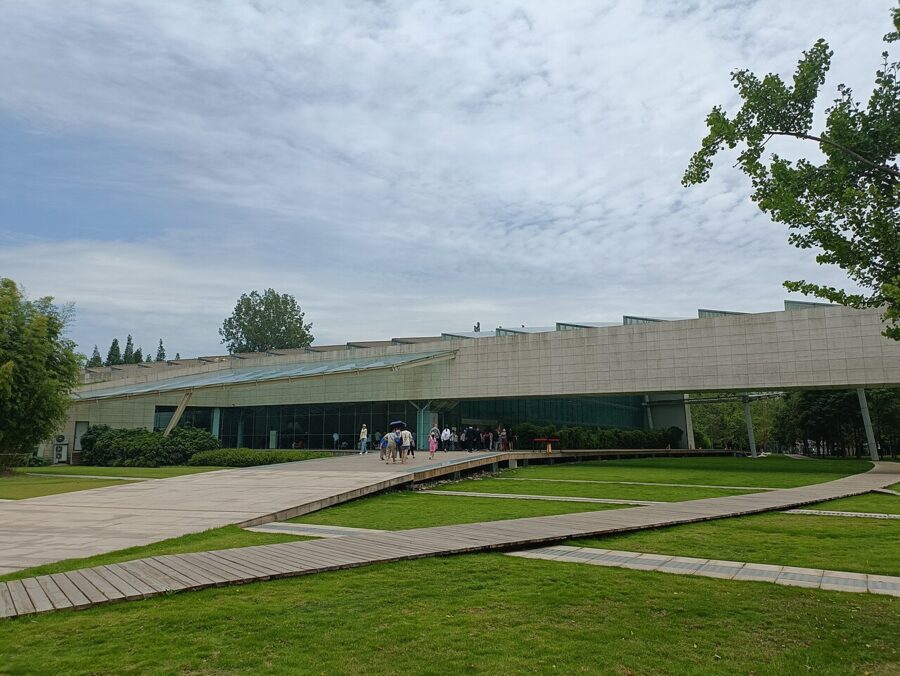
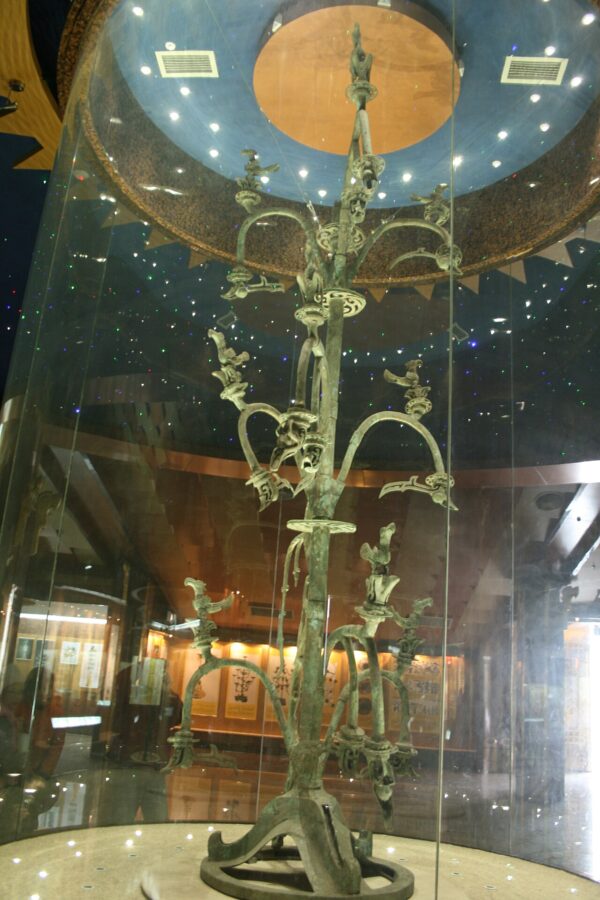
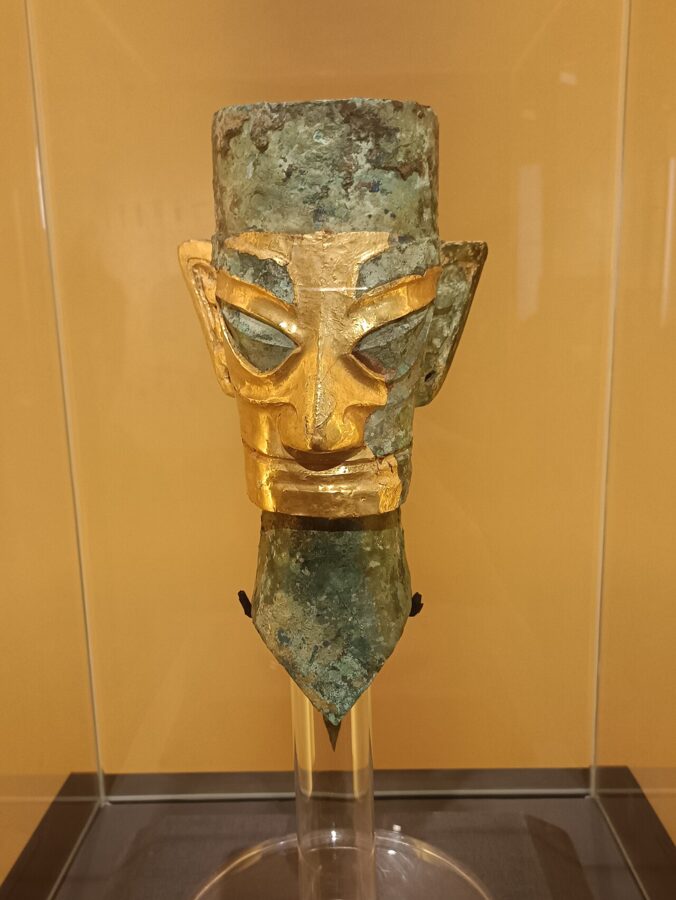
Sanxingdui (三星堆) is in Guanghan, north-east of Chengdu, and it holds the strangest objects in any Chinese museum: a bronze tree almost four metres high with birds on its branches, a standing bronze figure taller than a man, bronze heads wrapped in gold leaf and masks with eyes on stalks. Most date from the late Shang dynasty, about 3,200 to 3,000 years ago, which makes them roughly a thousand years older than the Terracotta Warriors.
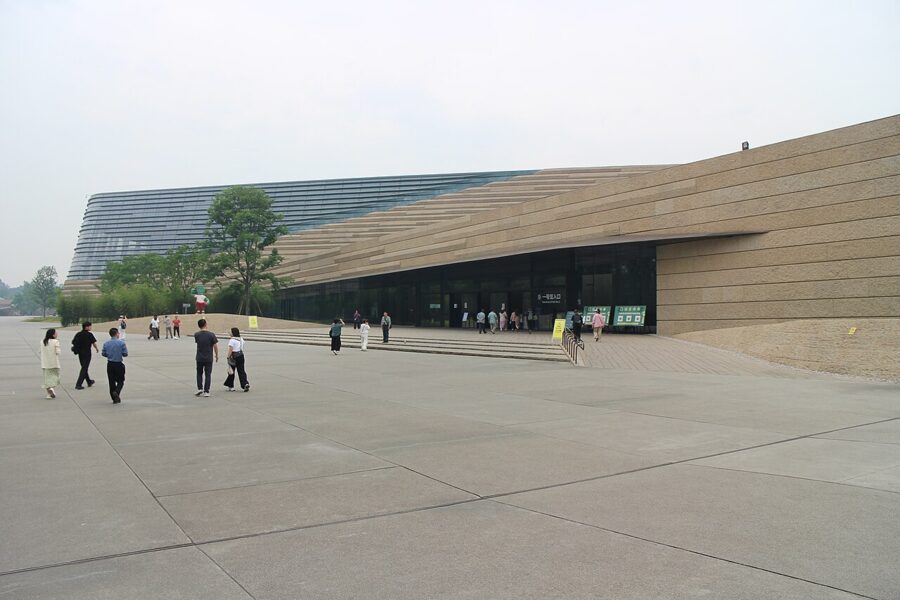
The first two sacrificial pits were found in 1986. Between 2020 and 2022 archaeologists opened six more, which have produced nearly 13,000 numbered objects, among them new gold masks and bronze altars.
Booking is the part that catches people out. Tickets are ¥72 (half price ¥36), and since 4 November 2026 under-18s go free, though they still need a booking. All tickets are real-name and sold only through the museum’s own WeChat account, WeChat mini programme and website; new tickets are released at 20:00 each day for the fifth day ahead. Don’t count on buying at the gate, and don’t buy from resellers.
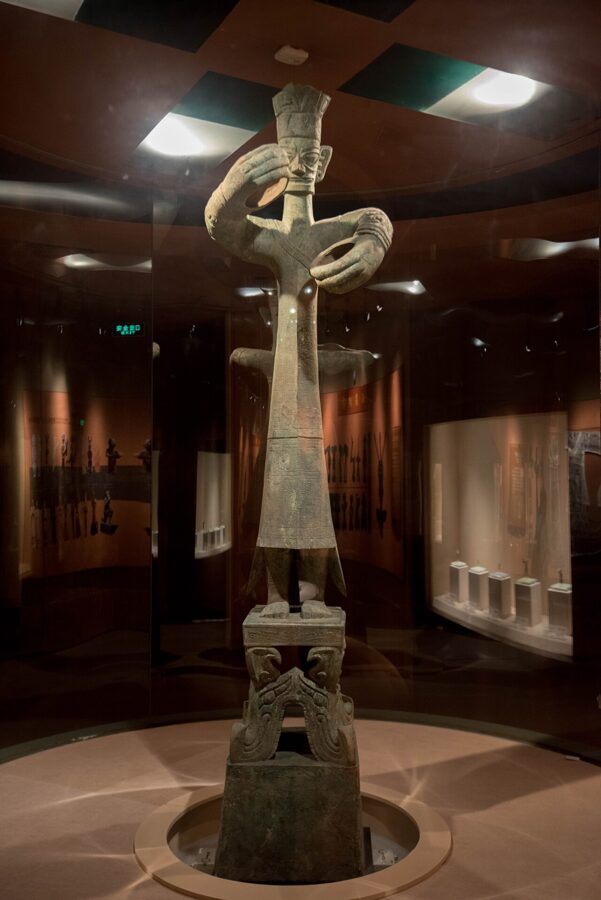
The museum opens at 08:30. Getting there is easy: high-speed trains from Chengdu East to Guanghan North take as little as 18 minutes, then bus 13 runs to the museum in about half an hour, or a Didi takes less. Book the train on 12306 or Trip.com, and aim for a morning train so you have the galleries before the tour groups arrive.
Sichuan opera and the face-changers
Sichuan opera (川剧) is one of China’s great regional theatre traditions, sung in the Sichuan dialect, with five musical styles, the best known of them gaoqiang, high-pitched singing answered by an offstage chorus. Its best-known trick, bian lian (变脸), face changing, is what most visitors pay to see: a performer swaps one painted mask for another, and another, faster than you can follow.
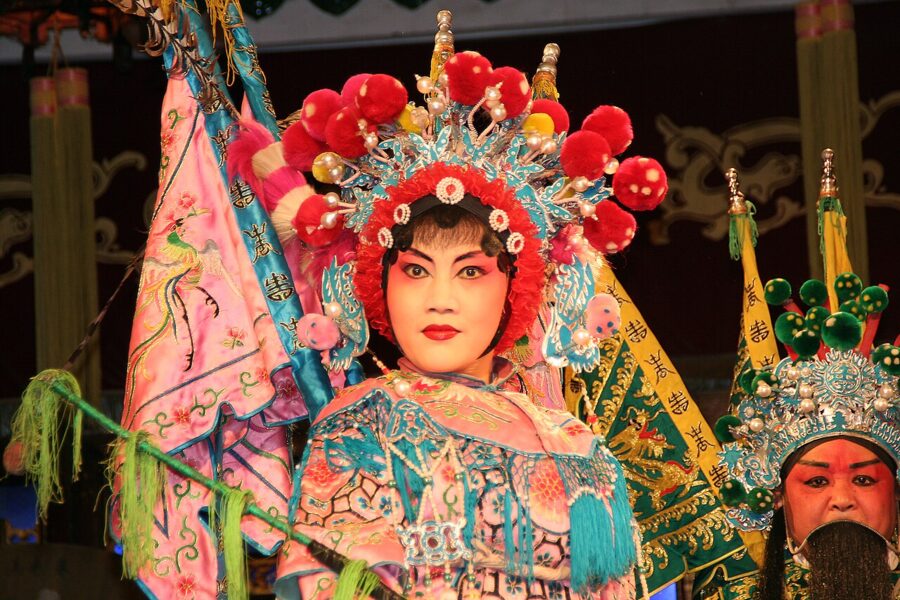
Go in knowing what you are buying. The shows aimed at visitors are variety revues: a few minutes of opera, puppets, shadow play, fire-spitting, a comic sketch with a lamp balanced on the head, and face changing at the end. They are good fun and very polished. They are not opera in the sense a Chengdu opera fan means it.
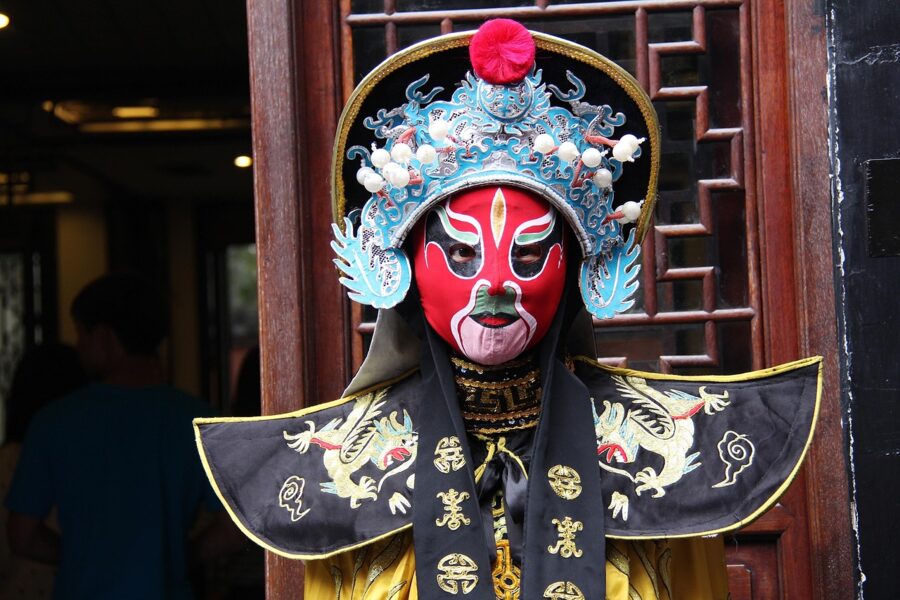
The best place for either is the Jinjiang Theatre (锦江剧场) on Huaxing Zhengjie, a few minutes’ walk from Chunxi Road. Its predecessor was the Qing-era Yuelai teahouse, and it is the home of the Chengdu Sichuan Opera Research Institute. After eight months of repairs it reopened on 10 July 2026.
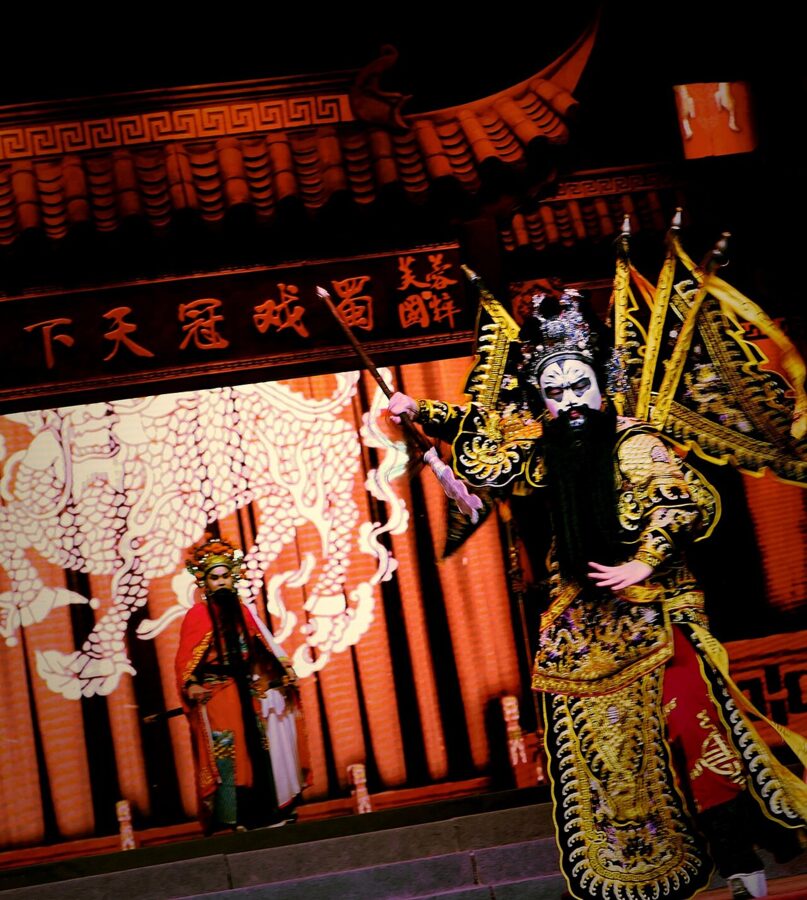
Its visitor show, Sichuan Opera Show: Legendary Face-Changing (川剧秀·传奇变脸), runs 70 minutes and now ends with an eight-mask change; tickets are ¥78, ¥128, ¥168 or ¥298, bought through the institute’s WeChat mini programme or at the box office. For the real thing, look for an afternoon of classic excerpts in the Yuelai teahouse in the same building: the reopening programme put them on Saturdays at 14:00, with a gaiwan of tea included, for ¥40, ¥60 or ¥80. The box office opens 09:30–17:00, Wednesday to Saturday.
Taikoo Li, Chunxi Road and where to eat
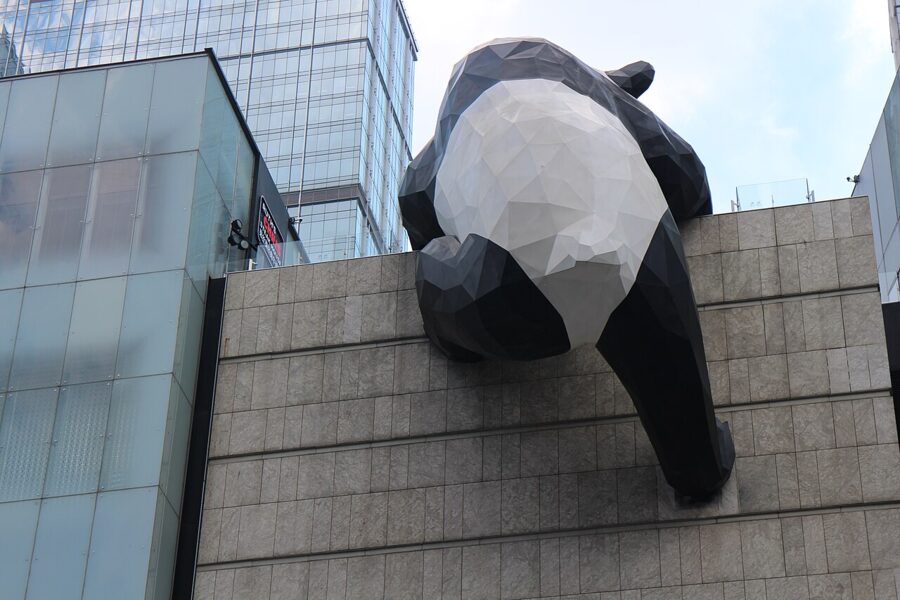
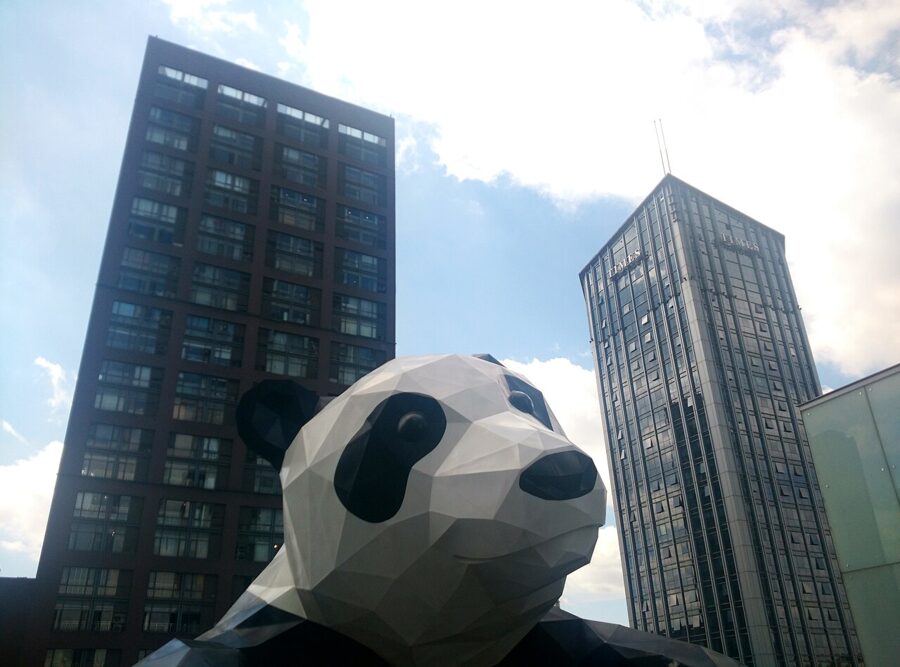
Chunxi Road is Chengdu’s main shopping street, and it looks like main shopping streets everywhere: chains, crowds and enormous screens. Take Line 2 or Line 3 to Chunxi Road station and leave by exit D for the IFS mall, where a 15-metre panda sculpture, I Am Here, appears to be climbing over the roof edge.
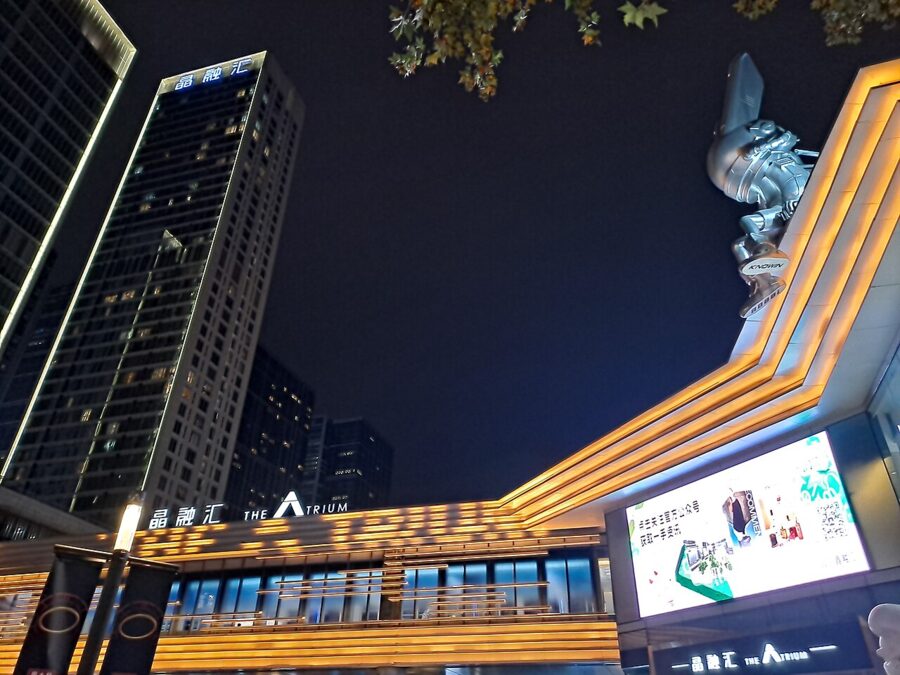
Taikoo Li, across the road, is better. It is a district of low, grey-roofed blocks in a modern take on Sichuan style, built around the old Daci Temple, with fashion shops, cafes and some of the city’s better restaurants in the lanes. It is free to walk and at its best in the evening, when the courtyards light up.
Eating your way round
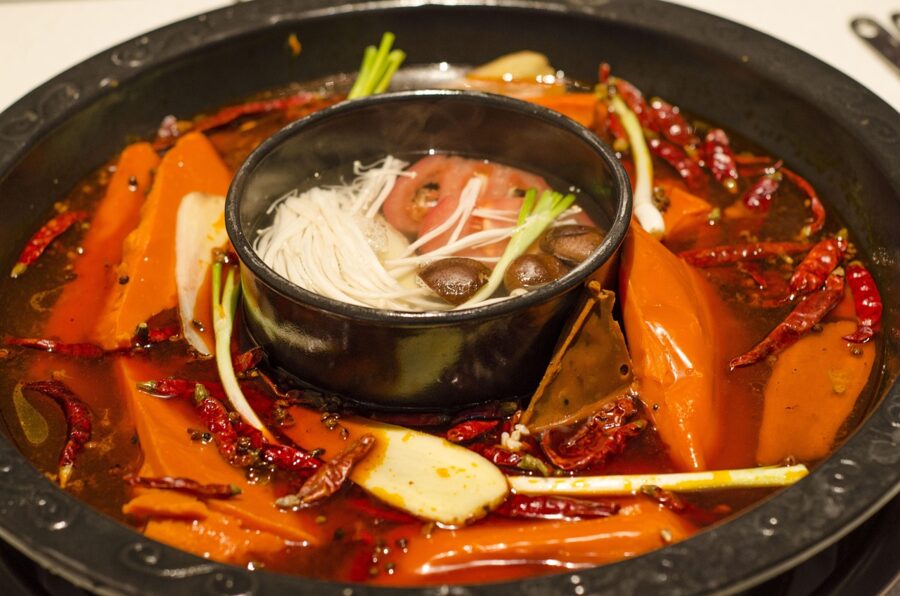
Food is the other reason to come, and I’ve covered it in depth elsewhere: my Sichuan food guide has the flavours, the dishes and the named restaurants, and my hot pot guide covers how to order a pot here without regretting it the next morning. What follows is just a map of what to eat where.
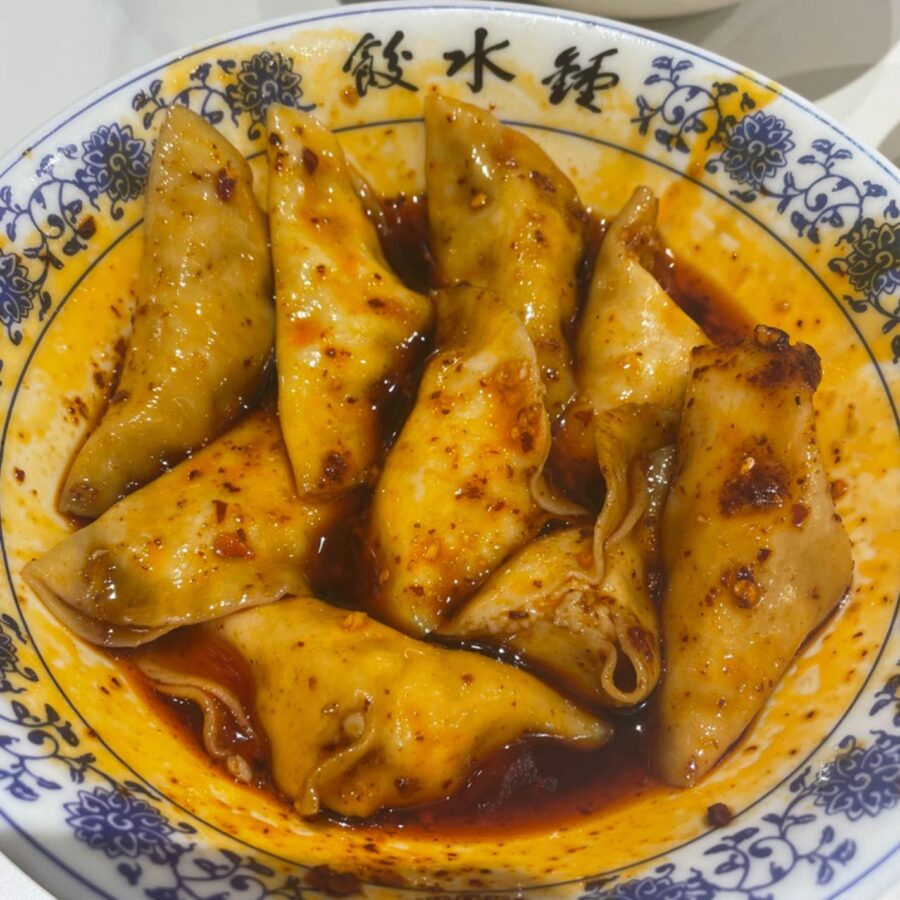
- People’s Park: zhong shuijiao (钟水饺), Zhong dumplings, before or after tea.
- Chunxi Road: long chaoshou (龙抄手), wontons in broth or chilli oil, at the old Long Chaoshou shop.
- Wenshu Monastery: tianshui mian and cold liangfen jelly noodles in the lanes by the gate.
- Kuanzhai Alley: skewers and noodles on Kuixinglou Street, not in the alley.
- Jianshe Lane and Yulin: late-night snacks, maocai and the pick-your-own soup that my malatang guide explains.
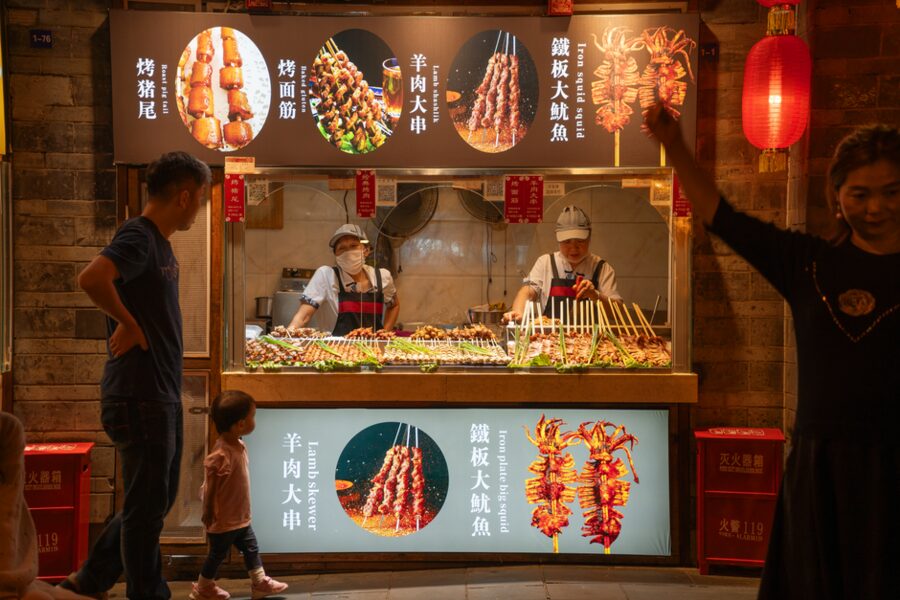
Ask for wei la (微辣) if you want less heat, and know that “a little spicy” in Chengdu is medium anywhere else. When I lived in Shenzhen, Sichuan restaurants were on every street, and the food in Chengdu itself is lighter, sweeter and more varied than the export versions suggest.
The pandas, briefly
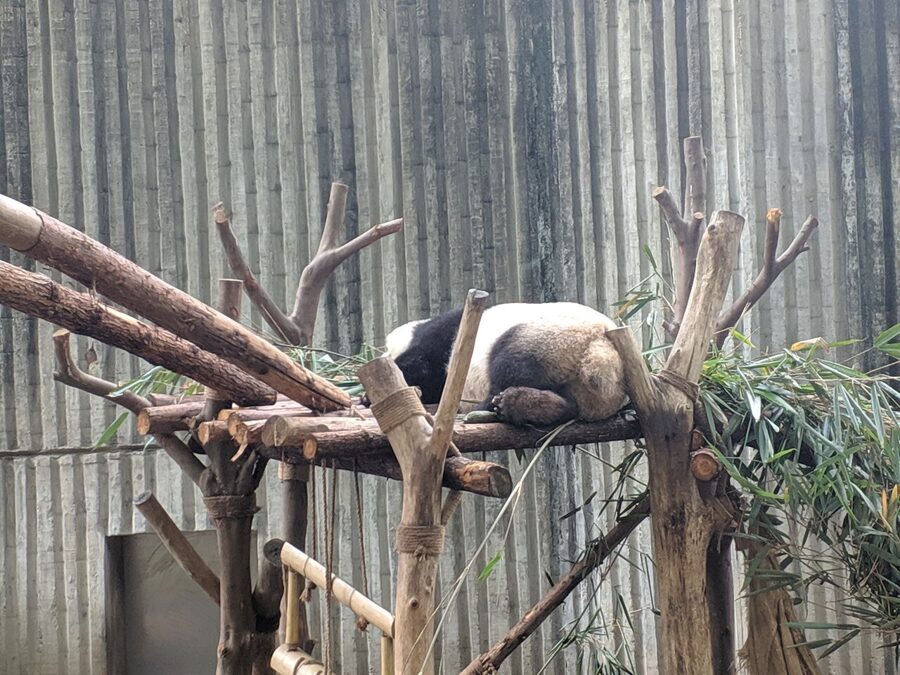
Yes, go and see the pandas: the Chengdu Research Base of Giant Panda Breeding is on the north side of the city, every ticket is a real-name booking made online up to 14 days ahead, and the animals are most active in the first hours after opening. My guide to giant pandas in China covers the base, the alternatives and how to time it.
Day trips from Chengdu
Chengdu is a good base, and three day trips stand out. Each is under an hour away by train, and each is busy at weekends and very busy in holiday weeks. If you have longer, Chongqing is about an hour away by the fastest high-speed trains, and Jiuzhaigou is a short flight north.
Leshan
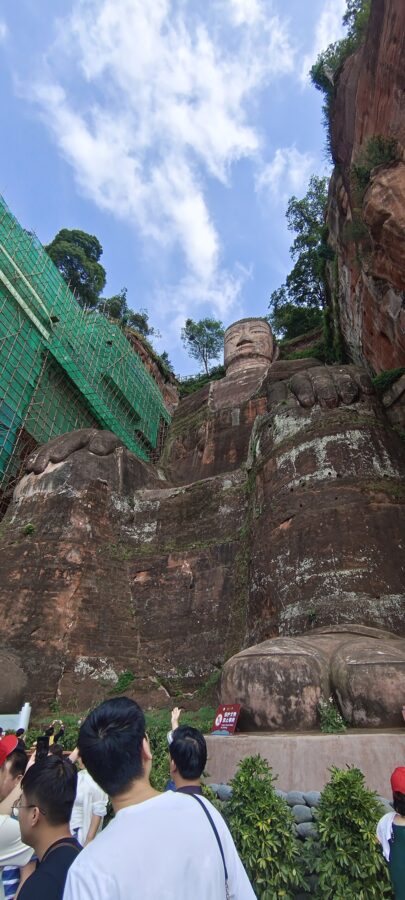
The 71-metre stone Buddha at Leshan, carved into the cliff where three rivers meet, is the most famous day trip from Chengdu, and high-speed trains get you there in about an hour. My Leshan Giant Buddha guide covers the walk down the cliff, the boat view and the food of the town.
Dujiangyan
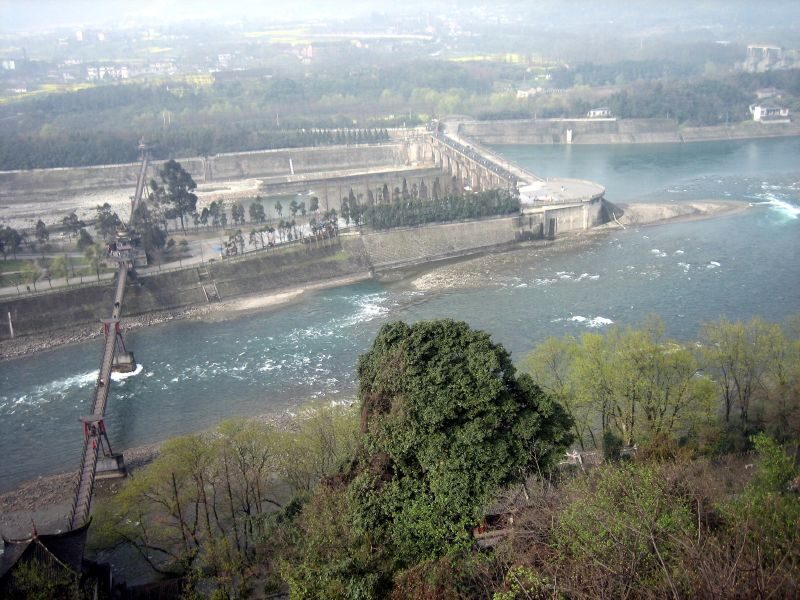
Dujiangyan (都江堰) is the reason the Chengdu plain is green. Around 256 BC, under the Qin official Li Bing, engineers split the Min River with a levee called the Fish Mouth, cut a channel through a hill at the Baopingkou, the Bottle-Neck, and built a spillway that sends floodwater and silt back to the river. It still waters the plain without a dam, and it is a UNESCO World Heritage Site with Mount Qingcheng.
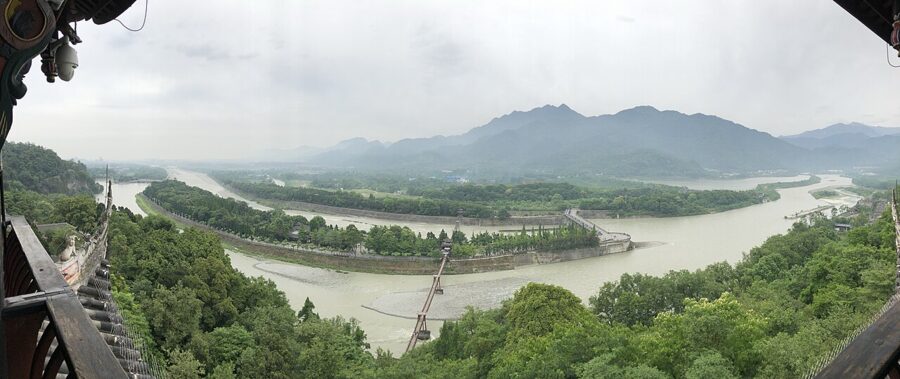
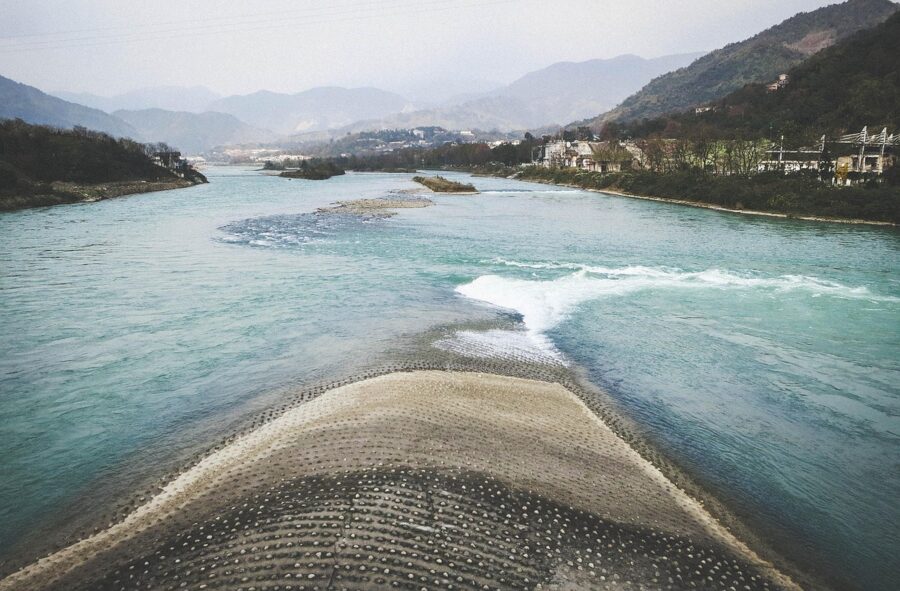
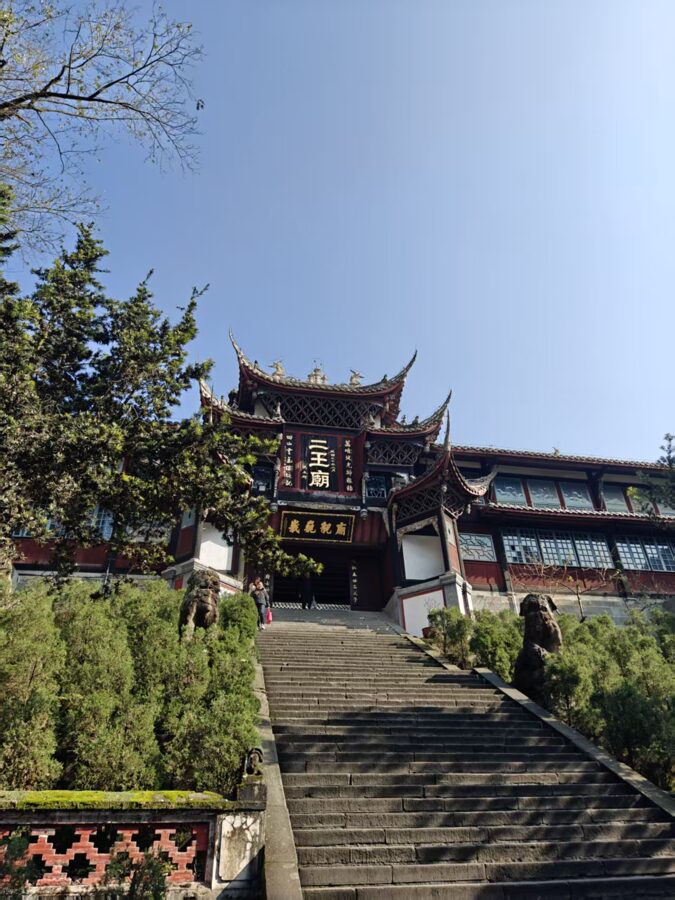
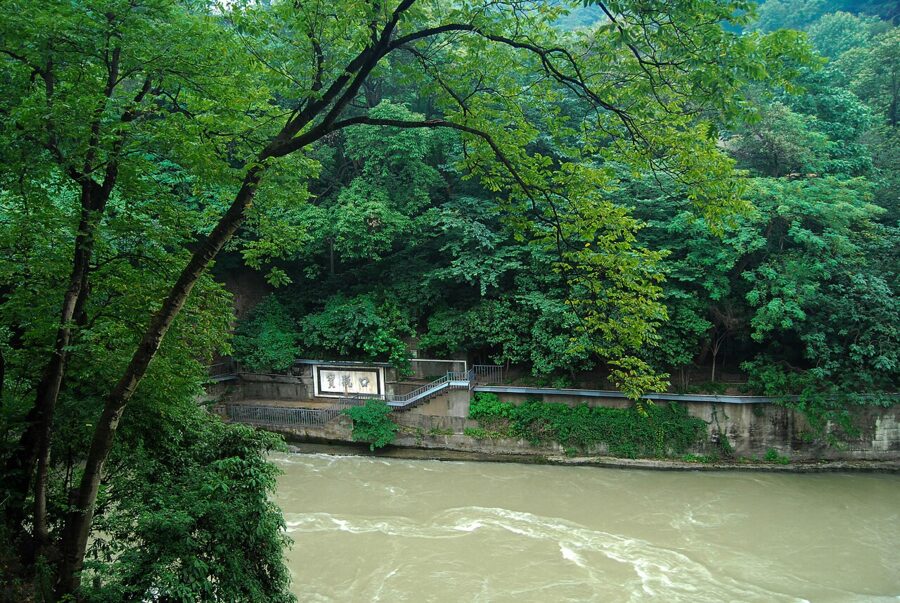
The scenic area costs ¥80 and opens 08:00–18:00 from April to October and 08:00–17:30 in winter. Walk it as a loop: up through the park to the Erwang Temple, across the swaying Anlan Suspension Bridge, along the Fish Mouth levee and back past the Bottle-Neck. Allow three hours.
Mount Qingcheng
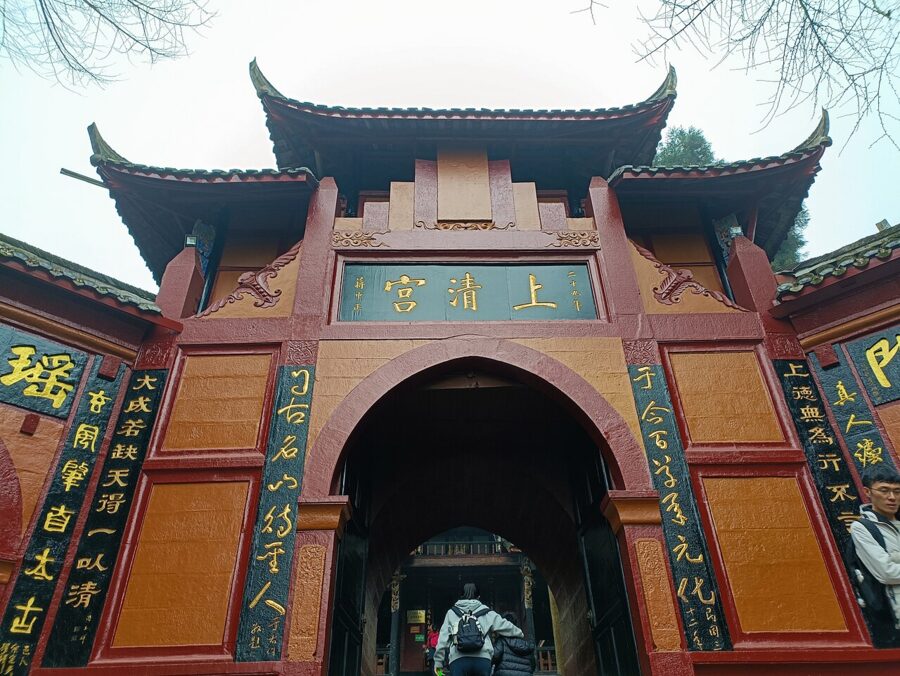
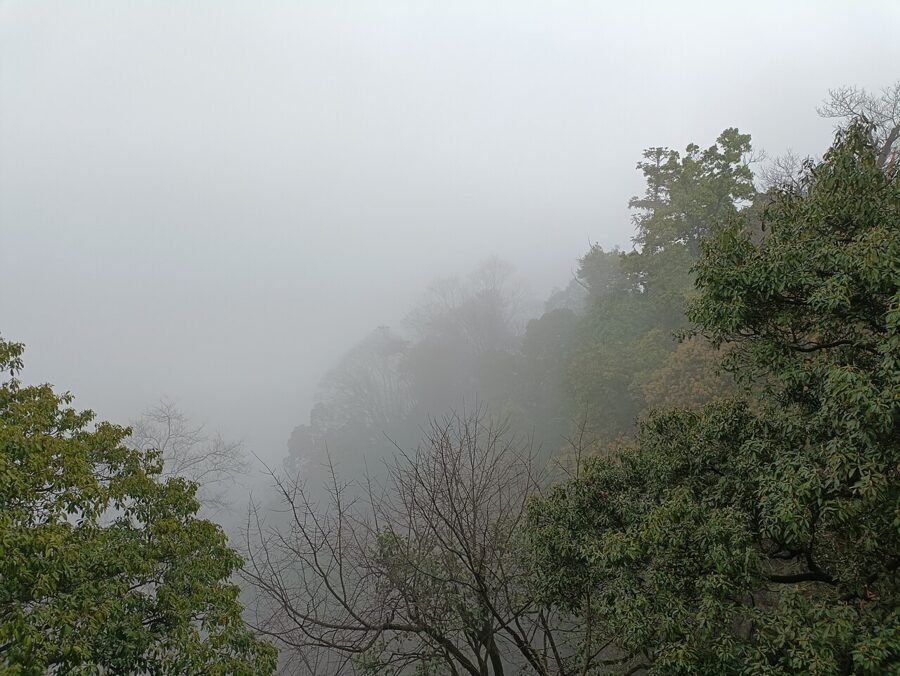
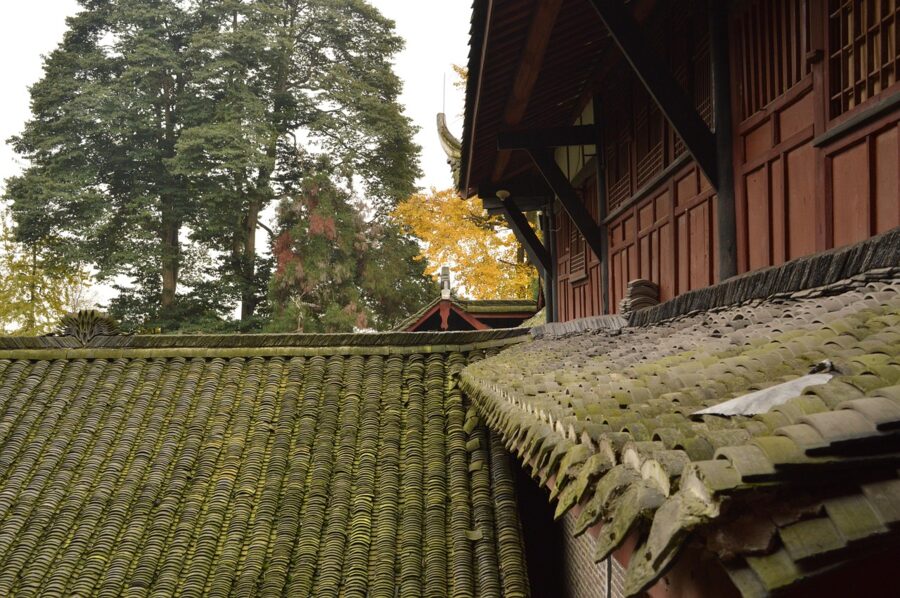
Mount Qingcheng (青城山), 15 km on, is one of the birthplaces of Daoism, a green mountain of temples, stone paths and moss. The front mountain, with the temples, costs ¥80; the wilder back mountain, ¥20. Tickets are real-name and booked online through the scenic area’s official account, and the front mountain needs four to five hours.
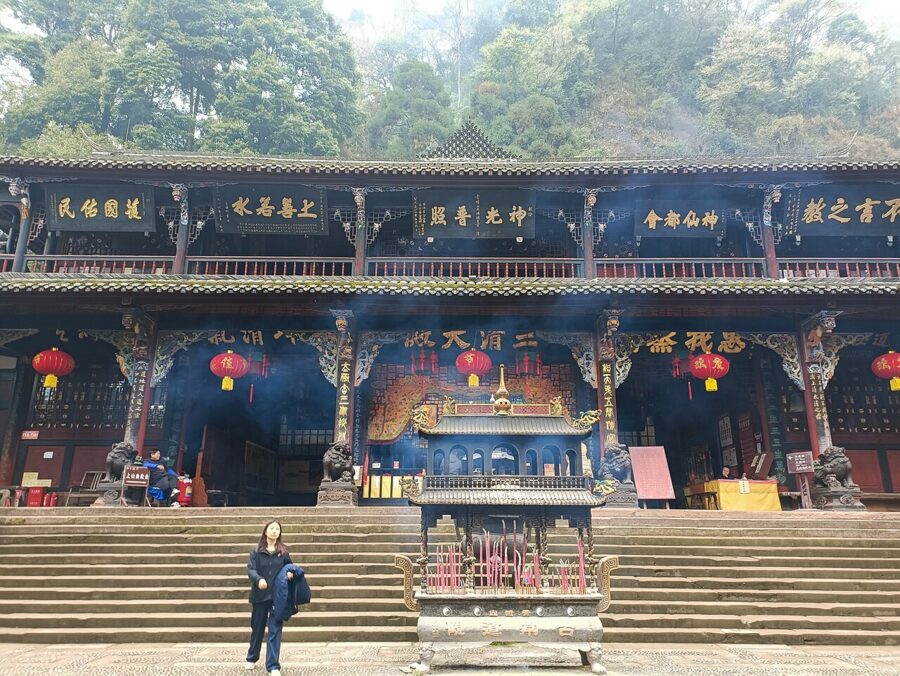
Most people walk up past Tianshi Cave, take the cable car higher, and climb on to the Shangqing Palace and the Laojun Pavilion at the top. Wear shoes with grip: the stone steps are wet for most of the year.
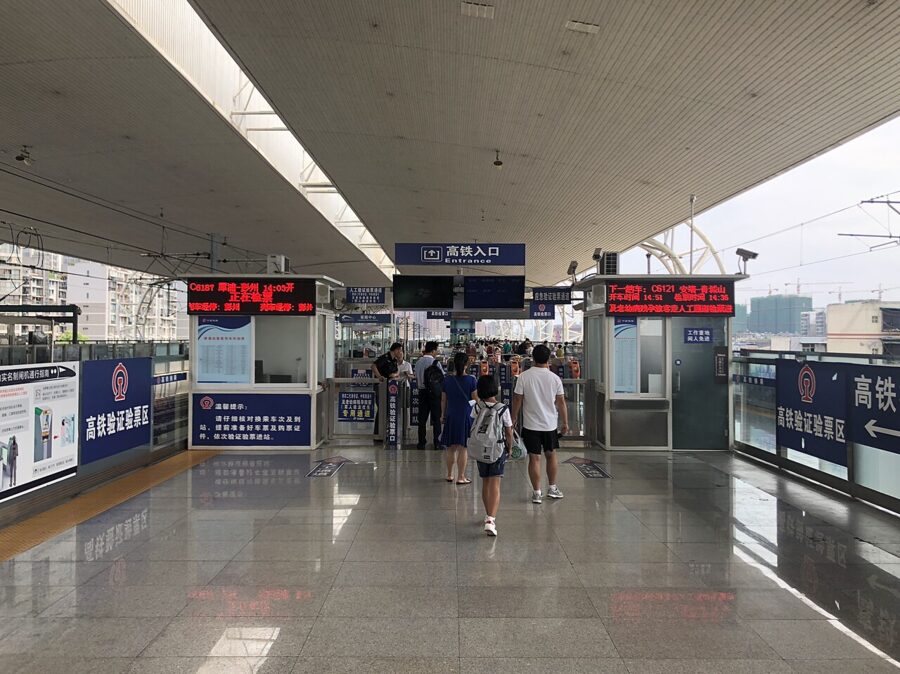
Both are on the Chengdu–Dujiangyan intercity line. S-prefixed trains leave from Xipu, which shares a platform with metro Line 2, and take about half an hour to Dujiangyan or Qingchengshan; there are around 70 pairs a day, roughly one every 15 minutes. Doing both in one day is possible, but it is a long day; pick one if you like to take your time.
Where to stay
For a first visit, stay inside the First Ring Road, near a metro line, and close to either Chunxi Road or the west side. Both work. The east suits nightlife and food; the west suits early teahouse mornings and quieter streets.
| Area | Best for | Metro | Downside |
|---|---|---|---|
| Chunxi Road and Taikoo Li | Food, nightlife, first-timers | Lines 2 and 3 | Loud and pricier |
| Wenshu Monastery | Old streets, mornings, value | Line 1 | Quiet after 22:00 |
| Kuanzhai Alley and People’s Park | Walking to the teahouses | Lines 2 and 4 | Crowds on holidays |
| Yulin | Local neighbourhood, bars | Lines 1 and 8 | Further from the sights |
Chunxi Road and Taikoo Li
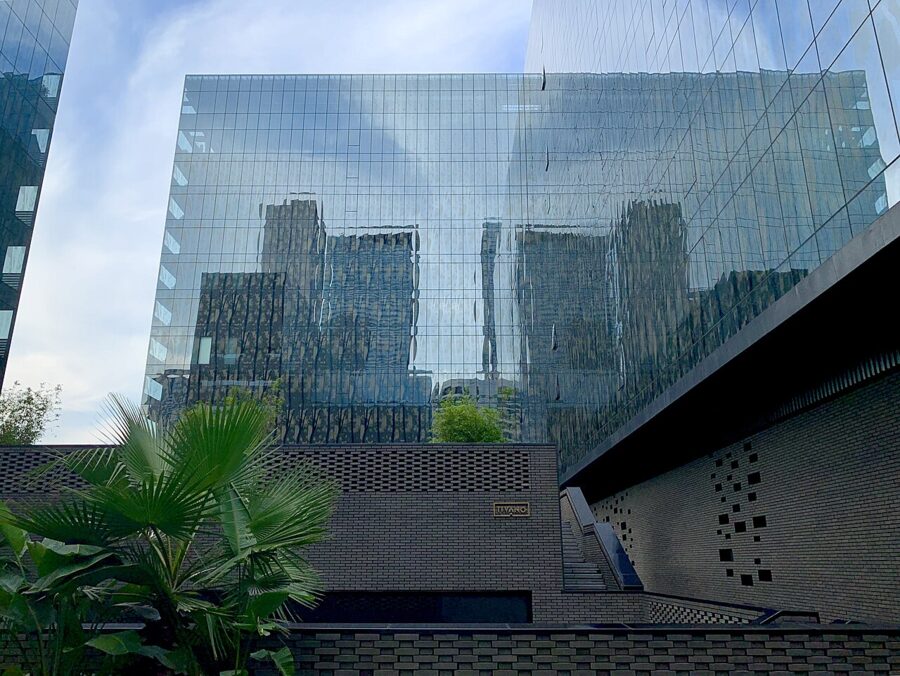
This is the easiest base, with Lines 2 and 3 at Chunxi Road and everything from noodle shops to the theatre within walking distance. At the top end, Upper House Chengdu (Official site | Agoda) sits inside Taikoo Li; it was The Temple House until Swire renamed it in October 2025, and it holds a Michelin Key. It is built around a restored Qing-era courtyard and is one of the most pleasant hotels in western China.
Wenshu Monastery
The streets around Wenshu are calmer and cheaper, and Line 1 runs straight down to Tianfu Square. Buddhazen Hotel (Booking.com | Trip.com) is a courtyard hotel of about 35 rooms in the old-style block a couple of hundred metres from the monastery; the entrance is easy to miss, so look for the wooden gate. For a budget bed, Chengdu Mix Hostel (Booking.com | Hostelworld) has been a backpacker base near Wenshu for well over a decade, with dorms and private rooms around a courtyard.
Yulin
Yulin, south of the centre, is the residential neighbourhood that Zhao Lei’s 2016 song “Chengdu” made famous: low apartment blocks, small bars, noodle shops and almost no sights at all. Stay here if you want to live like a local for a few days and don’t mind a metro ride to everything else.
Getting in and getting around
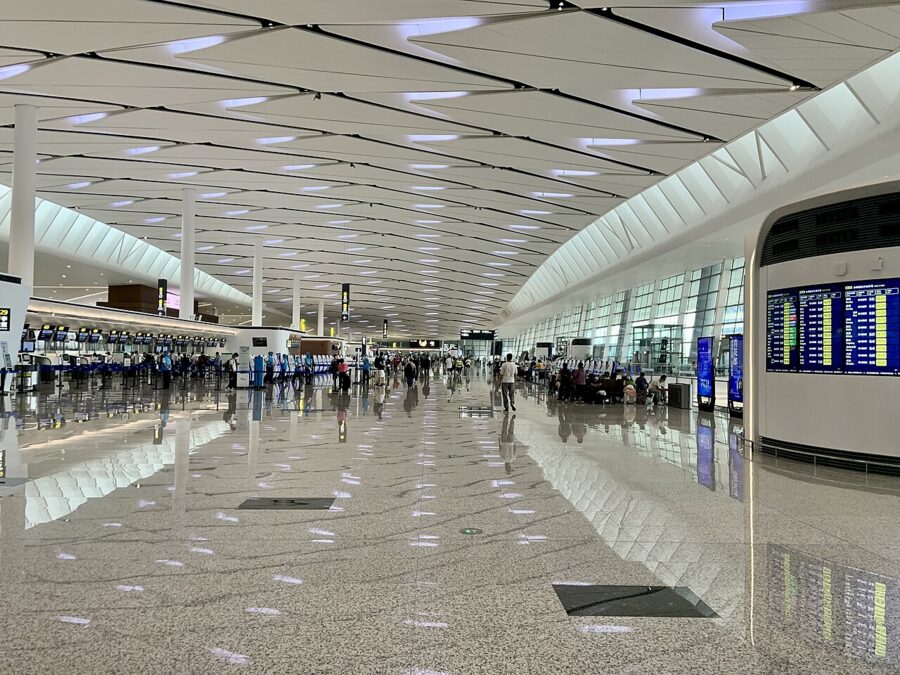
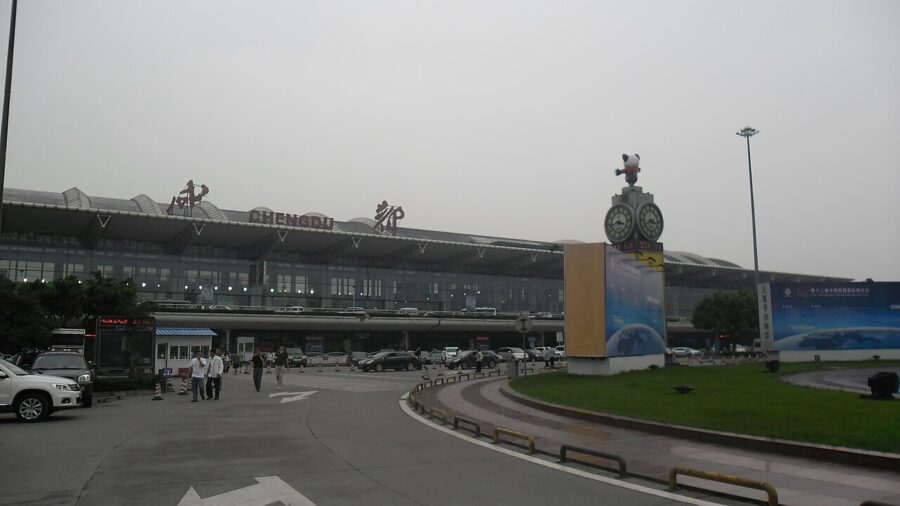
Chengdu has two airports, and the one thing to check before you book anything else is which one your flight uses. They are about 50 km apart, and a direct metro service links them in about 30 minutes, so a mistake is fixable but costly.
From Tianfu (TFU)
Tianfu International Airport is about 50 km south-east of the centre, near Jianyang. Take metro Line 18 from the Terminal 1 and 2 station: express trains reach Chengdu South Railway Station (Huoche Nanzhan) in about 35 minutes, and you change there for Line 1 or 7. Trains run roughly 06:00–23:30. A taxi takes an hour or more; use the official rank and ignore anyone offering a ride in the arrivals hall.
From Shuangliu (CTU)
Shuangliu International Airport is about 16 km south-west of the centre and now mainly handles domestic and regional flights. Line 10 runs from both terminals into the city, and since September 2025 it carries on past Taipingyuan, where you can change to Lines 3 and 7, to Wuhou Shrine station. A taxi takes 30–50 minutes, depending on traffic.
By train
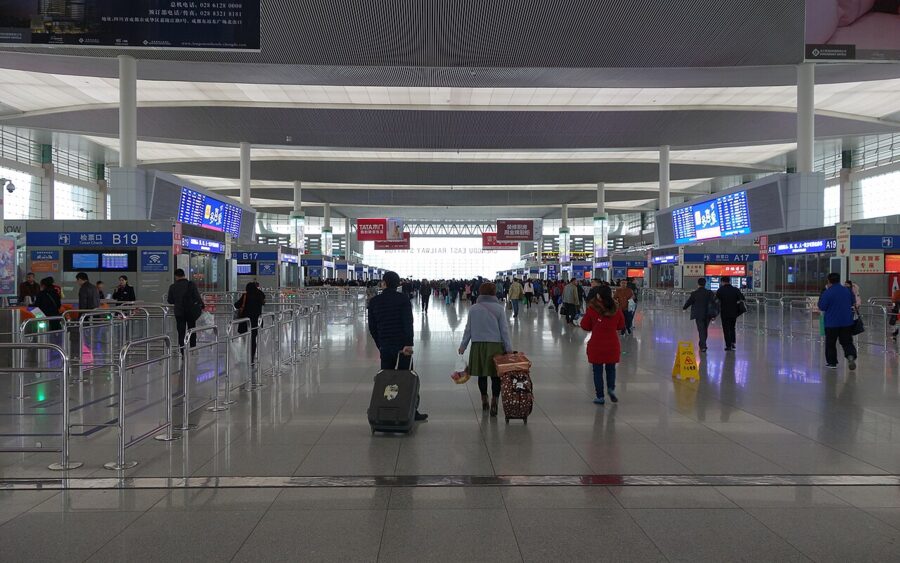
Chengdu East is the main high-speed station, on Lines 2 and 7, with trains to Chongqing, Xi’an and beyond. Chengdu South handles many trains to Leshan and Emei, and Chengdu West serves the lines heading west into the mountains. The old Chengdu Station in the north is being rebuilt and is due back in 2027, so check which station your ticket names. Book on 12306 or Trip.com with your passport, and buy early for weekends and holidays.
Around the city
The metro covers almost everything in this guide, and it is cheap and clean. Pay by scanning a QR code in the Tianfu Tong app or through Alipay or WeChat Pay, both of which take foreign cards; cash works at ticket machines but change can be short. Didi is easy for late nights and the airports, and shared bikes are everywhere for short hops.
Avoid rush hours (about 07:30–09:00 and 17:30–19:00) if you can, and build in extra time in the holiday weeks. Spring Festival, the May Day holiday and Golden Week (1–7 October) bring huge crowds to every sight in this guide, sell out the timed tickets days ahead and close some family-run restaurants for a few days.
Three days in Chengdu
Three days is the right length for a first visit: two in the city and one out of it. This plan assumes you don’t arrive on a Monday, when the Chengdu Museum is shut.
Day 1: tea, temples and the west side
- 07:30: People’s Park, Line 2 exit B. Tea at Heming before the ¥3 window closes, an hour of watching, Zhong dumplings nearby.
- 10:00: Walk ten minutes north-west to Kuanzhai Alley while it is still quiet.
- 12:00: Lunch on Kuixinglou Street.
- 14:00: Line 4 to Luomashi, change to Line 1 for one stop to Wenshu Monastery. Temple, teahouse, tianshui noodles. Last entry is 16:30.
- Evening: Dinner around Chunxi Road, then Taikoo Li after dark, or the face-changing show at the Jinjiang Theatre.
Day 2: pandas and the Three Kingdoms
- 07:30: The panda base, booked ahead. Be there for opening.
- 12:30: Back into town for lunch.
- 14:00: The Wuhou Shrine by Line 10. Allow two hours, and stay until the light starts to go.
- 17:30: Out into Jinli as the lanterns come on.
- 20:00: Anshun Bridge and a drink on the river, or hot pot.
Day 3: Sanxingdui and the cottage
- 08:00: Train from Chengdu East to Guanghan North, bus 13 to the museum. Book the museum five days ahead at 20:00.
- 13:00: Train back to Chengdu.
- 15:00: Du Fu Thatched Cottage by Line 13, with Huanhuaxi Park next door; or Qingyang Palace, then the cottage.
- Evening: A last teahouse in Culture Park or by the river, and hot pot to finish.
Swap Day 3 for Leshan or for Dujiangyan and Mount Qingcheng if the bronzes don’t appeal. If you have a fourth day, do both.
Skip this
- Eating dinner in Kuanzhai Alley or Jinli. Walk them, then eat on Kuixinglou Street or in the backstreets.
- Planning around Jinsha before May 2027. It is closed; see Sanxingdui instead.
- The long ear-cleaning package. The basic few minutes is the experience; the upsell is mostly a massage.
- Short face-changing acts on the street. Pay for the theatre show once and do it properly.
- Unlicensed taxis at Tianfu. Take Line 18 or the official rank.
- The IFS seventh-floor panda queue on a Saturday. The view from the street is free and almost as good.
Book Sanxingdui at 20:00 five days out, book the panda base when you book your flight, and leave one morning completely empty. Spend it in a bamboo chair in People’s Park with a ¥3 cup of jasmine tea, and let the ear cleaner’s fork ring past you.
You Might Also Enjoy
 Guilin and the Li River: The Cruise to Yangshuo, Xingping, Reed Flute Cave and the Longji Rice Terraces
 Chongqing: Hongyadong, the Yangtze Cableway, the 8D Streets and How to Spend Three Days in the Mountain City
 Fugu in Japan: How to Eat Pufferfish Safely, Course by Course, and Where It’s Best
 Mount Hua: The Five Peaks, the Plank Walk and How to Climb Huashan From Xi’an