The Leshan Giant Buddha and Mount Emei: How to Visit Both From Chengdu, the Paths, the Boat and the Golden Summit
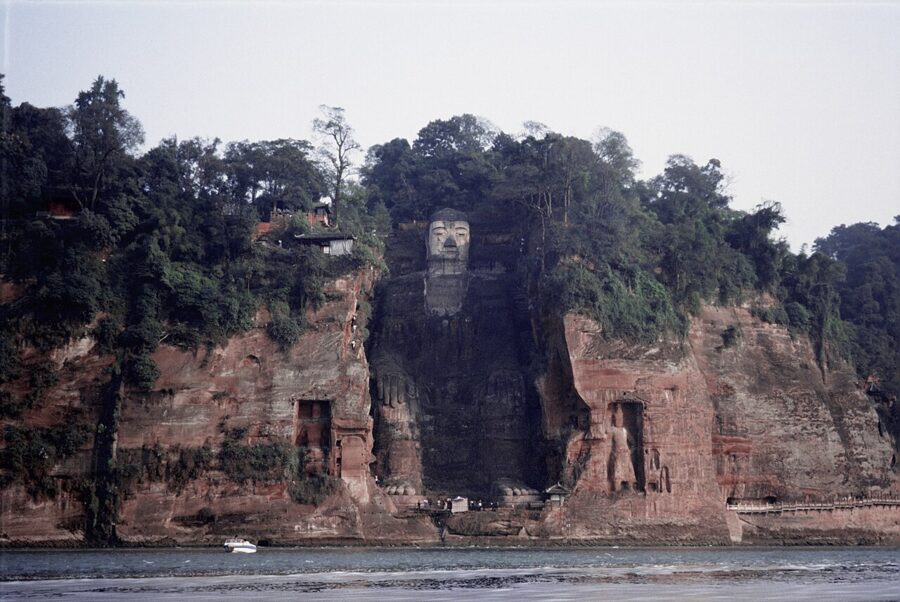
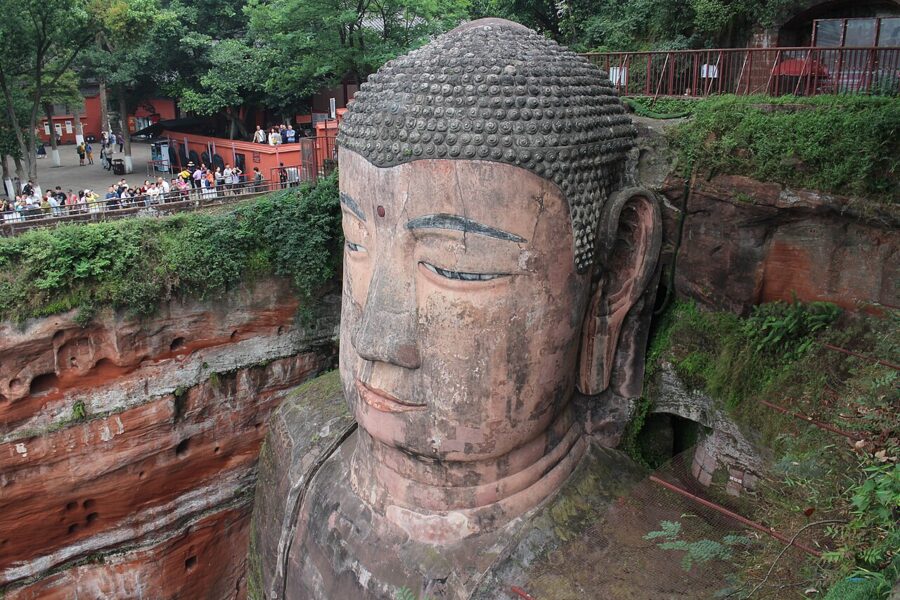
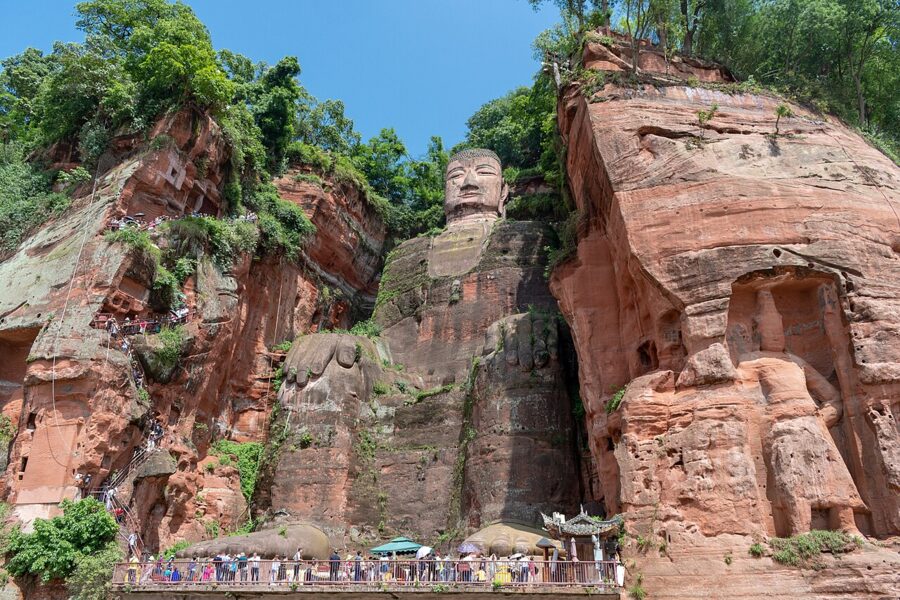
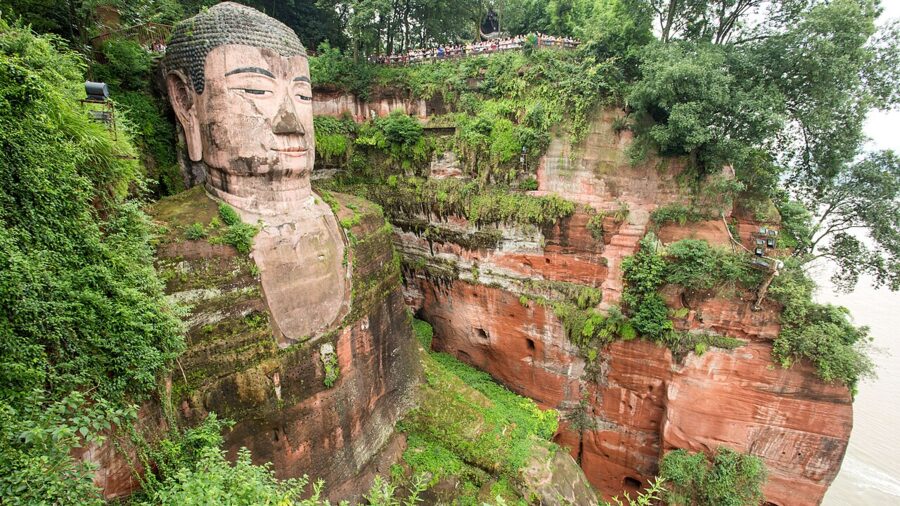
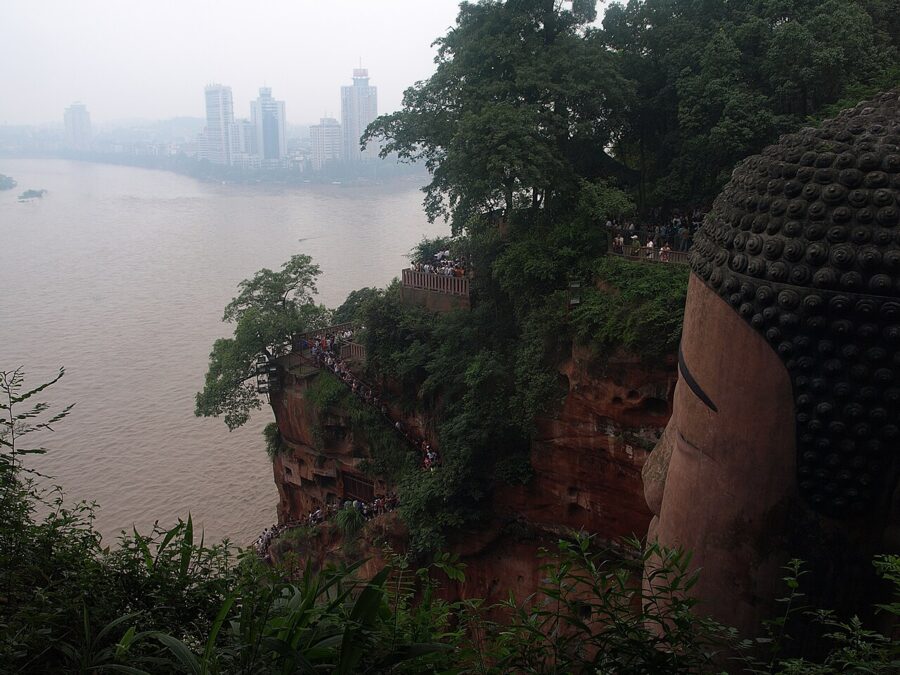
From the cliff top, the Leshan Giant Buddha is a face. You stand at the railing level with its eyes, each one 3.3 m wide, and the rest of it disappears below you into a slot of red sandstone. From the river it’s something else entirely: a whole person, sitting in the hill with both hands on his knees, feet almost in the water, looking calmly across the Min towards Mount Emei.
Most people only see one of those two statues. You should see both.
That is the first thing to know about Leshan (乐山), a river city about an hour south of Chengdu by train. The paths and the boat are two different visits, priced separately, and the walking route down to the feet has changed: the old zigzag Nine-Turn Plank Road is shut for maintenance, and the queue now goes down a different stair. The second thing is that the mountain the Buddha faces is worth a day of its own.
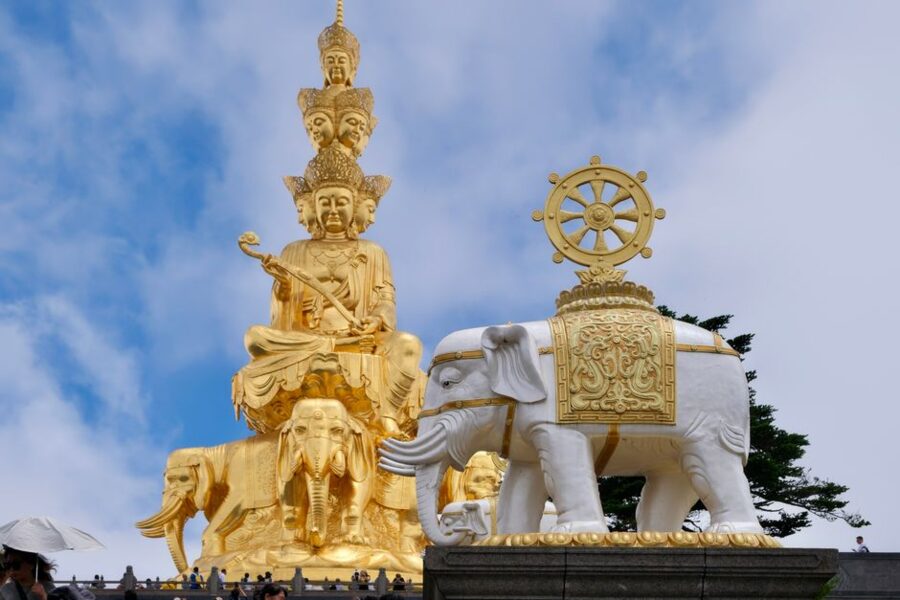
Mount Emei (峨眉山), Emeishan, rises to 3,099 m some 30-odd km to the west. It’s one of the four sacred mountains of Chinese Buddhism, the seat of the bodhisattva Samantabhadra, and since 1996 the mountain and the Buddha have shared a single UNESCO listing. You can ride most of the way up Emei by bus and cable car to the Golden Summit, where a gilded statue with ten heads sits above a sea of clouds, or you can walk for two days through cloud forest and temples, past monkeys that have learned exactly what a plastic bag means.
Here are the main ways to do it, with 2026 prices. The Leshan prices are the same all year; Emei is cheaper from 15 December to 15 January.
| Option | Time it takes | Cost on site | Best for |
|---|---|---|---|
| Leshan: walk down to the feet | 2–4 hours, mostly queue | ¥80 | Standing under the statue; first visits |
| Leshan: the river boat | About 30–40 minutes on the water | ¥70 | Seeing the whole figure; children, older walkers, hot days |
| Leshan: both | A full morning or afternoon | ¥150 | The complete picture; my pick |
| Emei: bus and cable car to the Golden Summit | A long day from the foot of the mountain | ¥160 + ¥90 bus + ¥120 cable car | Most people, and anyone short of time |
| Emei: walk up from Qingyin Pavilion or Wannian Temple | Two days, a night in a temple or guesthouse | ¥160 + buses and a bed | Fit walkers who want the forest and the old temples |
In This Article
- Seventy-one metres of Tang sandstone
- Why here, where three rivers meet
- The drainage you can’t see
- Getting to Leshan from Chengdu
- Which gate to use
- Tickets, hours and booking
- Down to the feet
- The Nine-Turn Plank Road and the queue
- At the feet
- The view from the river
- Everything else on the ticket
- Lingyun Temple and the pagoda
- Wuyou Temple and the Mahao Cliff Tombs
- The Oriental Buddha Park
- Eat in Leshan before you leave
- Mount Emei, the mountain the Buddha faces
- Getting there
- Tickets and the timed bus
- Leidongping, Jieyin Hall and the cable car
- On the Golden Summit
- Sunrise, the sea of clouds and Buddha’s light
- Walking Emei
- The monkeys
- Baoguo and Wannian, the temples worth the detour
- Sleeping on the mountain, and the cold
- Two plans that work
- One day in Leshan
- Two days: Leshan and Emei
- Skip this
Seventy-one metres of Tang sandstone
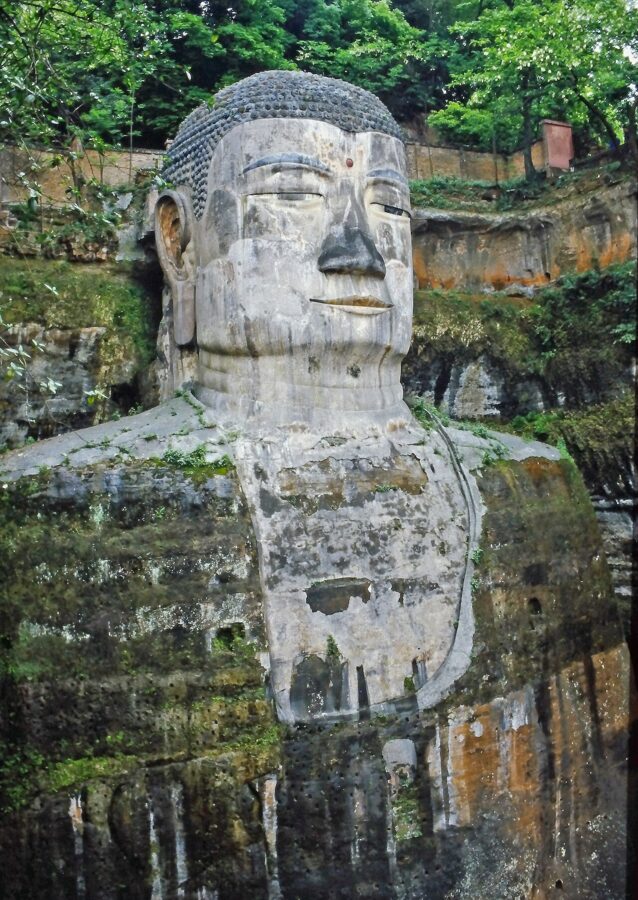
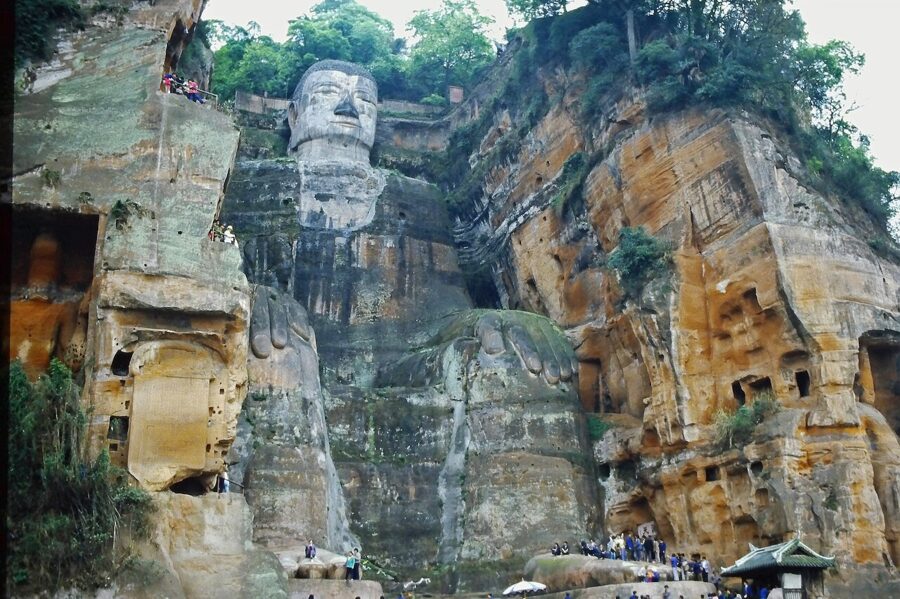
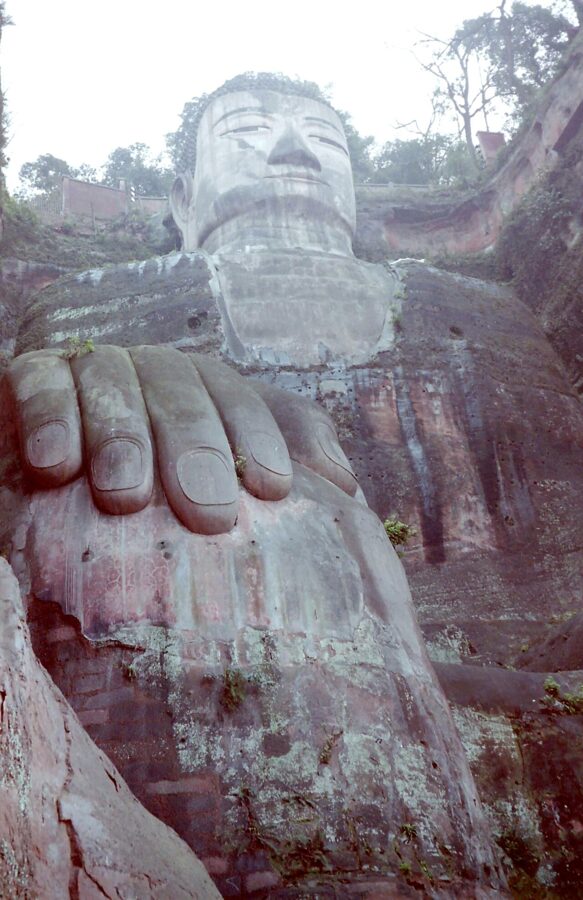
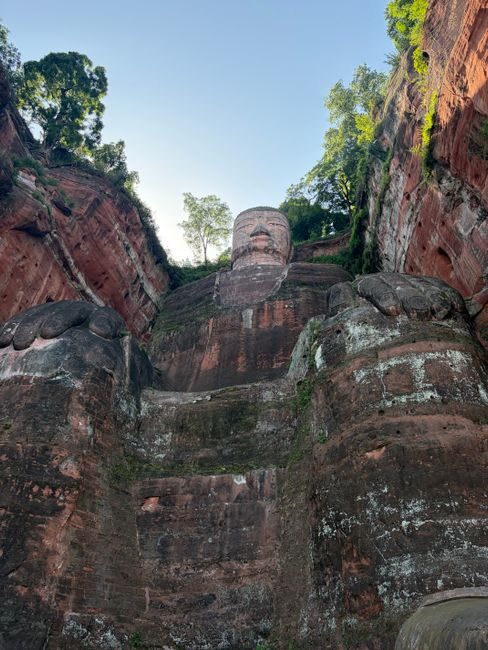
The statue is a Maitreya, the Buddha of the future, seated with his hands on his knees in the posture of someone about to stand. It is 71 m tall, with a head 14.7 m high and 10 m wide, ears 7 m long and shoulders 24 m across, and it is still the tallest stone Buddha anywhere. Its full Tang name is long and specific: the Great Stone Maitreya of Lingyun Temple in Jiazhou (嘉州凌云寺大弥勒石像), Jiazhou being Leshan’s old name.
Why here, where three rivers meet
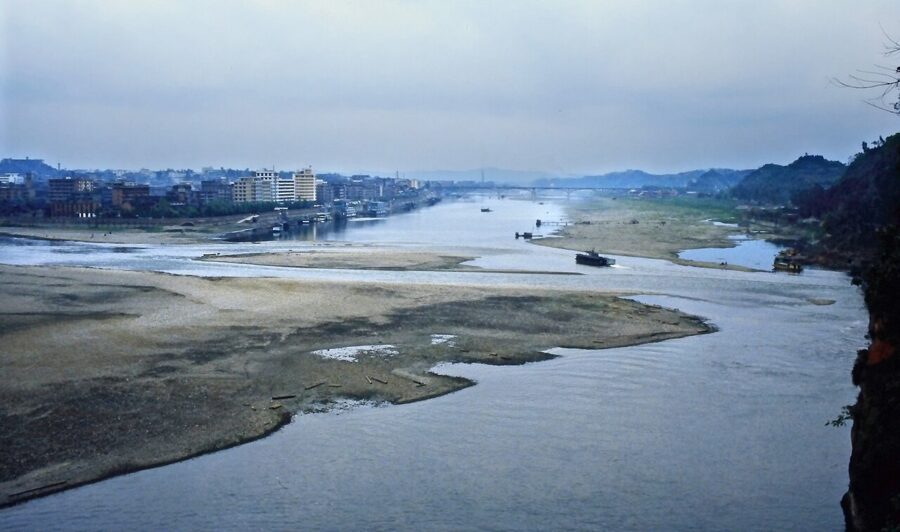
The cliff sits on Lingyun Hill (凌云山) just below the point where the Dadu and Qingyi rivers join the Min. In the early eighth century the currents there wrecked boats often enough that a monk from Guizhou called Haitong (海通) decided a Buddha in the cliff would calm them. Work started around 713. The story every guide in Leshan tells is that when a local official demanded a cut of the donations, Haitong told him he could have his eye but not the Buddha’s money, then gouged it out and handed it over on a plate.
Haitong died with the job unfinished. A regional governor, Zhangqiu Jianqiong (章仇兼琼), restarted it in 739 with his own salary, and got it down to the knees before he was recalled to the capital in 746. The last push came under Wei Gao (韦皋), governor of western Sichuan from 785, and the statue was finished in 803, about ninety years after it was begun. Wei Gao wrote an account of it and had it cut into the cliff beside the niche.
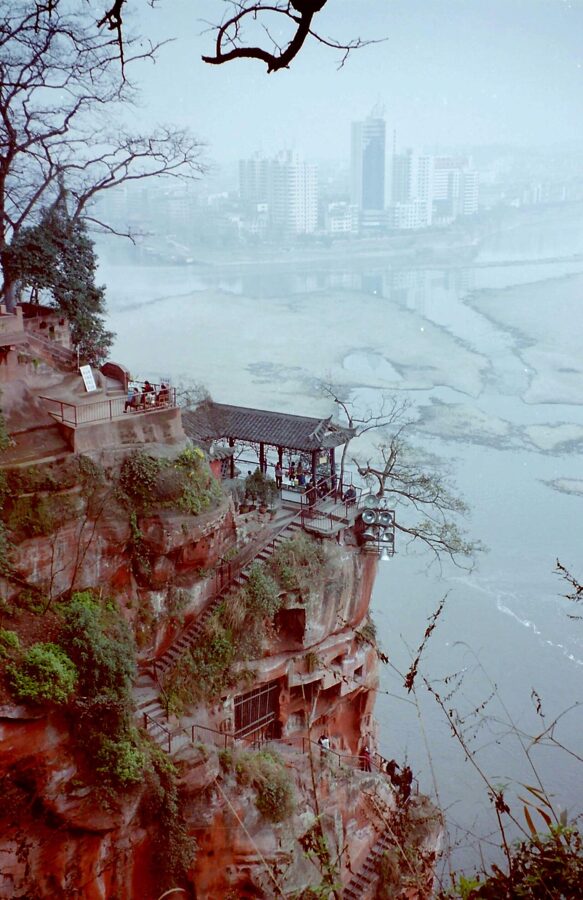
Whether the Buddha or the rubble did it, the water at the foot of the cliff did become safer. The finished figure was painted and gilded and sheltered by a wooden pavilion several storeys high. That pavilion is long gone, rebuilt in the Song dynasty and lost again, which is why the statue now sits open to the Sichuan rain.
The drainage you can’t see
Rain is the real threat to a soft sandstone carving, and the builders knew it. The head carries 1,021 coiled hair buns in eighteen tiers, and channels run sideways through the 4th, 9th and 18th tiers to carry water away. There are more on the chest and behind the right arm, and caves behind both ears that join up inside the rock.
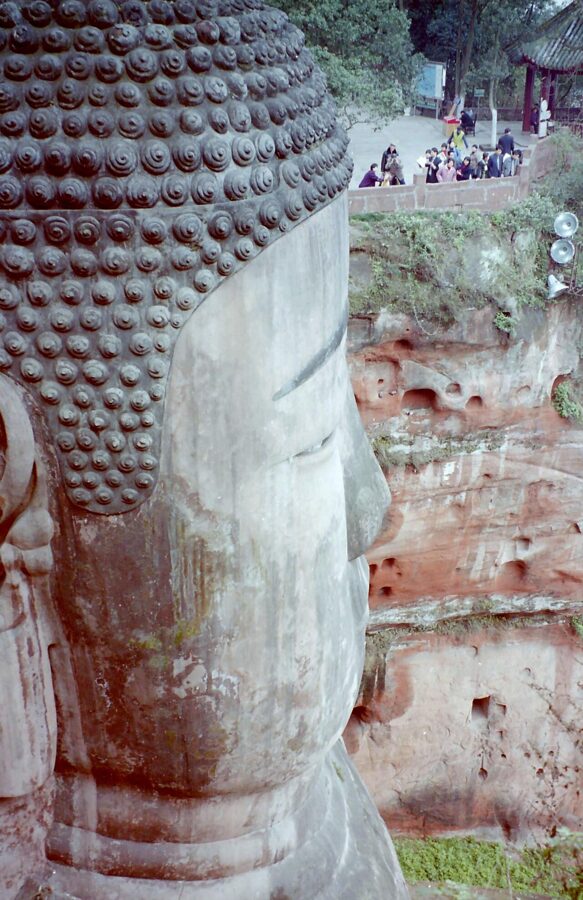
It doesn’t fully work any more. The 1989–1991 survey found water seeping through the body, and in 2018 the scenic area closed the feet for about six months to deal with cracking and swelling in the chest and belly. Parts of the ears and the nose are old repairs in wood covered with plaster. In 1925 a local commander had the face covered in a new mask of red sandstone blocks, which soldiers of the warlord Yang Sen then used for target practice; the mask came off in the early 1930s.
A last bit of current history. In March 2026 short videos went round Chinese social media claiming the statue had started life as Yu the Great, the legendary flood-tamer, and was later turned into a Buddha. The management committee answered on 11 March that there’s no evidence for it, and pointed to Wei Gao’s inscription and the local records, which say plainly that it’s a Maitreya.
Getting to Leshan from Chengdu
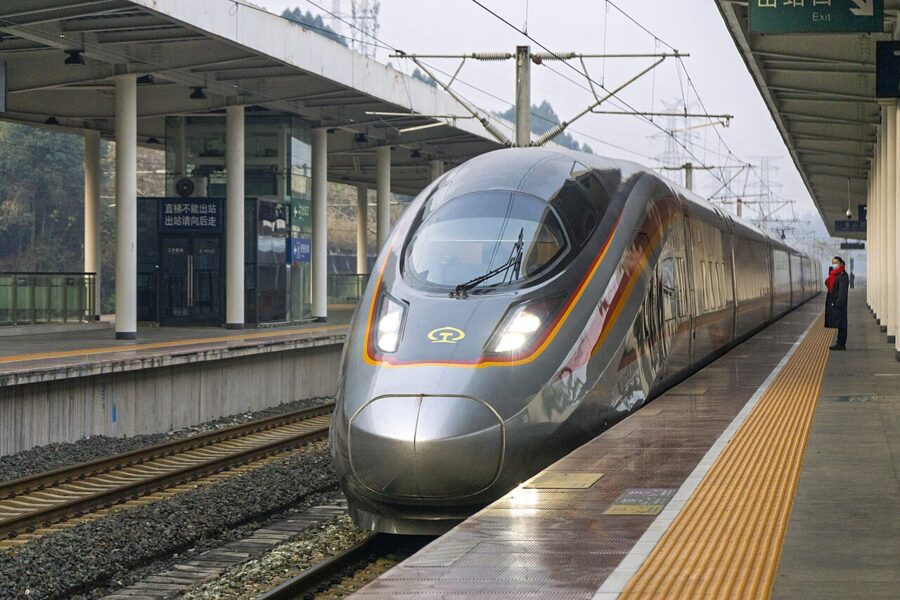
Take the train. C, D and G trains run from Chengdu East (成都东) and Chengdu South (成都南) to Leshan station (乐山站) through the day, and the trip takes about an hour; the fastest services do it in about 45 minutes. Second class costs roughly ¥50–60. Book on 12306 or Trip.com with your passport, and on a weekend or holiday book the return at the same time, because the evening trains back to Chengdu fill up.
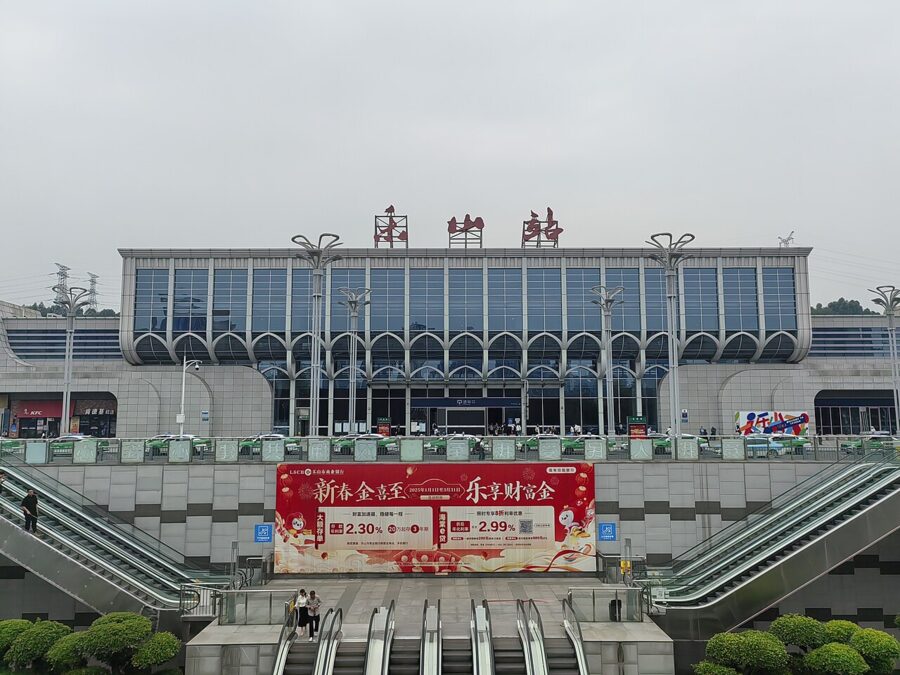
Leshan station is on the wrong side of town for the Buddha. City buses K1 and 601 run from the station towards the scenic area for ¥2, but a taxi or a Didi is far simpler: tell the driver 乐山大佛北门 (the Giant Buddha’s North Gate) and expect 20–30 minutes. Long-distance buses from Chengdu’s Xinnanmen bus station take about two hours and save you very little.
Which gate to use
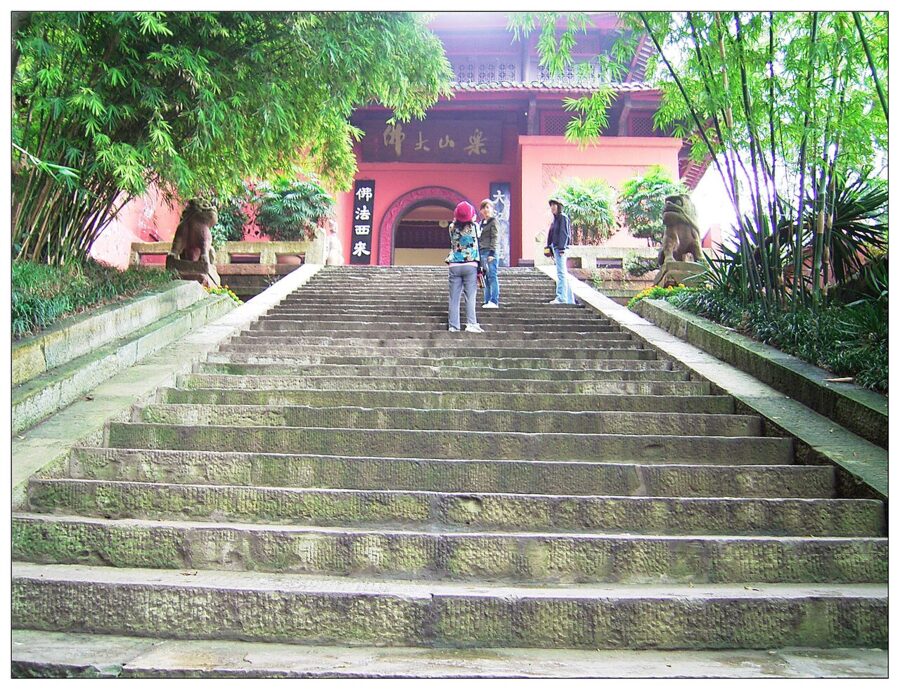
Enter at the North Gate (北门) and leave by the south. That route runs past the big carved character 佛, Lingyun Temple, the head of the statue and the stair down, and once you’re past the head it’s almost all downhill. The North and South Visitor Centres are about 4.5 km apart, linked by the scenic area’s shuttle (¥10 a ride, ¥15 for the day), which also stops at the North, East and South gates.
Two warnings. The South Gate is not the boat pier, so don’t plan to walk off the hill and straight onto a boat; you’ll need the shuttle or a taxi. And ignore anyone near the station or the car parks who offers to get you in through the Oriental Buddha Park next door to skip the queue. It’s a separate attraction with its own ticket, and it doesn’t skip anything.
Tickets, hours and booking
The mountain ticket costs ¥80 and covers the paths, Lingyun Temple, Wuyou Temple and the Mahao Cliff Tombs. The boat is a separate ¥70. Children under 1.2 m or under six go free, and students and older people get reductions with original ID. None of Mount Emei’s tickets or discounts apply here; they’re separate systems.
Entry is by timed, real-name booking. Use the official 大佛旅游 mini programme on WeChat or Alipay, or the scenic area’s 乐山大佛景区 account on Douyin; third-party platforms add fees, make refunds harder and can fail to issue tickets when entry is capped. With a passport rather than a Chinese ID card, you may be sent to a counter to collect a paper ticket, so leave ten minutes for it. Over Spring Festival 2026 Leshan’s tickets sold out on several days, and Golden Week (1–7 October) is the same, so book as soon as you have dates.
Hours change twice a year:
- Summer, 1 April to 7 October: paths 07:30–18:30, daytime boats 07:30–18:00.
- Winter, 8 October to 31 March: paths 08:00–17:30, boats boarding 08:30–17:30 with tickets at the window 08:00–17:00.
- Evenings: the night walk on Lingyun Hill has been suspended for maintenance since spring 2026, with any holiday openings announced separately. The Three Rivers night cruise (¥138) still runs, in winter at 20:00 from Wuyou Temple Pier, with a free shuttle from both visitor centres 30 minutes before. The feet are never open at night.
Pay with Alipay or WeChat Pay, both of which take foreign cards, and carry a little cash for the snack stalls. Keep your passport on you all day; you’ll scan it at the gate and need it for any discount.
Down to the feet
The walk starts gently. From the North Gate you climb past Lingyun Temple to the cliff top, and the first view of the statue is the head, close enough to see the weathering on the cheeks and the drainage grooves in the hair. This head platform is free with your ticket, takes ten minutes, and is all some people need.
The Nine-Turn Plank Road and the queue
For decades the way down was the Nine-Turn Plank Road (九曲栈道), a stair cut into the cliff on the statue’s right, doubling back on itself as it drops to the feet. It’s the stair in most photos and in most older guides.
It is currently closed for maintenance: the scenic area’s winter notice of October 2026 says so, and repeats that you reach the feet by the Lingyun Plank Road (凌云栈道) instead. Check the scenic area’s channels before you go. The Nine-Turn road has closed before, for about six months over 2018–2019, and scaffolding for work to stabilise loose rock on the cliff above it has been up since the early 2020s.
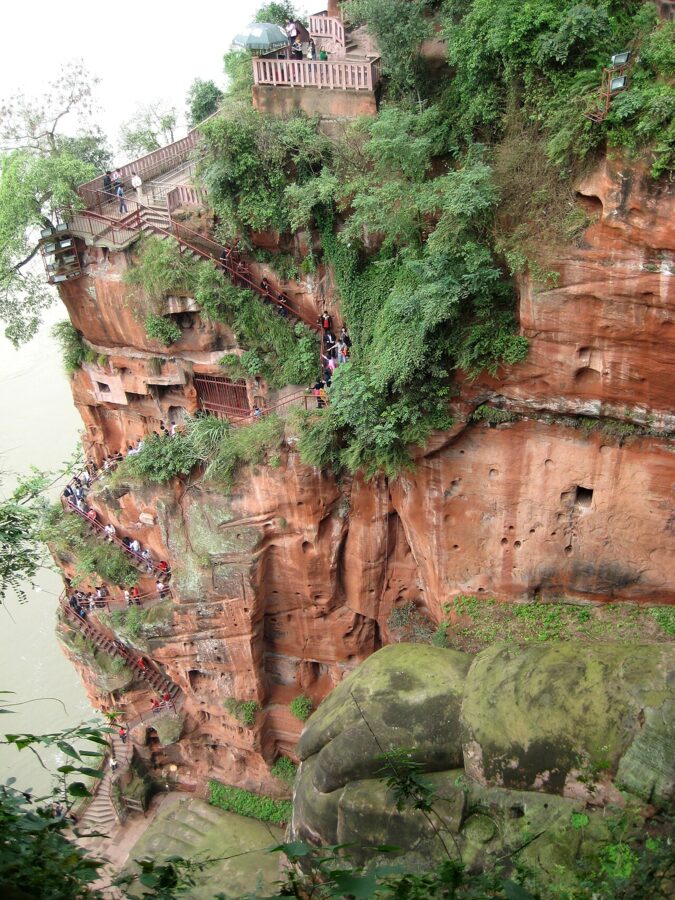
The Lingyun Plank Road is a wider path along the cliff with several landings, and once you’re moving it takes about 20–30 minutes to get down. Getting moving is the problem. On a normal weekend expect one to two hours of queueing at the top, two to three hours or more on Spring Festival, May Day and National Day, and little or nothing on a weekday from November to March. At busy times you may be held in a waiting area and called forward in groups, and once you’re on the path you’re committed, because it runs one way.
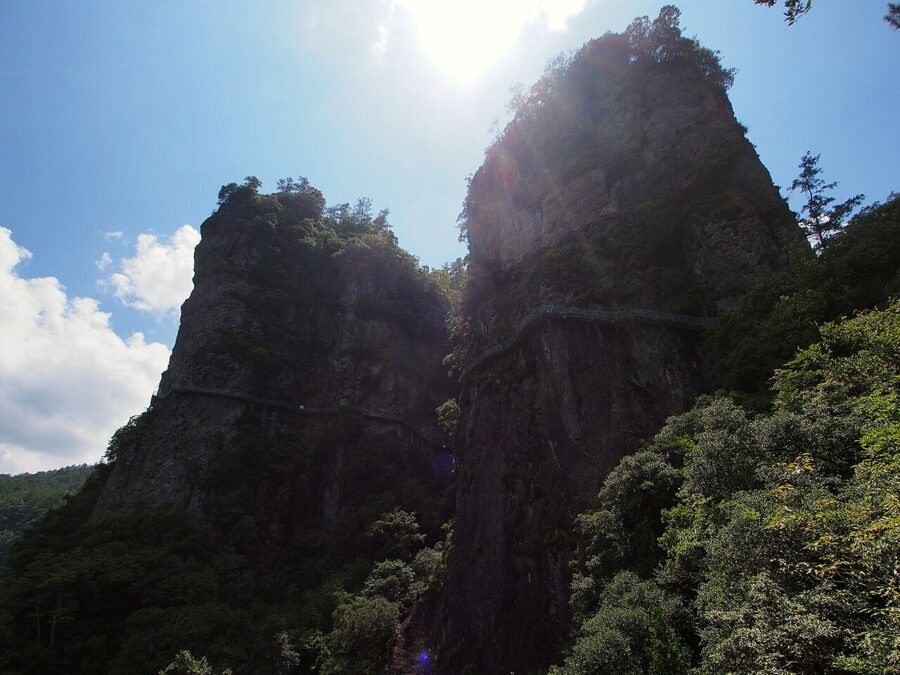
There is no shade in the queue. In July and August that’s a real problem, and the scenic area has closed the feet on extreme heat days. My advice is simple: book the first entry slot of the day, walk straight past the temple to the head, and join the line before the tour groups arrive. Failing that, come late in the afternoon.
At the feet
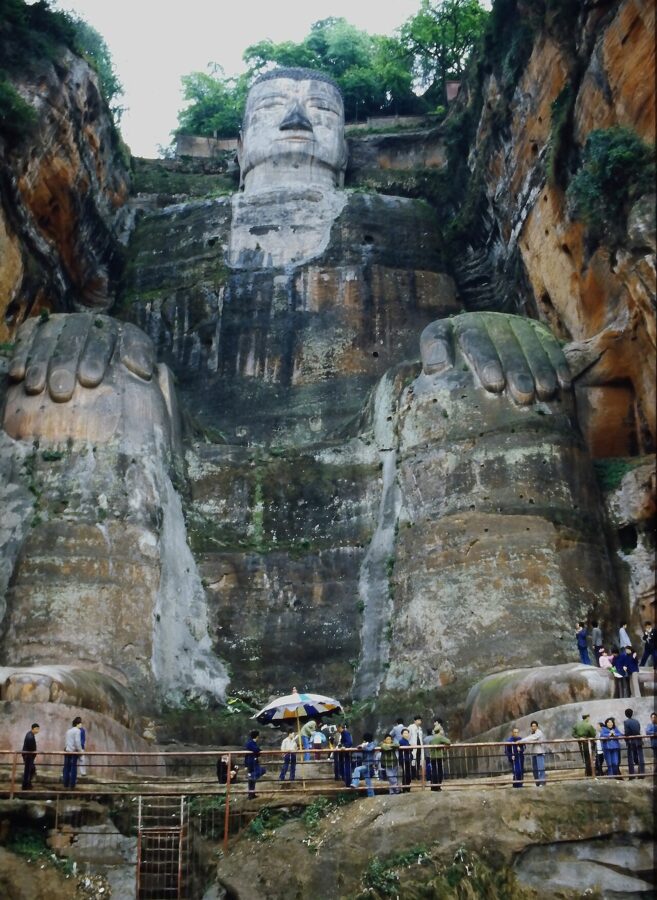
The platform at the bottom is where the scale finally lands. Each instep is nearly 9 m wide, room for a hundred people to sit, and the smallest toenail is big enough for one. Follow the signs out; the exit route shifts when sections of the cliff paths close.
The view from the river
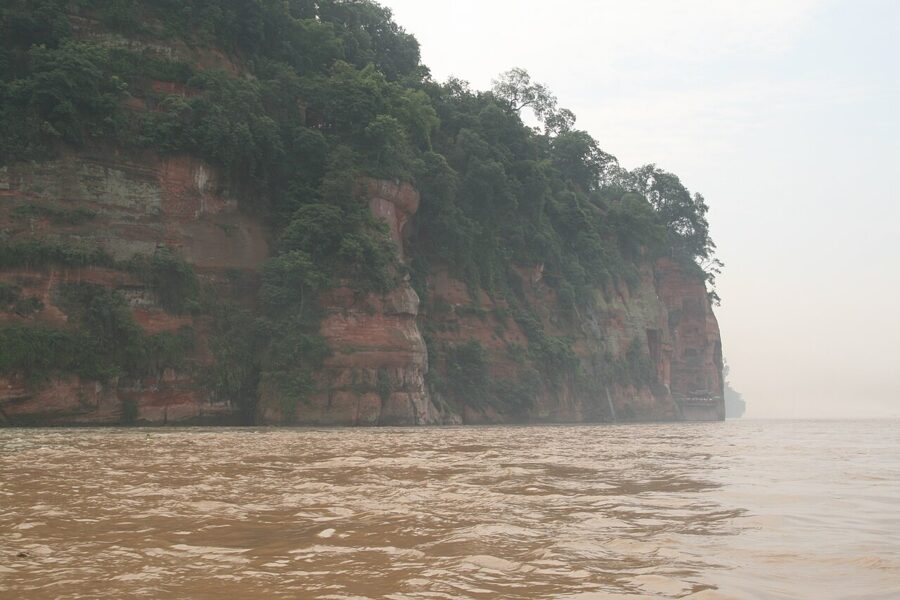
The boat is the only way to see the whole statue at once, and the only way to see the two guardian kings, each about 16 m high, carved in armour on either side of the niche. You don’t see them properly from the paths. Boats cost ¥70 and the loop takes about 30–40 minutes, with a few minutes holding in front of the Buddha while everyone takes the same photo.
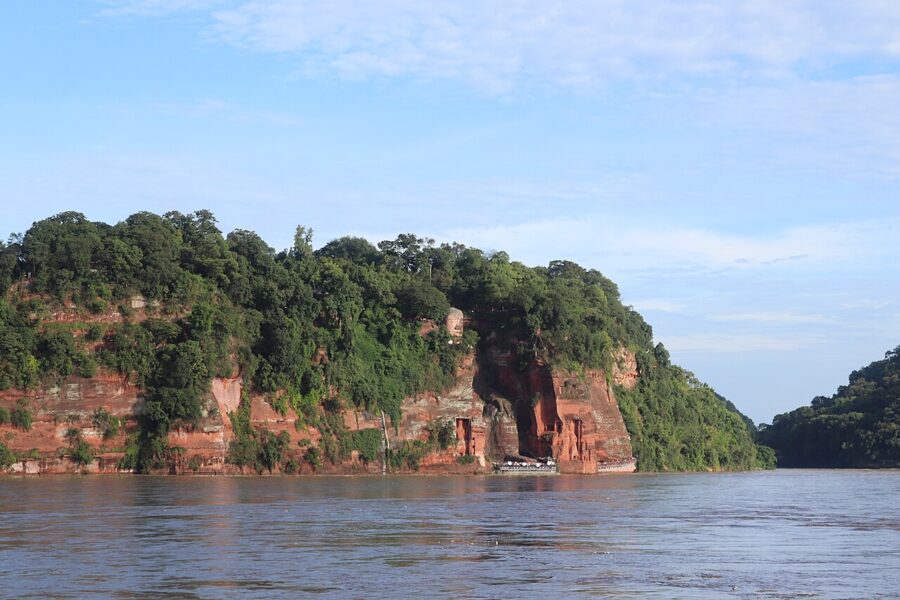
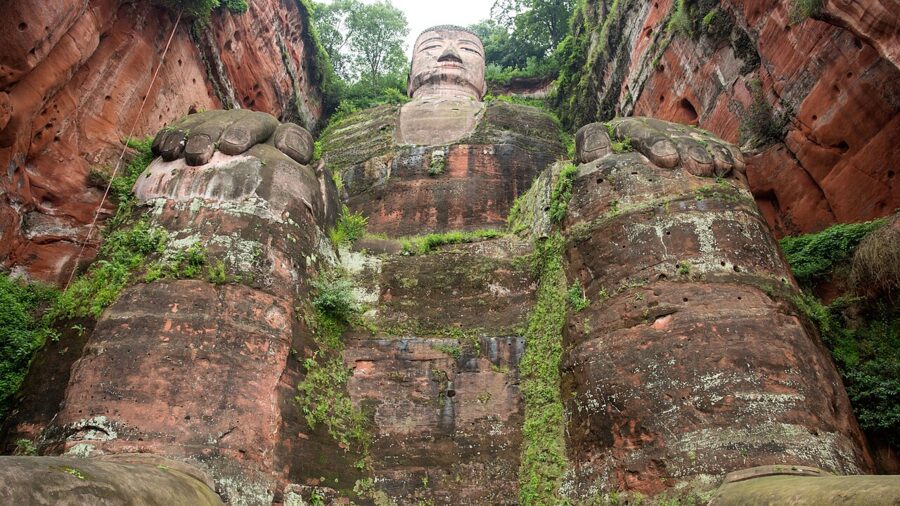
Which pier the boats use depends on the water level, and in the low-water winter months they board at Wuyou Temple Pier near the South Visitor Centre. Departures stop in fog and when the river is too high or too low, which happens more in summer flood season and in winter. Buy on the 大佛旅游 mini programme or at the pier window, and if you’re doing both the boat and the walk, take the boat first: once you’ve seen the figure whole, standing at its feet makes much more sense.
Everything else on the ticket
The ¥80 ticket covers a whole hill of temples and tombs, and most people rush past all of it on the way to the queue. If the wait at the stair is long, these are where to spend it.
Lingyun Temple and the pagoda
Lingyun Temple (凌云寺) sits just behind the statue’s head, and it’s the temple the Buddha was carved for, which is why locals also call it the Great Buddha Temple (大佛寺). It was founded in the Kaiyuan years of the Tang, the same reign in which the carving began, was destroyed in war more than once, and was rebuilt in 1667.
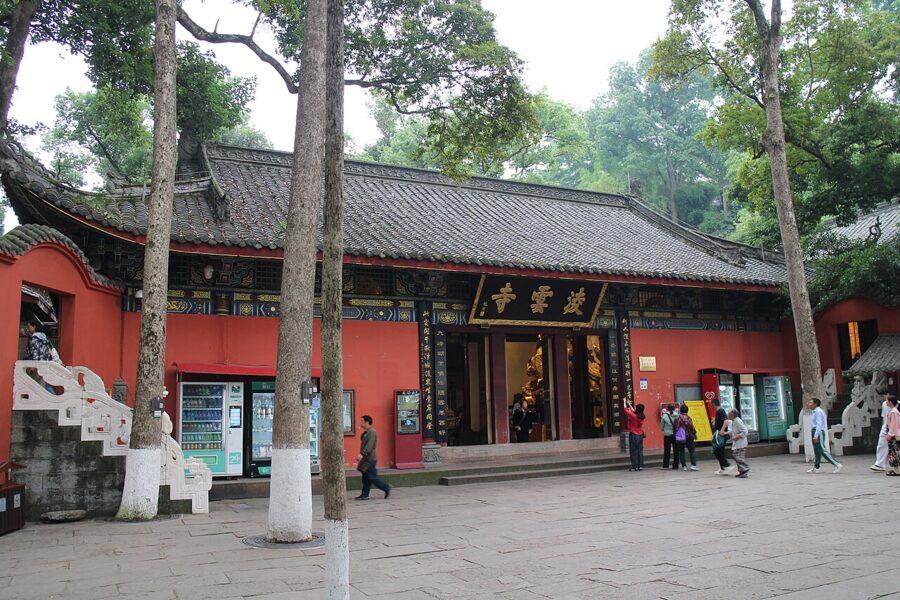
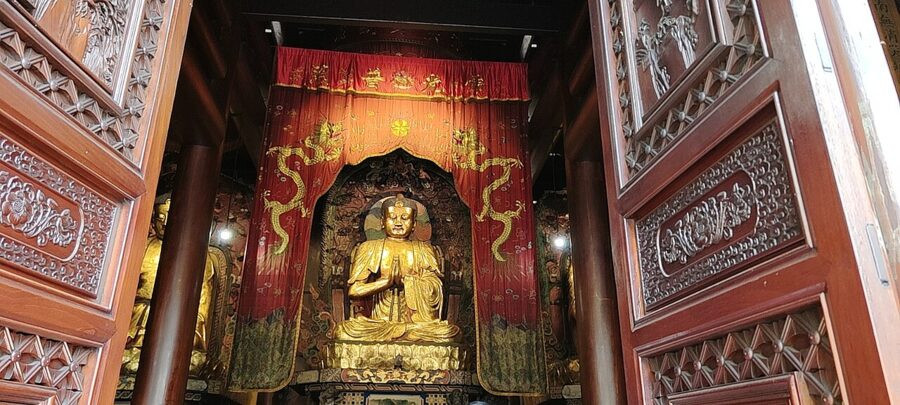
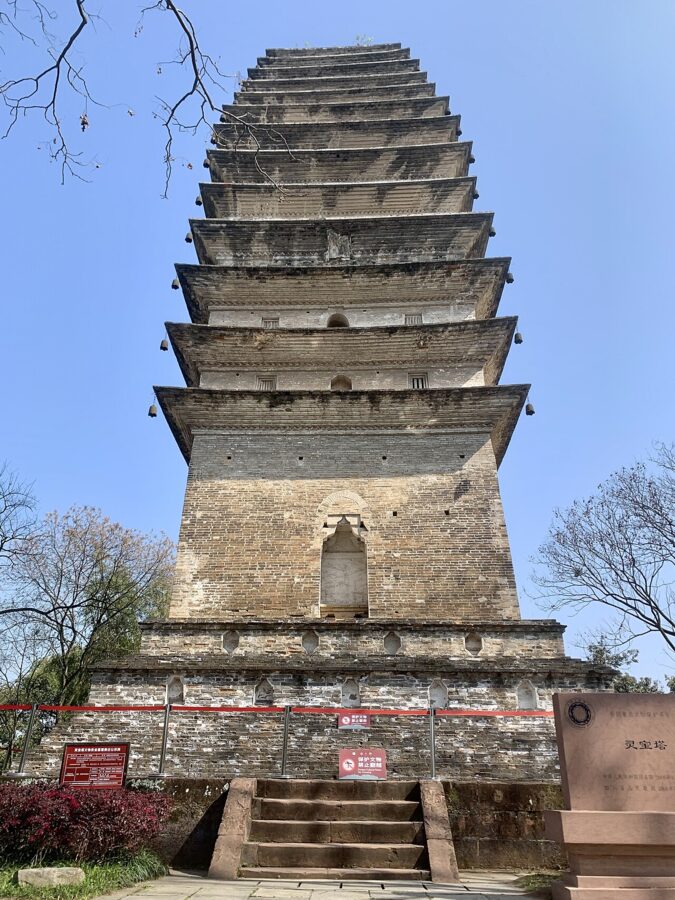
Behind it, on the hill’s highest point, is the brick Lingbao Pagoda (灵宝塔), a national monument since 2006. It’s a five-minute climb from the temple and about the only quiet spot on the hill on a busy day.
Wuyou Temple and the Mahao Cliff Tombs
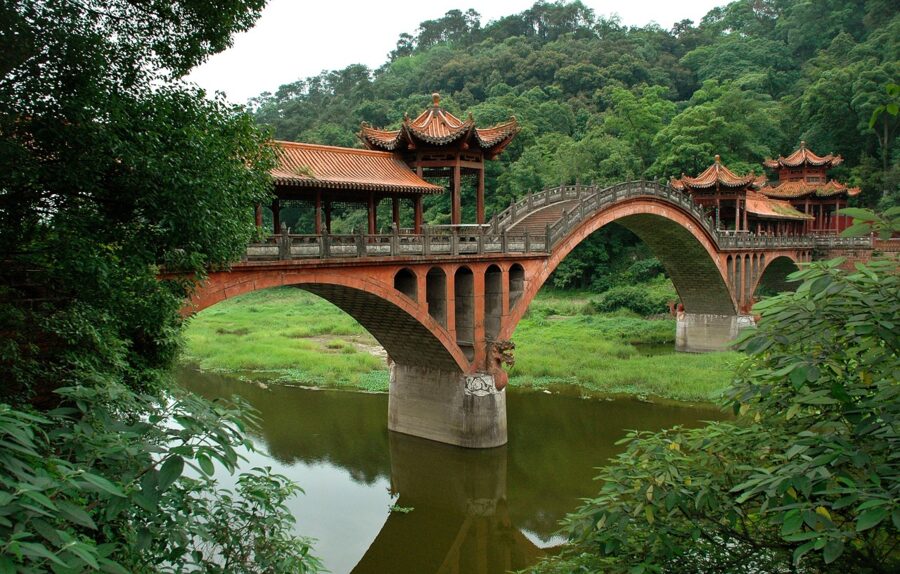
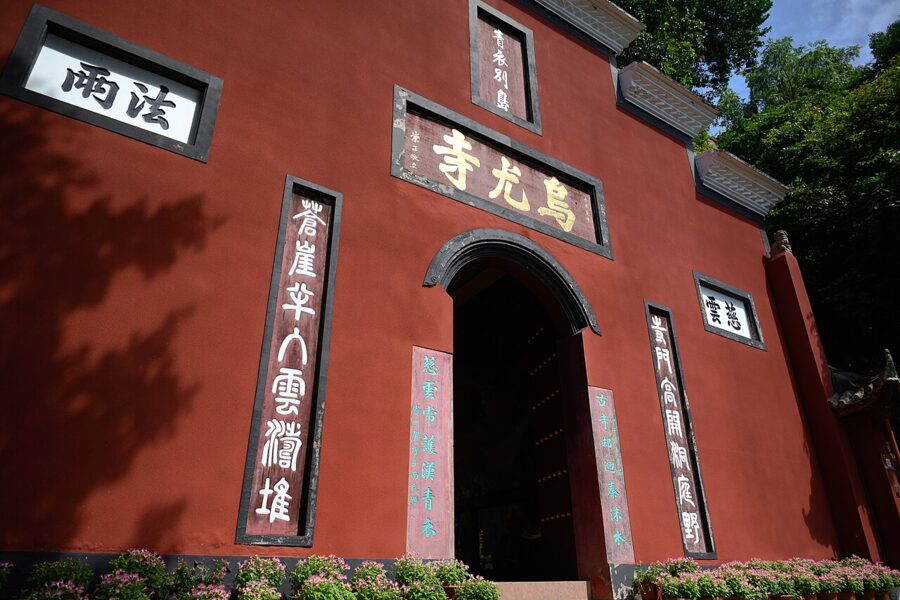
Wuyou Temple (乌尤寺) is on the next hill south, Wuyou Hill, right at the meeting of the three rivers. It dates back to the Tang, when it was called Zhengjue Temple, took its present name in the Northern Song, and was restored after heavy damage during the Cultural Revolution. It’s greener and quieter than Lingyun, and the night cruise leaves from the pier below it.
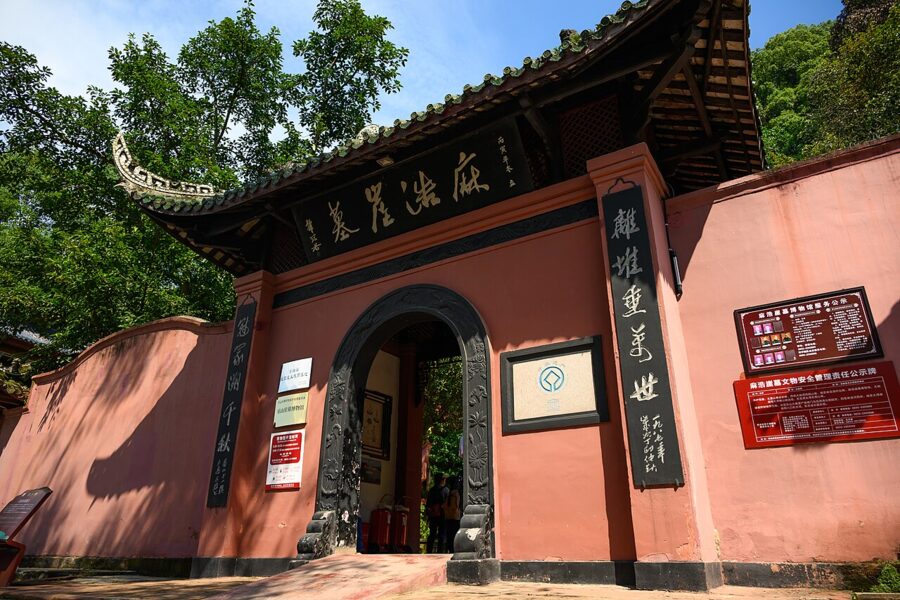
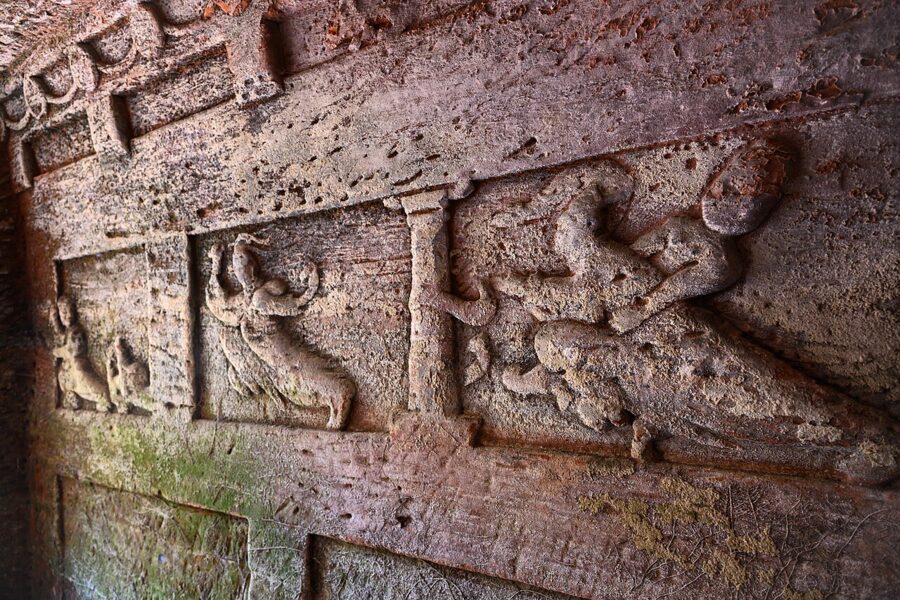
Between the two hills, the Mahao Cliff Tombs (麻浩崖墓) are the oldest thing here, a row of Eastern Han tombs cut into the sandstone for more than 300 m. A 1985 count put them at 330. Above one entrance is a small seated Buddha with a halo and a hand raised in the gesture of fearlessness, often counted among the earliest Buddhist carvings in China, centuries older than the giant next door.
The Oriental Buddha Park
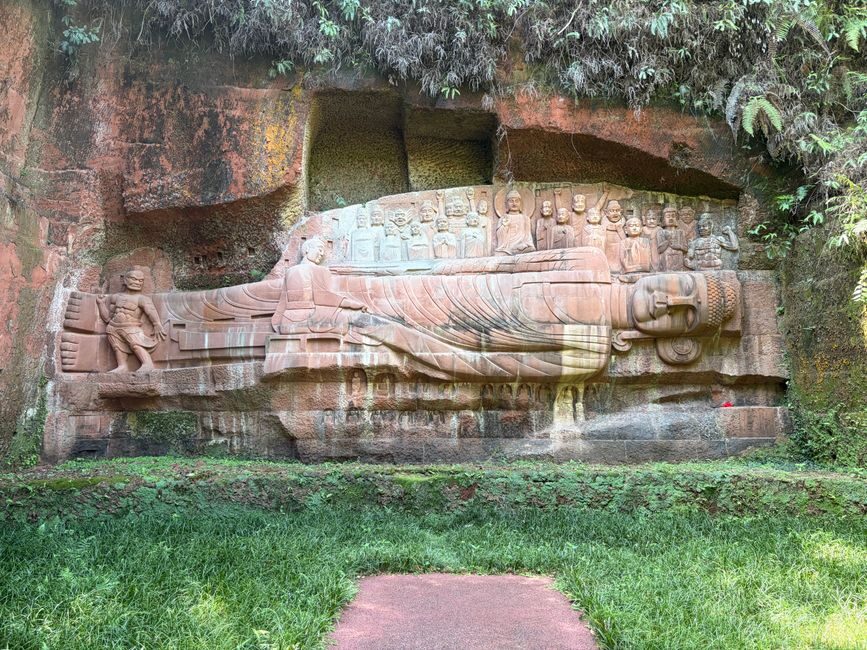
Next to the south side is the Oriental Buddha Park (东方佛都), a separate attraction with its own ticket of about ¥80. It isn’t ancient: it’s a modern park of new and copied Buddhist carvings, with a reclining Buddha 170 m long on the hillside and big seated figures in an underground hall. If you love Buddhist sculpture and have time left, it’s a pleasant hour. If you’re short of time, skip it; nothing here explains or adds to the Tang statue.
Eat in Leshan before you leave
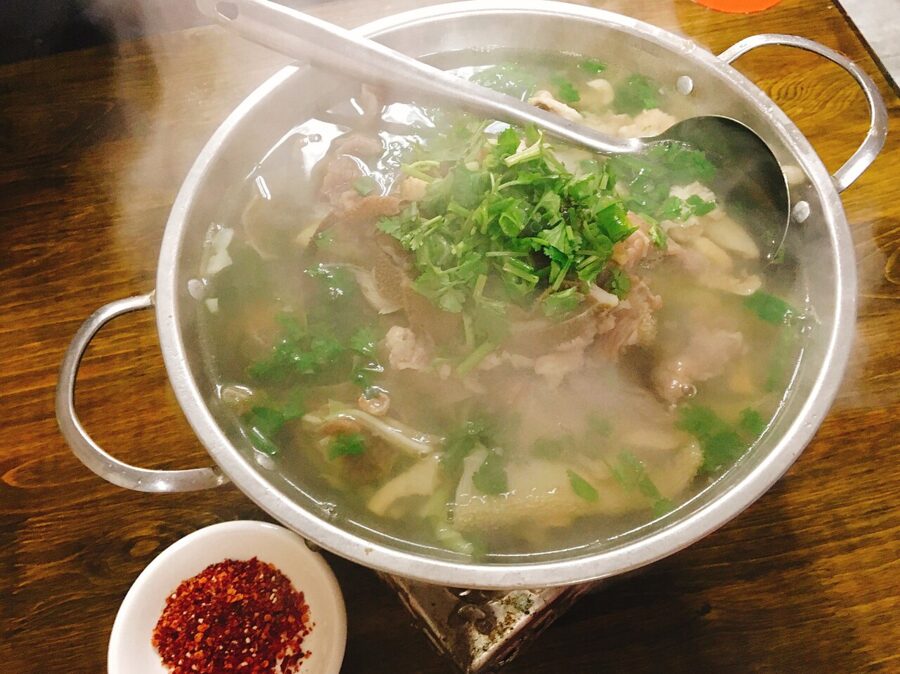
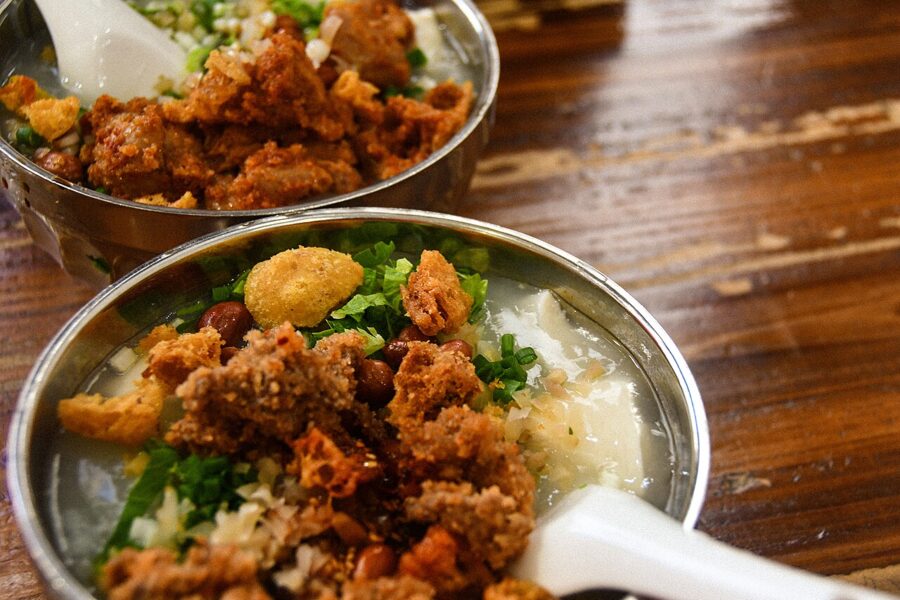
Leshan is a snack town that Chengdu people visit just to eat, and you should save your appetite for it. The city is where bobo chicken (bobo ji, 钵钵鸡) comes from: cold skewers soaking in red chilli or green tengjiao pepper oil, paid for by the stick. It’s also the hometown of malatang, which started with salt workers round a single pot on the Min. The other three to try are qiaojiao niurou (跷脚牛肉), a herbal beef and offal soup from nearby Suji town; tianpi ya (甜皮鸭), braised duck with a sugar-glazed skin; and Leshan’s savoury doufunao (豆腐脑), soft tofu under chilli oil with beef or crispy pork and noodles.
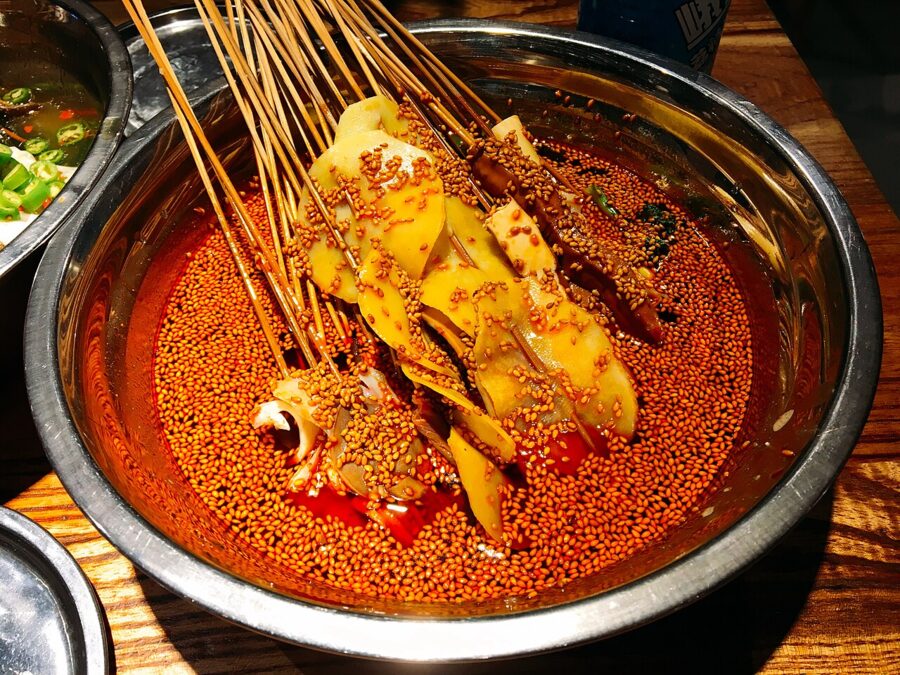
The easy place to eat is Zhanggongqiao food street (张公桥美食街), in the old town across the river from the Buddha, a short taxi from either gate. Shangzhongshun (上中顺特色街区) is livelier after dark. My Sichuan food guide covers what to order and where in more detail.
Mount Emei, the mountain the Buddha faces
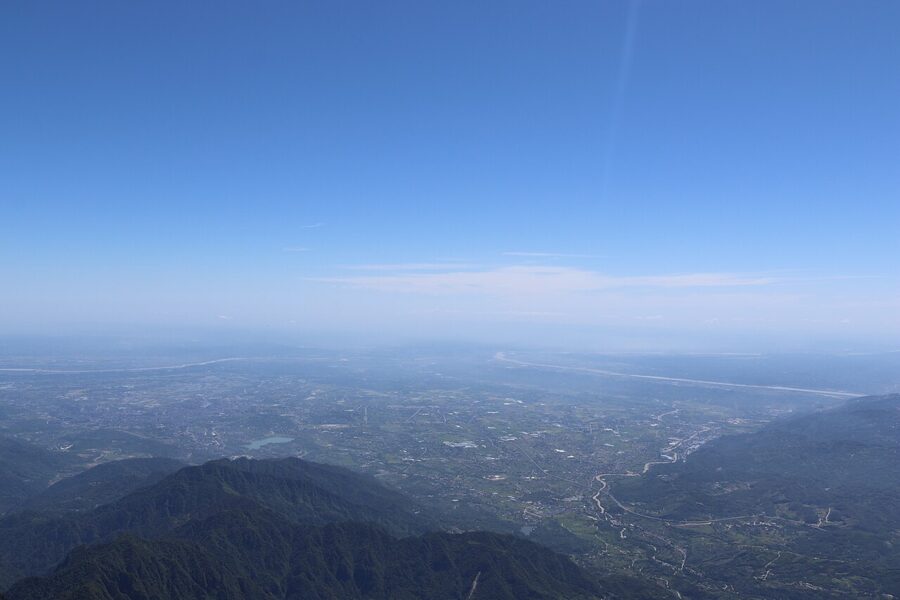
Emei is a different kind of trip. The Golden Summit (金顶) is at about 3,077 m, a temple complex and viewing terrace near the true top, Wanfo Ding (万佛顶, 3,099 m). Below it the mountain is steep cloud forest, wet for much of the year, with about two dozen working temples strung along stone stairways that pilgrims have used for well over a thousand years. Compared with Huangshan, Emei is less about rock shapes and more about forest, water and temples.
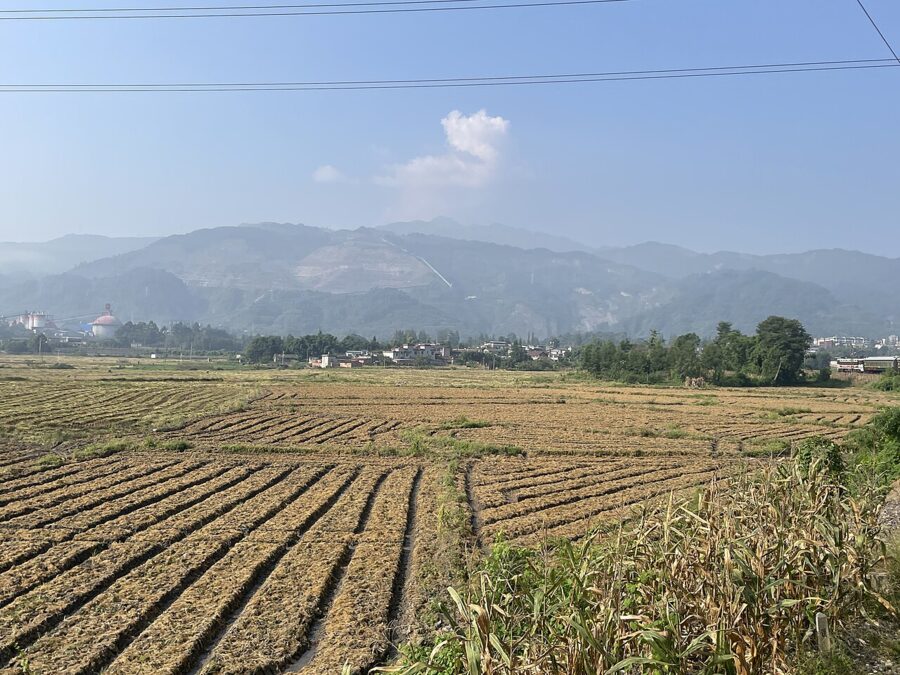
Getting there
Trains run from Chengdu East to Emeishan station (峨眉山站) in a little over an hour, and from Leshan in about 20 minutes. They’re the same trains that serve Leshan, so a Leshan–Emei trip from Chengdu is one line. Don’t confuse Emeishan station with Emei station (峨眉站), a separate stop on the older line.
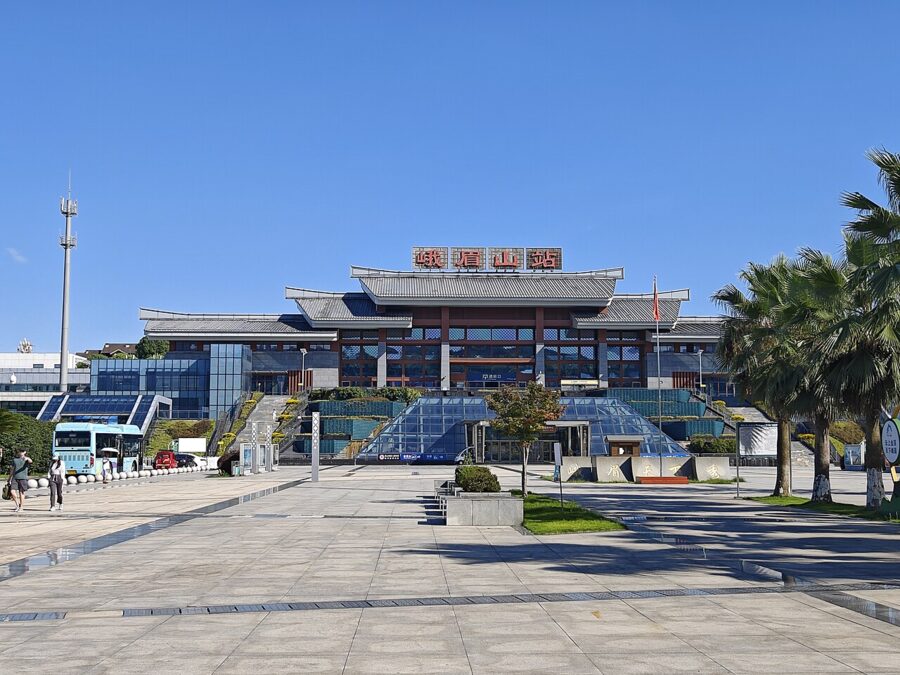
From the station, the scenic area’s sightseeing buses (观光车) run up the mountain, and the same buses start at Baoguo Temple and Huangwan near the foot. A return to Leidongping costs ¥90 and is valid for two days. A shorter half-mountain ride from Baoguo to Wannian Temple or Wuxiangang costs ¥40 return or ¥20 one way.
Tickets and the timed bus
The mountain ticket is ¥160 from 16 January to 14 December and ¥110 from 15 December to 15 January, half price for students and children aged 6–18, free for children under 1.2 m and over-65s. Book on the official 峨眉山旅游官方平台 mini programme, the scenic area’s official WeChat account, or an authorised platform such as Trip.com, with your passport number. Since 10 March 2026 the high-mountain buses run on timed slots: you choose one slot per person per day, booking opens 15 days ahead, and if you miss your slot you can move to a later one with seats, or ride after 14:00.
Two 2026 changes matter. From 23 May the Golden Summit area has been capped at 8,000 tickets a day, with the Leidongping buses capped to match, and it sold out repeatedly over Golden Week. And the temples now cost nothing extra: from 1 January 2026 Baoguo, Wannian, Fuhu and the other registered temples dropped their small entry fees (Baoguo was ¥8, Wannian ¥10), though you still need the mountain ticket to be on the mountain.
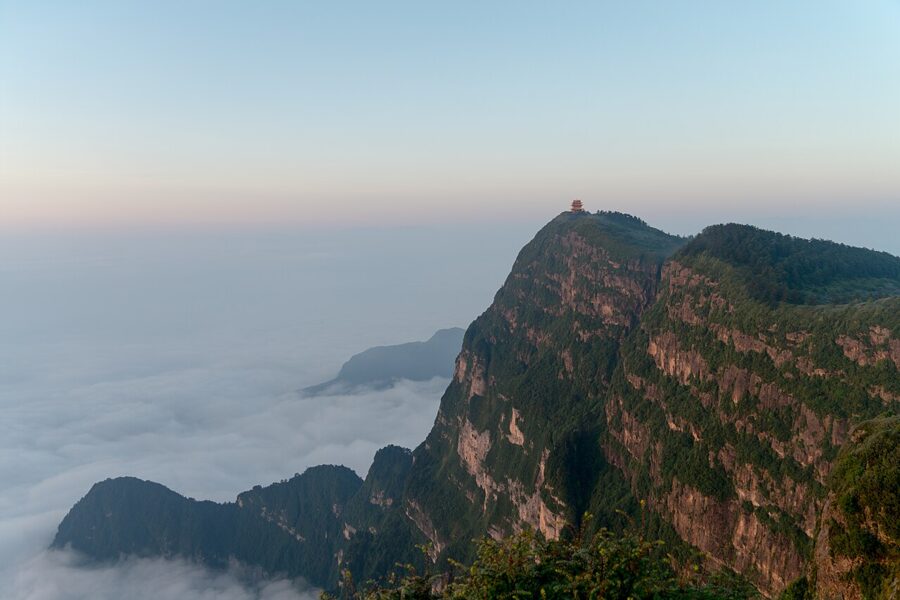
Leidongping, Jieyin Hall and the cable car
The bus climbs for an hour and a half to two hours to Leidongping (雷洞坪), at roughly 2,400 m. The Leidongping car park and bus station are being rebuilt, with completion due in 2027; waiting and boarding have moved to a temporary area, and the old station building no longer has rooms or a rest area. From the bus it’s about 1.5 km on foot, mostly stairs, to Jieyin Hall (接引殿), which takes 20–40 minutes depending on your lungs.
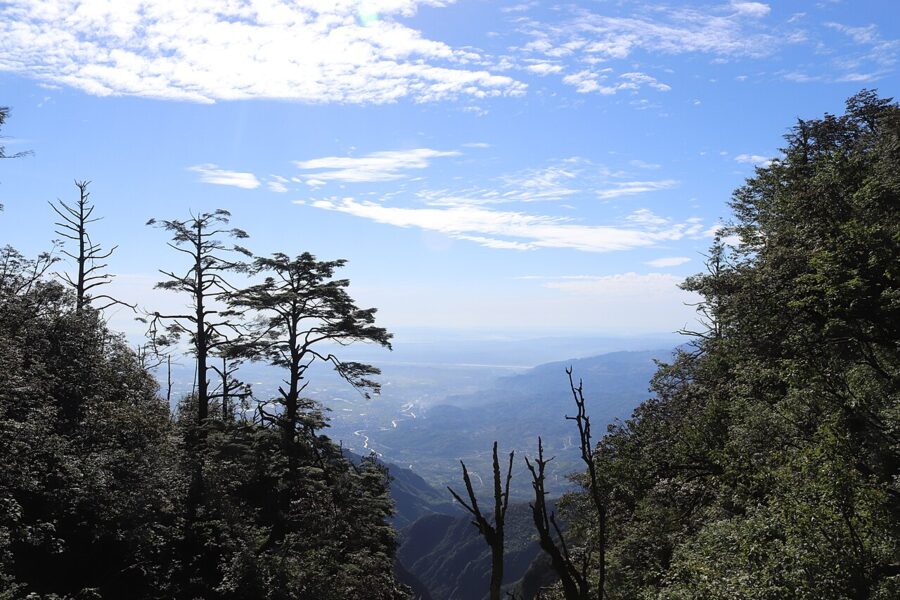
From Jieyin Hall the Golden Summit cable car (金顶索道) costs ¥65 up and ¥55 down in the main season, ¥30 and ¥20 in the mid-December to mid-January low season. It’s being upgraded as part of the same 2027 works, and is running at reduced capacity, so the queue can be long. The stairs to the top take most people well over an hour from Jieyin Hall. They’re steep but paved, and on a clear morning the views from them are better than from the cabin.
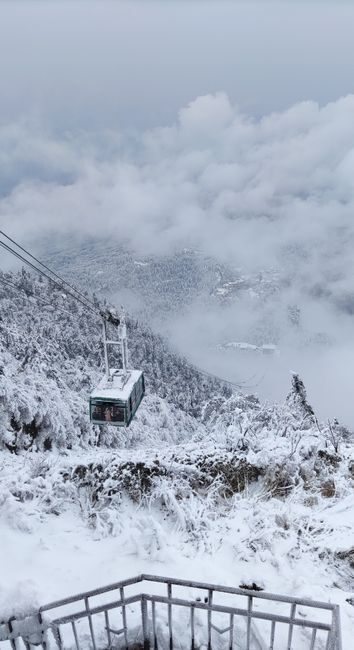
If you’d rather go up from the middle of the mountain, the Wannian cable car (万年索道) runs from the Wannian car park up to Wannian Temple, ¥65 up and ¥45 down in the main season.
On the Golden Summit
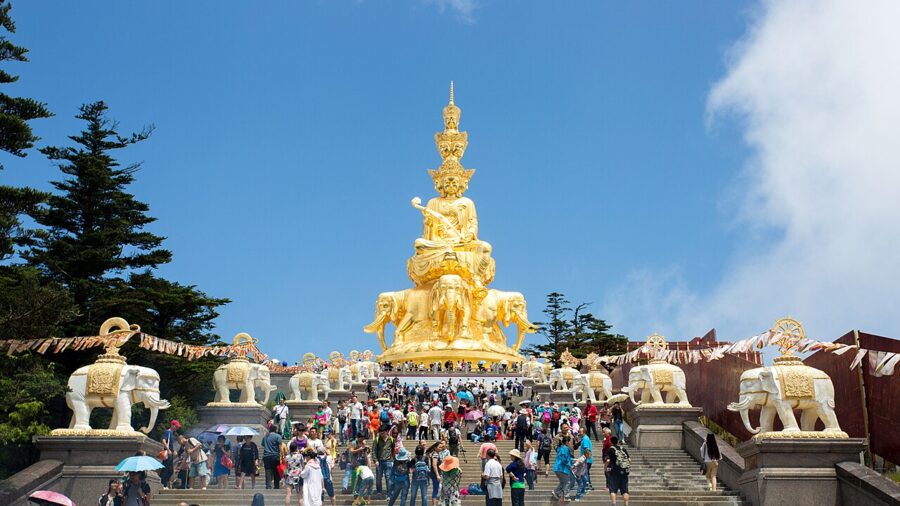
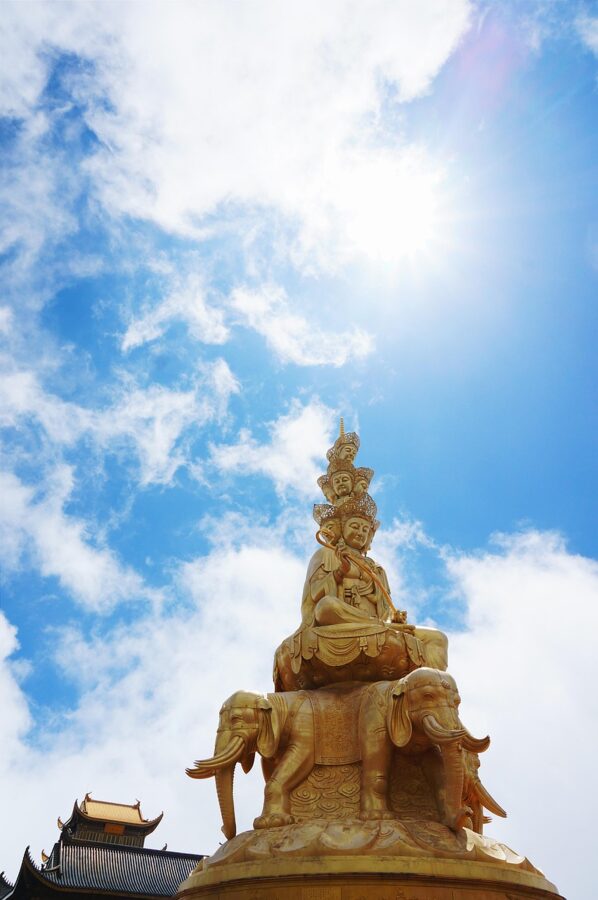
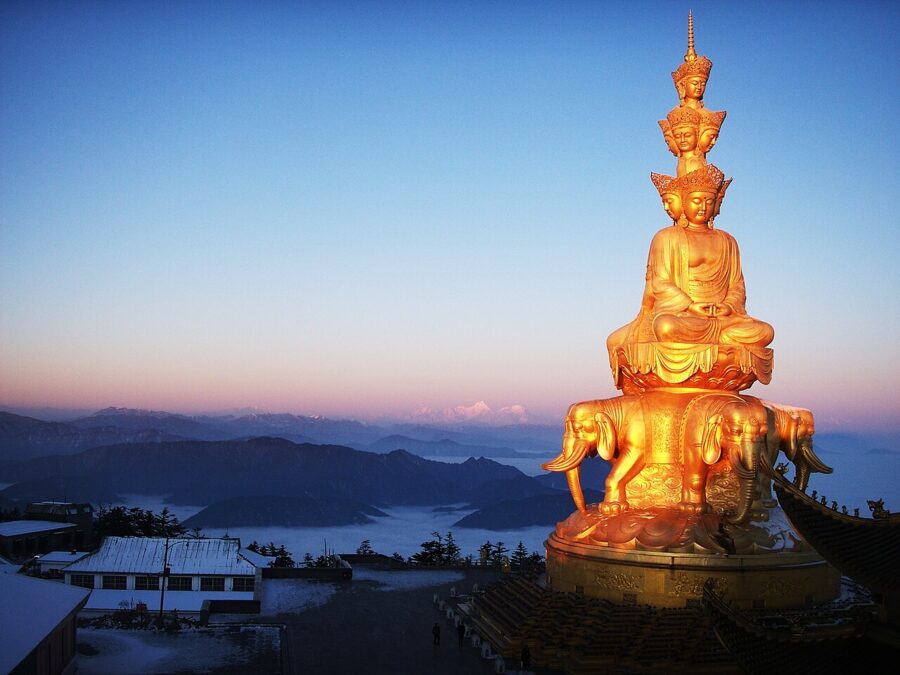
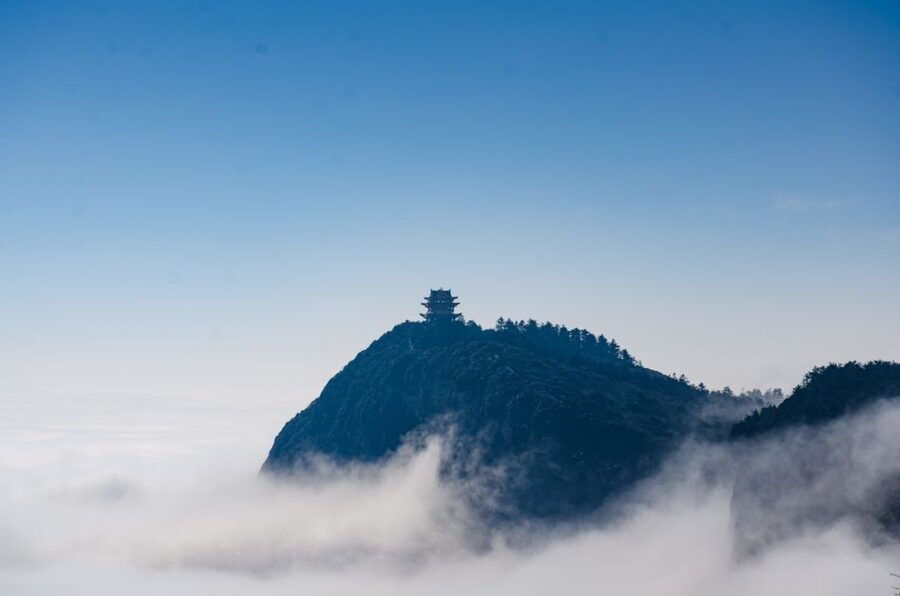
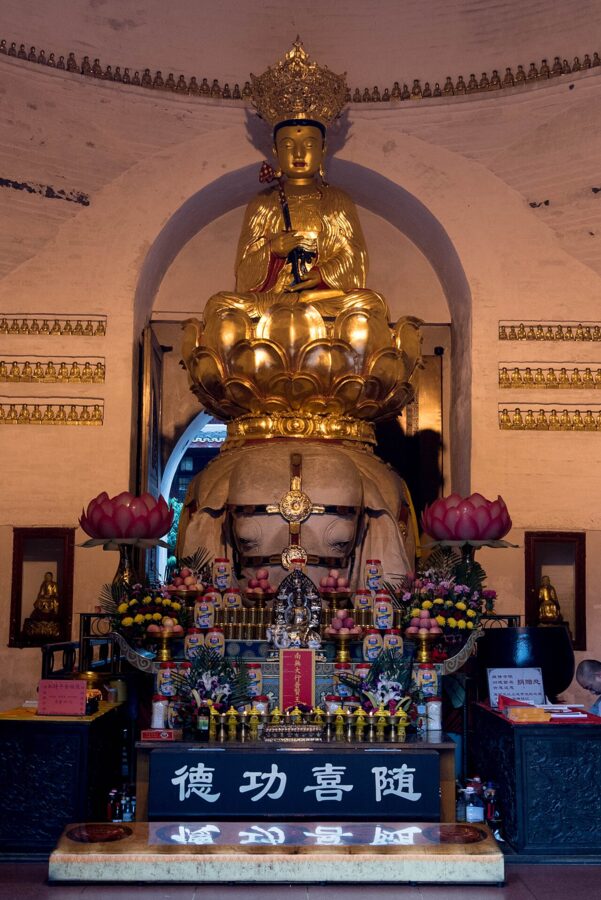
The terrace on top is dominated by the Ten Directions Samantabhadra (十方普贤), 48 m tall, gilded, and riding four elephants on a high plinth. It was unveiled in 2006 and covered in gold leaf in 2016. The ten heads stand for the bodhisattva’s ten great vows and for the ten directions, and his white elephant mount, which carries him in every statue on this mountain, is repeated on the elephants lining the approach.
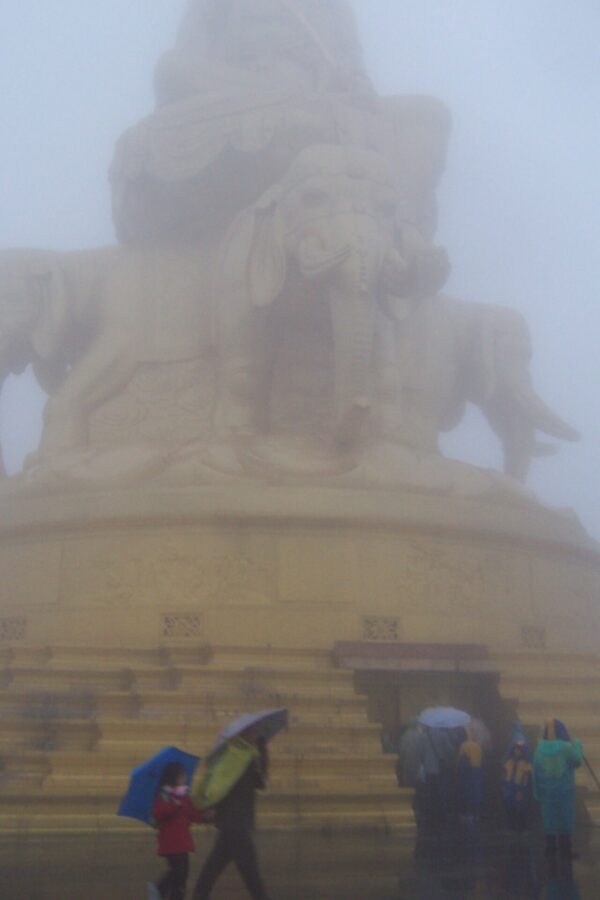
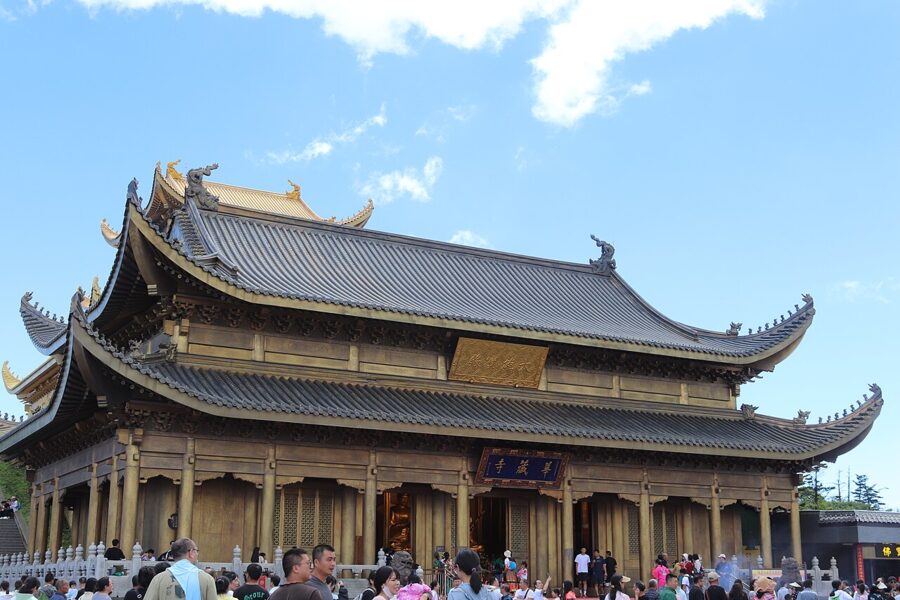
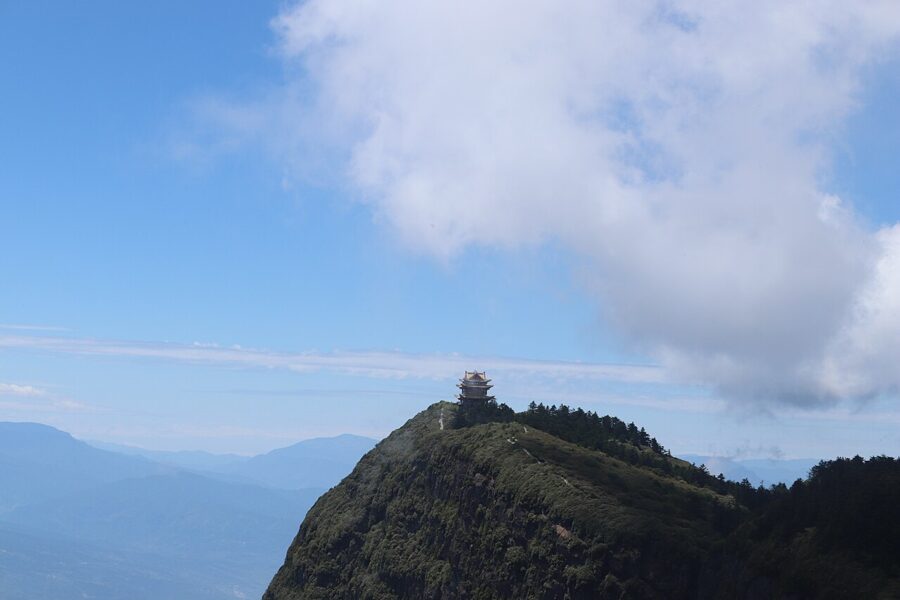
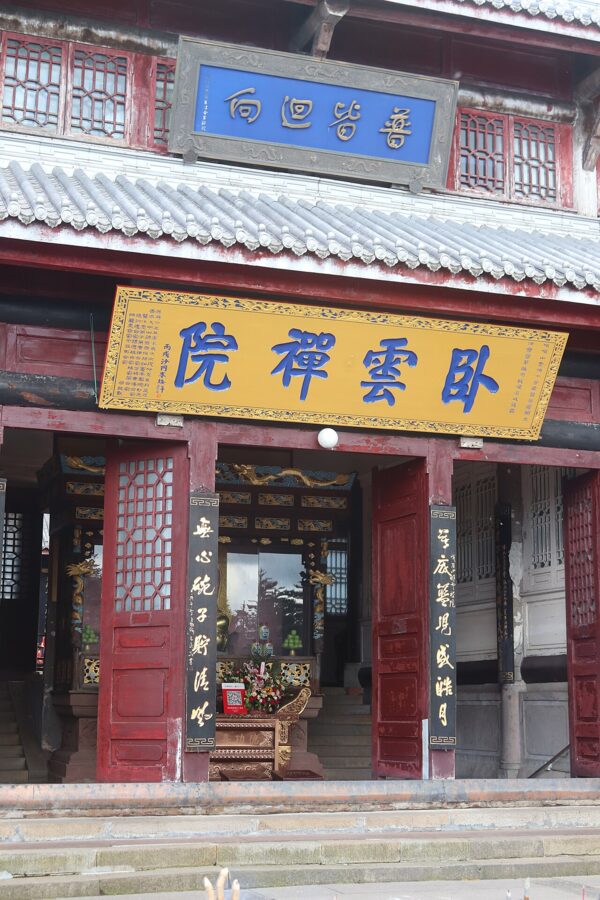
Around it are Huazang Temple (华藏寺), the temple that gives the summit its religious life, and the Golden Hall (金殿), whose gilded roof gives the Golden Summit its name. In the Yuan dynasty the summit temple was roofed in tin and called the Silver Summit instead. Woyun Chanyuan (卧云禅院), beside the summit temple, has long had a dining hall and rooms for pilgrims.
Sunrise, the sea of clouds and Buddha’s light
Emei’s four famous sights are the sunrise, the sea of clouds (云海), Buddha’s light (佛光) and the “holy lamps” (圣灯), drifting lights seen on rare dark nights. You need a night on top or near it to see the sunrise; the first buses don’t get you there in time. In summer the sun comes up around 06:00, in winter closer to 07:30. The sea of clouds is most likely mid-morning and late afternoon.
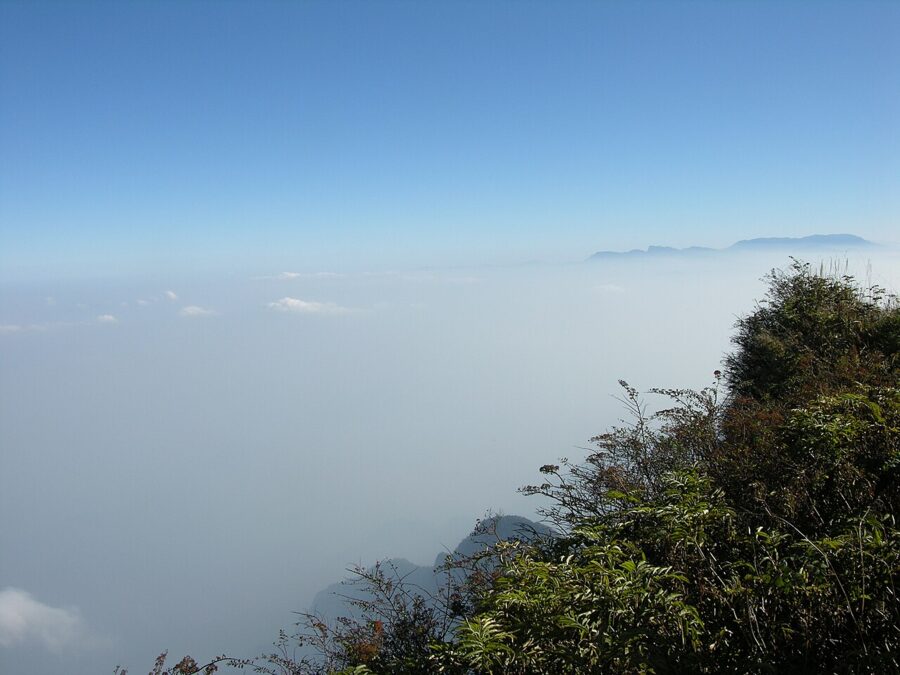
Buddha’s light is what physicists call a glory: when the sun is behind you and cloud below the cliff in front, your shadow appears on the cloud inside a ring of rainbow colours. Pilgrims took it as the bodhisattva showing himself. It turns up most often in the mid-morning and mid-afternoon, when the angle of the sun is right, and you see it from the edge of the summit cliffs.
Walking Emei
The mountain is best on foot, at least for part of the way. The full climb from Baoguo Temple at about 550 m to the Golden Summit takes most fit people two or three days, but almost nobody starts at the very bottom now. The usual plan is to ride the half-mountain bus or the Wannian cable car and walk up from the middle.
- The long, quiet route: from Qingyin Pavilion through the gorge called Yixiantian (一线天) to Hongchunping, then the Ninety-Nine Turns past Xianfeng Temple to Jiulinggang. This is the forest side, with streams, the most monkeys and the fewest people.
- The shorter route: from Wannian Temple over Huayan Ding to Jiulinggang. Fewer views of water, more temples.
- The top section, shared: from Jiulinggang up past the Elephant Bathing Pool (洗象池) to Leidongping, Jieyin Hall and the Golden Summit.
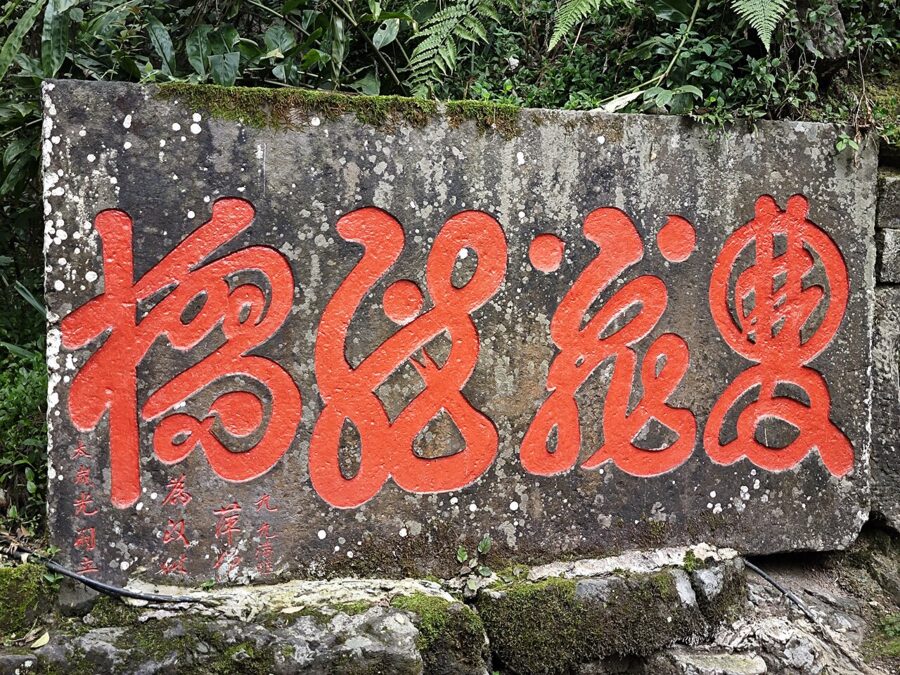
The gorge at Yixiantian is about 130 m long and only 3 m wide at its narrowest, with a plank path on the cliff above the stream. Above Hongchunping the Ninety-Nine Turns (九十九道拐) are a long, steep run of switchbacks, and most people find them the hardest part. Plan one long day from Qingyin Pavilion to somewhere near Xixiang Pond, sleep, and do the last stretch in the morning.
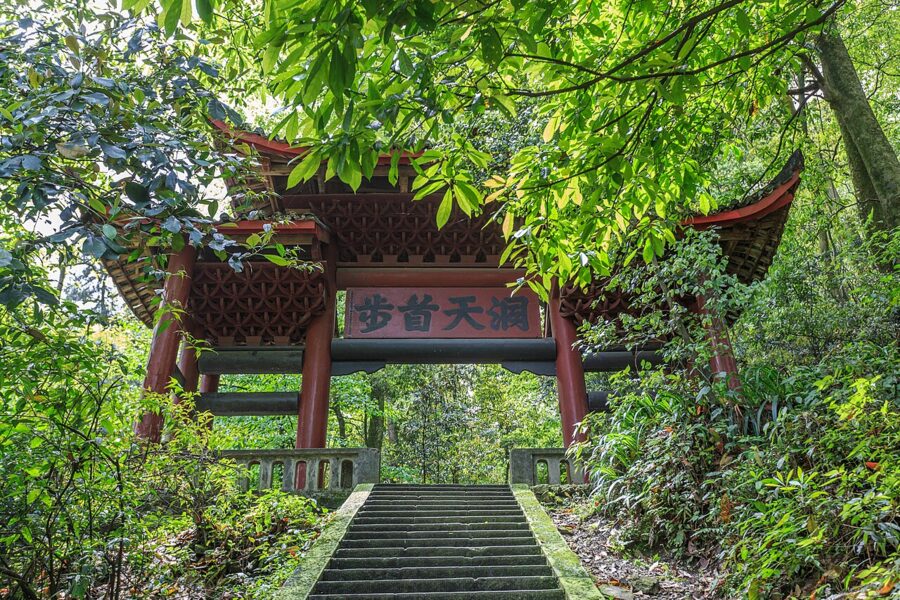
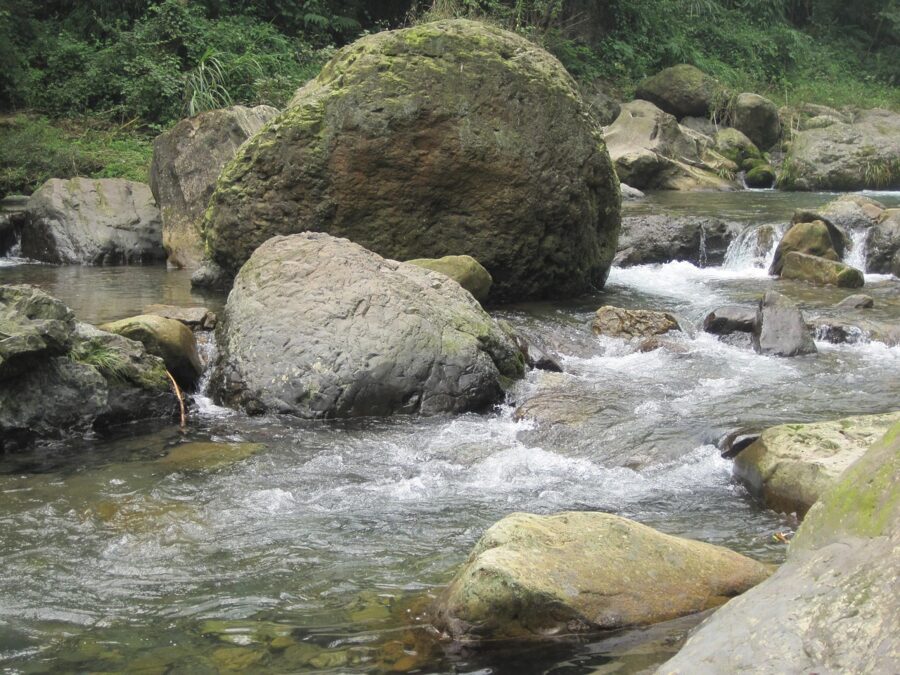
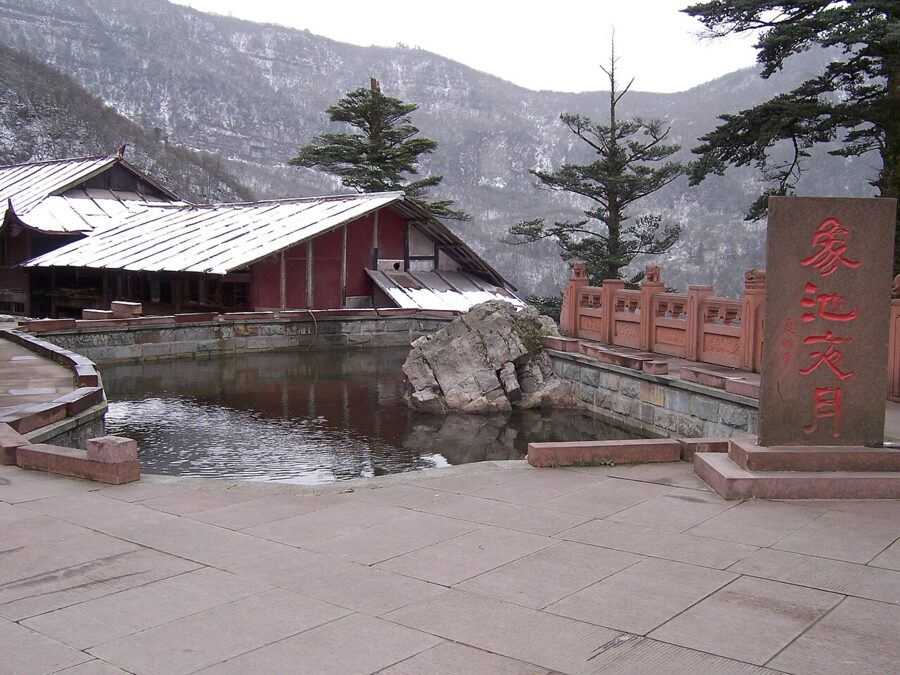
Carry water and snacks from the bottom. Prices climb with the altitude because everything above the road is carried up by porters, and there’s not much on sale between temples. Walking poles help on the descent, which is harder on knees than the climb.
The monkeys
Emei’s monkeys are Tibetan macaques (藏酋猴), a large, heavy-set species that’s under second-class national protection in China. The big groups hang around the ecological monkey zone (生态猴区) between Qingyin Pavilion and Yixiantian, and they turn up at Leidongping and on the walking routes too. They’re used to people, which is the problem: they associate bags, bottles and open hands with food.
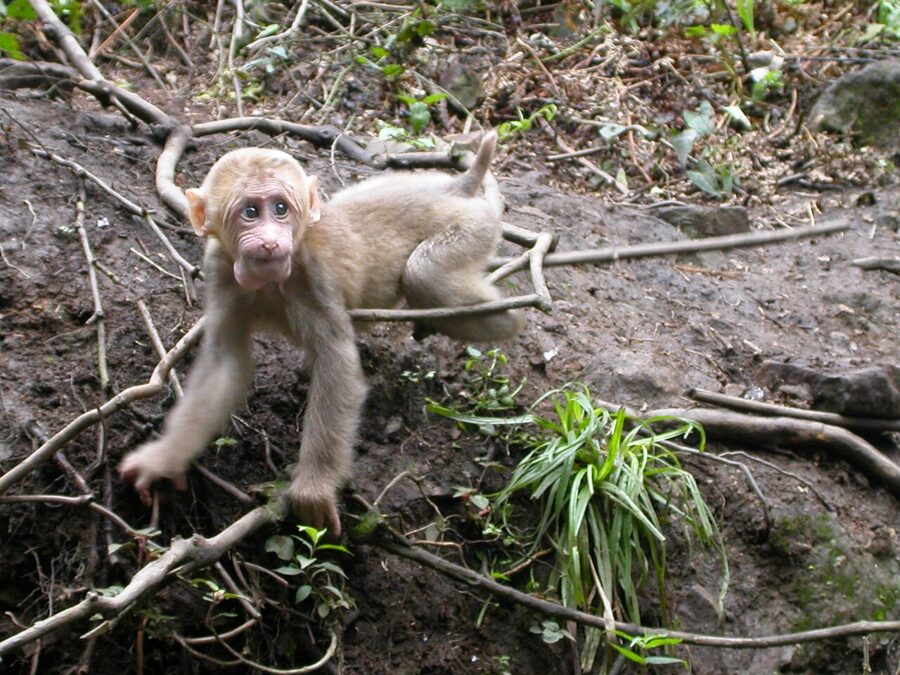
The rules are simple and the scenic area enforces them. Don’t feed, tease or touch the monkeys, keep a distance, and keep everything inside a zipped bag: food, glasses, phones, anything that rustles. In May 2026 a man filmed shoving a macaque that was sitting on a roadside railing at Leidongping was put on the scenic area’s blacklist and banned from Emei for three years.
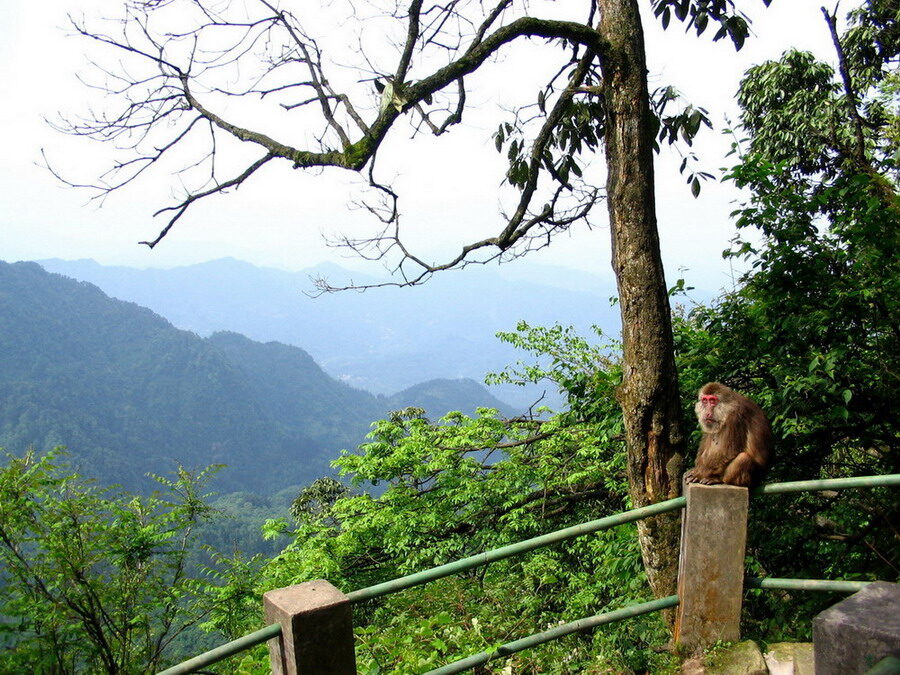
My view on the monkey zone: walk through it at a steady pace and don’t linger. The crowds feeding them have turned it into a show, and the monkeys further up the trail, away from the bus stops, are calmer and far more interesting to watch.
Baoguo and Wannian, the temples worth the detour
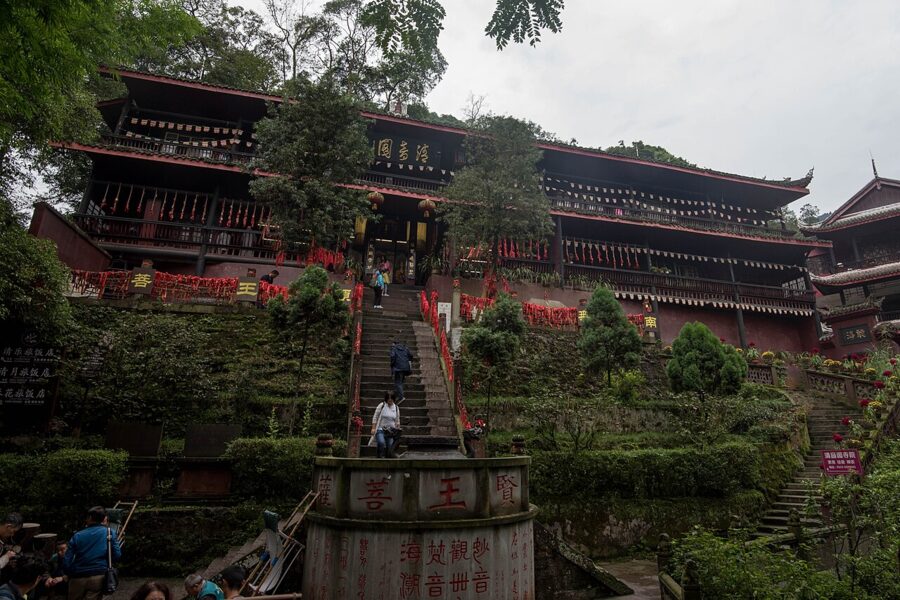
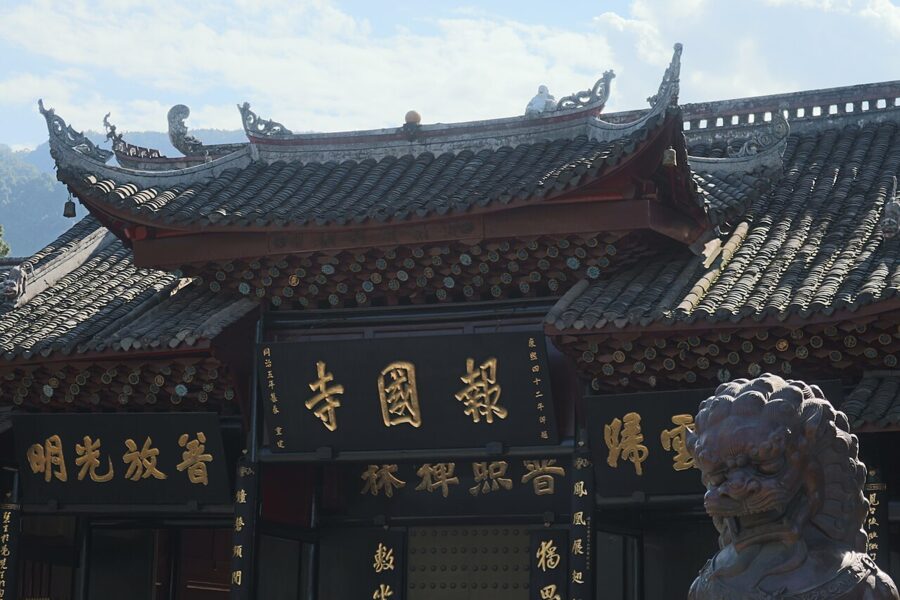
Baoguo Temple (报国寺) at the foot of the mountain is the traditional first stop. It was founded in the Wanli years of the Ming, originally to honour Buddhism, Taoism and Confucianism together, and the Kangxi emperor gave it its present name; his inscribed board, dated 1703, still hangs over the gate. Inside is a Ming bronze pagoda covered in some 4,700 tiny Buddhas, and outside, the great bell known as the Evening Bell of Shengji. Since January 2026 it’s free.
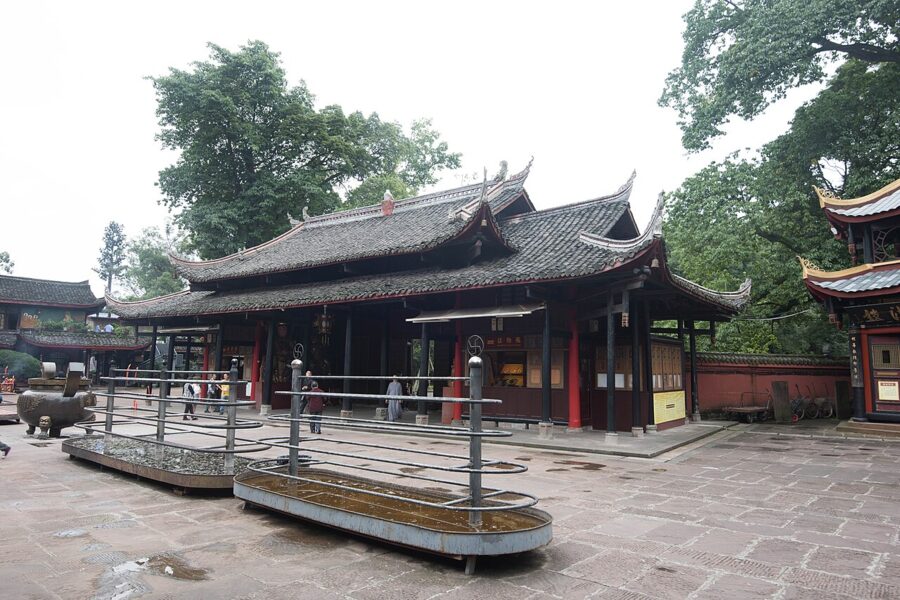
Wannian Temple (万年寺), at about 1,000 m, is the one I’d go out of my way for. Its Beamless Brick Hall (无梁砖殿) was built around 1600 for the Wanli emperor’s mother’s birthday, a domed hall without a single piece of wood, and the only building left standing when the rest of the temple was destroyed in 1946. Under the dome stands a bronze Samantabhadra on a white elephant, more than 7 m tall and about 62 tonnes, cast in 980 in the Northern Song. It’s the mountain’s great treasure.
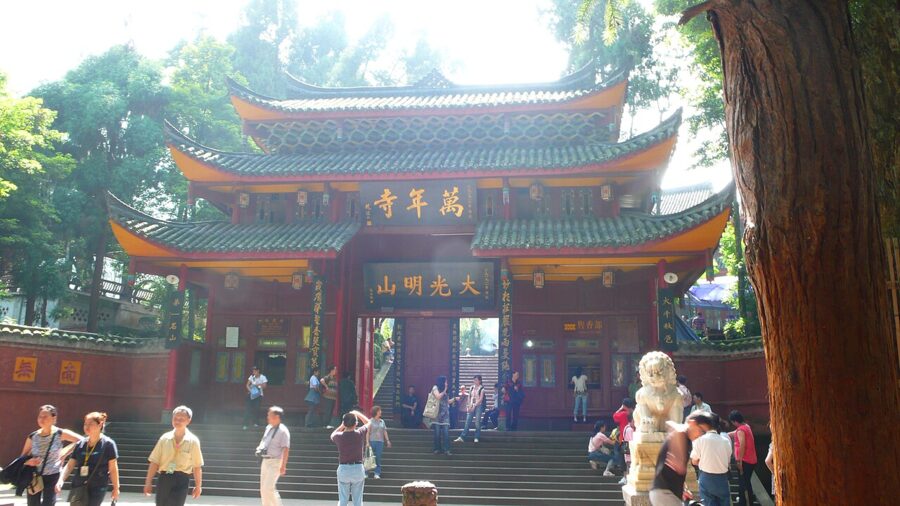
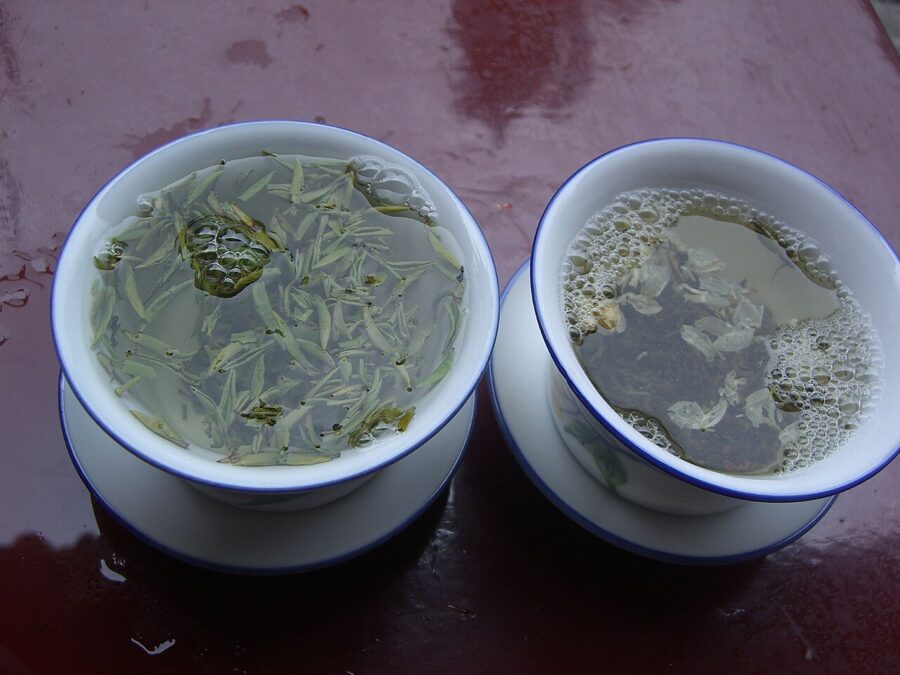
Emei is also tea country. The flat, needle-shaped Zhuyeqing (竹叶青), a green tea grown on these slopes, was named by Marshal Chen Yi during a visit to Wannian Temple, after the bamboo leaves its buds resemble. Monks and teahouses on the lower mountain sell it, and a cup on a temple terrace is the right way to end a walk.
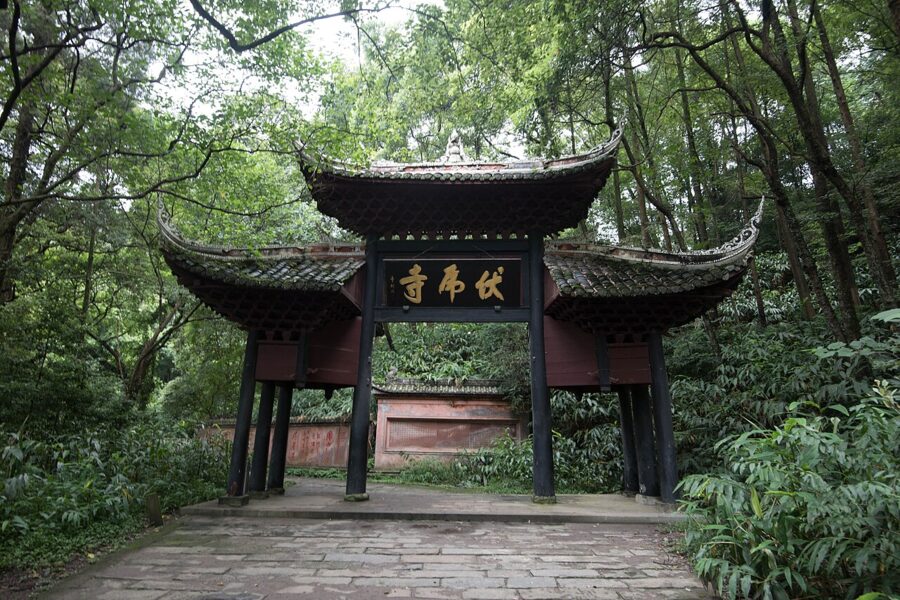
If you have time for one more on the lower mountain, Fuhu Temple (伏虎寺) is a short walk from Baoguo, set in tall trees with a long approach under the canopy.
Sleeping on the mountain, and the cold
To see the sunrise you need to sleep on top. The Jin Ding Hotel (Yuexia Building) (Trip.com) is a short walk from the top of the cable car and a few minutes from the terrace. It’s old (it opened in 1998) and summit prices are high, but you step outside at dawn and the statue is right there.
Summit rooms sell out early in the summer holidays and Golden Week. Many hotels are clustered around Leidongping too, but with the bus station under construction, check that yours is open before you book.
The temples along the walking routes take guests too, simple rooms at modest prices, at places such as Xianfeng Temple and the Elephant Bathing Pool. You usually just turn up and ask; don’t count on English or on hot water. At the foot of the mountain, the Holiday Inn Express Emei Mountain (Trip.com) is in Huangwan, a short walk from the Huangwan visitor centre where the buses leave, and is the easy choice for an early start.
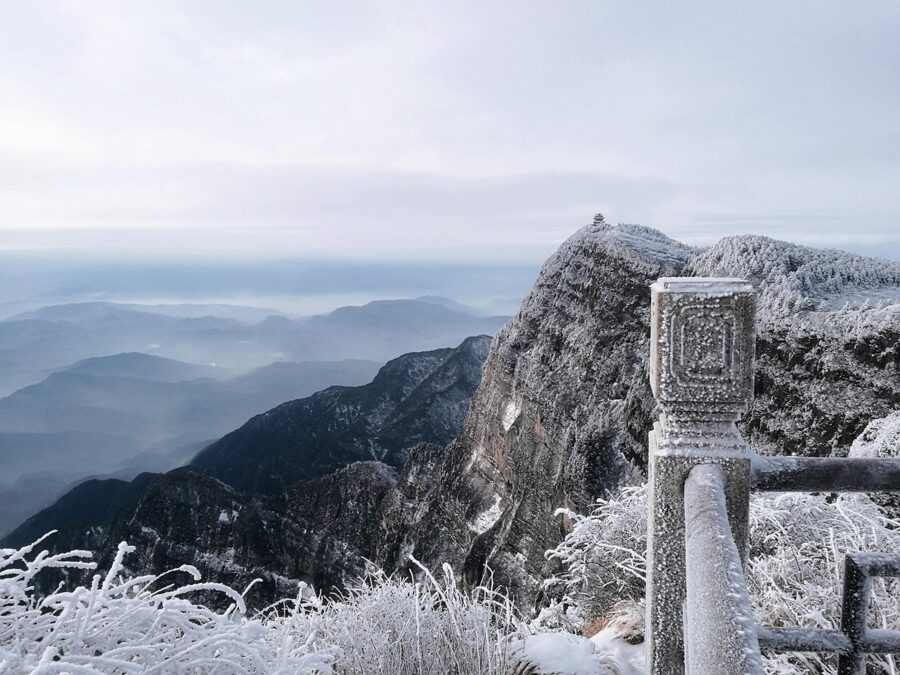
Pack for two climates. Leshan and the foot of Emei can be hot and humid while the summit is near freezing, and the weather changes fast. Bring a warm jacket, a hat, gloves from October onwards, a rain shell all year, and shoes with grip. In winter, strap-on ice cleats (冰爪) are worth having before you leave the foot of the mountain.
Two plans that work
Don’t try to do Leshan and Emei in one day. Each takes most of a day once you count transport, and you’d see both badly.
One day in Leshan
- Early: a train from Chengdu East to Leshan, then a taxi to the North Gate for the first entry slot (07:30 in summer, 08:00 in winter).
- Morning: the head platform, then straight into the queue for the Lingyun Plank Road to the feet. Exit south.
- Midday: Wuyou Temple and the Mahao tombs if you have the legs, then the shuttle to the pier and the boat.
- Afternoon: lunch on Zhanggongqiao food street, then the train back to Chengdu, or on to Emeishan.
Two days: Leshan and Emei
- Day one: Leshan as above, then the 20-minute train to Emeishan in the afternoon. Visit Baoguo Temple, eat in Huangwan or Baoguo, and sleep near the foot.
- Day two: the first bus slot you can book to Leidongping, walk to Jieyin Hall, cable car or stairs to the Golden Summit, then the bus back down. On the way down, ride the half-mountain bus to Wannian Temple, walk down to Qingyin Pavilion past the monkeys, and take the bus back to the station.
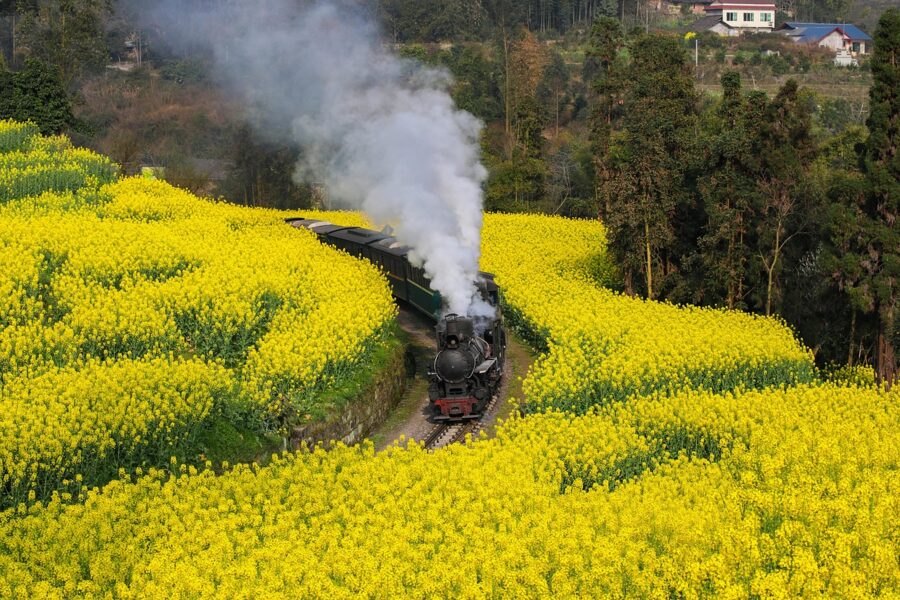
- With a third day: sleep on the summit for the sunrise and walk down the long route instead, or head south from Leshan to ride the Jiayang steam railway (嘉阳小火车), a working narrow-gauge line through the hills.
If you’re travelling further in Sichuan, Leshan and Emei fit easily before or after the pandas in Chengdu, covered in my guide to giant pandas in China, and either the long trip north to Jiuzhaigou or the fast train east to Chongqing. If you’ve already climbed Mount Hua, Emei will feel gentler, wetter and far more religious.
Skip this
- Anyone offering a queue shortcut through the Oriental Buddha Park, or a “guided” boat ticket at a markup. Buy from the official mini programmes.
- The feet in the middle of a summer day. Go at opening, go late, or take the boat.
- Feeding the monkeys, or carrying snacks in your hand through the monkey zone.
- Emei sunrise by bus. The first buses arrive after the sun is up. Sleep on top or let it go.
- Both sights in one day from Chengdu. It can be done, but you’ll spend more time in queues and on buses than looking at anything.
Book the first slot at the North Gate, see the face, then the feet, then the whole figure from the river. Then go and stand on the Golden Summit in the fog and wait for it to clear.