Giant Pandas in China: Where to See Them, the Chengdu Base, Dujiangyan, Wolong and How to Visit Well
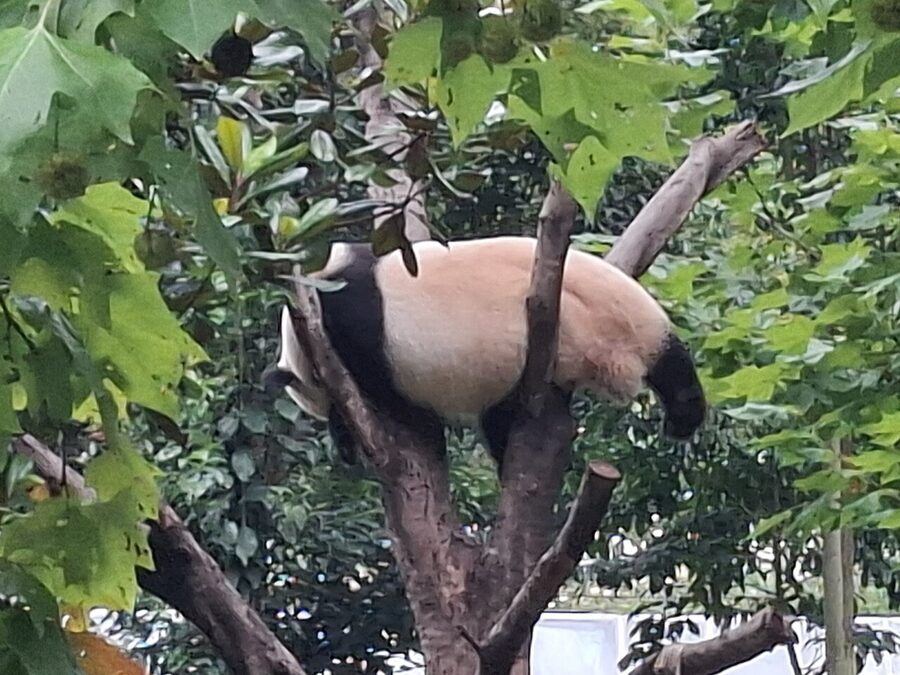
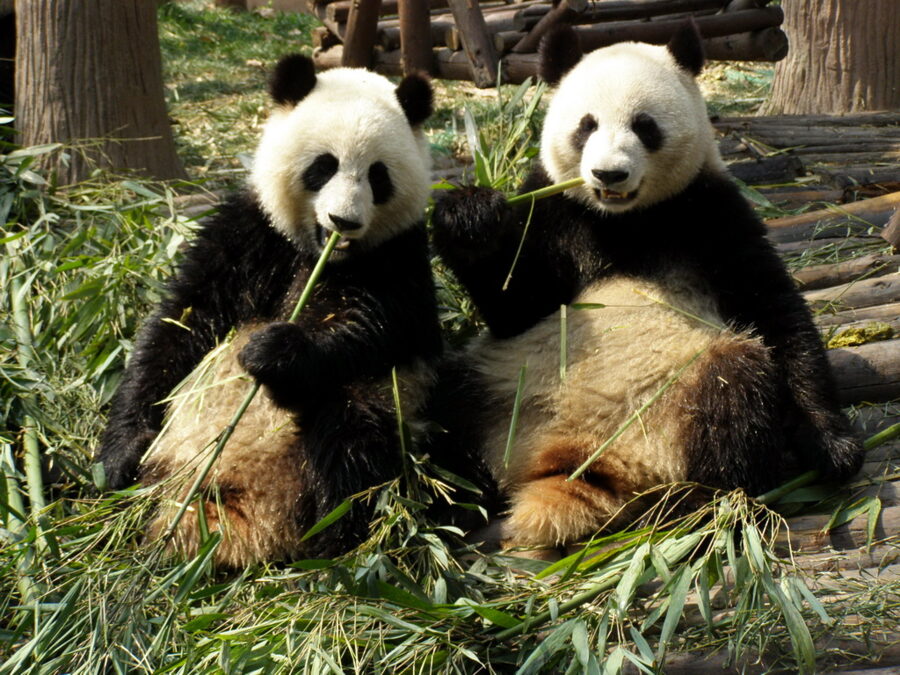
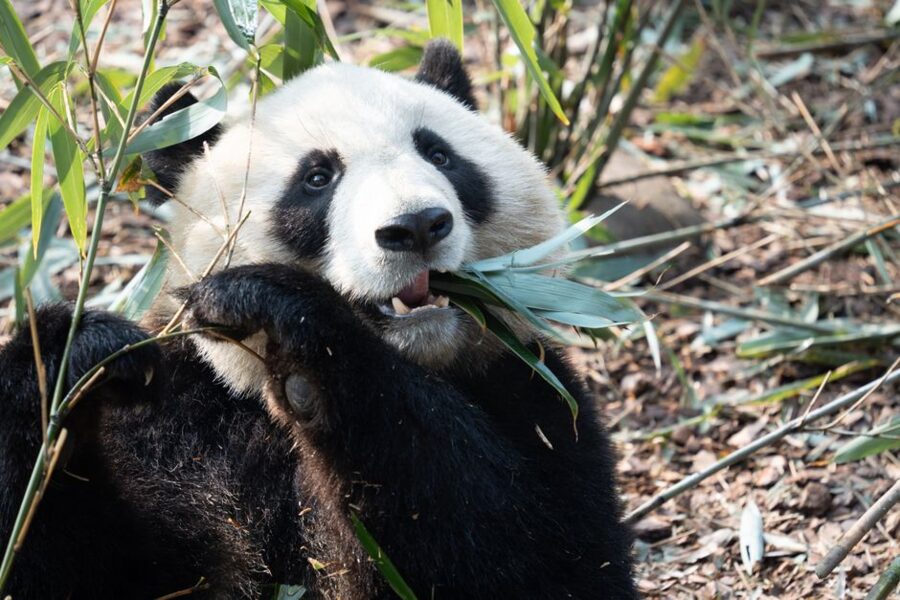
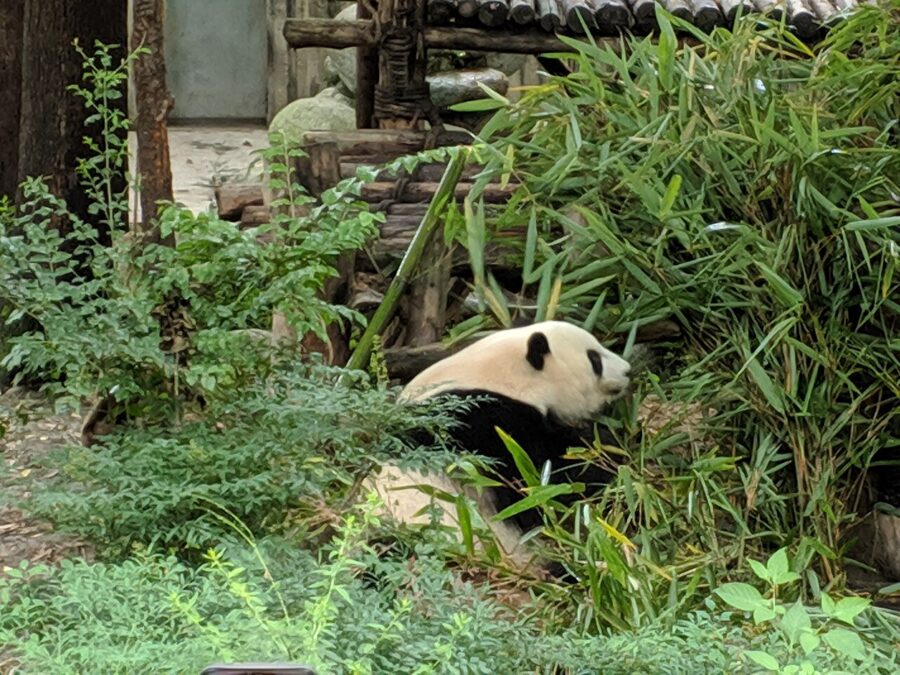
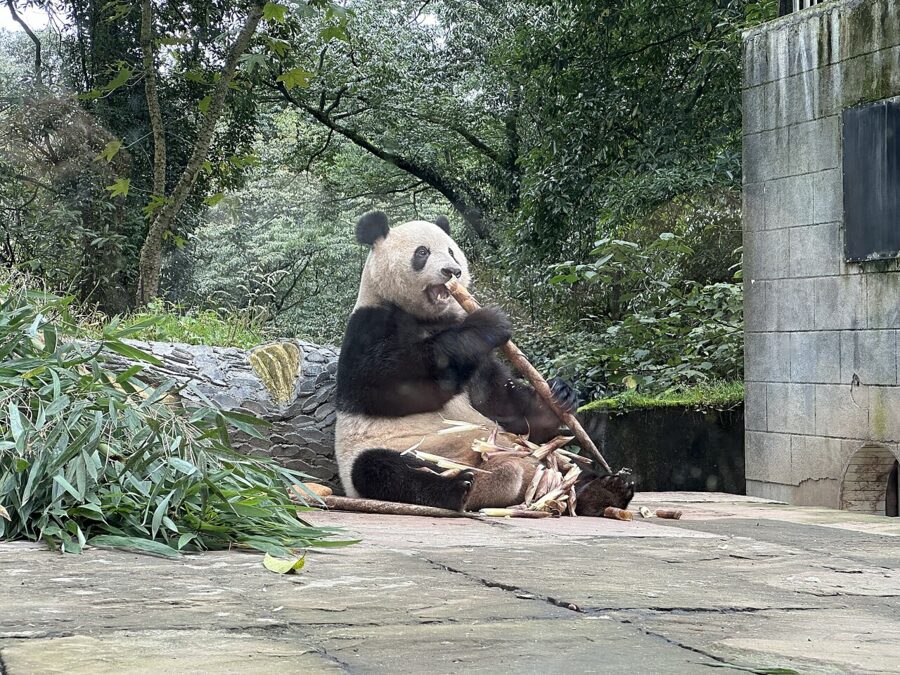
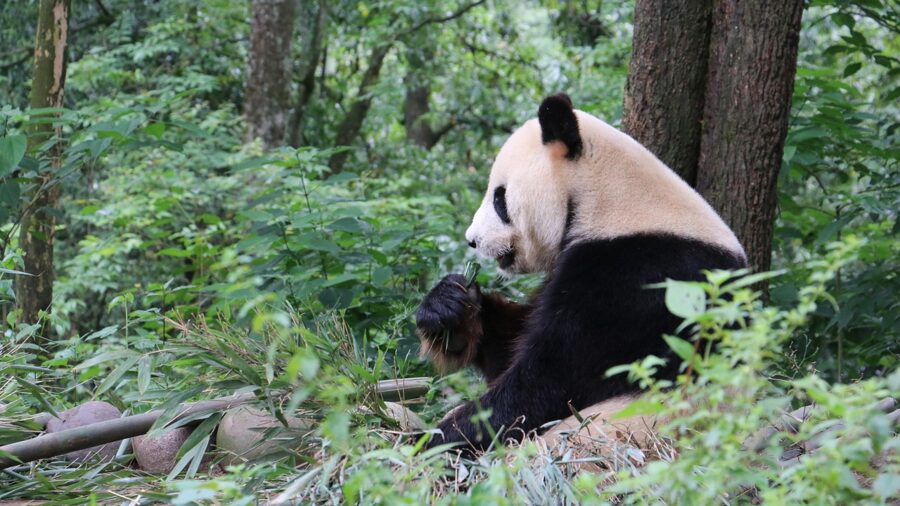
At 07:30 the South Gate of the Chengdu panda base opens and a few hundred people break into something close to a jog. They are heading for Villa No. 6, where a six-year-old female called Huahua lives, and within a quarter of an hour the railing in front of her yard is lined with phones. Two minutes’ walk away, in a yard nobody is filming, an unnamed adult sits in a heap of fresh bamboo and strips the leaves off stem after stem with the concentration of a man doing his tax return.
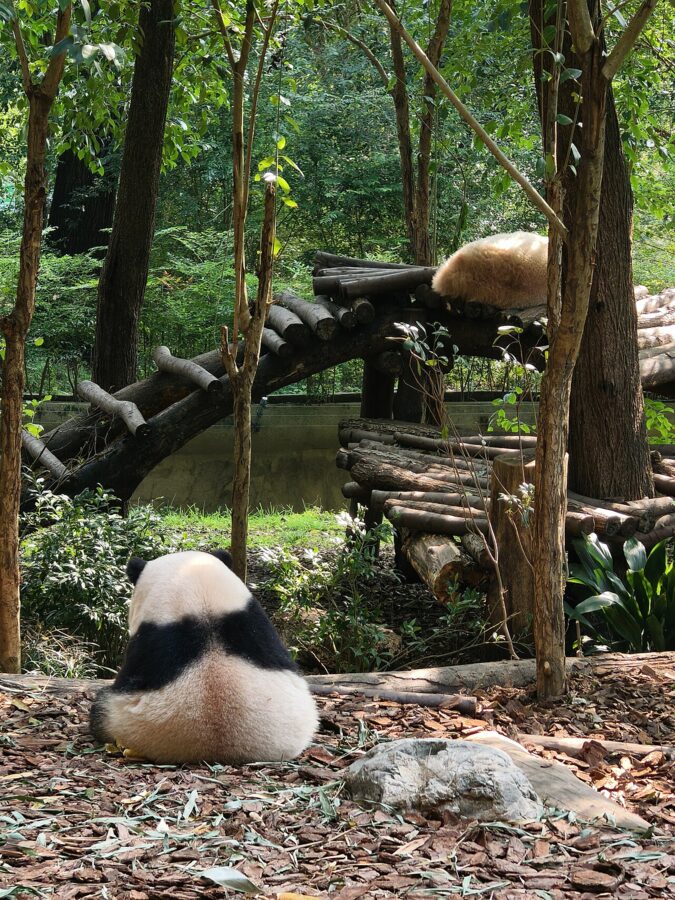
That second panda is the one I’d tell you to find. Seeing giant pandas in China is easy, cheap and, in the first two hours of the day, close to guaranteed. What takes a little planning is choosing the right base, getting in before the heat sends the animals indoors, and not ending up in the crowd-crush version of the morning.
This guide covers the Chengdu Research Base of Giant Panda Breeding, Panda Valley at Dujiangyan, the mountain centres at Wolong and Bifengxia, the city zoos that keep pandas, what to do about the volunteer programmes, and how to time the whole thing. One change matters more than any other for 2026: the Dujiangyan base where most of the famous “panda keeper” days used to happen closed for renovation on 23 April, and it had not reopened by mid-November.
If you only have a morning in Chengdu, spend it at the city’s own base. If you have a whole day and want mountains around the pandas, go to Wolong. Everything else is a variation on those two.
| Place | From central Chengdu | Adult ticket | Best for |
|---|---|---|---|
| Chengdu Research Base of Giant Panda Breeding | About 30 minutes by metro and bus | ¥55 | A first visit, cubs in the nurseries, Huahua |
| Panda Valley, Dujiangyan | About 1 hour 15 minutes by metro and intercity train | ¥55 | A smaller, greener site paired with the irrigation works |
| Shenshuping base, Wolong | About 2 to 2.5 hours by road | ¥90 list price | Mountain setting, Fu Bao, a full day out |
| Bifengxia base, Ya’an | About 1 hour by train, then 25 minutes by taxi | ¥100 (scenic area, pandas included) | Forested canyon, the pandas back from Japan |
| CCRCGP Dujiangyan base | About 1.5 hours | Closed | Shut for renovation since 23 April 2026 |
| Beijing, Chongqing and Shanghai zoos | Not in Sichuan | Zoo ticket | Seeing a panda when Sichuan is not on the route |
In This Article
- The giant panda, in five minutes
- The Chengdu Research Base of Giant Panda Breeding
- Tickets and real-name booking
- Getting there: metro, express buses and taxis
- South Gate or West Gate, and the routes inside
- The nurseries, Villa No. 6 and the famous names
- Red pandas, swans and the rest of the zoo
- Crowds and holidays
- Dujiangyan: two panda sites, one confusing name
- Panda Valley (熊猫谷)
- The CCRCGP Dujiangyan base, closed since April 2026
- The volunteer programme, told straight
- Wolong: Shenshuping, Fu Bao and the road up the valley
- Bifengxia and Ya’an
- Pandas outside Sichuan
- When are the pandas awake?
- How to behave, and what gets you banned
- Plans: a half day, a full day and two days
- A half day at the Chengdu base
- A full day at Dujiangyan
- Two days: Chengdu plus the mountains
- Skip this
The giant panda, in five minutes
The giant panda lives only in China, in the mountains of Sichuan, Shaanxi and Gansu, spread across six ranges from the Qinling in Shaanxi to the Liangshan in southern Sichuan. Its diet is almost entirely bamboo, a food so poor in energy that a panda spends much of its waking day eating and most of the rest asleep. That one fact explains nearly everything you’ll see at a base.
China’s fourth national panda survey counted 1,864 wild pandas. The National Forestry and Grassland Administration now puts the wild figure at about 1,900, up from roughly 1,100 in the 1980s. The captive population reached 830 in November 2026, the figure announced at the Global Panda Partners Conference in Chengdu, and most of those animals live in Sichuan.
In 2016 the IUCN moved the giant panda from endangered to vulnerable, and China’s own listing followed in 2021. In October of that year the country set up Giant Panda National Park, about 22,000 square kilometres across all three provinces. By the forestry administration’s 2026 count it protects close to 1,400 wild pandas, more than 70 percent of the total.
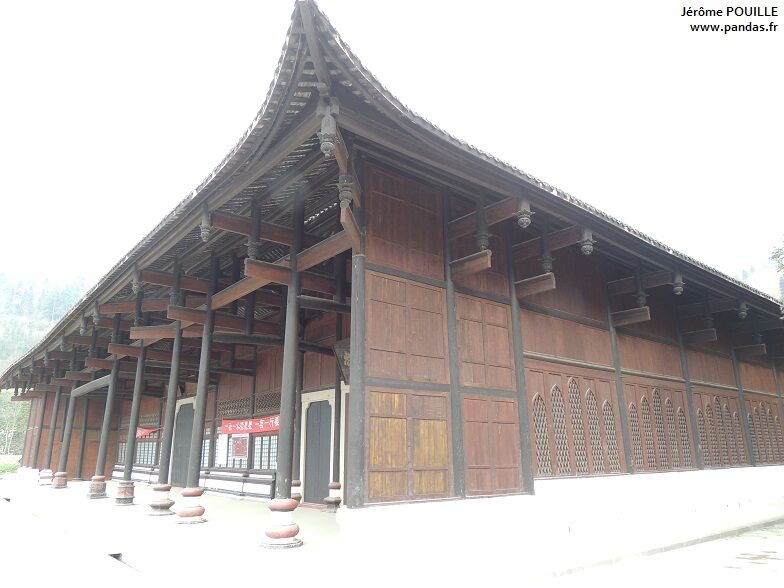
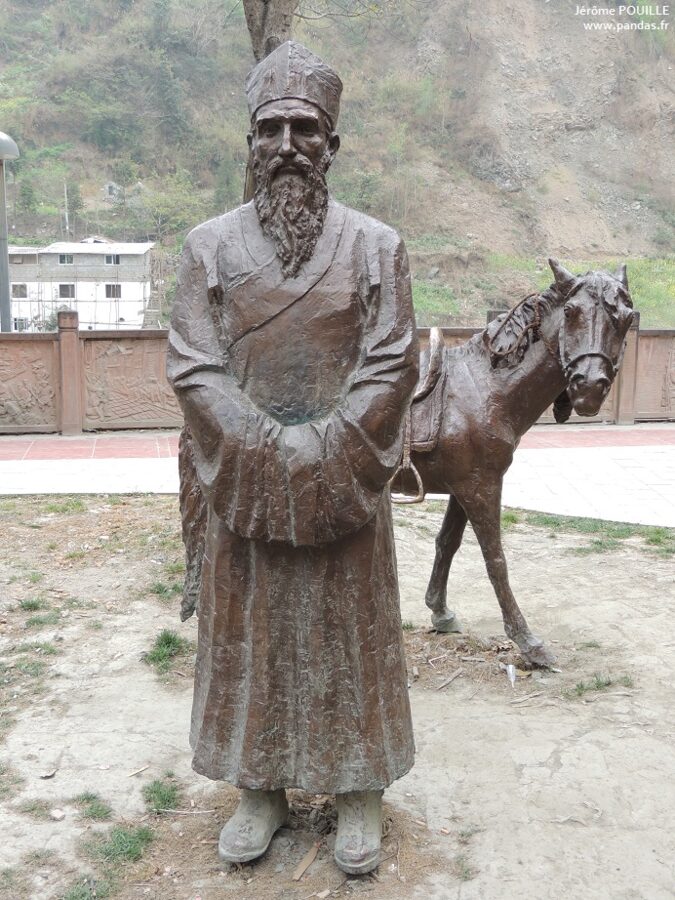
The animal entered Western science from Ya’an. In 1869 Armand David, a French Lazarist missionary based at the mission in Dengchigou in Baoxing County, was shown a black and white skin by local hunters and sent specimens to Paris. The church he stayed in still stands.
What you won’t see is a wild panda. They live at low density in steep bamboo forest, and even people who work in the reserves rarely see one. Every panda in this guide lives in a breeding or research centre or a zoo, and the useful question is which of those does right by the animals and by you.
The Chengdu Research Base of Giant Panda Breeding
The base sits at 1375 Panda Avenue in Chenghua District, about 10 km north of Tianfu Square. It opened in March 1987 with six sick and starving pandas rescued from the wild, on a site of 78 mu. It now covers 3,570 mu, about 238 hectares, and runs the largest captive breeding group in the world.
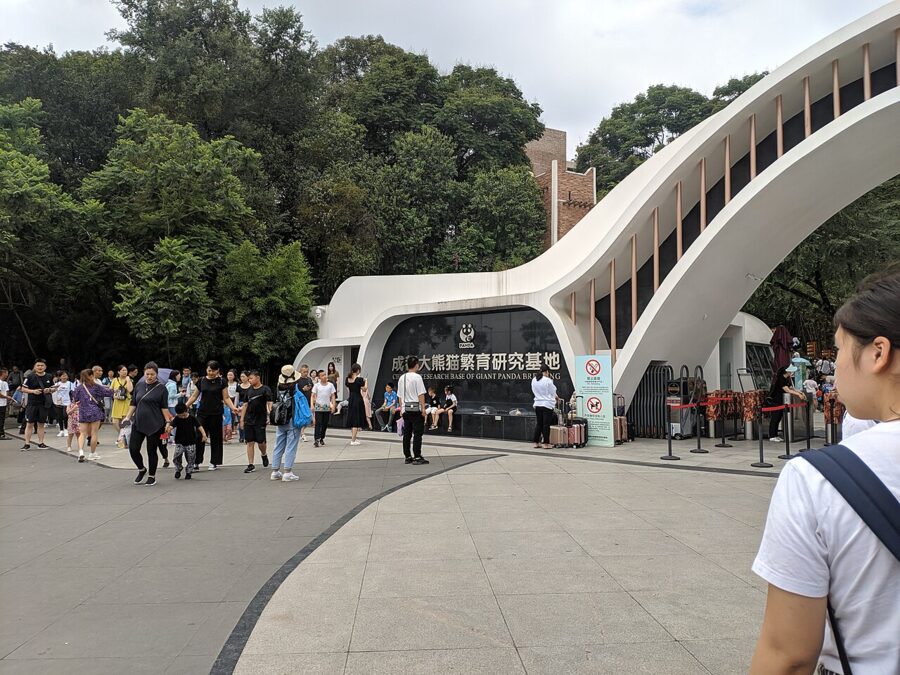
The site splits in two. The old core around the South Gate has the adult and subadult villas, the Sun and Moon nurseries, the panda museum and Villa No. 6.
The expansion area, which opened on trial on 1 January 2022, is reached from the West Gate and stretches over the hills with raised walkways linking seven enclosures through a stretch called Adventure Valley. If you have been to Chengdu before and remember a smaller park, this is the change.
Tickets and real-name booking
Adult tickets cost ¥55. Students in undergraduate study or below pay ¥27 with a student card, and anyone 60 or over, plus children aged six and under or under 1.3 m, gets in free without booking, though you still show ID at the gate. An annual pass is ¥168.
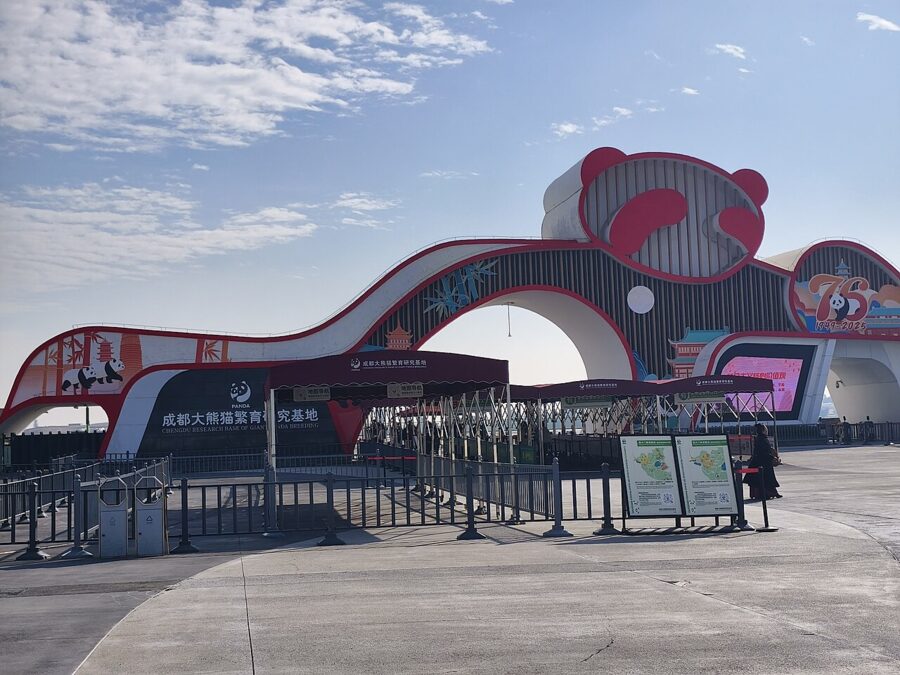
Every other visitor books online in their own name, up to 14 days ahead, and picks a morning or an afternoon slot. From March to October morning entry runs 07:30–12:00 and afternoon entry 12:00–17:00, with the park clearing from 18:00. From November to February the morning slot starts at 08:00, afternoon entry stops at 16:30 and clearing starts at 17:30.
The base caps the day at 85,000 people, and the official rule is that tickets stop when the quota is gone. Book through the official WeChat account or mini programme, or through one of the authorised platforms: Meituan, Douyin, Tongcheng and Trip.com, which is the easiest for a foreign passport. The base’s own ticket page lists the passport as an accepted document, and the passport you booked with is what opens the gate.
Two small rules catch people out. A morning ticket can’t be used after noon and an afternoon ticket won’t let you in early, so the base asks afternoon holders not to queue before 12:00. And unused tickets are refunded only through the channel you bought from, within 30 days starting at 17:00 on your visit date, a rule in force since 27 August 2026.
The base also warns, in plain words on its own ticket page, against anyone selling paid “fast entry”. There is no such thing, so ignore anyone who offers one.
Getting there: metro, express buses and taxis
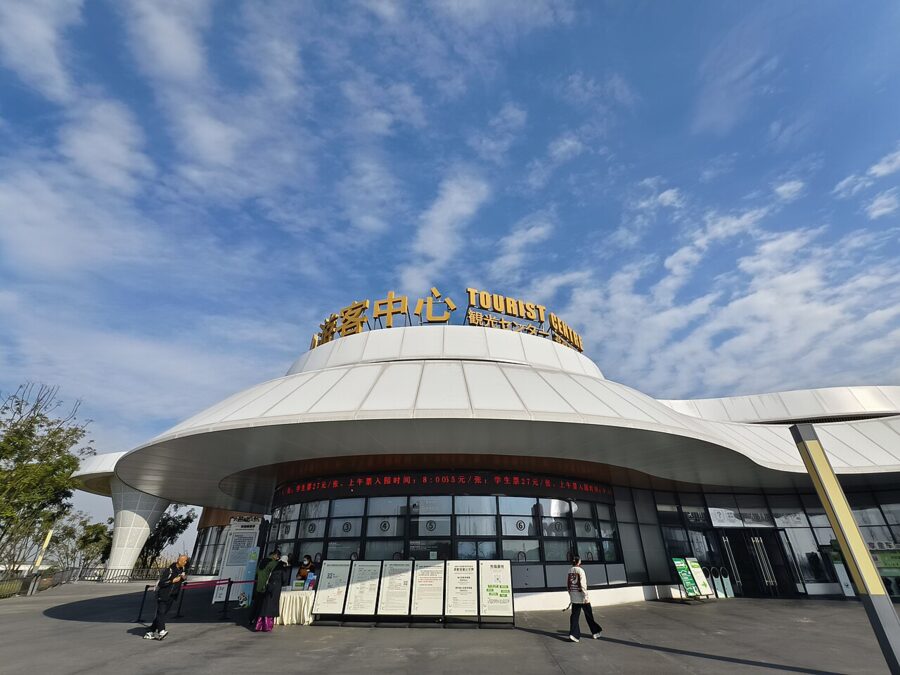
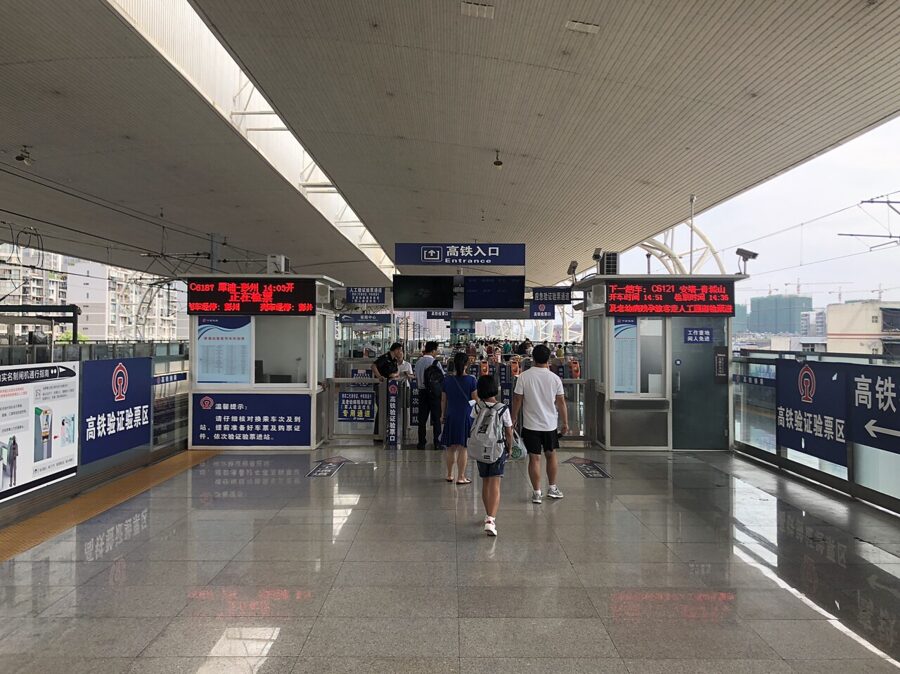
The base’s own directions are the ones to follow. For the South Gate, take Metro Line 3 to Panda Avenue (熊猫大道) and leave by Exit A for the 408 shuttle bus, which runs straight to the gate. Line 3 to Zoo station, then bus 655 or 87, also ends at the South Gate.
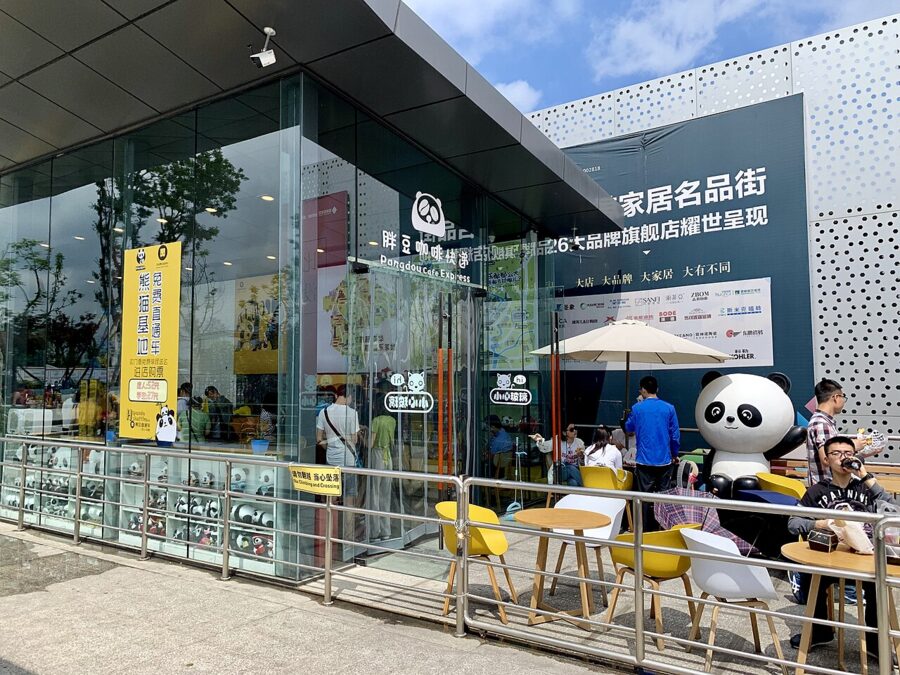
For the West Gate, take Line 3 to Junqu Zongyiyuan (军区总医院, the General Hospital stop) and leave by Exit B. Walk about 20 m to the bus stop and take the 409 shuttle, around ten minutes to the gate, or buses 110, 110A or 659 to the Yulei Lu and Cuiwei Lu stop and walk the last 600 m.
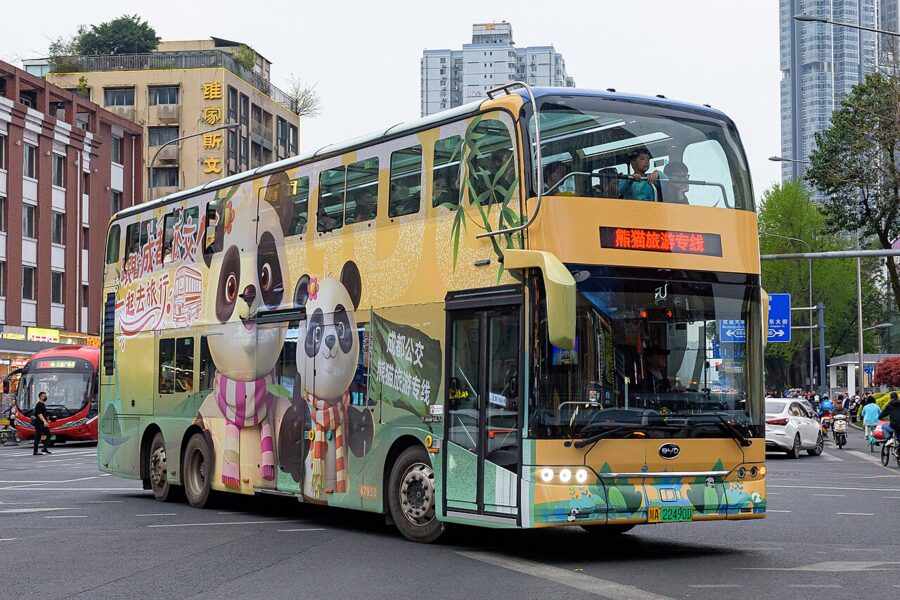
From the centre, the simplest ride is one of the Panda Base express buses (熊猫基地直通车). Line 1 starts at Chunxi Road, Line 3 at Kuanzhai Xiangzi, Line 4 at Chengdu East station, and Line 5 at Wuhou Shrine and Jinli on weekends and public holidays. The fare was ¥8 when the routes were reorganised in March 2025, paid by scanning a QR code with Alipay or WeChat Pay, and the Chengdu Bus app has the current timetable.
The base’s own taxi estimates are about ¥40 and 25–35 minutes from Chunxi Road or Chengdu East station, about ¥100 from Shuangliu airport and about ¥200 from Tianfu airport. Didi works the same way. Ask for 熊猫基地南门 (South Gate) or 西门 (West Gate) so you are not dropped at the wrong side of a 238-hectare site.
South Gate or West Gate, and the routes inside
There are three standard walking routes. The long one starts at the South Gate, takes in the museum, the adult and subadult villas, the Sun and Moon nurseries and the expansion halls, and ends at the West Gate after about five and a half hours. The short loop stays in the old core, starts and ends at the South Gate and takes about two and a half hours.
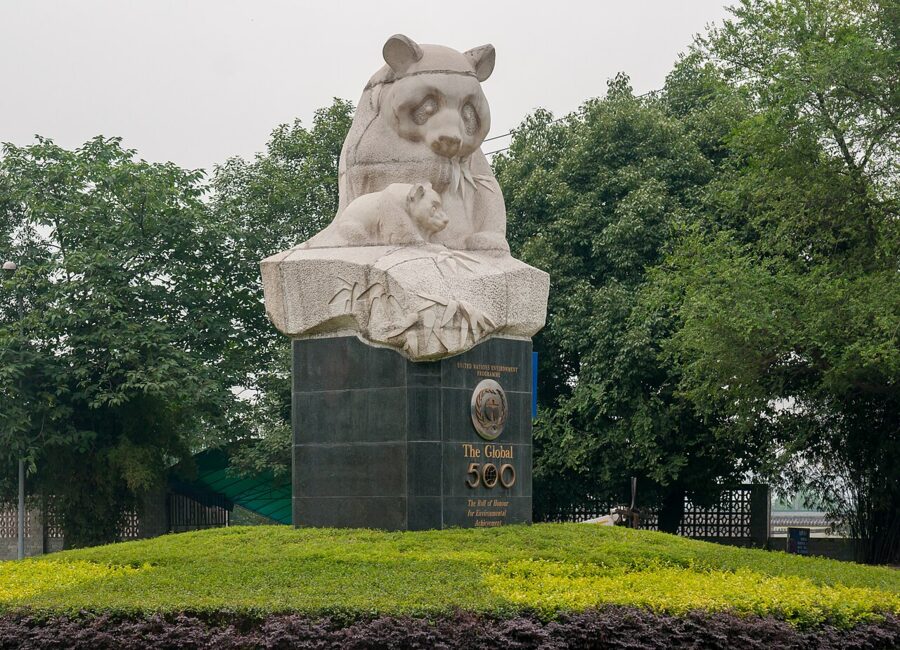
My pick for a first visit is the South Gate at opening, straight to the villas and the nurseries while the pandas eat, then a slow walk west through the expansion area once the crowds catch up. The 69.8 m Panda Tower near the middle, signposted in English as the Bamboo Tower, has the best view over the whole site, but it closes in bad weather, so treat it as a bonus.
Mondays need a note. To give the animals a rest day, Villa No. 6 now closes every Monday except on national holidays, and the Panda Art Museum closes on Mondays too. If seeing Huahua is the reason you came, do not book a Monday.
The nurseries, Villa No. 6 and the famous names
Cubs are born mostly in the summer, and by autumn they are on view in the Moon Nursery (月亮产房) and the Sun Nursery (太阳产房) near the South Gate, with the Star Nursery in the expansion area. Through the glass you’ll see incubators, keepers at work and, on a good day, a row of small pandas asleep in a basket. These rooms get the worst crowds on the site, so go to them first, not last.
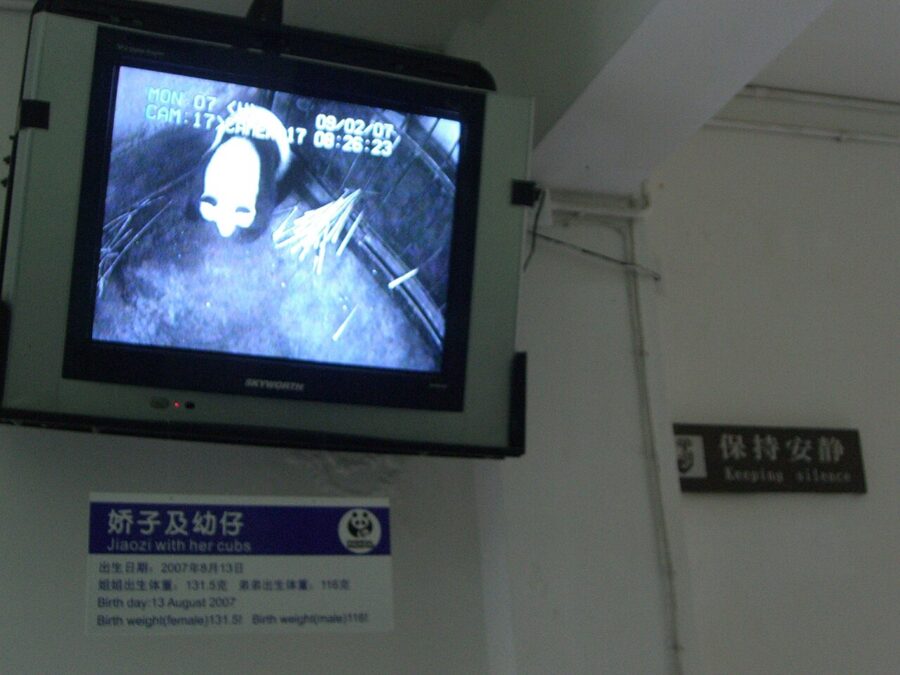
Huahua (和花, He Hua) was born at the base on 4 July 2020 to a mother called Cheng Gong. She has a twin, He Ye, and the pair live in Villa No. 6 close to the South Gate. She is famously slow-moving, followed by a devoted fan club and a celebrity on Chinese social media.
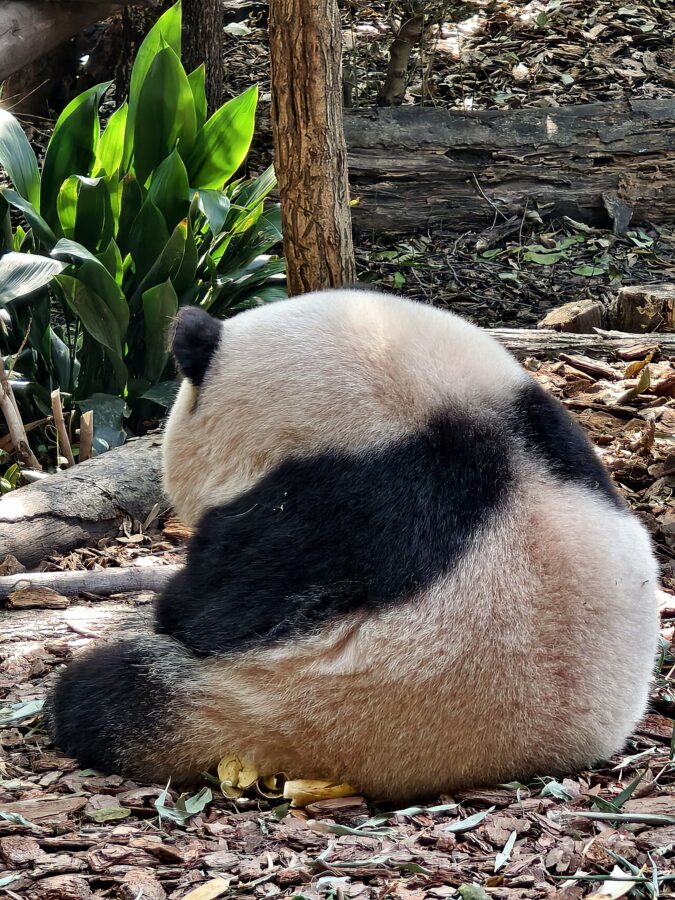
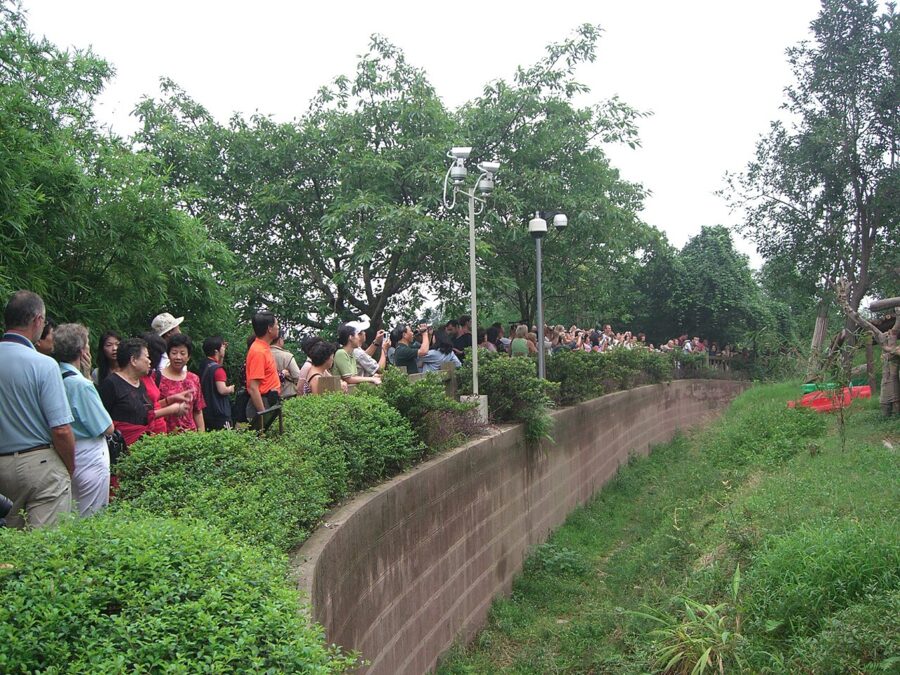
The queue is the problem. On a holiday morning you can wait a long time to shuffle past her for a minute while staff keep the line moving. If you are not a fan already, my advice is to see her if the line is short and walk on if it isn’t, because there are dozens of pandas on the site doing exactly the same things.
Red pandas, swans and the rest of the zoo
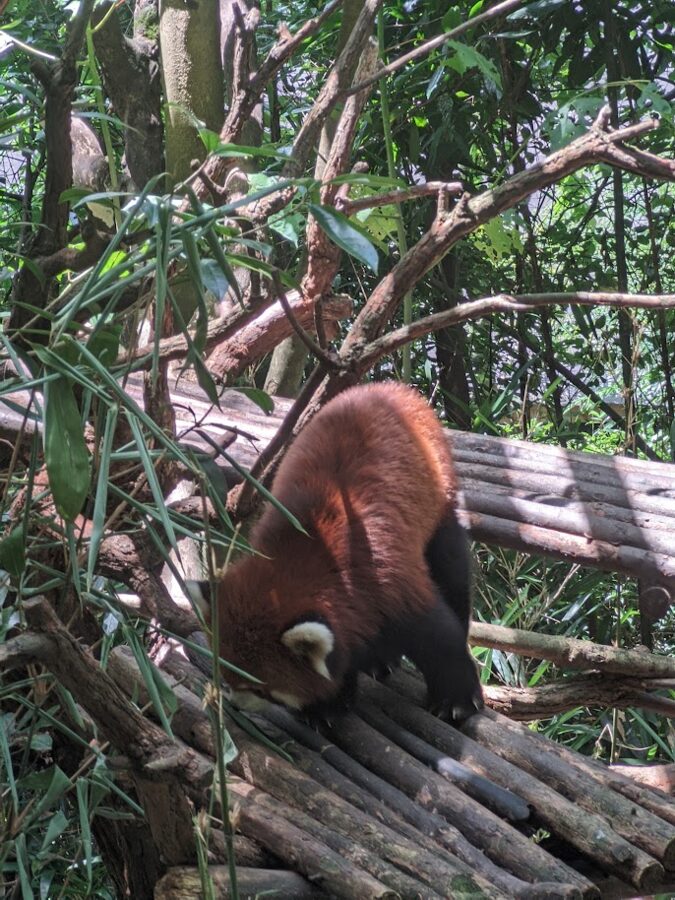
The base also breeds red pandas, which are not close relatives of the giant panda at all, and several of their areas are walk-through. They wander on the boardwalks and are wonderful to watch, and the base asks you to keep at least 3 m away from them and from the other free-roaming animals. Don’t try to feed them, however tame they look.
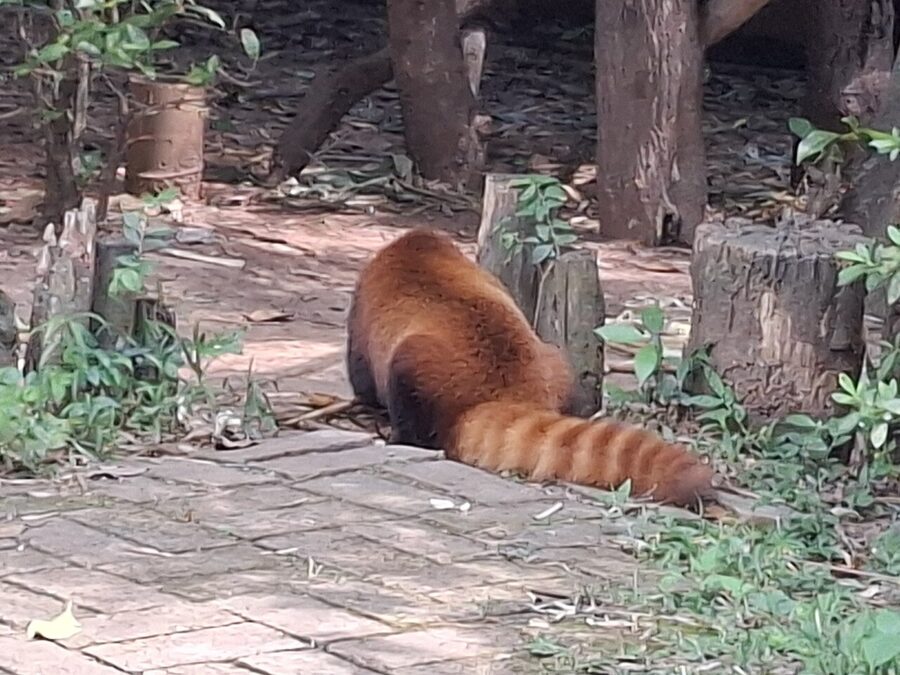
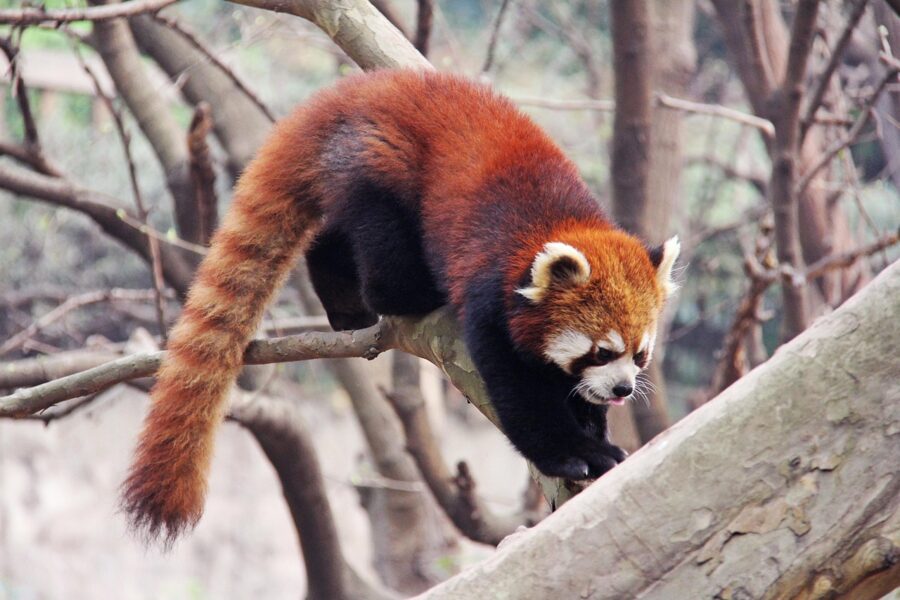
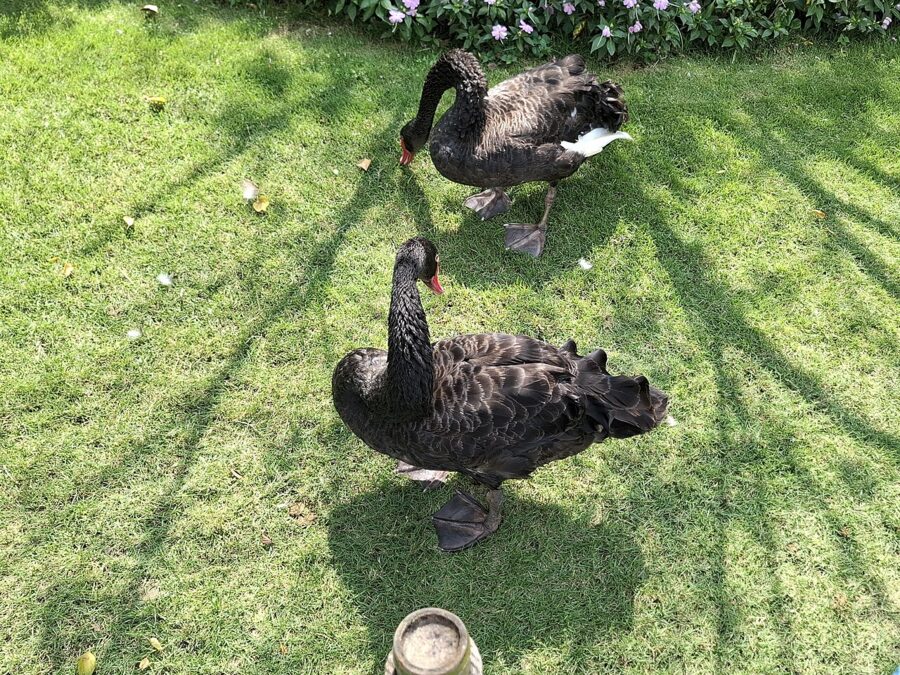
There are black swans on Swan Lake, peacocks loose on the lawns and koi in the ponds. The electric carts that loop the site cost ¥30 a person, and children under 1.3 m ride free on a lap. You can book them on the official mini programme up to 14 days ahead or buy on the day, and they run 07:30–17:30 from March to October and 08:00–17:00 in winter.
The carts run one way from the South Gate to the West Gate and back by a slightly different line, stopping at the villas, the Sun Nursery, the Panda Meeting Hall, the tower, the Star Nursery and the valley halls. At either end you queue again to reboard. Walking the whole site is three hours or more, so most people ride at least one leg.
Crowds and holidays
The base is quietest on weekday mornings outside the school holidays and busiest during Spring Festival, the May Day holiday, the summer holidays from July to August and Golden Week, 1–7 October. In 2026 Sichuan also gave schools a short autumn break for the first time, which pushed families into the panda bases in November. On those days book the moment the 14-day window opens, and arrive at the gate 20 minutes before your slot.
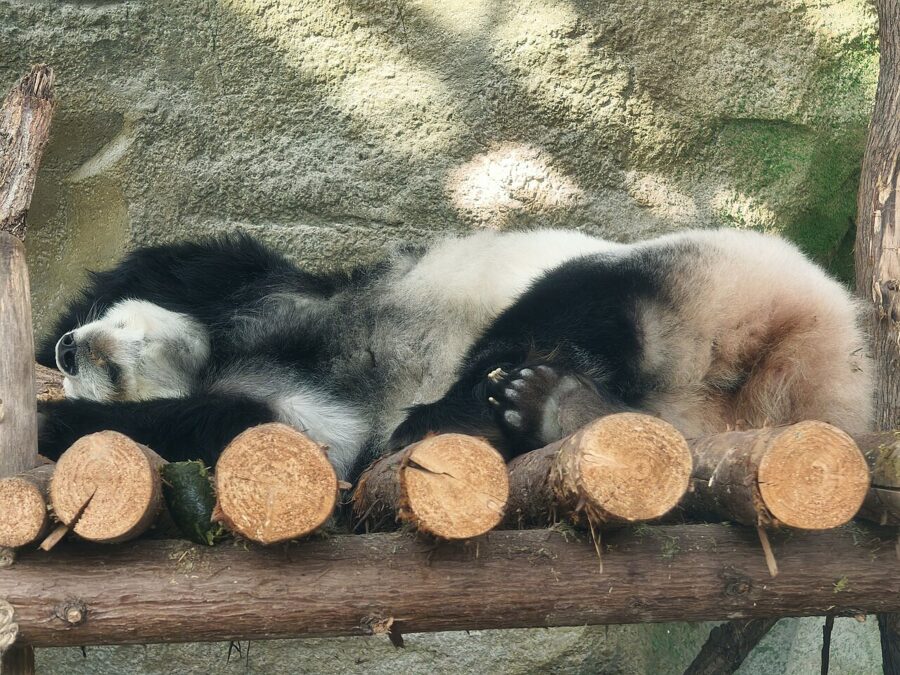
Arriving late is the most common mistake I see. The tour groups pour in through the middle of the morning, the pandas are winding down by 10:00, and an 11:00 arrival in summer can mean a long walk past empty yards. If your ticket is for the afternoon, aim for the last two hours, when some pandas come out again as the air cools.
Dujiangyan: two panda sites, one confusing name
Dujiangyan, about 50 km northwest of the city, has two panda centres and the internet mixes them up constantly. One is open and the other is not. Getting this right is the most useful thing in this guide for 2026.
Panda Valley (熊猫谷)
Panda Valley belongs to the Chengdu base, which calls it the Dujiangyan Wild Release and Breeding Research Centre. It covers 2,004 mu at Majiagou in Yutang, between 740 m and 1,161 m above sea level, about 3 km from Dujiangyan town. It opened to the public on 20 April 2015 and its real job is training pandas for life in the wild and returning them to it.
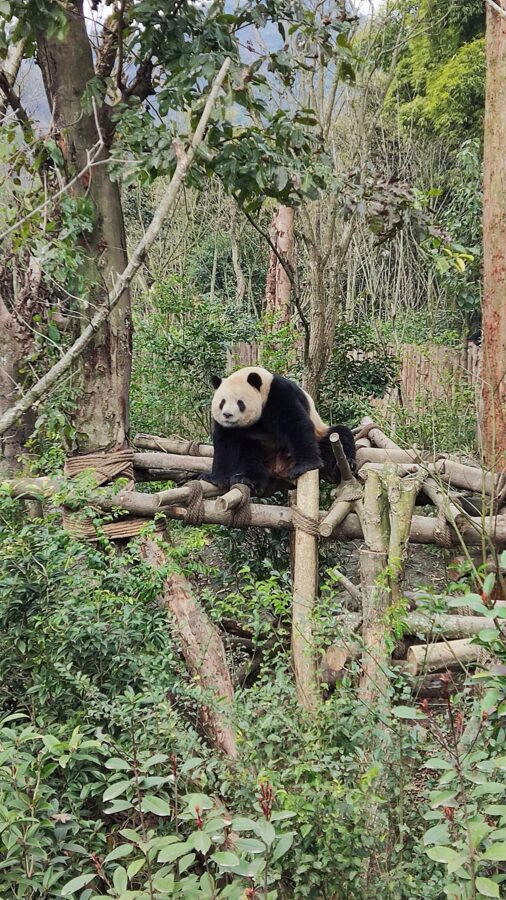
As a visit it is smaller, greener and less crowded than the main base, with giant and red pandas in forest enclosures and none of the Villa No. 6 crush. Tickets match Chengdu at ¥55 for adults and ¥27 for students, with free entry for over-60s and young children. The official channel is the 熊猫谷 WeChat account, through “购票游览” and then “购票及预约”, with real-name details and your passport at the gate.
Its timetable runs in two seasons, with a winter of 08:00–17:30 and last entry at 16:30, and a summer of 07:30–18:00 with last entry at 17:00. The valley switches between them at different dates from the Chengdu base, so check the WeChat account for the month you travel. Arrive early here too: the pandas keep the same breakfast hours wherever they live.
Getting there takes about an hour and a quarter. Take Metro Line 2 to Xipu, change inside the station to a Chengdu–Dujiangyan intercity train to Dujiangyan or Lidui Park, about 25–30 minutes, then a short taxi or Didi ride to the gate. Lidui Park station is the one for the Dujiangyan irrigation works, so you can join the two in one day without backtracking.
Panda Valley is also where a lot of visitors have been banned for life. In June 2024 the Chengdu base published a list of 12 people banned from both sites for spitting into the outdoor yards and for throwing in bamboo shoots, bread, an egg, a cigarette and a lollipop stick, and two for smuggling a pet in a bag. The rules are not decorative.
The CCRCGP Dujiangyan base, closed since April 2026
The other site is the Dujiangyan base of the China Conservation and Research Centre for the Giant Panda (CCRCGP), now signposted as 都江堰中华大熊猫苑 and still sold by many agencies under its old name, Panda Paradise. It sits at Shiqiao village near Qingchengshan town, was built in 2013 on 760 mu, and handles rescue, disease control and old pandas. It runs the only dedicated home for elderly pandas anywhere, for animals over 26.
On 15 April 2026 the centre announced that the base would close from 23 April for an upgrade, with the reopening date to be announced later. A tender for equipment for its rescue-centre rebuild went out in July 2026. By mid-November 2026 I could find no reopening notice, so treat any tour that includes it as out of date until the centre says otherwise.
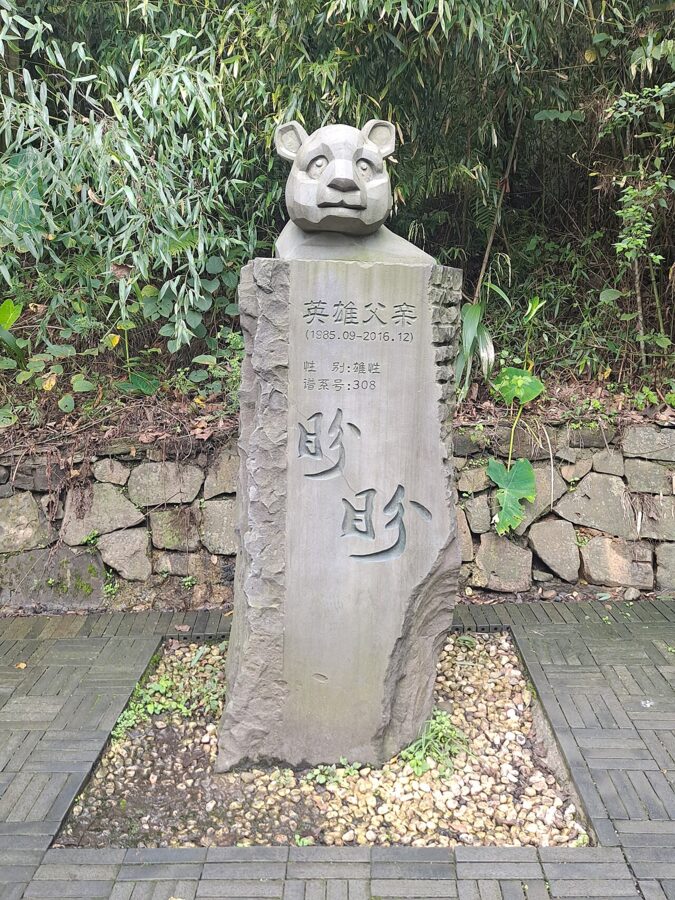
The volunteer programme, told straight
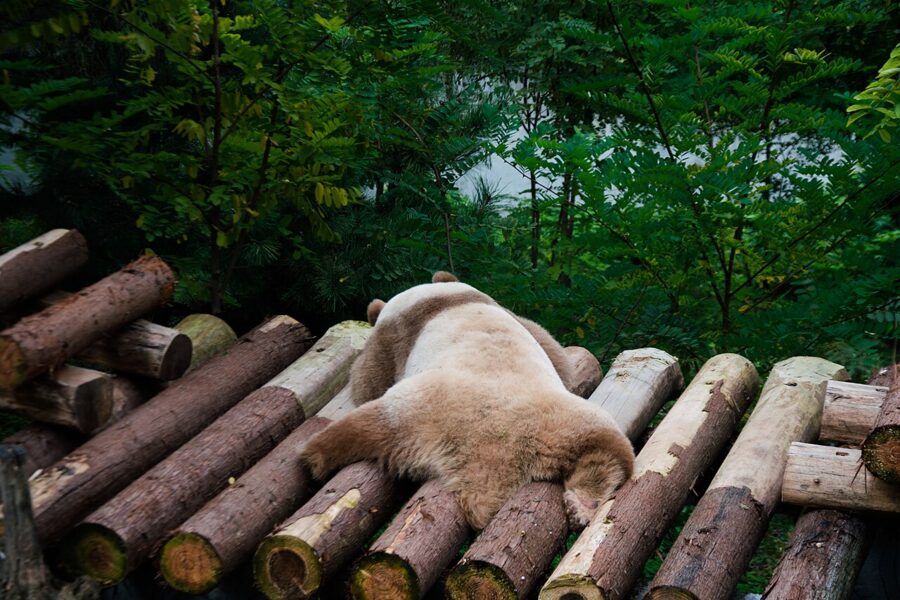
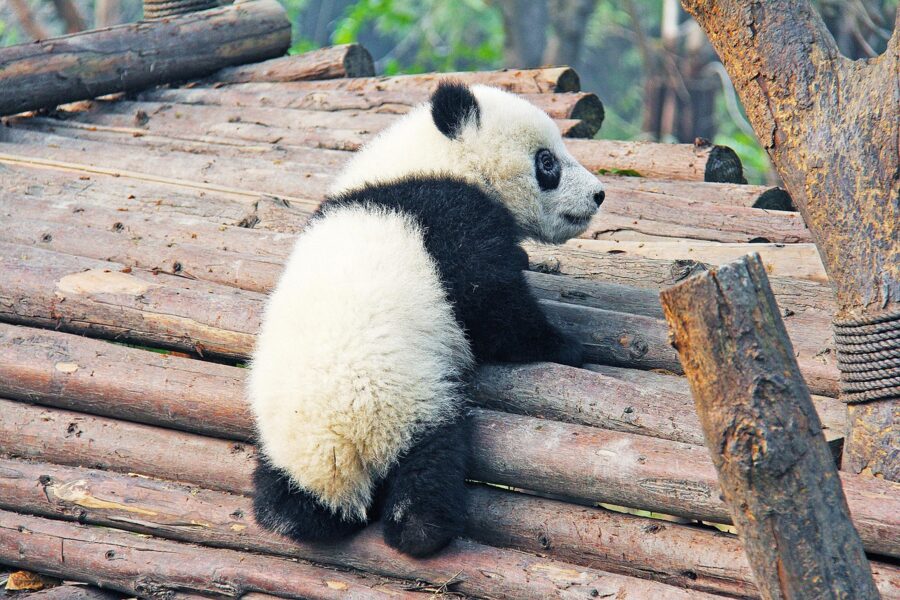
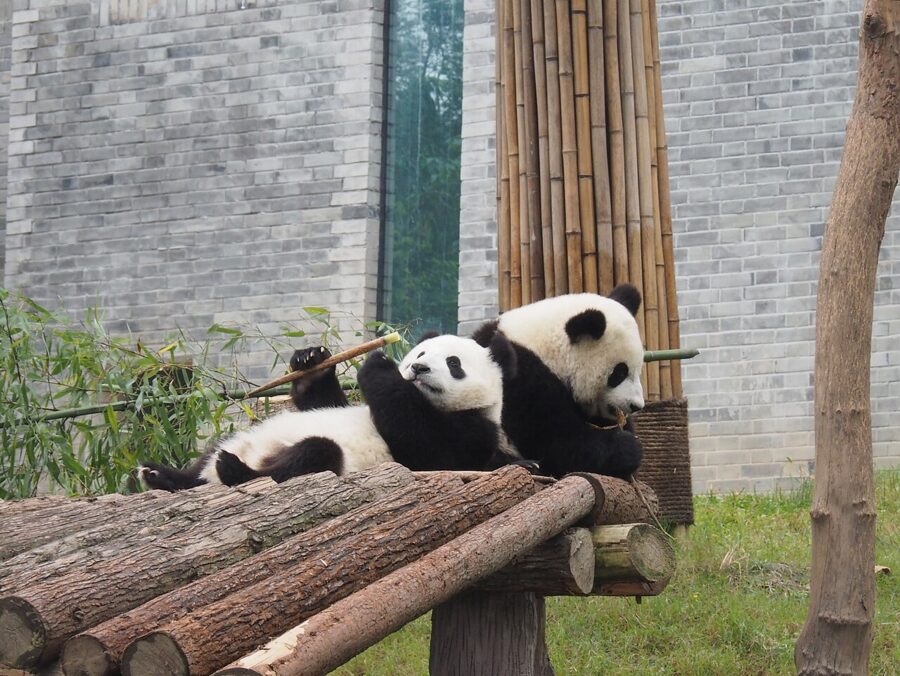
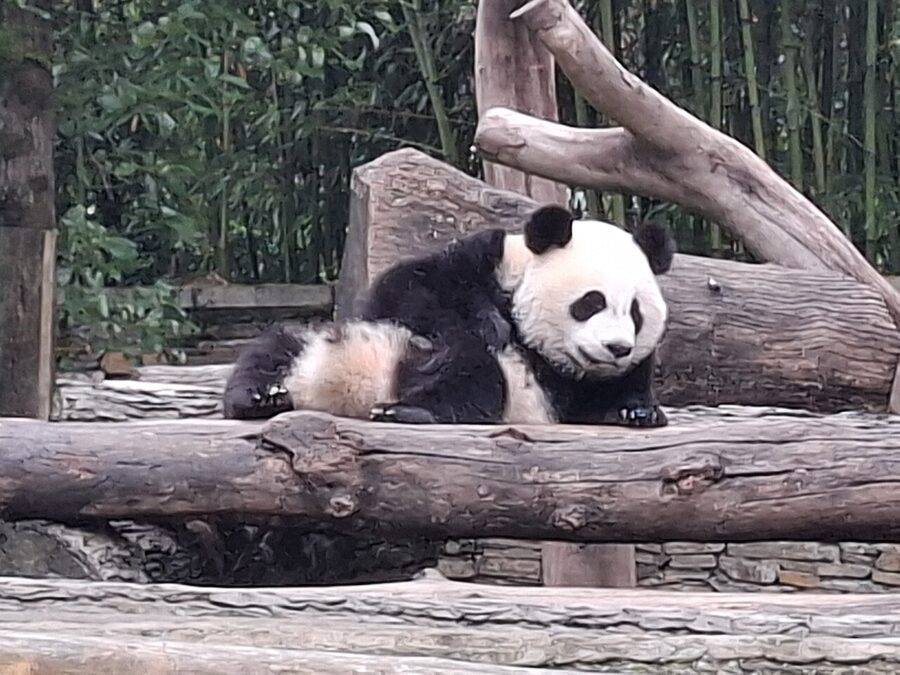
For years the Dujiangyan base sold a day as a “panda keeper”. You put on overalls, shovelled droppings out of an enclosure, cut bamboo, made the steamed corn buns called wowotou (窝窝头) that keepers use as a supplement, watched a documentary and went home with a certificate. For a while the same base also sold paid photo sessions with a young panda, and pictures like the one below are why so many people still expect a cuddle.
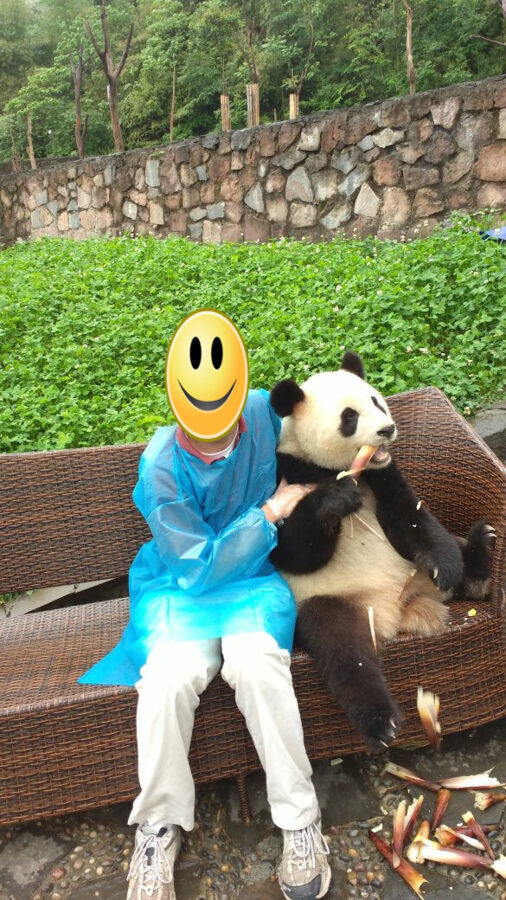
Two things have changed. The cuddle is gone for good, and the hands-on part shrank before the base even closed. In 2023 a visitor from Beijing who paid ¥988 on a group-buying platform for a keeper day found it was run by a travel agency, and that feeding and close photos had been cut, which tells you most of what you need to know about who sells these days.
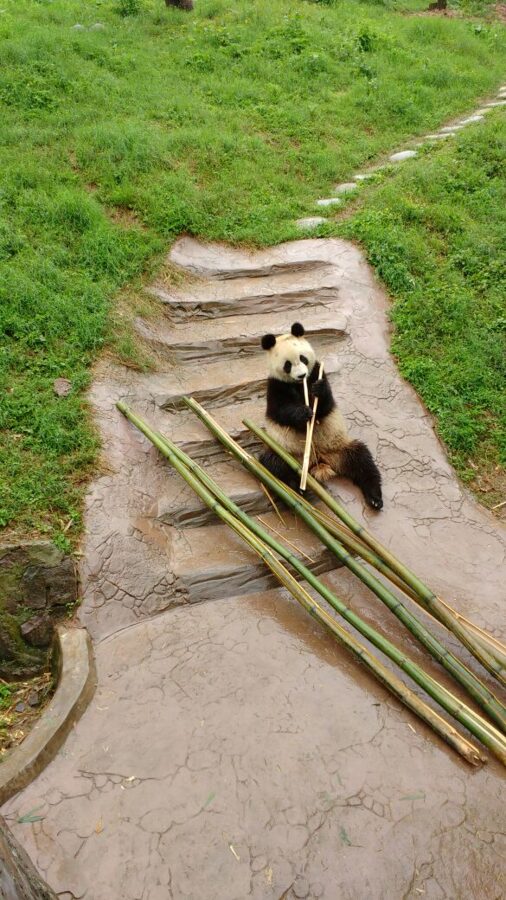
With the Dujiangyan base shut, agencies now sell volunteer days at Wolong’s Shenshuping base and at Bifengxia, at prices that vary by season and agency. If you book one, ask in writing which base you’ll be at, what the tasks are, whether a keeper leads it, and what the fee covers. Expect cleaning, food preparation and watching, never touching, and you won’t be disappointed.
There are two more official routes. The Chengdu base has had its own volunteer corps since 2015, for people 14 and over who read and write Chinese fluently, trained in sessions at the base and at Panda Valley. And since 2025 it has sold custom science activities, including a hands-on class in panda diet, a session reading the ecology in panda droppings and an enrichment-design workshop. For most foreign visitors, a good guide at the Chengdu base at 07:30 beats all of it.
Wolong: Shenshuping, Fu Bao and the road up the valley
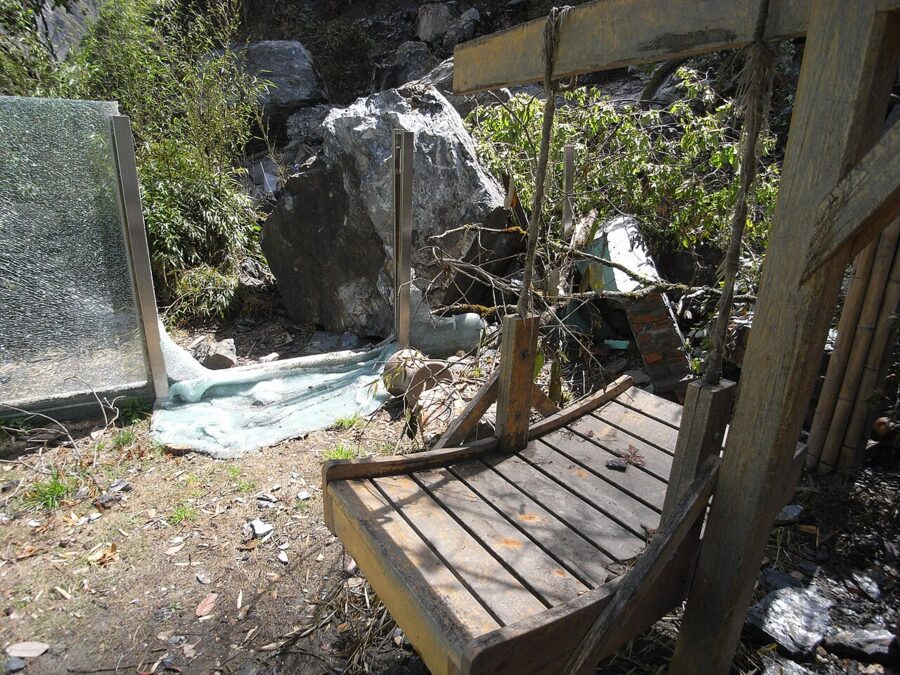
Wolong is the name you’ll see in every older guide, because the CCRCGP started here in 1983, at Hetaoping. The 2008 Wenchuan earthquake wrecked that centre, and the public base is now Shenshuping, rebuilt near Gengda and signposted as 卧龙中华大熊猫苑神树坪基地. It sits in the Wolong National Nature Reserve, part of the Sichuan Giant Panda Sanctuaries that UNESCO listed in 2006.
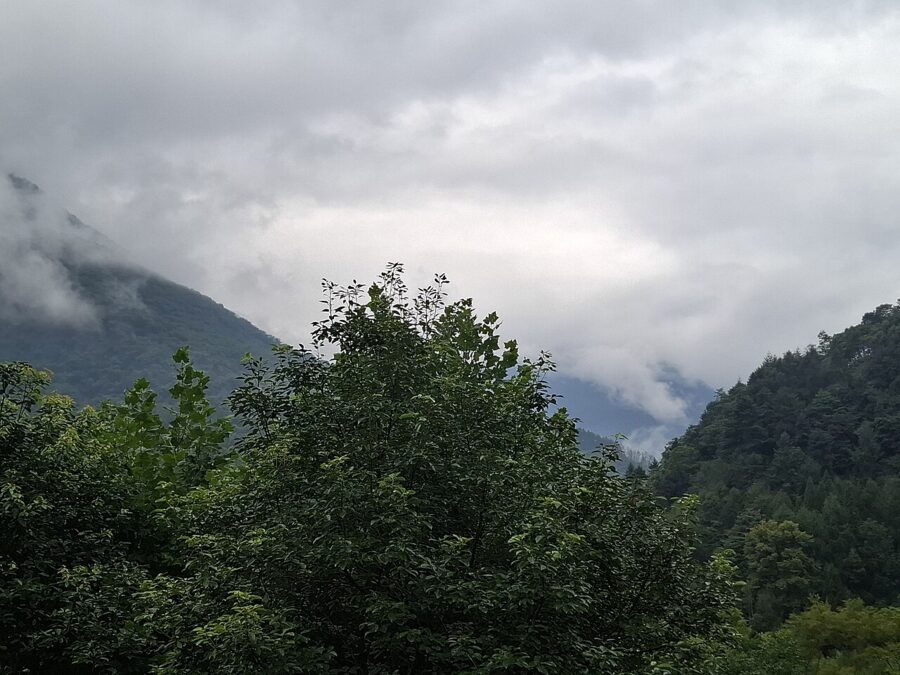
It feels different from Chengdu straight away. The enclosures are cut into a steep, forested slope, the air is cooler, and the mountains rise straight up behind the yards. The pandas are no wilder, but the setting is the closest you’ll get to where they belong without a research permit.
Shenshuping has two of the best-known pandas in Asia. Fu Bao, born at Everland in South Korea on 20 July 2020, came to China in 2024 and went on show here on 12 June that year, and groups of young Korean fans now travel to Wolong specifically to see her. Xiao Qi Ji, born at the National Zoo in Washington in 2020, is here too, along with a kindergarten of young pandas.
The base opens 09:00–17:00 with last entry at 16:30. The list price for adults is ¥90, though it has been sold for less online, and the optional cart is ¥20 return. Book at least a day ahead through the official channel or the big platforms, and the Wenchuan county government gives the daily limit as 12,000, which matters only in the autumn break and Golden Week.
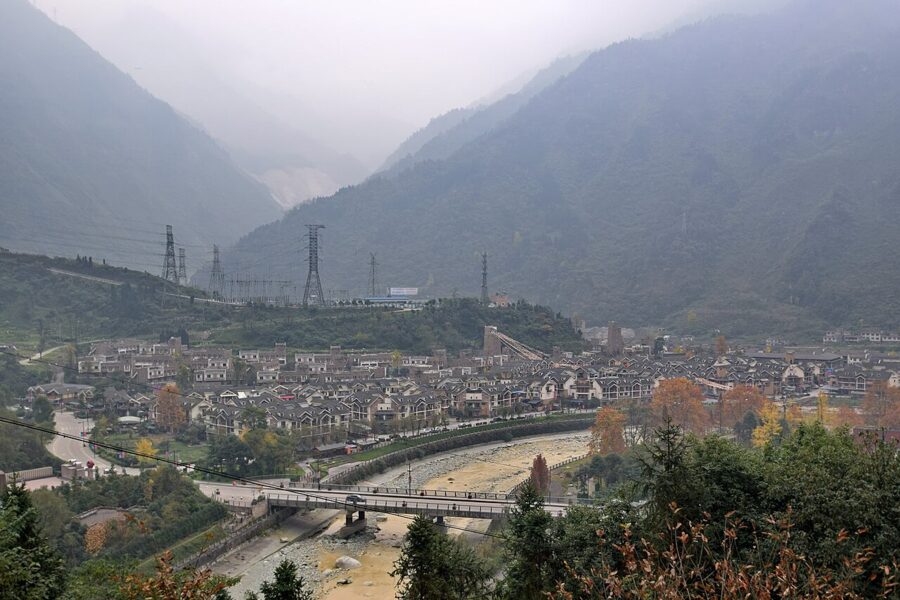
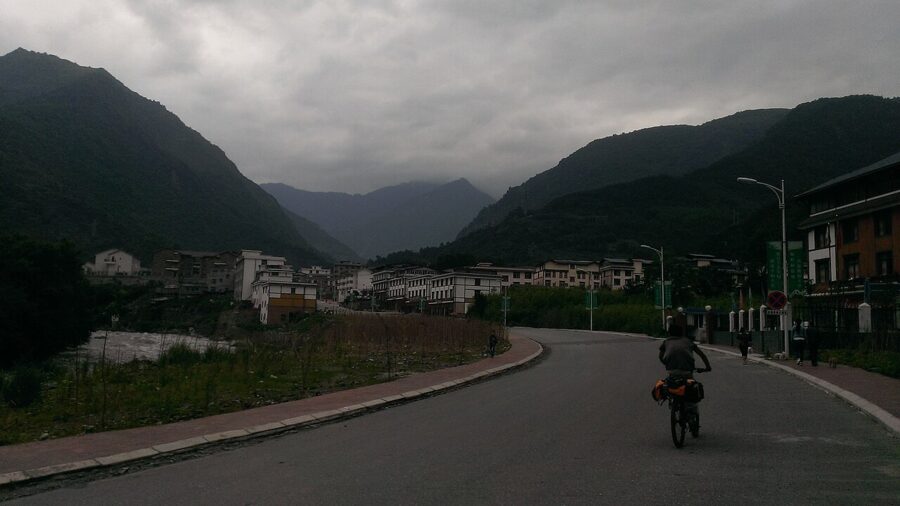
The road is the catch. It is about two to two and a half hours each way by car from Chengdu, via Dujiangyan, Yingxiu and the G350, which locals call the Panda Avenue road and which runs through some of the loveliest autumn colour in Sichuan in late October and November. A seasonal shuttle bus from central Chengdu has run on some dates; most people hire a car and driver or join a day tour.
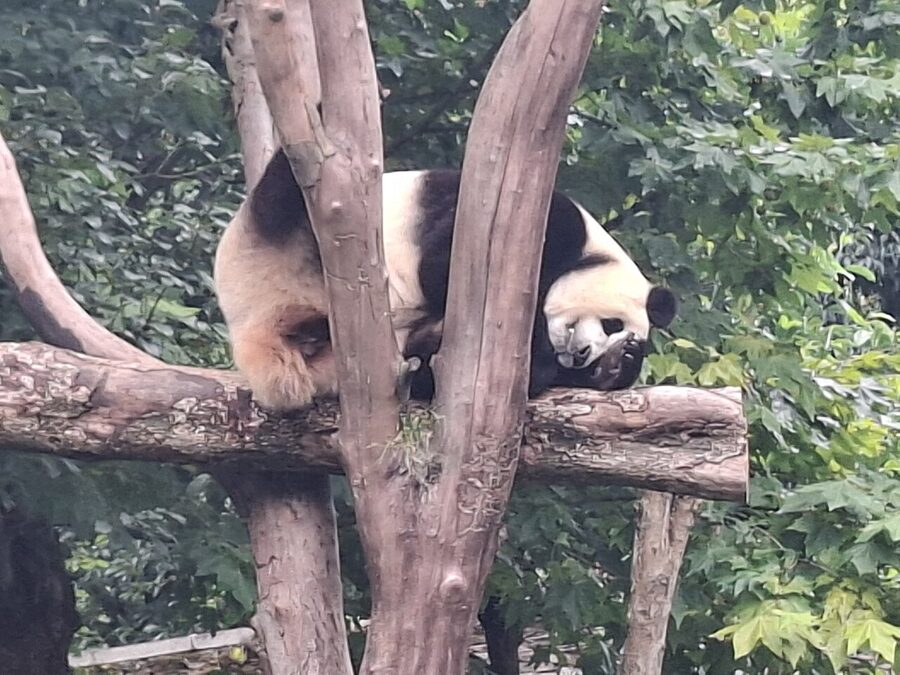
Is it worth it? For a second panda visit, or for anyone who finds the Chengdu base too much like a city zoo, yes. If you only have a single morning, stay in Chengdu: by the time you reach Gengda at about 10:00 the breakfast hour has gone, though the cooler air keeps the pandas moving longer than in the city.
Bifengxia and Ya’an
The Ya’an Bifengxia base of the CCRCGP sits inside the Bifengxia scenic area, a forested canyon north of Ya’an city. Construction started in 2002 and the first eight pandas moved in the following year. After the 2008 earthquake it took in some of the animals from Wolong.
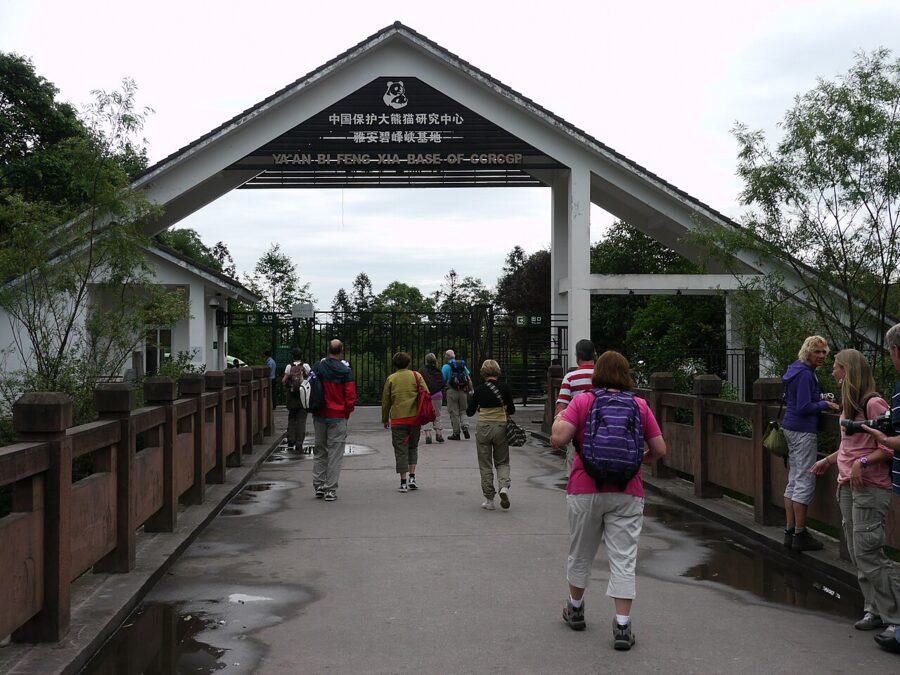
Bifengxia is now the home of the Japanese-born pandas. Xiang Xiang, the Ueno Zoo panda who drew huge crowds in Tokyo, came here in February 2023, her parents Bi Li and Xian Nü followed in September 2024, and her twin siblings Xiao Xiao and Lei Lei left Tokyo on 27 January 2026 and landed in Sichuan the next morning. Japanese fans have followed the family here.
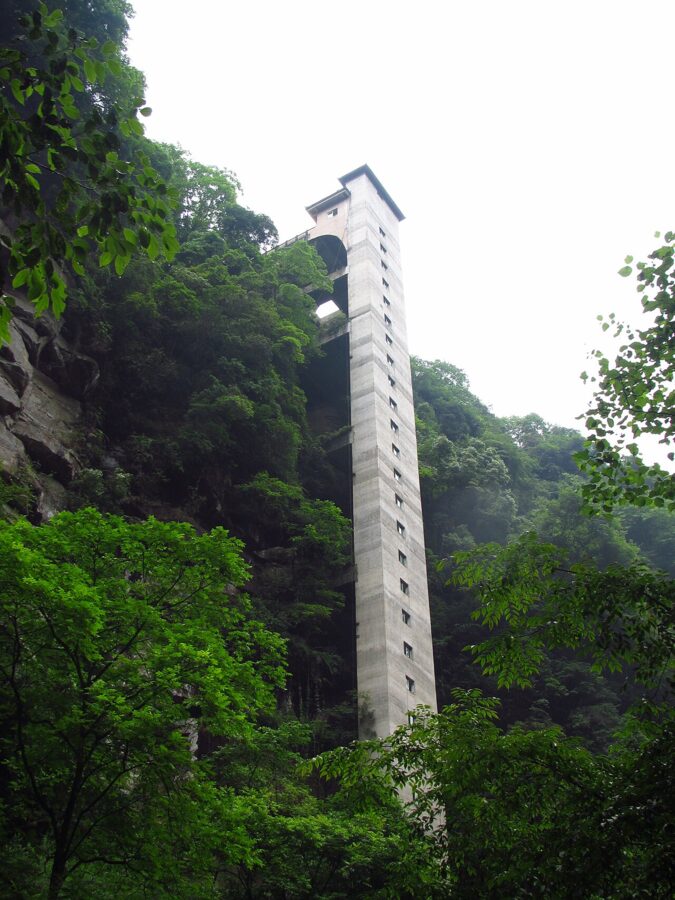
The scenic area ticket is ¥100 and includes the panda base, the canyon, the sightseeing bus and the cliff lift. The Wildlife World safari park next door is separate and costs ¥180, and it is a different kind of place, so skip it unless you want a drive-through zoo. Book on the official Bifengxia site or the big platforms.
Plan for the morning here too. The panda area has traditionally closed over lunch to give the animals a rest, so an early train and a taxi from Ya’an station gets you the best of it. Trains run from Chengdu West to Ya’an in roughly an hour to an hour and twenty minutes, and the taxi to Bifengxia takes about 25 minutes.
Ya’an is worth a night if you want more than pandas: the city sits at the start of the road into the Tibetan plateau, and Baoxing, where Armand David lived, is a county away. For most people, though, Bifengxia is a day trip from Chengdu that you choose over Wolong for the trains and the Japanese pandas, not one you add to it.
Pandas outside Sichuan
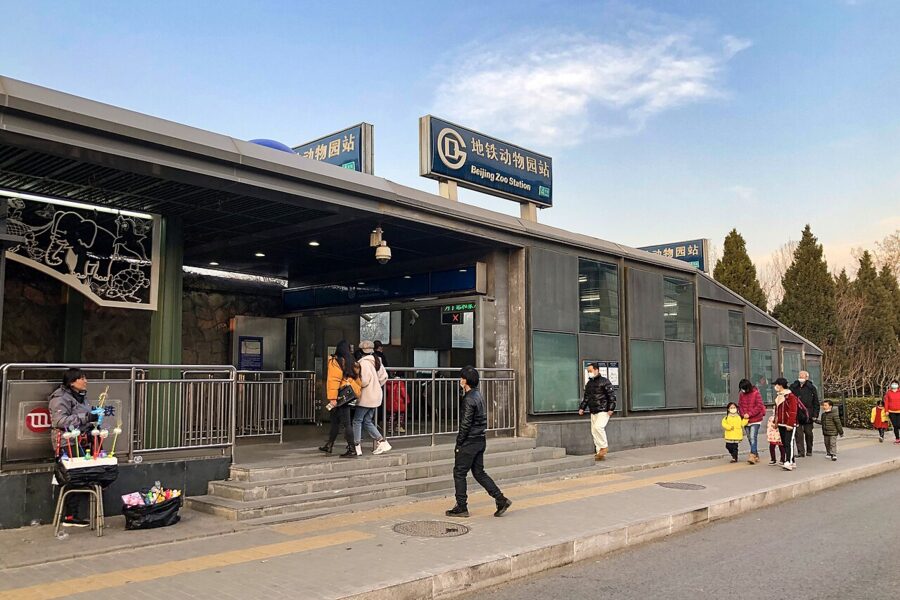
If Sichuan is not on your route, you can still see a panda, just not in a research setting. In Beijing, the zoo opened a new panda house on 16 July 2026, its 120th birthday, with four indoor halls and five outdoor yards across about 1.3 hectares. Meng Lan, the climber who turned 11 in July 2026, is the star, and the zoo is at Beijing Zoo station on Line 4.
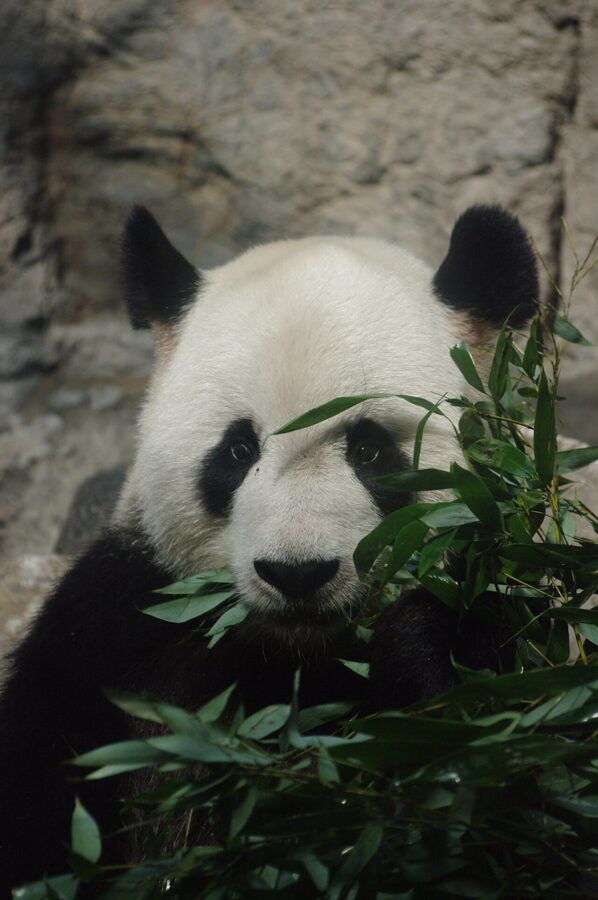
Chongqing Zoo, at Zoo station on Line 2, keeps one of the largest panda groups outside Sichuan, and its panda house is the first thing most visitors head for. In Shanghai, the Wild Animal Park in Pudong, on Line 16, put a new arrival called Qian Zhen on show in April 2026.
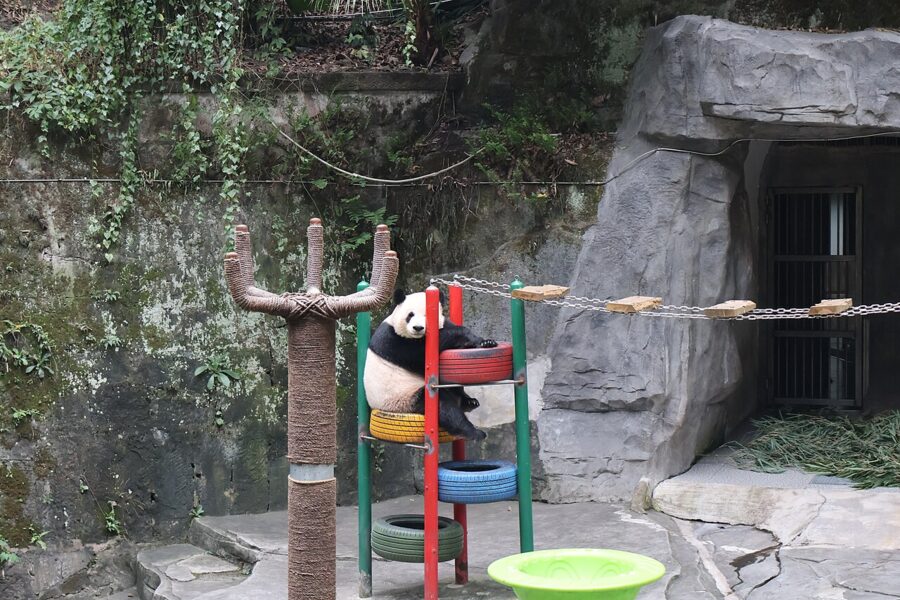
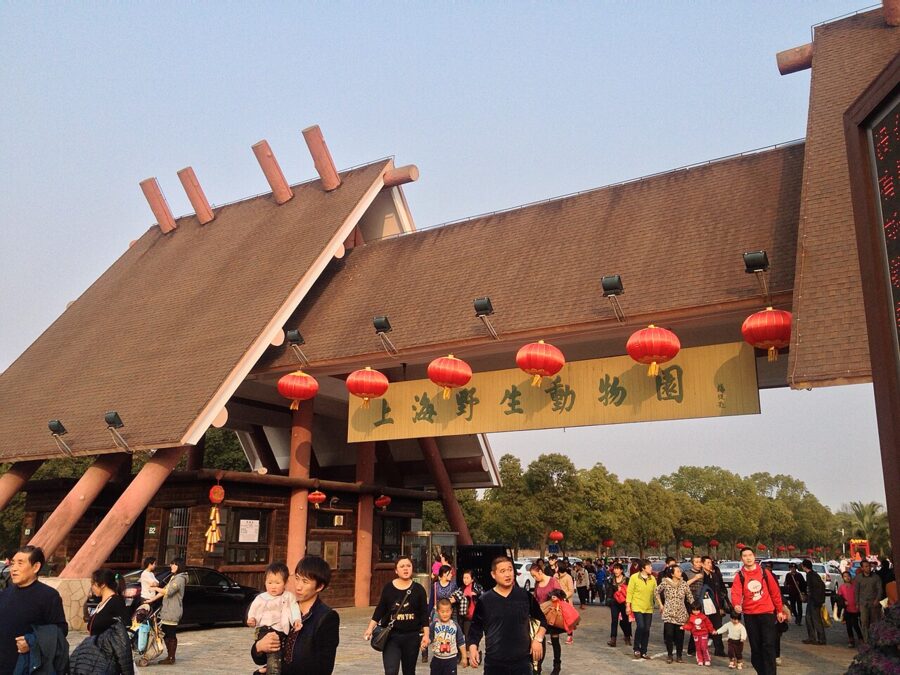
Even Harbin has a panda house on Sun Island, and the CCRCGP opened a new base in Mianyang, north of Chengdu, on a trial basis at the end of 2025. Across the border, Hong Kong‘s Ocean Park has had An An and Ke Ke from Sichuan since September 2024. None of these is a reason to travel on its own, but all of them beat a picture.
When are the pandas awake?
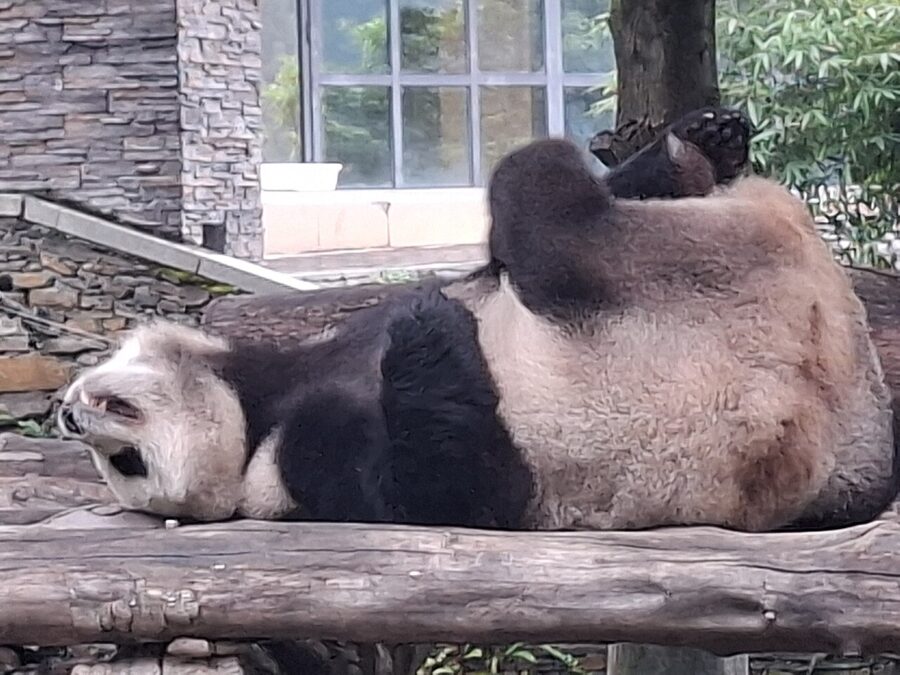
In the morning. Pandas are fed early, eat hard for an hour or two, and then sleep it off, which means the window from opening until about 10:00 is when you’ll see them sitting up, chewing, climbing and occasionally wrestling. After that it is mostly logs and backs.
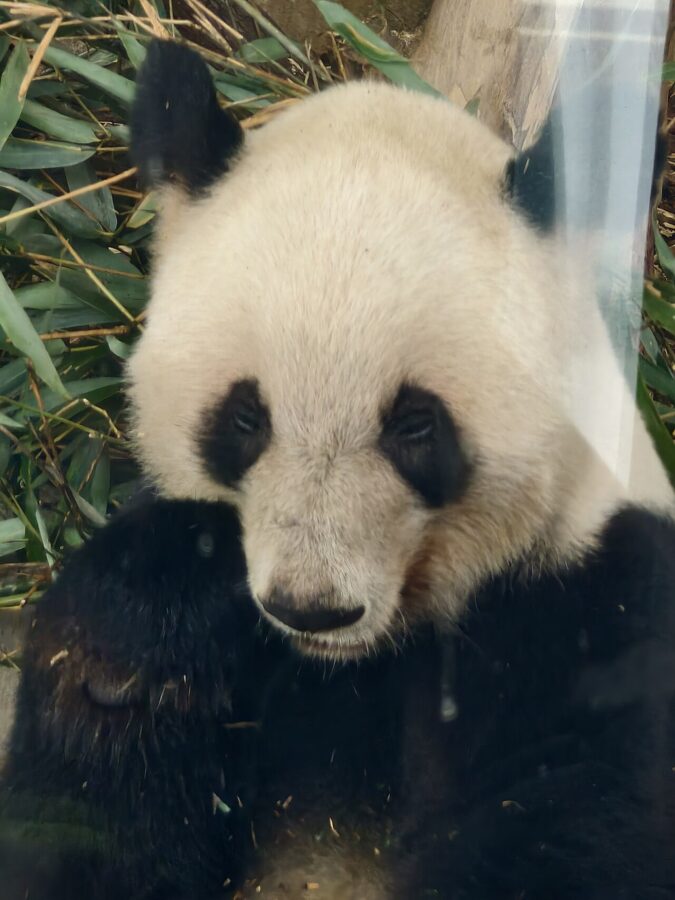
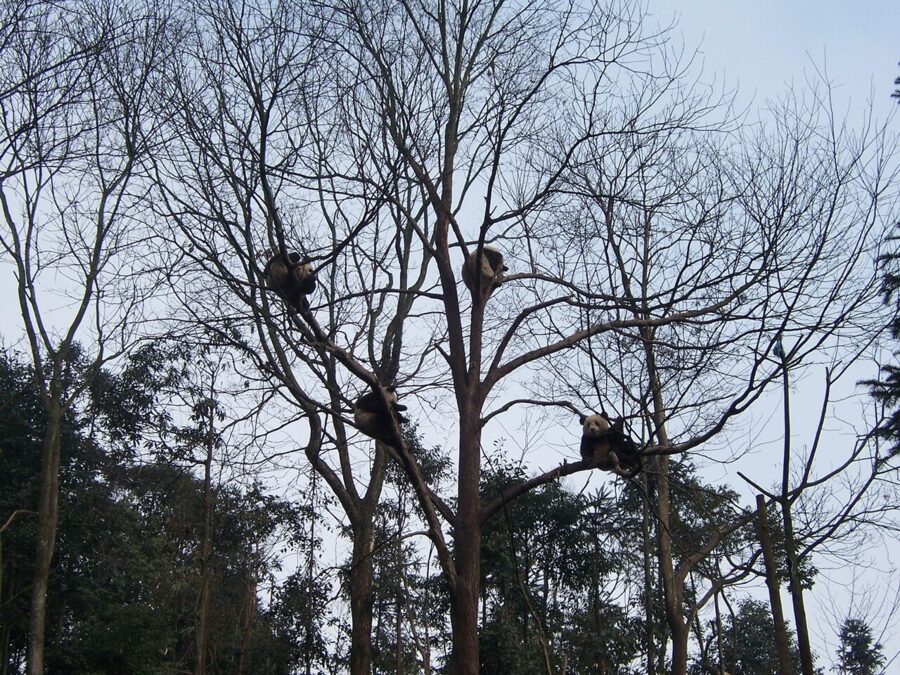
Heat is the other clock. Pandas like cold weather, and when the temperature passes a threshold the Chengdu base brings them indoors, so on a July afternoon many of the outdoor yards are empty. In winter they are livelier for longer, and a frosty January morning in Sichuan can be the best panda weather of the year.
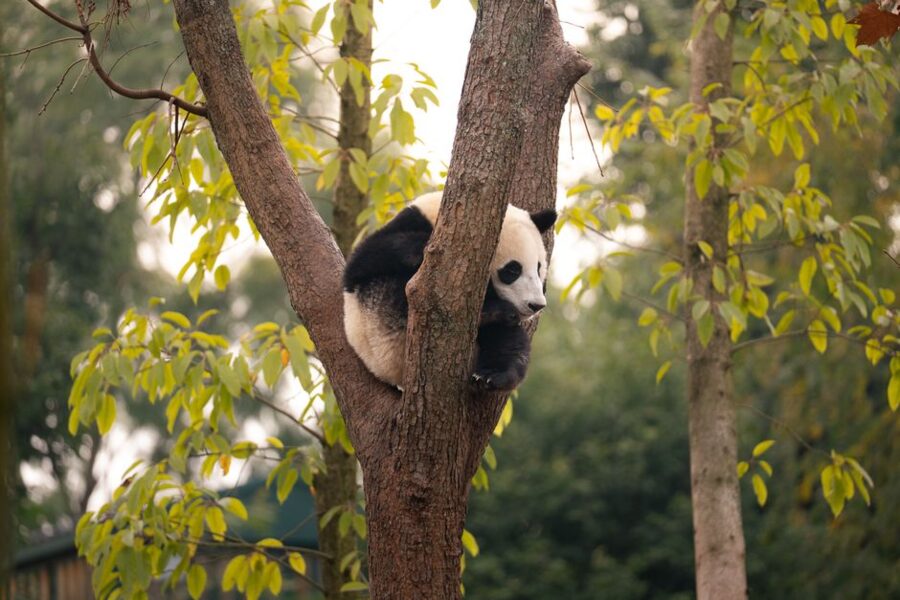
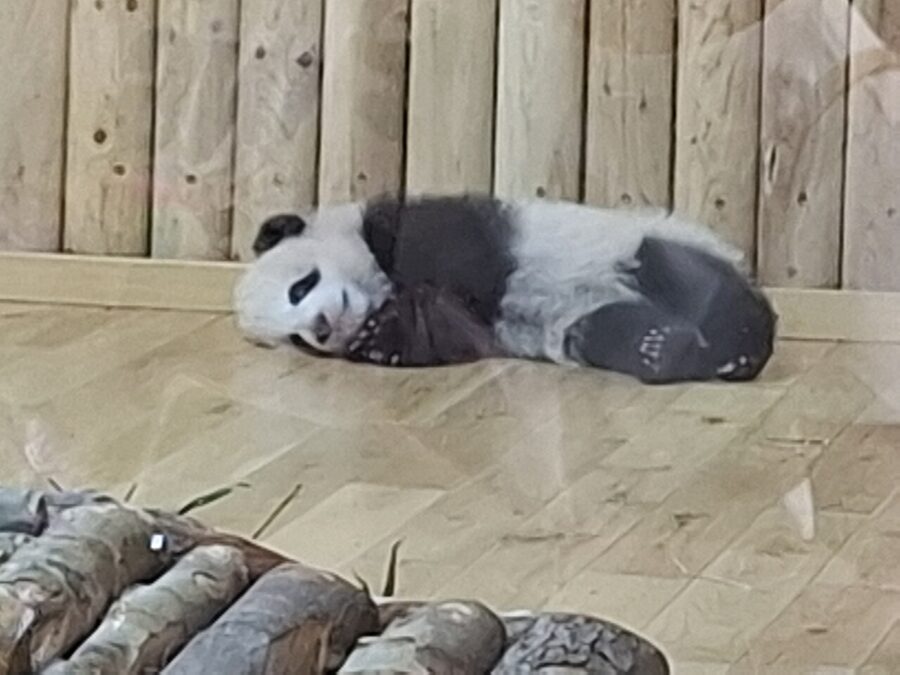
For the whole trip, March to May and September to November are the best months: mild, with cubs on view in the nurseries from late summer onwards. Winter has thin crowds and sleepy-but-outdoor pandas, though Chengdu’s winter can be grey and damp. Avoid July and August unless you are there at opening, and avoid the big holidays if you can.
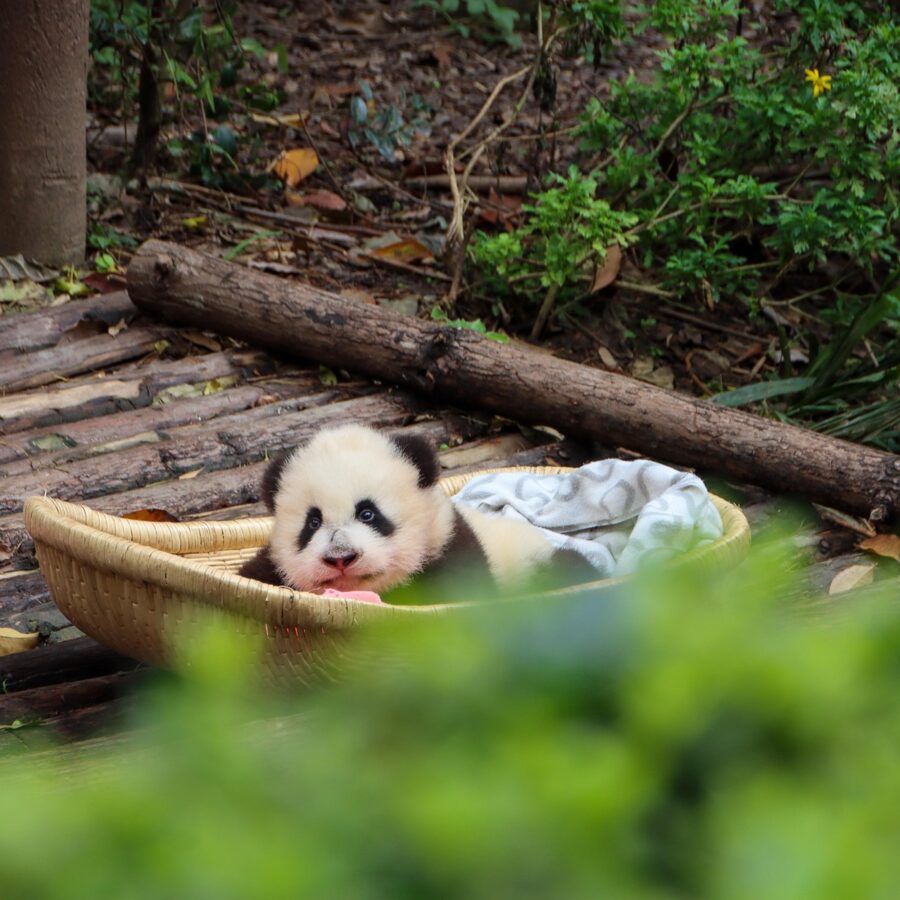
Rain is not a disaster. A light rain often keeps the pandas outside and the crowds away. Heavy storms are another matter, and every base reserves the right to close sections in bad weather.
How to behave, and what gets you banned
The Chengdu base’s visitor notice is short and specific. No flash, no shouting, no throwing anything into an enclosure, no feeding, no drones, no skateboards or scooters, no pets, no unauthorised livestreams or commercial shoots, and no surprise panda birthday parties. Breaking the rules can mean a ban of up to life, and the bases have published lists to prove it.
Most of what goes wrong is crowd behaviour, not malice. People bang on the glass to wake a sleeping panda, shout its name, push children to the front and hold phones on sticks over the barrier. Don’t, and if you have children, keep them from slapping the glass: the pandas hear it, and so do the staff.
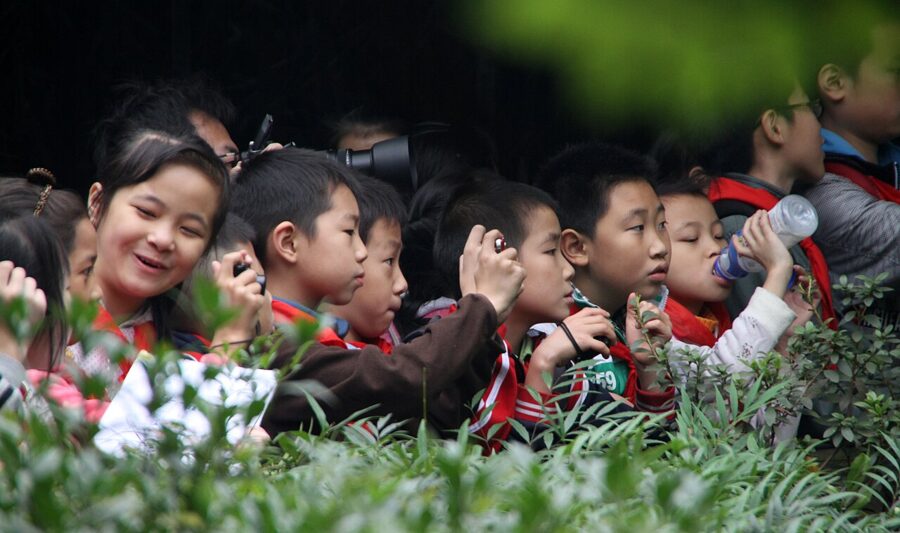
For photographs, a zoom of about 70–200 mm is plenty, and pressing a lens hood flat against the glass kills most of the reflections in the indoor halls. Turn the flash off before you arrive. A phone does fine outdoors in the morning light; it struggles behind glass in the afternoon.
Ethically, the decision that matters is where you go, not what you photograph. The research bases breed pandas for conservation and train some for release, and your ticket pays for that work. Places that offer touching, holding or private feeding are not doing the same job, and in China today the legitimate centres do not offer any of those things.
Plans: a half day, a full day and two days
A half day at the Chengdu base
Book a morning ticket 14 days ahead. Take the first Line 3 train you can and the 408 shuttle from Panda Avenue, and be at the South Gate when it opens, at 07:30 in summer or 08:00 in winter. Go straight to Villa No. 6, then the subadult villas and the Moon and Sun nurseries, and you’ll have seen the best of it by 10:00.
From there, take the cart to the West Gate if you want the expansion area and the tower, or walk back through the museum and leave by 11:30. Take the express bus back to Chunxi Road for lunch.
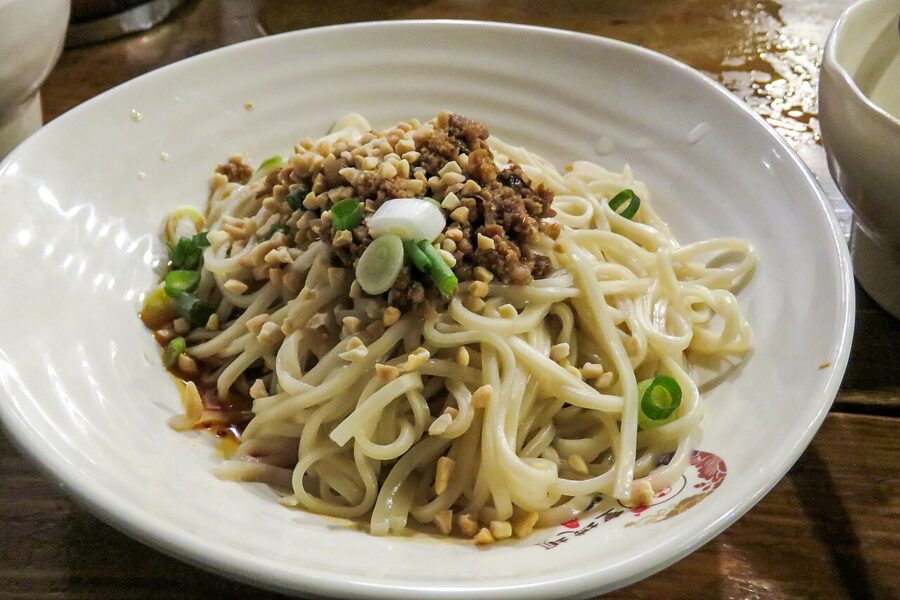
A bowl of dan dan noodles (担担面) is the fair reward for an early start, and my guide to Sichuan food has where to eat it. Order them dry, the Chengdu way, and mix everything up from the bottom before the first bite.
A full day at Dujiangyan
Take the intercity train from Xipu early and be at Panda Valley when it opens. Give it two hours, then take a taxi to the Dujiangyan irrigation works, the 2,000-year-old water system that still feeds the Chengdu plain, for the middle of the day.
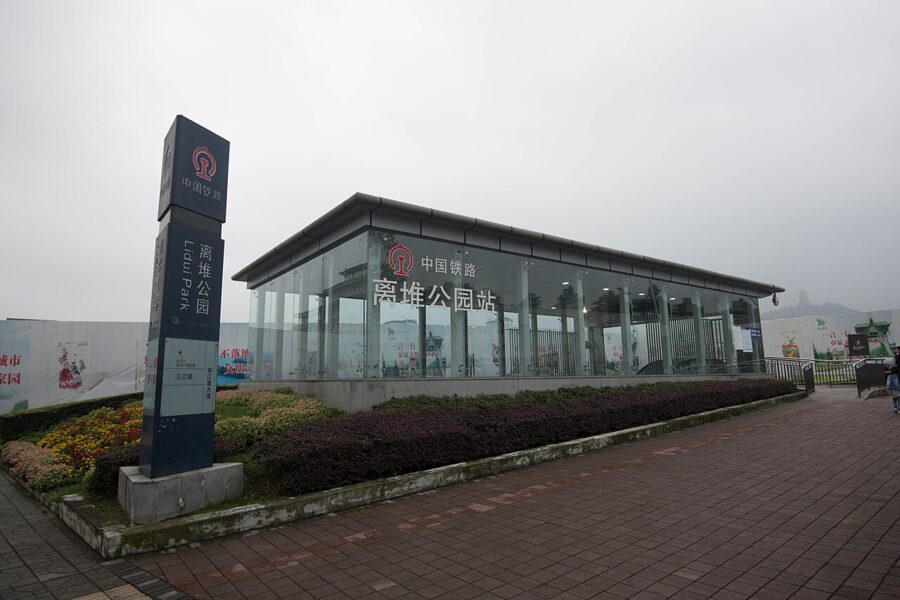
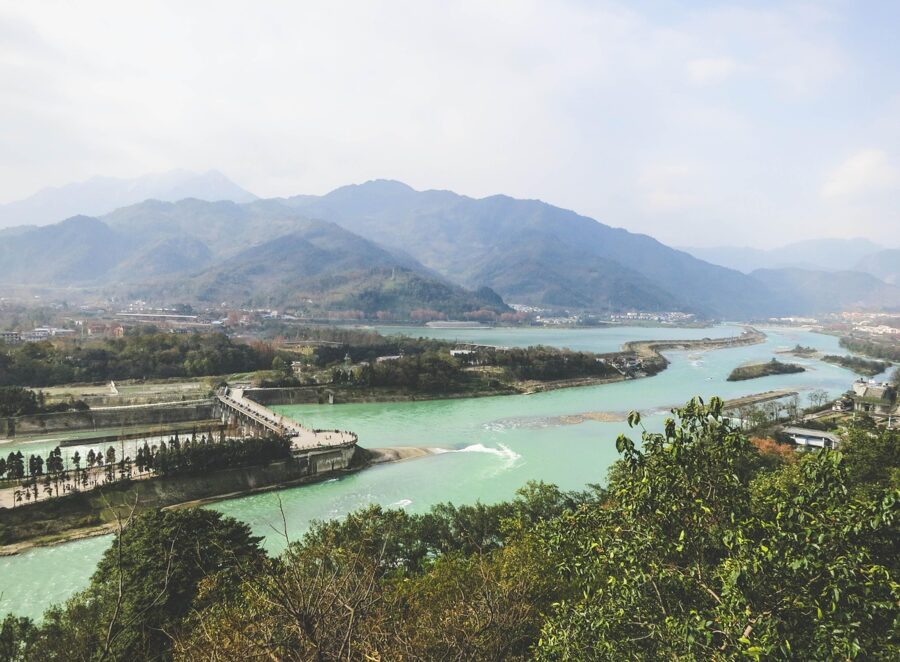
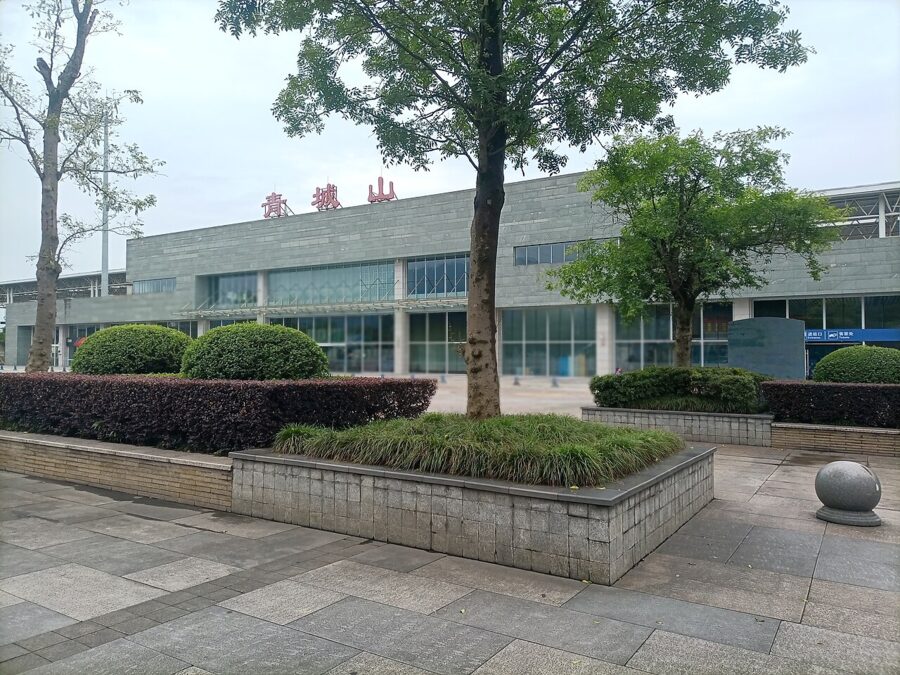
Finish at Mount Qingcheng, the Taoist mountain about 15 km away, either the front mountain with its temples and cable car or the quieter back mountain. Give it the whole afternoon, because the steps are long and the temples are spread out.
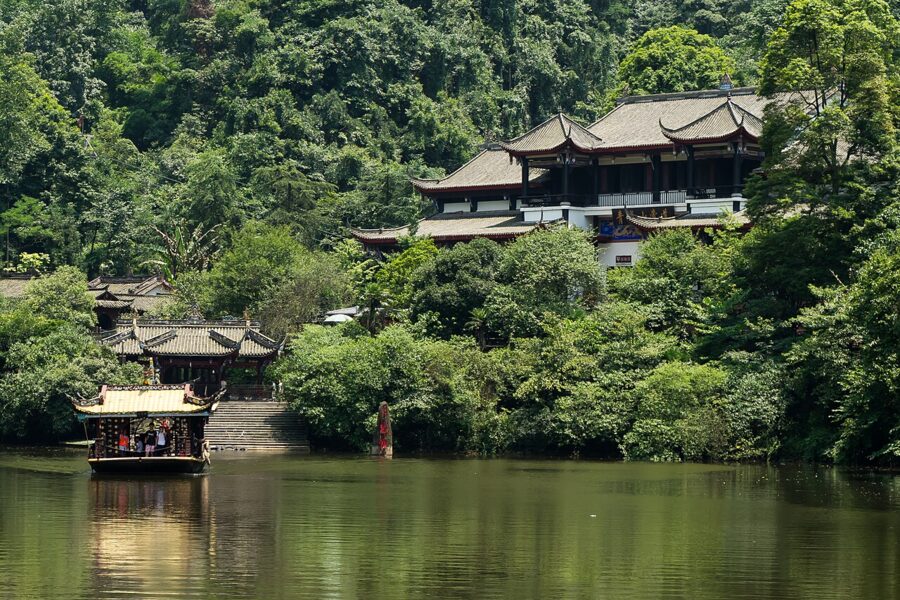
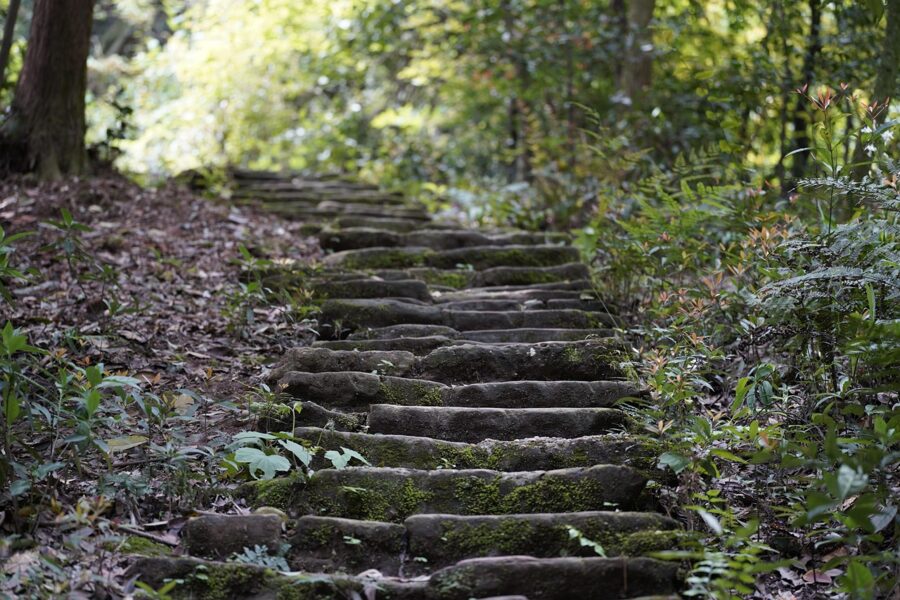
The intercity line has its own Qingchengshan station, a short taxi ride from the front gate, so you can ride straight back to Chengdu at the end of the day without returning to Dujiangyan.
Two days: Chengdu plus the mountains
Do the Chengdu base on the first morning and spend the rest of the day in the city. On the second, go to Wolong if you want mountain scenery and Fu Bao, or Bifengxia if you’d rather take the train and see Xiang Xiang. If you have a third day, Sichuan’s other big trips start from the same city: the Leshan Giant Buddha is an easy train ride south, and Jiuzhaigou is a long day’s travel north.
Skip this
- Any offer of paid “fast entry” to the Chengdu base. The base says plainly that it does not exist.
- Tours that still include the Dujiangyan base or a volunteer day there. It has been closed since 23 April 2026.
- Anything that promises you’ll hold, hug or hand-feed a panda.
- A midday arrival in July or August. You’ll pay full price to watch sleeping pandas through glass.
- A Monday visit if Huahua is the reason you came: Villa No. 6 is closed except on national holidays.
- The Bifengxia safari park if pandas are your goal. It is a separate ticket and a different trip.
Book the ticket two weeks out, set an alarm for 06:00, and get to the gate before the coaches. Then find the panda nobody is filming, and watch it eat.
You Might Also Enjoy
 Shochu and Awamori: Japan’s Distilled Spirits, How to Drink Them, and Where They’re Made
 Shenzhen: The Mainland China City Almost No One Writes About (Properly)
 Chinese Street Food: Jianbing, Roujiamo, Tanghulu, Stinky Tofu and the Snacks Worth Queuing For
 Eating at Tokyo’s Michelin-Starred Restaurants: How to Get In, What to Order, and Which Stars Are Worth the Wait