Unagi in Japan: Kanto or Kansai, Hitsumabushi, Doyo no Ushi and the Eel Houses Worth the Wait
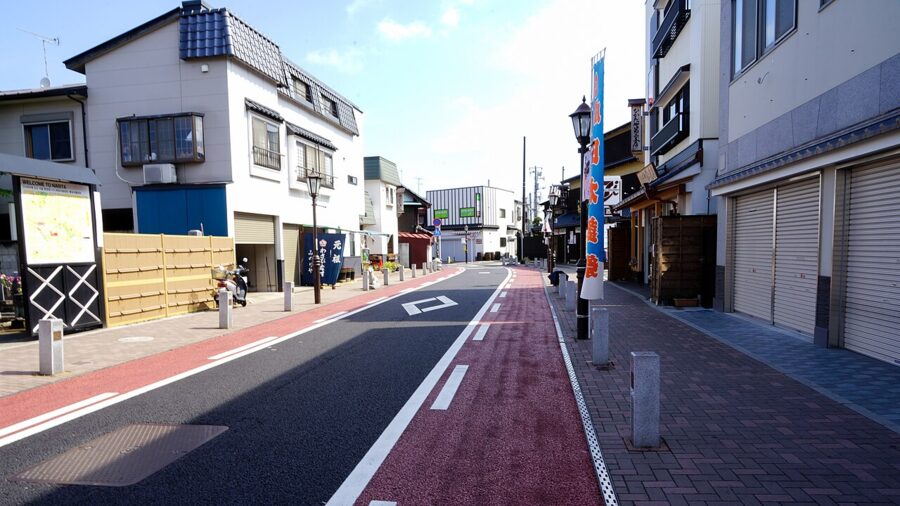
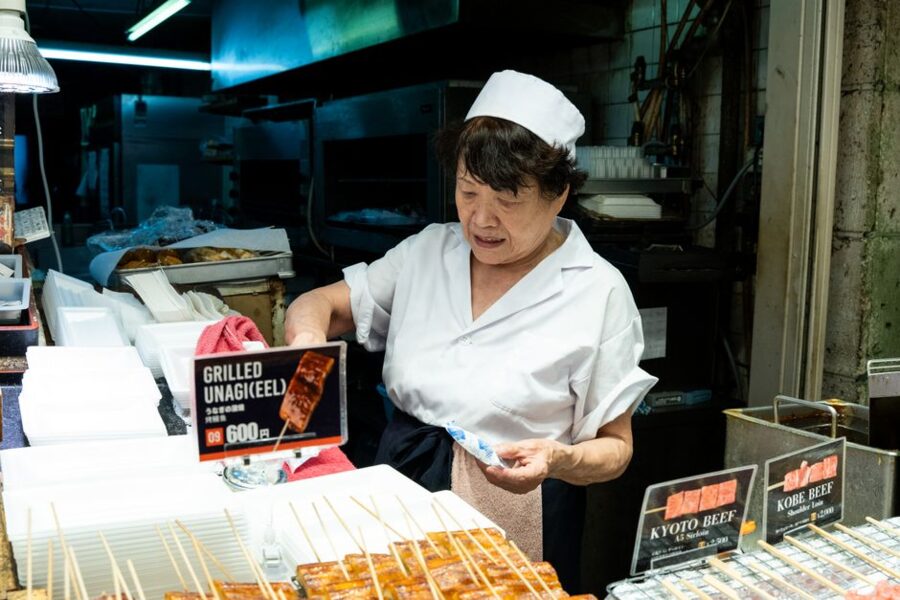
The cutting board at Kawatoyo Honten sits right on the street, a single slab of ginkgo about three metres long and thirty centimetres thick, and the man behind it does not look up. A live eel goes down, a steel spike pins its head to the wood, and a short Edo-style blade opens it from the back in one long pull. Moments later the fillet is on a skewer and the next eel is already on the board, while the queue for lunch shuffles past on its way up the approach to Naritasan Shinshoji.
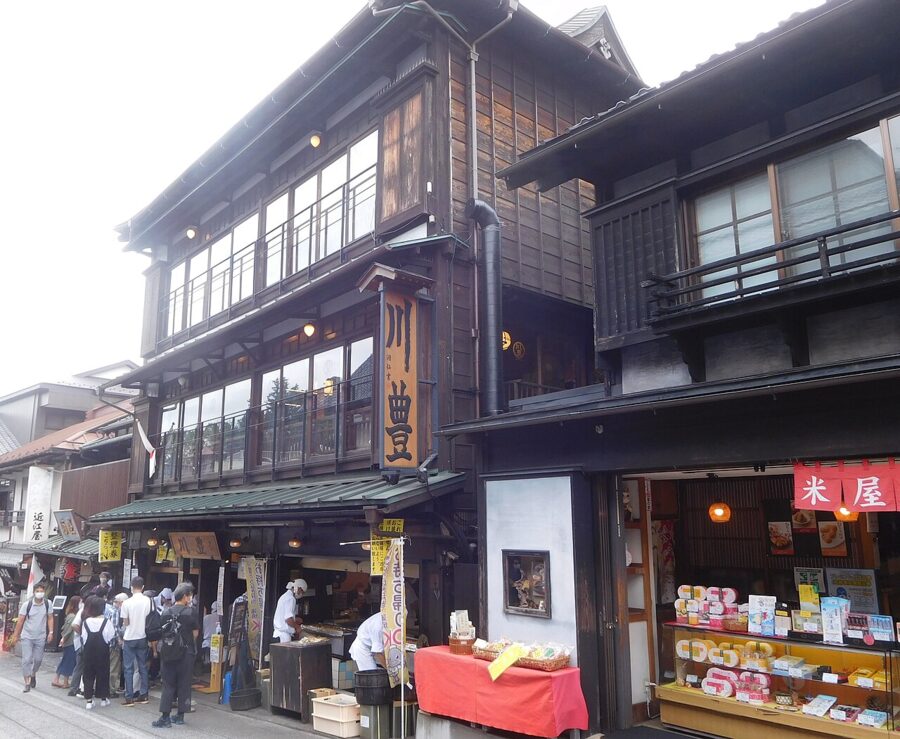
Most people who fly into Narita never see this street. It is eleven minutes on foot from JR Narita or Keisei Narita station, about twenty minutes from the airport by car, and the family behind Kawatoyo has been dealing in eel here for more than a century. Kawatoyo’s own history starts in 1910 with a family of river fishermen and eel wholesalers on Inba-numa and the Tone River, and its founder taught his methods to other cooks on the approach. That is a large part of why Narita became an eel town at all.
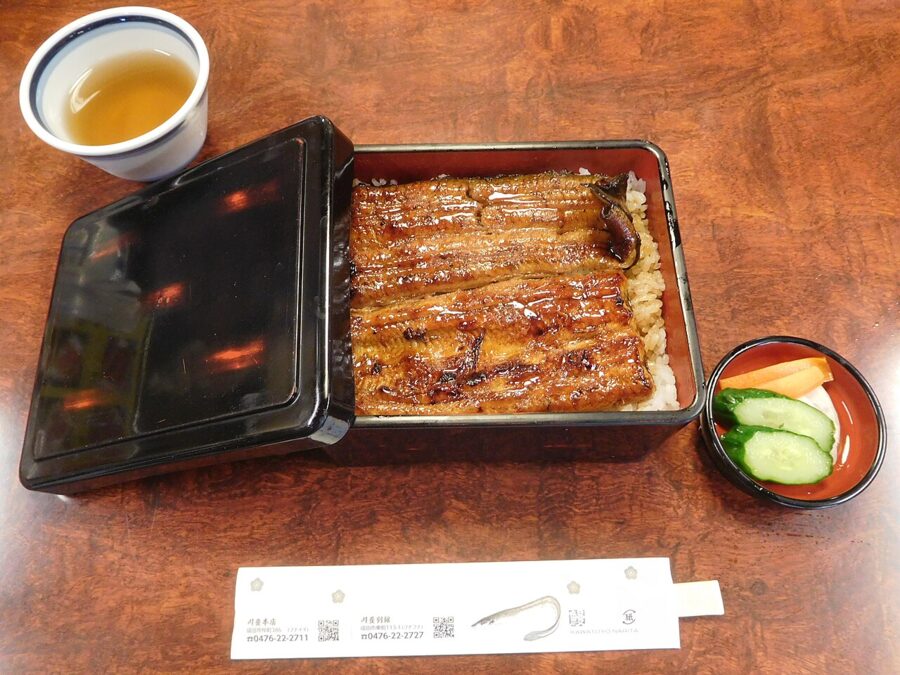
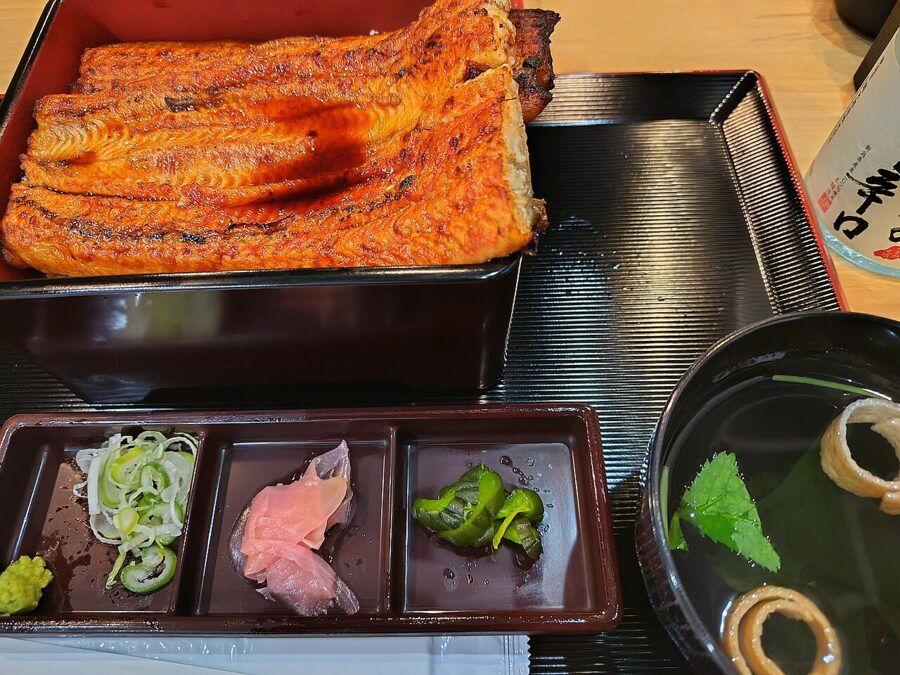
I came for the unaju and stayed for the ritual. Unagi is the one Japanese meal where the waiting is part of the dish: the eel is split, steamed and grilled to order, a tare that has been topped up for generations goes on in coats, and the whole thing arrives in a lacquered box that steams when you lift the lid. At Kawatoyo the plain unaju, two-thirds of an eel, is ¥3,200. A whole eel is ¥4,300.
This guide is about where that box comes from, why it tastes different in Tokyo and Osaka, how to eat hitsumabushi in Nagoya without looking lost, and which eel houses are worth the queue. It also gets into the part nobody puts on the menu: the Japanese eel is an endangered species, and what you order matters a little.
In This Article
- What unagi actually is
- Kabayaki and shirayaki
- From cattail skewers to Edo-mae
- Kanto or Kansai: the split that decides your eel
- The bowls, and which to order
- Hitsumabushi: one bowl, three ways
- Yanagawa’s seiro-mushi
- Kyoto’s kinshi-don and the other bowls
- Doyo no Ushi no Hi: the summer eel day
- The eel towns
- Hamamatsu and Lake Hamana
- Nagoya
- Mishima
- Narita
- Yanagawa
- Osaka and Kyoto
- Tokyo’s old eel houses
- Nodaiwa, Higashi-Azabu
- Komagata Maekawa, Asakusa
- Izuei, Ueno
- Obana, Minami-Senju
- The cheap end
- Ordering, waiting and what comes on the side
- The conservation question
- Anago, the sea-eel cousin (and a few things to skip)
What unagi actually is
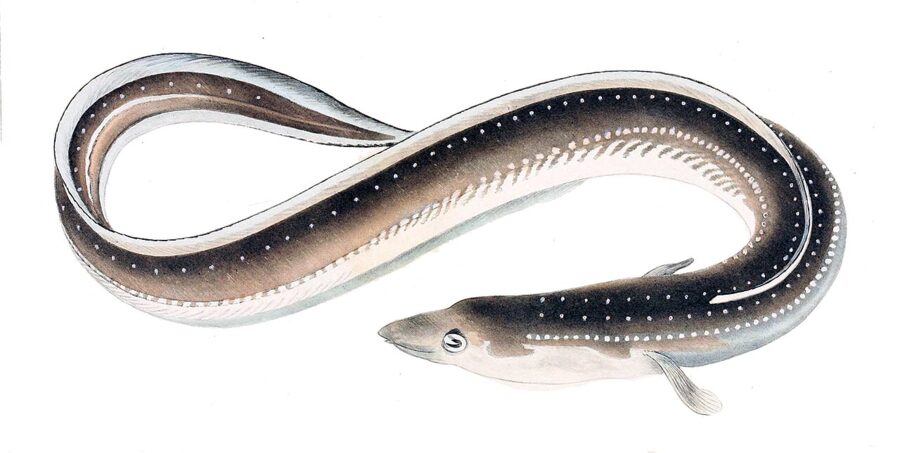
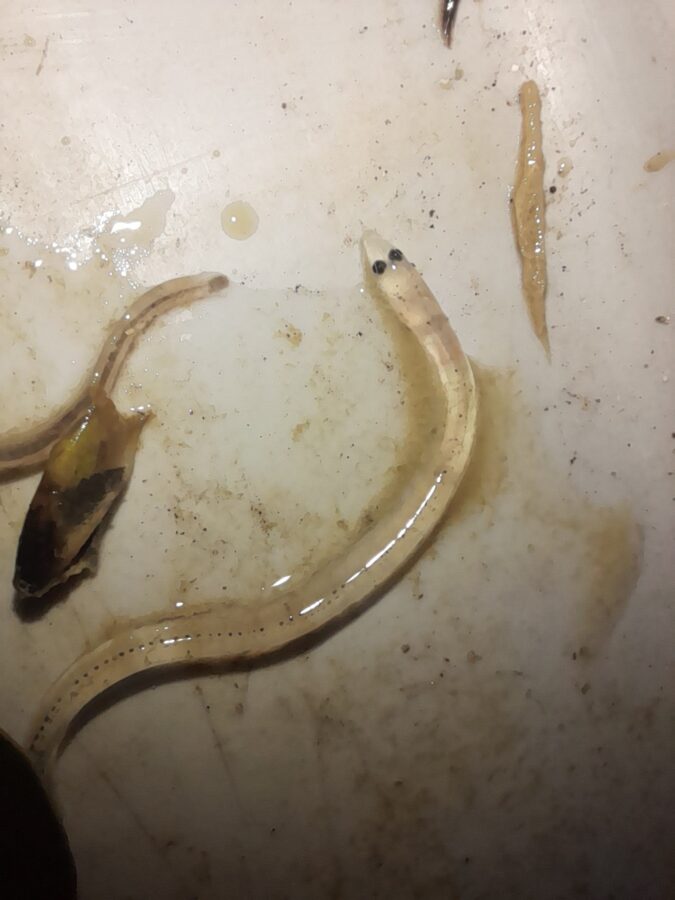
Unagi is the Japanese freshwater eel, Anguilla japonica. It hatches far out in the Pacific, west of the Mariana Islands, where a Japanese research team led by the fisheries scientist Katsumi Tsukamoto finally pinned down the spawning grounds in 2006. The larvae drift back towards East Asia on the currents, turn into transparent glass eels about five centimetres long, and swim up rivers in Japan, China, Korea and Taiwan to grow.
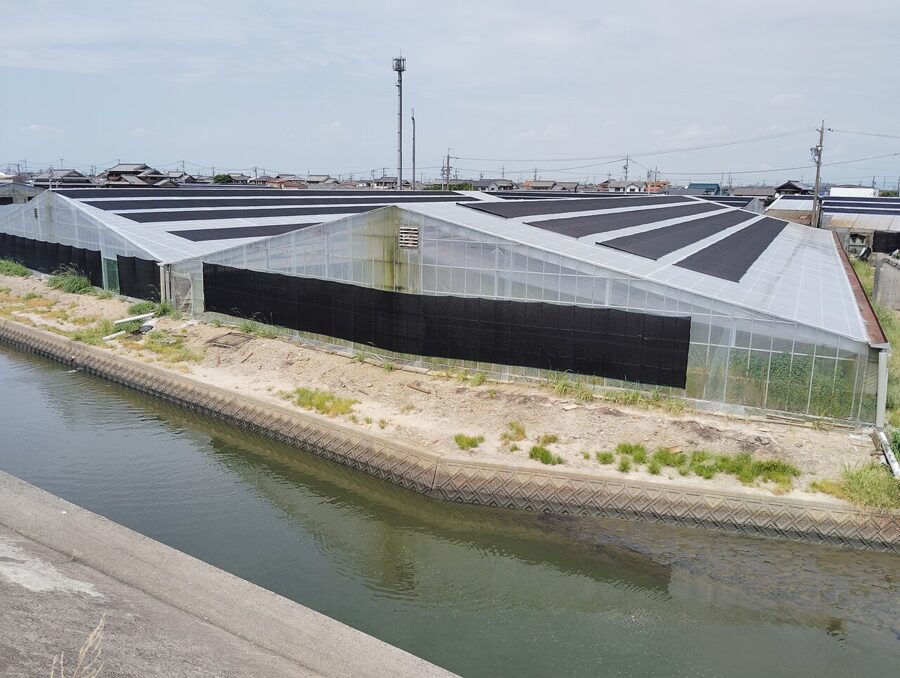
Nearly every eel you’ll eat in Japan is farmed, but not bred. Nobody has made commercial full-cycle eel farming work yet, so every farm still starts with wild glass eels caught at river mouths in winter and early spring, raised in heated ponds for six months to a year or more. The state fisheries research agency managed the full cycle in a laboratory in 2010, and that is still a lab result rather than something you can buy.
The other thing to know: you never eat unagi raw. Eel blood contains a toxin that heat destroys, which is why there is no eel sashimi on a normal menu and why everything below involves fire.
Kabayaki and shirayaki
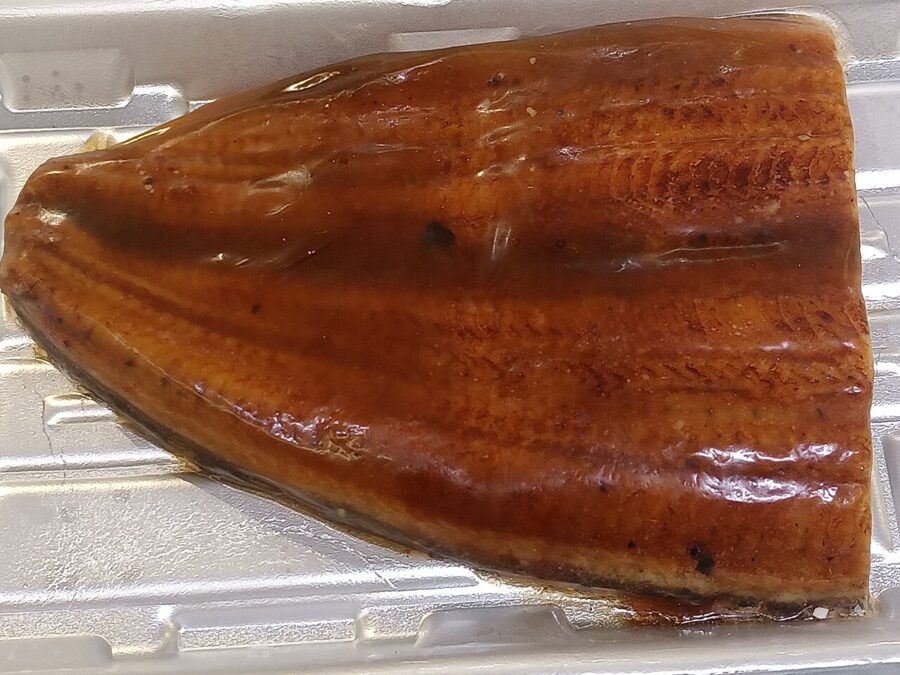
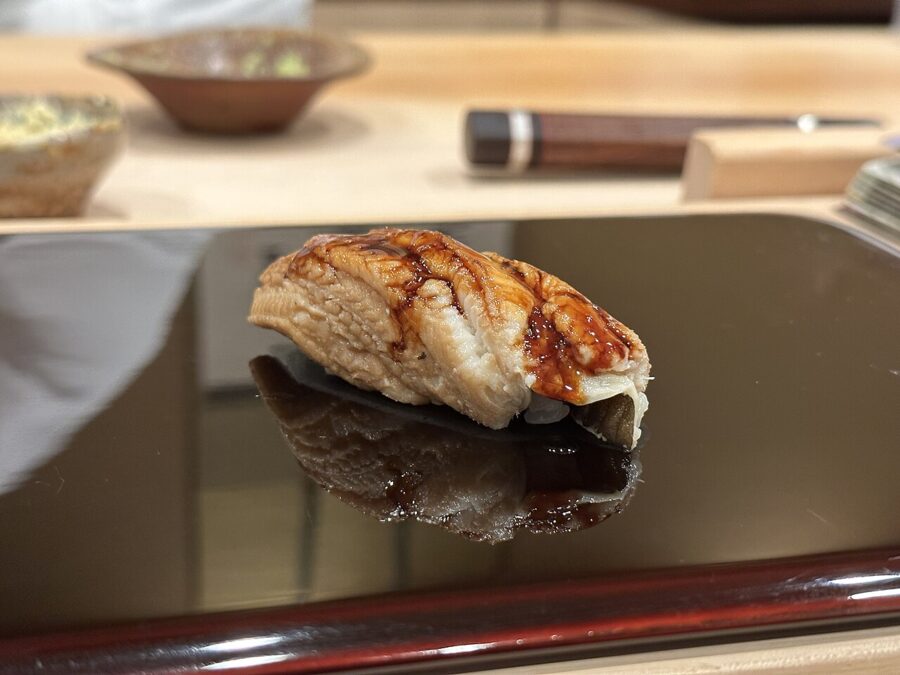
Kabayaki is the classic preparation, and the word covers most of what you’ll see. The eel is split open, boned, skewered flat on bamboo, grilled, and basted with tare, a sauce of soy sauce and mirin with sugar or sake depending on the house. The name probably comes from the old way of cooking eel whole on a vertical skewer, which looked like the brown seed head of a cattail, gama. Edo-period writers argued about that even then, and a rival theory points to the colour of birch bark.
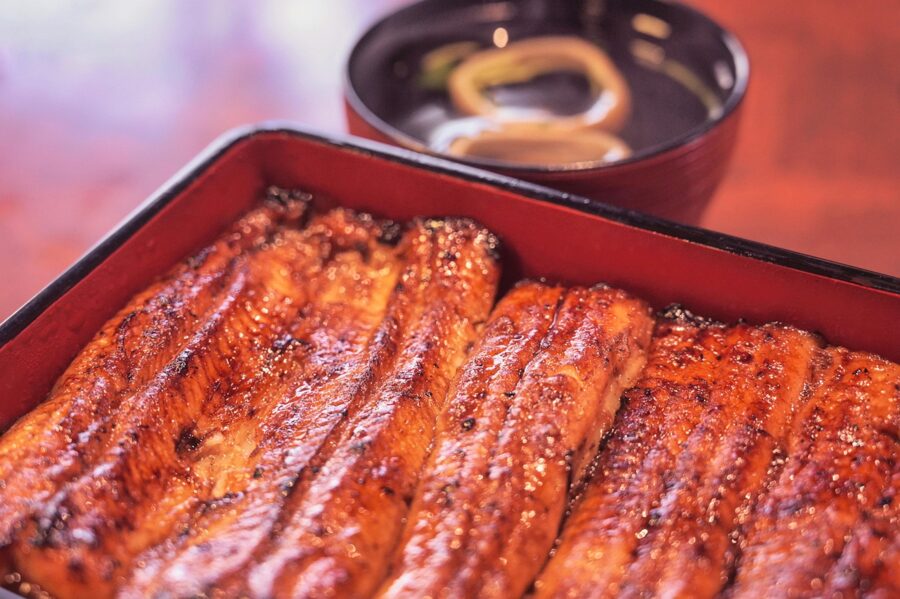
The tare is the thing eel houses are proudest of. Most keep one pot going for decades and top it up rather than start fresh, so it slowly picks up fat and juices from every eel dipped in it. Some houses also grill the heads and drop them into the pot. Ask any old eel house how old its sauce is and you will get a founding date as the answer.
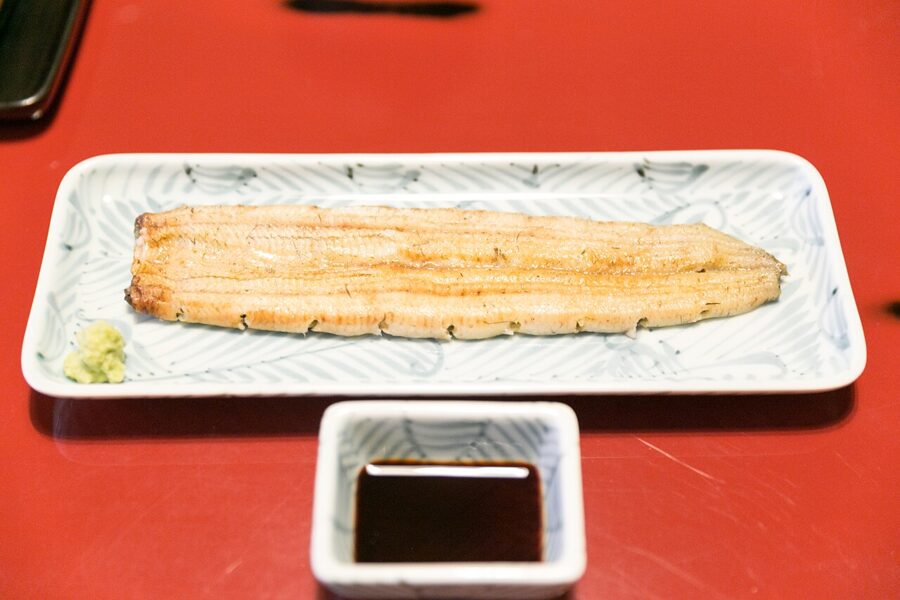
Shirayaki is the same eel grilled with no sauce at all. You eat it with wasabi and a little soy, or with grated daikon, and it is the clearest test of a kitchen because there is nothing to hide behind. If an eel house does a good shirayaki, order one to share before the main box.
From cattail skewers to Edo-mae
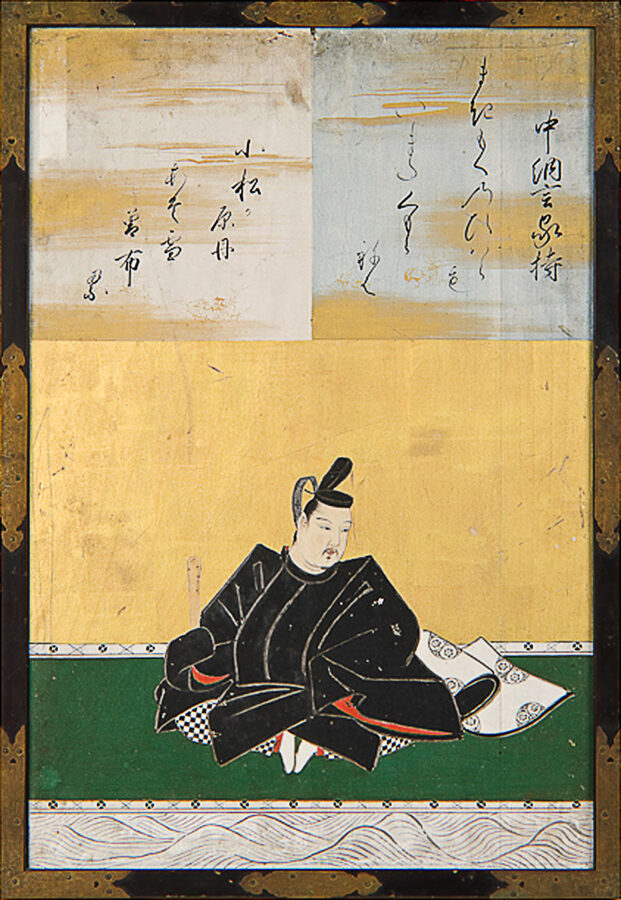
Eel has been on Japanese plates far longer than sushi. The poet Otomo no Yakamochi teases a skinny friend in the eighth-century Man’yoshu anthology, telling him eel is good for summer weight loss and he should go and catch some. A second poem tells him not to drown doing it. For most of the following thousand years, eel was something you chopped up, skewered and grilled with miso or salt.
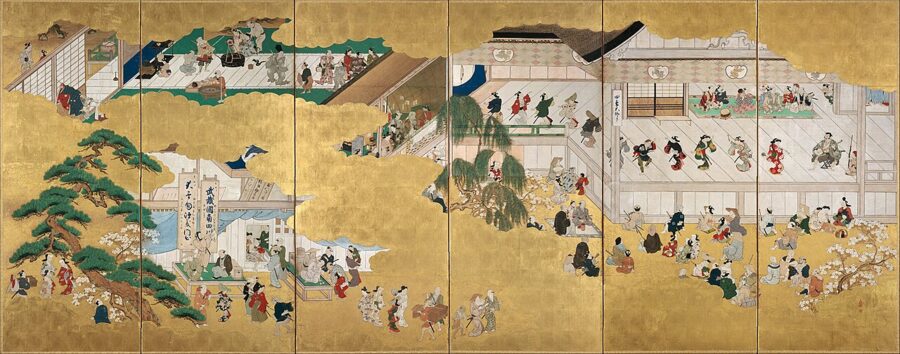
Edo changed that. The drained marshes and canals of the new shogun’s city filled with eels, and stalls sold them grilled on skewers for about 16 mon, roughly the price of a bowl of soba. Once dark Kanto soy sauce from Noda and Choshi and sweet mirin spread through the city, the split, boned, sauced kabayaki took shape. Before sushi took the name, “Edo-mae” meant eel from the water in front of the city.
The rice bowl came last. The usual story credits Okubo Imasuke, a backer of the Nakamura-za theatre in Edo, who had grilled eel sandwiched between hot rice so it stayed warm on the way to the playhouse, sometime in the Bunka era (1804–1818). Another writer remembered unadon on sale in the next street when he was a boy, so the fair summary is that several people had the same idea. If you want the wider story of how Edo ate, from street soba to sushi stalls, my history of Japanese food covers it.
Kanto or Kansai: the split that decides your eel
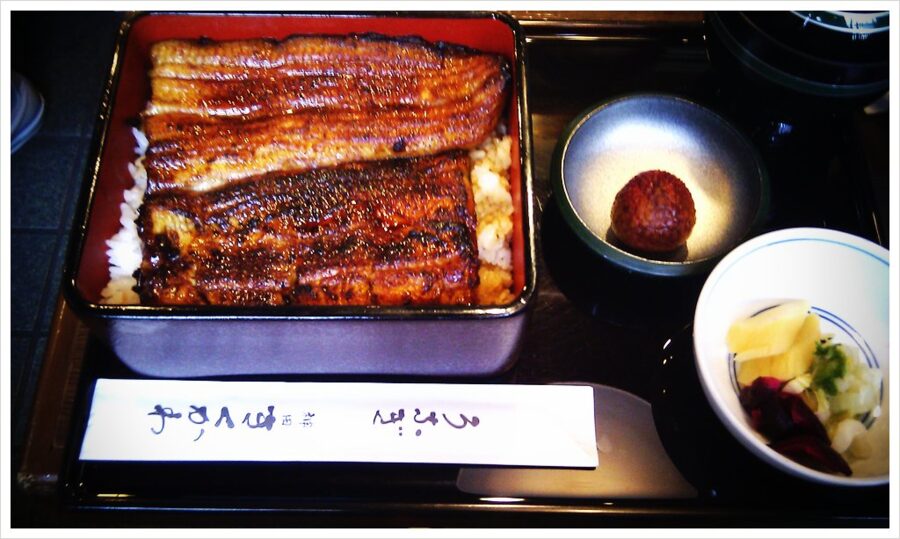
Japan has two schools of eel, and they disagree at almost every step. In the Kanto style of Tokyo, the eel is split down the back, grilled plain, steamed, then sauced and grilled again. In the Kansai style of Osaka and Kyoto, it is split down the belly and grilled straight through with the sauce, no steaming at all, a method called jiyaki.
| Kanto (Tokyo) | Kansai (Osaka, Kyoto) | |
|---|---|---|
| Split | Down the back (sebiraki) | Down the belly (harabiraki) |
| Cooking | Grilled plain, steamed, then sauced and grilled | Grilled with sauce from raw, no steaming |
| Texture | Soft, almost melting, less fatty | Crisp skin, firmer flesh, richer fat |
| Local name for the bowl | Unadon or unaju | Mamushi (Osaka), often with eel inside the rice too |
| The head | Taken off before grilling | Traditionally left on while it grills |
| Where to taste it | Tokyo, Narita | Osaka; Nagoya grills unsteamed too |
Everybody tells you the same story about the split. Edo was a city of samurai, so cutting a fish open from the belly looked too much like seppuku, while Osaka merchants liked the idea of “opening the belly” and speaking frankly. It’s a good story. It is also probably folklore, because Edo cooks split every other fish down the belly without a second thought.
The likelier reason is mechanical. A belly-split eel has its thin edges on the outside, and when it is steamed those edges split and fall off the skewers; a back-split eel keeps the thick side outermost and survives the steamer. A mature eel’s dorsal fin is also tough, and cutting from the back takes it out cleanly. Watanabe Zenjiro’s history of how Edo built Japanese cuisine dates back-splitting as the Edo norm only to the Bunsei era (1818–1830), once steaming had arrived to soften the fattier, muddier eels of the Kanto marshes.
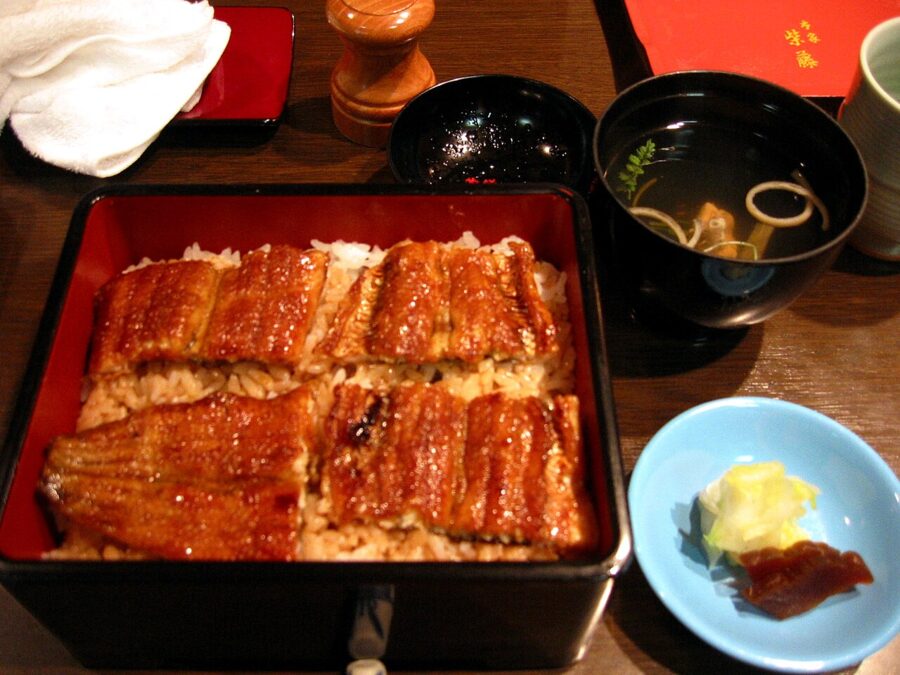
Neither school wins outright, and you should try both. Kanto eel is the gentler of the two: the steaming draws out fat, so a whole box goes down easily. Kansai eel is louder, with crackling skin, firmer flesh and the full weight of the fat, and because it holds together without steaming, Osaka’s mamushi often keeps the old habit of hiding a second layer of eel inside the rice. I lean Kanto for an unaju and Kansai for anything eaten in pieces.
The line is blurrier than the table makes it look. Hamamatsu and the area around Lake Suwa in Nagano grill a back-split eel without steaming it, and much of Kyushu does the same, grilling it longer and darker. Nagoya grills its eel unsteamed, the Kansai way.
And one of the most famous eel houses in Kyoto, Kyogoku Kaneyo, grills the Edo way: back-split, plain-grilled, steamed, then sauced. It says so right on its menu.
The bowls, and which to order
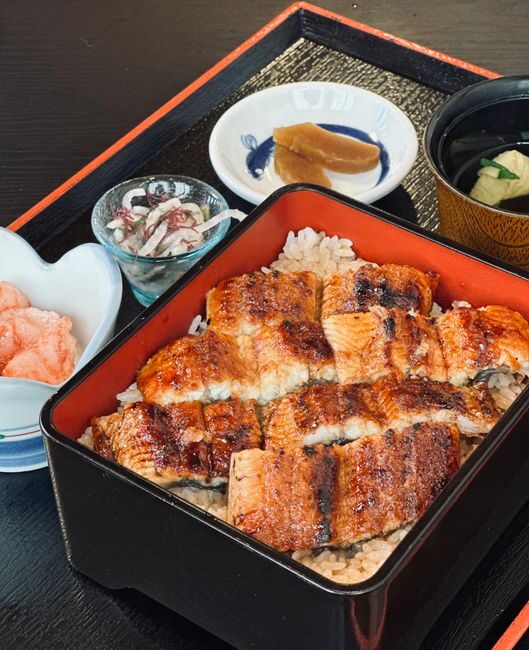
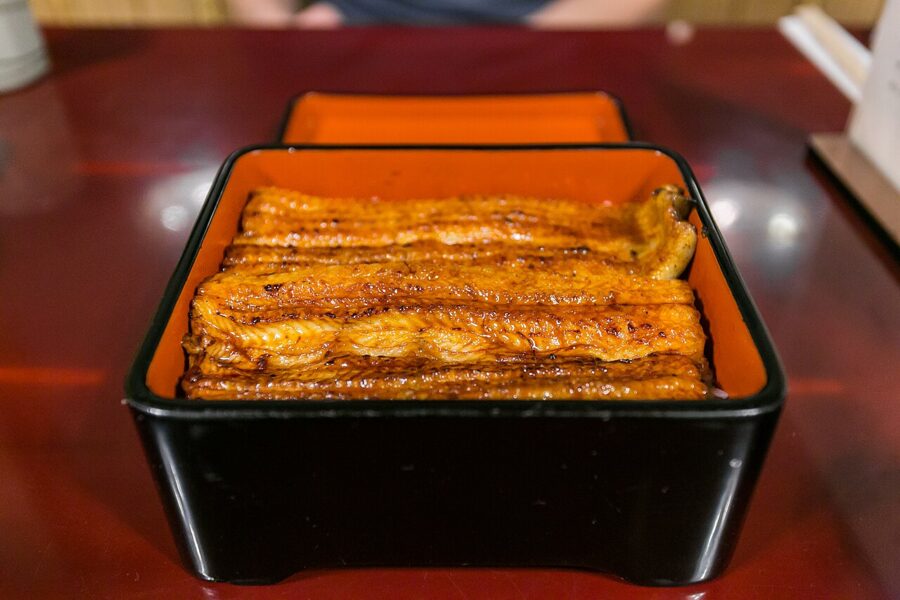
Once the eel is grilled, what you order is mostly a question of container. Unadon is eel on rice in a round bowl. Unaju is the same thing in a square lacquered box, a jubako. At shops that sell both, the box usually carries more eel and comes with soup and pickles, so it sits higher on the menu, but the eel inside is the same.
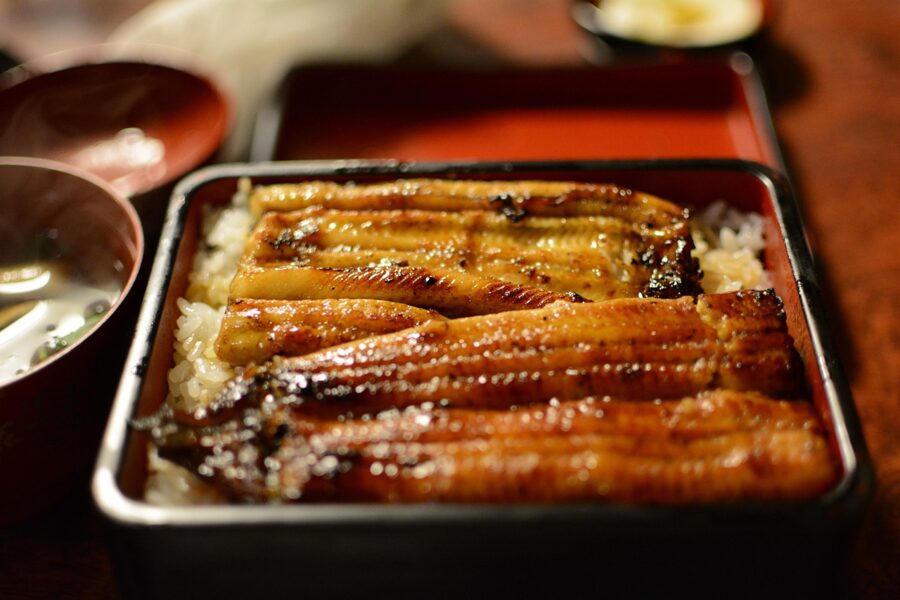
Ranks on an eel menu are almost always about quantity. “Jo” and “tokujo” mean more eel, not better eel, because a shop normally buys from one supplier; if a house is serving eels from two different regions or a premium brand, the menu says so separately. Read the small print for the number of pieces or the fraction of a fish, and order the size you’ll actually finish.
Hitsumabushi: one bowl, three ways
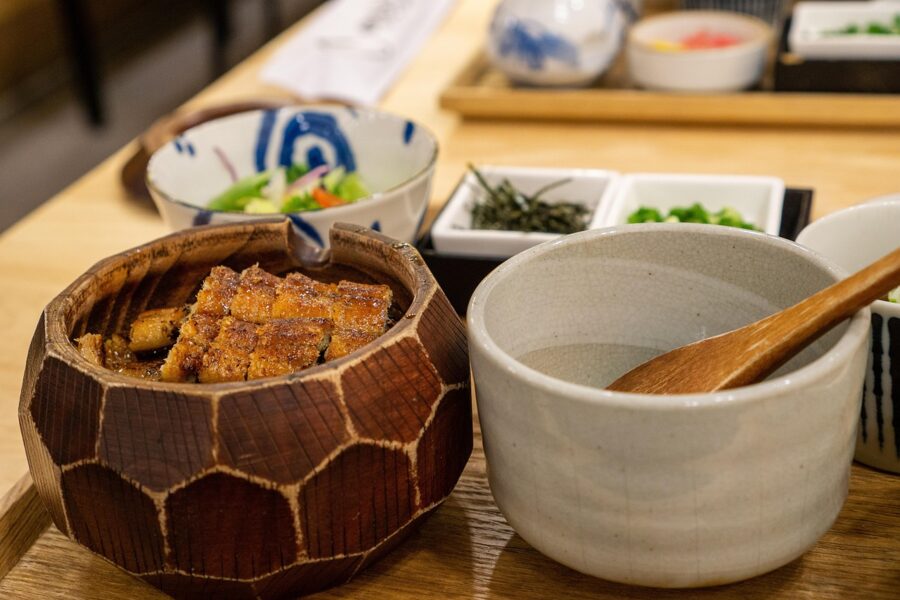
Nagoya’s eel dish is hitsumabushi: Kansai-style eel, crisp from the grill, cut into strips and laid over rice in a wooden tub, the ohitsu, with a tray of condiments and a pot of dashi or green tea. The idea is that you eat the same eel three different ways, and the order matters.
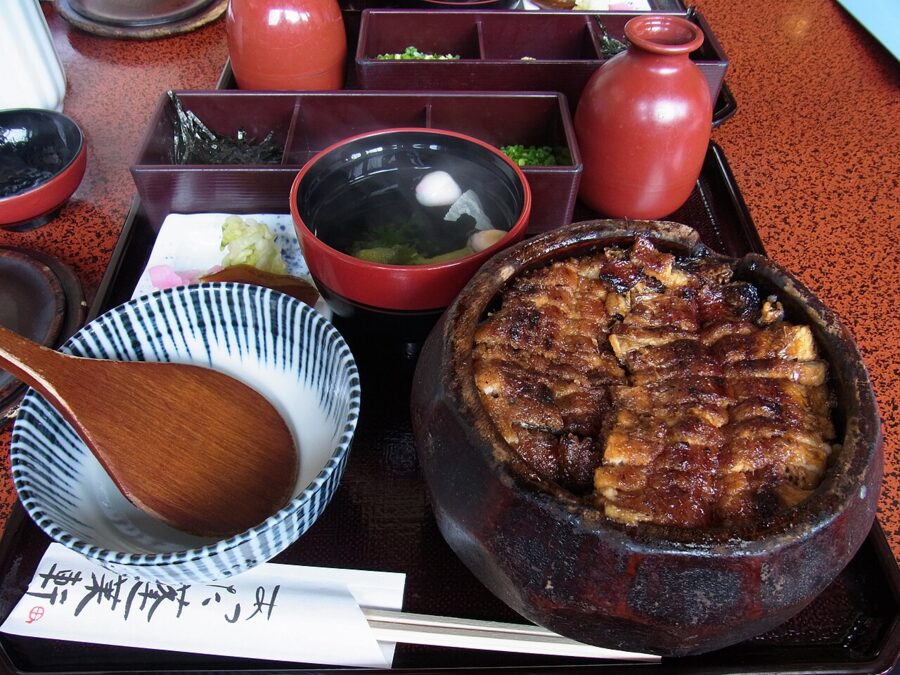
- First quarter, plain. Score the rice into quarters with the paddle, scoop one into your small bowl and eat it as it comes.
- Second quarter, with condiments. Add chopped green onion, wasabi and shredded nori, and mix.
- Third quarter, as a soup. Add the condiments again, then pour over the hot dashi or tea so it becomes a kind of eel ochazuke.
- Last quarter, your favourite. Most people go back to the dashi, and Atsuta Horaiken’s own instructions say to do whichever you liked best.
The third stage is the one people skip and shouldn’t. The broth softens the crisp edges of the eel and the rice soaks up the tare, and it is the best argument for eating eel Nagoya-style.
Two Nagoya shops claim the dish: Atsuta Horaiken dates it to the Meiji era, while Ibasho in Nishiki, founded in 1909, dates its own version to the Taisho era. A 1964 Nagoya food guide already lists hitsumabushi under Ibasho, and a shop in Tsu in Mie Prefecture has its own story about chopped staff meals of tough wild eel. Nobody will settle it, and that’s fine.
Yanagawa’s seiro-mushi
In Yanagawa, a canal town south of Fukuoka, the eel goes into a steamer. For seiro-mushi, rice is mixed with tare and steamed in a small lacquered basket, topped with fresh kabayaki and a nest of thin-sliced omelette, kinshi tamago, and steamed again. The result is softer and sweeter than any bowl in Tokyo, with the sauce all the way through the rice.
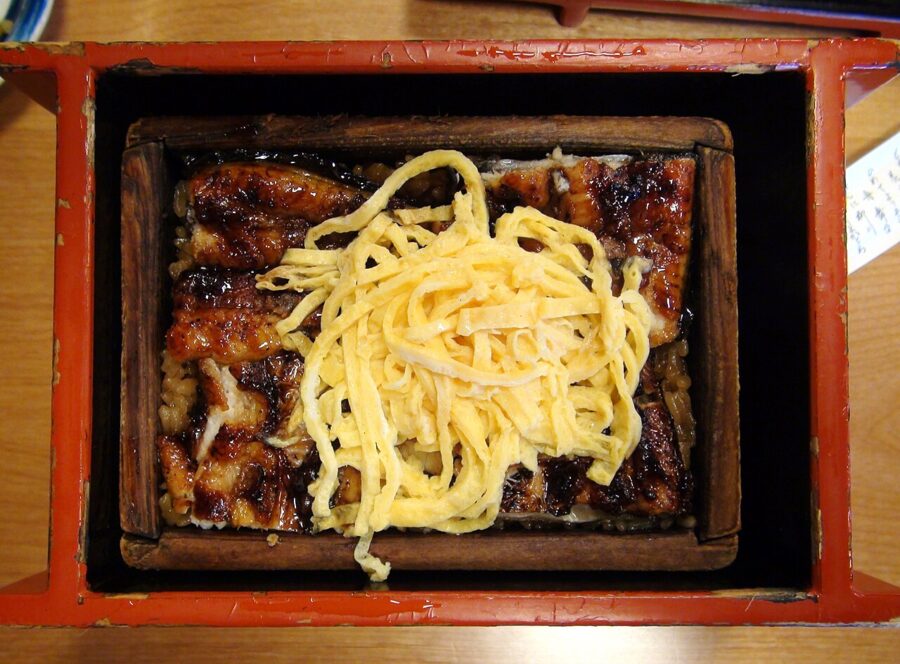
Ganso Motoyoshiya claims to have invented it, in the first year of Tenna, 1681, and says it has kept the founder’s sauce going ever since. Its main shop on Asahimachi serves a plain seiro-mushi for ¥4,800 and a larger one for ¥5,200, both with liver soup and pickles. It opens 10:30–19:30 (last orders 19:00) and closes on Mondays.
Kyoto’s kinshi-don and the other bowls
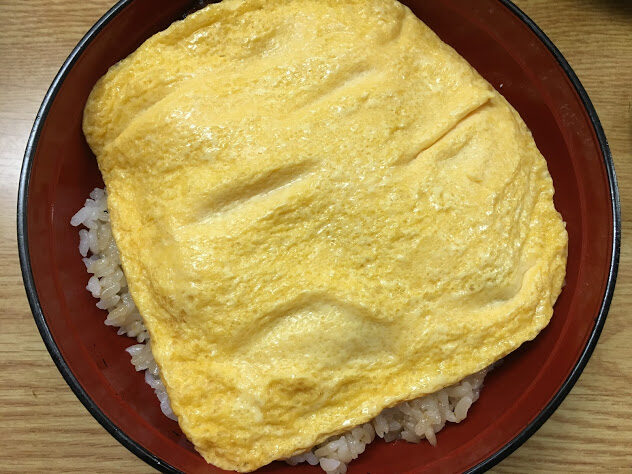
Kyoto’s best-known eel bowl is the kinshi-don at Kyogoku Kaneyo, and it looks like a mistake the first time. A rolled omelette the size of the bowl covers the eel completely, so all you see is a yellow lid. Underneath is Edo-style eel on sauced rice, and the light, dashi-soaked egg is the Kyoto part.
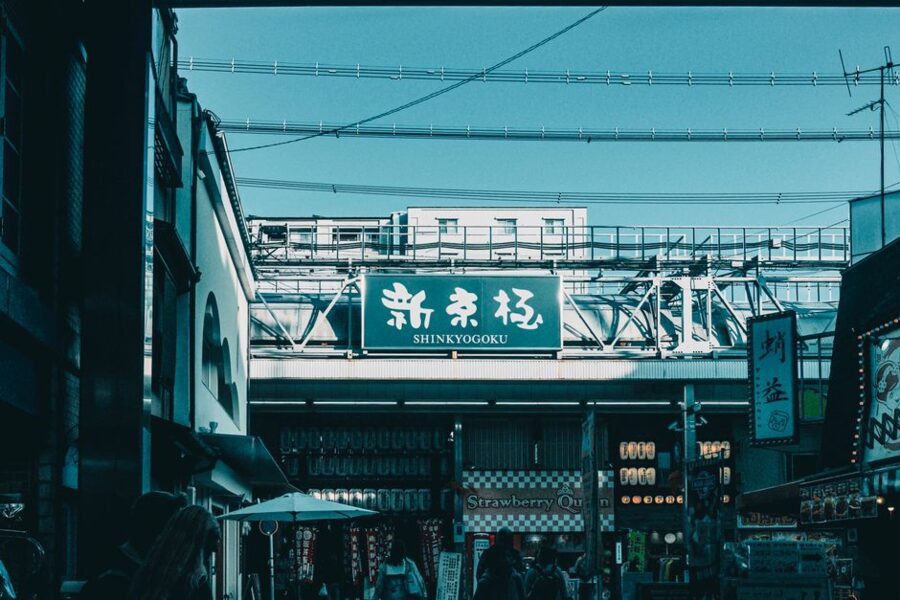
Kaneyo is on Rokkaku-dori, just off the Shinkyogoku covered arcade, about five minutes on foot from Kyoto Shiyakusho-mae station on the Tozai line. It opens 11:30–15:30 and 17:00–20:30, is closed on Wednesdays and on Tuesday evenings, and the upstairs tatami room hosts a monthly rakugo comedy night. If you’re planning a whole day of eating in the city, my guide to what to eat in Kyoto has the rest of it, including hamo, the bony pike conger that Kyoto eats in summer instead.
Beyond these, eel turns up in smaller forms too.
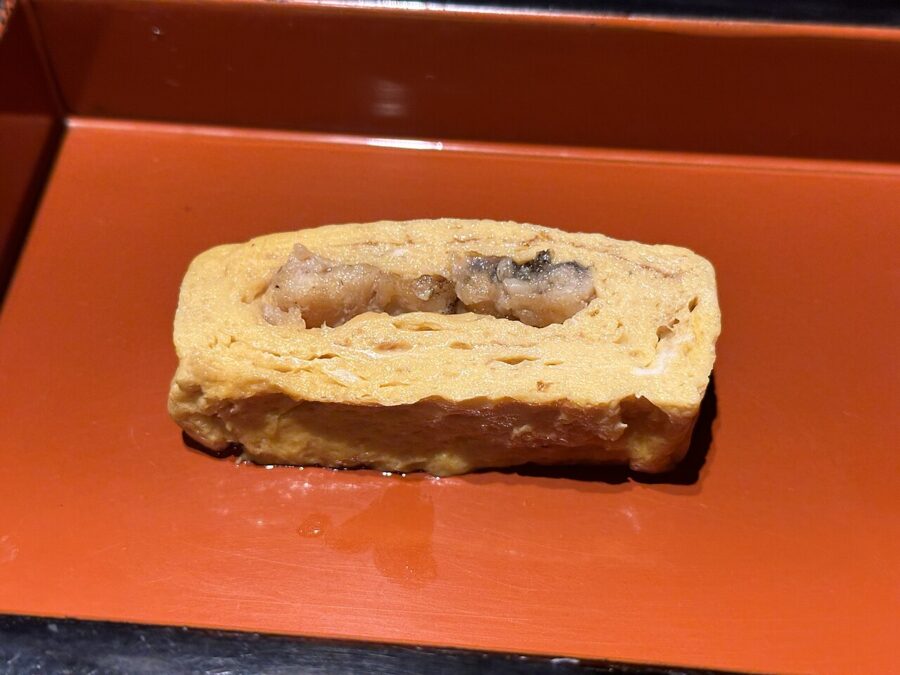
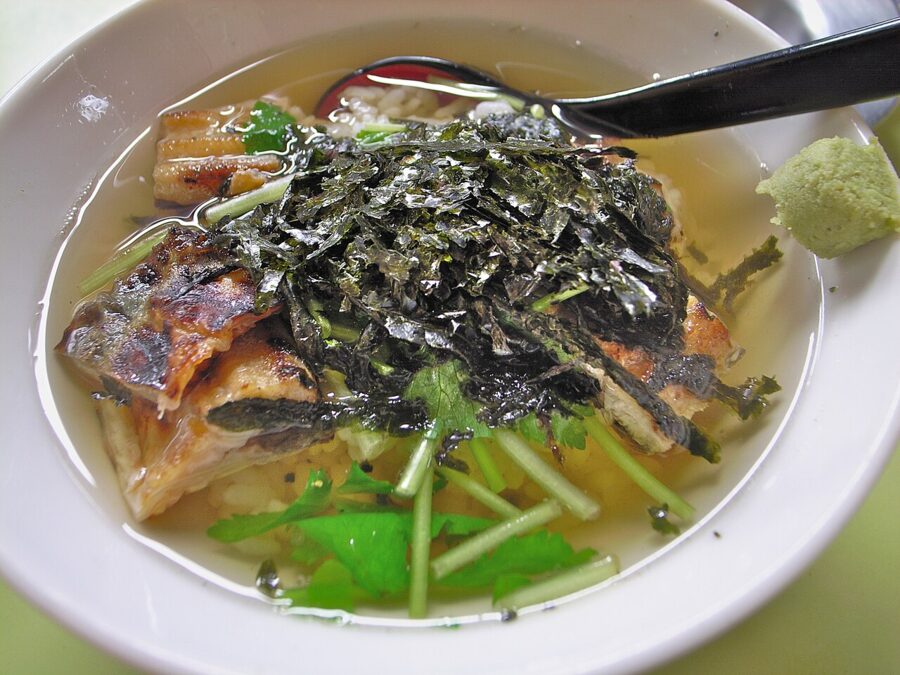
Umaki is a rolled omelette wrapped around a strip of kabayaki. Uzaku is kabayaki with sliced cucumber in vinegar. Unagi chazuke is leftover eel with tea poured over rice. And the station lunchbox, unagi bento, is a classic of the Tokaido line, especially at Hamamatsu.
Doyo no Ushi no Hi: the summer eel day
On one or two days every summer, the whole country eats eel. Doyo no Ushi no Hi is the “ox day” of the summer doyo, the eighteen-odd days before the start of autumn in the traditional almanac, when days are counted off against the twelve zodiac animals. In 2027 it falls twice, on 21 July and 2 August. Supermarkets put out eel stands, convenience stores take pre-orders for eel bento, and the famous shops get queues around the block.
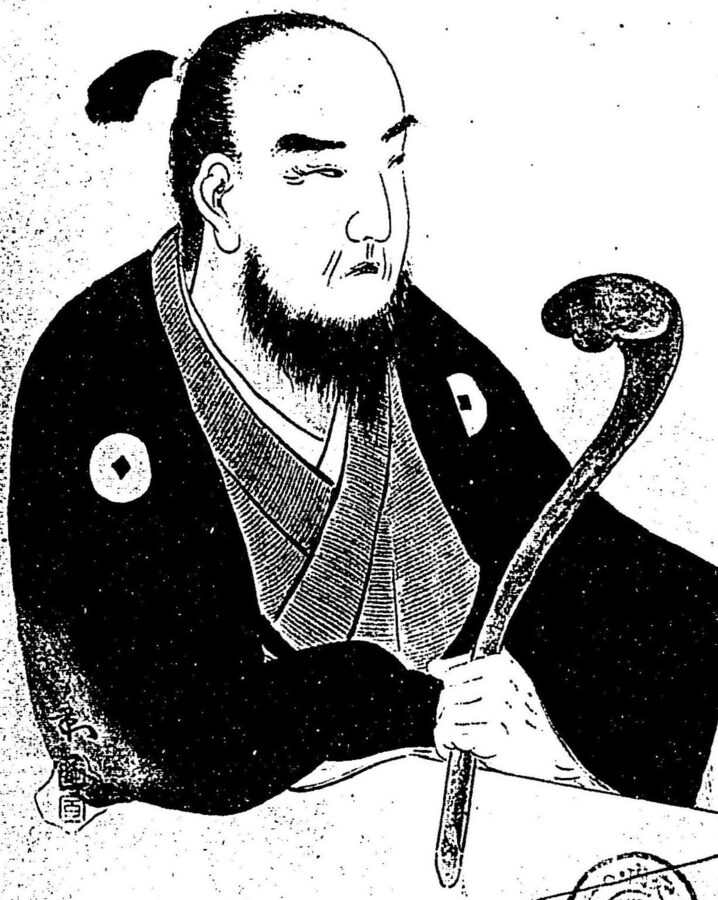
The story everybody tells involves Hiraga Gennai, an Edo inventor and writer. An eel seller whose business died every summer asked him for help, and he told him to put up a sign reading “today is the day of the ox”.
There was an old belief that eating something beginning with “u” on ox day protected you from the summer heat, so the eel shop did a roaring trade and every other eel shop copied it. A neat story, but nobody has traced it to an Edo source. An 1822 miscellany of city gossip dates the eel habit to the 1770s and 1780s without mentioning Gennai at all.
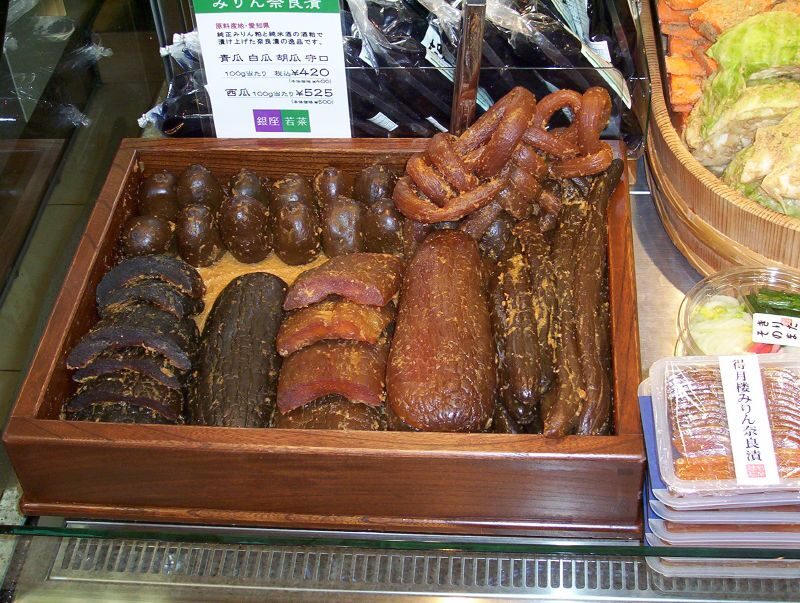
Other “u” foods have mostly faded, though one survives on your tray. The slice of pickled melon, narazuke, that comes with an eel box is a leftover of the custom of eating uri, gourds and melons, on ox day. Udon and umeboshi were on the list too.
Here is the part that surprises people: summer isn’t when eel is best. Wild eels fatten up in late autumn and early winter before going back to sea, and that’s when their flesh is richest. Farmed eel is fairly steady all year, which makes the summer rush mostly a habit.
A few top houses refuse to play along: Nodaiwa in Tokyo closes on Doyo no Ushi no Hi rather than serve eel it isn’t happy with. My advice is to skip the day itself. The same shop, a week later, is calmer, the cooks aren’t rushed, and nobody will hurry you out.
The eel towns
Every region claims good eel, but a handful of towns have built their identity on it. They are spread along the old Tokaido road and down into Kyushu, and most are easy day trips from a big city.
Hamamatsu and Lake Hamana
“Eel means Hamamatsu” is how the city puts it, and the reason is farming. More than 120 years ago, in the Meiji era, a man named Hattori Kurajiro started raising eels in ponds by Lake Hamana, and the lake had everything a farm needed: glass eels in the estuary, a mild climate, flat land for ponds, plenty of groundwater, and cheap feed from the lake’s small fish and from the silkworms of the local silk industry.
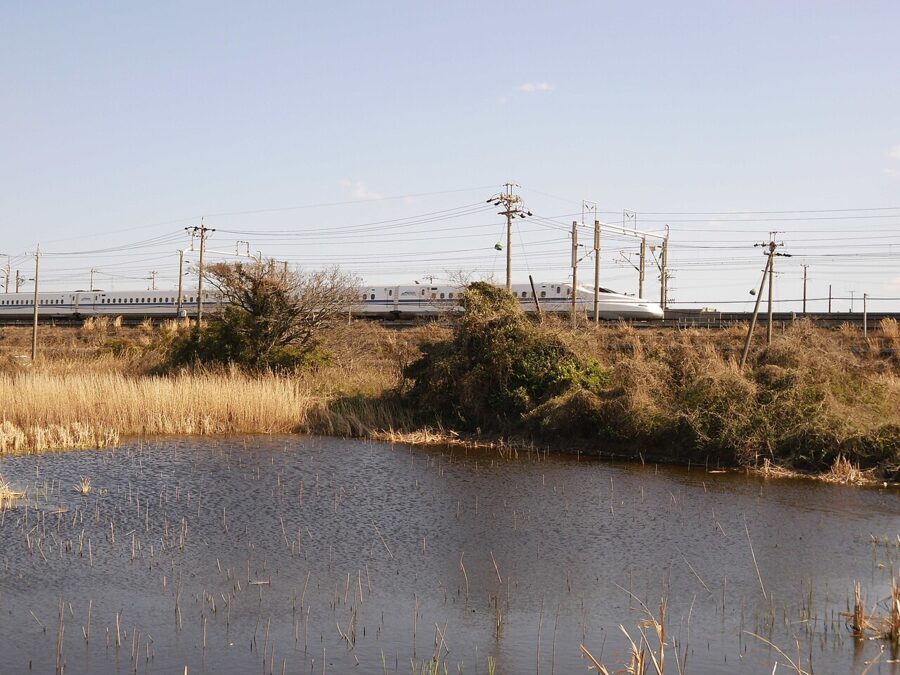
Glass eels are still caught from December to April at the mouth of the lake and of the Tenryu River, then raised in greenhouse ponds on water drawn from 300 metres underground. Sitting halfway between Tokyo and Osaka, Hamamatsu also serves both styles of eel, which makes it the best place to taste them side by side. Atsumi, in business since 1907 and about five minutes’ walk from Hamamatsu Station, grills Kanto-style; it closes on Tuesdays and Wednesdays and serves until the day’s eel runs out.

Hamamatsu’s other food claim to fame is dumplings, and the city’s long-running fight with Utsunomiya over who eats the most is a whole story of its own in my gyoza guide. If you’re only changing trains, the eel bento at Hamamatsu Station is the classic stand-in.
Nagoya
Nagoya is hitsumabushi country, and the two names to know are the two that claim to have invented it. Atsuta Horaiken’s main restaurant, the Jinya, is seven minutes on foot from Atsuta Jingu Temmacho station on the Meijo subway line. It opens 11:30–14:00 and 16:30–20:30 (last orders), is closed on Wednesdays and the second and fourth Thursday, and charges ¥4,950 for hitsumabushi or ¥6,600 for the one-and-a-half portion.
Its Jingu branch sits just outside the south gate of Atsuta Jingu, three minutes from the same station, so you can combine the shrine with lunch.
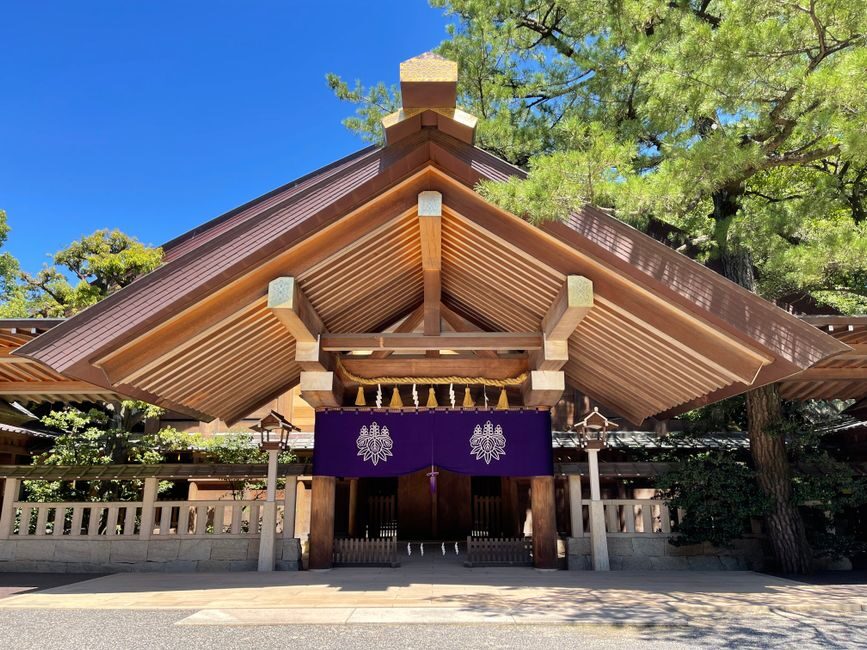
That branch closes on Tuesdays and the second and fourth Monday. On busy days the restaurant warns that it may stop taking names before the official last order.
Ibasho is the counterweight. It has been one family business since 1909, burned down in the 1945 air raids, and moved into its current building in Nishiki 3-chome in 1952; it now runs a single shop, about five minutes on foot from Sakae station, and says firmly that it has no branches. Hitsumabushi here is ¥3,870, with a layer of shredded nori under the eel. It’s cash only and closed on Sundays and the second and third Monday.
Mishima
Mishima, on the Tokaido Shinkansen at the foot of Mount Fuji, has a good claim to the best eel in Japan, and the reason is water. Rain and snow that fall on Fuji take years to filter through the lava and come up as springs all over town, cold and clean, and Mishima eel houses keep their eels in it before cooking.
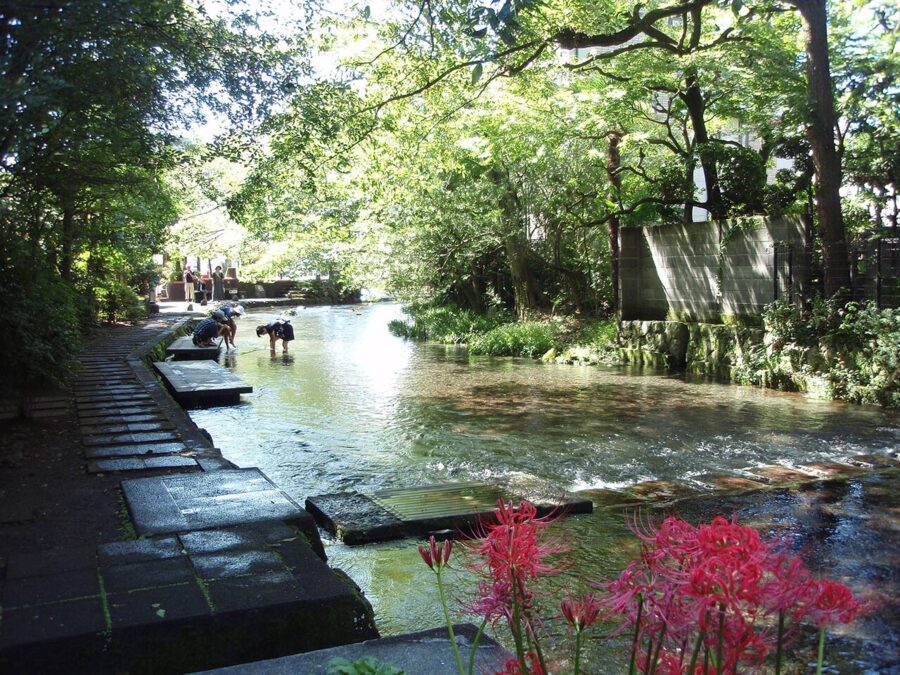
Sakuraya, on Hirokoji-cho, rests its eels for three to four days in cold spring water drawn up from underground. The shop’s explanation is that it takes away the muddy smell, trims the fat to the right level and firms up the flesh. The result is eel that feels oddly light for how big the portion is. A one-eel unaju is ¥5,500.
Sakuraya, which dates to 1856, opens 11:00–20:00 and closes when the eel runs out, with a possible break from 15:30 to 17:00 while the cooks prepare. It’s closed on Wednesdays, plus one Tuesday-Wednesday pair a month. Go at opening, or expect to queue.
Narita
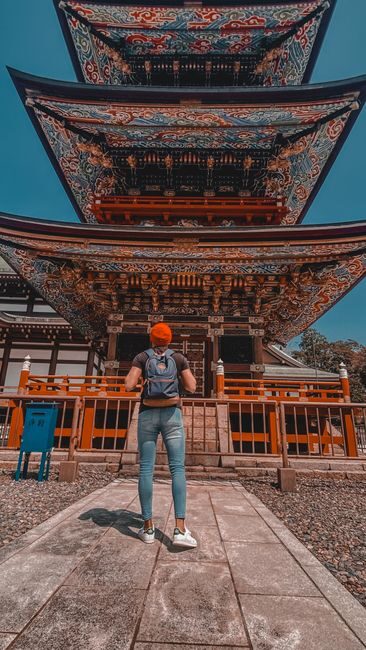
Narita is the easiest eel town to reach and the one most people skip. The approach to Naritasan Shinshoji, the big Shingon temple, has a long run of eel restaurants, many of them in old wooden buildings, and on a still day you smell the charcoal before you see the shops.
Kawatoyo Honten is the one with the cutting board on the street. It opens 10:00–17:00 (last orders) with no regular day off, takes no bookings for groups under ten, and accepts only cash or PayPay. On the ground floor you buy a meal ticket first; upstairs you pay at the end. If you have a long layover or an early afternoon flight, this is a better use of three hours than the departure lounge.
Yanagawa
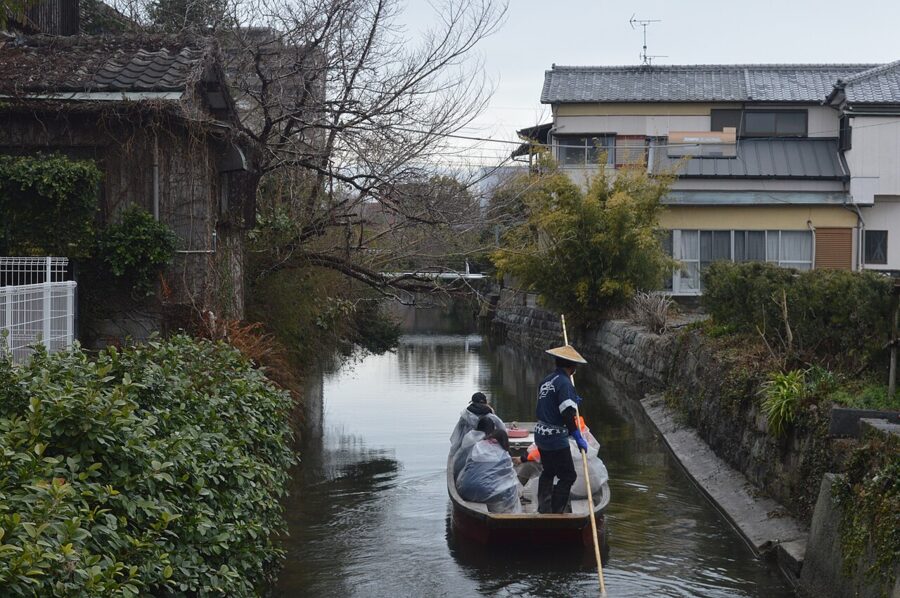
Yanagawa is an old castle town crossed by canals, about fifty minutes south of Fukuoka’s Tenjin on the Nishitetsu line, and most people come for the punt-boat ride. The boats drift past willows and under bridges so low the passengers have to duck.
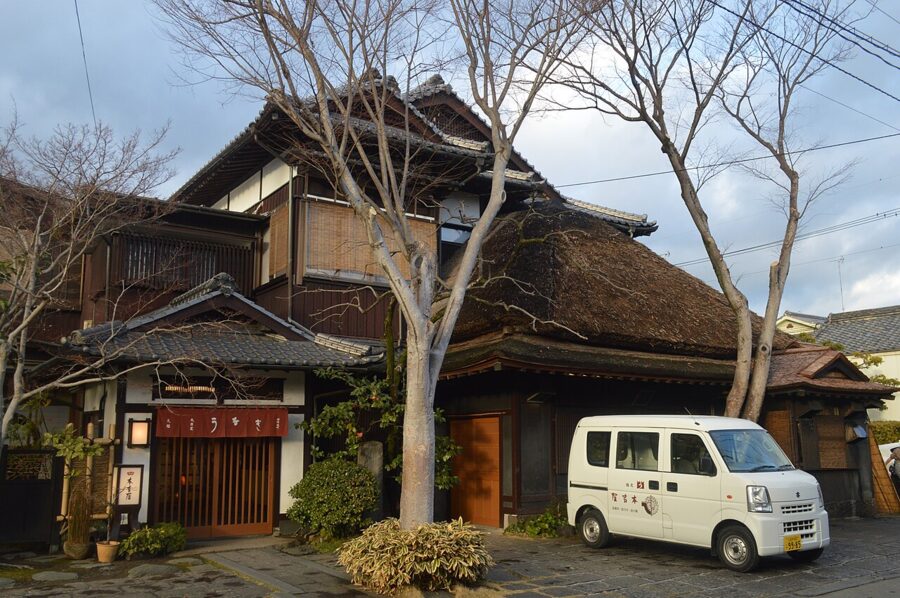
The town’s eel was famous long before the boats were. Motoyoshiya’s main shop is on Asahimachi in an old wooden building, and it also runs a branch in Okinohata, the riverside district, plus a counter in the Iwataya department store in Tenjin. Other Yanagawa eel houses serve seiro-mushi too, but if you’re only eating one, it makes sense to eat it at the place that claims to have invented it.
Osaka and Kyoto
Osaka’s food reputation leans on its griddles, the okonomiyaki and takoyaki of the Osaka street food circuit, but it has the oldest Kansai eel. Honke Shibato, open since the Kyoho era and now on its fifteenth generation, is in Koraibashi, three minutes on foot from Yodoyabashi station on the Midosuji line. It’s open 11:00–14:00 and 17:00–20:30 and closed on Sundays and public holidays.
Order the mamushi. The Kansai jiyaki eel arrives crisp at the edges, with a second layer of eel inside the rice, and it’s the dish to compare against a Tokyo unaju. Kyoto’s Kaneyo, back-split and steamed, is the reverse surprise, so if you’re doing both cities, do one of each.
Tokyo’s old eel houses
Tokyo has hundreds of eel restaurants and a small group of old ones that set the standard. They are all Kanto-style, they all take their time, and they’re spread across the city rather than clustered, so pick one by neighbourhood. My guide to Tokyo’s food neighbourhoods will help you plan the rest of the day around whichever you choose.
Nodaiwa, Higashi-Azabu
Nodaiwa is the name most Tokyo eel lovers give first. The main shop in Higashi-Azabu dates to the Edo period, is run by the fifth generation of the Kanemoto family, and holds a Michelin star. The eel is steamed slowly to take off the excess fat, and the sauce is kept and adjusted rather than replaced.
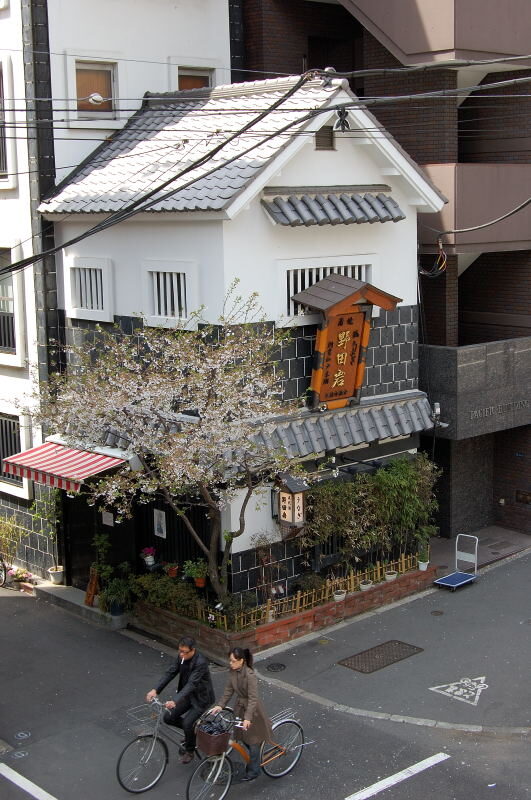
It’s about five minutes on foot from Akabanebashi station on the Oedo line, or seven from exit 2 of Kamiyacho on the Hibiya line. Hours are 11:00–13:30 and 17:00–20:00, with lunch running to 14:00 on Saturdays. It’s closed on Sundays and, as above, on Doyo no Ushi no Hi. Expect a service charge on top of the menu price.
Komagata Maekawa, Asakusa
Maekawa started out as a river-fish wholesaler and turned into an eel restaurant in the Bunka-Bunsei era, about 220 years ago. Customers used to arrive by boat on the Sumida River; now the dining room looks across the river to the Tokyo Skytree. The composer Kosaku Yamada once described its eel as having “a delicate taste like chamber music”, and the shop still quotes him.
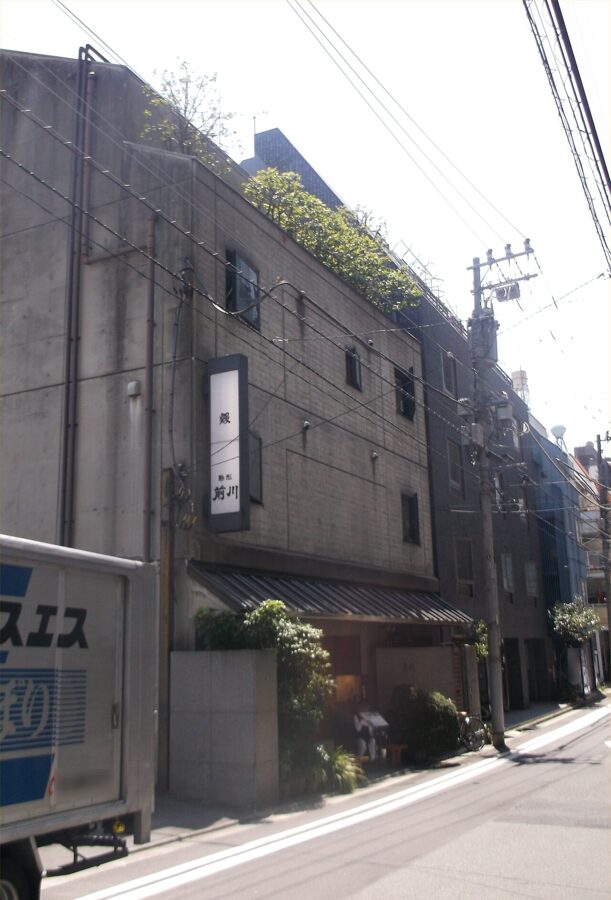
A standard unaju with domestic farmed eel is ¥6,300. Maekawa also serves Bando Taro, a branded farmed eel raised on a fish-paste feed to taste closer to wild eel, from ¥7,800. It’s open 11:30–21:00 (last orders 20:30) with a 10% service charge after 16:00. One more detail I liked: the shop no longer serves wild Japanese eel at all, because of its endangered status.
Izuei, Ueno
Izuei says it began as one of the simple eel stalls that lined the streets around Ueno in Edo times, and its main restaurant is still there, five minutes on foot from the Shinobazu exit of JR Ueno station. It’s the most practical of the old houses if you’re spending a day in Ueno Park.
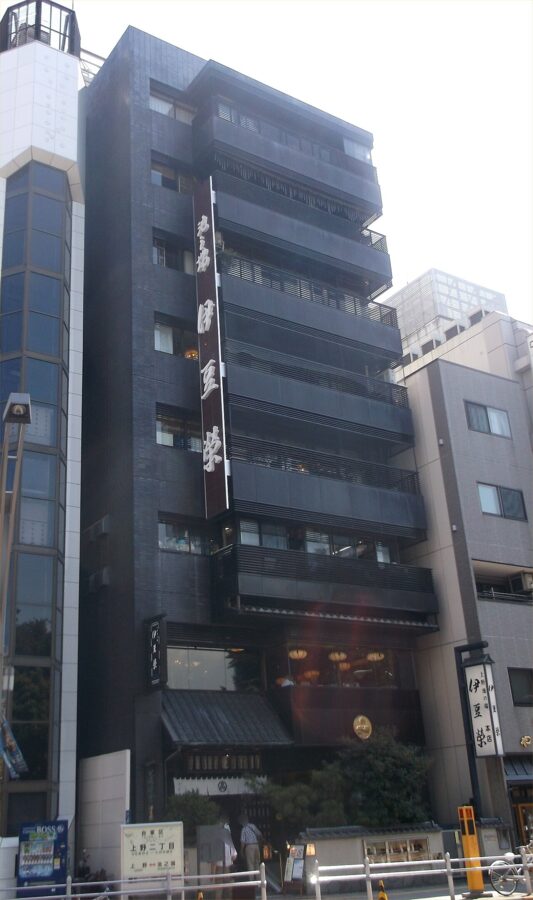
Izuei is also the place that shows how little the grade names mean. Its menu runs matsu (pine), take (bamboo), ume (plum): unaju is ¥3,960, ¥5,060 and ¥6,160 in that order. Pine is the smallest.
At most other shops pine is the top of the range. Always read the fraction or the price, never the tree.
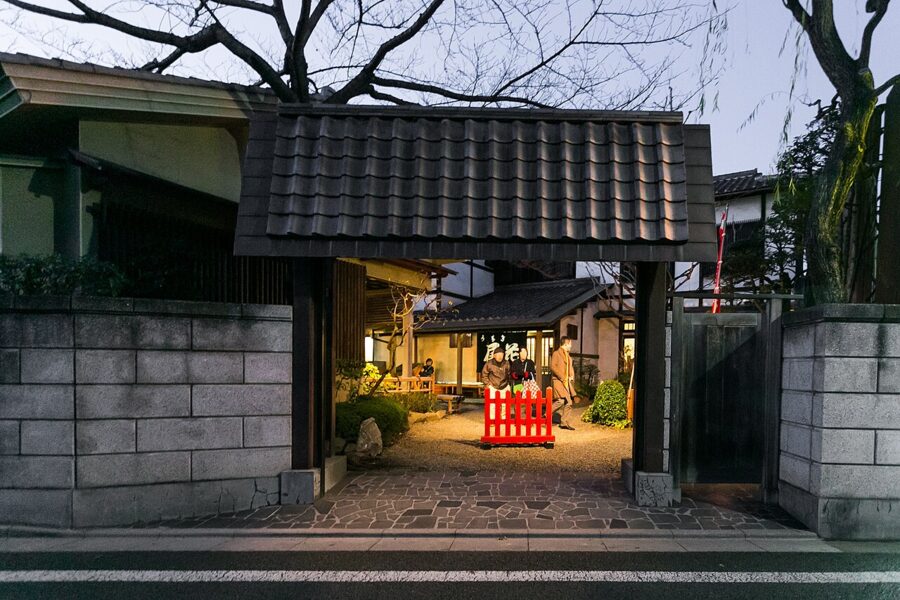
Obana, Minami-Senju
Obana is the cult one. It’s about five minutes on foot from Minami-Senju station, takes no cards, and serves until the eel runs out. People start queuing well before the 11:30 opening, and the wait after you sit down is long because everything is cooked from scratch.
The cheap end
You don’t need to spend ¥6,000. The Unagi no Naruse chain, which has spread fast across the country, sells Japanese eel in three sizes: half an eel for ¥1,900, three-quarters for ¥2,500 and a whole eel for ¥2,900. Here the pine is the biggest, which makes the Izuei point for you.
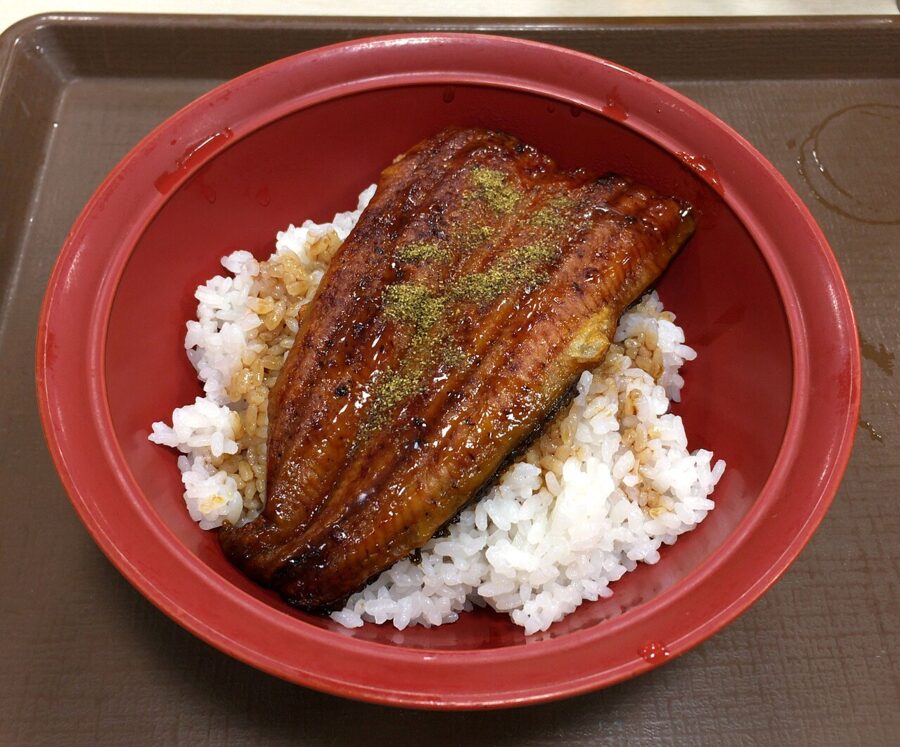
Below that, the beef bowl chains bring out eel every spring and summer. Sukiya launched its 2026 season in April with a regular unadon at ¥980. It’s a thin slice of eel on a lot of rice, and it does the job if you’re curious, but it isn’t the same dish as anything above.
Ordering, waiting and what comes on the side
At a proper eel house, the eel is killed, split and cooked after you order, and that takes time. Thirty minutes is common, and longer at busy places. The Edo line was that hurrying an eel house is yabo, uncool, and that you should drink sake with the pickles while you wait. The old houses still expect exactly that.
Old eel cooks have a saying, “three years to skewer, eight years to split, a lifetime to grill”, and that time on the grill is what you’re waiting for. Order a drink and a starter as soon as you sit down. Sake is the classic match; my guide to drinking sake in Japan explains how to order it if you’re not sure where to start.
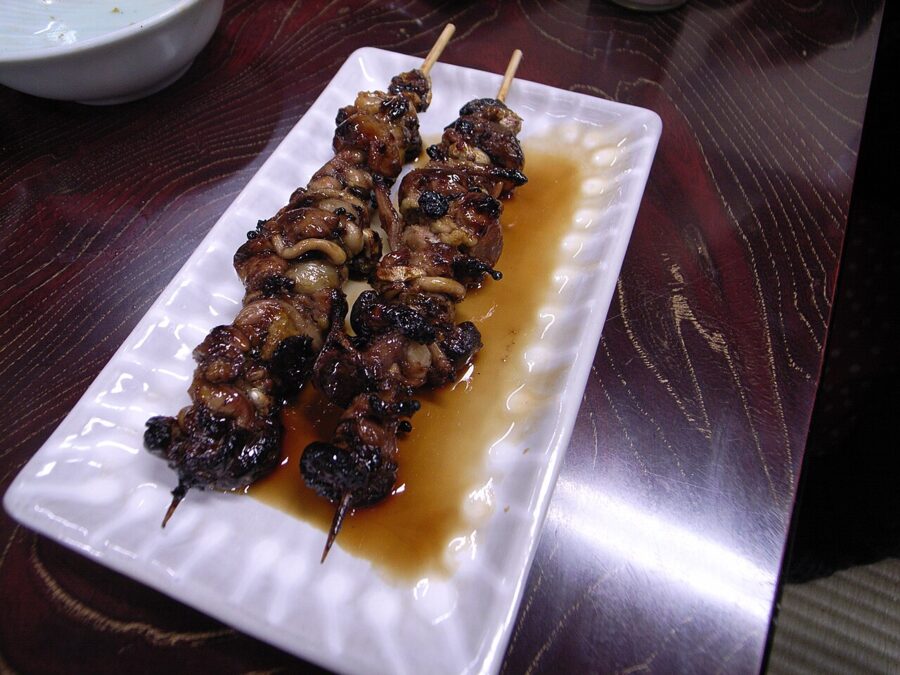
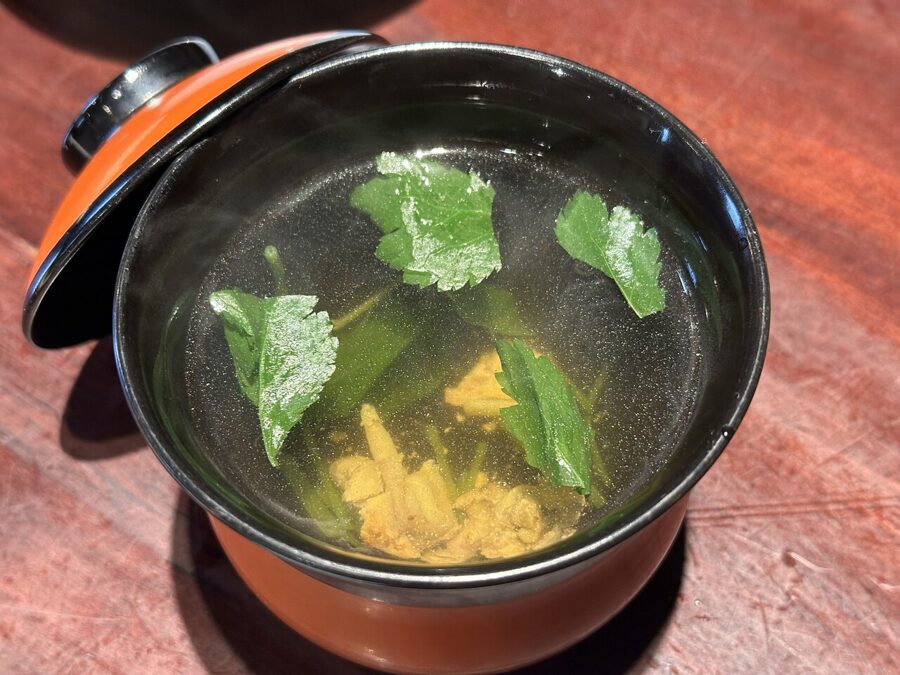
The sides are part of the meal. Kimosui is a clear broth with the eel’s liver in it, and most boxes come with it or offer it as an upgrade. Umaki, uzaku and kimoyaki are the starters; at Atsuta Horaiken, umaki is ¥1,200, uzaku ¥750 and eel-bone crackers, hone senbei, ¥400. Those crackers are fried spines, salty and crisp, and the best bar snack an eel house sells.
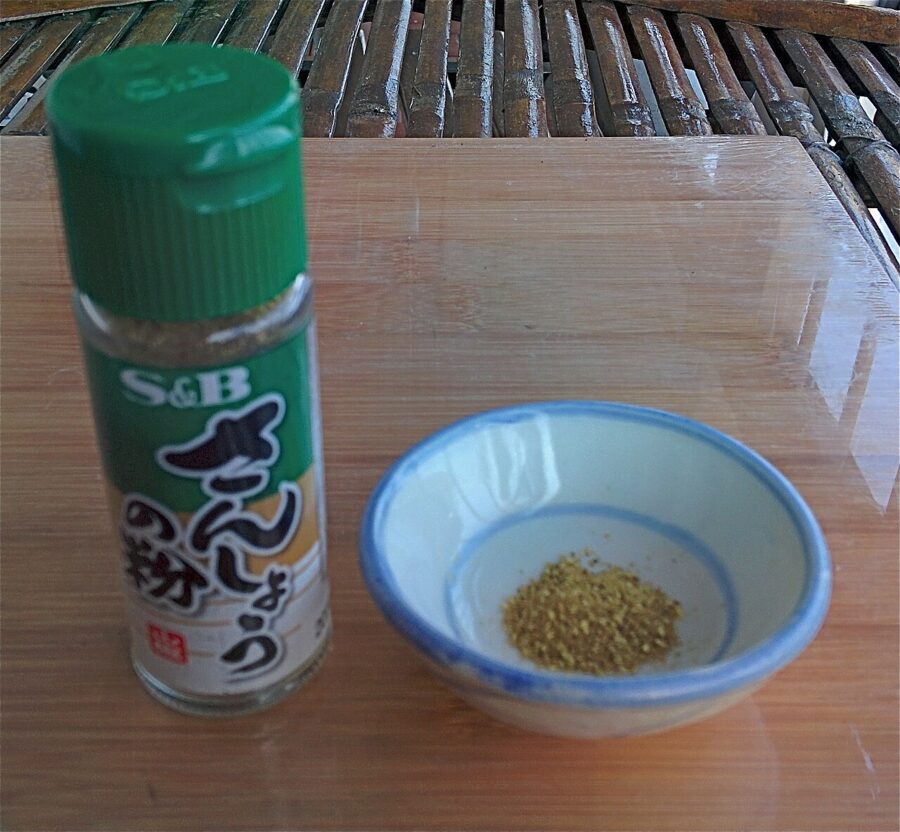
On the table there will be a little jar of sansho, ground Japanese pepper. It has a lemony, numbing edge that cuts through the fat, and you shake a little over the eel just before you eat. People who put it on everything aren’t wrong. People who skip it are missing half the dish.
The conservation question
The Japanese eel is endangered. Japan’s environment ministry moved it onto its red list in 2013, and the IUCN listed it as Endangered in 2014. Because farms still depend on wild glass eels, every unagi box starts with a wild-caught fish.
The supply chain has problems. In 2025 Japan’s Fisheries Agency found that the glass-eel catch reported by the industry had been well below its own estimates for at least fourteen years. The same year, WWF Japan and researchers at Chuo University ran DNA tests on 133 kabayaki samples sold in Japan and found about 40% were American eel, not Japanese. In late 2025, an EU-led proposal to bring all eel species under international trade controls at the CITES meeting was voted down, with Japan arguing its existing regional management was enough.
I’m not going to tell you not to eat it; I still do. But treat unagi as an occasion meal rather than a convenience food, eat it at specialists who know where their eels come from, and skip the bargain packs of unknown origin. One good box a trip, from a house that cares, is the version that makes sense.
Anago, the sea-eel cousin (and a few things to skip)
Anago is a different animal: conger eel, a saltwater fish, leaner and softer than unagi with a milder, sweeter flavour, and it belongs with the rest of the sea fish in my guide to eating fish in Japan. In Tokyo it’s usually simmered and brushed with a thick sweet sauce for sushi, or fried whole as one of the classic Edo-mae tempura pieces. On Miyajima, near Hiroshima, it’s grilled and laid over rice as anago-meshi.
A few things I’d skip:
- Eating on Doyo no Ushi no Hi itself. Same eel, longer queue, shorter time limits at the table.
- Vacuum-packed kabayaki of unknown origin. If the label won’t tell you the country and species, leave it.
- Eel sushi rolls overseas called “unagi” with sticky brown sauce. Fine for what they are, but they have little to do with an eel house.
- Hurrying. If you have forty minutes for lunch, go for a beef bowl and save eel for a day with time in it.
Pick one town, or one old Tokyo house, and give it a whole lunch. Arrive at opening, order sake and the liver skewers, and let them take as long as they like with the box.
You Might Also Enjoy
 Vegetarian and Vegan in Japan: Shojin Ryori, the Dashi Problem and Where to Eat Well
 Thai Curries: A Regional Field Guide from Green and Red to Khao Soi and Jungle
 Kawaguchiko: Mount Fuji Views, the Five Lakes and Hoto, Planned for a Day or a Night
 Japanese Sweets: A Wagashi Guide from Mochi and Dango to Kakigori and Taiyaki