Nagasaki Food Guide: Champon, Castella, Turkish Rice and Four Centuries of Foreign Kitchens
In 1892 a 19-year-old from Fuzhou stepped off a boat in Nagasaki carrying, by his family’s telling, a single bat-wing umbrella. Chen Pingshun had a relative with a sugar-trading house in Shinchi, a loan to buy cloth, and a handcart he pushed as far as Shimabara to sell it. Seven years later he opened a restaurant by the gate of the old Chinese quarter, and the cheap noodle soup he cooked there for hungry Chinese students is the dish most of Japan thinks of first when it hears the word Nagasaki.
I spent 2018 and 2019 living in Shenzhen, eating my way through Fujianese and Cantonese kitchens, so Nagasaki was the first Japanese city where the food tasted half-familiar. That is not an accident. For more than two centuries, while the rest of Japan was closed to the outside world, this was the only harbour where Dutch and Chinese ships were allowed to trade, and Chinese, Dutch and, before them, Portuguese cooks all left something behind.
So Nagasaki eats differently. The soup is Fujianese, the cake is Iberian, the banquet is a Chinese round table set with Japanese and Dutch dishes, and the city’s favourite lunch plate is named after a country it has nothing to do with. Most of it is cheap, almost all of it sits within a twenty-minute walk of the harbour, and a ¥150 tram ride gets you between the rest.
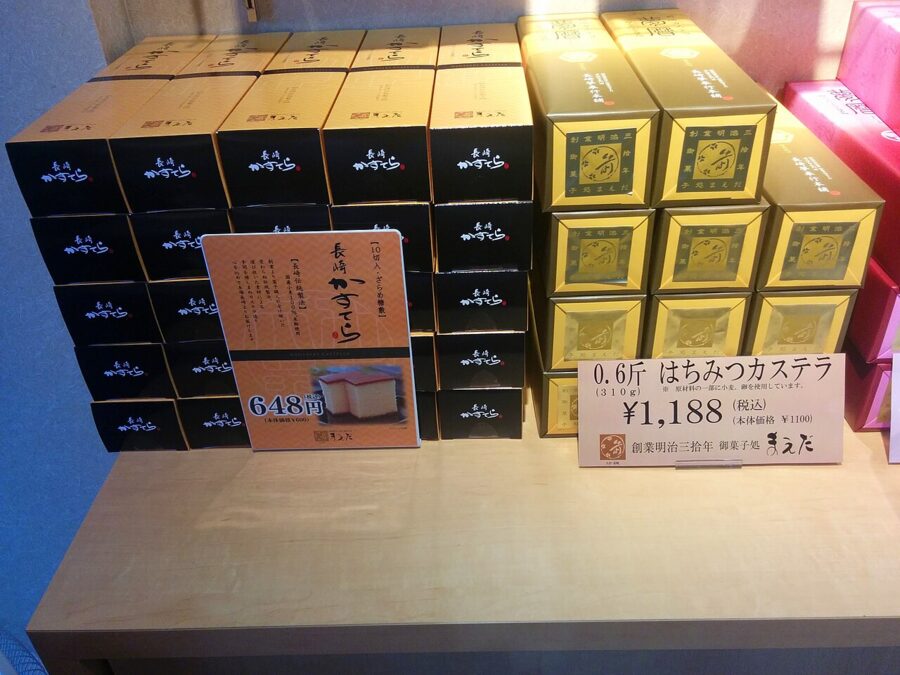
Here is the city on one table before the detail.
| Dish | What it is | Where I’d eat it | Where it came from |
|---|---|---|---|
| Champon | Noodles cooked in pork and chicken broth with pork, seafood, vegetables | Shikairo, Shinchi Chinatown | Fujian, via Chinese students, 1899 |
| Sara udon | Crisp thin noodles (or fried thick ones) under a seafood sauce | Shikairo, Horaiken, Chinatown | The same kitchen, a delivery-friendly version |
| Castella | Egg, sugar and flour sponge with sugar crystals at the base | Fukusaya, Shooken, Bunmeido | Portuguese traders, 16th century |
| Shippoku | Shared banquet on a round table | Kagetsu, Hamakatsu | Chinese hosts, Edo period |
| Turkish rice | Pork cutlet, pilaf and spaghetti on one plate | Tsuruchan | A 1950s Nagasaki invention |
| Kakuni manju | Braised pork belly folded in a steamed bun | Iwasaki Honpo, Chinatown stalls | A shippoku dish made portable |
| Chawanmushi | Savoury egg custard, here in a bowl the size of a donburi | Yossou | Kansai, a Nagasaki speciality since 1866 |
| Sasebo burger | Made-to-order burger | Big Man, Sasebo | An American navy recipe, around 1950 |
In This Article
- One harbour, three kitchens
- The sugar road
- Champon: Chen Pingshun’s bowl
- What is actually in the bowl
- Shikairo today
- Sara udon, and the sauce bottle on the table
- Other old champon kitchens
- Castella, and the shops that bake it
- Fukusaya, 1624
- Shooken, 1681
- Bunmeido, 1900
- How to buy and eat it
- Shippoku, the round-table banquet
- How the meal runs
- Kagetsu
- Hamakatsu, the affordable way in
- Yossou and the giant chawanmushi
- Turkish rice, which is not from Turkey
- Tsuruchan, and the milkshake you eat with a spoon
- Kakuni manju and other things to eat walking
- Shinchi Chinatown and the lanterns
- The Lantern Festival
- Bridges, mansions and the walk between meals
- Where to eat, neighbourhood by neighbourhood
- Hamanomachi, Shianbashi and Dozamachi
- Shinchi Chinatown and Dejima
- Oura and the Glover slope
- The station and the north
- Beyond the city
- Sasebo burgers
- Obama champon
- Goto udon, Shimabara somen and island shochu
- Getting there and getting around
- What it costs, and what to skip
- Skip this
One harbour, three kitchens
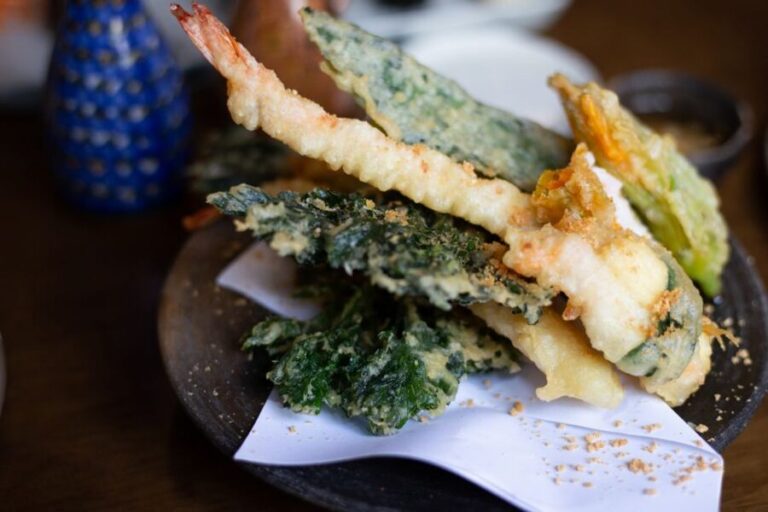
The Portuguese came first. Their first ship tied up at Nagasaki in 1571, and for the next seventy years the town was a Catholic trading port. The Portuguese left Japan castella and, by most accounts, the battered frying that became tempura. I go through that era properly in my history of Japanese food, so here is the short version: by 1639 the shogunate had expelled the Portuguese, and two other groups were left holding the harbour.
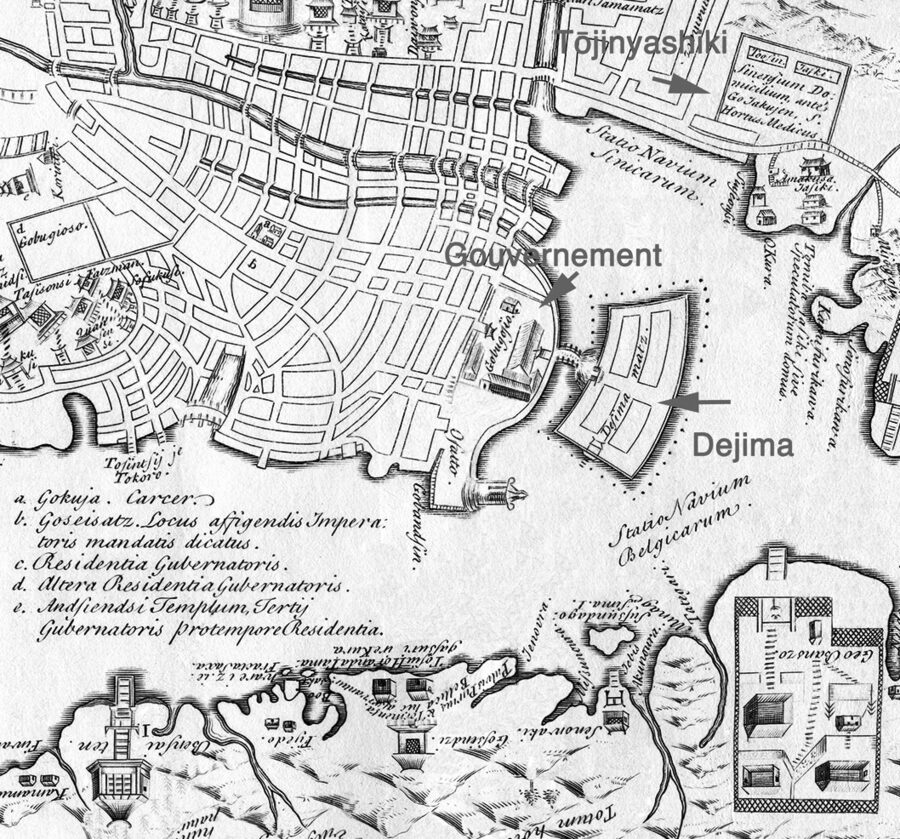
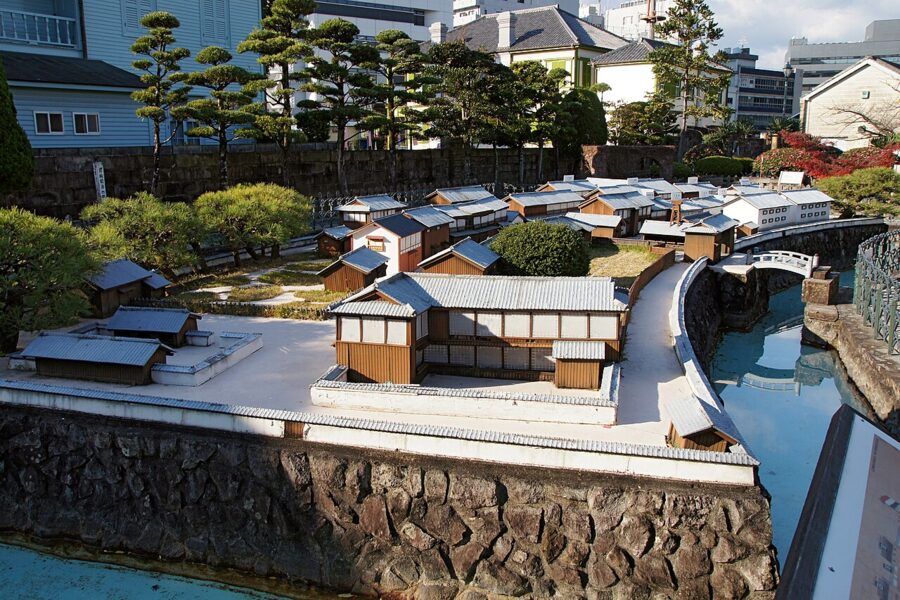
The Dutch got Dejima, a fan-shaped artificial island built in 1634 to hold the Portuguese and handed to the Dutch East India Company in 1641. It covers about 1.5 hectares. When no ships were in, about fifteen Dutchmen lived there, and for two centuries they imported sugar by the shipload. The Japanese officials who dealt with them carried Dutch tastes back into town.
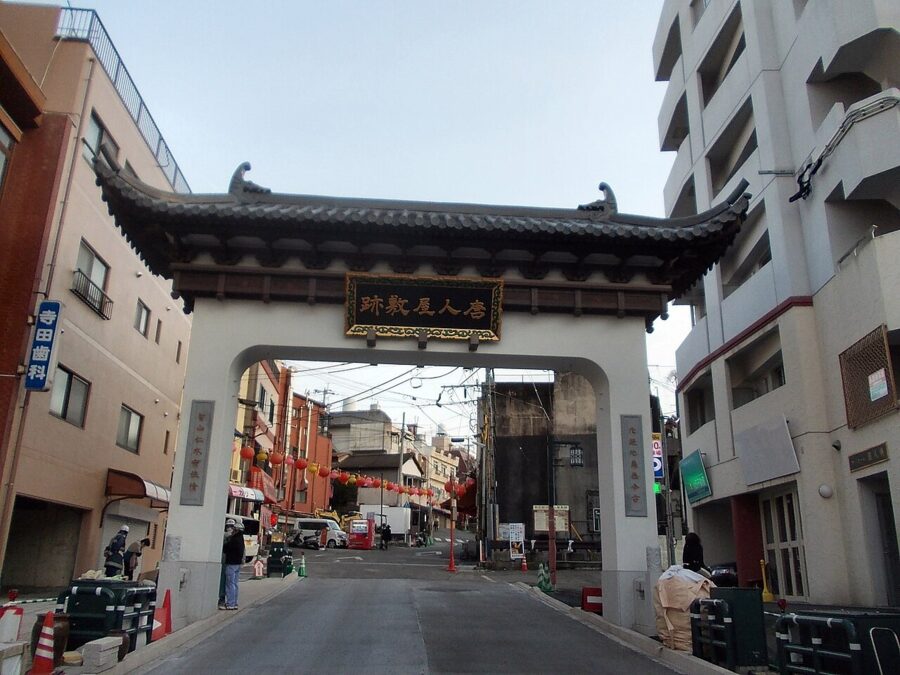
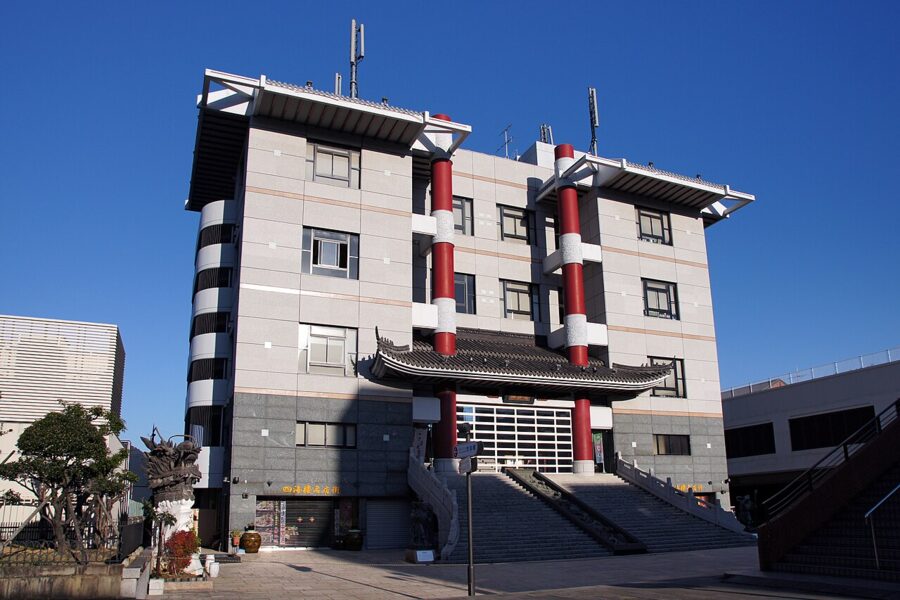
The Chinese got something much bigger. In the 1680s there were so many Chinese traders in town that the authorities built them their own walled quarter on the site of a shogunal herb garden: Tojin-yashiki, about 9,400 tsubo with room for 2,000 people, finished in 1689. The Shinchi Chinatown shopkeepers’ association reckons around 10,000 Chinese lived in Nagasaki at the peak, when the whole town had about 60,000. One person in six.
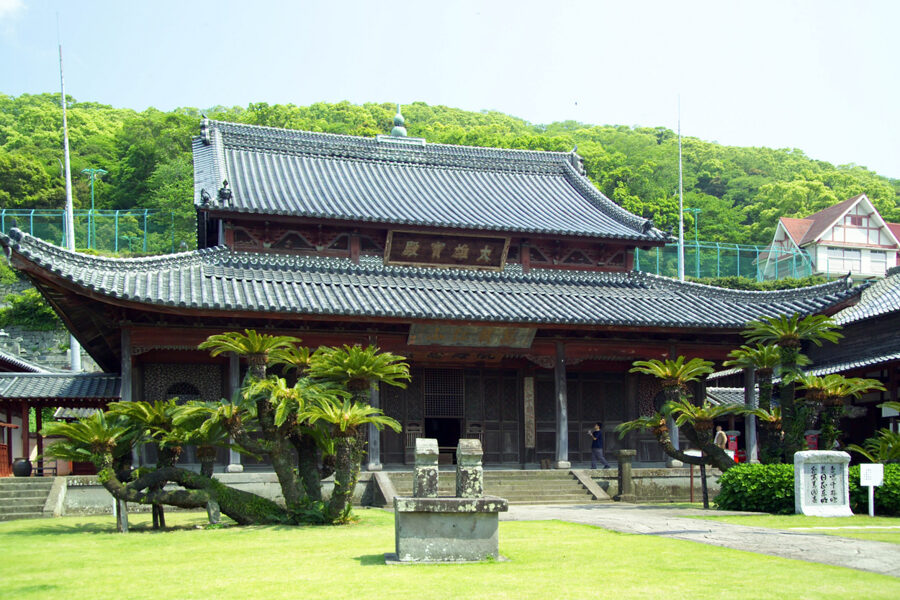
Those Chinese residents were mostly from Fujian, the coast opposite Taiwan, and they built their own temples in town. Kofukuji, Sofukuji and the other “Chinese temples” of Nagasaki went up in the early seventeenth century. Those roots are why the cooking here is Fujianese at heart, where Yokohama’s Chinatown grew up mostly Cantonese.
The sugar road
The single most important thing the ships brought was sugar. Dejima took in so much of it that Nagasaki home cooking became sweet in a way the rest of Japan still finds odd. Nagasaki Prefecture’s own food promoters point out that even goma-dofu, sesame tofu, is eaten here almost like a dessert.
Sugar travelled inland along the Nagasaki Kaido, the old highway to Kokura, and the towns along it grew confectionery trades of their own. Today eight cities along the route market it as the Sugar Road. The sugar’s first and best customer, though, was castella, which gets its own section below.
Champon: Chen Pingshun’s bowl
Shikairo opened in 1899 as a restaurant and inn at Hirobaba, right by the entrance to the old Tojin-yashiki, with thirty staff and a sign that read, roughly, “licensed Qing restaurant and inn”. Chen was by then the man new arrivals from China came to for a guarantor. He watched the students he had vouched for living on almost nothing and put together a big, cheap bowl of noodles, pork, seafood and vegetables in a chicken and pork bone broth to keep them fed.
At first it was not on the menu and had no proper name; people called it shina udon, “Chinese noodles”. The name champon, Shikairo says, comes from the Fujianese greeting its customers used, “shapon” or “seppon”, which is about sitting down to eat. Other people will tell you it comes from a Portuguese or Malay word for “mixed”, and the Japanese word champon has meant “a jumble of things” since Edo times. Nobody has settled it.
What is settled is how fast it caught on. A Nagasaki newspaper wrote about it in 1905, and a 1907 prefectural yearbook described “chapon” as a favourite of Chinese students, already served at more than a dozen places in town. By 1914 a guide to Nagasaki listed shina udon as the city’s most popular food. The poet Saito Mokichi, who lived here in 1918, took a visiting sumo wrestler from his home prefecture to Shikairo for a bowl.
Chen never registered the name. His daughter apparently urged him to, and he is supposed to have said he would be happy as long as lots of people ate it. Nagasaki still sings an old rhyme about it: slip or fall, you won’t be able to stand straight unless you’ve eaten champon in front of Shikairo.
What is actually in the bowl
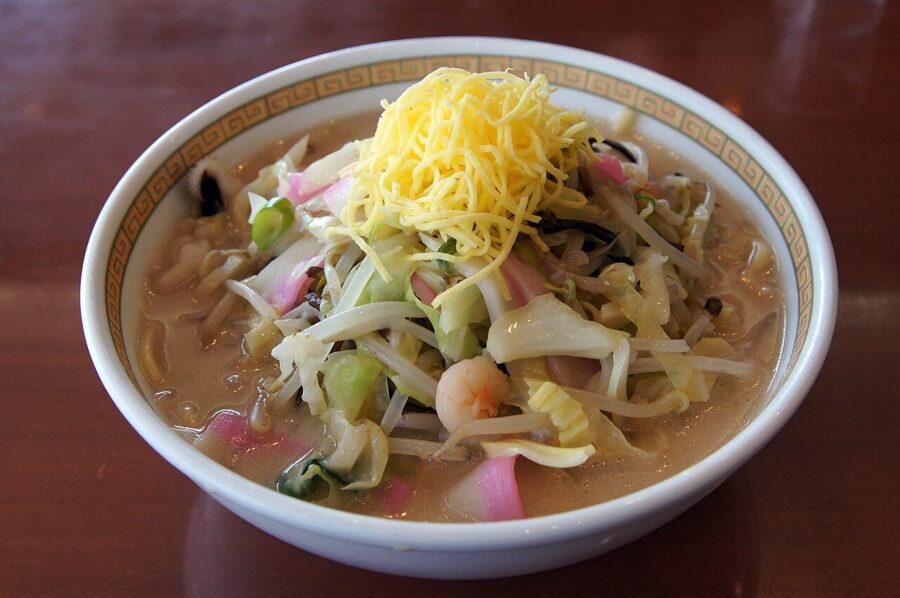
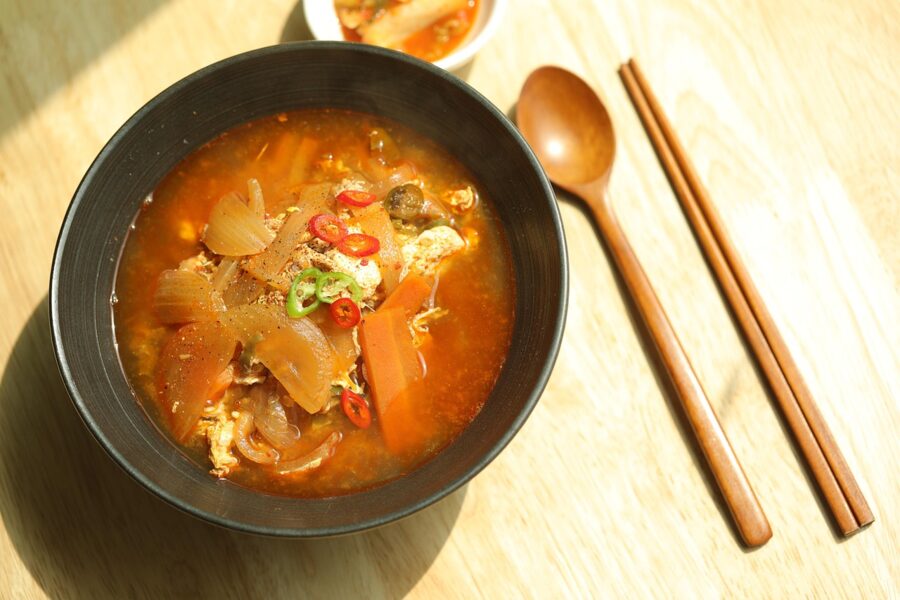
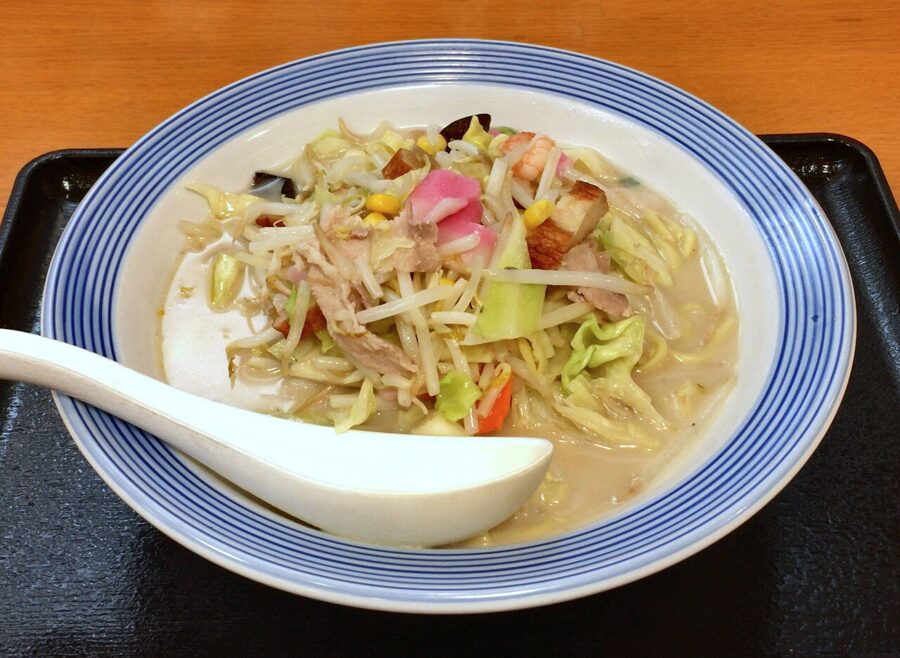
Champon looks like ramen with too many toppings. It isn’t. The pork, squid, shrimp, kamaboko fish cake, cabbage and bean sprouts are fried hard in lard in a wok, the broth goes in, and then the noodles go into the same pan and cook in the soup rather than being boiled separately in water. That is why the soup tastes of the toppings and the noodles taste of the soup.
The noodles are their own thing too. They are made with toaku, a Nagasaki alkaline water, instead of the kansui used for ramen, and the noodle trade’s fair-competition rules say a noodle sold as Nagasaki champon must be made in the prefecture with it. The result is thicker and softer than ramen, with a faint mineral edge. Chen’s starting point, the prefecture says, was a Fujianese noodle soup with shredded pork, and a very similar braised noodle dish is still eaten around Fuqing.
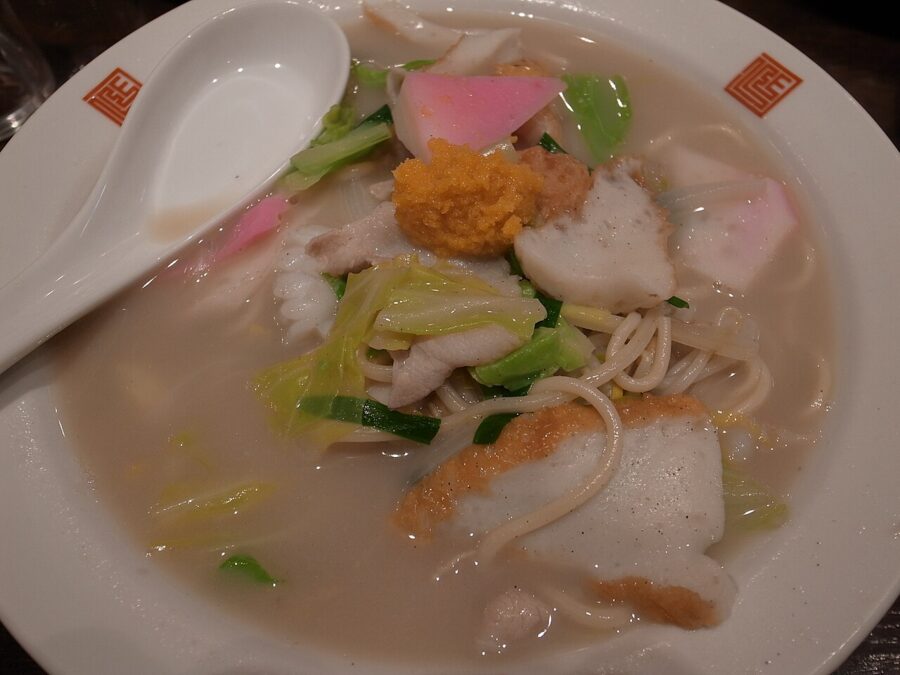
There is a tidy footnote here for ramen people. The man who opened Nankin Senryo in Kurume in 1937, the shop usually credited with the first pork-bone ramen, was from Shimabara in Nagasaki, and he said champon’s pork stock gave him the idea. If you have eaten your way through Fukuoka ramen, you have been eating champon’s grandchild.
Champon also left Japan. The Korean jjamppong you find in Korea comes from a different Chinese noodle, but it took the Japanese name during the colonial period. And in Okinawa “champon” is not noodles at all: it is stir-fried vegetables and egg on a plate of rice, eaten with a spoon.
Shikairo today
Shikairo sits on the waterfront at Matsugae-machi 4-5, at the foot of the hill below Glover Garden and Oura Church, a short walk from the tram. Lunch runs 11:30–15:00 and dinner 17:00–20:00, with last entry an hour before each close and earlier when it is busy. It closes on two or so Wednesdays a month, which it posts on its website, and it takes no restaurant bookings at all, so you queue.
Go at 11:30 or after 13:30. The champon is the historic one rather than the most exciting in town, but this is where the dish was born, and the ground-floor shop (10:00–17:30) is there if you want to take some of it home. I’d order one champon and one sara udon between two and share.
Sara udon, and the sauce bottle on the table
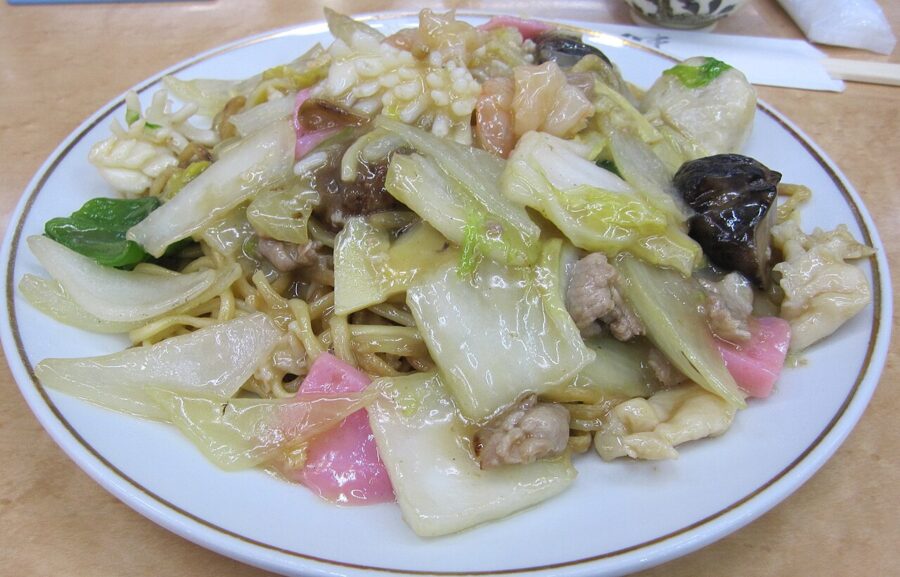
Sara udon, “plate noodles”, is also Chen’s. He took the champon noodles, fried them first, then tossed them with the same toppings and just a little soup so they drank it up, and served them on a flat plate. That thick-noodle version came first.
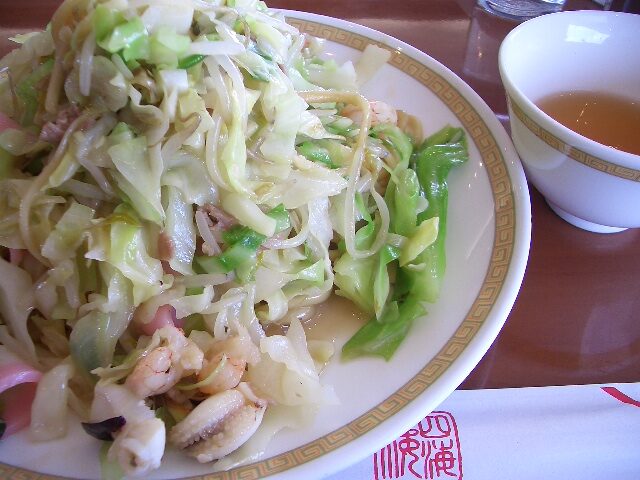
The thin, crisp kind came later and is now the default. In Nagasaki city, if you just say “sara udon” you usually get the thin noodles; in Sasebo, up the coast, you get the thick ones. Most places in town let you choose, so say futomen for thick or hosomen for thin.
Look at the table before you start. Many Nagasaki restaurants put out Worcestershire sauce rather than vinegar, and locals shake it over sara udon halfway through. Chōkō, a Nagasaki soy sauce maker, bottles one specially for it called Kinchō Sauce. The sourness cuts through the sweet sauce, and it works.
Other old champon kitchens
The dish spread to every Chinese kitchen in town, and the Shinchi Chinatown association lists more than a dozen places serving it. The ones I’d point you to:
- Kozanro, Shinchi-machi 13-13, inside Chinatown. More than sixty years old, open straight through lunch and dinner, closed Mondays unless it’s a holiday. It cooks no more than two portions per wok, which is why the vegetables stay crisp. Three grades of champon and sara udon, and the top one is the one to order.
- Lao Lee, a champon specialist in Chinatown, for the karasumi bowl above.
- Soshurin, with a branch at Nagasaki Station and a newly expanded shop in Chinatown, for a vegetable-heavy bowl if you have a train to catch.
- Horaiken, Hirano-machi 5-23, if you are visiting the Peace Park and Atomic Bomb Museum area.
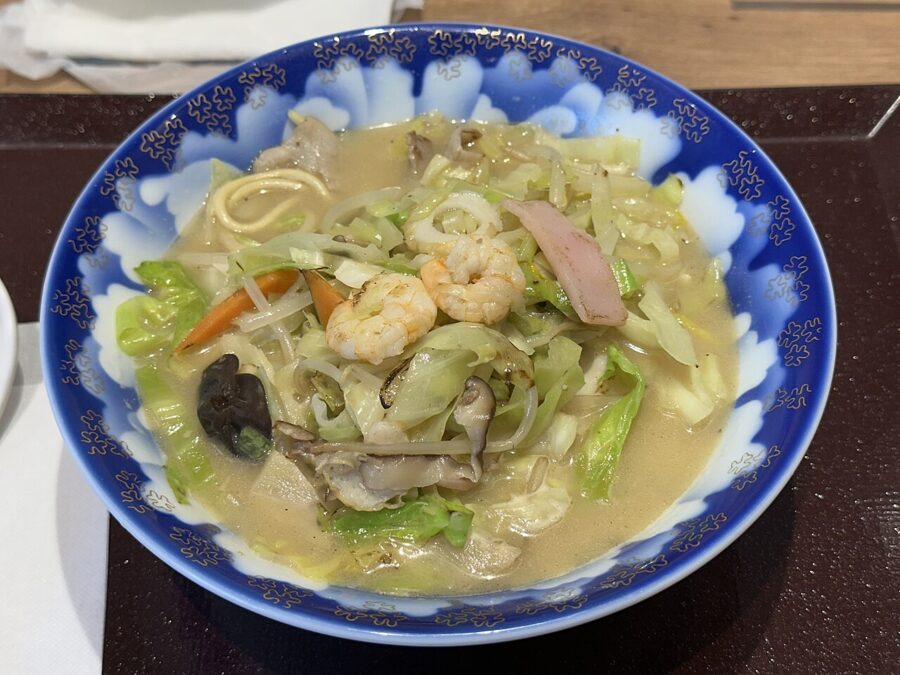
And then there is Ringer Hut, the champon chain that started in Nagasaki and now has shops across Japan. It is fine. It is also exactly what you can eat in a shopping mall in Tokyo, so don’t spend a Nagasaki lunch on it.
Castella, and the shops that bake it
Castella started as a Portuguese cake, the name comes from the kingdom of Castile, and I have told that origin story in my guide to Japanese foods with foreign origins, alongside tempura. What I didn’t have room for there is what Nagasaki did with it.
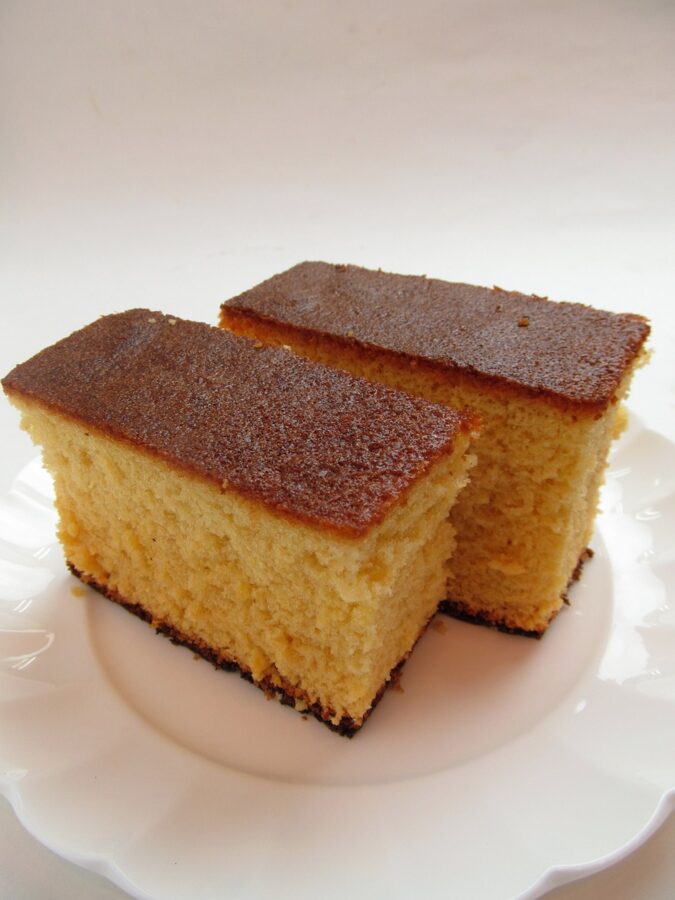
The cake that arrived in the sixteenth century was, by the bakers’ own account, closer to bread. Nagasaki bakers added mizuame, rice syrup, which keeps the crumb moist and stops it going stale, and they baked it with zarame, the coarse sugar that settles to the base as crystals. By the twentieth century it was a wagashi, a Japanese sweet, and unusual among them for using eggs.
Any shop in Japan used to be able to call its cake “Nagasaki castella”, and some of them were poor. In 2006 the prefecture’s confectioners’ association registered “Nagasaki Castella” as a regional trademark, so the name now means a cake made here. Three makers dominate, and they are all within a couple of tram stops of each other.
Fukusaya, 1624
Fukusaya says its founder, a trader in sugar and rice, learned to bake from the Portuguese and started making castella in 1624, which makes it the oldest of the three. Its main store has been on Funedaiku-machi since 1775, a few minutes’ walk from the Shianbashi tram stop and right on the edge of the old Maruyama pleasure quarter.
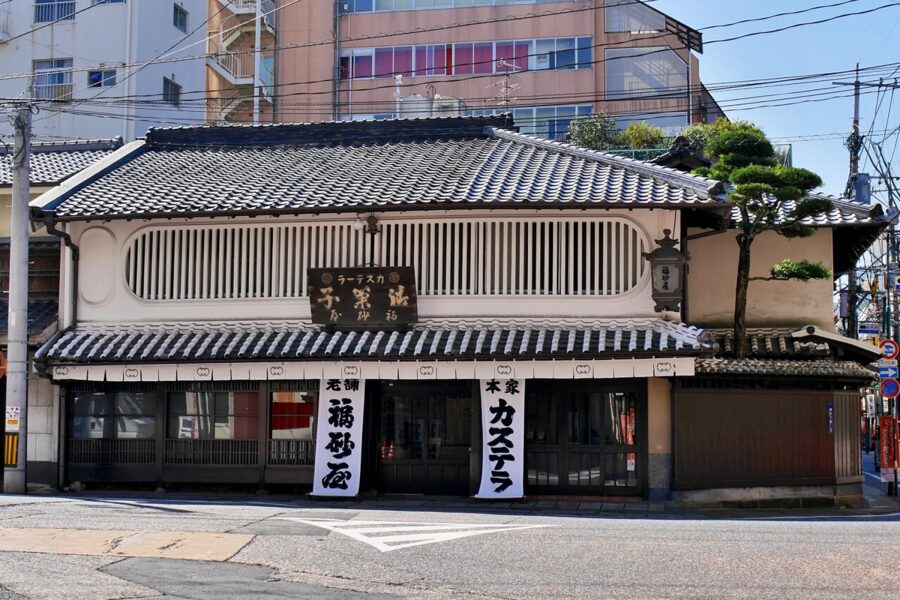
The bat on the box is a Meiji-era addition. Seitaro, the 12th head of the house, picked it because the bat is a symbol of good fortune in China, and he also created the richer gosanyaki recipe with more egg and sugar. The family still holds a memorial service for eggs every May at its family temple, Shokakuji.
Fukusaya uses no honey at all, only rice syrup, and cuts its cake into ten slices in the box. You can also buy it in Tokyo, where it has had a branch since 1952, and in department-store depachika across Japan, but the main store is the one to see. There is a second Nagasaki shop on Matsugae-machi near Oura Church, closed Tuesdays.
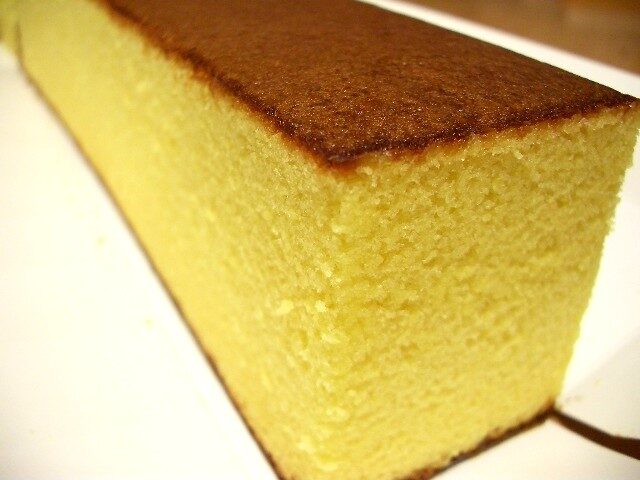
Shooken, 1681
Fukusaya’s company name calls it the honke, the main house. Shooken’s sign calls it the ganso, the originator, which tells you how the two old houses see each other. It was founded in 1681 by Yamaguchiya Sadasuke on Motodaiku-machi and got its present name in the 1860s from the scholar Nakajima Hirotari, along with the Noh mask of an old man it still uses as its mark.
The 8th head of the house, Sadajiro, did two things that matter. In the mid-Meiji years he made a chocolate castella, which the shop revived in 1968 as Chocolate, and in 1900 he took the cake to the Paris Exposition and came home with a prize. Shooken’s eggs come every morning from contract farms on the Shimabara peninsula.
The main store is at Uonomachi 3-19, a few minutes from Megane Bridge, and upstairs is Café Sevilla, where you can eat castella with coffee or a Nagasaki milkshake. Book the day before for weekends. Shooken only has shops in Nagasaki and one in Hakata Station, so outside Kyushu it is far less known than the other two, which is a good reason to buy it here.
Bunmeido, 1900
Bunmeido is the young one. Nakagawa Yasugoro opened it in January 1900 in Maruyama-machi, and his younger brother took the name to Tokyo in 1922 with advertising that made Bunmeido the castella most Japanese people grew up with. After the war the branches were split off as separate companies, so the Bunmeido you see in Tokyo or Yokohama is related to, but not the same as, the head shop here.
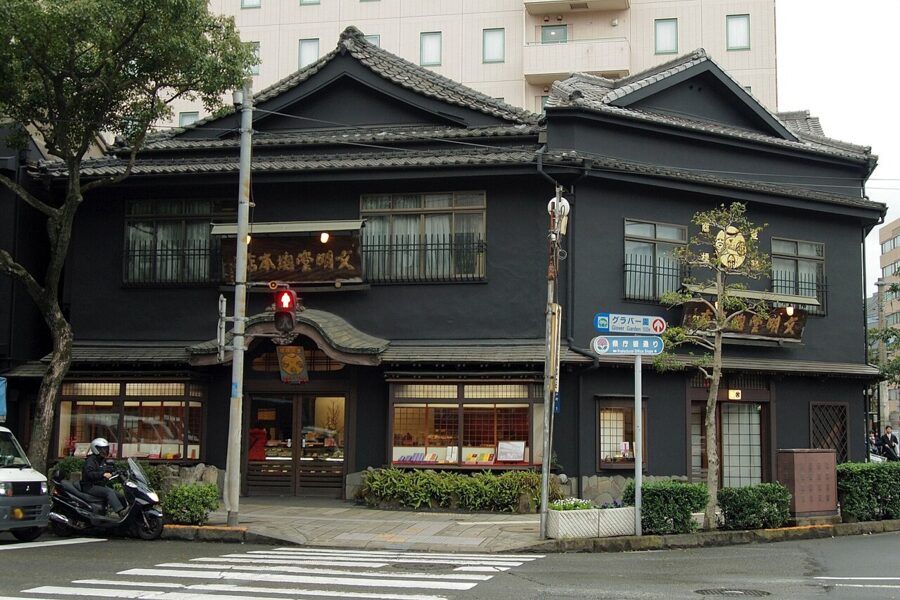
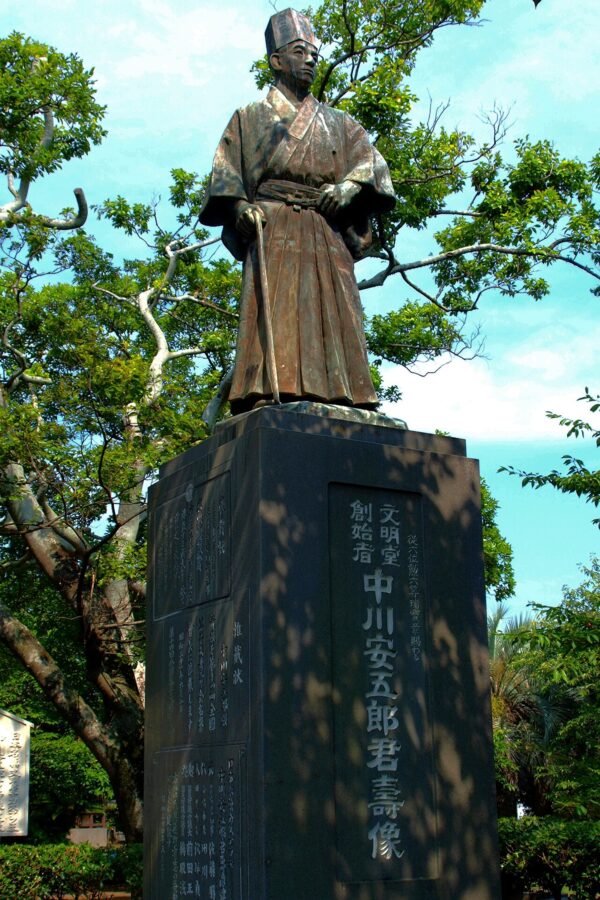
How to buy and eat it
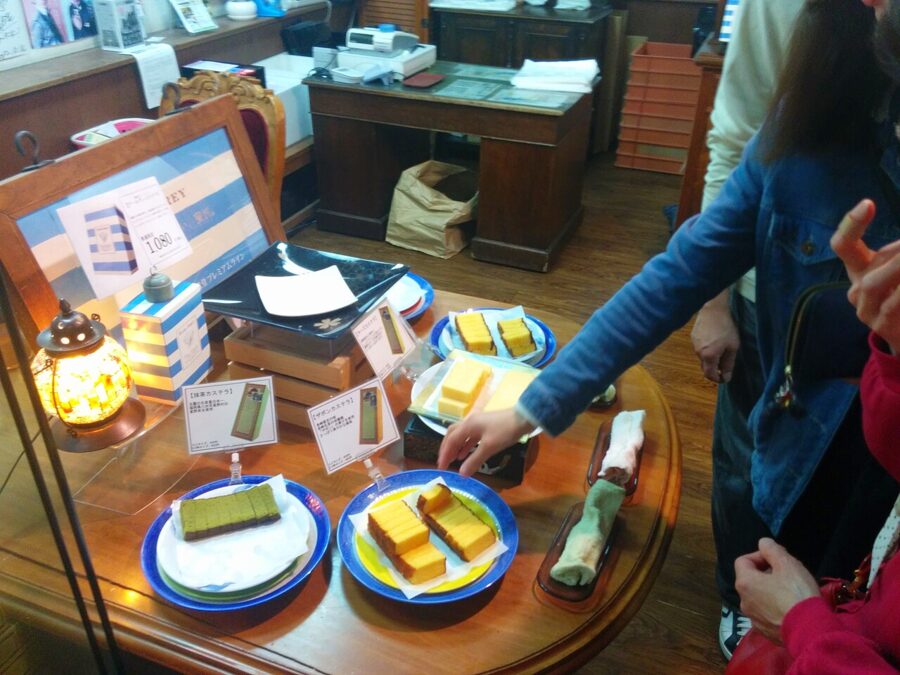
- Plain first. The standard cake tells you more about a shop than the flavoured ones.
- Then gosanyaki. All three make this richer version with more yolk, less white and more sugar. Shooken says the name started as “gomi”, five flavours, and drifted.
- Mind the paper. Castella is baked on paper, and it stays stuck to the base. Peel it, don’t eat it.
- Check the date. Shelf life changes with the season, so look at the box. In hot weather the sugar crystals start to melt, and Fukusaya suggests keeping it somewhere cool.
Shippoku, the round-table banquet
Japanese formal meals are individual. Each guest gets a tray, the dishes come in order, and nobody reaches across. Nagasaki’s banquet does the opposite, which is the whole point of it.
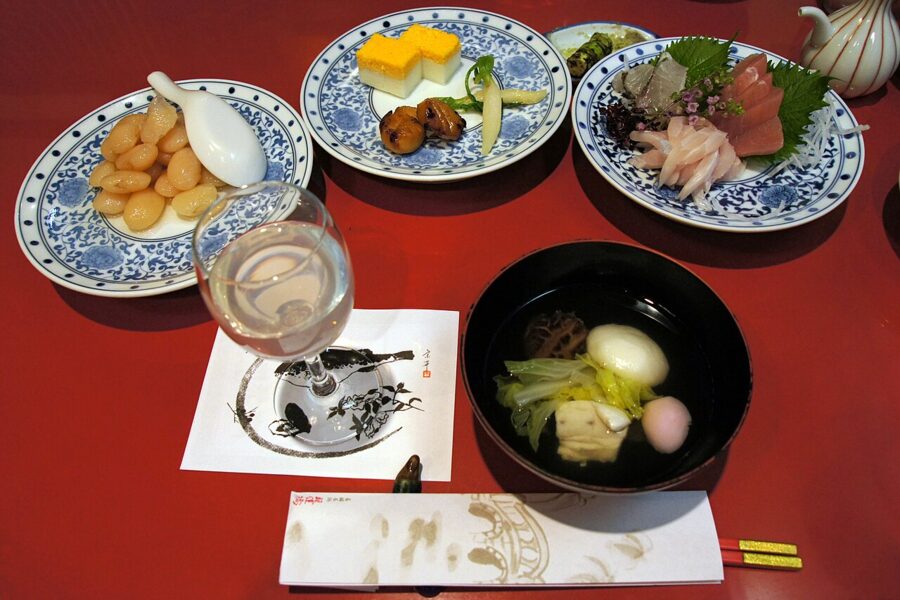
Shippoku grew out of the dinners Chinese residents held for each other and their Japanese hosts before the Chinese quarter was walled in. The word is usually read as table plus tablecloth. Dutch and Portuguese dishes went into the mix, which is why Nagasaki people call it wakaran cooking: wa for Japan, ka for China, ran for Holland. It is also, by most accounts, where the word chabudai, the low family dining table, comes from.
The oldest written record of a shippoku dinner is from 1761, and the style was briefly a craze in Edo in the early 1800s before fading everywhere except here. Its modern form settled around 1900. It is now the meal Nagasaki puts on for weddings, family occasions and important guests, and it is closer to kaiseki in price than to anything else in this guide.
How the meal runs
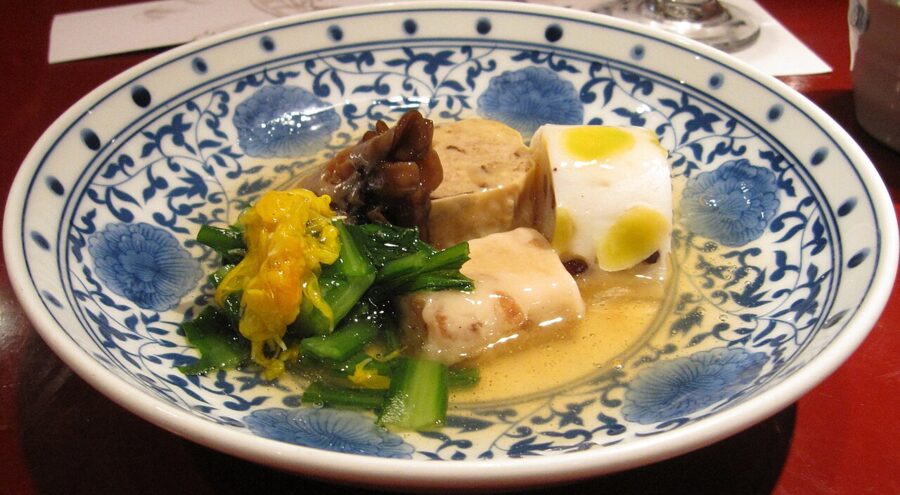
It starts with a clear soup called ohire, “the fin”, with sea bream in it. The hostess, the okami, says “ohire wo dozo”, and the speeches and the toast wait until everyone’s bowl is empty. Kagetsu explains it as a promise to the guest: one whole sea bream per person.
Then the shared plates arrive, roughly cold to warm to rice. The dishes you are most likely to meet:
- Tobani, pork belly braised soft and sweet, named after the Song poet Su Dongpo and the ancestor of kakuni manju.
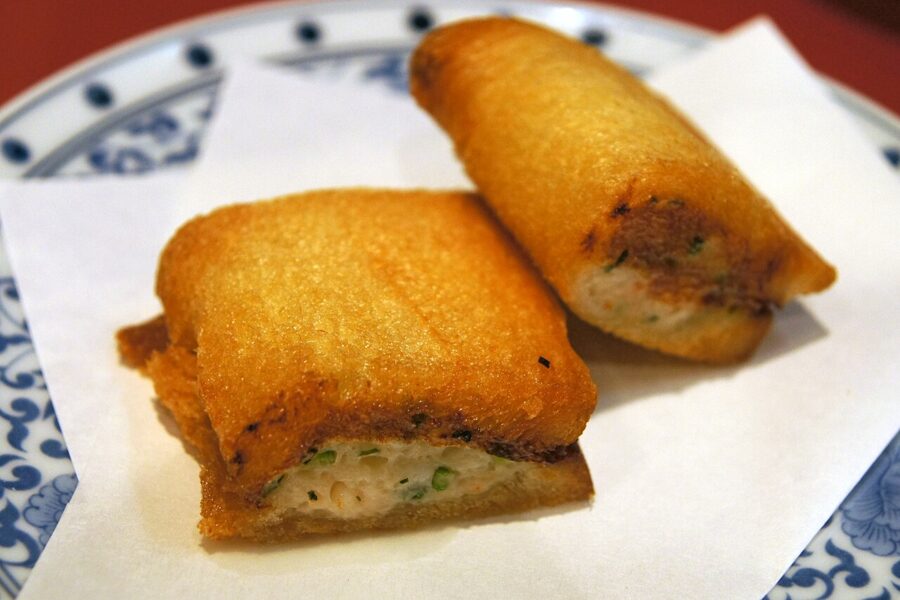
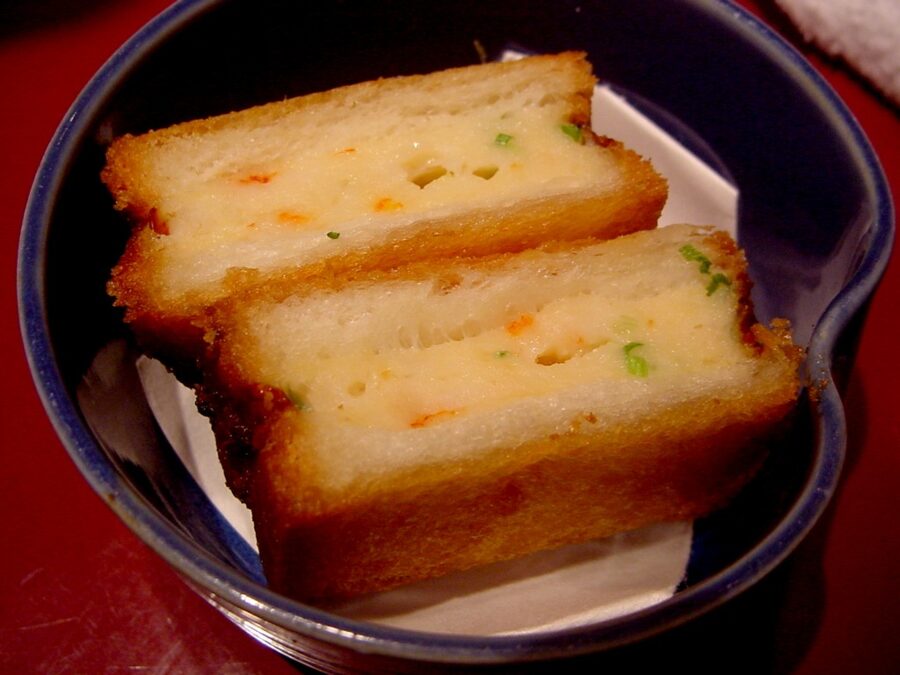
- Hatoshi, minced shrimp sandwiched in bread and deep-fried, the Cantonese shrimp toast that came over from Qing China in the Meiji era.
- Pastira, a pie of chicken and vegetables in pastry, Portuguese in origin.
- Umewan, the last bowl: sweet red bean soup with red and white mochi.
Kagetsu
Kagetsu is the place to do it properly. The Maruyama pleasure quarter was set up in 1642, and Kagetsu was the house name of Hikitaya, the grandest establishment in it and the only one to last from the quarter’s founding to the 1872 emancipation edict. The building and its 800-tsubo garden are a prefectural historic site, and the rooms include what it calls the first Western-style room in Japan.
Dinner shippoku is ¥23,760, ¥26,400 or ¥33,000 a head, tax and service included; lunch is ¥14,520 or ¥17,160. It is bookings only, by phone, for two adults or more, the day before at the latest. Hours are 12:00–15:00 (last order 13:30) and 18:00–22:00 (last order 19:30), and it closes irregularly, mostly on Tuesdays.
Hamakatsu, the affordable way in
If Kagetsu is a special-occasion price, Hamakatsu is the everyday door. It is at Kajiya-machi 6-50, about three minutes on foot from the Shianbashi tram stop, open 11:00–21:30 (last order 20:00), and part of the same group as Ringer Hut.
The useful thing is that it serves shippoku to one person. Its Irodori lunch set, ¥3,600 when I checked, runs from ohire through sashimi, whale, hatoshi, braised pork and umewan, and for ¥400 more they will swap the rice for sara udon. Seasonal shippoku courses were ¥7,000 and ¥8,500. It is not Kagetsu, but it is the cheapest way to see the shape of the meal.
Yossou and the giant chawanmushi
One more banquet-adjacent stop. Yossou opened in 1866 in what is now Hamanomachi, founded by a samurai from Iyo who had fallen for chawanmushi, the steamed egg custard, while visiting the Higo domain’s Nagasaki residence. He wanted a quick, cheap, nourishing meal for busy people, and the shop has been built around two dishes ever since.
The chawanmushi comes in a bowl the size of a donburi, with conger eel, shrimp, chicken, shiitake, wood ear, ginkgo, bamboo shoot, kamaboko and fu in a thin, gentle dashi custard. It is paired with mushizushi, steamed vinegared rice topped with eel, egg and pink fish flakes, and the set is called meoto-mushi, the married couple. The menu had it at ¥1,650 for the pair. The old rhyme that Yossou likes to quote names Nagasaki’s three must-eats as champon, castella and chawanmushi.
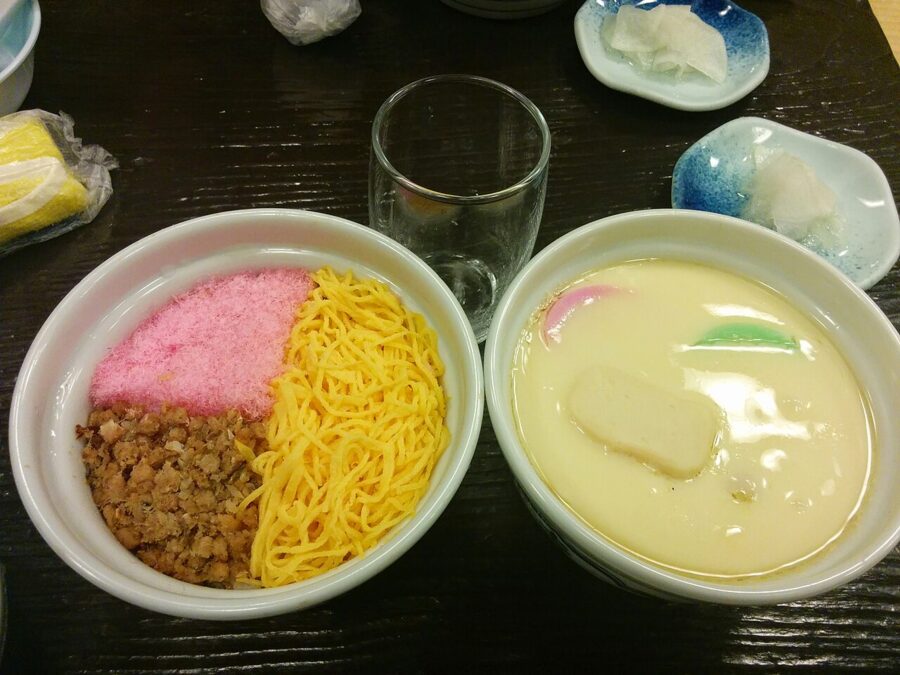
Yossou is at Hamanomachi 8-9, in a building put up in 1927, open 11:00–19:30 last order, with only the ground floor open between 14:30 and 17:00.
Turkish rice, which is not from Turkey
Toruko raisu is the Nagasaki lunch nobody can explain. One plate, three parts: a pork cutlet under demi-glace or curry sauce, a mound of pilaf or curry fried rice, and a heap of ketchup-red Napolitan spaghetti. Sometimes a salad on the side. It is sometimes described as a kids’ lunch plate for grown-ups, and that is exactly what it eats like.
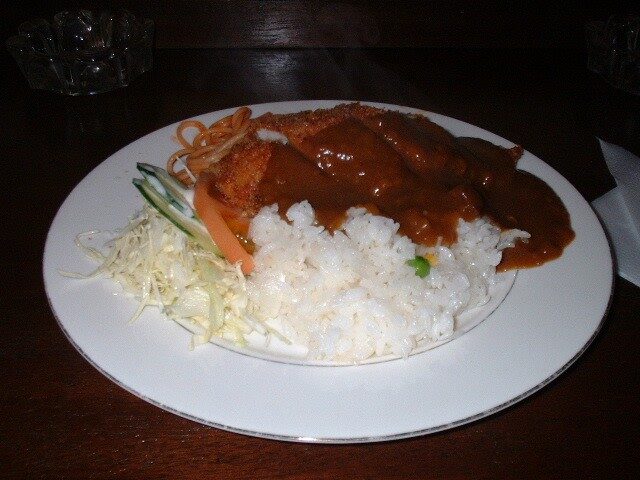
It dates from the 1950s, and it has nothing to do with Turkey. Turkish cooking does not use pork at all. Nagasaki has at least four origin stories, and none of them can be proved:
- A restaurant called Turco served it as an opening special, and the dish took the restaurant’s name. This is the version Tsuruchan backs.
- A chef at Restaurant Maruzen built it to look like a woman in a kimono: the rice the upper body, the cutlet the obi, the spaghetti the patterned hem.
- Turkey sits between Asia and Europe, and so does a plate of pilaf and spaghetti. Nagasaki food writers have since said this one began as a guess thrown out in a town magazine’s editorial meeting and was then printed as fact.
- Or “Turkish” was simply a fashionable word in 1950s Japan, and someone used it.
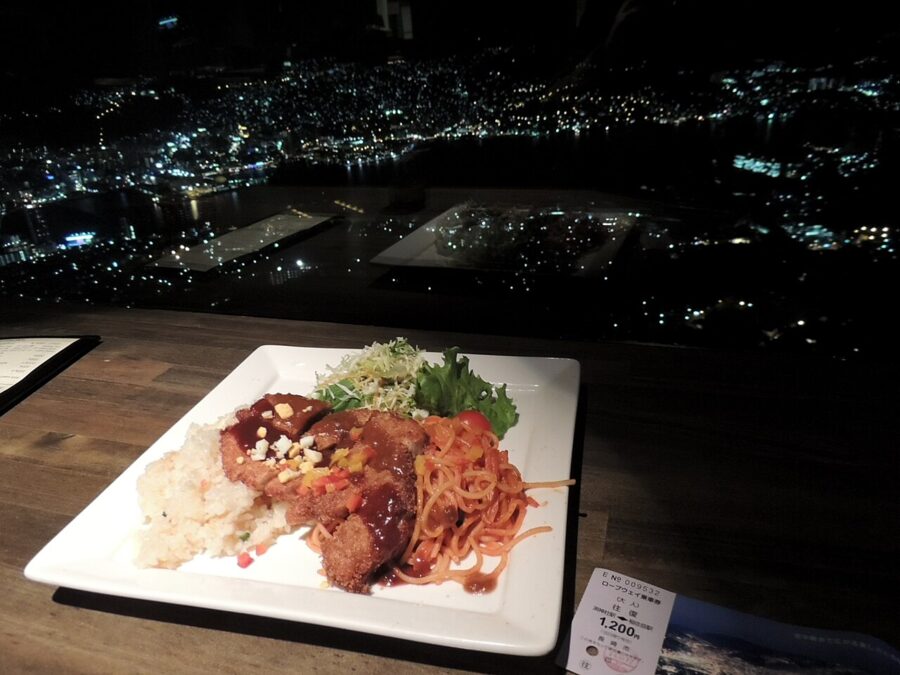
Tsuruchan, and the milkshake you eat with a spoon
Tsuruchan, in Aburaya-machi by the Shianbashi tram stop, opened in 1925 and is usually called the oldest kissaten in Kyushu. It is the classic place for Turkish rice. The singer Sada Masashi, who grew up in Nagasaki in the 1950s, wrote that a Tsuruchan Turkish rice was a treat he hardly ever got.
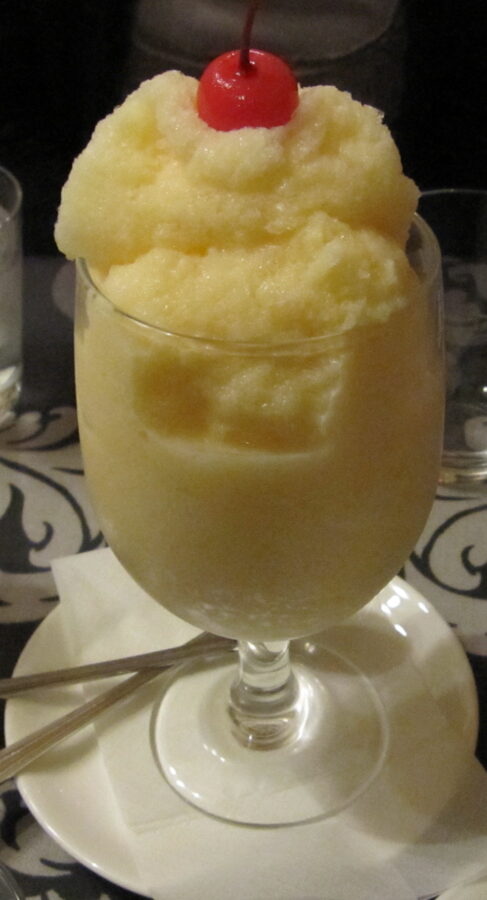
The other reason to go is that milkshake. Tsuruchan invented the Nagasaki version, and in this city the word now means something you eat rather than drink. Shooken’s Café Sevilla does one too, but order it here with the Turkish rice and you will not want dinner.
Kakuni manju and other things to eat walking
Kakuni manju is shippoku’s tobani pork belly put into a folded steamed bun so you can eat it standing up. The bun is the same half-moon shape as the Taiwanese gua bao, which also comes from Fujian, so Nagasaki and Taipei eat cousins of the same snack without either making much of it.
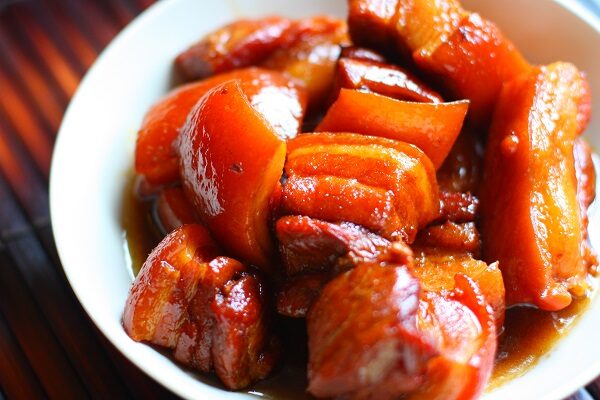
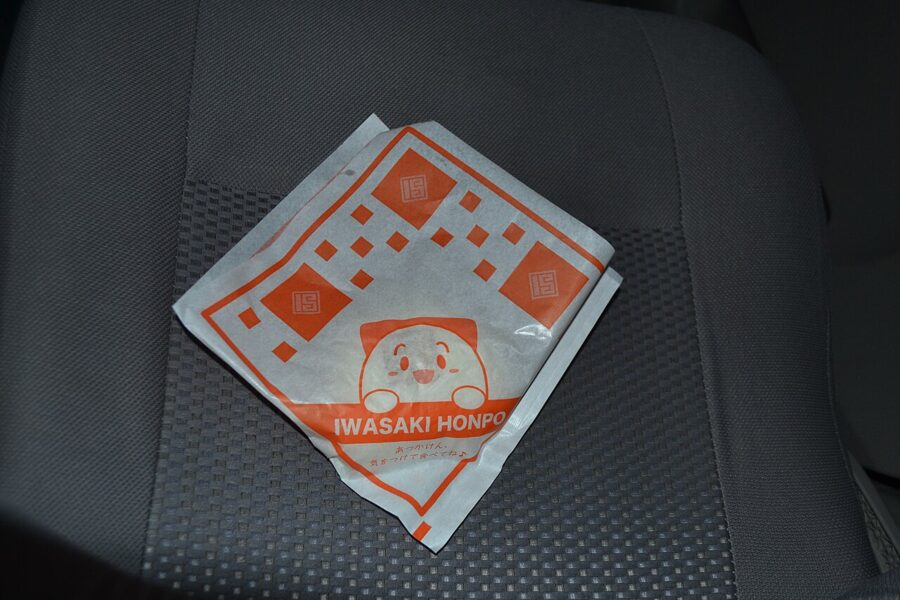
Iwasaki Honpo is the name you will see most. It has several shops around the city, including one on the slope up to Glover Garden and one in Dozamachi by Chinatown, and it sells an extra-fatty version it marinates for six days. You will also find kakuni manju in most of the Chinatown takeaway windows.
Three more things to watch for on the street:
- Chirin chirin ice. A light, sherbet-like ice cream sold from street carts, usually by older women who build it into a rose shape on the cone. It is a summer thing, and people from elsewhere in Japan have often never heard of it.
- Hatoshi as a takeaway, in squares or rolls, from shops around town.
- Biwa, loquats. The Mogi district of Nagasaki grows more of them than anywhere else in Japan, from trees that the prefecture traces back to a single seed brought in through Dejima.
Shinchi Chinatown and the lanterns
Shinchi Chinatown is small. Two streets cross in the middle, about 250 m from north to south, with roughly forty restaurants and shops, and you can walk around it in ten minutes. If you have been to Yokohama Chinatown it will feel like a side street.
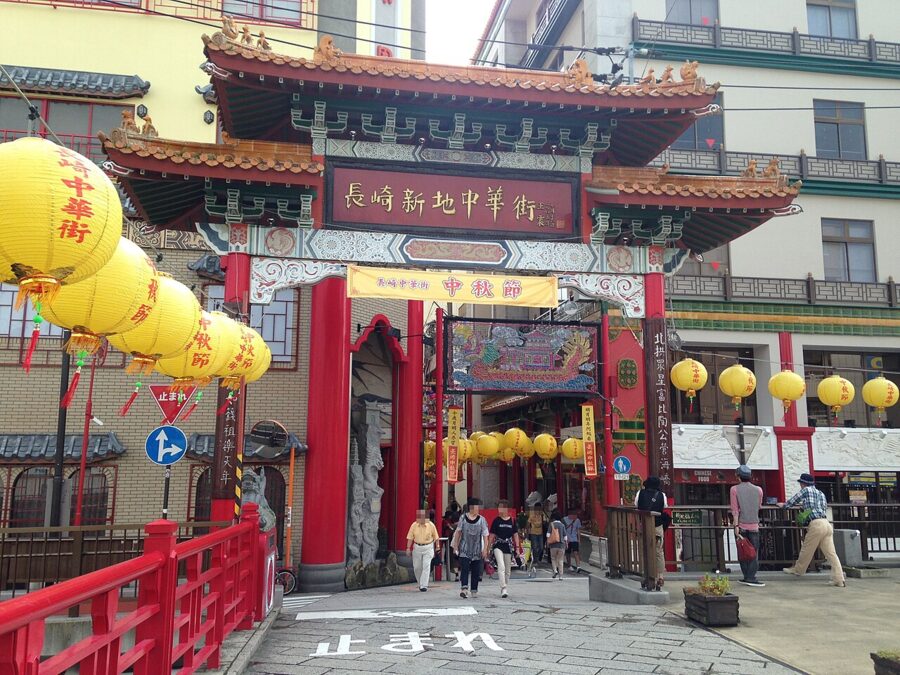
Its history is odd. Shinchi, “new land”, was not a neighbourhood at all but a warehouse district built on reclaimed seafront after a fire in 1698 burned the Chinese merchants’ storehouses. When the port opened in 1859 and Tojin-yashiki emptied, the Chinese who stayed moved downhill onto the old warehouse ground, and Chinatown grew there.
Unlike Yokohama or Kobe’s Nankinmachi, most of the shopkeepers here now speak Japanese as their first language. What has not changed is the Fujianese base of the cooking: champon, sara udon, braised pork, and sweet fried twists of dough called yoriyori.
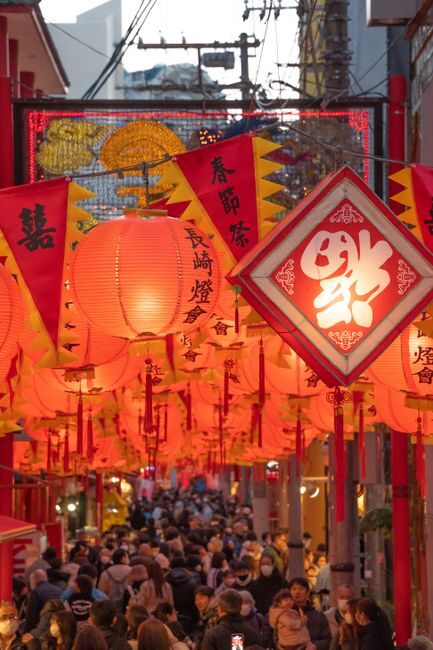
The Lantern Festival
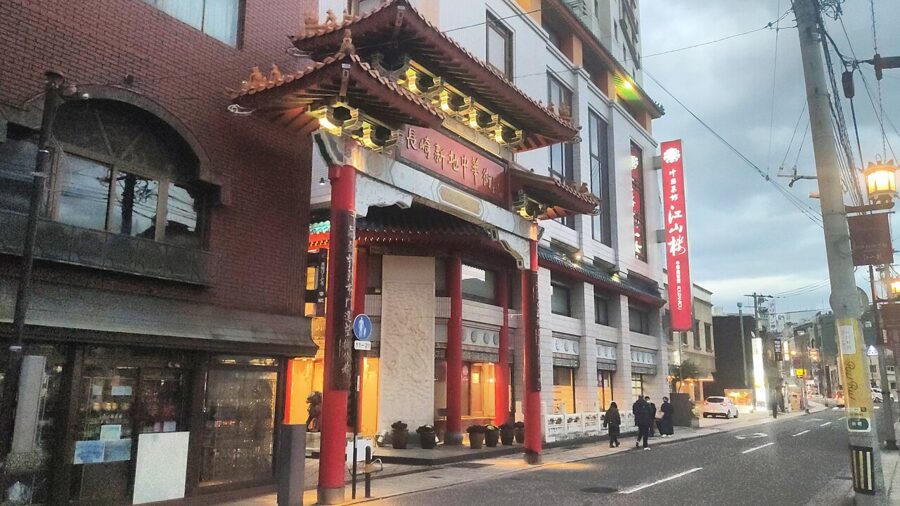
The Nagasaki Lantern Festival began small. In 1987 the Chinatown traders held a Spring Festival to mark a year since the gates went up, the coloured lanterns drew crowds, and in 1994 the city took it on and renamed it. It now runs for a couple of weeks around Chinese New Year, in late January or February; in 2026 it ran from 6 to 23 February.
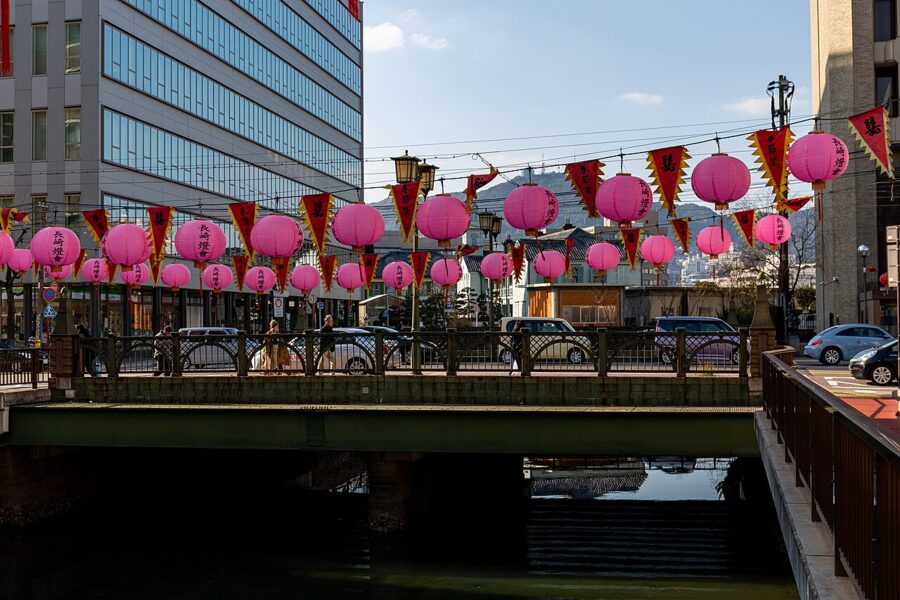
About 15,000 lanterns and lit figures go up across the centre, some of them ten metres tall. There is a dragon dance every day, an Emperor’s Parade of about 150 people in Qing court costume on the Saturdays, and on the Sundays a procession that carries the sea goddess Mazu from the harbour to her shrines, re-enacting what Chinese crews did in the Edo period. In 2018 it drew 1.06 million people.
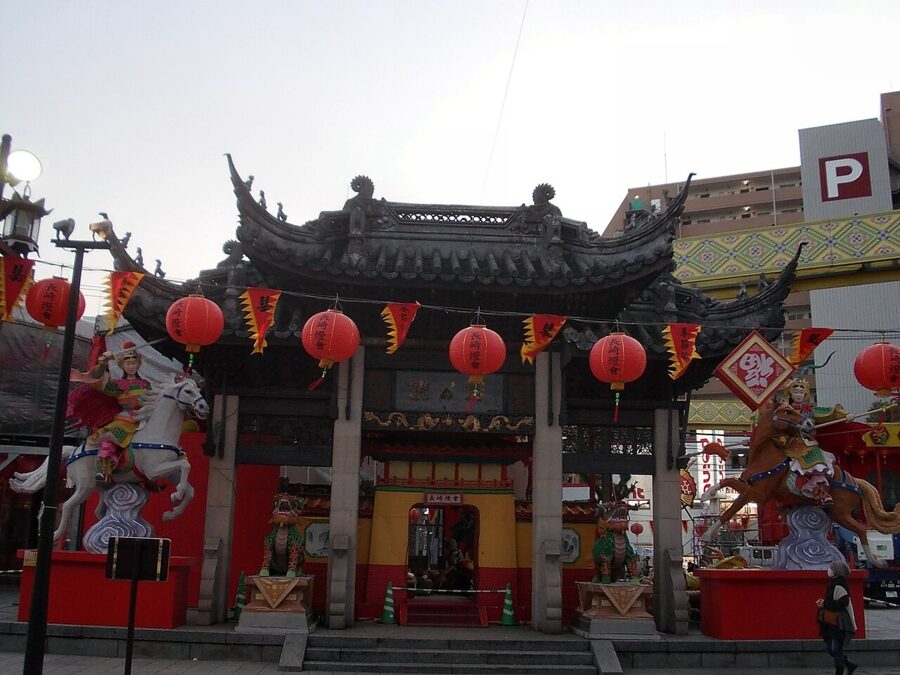
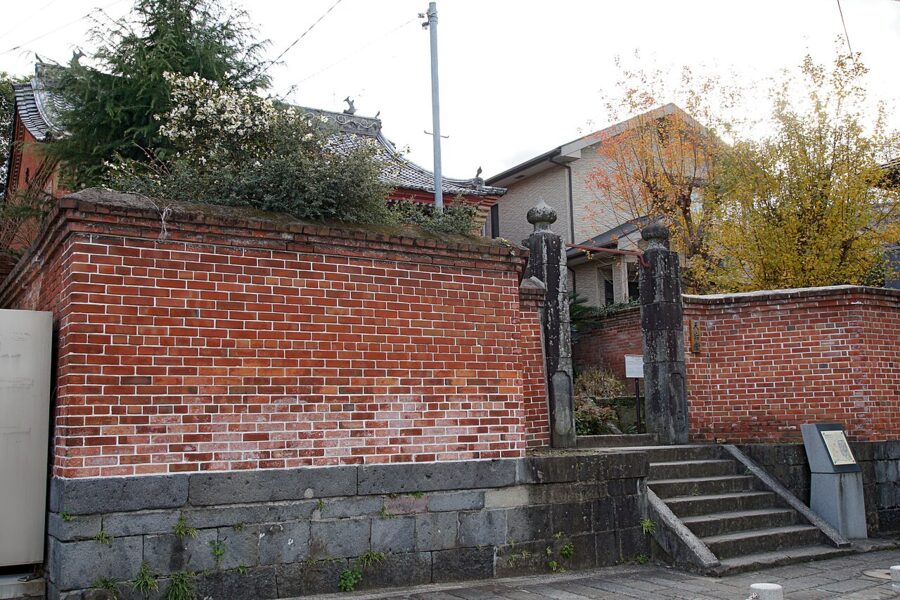
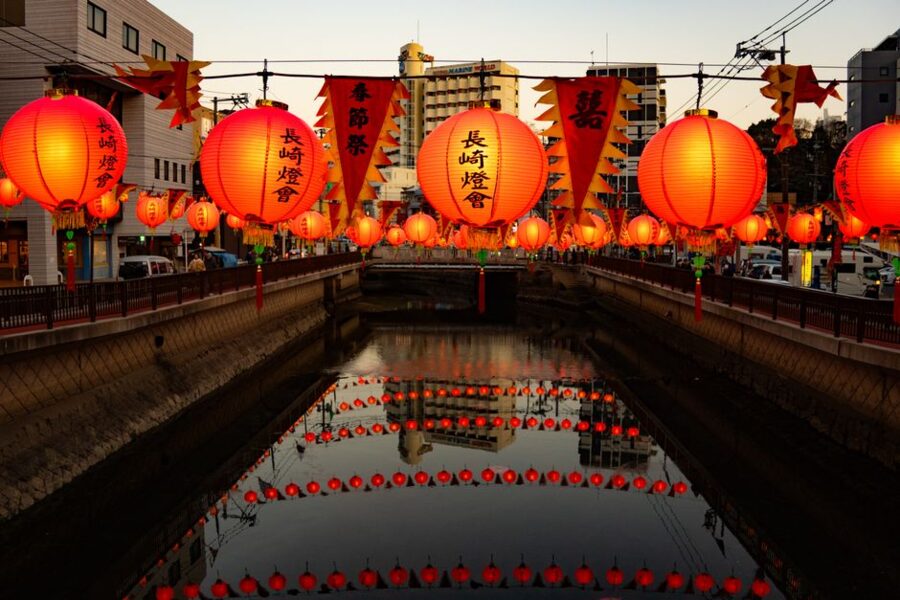
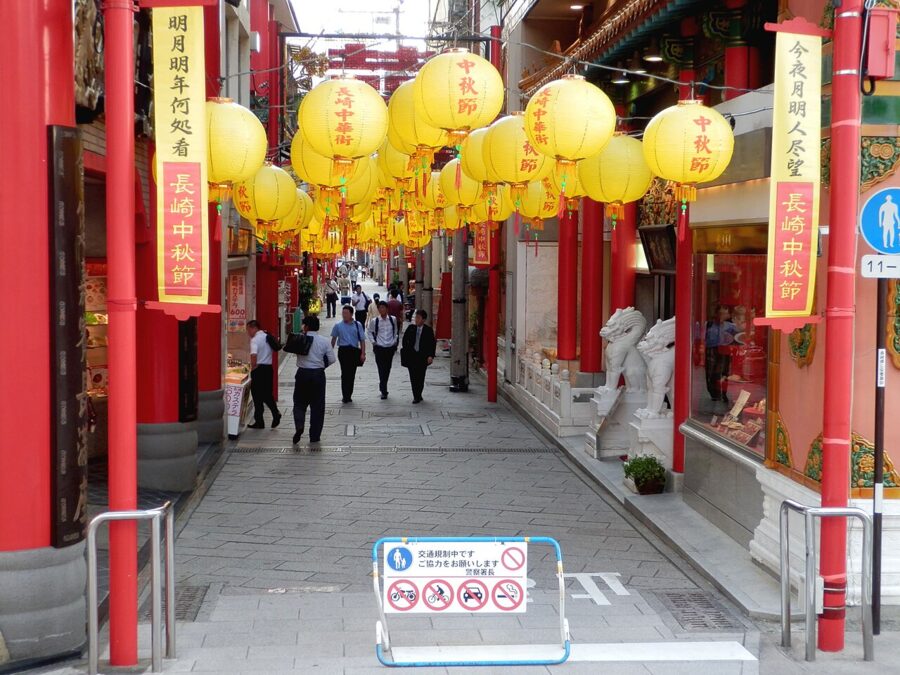
In September or October, for the Mid-Autumn Festival, Chinatown hangs 1,000 yellow lanterns instead. It is a much smaller affair, and a nice surprise if you happen to be in town.
Then in early October the city’s big shrine festival, Nagasaki Kunchi, takes over the streets from the 7th to the 9th. It has its own dragon dance.
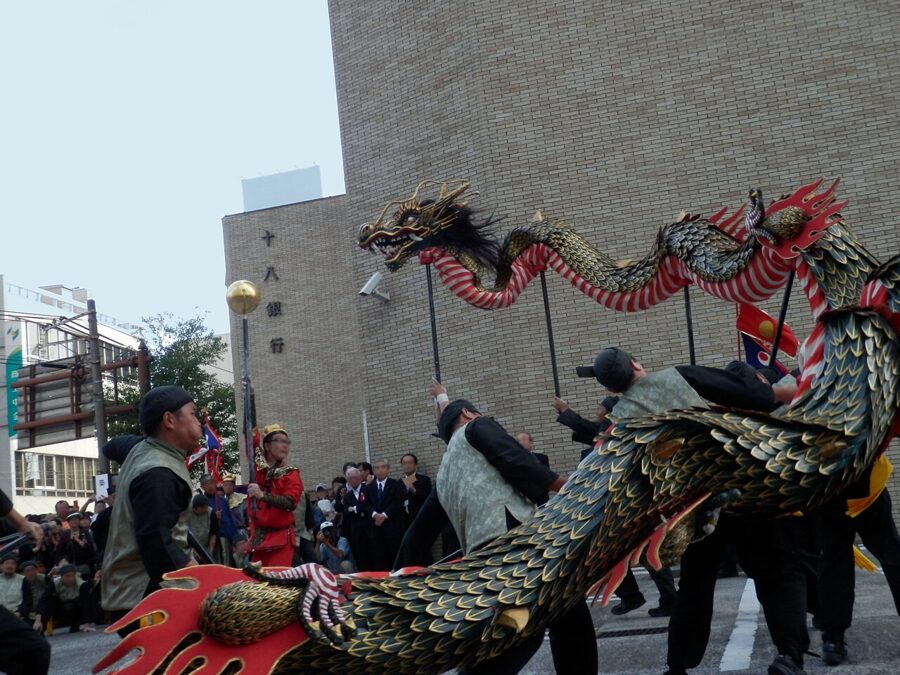
Bridges, mansions and the walk between meals
Nagasaki’s eating districts sit among its sights, so you will walk past these whether you plan to or not. Each gets a paragraph.
Megane Bridge. The double stone arch over the Nakashima River was built in 1634 by Mokusu Nyojo, a monk from China who became the second abbot of Kofukuji, after floods kept washing the wooden bridges away. It is Japan’s oldest surviving stone arch bridge and a national Important Cultural Property.
It gets its name, “spectacles”, from the way the arches and their reflection make two circles. People hunt for a heart-shaped stone set in the river wall nearby, and Shooken’s main store is a few minutes away.
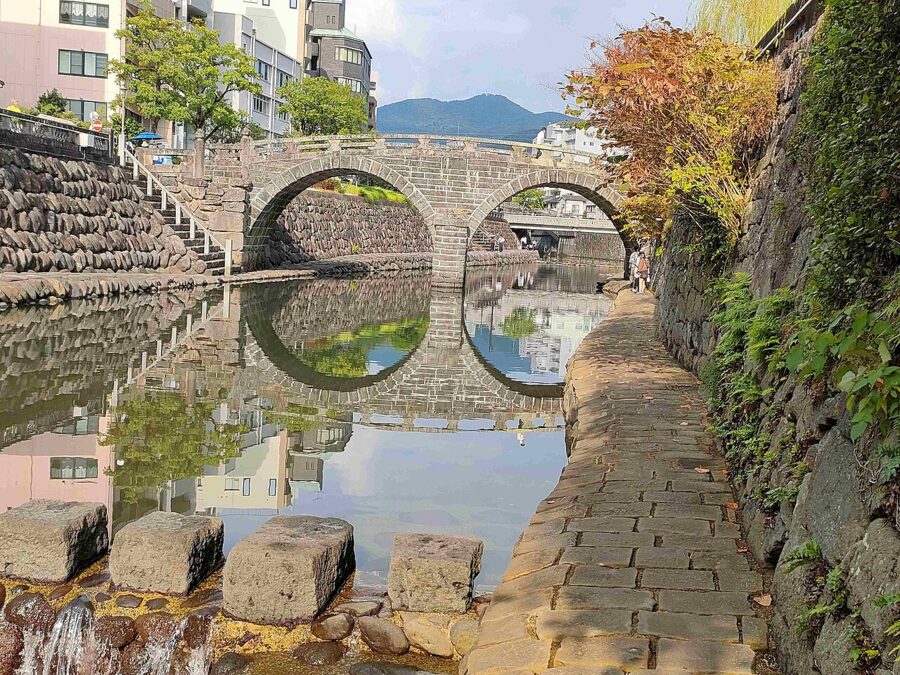
Glover Garden. Thomas Blake Glover was a Scottish merchant who arrived after the port opened, and his house on the Minamiyamate hill is now part of a World Heritage listing for Japan’s industrial revolution. The garden gathers his house and other Western houses from around the city. It opens 8:00–18:00, later on some evenings, and adult entry rose to ¥1,300 in April 2026.
Iwasaki Honpo’s kakuni manju shop and a cluster of castella branches are on the slope up to the gate, and Shikairo is at the bottom. Eat on the way down, not on the way up.
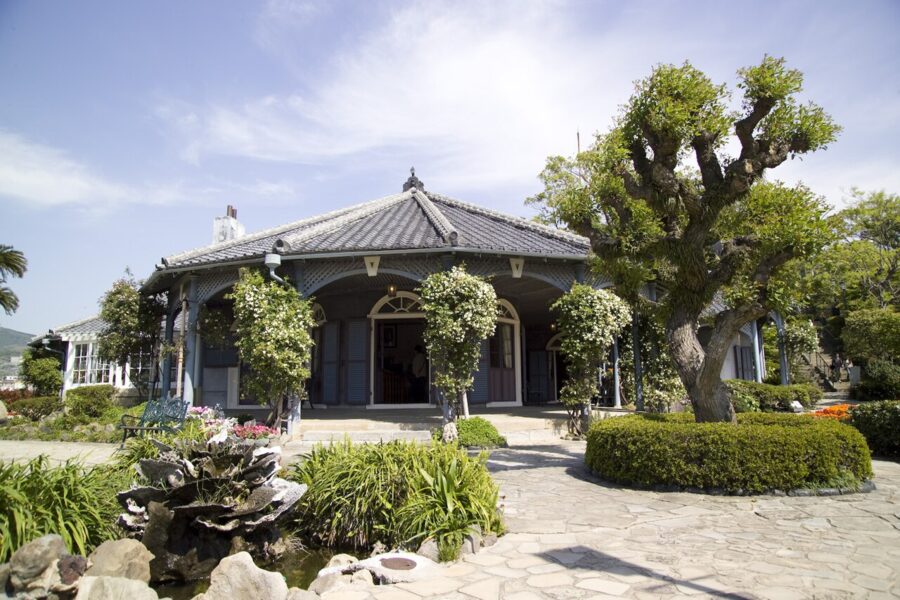
Nagasaki opened as a treaty port in 1859, with Yokohama and Hakodate, and Kobe and Niigata followed later. The foreign settlement that grew up on these slopes is why the hill is lined with Western houses.
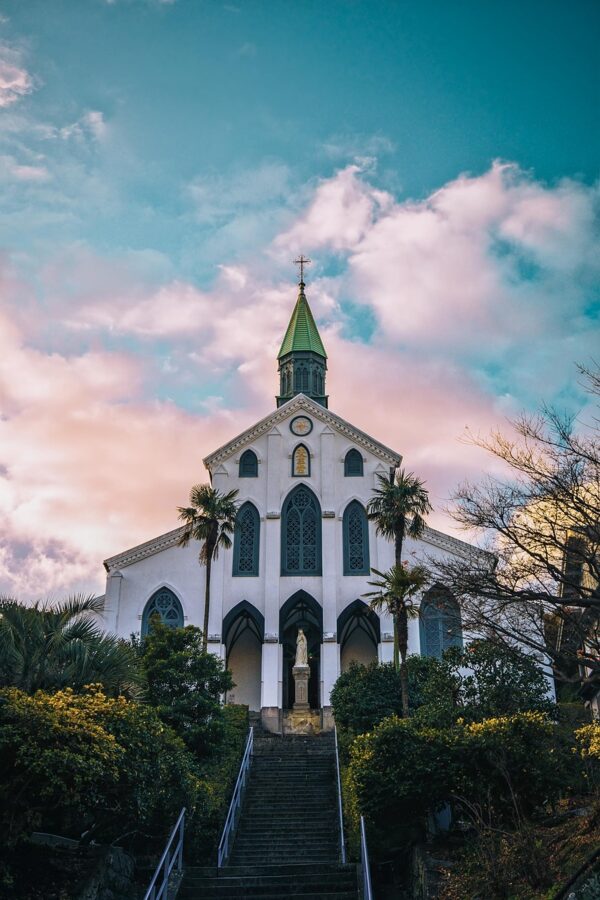
Dejima is a short walk from Chinatown and worth an hour for the reconstructed warehouses and residences. Stand on the old seawall and remember that most of the sugar in this guide was unloaded within sight of it.
Where to eat, neighbourhood by neighbourhood
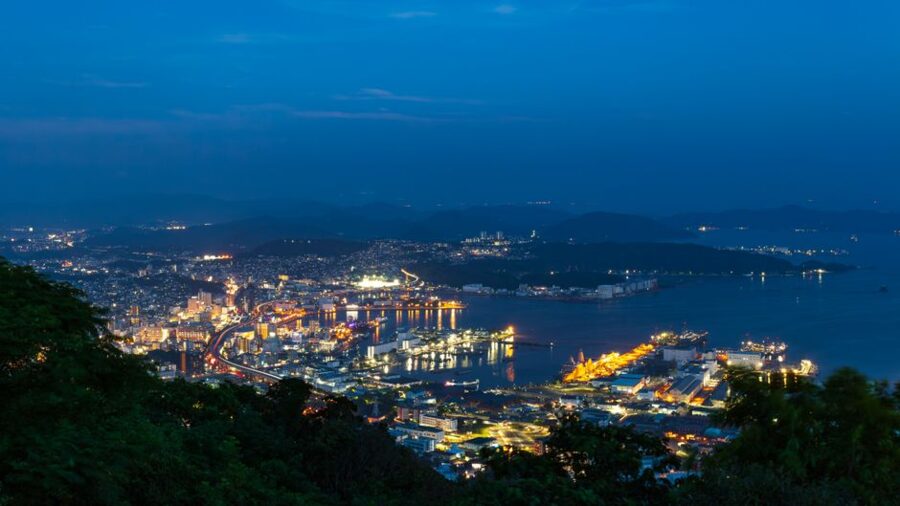
Nagasaki is a long, narrow city squeezed into a valley around the harbour, and the eating falls into four pockets along the tram line.
Hamanomachi, Shianbashi and Dozamachi
This is the centre, and where most of the old names are. Hamanomachi is the covered shopping arcade, with Yossou, a Bunmeido branch and Iwasaki Honpo’s Dozamachi shop all close by.
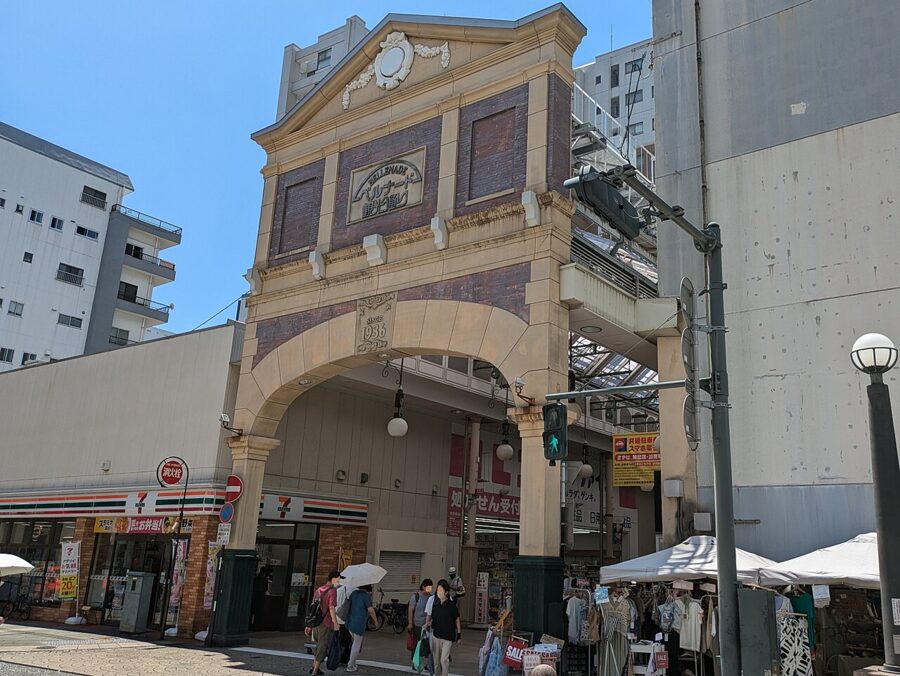
Across the main road, Shianbashi and Dozamachi are the drinking streets, full of small bars and izakaya. Fukusaya, Tsuruchan, Hamakatsu and the edge of the old Maruyama quarter, with Kagetsu, are all within ten minutes of the Shianbashi tram stop.
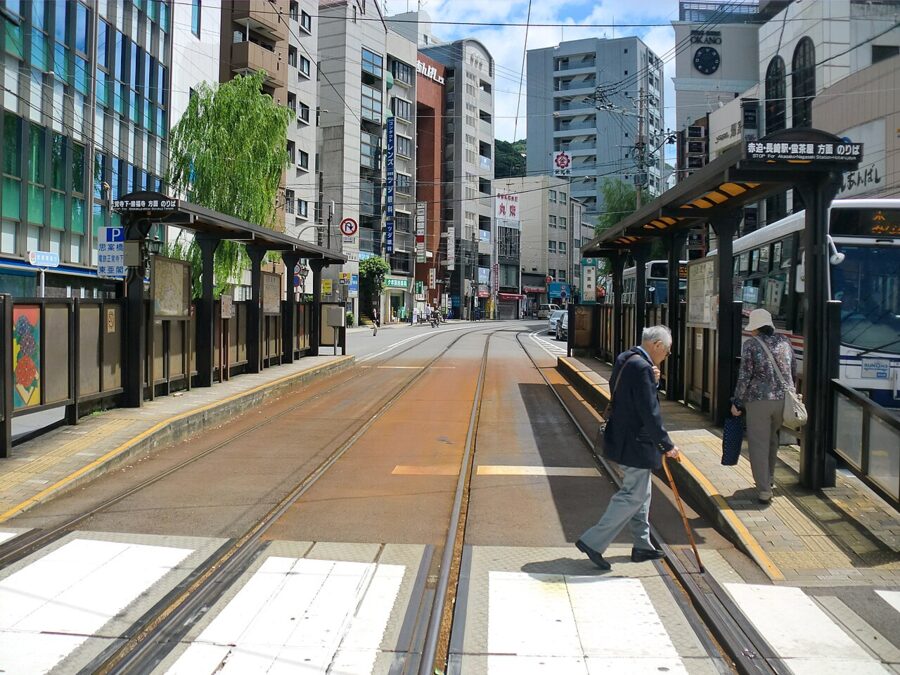
Shinchi Chinatown and Dejima
A short walk south-west of Hamanomachi. Kozanro, Lao Lee and the takeaway windows are here, Dejima is along the waterfront, and Bunmeido’s head store is at Edomachi, between the two.
Oura and the Glover slope
The tourist end. Shikairo is at the foot of the hill, Iwasaki Honpo and the castella shops line the slope, and it goes quiet once the gardens close, so plan dinner in the centre.
The station and the north
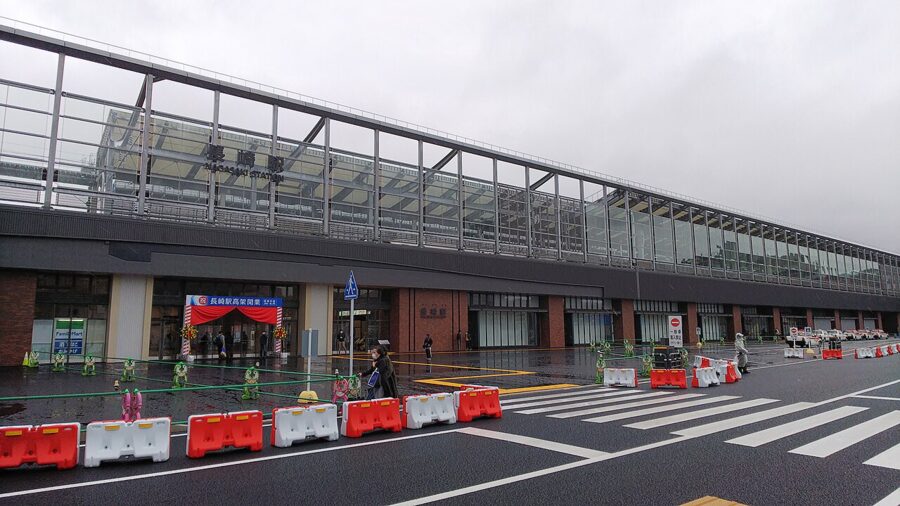
At Nagasaki Station, Soshurin has a branch and the Kamome Ichiba market has both Shooken and Bunmeido counters, which makes it the easiest last stop for castella. North of the station, Horaiken is the reason to eat lunch near the Peace Park.
Beyond the city
The prefecture is mostly peninsulas and islands, and almost every one of them has its own dish. These are the ones I would build a day around.
Sasebo burgers
Sasebo, up the coast to the north, has been a naval town since 1889, and the American navy has been there since the end of the war. Around 1950, the story goes, someone connected to the base taught local cooks how to make hamburgers, and the city has made them ever since: big, made to order, never pre-cooked. Sasebo set up a certification scheme for its burger shops in 2007, and “Sasebo burger” became a registered regional brand in 2019.
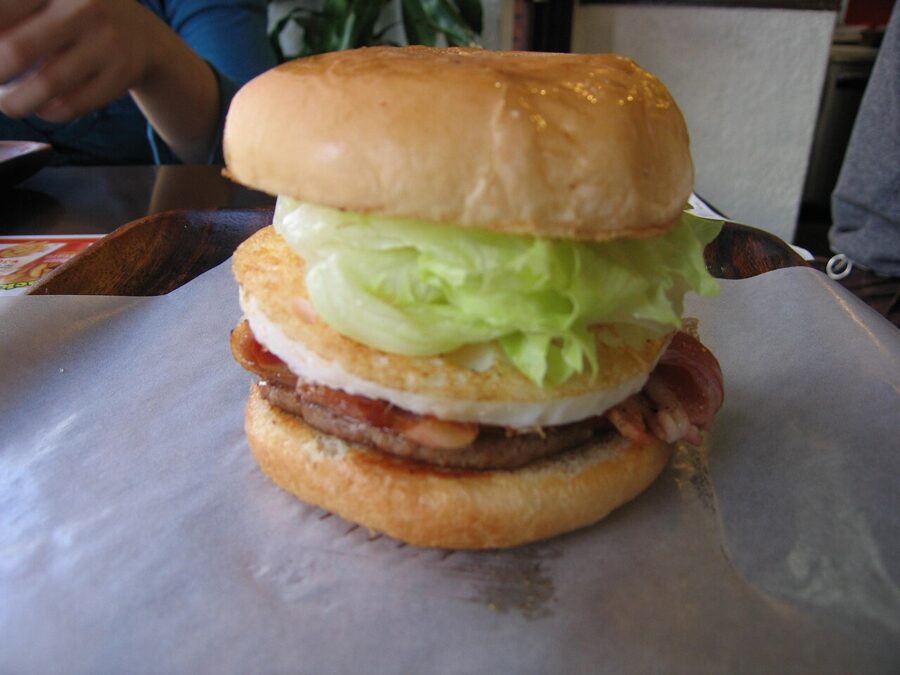
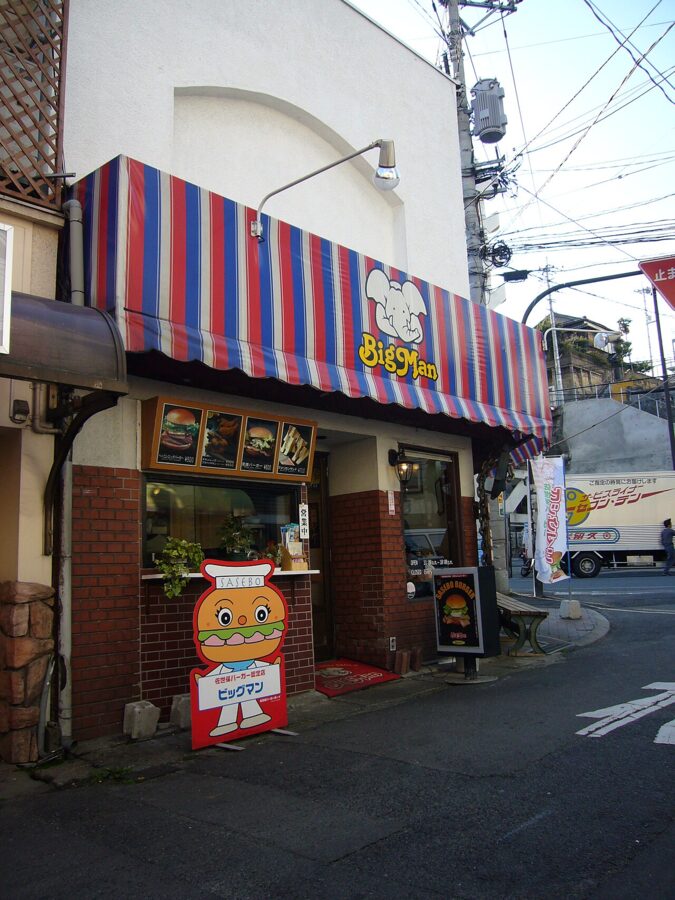
Big Man, founded in 1970, is the name to know. It has five shops in Sasebo, including the main one in Kamikyo-machi, and its bacon and egg burger is the signature.
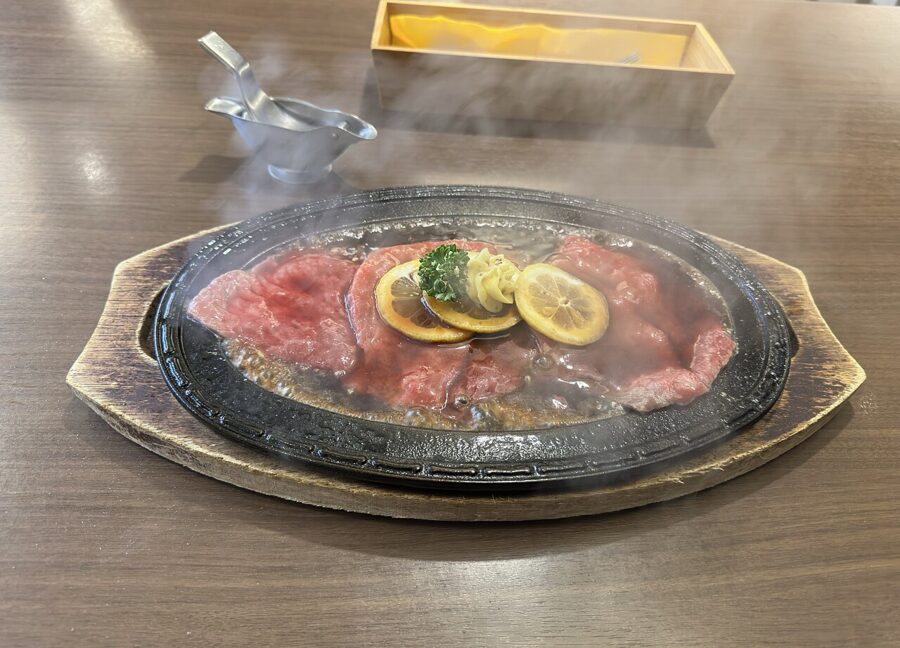
Sasebo’s other dish is lemon steak, thin beef seared on a hot plate with a soy and lemon sauce. The prefecture’s tourism people trace it to the American navy’s taste for steak, adjusted for Japanese palates.
Obama champon
Obama, on the Tachibana Bay coast of the Shimabara peninsula, is an old hot-spring town with its own champon. It uses the same pork and chicken base but adds a stock of local anchovy, so it tastes lighter and more of the sea. Champon reached Obama in the Taisho era, and about fifteen places serve it today.
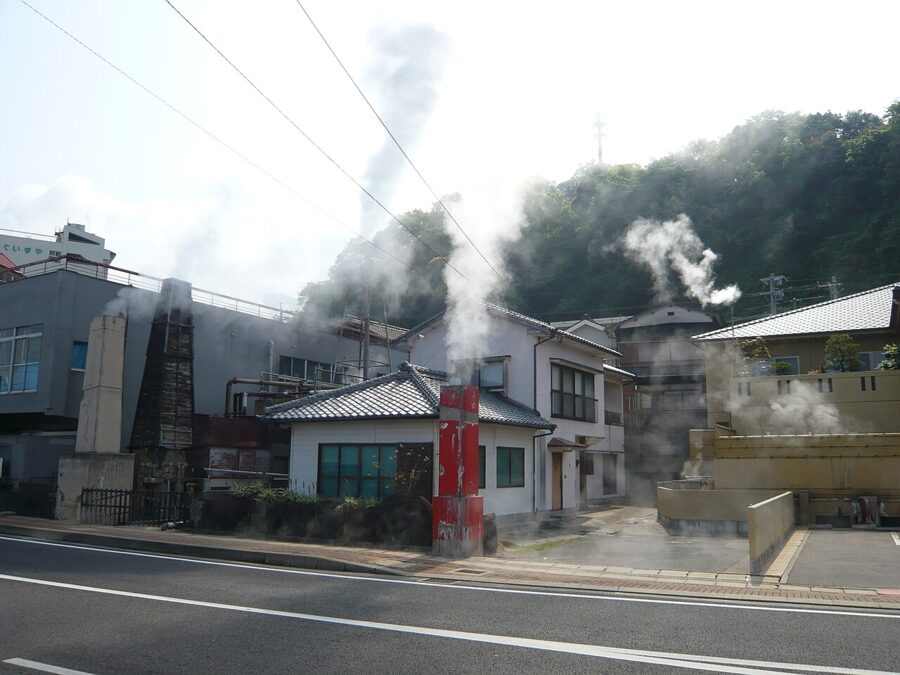
Nobody called it Obama champon until 2007, when a city employee, Hayashida Masaaki, drew a map of the town’s champon shops. He became known as the Champon Bancho, ate it 108 days in a row, and was eventually the model for an NHK drama. Unzen city publishes his latest map.
Goto udon, Shimabara somen and island shochu
Two noodles from the edges of the prefecture are worth knowing. Goto udon, from the Goto Islands off the west coast, is thin, firm and hand-stretched with camellia oil, and the islands eat it straight from the pot, a style they call jigoku-daki, “hell pot”. It is often counted among Japan’s three great udon, which I get into in my udon guide.
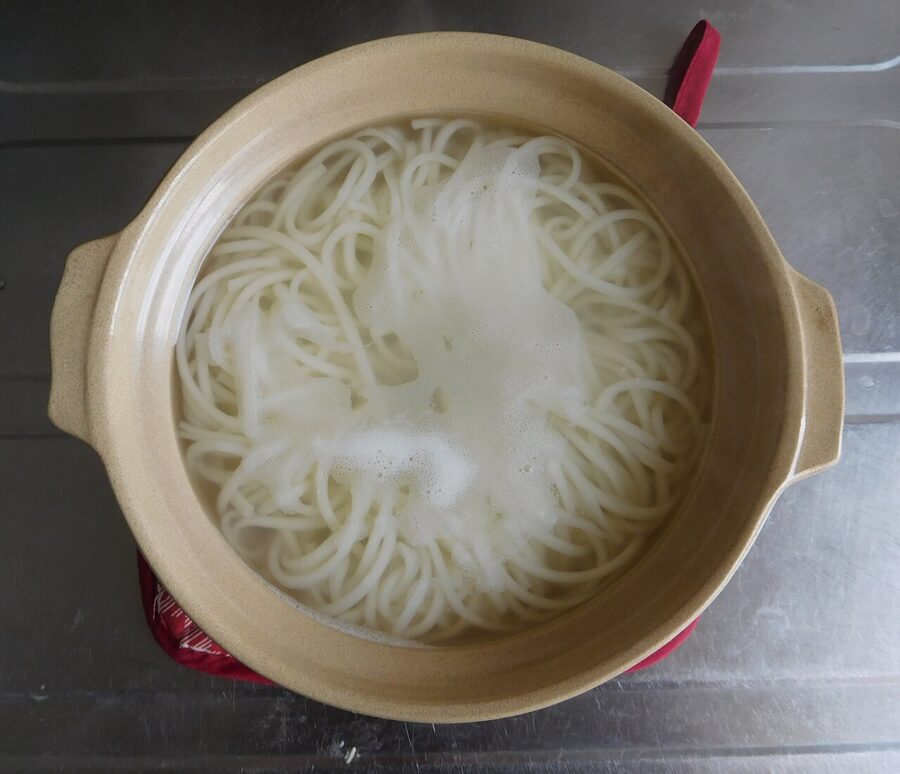
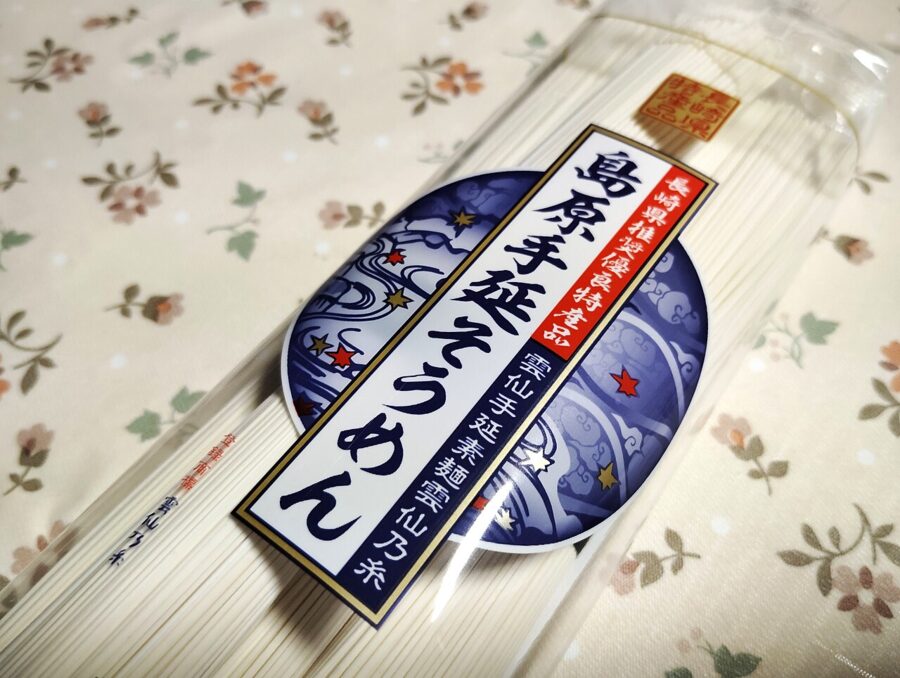
Shimabara somen is even thinner, hand-stretched in Minamishimabara with high-quality wheat and the area’s spring water. The prefecture’s tourism federation counts about 300 makers there, turning out around 30% of all the somen made in Japan.
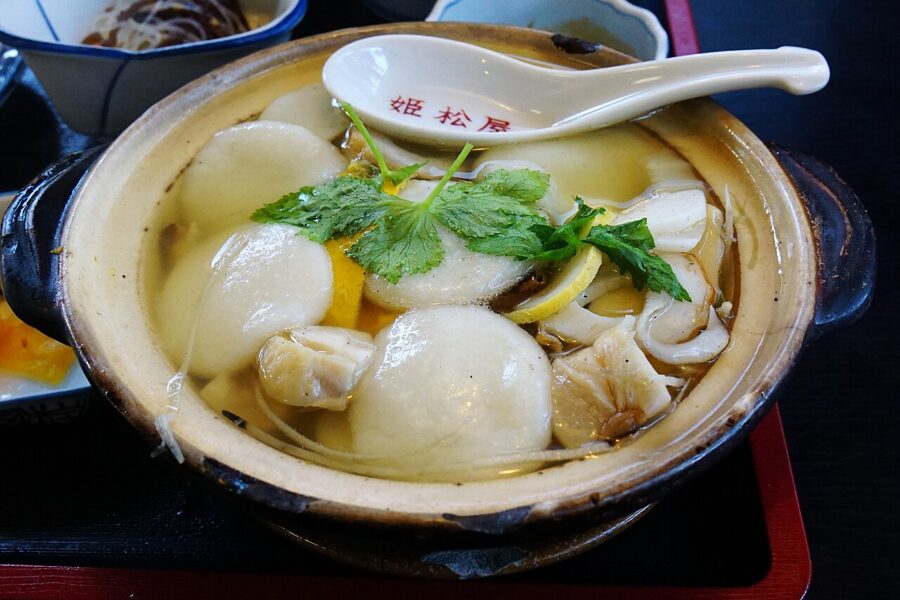
Shimabara also has guzoni, rice cakes stewed with around ten ingredients in a light broth. It is said to date from the 1637 Shimabara Rebellion, when it fed the besieged rebels.
For drinking, Iki Island calls itself the birthplace of barley shochu and has seven distilleries, and Goto makes sweet potato shochu. The prefecture also farms more tiger puffer than anywhere else in Japan, so fugu is a local fish here rather than something shipped in, and Nagasaki wagyu took the top Prime Minister’s Award at the national beef competition in 2012.
Getting there and getting around
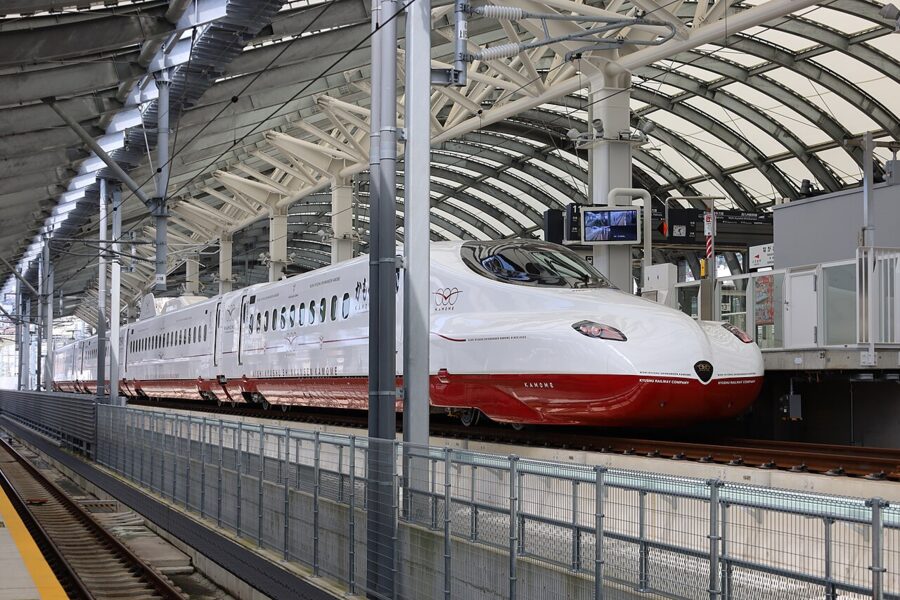
Since 23 September 2022 the Nishi-Kyushu Shinkansen has run the 66 km from Takeo-Onsen to Nagasaki. From Hakata you take the Relay Kamome express to Takeo-Onsen and step across the platform to the Kamome bullet train; the fastest connections take about 1 hour 20 minutes in all.
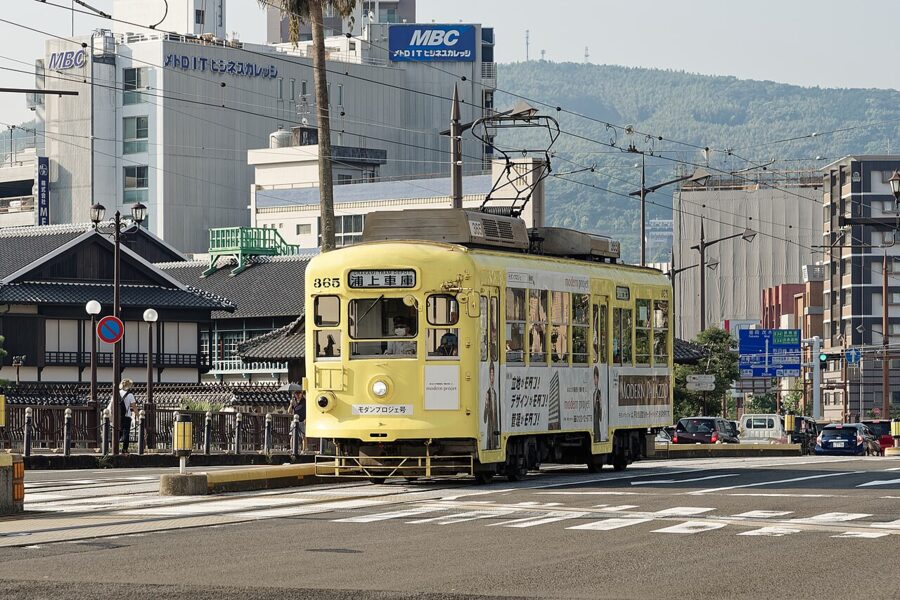
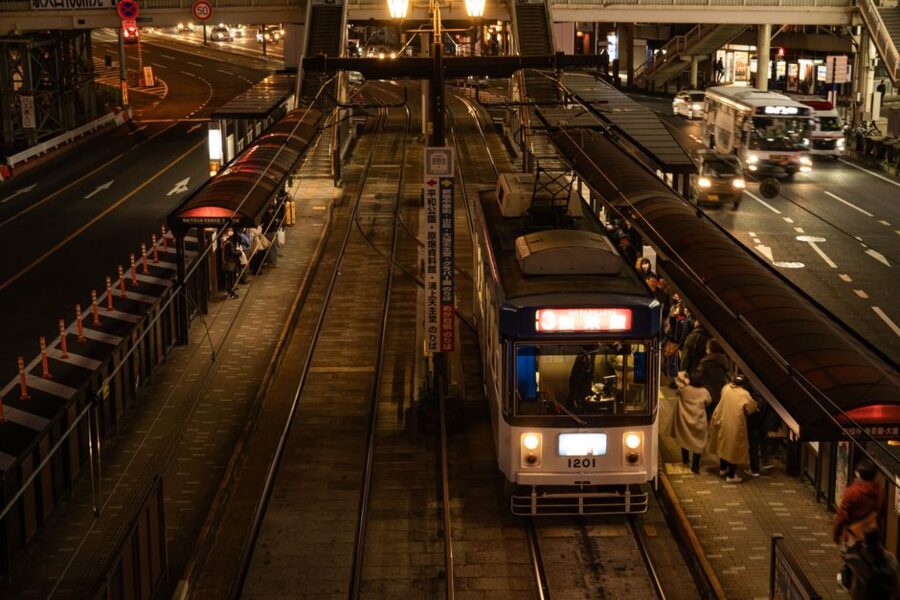
Once you are in town, use the trams. Nagasaki Electric Tramway has run streetcars here since 1915, and every ride costs a flat ¥150 for adults, whatever the distance. A one-day pass is ¥600 and pays for itself in four rides; a 24-hour pass is ¥700. You board at the back and pay at the front when you get off.
What it costs, and what to skip
Nagasaki is one of the cheaper food cities in Japan, as long as you stay away from the banquet halls. The prices I checked:
- Tram ride ¥150, one-day pass ¥600.
- Yossou’s chawanmushi and mushizushi set ¥1,650.
- Hamakatsu’s one-person shippoku lunch ¥3,600; seasonal shippoku courses ¥7,000 and ¥8,500.
- Kagetsu’s shippoku ¥14,520 or ¥17,160 at lunch, ¥23,760 to ¥33,000 at dinner.
- Glover Garden entry ¥1,300.
Champon, sara udon, Turkish rice and kakuni manju are everyday food, priced like everyday lunches. You can eat very well here for a few thousand yen a day and spend a lot more only if you sit down at a round table.
Skip this
- Ringer Hut. It is champon, and it is from Nagasaki, but it is the bowl you can eat anywhere in Japan. Use the meal on Shikairo or Kozanro.
- Chinatown on a Lantern Festival weekend, if it’s champon you want. The crowds are huge, and Kozanro, for one, serves only its top-grade champon and sara udon during the festival. Go for the lanterns at night and eat your champon at a weekday lunch.
- Buying castella at the airport. It is the same cake, but you miss the tasting cubes and the shops themselves. Buy it on Funedaiku-machi or Uonomachi, then carry the box.
- Trying to do Sasebo as a quick half-day. The burgers are cooked to order, the shops are spread around town, and the train ride is long enough that it deserves a full day.
Start with champon at Shikairo, walk up the slope for a kakuni manju, then take the tram to Shianbashi for Turkish rice and a milkshake you eat with a spoon. Buy the castella last, so it is fresh when you get home.
You Might Also Enjoy
 Udon in Japan: Sanuki, Inaniwa, Kishimen and the Regional Noodle Map
 The Summer Palace in Beijing: Tickets, Gates, the Long Corridor and a Route That Beats the Crowds
 Dunhuang: The Mogao Caves, the Singing Sands and How to Plan a Trip to the Edge of the Gobi
 Shochu and Awamori: Japan’s Distilled Spirits, How to Drink Them, and Where They’re Made