Beppu Guide: The Hells, the Bathhouses and Lunch Cooked by a Volcano
The stove at Jigoku Mushi Kobo in Kannawa is a stone box with a wooden lid, and it has never seen a gas bill. Lift the lid and steam comes up out of the ground at 98°C. Your bamboo basket of prawns, sweet potato and cabbage goes into the cloud, the lid goes back on, and a timer starts. Fifteen minutes and ¥400 later, lunch is done.
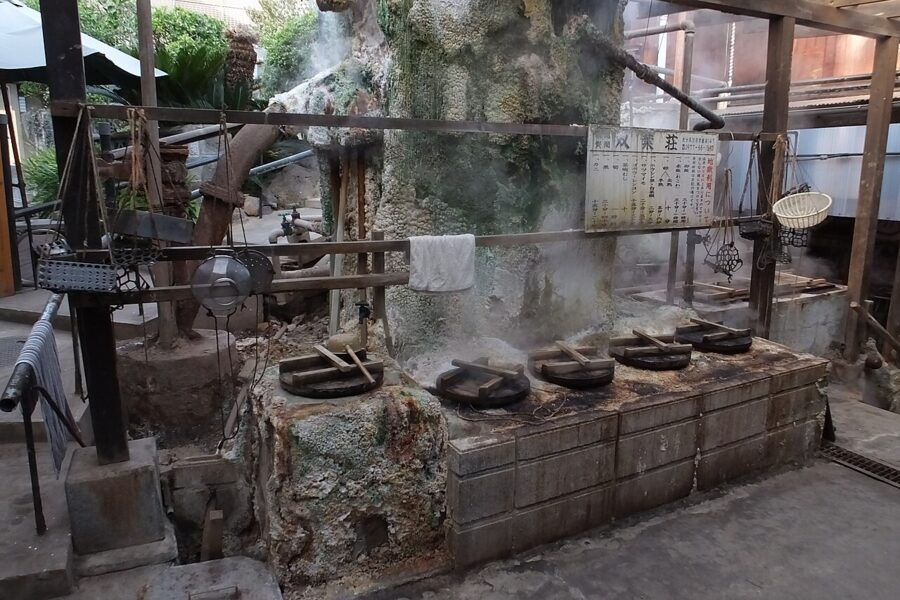
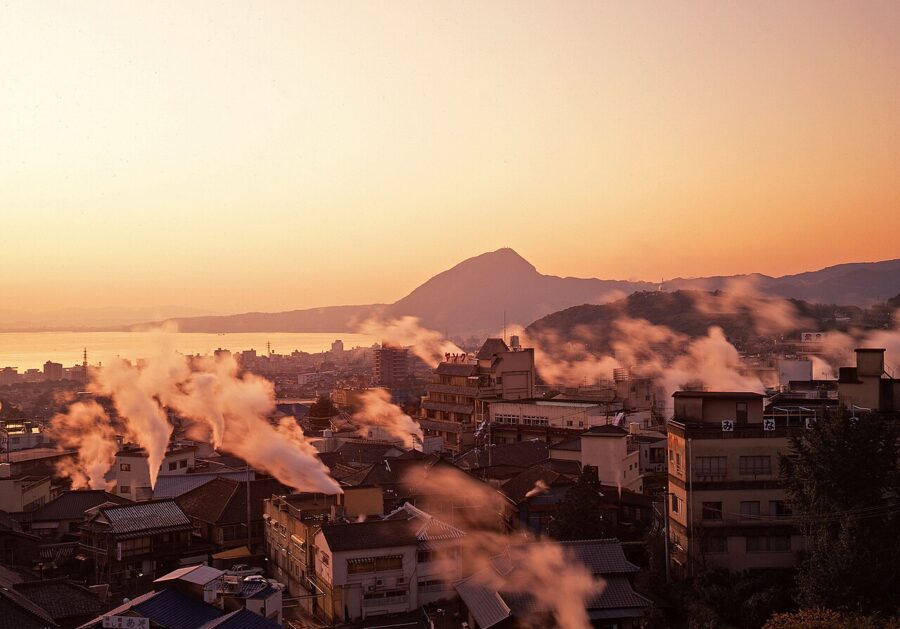
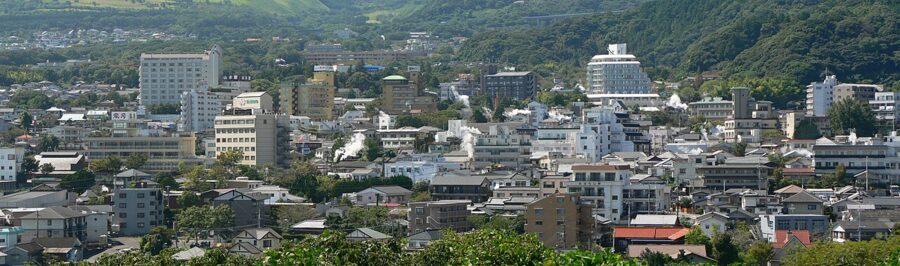
I have eaten in plenty of places where the kitchen ran hot. Beppu is the only town I know where the ground does the cooking, heats the bathwater, warms the guest rooms and still has enough left over to run a crocodile farm. The steam you see from the train window is not decoration. It is plumbing.
Prices and hours below come from the operators and the city, checked in November 2026.
If you only have a day, this is the short version.
| Do this | Where | Price | Why bother |
|---|---|---|---|
| Hells common ticket | Kannawa and Kamegawa | ¥2,400 | Seven sites, valid two days |
| Steam your own lunch | Jigoku Mushi Kobo, Kannawa | ¥400 per basket plus food | Cooked by a volcano, no reservations |
| Sand bath | Takegawara Onsen, near the station | ¥1,500 | Hot sand inside a 1938 bathhouse |
| Plain soak | Any city-run bath | ¥200–300 | Locals’ prices, scalding water |
| Steam bath | Kannawa Mushiyu | ¥700 | Eight minutes on a bed of medicinal herbs |
| Toriten set | Toyoken | ¥1,580 | The restaurant that claims the dish |
| Beppu reimen | Kogetsu or Rokusei | from ¥990 | A cold noodle Beppu invented after the war |
In This Article
- Eight hot-spring towns wearing one name
- How a steamship stop became a spa capital
- The eight districts at a glance
- The hells: which ones earn your ¥2,400
- Tickets, hours and how to get there
- Umi Jigoku: pay for this one if nothing else
- Chi-no-ike Jigoku: the oldest, and the reddest
- Tatsumaki Jigoku: the geyser, and a 2026 warning
- Kamado Jigoku: the busy, fun one
- Oniishi Bozu and Shiraike: quieter, prettier
- Oniyama Jigoku and the zoo question
- Get in the water
- Takegawara Onsen: start here
- Sand baths compared
- Kannawa Mushiyu: eight minutes on a bed of herbs
- Myoban: mud and yunohana huts
- The other city baths
- Coin baths, community baths and the stamp book
- How to bathe without embarrassing yourself
- Lunch cooked by a volcano
- Jigoku-mushi at Jigoku Mushi Kobo
- Toriten: Oita’s fried chicken
- Beppu reimen: a cold noodle with a Manchurian past
- Dango-jiru, and something to drink
- Seki-saba, seki-aji and a squeeze of kabosu
- Yufuin, the quiet half-day
- Getting there, and getting around
- Where to sleep, district by district
- What it costs, and what to skip
Eight hot-spring towns wearing one name
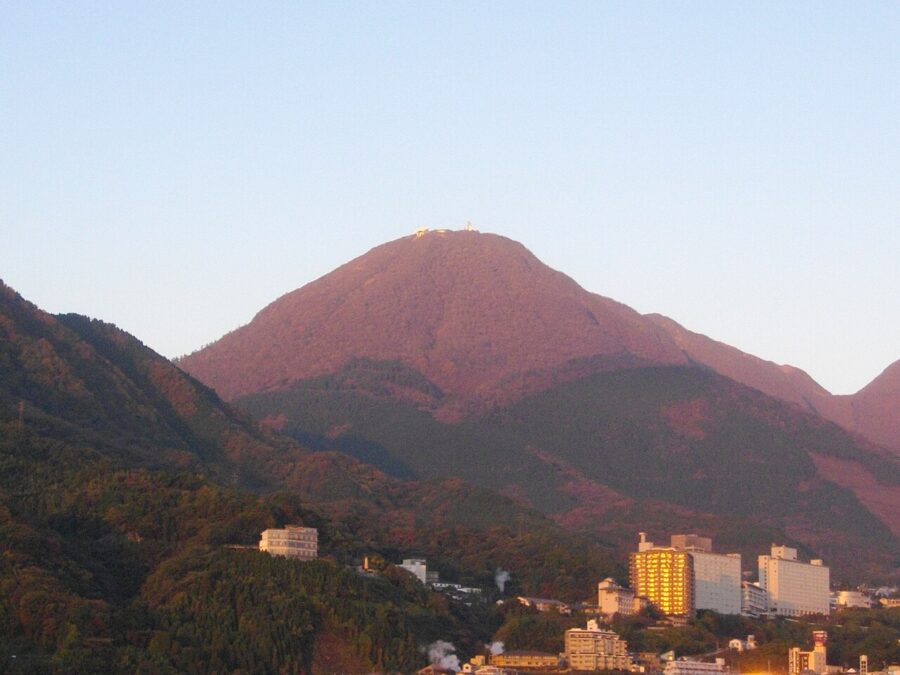
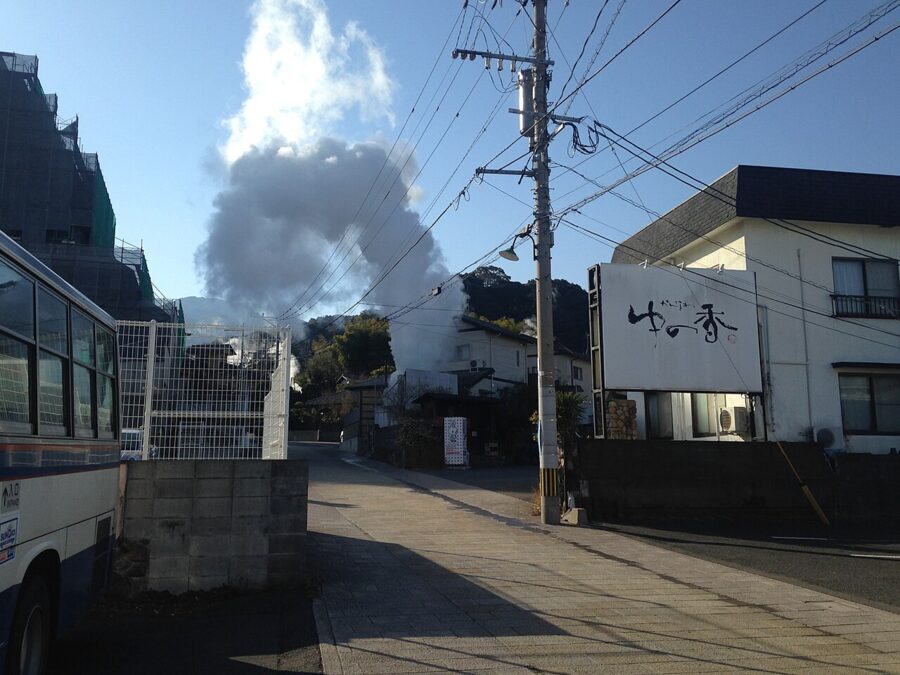
Beppu is a city built on top of a plumbing problem. Two volcanoes, Tsurumi-dake and Garan-dake, stand behind the town, and rain soaking into their slopes comes back out as hot water almost everywhere you dig. The city counts 2,831 hot-spring sources, delivering 101,856 litres a minute (figures to March 2025). Oita prefecture leads Japan on both counts, and Beppu alone accounts for more than half of the prefecture’s sources.
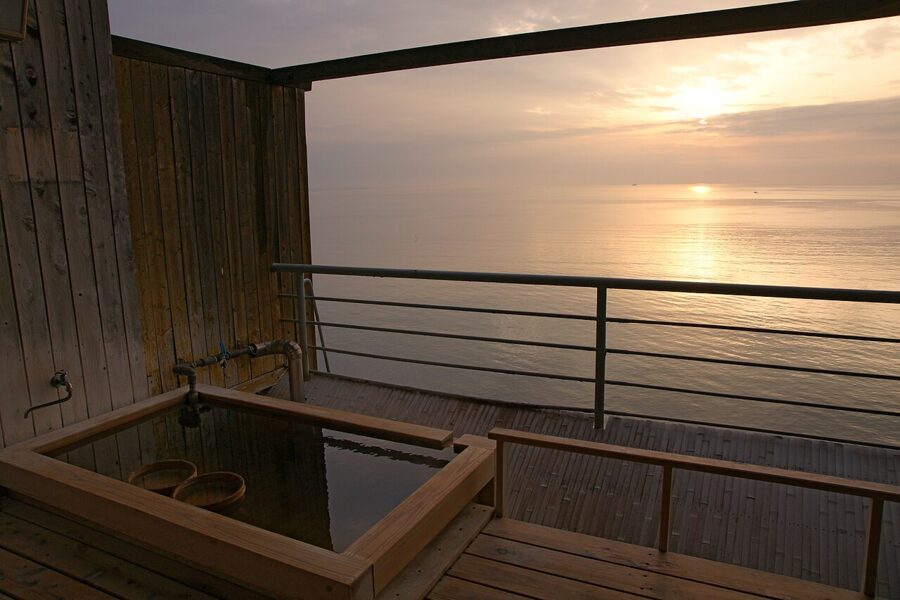
The variety matters as much as the volume: of the ten spring types Japan uses on bathhouse notices, the city has confirmed seven. Ride the bus 20 minutes uphill from the station and the water changes from clear and salty to milky and sulphurous. That is why locals talk about Beppu in the plural.
How a steamship stop became a spa capital
The springs are old news. The eighth-century gazetteer of Bungo province already describes a pool of red hot water that is today’s Chi-no-ike Jigoku, and local tradition credits the wandering monk Ippen with taming the boiling ground at Kannawa in 1276. Through the Edo period the Myoban hillside was a mine for alum, sold as a monopoly product.
What turned a string of spa villages into a resort was the sea. A proper harbour opened at the mouth of the Nagare-gawa in 1871, and from 1873 steamers ran from Osaka. In 1879 the town got the bathhouse that is still its symbol, Takegawara Onsen. Well-drilling methods brought in from about 1880 let anyone with money sink a well, and by 1911 the town had 76 drilled springs against 17 natural ones.
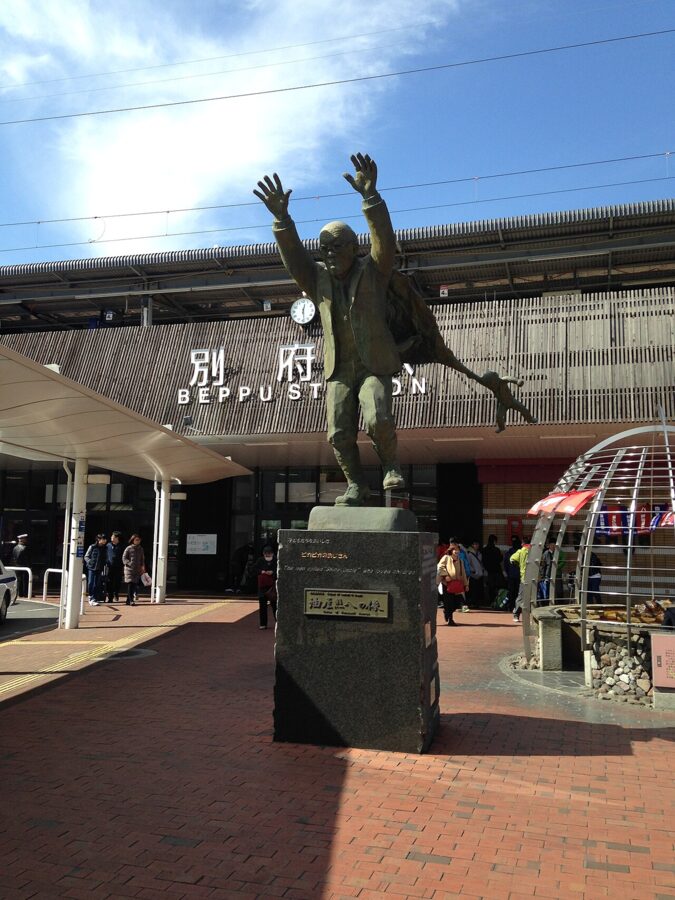
The man who put Beppu on the national map was a failed rice speculator from Uwajima called Aburaya Kumahachi. He opened the Kamenoi inn in 1911, coined the slogan “Fuji for mountains, the Inland Sea for water, Beppu for hot springs,” and planted signposts with it as far away as the top of Mount Fuji. In January 1928 his bus company launched a sightseeing tour of the hells with women guides on board, the first guided bus tour of its kind in Japan.
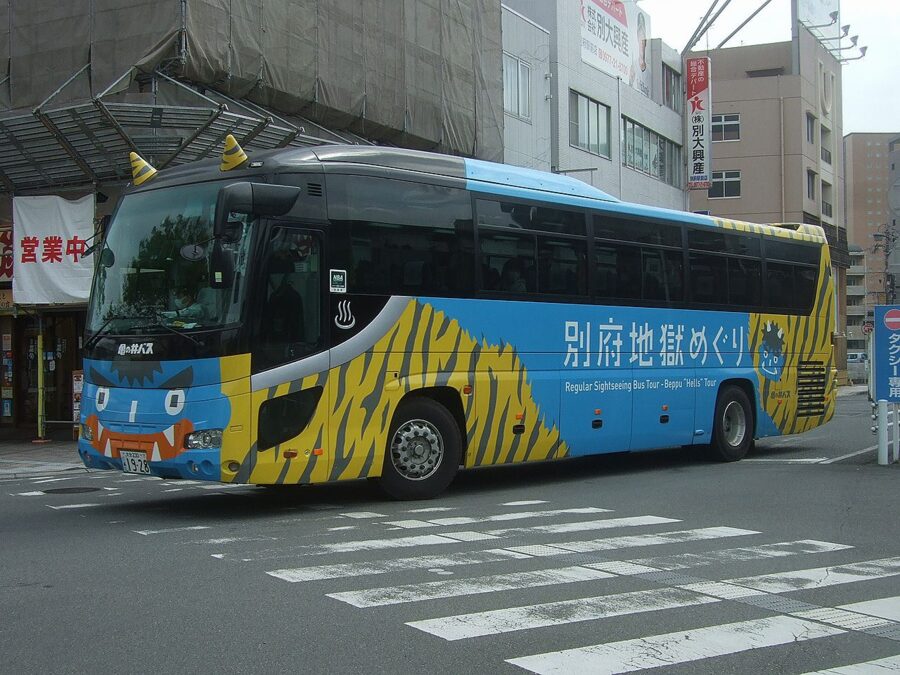
The name Beppu Hatto, the eight springs of Beppu, is younger than you would think. A group of local tourism people declared the eight districts “independent” at 8:08:08 on 8 August 1996, a stunt that stuck.
The eight districts at a glance
Most people base themselves near the station or in Kannawa and ride the bus to the rest.
| District | Where | Water | Go for |
|---|---|---|---|
| Beppu Onsen | Around the station and Kitahama | Salty, bicarbonate | Takegawara, cheap city baths, bars and restaurants |
| Hamawaki | South of the centre, by Higashi-Beppu Station | Bicarbonate, chloride | One of two claimed birthplaces of Beppu bathing; a city bath open until 1:00 |
| Kankaiji | Hillside west of the centre | Simple, salty | Big-view hotels, including Suginoi |
| Horita | Further up the Yufuin road | Sulphur, acidic | A quiet city bath with an outdoor pool |
| Myoban | Hillside, about 400 m up | Sulphur, acidic, milky | Yunohana huts, mud baths, views |
| Kannawa | Between the city and Myoban | Varied, mostly chloride | Five of the hells, jigoku-mushi, steam bath, old inns |
| Shibaseki | Valley north of Kannawa | Iron, sulphate | Chi-no-ike and Tatsumaki hells; a city bath with history |
| Kamegawa | Coast at the north end | Chloride | The seaside sand bath at Shoningahama |
The hells: which ones earn your ¥2,400
The jigoku, or hells, are hot springs too hot and too strange to bathe in. For centuries this boiling, steaming ground was farmland nobody could farm; the people of Kannawa still call any spring outlet a jigoku. Curious sightseers started walking the paddy paths to look at them, and in 1910 Umi Jigoku became the first to charge admission, two sen a head. The rest followed, and at the peak there were dozens.
Today seven belong to the Beppu Jigoku Association and share a common ticket: Umi, Oniishi Bozu, Kamado, Oniyama and Shiraike in Kannawa, and Chi-no-ike and Tatsumaki a few kilometres north in Shibaseki. Four of them (Umi, Chi-no-ike, Tatsumaki and Shiraike) were designated a national Place of Scenic Beauty in 2009. The others are a mix of good and gimmicky, and I will tell you which is which.
Tickets, hours and how to get there
The common ticket costs ¥2,400 for adults and ¥1,200 for children, and since February 2025 a single hell costs ¥500. Buy the common ticket at whichever hell you reach first; it is valid on the day of purchase and the day after, with one entry per hell. All seven open 8:00–17:00, every day of the year. Four of them (Umi, Chi-no-ike, Oniishi Bozu and Kamado) have free footbaths for ticket holders.
From Beppu Station’s west exit, Kamenoi Bus routes 2, 5, 7 and 41 run to Kannawa or Umi Jigoku-mae in about 20 minutes for ¥330. The Kannawa five are within a 10-minute walk of each other. For Chi-no-ike and Tatsumaki, take route 16, 16A or 29 from the Kannawa bus centre and get off at Chi-no-ike Jigoku-mae; the two sit across the road from each other. Allow two to three hours for all seven if you do not linger, longer if you wait for the geyser.
Umi Jigoku: pay for this one if nothing else
If you see one hell, make it Umi Jigoku, the sea hell. It is the biggest, the bluest and the best kept, set in a garden with a red torii, a greenhouse heated by the spring and a second, red pool called Akaike tucked away near the back. It is also the most crowded, so go at 8:00 when the gates open.
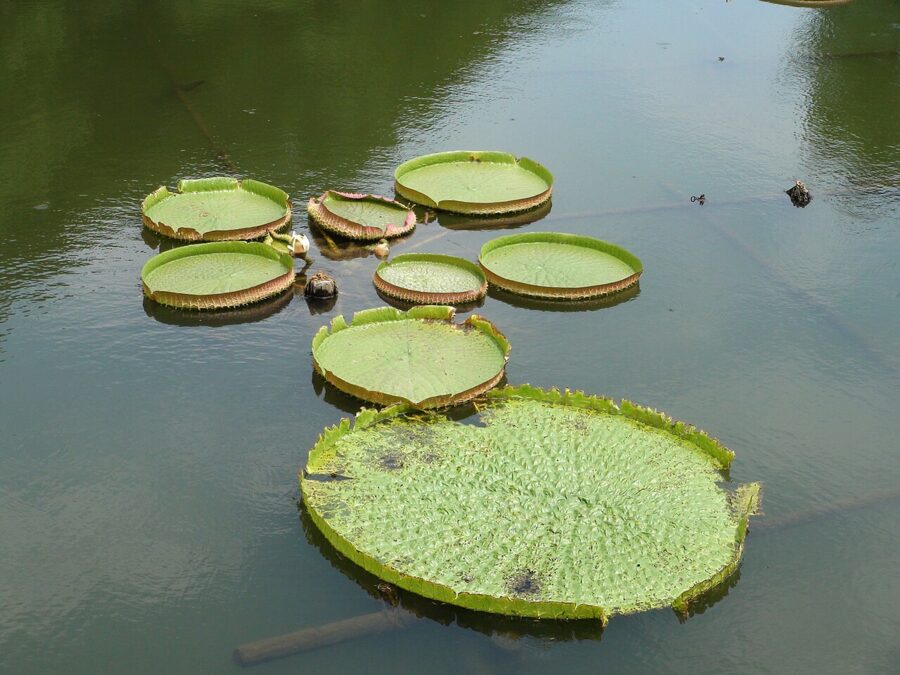
Eggs are boiled in baskets hung into the main pool on bamboo poles; a bag of five costs ¥450 at the shop. The cafe’s jigoku-steamed pudding, made with only eggs, milk and sugar, is ¥400, and the steamed buns called gokuraku manju have been sold here since 1954. In the warm lily pond, giant Amazon water lilies and tropical water lilies flower from early May to early November, best in the morning.
Chi-no-ike Jigoku: the oldest, and the reddest
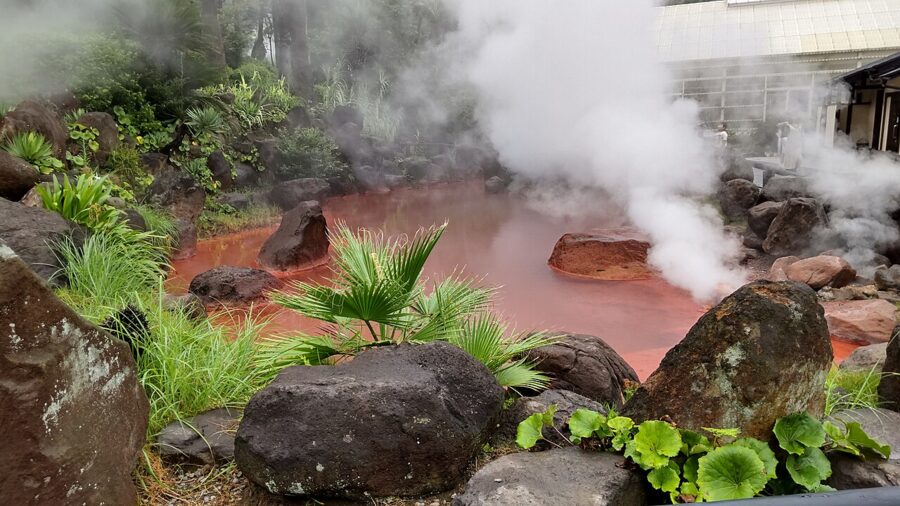
Chi-no-ike, the blood pond, is the other one worth crossing town for. It is the spring the eighth-century gazetteer called the red hot spring, which makes it the oldest recorded natural hell in Japan. The colour comes from iron and magnesium oxides in hot clay forced up from below, and the operator says even the steam is tinged red.
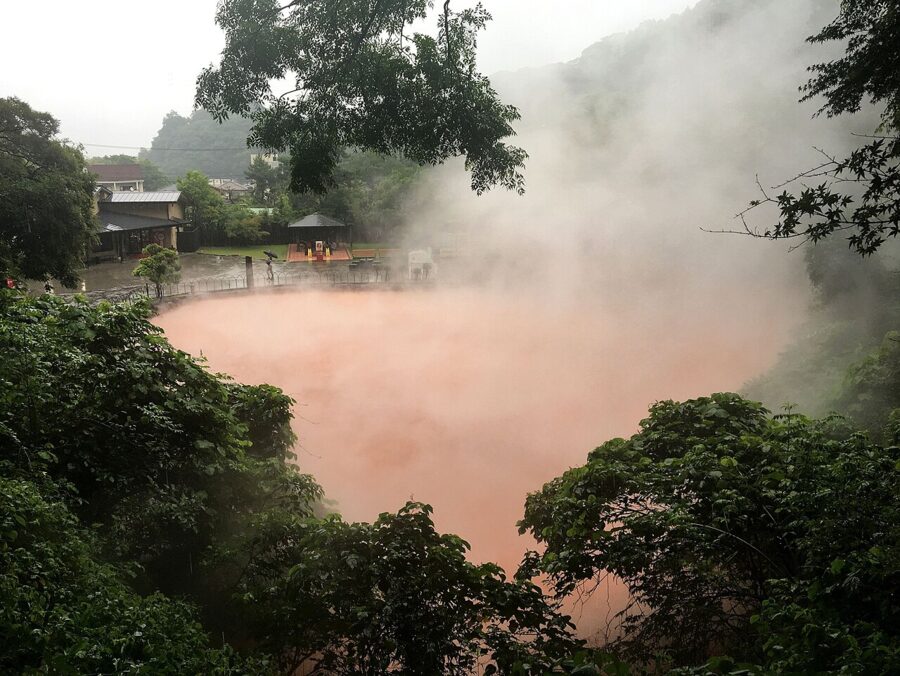
For generations the red clay was used to dye cloth and house pillars, and it still goes into Chi-no-ike Ointment, sold at the shop for skin complaints. The footbath here is fed straight from the pond’s source. There is a dog run, a large souvenir hall and a restaurant, Gokurakutei, that serves dango-jiru and toriten if you arrive hungry.
Tatsumaki Jigoku: the geyser, and a 2026 warning
Across the road, Tatsumaki Jigoku is a geyser, protected as a city natural monument. Hot water at around 105°C bursts up against a stone roof that stops it; without the roof, the operator says it could reach about 30 m. For years every guide has promised an eruption every 30–40 minutes.
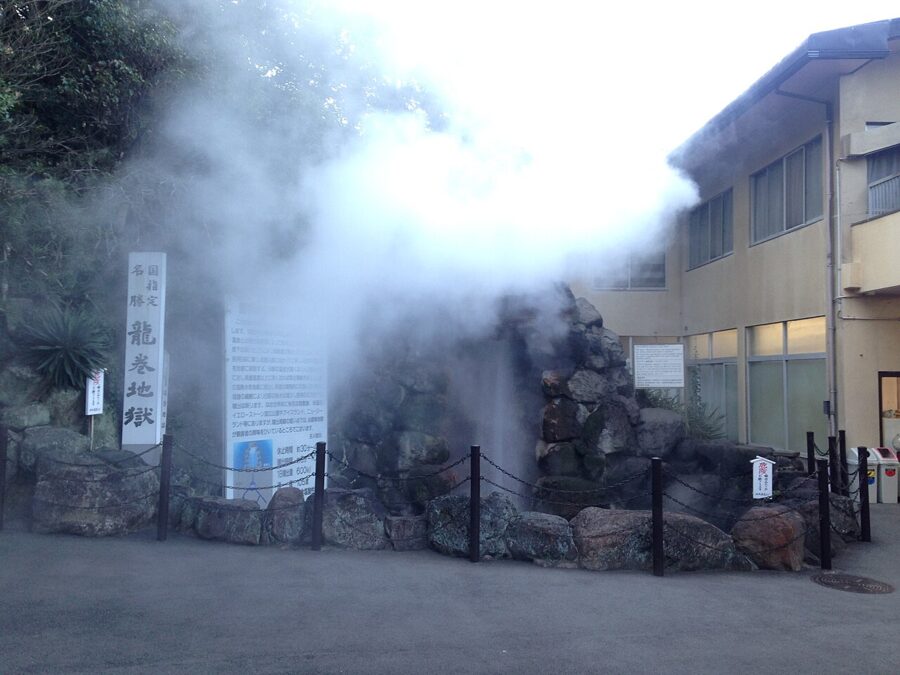
Do not plan your afternoon around that. In January 2026 the operator posted a notice that the waits before eruptions have been running long this season and that eruptions have been shorter and less predictable, varying with rainfall. On a tight schedule, glance at the red lamp over the entrance: if it is lit, go in; if not, do Chi-no-ike first and come back. From mid-April to early May the slope behind the geyser is covered in azaleas.
Kamado Jigoku: the busy, fun one
Kamado Jigoku, the cauldron hell, takes its name from the old custom of cooking rice offerings for the Hachiman Kamado shrine festival over its steam. It is laid out as six numbered “blocks,” 1-chome to 6-chome, each with a different pool, so you get a sampler of colours in one stop: a blue pond in 3-chome, a rust-brown one in 6-chome.
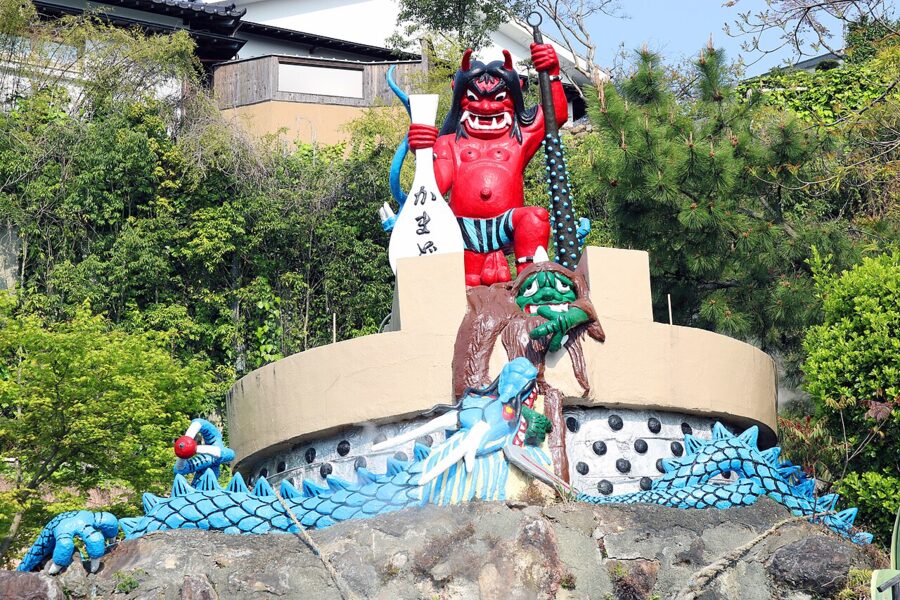
You can drink the 80°C spring water from a ladle, steam your hands, feet and throat at the experience corner, and soak your feet for free. The shop sells hot-spring “century eggs” and its own soy-sauce pudding. Kamado is the most playful of the seven and the best of them for children.
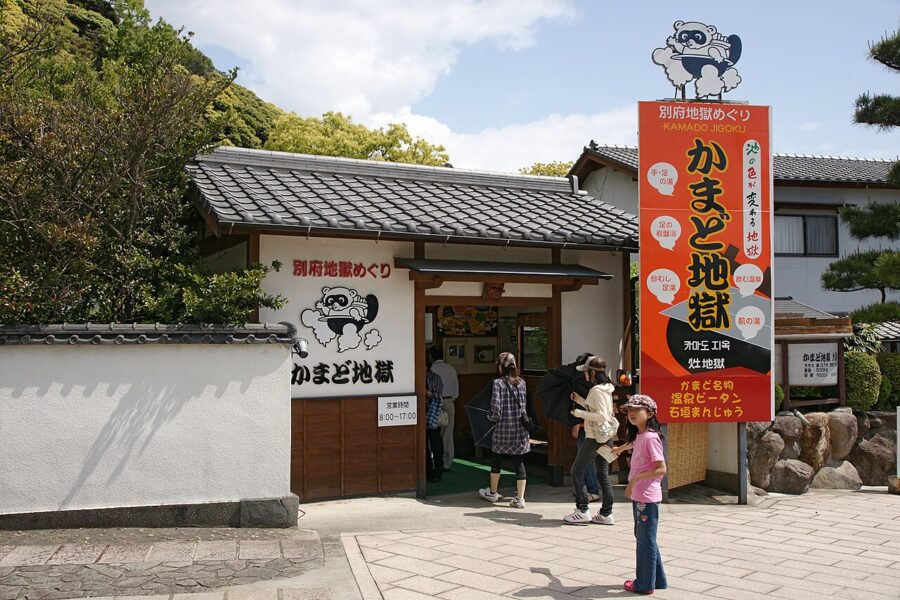
Oniishi Bozu and Shiraike: quieter, prettier
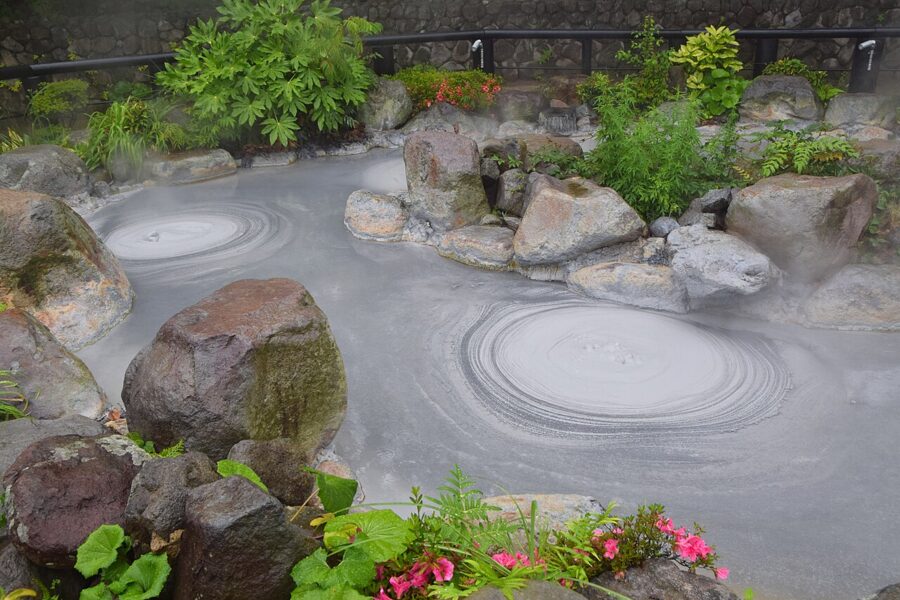
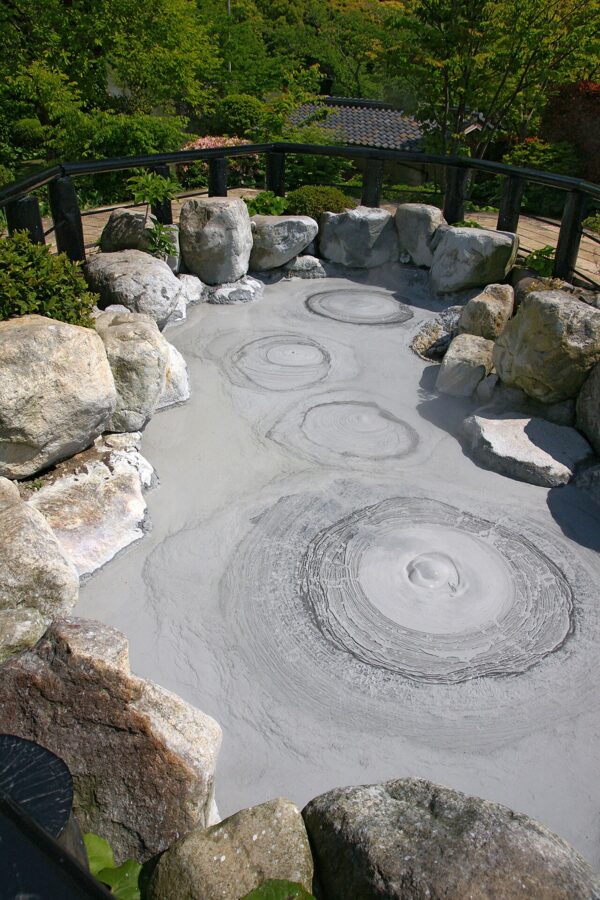
Oniishi Bozu Jigoku, next door to Umi, is the mud one: grey clay heaving up in bubbles that the name compares to the shaved heads of monks. Listen for the vent called Oni no Takaibiki, the demon’s snore. Behind it is Oniishi no Yu, a proper bathhouse with indoor, outdoor and view baths for ¥620, and the snack hut sells toriten, three or four pieces for ¥400.
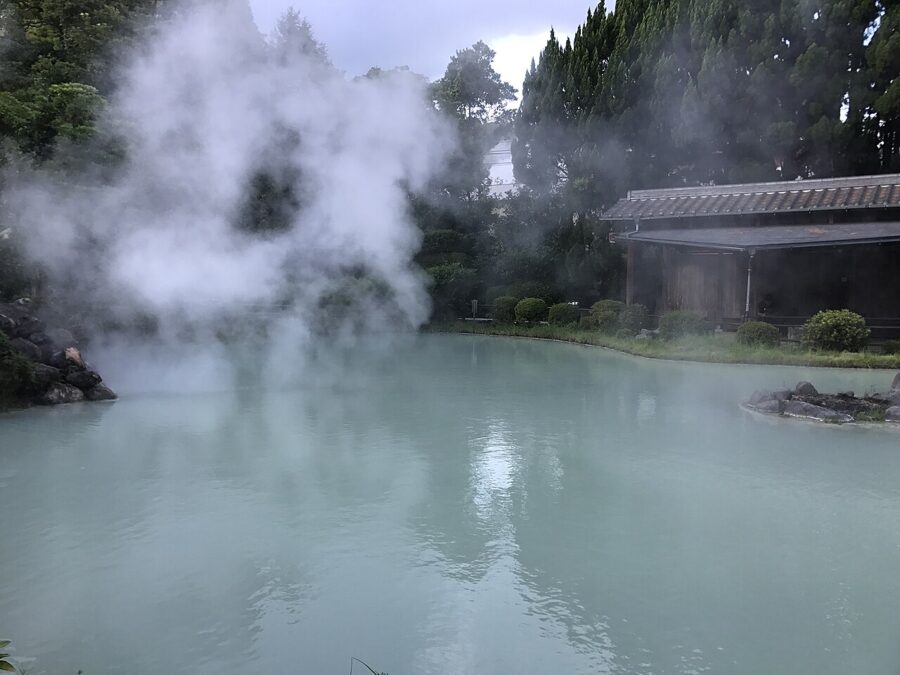
Shiraike Jigoku, the white pond, is the calmest of the seven. The water comes out clear and turns a pale blue-white as it cools and loses pressure in the pond. It sits in a Japanese garden with a stone pagoda from the Kunisaki peninsula and a tropical fish house, heated by the spring, holding about 20 species including pirarucu. If the crowds at Umi and Kamado have worn you down, sit here for ten minutes.
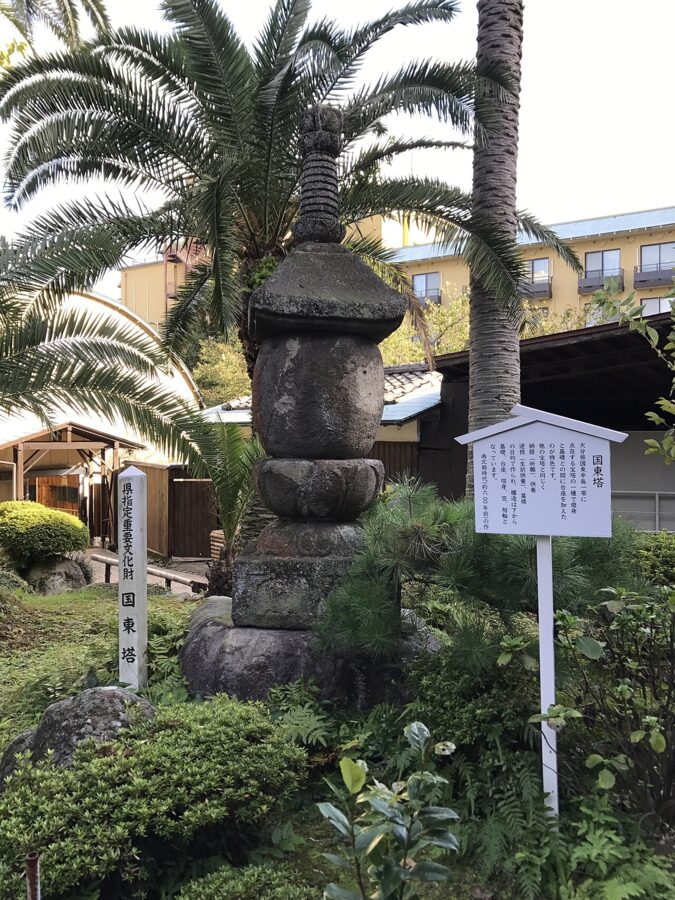
Oniyama Jigoku and the zoo question
Now the awkward ones. Oniyama Jigoku has been using spring heat to keep crocodiles since 1923, the first place in Japan to try it, and it still holds about 70 of them in concrete pens. The star is Ichiro, the third crocodile to carry the name, born in 1992, 4 m long and 500 kg. Staff feed them on Saturdays and Sundays at 10:00, and that is the only time most of them move.
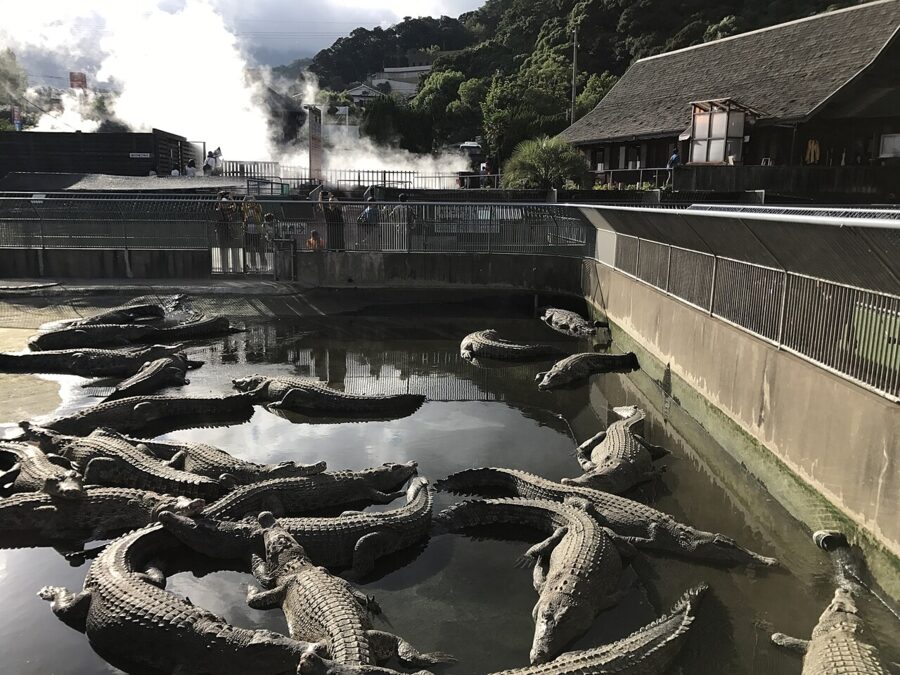
Whether this is charming or grim depends on you. The pens are small and bare. It is on the common ticket, so you will probably walk through it anyway; I did, and did not stay long.
Yama Jigoku, the mountain hell along the same road, goes further: capybaras, goats and other animals kept in a steaming rock garden. It is not part of the association, so the common ticket does not cover it. Skip it unless you have children who will not forgive you otherwise.
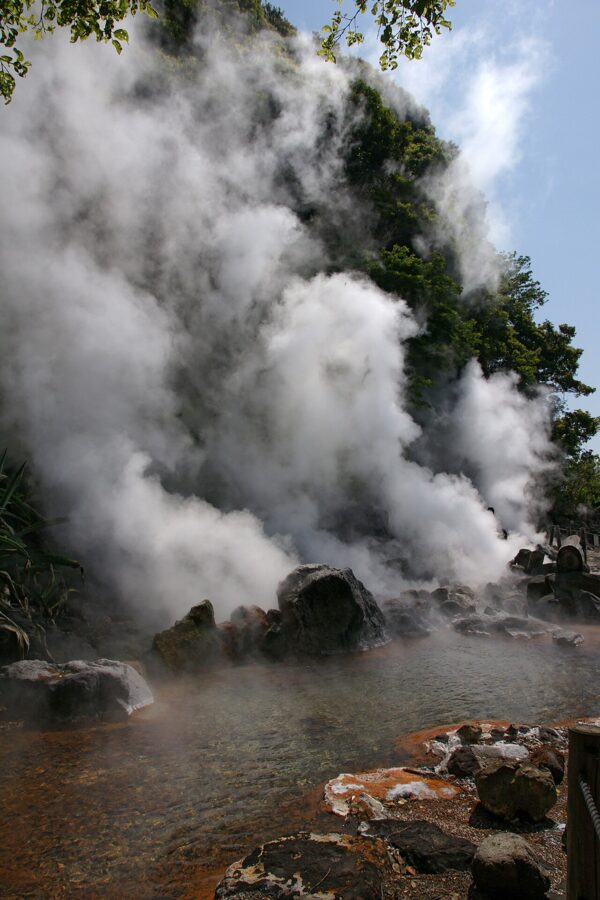
Two smaller hells outside the association are worth knowing. Bozu Jigoku, the original monk’s-head mud field near Kannawa, carries a grim local legend: an earthquake about 480 years ago is said to have swallowed a temple and its priest into the mud. Myoban Jigoku, further up the hill, has a short boardwalk over yellow, sulphur-stained ground with a view down to Beppu Bay.
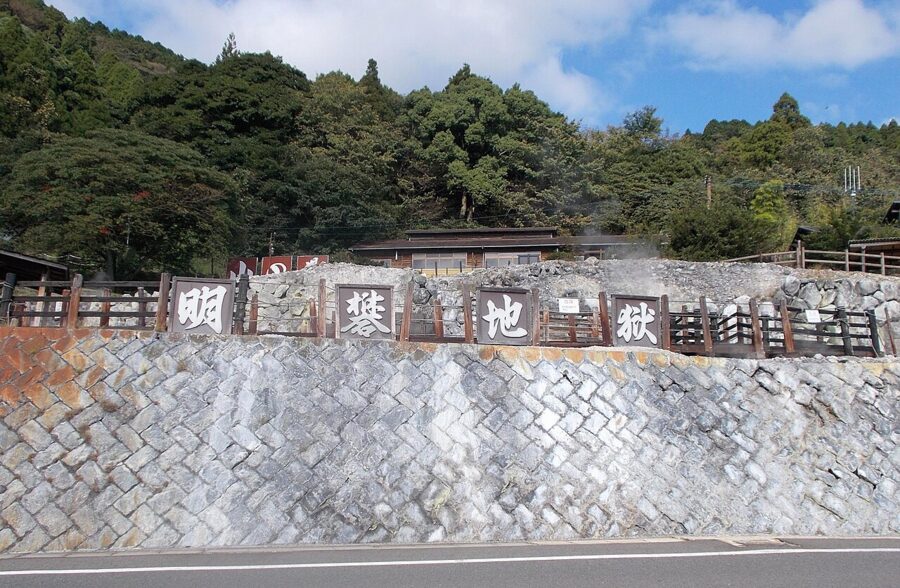
My order, if you do all seven in a day: Umi at 8:00, then Oniishi Bozu next door, Kamado, Oniyama and Shiraike, lunch in Kannawa, then the bus to Chi-no-ike and Tatsumaki in the afternoon. That leaves the geyser wait for last, when you can afford it.
Get in the water
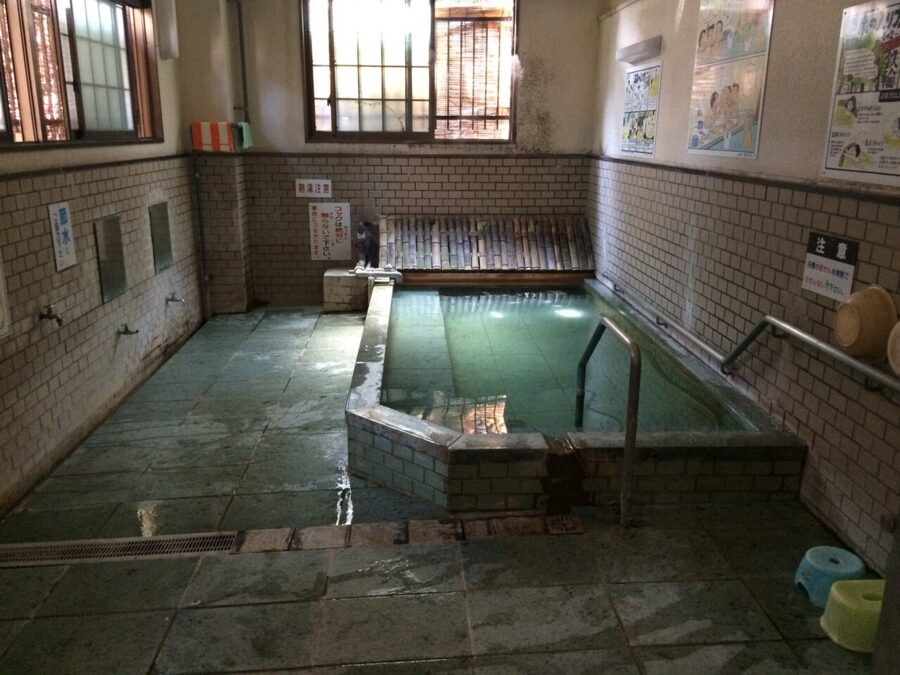
The hells are for looking. Everything else in Beppu is for soaking, and the cheapest baths are also the oldest. The city runs a network of public baths that charge ¥200–300; private operators charge more and usually give you more room. Then there are the strange ones: sand, steam and mud.
Takegawara Onsen: start here
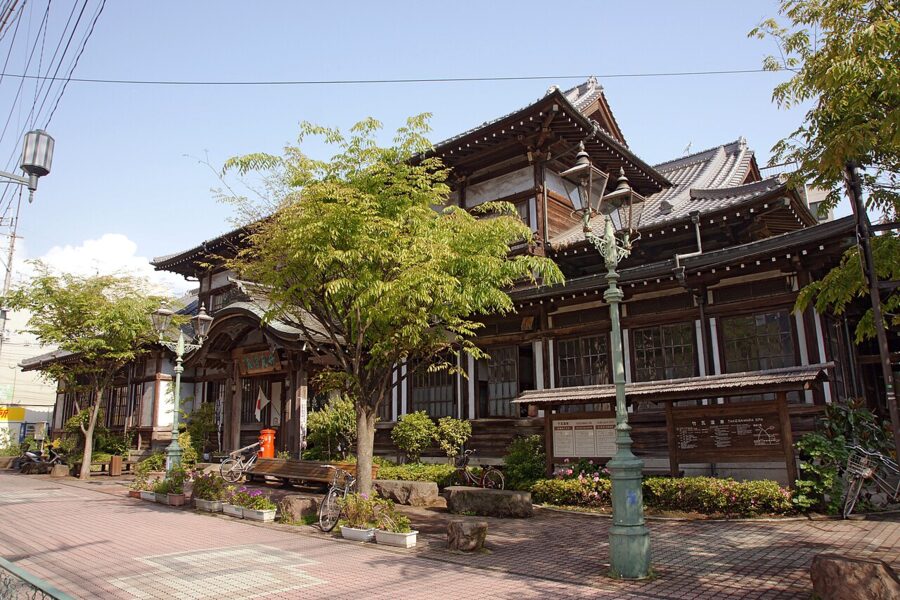
Takegawara was founded in 1879 near the old harbour, and the name, “bamboo tile,” is said to come from its first roof of bamboo, later replaced with tiles. The present building, from 1938, is a big wooden hall with a tall ceiling and a sunken bath. You undress in the same room as the tub and walk down a short flight of steps into the water. There are no hot taps: you scoop water from the bath with a basin to wash, and the cold tap is there to cool the tub, not you.
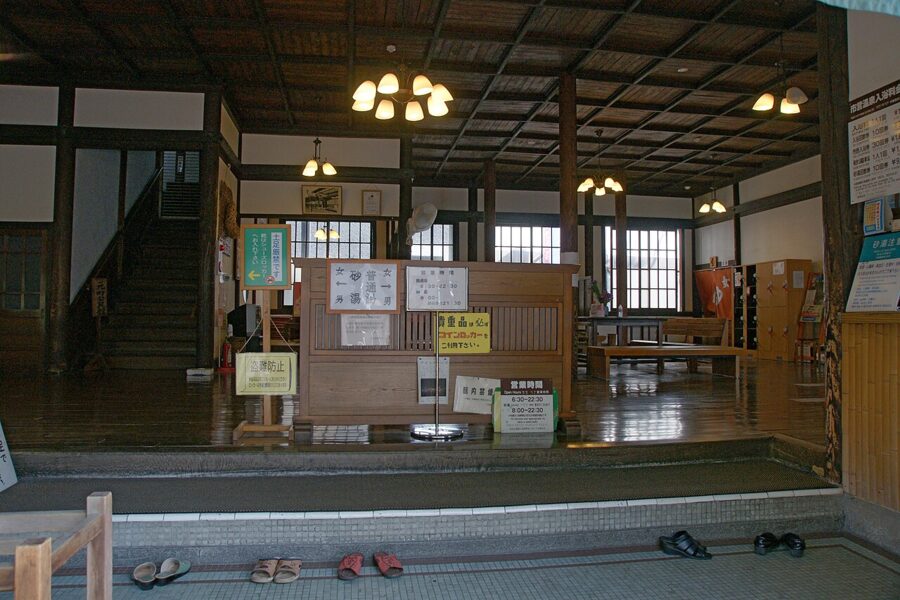
Ordinary bathing is ¥300 for adults, 6:30–22:30. The men’s and women’s sides draw from different springs, salty chloride water on one side and soft bicarbonate water on the other. Bring your own towel and soap, because both cost extra here.
The sand bath is the reason to come. For ¥1,500, 8:00–22:30 (last entry 21:30), you change into a cotton yukata, lie down on sand warmed by the spring, and an attendant called a suna-kake-san shovels it over you up to the neck. Eight people can lie in it at once, so there is often a wait: take a numbered ticket from the machine and go for a walk. Both baths close on the third Wednesday of the month (the next day if that is a holiday).
Sand baths compared
Beppu’s beaches used to be lined with natural sand baths, until road widening buried most of the shore. Today there are three good places to do it, and they are quite different.
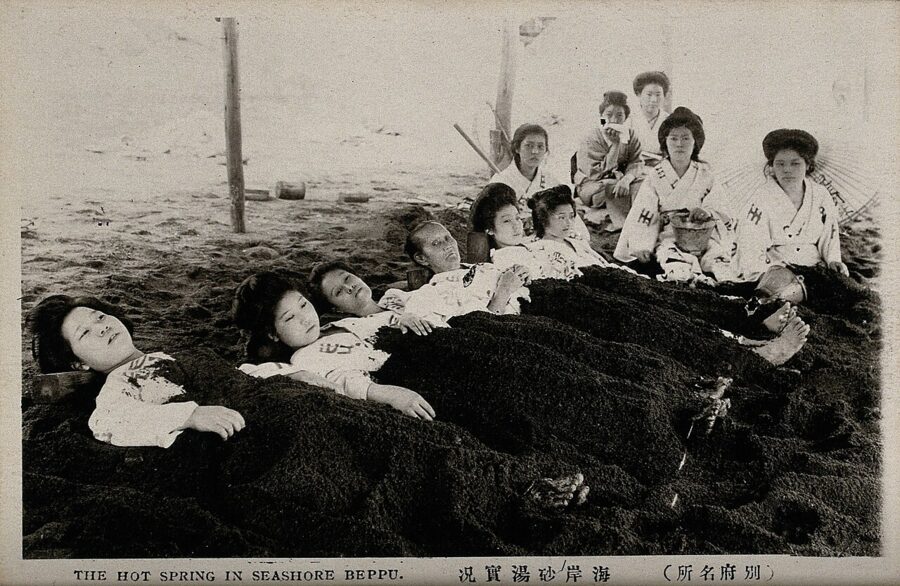
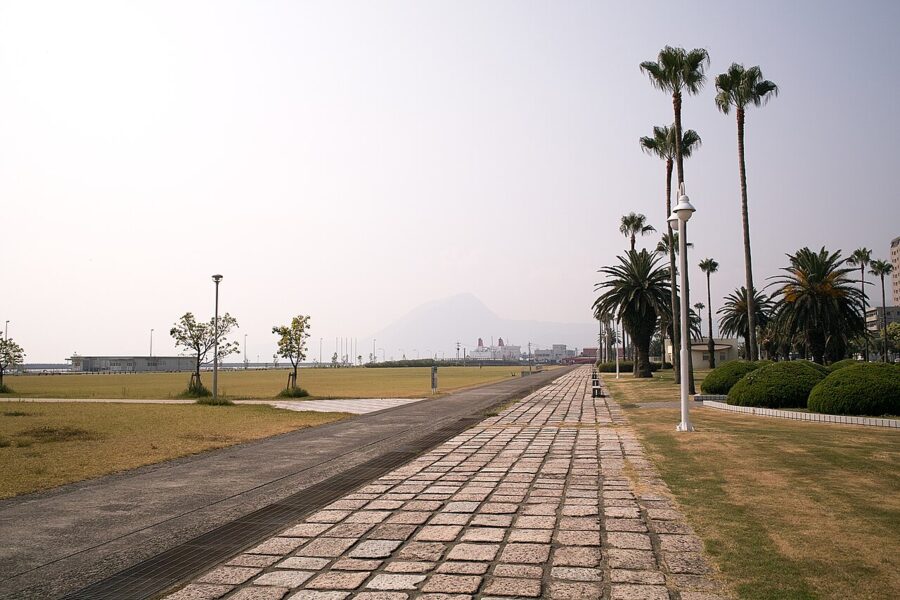
Takegawara is the indoor, historic option, cheapest and nearest the station. Sand SPA at Shoningahama in Kamegawa is the seaside one: the city’s old beachfront sand bath closed in March 2023 and reopened, run by the Tokyo company TKP, inside a redeveloped park. It costs ¥2,500, including the big bath, a yukata and a towel, for 15 minutes under the sand looking out over Beppu Bay.
Book Sand SPA online if you can; walk-ins work but can wait. Hours change with the season: 8:00–20:00 in November and April to May, 8:00–18:00 from December to March, 8:00–22:00 from June to October.
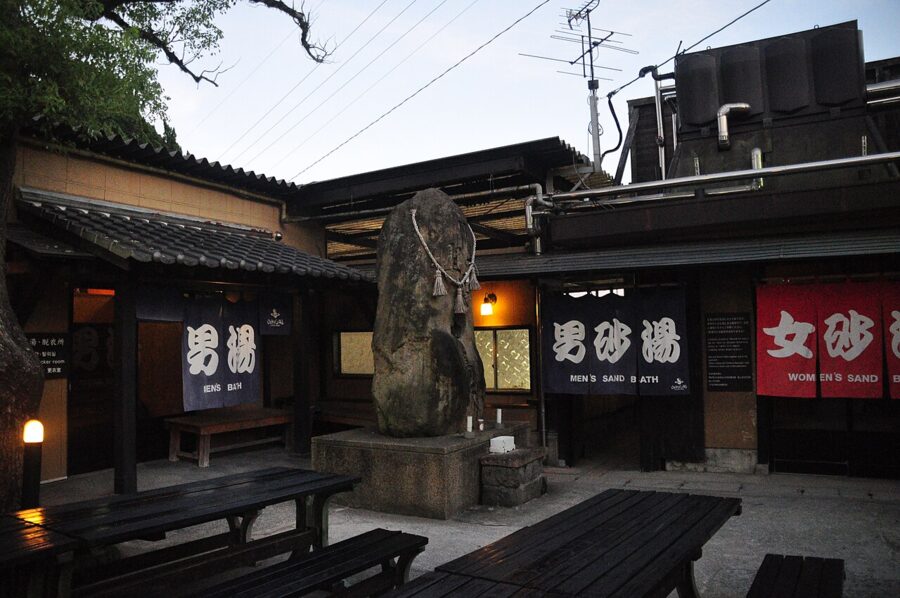
The third is Hyotan Onsen in Kannawa, a private bathhouse founded in 1922 with a sand bath, waterfall showers, steam rooms and an outdoor bath. Entry is ¥1,160, and the sand bath adds ¥840 for the rental yukata. Its family baths are a good answer if you want privacy: from ¥2,400 for 60 minutes for up to three adults. Note that it closes for maintenance from 30 November to 4 December 2026.
Kannawa Mushiyu: eight minutes on a bed of herbs
The steam bath at Kannawa is said to have been founded by Ippen himself in 1276, and the city still runs it. You lie in a stone chamber of about eight tatami mats, heated from below by spring steam, on a carpet of sekisho, a sweet flag that grows only beside clear streams. It smells green and sharp, and the sweat starts within minutes.
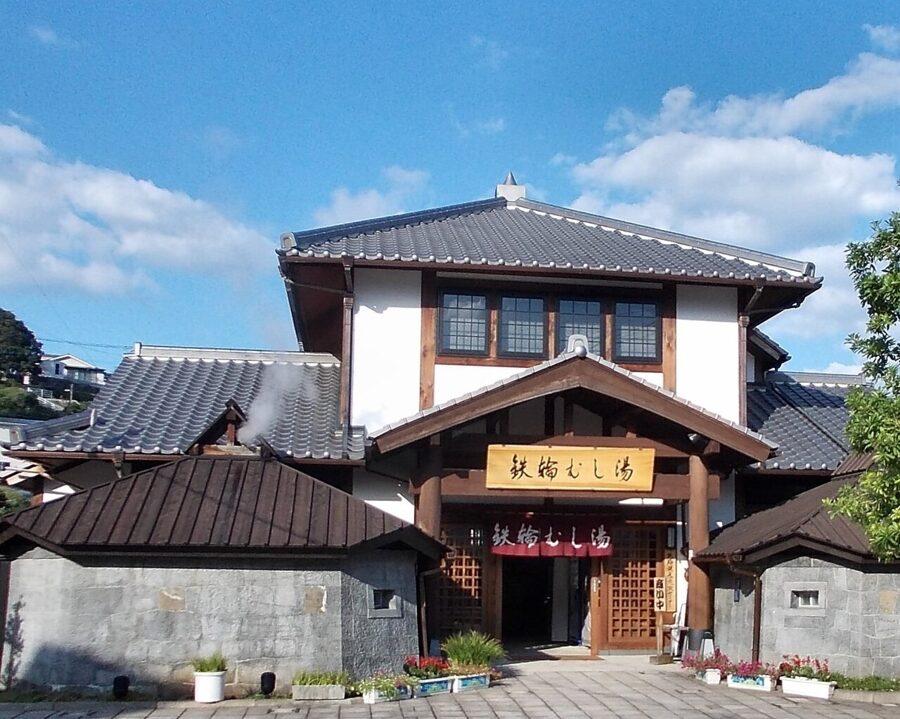
Entry is ¥700 (junior high school age and up), and a rental yukata is ¥220, though you can bring a T-shirt and shorts instead. It opens 6:30–20:00, last entry 19:30, closed on the fourth Thursday. Rinse off afterwards in the plain indoor bath, and use the free foot steamer by the door on your way out.
Myoban: mud and yunohana huts
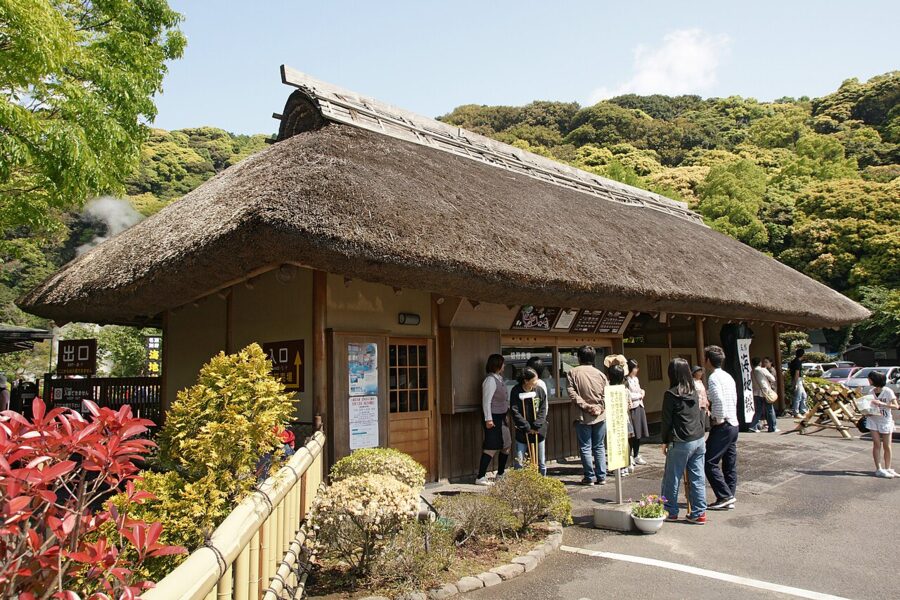
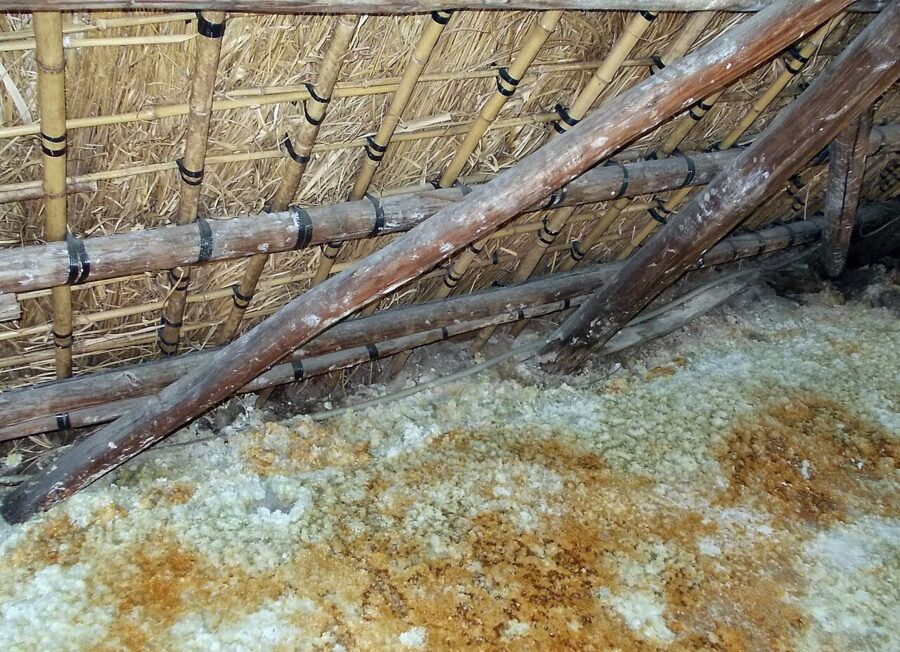
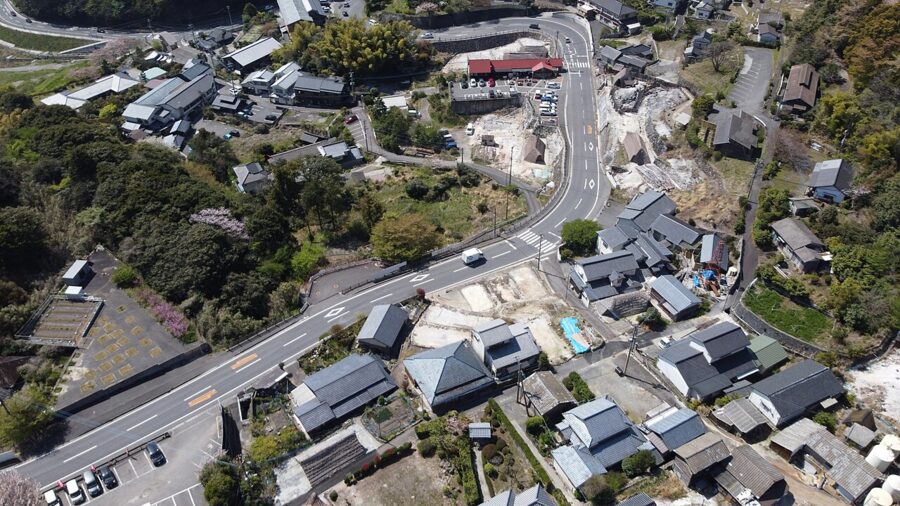
Myoban, about 400 m up the hill, is where the water turns milky and the air smells of sulphur. Its trade for three centuries was yunohana, “hot-spring flowers,” a mineral crystal sold as a bath salt and once as medicine. The crystals are grown inside low thatched huts built over vents of steam on a bed of blue clay; they grow about a millimetre a day. The technique is unique to Myoban and is designated a national Important Intangible Folk Cultural Property.
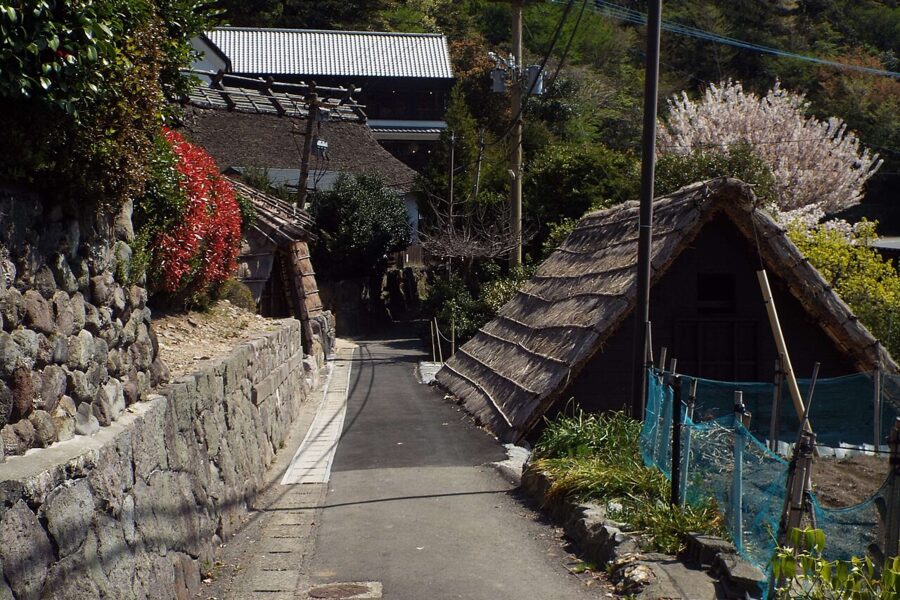
Myoban Yunosato is the place to see it. The huts and shop are free to walk round, and its big milky outdoor bath, which it calls the highest in Beppu, costs ¥800 for adults, 10:00–20:00 (last entry 19:00). From the rocks you look down over the Myoban bridge and out to the bay.
For mud, go to Beppu Onsen Hoyoland in Myoban, an old-fashioned bathhouse built around its own mineral mud. The mud is so fine it dries to powder and so dense you float oddly in it. Entry is ¥1,500, 9:00–20:00, open every day. Do not expect anything slick; that is rather the point.
The other city baths
Every district has its own city-run bath, and visiting a few is the best cheap afternoon in Beppu. Four worth the bus fare:
- Kaimonji Onsen, five minutes’ walk from the station, ¥250, 6:30–22:30. A modern rebuild (2010) with a hot tub and a cooler tub, the gentlest introduction to Beppu water. Closed second Monday.
- Hamawaki Onsen, ¥200, 6:30–1:00 the next morning, the latest-opening city bath. Closed third Monday.
- Horita Onsen, ¥300, with an outdoor pool among rocks and planting, on the old road to Yufuin. Closed first Wednesday.
- Shibaseki Onsen, ¥300, in a wooded valley near Chi-no-ike. Tradition says Emperor Daigo bathed here in 895. It has a steam room, an outdoor bath and family baths at ¥2,000 an hour for up to four. Closed second Wednesday.
Most city baths close for an hour of cleaning in the early afternoon, usually 14:00–15:00 (13:00–14:00 at Shibaseki), so do not turn up then. None of them hands out shampoo, soap or towels for free.
Coin baths, community baths and the stamp book
Beyond the city network are the community baths, which locals call jimosen. Many are for members only; some let you in for a small charge or a coin in a box by the door. Kamegawa Sujiyu, a homemade-looking bathhouse in Kamegawa, asks only for an offering, and its water can be so hot that regulars treat it as a test. You cannot add cold water there, so do not try.
If you get hooked, buy the Spaport, the stamp book of the Beppu Hatto Onsendo. Bathe at 88 registered baths, collect a stamp at each, and you are named a master of the way of the hot spring. Sand SPA joined the list in August 2025.
How to bathe without embarrassing yourself
The rules are the same as anywhere in Japan, with one Beppu twist: the water is hot. Wash before you get in, sitting on a stool, or at a place like Takegawara by scooping water from the bath over yourself first. Keep your towel out of the water; put it on your head or on the side. Get in slowly and do not stir; if the water is too hot, many city baths have a separate cooler tub.
- Bring a towel and soap. City baths sell them, but at a premium, and the small community baths sell nothing.
- Carry coins. Many smaller baths take cash only or use ticket machines.
- Tattoos. Policies vary from bath to bath, so ask at the counter. If you would rather not, a kazoku-buro (private family bath) settles the question: Shibaseki’s costs ¥2,000 an hour, Hyotan’s start at ¥2,400.
- Drink water between baths. The city itself warns that Beppu water runs hotter than most of Japan’s, and three baths in an afternoon is more than it sounds.
Lunch cooked by a volcano
Beppu’s food falls into two groups: what the steam cooks, and what Oita eats anyway. The first you will find nowhere else. The second is everyday prefecture food that happens to be very good.
Jigoku-mushi at Jigoku Mushi Kobo
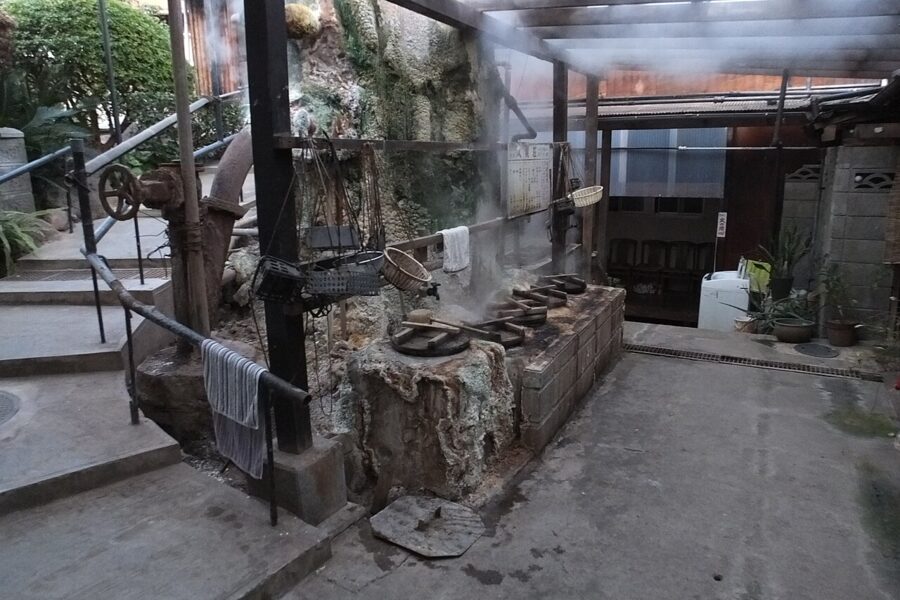
Jigoku-mushi means hell-steaming. Kannawa’s inns have cooked over spring vents since the Edo period. Korenaga Tsutomu’s 1964 memoir Beppu Konjaku describes Meiji-era children pushing green bamboo into the ground to open a steam hole, then cooking soybeans pulled from a neighbour’s field over it. The steam is salty, so food needs little seasoning, and it cooks fast.
Jigoku Mushi Kobo Kannawa, on Ideyu-zaka in the middle of Kannawa, is a city facility built so anyone can try it. Buy your ingredients at the counter, take a number, and wait to be called to a kama. A small steamer costs ¥400 for 15 minutes, a large one ¥600, and each extra 10 minutes is ¥200 or ¥300. It opens 10:00–19:00 (last order 18:00), takes no reservations, and closes on the third Wednesday of each month; the next dates are 18 November and 16 December 2026.
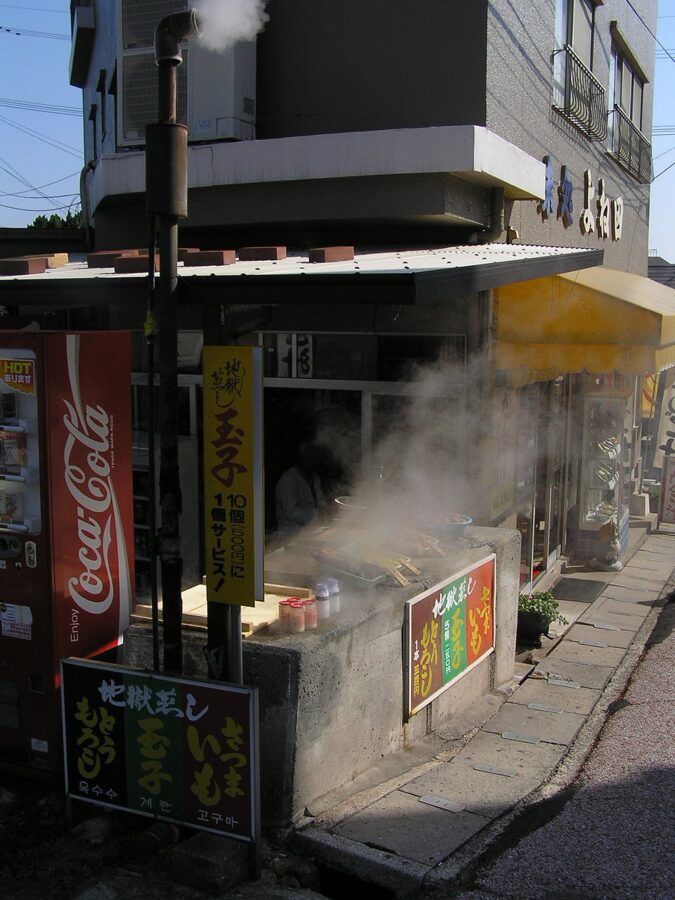
You can bring your own food, for a carry-in fee of ¥600–800 depending on quantity. Fish must be scaled and gutted, earthy vegetables washed. Cheese, citrus, ginkgo nuts and dried fish are refused for the smell, and rice, mochi, bread, dried pasta and chestnuts are refused because they take more than 30 minutes. Only junior high school age and up can use the steamers.
Shellfish and prawns cook in minutes; root vegetables need the full quarter-hour. If you eat vegetarian, this is one of the easiest meals in Japan: corn, pumpkin, sweet potato, cabbage and eggs need nothing but the salt already in the steam.
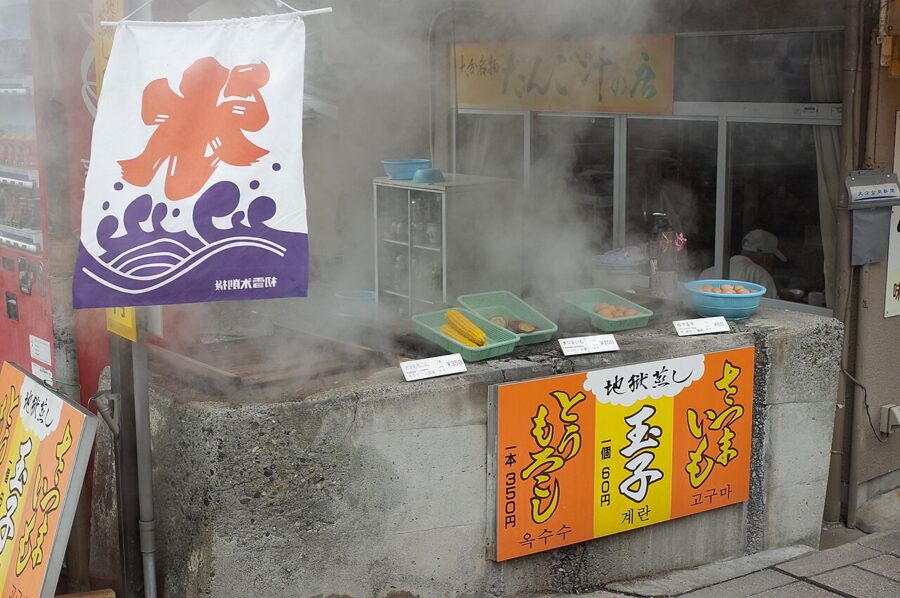
Then there is pudding. Steamed purin is Beppu’s dessert, made at the hells and at bathhouses all over Kannawa and Myoban. Umi Jigoku’s is the classic; Chi-no-ike’s is red, with a grape jelly made from non-alcoholic wine, ¥350; Kamado’s tastes of soy sauce. Eat one at a footbath.
Toriten: Oita’s fried chicken
Toriten is chicken cut into strips, dipped in batter and fried like tempura, then dipped in vinegar and soy sauce, often sharpened with kabosu. It is crisper and lighter than karaage, and the meat stays juicy. Oita people eat it so often that many assume the rest of Japan does too.
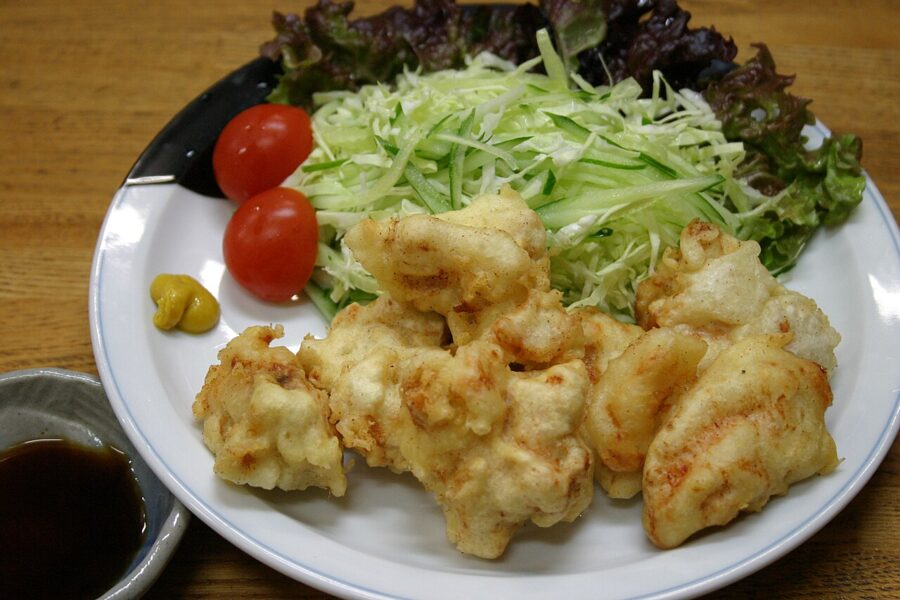
Where it was invented is still argued. In Beppu the credit usually goes to Toyoken, a Chinese-style restaurant opened in 1926 by Miyamoto Shiro, a cook who had worked in the imperial kitchens; an early menu lists a dish called chakeipen, explained as chicken tempura. Oita city points to a canteen called Ikoi in 1962. Both sides have good arguments, and the chicken tastes the same.
Toyoken is still there, in Ishigaki-higashi, rebuilt after a fire in 1983. The house toriten set costs ¥1,580, the yuzu toriten set ¥1,600. It opens 11:00–15:30 (last order 15:00) and 17:00–22:00 (last order 21:00), with toriten only between 15:00 and 17:00 on weekends and holidays, and closes on the second Tuesday of the month. Take Kamenoi Bus route 24 to Funakoji and walk five minutes, or use Toyoken’s counter in the basement food hall of the Tokiwa department store in Kitahama.
Beppu reimen: a cold noodle with a Manchurian past
Beppu reimen is the city’s other soul food. It goes back to about 1950, when a cook who had lived in Manchuria, where Korean communities had brought their cold noodles, returned to Japan and opened a shop in Beppu. The noodles are wheat, buckwheat and starch, chewy enough to fight back, and the broth was reworked into a Japanese-style stock. An estimated 60 to 70 places in the city serve it.
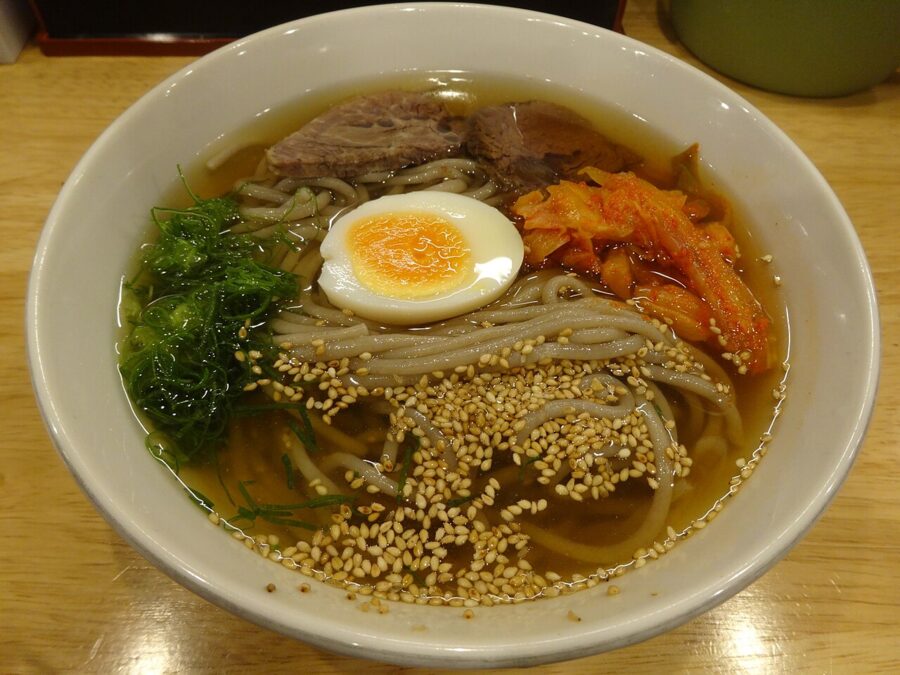
There are two families. Reimen specialists serve thick, springy noodles with cabbage kimchi; yakiniku restaurants, which serve it after the meat, use thinner, slicker noodles and napa kimchi. Start with a specialist. And do not expect anything like Kyushu ramen: it is eaten all year, and many shops also offer a hot version called onmen.
- Kogetsu has made reimen since the late 1960s and is said to be the first shop to call it Beppu reimen. Its noodles are thick and famously tough, in a light broth of kelp and spring water, with kabosu squeezed over in season. Open 11:00–17:30 on weekdays (to 16:00 on Mondays) and 11:00–19:00 at weekends; closed Tuesdays; expect a queue.
- Rokusei Matsubara, opened by a couple in June 2001, built its name by word of mouth on a beef-and-kelp broth and hand-stretched noodles. Reimen from ¥990. Open 11:30–14:00 and 18:00–20:00, closed Wednesdays, and earlier if the broth runs out.
Dango-jiru, and something to drink
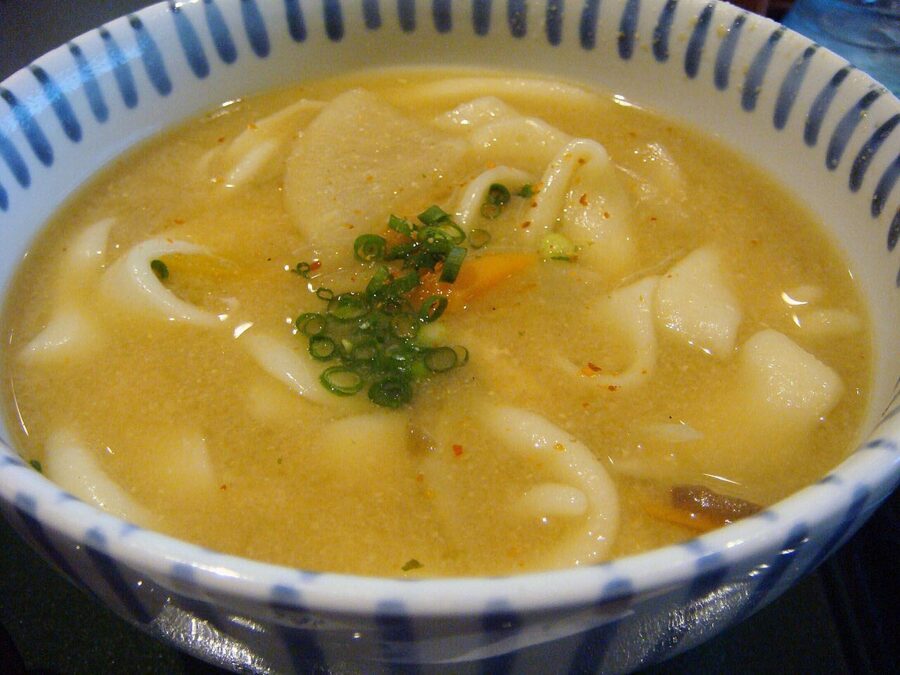
Dango-jiru is Oita’s home cooking: a miso soup thick with root vegetables and long, flat, hand-stretched wheat dumplings that are closer to noodles than to anything round. Beppu Amami Chaya, a teahouse-restaurant in Jissoji, makes its dumplings by hand and serves the soup alongside toriten and yaseuma, a sweet of the same dough rolled in soybean flour; it opens 10:00–21:00 (last order 20:30), with occasional closures.
Oita is barley country for spirits, and a glass of local barley shochu on the rocks or cut with hot water is the standard after-bath drink in Beppu’s izakaya.
Seki-saba, seki-aji and a squeeze of kabosu
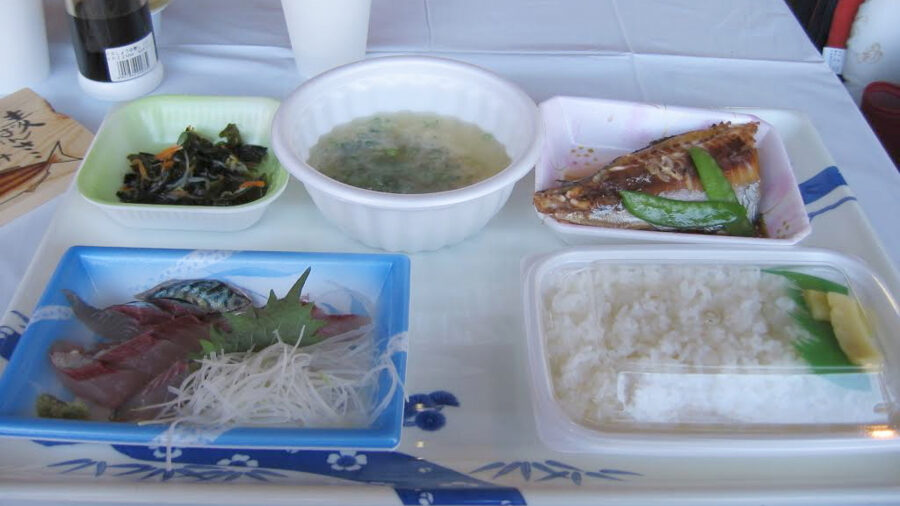
Seki-saba is mackerel, and seki-aji horse mackerel, caught in the Hoyo Strait by fishermen of the Saganoseki branch of the Oita fisheries cooperative and landed at Saganoseki, across the bay from Beppu. The fish are caught by pole and line one at a time, never netted, priced by eye without weighing (a practice called tsuragai), held in pens, then killed by ikejime so the flesh stays firm. Each carries a tag on its tail.
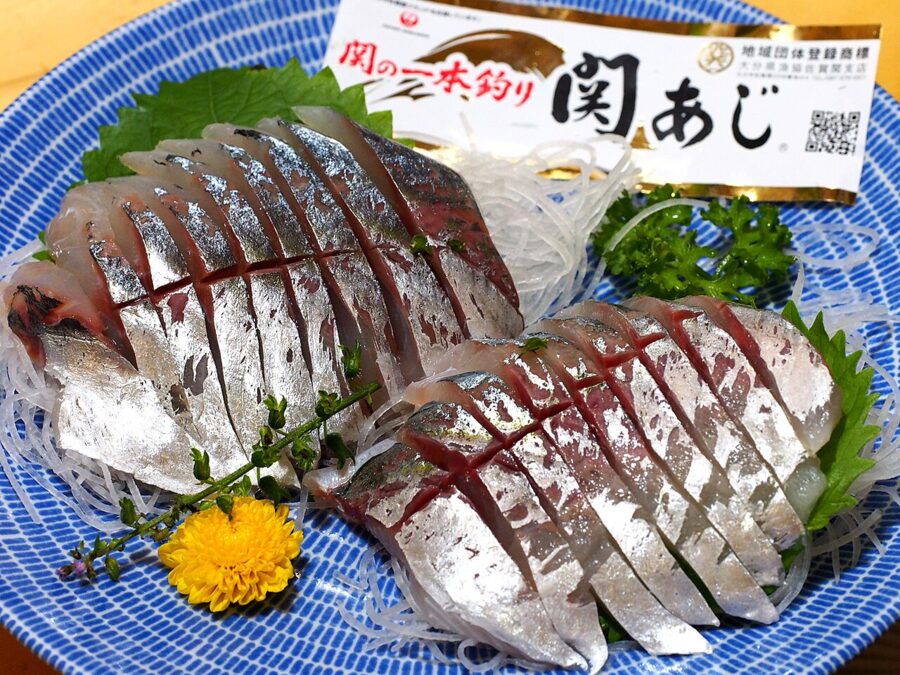
In 1996 the cooperative registered seki-aji and seki-saba as trademarks, the first time a fish had been trademarked in Japan, after cheap fakes flooded the market. Restaurants licensed to serve the real thing display a sign. In Beppu, order seki-saba as sashimi, which is the point of it. My guide to eating fish in Japan explains why raw saba is normally a rarity.
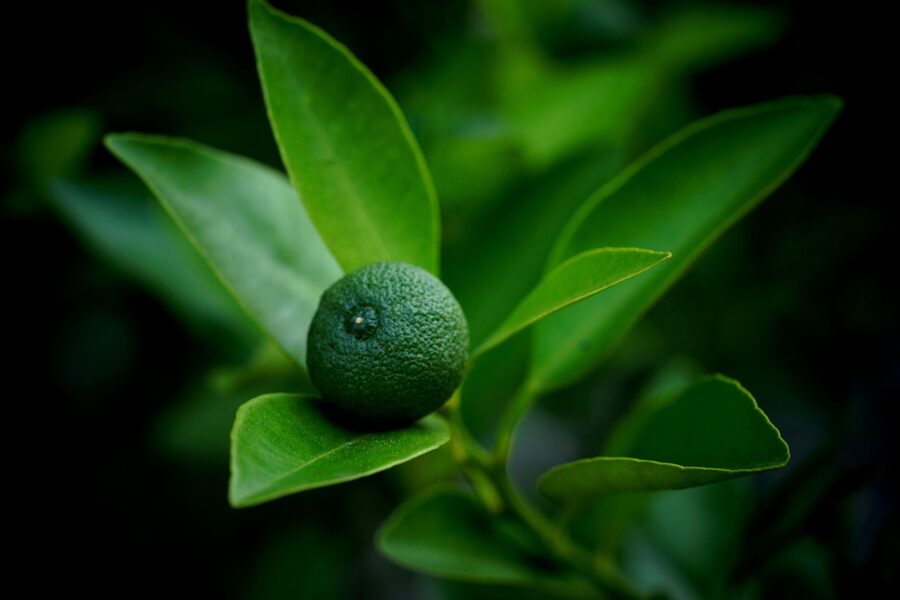
Kabosu is Oita’s citrus, a small green fruit like a sharper lime with a perfume of its own. It goes onto grilled fish and toriten, into dipping sauces, and over Kogetsu’s reimen in season.
Yufuin, the quiet half-day
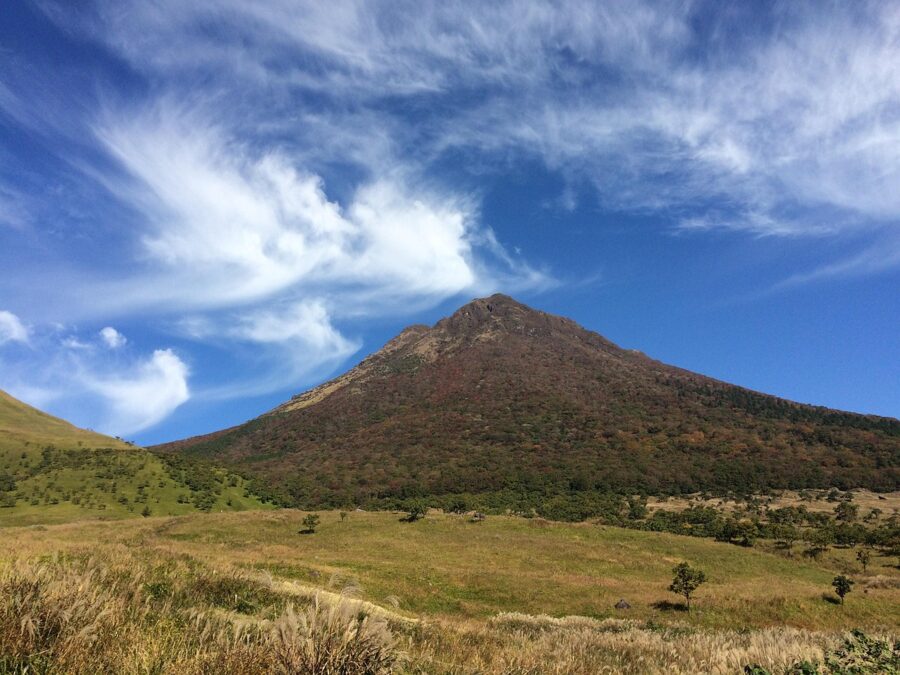
Yufuin is Beppu’s opposite: a small spa town in a basin behind the mountains, all farmland, galleries and expensive ryokan under the twin peaks of Yufu-dake. The two are linked by history as well as road. Aburaya Kumahachi built a retreat for honoured guests beside Lake Kinrin in 1921, and it grew into Kamenoi Besso, one of Yufuin’s best-known inns.
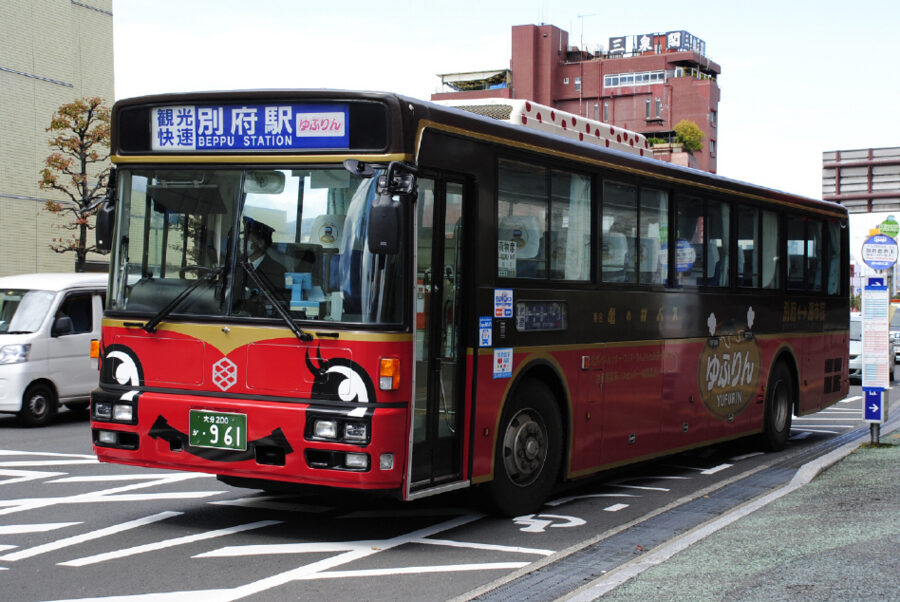
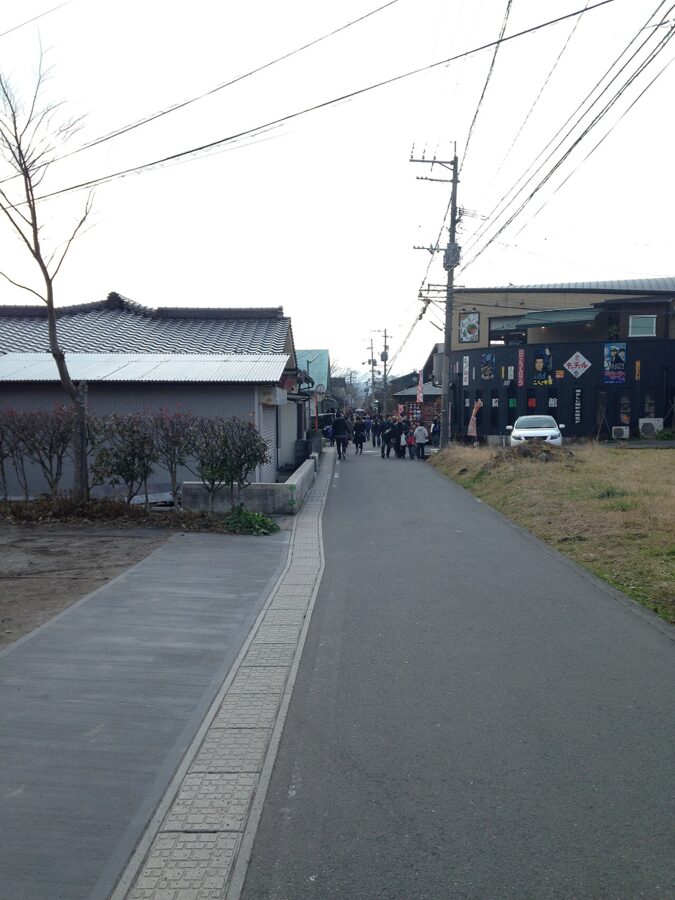
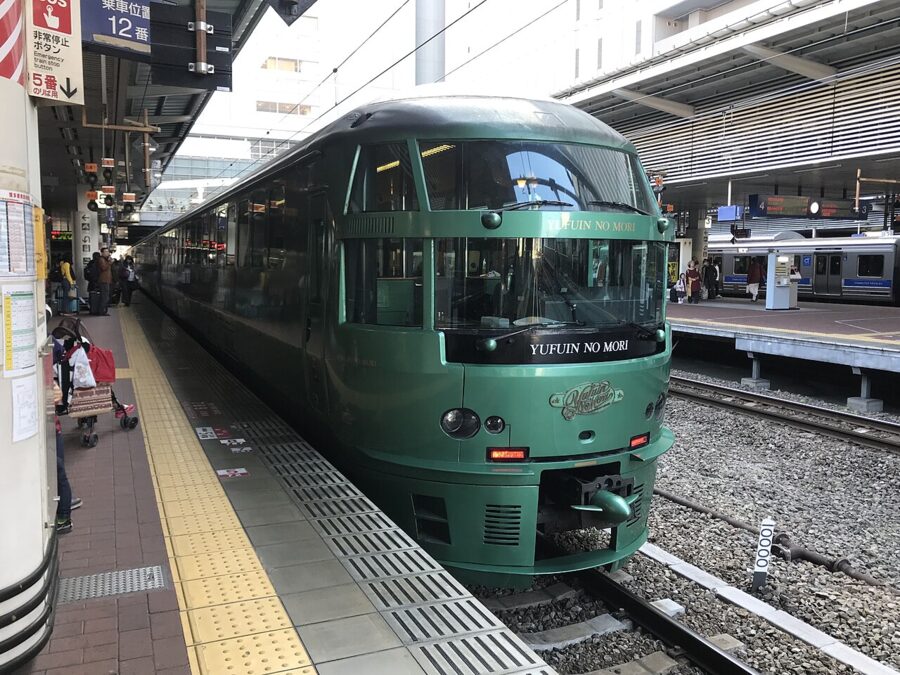
Kamenoi Bus route 36 runs from Beppu Station’s west exit over the hills to Yufuin Station, and a faster sightseeing service called Yufurin runs the same way, several times a day at weekends. From Yufuin Station it is about 1.5 km on foot to Lake Kinrin, along the shopping street called Yunotsubo Kaido.
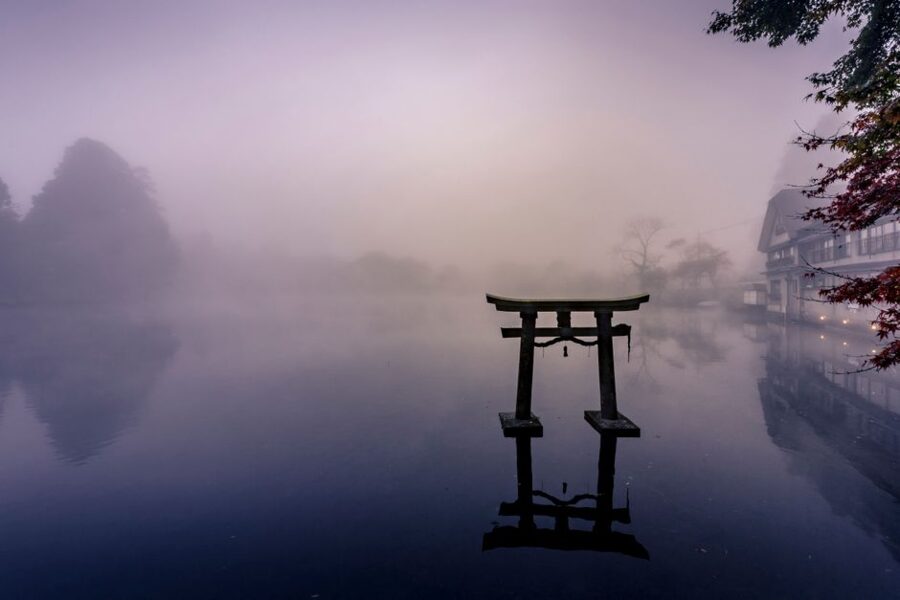
Lake Kinrin is the reason to go. It is small, spring-fed and warm enough that on cold autumn and winter mornings mist lies on the surface, with a little shrine and torii at the water’s edge. Get there early: by 10:00 the lakeside paths are as busy as the street.
Is it worth half your Beppu day? If you like quiet and good coffee, yes. If you came for the strangeness of Beppu, Yufuin’s boutique gentility can feel like a different country. I would give it a morning and be back in Kannawa for a steam bath by mid-afternoon.
Getting there, and getting around
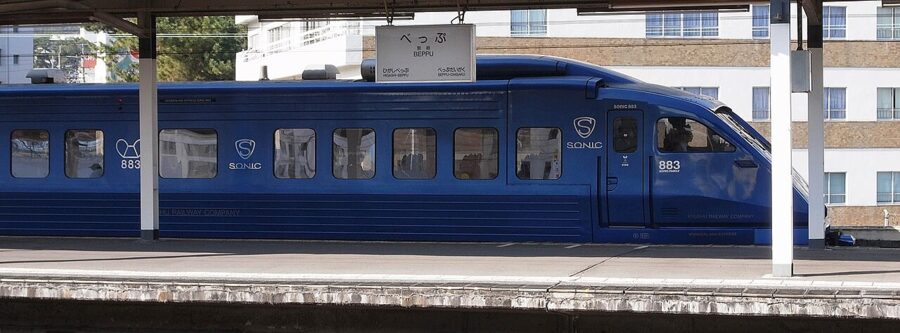
Most people come from Fukuoka. The JR Kyushu Sonic limited express runs from Hakata to Beppu along the coast, taking 2 hours 1 minute on the fastest trains. JR Kyushu’s own fare table lists the regular ticket at ¥6,910 and its three-day advance online fare at ¥3,500, so book ahead if you can. Highway buses also run from Fukuoka, and from Nagasaki, with a stop at Kannawa-guchi right by the hells.
If you fly, Oita Airport is across the bay. Oita Kotsu’s Airliner bus reaches Beppu Kitahama in about 50 minutes for ¥1,600. From Osaka, the overnight Sunflower ferry still sails into Beppu, the descendant of the steamers that built the town; ferries also run from Yawatahama in Shikoku.
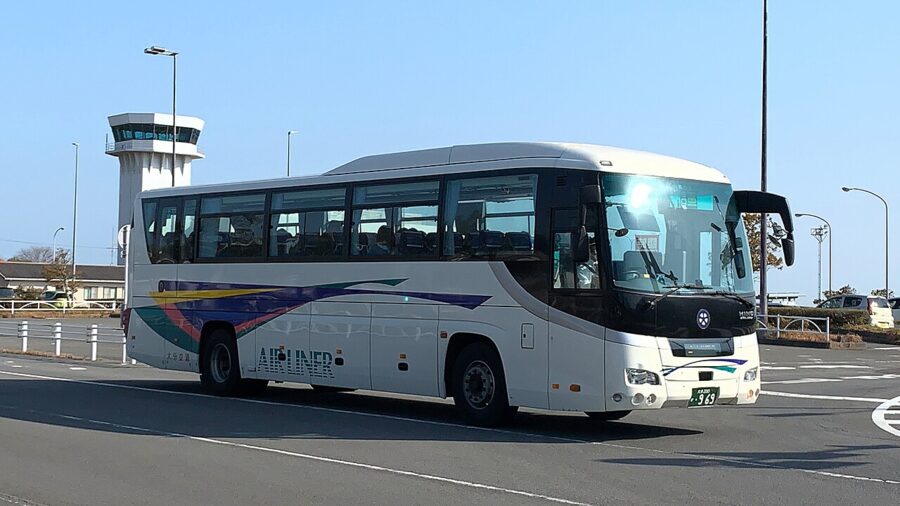
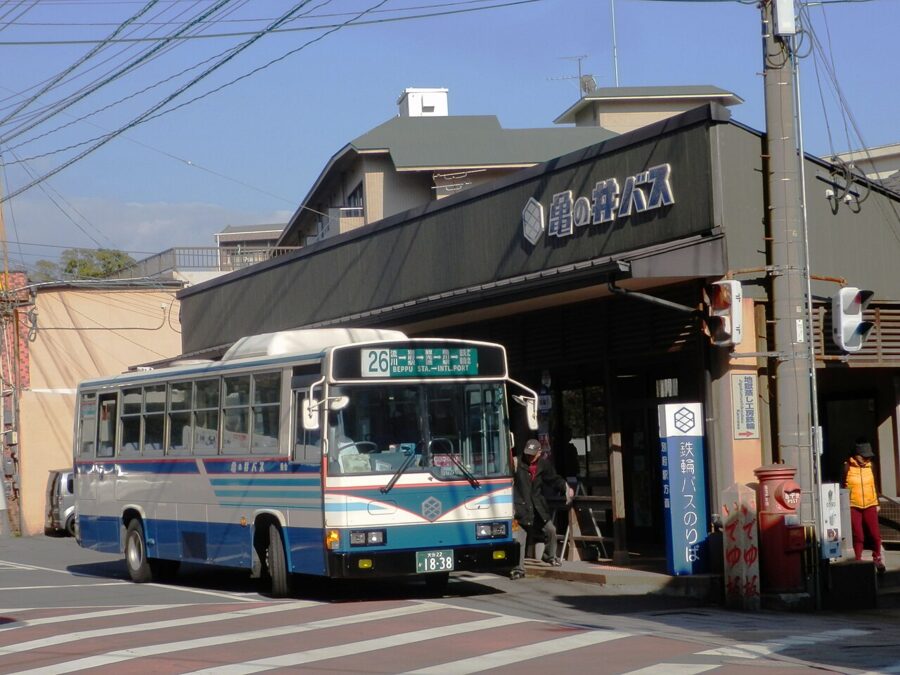
Inside the city, Kamenoi Bus covers everything. The useful routes from Beppu Station: from the west exit, 2, 5, 7 and 41 for Kannawa and Umi Jigoku, 5 and 41 for Myoban, and 36 for Yufuin; from the east exit, 26 and 26A for Chi-no-ike and Shibaseki. Routes 16, 16A and 20 serve the Shoningahama sand bath. Kamenoi also sells day passes for its city routes under the name My Beppu Free.
Where to sleep, district by district
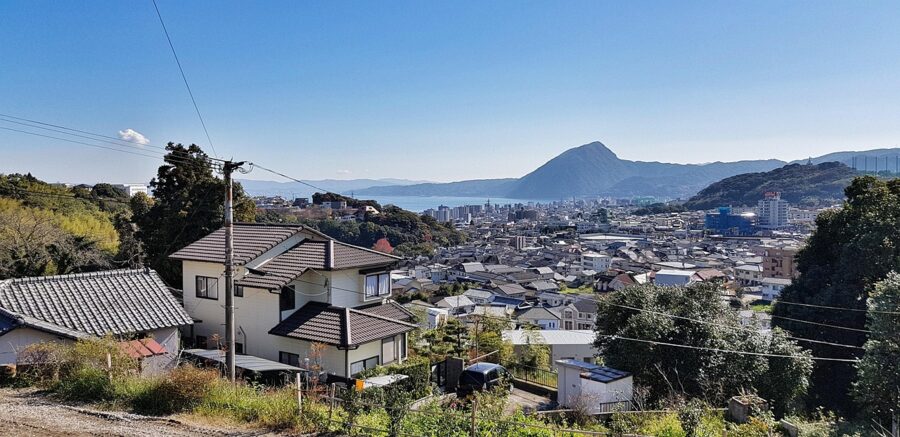
Stay at least one night. Beppu at 21:00, with steam lit up over the rooftops and a city bath still open, is half of what you came for, and a day trip from Fukuoka means four hours on the road.
- Station and Kitahama for convenience. You can walk to Takegawara, Kaimonji and the bars, and the bus to Kannawa leaves from the station. Kai Beppu, the Hoshino Resorts onsen hotel on the seafront at Kitahama, has a sea view from every room and a bath lined with Usuki pottery tiles.
- Kannawa for atmosphere. This is where the old kashima inns are, rooms let to people on bathing cures, many with a jigoku-kama for guests to cook on. Yanagiya, an inn dating back to the Meiji era and refitted with an artist’s eye, serves dinners built around jigoku-mushi.
- Kankaiji for views and children. Suginoi Hotel is the giant on the hill, with tiered outdoor baths called Tanayu that look straight down over the city and bay.
- Myoban for sulphur and silence. Inns here are few and the water is the milkiest in Beppu; Hoyoland itself lets simple rooms from ¥7,000 per adult, baths included.
- Kamegawa for the sea. ISHINOYA Beppu opened in July 2025 inside Shonin Park, cottages with their own spring baths and the sand bath a few steps away.
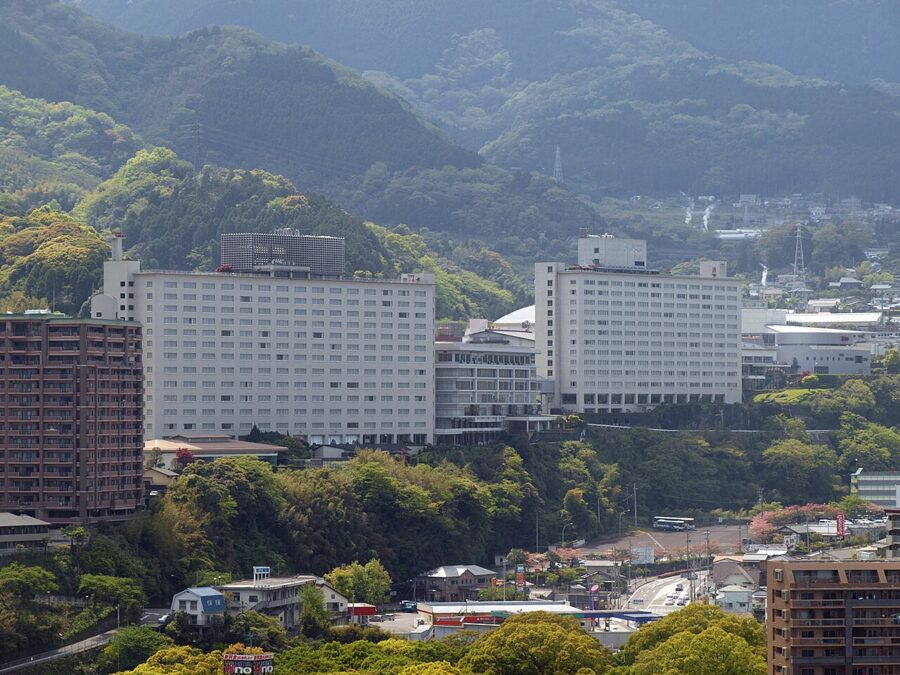
Dinner at a full-service ryokan here is a seasonal kaiseki meal, and the morning brings a proper ryokan breakfast. At the kashima, you buy your food in town and cook it yourself over the vent.
What it costs, and what to skip
Beppu is cheap if you bathe like a local and expensive if you sleep like a tourist. A full day of hells, a steam bath, a sand bath, a jigoku-mushi lunch and a reimen dinner comes to roughly ¥7,000–8,000 a person before transport and beds.
| Item | Price |
|---|---|
| Hells common ticket (7 sites, 2 days) | ¥2,400 |
| City bath (Takegawara ordinary bath) | ¥300 |
| Takegawara sand bath | ¥1,500 |
| Sand SPA, sand and big bath | ¥2,500 |
| Kannawa Mushiyu steam bath | ¥700 |
| Hoyoland mud bath | ¥1,500 |
| Jigoku-mushi steamer, 15 minutes | ¥400 (small), ¥600 (large) |
| Toriten set at Toyoken | ¥1,580 |
| Bus, station to Kannawa | ¥330 |
| Airliner bus, Oita Airport to Kitahama | ¥1,600 |
Skip these, or at least go in with low expectations:
- Yama Jigoku. Off the common ticket and mostly an animal enclosure.
- Waiting out the geyser. Since the 2026 notice, it can be a long wait for a short show; check the red lamp instead of standing there.
- Yunotsubo Kaido at midday on a weekend. Go at 9:00 or not at all.
- A walk-in sand bath on a holiday afternoon. Book Sand SPA or take a Takegawara number and go and eat.
Pack a small towel, a pouch of coins and a change of clothes you do not mind smelling of sulphur. Eat your lunch out of the ground. Then catch the 5 bus up to Myoban as the light goes, and watch the town steam below you.
You Might Also Enjoy
 Japan in January: New Year, Snow, Hot Springs and the Best Things to Do All Month
 Yokohama Chinatown: What to Eat, Where to Sit Down and the History Behind the Gates
 Ekiben: Japan’s Station Bento, the Regional Boxes Worth Buying and Where to Find Them
 Drinking Sake in Japan: Breweries, Bars, and the Bottle You Can’t Take Home