Luoyang: The Longmen Grottoes, the Old City, the Water Banquet and a Day Trip to Shaolin
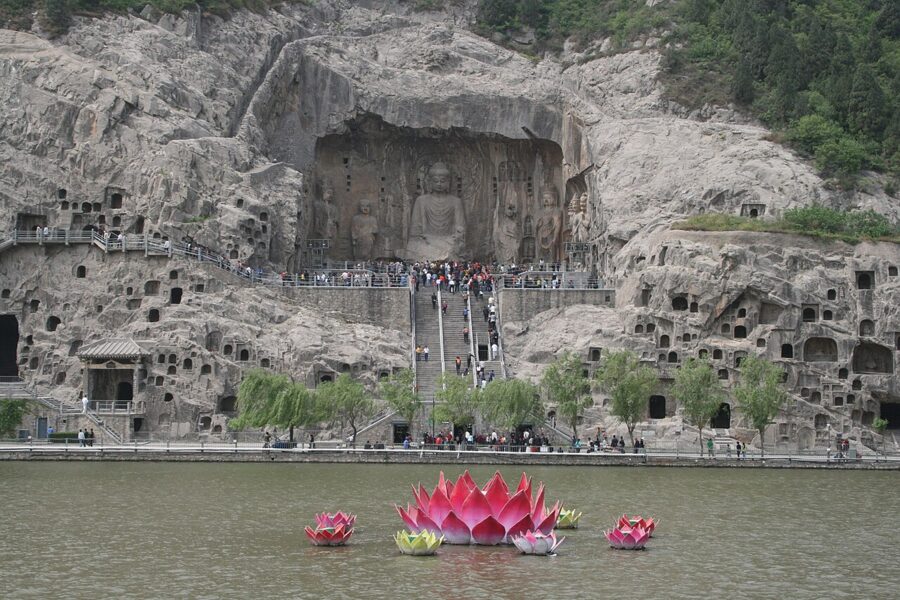
Thousands of the Buddhas on the west cliff at Longmen have no faces. Some lost them in the persecution of Buddhism in the 840s, more in the 1930s, when dealers chiselled heads and whole reliefs off the rock and sold them to collectors, and a good share of what’s left of one Northern Wei procession now hangs in a museum in New York. Walk the riverside path south from the first caves and you start counting the empty niches without meaning to. Then the path turns, the steps go up, and the Losana Buddha at Fengxian Temple looks down at you from 17 metres, face intact, the way it has since 675.
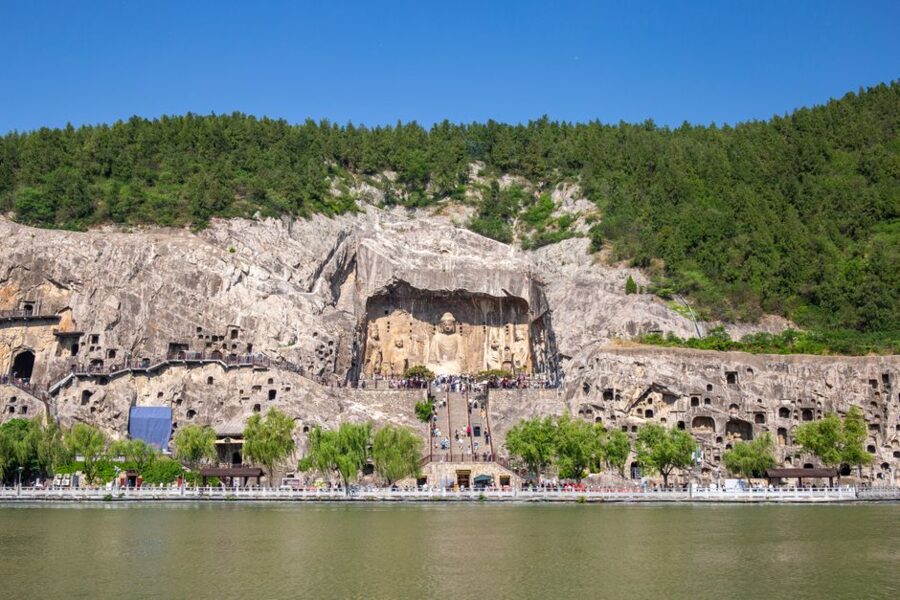
That moment is the reason most people come to Luoyang, and it’s worth the trip on its own. But Luoyang was a capital, on and off, for longer than almost anywhere in China, and the city around the grottoes has more going for it than a car park and a ticket office. There’s the temple that Chinese Buddhism names as its first, an old quarter that fills up after dark with people in rented Tang and Han dress, a breakfast culture built entirely on soup, a 24-course banquet in which nearly everything comes in broth, and a month of peonies every April.
It’s also one of the easier stops on the high-speed line between Xi’an and Zhengzhou: an hour and a quarter from one, under three quarters of an hour from the other. The Shaolin Temple, near Dengfeng, is a day trip from here too.
Here are the costs first. The detail follows.
| What | Price (2026) | Time | Book ahead? |
|---|---|---|---|
| Longmen Grottoes, day ticket (west hill, east hill, Xiangshan Temple, Bai Garden) | ¥90 | 3–5 hours | Yes, timed real-name ticket |
| Longmen night opening (west hill and Xiangshan Temple only) | ¥120 | 1.5–2 hours | Yes, separate ticket |
| White Horse Temple | ¥35 | 2–3 hours | Yes in peony season and holidays |
| Luoyi Old Town | Free | 2–3 hours, evening | Yes, free timed booking |
| Lijing Gate and Cross Street | Free to walk; small fee to climb the gate | 1–2 hours | No |
| Shaolin Temple (temple, Pagoda Forest, kung fu show) | ¥80 | A full day from Luoyang | Advisable |
| Peony gardens in April | About ¥30–50 | 1–3 hours each | Online tickets are cheaper |
In This Article
- A capital thirteen times over
- The Longmen Grottoes
- Tickets, booking and hours
- Getting in: service areas and shuttles
- The west hill, cave by cave
- Fengxian Temple and the Losana Buddha
- Over the river: the east hill, Xiangshan Temple and Bai Garden
- Longmen after dark
- How long, and when
- White Horse Temple, where Chinese Buddhism says it began
- The main axis
- The international halls
- Qiyun Pagoda
- Getting there and tickets
- The old city: Lijing Gate, Cross Street and Luoyi Old Town
- Lijing Gate and Cross Street
- Luoyi Old Town
- The hanfu photo walks
- Yingtianmen and the Sui-Tang night zone
- Soup before nine: Luoyang’s breakfast
- Beef and mutton soup
- Bu fan tang and jiangmiantiao
- The water banquet
- Zhenbutong
- Peony season
- Wangcheng Park
- The National Peony Garden and the others
- Is Shaolin worth the day?
- Getting there
- What the ticket covers
- The kung fu show
- Getting to Luoyang and around
- The metro, taxis and paying
- Where to stay
- Two days in Luoyang
- Day one: Longmen and the old city
- Day two: White Horse Temple, banquet and the night zone
- Day three, if you have it
- Skip this
A capital thirteen times over
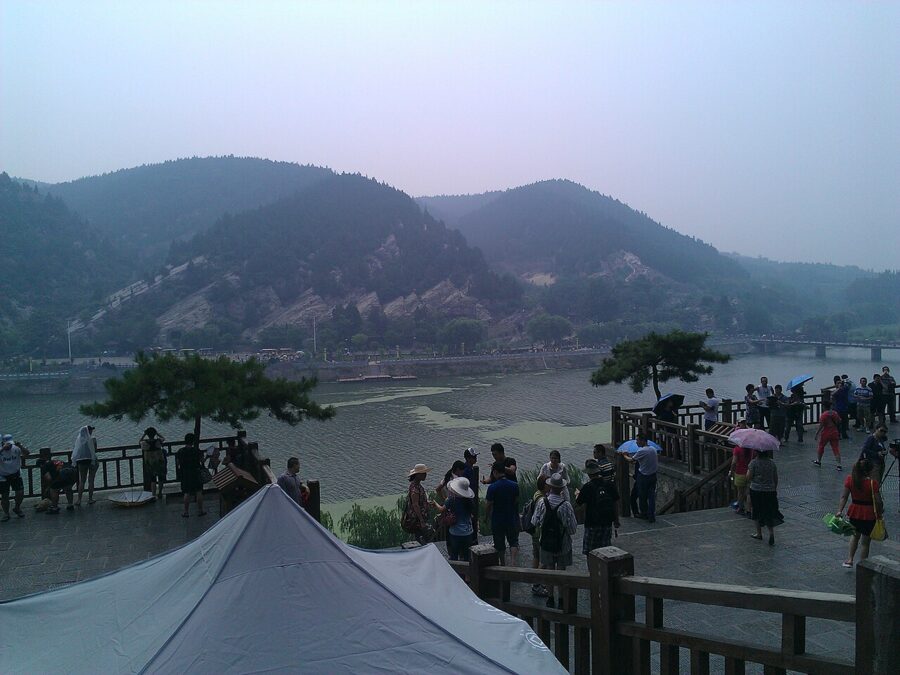
Luoyang takes its name from the Luo River: the sunny side of a river, in old Chinese, is its north bank, and that’s where the city grew. Chinese histories count it as a capital of thirteen dynasties, and while the number depends on how you count, the big ones aren’t in doubt. The Eastern Zhou moved here in 770 BC. The Eastern Han ruled from Luoyang for nearly two centuries, and the Northern Wei moved here in 494, when Emperor Xiaowen brought his court south from Datong.
Then came the Sui, who built a vast new eastern capital from 605, and the Tang, who kept two capitals and used this one as the second. Wu Zetian, the only woman to rule China in her own name, preferred it to Chang’an, the city you now know as Xi’an, and called it Shendu, the Divine Capital. Almost nothing of those palace cities stands above ground. What survives is what was cut into rock, buried in tombs, or rebuilt on top of excavated foundations in the last twenty years.
Carry that around with you. The grottoes and White Horse Temple are the genuine old Luoyang; Yingtianmen, the Mingtang and Luoyi Old Town are modern builds over or around real sites. That doesn’t make them bad evenings out, but it changes what you’re looking at.
The Longmen Grottoes
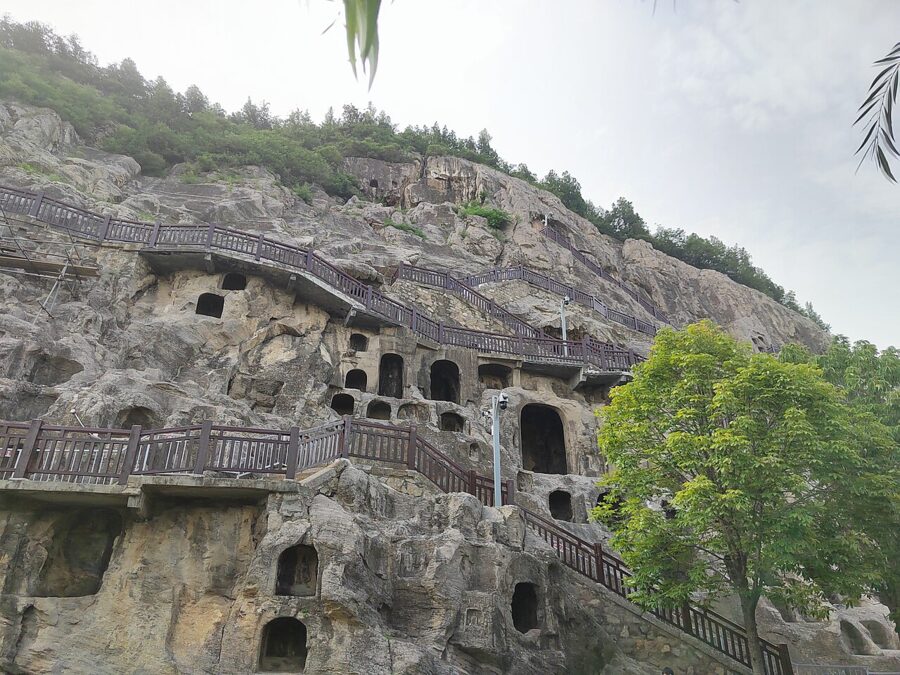
Longmen sits about 12 kilometres south of the city centre, where the Yi River runs between the West Hill (Longmen Shan) and the East Hill (Xiang Shan). Carving began in the 490s, once the Northern Wei court had arrived from the north, and carried on for some four hundred years with two great bursts: the Northern Wei itself and the Tang. UNESCO listed the site in 2000, and it’s usually counted with Yungang near Datong and the Mogao Caves at Dunhuang as one of China’s three great Buddhist cave sites.
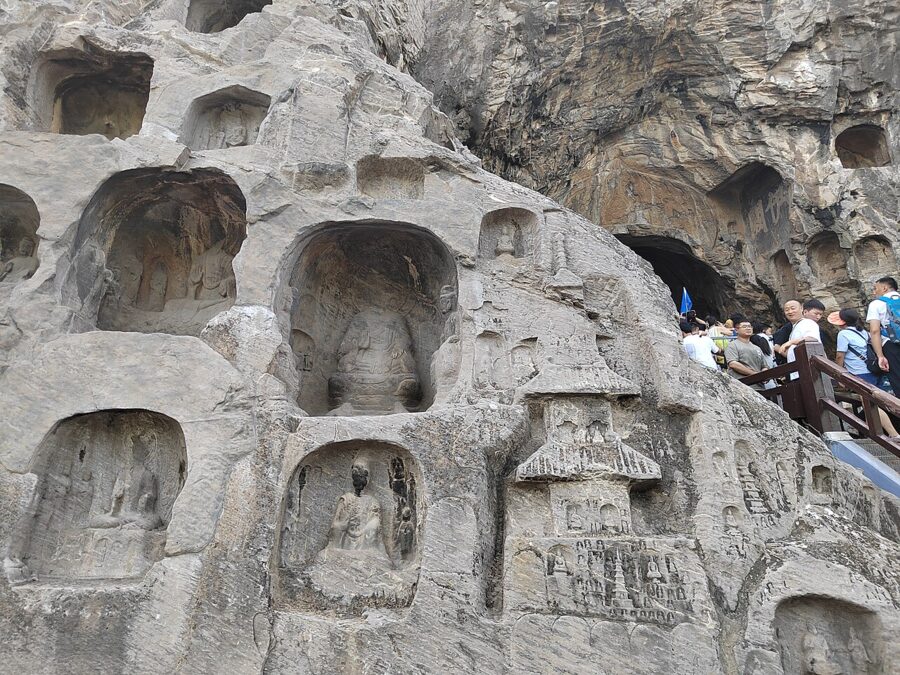
The numbers are hard to picture: more than 2,000 caves and niches, over 100,000 statues, and thousands of inscriptions, ranging from a Buddha the height of a six-storey building to figures about 2 centimetres tall. Most of it is on the west side. The east side is smaller, more damaged, and much quieter.
Tickets, booking and hours
A day ticket costs ¥90 and covers four checkpoints in a fixed order: the West Hill caves, the East Hill caves, Xiangshan Temple and Bai Garden. Every ticket is real-name and sold for a time slot. The official channel is the Longmen Grottoes WeChat account (search 龙门石窟), and the only ticket window is at the north-west service area. Trip.com also sells entry, which can be easier if you can’t get WeChat to accept your passport.
Read the concessions carefully if you’re not Chinese. Children under 1.4 metres go free whatever their nationality, but the free entry for over-60s and the ¥45 half-price ticket for students and teachers are, by the site’s own rules, for Chinese citizens only. Bring the passport you booked with; you’ll show it at each of the four checks.
From 1 March to 31 October the last entry is 18:00 and the site clears at 19:00. From 1 November to the end of February, last entry is 17:00 and it clears at 18:00. On Qingming, the May Day holiday, Golden Week and peony-festival weekends, sales and entry run half an hour later. Daily capacity is capped at 68,900, a figure that sounds generous until you see the walkways on 2 October.
Getting in: service areas and shuttles
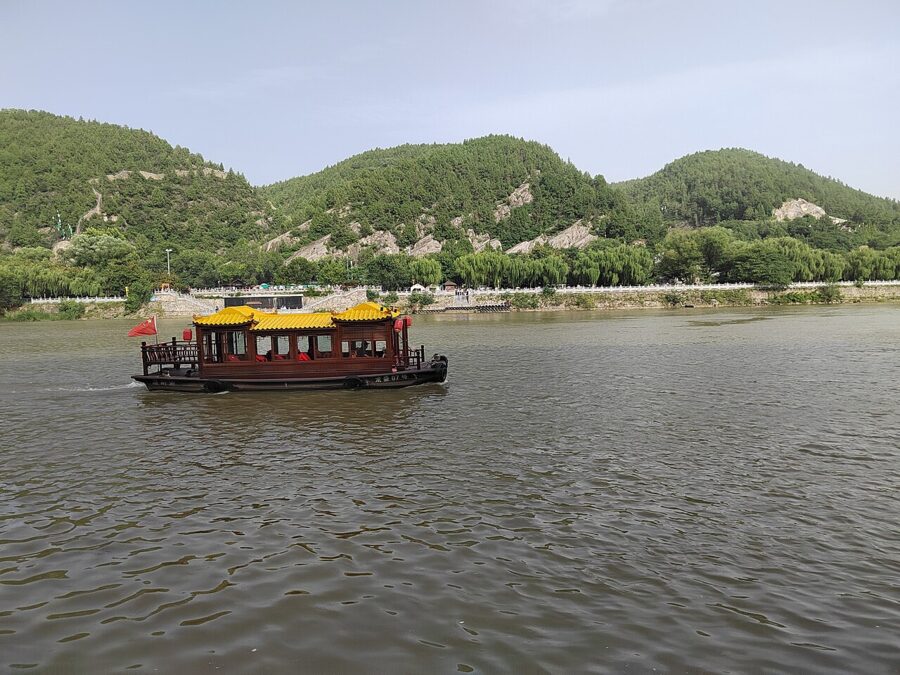
This is the part that confuses people. Taxis, buses and cars drop you at one of two service areas, not at the caves. From the north-west service area it’s about a 20-minute walk to the ticket check; from the north-east one, where most of the parking is, about 25 minutes. An electric shuttle covers either stretch for ¥10 a person each way, paid per ride.
Take it on the way in: there’s a long day of steps ahead, and the route ends at the east gate, a long way from where you started. From the exit, the shuttle takes you back to the service areas, where the taxis wait. Ignore the drivers who approach you at the east gate itself.
Luoyang Longmen station, the high-speed stop, is only about 4 kilometres away: around 10 minutes and ¥10–15 by Didi or taxi. Bus 71 runs from there to the Longmen Grottoes stop. From Luoyang railway station, bus 81 goes all the way, but it takes over an hour, so most people take a taxi.
The west hill, cave by cave
The route runs south along the foot of the cliff, and the first big set of caves is the Binyang group, three caves side by side. The name means “welcoming the sun”. Emperor Xuanwu commissioned them in 500 in honour of his father, Xiaowen, the emperor who brought the court here. The work took 24 years and, by the official count, 802,366 labour days, and even then a palace coup and the death of the official in charge meant only the middle cave was finished on time.
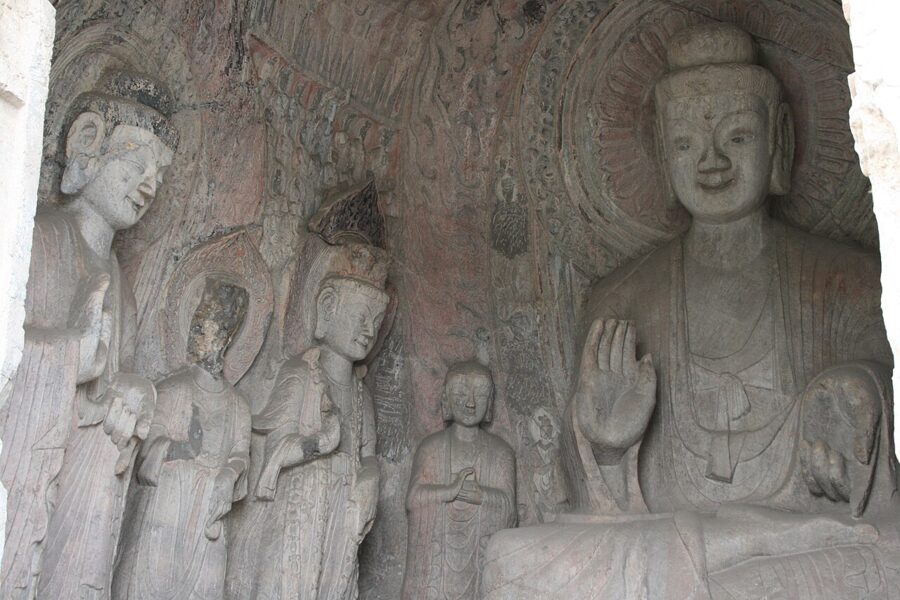
The Middle Binyang Cave is also where you see the looting most clearly. Two large reliefs of the emperor and empress in procession were cut out of its front wall in the 1930s. The emperor’s is in the Metropolitan Museum of Art in New York, and the empress’s is in the Nelson-Atkins Museum in Kansas City. What’s left on the walls are outlines.
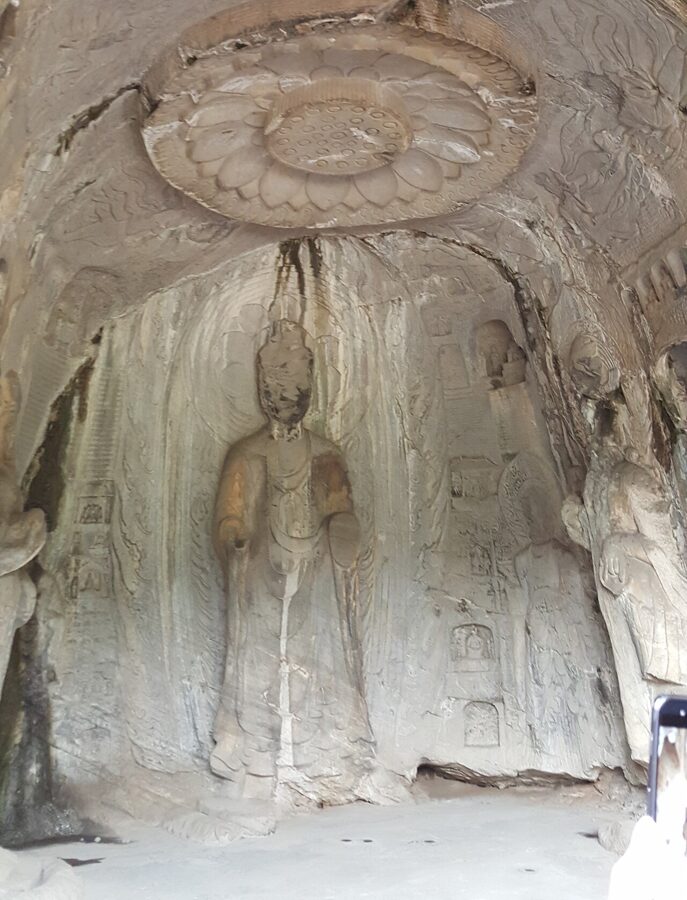
Further on comes Wanfo Cave, the Ten Thousand Buddha Cave, a Tang cave from 680 whose side walls are covered in rows of tiny seated Buddhas, about 15,000 of them. Look behind the main Buddha for the 54 lotus flowers, each with a bodhisattva seated on it. Lotus Cave, just after, is named for the huge lotus carved on its ceiling, which is the thing to look up at. The main Buddha’s face here was hacked away in the early twentieth century.
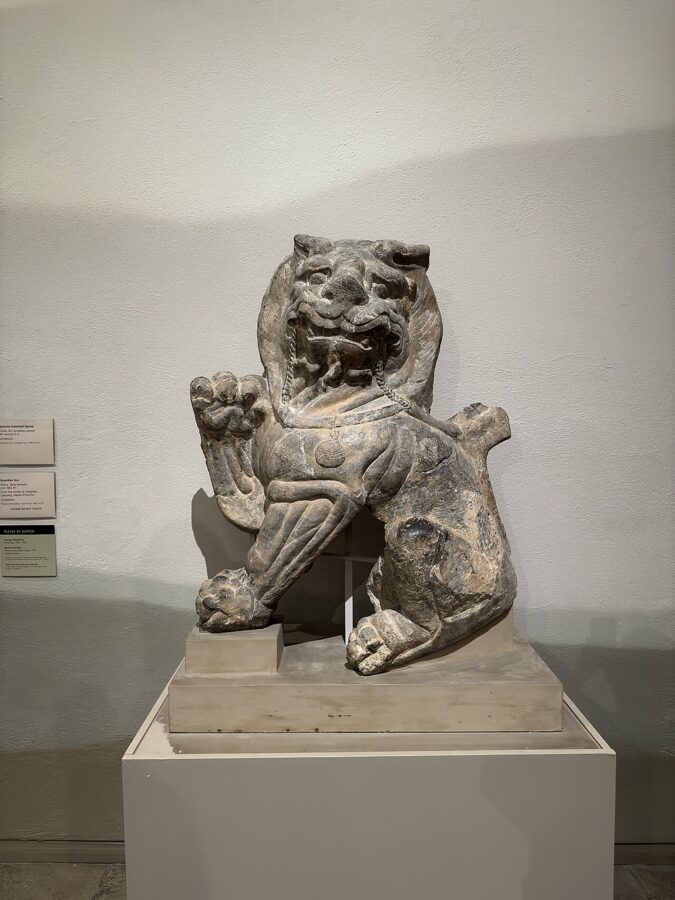
Guyang Cave is the oldest, begun in the 490s, and the one to make time for if you read Chinese or care about calligraphy. Its walls hold 19 of the Longmen Twenty, the most famous set of Northern Wei inscriptions, and the square, chiselled script you see in them is still copied by calligraphy students today. The Yaofang (Prescription) Cave nearby has medical recipes carved around its doorway, a reminder that these were public places and not just religious ones.
Fengxian Temple and the Losana Buddha
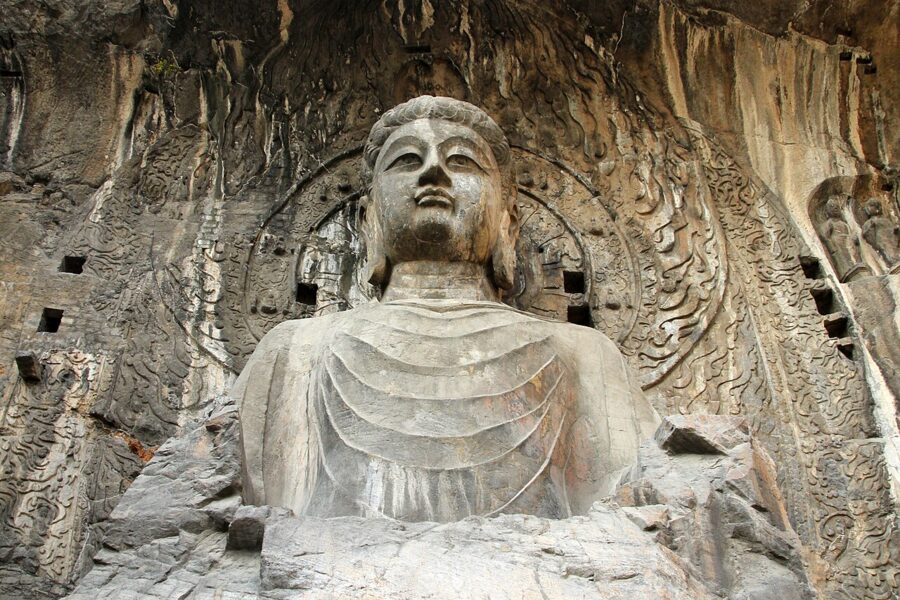
Past Lotus Cave the path turns uphill, and a steep stair climbs to the terrace in front of Fengxian Temple. It isn’t a temple in the building sense. It’s an open niche more than 30 metres wide, carved from 672 to 675 under Emperor Gaozong, with the Losana (Vairocana) Buddha in the middle at 17.14 metres high.
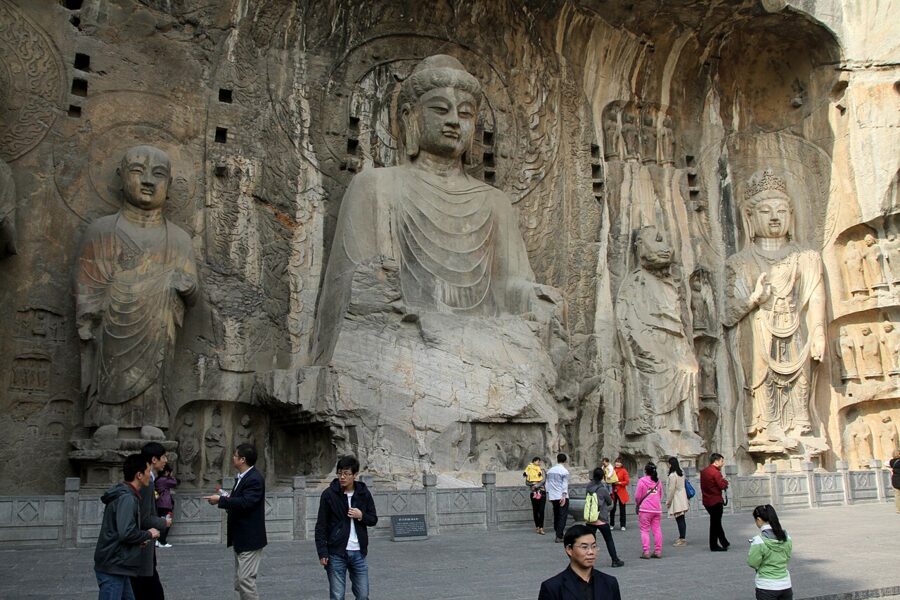
An inscription at the base records that Empress Wu, then Gaozong’s empress, gave 20,000 strings of cash from her own allowance for cosmetics towards the work. That’s where the story that the face is a portrait of her comes from. Nothing proves it, and the guides will tell it anyway.
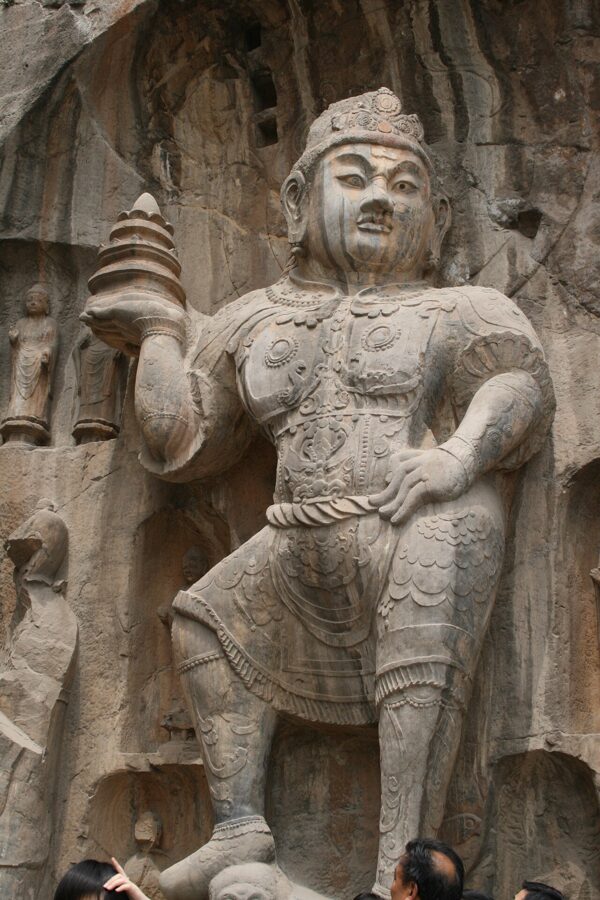
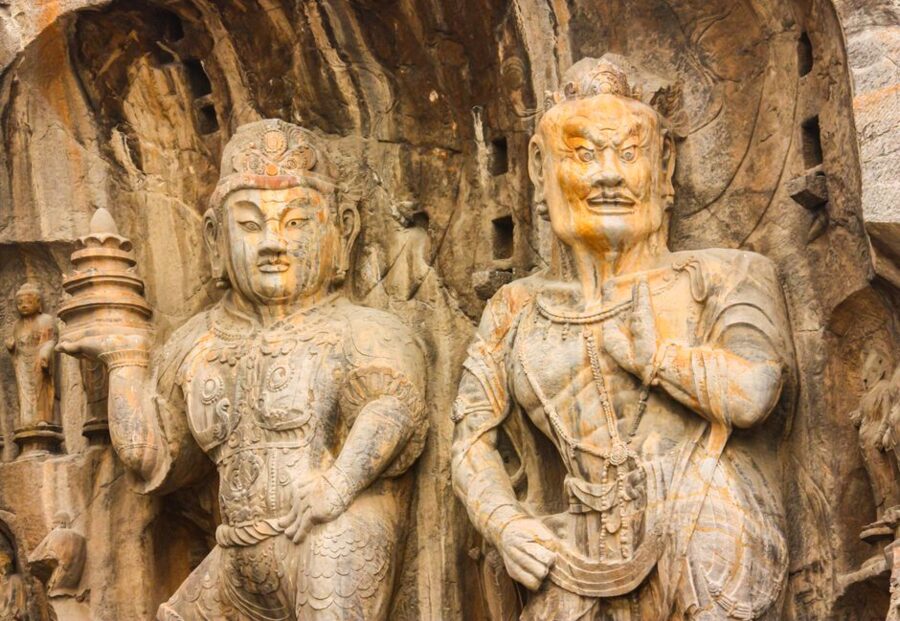
Give the terrace at least half an hour. The figures at the north end are worth as much attention as the Buddha: the heavenly king holding a small pagoda in one hand, and the guardian next to him with veins and muscles carved out of the stone. If you’re travelling with someone who struggles with stairs, this is the place to turn back. From the terrace you can walk down to the river and leave without crossing to the east side.
Over the river: the east hill, Xiangshan Temple and Bai Garden
Below Fengxian Temple, a low bridge crosses the Yi to the east bank. Stop halfway: this is the best view back at the whole west cliff, and the place most people take their photos. The East Hill caves are fewer and more damaged than the west, but Kanjing Temple, the largest cave on this side, has a band of 29 life-size arhats in relief around its walls. If you’re short of time or energy, it’s the one to see.
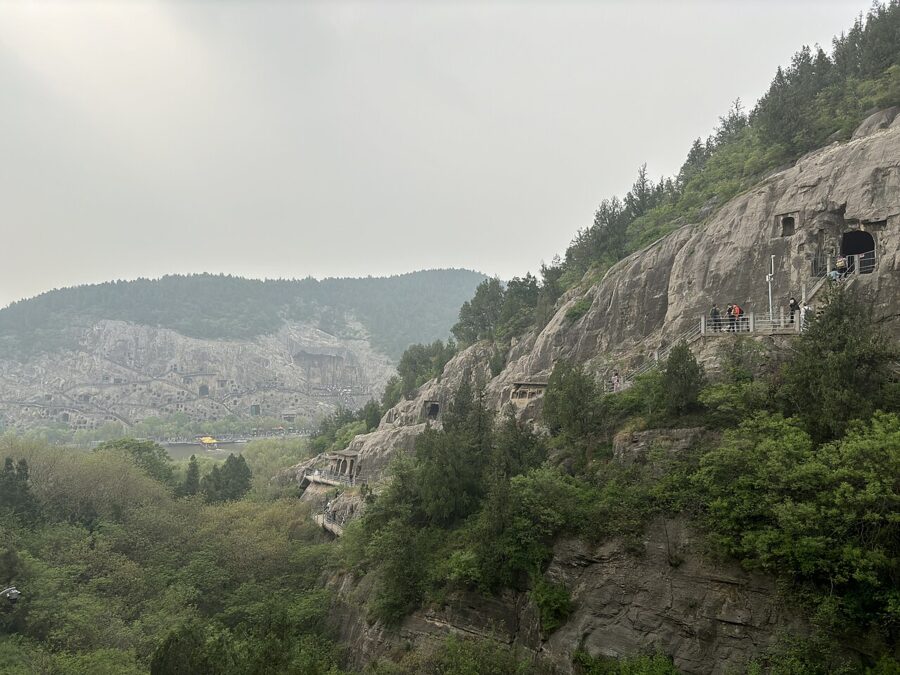
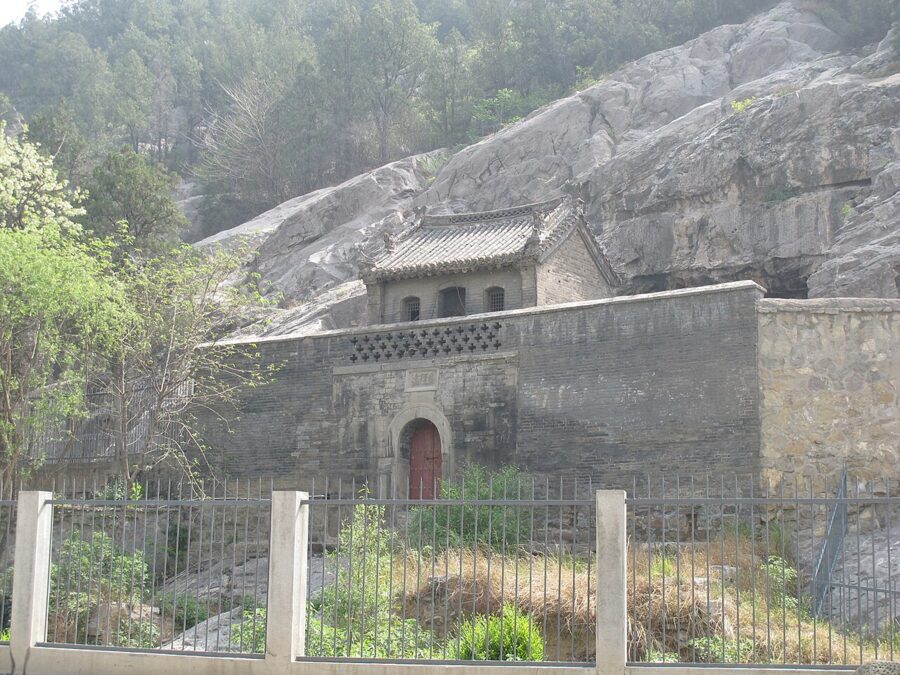
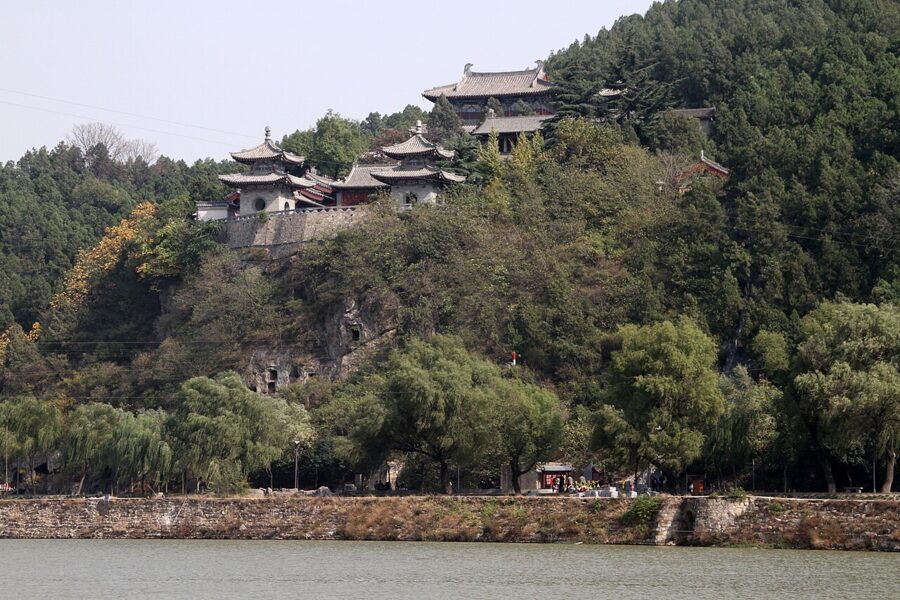
Xiangshan Temple sits above the caves on the East Hill. The halls are a later rebuild, and the views over the river to the west cliff are the reason to climb. In the grounds there’s a two-storey villa that Chiang Kai-shek and Soong Mei-ling used in the 1930s, now open as a small exhibit. A stele in the grounds carries a poem by the Qianlong emperor.
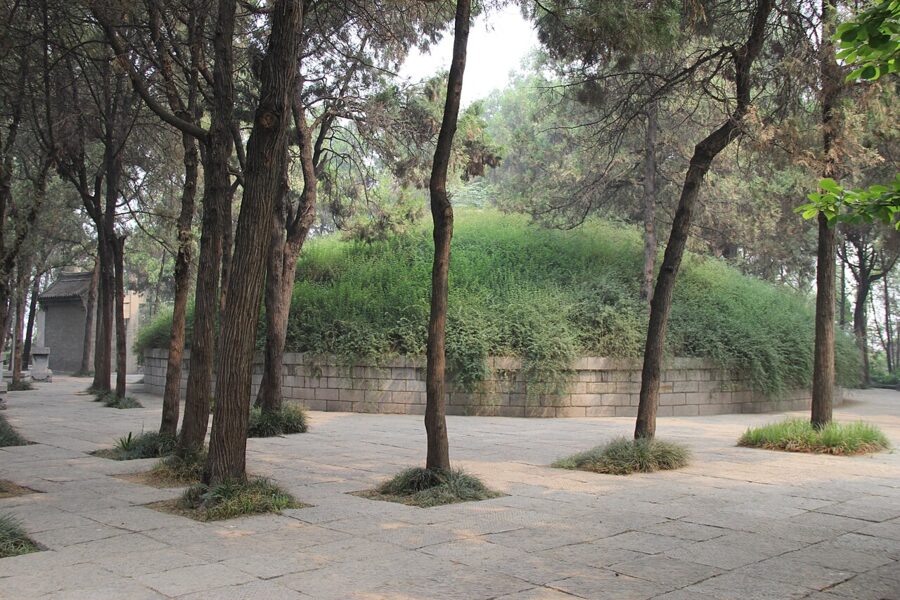
Bai Garden, the last stop, is the burial ground of Bai Juyi, who retired to Luoyang and died here in 846. It’s a calm, wooded hill of steles and poems, with a teahouse if you need to sit down, and it’s the quietest place in the whole site. The exit is just past it.
Longmen after dark
Since 30 March 2026 Longmen has run an evening opening called Dengying Longmen (灯映龙门), with the caves lit from below. It’s a separate ¥120 ticket, real-name and booked like the day one, and the Luoyang tourism annual pass doesn’t cover it. Sales run 17:30–19:30, entry 18:00–20:00, and everyone is out by 21:00.
Only the West Hill and Xiangshan Temple open at night, and a day ticket won’t let you stay on: you need both. If you’re picking one, pick the day. The lit Buddha is warmer and stranger than the daytime one, though, so check the official account for dates, especially in winter.
How long, and when
Give it three and a half to five hours for the full route on foot; expect 15,000 to 20,000 steps. If you’re travelling light, two hours on the West Hill and Fengxian Temple is the short version. Audio guides are available at the entrance, and the official WeChat account has a free audio guide too, which is worth having; without context, the caves can blur into each other fast.
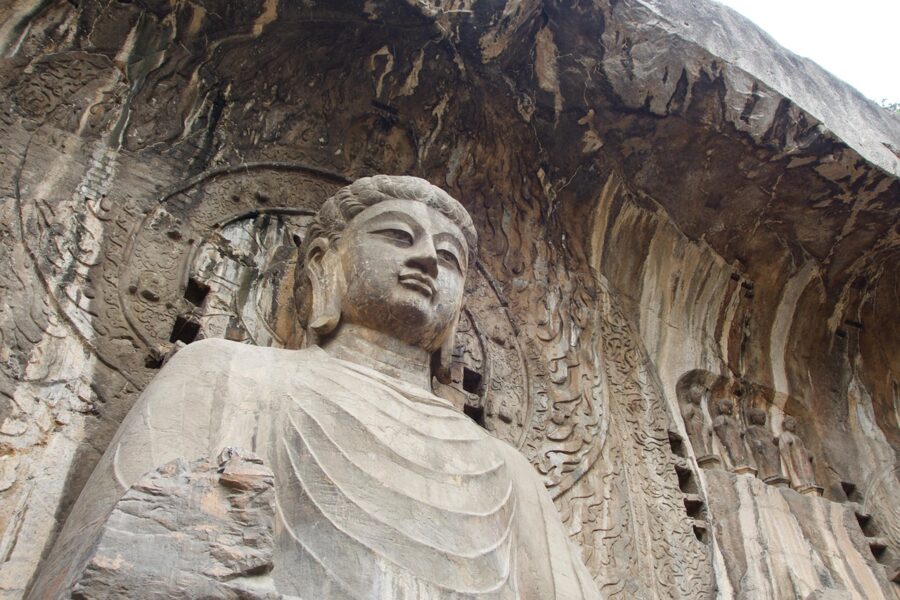
The two good windows are opening time and after 15:00. At 08:00 the light hits the west cliff square on, and the Buddha’s face is lit; by late afternoon it’s in shade but the queues have gone. Late April is lovely and packed. November to February is cold, around 0–10°C, but the site is half empty, and it’s the time I’d go.
White Horse Temple, where Chinese Buddhism says it began
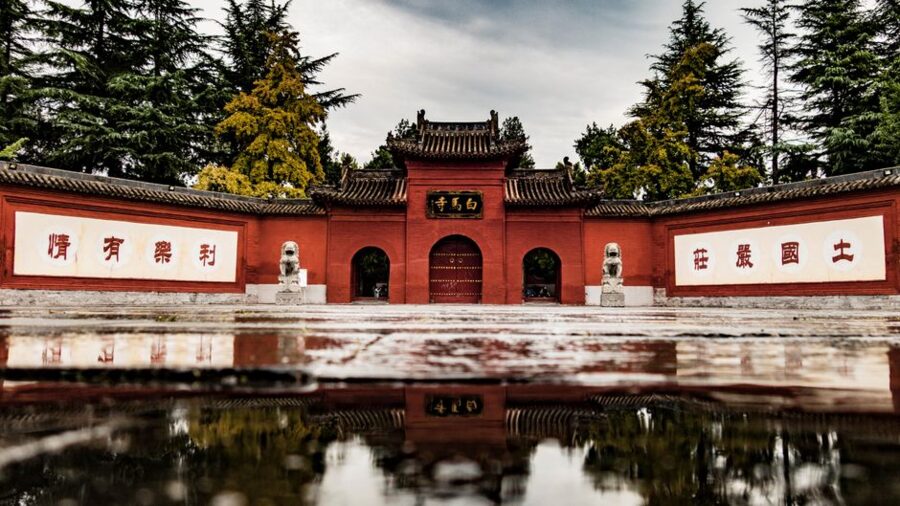
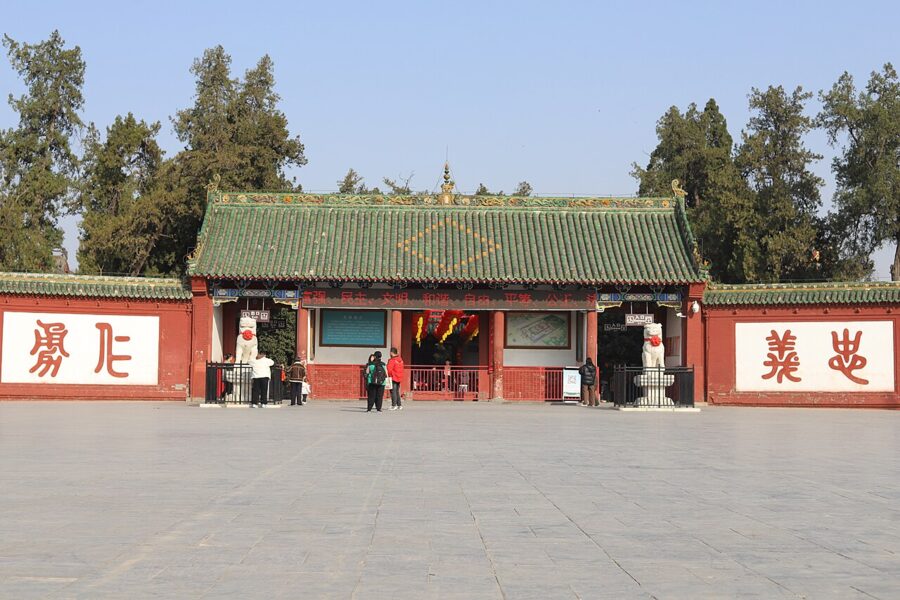
About 12 kilometres east of the centre, White Horse Temple (Baima Si, 白马寺) is the one Chinese Buddhist tradition calls its first. The story goes that the Han emperor Ming dreamed of a golden figure in AD 64 and sent envoys west to find out what it was. They came back three years later with two Indian monks, Kasyapa Matanga and Dharmaratna, and scriptures carried on a white horse, and in 68 the emperor built them a monastery outside Luoyang named after the horse.
None of the buildings is that old. The layout you walk through today mostly goes back to rebuilds in 1555 under the Ming and 1713 under the Qing, and some halls are far newer. But it’s an active monastery, it smells of incense, and on a weekday morning it’s one of the most peaceful places in Luoyang.
The main axis
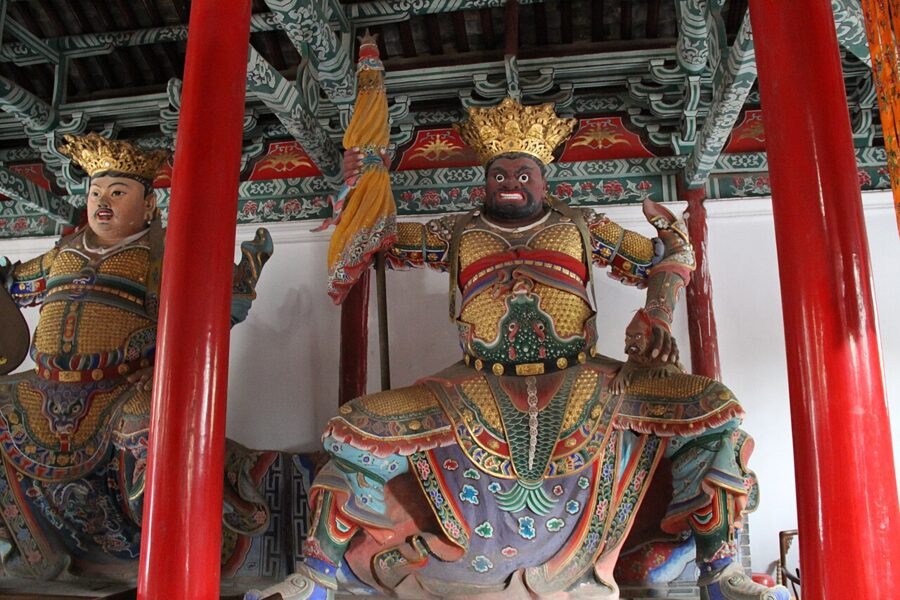
The halls run in a line from the gate: the Hall of the Heavenly Kings, the Great Buddha Hall, the Mahavira Hall, the Hall of Guidance, and at the back the raised Qingliang Terrace with the Vairocana Pavilion on top. The terrace is said to be where the two monks translated the first sutras into Chinese. Look out for the monks’ round tombs just inside the main gate.
The international halls
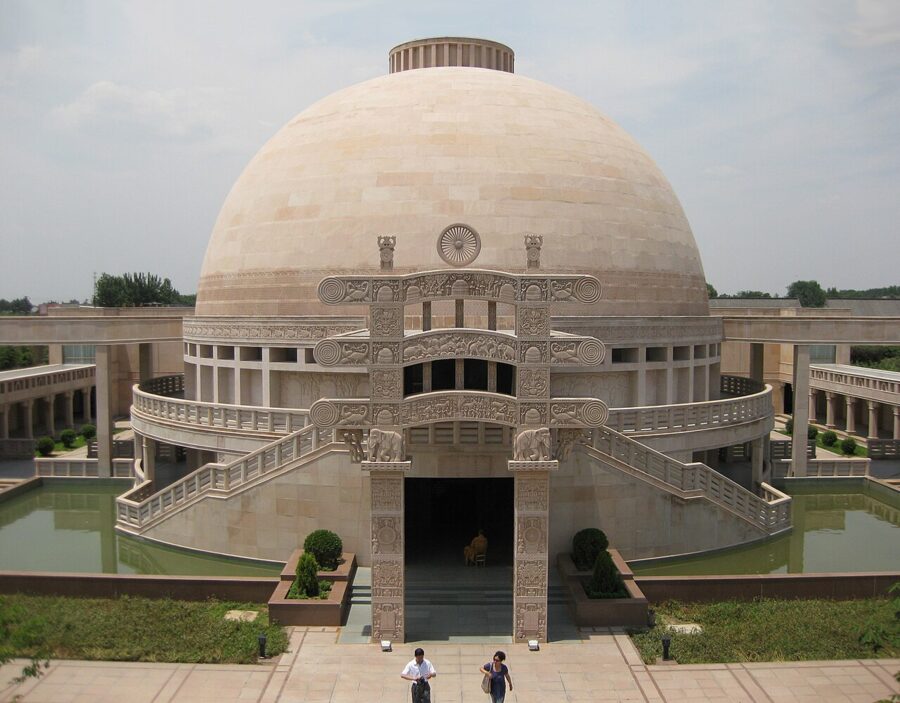
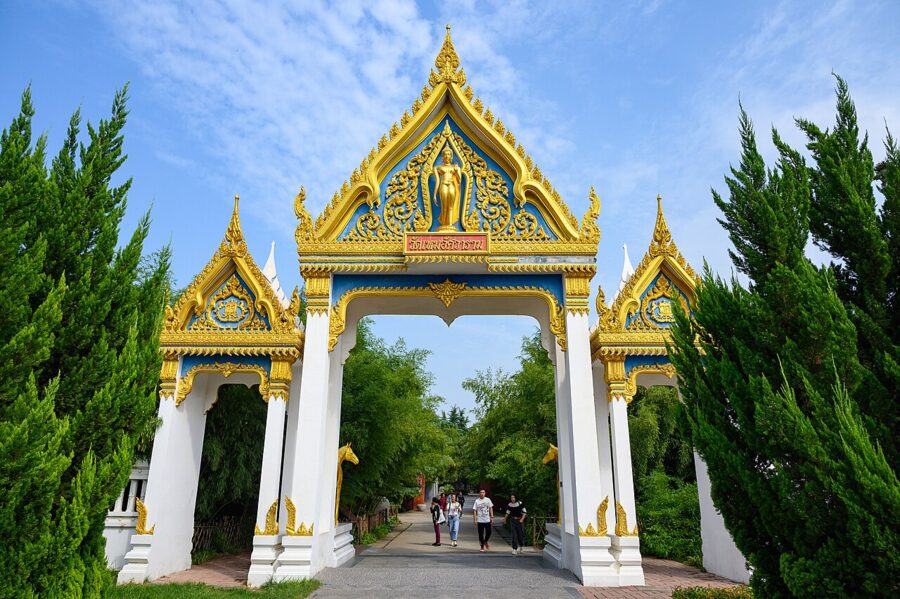
West of the Chinese monastery is the part of White Horse Temple you won’t find anywhere else: a zone of Buddhist halls built by other countries. There’s a Thai hall with gold-trimmed gables, a white Burmese-style stupa, and an Indian-style hall modelled on the stupa at Sanchi, which India’s president dedicated in 2010. They’re all modern, and none is an ancient relic. As a set, though, they make the temple’s founding story physical: the faith came from somewhere else, and those places still send buildings.
Qiyun Pagoda
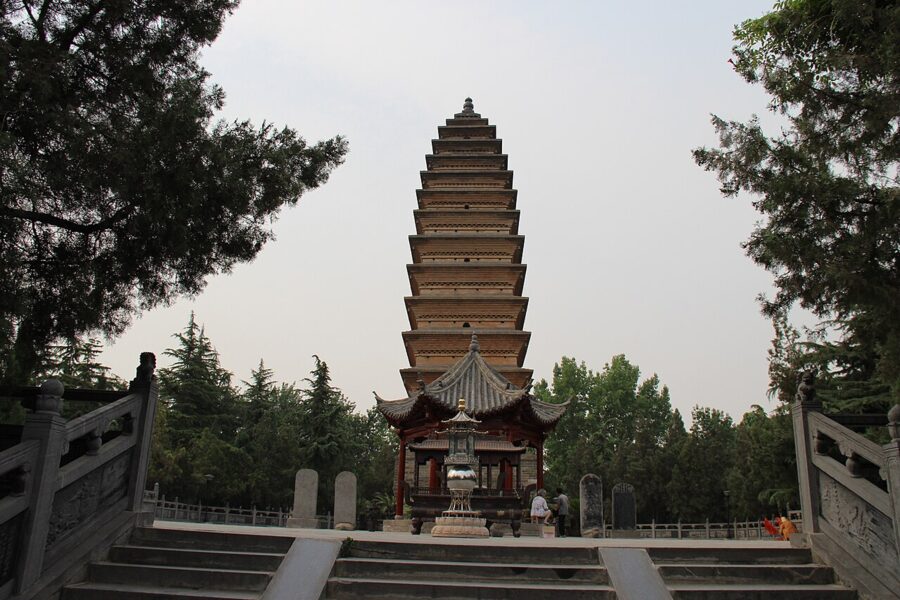
A few minutes’ walk east of the main gate stands Qiyun Pagoda, a 13-storey square brick tower about 25 metres high, built in 1175 under the Jin dynasty to replace a wooden one that burned. It stands in the grounds of a working nunnery, so keep your voice down. It’s the oldest structure on the White Horse site, and few people make the short walk over.
Getting there and tickets
Tickets are ¥35. In peony season and on national holidays, the temple’s WeChat account (洛阳白马寺) sells timed real-name tickets up to seven days ahead and is the only authorised channel, so book there. Gates open early, at 07:40 in the 2026 festival period, and you should be at the gate by then: by 09:00 the coach parties have arrived and the central axis fills up.
Metro Line 1 runs east towards the temple but stops short. Take it to Yangwan, the eastern terminus, and finish by taxi or bus. Allow two to three hours: an hour or so for the main axis, half an hour for the international halls and 20 minutes for the pagoda.
The old city: Lijing Gate, Cross Street and Luoyi Old Town
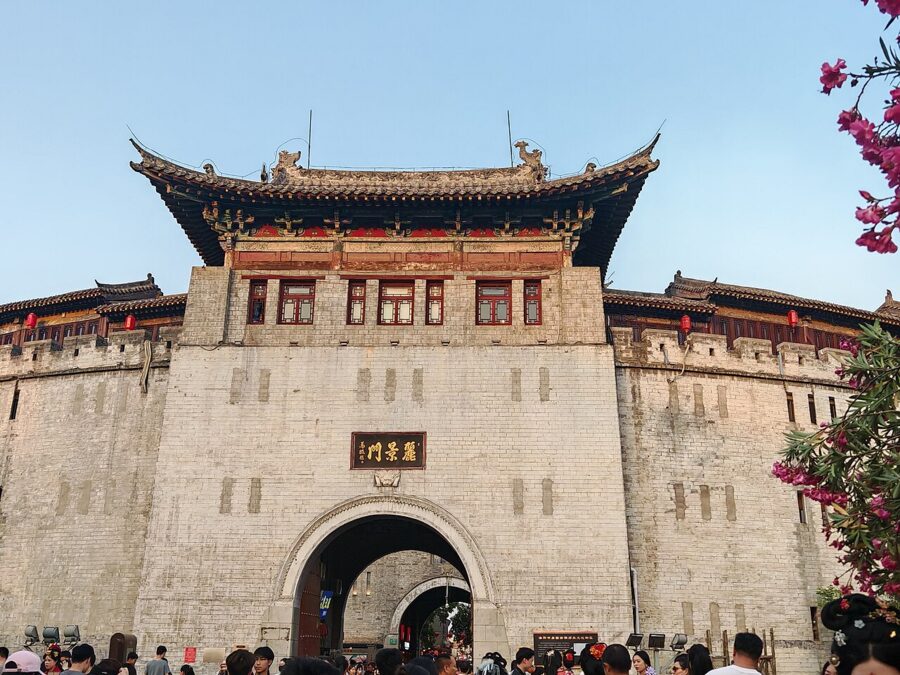
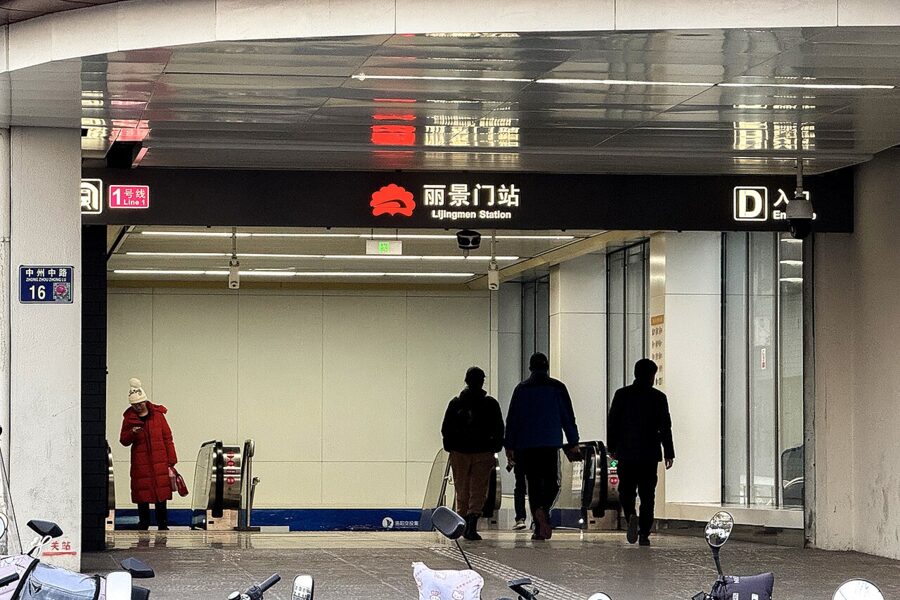
Luoyang’s old city (Laocheng, 老城) is a small district east of the modern centre, and it’s where you’ll spend your evenings. The main pieces are close together: Lijing Gate at the west end of Xi Dajie, the old main street; Cross Street (Shizi Jie, 十字街), the snack and night-market strip; and Luoyi Old Town a few minutes south. Line 1 has stops for all of them: Lijingmen for the gate, Luoyigucheng (renamed from Qingniangong in 2024) for the old town.
Lijing Gate and Cross Street
Lijing Gate is a big grey gatehouse with a tiered tower on top. You can walk through it for free; climbing the tower costs extra, and the view of the rooftops isn’t much to write home about. The street behind is the point. Xi Dajie and the lanes off it are lined with shops selling Tang sancai copies, peony porcelain and pastries, and with small restaurants where locals eat alongside the tourists.
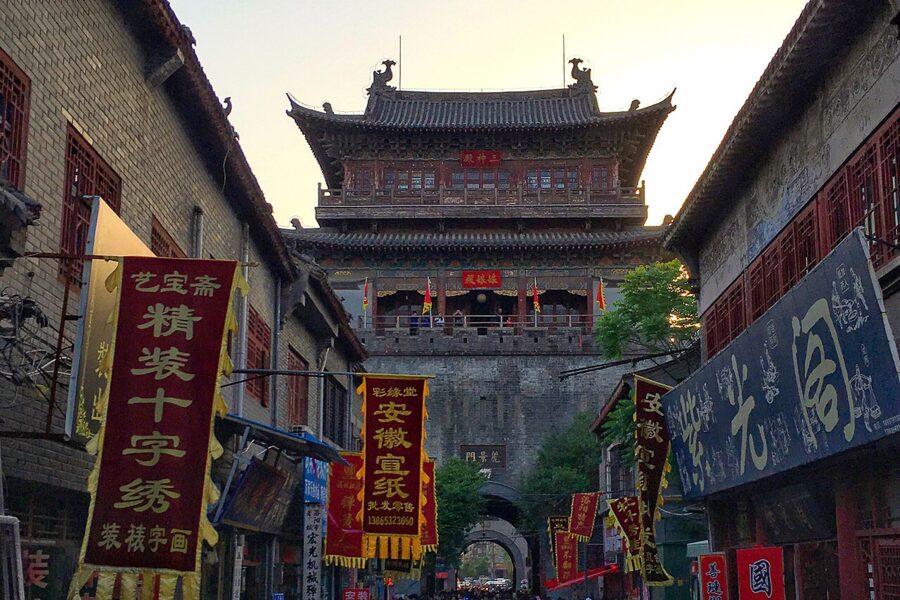
Cross Street is the old city’s food street, and it comes into its own after dark, when the stalls set up and the crowd shifts from tour groups to families. This is where to try bu fan tang, guotie (pan-fried dumplings) and peony cakes (mudan su) without committing to a sit-down meal. If you’re curious what a full evening of grazing in a northern Chinese city looks like, it’s a gentle introduction to Chinese street food, on a street small enough to walk end to end in ten minutes.
Luoyi Old Town
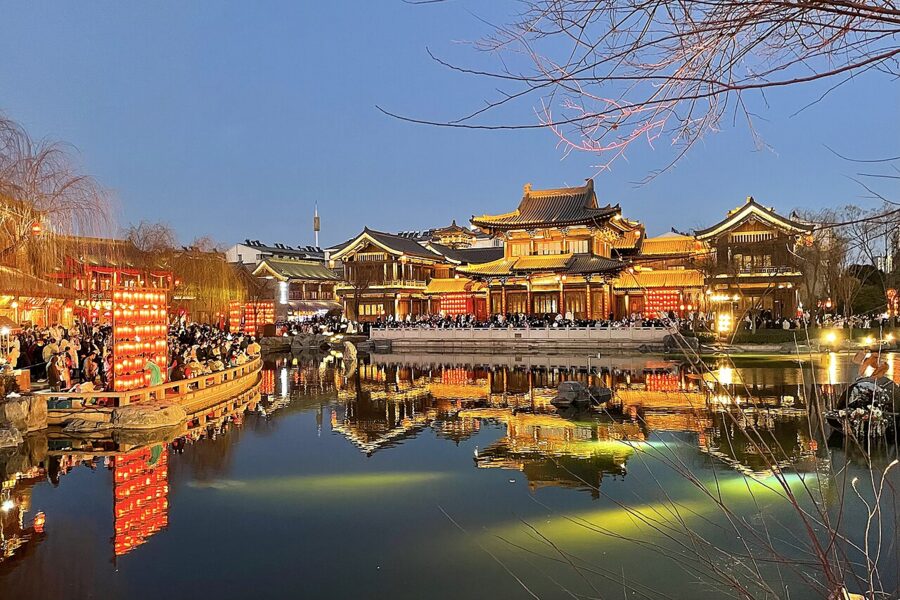
Luoyi Old Town (洛邑古城) is a newly built heritage quarter on the south side of the old city, laid out around ponds, bridges and teahouses. It’s built around a few genuine old pieces: the brick Wenfeng Pagoda, a provincially protected monument, and a stretch of earthen wall from the Jin and Yuan city. The rest, from the halls to the arched bridges, is modern.
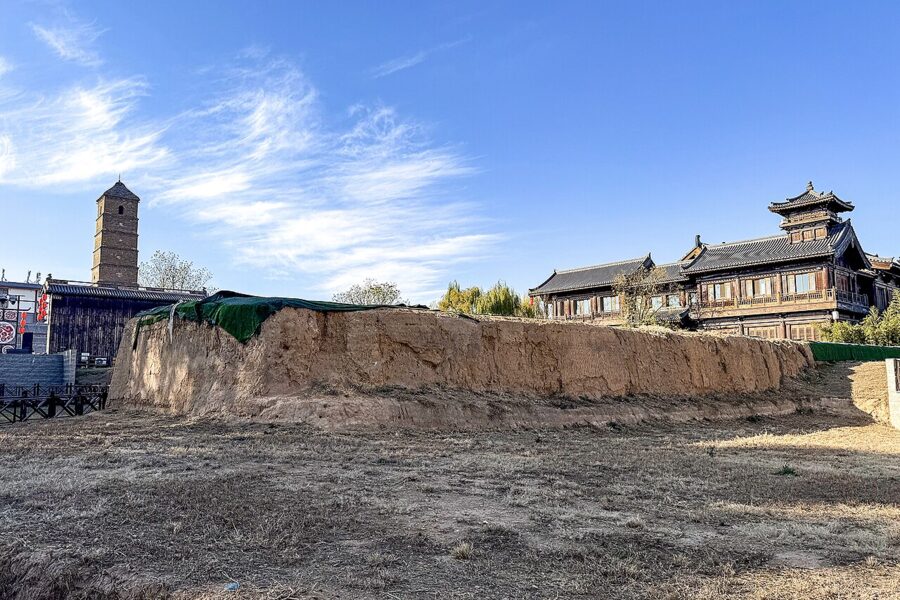
Entry is free, but you book a slot in advance on the old town’s WeChat account (洛邑古城) under “预约入园”, or on Meituan, with up to five names per booking. It’s open 09:00–22:30, and the lights go on at about 18:30, adjusted with the season. From Luoyigucheng station, exit A1, walk about 300 metres south along Minzhu Street to the north gate, around five minutes.
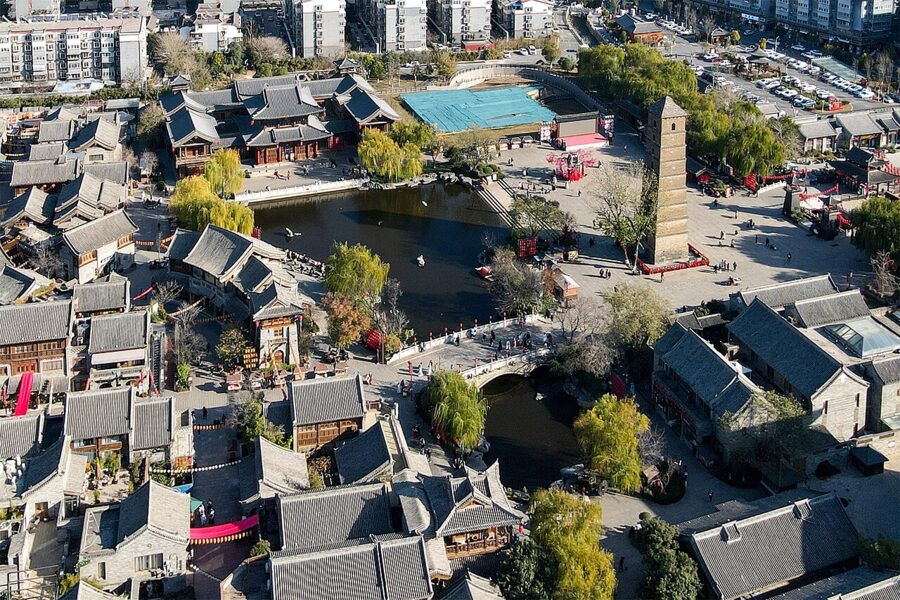
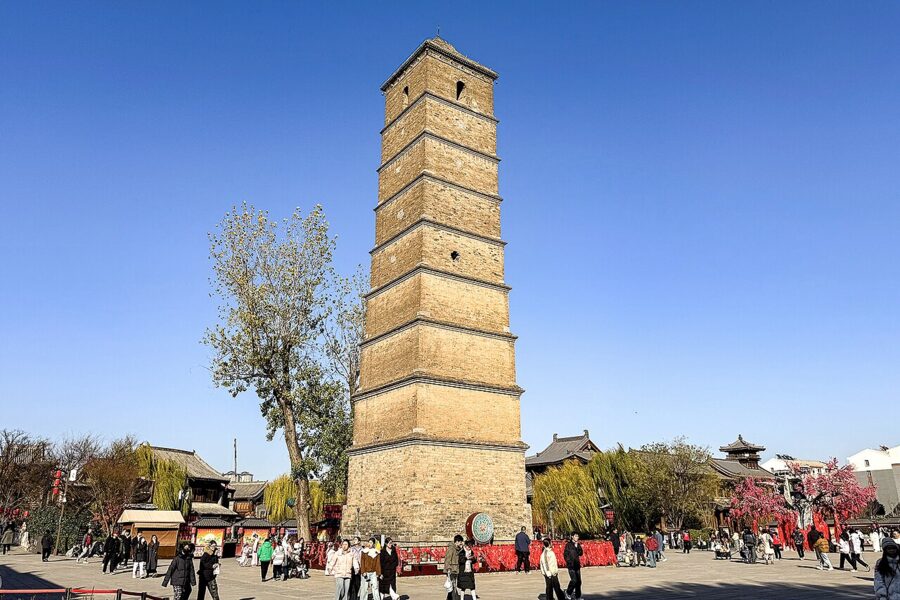
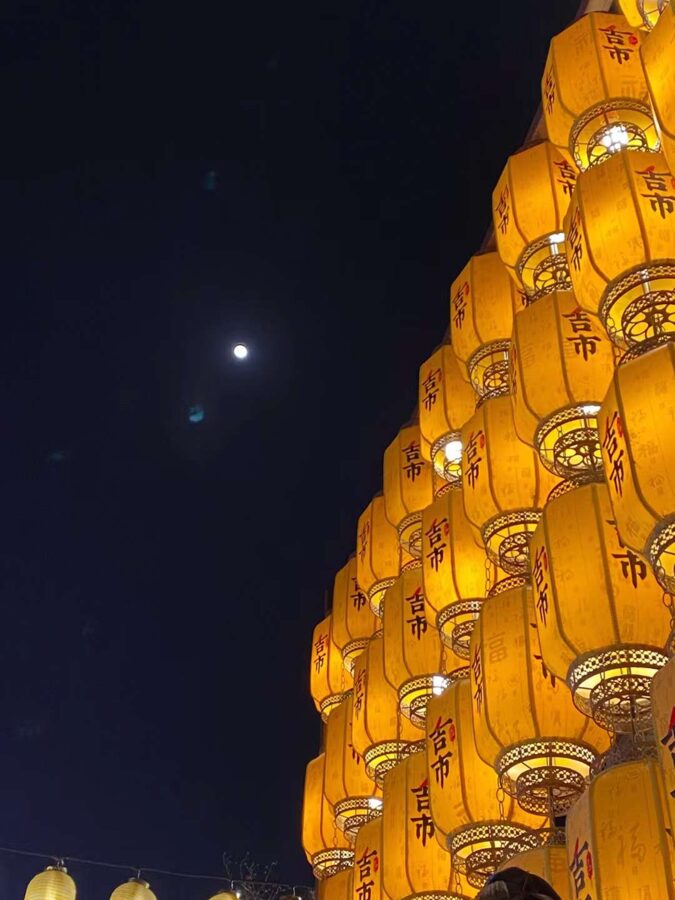
Daytime is calm and slightly empty. Most people arrive in late afternoon, walk the lanes while it’s light, eat, and stay for the lanterns. That’s the right order. On a spring or holiday evening, it’s genuinely crowded by 20:00, and the bridges become a slow queue for photographs.
The hanfu photo walks
The thing you’ll notice first in the old city is that a large part of the evening crowd is dressed for a different century. Hanfu (汉服), the umbrella term for historical Chinese dress, has become a full industry in Luoyang, especially in Tang-style outfits with elaborate hair. Most of the rental shops are on Minzhu Street, behind Luoyi’s north gate, rather than at the gate itself.
The prices in 2026 ran roughly like this: dress only, ¥80–150 for about two hours; dress with hair and makeup, ¥130–350; with a photographer and 20–30 edited shots, ¥450–600. The low advertised prices are for the dress alone. Hairpins and props are often charged per piece, and every shop has a return time with a late fee, so ask about both before you sit down.
Styling takes about 40 minutes, and the light that photographs best is the half hour after sunset. Independent photographers with iPads work the bridges and charge around ¥50 for a quick set. If you don’t want your picture kept, ask them to delete it. Sizes often stop at L, which matters if you’re taller than most of the people in the shop.
Yingtianmen and the Sui-Tang night zone
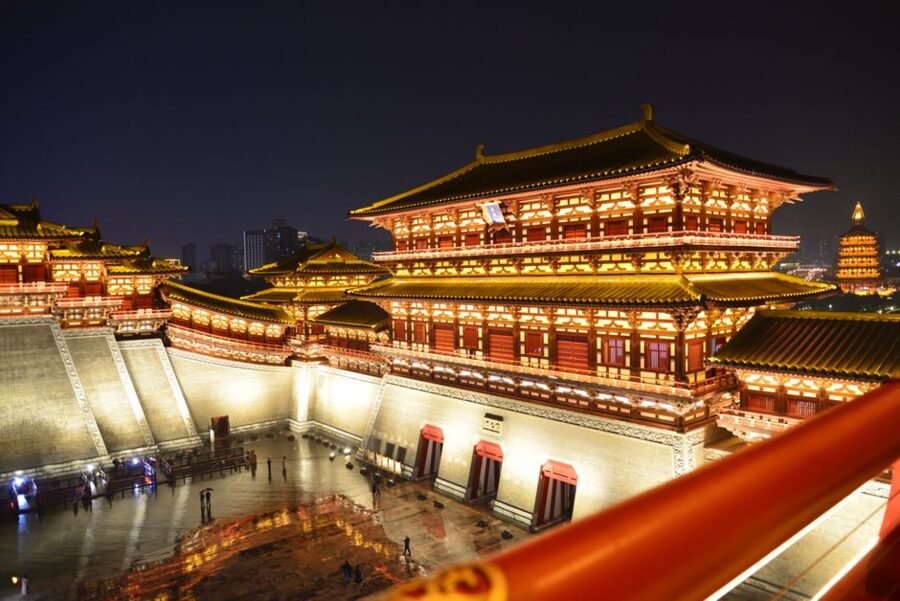
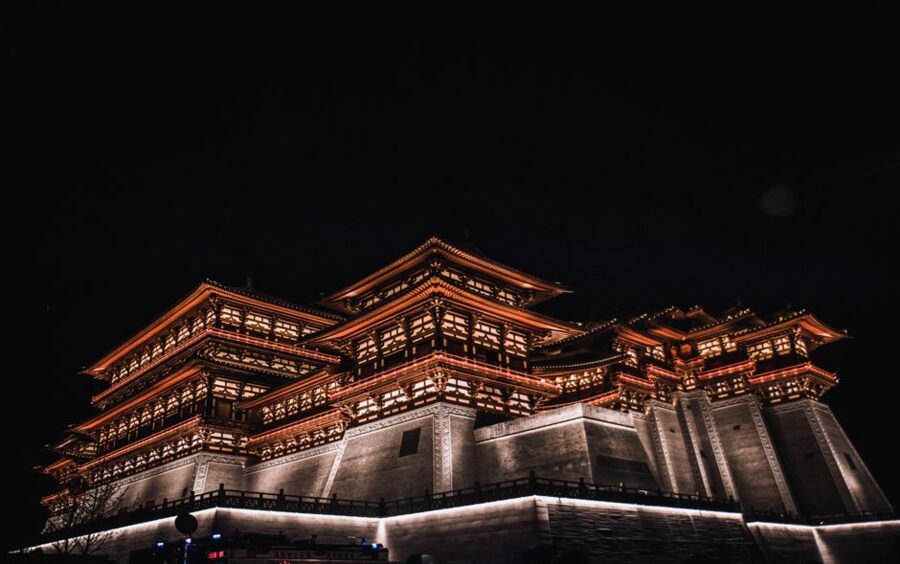
West of the old city, on the site of the Sui and Tang palace, three rebuilt sites sit within a short walk of each other: Yingtianmen, the palace gate; the Mingtang and Tiantang, Wu Zetian’s ritual hall and her five-storey Buddhist pagoda; and Jiuzhou Pond, a garden of palace pools. All three are modern reconstructions over real archaeological sites, and the excavated foundations are shown inside.
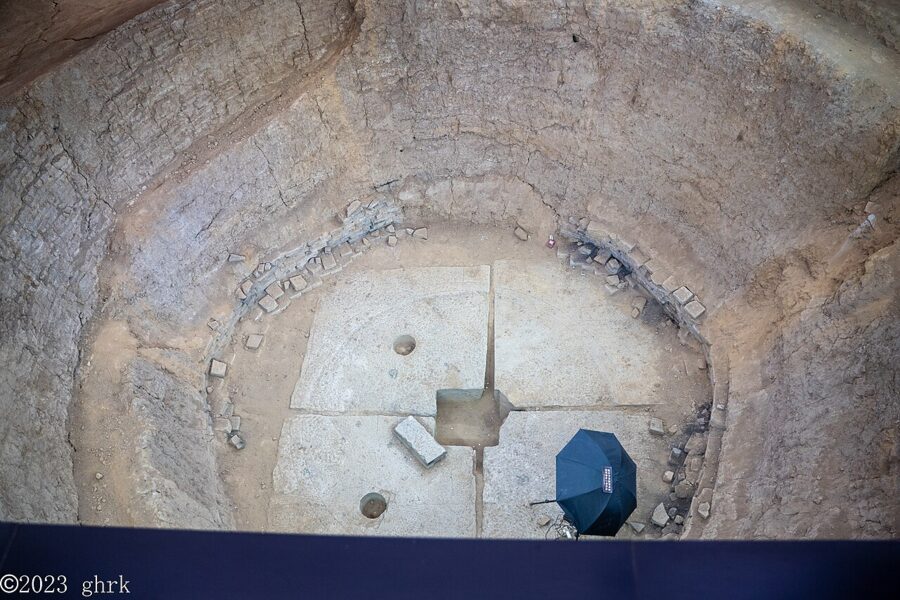
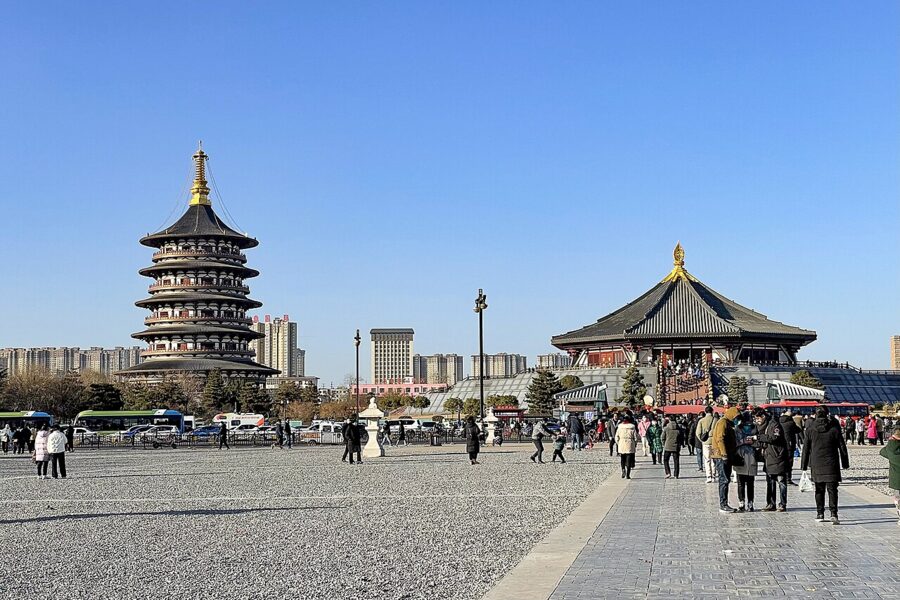
The original Mingtang was finished in 688 as the hall where Wu Zetian held state rituals, and the Tiantang behind it was built to house a colossal Buddha. Both burned within a few years, and the rebuilt Mingtang went up again soon after. What you see now are modern halls in Tang style, built around and over the dig.
In 2026 tickets ran around ¥60 for Yingtianmen and ¥90 for the Mingtang and Tiantang, with Jiuzhou Pond cheaper. These are evening places. The plaza outside Yingtianmen is free, and from it you get the lit gate for nothing, which is enough for a lot of people. Yingtianmen station on Line 1 drops you right there.
Soup before nine: Luoyang’s breakfast
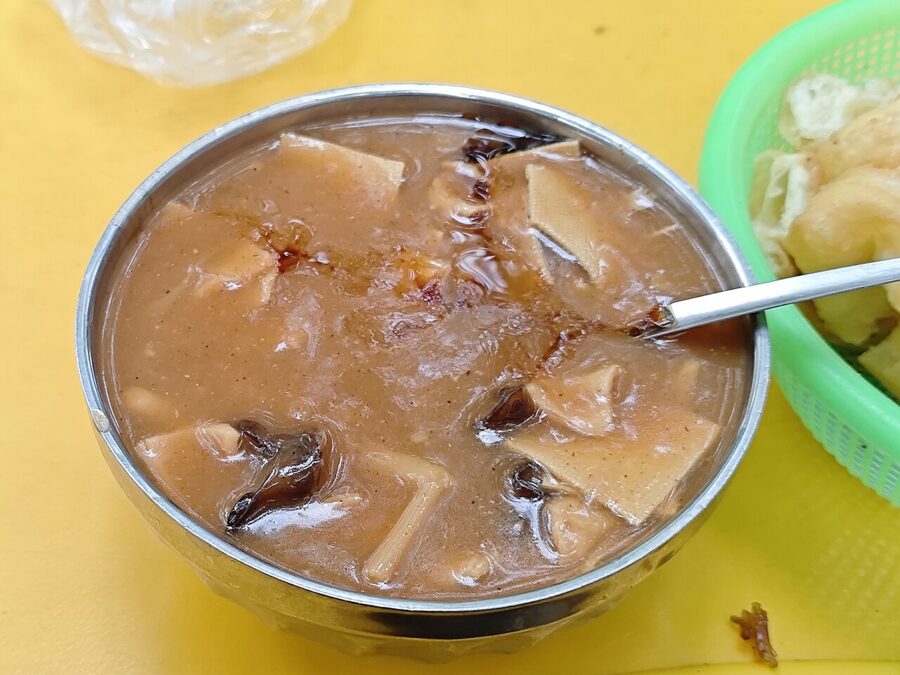
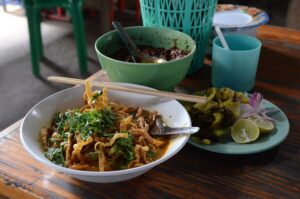
Locals like to call Luoyang a city of soup, and breakfast is where you see it. In Shenzhen I got used to mornings of rice noodle rolls and congee; here, at 06:30, people sit at low tables outside small shops with a bowl of beef or mutton broth, a flatbread torn into it, and a dish of chilli. You’ll see hulatang (胡辣汤) everywhere too, the peppery Henan soup I wrote about in my guide to Chinese breakfast, but in Luoyang it’s one option among many.
Beef and mutton soup
The classic is beef soup, niurou tang (牛肉汤): a clear, deeply savoury broth made from beef bones, served with sliced beef, chopped coriander and a chilli oil you add yourself. You order at a window by the size of the bowl, which mostly decides how much meat you get, and then ask for a bing (饼), the flatbread, to dunk or tear in. Free top-ups of broth are normal; hold your bowl out.
Ma Jieshan (马杰山牛肉汤) on Qiming East Road, in the Chanhe Hui district east of the old city, is one of the most famous names. It opens at about 05:00 and finishes in the early afternoon, so it’s a morning place: get there before 08:00 and expect to spend around ¥20. Mutton soup, yangrou tang (羊肉汤), is the other big one, cloudier and richer, and it’s served with shredded flatbread that soaks up the broth. If you’ve had paomo in Xi’an, it’s the same family, with the bread left to you.
Bu fan tang and jiangmiantiao
Bu fan tang (不翻汤), “no-flip soup”, is the one dish you’ll only find here. A thin mung bean pancake is cooked on one side on a hot griddle, never turned (hence the name), and dropped into a sour, peppery broth with dried shrimp, seaweed, vermicelli and coriander. It’s light, sharp and usually around ¥10 a bowl in the old city. You’ll find it on Cross Street at night as well as in the morning.
Jiangmiantiao (浆面条) is the acquired taste. The noodles are cooked in fermented mung bean water, which gives the soup a sour, slightly funky edge, and it comes with chopped greens and chilli oil. Cheap, filling and divisive, it’s the Luoyang take on the sour noodle soups of the north, and a good one to try once if you’re working through the northern noodle canon.
The water banquet
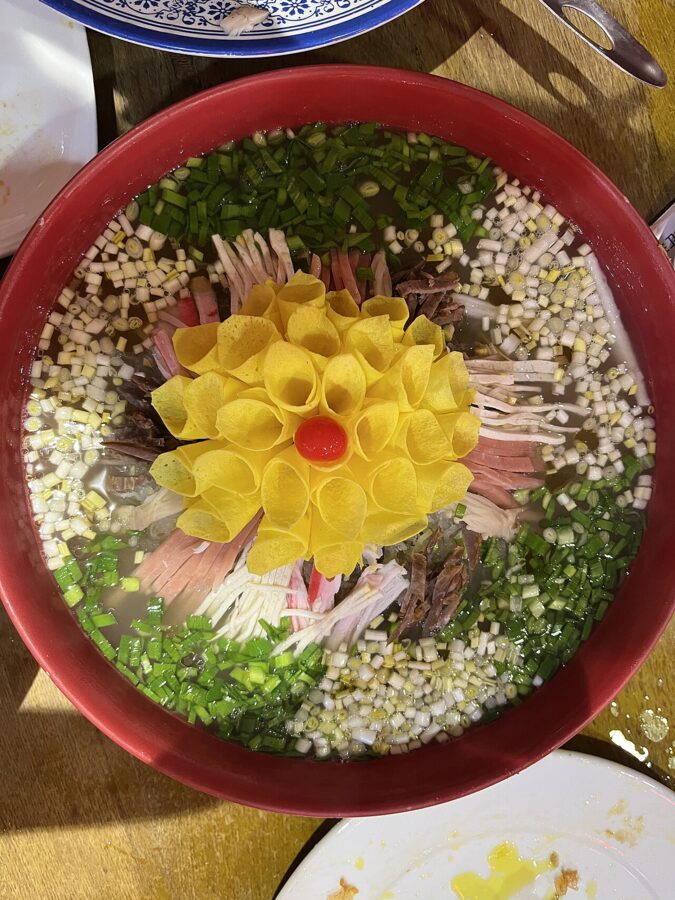
The Luoyang water banquet, shuixi (水席), is the city’s set-piece meal, and it’s not what you expect from a Chinese banquet. There are 24 dishes, traditionally eight cold and sixteen hot, and almost all the hot ones come in soup or sauce. The name has two explanations, and both are true: the dishes are wet, and they flow one after another, the plates cleared as fast as the next arrives, like water.
The flavours lean sour and peppery, and after eight or nine courses of broth some people find it repetitive. Others love it. Try it once, with a group.
The star dish is peony yan cai (牡丹燕菜). It started as “fake bird’s nest”, radish cut into fine threads and steamed with mung bean starch until it looked like the real thing. In 1973, when Zhou Enlai brought the Canadian prime minister Pierre Trudeau to Luoyang, the chef topped it with a peony made of egg yolk, and the dish has been called peony yan cai ever since. Look out too for liantang roupian (连汤肉片), sliced pork in broth, and the crispy fried meatballs, jiaozha wanzi (焦炸丸子), dropped into hot sour broth at the table.
Zhenbutong
The name everyone mentions is Zhenbutong (真不同饭店), a restaurant that dates to the late Qing and was the one that served the 1973 meal. The main branch is on Zhongzhou East Road in the old city. The ground floor is a casual dining room with smaller sets and single dishes; the upper floors are banquet rooms for groups.
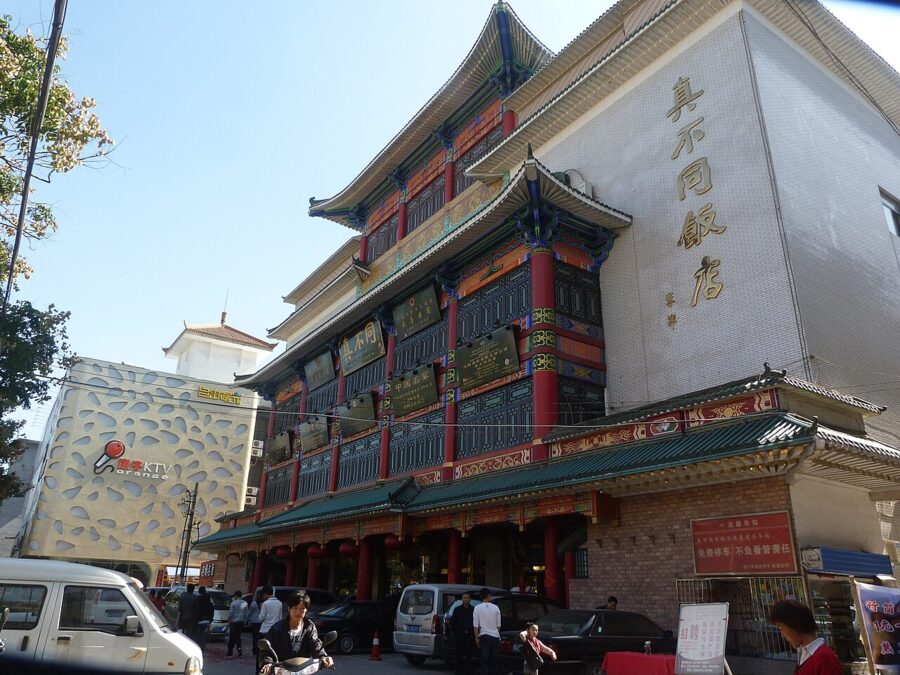
You don’t need all 24 courses. Small sets of 8–10 dishes cost roughly ¥60–100 a head in 2026, and the peony yan cai, the sliced pork in broth and the meatballs are the core of it. It serves lunch and dinner, not all day, so don’t turn up at 15:00, and cheaper water banquet places cluster around Cross Street.
Peony season
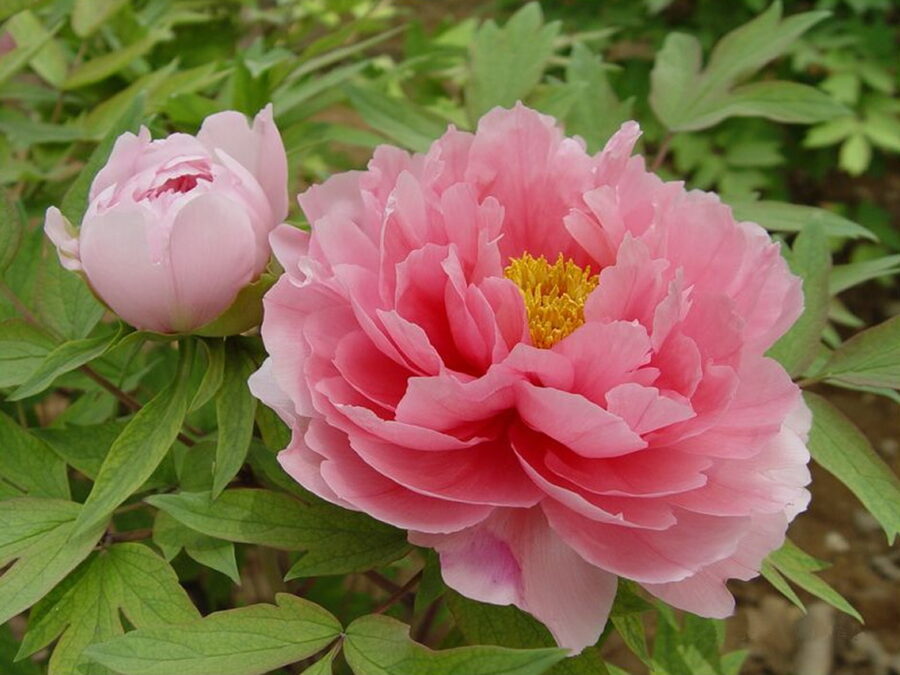
Luoyang’s peonies are famous enough to have a saying, “Luoyang’s peonies are the finest under heaven”, and a legend: Wu Zetian ordered every flower in Chang’an to bloom in winter, the peony refused, and she banished it to Luoyang, where it thrived. Whatever the truth, the city has grown them for well over a thousand years.
The China Luoyang Peony Culture Festival is the city’s biggest event. In 2026 it was the 43rd, and it ran from 1 to 30 April, with the opening ceremony at the Sui-Tang City Ruins Botanical Garden. Peak bloom usually falls in the first half of April, with later varieties lasting into early May. The exact dates move with the weather, and a warm March can bring everything forward.
Hotels raise prices, the timed tickets for Longmen and White Horse Temple are in demand, and Longmen runs half an hour later on festival weekends. If you’re coming for the flowers, book your sights as soon as your train is booked.
Wangcheng Park
Wangcheng Park (王城公园), opened in 1955, is the traditional main venue of the festival and the easiest garden to reach: Wangcheng Park station on Line 1 is right beside it. In the 2026 festival it opened 06:00–21:30 and cost ¥50 at the window, a little less online. Prices often fall once the main bloom is over; in 2026 the park went free from 23 April.
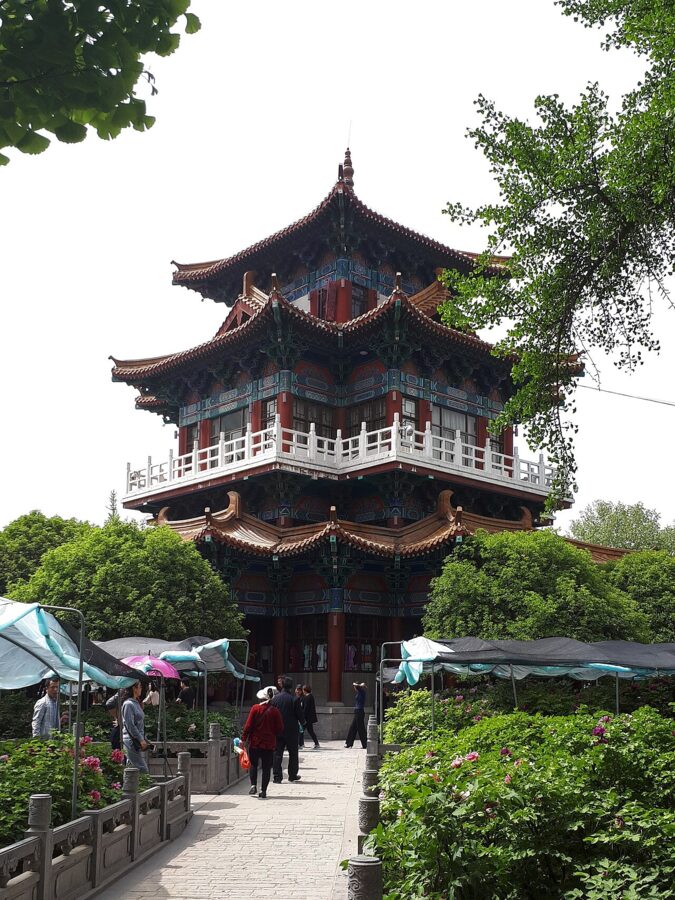
The National Peony Garden and the others
If you want peonies rather than a park, the National Peony Garden (国家牡丹园) on the Mangshan slopes north of the city is the specialist: field after field of named varieties. It opens 08:00–18:30 in the season, and 2026 tickets were in the ¥30–50 range depending on the date and channel. The nearest metro, Erqiao Road on Line 2, is still about 1.6 kilometres away, so most people take a taxi.
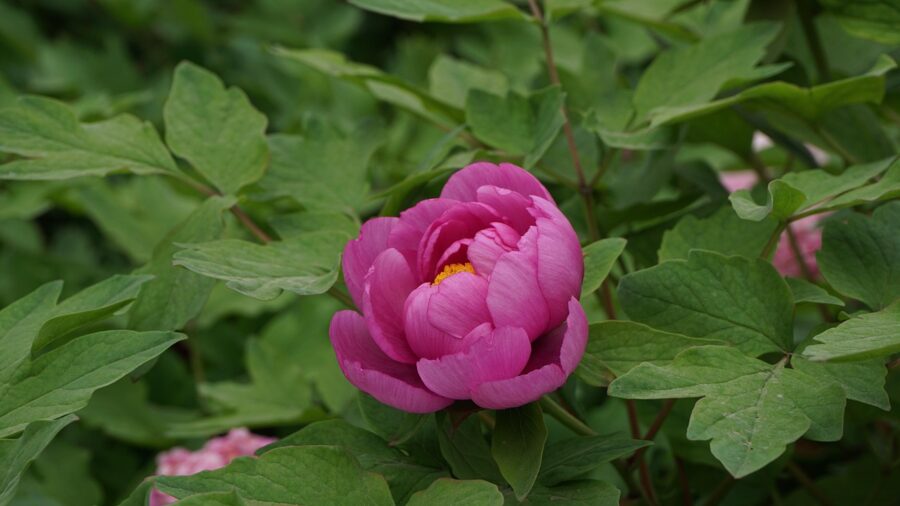
The China National Flower Garden (中国国花园) and the Sui-Tang City Ruins Botanical Garden are the other big ones, both large and both cheaper or free after the bloom peaks. Any of them is fine. Pick the one nearest your hotel, go early, and don’t try to do three in a day.
Is Shaolin worth the day?
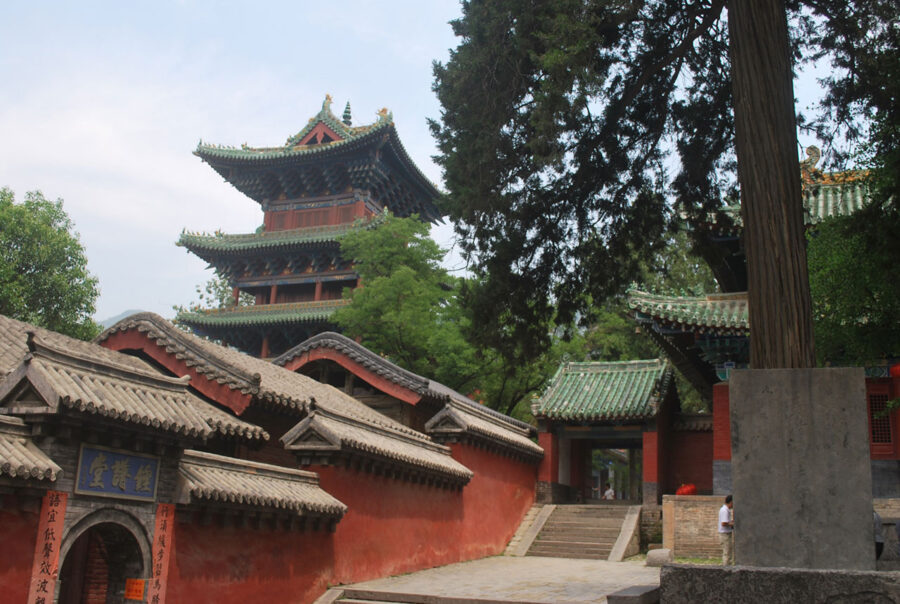
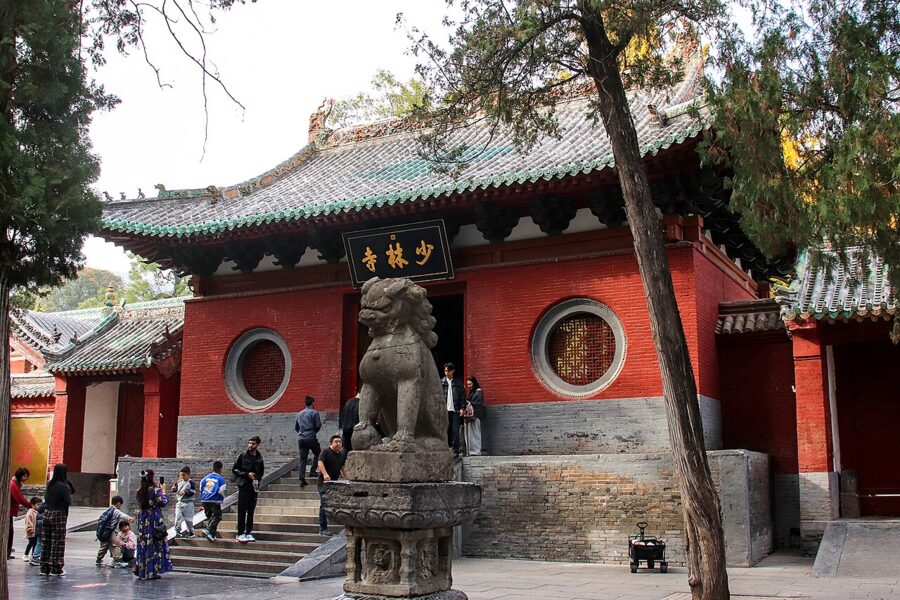
The Shaolin Temple (少林寺) isn’t in Luoyang but at the foot of Mount Song near Dengfeng, about 80 kilometres east, in Zhengzhou’s territory. It’s still a natural day trip from here, and the question is whether it earns a whole day. If you care about kung fu, Chan (Zen) Buddhism or the films, yes; if you’re lukewarm, give the day to Longmen and White Horse Temple.
Shaolin was founded in 495 for an Indian monk, Batuo, and later became the place where tradition says Bodhidharma meditated facing a wall for nine years, founding Chan Buddhism. Its martial arts fame goes back to the monks who fought for Li Shimin, later the Tang emperor Taizong. Today the town of Dengfeng is full of martial arts schools, and the temple sits in a large, managed scenic area with a long walk from the gate.
Getting there
From Luoyang Bus Station, a few minutes’ walk from Luoyang railway station, buses run to Dengfeng from about 07:00 to 18:00 for around ¥25, taking one to two hours. There are also coaches from the Longmen coach centre next to Luoyang Longmen station, for about ¥35. Some buses sold as “Shaolin Temple” end at Dengfeng bus station; from there a minibus to the gate costs about ¥5 and takes 20 minutes.
A Didi one way is about ¥120 and roughly an hour on the expressway. A car with a driver who waits, booked through your hotel, starts at about ¥600 for the round trip. For a group of three or four, that’s the least tiring option, and it lets you leave when you’re done rather than when the last bus does. The last buses back to Luoyang leave the scenic area at about 18:00 and Dengfeng bus station at about 19:30, but confirm on the day.
What the ticket covers
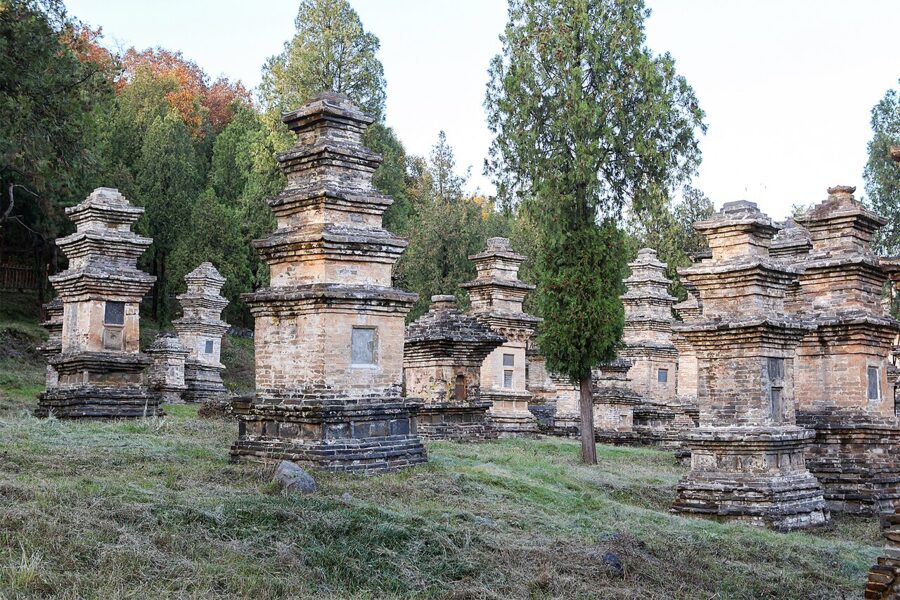
The ¥80 ticket covers the main temple compound, the Pagoda Forest and the kung fu show at the martial arts hall, about 700 metres from the temple. A combined ¥180 ticket adds the cable car up to Sanhuang Zhai on Shaoshi Mountain, a cliffside walk that takes three to five hours if you hike it. The official channels are the WeChat account 嵩山旅游 and the mini programme 漫游嵩山. Foreigners pay full price; the concessions are for Chinese citizens.
In October 2026 the scenic area opened 08:00–17:00 with last entry at 16:30. Arrive before 09:00 on a holiday. The walk from the gate past the martial arts hall to the temple and on to the Pagoda Forest is long, so plan on two to three hours inside even if you skip the mountain.
The kung fu show
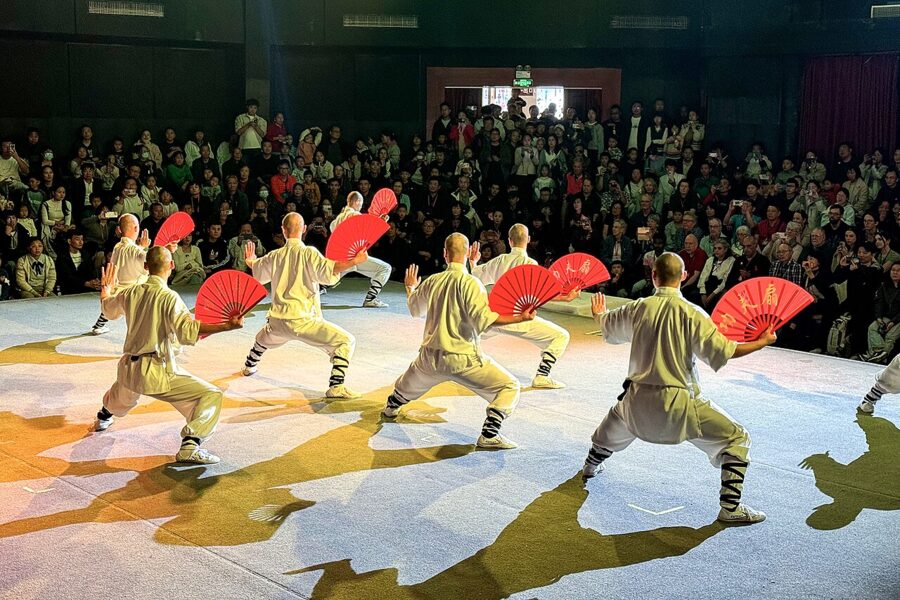
The show at the martial arts hall runs 20 to 30 minutes, with times posted on the day. It’s a stage show by young performers, mostly from the local schools, with forms, weapons and the odd demonstration of breaking things, and it’s done well. It isn’t a glimpse into monastic life, and it doesn’t pretend to be. Get there 10–15 minutes early on busy days, because the good seats go fast.
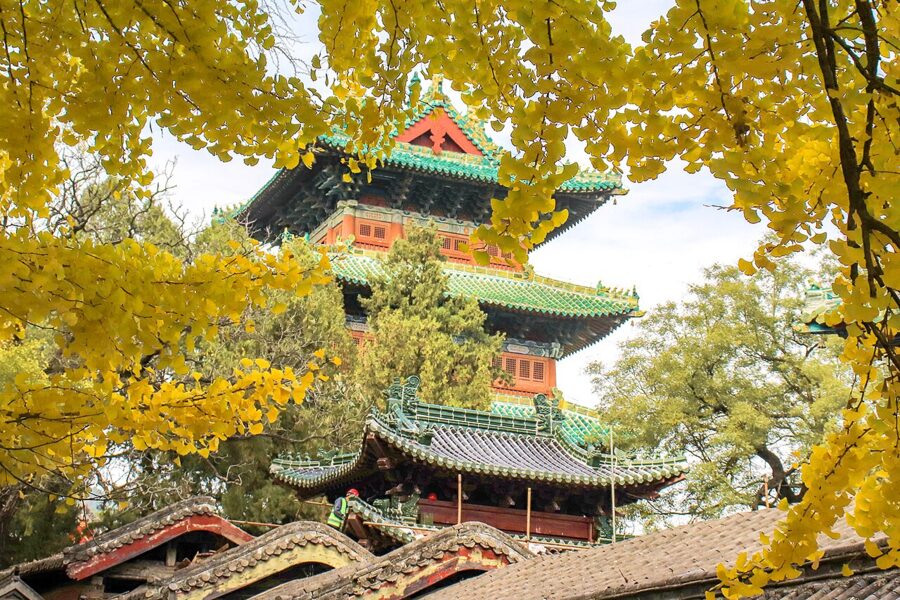
Autumn is the best time to go: in late October and November the ginkgo trees in the temple turn yellow, and the cooler weather makes the long walk easier. Summer is hot and crowded, and the scenic area can close some trails in bad weather.
Getting to Luoyang and around
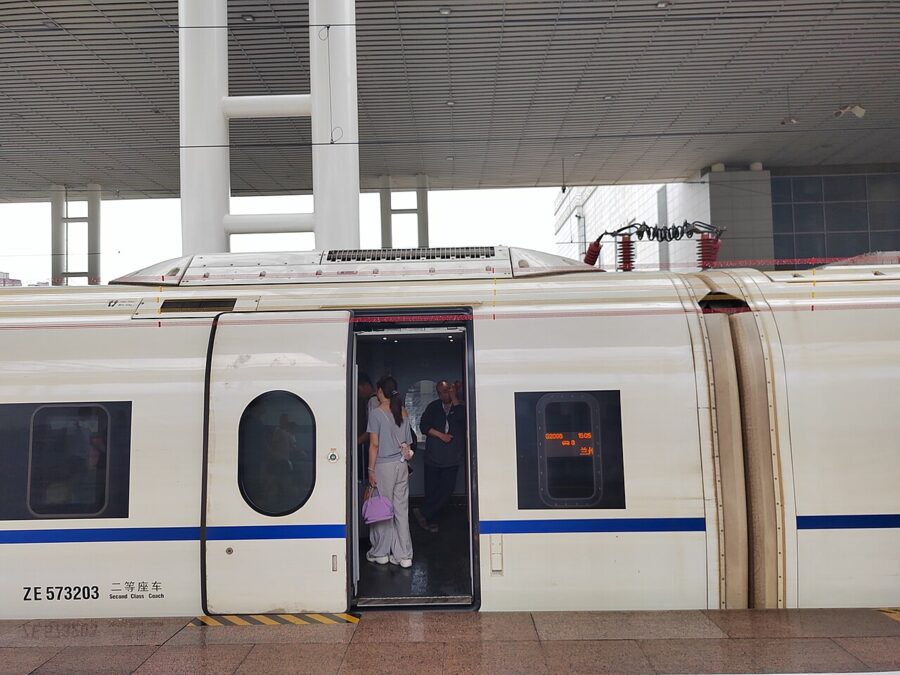
Almost everyone arrives by high-speed train at Luoyang Longmen (洛阳龙门站), on the line between Zhengzhou and Xi’an. From Xi’an North the fastest G trains take about 1 hour 15 minutes, and most take under two hours. From Zhengzhou East, G trains take about 35–45 minutes, and from Beijing West the fastest are just under three hours, with most between three and four. There are over a hundred trains a day from each.
Buy tickets on 12306 or Trip.com with your passport. If you’re coming from Xi’an after the Terracotta Warriors, the same line also stops at Huashan North, the station for Mount Hua, which makes the three an easy run east. Luoyang’s small airport, Beijiao, is north of the city, about 30 minutes by car from Longmen.
The metro, taxis and paying
Luoyang’s metro has two lines, crossing at Jiefang Road. Line 1 runs east to west through the old city: Yangwan (for White Horse Temple), Luoyigucheng, Lijingmen, Yingtianmen and Wangcheng Park are all on it. Line 2 runs north to south and reaches Longmen High-speed Railway Station, so you can ride from the station into town without a taxi.
For everything else, use Didi, which works in English inside Alipay. Fares are low, and the old city to Longmen is roughly a half-hour ride. Pay with Alipay or WeChat Pay, both of which accept foreign cards. Cash is legal tender, but the soup windows and snack stalls are used to phones, and change for a ¥100 note can be hard to find at 06:30.
Where to stay
Two areas work. The old city around Lijingmen and Luoyigucheng stations puts the evening right outside your door, and the soup shops for breakfast too; it’s noisier at night, which is the trade. The area around Yingtianmen station, in Xigong, is a bit quieter, close to the night zone and to Line 1, and is a straight run to Longmen in the morning.
Two days in Luoyang
Two days is right for the city; add a third for Shaolin.
Day one: Longmen and the old city
- 07:00 Beef or mutton soup for breakfast, then a Didi to the Longmen north-west service area.
- 08:00 Shuttle to the gate, West Hill caves in the morning light: Binyang, Wanfo, Lotus and Guyang.
- 10:30 Fengxian Temple and the Losana Buddha. Stay half an hour.
- 11:30 Cross the bridge, East Hill and Kanjing Temple, then Xiangshan Temple and Bai Garden.
- 13:30 Out at the east gate, shuttle back, lunch.
- Afternoon Rest. You’ll need it.
- 17:30 Luoyi Old Town before dark, then the lanterns. Dinner on Cross Street, with bu fan tang.
Day two: White Horse Temple, banquet and the night zone
- 07:40 White Horse Temple at opening: the main axis, then the international halls, then Qiyun Pagoda.
- 11:30 Back to the old city for a water banquet lunch at Zhenbutong.
- Afternoon In April, a peony garden. Any other month, Guanlin Temple, the shrine to Guan Yu south of the city, or a slow walk around the old city lanes.
- Evening Yingtianmen and the Sui-Tang night zone from 19:00, or the Longmen night opening if it’s running.
Day three, if you have it
Shaolin. Leave early, by car or the first bus, take in the temple, the Pagoda Forest and a kung fu show, and be back for a late dinner.
Skip this
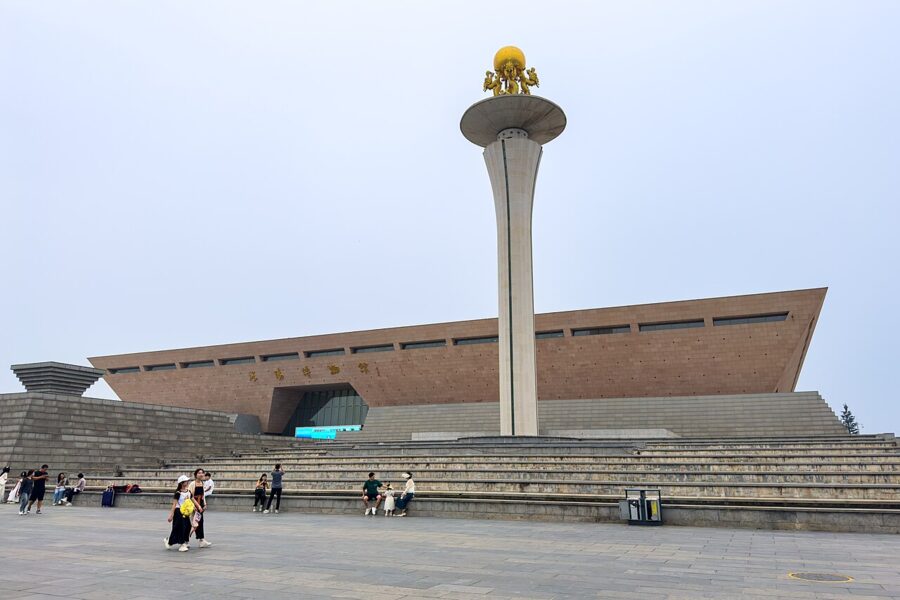
- The Luoyang Museum, for now. It closed on 19 October 2026 for about a year of renovation, and no reopening date has been announced. Plenty of guides still tell you to start there.
- Climbing Lijing Gate. The tower view is ordinary. Walk through the gate and spend the money on soup.
- The East Hill, if you’re tired. It’s the weakest part of Longmen, with the most steps. Kanjing Temple is the exception; the rest you can leave out.
- Both night zones in one evening. Luoyi Old Town and Yingtianmen are both lantern-and-crowd evenings. Pick one per night.
- A full 24-course banquet for two. A small set gives you all the important dishes and none of the repetition.
Get to Longmen when the gates open. Stand on the terrace in front of the Buddha before the coach parties arrive, and then, when they do, walk down to the bridge and look back at the cliff from the middle of the river. That’s the view of Luoyang to take home.