Mount Hua: The Five Peaks, the Plank Walk and How to Climb Huashan From Xi’an
The most photographed ledge in China is shut. Since 15 September 2026, a notice from the Huashan scenic area has kept the Changkong Plank Road closed, along with its neighbour on East Peak, the chain descent called Yaozi Fanshen, for what the notice calls a full overhaul of the fittings and safety protection. It will reopen once the work passes inspection, on a date the scenic area says it will announce through its own channels. In mid-November there was still no date.
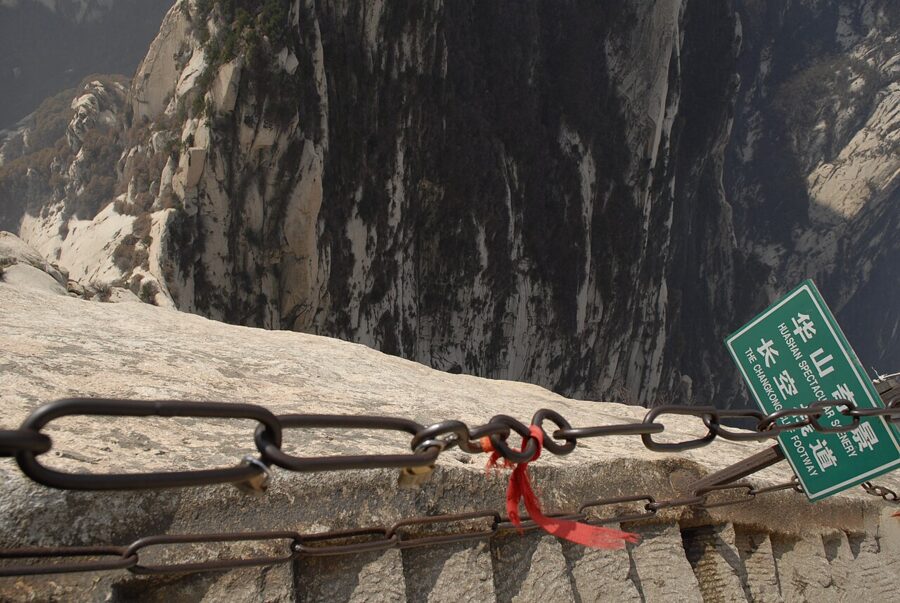
If you came for one photo of boots on a plank above nothing, that changes your trip. If you came for the mountain, it barely does. Mount Hua, Huashan (华山) in Chinese, is five granite summits joined by stairways cut into the rock, a Taoist mountain for two thousand years and the steepest walk in the country with or without its famous ledge. The other “dangerous” bits, the Thousand-Foot Precipice, Canglong Ridge, the Ear-Touching Cliff, are open, and they are what most people remember anyway.
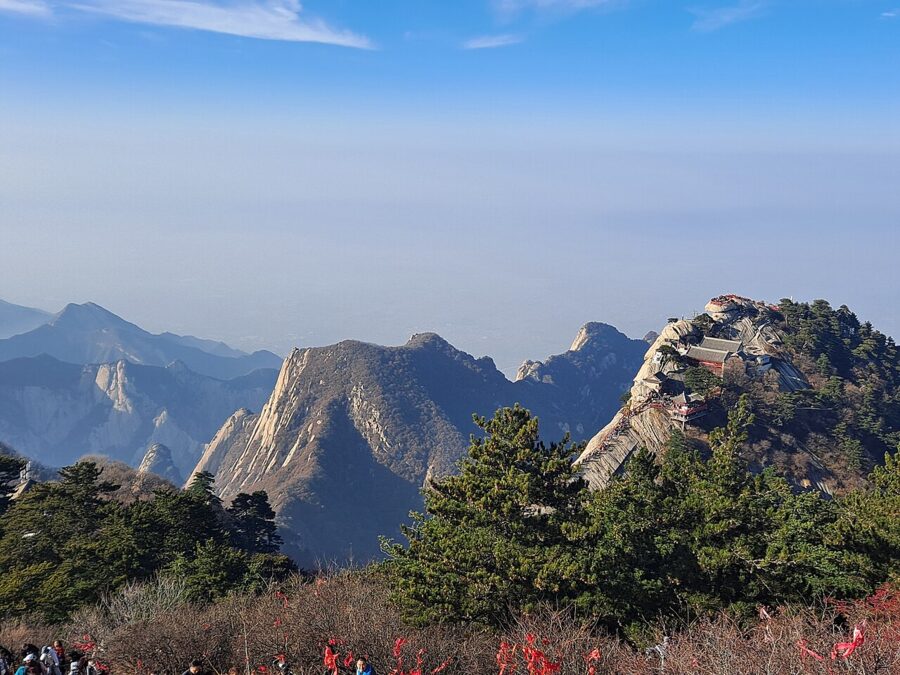
It’s also close. The high-speed train from Xi’an North to Huashan North takes 28 minutes on the fast services, and a free bus covers the last 6 km to the visitor centre. You can ride a cable car up, walk the five peaks and be back in Xi’an for a late dinner, or you can sleep on the summit and watch the sun come up from East Peak. Here is how the options compare, priced for the high season (1 March to 30 November).
| Route | Time on the mountain | Cost on the mountain (gate, buses, cable cars) | Best for |
|---|---|---|---|
| West Peak cable car up, North Peak cable car down | About 6 hours | ¥440 | A first visit in one day; sees all five peaks without backtracking |
| North Peak cable car up and down | 3–7 hours | ¥350 (return fare) | The cheapest ride; fine if you’ll walk the ridge both ways |
| West Peak cable car up and down | About 4 hours | ¥520 (return fare plus two bus legs) | Older walkers and children; skips Canglong Ridge |
| On foot from Yuquan Temple, cable car down | 4 hours to North Peak, about 8 for the five peaks | ¥160 plus your way down | Fit walkers who want the old pilgrim path |
| Night climb to East Peak for sunrise | 6–8 hours up, overnight | ¥160 plus your way down | The sunrise, and a story; hard on the legs |
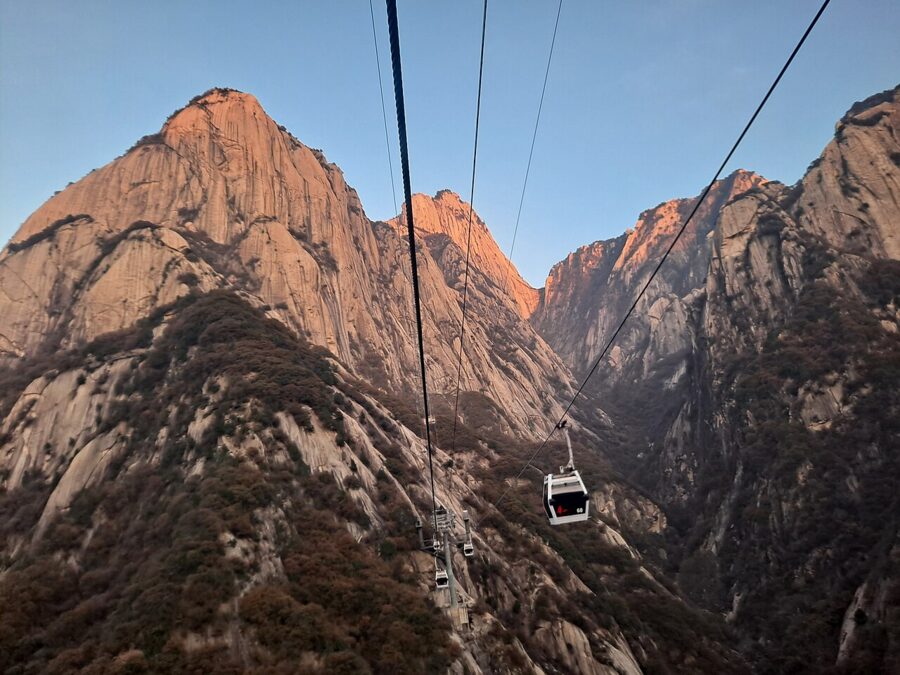
Those mountain costs are the gate ticket (¥160), the scenic-area shuttle buses to the cable car stations (¥40 for the West line, ¥20 for the North line, each way) and the cable car fares. Add about ¥115 for the return train from Xi’an. In winter, from 1 December to the end of February, the gate drops to ¥100 and both cable cars get cheaper.
In This Article
- Granite, Taoists and a very old warning
- Getting there from Xi’an
- Station to visitor centre
- Tickets and real-name booking
- Two cable cars and one old path
- West Peak cable car (Taihua cableway)
- North Peak cable car (Sante cableway)
- The loop most people take
- Walking up from Yuquan Temple
- The five peaks, one by one
- North Peak (Yuntai Feng)
- Ear-Touching Cliff and Canglong Ridge
- Golden Lock Pass
- Middle Peak (Yunu Feng)
- East Peak (Zhaoyang Feng)
- South Peak (Luoyan Feng)
- West Peak (Lianhua Feng)
- The plank road, without the hype
- How it works when it’s open
- Is it dangerous?
- Staying up there for sunrise
- Sleeping on the peaks
- The night climb
- When the sun comes up
- Weather, crowds and closures
- Holidays
- What to carry, and what to eat
- A one-day plan and a two-day plan
- One day from Xi’an
- Two days, with a sunrise
- Skip this
Granite, Taoists and a very old warning
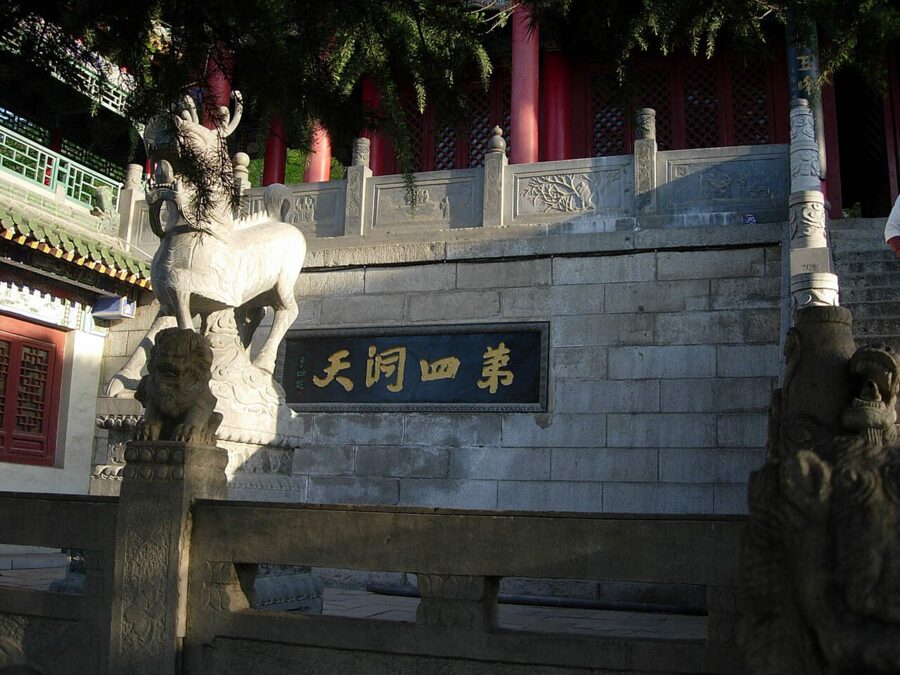
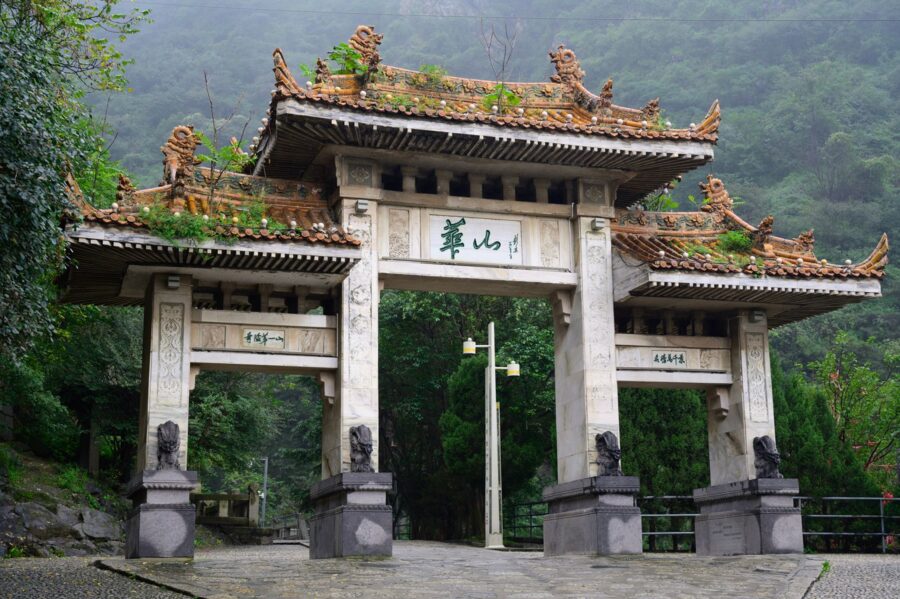
Huashan is the Western Mountain of the Five Great Mountains, the set of five sacred peaks that emperors honoured with sacrifices. Its other name, Taihua (太华山), and the character itself come from the shape: the Northern Wei geographer Li Daoyuan described a mountain “cut square on four sides” that looked like a flower from far away, and in old Chinese 华 and 花 (flower) were the same word. There’s an old saying every Chinese visitor knows: zigu Huashan yi tiao lu (自古华山一条路), “since ancient times, only one road up Huashan”.
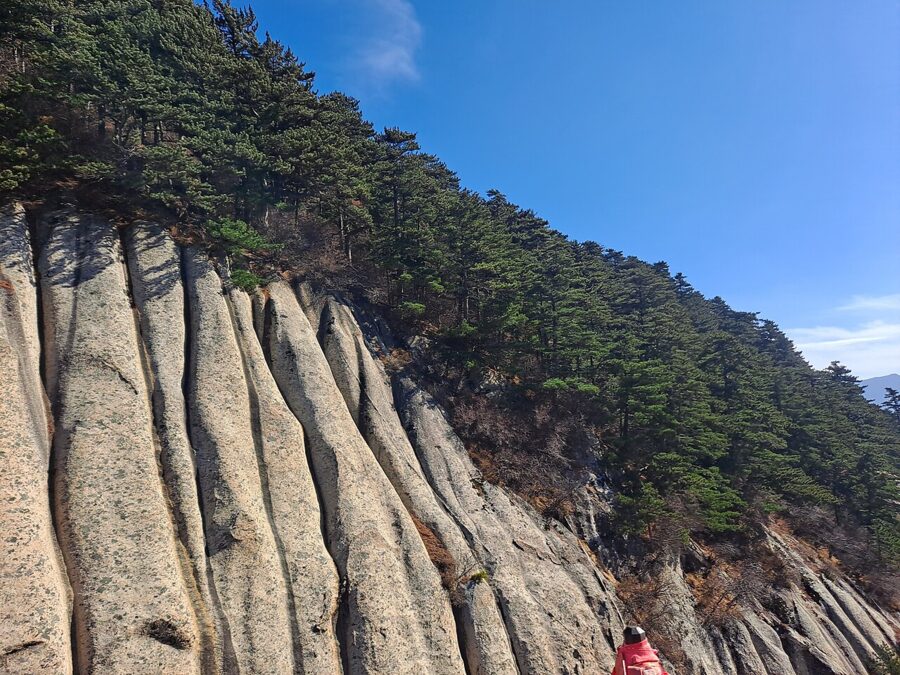
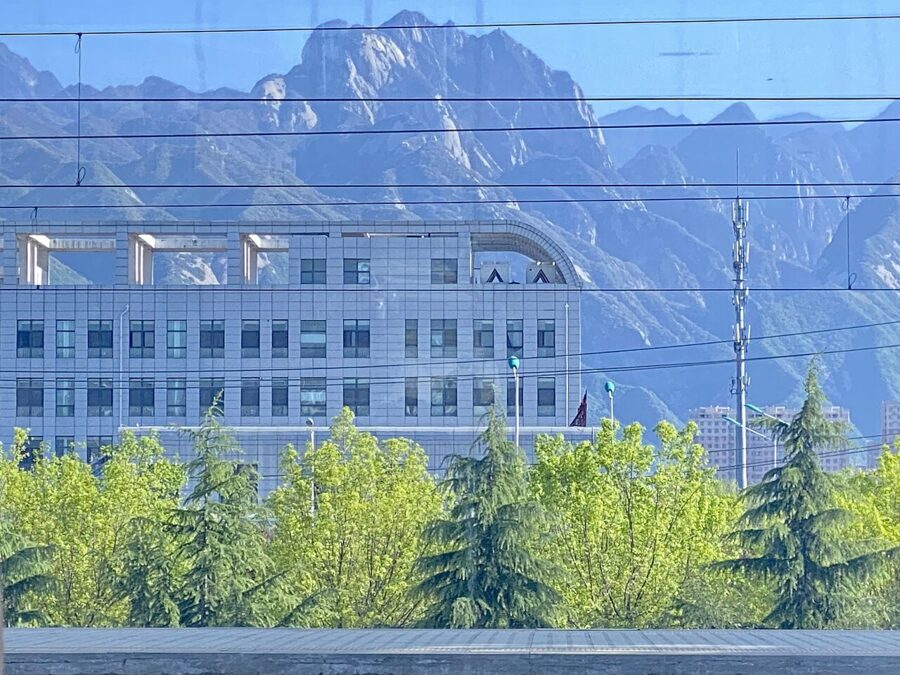
The geology explains the reputation. Huashan is a single huge mass of granite at the eastern end of the Qinling range, lifted along faults on its north and south sides while the Wei River basin dropped away below it. Granite splits along regular vertical joints, so instead of slopes you get walls. That’s why the routes up are staircases chiselled into clefts, with iron chains for handrails, rather than paths.
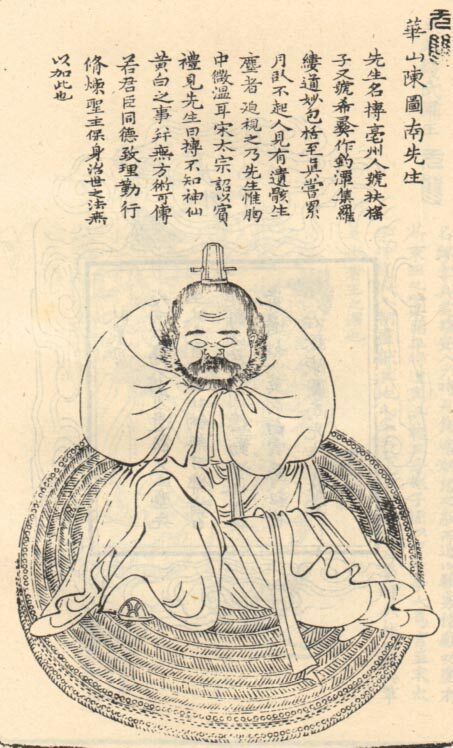
Taoism got here first and stayed. A shrine to the god of the Western Peak stood at the foot of the mountain by the second century BC, and the mountain counts as the fourth of the Taoist “grotto heavens”. Chen Tuan, the hermit who is said to have slept for months at a time, spent the end of his life here in the tenth century; in the 1230s the Quanzhen school took over the temples, and in 1998 most of them were handed back to the China Taoist Association. You’ll pass working shrines on every peak.
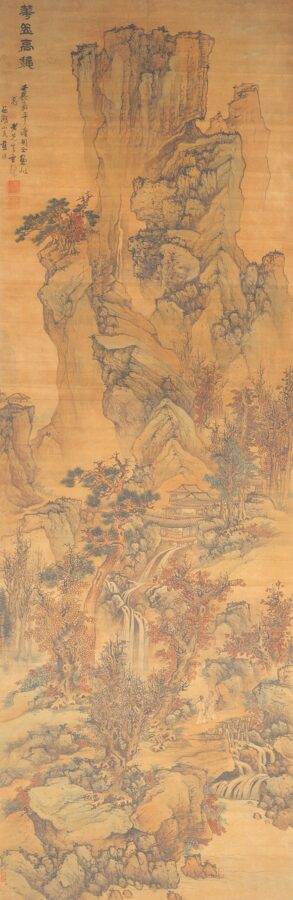
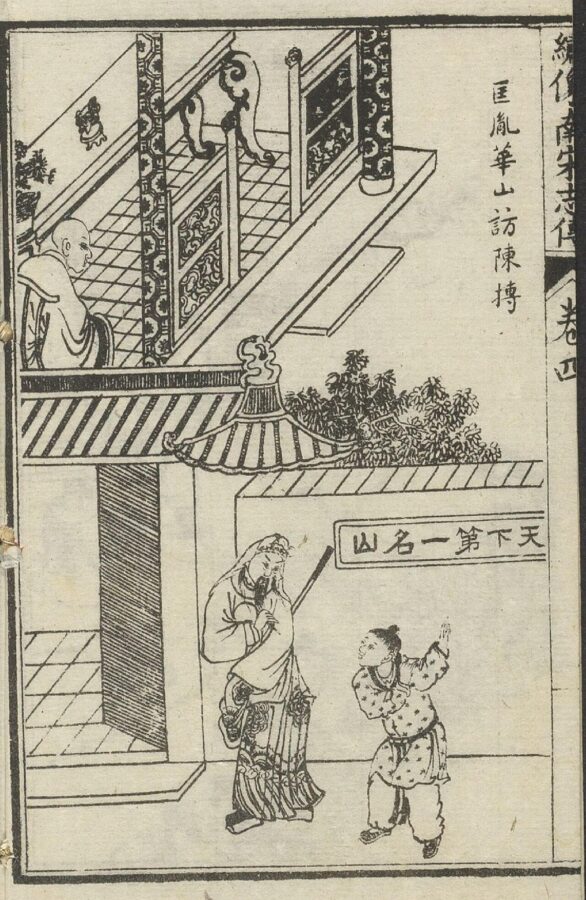
Huashan also sat on the Tang dynasty’s main road between its two capitals, Chang’an (today’s Xi’an) and Luoyang, which is why it collected so many poems and emperors. The Tang court made its god the “King of the Metal Heavens”. In the 2020s, though, the people quoting Huashan are more likely to be quoting Jin Yong, whose martial-arts novels hold a sword contest on the summit. More on that on North Peak.
Getting there from Xi’an
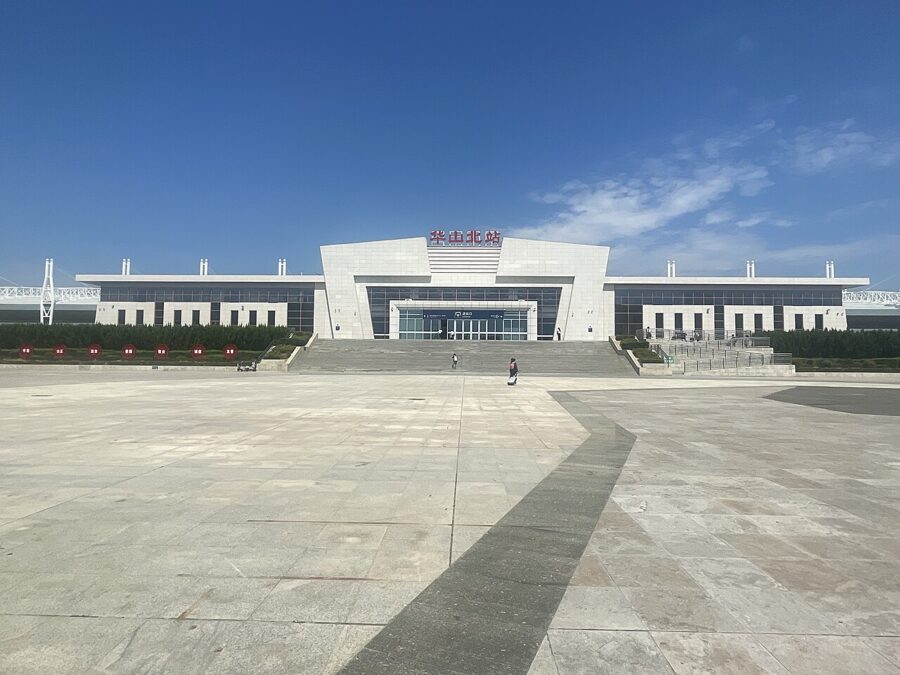
Take a high-speed train from Xi’an North (Xi’an Beizhan), reached on Metro Line 2 or Line 4 to Beikezhan, to Huashan North (华山北). Dozens of G and D trains make the run every day; on a typical November weekday the first left just before 08:00, and the fastest G trains took 28 minutes. Second class costs ¥50–64 depending on the train, most of them ¥57. Coming back, the last departures from Huashan North ran after 22:00, which is later than you’ll want.
Book on 12306 or Trip.com with your passport, the same as any Chinese train, and buy the morning outbound a day or two ahead at weekends. There’s a slower option too: C-series trains from the main Xi’an station to the old Huashan station take around an hour and a half for ¥30. It’s an option if you’re staying near the city walls and can’t get a seat on the fast trains.
Station to visitor centre
Since 14 January 2026, free short-hop buses link Huashan North with the scenic area, and bus lines 1 and 2 run from the station to the Huashan Visitor Centre (华山游客中心). It’s about ten minutes. Know which gate you’ve booked before you get on, because there are two, and the ticket is tied to one.
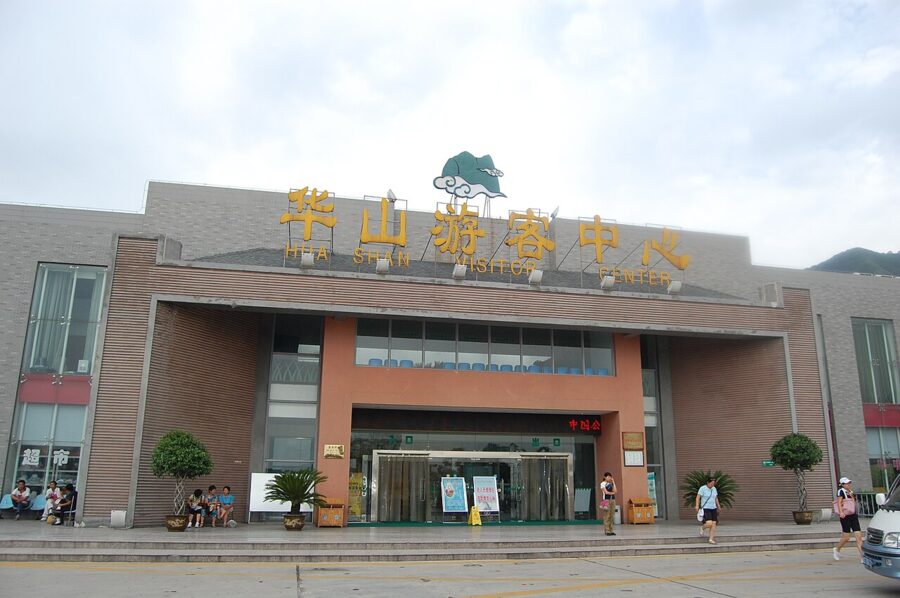
- Huashan Visitor Centre (游客中心): entry for both cable car routes. In the 2026 high season it admitted people from 07:00 to 16:00.
- Huashan Gate at Yuquan Temple (华山门, 玉泉院): entry for the walking route. It’s open 24 hours, which is what makes the night climb possible.
Tickets and real-name booking
Huashan sells timed, real-name tickets online, and you should treat the online booking as the only way in. The official channel is the scenic area’s WeChat account and mini programme, 华山旅游服务平台 (Huashan Tourism Service Platform), where you book with the passport you’ll travel on and pay with WeChat Pay; Trip.com sells the same tickets in English. In the scenic area’s 2026 notices, bookings opened up to 10 days ahead with one ticket per ID per day, and sales stop when the day’s quota is reached.
The gate ticket is ¥160 from 1 March to 30 November and ¥100 from 1 December to the end of February. Half-price tickets go to children over 6 and up to 18, and to full-time students up to undergraduate level with valid ID. The shuttle buses and cable cars are separate purchases, online or at the stations. The scenic area runs promotions too: in 2026 the adult gate ticket was half price from 15 July to 10 October, so check before you pay full fare in summer.
Two cable cars and one old path
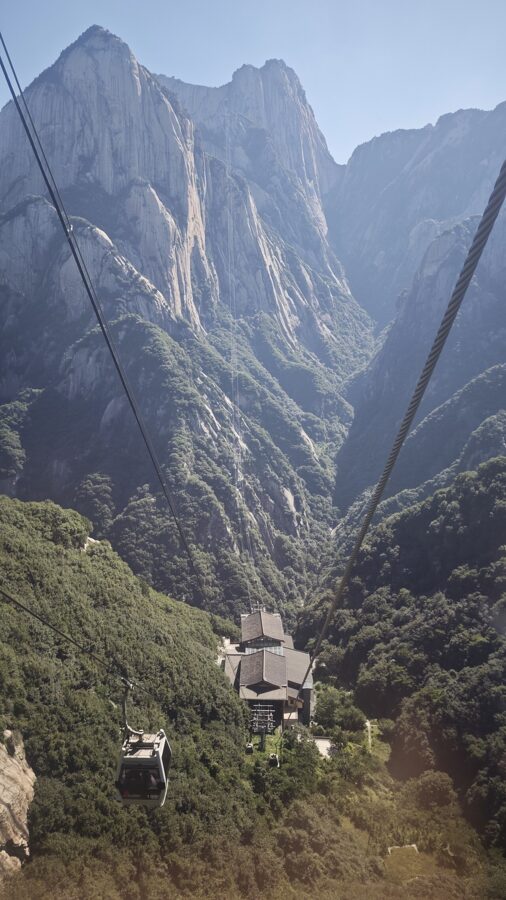
Neither cable car starts at the visitor centre. From there, scenic-area shuttle buses run up two different valleys, and the bus and the cable car are separate tickets. In the high season both cable cars run 07:00–19:00, and 08:00–18:00 from December to February; neither runs at night, so the night climb is on foot whatever you do.
West Peak cable car (Taihua cableway)
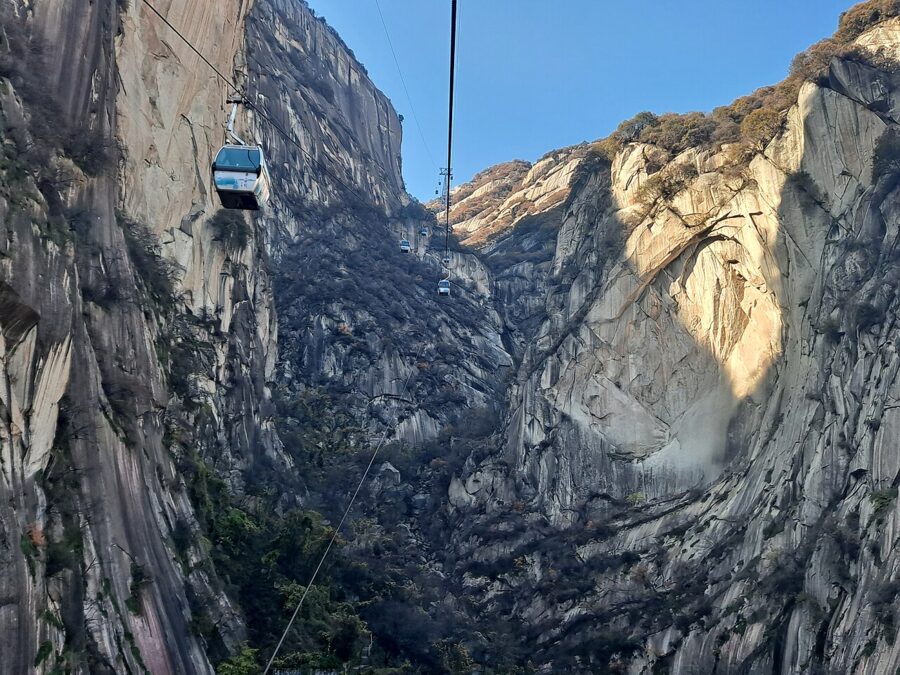
The West Peak line (西峰索道, also called the Taihua cableway) is the long one. The shuttle bus up the Wengyu valley costs ¥40 each way and takes about 30 minutes, then the cable car runs 4,211 m in around 20 minutes to a top station just below West Peak. The fare is ¥140 one way or ¥280 return in the high season, and ¥120 or ¥240 in winter.
It’s worth the money. It saves you the biggest climb on the mountain, and it drops you near the top end of the ridge, so the day becomes a long walk mostly downhill. It’s also the line most exposed to wind: on the afternoon of 5 November 2025 it stopped for about an hour from 16:00 in a gale, with more than a hundred people left waiting, while the North Peak line kept running.
North Peak cable car (Sante cableway)
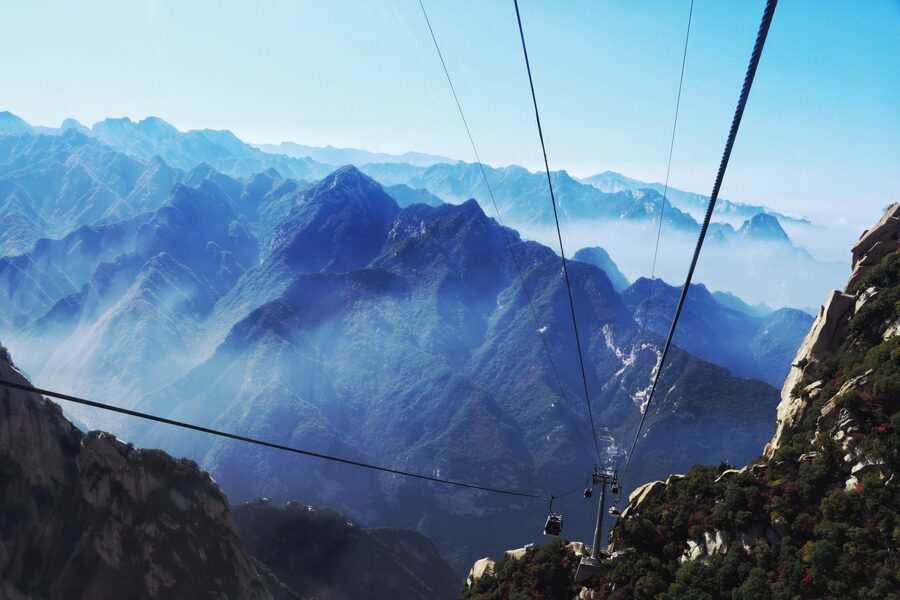
The North Peak line (北峰索道, the Sante cableway) opened in 1996 as Shaanxi’s first Sino-foreign joint venture, and it is still the cheaper, shorter ride. The shuttle up the Huangfu valley costs ¥20 each way and takes about 20 minutes, and the cabin ride takes about 10 minutes to a station just below North Peak, the lowest of the five at 1,614.7 m. Fares are ¥80 one way or ¥150 return in the high season, ¥45 or ¥80 in winter.
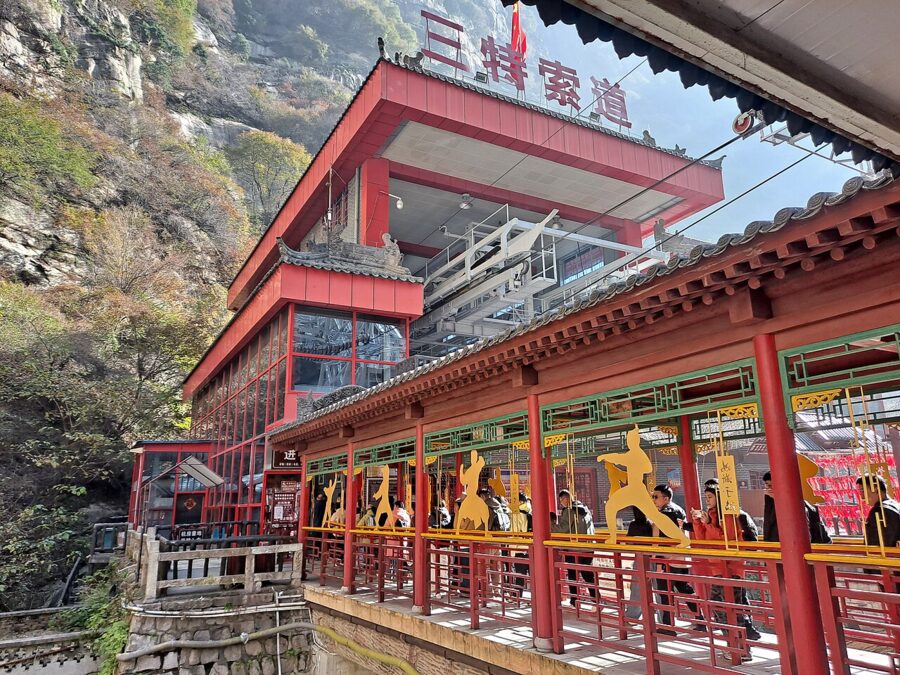
The catch is what comes after. From North Peak to the ridge and the high peaks you climb Canglong Ridge, so riding North up and North down means doing the hardest stretch of the ridge walk both ways. If your knees are sound and your budget is tight, it’s a reasonable trade.
The loop most people take
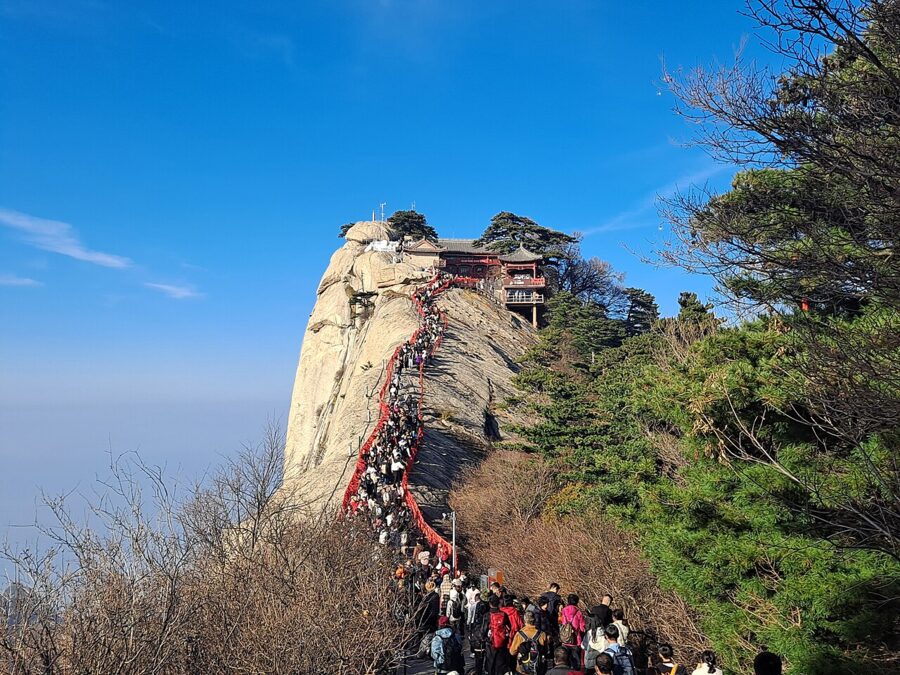
Up West, down North. It’s the loop the scenic area itself recommends, it costs ¥440 in the high season including the gate and both buses, and it takes about six hours on the mountain without the plank walk. You go West Peak, South Peak, East Peak, Middle Peak, Golden Lock Pass, Canglong Ridge and North Peak, almost all of it on stairs going down, and nothing is walked twice.
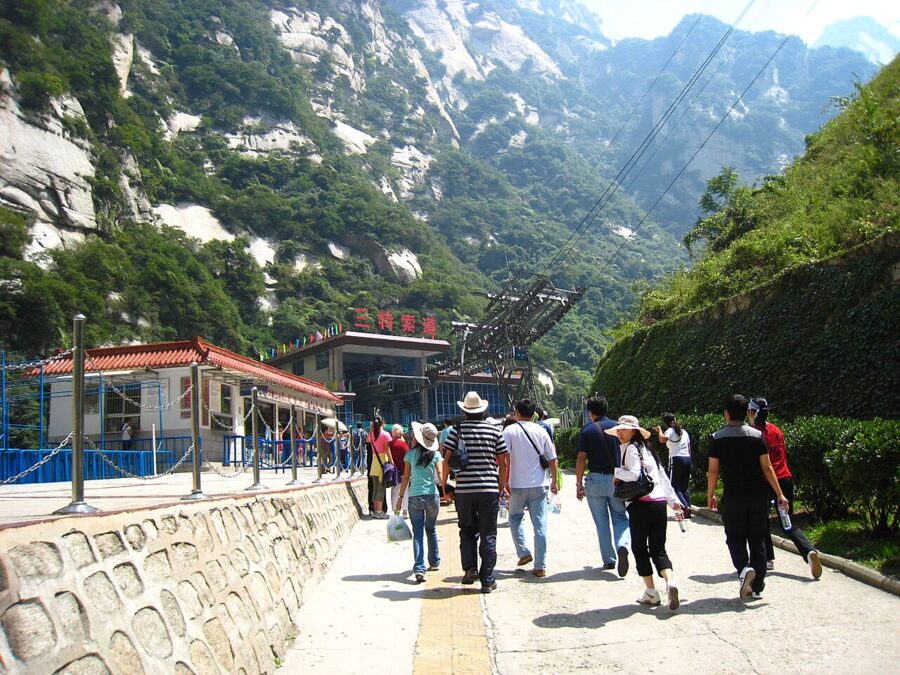
The reverse, up North and down West, works too, but you climb Canglong Ridge against the flow of people coming down it, and you pay the dearer fare at the end of a tiring day. The scenic area also suggests West up and West down for older walkers and families. It takes about four hours and skips the ridge, which is fine for knees and a shame for the views.
Walking up from Yuquan Temple
The old route, the Huashan valley path (华山峪), climbs about 6 km from Yuquan Temple to North Peak. The scenic area puts it at around four hours to North Peak and about eight to see all five peaks, which is fair for fit walkers who don’t stop for long. It starts gently and finishes on some of the steepest stairs you’ll ever climb.
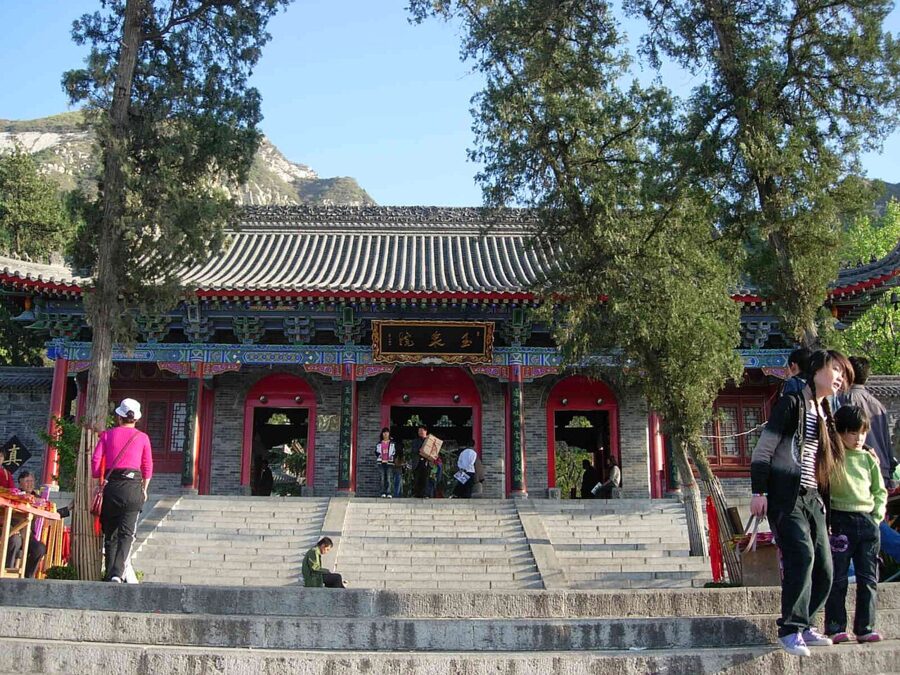
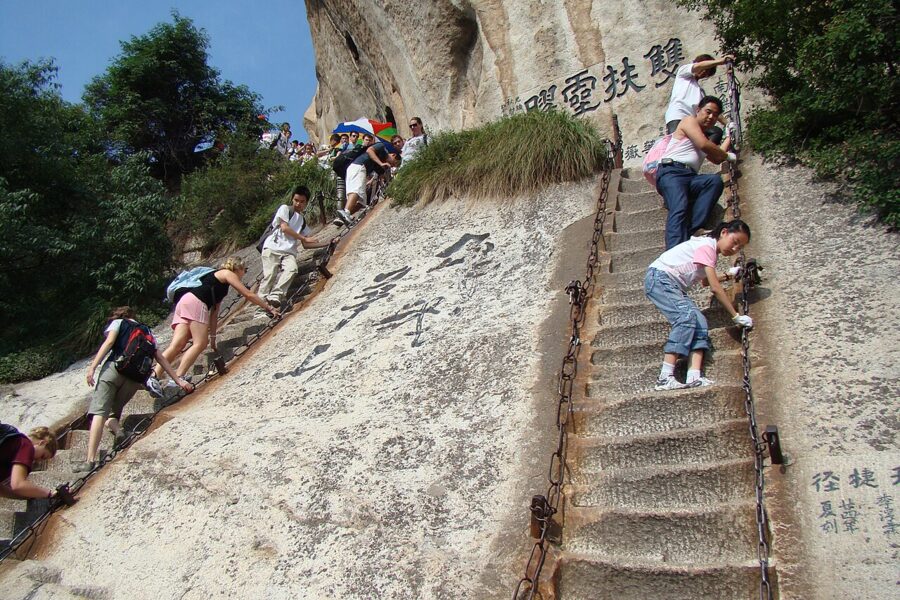
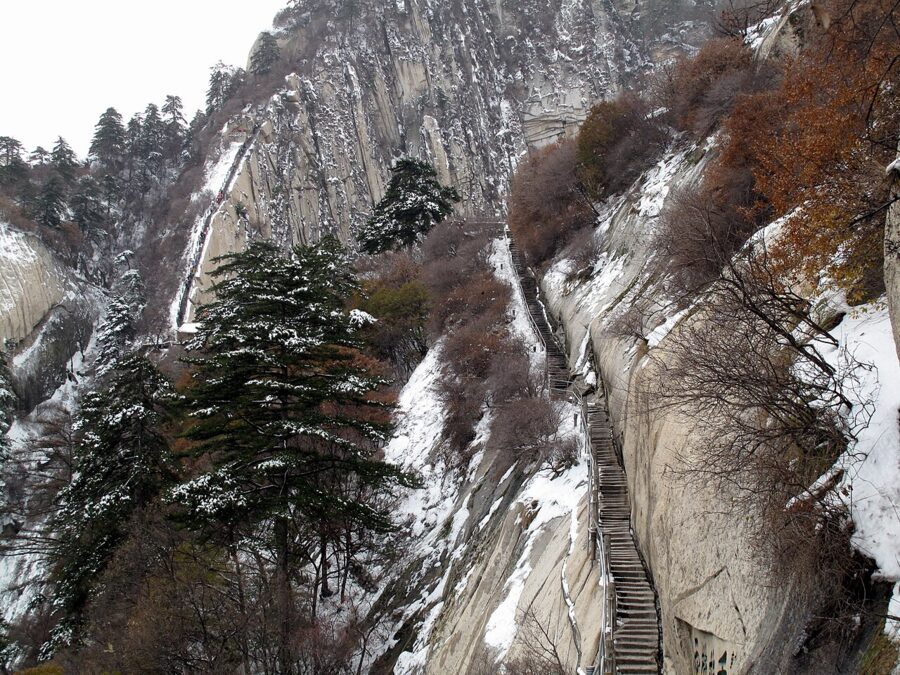
The first half follows the valley past Wuliguan (五里关), Shaluoping (莎萝坪) and Maonu Cave (毛女洞) to Qingkeping (青柯坪), the last easy rest. Above it is Huixin Stone (回心石), the “turn back” stone, and the name is advice: from here the path goes up a crack. The Thousand-Foot Precipice (千尺幢) is a stair of more than 370 steps cut up a cleft between two walls, the treads barely a third of a shoe deep, and the top comes out through a hole like the mouth of a well.
After it comes the Hundred-Foot Gorge (百尺峡), a narrow slot between rock walls, and then Laojun Ligou (老君犁沟), “Laozi’s Plough Furrow”, more than 570 steps up a groove that legend says Laozi’s ox ploughed in a single night. It ends below North Peak. You won’t be alone: this is the route of the night climb, and in summer it fills from about 21:00.
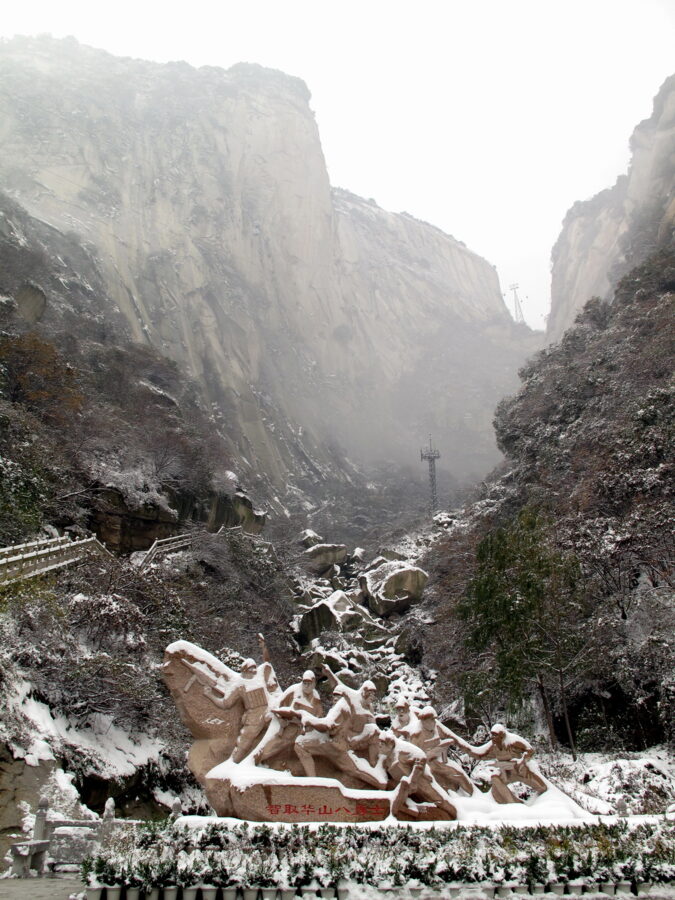
There’s a quieter way down as well. The Zhiqu Huashan trail (智取华山路) drops from North Peak into the Huangfu valley near the North Peak cable car’s lower station. It’s named after the small party of soldiers who climbed an unguarded gully to take North Peak in 1949, and it takes a couple of hours on foot down through forest, with a fraction of the people. If your legs have anything left, I’d take it over the cable car queue.
The five peaks, one by one
The summits run in a rough horseshoe. North Peak sits out on its own below the rest, joined by Canglong Ridge to the high cluster: Middle, East, South and West. Here they are in the order you meet them walking up from the north, which is the reverse of the West-up loop.
North Peak (Yuntai Feng)
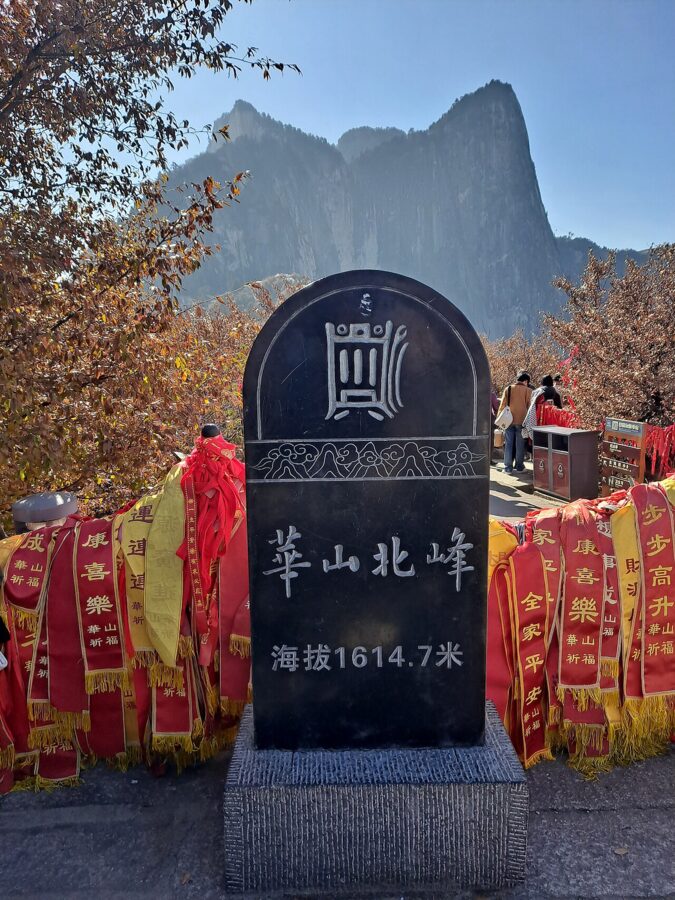
North Peak (北峰), also called Cloud Terrace Peak (云台峰), is where the walking route and the North Peak cable car meet, which makes it the busiest crossroads on the mountain. Li Bai wrote that the three high peaks look like a lotus of stone resting on a terrace of cloud, and on a hazy morning from here you see what he meant. Look north instead and the Wei River plain runs flat to the horizon.
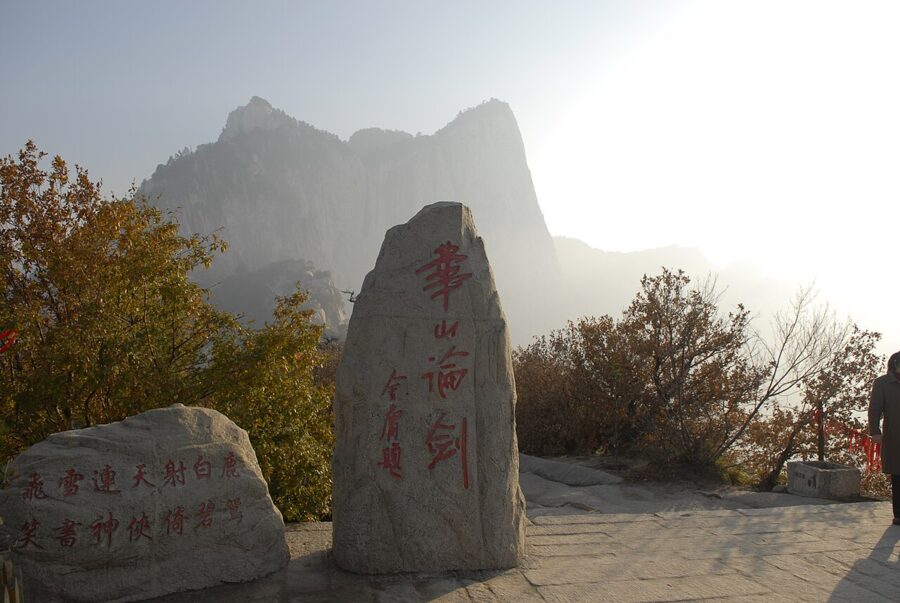
The stone for Huashan lunjian (华山论剑), “discussing swords on Huashan”, is the photo stop. In Jin Yong’s martial-arts novels the great masters meet here to decide who is best, and the phrase has become everyday Chinese for a contest between top players. Several other “Lunjian” stones had sprung up on other peaks, some put there by businesses, and in April 2026 the scenic area had them taken out, leaving the North Peak stone as the one official site.
Ear-Touching Cliff and Canglong Ridge
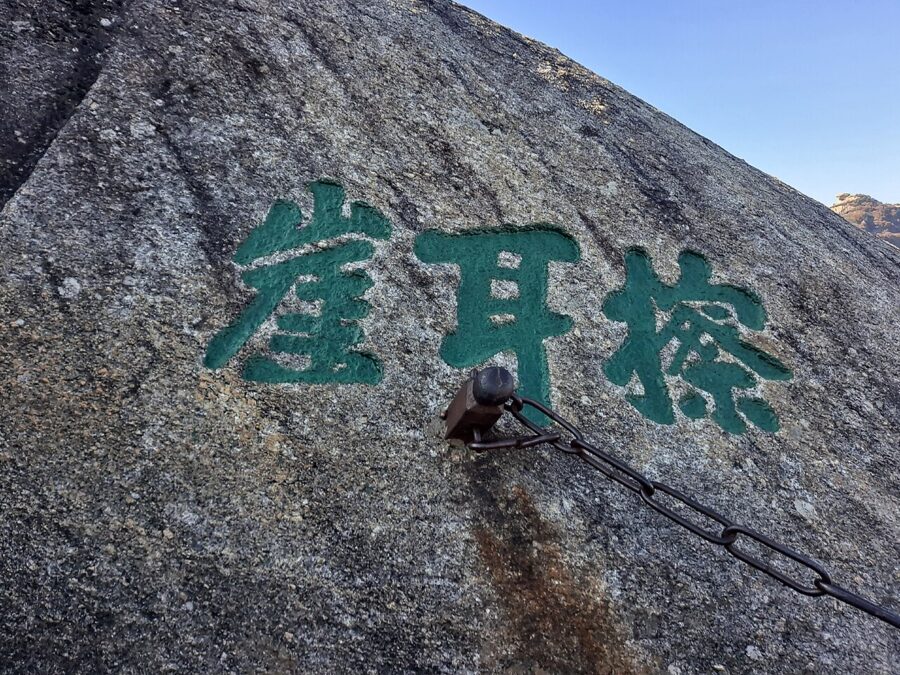
South of North Peak the path squeezes along the Ear-Touching Cliff (擦耳崖), a ledge with a wall on one side and a drop on the other. In the old days it was so narrow that you shuffled past with your belly and ear pressed to the rock. It’s wider now, and railed, but you’ll still find yourself leaning in.
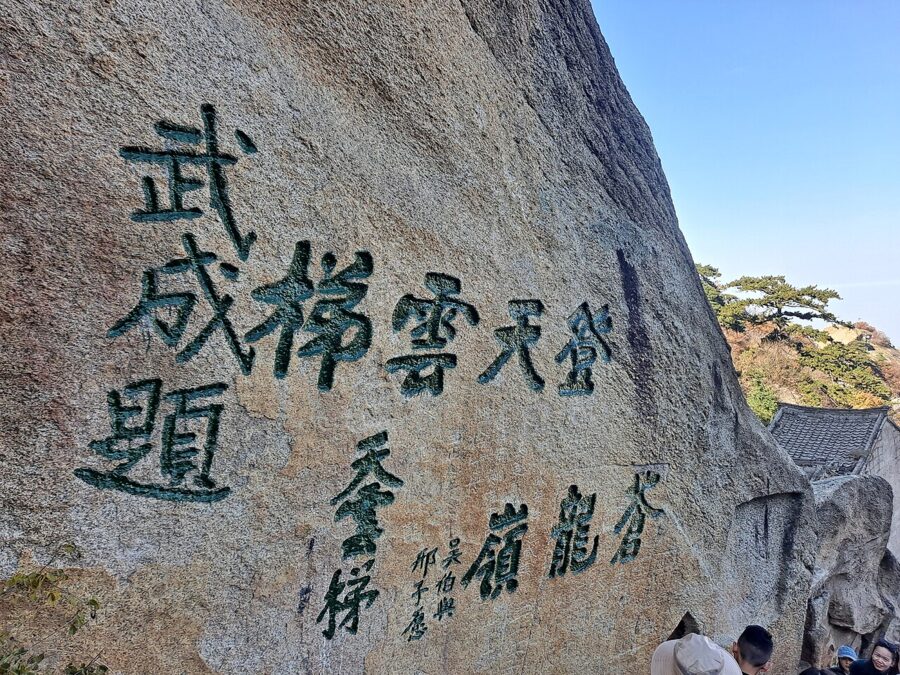
Then comes Canglong Ridge (苍龙岭), the Black Dragon Ridge, a blade of rock about a hundred metres long and less than three Chinese feet wide at its narrowest, with deep gorges on both sides. The path runs straight up its spine on stairs. It was once the only way to the high peaks; since 1998 a second path skirts around the east side, which helps with two-way crowds.
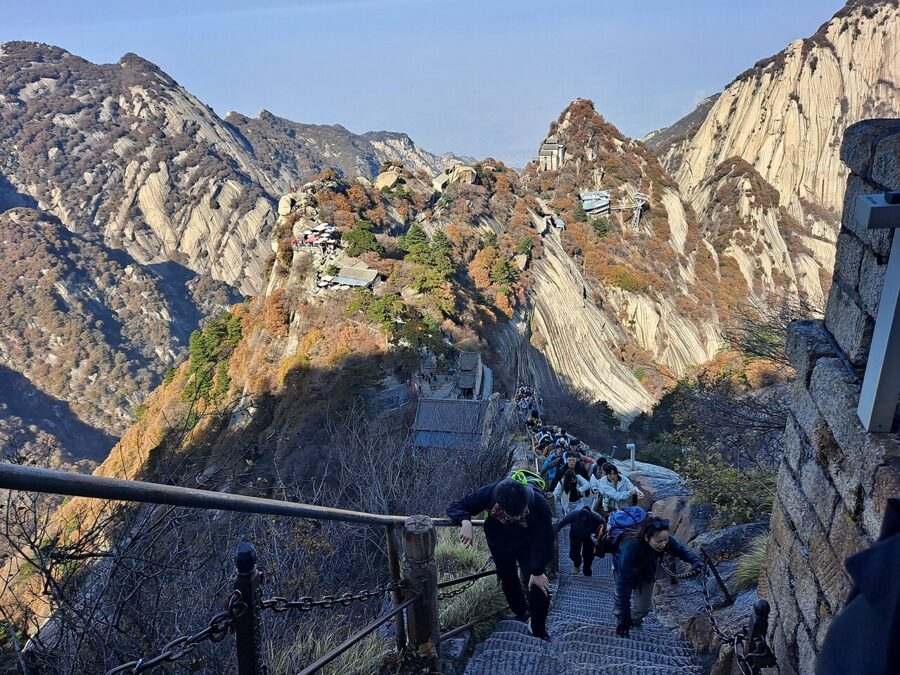
Is it frightening? Less than its photos. There are railings both sides, the stairs are deep, and on a weekday you can stop.
On a holiday weekend the problem is people, not exposure, with the ridge a single slow column. Walk it downhill late in the day and the light falls along it like a spotlight.
Golden Lock Pass
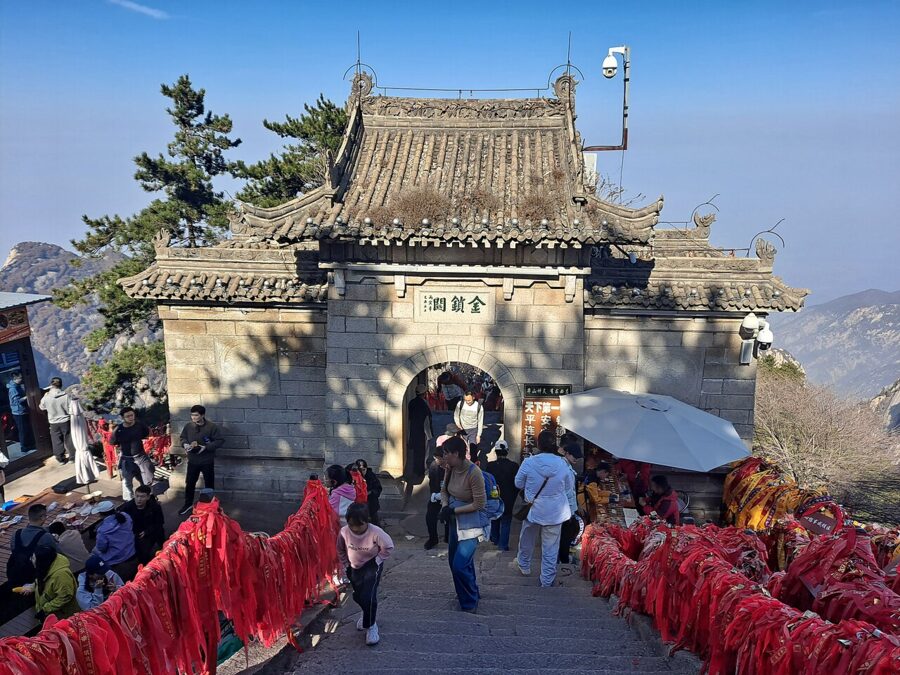
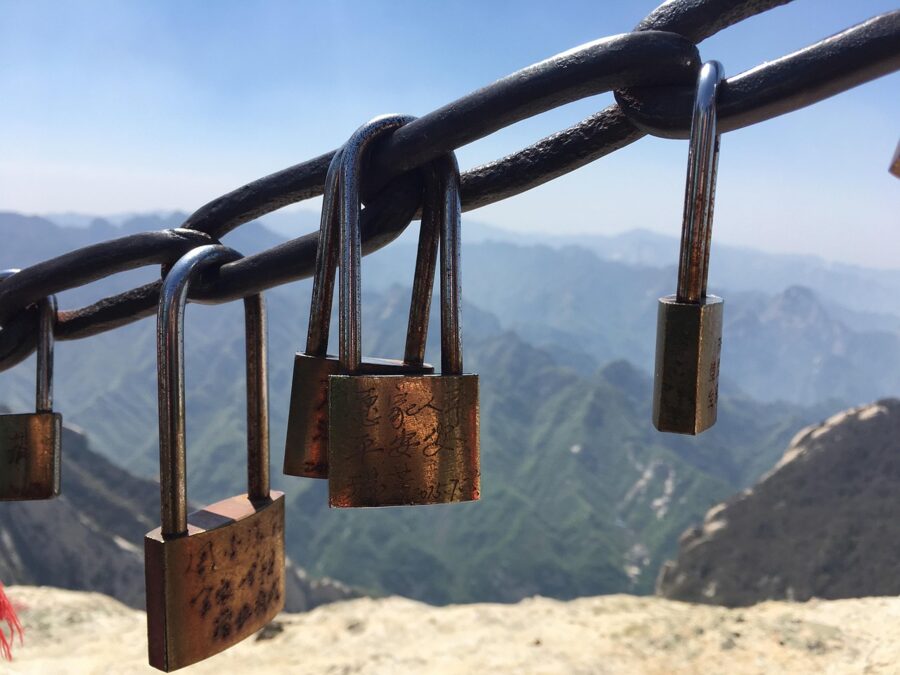
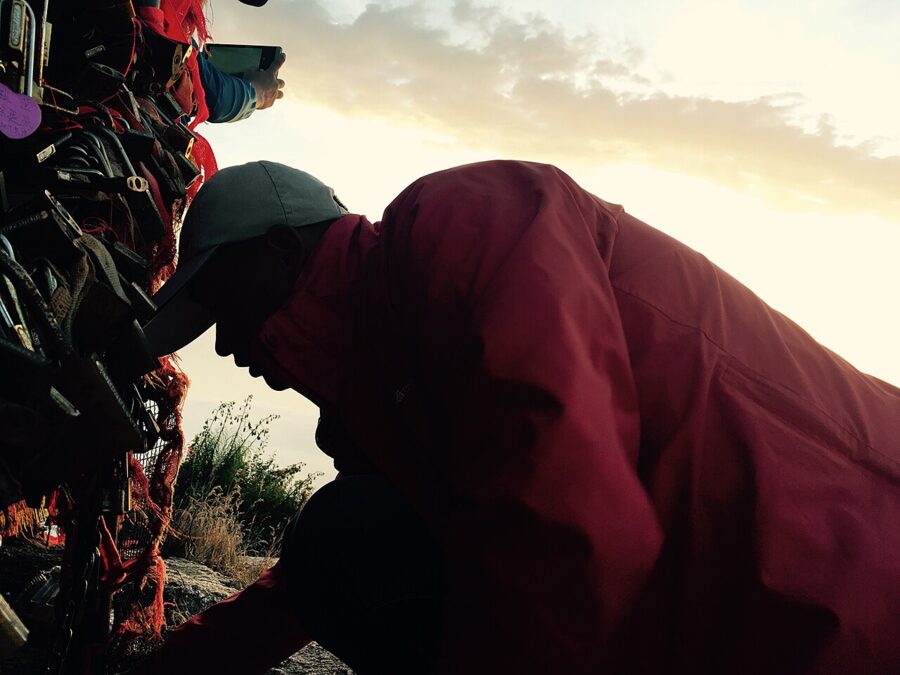
At the top of the ridge, past Wuyun Peak (五云峰), the path goes through Golden Lock Pass (金锁关), a stone gate that once guarded the way to the three high peaks. Today it’s the place where couples clip padlocks to the chains and tie red ribbons, and the rails either side are solid with them. Stalls on the way up sell both.
Middle Peak (Yunu Feng)
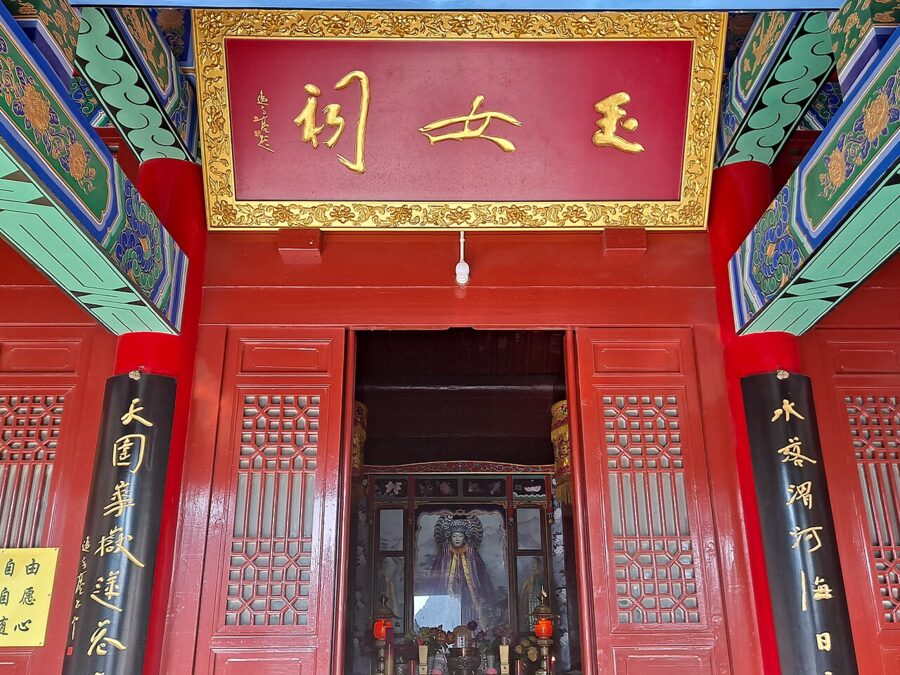
Middle Peak (中峰), or Jade Maiden Peak (玉女峰), is the quiet one, a wooded hump between East and West. The story is that Nongyu, daughter of Duke Mu of Qin, fell for Xiao Shi, a man who could call phoenixes with his flute, and the two of them lived up here until they flew off on a dragon and a phoenix. Her shrine is on the top.
East Peak (Zhaoyang Feng)
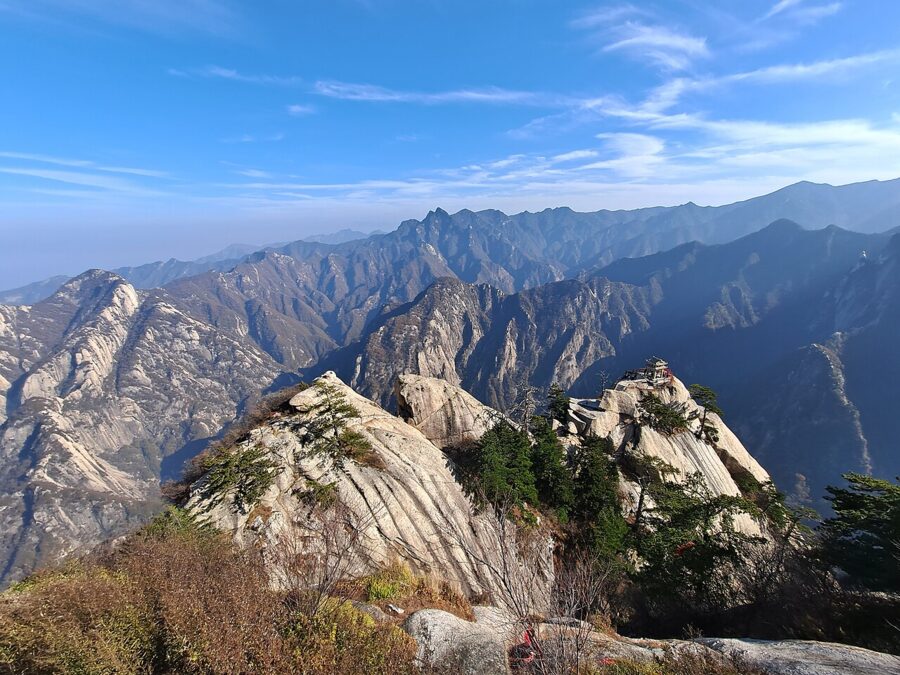
East Peak (东峰) is the sunrise peak, also called Zhaoyang Feng (朝阳峰), “peak facing the sun”. Its highest point, at 2,096 m, sits above the Zhaoyang terrace, where the crowds gather before dawn. Its hotel, its sunrise terrace and its famous “Immortal’s Palm”, a palm-shaped stain on the cliff best seen from down near the old Huashan station, make it the peak with the most going on.
Below the summit, on a spur of its own, stands the Chess Pavilion (下棋亭). The story goes that Zhao Kuangyin, before he founded the Song dynasty, played chess here against the hermit Chen Tuan with the mountain as the stake, lost, and kept his word. That’s the origin of the line “since ancient times Huashan has paid no grain tax”.
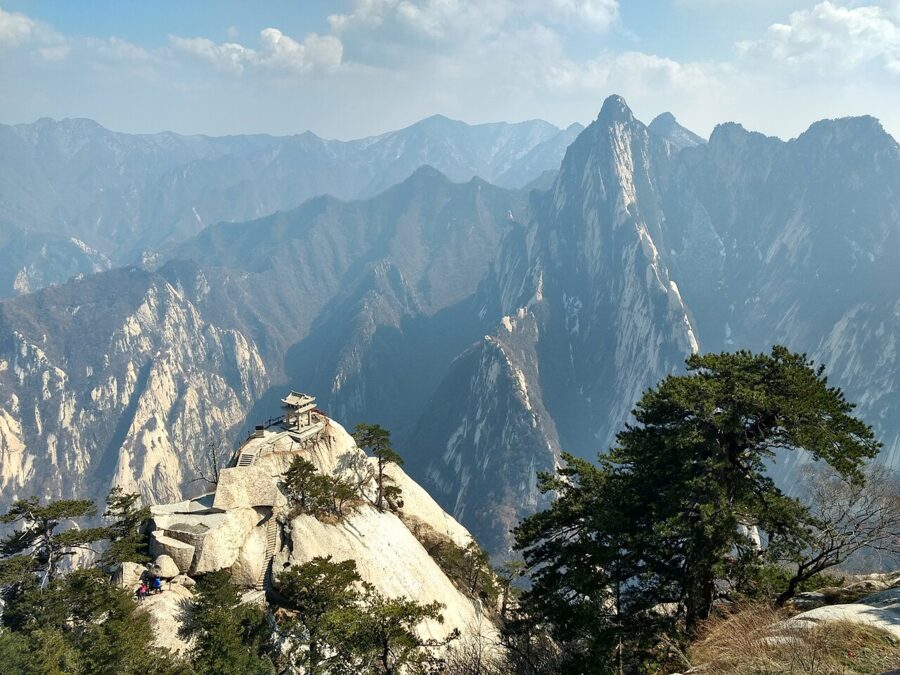
The only way down to it is Yaozi Fanshen (鹞子翻身), “the sparrowhawk turns over”, where you grip the chains, find footholds cut into the rock, and lower yourself facing the cliff. It’s usually ranked second only to the plank road among the mountain’s dangers. It closed with the plank road on 15 September 2026; until it reopens, the Chess Pavilion is a view, not a visit.
South Peak (Luoyan Feng)
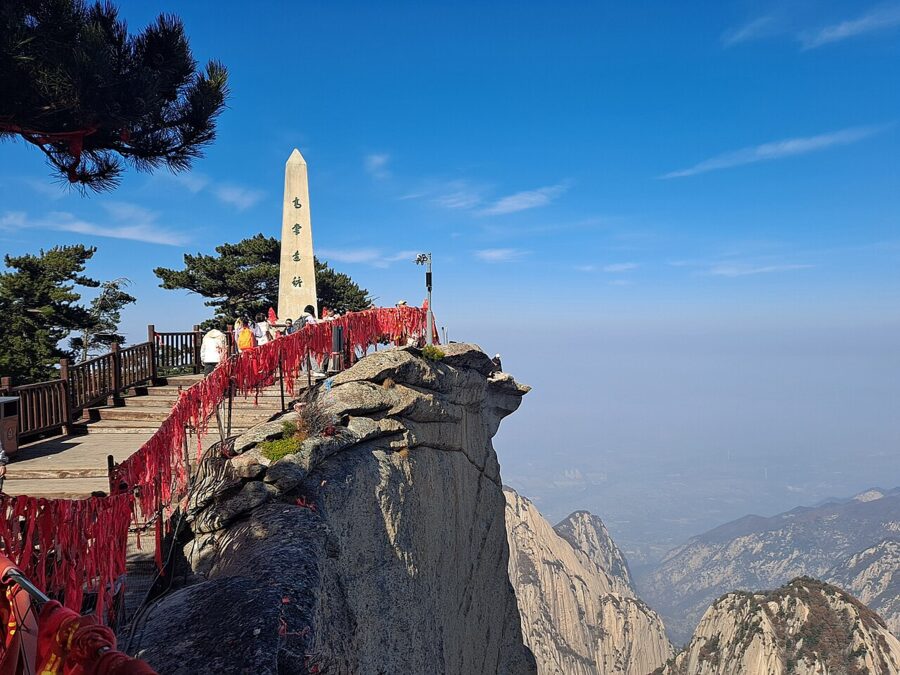
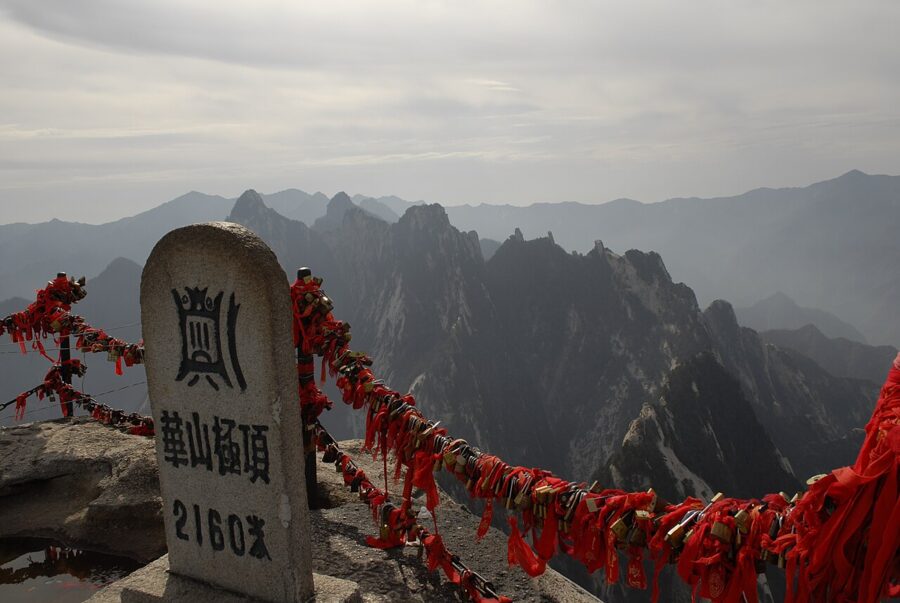
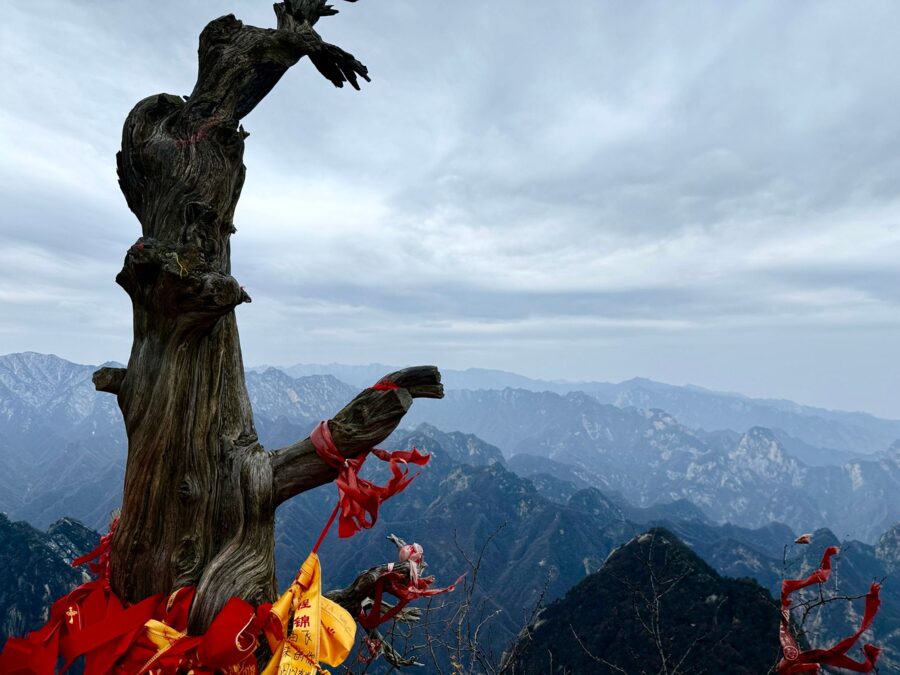
South Peak (南峰), Luoyan Feng (落雁峰) or “Landing Goose Peak”, is the roof of Huashan and the highest of all the Five Great Mountains at 2,154.9 m. The summit is a granite hump covered in ribbons and inscriptions, with a stone marker everyone queues to stand beside. The view runs south into the folds of the Qinling.
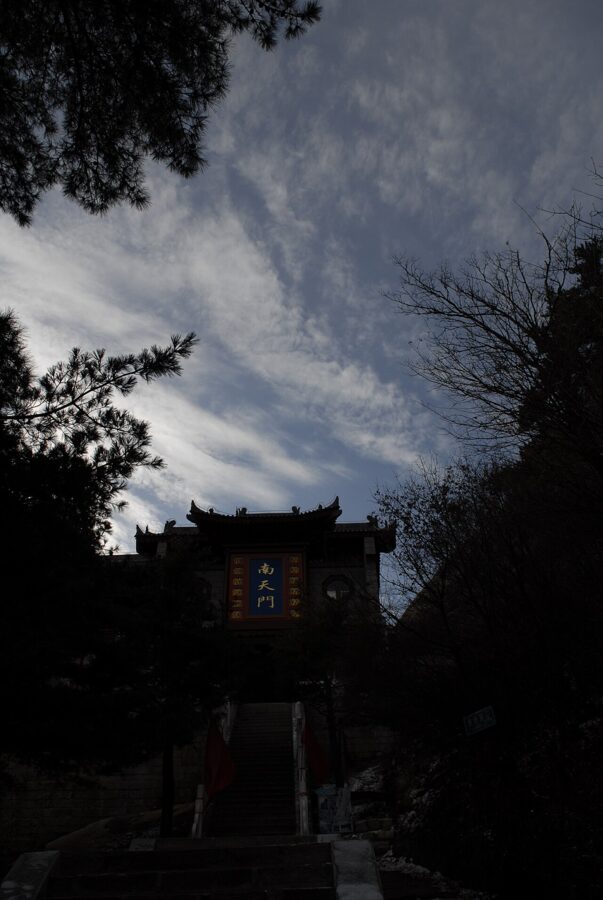
The plank road starts on this peak’s east side, through South Heaven Gate (南天门), and there’s a small Taoist temple complex near the top. Even with the plank road shut, South Peak is the place to linger, because nowhere else puts this much of the mountain below you.
West Peak (Lianhua Feng)
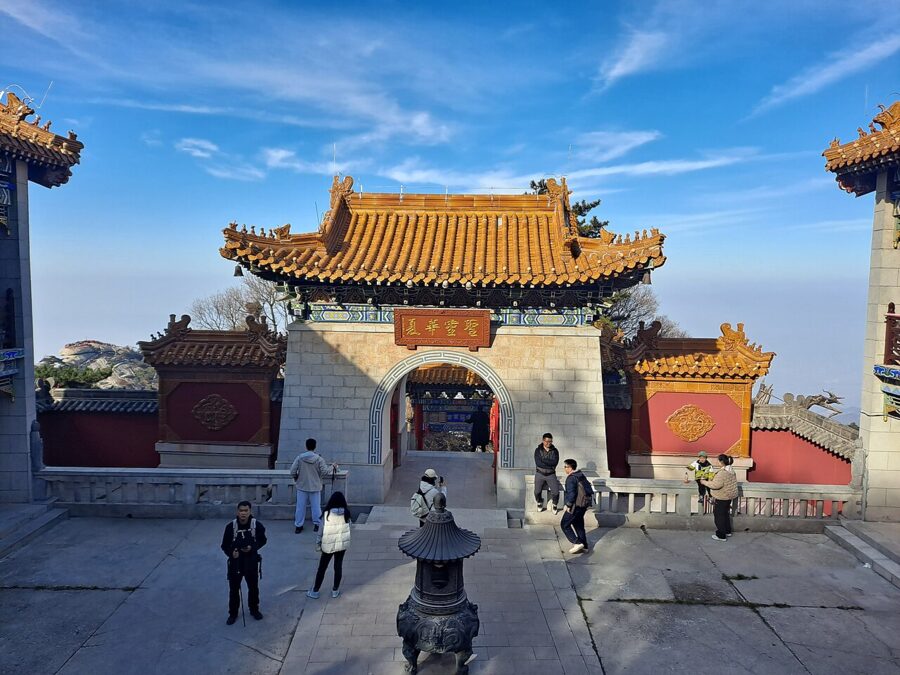
West Peak (西峰), 2,082 m, is Lotus Flower Peak (莲花峰), named for a rock in front of Cuiyun Palace (翠云宫) shaped like a lotus petal. It’s the most dramatic of the five to look at: its north-west face drops sheer, and the path up its last stretch clings to the cliff with a rail and nothing else. If you come up on the West Peak cable car, this is your first summit.
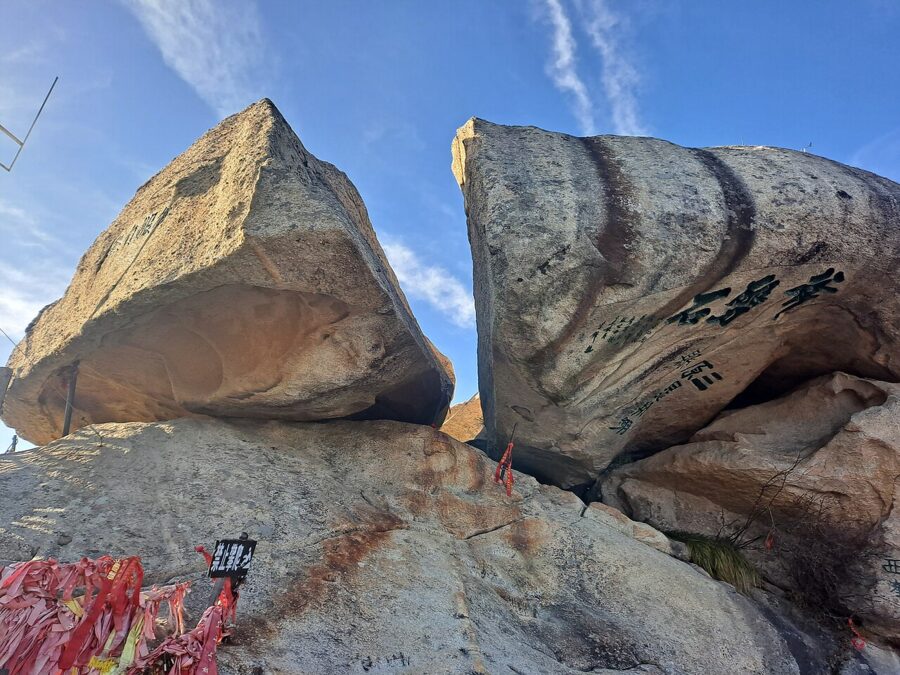
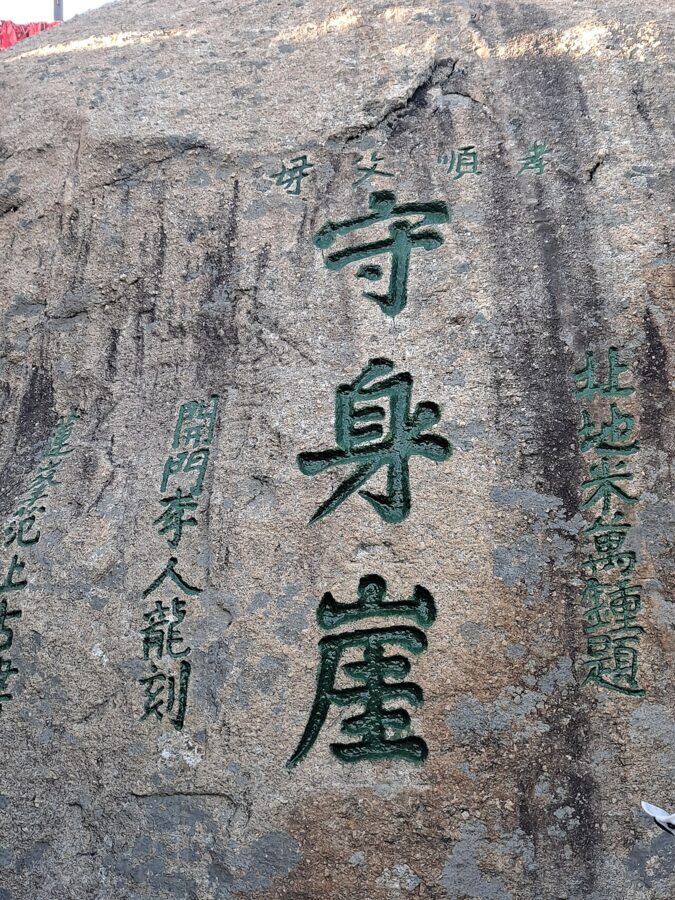
Next to Cuiyun Palace is the Axe-Split Rock (斧劈石), a boulder cracked cleanly into pieces, with a long-handled axe propped beside it. It’s the climax of the Lotus Lantern story: the goddess Sanshengmu, imprisoned under Huashan for marrying a mortal, is freed when her son Chenxiang splits the mountain with an axe. Chinese families know the tale from cartoons and opera, so expect a queue for the photo.
The plank road, without the hype
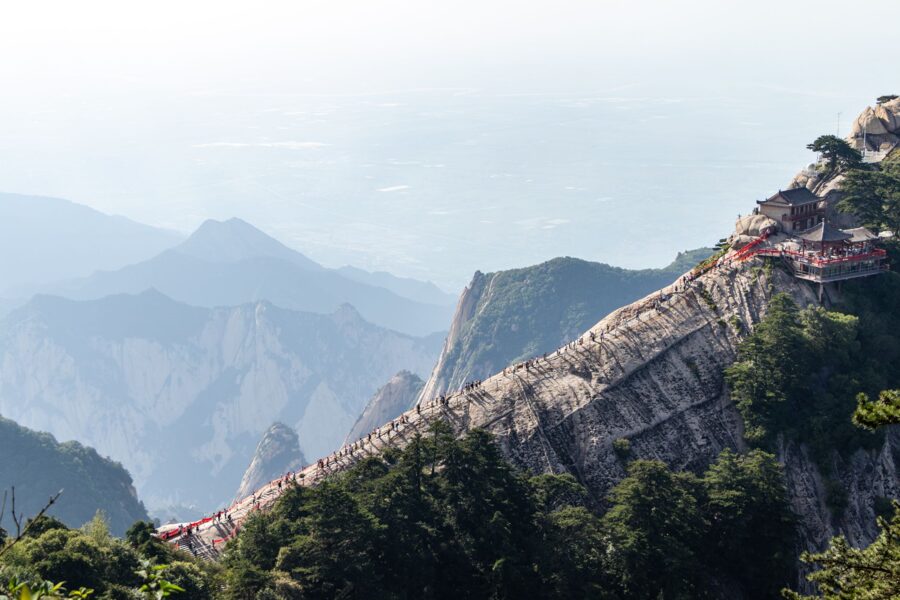
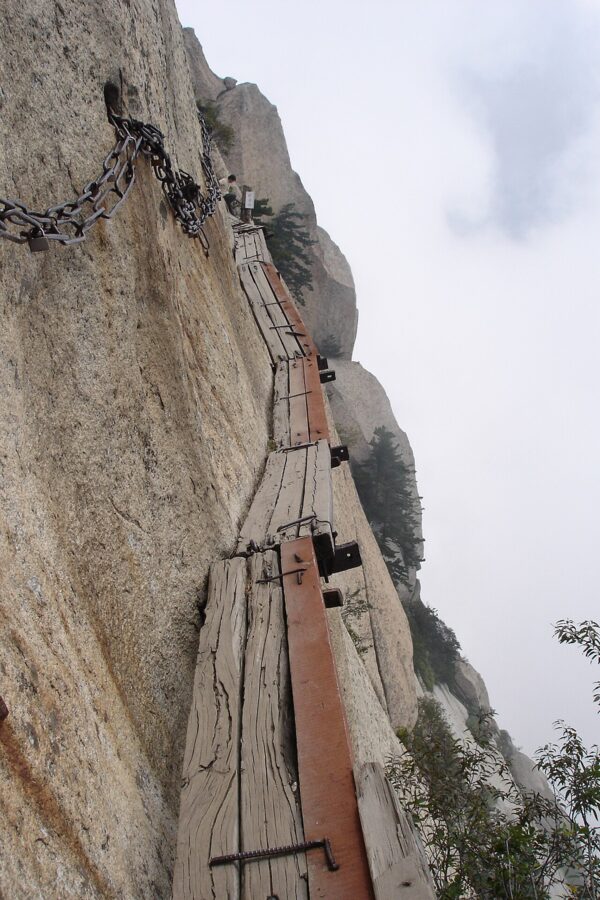
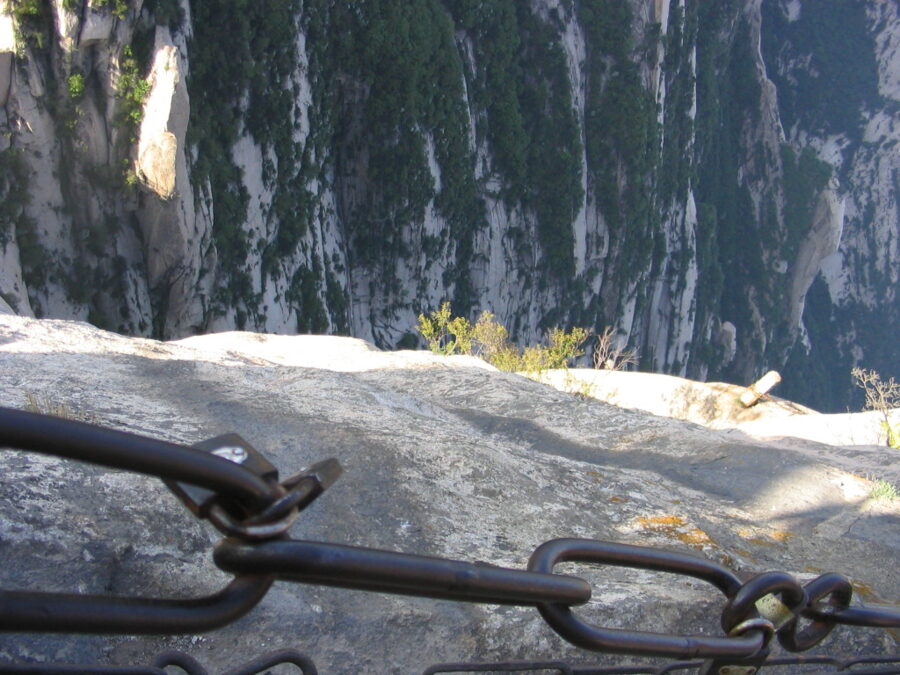
The Changkong Plank Road (长空栈道), literally “plank road across the long sky”, is a ledge built on the cliff of South Peak by setting stone pegs into the rock and laying wooden beams across them. According to tradition it was made by a Taoist so he could reach a meditation cave on the face, and that’s still where it goes. It is a dead end: you climb down, edge along, reach the cave and come back the same way.
It’s short, roughly 30-odd metres of planks, and a round trip with the climb down usually takes about an hour. The time goes on the queue and on two-way traffic, because everyone comes back along the same boards. The descent at the start is the hard bit, a set of iron rungs and toeholds down the cliff; after that, the planks themselves feel almost solid.
How it works when it’s open
The rules come from the scenic area’s own notice for the plank road, and they’re stricter than most first-timers expect:
- You register with your real ID, and you can’t go alone: groups of two or more only, each person in a harness.
- It isn’t open to anyone under 150 cm tall or aged 55 and over, or to people with heart disease, high blood pressure or a fear of heights.
- No bare feet, slippers, skirts or high heels, and no pets.
- No metal items or sharp objects on the boards; staff will hold them for you.
- Hours are 07:00–18:00 from 1 March to 31 October and 08:00–16:00 from 1 November to the end of February, and it closes for thunder, rain, snow and strong wind.
The harness fee has been ¥30 for years. You clip two lanyards to a steel cable and move them one at a time, always keeping one clipped. Expect a safety talk in Chinese, a staff member demonstrating, and people coming back toward you on the same narrow boards.
Is it dangerous?
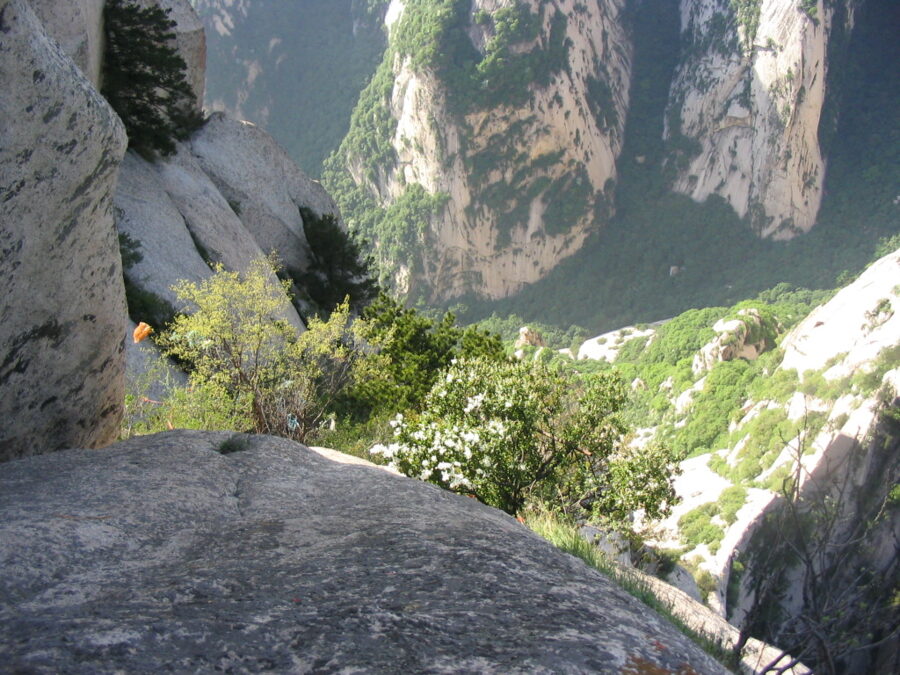
The internet calls it the deadliest hike in the world, often with a yearly death toll nobody can source. Treat that as noise. The real risk is the same as anywhere you’re clipped to a cable over a big drop: panic, a careless unclip, or a slip on wet wood. The full overhaul under way since September 2026 should make the fittings newer, not the cliff any smaller.
Who should skip it? Anyone who freezes on ladders, anyone in the excluded groups, and anyone who’s only doing it because a video said to. The ridge views from South Peak are the same either way. And on a holiday weekend, when the line can eat most of your afternoon, even keen climbers might be better off watching from above.
Staying up there for sunrise
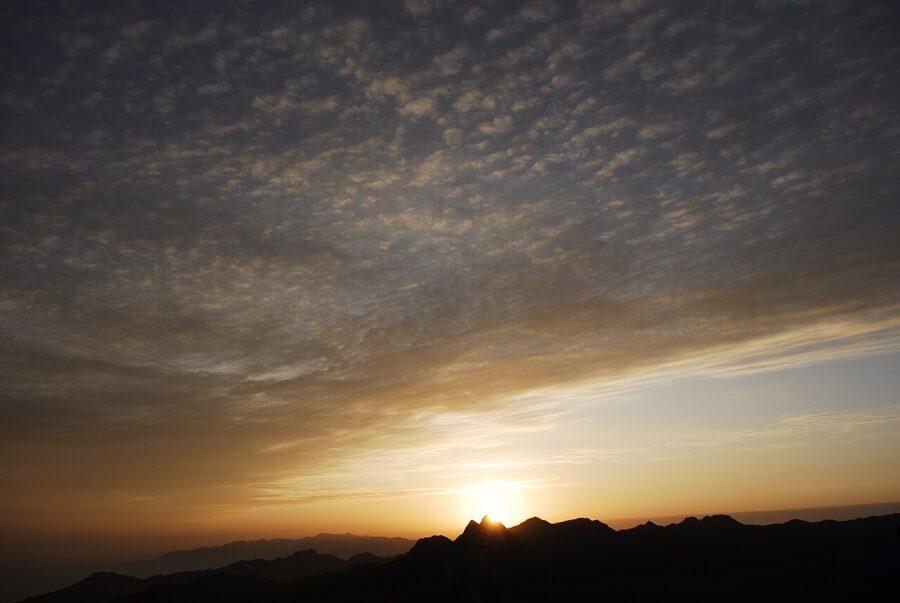
Sunrise from East Peak is the reason Chinese climbers have walked Huashan through the night for generations. The old reason for climbing in the dark was partly practical: you couldn’t see the drops, and you didn’t meet anyone coming down on narrow stairs. Now there are two ways to see it: sleep on the mountain, or climb all night.
Sleeping on the peaks
There are inns on several of the peaks, all basic, all priced like the mountain is doing you a favour. Two worth knowing are on Trip.com:
- East Peak Hotel (华山东峰饭店), near the sunrise terrace, with ten-bed dorms and capsule pods as well as rooms. It’s the one to book for sunrise.
- West Peak Hotel (华山西峰饭店), inside the courtyard of Cuiyun Palace on West Peak. Sunset is its trick, and it suits a late-afternoon arrival on the West Peak cable car.
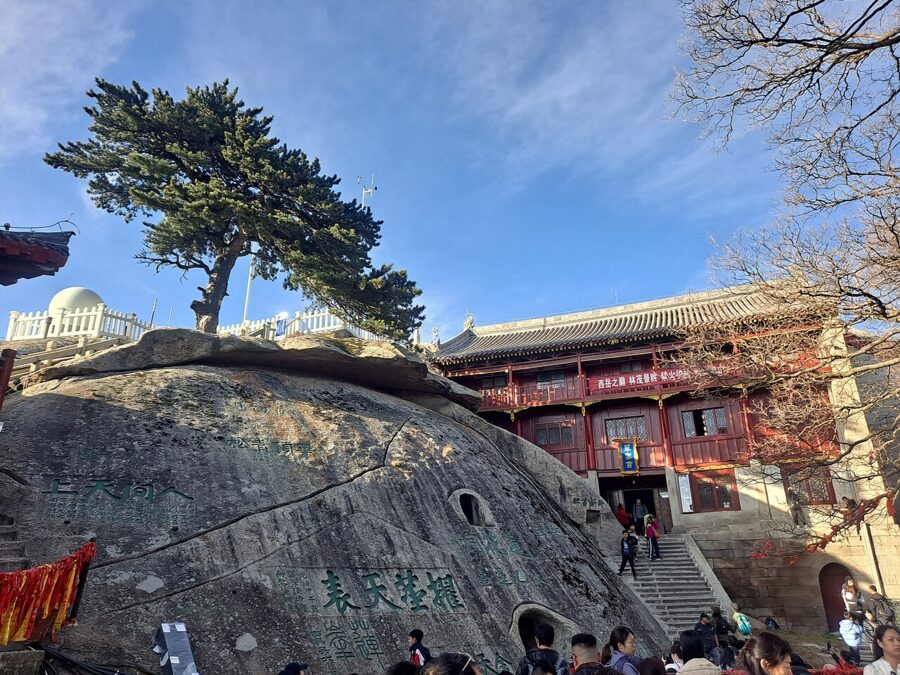
Book well ahead for summer weekends, May Day and Golden Week, when beds go fast and prices climb. Dorm guests share toilets, and comforts are thin. Bring a sleeping layer even in July: the annual average on the summit is only about 6.5°C, and nights are cold in every month.
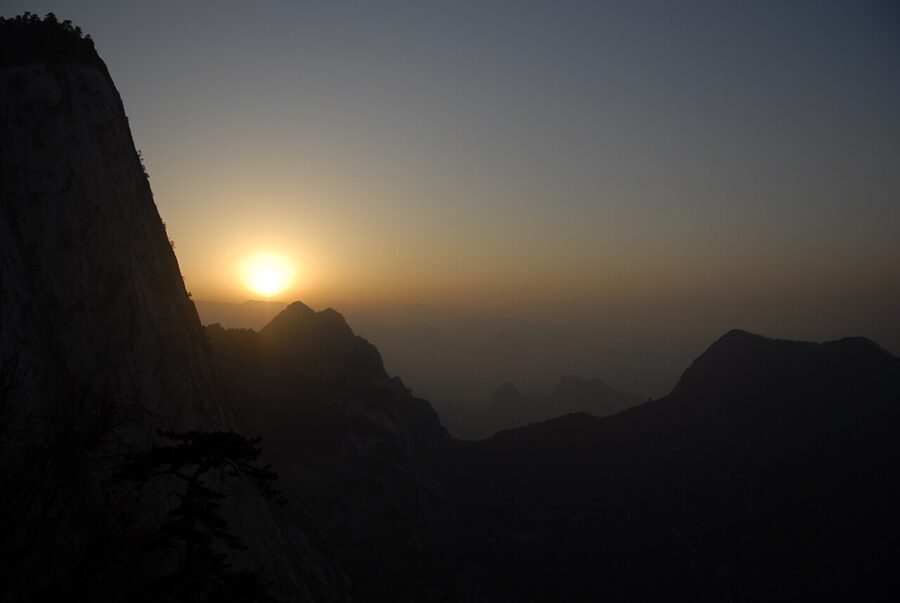
The night climb
The classic night climb starts at Huashan Gate by Yuquan Temple around 21:00 to 22:00 and reaches East Peak around 05:00, about seven or eight hours with rests. The rough rhythm is the gentle valley to Qingkeping around midnight, the Thousand-Foot Precipice, Hundred-Foot Gorge and Laojun Ligou in the small hours, North Peak by about 02:00, then Canglong Ridge and Golden Lock Pass in the dark. Allow more time than that in summer, when the stairs are single file.
It’s a serious night. You climb steep stone in a column of headlamps, the chains are cold, and when you stop sweating at the top the wind cuts straight through you. You can usually rent a padded greatcoat at the top for the wait, and you’ll want one. You also need to reach the terrace an hour before sunrise to get anywhere near the rail.
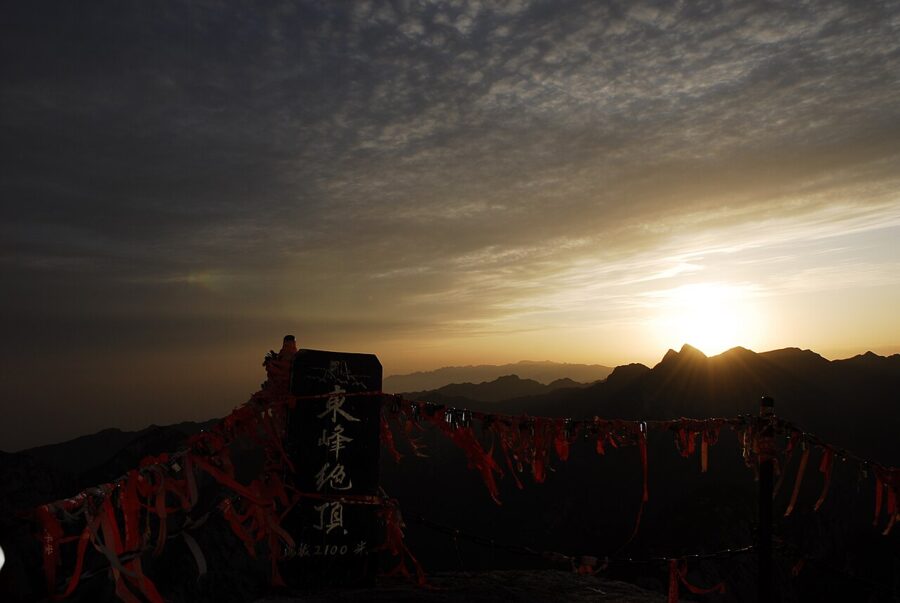
Many night climbers then ride the West Peak cable car down once it opens, or walk to North Peak and take that line. Don’t plan to walk all the way back down after no sleep: the stairs that felt fine in the dark look a lot steeper in daylight, and tired legs are what cause falls.
When the sun comes up
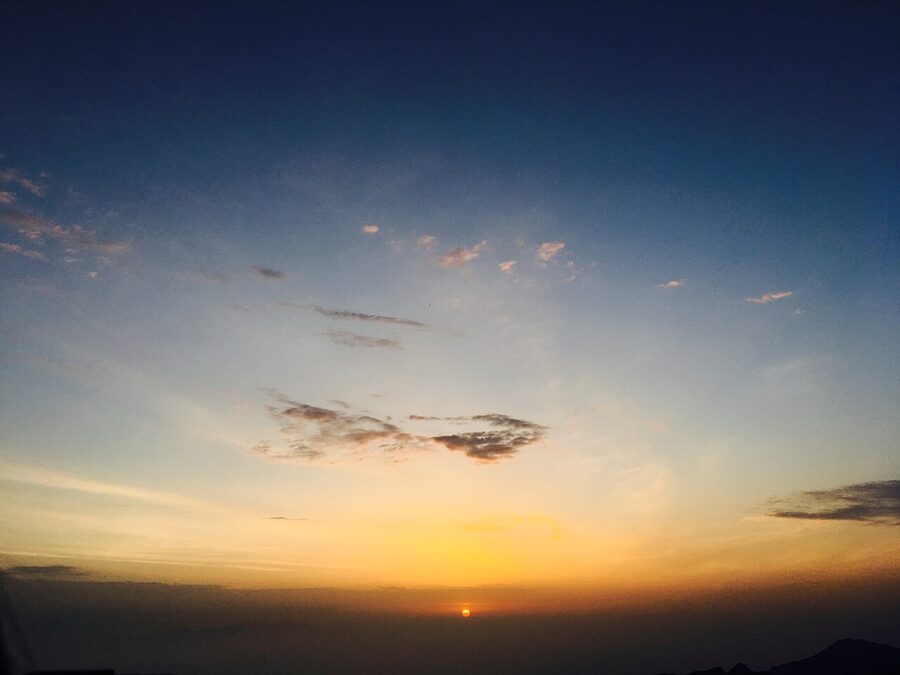
Sunrise moves by more than two hours across the year. These are the standard times for the summit’s position on the 15th of each month; from the terrace, with nothing in the way, you’ll see it a few minutes earlier.
| Month | Sunrise | Month | Sunrise |
|---|---|---|---|
| January | 07:45 | July | 05:37 |
| February | 07:26 | August | 05:59 |
| March | 06:51 | September | 06:21 |
| April | 06:09 | October | 06:43 |
| May | 05:37 | November | 07:12 |
| June | 05:26 | December | 07:38 |
Weather, crowds and closures
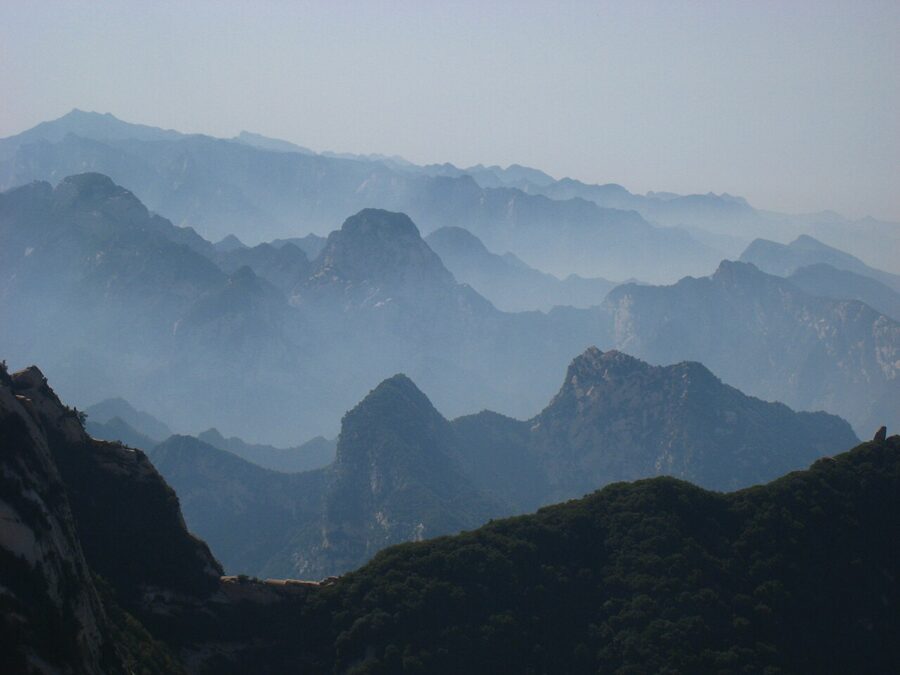
The summit is far colder than Xi’an. The annual average up top is about 6.5°C; July averages around 17.8°C and January around −5.7°C, and July is also the wettest month. April to May and September to October are the walking seasons, with the clearest air and the autumn colour in the second window. Summer is hot on the stairs and afternoons bring thunderstorms.
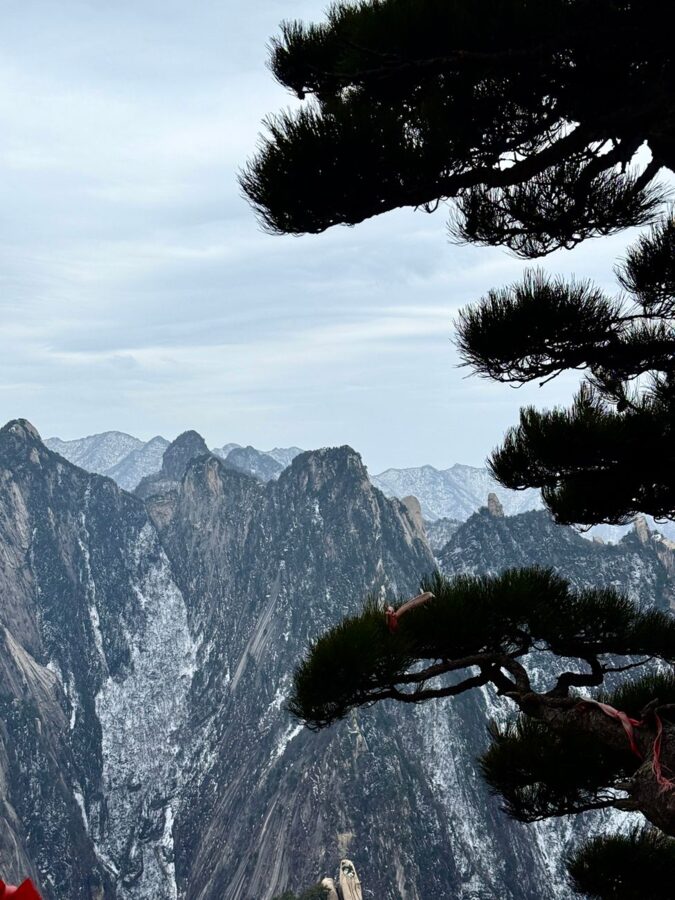
Winter is cheap and quiet, and it’s also when the mountain shuts paths. On 31 December 2025, for example, the scenic area closed the Huashan Gate walking route from 12:00 until further notice, and exposed sections can be shut on the spot in strong wind or ice. The plank road and Yaozi Fanshen close in thunder, rain, snow and strong wind even when they’re operating. Check the scenic area’s WeChat account on the morning you go.
Holidays
Avoid the Spring Festival, the May Day holiday at the start of May and above all Golden Week (1–7 October) if you can. Daily quotas sell out, cable car lines run for hours, and the ridge stops moving. Summer weekends are the night climb’s peak, with students and young couples filling the stairs after dark.
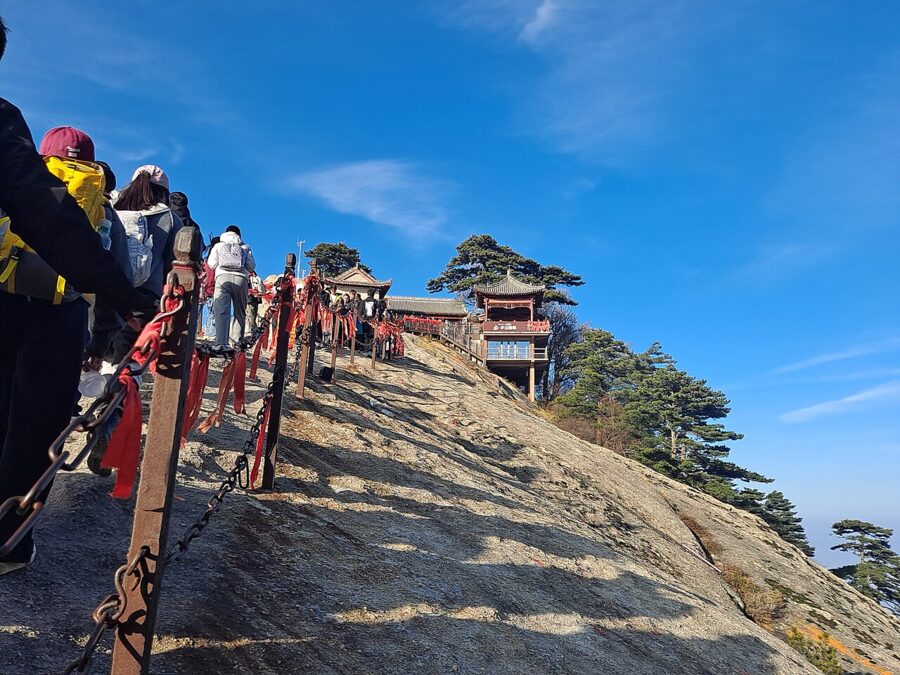
Weekdays outside school holidays are a different mountain. The first cable car of the day, at 07:00 in the high season, is the single best move you can make, which means sleeping in Huayin rather than Xi’an the night before.
What to carry, and what to eat
Light is right, but a few things aren’t optional:
- Gloves with grip, for the chains.
- Shoes with soles that bite on polished granite, not fashion trainers.
- A windproof layer and a warm one, in any season; a hat and gloves for winter and for sunrise.
- A headlamp if you’ll be on the stairs before dawn or after dark.
- Knee support or poles for the descents, which are long.
- Water and food bought in Huayin, and your passport.
Food on the mountain is basic and dear: instant noodles, cucumbers, snacks, and simple restaurant meals at the hotels. It gets pricier the higher you go, and every bit of it was carried up the stairs. Buy most of your day’s food in Huayin and treat the summit stalls as backup. Alipay and WeChat Pay work for almost everything, but carry some small notes in case the signal drops.
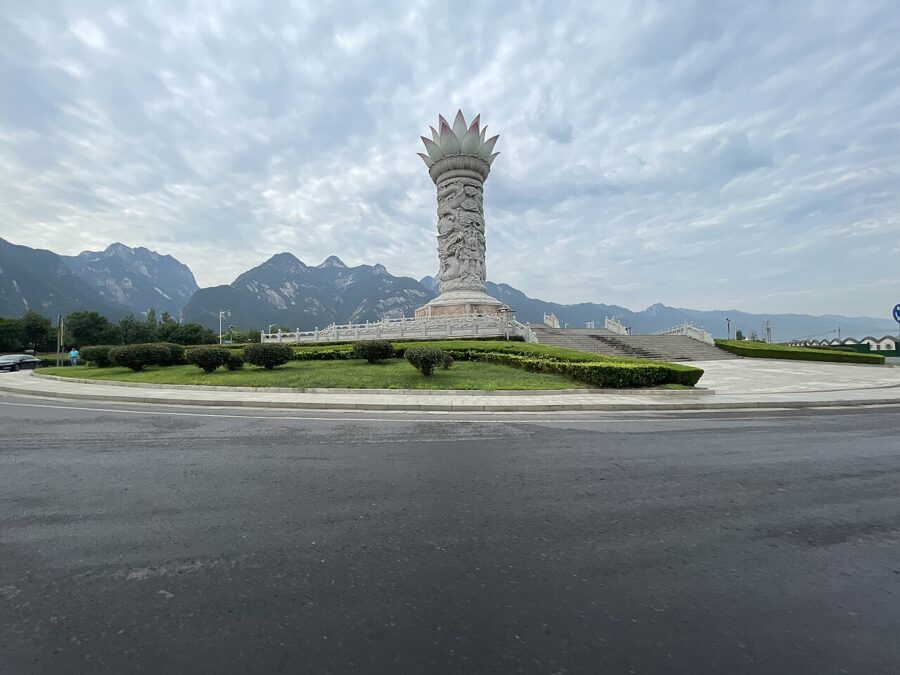
Back at the bottom, eat in Huayin before the train. The local bowl is dadao mian (大刀面), “big knife noodles”, cut from a sheet with a long blade and dressed with fried bean paste, tofu, glass noodles, vinegar and chilli oil, one of the many Shaanxi noodles worth chasing. The other is mashi pao (麻食泡), small rolled dough pieces with tofu and glass noodles over torn flatbread, a local bowl Huayin ranks alongside Xi’an’s mutton paomo. If you’ve got one more meal, save it for Xi’an’s food.
A one-day plan and a two-day plan
One day from Xi’an
- Before 08:00: Train from Xi’an North to Huashan North (28 minutes on the fast services), free bus to the visitor centre.
- 09:00: Shuttle bus to the West Peak cable car (about 30 minutes), then the cable car up (about 20).
- 10:00–11:00: West Peak summit, Cuiyun Palace, the Axe-Split Rock.
- 11:00–12:30: South Peak, the summit stone, South Heaven Gate (and the plank road, once it reopens; budget an extra hour or more).
- 12:30–14:00: East Peak and its viewpoints over the Chess Pavilion, lunch from your bag.
- 14:00–15:30: Middle Peak, Golden Lock Pass, down Canglong Ridge.
- 15:30–16:30: North Peak, then the North Peak cable car down and the shuttle to the visitor centre.
- Evening: dadao mian in Huayin and a train back to Xi’an.
It works, but only just, and it works better if you sleep in Huayin the night before and catch the 07:00 cable car. Keep an eye on the time at South Peak: if you’re there after 13:00, cut East Peak short rather than racing the North Peak queue.
Two days, with a sunrise
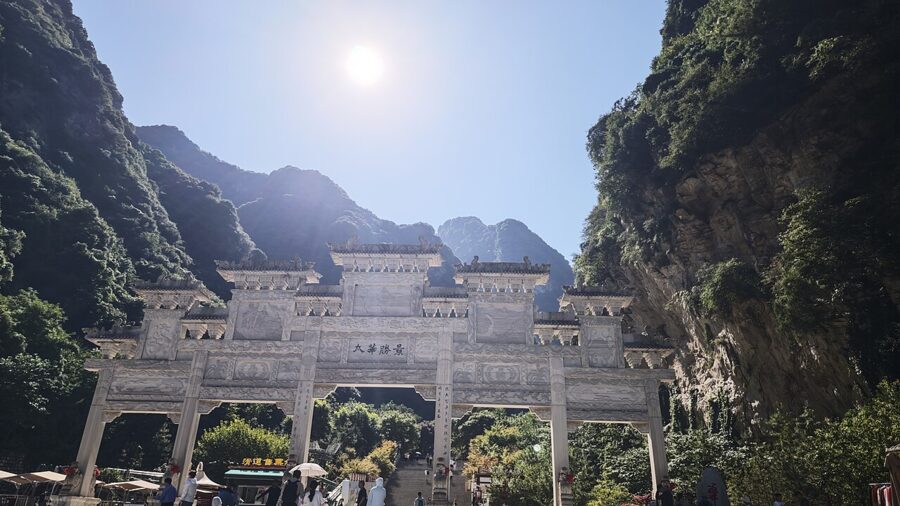
- Day 1, morning: Xi’an to Huashan North, and the morning at Xiyue Temple in Huayin.
- Day 1, afternoon: West Peak cable car up, West Peak and South Peak slowly, sunset from West Peak.
- Day 1, night: Sleep at the West Peak Hotel or the East Peak Hotel.
- Day 2, dawn: East Peak terrace for sunrise.
- Day 2, morning: The plank road first thing if it’s open, before the cable car crowds, then Middle Peak, Golden Lock Pass, Canglong Ridge and North Peak.
- Day 2, afternoon: Down on foot by the old path through the Thousand-Foot Precipice to Yuquan Temple, or by the quiet Zhiqu Huashan trail, and an evening train back.
Walking down the old path is the best thing a two-day trip adds: you see in daylight all the stairs the night climbers went up blind. Give it four hours, and go slow on Laojun Ligou and the Thousand-Foot Precipice, where descending is harder than climbing.
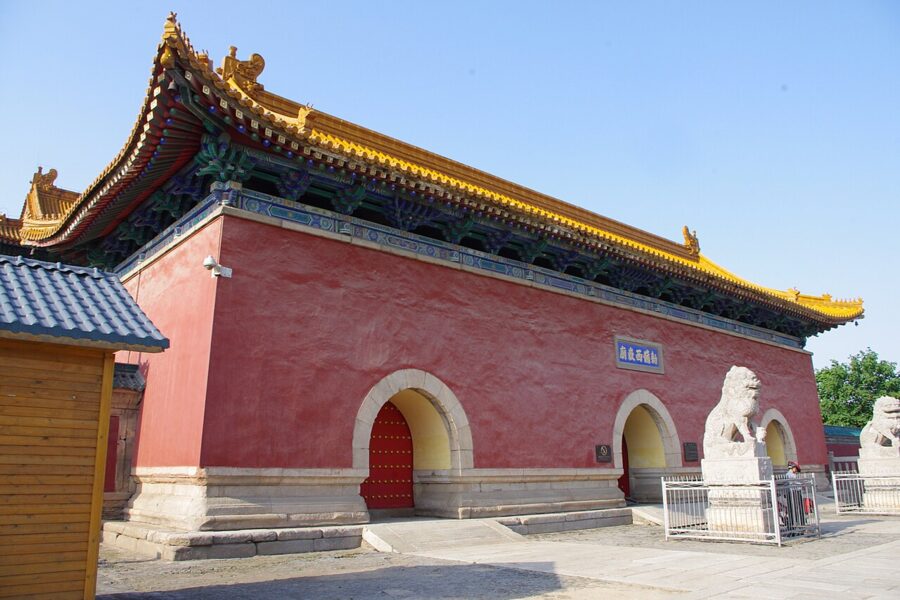
Xiyue Temple (西岳庙) is worth the extra morning. It’s about 5 km north of the mountain, and it’s the largest of the temples of the Five Great Mountains, with three courtyards inside high walls. Pair it with the Terracotta Warriors on another day from Xi’an and you’ve got both halves of Shaanxi: the emperors and the mountain they worshipped.
Skip this
- Skip the plank road on a holiday weekend, even when it’s open. The queue costs more than the ledge gives back.
- Skip West up and West down unless your knees insist. You miss North Peak, Canglong Ridge and the Golden Lock Pass, which are half the reason to come.
- Skip the night climb as your first-ever hard walk. Do it in daylight first, or sleep up top.
- Skip the train straight back at 16:00. The North Peak queue after that hour is where day trips come unstuck.
- Skip carrying a heavy pack. Every gram goes up a stairway somebody cut with a chisel.
Book the gate the week before, take the first cable car, and walk the ridge downhill with the sun on it. Then sit on North Peak, look back at the five summits in a row, and start planning the night you come back to sleep on top.
You Might Also Enjoy
 Hong Kong Dim Sum: A Proper Guide to the Tea-House Breakfast
 Hiroshima and Miyajima Food Guide: Layered Okonomiyaki, Oysters, and Anago-meshi
 The Best Time to Visit China: Month by Month, Region by Region, and the Holiday Weeks to Avoid
 Yakiniku in Japan: Tsuruhashi, Horumon and How to Order Japanese Barbecue Cut by Cut