The Terracotta Warriors: How to Visit Pits 1, 2 and 3, the Bronze Chariots and Qin Shi Huang’s Tomb Without a Tour
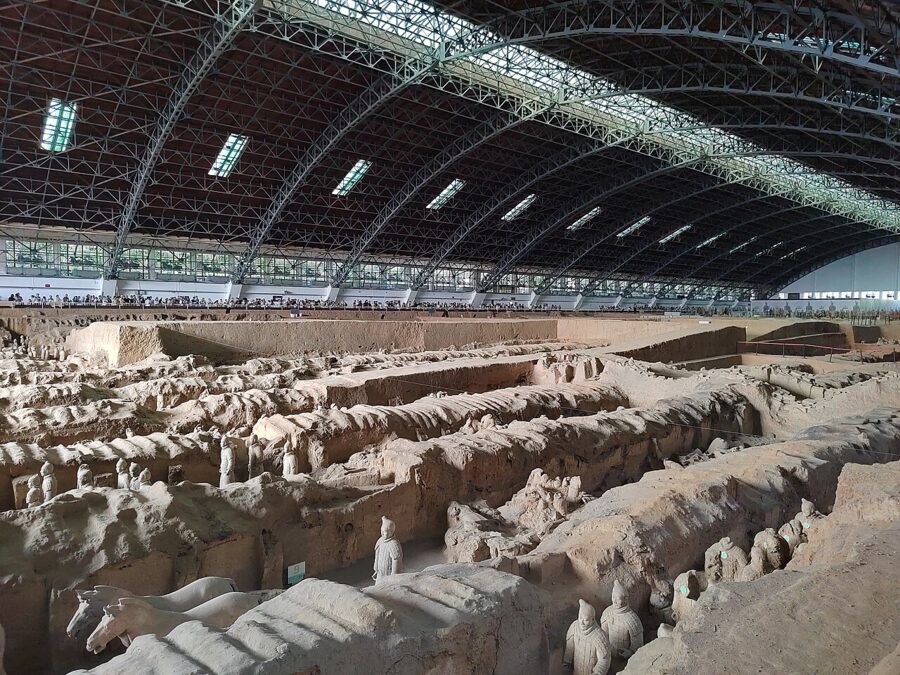
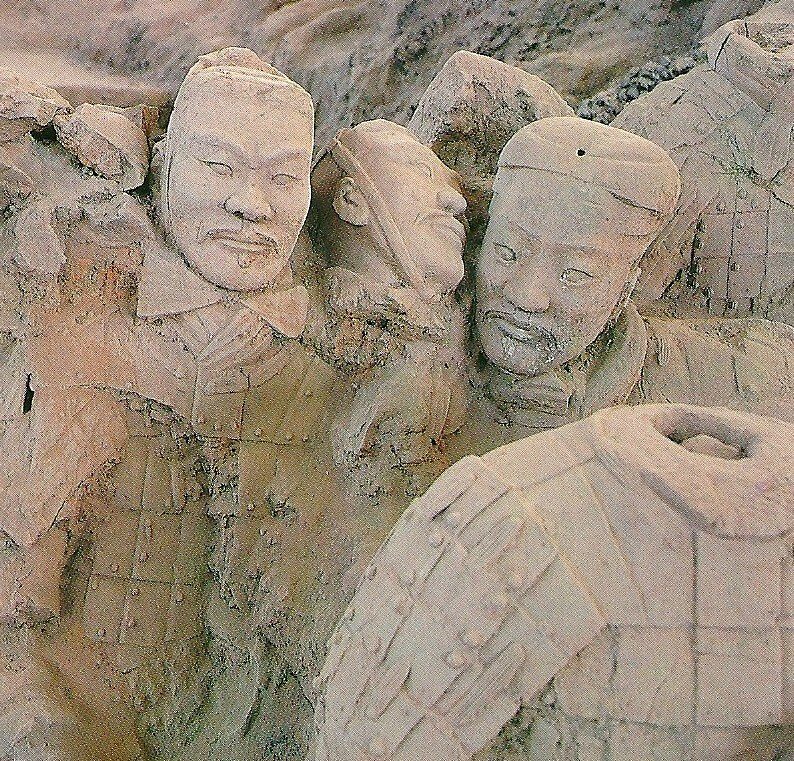
The first thing most people see in Pit 1 is the back of somebody else’s phone. The doors open at 08:30, the first tour groups aren’t far behind, and by mid-morning the front rail of the hall is several people deep with raised arms. Walk along the side of the pit to the far end, though, and the noise drops away. Back there, among the broken figures that are still being put back together, headless soldiers with numbered tags stand beside horses propped up on supports, and almost nobody stops.
That gap between the front rail and the back of the pit is the whole trick of the Terracotta Army (兵马俑, Bingmayong). The famous view is real, and it really is as big as the photos suggest. But the best of the site is in the corners, the side halls, the glass cases and the park around the emperor’s tomb, and most people never reach them because their tour bus leaves at noon.
This guide is for doing it yourself from Xi’an. It covers what you’re looking at and why it’s there, how the real-name booking works, the metro and bus route out to Lintong (including the change to the old tourist bus in August 2026), the order to walk the pits, the bronze chariots and the tomb mound on the same ticket, and the traps that are set up for people who arrive without a plan. Hours, prices and rules are from the museum’s own notices, checked for November 2026.
| At a glance | Details |
|---|---|
| Official name | Emperor Qinshihuang’s Mausoleum Site Museum (秦始皇帝陵博物院): the pits museum plus Lishan Garden (丽山园), the tomb park |
| Ticket | ¥120 all year, covers both sites and the free shuttle between them; ¥60 for students who qualify |
| Booking | Real-name, online only, with your passport number: official website or the museum’s WeChat accounts |
| Entry | 08:30–17:00 (16 March–15 November); 08:30–16:30 (16 November–15 March) |
| Closing | 18:30 in high season, 18:00 in low season |
| Getting there | Metro Line 9 to Huaqingchi, exit C, then bus 613 or 602; or the direct bus from Tonghuamen; about an hour by taxi |
| Time needed | 4–5 hours for the pits and Lishan Garden together |
| Bring | Your passport (the original, not a photo), water, walking shoes |
In This Article
- What you’re actually looking at
- The well that wasn’t
- Why an army, and why clay
- Tickets: one booking, two sites
- Prices, discounts and who goes free
- How far ahead to book
- Opening hours
- Getting there from Xi’an
- Metro Line 9 and a short bus
- The direct bus from Tonghuamen
- Bus 游5 (306) has moved
- Taxi and Didi
- What not to get into at the station
- The order that works
- Pit 1: the infantry
- The restoration area at the back
- Pit 3: the command post
- Pit 2: archers, cavalry and the glass cases
- The glass cases
- The exhibition hall, and the weapons
- Lishan Garden: the mound, the chariots and the pits nobody visits
- The bronze chariots
- The tomb mound, and why it stays shut
- The acrobats and the officials
- Guides, audio and how to choose
- The traps, plainly
- Food near the site
- Huaqing Palace and Mount Li
- A half-day plan
- Skip this
What you’re actually looking at
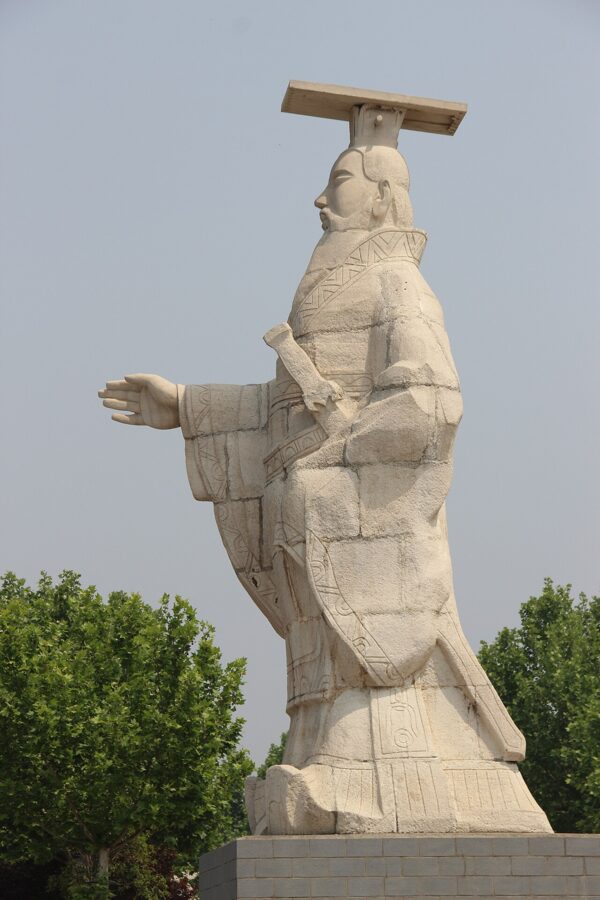
The man behind all this is Ying Zheng, who became king of the state of Qin at 13 and, in 221 BC, finished conquering the other warring states and named himself Qin Shi Huang, the First Emperor. He standardised the script, the coinage, the weights and the axle widths. He also spent most of his reign building a tomb. Work started soon after he took the throne as a boy and was still going when he died in 210 BC.
The army is part of that tomb, and a small part. The mausoleum is a whole buried estate of walls, halls, stables, offices and pits spread over more than 50 square kilometres at the foot of Mount Li (骊山, Lishan), 1.5 km west of the pits. The soldiers stand to the east of the tomb, facing east, which is the direction the conquered states lay. Nobody wrote them down: the great Han historian Sima Qian describes the tomb in some detail and never mentions an army of clay.
The well that wasn’t
In March 1974, during a drought, men from Xiyang village (西杨村) in Lintong were digging a well a short way east of the tomb mound. About four metres down they hit pieces of fired clay, then the torso of a man. The villagers had turned up bits like these before and called them wa ye (瓦爷), “tile grandpas”. This time the pieces reached Zhao Kangmin, the curator of the little Lintong county museum, who recognised them as Qin and started fitting them together.
After more than a year of test digging, it was clear that the well had gone straight into the corner of a pit 230 metres long. Pit 2 turned up in April 1976 and Pit 3 the month after. Who exactly “discovered” the army is still argued in Lintong, with versions counting three, seven or nine farmers. For years some of the farmers sat in the museum shop signing picture books, Yang Zhifa the best known of them, and that is where many people first heard the story.
Why an army, and why clay
Earlier rulers had taken real people with them. Sima Qian records that many of the First Emperor’s palace women were made to follow him into the tomb, and that the craftsmen who knew its secrets were sealed inside. The army was a different idea: a full military establishment in clay, life-sized, armed with real bronze weapons and arranged by unit, guarding the eastern approach for ever.
It was built like a factory product. Heads, torsos, arms and legs were made separately, partly in moulds, then joined and finished by hand, which is why no two faces are quite the same even though scholars count only about ten basic face shapes. Workshops stamped their names on what they made so the officials could check quality. Many of the bronze weapons carry the name of Lü Buwei, the chancellor of Qin in the 240s and 230s BC, which helps date the whole project.
And all of them were painted. The grey army is an accident of excavation: the colours sat on a lacquer base that curls and flakes within minutes of drying out. Conservation methods worked out with German specialists, in a partnership that goes back to the late 1980s, now keep the colour on some newly excavated figures, and that is one reason the digging in Pits 1 and 2 goes so slowly. The army you see is the army after the fire, after the collapse and after the air got to it.
Tickets: one booking, two sites
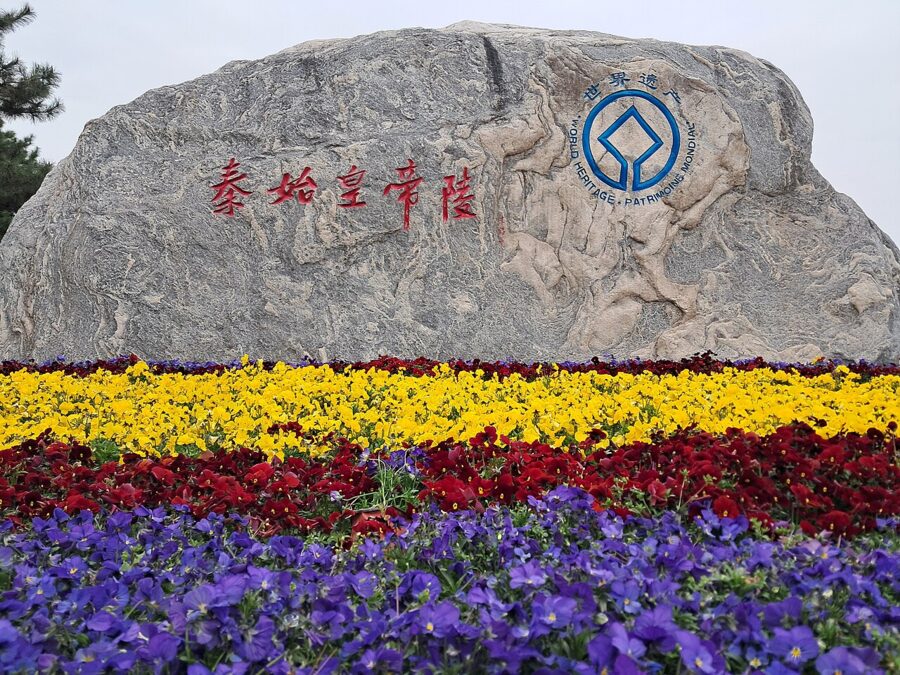
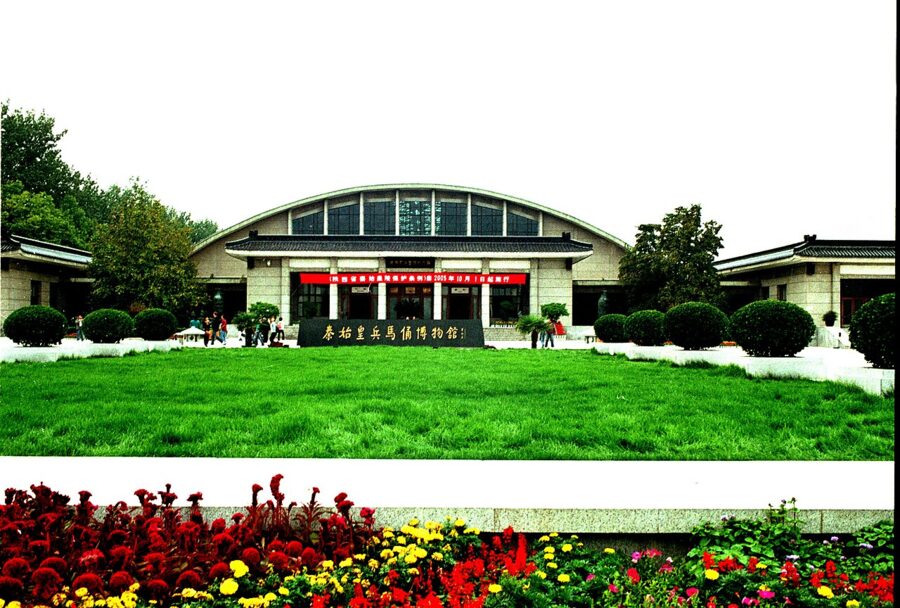
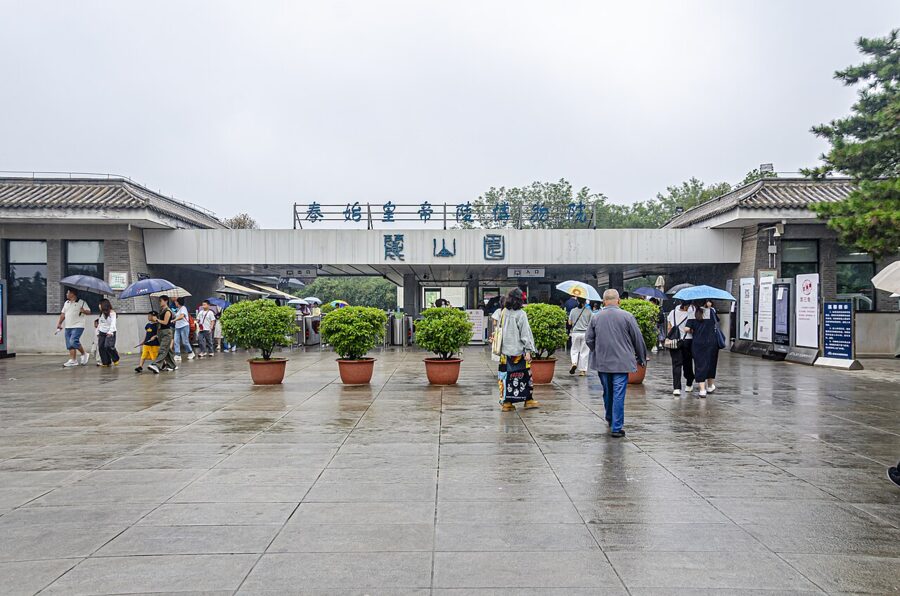
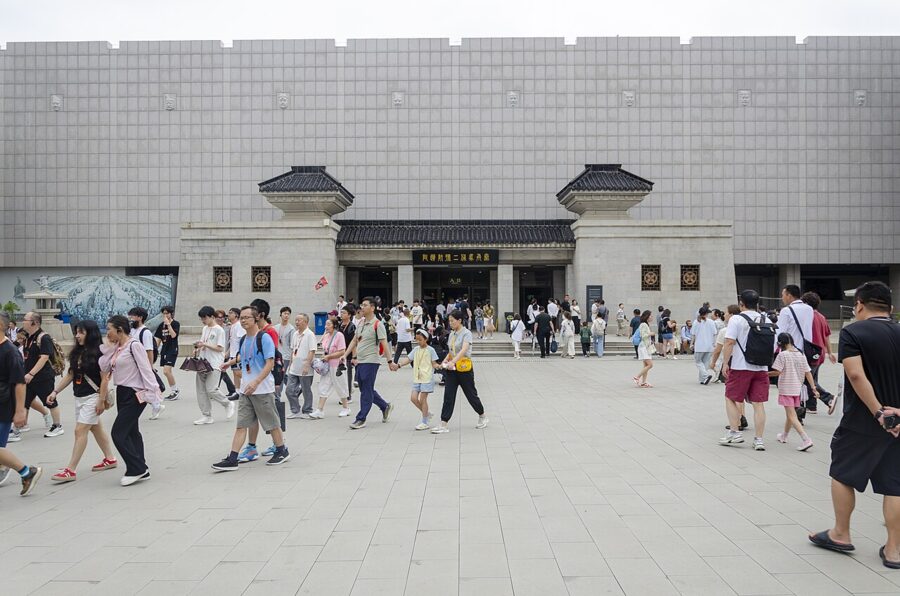
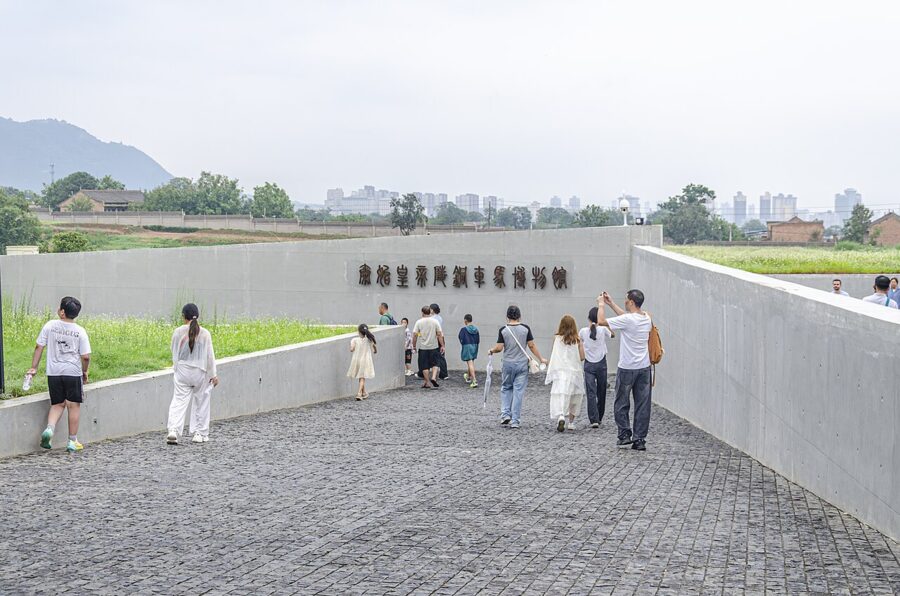
The site’s official name is the Emperor Qinshihuang’s Mausoleum Site Museum (秦始皇帝陵博物院), and it has two halves: the pits museum, which is what everyone means by the Terracotta Warriors, and Lishan Garden (丽山园), the archaeological park around the tomb mound. One ticket covers both on the same day, plus the free shuttle bus between them. It costs ¥120 in every season.
Booking is real-name and online. You book through the museum’s official website (bmy.com.cn) or one of its two WeChat accounts, 秦始皇帝陵博物院 and 兵马俑票务在线, entering your passport number, and the ticket is tied to it. At the gate you show the passport itself, the original, not a photo of it. The museum’s notice is blunt about it: buy online before you come.
Prices, discounts and who goes free
- Adults: ¥120, the same in high and low season.
- Students: ¥60, but the museum’s Chinese-language rule limits this to full-time students at Chinese schools and universities, checked against a student card at a separate lane.
- Free: children 16 and under with a parent or guardian. The museum’s notice names Chinese citizens and children from Hong Kong, Macau and Taiwan, so foreign families should ask at the ticket desk. Free tickets still have to be booked like any other.
The ticket is valid for the day you book and is checked three times on the way round, so keep the passport handy rather than buried in a bag. The museum asks you to arrive half an hour before your time slot. If your plans change, cancel before you pass the first gate; once a ticket has been scanned it can’t be refunded.
How far ahead to book
Tickets are released in advance and allocated by time slot, and the daily limit is 65,000 people, which is reached on the worst holiday days. The museum doesn’t publish a fixed booking window on its English pages, and the guides that quote one disagree. In practice, book as soon as your dates are firm, and treat the May Day holiday (1–5 May), the summer school holidays and Golden Week (1–7 October) as the times when slots really do run out.
For those holidays the museum opens sales early and adds release times. Before May Day 2023, for example, it opened holiday booking on 17 April and released tickets three times a day, at 10:00, 15:00 and 20:00, and moved the first entry forward to 07:30. Check the WeChat account in the week before you go: that is where holiday changes appear first.
Opening hours
The museum works on two seasons. From 16 March to 15 November, entry runs 08:30–17:00 and the site closes at 18:30. From 16 November to 15 March, entry runs 08:30–16:30 and it closes at 18:00. There is no weekly closing day.
The museum gives about an hour and a half for each half of the site. That’s a guide’s pace with no stops. If you want the glass cases in Pit 2, the bronze chariots and a slow lap of the tomb park, give it four to five hours, and don’t start Lishan Garden after about 15:30.
Getting there from Xi’an
The pits are in Lintong (临潼), a district about 40 km east of central Xi’an. You don’t need a tour to get there. The museum itself lists the metro and bus route, and it is cheap, simple and not much slower than a taxi in the morning traffic.
| Route | How it works | Best for |
|---|---|---|
| Metro Line 9 + bus 613 or 602 | Metro to Huaqingchi, exit C, walk about 200 m to the bus stop, short ride to the museum | Most people, from anywhere on the metro |
| Direct bus from Tonghuamen | Line 3 to Tonghuamen, exit D, walk about 300 m to the bus terminus | The east side of the old city |
| Bus 游5 (306) | Since 29 August 2026, from Xi’an East station, 07:00–19:00, pay the conductor | Arriving by train at Xi’an East |
| Taxi or Didi | About an hour, roughly ¥120–150 from the city centre | Groups of three or four |
Metro Line 9 and a short bus
Line 9 runs east from Fangzhicheng (纺织城), where it meets Line 1, out to Lintong. From the old city, take Line 1 east to Fangzhicheng and change inside the station. From Xi’an railway station, the museum’s own directions are Line 4 to Wulukou, Line 1 to Fangzhicheng, then Line 9; from Xi’an North, Line 2 to Beidajie and Line 1 from there.
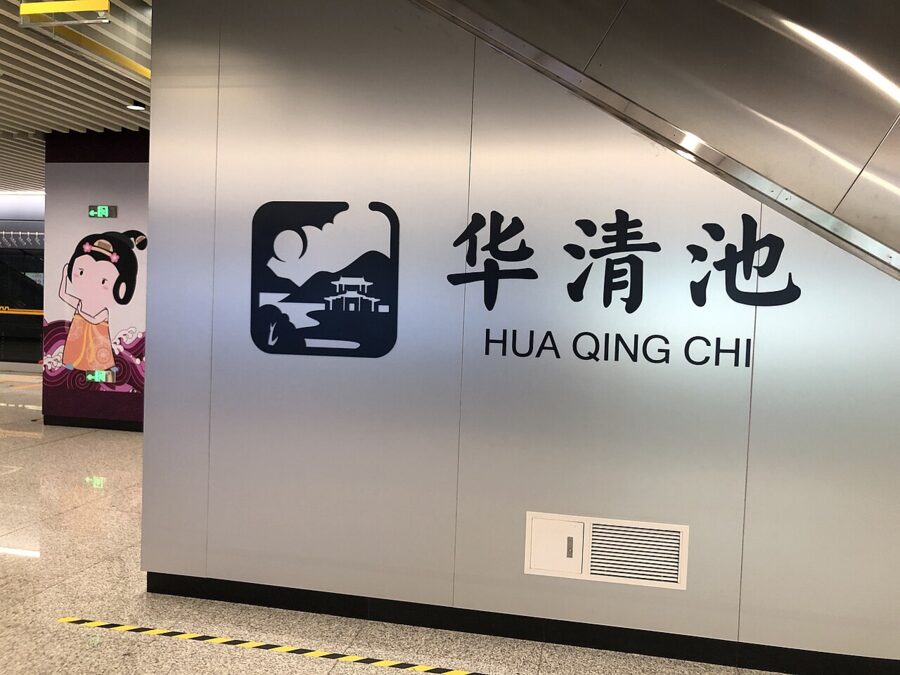
Get off at Huaqingchi (华清池) and leave by exit C. The Huaqingchi bus stop is about 200 metres away, and two buses run from it to the pits: the Lintong tourist bus 613 (临潼游613), which stops at Qinyong Village (秦俑村), and the 602, which stops at Bingmayong. Either way it’s a short ride and a walk of under 200 metres to the gate. Line 9 carries on to Qinlingxi, its terminus, which is no closer to the pits.
The direct bus from Tonghuamen
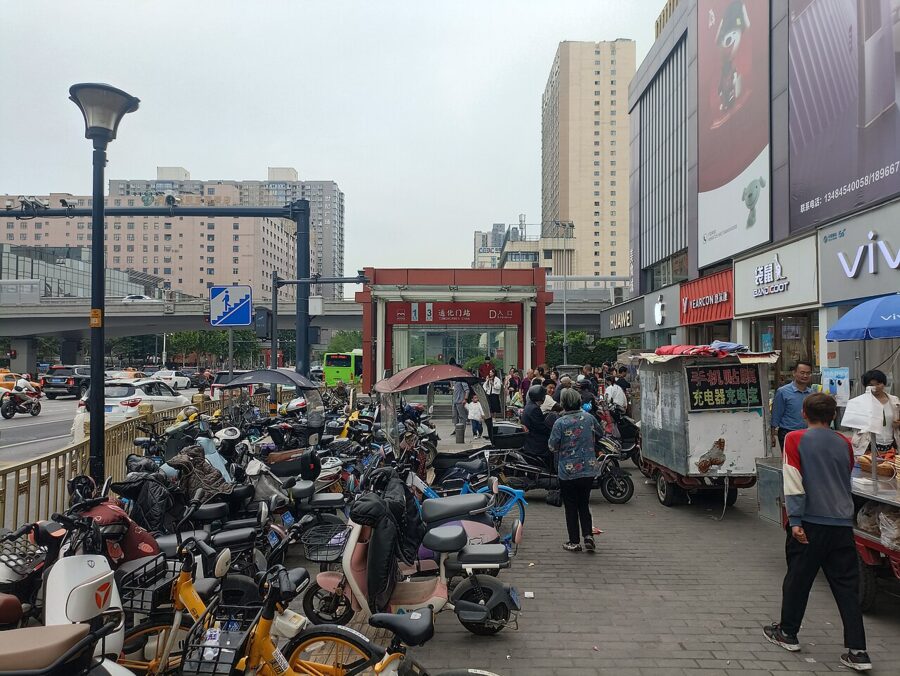
The museum also lists a direct scenic-area bus (兵马俑景区直通车) from the northeast of the old city. Take Line 3 to Tonghuamen (通化门), leave by exit D on the northeast side, and walk about 300 metres to the Qinfeng bus terminus (秦风发车场). The bus drops you at the museum’s own stop, under 200 metres from the entrance. It’s the easiest option if you’re staying on the east side of the city.
Bus 游5 (306) has moved
For decades the standard advice was to take the 游5 tourist bus, also numbered 306, from the east square of Xi’an railway station. That advice is now out of date. From 29 August 2026, the city bus company moved the 游5 to start at Xi’an East station (西安东站), the high-speed station on the east side of the city, running via the Fangzhicheng hub and Huaqingchi to the Bingmayong terminus.
It runs 07:00–19:00 with a conductor on board who sells tickets, and you can’t pay with a transit card. It makes sense if you are arriving at Xi’an East by train. From anywhere else, the metro is quicker.
Taxi and Didi
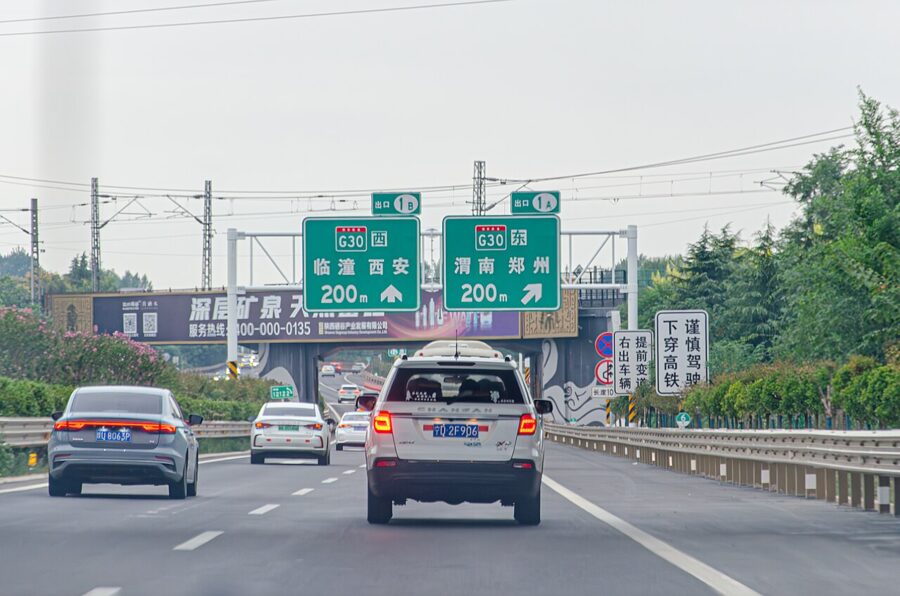
A Didi from the city centre takes about an hour and costs roughly ¥120–150 one way, so it only beats the metro on price for three or four people sharing. Set the destination as the museum’s official name, 秦始皇帝陵博物院, rather than “Terracotta Warriors”, which matches a lot of things that are not the museum. Pay in the app with Alipay or WeChat Pay; both take foreign cards.
What not to get into at the station
The forecourt of Xi’an railway station has been working the Terracotta Army crowd for decades, and the move of the 游5 to Xi’an East makes it worse, not better. Anyone at the old station selling “bus 306” tickets, or waving you onto a minibus with a hand-written sign, is not selling the city bus. A classic line is that the real bus has broken down, or that the museum is closed until the afternoon for a visiting delegation, and that a “better” tour leaves now at the same price.
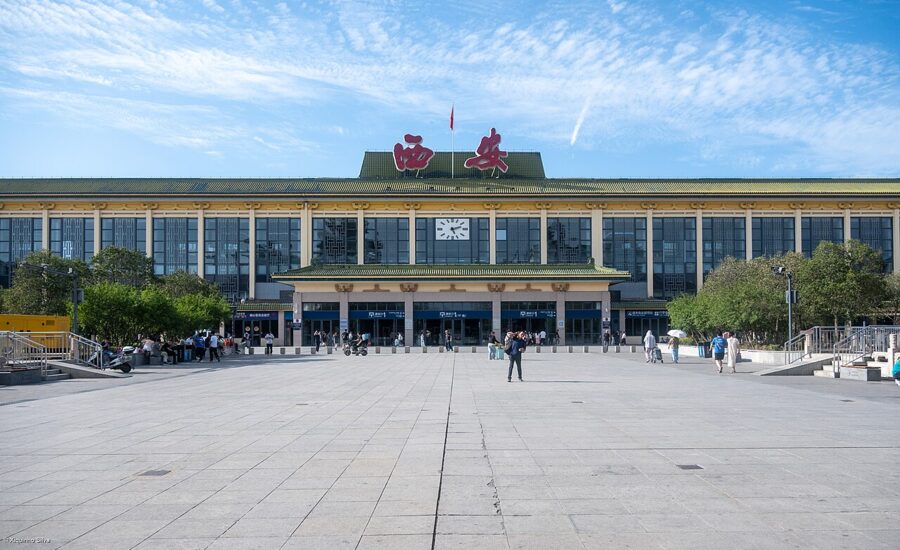
The better tour goes somewhere else: a replica “museum” with cement figures, a jade showroom, a lacquer factory. Ignore anyone who approaches you, take the metro, and if you do go by car, book it in the app. It takes thirty seconds and costs less than the argument afterwards.
The order that works
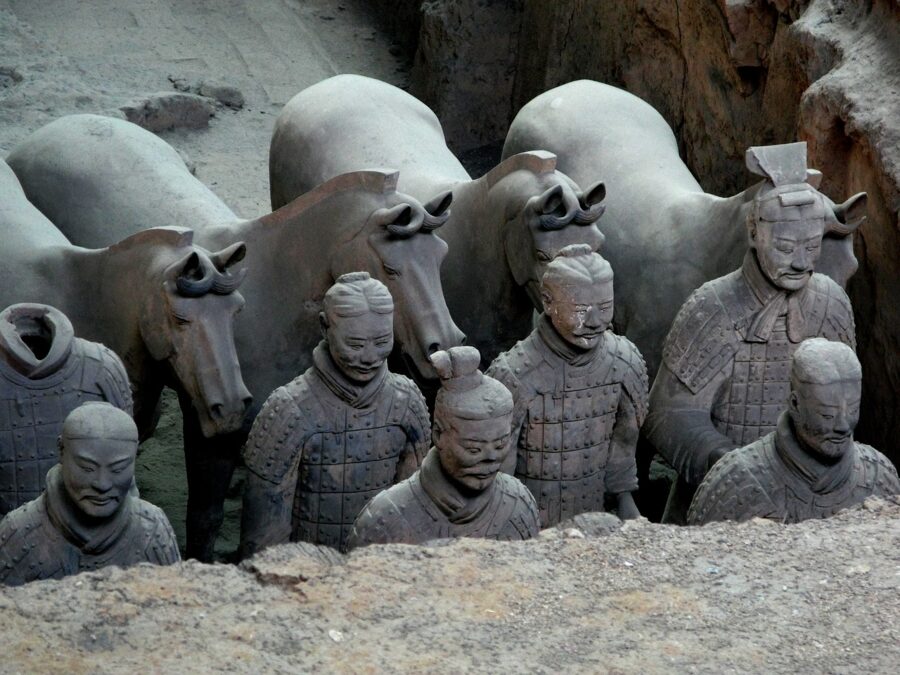
The route through the museum is one-way, and the museum’s own suggested two-hour walk is the one I’d follow: Pit 1, then Pit 3, then Pit 2, then the exhibition hall, then the shuttle to Lishan Garden. It is the order that never makes you double back, and it saves the closest-up figures for when you’ve seen the scale.
Some people argue for doing it backwards, Pit 2 first, to save the big view for last. I don’t agree. Pit 1 is the thing you came to see and it is at its quietest in the first hour, so go there first, and go early. Tour groups pile in from about 10:00, and by late morning the front rail of Pit 1 and the glass cases in Pit 2 are the two most crowded places on the site.
- Pit 1: 45 minutes to an hour, including the full walk round to the restoration area at the back.
- Pit 3: 15 minutes. It’s small.
- Pit 2: 30–45 minutes, most of it at the glass cases.
- Exhibition hall: 20–30 minutes.
- Lishan Garden: an hour and a half, more if you walk rather than ride the cart.
Weekdays are calmer than weekends everywhere. Late afternoon can be quiet too, but the 17:00 or 16:30 entry cut-off applies to Lishan Garden as well, so a late start usually means giving up the tomb park.
Pit 1: the infantry
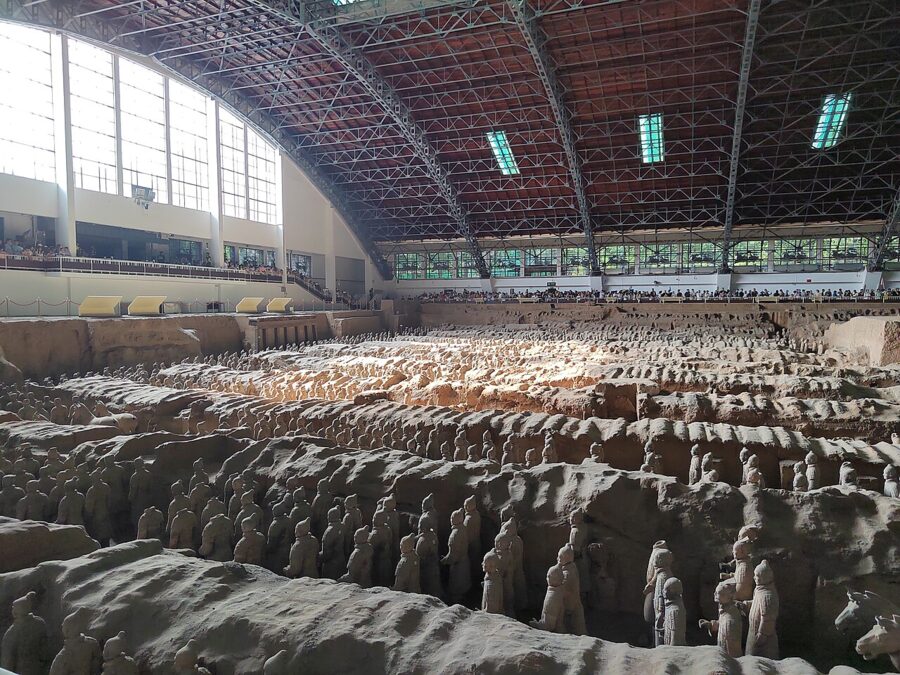
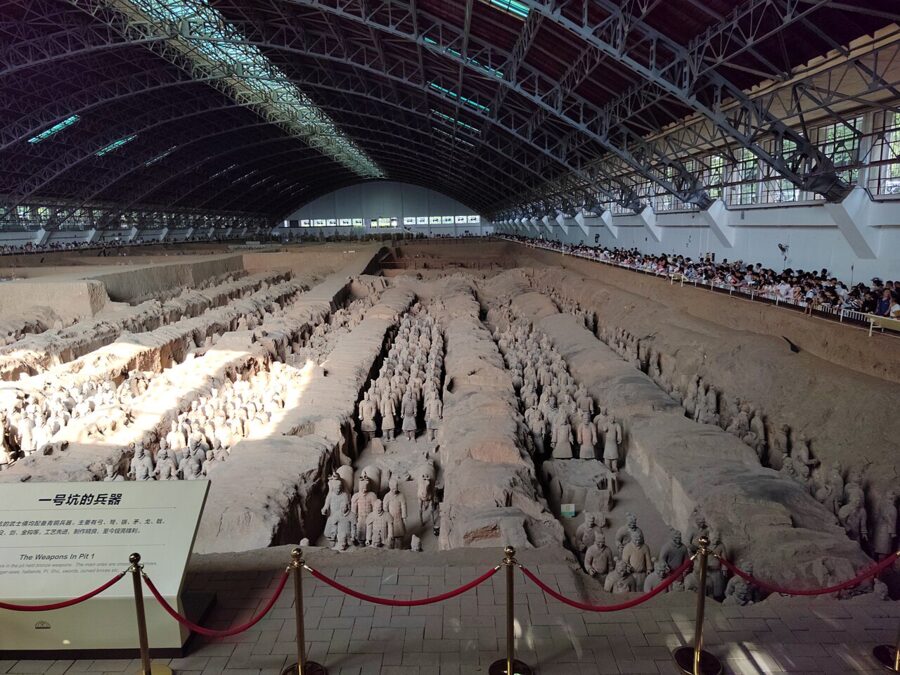
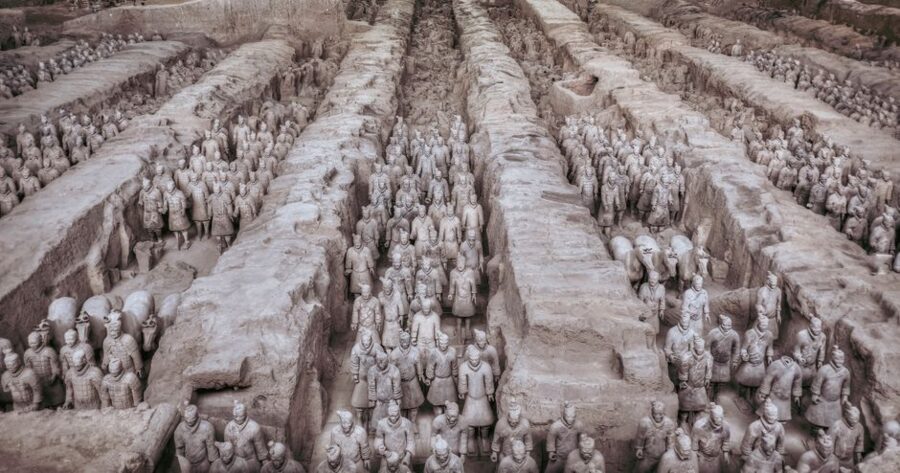
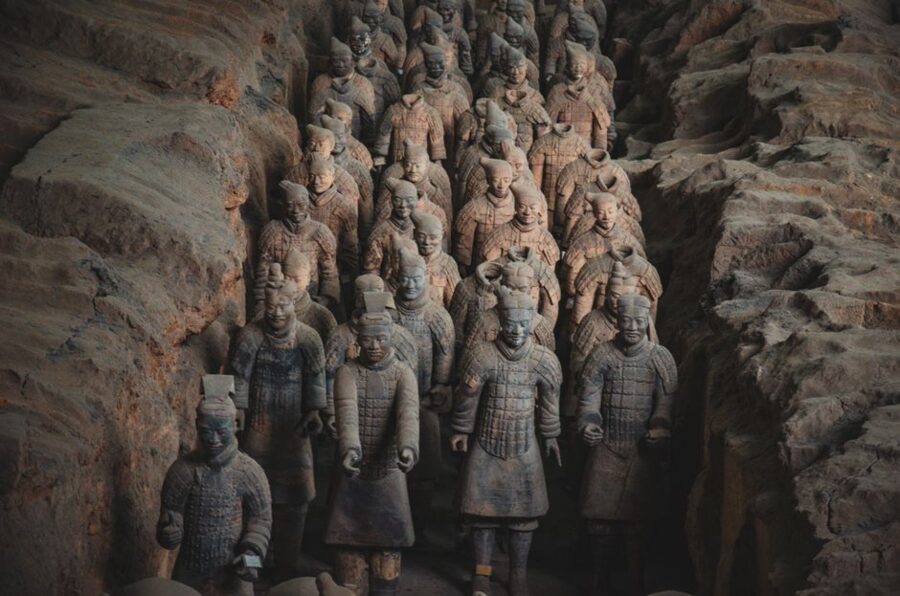
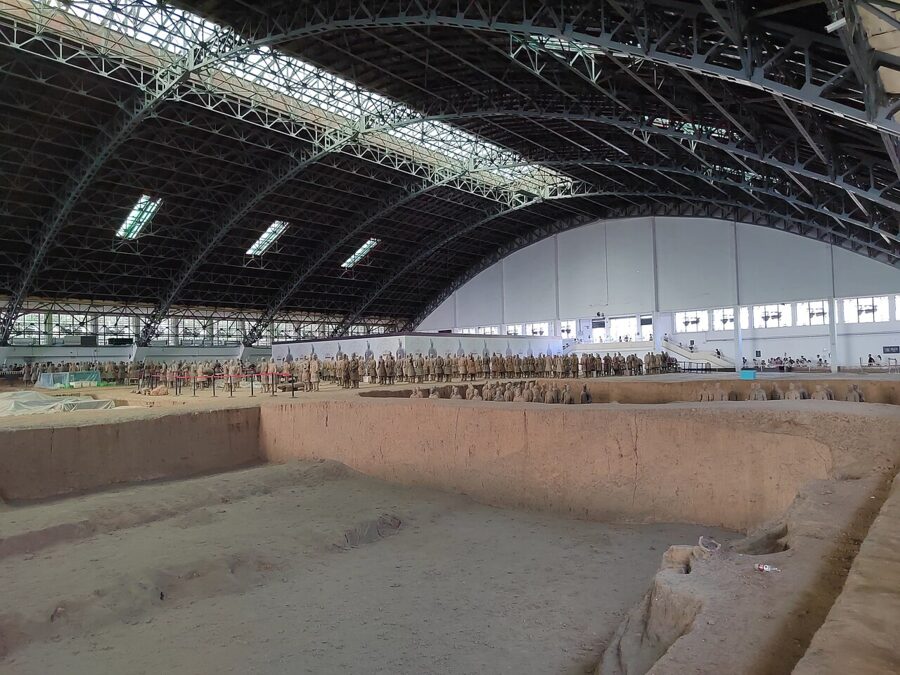
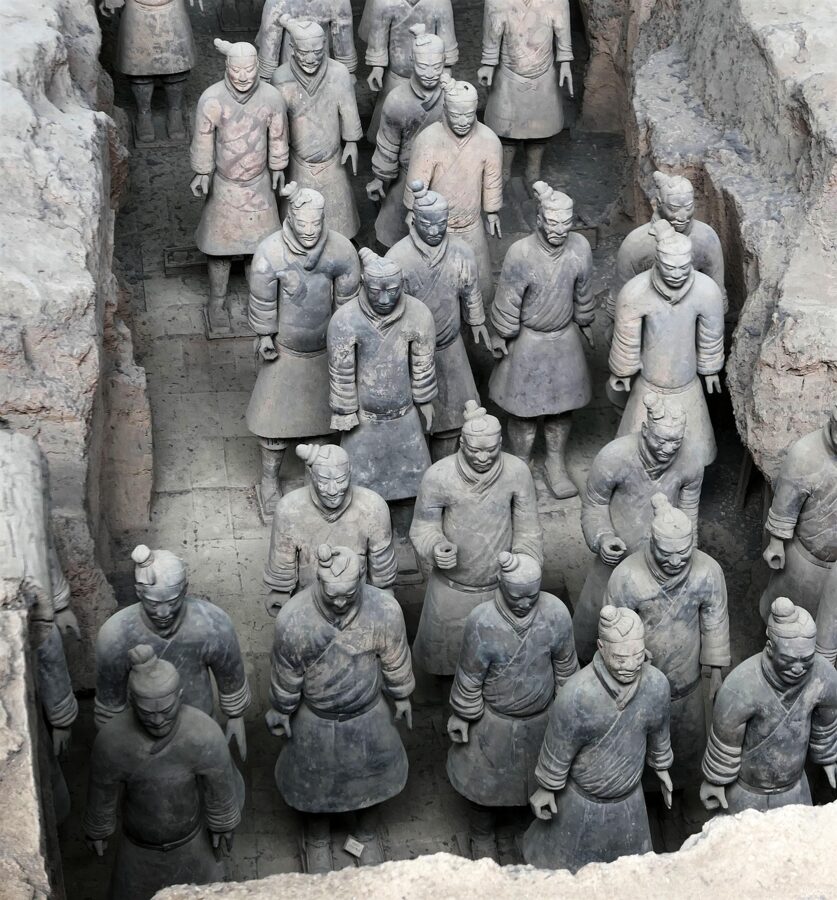
Pit 1 is the big one: 230 metres long, 62 metres wide and 4.5–6.5 metres deep, covering 14,260 square metres. From the density of what has been dug so far, the museum estimates about 6,000 figures and horses in it, plus a great deal of bronze weaponry. Only a fraction has been excavated. The rest of the hall floor is still earth, some of it still in its original trench shape, waiting.
The formation reads like a battle order. Three rows of unarmoured archers and crossbowmen face east across the front, the vanguard. Behind them, the main body of armoured infantry fills the corridors with chariots spaced among them, and single rows along the north and south edges face outward to guard the flanks. Average soldiers are around 1.8 metres tall; officers are taller.
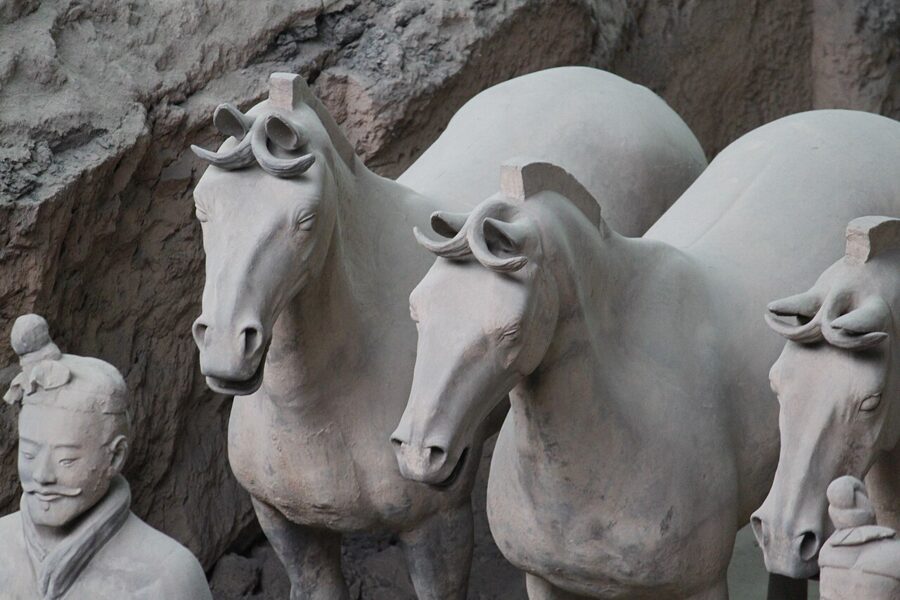
The front rail gives you the classic photo. Take it, then walk. The path runs around the whole pit, and from the long sides you see the corridors in profile, the burnt beam marks on the earth walls and the places where the figures are still lying where they fell when the roof came down. The figures standing in neat rows were all broken and have been reassembled; the fire and collapse, traditionally blamed on the rebel general Xiang Yu soon after the dynasty fell, left almost nothing whole.
The restoration area at the back
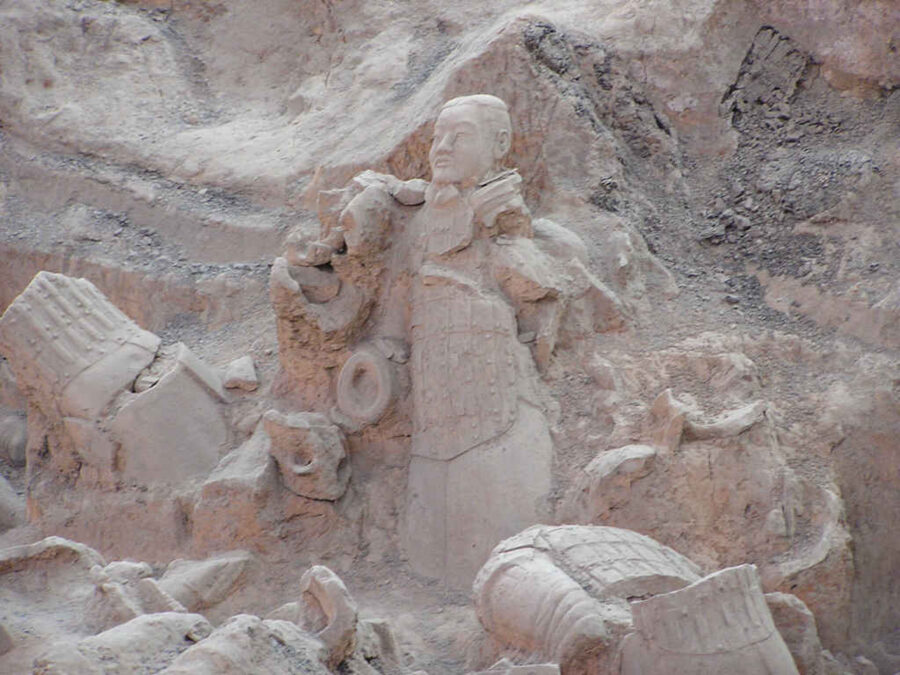
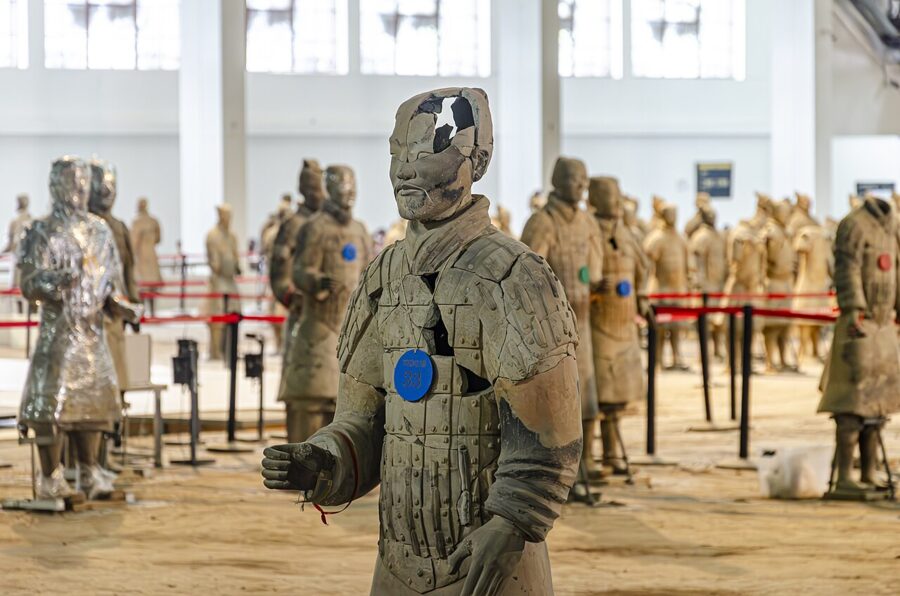
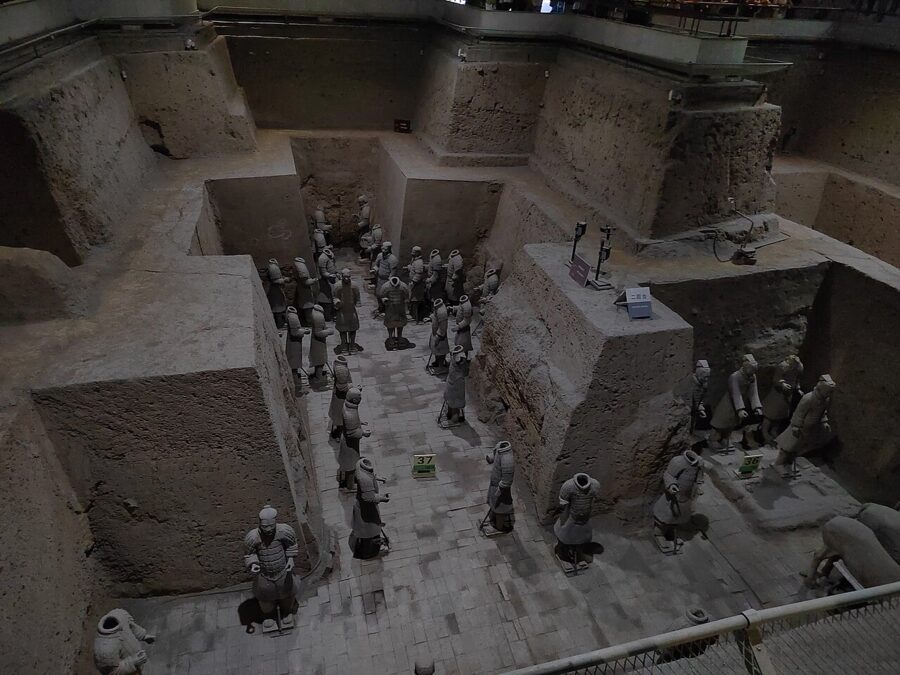
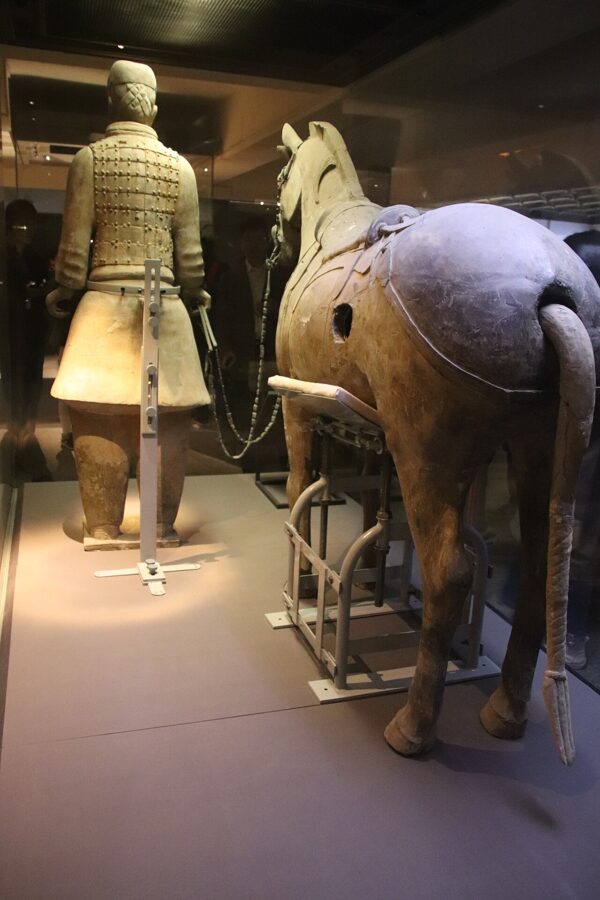
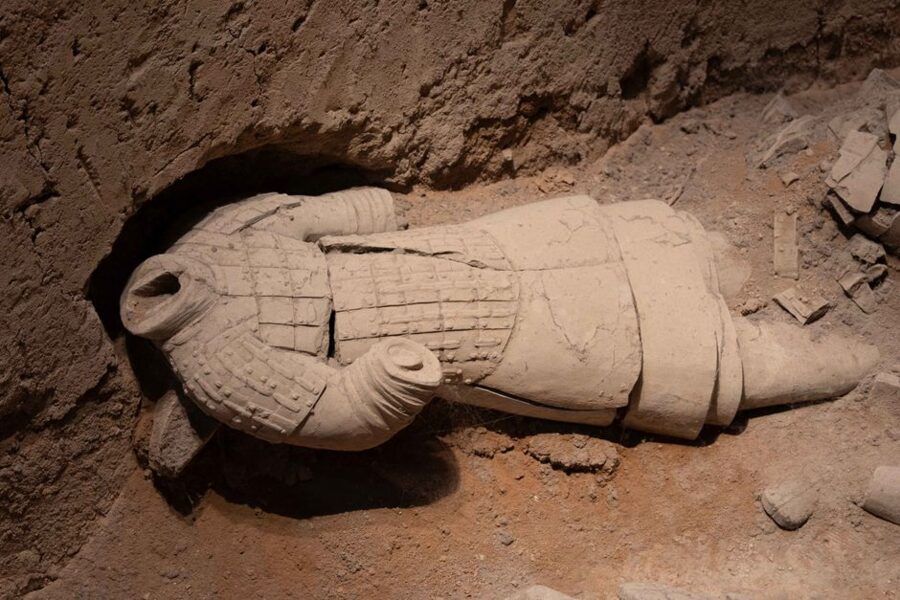
At the far, western end of the pit is the part I’d go out of my way for. This is where figures are put back together, and it is a working area, not a display. Headless torsos stand in groups with numbered tags, horses wait on supports with legs missing, and bits of armour lie on boards with the sherds sorted beside them.
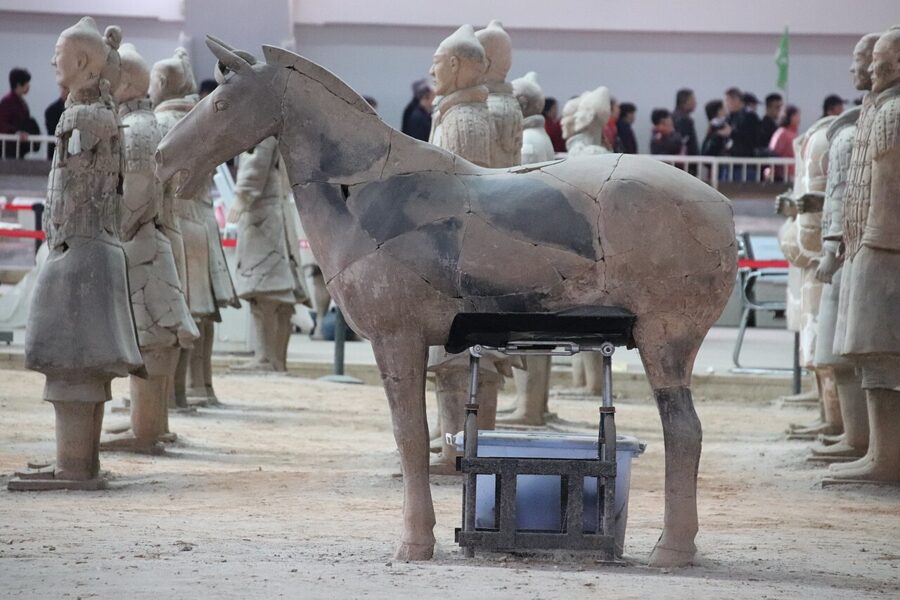
It is also where you understand what the restorers are up against. Every soldier in the famous front rows went through this: broken, catalogued, rebuilt. Look as long as you like, but don’t lean over the barrier to photograph people at work.
Pit 3: the command post
Pit 3 was found in May 1976, 25 metres north of the western end of Pit 1, and it is tiny by comparison: 28.8 by 24.57 metres, 520 square metres, shaped like a squared-off U. It held only 72 figures and horses. Many scholars read it as the command post of the whole army, what ancient texts call the junmu (军幕), the headquarters tent.
The reasons are in the details. The figures here stand facing each other along the walls rather than facing east to fight, like a guard of honour. There’s a single four-horse chariot at the entrance. And the weapons are different: in place of spears and crossbows, the guards held the shu (殳), a bronze-capped ceremonial staff with no blade, the kind carried by escorts rather than fighters.
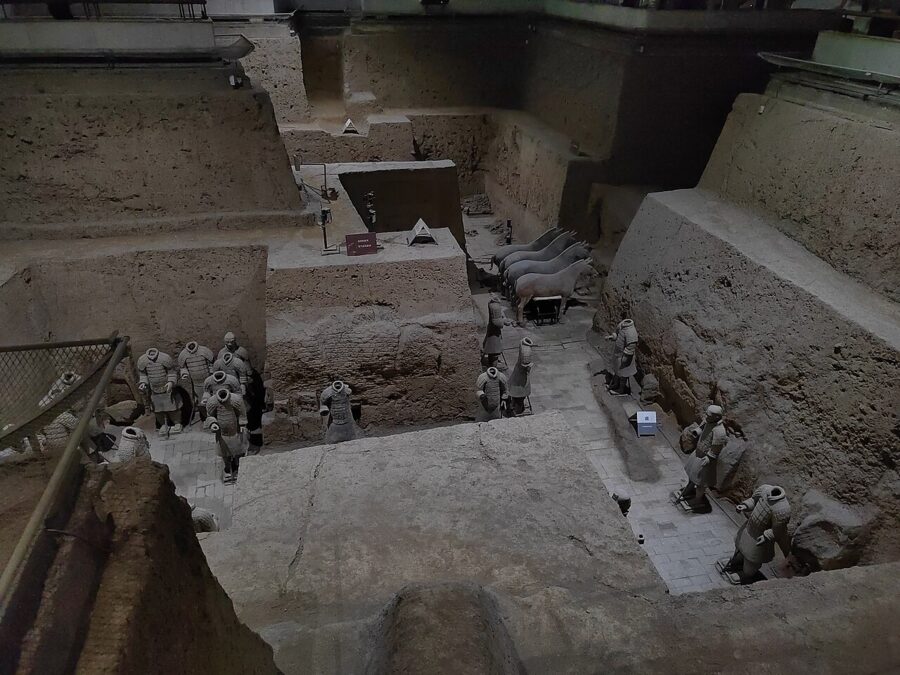
No figure in Pit 3 has been identified as the commander. The general, if there was one, is missing, and so is anything that would say who sat here. Give it fifteen minutes. The light is dim and the figures are close to the rail, which makes it one of the better places on the site to see faces.
Pit 2: archers, cavalry and the glass cases
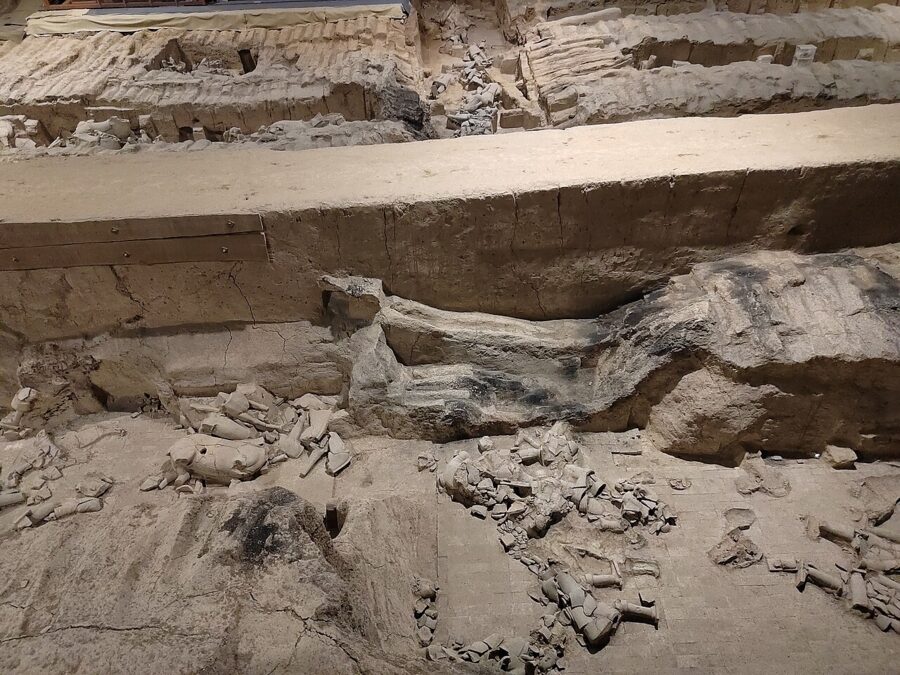
Pit 2 was found in April 1976, 20 metres north of the eastern end of Pit 1. It is L-shaped, 124 by 98 metres and about 6,000 square metres, and the museum estimates more than 1,300 figures and horses in it. On the museum’s own description it is the richest of the three, with the widest mix of troop types: crossbowmen, chariots, cavalry and infantry together.
Don’t expect rows of standing soldiers. Most of Pit 2 is still under its original covering, and what you see from the gallery is the roof structure: corridors of collapsed, charred timber imprints with the occasional head or horse’s back breaking the surface. It is the best place on the site to understand what the pits looked like before anyone dug.
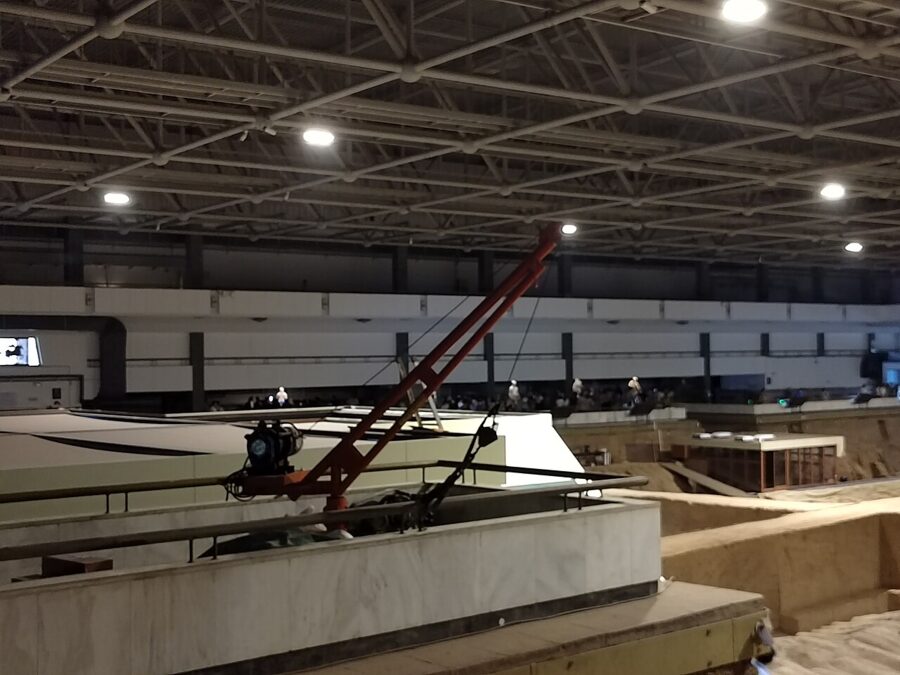
The glass cases
The reason to linger in Pit 2 is the row of glass cases around the gallery, where single figures stand at eye level. This is the closest you get to the army anywhere on the site, and the place to look at hands, hairstyles, shoe soles and the way the armour plates are laced. Expect a crowd at every case after mid-morning.
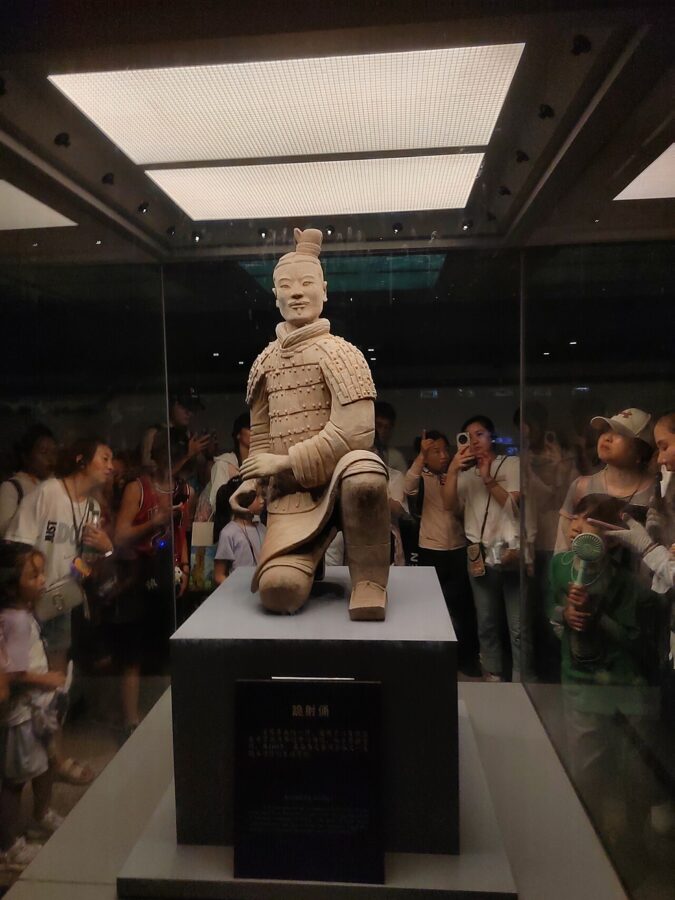
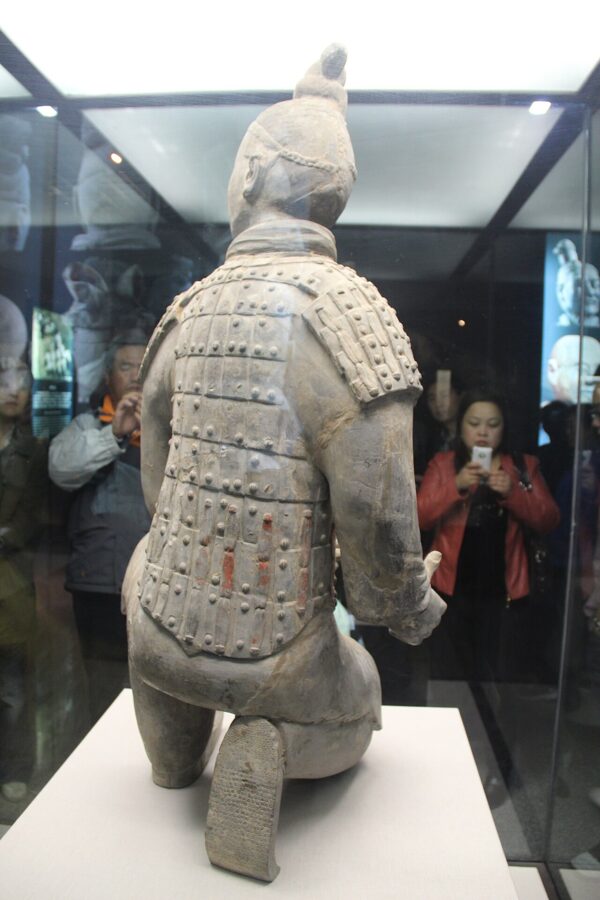
The star is the kneeling archer (跪射俑). He kneels on his right knee with his left leg raised, both hands held to his right side as if steadying a crossbow, in armour over a long robe, with his hair in a topknot twisted to the left. The kneeling archers stood in the middle of the crossbow unit in the east of Pit 2, with standing archers around them. He is often described as the best-preserved figure found in the pits, the one that needed least repair.
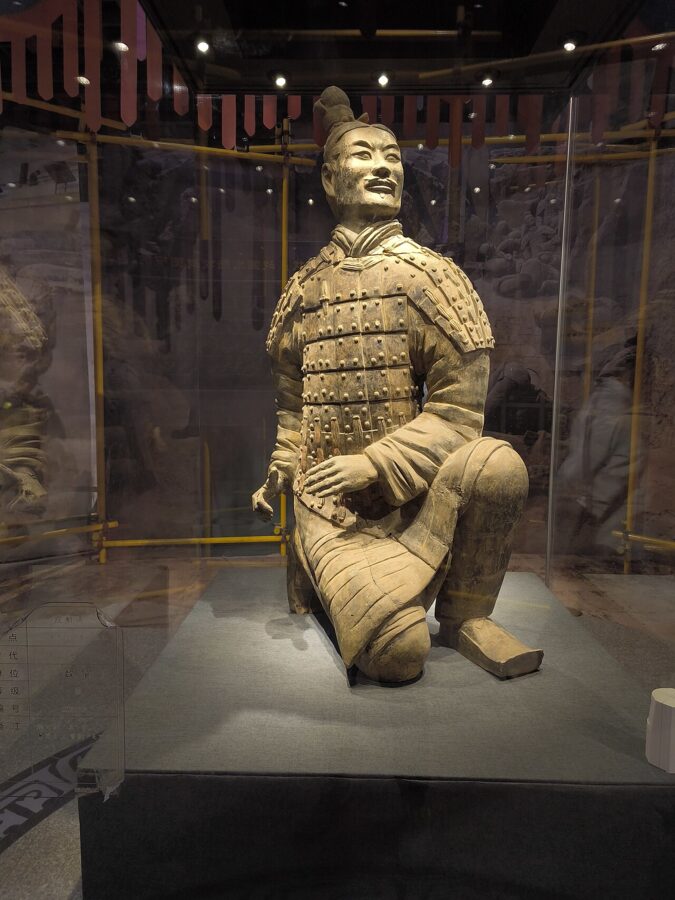
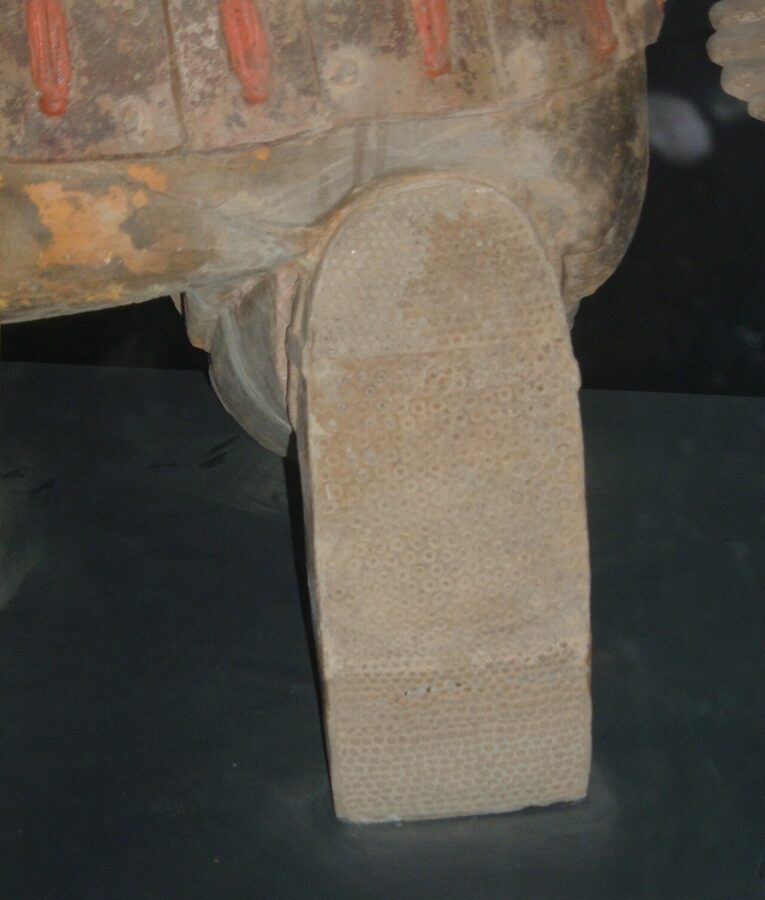
Walk round to the back of his case and look at his feet. The soles of his shoes are carved with rows of tread stitching, closer together at the toe and heel where a real sole would wear, and that one detail does more than any statistic to explain why people still stand in front of these figures for so long.
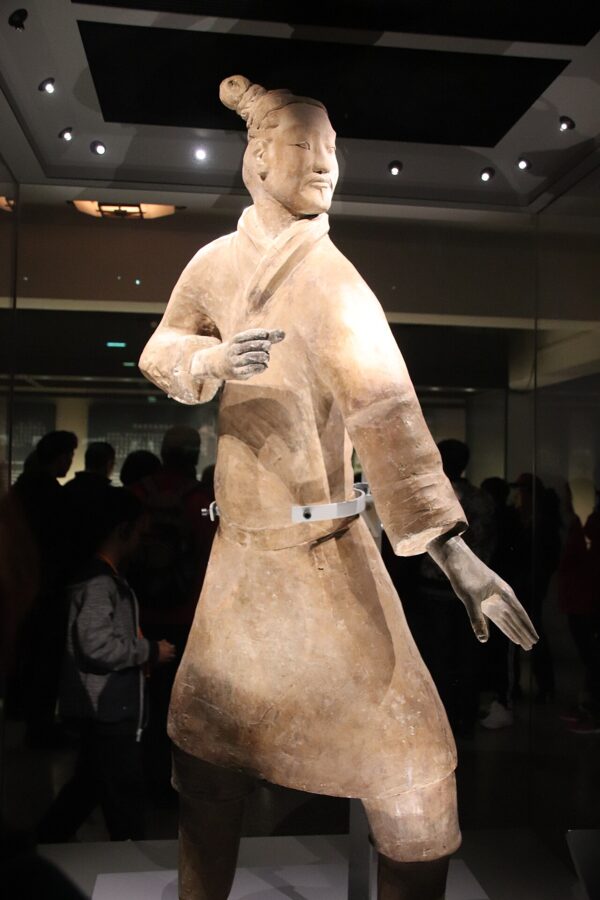
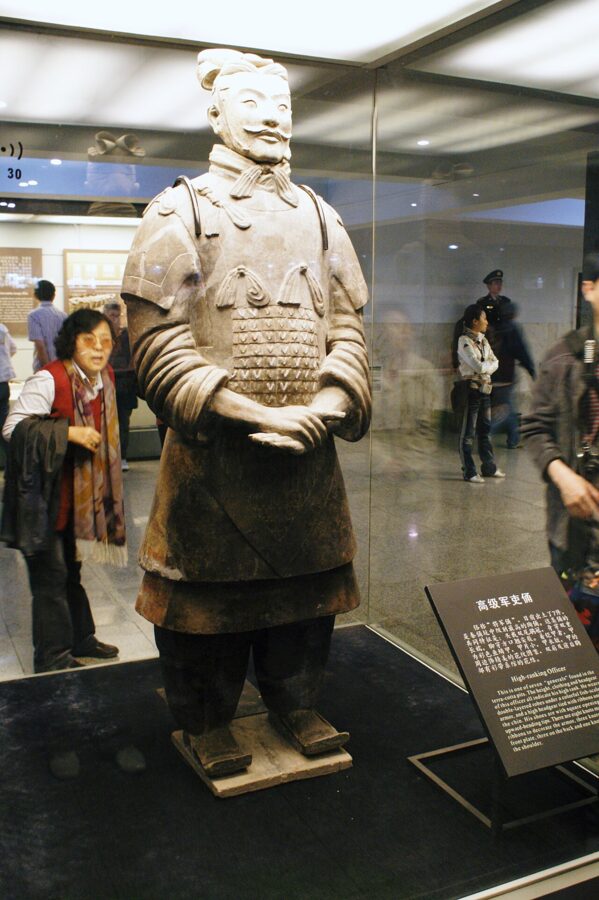
The other cases hold a standing archer in light dress, a cavalryman beside his saddled horse, an armoured warrior, a middle-ranking officer and, usually, one of the generals. The cavalry figures from Pit 2 are among the earliest life-sized cavalrymen found in China: short armour with no shoulder pieces, a small round cap, tight sleeves and trousers, one hand on the reins.
The exhibition hall, and the weapons
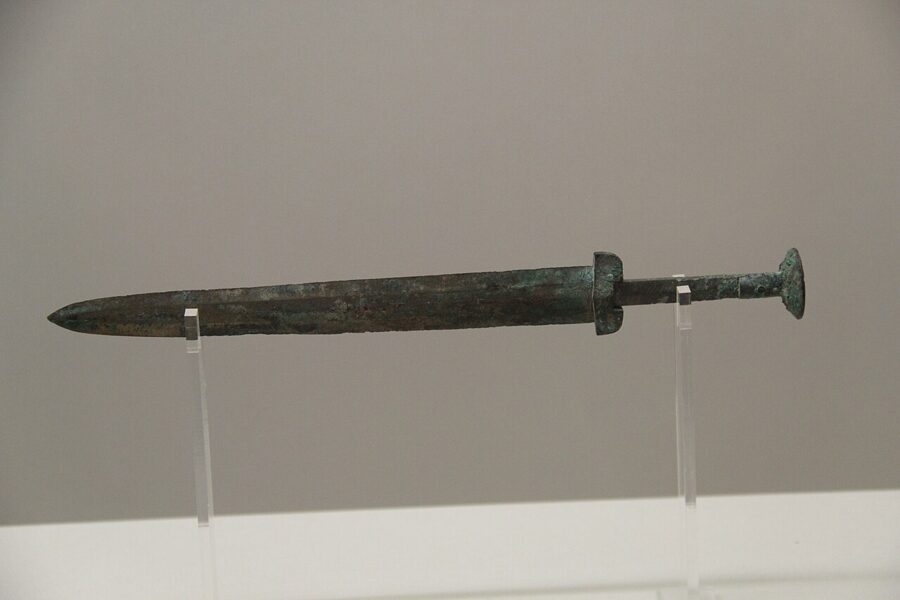
After Pit 2 the route passes the exhibition hall (文物陈列厅), which holds rotating displays of figures and objects from the site. Its contents change, so I won’t promise any one piece, but expect bronze weapons, a few figures shown at eye level and objects from the wider mausoleum. It’s worth twenty minutes, mostly to see the weapons up close.
For a long time the story went that the Qin had invented a chromium coating to keep their blades from rusting. A 2019 study found the chromium was contamination from the lacquer nearby, and that it was the soil, slightly alkaline and very fine, that kept the bronze in such good condition. That kind of correction is a good reason to read the hall’s panels rather than relying on what a guide says outside.
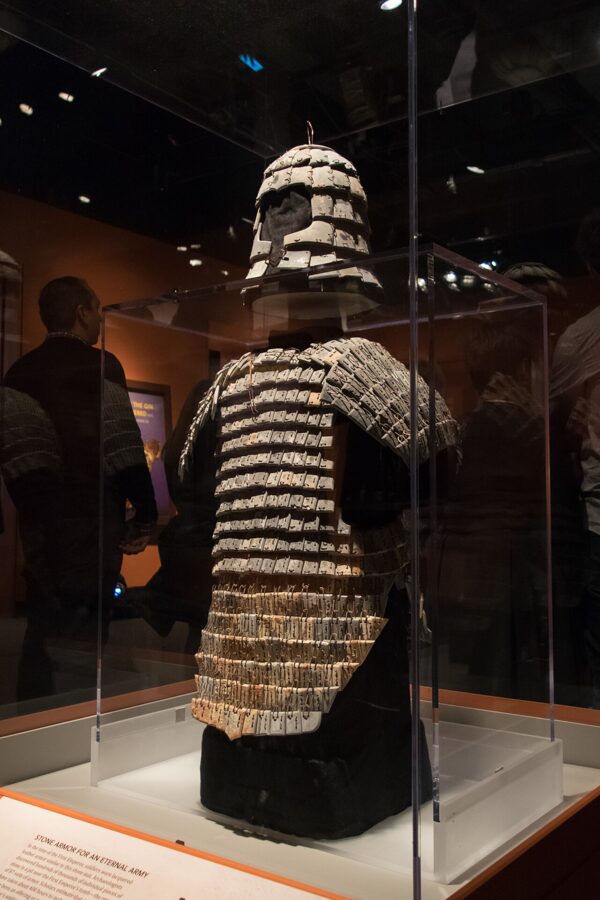
The army’s pits aren’t the only arsenal. Inside the outer wall of the mausoleum, archaeologists found a pit of stone armour: suits and helmets made of hundreds of small limestone plates wired together, far too heavy for battle. It is one of the clues that the tomb was meant to hold everything an empire would need, not just soldiers.
Lishan Garden: the mound, the chariots and the pits nobody visits
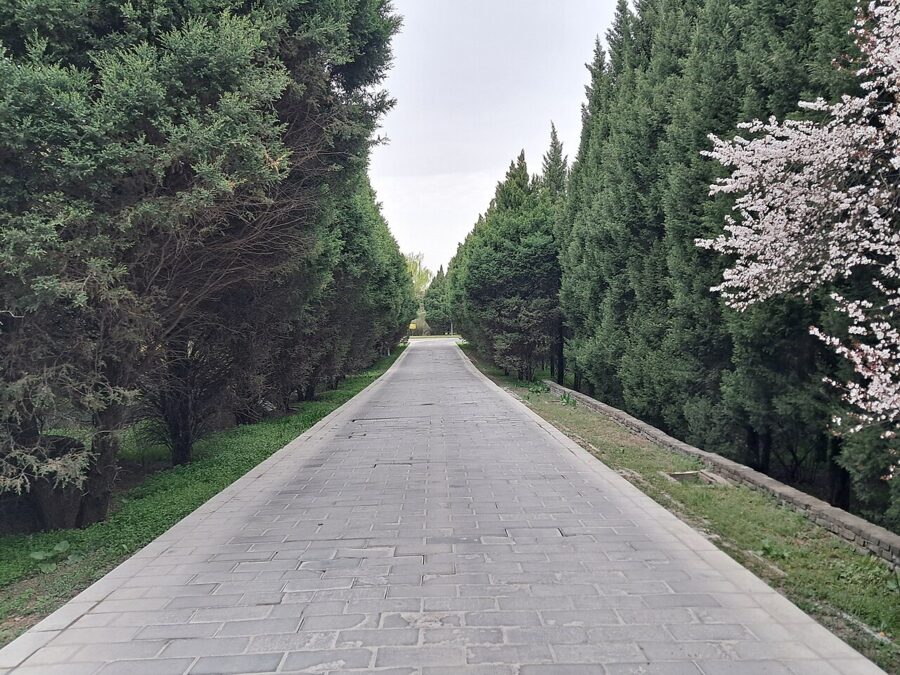
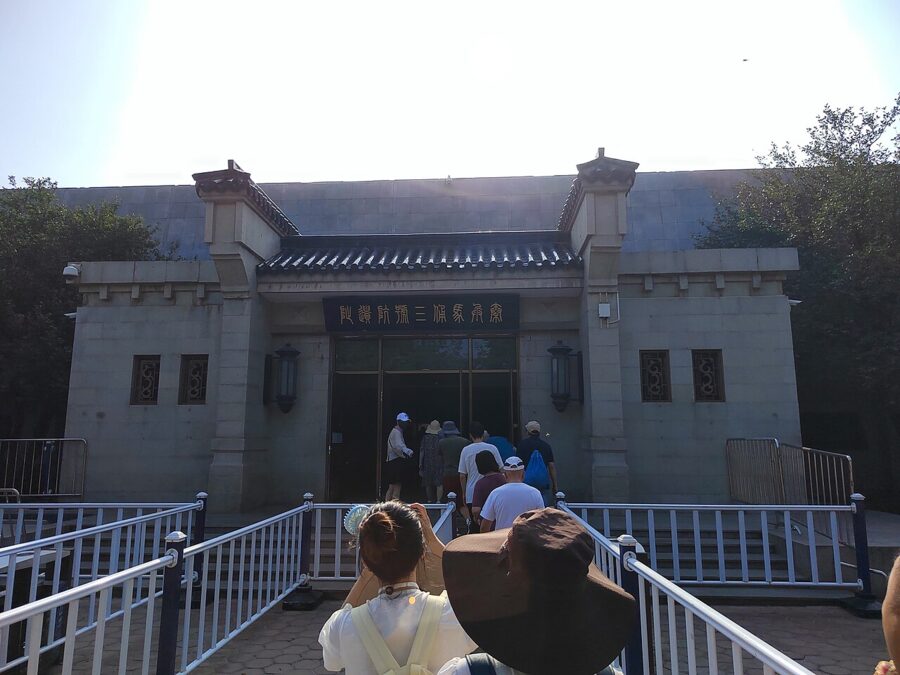
When you leave the pits, follow the signs for the shuttle (摆渡车) to Lishan Garden. It leaves from near the car park by the museum exit, close to the big statue of Qin Shi Huang, runs free with your ticket, and drops you at the Lishan Garden east gate a couple of kilometres away. The ride is short and the buses come and go all day.
Most people skip this half of the ticket, and I think that is the biggest mistake you can make here. Lishan Garden is where the emperor actually is. The core area inside the outer wall covers about 2.13 square kilometres, and more than 180 burial pits and nearly 200 tombs have been found around it so far. Electric carts run inside, at ¥15 a person at the museum’s last published price; you can walk, but it is a long loop.
The bronze chariots
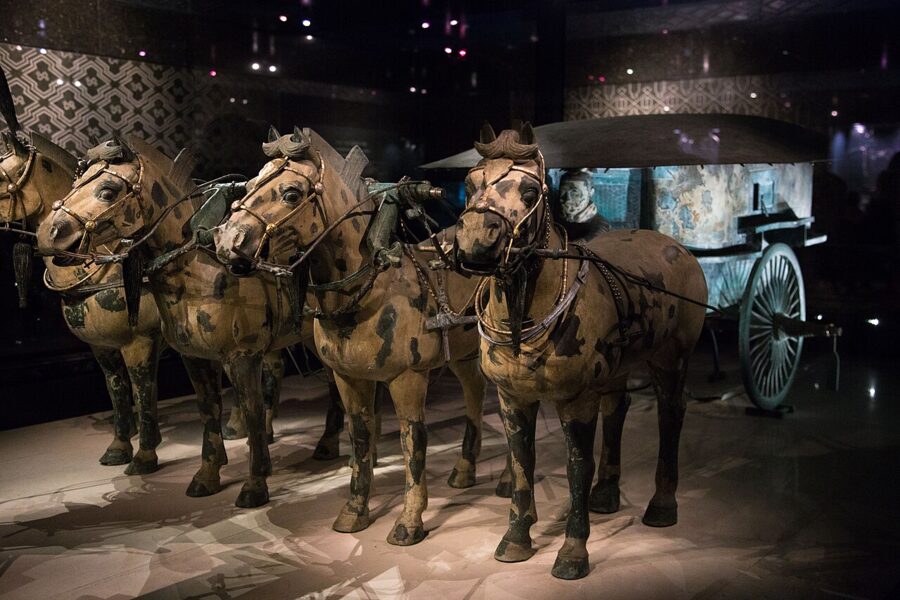
If you only do one thing in Lishan Garden, make it the Bronze Chariot Museum (秦陵铜车马博物馆). In December 1980, archaeologists dug up two painted bronze chariots in a wooden chamber 20 metres west of the tomb mound and 7.8 metres down. The chamber had rotted and the earth had crushed both chariots, but nobody had looted them, so almost every part was still in place. Putting them back together took eight years.
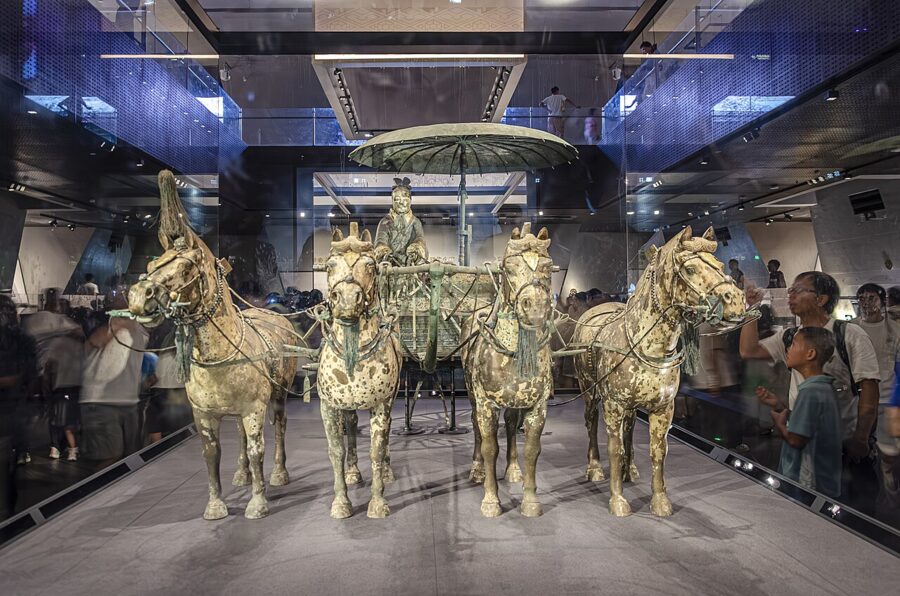
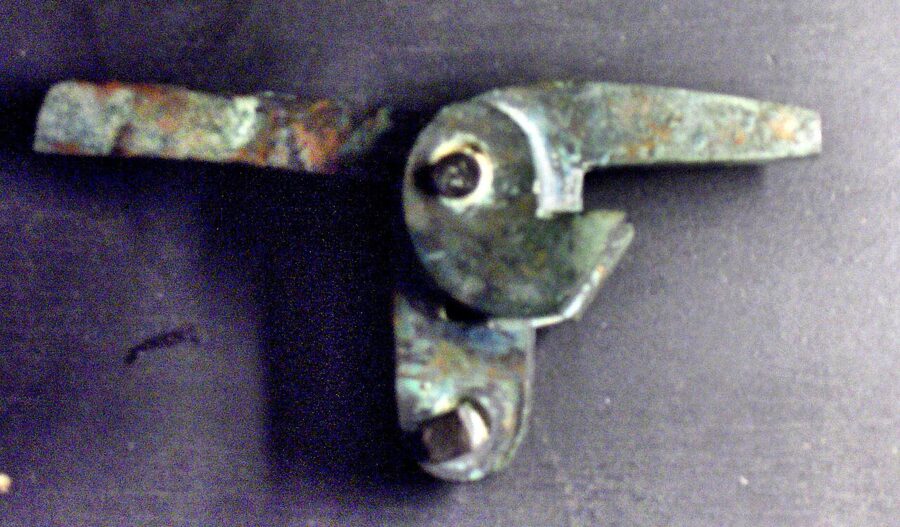
They are half life-size models of carriages from the emperor’s own procession, each with a single shaft, two wheels and four horses. The two inner horses pull the shaft; the two outer ones help, and they are kept in line by a set of small bronze fittings and reins designed to stop them drifting in or out, all reproduced in miniature. The gold and silver fittings on the two chariots weigh 14 kilograms. Before these were found, every chariot excavated in China had been a rotted wooden outline.
The tomb mound, and why it stays shut
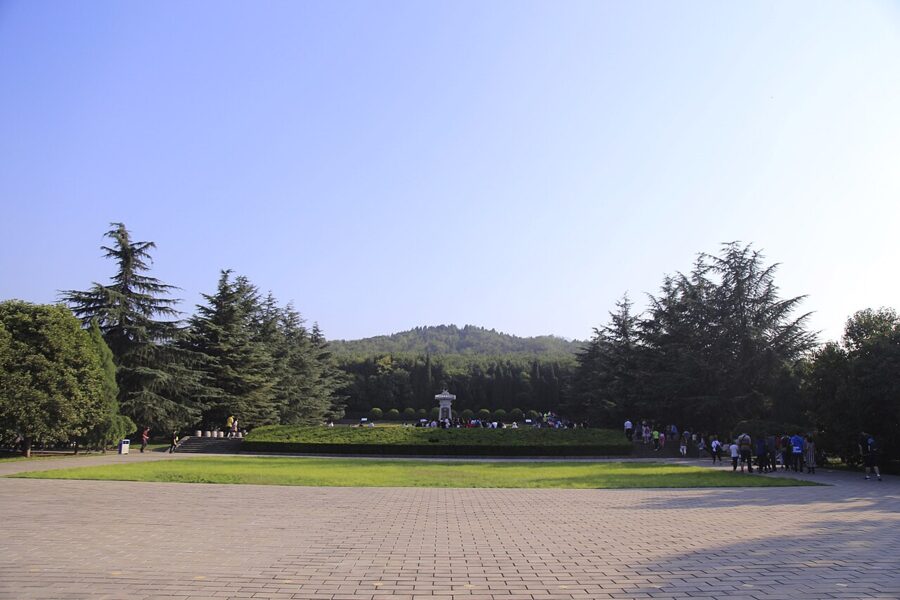
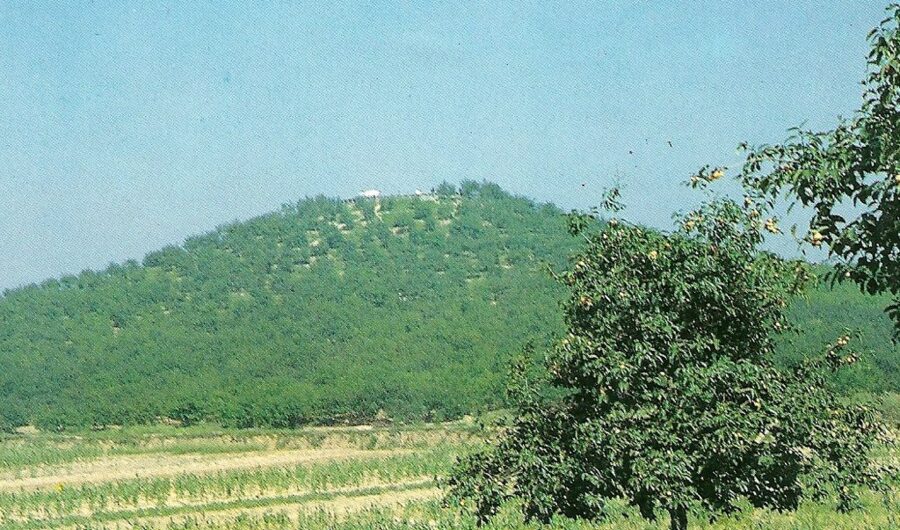
The mound is the centre of everything, and it is easy to walk past without realising. It rises 76 metres from a base about 350 by 345 metres, with Mount Li behind it. There is nothing to go inside. You walk around the base and the walls, and the walls are the point: an inner and an outer enclosure laid out like a walled city, with the tomb at its centre, a model of the emperor’s capital for the afterlife.
Under it, surveys have found the outline of an underground palace and a burial chamber about 80 metres long and 50 metres wide. How deep it lies is still argued, with estimates from 20 to 50 metres. Sima Qian, writing about a century after the burial, said 700,000 labourers dug down through three layers of groundwater, filled the tomb with palaces and treasures, rigged crossbows to fire at intruders and made the rivers and the sea of the empire out of mercury, with the stars above and the land below.
Soil tests on top of the mound have found mercury well above normal levels, concentrated over the centre. That fits Sima Qian’s account, though some scholars doubt the readings. According to a former head of excavations at the mausoleum, surveys have found two old robbers’ tunnels, both abandoned well short of the chamber, and the mainstream view in China now is that the tomb has never been broken into.
So why not open it? The official line from China’s heritage authorities is that research and a protection plan must come first, and the army is the warning. When the first figures came out of the ground their colours vanished in minutes, and nobody wants to do that to whatever is painted, lacquered or woven inside the chamber. To my mind the mound is more interesting closed than it would be as another hall of glass cases.
The acrobats and the officials
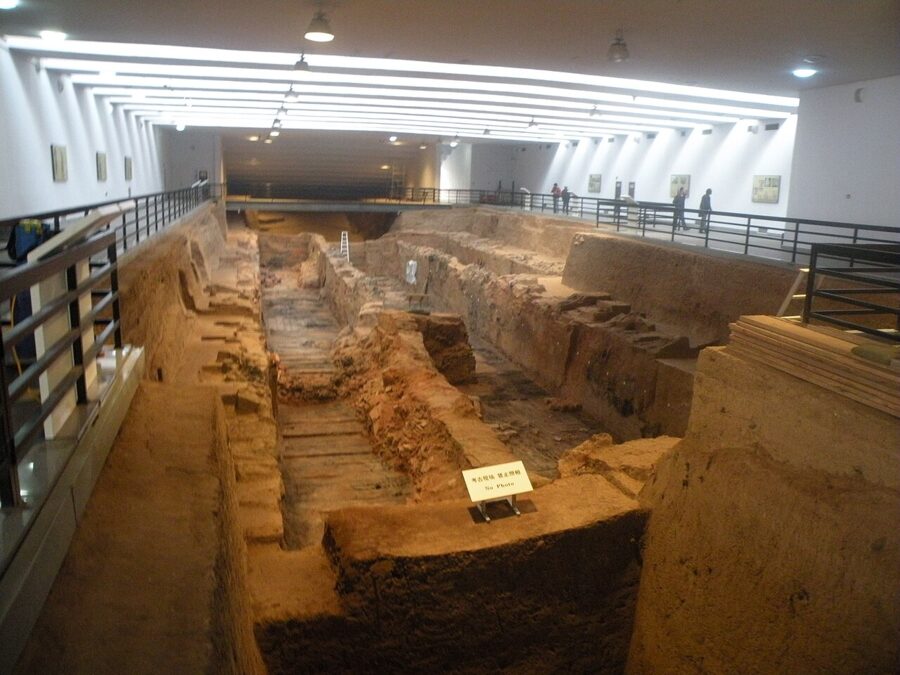
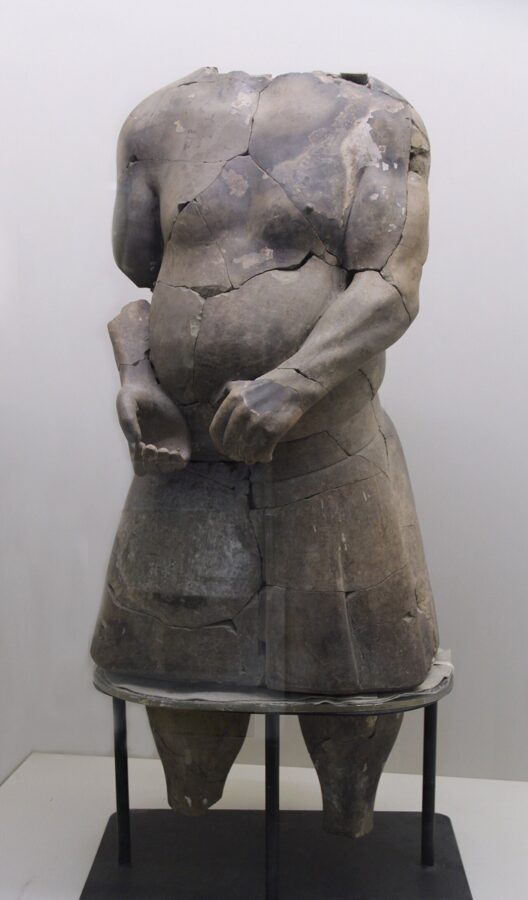
Two smaller pits inside the park are shown under their own roofs, and both are worth the walk. K9901 was found in March 1999 in the southeast part of the mausoleum, between the inner and outer walls: about 700 square metres, 5 metres deep, with two bronze cauldrons and more than 20 figures. They are life-sized and mostly bare-chested in short coloured skirts, in poses unlike anything else in the tomb, and archaeologists read them as acrobats and strongmen, the court entertainers.
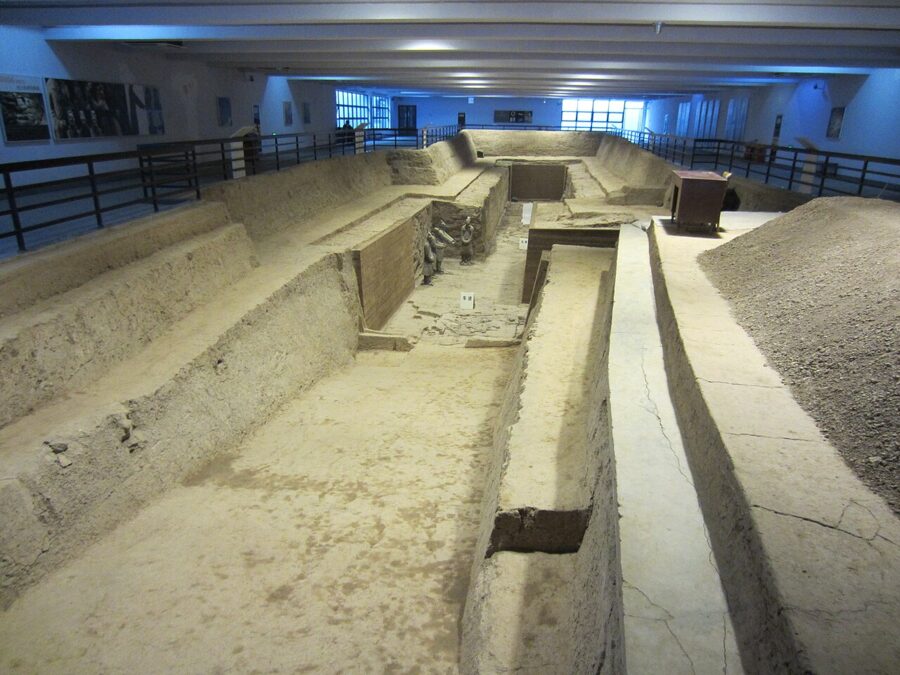
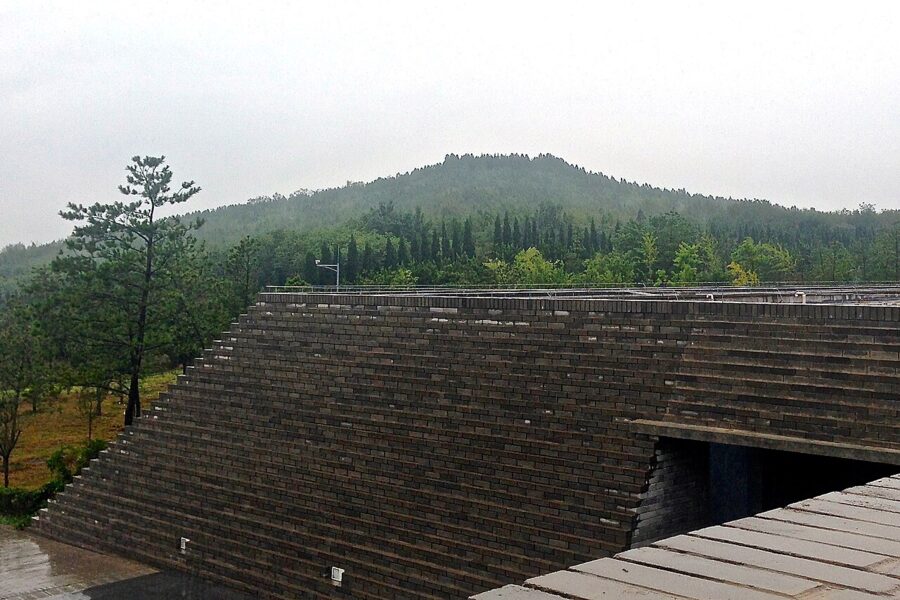
K0006, found in 2000, sits inside the inner wall at the southwest corner of the mound. It is one of the rare pits that was never burned, so its timber floor, wall planks and roof beams survive far better than anywhere else on the site. The front chamber held 12 figures, eight with their hands folded in their sleeves and four drivers, all wearing the long caps of officials with rank; the back chamber held horse bones. They are civil servants, and they look it: narrow-shouldered, robed, patient.
Guides, audio and how to choose
The museum runs its own guide service from the service centre near the entrance, with Chinese and foreign-language guides. It is priced per group, not per head: the provincial heritage bureau’s 2023 list started at ¥90 for one to five people for a Chinese-language guide, with headsets extra, and English costs more. Prices have moved since, so ask at the desk and agree the language and length before you start.
An audio-guide handset is the cheaper option, at around ¥30 with a deposit. Both are worth it for a first visit. The pits are all earth and broken clay, and a lot of what makes them interesting, like the formation, the fire, the empty Pit 4 that was never finished, isn’t labelled in a way you’ll take in while being pushed along the rail.
What I wouldn’t do is hire one of the “guides” who approach you on the plaza, in the car park or on the walk from the bus stop. Some are knowledgeable. Many are working for a shop or a restaurant, and a guide who offers to take you round for free is always working for someone. If you want a private English-speaking guide, book one in advance through your hotel or a licensed agency and get the price in writing.
The traps, plainly
None of this is dangerous. It’s just expensive and wastes the morning. The Terracotta Army is the most famous sight in northwest China, and the road out to it has been set up for decades to catch people who don’t know exactly where they’re going.
- Fake buses and minibuses. Covered above: the real 游5 now leaves from Xi’an East station, pays a conductor on board, and doesn’t sell return tickets on the pavement. Anything else is someone’s private tour.
- Replica museums. Along the roads around Lintong there are businesses with Qin names: “underground palaces”, “Qin tomb” shows, rooms of reproduction warriors. They are not part of the museum and your ticket doesn’t cover them. Navigate by the official name, 秦始皇帝陵博物院, and you won’t end up at one.
- Street tickets. Tickets are tied to the passport you book with, so a ticket bought from a stranger is worthless at best. There’s no reason to buy one: book in the app or on the website, or go home with your money.
- The shopping day trip. Cheap group tours from Xi’an often add stops at a jade showroom, a lacquer or silk factory or a workshop selling “museum-grade” replica warriors, and the guide’s income depends on what you buy. If you want a tour, pick one that says in writing that it has no shopping stops.
- “Antiques”. Anything sold as a real Qin relic on the road outside is a replica, and if it weren’t, buying it would be a crime. Replicas are fine as souvenirs; just pay replica prices.
Food near the site
Eating at the pits is functional at best. There are restaurants and snack counters around the entrance plaza and on the commercial street on the way out, priced for a captive crowd and cooking mostly the Shaanxi greatest hits: cold liangpi noodles, roujiamo, a bowl of biangbiang noodles. Fine if you’re hungry; not why you came.
My advice is to bring water and something to eat in the morning, do the pits and Lishan Garden without a long lunch break, and eat properly back in the city. Xi’an is one of the best food cities in China and I’ve covered it street by street in my Xi’an food guide, from the Muslim Quarter to the old paomo houses. For the noodle side of it, the wide hand-pulled Shaanxi noodles have their own section in my guide to Chinese noodles.
The one thing Lintong does better than the city is fruit. In autumn, look out for the small, bright orange huojing persimmons (火晶柿子) that Lintong is known for, the same ones Xi’an cooks fold into fried persimmon cakes, and in September and October the local pomegranates (临潼石榴). Fruit sellers usually take WeChat Pay or Alipay; carry a little cash anyway.
Huaqing Palace and Mount Li
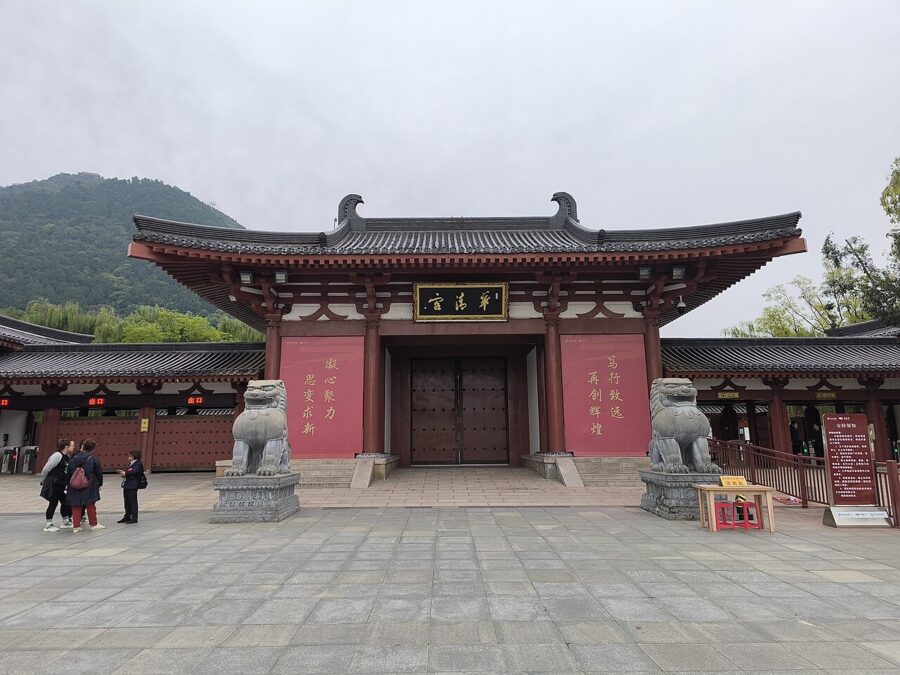
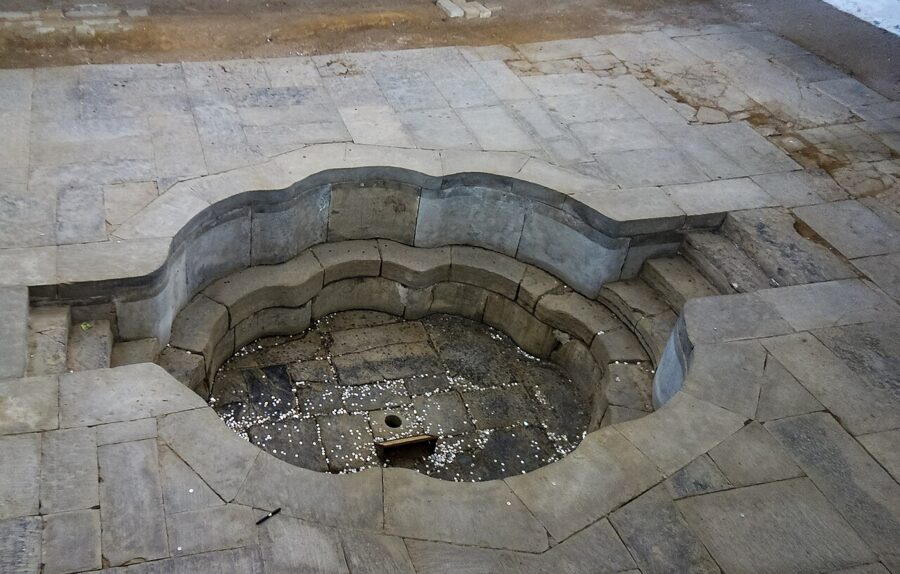
Huaqing Palace (华清宫) is the hot-spring resort at the foot of Mount Li, by Huaqingchi station, and it’s the natural add-on to a day at the pits. The springs were used by emperors for centuries, but the palace is famous for the Tang: Emperor Xuanzong built it up in the eighth century and spent his winters here with Yang Guifei, the consort whose story Chinese poets have been retelling ever since. The excavated stone bathing pools are the oldest things to see.
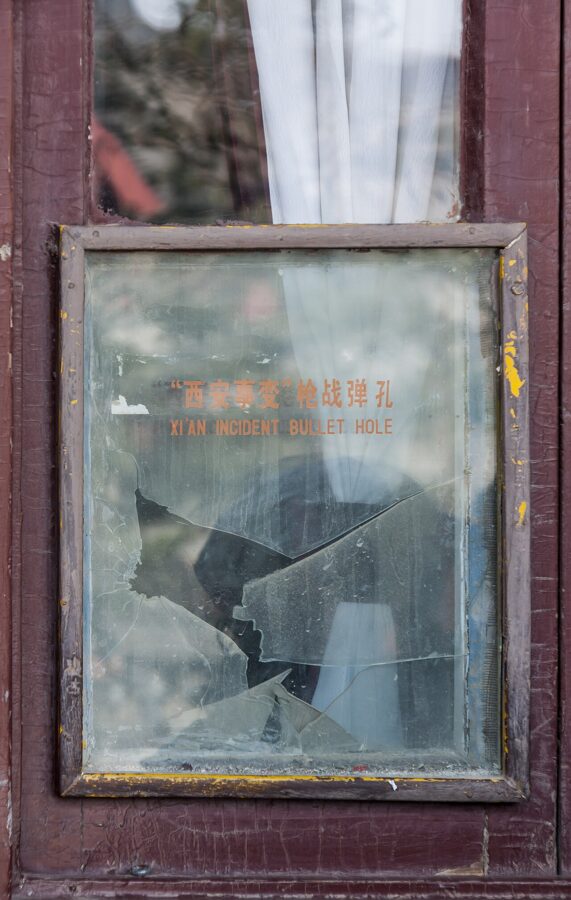
It also has a modern history. In December 1936 the Nationalist leader Chiang Kai-shek was staying here when troops under his own generals came for him, and he fled up the slope of Mount Li in the night before being caught. The Xi’an Incident, as it’s known, led to the Nationalists and Communists forming a united front against Japan. The house he slept in still has bullet holes in its windows.
Huaqing is a separate site with its own ticket, around ¥120, and its own booking. The evening show, The Song of Everlasting Sorrow, staged on the lake with Mount Li as the backdrop, tells the Xuanzong and Yang Guifei story and sells out in summer; book it a week ahead if you want it. A cable car runs up Mount Li for the view back over Lintong.
Don’t try to fit in more than that. The high-speed line east from Xi’an runs on past Mount Hua towards Luoyang, and both are worth their own day, not the end of this one.
A half-day plan
This assumes a booking for the first time slot and a base in central Xi’an. It’s a long half day, finishing in the early afternoon.
- 07:15: Metro from the city centre to Fangzhicheng, change to Line 9.
- 08:00: Huaqingchi, exit C, bus 613 or 602 to the museum. Passport out.
- 08:30: Straight to Pit 1. Front rail first, then the side path to the restoration area at the back.
- 09:30: Pit 3, quickly, then Pit 2 and the glass cases before the groups arrive.
- 10:30: Exhibition hall, then the shuttle to Lishan Garden.
- 11:15: The Bronze Chariot Museum, then the mound and K9901 and K0006. Take a cart if your legs are done.
- 12:45: Shuttle back, a persimmon or two, bus to Huaqingchi.
- 13:30: Either Huaqing Palace for the afternoon, or Line 9 back into Xi’an for a late lunch.
Skip this
- Any tour that ends at noon. It means skipping Lishan Garden and the bronze chariots, which are on your ticket and are half the point.
- The replica “museums” and shows on the road outside. Not part of the site, not on your ticket, not worth the detour.
- A long lunch at the site. Bring a snack and eat in Xi’an.
- The scrum at the front rail. Take your photo and move on; the side and back of Pit 1 are better and quieter.
- Arriving after 11:00 in summer. You’ll be in the thick of the groups in Pit 1 and short of time for Lishan Garden.
Go early, walk to the back of Pit 1, look at the sole of the kneeling archer’s shoe, and take the shuttle to the tomb. Then stand at the foot of the mound for a minute and remember that the army was the least of what he took with him.
You Might Also Enjoy
 Eating at Tokyo’s Michelin-Starred Restaurants: How to Get In, What to Order, and Which Stars Are Worth the Wait
 Types of Sushi in Japan: Nigiri, Maki, Oshizushi and the Regional Forms Most Visitors Never Meet
 Suzhou: The Classical Gardens, the Old Canals and How to See the City in One or Two Days
 Guilin Rice Noodles: How to Order a Bowl, and the Guangxi Noodle Family From Luosifen to Laoyou