Guangzhou: Shamian Island, the Chen Clan Hall, the Old Liwan Lanes and How to Spend Three Days
Halfway down Beijing Road, the shoppers do something odd. They stop, step onto a long pane of glass set into the pedestrian street, and look down. Under their trainers, lit from below, are eleven layers of road surface stacked one on another: the Republic at the top, then the Ming, the Song and Yuan, the Southern Han, and at the bottom the Tang, roughly a thousand years of the same street in one cross-section.
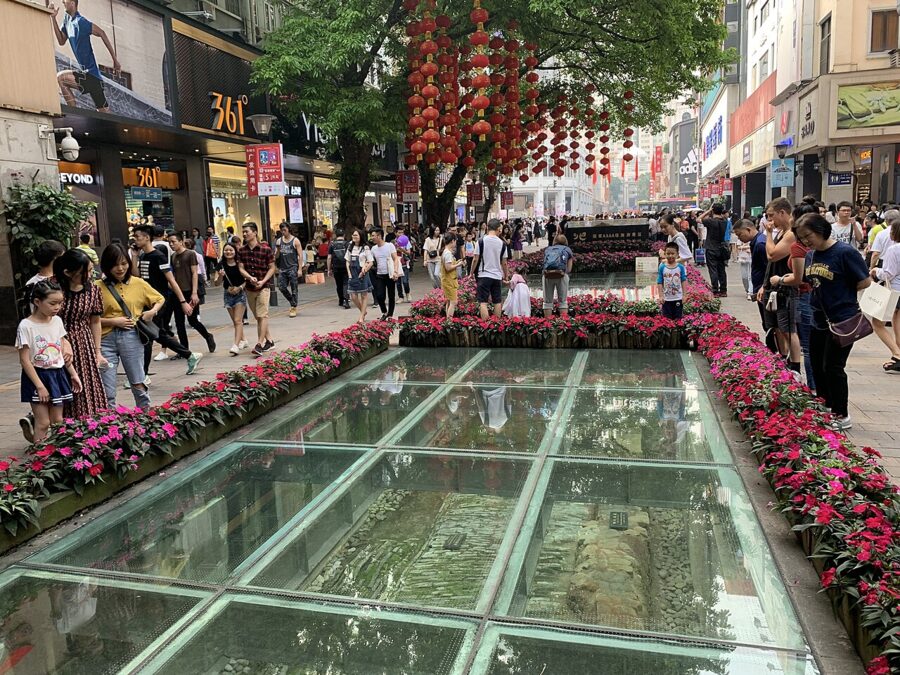
That is Guangzhou in one picture. When I lived in Shenzhen, it was the city I went to when I wanted the older Cantonese world: the teahouses, the arcaded streets, the clan halls, the river. Shenzhen was built in a generation. Guangzhou has been a port for more than two thousand years, and it keeps showing you the layers.
Below: the old town on both banks, the new city and the river at night, the Canton Fair weeks, day trips to Foshan and Kaiping, where to stay, getting in, and a three-day plan.
The table is the quick version. Prices are in yuan and were checked in November 2026. Note the closing days, because they do not line up: plan your days around them.
| Place | Ticket | Metro | Closed |
|---|---|---|---|
| Chen Clan Ancestral Hall | ¥10, book on WeChat | Chen Clan Academy, Lines 1 and 8, exit D | Tuesdays |
| Shamian Island | Free | Huangsha, Lines 1 and 6 | Never |
| Yongqingfang and the Cantonese Opera Art Museum | Free | Huangsha, Lines 1 and 6 | Museum closed Mondays |
| Nanyue King Mausoleum museum | ¥10 | Yuexiu Park, Line 2, exit E | Mondays |
| Guangdong Museum | Free, book ahead | Zhujiang New Town, Line 3, exit B1 | Mondays |
| Canton Tower | From ¥150 | Canton Tower, Line 3, exit B | Never |
| Pearl River night cruise | From ¥78 | Beijing Road, Line 6, exit A (Tianzi Pier) | Never |
| Baiyun Mountain | ¥5, cable car ¥25 up | Yuntai Garden, Line 11 | Never |
In This Article
- Canton, and how the city fits together
- Shamian Island
- The two churches
- The riverside and the White Swan
- The Chen Clan Ancestral Hall
- What to look for
- Tickets, hours and getting there
- Liwan: Enning Road, Yongqingfang and old Xiguan
- Enning Road
- Yongqingfang
- The Bruce Lee ancestral house
- The Cantonese Opera Art Museum and Lychee Bay
- Xiguan houses and Shangxiajiu
- Beijing Road and the heart of the old city
- The Nanyue Palace site
- Sacred Heart Cathedral
- Yuexiu Park, the Five Rams and the king’s tomb
- Zhenhai Tower
- The Nanyue King Mausoleum
- The new axis: Huacheng Square, the Opera House and the Guangdong Museum
- The Canton Tower
- On the Pearl River at night
- Which pier
- Tickets and tips
- Up Baiyun Mountain
- What to eat, briefly
- The Canton Fair weeks
- Day trips: Foshan and Kaiping
- Foshan
- Kaiping and the diaolou
- Where to stay
- Shamian and Liwan
- Beijing Road and Haizhu Square
- Zhujiang New Town and Tianhe
- Getting in and getting around
- Baiyun Airport
- Trains
- Around the city
- Three days in Guangzhou
- Day 1: Liwan and Shamian
- Day 2: the old city and the tower
- Day 3: choose your trip
- Skip this
Canton, and how the city fits together
The city was founded as Panyu, on the east bank of the Pearl River, in 214 BC. A Qin general, Zhao Tuo, made it the capital of his own kingdom of Nanyue a decade later, and the kingdom’s palace and royal tomb are both still in the middle of town. By the Tang dynasty, ships from across the Indian Ocean were calling here, and the port never really stopped.
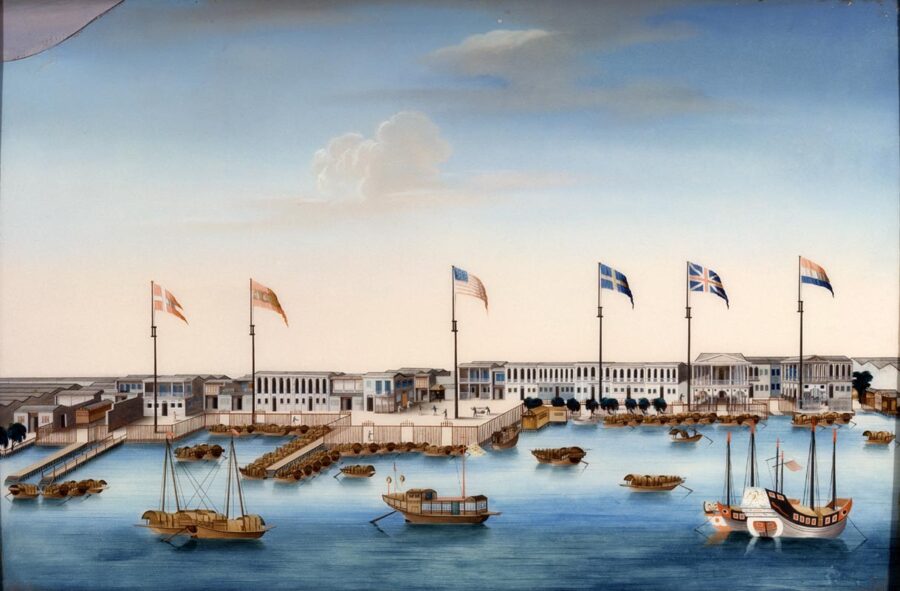
The part that matters most to a visitor came later. From 1757 the Qing emperors limited Western trade to this one port, the Canton System, and foreign merchants had to live and work in the Thirteen Factories, a strip of warehouses and offices on the riverbank outside the city wall. Tea, silk and porcelain went out; silver came in, and then opium. The system ended with the First Opium War and the treaty of 1842, which opened other ports and gave Britain Hong Kong.
That history explains the map. The old walled city sat on the north bank, with Yuexiu Hill as its northern anchor; Liwan, to the west, was Xiguan, the merchant suburb outside the walls, close to the Factories. Today Liwan and Yuexiu are the old town, and that is where you will spend most of your time. Tianhe, to the east, holds the business district of Zhujiang New Town and the new central axis, and Haizhu is the island across the river with the Canton Tower on it.
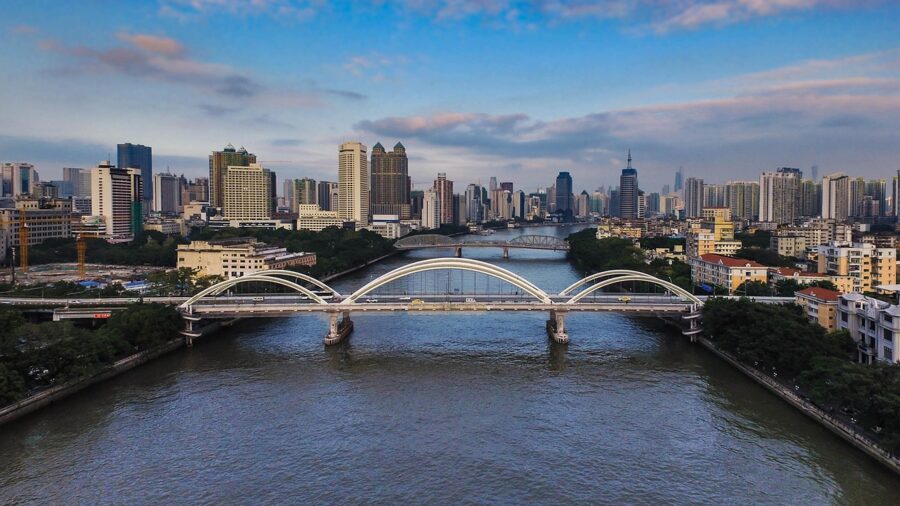
Line 1 of the metro runs through the old town, from Huangsha by Shamian east through Chen Clan Academy and Gongyuanqian to the Tianhe Sports Center. Line 2 runs north and south through Gongyuanqian and Haizhu Square, Line 6 cuts across the old town to Beijing Road, and Line 3 links Tianhe to the Canton Tower.
Shamian Island
After the Second Opium War, Britain and France wanted a concession of their own, and in 1859 the Qing authorities leased them a sandbank in the river just upstream from the old Factories. It was built up into an oval island of about 0.3 square kilometres, and an 1861 agreement split it along what is now Shamian First Street: four-fifths British to the west, one-fifth French to the east. Banks, consulates, churches and trading houses followed.
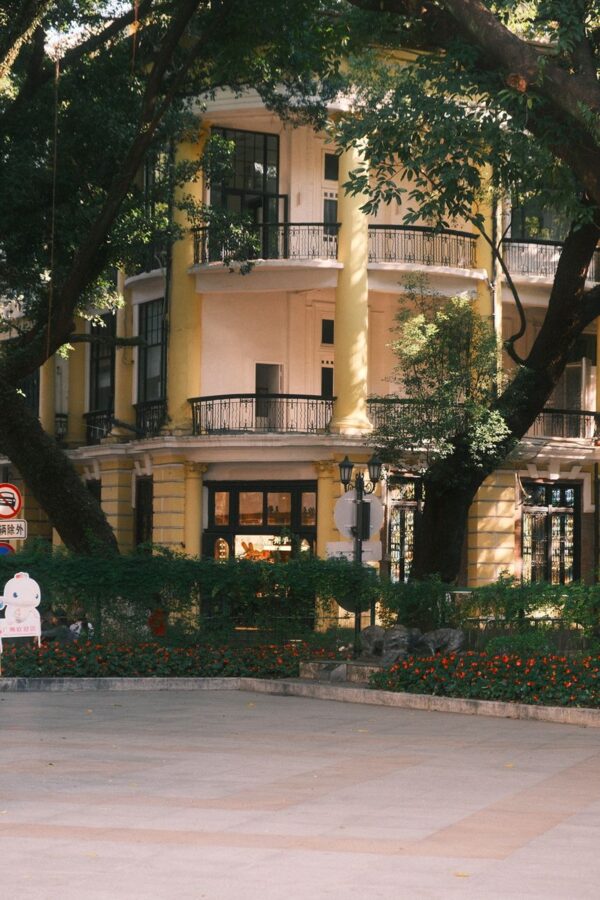
What you get now is the most pleasant hour’s walk in the city. The island has more than 150 old trees, cars are few, and the main boulevard down the middle is a long green strip with benches and bronze statues that people pose with. Wedding photographers love it.
Most of the buildings are government offices, company headquarters or flats, and nearly all the consulates have left; the Polish one is the last. The island is free and open all day, and there is nothing to book.
The two churches
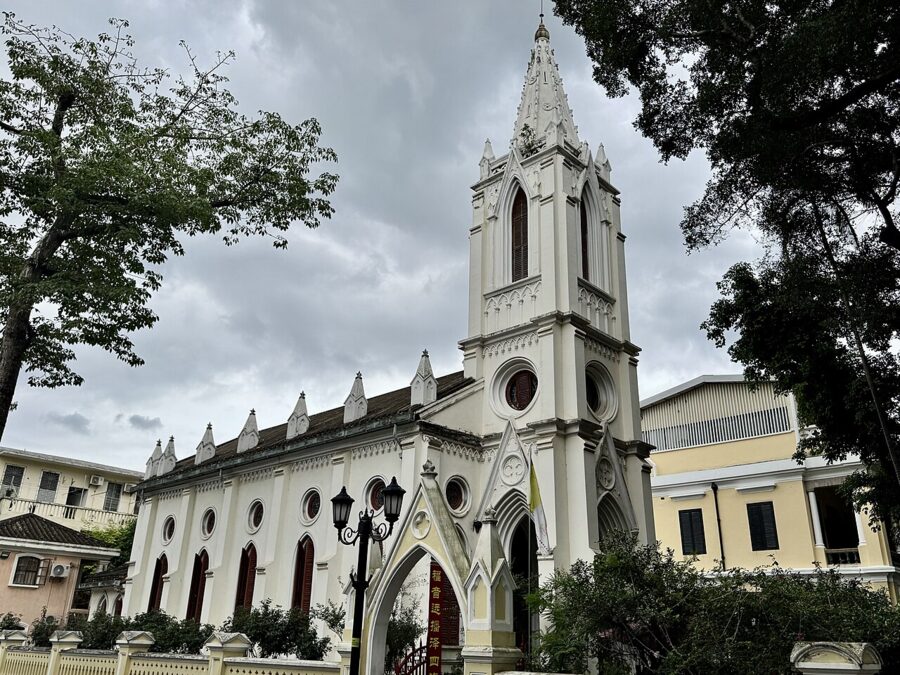
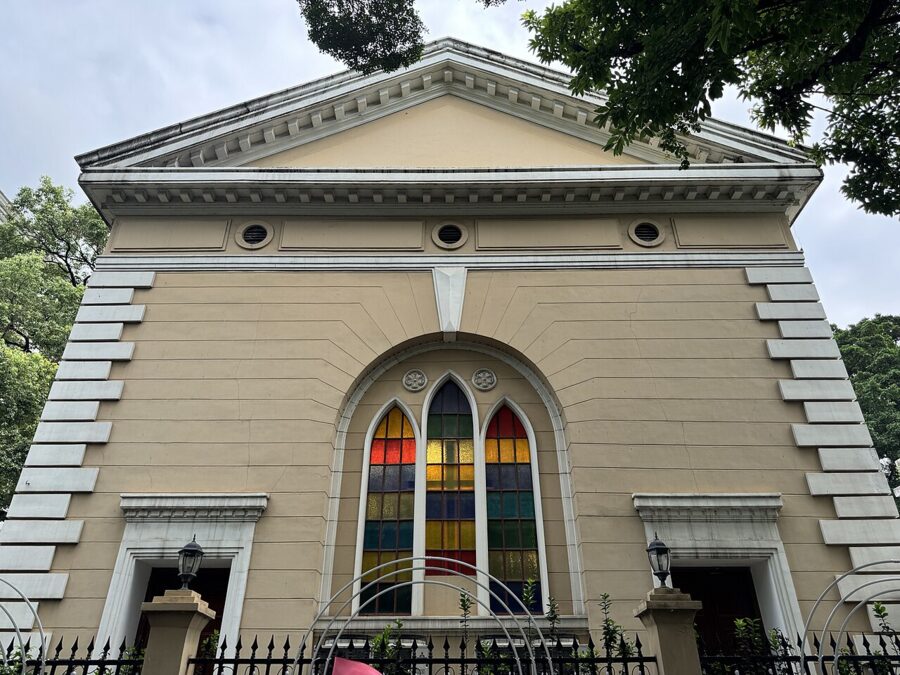
At the French end stands Our Lady of Lourdes Chapel, a small cream-and-white Catholic church completed in 1892 and restored since. At the British end, Christ Church was built in 1865 for the Protestant community and is still a working church. Neither is a museum; go in only when the doors are open.
The riverside and the White Swan
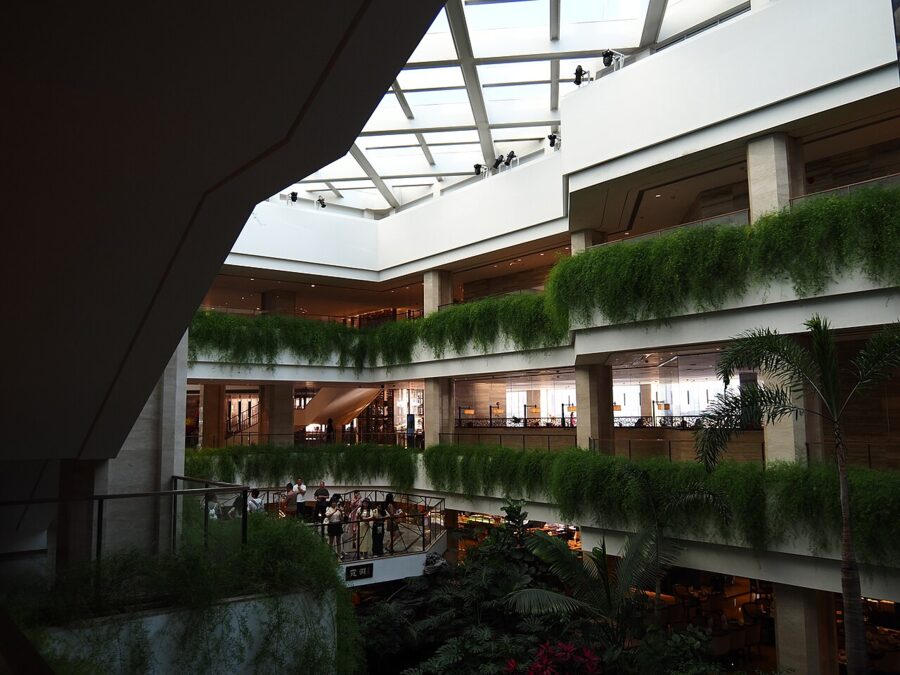
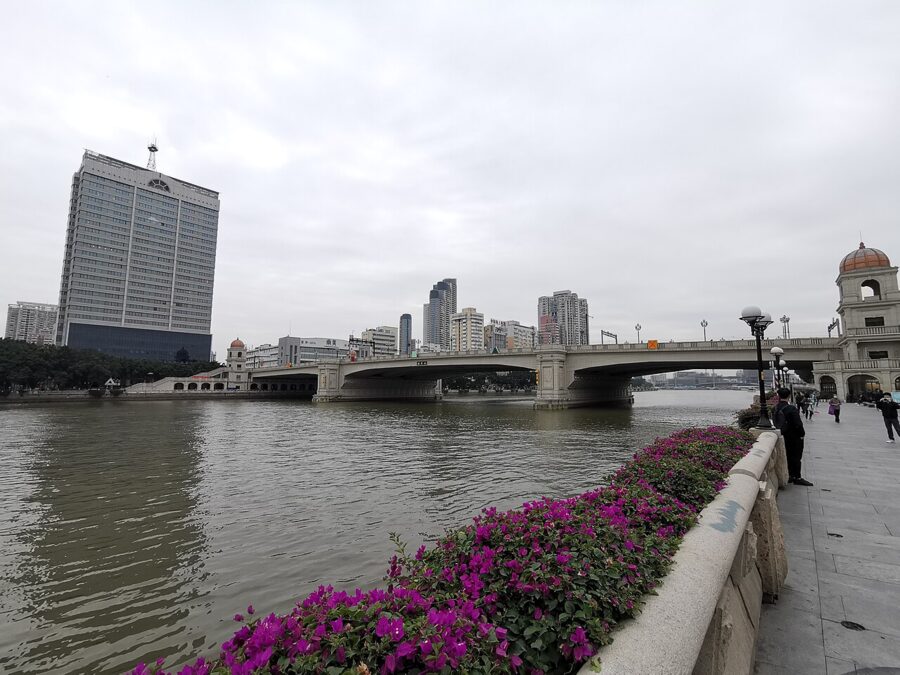
The south side of the island faces the wide stretch of river called Baietan, White Goose Pool. The big white block at the south-west corner is the White Swan Hotel, built on land reclaimed from the river in the 1980s. Building it filled in three of the island’s four old landing stages on the river side; only the French one survives.
Getting there is easy. Take Line 1 or Line 6 to Huangsha, cross the footbridge over the Shaji canal and you are on the island in five minutes. Come before 09:00, before the photographers.
The Chen Clan Ancestral Hall
If you see one building in Guangzhou, make it this one. The Chen Clan Ancestral Hall, Chenjiaci (陈家祠), was built between 1888 and 1894 with money from Chen clans across the 72 counties of Guangdong. It was a clan temple for the ancestral tablets and also an academy, a place for young Chens to lodge and study when they came to the provincial capital for the imperial exams, which is why its formal name is Chen Clan Academy.
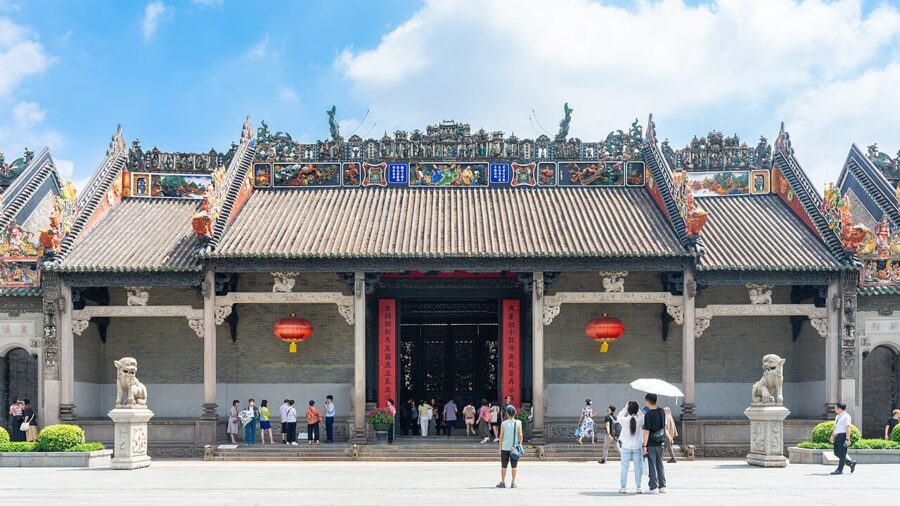
Since 1959 it has been the Guangdong Folk Arts Museum, and the displays in the side halls (Cantonese embroidery, Guangcai porcelain and Shiwan pottery) are good. But the building is the exhibit. Almost every surface carries one of the seven Lingnan decorative crafts: wood carving, brick carving, stone carving, ceramic sculpture, lime plaster sculpture, cast iron and painting.
What to look for
Start outside. On the walls either side of the main entrance are six large brick carvings, each about 4 metres long, made from grey bricks carved one by one and then fitted together. Look for the outlaws of the Water Margin gathering and the phoenixes in a wutong tree.
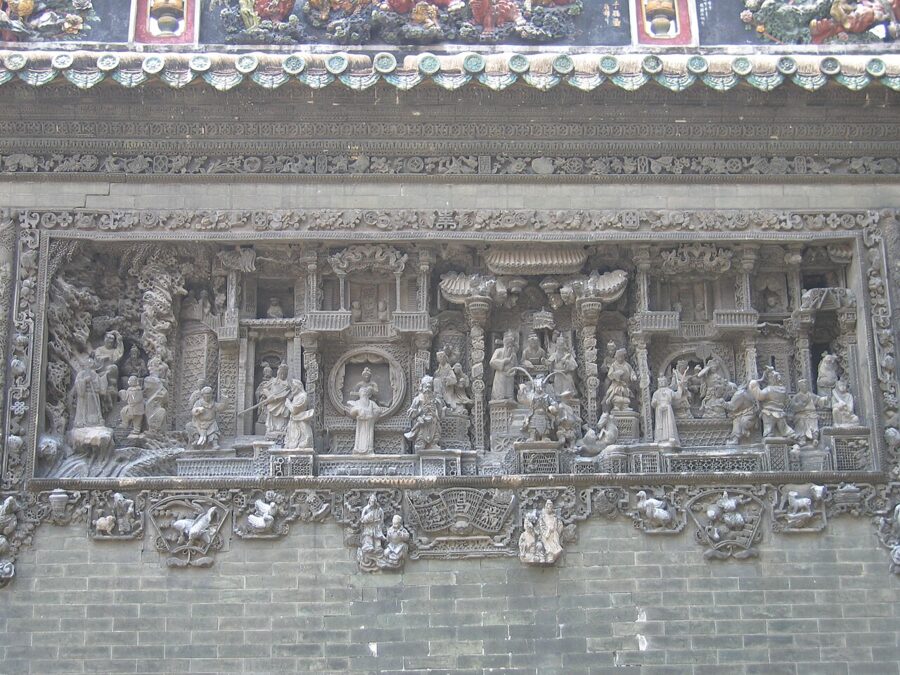
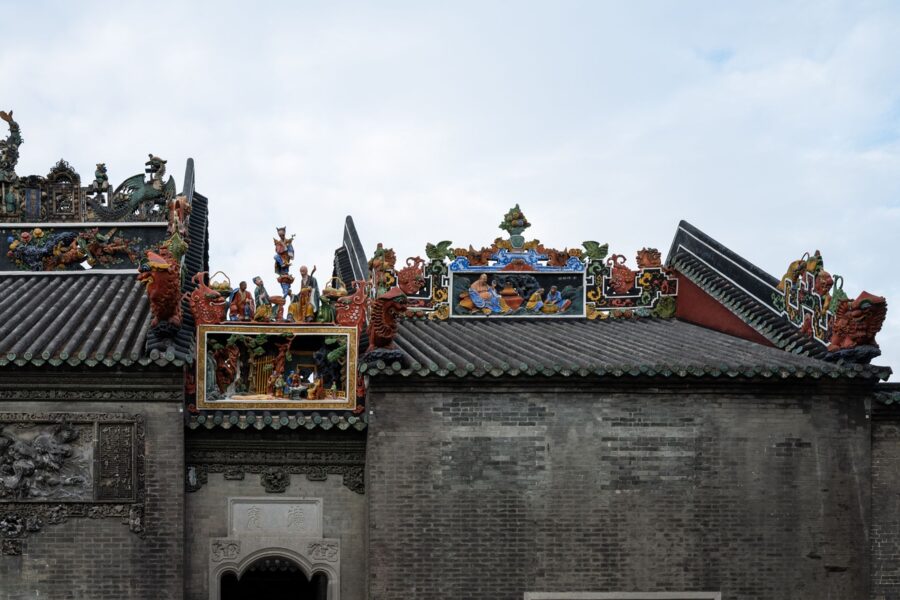
Then look up. The ridges of the nineteen hall roofs carry glazed ceramic sculpture fired in Shiwan, the pottery town in Foshan, and the one on top of the central Juxian Hall is the showpiece: 27 metres long, with 224 figures acting out Cantonese opera stories among towers and gateways. Below them, the lime plaster figures on the ridge bases and courtyard walls were made in place by craftsmen from Nanhai, and because plaster is never fired, they need constant repair.
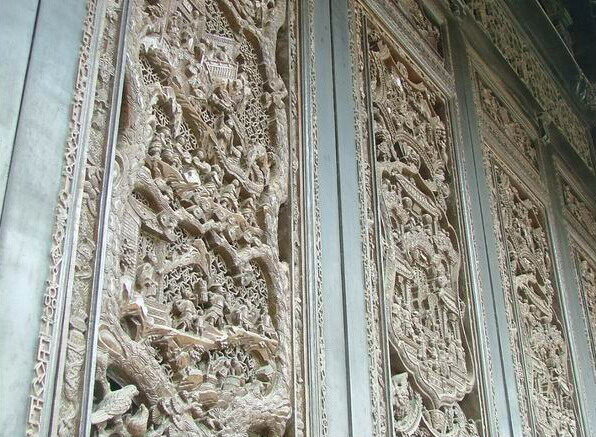
Inside the Juxian Hall, the teak screen doors behind the main hall are carved on both sides with stories from Chinese history, the Three Kingdoms among them, and the two sides show different scenes. In the courtyard between the first and second halls, the stone balustrades are set with cast-iron panels in openwork.
Tickets, hours and getting there
Tickets are ¥10, half price for students and people aged 60–64, and free for children under six and anyone 65 or over. Booking is real-name and goes through the museum’s official WeChat account, 广东民间工艺博物馆, where foreign visitors register with a passport and show the same passport at the gate. Entry is free on the first of each month, so avoid that day.
From 16 October to 14 April it opens 09:00–17:30 (last entry 17:00), and in summer it stays open to 18:00. It is closed on Tuesdays except public holidays, and free guided walks leave the main gate at 10:00 and 15:00. Take Line 1 or 8 to Chen Clan Academy, exit D, three minutes from the gate, and arrive before 10:00 on a weekday.
Liwan: Enning Road, Yongqingfang and old Xiguan
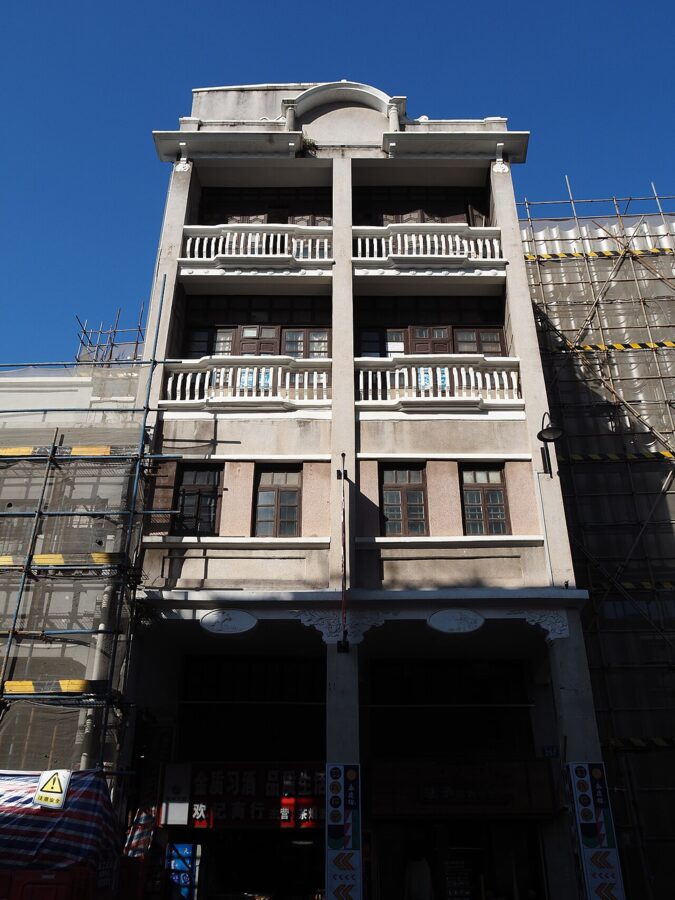
West of the old city wall was Xiguan, the merchant quarter, and it is still the part of Guangzhou with the most texture. Its streets are lined with qilou, the arcaded shophouses that shade the pavement from sun and rain.
Enning Road
Enning Road (恩宁路) was widened into a road in 1931, and at 1,115 metres it is part of the longest and most complete arcaded street in Guangzhou, running on into Longjin West Road and Shangxiajiu. This was the home of Cantonese opera in the 1920s and 1930s, and troupes and actors lived in the lanes off it.
The street also has an uncomfortable recent history. From 2006 the district drew up plans to redevelop the old houses here, and by the early 2010s many stood empty, their windows and sliding gates bricked up.
Yongqingfang
Yongqingfang (永庆坊), off the north side of Enning Road, is what came next. The local government and the developer Vanke began rebuilding the lanes of Yongqing Street from 2012 and opened them in 2016 as a creative quarter of shops, cafés and studios. It is free.
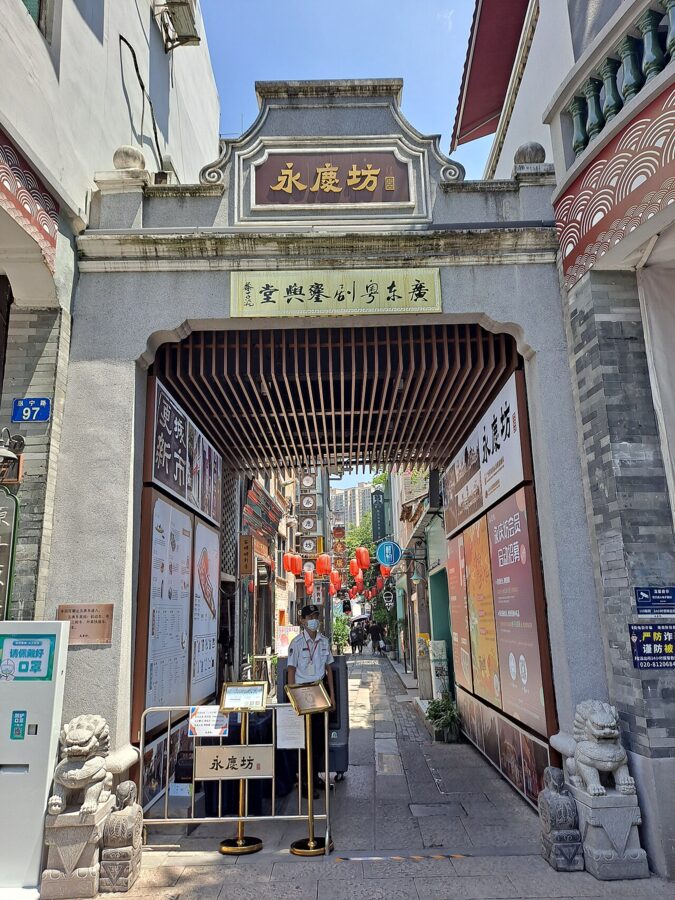
Be clear about what it is. Much of Yongqingfang is rebuilt rather than restored, the shops are mostly coffee, souvenirs and photo studios, and on a weekend afternoon it is crowded. Still, the grey-brick lanes are handsome and it makes an easy first taste of Xiguan.
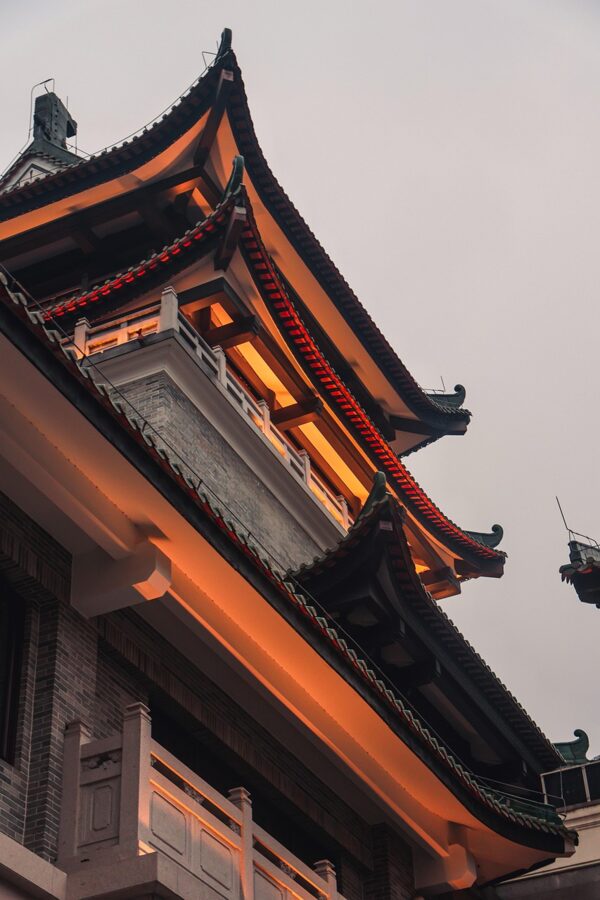
The Bruce Lee ancestral house
The house most people come for is at 13 Yongqing First Lane, and its story needs telling straight. Bruce Lee was born in San Francisco in 1940 and grew up in Hong Kong. The house belonged to his father, Lee Hoi-chuen, a Cantonese opera actor who lived here when the street was full of opera people, which is why it is called the Bruce Lee ancestral home and not his home.
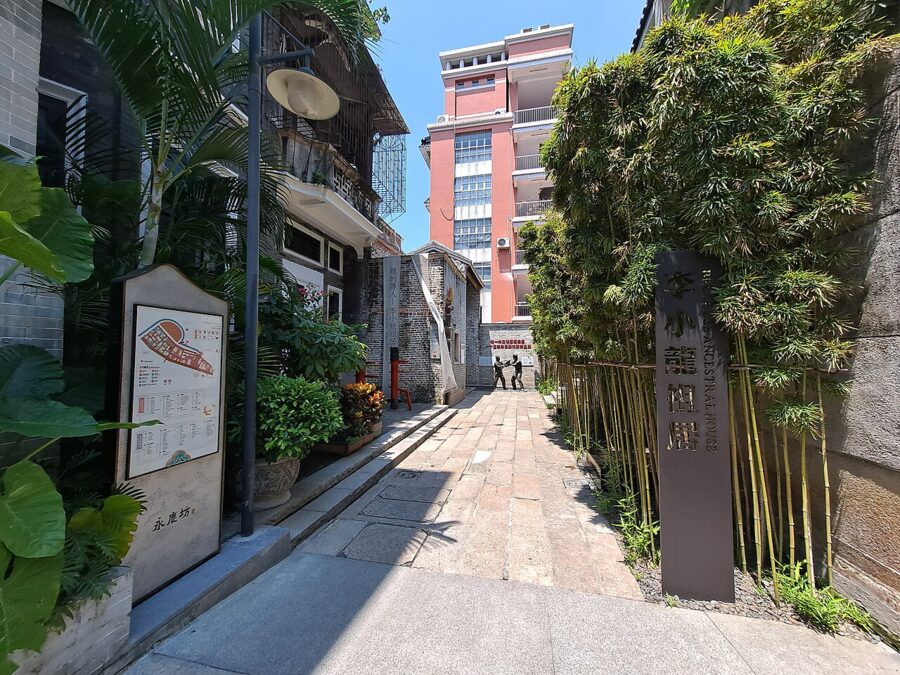
The exhibition takes ten minutes. Go because you are passing, not expecting a shrine.
The Cantonese Opera Art Museum and Lychee Bay
At the north end of Yongqingfang, on Enning Road at number 127, the Cantonese Opera Art Museum (粤剧艺术博物馆) is built as a Lingnan garden along the Lychee Bay canal, with a stage in the middle where troupes perform. It is free, open Tuesday to Sunday 09:00–21:00, and closed on Mondays.
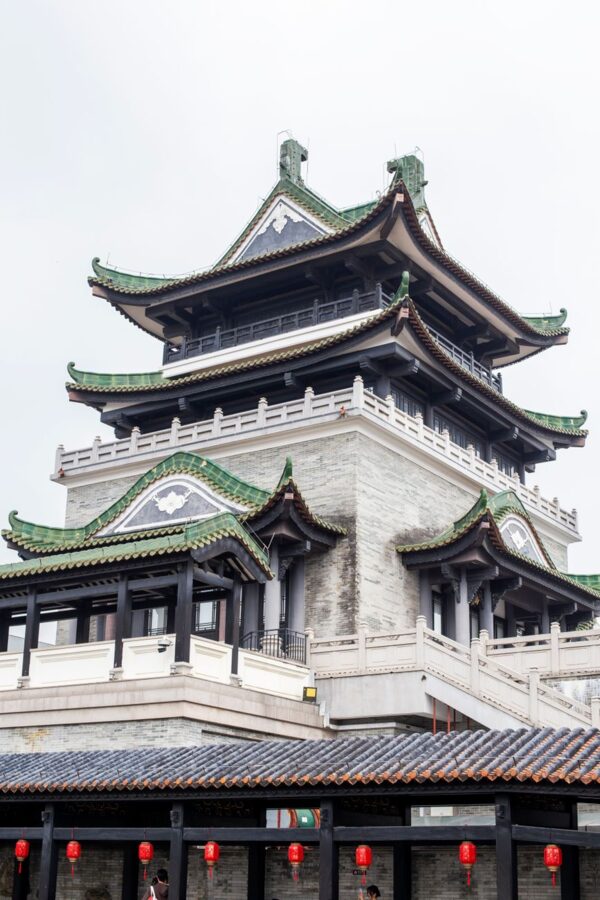
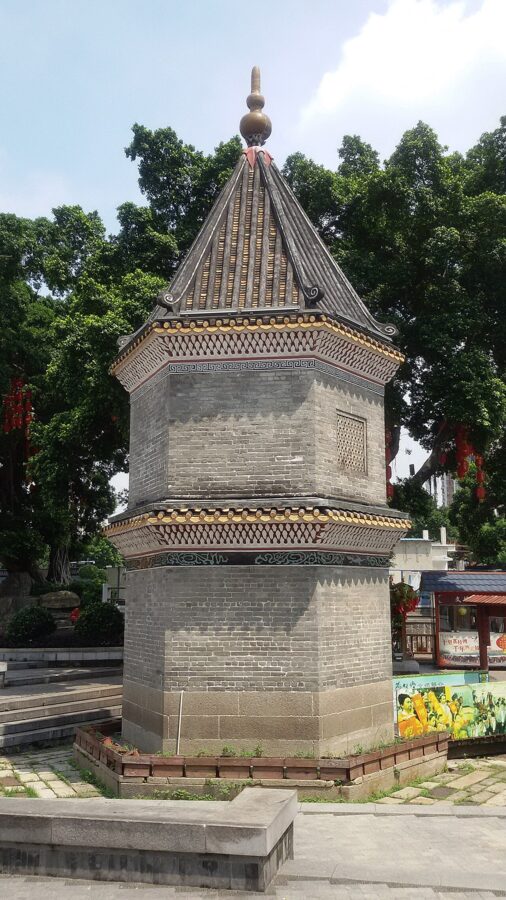
From the museum, follow the canal north into Lychee Bay (荔枝湾), a restored waterway lined with low houses, bridges and the small Wenta pagoda. It is touristy in a gentle way, and it leads you toward Panxi Restaurant on Longjin West Road, the old garden teahouse built around a lotus pond.
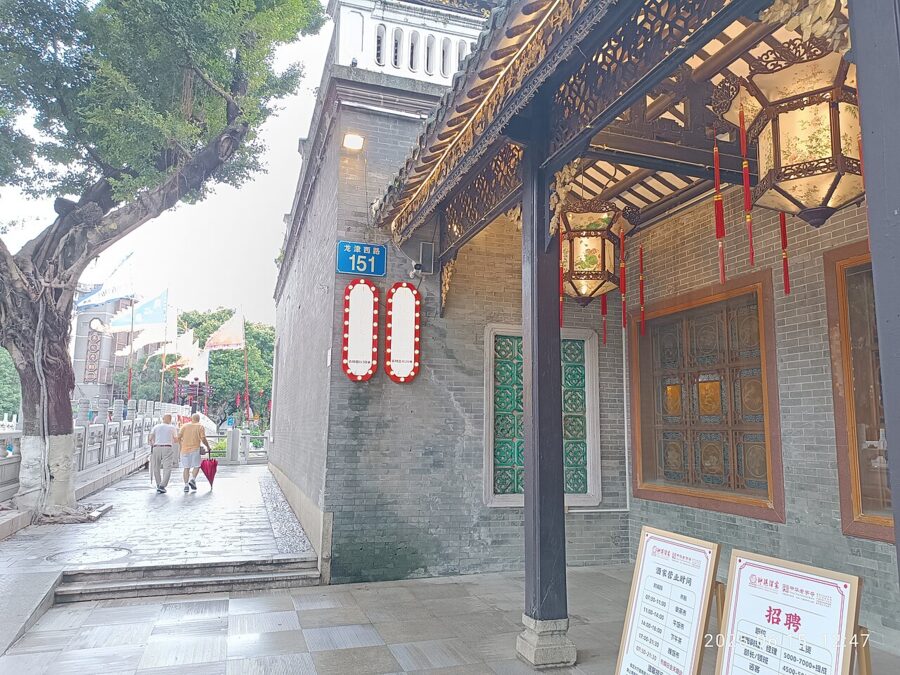
Xiguan houses and Shangxiajiu
The grand old Xiguan house, the xiguan dawu (西关大屋), was a deep brick house of two or three halls, one behind the other, with rooms for each generation. The front door is the giveaway: a low swinging half-door, then a sliding gate of thick horizontal wooden bars called a tanglong, then the solid wooden door.
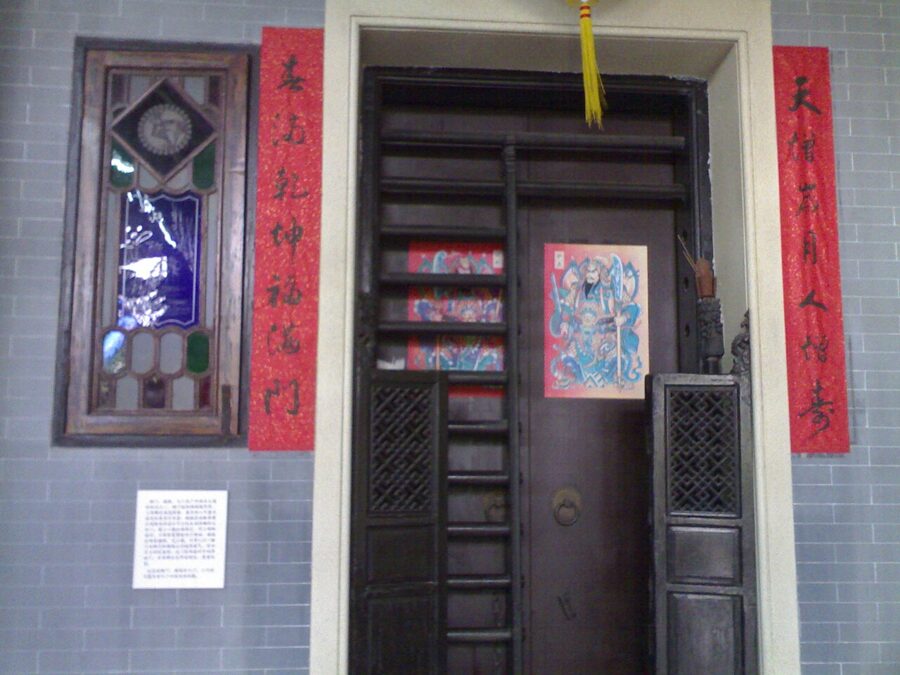
The best-preserved streets of them are around Longjin West Road and Fengyuan Street, between Enning Road and Lychee Bay, now a protected district. Most are private homes, so look from the lane. South of Enning Road, Shangxiajiu is the old arcaded shopping street, pedestrianised and busy.
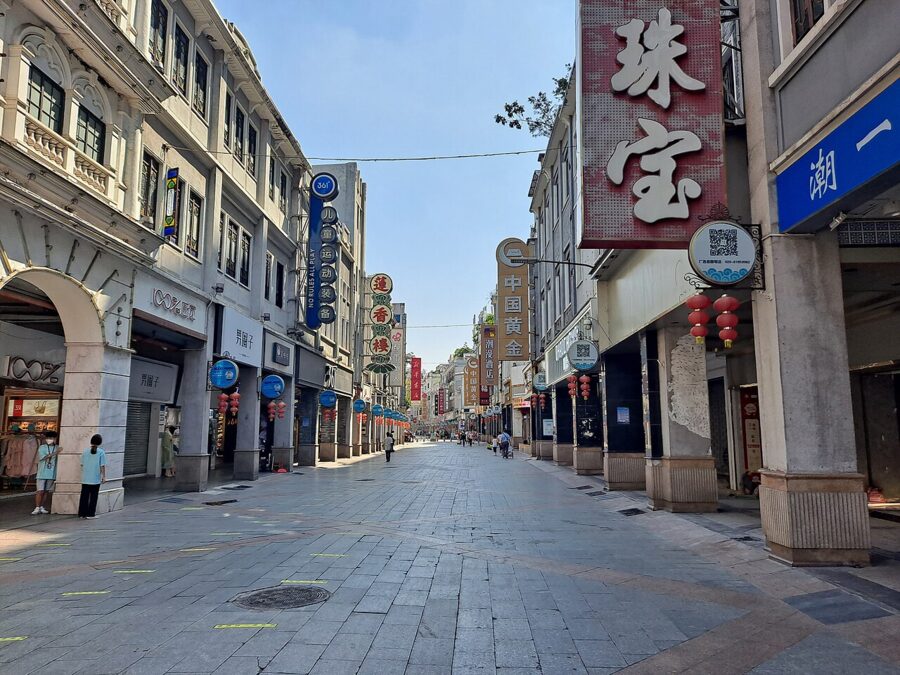
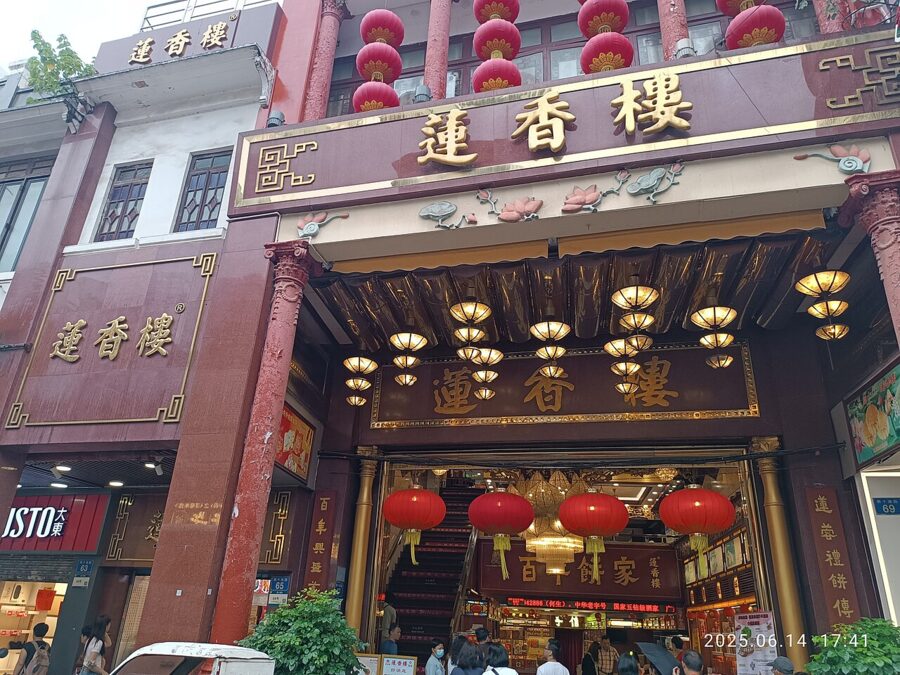
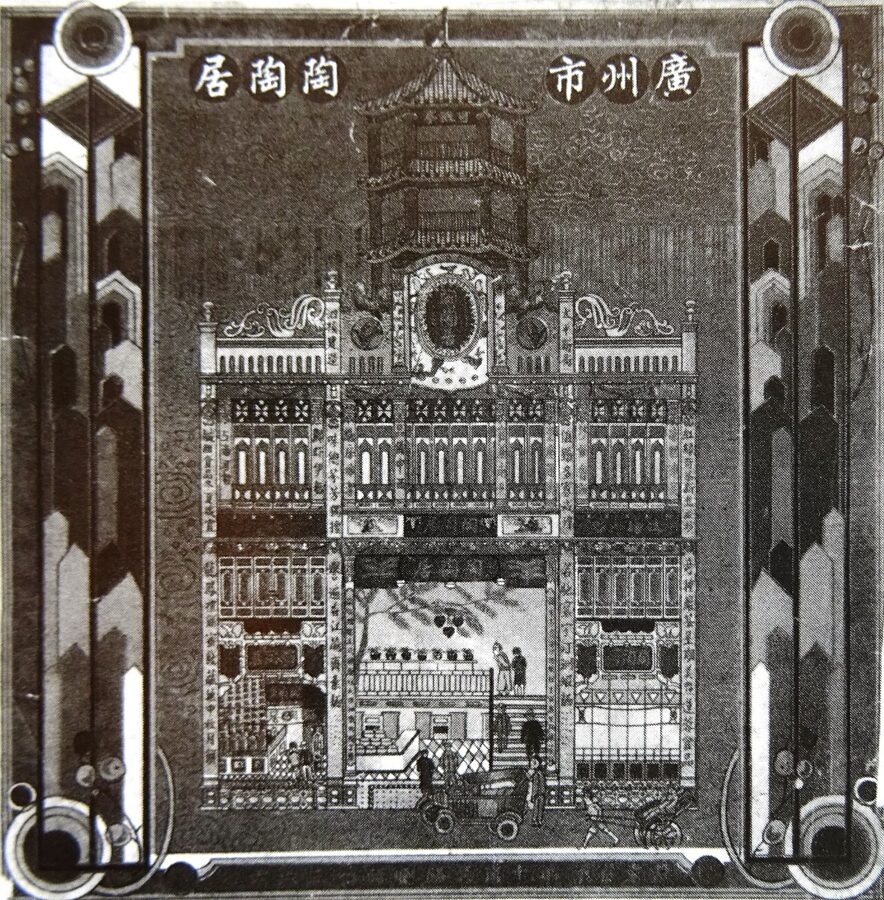
For eating here, two old teahouses sit on Dishifu Road, the Shangxiajiu end nearest Changshou Lu station: Taotaoju and Lian Xiang Lou, the pastry house that made its name on lotus seed paste. My Cantonese food guide has the details, the history of each and what to order.
Beijing Road and the heart of the old city
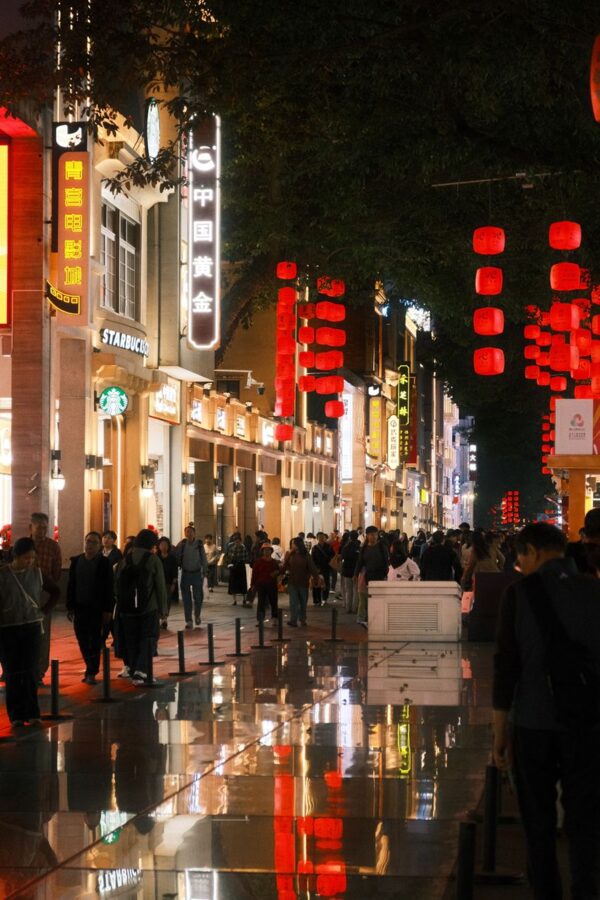
The old walled city lay east of Xiguan, and Beijing Road (北京路) was its main north-south street. It is now a pedestrian shopping street, and you would never guess its age without the glass. The excavation found eleven road surfaces from five periods, the Tang at the bottom about three metres down, and the oldest debris under them included Western Han roof tiles.
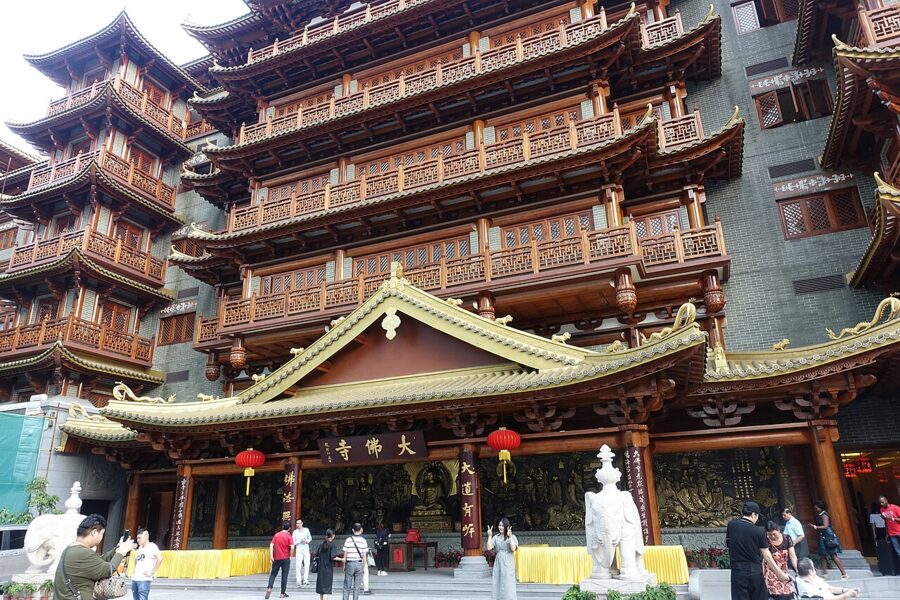
The road is lit at night and busy until late. Walk it south toward the river, and look out for the Dafo Temple just off it to the east, whose tiered roofs are lit gold after dark and can be seen from the street. Line 6 has a Beijing Road station, and Gongyuanqian on Lines 1 and 2 is a short walk from the north end.
The Nanyue Palace site
Just north of the glass road, the Nanyue King Museum has a second site: the excavated palace of the Nanyue kings, with the curving stone water channel of its royal garden and layers of later government buildings above it. Unlike the tomb, this one is free, but you still need a timed, real-name booking through the 南越王博物院 WeChat account, usually a day to a week ahead.
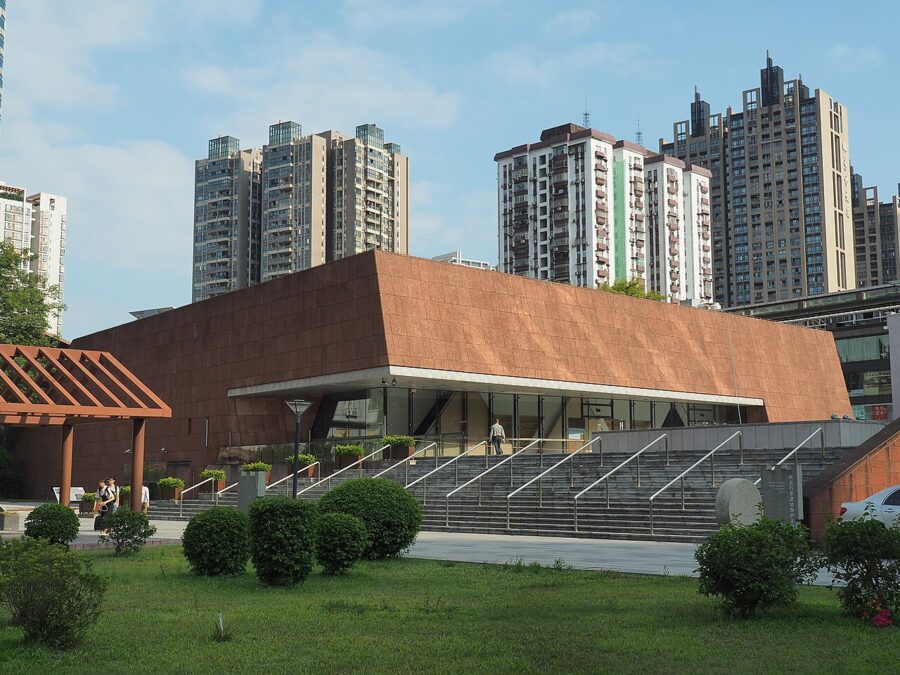
The palace site opens 09:00–17:30, Tuesday to Sunday, with last entry at 16:45. Use Gongyuanqian, exit F.
Sacred Heart Cathedral
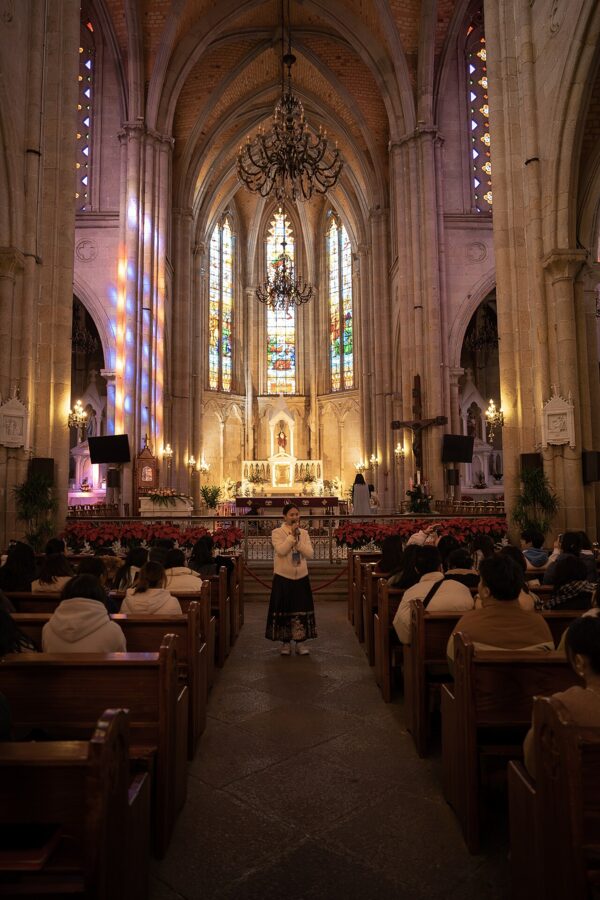
South-west of Beijing Road, on Yide Road near the river, is the Sacred Heart Cathedral, locally the Shishi (石室), the “stone house”. French missionaries built it on the site of the governor-general’s yamen, destroyed in the Second Opium War, and it took 25 years, from 1863 to 1888. Every wall and column is granite, which is where the nickname comes from.
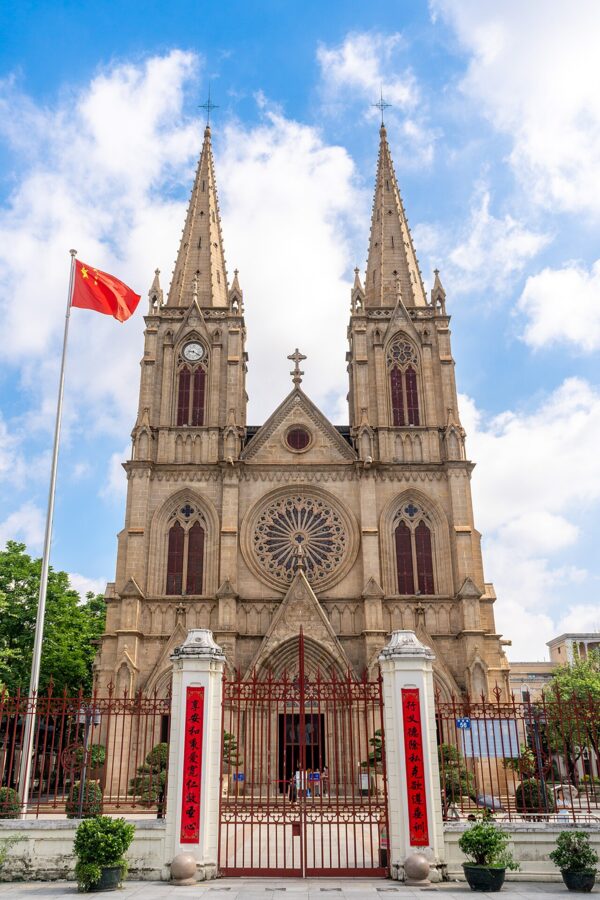
Entry is free, with a pass handed out at the gate. The church interior opens roughly Tuesday to Friday 09:00–11:00 and 15:00–17:00 and on Saturday from 09:00 to 14:30, with shorter Sunday hours; it is closed on Mondays and on the third Sunday of each month. Services and festivals change this, and in the 2026 Mid-Autumn holiday only the square was open, so treat the interior as a bonus. Line 6 to Yide Road, exit A.
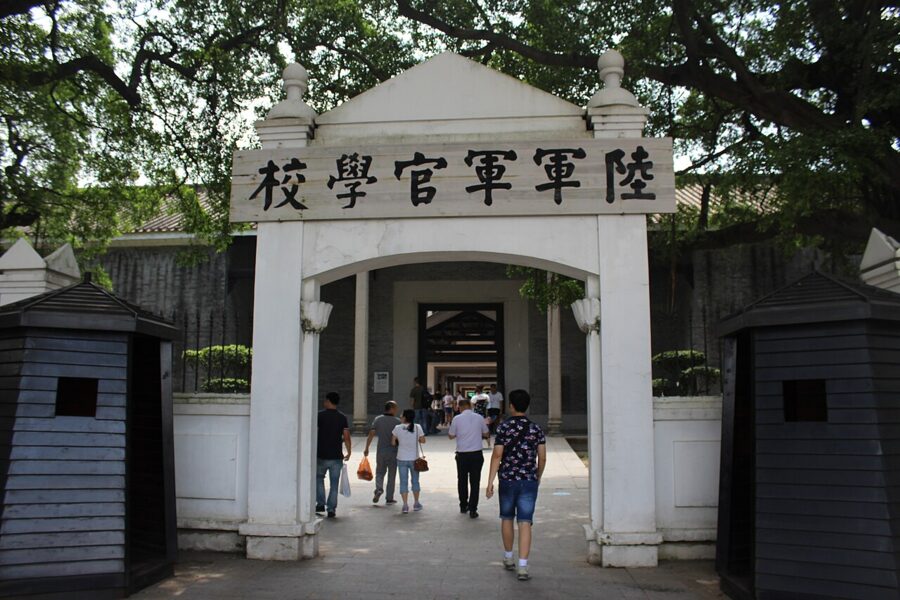
One more name you will see on maps: the Whampoa (Huangpu) Military Academy, founded in May 1924 on Changzhou Island far downriver, where Chiang Kai-shek trained the officers of the Nationalist army. It is a museum now, and a long trip out for most visitors.
Yuexiu Park, the Five Rams and the king’s tomb
Yuexiu Hill is only 70 metres high, but it was the northern end of the old city, and the Ming city wall ran over the top of it. Sun Yat-sen ordered it opened as a public park in 1921, and today Yuexiu Park covers 86 hectares, with three lakes, seven low hills and paths shaded by tall trees. It is free and open 06:00–22:00, and the metro stop is Yuexiu Park on Line 2.
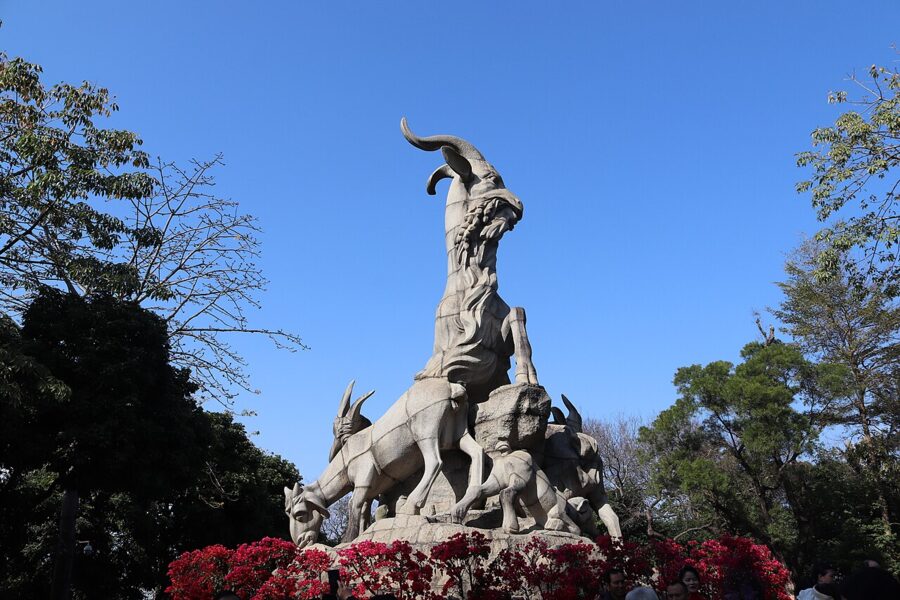
The story goes that five immortals rode into the city on five rams, each carrying ears of rice, blessed the place so it would never know famine, and flew off, leaving the rams behind as stones. That is why Guangzhou is still called Yangcheng, the City of Rams, and the statue on Mukeng Hill is the city’s emblem.
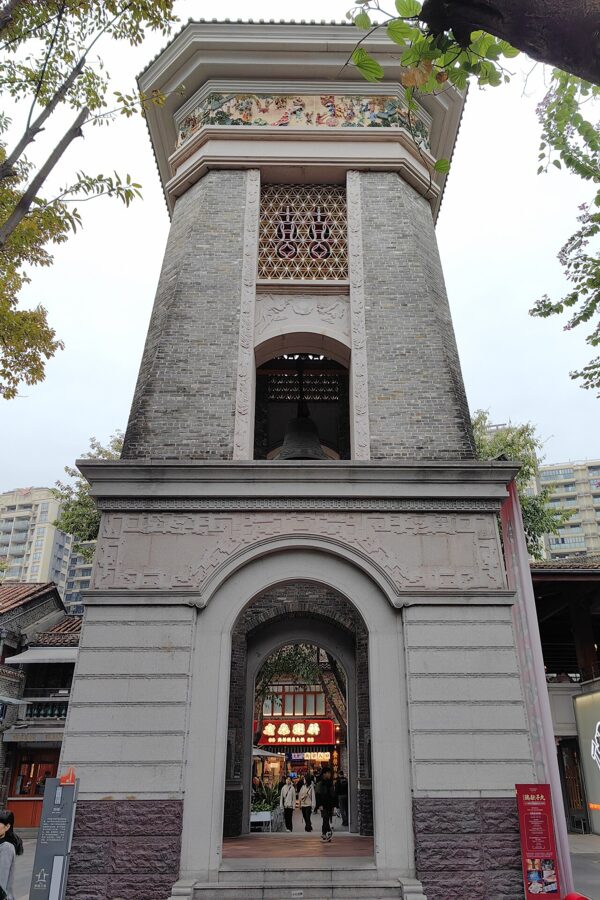
Zhenhai Tower
On the highest point of the old wall stands Zhenhai Tower (镇海楼), built in 1380 when the Ming expanded the city north over the hill. It has been burned and rebuilt several times, most recently in 1928, when the timber frame was replaced in reinforced concrete inside the old brick walls. At 28 metres, with five storeys, it is what locals call Wucenglou, the Five-Storey Tower.
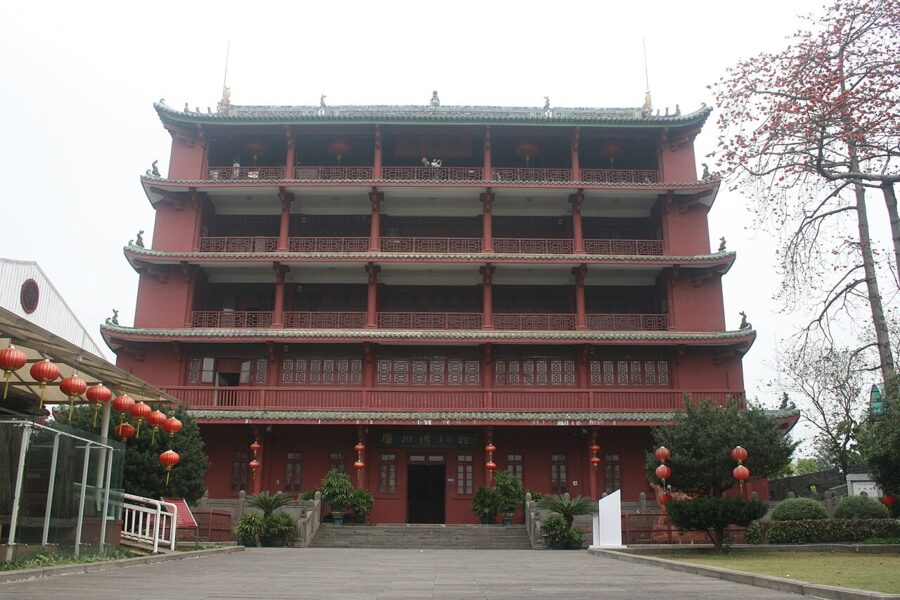
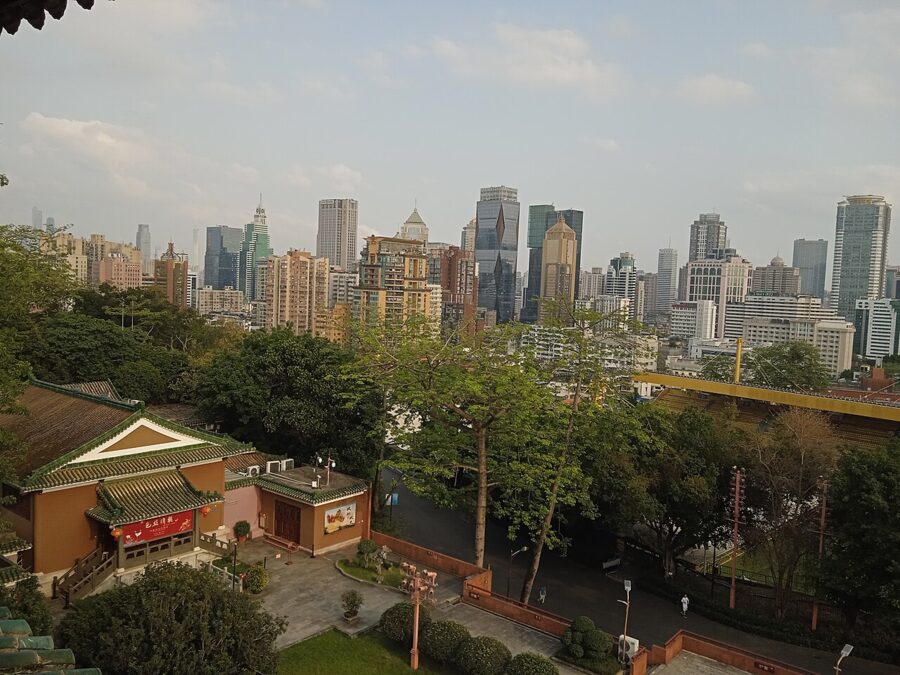
Inside is the Guangzhou Museum’s city history display, ¥10, closed on Mondays. The exhibits are fine. The real reason to climb is the view from the top floor, south over the old town toward the river.
The Nanyue King Mausoleum
Across Jiefang North Road from the park’s west gate is the best museum in the city, and one of the best in south China. In June 1983, workers levelling Xianggang Hill for a government housing block hit large stone slabs. Under them was the intact tomb of Zhao Mo, the second king of Nanyue, who reigned from 137 to 122 BC and called himself Emperor Wen.
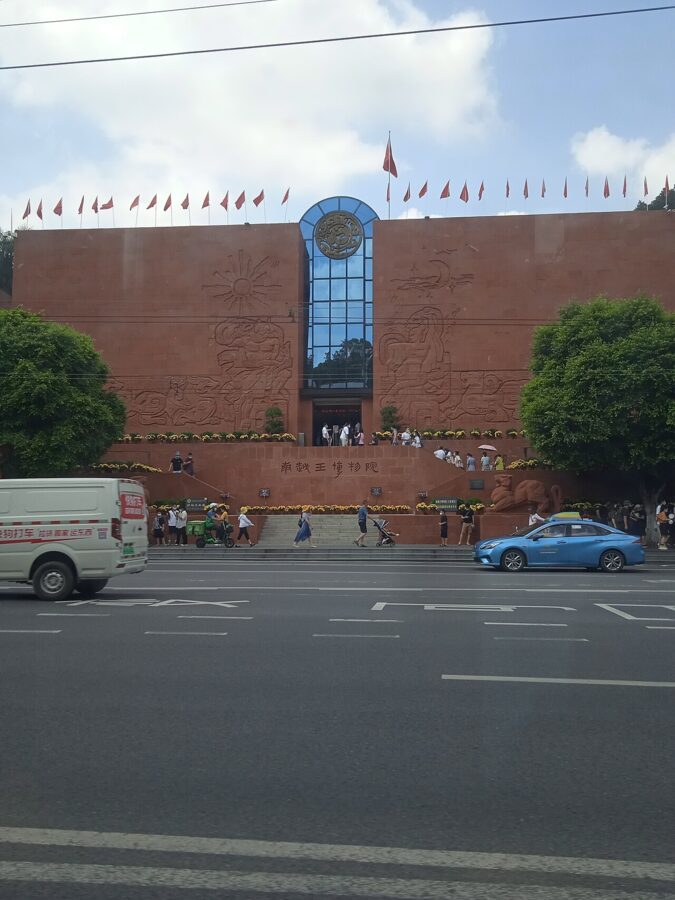
More than a thousand objects came out of the tomb: bronzes, gold seals, iron swords, pottery and jade, and the remains of fifteen people buried with the king. The famous piece is his burial suit, 2,291 small plates of jade sewn together with red silk thread. It is the oldest silk-thread jade suit ever found in China, a decade older than the gold-thread suit of Prince Liu Sheng in Hebei.
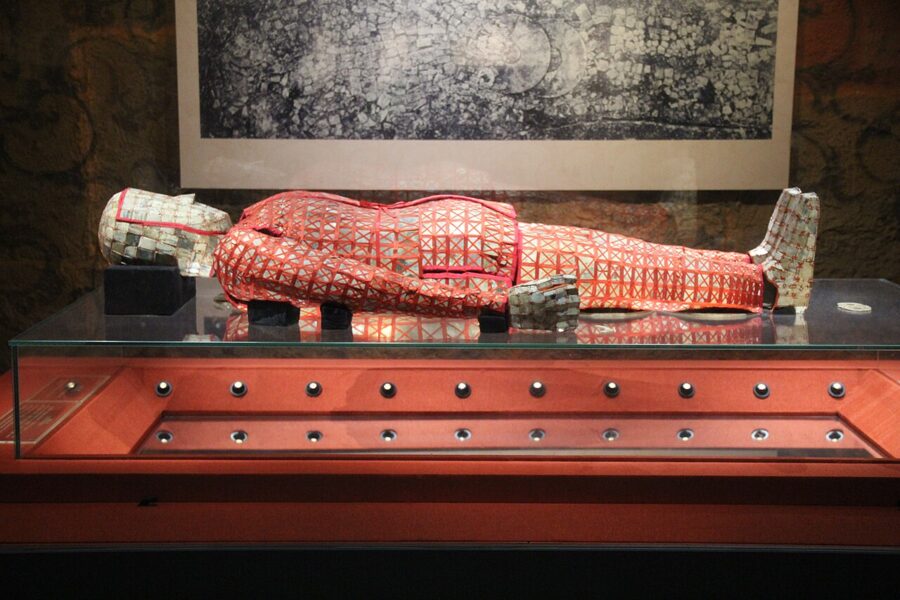
The tomb site opens Tuesday to Sunday, 09:00–17:30, last entry 17:00, and is closed on Mondays except public holidays. Tickets are ¥10, half price for students and people aged 60–65, and free for under-18s and anyone over 65; buy in the 南越王博物院 WeChat account under “王墓预约” or at the ticket window with a passport. The lower chamber of the tomb needs its own booking: slots open at 00:00 for the next day, 50 people an hour, 20 minutes each, and your main ticket does not include it.
The new axis: Huacheng Square, the Opera House and the Guangdong Museum
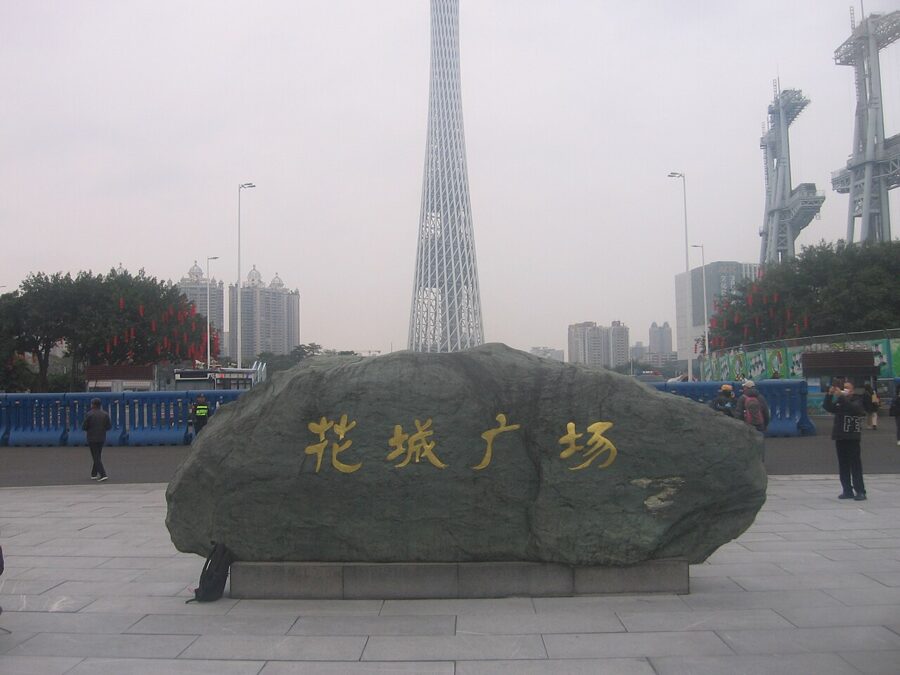
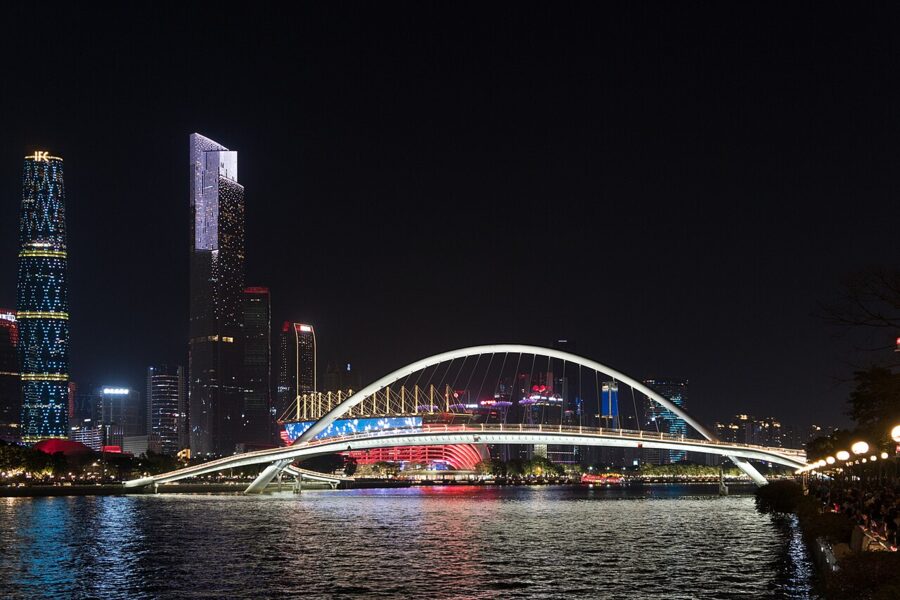
Guangzhou has a second centre, built along a north-south axis through Tianhe. At its heart is Huacheng Square (花城广场), a long garden promenade between the towers of Zhujiang New Town, with the Canton Tower facing it across the river. Come at dusk, when the skyline lights come on.
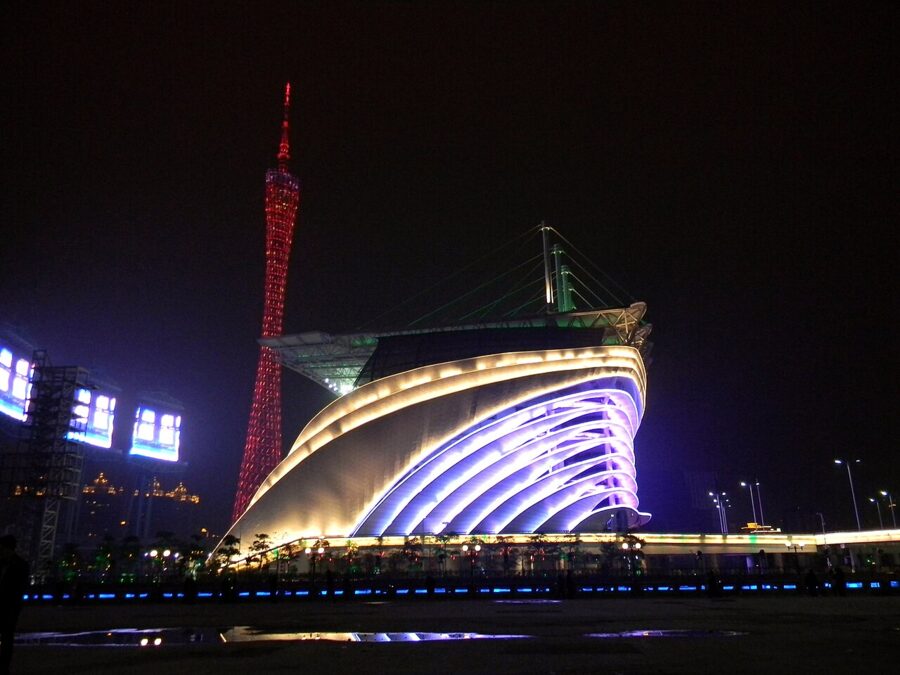
At the river end of the square are two buildings worth a detour. The Guangzhou Opera House was designed by Zaha Hadid, who won the competition in 2002 with what she called a “double pebble”, two grey shapes that look washed up by the Pearl River. It opened on 9 May 2010. The surest way to see inside is a ticket to a performance from the official box office.
Next door, the Guangdong Museum (广东省博物馆) is the dark, square box, and its collections run to more than 320,000 pieces, from the province’s history and art to a natural history floor that children love. Entry is free, but every visitor, children included, needs a timed real-name booking. Slots are released at 22:00, up to seven days ahead, through the museum’s official mini programme or WeChat account.
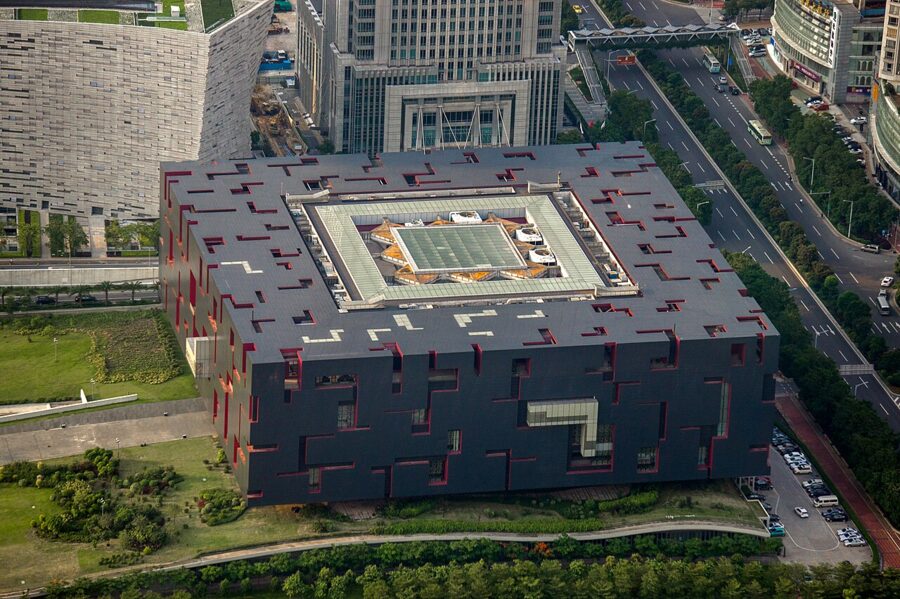
The museum opens Tuesday to Sunday, 09:00–17:00, last entry 16:00, and closes on Mondays except public holidays. Enter by the west gate with your passport. From the metro, take Line 3 to Zhujiang New Town, exit B1, and walk past the opera house, or take the APM to Opera House station, exit B.
From the square, Haixin Bridge carries you across the river on foot to the Canton Tower. It opened on 25 June 2021 and is free, open 07:00–23:00 with the last entry at 22:45.
The Canton Tower
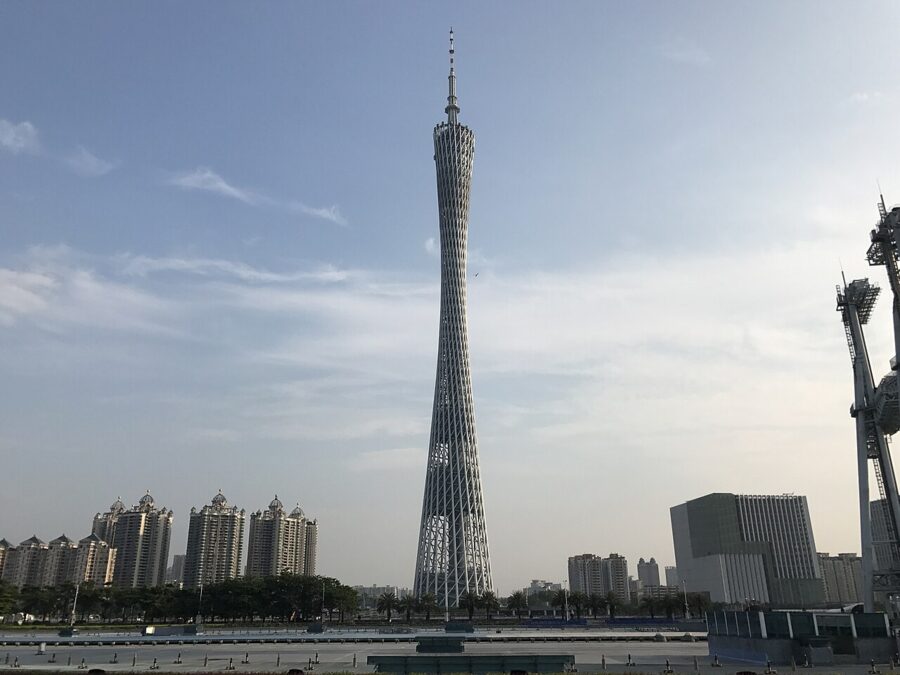
The Canton Tower (广州塔) is 600 metres tall, opened in September 2010 for the Asian Games, and was briefly the tallest tower in the world. Locals call it Xiaomanyao, the “slim waist”, for the way its lattice of steel twists and narrows in the middle.
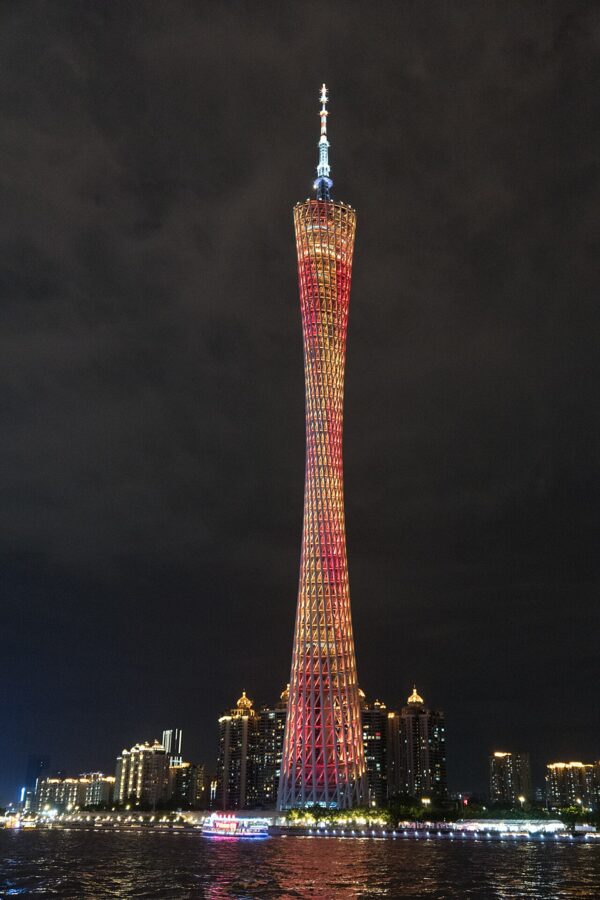
The basic ticket takes you to the indoor observation halls at 428 and 433 metres, with a glass-floored walkway, and starts at ¥150 for adults, half price for 60-plus and under-18s and free over 65. The outdoor deck at 450 metres is ¥228 for adults. Above that, the photography platform at 488 metres, the highest point visitors can reach, comes in the bigger combination tickets.
The rides are at the top. The bubble tram is a horizontal Ferris wheel of 16 glass capsules running round the rim of the tower at about 455 metres, tilted with the roof. The sky drop, between 455 and 485 metres up the mast, drops you 30 metres in a little over a second. Both run 10:00–22:30, starting later on Mondays, and both are in the combination tickets.
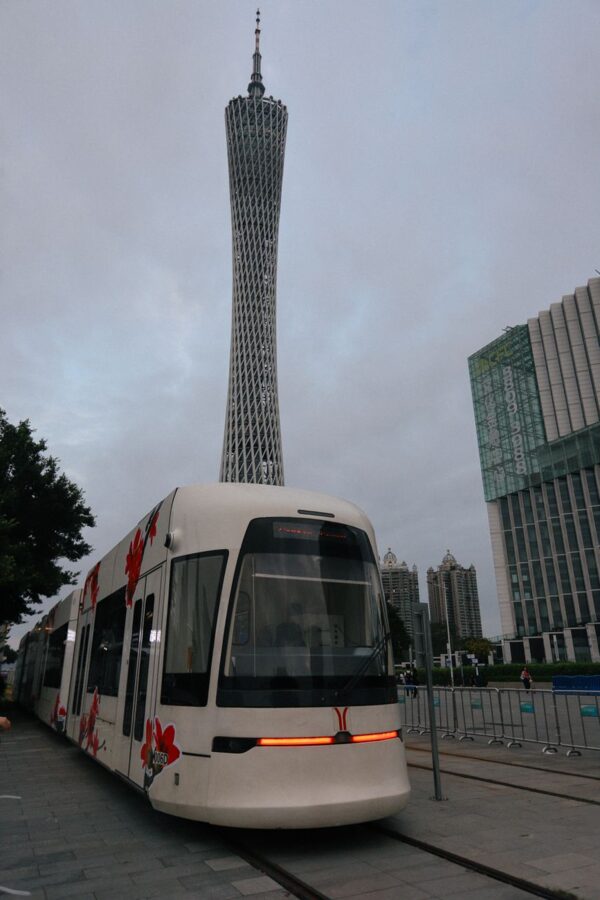
The tower opens 09:30–22:30, last tickets 22:00. Tickets are real-name, so bring your passport, and sold in two-hour slots, so book a sunset slot a day ahead in peak season. Take Line 3 or the APM to Canton Tower station; exit B is the one for the tower.
My advice is to look at the weather before you pay. On a hazy day, and Guangzhou has many, the view from the top is a white wall, and the money is better spent on a river cruise. On a clear evening, go up about an hour before sunset and stay for the lights.
On the Pearl River at night
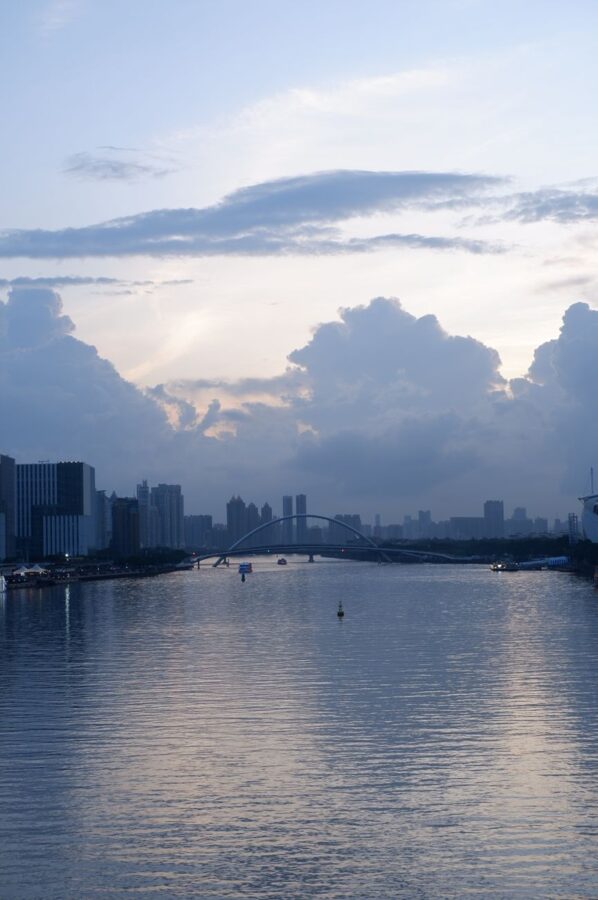
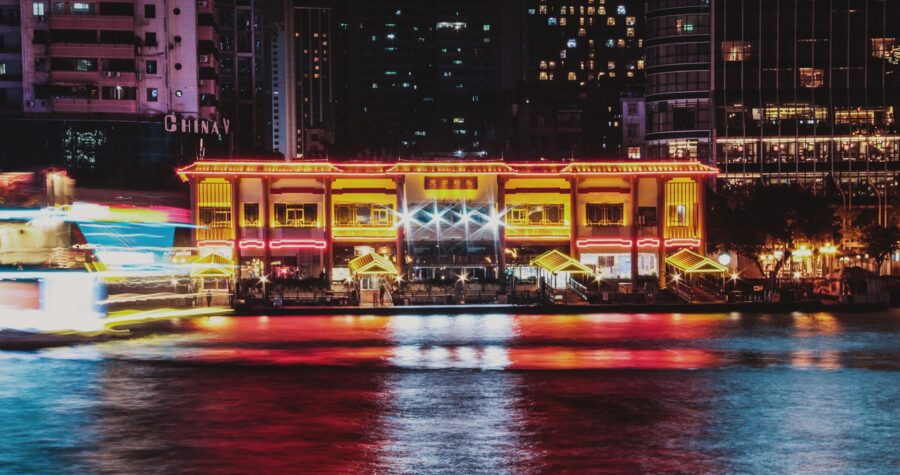
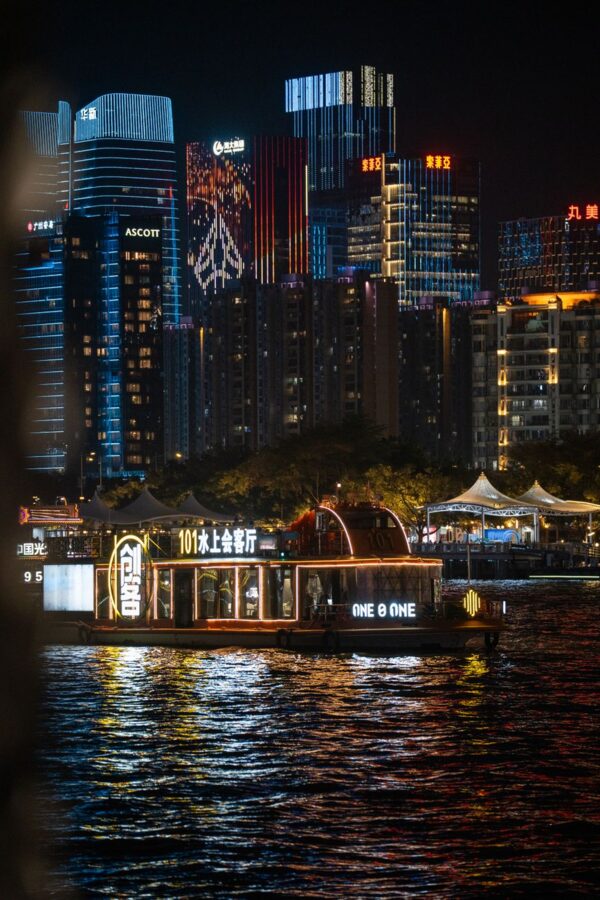
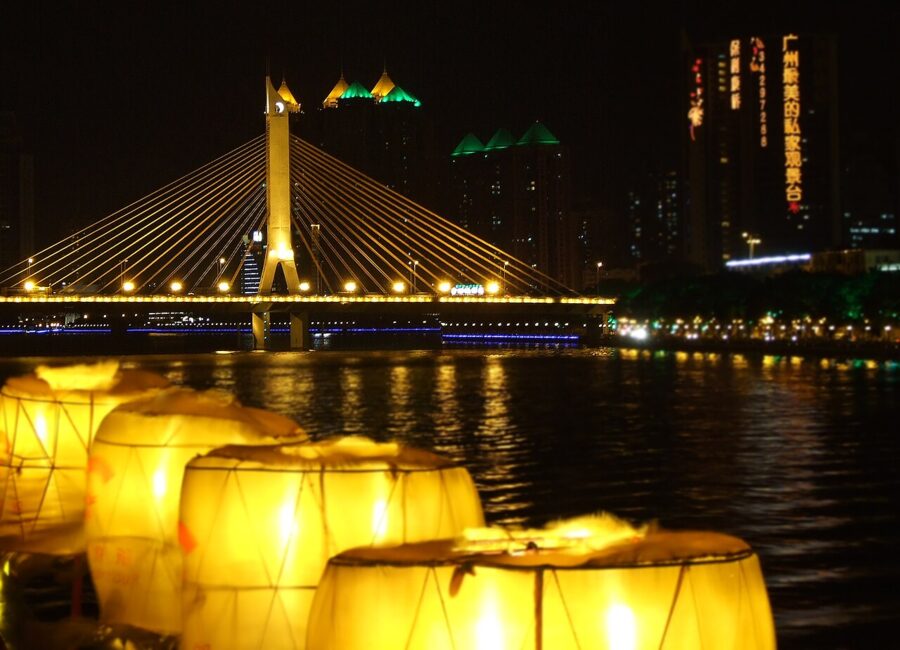
The Pearl River night cruise (珠江夜游) is one of the most popular things to do in Guangzhou, and it is worth doing once, as long as you know what it is. It is an hour looking at light shows on the buildings, not a river journey. The route runs along the stretch between the old town and the Canton Tower, and the cheapest seats are usually on an enclosed lower deck.
Which pier
Several piers serve the cruise. Tianzi Pier (天字码头), at the bottom of Beijing Road, is the easiest for the old town; take Line 6 to Beijing Road, exit A, or Line 2 to Haizhu Square, exit A. Its cruises take 60–70 minutes and leave about every ten minutes in the evening. Dashatou Pier (大沙头码头), the biggest, is at Line 6 Donghu, exit B2, with hour-long cruises from 18:00 to 22:30.
From the new town, use Haixinsha West Pier by Huacheng Square, at APM Haixinsha station, exit A. If you want a longer trip, Xidi Pier (西堤码头) near Cultural Park on Line 6 runs 80-minute cruises from the Renmin Bridge in the old town to the Canton Tower, which is the best way to see both halves of the city from the water.
Tickets and tips
Ordinary tickets start at ¥78 and vary with the boat, the deck and the date; dinner-buffet sailings cost more and run about 80 minutes. Boarding is real-name, so carry your original passport, not a photo. You can buy at the pier or in advance through Trip.com or the piers’ own WeChat channels.
Pay a little more for the top deck, where you can stand outside. Skip the buffet boats: the food is not the point, and you will spend half the trip inside. The route can change with tides and river traffic, and on holiday evenings, especially in Golden Week, buy ahead and expect queues at the piers.
Up Baiyun Mountain
Baiyun Mountain (白云山), White Cloud Mountain, is the city’s big green lung, a range of hills on the northern edge of the old town whose highest peak, Moxing Ling, reaches 382 metres. Locals hike it at dawn and at weekends.
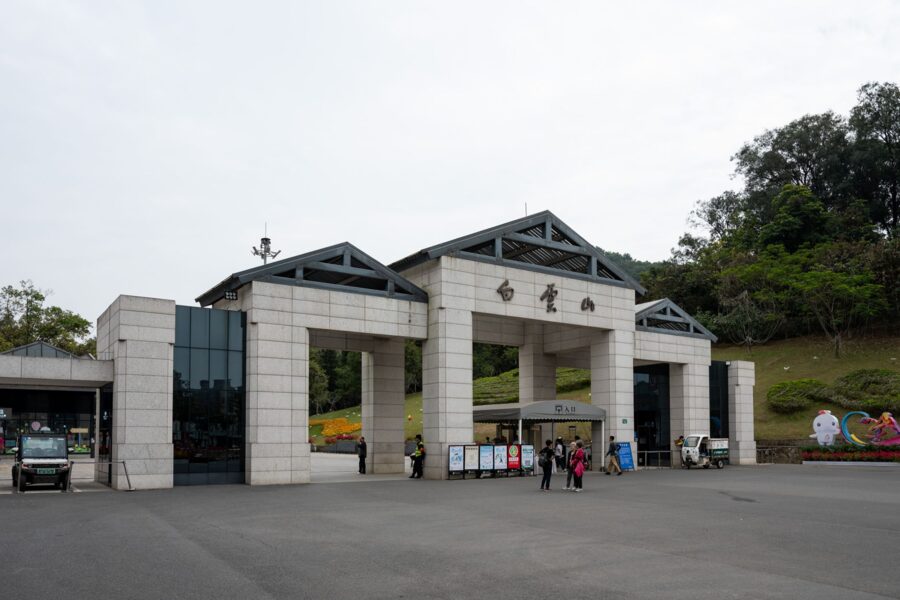
It is cheap. Entry to the scenic area is ¥5, with another ¥5 for the Moxing Ling summit area and ¥10 for the Yuntai Garden. The cable car runs up the mountain from its lower station by the south gate, ¥25 one way up and ¥20 down, half price for children and older visitors; anyone over 65 gets in free. Electric carts run between the gates and the summit areas, ¥10–20 a ride.
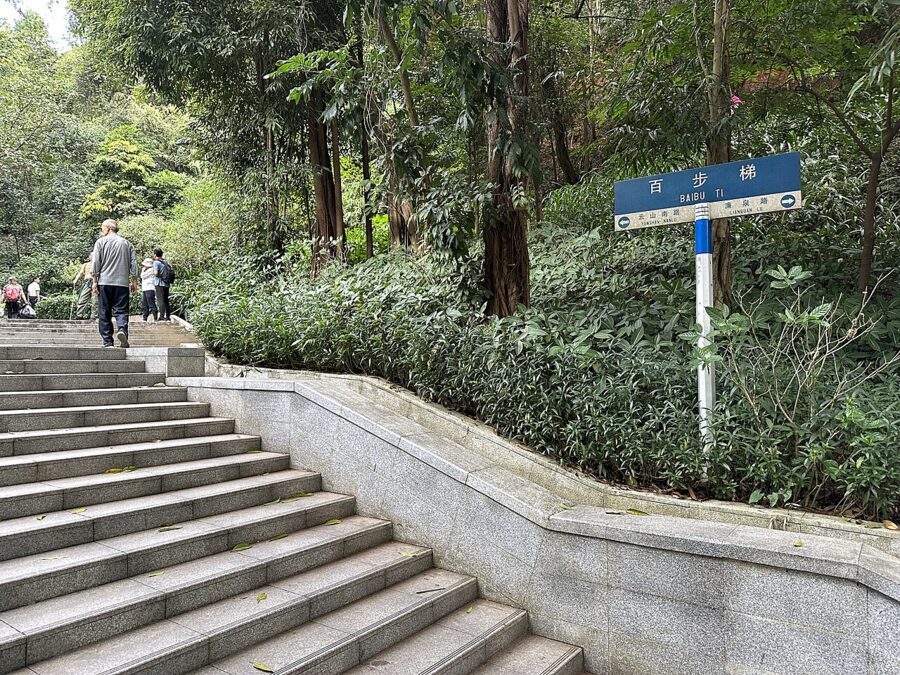
The easy plan is the cable car up, then a walk past the Mingchun Valley aviary to the summit park and down the stepped paths to the south gate; allow half a day.
What to eat, briefly
Guangzhou is where Cantonese food is cooked at its best, and the reason many people come. The city’s own ritual is morning tea, yum cha (饮茶): a pot of tea, a couple of baskets of dim sum and a long sit. Since 1 May 2026 a city law governs it, and the old houses that pass an inspection carry a “traditional morning tea shop” plaque by the door.
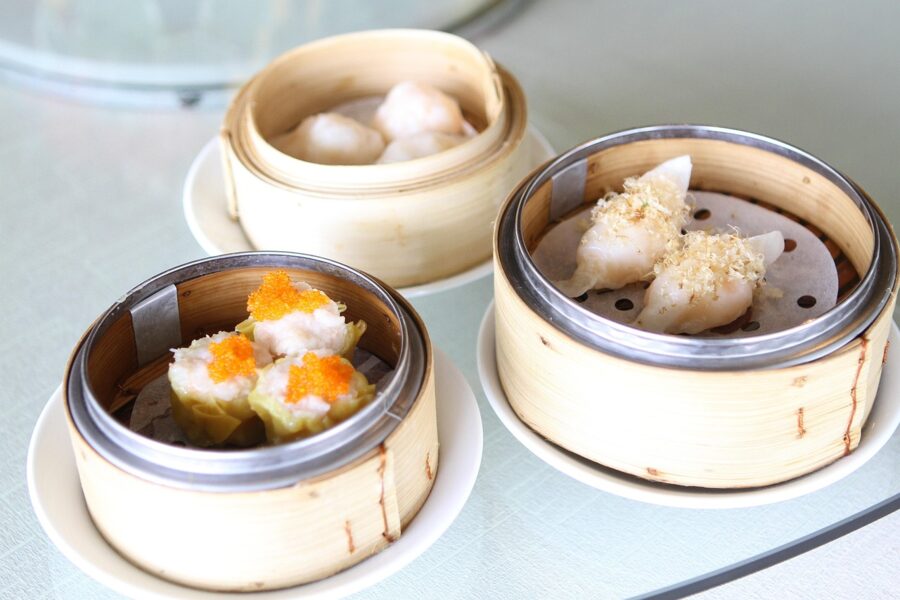
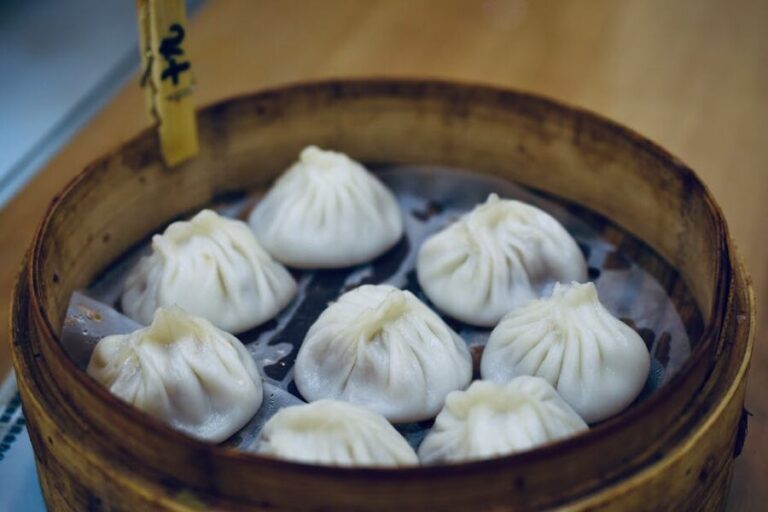
Order har gow (my Chinese dumplings guide covers them), cheung fun and char siu bao, and a water chestnut cake if you are at Panxi. Go before 09:00 at weekends or join the queue. The big names are Guangzhou Restaurant, Taotaoju and Panxi; my Cantonese food guide has the rest: which branch to choose, the roast-meat shops and the dessert houses. If you are coming from Hong Kong, my Hong Kong dim sum guide walks through the dishes basket by basket.
Pay with Alipay or WeChat Pay, both of which take foreign cards. Cash is legal tender, but small stalls often cannot change a ¥100 note.
The Canton Fair weeks
Twice a year, Guangzhou fills up with buyers from around the world for the China Import and Export Fair, the Canton Fair, held at the giant complex at Pazhou in Haizhu. It runs in three phases of five days each, with a break between them. In 2026 the spring fair opened on 15 April and ran to 5 May, and the autumn fair ran from 15 October to 4 November.
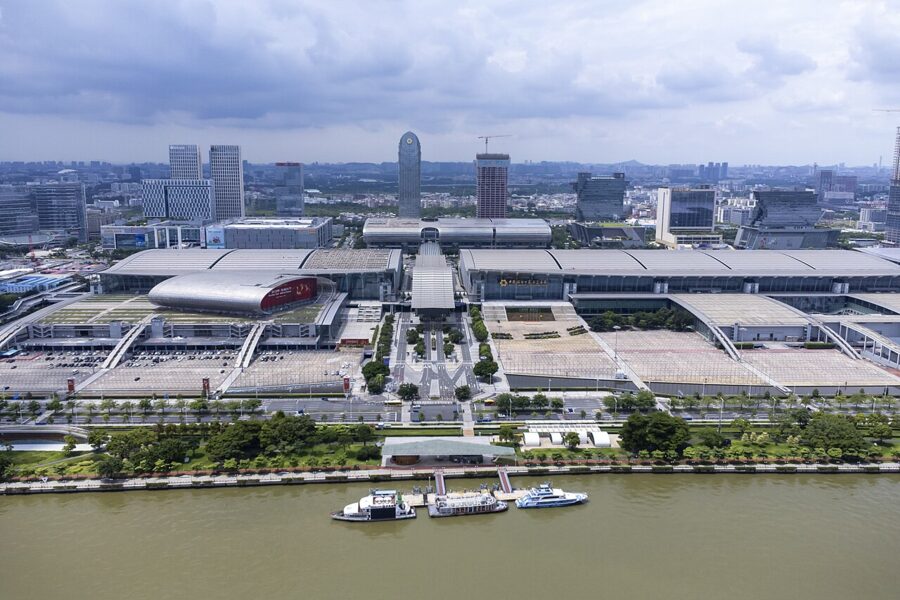
For a leisure visitor, the fair is mainly a hotel problem. In the first phase of the October 2026 fair, more than a hundred hotels in one chain’s Guangzhou network were full. Before the fair the city’s market regulator called in 35 major hotels to warn them about unmarked prices and online and offline rates that did not match.
So check the fair dates before you book. If your trip has to fall in late April or late October, book early, avoid the hotels around Pazhou and Zhujiang New Town, and stay in Liwan or out by Guangzhou South. Golden Week, 1–7 October, comes just before the autumn fair, so most of October is expensive.
Day trips: Foshan and Kaiping
Foshan
Foshan is so close that the two cities share a metro line. The Guangfo line runs from Guangzhou into Foshan, and you can join it from Line 1 at Xilang, Line 8 at Shayuan or Line 2 at Nanzhou. Get off at Zumiao.
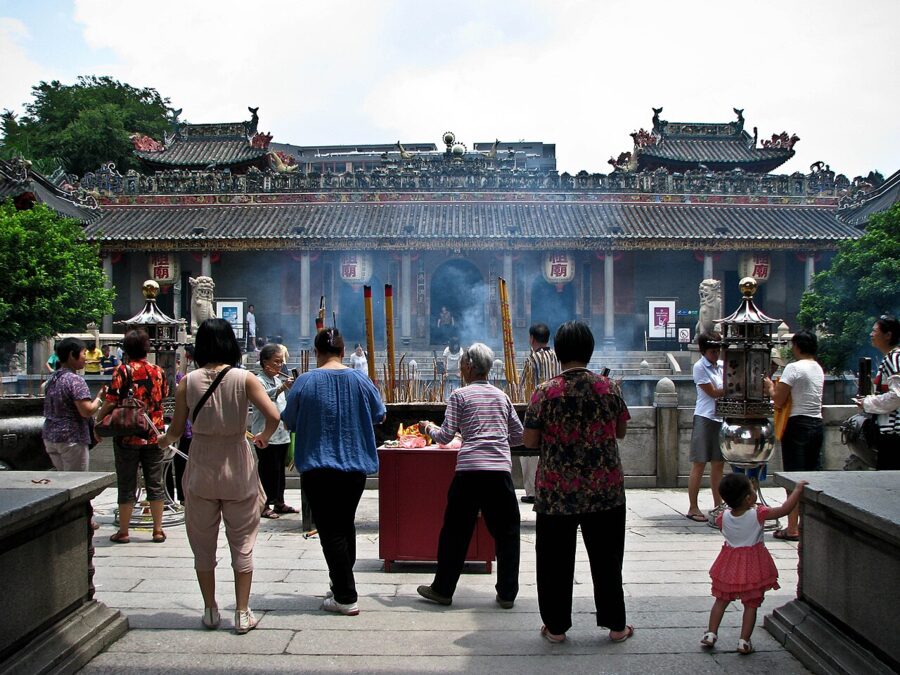
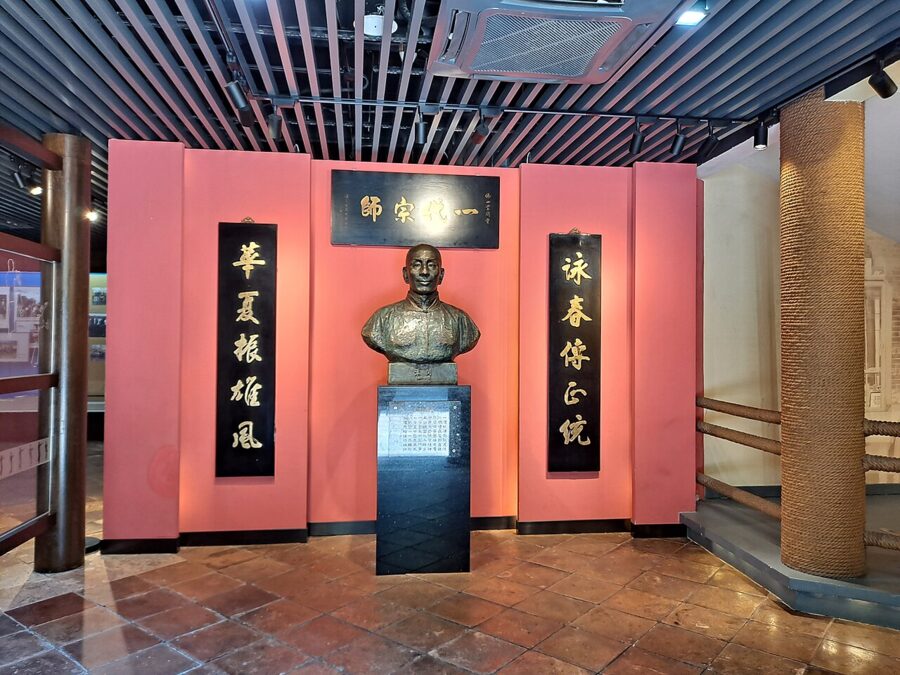
The Ancestral Temple, Zumiao (祖庙), is a Taoist temple to Beidi, the god of the north and of water, and it was the centre of old Foshan. Inside the complex are the old Wanfu opera stage, a Confucius temple, and halls for the two martial artists Foshan is proudest of, Wong Fei-hung and Ip Man. The Wong Fei-hung memorial hall was closed for building work from late May 2026, so check before you count on it.
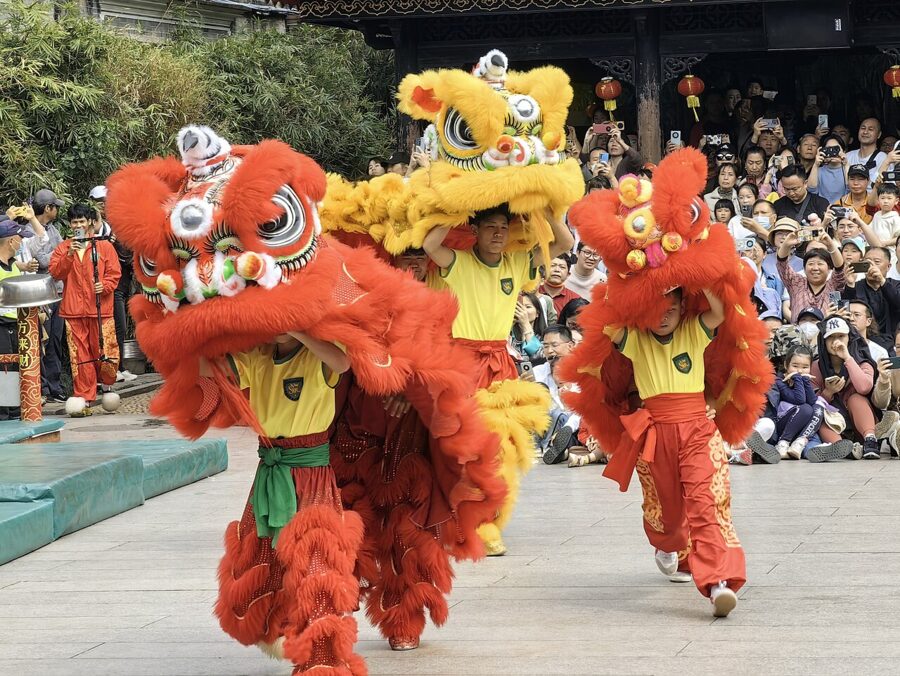
Come for the lion dance and kung fu shows in the courtyard, free with your ticket, usually at 10:00, 14:15 and 15:30, and cancelled in rain. Cantonese opera plays on the old stage on weekend afternoons. Tickets are ¥20 and the temple opens 08:30–18:00, with last entry at 17:30.
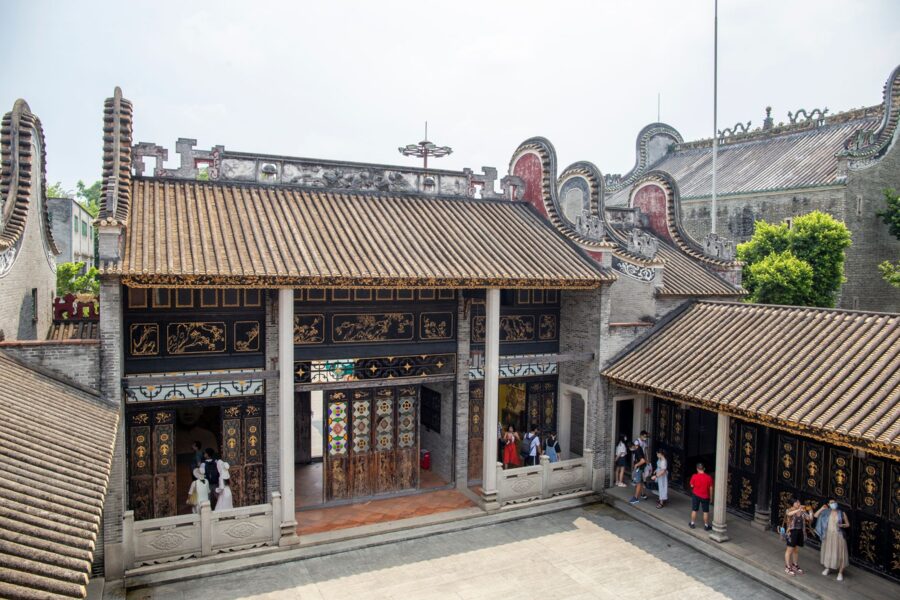
Next door, Lingnan Tiandi (岭南天地) is the old quarter around the temple, restored into lanes of shops, cafés and restaurants in grey brick. It is pleasant for an hour. For a proper Foshan meal, go on to Shunde, the town that trains Guangdong’s chefs, which my Cantonese food guide also covers.
Kaiping and the diaolou
Kaiping is a full day, and the most unusual trip from Guangzhou. Across the rice fields of this county stand 1,833 diaolou (碉楼), fortified tower houses, many of them built by men who had gone to work in North America and sent money home. Their villages were listed by UNESCO in 2007 as the Kaiping Diaolou and Villages.
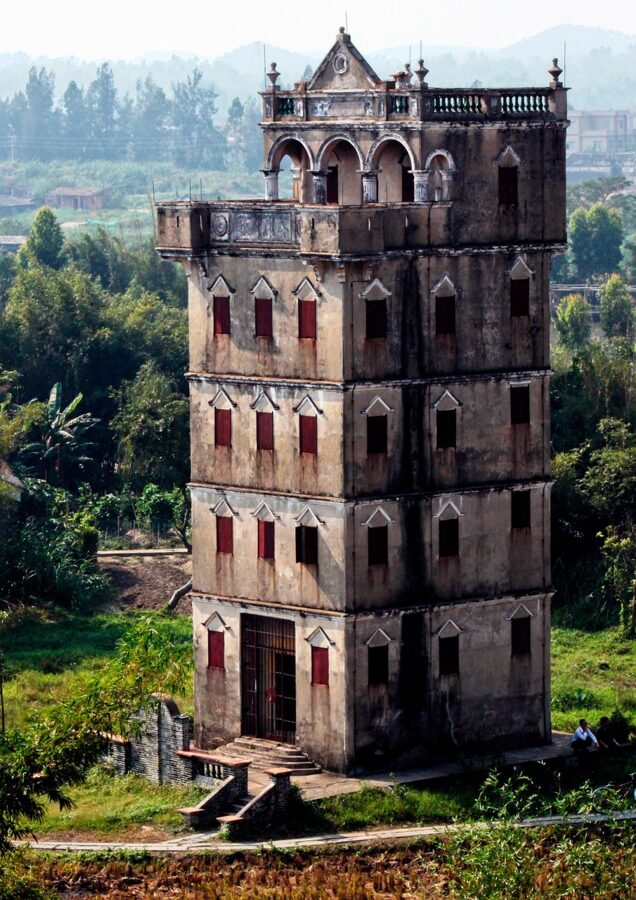
The towers were a defence. In the late nineteenth century, many Kaiping men left for the gold fields and railways of America and Canada; when those countries passed laws against Chinese labour, they came home with their savings, and their families were targets for kidnappers in a county full of bandits. Between 1900 and 1931 about 1,650 towers went up, and their owners added the Western columns, arches and domes they had seen abroad to Chinese tower houses.
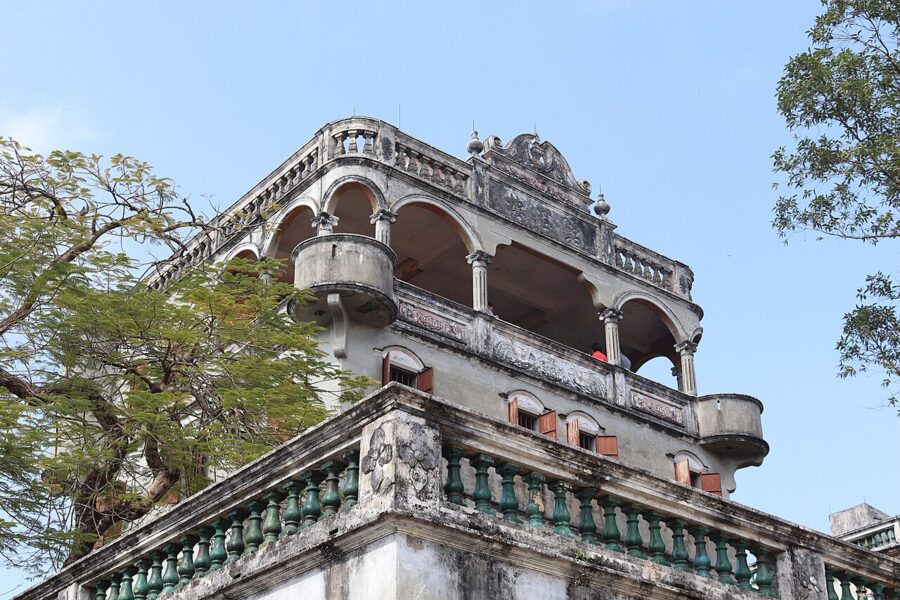
The visitor area, the Kaiping Diaolou Cultural Tourism Zone, has three main parts in Tangkou and nearby. Zili Village is the classic view of towers over fields, with fifteen towers and villas preserved; Majianglong is a cluster of villages hidden in bamboo along a river, quieter and further out. Li Garden is a private garden and villas built between 1926 and 1936 by Xie Weili, an emigrant back from America.
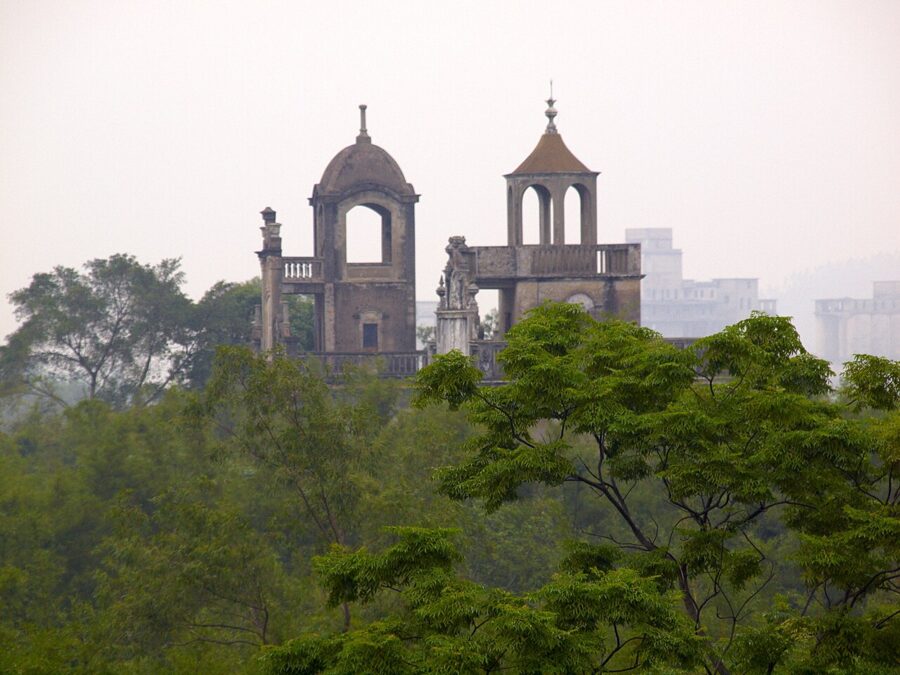
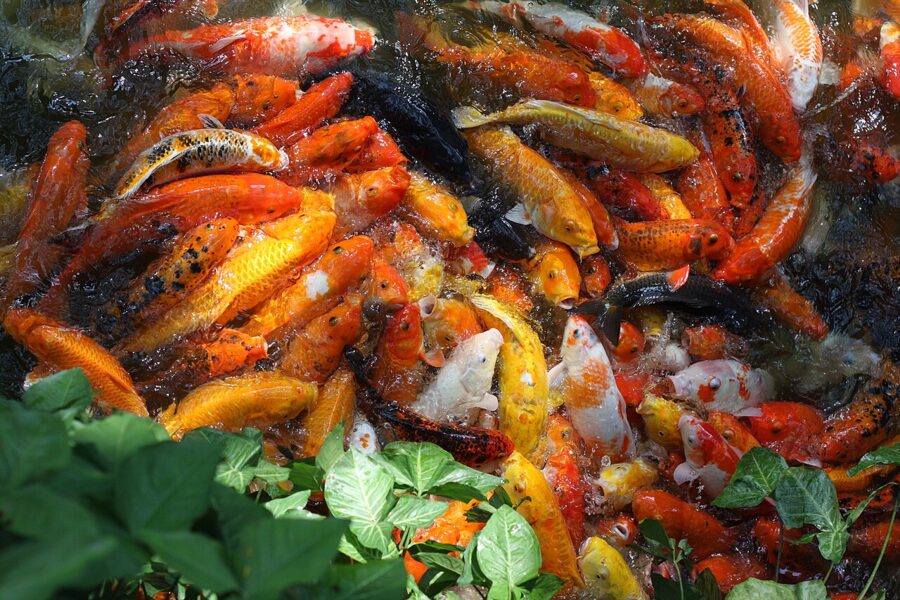
Each site has its own ticket, and a combined ticket covers Li Garden, Zili and Majianglong; buy it on Trip.com or at the first gate, and check the current price there. The fastest trains from Guangzhou South to Kaiping South take about an hour; from the station, a Didi to Tangkou is the simplest way in. Leave early, see two sites properly, and do not try for all three plus the Chikan old town in one day.
Where to stay
For a first visit, stay in the old town, near Line 1, 2 or 6. You can walk to the sights and the food.
| Area | Best for | Metro | Downside |
|---|---|---|---|
| Shamian and Liwan | Old streets, early mornings, teahouses | Huangsha, Lines 1 and 6 | Quiet at night |
| Beijing Road and Haizhu Square | First-timers, walking, river cruise | Lines 2 and 6 | Busy and noisy |
| Zhujiang New Town | Views, business, bars | Lines 3 and 5, APM | Far from the old town, pricier |
| Guangzhou South | Early trains, fair-week fallback | Lines 2, 7 and 22 | A long way from everything else |
Shamian and Liwan
The classic address is the White Swan Hotel (Official site | Agoda), on the river at the corner of Shamian. Its restaurant, Yu Tang Chun Nuan, is one of Guangzhou’s Michelin-starred Cantonese rooms.
Beijing Road and Haizhu Square
Beijing Road was one of the most-booked hotel areas in the October 2026 fair, which tells you how central it is. Hotel Landmark Canton (Trip.com), at 8 Qiaoguang Road on Haizhu Square, is an older upper-mid-range tower with river views, a short walk from Tianzi Pier and Beijing Road.
Zhujiang New Town and Tianhe
The towers around Huacheng Square hold the international luxury chains, most of them on high floors with views of the Canton Tower. These are the rooms that jump most in fair weeks.
Getting in and getting around
Baiyun Airport
Guangzhou Baiyun International Airport (CAN) is about 30 kilometres north of the centre, and in 2026 it is in transition. Terminal 1 closed on 7 May 2026 for renovation, and flights moved to Terminals 2 and 3. Check which terminal your airline uses; China Southern is at Terminal 2.
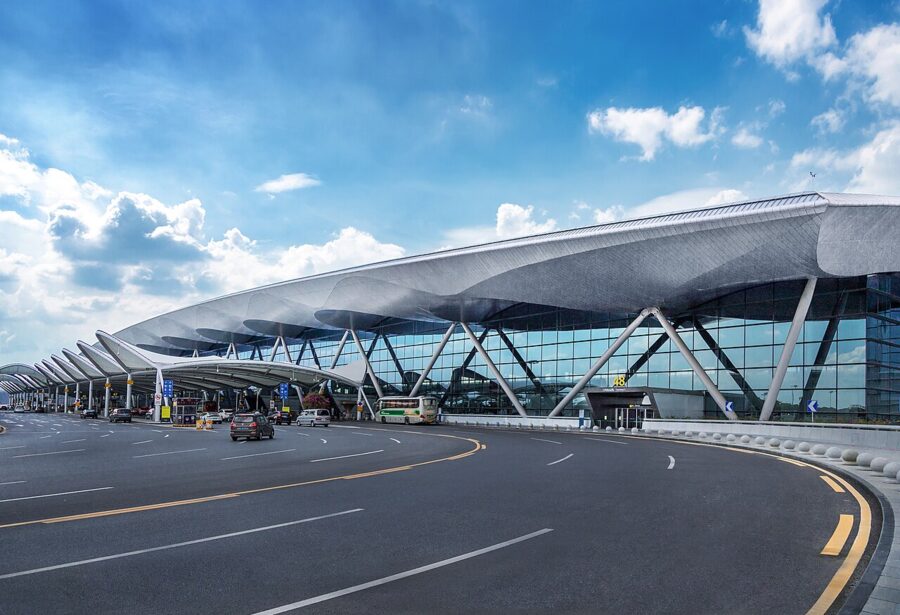
Terminal 2 is the easy one: Line 3 runs straight in at Airport North station and on to Tiyu Xilu in Tianhe, with a change for the old town. Terminal 3 has no metro station yet. The quickest link is the Guangzhou East Ring intercity train, which stops at Baiyun Airport East station under the T3 transport centre and connects with the metro at Guangzhou South (Lines 2, 7 and 22), Keyun Road (Line 5) and Pazhou (Lines 8 and 11). The fastest run to the T3 station takes 23 minutes from Keyun Road and 29 from Pazhou.
The other way to T3 is the free shuttle bus from Gaozeng metro station, on Lines 3 and 9. It leaves from exit B every five to ten minutes, takes about 15 minutes, and runs from 06:15 to 23:15 toward the terminal, 06:35 to 22:40 back. A Didi or taxi works too, but road traffic around T3 has been a common complaint since the move, and evening taxi queues can be long. T3’s ride-hailing pick-up is outside door 72, on the ground floor by domestic arrivals.
Trains
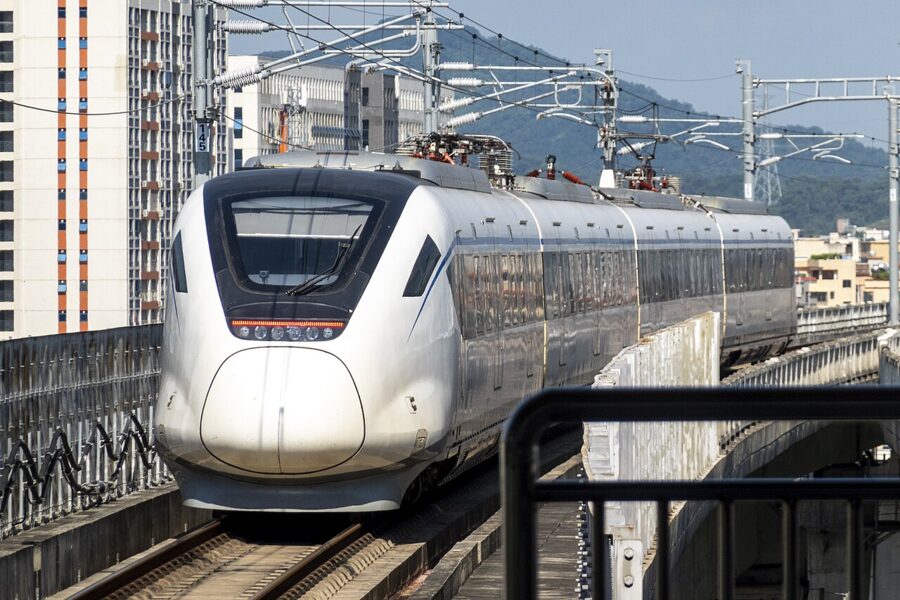
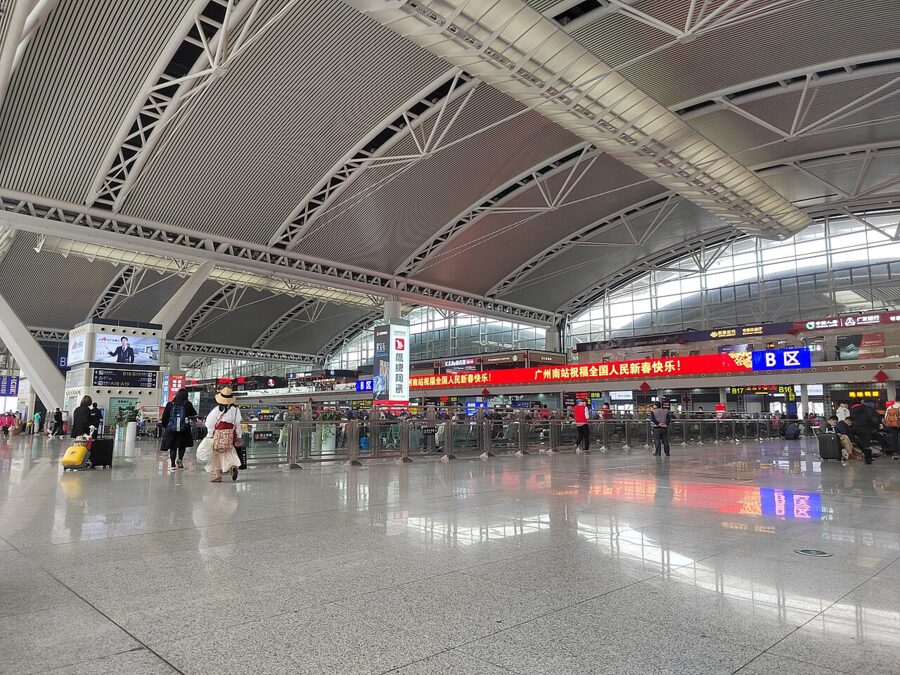
Guangzhou has several big stations, and the one you need is usually Guangzhou South (广州南), the high-speed hub, on Lines 2, 7 and 22. Trains to Shenzhen, Hong Kong, Kaiping, Guilin and most of the country leave from here. Buy tickets on 12306 or Trip.com with your passport.
The fastest G trains from Guangzhou South to Hong Kong West Kowloon take about 50 minutes, with mainland and Hong Kong border checks both done at West Kowloon; plan the Hong Kong side with my Hong Kong day trip guide. Shenzhen is a short hop by high-speed train or intercity. If you are heading on to the karst country, trains run from Guangzhou South to Guilin and to Yangshuo.
Around the city
The metro is the way to move. Scan the Alipay or WeChat transport QR code at the gates, or buy a single ticket at a machine, which has an English option. Amap is the best map for finding exits.
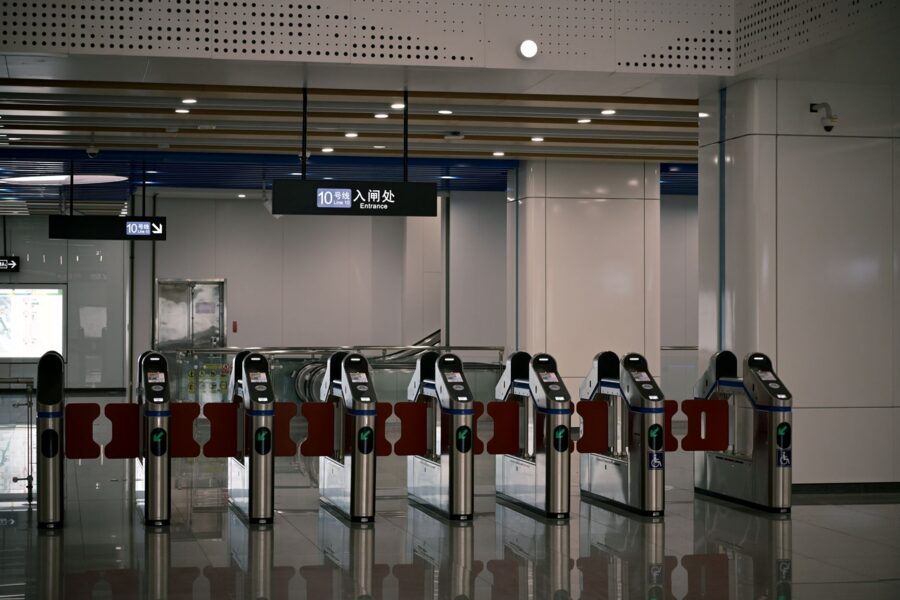
Didi takes foreign cards and has an English interface; for taxis, have your destination written in Chinese. In the old town, walk.
Three days in Guangzhou
The plan is built around the closing days. Day 1 cannot be a Tuesday, when the Chen Clan Hall is shut, and Day 2 cannot be a Monday, when the Nanyue museum is.
Day 1: Liwan and Shamian
Be at the Chen Clan Ancestral Hall when it opens at 09:00, then walk west to Lychee Bay for a late morning tea at Panxi. From there, follow the canal to the Cantonese Opera Art Museum and Yongqingfang, and see the Bruce Lee house on the way. After lunch, walk Enning Road and Shangxiajiu.
In the late afternoon, walk south to Shamian and around the island to the riverside as the light goes. Take a Xidi Pier cruise from Cultural Park after dark for the long run down the river.
Day 2: the old city and the tower
Go to Yuexiu Park early, before the heat, for the Five Rams, the Ming wall and Zhenhai Tower. Cross Jiefang North Road to the Nanyue King Mausoleum when it opens, and book the lower tomb chamber the night before. Have lunch near Beijing Road, then visit the Nanyue Palace site, the glass road and the Dafo Temple.
Walk down to Sacred Heart Cathedral, then take Line 6 and Line 3 to the Canton Tower, timed for an hour before sunset. Cross Haixin Bridge on foot afterwards and finish in Huacheng Square with the skyline lit up.
Day 3: choose your trip
For Foshan, ride the Guangfo line to Zumiao for the 10:00 lion dance, have lunch in Lingnan Tiandi and be back for the Guangdong Museum, booked ahead. For Kaiping, take an early train from Guangzhou South and give the day to Zili and Li Garden. Or stay in town for Baiyun Mountain in the morning and the Guangdong Museum after lunch.
Skip this
- The Canton Tower on a hazy day. If you cannot see it clearly from the ground, you will not see much from it.
- The buffet river cruise. Pay for the open top deck instead, and eat on land.
- The Chen Clan Hall on the first of the month. It is free, and the crowd shows it. Pay ¥10 on another day.
- Yongqingfang at 15:00 on a Saturday. Go in the morning or after dark.
- Booking a hotel blind in late April or late October. Check the Canton Fair dates first.
- Trying to see three Kaiping sites and Chikan in a day. Two, done well, is plenty.
Take the metro, carry your passport, start early and leave the evenings for the river. And book one morning tea for a weekday, when the old houses are full of retired men with newspapers rather than queues.
You Might Also Enjoy
 Oden in Japan: Every Ingredient in the Pot, Shizuoka’s Black Broth and the Counters Worth Sitting At
 Huangshan: The Yellow Mountains by Cable Car and on Foot, Sunrise on the Summit and the Villages Below
 Beijing Food Guide: Douzhi, Luzhu, Copper Pots, Niujie and What to Eat Beyond the Duck
 Jigokudani Snow Monkeys: How to See Them, When to Go and a Day Around Nagano